EP2767112B1 - Verfahren und vorrichtung zur kontrolle einer mobilfunkschnittstelle auf mobilen endgeräten - Google Patents
Verfahren und vorrichtung zur kontrolle einer mobilfunkschnittstelle auf mobilen endgeräten Download PDFInfo
- Publication number
- EP2767112B1 EP2767112B1 EP12758448.0A EP12758448A EP2767112B1 EP 2767112 B1 EP2767112 B1 EP 2767112B1 EP 12758448 A EP12758448 A EP 12758448A EP 2767112 B1 EP2767112 B1 EP 2767112B1
- Authority
- EP
- European Patent Office
- Prior art keywords
- virtual
- filter
- baseband
- data
- modem
- Prior art date
- Legal status (The legal status is an assumption and is not a legal conclusion. Google has not performed a legal analysis and makes no representation as to the accuracy of the status listed.)
- Active
Links
Images

Classifications
-
- H—ELECTRICITY
- H04—ELECTRIC COMMUNICATION TECHNIQUE
- H04W—WIRELESS COMMUNICATION NETWORKS
- H04W12/00—Security arrangements; Authentication; Protecting privacy or anonymity
- H04W12/08—Access security
-
- H—ELECTRICITY
- H04—ELECTRIC COMMUNICATION TECHNIQUE
- H04L—TRANSMISSION OF DIGITAL INFORMATION, e.g. TELEGRAPHIC COMMUNICATION
- H04L63/00—Network architectures or network communication protocols for network security
- H04L63/02—Network architectures or network communication protocols for network security for separating internal from external traffic, e.g. firewalls
- H04L63/0227—Filtering policies
- H04L63/0254—Stateful filtering
-
- H—ELECTRICITY
- H04—ELECTRIC COMMUNICATION TECHNIQUE
- H04L—TRANSMISSION OF DIGITAL INFORMATION, e.g. TELEGRAPHIC COMMUNICATION
- H04L63/00—Network architectures or network communication protocols for network security
- H04L63/14—Network architectures or network communication protocols for network security for detecting or protecting against malicious traffic
- H04L63/1441—Countermeasures against malicious traffic
- H04L63/1458—Denial of Service
-
- H—ELECTRICITY
- H04—ELECTRIC COMMUNICATION TECHNIQUE
- H04W—WIRELESS COMMUNICATION NETWORKS
- H04W12/00—Security arrangements; Authentication; Protecting privacy or anonymity
- H04W12/12—Detection or prevention of fraud
- H04W12/128—Anti-malware arrangements, e.g. protection against SMS fraud or mobile malware
-
- H—ELECTRICITY
- H04—ELECTRIC COMMUNICATION TECHNIQUE
- H04L—TRANSMISSION OF DIGITAL INFORMATION, e.g. TELEGRAPHIC COMMUNICATION
- H04L2463/00—Additional details relating to network architectures or network communication protocols for network security covered by H04L63/00
- H04L2463/144—Detection or countermeasures against botnets
Definitions
- the invention relates to a method and a device for controlling a mobile radio interface on mobile terminals, in particular a virtual modem for controlling AT accesses.
- U.S. Patent 5,628,030 describes a virtual modem as a device which provides a communication channel to a plurality of simultaneously active communication applications.
- the virtual modem then selectively connects the communications application to the physical modem.
- the virtual modem implements an abstract modem interface.
- the present invention does not disclose a method of multiplexing a physical modem, but a method of securely controlling the access of a mobile terminal to a mobile network on the mobile terminal.
- the U.S. Patent 5,628,030 furthermore refers only to desktop computers.
- DE 000069925732 T2 describes a mobile phone with built-in security firmware. It describes a method that securely accesses an intranet over unsecured networks.
- the security layer is realized on the mobile phone in the form of a firmware or an external hardware module.
- the US 2009/0209291 shows a method in which traffic messages are checked for admissibility based on rules in a database.
- the present invention does not require secure firmware or an external hardware module.
- no method for securing communication relationships is described.
- Signaling messages are generated by the mobile phone and are usually sent to the Mobile Switching Center (MSC) and Home Location Register (HLR).
- MSC Mobile Switching Center
- HLR Home Location Register
- SGSN Serving GPRS Support Node
- GGSN Gateway GPRS Support Node
- PDP Packet Data Protocol
- the mobile terminal sends a "GPRS Attach" message to the SGSN.
- the SGSN authenticates the mobile terminal using the HLR.
- a PDP context is generated and stored in SGSN and GGSN.
- Billing information, Quality of Service and the IP address of this connection are stored.
- the management and mediation of a PDP context over the various components of a mobile network is very complex.
- This baseband usually contains a standard processor, a digital signal processor (DSP) and the required radio / radio components for the radio connection.
- DSP digital signal processor
- the baseband and its components, such as the baseband processor and the software running on it, must be certified and approved by various institutions before they can be used in the mobile network. This process is complex and costly. Therefore, there are only a few manufacturers of basebands worldwide.
- the application processor In mobile terminals, there is usually a so-called application processor in addition to the baseband.
- the application processor runs the telephone operating system (e.g., iOS or Android).
- the application processor In the case of so-called UMTS sticks, the application processor is the processor of the computer.
- baseband and application processor are only in a few places, i.a. via a control channel, interconnected. Via this control channel the application processor communicates with the help of control commands to control the baseband.
- the present invention for controlling the signaling channel of a mobile terminal does not require any changes to the baseband hardware or software.
- the virtual modem runs completely on the application processor and has exclusive control over the baseband.
- the existing operating system on the application processor can no longer access the baseband directly.
- the virtual modem provides the operating system with an interface to the baseband and can thus control all accesses to the baseband.
- a representation of this architecture can be found in Fig. 1 ,
- the interface preferably consists of two channels, further channels are conceivable. One of the channels is used in one embodiment for the control command stream, the second for the data stream.
- the virtual modem thus carries out the exclusive exchange of data between the operating system and the baseband, and provides the functionality of the baseband, thereby gaining access to data and thereby filtering out unauthorized data.
- the method comprises executing a virtual modem on the application processor, which exclusively carries out the data exchange between the operating system and the baseband, and provides the functionality of the baseband, thereby gaining access to data and thereby filtering out unauthorized data and access ,
- the virtual modem provides a virtual signal channel and a virtual data channel, wherein control commands are transmitted via the virtual signal channel, which control the virtual modem.
- control commands are transmitted via the virtual signal channel, which control the virtual modem.
- data channel among others Data also transmitted IP data. It is also possible to transmit voice data as Voice-over-IP, which is transmitted as IP data.
- a control command filter is a component of the virtual modem that controls the control command stream between the operating system and the baseband and filters according to specifications.
- an IP filter is a component of the virtual modem that prevents unwanted external or internal access by implementing a firewall.
- the virtual modem provides a baseband in the form of an abstract modem interface, which provides baseband functionality and interfaces.
- baseband functionality and interfaces.
- the virtual modem has a baseband driver that provides an interface to the baseband.
- This driver has a similar or similar structure as the driver of the operating system, which normally accessed the baseband directly. This driver thus establishes a connection to the baseband driver of the operating system.
- a central component of the virtual modem is the control command filter. It controls and filters the control command stream between the operating system and the baseband. Here the security guidelines for the signaling channel are enforced compared to the baseband.
- the IP Filtering component implements a firewall, e.g. prevents unwanted access from outside or inside. It monitors the traffic passing through it and decides whether certain network packets are allowed to pass or not based on established rules. In this way, it tries to prevent unauthorized network access.
- the firewall can operate at the protocol level, at the port level, at the content level, it can detect attacks with specific patterns (e.g., DoS), and provide stateful inspection. Furthermore, intrusion detection and prevention systems are conceivable.
- the virtual modem behaves like a "real" baseband.
- the existing operating system does not have to be changed. Only the usual adjustments for the integration of a new baseband are necessary.
- Fig. 1 shows the layer construction of a mobile terminal of the present invention.
- the operating system runs on an application processor, that is usually a real hardware, in individual cases, it can also be virtualized.
- the operating system such as Android
- the operating system includes an application software stack running applications for the user. This stack may include, for example, libraries and frameworks used by the applications.
- these interfaces provide the operating system kernel. Within this kernel, a virtual signal channel and a virtual data channel are built into a virtual modem that interfaces as an intermediate layer between the baseband and the operating system.
- the operating system thus only has access to the baseband via the virtual modem.
- On the virtual signal channel are usually sent control commands that serve to control the virtual modem.
- the data is then transmitted via the virtual data channel, eg as a data stream.
- the data stream may include a call stream but also Internet data (IP data).
- Filters (AT command filters and IP filters) are then applied to the respective data stream to filter out unauthorized or unwanted data in both directions.
- the filters are adjustable and based on rules or patterns to be filtered out. For example, scanners that detect content-related malware or other content filters, such as protocol filters, can be used on the IP filter.
- a baseband driver is arranged, which combines the two streams, if necessary, and passes them on to the baseband unit as described above. Alternatively, however, the data may also be passed through two separate channels.
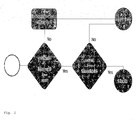
- Fig. 2 shows an example of an application of the present invention.
- Certain attacks are detected and filtered out.
- the application software generates a command to change the call forwarding settings.
- This command is transmitted to the virtual modem via the virtual signal channel.
- the control command filter checks by means of a adjustable threshold, whether the allowed number of commands / time unit has been exceeded for this function and if necessary blocks the command until the beginning of the next time interval. If the permitted number has not yet been exceeded, the command is sent to the baseband driver and finally sent by the baseband to the mobile network.
- the FIG. 2 shows that if the time of the last command plus an interval is greater than the present time, a check of a counter is made; and if the counter is above a threshold, the message is blocked. Otherwise the message will be forwarded.
- SMS Trojans send expensive premium SMS without the user's knowledge and can thus cause considerable economic damage to the user.
- the SMS Trojan sends an SMS message to a premium number via the virtual signal channel.
- the control command filter uses a blacklist / whitelist to check whether the SMS should be sent. If the number of the recipient is on a blacklist, then the user can be warned and, if necessary, a confirmation from the user can be requested. If the user rejects the send, the SMS message is discarded. These lists may e.g. be refreshed online regularly.
Landscapes
- Engineering & Computer Science (AREA)
- Computer Security & Cryptography (AREA)
- Computer Networks & Wireless Communication (AREA)
- Signal Processing (AREA)
- Computer Hardware Design (AREA)
- Computing Systems (AREA)
- General Engineering & Computer Science (AREA)
- Mobile Radio Communication Systems (AREA)
- Data Exchanges In Wide-Area Networks (AREA)
- Telephonic Communication Services (AREA)
- Telephone Function (AREA)
- Computer And Data Communications (AREA)
Description
- Die Erfindung betrifft ein Verfahren und eine Vorrichtung zur Kontrolle einer Mobilfunkschnittstelle auf mobilen Endgeräten, insbesondere ein virtuelles Modem zur Kontrolle von AT-Zugriffen.
- In den vergangenen Jahren wurde viel unternommen, um Smartphone-Betriebssysteme sicherer zu machen. Ziel hierbei ist es, den Nutzer vor Angriffen und Schadsoftware (Trojaner, Computerviren) zu schützen. Beispiele für solche Maßnahmen sind
- Mandatory Access Control (MAC), um Zugriffe auf sensible Ressourcen (z.B. Ortsdaten, SMS-Datenbank, Adressbuch) einschränken und kontrollieren zu können
- Data Caging
- Address Space Layout Randomization (ASLR), um die Ausnutzbarkeit von Sicherheitslücken zu erschweren.
- Trotz bekannter Angriffe auf die Mobilfunknetze durch gekaperte Mobiltelefone sind bisher kaum Methoden zum Schutz der Infrastruktur der Mobilfunknetze bekannt. Der Mobilfunknetzbetreiber hat bisher nur die Möglichkeit in seinem Netz einen SMS-Filter zu installieren, um ungewünschte SMS ausfiltern zu können. Vielmehr haben diese Angriffe gezeigt, dass die aktuellen Sicherheits-Maßnahmen den Schutz des Geräts vor Angriffen verfolgen und weniger die Umgebung (Mobilfunknetzwerk) in der sie arbeiten.
-
US Patent 5,628,030 beschreibt ein virtuelles Modem als ein Gerät, welches mehreren gleichzeitig aktiven Kommunikationsanwendungen einen Kommunikationskanal zur Verfügung stellt. Das virtuelle Modem verbindet dann selektiv die Kommunikationsanwendung mit dem physischen Modem. Das virtuelle Modem implementiert eine abstrakte Modemschnittstelle. - Im Gegensatz hierzu offenbart die vorliegende Erfindung keine Methode zum Multiplexen eines physischen Modems, sondern eine Methode, mit der der Zugriff eines mobilen Endgeräts auf ein Mobilfunknetzwerk auf dem mobilen Endgerät in sicherer Art und Weise kontrolliert werden kann. Das
US Patent 5,628,030 bezieht sich desweiteren nur auf Desktop-Computer. -
DE 000069925732 T2 beschreibt ein Mobiltelefon mit eingebauter Sicherheitsfirmware. Es wird eine Methode beschrieben, mit der sicher über ungesicherte Netzwerke auf ein Intranet zugegriffen werden kann. Die Sicherheitsschicht wird dabei auf dem Mobiltelefon in Form einer Firmware, oder eines externen Hardwaremoduls realisiert. - Die
US 7 490 350 zeigt eine integrierte hardware/software Firewall, die ein zusätzlicher Sicherheitslevel ist, der zwischengeschaltet ist. - Die
US 2009/0209291 zeigt ein Verfahren bei dem Verkehrsnachrichten auf der Basis von Regeln in einer Datenbank auf Zulässigkeit geprüft werden. - Aus der Druckschrift Collin Mulliner ET AL "Poster: HoneyDroid-Creating a Smartphone HoneyPot" IEEE-Security Mai 2011.
- Die vorliegende Erfindung hingegen benötigt keine gesicherte Firmware oder ein externes Hardwaremodul. Zudem wird keine Methode zur Absicherung von Kommunikationsbeziehungen beschrieben.
- Signalisierungsnachrichten werden durch das Mobiltelefon erzeugt und üblicherweise zum Mobile Switching Center (MSC) und Home Location Register (HLR) geschickt. Im Falle von Datenverbindungen sind noch der Serving GPRS Support Node (SGSN) und der Gateway GPRS Support Node (GGSN) beteiligt.
- Daten werden im Mobilfunknetz über das sog. Packet Data Protocol (PDP) verschickt. PDP-Verbindungen aufzubauen ist ein komplexer Prozess. Zunächst sendet das mobile Endgerät eine "GPRS-Attach"-Nachricht an das SGSN. Das SGSN authentifiziert das mobile Endgerät mit Hilfe des HLR. Anschließend wird ein PDP-Kontext erzeugt und im SGSN und GGSN gespeichert. Im PDP-Kontext sind u.a. Informationen zur Abrechnung, Quality of Service und die IP Adresse dieser Verbindung gespeichert. Die Verwaltung und Vermittlung eines PDP-Kontextes über die verschiedenen Komponenten eines Mobilfunknetzwerkes ist sehr aufwändig.
- Die Verbindung eines mobilen Endgeräts zum Mobilfunknetzwerk erfolgt über eine Komponente, dem sogenannten Baseband, der aus einer Vielzahl von Einzelkomponenten, wie z.B. Baseband-Prozessor, Funkmodule, Software etc. bestehen kann. Dieses Baseband enthält üblicherweise einen Standardprozessor, einen digitalen Signalprozessor (DSP) und die benötigten Radio/Funk-Komponenten für die Funkverbindung. Das Baseband und seine Komponenten, wie der Baseband-Prozessor und die darauf laufende Software, müssen, bevor sie im Mobilfunknetz eingesetzt werden können, durch unterschiedliche Institutionen zertifiziert und zugelassen werden. Dieser Prozess ist aufwändig und kostenintensiv. Daher gibt es weltweit nur wenige Hersteller von Basebands.
- Üblicherweise gibt es in mobilen Endgeräten neben dem Baseband noch einen sog. Applikationsprozessor. Im Falle von Mobiltelefonen läuft auf dem Applikationsprozessor das Telefonbetriebssystem (z.B. iOS oder Android). Im Falle von sog. UMTS-Sticks ist der Applikationsprozessor der Prozessor des Computers. In jedem Fall sind Baseband und Applikationsprozessor nur an wenigen Stellen, u.a. über einen Steuerungskanal, miteinander verbunden. Über diesen Steuerungskanal kommuniziert der Applikationsprozessor mit Hilfe von Steuerkommandos, um den Baseband zu steuern.
- Die vorliegende Erfindung (nachfolgend virtuelles Modem genannt) zur Kontrolle des Signalisierungs-Kanals eines mobilen Endgeräts benötigt keine Änderungen an der Hardware oder der Software des Basebands. Hierzu werden die Merkmale gemäß den Ansprüchen verwendet. Das virtuelle Modem läuft vollständig auf dem Applikationsprozessor und hat exklusive Kontrolle über das Baseband. Das existierende Betriebssystem auf dem Applikationsprozessor kann nicht mehr direkt auf das Baseband zugreifen. Stattdessen bietet das virtuelle Modem dem Betriebssystem eine Schnittstelle zum Baseband an und kann damit alle Zugriffe auf das Baseband kontrollieren. Eine Darstellung dieser Architektur findet sich in
Fig. 1 . Die Schnittstelle besteht vorzugsweise aus zwei Kanälen, weitere Kanäle sind denkbar. Einer der Kanäle wird in einer Ausführungsform für den Steuerkommando-Strom, der zweite für den Datenstrom verwendet. - Das virtuelle Modem führt somit das ausschließlich den Datenaustausch zwischen dem Betriebssystem und dem Basisband durch, und stellt die Funktionalität des Basebands bereit, um dadurch Zugriff auf Daten zu erlangen und um dadurch unerlaubte Daten herauszufiltern.
- Im Einzelnen handelt es sich um ein Verfahren zur Kontrolle einer Mobilfunkschnittstelle auf einem mobilen Endgerät, welches ein Baseband und einen Applikationsprozessor umfasst. Das Verfahren umfasst die Schritte:
- Ausführen eines Betriebssystems auf dem Applikationsprozessor. Hierbei werden Interanwendungen, wie Internet-Browser oder eine Fotokamera auf dem Applikationsprozessor ausgeführt.
- Als weiteren Schritt umfasst das Verfahren, das Ausführen eines virtuellen Modems auf dem Applikationsprozessor, das ausschließlich den Datenaustausch zwischen dem Betriebssystem und dem Baseband durchführt, und die Funktionalität des Baseband bereitstellt, um dadurch Zugriff auf Daten zu erlangen und um dadurch unerlaubte Daten und Zugriffe herauszufiltern. Erfindungsgemäß stellt das virtuelle Modem einen virtuellen Signalkanal und einen virtuellen Datenkanal bereit, wobei über den virtuellen Signalkanal Steuerkommandos übermittelt werden, die das virtuelle Modem steuern. Zudem werden über den Datenkanal neben anderen Daten auch IP-Daten übertragen. Es können auch Sprachdaten als Voice-over-IP übertragen werden, die als IP-Daten übermittelt werden. Erfindungsgemäß ist ein Steuerkommando-Filter eine Komponente des virtuellen Modems, der den Steuerkommando-Strom zwischen Betriebssystem und Baseband kontrolliert und nach Vorgaben filtert.
- Weiterhin ist ein IP-Filter eine Komponente des virtuellen Modems, der durch Implementierung einer Firewall unerwünschte Zugriffe von außen oder innen unterbindet.
- Das virtuelle Modem stellt in Form einer abstrakten Modemschnittstelle ein Baseband bereit, in dem die Funktionalität und die Schnittstellen des Basebands bereitgestellt werden. Somit bedarf es keiner, oder nur weniger Änderungen am Betriebssystem und der Hardware. Es handelt sich bevorzugt, um eine Softwarelösung. Natürlich ist es denkbar auch eine Kombination von Hard- und Software bereitzustellen.
- Zusätzlich weist das virtuelle Modem einen Baseband-Treiber auf, der eine Schnittstelle zum Baseband bereitstellt. Dieser Treiber hat einen ähnlichen oder gleichen Aufbau, wie der Treiber des Betriebssystems, der normalerweise direkt auf das Baseband zugegriffen hat. Durch diesen Treiber wird somit eine Verbindung zum Baseband-Treiber des Betriebssystems hergestellt.
- Eine zentrale Komponente des virtuellen Modems ist der Steuer-Kommando-Filter. Er kontrolliert und filtert den Steuer-Kommando-Strom zwischen Betriebssystem und Baseband. Hier werden die Sicherheitsrichtlinien für den Signalisierungskanal gegenüber dem Baseband durchgesetzt.
- Die IP-Filter-Komponente implementiert eine Firewall, die z.B. unerwünschte Zugriffe von außen oder innen unterbindet. Sie überwacht den durch sie hindurch laufenden Datenverkehr und entscheidet anhand festgelegter Regeln, ob bestimmte Netzwerkpakete durchgelassen werden, oder nicht. Auf diese Weise versucht sie unerlaubte Netzwerkzugriffe zu unterbinden. Die Firewall kann auf Protokoll-Ebene arbeiten, auf Port-Ebene, auf Inhaltsebene, sie kann Attacken mit bestimmten Mustern erkennen (z.B. DoS), und Stateful Inspection bereitstellen. Weiterhin sind Intrusion Dection and Prevention Systeme denkbar.
- Aus Sicht des Betriebssystems verhält sich das virtuelle Modem wie ein "echtes" Baseband. Das bestehende Betriebssystem muss nicht verändert werden. Lediglich die üblichen Anpassungen für die Integration eines neuen Basebands sind nötig.
- Die vorliegende Erfindung, die ein virtuelles Modem nutzt, lässt sich z.B. für folgende Anwendungen verwenden:
- Premium-SMS-Filter
- Premium-Number-Filter
- Schutz der Mobilfunk-Infrastruktur vor Signalisierungskanal-basierten DoS-Angriffen
- Unterdrückung von mobilen Botnetzen
- Aktualisierung der Zugangsrichtlinien über Fernwartung (Remote Update)
- benutzerdefinierte Spezialisierung / Aktualisierung von Zugangsrichtlinien für sog. Premium-Dienste
- unumgehbarer VPN-Zugang
- Firewall auf dem mobilen Endgerät
- Das virtuelle Modem bietet die folgenden Verbesserungen gegenüber dem Stand der Technik:
- keine oder nur wenige Modifikationen am existierenden Betriebssystem nötig, je nach Implementierung;
- keine Modifikationen an der existierenden Mobil-Hardware nötig;
- Schutz des Mobilfunknetzwerks vor gekaperten mobilen Endgeräten;
- Filterung der Signalisierungsnachrichten direkt auf dem mobilen Endgerät, damit wird die Überlastung der Mobilfunknetz-Infrastruktur vermieden;
- kostengünstiger Einsatz, weil das virtuelle Modem direkt auf dem mobilen Endgerät implementiert ist, keine Änderungen an der Infrastruktur nötig;
- Unterbindung von teuren Mehrwertdiensten (sog. Premium-SMS oder Premium-Nummern)
- Kontrolle über den Datenzugang.
- Die Erfindung ermöglicht somit eine
- Erfolgreiche Unterbindung eines SMS-Trojaners
- heuristische Erkennung von Command-and-Control-Kanälen über SMS
- DoS-Attacken auf die Infrastruktur des Mobilfunknetzwerkbetreibers werden aufwändiger (Erhöhung der Teilnehmer um mind. 700%)
- Reduktion der Last auf der Mobilfunk-Infrastruktur durch Ratenlimitierung kritischer Kommandos
- Im Folgenden werden die Figuren kurz beschrieben.
-
Fig. 1 zeigt Konzept und Schichtenaufbau des virtuellen Modems; -
Fig. 2 zeigt Ablaufdiagramm des prinzipiellen Verfahrens des Steuer-Kommandofilters. -
Fig. 1 zeigt den Schichtenaufbau eines mobilen Endgeräts der vorliegenden Erfindung. Das Betriebssystem läuft auf einem Applikationsprozessor, also in der Regel einer realen Hardware, im Einzelfall kann es auch virtualisiert sein kann. Bei der Virtualisierung läuft das Betriebssystem, z.B. Android, auf einer Virtualisierungsschicht, auch Hypervisor genannt, wobei das virtuelle Modem entweder im Hypervisor als virtuelle Hardware angeordnet ist, oder auch eine virtuelle Maschine ist, die auf dem Hypervisor läuft. Das Betriebssystem umfasst einen Anwendungs-Software Stack, auf dem Anwendungen für den Benutzer laufen. Dieser Stack kann z.B. Libraries und Frameworks umfassen, die von den Anwendungen genutzt werden. Ferner bietet diese Schnittstellen zum Betriebssystem-Kernel. Innerhalb dieses Kernels werden ein virtueller Signalkanal und ein virtueller Datenkanal zu einem virtuellen Modem aufgebaut, das als Zwischenschicht zwischen dem Basisband und dem Betriebssystem geschaltet ist. Das Betriebssystem hat somit lediglich über das virtuelle Modem den Zugang zum Baseband. Über den virtuellen Signalkanal werden in der Regel Steuer-Kommandos gesendet, die dazu dienen, das virtuelle Modem zu steuern. Über den virtuellen Datenkanal werden nach Einstellung des Modems dann die Daten übermittelt, z.B. als Datenstrom. Der Datenstrom kann ein Gesprächsstrom aber auch Internetdaten (IP-Daten) umfassen. Auf den jeweiligen Datenstrom werden dann Filter (AT-Kommando-Filter und IP-Filter) angewendet, um unerlaubte oder unerwünschte Daten in beide Richtungen herauszufiltern. Die Filter sind einstellbar, und basieren auf Regeln oder Mustern, die herauszufiltern sind. So können z.B. auf den IP-Filter Scanner angewendet werden, die inhaltliche Schadsoftware erkannen, oder auch andere Inhaltsfilter, wie Protokollfilter. Innerhalb des virtuellen Modems ist ein Baseband-Treiber angeordnet, der die beiden Ströme, wenn nötig, zusammenfasst und an die Baseband/Einheit weitergibt, wie sie oben beschrieben wurde. Alternativ können die Daten jedoch auch über zwei getrennte Kanäle weitergegeben werden. -
Fig. 2 zeigt ein Bespiel für eine Anwendung der vorliegenden Erfindung. - Es werden hierbei bestimmte Angriffe erkannt und herausgefiltert.
- Viele kompromittierte Mobiltelefone ändern laufend die Einstellungen für die Anrufweiterleitung und erzeugen damit erhebliche Last in der Infrastruktur des Mobilfunknetzanbieters.
- Die Anwendungssoftware erzeugt ein Kommando zur Änderung der Anrufweiterleitungseinstellungen. Dieses Kommando wird über den virtuellen Signalkanal an das virtuelle Modem übertragen. Der Steuer-Kommandofilter überprüft anhand einer einstellbaren Schwelle, ob die erlaubte Anzahl an Kommandos/Zeiteinheit für diese Funktion überschritten worden ist und blockt ggf. das Kommando bis zum Beginn des nächsten Zeitintervalls. Ist die erlaubte Anzahl noch nicht überschritten, wird das Kommando an den Baseband-Treiber geleitet und schließlich vom Baseband an das Mobilfunknetzwerk geschickt. Die
Figur 2 zeigt, dass, falls der Zeitpunkt des letzten Kommandos plus einem Intervall größer als der jetzige Zeitpunkt ist, eine Überprüfung eines Zählers vorgenommen wird; und falls der Zähler oberhalb eines Grenzwertes ist, so wird die Nachricht blockiert. Andernfalls wird die Nachricht weitergeleitet. - SMS-Trojaner verschicken ohne Wissen des Anwenders teure Premium-SMS und können damit zu einem erheblichen wirtschaftlichen Schaden beim Anwender führen.
- Der SMS-Trojaner setzt eine SMS-Nachricht an eine Premium-Nummer über den virtuellen Signalkanal ab. Der Steuer-Kommandofilter überprüft anhand einer Blacklist/Whitelist ob die SMS verschickt werden soll. Befindet sich die Nummer des Empfängers auf einer Blacklist, so kann dem Nutzer eine entsprechende Warnung angezeigt werden und ggf. eine Bestätigung des Nutzers eingefordert werden. Wird das Senden vom Nutzer abgelehnt, wird die SMS-Nachricht verworfen. Diese Listen können z.B. regelmäßig online aufgefrischt werden.
Claims (6)
- Verfahren zur Kontrolle einer Mobilfunkschnittstelle auf einem mobilen Endgerät, das mobile Endgerät umfasst einen Baseband-Prozessor und einen Applikationsprozessor,
umfassend die Schritte:- Ausführen eines Betriebssystems auf dem Applikationsprozessor;- Ausführen eines virtuellen Modems auf dem Applikationsprozessor, wobei das virtuelle Modem ein Baseband-Prozessor emuliert, in dem die Funktionalität und die Schnittstellen des Baseband-Prozessors bereitgestellt werden, wobei das virtuelle Modem ausschließlich den Datenaustausch zwischen dem Betriebssystem und dem Basisband-Prozessor durchführt, und die Funktionalität des Baseband-Prozessor bereitstellt, um dadurch Zugriff auf unerlaubte Daten zu erlangen, um diese herauszufiltern, wobei das virtuelle Modem einen virtuellen Signalisierungskanal und virtuellen Datenkanal bereitstellt, wobei über den virtuellen Signalisierungskanal AT-Steuer-Kommandos übermittelt werden, die das virtuelle Modem steuern, und über den Datenkanal werden IP-Daten übertragen, wobei ein AT-Steuer-Kommando-Filter eine Komponente des virtuellen Modems ist, der den AT-Steuer-Kommando-Strom zwischen Betriebssystem und Baseband-Prozessor kontrolliert und nach Vorgaben filtert,wobei ein IP-Filter eine Komponente des virtuellen Modems ist, der durch Implementierung einer Firewall unerwünschte Zugriffe von außen oder innen unterbindet.
und - Das Verfahren nach dem vorhergehenden Anspruch, wobei eine oder mehrere der folgenden Komponenten in den Filter eingesetzt werden, um die Daten zu filtern:• Nummern-Filter;• Filter zum Schutz der Mobilfunk-Infrastruktur vor Signalisierungskanal-basierten DoS-Angriffen;• Filter zur Unterdrückung von mobilen Botnetzen• Aktualisierungskomponente der Zugangsrichtlinien, die regelmäßigen Updates unterliegt;• Komponente zur benutzerdefinierten Spezialisierung / Aktualisierung von Zugangsrichtlinien für sog. Premium-Dienste;• Steuerungskomponente zur Beschränkung von VPN-Zugängen.
- Das Verfahren nach dem vorhergehenden Anspruch, wobei das virtuelle Modem einen Baseband-Treiber aufweist, der eine Schnittstelle zum Baseband-Prozessor bereitstellt.
- Mobiles Endgerät mit einer Mobilfunkschnittstelle umfassend:Ein Baseband-Prozessor und einen Applikationsprozessor, wobei der Applikationsprozessor Mittel aufweist, um ein Betriebssystems auszuführen;der Applikationsprozessor enthält weiterhin Mittel, die ein virtuelles Modem realisieren, wobei das virtuelle Modem ein Baseband-Prozessor emuliert, in dem die Funktionalität und die Schnittstellen des Baseband-Prozessors bereitgestellt werden, wobei das virtuelle Modem ausschließlich den Datenaustausch zwischen dem Betriebssystem und dem Basisband durchführt, und die Funktionalität des Baseband bereitstellt, um dadurch Zugriff auf unerlaubte Daten zu erlangen, um diese Daten herauszufiltern;wobei das virtuelle Modem einen virtuellen Signalkanal und virtuellen Datenkanal bereitstellt, wobei über den virtuellen Signalisierungskanal AT-Steuer-Kommandos empfangbar sind, die das virtuelle Modem steuern, und über den Datenkanal sind IP-Daten übertragbar; und wobei ein AT-Steuer-Kommando-Filter eine Komponente des virtuellen Modems ist, der den AT-Steuer-Kommando-Strom zwischen Betriebssystem und Baseband kontrolliert und nach Vorgaben filtert, undwobei ein IP-Filter eine Komponente des virtuellen Modems ist, der durch Implementierung einer Firewall unerwünschte Zugriffe von außen oder innen unterbindet.
- Mobiles Endgerät nach dem vorhergehenden Anspruch, wobei eine oder mehrere der folgenden Komponenten in dem Filter vorhanden sind, um die Daten zu filtern:• Nummern-Filter;• Filter zum Schutz der Mobilfunk-Infrastruktur vor Signalisierungskanal-basierten DoS-Angriffen;• Filter zur Unterdrückung von mobilen Botnetzen• Aktualisierungskomponente der Zugangsrichtlinien, die regelmäßigen Updates unterliegt;• Komponente zur benutzerdefinierten Spezialisierung / Aktualisierung von Zugangsrichtlinien für sog. Premium-Dienste;• Steuerungskomponente zur Beschränkung von VPN-Zugängen.
- Mobiles Endgerät nach dem vorhergehenden Anspruch, wobei das virtuelle Modem einen Baseband Treiber aufweist, der eine Schnittstelle zum Baseband bereitstellt.
Applications Claiming Priority (2)
| Application Number | Priority Date | Filing Date | Title |
|---|---|---|---|
| DE102011054509A DE102011054509A1 (de) | 2011-10-14 | 2011-10-14 | Verfahren und Vorrichtung zur Kontrolle einer Mobilfunkschnittstelle auf mobilen Endgeräten |
| PCT/EP2012/067341 WO2013053550A1 (de) | 2011-10-14 | 2012-09-05 | Verfahren und vorrichtung zur kontrolle einer mobilfunkschnittstelle auf mobilen endgeräten |
Publications (2)
| Publication Number | Publication Date |
|---|---|
| EP2767112A1 EP2767112A1 (de) | 2014-08-20 |
| EP2767112B1 true EP2767112B1 (de) | 2017-11-22 |
Family
ID=46832376
Family Applications (1)
| Application Number | Title | Priority Date | Filing Date |
|---|---|---|---|
| EP12758448.0A Active EP2767112B1 (de) | 2011-10-14 | 2012-09-05 | Verfahren und vorrichtung zur kontrolle einer mobilfunkschnittstelle auf mobilen endgeräten |
Country Status (9)
| Country | Link |
|---|---|
| US (1) | US20140323095A1 (de) |
| EP (1) | EP2767112B1 (de) |
| JP (1) | JP6068483B2 (de) |
| KR (1) | KR101859796B1 (de) |
| CN (1) | CN103858458B (de) |
| DE (1) | DE102011054509A1 (de) |
| ES (1) | ES2651215T3 (de) |
| IN (1) | IN2014CN02244A (de) |
| WO (1) | WO2013053550A1 (de) |
Families Citing this family (6)
| Publication number | Priority date | Publication date | Assignee | Title |
|---|---|---|---|---|
| US9584341B2 (en) | 2014-06-18 | 2017-02-28 | Telefonaktiebolaget Lm Ericsson (Publ) | Modem interface using virtual local-area network tagging |
| US9692728B2 (en) * | 2014-06-18 | 2017-06-27 | Telefonaktiebolaget Lm Ericsson (Publ) | Packet filtering at an application-processor-to-modem interface |
| CN105472710A (zh) * | 2014-09-03 | 2016-04-06 | 中兴通讯股份有限公司 | 黑名单处理方法及装置 |
| CN105578459B (zh) * | 2015-12-30 | 2019-04-16 | 努比亚技术有限公司 | 蜂窝网络下的数据加密装置及方法 |
| WO2018196974A1 (en) * | 2017-04-27 | 2018-11-01 | Telefonaktiebolaget Lm Ericsson (Publ) | Controlling wireless transmission of data from a wireless device |
| US20250247429A1 (en) * | 2024-01-29 | 2025-07-31 | Hewlett Packard Enterprise Development Lp | Command validation at an intermediary device |
Family Cites Families (23)
| Publication number | Priority date | Publication date | Assignee | Title |
|---|---|---|---|---|
| US5628030A (en) | 1994-03-24 | 1997-05-06 | Multi-Tech Systems, Inc. | Virtual modem driver apparatus and method |
| DE69925732T2 (de) | 1999-10-22 | 2006-03-16 | Telefonaktiebolaget Lm Ericsson (Publ) | Mobiltelefon mit eingebauter Sicherheitsfirmware |
| US7039033B2 (en) * | 2001-05-07 | 2006-05-02 | Ixi Mobile (Israel) Ltd. | System, device and computer readable medium for providing a managed wireless network using short-range radio signals |
| US7490350B1 (en) * | 2004-03-12 | 2009-02-10 | Sca Technica, Inc. | Achieving high assurance connectivity on computing devices and defeating blended hacking attacks |
| US8379553B2 (en) * | 2004-11-22 | 2013-02-19 | Qualcomm Incorporated | Method and apparatus for mitigating the impact of receiving unsolicited IP packets at a wireless device |
| US8135362B2 (en) * | 2005-03-07 | 2012-03-13 | Symstream Technology Holdings Pty Ltd | Symbol stream virtual radio organism method and apparatus |
| JP2007116509A (ja) * | 2005-10-21 | 2007-05-10 | Nec Corp | 通信端末、プログラム、通信システム及びセキュリティ情報出力方法 |
| EP2126694A2 (de) * | 2006-12-22 | 2009-12-02 | VirtualLogix SA | System zur ermöglichung, das sich mehrere ausführungsumgebungen eine einrichtung teilen |
| EP2075696A3 (de) * | 2007-05-10 | 2010-01-27 | Texas Instruments Incorporated | Unterbrechungsbedingte Schaltkreise, Systeme und Verfahren |
| CN101308505A (zh) * | 2007-05-16 | 2008-11-19 | 国际商业机器公司 | 提供对远程资源数据的访问的方法和数据处理系统 |
| US20090143094A1 (en) * | 2007-12-03 | 2009-06-04 | Motorola, Inc. | Method and Apparatus for Mode Switching in Dual-Core Mobile Communication Devices |
| CN101227386A (zh) * | 2007-12-19 | 2008-07-23 | 华为技术有限公司 | 一种保护网络终端的方法、系统及网络终端保护装置 |
| US20090209291A1 (en) * | 2008-02-19 | 2009-08-20 | Motorola Inc | Wireless communication device and method with expedited connection release |
| US9071974B2 (en) * | 2008-06-29 | 2015-06-30 | Oceans Edge, Inc. | Mobile telephone firewall and compliance enforcement system and method |
| WO2010064421A1 (ja) * | 2008-12-05 | 2010-06-10 | 株式会社エヌ・ティ・ティ・ドコモ | 通信装置、通信方法 |
| US8341749B2 (en) * | 2009-06-26 | 2012-12-25 | Vmware, Inc. | Preventing malware attacks in virtualized mobile devices |
| US8874167B2 (en) * | 2009-11-17 | 2014-10-28 | Broadcom Corporation | Method and system for multi-standby operation for a multi-SIM multi-standby communication device |
| US20110125902A1 (en) * | 2009-11-24 | 2011-05-26 | Nokia Corporation | Apparatus And A Method For Resource Management |
| US8798644B2 (en) * | 2009-12-31 | 2014-08-05 | Qualcomm Incorporated | Systems and methods for determining the location of mobile devices independent of location fixing hardware |
| KR101627162B1 (ko) * | 2010-02-08 | 2016-06-03 | 삼성전자주식회사 | 휴대용 단말기에서 패킷 필터링을 통해 전력 소모를 줄이기 위한 장치 및 방법 |
| US8862178B2 (en) * | 2010-02-24 | 2014-10-14 | Qualcomm Incorporated | Methods and systems for managing participation in multiple wireless networks |
| JP5625394B2 (ja) * | 2010-03-03 | 2014-11-19 | 株式会社明電舎 | ネットワークセキュリティシステムおよび方法 |
| US8387141B1 (en) * | 2011-09-27 | 2013-02-26 | Green Head LLC | Smartphone security system |
-
2011
- 2011-10-14 DE DE102011054509A patent/DE102011054509A1/de not_active Withdrawn
-
2012
- 2012-09-05 WO PCT/EP2012/067341 patent/WO2013053550A1/de not_active Ceased
- 2012-09-05 JP JP2014534979A patent/JP6068483B2/ja active Active
- 2012-09-05 IN IN2244CHN2014 patent/IN2014CN02244A/en unknown
- 2012-09-05 ES ES12758448.0T patent/ES2651215T3/es active Active
- 2012-09-05 EP EP12758448.0A patent/EP2767112B1/de active Active
- 2012-09-05 CN CN201280048522.8A patent/CN103858458B/zh active Active
- 2012-09-05 US US14/351,165 patent/US20140323095A1/en not_active Abandoned
- 2012-09-05 KR KR1020147012845A patent/KR101859796B1/ko active Active
Non-Patent Citations (2)
| Title |
|---|
| COLLIN MULLINER ET AL: "Poster: HoneyDroid -Creating a Smartphone Honeypot", 1 May 2011 (2011-05-01), XP055299856, Retrieved from the Internet <URL:http://www.ieee-security.org/TC/SP2011/posters/HoneyDroid__Creating_a_Smart_Phone_Honeypot.pdf> [retrieved on 20160905] * |
| MATTHIAS LANGE ET AL: "L4Android", SECURITY AND PRIVACY IN SMARTPHONES AND MOBILE DEVICES, ACM, 2 PENN PLAZA, SUITE 701 NEW YORK NY 10121-0701 USA, 17 October 2011 (2011-10-17), pages 39 - 50, XP058005979, ISBN: 978-1-4503-1000-0, DOI: 10.1145/2046614.2046623 * |
Also Published As
| Publication number | Publication date |
|---|---|
| CN103858458A (zh) | 2014-06-11 |
| JP6068483B2 (ja) | 2017-01-25 |
| EP2767112A1 (de) | 2014-08-20 |
| JP2014535195A (ja) | 2014-12-25 |
| ES2651215T3 (es) | 2018-01-25 |
| WO2013053550A1 (de) | 2013-04-18 |
| DE102011054509A1 (de) | 2013-04-18 |
| KR101859796B1 (ko) | 2018-05-18 |
| IN2014CN02244A (de) | 2015-06-12 |
| CN103858458B (zh) | 2017-10-20 |
| KR20140079826A (ko) | 2014-06-27 |
| US20140323095A1 (en) | 2014-10-30 |
Similar Documents
| Publication | Publication Date | Title |
|---|---|---|
| EP2767112A1 (de) | Verfahren und vorrichtung zur kontrolle einer mobilfunkschnittstelle auf mobilen endgeräten | |
| DE102005028663B4 (de) | Verfahren und Vorrichtung zum sicheren Kommunizieren einer Komponente eines Fahrzeugs über eine drahtlose Kommunikationsverbindung mit einem externen Kommunikationspartner | |
| DE602004011864T2 (de) | Die DOS Angriffsmitigation mit vorgeschlagenen Mitteln von upstream Router | |
| EP2448182B1 (de) | Verfahren zur Kommunikation in einem Automatisierungssystem | |
| EP3192226B1 (de) | Vorrichtung und verfahren zur steuerung eines kommunikationsnetzwerks | |
| EP1417820B1 (de) | Verfahren und computersystem zur sicherung der kommunikation in netzwerken | |
| DE202007019129U1 (de) | Mobilfunkendgerät mit Filtereinrichtung und Netzwerkelement zur Konfiguration der Filtereinrichtung | |
| DE10226744B4 (de) | Content- und Security Proxy in einem Mobilkommunikationssystem | |
| CN100459798C (zh) | 一种向移动终端提供安全服务的方法及系统 | |
| EP2116094A1 (de) | Verfahren und server zum aufbau einer notrufverbindung | |
| WO2023285150A1 (de) | Mobilfunkgerät, verfahren zum betreiben eines mobilfunkgeräts und fahrzeug | |
| WO2020099291A1 (de) | Vorrichtung zum absichern eines echtzeit-ethernet-datennetzwerks für ein kraftfahrzeug | |
| DE102009060904B4 (de) | Verfahren zum Steuern eines Verbindungsaufbaus sowie Netzwerksystem | |
| EP1496665B1 (de) | Verfahren zur Festlegung von Sicherheitseinstellungen in einem Automatisierungsnetz | |
| WO2017148559A1 (de) | Verfahren und analysemodul zur überprüfung von verschlüsselten datenübertragungen | |
| DE102007030775B3 (de) | Verfahren zum Filtern von Netzwerkdiensten und Netzwerkdiensteinhalten | |
| Lunkeit et al. | Zum Stand der Dinge | |
| EP4625886A1 (de) | Steuergerät, netzwerk und übertragen von daten von einem steuergerät in ein netzwerk | |
| WO2026073732A1 (de) | Verfahren zum verwalten von nachrichten in einer datenverarbeitungseinheit in einem netzwerk | |
| EP4425829A1 (de) | Schadensbegrenzung nach malware-infektion eines mobilfunkfähigen endgeräts | |
| DE102015006282A1 (de) | Verfahren und Vorrichtung zur Sicherung der Datenkommunikation von einem Mobiltelefon mit dem Internet und zur Erhöhung der Datenkommunikationstransparenz für den Anwender | |
| EP3024193A1 (de) | Verfahren und System zur nachhaltigen Abwehr von Botnet Schadsoftware | |
| EP2323334A1 (de) | Freigabe einer Verbindung durch eine Firewall eines Netzzugriffsgerät | |
| WO2020065476A1 (de) | System und verfahren für einen zugriff auf daten in einem internen bereich | |
| DE102019105699A1 (de) | Verfahren und Vorrichtung zur Überwachung der Kommunikation einer Einrichtung mit einem globalen Kommunikationsnetz und/oder innerhalb eines lokalen Kommunikationsnetzes |
Legal Events
| Date | Code | Title | Description |
|---|---|---|---|
| PUAI | Public reference made under article 153(3) epc to a published international application that has entered the european phase |
Free format text: ORIGINAL CODE: 0009012 |
|
| 17P | Request for examination filed |
Effective date: 20140514 |
|
| AK | Designated contracting states |
Kind code of ref document: A1 Designated state(s): AL AT BE BG CH CY CZ DE DK EE ES FI FR GB GR HR HU IE IS IT LI LT LU LV MC MK MT NL NO PL PT RO RS SE SI SK SM TR |
|
| DAX | Request for extension of the european patent (deleted) | ||
| 17Q | First examination report despatched |
Effective date: 20160909 |
|
| STAA | Information on the status of an ep patent application or granted ep patent |
Free format text: STATUS: EXAMINATION IS IN PROGRESS |
|
| GRAP | Despatch of communication of intention to grant a patent |
Free format text: ORIGINAL CODE: EPIDOSNIGR1 |
|
| STAA | Information on the status of an ep patent application or granted ep patent |
Free format text: STATUS: GRANT OF PATENT IS INTENDED |
|
| INTG | Intention to grant announced |
Effective date: 20170623 |
|
| GRAS | Grant fee paid |
Free format text: ORIGINAL CODE: EPIDOSNIGR3 |
|
| GRAA | (expected) grant |
Free format text: ORIGINAL CODE: 0009210 |
|
| STAA | Information on the status of an ep patent application or granted ep patent |
Free format text: STATUS: THE PATENT HAS BEEN GRANTED |
|
| AK | Designated contracting states |
Kind code of ref document: B1 Designated state(s): AL AT BE BG CH CY CZ DE DK EE ES FI FR GB GR HR HU IE IS IT LI LT LU LV MC MK MT NL NO PL PT RO RS SE SI SK SM TR |
|
| REG | Reference to a national code |
Ref country code: GB Ref legal event code: FG4D Free format text: NOT ENGLISH |
|
| REG | Reference to a national code |
Ref country code: CH Ref legal event code: EP |
|
| REG | Reference to a national code |
Ref country code: IE Ref legal event code: FG4D Free format text: LANGUAGE OF EP DOCUMENT: GERMAN |
|
| REG | Reference to a national code |
Ref country code: AT Ref legal event code: REF Ref document number: 949445 Country of ref document: AT Kind code of ref document: T Effective date: 20171215 |
|
| REG | Reference to a national code |
Ref country code: DE Ref legal event code: R096 Ref document number: 502012011703 Country of ref document: DE |
|
| REG | Reference to a national code |
Ref country code: ES Ref legal event code: FG2A Ref document number: 2651215 Country of ref document: ES Kind code of ref document: T3 Effective date: 20180125 |
|
| REG | Reference to a national code |
Ref country code: NL Ref legal event code: MP Effective date: 20171122 |
|
| REG | Reference to a national code |
Ref country code: LT Ref legal event code: MG4D |
|
| PG25 | Lapsed in a contracting state [announced via postgrant information from national office to epo] |
Ref country code: SE Free format text: LAPSE BECAUSE OF FAILURE TO SUBMIT A TRANSLATION OF THE DESCRIPTION OR TO PAY THE FEE WITHIN THE PRESCRIBED TIME-LIMIT Effective date: 20171122 Ref country code: NO Free format text: LAPSE BECAUSE OF FAILURE TO SUBMIT A TRANSLATION OF THE DESCRIPTION OR TO PAY THE FEE WITHIN THE PRESCRIBED TIME-LIMIT Effective date: 20180222 Ref country code: FI Free format text: LAPSE BECAUSE OF FAILURE TO SUBMIT A TRANSLATION OF THE DESCRIPTION OR TO PAY THE FEE WITHIN THE PRESCRIBED TIME-LIMIT Effective date: 20171122 Ref country code: NL Free format text: LAPSE BECAUSE OF FAILURE TO SUBMIT A TRANSLATION OF THE DESCRIPTION OR TO PAY THE FEE WITHIN THE PRESCRIBED TIME-LIMIT Effective date: 20171122 Ref country code: LT Free format text: LAPSE BECAUSE OF FAILURE TO SUBMIT A TRANSLATION OF THE DESCRIPTION OR TO PAY THE FEE WITHIN THE PRESCRIBED TIME-LIMIT Effective date: 20171122 |
|
| PG25 | Lapsed in a contracting state [announced via postgrant information from national office to epo] |
Ref country code: RS Free format text: LAPSE BECAUSE OF FAILURE TO SUBMIT A TRANSLATION OF THE DESCRIPTION OR TO PAY THE FEE WITHIN THE PRESCRIBED TIME-LIMIT Effective date: 20171122 Ref country code: BG Free format text: LAPSE BECAUSE OF FAILURE TO SUBMIT A TRANSLATION OF THE DESCRIPTION OR TO PAY THE FEE WITHIN THE PRESCRIBED TIME-LIMIT Effective date: 20180222 Ref country code: HR Free format text: LAPSE BECAUSE OF FAILURE TO SUBMIT A TRANSLATION OF THE DESCRIPTION OR TO PAY THE FEE WITHIN THE PRESCRIBED TIME-LIMIT Effective date: 20171122 Ref country code: LV Free format text: LAPSE BECAUSE OF FAILURE TO SUBMIT A TRANSLATION OF THE DESCRIPTION OR TO PAY THE FEE WITHIN THE PRESCRIBED TIME-LIMIT Effective date: 20171122 Ref country code: GR Free format text: LAPSE BECAUSE OF FAILURE TO SUBMIT A TRANSLATION OF THE DESCRIPTION OR TO PAY THE FEE WITHIN THE PRESCRIBED TIME-LIMIT Effective date: 20180223 |
|
| PG25 | Lapsed in a contracting state [announced via postgrant information from national office to epo] |
Ref country code: DK Free format text: LAPSE BECAUSE OF FAILURE TO SUBMIT A TRANSLATION OF THE DESCRIPTION OR TO PAY THE FEE WITHIN THE PRESCRIBED TIME-LIMIT Effective date: 20171122 Ref country code: CY Free format text: LAPSE BECAUSE OF FAILURE TO SUBMIT A TRANSLATION OF THE DESCRIPTION OR TO PAY THE FEE WITHIN THE PRESCRIBED TIME-LIMIT Effective date: 20171122 Ref country code: CZ Free format text: LAPSE BECAUSE OF FAILURE TO SUBMIT A TRANSLATION OF THE DESCRIPTION OR TO PAY THE FEE WITHIN THE PRESCRIBED TIME-LIMIT Effective date: 20171122 Ref country code: EE Free format text: LAPSE BECAUSE OF FAILURE TO SUBMIT A TRANSLATION OF THE DESCRIPTION OR TO PAY THE FEE WITHIN THE PRESCRIBED TIME-LIMIT Effective date: 20171122 Ref country code: SK Free format text: LAPSE BECAUSE OF FAILURE TO SUBMIT A TRANSLATION OF THE DESCRIPTION OR TO PAY THE FEE WITHIN THE PRESCRIBED TIME-LIMIT Effective date: 20171122 |
|
| REG | Reference to a national code |
Ref country code: DE Ref legal event code: R097 Ref document number: 502012011703 Country of ref document: DE |
|
| PG25 | Lapsed in a contracting state [announced via postgrant information from national office to epo] |
Ref country code: RO Free format text: LAPSE BECAUSE OF FAILURE TO SUBMIT A TRANSLATION OF THE DESCRIPTION OR TO PAY THE FEE WITHIN THE PRESCRIBED TIME-LIMIT Effective date: 20171122 Ref country code: SM Free format text: LAPSE BECAUSE OF FAILURE TO SUBMIT A TRANSLATION OF THE DESCRIPTION OR TO PAY THE FEE WITHIN THE PRESCRIBED TIME-LIMIT Effective date: 20171122 Ref country code: PL Free format text: LAPSE BECAUSE OF FAILURE TO SUBMIT A TRANSLATION OF THE DESCRIPTION OR TO PAY THE FEE WITHIN THE PRESCRIBED TIME-LIMIT Effective date: 20171122 |
|
| REG | Reference to a national code |
Ref country code: FR Ref legal event code: PLFP Year of fee payment: 7 |
|
| PG25 | Lapsed in a contracting state [announced via postgrant information from national office to epo] |
Ref country code: MT Free format text: LAPSE BECAUSE OF FAILURE TO SUBMIT A TRANSLATION OF THE DESCRIPTION OR TO PAY THE FEE WITHIN THE PRESCRIBED TIME-LIMIT Effective date: 20171122 |
|
| PLBE | No opposition filed within time limit |
Free format text: ORIGINAL CODE: 0009261 |
|
| STAA | Information on the status of an ep patent application or granted ep patent |
Free format text: STATUS: NO OPPOSITION FILED WITHIN TIME LIMIT |
|
| 26N | No opposition filed |
Effective date: 20180823 |
|
| PG25 | Lapsed in a contracting state [announced via postgrant information from national office to epo] |
Ref country code: SI Free format text: LAPSE BECAUSE OF FAILURE TO SUBMIT A TRANSLATION OF THE DESCRIPTION OR TO PAY THE FEE WITHIN THE PRESCRIBED TIME-LIMIT Effective date: 20171122 |
|
| PG25 | Lapsed in a contracting state [announced via postgrant information from national office to epo] |
Ref country code: MC Free format text: LAPSE BECAUSE OF FAILURE TO SUBMIT A TRANSLATION OF THE DESCRIPTION OR TO PAY THE FEE WITHIN THE PRESCRIBED TIME-LIMIT Effective date: 20171122 |
|
| REG | Reference to a national code |
Ref country code: CH Ref legal event code: PL |
|
| REG | Reference to a national code |
Ref country code: BE Ref legal event code: MM Effective date: 20180930 |
|
| REG | Reference to a national code |
Ref country code: IE Ref legal event code: MM4A |
|
| PG25 | Lapsed in a contracting state [announced via postgrant information from national office to epo] |
Ref country code: LU Free format text: LAPSE BECAUSE OF NON-PAYMENT OF DUE FEES Effective date: 20180905 |
|
| PG25 | Lapsed in a contracting state [announced via postgrant information from national office to epo] |
Ref country code: IE Free format text: LAPSE BECAUSE OF NON-PAYMENT OF DUE FEES Effective date: 20180905 |
|
| PG25 | Lapsed in a contracting state [announced via postgrant information from national office to epo] |
Ref country code: CH Free format text: LAPSE BECAUSE OF NON-PAYMENT OF DUE FEES Effective date: 20180930 Ref country code: BE Free format text: LAPSE BECAUSE OF NON-PAYMENT OF DUE FEES Effective date: 20180930 Ref country code: LI Free format text: LAPSE BECAUSE OF NON-PAYMENT OF DUE FEES Effective date: 20180930 |
|
| REG | Reference to a national code |
Ref country code: AT Ref legal event code: MM01 Ref document number: 949445 Country of ref document: AT Kind code of ref document: T Effective date: 20180905 |
|
| PG25 | Lapsed in a contracting state [announced via postgrant information from national office to epo] |
Ref country code: AT Free format text: LAPSE BECAUSE OF NON-PAYMENT OF DUE FEES Effective date: 20180905 |
|
| PG25 | Lapsed in a contracting state [announced via postgrant information from national office to epo] |
Ref country code: TR Free format text: LAPSE BECAUSE OF FAILURE TO SUBMIT A TRANSLATION OF THE DESCRIPTION OR TO PAY THE FEE WITHIN THE PRESCRIBED TIME-LIMIT Effective date: 20171122 |
|
| PG25 | Lapsed in a contracting state [announced via postgrant information from national office to epo] |
Ref country code: PT Free format text: LAPSE BECAUSE OF FAILURE TO SUBMIT A TRANSLATION OF THE DESCRIPTION OR TO PAY THE FEE WITHIN THE PRESCRIBED TIME-LIMIT Effective date: 20171122 Ref country code: HU Free format text: LAPSE BECAUSE OF FAILURE TO SUBMIT A TRANSLATION OF THE DESCRIPTION OR TO PAY THE FEE WITHIN THE PRESCRIBED TIME-LIMIT; INVALID AB INITIO Effective date: 20120905 |
|
| PG25 | Lapsed in a contracting state [announced via postgrant information from national office to epo] |
Ref country code: MK Free format text: LAPSE BECAUSE OF NON-PAYMENT OF DUE FEES Effective date: 20171122 |
|
| PG25 | Lapsed in a contracting state [announced via postgrant information from national office to epo] |
Ref country code: AL Free format text: LAPSE BECAUSE OF FAILURE TO SUBMIT A TRANSLATION OF THE DESCRIPTION OR TO PAY THE FEE WITHIN THE PRESCRIBED TIME-LIMIT Effective date: 20171122 Ref country code: IS Free format text: LAPSE BECAUSE OF FAILURE TO SUBMIT A TRANSLATION OF THE DESCRIPTION OR TO PAY THE FEE WITHIN THE PRESCRIBED TIME-LIMIT Effective date: 20180322 |
|
| PGFP | Annual fee paid to national office [announced via postgrant information from national office to epo] |
Ref country code: DE Payment date: 20240919 Year of fee payment: 13 |
|
| PGFP | Annual fee paid to national office [announced via postgrant information from national office to epo] |
Ref country code: GB Payment date: 20240923 Year of fee payment: 13 |
|
| PGFP | Annual fee paid to national office [announced via postgrant information from national office to epo] |
Ref country code: FR Payment date: 20240924 Year of fee payment: 13 |
|
| PGFP | Annual fee paid to national office [announced via postgrant information from national office to epo] |
Ref country code: IT Payment date: 20240930 Year of fee payment: 13 Ref country code: ES Payment date: 20241018 Year of fee payment: 13 |
|
| REG | Reference to a national code |
Ref country code: DE Ref legal event code: R119 Ref document number: 502012011703 Country of ref document: DE |
|
| GBPC | Gb: european patent ceased through non-payment of renewal fee |
Effective date: 20250905 |
|
| PG25 | Lapsed in a contracting state [announced via postgrant information from national office to epo] |
Ref country code: GB Free format text: LAPSE BECAUSE OF NON-PAYMENT OF DUE FEES Effective date: 20250905 |
|
| PG25 | Lapsed in a contracting state [announced via postgrant information from national office to epo] |
Ref country code: IT Free format text: LAPSE BECAUSE OF NON-PAYMENT OF DUE FEES Effective date: 20250905 |
|
| PG25 | Lapsed in a contracting state [announced via postgrant information from national office to epo] |
Ref country code: DE Free format text: LAPSE BECAUSE OF NON-PAYMENT OF DUE FEES Effective date: 20260401 |
|
| PG25 | Lapsed in a contracting state [announced via postgrant information from national office to epo] |
Ref country code: FR Free format text: LAPSE BECAUSE OF NON-PAYMENT OF DUE FEES Effective date: 20250930 |