EP2767040B1 - Semizentralisiertes routing - Google Patents
Semizentralisiertes routing Download PDFInfo
- Publication number
- EP2767040B1 EP2767040B1 EP12839801.3A EP12839801A EP2767040B1 EP 2767040 B1 EP2767040 B1 EP 2767040B1 EP 12839801 A EP12839801 A EP 12839801A EP 2767040 B1 EP2767040 B1 EP 2767040B1
- Authority
- EP
- European Patent Office
- Prior art keywords
- router
- routing
- route control
- controller
- route
- Prior art date
- Legal status (The legal status is an assumption and is not a legal conclusion. Google has not performed a legal analysis and makes no representation as to the accuracy of the status listed.)
- Active
Links
Images



Classifications
-
- H—ELECTRICITY
- H04—ELECTRIC COMMUNICATION TECHNIQUE
- H04L—TRANSMISSION OF DIGITAL INFORMATION, e.g. TELEGRAPHIC COMMUNICATION
- H04L45/00—Routing or path finding of packets in data switching networks
- H04L45/64—Routing or path finding of packets in data switching networks using an overlay routing layer
-
- H—ELECTRICITY
- H04—ELECTRIC COMMUNICATION TECHNIQUE
- H04L—TRANSMISSION OF DIGITAL INFORMATION, e.g. TELEGRAPHIC COMMUNICATION
- H04L41/00—Arrangements for maintenance, administration or management of data switching networks, e.g. of packet switching networks
- H04L41/06—Management of faults, events, alarms or notifications
- H04L41/0654—Management of faults, events, alarms or notifications using network fault recovery
- H04L41/0668—Management of faults, events, alarms or notifications using network fault recovery by dynamic selection of recovery network elements, e.g. replacement by the most appropriate element after failure
-
- H—ELECTRICITY
- H04—ELECTRIC COMMUNICATION TECHNIQUE
- H04L—TRANSMISSION OF DIGITAL INFORMATION, e.g. TELEGRAPHIC COMMUNICATION
- H04L41/00—Arrangements for maintenance, administration or management of data switching networks, e.g. of packet switching networks
- H04L41/12—Discovery or management of network topologies
-
- H—ELECTRICITY
- H04—ELECTRIC COMMUNICATION TECHNIQUE
- H04L—TRANSMISSION OF DIGITAL INFORMATION, e.g. TELEGRAPHIC COMMUNICATION
- H04L45/00—Routing or path finding of packets in data switching networks
- H04L45/28—Routing or path finding of packets in data switching networks using route fault recovery
-
- H—ELECTRICITY
- H04—ELECTRIC COMMUNICATION TECHNIQUE
- H04L—TRANSMISSION OF DIGITAL INFORMATION, e.g. TELEGRAPHIC COMMUNICATION
- H04L45/00—Routing or path finding of packets in data switching networks
- H04L45/38—Flow based routing
-
- H—ELECTRICITY
- H04—ELECTRIC COMMUNICATION TECHNIQUE
- H04L—TRANSMISSION OF DIGITAL INFORMATION, e.g. TELEGRAPHIC COMMUNICATION
- H04L45/00—Routing or path finding of packets in data switching networks
- H04L45/42—Centralised routing
Definitions
- This document relates to semi-centralized route computation.
- the Internet is made up of multiple autonomous systems.
- An autonomous system can be a network of multiple machines, including routers, clients, and servers that are each controlled by a network operator, e.g., an Internet service provider or a large corporation.
- a router uses a routing protocol to enable communications between machines in the autonomous system and with machines in other networks and/or other autonomous systems.
- a router can use a selected routing protocol to direct a communication to and from specific machines.
- Different routing protocols can be used to direct communications within the autonomous system and communications to a network outside the autonomous system.
- the border gateway protocol can be used to route data packets outside of the autonomous system
- the internal border gateway protocol or open shortest path first protocol can be used to route data packets within the autonomous system.
- Available routing protocols include centralized routing protocols and distributed routing protocols.
- a centralized routing protocol each router operates under the control of a centralized server that has complete information about all other routers in the network (e.g., topological information).
- a distributed routing protocol each router maintains its own information about other routers in (and preferred routing paths within) the network or autonomous system and independently updates such information based on protocol messages received from other routers in the network.
- PCT patent application publication no. WO 2011/065268 describes in a system that controls the data flow within a network by dynamically setting a packet delivery path to a switch in the network by means of the controller of a server, or the like, the connection from one switch is notified to a plurality of controllers by a proxy installed in between the switches and the controllers, one controller is determined as the master controller for said switch, and an inquiry message from said switch is transferred exclusively to the one master controller.
- a path information registration message is transmitted from the one master controller to the proxy as a response to the inquiry message from the switch. Said path information registration message is transferred from said proxy to all switches that are to be notified.
- European patent application no. EP 2355423 describes a router concept that a) uses commodity PC hardware with an open source software router for the control path and b) couples it with lower cost switching hardware by delegating packet forwarding to the switch.
- the method can include using the routing computation result to generate a network protocol packet that conforms to the routing protocol; and sending the generated network protocol packet to a second router connected to the router, wherein the second router is adapted to route data packets using the routing protocol.
- the router can be configured to use a centralized control protocol.
- the method can include prior to receiving the network protocol packet at the router: at the controller, receiving a message from the selected route control server, wherein the response comprises router assignment information to form a mapping between the selected route control server and the router.
- the router assignment information can include data indicating that the selected route control server is associated with the router.
- the method can include accessing a mapping prior to sending the network protocol packet to select the selected route control server.
- the control protocol can be an OpenFlow protocol.
- the routing protocol can include a border gateway protocol or an open shortest path first protocol.
- the second controller can receive a message from the selected route control server, wherein the response comprises router assignment information to form a mapping between the selected route control server and the router.
- the route control server can generate the route computation result using the network protocol packet received at the router.
- the selected route control server can generate the route computation result using the network protocol packet received at the router and network topology information provided by the controller.
- a network can implement a centralized routing protocol while maintaining compatibility with conventional distributed routing protocols, such as Open Shortest Path First (OSPF) and Border Gateway Protocol (BGP).
- OSPF Open Shortest Path First
- BGP Border Gateway Protocol
- OSPF Open Shortest Path First
- route computation can be centralized to avoid long convergence times and loops.
- centralized route computation can also enable optimal route computation.
- a network includes a master controller, a plurality of routers and at least one route control server.
- the master controller and routers are configured to implement a centralized routing protocol, e.g., an OpenFlow protocol, but the routers can interface with routers that use distributed routing protocols to send and receive distributed protocol packets, e.g., OSPF or BGP protocol packets.
- OSPF distributed protocol
- a router receives a distributed routing protocol packet, it provides the protocol packet to the master controller.
- the master controller passes the network protocol packet to the corresponding route control server.
- the route control server analyzes the network protocol packet and calculates routing information for the router using a distributed routing protocol, e.g., BGP or OSPF.
- the route control server can process the calculated route information such that it can be used by the router.
- the route control server can generate an OpenFlow forwarding table or flow to be used by the router.
- the route control server provides the calculated route to the master controller, which translates the calculated route information to a format that can be used by the router, such as a forwarding table or an OpenFlow flow.
- the translated route information is provided to the router.
- FIG. 1A is a block diagram of an example network 100 that performs semi-centralized routing.
- the example network 100 includes a data plane 102 and a control plane 104.
- the data plane 102 includes one or more routers 106a-106d. Network communications are exchanged between the routers 106a-106d and the other connected routers in the data plane 102, which are not shown in FIG. 1A .
- each router 106a-106d can be interconnected.
- router 106a can be connected to routers 106b, 106c and 106d and router 106b can be connected to routers 106a, 106c and 106d.
- the routers 106a-106d can include a forwarding table or other data structure used to route data packets according to a centralized routing protocol. Although these tables or data structures are included in the routers 106a-106d, they are considered to be part of the control plane 104.
- the routers 106a-106d can be routers that are configured to perform centralized routing.
- the routers 106a-106d can be configured to be OpenFlow routers.
- the routers 106a-106d can be connected to other routers in the network 100 and/or other routers that are outside the network 100.
- FIG. 1B illustrates example connections between the network 100 and another autonomous system 160. FIG. 1B is described below.
- the routers 106a-106d can be connected to other OpenFlow routers.
- the routers 106a-106d are configured to use a centralized routing protocol, e.g., OpenFlow
- the routers 106a-106d can be connected to routers that use a distributed routing protocol, e.g., BGP or OSPF.
- a distributed routing protocol e.g., BGP or OSPF.
- the routers 106a-106d provide the distributed routing protocol packet to the master controller 108 for route calculations.
- the control plane 104 includes a master controller 108, at least one standby controller 110 and one or more route control servers 112a-112d.
- the routers 106a-106d include a forwarding table or data structure used by the router to route data packets and are part of the control plane 104. Communications used to control the routers 106a-106d and to configure the control plane 104 are exchanged in the control plane 104.
- the master controller 108 can be any type of centralized routing controller that can communicate with and/or control the routers 106a-106d.
- the master controller 108 is a type of OpenFlow controller that is configured to perform semi-centralized routing and communicate with the routers 106a-106d and the route control servers 112a-d.
- the master controller 108 can be a server, other type of computer or a computer system ( e.g., a network of computers) programmed to perform the operations of the controller.
- the master controller 108 can send messages to the routers 106a-106d and route control servers 112a-112d. For example, the master controller 108 can send messages to the routers 106a-106d informing the routers 106a-106d that the master controller 108 is operational and that the routers 112a-112d should communicate with the master controller 108 ( i.e., a keep-alive message).
- the routers 106a-106d can acknowledge or otherwise respond to the keep-alive message and the master controller 108 can determine which routers 106a-106d are operational from the acknowledgement messages. For example, if a router 106 acknowledges or otherwise responds to the keep-alive message, the master controller 108 understands that the router 106 is active.
- the master controller 106 can interpret the lack of response to indicate that the router 106 is not operational or has failed. Similarly, the master controller 108 can also send keep-alive messages to the route control servers 112a-112d to inform the routers that the master controller 108 is operational and that the route control servers 112a-112d should communicate with it. Each of the route control servers 112a-112d can acknowledge or otherwise respond to the messages and inform the master controller 108 that it is operational.
- the master controller 108 can periodically transmit keep-alive messages to the routers 106a-106d and the route control servers 112a-112d. For example, the master controller 108 can transmit keep-alive messages every 60 seconds or some other predetermined frequency. In some implementations, the master controller 108 broadcasts the message to all of the routers 106a-106d and route control servers 112a-112d at the same time. In some implementations, the master controller 108 can transmit the message to a subset of the routers 106a-106d and/or a subset of the route control servers 112a-112d.
- the master controller 108 can configure the control plane. For example, the master controller 108 can send a configuration message to the route control servers 112a-112d. In response, the master controller 108 can receive messages from the route control servers 112a-112d that inform the master controller 108 that a particular route control server 112 (e.g., route control server 112) is associated with a particular router 106 ( e.g., router 106a) or a particular group of routers (e.g., routers 106a and 106c) and is to perform route calculations for the associated router(s) 106.
- a particular route control server 112 e.g., route control server 112
- a particular router 106 e.g., router 106a
- a particular group of routers e.g., routers 106a and 106c
- the master controller 108 can collect this information and create a table or other data structure that represents the relationships between the routers 106a-106d and the route control servers 112a-112d (i.e., a route control table).
- a route control table can represent which route control server 112a-112d is assigned to perform route calculations for the router 106a.
- FIG. 1A illustrates a one to one correspondence between routers 106a-106d and route control servers 112a-112d.
- a route control server 112 performs route calculations for two or more routers 106.
- the master controller 108 can be programmed with the route control table and does not generate the route control table from messages received from the route control servers 112a-112d.
- the master controller 108 transmits the configuration message when the master controller 108 becomes active, e.g., when a standby controller 110 is assigned to become the master controller, or during network initialization.
- the master controller 108 can transmit these messages in response to a change in topology. For example, if a router 106a does not acknowledge a keep-alive message, the master controller 108 can determine that the router 106a is no longer active and transmits keep-alive messages to the other routers 112b-112d to update its route control table.
- the master controller 108 can also determine that a router 106 has failed using other signals. For example, the master controller 108 can detect that a router 106 has failed or is disconnected by detecting a disconnect signal from the underlying transport protocol.
- the master controller 108 can reconfigure the route control table to account for the failure. For example, if the master controller 108 determines that a route control server 112 is not operational, the master controller 108 can disable the router(s) corresponding to the route control server 112 or can update the route control table to indicate that the router(s) corresponding to the route control server 112 should also be not operational. In some implementations, the master controller 108 can enable another route control server to replace the failed route control server and update the route control table to reflect this new route control server.
- the master controller 108 can collect the topology information from the routers 106a-106d and/or the route control servers 112a-112d. For example, the master controller 108 can collect topology information from the calculated route information provided by the route control servers 112a-112d. In some implementations, the master controller 108 analyzes the calculated route information received from each of the route control servers 112a-112d and determines the existing network connections and latencies associated with each of the connections. As another example, the master controller 108 can determine topology information from the routers' 106a-106d acknowledgment of a keep-alive message or a lack of acknowledgement. The master controller 108 can store the topology information and provide it to the route control servers 112a-112d, which can use the topology information to calculate routing information.
- a router 106a-106d receives a distributed routing protocol packet
- the routers 106a-106d provide the distributed protocol packet to the master controller 108.
- the master controller 108 determines which route control server 112a-112d should process the distributed protocol packet.
- the master controller 108 can access the route control table to determine which route controller server 112a-112d is associated with the router 106a-106d that provided the network control packet.
- the master controller 108 then forwards the distributed routing protocol packet to the corresponding route control server 112a-112d, which performs route calculations using the distributed routing protocol and provides the route calculations to the master controller 108.
- the route control server 112 is explained in greater detail below.
- the control plane 104 can include one or more standby controllers 110.
- the standby controllers 110 are similar to the master controller 108 but do not receive communications from the route control servers 112a-112d or the routers 106a-106d until the master controller 108 fails or otherwise becomes nonoperational.
- the master controller 108 can suffer a hardware or software failure and become nonoperational.
- a standby controller 110 is notified of the failure and assumes the responsibilities of the master controller.
- the route control servers 112a-112d can detect the master controller's failure because it does not receive a keep-alive message during a predetermined time period.
- the route control server 112a-112d can send a message to the standby controller 110 that indicates the master controller 108 has failed and the standby controller 110 is now assigned the role of master controller.
- Various methods can be used to choose a standby controller 110.
- the route control servers 112a-112d can be programmed with a predetermined sequence of standby controllers 110 and the route control servers can select standby controllers 110 in sequential order.
- the standby controller 110 configures the control plane 104 by transmitting configuration messages to the route control servers 112a-112d.
- the new master controller 110 can receive the configuration messages from the route control servers 112a-112d and reconstruct a route control table.
- the standby controller 110 can transmit keep-alive messages to the routers 106a-106d and the route control servers 112a-112d. As described above, the keep-alive messages indicate that the route control servers 112a-112d and routers 106a-106d should communicate with the standby controller 110, which is acting as the master controller.
- the standby controller 110 receives communications from the route control servers 112a-112d and the routers 106a-106d while the master controller 108 is active.
- the standby controller 110 mimics some of the operations of the master controller 108, e.g., creating a route control table and maintaining topology information, such that when the master controller 108 fails, the standby controller 110 can assume the role of the master controller without building a new route control table or otherwise configuring the control plane.
- the route control servers 112a-112d and routers 106a-106d communicate with both the master controller 108 and the standby controllers 110.
- the master controller 108 transmits the topology information and the route control table to the standby controller 110 as the topology information and route control table are generated or updated.
- the master controller 108 periodically provides the topology information and route control table.
- the standby controller 110 can use the received topology information and route control table when it is assigned the role of the master controller.
- the route control servers 112a-112d are configured to process distributed routing protocol messages.
- the route control servers 112a-112d can be implemented on machines separate from the master controller 108.
- each route control server 112 can be implemented on an independent machine or computer.
- multiple route control servers 112 can be implemented on virtual machines operating on a single computer or machine or on a computer system that may include multiple computers.
- each route control server 112a-112d is associated with a particular router 106 or a particular group of routers 106.
- a network operator or administrator can specify with which router 106 each route control server 112 is associated or the associations can be defined through an automated process (e.g., to distribute the responsibility for routers based on workloads of the available route control servers and/or the machines on which the route control server processes are implemented).
- the route control servers 112a-112d receive distributed routing protocol packets from the master controller 108 and perform route calculations for the routers 106a-106d.
- the route control server 112a can receive the distributed routing protocol packet (e.g., BGP or OSPF packets) and calculate the routing information based on the routing protocols.
- the route control servers 112a-112d can process the calculated routing information to be in a format that can be used by router 106 to forward data packets.
- the routing route control serve 112a can process a BGP based routing information to be an OpenFlow flow or a forwarding table that can be used by the router 106 to route data packets.
- the route control servers 112a-112d can be configured to perform route calculations based on multiple distributed routing protocols. In these implementations, the route calculations are based on the appropriate distributed routing protocol. For example, the route control server 112 can analyze the distributed routing protocol packet to determine the routing protocol associated with the packet and use the appropriate routing protocol to calculate the route information. Various distributed routing protocols can be used. For example, the route control server 112a-112d can be configured to perform BGP or OSPF route calculations. In some implementations, the route control servers 112a-112d process the protocol packets to identify changes (e.g., topological changes or network traffic-based changes) in the network.
- changes e.g., topological changes or network traffic-based changes
- the route control servers 112a-112d perform route calculations to identify new routings (i.e., routings that are used to update the routing tables). The routing tables can then be used by the routers. For example, in some implementations, the route control servers 112a-112d can process the BGP or OSPF protocol packets (i.e., that contain information about the topology of the network and/or network status information) to generate routing information that can be used to updatean entry in a forwarding table or a flow used in OpenFlow. The route control servers 112a-112d provide the route calculations to the master controller 108.
- BGP or OSPF protocol packets i.e., that contain information about the topology of the network and/or network status information
- the route control servers 112a-112d provide the route calculations to the master controller 108.
- the route control servers 112a-112d determine route information and provide the calculated route information to the master controller 108.
- the master controller 108 After the master controller 108 receives the route determinations it translates the routing information into a forwarding table that can be used by the routers 106a-106d.
- the master controller 108 can receive the route calculations, which are calculated using the distributed routing protocol, e.g., BGP or OSPF, and converts the route calculations into a flow that can be used by OpenFlow routers.
- the master controller 108 can update a forwarding table to include the flow.
- the master controller 108 provides the forwarding table to the router 106 that received the network protocol packet.
- the router 106 can use the forwarding table to route routing data packets.
- the master controller 108 can use the route calculations to provide information about changes in the network topology to the other route control servers regardless of whether the other route control servers received a distributed routing protocol packet.
- the route control servers can use the information to perform their own route calculations and update routing information for the routers.
- the route control servers 112a-112d can use the route calculations to generate a distributed routing protocol packet based on the route calculations.
- the distributed routing protocol packet can be provided to the routers 106a-106d, through the master controller 108.
- the routers 106a-106d can then transmit the distributed routing protocol packet to its neighboring routers as if it were a router performing a distributed routing protocol.
- FIG. 1B illustrates an example network 150.
- FIG. 1B illustrates an example implementation of the network 100, configured to perform semi-centralized routing, and interface with a network or an autonomous system 160 that is configured to perform distributed routing.
- the example network 150 includes the network 100 and an autonomous system 160.
- FIG. 1B illustrates a portion of the network 100.
- the routers 106a-106d are configured to perform centralized routing of data packets and are connected to a master controller, which is not shown in FIG. 1B .
- the routers 106a-106d which can also be interconnected, are connected to a border router 106e, which is also configured to perform centralized routing of data packets and is connected to the master controller.
- the border router 106e is at the boundary of network 100 and autonomous system 160.
- the border router 106e can interface with routers outside of network 100.
- border router 106e can interface with autonomous system 160 and exchange network protocol packets and data packets with the autonomous system 160.
- Autonomous system 160 can be operated by a company or operator different from the operator of the network 100 and is configured to perform a conventional distributed routing protocol. In some implementations, the autonomous system 160 is operated by the same operator of the network 100 but is configured to perform a conventional distributed routing protocol.
- the autonomous system 160 includes a border router 162 and routers 164 and 166.
- the border router 162 can be a router at the boundary of the autonomous system 160 and other networks and/or autonomous systems, e.g., the network 100.
- the border router 162 can exchange network protocol packets and data packets with the border router 106e.
- the border router 162 can be configured to perform a distributed routing protocol.
- the border router 162 can be configured to use the BGP protocol to interface with network 100 and/or other autonomous systems.
- the border router 162 can interface with the routers 164 and 166, which are conventional routers and configured to perform distributed routing within the autonomous system 160.
- the routers 164 and 166 can communicate with the border router 162 using a distributed interior gateway protocol, e.g., internal BGP or interior gateway routing protocol (IGRP).
- IGRP interior gateway routing protocol
- the network 100 includes the autonomous system 160.
- the autonomous system 160 can be operated by the entity that operates the network 100.
- the network 100 includes the routers 106a-106d, which are configured to perform centralized routing of data packets and are connected to a master controller, and conventional routers 164 and 166, which are configured to perform distributed routing, and is configured to perform both the distributed routing and the centralized routing.
- FIG. 2 illustrates an example block diagram of an example network 200 that performs semi-centralized routing.
- the network 200 includes a router 106, a master controller 108 and a route control server 112.
- the router 106 includes one or more ports 202 and a forwarding table 204.
- the plurality of ports 202 can be interfaces for the router 106 to connect to other routers and machines on the network. Data packets and protocol packets are received at the plurality of ports 202 and exit the router 106 from the plurality of ports 202.
- the plurality of ports 202 can be physical ports, virtual ports defined by the centralized routing protocol, or a combination of physical and virtual ports.
- the plurality of ports 202 can be assigned a port number and can be used to control communications to/from the router 106.
- the forwarding table 204 includes information used by router 106 to forward data packets.
- the forwarding table information can be provided by the master controller 106.
- the master controller 106 can provide the router 106 with an OpenFlow flow or a forwarding table for the router 106 to use for forwarding data packets.
- the master controller 108 or the route control server 112 can process the routing information to be in a format that can be used by the router 106.
- the master controller 108 includes a communication module 206, a route processing module 208and topology information 210.
- the communication module 206 can be configured to receive a distributed routing protocol packet from the router 106 and provide it to the route control server 112.
- the communication module 206 also can receive the calculated routing information provided by the route control server 112.
- the communication module 206 can transmit messages to the router 106 and the route control server 112.
- the communication module 206 can transmit configuration messages or keep-alive messages to the router 106 and route control server 112.
- the communication module 206 also can receive messages from the router 106 and/or route control server 112.
- the communication module 206 can receive acknowledgment messages, responses or other messages from the router 106 and/or route control server 112.
- the master controller 108 includes a route processing module 208.
- the route processing module 208 is configured to process routing information that is received from the route control server 112. For example, in some implementations, the master controller 108 can receive the calculated routing information from the route control server 112 and provide the routing information to the route processing module 208 to process the routing information to be in a format that can be used by the router 106 to forward data packets.
- the route processing module 208 is configured to convert routing information, which may be based on BGP or OSPF routing protocols or another format that needs to be converted for use by the router 106, to be an OpenFlow flow or a forwarding table or other structure that can be used by the router 106 to route data packets.
- the route processing module 208 can include a route control table that stores information describing the relationship between the routers 106 and the route control server 112.
- the route control table can store information describing which route control server 112 is configured to perform distributed routing calculations for a router 106.
- the route processing module 208 can build the route control table from the configuration messages received from the route control servers 112.
- the route processing module 208 can acces the route control table to determine which route control server 112 should perform route calculations for a particular router 106.
- the master controller 108 can generate the topology information 210 from the routing calculations it receives from the route controller servers 112. For example, the master controller 108 can receive calculated routing information from the route control server 112 and analyze the routing information to determine network topology information 210. As the master controller 108 receives calculated routing information from other route control servers 112, the master controller can add the additional information to the network topology information 210 and gain information as to the global topology of its routing domain. As explained above, the master controller 108 can provide the topology information 210 to the route control servers 112 along with distributed protocol packets. The route control server 112 can use the topology information 210 to calculate the routing information, which can facilitate faster convergence to an appropriate routing configuration.
- the route control server 112 can include a communication module 212, a route computation module 214 and a protocol packet generator 216.
- the communication module 212 can receive distributed protocol packets from the master controller 108 and transmit the calculated routing information to the master controller 108.
- the communication module 212 can receive messages from the master controller 108.
- the communication module 212 can receive keep-alive messages and configuration messages from the master controller 108.
- the communication module 212 can send messages to the master controller 108.
- the communication module 212 can send a message that indicates for which router(s) 106 it is configured to perform routing calculations.
- the route computation module 214 can receive a distributed protocol packet 214 from the communication module 212 and calculate routing information from the protocol packet. For example, the route computation module 214 can receive a BGP or an OSPF protocol packet and calculate the routing information based on the BGP or OSPF protocols. In some implementations, the routing computation module 214 can process the calculated routing information to be in a format that can be used by router 106 to forward data packets. For example, the routing computation module 214 can process a BGP based routing information to be an OpenFlow flow or a forwarding table that can be used by the router 106 to route data packets. In some implementations, the route computation module 214 does not process the calculated routing information and provides the calculated routing information to the master controller 108 for processing.
- the protocol packet generator 216 can receive the calculated route information from the route computation module 214 and generate a distributed network protocol packet based on the calculated route information.
- the protocol packet generator 216 can be configured to generate a BGP protocol packet using the calculated route information, which was calculated based on the BGP protocol packet.
- the router 106 can transmit the distributed routing protocol packet to its neighboring routers, similar to a router 106 that is configured to perform distributed routing.
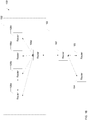
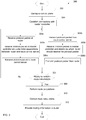
- FIG. 3 illustrates a flowchart of an example process 300 for semi-centralized routing.
- Process 300 begins by configuring the control plane (at 302).
- the master controller 108 can transmit the configuration messages to the route control servers 112a-112d and receive responses or other messages from the route control servers 112a-112d that include information indicating the router 106 it is associated with.
- the master controller 108 can use these messages to determine which route control server 112 correspond to each of the routers 106a-106d.
- the master controller 108 can create a route control table using the information provided by the router control servers 112a-112d.
- the master controller 108 can also establish a connection with each route control server and a connection with each router (at 303). For example, in some implementations, the master controller 108 can send keep-alive messages to the routers 106a-106d and the route control servers 112a-112d. The keep-alive messages can inform the routers 106a-106d that distributed routing protocol packets should be transmitted to it. The master controller 108 can use the acknowledgment messages provided by the routers 106a-106d to determine a network topology. For example, if the master controller 108 does not receive an acknowledgment message from the router 106c, it can determine that the router 106c has failed or is not operational.
- the master controller 108 can also transmit keep-alive messages to the route control servers 112a-112d to determine which route control servers 112 have failed or is not operational. In addition, the master controller 108 can transmit the keep-alive messages to the route control servers 112a-112d to inform the route control servers that it is the master controller 108.
- a distributed routing protocol packet is received at a router (at 304a).
- the router 106a can receive a distributed routing protocol packet, such as a BGP protocol packet.
- the router 106a can be configured to provide the distributed routing protocol packet to the master controller 108.
- the master controller 108 receives the protocol packet and determines which route control server 112a-d is associated with the router 106a (at 305a). For example, the master controller 108 can access the route control table to determine which route control server is to perform the route calculations for the router 106a.
- the master controller provides the distributed routing protocol packet to the route control server (at 306a).
- the master controller 108 can provide the distributed routing protocol packet to the route control server 112a, which the master controller 108 determined to be assigned to perform route calculations for the router 106a.
- the master controller 108 can also provide network topology information to the route control server 112a.
- Example network topology information includes information describing the routers 106 (inside and/or outside the network 100) that are linked to the router 106a and latency times or congestion information associated with these connections.
- the route control server transmits a distributed protocol packet (at 304b).
- the route control server 112a can generate a distributed protocol packet (e.g., OSPF or BGP) that is to be transmitted to devices, such as other routers, connected to router 106a.
- the route control server 112a can transmit the distributed protocol packet to the master controller 108.
- the master controller receives the distributed protocol packet and determines which router should receive the distributed protocol packet provided by the route control server (at 305b). For example, the master controller 108 can determine which router should receive the distributed protocol packet based on the route control table generated from the configuration messages. The master controller 108 then transmits the distributed protocol packet to the appropriate router.
- the router receives the distributed protocol packet and broadcasts the distributed protocol packet to its neighboring routers (at 306b).
- router 106a can receive the distributed protocol packet and transmit the packet to other routers, such as neighboring routers.
- the number of protocol packets exchanged is monitored by the master controller 108 and/or the route control servers (at 307). If the number of protocol packets is below a predetermined threshold, the process continues and additional protocol packets are exchanged (at 304a and 304b). If the number of protocol packets is greater than or equal to the predetermined threshold, the process continues at 308.
- the predetermined threshold can be based on the distributed routing protocol implemented by the route control servers. For example, the predetermined threshold can be based on reaching a certain state in a state-machine maintained by the distributed routing protocol (e.g., BGP or OSPF protocols). As another example, the predetermined threshold can be based on a number of protocol packets exchanged that establishes sufficient states for routing packets based on the BGP or OSPF protocols.
- the route control server receives the distributed protocol packet from the master controller and performs route calculations for the router (at step 308).
- the route control server 112a can be configured to perform route calculations for various distributed routing protocols.
- the route control server 112a can use the network topology information provided by the master controller 108 and perform route calculations based on the BGP and/or OSPF protocols.
- the route control server 112a converts the calculated route information (at 310). For example, in some implementations, the route control server 112a processes the computed route information into a format that can be used by the router 106a to route data packets. For example, the route control server 112a can convert the calculated route information to be a forwarding table or flow. The route control server 112a provides the calculated route information to the master controller 108. In some implementations, the route control server 112a also generates a distributed routing protocol packet that is based on the computed route information, which is also provided to the master controller 108.
- the route control server provides the calculated route information to the master controller, which converts the route calculations to a format that can be used by the router (at 310).
- the master controller 108 can convert the route calculations, which are in a distributed routing protocol format, to a centralized routing protocol format, such as a forwarding table.
- the master control 108 can convert a BGP or OSPF based route calculation to a forwarding table that can be used by an OpenFlow router.
- the master controller 108 can use various techniques to convert the calculated route information to a flow.
- FIG. 4 is a diagram of an example conversion of route information into a flow. The conversion of route information into a flow as illustrated in FIG. 4 can be performed, for example, by the master controller 108.
- a route 430 as specified by a distributed routing protocol can include a destination IP address prefix 432 and a set of one or more paths or "nexthops" 434, in addition to many other types of data.
- the prefix can be specified by a mask, e.g., "24", indicating that only the most significant 24 bits are significant.
- Each path includes an IP address, e.g. 4.5.6.7, and an outgoing interface identifier, e.g. "eth0,” for Ethernet port 0.
- the route 130 can be converted into a corresponding flow 140.
- the flow 440 includes one or more match rules 442.
- the match rules 442 can include a pattern for the IP Address, e.g .
- match rule 442 can also specify that a particular bit field in a network packet header must be a particular value, e.g . 0x7B.
- the flow 440 includes a flow path group identifier 444 to a flow path group 450, which specifies a set of actions to be taken upon encountering a network packet that matches match rules 442.
- the flow path group 450 includes an identifier 452 as a key and a corresponding set of actions 454 as a value.
- the actions can be stored with the flow 440, rather than being stored in a flow path group 450.
- maintaining the flow path groups 450 in a separate table allows the flow path group definitions to be reused for other flows as well.
- the controller can, but need not, ensure that all flow path groups with a same set of actions have only a single entry in a flow path group table.
- the actions 454 to be taken by a network device can be analogous to those actions taken when the network device forwards traffic according to a distributed routing protocol.
- the set of actions 454 can include actions to rewrite the source media access control (MAC) address of a packet, rewrite the destination MAC address of a packet, and output the packet to one of a set of interfaces, e.g. , eth0 or , ethl.
- MAC media access control
- the master controller provides the converted route information to the router (at 312).
- the master controller 108 can push the forwarding table or the calculated flow to the router 106a.
- the router 106a can then use the route information to forward distributed routing protocol based data packets as they are received.
- the master controller 108 can provide the generated distributed routing protocol packet to the router 106a.
- the router 106a can transmit the protocol packet to neighboring routers. While the operations of process 300 are depicted in the drawings in a particular order, this should not be understood as requiring that such operations be performed in a particular order shown or in sequential order, or that all illustrated operations be performed, to achieve desirable results.
- Embodiments of the subject matter and the operations described in this specification can be implemented in digital electronic circuitry, or in computer software, firmware, or hardware, including the structures disclosed in this specification and their structural equivalents, or in combinations of one or more of them.
- Embodiments of the subject matter described in this specification can be implemented as one or more computer programs, i.e., one or more modules of computer program instructions, encoded on computer storage medium for execution by, or to control the operation of, data processing apparatus.
- the program instructions can be encoded on an artificially generated propagated signal, e.g., a machine-generated electrical, optical, or electromagnetic signal, that is generated to encode information for transmission to suitable receiver apparatus for execution by a data processing apparatus.
- a computer storage medium can be, or be included in, a computer-readable storage device, a computer-readable storage substrate, a random or serial access memory array or device, or a combination of one or more of them. Moreover, while a computer storage medium is not a propagated signal, a computer storage medium can be a source or destination of computer program instructions encoded in an artificially generated propagated signal. The computer storage medium can also be, or be included in, one or more separate physical components or media (e.g., multiple CDs, disks, or other storage devices).
- the operations described in this specification can be implemented as operations performed by a data processing apparatus on data stored on one or more computer-readable storage devices or received from other sources.
- the term "data processing apparatus” encompasses all kinds of apparatus, devices, and machines for processing data, including by way of example a programmable processor, a computer, a system on a chip, or multiple ones, or combinations, of the foregoing.
- the apparatus can include special purpose logic circuitry, e.g., an FPGA (field programmable gate array) or an ASIC (application specific integrated circuit).
- the apparatus can also include, in addition to hardware, code that creates an execution environment for the computer program in question, e.g., code that constitutes processor firmware, a protocol stack, a database management system, an operating system, a cross-platform runtime environment, a virtual machine, or a combination of one or more of them.
- the apparatus and execution environment can realize various different computing model infrastructures, such as web services, distributed computing and grid computing infrastructures.
- a computer program (also known as a program, software, software application, script, or code) can be written in any form of programming language, including compiled or interpreted languages, declarative or procedural languages, and it can be deployed in any form, including as a stand alone program or as a module, component, subroutine, object, or other unit suitable for use in a computing environment.
- a computer program may, but need not, correspond to a file in a file system.
- a program can be stored in a portion of a file that holds other programs or data (e.g., one or more scripts stored in a markup language document), in a single file dedicated to the program in question, or in multiple coordinated files (e.g., files that store one or more modules, sub programs, or portions of code).
- a computer program can be deployed to be executed on one computer or on multiple computers that are located at one site or distributed across multiple sites and interconnected by a communication network.
- the processes and logic flows described in this specification can be performed by one or more programmable processors executing one or more computer programs to perform actions by operating on input data and generating output.
- the processes and logic flows can also be performed by, and apparatus can also be implemented as, special purpose logic circuitry, e.g., an FPGA (field programmable gate array) or an ASIC (application specific integrated circuit).
- processors suitable for the execution of a computer program include, by way of example, both general and special purpose microprocessors, and any one or more processors of any kind of digital computer.
- a processor will receive instructions and data from a read only memory or a random access memory or both.
- the essential elements of a computer are a processor for performing actions in accordance with instructions and one or more memory devices for storing instructions and data.
- a computer will also include, or be operatively coupled to receive data from or transfer data to, or both, one or more mass storage devices for storing data, e.g., magnetic, magneto optical disks, or optical disks.
- mass storage devices for storing data, e.g., magnetic, magneto optical disks, or optical disks.
- a computer need not have such devices.
- Devices suitable for storing computer program instructions and data include all forms of non volatile memory, media and memory devices, including by way of example semiconductor memory devices, e.g., erasable programmable read only memory (“EPROM”), electrically erasable programmable read only memory (“EEPROM”), and flash memory devices; magnetic disks, e.g., internal hard disks or removable disks; magneto optical disks; and CD ROM and DVD-ROM disks.
- semiconductor memory devices e.g., erasable programmable read only memory (“EPROM”), electrically erasable programmable read only memory (“EEPROM”), and flash memory devices
- magnetic disks e.g., internal hard disks or removable disks
- magneto optical disks e.g., CD ROM and DVD-ROM disks.
- the processor and the memory can be supplemented by, or incorporated in, special purpose logic circuitry.
- Embodiments of the subject matter described in this specification can be implemented in a computing system that includes a back end component, e.g., as a data server, or that includes a middleware component, e.g., an application server, or that includes a front end component, e.g., a client computer having a graphical user interface or a Web browser through which a user can interact with an implementation of the subject matter described in this specification, or any combination of one or more such back end, middleware, or front end components.
- the components of the system can be interconnected by any form or medium of digital data communication, e.g., a communication network.
- Examples of communication networks include a local area network (“LAN”) and a wide area network (“WAN”), an inter-network (e.g., the Internet), and peer-to-peer networks (e.g., ad hoc peer-to-peer networks).
- LAN local area network
- WAN wide area network
- inter-network e.g., the Internet
- peer-to-peer networks e.g., ad hoc peer-to-peer networks.
- the computing system can include clients and servers.
- a client and server are generally remote from each other and typically interact through a communication network. The relationship of client and server arises by virtue of computer programs running on the respective computers and having a client-server relationship to each other.
- a server transmits data (e.g., an HTML page) to a client device (e.g., for purposes of displaying data to and receiving user input from a user interacting with the client device).
- client device e.g., for purposes of displaying data to and receiving user input from a user interacting with the client device.
- Data generated at the client device e.g., a result of the user interaction
- the network 100 can be implemented without a master controller and each router can be connected to the appropriate route control server.
- the network 100 can be implemented such that the route control servers and master controller are implemented as virtual machines or processes on one computer.
- the master controller can configure the control plane without receiving messages from the route control servers. Instead, the master controller can randomly assign routers to route control servers.
- protocols other than Openflow can be used between the master controller and the routers.
- the master controller can implement routing protocols.
- the actions recited in the claims can be performed in a different order and still achieve desirable results.
- the processes depicted in the accompanying figures do not necessarily require the particular order shown, or sequential order, to achieve desirable results. In certain implementations, multitasking and parallel processing may be advantageous.
Landscapes
- Engineering & Computer Science (AREA)
- Computer Networks & Wireless Communication (AREA)
- Signal Processing (AREA)
- Data Exchanges In Wide-Area Networks (AREA)
Claims (14)
- Computerimplementiertes Verfahren, umfassend:Empfangen (304a) eines Netzwerkprotokollpakets an einem Router (106, 106a-106d), der zum Leiten von Datenpaketen an einen oder mehrere andere Router angepasst ist, wobei das Netzwerkprotokollpaket einem Routingprotokoll entspricht, das verteilte Routingberechnung bereitstellt;Senden des Netzwerkprotokollpakets über eine Steuerung (108) an einen ausgewählten einer Vielzahl von Routensteuerungsservern (112, 112a-112d);Verarbeiten des Netzwerkprotokollpakets an dem ausgewählten Routensteuerungsserver (112, 112a-112d), um ein Routing-Berechnungsergebnis zu erzeugen, das dem Routingprotokoll entspricht;Erzeugen von Routinginformationen auf Basis des Routingberechnungsergebnisses, wobei die Routinginformationen einem Steuerprotokoll entsprechen, das zentrale Routingberechnung bereitstellt;Senden (312) der Routinginformationen an den Router (106, 106a-106d) zum Leiten von Datenpaketen auf Basis des Steuerprotokolls;Erkennen einer Störung in der Steuerung (108);Zuweisen einer zweiten Steuerung (110) zur Verwaltung der Kommunikationen zwischen dem Router (106, 106a-106d) und den mehreren Routensteuerungsservern (112, 112a-112d); undSenden, von der zweiten Steuerung, einer Nachricht an die mehreren Routensteuerungsserver (112, 112a-112b) und den Router (106, 106a-106d), wobei die Nachricht Steuerungsstatusinformationen umfasst.
- Computerimplementiertes Verfahren, umfassend:Empfangen, durch eine Steuerung (108), eines Netzwerkprotokollpakets von einem Router (106, 106a-106d), das eine Angabe beinhaltet, dass das Netzwerkprotokollpaket einem Routingprotokoll entspricht, das verteilte Routingberechnung bereitstellt;Senden des Netzwerkprotokollpakets an einen ausgewählten von mehreren Routensteuerungsservern (112, 112a-112d);Empfangen, von dem einen ausgewählten der mehreren Routensteuerungsserver (112, 112a-112d), von Routinginformationen, die (i) eine Angabe beinhalten, das die Routinginformationen einem Steuerprotokoll entsprechen, das zentrale Routingberechnung bereitstellt, und (ii) auf Basis eines Routingberechnungsergebnisses erzeugt werden, das dem Routingprotokoll entspricht;Senden der Routinginformationen an den Router (106, 106a-106d), um dem Router zu ermöglichen, Datenpakete auf Basis des Steuerprotokolls zu leiten;Erkennen einer Störung in der Steuerung (108);Zuweisen einer zweiten Steuerung (110) zur Verwaltung der Kommunikationen zwischen dem Router (106, 106a-106d) und den mehreren Routensteuerungsservern (112, 112a-112d); undÜbertragen, von der zweiten Steuerung (110), einer Nachricht an die mehreren Routensteuerungsserver (112, 112a-112d) und den Router (106, 106a-106d), wobei die Nachricht Steuerungsstatusinformationen umfasst.
- Computerimplementiertes Verfahren nach Anspruch 1 oder Anspruch 2, wobei der Router (106,106a-106d) konfiguriert ist, ein zentrales Steuerprotokoll zu verwenden.
- Computerimplementiertes Verfahren nach Anspruch 1 oder Anspruch 2, ferner umfassend:Verwenden des Routingberechnungsergebnisses zum Erzeugen eines Netzwerkprotokollpakets, das dem Routingprotokoll entspricht; undSenden des erzeugten Netzwerkprotokollpakets an einen zweiten Router, der mit dem Router verbunden ist, wobei der zweite Router dafür angepasst ist, Datenpakete mithilfe des Routingprotokolls zu leiten.
- Computerimplementiertes Verfahren nach Anspruch 1 oder Anspruch 2, ferner umfassend:vor Empfangen des Netzwerkprotokollpakets:Empfangen einer Nachricht von dem ausgewählten Routensteuerungsserver (112, 112a-112d) an der Steuerung (108), wobei die Nachricht Routerzuweisungsinformationen umfasst, um eine Zuordnung zwischen dem ausgewählten Routensteuerungsserver und dem Router zu bilden.
- Computerimplementiertes Verfahren nach Anspruch 5, wobei die Routerzuweisungsinformationen Daten umfassen, die angeben, dass der ausgewählte Routensteuerungsserver (112, 112a-112d) mit dem Router (106, 106a-106d) verbunden ist.
- Computerimplementiertes Verfahren nach Anspruch 1 oder Anspruch 2, ferner umfassend:Zugreifen auf eine Zuordnung vor dem Senden des Netzwerkprotokollpakets, um den ausgewählten Routensteuerungsserver (112, 112a-112d) auszuwählen.
- Computerimplementiertes Verfahren nach Anspruch 1, wobei das Erzeugen der Routinginformationen auf Basis des Routingberechnungsergebnisses ein Umwandeln des Routingberechnungsergebnisses in einen Fluss umfasst, wobei die Routinginformationen den Fluss umfassen.
- Computerimplementiertes Verfahren nach Anspruch 1 oder Anspruch 2, wobei das Steuerprotokoll ein OpenFlow-Protokoll umfasst.
- Computerimplementiertes Verfahren nach Anspruch 1 oder Anspruch 2, wobei das Routingprotokoll ein Border-Gateway-Protokoll oder ein Open-Shortest-Path-First-Protokoll umfasst.
- Computerimplementiertes Verfahren nach Anspruch 1 oder Anspruch 2, wobei die zweite Steuerung (110) eine Nachricht von dem ausgewählten Routensteuerungsserver (112, 112a-112d) empfängt, wobei die Nachricht Routerzuweisungsinformationen umfasst, um eine Zuordnung zwischen dem ausgewählten Routensteuerungsserver und dem Router zu bilden.
- Computerimplementiertes Verfahren nach Anspruch 1 oder Anspruch 2, wobei der Routensteuerungsserver (112, 112a-112d) das Routingberechnungsergebnis mithilfe des Netzwerkprotokollpakets erzeugt, das am Router empfangen wird.
- Computerimplementiertes Verfahren nach Anspruch 1 oder Anspruch 2, ferner umfassend:Senden, durch die Steuerung (108), von Netzwerktopologieinformationen an den ausgewählten Routensteuerungsserver (112, 112a-112d), wobei der ausgewählte Routensteuerungsserver das Routingberechnungsergebnis mithilfe des Netzwerkprotokollpakets, das an dem Router (106, 106a-106d) empfangen wird, und der Netzwerktopologieinformationen, die von der Steuerung (108) bereitgestellt werden, erzeugt.
- System, umfassend:einen Router (106, 106a-106d), wobei der Router konfiguriert ist:Datenpakete an einen oder mehrere andere Router zu leiten; undein Netzwerkprotokollpaket zu empfangen, wobei das Netzwerkprotokollpaket einem Routingprotokoll entspricht, das verteilte Routingberechnung bereitstellt;eine Steuerung (108), die mit dem Router (106, 106a-106d) verbunden ist, wobei die Steuerung (108) konfiguriert ist:mehrere Routensteuerungsserver (112, 112a-112d), wobei der ausgewählte der mehreren Routensteuerungsserver konfiguriert ist:das Netzwerkprotokollpaket vom Router zu empfangen und das Netzwerkprotokollpaket an einen ausgewählten von mehreren Routensteuerungsservern (112, 112a-112d) zu senden; unddas Netzwerkprotokollpaket zu verarbeiten, um ein Routingberechnungsergebnis zu erzeugen, das dem Routingprotokoll entspricht; unddas Routingberechnungsergebnis an die Steuerung (108) zu senden;
wobei die Steuerung (108) ferner konfiguriert ist:Routinginformationen auf Basis des Routingberechnungsergebnisses zu erzeugen, wobei die Routinginformationen einem Steuerprotokoll entsprechen, das zentrale Routingberechnung bereitstellt;die Routinginformationen zur Weiterleitung von Datenpaketen auf Basis des Steuerprotokolls an den Router (106, 106a-106d) zu senden;wobei das System konfiguriert ist:eine Störung in der Steuerung (108) zu erkennen;eine zweite Steuerung (110) zur Verwaltung von Kommunikationen zwischen dem Router (106, 106a-106d) und den mehreren Routensteuerungsservern (112, 112a-112d) zuzuweisen; undeine Nachricht von der zweiten Steuerung (110) an die mehreren Routensteuerungsserver (112, 112a-112d) und den Router (106, 106a-106d) zu senden, wobei die Nachricht Steuerungsstatusinformationen umfasst.
Applications Claiming Priority (2)
| Application Number | Priority Date | Filing Date | Title |
|---|---|---|---|
| US13/274,230 US8830820B2 (en) | 2011-10-14 | 2011-10-14 | Semi-centralized routing |
| PCT/US2012/059374 WO2013055697A1 (en) | 2011-10-14 | 2012-10-09 | Semi-centralized routing |
Publications (3)
| Publication Number | Publication Date |
|---|---|
| EP2767040A1 EP2767040A1 (de) | 2014-08-20 |
| EP2767040A4 EP2767040A4 (de) | 2015-05-20 |
| EP2767040B1 true EP2767040B1 (de) | 2017-05-03 |
Family
ID=48082346
Family Applications (1)
| Application Number | Title | Priority Date | Filing Date |
|---|---|---|---|
| EP12839801.3A Active EP2767040B1 (de) | 2011-10-14 | 2012-10-09 | Semizentralisiertes routing |
Country Status (5)
| Country | Link |
|---|---|
| US (2) | US8830820B2 (de) |
| EP (1) | EP2767040B1 (de) |
| CN (1) | CN103947164B (de) |
| DE (1) | DE202012013425U1 (de) |
| WO (1) | WO2013055697A1 (de) |
Cited By (1)
| Publication number | Priority date | Publication date | Assignee | Title |
|---|---|---|---|---|
| US10411990B2 (en) * | 2017-12-18 | 2019-09-10 | At&T Intellectual Property I, L.P. | Routing stability in hybrid software-defined networking networks |
Families Citing this family (62)
| Publication number | Priority date | Publication date | Assignee | Title |
|---|---|---|---|---|
| WO2013078685A1 (zh) * | 2011-12-02 | 2013-06-06 | 华为技术有限公司 | 发送消息的方法、接收消息方法、开放流控制器及第一开放流交换机 |
| US20130322437A1 (en) * | 2012-05-31 | 2013-12-05 | Robert Raszuk | Method and apparatus for removing bgp state from network edge elements |
| US9497296B2 (en) * | 2012-06-26 | 2016-11-15 | Nec Corporation | Communication method, information processing apparatus, communication system, program, node, and communication terminal for identifying packet flows as a group and adding identifier to a packet belonging to packet flows and setting rules for forwarding the packet |
| JP2015525982A (ja) | 2012-06-26 | 2015-09-07 | 日本電気株式会社 | 通信方法、通信システム、情報処理装置、通信端末およびプログラム |
| US9331940B2 (en) * | 2012-08-28 | 2016-05-03 | Alcatel Lucent | System and method providing distributed virtual routing and switching (DVRS) |
| US20150256455A1 (en) * | 2012-10-31 | 2015-09-10 | Nec Corporation, | Communication system, path information exchange apparatus, communication node, forwarding method for path information and program |
| US8966586B2 (en) * | 2013-01-27 | 2015-02-24 | International Business Machines Corporation | Authentication within OpenFlow network |
| WO2014123194A1 (ja) * | 2013-02-07 | 2014-08-14 | 日本電気株式会社 | 通信システム、制御装置、通信制御方法およびプログラム |
| US9374302B2 (en) | 2013-04-26 | 2016-06-21 | Brocade Communications Systems, Inc. | Distributed methodology for peer-to-peer transmission of stateful packet flows |
| US9124506B2 (en) | 2013-06-07 | 2015-09-01 | Brocade Communications Systems, Inc. | Techniques for end-to-end network bandwidth optimization using software defined networking |
| EP3016316B1 (de) * | 2013-07-30 | 2017-09-13 | Huawei Technologies Co., Ltd. | Netzwerksteuerungsverfahren und -vorrichtung |
| US9426060B2 (en) | 2013-08-07 | 2016-08-23 | International Business Machines Corporation | Software defined network (SDN) switch clusters having layer-3 distributed router functionality |
| US20160301629A1 (en) * | 2013-09-26 | 2016-10-13 | Nec Corporation | Control device, network system, packet transfer control method, and program for control device |
| US9225641B2 (en) | 2013-10-30 | 2015-12-29 | Globalfoundries Inc. | Communication between hetrogenous networks |
| US9419855B2 (en) | 2014-03-14 | 2016-08-16 | Nicira, Inc. | Static routes for logical routers |
| US9647883B2 (en) | 2014-03-21 | 2017-05-09 | Nicria, Inc. | Multiple levels of logical routers |
| WO2015142404A1 (en) * | 2014-03-21 | 2015-09-24 | Nicira, Inc. | Dynamic routing for logical routers |
| WO2015167479A1 (en) | 2014-04-29 | 2015-11-05 | Hewlett-Packard Development Company, L.P. | Efficient routing in software defined networks |
| US20150350077A1 (en) * | 2014-05-30 | 2015-12-03 | Brocade Communications Systems, Inc. | Techniques For Transforming Legacy Networks Into SDN-Enabled Networks |
| CN104158742A (zh) * | 2014-07-23 | 2014-11-19 | 杭州华三通信技术有限公司 | 一种转发表项的生成方法和设备 |
| CN109921989B (zh) * | 2014-07-31 | 2021-09-21 | 华为技术有限公司 | 一种bgp逻辑拓扑生成的方法及设备 |
| WO2016026798A1 (en) * | 2014-08-18 | 2016-02-25 | Nokia Solutions And Networks Oy | Group communication service enabler security |
| US10257089B2 (en) | 2014-10-30 | 2019-04-09 | At&T Intellectual Property I, L.P. | Distributed customer premises equipment |
| EP3654593B1 (de) * | 2014-12-11 | 2021-11-24 | AT&T Intellectual Property I, L.P. | Mehrschichtige verteilte routerarchitektur |
| US10129180B2 (en) | 2015-01-30 | 2018-11-13 | Nicira, Inc. | Transit logical switch within logical router |
| US9853874B2 (en) | 2015-03-23 | 2017-12-26 | Brocade Communications Systems, Inc. | Flow-specific failure detection in SDN networks |
| US9912536B2 (en) | 2015-04-01 | 2018-03-06 | Brocade Communications Systems LLC | Techniques for facilitating port mirroring in virtual networks |
| US9813329B2 (en) * | 2015-06-01 | 2017-11-07 | Telefonaktiebolaget Lm Ericsson (Publ) | Method for multi-chassis redundancy using anycast and GTP TEID |
| US9749401B2 (en) | 2015-07-10 | 2017-08-29 | Brocade Communications Systems, Inc. | Intelligent load balancer selection in a multi-load balancer environment |
| US10129142B2 (en) | 2015-08-11 | 2018-11-13 | Nicira, Inc. | Route configuration for logical router |
| US10075363B2 (en) | 2015-08-31 | 2018-09-11 | Nicira, Inc. | Authorization for advertised routes among logical routers |
| US10095535B2 (en) | 2015-10-31 | 2018-10-09 | Nicira, Inc. | Static route types for logical routers |
| WO2017096564A1 (zh) * | 2015-12-09 | 2017-06-15 | 北京大学深圳研究生院 | 一种基于内容的集中式路由体系架构mccn |
| US11023617B2 (en) | 2016-05-16 | 2021-06-01 | Privacy Rating Ltd. | System and method for privacy policy enforcement |
| CN107404439B (zh) * | 2016-05-18 | 2020-02-21 | 华为技术有限公司 | 用于重定向数据流的方法和系统、网络设备和控制设备 |
| US10153973B2 (en) * | 2016-06-29 | 2018-12-11 | Nicira, Inc. | Installation of routing tables for logical router in route server mode |
| CN106161256B (zh) * | 2016-07-26 | 2019-08-23 | 新华三技术有限公司 | 一种边界网关协议bgp路由的处理方法及装置 |
| US10454758B2 (en) | 2016-08-31 | 2019-10-22 | Nicira, Inc. | Edge node cluster network redundancy and fast convergence using an underlay anycast VTEP IP |
| US10341236B2 (en) | 2016-09-30 | 2019-07-02 | Nicira, Inc. | Anycast edge service gateways |
| EP3358791A1 (de) * | 2017-02-02 | 2018-08-08 | Nokia Solutions and Networks Oy | Verfahren zum senden von nachrichten von einem emittierenden verbundenen gegenstand an mindestens einen empfangenden verbundenen gegenstand durch mindestens ein netzelement |
| GB201706475D0 (en) | 2017-04-24 | 2017-06-07 | Microsoft Technology Licensing Llc | Communications network node |
| US10855581B2 (en) | 2017-11-10 | 2020-12-01 | Fabriscale Technologies AS | System and method of computing ethernet routing paths |
| CN109412940B (zh) * | 2018-10-23 | 2022-02-01 | 迈普通信技术股份有限公司 | 路由器管理方法及路由器管理系统 |
| US10931560B2 (en) | 2018-11-23 | 2021-02-23 | Vmware, Inc. | Using route type to determine routing protocol behavior |
| US10797998B2 (en) | 2018-12-05 | 2020-10-06 | Vmware, Inc. | Route server for distributed routers using hierarchical routing protocol |
| US10938788B2 (en) | 2018-12-12 | 2021-03-02 | Vmware, Inc. | Static routes for policy-based VPN |
| US20220321499A1 (en) * | 2019-03-18 | 2022-10-06 | Brightways Corporation | Switch flow module on an integrated circuit for aggregation in data center network switching |
| US10958567B1 (en) * | 2019-03-29 | 2021-03-23 | Juniper Networks, Inc. | Controlling paths in a network via a centralized controller or network devices |
| US11451464B2 (en) * | 2019-05-13 | 2022-09-20 | 128 Technology, Inc. | Central authority for service and topology exchange |
| US12137045B2 (en) | 2019-05-13 | 2024-11-05 | Juniper Networks, Inc. | Metric-based multi-hop path selection |
| US11329912B2 (en) | 2019-05-13 | 2022-05-10 | 128 Technology, Inc. | Source-based routing |
| US11005749B2 (en) | 2019-05-13 | 2021-05-11 | 128 Technology, Inc. | Multicast source and receiver access control |
| US11070465B2 (en) | 2019-05-13 | 2021-07-20 | 128 Technology, Inc. | Distribution of multicast information in a routing system |
| US11153202B2 (en) | 2019-05-13 | 2021-10-19 | 128 Technology, Inc. | Service and topology exchange protocol |
| US10999182B2 (en) | 2019-05-13 | 2021-05-04 | 128 Technology, Inc. | Routing using segment-based metrics |
| US11272042B2 (en) * | 2020-01-21 | 2022-03-08 | Cisco Technology, Inc. | Methods and systems to track protocol and hardware resource state transitions |
| CN111740914B (zh) * | 2020-06-18 | 2022-11-22 | 深圳市信锐网科技术有限公司 | 一种ospf协议报文分布式处理方法、系统及相关设备 |
| WO2021263045A1 (en) | 2020-06-24 | 2021-12-30 | Juniper Networks, Inc. | Point-to-multipoint layer-2 network extension over layer-3 network |
| CN114760193A (zh) * | 2020-12-29 | 2022-07-15 | 华为技术有限公司 | 一种主备协商方法及设备 |
| CN113055084B (zh) * | 2021-03-19 | 2022-04-26 | 烽火通信科技股份有限公司 | 一种光网络业务故障恢复的方法和系统 |
| CN113949902B (zh) * | 2021-09-28 | 2022-12-20 | 天翼物联科技有限公司 | 一种视频分发控制方法、系统、装置及存储介质 |
| CN116760830B (zh) * | 2023-08-14 | 2024-03-01 | 腾讯科技(深圳)有限公司 | 路由信息的处理方法、装置、计算机可读介质及电子设备 |
Family Cites Families (17)
| Publication number | Priority date | Publication date | Assignee | Title |
|---|---|---|---|---|
| US6202170B1 (en) * | 1998-07-23 | 2001-03-13 | Lucent Technologies Inc. | Equipment protection system |
| KR100865993B1 (ko) | 2002-05-06 | 2008-10-29 | 주식회사 케이티 | 다자간 회의 시스템의 패킷 전달 방법 |
| US7292535B2 (en) | 2002-05-23 | 2007-11-06 | Chiaro Networks Ltd | Highly-available OSPF routing protocol |
| US7707594B1 (en) | 2002-08-20 | 2010-04-27 | At&T Intellectual Property I, L.P. | System and method for providing a routing service in distributed computing environment |
| US9014181B2 (en) * | 2004-11-01 | 2015-04-21 | Alcatel Lucent | Softrouter separate control network |
| US7904589B2 (en) | 2007-05-19 | 2011-03-08 | At&T Intellectual Property I, Lp | Intelligent computer network routing using logically centralized, physically distributed servers distinct from network routers |
| CN101335697B (zh) * | 2007-06-25 | 2012-04-04 | 华为技术有限公司 | 路由信息发布方法、实现数据包路由的方法、系统和装置 |
| EP2582091B1 (de) * | 2007-09-26 | 2017-05-31 | Nicira Inc. | Netzbetriebenes system zur verwaltung und sicherung von netzwerken |
| CN101227248B (zh) * | 2008-01-29 | 2011-05-25 | 中兴通讯股份有限公司 | 业务路径建立方法 |
| JP5074327B2 (ja) * | 2008-08-21 | 2012-11-14 | 株式会社日立製作所 | 経路制御システム |
| US8358662B2 (en) * | 2008-08-30 | 2013-01-22 | Futurewei Technologies, Inc. | Creating and maintaining traffic engineered database for path computation element |
| CN101605280A (zh) * | 2009-07-10 | 2009-12-16 | 北京邮电大学 | 基于多层多域光网络的双路由计算单元系统 |
| JP5131651B2 (ja) * | 2009-11-26 | 2013-01-30 | 日本電気株式会社 | 負荷分散システム、負荷分散方法、及びプログラム |
| EP2355423A1 (de) * | 2010-01-29 | 2011-08-10 | Deutsche Telekom AG | System und Verfahren zum Routen von Datenpaketen über ein Internetprotokollnetzwerk |
| US8743889B2 (en) * | 2010-07-06 | 2014-06-03 | Nicira, Inc. | Method and apparatus for using a network information base to control a plurality of shared network infrastructure switching elements |
| US9705822B2 (en) * | 2011-06-28 | 2017-07-11 | Infinera Corporation | Distributing control plane processing |
| US8559314B2 (en) * | 2011-08-11 | 2013-10-15 | Telefonaktiebolaget L M Ericsson (Publ) | Implementing OSPF in split-architecture networks |
-
2011
- 2011-10-14 US US13/274,230 patent/US8830820B2/en active Active
-
2012
- 2012-10-09 DE DE202012013425.6U patent/DE202012013425U1/de not_active Expired - Lifetime
- 2012-10-09 EP EP12839801.3A patent/EP2767040B1/de active Active
- 2012-10-09 CN CN201280050431.8A patent/CN103947164B/zh active Active
- 2012-10-09 WO PCT/US2012/059374 patent/WO2013055697A1/en not_active Ceased
-
2014
- 2014-08-14 US US14/459,670 patent/US20140355415A1/en not_active Abandoned
Cited By (1)
| Publication number | Priority date | Publication date | Assignee | Title |
|---|---|---|---|---|
| US10411990B2 (en) * | 2017-12-18 | 2019-09-10 | At&T Intellectual Property I, L.P. | Routing stability in hybrid software-defined networking networks |
Also Published As
| Publication number | Publication date |
|---|---|
| CN103947164A (zh) | 2014-07-23 |
| EP2767040A4 (de) | 2015-05-20 |
| US20140355415A1 (en) | 2014-12-04 |
| WO2013055697A1 (en) | 2013-04-18 |
| CN103947164B (zh) | 2016-03-09 |
| EP2767040A1 (de) | 2014-08-20 |
| US20130094350A1 (en) | 2013-04-18 |
| DE202012013425U1 (de) | 2017-01-12 |
| US8830820B2 (en) | 2014-09-09 |
Similar Documents
| Publication | Publication Date | Title |
|---|---|---|
| US8830820B2 (en) | Semi-centralized routing | |
| US8755389B1 (en) | Semi-centralized multiple path routing | |
| AU2019307597B2 (en) | Multi-cloud connectivity using SRv6 and BGP | |
| CN116668305B (zh) | 多级网络结构的简化配置 | |
| US11201782B1 (en) | Automation of maintenance mode operations for network devices | |
| CN105357046B (zh) | 一种用于软件定义网络sdn的网络信息探测的方法 | |
| JP5131651B2 (ja) | 負荷分散システム、負荷分散方法、及びプログラム | |
| EP3063903B1 (de) | Verfahren und system zum lastausgleich in einem datennetzwerk | |
| EP2933979B1 (de) | Implementierungsverfahren und -system für ein dht-basiertes steuerungsnetzwerk und netzwerksteuerung | |
| EP3474502B1 (de) | Reduzierte konfiguration für mehrstufige netzwerkstrukturen | |
| CN109769154B (zh) | 数据中心分组光学传输失败保护 | |
| CN101656732B (zh) | 路径控制系统 | |
| US20180041396A1 (en) | System and method for topology discovery in data center networks | |
| US10404544B2 (en) | Network topology determining method and apparatus, and centralized network status information storage device | |
| KR20150056159A (ko) | SDN(Software-defined networking)에서 네트워크 장애 해소를 위한 컨트롤러 및 스위치의 동작 방법과, 이를 위한 컨트롤러 및 스위치 | |
| GB2513188A (en) | Identification of the paths taken through a network of interconnected devices | |
| CN104717081A (zh) | 一种网关功能的实现方法及装置 | |
| WO2019081188A1 (en) | METHODS, CONTROLLER MANAGER AND CONTROLLER AGENT FOR CONNECTION BETWEEN A SWITCH OF A COMMUNICATION NETWORK AND A SWITCH CONTROLLER | |
| Al Salti et al. | An effective, efficient and scalable link discovery (EESLD) framework for hybrid multi-controller SDN networks | |
| JP5950019B2 (ja) | 通信システム、統合コントローラ、パケット転送方法及びプログラム | |
| JP6968226B2 (ja) | ネットワークを制御する方法 | |
| KR102385707B1 (ko) | 호스트 추상화를 이용한 sdn 네트워크 시스템 및 그 구현방법 | |
| Tavakoli | Exploring a centralized/distributed hybrid routing protocol for low power wireless networks and large-scale datacenters | |
| Vaghani et al. | Investigation of data forwarding schemes for network resiliency in POX software defined networking controller | |
| Tahir et al. | Scalable and Resilient Routing for In‐Band SDNs With a Distributed Hash Table‐Based Approach |
Legal Events
| Date | Code | Title | Description |
|---|---|---|---|
| REG | Reference to a national code |
Ref country code: DE Ref legal event code: R138 Ref document number: 202012013425 Country of ref document: DE Free format text: GERMAN DOCUMENT NUMBER IS 602012032082 |
|
| PUAI | Public reference made under article 153(3) epc to a published international application that has entered the european phase |
Free format text: ORIGINAL CODE: 0009012 |
|
| 17P | Request for examination filed |
Effective date: 20140403 |
|
| AK | Designated contracting states |
Kind code of ref document: A1 Designated state(s): AL AT BE BG CH CY CZ DE DK EE ES FI FR GB GR HR HU IE IS IT LI LT LU LV MC MK MT NL NO PL PT RO RS SE SI SK SM TR |
|
| DAX | Request for extension of the european patent (deleted) | ||
| RA4 | Supplementary search report drawn up and despatched (corrected) |
Effective date: 20150420 |
|
| RIC1 | Information provided on ipc code assigned before grant |
Ipc: H04L 12/715 20130101ALN20150414BHEP Ipc: H04L 12/721 20130101ALI20150414BHEP Ipc: H04L 12/70 20130101ALI20150414BHEP Ipc: H04L 12/717 20130101ALI20150414BHEP Ipc: H04L 12/24 20060101ALN20150414BHEP Ipc: H04L 12/703 20130101ALN20150414BHEP Ipc: H04L 12/28 20060101AFI20150414BHEP |
|
| 17Q | First examination report despatched |
Effective date: 20160315 |
|
| GRAP | Despatch of communication of intention to grant a patent |
Free format text: ORIGINAL CODE: EPIDOSNIGR1 |
|
| RIC1 | Information provided on ipc code assigned before grant |
Ipc: H04L 12/28 20060101AFI20161206BHEP Ipc: H04L 12/70 20130101ALI20161206BHEP Ipc: H04L 12/717 20130101ALI20161206BHEP Ipc: H04L 12/715 20130101ALN20161206BHEP Ipc: H04L 12/24 20060101ALN20161206BHEP Ipc: H04L 12/703 20130101ALN20161206BHEP Ipc: H04L 12/721 20130101ALI20161206BHEP |
|
| INTG | Intention to grant announced |
Effective date: 20161220 |
|
| GRAS | Grant fee paid |
Free format text: ORIGINAL CODE: EPIDOSNIGR3 |
|
| GRAA | (expected) grant |
Free format text: ORIGINAL CODE: 0009210 |
|
| AK | Designated contracting states |
Kind code of ref document: B1 Designated state(s): AL AT BE BG CH CY CZ DE DK EE ES FI FR GB GR HR HU IE IS IT LI LT LU LV MC MK MT NL NO PL PT RO RS SE SI SK SM TR |
|
| REG | Reference to a national code |
Ref country code: GB Ref legal event code: FG4D |
|
| REG | Reference to a national code |
Ref country code: AT Ref legal event code: REF Ref document number: 891110 Country of ref document: AT Kind code of ref document: T Effective date: 20170515 Ref country code: CH Ref legal event code: EP |
|
| REG | Reference to a national code |
Ref country code: IE Ref legal event code: FG4D |
|
| REG | Reference to a national code |
Ref country code: DE Ref legal event code: R096 Ref document number: 602012032082 Country of ref document: DE |
|
| REG | Reference to a national code |
Ref country code: NL Ref legal event code: FP |
|
| REG | Reference to a national code |
Ref country code: AT Ref legal event code: MK05 Ref document number: 891110 Country of ref document: AT Kind code of ref document: T Effective date: 20170503 |
|
| REG | Reference to a national code |
Ref country code: LT Ref legal event code: MG4D |
|
| REG | Reference to a national code |
Ref country code: FR Ref legal event code: PLFP Year of fee payment: 6 |
|
| PG25 | Lapsed in a contracting state [announced via postgrant information from national office to epo] |
Ref country code: HR Free format text: LAPSE BECAUSE OF FAILURE TO SUBMIT A TRANSLATION OF THE DESCRIPTION OR TO PAY THE FEE WITHIN THE PRESCRIBED TIME-LIMIT Effective date: 20170503 Ref country code: LT Free format text: LAPSE BECAUSE OF FAILURE TO SUBMIT A TRANSLATION OF THE DESCRIPTION OR TO PAY THE FEE WITHIN THE PRESCRIBED TIME-LIMIT Effective date: 20170503 Ref country code: ES Free format text: LAPSE BECAUSE OF FAILURE TO SUBMIT A TRANSLATION OF THE DESCRIPTION OR TO PAY THE FEE WITHIN THE PRESCRIBED TIME-LIMIT Effective date: 20170503 Ref country code: GR Free format text: LAPSE BECAUSE OF FAILURE TO SUBMIT A TRANSLATION OF THE DESCRIPTION OR TO PAY THE FEE WITHIN THE PRESCRIBED TIME-LIMIT Effective date: 20170804 Ref country code: AT Free format text: LAPSE BECAUSE OF FAILURE TO SUBMIT A TRANSLATION OF THE DESCRIPTION OR TO PAY THE FEE WITHIN THE PRESCRIBED TIME-LIMIT Effective date: 20170503 Ref country code: FI Free format text: LAPSE BECAUSE OF FAILURE TO SUBMIT A TRANSLATION OF THE DESCRIPTION OR TO PAY THE FEE WITHIN THE PRESCRIBED TIME-LIMIT Effective date: 20170503 Ref country code: NO Free format text: LAPSE BECAUSE OF FAILURE TO SUBMIT A TRANSLATION OF THE DESCRIPTION OR TO PAY THE FEE WITHIN THE PRESCRIBED TIME-LIMIT Effective date: 20170803 |
|
| RAP2 | Party data changed (patent owner data changed or rights of a patent transferred) |
Owner name: GOOGLE LLC |
|
| PG25 | Lapsed in a contracting state [announced via postgrant information from national office to epo] |
Ref country code: BG Free format text: LAPSE BECAUSE OF FAILURE TO SUBMIT A TRANSLATION OF THE DESCRIPTION OR TO PAY THE FEE WITHIN THE PRESCRIBED TIME-LIMIT Effective date: 20170803 Ref country code: SE Free format text: LAPSE BECAUSE OF FAILURE TO SUBMIT A TRANSLATION OF THE DESCRIPTION OR TO PAY THE FEE WITHIN THE PRESCRIBED TIME-LIMIT Effective date: 20170503 Ref country code: IS Free format text: LAPSE BECAUSE OF FAILURE TO SUBMIT A TRANSLATION OF THE DESCRIPTION OR TO PAY THE FEE WITHIN THE PRESCRIBED TIME-LIMIT Effective date: 20170903 Ref country code: RS Free format text: LAPSE BECAUSE OF FAILURE TO SUBMIT A TRANSLATION OF THE DESCRIPTION OR TO PAY THE FEE WITHIN THE PRESCRIBED TIME-LIMIT Effective date: 20170503 Ref country code: LV Free format text: LAPSE BECAUSE OF FAILURE TO SUBMIT A TRANSLATION OF THE DESCRIPTION OR TO PAY THE FEE WITHIN THE PRESCRIBED TIME-LIMIT Effective date: 20170503 Ref country code: PL Free format text: LAPSE BECAUSE OF FAILURE TO SUBMIT A TRANSLATION OF THE DESCRIPTION OR TO PAY THE FEE WITHIN THE PRESCRIBED TIME-LIMIT Effective date: 20170503 |
|
| PG25 | Lapsed in a contracting state [announced via postgrant information from national office to epo] |
Ref country code: DK Free format text: LAPSE BECAUSE OF FAILURE TO SUBMIT A TRANSLATION OF THE DESCRIPTION OR TO PAY THE FEE WITHIN THE PRESCRIBED TIME-LIMIT Effective date: 20170503 Ref country code: SK Free format text: LAPSE BECAUSE OF FAILURE TO SUBMIT A TRANSLATION OF THE DESCRIPTION OR TO PAY THE FEE WITHIN THE PRESCRIBED TIME-LIMIT Effective date: 20170503 Ref country code: RO Free format text: LAPSE BECAUSE OF FAILURE TO SUBMIT A TRANSLATION OF THE DESCRIPTION OR TO PAY THE FEE WITHIN THE PRESCRIBED TIME-LIMIT Effective date: 20170503 Ref country code: CZ Free format text: LAPSE BECAUSE OF FAILURE TO SUBMIT A TRANSLATION OF THE DESCRIPTION OR TO PAY THE FEE WITHIN THE PRESCRIBED TIME-LIMIT Effective date: 20170503 Ref country code: EE Free format text: LAPSE BECAUSE OF FAILURE TO SUBMIT A TRANSLATION OF THE DESCRIPTION OR TO PAY THE FEE WITHIN THE PRESCRIBED TIME-LIMIT Effective date: 20170503 |
|
| REG | Reference to a national code |
Ref country code: DE Ref legal event code: R097 Ref document number: 602012032082 Country of ref document: DE |
|
| REG | Reference to a national code |
Ref country code: DE Ref legal event code: R082 Ref document number: 602012032082 Country of ref document: DE Representative=s name: WUESTHOFF & WUESTHOFF, PATENTANWAELTE PARTG MB, DE Ref country code: DE Ref legal event code: R081 Ref document number: 602012032082 Country of ref document: DE Owner name: GOOGLE LLC (N.D.GES.D. STAATES DELAWARE), MOUN, US Free format text: FORMER OWNER: GOOGLE INC., MOUNTAIN VIEW, CALIF., US |
|
| PG25 | Lapsed in a contracting state [announced via postgrant information from national office to epo] |
Ref country code: IT Free format text: LAPSE BECAUSE OF FAILURE TO SUBMIT A TRANSLATION OF THE DESCRIPTION OR TO PAY THE FEE WITHIN THE PRESCRIBED TIME-LIMIT Effective date: 20170503 Ref country code: SM Free format text: LAPSE BECAUSE OF FAILURE TO SUBMIT A TRANSLATION OF THE DESCRIPTION OR TO PAY THE FEE WITHIN THE PRESCRIBED TIME-LIMIT Effective date: 20170503 |
|
| PLBE | No opposition filed within time limit |
Free format text: ORIGINAL CODE: 0009261 |
|
| STAA | Information on the status of an ep patent application or granted ep patent |
Free format text: STATUS: NO OPPOSITION FILED WITHIN TIME LIMIT |
|
| 26N | No opposition filed |
Effective date: 20180206 |
|
| PG25 | Lapsed in a contracting state [announced via postgrant information from national office to epo] |
Ref country code: MC Free format text: LAPSE BECAUSE OF FAILURE TO SUBMIT A TRANSLATION OF THE DESCRIPTION OR TO PAY THE FEE WITHIN THE PRESCRIBED TIME-LIMIT Effective date: 20170503 Ref country code: SI Free format text: LAPSE BECAUSE OF FAILURE TO SUBMIT A TRANSLATION OF THE DESCRIPTION OR TO PAY THE FEE WITHIN THE PRESCRIBED TIME-LIMIT Effective date: 20170503 |
|
| REG | Reference to a national code |
Ref country code: CH Ref legal event code: PL |
|
| PG25 | Lapsed in a contracting state [announced via postgrant information from national office to epo] |
Ref country code: CH Free format text: LAPSE BECAUSE OF NON-PAYMENT OF DUE FEES Effective date: 20171031 Ref country code: LI Free format text: LAPSE BECAUSE OF NON-PAYMENT OF DUE FEES Effective date: 20171031 Ref country code: LU Free format text: LAPSE BECAUSE OF NON-PAYMENT OF DUE FEES Effective date: 20171009 |
|
| REG | Reference to a national code |
Ref country code: BE Ref legal event code: MM Effective date: 20171031 |
|
| PG25 | Lapsed in a contracting state [announced via postgrant information from national office to epo] |
Ref country code: BE Free format text: LAPSE BECAUSE OF NON-PAYMENT OF DUE FEES Effective date: 20171031 |
|
| PG25 | Lapsed in a contracting state [announced via postgrant information from national office to epo] |
Ref country code: MT Free format text: LAPSE BECAUSE OF NON-PAYMENT OF DUE FEES Effective date: 20171009 |
|
| REG | Reference to a national code |
Ref country code: FR Ref legal event code: PLFP Year of fee payment: 7 |
|
| PG25 | Lapsed in a contracting state [announced via postgrant information from national office to epo] |
Ref country code: HU Free format text: LAPSE BECAUSE OF FAILURE TO SUBMIT A TRANSLATION OF THE DESCRIPTION OR TO PAY THE FEE WITHIN THE PRESCRIBED TIME-LIMIT; INVALID AB INITIO Effective date: 20121009 |
|
| PG25 | Lapsed in a contracting state [announced via postgrant information from national office to epo] |
Ref country code: CY Free format text: LAPSE BECAUSE OF NON-PAYMENT OF DUE FEES Effective date: 20170503 |
|
| PG25 | Lapsed in a contracting state [announced via postgrant information from national office to epo] |
Ref country code: MK Free format text: LAPSE BECAUSE OF FAILURE TO SUBMIT A TRANSLATION OF THE DESCRIPTION OR TO PAY THE FEE WITHIN THE PRESCRIBED TIME-LIMIT Effective date: 20170503 |
|
| PG25 | Lapsed in a contracting state [announced via postgrant information from national office to epo] |
Ref country code: TR Free format text: LAPSE BECAUSE OF FAILURE TO SUBMIT A TRANSLATION OF THE DESCRIPTION OR TO PAY THE FEE WITHIN THE PRESCRIBED TIME-LIMIT Effective date: 20170503 |
|
| PG25 | Lapsed in a contracting state [announced via postgrant information from national office to epo] |
Ref country code: PT Free format text: LAPSE BECAUSE OF FAILURE TO SUBMIT A TRANSLATION OF THE DESCRIPTION OR TO PAY THE FEE WITHIN THE PRESCRIBED TIME-LIMIT Effective date: 20170503 |
|
| PG25 | Lapsed in a contracting state [announced via postgrant information from national office to epo] |
Ref country code: AL Free format text: LAPSE BECAUSE OF FAILURE TO SUBMIT A TRANSLATION OF THE DESCRIPTION OR TO PAY THE FEE WITHIN THE PRESCRIBED TIME-LIMIT Effective date: 20170503 |
|
| PGFP | Annual fee paid to national office [announced via postgrant information from national office to epo] |
Ref country code: NL Payment date: 20251026 Year of fee payment: 14 |
|
| PGFP | Annual fee paid to national office [announced via postgrant information from national office to epo] |
Ref country code: DE Payment date: 20251029 Year of fee payment: 14 |
|
| PGFP | Annual fee paid to national office [announced via postgrant information from national office to epo] |
Ref country code: GB Payment date: 20251027 Year of fee payment: 14 |
|
| PGFP | Annual fee paid to national office [announced via postgrant information from national office to epo] |
Ref country code: FR Payment date: 20251027 Year of fee payment: 14 |
|
| PGFP | Annual fee paid to national office [announced via postgrant information from national office to epo] |
Ref country code: IE Payment date: 20251027 Year of fee payment: 14 |