EP2764070B1 - Polymerverstärkte tensidflutung für durchlässige carbonate - Google Patents
Polymerverstärkte tensidflutung für durchlässige carbonate Download PDFInfo
- Publication number
- EP2764070B1 EP2764070B1 EP12824936.4A EP12824936A EP2764070B1 EP 2764070 B1 EP2764070 B1 EP 2764070B1 EP 12824936 A EP12824936 A EP 12824936A EP 2764070 B1 EP2764070 B1 EP 2764070B1
- Authority
- EP
- European Patent Office
- Prior art keywords
- surfactant
- weight percent
- concentration
- saline solution
- composition
- Prior art date
- Legal status (The legal status is an assumption and is not a legal conclusion. Google has not performed a legal analysis and makes no representation as to the accuracy of the status listed.)
- Not-in-force
Links
- 239000004094 surface-active agent Substances 0.000 title claims description 64
- 229920000642 polymer Polymers 0.000 title claims description 31
- 150000004649 carbonic acid derivatives Chemical class 0.000 title description 2
- FAPWRFPIFSIZLT-UHFFFAOYSA-M Sodium chloride Chemical compound [Na+].[Cl-] FAPWRFPIFSIZLT-UHFFFAOYSA-M 0.000 claims description 49
- KWIUHFFTVRNATP-UHFFFAOYSA-N glycine betaine Chemical compound C[N+](C)(C)CC([O-])=O KWIUHFFTVRNATP-UHFFFAOYSA-N 0.000 claims description 33
- XLYOFNOQVPJJNP-UHFFFAOYSA-N water Substances O XLYOFNOQVPJJNP-UHFFFAOYSA-N 0.000 claims description 32
- BVKZGUZCCUSVTD-UHFFFAOYSA-L Carbonate Chemical compound [O-]C([O-])=O BVKZGUZCCUSVTD-UHFFFAOYSA-L 0.000 claims description 30
- 238000000034 method Methods 0.000 claims description 28
- 239000011780 sodium chloride Substances 0.000 claims description 23
- 230000008569 process Effects 0.000 claims description 17
- 229960003237 betaine Drugs 0.000 claims description 15
- 239000011148 porous material Substances 0.000 claims description 15
- 229930195733 hydrocarbon Natural products 0.000 claims description 13
- 239000000203 mixture Substances 0.000 claims description 13
- 150000002430 hydrocarbons Chemical class 0.000 claims description 12
- 229920002401 polyacrylamide Polymers 0.000 claims description 11
- 150000003839 salts Chemical class 0.000 claims description 11
- 229920001285 xanthan gum Polymers 0.000 claims description 9
- 239000004215 Carbon black (E152) Substances 0.000 claims description 7
- 239000003513 alkali Substances 0.000 claims description 7
- 229940082509 xanthan gum Drugs 0.000 claims description 6
- 235000010493 xanthan gum Nutrition 0.000 claims description 6
- 239000000230 xanthan gum Substances 0.000 claims description 6
- 230000035699 permeability Effects 0.000 claims description 4
- POAOYUHQDCAZBD-UHFFFAOYSA-N 2-butoxyethanol Chemical compound CCCCOCCO POAOYUHQDCAZBD-UHFFFAOYSA-N 0.000 claims description 3
- 239000003921 oil Substances 0.000 description 43
- 239000011162 core material Substances 0.000 description 26
- 238000011084 recovery Methods 0.000 description 18
- 239000013535 sea water Substances 0.000 description 14
- 229920002959 polymer blend Polymers 0.000 description 13
- 238000002347 injection Methods 0.000 description 12
- 239000007924 injection Substances 0.000 description 12
- 239000011435 rock Substances 0.000 description 12
- 239000002131 composite material Substances 0.000 description 11
- 238000012216 screening Methods 0.000 description 10
- 239000010779 crude oil Substances 0.000 description 9
- 238000002474 experimental method Methods 0.000 description 9
- 239000000243 solution Substances 0.000 description 9
- 238000012360 testing method Methods 0.000 description 9
- 239000012267 brine Substances 0.000 description 7
- HPALAKNZSZLMCH-UHFFFAOYSA-M sodium;chloride;hydrate Chemical compound O.[Na+].[Cl-] HPALAKNZSZLMCH-UHFFFAOYSA-M 0.000 description 7
- 239000000126 substance Substances 0.000 description 7
- 238000009826 distribution Methods 0.000 description 4
- 238000001556 precipitation Methods 0.000 description 4
- 238000001179 sorption measurement Methods 0.000 description 4
- 238000006277 sulfonation reaction Methods 0.000 description 4
- GJCOSYZMQJWQCA-UHFFFAOYSA-N 9H-xanthene Chemical compound C1=CC=C2CC3=CC=CC=C3OC2=C1 GJCOSYZMQJWQCA-UHFFFAOYSA-N 0.000 description 3
- 229920001222 biopolymer Polymers 0.000 description 3
- 230000015572 biosynthetic process Effects 0.000 description 3
- 230000007774 longterm Effects 0.000 description 3
- 238000004519 manufacturing process Methods 0.000 description 3
- 238000012986 modification Methods 0.000 description 3
- 230000004048 modification Effects 0.000 description 3
- 229920006395 saturated elastomer Polymers 0.000 description 3
- 239000007787 solid Substances 0.000 description 3
- 241000237858 Gastropoda Species 0.000 description 2
- 239000002253 acid Substances 0.000 description 2
- 239000012530 fluid Substances 0.000 description 2
- 230000007062 hydrolysis Effects 0.000 description 2
- 238000006460 hydrolysis reaction Methods 0.000 description 2
- 229910052500 inorganic mineral Inorganic materials 0.000 description 2
- 239000007788 liquid Substances 0.000 description 2
- 239000011707 mineral Substances 0.000 description 2
- 239000003643 water by type Substances 0.000 description 2
- ABUFMGLVKVVDFW-UHFFFAOYSA-N 2-methylpropane-2-sulfonic acid;prop-2-enamide Chemical compound NC(=O)C=C.CC(C)(C)S(O)(=O)=O ABUFMGLVKVVDFW-UHFFFAOYSA-N 0.000 description 1
- HRPVXLWXLXDGHG-UHFFFAOYSA-N Acrylamide Chemical compound NC(=O)C=C HRPVXLWXLXDGHG-UHFFFAOYSA-N 0.000 description 1
- 229910021532 Calcite Inorganic materials 0.000 description 1
- 239000011149 active material Substances 0.000 description 1
- 239000002280 amphoteric surfactant Substances 0.000 description 1
- 238000004458 analytical method Methods 0.000 description 1
- 230000009286 beneficial effect Effects 0.000 description 1
- 230000002902 bimodal effect Effects 0.000 description 1
- 238000004364 calculation method Methods 0.000 description 1
- 125000005587 carbonate group Chemical group 0.000 description 1
- 230000008859 change Effects 0.000 description 1
- 239000003153 chemical reaction reagent Substances 0.000 description 1
- 239000013065 commercial product Substances 0.000 description 1
- 239000000356 contaminant Substances 0.000 description 1
- 238000007796 conventional method Methods 0.000 description 1
- 229920001577 copolymer Polymers 0.000 description 1
- 238000006073 displacement reaction Methods 0.000 description 1
- 239000012153 distilled water Substances 0.000 description 1
- 229910000514 dolomite Inorganic materials 0.000 description 1
- 239000010459 dolomite Substances 0.000 description 1
- 238000005516 engineering process Methods 0.000 description 1
- 238000001914 filtration Methods 0.000 description 1
- 239000008398 formation water Substances 0.000 description 1
- 125000001183 hydrocarbyl group Chemical group 0.000 description 1
- 230000014759 maintenance of location Effects 0.000 description 1
- 239000000463 material Substances 0.000 description 1
- 230000007246 mechanism Effects 0.000 description 1
- 239000004530 micro-emulsion Substances 0.000 description 1
- 238000012544 monitoring process Methods 0.000 description 1
- 239000003208 petroleum Substances 0.000 description 1
- 238000004391 petroleum recovery Methods 0.000 description 1
- 239000002244 precipitate Substances 0.000 description 1
- 238000002360 preparation method Methods 0.000 description 1
- 239000010453 quartz Substances 0.000 description 1
- 230000009467 reduction Effects 0.000 description 1
- 230000010076 replication Effects 0.000 description 1
- 238000011160 research Methods 0.000 description 1
- 229920005989 resin Polymers 0.000 description 1
- 239000011347 resin Substances 0.000 description 1
- VYPSYNLAJGMNEJ-UHFFFAOYSA-N silicon dioxide Inorganic materials O=[Si]=O VYPSYNLAJGMNEJ-UHFFFAOYSA-N 0.000 description 1
- 239000002904 solvent Substances 0.000 description 1
- 229910001220 stainless steel Inorganic materials 0.000 description 1
- 239000010935 stainless steel Substances 0.000 description 1
- 230000001502 supplementing effect Effects 0.000 description 1
Images


Classifications
-
- C—CHEMISTRY; METALLURGY
- C09—DYES; PAINTS; POLISHES; NATURAL RESINS; ADHESIVES; COMPOSITIONS NOT OTHERWISE PROVIDED FOR; APPLICATIONS OF MATERIALS NOT OTHERWISE PROVIDED FOR
- C09K—MATERIALS FOR MISCELLANEOUS APPLICATIONS, NOT PROVIDED FOR ELSEWHERE
- C09K8/00—Compositions for drilling of boreholes or wells; Compositions for treating boreholes or wells, e.g. for completion or for remedial operations
- C09K8/58—Compositions for enhanced recovery methods for obtaining hydrocarbons, i.e. for improving the mobility of the oil, e.g. displacing fluids
- C09K8/588—Compositions for enhanced recovery methods for obtaining hydrocarbons, i.e. for improving the mobility of the oil, e.g. displacing fluids characterised by the use of specific polymers
-
- C—CHEMISTRY; METALLURGY
- C09—DYES; PAINTS; POLISHES; NATURAL RESINS; ADHESIVES; COMPOSITIONS NOT OTHERWISE PROVIDED FOR; APPLICATIONS OF MATERIALS NOT OTHERWISE PROVIDED FOR
- C09K—MATERIALS FOR MISCELLANEOUS APPLICATIONS, NOT PROVIDED FOR ELSEWHERE
- C09K8/00—Compositions for drilling of boreholes or wells; Compositions for treating boreholes or wells, e.g. for completion or for remedial operations
- C09K8/58—Compositions for enhanced recovery methods for obtaining hydrocarbons, i.e. for improving the mobility of the oil, e.g. displacing fluids
- C09K8/584—Compositions for enhanced recovery methods for obtaining hydrocarbons, i.e. for improving the mobility of the oil, e.g. displacing fluids characterised by the use of specific surfactants
Definitions
- the present invention relates to a process for improving oil recovery in carbonate reservoirs. More specifically, embodiments of the present invention utilize polymer-enhanced surfactant flooding for permeable carbonates under harsh reservoir conditions.
- Waterflooding is a method of secondary recovery in which water is injected into a reservoir formation to displace mobile oil within the reservoir formation.
- the water from injection wells physically sweeps the displaced oil to adjacent production wells, so that the oil can be collected from the production wells.
- the water used in a waterflooding process is taken from nearby water sources, which is usually either seawater or produced water.
- micellar or microemulsion flooding an aqueous surfactant solution in high surfactant concentration known as micellar or microemulsion flooding.
- micellar solution containing a mixture of a surfactant, a co-surfactant, brine and oil
- This art is commonly used in tertiary recovery mode with a high surfactant concentration of 1 wt% to 10 wt% (10,000 ppm to 100,000 ppm).
- high salinity water particularly at elevated temperatures, presents a major challenge for dilute surfactant flooding.
- high salinity causes low efficiency of surfactants in several ways, including high interfacial tension between the dilute surfactant solution and crude oil, high adsorption onto the reservoir rock surface, and precipitation of the surfactant.
- the present invention is directed to a process that satisfies at least one of these needs.
- Said process for recovering hydrocarbons in carbonate reservoirs includes the steps of introducing a first saline solution into the carbonate reservoir, recovering an amount of hydrocarbon from the carbonate reservoir, introducing a second saline solution into the carbonate reservoir, and recovering a second amount of hydrocarbon from the carbonate reservoir.
- the first saline solution includes water, salt, and an absence of a surfactant.
- the second saline solution includes water, salt, a saline soluble surfactant, and a saline soluble polymer. Further, the second saline solution has a salt concentration in a range of about 35,000-80,000 ppm.
- the second saline solution is injected as a slug from 0.3 to 1 pore volume, followed by the injection of the first saline solution.
- the saline soluble surfactant is a betaine type surfactant with a concentration range from about 0.1 weight percent to about 0.5 weight percent.
- the saline soluble polymer includes sulfonated polyacrylamides with a concentration range from about 0.1 weight percent to about 0.3 weight percent and/or xanthan gum without a pyruvylate group and a concentration range from about 0.1 weight percent to about 0.3 weight percent.
- the present invention is also directed to a composition for recovering hydrocarbons in carbonate reservoirs including a salt concentration of 35,000 to 85,000 ppm, a betaine type surfactant with a concentration range from about 0.1 weight percent to about 0.5 weight percent and sulfonated polyacrylamides with a concentration range from about 0.1 weight percent to about 0.3 weight percent and/or xanthan gum without a pyruvylate group and a concentration range from about 0.1 weight percent to about 0.3 weight percent.
- the betaine type surfactant is sulfonated betaine or carboxylated betaine.
- SS-887 includes a carboxylated betaine with ethylene glycol mono butyl ether as a co-surfactant.
- the saline soluble polymer is AN-125 or sulfonated polymers with a sulfonation degree from about 5% to about 32%.
- AN-125 is a sulfonated polyacrylamide with a sulfonation degree of about 25%, a molecular weight of about 10x10 6 Daltons, a hydrolysis degree of about 25%, and an effective solid content of about 88%.
- the betaine type surfactant has a concentration of about 0.2 percent weight and the saline soluble polymer has a concentration of about 0.2 percent weight.
- the second saline solution has a density of about 1.008 g/cm 3 and a viscosity of about 4.13 centipoise at about 95°C.
- the carbonate reservoir includes at least two pore structures with a permeability of about 100 to about 2000 millidarcy.
- an interfacial tension between the second saline solution and crude oil of the carbonate reservoir is in a range of about 10 -2 ⁇ 10 -3 dynes/centimeter under reservoir temperature.
- the second saline solution has a viscosity in a range of about 2 - 5 centipoise under the reservoir temperature.
- adsorption of reservoir rock of the second saline solution is in a range of about 1.0 grams/kilogram ⁇ 1.5 grams/kilogram when exposed to harsh temperature and salinity conditions of the carbonate reservoir.
- the second saline solution has an absence of alkali.
- FIGS. 1-6 shows data collected from experiments in accordance with one or more embodiments of the present invention.
- the process for improving tertiary hydrocarbon recovery in carbonate reservoirs includes the steps of introducing a first saline solution into the carbonate reservoir, recovering an amount of hydrocarbon from the carbonate reservoir, introducing a second saline solution into the carbonate reservoir, and recovering a second amount of hydrocarbon from the carbonate reservoir.
- the first saline solution includes water, salt, and an absence of a surfactant.
- the second saline solution includes water, salt, a saline soluble betaine-type surfactant with a concentration from 0.1 weight percent to 0.5 weight percent, and a saline soluble polymer. Further, the second saline solution has a salt concentration of about 35,000-80,000 ppm.
- a slug of second saline solution may be followed by regular waterflooding using the first saline solution.
- a saline soluble polymer is also used to more efficiently sweep in the micro-structure of reservoir rock.
- the saline soluble polymer enhances recovery by (1) increasing the viscosity of the injectant in the macrostructure of reservoir rock and (2) improving the injectant's ability to enter the microstructure of reservoir rock where residual oil is found.
- Reservoir conditions such as temperature, salinity, and rock surface properties (e.g., surface charge, electrostatic) can inhibit the application of chemical slugs because high temperatures can affect the long term stability of the chemicals. Further, high salinity can cause precipitation issues, and the rock surface properties can cause significant adsorption on the rock surfaces.
- the following studies were performed to identify preferred saline soluble polymers and preferred saline soluble surfactant that addresses these issues.
- a polymer screening study was performed to select potential saline soluble polymers for recovering hydrocarbons, where the polymer screening study included a compatibility test with various brines (e.g., whether the polymer precipitates or does not dissolve completely in brine) such as seawater and produced waters. If a polymer degraded at reservoir condition, the polymer was eliminated from the polymer screening study. Sulfonated polyacrylamides and xanthan gum were initially selected for further testing as discussed below because they are not sensitive (i.e., minimal precipitation of the polymer is observed) to the various brines occurring in the reservoir. In other words, saline soluble polymers that are sensitive to brine (i.e., showing a dramatic change in viscosity between brines) were eliminated from the polymer screening study.
- the polymer screening study also considered the long-term stability of the saline soluble polymer at high salinity and high temperature. It has been reported that polyacrylamide type polymers can survive at a temperature of 93°C in low salinity, while a biopolymer like xanthan can be used at 70°C in high salinity. In the polymer screening study, both sulfonated polyacrylamides and xanthan gum exhibited good viscosity retention at 95°C for at least 6 months.
- a surfactant screening study was also performed to select potential surfactants for recovering hydrocarbons.
- saline soluble surfactants that generally dissolved in various brines and remained in solution under harsh conditions were selected.
- saline soluble surfactants were selected based on their ability to maintain an operable amount of surfactant under harsh reservoir conditions.
- SS-887 was initially selected for further testing as discussed below because the surfactant screening study revealed that SS-887's interfacial tension changed from the 10 -3 mN/m range to the 10 -2 mN/m range at 95°C over a period of 60 days, which is well within the region of good residual mobilization.
- the surfactants selected in the surfactant screening study do not include alkali in order to avoid precipitation caused when alkali is mixed with field brine.
- the saline soluble surfactants, when excluding alkali present good performance in terms of interfacial tension reduction, adsorption on the rock, as well as the oil recovery potential as shown in the coreflooding test below.
- the core material for the coreflooding study was selected from a carbonate reservoir in the Middle East. Specifically, core plugs (2.54 cm (1 inch) in diameter, and 3.81 cm (1.5 inch) in length) were cut from whole cores, and composite cores were also selected for coreflood experiments. Table I shows the petrophysical properties of the selected cores. The average porosity and liquid permeability are approximately 22% and 416 millidarcies (md), respectively. The predominant mineral in the selected carbonate cores is calcite (more than 90 weight %), and other minerals include dolomite (trace amounts up to 9%) and a minor amount ( ⁇ 1 wt%) of quartz.
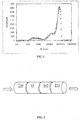
- FIG. 1 illustrates a T2 distribution for a permeable carbonate rock characterized by a bimodal pore size distribution.
- the initial two peaks from the left side represent micropore size distribution and the larger peak on the right side represents macropore size distribution.
- Two brines were used in the coreflooding study including (1) field connate water to establish initial or irreducible water saturation (Swi) for composite cores and (2) two salinity slugs of seawater as injected waters to displace oil out of cores. All brines were prepared from distilled water and reagent grade chemicals based on a geochemical analysis of field water samples. Seawater has a salinity of 57,600 ppm, and formation water has a salinity of 213,000 ppm.
- Table III shows the pore volume calculation results obtained using a centrifuge method with the initial water saturation for core plugs used in the coreflood experiment.
- the total pore volume for the composite core was 37.82 cc, and the original oil in place (OOIP) was 31.79 cc.
- the average initial water saturation for the composite was 16%.
- the position of each core plug in the composite sample is ordered by a harmonic arrangement, and the plugs are organized in Table III as the first plug from the inlet to the last plug from the outlet of the coreholder, as illustrated in FIG. 2 .
- the saline soluble surfactant used in the surfactant/polymer mixture is a betaine type surfactant with a concentration range from 0.1 weight percent (wt%) to 0.5 wt% (preferably about 0.2 wt%).
- an amphoteric surfactant such as "SS-887,” provided by Oil Chem Technologies, USA, may be used in the mixture, where the SS-887 is used with an ethylene glycol mono butyl ether as a co-surfactant, which is specially designed for high salinity environments.
- An example chemical structure for SS-887 is shown in FIG. 5 .
- sulfonated betaine or carboxylated betaine may be used in the mixture.
- the amount described herein refers to active surfactant material in the commercial product, which also contains water and 50 wt% of active material.
- the saline soluble polymer used in the surfactant/polymer mixture is sulfonated polyacrylamides with a concentration range from 0.1 wt% to 0.3 wt% (preferably about 0.2 wt%) or xanthan gum without a pyruvylate group and a concentration range from 0.1 wt% to 0.3 wt% (preferably about 0.2 wt%).
- the surfactant/polymer mixture can include AN-125, a sulfonated polyacrylamide provided by SNF Floerger, France, (i.e., a copolymer of acrylamide and acrylamide tert-butyl sulfonate) with a sulfonation degree of 25%, a molecular weight of 16x10 6 Daltons, hydrolysis degree of 25%, and effective solid content of 88%.
- the surfactant/polymer mixture can include a sulfonated polymer with a sulfonation degree from 5% to 32%.
- the regular repeat structure of the biopolymer xanthan is shown in FIG. 6 with a pyruvylate group (602), where the surfactant/polymer mixture can include the biopolymer xanthan without the pyruvylate group (602).
- the surfactant/polymer mixture has an absence of alkali.
- an interfacial tension (IFT) between the surfactant/polymer mixture and crude oil of the carbonate reservoir is defined to be in a range of 10 -2 ⁇ 10 -3 dynes/centimeter under reservoir temperature.
- IFT interfacial tension
- a solution was prepared at a concentration of 0.2 wt% in seawater, where the density was 1.008 g/cm 3 and the viscosity was 4.13 cP at 100°C.
- the IFT between crude oil and seawater was 0.0021 dynes/cm. Table IV below shows the density of the surfactant/polymer mixture under various temperatures.
- Table V shows the viscosity of surfactant/polymer mixture under various temperatures.
- Table V Viscosity of Surfactant/Polymer Mixture Temperature, °C Solution Viscosity, cP Dead Oil Viscosity, c P 25 14.0 9.40 40 10.3 6.10 60 7.41 4.39 90 4.72 2.84 100 4.13 2.27
- FIG. 3 shows the interfacial tension between Crude Oil and the surfactant/polymer mixture at 95°C.
- the coreflooding apparatus engaged in the aforementioned studies was custom-designed to perform experiments with composite core plugs to evaluate oil recovery using waterflooding or any other type of injectants at reservoir conditions.
- the main components of the coreflooding apparatus are an oven, a stainless steel core holder, fluids accumulators, a differential pressure array, one Quizix pump, a back pressure regulator (BPR), and a confining pressure module.
- the oil recovery curve is depicted in FIG. 4 .
- the oil recovery by seawater flooding is approximately 69.3% in terms of original oil in place (OOIP).
- the oil recovery by seawater flooding targets mobile oil in the cores and represents the secondary oil recovery.
- the additional oil recovery, via tertiary recovery by surfactant in twice diluted seawater, was 14.59 % of OOIP.
- the total incremental oil recovery beyond conventional waterflooding is 89.8% by this injection process.
- FIG. 4 indicates significant tertiary oil recovery can be achieved by injection of the slug of the dilute surfactant solution as described above.
Landscapes
- Chemical & Material Sciences (AREA)
- Oil, Petroleum & Natural Gas (AREA)
- Life Sciences & Earth Sciences (AREA)
- General Life Sciences & Earth Sciences (AREA)
- Engineering & Computer Science (AREA)
- Materials Engineering (AREA)
- Organic Chemistry (AREA)
- Emulsifying, Dispersing, Foam-Producing Or Wetting Agents (AREA)
- Addition Polymer Or Copolymer, Post-Treatments, Or Chemical Modifications (AREA)
- Removal Of Floating Material (AREA)
- Processes Of Treating Macromolecular Substances (AREA)
- Separation Using Semi-Permeable Membranes (AREA)
Claims (10)
- Verfahren zum Gewinnen von Kohlenwasserstoffen in einem Carbonatreservoir, wobei das Verfahren durch die Schritte gekennzeichnet ist des:(a) Einführens einer ersten salzhaltigen Lösung in das Carbonatreservoir, wobei die erste salzhaltige Lösung Wasser, Salz und kein Tensid enthält;(b) Gewinnens einer Menge an Kohlenwasserstoff aus dem Carbonatreservoir;(c) Einführens einer zweiten salzhaltigen Lösung in das Carbonatreservoir,wobei die zweite salzhaltige Lösung eine Salzkonzentration in einem Bereich von 35.000 - 80.000 ppm aufweist und wobei die zweite salzhaltige Lösung Wasser, Salz, ein Tensid vom Betaintyp mit einem Konzentrationsbereich von 0,1 Gewichtsprozent bis 0,5 Gewichtsprozent und ein salzhaltiges lösliches Polymer umfasst; und(d) Gewinnens einer zweiten Menge Kohlenwasserstoff aus dem Carbonatreservoir.
- Verfahren nach Anspruch 1, wobei das Tensid vom Betaintyp Folgendes ist:(i) sulfoniertes Betain oder carboxyliertes Betain; oder(ii) carboxyliertes Betain umfassend Ethylenglycolmonobutylether als Co-Tensid.
- Verfahren nach Anspruch 1, wobei das salzhaltige lösliche Polymer sulfonierte Polyacrylamide mit einem Konzentrationsbereich von 0,1 Gewichtsprozent bis 0,3 Gewichtsprozent oder Xanthangummi ohne eine Pyruvylatgruppe (602) und mit einem Konzentrationsbereich von 0,1 Gewichtsprozent bis 0,3 Gewichtsprozent ist.
- Verfahren nach einem der Ansprüche 2 - 3, wobei das Tensid vom Betaintyp eine Konzentration von 0,2 Gewichtsprozent aufweist und das ausgewählte mindestens eine Polymer eine Konzentration von 0,2 Gewichtsprozent aufweist, wobei die zweite salzhaltige Lösung wahlweise eine Dichte von 1,008 g/cm3 und eine Viskosität von etwa 4,13 Centipoise bei 95 °C aufweist.
- Verfahren nach Anspruch 1, wobei das Carbonatreservoir mindestens zwei Porenstrukturen mit einer Durchlässigkeit im Bereich von 100 bis 2000 Millidarcy aufweist.
- Verfahren nach Anspruch 1, wobei die zweite salzhaltige Lösung kein Alkali aufweist.
- Zusammensetzung zum Gewinnen von Kohlenwasserstoffen in einem Carbonatreservoir, wobei die Zusammensetzung gekennzeichnet ist durch:(a) ein Tensid vom Betaintyp mit einem Konzentrationsbereich von 0,1 Gewichtsprozent bis 0,5 Gewichtsprozent; und(b) sulfonierte Polyacrylamide mit einem Konzentrationsbereich von 0,1 Gewichtsprozent bis 0,3 Gewichtsprozent; wobei die Zusammensetzung eine Salzkonzentration von 35.000 bis 85.000 ppm aufweist.
- Zusammensetzung nach Anspruch 7, wobei das Tensid vom Betaintyp eine Konzentration von 0,2 Gewichtsprozent aufweist und die sulfonierten Polyacrylamide eine Konzentration von 0,2 Gewichtsprozent aufweisen.
- Zusammensetzung nach Anspruch 7, wobei die Zusammensetzung kein Alkali aufweist.
- Zusammensetzung nach Anspruch 7, wobei die Zusammensetzung eine Dichte von 1,00 8 g/cm3 und eine Viskosität von 4,13 Centipoise bei 95° C aufweist.
Applications Claiming Priority (2)
| Application Number | Priority Date | Filing Date | Title |
|---|---|---|---|
| US13/252,408 US9284480B2 (en) | 2011-10-04 | 2011-10-04 | Polymer-enhanced surfactant flooding for permeable carbonates |
| PCT/US2012/058627 WO2013066552A2 (en) | 2011-10-04 | 2012-10-04 | Polymer-enhanced surfactant flooding for permeable carbonates |
Publications (2)
| Publication Number | Publication Date |
|---|---|
| EP2764070A2 EP2764070A2 (de) | 2014-08-13 |
| EP2764070B1 true EP2764070B1 (de) | 2017-12-13 |
Family
ID=47741244
Family Applications (1)
| Application Number | Title | Priority Date | Filing Date |
|---|---|---|---|
| EP12824936.4A Not-in-force EP2764070B1 (de) | 2011-10-04 | 2012-10-04 | Polymerverstärkte tensidflutung für durchlässige carbonate |
Country Status (6)
| Country | Link |
|---|---|
| US (5) | US9284480B2 (de) |
| EP (1) | EP2764070B1 (de) |
| CN (1) | CN103842469B (de) |
| CA (2) | CA2963745C (de) |
| NO (1) | NO2887840T3 (de) |
| WO (1) | WO2013066552A2 (de) |
Families Citing this family (23)
| Publication number | Priority date | Publication date | Assignee | Title |
|---|---|---|---|---|
| US10308863B2 (en) * | 2014-09-15 | 2019-06-04 | Shell Oil Company | Formation preconditioning using an aqueous polymer preflush |
| CN108350347A (zh) * | 2015-09-17 | 2018-07-31 | 沙特阿拉伯石油公司 | 含表面活性剂的凝胶对裂隙碳酸盐储层的化学渗吸 |
| US10287485B2 (en) * | 2016-01-19 | 2019-05-14 | Saudi Arabian Oil Company | Oil recovery process using an oil recovery composition of aqueous salt solution and dilute polymer for carbonate reservoirs |
| US10723937B2 (en) | 2016-01-19 | 2020-07-28 | Saudi Arabian Oil Company | Oil recovery process using an oil recovery composition of aqueous salt solution and dilute polymer for carbonate reservoirs |
| US10961831B2 (en) * | 2016-01-19 | 2021-03-30 | Saudi Arabian Oil Company | Polymer flooding processes for viscous oil recovery in carbonate reservoirs |
| US10781362B2 (en) | 2016-01-19 | 2020-09-22 | Saudi Arabian Oil Company | Oil recovery process using an oil recovery composition of aqueous salt solution and dilute polymer for carbonate reservoirs |
| US10287486B2 (en) | 2016-01-19 | 2019-05-14 | Saudi Arabian Oil Company | Oil recovery process using an oil recovery composition of aqueous salt solution and dilute polymer for carbonate reservoirs |
| US10550312B2 (en) | 2016-01-19 | 2020-02-04 | Saudi Arabian Oil Company | Oil recovery process using an oil recovery composition of aqueous salt solution and dilute polymer for carbonate reservoirs |
| US11168244B2 (en) | 2016-10-26 | 2021-11-09 | Championx Usa Inc. | Compositions for enhanced oil recovery |
| CN106968655B (zh) * | 2017-05-10 | 2019-05-07 | 中国石油天然气股份有限公司 | 一种采油方法 |
| US10647907B2 (en) | 2017-07-06 | 2020-05-12 | Ecolab Usa Inc. | Compositions for enhanced oil recovery |
| US10633574B2 (en) * | 2017-08-02 | 2020-04-28 | Saudi Arabian Oil Company | Compositions and methods to recover irreducible water for enhanced formation evaluation |
| US11041109B2 (en) * | 2017-12-27 | 2021-06-22 | Saudi Arabian Oil Company | Enhanced surfactant polymer flooding processes for oil recovery in carbonate reservoirs |
| EP3850054A1 (de) * | 2018-09-24 | 2021-07-21 | Saudi Arabian Oil Company | Ölrückgewinnungsverfahren unter verwendung einer ölrückgewinnungszusammensetzung aus wässriger salzlösung und verdünntem polymer für carbonatreservoirs |
| US11066910B2 (en) * | 2019-08-28 | 2021-07-20 | Saudi Arabian Oil Company | Alkaline water flooding processes for enhanced oil recovery in carbonates |
| US11359133B2 (en) | 2020-08-17 | 2022-06-14 | Saudi Arabian Oil Company | Methods for selecting surfactant solutions for use in enhanced oil recovery processes |
| US11352867B2 (en) | 2020-08-26 | 2022-06-07 | Saudi Arabian Oil Company | Enhanced hydrocarbon recovery with electric current |
| US11274535B1 (en) | 2020-08-28 | 2022-03-15 | Saudi Arabian Oil Company | Seismic assisted flooding processes for oil recovery in carbonates |
| US11608723B2 (en) | 2021-01-04 | 2023-03-21 | Saudi Arabian Oil Company | Stimulated water injection processes for injectivity improvement |
| US11649693B2 (en) | 2021-02-11 | 2023-05-16 | Saudi Arabian Oil Company | Handling produced water in a wellbore |
| US11421148B1 (en) | 2021-05-04 | 2022-08-23 | Saudi Arabian Oil Company | Injection of tailored water chemistry to mitigate foaming agents retention on reservoir formation surface |
| CN113845894B (zh) * | 2021-09-01 | 2023-04-25 | 山东省食品发酵工业研究设计院 | 一种基于低丙酮酸基黄原胶的耐温聚合物及其应用 |
| US11993746B2 (en) | 2022-09-29 | 2024-05-28 | Saudi Arabian Oil Company | Method of waterflooding using injection solutions containing dihydrogen phosphate |
Family Cites Families (33)
| Publication number | Priority date | Publication date | Assignee | Title |
|---|---|---|---|---|
| DE1574298A1 (de) | 1966-10-26 | 1971-05-13 | Agfa Gevaert Ag | Vorrichtung fuer die Lageeinstellung eines endlosen Bandes |
| US3684720A (en) | 1970-03-06 | 1972-08-15 | Western Co Of North America | Removal of scale from surfaces |
| US4008768A (en) * | 1975-03-20 | 1977-02-22 | Mobil Oil Corporation | Oil recovery by waterflooding employing multicomponent surfactant systems |
| US4004638A (en) * | 1975-04-23 | 1977-01-25 | Mobil Oil Corporation | Oil recovery by alkaline-surfactant waterflooding |
| US4143716A (en) * | 1976-08-30 | 1979-03-13 | Texaco Inc. | Tertiary oil recovery process utilizing a preflush |
| US4296203A (en) * | 1977-11-15 | 1981-10-20 | Pfizer Inc. | Xanthomonas bipolymer for use in displacement of oil from partially depleted reservoirs |
| US4360061A (en) | 1980-04-03 | 1982-11-23 | Exxon Research And Engineering Co. | Oil recovery process using polymer microemulsion complexes |
| US4353806A (en) | 1980-04-03 | 1982-10-12 | Exxon Research And Engineering Company | Polymer-microemulsion complexes for the enhanced recovery of oil |
| US4408664A (en) | 1980-09-26 | 1983-10-11 | Jack H. Santee | Secondary oil recovery method |
| US4421168A (en) * | 1980-11-10 | 1983-12-20 | Mobil Oil Corporation | Surfactant waterflooding with graded salinity drive for oil recovery |
| US4770245A (en) | 1986-10-14 | 1988-09-13 | Marathon Oil Company | Rate-controlled polymer gelation process for oil recovery applications |
| US4825950A (en) * | 1986-11-05 | 1989-05-02 | The Standard Oil Company | Method of enhanced oil recovery using a stabilized polymer combination in chemical flood |
| US4817715A (en) * | 1987-06-15 | 1989-04-04 | Iit Research Institute | Aqueous flooding methods for tertiary oil recovery |
| NO950578L (no) | 1994-02-18 | 1995-08-21 | Baker Hughes Inc | Borevæskeadditiv for vannfölsomme skifer- og leirematrialer, den fremstilte borevæsken samt fremgangsmåte for boring i vannfölsomme skifer- og leirematrialer |
| US6022834A (en) | 1996-05-24 | 2000-02-08 | Oil Chem Technologies, Inc. | Alkaline surfactant polymer flooding composition and process |
| US6613720B1 (en) * | 2000-10-13 | 2003-09-02 | Schlumberger Technology Corporation | Delayed blending of additives in well treatment fluids |
| US6719053B2 (en) | 2001-04-30 | 2004-04-13 | Bj Services Company | Ester/monoester copolymer compositions and methods of preparing and using same |
| US9018145B2 (en) * | 2003-12-23 | 2015-04-28 | Lubrizol Oilfield Solutions, Inc. | Foamer composition and methods for making and using same |
| CA2641582A1 (en) | 2006-02-09 | 2007-08-16 | Gerard T. Caneba | Multifunctional multipolymeric surfactants for oil and bitumen recovery and other applications |
| US7556098B2 (en) | 2006-07-14 | 2009-07-07 | Paul Daniel Berger | Oil recovery method employing amphoteric surfactants |
| US8567503B2 (en) * | 2006-08-04 | 2013-10-29 | Halliburton Energy Services, Inc. | Composition and method relating to the prevention and remediation of surfactant gel damage |
| CA2667286A1 (en) | 2006-10-23 | 2008-05-02 | Hybo, Inc. | Functional polymer for enhanced oil recovery |
| CN101169033A (zh) | 2006-10-27 | 2008-04-30 | 株式会社安川电机 | 采油系统和采油监控系统 |
| US20080302531A1 (en) | 2007-06-09 | 2008-12-11 | Oil Chem Technologies | Process for recovering oil from subterranean reservoirs |
| US8163678B2 (en) * | 2007-10-30 | 2012-04-24 | Chevron U.S.A. Inc. | Enhanced oil recovery surfactant formulation and method of making the same |
| CN101842552B (zh) * | 2007-10-31 | 2014-06-04 | 罗迪亚公司 | 向水溶性聚合物中添加两性离子表面活性剂来提高聚合物在含盐和/或表面活性剂的水溶液中的稳定性 |
| CN100564477C (zh) | 2008-05-07 | 2009-12-02 | 山东大学 | 用于聚合物驱后提高采收率的驱油体系及其制备方法 |
| US7718582B2 (en) * | 2008-05-29 | 2010-05-18 | Bj Services Company | Method for treating subterranean formation with enhanced viscosity foam |
| MX2011011742A (es) * | 2009-05-05 | 2011-12-08 | Stepan Co | Tensoactivo de olefina interna sulfonada para recuperacion mejorada de petroleo. |
| WO2011011284A1 (en) | 2009-07-18 | 2011-01-27 | University Of Wyoming | Single-well diagnostics and increased oil recovery by oil injection and sequential waterflooding |
| CN101955448B (zh) * | 2010-03-19 | 2013-11-06 | 中国石油天然气股份有限公司 | 一种含酰胺基团羟磺基甜菜碱及其制备和应用 |
| US8550163B2 (en) | 2010-07-23 | 2013-10-08 | Saudi Arabian Oil Company | Oil recovery process for carbonate reservoirs |
| US8550164B2 (en) | 2010-07-23 | 2013-10-08 | Saudi Arabian Oil Company | Oil recovery process for carbonate reservoirs |
-
2011
- 2011-10-04 US US13/252,408 patent/US9284480B2/en active Active
-
2012
- 2012-10-04 CA CA2963745A patent/CA2963745C/en active Active
- 2012-10-04 CN CN201280048795.2A patent/CN103842469B/zh active Active
- 2012-10-04 WO PCT/US2012/058627 patent/WO2013066552A2/en not_active Ceased
- 2012-10-04 CA CA2849483A patent/CA2849483C/en active Active
- 2012-10-04 EP EP12824936.4A patent/EP2764070B1/de not_active Not-in-force
-
2013
- 2013-08-06 NO NO13745420A patent/NO2887840T3/no unknown
-
2016
- 2016-02-04 US US15/015,671 patent/US10011760B2/en active Active
-
2018
- 2018-07-02 US US16/025,787 patent/US10266752B2/en active Active
-
2019
- 2019-03-11 US US16/298,844 patent/US10472558B2/en active Active
- 2019-10-01 US US16/589,869 patent/US10968382B2/en active Active
Also Published As
| Publication number | Publication date |
|---|---|
| US20190203107A1 (en) | 2019-07-04 |
| WO2013066552A3 (en) | 2013-06-27 |
| US10472558B2 (en) | 2019-11-12 |
| CA2963745C (en) | 2019-06-11 |
| US10968382B2 (en) | 2021-04-06 |
| US20160152886A1 (en) | 2016-06-02 |
| CA2849483A1 (en) | 2013-05-10 |
| US20180312742A1 (en) | 2018-11-01 |
| EP2764070A2 (de) | 2014-08-13 |
| CN103842469B (zh) | 2017-10-20 |
| US20130081822A1 (en) | 2013-04-04 |
| NO2887840T3 (de) | 2018-06-30 |
| US9284480B2 (en) | 2016-03-15 |
| US10266752B2 (en) | 2019-04-23 |
| WO2013066552A2 (en) | 2013-05-10 |
| CA2963745A1 (en) | 2013-05-10 |
| US20200032130A1 (en) | 2020-01-30 |
| US10011760B2 (en) | 2018-07-03 |
| CN103842469A (zh) | 2014-06-04 |
| CA2849483C (en) | 2017-08-01 |
Similar Documents
| Publication | Publication Date | Title |
|---|---|---|
| US10968382B2 (en) | Polymer-enhanced surfactant flooding for permeable carbonates | |
| EP2686400B1 (de) | Ölgewinnungsverfahren für karbonatreservoirs | |
| US8550163B2 (en) | Oil recovery process for carbonate reservoirs | |
| CN104541022B (zh) | 用于生产和分离油的系统 | |
| US20160009981A1 (en) | Enhanced oil recovery process to inject low-salinity water alternating surfactant-gas in oil-wet carbonate reservoirs | |
| US20130020085A1 (en) | Surfactant system to increase hydrocarbon recovery | |
| CN105980656A (zh) | 由载油地层采收油的方法 | |
| BRPI0923949B1 (pt) | Processo de recuperação de hidrocarbonetos | |
| CN104919020A (zh) | 产油方法、系统和组合物 | |
| CN104870600A (zh) | 用于生产油的方法、系统和组合物 | |
| Skauge et al. | Low salinity polymer flooding | |
| US20160215201A1 (en) | Composition and method for enhanced hydrocarbon recovery | |
| WO2015138429A1 (en) | Oil recovery formulation, process for producing an oil recovery formulation, and process for producing oil utilizing an oil recovery formulation | |
| US12104118B2 (en) | Advanced encapsulation for downhole water capture and improved oil recovery |
Legal Events
| Date | Code | Title | Description |
|---|---|---|---|
| PUAI | Public reference made under article 153(3) epc to a published international application that has entered the european phase |
Free format text: ORIGINAL CODE: 0009012 |
|
| 17P | Request for examination filed |
Effective date: 20140313 |
|
| AK | Designated contracting states |
Kind code of ref document: A2 Designated state(s): AL AT BE BG CH CY CZ DE DK EE ES FI FR GB GR HR HU IE IS IT LI LT LU LV MC MK MT NL NO PL PT RO RS SE SI SK SM TR |
|
| DAX | Request for extension of the european patent (deleted) | ||
| 17Q | First examination report despatched |
Effective date: 20150624 |
|
| GRAP | Despatch of communication of intention to grant a patent |
Free format text: ORIGINAL CODE: EPIDOSNIGR1 |
|
| INTG | Intention to grant announced |
Effective date: 20170515 |
|
| GRAS | Grant fee paid |
Free format text: ORIGINAL CODE: EPIDOSNIGR3 |
|
| GRAJ | Information related to disapproval of communication of intention to grant by the applicant or resumption of examination proceedings by the epo deleted |
Free format text: ORIGINAL CODE: EPIDOSDIGR1 |
|
| GRAL | Information related to payment of fee for publishing/printing deleted |
Free format text: ORIGINAL CODE: EPIDOSDIGR3 |
|
| INTC | Intention to grant announced (deleted) | ||
| GRAR | Information related to intention to grant a patent recorded |
Free format text: ORIGINAL CODE: EPIDOSNIGR71 |
|
| GRAA | (expected) grant |
Free format text: ORIGINAL CODE: 0009210 |
|
| AK | Designated contracting states |
Kind code of ref document: B1 Designated state(s): AL AT BE BG CH CY CZ DE DK EE ES FI FR GB GR HR HU IE IS IT LI LT LU LV MC MK MT NL NO PL PT RO RS SE SI SK SM TR |
|
| INTG | Intention to grant announced |
Effective date: 20171107 |
|
| REG | Reference to a national code |
Ref country code: GB Ref legal event code: FG4D |
|
| REG | Reference to a national code |
Ref country code: AT Ref legal event code: REF Ref document number: 954344 Country of ref document: AT Kind code of ref document: T Effective date: 20171215 Ref country code: CH Ref legal event code: EP |
|
| REG | Reference to a national code |
Ref country code: IE Ref legal event code: FG4D |
|
| REG | Reference to a national code |
Ref country code: DE Ref legal event code: R096 Ref document number: 602012040949 Country of ref document: DE |
|
| REG | Reference to a national code |
Ref country code: NL Ref legal event code: FP |
|
| REG | Reference to a national code |
Ref country code: LT Ref legal event code: MG4D |
|
| PG25 | Lapsed in a contracting state [announced via postgrant information from national office to epo] |
Ref country code: SE Free format text: LAPSE BECAUSE OF FAILURE TO SUBMIT A TRANSLATION OF THE DESCRIPTION OR TO PAY THE FEE WITHIN THE PRESCRIBED TIME-LIMIT Effective date: 20171213 Ref country code: FI Free format text: LAPSE BECAUSE OF FAILURE TO SUBMIT A TRANSLATION OF THE DESCRIPTION OR TO PAY THE FEE WITHIN THE PRESCRIBED TIME-LIMIT Effective date: 20171213 Ref country code: LT Free format text: LAPSE BECAUSE OF FAILURE TO SUBMIT A TRANSLATION OF THE DESCRIPTION OR TO PAY THE FEE WITHIN THE PRESCRIBED TIME-LIMIT Effective date: 20171213 |
|
| REG | Reference to a national code |
Ref country code: AT Ref legal event code: MK05 Ref document number: 954344 Country of ref document: AT Kind code of ref document: T Effective date: 20171213 |
|
| PG25 | Lapsed in a contracting state [announced via postgrant information from national office to epo] |
Ref country code: RS Free format text: LAPSE BECAUSE OF FAILURE TO SUBMIT A TRANSLATION OF THE DESCRIPTION OR TO PAY THE FEE WITHIN THE PRESCRIBED TIME-LIMIT Effective date: 20171213 Ref country code: HR Free format text: LAPSE BECAUSE OF FAILURE TO SUBMIT A TRANSLATION OF THE DESCRIPTION OR TO PAY THE FEE WITHIN THE PRESCRIBED TIME-LIMIT Effective date: 20171213 Ref country code: GR Free format text: LAPSE BECAUSE OF FAILURE TO SUBMIT A TRANSLATION OF THE DESCRIPTION OR TO PAY THE FEE WITHIN THE PRESCRIBED TIME-LIMIT Effective date: 20180314 Ref country code: LV Free format text: LAPSE BECAUSE OF FAILURE TO SUBMIT A TRANSLATION OF THE DESCRIPTION OR TO PAY THE FEE WITHIN THE PRESCRIBED TIME-LIMIT Effective date: 20171213 Ref country code: BG Free format text: LAPSE BECAUSE OF FAILURE TO SUBMIT A TRANSLATION OF THE DESCRIPTION OR TO PAY THE FEE WITHIN THE PRESCRIBED TIME-LIMIT Effective date: 20180313 |
|
| REG | Reference to a national code |
Ref country code: NO Ref legal event code: T2 Effective date: 20171213 |
|
| PG25 | Lapsed in a contracting state [announced via postgrant information from national office to epo] |
Ref country code: CY Free format text: LAPSE BECAUSE OF FAILURE TO SUBMIT A TRANSLATION OF THE DESCRIPTION OR TO PAY THE FEE WITHIN THE PRESCRIBED TIME-LIMIT Effective date: 20171213 Ref country code: EE Free format text: LAPSE BECAUSE OF FAILURE TO SUBMIT A TRANSLATION OF THE DESCRIPTION OR TO PAY THE FEE WITHIN THE PRESCRIBED TIME-LIMIT Effective date: 20171213 Ref country code: CZ Free format text: LAPSE BECAUSE OF FAILURE TO SUBMIT A TRANSLATION OF THE DESCRIPTION OR TO PAY THE FEE WITHIN THE PRESCRIBED TIME-LIMIT Effective date: 20171213 Ref country code: ES Free format text: LAPSE BECAUSE OF FAILURE TO SUBMIT A TRANSLATION OF THE DESCRIPTION OR TO PAY THE FEE WITHIN THE PRESCRIBED TIME-LIMIT Effective date: 20171213 Ref country code: SK Free format text: LAPSE BECAUSE OF FAILURE TO SUBMIT A TRANSLATION OF THE DESCRIPTION OR TO PAY THE FEE WITHIN THE PRESCRIBED TIME-LIMIT Effective date: 20171213 |
|
| PG25 | Lapsed in a contracting state [announced via postgrant information from national office to epo] |
Ref country code: IS Free format text: LAPSE BECAUSE OF FAILURE TO SUBMIT A TRANSLATION OF THE DESCRIPTION OR TO PAY THE FEE WITHIN THE PRESCRIBED TIME-LIMIT Effective date: 20180413 Ref country code: SM Free format text: LAPSE BECAUSE OF FAILURE TO SUBMIT A TRANSLATION OF THE DESCRIPTION OR TO PAY THE FEE WITHIN THE PRESCRIBED TIME-LIMIT Effective date: 20171213 Ref country code: AT Free format text: LAPSE BECAUSE OF FAILURE TO SUBMIT A TRANSLATION OF THE DESCRIPTION OR TO PAY THE FEE WITHIN THE PRESCRIBED TIME-LIMIT Effective date: 20171213 Ref country code: IT Free format text: LAPSE BECAUSE OF FAILURE TO SUBMIT A TRANSLATION OF THE DESCRIPTION OR TO PAY THE FEE WITHIN THE PRESCRIBED TIME-LIMIT Effective date: 20171213 Ref country code: RO Free format text: LAPSE BECAUSE OF FAILURE TO SUBMIT A TRANSLATION OF THE DESCRIPTION OR TO PAY THE FEE WITHIN THE PRESCRIBED TIME-LIMIT Effective date: 20171213 Ref country code: PL Free format text: LAPSE BECAUSE OF FAILURE TO SUBMIT A TRANSLATION OF THE DESCRIPTION OR TO PAY THE FEE WITHIN THE PRESCRIBED TIME-LIMIT Effective date: 20171213 |
|
| REG | Reference to a national code |
Ref country code: FR Ref legal event code: PLFP Year of fee payment: 7 |
|
| REG | Reference to a national code |
Ref country code: DE Ref legal event code: R097 Ref document number: 602012040949 Country of ref document: DE |
|
| PLBE | No opposition filed within time limit |
Free format text: ORIGINAL CODE: 0009261 |
|
| STAA | Information on the status of an ep patent application or granted ep patent |
Free format text: STATUS: NO OPPOSITION FILED WITHIN TIME LIMIT |
|
| 26N | No opposition filed |
Effective date: 20180914 |
|
| PG25 | Lapsed in a contracting state [announced via postgrant information from national office to epo] |
Ref country code: DK Free format text: LAPSE BECAUSE OF FAILURE TO SUBMIT A TRANSLATION OF THE DESCRIPTION OR TO PAY THE FEE WITHIN THE PRESCRIBED TIME-LIMIT Effective date: 20171213 |
|
| PG25 | Lapsed in a contracting state [announced via postgrant information from national office to epo] |
Ref country code: SI Free format text: LAPSE BECAUSE OF FAILURE TO SUBMIT A TRANSLATION OF THE DESCRIPTION OR TO PAY THE FEE WITHIN THE PRESCRIBED TIME-LIMIT Effective date: 20171213 |
|
| REG | Reference to a national code |
Ref country code: CH Ref legal event code: PL |
|
| REG | Reference to a national code |
Ref country code: BE Ref legal event code: MM Effective date: 20181031 |
|
| PG25 | Lapsed in a contracting state [announced via postgrant information from national office to epo] |
Ref country code: MC Free format text: LAPSE BECAUSE OF FAILURE TO SUBMIT A TRANSLATION OF THE DESCRIPTION OR TO PAY THE FEE WITHIN THE PRESCRIBED TIME-LIMIT Effective date: 20171213 Ref country code: LU Free format text: LAPSE BECAUSE OF NON-PAYMENT OF DUE FEES Effective date: 20181004 |
|
| REG | Reference to a national code |
Ref country code: IE Ref legal event code: MM4A |
|
| PG25 | Lapsed in a contracting state [announced via postgrant information from national office to epo] |
Ref country code: CH Free format text: LAPSE BECAUSE OF NON-PAYMENT OF DUE FEES Effective date: 20181031 Ref country code: LI Free format text: LAPSE BECAUSE OF NON-PAYMENT OF DUE FEES Effective date: 20181031 Ref country code: BE Free format text: LAPSE BECAUSE OF NON-PAYMENT OF DUE FEES Effective date: 20181031 |
|
| PG25 | Lapsed in a contracting state [announced via postgrant information from national office to epo] |
Ref country code: IE Free format text: LAPSE BECAUSE OF NON-PAYMENT OF DUE FEES Effective date: 20181004 |
|
| PG25 | Lapsed in a contracting state [announced via postgrant information from national office to epo] |
Ref country code: MT Free format text: LAPSE BECAUSE OF NON-PAYMENT OF DUE FEES Effective date: 20181004 |
|
| PG25 | Lapsed in a contracting state [announced via postgrant information from national office to epo] |
Ref country code: TR Free format text: LAPSE BECAUSE OF FAILURE TO SUBMIT A TRANSLATION OF THE DESCRIPTION OR TO PAY THE FEE WITHIN THE PRESCRIBED TIME-LIMIT Effective date: 20171213 |
|
| PG25 | Lapsed in a contracting state [announced via postgrant information from national office to epo] |
Ref country code: PT Free format text: LAPSE BECAUSE OF FAILURE TO SUBMIT A TRANSLATION OF THE DESCRIPTION OR TO PAY THE FEE WITHIN THE PRESCRIBED TIME-LIMIT Effective date: 20171213 |
|
| PG25 | Lapsed in a contracting state [announced via postgrant information from national office to epo] |
Ref country code: HU Free format text: LAPSE BECAUSE OF FAILURE TO SUBMIT A TRANSLATION OF THE DESCRIPTION OR TO PAY THE FEE WITHIN THE PRESCRIBED TIME-LIMIT; INVALID AB INITIO Effective date: 20121004 Ref country code: MK Free format text: LAPSE BECAUSE OF NON-PAYMENT OF DUE FEES Effective date: 20171213 |
|
| PG25 | Lapsed in a contracting state [announced via postgrant information from national office to epo] |
Ref country code: AL Free format text: LAPSE BECAUSE OF FAILURE TO SUBMIT A TRANSLATION OF THE DESCRIPTION OR TO PAY THE FEE WITHIN THE PRESCRIBED TIME-LIMIT Effective date: 20171213 |
|
| PGFP | Annual fee paid to national office [announced via postgrant information from national office to epo] |
Ref country code: FR Payment date: 20210913 Year of fee payment: 10 Ref country code: NL Payment date: 20210915 Year of fee payment: 10 |
|
| PGFP | Annual fee paid to national office [announced via postgrant information from national office to epo] |
Ref country code: GB Payment date: 20210831 Year of fee payment: 10 |
|
| PGFP | Annual fee paid to national office [announced via postgrant information from national office to epo] |
Ref country code: DE Payment date: 20210831 Year of fee payment: 10 Ref country code: NO Payment date: 20211011 Year of fee payment: 10 |
|
| REG | Reference to a national code |
Ref country code: DE Ref legal event code: R119 Ref document number: 602012040949 Country of ref document: DE |
|
| REG | Reference to a national code |
Ref country code: NO Ref legal event code: MMEP |
|
| REG | Reference to a national code |
Ref country code: NL Ref legal event code: MM Effective date: 20221101 |
|
| GBPC | Gb: european patent ceased through non-payment of renewal fee |
Effective date: 20221004 |
|
| P01 | Opt-out of the competence of the unified patent court (upc) registered |
Effective date: 20230526 |
|
| PG25 | Lapsed in a contracting state [announced via postgrant information from national office to epo] |
Ref country code: NO Free format text: LAPSE BECAUSE OF NON-PAYMENT OF DUE FEES Effective date: 20221031 Ref country code: NL Free format text: LAPSE BECAUSE OF NON-PAYMENT OF DUE FEES Effective date: 20221101 Ref country code: FR Free format text: LAPSE BECAUSE OF NON-PAYMENT OF DUE FEES Effective date: 20221031 Ref country code: DE Free format text: LAPSE BECAUSE OF NON-PAYMENT OF DUE FEES Effective date: 20230503 |
|
| PG25 | Lapsed in a contracting state [announced via postgrant information from national office to epo] |
Ref country code: GB Free format text: LAPSE BECAUSE OF NON-PAYMENT OF DUE FEES Effective date: 20221004 |