EP2757626A1 - Lithium battery - Google Patents
Lithium battery Download PDFInfo
- Publication number
- EP2757626A1 EP2757626A1 EP13177720.3A EP13177720A EP2757626A1 EP 2757626 A1 EP2757626 A1 EP 2757626A1 EP 13177720 A EP13177720 A EP 13177720A EP 2757626 A1 EP2757626 A1 EP 2757626A1
- Authority
- EP
- European Patent Office
- Prior art keywords
- electrolyte
- group
- hcf
- carbonate
- lithium
- Prior art date
- Legal status (The legal status is an assumption and is not a legal conclusion. Google has not performed a legal analysis and makes no representation as to the accuracy of the status listed.)
- Granted
Links
Images

Classifications
-
- H—ELECTRICITY
- H01—ELECTRIC ELEMENTS
- H01M—PROCESSES OR MEANS, e.g. BATTERIES, FOR THE DIRECT CONVERSION OF CHEMICAL ENERGY INTO ELECTRICAL ENERGY
- H01M4/00—Electrodes
- H01M4/02—Electrodes composed of, or comprising, active material
- H01M4/36—Selection of substances as active materials, active masses, active liquids
- H01M4/38—Selection of substances as active materials, active masses, active liquids of elements or alloys
- H01M4/386—Silicon or alloys based on silicon
-
- H—ELECTRICITY
- H01—ELECTRIC ELEMENTS
- H01M—PROCESSES OR MEANS, e.g. BATTERIES, FOR THE DIRECT CONVERSION OF CHEMICAL ENERGY INTO ELECTRICAL ENERGY
- H01M10/00—Secondary cells; Manufacture thereof
- H01M10/05—Accumulators with non-aqueous electrolyte
- H01M10/052—Li-accumulators
-
- H—ELECTRICITY
- H01—ELECTRIC ELEMENTS
- H01M—PROCESSES OR MEANS, e.g. BATTERIES, FOR THE DIRECT CONVERSION OF CHEMICAL ENERGY INTO ELECTRICAL ENERGY
- H01M10/00—Secondary cells; Manufacture thereof
- H01M10/05—Accumulators with non-aqueous electrolyte
- H01M10/052—Li-accumulators
- H01M10/0525—Rocking-chair batteries, i.e. batteries with lithium insertion or intercalation in both electrodes; Lithium-ion batteries
-
- H—ELECTRICITY
- H01—ELECTRIC ELEMENTS
- H01M—PROCESSES OR MEANS, e.g. BATTERIES, FOR THE DIRECT CONVERSION OF CHEMICAL ENERGY INTO ELECTRICAL ENERGY
- H01M10/00—Secondary cells; Manufacture thereof
- H01M10/05—Accumulators with non-aqueous electrolyte
- H01M10/056—Accumulators with non-aqueous electrolyte characterised by the materials used as electrolytes, e.g. mixed inorganic/organic electrolytes
- H01M10/0564—Accumulators with non-aqueous electrolyte characterised by the materials used as electrolytes, e.g. mixed inorganic/organic electrolytes the electrolyte being constituted of organic materials only
- H01M10/0566—Liquid materials
- H01M10/0567—Liquid materials characterised by the additives
-
- H—ELECTRICITY
- H01—ELECTRIC ELEMENTS
- H01M—PROCESSES OR MEANS, e.g. BATTERIES, FOR THE DIRECT CONVERSION OF CHEMICAL ENERGY INTO ELECTRICAL ENERGY
- H01M10/00—Secondary cells; Manufacture thereof
- H01M10/05—Accumulators with non-aqueous electrolyte
- H01M10/056—Accumulators with non-aqueous electrolyte characterised by the materials used as electrolytes, e.g. mixed inorganic/organic electrolytes
- H01M10/0564—Accumulators with non-aqueous electrolyte characterised by the materials used as electrolytes, e.g. mixed inorganic/organic electrolytes the electrolyte being constituted of organic materials only
- H01M10/0566—Liquid materials
- H01M10/0569—Liquid materials characterised by the solvents
-
- H—ELECTRICITY
- H01—ELECTRIC ELEMENTS
- H01M—PROCESSES OR MEANS, e.g. BATTERIES, FOR THE DIRECT CONVERSION OF CHEMICAL ENERGY INTO ELECTRICAL ENERGY
- H01M4/00—Electrodes
- H01M4/02—Electrodes composed of, or comprising, active material
-
- H—ELECTRICITY
- H01—ELECTRIC ELEMENTS
- H01M—PROCESSES OR MEANS, e.g. BATTERIES, FOR THE DIRECT CONVERSION OF CHEMICAL ENERGY INTO ELECTRICAL ENERGY
- H01M4/00—Electrodes
- H01M4/02—Electrodes composed of, or comprising, active material
- H01M4/36—Selection of substances as active materials, active masses, active liquids
- H01M4/48—Selection of substances as active materials, active masses, active liquids of inorganic oxides or hydroxides
- H01M4/485—Selection of substances as active materials, active masses, active liquids of inorganic oxides or hydroxides of mixed oxides or hydroxides for inserting or intercalating light metals, e.g. LiTi2O4 or LiTi2OxFy
-
- H—ELECTRICITY
- H01—ELECTRIC ELEMENTS
- H01M—PROCESSES OR MEANS, e.g. BATTERIES, FOR THE DIRECT CONVERSION OF CHEMICAL ENERGY INTO ELECTRICAL ENERGY
- H01M4/00—Electrodes
- H01M4/02—Electrodes composed of, or comprising, active material
- H01M4/36—Selection of substances as active materials, active masses, active liquids
- H01M4/48—Selection of substances as active materials, active masses, active liquids of inorganic oxides or hydroxides
- H01M4/52—Selection of substances as active materials, active masses, active liquids of inorganic oxides or hydroxides of nickel, cobalt or iron
- H01M4/525—Selection of substances as active materials, active masses, active liquids of inorganic oxides or hydroxides of nickel, cobalt or iron of mixed oxides or hydroxides containing iron, cobalt or nickel for inserting or intercalating light metals, e.g. LiNiO2, LiCoO2 or LiCoOxFy
-
- H—ELECTRICITY
- H01—ELECTRIC ELEMENTS
- H01M—PROCESSES OR MEANS, e.g. BATTERIES, FOR THE DIRECT CONVERSION OF CHEMICAL ENERGY INTO ELECTRICAL ENERGY
- H01M2300/00—Electrolytes
- H01M2300/0017—Non-aqueous electrolytes
- H01M2300/0025—Organic electrolyte
- H01M2300/0028—Organic electrolyte characterised by the solvent
- H01M2300/0034—Fluorinated solvents
-
- H—ELECTRICITY
- H01—ELECTRIC ELEMENTS
- H01M—PROCESSES OR MEANS, e.g. BATTERIES, FOR THE DIRECT CONVERSION OF CHEMICAL ENERGY INTO ELECTRICAL ENERGY
- H01M2300/00—Electrolytes
- H01M2300/0017—Non-aqueous electrolytes
- H01M2300/0025—Organic electrolyte
- H01M2300/0028—Organic electrolyte characterised by the solvent
- H01M2300/0037—Mixture of solvents
- H01M2300/004—Three solvents
-
- Y—GENERAL TAGGING OF NEW TECHNOLOGICAL DEVELOPMENTS; GENERAL TAGGING OF CROSS-SECTIONAL TECHNOLOGIES SPANNING OVER SEVERAL SECTIONS OF THE IPC; TECHNICAL SUBJECTS COVERED BY FORMER USPC CROSS-REFERENCE ART COLLECTIONS [XRACs] AND DIGESTS
- Y02—TECHNOLOGIES OR APPLICATIONS FOR MITIGATION OR ADAPTATION AGAINST CLIMATE CHANGE
- Y02E—REDUCTION OF GREENHOUSE GAS [GHG] EMISSIONS, RELATED TO ENERGY GENERATION, TRANSMISSION OR DISTRIBUTION
- Y02E60/00—Enabling technologies; Technologies with a potential or indirect contribution to GHG emissions mitigation
- Y02E60/10—Energy storage using batteries
-
- Y—GENERAL TAGGING OF NEW TECHNOLOGICAL DEVELOPMENTS; GENERAL TAGGING OF CROSS-SECTIONAL TECHNOLOGIES SPANNING OVER SEVERAL SECTIONS OF THE IPC; TECHNICAL SUBJECTS COVERED BY FORMER USPC CROSS-REFERENCE ART COLLECTIONS [XRACs] AND DIGESTS
- Y02—TECHNOLOGIES OR APPLICATIONS FOR MITIGATION OR ADAPTATION AGAINST CLIMATE CHANGE
- Y02T—CLIMATE CHANGE MITIGATION TECHNOLOGIES RELATED TO TRANSPORTATION
- Y02T10/00—Road transport of goods or passengers
- Y02T10/60—Other road transportation technologies with climate change mitigation effect
- Y02T10/70—Energy storage systems for electromobility, e.g. batteries
Definitions
- One or more embodiments of the present invention relates to a lithium battery.
- Lithium secondary batteries are used in portable electronic devices for mobile communication, such as personal digital assistants (PDAs), mobile phones, or notebook computers, electric bicycles or electric vehicles, and have twice greater discharge voltage than typical batteries, and thus, have high energy density.
- PDAs personal digital assistants
- mobile phones mobile phones
- notebook computers electric bicycles or electric vehicles
- Lithium secondary batteries produce electric energy due to oxidation and reduction reactions occurring when lithium ions are intercalated to or deintercalated from a positive electrode and a negative electrode, each including an active material that enables the intercalation and deintercalation of lithium ions, with an organic electrolyte or a polymer electrolyte filled therebetween.
- an oxide that consists of lithium and a transition metal and has a structure enabling intercalation of lithium ions may be used.
- examples of such an oxide are lithium cobalt oxide (LiCoO 2 ) lithium nickel oxide (LiNiO 2 ), and lithium nickel cobalt manganese oxide (Li[NiCoMn]O 2 , Li[Ni 1-x-y Co x M y ]O 2 ).
- a carbonaceous material such as an artificial and natural graphite or hard carbon
- a non-carbonaceous material such as Si, which enable intercalation and deintercalation of lithium
- non-aqueous electrolytic solution solvents used in conventional lithium secondary batteries have a low withstanding voltage property, and when an electrolytic solution using solvents with low withstanding voltage property is used in a lithium secondary battery, during repeated cycles of charging and discharging, the solvents decompose to generate gas, and thus, inner pressure of a battery increases or a product may cause a polymerization reaction or may attach to the surface of the battery.
- the present invention is directed to an electrolyte for use in a lithium battery.
- the electrolyte of the invention when used in a lithium battery provides oxidation stability at high voltages and thereby increases a capacity retention ratio, charging and discharging characteristics, and a cycle lifespan of said lithium battery.
- the electrolyte of the invention comprises a lithium salt and a non-aqueous electrolytic solution, wherein the non-aqueous electrolytic solution comprises fluoride-based ether in an amount of at least 3 vol% based on the total volume of the non-aqueous electrolytic solution.
- the fluoride-based ether in the non-aqueous electrolytic solution is present in an amount of at least 10 vol% based on the total volume of the non-aqueous electrolytic solution. More preferably, the amount of the fluoride-based ether in the non-aqueous electrolytic solution is in the range of 10 to 70 vol% based on the total volume of the non-aqueous electrolytic solution.
- the fluoride-based ether may be present as a single type of compound or may comprises a combination of more than one type of fluoride-based ether compounds.
- the fluoride-based ether of the electrolyte of the invention comprises at least one compound represented by Formula 4, Formula 5 or Formula 6; with Rf1-O-Rf2 [Formula 4] wherein Rf1 and Rf2 are each independently a linear or branched C1 to C12 fluoroalkyl group having at least one hydrogen atoms substituted with a fluoro group; Rf1-O-R [Formula 5] wherein Rf1 is a linear or branched C1 to C12 fluoroalkyl group having at least one hydrogen atoms substituted with a fluoro group, and R is a linear or branched C1 to C12 alkyl group; Rf1-O-(R'-O) n -Rf2 [Formula 6] wherein Rf1 and Rf2 are each independently a linear or branched C1 to C12 fluoroalkyl group having at least one hydrogen atoms substituted with a fluoro group, and R' is
- Rf1 or Rf2 is preferably a fluoroalkyl group selected from HCF 2 -, CF 3 -, HCF 2 CF 2 -, CH 3 CF 2 -, CF 3 CH 2 -, CF 3 CF 2 -, (CF 3 ) 2 CH-, HCF 2 CF 2 CH 2 -, CF 3 CH 2 CH 2 -, HCF 2 CF 2 CF 2 CH 2 -, HCF 2 CF 2 CF 2 CH 2 -, CF 3 CF 2 CH 2 -, CF 3 CFHCF 2 CH 2 -, HCF 2 CF(CF 3 )CH 2 -, or CF 3 CF 2 CH 2 CH 2 -.
- R is preferably an alkyl group selected from -CH 3 , -C 2 H 5 , -C 3 H 7 , or -CH(CH 3 )CH 3 .
- R' is preferably an alkylene group selected from -CH 2 -, -CH 2 CH 2 -, or -CH 2 CH 2 CH 2 -.
- the fluoride-based ether in the electrolyte of the invention may comprise HCF 2 CF 2 CH 2 OCF 2 CF 2 H, HCF 2 CF 2 CH 2 OCF 2 CH 3 , CF 3 CF 2 CH 2 OCF 2 CF 2 H, CF 3 CF 2 CH 2 OCF 2 H, HCF 2 CF 2 OCH 2 CF 3 , HCF 2 CF 2 CH 2 OCF 2 CFHCF 3 , CF 3 CF 2 CH 2 OCF 2 CFHCF 3 , HCF 2 CF 2 CH 2 OCH 2 CFHCF 3 , CF 3 CF 2 CH 2 OCH 2 CFHCF 3 , and/or HCF 2 CF 2 CH 2 OCH 3 .
- the fluoride-based ether of the electrolyte of the invention comprises HCF 2 CF 2 CH 2 OCF 2 CF 2 H, HCF 2 CF 2 CH 2 OCF 2 CH 3 , CF 3 CF 2 CH 2 OCF 2 H, HCF 2 CF 2 OCH 2 CF 3 , and HCF 2 CF 2 CH 2 OCH 3 .
- the non-aqueous electrolytic solution further may comprise a carbonate-based compound, an ester-based compound, an ether-based compound, a ketone-based compound, an alcohol-based compound, an aprotic solvent, or a combination thereof.
- the carbonate-based compound comprises a chain carbonate compound, a cyclic carbonate compound, a fluoro carbonate compound, or a combination thereof.
- non-aqueous electrolytic solution of the electrolyte of the invention may comprise or consist of:
- the fluoride-based ether may be selected from HCF 2 CF 2 CH 2 OCF 2 CF 2 H, HCF 2 CF 2 CH 2 OCF 2 CH 3 , CF 3 CF 2 CH 2 OCF 2 CF 2 H, CF 3 CF 2 CH 2 OCF 2 H, HCF 2 CF 2 OCH 2 CF 3 , HCF 2 CF 2 CH 2 OCF 2 CFHCF 3 , CF 3 CF 2 CH 2 OCF 2 CFHCF 3 , HCF 2 CF 2 CH 2 OCH 2 CFHCF 3 , CF 3 CF 2 CH 2 OCH 2 CFHCF 3 , and/or HCF 2 CF 2 CH 2 OCH 3 .
- the fluoride-based ether compound is HCF 2 CF 2 CH 2 OCF 2 CF 2 H (2,2,3,3-tetrafluoropropyl-1,1-2,2-tetrafluorethyl ether).
- the fluoro carbonate compound may be selected from fluoroethylene carbonate (FEC), 4,5-difluoroethylenecarbonate, 4,4-difluoroethylenecarbonate, 4,4,5-trifluoroethylenecarbonate, 4,4,5,5-tetrafluoroethylenecarbonate, 4-fluoro-5-methylethylenecarbonate, 4-fluoro-4-methylethylenecarbonate, 4,5-difluoro-4-methylethylenecarbonate, 4,4,5-trifluoro-5-methylethylenecarbonate, and/or trifluoromethylethylenecarbonate.
- FEC fluoroethylene carbonate
- FEC fluoroethylene carbonate
- the chain carbonate compound may be selected from diethyl carbonate (DEC), dimethyl carbonate (DMC), dipropyl carbonate (DPC), methylpropyl carbonate (MPC), ethylpropylcarbonate (EPC), methylethyl carbonate (MEC).
- DEC diethyl carbonate
- DMC dimethyl carbonate
- DPC dipropyl carbonate
- MEC methylpropyl carbonate
- EPC ethylpropylcarbonate
- MEC methylethyl carbonate
- the chain carbonate compound is dimethyl carbonate (DMC).
- non-aqueous electrolytic solution of the electrolyte of the invention may comprise or consist of:
- the electrolyte of the invention comprises a lithium salt.
- Said lithium salt may be LiCl, LiBr, Lil, LiClO 4 , LiB 10 Cl 10 , LiPF 6 , CF 3 SO 3 Li, CH 3 SO 3 Li, C 4 F 3 SO 3 Li, (CF 3 SO 2 ) 2 NLi, LiN(C x F 2x+1 SO 2 )(C y F 2+y SO 2 , wherein x and y are natural numbers, CF 3 CO 2 Li, LiAsF 6 , LiSbF 6 , LiAlCl 4 , LiAlF 4 , lithiumchloroborate, low aliphatic lithium carbonate, 4 phenyl lithium borate, lithium imide, and/or a combination thereof.
- the lithium salt may be present in a final concentration of 0.1M to 2.0M.
- the electrolyte of the invention may further comprise an additive to form a stabilized solid electrolyte interface (SEI) on the surface of an electrode of the lithium battery.
- the additive can be e.g. tris(trimethylsilyl) phosphate (TMSPa), lithium difluorooxalatoborate (LiFOB), vinylcarbonate (VC), propanesultone (PS), succinitrile (SN), LiBF 4 , a silane compound, and/or a silazane compound.
- TMSPa tris(trimethylsilyl) phosphate
- LiFOB lithium difluorooxalatoborate
- VC vinylcarbonate
- PS propanesultone
- SN succinitrile
- LiBF 4 LiBF 4
- the present invention is directed to a lithium battery comprising an electrolyte of the invention.
- the lithium battery exhibits high capacity and cycle characteristics improved due to the inclusion of an electrolyte of the invention with excellent high voltage characteristics.
- the lithium battery of the present invention may comprise:
- the overlithiated lithium transition metal oxide of the positive electrode preferably includes a compound represented by Formula 1 below: xLi 2 MO 3 -(1-x)LiM'O 2 [Formula 1] wherein 0 ⁇ x ⁇ 1,
- M is at least one metal selected from Period 4 transition metals and Period 5 transition metals, having a mean oxidation number of +4, and
- M' is at least one metal selected from Period 4 transition metals and Period 5 transition metals, having a mean oxidation number of +3.
- the silicon-based negative active material of the negative electrode preferably includes a material selected from the group consisting of Si, SiO x (0 ⁇ x ⁇ 2), Si-Z alloy, wherein Z is alkali metal, alkali earth metal, a Group 11 element, a Group 12 element, a Group 13 element, a Group 14 element, a Group 15 element, a Group 16 element, a transition metal, a rare earth element, or a combination thereof, and is not Si, and a combination thereof.
- a lithium battery includes: a positive electrode including an overlithiated lithium transition metal oxide with a layered structure; a negative electrode including a silicon-based negative active material; and an electrolyte that is interposed between the positive electrode and the negative electrode and includes a fluoride-based ether solvent in an amount of 3 vol% or more based on a total volume of a non-aqueous electrolytic solution.
- a lithium battery according to an embodiment of the present invention includes an electrolyte of the invention which provides oxidation stability at high voltages to increase a capacity retention ratio, charging and discharging characteristics, and a cycle lifespan.
- a lithium battery according to an embodiment of the present invention includes a cathode including an overlithiated lithium transition metal oxide having a layered structure; a negative electrode including a silicon-based negative active material; and an electrolyte that is interposed between the cathode and the negative electrode and that includes a fluoride-based ether solvent in an amount of 3 vol% or more based on a total volume of a non-aqueous electrolytic solution.
- the overlithiated lithium transition metal oxide may include a compound represented by Formula 1 below.
- xLi 2 MO 3 -(1-x)LiM'O 2 [Formula 1] wherein 0 ⁇ x ⁇ 1, M is at least one metal selected from Period 4 transition metals and Period 5 transition metals, having a mean oxidation number of +4, and M' is at least one metal selected from Period 4 transition metals and Period 5 transition metals, having a mean oxidation number of +3.
- x is set based on a mole.
- the overlithiated lithium transition metal oxide may contain an excess amount of Li in the transition metal layer of LiM'O 2 , and the excess amount of Li is included in the form of Li 2 MO 3 , which has high capacity and stability at high voltage, inside the layered structure of LiM'O 2 , and accordingly, high capacity and structural stability of a composite positive active material may be obtained.
- the lithium transition metal oxide may be a composite having a layered structure, or a solid solution. In some cases, the lithium transition metal oxide may exist in a combination of the composite and the solid solution.
- M may be for example, at least one metal selected from Mn, Ti, Zr, Sn, and Mo
- M' may be, for example, at least one metal selected from Ni, Co, Mn, Fe, Al, Mg, Zn, Cu, Cr, V, and Nb.
- the lithium transition metal oxide may include a compound represented by Formula 2 below.
- the lithium transition metal oxide may include a compound represented by Formula 3 below.
- xLi 2 MO 3 -yLiM'O 2 -zLi 1+d M" 2-d O 4 [Formula 3] wherein x+y+z 1; 0 ⁇ x ⁇ 1, 0 ⁇ y ⁇ 1, 0 ⁇ z ⁇ 1, and 0 ⁇ d ⁇ 0.33,
- M is at least one metal selected from Period 4 transition metals and Period 5 transition metals, having a mean oxidation number of +4, and
- M' is at least one metal selected from Period 4 transition metals and Period 5 transition metals, having a mean oxidation number of +3.
- M" is at least one metal selected from Period 4 transition metals and Period 5 transition metals, having a combination mean oxidation numbers of +3 and +4.
- M may be, for example, at least one metal selected from Mn, Ti, Zr, Sn, and Mo
- M' may be, for example, at least one metal selected from Ni, Co, Mn, Fe, Al, Mg, Zn, Cu, Cr, V, and Nb
- M" may be, for example, at least one metal selected from Ni, Co, Mn, Fe, Al, Mg, Zn, Cu, Cr, V, and Nb.
- Formula 4 Li[Li x Me y ]O 2+d
- Me is at least one metal selected from the group consisting of Mn, V, Cr, Fe, Co, Ni, Zr, Re, Al, B, Ge, Ru, Sn, Ti, Nb, Mo, and Pt.
- Li[Li x Ni a Co b Mn c ]O 2+d [Formula 5] wherein x+a+b+c 1; 0 ⁇ x ⁇ 1, 0 ⁇ a ⁇ 1, 0 ⁇ b ⁇ 1, 0 ⁇ c ⁇ 1, and 0 ⁇ d ⁇ 0.1.
- the lithium transition metal oxide may have a nanoparticle shape with a dimension of at least one region thereof being less than about 500 nm, for example, less than about 200 nm, less than about 100 nm, less than about 50 nm, or less than about 20 nm.
- the nanoparticle shape is suitable for high-rate discharging characteristics due to its contribution to an increase in an assembly density of a positive electrode plate.
- a reactivity thereof with an electrolytic solution decreases and thus, cycle characteristics may increase.
- the lithium transition metal oxide may form a primary particle, and when primary particles agglomerate or are combined with each other, or when primary particles are combined with other active materials, secondary particles may be formed.
- the negative electrode may include a silicon-based negative active material.
- silicon-based used herein refers to an inclusion of at least about 50 wt% of silicon (Si), for example, an inclusion of at least about 60 wt%, 70 wt%, 80 wt%, or 90 wt% Si, or 100 wt% of Si.
- the silicon-based negative active material may be any one of various materials that provide high capacity and are typically used in the art.
- the silicon-based negative active material may include, for example, a material selected from the group consisting of Si, SiO x (0 ⁇ x ⁇ 2), Si-Z alloy (wherein Z is alkali metal, alkali earth metal, a Group 11 element, a Group 12 element, a Group 13 element, a Group 14 element, a Group 15 element, a Group 16 element, a transition metal, a rare earth element, or a combination thereof, and is not Si), and a combination thereof.
- the element Z may be selected from Mg, Ca, Sr, Ba, Ra, Sc, Y, La, Ti, Zr, Hf, V, Nb, Ta, Cr, Mo, W, Tc, Re, Fe, Ru, Os, Co, Rh, Ir, Ni, Pd, Pt, Cu, Ag, Au, Zn, Cd, B, Ge, P, As, Sb, Bi, S, Se, Te, Po, and a combination thereof.
- the silicon-based negative active material such as Si, SiO x , or Si-Z alloy, may be substantially crystalline (including mono-crystalline and poly-crystalline), non-crystalline, or a combination thereof.
- the silicon-based negative active material may have a nano-structure having a dimension of at least one region thereof being less than about 500 nm, for example, less than about 200 nm, less than about 100 nm, less than about 50 nm, or less than about 20 nm.
- the nano-structure are a nanoparticle, nanopowder, nanowire, nanorod, nanofiber, nanocrystal, nanodot, and nanoribbon.
- Such silicon-based negative active materials may be used alone, or in combination of two or more different kinds thereof.
- An electrolyte may be interposed between the positive electrode and the negative electrode.
- the electrolyte is a lithium salt-containing non-aqueous based electrolyte including a non-aqueous electrolytic solution and a lithium salt, and like the positive electrode and the negative electrode, to secure a withstanding voltage property and an oxidation-resistance stability in a high-capacity electrode system, the electrolyte may include a fluoride-based ether solvent in an amount of 3 to 60 vol% based on a total volume of the non-aqueous electrolytic solution.
- An electrolytic solution including a typical carbonate-based solvent having a cyclic group or an alkyl group is unstable because it easily decomposes by oxidation at high voltage.
- the electrolyte including the fluoride-based ether solvent with high oxidation-resistance property stability at high voltage may be suitable for a high-capacity electrode system that operates at high voltages. Accordingly, due to the oxidation-resistance property stability at high voltage, the electrolyte may contribute to an increase in a capacity retention ratio of a lithium battery, and may increase charging and discharging characteristics, thereby extending a cycle lifespan.
- the fluoride-based ether solvent may include, for example, at least one of compounds represented by Formulae 4 to 6 below.
- Rf1-O-Rf2 [Formula 4] wherein Rf1 and Rf2 are each independently a linear or branched C1 to C12 fluoroalkyl group having at least one hydrogen atoms substituted with a fluoro group.
- Rf1-O-R [Formula 5] wherein Rf1 is a linear or branched C1 to C12 fluoroalkyl group having at least one hydrogen atoms substituted with a fluoro group, and R is a linear or branched C1 to C12 alkyl group.
- Rf1-O-(R'-O) n -Rf2 [Formula 6] wherein Rf1 and Rf2 are each independently a linear or branched C1 to C12 fluoroalkyl group having at least one hydrogen atoms substituted with a fluoro group, and R' is a linear or branched C1 to C5 alkylene group, and n is an integer of 1 to 5.
- Rf1 or Rf2 may be, for example, a fluoroalkyl group, such as HCF 2 -, CF 3 -, HCF 2 CF 2 -, CH 3 CF 2 -, CF 3 CH 2 -, CF 3 CF 2 -, (CF 3 ) 2 CH-, HCF 2 CF 2 CH 2 -, CF 3 CH 2 CH 2 -, HCF 2 CF 2 CF 2 CH 2 -, HCF 2 CF 2 CF 2 CH 2 -, CF 3 CF 2 CH 2 -, CF 3 CFHCF 2 CH 2 -, HCF 2 CF(CF 3 )CH 2 -, or CF 3 CF 2 CH 2 CH 2 -.
- a fluoroalkyl group such as HCF 2 -, CF 3 -, HCF 2 CF 2 -, CH 3 CF 2 -, CF 3 CH 2 -, CF 3 CF 2 -, CF 3 CF 2 -, (CF 3
- R may be, for example, an alkyl group, such as -CH 3 , -C 2 H 5 , -C 3 H 7 , or -CH(CH 3 )CH 3 .
- R' may be, for example, an alkylene group, such as -CH 2 -, -CH 2 CH 2 -, or -CH 2 CH 2 CH 2 -.
- fluoride-based ether solvent examples include HCF 2 CF 2 CH 2 OCF 2 CF 2 H, HCF 2 CF 2 CH 2 OCF 2 CH 3 , CF 3 CF 2 CH 2 OCF 2 CF 2 H, CF 3 CF 2 CH 2 OCF 2 H, HCF 2 CF 2 OCH 2 CF 3 , HCF 2 CF 2 CH 2 OCF 2 CFHCF 3 , CF 3 CF 2 CH 2 OCF 2 CFHCF 3 , HCF 2 CF 2 CH 2 OCH 2 CFHCF 3 , CF 3 CF 2 CH 2 OCH 2 CFHCF 3 , and HCF 2 CF 2 CH 2 OCH 3 .
- HCF 2 CF 2 CH 2 OCF 2 CF 2 H HCF 2 CF 2 CH 2 OCF 2 CH 3 , CF 3 CF 2 CH 2 OCF 2 H, HCF 2 CF 2 OCH 2 CF 3 , and HCF 2 CF 2 CH 2 OCH 3 may be used in consideration of their compatibility with other solvents and excellent rate characteristics.
- the fluoride-based ether solvents may be used alone, or in combination of two or more different kinds of these materials.
- the electrolyte may include the fluoride-based ether solvent in an amount of 3 vol% or more based on a total volume of the non-aqueous electrolytic solution.
- the fluoride-based ether solvent may be 10 vol% or more, 20 vol% or more, or 30 vol% or more, based on the total volume of the non-aqueous electrolytic solution.
- the amount of the fluoride-based ether solvent may be, based on the total volume of the non-aqueous electrolytic solution, in a range of about 3 to about 70 vol%, about 10 to about 70 vol%, about 10 to about 60 vol%, or about 10 to about 30 vol%.
- the amount of the fluoride-based ether solvent is less than 3 vol%, a withstanding voltage property may decrease, and thus, an electrolytic solution may be oxidized at high voltage, and thus, a discharge capacity retention ratio may substantially decrease.
- non-aqueous electrolytic solution of the electrolyte of the invention may comprise or consist of:
- the additive may be, for example, tris(trimethylsilyl) phosphate (TMSPa), lithium difluorooxalatoborate (LiFOB), vinylcarbonate (VC), propanesultone (PS), succinitrile (SN), LiBF 4 , a silane compound, a silazane compound such as hexamethyldisilazane, and the like.
- TMSPa tris(trimethylsilyl) phosphate
- LiFOB lithium difluorooxalatoborate
- VC vinylcarbonate
- PS propanesultone
- SN succinitrile
- LiBF 4 LiBF 4
- silane compound a silazane compound
- the silane compound and the silazane compound may have a functional group enabling a siloxane bond. Examples of such a functional group are acryl, amino, epoxy, methoxy, vinyl, and the like.
- the additive may be included in an amount of about 0.01 to about 10 wt% based on the total weight of the non-aqueous electrolytic solution to form a stable SEI film.
- the additive may be included in an amount of about 0.05 to about 10 wt%, about 0.1 to about 5 wt%, or about 0.5 to about 4 wt%, based on the total weight of the non-aqueous electrolytic solution to form a stable SEI film.
- the amount of the additive may not be limited as long as the additive does not cause a decrease in the increase in the capacity retention ratio of a lithium battery due to the inclusion of the electrolyte.
- the non-aqueous electrolytic solution used in the electrolyte may act as a medium through which ions participating in an electrochemical reaction of a battery move.
- the non-aqueous electrolytic solution may be a carbonate-based compound, an ester-based compound, an ether-based compound, a ketone-based compound, an alcohol-based compound, an aprotic solvent, or a combination thereof.
- the carbonate-based compound may be a chain carbonate compound, a cyclic carbonate compound, a fluoro carbonate compound, or a combination thereof.
- the chain carbonate compound may be, for example, diethyl carbonate (DEC), dimethyl carbonate (DMC), dipropyl carbonate (DPC), methylpropyl carbonate (MPC), ethylpropylcarbonate (EPC), methylethyl carbonate (MEC), or a combination thereof
- the cyclic carbonate compound may be, for example, ethylene carbonate (EC), propylenecarbonate (PC), butylene carbonate (BC), vinylethylene carbonate (VEC) or a combination thereof.
- the fluoro carbonate compound may be, for example, fluoroethylene carbonate (FEC), 4,5-difluoroethylenecarbonate, 4,4-difluoroethylenecarbonate, 4,4,5-trifluoroethylenecarbonate, 4,4,5,5-tetrafluoroethylenecarbonate, 4-fluoro-5-methylethylenecarbonate, 4-fluoro-4-methylethylenecarbonate, 4,5-difluoro-4-methylethylenecarbonate, 4,4,5-trifluoro-5-methylethylenecarbonate, trifluoromethylethylenecarbonate, or a combination thereof.
- FEC fluoroethylene carbonate
- 4,5-difluoroethylenecarbonate 4,4-difluoroethylenecarbonate
- 4,4,5-trifluoroethylenecarbonate 4,4,5,5-tetrafluoroethylenecarbonate
- 4-fluoro-5-methylethylenecarbonate 4-fluoro-4-methylethylenecarbonate
- 4,5-difluoro-4-methylethylenecarbonate 4,4,5-trifluoro-5-methylethylenecarbonate
- the carbonate-based compound may also be a combination of chain and/or cyclic carbonate fluoro carbonate compounds.
- the fluoro carbonate compound may increase solubility of a lithium salt to increase ionic conductivity, and may aid the formation of a film on the negative electrode using the silicon-based negative active material.
- the fluoro carbonate compound may be used in an amount of 1 to 30 vol% of the total volume of the non-aqueous electrolytic solution. Within the range described above, desired effects may be obtained while a viscosity of the electrolyte may be maintained at an appropriate level.
- the ester-based compound may be methylacetate, acetate, n-propylacetate, dimethylacetate, methylpropionate, ethylpropionate, y-butyrolactone, decanolide, valerolactone, mevalonolactone, or caprolactone.
- the ether-based compound may be dibutyl ether, tetraglyme, diglyme, dimetoxyethane, 2-methyltetrahydrofurane, or tetrahydrofurane, and the ketone-based compound may be cyclohexanone.
- the alcohol-based compound may be ethylalcohol or isopropyl alcohol.
- the aprotic solvent may be dimethylsulfoxide, 1,2-dioxolane, sulforane, methyl sulforane, 1,3-dimethyl-2-imidazolidinone, N-methyl-2-pyrrolidinone, formamide, dimethylformamide, acetonitrile, nitromethane, trimethyl phosphate, triethyl phosphate, trioctyl phosphate, or triester phosphate.
- the non-aqueous electrolytic solutions may be used alone, or in combination of two or more different kinds thereof, and in the latter case, a mixed ratio may vary according to desired performance of a battery.
- a lithium salt included in the electrolyte may act as a supplier of a lithium ion in a battery, enabling a basic operation of a lithium battery.
- the lithium salt may be any one of various materials that are typically used in a lithium battery.
- a material that is easily dissolved in the non-aqueous based electrolyte may be used as the lithium salt, and examples of such a material are LiCl, LiBr, Lil, LiClO 4 , LiB 10 Cl 10 , LiPF 6 , CF 3 SO 3 Li, CH 3 SO 3 Li, C 4 F 3 SO 3 Li , (CF 3 SO 2 ) 2 NLi, LiN(C x F 2x+1 SO 2 )(C y F 2+y SO 2 )(here, x and y are natural number), CF 3 CO 2 Li, LiAsF 6 , LiSbF 6 , LiAlCl 4 , LiAlF 4 , lithiumchloroborate, low aliphatic lithium carbon
- the lithium salt may be used in a concentration of, for example, about 0.1M to about 2.0M to secure practical performance of a lithium battery.
- concentration of a lithium salt is within this range, the electrolyte may have appropriate levels of conductivity and viscosity and thus excellent electrolyte performance may be obtained and also, lithium ions may effectively move.
- a lithium battery with such a structure may be manufactured by using a typical method, and the method is not described in detail herein.
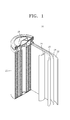
- FIG. 1 is a schematic view of a secondary lithium battery 30 according to an embodiment of the present invention.
- the lithium battery 30 includes a positive electrode 23, a negative electrode 22, and a separator 24 disposed between the positive electrode 23 and the negative electrode 22.
- the positive electrode 23, the negative electrode 22, and the separator 24 are wound or folded to be placed in a battery case 25. Subsequently, an electrolyte is injected into the battery case 25 and the resultant structure is sealed with a sealing member 26, thereby completing the manufacturing of the lithium battery 30.
- the battery case 25 may be a cylindrical, rectangular, or thin-film shape.
- the lithium battery may be a lithium ion battery.
- the positive electrode 23 may include a positive electrode current collector and a positive active material layer formed on the positive electrode current collector.
- the positive electrode current collector may have a thickness of about 3 to about 500 ⁇ m.
- the positive current collector may not be particularly limited as long as it does not cause any chemical change in a secondary battery and has conductivity, and examples of a material for forming the positive current collector are copper, stainless steel, aluminum, nickel, titanium, calcined carbon, and copper or stainless steel that is surface-treated with carbon, nickel, titanium, silver, and an aluminum-cadmium alloy.
- the positive current collect may have a fine uneven structure at its surface to increase a binding force with respect to the positive active material, and the positive current collector may have various shapes, such as film, sheet, foil, net, porosity, foam, or non-woven shape.
- the positive active material layer includes a positive active material, a binder, and selectively a conducting agent.
- the positive active material includes an overlithiated lithium transition metal oxide with the layered structure described above.
- the positive active material layer may further include other typical positive active materials in addition to the overlithiated lithium transition metal oxide.
- the positive active material may be any one of various lithium-containing metal oxides that are typically used in the art.
- at least one composite oxide of lithium and metal selected from cobalt, manganese, nickel, and a combination thereof may be used, and detailed examples thereof are compounds represented by: Li a A 1-b B b D 2 (wherein, 0.90 ⁇ a ⁇ 1, and 0 ⁇ b ⁇ 0.5); Li a E 1-b B b O 2-c D c (wherein, 0.90 ⁇ a ⁇ 1, 0 ⁇ b ⁇ 0.5, 0 ⁇ c ⁇ 0.05); LiE 2-b B b O 4-c D c (wherein, 0 ⁇ b ⁇ 0.5, and 0 ⁇ c ⁇ 0.05); Li a Ni 1-b-c Co b B c D ⁇ (wherein, 0.90 ⁇ a ⁇ 1, 0 ⁇ b ⁇ 0.5, 0 ⁇ c ⁇ 0.05, and 0 ⁇ ⁇ ⁇ 2);
- A is Ni, Co, Mn, or a combination thereof
- B is Al, Ni, Co, Mn, Cr, Fe, Mg, Sr, V, a rare-earth element, or a combination thereof
- D is O, F, S, P, or a combination thereof
- E is Co, Mn, or a combination thereof
- F is F, S, P, or a combination thereof
- G is Al, Cr, Mn, Fe, Mg, La, Ce, Sr, V, or a combination thereof
- Q is Ti, Mo, Mn, or a combination thereof
- I is Cr, V, Fe, Sc, Y, or a combination thereof
- J is V, Cr, Mn, Co, Ni, Cu, or a combination thereof.
- These compounds may have a coating layer on their surfaces, or these compounds may be mixed with a compound having a coating layer.
- the coating layer may include an oxide of a coating element, a hydroxide of a coating element, an oxyhydroxide of a coating element, an oxycarbonate of a coating element, or a hydroxycarbonate of a coating element.
- These compounds that form the coating layer may be amorphous or crystalline.
- a coating element included in the coating layer Mg, Al, Co, K, Na, Ca, Si, Ti, V, Sn, Ge, Ga, B, As, Zr, or a mixture thereof may be used.
- the coating layer may be formed by using any one of various coating methods that are performed using the compounds and the elements and do not affect properties of the positive active material (For example, spray coating, immersion, or the like). These coating methods are obvious to one of ordinary skill in the art and thus, are not described in detail herein.
- the binder may be any one of various materials that enable positive active material particles to attach to each other and that enable the positive active material to attach to the positive current collector.
- Detailed examples thereof are polyvinylalcohol, carboxymethylcellulose, hydroxypropylcellulose, diacetylcellulose, polyvinylchloride, carboxylated polyvinylchloride, polyvinylfluoride, ethylene oxide-containing polymer, polyvinylpyrrolidon, polyurethane, polytetrafluoroethylene, polyvinylidene fluoride, polyethylene, polypropylene, styrene-butadiene rubber, acrylated styrene-butadiene rubber, epoxy resin, and nylon.
- the conducting agent is used to provide conductivity to an electrode, and may be any one of various electrically conductive materials that do not cause any chemical changes. Examples thereof are natural graphite, artificial graphite, carbon black, acetylene black, ketjen black, carbon fiber, and metal powder or fiber of copper, nickel, aluminum, or silver.
- the negative electrode 22 may include a negative electrode current collector and a negative active material layer formed on the positive electrode current collector.
- the negative electrode current collector may have a thickness of about 3 to about 500 ⁇ m.
- the negative current collector may not be particularly limited as long as it does not cause any chemical change in a secondary battery and has conductivity, and examples of a material for forming the negative current collector are copper, stainless steel, aluminum, nickel, titanium, calcined carbon, and copper or stainless steel that is surface treated with carbon, nickel, titanium, silver, and an aluminum-cadmium alloy.
- the negative current collect may have a fine uneven structure to increase a binding force with respect to an electrode active material, and the negative current collector may have various shapes, such as film, sheet, foil, net, porosity, foam, or non-woven shape.
- the negative active material layer includes a negative active material, a binder, and selectively a conducting agent.
- the negative active material may include the silicon-based negative active material described above.
- the negative active material layer may additionally include, in addition to the silicon-based negative active material, other typical negative active materials.
- the negative active material may be any one of various lithium-containing metal oxides that are typically used in the art.
- lithium metal, lithium-alloyable metal, a transition metal oxide, a lithium-dopable and undopable material, or a material that enables reversible intercalation and deintercalation of lithium ions may be used, and two or more different kinds of these materials may be used in a mixed or combined form.
- an ally of lithium and metal selected from the group consisting of Na, K, Rb, Cs, Fr, Be, Mg, Ca, Sr, Si, Sb, Pb, In, Zn, Ba, Ra, Ge, Al, and Sn may be used.
- transition metal oxide is tungsten oxide, molybdenum oxide, titanium oxide, lithium titanium oxide, vanadium oxide, and lithium vanadium oxide.
- the lithium-dopable and undopable material may be, for example, Sn, SnO 2 , or a Sn-Y alloy (wherein Y is an alkali metal, alkali earth metal, Group 11 element, Group 12 element, Group 13 element, Group 14 element, Group 15 element, Group 16 element, transition metal, rare earth element or a combination thereof, and is not Sn).
- the element Y may be Mg, Ca, Sr, Ba, Ra, Sc, Y, Ti, Zr, Hf, Rf, V, Nb, Ta, Db, Cr, Mo, W, Sg, Tc, Re, Bh, Fe, Pb, Ru, Os, Hs, Rh, Ir, Pd, Pt, Cu, Ag, Au, Zn, Cd, B, Al, Ga, Sn, In, Ti, Ge, P, As, Sb, Bi, S, Se, Te, Po, or a combination thereof.
- the material that enables reversible intercalation and deintercalation of lithium ions may be any one of various carbonaceous materials that are typically used as a carbonaceous negative active material in a lithium battery.
- a crystalline carbon, amorphous carbon, or a mixture thereof may be used.
- the crystalline carbon may be natural graphite, artificial graphite, expandable, graphite, graphene, fullerene soot, carbon nanotube, or carbon fiber, but is not limited thereto.
- the amorphous carbon may be soft carbon (low temperature calcined carbon), hard carbon, mesophase pitch carbide, or calcined corks, and is not limited thereto.
- the carbon-based negative active material may be spherical, tabular, fibrous, tube-shapes, or powder.
- the binder may be any one of various materials that enable negative active material particles to attach to each other and that enable the negative active material to attach to a current collector.
- Detailed examples thereof are polyvinylalcohol, carboxymethylcellulose, hydroxypropylcellulose, polyvinylchloride, carboxylated polyvinyl chloride, polyvinyl fluoride, ethylene oxide-containing polymer, polyvinylpyrrolidon, polyurethane, polytetrafluoroethylene, polyvinylidene fluoride, polyethylene, polypropylene, styrene-butadiene rubber, acrylated styrene-butadiene rubber, epoxy resin, and nylon.
- the conducting agent is used to provide conductivity to an electrode, and may be any one of various electrically conductive materials that do not cause any chemical changes. Examples thereof are: a carbonaceous material, such as natural graphite, artificial graphite, carbon black, acetylene black, ketjen black, carbon fiber; metal powder or fiber of copper, nickel, aluminum, or silver; and a conducting polymer, such as polyphenylene derivative; or a mixture thereof.
- Each of the positive electrode 23 and the negative electrode 22 is manufactured by mixing an active material, a conducting agent, and a binder in a solvent to prepare an active material composition and doping the composition on a current collector.
- the solvent may be N-methylpyrrolidone (NMP), acetone, water, or the like, and is not limited thereto.
- the positive electrode 23 and the negative electrode 22 may be separated by the separator 24, and the separator 24 may be any one of various materials that are typically used in a lithium battery.
- a material that has low resistance to ion migration of an electrolyte and has excellent electrolytic solution retaining capability is suitable for a material for forming the separator.
- the separator 24 may be a single-layered film or a multi-layered film, and a material for forming the separator may be selected from glass fiber, polyester, Teflon, polyethylene, polypropylene, polytetrafluoroethylene (PTFE), and a combination thereof, each of which may be in a non-woven fabric or woven fabric form.
- the separator may have a pore size of about 0.01 to about 10 ⁇ m, and a thickness of about 3 to about 100 ⁇ m.
- the electrolyte may be a lithium salt-containing non-aqueous based electrolyte that includes a fluoride-based ether solvent in a relative amount with respect to the total volume of the non-aqueous electrolytic solution.
- the lithium battery may be suitable for, in addition to mobile phones and portable computers, applications requiring high capacity, high performance, and high-temperature driving, such as electric vehicles.
- the lithium battery may be combined with typical internal combustion engine, a fuel battery, or a super capacitor for use in hybrid vehicles.
- the lithium battery may be used in other various applications that require high output, high voltage, and high-temperature driving. Such applications are electric vehicles, machine tools, etc.
- a composite positive active material powder with a composition of 0.45LiNi 0.5 Co 0.2 Mn 0.3 O 2 - 0.55Li 2 MnO 3 , which is a positive active material, and a carbon conducting agent (Super-P; Timcal Ltd.) are uniformly mixed at a weight ratio of 90:5, and then, a polyvinylidene fluoride (PVDF) binder solution was added thereto to prepare an active material slurry of weight ratio 90:5:5 of active material:carbon conducting agent:binder.
- the active material slurry was coated on an aluminum foil with a thickness of 15 ⁇ m, and then dried and pressed, thereby completing the manufacturing of a positive electrode.
- a Si-Ti-Ni-based Si-alloy (an atomic ratio of Si:Ti:Ni was 68:16:16, and an average particle size thereof was 5 ⁇ m), which is a negative active material, LSR7 (manufacturer: Hitachi Chemical, a binder including PAl 23wt%, and N-methyl-2-pyrrolidone 97wt%), which is a binder, and Ketjen Black, which is a conducting agent, were mixed at a mixed ratio of 84:4:8, and then, N-methylpyrrolidone was added to the mixture to control a viscosity thereof to make a solid content to be 60 wt%, thereby preparing a negative active material slurry.
- the negative active material slurry was coated on a copper foil current collector with a thickness of 10 ⁇ m, and then, dried and pressed, thereby completing the manufacturing a negative electrode.
- a 20 ⁇ m-thick polyethylene film coated with an inorganic and organic material of PVDF and Mg(OH) 2 at a weight ratio of 40:60 was used as a separator.
- the positive electrode, the negative electrode, and the separator were used and an electrolyte was injected thereto to manufacture a lithium battery.
- the electrolyte was prepared as follows: fluoroethylene carbonate, dimethylcarbonate, and 2,2,3,3-tetrafluoropropyl-1,1,2,2-tetrafluoroethyl ether, which is a fluoro ether solvent, were mixed at a volumetric ratio of 25:72:3 to prepare a mixed solvent, and then, LiPF 6 was added to the mixed solvent until a concentration thereof was 1.3M, and tris trimethylsilyl phosphate was added thereto in an amount of 2 wt% based on the total weight of the non-aqueous electrolytic solution.
- a lithium battery was manufactured in the same manner as in Example 1, except that a mixed ratio of fluoro ethylene carbonate, dimethylcarbonate, and fluoro ether in the electrolyte was 25:65:10.
- a lithium battery was manufactured in the same manner as in Example 1, except that a mixed ratio of fluoro ethylene carbonate, dimethylcarbonate, and fluoro ether in the electrolyte was 25:45:30.
- a lithium battery was manufactured in the same manner as in Example 1, except that a mixed ratio of fluoro ethylene carbonate, dimethylcarbonate, and fluoro ether in the electrolyte was 25:15:60.
- a lithium battery was manufactured in the same manner as in Example 1, except that a mixed ratio of fluoro ethylene carbonate, dimethylcarbonate, and fluoro ether in the electrolyte was 25:5:70.
- a lithium battery was manufactured in the same manner as in Example 3, except that a mixed ratio of fluoro ethylene carbonate, dimethylcarbonate, and fluoro ether in the electrolyte was 25:55:20, and tris trimethylsilyl phosphate was not used.
- a lithium battery was manufactured in the same manner as in Example 1, except that a mixed ratio of fluoro ethylene carbonate, dimethylcarbonate, and fluoro ether in the electrolyte was 25:45:30, and tris trimethylsilyl phosphate was not used.
- a lithium battery was manufactured in the same manner as in Example 3, except that 2.0 wt% of lithium difluorooxalatoborate (LiFOB) was further added to the electrolyte based on the total weight of the non-aqueous electrolytic solution.
- LiFOB lithium difluorooxalatoborate
- a lithium battery was manufactured in the same manner as in Example 3, except that 2.0 wt% of vinylcarbonate (VC) was further added to the electrolyte based on the total weight of the non-aqueous electrolytic solution.
- VC vinylcarbonate
- a lithium battery was manufactured in the same manner as in Example 3, except that 2.0 wt% of propansultone (PS) was further added to the electrolyte based on the total weight of the non-aqueous electrolytic solution.
- PS propansultone
- a lithium battery was manufactured in the same manner as in Example 3, except that 2.0 wt% of succinonitrile (SN) was further added to the electrolyte based on the total weight of the non-aqueous electrolytic solution.
- SN succinonitrile
- a lithium battery was manufactured in the same manner as in Example 3, except that 0.5 wt% of LiBF 4 was further added to the electrolyte based on the total weight of the non-aqueous electrolytic solution.
- a lithium battery was manufactured in the same manner as in Example 3, except that 2.0 wt% of hexamethyldisilazane was further added to the electrolyte based on the total weight of the non-aqueous electrolytic solution.
- a lithium battery was manufactured in the same manner as in Example 3, except that 0.5 wt% of LiBF 4 , 2 wt% of propansultone (PS), and 1 wt% of succinonitrile (SN) were further added to the electrolyte based on the total weight of the non-aqueous electrolytic solution.
- PS propansultone
- SN succinonitrile
- a lithium battery was manufactured in the same manner as in Example 1, except that fluoro ether was not used, and fluoro ethylene carbonate and dimethylcarbonate were mixed at a mixed ratio of 25:75 to prepare a mixed solvent, and tris trimethylsilyl phosphate was not added.
- Capacity retention ratio [%] [discharge capacity at each cycle/discharge capacity in a first cycle] ⁇ 100
- Example 7 As illustrated in FIG. 3 , compared to Comparative Example 1 in which the fluoride-based ether solvent and the tris trimethylsilyl phosphate additive were not used, a capacity retention ratio of Example 7 in which the fluoride-based ether solvent was used, was substantially improved. This shows that the use of the fluoride-based ether solvent contributes to oxidation-resistance property stability at high voltages.
- Example 3 the capacity retention ratio of Example 3 in which tris trimethylsilyl phosphate was further added together with the fluoride-based ether solvent, was further improved. This may be because the tris trimethylsilyl phosphate additive may form a stable SEI film on a positive electrode to prevent leakage of metal ions from the positive electrode to increase a capacity retention ratio.
Landscapes
- Chemical & Material Sciences (AREA)
- General Chemical & Material Sciences (AREA)
- Chemical Kinetics & Catalysis (AREA)
- Electrochemistry (AREA)
- Engineering & Computer Science (AREA)
- Manufacturing & Machinery (AREA)
- Inorganic Chemistry (AREA)
- General Physics & Mathematics (AREA)
- Condensed Matter Physics & Semiconductors (AREA)
- Physics & Mathematics (AREA)
- Materials Engineering (AREA)
- Secondary Cells (AREA)
- Battery Electrode And Active Subsutance (AREA)
Abstract
Description
- One or more embodiments of the present invention relates to a lithium battery.
- Lithium secondary batteries are used in portable electronic devices for mobile communication, such as personal digital assistants (PDAs), mobile phones, or notebook computers, electric bicycles or electric vehicles, and have twice greater discharge voltage than typical batteries, and thus, have high energy density.
- Lithium secondary batteries produce electric energy due to oxidation and reduction reactions occurring when lithium ions are intercalated to or deintercalated from a positive electrode and a negative electrode, each including an active material that enables the intercalation and deintercalation of lithium ions, with an organic electrolyte or a polymer electrolyte filled therebetween.
- For use as a positive active material of a lithium secondary battery, for example, an oxide that consists of lithium and a transition metal and has a structure enabling intercalation of lithium ions may be used. Examples of such an oxide are lithium cobalt oxide (LiCoO2) lithium nickel oxide (LiNiO2), and lithium nickel cobalt manganese oxide (Li[NiCoMn]O2, Li[Ni1-x-yCoxMy]O2).
- For use as a negative active material, a carbonaceous material, such as an artificial and natural graphite or hard carbon, and a non-carbonaceous material, such as Si, which enable intercalation and deintercalation of lithium, may be used.
- The requirement of high-capacity battery results in development of various electrode systems. As a way to achieve high capacity, for example, overlithiated lithium transition metal oxide having a layered structure is used in a positive electrode, and a silicon-based negative active material is used in a negative electrode, and such an electrode system requires excellent electrolytic solutions with excellent high voltage characteristics due to its operation at high voltage.
- Most non-aqueous electrolytic solution solvents used in conventional lithium secondary batteries have a low withstanding voltage property, and when an electrolytic solution using solvents with low withstanding voltage property is used in a lithium secondary battery, during repeated cycles of charging and discharging, the solvents decompose to generate gas, and thus, inner pressure of a battery increases or a product may cause a polymerization reaction or may attach to the surface of the battery.
- Accordingly, there is a need to develop an electrolytic solution that is suitable for a high-capacity electrode system at high voltages.
- The present invention is directed to an electrolyte for use in a lithium battery. The electrolyte of the invention when used in a lithium battery provides oxidation stability at high voltages and thereby increases a capacity retention ratio, charging and discharging characteristics, and a cycle lifespan of said lithium battery.
- The electrolyte of the invention comprises a lithium salt and a non-aqueous electrolytic solution, wherein the non-aqueous electrolytic solution comprises fluoride-based ether in an amount of at least 3 vol% based on the total volume of the non-aqueous electrolytic solution. Preferably, the fluoride-based ether in the non-aqueous electrolytic solution is present in an amount of at least 10 vol% based on the total volume of the non-aqueous electrolytic solution. More preferably, the amount of the fluoride-based ether in the non-aqueous electrolytic solution is in the range of 10 to 70 vol% based on the total volume of the non-aqueous electrolytic solution.
- In the electrolyte of the invention the fluoride-based ether may be present as a single type of compound or may comprises a combination of more than one type of fluoride-based ether compounds.
- Preferably, the fluoride-based ether of the electrolyte of the invention comprises at least one compound represented by Formula 4, Formula 5 or Formula 6; with
Rf1-O-Rf2 [Formula 4]
wherein Rf1 and Rf2 are each independently a linear or branched C1 to C12 fluoroalkyl group having at least one hydrogen atoms substituted with a fluoro group;
Rf1-O-R [Formula 5]
wherein Rf1 is a linear or branched C1 to C12 fluoroalkyl group having at least one hydrogen atoms substituted with a fluoro group, and R is a linear or branched C1 to C12 alkyl group;
Rf1-O-(R'-O)n-Rf2 [Formula 6]
wherein Rf1 and Rf2 are each independently a linear or branched C1 to C12 fluoroalkyl group having at least one hydrogen atoms substituted with a fluoro group, and R' is a linear or branched C1 to C5 alkylene group, and n is an integer of 1 to 5. - In
Formulae - In
Formula 5, R is preferably an alkyl group selected from -CH3, -C2H5, -C3H7, or -CH(CH3)CH3. - In Formula 6, R' is preferably an alkylene group selected from -CH2-, -CH2CH2-, or -CH2CH2CH2-.
- The fluoride-based ether in the electrolyte of the invention may comprise HCF2CF2CH2OCF2CF2H, HCF2CF2CH2OCF2CH3, CF3CF2CH2OCF2CF2H, CF3CF2CH2OCF2H, HCF2CF2OCH2CF3, HCF2CF2CH2OCF2CFHCF3, CF3CF2CH2OCF2CFHCF3, HCF2CF2CH2OCH2CFHCF3, CF3CF2CH2OCH2CFHCF3, and/or HCF2CF2CH2OCH3. Preferably, the fluoride-based ether of the electrolyte of the invention comprises HCF2CF2CH2OCF2CF2H, HCF2CF2CH2OCF2CH3, CF3CF2CH2OCF2H, HCF2CF2OCH2CF3, and HCF2CF2CH2OCH3.
- In the electrolyte of the invention, the non-aqueous electrolytic solution further may comprise a carbonate-based compound, an ester-based compound, an ether-based compound, a ketone-based compound, an alcohol-based compound, an aprotic solvent, or a combination thereof. Preferably, the carbonate-based compound comprises a chain carbonate compound, a cyclic carbonate compound, a fluoro carbonate compound, or a combination thereof.
- In a preferred embodiment, the non-aqueous electrolytic solution of the electrolyte of the invention may comprise or consist of:
- 10 to 70 vol% fluoride-based ether;
- 10 to 30 vol% fluoro carbonate compound, preferably 20 to 30 vol%; and
- 0 to 80 vol% chain carbonate compound, preferably 5 to 75 vol%.
- The fluoride-based ether may be selected from HCF2CF2CH2OCF2CF2H, HCF2CF2CH2OCF2CH3, CF3CF2CH2OCF2CF2H, CF3CF2CH2OCF2H, HCF2CF2OCH2CF3, HCF2CF2CH2OCF2CFHCF3, CF3CF2CH2OCF2CFHCF3, HCF2CF2CH2OCH2CFHCF3, CF3CF2CH2OCH2CFHCF3, and/or HCF2CF2CH2OCH3. Preferably, the fluoride-based ether compound is HCF2CF2CH2OCF2CF2H (2,2,3,3-tetrafluoropropyl-1,1-2,2-tetrafluorethyl ether).
- The fluoro carbonate compound may be selected from fluoroethylene carbonate (FEC), 4,5-difluoroethylenecarbonate, 4,4-difluoroethylenecarbonate, 4,4,5-trifluoroethylenecarbonate, 4,4,5,5-tetrafluoroethylenecarbonate, 4-fluoro-5-methylethylenecarbonate, 4-fluoro-4-methylethylenecarbonate, 4,5-difluoro-4-methylethylenecarbonate, 4,4,5-trifluoro-5-methylethylenecarbonate, and/or trifluoromethylethylenecarbonate. Preferably, the fluoro carbonate compound is fluoroethylene carbonate (FEC).
- The chain carbonate compound may be selected from diethyl carbonate (DEC), dimethyl carbonate (DMC), dipropyl carbonate (DPC), methylpropyl carbonate (MPC), ethylpropylcarbonate (EPC), methylethyl carbonate (MEC). Preferably, the chain carbonate compound is dimethyl carbonate (DMC).
- In a particularly preferred embodiment, the non-aqueous electrolytic solution of the electrolyte of the invention may comprise or consist of:
- 10 to 70 vol% HCF2CF2CH2OCF2CF2H
(2,2,3,3-tetrafluoropropyl-1,1-2,2-tetrafluorethyl ether); - 10 to 30 vol% fluoroethylene carbonate (FEC), preferably 20 to 30 vol% fluoroethylene carbonate (FEC); and
- 0 to 80 vol% dimethyl carbonate (DMC), preferably 5 to 75 vol% dimethyl carbonate (DMC).
- The electrolyte of the invention comprises a lithium salt. Said lithium salt may be LiCl, LiBr, Lil, LiClO4, LiB10Cl10, LiPF6, CF3SO3Li, CH3SO3Li, C4F3SO3Li, (CF3SO2)2NLi, LiN(CxF2x+1SO2)(CyF2+ySO2, wherein x and y are natural numbers, CF3CO2Li, LiAsF6, LiSbF6, LiAlCl4, LiAlF4, lithiumchloroborate, low aliphatic lithium carbonate, 4 phenyl lithium borate, lithium imide, and/or a combination thereof. The lithium salt may be present in a final concentration of 0.1M to 2.0M.
- The electrolyte of the invention may further comprise an additive to form a stabilized solid electrolyte interface (SEI) on the surface of an electrode of the lithium battery. The additive can be e.g. tris(trimethylsilyl) phosphate (TMSPa), lithium difluorooxalatoborate (LiFOB), vinylcarbonate (VC), propanesultone (PS), succinitrile (SN), LiBF4, a silane compound, and/or a silazane compound. The additive is preferably present in an amount of 0.01 to 10 wt% based on the total weight of the non-aqueous electrolytic solution to form a stable SEI film.
- According to another aspect, the present invention is directed to a lithium battery comprising an electrolyte of the invention. The lithium battery exhibits high capacity and cycle characteristics improved due to the inclusion of an electrolyte of the invention with excellent high voltage characteristics.
- The lithium battery of the present invention may comprise:
- a positive electrode including an over-lithiated lithium transition metal oxide with a layered structure;
- a negative electrode including a silicon-based negative active material; and
- an electrolyte of one of
claims 1 to 12, which is interposed between the positive electrode and the negative electrode. - The overlithiated lithium transition metal oxide of the positive electrode preferably includes a compound represented by Formula 1 below:
xLi2MO3-(1-x)LiM'O2 [Formula 1]
wherein 0<x<1, - M is at least one metal selected from
Period 4 transition metals andPeriod 5 transition metals, having a mean oxidation number of +4, and - M' is at least one metal selected from
Period 4 transition metals andPeriod 5 transition metals, having a mean oxidation number of +3. - The silicon-based negative active material of the negative electrode preferably includes a material selected from the group consisting of Si, SiOx(0<x<2), Si-Z alloy, wherein Z is alkali metal, alkali earth metal, a Group 11 element, a Group 12 element, a Group 13 element, a Group 14 element, a Group 15 element, a Group 16 element, a transition metal, a rare earth element, or a combination thereof, and is not Si, and a combination thereof.
- According to one or more embodiments of the present invention, a lithium battery includes: a positive electrode including an overlithiated lithium transition metal oxide with a layered structure; a negative electrode including a silicon-based negative active material; and an electrolyte that is interposed between the positive electrode and the negative electrode and includes a fluoride-based ether solvent in an amount of 3 vol% or more based on a total volume of a non-aqueous electrolytic solution..
- A lithium battery according to an embodiment of the present invention includes an electrolyte of the invention which provides oxidation stability at high voltages to increase a capacity retention ratio, charging and discharging characteristics, and a cycle lifespan.
-
-
FIG. 1 is a schematic view of a lithium battery according to an embodiment of the present invention. -
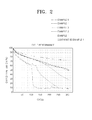
FIG. 2 shows measurements of a capacitance retention ratio of lithium batteries manufactured according to Examples 1-5 and Comparative Example 1. -
FIG. 3 shows measurements of a capacitance retention ratio of lithium batteries manufactured according to Example 3, Example 7, and Comparative Example 1 - Hereinafter, embodiments of the present invention are described in detail.
- A lithium battery according to an embodiment of the present invention includes
a cathode including an overlithiated lithium transition metal oxide having a layered structure;
a negative electrode including a silicon-based negative active material; and
an electrolyte that is interposed between the cathode and the negative electrode and that includes a fluoride-based ether solvent in an amount of 3 vol% or more based on a total volume of a non-aqueous electrolytic solution. - According to an embodiment of the present invention, the overlithiated lithium transition metal oxide may include a compound represented by
Formula 1 below.
xLi2MO3-(1-x)LiM'O2 [Formula 1]
wherein 0<x<1,
M is at least one metal selected fromPeriod 4 transition metals andPeriod 5 transition metals, having a mean oxidation number of +4, and
M' is at least one metal selected fromPeriod 4 transition metals andPeriod 5 transition metals, having a mean oxidation number of +3. - Herein, x is set based on a mole.
- The overlithiated lithium transition metal oxide may contain an excess amount of Li in the transition metal layer of LiM'O2, and the excess amount of Li is included in the form of Li2MO3, which has high capacity and stability at high voltage, inside the layered structure of LiM'O2, and accordingly, high capacity and structural stability of a composite positive active material may be obtained.
- The lithium transition metal oxide may be a composite having a layered structure, or a solid solution. In some cases, the lithium transition metal oxide may exist in a combination of the composite and the solid solution.
- Regarding
Formula 1, M may be for example, at least one metal selected from Mn, Ti, Zr, Sn, and Mo, M' may be, for example, at least one metal selected from Ni, Co, Mn, Fe, Al, Mg, Zn, Cu, Cr, V, and Nb. - For example, the lithium transition metal oxide may include a compound represented by
Formula 2 below.
xLi2MnO3-(1-x)LiNiaCobMncO2 [Formula 2]
wherein
0<x<1, 0<a<1, 0<b<1, 0<c<1, and a+b+c=1. - For example, the lithium transition metal oxide may include a compound represented by
Formula 3 below.
xLi2MO3-yLiM'O2-zLi1+dM"2-dO4 [Formula 3]
wherein x+y+z=1; 0<x<1, 0<y<1, 0<z<1, and 0≤d≤0.33, - M is at least one metal selected from
Period 4 transition metals andPeriod 5 transition metals, having a mean oxidation number of +4, and - M' is at least one metal selected from
Period 4 transition metals andPeriod 5 transition metals, having a mean oxidation number of +3. - M"is at least one metal selected from
Period 4 transition metals andPeriod 5 transition metals, having a combination mean oxidation numbers of +3 and +4. - Regarding
Formula 3, M may be, for example, at least one metal selected from Mn, Ti, Zr, Sn, and Mo, M' may be, for example, at least one metal selected from Ni, Co, Mn, Fe, Al, Mg, Zn, Cu, Cr, V, and Nb, and M" may be, for example, at least one metal selected from Ni, Co, Mn, Fe, Al, Mg, Zn, Cu, Cr, V, and Nb. - The positive electrode may instead include, as the overlithiated lithium transition metal oxide, in addition to the compounds described above, for example, a compound represented by
Formula 4 orFormula 5 below:
Li[LixMey]O2+d [Formula 4]
wherein x+y=1, 0<x<1, and 0≤d≤0.1, and Me is at least one metal selected from the group consisting of Mn, V, Cr, Fe, Co, Ni, Zr, Re, Al, B, Ge, Ru, Sn, Ti, Nb, Mo, and Pt.
Li[LixNiaCobMnc]O2+d [Formula 5]
wherein x+a+b+c=1; 0<x<1, 0<a<1, 0<b<1, 0<c<1, and 0≤d≤0.1. - The lithium transition metal oxide may have a nanoparticle shape with a dimension of at least one region thereof being less than about 500 nm, for example, less than about 200 nm, less than about 100 nm, less than about 50 nm, or less than about 20 nm. The nanoparticle shape is suitable for high-rate discharging characteristics due to its contribution to an increase in an assembly density of a positive electrode plate. In addition, due to a decreased specific surface area, a reactivity thereof with an electrolytic solution decreases and thus, cycle characteristics may increase.
- The lithium transition metal oxide may form a primary particle, and when primary particles agglomerate or are combined with each other, or when primary particles are combined with other active materials, secondary particles may be formed.
- The negative electrode may include a silicon-based negative active material.
- The term "silicon-based" used herein refers to an inclusion of at least about 50 wt% of silicon (Si), for example, an inclusion of at least about 60 wt%, 70 wt%, 80 wt%, or 90 wt% Si, or 100 wt% of Si.
- The silicon-based negative active material may be any one of various materials that provide high capacity and are typically used in the art. The silicon-based negative active material may include, for example, a material selected from the group consisting of Si, SiOx(0<x<2), Si-Z alloy (wherein Z is alkali metal, alkali earth metal, a Group 11 element, a Group 12 element, a Group 13 element, a Group 14 element, a Group 15 element, a Group 16 element, a transition metal, a rare earth element, or a combination thereof, and is not Si), and a combination thereof. The element Z may be selected from Mg, Ca, Sr, Ba, Ra, Sc, Y, La, Ti, Zr, Hf, V, Nb, Ta, Cr, Mo, W, Tc, Re, Fe, Ru, Os, Co, Rh, Ir, Ni, Pd, Pt, Cu, Ag, Au, Zn, Cd, B, Ge, P, As, Sb, Bi, S, Se, Te, Po, and a combination thereof. In addition, the silicon-based negative active material, such as Si, SiOx, or Si-Z alloy, may be substantially crystalline (including mono-crystalline and poly-crystalline), non-crystalline, or a combination thereof.
- The silicon-based negative active material may have a nano-structure having a dimension of at least one region thereof being less than about 500 nm, for example, less than about 200 nm, less than about 100 nm, less than about 50 nm, or less than about 20 nm. Examples of the nano-structure are a nanoparticle, nanopowder, nanowire, nanorod, nanofiber, nanocrystal, nanodot, and nanoribbon.
- Such silicon-based negative active materials may be used alone, or in combination of two or more different kinds thereof.
- An electrolyte may be interposed between the positive electrode and the negative electrode.
- The electrolyte is a lithium salt-containing non-aqueous based electrolyte including a non-aqueous electrolytic solution and a lithium salt, and like the positive electrode and the negative electrode, to secure a withstanding voltage property and an oxidation-resistance stability in a high-capacity electrode system, the electrolyte may include a fluoride-based ether solvent in an amount of 3 to 60 vol% based on a total volume of the non-aqueous electrolytic solution.
- An electrolytic solution including a typical carbonate-based solvent having a cyclic group or an alkyl group is unstable because it easily decomposes by oxidation at high voltage. However, the electrolyte including the fluoride-based ether solvent with high oxidation-resistance property stability at high voltage may be suitable for a high-capacity electrode system that operates at high voltages. Accordingly, due to the oxidation-resistance property stability at high voltage, the electrolyte may contribute to an increase in a capacity retention ratio of a lithium battery, and may increase charging and discharging characteristics, thereby extending a cycle lifespan.
- The fluoride-based ether solvent may include, for example, at least one of compounds represented by
Formulae 4 to 6 below.
Rf1-O-Rf2 [Formula 4]
wherein Rf1 and Rf2 are each independently a linear or branched C1 to C12 fluoroalkyl group having at least one hydrogen atoms substituted with a fluoro group.
Rf1-O-R [Formula 5]
wherein Rf1 is a linear or branched C1 to C12 fluoroalkyl group having at least one hydrogen atoms substituted with a fluoro group, and R is a linear or branched C1 to C12 alkyl group.
Rf1-O-(R'-O)n-Rf2 [Formula 6]
wherein Rf1 and Rf2 are each independently a linear or branched C1 to C12 fluoroalkyl group having at least one hydrogen atoms substituted with a fluoro group, and R' is a linear or branched C1 to C5 alkylene group, and n is an integer of 1 to 5. - Rf1 or Rf2 may be, for example, a fluoroalkyl group, such as HCF2-, CF3-, HCF2CF2-, CH3CF2-, CF3CH2-, CF3CF2-, (CF3)2CH-, HCF2CF2CH2-, CF3CH2CH2-, HCF2CF2CF2CH2-, HCF2CF2CF2CF2CH2-, CF3CF2CH2-, CF3CFHCF2CH2-, HCF2CF(CF3)CH2-, or CF3CF2CH2CH2-.
- R may be, for example, an alkyl group, such as -CH3, -C2H5, -C3H7, or -CH(CH3)CH3.
- R' may be, for example, an alkylene group, such as -CH2-, -CH2CH2-, or -CH2CH2CH2-.
- Detailed examples of the fluoride-based ether solvent are HCF2CF2CH2OCF2CF2H, HCF2CF2CH2OCF2CH3, CF3CF2CH2OCF2CF2H, CF3CF2CH2OCF2H, HCF2CF2OCH2CF3, HCF2CF2CH2OCF2CFHCF3, CF3CF2CH2OCF2CFHCF3, HCF2CF2CH2OCH2CFHCF3, CF3CF2CH2OCH2CFHCF3, and HCF2CF2CH2OCH3. From among the fluoride-based ether solvents, HCF2CF2CH2OCF2CF2H, HCF2CF2CH2OCF2CH3, CF3CF2CH2OCF2H, HCF2CF2OCH2CF3, and HCF2CF2CH2OCH3 may be used in consideration of their compatibility with other solvents and excellent rate characteristics.
- The fluoride-based ether solvents may be used alone, or in combination of two or more different kinds of these materials.
- The electrolyte may include the fluoride-based ether solvent in an amount of 3 vol% or more based on a total volume of the non-aqueous electrolytic solution. For example, the fluoride-based ether solvent may be 10 vol% or more, 20 vol% or more, or 30 vol% or more, based on the total volume of the non-aqueous electrolytic solution. For example, the amount of the fluoride-based ether solvent may be, based on the total volume of the non-aqueous electrolytic solution, in a range of about 3 to about 70 vol%, about 10 to about 70 vol%, about 10 to about 60 vol%, or about 10 to about 30 vol%. When the amount of the fluoride-based ether solvent is less than 3 vol%, a withstanding voltage property may decrease, and thus, an electrolytic solution may be oxidized at high voltage, and thus, a discharge capacity retention ratio may substantially decrease.
- In a particularly preferred embodiment, the non-aqueous electrolytic solution of the electrolyte of the invention may comprise or consist of:
- 10 to 70 vol% HCF2CF2CH2OCF2CF2H
(2,2,3,3-tetrafluoropropyl-1,1-2,2-tetrafluorethyl ether); - 10 to 30 vol% fluoroethylene carbonate (FEC), preferably 20 to 30 vol% fluoroethylene carbonate (FEC); and
- 0 to 80 vol% dimethyl carbonate (DMC), preferably 5 to 75 vol% dimethyl carbonate (DMC).In addition, the electrolyte may further include an additive to form a stabilized solid electrolyte interface (SEI) on the surface of an electrode to prevent a reaction between the electrode and an electrolytic solution.
- The additive may be, for example, tris(trimethylsilyl) phosphate (TMSPa), lithium difluorooxalatoborate (LiFOB), vinylcarbonate (VC), propanesultone (PS), succinitrile (SN), LiBF4, a silane compound, a silazane compound such as hexamethyldisilazane, and the like. The silane compound and the silazane compound may have a functional group enabling a siloxane bond. Examples of such a functional group are acryl, amino, epoxy, methoxy, vinyl, and the like. These additives may be used alone, or in combination of two or more different kinds of these additives.
- The additive may be included in an amount of about 0.01 to about 10 wt% based on the total weight of the non-aqueous electrolytic solution to form a stable SEI film. For example, the additive may be included in an amount of about 0.05 to about 10 wt%, about 0.1 to about 5 wt%, or about 0.5 to about 4 wt%, based on the total weight of the non-aqueous electrolytic solution to form a stable SEI film. The amount of the additive may not be limited as long as the additive does not cause a decrease in the increase in the capacity retention ratio of a lithium battery due to the inclusion of the electrolyte.
- The non-aqueous electrolytic solution used in the electrolyte may act as a medium through which ions participating in an electrochemical reaction of a battery move.
- The non-aqueous electrolytic solution may be a carbonate-based compound, an ester-based compound, an ether-based compound, a ketone-based compound, an alcohol-based compound, an aprotic solvent, or a combination thereof.
- The carbonate-based compound may be a chain carbonate compound, a cyclic carbonate compound, a fluoro carbonate compound, or a combination thereof.
- The chain carbonate compound may be, for example, diethyl carbonate (DEC), dimethyl carbonate (DMC), dipropyl carbonate (DPC), methylpropyl carbonate (MPC), ethylpropylcarbonate (EPC), methylethyl carbonate (MEC), or a combination thereof, and the cyclic carbonate compound may be, for example, ethylene carbonate (EC), propylenecarbonate (PC), butylene carbonate (BC), vinylethylene carbonate (VEC) or a combination thereof.
- The fluoro carbonate compound may be, for example, fluoroethylene carbonate (FEC), 4,5-difluoroethylenecarbonate, 4,4-difluoroethylenecarbonate, 4,4,5-trifluoroethylenecarbonate, 4,4,5,5-tetrafluoroethylenecarbonate, 4-fluoro-5-methylethylenecarbonate, 4-fluoro-4-methylethylenecarbonate, 4,5-difluoro-4-methylethylenecarbonate, 4,4,5-trifluoro-5-methylethylenecarbonate, trifluoromethylethylenecarbonate, or a combination thereof.
- The carbonate-based compound may also be a combination of chain and/or cyclic carbonate fluoro carbonate compounds. The fluoro carbonate compound may increase solubility of a lithium salt to increase ionic conductivity, and may aid the formation of a film on the negative electrode using the silicon-based negative active material. The fluoro carbonate compound may be used in an amount of 1 to 30 vol% of the total volume of the non-aqueous electrolytic solution. Within the range described above, desired effects may be obtained while a viscosity of the electrolyte may be maintained at an appropriate level.
- The ester-based compound may be methylacetate, acetate, n-propylacetate, dimethylacetate, methylpropionate, ethylpropionate, y-butyrolactone, decanolide, valerolactone, mevalonolactone, or caprolactone. The ether-based compound may be dibutyl ether, tetraglyme, diglyme, dimetoxyethane, 2-methyltetrahydrofurane, or tetrahydrofurane, and the ketone-based compound may be cyclohexanone. In addition, the alcohol-based compound may be ethylalcohol or isopropyl alcohol.
- The aprotic solvent may be dimethylsulfoxide, 1,2-dioxolane, sulforane, methyl sulforane, 1,3-dimethyl-2-imidazolidinone, N-methyl-2-pyrrolidinone, formamide, dimethylformamide, acetonitrile, nitromethane, trimethyl phosphate, triethyl phosphate, trioctyl phosphate, or triester phosphate.
- The non-aqueous electrolytic solutions may be used alone, or in combination of two or more different kinds thereof, and in the latter case, a mixed ratio may vary according to desired performance of a battery.
- A lithium salt included in the electrolyte may act as a supplier of a lithium ion in a battery, enabling a basic operation of a lithium battery. The lithium salt may be any one of various materials that are typically used in a lithium battery. For example, a material that is easily dissolved in the non-aqueous based electrolyte may be used as the lithium salt, and examples of such a material are LiCl, LiBr, Lil, LiClO4, LiB10Cl10, LiPF6, CF3SO3Li, CH3SO3Li, C4F3SO3Li, (CF3SO2)2NLi, LiN(CxF2x+1SO2)(CyF2+ySO2)(here, x and y are natural number), CF3CO2Li, LiAsF6, LiSbF6, LiAlCl4, LiAlF4, lithiumchloroborate, low aliphatic lithium carbonate, 4 phenyl lithium borate, lithium imide, and a combination thereof.
- The lithium salt may be used in a concentration of, for example, about 0.1M to about 2.0M to secure practical performance of a lithium battery. When the concentration of a lithium salt is within this range, the electrolyte may have appropriate levels of conductivity and viscosity and thus excellent electrolyte performance may be obtained and also, lithium ions may effectively move.
- A lithium battery with such a structure may be manufactured by using a typical method, and the method is not described in detail herein.
-
FIG. 1 is a schematic view of asecondary lithium battery 30 according to an embodiment of the present invention. - Referring to
FIG. 1 , thelithium battery 30 includes apositive electrode 23, anegative electrode 22, and aseparator 24 disposed between thepositive electrode 23 and thenegative electrode 22. Thepositive electrode 23, thenegative electrode 22, and theseparator 24 are wound or folded to be placed in abattery case 25. Subsequently, an electrolyte is injected into thebattery case 25 and the resultant structure is sealed with a sealingmember 26, thereby completing the manufacturing of thelithium battery 30. Thebattery case 25 may be a cylindrical, rectangular, or thin-film shape. The lithium battery may be a lithium ion battery. - The
positive electrode 23 may include a positive electrode current collector and a positive active material layer formed on the positive electrode current collector. - The positive electrode current collector may have a thickness of about 3 to about 500 µm. The positive current collector may not be particularly limited as long as it does not cause any chemical change in a secondary battery and has conductivity, and examples of a material for forming the positive current collector are copper, stainless steel, aluminum, nickel, titanium, calcined carbon, and copper or stainless steel that is surface-treated with carbon, nickel, titanium, silver, and an aluminum-cadmium alloy. In addition, the positive current collect may have a fine uneven structure at its surface to increase a binding force with respect to the positive active material, and the positive current collector may have various shapes, such as film, sheet, foil, net, porosity, foam, or non-woven shape.
- The positive active material layer includes a positive active material, a binder, and selectively a conducting agent.
- The positive active material includes an overlithiated lithium transition metal oxide with the layered structure described above.
- The positive active material layer may further include other typical positive active materials in addition to the overlithiated lithium transition metal oxide.
- The positive active material may be any one of various lithium-containing metal oxides that are typically used in the art. For example, at least one composite oxide of lithium and metal selected from cobalt, manganese, nickel, and a combination thereof may be used, and detailed examples thereof are compounds represented by: LiaA1-bBbD2(wherein, 0.90 ≤ a ≤ 1, and 0 ≤ b ≤ 0.5); LiaE1-bBbO2-cDc(wherein, 0.90 ≤ a ≤ 1, 0 ≤ b ≤ 0.5, 0 ≤ c ≤ 0.05); LiE2-bBbO4-cDc(wherein, 0 ≤ b ≤ 0.5, and 0 ≤ c ≤ 0.05); LiaNi1-b-cCobBcDα(wherein, 0.90 ≤ a ≤ 1, 0 ≤ b ≤ 0.5, 0 ≤ c ≤ 0.05, and 0 < α ≤ 2); LiaNi1-b-cCobBcO2-αFα(wherein, 0.90 ≤ a ≤ 1, 0 ≤ b ≤ 0.5, 0 ≤ c ≤ 0.05, and 0 < α < 2); LiaNi1-b-cCobBcO2-αF2(wherein, 0.90 ≤ a ≤ 1, 0 ≤ b ≤ 0.5, 0 ≤ c ≤ 0.05, and 0 < α < 2); LiaNi1-b-cMnbBcDα(wherein, 0.90 ≤ a ≤ 1, 0 ≤ b ≤ 0.5, 0 ≤ c ≤ 0.05, and 0 < α ≤ 2); LiaNi1-b-cMnbBcO2-αFα(wherein, 0.90 ≤ a ≤ 1, 0 ≤ b ≤ 0.5, 0 ≤ c ≤ 0.05, and 0 < α < 2); LiaNi1-b-cMnbBcO2-αF2(wherein, 0.90 ≤ a ≤ 1, 0 ≤ b ≤ 0.5, 0 ≤ c ≤ 0.05, and 0 < α < 2); LiaNibEcGdO2(wherein, 0.90 ≤ a ≤ 1, 0 ≤ b ≤ 0.9, 0 ≤ c ≤ 0.5, and 0.001 ≤ d ≤ 0.1); LiaNibCocMndGeO2(wherein, 0.90 ≤ a ≤ 1, 0 ≤ b ≤ 0.9, 0 ≤ c ≤ 0.5, and 0 ≤ d ≤0.5, 0.001 ≤ e ≤ 0.1); LiaNiGbO2(wherein, 0.90 ≤ a ≤ 1, 0.001 ≤ b ≤ 0.1.); LiaCoGbO2(wherein, 0.90 ≤ a ≤ 1, 0.001 ≤ b ≤ 0.1); LiaMnGbO2(wherein, 0.90 ≤ a ≤ 1, and 0.001 ≤ b ≤ 0.1); LiaMn2GbO4(wherein, 0.90 ≤ a ≤ 1, and 0.001 ≤ b ≤ 0.1); QO2; QS2; LiQS2; V2O5; LiV2O5; LiIO2; LiNiVO4; Li(3-f)J2(PO4)3(0 ≤ f ≤ 2); Li(3-f)Fe2(PO4)3(0 ≤ f ≤ 2); and LiFePO4.
- In the formulae above, A is Ni, Co, Mn, or a combination thereof; B is Al, Ni, Co, Mn, Cr, Fe, Mg, Sr, V, a rare-earth element, or a combination thereof; D is O, F, S, P, or a combination thereof; E is Co, Mn, or a combination thereof; F is F, S, P, or a combination thereof; G is Al, Cr, Mn, Fe, Mg, La, Ce, Sr, V, or a combination thereof; Q is Ti, Mo, Mn, or a combination thereof; I is Cr, V, Fe, Sc, Y, or a combination thereof; and J is V, Cr, Mn, Co, Ni, Cu, or a combination thereof.
- For example, LiCoO2 LiMnxO2x(x=1, 2), LiNi1-xMnxO2x(0<x<1), LiNi1-x-yCoxMnyO2 (0≤x≤0.5, 0≤y≤0.5), or FePO4 may be used.
- These compounds may have a coating layer on their surfaces, or these compounds may be mixed with a compound having a coating layer. The coating layer may include an oxide of a coating element, a hydroxide of a coating element, an oxyhydroxide of a coating element, an oxycarbonate of a coating element, or a hydroxycarbonate of a coating element. These compounds that form the coating layer may be amorphous or crystalline.
- As a coating element included in the coating layer, Mg, Al, Co, K, Na, Ca, Si, Ti, V, Sn, Ge, Ga, B, As, Zr, or a mixture thereof may be used. The coating layer may be formed by using any one of various coating methods that are performed using the compounds and the elements and do not affect properties of the positive active material (For example, spray coating, immersion, or the like). These coating methods are obvious to one of ordinary skill in the art and thus, are not described in detail herein.
- The binder may be any one of various materials that enable positive active material particles to attach to each other and that enable the positive active material to attach to the positive current collector. Detailed examples thereof are polyvinylalcohol, carboxymethylcellulose, hydroxypropylcellulose, diacetylcellulose, polyvinylchloride, carboxylated polyvinylchloride, polyvinylfluoride, ethylene oxide-containing polymer, polyvinylpyrrolidon, polyurethane, polytetrafluoroethylene, polyvinylidene fluoride, polyethylene, polypropylene, styrene-butadiene rubber, acrylated styrene-butadiene rubber, epoxy resin, and nylon.
- The conducting agent is used to provide conductivity to an electrode, and may be any one of various electrically conductive materials that do not cause any chemical changes. Examples thereof are natural graphite, artificial graphite, carbon black, acetylene black, ketjen black, carbon fiber, and metal powder or fiber of copper, nickel, aluminum, or silver.
- The
negative electrode 22 may include a negative electrode current collector and a negative active material layer formed on the positive electrode current collector. - The negative electrode current collector may have a thickness of about 3 to about 500 µm. The negative current collector may not be particularly limited as long as it does not cause any chemical change in a secondary battery and has conductivity, and examples of a material for forming the negative current collector are copper, stainless steel, aluminum, nickel, titanium, calcined carbon, and copper or stainless steel that is surface treated with carbon, nickel, titanium, silver, and an aluminum-cadmium alloy. In addition, the negative current collect may have a fine uneven structure to increase a binding force with respect to an electrode active material, and the negative current collector may have various shapes, such as film, sheet, foil, net, porosity, foam, or non-woven shape.
- The negative active material layer includes a negative active material, a binder, and selectively a conducting agent.
- The negative active material may include the silicon-based negative active material described above.
- The negative active material layer may additionally include, in addition to the silicon-based negative active material, other typical negative active materials.
- The negative active material may be any one of various lithium-containing metal oxides that are typically used in the art. For example, lithium metal, lithium-alloyable metal, a transition metal oxide, a lithium-dopable and undopable material, or a material that enables reversible intercalation and deintercalation of lithium ions may be used, and two or more different kinds of these materials may be used in a mixed or combined form.
- As an alloy of the lithium metal, an ally of lithium and metal selected from the group consisting of Na, K, Rb, Cs, Fr, Be, Mg, Ca, Sr, Si, Sb, Pb, In, Zn, Ba, Ra, Ge, Al, and Sn may be used.
- Unlimiting examples of the transition metal oxide are tungsten oxide, molybdenum oxide, titanium oxide, lithium titanium oxide, vanadium oxide, and lithium vanadium oxide.
- The lithium-dopable and undopable material may be, for example, Sn, SnO2, or a Sn-Y alloy (wherein Y is an alkali metal, alkali earth metal, Group 11 element, Group 12 element, Group 13 element, Group 14 element, Group 15 element, Group 16 element, transition metal, rare earth element or a combination thereof, and is not Sn). The element Y may be Mg, Ca, Sr, Ba, Ra, Sc, Y, Ti, Zr, Hf, Rf, V, Nb, Ta, Db, Cr, Mo, W, Sg, Tc, Re, Bh, Fe, Pb, Ru, Os, Hs, Rh, Ir, Pd, Pt, Cu, Ag, Au, Zn, Cd, B, Al, Ga, Sn, In, Ti, Ge, P, As, Sb, Bi, S, Se, Te, Po, or a combination thereof.
- The material that enables reversible intercalation and deintercalation of lithium ions may be any one of various carbonaceous materials that are typically used as a carbonaceous negative active material in a lithium battery. For example, a crystalline carbon, amorphous carbon, or a mixture thereof may be used. The crystalline carbon may be natural graphite, artificial graphite, expandable, graphite, graphene, fullerene soot, carbon nanotube, or carbon fiber, but is not limited thereto. The amorphous carbon may be soft carbon (low temperature calcined carbon), hard carbon, mesophase pitch carbide, or calcined corks, and is not limited thereto. The carbon-based negative active material may be spherical, tabular, fibrous, tube-shapes, or powder.
- The binder may be any one of various materials that enable negative active material particles to attach to each other and that enable the negative active material to attach to a current collector. Detailed examples thereof are polyvinylalcohol, carboxymethylcellulose, hydroxypropylcellulose, polyvinylchloride, carboxylated polyvinyl chloride, polyvinyl fluoride, ethylene oxide-containing polymer, polyvinylpyrrolidon, polyurethane, polytetrafluoroethylene, polyvinylidene fluoride, polyethylene, polypropylene, styrene-butadiene rubber, acrylated styrene-butadiene rubber, epoxy resin, and nylon.
- The conducting agent is used to provide conductivity to an electrode, and may be any one of various electrically conductive materials that do not cause any chemical changes. Examples thereof are: a carbonaceous material, such as natural graphite, artificial graphite, carbon black, acetylene black, ketjen black, carbon fiber; metal powder or fiber of copper, nickel, aluminum, or silver; and a conducting polymer, such as polyphenylene derivative; or a mixture thereof.
- Each of the
positive electrode 23 and thenegative electrode 22 is manufactured by mixing an active material, a conducting agent, and a binder in a solvent to prepare an active material composition and doping the composition on a current collector. - This manufacturing method is well known in the art, and thus, a detailed description thereof will be omitted herein. The solvent may be N-methylpyrrolidone (NMP), acetone, water, or the like, and is not limited thereto.
- The
positive electrode 23 and thenegative electrode 22 may be separated by theseparator 24, and theseparator 24 may be any one of various materials that are typically used in a lithium battery. For example, a material that has low resistance to ion migration of an electrolyte and has excellent electrolytic solution retaining capability is suitable for a material for forming the separator. For example, theseparator 24 may be a single-layered film or a multi-layered film, and a material for forming the separator may be selected from glass fiber, polyester, Teflon, polyethylene, polypropylene, polytetrafluoroethylene (PTFE), and a combination thereof, each of which may be in a non-woven fabric or woven fabric form. The separator may have a pore size of about 0.01 to about 10 µm, and a thickness of about 3 to about 100 µm. - The electrolyte may be a lithium salt-containing non-aqueous based electrolyte that includes a fluoride-based ether solvent in a relative amount with respect to the total volume of the non-aqueous electrolytic solution.
- The lithium battery may be suitable for, in addition to mobile phones and portable computers, applications requiring high capacity, high performance, and high-temperature driving, such as electric vehicles. In addition, the lithium battery may be combined with typical internal combustion engine, a fuel battery, or a super capacitor for use in hybrid vehicles. In addition, the lithium battery may be used in other various applications that require high output, high voltage, and high-temperature driving. Such applications are electric vehicles, machine tools, etc
- Embodiments of the present invention are further described in detail with Examples and Comparative Examples. However, Examples are presented herein for illustrative purpose only.
- A composite positive active material powder with a composition of 0.45LiNi0.5Co0.2Mn0.3O2 - 0.55Li2MnO3, which is a positive active material, and a carbon conducting agent (Super-P; Timcal Ltd.) are uniformly mixed at a weight ratio of 90:5, and then, a polyvinylidene fluoride (PVDF) binder solution was added thereto to prepare an active material slurry of weight ratio 90:5:5 of active material:carbon conducting agent:binder. The active material slurry was coated on an aluminum foil with a thickness of 15 µm, and then dried and pressed, thereby completing the manufacturing of a positive electrode.
- A Si-Ti-Ni-based Si-alloy (an atomic ratio of Si:Ti:Ni was 68:16:16, and an average particle size thereof was 5 µm), which is a negative active material, LSR7 (manufacturer: Hitachi Chemical, a binder including PAl 23wt%, and N-methyl-2-pyrrolidone 97wt%), which is a binder, and Ketjen Black, which is a conducting agent, were mixed at a mixed ratio of 84:4:8, and then, N-methylpyrrolidone was added to the mixture to control a viscosity thereof to make a solid content to be 60 wt%, thereby preparing a negative active material slurry. The negative active material slurry was coated on a copper foil current collector with a thickness of 10 µm, and then, dried and pressed, thereby completing the manufacturing a negative electrode.
- As a separator, a 20 µm-thick polyethylene film coated with an inorganic and organic material of PVDF and Mg(OH)2 at a weight ratio of 40:60 was used. The positive electrode, the negative electrode, and the separator were used and an electrolyte was injected thereto to manufacture a lithium battery. In this regard, the electrolyte was prepared as follows: fluoroethylene carbonate, dimethylcarbonate, and 2,2,3,3-tetrafluoropropyl-1,1,2,2-tetrafluoroethyl ether, which is a fluoro ether solvent, were mixed at a volumetric ratio of 25:72:3 to prepare a mixed solvent, and then, LiPF6 was added to the mixed solvent until a concentration thereof was 1.3M, and tris trimethylsilyl phosphate was added thereto in an amount of 2 wt% based on the total weight of the non-aqueous electrolytic solution.
- A lithium battery was manufactured in the same manner as in Example 1, except that a mixed ratio of fluoro ethylene carbonate, dimethylcarbonate, and fluoro ether in the electrolyte was 25:65:10.
- A lithium battery was manufactured in the same manner as in Example 1, except that a mixed ratio of fluoro ethylene carbonate, dimethylcarbonate, and fluoro ether in the electrolyte was 25:45:30.
- A lithium battery was manufactured in the same manner as in Example 1, except that a mixed ratio of fluoro ethylene carbonate, dimethylcarbonate, and fluoro ether in the electrolyte was 25:15:60.
- A lithium battery was manufactured in the same manner as in Example 1, except that a mixed ratio of fluoro ethylene carbonate, dimethylcarbonate, and fluoro ether in the electrolyte was 25:5:70.
- A lithium battery was manufactured in the same manner as in Example 3, except that a mixed ratio of fluoro ethylene carbonate, dimethylcarbonate, and fluoro ether in the electrolyte was 25:55:20, and tris trimethylsilyl phosphate was not used.
- A lithium battery was manufactured in the same manner as in Example 1, except that a mixed ratio of fluoro ethylene carbonate, dimethylcarbonate, and fluoro ether in the electrolyte was 25:45:30, and tris trimethylsilyl phosphate was not used.
- A lithium battery was manufactured in the same manner as in Example 3, except that 2.0 wt% of lithium difluorooxalatoborate (LiFOB) was further added to the electrolyte based on the total weight of the non-aqueous electrolytic solution.
- A lithium battery was manufactured in the same manner as in Example 3, except that 2.0 wt% of vinylcarbonate (VC) was further added to the electrolyte based on the total weight of the non-aqueous electrolytic solution.
- A lithium battery was manufactured in the same manner as in Example 3, except that 2.0 wt% of propansultone (PS) was further added to the electrolyte based on the total weight of the non-aqueous electrolytic solution.
- A lithium battery was manufactured in the same manner as in Example 3, except that 2.0 wt% of succinonitrile (SN) was further added to the electrolyte based on the total weight of the non-aqueous electrolytic solution.
- A lithium battery was manufactured in the same manner as in Example 3, except that 0.5 wt% of LiBF4 was further added to the electrolyte based on the total weight of the non-aqueous electrolytic solution.
- A lithium battery was manufactured in the same manner as in Example 3, except that 2.0 wt% of hexamethyldisilazane was further added to the electrolyte based on the total weight of the non-aqueous electrolytic solution.
- A lithium battery was manufactured in the same manner as in Example 3, except that 0.5 wt% of LiBF4, 2 wt% of propansultone (PS), and 1 wt% of succinonitrile (SN) were further added to the electrolyte based on the total weight of the non-aqueous electrolytic solution.
- A lithium battery was manufactured in the same manner as in Example 1, except that fluoro ether was not used, and fluoro ethylene carbonate and dimethylcarbonate were mixed at a mixed ratio of 25:75 to prepare a mixed solvent, and tris trimethylsilyl phosphate was not added.
- Lifespan characteristics of the batteries manufactured according to Examples 1-14 and Comparative Example 1 were evaluated.
- Charging and discharging tests were performed at room temperature of 25°C, and an initial formation efficiency was evaluated at 0.1C charing/0.1C discharging, and lifespan characteristics were evaluated by repeating a cycle of 1C charging/1C discharging 200 times. Lifespan characteristics are calculated as a capacity retention ratio defined by
Equation 1 below. - Capacity retention ratio [%]=[discharge capacity at each cycle/discharge capacity in a first cycle]×100
- To identify lifespan characteristics according to an amount of the fluoride-based ether solvent, capacity retention ratios of the lithium batteries manufactured according to Examples 1-5 and Comparative Example 1 were measured, and results thereof are shown in
FIG. 2 . - As illustrated in
FIG. 2 , when the fluoride-based ether solvent is included in an amount of 3 vol% or more in the non-aqueous electrolytic solution, a capacity retention ratio increases. When the fluoride-based ether solvent is not included at all, withstanding voltage property decreases, and thus, at high voltages, an electrolytic solution is oxidized and a capacity retention ratio rapidly decreases. In addition, when the amount of the fluoride-based ether solvent is 10 vol% or more, lifespan characteristics are improved substantially, and at 30 vol%, lifespan characteristics are the best. - In addition, to identify lifespan characteristics according to an additive, capacity retention ratios of the lithium batteries manufactured according to Example 3, Example 7, and Comparative Example 1 were measured and results thereof are shown in
FIG. 3 . - As illustrated in
FIG. 3 , compared to Comparative Example 1 in which the fluoride-based ether solvent and the tris trimethylsilyl phosphate additive were not used, a capacity retention ratio of Example 7 in which the fluoride-based ether solvent was used, was substantially improved. This shows that the use of the fluoride-based ether solvent contributes to oxidation-resistance property stability at high voltages. - In addition, the capacity retention ratio of Example 3 in which tris trimethylsilyl phosphate was further added together with the fluoride-based ether solvent, was further improved. This may be because the tris trimethylsilyl phosphate additive may form a stable SEI film on a positive electrode to prevent leakage of metal ions from the positive electrode to increase a capacity retention ratio.
- It should be understood that the exemplary embodiments described therein should be considered in a descriptive sense only and not for purposes of limitation. Descriptions of features or aspects within each embodiment should typically be considered as available for other similar features or aspects in other embodiments.
Claims (15)
- Electrolyte for use in a lithium battery, comprising a lithium salt and a no n-aqueous electrolytic solution, wherein the non-aqueous electrolytic solution comp rises fluoride-based ether in an amount of at least 3 vol% based on the total vol ume of the non-aqueous electrolytic solution.
- Electrolyte of claim 1, wherein the fluoride-based ether in the non-aqueou s electrolytic solution is present in an amount of at least 10 vol% based on the t otal volume of the non-aqueous electrolytic solution.
- Electrolyte of claim 1 or 2, wherein the amount of the fluoride-based ethe r in the non-aqueous electrolytic solution is in the range of 10 to 70 vol% based on the total volume of the non-aqueous electrolytic solution.
- Electrolyte of claim 1, 2 or 3, wherein the fluoride-based ether comprises at least one compound represented by Formula 4, Formula 5 or Formula 6; with
Rf1-O-Rf2 [Formula 4]
wherein Rf1 and Rf2 are each independently a linear or branched C1 to C12 fluoroalkyl group having at least one hydrogen atoms substituted with a fluor o group;
Rf1-O-R [Formula 5]
wherein Rf1 is a linear or branched C1 to C12 fluoroalkyl group having a t least one hydrogen atoms substituted with a fluoro group, and R is a linear or branched C1 to C12 alkyl group;
Rf1-O-(R'-O)n-Rf2 [Formula 6]
wherein Rf1 and Rf2 are each independently a linear or branched C1 to C12 fluoroalkyl group having at least one hydrogen atoms substituted with a fluoro group, and R' is a linear or branched C1 to C5 alkylene group, and n is an integer of 1 to 5. - Electrolyte of claim 4, wherein Rf1 or Rf2 is a fluoroalkyl group selected from HCF2-, CF3-, HCF2CF2-, CH3CF2-, CF3CH2-, CF3CF2-, (CF3)2CH-, HCF2CF2CH2-, CF3CH2CH2-, HCF2CF2CF2CH2-, HCF2CF2CF2CF2CH2-, CF3CF2CH2-, CF3CFHCF2CH2-, HCF2CF(CF3)CH2-, or CF3CF2CH2CH2-.
- Electrolyte of claim 4 or 5, wherein R is an alkyl group selected from -CH3, -C2H5, -C3H7, or -CH(CH3)CH3.
- Electrolyte of claim 4, 5 or 6, wherein R' is an alkylene group selected from -CH2-, -CH2CH2-, or -CH2CH2CH2-.
- Electrolyte according to one of the preceding claims, wherein the non-aqu eous electrolytic solution further comprises a carbonate-based compound, an ester -based compound, an ether-based compound, a ketone-based compound, an alco hol-based compound, an aprotic solvent, or a combination thereof.
- Electrolyte according to one of the preceding claims, wherein the non-aqu eous electrolytic solution comprises or consists of:10 to 70 vol% fluoride-based ether;10 to 30 vol% fluoro carbonate compound; and0 to 80 vol% chain carbonate compound.
- Electrolyte of claim 9, wherein
the fluoride-based ether is selected from HCF2CF2CH2OCF2CF2H, HCF2CF2 CH2OCF2CH3, CF3CF2CH2OCF2CF2H, CF3CF2CH2OCF2H, HCF2CF2OCH2CF3, HCF2 CF2CH2OCF2CFHCF3, CF3CF2CH2OCF2CFHCF3, HCF2CF2CH2OCH2CFHCF3, CF3CF 2CH2OCH2CFHCF3, and HCF2CF2CH2OCH3;
the fluoro carbonate compound is selected from fluoroethylene carbonate ( FEC), 4,5-difluoroethylenecarbonate, 4,4-difluoroethylenecarbonate, 4,4,5-trifluoroeth ylenecarbonate, 4,4,5,5-tetrafluoroethylenecarbonate, 4-fluoro-5-methylethylenecarbo nate, 4-fluoro-4-methylethylenecarbonate, 4,5-difluoro-4-methylethylenecarbonate, 4, 4,5-trifluoro-5-methylethylenecarbonate, trifluoromethylethylenecarbonate; and
the chain carbonate compound is selected from diethyl carbonate (DEC), d imethyl carbonate (DMC), dipropyl carbonate (DPC), methylpropyl carbonate (MPC ), ethylpropylcarbonate (EPC), methylethyl carbonate (MEC). - Electrolyte according to one of the preceding claims, wherein the electroly te further comprises an additive to form a stabilized solid electrolyte interface (SE I) on the surface of an electrode of the lithium battery, the additive being selecte d from tris(trimethylsilyl) phosphate (TMSPa), lithium difluorooxalatoborate (LiFOB), vinylcarbonate (VC), propanesultone (PS), succinitrile (SN), LiBF4, a silane compo und, and a silazane compound.
- Electrolyte according to claim 11, wherein the additive is present in an a mount of 0.01 to 10 wt% based on the total weight of the non-aqueous electrolyt ic solution to form a stable SEI film.
- Lithium battery comprising:a positive electrode including an over-lithiated lithium transition metal oxide with a layered structure;a negative electrode including a silicon-based negative active material; andan electrolyte of one of claims 1 to 12, which is interposed between the p ositive electrode and the negative electrode.
- Lithium battery of claim 13, wherein the overlithiated lithium transition met al oxide includes a compound represented by Formula 1 below:
xLi2MO3-(1-x)LiM'O2 [Formula 1]
wherein 0<x<1,
M is at least one metal selected from Period 4 transition metals and Peri od 5 transition metals, having a mean oxidation number of +4, and M' is at least one metal selected from Period 4 transition metals and Period 5 tr ansition metals, having a mean oxidation number of +3. - Lithium battery of claim 13 or 14, wherein the silicon-based negative activ e material includes a material selected from the group consisting of Si, SiOx(0<x< 2), Si-Z alloy, wherein Z is alkali metal, alkali earth metal, a Group 11 element, a Group 12 element, a Group 13 element, a Group 14 element, a Group 15 ele ment, a Group 16 element, a transition metal, a rare earth element, or a combin ation thereof, and is not Si, and a combination thereof.
Priority Applications (2)
| Application Number | Priority Date | Filing Date | Title |
|---|---|---|---|
| KR1020130154099A KR101825919B1 (en) | 2013-01-16 | 2013-12-11 | Lithium battery |
| CN201410019518.XA CN103928708B (en) | 2013-01-16 | 2014-01-16 | Electrolyte and lithium secondary battery including the same |
Applications Claiming Priority (2)
| Application Number | Priority Date | Filing Date | Title |
|---|---|---|---|
| US201361753400P | 2013-01-16 | 2013-01-16 | |
| US13/830,446 US9040203B2 (en) | 2013-01-16 | 2013-03-14 | Lithium battery |
Publications (2)
| Publication Number | Publication Date |
|---|---|
| EP2757626A1 true EP2757626A1 (en) | 2014-07-23 |
| EP2757626B1 EP2757626B1 (en) | 2016-09-14 |
Family
ID=48874158
Family Applications (1)
| Application Number | Title | Priority Date | Filing Date |
|---|---|---|---|
| EP13177720.3A Active EP2757626B1 (en) | 2013-01-16 | 2013-07-24 | Lithium battery |
Country Status (5)
| Country | Link |
|---|---|
| US (1) | US9040203B2 (en) |
| EP (1) | EP2757626B1 (en) |
| JP (1) | JP6511222B2 (en) |
| KR (1) | KR101825919B1 (en) |
| CN (1) | CN103928708B (en) |
Cited By (11)
| Publication number | Priority date | Publication date | Assignee | Title |
|---|---|---|---|---|
| CN105633454A (en) * | 2014-11-08 | 2016-06-01 | 江苏海四达电源股份有限公司 | High-voltage and wide-temperature amplitude polymer lithium battery for 3C digital camera and fabrication method of polymer lithium battery |
| WO2019113526A1 (en) * | 2017-12-07 | 2019-06-13 | Enevate Corporation | Silicon-based energy storage devices with fluorinated polymer containing electrolyte additives |
| US10811727B2 (en) | 2017-12-07 | 2020-10-20 | Enevate Corporation | Silicon-based energy storage devices with ether containing electrolyte additives |
| US10957898B2 (en) | 2018-12-21 | 2021-03-23 | Enevate Corporation | Silicon-based energy storage devices with anhydride containing electrolyte additives |
| US10978739B2 (en) | 2017-12-07 | 2021-04-13 | Enevate Corporation | Silicon-based energy storage devices with carboxylic ether, carboxylic acid based salt, or acrylate electrolyte containing electrolyte additives |
| US11165099B2 (en) | 2018-12-21 | 2021-11-02 | Enevate Corporation | Silicon-based energy storage devices with cyclic organosilicon containing electrolyte additives |
| US11283069B2 (en) | 2017-12-07 | 2022-03-22 | Enevate Corporation | Silicon-based energy storage devices with fluorinated cyclic compound containing electrolyte additives |
| US11398641B2 (en) | 2019-06-05 | 2022-07-26 | Enevate Corporation | Silicon-based energy storage devices with silicon containing electrolyte additives |
| US11411249B2 (en) | 2017-12-07 | 2022-08-09 | Enevate Corporation | Silicon-based energy storage devices with cyclic carbonate containing electrolyte additives |
| EP3912218A4 (en) * | 2019-01-14 | 2023-03-08 | Battelle Memorial Institute | SUPERCONCENTRATED LOCALIZED ELECTROLYTES FOR SILICON ANODES |
| US20230197941A1 (en) * | 2021-12-16 | 2023-06-22 | NOHMs Technologies, Inc. | Si-composite materials for use in lithium-ion battery anodes and methods of making the same |
Families Citing this family (55)
| Publication number | Priority date | Publication date | Assignee | Title |
|---|---|---|---|---|
| JP2010513354A (en) * | 2006-12-19 | 2010-04-30 | ノヴォソム アクチェンゲゼルシャフト | Lipids and lipid aggregates containing transfection enhancer elements |
| JP6540512B2 (en) | 2013-11-28 | 2019-07-10 | 日本電気株式会社 | Electrolyte solution for secondary battery and secondary battery using the same |
| JP2016048624A (en) * | 2014-08-27 | 2016-04-07 | 日立マクセル株式会社 | Lithium secondary battery |
| JP2016058163A (en) * | 2014-09-05 | 2016-04-21 | 旭化成株式会社 | Lithium ion secondary battery |
| JP6396136B2 (en) * | 2014-09-18 | 2018-09-26 | マクセルホールディングス株式会社 | Lithium secondary battery |
| KR101797271B1 (en) * | 2014-09-26 | 2017-11-13 | 주식회사 엘지화학 | Non-aqueous liquid electrolyte and lithium secondary battery comprising the same |
| US10454137B2 (en) | 2014-09-26 | 2019-10-22 | Lg Chem, Ltd. | Non-aqueous electrolyte solution and lithium secondary battery comprising the same |
| US10243234B2 (en) | 2014-10-24 | 2019-03-26 | Nec Corporation | Secondary battery |
| JP6705384B2 (en) * | 2014-12-04 | 2020-06-03 | 日本電気株式会社 | Lithium secondary battery |
| US10541444B2 (en) | 2014-12-26 | 2020-01-21 | Samsung Sdi Co., Ltd. | Rechargeable lithium battery |
| JP6438299B2 (en) * | 2014-12-26 | 2018-12-12 | 三星エスディアイ株式会社Samsung SDI Co., Ltd. | Lithium ion secondary battery |
| JP2016162553A (en) * | 2015-02-27 | 2016-09-05 | ソニー株式会社 | Electrolyte, battery, battery pack, electronic apparatus, electric vehicle, power storage device and power system |
| CN107710490A (en) * | 2015-07-02 | 2018-02-16 | 麦克赛尔控股株式会社 | Nonaqueous electrolyte battery and its manufacture method |
| JP6921739B2 (en) * | 2016-03-30 | 2021-08-18 | マクセルホールディングス株式会社 | Non-aqueous electrolyte primary battery and its manufacturing method |
| JP6848330B2 (en) * | 2016-10-21 | 2021-03-24 | 株式会社Gsユアサ | Non-aqueous electrolyte power storage element |
| HUE065851T2 (en) * | 2016-12-20 | 2024-06-28 | Daikin Ind Ltd | Electrolyte solution, electrochemical device, lithium ion secondary battery, and module |
| JPWO2018123085A1 (en) * | 2016-12-26 | 2019-10-31 | マクセルホールディングス株式会社 | Non-aqueous electrolyte secondary battery |
| KR101990618B1 (en) * | 2017-04-14 | 2019-06-18 | 주식회사 엘지화학 | Electrolyte Plating Solution for Lithium Metal and Method for Preparing Lithium Metal Electrode |
| KR102045472B1 (en) * | 2017-11-21 | 2019-11-15 | 울산과학기술원 | Electrolytes for lithium metal secondary battery |
| KR102021071B1 (en) * | 2017-11-29 | 2019-09-11 | 울산과학기술원 | electrolyte for sodium battery and sodium battery using the same |
| EP3813163B1 (en) | 2018-06-21 | 2024-10-30 | GS Yuasa International Ltd. | Positive active material for nonaqueous electrolyte secondary battery, method for producing positive active material for nonaqueous electrolyte secondary battery, positive electrode for nonaqueous electrolyte secondary battery, nonaqueous electrolyte secondary battery, method for manufacturing nonaqueous electrolyte secondary battery, and method of using nonaqueous electrolyte secondary battery |
| CN109301326B (en) | 2018-09-21 | 2020-11-27 | 宁德新能源科技有限公司 | An electrolyte and electrochemical device |
| CN112002942B (en) | 2018-09-21 | 2022-08-02 | 宁德新能源科技有限公司 | Electrolyte and electrochemical device containing same |
| CN111740160B (en) | 2018-09-21 | 2022-04-15 | 宁德新能源科技有限公司 | Electrolyte and electrochemical device comprising the same |
| KR102147925B1 (en) * | 2018-12-24 | 2020-08-25 | 울산과학기술원 | Electrolyte for lithium ion battery and lithium ion battery including the same |
| KR102739840B1 (en) * | 2019-01-16 | 2024-12-05 | 주식회사 엘지에너지솔루션 | LITHIUM SECONDARY BATTERY COMPRISING Si-BASED COMPOUND WITH EXCELLENT ENERGY DENSITY |
| JP7086880B2 (en) * | 2019-03-18 | 2022-06-20 | 株式会社東芝 | Rechargeable batteries, battery packs and vehicles |
| KR102426254B1 (en) * | 2019-03-28 | 2022-07-28 | 삼성에스디아이 주식회사 | Lithium secondary battery comprisng electrolyte additive for lithium secondary battery |
| TWI709262B (en) * | 2019-11-11 | 2020-11-01 | 國立臺灣科技大學 | Non-aqueous electrolyte solution and lithium metal secondary battery and lithium ion secondary battery including the same |
| KR102886639B1 (en) * | 2020-05-18 | 2025-11-14 | 주식회사 엘지에너지솔루션 | Method for preparing secondary battery |
| CN111584936A (en) * | 2020-06-29 | 2020-08-25 | 四川东为氢源科技有限公司 | Electrolyte and preparation method thereof |
| KR102467447B1 (en) * | 2020-09-03 | 2022-11-15 | 주식회사 테크늄 | Electrolyte for lithium secondary battery and lithium secondary battery comprising the same |
| KR102864751B1 (en) * | 2020-09-29 | 2025-09-26 | 주식회사 엘지에너지솔루션 | Non-aqueous electrolyte solution for lithium secondary battery and lithium secondary battery comprising the same |
| US11949069B2 (en) * | 2020-10-02 | 2024-04-02 | NOHMs Technologies, Inc. | Lithium ion battery electrolyte additive |
| US11637324B2 (en) * | 2021-02-11 | 2023-04-25 | GM Global Technology Operations LLC | Lithium ion battery electrolytes and electrochemical cells including the same |
| EP4300629A4 (en) * | 2021-02-26 | 2025-07-30 | Panasonic Ip Man Co Ltd | NON-AQUEOUS SECONDARY BATTERY |
| US20240154167A1 (en) * | 2021-02-26 | 2024-05-09 | Panasonic Intellectual Property Management Co., Ltd. | Nonaqueous secondary battery |
| WO2022191087A1 (en) * | 2021-03-11 | 2022-09-15 | 株式会社村田製作所 | Electrolyte solution, production method for same, and secondary battery |
| EP4064408A1 (en) * | 2021-03-23 | 2022-09-28 | Centre national de la recherche scientifique | Electrolyte composition for sodium-ion battery |
| US11784349B2 (en) * | 2021-04-01 | 2023-10-10 | GM Global Technology Operations LLC | Lithium metal battery electrolytes and electrochemical cells including the same |
| US20230036077A1 (en) * | 2021-07-21 | 2023-02-02 | NOHMs Technologies, Inc. | Silicon anode based lithium-ion battery |
| US20250183280A1 (en) * | 2021-10-05 | 2025-06-05 | Lg Energy Solution, Ltd. | Lithium Secondary Battery |
| JP2024534631A (en) * | 2021-10-05 | 2024-09-20 | エルジー エナジー ソリューション リミテッド | Lithium secondary battery |
| CN114520369A (en) * | 2022-02-18 | 2022-05-20 | 湖北亿纬动力有限公司 | Electrolyte of high-voltage system, preparation method and lithium ion battery containing electrolyte |
| CN119170859A (en) * | 2022-05-23 | 2024-12-20 | 宁德时代新能源科技股份有限公司 | Secondary battery and battery module, battery pack and power-consuming device containing the same |
| KR20230165204A (en) * | 2022-05-23 | 2023-12-05 | 컨템포러리 엠퍼렉스 테크놀로지 씨오., 리미티드 | Secondary batteries, battery modules, battery packs, and electrical devices |
| KR20250017537A (en) * | 2023-07-27 | 2025-02-04 | 삼성에스디아이 주식회사 | Electrolyte for rechargeable lithium battery and rechargeable lithium battery including the same |
| JPWO2025057309A1 (en) | 2023-09-12 | 2025-03-20 | ||
| KR102686564B1 (en) * | 2023-11-30 | 2024-07-22 | 서울대학교산학협력단 | Anode comprising silicon-based negative electrode active material and lithium-ion battey comprising the same |
| KR20250086948A (en) | 2023-12-07 | 2025-06-16 | 포스코홀딩스 주식회사 | Negative electrode active material, negative electrode, and method of manufacturing negative electrode active material |
| KR20250091657A (en) | 2023-12-14 | 2025-06-23 | 포스코홀딩스 주식회사 | Silicon-carbon composite, negative electrode active material, method for manufacturing negative electrode active material, and negative electrode comprising negative electrode active material |
| KR20250091678A (en) | 2023-12-14 | 2025-06-23 | 포스코홀딩스 주식회사 | Negative active material, negative electrode, and secondary battery including the same |
| KR20250093090A (en) | 2023-12-15 | 2025-06-24 | 포스코홀딩스 주식회사 | Negative electrode active material, negative electrode including the same, and method of manufacturing the negative electrode active material |
| CN121885865A (en) * | 2024-10-17 | 2026-04-17 | 宁德时代新能源科技股份有限公司 | Battery cells, battery packs and electrical devices |
| WO2026095389A1 (en) * | 2024-11-04 | 2026-05-07 | 주식회사 엘지에너지솔루션 | Lithium secondary battery |
Citations (10)
| Publication number | Priority date | Publication date | Assignee | Title |
|---|---|---|---|---|
| JPH07249432A (en) * | 1994-03-14 | 1995-09-26 | Nippon Telegr & Teleph Corp <Ntt> | Electrolyte for lithium secondary battery |
| JPH0837024A (en) * | 1994-07-26 | 1996-02-06 | Asahi Chem Ind Co Ltd | Nonaqueous electrolytic secondary battery |
| EP0807986A1 (en) * | 1996-05-13 | 1997-11-19 | Hoechst Aktiengesellschaft | Fluorine-containing solvent for lithium batteries with increased security |
| EP1039570A1 (en) * | 1998-09-11 | 2000-09-27 | Mitsui Chemicals, Inc. | Nonaqueous electrolytic liquid and secondary batter with nonaqueous electrolytic liquid |
| US20040038133A1 (en) * | 2002-08-22 | 2004-02-26 | Takitaro Yamaguchi | Electrolyte for rechargeable lithium battery and rechargeable lithium battery comprising same |
| WO2007030297A2 (en) * | 2005-09-08 | 2007-03-15 | 3M Innovative Properties Company | Electrolyte composition |
| US20090325076A1 (en) * | 2008-06-30 | 2009-12-31 | Tooru Matsui | Non-aqueous electrolyte and non-aqueous electrolyte secondary battery |
| US20100124708A1 (en) * | 2008-11-17 | 2010-05-20 | Tooru Matsui | Non-aqueous electrolyte and non-aqueous electrolyte secondary battery |
| EP2312684A1 (en) * | 2008-07-30 | 2011-04-20 | Daikin Industries, Ltd. | Solvent for dissolution of electrolytic salt of lithium secondary battery |
| EP2495797A1 (en) * | 2009-10-27 | 2012-09-05 | Asahi Glass Company, Limited | Nonaqueous electrolyte solution for secondary battery, and secondary battery |
Family Cites Families (19)
| Publication number | Priority date | Publication date | Assignee | Title |
|---|---|---|---|---|
| JP3369310B2 (en) | 1994-07-07 | 2003-01-20 | 三井化学株式会社 | Non-aqueous electrolyte and non-aqueous electrolyte battery |
| FR2777386B1 (en) | 1998-04-14 | 2000-05-12 | Commissariat Energie Atomique | PROCESS FOR THE PREPARATION OF LITHIA OR SURLITHIA TRANSITION METAL OXIDE, POSITIVE ELECTRODE ACTIVE MATERIAL INCLUDING THIS OXIDE, AND ACCUMULATOR |
| JP4607488B2 (en) | 2003-04-25 | 2011-01-05 | 三井化学株式会社 | Nonaqueous electrolyte for lithium battery, method for producing the same, and lithium ion secondary battery |
| JP4527605B2 (en) | 2004-06-21 | 2010-08-18 | 三星エスディアイ株式会社 | Electrolytic solution for lithium ion secondary battery and lithium ion secondary battery including the same |
| KR100788565B1 (en) | 2004-06-21 | 2007-12-26 | 삼성에스디아이 주식회사 | Electrolyte for rechargeable lithium ion battery and rechargeable lithium ion battery comprising same |
| JP2006049037A (en) * | 2004-08-03 | 2006-02-16 | Three M Innovative Properties Co | Nonaqueous electrolyte for electrochemical energy device |
| US7635536B2 (en) | 2004-09-03 | 2009-12-22 | Uchicago Argonne, Llc | Manganese oxide composite electrodes for lithium batteries |
| JP4504279B2 (en) * | 2005-08-02 | 2010-07-14 | 株式会社東芝 | Nonaqueous electrolyte battery and negative electrode active material |
| JP4984524B2 (en) | 2005-12-22 | 2012-07-25 | 株式会社Gsユアサ | Nonaqueous electrolyte secondary battery |
| KR20080061692A (en) | 2006-12-28 | 2008-07-03 | 제일모직주식회사 | Non-aqueous electrolyte solution for lithium secondary batteries containing trimethylsilyl phosphite and lithium secondary batteries comprising same |
| US9728809B2 (en) | 2007-01-04 | 2017-08-08 | Kabushiki Kaisha Toshiba | Nonaqueous electrolyte battery, battery pack and vehicle |
| KR101521646B1 (en) * | 2007-04-24 | 2015-05-19 | 주식회사 엘지화학 | Secondary battery with high capacity and longevity comprising silazane-based compound |
| US8389160B2 (en) * | 2008-10-07 | 2013-03-05 | Envia Systems, Inc. | Positive electrode materials for lithium ion batteries having a high specific discharge capacity and processes for the synthesis of these materials |
| KR101621383B1 (en) | 2009-12-22 | 2016-05-16 | 삼성에스디아이 주식회사 | Lithium battery |
| JP5598955B2 (en) * | 2010-03-04 | 2014-10-01 | Necエナジーデバイス株式会社 | Secondary battery and manufacturing method thereof |
| JP5582587B2 (en) * | 2010-06-25 | 2014-09-03 | Necエナジーデバイス株式会社 | Lithium ion secondary battery |
| KR20130143083A (en) * | 2010-11-16 | 2013-12-30 | 히다치 막셀 가부시키가이샤 | Non-aqueous secondary battery |
| WO2012132060A1 (en) * | 2011-03-28 | 2012-10-04 | 日本電気株式会社 | Secondary battery and electrolyte |
| US9077046B2 (en) * | 2012-06-19 | 2015-07-07 | A123 Systems Llc | Electrolytes including fluorinated solvents for use in electrochemical cells |
-
2013
- 2013-03-14 US US13/830,446 patent/US9040203B2/en active Active
- 2013-07-24 EP EP13177720.3A patent/EP2757626B1/en active Active
- 2013-12-11 KR KR1020130154099A patent/KR101825919B1/en active Active
-
2014
- 2014-01-10 JP JP2014003164A patent/JP6511222B2/en active Active
- 2014-01-16 CN CN201410019518.XA patent/CN103928708B/en active Active
Patent Citations (10)
| Publication number | Priority date | Publication date | Assignee | Title |
|---|---|---|---|---|
| JPH07249432A (en) * | 1994-03-14 | 1995-09-26 | Nippon Telegr & Teleph Corp <Ntt> | Electrolyte for lithium secondary battery |
| JPH0837024A (en) * | 1994-07-26 | 1996-02-06 | Asahi Chem Ind Co Ltd | Nonaqueous electrolytic secondary battery |
| EP0807986A1 (en) * | 1996-05-13 | 1997-11-19 | Hoechst Aktiengesellschaft | Fluorine-containing solvent for lithium batteries with increased security |
| EP1039570A1 (en) * | 1998-09-11 | 2000-09-27 | Mitsui Chemicals, Inc. | Nonaqueous electrolytic liquid and secondary batter with nonaqueous electrolytic liquid |
| US20040038133A1 (en) * | 2002-08-22 | 2004-02-26 | Takitaro Yamaguchi | Electrolyte for rechargeable lithium battery and rechargeable lithium battery comprising same |
| WO2007030297A2 (en) * | 2005-09-08 | 2007-03-15 | 3M Innovative Properties Company | Electrolyte composition |
| US20090325076A1 (en) * | 2008-06-30 | 2009-12-31 | Tooru Matsui | Non-aqueous electrolyte and non-aqueous electrolyte secondary battery |
| EP2312684A1 (en) * | 2008-07-30 | 2011-04-20 | Daikin Industries, Ltd. | Solvent for dissolution of electrolytic salt of lithium secondary battery |
| US20100124708A1 (en) * | 2008-11-17 | 2010-05-20 | Tooru Matsui | Non-aqueous electrolyte and non-aqueous electrolyte secondary battery |
| EP2495797A1 (en) * | 2009-10-27 | 2012-09-05 | Asahi Glass Company, Limited | Nonaqueous electrolyte solution for secondary battery, and secondary battery |
Non-Patent Citations (1)
| Title |
|---|
| NAKAJIMA T ET AL: "Effect of addition of fluoroethers to organic solvents for lithium ion secondary batteries", JOURNAL OF FLUORINE CHEMISTRY, ELSEVIER, NL, vol. 111, no. 2, 28 October 2001 (2001-10-28), pages 167 - 174, XP004308458, ISSN: 0022-1139, DOI: 10.1016/S0022-1139(01)00449-3 * |
Cited By (19)
| Publication number | Priority date | Publication date | Assignee | Title |
|---|---|---|---|---|
| CN105633454A (en) * | 2014-11-08 | 2016-06-01 | 江苏海四达电源股份有限公司 | High-voltage and wide-temperature amplitude polymer lithium battery for 3C digital camera and fabrication method of polymer lithium battery |
| US11349153B2 (en) | 2017-12-07 | 2022-05-31 | Enevate Corporation | Silicon-based energy storage devices with ether containing electrolyte additives |
| US11888114B2 (en) | 2017-12-07 | 2024-01-30 | Enevate Corporation | Silicon-based energy storage devices with fluorinated polymer containing electrolyte additives |
| US12489144B2 (en) | 2017-12-07 | 2025-12-02 | Enevate Corporation | Silicon-based energy storage devices with cyclic carbonate containing electrolyte additives |
| US10978739B2 (en) | 2017-12-07 | 2021-04-13 | Enevate Corporation | Silicon-based energy storage devices with carboxylic ether, carboxylic acid based salt, or acrylate electrolyte containing electrolyte additives |
| US11075408B2 (en) | 2017-12-07 | 2021-07-27 | Enevate Corporation | Silicon-based energy storage devices with fluorinated polymer containing electrolyte additives |
| US11923506B2 (en) | 2017-12-07 | 2024-03-05 | Enevate Corporation | Silicon-based energy storage devices with ether containing electrolyte additives |
| US11283069B2 (en) | 2017-12-07 | 2022-03-22 | Enevate Corporation | Silicon-based energy storage devices with fluorinated cyclic compound containing electrolyte additives |
| WO2019113526A1 (en) * | 2017-12-07 | 2019-06-13 | Enevate Corporation | Silicon-based energy storage devices with fluorinated polymer containing electrolyte additives |
| US10811727B2 (en) | 2017-12-07 | 2020-10-20 | Enevate Corporation | Silicon-based energy storage devices with ether containing electrolyte additives |
| US11456484B2 (en) | 2017-12-07 | 2022-09-27 | Enevate Corporation | Silicon-based energy storage devices with linear carbonate containing electrolyte additives |
| US11411249B2 (en) | 2017-12-07 | 2022-08-09 | Enevate Corporation | Silicon-based energy storage devices with cyclic carbonate containing electrolyte additives |
| US11894519B2 (en) | 2017-12-07 | 2024-02-06 | Enevate Corporation | Silicon-based energy storage devices with linear carbonate containing electrolyte additives |
| US11165099B2 (en) | 2018-12-21 | 2021-11-02 | Enevate Corporation | Silicon-based energy storage devices with cyclic organosilicon containing electrolyte additives |
| US11837711B2 (en) | 2018-12-21 | 2023-12-05 | Enevate Corporation | Silicon-based energy storage devices with anhydride containing electrolyte additives |
| US10957898B2 (en) | 2018-12-21 | 2021-03-23 | Enevate Corporation | Silicon-based energy storage devices with anhydride containing electrolyte additives |
| EP3912218A4 (en) * | 2019-01-14 | 2023-03-08 | Battelle Memorial Institute | SUPERCONCENTRATED LOCALIZED ELECTROLYTES FOR SILICON ANODES |
| US11398641B2 (en) | 2019-06-05 | 2022-07-26 | Enevate Corporation | Silicon-based energy storage devices with silicon containing electrolyte additives |
| US20230197941A1 (en) * | 2021-12-16 | 2023-06-22 | NOHMs Technologies, Inc. | Si-composite materials for use in lithium-ion battery anodes and methods of making the same |
Also Published As
| Publication number | Publication date |
|---|---|
| KR101825919B1 (en) | 2018-02-06 |
| US9040203B2 (en) | 2015-05-26 |
| EP2757626B1 (en) | 2016-09-14 |
| CN103928708A (en) | 2014-07-16 |
| KR20140092746A (en) | 2014-07-24 |
| JP6511222B2 (en) | 2019-05-15 |
| US20140199602A1 (en) | 2014-07-17 |
| JP2014137996A (en) | 2014-07-28 |
| CN103928708B (en) | 2019-04-16 |
Similar Documents
| Publication | Publication Date | Title |
|---|---|---|
| EP2757626B1 (en) | Lithium battery | |
| KR102259219B1 (en) | Lithium secondary battery | |
| KR101749186B1 (en) | Electrolyte for lithium battery, lithium battery including the same, and method for manufacturing electrolyte for lithium battery | |
| JP6366160B2 (en) | Negative electrode active material for secondary battery, lithium secondary battery including the same, and method for producing negative electrode for lithium secondary battery including the same | |
| KR101744088B1 (en) | Rechargeable lithium battery | |
| KR102657064B1 (en) | Electrode for lithium secondary battery | |
| US20210159541A1 (en) | Electrolyte for lithium battery and lithium battery comprising same | |
| CN105428712B (en) | Rechargeable lithium battery | |
| KR20130122471A (en) | Composition for negative electrode of lithium rechargable battery, negative electrode containing the same and lithium rechargable battery containing the same | |
| KR20140083170A (en) | Electrolyte for rechargeable lithium battery and rechargeable lithium battery including the same | |
| KR20210119143A (en) | Additive for electrolyte of rechargebale lithium battery, electrolyte for rechargeable lithium battery and rechargeable lithium battery including same | |
| KR20150011234A (en) | Electrolyte for lithium secondary battery and lithium secondary battery employing the same | |
| US20230317947A1 (en) | Positive electrode for rechargeable lithium battery and rechargeable lithium battery including the same | |
| KR20150094088A (en) | Additive for electrolyte and electrolyte and lithium secondary battery | |
| KR20150006730A (en) | Binder composition for rechargeable lithium battery, and negative electrode and rechargeable lithium battery including the same | |
| KR101784738B1 (en) | Additive for electrolyte and electrolyte and lithium secondary battery | |
| KR20240007555A (en) | Electrode for rechargeable lithium battery, electrode assembly and rechargeable lithium battery including the same | |
| KR20140095652A (en) | Electrolyte for lithium rechargeable battery and lithium rechargeable battery including the electrolyte | |
| KR20230135952A (en) | Electrode for rechargeable lithium battery and rechargeable lithium battery including same | |
| KR102365132B1 (en) | Negative active material for rechargeable lithium battery and rechargeable lithium battery comprising same | |
| CN116325217B (en) | Lithium ion secondary battery | |
| CN110611086B (en) | Negative active material for rechargeable lithium battery and rechargeable lithium battery including the same | |
| US20240063437A1 (en) | Organic electrolyte and secondary battery comprising same | |
| KR20230142245A (en) | Sheet for rechargeable lithium battery and rechargeable lithium battery including the same | |
| KR20230142315A (en) | Cathode for rechargeable lithium battery and rechargeable lithium battery including the same |
Legal Events
| Date | Code | Title | Description |
|---|---|---|---|
| PUAI | Public reference made under article 153(3) epc to a published international application that has entered the european phase |
Free format text: ORIGINAL CODE: 0009012 |
|
| 17P | Request for examination filed |
Effective date: 20140516 |
|
| AK | Designated contracting states |
Kind code of ref document: A1 Designated state(s): AL AT BE BG CH CY CZ DE DK EE ES FI FR GB GR HR HU IE IS IT LI LT LU LV MC MK MT NL NO PL PT RO RS SE SI SK SM TR |
|
| AX | Request for extension of the european patent |
Extension state: BA ME |
|
| GRAP | Despatch of communication of intention to grant a patent |
Free format text: ORIGINAL CODE: EPIDOSNIGR1 |
|
| RIC1 | Information provided on ipc code assigned before grant |
Ipc: H01M 4/485 20100101ALI20160324BHEP Ipc: H01M 4/38 20060101ALI20160324BHEP Ipc: H01M 10/0568 20100101ALI20160324BHEP Ipc: H01M 10/0567 20100101ALI20160324BHEP Ipc: H01M 10/0569 20100101AFI20160324BHEP Ipc: H01M 4/525 20100101ALI20160324BHEP Ipc: H01M 10/052 20100101ALI20160324BHEP |
|
| GRAJ | Information related to disapproval of communication of intention to grant by the applicant or resumption of examination proceedings by the epo deleted |
Free format text: ORIGINAL CODE: EPIDOSDIGR1 |
|
| INTG | Intention to grant announced |
Effective date: 20160422 |
|
| GRAP | Despatch of communication of intention to grant a patent |
Free format text: ORIGINAL CODE: EPIDOSNIGR1 |
|
| INTG | Intention to grant announced |
Effective date: 20160523 |
|
| GRAS | Grant fee paid |
Free format text: ORIGINAL CODE: EPIDOSNIGR3 |
|
| GRAA | (expected) grant |
Free format text: ORIGINAL CODE: 0009210 |
|
| AK | Designated contracting states |
Kind code of ref document: B1 Designated state(s): AL AT BE BG CH CY CZ DE DK EE ES FI FR GB GR HR HU IE IS IT LI LT LU LV MC MK MT NL NO PL PT RO RS SE SI SK SM TR |
|
| REG | Reference to a national code |
Ref country code: GB Ref legal event code: FG4D |
|
| REG | Reference to a national code |
Ref country code: CH Ref legal event code: EP |
|
| REG | Reference to a national code |
Ref country code: IE Ref legal event code: FG4D |
|
| REG | Reference to a national code |
Ref country code: AT Ref legal event code: REF Ref document number: 829881 Country of ref document: AT Kind code of ref document: T Effective date: 20161015 |
|
| REG | Reference to a national code |
Ref country code: DE Ref legal event code: R096 Ref document number: 602013011383 Country of ref document: DE |
|
| REG | Reference to a national code |
Ref country code: LT Ref legal event code: MG4D |
|
| REG | Reference to a national code |
Ref country code: NL Ref legal event code: MP Effective date: 20160914 |
|
| PG25 | Lapsed in a contracting state [announced via postgrant information from national office to epo] |
Ref country code: FI Free format text: LAPSE BECAUSE OF FAILURE TO SUBMIT A TRANSLATION OF THE DESCRIPTION OR TO PAY THE FEE WITHIN THE PRESCRIBED TIME-LIMIT Effective date: 20160914 Ref country code: HR Free format text: LAPSE BECAUSE OF FAILURE TO SUBMIT A TRANSLATION OF THE DESCRIPTION OR TO PAY THE FEE WITHIN THE PRESCRIBED TIME-LIMIT Effective date: 20160914 Ref country code: LT Free format text: LAPSE BECAUSE OF FAILURE TO SUBMIT A TRANSLATION OF THE DESCRIPTION OR TO PAY THE FEE WITHIN THE PRESCRIBED TIME-LIMIT Effective date: 20160914 Ref country code: NO Free format text: LAPSE BECAUSE OF FAILURE TO SUBMIT A TRANSLATION OF THE DESCRIPTION OR TO PAY THE FEE WITHIN THE PRESCRIBED TIME-LIMIT Effective date: 20161214 Ref country code: RS Free format text: LAPSE BECAUSE OF FAILURE TO SUBMIT A TRANSLATION OF THE DESCRIPTION OR TO PAY THE FEE WITHIN THE PRESCRIBED TIME-LIMIT Effective date: 20160914 |
|
| REG | Reference to a national code |
Ref country code: AT Ref legal event code: MK05 Ref document number: 829881 Country of ref document: AT Kind code of ref document: T Effective date: 20160914 |
|
| PG25 | Lapsed in a contracting state [announced via postgrant information from national office to epo] |
Ref country code: LV Free format text: LAPSE BECAUSE OF FAILURE TO SUBMIT A TRANSLATION OF THE DESCRIPTION OR TO PAY THE FEE WITHIN THE PRESCRIBED TIME-LIMIT Effective date: 20160914 Ref country code: SE Free format text: LAPSE BECAUSE OF FAILURE TO SUBMIT A TRANSLATION OF THE DESCRIPTION OR TO PAY THE FEE WITHIN THE PRESCRIBED TIME-LIMIT Effective date: 20160914 Ref country code: GR Free format text: LAPSE BECAUSE OF FAILURE TO SUBMIT A TRANSLATION OF THE DESCRIPTION OR TO PAY THE FEE WITHIN THE PRESCRIBED TIME-LIMIT Effective date: 20161215 Ref country code: NL Free format text: LAPSE BECAUSE OF FAILURE TO SUBMIT A TRANSLATION OF THE DESCRIPTION OR TO PAY THE FEE WITHIN THE PRESCRIBED TIME-LIMIT Effective date: 20160914 |
|
| PG25 | Lapsed in a contracting state [announced via postgrant information from national office to epo] |
Ref country code: RO Free format text: LAPSE BECAUSE OF FAILURE TO SUBMIT A TRANSLATION OF THE DESCRIPTION OR TO PAY THE FEE WITHIN THE PRESCRIBED TIME-LIMIT Effective date: 20160914 Ref country code: EE Free format text: LAPSE BECAUSE OF FAILURE TO SUBMIT A TRANSLATION OF THE DESCRIPTION OR TO PAY THE FEE WITHIN THE PRESCRIBED TIME-LIMIT Effective date: 20160914 |
|
| PG25 | Lapsed in a contracting state [announced via postgrant information from national office to epo] |
Ref country code: BE Free format text: LAPSE BECAUSE OF FAILURE TO SUBMIT A TRANSLATION OF THE DESCRIPTION OR TO PAY THE FEE WITHIN THE PRESCRIBED TIME-LIMIT Effective date: 20160914 Ref country code: SM Free format text: LAPSE BECAUSE OF FAILURE TO SUBMIT A TRANSLATION OF THE DESCRIPTION OR TO PAY THE FEE WITHIN THE PRESCRIBED TIME-LIMIT Effective date: 20160914 Ref country code: SK Free format text: LAPSE BECAUSE OF FAILURE TO SUBMIT A TRANSLATION OF THE DESCRIPTION OR TO PAY THE FEE WITHIN THE PRESCRIBED TIME-LIMIT Effective date: 20160914 Ref country code: ES Free format text: LAPSE BECAUSE OF FAILURE TO SUBMIT A TRANSLATION OF THE DESCRIPTION OR TO PAY THE FEE WITHIN THE PRESCRIBED TIME-LIMIT Effective date: 20160914 Ref country code: PL Free format text: LAPSE BECAUSE OF FAILURE TO SUBMIT A TRANSLATION OF THE DESCRIPTION OR TO PAY THE FEE WITHIN THE PRESCRIBED TIME-LIMIT Effective date: 20160914 Ref country code: BG Free format text: LAPSE BECAUSE OF FAILURE TO SUBMIT A TRANSLATION OF THE DESCRIPTION OR TO PAY THE FEE WITHIN THE PRESCRIBED TIME-LIMIT Effective date: 20161214 Ref country code: CZ Free format text: LAPSE BECAUSE OF FAILURE TO SUBMIT A TRANSLATION OF THE DESCRIPTION OR TO PAY THE FEE WITHIN THE PRESCRIBED TIME-LIMIT Effective date: 20160914 Ref country code: PT Free format text: LAPSE BECAUSE OF FAILURE TO SUBMIT A TRANSLATION OF THE DESCRIPTION OR TO PAY THE FEE WITHIN THE PRESCRIBED TIME-LIMIT Effective date: 20170116 Ref country code: AT Free format text: LAPSE BECAUSE OF FAILURE TO SUBMIT A TRANSLATION OF THE DESCRIPTION OR TO PAY THE FEE WITHIN THE PRESCRIBED TIME-LIMIT Effective date: 20160914 Ref country code: IS Free format text: LAPSE BECAUSE OF FAILURE TO SUBMIT A TRANSLATION OF THE DESCRIPTION OR TO PAY THE FEE WITHIN THE PRESCRIBED TIME-LIMIT Effective date: 20170114 |
|
| REG | Reference to a national code |
Ref country code: DE Ref legal event code: R097 Ref document number: 602013011383 Country of ref document: DE |
|
| REG | Reference to a national code |
Ref country code: FR Ref legal event code: PLFP Year of fee payment: 5 |
|
| PG25 | Lapsed in a contracting state [announced via postgrant information from national office to epo] |
Ref country code: IT Free format text: LAPSE BECAUSE OF FAILURE TO SUBMIT A TRANSLATION OF THE DESCRIPTION OR TO PAY THE FEE WITHIN THE PRESCRIBED TIME-LIMIT Effective date: 20160914 |
|
| PLBE | No opposition filed within time limit |
Free format text: ORIGINAL CODE: 0009261 |
|
| STAA | Information on the status of an ep patent application or granted ep patent |
Free format text: STATUS: NO OPPOSITION FILED WITHIN TIME LIMIT |
|
| PG25 | Lapsed in a contracting state [announced via postgrant information from national office to epo] |
Ref country code: DK Free format text: LAPSE BECAUSE OF FAILURE TO SUBMIT A TRANSLATION OF THE DESCRIPTION OR TO PAY THE FEE WITHIN THE PRESCRIBED TIME-LIMIT Effective date: 20160914 |
|
| 26N | No opposition filed |
Effective date: 20170615 |
|
| PG25 | Lapsed in a contracting state [announced via postgrant information from national office to epo] |
Ref country code: SI Free format text: LAPSE BECAUSE OF FAILURE TO SUBMIT A TRANSLATION OF THE DESCRIPTION OR TO PAY THE FEE WITHIN THE PRESCRIBED TIME-LIMIT Effective date: 20160914 |
|
| REG | Reference to a national code |
Ref country code: CH Ref legal event code: PL |
|
| REG | Reference to a national code |
Ref country code: IE Ref legal event code: MM4A |
|
| PG25 | Lapsed in a contracting state [announced via postgrant information from national office to epo] |
Ref country code: IE Free format text: LAPSE BECAUSE OF NON-PAYMENT OF DUE FEES Effective date: 20170724 Ref country code: CH Free format text: LAPSE BECAUSE OF NON-PAYMENT OF DUE FEES Effective date: 20170731 Ref country code: LI Free format text: LAPSE BECAUSE OF NON-PAYMENT OF DUE FEES Effective date: 20170731 |
|
| PG25 | Lapsed in a contracting state [announced via postgrant information from national office to epo] |
Ref country code: LU Free format text: LAPSE BECAUSE OF NON-PAYMENT OF DUE FEES Effective date: 20170724 |
|
| REG | Reference to a national code |
Ref country code: FR Ref legal event code: PLFP Year of fee payment: 6 |
|
| PG25 | Lapsed in a contracting state [announced via postgrant information from national office to epo] |
Ref country code: MT Free format text: LAPSE BECAUSE OF NON-PAYMENT OF DUE FEES Effective date: 20170724 |
|
| PG25 | Lapsed in a contracting state [announced via postgrant information from national office to epo] |
Ref country code: AL Free format text: LAPSE BECAUSE OF FAILURE TO SUBMIT A TRANSLATION OF THE DESCRIPTION OR TO PAY THE FEE WITHIN THE PRESCRIBED TIME-LIMIT Effective date: 20160914 |
|
| PG25 | Lapsed in a contracting state [announced via postgrant information from national office to epo] |
Ref country code: MC Free format text: LAPSE BECAUSE OF FAILURE TO SUBMIT A TRANSLATION OF THE DESCRIPTION OR TO PAY THE FEE WITHIN THE PRESCRIBED TIME-LIMIT Effective date: 20160914 Ref country code: HU Free format text: LAPSE BECAUSE OF FAILURE TO SUBMIT A TRANSLATION OF THE DESCRIPTION OR TO PAY THE FEE WITHIN THE PRESCRIBED TIME-LIMIT; INVALID AB INITIO Effective date: 20130724 |
|
| PG25 | Lapsed in a contracting state [announced via postgrant information from national office to epo] |
Ref country code: CY Free format text: LAPSE BECAUSE OF NON-PAYMENT OF DUE FEES Effective date: 20160914 |
|
| PG25 | Lapsed in a contracting state [announced via postgrant information from national office to epo] |
Ref country code: MK Free format text: LAPSE BECAUSE OF FAILURE TO SUBMIT A TRANSLATION OF THE DESCRIPTION OR TO PAY THE FEE WITHIN THE PRESCRIBED TIME-LIMIT Effective date: 20160914 |
|
| PG25 | Lapsed in a contracting state [announced via postgrant information from national office to epo] |
Ref country code: TR Free format text: LAPSE BECAUSE OF FAILURE TO SUBMIT A TRANSLATION OF THE DESCRIPTION OR TO PAY THE FEE WITHIN THE PRESCRIBED TIME-LIMIT Effective date: 20160914 |
|
| P01 | Opt-out of the competence of the unified patent court (upc) registered |
Effective date: 20230528 |
|
| PGFP | Annual fee paid to national office [announced via postgrant information from national office to epo] |
Ref country code: GB Payment date: 20250626 Year of fee payment: 13 |
|
| PGFP | Annual fee paid to national office [announced via postgrant information from national office to epo] |
Ref country code: FR Payment date: 20250623 Year of fee payment: 13 |
|
| PGFP | Annual fee paid to national office [announced via postgrant information from national office to epo] |
Ref country code: DE Payment date: 20250624 Year of fee payment: 13 |