EP2752968B1 - Forgotten power switchoff detection device, forgotten power switchoff detection program, forgotten power switchoff detection method, and detection system - Google Patents
Forgotten power switchoff detection device, forgotten power switchoff detection program, forgotten power switchoff detection method, and detection system Download PDFInfo
- Publication number
- EP2752968B1 EP2752968B1 EP12827279.6A EP12827279A EP2752968B1 EP 2752968 B1 EP2752968 B1 EP 2752968B1 EP 12827279 A EP12827279 A EP 12827279A EP 2752968 B1 EP2752968 B1 EP 2752968B1
- Authority
- EP
- European Patent Office
- Prior art keywords
- consumer
- electric energy
- forgetting
- turn
- power
- Prior art date
- Legal status (The legal status is an assumption and is not a legal conclusion. Google has not performed a legal analysis and makes no representation as to the accuracy of the status listed.)
- Active
Links
Images







Classifications
-
- G—PHYSICS
- G08—SIGNALLING
- G08B—SIGNALLING SYSTEMS, e.g. PERSONAL CALLING SYSTEMS; ORDER TELEGRAPHS; ALARM SYSTEMS
- G08B21/00—Alarms responsive to a single specified undesired or abnormal condition and not otherwise provided for
- G08B21/18—Status alarms
- G08B21/24—Reminder alarms, e.g. anti-loss alarms
-
- G—PHYSICS
- G06—COMPUTING OR CALCULATING; COUNTING
- G06N—COMPUTING ARRANGEMENTS BASED ON SPECIFIC COMPUTATIONAL MODELS
- G06N5/00—Computing arrangements using knowledge-based models
- G06N5/04—Inference or reasoning models
- G06N5/046—Forward inferencing; Production systems
- G06N5/047—Pattern matching networks; Rete networks
Definitions
- Embodiments described herein relate generally to a technique for determining forgetting to turn off power of an electrical household appliance when an energy consumer (hereafter refer to "consumer” as appropriate) stays out.
- a consumer uses a timer off function installed in an electrical household appliance itself, a timer off function separately provided for a power supply outlet, for example, of an electrical household appliance, and the like.
- a consumer provides a controller such as a home server in a consumer's house and monitors operation states of electrical household appliances by the controller
- JP2007-132 804 A an automatic alarm is transmitted to a person leaving his/her home, if the measured power consumption exceeds a given threshold corresponding to the state of absence from home.
- the person actively instructs the system that he/she is currently leaving his/her home.
- JP2005-174058 A discloses a forgetting to turn off detection apparatus, applying to gas, water and electric power.
- the terminal receives data from various sensors and judges at a present time if a person is at home or has gone out. Then, the present gas-, water- and power meter values are compared with values recorded in memory for that time in order to detect normal or abnormal condition.
- the forgetting to turn off power detection apparatus in the embodiments includes an outgoing determination unit that creates a power usage pattern based on electric energy that is calculated from past electric energy data in a consumer equipment, and determines whether or not a consumer has gone outside based on the power usage pattern.
- the forgetting to turn off power detection apparatus in the embodiments includes a forgetting to turn off power detection unit that receives current electric energy data in the consumer equipment, and detects forgetting to turn off power of an electric equipment of the consumer equipment based on the received electric energy data when the outgoing determination unit determines that the consumer has gone outside.
- Fig. 1 is a diagram illustrating a system including a consumer's home 100 having a smart meter 100a, an electric power supplier 200, a service provider 300, and a mobile phone 400 owned by the consumer.
- the system illustrated in Fig. 1 includes a consumer's home 100 having a smart meter 100a, an electric power supplier 200, a service provider 300, and a mobile phone 400 owned by the consumer.
- the smart meter 100a measures electric energy data used by electrical household appliances at a predetermine interval, and transmits it to the electric power supplier 200 via a network of an electric power company and the like.
- the electric power supplier 200 uses the received electric energy data of the consumer's home 100 in order to read a meter mainly.
- the electric power supplier 200 transmits that data to the contracted service provider 300 via a communication network.
- the service provider 300 acquires, by the forgetting to turn off power detection apparatus 10, electric energy data transmitted to the forgetting to turn off power detection apparatus 10 owned by the electric power supplier 200, via the communication network, and stores that into a database 20.
- the forgetting to turn off power detection apparatus 10 when detecting forgetting to turn off power of an electrical household appliance in the consumer's home 100, notifies such matter to the mobile phone 400 of the consumer via a mail server 30 by e-mail.
- the hardware configuration of the forgetting to turn off power detection apparatus 10 of the embodiments is implemented by a computer as illustrated in Fig. 1 and includes a data communication unit 10a, a processor 10b and a storage unit 10c.
- the data communication unit 10a communicates with the electric power supplier 200 and the database 20.
- the processor 10b operates based on a program and the like stored in the storage unit 10c to implement functions of forgetting to turn off power detection apparatus 10.
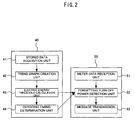
- Fig. 2 is a block diagram illustrating a functional configuration of the forgetting to turn off power detection apparatus 10 of the embodiments.
- Fig. 3 is a diagram illustrating an example of electric energy data acquired by the forgetting to turn off power detection apparatus 10 of the embodiments.
- Fig. 4 is a diagram illustrating an example of a data configuration of energy usage data.
- the forgetting to turn off power detection apparatus 10 includes an outgoing determination unit 40 and a forgetting to turn off power detection unit 50.
- the outgoing determination unit 40 includes a stored data acquisition unit 41, a trend graph creation unit 42, an electric energy threshold calculation unit 43 and an outgoing timing determination unit 44.
- the stored data acquisition unit 41 acquires, as illustrated in Fig. 3 for example, electric energy data (stored data) that is stored electric energy used in the consumer's home 100 in the past time, from database 20.
- the electric energy data includes a consumer ID uniquely assigned to each consumer, date and time having a date and a time when the electric energy is measured, and integral electric energy (Wh) accumulated by the smart meter 100a of the consumer's home 100.
- the stored data acquisition unit 41 creates, as illustrated in Fig. 4 for example, data configuration for each consumer including data and time, integral electric energy, and power consumption (electric energy) from the stored data illustrated in Fig. 3 . Since the electric energy data includes integral electric energy as illustrated in Fig. 3 , the power consumption (electric energy) illustrated in Fig. 4 may be calculated by subtracting previous integral electric energy from current integral electric energy.
- the trend graph creation unit 42 creates a power usage pattern (a trend graph) based on the data configuration illustrated in Fig. 4 .
- the electric energy threshold calculation unit 43 calculates an electric energy threshold for detecting whether or not the turning off power is forgotten by the forgetting turn off power detection unit 52 that will be described later, based on the power usage pattern created by the trend graph creation unit 42, and transmits the calculated electric energy threshold to the forgetting turn off power detection unit 52.
- the outgoing timing determination unit 44 determines a timing (time) when the consumer has gone outside based on the power usage pattern created by the trend graph creation unit 42. The outgoing timing determination unit 44 transmits the determined outgoing timing to the forgetting turn off power detection unit 52 when it is determined that the consumer has gone outside.
- the forgetting to turn off power detection unit 50 includes a meter data reception unit 51, a forgetting turn off power detection unit 52 and a message transmission unit 53.
- the meter data reception unit 51 receives electric energy data in the current consumer's home 100 from the consumer's home 100 via the electric power supplier 200.
- the forgetting turn off power detection unit 52 receives current electric energy data in the consumer's home 100, and detects forgetting to turn off power of an electrical household appliance (electric equipment) in the consumer's home 100 based on the received electric energy data when the outgoing determination unit 40 determines that the consumer has gone outside.
- the message transmission unit 53 transmits a message indicating the forgetting to turn off power of the electrical household appliance to the mobile phone 400 owned by the consumer via the mail server 30. Note that those functions are implemented by the processor 10b.
- Fig. 5 is a flowchart illustrating an operation for determining an outgoing timing of the forgetting to turn off power detection apparatus 10 of the embodiments.
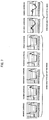
- Fig. 6 is a diagram of graphs illustrating power usage patterns in past three weeks, trend graphs acquired by average values of electric energy of each day of the week, and graphs illustrating variations indicating differences between the average values and electric energy of each day of the week.
- Fig. 7 is a diagram illustrating a result by classification for trend graphs of a same kind type day of the week and trend graphs for a non-same kind type day of the week. Fig.
- FIG. 8 is a diagram illustrating a trend graph indicating a first static state, a second static state, first electric energy and second electric energy that are acquired from average values for each instant of time on Monday included in the same kind type day of the week.
- Fig. 9 is a diagram illustrating a trend graph indicating a outgoing timing and an electric energy threshold that are acquired from average values for each instant of time on Monday included in the same kind type day of the week. In the following description, Figs. 1-4 are referred to as appropriate.
- the stored data acquisition unit 41 acquires stored data storing electric energy data illustrated in Fig. 3 for past three weeks, from the database 20, and creates a data configuration illustrated in Fig. 4 (S1).
- the trend graph creation unit 42 creates, as illustrated in Fig. 6 , a power usage pattern for each day of the week in first to third weeks from the data configuration (S2).
- the trend graph creation unit 42 calculates an average value of the electric energy at a day of the week and at a measuring time of the electric energy data, and creates a power usage pattern (trend graph) for each day of the week from the average values (S3).
- the trend graph creation unit 42 calculates, for each day of the week, a variation that is a difference between an average value of the electric energy for each instant of time and electric energy for each instant of time for each week, and creates graphs indicating variations of electric energy for each instant of time (S4).
- a variation is small and regular hours are kept, and those days may be workdays.
- Sunday illustrated in Fig. 6 a variation is large and regular hours are not kept, and the day may be holiday.
- the trend graph creation unit 42 classifies, as illustrated in Fig. 7 , electric quantity data and power usage patterns as a same kind type day of the week or a non-same kind type day of the week (S5).
- variations of the electric energy of all hours in Monday to Friday fall in a range of ⁇ 4 (kWh) and those of day time of the same days fall in a range of ⁇ 2 (kWh), and Monday to Friday belong to the same kind type day of the week as illustrated in Fig. 7 .
- variations of the electric energy of almost hours in Saturday and Sunday exceed a range of ⁇ 2 (kWh) and those of a specific time of the same days exceed a range of ⁇ 4 (kWh)
- Saturday and Sunday belong to the non-same kind type day of the week.
- the same kind type day of the week may be a workday and the non-same kind type day of the week may be a holiday.
- the trend graph creation unit 42 acquires, from the database 20 via the stored data acquisition unit 41, data indicating a variation range of electric energy per unit of predetermined time for determining a first static state or a second static state from the database 20 (S6).
- a variation range of electric energy per unit of time is defined ⁇ 1 (kW), and the range is used to determine a static state. Since a static state is determined based on a variation of electric energy per unit of time, the static state can be precisely and easily determined even if a life pattern of the consumer varies.
- the trend graph creation unit 42 calculates, for each same kind type day of the week, a variation of electric energy per unit of time from the average values of electric energy for each instant of time calculated in step 3, determines whether or not the calculated variation of electric energy falls in the variation range of electric energy acquired in step 6.
- the time zone within the range is determined as a static state and other time zone is determined as a peak state (S7).
- S7 peak state
- a variation of electric energy per unit of time in a time zone of 0:00-5:00 falls in ⁇ 1 (kW).
- the trend graph creation unit 42 determines that the time zone is a first static state. Likewise, a time zone of 8:00-18:30 is determined as a second static state. A variation of electric energy per unit of time in a time zone of 5:00-8:00 does not fall in ⁇ 1 (kW). Consequently, the trend graph creation unit 42 determines that the time zone is a peak state.
- the trend graph creation unit 42 calculates an end time of the fist static state, that is a measuring time adjacent to the peak stat in the first static state, and calculates a start time of the second static state, that is a measuring time adjacent to the peak state of the second static state (S8).
- a measuring time just prior to the peak state in the first static state is defined as an end time
- a measuring time just after the peak state in the second static state is defined as a start time.
- electric energy of the end time of the first static state is defined as first electric energy
- electric energy of the start time of the second static state is defined as second electric energy.
- the electric energy threshold calculation unit 43 calculates an electric energy threshold based on the first electric energy and the second electric energy (S9). For example as illustrated in Fig. 9 , a value between the first electric energy and the second electric energy is set as the electric energy threshold. For example, a half value of the sum of the first electric energy and the second electric energy is set as an electric energy threshold.
- the electric energy threshold is used to detect the forgetting to turn off power by a forgetting turn off power detection unit 52 which is described later.
- the electric energy threshold calculation unit 43 transmits the set electric energy threshold to the forgetting turn off power detection unit 52 (S10).
- the outgoing timing determination unit 44 determines that the start time of the second static state is an outgoing timing (S11). For example, as illustrated in Fig. 9 , a start time of 8:00 of the second static state is determined as an outgoing timing. Finally, the outgoing timing determination unit 44 transmits data of the outgoing time to the forgetting turn off power detection unit 52 (S12).
- the outgoing timing which is the start time of the second static state is used as a start condition to determine forgetting to turn off power detection by the forgetting to turn off power detection unit 50.
- Fig. 10 is a flowchart illustrating a forgetting to turn off power detection operation of the forgetting to turn off power detection apparatus 10 of the embodiment.
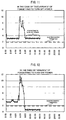
- Fig. 11 is a diagram illustrating a graph indicating a relationship between electric energy and time in the case of "occurrence" of forgetting to turn off power.
- Fig. 12 is a diagram illustrating a graph indicating a relationship between electric energy and time in the case of "absence” of forgetting to turn off power.
- a meter data reception unit 51 receives electric energy data (meter data) in the current consumer's home 100 from the smart meter 100a of the consumer's home 100 via the electric power supplier 200 (S21).
- the meter data reception unit 51 receives the electric energy data at a predetermined interval (such as 30 minutes).
- the forgetting turn off power detection unit 52 acquires the electric energy threshold from the electric energy threshold calculation unit 43, and acquires the outgoing timing from the outgoing timing determination unit 44 (S22).
- the forgetting turn off power detection unit 52 calculates electric energy (power consumption) illustrated in Fig. 4 from the current electric energy data illustrated in Fig. 3 , and creates the power usage patterns as illustrated in Figs 11 and 12 (S23).
- the forgetting turn off power detection unit 52 detects whether or not the electric energy after the outgoing timing is larger than the electric energy threshold (S24). Concretely, it is detected that the electric energy after the outgoing timing is kept larger than the electric energy threshold for a predetermined time (for example, one to two hours), for example.
- the electric energy after the outgoing timing is larger than the electric energy threshold (S24, yes)
- the forgetting to turn off power of an electrical household appliance is detected, and a message indicating that is transmitted to the mobile phone 400 via the mail server 30 by the data communication unit 10a (S25).
- the electric energy after the outgoing timing is smaller than the electric energy threshold (S24, no) it is detected that the electrical household appliance of the consumer's home 100 is turned off power (S26), and the processing returns to S21.
- the forgetting turn off power detection unit 52 detects that the forgetting to turn off power of the electrical household appliance in the consumer's home 100.
- the forgetting turn off power detection unit 52 detects that the electrical household appliance in the consumer's home 100 is turned off power.
- the outgoing timing is automatically determined based on the past electric energy data in the consumer's home 100, and it is detected whether or not the turning off power of the electrical household appliance in the current consumer's home is forgotten, based on the outgoing timing and the electric energy threshold. Therefore, it is determined the outgoing timing of the consumer precisely and it is determined that the forgetting to turn off power of the electrical household appliance, so that it is possible to suppress unnecessary power consumption and to prevent accidents caused by the forgetting to turn off power. Furthermore, since there is no need to install the forgetting to turn off power detection apparatus 10 of the embodiment into the consumer's home 100 as illustrated in Fig. 1 , the occurrence of significant cost in the consumer may be suppressed in order for the introduction.
- Fig. 13 is a diagram illustrating a system where a conduction shutoff unit 100c of a smart meter 100b is remotely operable.
- the smart meter 100b in the consumer's home 100 has a conduction shutoff unit 100c.
- the conduction shutoff unit 100c By the introduction of the conduction shutoff unit 100c, when the consumer receives an e-mail of forgetting to turn off power, the consumer does not need to return home or request an acquaintance in the neighborhood to respond the matter in order to shut off the power.
- the forgetting to turn off power detection apparatus 10 of the service provider 300 detects the forgetting to turn off power in the consumer's home 100
- the forgetting to turn off power detection apparatus 10 transmits shutoff instruction data for the smart meter 100b in the consumer's home 100 to a processing device 200a.
- the processing device 200a of the electric power supplier 200 receives the shutoff instruction data and transmits remote open data to the smart meter 100b in the consumer's home 100.
- the smart meter 100b receives the remote open data from the processing device 200a of the electric power supplier 200, shuts off the power supply from the power line, and stops the power supply to the electrical household appliance in the consumer's home 100.
- Fig. 13 After the consumer receives the email of forgetting to turn off power from the service provider 300 by the mobile phone 400, the consumer performs permission of the conduction shutoff to the service provider 300. Then, the service provider 300 transmits the shutoff instruction data. In Fig. 13 , by installing one conduction shutoff unit 100c into each electrical household appliance, only target electrical household appliance for forgetting to turn off power may be shut off.
- Fig. 14 is a diagram illustrating a system including the consumer's home 100, the electric power supplier 200, a gas supplier 500, a water supplier 600, the service provider 300 and the mobile phone 400 owned by the consumer.
- the forgetting to turn off power detection apparatus 10 combines water volume data and gas volume data in addition to the electric energy data, and detects matters regarding whether or not the consumer is in-house state and whether or not there is forgetting to turn off power.
- the consumer's home 100 includes a gas meter 100d having a communication function and a water meter 100e having a communication function.
- the forgetting to turn off power detection apparatus 10 receives the water volume data and gas volume data via the water supplier 600 and gas supplier 500, to consider the data. The details are described later. Consequently, the forgetting to turn off power detection apparatus 10 may accurately performs determination of the outgoing timing of the consumer or the forgetting to turn off power when compared with the case of only the electric quantity data used.
- the gas meter 100d transmits the gas volume data that was used in the consumer's home 100 to the gas supplier 500 via a network of the gas company, for example. Similar to the electric power supplier 200, the gas supplier 500 uses the gas volume data for the measuring and transmits the gas volume data via the communication network to the contracted service provider 300. A forgetting to turn off power detection apparatus 10 of the service provider 300 stores the gas volume data in the database 20 for each consumer. The water meter 100e also transmits the water volume data, and perform the same operation.
- a forgetting to turn off power detection apparatus 10 of the service provider 300 considers the water variation amount and gas variation amount which is calculated from the water volume data and gas volume data, together with the outgoing timing determination unit 44 and the result of the forgetting turn off power detection unit 52, determines whether or not the consumer stays out, and detect whether or not there is the forgetting to turn off power of the electrical household appliance in the consumer's home 100.
- the forgetting turn off power detection unit 52 of the service provider 300 When it is detected that there is the forgetting to turn off power, the forgetting turn off power detection unit 52 of the service provider 300 notifies the forgetting to turn off power to the mobile phone 400 of the consumer via the mail server 30. Consequently, in the system illustrated in Fig. 14 , it is possible to detect, in addition to forgetting to turn off power, forgetting shutout of a gas appliance or forgetting to stop water.
- the outgoing determination unit 40 may acquire water volume data and gas volume data in the past, creates a trend graph, calculate a threshold value, and determine the outgoing timing together with the trend graph of the electrical quantity data.
- the forgetting to turn off power detection unit 50 in the same manner as forgetting to turn off power detection based on the electric quantity data, may acquire the water volume data and current gas volume data, and detect the forgetting to turn off power based on the threshold value calculated from the current water amount and the current gas volume, and the outgoing timing along with the result of the electric quantity data. Note that both the water volume data and gas volume data, or one of these may be considered.
- the gas volume data and the water volume data may be considered in addition to the electric energy data. Specifically, it may be realized by the similar means in the above explanation of Fig. 13 .
- the consumer may inform the outgoing timing to the service provider 300 in advance. For example, it is possible to set the outgoing timing by accessing to a Web screen provided by the service provider 300 in the mobile phone or the computer by the consumer.
- an outgoing timing may be notified to the service provider 300 by e-mail.
- the consumer may set a time to be notified as a time after the outgoing, and may input a planed outgoing timing as the outgoing timing into the mobile phone 400 during the in-home state to notify it to the service provider 300 previously.
- the mobile phone 400 includes an outgoing timing input unit for entering the outgoing timing and an outgoing timing notification unit for notifying the outgoing timing.
- the GPS-equipped cellular phone includes a position information transmission unit 402 to transmit the current position information and position information acquisition unit 401 acquires the current position information, and a vehicle having a GPS function in the same manner.
- a vehicle having a GPS function and GPS-equipped cellular phone may transmit the position information to set time by the timer.
- Fig. 16 is a flowchart illustrating a forgetting to turn off power detection operation based on the position information. Since the operation of steps S22a and S22b are different with respect to the flowchart illustrated in Fig. 10 , only the operation different from that of Fig. 10 in the flow chart illustrated in Fig. 16 will be described.
- the outgoing timing determination unit 44 acquires the position information sent from the position information transmission unit 402 (S22a) and determines whether or not a position indicated by the position information falls in a predetermined range (S22b).
- the range indicates a position within a predetermined distance from the position of consumer's home 100, or a predetermined location range indicating the consumer's home 100.
- the range is defined in advance.
- the outgoing timing determination unit 44 may determine that the consumer carrying the mobile phone 400 goes out, and set the determined time as the outgoing timing.
- Fig. 17 is a diagram illustrating a system including a consumer's home 100, an electric power supplier 200, a gas supplier 500, a water supplier 600, a security business operator 700, a service provider 300 and a mobile phone 400 owned by the consumer.
- Security business operator 700 illustrated in Fig. 17 acquires entering and leaving information from the security device that is equipped in the consumer's home 100, as the security information.
- the forgetting to turn off power detection apparatus 10 acquires the entering and leaving information from the security business operator 700.
- the entering and leaving information in the information about the security of the consumer's home 100, may be any of information relating to going outside of the consumer. As the entering and leaving information, key lock information, card information of entering and leaving, or security camera information can be applied.
- Fig. 18 is a flowchart illustrating a forgetting to turn off power detection operation based on the entering and leaving information. Since the operation of steps S22c and S22d are different with respect to the flowchart illustrated in Fig. 10 , only the operation different from that of Fig. 10 in the flow chart illustrated in Fig. 18 will be described.
- the outgoing timing determination unit 44 acquires the entering and leaving information from the security business operator 700 (S22c), and determines whether or not the entering and leaving information indicates the in-home state of the consumer (S22d).
- a condition indicating the in-home state key lock information indicates the door of the consumer's home 100 have been locked, the card entering and leaving information indicates entering the room to the consumer's home 100, or the security camera information including an entry state of the consumer's home 100 of the consumer by using such as face recognition based on the security camera, indicates an entering state.
- the entering and leaving information indicates the in-home state of the consumer (S22d, yes)
- the operation of S21 is performed.
- the entering and leaving information indicates the stay out state of the consumer (S22d, no)
- the operation of S23 is performed.
- the determination of whether or not the consumer's home 100 is in a peopleless state based on the entering and leaving information and the usage patterns of resources may be combined with determination based on the position information of the consumer and the patterns of resource use as described above. It is possible to determine whether or not the consumer's home 100 is in a peopleless state, more accuracy, based on the entering and leaving information, the position information and the usage pattern for each resource.
- the electric power supplier 200 may include the database 20.
- the service provider 300 includes the forgetting to turn off power detection apparatus 10 in the embodiments, but the electric power supplier 200 may include the forgetting to turn off power detection apparatus 10, or the consumer's home 100 may include the forgetting to turn off power detection apparatus 10.
- the message transmission unit 53 transmits the result of the forgetting turn off power detection unit 52 to the consumer via the mail server 30 in the embodiments
- the trend graphs created by the trend graph creation unit 42, the electric energy threshold calculated by the electric energy threshold calculation unit 43, the electric energy data of the current consumer's home 100 received by the meter data reception unit 51 and the like may be transmitted to the consumer via the mail server 30. Consequently, the consumer may detect the forgetting to turn off power based on the data.
- the consumer by accessing to the Web page provided by the service provider 300 from the mobile phone 400, may recognize the trend graphs created by the trend graph creation unit 42, the electric energy threshold calculated by the electric energy threshold calculation unit 43, the electric energy data of the current consumer's home 100 received by the meter data reception unit 51 and the like. Therefore, the consumer may detect the forgetting to turn off power based on the data.
- the invention may be applied to forgetting to turn off power of electric equipment in the consumer's home 100 except the electrical household appliances.
- the service provider 300 in the embodiment may be the same of the electric power supplier 200, the gas supplier 500 or the water supplier 600.
- a company for providing energy such as hot and cold water, may be do the same of that.
- the shutoff against the forgetting to turn off power may be performed according to the usage amount of resources, in resources of energy such as gas, water, and the like, in the same manner as the electrical energy.
- control such as temperature control of an air conditioner and light control of the lighting may be accomplished.
- the forgetting to turn off power program for allowing the processor 10b to execute the functions of the outgoing determination unit 40 and the forgetting to turn off power detection unit 50 may be stored in a computer-readable medium.
- the computer-readable recording medium includes a disk and a semiconductor memory.
- the type of the medium includes a storage unit 10c which is disposed inside of the forgetting to turn off power detection apparatus 10, a portable recording medium, other external storage device of the forgetting to turn off power detection apparatus.
- the portable recording medium stores the forgetting to turn off power detection program and the forgetting to turn off power detection apparatus 10 includes a reading device of the portable recording medium
- the forgetting to turn off power detection apparatus 10 may read the forgetting to turn off power detection program from the medium.
- the forgetting to turn off power detection apparatus 10 may receive the forgetting turn off power detection program from the computer.
- the invention may be applied to the management of electric power, etc in night or on holidays when the building or the factory is in the peopleless state. That is, the embodiments may target not only the consumer's home in the general household, but also the consumer equipment such as buildings and factories. Furthermore, the embodiment may target an apartment which plural consumer's homes are attached to, and may be applied to each of the plural consumer's homes.
Landscapes
- Engineering & Computer Science (AREA)
- Physics & Mathematics (AREA)
- General Physics & Mathematics (AREA)
- Theoretical Computer Science (AREA)
- Emergency Management (AREA)
- Business, Economics & Management (AREA)
- Data Mining & Analysis (AREA)
- Computing Systems (AREA)
- General Engineering & Computer Science (AREA)
- Evolutionary Computation (AREA)
- Mathematical Physics (AREA)
- Software Systems (AREA)
- Computational Linguistics (AREA)
- Artificial Intelligence (AREA)
- Computer Vision & Pattern Recognition (AREA)
- Remote Monitoring And Control Of Power-Distribution Networks (AREA)
- Management, Administration, Business Operations System, And Electronic Commerce (AREA)
- Telephonic Communication Services (AREA)
- Selective Calling Equipment (AREA)
Description
- This application is based upon and claims the benefit of propriety from Japanese Patent Application Number
2011-189371, August 31, 2011 - Embodiments described herein relate generally to a technique for determining forgetting to turn off power of an electrical household appliance when an energy consumer (hereafter refer to "consumer" as appropriate) stays out.
- In order to prevent forgetting to turn off power of an electrical household appliance during staying out, a consumer uses a timer off function installed in an electrical household appliance itself, a timer off function separately provided for a power supply outlet, for example, of an electrical household appliance, and the like. A consumer provides a controller such as a home server in a consumer's house and monitors operation states of electrical household appliances by the controller
- According to the disclosure in
JP2007-132 804 A -
JP2005-174058 A -
- [
Fig. 1] Fig. 1 is a diagram illustrating a system including a consumer's home having a smart meter, an electric power supplier, a service provider, and a mobile phone owned by the consumer. - [
Fig. 2] Fig. 2 is a block diagram illustrating a functional configuration of a forgetting to turn off power detection apparatus of an embodiment. - [
Fig. 3] Fig. 3 is a diagram illustrating an example of electric energy data acquired by the forgetting to turn off power detection apparatus of the embodiment. - [
Fig. 4] Fig. 4 is a diagram illustrating an example of a data configuration of energy usage data. - [
Fig. 5] Fig. 5 is a flowchart illustrating an operation for determining an outgoing timing of the forgetting to turn off power detection apparatus of the embodiment. - [
Fig. 6] Fig. 6 is a diagram of graphs illustrating power usage patterns in past three weeks, trend graphs acquired by average values of electric energy of each day of the week, and graphs illustrating variations indicating differences between the average values and electric energy of each day of the week. - [
Fig. 7] Fig. 7 is a diagram illustrating a result by classification for trend graphs of a same kind type day of the week and trend graphs for a non-same kind type day of the week. - [
Fig. 8] Fig. 8 is a diagram illustrating a trend graph indicating a first static state, a second static state, first electric energy and second electric energy that are acquired from average values for each instant of time on Monday included in the same kind type day of the week. - [
Fig. 9] Fig. 9 is a diagram illustrating a trend graph indicating a outgoing timing and an electric energy threshold that are acquired from average values for each instant of time on Monday included in the same kind type day of the week. - [
Fig. 10] Fig. 10 is a flowchart illustrating a forgetting to turn off power detection operation of the forgetting to turn off power detection apparatus of the embodiment. - [
Fig. 11] Fig. 11 is a diagram illustrating a graph indicating a relationship between electric energy and time in the case of "occurrence" of forgetting to turn off power. - [
Fig. 12] Fig. 12 is a diagram illustrating a graph indicating a relationship between electric energy and time in the case of "absence" of forgetting to turn off power. - [
Fig. 13] Fig. 13 is a diagram illustrating a system where a conduction shutoff unit of a smart meter is remotely operable inFig. 1 . - [
Fig. 14] Fig. 14 is a diagram illustrating a system including a consumer's home, an electric power supplier, a gas supplier, a water supplier, a service provider and a mobile phone owned by the consumer. - [
Fig. 15] Fig. 15 is a diagram illustrating a system including a consumer's home, an electric power supplier, a gas supplier, a water supplier, a service provider and a GPS locator-equipped mobile phone owned by the consumer. - [
Fig. 16] Fig. 16 is a flowchart illustrating a forgetting to turn off power detection operation based on position information. - [
Fig. 17] Fig. 17 is a diagram illustrating a system including a consumer'shome 100, anelectric power supplier 200, agas supplier 500, awater supplier 600, asecurity business operator 700, aservice provider 300 and amobile phone 400 owned by the consumer. - [
Fig. 18] Fig. 18 is a flowchart illustrating a forgetting to turn off power detection operation based on entering and leaving information. - The invention is as set forth in the appended claims.
- In general, according to one embodiment, the forgetting to turn off power detection apparatus in the embodiments includes an outgoing determination unit that creates a power usage pattern based on electric energy that is calculated from past electric energy data in a consumer equipment, and determines whether or not a consumer has gone outside based on the power usage pattern. The forgetting to turn off power detection apparatus in the embodiments includes a forgetting to turn off power detection unit that receives current electric energy data in the consumer equipment, and detects forgetting to turn off power of an electric equipment of the consumer equipment based on the received electric energy data when the outgoing determination unit determines that the consumer has gone outside.
- The embodiments will be explained by reference to the accompanying drawings below. At first, a system including a forgetting to turn off power detection apparatus of the embodiments will be explained. Note that an operation of the forgetting to turn off
power detection apparatus 10 of the embodiments of the invention will be explained in detail in the explanation about forgetting to turn off power apparatus. -
Fig. 1 is a diagram illustrating a system including a consumer'shome 100 having asmart meter 100a, anelectric power supplier 200, aservice provider 300, and amobile phone 400 owned by the consumer. The system illustrated inFig. 1 includes a consumer'shome 100 having asmart meter 100a, anelectric power supplier 200, aservice provider 300, and amobile phone 400 owned by the consumer. Thesmart meter 100a measures electric energy data used by electrical household appliances at a predetermine interval, and transmits it to theelectric power supplier 200 via a network of an electric power company and the like. Theelectric power supplier 200 uses the received electric energy data of the consumer'shome 100 in order to read a meter mainly. Theelectric power supplier 200 transmits that data to the contractedservice provider 300 via a communication network. - The
service provider 300 acquires, by the forgetting to turn offpower detection apparatus 10, electric energy data transmitted to the forgetting to turn offpower detection apparatus 10 owned by theelectric power supplier 200, via the communication network, and stores that into adatabase 20. The forgetting to turn offpower detection apparatus 10, when detecting forgetting to turn off power of an electrical household appliance in the consumer'shome 100, notifies such matter to themobile phone 400 of the consumer via amail server 30 by e-mail. - Next, the forgetting to turn off
power detection apparatus 10 of the embodiments will be explained. The hardware configuration of the forgetting to turn offpower detection apparatus 10 of the embodiments is implemented by a computer as illustrated inFig. 1 and includes adata communication unit 10a, aprocessor 10b and astorage unit 10c. - The
data communication unit 10a communicates with theelectric power supplier 200 and thedatabase 20. Theprocessor 10b operates based on a program and the like stored in thestorage unit 10c to implement functions of forgetting to turn offpower detection apparatus 10. - The functional configuration of the forgetting to turn off
power detection apparatus 10 of the embodiments will be explained. -
Fig. 2 is a block diagram illustrating a functional configuration of the forgetting to turn offpower detection apparatus 10 of the embodiments.Fig. 3 is a diagram illustrating an example of electric energy data acquired by the forgetting to turn offpower detection apparatus 10 of the embodiments.Fig. 4 is a diagram illustrating an example of a data configuration of energy usage data. - The forgetting to turn off
power detection apparatus 10 includes anoutgoing determination unit 40 and a forgetting to turn offpower detection unit 50. Theoutgoing determination unit 40 includes a storeddata acquisition unit 41, a trendgraph creation unit 42, an electric energythreshold calculation unit 43 and an outgoingtiming determination unit 44. The storeddata acquisition unit 41 acquires, as illustrated inFig. 3 for example, electric energy data (stored data) that is stored electric energy used in the consumer'shome 100 in the past time, fromdatabase 20. As illustrated inFig. 3 , the electric energy data includes a consumer ID uniquely assigned to each consumer, date and time having a date and a time when the electric energy is measured, and integral electric energy (Wh) accumulated by thesmart meter 100a of the consumer'shome 100. The storeddata acquisition unit 41 creates, as illustrated inFig. 4 for example, data configuration for each consumer including data and time, integral electric energy, and power consumption (electric energy) from the stored data illustrated inFig. 3 . Since the electric energy data includes integral electric energy as illustrated inFig. 3 , the power consumption (electric energy) illustrated inFig. 4 may be calculated by subtracting previous integral electric energy from current integral electric energy. - The trend
graph creation unit 42 creates a power usage pattern (a trend graph) based on the data configuration illustrated inFig. 4 . The electric energythreshold calculation unit 43 calculates an electric energy threshold for detecting whether or not the turning off power is forgotten by the forgetting turn offpower detection unit 52 that will be described later, based on the power usage pattern created by the trendgraph creation unit 42, and transmits the calculated electric energy threshold to the forgetting turn offpower detection unit 52. The outgoingtiming determination unit 44 determines a timing (time) when the consumer has gone outside based on the power usage pattern created by the trendgraph creation unit 42. The outgoingtiming determination unit 44 transmits the determined outgoing timing to the forgetting turn offpower detection unit 52 when it is determined that the consumer has gone outside. - The forgetting to turn off
power detection unit 50 includes a meterdata reception unit 51, a forgetting turn offpower detection unit 52 and amessage transmission unit 53. The meterdata reception unit 51 receives electric energy data in the current consumer'shome 100 from the consumer'shome 100 via theelectric power supplier 200. The forgetting turn offpower detection unit 52 receives current electric energy data in the consumer'shome 100, and detects forgetting to turn off power of an electrical household appliance (electric equipment) in the consumer'shome 100 based on the received electric energy data when theoutgoing determination unit 40 determines that the consumer has gone outside. Themessage transmission unit 53 transmits a message indicating the forgetting to turn off power of the electrical household appliance to themobile phone 400 owned by the consumer via themail server 30. Note that those functions are implemented by theprocessor 10b. - Next, an operation of the forgetting to turn off
power detection apparatus 10 will be explained. In the following description, a determination operation of outgoing timing and a detection operation of forgetting to turn off power are separately explained. - A determination operation of outgoing timing will be explained.
Fig. 5 is a flowchart illustrating an operation for determining an outgoing timing of the forgetting to turn offpower detection apparatus 10 of the embodiments.Fig. 6 is a diagram of graphs illustrating power usage patterns in past three weeks, trend graphs acquired by average values of electric energy of each day of the week, and graphs illustrating variations indicating differences between the average values and electric energy of each day of the week.Fig. 7 is a diagram illustrating a result by classification for trend graphs of a same kind type day of the week and trend graphs for a non-same kind type day of the week.Fig. 8 is a diagram illustrating a trend graph indicating a first static state, a second static state, first electric energy and second electric energy that are acquired from average values for each instant of time on Monday included in the same kind type day of the week.Fig. 9 is a diagram illustrating a trend graph indicating a outgoing timing and an electric energy threshold that are acquired from average values for each instant of time on Monday included in the same kind type day of the week. In the following description,Figs. 1-4 are referred to as appropriate. - Firs, the stored
data acquisition unit 41 acquires stored data storing electric energy data illustrated inFig. 3 for past three weeks, from thedatabase 20, and creates a data configuration illustrated inFig. 4 (S1). The trendgraph creation unit 42 creates, as illustrated inFig. 6 , a power usage pattern for each day of the week in first to third weeks from the data configuration (S2). The trendgraph creation unit 42 calculates an average value of the electric energy at a day of the week and at a measuring time of the electric energy data, and creates a power usage pattern (trend graph) for each day of the week from the average values (S3). - The trend
graph creation unit 42 calculates, for each day of the week, a variation that is a difference between an average value of the electric energy for each instant of time and electric energy for each instant of time for each week, and creates graphs indicating variations of electric energy for each instant of time (S4). In Monday and Thursday illustrated inFig. 6 , a variation is small and regular hours are kept, and those days may be workdays. On the other hand, in Sunday illustrated inFig. 6 , a variation is large and regular hours are not kept, and the day may be holiday. The trendgraph creation unit 42 classifies, as illustrated inFig. 7 , electric quantity data and power usage patterns as a same kind type day of the week or a non-same kind type day of the week (S5). As illustrated inFig. 6 , variations of the electric energy of all hours in Monday to Friday fall in a range of ±4 (kWh) and those of day time of the same days fall in a range of ±2 (kWh), and Monday to Friday belong to the same kind type day of the week as illustrated inFig. 7 . On the other hand, variations of the electric energy of almost hours in Saturday and Sunday exceed a range of ±2 (kWh) and those of a specific time of the same days exceed a range of ±4 (kWh), and Saturday and Sunday belong to the non-same kind type day of the week. The same kind type day of the week may be a workday and the non-same kind type day of the week may be a holiday. - The trend
graph creation unit 42 acquires, from thedatabase 20 via the storeddata acquisition unit 41, data indicating a variation range of electric energy per unit of predetermined time for determining a first static state or a second static state from the database 20 (S6). For example, in the embodiment, a variation range of electric energy per unit of time is defined ±1 (kW), and the range is used to determine a static state. Since a static state is determined based on a variation of electric energy per unit of time, the static state can be precisely and easily determined even if a life pattern of the consumer varies. - The trend
graph creation unit 42 calculates, for each same kind type day of the week, a variation of electric energy per unit of time from the average values of electric energy for each instant of time calculated in step 3, determines whether or not the calculated variation of electric energy falls in the variation range of electric energy acquired instep 6. When the calculated variation of electric energy falls in the variation range of electric energy acquired, the time zone within the range is determined as a static state and other time zone is determined as a peak state (S7). As illustrated inFig. 8 , in the trend graph acquired from the average values in Monday of the same kind type day of the week, a variation of electric energy per unit of time in a time zone of 0:00-5:00 falls in ±1 (kW). Consequently, the trendgraph creation unit 42 determines that the time zone is a first static state. Likewise, a time zone of 8:00-18:30 is determined as a second static state. A variation of electric energy per unit of time in a time zone of 5:00-8:00 does not fall in ±1 (kW). Consequently, the trendgraph creation unit 42 determines that the time zone is a peak state. - The trend
graph creation unit 42 calculates an end time of the fist static state, that is a measuring time adjacent to the peak stat in the first static state, and calculates a start time of the second static state, that is a measuring time adjacent to the peak state of the second static state (S8). In the trend graph illustrated inFig. 8 , a measuring time just prior to the peak state in the first static state is defined as an end time, and a measuring time just after the peak state in the second static state is defined as a start time. The trendgraph creation unit 42, as illustrated inFig. 8 , electric energy of the end time of the first static state is defined as first electric energy, and electric energy of the start time of the second static state is defined as second electric energy. - The electric energy
threshold calculation unit 43 calculates an electric energy threshold based on the first electric energy and the second electric energy (S9). For example as illustrated inFig. 9 , a value between the first electric energy and the second electric energy is set as the electric energy threshold. For example, a half value of the sum of the first electric energy and the second electric energy is set as an electric energy threshold. The electric energy threshold is used to detect the forgetting to turn off power by a forgetting turn offpower detection unit 52 which is described later. The electric energythreshold calculation unit 43 transmits the set electric energy threshold to the forgetting turn off power detection unit 52 (S10). - The outgoing
timing determination unit 44 determines that the start time of the second static state is an outgoing timing (S11). For example, as illustrated inFig. 9 , a start time of 8:00 of the second static state is determined as an outgoing timing. Finally, the outgoingtiming determination unit 44 transmits data of the outgoing time to the forgetting turn off power detection unit 52 (S12). The outgoing timing which is the start time of the second static state is used as a start condition to determine forgetting to turn off power detection by the forgetting to turn offpower detection unit 50. - A forgetting to turn off power detection operation will be described.
Fig. 10 is a flowchart illustrating a forgetting to turn off power detection operation of the forgetting to turn offpower detection apparatus 10 of the embodiment.Fig. 11 is a diagram illustrating a graph indicating a relationship between electric energy and time in the case of "occurrence" of forgetting to turn off power.Fig. 12 is a diagram illustrating a graph indicating a relationship between electric energy and time in the case of "absence" of forgetting to turn off power. - A meter
data reception unit 51 receives electric energy data (meter data) in the current consumer'shome 100 from thesmart meter 100a of the consumer'shome 100 via the electric power supplier 200 (S21). The meterdata reception unit 51 receives the electric energy data at a predetermined interval (such as 30 minutes). The forgetting turn offpower detection unit 52 acquires the electric energy threshold from the electric energythreshold calculation unit 43, and acquires the outgoing timing from the outgoing timing determination unit 44 (S22). The forgetting turn offpower detection unit 52 calculates electric energy (power consumption) illustrated inFig. 4 from the current electric energy data illustrated inFig. 3 , and creates the power usage patterns as illustrated inFigs 11 and 12 (S23). - The forgetting turn off
power detection unit 52 detects whether or not the electric energy after the outgoing timing is larger than the electric energy threshold (S24). Concretely, it is detected that the electric energy after the outgoing timing is kept larger than the electric energy threshold for a predetermined time (for example, one to two hours), for example. When the electric energy after the outgoing timing is larger than the electric energy threshold (S24, yes), the forgetting to turn off power of an electrical household appliance is detected, and a message indicating that is transmitted to themobile phone 400 via themail server 30 by thedata communication unit 10a (S25). When the electric energy after the outgoing timing is smaller than the electric energy threshold (S24, no), it is detected that the electrical household appliance of the consumer'shome 100 is turned off power (S26), and the processing returns to S21. - When the electric energy after 8:00 which is the outgoing timing is larger than the electric energy threshold, for example, as illustrated in
Fig. 11 , the forgetting turn offpower detection unit 52 detects that the forgetting to turn off power of the electrical household appliance in the consumer'shome 100. On the other hand, when the electric energy after 8:00 which is the outgoing timing is smaller than the electric energy threshold, for example, as illustrated inFig. 12 , the forgetting turn offpower detection unit 52 detects that the electrical household appliance in the consumer'shome 100 is turned off power. - According to the forgetting to turn off
power detection apparatus 10 of the embodiment, the outgoing timing is automatically determined based on the past electric energy data in the consumer'shome 100, and it is detected whether or not the turning off power of the electrical household appliance in the current consumer's home is forgotten, based on the outgoing timing and the electric energy threshold. Therefore, it is determined the outgoing timing of the consumer precisely and it is determined that the forgetting to turn off power of the electrical household appliance, so that it is possible to suppress unnecessary power consumption and to prevent accidents caused by the forgetting to turn off power. Furthermore, since there is no need to install the forgetting to turn offpower detection apparatus 10 of the embodiment into the consumer'shome 100 as illustrated inFig. 1 , the occurrence of significant cost in the consumer may be suppressed in order for the introduction. - Next, a modification of the system including the forgetting to turn off
power detection apparatus 10 of the embodiment will be explained.Fig. 13 is a diagram illustrating a system where aconduction shutoff unit 100c of asmart meter 100b is remotely operable. In the system illustrated inFig. 13 , thesmart meter 100b in the consumer'shome 100 has aconduction shutoff unit 100c. By the introduction of theconduction shutoff unit 100c, when the consumer receives an e-mail of forgetting to turn off power, the consumer does not need to return home or request an acquaintance in the neighborhood to respond the matter in order to shut off the power. When the forgetting to turn offpower detection apparatus 10 of theservice provider 300 detects the forgetting to turn off power in the consumer'shome 100, the forgetting to turn offpower detection apparatus 10 transmits shutoff instruction data for thesmart meter 100b in the consumer'shome 100 to a processing device 200a. The processing device 200a of theelectric power supplier 200 receives the shutoff instruction data and transmits remote open data to thesmart meter 100b in the consumer'shome 100. Thesmart meter 100b receives the remote open data from the processing device 200a of theelectric power supplier 200, shuts off the power supply from the power line, and stops the power supply to the electrical household appliance in the consumer'shome 100. - In the system illustrated in
Fig. 13 , after the consumer receives the email of forgetting to turn off power from theservice provider 300 by themobile phone 400, the consumer performs permission of the conduction shutoff to theservice provider 300. Then, theservice provider 300 transmits the shutoff instruction data. InFig. 13 , by installing oneconduction shutoff unit 100c into each electrical household appliance, only target electrical household appliance for forgetting to turn off power may be shut off. -
Fig. 14 is a diagram illustrating a system including the consumer'shome 100, theelectric power supplier 200, agas supplier 500, awater supplier 600, theservice provider 300 and themobile phone 400 owned by the consumer. In the system illustrated inFig. 14 , the forgetting to turn offpower detection apparatus 10 combines water volume data and gas volume data in addition to the electric energy data, and detects matters regarding whether or not the consumer is in-house state and whether or not there is forgetting to turn off power. In order that, inFig. 14 , the consumer'shome 100 includes agas meter 100d having a communication function and awater meter 100e having a communication function. The forgetting to turn offpower detection apparatus 10 receives the water volume data and gas volume data via thewater supplier 600 andgas supplier 500, to consider the data. The details are described later. Consequently, the forgetting to turn offpower detection apparatus 10 may accurately performs determination of the outgoing timing of the consumer or the forgetting to turn off power when compared with the case of only the electric quantity data used. - Like the energy meter (smart meter) 100a, the
gas meter 100d transmits the gas volume data that was used in the consumer'shome 100 to thegas supplier 500 via a network of the gas company, for example. Similar to theelectric power supplier 200, thegas supplier 500 uses the gas volume data for the measuring and transmits the gas volume data via the communication network to the contractedservice provider 300. A forgetting to turn offpower detection apparatus 10 of theservice provider 300 stores the gas volume data in thedatabase 20 for each consumer. Thewater meter 100e also transmits the water volume data, and perform the same operation. - For example, as illustrated in the following Table 1, a forgetting to turn off
power detection apparatus 10 of theservice provider 300 considers the water variation amount and gas variation amount which is calculated from the water volume data and gas volume data, together with the outgoingtiming determination unit 44 and the result of the forgetting turn offpower detection unit 52, determines whether or not the consumer stays out, and detect whether or not there is the forgetting to turn off power of the electrical household appliance in the consumer'shome 100.[Table 1] ELECTRIC ENERGY VALUE GAS VOLUME DATA, WATER VOLUME DATA ESTIMATED CONDITION SAME VALUE TO NORMAL VALUE NO CHANGE STAY OUT, ABSENCE OF FORGETTING TO TURN OFF POWER SAME VALUE TO NORMAL VALUE CHANGE OCCURS IN-HOUSE STATE VALUE HIGHER THAN NORMAL VALUE NO CHANGE STAY OUT, OCCURRENCE OF FORGETTING TO TURN OFF POWER VALUE HIGHER THAN NORMAL VALUE CHANGE OCCURS IN-HOUSE STATE - As described in Table 1, when a value of the electric energy is the same as the normal and there is no change in the water volume data and gas volume data, it is estimated that the consumer stays out and there is no forgetting to turn off power. When a value of the electric energy is the same as the normal and there is a change in the water volume data and gas volume data, it is estimated that the consumer is in-house state. When a value of the electric energy is higher than normal and there is no change in the water volume data and gas volume data, it is estimated that the consumer stays out and there is the forgetting to turn off power. When a value of the electric energy is higher than normal and there is a change in the water volume data and gas volume data, it is estimated that the consumer is in-house state.
- When it is detected that there is the forgetting to turn off power, the forgetting turn off
power detection unit 52 of theservice provider 300 notifies the forgetting to turn off power to themobile phone 400 of the consumer via themail server 30. Consequently, in the system illustrated inFig. 14 , it is possible to detect, in addition to forgetting to turn off power, forgetting shutout of a gas appliance or forgetting to stop water. - Note that in the system illustrated in
Fig. 14 , theoutgoing determination unit 40, as in the electric quantity data, may acquire water volume data and gas volume data in the past, creates a trend graph, calculate a threshold value, and determine the outgoing timing together with the trend graph of the electrical quantity data. In addition, the forgetting to turn offpower detection unit 50, in the same manner as forgetting to turn off power detection based on the electric quantity data, may acquire the water volume data and current gas volume data, and detect the forgetting to turn off power based on the threshold value calculated from the current water amount and the current gas volume, and the outgoing timing along with the result of the electric quantity data. Note that both the water volume data and gas volume data, or one of these may be considered. - While, in the forgetting to turn off
power detection apparatus 10 of the embodiment, on the basis of the only electric energy data, determination of the outgoing timing of the consumer and detection of the forgetting to turn off power of the electrical household appliance are performed, the gas volume data and the water volume data may be considered in addition to the electric energy data. Specifically, it may be realized by the similar means in the above explanation ofFig. 13 . - Furthermore, it is determined only from the power consumption pattern of the past outgoing timing of the embodiment, the consumer may inform the outgoing timing to the
service provider 300 in advance. For example, it is possible to set the outgoing timing by accessing to a Web screen provided by theservice provider 300 in the mobile phone or the computer by the consumer. - Furthermore, when the consumer goes out, an outgoing timing may be notified to the
service provider 300 by e-mail. In this case, the consumer may set a time to be notified as a time after the outgoing, and may input a planed outgoing timing as the outgoing timing into themobile phone 400 during the in-home state to notify it to theservice provider 300 previously. In this case, themobile phone 400 includes an outgoing timing input unit for entering the outgoing timing and an outgoing timing notification unit for notifying the outgoing timing. - It is also possible to know the going out of the consumer by the GPS function of the
mobile phone 400 and the like. For GPS-equipped cellular phone, the position information acquired by the cellular phone having to GPS is transmitted to theservice provider 300. Theservice provider 300 may set the time getting the position information as the outgoing timing. Even if a vehicle has the GPS function, theservice provider 300 may acquire the outgoing timing by the similar means. For example, the GPS-equipped cellular phone, as illustrated inFig. 15 , includes a positioninformation transmission unit 402 to transmit the current position information and positioninformation acquisition unit 401 acquires the current position information, and a vehicle having a GPS function in the same manner. In addition, a vehicle having a GPS function and GPS-equipped cellular phone, may transmit the position information to set time by the timer. - Forgetting to turn off power detection operation based on the position information by the mobile phone will be explained.
Fig. 16 is a flowchart illustrating a forgetting to turn off power detection operation based on the position information. Since the operation of steps S22a and S22b are different with respect to the flowchart illustrated inFig. 10 , only the operation different from that ofFig. 10 in the flow chart illustrated inFig. 16 will be described. - After the operation of step S22, the outgoing
timing determination unit 44 acquires the position information sent from the position information transmission unit 402 (S22a) and determines whether or not a position indicated by the position information falls in a predetermined range (S22b). The range indicates a position within a predetermined distance from the position of consumer'shome 100, or a predetermined location range indicating the consumer'shome 100. The range is defined in advance. When the position indicated by the position information falls in the predetermined range (S22b, yes), the operation of S21 is performed. When the position indicated by the position information does not falls in the predetermined range (S22b, no), the operation of S23 is performed - It is also possible to know the going out of the consumer by transmitting/receiving radio wave conditions with the
mobile phone 400. In this case, mobile operators may, according to the area of the mobile phone base station in communication with themobile phone 400, roughly grasp where the owner of themobile phone 400 is positioned. Therefore, the outgoingtiming determination unit 44 may determine that the consumer carrying themobile phone 400 goes out, and set the determined time as the outgoing timing. - In the method of grasping the going outside, when the security information can be available, it is possible to perform the going outside determination of the consumer with greater precision.
Fig. 17 is a diagram illustrating a system including a consumer'shome 100, anelectric power supplier 200, agas supplier 500, awater supplier 600, asecurity business operator 700, aservice provider 300 and amobile phone 400 owned by the consumer.Security business operator 700 illustrated inFig. 17 acquires entering and leaving information from the security device that is equipped in the consumer'shome 100, as the security information. In addition, the forgetting to turn offpower detection apparatus 10 acquires the entering and leaving information from thesecurity business operator 700. The entering and leaving information, in the information about the security of the consumer'shome 100, may be any of information relating to going outside of the consumer. As the entering and leaving information, key lock information, card information of entering and leaving, or security camera information can be applied. - Forgetting to turn off power detection operation based on the entering and leaving information will be explained.
Fig. 18 is a flowchart illustrating a forgetting to turn off power detection operation based on the entering and leaving information. Since the operation of steps S22c and S22d are different with respect to the flowchart illustrated inFig. 10 , only the operation different from that ofFig. 10 in the flow chart illustrated inFig. 18 will be described. - After the operation of the step S22, the outgoing
timing determination unit 44 acquires the entering and leaving information from the security business operator 700 (S22c), and determines whether or not the entering and leaving information indicates the in-home state of the consumer (S22d). As a condition indicating the in-home state, key lock information indicates the door of the consumer'shome 100 have been locked, the card entering and leaving information indicates entering the room to the consumer'shome 100, or the security camera information including an entry state of the consumer'shome 100 of the consumer by using such as face recognition based on the security camera, indicates an entering state. When the entering and leaving information indicates the in-home state of the consumer (S22d, yes), the operation of S21 is performed. When the entering and leaving information indicates the stay out state of the consumer (S22d, no), the operation of S23 is performed. - The determination of whether or not the consumer's
home 100 is in a peopleless state based on the entering and leaving information and the usage patterns of resources may be combined with determination based on the position information of the consumer and the patterns of resource use as described above. It is possible to determine whether or not the consumer'shome 100 is in a peopleless state, more accuracy, based on the entering and leaving information, the position information and the usage pattern for each resource. - In the embodiments, while the
service provider 300 includes thedatabase 20, theelectric power supplier 200 may include thedatabase 20. Similarly, theservice provider 300 includes the forgetting to turn offpower detection apparatus 10 in the embodiments, but theelectric power supplier 200 may include the forgetting to turn offpower detection apparatus 10, or the consumer'shome 100 may include the forgetting to turn offpower detection apparatus 10. - While the
message transmission unit 53 transmits the result of the forgetting turn offpower detection unit 52 to the consumer via themail server 30 in the embodiments, the trend graphs created by the trendgraph creation unit 42, the electric energy threshold calculated by the electric energythreshold calculation unit 43, the electric energy data of the current consumer'shome 100 received by the meterdata reception unit 51 and the like may be transmitted to the consumer via themail server 30. Consequently, the consumer may detect the forgetting to turn off power based on the data. - Furthermore, the consumer, by accessing to the Web page provided by the
service provider 300 from themobile phone 400, may recognize the trend graphs created by the trendgraph creation unit 42, the electric energy threshold calculated by the electric energythreshold calculation unit 43, the electric energy data of the current consumer'shome 100 received by the meterdata reception unit 51 and the like. Therefore, the consumer may detect the forgetting to turn off power based on the data. - While the forgetting to turn off power of the electrical household appliance is explained in the embodiments, the invention may be applied to forgetting to turn off power of electric equipment in the consumer's
home 100 except the electrical household appliances. - The
service provider 300 in the embodiment may be the same of theelectric power supplier 200, thegas supplier 500 or thewater supplier 600. In addition, a company for providing energy such as hot and cold water, may be do the same of that. - While It is referred to the conduction shutoff only in the embodiments, the shutoff against the forgetting to turn off power may be performed according to the usage amount of resources, in resources of energy such as gas, water, and the like, in the same manner as the electrical energy. When controls except the open/close control may be performed, control such as temperature control of an air conditioner and light control of the lighting may be accomplished.
- The forgetting to turn off power program for allowing the
processor 10b to execute the functions of theoutgoing determination unit 40 and the forgetting to turn offpower detection unit 50 may be stored in a computer-readable medium. The computer-readable recording medium includes a disk and a semiconductor memory. The type of the medium includes astorage unit 10c which is disposed inside of the forgetting to turn offpower detection apparatus 10, a portable recording medium, other external storage device of the forgetting to turn off power detection apparatus. When the portable recording medium stores the forgetting to turn off power detection program and the forgetting to turn offpower detection apparatus 10 includes a reading device of the portable recording medium, the forgetting to turn offpower detection apparatus 10 may read the forgetting to turn off power detection program from the medium. Alternatively, when the other computer stores the forgetting to turn off power detection program, and the forgetting to turn offpower detection apparatus 10 is connected to the computer, the forgetting to turn offpower detection apparatus 10 may receive the forgetting turn off power detection program from the computer. - While a general household is explained as a consumer in the embodiments, the invention may be applied to the management of electric power, etc in night or on holidays when the building or the factory is in the peopleless state. That is, the embodiments may target not only the consumer's home in the general household, but also the consumer equipment such as buildings and factories. Furthermore, the embodiment may target an apartment which plural consumer's homes are attached to, and may be applied to each of the plural consumer's homes.
- While certain embodiments have been described, these embodiments have been presented by way of example only, and are not intended to limit the scope of the invention. as defined by the appended claims.
Claims (10)
- A forgetting to turn off power detection apparatus (10) comprising:an outgoing determination unit (40) configured to create a power usage pattern based on electric energy that is calculated from past electric energy data in a consumer equipment, and determine whether or not a consumer has gone outside based on the power usage pattern; anda forgetting to turn off power detection unit (50) configured to receive current electric energy data in the consumer equipment, and detect forgetting to turn off power of an electric equipment of the consumer equipment based on the received electric energy data when the outgoing determination unit (40) determines that the consumer has gone outside.
- The forgetting to turn off power detection apparatus (10) according to claim 1, wherein
the outgoing determination unit (50) is configured to calculate an average value of electric energy at a predetermined interval based on the past electric energy data, and determine whether or not the consumer has gone outside based on a power usage pattern created from a same kind type of electric energy after classifying the electric energy at a predetermined interval as the same kind type day of the week or a non-same kind type day of the week based on a difference between the average value and the electric energy at a predetermined interval. - The forgetting to turn off power detection apparatus (10) according to claim 2, wherein
the power usage pattern includes a first static state and a second static state in time sequence, where a variation of electric energy per unit time falls within a predetermined range, and
the outgoing determination unit (40) is configured to set an electric energy threshold for forgetting to turn off power detection based on the first static state and the second static state. - The forgetting to turn off power detection apparatus (10) according to claim 2 or 3, wherein
the outgoing determination unit (40) is configured to calculate a start time of the second static state as a start condition for start detection by the forgetting to turn off power detection unit (50), and determine the start time as a time when the consumer has gone outside. - The forgetting to turn off power detection apparatus (10) according to any one of claims 1-3, wherein
the outgoing determination unit (40) is configured to determine whether or not the consumer has gone outside based on a variation amount that is acquired from past gas volume data of the consumer equipment and/or a variation amount that is acquired from a past water volume data of the consumer equipment. - The forgetting to turn off power detection apparatus (10) according to any one of claims 1-3, wherein
the forgetting to turn off power detection unit (50) is configured to detect forgetting to turn off power of the electric equipment of the consumer equipment when data, in electric energy calculated from the current electric energy data, at a time later than a determined time when the consumer has gone outside, is larger than a threshold value that is set based on a power usage pattern created from electric energy calculated from the past electric energy data. - A forgetting to turn off power detection program causing a computer to execute the steps comprising:a going outside determination step that create a power usage pattern based on electric energy calculated from past electric energy data in a consumer equipment, and determines whether or not a consumer has gone outside based on the power usage pattern; anda forgetting to turn off power detection step that receives current electric energy data in the consumer equipment, and detects forgetting to turn off power of an electric equipment of the consumer equipment based on the received electric energy data when the going outside determination step determines that the consumer has gone outside.
- A forgetting to turn off power detection method comprising:creating a power usage pattern based on electric energy calculated from past electric energy data in a consumer equipment, and determining whether or not a consumer has gone outside based on the power usage pattern; andreceiving current electric energy data in the consumer equipment, and detecting forgetting to turn off power of an electric equipment of the consumer equipment based on the received electric energy data when it is determined that the consumer has gone outside.
- A detection system comprising:a determination unit (40) configured to create a usage pattern calculated from at least one piece of data in past plural resource usage amounts in consumer equipment, and determine whether or not the consumer equipment is in a peopleless state based on the usage pattern;a detection unit (50) configured to receive at least one piece of data in current plural resource usage amounts in the consumer equipment, detect a usage state of a resource corresponding to received usage amount data in plural resources of the consumer equipment at a timing when it is determined that the consumer equipment is in the peopleless state by the determination unit, based on at least one piece of data in the received plural resource usage amounts when it is determined that the consumer equipment is in the peopleless state by the determination unit; anda control unit configured to perform predetermined control for a resource of which the detection unit detects a usage state, in the plural resources based on a detected state of the detection unit.
- The detection system according to claim 9, wherein
the determination unit (40) is configured to acquire at least one piece of information of entering and leaving management information from the consumer equipment and position information of the consumer, and determine whether or not the consumer equipment is in the peopleless state based on the at least one piece of information acquired by the determination unit and the usage pattern.
Applications Claiming Priority (2)
| Application Number | Priority Date | Filing Date | Title |
|---|---|---|---|
| JP2011189371 | 2011-08-31 | ||
| PCT/JP2012/071997 WO2013031886A1 (en) | 2011-08-31 | 2012-08-30 | Forgotten power switchoff detection device, forgotten power switchoff detection program, forgotten power switchoff detection method, and detection system |
Publications (3)
| Publication Number | Publication Date |
|---|---|
| EP2752968A1 EP2752968A1 (en) | 2014-07-09 |
| EP2752968A4 EP2752968A4 (en) | 2015-05-20 |
| EP2752968B1 true EP2752968B1 (en) | 2016-09-21 |
Family
ID=47756365
Family Applications (1)
| Application Number | Title | Priority Date | Filing Date |
|---|---|---|---|
| EP12827279.6A Active EP2752968B1 (en) | 2011-08-31 | 2012-08-30 | Forgotten power switchoff detection device, forgotten power switchoff detection program, forgotten power switchoff detection method, and detection system |
Country Status (5)
| Country | Link |
|---|---|
| US (1) | US9230217B2 (en) |
| EP (1) | EP2752968B1 (en) |
| JP (1) | JP5526238B2 (en) |
| CN (1) | CN103782479B (en) |
| WO (1) | WO2013031886A1 (en) |
Families Citing this family (16)
| Publication number | Priority date | Publication date | Assignee | Title |
|---|---|---|---|---|
| WO2013031886A1 (en) * | 2011-08-31 | 2013-03-07 | 株式会社東芝 | Forgotten power switchoff detection device, forgotten power switchoff detection program, forgotten power switchoff detection method, and detection system |
| JP6023622B2 (en) * | 2013-03-26 | 2016-11-09 | トヨタホーム株式会社 | Residential equipment control system |
| WO2014208057A1 (en) * | 2013-06-24 | 2014-12-31 | パナソニック インテレクチュアル プロパティ コーポレーション オブ アメリカ | Information reporting method, information terminal, and program |
| JP2016105529A (en) * | 2013-07-05 | 2016-06-09 | パナソニック インテレクチュアル プロパティ コーポレーション オブ アメリカPanasonic Intellectual Property Corporation of America | Information notification method |
| JP2016105530A (en) * | 2013-07-05 | 2016-06-09 | パナソニック インテレクチュアル プロパティ コーポレーション オブ アメリカPanasonic Intellectual Property Corporation of America | Information notification method |
| WO2015033540A1 (en) * | 2013-09-04 | 2015-03-12 | パナソニック インテレクチュアル プロパティ コーポレーション オブ アメリカ | Information notification method |
| US10326304B2 (en) | 2013-12-10 | 2019-06-18 | Panasonic Intellectual Property Management Co., Ltd. | Operation state determination system and program |
| JP6473594B2 (en) * | 2014-09-30 | 2019-02-20 | パナソニック インテレクチュアル プロパティ コーポレーション オブ アメリカPanasonic Intellectual Property Corporation of America | Information processing apparatus, information processing method, and information processing system |
| CN104678851B (en) * | 2015-01-29 | 2018-03-16 | 小米科技有限责任公司 | Smart jack method of controlling switch and device |
| US9565513B1 (en) * | 2015-03-02 | 2017-02-07 | Thirdwayv, Inc. | Systems and methods for providing long-range network services to short-range wireless devices |
| JP6437862B2 (en) * | 2015-03-23 | 2018-12-12 | 東京瓦斯株式会社 | Home situation determination device, method and program |
| WO2018225219A1 (en) | 2017-06-08 | 2018-12-13 | 三菱電機株式会社 | System state estimation device and system state estimation method |
| JP2019046292A (en) * | 2017-09-05 | 2019-03-22 | 株式会社日立システムズ | Electricity usage monitoring system and electric usage monitoring method |
| CN109510307A (en) * | 2018-09-21 | 2019-03-22 | 国网重庆市电力公司电力科学研究院 | A kind of household electrical appliance power failure reporting device and system based on bandwidth carrier |
| CN115682309A (en) * | 2021-07-30 | 2023-02-03 | 佛山市顺德区美的电子科技有限公司 | Departure judgment method and device and computer readable storage medium |
| CN115682335A (en) * | 2021-07-30 | 2023-02-03 | 佛山市顺德区美的电子科技有限公司 | Control method and device of air conditioner and computer readable storage medium |
Family Cites Families (13)
| Publication number | Priority date | Publication date | Assignee | Title |
|---|---|---|---|---|
| JPH03287039A (en) * | 1990-04-02 | 1991-12-17 | Eiwa Sangyo Kk | System for monitoring leak of liquid flowing through piping network for every monitor area |
| JPH10208173A (en) * | 1997-01-27 | 1998-08-07 | Hitachi Building Syst Co Ltd | Access control system |
| JP3655536B2 (en) * | 2000-06-15 | 2005-06-02 | 上田日本無線株式会社 | Life condition monitoring system |
| JP2003006337A (en) * | 2001-06-26 | 2003-01-10 | Matsushita Electric Works Ltd | Remote support system for the elderly and care recipients |
| JP4212369B2 (en) | 2003-01-22 | 2009-01-21 | 中国電力株式会社 | Power supply service method and system |
| CA2519000C (en) * | 2003-03-13 | 2012-06-05 | Great Stuff, Inc. | Remote control for hose operation |
| JP2005174058A (en) * | 2003-12-12 | 2005-06-30 | Matsushita Electric Ind Co Ltd | Home information system |
| JP2007132804A (en) * | 2005-11-10 | 2007-05-31 | Pure Spirits:Kk | Power consumption checking system |
| JP2007281857A (en) * | 2006-04-06 | 2007-10-25 | Nec Saitama Ltd | Remote control system, mobile phone and charger used for the same, remote control method, and program |
| JP2009300368A (en) * | 2008-06-17 | 2009-12-24 | Panasonic Electric Works Co Ltd | Electricity use amount notification system and its power saving method |
| US8674823B1 (en) * | 2009-05-12 | 2014-03-18 | Plug ID, LLC. | Power management system |
| JP2012113363A (en) * | 2010-11-19 | 2012-06-14 | Sogo Keibi Hosho Co Ltd | Control device |
| WO2013031886A1 (en) * | 2011-08-31 | 2013-03-07 | 株式会社東芝 | Forgotten power switchoff detection device, forgotten power switchoff detection program, forgotten power switchoff detection method, and detection system |
-
2012
- 2012-08-30 WO PCT/JP2012/071997 patent/WO2013031886A1/en not_active Ceased
- 2012-08-30 EP EP12827279.6A patent/EP2752968B1/en active Active
- 2012-08-30 CN CN201280042158.4A patent/CN103782479B/en active Active
- 2012-08-30 JP JP2012542286A patent/JP5526238B2/en active Active
- 2012-08-30 US US14/127,588 patent/US9230217B2/en active Active
Also Published As
| Publication number | Publication date |
|---|---|
| CN103782479A (en) | 2014-05-07 |
| WO2013031886A1 (en) | 2013-03-07 |
| JPWO2013031886A1 (en) | 2015-03-23 |
| US20150178630A1 (en) | 2015-06-25 |
| EP2752968A4 (en) | 2015-05-20 |
| JP5526238B2 (en) | 2014-06-18 |
| CN103782479B (en) | 2016-04-20 |
| US9230217B2 (en) | 2016-01-05 |
| EP2752968A1 (en) | 2014-07-09 |
Similar Documents
| Publication | Publication Date | Title |
|---|---|---|
| US9230217B2 (en) | Forgetting to turn off power detection apparatus, forgetting to turn off power detection program, forgetting to turn off power detection method and detection system | |
| US12236773B2 (en) | Monitoring system control technology using multiple sensors, cameras, lighting devices, and a thermostat | |
| US11359991B2 (en) | System and method for water leak detection | |
| CA2873014C (en) | System for building management of electricity via network control of point-of-use devices | |
| US20100039263A1 (en) | System and method for utilization of smart meter infrastructure | |
| US10942196B2 (en) | Systems and methods of motion detection using dynamic thresholds and data filtering | |
| JP2013093934A (en) | Power demand forecast device, method and system and power failure detection system | |
| US20130204442A1 (en) | Hvac controller configurations that compensate for heating caused by direct sunlight | |
| JP2001521139A (en) | Environmental condition control and energy management system and method | |
| EP4211771A2 (en) | Power socket for reducing wastage of electrical energy and related aspects | |
| US10145869B2 (en) | Remote leak and failure detection of electrical water heaters through temperature and power monitoring | |
| US20180231603A1 (en) | Systems and Methods for Detecting Occurence of an Event in a Household Environment | |
| CN102496255A (en) | Internet of things-based intelligent household system | |
| JP2018055293A (en) | Watch system, watch method, and watch program | |
| JP2017530638A (en) | Connected climate system | |
| KR20200038897A (en) | System for automatically controlling temperature of apartment | |
| KR102244588B1 (en) | Power management system and method interworking with security system | |
| JP6191973B2 (en) | Operating state determination device, program | |
| JP2016095573A (en) | Security management system | |
| Energy et al. | Occupancy-based Thermostat Control for Commercial Offices | |
| JP2019082845A (en) | Crime prevention cooperation system, crime prevention integration system, crime prevention cooperation method, and program |
Legal Events
| Date | Code | Title | Description |
|---|---|---|---|
| PUAI | Public reference made under article 153(3) epc to a published international application that has entered the european phase |
Free format text: ORIGINAL CODE: 0009012 |
|
| 17P | Request for examination filed |
Effective date: 20140317 |
|
| AK | Designated contracting states |
Kind code of ref document: A1 Designated state(s): AL AT BE BG CH CY CZ DE DK EE ES FI FR GB GR HR HU IE IS IT LI LT LU LV MC MK MT NL NO PL PT RO RS SE SI SK SM TR |
|
| DAX | Request for extension of the european patent (deleted) | ||
| RA4 | Supplementary search report drawn up and despatched (corrected) |
Effective date: 20150421 |
|
| RIC1 | Information provided on ipc code assigned before grant |
Ipc: G01R 22/00 20060101ALI20150413BHEP Ipc: G08B 21/24 20060101ALI20150413BHEP Ipc: H02J 13/00 20060101AFI20150413BHEP Ipc: G01R 11/00 20060101ALI20150413BHEP |
|
| GRAP | Despatch of communication of intention to grant a patent |
Free format text: ORIGINAL CODE: EPIDOSNIGR1 |
|
| INTG | Intention to grant announced |
Effective date: 20160311 |
|
| GRAS | Grant fee paid |
Free format text: ORIGINAL CODE: EPIDOSNIGR3 |
|
| GRAA | (expected) grant |
Free format text: ORIGINAL CODE: 0009210 |
|
| AK | Designated contracting states |
Kind code of ref document: B1 Designated state(s): AL AT BE BG CH CY CZ DE DK EE ES FI FR GB GR HR HU IE IS IT LI LT LU LV MC MK MT NL NO PL PT RO RS SE SI SK SM TR |
|
| REG | Reference to a national code |
Ref country code: GB Ref legal event code: FG4D |
|
| REG | Reference to a national code |
Ref country code: CH Ref legal event code: EP |
|
| REG | Reference to a national code |
Ref country code: AT Ref legal event code: REF Ref document number: 831740 Country of ref document: AT Kind code of ref document: T Effective date: 20161015 |
|
| REG | Reference to a national code |
Ref country code: IE Ref legal event code: FG4D |
|
| REG | Reference to a national code |
Ref country code: DE Ref legal event code: R096 Ref document number: 602012023371 Country of ref document: DE |
|
| REG | Reference to a national code |
Ref country code: LT Ref legal event code: MG4D Ref country code: NL Ref legal event code: MP Effective date: 20160921 |
|
| PG25 | Lapsed in a contracting state [announced via postgrant information from national office to epo] |
Ref country code: NO Free format text: LAPSE BECAUSE OF FAILURE TO SUBMIT A TRANSLATION OF THE DESCRIPTION OR TO PAY THE FEE WITHIN THE PRESCRIBED TIME-LIMIT Effective date: 20161221 Ref country code: RS Free format text: LAPSE BECAUSE OF FAILURE TO SUBMIT A TRANSLATION OF THE DESCRIPTION OR TO PAY THE FEE WITHIN THE PRESCRIBED TIME-LIMIT Effective date: 20160921 Ref country code: FI Free format text: LAPSE BECAUSE OF FAILURE TO SUBMIT A TRANSLATION OF THE DESCRIPTION OR TO PAY THE FEE WITHIN THE PRESCRIBED TIME-LIMIT Effective date: 20160921 Ref country code: LT Free format text: LAPSE BECAUSE OF FAILURE TO SUBMIT A TRANSLATION OF THE DESCRIPTION OR TO PAY THE FEE WITHIN THE PRESCRIBED TIME-LIMIT Effective date: 20160921 |
|
| REG | Reference to a national code |
Ref country code: AT Ref legal event code: MK05 Ref document number: 831740 Country of ref document: AT Kind code of ref document: T Effective date: 20160921 |
|
| PG25 | Lapsed in a contracting state [announced via postgrant information from national office to epo] |
Ref country code: NL Free format text: LAPSE BECAUSE OF FAILURE TO SUBMIT A TRANSLATION OF THE DESCRIPTION OR TO PAY THE FEE WITHIN THE PRESCRIBED TIME-LIMIT Effective date: 20160921 Ref country code: SE Free format text: LAPSE BECAUSE OF FAILURE TO SUBMIT A TRANSLATION OF THE DESCRIPTION OR TO PAY THE FEE WITHIN THE PRESCRIBED TIME-LIMIT Effective date: 20160921 Ref country code: LV Free format text: LAPSE BECAUSE OF FAILURE TO SUBMIT A TRANSLATION OF THE DESCRIPTION OR TO PAY THE FEE WITHIN THE PRESCRIBED TIME-LIMIT Effective date: 20160921 Ref country code: GR Free format text: LAPSE BECAUSE OF FAILURE TO SUBMIT A TRANSLATION OF THE DESCRIPTION OR TO PAY THE FEE WITHIN THE PRESCRIBED TIME-LIMIT Effective date: 20161222 |
|
| PG25 | Lapsed in a contracting state [announced via postgrant information from national office to epo] |
Ref country code: RO Free format text: LAPSE BECAUSE OF FAILURE TO SUBMIT A TRANSLATION OF THE DESCRIPTION OR TO PAY THE FEE WITHIN THE PRESCRIBED TIME-LIMIT Effective date: 20160921 Ref country code: EE Free format text: LAPSE BECAUSE OF FAILURE TO SUBMIT A TRANSLATION OF THE DESCRIPTION OR TO PAY THE FEE WITHIN THE PRESCRIBED TIME-LIMIT Effective date: 20160921 |
|
| PG25 | Lapsed in a contracting state [announced via postgrant information from national office to epo] |
Ref country code: PL Free format text: LAPSE BECAUSE OF FAILURE TO SUBMIT A TRANSLATION OF THE DESCRIPTION OR TO PAY THE FEE WITHIN THE PRESCRIBED TIME-LIMIT Effective date: 20160921 Ref country code: BE Free format text: LAPSE BECAUSE OF FAILURE TO SUBMIT A TRANSLATION OF THE DESCRIPTION OR TO PAY THE FEE WITHIN THE PRESCRIBED TIME-LIMIT Effective date: 20160921 Ref country code: SM Free format text: LAPSE BECAUSE OF FAILURE TO SUBMIT A TRANSLATION OF THE DESCRIPTION OR TO PAY THE FEE WITHIN THE PRESCRIBED TIME-LIMIT Effective date: 20160921 Ref country code: IS Free format text: LAPSE BECAUSE OF FAILURE TO SUBMIT A TRANSLATION OF THE DESCRIPTION OR TO PAY THE FEE WITHIN THE PRESCRIBED TIME-LIMIT Effective date: 20170121 Ref country code: CZ Free format text: LAPSE BECAUSE OF FAILURE TO SUBMIT A TRANSLATION OF THE DESCRIPTION OR TO PAY THE FEE WITHIN THE PRESCRIBED TIME-LIMIT Effective date: 20160921 Ref country code: PT Free format text: LAPSE BECAUSE OF FAILURE TO SUBMIT A TRANSLATION OF THE DESCRIPTION OR TO PAY THE FEE WITHIN THE PRESCRIBED TIME-LIMIT Effective date: 20170123 Ref country code: ES Free format text: LAPSE BECAUSE OF FAILURE TO SUBMIT A TRANSLATION OF THE DESCRIPTION OR TO PAY THE FEE WITHIN THE PRESCRIBED TIME-LIMIT Effective date: 20160921 Ref country code: BG Free format text: LAPSE BECAUSE OF FAILURE TO SUBMIT A TRANSLATION OF THE DESCRIPTION OR TO PAY THE FEE WITHIN THE PRESCRIBED TIME-LIMIT Effective date: 20161221 Ref country code: SK Free format text: LAPSE BECAUSE OF FAILURE TO SUBMIT A TRANSLATION OF THE DESCRIPTION OR TO PAY THE FEE WITHIN THE PRESCRIBED TIME-LIMIT Effective date: 20160921 Ref country code: AT Free format text: LAPSE BECAUSE OF FAILURE TO SUBMIT A TRANSLATION OF THE DESCRIPTION OR TO PAY THE FEE WITHIN THE PRESCRIBED TIME-LIMIT Effective date: 20160921 |
|
| REG | Reference to a national code |
Ref country code: DE Ref legal event code: R097 Ref document number: 602012023371 Country of ref document: DE |
|
| PG25 | Lapsed in a contracting state [announced via postgrant information from national office to epo] |
Ref country code: IT Free format text: LAPSE BECAUSE OF FAILURE TO SUBMIT A TRANSLATION OF THE DESCRIPTION OR TO PAY THE FEE WITHIN THE PRESCRIBED TIME-LIMIT Effective date: 20160921 |
|
| REG | Reference to a national code |
Ref country code: FR Ref legal event code: PLFP Year of fee payment: 6 |
|
| PLBE | No opposition filed within time limit |
Free format text: ORIGINAL CODE: 0009261 |
|
| STAA | Information on the status of an ep patent application or granted ep patent |
Free format text: STATUS: NO OPPOSITION FILED WITHIN TIME LIMIT |
|
| PG25 | Lapsed in a contracting state [announced via postgrant information from national office to epo] |
Ref country code: DK Free format text: LAPSE BECAUSE OF FAILURE TO SUBMIT A TRANSLATION OF THE DESCRIPTION OR TO PAY THE FEE WITHIN THE PRESCRIBED TIME-LIMIT Effective date: 20160921 |
|
| 26N | No opposition filed |
Effective date: 20170622 |
|
| PG25 | Lapsed in a contracting state [announced via postgrant information from national office to epo] |
Ref country code: SI Free format text: LAPSE BECAUSE OF FAILURE TO SUBMIT A TRANSLATION OF THE DESCRIPTION OR TO PAY THE FEE WITHIN THE PRESCRIBED TIME-LIMIT Effective date: 20160921 |
|
| REG | Reference to a national code |
Ref country code: DE Ref legal event code: R119 Ref document number: 602012023371 Country of ref document: DE |
|
| REG | Reference to a national code |
Ref country code: CH Ref legal event code: PL |
|
| PG25 | Lapsed in a contracting state [announced via postgrant information from national office to epo] |
Ref country code: MC Free format text: LAPSE BECAUSE OF FAILURE TO SUBMIT A TRANSLATION OF THE DESCRIPTION OR TO PAY THE FEE WITHIN THE PRESCRIBED TIME-LIMIT Effective date: 20160921 |
|
| PG25 | Lapsed in a contracting state [announced via postgrant information from national office to epo] |
Ref country code: LI Free format text: LAPSE BECAUSE OF NON-PAYMENT OF DUE FEES Effective date: 20170831 Ref country code: CH Free format text: LAPSE BECAUSE OF NON-PAYMENT OF DUE FEES Effective date: 20170831 |
|
| REG | Reference to a national code |
Ref country code: IE Ref legal event code: MM4A |
|
| PG25 | Lapsed in a contracting state [announced via postgrant information from national office to epo] |
Ref country code: LU Free format text: LAPSE BECAUSE OF NON-PAYMENT OF DUE FEES Effective date: 20170830 |
|
| REG | Reference to a national code |
Ref country code: FR Ref legal event code: PLFP Year of fee payment: 7 |
|
| PG25 | Lapsed in a contracting state [announced via postgrant information from national office to epo] |
Ref country code: DE Free format text: LAPSE BECAUSE OF NON-PAYMENT OF DUE FEES Effective date: 20180301 Ref country code: IE Free format text: LAPSE BECAUSE OF NON-PAYMENT OF DUE FEES Effective date: 20170830 |
|
| PG25 | Lapsed in a contracting state [announced via postgrant information from national office to epo] |
Ref country code: MT Free format text: LAPSE BECAUSE OF NON-PAYMENT OF DUE FEES Effective date: 20170830 |
|
| PG25 | Lapsed in a contracting state [announced via postgrant information from national office to epo] |
Ref country code: AL Free format text: LAPSE BECAUSE OF FAILURE TO SUBMIT A TRANSLATION OF THE DESCRIPTION OR TO PAY THE FEE WITHIN THE PRESCRIBED TIME-LIMIT Effective date: 20160921 |
|
| PG25 | Lapsed in a contracting state [announced via postgrant information from national office to epo] |
Ref country code: HU Free format text: LAPSE BECAUSE OF FAILURE TO SUBMIT A TRANSLATION OF THE DESCRIPTION OR TO PAY THE FEE WITHIN THE PRESCRIBED TIME-LIMIT; INVALID AB INITIO Effective date: 20120830 |
|
| PG25 | Lapsed in a contracting state [announced via postgrant information from national office to epo] |
Ref country code: CY Free format text: LAPSE BECAUSE OF NON-PAYMENT OF DUE FEES Effective date: 20160921 |
|
| PG25 | Lapsed in a contracting state [announced via postgrant information from national office to epo] |
Ref country code: MK Free format text: LAPSE BECAUSE OF FAILURE TO SUBMIT A TRANSLATION OF THE DESCRIPTION OR TO PAY THE FEE WITHIN THE PRESCRIBED TIME-LIMIT Effective date: 20160921 |
|
| PG25 | Lapsed in a contracting state [announced via postgrant information from national office to epo] |
Ref country code: TR Free format text: LAPSE BECAUSE OF FAILURE TO SUBMIT A TRANSLATION OF THE DESCRIPTION OR TO PAY THE FEE WITHIN THE PRESCRIBED TIME-LIMIT Effective date: 20160921 |
|
| PG25 | Lapsed in a contracting state [announced via postgrant information from national office to epo] |
Ref country code: HR Free format text: LAPSE BECAUSE OF FAILURE TO SUBMIT A TRANSLATION OF THE DESCRIPTION OR TO PAY THE FEE WITHIN THE PRESCRIBED TIME-LIMIT Effective date: 20160921 |
|
| PGFP | Annual fee paid to national office [announced via postgrant information from national office to epo] |
Ref country code: GB Payment date: 20240701 Year of fee payment: 13 |
|
| PGFP | Annual fee paid to national office [announced via postgrant information from national office to epo] |
Ref country code: FR Payment date: 20240702 Year of fee payment: 13 |
|
| GBPC | Gb: european patent ceased through non-payment of renewal fee |
Effective date: 20250830 |