EP2744547B1 - Automatic tracheostoma speech valve (atsv) fixation brace - Google Patents
Automatic tracheostoma speech valve (atsv) fixation brace Download PDFInfo
- Publication number
- EP2744547B1 EP2744547B1 EP12758656.8A EP12758656A EP2744547B1 EP 2744547 B1 EP2744547 B1 EP 2744547B1 EP 12758656 A EP12758656 A EP 12758656A EP 2744547 B1 EP2744547 B1 EP 2744547B1
- Authority
- EP
- European Patent Office
- Prior art keywords
- fixation
- tracheostoma
- automatic
- thermoplastic material
- speech valve
- Prior art date
- Legal status (The legal status is an assumption and is not a legal conclusion. Google has not performed a legal analysis and makes no representation as to the accuracy of the status listed.)
- Not-in-force
Links
Images
Classifications
-
- A—HUMAN NECESSITIES
- A61—MEDICAL OR VETERINARY SCIENCE; HYGIENE
- A61M—DEVICES FOR INTRODUCING MEDIA INTO, OR ONTO, THE BODY; DEVICES FOR TRANSDUCING BODY MEDIA OR FOR TAKING MEDIA FROM THE BODY; DEVICES FOR PRODUCING OR ENDING SLEEP OR STUPOR
- A61M16/00—Devices for influencing the respiratory system of patients by gas treatment, e.g. ventilators; Tracheal tubes
- A61M16/04—Tracheal tubes
- A61M16/0488—Mouthpieces; Means for guiding, securing or introducing the tubes
- A61M16/0497—Tube stabilizer
-
- A—HUMAN NECESSITIES
- A61—MEDICAL OR VETERINARY SCIENCE; HYGIENE
- A61M—DEVICES FOR INTRODUCING MEDIA INTO, OR ONTO, THE BODY; DEVICES FOR TRANSDUCING BODY MEDIA OR FOR TAKING MEDIA FROM THE BODY; DEVICES FOR PRODUCING OR ENDING SLEEP OR STUPOR
- A61M16/00—Devices for influencing the respiratory system of patients by gas treatment, e.g. ventilators; Tracheal tubes
- A61M16/04—Tracheal tubes
- A61M16/0465—Tracheostomy tubes; Devices for performing a tracheostomy; Accessories therefor, e.g. masks, filters
- A61M16/0468—Tracheostomy tubes; Devices for performing a tracheostomy; Accessories therefor, e.g. masks, filters with valves at the proximal end limiting exhalation, e.g. during speaking or coughing
-
- A—HUMAN NECESSITIES
- A61—MEDICAL OR VETERINARY SCIENCE; HYGIENE
- A61M—DEVICES FOR INTRODUCING MEDIA INTO, OR ONTO, THE BODY; DEVICES FOR TRANSDUCING BODY MEDIA OR FOR TAKING MEDIA FROM THE BODY; DEVICES FOR PRODUCING OR ENDING SLEEP OR STUPOR
- A61M25/00—Catheters; Hollow probes
- A61M25/01—Introducing, guiding, advancing, emplacing or holding catheters
- A61M25/02—Holding devices, e.g. on the body
- A61M2025/0206—Holding devices, e.g. on the body where the catheter is secured by using devices worn by the patient, e.g. belts or harnesses
-
- A—HUMAN NECESSITIES
- A61—MEDICAL OR VETERINARY SCIENCE; HYGIENE
- A61M—DEVICES FOR INTRODUCING MEDIA INTO, OR ONTO, THE BODY; DEVICES FOR TRANSDUCING BODY MEDIA OR FOR TAKING MEDIA FROM THE BODY; DEVICES FOR PRODUCING OR ENDING SLEEP OR STUPOR
- A61M25/00—Catheters; Hollow probes
- A61M25/01—Introducing, guiding, advancing, emplacing or holding catheters
- A61M25/02—Holding devices, e.g. on the body
- A61M2025/0213—Holding devices, e.g. on the body where the catheter is attached by means specifically adapted to a part of the human body
-
- A—HUMAN NECESSITIES
- A61—MEDICAL OR VETERINARY SCIENCE; HYGIENE
- A61M—DEVICES FOR INTRODUCING MEDIA INTO, OR ONTO, THE BODY; DEVICES FOR TRANSDUCING BODY MEDIA OR FOR TAKING MEDIA FROM THE BODY; DEVICES FOR PRODUCING OR ENDING SLEEP OR STUPOR
- A61M25/00—Catheters; Hollow probes
- A61M25/01—Introducing, guiding, advancing, emplacing or holding catheters
- A61M25/02—Holding devices, e.g. on the body
Definitions
- the present invention relates to an automatic tracheostoma speech valve (ATSV) fixation brace.
- ATSV automatic tracheostoma speech valve
- German patent publication DE-A-10 2006 056946 discloses a device for attaching a tracheal tube to a patient.
- a soft material type of skin protection is disclosed in combination with a flexible neck band.
- a hard plastic holder for a cannula is disclosed, also provided with a soft material protection material, but only at the location of the cannula holder.
- thermoplastic material it is clear that the protection material is actually meant to be soft during actual use (silicone or elastomer material).
- German patent publication DE-U-20 2010 004297 discloses a shield for a tracheal cannula, with a flared form and lash eyes for a neck band to ensure proper holding of a tracheal tube.
- This shield is made of hard material in order to hold the tracheal tube firmly in position, in combination with the position of the neck band lashes.
- German Gebrauchsmuster DE-U-2006 009 768 discloses a device for attaching a tracheal tube.
- a two part neck band is provided which has end connectors which can be fastened to attachment lips of a tracheal tube.
- the two parts can be connected around a patient's neck, e.g. using velcro or the like.
- WO2008/127189 discloses a device for supporting and retaining medical appliances, such as tracheal cannulas and stoma stents.
- the device comprises a ring shaped supporting means for fixation of a tube, and an elongated fastening means which can be fixed to a patient's chest.
- the present invention seeks to provide an improved device for firmly fixing a tracheostoma valve of a laryngectomy patient
- an automatic tracheostoma speech valve fixation brace comprising a fixation part for keeping an ATSV base element (e.g. in the form of an adhesive base plate) in position during use, and a holding part for holding the ATSV fixation brace to a patient, wherein at least a part of the holding part adjacent to the fixation part is made of a thermoplastic material, the thermoplastic material being moldable to the local anatomic shape of the patient, such as a patient's neck.
- fixation brace This allows to precisely mold the brace, which increases the wearing comfort, and provides a sufficiently strong fixation of the adhesive plaster on which the automatic speech valve is positioned, facilitating hands free speech. Even when using the fixation brace without using an actual ATSV, it can support the patient for manual speech.
- the present invention embodiments of the fixation brace contribute to the manual speech operations (use the patient's fingers to shut off the stoma), by better and more durably fixing the (ATSV) base element.
- an automatic tracheostoma speech valve (ATSV) 9 is fixed on a patient with an ATSV base element 8, e.g. in the form of an ATSV plaster 8, the ATSV 9 and ATSV base element 8 being additionally supported by a fixation brace 1.
- the brace 1 assures that the ATSV base element 8 normally applied for holding the ATSV 9 to a patient is not stressed too much when the patient speaks.
- the brace 1 allows to take on the higher force exerted during speech by the patient on the ATSV 9 and from there on to the ATSV base element 8.
- the brace 1 according to the present invention embodiments is (partly) made of a special material allowing to shape the brace 1 to the (local) anatomic shape of the patient, such as an individual neck profile.
- the brace 1 is thus suitable for a large group of patients.
- the present brace embodiments can aid in improving the hands free speech of a patient who has undergone a total laryngectomy.
- the ATSV fixation brace 1 comprises a fixation part 2 for keeping an ATSV base element 8, and an ATSV 9 positioned therein in position during use, and a holding part 3 for properly holding of the ATSV fixation brace 1 to a patient, e.g. around a patient's neck.
- At least the holding part 3 (or at least the part thereof directly adjacent to the fixation part 2) comprises a thermoplastic material, the thermoplastic material being moldable to the local anatomic shape of the patient.
- the fixation part 2 is made of the same thermoplastic material, the thermoplastic material being moldable to the local anatomic shape of the ATSV base element 8 when in use by the patient..
- the brace 1 in the embodiment shown is provided with a holding part 3 with two sections on each side of the fixation part 2.
- the end parts 5a, 5b of each section are here provided with co-operating connection elements 6a and 6b respectively, e.g. in the form of Velcro parts.
- These connection elements 6a, 6b can be used to close the brace 1 around a patient's neck, e.g. using an additional band 3a (see Fig. 3 ).
- the connection elements 6a, 6b are attached to the end parts 5a, 5b of the brace 1 by heating the thermoplastic material locally, sufficiently for attaching the connection elements 6, e.g. by molding a part of the end parts 5a, 5b around the connection elements 6a, 6b.
- the thermoplastic material may be heated until it becomes sticky, allowing to glue the connection elements 6a, 6b to the end parts 5a, 5b.
- connection elements 6a, 6b may be co-operating Velcro parts.
- other mechanical connection elements, such as clips and hooks may be provided.
- the holding part 3 is shaped to allow a good fixture of the brace 1 around a patient's neck without any further connection elements, e.g. by having the end parts 5a, 5b overlap over a (relatively) large distance, or by proper shaping of the holding part 3.
- the brace 1 is provided with end parts 5a, 5b which do not span the entire patient's neck 7.
- a further fixture e.g. in the form of a flexible band is provided.
- the flexible band may also be provided as a band of which the length is adjustable.
- the fixation part 2 is provided with a (substantially) round opening 4 which can hold the ATSV 9 in position in an adhesive base element 8 of a patient.
- the fixation part 2 can have an opening which is adaptable to different sizes of tracheostoma valves, e.g. by using a thin and flexible inner ring part of the fixation part 2.
- the fixation part 2 may be made of the same material as the holding part 3 as mentioned above, but furthermore this part may e.g. be made thicker thereby more readily keeping its shape in order to ensure a good fixation of the ATSV 9 in the ATSV base element 8.
- the shape of the fixation part 2 may be made to better withstand the forces applied on the ATSV base element 8 during speech, e.g. by having a tube form part.
- the fixation part may comprises a coating at an interior surface thereof, e.g. from stainless steel, in order to improve the ability to insert and remove the ATSV 9 from the ATSV base element 8.
- the diameter of the opening 4 can be slightly larger than the diameter of the ATSV 9 in a further embodiment.
- the ATSV brace 1 further comprises a chest extension part 2a, extending from the fixation part 2.
- This chest extension part 2a may also be made from a thermoplastic material, e.g. the same material as the rest of the ATSV brace 1.
- This chest extension part 2a may be attached to the patient's chest (e.g. using adhesive) and prevents the ATSV brace 1 from deformation (e.g. for a patient having a long neck).
- Fig. 3 shows a simplified side view of a patient's neck 7, wearing a brace 1 according to one of the invention's embodiments for holding an ATSV 9.
- the part of the skin of a patient's neck 7 is provided with a tracheostoma plaster serving as ATSV base element 8.
- the holding part 3 is as shown formed to the anatomic shape of the patient's neck 7, e.g. closely following a collar bone curvature.
- the fixation part 2 is keeping the ATSV 9 in position by virtue of the holding part 3, 3a fixing the brace 1 around the patient's neck 7.
- fixation part 2 is in close contact with the plaster 8 by molding the fixation part after it is activated. Furthermore, such a close contact allows e.g. using adhesives known as such.
- the fixation part 2 comprises a contact surface (back side of fixation part 2) for contacting and applying an adhesive, for firm contact with the stoma plaster 8 on the patient's skin.
- the thermoplastic material remains moldable for a first time period (or working time) after being heated to at least a first threshold temperature (or activation temperature).
- first threshold temperature or activation temperature
- the thermoplastic material remains moldable at ambient room temperature, in contact with a person, for at least the first time period. This allows to bring the fixation brace 1 (holding part 3, or holding part 3 and fixation part 2) in a shape congruent with the local anatomic shape of the patient's body.
- Thermoplastic material is a material which is rigid after cooled down to or being at ambient temperature for at least a cooling time period (or completion time). This allows the (anatomic) shape of the brace 1 to stay permanent, i.e. after a first fitting, the patient can remain using the brace 1 for a long period. Because of the specifically, individually shaped brace 1, the patient can wear the brace 1 with great comfort.
- the thermoplastic material comprises a non-sticky surface, e.g. in the form of a coating, in a further embodiment.
- the non-sticky surface may be from a different material, or may result from proper treatment of the thermoplastic material.
- the brace 1 can be made entirely from the same material.
- the fixation part 2 and holding part 3 are integrally formed from a single sheet of the thermoplastic material. This makes fabrication of the brace 1 according to the present invention very easy and economical.
- the thermoplastic material is cut to shape, e.g. using laser cutting techniques. After tooling, the thermoplastic material either stays smooth on its own, or can be post-treated very easily.
- thermoplastic (memory) material used for the brace according to the present invention embodiments is e.g. a polycaprolactone (PCL) based material.
- PCL polycaprolactone
- thermoplastic material to be used is the Aquafit NS material commercially available from Orfit.
- This material is white when cooled down to ambient temperature, and is provided with a non-sticky layer (a coating dispersion of acrylat-urethane), allowing easier handling during molding of the brace.
- Activation can be easily monitored, as the color changes to transparent when reaching the activation temperature of about 65°C. This takes about 4-5 minutes when using heating in warm water.
- the working time of about 2 minutes is sufficient for molding the brace properly around a patient's neck. During a longer period (about 9 minutes, hardening time) the material is still flexible, but can no longer be molded. After about 25 minutes (completion time), the brace 1 is ready to be worn by a patient.
- Other similar materials may be used as well.
- thermoplastic material for the brace 1 embodiments according to the present invention When the thermoplastic material for the brace 1 embodiments according to the present invention is reheated (i.e. heating to a temperature above a second threshold value), the material will regain its original shape (memory function), which allows to re-use the brace 1, or to re-initiate a proper molding and fitting procedure.
- the material is very suited for application as a fixation brace 1, to support an adhesive base element 8 while using an ATSV 9, as it is scentless and has a smooth surface. No irritation of skin occurs during regular use.
- the brace 1 can be made suitable for almost every patient. After cooling down completely, the brace 1 retains its shape, as a result of which the fitting of the brace 1 is a simple and single event. It has been found that patients using the present brace 1 can speak for a longer period without hands (i.e. using the automatic tracheostoma speech valve 9 without holding a hand to it). Also it was experienced that speaking is more comfortable as a sort of resistance is being felt which holds the automatic speech valve 9 in position.
- brace 1 is now needed to be worn, it was found that a patient is getting accustomed to this quite quickly. Whenever a patient is getting used to using an ATSV 9 with a brace 1 according to the present invention directly after a total laryngectomy, it was found that this present invention in one of its embodiments can be very helpful in speech revalidation of the patient.
Landscapes
- Health & Medical Sciences (AREA)
- Pulmonology (AREA)
- Life Sciences & Earth Sciences (AREA)
- Animal Behavior & Ethology (AREA)
- Anesthesiology (AREA)
- Biomedical Technology (AREA)
- Heart & Thoracic Surgery (AREA)
- Hematology (AREA)
- Emergency Medicine (AREA)
- Engineering & Computer Science (AREA)
- General Health & Medical Sciences (AREA)
- Public Health (AREA)
- Veterinary Medicine (AREA)
- Otolaryngology (AREA)
- Orthopedics, Nursing, And Contraception (AREA)
- Materials For Medical Uses (AREA)
- Prostheses (AREA)
Description
- The present invention relates to an automatic tracheostoma speech valve (ATSV) fixation brace.
- German patent publication
DE-A-10 2006 056946 discloses a device for attaching a tracheal tube to a patient. A soft material type of skin protection is disclosed in combination with a flexible neck band. A hard plastic holder for a cannula is disclosed, also provided with a soft material protection material, but only at the location of the cannula holder. Although the publication mentions thermoplastic material, it is clear that the protection material is actually meant to be soft during actual use (silicone or elastomer material). - German patent publication
DE-U-20 2010 004297 discloses a shield for a tracheal cannula, with a flared form and lash eyes for a neck band to ensure proper holding of a tracheal tube. This shield is made of hard material in order to hold the tracheal tube firmly in position, in combination with the position of the neck band lashes. - International patent publication
WO2005/046776 discloses a headband for an oxygen mask, part of which is made of foamed plastic material. The disclosure teaches the skilled person to use foamed plastic material for protecting a person's back head against forces acting on the mask. - The publication of German Gebrauchsmuster
DE-U-2006 009 768 discloses a device for attaching a tracheal tube. A two part neck band is provided which has end connectors which can be fastened to attachment lips of a tracheal tube. The two parts can be connected around a patient's neck, e.g. using velcro or the like. - American patent publication
US 2008/0149107 discloses a holder for a medical tube, such as a tracheal tube. The holder can be fixed around a patient's neck using a flexible neck band, and allows fixation of tubes with varying diameter. - International patent publication
WO2008/127189 discloses a device for supporting and retaining medical appliances, such as tracheal cannulas and stoma stents. The device comprises a ring shaped supporting means for fixation of a tube, and an elongated fastening means which can be fixed to a patient's chest. - When a patient has undergone a total laryngectomy, speech remains possible by pressing air through a tracheoesophageal speech valve into the esophagus, which however is only possible when closing the tracheostoma. This can be done manually, or using an automatic tracheostoma speech valve. In existing devices for holding a tracheostoma valve or automatic speech valve, it has been experienced that these still do not hold the valve sufficiently to have a patient feel comfortable with it. Normally, the automatic speech valve is fixed to the patient's skin using a plaster or the like, however, when actuating the automatic speech valve, a great pressure results on that plaster, and eventually the plaster will come off.
- The present invention seeks to provide an improved device for firmly fixing a tracheostoma valve of a laryngectomy patient
- According to the present invention, an automatic tracheostoma speech valve fixation brace according to the preamble defined above is provided, comprising a fixation part for keeping an ATSV base element (e.g. in the form of an adhesive base plate) in position during use, and a holding part for holding the ATSV fixation brace to a patient, wherein at least a part of the holding part adjacent to the fixation part is made of a thermoplastic material, the thermoplastic material being moldable to the local anatomic shape of the patient, such as a patient's neck.
- This allows to precisely mold the brace, which increases the wearing comfort, and provides a sufficiently strong fixation of the adhesive plaster on which the automatic speech valve is positioned, facilitating hands free speech. Even when using the fixation brace without using an actual ATSV, it can support the patient for manual speech. The present invention embodiments of the fixation brace contribute to the manual speech operations (use the patient's fingers to shut off the stoma), by better and more durably fixing the (ATSV) base element.
- Further embodiments and alternatives with specific advantages are described with reference to the drawings below.
- The present invention will be discussed in more detail below, using a number of exemplary embodiments, with reference to the attached drawings, in which
-
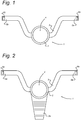
Fig. 1 shows a front view of an automatic tracheostoma speech valve fixation brace according to an embodiment of the present invention, -
Fig. 2 shows a front view of an automatic tracheostoma speech valve fixation brace according to a further embodiment of the present invention, and -
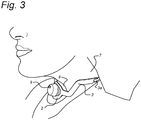
Fig. 3 shows a simplified diagram of an automatic tracheostoma speech valve fixation brace worn by a patient. - The invention is defined in
claim 1. In the present invention embodiments an automatic tracheostoma speech valve (ATSV) 9 is fixed on a patient with anATSV base element 8, e.g. in the form of anATSV plaster 8, theATSV 9 andATSV base element 8 being additionally supported by afixation brace 1. Thebrace 1 assures that theATSV base element 8 normally applied for holding theATSV 9 to a patient is not stressed too much when the patient speaks. Thebrace 1 allows to take on the higher force exerted during speech by the patient on theATSV 9 and from there on to theATSV base element 8. Thebrace 1 according to the present invention embodiments is (partly) made of a special material allowing to shape thebrace 1 to the (local) anatomic shape of the patient, such as an individual neck profile. Thebrace 1 is thus suitable for a large group of patients. As a result, the present brace embodiments can aid in improving the hands free speech of a patient who has undergone a total laryngectomy. - As shown in the schematic view of the embodiment shown in
Fig. 1 , theATSV fixation brace 1 comprises afixation part 2 for keeping anATSV base element 8, and anATSV 9 positioned therein in position during use, and aholding part 3 for properly holding of theATSV fixation brace 1 to a patient, e.g. around a patient's neck. At least the holding part 3 (or at least the part thereof directly adjacent to the fixation part 2) comprises a thermoplastic material, the thermoplastic material being moldable to the local anatomic shape of the patient. This allows theATSV fixation brace 1 to be adapted to the specific local anatomic shape of an individual patient, resulting in a better fit and more convenience and comfort for the patient. In a further embodiment, also thefixation part 2 is made of the same thermoplastic material, the thermoplastic material being moldable to the local anatomic shape of theATSV base element 8 when in use by the patient.. - The
brace 1 in the embodiment shown is provided with aholding part 3 with two sections on each side of thefixation part 2. Theend parts co-operating connection elements connection elements brace 1 around a patient's neck, e.g. using an additional band 3a (seeFig. 3 ). Theconnection elements end parts brace 1 by heating the thermoplastic material locally, sufficiently for attaching the connection elements 6, e.g. by molding a part of theend parts connection elements connection elements end parts - As mentioned the
connection elements - In a further specific embodiment, the
holding part 3 is shaped to allow a good fixture of thebrace 1 around a patient's neck without any further connection elements, e.g. by having theend parts holding part 3. - In a further embodiment, the
brace 1 is provided withend parts neck 7. In this embodiment, a further fixture, e.g. in the form of a flexible band is provided. The flexible band may also be provided as a band of which the length is adjustable. - In the embodiment shown, the
fixation part 2 is provided with a (substantially) round opening 4 which can hold theATSV 9 in position in anadhesive base element 8 of a patient. Thefixation part 2 can have an opening which is adaptable to different sizes of tracheostoma valves, e.g. by using a thin and flexible inner ring part of thefixation part 2. - The
fixation part 2 may be made of the same material as theholding part 3 as mentioned above, but furthermore this part may e.g. be made thicker thereby more readily keeping its shape in order to ensure a good fixation of theATSV 9 in theATSV base element 8. Alternatively, the shape of thefixation part 2 may be made to better withstand the forces applied on theATSV base element 8 during speech, e.g. by having a tube form part. Furthermore, the fixation part may comprises a coating at an interior surface thereof, e.g. from stainless steel, in order to improve the ability to insert and remove theATSV 9 from theATSV base element 8. - As a major function of the
fixation part 2 is to provide support to theATSV base element 8, the diameter of theopening 4 can be slightly larger than the diameter of theATSV 9 in a further embodiment. - In a further embodiment, which is shown schematically in
Fig. 2 , theATSV brace 1 further comprises achest extension part 2a, extending from thefixation part 2. Thischest extension part 2a may also be made from a thermoplastic material, e.g. the same material as the rest of theATSV brace 1. Thischest extension part 2a may be attached to the patient's chest (e.g. using adhesive) and prevents theATSV brace 1 from deformation (e.g. for a patient having a long neck). -
Fig. 3 shows a simplified side view of a patient'sneck 7, wearing abrace 1 according to one of the invention's embodiments for holding anATSV 9. The part of the skin of a patient'sneck 7 is provided with a tracheostoma plaster serving asATSV base element 8. The holdingpart 3 is as shown formed to the anatomic shape of the patient'sneck 7, e.g. closely following a collar bone curvature. In the embodiment shown, thefixation part 2 is keeping theATSV 9 in position by virtue of the holdingpart 3, 3a fixing thebrace 1 around the patient'sneck 7. - Additionally, the
fixation part 2 is in close contact with theplaster 8 by molding the fixation part after it is activated. Furthermore, such a close contact allows e.g. using adhesives known as such. In an embodiment, thefixation part 2 comprises a contact surface (back side of fixation part 2) for contacting and applying an adhesive, for firm contact with thestoma plaster 8 on the patient's skin. - In one embodiment, the thermoplastic material remains moldable for a first time period (or working time) after being heated to at least a first threshold temperature (or activation temperature). In other words, the thermoplastic material remains moldable at ambient room temperature, in contact with a person, for at least the first time period. This allows to bring the fixation brace 1 (holding
part 3, or holdingpart 3 and fixation part 2) in a shape congruent with the local anatomic shape of the patient's body. - Thermoplastic material is a material which is rigid after cooled down to or being at ambient temperature for at least a cooling time period (or completion time). This allows the (anatomic) shape of the
brace 1 to stay permanent, i.e. after a first fitting, the patient can remain using thebrace 1 for a long period. Because of the specifically, individually shapedbrace 1, the patient can wear thebrace 1 with great comfort. - To further enhance the molding process and to enhance comfort during wearing, the thermoplastic material comprises a non-sticky surface, e.g. in the form of a coating, in a further embodiment. The non-sticky surface may be from a different material, or may result from proper treatment of the thermoplastic material.
- The
brace 1 can be made entirely from the same material. In one embodiment, thefixation part 2 and holdingpart 3 are integrally formed from a single sheet of the thermoplastic material. This makes fabrication of thebrace 1 according to the present invention very easy and economical. - In one embodiment, the thermoplastic material is cut to shape, e.g. using laser cutting techniques. After tooling, the thermoplastic material either stays smooth on its own, or can be post-treated very easily.
- The thermoplastic (memory) material used for the brace according to the present invention embodiments is e.g. a polycaprolactone (PCL) based material. This is a biodegradable polyester with a low melting point of around 60°C.
- Once softened, it can be molded by hand in the proper shape. If the temperature of an outer layer decreases, it becomes non-sticky, but still pliable and moldable.
- An example of such a thermoplastic material to be used is the Aquafit NS material commercially available from Orfit. This material is white when cooled down to ambient temperature, and is provided with a non-sticky layer (a coating dispersion of acrylat-urethane), allowing easier handling during molding of the brace. Activation can be easily monitored, as the color changes to transparent when reaching the activation temperature of about 65°C. This takes about 4-5 minutes when using heating in warm water. The working time of about 2 minutes is sufficient for molding the brace properly around a patient's neck. During a longer period (about 9 minutes, hardening time) the material is still flexible, but can no longer be molded. After about 25 minutes (completion time), the
brace 1 is ready to be worn by a patient. Other similar materials may be used as well. - When the thermoplastic material for the
brace 1 embodiments according to the present invention is reheated (i.e. heating to a temperature above a second threshold value), the material will regain its original shape (memory function), which allows to re-use thebrace 1, or to re-initiate a proper molding and fitting procedure. - The material is very suited for application as a
fixation brace 1, to support anadhesive base element 8 while using anATSV 9, as it is scentless and has a smooth surface. No irritation of skin occurs during regular use. - As the material can be molded after heating above a threshold value, the
brace 1 can be made suitable for almost every patient. After cooling down completely, thebrace 1 retains its shape, as a result of which the fitting of thebrace 1 is a simple and single event. It has been found that patients using thepresent brace 1 can speak for a longer period without hands (i.e. using the automatictracheostoma speech valve 9 without holding a hand to it). Also it was experienced that speaking is more comfortable as a sort of resistance is being felt which holds theautomatic speech valve 9 in position. - Furthermore, although a
brace 1 is now needed to be worn, it was found that a patient is getting accustomed to this quite quickly. Whenever a patient is getting used to using anATSV 9 with abrace 1 according to the present invention directly after a total laryngectomy, it was found that this present invention in one of its embodiments can be very helpful in speech revalidation of the patient. - The present invention embodiments have been described above with reference to a number of exemplary embodiments as shown in the drawings. Modifications and alternative implementations of some parts or elements are possible, and are included in the scope of protection as defined in the appended claims.
Claims (14)
- Automatic tracheostoma speech valve (ATSV) fixation brace, comprising a fixation part (2) for keeping an ATSV base element (8) in position during use, and a holding part (3) for holding the fixation brace (1) to a patient around a patient's neck, characterized in that at least a part of the holding part (3) adjacent to the fixation part (2) is made of a thermoplastic material, wherein the thermoplastic material is a polycaprolactone based polymer, such that the thermoplastic material being moldable to the local anatomic shape of the patient.
- Automatic tracheostoma speech valve fixation brace according to claim 1, wherein the fixation part (2) comprises a thermoplastic material, the thermoplastic material being moldable to the local shape of the ATSV base element (8) when in use by the patient.
- Automatic tracheostoma speech valve fixation brace according to claim 1 or 2, wherein the fixation brace (1) further comprises a chest extension part (2a) extending from the fixation part (2).
- Automatic tracheostoma speech valve fixation brace according to claim 1, 2 or 3, wherein the fixation part (2) comprises a tube form element.
- Automatic tracheostoma speech valve fixation brace according to any one of claims 1-4, wherein the fixation part (2) comprises a coating at an interior surface thereof.
- Automatic tracheostoma speech valve fixation brace according to any one of claims 1-5, wherein the thermoplastic material remains moldable for a first time period after being heated to at least a first threshold temperature.
- Automatic tracheostoma speech valve fixation brace according to any one of claims 1-6, wherein the thermoplastic material is a material which is rigid after being cooled to ambient temperature for at least a cooling time period.
- Automatic tracheostoma speech valve fixation brace according to any one of claims 1-7, the thermoplastic material is a material regaining its original shape after heating to a temperature above a second threshold value.
- Automatic tracheostoma speech valve fixation brace according to any one of claims 1-8, wherein the thermoplastic material comprises a non-sticky surface.
- Automatic tracheostoma speech valve fixation brace according to any one of claims 1-9, wherein the fixation part (2) and holding part (3) are integrally formed from a single sheet of the thermoplastic material.
- Automatic tracheostoma speech valve fixation brace according to any one of claims 1-10, wherein the fixation part (2) comprises a contact surface for applying adhesive.
- Automatic tracheostoma speech valve fixation brace according to any one of claims 1-11, wherein the fixation part (2) is adaptable to different size ATSV's.
- Automatic tracheostoma speech valve fixation brace according to any one of claims 1-12, wherein the holding part (3) is provided with connection elements (6a, 6b), the connection elements (6a, 6b) being attached by heating the thermoplastic material locally.
- Automatic tracheostoma speech valve fixation brace according to any one of claims 1-13, wherein the thermoplastic material is provided with a coating dispersion of acrylat-urethane.
Applications Claiming Priority (2)
| Application Number | Priority Date | Filing Date | Title |
|---|---|---|---|
| NL2007326A NL2007326C2 (en) | 2011-09-01 | 2011-09-01 | Automatic tracheostoma speech valve (atsv) fixation brace. |
| PCT/NL2012/050600 WO2013032334A1 (en) | 2011-09-01 | 2012-08-31 | Automatic tracheostoma speech valve (atsv) fixation brace |
Publications (2)
| Publication Number | Publication Date |
|---|---|
| EP2744547A1 EP2744547A1 (en) | 2014-06-25 |
| EP2744547B1 true EP2744547B1 (en) | 2018-03-28 |
Family
ID=46832564
Family Applications (1)
| Application Number | Title | Priority Date | Filing Date |
|---|---|---|---|
| EP12758656.8A Not-in-force EP2744547B1 (en) | 2011-09-01 | 2012-08-31 | Automatic tracheostoma speech valve (atsv) fixation brace |
Country Status (6)
| Country | Link |
|---|---|
| US (1) | US20140326247A1 (en) |
| EP (1) | EP2744547B1 (en) |
| JP (2) | JP2014527864A (en) |
| CN (1) | CN103906544A (en) |
| NL (1) | NL2007326C2 (en) |
| WO (1) | WO2013032334A1 (en) |
Families Citing this family (6)
| Publication number | Priority date | Publication date | Assignee | Title |
|---|---|---|---|---|
| CN104822409B (en) * | 2012-12-11 | 2018-09-14 | 阿托斯医疗公司 | Tracheostoma device retainer |
| WO2018009118A1 (en) * | 2016-07-06 | 2018-01-11 | Atos Medical Ab | Tracheostoma device holder |
| WO2019040731A1 (en) * | 2017-08-24 | 2019-02-28 | St. Joseph Health System | Tracheotomy device |
| ES2717690B2 (en) * | 2017-12-22 | 2020-02-24 | Borja Barrones Daniel | CLAMPING ACCESSORY FOR A TRAQUEAL STOMA ASSEMBLY |
| WO2020067980A1 (en) * | 2018-09-27 | 2020-04-02 | Atos Medical Ab | Tracheostoma device holder and method for adapting the holder to anatomy of a patient |
| US12611515B1 (en) * | 2020-07-13 | 2026-04-28 | Marpac, Inc. | Endotracheal tube holder |
Family Cites Families (45)
| Publication number | Priority date | Publication date | Assignee | Title |
|---|---|---|---|---|
| US2405851A (en) * | 1945-03-22 | 1946-08-13 | Roberts Ottie | Trachea connection |
| US3373745A (en) * | 1964-11-16 | 1968-03-19 | John R. Benfield | Medical device such as for ileostomy and colostomy |
| US3499450A (en) * | 1967-10-25 | 1970-03-10 | Dow Corning | Pediatric size tracheal tube |
| US3606669A (en) * | 1969-05-26 | 1971-09-21 | Philip Morris Inc | Method of making tracheal tube device |
| US7025784B1 (en) * | 1981-10-29 | 2006-04-11 | Hansa Medical Products, Inc. | Method and apparatus for a tracheal valve |
| US4832019A (en) * | 1988-03-16 | 1989-05-23 | Burton Weinstein | Endotracheal tube holder |
| US5027811A (en) * | 1990-06-04 | 1991-07-02 | Tuxill Judith D | Tracheostomy chamber having adapter for suction capability |
| US5058579A (en) * | 1990-08-09 | 1991-10-22 | Terry Deborah A | Tracheostomy dressing |
| US5819734A (en) * | 1991-09-23 | 1998-10-13 | Mallinckrodt Medical, Inc. | Neck flange for holding a tracheostomy tube in place and allowing limited movement therebetween and tracheostomy procedure using the same |
| US5392775A (en) * | 1994-03-22 | 1995-02-28 | Adkins, Jr.; Claude N. | Duckbill valve for a tracheostomy tube that permits speech |
| US5471980A (en) * | 1994-05-31 | 1995-12-05 | Varner; Scott H. | Tracheostomy tube and oral endotracheal tube holder |
| US5501216A (en) * | 1994-11-23 | 1996-03-26 | Byrd; Timothy N. | Tracheostomy tube holder and associated tube holding method |
| US5702754A (en) * | 1995-02-22 | 1997-12-30 | Meadox Medicals, Inc. | Method of providing a substrate with a hydrophilic coating and substrates, particularly medical devices, provided with such coatings |
| US5869127A (en) * | 1995-02-22 | 1999-02-09 | Boston Scientific Corporation | Method of providing a substrate with a bio-active/biocompatible coating |
| DE29610420U1 (en) * | 1996-06-14 | 1996-08-22 | Ganz, Franz-Josef, Dr.med., 51373 Leverkusen | Endotracheal cannula |
| DE19807961C2 (en) * | 1998-02-25 | 1999-12-02 | Map Gmbh | Respiratory mask |
| US6193751B1 (en) * | 1998-11-02 | 2001-02-27 | Mark I. Singer | Tracheostoma valve with spring-loaded piston |
| US6588428B2 (en) * | 2001-02-23 | 2003-07-08 | Adam Spence Corp. | Speaking valve for a tracheostomy tube |
| US20020139372A1 (en) * | 2001-03-08 | 2002-10-03 | Shikani Alan H. | Tracheostomy tube with adjustable quick release and method therefor |
| US20030171737A1 (en) * | 2002-03-11 | 2003-09-11 | Leise, Walter F. | Soft convex adhesive wafer |
| US20040087920A1 (en) * | 2002-10-28 | 2004-05-06 | Etheredge Robert W. | Ostomy device kit |
| DE20303669U1 (en) * | 2003-03-06 | 2003-05-15 | Bess Medizintechnik GmbH, 14167 Berlin | Arrangement for external tracheostoma stabilization |
| JP4695600B2 (en) * | 2003-11-11 | 2011-06-08 | エムアーペー・メディツィーン−テヒノロギー・ゲゼルシャフト・ミット・ベシュレンクテル・ハフツング | Headband means for a respiratory mask and method of manufacturing the headband means |
| CN2666467Y (en) * | 2003-12-29 | 2004-12-29 | 刘宝国 | Tracheul tube respiratory mask |
| DE202004007566U1 (en) * | 2004-05-12 | 2004-08-05 | Neubauer, Norbert | Plaster for a tracheostoma is divided into two parts by a cut and is adhered to the skin in three or more adhesive zones independently of each other |
| US7243650B2 (en) * | 2004-07-12 | 2007-07-17 | Thornton W Keith | Custom fitted mask configured for coupling to an external gas supply system and method of forming same |
| CN2770609Y (en) * | 2004-12-02 | 2006-04-12 | 张安琴 | Full-throat-cutting tracheostoma physiological function maintaining device |
| DE202004020108U1 (en) * | 2004-12-23 | 2005-03-03 | Primed Halberstadt Medizintechnik Gmbh | Tracheostoma tube with adapter carrying extension, comprising particularly soft adapter |
| GB0503081D0 (en) | 2005-02-15 | 2005-03-23 | Smiths Group Plc | Medico-surgical tubes |
| ES2355746T3 (en) * | 2005-09-21 | 2011-03-30 | Marina-Mor Trodler | DEVICE FOR INSURING RESPIRATORY TUBES TO A PATIENT. |
| DE202006009768U1 (en) * | 2006-06-20 | 2006-08-24 | Atos Medical Ab | Holder for positioning and holding a tracheal cannula comprises a first longitudinal holding band element and a second longitudinal holding band element both having rounded hook elements |
| US8936025B2 (en) * | 2006-09-26 | 2015-01-20 | Covidien Lp | Tracheostomy tube and technique for using the same |
| DE102006056946B4 (en) * | 2006-11-30 | 2025-08-21 | Coloplast A/S | Padding for tracheostomy tube |
| WO2008127153A1 (en) * | 2007-04-12 | 2008-10-23 | Atos Medical Ab | Method and device for supporting and retaining medical appliances |
| GB0710501D0 (en) * | 2007-06-01 | 2007-07-11 | Smiths Group Plc | Medical-surgical tube assemblies |
| DE202007010008U1 (en) * | 2007-07-18 | 2007-09-20 | Neubauer, Norbert | Arrangement for tracheostomy stabilization |
| WO2010033109A1 (en) * | 2008-09-16 | 2010-03-25 | Venetec International, Inc. | Securement system for an endotracheal tube |
| WO2010125074A1 (en) * | 2009-04-27 | 2010-11-04 | Tomtec N.V. | Wearable medical support for delivery of fluids to the nose |
| US20100300448A1 (en) * | 2009-05-28 | 2010-12-02 | Kenowski Michael A | Tracheostomy Tube |
| US20110041854A1 (en) * | 2009-08-18 | 2011-02-24 | Julia Suzanne Rasor | Everting device and method for tracheostomy |
| DE202010004297U1 (en) * | 2010-03-26 | 2010-07-01 | Tracoe Medical Gmbh | sign |
| EP2579907A4 (en) * | 2010-06-09 | 2016-03-23 | Arrow Int Inc | Articles having non-fouling surfaces and processes for preparing the same including applying a primer coat |
| DE202010014829U1 (en) * | 2010-10-29 | 2011-01-05 | Primed Halberstadt Medizintechnik Gmbh | Halpflaster for tracheal cannulas or artificial noses with speaking valve |
| US8464718B2 (en) * | 2011-02-16 | 2013-06-18 | Covidien Lp | Neck flange attachment apparatuses for tracheostomy tubes |
| US8887729B2 (en) * | 2011-03-31 | 2014-11-18 | Covidien Lp | Tracheostomy tube assemblies having spherical bearing elements |
-
2011
- 2011-09-01 NL NL2007326A patent/NL2007326C2/en not_active IP Right Cessation
-
2012
- 2012-08-31 US US14/342,136 patent/US20140326247A1/en not_active Abandoned
- 2012-08-31 WO PCT/NL2012/050600 patent/WO2013032334A1/en not_active Ceased
- 2012-08-31 JP JP2014528320A patent/JP2014527864A/en active Pending
- 2012-08-31 CN CN201280054161.8A patent/CN103906544A/en active Pending
- 2012-08-31 EP EP12758656.8A patent/EP2744547B1/en not_active Not-in-force
-
2016
- 2016-12-07 JP JP2016237394A patent/JP2017060856A/en active Pending
Also Published As
| Publication number | Publication date |
|---|---|
| JP2014527864A (en) | 2014-10-23 |
| EP2744547A1 (en) | 2014-06-25 |
| JP2017060856A (en) | 2017-03-30 |
| US20140326247A1 (en) | 2014-11-06 |
| NL2007326C2 (en) | 2013-03-04 |
| CN103906544A (en) | 2014-07-02 |
| WO2013032334A1 (en) | 2013-03-07 |
Similar Documents
| Publication | Publication Date | Title |
|---|---|---|
| US20140326247A1 (en) | Automatic tracheostoma speech valve (astv) fixation brace | |
| US11116950B2 (en) | Stent for splinting a nasal passage | |
| CN110169086B (en) | Method of customizing a hearing device component, hearing device component and hearing device | |
| US9901694B2 (en) | Neck patch for tracheal cannulas or artificial noses having a speaking valve | |
| EP3744284B1 (en) | Head and jaw immobilization device | |
| CN107260364B (en) | Ear support | |
| EP2763639B1 (en) | Facial structure stabilization apparatus | |
| EP2424605B1 (en) | Wearable medical support for delivering fluids to the nose | |
| US20210154039A1 (en) | Waterproof, polymeric brace | |
| US20160367393A1 (en) | Nasal implant for correction | |
| GB2304579A (en) | Ear splint | |
| EP2131905B1 (en) | Device for supporting and retaining medical appliances | |
| CA2738187C (en) | A cover for a bracket for orthodontic braces | |
| GR20160100486A (en) | Stoma arrangement | |
| ES1255209U (en) | CORRECTIVE EAR BRACELET (Machine-translation by Google Translate, not legally binding) | |
| HK1237636A1 (en) | Ear scaffold | |
| HK1198324B (en) | Facial structure stabilization methods and apparatus | |
| JP2005105502A (en) | Bust fixing and correcting tape |
Legal Events
| Date | Code | Title | Description |
|---|---|---|---|
| PUAI | Public reference made under article 153(3) epc to a published international application that has entered the european phase |
Free format text: ORIGINAL CODE: 0009012 |
|
| 17P | Request for examination filed |
Effective date: 20140228 |
|
| AK | Designated contracting states |
Kind code of ref document: A1 Designated state(s): AL AT BE BG CH CY CZ DE DK EE ES FI FR GB GR HR HU IE IS IT LI LT LU LV MC MK MT NL NO PL PT RO RS SE SI SK SM TR |
|
| DAX | Request for extension of the european patent (deleted) | ||
| RAP1 | Party data changed (applicant data changed or rights of an application transferred) |
Owner name: STICHTING KATHOLIEKE UNIVERSITEIT |
|
| GRAP | Despatch of communication of intention to grant a patent |
Free format text: ORIGINAL CODE: EPIDOSNIGR1 |
|
| INTG | Intention to grant announced |
Effective date: 20171013 |
|
| GRAS | Grant fee paid |
Free format text: ORIGINAL CODE: EPIDOSNIGR3 |
|
| GRAA | (expected) grant |
Free format text: ORIGINAL CODE: 0009210 |
|
| AK | Designated contracting states |
Kind code of ref document: B1 Designated state(s): AL AT BE BG CH CY CZ DE DK EE ES FI FR GB GR HR HU IE IS IT LI LT LU LV MC MK MT NL NO PL PT RO RS SE SI SK SM TR |
|
| REG | Reference to a national code |
Ref country code: GB Ref legal event code: FG4D |
|
| REG | Reference to a national code |
Ref country code: CH Ref legal event code: EP |
|
| REG | Reference to a national code |
Ref country code: AT Ref legal event code: REF Ref document number: 982844 Country of ref document: AT Kind code of ref document: T Effective date: 20180415 |
|
| REG | Reference to a national code |
Ref country code: IE Ref legal event code: FG4D |
|
| REG | Reference to a national code |
Ref country code: DE Ref legal event code: R096 Ref document number: 602012044494 Country of ref document: DE |
|
| REG | Reference to a national code |
Ref country code: NL Ref legal event code: FP |
|
| PG25 | Lapsed in a contracting state [announced via postgrant information from national office to epo] |
Ref country code: NO Free format text: LAPSE BECAUSE OF FAILURE TO SUBMIT A TRANSLATION OF THE DESCRIPTION OR TO PAY THE FEE WITHIN THE PRESCRIBED TIME-LIMIT Effective date: 20180628 Ref country code: HR Free format text: LAPSE BECAUSE OF FAILURE TO SUBMIT A TRANSLATION OF THE DESCRIPTION OR TO PAY THE FEE WITHIN THE PRESCRIBED TIME-LIMIT Effective date: 20180328 Ref country code: LT Free format text: LAPSE BECAUSE OF FAILURE TO SUBMIT A TRANSLATION OF THE DESCRIPTION OR TO PAY THE FEE WITHIN THE PRESCRIBED TIME-LIMIT Effective date: 20180328 Ref country code: FI Free format text: LAPSE BECAUSE OF FAILURE TO SUBMIT A TRANSLATION OF THE DESCRIPTION OR TO PAY THE FEE WITHIN THE PRESCRIBED TIME-LIMIT Effective date: 20180328 |
|
| REG | Reference to a national code |
Ref country code: LT Ref legal event code: MG4D |
|
| PG25 | Lapsed in a contracting state [announced via postgrant information from national office to epo] |
Ref country code: BG Free format text: LAPSE BECAUSE OF FAILURE TO SUBMIT A TRANSLATION OF THE DESCRIPTION OR TO PAY THE FEE WITHIN THE PRESCRIBED TIME-LIMIT Effective date: 20180628 Ref country code: GR Free format text: LAPSE BECAUSE OF FAILURE TO SUBMIT A TRANSLATION OF THE DESCRIPTION OR TO PAY THE FEE WITHIN THE PRESCRIBED TIME-LIMIT Effective date: 20180629 Ref country code: LV Free format text: LAPSE BECAUSE OF FAILURE TO SUBMIT A TRANSLATION OF THE DESCRIPTION OR TO PAY THE FEE WITHIN THE PRESCRIBED TIME-LIMIT Effective date: 20180328 Ref country code: SE Free format text: LAPSE BECAUSE OF FAILURE TO SUBMIT A TRANSLATION OF THE DESCRIPTION OR TO PAY THE FEE WITHIN THE PRESCRIBED TIME-LIMIT Effective date: 20180328 Ref country code: RS Free format text: LAPSE BECAUSE OF FAILURE TO SUBMIT A TRANSLATION OF THE DESCRIPTION OR TO PAY THE FEE WITHIN THE PRESCRIBED TIME-LIMIT Effective date: 20180328 |
|
| PG25 | Lapsed in a contracting state [announced via postgrant information from national office to epo] |
Ref country code: EE Free format text: LAPSE BECAUSE OF FAILURE TO SUBMIT A TRANSLATION OF THE DESCRIPTION OR TO PAY THE FEE WITHIN THE PRESCRIBED TIME-LIMIT Effective date: 20180328 Ref country code: PL Free format text: LAPSE BECAUSE OF FAILURE TO SUBMIT A TRANSLATION OF THE DESCRIPTION OR TO PAY THE FEE WITHIN THE PRESCRIBED TIME-LIMIT Effective date: 20180328 Ref country code: IT Free format text: LAPSE BECAUSE OF FAILURE TO SUBMIT A TRANSLATION OF THE DESCRIPTION OR TO PAY THE FEE WITHIN THE PRESCRIBED TIME-LIMIT Effective date: 20180328 Ref country code: AL Free format text: LAPSE BECAUSE OF FAILURE TO SUBMIT A TRANSLATION OF THE DESCRIPTION OR TO PAY THE FEE WITHIN THE PRESCRIBED TIME-LIMIT Effective date: 20180328 Ref country code: RO Free format text: LAPSE BECAUSE OF FAILURE TO SUBMIT A TRANSLATION OF THE DESCRIPTION OR TO PAY THE FEE WITHIN THE PRESCRIBED TIME-LIMIT Effective date: 20180328 Ref country code: ES Free format text: LAPSE BECAUSE OF FAILURE TO SUBMIT A TRANSLATION OF THE DESCRIPTION OR TO PAY THE FEE WITHIN THE PRESCRIBED TIME-LIMIT Effective date: 20180328 |
|
| PGFP | Annual fee paid to national office [announced via postgrant information from national office to epo] |
Ref country code: NL Payment date: 20180831 Year of fee payment: 7 |
|
| PG25 | Lapsed in a contracting state [announced via postgrant information from national office to epo] |
Ref country code: CZ Free format text: LAPSE BECAUSE OF FAILURE TO SUBMIT A TRANSLATION OF THE DESCRIPTION OR TO PAY THE FEE WITHIN THE PRESCRIBED TIME-LIMIT Effective date: 20180328 Ref country code: SK Free format text: LAPSE BECAUSE OF FAILURE TO SUBMIT A TRANSLATION OF THE DESCRIPTION OR TO PAY THE FEE WITHIN THE PRESCRIBED TIME-LIMIT Effective date: 20180328 Ref country code: SM Free format text: LAPSE BECAUSE OF FAILURE TO SUBMIT A TRANSLATION OF THE DESCRIPTION OR TO PAY THE FEE WITHIN THE PRESCRIBED TIME-LIMIT Effective date: 20180328 |
|
| REG | Reference to a national code |
Ref country code: AT Ref legal event code: MK05 Ref document number: 982844 Country of ref document: AT Kind code of ref document: T Effective date: 20180328 |
|
| PG25 | Lapsed in a contracting state [announced via postgrant information from national office to epo] |
Ref country code: PT Free format text: LAPSE BECAUSE OF FAILURE TO SUBMIT A TRANSLATION OF THE DESCRIPTION OR TO PAY THE FEE WITHIN THE PRESCRIBED TIME-LIMIT Effective date: 20180730 |
|
| REG | Reference to a national code |
Ref country code: DE Ref legal event code: R097 Ref document number: 602012044494 Country of ref document: DE |
|
| PG25 | Lapsed in a contracting state [announced via postgrant information from national office to epo] |
Ref country code: AT Free format text: LAPSE BECAUSE OF FAILURE TO SUBMIT A TRANSLATION OF THE DESCRIPTION OR TO PAY THE FEE WITHIN THE PRESCRIBED TIME-LIMIT Effective date: 20180328 Ref country code: DK Free format text: LAPSE BECAUSE OF FAILURE TO SUBMIT A TRANSLATION OF THE DESCRIPTION OR TO PAY THE FEE WITHIN THE PRESCRIBED TIME-LIMIT Effective date: 20180328 |
|
| PGFP | Annual fee paid to national office [announced via postgrant information from national office to epo] |
Ref country code: DE Payment date: 20180928 Year of fee payment: 7 |
|
| PLBE | No opposition filed within time limit |
Free format text: ORIGINAL CODE: 0009261 |
|
| STAA | Information on the status of an ep patent application or granted ep patent |
Free format text: STATUS: NO OPPOSITION FILED WITHIN TIME LIMIT |
|
| 26N | No opposition filed |
Effective date: 20190103 |
|
| PG25 | Lapsed in a contracting state [announced via postgrant information from national office to epo] |
Ref country code: MC Free format text: LAPSE BECAUSE OF FAILURE TO SUBMIT A TRANSLATION OF THE DESCRIPTION OR TO PAY THE FEE WITHIN THE PRESCRIBED TIME-LIMIT Effective date: 20180328 |
|
| REG | Reference to a national code |
Ref country code: CH Ref legal event code: PL |
|
| GBPC | Gb: european patent ceased through non-payment of renewal fee |
Effective date: 20180831 |
|
| PG25 | Lapsed in a contracting state [announced via postgrant information from national office to epo] |
Ref country code: CH Free format text: LAPSE BECAUSE OF NON-PAYMENT OF DUE FEES Effective date: 20180831 Ref country code: LU Free format text: LAPSE BECAUSE OF NON-PAYMENT OF DUE FEES Effective date: 20180831 Ref country code: LI Free format text: LAPSE BECAUSE OF NON-PAYMENT OF DUE FEES Effective date: 20180831 |
|
| REG | Reference to a national code |
Ref country code: BE Ref legal event code: MM Effective date: 20180831 |
|
| PG25 | Lapsed in a contracting state [announced via postgrant information from national office to epo] |
Ref country code: SI Free format text: LAPSE BECAUSE OF FAILURE TO SUBMIT A TRANSLATION OF THE DESCRIPTION OR TO PAY THE FEE WITHIN THE PRESCRIBED TIME-LIMIT Effective date: 20180328 |
|
| PG25 | Lapsed in a contracting state [announced via postgrant information from national office to epo] |
Ref country code: FR Free format text: LAPSE BECAUSE OF NON-PAYMENT OF DUE FEES Effective date: 20180831 Ref country code: BE Free format text: LAPSE BECAUSE OF NON-PAYMENT OF DUE FEES Effective date: 20180831 |
|
| PG25 | Lapsed in a contracting state [announced via postgrant information from national office to epo] |
Ref country code: GB Free format text: LAPSE BECAUSE OF NON-PAYMENT OF DUE FEES Effective date: 20180831 |
|
| PG25 | Lapsed in a contracting state [announced via postgrant information from national office to epo] |
Ref country code: MT Free format text: LAPSE BECAUSE OF NON-PAYMENT OF DUE FEES Effective date: 20180831 |
|
| REG | Reference to a national code |
Ref country code: DE Ref legal event code: R119 Ref document number: 602012044494 Country of ref document: DE |
|
| PG25 | Lapsed in a contracting state [announced via postgrant information from national office to epo] |
Ref country code: TR Free format text: LAPSE BECAUSE OF FAILURE TO SUBMIT A TRANSLATION OF THE DESCRIPTION OR TO PAY THE FEE WITHIN THE PRESCRIBED TIME-LIMIT Effective date: 20180328 |
|
| REG | Reference to a national code |
Ref country code: NL Ref legal event code: MM Effective date: 20190901 |
|
| PG25 | Lapsed in a contracting state [announced via postgrant information from national office to epo] |
Ref country code: HU Free format text: LAPSE BECAUSE OF FAILURE TO SUBMIT A TRANSLATION OF THE DESCRIPTION OR TO PAY THE FEE WITHIN THE PRESCRIBED TIME-LIMIT; INVALID AB INITIO Effective date: 20120831 |
|
| PG25 | Lapsed in a contracting state [announced via postgrant information from national office to epo] |
Ref country code: CY Free format text: LAPSE BECAUSE OF FAILURE TO SUBMIT A TRANSLATION OF THE DESCRIPTION OR TO PAY THE FEE WITHIN THE PRESCRIBED TIME-LIMIT Effective date: 20180328 Ref country code: IE Free format text: LAPSE BECAUSE OF NON-PAYMENT OF DUE FEES Effective date: 20180831 Ref country code: MK Free format text: LAPSE BECAUSE OF NON-PAYMENT OF DUE FEES Effective date: 20180328 |
|
| PG25 | Lapsed in a contracting state [announced via postgrant information from national office to epo] |
Ref country code: NL Free format text: LAPSE BECAUSE OF NON-PAYMENT OF DUE FEES Effective date: 20190901 Ref country code: DE Free format text: LAPSE BECAUSE OF NON-PAYMENT OF DUE FEES Effective date: 20200303 Ref country code: IS Free format text: LAPSE BECAUSE OF FAILURE TO SUBMIT A TRANSLATION OF THE DESCRIPTION OR TO PAY THE FEE WITHIN THE PRESCRIBED TIME-LIMIT Effective date: 20180728 |