EP2743845B1 - Graphentraversaloperator in einem Spaltenspeicher - Google Patents
Graphentraversaloperator in einem Spaltenspeicher Download PDFInfo
- Publication number
- EP2743845B1 EP2743845B1 EP13196991.7A EP13196991A EP2743845B1 EP 2743845 B1 EP2743845 B1 EP 2743845B1 EP 13196991 A EP13196991 A EP 13196991A EP 2743845 B1 EP2743845 B1 EP 2743845B1
- Authority
- EP
- European Patent Office
- Prior art keywords
- vertices
- edges
- traversed
- path
- graph
- Prior art date
- Legal status (The legal status is an assumption and is not a legal conclusion. Google has not performed a legal analysis and makes no representation as to the accuracy of the status listed.)
- Active
Links
Images



Classifications
-
- G—PHYSICS
- G06—COMPUTING OR CALCULATING; COUNTING
- G06F—ELECTRIC DIGITAL DATA PROCESSING
- G06F16/00—Information retrieval; Database structures therefor; File system structures therefor
- G06F16/20—Information retrieval; Database structures therefor; File system structures therefor of structured data, e.g. relational data
- G06F16/24—Querying
- G06F16/245—Query processing
- G06F16/2455—Query execution
- G06F16/24564—Applying rules; Deductive queries
- G06F16/24566—Recursive queries
-
- G—PHYSICS
- G06—COMPUTING OR CALCULATING; COUNTING
- G06F—ELECTRIC DIGITAL DATA PROCESSING
- G06F16/00—Information retrieval; Database structures therefor; File system structures therefor
- G06F16/20—Information retrieval; Database structures therefor; File system structures therefor of structured data, e.g. relational data
- G06F16/22—Indexing; Data structures therefor; Storage structures
- G06F16/221—Column-oriented storage; Management thereof
-
- G—PHYSICS
- G06—COMPUTING OR CALCULATING; COUNTING
- G06F—ELECTRIC DIGITAL DATA PROCESSING
- G06F16/00—Information retrieval; Database structures therefor; File system structures therefor
- G06F16/90—Details of database functions independent of the retrieved data types
- G06F16/901—Indexing; Data structures therefor; Storage structures
- G06F16/9024—Graphs; Linked lists
-
- G—PHYSICS
- G06—COMPUTING OR CALCULATING; COUNTING
- G06F—ELECTRIC DIGITAL DATA PROCESSING
- G06F16/00—Information retrieval; Database structures therefor; File system structures therefor
- G06F16/90—Details of database functions independent of the retrieved data types
- G06F16/95—Retrieval from the web
- G06F16/951—Indexing; Web crawling techniques
Definitions
- This disclosure relates generally to data graph processing and, more specifically, to graph traversals.
- Data graphs represent data from multiple of domains in an expressive and flexible way. For example, data graphs show relationships between different data objects, and relationships between data objects and properties of these objects. These relationships may be mapped to vertices and edges in the data graph.
- a graph representation of data is less dependent on a rigid schema common to the relational data and is more suitable for evolving schemas and the ad-hoc integration of data from multiple data sources.
- Data graph processing is a tool for processing data.
- data graph processing is used to analyze social media, semantic web applications and bio-informatics. In these areas, data graph processing identifies and analyzes user relationships in social networks, monitors and manages brand value and company reputation, and analyzes genomics research. Also, data graph processing is used in traditional business processing applications that include business network analysis and optimization, product costing, transportation and distribution analysis, material flow analysis, and product and lifecycle management, to name a few examples.
- WO 2011/134086 discloses methods for social graph data analytics to determine connectivity between nodes in a community.
- Graph structure is represented in node and edge tables, and graph traversal services are provided.
- Methods for implementing directed acyclic graphs (DAGs) in relational databases are set out in US 6633886 as well as in " A Model to Represent Directed Acyclic Graphs (SAG) on SQL Databases", K. Singh, Code Project, January 2008 .
- US7957871 discloses a system for generating directions using a graph, where the graph is represented by edges stored in a links table, with route finding performed based on Dijkstra's algorithm.
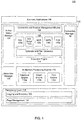
- FIG. 1 is a block diagram 100 of an exemplary database management system 102.
- Database management system 102 may be a memory-centric data management system that leverages hardware capabilities, such as vast main memory space, multi core CPUs and GPU processors, and storage device division (SDD) storage.
- SDD storage device division
- database management system 102 includes connection and session management module 104.
- Connection and session management module 104 creates and manages sessions and connections for database clients.
- Database clients may be computing devices under a control of a user (also referred to as client devices) that access and/or execute business applications 106.
- Business applications 106 are custom or generic applications that include applications related to social media, bio-informatics, and business processing, to name a few examples.
- database clients may use database languages 108, to manipulate data associated with business applications 106.
- Example database languages 108 include generic database languages, such as, structured query language (SQL) 108a, SQL Script 108b (a scripting language for describing application specific calculations inside the database), a MultiDimensional eXpressions (MDX) 108c, and proprietary languages, such as WIPE (for data graph processing) 108d and FOX (for planning applications) 108e, to give a few examples.
- SQL structured query language
- SQL Script 108b a scripting language for describing application specific calculations inside the database
- MDX MultiDimensional eXpressions
- WIPE for data graph processing
- FOX for planning applications
- transaction manager 110 ensures that database management system 102 provides ACID (atomicity, consistency, isolation, durability) properties.
- ACID atomicity, consistency, isolation, durability
- transaction manager 110 coordinates database transactions, controls transactional isolation, and keeps track of running and closed transactions.
- optimizer and plan generator 112 parses and optimizes client requests that, for example, may be made using database languages 108. For example, optimizer and plan generator 112 may generate an execution plan for executing the client request in database management system 102. Once generated, optimizer and plan generator 112 passes the execution plan to execution engine 114.
- execution engine 114 invokes an in-memory processing engine 116 to process the execution plan.
- Execution engine 114 may invoke a different in-memory processing engine 116 based on the execution plan type.
- Example in-memory processing engines 116 include a relational engine 116a, a graph engine 116b and a text engine 116c.
- relational engine 116a processes structured data.
- Relational engine 116 supports both row- and column-oriented physical representations of relational tables.
- column-oriented data is stored in a highly compressed format in order to improve the efficiency of memory resource usage and to speed up the data transfer from disk storage to cache memory or from cache memory to CPU.
- a system administrator may specify, at table definition time, whether a new table will be stored in a row- or in a column-oriented format.
- Row- and column-oriented database tables can be seamlessly combined into one SQL statement, and, subsequently, tables can be moved from one representation form to the other.
- a user and application data may be stored in a column-oriented format to benefit from the high compression rate and from the highly optimized access for selection and aggregation queries.
- metadata or data with fewer accesses may be stored in a row-oriented format.
- graph engine 116b and text engine 116c support efficient representation and processing of unstructured data.
- graph engine 116b processes data graphs.
- WIPE 108d provides a set of optimized graph operations.
- graph engine 116b supports resource planning applications having large numbers of individual resources and complex mash-up interdependencies.
- Graph engine 116b also supports efficient execution of transformation processes (such as data cleansing in data-warehouse scenarios) and enables the ad-hoc integration of data from different sources.
- text engine 116c provides text indexing and search capabilities.
- Example text indexing and search capabilities include search for words and phrases, fuzzy search (which tolerates typing errors), and linguistic search (which finds variations of words based on linguistic rules).
- text engine 116c ranks search results and supports searching across multiple tables and views.
- persistency layer 118 provides durability and atomicity to transactions.
- Persistency layer 118 includes a logging and recovery module 120 and a page management module 122.
- Logging and recovery module 120 logs data, changes in data, and transaction requests to a memory storage disk. Those transactions and data changes may be performed by in-memory processing engines 116, as well as requests issued by multiple client devices.
- Page management module 122 provides an interface for writing and reading data from memory cache and disk storage for processing by in-memory processing engines 116.
- Persistency layer 118 uses logging and recovery module 120 and page management module 122 to ensure that database management system 102 is restored to the most recent committed state after a restart or system failure. Persistency layer 118 also ensures that transactions are either completely executed or completely undone. To achieve this efficiently, persistency layer 118 uses techniques such as combining write-ahead logs, shadow paging, and save-points that are known to a person skilled in the relevant art(s).
- database management system 102 includes an authorization manager 124.
- Authorization manager 124 determines whether a user has the required privileges to execute the requested operations.
- a privilege grants a right to perform a specified operation (such as create, update, select, or execute).
- the database management system 102 also supports analytical privileges that represent filters or hierarchy drill-down limitations for analytical queries, as well as control access to values with a certain combination of dimension attributes.
- metadata manager 126 manages metadata in database management system 102.
- Example metadata includes table definitions, views, indexes, and the definition of SQL script functions.
- database management system 102 includes graph engine 116b.
- Graph engine 116b processes data graphs.
- graph engine 116b includes an internal graph application program interface (API) that provides a set of core graph operators.
- the core operators are the building blocks for graph data query and manipulation languages, such as WIPE.
- the core operators may be leveraged to implement higher level graph processing algorithms, such as shortest path, nearest neighbor, minimum spanning tree, maximum flow, or transitive closure calculations, to name a few examples.
- a data graph may be represented as a property graph.
- a property graph is a directed graph where vertices and edges have attributes.
- An attribute may be defined as a name-value pair.
- a vertex attribute may include a unique identifier, and another attribute may represent a semantic type of a connection, to name a few examples.
- database management system 102 stores property graphs as columns of data. Those columns of data may be stored as separate sections of data, rather than consecutive rows that are common in a conventional row-oriented database system. Because data is stored in columns, analytic algorithms, such as aggregation operators, that do not manipulate all columns of a table, can be implemented in a highly performant and cache-efficient way. Additionally, the column data layout is well suited for various lightweight compression techniques.
- data stored in a column-oriented format may be compressed.
- One way to compress data is to apply a sorted dictionary on the data, where each data value maps to an integer value.
- compression such as run-length encoding (RLE), sparse encoding, or cluster encoding, may be used.
- RLE run-length encoding
- Data compression generates several benefits, such as an increase in the amount of data that can be kept in memory, faster query processing, and accelerated table scans that use SIMD (single instruction, multiple data) instructions on multi-core processors to process compressed data.
- SIMD single instruction, multiple data
- FIG. 2A is an exemplary data graph 200A.
- Data graph 200A is a property graph.
- a property graph may be represented as a directed graph where vertices and edges have attributes.
- data graph 200A includes six vertices (A-F) and eight edges that have three edge types (a-c).
- Each of the vertices (A-F) and edges (a-c) may include one or more attributes in, for example, a name-value pair format.
- data graph 200A may be stored in two column-oriented, relationship tables. Attributes on edges and vertices may be stored as additional columns in the tables. Also each edge and vertex in the tables may map to a single database record.
- Example tables include an edge table that stores edges, as shown in FIG. B and a vertex table that stores vertices as shown in FIG. C.
- FIG. 2B is a table 200B of an edge table for data graph 200A.
- An edge in the edge table of a property graph, such as 200B may be uniquely identified by a composite key that includes a source vertex, a target vertex, and an edge type.
- Each edge in the edge table in table 200B includes a composite key that comprises a V source (source vertex), a V target (target vertex) and an E type (edge type). Attributes of the edges (a-c) in data graph 200A may be stored as additional columns of table 200B (not shown).
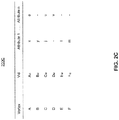
- FIG. 2C is a table 200C of a vertex table for data graph 200A.
- Table 200C includes vertices A-F, vertex identifiers (Vid) and one or more attributes (shown as A1 .. . An).
- each vertex has a unique vertex identifier, as shown in table 200C.
- each of the attributes A1 ... An in the vertex table may be stored as additional columns in table 200C.
- one of the core operators is a graph traversal operator (also referred to as a GTO).
- the GTO efficiently traverses a data graph as discussed in detail below.
- the GTO includes an IO (input/output) interface.
- the input interface receives input parameters for input.
- Input parameters may include a set of start vertices and a traversal description, in one embodiment.
- Input parameters may be received from a client device or other processors in database management system 102.
- the graph traversal output generates a set of traversed vertices as output.
- the set of traversed vertices may be returned to the client device or further used within database management system 102 as input to another operation.
- the GTO is implemented in graph engine 116b.
- the GTO executes, the GTO iterates through vertices in a data graph in a breadth-first traversal, although the implementation is not limited to this embodiment.
- the breadth-first traversal may be implemented in forward and backward directions, where the forward direction begins at a source vertex and a backward direction begins at a target vertex.
- the GTO performs a full column scan of a data graph.
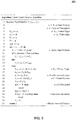
- FIG. 3 is an exemplary algorithm 300 for traversing the data graph using the GTO, and is discussed in detail below.
- algorithm 300 receives a set of start vertices (designated as set S) and a traversal description set (designated as set P) as an input.
- Each vertex in set S may be represented using a vertex identifier and column references C from and C to .
- Column reference C from stores the source vertices (V source ), and column reference Cto stores the target vertices (V target ).
- a traversal description specifies criteria for traversing the data graph during the graph traversal.
- a traversal description may be a data set, such as set P.
- Set P includes an ordered set of path step descriptions.
- Each path step description is designated as P i , where "i" is an integer from 0 to "n-1", and "n” is a number of path set descriptions in set P.
- Each P i may include a recursion boundary which corresponds to the maximum length of paths that are discoverable during the graph traversal.
- the recursion boundary in algorithm 300 is designated as P i.numsteps for each P i .
- P i may also include an edge predicate P i.pred .
- the edge predicate P i.pred is an arbitrary complex relational expression which is evaluated (based on attributes of visited vertices or edges in one example) during the graph traversal associated with P i to reduce the number of edges that require evaluation.
- each path step description P i also stores a direction of the traversal in the P i.direction variable.
- the direction indicates whether the GTO will follow the direction of the edge and perform a scan on the edge table beginning with column C from that corresponds to a source vertex, or against the direction of the edge beginning with column C to that corresponds to a target vertex.
- Algorithm 300 begins at line 9 in FIG. 3 , where the data graph is traversed according to each path step description P i .
- the edge predicate P i.pred is extracted from the path step description P i .
- the edge predicate P i.pred is evaluated against the edge table, and generates a set of valid edges E v from the edge table.
- the set of valid edges is a reduced set of edges that represents valid records in the database.
- Example valid records are represented by their position in the column.
- the set of valid edges may be represented as an additional data structure, such as a bit vector data structure that facilitates efficient data retrieval.
- the GTO uses the P i.direction variable to extract a direction for scanning columns in the edge table.
- lines 11-14 set the direction for scanning columns in the edge table.
- the GTO begins to scan a set of vertices V s against the set of valid edges E v .
- the set of vertices V s may be set to the set of start vertices (set S).
- the set of vertices V s is set to the vertices that were identified in previous iterations (referred to as visited vertices V v as described below.)
- the direction of the scan may be set using P i.direction .
- P i.direction is a forward direction
- the GTO begins the scan on a V source column in the edge table.
- the scan generates a set of traversed edges E trav .
- the set of traversed edges E trav are edges that begin from the set of vertices V s .
- the GTO returns the set of traversed edges E trav as the set of positions in the edge column.
- the scan is implemented as a hardware-accelerated full column scan that leverages SIMD instructions and data parallelism available on multi-core processors.
- graph engine 116b decompresses the columns prior to the scan.
- the GTO uses the set of valid edges E v to minimize the scan range and to ignore the edges that were previously traversed.
- the scan generates a set of traversed edges E trav that corresponds to the returned positions in the column. Referring to algorithm 300, line 16 generates the set of traversed edges E trav .
- Line 16 of algorithm 300 is the first iteration of a loop that the GTO performs to identify a set of traversed vertices T for each path step description P i .
- the GTO terminates the loop once the termination conditions described below are met.
- the set of edges that were visited during the previous traversals with the same or different P i are stored as a set of visited edges E vis .
- the set of traversed edges E trav is merged with the set of visited edges E vis .
- line 17 generates the set of visited edges E vis .
- the GTO uses the set of visited edges E vis to reduce the amount of work during a traversal.
- edges in the set of visited edges E vis may be disabled from the set of valid edges E v to prevent multiple traversals along previously traversed paths.
- the bit vector structures that stores the set of visited edges E vis permits the storing without duplicates.
- line 18 generates the set of visited edges E vis that includes the set of edges without duplicates or edges that may result from multiple traversals.
- the GTO uses the set of traversed edges E trav to retrieve the set of visited vertices V v .
- the visited vertices V v are a set of vertices in a vertex target column in the edge table that are reachable from the edges in the set of traversed edges E trav .
- visited vertices V v are a set of vertices that are reachable from a vertex source column using the set of traversed edges E trav .
- line 19 generates the set of visited vertices V v .
- the visited vertices V v are then added to a set of traversed vertices T.
- line 20 includes the visited vertices V v in the set of traversed vertices T.
- the set of traversed vertices T is a compilation of vertices visited during the traversal of all path step description P i in set P.
- the set of traversed vertices T is the set of vertices that is returned to a function that invokes the GTO.
- the GTO may return the set of vertices T as a set of traversed vertices that are identified by their vertex identifier.
- GTO completes the traversal of each path step description P i when a terminating condition is met.
- An example terminating condition for each path step description P i is when a recursion boundary, indicated by P i.numsteps is reached. Referring to algorithm 300, lines 24-25 demonstrate when the recursion boundary is reached.
- Another example of a terminating condition is when the set of visited vertices V v is empty. An empty set of visited vertices V v indicates that no vertices were reachable from the set of traversed edges E trav either because the vertices do not exist or they were visited in the previous traversals.
- GTO After the GTO reaches a terminating condition for each path step description P i , GTO iterates to the next path step description (P i+1 ) until it iterates through all path step descriptions in set P. Once the GTO iterates through the entire set P, the GTO returns the set of traversed vertices T as its output.
- FIG. 4 is a flowchart 400 of a method for traversing a data graph, according to an embodiment.
- the data graph Prior to the traversal, the data graph is stored in a column-oriented format in a cache memory of the database management system 102. As described above, the data graph may be stored as a set of column-based edge tables and vertex tables.
- GTO's IO interface may receive a set of start vertices (set S) and a traversal description, such as path step descriptions set P.
- set S start vertices
- path step descriptions set P path step descriptions
- the data graph is traversed.
- the GTO uses the set of start vertices and path step descriptions set P to traverse the column-based tables of the data graph stored in a memory cache of database management system 102.
- the detailed method for traversing the graph is discussed in FIG. 5 , below.
- the set of traversed vertices is returned.
- the GTO returns the set of traversed vertices T to a client device or another function that invoked the GTO.
- FIG. 5 is a flowchart 500 of a method for traversing a data graph using a path step description, according to an embodiment.
- the method of flowchart 500 repeats for each path step description P i in the path step descriptions set P.
- a set of valid edges is determined.
- the GTO extracts a path edge predicate P i.pred from a path step description P i .
- the path edge predicate P i.pred is an arbitrary complex relational expression which is evaluated during the graph traversal to reduce the number of edges that are traversed and evaluated.
- a traversal direction is determined.
- the GTO extracts a scan direction stored in a path direction P i.direction of the path step description P i .
- the scan direction may be a forward direction, beginning with the source vertex column (C from ) or a backward direction, beginning with the target vertex column (C to ).
- a set of traversed edges is determined. For example, the GTO scans the valid set of vertices E v stored in the edge table to identify a set of traversed edges E trav in the edge table. The scan on columns in the edge table may be based on the direction selected in step 504. In the first iteration, the GTO scans the set of valid edges E v for edges that are connected to vertices in the start set of vertices. In the subsequent iterations, the GTO scans the set of vertices V s that were identified using the set of traversed edges E trav from the previous iteration. As discussed above, step 506 is the first iteration in a loop for identifying the set of traversed vertices T associated with each path step description P i .
- a set of visited edges is determined. For example, the GTO merges the set of traversed edges E trav with the set of visited edges E vis . This causes the set of visited edges E vis to include all edges that were visited during the graph traversal.
- traversed edges are disabled.
- the GTO disables the edges that were visited in previous traversals (edges in the set of visited edges E vis ) from the set of valid edges E v . As described herein, this prevents the GTO from traversing edges more than once during the graph traversal.
- a set of visited vertices is identified.
- the GTO identifies the set of visited vertices V v that are reachable from the set of traversed edges E trav .
- a set of traversed vertices is generated.
- the GTO generates the set of traversed vertices T by merging the vertices that were identified in previous traversals with the set of visited vertices V v .
- the termination condition terminates the GTO traversal with respect to each path step description P i .
- the termination condition may be set by P i.numsteps in one embodiment. In another embodiment, the termination condition is met when the set for visited vertices V v determined in step 512 is empty. If the termination condition was not met, the flowchart proceeds to step 506. Otherwise, the flowchart proceeds to step 502 with the next path step description P i+1 .
- the GTO When the GTO iterates through the path step description set P, the GTO returns the set of traversed vertices T as its output parameter.
- GTO uses the topology of the data graph to optimize the traversal.
- Example optimizations may include a graph-level optimization, a path-level optimization, and a neighbor-level optimization.
- the GTO performs graph optimization on large graphs that, for example, include more than two million nodes.
- a graph level optimization generates sub graphs from a data graph. Each of those sub graphs may be analyzed individually using the GTO. For example, multi-relational graphs may have multiple edge types, where each edge type represents a relationship between the graph nodes.
- each edge type may be treated as a predicate.
- the sub graph consists of all vertices that are connected with the particular edge type. This causes a data graph that comprises N different edge types to be subdivided into N different sub graphs.
- each sub graph may be stored in the area in the column that contains all edges forming the sub graph.
- the data graph in FIG. 2A includes three edge types: edge type "a”, "b”, and "c".
- edge type "a", "b", and "c" the edge type of the data graph in FIG. 2A.
- the GTO divides the data graph into three sub graphs, according to the edge type.
- the first sub graph includes nodes A, B, C and D that are connected by edge type "a”.
- the second sub graph includes nodes A, C, E and D that are connected by edge type "b”.
- the third sub graph includes nodes C, F and D that are connected by edge type "c”.
- the GTO scans each sub graph independently of other sub graphs.
- the GTO scans the sub graphs according to the scan range indicated by the edge type. Because each sub graph is scanned independently, the sub graphs may be scanned in parallel using multi-core processors in database management system 102.
- an edge predicate contains a disjunctive condition, for example, the traversal only over edges of type "a” or "b"
- the GTO splits the scan operation into two independent scans according to the "a" edge type and "b" edge type.
- the sub graph that includes nodes connected by edge type "c" does not need to be processed at all.
- the GTO then joins the partial results after the traversal completes.
- a path level optimization reorganizes the layout of the data graph that preserves the graph topology.
- the reorganized data graph is optimized for efficient traversals of large graphs.
- a data graph may be reordered as follows:
- V ⁇ v 1 , .... v n ⁇ be a set of vertices of the directed acyclic data graph D.
- a topological ordering maps each vertex v i to an ordinal ord(v i ) such that for edge (v i , v j ) in the data graph D the condition ord(v i ) ⁇ ord(v j ) is true, wherein "i", "j" and "n" are positive integers with "i” and "j" less than "n".
- edge ordering and a physical topology of the columns allows refining and restricting column scans to certain areas of the graph.
- scans are restricted to certain areas of the graph, more scans can be performed in parallel on multi-core processors, where each scan is restricted to a particular range in the column.
- the range may include sections of the columns that include reachable vertices from a determined set of edges.
- a number of vertices to consider during each loop iteration decreases, because either they have already been discovered or because they are not reachable from the traversed set of edges E trav .
- a range may restrict column scans to the areas of the column that may include traversed vertices.
- a range R may be an ordered pair (a, b) of non-negative numbers "a” and "b” where a ⁇ b.
- the range boundaries "a” and “b” are actual positions in a column.
- the skip range R(v i )(skip) includes all vertices v j whose ordering number ord(v j ) is greater than or equal to ord(v i ).
- the skip range R(v i )(skip) includes the set of vertices that are not reachable from vertex v i . In other words, there is no connecting path between vertex v i and vertices in range R(v i )(skip).
- the accessibility range R(v i )(acc) refers to the set of vertices that are potentially reachable from context vertex v i . In other words, there may be a connecting path between vertex v i , and vertex v j in the range R(v i )(acc).
- the GTO When the GTO performs a scan on a vertex v i , it scans the vertices in the range R(v i )(acc) because the range may yield traversed vertices. The GTO, however, skips the scan of vertices in the range R(v i )(skip) because the graph topology indicates that no vertices connected to vertex v i exist in the range R(v i )(skip).
- a neighbor level optimization adds support for efficient execution of neighboring queries.
- Neighboring queries are graph traversals that execute only one path step away and return a set of neighboring vertices for a given vertex or a set of vertices.
- One way to ensure neighbor level optimization is to group edges by their source vertex. This edge clustering may be exploited during the retrieval operations (line 19 in algorithm 300) and the scan operation (line 16 in algorithm 300). Edge clustering ensures spatial locality in memory for edges sharing the same start vertex. For example, edges sharing the same vertex are written consecutively in memory.
- retrieval of desired data from cache memory causes a retrieval of a memory block that includes the desired data.
- the memory block there may be other data that is unrelated to the desired data.
- edges sharing the same vertex are written consecutively into memory, the likelihood that the edges are written into the same memory block is maximized.
- the scan or retrieval operation in the GTO retrieves edges or vertices from a particular memory block, there is the likelihood that the same memory block will also include edges or vertices that will be required by subsequent queries. This reduces unnecessary memory block retrievals from memory which further optimize the performance of the GTO.
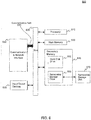
- FIG. 6 illustrates an example computer system 600 in which the contemplated embodiments, or portions thereof, can be implemented as computer-readable code.
- the methods illustrated by flowcharts described herein can be implemented in system 600.
- Various embodiments are described in terms of this example computer system 600. After reading this description, it will become apparent to a person skilled in the relevant art how to implement the embodiments using other computer systems and/or computer architectures.
- Computer system 600 includes one or more processors, such as processor 610.
- Processor 610 can be a special purpose or a general purpose processor.
- Processor 610 is connected to a communication infrastructure 620 (for example, a bus or network).
- Computer system 600 also includes a main memory 630, preferably random access memory (RAM), and may also include a secondary memory 640.
- Secondary memory 640 may include, for example, a hard disk drive 650, a removable storage drive 660, and/or a memory stick.
- Removable storage drive 660 may comprise a floppy disk drive, a magnetic tape drive, an optical disk drive, a flash memory, or the like.
- the removable storage drive 660 reads from and/or writes to a removable storage unit 670 in a well-known manner.
- Removable storage unit 670 may comprise a floppy disk, magnetic tape, optical disk, etc. which is read by and written to by removable storage drive 660.
- removable storage unit 670 includes a computer usable storage medium having stored therein computer software and/or data.
- secondary memory 640 may include other similar means for allowing computer programs or other instructions to be loaded into computer system 600.
- Such means may include, for example, a removable storage unit 670 and an interface (not shown). Examples of such means may include a program cartridge and cartridge interface (such as that found in video game devices), a removable memory chip (such as an EPROM, or PROM) and associated socket, and other removable storage units 670 and interfaces which allow software and data to be transferred from the removable storage unit 670 to computer system 600.
- Computer system 600 may also include a communications and network interface 680.
- Communication and network interface 680 allows software and data to be transferred between computer system 600 and external devices.
- Communications and network interface 680 may include a modem, a communications port, a PCMCIA slot and card, or the like.
- Software and data transferred via communications and network interface 680 are in the form of signals which may be electronic, electromagnetic, optical, or other signals capable of being received by communication and network interface 680. These signals are provided to communication and network interface 680 via a communication path 685.
- Communication path 685 carries signals and may be implemented using wire or cable, fiber optics, a phone line, a cellular phone link, an RF link or other communications channels.
- the communication and network interface 680 allows the computer system 600 to communicate over communication networks or mediums such as LANs, WANs the Internet, etc.
- the communication and network interface 680 may interface with remote sites or networks via wired or wireless connections.
- computer program medium and “computer usable medium” and “computer readable medium” are used to generally refer to media such as removable storage unit 670, removable storage drive 660, and a hard disk installed in hard disk drive 650. Signals carried over communication path 685 can also embody the logic described herein.
- Computer program medium and computer usable medium can also refer to memories, such as main memory 630 and secondary memory 640, which can be memory semiconductors (e.g. DRAMs, etc.). These computer program products are means for providing software to computer system 600.
- Computer programs are stored in main memory 630 and/or secondary memory 640. Computer programs may also be received via communication and network interface 680. Such computer programs, when executed, enable computer system 600 to implement embodiments as discussed herein. In particular, the computer programs, when executed, enable processor 610 to implement the disclosed processes, such as the steps in the methods illustrated by flowcharts discussed above. Accordingly, such computer programs represent controllers of the computer system 600. Where the embodiments are implemented using software, the software may be stored in a computer program product and loaded into computer system 600 using removable storage drive 660, interfaces, hard drive 650 or communication and network interface 680, for example.
- the computer system 600 may also include input/output/display devices 690, such as keyboards, monitors, pointing devices, etc.
- input/output/display devices 690 such as keyboards, monitors, pointing devices, etc.
- the embodiments are also directed to computer program products comprising software stored on any computer useable medium.
- Such software when executed in one or more data processing device(s), causes a data processing device(s) to operate as described herein.
- Embodiments employ any computer useable or readable medium, known now or in the future. Examples of computer useable mediums include, but are not limited to primary storage devices (e.g., any type of random access memory), secondary storage devices (e.g., hard drives, floppy disks, CD ROMS, ZIP disks, tapes, magnetic storage devices, optical storage devices, MEMS, nanotechnological storage device, etc.), and communication mediums (e.g., wired and wireless communications networks, local area networks, wide area networks, intranets, etc.).
- primary storage devices e.g., any type of random access memory
- secondary storage devices e.g., hard drives, floppy disks, CD ROMS, ZIP disks, tapes, magnetic storage devices, optical storage devices, MEMS, nanotechnological storage
- the contemplated embodiments can work with software, hardware, and/or operating system implementations other than those described herein. Any software, hardware, and operating system implementations suitable for performing the functions described herein can be used.
Landscapes
- Engineering & Computer Science (AREA)
- Theoretical Computer Science (AREA)
- Databases & Information Systems (AREA)
- Data Mining & Analysis (AREA)
- Physics & Mathematics (AREA)
- General Engineering & Computer Science (AREA)
- General Physics & Mathematics (AREA)
- Software Systems (AREA)
- Computational Linguistics (AREA)
- Information Retrieval, Db Structures And Fs Structures Therefor (AREA)
Claims (12)
- Computerimplementiertes Verfahren zum Durchführen einer Durchquerung eines Datengraphen (200A), wobei das Verfahren Folgendes umfasst:Empfangen eines Satzes von Startscheitelpunkten und eines Satzes von Pfadschrittbeschreibungen, die Kriterien für das Durchqueren des Datengraphen festlegen;rekursives Durchqueren einer dem Datengraphen zugeordneten Kantentabelle (200B), wobei der Datengraph in spaltenorientierten Tabellen in einem Cache-Speicher basierend auf den Startscheitelpunkten und Pfadschrittbeschreibungen gespeichert wird;Identifizieren eines Satzes von durchquerten Scheitelpunkten (A-F) während des Durchquerens; undRückgeben der Menge der durchquerten Scheitelpunkte;wobei das Verfahren ferner das Optimieren des Durchquerens umfasst,wobei das Optimieren das Gruppieren von Kanten in der Kantentabelle nach ihrem Quellscheitelpunkt umfasst, indem Kanten, die denselben Quellscheitelpunkt teilen, nacheinander in den Speicher geschrieben werden;und wobei das Durchqueren das Wiederholen der folgenden Schritte für jede Pfadschrittbeschreibung umfasst:Identifizieren eines Pfadprädikats, das in der Pfadschrittbeschreibung enthalten ist, wobei das Pfadprädikat ein Ausdruck ist, der ausgewertet wird, um einen reduzierten Satz von Kanten zu identifizieren;Erzeugen eines Satzes gültiger Kanten basierend auf dem Pfadprädikat durch Auswerten des Pfadprädikats anhand der Kantentabelle;Erzeugen des Satzes von durchquerten Scheitelpunkten durch iteratives Scannen des Satzes gültiger Kanten gegen einen Satz von Scheitelpunkten, bis mindestens eine Abschlussbedingung erfüllt ist;wobei der Satz von Scheitelpunkten mindestens den Satz von Startscheitelpunkten oder Scheitelpunkten umfasst, die beim Scannen in einer vorherigen Iteration identifiziert wurden; undBeenden der Erzeugung des Satzes von durchquerten Scheitelpunkten für die aktuelle Pfadschrittbeschreibung, wenn die Abschlussbedingung erfüllt ist.
- Computerimplementiertes Verfahren nach Anspruch 1, wobei die Abschlussbedingung in der Pfadschrittbeschreibung angegeben ist.
- Computerimplementiertes Verfahren nach einem der vorhergehenden Ansprüche, wobei die Abschlussbedingung erfüllt ist, wenn während des Scannens mit der vorherigen Pfadschrittbeschreibung keine Scheitelpunkte identifiziert wurden.
- Computerimplementiertes Verfahren nach einem der vorhergehenden Ansprüche, wobei das Erzeugen des Satzes von durchquerten Scheitelpunkten ferner Folgendes umfasst:Erzeugen eines Satzes von durchquerten Kanten durch Scannen des Satzes von Scheitelpunkten und des Satzes gültiger Kanten in der Kantentabelle;Entfernen der Menge der durchquerten Kanten aus der Menge der gültigen Kanten;Erzeugen eines Satzes von besuchten Scheitelpunkten aus dem Satz der durchquerten Kanten; undZusammenführen der Menge der besuchten Scheitelpunkte mit der Menge der durchquerten Scheitelpunkte,wobei der Satz von durchquerten Scheitelpunkten Scheitelpunkte von Durchquerungen für zuvor verarbeitete Pfadschrittbeschreibungen umfasst.
- Verfahren nach einem der vorhergehenden Ansprüche, das ferner Folgendes umfasst:
Bestimmen einer Richtung zum Scannen des Satzes gültiger Kanten basierend auf der Pfadsatzbeschreibung;wobei die Richtung bestimmt, ob der Scan an einer Scheitelpunktquellenspalte oder einer Scheitelpunktzielspalte in der Kantentabelle beginnt. - Verfahren nach einem der vorhergehenden Ansprüche, wobei die Optimierung ferner Folgendes umfasst:Identifizieren von Kantentypen im Datengraphen;Erzeugen einer Vielzahl von Teilgraphen, wobei der Teilgraph einem Kantentyp zugeordnet ist; undparalleles Durchqueren der mehreren Teilgraphen, um die Menge der durchquerten Scheitelpunkte zu bestimmen.
- Verfahren nach einem der vorhergehenden Ansprüche, wobei die Optimierung ferner Folgendes umfasst:Bestimmen einer topologischen Reihenfolge für einen Scheitelpunkt in einem Satz von Scheitelpunkten in dem Datengraphen;für den Scheitelpunkt, Identifizieren einer Teilmenge von Scheitelpunkten, die Scheitelpunkte umfasst, die von jedem Scheitelpunkt aus erreichbar sind, basierend auf der topologischen Reihenfolge; undNeuanordnen der Kanten in der Kantentabelle basierend auf der Teilmenge der Scheitelpunkte,so dass die Kanten, die der Teilmenge der Scheitelpunkte zugeordnet sind, während des Durchlaufs durchlaufen werden.
- System zum Durchqueren eines Datengraphen (200A), das Folgendes umfasst:einen im Speicher gespeicherten Graph-Durchquerungsoperator, der bei Ausführung auf einem Prozessor bewirkt, dass der Prozessor Folgendes ausführt:Empfangen eines Satzes von Startscheitelpunkten und eines Satzes von Pfadschrittbeschreibungen, die Kriterien für das Durchqueren des Datengraphen festlegen;rekursives Durchqueren einer dem Datengraphen zugeordneten Kantentabelle (200B), wobei der Datengraph in spaltenorientierten Tabellen in einem Cache-Speicher basierend auf den Startscheitelpunkten und Pfadschrittbeschreibungen gespeichert wird;Identifizieren eines Satzes von durchquerten Scheitelpunkten (A-F) während des Durchquerens; undRückgeben der Menge der durchquerten Scheitelpunkte;wobei das System ferner ein Mittel zum Optimieren des Durchquerens umfasst, wobei das Optimierungsmittel dafür konfiguriert ist, Kanten in der Kantentabelle nach ihrem Quellscheitelpunkt zu gruppieren, indem Kanten, die denselben Quellscheitelpunkt teilen, nacheinander in den Speicher geschrieben werden;und wobei der Graph-Durchquerungsoperator dafür ausgelegt ist, beim Durchführen des Durchquerens für jede Pfadschrittbeschreibung einen Prozess zu wiederholen, der für Folgendes ausgelegt ist:Identifizieren eines Pfadprädikats, das in der Pfadschrittbeschreibung enthalten ist, wobei das Pfadprädikat ein Ausdruck ist, der ausgewertet wird, um einen reduzierten Satz von Kanten zu identifizieren;Erzeugen eines Satzes gültiger Kanten basierend auf dem Pfadprädikat durch Auswerten des Pfadprädikats anhand der Kantentabelle;Erzeugen des Satzes von durchquerten Scheitelpunkten durch iteratives Scannen des Satzes gültiger Kanten gegen einen Satz von Scheitelpunkten, bis mindestens eine Abschlussbedingung erfüllt ist;wobei der Satz von Scheitelpunkten mindestens den Satz von Startscheitelpunkten oder Scheitelpunkten umfasst, die beim Scannen in einer vorherigen Iteration identifiziert wurden; undBeenden der Erzeugung des Satzes von durchquerten Scheitelpunkten für die aktuelle Pfadschrittbeschreibung, wenn die Abschlussbedingung erfüllt ist.
- System nach Anspruch 8, wobei der Graph-Durchquerungsoperator ferner dafür konfiguriert ist, den Prozessor zu veranlassen, ein Verfahren durchzuführen, wie es in einem der Ansprüche 2 bis 5 dargelegt ist.
- System nach Anspruch 8 oder 9, das ferner Optimierungsmittel umfasst, die dafür konfiguriert sind, die Durchquerung gemäß einem Verfahren gemäß Anspruch 6 oder 7 zu optimieren.
- Computerlesbares Speichermedium mit darauf gespeicherten Anweisungen, deren Ausführung durch einen Prozessor den Prozessor veranlasst, Operationen zum Durchqueren eines Datengraphen (200A) auszuführen, umfassend:Empfangen eines Satzes von Startscheitelpunkten und eines Satzes von Pfadschrittbeschreibungen, die Kriterien für das Durchqueren des Datengraphen festlegen;rekursives Durchqueren einer dem Datengraphen zugeordneten Kantentabelle (200B), wobei der Datengraph in spaltenorientierten Tabellen in einem Cache-Speicher basierend auf den Startscheitelpunkten und Pfadschrittbeschreibungen gespeichert ist;Identifizieren eines Satzes von durchquerten Scheitelpunkten (A-F) während des Durchquerens; undRückgeben der Menge der durchquerten Scheitelpunkte;wobei die Operationen Operationen zum Optimieren des Durchlaufs umfassen,wobei das Optimieren das Gruppieren von Kanten in der Kantentabelle nach ihrem Quellscheitelpunkt umfasst, indem Kanten, die denselben Quellscheitelpunkt teilen, nacheinander in den Speicher geschrieben werden;und wobei das Durchqueren das Wiederholen der folgenden Schritte für jede Pfadschrittbeschreibung umfasst:Identifizieren eines Pfadprädikats, das in der Pfadschrittbeschreibung enthalten ist, wobei das Pfadprädikat ein Ausdruck ist, der ausgewertet wird, um einen reduzierten Satz von Kanten zu identifizieren;Erzeugen eines Satzes gültiger Kanten basierend auf dem Pfadprädikat durch Auswerten des Pfadprädikats anhand der Kantentabelle;Erzeugen des Satzes von durchquerten Scheitelpunkten durch iteratives Scannen des Satzes gültiger Kanten gegen einen Satz von Scheitelpunkten, bis mindestens eine Abschlussbedingung erfüllt ist;wobei der Satz von Scheitelpunkten mindestens den Satz von Startscheitelpunkten oder Scheitelpunkten umfasst, die beim Scannen in einer vorherigen Iteration identifiziert wurden; undBeenden der Erzeugung des Satzes von durchquerten Scheitelpunkten für die aktuelle Pfadschrittbeschreibung, wenn die Abschlussbedingung erfüllt ist.
- Computerlesbares Speichermedium nach Anspruch 11, das ferner Anweisungen umfasst, die dafür konfiguriert sind, bei Ausführung ein Verfahren auszuführen, wie es in einem der Ansprüche 2 bis 7 dargelegt ist.
Applications Claiming Priority (1)
| Application Number | Priority Date | Filing Date | Title |
|---|---|---|---|
| US13/713,872 US8996492B2 (en) | 2012-12-13 | 2012-12-13 | Graph traversal operator inside a column store |
Publications (2)
| Publication Number | Publication Date |
|---|---|
| EP2743845A1 EP2743845A1 (de) | 2014-06-18 |
| EP2743845B1 true EP2743845B1 (de) | 2020-04-15 |
Family
ID=49765368
Family Applications (1)
| Application Number | Title | Priority Date | Filing Date |
|---|---|---|---|
| EP13196991.7A Active EP2743845B1 (de) | 2012-12-13 | 2013-12-12 | Graphentraversaloperator in einem Spaltenspeicher |
Country Status (2)
| Country | Link |
|---|---|
| US (2) | US8996492B2 (de) |
| EP (1) | EP2743845B1 (de) |
Cited By (1)
| Publication number | Priority date | Publication date | Assignee | Title |
|---|---|---|---|---|
| WO2022175288A1 (en) * | 2021-02-17 | 2022-08-25 | Datawalk Spolka Akcyjna | Systems and methods for metadata based path finding |
Families Citing this family (49)
| Publication number | Priority date | Publication date | Assignee | Title |
|---|---|---|---|---|
| US8996492B2 (en) * | 2012-12-13 | 2015-03-31 | Sap Se | Graph traversal operator inside a column store |
| US10146801B2 (en) * | 2014-09-02 | 2018-12-04 | The Johns Hopkins University | Apparatus and method for distributed graph processing |
| US10296630B2 (en) | 2014-10-10 | 2019-05-21 | Salesforce.Com, Inc. | Graph representation of data extraction for use with a data repository |
| US9563687B1 (en) * | 2014-11-13 | 2017-02-07 | Amazon Technologies, Inc. | Storage configuration in data warehouses |
| US10801842B2 (en) * | 2014-12-09 | 2020-10-13 | Oracle International Corporation | Shortest path engine for warehouse management |
| US10417280B2 (en) * | 2014-12-23 | 2019-09-17 | Intel Corporation | Assigning global edge IDs for evolving graphs |
| US10152558B2 (en) * | 2014-12-23 | 2018-12-11 | Intel Corporation | Graph operations |
| US10255378B2 (en) | 2015-03-18 | 2019-04-09 | Adp, Llc | Database structure for distributed key-value pair, document and graph models |
| US10503781B2 (en) * | 2015-04-14 | 2019-12-10 | Sap Se | Extending graph traversals with application logic |
| US10831771B2 (en) | 2015-07-06 | 2020-11-10 | Sap Se | Interactive exploration of large graphs |
| US11222072B1 (en) * | 2015-07-17 | 2022-01-11 | EMC IP Holding Company LLC | Graph database management system and method for a distributed computing environment |
| US9917900B2 (en) | 2015-09-09 | 2018-03-13 | International Business Machines Corporation | Operator movement based on memory |
| WO2017074417A1 (en) * | 2015-10-30 | 2017-05-04 | Hewlett Packard Enterprise Development Lp | Constrained permutation-based graph generation |
| US11443390B1 (en) * | 2015-11-06 | 2022-09-13 | Addepar, Inc. | Systems and user interfaces for dynamic and interactive table generation and editing based on automatic traversal of complex data structures and incorporation of metadata mapped to the complex data structures |
| US10114859B2 (en) * | 2015-11-19 | 2018-10-30 | Sap Se | Extensions of structured query language for database-native support of graph data |
| US10176220B2 (en) * | 2015-12-14 | 2019-01-08 | International Business Machines Corporation | Executing graph path queries |
| US10339179B2 (en) * | 2016-04-11 | 2019-07-02 | Oracle International Corporation | Graph processing system that can define a graph view from multiple relational database tables |
| US10515085B2 (en) | 2016-06-19 | 2019-12-24 | Data.World, Inc. | Consolidator platform to implement collaborative datasets via distributed computer networks |
| US11755602B2 (en) * | 2016-06-19 | 2023-09-12 | Data.World, Inc. | Correlating parallelized data from disparate data sources to aggregate graph data portions to predictively identify entity data |
| US10853376B2 (en) | 2016-06-19 | 2020-12-01 | Data.World, Inc. | Collaborative dataset consolidation via distributed computer networks |
| US20180137667A1 (en) | 2016-11-14 | 2018-05-17 | Oracle International Corporation | Graph Visualization Tools With Summary Visualization For Very Large Labeled Graphs |
| US10282889B2 (en) | 2016-11-29 | 2019-05-07 | Samsung Electronics Co., Ltd. | Vertex attribute compression and decompression in hardware |
| US10235474B2 (en) | 2017-02-27 | 2019-03-19 | Oracle International Corporation | In-memory graph analytics system that allows memory and performance trade-off between graph mutation and graph traversal |
| US11068453B2 (en) | 2017-03-09 | 2021-07-20 | data.world, Inc | Determining a degree of similarity of a subset of tabular data arrangements to subsets of graph data arrangements at ingestion into a data-driven collaborative dataset platform |
| US11120082B2 (en) | 2018-04-18 | 2021-09-14 | Oracle International Corporation | Efficient, in-memory, relational representation for heterogeneous graphs |
| CN112352234B (zh) * | 2018-06-15 | 2024-03-08 | 华为云计算技术有限公司 | 用于处理并发属性图查询的系统 |
| US10664656B2 (en) | 2018-06-20 | 2020-05-26 | Vade Secure Inc. | Methods, devices and systems for data augmentation to improve fraud detection |
| US10795672B2 (en) * | 2018-10-31 | 2020-10-06 | Oracle International Corporation | Automatic generation of multi-source breadth-first search from high-level graph language for distributed graph processing systems |
| US11275892B2 (en) * | 2019-04-29 | 2022-03-15 | International Business Machines Corporation | Traversal-based sentence span judgements |
| US11175914B2 (en) * | 2019-06-28 | 2021-11-16 | Aras Corporation | Calculation engine for performing calculations based on dependencies in a self-describing data system |
| CN110737804B (zh) * | 2019-09-20 | 2022-04-22 | 华中科技大学 | 一种基于活跃度布局的图处理访存优化方法及系统 |
| CN111144577B (zh) * | 2019-12-26 | 2022-04-22 | 北京百度网讯科技有限公司 | 异构图之中节点表示的生成方法、装置和电子设备 |
| US11093459B2 (en) | 2020-01-21 | 2021-08-17 | Oracle International Corporation | Parallel and efficient technique for building and maintaining a main memory, CSR-based graph index in an RDBMS |
| US11222070B2 (en) | 2020-02-27 | 2022-01-11 | Oracle International Corporation | Vectorized hash tables |
| US11507623B2 (en) | 2020-03-05 | 2022-11-22 | Sap Se | Inheritance in dynamic hierarchical systems |
| US11537579B2 (en) | 2020-03-12 | 2022-12-27 | Oracle International Corporation | Fast in-memory technique to build a reverse CSR graph index in an RDBMS |
| CN111445320B (zh) * | 2020-03-30 | 2023-09-29 | 深圳市华云中盛科技股份有限公司 | 目标社群识别方法、装置、计算机设备及存储介质 |
| US11989178B2 (en) | 2020-10-26 | 2024-05-21 | Oracle International Corporation | Efficient compilation of graph queries including complex expressions on top of sql based relational engine |
| US11567932B2 (en) | 2020-10-26 | 2023-01-31 | Oracle International Corporation | Efficient compilation of graph queries on top of SQL based relational engine |
| US11507579B2 (en) | 2020-10-26 | 2022-11-22 | Oracle International Corporation | Efficient compilation of graph queries involving long graph query patterns on top of SQL based relational engine |
| US11500868B2 (en) | 2021-01-29 | 2022-11-15 | Oracle International Corporation | Efficient identification of vertices and edges for graph indexes in an RDBMS |
| US12045164B2 (en) * | 2021-03-19 | 2024-07-23 | Salesforce, Inc. | Concurrent computation on data streams using computational graphs |
| CN113610234B (zh) * | 2021-08-11 | 2024-11-05 | 中国银行股份有限公司 | 基于深度优先搜索的优化算法的全排列方法及装置 |
| CN113849590A (zh) * | 2021-09-08 | 2021-12-28 | 南京烽火星空通信发展有限公司 | 一种基于最短路径最大流的IdMapping方法 |
| US20220156322A1 (en) * | 2021-09-29 | 2022-05-19 | Intel Corporation | Graph reordering and tiling techniques |
| CN115437823B (zh) * | 2022-08-31 | 2024-02-06 | 北京云脉芯联科技有限公司 | 一种超时遍历的方法和芯片 |
| US12174831B2 (en) * | 2022-12-02 | 2024-12-24 | Oracle International Corporation | Scouting queries for improving query planning in distributed asynchronous graph queries |
| US12361068B2 (en) | 2023-12-19 | 2025-07-15 | Oracle International Corporation | Distributed multi-hop neighborhood extraction for graph machine-learning via push-lazy-push-traversal |
| US12367194B1 (en) | 2024-01-22 | 2025-07-22 | Oracle International Corporation | Compilation techniques for algorithmic graph processing in a relational database |
Citations (1)
| Publication number | Priority date | Publication date | Assignee | Title |
|---|---|---|---|---|
| US7957871B1 (en) * | 2005-09-29 | 2011-06-07 | Hopstop.com, Inc. | Methods and apparatuses for navigation in urban environments |
Family Cites Families (5)
| Publication number | Priority date | Publication date | Assignee | Title |
|---|---|---|---|---|
| SG77163A1 (en) | 1998-03-06 | 2000-12-19 | John Francis Chong | A method of implementing an acyclic directed graph structure using a relational database |
| JP2002351898A (ja) * | 2001-05-23 | 2002-12-06 | Internatl Business Mach Corp <Ibm> | グラフ構造データの処理方法、処理システムおよびプログラム |
| US9922134B2 (en) | 2010-04-30 | 2018-03-20 | Www.Trustscience.Com Inc. | Assessing and scoring people, businesses, places, things, and brands |
| US8819078B2 (en) * | 2012-07-13 | 2014-08-26 | Hewlett-Packard Development Company, L. P. | Event processing for graph-structured data |
| US8996492B2 (en) * | 2012-12-13 | 2015-03-31 | Sap Se | Graph traversal operator inside a column store |
-
2012
- 2012-12-13 US US13/713,872 patent/US8996492B2/en active Active
-
2013
- 2013-12-12 EP EP13196991.7A patent/EP2743845B1/de active Active
-
2015
- 2015-02-27 US US14/634,418 patent/US9697254B2/en active Active
Patent Citations (1)
| Publication number | Priority date | Publication date | Assignee | Title |
|---|---|---|---|---|
| US7957871B1 (en) * | 2005-09-29 | 2011-06-07 | Hopstop.com, Inc. | Methods and apparatuses for navigation in urban environments |
Non-Patent Citations (3)
| Title |
|---|
| ANONYMOUS: "Shortest paths and topological ordering", 28 April 1999 (1999-04-28), XP055478630, Retrieved from the Internet <URL:https://web.archive.org/web/19990428214637/https://www.ics.uci.edu/~eppstein/161/960208.html> [retrieved on 20180525] * |
| LARS GEORGE: "HBase: the Definitive Guide", 29 August 2011 (2011-08-29), Sebastopol, XP055563877, ISBN: 978-1-4493-9610-7, Retrieved from the Internet <URL:http://www.mpam.mp.br/attachments/article/6214/HBase%EF%BC%9AThe%20Definitive%20Guide.pdf> [retrieved on 20190301] * |
| SANGWON SEO ET AL: "HAMA: An Efficient Matrix Computation with the MapReduce Framework", CLOUD COMPUTING TECHNOLOGY AND SCIENCE (CLOUDCOM), 2010 IEEE SECOND INTERNATIONAL CONFERENCE ON, IEEE, 30 November 2010 (2010-11-30), pages 721 - 726, XP031900323, ISBN: 978-1-4244-9405-7, DOI: 10.1109/CLOUDCOM.2010.17 * |
Cited By (2)
| Publication number | Priority date | Publication date | Assignee | Title |
|---|---|---|---|---|
| WO2022175288A1 (en) * | 2021-02-17 | 2022-08-25 | Datawalk Spolka Akcyjna | Systems and methods for metadata based path finding |
| US12417247B2 (en) | 2021-02-17 | 2025-09-16 | DataWalk Spólka Akcyjna | Systems and methods for metadata based path finding |
Also Published As
| Publication number | Publication date |
|---|---|
| US20140172810A1 (en) | 2014-06-19 |
| US9697254B2 (en) | 2017-07-04 |
| US20150213093A1 (en) | 2015-07-30 |
| US8996492B2 (en) | 2015-03-31 |
| EP2743845A1 (de) | 2014-06-18 |
Similar Documents
| Publication | Publication Date | Title |
|---|---|---|
| US9697254B2 (en) | Graph traversal operator inside a column store | |
| Paradies et al. | GRAPHITE: an extensible graph traversal framework for relational database management systems | |
| US9547728B2 (en) | Graph traversal operator and extensible framework inside a column store | |
| CN111581234B (zh) | Rac多节点数据库查询方法、装置及系统 | |
| US8396852B2 (en) | Evaluating execution plan changes after a wakeup threshold time | |
| US10706052B2 (en) | Method for performing in-memory hash join processing in relational database systems | |
| US8620903B2 (en) | Database distribution system and methods for scale-out applications | |
| US9934324B2 (en) | Index structure to accelerate graph traversal | |
| US10152558B2 (en) | Graph operations | |
| US20150149441A1 (en) | Data Statistics in Data Management Systems | |
| US11132366B2 (en) | Transforming directed acyclic graph shaped sub plans to enable late materialization | |
| Fu et al. | Geabase: A high-performance distributed graph database for industry-scale applications | |
| Kumar et al. | A review on recent trends in query processing and optimization in big data | |
| Wang et al. | Sparkarray: An array-based scientific data management system built on apache spark | |
| Karras et al. | SQL query optimization in distributed nosql databases for cloud-based applications | |
| US11288261B2 (en) | Data ingestion into a polystore | |
| Shang | Efficient task scheduling for large-scale graph data processing in cloud computing: A particle swarm optimization approach | |
| Li et al. | An improved distributed query for large-scale RDF data | |
| Lin et al. | A unified graph framework for storage-compute coupled cluster and high-density computing cluster | |
| CN115062054A (zh) | 基于递归索引树的克林闭包正则路径查询优化方法 | |
| Xu et al. | What-if query processing policy for big data in OLAP system | |
| Jamadagni et al. | GoDB: From batch processing to distributed querying over property graphs | |
| Gao et al. | Exploiting sharing join opportunities in big data multiquery optimization with Flink | |
| US12271380B2 (en) | Index join query optimization | |
| US12386863B2 (en) | Micro-partition clustering based on expression property metadata |
Legal Events
| Date | Code | Title | Description |
|---|---|---|---|
| PUAI | Public reference made under article 153(3) epc to a published international application that has entered the european phase |
Free format text: ORIGINAL CODE: 0009012 |
|
| 17P | Request for examination filed |
Effective date: 20131212 |
|
| AK | Designated contracting states |
Kind code of ref document: A1 Designated state(s): AL AT BE BG CH CY CZ DE DK EE ES FI FR GB GR HR HU IE IS IT LI LT LU LV MC MK MT NL NO PL PT RO RS SE SI SK SM TR |
|
| AX | Request for extension of the european patent |
Extension state: BA ME |
|
| R17P | Request for examination filed (corrected) |
Effective date: 20140625 |
|
| RBV | Designated contracting states (corrected) |
Designated state(s): AL AT BE BG CH CY CZ DE DK EE ES FI FR GB GR HR HU IE IS IT LI LT LU LV MC MK MT NL NO PL PT RO RS SE SI SK SM TR |
|
| RAP1 | Party data changed (applicant data changed or rights of an application transferred) |
Owner name: SAP SE |
|
| STAA | Information on the status of an ep patent application or granted ep patent |
Free format text: STATUS: EXAMINATION IS IN PROGRESS |
|
| 17Q | First examination report despatched |
Effective date: 20180604 |
|
| REG | Reference to a national code |
Ref country code: DE Ref legal event code: R079 Ref document number: 602013067889 Country of ref document: DE Free format text: PREVIOUS MAIN CLASS: G06F0017300000 Ipc: G06F0016000000 |
|
| RIC1 | Information provided on ipc code assigned before grant |
Ipc: G06F 16/00 20190101AFI20190913BHEP |
|
| GRAP | Despatch of communication of intention to grant a patent |
Free format text: ORIGINAL CODE: EPIDOSNIGR1 |
|
| STAA | Information on the status of an ep patent application or granted ep patent |
Free format text: STATUS: GRANT OF PATENT IS INTENDED |
|
| INTG | Intention to grant announced |
Effective date: 20191107 |
|
| GRAS | Grant fee paid |
Free format text: ORIGINAL CODE: EPIDOSNIGR3 |
|
| GRAA | (expected) grant |
Free format text: ORIGINAL CODE: 0009210 |
|
| STAA | Information on the status of an ep patent application or granted ep patent |
Free format text: STATUS: THE PATENT HAS BEEN GRANTED |
|
| AK | Designated contracting states |
Kind code of ref document: B1 Designated state(s): AL AT BE BG CH CY CZ DE DK EE ES FI FR GB GR HR HU IE IS IT LI LT LU LV MC MK MT NL NO PL PT RO RS SE SI SK SM TR |
|
| REG | Reference to a national code |
Ref country code: GB Ref legal event code: FG4D Ref country code: CH Ref legal event code: EP |
|
| REG | Reference to a national code |
Ref country code: DE Ref legal event code: R096 Ref document number: 602013067889 Country of ref document: DE |
|
| REG | Reference to a national code |
Ref country code: IE Ref legal event code: FG4D |
|
| REG | Reference to a national code |
Ref country code: AT Ref legal event code: REF Ref document number: 1258116 Country of ref document: AT Kind code of ref document: T Effective date: 20200515 |
|
| REG | Reference to a national code |
Ref country code: NL Ref legal event code: MP Effective date: 20200415 |
|
| REG | Reference to a national code |
Ref country code: LT Ref legal event code: MG4D |
|
| PG25 | Lapsed in a contracting state [announced via postgrant information from national office to epo] |
Ref country code: NL Free format text: LAPSE BECAUSE OF FAILURE TO SUBMIT A TRANSLATION OF THE DESCRIPTION OR TO PAY THE FEE WITHIN THE PRESCRIBED TIME-LIMIT Effective date: 20200415 Ref country code: LT Free format text: LAPSE BECAUSE OF FAILURE TO SUBMIT A TRANSLATION OF THE DESCRIPTION OR TO PAY THE FEE WITHIN THE PRESCRIBED TIME-LIMIT Effective date: 20200415 Ref country code: PT Free format text: LAPSE BECAUSE OF FAILURE TO SUBMIT A TRANSLATION OF THE DESCRIPTION OR TO PAY THE FEE WITHIN THE PRESCRIBED TIME-LIMIT Effective date: 20200817 Ref country code: GR Free format text: LAPSE BECAUSE OF FAILURE TO SUBMIT A TRANSLATION OF THE DESCRIPTION OR TO PAY THE FEE WITHIN THE PRESCRIBED TIME-LIMIT Effective date: 20200716 Ref country code: NO Free format text: LAPSE BECAUSE OF FAILURE TO SUBMIT A TRANSLATION OF THE DESCRIPTION OR TO PAY THE FEE WITHIN THE PRESCRIBED TIME-LIMIT Effective date: 20200715 Ref country code: IS Free format text: LAPSE BECAUSE OF FAILURE TO SUBMIT A TRANSLATION OF THE DESCRIPTION OR TO PAY THE FEE WITHIN THE PRESCRIBED TIME-LIMIT Effective date: 20200815 Ref country code: FI Free format text: LAPSE BECAUSE OF FAILURE TO SUBMIT A TRANSLATION OF THE DESCRIPTION OR TO PAY THE FEE WITHIN THE PRESCRIBED TIME-LIMIT Effective date: 20200415 Ref country code: SE Free format text: LAPSE BECAUSE OF FAILURE TO SUBMIT A TRANSLATION OF THE DESCRIPTION OR TO PAY THE FEE WITHIN THE PRESCRIBED TIME-LIMIT Effective date: 20200415 |
|
| REG | Reference to a national code |
Ref country code: AT Ref legal event code: MK05 Ref document number: 1258116 Country of ref document: AT Kind code of ref document: T Effective date: 20200415 |
|
| PG25 | Lapsed in a contracting state [announced via postgrant information from national office to epo] |
Ref country code: HR Free format text: LAPSE BECAUSE OF FAILURE TO SUBMIT A TRANSLATION OF THE DESCRIPTION OR TO PAY THE FEE WITHIN THE PRESCRIBED TIME-LIMIT Effective date: 20200415 Ref country code: BG Free format text: LAPSE BECAUSE OF FAILURE TO SUBMIT A TRANSLATION OF THE DESCRIPTION OR TO PAY THE FEE WITHIN THE PRESCRIBED TIME-LIMIT Effective date: 20200715 Ref country code: RS Free format text: LAPSE BECAUSE OF FAILURE TO SUBMIT A TRANSLATION OF THE DESCRIPTION OR TO PAY THE FEE WITHIN THE PRESCRIBED TIME-LIMIT Effective date: 20200415 Ref country code: LV Free format text: LAPSE BECAUSE OF FAILURE TO SUBMIT A TRANSLATION OF THE DESCRIPTION OR TO PAY THE FEE WITHIN THE PRESCRIBED TIME-LIMIT Effective date: 20200415 |
|
| PG25 | Lapsed in a contracting state [announced via postgrant information from national office to epo] |
Ref country code: AL Free format text: LAPSE BECAUSE OF FAILURE TO SUBMIT A TRANSLATION OF THE DESCRIPTION OR TO PAY THE FEE WITHIN THE PRESCRIBED TIME-LIMIT Effective date: 20200415 |
|
| REG | Reference to a national code |
Ref country code: DE Ref legal event code: R097 Ref document number: 602013067889 Country of ref document: DE |
|
| PG25 | Lapsed in a contracting state [announced via postgrant information from national office to epo] |
Ref country code: ES Free format text: LAPSE BECAUSE OF FAILURE TO SUBMIT A TRANSLATION OF THE DESCRIPTION OR TO PAY THE FEE WITHIN THE PRESCRIBED TIME-LIMIT Effective date: 20200415 Ref country code: AT Free format text: LAPSE BECAUSE OF FAILURE TO SUBMIT A TRANSLATION OF THE DESCRIPTION OR TO PAY THE FEE WITHIN THE PRESCRIBED TIME-LIMIT Effective date: 20200415 Ref country code: DK Free format text: LAPSE BECAUSE OF FAILURE TO SUBMIT A TRANSLATION OF THE DESCRIPTION OR TO PAY THE FEE WITHIN THE PRESCRIBED TIME-LIMIT Effective date: 20200415 Ref country code: EE Free format text: LAPSE BECAUSE OF FAILURE TO SUBMIT A TRANSLATION OF THE DESCRIPTION OR TO PAY THE FEE WITHIN THE PRESCRIBED TIME-LIMIT Effective date: 20200415 Ref country code: SM Free format text: LAPSE BECAUSE OF FAILURE TO SUBMIT A TRANSLATION OF THE DESCRIPTION OR TO PAY THE FEE WITHIN THE PRESCRIBED TIME-LIMIT Effective date: 20200415 Ref country code: CZ Free format text: LAPSE BECAUSE OF FAILURE TO SUBMIT A TRANSLATION OF THE DESCRIPTION OR TO PAY THE FEE WITHIN THE PRESCRIBED TIME-LIMIT Effective date: 20200415 Ref country code: RO Free format text: LAPSE BECAUSE OF FAILURE TO SUBMIT A TRANSLATION OF THE DESCRIPTION OR TO PAY THE FEE WITHIN THE PRESCRIBED TIME-LIMIT Effective date: 20200415 Ref country code: IT Free format text: LAPSE BECAUSE OF FAILURE TO SUBMIT A TRANSLATION OF THE DESCRIPTION OR TO PAY THE FEE WITHIN THE PRESCRIBED TIME-LIMIT Effective date: 20200415 |
|
| PLBE | No opposition filed within time limit |
Free format text: ORIGINAL CODE: 0009261 |
|
| STAA | Information on the status of an ep patent application or granted ep patent |
Free format text: STATUS: NO OPPOSITION FILED WITHIN TIME LIMIT |
|
| PG25 | Lapsed in a contracting state [announced via postgrant information from national office to epo] |
Ref country code: PL Free format text: LAPSE BECAUSE OF FAILURE TO SUBMIT A TRANSLATION OF THE DESCRIPTION OR TO PAY THE FEE WITHIN THE PRESCRIBED TIME-LIMIT Effective date: 20200415 Ref country code: SK Free format text: LAPSE BECAUSE OF FAILURE TO SUBMIT A TRANSLATION OF THE DESCRIPTION OR TO PAY THE FEE WITHIN THE PRESCRIBED TIME-LIMIT Effective date: 20200415 |
|
| 26N | No opposition filed |
Effective date: 20210118 |
|
| PG25 | Lapsed in a contracting state [announced via postgrant information from national office to epo] |
Ref country code: SI Free format text: LAPSE BECAUSE OF FAILURE TO SUBMIT A TRANSLATION OF THE DESCRIPTION OR TO PAY THE FEE WITHIN THE PRESCRIBED TIME-LIMIT Effective date: 20200415 |
|
| REG | Reference to a national code |
Ref country code: CH Ref legal event code: PL |
|
| PG25 | Lapsed in a contracting state [announced via postgrant information from national office to epo] |
Ref country code: MC Free format text: LAPSE BECAUSE OF FAILURE TO SUBMIT A TRANSLATION OF THE DESCRIPTION OR TO PAY THE FEE WITHIN THE PRESCRIBED TIME-LIMIT Effective date: 20200415 |
|
| REG | Reference to a national code |
Ref country code: BE Ref legal event code: MM Effective date: 20201231 |
|
| PG25 | Lapsed in a contracting state [announced via postgrant information from national office to epo] |
Ref country code: LU Free format text: LAPSE BECAUSE OF NON-PAYMENT OF DUE FEES Effective date: 20201212 Ref country code: IE Free format text: LAPSE BECAUSE OF NON-PAYMENT OF DUE FEES Effective date: 20201212 |
|
| PG25 | Lapsed in a contracting state [announced via postgrant information from national office to epo] |
Ref country code: CH Free format text: LAPSE BECAUSE OF NON-PAYMENT OF DUE FEES Effective date: 20201231 Ref country code: LI Free format text: LAPSE BECAUSE OF NON-PAYMENT OF DUE FEES Effective date: 20201231 |
|
| PG25 | Lapsed in a contracting state [announced via postgrant information from national office to epo] |
Ref country code: TR Free format text: LAPSE BECAUSE OF FAILURE TO SUBMIT A TRANSLATION OF THE DESCRIPTION OR TO PAY THE FEE WITHIN THE PRESCRIBED TIME-LIMIT Effective date: 20200415 Ref country code: MT Free format text: LAPSE BECAUSE OF FAILURE TO SUBMIT A TRANSLATION OF THE DESCRIPTION OR TO PAY THE FEE WITHIN THE PRESCRIBED TIME-LIMIT Effective date: 20200415 Ref country code: CY Free format text: LAPSE BECAUSE OF FAILURE TO SUBMIT A TRANSLATION OF THE DESCRIPTION OR TO PAY THE FEE WITHIN THE PRESCRIBED TIME-LIMIT Effective date: 20200415 |
|
| PG25 | Lapsed in a contracting state [announced via postgrant information from national office to epo] |
Ref country code: MK Free format text: LAPSE BECAUSE OF FAILURE TO SUBMIT A TRANSLATION OF THE DESCRIPTION OR TO PAY THE FEE WITHIN THE PRESCRIBED TIME-LIMIT Effective date: 20200415 |
|
| PG25 | Lapsed in a contracting state [announced via postgrant information from national office to epo] |
Ref country code: BE Free format text: LAPSE BECAUSE OF NON-PAYMENT OF DUE FEES Effective date: 20201231 |
|
| PGFP | Annual fee paid to national office [announced via postgrant information from national office to epo] |
Ref country code: DE Payment date: 20251211 Year of fee payment: 13 |
|
| PGFP | Annual fee paid to national office [announced via postgrant information from national office to epo] |
Ref country code: GB Payment date: 20251219 Year of fee payment: 13 |
|
| PGFP | Annual fee paid to national office [announced via postgrant information from national office to epo] |
Ref country code: FR Payment date: 20251223 Year of fee payment: 13 |