EP2743739B1 - Verwendung von Flugzeugflugbahndaten zur Ableitung der atmosphärischen Bedingungen - Google Patents
Verwendung von Flugzeugflugbahndaten zur Ableitung der atmosphärischen Bedingungen Download PDFInfo
- Publication number
- EP2743739B1 EP2743739B1 EP12382505.1A EP12382505A EP2743739B1 EP 2743739 B1 EP2743739 B1 EP 2743739B1 EP 12382505 A EP12382505 A EP 12382505A EP 2743739 B1 EP2743739 B1 EP 2743739B1
- Authority
- EP
- European Patent Office
- Prior art keywords
- aircraft
- data
- trajectory
- trajectories
- observed
- Prior art date
- Legal status (The legal status is an assumption and is not a legal conclusion. Google has not performed a legal analysis and makes no representation as to the accuracy of the status listed.)
- Active
Links
Images




Classifications
-
- G—PHYSICS
- G01—MEASURING; TESTING
- G01W—METEOROLOGY
- G01W1/00—Meteorology
Definitions
- the present invention relates to a method of inferring data relating to atmospheric conditions within an airspace of interest using observations of aircraft trajectories.
- Information relating to aircraft intent may also be either provided at the same time, for example to improve the accuracy of inferred atmospheric data, or inferred along with the atmospheric data given that enough information is contained in the available aircraft trajectory observations. For inferring atmospheric conditions, this allows an estimation of wind and other atmospheric properties, such as pressure and temperature, that are useful for managing air vehicle operations within a given airspace volume.
- the inferred intent may be used for predicting the future trajectory of the aircraft or for use in conflict resolution within air traffic management.
- Existing meteorological models can be classified into several categories, depending on their spatial and temporal performance, their physical formulation and the type of outputs provided.
- Global models are very autonomous, working from coarse weather information updates provided by international meteorological agencies at high frequencies. Their granularity and accuracy make them useful for strategic planning of air vehicle trajectories (e.g. wind-optimal routes over oceanic regions).
- Mesoscale models go further and implement complex physical models to provide forecasts (for example, the forecasts typically used in public weather information services). These mesoscale models accept the output of global models, as well as insitu measurements, as part of the input dataset.
- Local models use downscaling techniques to couple current and forecasted weather information with precise terrain models and other statistical databases. This achieves better estimations of atmospheric properties over relatively small geographical areas, but usually at the expense of significantly higher computational power and data requirements.
- the air vehicles To collect the required atmospheric data from the air vehicles requires collaboration by the air vehicles.
- the air vehicles must be equipped with atmospheric data acquisition and communication facilities such as ADS-B.
- ADS-B atmospheric data acquisition and communication facilities
- This technology requires observation equipment, data processing and datalink communication equipment.
- airborne equipment is barely available, remains costly and is still subject to standardization and adoption issues. It is anticipated that such a system will take many years to develop into a form that may be readily deployed.
- trajectory a four-dimensional description of the aircraft's path is meant.
- the description may be the evolution of the aircraft's state with time, where the state may include the position of the aircraft's centre of mass and other aspects of its motion such as velocity, attitude and weight.
- the state may include the position of the aircraft's centre of mass and other aspects of its motion such as velocity, attitude and weight.
- Aircraft intent is described using a formal language, and provides an unambiguous description of an aircraft's trajectory, i.e. the information it contains closes all degrees of freedom of the aircraft's motion. As such, it represents a complete description of the trajectory.
- the aircraft intent may be expressed as a structured set of instructions that are used by a trajectory computation infrastructure to calculate the resulting unique trajectory.
- the instructions should include configuration details of the aircraft (e.g. landing gear deployment), and procedures to be followed during manoeuvres and normal flight (e.g. track a certain lateral path or hold a given airspeed). These instructions capture the basic commands and guidance modes at the disposal of the pilot and the aircraft's flight management system to direct the operation of the aircraft.
- aircraft intent may be thought of as an abstraction of the way in which an aircraft is commanded to behave by the pilot and/or flight management system.
- EP-A-2,040,137 also in the name of The Boeing Company, describes aircraft intent in more detail, and the disclosure of this application is incorporated herein in its entirety by reference.
- Aircraft intent data may be provided by the aircraft or the aircraft operator. However, aircraft intent data is not always readily available. In such situations, it may be useful to be able to obtain the aircraft intent in some other way.
- the present invention resides in a computer-implemented method of providing data relating to atmospheric conditions in an airspace.
- the method uses observations of aircraft trajectories through the airspace. Atmospheric conditions such as wind, temperature and pressure may be inferred and described in the atmospheric conditions data that is provided.
- a computer system performs the following steps.
- the computer system is used to (a) identify aircraft flying within the airspace.
- step (b) for at least some of the aircraft identified, the computer system processes the aircraft. That is, the computer system determines an observed trajectory of the aircraft, determines initial conditions of the aircraft, determines the type of the aircraft and retrieves from memory aircraft performance data relating to that type of aircraft, and retrieves from memory aircraft intent data relating to the aircraft stored therein.
- the aircraft intent data provides an unambiguous description of the aircraft's trajectory through the airspace.
- the aircraft intent data may provide this description expressed using a formal language.
- Determining the trajectory of the aircraft may comprise determining a time-evolving sequence of positions of the aircraft.
- the trajectory maybe determined using radar data, ADS-B data or ADS-C data.
- Determining initial conditions of the processed aircraft may be performed by using the trajectory data, for example to establish an initial position of the processed aircraft.
- Determining initial conditions of the processed aircraft may be performed by using the aircraft intent data, for example to establish any of an initial position of the processed aircraft, an initial velocity or speed of the processed aircraft, an initial attitude or an initial configuration of the processed aircraft.
- the computer system also (c) uses as inputs the observed trajectories, the initial conditions, the aircraft performance data, and the aircraft intent data for the processed aircraft, and (d) infers from the inputs the atmospheric conditions data that, in combination with the aircraft intent data and the aircraft performance data, would give rise to the observed trajectory for each processed aircraft.
- the computer system may use the aircraft intent data that unambiguously defines the aircraft's trajectory to infer a set of atmospheric conditions that, when taken with the aircraft intent data, the initial conditions and the aircraft performance data of the processed aircraft, would result in a trajectory computation engine generating trajectories that match as closely a possible the observed trajectories. This may see atmospheric conditions generated, tested to see what calculated trajectories the atmospheric conditions produce, and then the atmospheric conditions evolved so that they converge on an optimum set of atmospheric conditions that best match the available collection of observed trajectories.
- the observed trajectories, the aircraft intent data, initial conditions, aircraft performance data may be used to create an optimisation problem (which in particular cases might be of linear nature) that may be solved to provide a set of atmospheric conditions.
- the resolution of the atmospheric conditions determined may depend upon the amount of data used in the calculation. That is, the more aircraft observed, and the greater the density of the aircraft, the better the resolution achievable in the atmospheric conditions calculated.
- An initial set of atmospheric conditions assumed for the airspace or calculated for the airspace earlier may be used to guide step (d).
- atmospheric conditions data found according to the first aspect of the invention may be used as an input into a later execution of the same method.
- the method may also comprise the computer system (e) providing as an output the calculated atmospheric conditions data in the airspace.
- the present invention makes use of indirect measurements, which are readily available in today's airspace management systems, to derive information about the wind and other atmospheric properties within a given airspace. This provides far superior knowledge of actual atmospheric conditions than current forecasting methods, and it is possible to infer with greater accuracy the distribution of pressure, temperature and wind speed both spatially and temporally.
- the present invention offers several advantages. There are no requirements for special airborne equipment or for an additional data communication infrastructure. Moreover, the aircraft are only passively involved and so there is no requirement for the aircraft to collaborate actively. However, in some embodiments it is advantageous for aircraft intent to be explicitly communicated by the aircraft.
- the computer system may also (f) use the calculated atmospheric conditions data, the aircraft intent data and the aircraft performance data, to determine a calculated trajectory for each processed aircraft. Then, the computer system may (g) compare the calculated trajectory to the observed trajectory for each processed aircraft and determine those processed aircraft with calculated trajectories that match the observed trajectories within a predetermined threshold. The computer system may (h) form a group of discarded aircraft by discarding the observed trajectories, the aircraft intent data and the aircraft performance data for each processed aircraft with a calculated trajectory that does not match its observed trajectory within the predetermined threshold. The computer system may form retained aircraft by retaining the observed trajectories, the aircraft intent data and the aircraft performance data for each processed aircraft with a calculated trajectory that matches its observed trajectory within the predetermined threshold.
- the computer system may (i), for the retained aircraft, determine from the observed trajectories, the initial conditions, the aircraft performance data, and the aircraft intent data, the atmospheric conditions data that, in combination with the aircraft intent data and the aircraft performance data, would give rise to the observed trajectory for each retained aircraft.
- the accuracy of the first iteration of calculating the atmospheric conditions data is tested through a comparison of the resulting calculated trajectories to the observed trajectories.
- Any processed aircraft having calculated trajectories that show a significant difference to their observed trajectories are assumed to contain an error in their data, be that an error in the observed trajectory (e.g. corrupt data) or in the aircraft intent data (e.g. the aircraft did not follow the filed aircraft intent data).
- the assumed errors in the data may well have lead to a reduced accuracy in the calculated atmospheric conditions data.
- the processed aircraft having calculated trajectories showing a significant difference to their observed trajectories are discarded and a second calculation is performed of the atmospheric conditions using the data from just the retained aircraft, which should lead to an improved refinement of the atmospheric conditions inferred.
- the computer system may in step (g), further calculate an overall measure of how well the calculated trajectories match the observed trajectories.
- This overall measure may be used to determine whether to perform steps (h) and (i) above. That is, the overall measure maybe used to guide whether further iterations of discarding aircraft and recalculating atmospheric conditions should be undertaken. This method may be repeated multiple times, that is it may be repeated until the overall measure indicates a satisfactory correspondence between calculated and observed trajectories, or until an upper limit to the number of iterations is reached.
- the computer system may (j) for each aircraft, compare the trajectory calculated at step (i) to the observed trajectory, and further calculate an overall measure of how well the calculated trajectories at step (i) match the observed trajectories. Then, providing as an output the calculated atmospheric conditions data in the airspace at step (e) may comprise providing the atmospheric conditions data with the better overall measure determined in steps (g) and (j). This safeguards against a further iteration providing inferior results for the calculated atmospheric conditions.
- the present invention resides in a computer-implemented method of providing data relating to atmospheric conditions in an airspace and aircraft intent of aircraft flying through the airspace using observations of the aircraft trajectories through the airspace.
- This method is effectively an extension of the first aspect of the invention, extended to cover aircraft that have not filed any aircraft intent data or partial aircraft intent data that does not provide an unambiguous description of all of the aircraft's trajectory through the airspace.
- the aircraft may be included where it is possible to make assumptions about their aircraft intent based upon the observed trajectories.
- the optional features described above with respect to the method according to the first aspect of the invention apply equally well to the method according to the second aspect of the invention.
- the method comprises using a computer system to (i) identify aircraft flying within the airspace. Then, the computer system (ii), for at least some of the aircraft identified, determines a trajectory of the aircraft, determines the initial conditions of the aircraft, determines the type of the aircraft and retrieves from memory aircraft performance data relating to that type of aircraft, and retrieves from memory any filed aircraft intent data relating to the aircraft stored therein.
- the aircraft intent data provides an unambiguous description of the aircraft's trajectory through the airspace or, if partial aircraft intent data, provides a description of at least some of the trajectory.
- the aircraft intent data may provide a description expressed in a formal language.
- the computer system (iii) uses as inputs the trajectories, the initial conditions, the filed aircraft intent data, and the aircraft performance data for the processed aircraft, and (iv) determines from the inputs the atmospheric conditions data and missing aircraft intent data that, in combination with the filed aircraft intent data and the aircraft performance data, would give rise to the determined trajectory for each processed aircraft.
- the computer system provides as an output data corresponding to the description of the atmospheric conditions for the airspace and/or the calculated missing aircraft intent.
- the computer system may, for processed aircraft not having filed aircraft intent data or only partial aircraft intent data stored in the memory, compare the observed trajectory of that aircraft with reference trajectories to identify a match between trajectories.
- the computer system may, for processed aircraft not having filed aircraft intent data or only partial aircraft intent data stored in the memory, compare the observed trajectory of that aircraft with reference profiles such as speed profiles to identify a match. In either case, if a match is found, the computer system may generate the missing aircraft intent data from a template associated with the matching reference trajectory/profile. Thus, the processed aircraft is retained.
- the computer system may discard the observed trajectory, the filed aircraft intent data and the aircraft performance data for that processed aircraft such that it becomes a discarded aircraft.
- the computer system may then use as inputs the observed trajectories, the initial conditions, combined aircraft intent data including the filed aircraft intent data and the generated missing aircraft intent data, and the aircraft performance data for the retained aircraft to determine the atmospheric conditions data that, in combination with the combined aircraft intent data and the aircraft performance data, would give rise to the determined trajectory for each retained aircraft.
- the reference trajectories and associated templates may describe standard instrument departures (SIDs) and standard terminal arrivals (STARs) into an airport.
- SIDs standard instrument departures
- STARs standard terminal arrivals
- the reference profiles may be speed profiles, for example showing calibrated airspeed (CAS) or Mach. Matching speed profiles may be used as another way to identify commonly flown routes like STARS and SIDs.
- the method may further comprise the computer system (vi) calculating from the calculated atmospheric conditions data, the combined aircraft intent data and the aircraft performance data, a calculated trajectory for each retained aircraft.
- the computer system may (vii) compare the calculated trajectory to the observed trajectory for each retained aircraft and determine those aircraft with calculated trajectories that match the observed trajectories within a first predetermined threshold. Then, the computer system may discard the observed trajectories, the aircraft intent data and the aircraft performance data for each formerly retained aircraft with a calculated trajectory that does not match its observed trajectory within the predetermined first threshold such that the aircraft becomes a discarded aircraft.
- the computer system may retain the observed trajectories, the aircraft intent data and the aircraft performance data for each retained aircraft with a calculated trajectory that matches its observed trajectory within the first predetermined threshold.
- the computer system may (ix) determine from the observed trajectories, the initial conditions, the aircraft performance data, and the combined aircraft intent data for the twice retained aircraft, the atmospheric conditions data that, in combination with the combined aircraft intent data and the aircraft performance data, would give rise to the observed trajectory for each twice retained aircraft.
- the computer system may (vi) calculate from the calculated atmospheric conditions data, the combined aircraft intent data and the aircraft performance data, a calculated trajectory for each retained aircraft; (vii) compare the calculated trajectory to the observed trajectory for each retained aircraft and determine those retained aircraft with calculated trajectories that match the observed trajectories within a first predetermined threshold and within a second predetermined threshold; (viii) discard the observed trajectories, the aircraft intent data and the aircraft performance data for each retained aircraft with a calculated trajectory that does not match its observed trajectory within the predetermined first threshold with those aircraft becoming discarded aircraft; amend the missing aircraft intent data and retaining the observed trajectories and the aircraft performance data of each retained aircraft with a calculated trajectory that matches its observed trajectory within the predetermined first threshold but does not match its observed trajectory within the predetermined second threshold with those aircraft becoming twice retained aircraft; and retain the observed trajectories, the aircraft intent data and the aircraft performance data for each retained aircraft with a calculated trajectory that matches its observed trajectory within the first and second predetermined thresholds with those aircraft becoming twice retained aircraft; and
- step (vii) the computer system may further calculate an overall measure of how well the calculated trajectories match the observed trajectories. Steps (viii) and (ix) may be performed depending upon an evaluation of the overall measure.
- the computer system may (x) for each aircraft, compare the trajectory calculated at step (ix) to the observed trajectory, and further calculate an overall measure of how well the calculated trajectories at step (ix) match the observed trajectories. Then, providing as an output the calculated atmospheric conditions data in the airspace and optionally the missing aircraft intent data may comprise providing the atmospheric conditions data and optionally the missing aircraft intent data with the better overall measure determined in steps (vii) and (ix).
- the method may comprise the computer system retrieving from memory any filed flight intent data relating to an aircraft, and using the flight intent data when generating the missing aircraft intent data.
- the flight intent may define some aspects of the aircraft intent and so help guide in completing a description of aircraft intent.
- the computer system may use an evolutionary algorithm.
- the present invention extends to a computer system comprising memory having stored therein computer program instructions that, when executed, cause the computer system to implement any of the methods described above; and to a computer program comprising instructions that, when executed, cause a computer system to implement any of the methods described above.
- Aircraft intent is a formal description of how the air vehicle is to be operated during the time interval for which the predicted trajectory is required. This information, which can be expressed by means of an aircraft intent description language (AIDL) captures all the details related to the specific aircraft motion that gives rise to the trajectory of interest.
- ADL aircraft intent description language
- the aircraft performance model provides all the aircraft-specific details that influence aircraft response. For example, it may include aerodynamic characteristics (lift, drag, etc) and propulsive characteristics (thrust, fuel, etc), preferred and default flap schedules and other manoeuvres, operational limitations, etc.
- the Earth model provides all the details necessary to represent mathematically the influences of the environment on the aircraft motion. For example, it may reflect gravity, geopotential, atmospheric conditions, etc. Most importantly, the Earth model should provide 4D predictions (i.e. for any given position and time) of wind velocity, pressure and temperature.
- the prediction process also requires a formulation of the initial conditions (IC), namely the parameters that characterise the aircraft state (position, velocity, attitude and mass) at the beginning of the time interval of interest.
- IC initial conditions
- the trajectory computation process essentially consists of solving a mathematical problem that arises from a certain formulation of the air vehicle's motion physics made out in terms of the aforementioned elements.
- the result is the aircraft trajectory (AT), i.e. a discrete sequence of aircraft states (position and velocity, and optionally attitude and other additional characteristics of the motion, e.g. mass).
- AT aircraft trajectory
- Aircraft intent must be distinguished from flight intent. Flight intent may be thought of as a generalisation of the concept of a flight plan, and so will reflect operational constraints and objectives such as intended or required route and operator preferences. Flight intent refers to requirements imposed on an aircraft's trajectory that, generally, do not unambiguously define such trajectory, as the information it contains does not necessarily close all degrees of freedom of the aircraft's motion. Put another way, there are likely to be many aircraft trajectories that would satisfy a given flight intent. Thus, flight intent may be regarded as a basic blueprint for a flight or a set of requirements that the ensuing aircraft trajectory must comply with, but that lacks the specific details that are present in the aircraft intent and that are required to determine unambiguously how the aircraft will behave as to meet these requirements (i.e. as to exhibit a particular trajectory).
- the instructions to be followed during a standard terminal arrival route (STAR) or a standard instrument departure (SID) route that typically appear in the airport information publication (AIP) departure/arrival charts would correspond to an example of flight intent.
- airline preferences such as a prescribed cost index (e.g. describing a preference towards prioritising punctuality of flights against economic cost of flights) to be achieved may also form an example of flight intent.
- a prescribed cost index e.g. describing a preference towards prioritising punctuality of flights against economic cost of flights
- the airline's operational preferences and the actual pilot's decision making process can be combined.
- Figure 1 shows a basic structure 100 to derive aircraft intent, and how aircraft intent may be used to determine and compute the aircraft's trajectory univocally.
- flight intent 101 is provided as an input to an intent generation infrastructure 103.
- the intent generation infrastructure 103 determines aircraft intent 114 using the instructions provided by the flight intent 101 and other inputs to ensure a set of aircraft intent instructions is provided that will allow an unambiguous determination of the trajectory.
- the aircraft intent 114 output by the intent generation infrastructure 103 may then be used as an input to a trajectory computation infrastructure 110.
- the trajectory computation infrastructure 110 calculates the resulting trajectory unambiguously determined beforehand by the aircraft intent 114, for which additional inputs are required to solve the equations of motion of the aircraft.
- Figure 2 shows the structure 100 of Figure 1 in further detail.
- the intent generation infrastructure 103 receives a description of the flight intent 101 as an input along with a description of the initial state 102 of the aircraft (the initial state of the aircraft may be defined as part of the flight intent 101, in which case these two inputs are effectively one and the same).
- the intent generation infrastructure 103 comprises an intent generation engine 104 and a pair of models, one encompassing the user preferences 105 and one representing the operational context 106 of the aircraft.
- the user preferences model 105 embodies the preferred operational strategies governing the aircraft, e.g. the preferences of an airline with respect to loads (both payload and fuel); how to react to meteorological conditions such as temperature, wind speeds, altitude, jet stream, thunderstorms and turbulence as this will affect the horizontal and vertical path of the aircraft as well as its speed profile; cost structure such as minimising time of flight or cost of flight, maintenance costs, environmental impact; communication capabilities; passenger comfort requirements and security considerations.
- loads both payload and fuel
- meteorological conditions such as temperature, wind speeds, altitude, jet stream, thunderstorms and turbulence as this will affect the horizontal and vertical path of the aircraft as well as its speed profile
- cost structure such as minimising time of flight or cost of flight, maintenance costs, environmental impact
- communication capabilities passenger comfort requirements and security considerations.
- the operational context model 106 embodies constraints on use of airspace, e.g. those imposed by the air traffic control to all flights operating within the given airspace such as speed, altitude restrictions, etc.
- the intent generation engine 104 uses the flight intent 101, initial state 102, user preferences model 105 and operational context model 106 to provide the aircraft intent 114 as its output.
- the process performed by the intent generation infrastructure 103 can be seen as determining a particular way of commanding the aircraft such that the resulting trajectory 122 meets the requirements set by the specific flight intent 101 and those generally imposed by the user 105 and the operational context 106.
- Figure 2 also shows that the trajectory computation infrastructure 110 comprises a trajectory engine 112.
- the trajectory engine 112 requires as inputs both the aircraft intent description 114 explained above and also the initial state 116 of the aircraft.
- the initial state 116 of the aircraft may be defined as part of the aircraft intent 114 in which case these two inputs are effectively one and the same.
- the initial state 116 may consist of the same information as the initial state input 102 provided to the intent generation infrastructure 103 or it may be augmented to include further aspects of the initial aircraft state as needed to determine an unambiguous trajectory.
- the trajectory engine 112 uses two models: an aircraft performance model 118 and an Earth model 120.
- the aircraft performance model 118 provides the values of the aircraft performance aspects required by the trajectory engine 112 to integrate the equations of motion. These values depend on the aircraft type for which the trajectory is being computed, the aircraft's current motion state (position, velocity, weight, etc) and the current local atmospheric conditions. In addition, the performance values may depend on the intended operation of the aircraft, i.e. on the aircraft intent 114. For example, a trajectory engine 112 may use the aircraft performance model 118 to provide a value of the instantaneous rate of descent corresponding to a certain aircraft weight, atmospheric conditions (pressure altitude and temperature) and intended speed schedule (e.g. constant calibrated airspeed).
- intended speed schedule e.g. constant calibrated airspeed
- the trajectory engine 112 will also request from the aircraft performance model 118 the values of the applicable limitations so as to ensure that the aircraft motion remains within the flight envelope.
- the aircraft performance model 118 is also responsible for providing the trajectory engine 112 with other performance-related aspects that are intrinsic to the aircraft, such as flap and landing gear deployment times.
- the Earth model 120 provides information relating to environmental conditions, such as the state of the atmosphere, weather conditions, gravity and magnetic variation.
- the trajectory engine 112 uses the inputs 114 and 116, the aircraft performance model 118 and the Earth model 120 to solve a set of equations of motion.
- Many different sets of equations of motion are available that vary in complexity, and that may reduce the aircraft's motion to fewer degrees of freedom by means of a certain set of simplifying assumptions. Any of these sets of equations of motion may be used with the present invention.
- the trajectory computation infrastructure 110 may be air-based or land-based.
- the trajectory computation infrastructure 110 may be associated with an aircraft's flight management system that controls the aircraft on the basis of a predicted trajectory that captures the airline operating preferences and business objectives.
- the primary role for land-based trajectory computation infrastructures 110 is for air traffic management.
- the basic relationship connecting aircraft intent 114, the aircraft performance model 118, the Earth model 120, the initial conditions 116 and the aircraft trajectory 122 can be written, using set notation, as ⁇ AI, APM, EM, IC ⁇ ⁇ AT.
- ⁇ AI APM
- EM IC ⁇ ⁇ AT.
- the resulting aircraft trajectory (122) is univocally determined.
- the present invention makes use of the trajectories 122 of many aircraft operating within the same airspace.
- the inferred Earth model 120 must be valid and equally applicable to all aircraft trajectories 122 for that 4D domain. Put another way, the inferred Earth model 120 has to satisfy simultaneously all the relationships associated to all known instances of ⁇ AI, APM, AT ⁇ for all aircraft. So, using many trajectories provides lots of data to allow the most likely Earth model 120 to be inferred.
- Figures 3 to 5 show three embodiments of methods related to estimating atmospheric conditions using observations of aircraft trajectories.
- the methods may be implemented using a computer system to perform the calculations required. Any type of commonly-available computer system may be used to implement the methods, provided it has sufficient performance to perform the calculations at the required speed.
- the computer system may be conventional in providing input devices like keyboards, computer mice, touch screens and microphones, and providing output devices like monitors, displays and speakers.
- Data storage means may be provided like volatile and non-volatile memory.
- the computer system may be centralised, or may be distributed with connections provided by a network. For example, the computer system may be located at an airport and may ingest trajectory surveillance data related to the airspace around the airport, such as a defined terminal manoeuvring area (TMA).
- TMA terminal manoeuvring area
- Figure 3 shows a method of estimating atmospheric conditions using aircraft trajectories where all the aircraft have provided descriptions of their aircraft intents.
- the aircraft trajectories are collected from the appropriate surveillance sources at step 302. These are the trajectories of aircraft flying within the airspace of interest.
- the trajectories of all aircraft or just some aircraft within the airspace may be obtained. This may done using any convenient means. For example, radar data may be used to provide the aircraft trajectories.
- the trajectories may be saved into memory.
- the type of the aircraft flying that trajectory is determined. For example, radar traces may be used to identify each aircraft's call sign or tail number, and this may be correlated against records to determine the aircraft's type (e.g. Boeing 777). Alternatively, the exact aircraft type may be specified in the aircraft intent 114 filed. Data pertaining to the aircraft type is retrieved from the aircraft performance model 118 and associated with that aircraft's trajectory saved in memory. The aircraft intent 114 filed by each aircraft is retrieved at 306. This embodiment may be extended to scenarios where not all aircraft have filed aircraft intent 114 by merely removing the aircraft that have not filed aircraft intent 114 at this method step 306. Thus, the method would continue to estimate the atmospheric conditions from trajectory data collected from those aircraft that have filed aircraft intent.
- radar traces may be used to identify each aircraft's call sign or tail number, and this may be correlated against records to determine the aircraft's type (e.g. Boeing 777).
- the exact aircraft type may be specified in the aircraft intent 114 filed.
- Data pertaining to the aircraft type is retrieved from
- the trajectories, the data retrieved from the aircraft performance model 118, and the aircraft intents are used in a calculation that determines a set of atmospheric conditions.
- the calculation also requires the initial conditions X 0 i of each of the aircraft to be determined, although this is simply done using the aircraft trajectories, optionally augmented by data from the aircraft intents 114 (e.g. the radar data may provide position and velocity information and the aircraft intent may provide attitude and/or mass information).
- This step 310 is described in greater detail below.
- Step 310 provides a set of atmospheric conditions that may be output directly for use. However, in this embodiment, an attempt is made to improve the results, as follows.
- the determined atmospheric conditions are used to calculate aircraft trajectories.
- uncertainties and errors means that the determined atmospheric conditions will not necessarily result in calculated trajectories that match exactly the measured trajectories obtained for each aircraft. For example, in regions where many aircraft have passed through, the additional data should provide a more accurate estimation of the atmospheric conditions than for regions where few aircraft have passed through.
- the calculated trajectories are compared with the measured aircraft trajectories.
- the errors in trajectory data and aircraft intent data that propagate into the calculated trajectories will produce a divergence from between the calculated and actual trajectories.
- the amount of divergence is measured and used to determine whether the atmospheric conditions estimation should be improved, as shown at step 314.
- step 314 a determination is made as to whether a further iteration of estimating the atmospheric conditions should be made.
- step 318 the method exits at step 318.
- further iterations may be excluded in any of the following circumstances: where a limit to the number of iterations has been reached, where the divergence in the trajectories has not improved or is reduced by an amount less than a threshold to suggest that the results are converging, or where the divergence is within a threshold to indicate that the estimated atmospheric conditions are considered good enough. Testing against any combination of these criteria is also possible. If the method proceeds to step 318, an output is provided that corresponds to the estimated atmospheric conditions that produced the best set of calculated trajectories.
- step 316 the calculated trajectories that deviate from the actual trajectories by more than a tolerance level of disparity are disregarded. That is, the aircraft flying the poorly-matched trajectories are removed from further consideration.
- step 316 Once step 316 has completed and all poorly-matched trajectories have been disregarded, the method returns to repeat step 310.
- step 316 Once more the atmospheric conditions are inferred, this time using the aircraft intents, data from the aircraft performance models and the aircraft trajectories from those aircraft found to have well-matched trajectories from the previous iteration.
- uncertain aircraft intent e.g. the aircraft intent of an aircraft discovered to have deviated from its submitted aircraft intent
- an improvement should be seen in the results obtained in the next iteration.
- the atmospheric conditions estimated in these repeated iterations are tested to ensure they provide a better fit to the observations. That is, the revised atmospheric conditions are used to calculate trajectories and these are compared against the measured trajectories. This comparison is used at each instance of step 314 to determine whether to exit the method or perform a further iteration to try and improve the estimated atmospheric conditions.
- the best set of atmospheric conditions inferred in the previous iterations is provided as the output. In this iterative way, an improved set of atmospheric conditions is determined.
- Figure 4 shows a method of estimating atmospheric conditions.
- the method of Figure 4 essentially corresponds to an extension of the method of Figure 3 , and accommodates aircraft that have not provided descriptions of their aircraft intents 114 and attempts to infer estimated aircraft intents 114 for those aircraft.
- common reference numerals are used to identify similar steps.
- Step 302 of Figure 4 shows that aircraft trajectories are collected from the appropriate surveillance sources, as per step 302 of Figure 3 .
- the type of the aircraft flying that trajectory is determined and aircraft-characteristic data pertaining to the aircraft type is retrieved from the aircraft performance model 118 and associated with that aircraft's trajectory saved in memory, as per step 304 of Figure 3 .
- each aircraft's identification is again used, this time to determine whether the aircraft has filed aircraft intent 114 or flight intent 101 for its current flight. If aircraft intent data 114 has been filed, this is retrieved at 306 and the method proceeds to step 310.
- step 308 an attempt is made to formulate an aircraft intent 114 to match the observed trajectory. This is done by making use of observed trajectories and the aircraft intents 114 that are expected to produce such trajectories. For example, each trajectory of an aircraft for which no aircraft intent 114 has been filed may be compared to a set of template trajectories or typical intent patterns to see if there is a match. For example, a measured trajectory may be found to correspond to a regularly flown STAR trajectory upon approach to an airport: in this case, the aircraft intent 114 corresponding to that STAR may be used. Another example could be to check whether the observed speed profile could match a typical MACH/CAS pattern.
- flight intent 101 may be retrieved and used in formulating the aircraft intent 114.
- a postulated aircraft intent 114 may be checked against the flight intent 101 to ensure consistency, or the flight intent 101 may be used to guide the search for a matching trajectory from templates or patterns.
- an aircraft intent 114 is formulated for each trajectory. If a trajectory cannot be matched, for example to one of the templates or patterns, that trajectory is disregarded and the corresponding aircraft no longer considered.
- specific aircraft intent 114 may be formulated that defines unambiguously a trajectory to be followed, it is preferred to formulate the aircraft intent 114 to include at least some instances of parametric aircraft intent.
- Parametric aircraft intent sees all the intent define all degrees of freedom of the aircraft, although some parameters are defined by allowable parameter ranges rather than specific parameter values. For example, a range of airspeeds may be defined rather than a specific airspeed value.
- step 310 With steps 306 and 308 completed, all aircraft still under consideration have an associated aircraft intent 114 and the method may continue to step 310.
- the trajectories, the aircraft performance data and the aircraft intents 114 are used in a calculation that simultaneously estimates a set of atmospheric conditions and resolves the unknown aircraft intent parameters z i that lead to the best consistency with all the aircraft trajectories observed.
- the calculation also requires the initial conditions X 0 i of each of the aircraft to be determined, although part of such information (namely position, speed and given time) is simply obtained from the observed aircraft trajectories or the aircraft intents. This step 310 is described in greater detail below.
- step 312 is of particular interest for the aircraft having assumed aircraft intent 114 as it reveals which formulated aircraft intents 114 do not fit acceptably with the respective observed trajectory in the atmospheric conditions inferred.
- this comparison step indicates aircraft that may have errors in their measured trajectories, errors relative to the filed aircraft intent 114 or errors in inferred aircraft intern 114.
- the comparison at step 312 is made to determine the deviation of each calculated trajectory to the corresponding observed trajectory.
- the deviation is referenced to two thresholds used to define well-matched trajectories, fairly-matched trajectories and poorly-matched trajectories.
- aircraft having poorly-matched trajectories are discarded to leave just the aircraft having well-matched and fairly-matched trajectories.
- the aircraft having well-matched trajectories are selected at step 320 and their aircraft intent 114 is left unrevised.
- the aircraft having fairly-matched trajectories are selected at step 322, where their aircraft intent 114 is amended to try to improve the resulting estimation of atmospheric conditions and aircraft intent.
- the parts of the trajectory that do not match well may be identified, and the corresponding parts of the aircraft intent 114 amended. This may involve amending those parts of the aircraft intent 114 to include instances of parametric intent and broader or modified parameter ranges may be specified to allow more flexibility for a better result to be obtained in the optimisation process.
- steps 320 and 322 have completed, the method returns to repeat step 310.
- the amended formulated aircraft intents (along with the filed aircraft intents, the aircraft performance models, and the aircraft trajectories).
- the improvement in the formulated aircraft intents made in each iteration should see a concomitant improvement in the estimated atmospheric conditions.
- step 312 the atmospheric conditions inferred in the second and subsequent iterations are tested to ensure they are improved. That is, the comparison of calculated and observed trajectories are used to indicate whether the latest iteration of the estimated atmospheric conditions provide a better fit to the observed trajectories, otherwise the atmospheric conditions inferred from the previous iteration are retained. In this iterative way, the estimations of the atmospheric conditions and the formulated aircraft intents 114 gradually improve and should converge to provide a more accurate set of atmospheric conditions.
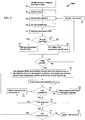
- Figure 5 shows a more detailed representation of the method of Figure 4 .
- the process 400 begins at step 402 where a determination is made of the number of aircraft flying within the airspace of interest and the identity of each aircraft is found. A list of the aircraft is then compiled. The aircraft in the list are then processed in turn through steps 404 to 418.
- the first aircraft from the list is chosen and its trajectory is determined from surveillance data at step 406. Then, for the selected aircraft, its aircraft type is determined at step 408 and relevant aircraft-characteristic data are obtained from the aircraft performance model (APM) 118 at step 410.
- APM aircraft performance model
- any flight intent data filed are retrieved, and a possible parametric aircraft intent 114 is formulated using the flight intent (if any) and trajectory data available, as was previously described with respect to step 308 in Figures 3 and 4 .
- flight intent data is available from the flight plan (e.g. lateral path, vertical and speed constraints, etc).
- the process of intent generation of 103 can be used in conjunction with knowledge about the user preferences 105 and the operational context 106 to make likely assumptions about the aircraft intent 114 underlying the observed trajectory. Furthermore, sometimes, part of these assumptions can be checked beforehand, by looking at the trajectory's geometric or kinematics aspects.
- step 418 a determination is made to see whether steps 406 to 418 have been performed for all aircraft within the list of aircraft. If not all aircraft have been considered, the method loops back via step 420 where an aircraft that has yet to be considered is chosen from the aircraft list. Steps 406 to 418 are then repeated for the newly-chosen aircraft. After repeated iterations, aircraft intents 114 (in all or in part possibly parametric) become available for as many aircraft as possible.
- step 418 When all aircraft from the aircraft list have been considered, and the determination at step 418 is positive, the method progresses from step 418 to step 422 where all the data collected are used to solve simultaneously the atmospheric conditions and the unknown aircraft intent parameters introduced in step 416.
- the formulated aircraft intents 114 obtained each time step 416 as invoked are used. These aircraft intents 114 describe each aircraft's motion during the current time frame, as broken down into intervals matched with corresponding aircraft intent instructions. These data, along with data relating to possible atmospheric conditions (for example, using coarse meteorological data generically describing the airspace), are used to form a multivariate cost function. This cost function is then used to drive an evolutionary algorithm that evolves the formulated aircraft intent and atmospheric conditions to formulations that reduce the deviation between the observed trajectories and the trajectories resulting from the estimated atmospheric conditions and aircraft intents 114.
- the consistency check starts at step 424 where one of the aircraft with an assumed aircraft intent 114 is selected.
- the selected aircraft intent 114 is checked for consistency by comparing the trajectory that results form the estimated atmospheric conditions and aircraft intent 114 with the observed trajectory. The deviation of the two trajectories is determined and compared to a threshold to determine whether the match is acceptable or not. If an acceptable match is found, then the process continues to step 430; otherwise the process continues to step 428.
- aircraft intents 114 producing unacceptable matches in trajectories are reformulated or, if according to the data identified, the trajectory cannot be assigned a likely aircraft intent that helps in the identification process of step 422, then such trajectory is disregarded and the associated aircraft is removed from the aircraft list.
- the aircraft intent 114 is reformulated to provide a better fit of the calculated and observed trajectories. That is, the parameters of the aircraft intent 114 are adjusted until the best fit between the trajectories results.
- this is a non-linear optimisation problem; essentially a curve fitting exercise that generates a new set of aircraft intent data 114.
- the optimization problem might directly become linear or it might be linearized using iterative methods.
- step 430 the process continues down to step 430, either directly from step 426 or indirectly via step 428, where a determination is made to see whether the consistency checking has been performed for all trajectories whose associated aircraft intent 114 contains assumptions made in step 416. If not all the assumed aircraft intents 114 have been checked, the process continues to step 432, where the aircraft intent of another aircraft is selected for checking through comparison of the calculated and observed trajectories. Steps 426 to 432 are repeated for the each aircraft intent 114 until all the assumed aircraft intents 114 have been checked.
- step 434 an assessment is made to determine whether any of the aircraft intents 114 considered through steps 426 and 430 have been amended. If so, that means that a better overall fit for the inferred atmospheric conditions can be expected and thus the process jumps back to step 422, from where a further iteration of estimating atmospheric conditions and aircraft intents 114, and consistency checks are performed. Otherwise, if none of the aircraft intents 114 were amended, the process is considered finalized and the resulting "best fit" is delivered at step 436.
- Figure 6 illustrates a general expansion of the estimation and improvement process of Figures 3 to 5 , i.e. the estimation of atmospheric conditions along with inference of missing aircraft intent details, and their subsequent optimisation.
- For each instance of aircraft intent 114, there will be k i ⁇ 0 unresolved parameters z i z 1 i n , ... , z k i i .
- the estimation process begins at 502 where an initial guess of the unknown parameter values is proposed.
- the guesses may be guided by known data, e.g. flight path constraints, airline operating preferences.
- step 504 conceptually represents the fact that, given the aircraft intents AI, which depend on the parameters z i , the initial conditions X 0 i , the aircraft performance model 118 and the earth model 120 that depends on the parameters q , the respective trajectories X i ( t ) can be determined and computed. In practical terms, the trajectory computation might not be needed, but the underlying equations can be merged into those of step 506.
- step 506 the observations equations describing the absolute (ground) airspeed of the aircraft are posed, which is indicated along with the final dependencies.
- v TAS , j i and w j i respectively represent the aircraft speed relative to the wind (true airspeed) and the wind speed at sample j of trajectory i
- m i is the number of samples available in the observation of trajectory j.
- Step 508 represents an appropriate method to solve for the unknown parameters z i and q , for example using an evolutionary algorithm as has been mentioned above.
- Step 512 checks whether the figure of merit is acceptable. If the figure of merit is not acceptable, the inferred atmospheric conditions and aircraft intent details used as an input to the estimation process are improved at step 514 and the process continues back to step 504. Otherwise, the "best fit" is considered to be achieved and the results are delivered for further processing at step 516.
- FAM figure-of-merit
- the example makes use of aircraft trajectories obtained using radar track data available in a conventional terminal manoeuvring area environment where airspeeds are likely to fit constant CAS (Calibrated Airspeed) or MACH laws.
- ⁇ t S the track sampling (refresh) time (5 seconds in this example)
- Figure 7 shows the typical vertical profile and horizontal profile of a trajectory of an aircraft flying an arrival (e.g. a STAR) into an airport.
- an arrival e.g. a STAR
- Figure 7 shows the typical vertical profile and horizontal profile of a trajectory of an aircraft flying an arrival (e.g. a STAR) into an airport.
- the combination of air traffic control procedures like STARs and typical airborne equipment (flight management systems) results in many arrival/approach trajectories exhibiting a common speed profile (i.e. a part of the aircraft intent) that consists of:
- V TAS 2 ⁇ ⁇ ⁇ 1 p ⁇ 1 + p 0 p 1 + ⁇ ⁇ 1 2 ⁇ ⁇ 0 p 0
- the pressure, temperature and wind fields described above may be chosen to conform to a simplified fluid dynamic model of the atmosphere (e.g. hydrostatic in the vertical direction, with an absence of viscosity). This provides additional conditions that may be used as part of the parametric 4D atmospheric model identification process.
- Typical figures for the cardinality indexes introduced can be estimated as indicated in the table immediately below.
- the approach of deriving atmosphere properties from radar track data leads to a non-linear multivariate identification problem, which is comfortably over-determined as long as the number of 4D atmosphere model parameters (Q) is chosen to be lower enough than T-(r+s), that is the number of radar track samples considered less the number of segments per track.
Landscapes
- Environmental & Geological Engineering (AREA)
- Engineering & Computer Science (AREA)
- Life Sciences & Earth Sciences (AREA)
- Atmospheric Sciences (AREA)
- Biodiversity & Conservation Biology (AREA)
- Ecology (AREA)
- Environmental Sciences (AREA)
- Traffic Control Systems (AREA)
Claims (16)
- Computerimplementiertes Verfahren zur Bereitstellung von Daten, die sich auf atmosphärische Bedingungen in einem Luftraum beziehen, wobei Beobachtungen von Luftfahrzeugflugbahnen durch den Luftraum verwendet werden und wobei das Verfahren umfasst, dass ein Computersystem:(a) Luftfahrzeuge identifiziert, die innerhalb des Luftraums fliegen;(b) bei zumindest einigen der identifizierten Luftfahrzeuge das Luftfahrzeug auswertet durchBestimmen (302) einer beobachteten Flugbahn des Luftfahrzeugs,Bestimmen von Anfangsbedingungen des Luftfahrzeugs, Bestimmen (304) des Typs des Luftfahrzeugs und Abrufen von Luftfahrzeugeigenschaftsdaten aus einem Speicher, die sich auf den Typ des Luftfahrzeug beziehen, undAbrufen (306) von Luftfahrzeugintentionsdaten aus einem Speicher, die sich auf das darin gespeicherte Luftfahrzeug beziehen, wobei die Luftfahrzeugintentionsdaten eine eindeutige Beschreibung der Flugbahn des Luftfahrzeugs durch den Luftraum liefern, die beispielsweise unter Verwendung einer formalen Sprache ausgedrückt ist;(c) als Eingaben die beobachteten Flugbahnen, die Anfangsbedingungen, die Luftfahrzeugeigenschaftsdaten und die Luftfahrzeugintentionsdaten für das ausgewertete Luftfahrzeug verwendet;(d) aus den Eingaben atmosphärische Zustandsdaten folgert (310), die in Kombination mit den Luftfahrzeugintentionsdaten und den Luftfahrzeugeigenschaftsdaten für jedes der ausgewerteten Luftfahrzeuge zu der beobachteten Flugbahn führen würden; und(e) als Ausgabe die gefolgerten atmosphärischen Zustandsdaten für den Luftraum liefert (318).
- Verfahren nach Anspruch 1, wobei das Computersystem ferner:(f) aus den gefolgerten atmosphärischen Zustandsdaten, den Luftfahrzeugintentionsdaten und den Luftfahrzeugeigenschaftsdaten eine berechnete Flugbahn für jedes der ausgewerteten Luftfahrzeuge berechnet;(g) für jedes der ausgewerteten Luftfahrzeuge die berechnete Flugbahn mit der beobachteten Flugbahn vergleicht (312) und die ausgewerteten Luftfahrzeuge mit berechneten Flugbahnen bestimmt, die innerhalb eines vorgegebenen Schwellwertes mit den beobachteten Flugbahnen übereinstimmen;(h) die beobachteten Flugbahnen, die Luftfahrzeugintentionsdaten und die Luftfahrzeugeigenschaftsdaten für jedes der ausgewerteten Luftfahrzeuge mit einer berechneten Flugbahn verwirft, die innerhalb des vorgegebenen Schwellwertes nicht mit der beobachteten Flugbahn übereinstimmt, wobei die beobachteten Flugbahnen, die Luftfahrzeugintentionsdaten und die Luftfahrzeugeigenschaftsdaten für jedes der ausgewerteten Luftfahrzeuge mit einer berechneten Flugbahn beibehalten werden, die innerhalb des vorgegebenen Schwellwertes mit der beobachteten Flugbahn übereinstimmt;(i) aus den beobachteten Flugbahnen, den Anfangsbedingungen, den Luftfahrzeugeigenschaftsdaten und den Luftfahrzeugintentionsdaten für das beibehaltene Luftfahrzeug die atmosphärischen Zustandsdaten bestimmt, die in Kombination mit den Luftfahrzeugintentionsdaten und den Luftfahrzeugeigenschaftsdaten für jedes der beibehaltenen Luftfahrzeuge zu der beobachteten Flugbahn führen würden.
- Verfahren nach Anspruch 2, wobei das Computersystem ferner: in Schritt (g) ferner eine Gesamtmaßgröße dafür berechnet, wie gut die berechneten Flugbahnen mit den beobachteten Flugbahnen übereinstimmen.
- Verfahren nach Anspruch 3, wobei der Computer ferner:die Schritte (h) und (i) auf Basis der Gesamtmaßgröße ausführt.
- Verfahren nach Anspruch 3 oder Anspruch 4, wobei das Computersystem ferner:(j) für jedes Luftfahrzeug die in Schritt (i) berechnete Flugbahn mit der beobachteten Flugbahn vergleicht und ferner eine Gesamtmaßgröße dafür berechnet, wie gut die in Schritt (i) berechneten Flugbahnen mit den beobachteten Flugbahnen übereinstimmen; undwobei ein Liefern der berechneten atmosphärischen Zustandsdaten in dem Luftraum in Schritt (e) als Ausgabe ein Liefern der atmosphärischen Zustandsdaten mit der in Schritt (g) und (j) bestimmten besseren Gesamtmaßgröße umfasst.
- Computerimplementiertes Verfahren zur Bereitstellung von Daten, die sich auf atmosphärische Bedingungen in einem Luftraum und eine Luftfahrzeugintention eines durch den Luftraum fliegenden Luftfahrzeugs beziehen, wobei Beobachtungen von Luftfahrzeugflugbahnen durch den Luftraum verwendet werden und wobei das Verfahren umfasst, dass ein Computersystem:(i) Luftfahrzeuge identifiziert, die innerhalb des Luftraums fliegen;(ii) bei zumindest einigen der identifizierten Luftfahrzeuge das Luftfahrzeug auswertet durch
Bestimmen (302) einer Flugbahn des Luftfahrzeugs, Bestimmen von Anfangsbedingungen des Luftfahrzeugs, Bestimmen (304) des Typs des Luftfahrzeugs und Abrufen (306) von Luftfahrzeugeigenschaftsdaten, die sich auf den Typ des Luftfahrzeugs beziehen, aus einem Speicher, und Abrufen von abgelegten Luftfahrzeugintentionsdaten aus einem Speicher, die sich auf das darin gespeicherte Luftfahrzeug beziehen, wobei die Luftfahrzeugintentionsdaten eine eindeutige Beschreibung der Flugbahn des Luftfahrzeugs durch den Luftraum liefern, die beispielsweise unter Verwendung einer formalen Sprache ausgedrückt ist;(iii) als Eingaben die Flugbahnen, die Anfangsbedingungen, die abgelegten Luftfahrzeugintentionsdaten und die Luftfahrzeugeigenschaftsdaten für das ausgewertete Luftfahrzeug verwendet;(iv) aus den Eingaben die atmosphärische Zustandsdaten und fehlende Luftfahrzeugintentionsdaten folgert (310), die in Kombination mit den abgelegten Luftfahrzeugintentionsdaten und den Luftfahrzeugeigenschaftsdaten für jedes ausgewertete Luftfahrzeug zu der beobachteten Flugbahn führen würden; und(v) als Ausgabe Daten, die der Beschreibung der atmosphärischen Bedingungen für den Luftraum entsprechen, und optional die fehlenden Luftfahrzeugintentionsdaten liefert (318). - Verfahren nach Anspruch 6, wobei das Computersystem:in Schritt (iii) für ausgewertete Luftfahrzeuge, für die in dem Speicher keine abgelegten Luftfahrzeugintentionsdaten gespeichert sind, die beobachtete Flugbahn des Luftfahrzeugs mit Referenzflugbahnen und/oder Profilen vergleicht, um eine Übereinstimmung zwischen Flugbahnen und/oder Profilen zu bestimmen; undwenn eine Übereinstimmung gefunden wird, die fehlenden Luftfahrzeugintentionsdaten aus einer Vorlage erzeugt, die mit der passenden Referenzflugbahn und/oder dem passenden Profil verknüpft ist, sodass das ausgewertete Luftfahrzeug beibehalten wird; oderwenn keine Übereinstimmung gefunden wird, die beobachtete Flugbahn, die abgelegten Luftfahrzeugintentionsdaten und die Luftfahrzeugeigenschaftsdaten für das ausgewertete Luftfahrzeug verwirft, sodass das ausgewertete Luftfahrzeug ausgesondert wird, undanschließend als Eingaben die Flugbahnen, die Anfangsbedingungen, die kombinierten Luftfahrzeugintentionsdaten, die die abgelegten Luftfahrzeugintentionsdaten und die erzeugten fehlenden Luftfahrzeugintentionsdaten umfassen, und die Luftfahrzeugeigenschaftsdaten für das beibehaltene Luftfahrzeug verwendet, um die atmosphärischen Zustandsdaten zu bestimmen, die in Kombination mit den kombinierten Luftfahrzeugintentionsdaten und den Luftfahrzeugeigenschaftsdaten bei jedem beibehaltenen Luftfahrzeug zu der bestimmten Flugbahn führen würden.
- Verfahren nach Anspruch 7, wobei das Computersystem ferner:(vi) aus den gefolgerten atmosphärischen Zustandsdaten, den kombinierten Luftfahrzeugintentionsdaten und den Luftfahrzeugeigenschaftsdaten eine berechnete Flugbahn für jedes beibehaltene Luftfahrzeug berechnet;(vii) für jedes beibehaltene Luftfahrzeug die berechnete Flugbahn mit der beobachteten Flugbahn vergleicht (312) und die beibehaltenen Luftfahrzeuge mit berechneten Flugbahnen bestimmt, die innerhalb eines ersten vorgegebenen Schwellwertes mit den beobachteten Flugbahnen übereinstimmen;(viii) die beobachteten Flugbahnen, die Luftfahrzeugintentionsdaten und die Luftfahrzeugeigenschaftsdaten für jedes zuvor beibehaltene Luftfahrzeug mit einer berechneten Flugbahn verwirft, die innerhalb des ersten vorgegebenen ersten Schwellwertes nicht mit der beobachteten Flugbahn übereinstimmt, wobei die beobachteten Flugbahnen, die Luftfahrzeugintentionsdaten und die Luftfahrzeugeigenschaftsdaten für jedes Luftfahrzeug mit einer berechneten Flugbahn beibehalten werden, die innerhalb des ersten vorgegebenen Schwellwertes mit der beobachteten Flugbahn übereinstimmt; und(ix) aus den beobachteten Flugbahnen, den Anfangsbedingungen, den Luftfahrzeugeigenschaftsdaten und den kombinierten Luftfahrzeugintentionsdaten für das zweimal beibehaltene Luftfahrzeug die atmosphärischen Zustandsdaten bestimmt, die in Kombination mit den kombinierten Luftfahrzeugintentionsdaten und den Luftfahrzeugeigenschaftsdaten für jedes zweimal beibehaltene Luftfahrzeug zu der beobachteten Flugbahn führen würden.
- Verfahren nach Anspruch 7, wobei das Computersystem ferner:(vi) aus den gefolgerten atmosphärischen Zustandsdaten, den kombinierten Luftfahrzeugintentionsdaten und den Luftfahrzeugeigenschaftsdaten eine berechnete Flugbahn für jedes beibehaltene Luftfahrzeug berechnet;(vii) für jedes beibehaltene Luftfahrzeug die berechnete Flugbahn mit der beobachteten Flugbahn vergleicht und die beibehaltenen Luftfahrzeuge mit berechneten Flugbahnen bestimmt, die innerhalb eines ersten vorgegebenen Schwellwertes und innerhalb eines zweiten vorgegebenen Schwellwertes mit den beobachteten Flugbahnen übereinstimmen;(viii) die beobachteten Flugbahnen, die Luftfahrzeugintentionsdaten und die Luftfahrzeugeigenschaftsdaten für jedes zuvor beibehaltene Luftfahrzeug mit einer berechneten Flugbahn verwirft, die nicht innerhalb des vorgegebenen ersten Schwellwertes mit der beobachteten Flugbahn übereinstimmt, wobei diese Luftfahrzeuge zu ausgesonderten Luftfahrzeugen werden,
für jedes beibehaltene Luftfahrzeug mit einer berechneten Flugbahn, die innerhalb des ersten vorgegebenen Schwellwertes mit der beobachteten Flugbahn übereinstimmt, jedoch innerhalb des zweiten vorgegebenen Schwellwertes nicht mit der beobachteten Flugbahn übereinstimmt, die fehlenden Luftfahrzeugintentionsdaten ergänzt und die beobachteten Flugbahnen und die Luftfahrzeugeigenschaftsdaten beibehält, wobei diese Luftfahrzeuge zu zweimal beibehaltenen Luftfahrzeugen werden, und
die beobachteten Flugbahnen, die Luftfahrzeugintentionsdaten und die Luftfahrzeugeigenschaftsdaten für jedes beibehaltene Luftfahrzeug mit einer berechneten Flugbahn beibehält, die mit der beobachteten Flugbahn innerhalb des ersten und des zweiten vorgegebenen Schwellwerts übereinstimmt, wobei diese Luftfahrzeuge zu zweimal beibehaltenen Luftfahrzeugen werden, und(ix) aus den beobachteten Flugbahnen, den Anfangsbedingungen, den Luftfahrzeugeigenschaftsdaten und den kombinierten Luftfahrzeugintentionsdaten für das zweimal beibehaltene Luftfahrzeug die atmosphärischen Zustandsdaten bestimmt, die in Kombination mit den kombinierten Luftfahrzeugintentionsdaten und den Luftfahrzeugeigenschaftsdaten für jedes zweimal beibehaltene Luftfahrzeug zu der beobachteten Flugbahn führen würden. - Verfahren nach Anspruch 8 oder Anspruch 9, wobei das Computersystem ferner:in Schritt (vii) ferner eine Gesamtmaßgröße dafür berechnet, wie gut die berechneten Flugbahnen mit den beobachteten Flugbahnen übereinstimmen.
- Verfahren nach Anspruch 10, wobei das Computersystem ferner: die Schritte (viii) und (ix) auf Basis der Gesamtmaßgröße ausführt.
- Verfahren nach Anspruch 10 oder Anspruch 11, wobei das Computersystem ferner:(x) für jedes zweimal beibehaltene Luftfahrzeug die in Schritt (ix) berechnete Flugbahn mit der beobachteten Flugbahn vergleicht und ferner eine Gesamtmaßgröße dafür berechnet, wie gut die in Schritt (ix) berechneten Flugbahnen mit den beobachteten Flugbahnen übereinstimmen; undwobei ein Liefern der berechneten atmosphärischen Zustandsdaten in dem Luftraum und optional der fehlenden Luftfahrzeugintentionsdaten als Ausgabe ein Liefern der atmosphärischen Zustandsdaten und optional der fehlenden Luftfahrzeugintentionsdaten mit der in Schritt (vii) und (ix) bestimmten besseren Gesamtmaßgröße umfasst.
- Verfahren nach einem der Ansprüche 7 bis 12, wobei zumindest eine Referenzflugbahn und zugehörige Vorlage eine standardisierte Abflugstrecke oder standardisierte Anflugstrecke beschreibt.
- Verfahren nach einem der Ansprüche 6 bis 13, das ferner umfasst, dass das Computersystem, wenn Luftfahrzeugintentionsdaten fehlen, abgelegte Flugintentionsdaten, die sich auf das darin gespeicherte Luftfahrzeug beziehen, aus einem Speicher abruft und die Flugintentionsdaten verwendet, wenn die fehlenden Luftfahrzeugintentionsdaten erzeugt werden.
- Computersystem, das einen Speicher aufweist, in dem Computerprogrammanweisungen gespeichert sind, die das Computersystem bei Ausführung veranlassen, ein Verfahren nach einem der vorhergehenden Ansprüche zu implementieren.
- Computerprogramm, das Anweisungen umfasst, die bei Ausführung ein Computersystem veranlassen, ein Verfahren nach einem der Ansprüche 1 bis 14 zu implementieren.
Priority Applications (2)
| Application Number | Priority Date | Filing Date | Title |
|---|---|---|---|
| EP12382505.1A EP2743739B1 (de) | 2012-12-14 | 2012-12-14 | Verwendung von Flugzeugflugbahndaten zur Ableitung der atmosphärischen Bedingungen |
| US14/105,766 US9507053B2 (en) | 2012-12-14 | 2013-12-13 | Using aircraft trajectory data to infer atmospheric conditions |
Applications Claiming Priority (1)
| Application Number | Priority Date | Filing Date | Title |
|---|---|---|---|
| EP12382505.1A EP2743739B1 (de) | 2012-12-14 | 2012-12-14 | Verwendung von Flugzeugflugbahndaten zur Ableitung der atmosphärischen Bedingungen |
Publications (2)
| Publication Number | Publication Date |
|---|---|
| EP2743739A1 EP2743739A1 (de) | 2014-06-18 |
| EP2743739B1 true EP2743739B1 (de) | 2017-10-04 |
Family
ID=47664099
Family Applications (1)
| Application Number | Title | Priority Date | Filing Date |
|---|---|---|---|
| EP12382505.1A Active EP2743739B1 (de) | 2012-12-14 | 2012-12-14 | Verwendung von Flugzeugflugbahndaten zur Ableitung der atmosphärischen Bedingungen |
Country Status (2)
| Country | Link |
|---|---|
| US (1) | US9507053B2 (de) |
| EP (1) | EP2743739B1 (de) |
Families Citing this family (8)
| Publication number | Priority date | Publication date | Assignee | Title |
|---|---|---|---|---|
| EP2889579B1 (de) * | 2013-12-31 | 2018-02-14 | The Boeing Company | System und Verfahren zum Definieren und Vorhersagen von Flugzeugflugbahnen |
| EP3216020A4 (de) * | 2014-11-05 | 2018-08-01 | Honeywell International Inc. | Luftverkehrssystem mit prozeduraler trajektorieprädiktion |
| EP3109805A1 (de) * | 2015-06-22 | 2016-12-28 | The Boeing Company | Computerimplementiertes verfahren und system zur schätzung der wirkung neuer betriebszustände in einem grundlinien-luftverkehrsszenario |
| EP3147885A1 (de) * | 2015-09-28 | 2017-03-29 | The Boeing Company | Automatisiertes flugzeugabsichtserzeugungsverfahren auf grundlage von in formalen sprachen ausgedrückten spezifikationen |
| US10394770B2 (en) | 2016-12-30 | 2019-08-27 | General Electric Company | Methods and systems for implementing a data reconciliation framework |
| FR3064762B1 (fr) * | 2017-04-04 | 2020-07-31 | Thales Sa | Gestion de la phase de descente d'un aeronef |
| US11269957B2 (en) | 2019-03-28 | 2022-03-08 | Tetra Tech, Inc. | Method for creating a data input file for increasing the efficiency of the aviation environmental design tool (AEDT) |
| US20220319257A1 (en) * | 2021-03-31 | 2022-10-06 | Beta Air, Llc | Aircraft motion observer configured for use in electric aircraft |
Family Cites Families (8)
| Publication number | Priority date | Publication date | Assignee | Title |
|---|---|---|---|---|
| US20040078136A1 (en) * | 2002-10-22 | 2004-04-22 | Cornell Bradley D. | Tailored trajectory generation system and method |
| US6741203B1 (en) * | 2002-10-28 | 2004-05-25 | Rockwell Collins | Adaptive radar thresholds system and method |
| US6937937B1 (en) * | 2004-05-28 | 2005-08-30 | Honeywell International Inc. | Airborne based monitoring |
| FR2910156B1 (fr) | 2006-12-15 | 2009-03-06 | Thales Sa | Procede de mise a jour d'informations meteorologiques pour un aeronef |
| US8437893B2 (en) | 2007-03-16 | 2013-05-07 | The Boeing Company | Determining current meteorological conditions specific to an aircraft |
| ES2385403T3 (es) | 2007-09-21 | 2012-07-24 | The Boeing Company | Predicción de la trayectoria de una aeronave |
| US8332084B1 (en) * | 2009-06-23 | 2012-12-11 | The Boeing Company | Four-dimensional weather predictor based on aircraft trajectory |
| US8818576B2 (en) | 2010-09-30 | 2014-08-26 | The Boeing Company | Tailored arrivals allocation system trajectory predictor |
-
2012
- 2012-12-14 EP EP12382505.1A patent/EP2743739B1/de active Active
-
2013
- 2013-12-13 US US14/105,766 patent/US9507053B2/en active Active
Non-Patent Citations (1)
| Title |
|---|
| None * |
Also Published As
| Publication number | Publication date |
|---|---|
| US9507053B2 (en) | 2016-11-29 |
| EP2743739A1 (de) | 2014-06-18 |
| US20140172301A1 (en) | 2014-06-19 |
Similar Documents
| Publication | Publication Date | Title |
|---|---|---|
| US9507053B2 (en) | Using aircraft trajectory data to infer atmospheric conditions | |
| US8798898B2 (en) | Methods and systems for inferring aircraft parameters | |
| US11790794B2 (en) | System and method for community provided weather updates for aircraft | |
| US10783288B1 (en) | System and method for predicting aircraft runway capacity | |
| Alligier et al. | Ground-based estimation of the aircraft mass, adaptive vs. least squares method | |
| Dancila et al. | New flight trajectory optimisation method using genetic algorithms | |
| Alligier et al. | Energy rate prediction using an equivalent thrust setting profile | |
| Alligier et al. | Comparison of two ground-based mass estimation methods on real data | |
| Cole et al. | Wind prediction accuracy for air traffic management decision support tools | |
| Xue et al. | Intent modeling and conflict probability calculation for operations in upper class e airspace | |
| Rohani et al. | Machine learning approach for aircraft performance model parameter estimation for trajectory prediction applications | |
| Banerjee et al. | Uncertainty quantification of expected time-of-arrival in UAV flight trajectory | |
| Kim et al. | Aircraft mission analysis enhancement by using data science and machine learning techniques | |
| Šošovička et al. | Estimation of aircraft performance parameters from ADS-C EPP data | |
| Wei et al. | Estimated time of arrival prediction based on state-dependent transition hybrid estimation algorithm | |
| Bai et al. | Evaluating the impact of estimated time of arrival accuracy on interval management performance | |
| Puranik et al. | An ODE-fitting approach to estimate critical aircraft performance parameters for trajectory prediction | |
| Kim et al. | Modeling air-traffic service time uncertainties for queuing network analysis | |
| Zeh et al. | Bayesian Inference of Aircraft Operating Speeds for Stochastic Medium-Term Trajectory Prediction | |
| Fernandes et al. | Prediction of critical aircraft performance model parameters from historical flight data | |
| Menon et al. | A framework for stochastic air traffic flow modeling and analysis | |
| Yoo et al. | Sharing Operational Intent with Containment Confidence Level for Negotiating Deconfliction in Upper Class E Airspace | |
| Campbell et al. | An operational strategy for persistent contrail mitigation | |
| Swaid et al. | A Methodology for Efficient Statistical Analysis of Air Distance in Aviation | |
| de Souza et al. | Improved Trajectory Prediction and Simplification Analysis for ATM System Modernization |
Legal Events
| Date | Code | Title | Description |
|---|---|---|---|
| PUAI | Public reference made under article 153(3) epc to a published international application that has entered the european phase |
Free format text: ORIGINAL CODE: 0009012 |
|
| 17P | Request for examination filed |
Effective date: 20121214 |
|
| AK | Designated contracting states |
Kind code of ref document: A1 Designated state(s): AL AT BE BG CH CY CZ DE DK EE ES FI FR GB GR HR HU IE IS IT LI LT LU LV MC MK MT NL NO PL PT RO RS SE SI SK SM TR |
|
| AX | Request for extension of the european patent |
Extension state: BA ME |
|
| GRAP | Despatch of communication of intention to grant a patent |
Free format text: ORIGINAL CODE: EPIDOSNIGR1 |
|
| INTG | Intention to grant announced |
Effective date: 20170407 |
|
| GRAS | Grant fee paid |
Free format text: ORIGINAL CODE: EPIDOSNIGR3 |
|
| GRAA | (expected) grant |
Free format text: ORIGINAL CODE: 0009210 |
|
| AK | Designated contracting states |
Kind code of ref document: B1 Designated state(s): AL AT BE BG CH CY CZ DE DK EE ES FI FR GB GR HR HU IE IS IT LI LT LU LV MC MK MT NL NO PL PT RO RS SE SI SK SM TR |
|
| REG | Reference to a national code |
Ref country code: GB Ref legal event code: FG4D |
|
| REG | Reference to a national code |
Ref country code: CH Ref legal event code: EP |
|
| REG | Reference to a national code |
Ref country code: AT Ref legal event code: REF Ref document number: 934540 Country of ref document: AT Kind code of ref document: T Effective date: 20171015 |
|
| REG | Reference to a national code |
Ref country code: IE Ref legal event code: FG4D |
|
| REG | Reference to a national code |
Ref country code: DE Ref legal event code: R096 Ref document number: 602012038081 Country of ref document: DE |
|
| REG | Reference to a national code |
Ref country code: FR Ref legal event code: PLFP Year of fee payment: 6 |
|
| REG | Reference to a national code |
Ref country code: NL Ref legal event code: MP Effective date: 20171004 |
|
| REG | Reference to a national code |
Ref country code: LT Ref legal event code: MG4D |
|
| REG | Reference to a national code |
Ref country code: AT Ref legal event code: MK05 Ref document number: 934540 Country of ref document: AT Kind code of ref document: T Effective date: 20171004 |
|
| PG25 | Lapsed in a contracting state [announced via postgrant information from national office to epo] |
Ref country code: NL Free format text: LAPSE BECAUSE OF FAILURE TO SUBMIT A TRANSLATION OF THE DESCRIPTION OR TO PAY THE FEE WITHIN THE PRESCRIBED TIME-LIMIT Effective date: 20171004 |
|
| PG25 | Lapsed in a contracting state [announced via postgrant information from national office to epo] |
Ref country code: FI Free format text: LAPSE BECAUSE OF FAILURE TO SUBMIT A TRANSLATION OF THE DESCRIPTION OR TO PAY THE FEE WITHIN THE PRESCRIBED TIME-LIMIT Effective date: 20171004 Ref country code: SE Free format text: LAPSE BECAUSE OF FAILURE TO SUBMIT A TRANSLATION OF THE DESCRIPTION OR TO PAY THE FEE WITHIN THE PRESCRIBED TIME-LIMIT Effective date: 20171004 Ref country code: NO Free format text: LAPSE BECAUSE OF FAILURE TO SUBMIT A TRANSLATION OF THE DESCRIPTION OR TO PAY THE FEE WITHIN THE PRESCRIBED TIME-LIMIT Effective date: 20180104 Ref country code: LT Free format text: LAPSE BECAUSE OF FAILURE TO SUBMIT A TRANSLATION OF THE DESCRIPTION OR TO PAY THE FEE WITHIN THE PRESCRIBED TIME-LIMIT Effective date: 20171004 Ref country code: ES Free format text: LAPSE BECAUSE OF FAILURE TO SUBMIT A TRANSLATION OF THE DESCRIPTION OR TO PAY THE FEE WITHIN THE PRESCRIBED TIME-LIMIT Effective date: 20171004 |
|
| PG25 | Lapsed in a contracting state [announced via postgrant information from national office to epo] |
Ref country code: HR Free format text: LAPSE BECAUSE OF FAILURE TO SUBMIT A TRANSLATION OF THE DESCRIPTION OR TO PAY THE FEE WITHIN THE PRESCRIBED TIME-LIMIT Effective date: 20171004 Ref country code: BG Free format text: LAPSE BECAUSE OF FAILURE TO SUBMIT A TRANSLATION OF THE DESCRIPTION OR TO PAY THE FEE WITHIN THE PRESCRIBED TIME-LIMIT Effective date: 20180104 Ref country code: IS Free format text: LAPSE BECAUSE OF FAILURE TO SUBMIT A TRANSLATION OF THE DESCRIPTION OR TO PAY THE FEE WITHIN THE PRESCRIBED TIME-LIMIT Effective date: 20180204 Ref country code: AT Free format text: LAPSE BECAUSE OF FAILURE TO SUBMIT A TRANSLATION OF THE DESCRIPTION OR TO PAY THE FEE WITHIN THE PRESCRIBED TIME-LIMIT Effective date: 20171004 Ref country code: RS Free format text: LAPSE BECAUSE OF FAILURE TO SUBMIT A TRANSLATION OF THE DESCRIPTION OR TO PAY THE FEE WITHIN THE PRESCRIBED TIME-LIMIT Effective date: 20171004 Ref country code: LV Free format text: LAPSE BECAUSE OF FAILURE TO SUBMIT A TRANSLATION OF THE DESCRIPTION OR TO PAY THE FEE WITHIN THE PRESCRIBED TIME-LIMIT Effective date: 20171004 Ref country code: GR Free format text: LAPSE BECAUSE OF FAILURE TO SUBMIT A TRANSLATION OF THE DESCRIPTION OR TO PAY THE FEE WITHIN THE PRESCRIBED TIME-LIMIT Effective date: 20180105 |
|
| REG | Reference to a national code |
Ref country code: DE Ref legal event code: R097 Ref document number: 602012038081 Country of ref document: DE |
|
| PG25 | Lapsed in a contracting state [announced via postgrant information from national office to epo] |
Ref country code: DK Free format text: LAPSE BECAUSE OF FAILURE TO SUBMIT A TRANSLATION OF THE DESCRIPTION OR TO PAY THE FEE WITHIN THE PRESCRIBED TIME-LIMIT Effective date: 20171004 Ref country code: SK Free format text: LAPSE BECAUSE OF FAILURE TO SUBMIT A TRANSLATION OF THE DESCRIPTION OR TO PAY THE FEE WITHIN THE PRESCRIBED TIME-LIMIT Effective date: 20171004 Ref country code: CZ Free format text: LAPSE BECAUSE OF FAILURE TO SUBMIT A TRANSLATION OF THE DESCRIPTION OR TO PAY THE FEE WITHIN THE PRESCRIBED TIME-LIMIT Effective date: 20171004 Ref country code: EE Free format text: LAPSE BECAUSE OF FAILURE TO SUBMIT A TRANSLATION OF THE DESCRIPTION OR TO PAY THE FEE WITHIN THE PRESCRIBED TIME-LIMIT Effective date: 20171004 |
|
| REG | Reference to a national code |
Ref country code: CH Ref legal event code: PL |
|
| PLBE | No opposition filed within time limit |
Free format text: ORIGINAL CODE: 0009261 |
|
| STAA | Information on the status of an ep patent application or granted ep patent |
Free format text: STATUS: NO OPPOSITION FILED WITHIN TIME LIMIT |
|
| PG25 | Lapsed in a contracting state [announced via postgrant information from national office to epo] |
Ref country code: PL Free format text: LAPSE BECAUSE OF FAILURE TO SUBMIT A TRANSLATION OF THE DESCRIPTION OR TO PAY THE FEE WITHIN THE PRESCRIBED TIME-LIMIT Effective date: 20171004 Ref country code: IT Free format text: LAPSE BECAUSE OF FAILURE TO SUBMIT A TRANSLATION OF THE DESCRIPTION OR TO PAY THE FEE WITHIN THE PRESCRIBED TIME-LIMIT Effective date: 20171004 Ref country code: SM Free format text: LAPSE BECAUSE OF FAILURE TO SUBMIT A TRANSLATION OF THE DESCRIPTION OR TO PAY THE FEE WITHIN THE PRESCRIBED TIME-LIMIT Effective date: 20171004 Ref country code: RO Free format text: LAPSE BECAUSE OF FAILURE TO SUBMIT A TRANSLATION OF THE DESCRIPTION OR TO PAY THE FEE WITHIN THE PRESCRIBED TIME-LIMIT Effective date: 20171004 |
|
| 26N | No opposition filed |
Effective date: 20180705 |
|
| REG | Reference to a national code |
Ref country code: IE Ref legal event code: MM4A |
|
| PG25 | Lapsed in a contracting state [announced via postgrant information from national office to epo] |
Ref country code: LU Free format text: LAPSE BECAUSE OF NON-PAYMENT OF DUE FEES Effective date: 20171214 Ref country code: MT Free format text: LAPSE BECAUSE OF NON-PAYMENT OF DUE FEES Effective date: 20171214 |
|
| REG | Reference to a national code |
Ref country code: BE Ref legal event code: MM Effective date: 20171231 |
|
| PG25 | Lapsed in a contracting state [announced via postgrant information from national office to epo] |
Ref country code: IE Free format text: LAPSE BECAUSE OF NON-PAYMENT OF DUE FEES Effective date: 20171214 |
|
| PG25 | Lapsed in a contracting state [announced via postgrant information from national office to epo] |
Ref country code: LI Free format text: LAPSE BECAUSE OF NON-PAYMENT OF DUE FEES Effective date: 20171231 Ref country code: SI Free format text: LAPSE BECAUSE OF FAILURE TO SUBMIT A TRANSLATION OF THE DESCRIPTION OR TO PAY THE FEE WITHIN THE PRESCRIBED TIME-LIMIT Effective date: 20171004 Ref country code: CH Free format text: LAPSE BECAUSE OF NON-PAYMENT OF DUE FEES Effective date: 20171231 Ref country code: BE Free format text: LAPSE BECAUSE OF NON-PAYMENT OF DUE FEES Effective date: 20171231 |
|
| PG25 | Lapsed in a contracting state [announced via postgrant information from national office to epo] |
Ref country code: HU Free format text: LAPSE BECAUSE OF FAILURE TO SUBMIT A TRANSLATION OF THE DESCRIPTION OR TO PAY THE FEE WITHIN THE PRESCRIBED TIME-LIMIT; INVALID AB INITIO Effective date: 20121214 Ref country code: MC Free format text: LAPSE BECAUSE OF FAILURE TO SUBMIT A TRANSLATION OF THE DESCRIPTION OR TO PAY THE FEE WITHIN THE PRESCRIBED TIME-LIMIT Effective date: 20171004 |
|
| PG25 | Lapsed in a contracting state [announced via postgrant information from national office to epo] |
Ref country code: CY Free format text: LAPSE BECAUSE OF NON-PAYMENT OF DUE FEES Effective date: 20171004 |
|
| PG25 | Lapsed in a contracting state [announced via postgrant information from national office to epo] |
Ref country code: MK Free format text: LAPSE BECAUSE OF FAILURE TO SUBMIT A TRANSLATION OF THE DESCRIPTION OR TO PAY THE FEE WITHIN THE PRESCRIBED TIME-LIMIT Effective date: 20171004 |
|
| REG | Reference to a national code |
Ref country code: DE Ref legal event code: R082 Ref document number: 602012038081 Country of ref document: DE Representative=s name: BOULT WADE TENNANT LLP, DE |
|
| PG25 | Lapsed in a contracting state [announced via postgrant information from national office to epo] |
Ref country code: TR Free format text: LAPSE BECAUSE OF FAILURE TO SUBMIT A TRANSLATION OF THE DESCRIPTION OR TO PAY THE FEE WITHIN THE PRESCRIBED TIME-LIMIT Effective date: 20171004 |
|
| PG25 | Lapsed in a contracting state [announced via postgrant information from national office to epo] |
Ref country code: PT Free format text: LAPSE BECAUSE OF FAILURE TO SUBMIT A TRANSLATION OF THE DESCRIPTION OR TO PAY THE FEE WITHIN THE PRESCRIBED TIME-LIMIT Effective date: 20171004 |
|
| PG25 | Lapsed in a contracting state [announced via postgrant information from national office to epo] |
Ref country code: AL Free format text: LAPSE BECAUSE OF FAILURE TO SUBMIT A TRANSLATION OF THE DESCRIPTION OR TO PAY THE FEE WITHIN THE PRESCRIBED TIME-LIMIT Effective date: 20171004 |
|
| P01 | Opt-out of the competence of the unified patent court (upc) registered |
Effective date: 20230516 |
|
| PGFP | Annual fee paid to national office [announced via postgrant information from national office to epo] |
Ref country code: GB Payment date: 20251229 Year of fee payment: 14 |
|
| PGFP | Annual fee paid to national office [announced via postgrant information from national office to epo] |
Ref country code: FR Payment date: 20251226 Year of fee payment: 14 |
|
| PGFP | Annual fee paid to national office [announced via postgrant information from national office to epo] |
Ref country code: DE Payment date: 20251229 Year of fee payment: 14 |