EP2732023B1 - Bacterial strains isolated from pigs - Google Patents
Bacterial strains isolated from pigs Download PDFInfo
- Publication number
- EP2732023B1 EP2732023B1 EP12737592.1A EP12737592A EP2732023B1 EP 2732023 B1 EP2732023 B1 EP 2732023B1 EP 12737592 A EP12737592 A EP 12737592A EP 2732023 B1 EP2732023 B1 EP 2732023B1
- Authority
- EP
- European Patent Office
- Prior art keywords
- lactic acid
- lab
- ncimb
- bacterial strains
- strains
- Prior art date
- Legal status (The legal status is an assumption and is not a legal conclusion. Google has not performed a legal analysis and makes no representation as to the accuracy of the status listed.)
- Active
Links
Images











Classifications
-
- A—HUMAN NECESSITIES
- A61—MEDICAL OR VETERINARY SCIENCE; HYGIENE
- A61K—PREPARATIONS FOR MEDICAL, DENTAL OR TOILETRY PURPOSES
- A61K35/00—Medicinal preparations containing materials or reaction products thereof with undetermined constitution
- A61K35/66—Microorganisms or materials therefrom
- A61K35/74—Bacteria
-
- A—HUMAN NECESSITIES
- A61—MEDICAL OR VETERINARY SCIENCE; HYGIENE
- A61K—PREPARATIONS FOR MEDICAL, DENTAL OR TOILETRY PURPOSES
- A61K35/00—Medicinal preparations containing materials or reaction products thereof with undetermined constitution
- A61K35/66—Microorganisms or materials therefrom
- A61K35/74—Bacteria
- A61K35/741—Probiotics
- A61K35/744—Lactic acid bacteria, e.g. enterococci, pediococci, lactococci, streptococci or leuconostocs
- A61K35/747—Lactobacilli, e.g. L. acidophilus or L. brevis
-
- A—HUMAN NECESSITIES
- A23—FOODS OR FOODSTUFFS; TREATMENT THEREOF, NOT COVERED BY OTHER CLASSES
- A23K—FODDER
- A23K10/00—Animal feeding-stuffs
- A23K10/10—Animal feeding-stuffs obtained by microbiological or biochemical processes
- A23K10/16—Addition of microorganisms or extracts thereof, e.g. single-cell proteins, to feeding-stuff compositions
- A23K10/18—Addition of microorganisms or extracts thereof, e.g. single-cell proteins, to feeding-stuff compositions of live microorganisms
-
- A—HUMAN NECESSITIES
- A23—FOODS OR FOODSTUFFS; TREATMENT THEREOF, NOT COVERED BY OTHER CLASSES
- A23L—FOODS, FOODSTUFFS OR NON-ALCOHOLIC BEVERAGES, NOT OTHERWISE PROVIDED FOR; PREPARATION OR TREATMENT THEREOF
- A23L33/00—Modifying nutritive qualities of foods; Dietetic products; Preparation or treatment thereof
- A23L33/10—Modifying nutritive qualities of foods; Dietetic products; Preparation or treatment thereof using additives
- A23L33/135—Bacteria or derivatives thereof, e.g. probiotics
-
- A—HUMAN NECESSITIES
- A61—MEDICAL OR VETERINARY SCIENCE; HYGIENE
- A61P—SPECIFIC THERAPEUTIC ACTIVITY OF CHEMICAL COMPOUNDS OR MEDICINAL PREPARATIONS
- A61P1/00—Drugs for disorders of the alimentary tract or the digestive system
-
- A—HUMAN NECESSITIES
- A61—MEDICAL OR VETERINARY SCIENCE; HYGIENE
- A61P—SPECIFIC THERAPEUTIC ACTIVITY OF CHEMICAL COMPOUNDS OR MEDICINAL PREPARATIONS
- A61P1/00—Drugs for disorders of the alimentary tract or the digestive system
- A61P1/04—Drugs for disorders of the alimentary tract or the digestive system for ulcers, gastritis or reflux esophagitis, e.g. antacids, inhibitors of acid secretion, mucosal protectants
-
- A—HUMAN NECESSITIES
- A61—MEDICAL OR VETERINARY SCIENCE; HYGIENE
- A61P—SPECIFIC THERAPEUTIC ACTIVITY OF CHEMICAL COMPOUNDS OR MEDICINAL PREPARATIONS
- A61P1/00—Drugs for disorders of the alimentary tract or the digestive system
- A61P1/10—Laxatives
-
- A—HUMAN NECESSITIES
- A61—MEDICAL OR VETERINARY SCIENCE; HYGIENE
- A61P—SPECIFIC THERAPEUTIC ACTIVITY OF CHEMICAL COMPOUNDS OR MEDICINAL PREPARATIONS
- A61P1/00—Drugs for disorders of the alimentary tract or the digestive system
- A61P1/12—Antidiarrhoeals
-
- A—HUMAN NECESSITIES
- A61—MEDICAL OR VETERINARY SCIENCE; HYGIENE
- A61P—SPECIFIC THERAPEUTIC ACTIVITY OF CHEMICAL COMPOUNDS OR MEDICINAL PREPARATIONS
- A61P1/00—Drugs for disorders of the alimentary tract or the digestive system
- A61P1/14—Prodigestives, e.g. acids, enzymes, appetite stimulants, antidyspeptics, tonics, antiflatulents
-
- A—HUMAN NECESSITIES
- A61—MEDICAL OR VETERINARY SCIENCE; HYGIENE
- A61P—SPECIFIC THERAPEUTIC ACTIVITY OF CHEMICAL COMPOUNDS OR MEDICINAL PREPARATIONS
- A61P29/00—Non-central analgesic, antipyretic or antiinflammatory agents, e.g. antirheumatic agents; Non-steroidal antiinflammatory drugs [NSAID]
-
- A—HUMAN NECESSITIES
- A61—MEDICAL OR VETERINARY SCIENCE; HYGIENE
- A61P—SPECIFIC THERAPEUTIC ACTIVITY OF CHEMICAL COMPOUNDS OR MEDICINAL PREPARATIONS
- A61P31/00—Antiinfectives, i.e. antibiotics, antiseptics, chemotherapeutics
- A61P31/04—Antibacterial agents
-
- C—CHEMISTRY; METALLURGY
- C12—BIOCHEMISTRY; BEER; SPIRITS; WINE; VINEGAR; MICROBIOLOGY; ENZYMOLOGY; MUTATION OR GENETIC ENGINEERING
- C12N—MICROORGANISMS OR ENZYMES; COMPOSITIONS THEREOF; PROPAGATING, PRESERVING, OR MAINTAINING MICROORGANISMS; MUTATION OR GENETIC ENGINEERING; CULTURE MEDIA
- C12N1/00—Microorganisms; Compositions thereof; Processes of propagating, maintaining or preserving microorganisms or compositions thereof; Processes of preparing or isolating a composition containing a microorganism; Culture media therefor
- C12N1/20—Bacteria; Culture media therefor
-
- C—CHEMISTRY; METALLURGY
- C12—BIOCHEMISTRY; BEER; SPIRITS; WINE; VINEGAR; MICROBIOLOGY; ENZYMOLOGY; MUTATION OR GENETIC ENGINEERING
- C12N—MICROORGANISMS OR ENZYMES; COMPOSITIONS THEREOF; PROPAGATING, PRESERVING, OR MAINTAINING MICROORGANISMS; MUTATION OR GENETIC ENGINEERING; CULTURE MEDIA
- C12N1/00—Microorganisms; Compositions thereof; Processes of propagating, maintaining or preserving microorganisms or compositions thereof; Processes of preparing or isolating a composition containing a microorganism; Culture media therefor
- C12N1/20—Bacteria; Culture media therefor
- C12N1/205—Bacterial isolates
-
- A—HUMAN NECESSITIES
- A23—FOODS OR FOODSTUFFS; TREATMENT THEREOF, NOT COVERED BY OTHER CLASSES
- A23V—INDEXING SCHEME RELATING TO FOODS, FOODSTUFFS OR NON-ALCOHOLIC BEVERAGES AND LACTIC OR PROPIONIC ACID BACTERIA USED IN FOODSTUFFS OR FOOD PREPARATION
- A23V2002/00—Food compositions, function of food ingredients or processes for food or foodstuffs
-
- C—CHEMISTRY; METALLURGY
- C12—BIOCHEMISTRY; BEER; SPIRITS; WINE; VINEGAR; MICROBIOLOGY; ENZYMOLOGY; MUTATION OR GENETIC ENGINEERING
- C12R—INDEXING SCHEME ASSOCIATED WITH SUBCLASSES C12C - C12Q, RELATING TO MICROORGANISMS
- C12R2001/00—Microorganisms ; Processes using microorganisms
- C12R2001/01—Bacteria or Actinomycetales ; using bacteria or Actinomycetales
- C12R2001/225—Lactobacillus
-
- C—CHEMISTRY; METALLURGY
- C12—BIOCHEMISTRY; BEER; SPIRITS; WINE; VINEGAR; MICROBIOLOGY; ENZYMOLOGY; MUTATION OR GENETIC ENGINEERING
- C12R—INDEXING SCHEME ASSOCIATED WITH SUBCLASSES C12C - C12Q, RELATING TO MICROORGANISMS
- C12R2001/00—Microorganisms ; Processes using microorganisms
- C12R2001/01—Bacteria or Actinomycetales ; using bacteria or Actinomycetales
- C12R2001/225—Lactobacillus
- C12R2001/23—Lactobacillus acidophilus
-
- C—CHEMISTRY; METALLURGY
- C12—BIOCHEMISTRY; BEER; SPIRITS; WINE; VINEGAR; MICROBIOLOGY; ENZYMOLOGY; MUTATION OR GENETIC ENGINEERING
- C12R—INDEXING SCHEME ASSOCIATED WITH SUBCLASSES C12C - C12Q, RELATING TO MICROORGANISMS
- C12R2001/00—Microorganisms ; Processes using microorganisms
- C12R2001/01—Bacteria or Actinomycetales ; using bacteria or Actinomycetales
- C12R2001/225—Lactobacillus
- C12R2001/25—Lactobacillus plantarum
-
- Y—GENERAL TAGGING OF NEW TECHNOLOGICAL DEVELOPMENTS; GENERAL TAGGING OF CROSS-SECTIONAL TECHNOLOGIES SPANNING OVER SEVERAL SECTIONS OF THE IPC; TECHNICAL SUBJECTS COVERED BY FORMER USPC CROSS-REFERENCE ART COLLECTIONS [XRACs] AND DIGESTS
- Y02—TECHNOLOGIES OR APPLICATIONS FOR MITIGATION OR ADAPTATION AGAINST CLIMATE CHANGE
- Y02A—TECHNOLOGIES FOR ADAPTATION TO CLIMATE CHANGE
- Y02A50/00—TECHNOLOGIES FOR ADAPTATION TO CLIMATE CHANGE in human health protection, e.g. against extreme weather
- Y02A50/30—Against vector-borne diseases, e.g. mosquito-borne, fly-borne, tick-borne or waterborne diseases whose impact is exacerbated by climate change
Definitions
- the present invention relates to bacterial strains isolated from pigs. More specifically, the invention relates to the isolation of lactic acid bacteria from organically-reared pigs.
- the claimed lactic acid bacteria have useful probiotic and therapeutic applications.
- the composition of the microbial flora of pigs, their gut innate immune function and possible susceptibility to infection is greatly influenced by the environment in which they were reared during early life (Mulder et al, 2009). Outdoor-reared pigs generally have a more developed gut immune system, perform better and are healthier than indoor-reared counterparts. The outdoor environment dramatically influences microbial diversity of the gut and is associated with high levels of Firmicutes, in particular Lactic Acid Bacteria [LAB].
- LAB comprise a clade of gram-positive, low-GC, acid-tolerant, generally non-sporulating, non-respiring bacteria that are associated with certain common metabolic and physiological characteristics.
- LAB are rod-shaped bacilli or coccus that are characterized by an increased tolerance to a lower pH range.
- LAB produce lactic acid as the major metabolic end-product of carbohydrate fermentation and are amongst the most important groups of microorganisms used in the food industry.
- Lactobacilli are predominant in the gut flora of organically (outdoor) reared pigs. In contrast, the numbers of these bacteria are low in indoor-reared pigs and levels of potentially pathogenic phylotypes are high (Mulder et al, 2009). Furthermore, gut immune development and function of indoor-reared pigs is known to deviate from normal. In particular, expression of Type 1 interferon genes, Major Histocompatibility Complex class I and several chemokines are known to be increased (Mulder et al, 2009).
- Lactic acid bacteria may modify the flora and gut structure and function in several ways (Cotter et al, 2005; Ohashi and Ushida, 2009). For example, they may compete with harmful bacteria for key nutrients or attachment sites on the gut, resulting in their exclusion. Alternatively, they can produce bioactive substances that aid or promote colonisation by beneficial bacteria or kill/interfere with the growth of potentially harmful or pathogenic bacteria. Alternatively, these bioactive factors can be immune-modulators that promote immune development and barrier integrity of the gut.
- Strains of LAB vary greatly in their biological activity.
- the present invention seeks to provide LAB strains that have therapeutically useful properties. More specifically, the invention seeks to provide LAB strains that are capable of promoting gut and immune development and health, thereby having considerable therapeutic potential as probiotics.
- WO 2002/070670 describes a L. reuteri strain and tests its antimicrobial activity against E. coli and S . enteritidis and its susceptiblity to several antibiotics.
- microbiota of out-door reared pigs contain LAB strains that produce potent and specific anti-microbial or cell- /immune-modulating bioactive factors.
- a first aspect of the invention relates to a porcine lactic acid bacterial strain which is selected from:
- a second aspect relates to a composition
- a composition comprising one or more lactic acid bacterial strains according to the first aspect of the invention and a pharmaceutically acceptable excipient, carrier or diluent.
- a third aspect relates to a probiotic composition
- a probiotic composition comprising one or more lactic acid bacterial strains according to the first aspect of the invention.
- a fourth aspect relates to one or more lactic acid bacterial strains according to the first aspect of the invention for use in medicine.
- a fifth aspect relates to one or more lactic acid bacterial strains according to the first aspect of the invention for use in treating an intestinal disorder in a subject.
- a sixth aspect relates to the use of one or more lactic acid bacterial strains according to the first aspect of the invention in the preparation of a medicament for treating an intestinal disorder in a subject.
- An eighth aspect of the invention relates to one or more lactic acid bacterial strains according to the first aspect of the invention for improving intestinal microbiota.
- a tenth aspect relates to a feedstuff comprising one or more lactic acid bacterial strains according to the first aspect of the invention.
- An eleventh aspect relates to a food product comprising one or more lactic acid bacterial strains according to the first aspect of the invention.
- a twelfth aspect relates to a dietary supplement comprising one or more lactic acid bacterial strains according to the first aspect of the invention.
- a thirteenth aspect relates to a food additive comprising one or more lactic acid bacterial strains according to the first aspect of the invention.
- a fourteenth aspect relates to a process for producing a probiotic, said process comprising culturing a lactic acid bacterial strain according to the first aspect of the invention.
- the present invention relates to one or more porcine lactic acid bacterial strains.
- the lactic acid bacterial strain of the invention may be characterised by one or more of the following characteristics:
- the term "porcine” means "of or pertaining to swine", i.e. of or pertaining to any of several mammals of the family Suidae, especially the domesticated hog, Sus scrofa domesticus, or Sus domesticus when young or of comparatively small size.
- the pig is less than 3 months old, preferably, less than 2 months old.
- the porcine lactic acid bacterial strain is from an organically reared pig.
- the pigs are reared free range, outside (with exposure to soil) and in the absence of antibiotics, growth promoters and/or growth enhancers.
- the porcine lactic acid bacterial strain is from an outdoor reared pig.
- the pigs are reared outside for at least 60 % of their lives. More preferably, the animals are reared outside for at least 80 % of their lives, more preferably, at least 90 % of their lives, even more preferably still, 100 % of their lives.
- the lactic acid bacterial strain is in the form of a live bacterial population, a lyophilized bacterial population, a non-viable bacterial preparation, or the cellular components thereof.
- the bacterial strain is in the form of a non-viable bacterial preparation, it is selected from heat-killed bacteria, irradiated bacteria and lysed bacteria.
- the lactic acid bacterial strain is in the form of a live bacterium, a dead bacterium, or the cellular components thereof.
- the lactic acid bacterial strain is in isolated form.
- isolated means isolated from its native environment.
- the lactic acid bacterial strain is in biologically pure form.
- biologically pure refers to a bacterial strain in the form of a laboratory culture that is substantially free from other species of organism.
- the lactic acid bacterial strain is in the form of a culture of a single species of organism.
- lactic acid bacterial strain also encompasses mutants of said lactic acid bacterial strain.
- mutant includes derived bacterial strains having at least 93% homology, preferably at least 96% homology, more preferably 98% homology to the polynucleotide sequence of a referenced strain, but otherwise comprising mutations in other sequences in the bacterial genome. Mutants are obtainable by genetic engineering techniques inferring alteration of the genetic material of the strains of the invention or inferring a recombination of the genetic material of the strains of the invention with other molecules. Typically, in order to obtain such mutant strains, a person skilled in the art can use standard mutagenesis techniques such as UV radiation or exposure to mutagenic chemical products.
- mutants includes natural or induced mutations comprising at least single base alterations including deletions, insertions, transversions, and other modifications known to those skilled in the art, including genetic modification introduced into a parent nucleotide or amino acid sequence whilst maintaining at least 50% homology to the parent sequence.
- sequence comprising the mutation or mutations has at least 60%, more preferably at least 75%, more preferably still 85% homology with the parental sequence.
- sequence "homology” can be determined using standard techniques known to those skilled in the art. For example, homology may be determined using the on-line homology algorithm "BLAST" program, publicly available at http)://www.ncbi.nlm.nih.gov/BLAST/.
- lactic acid bacterial strain also encompasses homologues of the lactic acid bacterial strains.
- the term “homologue” refers to a lactic acid bacterial strain having a nucleotide sequence having a degree of sequence identity or sequence homology with the nucleotide sequence of the parent lactic acid bacterial strain (hereinafter referred to as a "homologous sequence(s)").
- the term “homologous” means an entity having a certain homology with the subject nucleotide sequence.
- the term “homology” can be equated with "identity”.
- a homologous sequence is taken to include a nucleotide sequence which may be at least 50, 60, 70, 75, 80, 85 or 90 % identical, preferably at least 95%, 97%, 98% or 99% identical to the nucleotide sequence of the parent lactic acid bacterial strain (the subject sequence).
- Homology comparisons can be conducted by eye, or more usually, with the aid of readily available sequence comparison programs. These commercially available computer programs can calculate % homology between two or more sequences. % homology may be calculated over contiguous sequences, i.e. one sequence is aligned with the other sequence and each amino acid in one sequence is directly compared with the corresponding amino acid in the other sequence, one residue at a time. This is called an "ungapped" alignment. Typically, such ungapped alignments are performed only over a relatively short number of residues.
- the degree of identity with regard to a nucleotide sequence is determined over at least 20 contiguous nucleotides, preferably over at least 30 contiguous nucleotides, preferably over at least 40 contiguous nucleotides, preferably over at least 50 contiguous nucleotides, preferably over at least 60 contiguous nucleotides, preferably over at least 100 contiguous nucleotides.
- the degree of identity with regard to a nucleotide sequence may be determined over the whole sequence.
- the traditional identification of bacteria on the basis of phenotypic characteristics is generally not as accurate as identification based on genotypic methods.
- Comparison of the bacterial 16S rRNA gene sequence has emerged as a preferred genetic technique and allows for new strains to be identified by comparison of sequences with known bacterial DNA sequences using BLAST (http://blast.ncbi.nlm.nih.gov/Blast.cgi ).
- the 16S rRNA gene sequence is universal in bacteria, and so relationships can be measured across many different bacteria.
- the comparison of the 16S rRNA sequence allows differentiation between organisms at the genus level across all major phyla of bacteria, in addition to classifying strains at multiple levels, including species and sub-species level.
- the 16S rRNA gene sequence has been determined for a large number of strains.
- GenBank the largest databank of nucleotide sequences, has over 20 million deposited sequences, of which over 90,000 are of 16S rRNA genes. This means that there are many previously deposited sequences against which to compare the sequence of an unknown strain.
- the lactic acid bacterial strain has a 16S rRNA gene sequence selected from SEQ ID NOS 1-87.
- Another embodiment of the invention relates to a lactic acid bacterial strain that comprises a 16S rRNA gene sequence selected from SEQ ID NOS 1-87Preferred uses/methods apply to this aspect mutatis mutandis.
- the term “homologue” is as defined hereinabove.
- the term “variant” includes any variation wherein: (a) one or more nucleotides are substituted by another nucleotide or deleted, (b) the order of two or more nucleotides is reversed, (c) both (a) and (b) are present together.
- the variants arise from one of (a), (b) or (c). More preferably, one or two nucleotides are substituted or deleted. Even more preferably, one nucleotide is substituted by another.
- the lactic acid bacterial strain is characterised by the ability to exhibit antimicrobial activity against E. coli.
- the observed antimicrobial activity is most likely by virtue of anti-microbial substances produced by the lactic acid bacterial strains of the invention, although nature of these anti-microbial substances has not been determined.
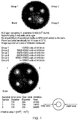
- the ability to exhibit antimicrobial activity against E. coli can be determined by measuring inhibition of the growth of E . coli in an in vitro well diffusion assay. Further details of the well diffusion assay are set forth in the accompanying examples.
- the assay is carried out using Escherichia coli K88 on MacConkey No 3 agar, incubating the plates for 16 hours at 37°C. More specifically, Escherichia coli K88 is added to the agar (1 ml of a 1:1000 dilution of an overnight culture of Escherichia coli K88 in 200 ml agar to give the equivalent of 106 CFU/ml). The agar is poured into petri dishes and allowed to set.
- the plates are marked off into quadrants and an approximately 5 mm well cut out in each quadrant. An aliquot (60 ⁇ l) of conditioned media or MRS broth is added to the wells. The plates are covered and incubated for 16 hours at 37°C. They are photographed using a digital camera. Images are transferred to Photoshop, and the diameter of the well and zone of inhibition were determined using the measure tool.
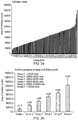
- the lactic acid bacterial strain of the invention exhibits ⁇ 20000 units of inhibition, more preferably 20000-40000 units, even more preferably 40000-60000 units, more preferably 60000-80000 units, more preferably 80000-100000 units of inhibition, even more preferably still >100000 units of inhibition.
- the lactic acid bacterial strain is characterised by the ability to exhibit antimicrobial activity against S . enteritidis. Again, the observed antimicrobial activity is most likely by virtue of anti-microbial substances produced by the lactic acid bacterial strains of the invention, although nature of these anti-microbial substances has not been determined.
- the ability to exhibit antimicrobial activity against S . enteritidis can be determined by measuring the ability to inhibit the growth of S. enteritidis in an in vitro well diffusion assay. Further details of the well diffusion assay are set forth in the accompanying examples. The assay is carried out using Salmonella enteritidis S1400 on XLD agar, incubating the plates for 16 hours at 37°C. XLD agar is prepared as per manufacturer's instructions and cooled to 45°C.
- Salmonella enteritidis S1400 is added to the XLD agar (1ml of a 1:1000 dilution of an overnight culture of Salmonella enteritidis S1400 in 200 ml agar to give the equivalent of 106 CFU/ml).
- the XLD agar is poured into petri dishes and allowed to set. The plates are marked off into quadrants and an approximately 5 mm well cut out in each quadrant. An aliquot (60 ⁇ l) of conditioned media or MRS broth is added to the wells. The plates are covered and incubated for 16 hours at 37°C and the data analysed as described above for the E. coli assay.
- the lactic acid bacterial strain of the invention exhibits ⁇ 20000 units of inhibition, more preferably 20000-40000 units, even more preferably 40000-60000 units, more preferably 60000-80000 units, more preferably 80000-100000 units of inhibition, even more preferably still >100000 units of inhibition.
- the ability to exhibit antimicrobial activity against S. enteritidis can be determined by measuring the ability to inhibit S . enteritidis in vivo in C3H/HeN or C57BI/6 mice. Further details of appropriate in vivo assays are set forth in the accompanying examples.
- C3H/HeN and C57BI/6 mice are treated with a lactic acid bacterial strain according to the invention prior to and post-challenge with Salmonella enteritidis.
- the mice are euthanased and dissected 6 (C57BI/6) or 10 (C3H/HeN) days post-infection and viable salmonella are detected in systemic tissues (e.g. the mesenteric lymph node, liver and spleen), in the intestine (e.g. caecum, colon) and in the faeces as compared to appropriate controls.
- the in vivo activity of the lactic acid bacterial strain of the invention can also be measured by determining the level of myeloperoxidase [MPO], a marker for neutrophils, in the intestine of C3H/HeN mice treated with salmonella or salmonella plus LAB.
- MPO in the intestine is greatly increased by salmonella infection, due to recruitment of neutrophils to the intestine part of the host response to infection.
- Co-treatment with a lactic acid bacterial strain according to the invention reduces MPO activity in the intestine of salmonella-infected mice, indicating that the intestinal inflammatory responses to infection are lowered in these animals, relative to control experiments.
- the lactic acid bacterial strain is characterised by the ability to suppress inflammation in IPEC cells induced by 12-O-tetradecaboylphorbol-13-acetate (PMA).
- PMA 12-O-tetradecaboylphorbol-13-acetate
- this refers to the ability of the lactic acid bacterial strain to block interleukin-8 (IL-8) gene expression triggered by PMA. More specifically, it can be determined by measuring the suppression of inflammation in IPEC-J2 cells induced by PMA when incubated for 2 hours at 37°C, 5% CO 2 , 95% humidity.
- RNA and reverse transcription are carried out on a 7500 Fast Real-time PCR system operating with 7500 Fast System v 1.4.0 Sequence Detection Software version 1.4 (Applied Biosystem), using primers for porcine IL-8 and TNF- ⁇ (prepared by Sigma Aldrich).
- the reaction mix is: 10 ⁇ l Power Sybergreen Master mix, 2.5 ⁇ l of forward primer, 2.5 ⁇ l of reverse primer and 5 ⁇ l of cDNA,
- the Real Time PCR is then run according to the Standard 7500 protocol (95 °C, 10 min, 1 cycle. 95 °C, 15 sec, 40 cycles. 60 °C, 1 min, 40 cycles. 95 °C, 15 sec, 1 cycle. 60 °C, 1 min, 1 cycle.
- the lactic acid bacterial strain is characterised by the ability to block the attachment or invasion of IPEC cells by S . enteritidis. This can be measured by the assay set forth in the accompanying examples. Specifically, monolayers of IPEC-J2 cells are grown to 3 days post-confluence in 24-well plates and synchronised by the addition of DTS media 24 hrs prior to use. Overnight cultures of pig LAB (10 ml) are centrifuged and the bacteria re-suspended in phosphate buffered saline [PBS]. An aliquot (50 ⁇ l) of LAB is added to the wells. The plates are incubated for 2 hours at 37°C, 5% CO 2 , 95% humidity.
- An overnight culture of Salmonella enterica serovar Enteritidis S1400 [ S . enteritidis S1400] is sub-cultured (0.5ml in 10 ml) into Luria Bertani (LB) media and incubated aerobically for 2-3 hours at 37°C until it reaches an optical density (560nm) of 0.8 (a concentration equivalent to 1 x 10⁸ CFU/ml). The culture is centrifuged and the bacteria re-suspended in PBS. An aliquot (50 ⁇ l) is added to the wells of IPEC-J2 cells. The plates are incubated for a further 2 hours at 37°C, 5% CO 2 , 95% humidity. The IPEC-J2 cell monolayers are washed with HBSS.
- a solution (0.5 ml) of PBS containing Triton-X100 (10 ml/litre) is added to each well, the monolayer scraped off and dispersed.
- Viable salmonella are estimated on XLD agar plates (incubated for 24 hours at 37°C) by the Miles and Misra method. Lactic acid bacteria are determined by the same procedure (incubated anaerobically for 48 hours at 37°C).
- the lactic acid bacterial strain of the invention exhibits 0-20% inhibition of adherence/invasion, more preferably 20-40%, even more preferably 40-60%, more preferably still, 60-80%, even more preferably still, 80-100% inhibition of adherence/invasion as measured by the above assay.
- the lactic acid bacterial strain is characterised by the ability to block the attachment or invasion of IPEC cells by E. coli. This can be measured by a similar assay to that described above for S . enteritidis, and as set forth in the accompanying examples.
- the lactic acid bacterial strain of the invention exhibits 0-20% inhibition of adherence/invasion, more preferably 20-40%, even more preferably 40-60%, more preferably still, 60-80%, even more preferably still, 80-100% inhibition of adherence/invasion as measured by the above assay.
- the lactic acid bacterial strain is characterised by the absence of antibiotic resistance to one or more antibiotics selected from the following: ampicillin; cefotaxime; chloramphenicol; erythromycin; gentamicin; tetracycline; vancomycin; metronizadole; nalidixic acid; and kanamycin.
- antibiotic resistance can be determined by measuring the effect of various antibiotic-containing discs on an MRS agar plate culture of the lactic acid bacterial strain, when placed in an anaerobic jar and incubated for 24 hours at 37°C. Further details of the assay are set forth in the accompanying examples.
- pig LAB [0.5ml of a 1:100 dilution of an overnight culture] is spread onto the surface of an MRS agar plate and dried off.
- the plates are marked off into 4 quadrants and in each quadrant is placed an antibiotic-containing disc [Ampicillin, 10 ⁇ g. Cefotaxime, 30 ⁇ g. Chloramphenicol, 10 ⁇ g. Erythromycin, 15 ⁇ g. Gentamicin, 10 ⁇ g. Kanamycin, 30 ⁇ g. Metronizadole, 50 ⁇ g. Nalidixic acid, 30 ⁇ g. Tetracycline, 30 ⁇ g. Vancomycin, 30 ⁇ g].
- antibiotic-containing disc [Ampicillin, 10 ⁇ g. Cefotaxime, 30 ⁇ g. Chloramphenicol, 10 ⁇ g. Erythromycin, 15 ⁇ g. Gentamicin, 10 ⁇ g. Kanamycin, 30 ⁇ g. Metronizadole, 50 ⁇ g. Nalidixic acid, 30
- the plates are covered, placed in an anaerobic jar and incubated for 24 hours at 37°C.
- the plates are photographed using a digital camera. Images are transferred to Photoshop, and the diameter of the zone of inhibition is determined using the measure tool.
- the exclusion area for the test strain is taken and divided with the maximum area of exclusion obtained for that antibiotic.
- the LAB of the invention is characterised by the absence of resistance to the antibiotics ampicillin, cefotaxime, chloramphenicol, erythromycin, gentamicin, tetracycline, vancomycin, metronizadole, nalidixic acid and kanamycin. More preferably, the LAB of the invention is characterised by the absence of resistance to the antibiotics ampicillin, cefotaxime, chloramphenicol, erythromycin, gentamicin, tetracycline and vancomycin.
- the lactic acid bacterial strain is characterised by the ability to exhibit heat stability when subjected to three cycles of heating, each cycle comprising heating at a temperature of 70 °C for a period of 15 minutes.
- heat stability is measured by centrifuging an overnight culture (10ml) of isolated pig LAB and resuspending the pellet in fresh MRS broth (10ml). An aliquot (1 ml) is heated at 70°C for 15 min and then plated out (0.5 ml) out on MRS agar and incubated in an anaerobic jar for 48 hours at 37°C.
- This culture is centrifuged, re-suspended in MRS broth, re-heated at 70°C for 15 min, plated out (0.5 ml) out on MRS agar, incubated in an anaerobic jar for 48 hours at 37°C, picked off, seeded into Hungate tubes containing MRS broth and incubated for 48 hours at 37°C.
- the lactic acid bacterial strain has any two of the characterising features selected from the group consisting of (i), (ii), (iii), (iv), (v), (vi) and (vii) set forth above.
- the lactic acid bacterial strain has any three of the characterising features selected from the group consisting of (i), (ii), (iii), (iv), (v), (vi) and (vii) set forth above.
- the lactic acid bacterial strain has any four of the characterising features selected from the group consisting of (i), (ii), (iii), (iv), (v), (vi) and (vii) set forth above.
- the lactic acid bacterial strain has any five of the characterising features selected from the group consisting of (i), (ii), (iii), (iv), (v), (vi) and (vii) set forth above.
- the lactic acid bacterial strain has any six of the characterising features selected from the group consisting of (i), (ii), (iii), (iv), (v), (vi) and (vii) set forth above.
- the lactic acid bacterial strain has all seven of the characterising features (i), (ii), (iii), (iv), (v), (vi) and (vii) set forth above.
- the lactic acid bacterial strain is characterised by features (i) and (ii) above.
- the lactic acid bacterial strain is characterised by features (iv) and (v) above.
- the lactic acid bacterial strain is characterised by features (iv) and (v) above.
- the lactic acid bacterial strain is characterised by features denoted (D) to (G) as follows:
- the lactic acid bacterial strain is further characterised by feature (vi) in addition to those features recited in any one of embodiments (A) to (G) above.
- the lactic acid bacterial strain is further characterised by feature (iii) in addition to those features recited in any one of embodiments (A) to (G) above. Even more preferably still, the lactic acid bacterial strain is further characterised by feature (vii) in addition to those features recited in any one of embodiments (A) to (G) above.
- One embodiment of the invention relates to a lactic acid bacterial strain isolated from the faeces of organically reared pigs and selected from the group consisting of strains deposited on 27 June 2011 under the terms of the Budapest Treaty at National Collections of Industrial, Food and Marine Bacteria (NCIMB) at NCIMB Ltd, Ferguson Building, Craibstone Estate, Bucksburn, Aberdeen, UK, AB21 9YA, under the following accession numbers:
- NCIMB 41846, NCIMB 41847, NCIMB 41848, NCIMB 41849 and NCIMB 41850 were made by Dr George Grant of the Rowett Institute of Nutrition and Health, University of Aberdeen, Greenburn Road, Aberdeen, AB21 9SB on behalf of the Applicant, GT Biologies Limited.
- Another embodiment of the invention relates to a lactic acid bacterial strain isolated from the faeces of organically reared pigs and selected from the group consisting of strains deposited on 12 July 2012 under the terms of the Budapest Treaty at National Collections of Industrial, Food and Marine Bacteria (NCIMB) at NCIMB Ltd, Ferguson Building, Craibstone Estate, Bucksburn, Aberdeen, UK, AB21 9YA, under the following accession numbers:
- NCIMB 42008, NCIMB 42009, NCIMB 42010 and NCIMB 42011 and NCIMB 42012 were made by Professor Denise Kelly of GT Biologics Limited, c/o Institute of Medical Sciences, University of Aberdeen, Foresterhill, Aberdeen, Aberdeensshire, AB25 2ZD, UK, on behalf of the Applicant, GT Biologies Limited.
- mutant strains which can be obtained from said strains, and strains exhibiting a DNA-DNA homology of at least 70 % and/or a 16S RNA identity of at least 99.5 % with a strain selected from those deposited under the above accession numbers.
- 16S rRNA identity refers to the percentage identity with a known bacterial strain.
- a lactic acid bacterial strain may have a 16S rRNA identity of at least 85% or at least 90%, or at least 95, 96, 97, 98 or 99 % with a strain selected from those deposited under the above accession numbers.
- a lactic acid bacterial strain may have a 16S rRNA identity of at least 99.5% with a strain selected from those deposited under the above accession numbers.
- DNA-DNA homology refers to how closely related two or more separate strands of DNA are to each other, based on their nucleotide sequence. Typically, this is measured in terms of their % identity.
- a lactic acid bacterial strain may have a DNA-DNA homology of at least 70% with a strain selected from those deposited under the above accession numbers, more preferably, at least 80%, or at least 85%, more preferably still, at least 90, 95, 97, 98 or 99 % homology with a strain selected from those deposited under the above accession numbers.
- a lactic acid bacterial strain may have a DNA-DNA homology of at least 70% and a 16S rRNA identity of at least 99.5% with a strain selected from those deposited under the above accession numbers.
- compositions comprising one or more lactic acid bacterial strains as described above and a pharmaceutically acceptable excipient, carrier or diluent. Suitable excipients, diluents, carriers are described below.
- the composition may be any composition, but is preferably a composition to be administered orally, enterally or rectally.
- the composition may be an edible composition.
- "Edible” means a material that is approved for human or animal consumption.
- Another aspect of the invention relates to a probiotic composition
- a probiotic composition comprising a lactic acid bacterial strain as described above.
- Another aspect of the invention relates to combinations of two more lactic acid bacterial strains as described herein.
- such combinations exhibit a synergistic functionality, for example, the combination is synergistic, i.e. the resultant effect is greater than the simple additive effects attributable to the individual lactic acid bacterial components in the combination.
- One preferred embodiment of the invention relates to a combination of two, three, four or five different lactic acid bacteria, more preferably, two, three or four different lactic acid bacteria, more preferably, two or three different lactic acid bacteria.
- the individual components of the combination may be present in any ratio.
- the invention relates to a combination of two different lactic acid bacteria.
- the two different lactic acid bacteria are present in a ratio of from 1 /99.9 to 99.9/1 by weight, for example, 1/99 to 99/1 or 10/90 to 90/10, or 20/80 to 80/20, or 30/70 to 70/30 and the like.
- the combination is a mixture of Lactobacillus johnsonii and Lactobacillus reuteri. Even more preferably, the combination is NCIMB 41850: Lactobacillus johnsonii and Lactobacillus reuteri GGDK266 as described above. Surprisingly, this particular combination of lactic acid bacteria unexpectedly gives rise to beneficial in vivo responses in early weaned pigs (see Examples).
- the combination is a mixture of Lactobacillus plantarum and Lactobacillus reuteri. Even more preferably, the combination is NCIMB 41847: Lactobacillus plantarum / pentosus / paraplantarum and Lactobacillus reuteri GGDK161 as described above.
- probiotic means microbial cell preparations or components of microbial cells with a beneficial effect on the health or well-being of the host.
- the probiotic composition is an orally administrable composition of metabolically active, i.e., live and/or or lyophilized, or non-viable heat-killed, irradiated or lysed probiotic bacteria.
- the probiotic composition may contain other ingredients.
- the probiotic composition of the invention can be administered orally, i.e., in the form of a tablet, capsule or powder.
- the probiotic composition of the invention may be administered orally as a food or nutritional product, such as milk or whey based fermented dairy product, or as a pharmaceutical product.
- a suitable daily dose of the probiotic bacteria is from about 1 x 10 3 to about 1 x 10 11 colony forming units (CFU), more preferably from about 1 x 10 7 to about 1 x 10 10 CFU, more preferably, about 1 x 10 6 to about 1 x 10 10 CFU.
- the composition contains bacterial strains and/or their cellular components, as active ingredients, in an amount of from about 1 x 10 6 to about 1 x 10 12 CFU/g, respect to the weight of the composition, preferably from about 1 x 10 8 to about 1 x 10 10 CFU/g.
- the dose may be of 1 g, 3 g, 5 g, and 10 g, by way of example.
- a probiotic is optionally combined with at least one suitable prebiotic compound.
- a prebiotic is usually a non-digestible carbohydrate such as an oligo- or polysaccharide, or a sugar alcohol which is not degraded or absorbed in the upper digestive tract.
- Known prebiotics include commercial products such as inulin and transgalacto-oligosaccharides.
- the composition of the present invention includes a prebiotic in an amount of from about 1 to about 30% by weight, respect to the total weight composition, preferably from 5 to 20% by weight.
- Preferred carbohydrates are selected from: fructo-oligosaccharides (or FOS), short-chain fructo-oligosaccharldes, inulin, isomalt-oligosaccharides, pectins, xylo-oligosaccharides (or XOS), chitosan-oligosaccharides (or COS), beta-glucans, arable gum modified and resistant starches, polydextrose, D-tagatose, acacia fibers, carob, oats, and citrus fibers.
- Particularly preferred prebiotics are the short-chain fructo-oligosaccharides (for simplicity shown hereinbelow as FOSs-c.c); said FOSs-c.c. are not digestable glucides, generally obtained by the conversion of the beet sugar and including a saccharose molecule to which three glucose molecules are bonded.
- a further aspect of the invention relates to a process for producing a probiotic, said process comprising culturing a lactic acid bacterial strain according to the invention.
- the skilled person in the art will be familiar with standard techniques and conditions suitable for culturing a bacterial strain according to the invention.
- a method of preparing one or more bacterial strains according to the invention comprises the steps of:
- Suitable agars include, for example, MRS or LAMVAB agar plates. However, other suitable agars can also be used, and would be familiar to the skilled person.
- Suitable broths include, for example, MRS broth. However, other suitable broths can also be used, and would be familiar to the skilled person.
- Step (iii) may involve incubating the agar for at least 72 hours at a temperature of about 37 oC.
- Step (vi) may involve incubating the seeded colonies for at least 48 hours at a temperature of about 37 oC.
- the disclosure relates to a process for obtaining a porcine lactic acid bacterial strain, said process comprising obtaining faeces from an organically reared pig and extracting one or more porcine lactic acid bacterial strains from said faeces.
- the process comprises the steps of:
- the disclosure relates to a porcine lactic acid bacterial strain obtained by, or obtainable by, the process described above.
- Another aspect of the invention relates to one or more lactic acid bacterial strains as defined above for use in medicine.
- Another aspect of the invention relates to one or more lactic acid bacterial strains as defined above for use in treating an intestinal disorder.
- Another aspect of the invention relates to the use of one or more lactic acid bacterial strains or a composition as defined above in the preparation of a medicament for treating an intestinal disorder.
- the term “medicament” as used herein encompasses medicaments for both human and animal usage in human and veterinary medicine.
- the term “medicament” as used herein means any substance which provides a therapeutic and/or beneficial effect.
- the term “medicament” as used herein is not necessarily limited to substances which need Marketing Approval, but may include substances which can be used in cosmetics, nutraceuticals, food (including feeds and beverages for example), probiotic cultures, and natural remedies.
- the term “medicament” as used herein encompasses a product designed for incorporation in animal feed, for example livestock feed and/or pet food.
- Another aspect of the disclosure relates to a method of treating an intestinal disorder in a subject, said method comprising administering to the subject a pharmaceutically effective amount of one or more lactic acid bacterial strains or a pharmaceutical composition or a probiotic composition as described above.
- the intestinal disorder is selected from irritable bowel syndrome (IBS), inflammatory bowel disorder (IBD), functional dyspepsia, functional constipation, functional diarrhoea (including antibiotic associated diarrhoea, traveller's diarrhoea and pediatric diarrhoea), functional abdominal pain, functional bloating, Epigastric Pain Syndrome, Postprandial Distress Syndrome, Crohn's disease, ulcerative colitis, gastrointestinal reflux disease (GERD), allergies, atopic diseases e.g. atopic dermatitis, necrotising enterocolitis, other infections, and combinations thereof.
- IBS irritable bowel syndrome
- IBD inflammatory bowel disorder
- functional dyspepsia including antibiotic associated diarrhoea, traveller's diarrhoea and pediatric diarrhoea
- functional abdominal pain functional bloating
- Epigastric Pain Syndrome Postprandial Distress Syndrome
- Crohn's disease Crohn's disease
- the intestinal disorder is IBS.
- the precise pathophysiology of IBS remains to be elucidated. Recent studies have described mucosal inflammation and alterations in intestinal microbiota in IBS patients and a disease correlation with intestinal infections.
- the disorder is salmonellosis.
- Salmonellosis is a disease caused by various strains of salmonella that is characterized by fever and intestinal disorders.
- Another aspect of the invention relates to one or more lactic acid bacterial strains as defined above for improving intestinal microbiota.
- Another aspect of the disclosure relates to a method of improving intestinal microbiota in a subject, said method comprising administering to the subject a composition comprising one or more lactic acid bacterial strains or a pharmaceutical composition or a probiotic composition according to the invention.
- compositions according to the invention are administered to a patient susceptible to, or otherwise at risk of, a particular disease in an amount that is sufficient to at least partially reduce the risk of developing a disease. Such an amount is defined to be "a prophylactic effective dose”.
- a prophylactic effective dose The precise amounts depend on a number of patient specific factors such as the patient's state of health and weight.
- the lactic acid bacterial strains and probiotic compositions according to the invention may also be used in animal nutrition (e.g. in pig nutrition), particularly in the early-weaned period and growing fattening period.
- the probiotics are expected to enhance immune function reduce and prevent infectious diseases, beneficially alter the microbiota composition, and improve growth and performance of animals, for example, through increased feed conversion efficiency.
- the term "animal" includes all animals including humans. Examples of animals are non-ruminants and ruminants. Ruminant animals include for example, sheep, goat, and cattle eg. cow as beef cattle and dairy cows. In a particular embodiment, the animal is a non-ruminant animal.
- Non-ruminant animals include pet animals, eg horses, cats, and dogs; monogastric eg pigs or swine (including but not limited to, piglets growing pigs and sows); poultry such as turkeys, ducks, and chickens (including but not limited to broiler chicks, layers); fish (including but not limited to salmon, trout, tilapia, catfish and carp); and crustaceans (including but not limited to shrimp and prawn).
- pet animals eg horses, cats, and dogs
- monogastric eg pigs or swine including but not limited to, piglets growing pigs and sows
- poultry such as turkeys, ducks, and chickens (including but not limited to broiler chicks, layers)
- fish including but not limited to salmon, trout, tilapia, catfish and carp
- crustaceans including but not limited to shrimp and prawn
- a further aspect of the invention relates to food products, feedstuffs, dietary supplements, food additives , probiotics and medicaments containing one or more bacterial strains according to the invention.
- the composition comprises additionally at least one other kind of other food grade bacterium, wherein the food grade bacterium is preferably selected from the group consisting of lactic acid bacteria, bifidobacteria, propionibacteria or mixtures thereof.
- One aspect of the invention relates to a food product comprising one or more lactic acid bacterial strains according to the invention.
- the term "food product” is intended to cover all consumable products that can be solid, jellied or liquid. Suitable food products may include, for example, functional food products, food compositions, pet food, livestock feed, health foods, feedstuffs and the like. In one preferred embodiment, the food product is a health food.
- the term "functional food product” means food that is capable of providing not only a nutritional effect, but is also capable of delivering a further beneficial effect to the consumer. Accordingly, functional foods are ordinary foods that have components or ingredients (such as those described herein) incorporated into them that impart to the food a specific functional - e.g. medical or physiological benefit - other than a purely nutritional effect.
- Examples of specific food products that are applicable to the present invention include milk-based products, ready to eat desserts, powders for re-constitution with, e.g., milk or water, chocolate milk drinks, malt drinks, ready-to-eat dishes, instant dishes or drinks for humans or food compositions representing a complete or a partial diet intended for pets or livestock.
- the composition according to the present invention is a food product intended for humans, pets or livestock.
- the composition may be intended for animals selected from the group consisting of dogs, cats, pigs, cattle, horses, goats, sheep or poultry.
- the composition is a food product intended for adult species, in particular human adults.
- milk-based product means any liquid or semi-solid milk or whey based product having a varying fat content.
- the milk-based product can be, e.g., cow's milk, goat's milk, sheep's milk, skimmed milk, whole milk, milk recombined from powdered milk and whey without any processing, or a processed product, such as yoghurt, curdled milk, curd, sour milk, sour whole milk, butter milk and other sour milk products.
- Another important group includes milk beverages, such as whey beverages, fermented milks, condensed milks, infant or baby milks; flavoured milks, ice cream; milk-containing food such as sweets.
- One aspect of the invention relates to a feedstuff comprising one or more bacterial strains according to the invention.
- Feedstuff can be a food additive, a feed premix or an animal feed.
- feedstuffs according to the invention include the following: animal feed additive comprising (a) porcine lactic acid bacteria according to the present invention (b) at least one fat soluble vitamin (c) at least one water soluble vitamin (d) at least one trace mineral and/or at least one macro mineral; an animal feed composition comprising a porcine lactic acid bacteria according to the present invention and a crude protein content of 50-88g/kg feed.
- the so-called premixes are examples of animal feed additives of the invention.
- a premix designates a preferably uniform mixture of one or more micro-ingredients with diluent and/or carrier. Premixes are used to facilitate uniform dispersion of micro-ingredients in a larger mix.
- feed-additive ingredients are coloring agents, e.g. carotenoids such as beta-carotene, astaxanthin, and lutein; aroma compounds; stabilisers; antimicrobial peptides; polyunsaturated fatty acids; reactive oxygen generating species; and/or at least one enzyme selected from amongst phytase (EC 3.1.3.8 or 3.1.3.26); xylanase (EC 3.2.1.8); galactanase (EC 3.2.1.89); alpha-galactosidase (EC 3.2.1.22); protease (EC 3.4.), phospholipase A1 (EC 3.1.1.32); phospholipase A2 (EC 3.1.1.4); lysophospholipase (EC 3.1.1.5); phospholipase C (EC 3.1.4.3); phospholipase D (EC 3.1.4.4); amylase such as, for example, alpha-amylase (EC 3.2.1.1); and/or
- polyunsaturated fatty acids are C18, C20 and C22 polyunsaturated fatty acids, such as arachidonic acid, docosohexaenoic acid, eicosapentaenoic acid and gamma-linoleic acid.
- reactive oxygen generating species are chemicals such as perborate, persulphate, or percarbonate; and enzymes such as an oxidase, an oxygenase or a syntethase.
- Examples of fat-soluble vitamins are vitamin A, vitamin D3, vitamin E, and vitamin K, e.g. vitamin K3.
- examples of water-soluble vitamins are vitamin B12, biotin and choline, vitamin B1, vitamin B2, vitamin B6, niacin, folic acid and panthothenate, e.g. Ca-D-panthothenate.
- examples of trace minerals are manganese, zinc, iron, copper, iodine, selenium, and cobalt.
- Examples of macro minerals are calcium, phosphorus and sodium.
- the animal feed additive of the invention comprises at least one of the individual components specified in Table A of WO 01/58275 . At least one means either of, one or more of, one, or two, or three, or four and so forth up to all thirteen, or up to all fifteen individual components. More specifically, this at least one individual component is included in the additive of the invention in such an amount as to provide an in-feed-concentration within the range indicated in column four, or column five, or column six of Table A of WO 01/58275 .
- Animal feed compositions or diets typically have a relatively high content of protein.
- Poultry and pig diets can be characterized as indicated in Table B of WO 01/58275 , columns 2-3.
- Fish diets can be characterized as indicated in column 4 of this Table B.
- WO 01/58275 corresponds to US 09/779334 .
- An animal feed composition according to the invention typically has a crude protein content of 50-800 g/kg, and furthermore comprises a porcine lactic acid bacteria according to the present invention thereof as described herein.
- the animal feed composition of the invention may have a content of metabolisable energy of 10-30 MJ/kg; and/or a content of calcium of 0.1-200 g/kg; and/or a content of available phosphorus of 0.1-200 g/kg; and/or a content of methionine of 0.1-100 g/kg; and/or a content of methionine plus cysteine of 0.1-150 g/kg; and/or a content of lysine of 0.5-50 g/kg.
- the content of metabolisable energy, crude protein, calcium, phosphorus, methionine, methionine plus cysteine, and/or lysine is within any one of ranges 2, 3, 4 or 5 in Table B of WO 01/58275 (R. 2-5).
- the nitrogen content is determined by the Kjeldahl method (A.O.A.C., 1984, Official Methods of Analysis 14th ed., Association of Official Analytical Chemists, Washington DC ).
- Metabolisable energy can be calculated on the basis of the NRC publication Nutrient requirements in swine, ninth revised edition 1988, subcommittee on swine nutrition, committee on animal nutrition, board of agriculture, national research council. National Academy Press, Washington, D.C., pp. 2-6, and the European Table of Energy Values for Poultry Feed-stuffs, Spelderholt centre for poultry research and extension, 7361 DA Beekbergen, The Netherlands. Grafisch bedrijf Ponsen & looijen bv, Wageningen. ISBN 90-71463-12-5.
- the dietary content of calcium, available phosphorus and amino acids in complete animal diets is calculated on the basis of feed tables such as Veevoedertabel 1997, gegevens over chemische samenstelling, verteerbaarheid en voederwaarde van voedermiddelen, Central Veevoederbureau, Runderweg 6, 8219 pk Lelystad. ISBN 90-72839-13-7.
- the animal feed composition of the invention contains at least one vegetable protein or protein source. It may also contain animal protein, such as Meat and Bone Meal, and/or Fish Meal, typically in an amount of 0-25%.
- vegetable proteins refers to any compound, composition, preparation or mixture that includes at least one protein derived from or originating from a vegetable, including modified proteins and protein-derivatives.
- the protein content of the vegetable proteins is at least 10, 20, 30, 40, 50, or 60% (w/w).
- Vegetable proteins may be derived from vegetable protein sources, such as legumes and cereals, for example materials from plants of the families Fabaceae (Leguminosae), Cruciferaceae, Chenopodiaceae, and Poaceae, such as soy bean meal, lupin meal and rapeseed meal.
- the vegetable protein source is material from one or more plants of the family Fabaceae, e.g. soybean, lupine, pea, or bean.
- Other examples of vegetable protein sources are rapeseed, sunflower seed, cotton seed, and cabbage.
- Other examples of vegetable protein sources are cereals such as barley, wheat, rye, oat, maize (corn), rice, triticale, and sorghum.
- Animal diets can e.g. be manufactured as mash feed (non pelleted) or pelleted feed.
- the milled feed-stuffs are mixed and sufficient amounts of essential vitamins and minerals are added according to the specifications for the species in question.
- a porcine lactic acid bacteria according to the present invention thereof can be added as solid or liquid formulations.
- the compositions of the present invention may be - or may be added to - food supplements, also referred to herein as dietary supplements or food additives.
- another aspect of the invention relates to a dietary supplement or food additive comprising one or more bacterial strains according to the invention.
- Another embodiment of the invention relates to the use of a feedstuff as described above for improving animal growth performance as measured by daily weight gain and/or feed conversion ratio.
- the invention relates to methods for using a feedstuff comprising one or more porcine lactic acid bacteria according to the present invention in animal feed for improving daily weight gain, improving the Feed Conversion Ratio (FCR) and/or for modulation of the gut microflora.
- a feedstuff comprising one or more porcine lactic acid bacteria according to the present invention in animal feed for improving daily weight gain, improving the Feed Conversion Ratio (FCR) and/or for modulation of the gut microflora.
- FCR Feed Conversion Ratio
- the feedstuff comprising one or more porcine lactic acid bacteria according to the present invention improves animal feed digestibility, and/or maintains animal health by aiding in proper digestion and/or supporting immune system function.
- the FCR may be determined on the basis of a piglet growth trial comprising a first treatment in which the feedstuff comprising a porcine lactic acid bacteria according to the present invention is added to the animal feed in a suitable concentration per kg feed, and a second treatment (control) with no addition of a porcine lactic acid bacteria according to the present invention to the animal feed.
- the term Feed Conversion Ratio, or FCR is used synonymously with the term feed conversion.
- the FCR is calculated as the feed intake in g/animal relative to the weight gain in g/animal. As it is generally known, an improved FCR is lower than the control FCR.
- the FCR is improved (i.e., reduced) as compared to the control by at least 1.0%, preferably at least 1.5%, 1.6%, 1.7%, 1.8%, 1.9%, 2.0%, 2.1%, 2.2%, 2.3%, 2.4%, or at least 2.5%.
- gut designates the gastrointestinal or digestive tract (also referred to as the alimentary canal) and it refers to the system of organs within multicellular animals which takes in food, digests it to extract energy and nutrients, and expels the remaining waste.
- gut “microflora” refers to the natural microbial cultures residing in the gut and maintaining health by aiding in proper digestion and/or supporting immune system function.
- module as used herein in connection with the gut microflora generally means to change, manipulate, alter, or adjust the function or status thereof in a healthy and normally functioning animal, i.e. a non-therapeutic use.
- the invention also relates to compositions, more preferably pharmaceutical compositions, comprising a lactic acid bacterial strain according to the invention.
- the lactic acid bacterial strains of the present invention are generally administered in admixture with a pharmaceutical carrier, excipient or diluent, particularly for human therapy.
- the pharmaceutical compositions may be for human or animal usage in human and veterinary medicine.
- Acceptable carriers or diluents for therapeutic use are well known in the pharmaceutical art, and are described, for example, in Remington's Pharmaceutical Sciences, Mack Publishing Co. (A. R. Gennaro edit. 1985 ).
- suitable carriers include lactose, starch, glucose, methyl cellulose, magnesium stearate, mannitol, sorbitol and the like.
- suitable diluents include ethanol, glycerol and water.
- compositions may comprise as, or in addition to, the carrier, excipient or diluent any suitable binder(s), lubricant(s), suspending agent(s), coating agent(s), solubilising agent(s).
- Suitable binders include starch, gelatin, natural sugars such as glucose, anhydrous lactose, free-flow lactose, beta-lactose, corn sweeteners, natural and synthetic gums, such as acacia, tragacanth or sodium alginate, carboxymethyl cellulose and polyethylene glycol.
- Suitable lubricants include sodium oleate, sodium stearate, magnesium stearate, sodium benzoate, sodium acetate, sodium chloride and the like.
- Preservatives, stabilizers, dyes and even flavoring agents may be provided in the pharmaceutical composition.
- preservatives include sodium benzoate, sorbic acid and esters of p-hydroxybenzoic acid.
- Antioxidants and suspending agents may be also used.
- compositions of the present invention may be adapted for oral, rectal, vaginal, parenteral, intramuscular, intraperitoneal, intraarterial, intrathecal, intrabronchial, subcutaneous, intradermal, intravenous, nasal, buccal or sublingual routes of administration.
- the compositions of the present invention are adapted for oral, rectal, vaginal, parenteral, nasal, buccal or sublingual routes of administration.
- compositions of the present invention may also be in form of suppositories, pessaries, suspensions, emulsions, lotions, ointments, creams, gels, sprays, solutions or dusting powders.
- transdermal administration is by use of a skin patch.
- the active ingredient can be incorporated into a cream consisting of an aqueous emulsion of polyethylene glycols or liquid paraffin.
- the lactic acid bacterial strain can also be incorporated into an ointment consisting of a white wax or white soft paraffin base together with such stabilisers and preservatives as may be required.
- compositions may be formulated in unit dosage form, i.e., in the form of discrete portions containing a unit dose, or a multiple or sub-unit of a unit dose.
- a person of ordinary skill in the art can easily determine an appropriate dose of one of the instant compositions to administer to a subject without undue experimentation.
- a physician will determine the actual dosage which will be most suitable for an individual patient and it will depend on a variety of factors including the activity of the specific bacterial strain employed, the metabolic stability and length of action of that strain, the age, body weight, general health, sex, diet, mode and time of administration, rate of excretion, drug combination, the severity of the particular condition, and the individual undergoing therapy.
- the dosages disclosed herein are exemplary of the average case. There can of course be individual instances where higher or lower dosage ranges are merited..
- the usual effective daily dose in humans or in animals is from about 1 x 10 3 to about 1x 10 11 , more preferably, from about 1 x 10 7 to about 1x 10 11 , even more preferably, from about 1 x 10 6 to about 1 x 10 10 CFU.
- compositions of the invention are administered in any combination, for example, two or more of the lactic acid bacteria may be administered in any combination or ratio.
- compositions of the invention are administered in combination with one or more other active agents.
- the compositions of the invention may be administered consecutively, simultaneously or sequentially with the one or more other active agents.
- the LAB strains isolated (total of 436 individual colony picks) from faeces of organically-reared pigs were predominantly L. reuteri, L. johnsonii, L. gasseri, L. pentosus, strains with a small number of L. plantarum, L. acidophilus, L. vaginalis, a single L. mucosae and several uncultured strains.
- Certain strains were selected on the basis of anti-microbial potency as determined in vitro. These bacteria were further screened for their ability to block adherence/invasion of intestinal pig epithelial cells (IPEC) by pathogens in vitro and their susceptibility to antibiotics.
- IPEC intestinal pig epithelial cells
- mice with pig LAB L. reuteri or L. mucosae greatly reduced the pathogenicity of S . enteritidis in acute (C57BI/6 mouse) and chronic (C3H/HeN mouse) forms of salmonellosis.
- LAB strains were isolated and cultured from pig faeces using selective microbiological media. Individual bacterial colonies were isolated and 16S rRNA gene sequences were analysed to enable genotypic identification of bacterial strains. Phenotypic characteristic of potential probiotics was further determined following measurement of adherence, anti-bacterial and anti-inflammatory activities, antibiotic susceptibility and finally heat stability. Anti-bacterial activity of conditioned media derived from LAB was evaluated using well-diffusion assays to determine killing activity against the enteric pathogens Salmonella enteritidis and E. coli K88. The ability of LAB strains to block or interfere with S . enteritidis and E.
- IPEC pig epithelial
- PMA 12-O-Tetradecaboylphorbol-13-acetate
- a ranking system based on scoring the biological properties of LAB was established and used for the selection of candidate LAB strains for probiotic evaluation in vivo.
- the LAB (436 individual colony picks) isolated from faeces of organically-reared pigs were predominantly L. johnsonii or L. johnsonii- related and L. reuteri or L. reuteri- related with small numbers of L. plantarum-related and uncultured strains. This represented a much narrower range of porcine-associated LAB than reported by others (Martin et al, 2009; Yun et al, 2009; Lähteinen et al, 2010; Yao et al, 2011).
- out-door organically-reared pigs had high levels of LAB and more developed intestinal immune function (Mulder et al, 2009).
- the present bacterial data indicate that L. johnsonii and L. reuteri strains are of particular importance in proper development of the gut and immune system in young pigs.
- the inclusion of other lactic acid bacteria derived from the gut or faeces of organically-reared pigs, in particular, Lactobacillus delbrueckii and Lactobacillus amylovorous may enhance the immune homeostatic properties of Lactobacillus reuteri, Lactobacillus plantarum and Lactobacillus johnsonii.
- the LAB may limit the access of pathogens to the epithelial layer by occupying binding-sites on the cell monolayer or by production of factors that interfere with attachment of the pathogen to the epithelial cells, such as blocking binding sites of surface adhesins (Ljungh and Wadstrom, 2006; Blandino et al, 2008; Williams, 2010).
- Pig LAB may also block or suppress inflammatory gene (Interleukin-8, IL-8)-expression triggered in IPEC cells by PMA. Individual cultures varied greatly in their ability to affect inflammation, but five strains (RINH vial 29, 30, 31 86 and 266) had potent anti-inflammatory properties.
- LAB strains are known to have immuno-modulatory or anti-inflammatory properties (Cotter et al, 2005; Blandino et al, 2008; Ohashi and Ushida, 2009; Elmadfa et al, 2010; Liu et al, 2010).
- the mechanisms involved remain unclear, but are likely to involve modulation of molecular signalling systems by bioactive factors produced by the LAB.
- Antibiotic resistance is an increasing problem and can spread between bacteria by gene transfer (Korhonen et al, 2007; Gousia et al, 2011; Nicolau, 2011). Ideally, candidate probiotics should have little or no resistance to antibiotics to minimise the risk of transfer of resistance genes to the host flora.
- Pig LAB 33 strains were screened for resistance to 10 individual antibiotics. One strain (RINH vial 266) was susceptible to all the tested antibiotics. Most were susceptible to ampicillin, cefotaxime, chloramphenicol, erythromycin, gentamicin, tetracycline and vancomycin. However, most exhibited resistance to metronizadole, nalidixic acid and to a lesser extent kanamycin. This relatively low incidence of antibiotic resistance amongst these LAB isolates may be linked to the environment in which the source piglets were reared [organic out-door reared] (Mulder et al, 2009).
- L. johnsonii, L. reuteri and L. plantarum as expected, exhibited strain-specific general substrate reaction profiles, when assayed using an API CH 50 kit. However, most genotype strains exhibited fine differences in their substrate reactivity. This indicated that they were unique individual strains of the genotype.
- the growth and bioactivity profile of LAB is, in part, dependent on the carbohydrate substrate in which it is grown (Gopal et al, 2001; Tzortzis et al, 2004),
- the present data may indicate that some of the LAB are host-adapted and require certain pig-associated carbohydrates for optimal growth or bioactivity. It is advantageous if the LAB can withstand being freeze dried to allow them to be handled and processed as probiotics. However, their viability can be greatly reduced during freezing and drying (Tomas et al, 2009; Strasser et al, 2009; Reddy et al, 2009).
- Skimmed milk powder alone or in combination with simple sugars, is often used as a cryo-protectant to preserve the viability of the bacteria (Tomas et al, 2009; Strasser et al, 2009).
- Sucrose or lactose in combination with skimmed milk powder was slightly more protective.
- the product was hygroscopic and difficult to store or handle. It was therefore decided to dry and store pig LAB in skimmed milk powder.
- Supplemental feeds for animal are often given as pellets, production of which involves high temperatures (De Angelis et al, 2006).
- LAB to be added to animal feeds should therefore have a significant degree of heat-stability to minimise loss of viability during processing.
- five LAB were subject to heating three times for 15 minutes at 70°C. All of the bacteria that were recovered after the third heat-treatment were viable and in most cases grew at rates similar to the native forms of the bacteria. Two of the bacteria retained the biological properties of the native non-heat-treated forms. However, one of the heat-treated strains had lost the ability to block attachment of pathogen to epithelial cells in vitro and another had greatly reduced blocking activity.
- a further strain was unable to block PMA-induced inflammation in epithelial cells in vitro, although the native form was a potent suppressor of inflammation. Heat-treatment can thus differentially affect the biological properties of individual LAB. This needs to be taken into account when considering inclusion of LAB in pelleted animal feeds.
- RINH vial 323 L . mucosae greatly reduced the ability of S . enteritidis to invade, spread to and proliferate in systemic tissues in acute (C57BI/6 mouse) and chronic (C3H/Hen mouse) salmonellosis.
- RINH vial 31 [GGDK31] and RINH vial 32 were the most effective in this chronic model of salmonellosis.
- These LAB have potential as novel probiotics to promote gut health or increase resistance to infection in vivo.
- LAB By competing for nutrients, killing of pathogen or blocking of attachment sites, LAB could limit the numbers of salmonella in the large intestine reservoir. LAB may also prevent attachment to ileal mucosal cells, in a manner similar to that observed here with IPEC-J2 cells and with Caco-2 cells (Neeser et al, 2000) and thereby limit invasion. Alternatively, LAB may directly modulate host responses to the infection, in particular suppression of inflammation. By limiting gut damage and preserving barrier integrity (Smith et al, 2008; Schreiber et al, 2009), the ability of salmonella to invade and spread would be greatly reduced.
- Pig faeces samples collected during the course of the study of outdoor- and indoor-reared pigs were used in these studies.
- the culture collection was based primarily on LAB collected from frozen samples 411, 412 and 416, which were from outdoor-reared pigs with particularly high levels of LAB in their faeces.
- MRS broth premix, agar and vancomycin, anaerobe gas packs and indicator and antibiotic discs were purchased from Oxoid, anaerobe catalyst from Fisher Scientific and cysteine-HCL, bromocresol green and skimmed milk powder from Sigma-Aldrich.
- Pig colostrum carbohydrate fractions were prepared as part of the SMART 163 programme of D. Kelly.
- DNA extraction kits were purchased from MP Biomedicals and PCR reagents and clean-up kits from Promega. API CH 50 kits were purchased from Biomerieux UK Ltd.
- Standard media MRS broth and MRS agar were prepared according to the manufacturer's instructions.
- LAMVAB agar was prepared according to the method of Jackson et al. (2002).
- Agar plates were prepared immediately before use.
- MRS broth was decanted (10 ml per tube) into sterile Hungate tubes under anaerobic conditions and stored at room temperature.
- Carbohydrate-supplemented media SMART 163 ammonium sulphate precipitate of pig colostrum: precipitated at 0, 20, 25, 30, 35, 45, 50, 55 or 65% saturation or soluble at 65% saturation were weighed out in proportion to the amounts recovered from 15 ml or 50 ml of colostrum.
- Carbohydrate fractions were each dispersed in 15 ml of MRS or LAMVAB agar, held at 45°C, and then individual plates were poured for each fraction. They were also dispersed in MRS broth (50ml) and the supplemented broth decanted to eight (6 ml/ tube) sterile Hungate tubes under anaerobic conditions.
- mice Female C3H/HeN and C57BI/6 mice (5-6 weeks old) were purchased from Harlan UK. They were housed as groups or pairs in standard caging within HEPA-filtered flexifilm isolators situated in a class 2 containment facility. They had free access to a high quality rodent chow and sterile deionised water at all times and were allowed to acclimatise for 7 to 10 days prior to commencement of experiments.
- the Rowett Institute of Nutrition and Health (RINH) is licensed under the UK Animals (Scientific Procedures) Act 1986.
- Frozen stock An aliquot (0.7 ml) of each culture was drawn off with a sterile syringe and needle and dispensed into a plastic tube that was flushed with CO 2 and contained 0.3 ml glycerol and 2 mg L-cysteine. The tube was sealed with a plastic stopper, labelled, the contents mixed, frozen and stored at -80°C.
- Conditioned medium The remaining culture was transferred to a Corning 15 ml centrifuge tube, centrifuged at 1000g x 5 min at room temperature, the supernatant decanted, aliquoted and frozen. The pellets were either extracted immediately for 16S rRNA gene analysis or frozen.
- 16S rRNA gene analysis Bacterial DNA was extracted using a FastDNA® Spin kit for Soil in conjunction with a Fastprep 120 bead beater system, according to the protocol supplied with the kit. PCR was carried out (reaction mix: buffer, 10 ⁇ l. dNTPs (2mM), 5 ⁇ l. 27F Primer (20pmol/ ⁇ l), 2 ⁇ l. 1492R Primer (20pmol/ ⁇ l). 2 ⁇ l Go Taq Flexi Polymerase, 0.5 ⁇ l. MgCl2, 5 ⁇ l.
- XLD agar was prepared as per manufacturer's instructions and cooled to 45°C. Salmonella enteritidis S1400 was added to the XLD agar [1ml of a 1:1000 dilution of an overnight culture of salmonella in 200 ml XLD agar to give the equivalent of 106 CFU/ml]. The agar was poured into petri dishes and allowed to set. The plates were marked off into 4 quadrants and an approximately 5 mm well cut out in each quadrant. An aliquot (60 ⁇ l) of conditioned media or MRS broth was added to the wells. The plates were covered and incubated for 16 hours at 37°C. They were photographed using a digital camera. Images transferred to Photoshop, and the diameter of the well and zone of inhibition were determined using the measure tool. Values were calculated and stored on an Excel spreadsheet. The same procedure was used with Escherichia coli K88, except that MacConkey No 3 agar was used.
- Pig LAB [0.5ml of a 1:100 dilution of an overnight culture] was spread onto the surface of an MRS agar [90mm] plate and dried off. The plates were marked off into 4 quadrants and in each quadrant was placed an antibiotic-containing disc [Ampicillin, 10 ⁇ g. Cefotaxime, 30 ⁇ g. Chloramphenicol, 10 ⁇ g. Erythromycin, 15 ⁇ g. Gentamicin, 10 ⁇ g. Kanamycin, 30 ⁇ g. Metronizadole, 50 ⁇ g. Nalidixic acid, 30 ⁇ g. Tetracycline, 30 ⁇ g. Vancomycin, 30 ⁇ g].
- antibiotic-containing disc [Ampicillin, 10 ⁇ g. Cefotaxime, 30 ⁇ g. Chloramphenicol, 10 ⁇ g. Erythromycin, 15 ⁇ g. Gentamicin, 10 ⁇ g. Kanamycin, 30 ⁇ g. Metronizadole, 50 ⁇ g. Nalidixic acid,
- the plates were covered, placed in an anaerobic jar and incubated for 24 hours at 37°C. They were photographed using a digital camera. Images transferred to Photoshop, and the diameter of the zone of inhibition was determined using the measure tool. Values were calculated and stored on an Excel spreadsheet.
- IPEC-J2 cells Monolayers of IPEC-J2 cells were grown to 3 days post-confluence in 24-well plates and synchronised by the addition of DTS media 24 hrs prior to use. Overnight cultures of pig LAB (10 ml) were centrifuged [1000g x 5 min at room temperature] and the bacteria re-suspended in 1 ml of phosphate buffered saline [PBS]. An aliquot (50 ⁇ l) of LAB was added to the wells. The plates were incubated for 2 hours at 37°C, 5% CO 2 , 95% humidity. An overnight culture of Salmonella enterica serovar Enteritidis S1400 [ S .
- enteritidis S1400 was sub-cultured (0.5ml in 10 ml) into Luria Bertani (LB) media and incubated aerobically for 2-3 hours at 37°C until it reached an optical density (560nm) of 0.8. This gave a concentration equivalent to 1x10⁸ CFU/ml.
- the culture was centrifuged [1000g x 5 min at room temperature], the bacteria re-suspended in 10 ml of PBS. An aliquot (50 ⁇ l) was added to the wells of IPEC-J2 cells. Wells treated with PBS were used as controls. The plates were incubated for a further 2 hours at 37°C, 5% CO 2 , 95% humidity.
- IPEC-J2 cell monolayers were washed 5 times with HBSS. A solution (0.5 ml) of PBS containing Triton-X100 (10 ml / litre) was added to each well, the monolayer scraped off and dispersed. Viable salmonella were estimated on XLD agar plates [incubated for 24 hours at 37°C] by the Miles and Misra method [Robertson et al, 2003]. LAB were determined by the same procedure [incubated anaerobically for 48 hours at 37°C].
- IPEC-J2 cells Monolayers of IPEC-J2 cells were grown to 3 days post-confluence in 24-well plates and synchronised by the addition of DTS media 24 hrs prior to use. Overnight cultures of pig LAB (10 ml) were centrifuged [1000g x 5 min at room temperature] and the bacteria re-suspended in 1 ml of PBS. An aliquot (50 ⁇ l) of LAB was added to each well [3 wells for each sample] along with 220 ng 12-O-Tetradecaboylphorbol-13-acetate [PMA] per well. PMA or PBS alone served as controls. The plates were incubated for 2 hours at 37°C, 5% CO 2 , 95% humidity.
- RNA extraction was done using RNeasy® Mini kit in accordance with the manufacturer's protocols and reverse transcription with a high capacity cDNA Reverse Transcription Kit (Applied Biosystems). Real Time PCR was done on a 7500 Fast Real-time PCR system operating with 7500 Fast System v 1.4.0 Sequence Detection Software version 1.4 (Applied Biosystem).
- Substrate reactivity The carbohydrate reactivity of individual LAB was determined using an API CH 50 kit (Biomerieux UK Ltd). Assays were done according to the manufacturer's instructions and reactions were recorded after incubation for 24 and 48 hours at 37°C. There are 50 capsules on an API CH 50 plate. These contain various potential substrates and negative controls. The range of substrates is as follows: Monosaccharides 16" Monosaccharideslalcohols 4, Disaccharides 8, Trisaccharides 2, Polysaccharides 3, Alcohols 6, Others 7. For each substrate group the number of positive reactions is counted. This is divided by the maximum possible to give the rank for that substrate group. The sum of all the substrate scores gives the overall ranking for the bacterium.
- Heat-treatment of LAB A small amount of frozen faeces (100 mg) was dispersed in 5ml of maximum recovery diluent (MRD). Sediment was allowed to settle out and the upper layer was decanted into eppendorf tubes (1ml / tube). The tubes were heated at 50°C, 60°C or 70°C for 10 min. An aliquot (0.4 ml) of each was plated out on MRS agar and incubated in an anaerobic jar for 72 hours at 37°C. A small number of colonies were detected after heating at 70°C. Distinct colonies were picked off, seeded into Hungate tubes containing MRS broth and incubated for 48 hours at 37°C.
- MRD maximum recovery diluent
- This culture was centrifuged, re-suspended in MRS broth, heated again at 70°C for 15 min, plated out on MRS agar, incubated in an anaerobic jar for 48 hours at 37°C, picked off, seeded into Hungate tubes containing MRS broth and incubated for 48 hours at 37°C.
- this culture was centrifuged, re-suspended in MRS broth, re-heated at 70°C for 15 min, plated out (0.5 ml) out on MRS agar, incubated in an anaerobic jar for 48 hours at 37°C, picked off, seeded into Hungate tubes containing MRS broth and incubated for 48 hours at 37°C.
- Stability of freeze dried bacteria Overnight cultures of LAB were centrifuged (1000 g x 5 min at room temperature. Pellets were re-suspended in 2 ml sterile PBS and re-centrifuged. The subsequent pellets were then re-suspended in 5ml of freezing solution [defatted skimmed milk powder (SKP), 100g/l; SKP + lactose, both 100g/l; SKP + sucrose, both 100g/l; or SKP, 200g/l]. The samples were frozen at -20°C (2-3 hours) and then stored at -80°C overnight. They were freeze-dried for 48 hours and dried material stored at room temperature. Viable bacteria in the samples were determined at 0 and approximately 40 and 80 days after completion of freeze drying. They were plated out on MRS agar and incubated anaerobically for 48 hours at 37°C.
- one tube of freeze dried material was re-suspended in 20 ml of MRS broth, incubated at room temperature for 2 hours, diluted, plated out on MRS agar and incubated anaerobically for 48 hours at 37°C.
- L. mucosae in vivo Study 1 Sixteen (6 week) old female C3H/HeN mice were dosed with an overnight culture of vial 323 ( L. mucosae; 50 ⁇ l; >109 CFU) at day -7, -4, -2 and 0 and daily thereafter up to day +9. A further 16 mice (control) were given media. On day 0, eight mice ( L. mucosae -treated) and eight control mice were given, by gavage, a single dose of Salmonella enteritidis S1400 (50 ⁇ l; ⁇ 108 CFU). In addition, eight mice ( L. mucosae -treated) and eight control mice were given a single dose of culture medium.
- Body weight and health score were monitored twice daily post-salmonella infection.
- the mice were euthanased (isoflurane overdose and exsanguination) and dissected at 10 days post-salmonella infection.
- Stomach representative portions of jejunum and ileum, caecum plus contents, colon plus contents, spleen and liver and one kidney and the mesenteric lymph node were collected under near aseptic conditions for microbiology. Representative portions of upper jejunum, mid jejunum, ileum, caecum and ascending and descending colon were placed in neutral buffered formalin or RNA-later and stored for future analysis.
- L. mucosae in vivo Study 2 Five (6 week) old female C57BI/6 mice were dosed with an overnight culture of vial 323 ( L. mucosae; 50 ⁇ l; >109 CFU) at day -7, -4, -2 and 0 and daily thereafter up to day +5. A further 5 mice were given media. On day 0, all ten mice were given, by gavage, a single dose of Salmonella enteritidis S1400 (50 ⁇ l; ⁇ 107CFU). The mice were euthanased and dissected on day 6, according to the procedure for study 1.
- Novel pig LAB in vivo Four (6 week) old female C3H/HeN mice were dosed with an overnight culture of RINH vial 31 (L. reuteri; 50 ⁇ l; >109 CFU), four with RINH vial 32 (L. reuteri). Four with vial 323 (L. mucosae), four with RINH vial 46 (L. reuteri), four with RINH vial 47 (L. reuteri) and eight with MRS. This was done at day -6, -4, -2 and 0 and daily thereafter up to day +9.
- mice On day 0, all lactobacilli-treated mice and four control mice were given, by gavage, a single dose of Salmonella enteritidis S1400 (50 ⁇ l; ⁇ 108 CFU). In addition, the remaining four control mice were given a single dose of culture medium. The mice were euthanased and dissected on day 10, according to the procedure for study 1. Microbiology: Tissues were homogenised [1:100 w/v] in MRD using a Janke-Kunkel Ultra-Turrax T25 tissue homogeniser at 20,000 rpm for 30 seconds, as were jejunal and ileal contents.
- L. johnsonii and L. johnsonii-related strains [ L. johnsonii, L. johnsonii / gasseri, L. johnsonii / taiwanensis ] (240 / 436) and L. reuteri or L . reuteri -related [ L. reuteri, L. reuteri / pontis, L. reuteri / vaginalis, L. reuteri / acidophilus (169 /436)]. There were 7 L. plantarum / pentosus colonies, 19 other species and 5 uncultured strains.
- Conditioned media from isolated LAB were screened for anti-bacterial activity against Salmonella enteritidis S1400 using a well-diffusion assay ( Figure 1 ).
- Conditioned media from individual colonies of LAB varied greatly in their activity against S . enteritidis ( Figures 2a ). This was not strain dependent.
- the range of anti-salmonella activities amongst L. johnsonii was similar to that amongst L. reuteri.
- the cultures were separated into groupings on the basis of their capacity to inhibit salmonella in vitro ( Figure 2b ).
- Group 1 had ⁇ 20000 units of inhibition, Group 2 20000-40000 units of inhibition, Group 3 40000-60000 units of inhibition, Group 4 60000-80000 units of inhibition, Group 5 80000-100000 units of inhibition and Group 6 >>100000 units of inhibition ( Figure 2b ).
- Group 1 comprised of 14 strains (3.4% of total), Group 2 of 95 strains (22.8%), Group 3 of 99 strains (23.7%), Group 4 of 99 strains (23.7%), Group 5 of 86 strains (20.6%) and Group 6 of 24 strains (5.8%).
- the latter group comprised of seventeen L. johnsonii and L. johnsonii- related , six L . reuteri or L. reuteri -related strains and one uncultured strain.
- Conditioned media from LAB were also screened for anti- Escherichia coli K88 activity by the well diffusion assay.
- the candidate LAB were screened for substrate reactivity using an API CH 50 kit (Table 5, 6, Figure 6 ).
- L. johnsonii, L. reuteri and L. plantarum each exhibited strain-specific general substrate reaction profiles.
- most strains of each genotype exhibited fine differences in their substrate reactivity, indicative that they were unique individual strains.
- Suspensions of faeces from organically reared pigs were heat treated for varying periods of time at 50-70°C, plated out on MRS agar, colonies picked off and cultured in MRS broth [RINH vial 417-506].
- the strain types recovered were variable and clostridium species formed a high proportion, the isolated strains remained sensitive to heat.
- Isolated cultures of LAB were subject to heating three times for 15 minutes at 70°C Figure 9 ).
- Viable bacteria decreased by 3-4 log orders after heat-treatment for the first time.
- the surviving bacteria had a degree of heat-resistance. With one exception, losses of viable bacteria were low when the bacteria were re-cultured and re-heated a further two times.
- RINH vial 521 (vial 255 heat-treated) was not able to block attachment of pathogens to IPEC cells and the capacity of RINH vial 520 (vial 230 heat-treated) to prevent attachment was reduced.
- the biological properties of RINH vial 518 (vial 85 heat-treated) and RINH vial 519 (vial 86 heat-treated) were similar to those of the native strains.
- C3H/HeN mice develop a persistent but non-lethal, intestinal and systemic infection, which has many characteristics of the major form of human salmonellosis, when challenged with high levels of Salmonella enteritidis S1400.
- C57BI/6 mice develop a severe primarily systemic, infection, reminiscent of acute infection in humans, when challenged with the same pathogen.
- L. mucosae vial 323
- C3H/HeN and C57BI/6 mice were treated with L. mucosae prior to and post-challenge with Salmonella enteritidis ( Figures 10 , 13 ). The mice were euthanased and dissected 6 (C57BI/6) or 10 (C3H/HeN) days post-infection.
- Intestinal myeloperoxidase [MPO] a marker for neutrophils, was determined in C3H/HeN mice treated with salmonella or salmonella plus RINH vial 323 ( L . mucosae). MPO in the intestine was greatly increased by salmonella infection, due to recruitment of neutrophils to the intestine part of the host response to infection ( Figure 12b ), Co-treatment with RINH vial 323 ( L. mucosae ) reduced MPO activity in the intestine of salmonella-infected mice, indicating that the intestinal inflammatory responses to infection were lowered in these animals.
- RINH vial 31, RINH vial 32, RINH vial 46 and RINH vial 47 All L. reuteri; LR31, LR 32, LR 36 and LR47 respectively.
- C3H/HeN mice were treated with these LAB or RINH vial 323 (L. mucosae, LM] prior to and post-challenge with Salmonella enteritidis ( Figure 16 ).
- the mice were euthanased and dissected 10 days post-infection. Faecal excretion of S . enteritidis was reduced, if the mice had been co-treated with LAB ( Figure 17a, b ).
- LR31 and LR32 tended to have the greatest effects on faecal salmonella outputs.
- Intestine Treatment with LR31, LR32, LM, LR46 or LR47 significantly reduced the numbers of salmonella in the caecum ( Figure 18a ). Furthermore, LR31, LR32, LR46 and LR47 but not LM lowered salmonella numbers in the colon ( Figure 18b ). The reductions tended to be greater with LR31 and LR32. In contrast to the large intestine, the LAB had no significant effects on numbers of salmonella in the small intestine.
- the LAB strains isolated (total of 436 individual colony picks) from faeces of organically-reared pigs were predominantly L. reuteri, L. johnsonii, L. gasseri, L. pentosus, strains with a small number of L. plantarum, L. acidophilus, L. vaginalis, a single L. mucosae and several uncultured strains.
- Most of the LAB produced substances that could inhibit the growth of S. enteritidis and / or E. coli K88 in vitro.
- the potency of these anti-pathogen effects varied greatly between the individual bacterial strains.
- a proportion of LAB had high activity against S. enteritidis but low activity against E. coli K88 and vice-versa, but the majority had similar activities against both pathogens.
- IPEC intestinal pig epithelial cells
- Heat stability is a useful feature for LAB to be used in pelleted animal foods.
- Five heat-conditioned viable strains of isolated pig LAB were obtained.
- the biological properties in vitro and probiotic potential of three of the strains were adversely affected by heat-treatment. Nonetheless, two of the bacteria retained the biological properties of their native non-heat-treated forms.
- mice with these LAB greatly reduced the pathogenicity of S. enteritidis.
- DNA is extracted from faecal or tissue samples utilizing the MP Bio FastDNATM spin kit for soil sample - 116560000.
- the DNA is then amplified using Muyzer primers, as it is essential to use primers with a GC Clamp to be run on the gel.
- Muyzer primers as it is essential to use primers with a GC Clamp to be run on the gel.
- specialised lactobacillus primers with a GC clamp were used.
- DGGE is a genetic analysis technique in which amplified PCR products are separated by the denaturants formamide and urea within the gel, based on the genetic sequence by as little as a single base difference. DGGE can be utilised to visualise the differences in microbial diversity between samples. DNA obtained from a range of samples can be used in DGGE e.g. tissue and faecal samples. Bands on the gel were visualised using silver staining.
- tissue sample approximately 200 mg tissue sample was removed from RNAlater (Ambion) and lyzed in Trizol (Invitrogen) using a polytron homogenizer. The tissue was further homogenized by passing the lysate through a syringe fitted with a 19G needle 3-5 times. The samples were incubated for 5 min at RT to permit the complete dissociation of nucleoprotein complexes. Then, chloroform, isopropanol and ethanol steps were performed according to the manufacturer's instructions.
- RNA precipitate was washed with ice-cold 75% ethanol, adding at least 1 mL of 75% ethanol per 1 mL of Trizol.
- RNA samples were vortexed and centrifuged at 7,400 x g for 5 min at 4 °C. After air-drying the resultant RNA pellet, the RNA was resuspended in up to 100 ⁇ L RNase-free water. Total RNA was further extracted with the RNeasy kit (Qiagen) according to the manufacturer's instructions, including an RNase-free DNase I (Qiagen) digestion step.
- Cultured cells were homogenized by adding 350 ⁇ L Buffer RLT + 1% ⁇ -mercaptoethanol. The cells were scraped off culture dishes with a filter tip and further homogenized by passing the lysate through a syringe fitted with a 19G needle 3-5 times. The cell lysate was then further processed using the RNeasy kit (Qiagen) according to the manufacturer's instructions, including an RNase-free DNase I (Qiagen) digestion step.
- RNeasy kit Qiagen
- RNA concentration and integrity was ascertained using a Nanodrop instrument and/or Agilent Bioanalyzer, and purified RNA was stored at -70°C.
- RNA was processed for Affymetrix GeneChips using the GeneChip 3' IVT Express Kit (Affymetrix) according to the manufacturer's instructions.
- aRNA quality was determined by Agilent 2100 Bioanalyzer. Hybridization to the GeneChip Mouse Genome 430 2.0 and GeneChip Human Genome U133 Plus 2.0 (Affymetrix) on a GeneChip Fluidics Station 450 (Affymetrix) was performed at the Institute of Medical Sciences Microarray Core Facility (University of Aberdeen, UK). Chips were scanned with an Affymetrix GeneChip Scanner 3000 (Affymetrix). Image quality analysis was performed using Gene Chip Operating Software (GCOS) (Affymetrix).
- GCOS Gene Chip Operating Software
- Piglets fed GGDK266 exhibited significantly improved daily weight gain (DWG) during the first week post-weaning relative to GGDK31 and placebo fed piglets.
- DWG daily weight gain
- DGGE using lactic acid bacteria (LAB) specific primers revealed significant differences in LAB diversity between treatment with GGDK 266 and placebo in both caecal and ileal samples (see Figure 22 ).
- Results reveal that GGDK266 had a very specific and targeted effect on the immune system and the functional groups associated with response to stimuli (see Figure 26 ).
- GGDK266 promoted metabolic processes particularly in relation to nitrogen (see Figure 27 ). Without wishing to be bound by theory, it is believed that these effects may explain the improved DWG in animals fed GGDK266.
- Gene expression data revealed that a number of genes were significantly increased including antimicrobial peptides (eg. CSTA, BP1) and immune-regulatory genes (TIP).
- GGDK266 reduced the expression of a diverse panel of genes involved in pro-inflammatory immunity (IFITM3, IL-16).
- NCIMB 41847 GGDK161 - contains both Lactobacillus plantarum and Lactobacillus reuteri
Landscapes
- Health & Medical Sciences (AREA)
- Life Sciences & Earth Sciences (AREA)
- Chemical & Material Sciences (AREA)
- Engineering & Computer Science (AREA)
- Organic Chemistry (AREA)
- Microbiology (AREA)
- Bioinformatics & Cheminformatics (AREA)
- General Health & Medical Sciences (AREA)
- Medicinal Chemistry (AREA)
- Zoology (AREA)
- Biotechnology (AREA)
- Genetics & Genomics (AREA)
- Wood Science & Technology (AREA)
- Pharmacology & Pharmacy (AREA)
- Public Health (AREA)
- Veterinary Medicine (AREA)
- Animal Behavior & Ethology (AREA)
- Biochemistry (AREA)
- Biomedical Technology (AREA)
- Mycology (AREA)
- General Chemical & Material Sciences (AREA)
- Nuclear Medicine, Radiotherapy & Molecular Imaging (AREA)
- Chemical Kinetics & Catalysis (AREA)
- Polymers & Plastics (AREA)
- Virology (AREA)
- Tropical Medicine & Parasitology (AREA)
- General Engineering & Computer Science (AREA)
- Molecular Biology (AREA)
- Food Science & Technology (AREA)
- Epidemiology (AREA)
- Nutrition Science (AREA)
- Animal Husbandry (AREA)
- Physiology (AREA)
- Pain & Pain Management (AREA)
- Communicable Diseases (AREA)
- Oncology (AREA)
- Rheumatology (AREA)
- Medicines Containing Material From Animals Or Micro-Organisms (AREA)
- Micro-Organisms Or Cultivation Processes Thereof (AREA)
- Pharmaceuticals Containing Other Organic And Inorganic Compounds (AREA)
Description
- The present invention relates to bacterial strains isolated from pigs. More specifically, the invention relates to the isolation of lactic acid bacteria from organically-reared pigs. The claimed lactic acid bacteria have useful probiotic and therapeutic applications.
- The composition of the microbial flora of pigs, their gut innate immune function and possible susceptibility to infection is greatly influenced by the environment in which they were reared during early life (Mulder et al, 2009). Outdoor-reared pigs generally have a more developed gut immune system, perform better and are healthier than indoor-reared counterparts. The outdoor environment dramatically influences microbial diversity of the gut and is associated with high levels of Firmicutes, in particular Lactic Acid Bacteria [LAB].
- LAB comprise a clade of gram-positive, low-GC, acid-tolerant, generally non-sporulating, non-respiring bacteria that are associated with certain common metabolic and physiological characteristics. LAB are rod-shaped bacilli or coccus that are characterized by an increased tolerance to a lower pH range. LAB produce lactic acid as the major metabolic end-product of carbohydrate fermentation and are amongst the most important groups of microorganisms used in the food industry.
- Lactobacilli are predominant in the gut flora of organically (outdoor) reared pigs. In contrast, the numbers of these bacteria are low in indoor-reared pigs and levels of potentially pathogenic phylotypes are high (Mulder et al, 2009). Furthermore, gut immune development and function of indoor-reared pigs is known to deviate from normal. In particular, expression of
Type 1 interferon genes, Major Histocompatibility Complex class I and several chemokines are known to be increased (Mulder et al, 2009). - Lactic acid bacteria may modify the flora and gut structure and function in several ways (Cotter et al, 2005; Ohashi and Ushida, 2009). For example, they may compete with harmful bacteria for key nutrients or attachment sites on the gut, resulting in their exclusion. Alternatively, they can produce bioactive substances that aid or promote colonisation by beneficial bacteria or kill/interfere with the growth of potentially harmful or pathogenic bacteria. Alternatively, these bioactive factors can be immune-modulators that promote immune development and barrier integrity of the gut.
- Strains of LAB vary greatly in their biological activity. The present invention seeks to provide LAB strains that have therapeutically useful properties. More specifically, the invention seeks to provide LAB strains that are capable of promoting gut and immune development and health, thereby having considerable therapeutic potential as probiotics.
-
WO 2002/070670 describes a L. reuteri strain and tests its antimicrobial activity against E. coli and S. enteritidis and its susceptiblity to several antibiotics. - The present applicant has shown that the microbiota of out-door reared pigs contain LAB strains that produce potent and specific anti-microbial or cell- /immune-modulating bioactive factors.
- Aspects of the invention, together with preferred embodiments, are set forth in the accompanying claims.
- A first aspect of the invention relates to a porcine lactic acid bacterial strain which is selected from:
- (i) NCIMB 41846;
- (ii) NCIMB 41847;
- (iii) NCIMB 41848;
- (iv) NCIMB 41849;
- (v) NCIMB 41850;
- (vi) NCIMB 42008;
- (vii) NCIMB 42009;
- (viii) NCIMB 42010;
- (ix) NCIMB 42011;
- (x) NCIMB 42012; and any combination of two or more thereof.
- A second aspect relates to a composition comprising one or more lactic acid bacterial strains according to the first aspect of the invention and a pharmaceutically acceptable excipient, carrier or diluent.
- A third aspect relates to a probiotic composition comprising one or more lactic acid bacterial strains according to the first aspect of the invention.
- A fourth aspect relates to one or more lactic acid bacterial strains according to the first aspect of the invention for use in medicine.
- A fifth aspect relates to one or more lactic acid bacterial strains according to the first aspect of the invention for use in treating an intestinal disorder in a subject.
- A sixth aspect relates to the use of one or more lactic acid bacterial strains according to the first aspect of the invention in the preparation of a medicament for treating an intestinal disorder in a subject.
- An eighth aspect of the invention relates to one or more lactic acid bacterial strains according to the first aspect of the invention for improving intestinal microbiota.
- A tenth aspect relates to a feedstuff comprising one or more lactic acid bacterial strains according to the first aspect of the invention.
- An eleventh aspect relates to a food product comprising one or more lactic acid bacterial strains according to the first aspect of the invention.
- A twelfth aspect relates to a dietary supplement comprising one or more lactic acid bacterial strains according to the first aspect of the invention.
- A thirteenth aspect relates to a food additive comprising one or more lactic acid bacterial strains according to the first aspect of the invention.
- A fourteenth aspect relates to a process for producing a probiotic, said process comprising culturing a lactic acid bacterial strain according to the first aspect of the invention.
- As mentioned above, the present invention relates to one or more porcine lactic acid bacterial strains. The lactic acid bacterial strain of the invention may be characterised by one or more of the following characteristics:
- (i) the ability to exhibit antimicrobial activity against E. coli;
- (ii) the ability to exhibit antimicrobial activity against S. enteritidis;
- (iii) the ability to suppress inflammation in IPEC cells induced by 12-O-tetradecaboylphorbol-13-acetate (PMA);
- (iv) the ability to block the attachment or invasion of IPEC cells by S. enteritidis;
- (v) the ability to block the attachment or invasion of IPEC cells by E. coli;
- (vi) the absence of antibiotic resistance to one or more antibiotics selected from the following: ampicillin; cefotaxime; chloramphenicol; erythromycin; gentamicin; tetracycline; vancomycin; metronizadole; nalidixic acid; and kanamycin; and
- (vii) the ability to exhibit heat stability when subjected to three cycles of heating, each cycle comprising heating at a temperature of 70 ºC for a period of 15 minutes.
- As used herein, the term "porcine" means "of or pertaining to swine", i.e. of or pertaining to any of several mammals of the family Suidae, especially the domesticated hog, Sus scrofa domesticus, or Sus domesticus when young or of comparatively small size.
- Preferably, the pig is less than 3 months old, preferably, less than 2 months old.
- Preferably, the porcine lactic acid bacterial strain is from an organically reared pig. In this regard, preferably, the pigs are reared free range, outside (with exposure to soil) and in the absence of antibiotics, growth promoters and/or growth enhancers.
- Preferably, the porcine lactic acid bacterial strain is from an outdoor reared pig. Preferably, the pigs are reared outside for at least 60 % of their lives. More preferably, the animals are reared outside for at least 80 % of their lives, more preferably, at least 90 % of their lives, even more preferably still, 100 % of their lives.
- In another preferred embodiment, the lactic acid bacterial strain is in the form of a live bacterial population, a lyophilized bacterial population, a non-viable bacterial preparation, or the cellular components thereof. Preferably, where the bacterial strain is in the form of a non-viable bacterial preparation, it is selected from heat-killed bacteria, irradiated bacteria and lysed bacteria.
- In one preferred embodiment, the lactic acid bacterial strain is in the form of a live bacterium, a dead bacterium, or the cellular components thereof.
- In one preferred embodiment, the lactic acid bacterial strain is in isolated form. As used herein, the term "isolated" means isolated from its native environment.
- In one preferred embodiment, the lactic acid bacterial strain is in biologically pure form. As used herein the term "biologically pure" refers to a bacterial strain in the form of a laboratory culture that is substantially free from other species of organism. Preferably, the lactic acid bacterial strain is in the form of a culture of a single species of organism.
- As used herein, the term "lactic acid bacterial strain" also encompasses mutants of said lactic acid bacterial strain. As used herein, the term "mutant" includes derived bacterial strains having at least 93% homology, preferably at least 96% homology, more preferably 98% homology to the polynucleotide sequence of a referenced strain, but otherwise comprising mutations in other sequences in the bacterial genome. Mutants are obtainable by genetic engineering techniques inferring alteration of the genetic material of the strains of the invention or inferring a recombination of the genetic material of the strains of the invention with other molecules. Typically, in order to obtain such mutant strains, a person skilled in the art can use standard mutagenesis techniques such as UV radiation or exposure to mutagenic chemical products.
- As used herein, the term "mutations" includes natural or induced mutations comprising at least single base alterations including deletions, insertions, transversions, and other modifications known to those skilled in the art, including genetic modification introduced into a parent nucleotide or amino acid sequence whilst maintaining at least 50% homology to the parent sequence. Preferably, the sequence comprising the mutation or mutations has at least 60%, more preferably at least 75%, more preferably still 85% homology with the parental sequence. As used herein, sequence "homology" can be determined using standard techniques known to those skilled in the art. For example, homology may be determined using the on-line homology algorithm "BLAST" program, publicly available at http)://www.ncbi.nlm.nih.gov/BLAST/.
- As used herein, the term "lactic acid bacterial strain" also encompasses homologues of the lactic acid bacterial strains. As used herein the term "homologue" refers to a lactic acid bacterial strain having a nucleotide sequence having a degree of sequence identity or sequence homology with the nucleotide sequence of the parent lactic acid bacterial strain (hereinafter referred to as a "homologous sequence(s)"). Here, the term "homologous" means an entity having a certain homology with the subject nucleotide sequence. Here, the term "homology" can be equated with "identity".
- In the present context, a homologous sequence is taken to include a nucleotide sequence which may be at least 50, 60, 70, 75, 80, 85 or 90 % identical, preferably at least 95%, 97%, 98% or 99% identical to the nucleotide sequence of the parent lactic acid bacterial strain (the subject sequence).
- Homology comparisons can be conducted by eye, or more usually, with the aid of readily available sequence comparison programs. These commercially available computer programs can calculate % homology between two or more sequences. % homology may be calculated over contiguous sequences, i.e. one sequence is aligned with the other sequence and each amino acid in one sequence is directly compared with the corresponding amino acid in the other sequence, one residue at a time. This is called an "ungapped" alignment. Typically, such ungapped alignments are performed only over a relatively short number of residues.
- Although this is a very simple and consistent method, it fails to take into consideration that, for example, in an otherwise identical pair of sequences, one insertion or deletion will cause the following amino acid residues to be put out of alignment, thus potentially resulting in a large reduction in % homology when a global alignment is performed.
- Calculation of maximum % homology therefore firstly requires the production of an optimal alignment, taking into consideration gap penalties. A suitable computer program for carrying out such an alignment is the the Vector NTI (Invitrogen Corp.). Examples of software that can perform sequence comparisons include, but are not limited to, the BLAST package (see Ausubel et al 1999 Short Protocols in Molecular Biology, 4th Ed - Chapter 18), BLAST 2 (see FEMS Microbiol Lett 1999 174(2): 247-50; FEMS Microbiol Lett 1999 177(1): 187-8), FASTA (Altschul et al 1990 J. Mol. Biol. 403-410) and AlignX for example. At least BLAST,
BLAST 2 and FASTA are available for offline and online searching (see Ausubel et al 1999, pages 7-58 to 7-60). - Preferably, the degree of identity with regard to a nucleotide sequence is determined over at least 20 contiguous nucleotides, preferably over at least 30 contiguous nucleotides, preferably over at least 40 contiguous nucleotides, preferably over at least 50 contiguous nucleotides, preferably over at least 60 contiguous nucleotides, preferably over at least 100 contiguous nucleotides. Preferably, the degree of identity with regard to a nucleotide sequence may be determined over the whole sequence.
- The traditional identification of bacteria on the basis of phenotypic characteristics is generally not as accurate as identification based on genotypic methods. Comparison of the bacterial 16S rRNA gene sequence has emerged as a preferred genetic technique and allows for new strains to be identified by comparison of sequences with known bacterial DNA sequences using BLAST (http://blast.ncbi.nlm.nih.gov/Blast.cgi). The 16S rRNA gene sequence is universal in bacteria, and so relationships can be measured across many different bacteria. In general, the comparison of the 16S rRNA sequence allows differentiation between organisms at the genus level across all major phyla of bacteria, in addition to classifying strains at multiple levels, including species and sub-species level. The 16S rRNA gene sequence has been determined for a large number of strains. GenBank, the largest databank of nucleotide sequences, has over 20 million deposited sequences, of which over 90,000 are of 16S rRNA genes. This means that there are many previously deposited sequences against which to compare the sequence of an unknown strain.
- The lactic acid bacterial strain has a 16S rRNA gene sequence selected from SEQ ID NOS 1-87. Another embodiment of the invention relates to a lactic acid bacterial strain that comprises a 16S rRNA gene sequence selected from SEQ ID NOS 1-87Preferred uses/methods apply to this aspect mutatis mutandis.
- The term "homologue" is as defined hereinabove. As used herein, the term "variant" includes any variation wherein: (a) one or more nucleotides are substituted by another nucleotide or deleted, (b) the order of two or more nucleotides is reversed, (c) both (a) and (b) are present together. Preferably, the variants arise from one of (a), (b) or (c). More preferably, one or two nucleotides are substituted or deleted. Even more preferably, one nucleotide is substituted by another.
- In one preferred embodiment of the invention, the lactic acid bacterial strain is characterised by the ability to exhibit antimicrobial activity against E. coli. The observed antimicrobial activity is most likely by virtue of anti-microbial substances produced by the lactic acid bacterial strains of the invention, although nature of these anti-microbial substances has not been determined.
- In the context of the present invention, the ability to exhibit antimicrobial activity against E. coli can be determined by measuring inhibition of the growth of E. coli in an in vitro well diffusion assay. Further details of the well diffusion assay are set forth in the accompanying examples. The assay is carried out using Escherichia coli K88 on
MacConkey No 3 agar, incubating the plates for 16 hours at 37°C. More specifically, Escherichia coli K88 is added to the agar (1 ml of a 1:1000 dilution of an overnight culture of Escherichia coli K88 in 200 ml agar to give the equivalent of 106 CFU/ml). The agar is poured into petri dishes and allowed to set. The plates are marked off into quadrants and an approximately 5 mm well cut out in each quadrant. An aliquot (60 µl) of conditioned media or MRS broth is added to the wells. The plates are covered and incubated for 16 hours at 37°C. They are photographed using a digital camera. Images are transferred to Photoshop, and the diameter of the well and zone of inhibition were determined using the measure tool. - In the context of killing E. coli in the above well diffusion assay, preferably the lactic acid bacterial strain of the invention exhibits <20000 units of inhibition, more preferably 20000-40000 units, even more preferably 40000-60000 units, more preferably 60000-80000 units, more preferably 80000-100000 units of inhibition, even more preferably still >100000 units of inhibition.
- In one preferred embodiment of the invention, the lactic acid bacterial strain is characterised by the ability to exhibit antimicrobial activity against S. enteritidis. Again, the observed antimicrobial activity is most likely by virtue of anti-microbial substances produced by the lactic acid bacterial strains of the invention, although nature of these anti-microbial substances has not been determined.
- In the context of the present invention, the ability to exhibit antimicrobial activity against S. enteritidis can be determined by measuring the ability to inhibit the growth of S. enteritidis in an in vitro well diffusion assay. Further details of the well diffusion assay are set forth in the accompanying examples. The assay is carried out using Salmonella enteritidis S1400 on XLD agar, incubating the plates for 16 hours at 37°C. XLD agar is prepared as per manufacturer's instructions and cooled to 45°C. Salmonella enteritidis S1400 is added to the XLD agar (1ml of a 1:1000 dilution of an overnight culture of Salmonella enteritidis S1400 in 200 ml agar to give the equivalent of 106 CFU/ml). The XLD agar is poured into petri dishes and allowed to set. The plates are marked off into quadrants and an approximately 5 mm well cut out in each quadrant. An aliquot (60 µl) of conditioned media or MRS broth is added to the wells. The plates are covered and incubated for 16 hours at 37°C and the data analysed as described above for the E. coli assay.
- In the context of killing Salmonella enteritidis in the above well diffusion assay, preferably the lactic acid bacterial strain of the invention exhibits <20000 units of inhibition, more preferably 20000-40000 units, even more preferably 40000-60000 units, more preferably 60000-80000 units, more preferably 80000-100000 units of inhibition, even more preferably still >100000 units of inhibition.
- In an alternative embodiment, the ability to exhibit antimicrobial activity against S. enteritidis can be determined by measuring the ability to inhibit S. enteritidis in vivo in C3H/HeN or C57BI/6 mice. Further details of appropriate in vivo assays are set forth in the accompanying examples.
- Specifically, C3H/HeN and C57BI/6 mice are treated with a lactic acid bacterial strain according to the invention prior to and post-challenge with Salmonella enteritidis. The mice are euthanased and dissected 6 (C57BI/6) or 10 (C3H/HeN) days post-infection and viable salmonella are detected in systemic tissues (e.g. the mesenteric lymph node, liver and spleen), in the intestine (e.g. caecum, colon) and in the faeces as compared to appropriate controls. The in vivo activity of the lactic acid bacterial strain of the invention can also be measured by determining the level of myeloperoxidase [MPO], a marker for neutrophils, in the intestine of C3H/HeN mice treated with salmonella or salmonella plus LAB. MPO in the intestine is greatly increased by salmonella infection, due to recruitment of neutrophils to the intestine part of the host response to infection. Co-treatment with a lactic acid bacterial strain according to the invention reduces MPO activity in the intestine of salmonella-infected mice, indicating that the intestinal inflammatory responses to infection are lowered in these animals, relative to control experiments.
- In one preferred embodiment of the invention, the lactic acid bacterial strain is characterised by the ability to suppress inflammation in IPEC cells induced by 12-O-tetradecaboylphorbol-13-acetate (PMA). In the context of the present invention, this refers to the ability of the lactic acid bacterial strain to block interleukin-8 (IL-8) gene expression triggered by PMA. More specifically, it can be determined by measuring the suppression of inflammation in IPEC-J2 cells induced by PMA when incubated for 2 hours at 37°C, 5% CO2, 95% humidity. Following RNA and reverse transcription, real time PCR is carried out on a 7500 Fast Real-time PCR system operating with 7500 Fast System v 1.4.0 Sequence Detection Software version 1.4 (Applied Biosystem), using primers for porcine IL-8 and TNF-α (prepared by Sigma Aldrich). The reaction mix is: 10 µl Power Sybergreen Master mix, 2.5 µl of forward primer, 2.5 µl of reverse primer and 5 µl of cDNA, The Real Time PCR is then run according to the Standard 7500 protocol (95 °C, 10 min, 1 cycle. 95 °C, 15 sec, 40 cycles. 60 °C, 1 min, 40 cycles. 95 °C, 15 sec, 1 cycle. 60 °C, 1 min, 1 cycle. 95 °C, 15 sec, 1 cycle. 60 °C, 15 sec, 1 cycle). Expression of IL-8 and TNF-α genes are analysed and compared to that of the 'house-keeping' gene β-actin. For comparison, values are given as the ratio of IL-8 and TNF-α per β-actin or fold-change. Further details of this assay are set forth in the accompanying examples.
- In one preferred embodiment of the invention, the lactic acid bacterial strain is characterised by the ability to block the attachment or invasion of IPEC cells by S. enteritidis. This can be measured by the assay set forth in the accompanying examples. Specifically, monolayers of IPEC-J2 cells are grown to 3 days post-confluence in 24-well plates and synchronised by the addition of
DTS media 24 hrs prior to use. Overnight cultures of pig LAB (10 ml) are centrifuged and the bacteria re-suspended in phosphate buffered saline [PBS]. An aliquot (50 µl) of LAB is added to the wells. The plates are incubated for 2 hours at 37°C, 5% CO2, 95% humidity. An overnight culture of Salmonella enterica serovar Enteritidis S1400 [ S. enteritidis S1400] is sub-cultured (0.5ml in 10 ml) into Luria Bertani (LB) media and incubated aerobically for 2-3 hours at 37°C until it reaches an optical density (560nm) of 0.8 (a concentration equivalent to 1 x 10⁸ CFU/ml). The culture is centrifuged and the bacteria re-suspended in PBS. An aliquot (50 µl) is added to the wells of IPEC-J2 cells. The plates are incubated for a further 2 hours at 37°C, 5% CO2, 95% humidity. The IPEC-J2 cell monolayers are washed with HBSS. A solution (0.5 ml) of PBS containing Triton-X100 (10 ml/litre) is added to each well, the monolayer scraped off and dispersed. Viable salmonella are estimated on XLD agar plates (incubated for 24 hours at 37°C) by the Miles and Misra method. Lactic acid bacteria are determined by the same procedure (incubated anaerobically for 48 hours at 37°C). - Preferably, in the context of the adherence/invasion of IPEC cells by S. enteritidis the lactic acid bacterial strain of the invention exhibits 0-20% inhibition of adherence/invasion, more preferably 20-40%, even more preferably 40-60%, more preferably still, 60-80%, even more preferably still, 80-100% inhibition of adherence/invasion as measured by the above assay.
- In one preferred embodiment of the invention, the lactic acid bacterial strain is characterised by the ability to block the attachment or invasion of IPEC cells by E. coli. This can be measured by a similar assay to that described above for S. enteritidis, and as set forth in the accompanying examples.
- Preferably, in the context of the adherence/invasion of IPEC cells by E. coli K88 the lactic acid bacterial strain of the invention exhibits 0-20% inhibition of adherence/invasion, more preferably 20-40%, even more preferably 40-60%, more preferably still, 60-80%, even more preferably still, 80-100% inhibition of adherence/invasion as measured by the above assay.
- In one preferred embodiment of the invention, the lactic acid bacterial strain is characterised by the absence of antibiotic resistance to one or more antibiotics selected from the following: ampicillin; cefotaxime; chloramphenicol; erythromycin; gentamicin; tetracycline; vancomycin; metronizadole; nalidixic acid; and kanamycin. In the context of the present invention, antibiotic resistance can be determined by measuring the effect of various antibiotic-containing discs on an MRS agar plate culture of the lactic acid bacterial strain, when placed in an anaerobic jar and incubated for 24 hours at 37°C. Further details of the assay are set forth in the accompanying examples. More specifically, pig LAB [0.5ml of a 1:100 dilution of an overnight culture] is spread onto the surface of an MRS agar plate and dried off. The plates are marked off into 4 quadrants and in each quadrant is placed an antibiotic-containing disc [Ampicillin, 10 µg. Cefotaxime, 30 µg. Chloramphenicol, 10 µg. Erythromycin, 15 µg. Gentamicin, 10 µg. Kanamycin, 30 µg. Metronizadole, 50 µg. Nalidixic acid, 30 µg. Tetracycline, 30 µg. Vancomycin, 30 µg]. The plates are covered, placed in an anaerobic jar and incubated for 24 hours at 37°C. The plates are photographed using a digital camera. Images are transferred to Photoshop, and the diameter of the zone of inhibition is determined using the measure tool. For each antibiotic, the exclusion area for the test strain is taken and divided with the maximum area of exclusion obtained for that antibiotic.
- Preferably, the LAB of the invention is characterised by the absence of resistance to the antibiotics ampicillin, cefotaxime, chloramphenicol, erythromycin, gentamicin, tetracycline, vancomycin, metronizadole, nalidixic acid and kanamycin. More preferably, the LAB of the invention is characterised by the absence of resistance to the antibiotics ampicillin, cefotaxime, chloramphenicol, erythromycin, gentamicin, tetracycline and vancomycin.
- In one preferred embodiment of the invention, the lactic acid bacterial strain is characterised by the ability to exhibit heat stability when subjected to three cycles of heating, each cycle comprising heating at a temperature of 70 °C for a period of 15 minutes. Further details of heat stability studies are set forth in the accompanying examples. More specifically, in the context of the present invention, heat stability is measured by centrifuging an overnight culture (10ml) of isolated pig LAB and resuspending the pellet in fresh MRS broth (10ml). An aliquot (1 ml) is heated at 70°C for 15 min and then plated out (0.5 ml) out on MRS agar and incubated in an anaerobic jar for 48 hours at 37°C. A small number of colonies are detected, picked off, seeded into Hungate tubes containing MRS broth and incubated for 48 hours at 37°C. This culture is centrifuged, re-suspended in MRS broth, heated again at 70°C for 15 min, plated out on MRS agar, incubated in an anaerobic jar for 48 hours at 37°C, picked off, seeded into Hungate tubes containing MRS broth and incubated for 48 hours at 37°C. This culture is centrifuged, re-suspended in MRS broth, re-heated at 70°C for 15 min, plated out (0.5 ml) out on MRS agar, incubated in an anaerobic jar for 48 hours at 37°C, picked off, seeded into Hungate tubes containing MRS broth and incubated for 48 hours at 37°C.
- In one preferred embodiment, the lactic acid bacterial strain has any two of the characterising features selected from the group consisting of (i), (ii), (iii), (iv), (v), (vi) and (vii) set forth above.
- In one preferred embodiment, the lactic acid bacterial strain has any three of the characterising features selected from the group consisting of (i), (ii), (iii), (iv), (v), (vi) and (vii) set forth above.
- In one preferred embodiment, the lactic acid bacterial strain has any four of the characterising features selected from the group consisting of (i), (ii), (iii), (iv), (v), (vi) and (vii) set forth above.
- In one preferred embodiment, the lactic acid bacterial strain has any five of the characterising features selected from the group consisting of (i), (ii), (iii), (iv), (v), (vi) and (vii) set forth above.
- In one preferred embodiment, the lactic acid bacterial strain has any six of the characterising features selected from the group consisting of (i), (ii), (iii), (iv), (v), (vi) and (vii) set forth above.
- In one preferred embodiment, the lactic acid bacterial strain has all seven of the characterising features (i), (ii), (iii), (iv), (v), (vi) and (vii) set forth above.
- In one particularly preferred embodiment, (A), the lactic acid bacterial strain is characterised by features (i) and (ii) above.
- In one particularly preferred embodiment, (B), the lactic acid bacterial strain is characterised by features (iv) and (v) above.
- In one particularly preferred embodiment, (C), the lactic acid bacterial strain is characterised by features (iv) and (v) above.
- In one particularly preferred embodiment, the lactic acid bacterial strain is characterised by features denoted (D) to (G) as follows:
- (D) (i) and (iv); or
- (E) (i) and (v); or
- (F) (ii) and (iv); or
- (G) (ii) and (v);
- More preferably, the lactic acid bacterial strain is further characterised by feature (vi) in addition to those features recited in any one of embodiments (A) to (G) above.
- Even more preferably, the lactic acid bacterial strain is further characterised by feature (iii) in addition to those features recited in any one of embodiments (A) to (G) above. Even more preferably still, the lactic acid bacterial strain is further characterised by feature (vii) in addition to those features recited in any one of embodiments (A) to (G) above.
- One embodiment of the invention relates to a lactic acid bacterial strain isolated from the faeces of organically reared pigs and selected from the group consisting of strains deposited on 27 June 2011 under the terms of the Budapest Treaty at National Collections of Industrial, Food and Marine Bacteria (NCIMB) at NCIMB Ltd, Ferguson Building, Craibstone Estate, Bucksburn, Aberdeen, UK, AB21 9YA, under the following accession numbers:
- NCIMB 41846: Lactobacillus reuteri GGDK31;
- NCIMB 41847: Lactobacillus plantarum/pentosus/paraplantarum GGDK161;
- NCIMB 41848: Lactobacillus johnsonii/taiwanensis/acidophilus/gasseri GGDK255;
- NCIMB 41849: Lactobacillus plantarum/pentosus/helveticus/paraplantarum GGDK258;
- NCIMB 41850: Lactobacillus johnsonii GGDK266.
- The above deposits NCIMB 41846, NCIMB 41847, NCIMB 41848, NCIMB 41849 and NCIMB 41850, were made by Dr George Grant of the Rowett Institute of Nutrition and Health, University of Aberdeen, Greenburn Road, Aberdeen, AB21 9SB on behalf of the Applicant, GT Biologies Limited.
- Subsequent studies by the Applicant revealed that the strain deposited as NCIMB 41847 was a mixture of Lactobacillus paraplantarum and Lactobacillus reuteri. Subsequent studies by the Applicant revealed that the strain deposited as NCIMB 41850 was a mixture of Lactobacillus johnsonii and Lactobacillus reuteri. Subsequent studies by the Applicant revealed that the strain deposited as NCIMB 41848 was Lactobacillus reuteri. Isolated strains for the respective components of strains NCIMB 41847 and NCIMB 41850 were subsequently deposited (see below).
- Another embodiment of the invention relates to a lactic acid bacterial strain isolated from the faeces of organically reared pigs and selected from the group consisting of strains deposited on 12 July 2012 under the terms of the Budapest Treaty at National Collections of Industrial, Food and Marine Bacteria (NCIMB) at NCIMB Ltd, Ferguson Building, Craibstone Estate, Bucksburn, Aberdeen, UK, AB21 9YA, under the following accession numbers:
- NCIMB 42008 Lactobacillus johnsonii;
- NCIMB 42009 Lactobacillus reuteri;
- NCIMB 42010 Lactobacillus plantarum;
- NCIMB 42011 Lactobacillus reuteri;
- NCIMB 42012 Lactobacillus reuteri
- The above deposits NCIMB 42008, NCIMB 42009, NCIMB 42010 and NCIMB 42011 and NCIMB 42012, were made by Professor Denise Kelly of GT Biologics Limited, c/o Institute of Medical Sciences, University of Aberdeen, Foresterhill, Aberdeen, Aberdeensshire, AB25 2ZD, UK, on behalf of the Applicant, GT Biologies Limited.
- Also disclosed herein are mutant strains, which can be obtained from said strains, and strains exhibiting a DNA-DNA homology of at least 70 % and/or a 16S RNA identity of at least 99.5 % with a strain selected from those deposited under the above accession numbers.
- As used herein the term "16S rRNA identity" refers to the percentage identity with a known bacterial strain. A lactic acid bacterial strain may have a 16S rRNA identity of at least 85% or at least 90%, or at least 95, 96, 97, 98 or 99 % with a strain selected from those deposited under the above accession numbers.
A lactic acid bacterial strain may have a 16S rRNA identity of at least 99.5% with a strain selected from those deposited under the above accession numbers. - In the context of the present disclosure, the term "DNA-DNA homology" refers to how closely related two or more separate strands of DNA are to each other, based on their nucleotide sequence. Typically, this is measured in terms of their % identity. A lactic acid bacterial strain may have a DNA-DNA homology of at least 70% with a strain selected from those deposited under the above accession numbers, more preferably, at least 80%, or at least 85%, more preferably still, at least 90, 95, 97, 98 or 99 % homology with a strain selected from those deposited under the above accession numbers.
- A lactic acid bacterial strain may have a DNA-DNA homology of at least 70% and a 16S rRNA identity of at least 99.5% with a strain selected from those deposited under the above accession numbers.
- Another aspect of the invention relates to a composition comprising one or more lactic acid bacterial strains as described above and a pharmaceutically acceptable excipient, carrier or diluent. Suitable excipients, diluents, carriers are described below.
- The composition may be any composition, but is preferably a composition to be administered orally, enterally or rectally. For example, the composition may be an edible composition. "Edible" means a material that is approved for human or animal consumption.
- Another aspect of the invention relates to a probiotic composition comprising a lactic acid bacterial strain as described above.
- Another aspect of the invention relates to combinations of two more lactic acid bacterial strains as described herein. In a particularly preferred embodiment, such combinations exhibit a synergistic functionality, for example, the combination is synergistic, i.e. the resultant effect is greater than the simple additive effects attributable to the individual lactic acid bacterial components in the combination.
- One preferred embodiment of the invention relates to a combination of two, three, four or five different lactic acid bacteria, more preferably, two, three or four different lactic acid bacteria, more preferably, two or three different lactic acid bacteria. Where the invention relates to a combination of more than one lactic acid bacterial strain, the individual components of the combination may be present in any ratio.
- More preferably still, the invention relates to a combination of two different lactic acid bacteria. Preferably, the two different lactic acid bacteria are present in a ratio of from 1 /99.9 to 99.9/1 by weight, for example, 1/99 to 99/1 or 10/90 to 90/10, or 20/80 to 80/20, or 30/70 to 70/30 and the like.
- In one highly preferred embodiment, the combination is a mixture of Lactobacillus johnsonii and Lactobacillus reuteri. Even more preferably, the combination is NCIMB 41850: Lactobacillus johnsonii and Lactobacillus reuteri GGDK266 as described above. Surprisingly, this particular combination of lactic acid bacteria unexpectedly gives rise to beneficial in vivo responses in early weaned pigs (see Examples).
- In another highly preferred embodiment, the combination is a mixture of Lactobacillus plantarum and Lactobacillus reuteri. Even more preferably, the combination is NCIMB 41847: Lactobacillus plantarum/pentosus/paraplantarum and Lactobacillus reuteri GGDK161 as described above.
- As used herein, the term "probiotic" means microbial cell preparations or components of microbial cells with a beneficial effect on the health or well-being of the host. (Salminen S, Ouwehand A. Benno Y. et al "Probiotics: how should they be defined" Trends Food Sci. Technol. 1999:10 107-10).
- Preferably, the probiotic composition is an orally administrable composition of metabolically active, i.e., live and/or or lyophilized, or non-viable heat-killed, irradiated or lysed probiotic bacteria. The probiotic composition may contain other ingredients. The probiotic composition of the invention can be administered orally, i.e., in the form of a tablet, capsule or powder. Alternatively, the probiotic composition of the invention may be administered orally as a food or nutritional product, such as milk or whey based fermented dairy product, or as a pharmaceutical product.
- A suitable daily dose of the probiotic bacteria is from about 1 x 10³ to about 1 x 10¹¹ colony forming units (CFU), more preferably from about 1 x 10⁷ to about 1 x 10¹⁰ CFU, more preferably, about 1 x 10⁶ to about 1 x 10¹⁰ CFU.
In one preferred embodiment, the composition contains bacterial strains and/or their cellular components, as active ingredients, in an amount of from about 1 x 10⁶ to about 1 x 10¹² CFU/g, respect to the weight of the composition, preferably from about 1 x 10⁸ to about 1 x 10¹⁰ CFU/g. The dose may be of 1 g, 3 g, 5 g, and 10 g, by way of example. - Typically, a probiotic is optionally combined with at least one suitable prebiotic compound. A prebiotic is usually a non-digestible carbohydrate such as an oligo- or polysaccharide, or a sugar alcohol which is not degraded or absorbed in the upper digestive tract. Known prebiotics include commercial products such as inulin and transgalacto-oligosaccharides.
- Preferably, the composition of the present invention includes a prebiotic in an amount of from about 1 to about 30% by weight, respect to the total weight composition, preferably from 5 to 20% by weight. Preferred carbohydrates are selected from: fructo-oligosaccharides (or FOS), short-chain fructo-oligosaccharldes, inulin, isomalt-oligosaccharides, pectins, xylo-oligosaccharides (or XOS), chitosan-oligosaccharides (or COS), beta-glucans, arable gum modified and resistant starches, polydextrose, D-tagatose, acacia fibers, carob, oats, and citrus fibers. Particularly preferred prebiotics are the short-chain fructo-oligosaccharides (for simplicity shown hereinbelow as FOSs-c.c); said FOSs-c.c. are not digestable glucides, generally obtained by the conversion of the beet sugar and including a saccharose molecule to which three glucose molecules are bonded.
- A further aspect of the invention relates to a process for producing a probiotic, said process comprising culturing a lactic acid bacterial strain according to the invention. The skilled person in the art will be familiar with standard techniques and conditions suitable for culturing a bacterial strain according to the invention.
- A method of preparing one or more bacterial strains according to the invention comprises the steps of:
- (i) obtaining faeces from an organically reared pig;
- (ii) freezing the faeces and dispersing in a suitable diluent;
- (iii) applying the dispersed faeces obtained in step (ii) to a suitable agar, optionally in the presence of supplemental pig colostrum carbohydrates, and incubating under an anaerobic conditions;
- (v) selecting off distinct colonies of bacteria formed during step (iv) and seeding into a suitable broth, optionally in the presence of supplemental pig colostrum carbohydrates;
- (vi) incubating the seeded colonies obtained in step (v).
- Suitable agars include, for example, MRS or LAMVAB agar plates. However, other suitable agars can also be used, and would be familiar to the skilled person.
- Suitable broths include, for example, MRS broth. However, other suitable broths can also be used, and would be familiar to the skilled person.
- Step (iii) may involve incubating the agar for at least 72 hours at a temperature of about 37 ºC.
- Step (vi) may involve incubating the seeded colonies for at least 48 hours at a temperature of about 37 ºC.
- The disclosure relates to a process for obtaining a porcine lactic acid bacterial strain, said process comprising obtaining faeces from an organically reared pig and extracting one or more porcine lactic acid bacterial strains from said faeces.
- The process comprises the steps of:
- (i) obtaining faeces from an organically reared pig;
- (ii) freezing the faeces and dispersing in a suitable diluent;
- (iii) applying the dispersed faeces obtained in step (ii) to a suitable agar, optionally in the presence of supplemental pig colostrum carbohydrates, and incubating under an anaerobic conditions;
- (v) selecting off distinct colonies of bacteria formed during step (iv) and seeding into a suitable broth, optionally in the presence of supplemental pig colostrum carbohydrates;
- (vi) incubating the seeded colonies obtained in step (v).
- The disclosure relates to a porcine lactic acid bacterial strain obtained by, or obtainable by, the process described above.
- Another aspect of the invention relates to one or more lactic acid bacterial strains as defined above for use in medicine.
- Another aspect of the invention relates to one or more lactic acid bacterial strains as defined above for use in treating an intestinal disorder.
- Another aspect of the invention relates to the use of one or more lactic acid bacterial strains or a composition as defined above in the preparation of a medicament for treating an intestinal disorder.
- The term "medicament" as used herein encompasses medicaments for both human and animal usage in human and veterinary medicine. In addition, the term "medicament" as used herein means any substance which provides a therapeutic and/or beneficial effect. The term "medicament" as used herein is not necessarily limited to substances which need Marketing Approval, but may include substances which can be used in cosmetics, nutraceuticals, food (including feeds and beverages for example), probiotic cultures, and natural remedies. In addition, the term "medicament" as used herein encompasses a product designed for incorporation in animal feed, for example livestock feed and/or pet food.
- Another aspect of the disclosure relates to a method of treating an intestinal disorder in a subject, said method comprising administering to the subject a pharmaceutically effective amount of one or more lactic acid bacterial strains or a pharmaceutical composition or a probiotic composition as described above.
- Preferably, the intestinal disorder is selected from irritable bowel syndrome (IBS), inflammatory bowel disorder (IBD), functional dyspepsia, functional constipation, functional diarrhoea (including antibiotic associated diarrhoea, traveller's diarrhoea and pediatric diarrhoea), functional abdominal pain, functional bloating, Epigastric Pain Syndrome, Postprandial Distress Syndrome, Crohn's disease, ulcerative colitis, gastrointestinal reflux disease (GERD), allergies, atopic diseases e.g. atopic dermatitis, necrotising enterocolitis, other infections, and combinations thereof.
- In one preferred embodiment, the intestinal disorder is IBS. The precise pathophysiology of IBS remains to be elucidated. Recent studies have described mucosal inflammation and alterations in intestinal microbiota in IBS patients and a disease correlation with intestinal infections.
- In one highly preferred embodiment, the disorder is salmonellosis. Salmonellosis is a disease caused by various strains of salmonella that is characterized by fever and intestinal disorders.
- Another aspect of the invention relates to one or more lactic acid bacterial strains as defined above for improving intestinal microbiota.
- Another aspect of the disclosure relates to a method of improving intestinal microbiota in a subject, said method comprising administering to the subject a composition comprising one or more lactic acid bacterial strains or a pharmaceutical composition or a probiotic composition according to the invention.
- The lactic acid bacterial strains according to the invention may also be used in prophylactic applications. In prophylactic applications, compositions according to the invention are administered to a patient susceptible to, or otherwise at risk of, a particular disease in an amount that is sufficient to at least partially reduce the risk of developing a disease. Such an amount is defined to be "a prophylactic effective dose". The precise amounts depend on a number of patient specific factors such as the patient's state of health and weight.
- The lactic acid bacterial strains and probiotic compositions according to the invention may also be used in animal nutrition (e.g. in pig nutrition), particularly in the early-weaned period and growing fattening period. The probiotics are expected to enhance immune function reduce and prevent infectious diseases, beneficially alter the microbiota composition, and improve growth and performance of animals, for example, through increased feed conversion efficiency. The term "animal" includes all animals including humans. Examples of animals are non-ruminants and ruminants. Ruminant animals include for example, sheep, goat, and cattle eg. cow as beef cattle and dairy cows. In a particular embodiment, the animal is a non-ruminant animal. Non-ruminant animals include pet animals, eg horses, cats, and dogs; monogastric eg pigs or swine (including but not limited to, piglets growing pigs and sows); poultry such as turkeys, ducks, and chickens (including but not limited to broiler chicks, layers); fish (including but not limited to salmon, trout, tilapia, catfish and carp); and crustaceans (including but not limited to shrimp and prawn).
- A further aspect of the invention relates to food products, feedstuffs, dietary supplements, food additives , probiotics and medicaments containing one or more bacterial strains according to the invention.
- In one preferred embodiment, the composition comprises additionally at least one other kind of other food grade bacterium, wherein the food grade bacterium is preferably selected from the group consisting of lactic acid bacteria, bifidobacteria, propionibacteria or mixtures thereof.
- One aspect of the invention relates to a food product comprising one or more lactic acid bacterial strains according to the invention. The term "food product" is intended to cover all consumable products that can be solid, jellied or liquid. Suitable food products may include, for example, functional food products, food compositions, pet food, livestock feed, health foods, feedstuffs and the like. In one preferred embodiment, the food product is a health food.
- As used herein, the term "functional food product" means food that is capable of providing not only a nutritional effect, but is also capable of delivering a further beneficial effect to the consumer. Accordingly, functional foods are ordinary foods that have components or ingredients (such as those described herein) incorporated into them that impart to the food a specific functional - e.g. medical or physiological benefit - other than a purely nutritional effect.
- Examples of specific food products that are applicable to the present invention include milk-based products, ready to eat desserts, powders for re-constitution with, e.g., milk or water, chocolate milk drinks, malt drinks, ready-to-eat dishes, instant dishes or drinks for humans or food compositions representing a complete or a partial diet intended for pets or livestock.
- In one preferred embodiment the composition according to the present invention is a food product intended for humans, pets or livestock. The composition may be intended for animals selected from the group consisting of dogs, cats, pigs, cattle, horses, goats, sheep or poultry. In a preferred embodiment, the composition is a food product intended for adult species, in particular human adults.
- In the present invention, "milk-based product" means any liquid or semi-solid milk or whey based product having a varying fat content. The milk-based product can be, e.g., cow's milk, goat's milk, sheep's milk, skimmed milk, whole milk, milk recombined from powdered milk and whey without any processing, or a processed product, such as yoghurt, curdled milk, curd, sour milk, sour whole milk, butter milk and other sour milk products. Another important group includes milk beverages, such as whey beverages, fermented milks, condensed milks, infant or baby milks; flavoured milks, ice cream; milk-containing food such as sweets.
- One aspect of the invention relates to a feedstuff comprising one or more bacterial strains according to the invention.
- Feedstuff can be a food additive, a feed premix or an animal feed. Particular examples of feedstuffs according to the invention include the following: animal feed additive comprising (a) porcine lactic acid bacteria according to the present invention (b) at least one fat soluble vitamin (c) at least one water soluble vitamin (d) at least one trace mineral and/or at least one macro mineral; an animal feed composition comprising a porcine lactic acid bacteria according to the present invention and a crude protein content of 50-88g/kg feed. The so-called premixes are examples of animal feed additives of the invention. A premix designates a preferably uniform mixture of one or more micro-ingredients with diluent and/or carrier. Premixes are used to facilitate uniform dispersion of micro-ingredients in a larger mix.
- Further, optional, feed-additive ingredients are coloring agents, e.g. carotenoids such as beta-carotene, astaxanthin, and lutein; aroma compounds; stabilisers; antimicrobial peptides; polyunsaturated fatty acids; reactive oxygen generating species; and/or at least one enzyme selected from amongst phytase (EC 3.1.3.8 or 3.1.3.26); xylanase (EC 3.2.1.8); galactanase (EC 3.2.1.89); alpha-galactosidase (EC 3.2.1.22); protease (EC 3.4.), phospholipase A1 (EC 3.1.1.32); phospholipase A2 (EC 3.1.1.4); lysophospholipase (EC 3.1.1.5); phospholipase C (EC 3.1.4.3); phospholipase D (EC 3.1.4.4); amylase such as, for example, alpha-amylase (EC 3.2.1.1); and/or beta-glucanase (EC 3.2.1.4 or EC 3.2.1.6).
- Examples of polyunsaturated fatty acids are C18, C20 and C22 polyunsaturated fatty acids, such as arachidonic acid, docosohexaenoic acid, eicosapentaenoic acid and gamma-linoleic acid.
- Examples of reactive oxygen generating species are chemicals such as perborate, persulphate, or percarbonate; and enzymes such as an oxidase, an oxygenase or a syntethase.
- Usually fat- and water-soluble vitamins, as well as trace minerals form part of a so-called premix intended for addition to the feed, whereas macro minerals are usually separately added to the feed. Either of these composition types, when enriched with a porcine lactic acid bacteria according to the present invention, is an animal feed additive.
- The following are non-exclusive lists of examples of these components:Examples of fat-soluble vitamins are vitamin A, vitamin D3, vitamin E, and vitamin K, e.g. vitamin K3. Examples of water-soluble vitamins are vitamin B12, biotin and choline, vitamin B1, vitamin B2, vitamin B6, niacin, folic acid and panthothenate, e.g. Ca-D-panthothenate. Examples of trace minerals are manganese, zinc, iron, copper, iodine, selenium, and cobalt. Examples of macro minerals are calcium, phosphorus and sodium.
- The nutritional requirements of these components (exemplified with poultry and piglets/pigs) are listed in Table A of
WO 01/58275 WO 01/58275 WO 01/58275 - Animal feed compositions or diets typically have a relatively high content of protein. Poultry and pig diets can be characterized as indicated in Table B of
WO 01/58275 column 4 of this Table B. - Furthermore such fish diets usually have a crude fat content of 200-310 g/kg.
WO 01/58275 US 09/779334 - An animal feed composition according to the invention typically has a crude protein content of 50-800 g/kg, and furthermore comprises a porcine lactic acid bacteria according to the present invention thereof as described herein.
- Furthermore, or in the alternative (to the crude protein content indicated above), the animal feed composition of the invention may have a content of metabolisable energy of 10-30 MJ/kg; and/or a content of calcium of 0.1-200 g/kg; and/or a content of available phosphorus of 0.1-200 g/kg; and/or a content of methionine of 0.1-100 g/kg; and/or a content of methionine plus cysteine of 0.1-150 g/kg; and/or a content of lysine of 0.5-50 g/kg.
- In certain preferred embodiments, the content of metabolisable energy, crude protein, calcium, phosphorus, methionine, methionine plus cysteine, and/or lysine is within any one of
ranges WO 01/58275 - The dietary content of calcium, available phosphorus and amino acids in complete animal diets is calculated on the basis of feed tables such as Veevoedertabel 1997, gegevens over chemische samenstelling, verteerbaarheid en voederwaarde van voedermiddelen, Central Veevoederbureau,
Runderweg 6, 8219 pk Lelystad. ISBN 90-72839-13-7. - In one preferred embodiment, the animal feed composition of the invention contains at least one vegetable protein or protein source. It may also contain animal protein, such as Meat and Bone Meal, and/or Fish Meal, typically in an amount of 0-25%. The term vegetable proteins as used herein refers to any compound, composition, preparation or mixture that includes at least one protein derived from or originating from a vegetable, including modified proteins and protein-derivatives. In certain particularly preferred embodiments, the protein content of the vegetable proteins is at least 10, 20, 30, 40, 50, or 60% (w/w).
- Vegetable proteins may be derived from vegetable protein sources, such as legumes and cereals, for example materials from plants of the families Fabaceae (Leguminosae), Cruciferaceae, Chenopodiaceae, and Poaceae, such as soy bean meal, lupin meal and rapeseed meal. In a particular embodiment, the vegetable protein source is material from one or more plants of the family Fabaceae, e.g. soybean, lupine, pea, or bean. Other examples of vegetable protein sources are rapeseed, sunflower seed, cotton seed, and cabbage. Other examples of vegetable protein sources are cereals such as barley, wheat, rye, oat, maize (corn), rice, triticale, and sorghum.
- Animal diets can e.g. be manufactured as mash feed (non pelleted) or pelleted feed. Typically, the milled feed-stuffs are mixed and sufficient amounts of essential vitamins and minerals are added according to the specifications for the species in question. A porcine lactic acid bacteria according to the present invention thereof can be added as solid or liquid formulations.
The compositions of the present invention may be - or may be added to - food supplements, also referred to herein as dietary supplements or food additives. Thus, another aspect of the invention relates to a dietary supplement or food additive comprising one or more bacterial strains according to the invention. - Another embodiment of the invention relates to the use of a feedstuff as described above for improving animal growth performance as measured by daily weight gain and/or feed conversion ratio.
- In a preferred embodiment, the invention relates to methods for using a feedstuff comprising one or more porcine lactic acid bacteria according to the present invention in animal feed for improving daily weight gain, improving the Feed Conversion Ratio (FCR) and/or for modulation of the gut microflora.
- In alternative preferred embodiments, the feedstuff comprising one or more porcine lactic acid bacteria according to the present invention improves animal feed digestibility, and/or maintains animal health by aiding in proper digestion and/or supporting immune system function.
- The FCR may be determined on the basis of a piglet growth trial comprising a first treatment in which the feedstuff comprising a porcine lactic acid bacteria according to the present invention is added to the animal feed in a suitable concentration per kg feed, and a second treatment (control) with no addition of a porcine lactic acid bacteria according to the present invention to the animal feed. In the present context, the term Feed Conversion Ratio, or FCR, is used synonymously with the term feed conversion. The FCR is calculated as the feed intake in g/animal relative to the weight gain in g/animal. As it is generally known, an improved FCR is lower than the control FCR. In particular embodiments, the FCR is improved (i.e., reduced) as compared to the control by at least 1.0%, preferably at least 1.5%, 1.6%, 1.7%, 1.8%, 1.9%, 2.0%, 2.1%, 2.2%, 2.3%, 2.4%, or at least 2.5%.
- The term "gut" as used herein designates the gastrointestinal or digestive tract (also referred to as the alimentary canal) and it refers to the system of organs within multicellular animals which takes in food, digests it to extract energy and nutrients, and expels the remaining waste.
- The term gut "microflora" as used herein refers to the natural microbial cultures residing in the gut and maintaining health by aiding in proper digestion and/or supporting immune system function.
- The term "modulate" as used herein in connection with the gut microflora generally means to change, manipulate, alter, or adjust the function or status thereof in a healthy and normally functioning animal, i.e. a non-therapeutic use.
- As mentioned above, the invention also relates to compositions, more preferably pharmaceutical compositions, comprising a lactic acid bacterial strain according to the invention. The lactic acid bacterial strains of the present invention are generally administered in admixture with a pharmaceutical carrier, excipient or diluent, particularly for human therapy. The pharmaceutical compositions may be for human or animal usage in human and veterinary medicine.
- Examples of such suitable excipients for the various different forms of pharmaceutical compositions described herein may be found in the "Handbook of Pharmaceutical Excipients, 2nd Edition, (1994), Edited by A Wade and PJ Weller.
- Acceptable carriers or diluents for therapeutic use are well known in the pharmaceutical art, and are described, for example, in Remington's Pharmaceutical Sciences, Mack Publishing Co. (A. R. Gennaro edit. 1985).
- Examples of suitable carriers include lactose, starch, glucose, methyl cellulose, magnesium stearate, mannitol, sorbitol and the like. Examples of suitable diluents include ethanol, glycerol and water.
- The choice of pharmaceutical carrier, excipient or diluent can be selected with regard to the intended route of administration and standard pharmaceutical practice. The pharmaceutical compositions may comprise as, or in addition to, the carrier, excipient or diluent any suitable binder(s), lubricant(s), suspending agent(s), coating agent(s), solubilising agent(s).
- Examples of suitable binders include starch, gelatin, natural sugars such as glucose, anhydrous lactose, free-flow lactose, beta-lactose, corn sweeteners, natural and synthetic gums, such as acacia, tragacanth or sodium alginate, carboxymethyl cellulose and polyethylene glycol.
- Examples of suitable lubricants include sodium oleate, sodium stearate, magnesium stearate, sodium benzoate, sodium acetate, sodium chloride and the like.
- Preservatives, stabilizers, dyes and even flavoring agents may be provided in the pharmaceutical composition. Examples of preservatives include sodium benzoate, sorbic acid and esters of p-hydroxybenzoic acid. Antioxidants and suspending agents may be also used.
- The compositions of the present invention may be adapted for oral, rectal, vaginal, parenteral, intramuscular, intraperitoneal, intraarterial, intrathecal, intrabronchial, subcutaneous, intradermal, intravenous, nasal, buccal or sublingual routes of administration. Preferably, the compositions of the present invention are adapted for oral, rectal, vaginal, parenteral, nasal, buccal or sublingual routes of administration.
- For oral administration, particular use is made of compressed tablets, pills, tablets, gellules, drops, and capsules.
- Other forms of administration comprise solutions or emulsions which may be injected intravenously, intraarterially, intrathecally, subcutaneously, intradermally, intraperitoneally or intramuscularly, and which are prepared from sterile or sterilisable solutions. The pharmaceutical compositions of the present invention may also be in form of suppositories, pessaries, suspensions, emulsions, lotions, ointments, creams, gels, sprays, solutions or dusting powders.
- An alternative means of transdermal administration is by use of a skin patch. For example, the active ingredient can be incorporated into a cream consisting of an aqueous emulsion of polyethylene glycols or liquid paraffin. The lactic acid bacterial strain can also be incorporated into an ointment consisting of a white wax or white soft paraffin base together with such stabilisers and preservatives as may be required.
- Compositions may be formulated in unit dosage form, i.e., in the form of discrete portions containing a unit dose, or a multiple or sub-unit of a unit dose.
- A person of ordinary skill in the art can easily determine an appropriate dose of one of the instant compositions to administer to a subject without undue experimentation. Typically, a physician will determine the actual dosage which will be most suitable for an individual patient and it will depend on a variety of factors including the activity of the specific bacterial strain employed, the metabolic stability and length of action of that strain, the age, body weight, general health, sex, diet, mode and time of administration, rate of excretion, drug combination, the severity of the particular condition, and the individual undergoing therapy. The dosages disclosed herein are exemplary of the average case. There can of course be individual instances where higher or lower dosage ranges are merited..
- The usual effective daily dose in humans or in animals is from about 1 x 10³ to about
1x 10¹¹, more preferably, from about 1 x 10⁷ to about1x 1011, even more preferably, from about 1 x 10⁶ to about 1 x 10¹⁰ CFU. - In one preferred embodiment, the compositions of the invention are administered in any combination, for example, two or more of the lactic acid bacteria may be administered in any combination or ratio.
- In another particularly preferred embodiment, the compositions of the invention are administered in combination with one or more other active agents. In such cases, the compositions of the invention may be administered consecutively, simultaneously or sequentially with the one or more other active agents.
- The LAB strains isolated (total of 436 individual colony picks) from faeces of organically-reared pigs were predominantly L. reuteri, L. johnsonii, L. gasseri, L. pentosus, strains with a small number of L. plantarum, L. acidophilus, L. vaginalis, a single L. mucosae and several uncultured strains.
- Most of the LAB produced substances that could inhibit the growth of S. enteritidis and / or E. coli K88 in vitro. The potency of these anti-pathogen effects varied greatly between the individual bacterial strains.
- Certain strains were selected on the basis of anti-microbial potency as determined in vitro. These bacteria were further screened for their ability to block adherence/invasion of intestinal pig epithelial cells (IPEC) by pathogens in vitro and their susceptibility to antibiotics.
- Certain strains were assayed for substrate range and specificity and their capacity to suppress inflammation in IPEC cells in vitro. From these, fourteen LAB (5 L. johnsonii, 6 L. reuteri and 3 L. Plantarum) with favourable properties were identified. Two of these strains [GGDK266 and GGDK31] were prepared in bulk for in vivo evaluation in newly-weaned piglets. Other potentially important candidates were present amongst this set of 14 LAB.
- Small losses in viability were evident on freeze drying and storage of LAB dried in skimmed milk powder. A combination of skimmed milk powder and simple sugars was slightly more effective, but difficult to maintain. Bulk preparations of GGDK266 and GGDK31 were freeze-dried and stored in this medium.
- Five heat-conditioned cultures of LAB were obtained. However, the biological properties in vitro and probiotic potential of three strains were adversely affected by heat-treatment. Nonetheless, two of the bacteria retained the biological properties of the native non-heat-treated forms.
- Oral treatment of mice with pig LAB (L. reuteri or L. mucosae) greatly reduced the pathogenicity of S. enteritidis in acute (C57BI/6 mouse) and chronic (C3H/HeN mouse) forms of salmonellosis.
- The data indicate that LAB from organically-reared pigs have considerable potential as a source of novel and potent probiotics.
- Studies carried out by the applicant involved isolating large numbers of LAB from organically-reared pigs and screening for potent probiotic LAB strains by assessing their biological potency and mode of action both in vitro and in vivo.
- More specifically, experiments were undertaken to establish cultures of LAB derived from faeces of organically-reared pigs. The LAB strains were screened for anti-microbial activity against a number of pathogens in vitro. Experiments were undertaken to determine whether the LAB strains could block the attachment of pathogens to pig epithelial cells in vitro. Studies were also undertaken to evaluate the capacity of LAB to block inflammatory responses in pig epithelial cells in vitro. Strains demonstrating a good bioactive profile in vitro were selected and cultured in bulk for a large-scale study in vivo.
- Further details on the experimental techniques are described in the accompanying examples section. In brief, LAB strains were isolated and cultured from pig faeces using selective microbiological media. Individual bacterial colonies were isolated and 16S rRNA gene sequences were analysed to enable genotypic identification of bacterial strains. Phenotypic characteristic of potential probiotics was further determined following measurement of adherence, anti-bacterial and anti-inflammatory activities, antibiotic susceptibility and finally heat stability. Anti-bacterial activity of conditioned media derived from LAB was evaluated using well-diffusion assays to determine killing activity against the enteric pathogens Salmonella enteritidis and E. coli K88. The ability of LAB strains to block or interfere with S. enteritidis and E. coli K88 adherence / invasion of pig epithelial (IPEC) was also evaluated, as was their capacity to suppress inflammation in IPEC cells induced by 12-O-Tetradecaboylphorbol-13-acetate [PMA]. In addition, the metabolic properties of LAB strains (
API CH 50 kit) and their susceptibility to antibiotics was further determined. A ranking system, based on scoring the biological properties of LAB was established and used for the selection of candidate LAB strains for probiotic evaluation in vivo. - Further details on the results of the above experiments are described in the accompanying examples.
- The LAB (436 individual colony picks) isolated from faeces of organically-reared pigs were predominantly L. johnsonii or L. johnsonii-related and L. reuteri or L. reuteri-related with small numbers of L. plantarum-related and uncultured strains. This represented a much narrower range of porcine-associated LAB than reported by others (Martin et al, 2009; Yun et al, 2009; Lähteinen et al, 2010; Yao et al, 2011). However, in comparison to conventionally/intensively-reared pigs, out-door organically-reared pigs had high levels of LAB and more developed intestinal immune function (Mulder et al, 2009). The present bacterial data indicate that L. johnsonii and L. reuteri strains are of particular importance in proper development of the gut and immune system in young pigs. In addition, the inclusion of other lactic acid bacteria derived from the gut or faeces of organically-reared pigs, in particular, Lactobacillus delbrueckii and Lactobacillus amylovorous may enhance the immune homeostatic properties of Lactobacillus reuteri, Lactobacillus plantarum and Lactobacillus johnsonii.
- All of the isolated pig LAB produced substances that could kill or interfere with the growth of S. enteritidis in a well-diffusion assay and the majority killed or suppressed growth of E. coli K88. The potency of the anti-microbial activities varied greatly between individual colonies, irrespective of whether they were L. reuteri, L. johnsonii or L. plantarum. There was no general correlation between the anti-salmonella and anti-E.coli K88 potency of each of the LAB. LAB are known to produce a range of active factors, including organic acids, small anti-microbial compounds and anti-bacterial peptides (Cintas et al, 2001). The nature of these anti-microbial substances produced by LAB from organically-reared pigs has not been established.
- Thirty three pig LAB strains, selected on the basis of anti-pathogen activity, were tested for the ability to block attachment/invasion of IPEC cells by S. enteritidis and E. coli K88. They were all able to dramatically reduce attachment / invasion of IPEC cells by salmonella. The majority could also block E. coli K88. As with pathogen killing, there was no general correlation between the abilities of the LAB to block salmonella and E.coli K88. Without wishing to be bound by theory, it is believe that the LAB may limit the access of pathogens to the epithelial layer by occupying binding-sites on the cell monolayer or by production of factors that interfere with attachment of the pathogen to the epithelial cells, such as blocking binding sites of surface adhesins (Ljungh and Wadstrom, 2006; Blandino et al, 2008; Williams, 2010).
Pig LAB may also block or suppress inflammatory gene (Interleukin-8, IL-8)-expression triggered in IPEC cells by PMA. Individual cultures varied greatly in their ability to affect inflammation, but five strains (RINH vial - Antibiotic resistance is an increasing problem and can spread between bacteria by gene transfer (Korhonen et al, 2007; Gousia et al, 2011; Nicolau, 2011). Ideally, candidate probiotics should have little or no resistance to antibiotics to minimise the risk of transfer of resistance genes to the host flora. Pig LAB (33 strains) were screened for resistance to 10 individual antibiotics. One strain (RINH vial 266) was susceptible to all the tested antibiotics. Most were susceptible to ampicillin, cefotaxime, chloramphenicol, erythromycin, gentamicin, tetracycline and vancomycin. However, most exhibited resistance to metronizadole, nalidixic acid and to a lesser extent kanamycin. This relatively low incidence of antibiotic resistance amongst these LAB isolates may be linked to the environment in which the source piglets were reared [organic out-door reared] (Mulder et al, 2009).
- L. johnsonii, L. reuteri and L. plantarum, as expected, exhibited strain-specific general substrate reaction profiles, when assayed using an
API CH 50 kit. However, most genotype strains exhibited fine differences in their substrate reactivity. This indicated that they were unique individual strains of the genotype. - On the basis of their biological activities in vitro, fourteen LAB [4 L. plantarum-related, 3 L. johnsonii-related and 1 L. reuteri] were identified as having potential for testing in vivo. Two of these LAB strains [GGDK266 and GGDK31] were prepared in bulk. Interestingly, 7 of the fourteen LAB (
RINH vials
It is advantageous if the LAB can withstand being freeze dried to allow them to be handled and processed as probiotics. However, their viability can be greatly reduced during freezing and drying (Tomas et al, 2009; Strasser et al, 2009; Reddy et al, 2009). Skimmed milk powder, alone or in combination with simple sugars, is often used as a cryo-protectant to preserve the viability of the bacteria (Tomas et al, 2009; Strasser et al, 2009). In the present study, small losses in viability were evident on drying and storage of pig LAB in skimmed milk powder alone. Sucrose or lactose in combination with skimmed milk powder was slightly more protective. However, the product was hygroscopic and difficult to store or handle. It was therefore decided to dry and store pig LAB in skimmed milk powder. - Supplemental feeds for animal are often given as pellets, production of which involves high temperatures (De Angelis et al, 2006). LAB to be added to animal feeds should therefore have a significant degree of heat-stability to minimise loss of viability during processing. In the present study, five LAB were subject to heating three times for 15 minutes at 70°C. All of the bacteria that were recovered after the third heat-treatment were viable and in most cases grew at rates similar to the native forms of the bacteria. Two of the bacteria retained the biological properties of the native non-heat-treated forms. However, one of the heat-treated strains had lost the ability to block attachment of pathogen to epithelial cells in vitro and another had greatly reduced blocking activity. A further strain was unable to block PMA-induced inflammation in epithelial cells in vitro, although the native form was a potent suppressor of inflammation. Heat-treatment can thus differentially affect the biological properties of individual LAB. This needs to be taken into account when considering inclusion of LAB in pelleted animal feeds.
- Experiments demonstrated that the pathogenicity of S. enteritidis was attenuated if mice were co-treated with LAB derived from organically-reared pigs. RINH vial 323 (L. mucosae) greatly reduced the ability of S. enteritidis to invade, spread to and proliferate in systemic tissues in acute (C57BI/6 mouse) and chronic (C3H/Hen mouse) salmonellosis. Furthermore, RINH vial 31 [GGDK31],
RINH vial 32,RINH vial 46 or RINH vial 47 (all L. reuteri) reduced colonisation of the large intestine, invasion and systemic spread and proliferation in C3H/HeN mice by S. enteritidis. Overall, RINH vial 31 [GGDK31] andRINH vial 32 were the most effective in this chronic model of salmonellosis. These LAB have potential as novel probiotics to promote gut health or increase resistance to infection in vivo. - Infection by salmonella is a multi-factorial process (Naughton and Grant, 2005). S. enteritidis colonises the whole gastro-intestinal tract, moves through the mucus layer and attaches to the mucosa. The large intestine acts as a reservoir for the pathogen but invasion is primarily via M cells, present on the Peyer's patches of the ileum. Most invaded salmonella spread to the mesenteric lymph nodes and then out to the liver and spleen (Naughton and Grant, 2005). Without wishing to be bound by theory, it is believed that LAB could be blocking salmonella at various stages of the infection (Cintas et al, 2001; Cotter et al, 2005; Ohashi and Ushida, 2009). By competing for nutrients, killing of pathogen or blocking of attachment sites, LAB could limit the numbers of salmonella in the large intestine reservoir. LAB may also prevent attachment to ileal mucosal cells, in a manner similar to that observed here with IPEC-J2 cells and with Caco-2 cells (Neeser et al, 2000) and thereby limit invasion. Alternatively, LAB may directly modulate host responses to the infection, in particular suppression of inflammation. By limiting gut damage and preserving barrier integrity (Smith et al, 2008; Schreiber et al, 2009), the ability of salmonella to invade and spread would be greatly reduced.
- The present invention is further described by way of non-limiting example, and with reference to the following non-limiting figures, wherein:
-
Figure 1 shows an assay of antibacterial activity of conditioned media from Lactic Acid Bacteria. -
Figures 2a & b show inhibitory activity against S. enteritidis S1400 (expressed as area of inhibition in a well diffusion assay) of conditioned media of all individual LAB cultured from faeces of organically-reared pigs. -
Figures 3a & b show inhibitory activity against E. coli K88 (expressed as area of inhibition in a well diffusion assay) of conditioned media of all individual LAB cultured from faeces of organically-reared pigs. -
Figures 3c & d show inhibitory activity (expressed as area of inhibition in a well diffusion assay) of conditioned media of all individual LAB cultured from faeces of organically-reared pigs. -
Figures 4a, b, c shown inhibition of adherence by (a) S. enteritidis S1400; and (b) E. coli K88 to IPEC cells in culture by LAB cultured from faeces of organically-reared pigs; (c) comparison between inhibition of S. enteritidis S1400 and (b) E. coli K88. -
Figure 5 shows an assay of the antibiotic susceptibility of Lactic Acid Bacteria using discs impregnated with a defined amount of antibiotic. -
Figure 6 shows an evaluation of substrate profile of LAB using anAPI CH 50 kit [49 substrates, pale colour indicated positive reaction, except 25 where positive reaction is black, dark colour indicates no reaction]. -
Figure 7 shows the ΔCt (a), ratio (b) and fold-change (c) for IL-8 gene expression in IPEC cells treated with PMA and pig LAB. -
Figure 8 shows the stability of pig LAB after freeze-drying in skimmed milk powder (SKP, (100g/l), SKP + lactose (both 100g/l), SKP + sucrose (both 100g/l) or SKP (200g/l). -
Figure 9 shows the stability of isolated LAB to heat-treatment (a), the ratio (b) and fold-change (c) for IL-8 gene expression in IPEC cells treated with PMA and naive or heat-treated pig LAB; (d) Antibiotic susceptibility of native and heat-treatedRINH vial 31. -
Figure 10 shows a protocol for the C3H/HeN mouse study to evaluate efficacy of vial 323 (L. mucosae) to counteract salmonella infection in vivo. -
Figures 11a-c show the distribution of S. enteritidis S1400 in tissues at 10 days post-infection in C3H/HeN mice that had or had not been co-treated with 323 (L. mucosae, LM). -
Figures 12a-b show spleen weight (mg/100g BW) and intestinal (ileal) myeloperoxidase (µg) at 10 days post-infection in C3H/HeN mice that had or had not been co-treated with vial 323 (L. mucosae). -
Figure 13 shows a protocol for the C57 BI/6 mouse study to evaluate efficacy of vial 323 (L. mucosae) to counteract acute salmonella infection in vivo. -
Figures14a-c shows the distribution of S. enteritidis S1400 in tissues at 6 days post-infection in C57BI/6 mice that had or had not been co-treated withRINH vial 323. -
Figure 15 shows spleen weight (mg/100g BW) at 6 days post-infection in C57BI/6 mice that had or had not been co-treated with vial 323 (L. mucosae). -
Figure 16 shows a protocol for the C3H/HeN mouse study to evaluate efficacy of selected LAB from faeces of organically reared pigs to counteract salmonella infection in vivo. -
Figures 17a & b show excretion of S. enteritidis in faeces at 7-8 days post-infection by C3H/HeN mice that had or had not been co-treated with selected LAB. -
Figures 18a-b show the distribution of S. enteritidis (Log10 CFU/g) in ileum (a), caecum (b) and colon (c) at 10 days post-infection of C3H/HeN mice that had or had not been co-treated with selected LAB. -
Figures 19a-c show the distribution of S. enteritidis (Log10 CFU/g) in mesenteric lymph node (a), liver (b) and spleen (c) at 10 days post-infection of C3H/HeN mice that had or had not been co-treated with selected LAB. -
Figure 20 shows the performance of pigs fed GGDK266 and GGDK31 versus a control (daily weight gain, DWG, in g/day) for days 0-7, 7-14 and 0-14. -
Figure 21 shows microbial diversity analysis using denaturing gel gradient electrophoresis (DGGE; Trial 1). DGGE using universal primers revealed no differences in overall microbial diversity between the treatments and placebo. Bands on the gel are visualised by silver staining. -
Figure 22 shows microbial diversity analysis using DGGE. DGGE using lactic acid bacteria (LAB) specific primers revealed significant differences in LAB diversity between treatment with GGDK266 and placebo in both caecal and ileal samples. Bands on the gel are visualised by silver staining. -
Figure 23 shows microbial diversity analysis using DGGE. DGGE using lactic acid bacteria (LAB) specific primers revealed significant differences in LAB diversity between treatment with GGDK266 and placebo in ileal samples. Bands on the gel are visualised by silver staining. -
Figure 24 shows microbial diversity analysis using DGGE. DGGE using lactic acid bacteria (LAB) specific primers revealed significant differences in LAB diversity between treatment with GGDK266 and placebo in caecal samples. Bands on the gel are visualised by silver staining. -
Figure 25 shows the gene ontology biological processes significantly down-regulated by oral administration of GGDK266. -
Figure 26 shows changes in immune response and response to stimuli in animals treated with GGDK266 versus animals treated with placebo (percent of genes versus a range of different GO annotations). -
Figure 27 shows the gene ontology biological processes significantly enriched by oral administration of GGDK266. - Materials: Pig faeces samples collected during the course of the study of outdoor- and indoor-reared pigs (Mulder et al, 2009) were used in these studies. The culture collection was based primarily on LAB collected from frozen samples 411, 412 and 416, which were from outdoor-reared pigs with particularly high levels of LAB in their faeces. MRS broth premix, agar and vancomycin, anaerobe gas packs and indicator and antibiotic discs were purchased from Oxoid, anaerobe catalyst from Fisher Scientific and cysteine-HCL, bromocresol green and skimmed milk powder from Sigma-Aldrich. Pig colostrum carbohydrate fractions were prepared as part of the SMART 163 programme of D. Kelly. DNA extraction kits were purchased from MP Biomedicals and PCR reagents and clean-up kits from Promega.
API CH 50 kits were purchased from Biomerieux UK Ltd. - Standard media: MRS broth and MRS agar were prepared according to the manufacturer's instructions. LAMVAB agar was prepared according to the method of Jackson et al. (2002). Agar plates were prepared immediately before use. MRS broth was decanted (10 ml per tube) into sterile Hungate tubes under anaerobic conditions and stored at room temperature.
- Carbohydrate-supplemented media: SMART 163 ammonium sulphate precipitate of pig colostrum: precipitated at 0, 20, 25, 30, 35, 45, 50, 55 or 65% saturation or soluble at 65% saturation were weighed out in proportion to the amounts recovered from 15 ml or 50 ml of colostrum. Carbohydrate fractions were each dispersed in 15 ml of MRS or LAMVAB agar, held at 45°C, and then individual plates were poured for each fraction. They were also dispersed in MRS broth (50ml) and the supplemented broth decanted to eight (6 ml/ tube) sterile Hungate tubes under anaerobic conditions.
- Animals: Female C3H/HeN and C57BI/6 mice (5-6 weeks old) were purchased from Harlan UK. They were housed as groups or pairs in standard caging within HEPA-filtered flexifilm isolators situated in a
class 2 containment facility. They had free access to a high quality rodent chow and sterile deionised water at all times and were allowed to acclimatise for 7 to 10 days prior to commencement of experiments. The Rowett Institute of Nutrition and Health (RINH) is licensed under the UK Animals (Scientific Procedures) Act 1986. Studies herein were carried out under the auspices of an approved Home Office Project Licence by staff holding the requisite Home Office Personal Licence (as defined and set out in the UK Animals (Scientific Procedures) Act 1986), and were reviewed and approved by the RINH Ethical Review Committee. - Culture of LAB: In initial studies, a small amount of frozen faeces (100 mg) was dispersed in 1 ml of maximum recovery diluent (MRD). Two further sequential ten-fold dilutions were made. All three suspensions were streaked out on MRS or LAMVAB agar plates. In later studies, the faeces sample was dispersed in 5ml of MRD, further diluted (1:40) in MRD and 0.5ml of this dilution spread over the surface of MRS or LAMVAB agar plates with or without supplemental pig colostrum carbohydrates. In all cases, the plates were incubated in an anaerobic jar for 72 hours at 37°C. Distinct colonies (at least 8 per plate) were picked off the agar plates and seeded into Hungate tubes containing MRS broth or where appropriate MRS broth containing pig colostral carbohydrates. The tubes were incubated for 48 hours at 37°C.
- Frozen stock: An aliquot (0.7 ml) of each culture was drawn off with a sterile syringe and needle and dispensed into a plastic tube that was flushed with CO2 and contained 0.3 ml glycerol and 2 mg L-cysteine. The tube was sealed with a plastic stopper, labelled, the contents mixed, frozen and stored at -80°C.
- Conditioned medium: The remaining culture was transferred to a
Corning 15 ml centrifuge tube, centrifuged at 1000g x 5 min at room temperature, the supernatant decanted, aliquoted and frozen. The pellets were either extracted immediately for 16S rRNA gene analysis or frozen. - 16S rRNA gene analysis (Clarridge, 2004): Bacterial DNA was extracted using a FastDNA® Spin kit for Soil in conjunction with a Fastprep 120 bead beater system, according to the protocol supplied with the kit. PCR was carried out (reaction mix: buffer, 10 µl. dNTPs (2mM), 5 µl. 27F Primer (20pmol/ µl), 2 µl. 1492R Primer (20pmol/ µl). 2 µl Go Taq Flexi Polymerase, 0.5 µl. MgCl2, 5 µl. H2O, 23.5 µl and 2 µl of extracted DNA) using MJ Research PTC-200 Peltier Thermal Cycler run through 35 cycles of 95°C for 3 minutes, 95°C for 30 seconds, 57°C for 30 seconds and 72°C for two minutes. Primer: 27F (F01) AGAGTTTGATCCTGGCTCAG; 1492R (RP2) ACGGCTACCTTGTTACGACTT. PCR product cleanup was done with a Wizard® SV Gel and PCR Clean-up kit (Promega), used according to the manufacturer's instructions. 16S PCR products were sequenced using fully automated genetic analysers based on capillary electrophoresis technology (Genomics Section, RINH, UoA) using the reverse and forward primers 519R and 926F. Bacterial strains were identified by comparison of sequences with known bacterial DNA sequences using BLAST (http://blast.ncbi.nlm.nih.gov/Blast.cgi).
- Antibacterial activity: XLD agar was prepared as per manufacturer's instructions and cooled to 45°C. Salmonella enteritidis S1400 was added to the XLD agar [1ml of a 1:1000 dilution of an overnight culture of salmonella in 200 ml XLD agar to give the equivalent of 106 CFU/ml]. The agar was poured into petri dishes and allowed to set. The plates were marked off into 4 quadrants and an approximately 5 mm well cut out in each quadrant. An aliquot (60 µl) of conditioned media or MRS broth was added to the wells. The plates were covered and incubated for 16 hours at 37°C. They were photographed using a digital camera. Images transferred to Photoshop, and the diameter of the well and zone of inhibition were determined using the measure tool. Values were calculated and stored on an Excel spreadsheet. The same procedure was used with Escherichia coli K88, except that
MacConkey No 3 agar was used. - Antibiotic susceptibility: Pig LAB [0.5ml of a 1:100 dilution of an overnight culture] was spread onto the surface of an MRS agar [90mm] plate and dried off. The plates were marked off into 4 quadrants and in each quadrant was placed an antibiotic-containing disc [Ampicillin, 10 µg. Cefotaxime, 30 µg. Chloramphenicol, 10 µg. Erythromycin, 15 µg. Gentamicin, 10 µg. Kanamycin, 30 µg. Metronizadole, 50 µg. Nalidixic acid, 30 µg. Tetracycline, 30 µg. Vancomycin, 30 µg]. The plates were covered, placed in an anaerobic jar and incubated for 24 hours at 37°C. They were photographed using a digital camera. Images transferred to Photoshop, and the diameter of the zone of inhibition was determined using the measure tool. Values were calculated and stored on an Excel spreadsheet.
- Prevention of adherence / invasion by salmonella in vitro: Monolayers of IPEC-J2 cells were grown to 3 days post-confluence in 24-well plates and synchronised by the addition of
DTS media 24 hrs prior to use. Overnight cultures of pig LAB (10 ml) were centrifuged [1000g x 5 min at room temperature] and the bacteria re-suspended in 1 ml of phosphate buffered saline [PBS]. An aliquot (50 µl) of LAB was added to the wells. The plates were incubated for 2 hours at 37°C, 5% CO2, 95% humidity. An overnight culture of Salmonella enterica serovar Enteritidis S1400 [ S. enteritidis S1400] was sub-cultured (0.5ml in 10 ml) into Luria Bertani (LB) media and incubated aerobically for 2-3 hours at 37°C until it reached an optical density (560nm) of 0.8. This gave a concentration equivalent to 1x10⁸ CFU/ml. The culture was centrifuged [1000g x 5 min at room temperature], the bacteria re-suspended in 10 ml of PBS. An aliquot (50 µl) was added to the wells of IPEC-J2 cells. Wells treated with PBS were used as controls. The plates were incubated for a further 2 hours at 37°C, 5% CO2, 95% humidity. The IPEC-J2 cell monolayers were washed 5 times with HBSS. A solution (0.5 ml) of PBS containing Triton-X100 (10 ml / litre) was added to each well, the monolayer scraped off and dispersed. Viable salmonella were estimated on XLD agar plates [incubated for 24 hours at 37°C] by the Miles and Misra method [Robertson et al, 2003]. LAB were determined by the same procedure [incubated anaerobically for 48 hours at 37°C]. - Inhibition of inflammatory responses: Monolayers of IPEC-J2 cells were grown to 3 days post-confluence in 24-well plates and synchronised by the addition of
DTS media 24 hrs prior to use. Overnight cultures of pig LAB (10 ml) were centrifuged [1000g x 5 min at room temperature] and the bacteria re-suspended in 1 ml of PBS. An aliquot (50 µl) of LAB was added to each well [3 wells for each sample] along with 220 ng 12-O-Tetradecaboylphorbol-13-acetate [PMA] per well. PMA or PBS alone served as controls. The plates were incubated for 2 hours at 37°C, 5% CO2, 95% humidity. Culture media was removed from the dishes and the cells washed twice with PBS. RLT buffer (0.5 ml) containing mercaptoethanol was added to each well, the cells scraped off and transferred to an eppendorf tube [for each sample scrapings from 3 wells were combined]. RNA extraction was done using RNeasy® Mini kit in accordance with the manufacturer's protocols and reverse transcription with a high capacity cDNA Reverse Transcription Kit (Applied Biosystems). Real Time PCR was done on a 7500 Fast Real-time PCR system operating with 7500 Fast System v 1.4.0 Sequence Detection Software version 1.4 (Applied Biosystem). Primers for porcine IL-8 and TNF-α [IPEC-J2, SY100604186-096 IL-8-2 Reverse, SY100604186-090 TNF1 a Reverse, SY100604186-095 IL-8 2 Forward, SY100604186-089 TNFa1 Forward, and SY100604186-093] were prepared by Sigma Aldrich. The reaction mix was: 10 µl Power Sybergreen Master mix, 2.5 µl of forward primer, 2.5 µl of reverse primer and 5 µl of cDNA, The Real Time PCR was then run according to the Standard 7500 protocol [95 °C, 10 min, 1 cycle. 95 °C, 15 sec, 40 cycles. 60 °C, 1 min, 40 cycles. 95 °C, 15 sec, 1 cycle. 60 °C, 1 min, 1 cycle. 95 °C, 15 sec, 1 cycle. 60 °C, 15 sec, 1 cycle]. Expression of IL-8 and TNF-α genes were analysed and compared to that of the 'house-keeping' gene β-actin. For comparison, values were given as the ratio of IL-8 and TNF-α per β-actin or fold-change. - For example:
- a. Calculate ΔCt (2h) for IL-8 [Ct IL-8 minus Ct β-action]
- b. Calculate ΔCt (2h) for PMA [Ct PMA minus Ct β-actin]
- c. Divide ΔCt (IL-8) with ΔCt (PMA)
- d. Round up value to whole number
- Substrate reactivity: The carbohydrate reactivity of individual LAB was determined using an
API CH 50 kit (Biomerieux UK Ltd). Assays were done according to the manufacturer's instructions and reactions were recorded after incubation for 24 and 48 hours at 37°C. There are 50 capules on anAPI CH 50 plate. These contain various potential substrates and negative controls. The range of substrates is as follows:Monosaccharides 16"Monosaccharideslalcohols 4,Disaccharides 8,Trisaccharides 2,Polysaccharides 3,Alcohols 6,Others 7. For each substrate group the number of positive reactions is counted. This is divided by the maximum possible to give the rank for that substrate group. The sum of all the substrate scores gives the overall ranking for the bacterium. High Ranking indicates broad spectrum of substrate reactivity Heat-treatment of LAB: A small amount of frozen faeces (100 mg) was dispersed in 5ml of maximum recovery diluent (MRD). Sediment was allowed to settle out and the upper layer was decanted into eppendorf tubes (1ml / tube). The tubes were heated at 50°C, 60°C or 70°C for 10 min. An aliquot (0.4 ml) of each was plated out on MRS agar and incubated in an anaerobic jar for 72 hours at 37°C. A small number of colonies were detected after heating at 70°C. Distinct colonies were picked off, seeded into Hungate tubes containing MRS broth and incubated for 48 hours at 37°C. - In a second study, a small amount of frozen faeces (100 mg) was dispersed in 5ml of maximum recovery diluent (MRD). Sediment was allowed to settle out and the upper layer was decanted into eppendorf tubes (1 ml / tube). The tubes were heated at 50°C for 20 min, 50°C for 20 min plus 60°C for 20 min or 50°C for 20 min plus 60°C for 20 min plus 70°C for 20 min. An aliquot (0.5 ml) of each was plated out on MRS agar and incubated in an anaerobic jar for 48 hours at 37°C. A small number of colonies were detected, picked off, seeded into Hungate tubes containing MRS broth and incubated for 48 hours at 37°C.
- In the third study, an overnight culture (10ml) of isolated pig LAB was centrifuged (1000g x 5 min at room temperature), the pellet re-suspended in fresh MRS broth (10ml)). An aliquot (1 ml) was heated at 70°C for 15 min and then plated out (0.5 ml) out on MRS agar and incubated in an anaerobic jar for 48 hours at 37°C. A small number of colonies were detected, picked off, seeded into Hungate tubes containing MRS broth and incubated for 48 hours at 37°C. This culture was centrifuged, re-suspended in MRS broth, heated again at 70°C for 15 min, plated out on MRS agar, incubated in an anaerobic jar for 48 hours at 37°C, picked off, seeded into Hungate tubes containing MRS broth and incubated for 48 hours at 37°C. As before, this culture was centrifuged, re-suspended in MRS broth, re-heated at 70°C for 15 min, plated out (0.5 ml) out on MRS agar, incubated in an anaerobic jar for 48 hours at 37°C, picked off, seeded into Hungate tubes containing MRS broth and incubated for 48 hours at 37°C.
- Stability of freeze dried bacteria: Overnight cultures of LAB were centrifuged (1000
g x 5 min at room temperature. Pellets were re-suspended in 2 ml sterile PBS and re-centrifuged. The subsequent pellets were then re-suspended in 5ml of freezing solution [defatted skimmed milk powder (SKP), 100g/l; SKP + lactose, both 100g/l; SKP + sucrose, both 100g/l; or SKP, 200g/l]. The samples were frozen at -20°C (2-3 hours) and then stored at -80°C overnight. They were freeze-dried for 48 hours and dried material stored at room temperature. Viable bacteria in the samples were determined at 0 and approximately 40 and 80 days after completion of freeze drying. They were plated out on MRS agar and incubated anaerobically for 48 hours at 37°C. - Bulk preparation of GGDK31 and GGDK266: Two 500 ml batches of MRS broth were prepared in 500ml glass screw-top bottles, autclaved and allowed to cool to room temperature (in proximity to gas flame) whilst being flushed with CO2. Four ml of a 24 hour culture of GGDK31 or GGDK266 was added to each bottles of MRS and the lids lightly closed. The bottles were placed in an anaerobic jar and incubated at 37°C for 24 hours. The culture was centrifuged [1000g x 5 min at room temperature] in 6 sterile 50 ml centrifuge tubes. The supernatant was discarded, tubes refilled with culture and re-centrifuged until all the bacteria had been recovered. Each of the 6 tubes contained almost equal amounts of bacteria. The bacteria in each tube were re-suspended in 40ml of sterile PBS, re-centrifuged and the supernatant discarded. he bacteria in each tube was re-suspended in 20 ml of SKM (100g/l), frozen at -20°C (2-3 hours) and then overnight at -80°C, freeze-dried for 48-72 hours and stored at 4°C. To evaluate viable bacteria in the sample, one tube of freeze dried material was re-suspended in 20 ml of MRS broth, incubated at room temperature for 2 hours, diluted, plated out on MRS agar and incubated anaerobically for 48 hours at 37°C.
- L. mucosae in vivo Study 1: Sixteen (6 week) old female C3H/HeN mice were dosed with an overnight culture of vial 323 (L. mucosae; 50 µl; >109 CFU) at day -7, -4, -2 and 0 and daily thereafter up to day +9. A further 16 mice (control) were given media. On
day 0, eight mice (L. mucosae-treated) and eight control mice were given, by gavage, a single dose of Salmonella enteritidis S1400 (50 µl; ≥108 CFU). In addition, eight mice (L. mucosae-treated) and eight control mice were given a single dose of culture medium. Body weight and health score were monitored twice daily post-salmonella infection. The mice were euthanased (isoflurane overdose and exsanguination) and dissected at 10 days post-salmonella infection. Stomach, representative portions of jejunum and ileum, caecum plus contents, colon plus contents, spleen and liver and one kidney and the mesenteric lymph node were collected under near aseptic conditions for microbiology. Representative portions of upper jejunum, mid jejunum, ileum, caecum and ascending and descending colon were placed in neutral buffered formalin or RNA-later and stored for future analysis. - L. mucosae in vivo Study 2: Five (6 week) old female C57BI/6 mice were dosed with an overnight culture of vial 323 (L. mucosae; 50 µl; >109 CFU) at day -7, -4, -2 and 0 and daily thereafter up to day +5. A further 5 mice were given media. On
day 0, all ten mice were given, by gavage, a single dose of Salmonella enteritidis S1400 (50 µl; ≥107CFU). The mice were euthanased and dissected onday 6, according to the procedure forstudy 1. - Novel pig LAB in vivo: Four (6 week) old female C3H/HeN mice were dosed with an overnight culture of RINH vial 31 (L. reuteri; 50 µl; >109 CFU), four with RINH vial 32 (L. reuteri). Four with vial 323 (L. mucosae), four with RINH vial 46 (L. reuteri), four with RINH vial 47 (L. reuteri) and eight with MRS. This was done at day -6, -4, -2 and 0 and daily thereafter up to day +9. On
day 0, all lactobacilli-treated mice and four control mice were given, by gavage, a single dose of Salmonella enteritidis S1400 (50 µl; ≥108 CFU). In addition, the remaining four control mice were given a single dose of culture medium. The mice were euthanased and dissected onday 10, according to the procedure forstudy 1.
Microbiology: Tissues were homogenised [1:100 w/v] in MRD using a Janke-Kunkel Ultra-Turrax T25 tissue homogeniser at 20,000 rpm for 30 seconds, as were jejunal and ileal contents. Up to eight sequential dilutions (1:10 v/v) of the primary homogenates were made, plated out onto XLD agar and MacConkey No. 3 agar and incubated overnight at 37°C. Viable counts were estimated as before [Robertson et al, 2003]. - Statistical analysis: Where appropriate data were initially assessed by one-way analysis of variance (ANOVA) regarding treatment outcome. If ANOVA indicated that there were significant differences (p<0.05) amongst all groups, the data was then analysed by the Tukey-Kramer Multiple Comparisons Test or the Kruskal-Wallis Multiple Comparisons Test as appropriate. This was done using the Instat Statistical Package (GraphPad Software Inc., San Diego, USA).
- Based on the outputs from the multiple comparison tests, means in tables or graphs were marked with superscript letters. Means that differed significantly from each other (p<0.05) were allocated distinct superscript letters. Means that did not differ significantly from each other were allocated common superscript letters.
- Faeces from organically-reared piglets were plated out on selective agars and were incubated under anaerobic conditions. From all studies, a total of 436 individual colonies of Lactic Acid Bacteria [LAB] were picked off, seeded into MRS broth and incubated under anaerobic conditions. Each culture was given a unique RINH vial number and an aliquot was frozen down in MRS media containing 30% glycerol and L-cysteine (∼2 mg/ml) and stored at -80°C. 16S rRNA gene analysis was done and bacterial strains were identified by comparison of sequences with known bacterial DNA sequences (Table 1).
- The majority of the cultured LAB colonies were L. johnsonii and L. johnsonii-related strains [L. johnsonii, L. johnsonii / gasseri, L. johnsonii / taiwanensis] (240 / 436) and L. reuteri or L. reuteri-related [L. reuteri, L. reuteri / pontis, L. reuteri / vaginalis, L. reuteri / acidophilus (169 /436)]. There were 7 L. plantarum / pentosus colonies, 19 other species and 5 uncultured strains.
- Conditioned media from isolated LAB were screened for anti-bacterial activity against Salmonella enteritidis S1400 using a well-diffusion assay (
Figure 1 ).
Conditioned media from individual colonies of LAB varied greatly in their activity against S. enteritidis (Figures 2a ). This was not strain dependent. The range of anti-salmonella activities amongst L. johnsonii was similar to that amongst L. reuteri. On an arbitrary basis, the cultures were separated into groupings on the basis of their capacity to inhibit salmonella in vitro (Figure 2b ).Group 1 had <20000 units of inhibition,Group 2 20000-40000 units of inhibition,Group 3 40000-60000 units of inhibition,Group 4 60000-80000 units of inhibition,Group 5 80000-100000 units of inhibition andGroup 6 >>100000 units of inhibition (Figure 2b ).Group 1 comprised of 14 strains (3.4% of total),Group 2 of 95 strains (22.8%),Group 3 of 99 strains (23.7%),Group 4 of 99 strains (23.7%),Group 5 of 86 strains (20.6%) andGroup 6 of 24 strains (5.8%). The latter group comprised of seventeen L. johnsonii and L. johnsonii-related, six L. reuteri or L. reuteri-related strains and one uncultured strain. - Conditioned media from LAB were also screened for anti- Escherichia coli K88 activity by the well diffusion assay. Activity against E. coli K88, as with salmonella, varied greatly between individual colonies of LAB (
Figure 3a ). The range and variation in the activity was similar amongst the L. johnsonii and L. reuteri strains. In general, there was no direct correlation between the anti-salmonella and anti E. coli K88 activities for any individual LAB (Figure 3c, 3d ). However of the ten strains in E. coli K88 group 5 (Figure 3b ), seven had relatively high activities against both pathogens, two had high activity against E. coli K88 but moderate activity against salmonella and one was active primarily against E. coli K88 . - Thirty-three strains were identified for further testing in vitro (Table 2).
These comprised 18 L. johnsonii and L. johnsonii-related strains, 11 L. reuteri or L. reuteri-related and 4 L. plantarum and L. plantarum-related strains (Table 2a). - The capacity of LAB to block adhesion / invasion of IPEC cells by S. enteritidis and E. coli K88 was evaluated (
Figure 4a, 4b, 4c ). The candidate LAB all greatly reduced attachment and invasion of IPEC cells by salmonella. Most of them were also very effective against E. coli K88. However, 3 of the strains had only limited effects on adhesion / invasion of IPEC cells by E. coli K88. - Thee susceptibility of the candidate LAB to a range of antibiotics was evaluated (Table 4,
Figure 5 ). All but one strain (RINH vial 266) exhibited some degree of resistance to individual antibiotics. All were susceptible to ampicillin (10 µg), cefotaxime (30 µg) and chloramphenicol (10 µg). The majority were susceptible to erythromycin (15 µg), gentamicin (10 µg), tetracycline (30 µg) and vancomycin (30 µg). Most strains were resistant to metronizadole (50 µg) and nalidixic acid (30 µg) and to a lesser extent kanamycin (30 µg). 23 - Twenty-three high ranking strains were identified for further testing in vitro.
- The candidate LAB were screened for substrate reactivity using an
API CH 50 kit (Table 5, 6,Figure 6 ). L. johnsonii, L. reuteri and L. plantarum each exhibited strain-specific general substrate reaction profiles. In addition, most strains of each genotype exhibited fine differences in their substrate reactivity, indicative that they were unique individual strains. - The ability of candidate LAB to block or suppress inflammatory responses triggered in IPEC cells by 12-O-Tetradecaboylphorbol-13-acetate [PMA] was tested (
Figure 7 ; Table 7). The candidate strains varied greatly in their capacity to block interleukin-8 (IL-8) gene-expression triggered by PMA. Five strains (RINH vial - Fourteen strains were identified having killing and blocking activities against salmonella and E. coli K88, susceptibility to antibiotics carbohydrate reactivity and capacity to suppress inflammation in vitro. Seven of these were particularly preferred. The latter set comprised 4 L. plantarum-related, 3 L. johnsonii-related and one L. reuteri. Two of these LAB strains [GGDK266 and GGDK31] were prepared in bulk for evaluation in a trial with newly-weaned piglets (Table 8).
- The survival and viability of LAB after freeze drying in skimmed milk powder [SKP], SKP plus lactose or SKP plus sucrose was evaluated (
Figure 8 ). Small losses in viability were evident on storage for 42 and 84 days at room temperature of samples dried in SKP. This was less marked when skimmed milk powder and sugars were used in combination. However, the 24 latter preparations tended to be hygroscopic and difficult to maintain. Bulk preparations of GGDK266 and GGDK31 were therefore prepared by drying the bacteria in skimmed milk powder [100g/l] (Table 8). - Suspensions of faeces from organically reared pigs were heat treated for varying periods of time at 50-70°C, plated out on MRS agar, colonies picked off and cultured in MRS broth [RINH vial 417-506]. The strain types recovered were variable and clostridium species formed a high proportion, the isolated strains remained sensitive to heat.
- Isolated cultures of LAB were subject to heating three times for 15 minutes at 70°C
Figure 9 ). Viable bacteria decreased by 3-4 log orders after heat-treatment for the first time. However, the surviving bacteria had a degree of heat-resistance. With one exception, losses of viable bacteria were low when the bacteria were re-cultured and re-heated a further two times. - Heat-treatment three times at 70°C altered the biological activities of the strains
Figure 9 . RINH vial 521 (vial 255 heat-treated) was not able to block attachment of pathogens to IPEC cells and the capacity of RINH vial 520 (vial 230 heat-treated) to prevent attachment was reduced. The ability of RINH vial 517 (vial 31 heat-treated) to abolish inflammatory responses triggered in IPEC cells was abolished. In contrast, the biological properties of RINH vial 518 (vial 85 heat-treated) and RINH vial 519 (vial 86 heat-treated) were similar to those of the native strains. - C3H/HeN mice develop a persistent but non-lethal, intestinal and systemic infection, which has many characteristics of the major form of human salmonellosis, when challenged with high levels of Salmonella enteritidis S1400. In contrast, C57BI/6 mice develop a severe primarily systemic, infection, reminiscent of acute infection in humans, when challenged with the same pathogen. To evaluate the capacity of L. mucosae (vial 323) to ameliorate salmonellosis, C3H/HeN and C57BI/6 mice were treated with L. mucosae prior to and post-challenge with Salmonella enteritidis (
Figures 10 ,13 ). The mice were euthanased and dissected 6 (C57BI/6) or 10 (C3H/HeN) days post-infection. - Systemic tissues: Oral treatment with L. mucosae limited the capacity of S. enteritidis to cause systemic infection both in C3H/HeN and C57BI/6 mice (
Figure 11a-c ;14a-c ). High numbers of viable salmonella were detected in the mesenteric lymph node, liver and spleen of mice. In contrast, the numbers present in these tissues were greatly reduced if the mice had been co-treated with RINH vial 323 (L. mucosae). Salmonella infection caused enlargement of the spleen (Figure 12a ;15 ). This tissue response was significantly reduced in mice treated with both RINH vial 323 (L. mucosae) and salmonella. - Intestine: Intestinal myeloperoxidase [MPO], a marker for neutrophils, was determined in C3H/HeN mice treated with salmonella or salmonella plus RINH vial 323 (L. mucosae). MPO in the intestine was greatly increased by salmonella infection, due to recruitment of neutrophils to the intestine part of the host response to infection (
Figure 12b ), Co-treatment with RINH vial 323 (L. mucosae) reduced MPO activity in the intestine of salmonella-infected mice, indicating that the intestinal inflammatory responses to infection were lowered in these animals. - Four LAB were selected:
RINH vial 31,RINH vial 32,RINH vial 46 and RINH vial 47 (All L. reuteri; LR31,LR 32, LR 36 and LR47 respectively). To assess their efficacy to ameliorate a pathogen infection, C3H/HeN mice were treated with these LAB or RINH vial 323 (L. mucosae, LM] prior to and post-challenge with Salmonella enteritidis (Figure 16 ). The mice were euthanased and dissected 10 days post-infection. Faecal excretion of S. enteritidis was reduced, if the mice had been co-treated with LAB (Figure 17a, b ). LR31 and LR32 tended to have the greatest effects on faecal salmonella outputs. - Intestine: Treatment with LR31, LR32, LM, LR46 or LR47 significantly reduced the numbers of salmonella in the caecum (
Figure 18a ). Furthermore, LR31, LR32, LR46 and LR47 but not LM lowered salmonella numbers in the colon (Figure 18b ). The reductions tended to be greater with LR31 and LR32. In contrast to the large intestine, the LAB had no significant effects on numbers of salmonella in the small intestine. - Systemic tissues: Treatment with LR31, LR32, LM, LR46 or LR47 greatly reduced the numbers of salmonella detected in the spleen and liver (
Figures 19a-c ). The reductions were more marked with LR31 and LR32 than with LM, LR46, or LR47. Salmonella numbers in the mesenteric lymph node were lowered following treatment with LR31, LR32 and LR46 but not with LM or LR47. - The LAB strains isolated (total of 436 individual colony picks) from faeces of organically-reared pigs were predominantly L. reuteri, L. johnsonii, L. gasseri, L. pentosus, strains with a small number of L. plantarum, L. acidophilus, L. vaginalis, a single L. mucosae and several uncultured strains. Most of the LAB produced substances that could inhibit the growth of S. enteritidis and / or E. coli K88 in vitro. The potency of these anti-pathogen effects varied greatly between the individual bacterial strains. A proportion of LAB had high activity against S. enteritidis but low activity against E. coli K88 and vice-versa, but the majority had similar activities against both pathogens.
- Thirty-three strains were selected on the basis of anti-microbial potency as determined in vitro. These bacteria were further screened for their ability to block adherence/invasion of intestinal pig epithelial cells (IPEC) by pathogens in vitro and their susceptibility to antibiotics.
- Twenty-three strains were assayed for substrate range and specificity and their capacity to suppress inflammation in IPEC cells in vitro. From these, fourteen LAB (5 L. johnsonii, 6 L. reuteri and 3 L. Plantarum) with particularly favourable properties were identified.
- Two LAB strains [GGDK266 and GGDK31 were prepared in bulk for in vivo evaluation in newly-weaned piglets. Other potentially important candidate strains were present in this set of 14 LAB.
- The survival and viability of LAB after freeze drying in various solutions was also evaluated. Small losses in viability were evident on prolonged storage of samples dried with skimmed milk powder. This was less marked when skimmed milk powder and sugars were used. However, the latter preparations were hygroscopic and were difficult to maintain. It was therefore decided to use a skimmed milk powder suspension for freeze drying and storage of LAB. The bulk preparations of GGDK266 and GGDK31 were freeze-dried in this medium.
- Heat stability is a useful feature for LAB to be used in pelleted animal foods. Five heat-conditioned viable strains of isolated pig LAB were obtained. However, the biological properties in vitro and probiotic potential of three of the strains were adversely affected by heat-treatment. Nonetheless, two of the bacteria retained the biological properties of their native non-heat-treated forms.
- Five pig LAB (L. reuteri [4] or L. mucosae [1]) were tested for ability to ameliorate salmonellosis in vivo. Treatment of mice with these LAB greatly reduced the pathogenicity of S. enteritidis.
- In vivo trials were carried out on early weaned piglets to test the effect of two probiotic strains according to the invention, Lactobacilli strains GGDK266 and GGDK31.
-
- 24 Large - White x Redon piglets
- Early weaned (21 days old, ≈ 7 - 8 kg), born in a local farm
- Weighted then distributed equally between the different group
- 3 experimental treatments (n=8):
- A - Basal diet + Placebo
- B - Basal diet + probiotic GDDK 266 -
dose 10x 1012 - C - Basal diet + probiotic GDDK 31-
dose 10x 1012
- Observation period: 14 days
- Diets based on barley, wheat & soybean meal
• Feed composition (%):Barley 36.5 Wheat 21 SBM 48 19 Corn 10 Soy oil 4 Sugar 4 Potato protein 2 Premix 3.5
• feed ad libitum in pelleted form -
Sampling: Day 0Slaughter of 6 "naïve" piglets for collection of the caecum Individual collection of faeces (if possible) Day 7Individual collection of faeces during weight measurement Day 14 Slaughter of 24 piglets for collection of: Content (5g): Tissus (10cm): - Gastric - Jejunum - Jejunum - Ileum - Ileum - Caecum - Caecum - Lymphatic nodes (distal ileum level) Storage: All samples were weighed, frozen in liquid nitrogen and stored at - 80°C. Performance: (1st step) Daily Weight gain (DWG), Feed Intake (FI) and Feed Conversion Ratio (FCR) Analysis: (2 nd step) • Determination of the microbiota profile in the different gut content samples by the molecular microbiology technique Denaturing gradient gel electrophoresis (DGGE). • Molecular analysis of gene expression data using pig affymetrix gene expression arrays to determine gene modulation patterns. • Determination of immunity markers in intestinal tissues - Microbial analysis using Denaturing Gel Gradient Electrophoresis DGGE (Trial 1)
- DNA is extracted from faecal or tissue samples utilizing the MP Bio FastDNA™ spin kit for soil sample - 116560000. The DNA is then amplified using Muyzer primers, as it is essential to use primers with a GC Clamp to be run on the gel. For samples of lactobacillus, specialised lactobacillus primers with a GC clamp were used.
Target Group Primer Primer Sequence (5'-3') Amplicon Size (bp) Annealing temperature (°C) DGGE gradient (%) All Bacteria MF ATTACCGCGGCTGCTGG MR-GCa GC-clamp-CCTACGGGAGGCAGCAG 233 55 35-70 LABs Lac1 AGCAGTAGGGAATCTTCC A Lac2-GCa GC-Clamp-ATTYCACCGCTACACATGc 327 55 30-50 Annotations:
a The GC clamp is as follows: CGCCCGCCGCGCGCGGCGGGCGGGGCGGGGGCACGGGGGG
c Y=C or T - PCR Program:
Time Temperature Cycles 5 minutes 94oC 1 30 seconds 94oC 35 30 seconds 55oC 2 minutes 72oC 10 minutes 72oC 1 - DGGE is a genetic analysis technique in which amplified PCR products are separated by the denaturants formamide and urea within the gel, based on the genetic sequence by as little as a single base difference. DGGE can be utilised to visualise the differences in microbial diversity between samples. DNA obtained from a range of samples can be used in DGGE e.g. tissue and faecal samples. Bands on the gel were visualised using silver staining.
- RNA was isolated from both animal tissue and cultured cells for use on Affymetrix GeneChips. For animal tissue, approximately 200 mg tissue sample was removed from RNAlater (Ambion) and lyzed in Trizol (Invitrogen) using a polytron homogenizer. The tissue was further homogenized by passing the lysate through a syringe fitted with a 19G needle 3-5 times. The samples were incubated for 5 min at RT to permit the complete dissociation of nucleoprotein complexes. Then, chloroform, isopropanol and ethanol steps were performed according to the manufacturer's instructions. Briefly, 0.2 mL of chloroform was added per 1 mL of Trizol, vortexed and incubated at RT for 5 min. The samples were centrifuged at 12,000 x g for 15 min at 4°C. The resultant aqueous phase was transferred to a fresh tube, and the RNA was precipitated by the addition of 0.5 mL of isopropanol per 1 mL of Trizol. The tubes were shaken vigorously by hand for 10s, incubated at 4°C for 10 min and centrifuged at 12,000 x g for 10 min at 4°C. The RNA precipitate was washed with ice-cold 75% ethanol, adding at least 1 mL of 75% ethanol per 1 mL of Trizol. The samples were vortexed and centrifuged at 7,400 x g for 5 min at 4 °C. After air-drying the resultant RNA pellet, the RNA was resuspended in up to 100 µL RNase-free water. Total RNA was further extracted with the RNeasy kit (Qiagen) according to the manufacturer's instructions, including an RNase-free DNase I (Qiagen) digestion step.
- Cultured cells were homogenized by adding 350 µL Buffer RLT + 1% β-mercaptoethanol. The cells were scraped off culture dishes with a filter tip and further homogenized by passing the lysate through a syringe fitted with a 19G needle 3-5 times. The cell lysate was then further processed using the RNeasy kit (Qiagen) according to the manufacturer's instructions, including an RNase-free DNase I (Qiagen) digestion step.
- RNA concentration and integrity was ascertained using a Nanodrop instrument and/or Agilent Bioanalyzer, and purified RNA was stored at -70°C.
- 250 ng RNA was processed for Affymetrix GeneChips using the GeneChip 3' IVT Express Kit (Affymetrix) according to the manufacturer's instructions. aRNA quality was determined by
Agilent 2100 Bioanalyzer. Hybridization to the GeneChip Mouse Genome 430 2.0 and GeneChip Human Genome U133 Plus 2.0 (Affymetrix) on a GeneChip Fluidics Station 450 (Affymetrix) was performed at the Institute of Medical Sciences Microarray Core Facility (University of Aberdeen, UK). Chips were scanned with an Affymetrix GeneChip Scanner 3000 (Affymetrix). Image quality analysis was performed using Gene Chip Operating Software (GCOS) (Affymetrix). Further quality analysis, normalization (gcRMA), statistical analysis and heatmap generation was performed with the freely available software packages R (http://www.r-project.org) and Bioconductor (http://www.bioconductor.org). Microarray data were submitted to the National Center for Biotechnology Information (NCBI) Gene Expression Omnibus (http://www.ncbi.nlm.nih.gov/geo). - The results for pigs fed probiotics GGDK266 and GGDK31 are shown in
Figure 20 . - DWG (Daily weight gain), FI (food intake) and FCR (feed conversion ratio) are shown below:
GGDK266 DWG FI FCR d0-d7 +++ (*) + + d7-d14 = + + d0-d14 + + + - Piglets fed GGDK266 exhibited significantly improved daily weight gain (DWG) during the first week post-weaning relative to GGDK31 and placebo fed piglets.
- DGGE using universal primers revealed no differences in overall microbial diversity between the treatments and placebo (see
Figure 21 ). - DGGE using lactic acid bacteria (LAB) specific primers revealed significant differences in LAB diversity between treatment with
GGDK 266 and placebo in both caecal and ileal samples (seeFigure 22 ). - DGGE using LAB specific primers revealed significant differences in LAB diversity between the treatment with GGDK266 and placebo in ileal samples (see
Figure 23 ). - DGGE using LAB specific primers revealed significant differences in LAB diversity between the treatment with 266 and placebo in caecal samples (see
Figure 24 ). - Overall the microbial diversity analysis revealed significant clustering of the LAB population in piglets fed GGDK266 indicating that the populations in individual animals on this treatment has a similar and stable microbiota.
- Gene ontology analysis of differentially expressed gene revealed that a significant reduction in immune system processes and pro-inflammatory activation in response to feeding young piglets probiotic GGDK266 relative to placebo (see
Figure 25 ). - Results reveal that GGDK266 had a very specific and targeted effect on the immune system and the functional groups associated with response to stimuli (see
Figure 26 ). - In contrast to the effects on the immune system, GGDK266 promoted metabolic processes particularly in relation to nitrogen (see
Figure 27 ). Without wishing to be bound by theory, it is believed that these effects may explain the improved DWG in animals fed GGDK266. -
affy.id Gene Name Product FC p-value Ssc.645.1.S1_at CSTA Cystatin A 44.06 0.00000 Ssc.11608.1.A1_at TIP_HUMAN T-cell immunomodulatory protein precursor 28.92 0.00030 Ssc.10837.1.A1_at ROBO1 Roundabout homology 1 precursor 13.35 0.00178 Ssc.8960.1.A1_at BPI Bactericidal permeability-increasing protein precursor 11.65 0.00476 Ssc.16234.1.S1_at TCN1 Transcobalamin I precursor 11.48 0.00023 Ssc.1411.1.S1_at THBS4 Thrombosporadin 4 precursor 8.92 0.00198 Ssc.837.1.A1_at BPI Bactericidal permeability-increasing protein precursor 4.55 0.00573 Ssc.30008.1.A1_at ESR1 Estrogen receptor 4.48 0.00053 Ssc.13539.1.A1_at PLAGL1 Zinc finger protein PLAGL1 4.42 0.00881 Ssc.26324.1.S1_at NP_981932 Iodotyrosine dehalogenase 1 protein 4.26 0.00200 Ssc.29413.1.A1_at B3GALT2 UDP-Gal:betaGlcNAc beta 1,3-galactosyltransferase 2 4.00 0.00046 Ssc.27410.1.S1_at MYCN N-myc proto-oncogene protein 3.80 0.00261 Ssc.25176.1.A1_at GOLPH4 Golgi phosphoprotein 4 3.80 0.00009 Ssc.15890.1.S1_at VNN1 Pantetheinase precursor 3.61 0.00271 Ssc.23427.1.A1_at CYB561 Cytochrome b561 3.29 0.01512 Ssc.16186.1.S1_at CD3E T-cell surface glycoprotein CD3 epsilon chain precursor -2.62 0.00764 Ssc.22676.1.S1_at CXCR6 C-X-C chemokine receptor type 6 -2.63 0.01652 Ssc.15565.1.S1_at LCP2 Lymphocyte cytosolic protein 2 -2.76 0.00024 Ssc.18652.1.S1_at IL16 Interleukin-16 precursor -2.97 0.01132 Ssc.181.1.S1_at TRGV9 T-cell receptor gamma chain V region PT-gamma-1/2 precursor -3.04 0.01615 Ssc.23489.1.S1_at CD8A T-cell surface glycoprotein CD8 alpha chain precursor -3.08 0.00071 Ssc.428.6.S1_a_at TCA_HUMAN T-cell receptor alpha chain C region -3.15 0.00027 Ssc.10357.1.A1_at FMN2 Formin 2 -3.46 0.00308 Ssc.27354.1.S1_at STXBP5 Tomosyn -3.88 0.02438 Ssc.28909.3.A1_at TPH2 Tryptophan 5-hydroxylase 2 -4.36 0.00717 Ssc.25976.1.S1_at GZMH Granzyme H precursor -5.46 0.00179 Ssc.11070.1.S1_at IGHM Ig alpha-1 chain C region -9.07 0.00115 Ssc.16566.1.S1_at LCT Lactase-phlorizin hydrolase precursor -11.31 0.00328 Ssc.13273.1.A1_at GCNT3 glucosaminyl (N-acetyl) transferase 3, mucin type -19.75 0.00016 Ssc.11098.1.S1_at IFITM3 Interferon-induced transmembrane protein 3 -51.36 0.00044 - Gene expression data revealed that a number of genes were significantly increased including antimicrobial peptides (eg. CSTA, BP1) and immune-regulatory genes (TIP). In contrast GGDK266 reduced the expression of a diverse panel of genes involved in pro-inflammatory immunity (IFITM3, IL-16).
-
- Cellular and metabolic processes, particularly in relation to nitrogen, are increased in animals treated with GGDK266 relative to placebo.
- Immune system processes are downregulated in animals treated with GGDK266 relative to placebo. Examples include T-cell markers CD3 and CD8, T cell receptor chains, chemokines/cytokines and IFN-related genes.
- Animals administered with GGDK266 exhibited a stable population of lactic acid bacteria revealed by clustering of the bacterial profile of the individual induced by the adminiatration of probiotic GGDK266.
- FCR and performance were significantly improved during the first weeks of post-weaning life.
- This improvement in growth performance correlated with the reduction in inflammatory immune responses and the increase in specific metabolic processing.
- Five isolated LAB were heated once, twice or three times at 70°C for 15 min.
- Surviving bacteria were re-grown.
-
- 5 LAB heated once at 70°C
- 5 LAB heated twice at 70°C
- 5 LAB heated three times at 70°C
-
SEQ ID NO:1
31 S10BL123 with 926F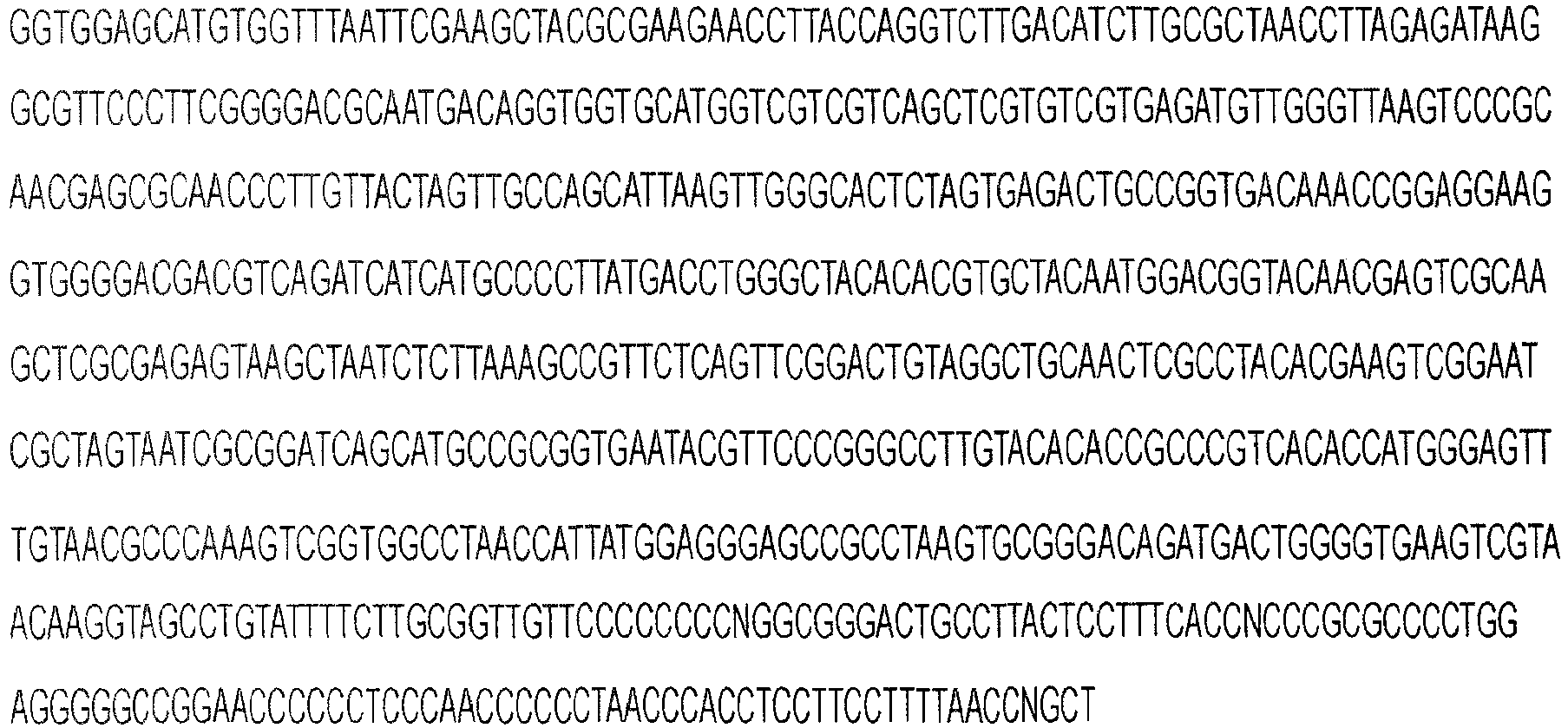
-
SEQ ID NO: 2
31 S10BL141 with 519R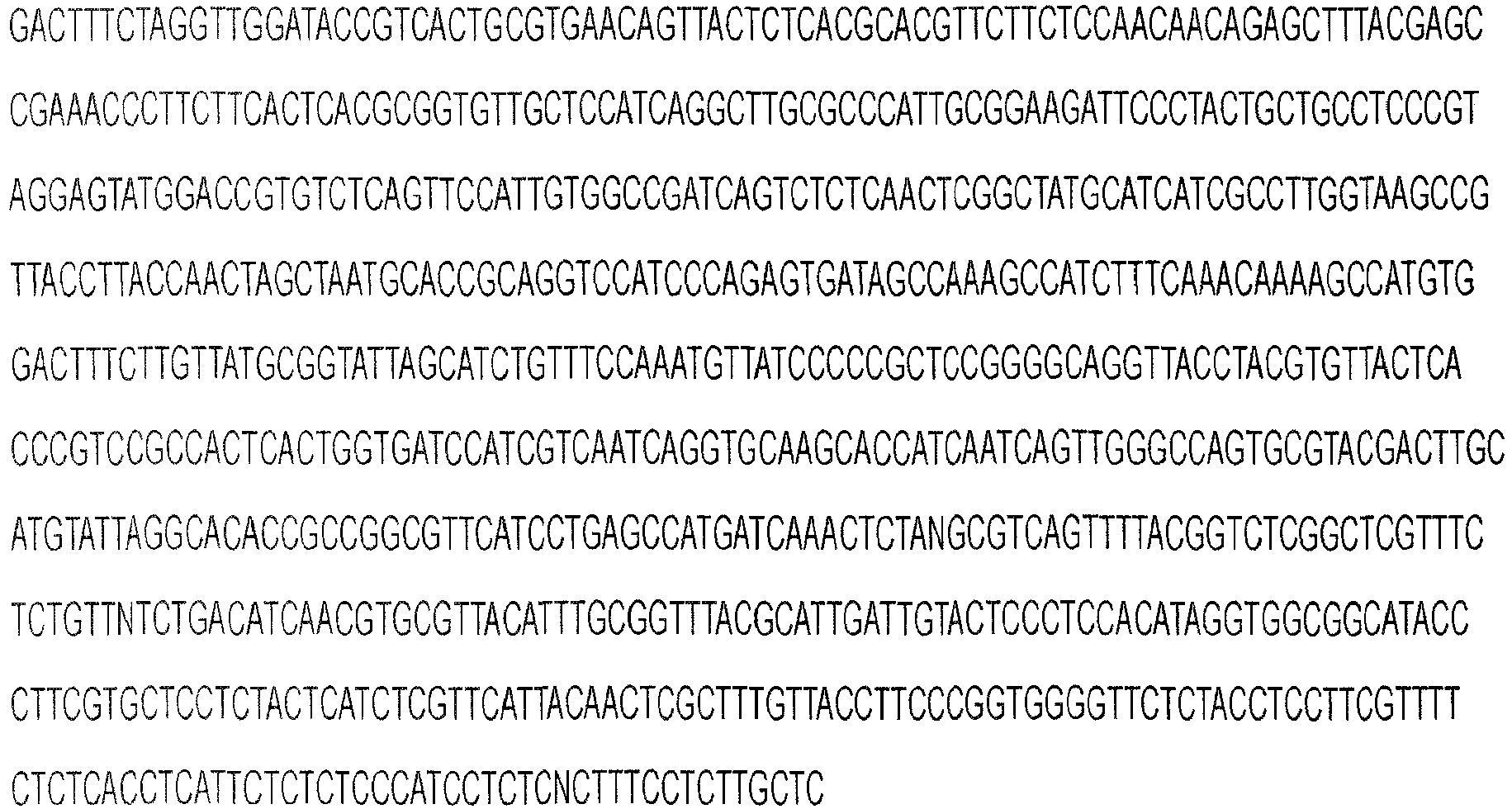
-
SEQ ID NO: 3
161 S10BL282 with 926F
-
SEQ ID NO: 4
161 S10BL300 with 519R
-
SEQ ID NO: 5
255 S10BL504 with 926F
-
SEQ ID NO: 6
255 S10BL530 with 519R
-
SEQ ID NO: 7
258 S10BL414 with 926F
-
SEQ ID NO: 8
258 S10BL438 with 519RNCIMB 41846 GGDK31- Lactobacillus reuteri
-
SEQ ID NO: 10
S12KG200 GGDK 31-1 27F
-
SEQ ID NO: 11
S12KG201 GGDK 31-1519F
-
SEQ ID NO: 12
S12KG202 GGDK 31-1926F
-
SEQ ID NO: 13
S12KG203 GGDK 31-1926R

-
SEQ ID NO: 14
S12KG204 GGDK 31-1519R
-
SEQ ID NO: 15
S12KG205 GGDK 31-1 RP2
-
-
SEQ ID NO: 16
S12KG218 GGDK 161-1 27F

-
SEQ ID NO: 17
S12KG219 GGDK 161-1519F
-
SEQ ID NO: 18
S12KG220 GGDK 161-1 926F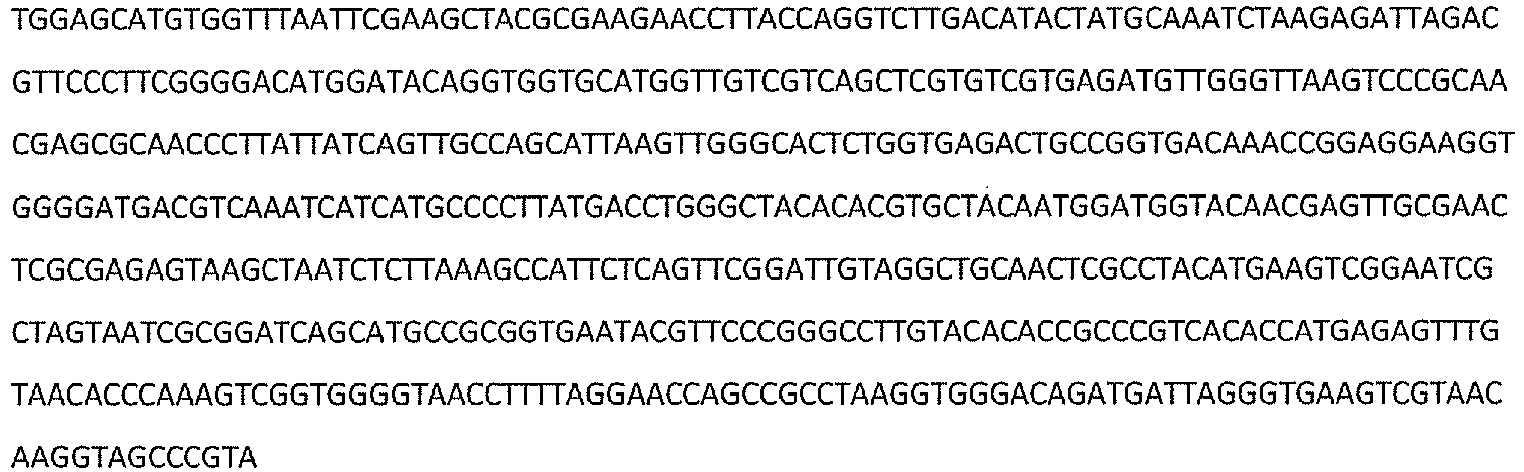
-
SEQ ID NO: 19
S12KG221 GGDK 161-1 926R
-
SEQ ID NO: 20
S12KG222 GGDK 161-1 519R

-
SEQ ID NO: 21
S12KG223 GGDK 161-1 RP2
-
-
SEQ ID NO: 22
S12KG309 cGGDK 161-1 27F
-
SEQ ID NO: 23
S12KG310 cGGDK 161-1 519F

-
SEQ ID NO: 24
S12KG311 cGGDK 161-1 926F
-
SEQ ID NO: 25
S12KG312 cGGDK 161-1 926R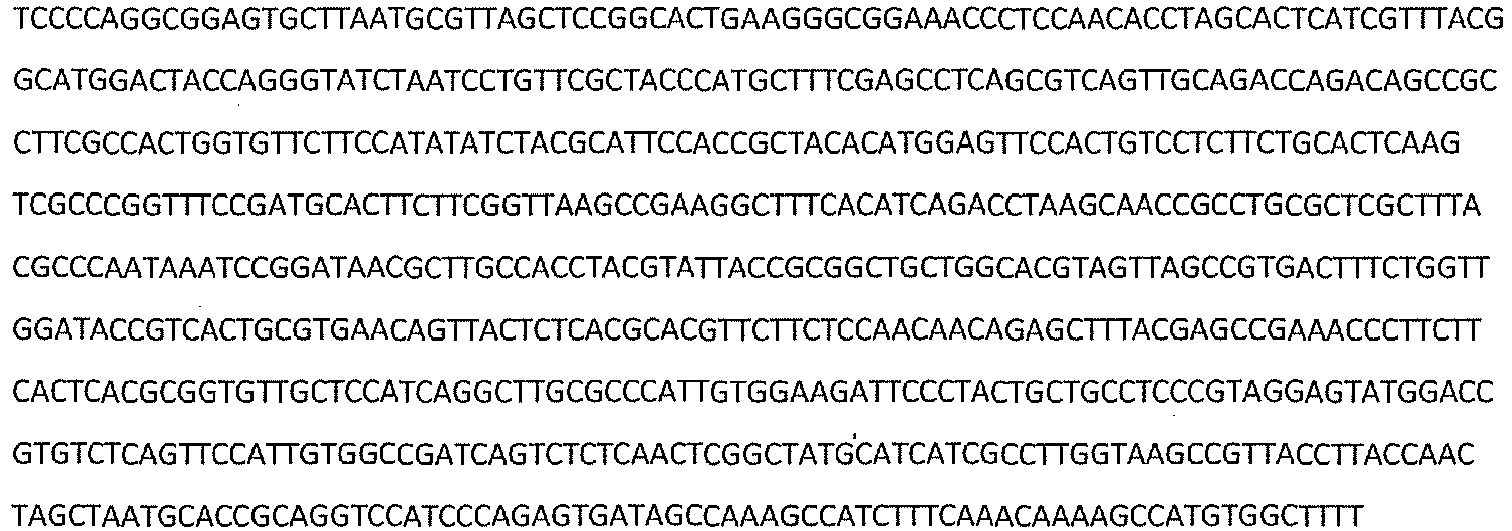
-
SEQ ID NO: 26
S12KG313 cGGDK 161-1 519R
-
SEQ ID NO: 27
S12KG314 cGGDK 161-1 RP2

-
-
SEQ ID NO: 28
S12KG237 GGDK 255-1 27F
-
SEQ ID NO: 29
S12KG238 GGDK 255-1 519F
-
SEQ ID NO: 30
S12KG239 GGDK 255-1 926FSEQ ID NO: 31 512KG240 GGDK 255-1 926R

-
SEQ ID NO: 32
S12KG241 GGDK 255-1519R
-
SEQ ID NO: 33
512KG242 GGDK 255-1 RP2
-
-
SEQ ID NO: 34
S12KG267 GGDK 258-3 27F

-
SEQ ID NO: 35
S12KG268 GGDK 258-3 519F
-
SEQ ID NO: 36
S12KG269 GGDK 258-3 926F
-
SEQ ID NO: 37
S12KG270 GGDK 258-3 926RSEQ ID NO: 38 S12KG271 GGDK 258-3 519R

-
SEQ ID NO: 39
512KG272 GGDK 258-3 RP2
-
-
SEQ ID NO: 40
S12KG273 GGDK 266-127F - repeat
-
SEQ ID NO: 41
S12KG274 GGDK 266-1 519F

-
SEQ ID NO: 42
S12KG275 GGDK 266-1 926F - repeat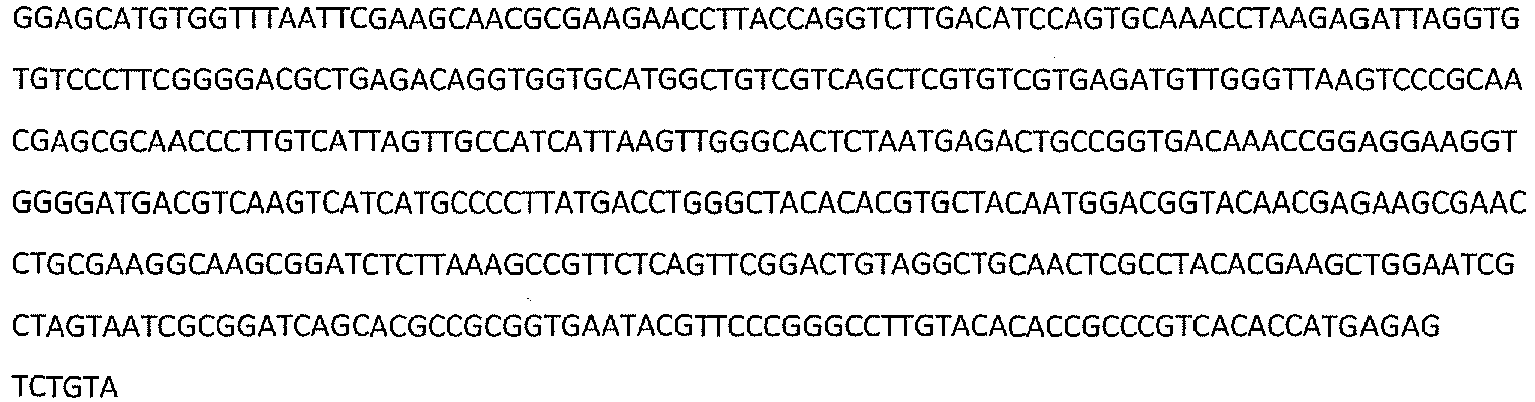
-
SEQ ID NO: 43
S12KG276 GGDK 266-1926R
-
SEQ ID NO: 44
S12KG277 GGDK 266-1 519R
-
SEQ ID NO: 45
S12KG278 GGDK 266-1 RP2

-
-
SEQ ID NO: 46
S12KG279 GGDK-266-2 27F
-
SEQ ID NO: 47
S12KG280 GGDK-266-2 519F - repeat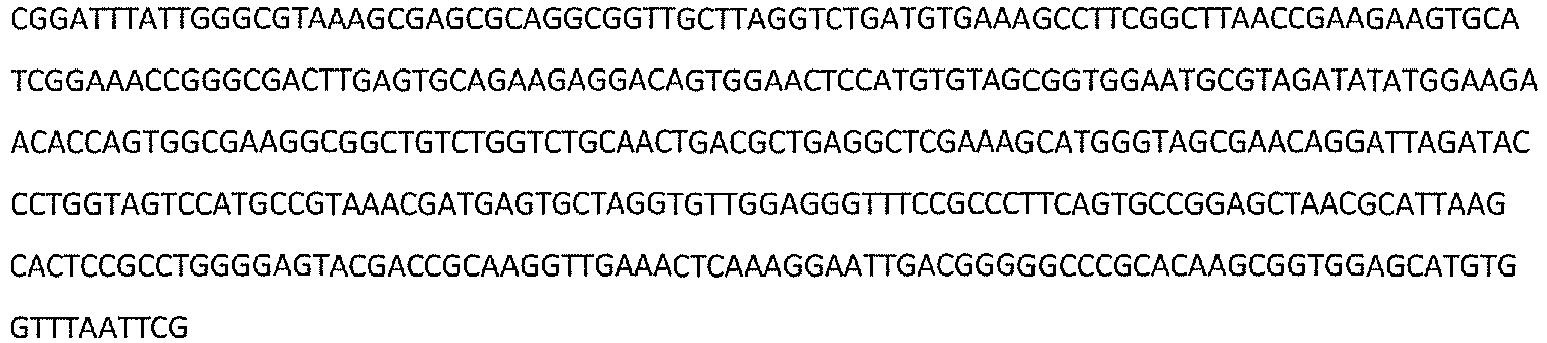
-
SEQ ID NO: 48
S12KG281 GGDK-266-2 926F - repeat
-
SEQ ID NO: 49
S12KG282 GGDK-266-2 926R - repeat
-
SEQ ID NO: 50
S12KG283 GGDK-266-2 519R
-
SEQ ID NO: 51
S12KG284 GGDK-266-2 RP2
-
-
SEQ ID NO: 52
S12KG381 27F

-
SEQ ID NO: 53
S12KG382 519F
-
SEQ ID NO: 54
S12KG383 926F
-
SEQ ID NO: 55
S12KG384 926R
-
SEQ ID NO: 56
S12KG385 519R

-
SEQ ID NO: 57
S12KG386 RP2
-
-
SEQ ID NO: 58
S12KG399 27F
-
SEQ ID NO: 59
S12KG400 519F
-
SEQ ID NO: 60
S12KG401 926F

-
SEQ ID NO: 61
S12KG402 926R
-
SEQ ID NO: 62
S12KG403 519R
-
SEQ ID NO: 63
S12KG404 RP2
-
SEQ ID NO: 64
NCIMB 42009 GGDK266b - L.reuteri (sample 6a) -
S12KG411 27F

-
SEQ ID NO: 65
S12KG412 519F
-
SEQ ID NO: 66
S12KG413 926F
-
SEQ ID NO: 67
S12KG414 926R
-
SEQ ID NO: 68
S12KG415 519R

-
SEQ ID NO: 69
S12KG416 RP2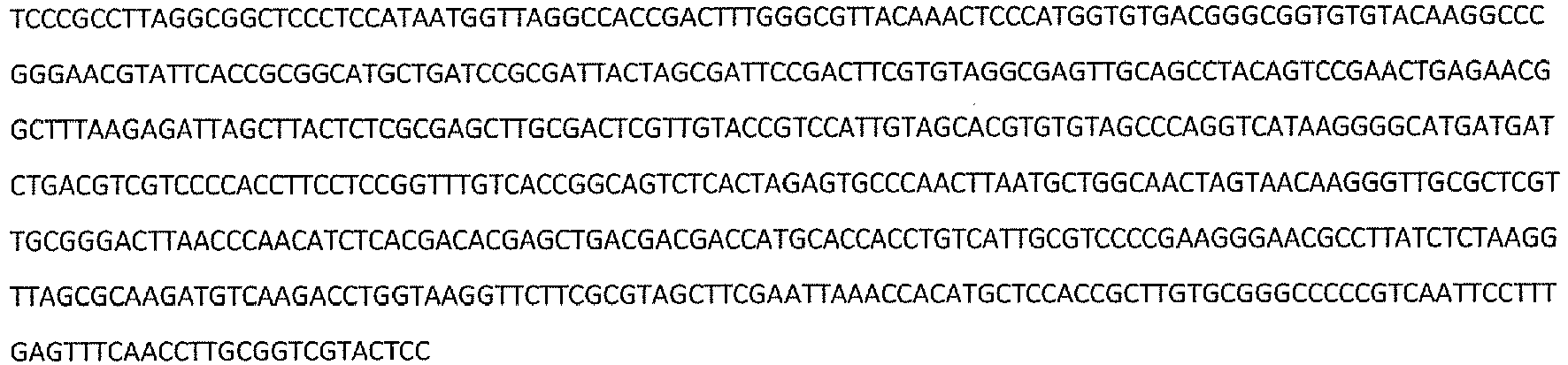
-
SEQ ID NO: 70
NCIMB 42010 GGDK161a - L.plantarum (sample 7a) -
S12KG417 27F

-
SEQ ID NO: 71
S12KG418 519F
-
SEQ ID NO: 72
S12KG419 926F

-
SEQ ID NO: 73
S12KG420 926R
-
SEQ ID NO: 74
S12KG421 519R
-
SEQ ID NO: 75
S12KG422 RP2
-
-
SEQ ID NO: 76
S12KG441 27F

-
SEQ ID NO: 77
S12KG442 519F
-
SEQ ID NO: 78
S12KG443 926F
- SEQ ID NO: 79
S12KG444 926R
No results -
SEQ ID NO: 80
S12KG445 519R
-
SEQ ID NO: 81
S12KG446 RP2

-
-
SEQ ID NO: 82
S12KG381 27F
-
SEQ ID NO: 83
S12KG382 519F
-
SEQ ID NO: 84
S12KG383 926F
-
SEQ ID NO: 85
S12KG384 926R
-
SEQ ID NO: 86
S12KG385 519R
-
SEQ ID NO: 87
S12KG386 RP2
-
- Blandino, G., Fazio, D., Di Marco, R. Probiotics: Overview of microbiological and immunological characteristics (2008). Expert Review of Anti-Infective Therapy, 6 (4), pp. 497-508.
- Cintas LM, Casaus MP, Herranz C, Nes IF, Hernandez PE. Review: bacteriocins of lactic acid bacteria (2001). Food Sci Technol Int. 7(4):281-305.
- Clarridge III, J.E. Impact of 16S rRNA gene sequence analysis for identification of bacteria on clinical microbiology and infectious diseases (2004). Clinical Microbiology Reviews, 17 (4), pp. 840-862.
- Cotter, P.D., Hill, C., Ross, R.P. Food microbiology: Bacteriocins: Developing innate immunity for food (2005). Nature Reviews Microbiology, 3 (10), pp. 777-788.
- De Angelis, M., Siragusa, S., Berloco, M., Caputo, L., Settanni, L., Alfonsi, G., Amerio, M., Grandi, A., Ragni, A., Gobbetti, M. Selection of potential probiotic lactobacilli from pig feces to be used as additives in pelleted feeding (2006). Research in Microbiology, 157 (8), pp. 792-801
- Elmadfa, I., Klein, P., Meyer, A.L. Immune-stimulating effects of lactic acid bacteria in vivo and in vitro (2010). Proceedings of the Nutrition Society, 69 (3), pp. 416-420.
- Gopal, P.K., Sullivan, P.A., Smart, J.B.Utilisation of galacto-oligosaccharides as selective substrates for growth by lactic acid bacteria including Bifidobacterium lactis DR10 and Lactobacillus rhamnosus DR20 (2001). International Dairy Journal, 11 (1-2), pp. 19-25.
- Gousia, P., Economou, V., Sakkas, H., Leveidiotou, S., Papadopoulou, C. Antimicrobial resistance of major foodborne pathogens from major meat products (2011). Foodborne Pathogens and Disease, 8 (1), pp. 27-38.
- Jackson MS, Bird AR, McOrist AL. Comparison of two selective media for the detection and enumeration of Lactobacilli in human faeces (2002). J Microbiol Methods. 51 (3):313-21. 65
- Korhonen, J.M., Sclivagnotis, Y., Wright, A.V. Characterization of dominant cultivable lactobacilli and their antibiotic resistance profiles from faecal samples of weaning piglets (2007). Journal of Applied Microbiology, 103 (6), pp. 2496-2503.
- Lähteinen, T., Malinen, E., Koort, J.M.K., Mertaniemi-Hannus, U., Hankimo, T., Karikoski, N., Pakkanen, S., Laine, H., Sillanpää, H., Söderholm, H., Palva, A. Probiotic properties of Lactobacillus isolates originating from porcine intestine and feces (2010). Anaerobe, 16 (3), pp. 293-300
- Liu, Y., Fatheree, N.Y., Mangalat, N., Rhoads, J.M. Human-derived probiotic Lactobacillus reuteri strains differentially reduce intestinal inflammation (2010). American Journal of Physiology - Gastrointestinal and Liver Physiology, 299 (5), pp. G1087-G1096.
- Ljungh, A., Wadström, T. Lactic acid bacteria as probiotics (2006). Current Issues in Intestinal Microbiology, 7 (2), pp. 73-90.
- Martin, R, Delgado, S, Maldonado, A, Jiménez, E, Olivares, M, Fernández, L, Sobrino, OJ, Rodriguez, JM. Isolation of lactobacilli from sow milk and evaluation of their probiotic potential (2009). Journal of Dairy Research, 76 (4), pp. 418-425.
- Mulder IE, Schmidt B, Stokes CR, Lewis M, Bailey M, Aminov RI, Prosser JI, Gill BP, Pluske JR, Mayer CD, Musk CC, Kelly D. Environmentally-acquired bacteria influence microbial diversity and natural innate immune responses at gut surfaces (2009). BMC Biol. 7:79.
- Naughton PJ; Grant G. (2005) Modelling of salmonellosis In: Microbial Ecology of the Growing Animal Holzapfel WH, Naughton PJ. (Eds). London, Elsevier. pp. 235-257 Neeser, J.-R., Granato, D., Rouvet, M., Servin, A., Teneberg, S., Karlsson, K.-A. Lactobacillus johnsonii La1 shares carbohydrate-binding specificities with several enteropathogenic bacteria (2000). Glycobiology, 10 (11), pp. 1193-1199.
- Nicolau, D.P. Current challenges in the management of the infected patient (2011). Current Opinion in Infectious Diseases, 24 (Suppl 1), pp. S1-S10.
- Ohashi, Y., Ushida, K. Health-beneficial effects of probiotics: Its mode of action (2009). Animal Science Journal, 80 (4), pp. 361-371.
- Reddy, K.B.P.K., Awasthi, S.P., Madhu, A.N., Prapulla, S.G. Role of cryoprotectants on the viability and functional properties of probiotic lactic acid bacteria during freeze drying (2009). Food Biotechnology, 23 (3), pp. 243-265.
- Robertson, J.M.C., McKenzie, N.H., Duncan, M., Allen-Vercoe, E., Woodward, M.J., Flint, H.J., Grant, G. Lack of flagella disadvantages Salmonella enterica serovar Enteritidis during the early stages of infection in the rat (2003). Journal of Medical Microbiology, 52 (1), pp. 91-99.
- Schreiber, O., Petersson, J., Phillipson, M., Perry, M., Roos, S., Holm, L. Lactobacillus reuteri prevents colitis by reducing P-selectin-associated leukocyte- and platelet-endothelial cell interactions (2009). American Journal of Physiology - Gastrointestinal and Liver Physiology, 296 (3), pp. G534-G542.
- Smith, C.L., Geier, M.S., Yazbeck, R., Torres, D.M., Butler, R.N., Howarth, G.S. Lactobacillus fermentum BR11 and fructo-oligosaccharide partially reduce jejunal inflammation in a model of intestinal mucositis in rats (2008). Nutrition and Cancer, 60 (6), pp. 757-767.
- Strasser, S., Neureiter, M., Geppl, M., Braun, R., Danner, H. Influence of lyophilization, fluidized bed drying, addition of protectants, and storage on the viability of lactic acid bacteria (2009). Journal of Applied Microbiology, 107 (1), pp. 167-177.
- Tomás, M.S.J., Bru, E., Martos, G., Nader-Macías, M.E. Stability of freeze-dried vaginal Lactobacillus strains in the presence of different lyoprotectors (2009). Canadian Journal of Microbiology, 55 (5), pp. 544-552.
- Tzortzis, G., Baillon, M.-L.A., Gibson, G.R., Rastall, R.A. Modulation of anti-pathogenic activity in canine-derived Lactobacillus species by carbohydrate growth substrate (2004). Journal of Applied Microbiology, 96 (3), pp. 552-559.
- Williams, N.T. Probiotics (2010). American Journal of Health-System Pharmacy, 67 (6), pp. 449-458.
- Yao, W., Zhu Wei-yun, W.-Y., Smidt, H., Verstegen, M.W.A. Cultivation-Independent Analysis of the Development of the Lactobacillus spp. Community in the Intestinal Tract of Newborn Piglets (2011) Agricultural Sciences in China, 10 (3), pp. 438-447.
- Yun, J.H., Lee, K.B., Sung, Y.K., Kim, E.B., Lee, H.-G., Choi, Y.J. Isolation and characterization of potential probiotic lactobacilli from pig feces (2009). Journal of Basic Microbiology, 49 (2), pp. 220-226.
| Total number of cultured colony picks | 443 |
| Media: | |
| LAMVAB agar | 55 |
| LAMVAB agar + pig colostral carbohydrate | 88 |
| |
29 |
| MRS agar + pig colostrum carbohydrate | 176 |
| Glucose-free MRS agar + |
57 |
| MRS agar after heat-treatment at up to 70°C | 38 |
| Main strains identified: | |
| Lactobacillus reuteri | |
| Lactobacillus johnsonii | |
| Lactobacillus plantarum |
| Pathogen killing (units) Well diffusion assay | ||||
| RINH Vial | anti-SE | anti-KSS | ||
| 85 | LR | 129886 | 60168 | |
| 255 | LJ | 101477 | 64390 | |
| 266 | LJ | 101335 | 60168 | |
| 436 | LJ | 81656 | 85010 | |
| 161 | LP | 77894 | 103346 | |
| 12 | LJ | 162709 | 42977 | |
| 16 | LJ | 117621 | 41365 | |
| 29 | LR | 174471 | 45720 | |
| 31 | LR | 116867 | 46907 | |
| 86 | LR | 98520 | 75147 | |
| 230 | LJ | 95705 | 64340 | |
| 256 | LJ | 94012 | 77459 | |
| 314 | LJ | 103497 | 48936 | |
| 361 | LJ | 100770 | 40254 | |
| 17 | LJ | 144765 | 23072 | |
| 30 | LR | 125463 | 36050 | |
| 32 | LR | 168892 | 32572 | |
| 258 | LP | 70724 | 68612 | |
| 260 | LP | 78197 | 68562 | |
| 320 | LJ | 66350 | 78044 | |
| 364 | LJ | 99137 | 55123 | |
| 433 | LJ | 95083 | 51461 | |
| 15 | LP | 77459 | 58669 | |
| 218 | LJ | 62329 | 50416 | |
| 220 | LJ | 68612 | 53834 | |
| 356 | LJ | 72986 | 55302 | |
| 363 | LJ | 79125 | 45555 | |
| 131 | LR | 42223 | 44108 | |
| 434 | |
10000 | 81656 | |
| 166 | LJ | 17064 | 79621 | |
| 431 | LR | 48657 | 31674 | |
| 47 | LR | 20722 | 34633 | |
| 46 | LR | 19867 | 34633 | |
| LJ. L. johnsonii. LR. L. reuteri. LP. L. Plantarum |
| RINH Vial no. | forward | reverse sequence | |
| 85 | Lactobacillus | Lactobacillus reuteri | |
| 255 | Lactobacillus johnsonii, taiwanensis, acidophilus | Lactobacillus johnsonii, |
|
| 266 | Lactobacillus johnsonii | Lactobacillus johnsonii | |
| 436 | lactobacillus johnsonii str. 466 | |
|
| 161 | Lactobacillus plantarum, pentosus, paraplantarum | Lactobacillus plantarum, pentosus | |
| 12 | Lactobacillus johnsonii, gasseri, taiwanensis | Lactobacillus johnsonii, gasseri | |
| 16 | Lactobacillus johnsonii, gasseri, taiwanensis | Lactobacillus johnsonii | |
| 29 | Lactobacillus reuteri, pontis, vaginalis, | Lactobacillus reuteri | |
| 31 | Lactobacillus | Lactobacillus reuteri | |
| 86 | Lactobacillus | Lactobacillus reuteri | |
| 230 | Lactobacillus johnsonii, taiwanensis, acidophilus | Lactobacillus johnsonii | |
| 256 | Lactobacillus johnsonii, taiwanensis, acidophilus | Lactobacillus johnsonii | |
| 314 | lactobacillus johnsonii BR0315 | uncultured bacterium | |
| 361 | lactobacillus johnsonii str. NCC2822 | lactobacillus johnsonii F19785 | |
| 17 | Lactobacillus johnsonii, gasseri, taiwanensis | Lactobacillus johnsonii | |
| 30 | Lactobacillus reuteri, pontis | Lactobacillus reuteri | |
| 32 | Lactobacillus | Lactobacillus reuteri | |
| 258 | Lactobacillus plantarum, pentosus, helveticus | Lactobacillus plantarum, pentosus, paraplantarum | |
| 260 | Lactobacillus plantarum, pentosus, paraplantarum | Lactobacillus pentosus, plantarum, paraplantarum | |
| 320 | lactobacillus johnsonii NCC2822 | Lactobacillus johnsonii F19785 | |
| 364 | lactobacillus johnsonii 466 | |
|
| 433 | lactobacillus johnsonii str. |
|
|
| 15 | Lactobacillus plantarum, pentosus | Lactobacillus plantarum, |
|
| 218 | Lactobacillus johnsonii, taiwanensis | uncultured Firmicutes, Lactobacillus johnsonii | |
| 220 | Lactobacillus johnsonii, taiwanensis | uncultured Firmicutes, Lactobacillus johnsonii | |
| 356 | lactobacillus johnsonii NCC2822 | lactobacillus johnsonii F19785 | |
| 363 | lactobacillus johnsonii 466 | |
|
| 131 | Lactobacillus reuteri | Lactobacillus reuteri | |
| 434 | Lactobacillus reuteri NM99-1 | |
|
| 166 | Lactobacillus johnsonii, taiwanensis, acidophilus | Lactobacillus johnsonii | |
| 431 | lactobacillus reuteri str.Probio-16 | lactobacillus reuteri JCM 1112 | |
| 47 | Lactobacillus | Lactobacillus reuteri | |
| 46 | Lactobacillus reuteri | Lactobacillus reuteri |
| RINH | Inhibition of adherence (%) | ||
| Vial no. | | KSS | |
| 85 | 88.31 | 87.93 | |
| 255 | 82.37 | 99.93 | |
| 266 | 88.03 | 98.09 | |
| 161 | 98.32 | 96.94 | |
| 12 | 96.89 | 99.92 | |
| 29 | 93.7 | 99.91 | |
| 31 | 98.64 | 99.75 | |
| 86 | 81 | 99.98 | |
| 256 | 82.47 | 99.92 | |
| 361 | 85.07 | 99.44 | |
| 17 | 84.56 | 99.66 | |
| 30 | 96.44 | 99.91 | |
| 32 | 87.74 | 99.86 | |
| 230 | 78.89 | 82.45 | |
| 258 | 96.37 | 86.5 | |
| 260 | 90.22 | 88.79 | |
| 314 | 79.68 | 94.2 | |
| 433 | 99.99 | 96.23 | |
| 16 | 87.68 | 45.38 | |
| 218 | 91.53 | 86.49 | |
| 363 | 85.61 | 99.93 | |
| 364 | 82.13 | 78.12 | |
| 15 | 79.19 | 99.52 | |
| 131 | 95.5 | 96.03 | |
| 220 | 91.04 | 78.6 | |
| 320 | 92.7 | 44.17 | |
| 356 | 82.15 | 78.4 | |
| 434 | 94.78 | 98.85 | |
| 436 | 99.97 | 1 | |
| 166 | 91.45 | 95.97 | |
| 431 | 96.35 | 86.47 | |
| 47 | 90.47 | 99.47 | |
| 46 | 83.51 | 99.7 | |
| ampicillin cefotaxime chloramphenicol erythromycin gentamicin kanamycin metronizadole nal. acid tetracycline vancomycin | ||||||||||
| 12 | 244011 | 340402 | 186699 | 13151 | 0 | 0 | 0 | 0 | 37668 | 22581 |
| 15 | 277117 | 311725 | 204282 | 214008 | 0 | 0 | 0 | 0 | 0 | 0 |
| 16 | 266033 | 294166 | 187805 | 64681 | 17000 | 7157 | 0 | 0 | 0 | 105209 |
| 17 | 387224 | 400570 | 235430 | 277145 | 9193 | 0 | 0 | 0 | 50328 | 117741 |
| 29 | 410335 | 444193 | 190293 | 114511 | 0 | 0 | 0 | 0 | 252497 | 11483 |
| 30 | 292728 | 335927 | 77133 | 208117 | 31261 | 0 | 0 | 0 | 187805 | 31402 |
| 31 | 334789 | 410966 | 165904 | 262226 | 38221 | 0 | 0 | 0 | 214037 | 24901 |
| 32 | 404496 | 402291 | 247436 | 350238 | 71608 | 23786 | 0 | 0 | 261979 | 10691 |
| 46 | 359232 | 402588 | 210421 | 251461 | 29550 | 0 | 0 | 0 | 21382 | 25069 |
| 47 | 328283 | 410579 | 185515 | 270105 | 30342 | 0 | 0 | 0 | 211556 | 22231 |
| 85 | 356114 | 369916 | 204992 | 309439 | 0 | 0 | 0 | 0 | 276800 | 3971 |
| 86 | 250812 | 381270 | 183399 | 250805 | 41858 | 0 | 31264 | 0 | 16643 | 13355 |
| 131 | 349955 | 473065 | 248521 | 123562 | 82466 | 14932 | 0 | 0 | 19354 | 7479 |
| 161 | 338497 | 412977 | 258724 | 261133 | 51991 | 4536 | 29126 | 0 | 20435 | 5542 |
| 166 | 268783 | 417393 | 185508 | 251607 | 61136 | 17671 | 0 | 0 | 24606 | 0 |
| 218 | 209117 | 271547 | 148617 | 0 | 0 | 0 | 0 | 0 | 88668 | 122870 |
| 220 | 209371 | 319970 | 165815 | 34230 | 58814 | 32572 | 0 | 0 | 34636 | 111666 |
| 230 | 254614 | 335143 | 164405 | 51078 | 65717 | 45705 | 0 | 0 | 36644 | 41991 |
| 255 | 330364 | 392169 | 217758 | 59224 | 56563 | 8486 | 0 | 0 | 29872 | 0 |
| 256 | 456892 | 502325 | 228531 | 71258 | 93058 | 0 | 0 | 0 | 20955 | 42203 |
| 258 | 401257 | 271932 | 195909 | 233326 | 28608 | 0 | 0 | 0 | 223143 | 0 |
| 260 | 286400 | 364573 | 203796 | 33393 | 78821 | 78364 | 0 | 0 | 21757 | 62792 |
| 266 | 287070 | 322869 | 198614 | 247085 | 54008 | 3079 | 6437 | 2737 | 48286 | 107882 |
| 314 | 297057 | 332853 | 154830 | 44115 | 0 | 0 | 0 | 0 | 90259 | |
| 356 | 291920 | 339895 | 203692 | 62656 | 10472 | 5890 | 0 | 0 | 24194 | 8202 |
| 361 | 320695 | 323713 | 201886 | 234140 | 0 | 0 | 0 | 0 | 91863 | |
| 363 | 275304 | 308159 | 193271 | 44491 | 86683 | 0 | 0 | 0 | 28212 | 18146 |
| 364 | 288514 | 341651 | 194320 | 143978 | 45880 | 0 | 0 | 0 | 18322 | 103995 |
| 431 | 339016 | 380459 | 226484 | 311725 | 74991 | 0 | 0 | 0 | 0 | 26302 |
| 433 | 241710 | 203588 | 174124 | 63381 | 19139 | 0 | 0 | 0 | 19965 | 79034 |
| 434 | 198112 | 261065 | 172223 | 68052 | 6049 | 0 | 0 | 0 | 60344 | 45863 |
| 436 | 290458 | 287331 | 185812 | 142842 | 0 | 0 | 0 | 0 | 52279 | 61810 |
| Nal. Acid, naladixie acid. |
| Substrates in capules of API CH 50 kit | ||
| 1 | glycerol | polyol |
| 2 | erythritol | polyol |
| 3 | D-arabinose | monosaccharide |
| 4 | L-arabinose | monosaccharide |
| 5 | D-ribose | monosaccharide |
| 6 | D-xylose | monosaccharide |
| 7 | L-xylose | monosaccharide |
| 8 | D-adonotol | alcohol |
| 9 | Methyl-βD-Xylopyranoside | cyclic |
| 10 | D-galactose | monosaccharide |
| 11 | D-glucose | monosaccharide |
| 12 | D-fructose | monosaccharide |
| 13 | D-mamose | monosaccharide |
| 14 | L-sorbose | monosaccharide |
| 15 | L-rhamose | monosaccharide |
| 16 | dulcitol | monosaccharide/alcohol |
| 17 | inositol | polyol |
| 18 | D-mamitol | polyol |
| 19 | D-sorbitol | sugar/alcohol |
| 20 | Methyl-αD-Mannopyranoside | cyclic |
| 21 | Methyl-αD-Glucopyranoside | cyclic |
| 22 | N-acetylglucosamine | monosaccharide |
| 23 | amygdalin | glycoside |
| 24 | arbutin | glycoside |
| 25 | esculin ferric citrate | |
| 26 | salicin | glycoside |
| 27 | D-cellobiose | disaccharide |
| 28 | D-maltose | disaccharide |
| 29 | D-lactose (bovine) | disaccharide |
| 30 | D-Melibiose | disaccharide |
| 31 | D-sacch arose | disaccharide |
| 32 | D-trehalose | disaccharide |
| 33 | inulin | polysaccharide |
| 34 | D-melezitose | trisaccharide |
| 35 | D-rafinose | trisaccharide |
| 36 | amidon (starch) | polysaccharide |
| 37 | glycogen | polysaccharide |
| 38 | xylitol | monosaccharide/alcohol |
| 39 | gentiobiose | disaccharide |
| 40 | D-turanose | disaccharide |
| 41 | D-lyxose | monosaccharide |
| 42 | D-tagatose | monosaccharide |
| 43 | D-fucose | monosaccharide |
| 44 | L-fucose | monosaccharide |
| 45 | D-arabitol | monosaccharide/alcohol |
| 46 | L-arabitol | monosaccharide/alcohol |
| 47 | potassium gluconate | sequestrant |
| 48 | potassium 2-ketogluconate | sequestrant |
| 49 | potassium 5-ketogluconate | sequestrant |
| monosaccharides | alcohol/monosaccharides | disaccharides | trisaccharides | polysaccharides | alcohols | others | |
| 17 | 0.4 | 0.0 | 0.8 | 0.5 | 0.3 | 0.0 | 0.4 |
| 30 | 0.2 | 0.0 | 0.0 | 0.0 | 0.0 | 0.0 | 0.3 |
| 31 | 0.3 | 0.0 | 0.6 | 0.5 | 0.0 | 0.0 | 0.6 |
| 32 | 0.3 | 0.0 | 0.5 | 0.5 | 0.0 | 0.0 | 0.3 |
| 46 | 0.2 | 0.0 | 0.5 | 0.5 | 0.0 | 0.0 | 0.4 |
| 47 | 0.2 | 0.3 | 0.5 | 0.5 | 0.0 | 0.0 | 0.4 |
| 85 | 0.1 | 0.0 | 0.3 | 0.0 | 0.0 | 0.0 | 0.4 |
| 86 | 0.3 | 0.0 | 0.5 | 0.5 | 0.0 | 0.0 | 0.4 |
| 131 | 0.4 | 0.0 | 1.0 | 1.0 | 0.3 | 0.3 | 0.9 |
| 161 | 0.7 | 0.3 | 0.9 | 1.0 | 0.0 | 0.3 | 0.9 |
| 166 | 0.4 | 0.0 | 0.6 | 0.0 | 0.7 | 0.0 | 0.3 |
| 220 | 0.1 | 0.0 | 0.5 | 0.5 | 0.0 | 0.0 | 0.4 |
| 230 | 0.3 | 0.0 | 0.8 | 0.5 | 0.0 | 0.0 | 0.4 |
| 255 | 0.1 | 0.0 | 0.6 | 1.0 | 0.3 | 0.0 | 0.4 |
| 256 | 0.2 | 0.0 | 0.5 | 1.0 | 0.0 | 0.2 | 0.6 |
| 258 | 0.6 | 0.3 | 1.0 | 1.0 | 0.7 | 0.7 | 0.9 |
| 260 | 0.4 | 0.3 | 0.9 | 1.0 | 1.0 | 0.0 | 0.6 |
| 266 | 0.3 | 0.0 | 0.9 | 0.5 | 0.3 | 0.0 | 0.4 |
| 320 | 0.3 | 0.0 | 0.5 | 0.5 | 0.3 | 0.0 | 0.3 |
| 363 | 0.4 | 0.0 | 0.8 | 1.0 | 0.3 | 0.0 | 0.4 |
| 364 | 0.4 | 0.0 | 0.8 | 0.5 | 0.3 | 0.0 | 0.4 |
| 433 | 0.2 | 0.0 | 0.5 | 0.0 | 0.0 | 0.2 | 0.3 |
| RINH Vial no. | forward sequence | reverse sequence |
| 266 | Lactobacillus johnsonii | Lactobacillus johnsonii |
| 31 | Lactobacillus reuteri | Lactobacillus reuteri |
| 258 | Lactobacillus plantarum, pentosus, helveticus | Lactobacillus plantarum, pentosus, paraplantarum |
| 260 | Lactobacillus plantarum, pentosus, paraplantarum | Lactobacillus pentosus, plantarum, paraplantarum |
| 255 | Lactobacillus johnsonii, taiwanensis, acidophilus | Lactobacillusjohnsonii, gasseri |
| 161 | Lactobacillus plantarum, pentosus, paraplantarum | Lactobacillus plantarum, pentosus |
| 256 | Lactobacillus johnsonii, taiwanensis, acidophilus | Lactobacillus johnsonii |
| 86 | Lactobacillus reuteri | Lactobacillus reuteri |
| 85 | Lactobacillus reuteri | Lactobacillus reuteri |
| 32 | Lactobacillus reuteri | Lactobacillus reuteri |
| 230 | Lactobacillus johnsonii, taiwanensis, acidophilus | Lactobacillus johnsonii |
| 131 | Lactobacillus reuteri | Lactobacillus reuteri |
| 30 | Lactobacillus reuteri, pontis | Lactobacillus reuteri |
| 364 | lactobacillus johnsonii 466 | lactobacillus johnsonii F10785 |
| GGDK266 | ||||
| RINH vial no | Seq code primer 926F | Bacteria identified by BLAST | Seq code primer 519R | Bacteria identified by BLAST |
| 266 | S10CM218 | Lactobacillus johnsonii | S10CM171 | Lactobacillus johnsonii |
| GGDK31 | ||||
| RINH vial no | Seq code primer 926F | Bacteria identified by BLAST | Seq code primer 519R | Bacteria identified by BLAST |
| 31 | S10BL123 | Lactobacillus reuteri | S10BL141 | Lactobacillus reuteri |
Claims (13)
- A porcine lactic acid bacterial strain which is selected from:(i) NCIMB 41846;(ii) NCIMB 41847;(iii) NCIMB 41848;(iv) NCIMB 41849;(v) NCIMB 41850;(vi) NCIMB 42008;(vii) NCIMB 42009;(viii) NCIMB 42010;(ix) NCIMB 42011;(x) NCIMB 42012;and any combination of two or more thereof.
- A composition comprising one or more lactic acid bacterial strains according to claim 1 and a pharmaceutically acceptable excipient, carrier or diluent.
- A probiotic composition comprising one or more lactic acid bacterial strains according to claim 1.
- One or more lactic acid bacterial strains according to claim 1 for use in medicine.
- One or more lactic acid bacterial strains for use according to claim 4, wherein the one or more lactic acid bacterial strains are for use in improving intestinal microbiota, and wherein the one or more lactic acid bacterial strains exhibit antimicrobial activity against E. coli and/or S. enteritidis.
- One or more lactic acid bacterial strains according to claim 1 for use in treating an intestinal disorder in a subject.
- One or more lactic acid bacterial strains for use according to claim 6, wherein the subject is a mammal, preferably a human.
- One or more lactic acid bacterial strains for use according to claim 6, wherein the intestinal disorder is salmonellosis, irritable bowel syndrome (IBS), inflammatory bowel disorder (IBD), functional dyspepsia, functional constipation, functional diarrhoea (including antibiotic associated diarrhoea, traveller's diarrhoea and pediatric diarrhoea), functional abdominal pain, functional bloating, Epigastric Pain Syndrome, Postprandial Distress Syndrome, Crohn's disease, ulcerative colitis, necrotising enterocolitis, and combinations thereof.
- A feedstuff comprising one or more bacterial strains according to claim 1.
- A food product comprising one or more bacterial strains according to claim 1.
- A dietary supplement comprising one or more bacterial strains according to claim 1.
- A food additive comprising one or more bacterial strains according to claim 1.
- A process for producing a probiotic, said process comprising culturing a bacterial strain according to claim 1.
Priority Applications (6)
| Application Number | Priority Date | Filing Date | Title |
|---|---|---|---|
| SM20180049T SMT201800049T1 (en) | 2011-07-14 | 2012-07-13 | Bacterial strains isolated from pigs |
| RS20180080A RS56853B1 (en) | 2011-07-14 | 2012-07-13 | Bacterial strains isolated from pigs |
| PL12737592T PL2732023T3 (en) | 2011-07-14 | 2012-07-13 | Bacterial strains isolated from pigs |
| MEP-2018-26A ME02941B (en) | 2011-07-14 | 2012-07-13 | FROM PIGS ISOLATED BACTERIAL STRAINS |
| SI201231139T SI2732023T1 (en) | 2011-07-14 | 2012-07-13 | Bacterial strains isolated from pigs |
| HRP20180152TT HRP20180152T1 (en) | 2011-07-14 | 2012-07-13 | Bacterial strains isolated from pigs |
Applications Claiming Priority (2)
| Application Number | Priority Date | Filing Date | Title |
|---|---|---|---|
| GBGB1112091.2A GB201112091D0 (en) | 2011-07-14 | 2011-07-14 | Bacterial strains isolated from pigs |
| PCT/GB2012/051686 WO2013008039A2 (en) | 2011-07-14 | 2012-07-13 | Bacterial strains isolated from pigs |
Publications (2)
| Publication Number | Publication Date |
|---|---|
| EP2732023A2 EP2732023A2 (en) | 2014-05-21 |
| EP2732023B1 true EP2732023B1 (en) | 2017-11-22 |
Family
ID=44586578
Family Applications (1)
| Application Number | Title | Priority Date | Filing Date |
|---|---|---|---|
| EP12737592.1A Active EP2732023B1 (en) | 2011-07-14 | 2012-07-13 | Bacterial strains isolated from pigs |
Country Status (21)
| Country | Link |
|---|---|
| US (4) | US9539293B2 (en) |
| EP (1) | EP2732023B1 (en) |
| CN (2) | CN104080903B (en) |
| BR (1) | BR112014000835A2 (en) |
| CA (1) | CA2841576A1 (en) |
| CY (1) | CY1119911T1 (en) |
| DK (1) | DK2732023T3 (en) |
| ES (1) | ES2656037T3 (en) |
| GB (1) | GB201112091D0 (en) |
| HR (1) | HRP20180152T1 (en) |
| HU (1) | HUE036181T2 (en) |
| LT (1) | LT2732023T (en) |
| ME (1) | ME02941B (en) |
| NO (1) | NO2732023T3 (en) |
| PL (1) | PL2732023T3 (en) |
| PT (1) | PT2732023T (en) |
| RS (1) | RS56853B1 (en) |
| RU (2) | RU2677890C2 (en) |
| SI (1) | SI2732023T1 (en) |
| SM (1) | SMT201800049T1 (en) |
| WO (1) | WO2013008039A2 (en) |
Families Citing this family (65)
| Publication number | Priority date | Publication date | Assignee | Title |
|---|---|---|---|---|
| GB201112091D0 (en) * | 2011-07-14 | 2011-08-31 | Gt Biolog Ltd | Bacterial strains isolated from pigs |
| GB201117313D0 (en) | 2011-10-07 | 2011-11-16 | Gt Biolog Ltd | Bacterium for use in medicine |
| GB201306536D0 (en) | 2013-04-10 | 2013-05-22 | Gt Biolog Ltd | Polypeptide and immune modulation |
| KR20170091157A (en) | 2014-12-23 | 2017-08-08 | 4디 파마 리서치 리미티드 | Pirin polypeptide and immune modulation |
| PL3065748T3 (en) | 2014-12-23 | 2018-07-31 | 4D Pharma Research Limited | A bacteroides thetaiotaomicron strain and its use in reducing inflammation |
| MA41010B1 (en) | 2015-06-15 | 2020-01-31 | 4D Pharma Res Ltd | Compositions comprising bacterial strains |
| MD3650033T2 (en) | 2015-06-15 | 2022-08-31 | 4D Pharma Res Ltd | Compositions comprising bacterial strains |
| MA41060B1 (en) | 2015-06-15 | 2019-11-29 | 4D Pharma Res Ltd | Compositions comprising bacterial strains |
| EA201890050A1 (en) | 2015-06-15 | 2018-06-29 | 4Д Фарма Рисёрч Лимитед | COMPOSITIONS CONTAINING BACTERIAL STRAINS |
| SI3240554T1 (en) | 2015-06-15 | 2019-12-31 | 4D Pharma Research Limited, | Blautia stercosis and wexlerae for use in the treatment of inflammatory and autoimmune diseases |
| CN107849519A (en) * | 2015-06-30 | 2018-03-27 | 完美(中国)有限公司 | Bifidobacterium as a prebiotic basis for intestinal flora |
| GB201520497D0 (en) | 2015-11-20 | 2016-01-06 | 4D Pharma Res Ltd | Compositions comprising bacterial strains |
| AU2016357554B2 (en) | 2015-11-20 | 2019-04-04 | Cj Bioscience, Inc. | Compositions comprising bacterial strains |
| GB201520631D0 (en) | 2015-11-23 | 2016-01-06 | 4D Pharma Res Ltd | Compositions comprising bacterial strains |
| GB201520638D0 (en) | 2015-11-23 | 2016-01-06 | 4D Pharma Res Ltd | Compositions comprising bacterial strains |
| CN105343132B (en) * | 2015-12-08 | 2019-04-26 | 东北农业大学 | Composition, medicine and preparation method for treating colitis |
| CN105343133B (en) * | 2015-12-08 | 2019-11-19 | 东北农业大学 | A compound probiotic for treating ulcerative colitis, medicine and preparation method thereof |
| EP3520801A1 (en) | 2016-03-04 | 2019-08-07 | 4D Pharma Plc | Compositions comprising bacterial blautia strains for treating visceral hypersensitivity |
| GB201612191D0 (en) | 2016-07-13 | 2016-08-24 | 4D Pharma Plc | Compositions comprising bacterial strains |
| CN105779350B (en) * | 2016-04-11 | 2019-10-15 | 北京科拓恒通生物技术股份有限公司 | A kind of lactobacillus plantarum and application thereof of anti-Bacterium enteritidis infection |
| TW201821093A (en) | 2016-07-13 | 2018-06-16 | 英商4D製藥有限公司 | Composition comprising a bacterial strain |
| GB201621123D0 (en) | 2016-12-12 | 2017-01-25 | 4D Pharma Plc | Compositions comprising bacterial strains |
| CN106497854B (en) * | 2017-01-19 | 2019-10-22 | 南京农业大学 | Lactobacillus D8 and its application |
| JP7212945B2 (en) | 2017-05-22 | 2023-01-26 | フォーディー ファーマ リサーチ リミテッド | Compositions containing bacterial strains |
| TW201907931A (en) | 2017-05-24 | 2019-03-01 | 英商4D製藥研究有限公司 | Composition comprising a bacterial strain |
| CN115813955A (en) | 2017-06-14 | 2023-03-21 | 4D制药研究有限公司 | Compositions comprising bacterial strains |
| MD3804737T2 (en) | 2017-06-14 | 2022-10-31 | 4D Pharma Res Limited | Compositions comprising bacterial strains |
| WO2018229188A1 (en) | 2017-06-14 | 2018-12-20 | 4D Pharma Research Limited | Compositions comprising bacterial strains |
| KR102250597B1 (en) | 2017-11-20 | 2021-05-11 | 경희대학교 산학협력단 | Novel lactic acid bacteria and use thereof |
| CN111902153A (en) | 2018-01-19 | 2020-11-06 | 4D制药研究有限公司 | Combination therapy for treating or preventing cancer |
| AU2019210003A1 (en) | 2018-01-19 | 2020-07-30 | 4D Pharma Research Limited | Combination therapy for treating or preventing cancer |
| AU2019210002A1 (en) | 2018-01-19 | 2020-08-13 | 4D Pharma Research Limited | Combination therapy for treating or preventing cancer |
| CA3088338A1 (en) | 2018-01-19 | 2019-07-25 | 4D Pharma Research Limited | Combination therapy for treating or preventing cancer |
| EP3768285A1 (en) | 2018-03-19 | 2021-01-27 | 4D Pharma Research Limited | Compositions comprising bacterial strains |
| PL3743086T3 (en) | 2018-05-11 | 2022-06-20 | 4D Pharma Research Limited | Compositions comprising bacterial strains |
| CA3099880A1 (en) | 2018-06-14 | 2019-12-19 | 4D Pharma Research Ltd | Compositions comprising bacterial strains |
| DK3723777T3 (en) | 2018-06-25 | 2021-05-25 | 4D Pharma Res Ltd | COMPOSITIONS INCLUDING BACTERIA STRAINS |
| CA3106139A1 (en) | 2018-07-16 | 2020-01-23 | 4D Pharma Research Limited | Compositions comprising bacterial strains |
| TW202023590A (en) | 2018-08-17 | 2020-07-01 | 英商4D製藥研究有限公司 | Compositions comprising bacterial strains |
| US11590182B2 (en) | 2018-09-10 | 2023-02-28 | Ohio State Innovation Foundation | Methods and compositions to modulate antibiotic resistance and gastrointestinal microbiota |
| EP3852775A1 (en) | 2018-09-20 | 2021-07-28 | 4D Pharma Research Limited | Compositions comprising bacterial strains |
| WO2020074569A1 (en) | 2018-10-09 | 2020-04-16 | 4D Pharma Research Limited | Compositions comprising bacterial strains |
| WO2020079282A1 (en) | 2018-10-19 | 2020-04-23 | 4D Pharma Research Ltd | Compositions comprising bacterial strains |
| WO2020089488A1 (en) | 2018-11-02 | 2020-05-07 | 4D Pharma Research Limited | Compositions comprising bacterial strains |
| MA54161A (en) | 2018-12-12 | 2022-03-23 | 4D Pharma Res Ltd | COMPOSITIONS COMPRISING PARABACTEROID BACTERIAL STRAINS FOR THE TREATMENT OF CANCER |
| EP3893905A1 (en) | 2018-12-12 | 2021-10-20 | 4D Pharma Research Limited | Compositions comprising bacterial strains |
| EP3893906A1 (en) | 2018-12-12 | 2021-10-20 | 4D Pharma Research Limited | Compositions comprising bacterial strains |
| MX2021013776A (en) | 2019-05-10 | 2021-12-10 | 4D Pharma Res Limited | Compositions comprising bacterial strains. |
| TW202116333A (en) | 2019-07-05 | 2021-05-01 | 英商4D製藥研究有限公司 | Compositions comprising bacterial strains |
| EP4061389A1 (en) | 2019-11-20 | 2022-09-28 | 4D Pharma Research Limited | Compositions comprising bacterial strains |
| CN110878266B (en) * | 2019-11-21 | 2021-04-20 | 中国农业科学院兰州兽医研究所 | Lactobacillus johnsonii and application thereof |
| EP3838281A1 (en) | 2019-12-20 | 2021-06-23 | 4D Pharma Research Limited | Compositions comprising bacterial strains |
| TW202140773A (en) | 2020-01-27 | 2021-11-01 | 英商4D製藥研究有限公司 | Compositions comprising bacterial strains |
| CN115811945A (en) * | 2020-04-08 | 2023-03-17 | 雪印惠乳业株式会社 | Composition for improving intestinal flora |
| JP7663322B2 (en) * | 2020-04-08 | 2025-04-16 | 雪印メグミルク株式会社 | Bifidobacteria growth promoter |
| CN111549108B (en) * | 2020-05-28 | 2023-08-04 | 浙江省农业科学院 | A method for analyzing the difference of intestinal microbial composition and function in laying ducks with different residual feed intake |
| JP2022052715A (en) * | 2020-09-23 | 2022-04-04 | 雪印メグミルク株式会社 | Intestinal bacterial flora improving composition |
| CN114214256B (en) * | 2022-01-12 | 2022-06-28 | 哈尔滨美华生物技术股份有限公司 | Lactobacillus gasseri for preventing and treating urogenital infection and application thereof |
| CN115786175B (en) * | 2022-09-30 | 2023-12-08 | 广东省农业科学院动物卫生研究所 | Lactobacillus mucosae and application thereof |
| CN115607579A (en) * | 2022-11-09 | 2023-01-17 | 海南浙江大学研究院 | Application of probiotic combination in the preparation of biological preparations for the prevention of porcine ileitis |
| CN116121122B (en) * | 2022-12-08 | 2023-10-03 | 玫斯江苏宠物食品科技有限公司 | A kind of probiotic compound preparation for preventing and treating cat diarrhea and its application |
| CN118516280B (en) * | 2024-06-26 | 2024-12-17 | 广东悦创生物科技有限公司 | Lactobacillus johnsonii XY9 and application thereof in preparation of hypoglycemic and anti-aging medicines |
| WO2026068760A1 (en) * | 2024-09-26 | 2026-04-02 | Novonesis Animal Biosolutions Ag | A feed composition and use thereof |
| CN120060080A (en) * | 2025-04-22 | 2025-05-30 | 中国农业科学院饲料研究所 | Lactobacillus reuteri ZY18 and application thereof as feed additive |
| CN121362713B (en) * | 2025-12-18 | 2026-04-24 | 西南大学 | Lactobacillus delbrueckii SWU-DLB2 and SWU-DLB3 and their development and application in functional fermented foods |
Citations (1)
| Publication number | Priority date | Publication date | Assignee | Title |
|---|---|---|---|---|
| JP2008195635A (en) * | 2007-02-09 | 2008-08-28 | Crossfield Bio Inc | Lactic acid bacteria preparation for horse |
Family Cites Families (321)
| Publication number | Priority date | Publication date | Assignee | Title |
|---|---|---|---|---|
| US1008077A (en) | 1908-12-28 | 1911-11-07 | Bernard A Schroder | Water-heater. |
| US1004601A (en) | 1909-01-04 | 1911-10-03 | James Steel | Type-assembling device. |
| US1005857A (en) | 1910-02-09 | 1911-10-17 | Otis Elevator Co | Alternating-current electromagnet. |
| US1018304A (en) | 1910-10-13 | 1912-02-20 | Roy C Douglas | Fog-signal light. |
| US1008602A (en) | 1911-02-14 | 1911-11-14 | Golladay Lake | Cereal-percolator. |
| NL154598B (en) | 1970-11-10 | 1977-09-15 | Organon Nv | PROCEDURE FOR DETERMINING AND DETERMINING LOW MOLECULAR COMPOUNDS AND PROTEINS THAT CAN SPECIFICALLY BIND THESE COMPOUNDS AND TEST PACKAGING. |
| JPS5031249B1 (en) | 1970-12-17 | 1975-10-08 | ||
| US3817837A (en) | 1971-05-14 | 1974-06-18 | Syva Corp | Enzyme amplification assay |
| JPS5710876B2 (en) | 1974-04-08 | 1982-03-01 | ||
| US3939350A (en) | 1974-04-29 | 1976-02-17 | Board Of Trustees Of The Leland Stanford Junior University | Fluorescent immunoassay employing total reflection for activation |
| US3996345A (en) | 1974-08-12 | 1976-12-07 | Syva Company | Fluorescence quenching with immunological pairs in immunoassays |
| US4275149A (en) | 1978-11-24 | 1981-06-23 | Syva Company | Macromolecular environment control in specific receptor assays |
| US4277437A (en) | 1978-04-05 | 1981-07-07 | Syva Company | Kit for carrying out chemically induced fluorescence immunoassay |
| US4366241A (en) | 1980-08-07 | 1982-12-28 | Syva Company | Concentrating zone method in heterogeneous immunoassays |
| NL8300698A (en) | 1983-02-24 | 1984-09-17 | Univ Leiden | METHOD FOR BUILDING FOREIGN DNA INTO THE NAME OF DIABIC LOBAL PLANTS; AGROBACTERIUM TUMEFACIENS BACTERIA AND METHOD FOR PRODUCTION THEREOF; PLANTS AND PLANT CELLS WITH CHANGED GENETIC PROPERTIES; PROCESS FOR PREPARING CHEMICAL AND / OR PHARMACEUTICAL PRODUCTS. |
| US4816567A (en) | 1983-04-08 | 1989-03-28 | Genentech, Inc. | Recombinant immunoglobin preparations |
| US4683202A (en) | 1985-03-28 | 1987-07-28 | Cetus Corporation | Process for amplifying nucleic acid sequences |
| DK122686D0 (en) | 1986-03-17 | 1986-03-17 | Novo Industri As | PREPARATION OF PROTEINS |
| US5443826A (en) | 1988-08-02 | 1995-08-22 | Borody; Thomas J. | Treatment of gastro-intestinal disorders with a fecal composition or a composition of bacteroides and E. Coli |
| KR100225087B1 (en) | 1990-03-23 | 1999-10-15 | 한스 발터라벤 | The expression of phytase in plants |
| CA2082279C (en) | 1990-05-09 | 2007-09-04 | Grethe Rasmussen | Cellulase preparation comprising an endoglucanase enzyme |
| GB9107305D0 (en) | 1991-04-08 | 1991-05-22 | Unilever Plc | Probiotic |
| US5443951A (en) | 1992-07-20 | 1995-08-22 | Kabushiki Kaisha Yakult Honsha | Species-specific oligonucleotides for bifidobacteria and a method of detection using the same |
| ATE219143T1 (en) | 1992-12-10 | 2002-06-15 | Dsm Nv | PRODUCTION OF HETEROLOGUE PROTEINS IN FILAMENTOUS FUNGI |
| US5741665A (en) | 1994-05-10 | 1998-04-21 | University Of Hawaii | Light-regulated promoters for production of heterologous proteins in filamentous fungi |
| US5599795A (en) | 1994-08-19 | 1997-02-04 | Mccann; Michael | Method for treatment of idiopathic inflammatory bowel disease (IIBD) |
| AUPM823094A0 (en) | 1994-09-16 | 1994-10-13 | Goodman Fielder Limited | Probiotic compositions |
| RU2078815C1 (en) | 1995-01-17 | 1997-05-10 | Московский научно-исследовательский институт эпидемиологии и микробиологии им.Г.Н.Габричевского | Strain of bacterium bifidobacterium breve used for preparing the bacterial curative-prophylaxis bifido-containing preparations |
| JPH08259450A (en) | 1995-03-17 | 1996-10-08 | Nichinichi Seiyaku Kk | Interferon production enhancer |
| US6861053B1 (en) | 1999-08-11 | 2005-03-01 | Cedars-Sinai Medical Center | Methods of diagnosing or treating irritable bowel syndrome and other disorders caused by small intestinal bacterial overgrowth |
| AUPN698495A0 (en) | 1995-12-06 | 1996-01-04 | Pharma Pacific Pty Ltd | Improved therapeutic formulation and method |
| SE508045C2 (en) | 1996-02-26 | 1998-08-17 | Arla Ekonomisk Foerening | Adhesion inhibitors, preparations containing the same and process for their preparation |
| KR20000064729A (en) | 1996-03-20 | 2000-11-06 | 번스 필프 앤드 컴파니 리미티드 | Alteration of microbial populations in the gastrointestinal tract |
| CN1120235C (en) | 1996-03-27 | 2003-09-03 | 诺沃奇梅兹有限公司 | Alkaline protease deficient filamentous fungi |
| US6033864A (en) | 1996-04-12 | 2000-03-07 | The Regents Of The University Of California | Diagnosis, prevention and treatment of ulcerative colitis, and clinical subtypes thereof, using microbial UC pANCA antigens |
| AU6773598A (en) | 1997-03-26 | 1998-10-20 | Institut Pasteur | Treatment of gastrointestinal disease with ppar modulators |
| SE511524C2 (en) | 1997-06-02 | 1999-10-11 | Essum Ab | Lactobacillus casei rhamnosus strain and pharmaceutical preparation for the control of pathogenic intestinal bacteria |
| US5925657A (en) | 1997-06-18 | 1999-07-20 | The General Hospital Corporation | Use of PPARγ agonists for inhibition of inflammatory cytokine production |
| AUPO758297A0 (en) | 1997-06-27 | 1997-07-24 | Rowe, James Baber | Control of acidic gut syndrome |
| US5951977A (en) | 1997-10-14 | 1999-09-14 | The United States Of America, As Represented By The Secretary Of Agriculture | Competitive exclusion culture for swine |
| IT1298918B1 (en) | 1998-02-20 | 2000-02-07 | Mendes Srl | USE OF ARGININE DEIMINASE BACTERIA TO INDUCE APOPTOSIS AND / OR REDUCE AN INFLAMMATORY REACTION AND PHARMACEUTICAL COMPOSITIONS |
| DE19826928A1 (en) | 1998-06-17 | 1999-12-23 | Novartis Consumer Health Gmbh | Medicines containing viable anaerobic bacteria that inhibit sulfate reduction by sulfate-reducing bacteria |
| ID29150A (en) | 1999-01-15 | 2001-08-02 | Entpr Ireland Cs | USE OF LACTOBACILLUS SALIVARIUS |
| US7090973B1 (en) | 1999-04-09 | 2006-08-15 | Oscient Pharmaceuticals Corporation | Nucleic acid sequences relating to Bacteroides fragilis for diagnostics and therapeutics |
| DK1206457T3 (en) | 1999-08-27 | 2004-02-16 | Lilly Co Eli | Biaryl-oxa (thia) zole derivatives and their use as modulators PPAPs |
| KR20020077421A (en) | 2000-02-08 | 2002-10-11 | 에프. 호프만-라 로슈 아게 | Use of acid-stable subtilisin proteases in animal feed |
| FR2808689B1 (en) | 2000-05-11 | 2004-09-03 | Agronomique Inst Nat Rech | USE OF HYDROGENOTROPHIC ACETOGENIC STRAINS FOR THE PREVENTION OR TREATMENT OF DIGESTIVE DISORDERS |
| US20020013270A1 (en) | 2000-06-05 | 2002-01-31 | Bolte Ellen R. | Method for treating a mental disorder |
| AUPQ899700A0 (en) | 2000-07-25 | 2000-08-17 | Borody, Thomas Julius | Probiotic recolonisation therapy |
| DE10101793A1 (en) | 2001-01-17 | 2002-08-01 | Manfred Nilius | Use of SLPI to treat inflammatory bowel disease |
| EP1227152A1 (en) | 2001-01-30 | 2002-07-31 | Société des Produits Nestlé S.A. | Bacterial strain and genome of bifidobacterium |
| KR100437497B1 (en) | 2001-03-07 | 2004-06-25 | 주식회사 프로바이오닉 | Acid-tolerant Lactobacillus reuteri Probio-16 suppressing the growth of pathogenic microorganisms and rotavirus, and Probiotics containing the same |
| WO2002076670A1 (en) * | 2001-03-21 | 2002-10-03 | Linde Ag | Utilization of a process gas mixture and method for laser beam welding |
| ATE463505T1 (en) | 2001-04-20 | 2010-04-15 | Inst Systems Biology | TOLL-LIKE RECEPTOR 5 LIGANDS AND METHODS OF USE |
| EP1260227A1 (en) * | 2001-05-23 | 2002-11-27 | Societe Des Produits Nestle S.A. | Lipoteichoic acid from lactic acid bacteria and its use to modulate immune responses mediated by gram-negative bacteria, potential pathogenic gram-positive bacteria |
| US20030092163A1 (en) | 2001-07-26 | 2003-05-15 | Collins John Kevin | Probiotic bifidobacterium strains |
| MXPA04001999A (en) | 2001-09-05 | 2004-07-16 | Vsl Pharmaceuticals Inc | Lactic acid bacteria comprising unmethylated cytosine-guanine dinucleotides for use in therapy. |
| GB0127916D0 (en) | 2001-11-21 | 2002-01-16 | Rowett Res Inst | Method |
| EP1529054A4 (en) | 2001-11-27 | 2005-12-28 | Univ Washington | THERAPEUTIC PROTEIN AND TREATMENTS |
| EP1581119B1 (en) | 2001-12-17 | 2013-01-30 | Corixa Corporation | Compositions and methods for the therapy and diagnosis of inflammatory bowel disease |
| US7101565B2 (en) | 2002-02-05 | 2006-09-05 | Corpak Medsystems, Inc. | Probiotic/prebiotic composition and delivery method |
| DE10206995B4 (en) | 2002-02-19 | 2014-01-02 | Orthomol Pharmazeutische Vertriebs Gmbh | Micronutrient combination product with pro- and prebiotics |
| JP2003261453A (en) | 2002-03-11 | 2003-09-16 | Nippon Berumu Kk | Antitumor agent and radiation-protecting agent consisting of e. faecalis |
| DE60322570D1 (en) | 2002-06-28 | 2008-09-11 | Puleva Biotech Sa | PROBIOTIC STRAINS, METHOD FOR THEIR SELECTION, THESE INGREDIENT COMPOSITIONS AND THEIR USE |
| GB0307026D0 (en) | 2003-03-27 | 2003-04-30 | Rowett Res Inst | Bacterial supplement |
| EP1481681A1 (en) | 2003-05-30 | 2004-12-01 | Claudio De Simone | Lactic acid bacteria combination and compositions thereof |
| AU2003247193A1 (en) * | 2003-07-23 | 2005-02-04 | M.D.Lab Corp. | Acid tolerant probiotic lactobacillus plantarum probio-38 that can suppress the growth of pathogenic microorganism and tge coronavirus |
| US7485325B2 (en) | 2003-08-06 | 2009-02-03 | Gayle Dorothy Swain | Animal food supplement compositions and methods of use |
| JP4683881B2 (en) | 2003-08-27 | 2011-05-18 | 有限会社アーク技研 | Antitumor active |
| US8192733B2 (en) | 2003-08-29 | 2012-06-05 | Cobb & Associates | Probiotic composition useful for dietary augmentation and/or combating disease states and adverse physiological conditions |
| US20050163764A1 (en) | 2003-09-22 | 2005-07-28 | Yale University | Treatment with agonists of toll-like receptors |
| GB0323039D0 (en) | 2003-10-01 | 2003-11-05 | Danisco | Method |
| JP4740866B2 (en) | 2003-10-24 | 2011-08-03 | ナムローゼ フェンノートシャップ ニュートリシア | Symbiotic composition for infants |
| CA2550106A1 (en) | 2003-12-17 | 2005-06-30 | N.V. Nutricia | Lactic acid producing bacteria and lung function |
| ES2235642B2 (en) | 2003-12-18 | 2006-03-01 | Gat Formulation Gmbh | CONTINUOUS MULTI-MICROENCAPSULATION PROCESS FOR THE IMPROVEMENT OF STABILITY AND STORAGE OF BIOLOGICALLY ACTIVE INGREDIENTS. |
| CA2557800A1 (en) | 2004-03-22 | 2005-10-06 | Yossef Raviv | Cellular and viral inactivation |
| WO2005107381A2 (en) | 2004-05-07 | 2005-11-17 | Hans-Gustaf Ljunggren | Use of flagellin as an adjuvant for vaccine |
| PT1629850E (en) | 2004-08-24 | 2007-08-14 | Nutricia Nv | Nutritional composition comprising indigestible oligosaccharides |
| US20060062773A1 (en) | 2004-09-21 | 2006-03-23 | The Procter & Gamble Company | Compositions for maintaining and restoring normal gastrointestinal flora |
| KR100468522B1 (en) | 2004-10-12 | 2005-01-31 | 주식회사 프로바이오닉 | 2 -63new acid tolerant probiotic enterococcus faecium probio-63 that can suppress the growth of corona virus and porcine circovirus type 2 |
| ITMI20042189A1 (en) | 2004-11-16 | 2005-02-16 | Anidral Srl | COMPOSITION BASED ON PROBIOTIC BACTERIA AND ITS USE IN THE PREVENTION OF E-OR IN THE TREATMENT OF PATHOLOGIES AND-OR RESPIRATORY INFECTIONS AND IN THE IMPROVEMENT OF INTESTINAL FUNCTIONALITY |
| PL1855550T3 (en) | 2005-02-28 | 2012-03-30 | Nutricia Nv | Nutritional composition with probiotics |
| EP1861490A4 (en) | 2005-03-23 | 2010-11-17 | Univ St Louis | USE OF ARRAYS TO MODULATE NUTRIENT CAPTURE FUNCTIONS BY THE GASTROINTESTINAL MICROBIOTE |
| WO2006102536A2 (en) | 2005-03-23 | 2006-09-28 | University Of Southern California | Treatment of disease conditions through modulation of hydrogen sulfide produced by small intestinal bacterial overgrowth |
| JP2006265212A (en) | 2005-03-25 | 2006-10-05 | Institute Of Physical & Chemical Research | IL-21 production inducer |
| EP1714660A1 (en) | 2005-04-21 | 2006-10-25 | N.V. Nutricia | Uronic acid and probiotics |
| WO2006114778A1 (en) * | 2005-04-26 | 2006-11-02 | Teagasc- The Agriculture And Food Development Authority | Probiotic composition suitable for animals |
| US7572474B2 (en) | 2005-06-01 | 2009-08-11 | Mead Johnson Nutrition Company | Method for simulating the functional attributes of human milk oligosaccharides in formula-fed infants |
| US8075934B2 (en) | 2008-10-24 | 2011-12-13 | Mead Johnson Nutrition Company | Nutritional composition with improved digestibility |
| JP2007084533A (en) | 2005-08-24 | 2007-04-05 | Prima Meat Packers Ltd | Immune response modulating composition and food containing the composition as an active ingredient |
| US7625704B2 (en) | 2005-08-31 | 2009-12-01 | Fred Hutchinson Cancer Research Center | Methods and compositions for identifying bacteria associated with bacteria vaginosis |
| SI1933869T1 (en) | 2005-09-01 | 2010-02-26 | Schering Corp | Use of il-23 and il-17 antagonists to treat autoimmune ocular inflammatory disease |
| US20090028840A1 (en) | 2005-09-23 | 2009-01-29 | Gwangju Institute Of Sciecne And Technology | Compositions For Preventing Or Treating Arthritis Comprising Lactic Acid Bacteria and Collangen As Active Ingredients |
| EP1776877A1 (en) | 2005-10-21 | 2007-04-25 | N.V. Nutricia | Method for stimulating the intestinal flora |
| EP1940243B1 (en) | 2005-10-24 | 2011-08-03 | Nestec S.A. | Dietary fiber formulation and method of administration |
| JP2007116991A (en) | 2005-10-28 | 2007-05-17 | Eternal Light General Institute Inc | Functional food |
| WO2007098371A2 (en) | 2006-02-16 | 2007-08-30 | Wayne State University | Use of flagellin to prevent and treat gram negative bacterial infection |
| US20080260906A1 (en) | 2006-03-17 | 2008-10-23 | Marko Stojanovic | Compositions comprising probiotic and sweetener components |
| JP5031249B2 (en) | 2006-03-22 | 2012-09-19 | 学校法人北里研究所 | Bacteria-containing composition having anti-inflammatory effect |
| WO2007136719A2 (en) | 2006-05-18 | 2007-11-29 | Biobalance Llc | Biotherapeutic compositions comprising probiotic escherichia coli and uses thereof |
| WO2007140230A2 (en) | 2006-05-26 | 2007-12-06 | Nestec S.A. | Methods of use and nutritional compositions of touchi extract |
| WO2007140613A1 (en) | 2006-06-06 | 2007-12-13 | Mcgill University | Fermented milk product and use thereof |
| US8691213B2 (en) | 2006-08-04 | 2014-04-08 | SHS International | Protein free formula |
| WO2008031438A2 (en) | 2006-09-13 | 2008-03-20 | Region Hovedstaden V/Gentofte Hospital | Treatment of asthma, eczema and/or allergy using non-pathogenic organisms |
| US20080069861A1 (en) | 2006-09-19 | 2008-03-20 | National Starch And Chemical Investment Holding Corporation | Probiotic/Non-Probiotic Combinations |
| RU2420538C2 (en) | 2006-10-27 | 2011-06-10 | Пфайзер Продактс Инк. | Hard capsules made from hydroxypropyl methylcellulose and method of producing said capsules |
| WO2008053444A2 (en) | 2006-11-01 | 2008-05-08 | The Procter & Gamble Company | Treating a respiratory condition with bifidobacterium |
| EP1920782A1 (en) | 2006-11-10 | 2008-05-14 | Glycotope Gmbh | Carboyhdrate specific cellular immunity inducing microorganisms and fractions thereof |
| WO2008064489A1 (en) | 2006-12-01 | 2008-06-05 | Mcmaster University | Probiotics to inhibit inflammation |
| DE102006062250A1 (en) | 2006-12-22 | 2008-06-26 | Roland Saur-Brosch | Use of a composition of minerals and / or vitamins and optionally acetogenic and / or butyrogenic bacteria for oral or rectal administration for the treatment and prevention of abdominal discomfort |
| MX2009008875A (en) | 2007-02-28 | 2009-08-28 | Mead Johnson Nutrition Co | Product containing inactivated probiotic for children or infants. |
| RU2473681C2 (en) | 2007-03-28 | 2013-01-27 | Элиментари Хелт Лимитед | PROBIOTIC STRAIN OF Bifidobacterium longum, COMPOSITION CONTAINING SUCH STRAIN AND USE THEREOF |
| RU2466185C2 (en) | 2007-03-28 | 2012-11-10 | Элиментари Хелт Лимитед | PROBIOTIC STRAIN Bifidobacterium longum, PROBIOTIC COMPOSITION AND USE OF STRAIN Bifidobacterium longum |
| US20080299098A1 (en) * | 2007-04-24 | 2008-12-04 | Chea-Yun Se | Broad-Spectrum Antibacterial and Antifungal Activity of Lactobacillus Johnsonii D115 |
| EP1997499A1 (en) | 2007-05-31 | 2008-12-03 | Puleva Biotech, S.A. | Mammalian milk microorganisms, compositions containing them and their use for the treatment of mastitis |
| EP1997905A1 (en) | 2007-06-01 | 2008-12-03 | Friesland Brands B.V. | Nucleic acid amplification |
| EP1997907A1 (en) | 2007-06-01 | 2008-12-03 | Friesland Brands B.V. | Bifidobacteria |
| EP1997906A1 (en) | 2007-06-01 | 2008-12-03 | Friesland Brands B.V. | Lactobacillus |
| WO2008153377A1 (en) | 2007-06-15 | 2008-12-18 | N.V. Nutricia | Nutrition with non-viable bifidobacterium and non-digestible oligosaccharide |
| EP2522358B1 (en) | 2007-06-27 | 2016-11-09 | Laboratorios Ordesa, S.l. | Peptides against rotavirus infection |
| HUP0700552A2 (en) | 2007-08-27 | 2009-03-30 | Janos Dr Feher | Method and composition inhibiting inflammation |
| WO2009030254A1 (en) | 2007-09-04 | 2009-03-12 | Curevac Gmbh | Complexes of rna and cationic peptides for transfection and for immunostimulation |
| WO2009043856A2 (en) | 2007-10-01 | 2009-04-09 | University College Cork, National University Of Ireland, Cork | Modulation of tissue fatty acid composition of a host by human gut bacteria |
| ES2431572T3 (en) | 2007-10-20 | 2013-11-27 | Université de Liège | Bifidobacterial species |
| CA2740434C (en) | 2007-10-26 | 2017-11-07 | Brenda E. Moore | Probiotic compositions and methods for inducing and supporting weight loss |
| EP2065048A1 (en) | 2007-11-30 | 2009-06-03 | Institut Pasteur | Use of a L. casei strain, for the preparation of a composition for inhibiting mast cell activation |
| BRPI0821165B8 (en) | 2007-12-07 | 2021-05-25 | Nutricia Nv | use of a composition |
| WO2009079564A2 (en) | 2007-12-17 | 2009-06-25 | Emory University | Immunogenic compositions and methods of use thereof |
| WO2009100331A2 (en) | 2008-02-06 | 2009-08-13 | The Procter & Gamble Company | Compositions methods and kits for enhancing immune response to a respiratory condition |
| AU2009236585B2 (en) | 2008-04-18 | 2013-03-07 | Vaxinnate Corporation | Deletion mutants of flagellin and methods of use |
| MX2008006546A (en) | 2008-05-21 | 2009-11-23 | Sigma Alimentos Sa De Cv | Bifidobacteria that produces folic acid, food composition and use of said bifidobacteria. |
| CN102940652B (en) | 2008-05-28 | 2015-03-25 | 青岛东海药业有限公司 | Eubacterium biforme preparation and use thereof |
| CN101590081A (en) | 2008-05-28 | 2009-12-02 | 青岛东海药业有限公司 | Preparations of Eubacterium protrudoides and Eubacterium dimorpha and their application |
| WO2009149149A1 (en) | 2008-06-04 | 2009-12-10 | Trustees Of Dartmouth College | Prevention or treatment of immune-relevant disease by modification of microfloral populations |
| EP2133088A3 (en) | 2008-06-09 | 2010-01-27 | Nestec S.A. | Rooibos and inflammation |
| WO2009151315A1 (en) | 2008-06-13 | 2009-12-17 | N.V. Nutricia | Nutritional composition for infants delivered via caesarean section |
| WO2009154463A2 (en) | 2008-06-20 | 2009-12-23 | Stichting Top Institute Food And Nutrition | Butyrate as a medicament to improve visceral perception in humans |
| EP2138186A1 (en) | 2008-06-24 | 2009-12-30 | Nestec S.A. | Probiotics, secretory IgA and inflammation |
| WO2010002241A1 (en) | 2008-06-30 | 2010-01-07 | N.V. Nutricia | Nutritional composition for infants delivered via caesarean section |
| KR101017448B1 (en) | 2008-09-18 | 2011-02-23 | 주식회사한국야쿠르트 | Bifidobacterium long gum H.Y.8004 having the health promoting effect of large intestine and product containing it as an active ingredient |
| US20100074870A1 (en) | 2008-09-19 | 2010-03-25 | Bristol-Myers Squibb Company | Probiotic infant products |
| US8137718B2 (en) | 2008-09-19 | 2012-03-20 | Mead Johnson Nutrition Company | Probiotic infant products |
| KR101057357B1 (en) | 2008-09-22 | 2011-08-17 | 광주과학기술원 | Pharmaceutical and Food Compositions for Preventing or Treating Arthritis Comprising Lactic Acid Bacteria and Collagen as Active Ingredients |
| US9603876B2 (en) | 2008-09-25 | 2017-03-28 | New York University | Compositions and methods for restoring gastrointestinal microbiota following antibiotic treatment |
| WO2010037408A1 (en) | 2008-09-30 | 2010-04-08 | Curevac Gmbh | Composition comprising a complexed (m)rna and a naked mrna for providing or enhancing an immunostimulatory response in a mammal and uses thereof |
| BRPI0922296A2 (en) | 2008-12-05 | 2015-08-11 | Nestec Sa | Compositions for use in low birth weight newborns. |
| CA2746805A1 (en) | 2008-12-19 | 2010-06-24 | Nestec S.A. | Prevention and treatment of rotavirus diarrhoea |
| IT1392672B1 (en) | 2009-01-12 | 2012-03-16 | Wyeth Consumer Healthcare S P A | COMPOSITIONS INCLUDING PROBIOTIC COMPONENTS AND PREBIOTICS AND MINERAL SALTS, WITH LACTOFERRINA |
| TW201613969A (en) | 2009-03-05 | 2016-04-16 | Abbvie Inc | IL-17 binding proteins |
| JP5710876B2 (en) | 2009-03-26 | 2015-04-30 | クロスフィールドバイオ株式会社 | Novel Bifidobacterium and its utilization |
| MX2011011659A (en) | 2009-05-07 | 2012-02-28 | Tate & Lyle Ingredients France SAS | Compositions and methods for making alpha-(1,2)-branched alpha-(1,6) oligodextrans. |
| EP2251022A1 (en) | 2009-05-11 | 2010-11-17 | Nestec S.A. | Non-replicating micro-organisms and their immune boosting effect |
| JP5860396B2 (en) | 2009-05-11 | 2016-02-16 | ネステク ソシエテ アノニム | Lactobacillus johnsonii La1NCC533 (CNCMI-1225) and immune disorders |
| EP2251020A1 (en) | 2009-05-11 | 2010-11-17 | Nestec S.A. | Short-time high temperature treatment generates microbial preparations with anti-inflammatory profiles |
| KR20100128168A (en) | 2009-05-27 | 2010-12-07 | 중앙대학교 산학협력단 | New strain with excellent conjugated linoleic acid production capacity |
| US20100311686A1 (en) | 2009-06-03 | 2010-12-09 | Kasper Lloyd H | Nutraceutical composition and methods for preventing or treating multiple sclerosis |
| WO2010143940A1 (en) | 2009-06-12 | 2010-12-16 | N.V. Nutricia | Synergistic mixture of beta-galacto-oligosaccharides with beta-1,3 and beta-1,4/1,6 linkages |
| WO2010147714A1 (en) | 2009-06-16 | 2010-12-23 | The Trustees Of Columbia University In The City Of New York | Autism-associated biomarkers and uses thereof |
| WO2011005756A1 (en) | 2009-07-06 | 2011-01-13 | Puretech Ventures, Llc | Delivery of agents targeted to microbiota niches |
| PT2467032T (en) | 2009-08-18 | 2018-04-04 | Nestec Sa | A nutritional composition comprising bifidobacterium longum strains and reducing food allergy symptoms, especially in infants and children |
| US20110053829A1 (en) | 2009-09-03 | 2011-03-03 | Curevac Gmbh | Disulfide-linked polyethyleneglycol/peptide conjugates for the transfection of nucleic acids |
| JP2013505289A (en) | 2009-09-23 | 2013-02-14 | トーマス・ジュリアス・ボロディ | Treatment of intestinal infections |
| EP2308498A1 (en) | 2009-09-30 | 2011-04-13 | Nestec S.A. | Administration of Bifidobacterium breve during infancy to prevent inflammation later in life |
| EP2486143A1 (en) | 2009-10-05 | 2012-08-15 | AAK Patent B.V. | Methods for diagnosing irritable bowel syndrome |
| EP3144004A1 (en) | 2009-10-06 | 2017-03-22 | Scott Dorfner | Antibiotic formulations providing reduced gastrointestinal side effects and clostridium difficile infection relapse, and related methods |
| RU2546251C2 (en) | 2009-11-11 | 2015-04-10 | Алиментари Хелс Лимитед | Probiotic strain of bifidus bacteria |
| US20150104418A1 (en) | 2014-12-18 | 2015-04-16 | Microbios, Inc. | Bacterial composition |
| FR2955774A1 (en) | 2010-02-02 | 2011-08-05 | Aragan | PREPARATION FOR TREATING PONDERAL EXCES AND ASSOCIATED DISORDERS AND APPLICATIONS THEREOF |
| NL2004201C2 (en) | 2010-02-05 | 2011-08-08 | Friesland Brands Bv | Use of sialyl oligosaccharides to modulate the immune system. |
| NL2004200C2 (en) | 2010-02-05 | 2011-08-08 | Friesland Brands Bv | Use of sialyl oligosaccharides in weight management. |
| IT1398553B1 (en) | 2010-03-08 | 2013-03-01 | Probiotical Spa | COMPOSITION INCLUDING PROBIOTIC BACTERIA FOR THE TREATMENT OF PATHOLOGIES ASSOCIATED WITH THE ALTERATION OF THE IMMUNE SYSTEM. |
| JP5737646B2 (en) | 2010-03-24 | 2015-06-17 | 森下仁丹株式会社 | Antiallergic agent |
| WO2011121379A1 (en) | 2010-03-30 | 2011-10-06 | Assistance Publique - Hopitaux De Paris | Use of bifidobacteria for preventing allergy in breastfed infants |
| US8951512B2 (en) | 2010-05-04 | 2015-02-10 | New York University | Methods for treating bone disorders by characterizing and restoring mammalian bacterial microbiota |
| WO2011149335A1 (en) | 2010-05-25 | 2011-12-01 | N.V. Nutricia | Immune imprinting nutritional composition |
| WO2011153226A2 (en) | 2010-06-01 | 2011-12-08 | Moore Research Enterprises Llc | Cellular constituents from bacteroides, compositions thereof, and therapeutic methods employing bacteroides or cellular constituents thereof |
| WO2011151941A1 (en) | 2010-06-04 | 2011-12-08 | 国立大学法人東京大学 | Composition having activity of inducing proliferation or accumulation of regulatory t cell |
| TWI417054B (en) | 2010-06-15 | 2013-12-01 | Jen Shine Biotechnology Co Ltd | Novel enterococcus faecium ljs-01 and its use for probiotic |
| EP2397145A1 (en) | 2010-06-18 | 2011-12-21 | Nestec S.A. | L. johnsonii La1, B. longum NCC2705 and immune disorders |
| FR2962045B1 (en) | 2010-07-05 | 2012-08-17 | Bifinove | MACROMOLECULAR COMPLEX OF BACTERIAL ORIGIN AND USE OF SAID MOLECULAR COMPLEX FOR PREVENTING AND TREATING INFLAMMATORY RHUMATISMS |
| TWI401086B (en) * | 2010-07-20 | 2013-07-11 | Univ China Medical | Lactobacillus plantarum and uses thereof |
| WO2012024638A2 (en) | 2010-08-20 | 2012-02-23 | New York University | Compositions and methods for treating obesity and related disorders by characterizing and restoring mammalian bacterial microbiota |
| KR101250463B1 (en) | 2010-10-12 | 2013-04-15 | 대한민국 | Oxygen tolerant Bifidobacterium longum from Korean neonate fecal samples and probiotic compositions produced by the same |
| CN102031235B (en) | 2010-11-09 | 2012-07-25 | 中国农业大学 | Enterococcus faecium ANSE228 and application thereof |
| EP2455092A1 (en) | 2010-11-11 | 2012-05-23 | Nestec S.A. | Non-replicating probiotic micro-organisms protect against upper respiratory tract infections |
| WO2012071380A1 (en) | 2010-11-24 | 2012-05-31 | Oragenics, Inc. | Use of bacteria to treat and prevent respiratory infections |
| CN102093967B (en) | 2010-12-02 | 2013-01-30 | 中国农业科学院特产研究所 | A strain of Enterococcus faecium derived from mink and its application |
| ES2389547B1 (en) | 2010-12-07 | 2013-08-08 | Consejo Superior De Investigaciones Científicas (Csic) | BIFIDOBACTERIUM CECT 7765 AND ITS USE IN THE PREVENTION AND / OR TREATMENT OF OVERWEIGHT, OBESITY AND ASSOCIATED PATHOLOGIES. |
| KR20140030132A (en) | 2011-01-10 | 2014-03-11 | 클리브랜드 바이오랩스, 아이엔씨. | Use of toll-like receptor agonist for treating cancer |
| HUE033189T2 (en) | 2011-01-31 | 2017-11-28 | Synformulas Gmbh | Bifidobacterium bifidum strains for application in gastrointestinal diseases |
| JP5840368B2 (en) | 2011-02-02 | 2016-01-06 | カルピス株式会社 | Substances for preventing and improving arthritis |
| PL2672980T3 (en) * | 2011-02-09 | 2018-05-30 | Lavivo Ab | Synbiotic compositions for restoration and reconstitution of gut microbiota |
| CN103561752B (en) | 2011-03-09 | 2016-04-20 | 明尼苏达大学评议会 | Compositions and methods for transplanting colonic microbiota |
| BRPI1100857A2 (en) | 2011-03-18 | 2013-05-21 | Eduardo Nowill Alexandre | immunomodulatory agent and combinations thereof, their use and immunotherapeutic method for real time recontextualization, reprogramming and rebuilding of the immune system |
| WO2012140636A1 (en) | 2011-04-11 | 2012-10-18 | Alimentary Health Limited | A probiotic formulation |
| WO2012142605A1 (en) | 2011-04-15 | 2012-10-18 | Samaritan Health Services | Rapid recolonization deployment agent |
| KR20140053887A (en) | 2011-04-20 | 2014-05-08 | 미코 바이오, 인크. | Composition and method for enhancing an immune response |
| EP2707379A4 (en) | 2011-05-13 | 2014-10-08 | Glycosyn LLC | USE OF PURIFIED 2'-FUCOSYLLACTOSE, 3-FUCOSYLLACTOSE AND LACTODIFUCOTÉTOSE AS PREBIOTICS |
| KR20120133133A (en) | 2011-05-30 | 2012-12-10 | 한국 한의학 연구원 | Composition for Prevention or Treatment of Respiratory Disease Comprising Herbal Extract and Fermentation Product thereof with Lactic acid Bacteria |
| GB201110095D0 (en) | 2011-06-15 | 2011-07-27 | Danisco | Method of treatment |
| JP2013005759A (en) | 2011-06-24 | 2013-01-10 | Kyodo Milk Industry Co Ltd | Method for estimating intestinal bacterial flora of mouse |
| JP6222626B2 (en) | 2011-07-07 | 2017-11-01 | 長岡香料株式会社 | Fructose absorption inhibitor |
| GB201112091D0 (en) * | 2011-07-14 | 2011-08-31 | Gt Biolog Ltd | Bacterial strains isolated from pigs |
| US20130022575A1 (en) | 2011-07-19 | 2013-01-24 | Microbial Rx | Systems and methods of replacing intestinal flora |
| CN102304483A (en) | 2011-08-12 | 2012-01-04 | 北京金泰得生物科技股份有限公司 | Enterococcus faecium for feeding and applications thereof |
| KR101261872B1 (en) | 2011-08-23 | 2013-05-14 | 대한민국 (식품의약품안전처장) | A intestinal microbial enzyme mixture and it's preparation thereof |
| US20140363397A1 (en) | 2011-09-14 | 2014-12-11 | Queen's University At Kingston | Method for treatment of disorders of the gastrointestinal system |
| GB201117313D0 (en) | 2011-10-07 | 2011-11-16 | Gt Biolog Ltd | Bacterium for use in medicine |
| EA201490512A1 (en) | 2011-10-11 | 2014-09-30 | Ачим Байотерапьютикс Аб | COMPOSITIONS CONTAINING CULTIVATED IN ANAEROBIC CONDITIONS HUMAN INTESTINE MICROBIOT |
| CN103082292B (en) | 2011-11-02 | 2015-03-04 | 深圳华大基因研究院 | Use of Roseburia for the treatment and prevention of obesity-related diseases |
| CN102373172B (en) | 2011-11-03 | 2013-03-20 | 北京龙科方舟生物工程技术有限公司 | Enterococcus faecium and application thereof |
| EP2785828B1 (en) | 2011-12-01 | 2020-04-08 | The University of Tokyo | Human-derived bacteria that induce proliferation or accumulation of regulatory t cells |
| ES2408279B1 (en) | 2011-12-15 | 2014-09-09 | Universidad De Las Palmas De Gran Canaria | PROBIOTIC LACTIC ACID BACTERIA |
| ITBG20120010A1 (en) | 2012-02-24 | 2013-08-25 | Milano Politecnico | DEVICE FOR SURGICAL TRAINING |
| ITMI20120471A1 (en) | 2012-03-26 | 2013-09-27 | Giovanni Mogna | COMPOSITION BASED ON BACTERIA BIFID BACTERIUM LONGUM STRIPS ABLE TO HELP THE EXTENSION OF LIFE |
| JP5792105B2 (en) | 2012-03-27 | 2015-10-07 | 森永乳業株式会社 | Method for producing lacto-N-biose I |
| WO2013146319A1 (en) | 2012-03-30 | 2013-10-03 | 味の素株式会社 | Diabetes-inducible bacterium |
| WO2013154826A2 (en) | 2012-04-11 | 2013-10-17 | Nestec Sa | Methods for diagnosing impending diarrhea |
| EP2836218A4 (en) | 2012-04-13 | 2015-10-21 | Trustees Boston College | PREBIOTIC COMPOSITIONS AND METHODS OF USE |
| GB201206599D0 (en) | 2012-04-13 | 2012-05-30 | Univ Manchester | Probiotic bacteria |
| EP3659598A1 (en) | 2012-06-04 | 2020-06-03 | Gaurav Agrawal | Compositions and methods for treating crohn's disease and related conditions and infections |
| EP2864355B1 (en) | 2012-06-25 | 2016-10-12 | Orega Biotech | Il-17 antagonist antibodies |
| ES2609654T3 (en) | 2012-07-31 | 2017-04-21 | Nestec S.A. | Nutritive composition to promote the health of the musculoskeletal system of patients suffering from inflammatory bowel disease (IBD) |
| KR20150046310A (en) | 2012-08-29 | 2015-04-29 | 샐릭스 파마슈티컬스 인코포레이티드 | Laxative compositions and methods for treating constipation and related gastrointestinal diseases and conditions |
| EP2890808A4 (en) | 2012-08-29 | 2016-09-28 | California Inst Of Techn | DIAGNOSIS AND TREATMENT OF AUTISM SPECTRUM DISORDER |
| CA2884816A1 (en) | 2012-09-13 | 2014-03-20 | Massachusetts Institute Of Technology | Programmable drug delivery profiles of tumor-targeted bacteria |
| KR101473058B1 (en) | 2012-09-19 | 2014-12-16 | 주식회사 쎌바이오텍 | Composition for preventing or treating irritable bowel syndrome |
| CN103652322B (en) | 2012-09-21 | 2016-02-10 | 临沂思科生物科技有限公司 | A kind of preparation method of lactobacteria-containing composite probiotics feed additive |
| FR2997091B1 (en) | 2012-10-22 | 2016-05-06 | Fond Mediterranee Infection | USE OF ANTIOXIDANT COMPOUND FOR THE CULTURE OF BACTERIA SENSITIVE TO OXYGEN TENSION |
| WO2014070225A1 (en) | 2012-10-30 | 2014-05-08 | Deerland Enzymes, Inc. | Prebiotic compositions comprising one or more types of bacteriophage |
| EP2914275A1 (en) | 2012-10-30 | 2015-09-09 | Nestec S.A. | Compositions comprising microparticles and probiotics to deliver a synergistic immune effect |
| JP2015535280A (en) | 2012-11-01 | 2015-12-10 | レイクスユニフェルシテイト フローニンゲン | Methods and compositions for stimulating beneficial bacteria in the gastrointestinal tract |
| WO2014075745A1 (en) | 2012-11-19 | 2014-05-22 | Université Catholique de Louvain | Use of akkermansia for treating metabolic disorders |
| US8906668B2 (en) | 2012-11-23 | 2014-12-09 | Seres Health, Inc. | Synergistic bacterial compositions and methods of production and use thereof |
| NZ709392A (en) | 2012-11-23 | 2016-10-28 | Seres Therapeutics Inc | Synergistic bacterial compositions and methods of production and use thereof |
| JP2016501852A (en) | 2012-11-26 | 2016-01-21 | トーマス・ジュリアス・ボロディ | Compositions for the recovery of fecal microbiota and methods for making and using them |
| US20140193464A1 (en) | 2013-01-08 | 2014-07-10 | Imagilin Technology, Llc | Effects of probiotics on humans and animals under environmental or biological changes |
| US11185562B2 (en) | 2013-02-04 | 2021-11-30 | Seres Therapeutics, Inc. | Compositions and methods for inhibition of pathogenic bacterial growth |
| EP3904502A3 (en) | 2013-02-04 | 2022-02-23 | Seres Therapeutics, Inc. | Compositions and methods |
| CA2940226A1 (en) | 2013-02-22 | 2014-08-28 | The Regents Of The University Of California | Compositions and methods for promoting growth of beneficial microbes to treat or prevent disease or prolong life |
| MX2015011700A (en) | 2013-03-05 | 2016-07-20 | Univ Groningen | Use of faecali bacterium prausnitzii htf-f (dsm 26943) to suppress inflammation. |
| AU2014239883B2 (en) | 2013-03-14 | 2019-01-17 | Therabiome, Llc | Targeted gastrointestinal tract delivery of probiotic organisms and/or therapeutic agents |
| EP2971148A4 (en) | 2013-03-14 | 2016-08-17 | Seres Therapeutics Inc | Methods for pathogen detection and enrichment from materials and compositions |
| US9669059B2 (en) | 2013-03-15 | 2017-06-06 | University Of Florida Research Foundation, Incorporated | Butyrogenic bacteria as probiotics to treat clostridium difficile |
| HK1220326A1 (en) | 2013-03-15 | 2017-05-05 | Seres Therapeutics, Inc. | Network-based microbial compositions and methods |
| CN103142656A (en) | 2013-03-18 | 2013-06-12 | 广州知光生物科技有限公司 | Application of bacteroides fragilis in preparing composition for preventing and treating colon cancer |
| CN103156888A (en) | 2013-03-18 | 2013-06-19 | 广州知光生物科技有限公司 | Application of bacteroides fragilis in preparation of composition for treating inflammatory bowel diseases |
| CN103146620A (en) | 2013-03-25 | 2013-06-12 | 广州知光生物科技有限公司 | Bacteroides fragilis with characteristics of probiotics |
| JP2014196260A (en) | 2013-03-29 | 2014-10-16 | 公立大学法人奈良県立医科大学 | Preventive or therapeutic composition of chronic obstructive pulmonary disease |
| GB201306536D0 (en) | 2013-04-10 | 2013-05-22 | Gt Biolog Ltd | Polypeptide and immune modulation |
| WO2014182966A1 (en) | 2013-05-10 | 2014-11-13 | California Institute Of Technology | Probiotic prevention and treatment of colon cancer |
| EP4234011A3 (en) | 2013-06-05 | 2023-09-20 | Rebiotix, Inc. | Microbiota restoration therapy (mrt), compositions and methods of manufacture |
| US9511099B2 (en) | 2013-06-05 | 2016-12-06 | Rebiotix, Inc. | Microbiota restoration therapy (MRT), compositions and methods of manufacture |
| WO2014201037A2 (en) | 2013-06-10 | 2014-12-18 | New York University | Methods for manipulating immune responses by altering microbiota |
| WO2014200334A1 (en) | 2013-06-14 | 2014-12-18 | N.V. Nutricia | Synbiotic composition for treatment of infections in allergic patients |
| WO2015003001A1 (en) | 2013-07-01 | 2015-01-08 | The Washington University | Methods for identifying supplements that increase gut colonization by an isolated bacterial species, and compositions derived therefrom |
| WO2015003305A1 (en) | 2013-07-08 | 2015-01-15 | 吉瑞高新科技股份有限公司 | Electronic cigarette case |
| JP2016530239A (en) | 2013-07-09 | 2016-09-29 | ピュアテック ベンチャーズ、エルエルシー | Disease treatment composition comprising a combination of microbiota-derived bioactive molecules |
| WO2015013214A2 (en) | 2013-07-21 | 2015-01-29 | Whole Biome, Inc. | Methods and systems for microbiome characterization, monitoring and treatment |
| US20160192689A1 (en) | 2013-07-31 | 2016-07-07 | Wikifoods, Inc. | Encapsulated functional food compositions |
| EP3033091B1 (en) | 2013-08-16 | 2022-09-07 | Versitech Limited | Probiotic composition and use thereof in the prevention and treatment of hepatocellular carcinoma |
| CN103509741B (en) | 2013-08-22 | 2015-02-18 | 河北农业大学 | Braun bacterium AUH-JLD56 and application thereof in arctigenin conversion |
| WO2015038731A1 (en) | 2013-09-12 | 2015-03-19 | The Johns Hopkins University | Biofilm formation to define risk for colon cancer |
| EP3071052B1 (en) | 2013-10-18 | 2020-02-26 | InnovaChildfood AB | A nutritionally balanced composite meal for infants and small children and a method of producing said meal |
| PL229020B1 (en) | 2013-11-13 | 2018-05-30 | Inst Biotechnologii Surowic I Szczepionek Biomed Spolka Akcyjna | New strain of Bifidobacterium breve |
| MX367109B (en) | 2013-11-25 | 2019-08-05 | Seres Therapeutics Inc | Synergistic bacterial compositions and methods of production and use thereof. |
| WO2015095241A2 (en) | 2013-12-16 | 2015-06-25 | Seres Health, Inc. | Bacterial compositions and methods of use thereof for treatment of immune system disorders |
| CN103981115B (en) | 2013-12-24 | 2018-10-26 | 北京大伟嘉生物技术股份有限公司 | One plant height resistance enterococcus faecium and its application |
| CN103981117B (en) | 2013-12-24 | 2018-10-26 | 北京大伟嘉生物技术股份有限公司 | One plant height resistance enterococcus faecium and its cultural method and application |
| CN103820363B (en) | 2014-01-27 | 2016-02-24 | 福建省农业科学院生物技术研究所 | A kind of preparation and application of faecium bacterium powder |
| CN103865846B (en) | 2014-02-27 | 2016-03-30 | 扬州绿保生物科技有限公司 | A kind of faecium and preparation method thereof |
| CN103849590B (en) | 2014-03-25 | 2016-07-06 | 上海交通大学 | The one acidproof bifidobacterium breve BB8dpH of strain and application thereof |
| KR101683474B1 (en) | 2014-03-26 | 2016-12-08 | 주식회사 쎌바이오텍 | Composition for preventing or treating irritable bowel syndrome |
| US9783858B2 (en) | 2014-04-02 | 2017-10-10 | Northwestern University | Altered microbiome of chronic pelvic pain |
| KR101583546B1 (en) | 2014-04-09 | 2016-01-11 | 국립암센터 | Method for prediction of reactivity to sorafenib treatment Using gene polymorphism |
| CN106659746A (en) | 2014-04-10 | 2017-05-10 | 国立研究开发法人理化学研究所 | Compositions and methods for induction of TH17 cells |
| CN104195075B (en) | 2014-08-14 | 2017-04-19 | 生合生物科技股份有限公司 | A kind of Enterococcus faecium EF08 and its feed additive and feed |
| WO2015168534A1 (en) | 2014-05-02 | 2015-11-05 | Novogy, Inc. | Therapeutic treatment of gastrointestinal microbial imbalances through competitive microbe displacement |
| JP6629840B2 (en) | 2014-05-08 | 2020-01-15 | パノプテス・ファーマ・ゲーエムベーハー | Compounds for treating ophthalmic diseases and disorders |
| CN106687130B (en) | 2014-08-05 | 2020-01-21 | 深圳华大基因科技有限公司 | Use of Eubacterium spp in the prevention and treatment of colorectal cancer-related diseases |
| WO2016033439A2 (en) | 2014-08-28 | 2016-03-03 | Yale University | Compositions and methods for the treating an inflammatory disease or disorder |
| WO2016036615A1 (en) | 2014-09-03 | 2016-03-10 | California Institute Of Technology | Microbe-based modulation of serotonin biosynthesis |
| CN104546934B (en) | 2014-09-30 | 2019-04-09 | 深圳华大基因科技有限公司 | Application of Parabacteroides faecalis in the treatment or prevention of rheumatoid arthritis or its related diseases |
| CN104546933A (en) | 2014-09-30 | 2015-04-29 | 深圳华大基因科技有限公司 | Application of bacteroides caccae in treatment or prevention of rheumatoid arthritis or related diseases thereof |
| CN104546932A (en) | 2014-09-30 | 2015-04-29 | 深圳华大基因科技有限公司 | Application of bacteroides ovatus in treating or preventing rheumatoid arthritis or related diseases thereof |
| CN104546935A (en) | 2014-09-30 | 2015-04-29 | 深圳华大基因科技有限公司 | Application of bacteroides thetaiotaomicron in treating or preventing rheumatoid arthritis or related diseases thereof |
| CN104546942A (en) | 2014-09-30 | 2015-04-29 | 深圳华大基因科技有限公司 | Application of bacteroides dorei in treating or preventing rheumatoid arthritis or related diseases thereof |
| CN104546940A (en) | 2014-09-30 | 2015-04-29 | 深圳华大基因科技有限公司 | Application of common bacteroides in treatment or prevention of rheumatoid arthritis or related diseases thereof |
| US10046030B2 (en) | 2014-10-07 | 2018-08-14 | University Of Virginia Patent Foundation | Compositions and methods for preventing and treating infection |
| US10716816B2 (en) | 2014-10-24 | 2020-07-21 | Evolve Biosystems Inc. | Activated bifidobacteria and methods of use thereof |
| CA2966363A1 (en) | 2014-10-30 | 2016-05-06 | California Institute Of Technology | Compositions and methods comprising bacteria for improving behavior in neurodevelopmental disorders |
| CN107106616A (en) | 2014-10-30 | 2017-08-29 | 加利福尼亚技术学院 | The composition and method of bacterium including improvement neurodevelopmental disorder behavior |
| CA2964480A1 (en) | 2014-10-31 | 2016-05-06 | Whole Biome Inc. | Methods and compositions relating to microbial treatment and diagnosis of disorders |
| CN104435000A (en) | 2014-11-12 | 2015-03-25 | 江南大学 | Application of lactic acid bacteria for treating bronchial asthma |
| AU2015353465B2 (en) | 2014-11-25 | 2021-07-29 | Memorial Sloan-Kettering Cancer Center | Intestinal microbiota and GVHD |
| MA41020A (en) | 2014-11-25 | 2017-10-03 | Evelo Biosciences Inc | PROBIOTIC AND PREBIOTIC COMPOSITIONS, AND THEIR METHODS OF USE FOR MODULATION OF THE MICROBIOME |
| PL3065748T3 (en) | 2014-12-23 | 2018-07-31 | 4D Pharma Research Limited | A bacteroides thetaiotaomicron strain and its use in reducing inflammation |
| KR20170091157A (en) | 2014-12-23 | 2017-08-08 | 4디 파마 리서치 리미티드 | Pirin polypeptide and immune modulation |
| CN104560820B (en) | 2014-12-30 | 2017-10-20 | 杭州师范大学 | VREF KQ2.6 and application |
| KR102735818B1 (en) | 2015-01-23 | 2024-11-28 | 템플 유니버시티-오브 더 커먼웰쓰 시스템 오브 하이어 에듀케이션 | Uses of short-chain fatty acids in cancer prevention |
| CN105982919A (en) | 2015-02-26 | 2016-10-05 | 王汉成 | Biological retarder anti-cancer technology |
| WO2016139217A1 (en) | 2015-03-04 | 2016-09-09 | Ab-Biotics, S.A. | Composition comprising anaerobically cultivated human intestinal microbiota |
| US20180078587A1 (en) | 2015-03-18 | 2018-03-22 | Trustees Of Tufts College | Compositions and methods for preventing colorectal cancer |
| GB2553701A (en) | 2015-03-18 | 2018-03-14 | Whole Biome Inc | Methods and compositions relating to microbial treatment and diagnosis of skin disorders |
| WO2016196605A1 (en) | 2015-06-01 | 2016-12-08 | The University Of Chicago | Treatment of cancer by manipulation of commensal microflora |
| EA201890050A1 (en) | 2015-06-15 | 2018-06-29 | 4Д Фарма Рисёрч Лимитед | COMPOSITIONS CONTAINING BACTERIAL STRAINS |
| MD3650033T2 (en) | 2015-06-15 | 2022-08-31 | 4D Pharma Res Ltd | Compositions comprising bacterial strains |
| SI3240554T1 (en) | 2015-06-15 | 2019-12-31 | 4D Pharma Research Limited, | Blautia stercosis and wexlerae for use in the treatment of inflammatory and autoimmune diseases |
| MA41010B1 (en) | 2015-06-15 | 2020-01-31 | 4D Pharma Res Ltd | Compositions comprising bacterial strains |
| MA41060B1 (en) | 2015-06-15 | 2019-11-29 | 4D Pharma Res Ltd | Compositions comprising bacterial strains |
| CN105112333A (en) | 2015-08-31 | 2015-12-02 | 江南大学 | Bifidobacterium longum with good intestinal tract colonizing ability and screening method and application of bifidobacterium longum |
| AU2016357554B2 (en) | 2015-11-20 | 2019-04-04 | Cj Bioscience, Inc. | Compositions comprising bacterial strains |
| GB201520497D0 (en) | 2015-11-20 | 2016-01-06 | 4D Pharma Res Ltd | Compositions comprising bacterial strains |
| GB201520638D0 (en) | 2015-11-23 | 2016-01-06 | 4D Pharma Res Ltd | Compositions comprising bacterial strains |
| GB201520631D0 (en) | 2015-11-23 | 2016-01-06 | 4D Pharma Res Ltd | Compositions comprising bacterial strains |
| EP3379935A4 (en) | 2015-11-25 | 2019-08-28 | Memorial Sloan-Kettering Cancer Center | METHODS AND COMPOSITIONS FOR REDUCING ENTEROCOCCI INFECTION OR COLONIZATION |
| EP3520801A1 (en) | 2016-03-04 | 2019-08-07 | 4D Pharma Plc | Compositions comprising bacterial blautia strains for treating visceral hypersensitivity |
| TW201821093A (en) | 2016-07-13 | 2018-06-16 | 英商4D製藥有限公司 | Composition comprising a bacterial strain |
| GB201621123D0 (en) | 2016-12-12 | 2017-01-25 | 4D Pharma Plc | Compositions comprising bacterial strains |
| WO2018112365A2 (en) | 2016-12-16 | 2018-06-21 | Evelo Biosciences, Inc. | Methods of treating colorectal cancer and melanoma using parabacteroides goldsteinii |
| WO2018112363A1 (en) | 2016-12-16 | 2018-06-21 | Evelo Biosciences, Inc. | Methods of treating cancer using parabacteroides |
-
2011
- 2011-07-14 GB GBGB1112091.2A patent/GB201112091D0/en not_active Ceased
-
2012
- 2012-07-13 HR HRP20180152TT patent/HRP20180152T1/en unknown
- 2012-07-13 RS RS20180080A patent/RS56853B1/en unknown
- 2012-07-13 NO NO12737592A patent/NO2732023T3/no unknown
- 2012-07-13 SI SI201231139T patent/SI2732023T1/en unknown
- 2012-07-13 ME MEP-2018-26A patent/ME02941B/en unknown
- 2012-07-13 CN CN201280044674.0A patent/CN104080903B/en not_active Expired - Fee Related
- 2012-07-13 HU HUE12737592A patent/HUE036181T2/en unknown
- 2012-07-13 EP EP12737592.1A patent/EP2732023B1/en active Active
- 2012-07-13 CA CA2841576A patent/CA2841576A1/en not_active Abandoned
- 2012-07-13 CN CN201810577085.8A patent/CN109777746A/en active Pending
- 2012-07-13 RU RU2014105461A patent/RU2677890C2/en active
- 2012-07-13 LT LTEP12737592.1T patent/LT2732023T/en unknown
- 2012-07-13 BR BR112014000835A patent/BR112014000835A2/en not_active Application Discontinuation
- 2012-07-13 SM SM20180049T patent/SMT201800049T1/en unknown
- 2012-07-13 WO PCT/GB2012/051686 patent/WO2013008039A2/en not_active Ceased
- 2012-07-13 US US14/232,475 patent/US9539293B2/en not_active Expired - Fee Related
- 2012-07-13 PL PL12737592T patent/PL2732023T3/en unknown
- 2012-07-13 ES ES12737592.1T patent/ES2656037T3/en active Active
- 2012-07-13 DK DK12737592.1T patent/DK2732023T3/en active
- 2012-07-13 PT PT127375921T patent/PT2732023T/en unknown
- 2012-07-13 RU RU2019100532A patent/RU2019100532A/en unknown
-
2016
- 2016-11-22 US US15/359,144 patent/US10183046B2/en active Active
-
2018
- 2018-02-14 CY CY20181100177T patent/CY1119911T1/en unknown
- 2018-11-30 US US16/206,250 patent/US11013773B2/en not_active Expired - Fee Related
-
2021
- 2021-04-16 US US17/232,871 patent/US20220080003A1/en not_active Abandoned
Patent Citations (1)
| Publication number | Priority date | Publication date | Assignee | Title |
|---|---|---|---|---|
| JP2008195635A (en) * | 2007-02-09 | 2008-08-28 | Crossfield Bio Inc | Lactic acid bacteria preparation for horse |
Also Published As
| Publication number | Publication date |
|---|---|
| EP2732023A2 (en) | 2014-05-21 |
| DK2732023T3 (en) | 2018-01-22 |
| CY1119911T1 (en) | 2018-06-27 |
| LT2732023T (en) | 2018-02-12 |
| RU2019100532A (en) | 2019-03-12 |
| US20170173089A1 (en) | 2017-06-22 |
| PL2732023T3 (en) | 2018-04-30 |
| CN109777746A (en) | 2019-05-21 |
| US10183046B2 (en) | 2019-01-22 |
| US20190216865A1 (en) | 2019-07-18 |
| RU2677890C2 (en) | 2019-01-22 |
| SMT201800049T1 (en) | 2018-03-08 |
| GB201112091D0 (en) | 2011-08-31 |
| BR112014000835A2 (en) | 2017-02-21 |
| CN104080903A (en) | 2014-10-01 |
| WO2013008039A3 (en) | 2013-03-21 |
| SI2732023T1 (en) | 2018-03-30 |
| ME02941B (en) | 2018-04-20 |
| HRP20180152T1 (en) | 2018-03-09 |
| NO2732023T3 (en) | 2018-04-21 |
| RS56853B1 (en) | 2018-04-30 |
| US20220080003A1 (en) | 2022-03-17 |
| CA2841576A1 (en) | 2013-01-17 |
| CN104080903B (en) | 2018-06-22 |
| HUE036181T2 (en) | 2018-06-28 |
| WO2013008039A2 (en) | 2013-01-17 |
| US9539293B2 (en) | 2017-01-10 |
| US20150050254A1 (en) | 2015-02-19 |
| US11013773B2 (en) | 2021-05-25 |
| ES2656037T3 (en) | 2018-02-22 |
| RU2014105461A (en) | 2015-08-20 |
| PT2732023T (en) | 2018-02-19 |
Similar Documents
| Publication | Publication Date | Title |
|---|---|---|
| US11013773B2 (en) | Lactic acid bacterial strains | |
| JP7012377B2 (en) | New bacterial species | |
| US11723933B2 (en) | Composition of bacteroides thetaiotaomicron for immune modulation | |
| EP2459203B1 (en) | Lactic acid bacteria and bifidobacteria for treating endotoxemia | |
| WO2017000249A1 (en) | Bifidobacteria as probiotic foundation species of gut microbiota | |
| Metzler-Zebeli et al. | Ileal microbiota of growing pigs fed different dietary calcium phosphate levels and phytase content and subjected to ileal pectin infusion | |
| Ihara et al. | Retracted: Isolation, characterization, and effect of administration in vivo, a novel probiotic strain from pig feces | |
| KR20240147957A (en) | Novel Bifidobacterium and/or Lactobacillus Strain or their Combination and the Use Thereof | |
| Pedroso et al. | The composition and role of the microbiota in chickens | |
| Gupta et al. | Selection criteria for probiotics and potential of cereal based food products as novel probiotic-carriers | |
| Modesto et al. | Strategies to augment non-immune system based defence mechanisms against gastrointestinal diseases in pigs | |
| Baffoni | Probiotics and prebiotics for the health of companion animals | |
| CA2520178A1 (en) | Probiotic compounds derived from lactobacillus casei strain ke01 | |
| TW201742920A (en) | Immunomodulatory | |
| Ajithdoss et al. | Genomics of probiotic–host interactions | |
| Heinritz | Impact of diets differing in fat and fiber content on intestinal microbiota, microbial activity and metabolic markers in a pig model | |
| HK1261189A1 (en) | Immune modulation | |
| EA044429B1 (en) | AKKERMANSIA GLYCANIPHILUS STRAIN, COMPOSITION CONTAINING THE STRAIN, APPLICATION OF THE STRAIN AND COMPOSITION, METHOD FOR INCREASING THE LEVEL OF AKKERMANSIA GLYCANIPHILUS STRAIN IN THE GASTROINTESTINAL TRACT | |
| OA18349A (en) | Immune modulation. |
Legal Events
| Date | Code | Title | Description |
|---|---|---|---|
| PUAI | Public reference made under article 153(3) epc to a published international application that has entered the european phase |
Free format text: ORIGINAL CODE: 0009012 |
|
| 17P | Request for examination filed |
Effective date: 20140213 |
|
| AK | Designated contracting states |
Kind code of ref document: A2 Designated state(s): AL AT BE BG CH CY CZ DE DK EE ES FI FR GB GR HR HU IE IS IT LI LT LU LV MC MK MT NL NO PL PT RO RS SE SI SK SM TR |
|
| AX | Request for extension of the european patent |
Extension state: BA ME |
|
| RAP1 | Party data changed (applicant data changed or rights of an application transferred) |
Owner name: 4D PHARMA RESEARCH LIMITED |
|
| 17Q | First examination report despatched |
Effective date: 20151218 |
|
| GRAP | Despatch of communication of intention to grant a patent |
Free format text: ORIGINAL CODE: EPIDOSNIGR1 |
|
| RIC1 | Information provided on ipc code assigned before grant |
Ipc: A23K 10/18 20160101ALI20170419BHEP Ipc: A23L 33/135 20160101ALI20170419BHEP Ipc: C12N 1/20 20060101ALI20170419BHEP Ipc: C12N 1/00 20060101AFI20170419BHEP Ipc: C12R 1/23 20060101ALI20170419BHEP Ipc: A61K 35/747 20150101ALI20170419BHEP Ipc: A61K 35/74 20150101ALI20170419BHEP Ipc: C12R 1/25 20060101ALI20170419BHEP Ipc: C12R 1/225 20060101ALI20170419BHEP |
|
| INTG | Intention to grant announced |
Effective date: 20170515 |
|
| GRAS | Grant fee paid |
Free format text: ORIGINAL CODE: EPIDOSNIGR3 |
|
| GRAJ | Information related to disapproval of communication of intention to grant by the applicant or resumption of examination proceedings by the epo deleted |
Free format text: ORIGINAL CODE: EPIDOSDIGR1 |
|
| GRAL | Information related to payment of fee for publishing/printing deleted |
Free format text: ORIGINAL CODE: EPIDOSDIGR3 |
|
| GRAR | Information related to intention to grant a patent recorded |
Free format text: ORIGINAL CODE: EPIDOSNIGR71 |
|
| GRAA | (expected) grant |
Free format text: ORIGINAL CODE: 0009210 |
|
| INTC | Intention to grant announced (deleted) | ||
| INTG | Intention to grant announced |
Effective date: 20171011 |
|
| AK | Designated contracting states |
Kind code of ref document: B1 Designated state(s): AL AT BE BG CH CY CZ DE DK EE ES FI FR GB GR HR HU IE IS IT LI LT LU LV MC MK MT NL NO PL PT RO RS SE SI SK SM TR |
|
| AX | Request for extension of the european patent |
Extension state: BA ME |
|
| REG | Reference to a national code |
Ref country code: GB Ref legal event code: FG4D |
|
| REG | Reference to a national code |
Ref country code: CH Ref legal event code: NV Representative=s name: E. BLUM AND CO. AG PATENT- UND MARKENANWAELTE , CH Ref country code: CH Ref legal event code: EP |
|
| REG | Reference to a national code |
Ref country code: IE Ref legal event code: FG4D |
|
| REG | Reference to a national code |
Ref country code: AT Ref legal event code: REF Ref document number: 948393 Country of ref document: AT Kind code of ref document: T Effective date: 20171215 |
|
| REG | Reference to a national code |
Ref country code: SE Ref legal event code: TRGR |
|
| REG | Reference to a national code |
Ref country code: DE Ref legal event code: R096 Ref document number: 602012040078 Country of ref document: DE |
|
| REG | Reference to a national code |
Ref country code: DK Ref legal event code: T3 Effective date: 20180115 |
|
| REG | Reference to a national code |
Ref country code: HR Ref legal event code: TUEP Ref document number: P20180152 Country of ref document: HR |
|
| REG | Reference to a national code |
Ref country code: RO Ref legal event code: EPE |
|
| REG | Reference to a national code |
Ref country code: PT Ref legal event code: SC4A Ref document number: 2732023 Country of ref document: PT Date of ref document: 20180219 Kind code of ref document: T Free format text: AVAILABILITY OF NATIONAL TRANSLATION Effective date: 20180209 |
|
| REG | Reference to a national code |
Ref country code: NL Ref legal event code: FP |
|
| REG | Reference to a national code |
Ref country code: ES Ref legal event code: FG2A Ref document number: 2656037 Country of ref document: ES Kind code of ref document: T3 Effective date: 20180222 |
|
| REG | Reference to a national code |
Ref country code: HR Ref legal event code: T1PR Ref document number: P20180152 Country of ref document: HR |
|
| REG | Reference to a national code |
Ref country code: EE Ref legal event code: FG4A Ref document number: E014942 Country of ref document: EE Effective date: 20180130 |
|
| REG | Reference to a national code |
Ref country code: NO Ref legal event code: T2 Effective date: 20171122 |
|
| REG | Reference to a national code |
Ref country code: SK Ref legal event code: T3 Ref document number: E 26529 Country of ref document: SK |
|
| REG | Reference to a national code |
Ref country code: FR Ref legal event code: PLFP Year of fee payment: 7 |
|
| REG | Reference to a national code |
Ref country code: HU Ref legal event code: AG4A Ref document number: E036181 Country of ref document: HU |
|
| REG | Reference to a national code |
Ref country code: GR Ref legal event code: EP Ref document number: 20180400458 Country of ref document: GR Effective date: 20180627 |
|
| REG | Reference to a national code |
Ref country code: DE Ref legal event code: R097 Ref document number: 602012040078 Country of ref document: DE |
|
| PLBE | No opposition filed within time limit |
Free format text: ORIGINAL CODE: 0009261 |
|
| STAA | Information on the status of an ep patent application or granted ep patent |
Free format text: STATUS: NO OPPOSITION FILED WITHIN TIME LIMIT |
|
| 26N | No opposition filed |
Effective date: 20180823 |
|
| REG | Reference to a national code |
Ref country code: HR Ref legal event code: ODRP Ref document number: P20180152 Country of ref document: HR Payment date: 20190613 Year of fee payment: 8 |
|
| REG | Reference to a national code |
Ref country code: HR Ref legal event code: ODRP Ref document number: P20180152 Country of ref document: HR Payment date: 20200713 Year of fee payment: 9 |
|
| REG | Reference to a national code |
Ref country code: HR Ref legal event code: ODRP Ref document number: P20180152 Country of ref document: HR Payment date: 20210713 Year of fee payment: 10 |
|
| PGFP | Annual fee paid to national office [announced via postgrant information from national office to epo] |
Ref country code: FI Payment date: 20210709 Year of fee payment: 10 |
|
| REG | Reference to a national code |
Ref country code: AT Ref legal event code: UEP Ref document number: 948393 Country of ref document: AT Kind code of ref document: T Effective date: 20171122 |
|
| PGFP | Annual fee paid to national office [announced via postgrant information from national office to epo] |
Ref country code: NO Payment date: 20210709 Year of fee payment: 10 Ref country code: ES Payment date: 20210804 Year of fee payment: 10 Ref country code: DK Payment date: 20210712 Year of fee payment: 10 |
|
| REG | Reference to a national code |
Ref country code: GB Ref legal event code: 732E Free format text: REGISTERED BETWEEN 20211230 AND 20220105 |
|
| PGFP | Annual fee paid to national office [announced via postgrant information from national office to epo] |
Ref country code: MT Payment date: 20210720 Year of fee payment: 10 |
|
| PGFP | Annual fee paid to national office [announced via postgrant information from national office to epo] |
Ref country code: SM Payment date: 20220630 Year of fee payment: 11 Ref country code: SK Payment date: 20220614 Year of fee payment: 11 Ref country code: SE Payment date: 20220615 Year of fee payment: 11 Ref country code: RS Payment date: 20220610 Year of fee payment: 11 Ref country code: RO Payment date: 20220621 Year of fee payment: 11 Ref country code: PT Payment date: 20220628 Year of fee payment: 11 Ref country code: NL Payment date: 20220615 Year of fee payment: 11 Ref country code: MC Payment date: 20220628 Year of fee payment: 11 Ref country code: LU Payment date: 20220627 Year of fee payment: 11 Ref country code: IT Payment date: 20220613 Year of fee payment: 11 Ref country code: IE Payment date: 20220609 Year of fee payment: 11 Ref country code: GB Payment date: 20220606 Year of fee payment: 11 Ref country code: EE Payment date: 20220607 Year of fee payment: 11 Ref country code: CZ Payment date: 20220616 Year of fee payment: 11 Ref country code: BG Payment date: 20220615 Year of fee payment: 11 |
|
| REG | Reference to a national code |
Ref country code: HR Ref legal event code: ODRP Ref document number: P20180152 Country of ref document: HR Payment date: 20220712 Year of fee payment: 11 |
|
| PGFP | Annual fee paid to national office [announced via postgrant information from national office to epo] |
Ref country code: PL Payment date: 20220608 Year of fee payment: 11 Ref country code: LV Payment date: 20220607 Year of fee payment: 11 Ref country code: GR Payment date: 20220622 Year of fee payment: 11 Ref country code: BE Payment date: 20220615 Year of fee payment: 11 |
|
| PGFP | Annual fee paid to national office [announced via postgrant information from national office to epo] |
Ref country code: IS Payment date: 20220609 Year of fee payment: 11 Ref country code: FR Payment date: 20220609 Year of fee payment: 11 |
|
| PGFP | Annual fee paid to national office [announced via postgrant information from national office to epo] |
Ref country code: TR Payment date: 20220706 Year of fee payment: 11 Ref country code: LT Payment date: 20220707 Year of fee payment: 11 Ref country code: HR Payment date: 20220712 Year of fee payment: 11 Ref country code: DE Payment date: 20220531 Year of fee payment: 11 Ref country code: CY Payment date: 20220607 Year of fee payment: 11 Ref country code: AT Payment date: 20220627 Year of fee payment: 11 |
|
| PGFP | Annual fee paid to national office [announced via postgrant information from national office to epo] |
Ref country code: SI Payment date: 20220616 Year of fee payment: 11 Ref country code: HU Payment date: 20220619 Year of fee payment: 11 |
|
| PGFP | Annual fee paid to national office [announced via postgrant information from national office to epo] |
Ref country code: CH Payment date: 20220801 Year of fee payment: 11 |
|
| REG | Reference to a national code |
Ref country code: NO Ref legal event code: MMEP Ref country code: DK Ref legal event code: EBP Effective date: 20220731 |
|
| PGFP | Annual fee paid to national office [announced via postgrant information from national office to epo] |
Ref country code: MK Payment date: 20220609 Year of fee payment: 11 Ref country code: AL Payment date: 20220714 Year of fee payment: 11 |
|
| PG25 | Lapsed in a contracting state [announced via postgrant information from national office to epo] |
Ref country code: NO Free format text: LAPSE BECAUSE OF NON-PAYMENT OF DUE FEES Effective date: 20220731 Ref country code: FI Free format text: LAPSE BECAUSE OF NON-PAYMENT OF DUE FEES Effective date: 20220713 |
|
| PG25 | Lapsed in a contracting state [announced via postgrant information from national office to epo] |
Ref country code: DK Free format text: LAPSE BECAUSE OF NON-PAYMENT OF DUE FEES Effective date: 20220731 |
|
| REG | Reference to a national code |
Ref country code: ES Ref legal event code: FD2A Effective date: 20230901 |
|
| PG25 | Lapsed in a contracting state [announced via postgrant information from national office to epo] |
Ref country code: ES Free format text: LAPSE BECAUSE OF NON-PAYMENT OF DUE FEES Effective date: 20220714 |
|
| REG | Reference to a national code |
Ref country code: HR Ref legal event code: PBON Ref document number: P20180152 Country of ref document: HR Effective date: 20230713 |
|
| REG | Reference to a national code |
Ref country code: DE Ref legal event code: R119 Ref document number: 602012040078 Country of ref document: DE |
|
| REG | Reference to a national code |
Ref country code: LT Ref legal event code: MM4D Effective date: 20230713 |
|
| REG | Reference to a national code |
Ref country code: EE Ref legal event code: MM4A Ref document number: E014942 Country of ref document: EE Effective date: 20230731 |
|
| PG25 | Lapsed in a contracting state [announced via postgrant information from national office to epo] |
Ref country code: MC Free format text: LAPSE BECAUSE OF NON-PAYMENT OF DUE FEES Effective date: 20230731 |
|
| REG | Reference to a national code |
Ref country code: SK Ref legal event code: MM4A Ref document number: E 26529 Country of ref document: SK Effective date: 20230713 |
|
| PG25 | Lapsed in a contracting state [announced via postgrant information from national office to epo] |
Ref country code: MC Free format text: LAPSE BECAUSE OF NON-PAYMENT OF DUE FEES Effective date: 20230731 |
|
| REG | Reference to a national code |
Ref country code: CH Ref legal event code: PL |
|
| REG | Reference to a national code |
Ref country code: SE Ref legal event code: EUG |
|
| REG | Reference to a national code |
Ref country code: NL Ref legal event code: MM Effective date: 20230801 |
|
| REG | Reference to a national code |
Ref country code: AT Ref legal event code: MM01 Ref document number: 948393 Country of ref document: AT Kind code of ref document: T Effective date: 20230713 |
|
| REG | Reference to a national code |
Ref country code: BE Ref legal event code: MM Effective date: 20230731 |
|
| PG25 | Lapsed in a contracting state [announced via postgrant information from national office to epo] |
Ref country code: LU Free format text: LAPSE BECAUSE OF NON-PAYMENT OF DUE FEES Effective date: 20230713 |
|
| GBPC | Gb: european patent ceased through non-payment of renewal fee |
Effective date: 20230713 |
|
| PG25 | Lapsed in a contracting state [announced via postgrant information from national office to epo] |
Ref country code: LU Free format text: LAPSE BECAUSE OF NON-PAYMENT OF DUE FEES Effective date: 20230713 |
|
| PG25 | Lapsed in a contracting state [announced via postgrant information from national office to epo] |
Ref country code: GR Free format text: LAPSE BECAUSE OF NON-PAYMENT OF DUE FEES Effective date: 20240207 |
|
| PG25 | Lapsed in a contracting state [announced via postgrant information from national office to epo] |
Ref country code: LT Free format text: LAPSE BECAUSE OF NON-PAYMENT OF DUE FEES Effective date: 20230713 |
|
| PG25 | Lapsed in a contracting state [announced via postgrant information from national office to epo] |
Ref country code: NL Free format text: LAPSE BECAUSE OF NON-PAYMENT OF DUE FEES Effective date: 20230801 |
|
| PG25 | Lapsed in a contracting state [announced via postgrant information from national office to epo] |
Ref country code: AT Free format text: LAPSE BECAUSE OF NON-PAYMENT OF DUE FEES Effective date: 20230713 |
|
| REG | Reference to a national code |
Ref country code: IE Ref legal event code: MM4A |
|
| PG25 | Lapsed in a contracting state [announced via postgrant information from national office to epo] |
Ref country code: SM Free format text: LAPSE BECAUSE OF NON-PAYMENT OF DUE FEES Effective date: 20240215 Ref country code: RO Free format text: LAPSE BECAUSE OF NON-PAYMENT OF DUE FEES Effective date: 20230713 Ref country code: NL Free format text: LAPSE BECAUSE OF NON-PAYMENT OF DUE FEES Effective date: 20230801 Ref country code: LT Free format text: LAPSE BECAUSE OF NON-PAYMENT OF DUE FEES Effective date: 20230713 Ref country code: HU Free format text: LAPSE BECAUSE OF NON-PAYMENT OF DUE FEES Effective date: 20230714 Ref country code: GR Free format text: LAPSE BECAUSE OF NON-PAYMENT OF DUE FEES Effective date: 20240207 Ref country code: EE Free format text: LAPSE BECAUSE OF NON-PAYMENT OF DUE FEES Effective date: 20230731 Ref country code: DE Free format text: LAPSE BECAUSE OF NON-PAYMENT OF DUE FEES Effective date: 20240201 Ref country code: CZ Free format text: LAPSE BECAUSE OF NON-PAYMENT OF DUE FEES Effective date: 20230713 Ref country code: CY Free format text: LAPSE BECAUSE OF NON-PAYMENT OF DUE FEES Effective date: 20230713 Ref country code: BG Free format text: LAPSE BECAUSE OF NON-PAYMENT OF DUE FEES Effective date: 20240131 Ref country code: AT Free format text: LAPSE BECAUSE OF NON-PAYMENT OF DUE FEES Effective date: 20230713 Ref country code: GB Free format text: LAPSE BECAUSE OF NON-PAYMENT OF DUE FEES Effective date: 20230713 Ref country code: CH Free format text: LAPSE BECAUSE OF NON-PAYMENT OF DUE FEES Effective date: 20230731 Ref country code: PT Free format text: LAPSE BECAUSE OF NON-PAYMENT OF DUE FEES Effective date: 20240115 Ref country code: SK Free format text: LAPSE BECAUSE OF NON-PAYMENT OF DUE FEES Effective date: 20230713 |
|
| PG25 | Lapsed in a contracting state [announced via postgrant information from national office to epo] |
Ref country code: SI Free format text: LAPSE BECAUSE OF NON-PAYMENT OF DUE FEES Effective date: 20230714 |
|
| PG25 | Lapsed in a contracting state [announced via postgrant information from national office to epo] |
Ref country code: SI Free format text: LAPSE BECAUSE OF NON-PAYMENT OF DUE FEES Effective date: 20230714 Ref country code: SE Free format text: LAPSE BECAUSE OF NON-PAYMENT OF DUE FEES Effective date: 20230714 Ref country code: RS Free format text: LAPSE BECAUSE OF NON-PAYMENT OF DUE FEES Effective date: 20230713 Ref country code: LV Free format text: LAPSE BECAUSE OF NON-PAYMENT OF DUE FEES Effective date: 20230713 Ref country code: HR Free format text: LAPSE BECAUSE OF NON-PAYMENT OF DUE FEES Effective date: 20230713 Ref country code: FR Free format text: LAPSE BECAUSE OF NON-PAYMENT OF DUE FEES Effective date: 20230731 Ref country code: BE Free format text: LAPSE BECAUSE OF NON-PAYMENT OF DUE FEES Effective date: 20230731 |
|
| REG | Reference to a national code |
Ref country code: SI Ref legal event code: KO00 Effective date: 20240423 |
|
| PG25 | Lapsed in a contracting state [announced via postgrant information from national office to epo] |
Ref country code: IE Free format text: LAPSE BECAUSE OF NON-PAYMENT OF DUE FEES Effective date: 20230713 |
|
| PG25 | Lapsed in a contracting state [announced via postgrant information from national office to epo] |
Ref country code: IT Free format text: LAPSE BECAUSE OF NON-PAYMENT OF DUE FEES Effective date: 20230713 Ref country code: IE Free format text: LAPSE BECAUSE OF NON-PAYMENT OF DUE FEES Effective date: 20230713 |
|
| PG25 | Lapsed in a contracting state [announced via postgrant information from national office to epo] |
Ref country code: MT Free format text: LAPSE BECAUSE OF NON-PAYMENT OF DUE FEES Effective date: 20220713 |
|
| PG25 | Lapsed in a contracting state [announced via postgrant information from national office to epo] |
Ref country code: PL Free format text: LAPSE BECAUSE OF NON-PAYMENT OF DUE FEES Effective date: 20230713 |
|
| PG25 | Lapsed in a contracting state [announced via postgrant information from national office to epo] |
Ref country code: PL Free format text: LAPSE BECAUSE OF NON-PAYMENT OF DUE FEES Effective date: 20230713 |
|
| PG25 | Lapsed in a contracting state [announced via postgrant information from national office to epo] |
Ref country code: IS Free format text: LAPSE BECAUSE OF NON-PAYMENT OF DUE FEES Effective date: 20240205 |