EP2731033A1 - Construction method for resilient ICs - Google Patents
Construction method for resilient ICs Download PDFInfo
- Publication number
- EP2731033A1 EP2731033A1 EP12191531.8A EP12191531A EP2731033A1 EP 2731033 A1 EP2731033 A1 EP 2731033A1 EP 12191531 A EP12191531 A EP 12191531A EP 2731033 A1 EP2731033 A1 EP 2731033A1
- Authority
- EP
- European Patent Office
- Prior art keywords
- fault
- function
- family
- circuit
- boolean
- Prior art date
- Legal status (The legal status is an assumption and is not a legal conclusion. Google has not performed a legal analysis and makes no representation as to the accuracy of the status listed.)
- Granted
Links
Images


Classifications
-
- G—PHYSICS
- G09—EDUCATION; CRYPTOGRAPHY; DISPLAY; ADVERTISING; SEALS
- G09C—CIPHERING OR DECIPHERING APPARATUS FOR CRYPTOGRAPHIC OR OTHER PURPOSES INVOLVING THE NEED FOR SECRECY
- G09C1/00—Apparatus or methods whereby a given sequence of signs, e.g. an intelligible text, is transformed into an unintelligible sequence of signs by transposing the signs or groups of signs or by replacing them by others according to a predetermined system
-
- G—PHYSICS
- G06—COMPUTING OR CALCULATING; COUNTING
- G06F—ELECTRIC DIGITAL DATA PROCESSING
- G06F30/00—Computer-aided design [CAD]
- G06F30/30—Circuit design
- G06F30/32—Circuit design at the digital level
- G06F30/327—Logic synthesis; Behaviour synthesis, e.g. mapping logic, HDL to netlist, high-level language to RTL or netlist
-
- H—ELECTRICITY
- H04—ELECTRIC COMMUNICATION TECHNIQUE
- H04L—TRANSMISSION OF DIGITAL INFORMATION, e.g. TELEGRAPHIC COMMUNICATION
- H04L9/00—Cryptographic mechanisms or cryptographic arrangements for secret or secure communications; Network security protocols
- H04L9/002—Countermeasures against attacks on cryptographic mechanisms
- H04L9/003—Countermeasures against attacks on cryptographic mechanisms for power analysis, e.g. differential power analysis [DPA] or simple power analysis [SPA]
-
- H—ELECTRICITY
- H04—ELECTRIC COMMUNICATION TECHNIQUE
- H04L—TRANSMISSION OF DIGITAL INFORMATION, e.g. TELEGRAPHIC COMMUNICATION
- H04L9/00—Cryptographic mechanisms or cryptographic arrangements for secret or secure communications; Network security protocols
- H04L9/002—Countermeasures against attacks on cryptographic mechanisms
- H04L9/004—Countermeasures against attacks on cryptographic mechanisms for fault attacks
-
- G—PHYSICS
- G06—COMPUTING OR CALCULATING; COUNTING
- G06F—ELECTRIC DIGITAL DATA PROCESSING
- G06F2117/00—Details relating to the type or aim of the circuit design
- G06F2117/02—Fault tolerance, e.g. for transient fault suppression
-
- H—ELECTRICITY
- H04—ELECTRIC COMMUNICATION TECHNIQUE
- H04L—TRANSMISSION OF DIGITAL INFORMATION, e.g. TELEGRAPHIC COMMUNICATION
- H04L2209/00—Additional information or applications relating to cryptographic mechanisms or cryptographic arrangements for secret or secure communication H04L9/00
- H04L2209/34—Encoding or coding, e.g. Huffman coding or error correction
Definitions
- the invention relates to the area of reliable and fault-tolerant integrated circuit (IC) design.
- the invention is related to a computer-implemented method for constructing a fault-tolerant integrated circuit (IC), a system for constructing a fault-tolerant integrated circuit, and a fault-tolerant integrated circuit.
- the invention is related to a construction method for resilient ICs that can counteract malicious alterations to the IC after the design phase.
- a resilient IC according to the invention guarantees its proper functioning even if it is maliciously altered to a certain extent. That means the resilient IC is fault-tolerant against deliberate, non-random faults and hence, it can counteract the emerging threat of hardware Trojans.
- ICs are becoming more and more vulnerable to malicious alterations, known as hardware Trojans, as many in-house steps of an IC fabrication process are being outsourced to third parties. These hardware Trojans may impede ICs from functioning properly.
- Figs. 1 and 2 examples of hardware Trojans are shown.
- the Trojan in Fig. 1 is activated, the data is sent to the output in plaintext.
- Fig. 2 an infected IC, which is realized via FIB (Focused Ion Beam), is displayed.
- the right side shows the intended layout with three metal layers for the correct design, where malicious design alterations are marked by dashed and dotted lines.
- the present invention extends and rounds out Gál and Szegedy's model of faulty gates for Boolean circuits. Their model is limited to Boolean circuits and the malicious alteration of gates only. However, the model of Gál and Szegedy is not directly applicable on arbitrary integrated circuits. In this context, it should be noted that the concept of an "integrated circuit" is more general than the concept of a "Boolean circuit", i.e., these notions must be carefully distinguished from each other (cf. the respective definitions given below). Moreover, the malicious alteration of wires is not considered in the model of Gál and Szegedy. Thus, it is not applicable to a real-world scenario. Fault-tolerant constructions in chip design are usually based on a model of randomly distributed faults. These constructions are not applicable either to a scenario of deliberately and maliciously induced faults.
- fault-tolerant integrated circuits being fault-tolerant not only with respect to random faults, but also with respect to deliberately and maliciously induced faults. Also, there is a need for a method for constructing such a fault-tolerant integrated circuit as well as a need for a system for constructing such a fault-tolerant integrated circuit.
- the present invention provides a method for designing resilient ICs.
- resilient IC shall refer to an IC with the required characteristic that the IC is fault-tolerant not only with respect to random faults, but also with respect to deliberately and maliciously induced faults.
- every IC can be transformed into a resilient IC that computes the same function as the original circuit even in the presence of an adversary tampering with it. This finding is highly relevant to industries, in which trust in computer systems is crucial. In particular, hardware Trojans have drawn attention to the potential threats to governmental and military systems as well as financial infrastructure and transportation security.
- ICs can be designed in such a way that the functionality intended by the designers is guaranteed.
- This method can be applied to that scenario, in which the design process is trusted, but the subsequent production steps are not trustworthy. Due to the so called “fabless” trend in semiconductor industries, this scenario is the most relevant one as outsourcing to silicon foundries is by virtue untrusted. Hence, the new method can be applied to develop highly reliable ICs for mission critical computer systems.
- the new method it can be assumed that a certain fraction of gates and wires are maliciously altered. That means, in the new method all components of a circuit may be tampered with by an adversary. Additionally, as already discussed, the new method is adapted to ICs, not only to Boolean circuits. Still, the proper functioning of the IC is guaranteed, if the IC is altered not more than to a certain extent.
- One gate is labeled as output gate.
- a Boolean circuit C computes a Boolean function f : ⁇ 0 ,1 ⁇ N 1 ⁇ ⁇ 0,1 ⁇ . It is assumed that AND and OR gates have in-degree 2, NOT gates have in-degree 1, and all gates have a maximum out-degree of 2.
- a combinational (or combinatorial ) circuit with N I inputs and one output is a Boolean circuit C with N I input bits x 1 , ..., x N i and one output bit z .
- a circuit is called synchronous (or synchronized ), if for any gate g all paths from the inputs to g have the same length.
- the depth of g is the length of the longest path from any input to g and the circuit depth D ( C ) is defined as the maximal depth of an output gate.
- the size S ( C ) of a circuit C is defined as the total number of gates it consists of.
- the i-th level of a circuit consists of all gates with depth equal to i .
- a circuit C is synchronous, if and only if every wire in C is between adjacent levels.
- An integrated circuit is composed of combinational logic having some inputs, which are output derived. There may also be independent inputs. All or some of the outputs are fed back into the input.
- C the combinational logic of an IC, and it is assumed that C is a synchronous circuit. For simplicity, only ICs with one output bit are considered. This single output bit may be clocked is fed back into the input.
- Fig. 3 a sketch of an IC is given.
- E n being an error correcting code with codewords of length q n and a function f : ⁇ 0,1 ⁇ n ⁇ ⁇ 0,1 ⁇
- the function f ⁇ E n ⁇ 0,1 ⁇ q n ⁇ ⁇ 0,1 ⁇ as follows:
- An ⁇ - halver is a bounded depth comparator network with the following property: For any set of the l smallest (largest) inputs, where l ⁇ n /2, at most ⁇ l elements will be among the last (first) n /2 outputs. Equivalently, an ⁇ -halver can be defined as a halver (a network that separates the n /2 largest and the n /2 smallest inputs into two disjoint sets) that may misplace at most an ⁇ fraction of the elements.
- the overwhelming majority function Maj k m has value 1 (respectively 0), if the number of 1's (0's) in the input is at least k , and it is undefined otherwise.
- the number of input bits is a power of 2.
- the IC design method relies on the extended and enhanced work by Gál and Szegedy on fault-tolerant circuits [7].
- the circuits are provided with more redundancy and robustness by techniques from the area of probabilistically checkable proofs (PCPs) [4] and from sorting networks [1].
- PCPs probabilistically checkable proofs
- sorting networks [1].
- This description is restricted to ICs with a single output bit, but it can be generalized straightforwardly.
- an attacker would only slightly alter a computer chip, since large-scale alterations would later be detected during the testing phase.
- the concept for a resilient IC design according to the invention fulfils the requirement that small changes to the IC do not affect its correct functionality, whereas more serious changes should be detected otherwise.
- the combinatorial part of this IC is transformed by PCP techniques into a family of circuits with a certain completeness and soundness property.
- proofs can be efficiently encoded and provide enough redundancy such that a proof of a false statement will result in many errors. Additionally, a verifier can decide whether a proof is valid or not much more efficiently.
- the constructed circuits are restructured by adjusting the circuits' depth and inputs. Next, the restructured circuits are combined in a fault-tolerant way by using so-called ⁇ -halvers from the field of sorting networks. Eventually, the original combinatorial part of the IC is replaced by the newly developed one.
- an adversary is allowed to choose at most a small constant fraction ⁇ ⁇ 1 of the gates at each level of a circuit C to be faulty. Additionally, the adversary is allowed to choose at most a fraction ⁇ ⁇ 1 of the wires between any two consecutive levels of C to be faulty.
- One aspect of the invention is related to a computer-implemented method for constructing a fault-tolerant integrated circuit, IC, comprising a plurality of gates and a plurality of wires.
- the method comprises the steps of: (1a) providing a Boolean function f to be realised as a fault-tolerant Boolean circuit within the IC; (1b) providing a looseness ⁇ > 0; (1c) providing a gate fault-tolerance ⁇ with 0 ⁇ ⁇ ⁇ 1 according to the maximum fraction of the gates being allowed to be faulty at each level of the fault-tolerant Boolean circuit; (1d) providing a wire fault-tolerance ⁇ with 0 ⁇ ⁇ ⁇ 1 according to the maximum fraction of the wires being allowed to be faulty between any two consecutive levels of the fault-tolerant Boolean circuit; (1e) deciding whether the Boolean function f is a symmetric function.
- the method further comprises the steps of: if the Boolean function f is a symmetric function: (1f) constructing a fault-tolerant Boolean circuit realisation of the Boolean function f by using ⁇ -loose realisations of threshold functions; otherwise: (1g) implementing a family of Boolean circuits; (1h) implementing a combination of the outputs of the family of circuits by AND gates, the AND gates being realised by using ⁇ - loose realisations of threshold functions.
- the comparator network K 1 comprises ⁇ ⁇ -halvers, each of the ⁇ -halvers having depth c , the ⁇ -halvers at the i -th level having v/2 i -1 inputs and v /2 i outputs, and wherein the ⁇ -halvers of two subsequent levels are connected such that with ⁇ 1 ,..., ⁇ ⁇ denoting the binary representation of the integer ⁇ :
- step (1f) of constructing a fault-tolerant Boolean circuit realisation of the Boolean function f by using ⁇ -loose realisations of threshold functions comprises the steps of: (3a) describing f by a string of length n +1, wherein n is the length of the input of f , and the i -th element of the string is 1 if and only if the value of f is 1 on inputs containing exactly i 1's; if every set of consecutive 0's in the string has length smaller than ⁇ n : (3b) constructing the Boolean circuit such that it is configured to output a 1 for every input; if in the string are h sets of consecutive 0's having a length equal to or greater than ⁇ n , wherein h is at least 1: (3c) implementing, for each set i ⁇ ⁇ 1,..., h ⁇ of the h sets of consecutive 0's, a ⁇ -
- the family of circuits ⁇ C i ⁇ i ⁇ I with I being an index set constructed in step (1g) fulfils the following conditions: (4a) the circuits of the family of circuits ⁇ C i ⁇ i ⁇ I are of constant size; (4b) each circuit C i of the family takes as input an error correcting encoding G ( x ) and an advise string Y , wherein x is an input of the Boolean function f .
- the circuit family ⁇ C i ⁇ i ⁇ I is further modified in that the family is transformed into a family of synchronous circuits such that all of the members of the family of synchronous circuits have disjoint inputs and all outputs are at the same level.
- the method further comprises a step of implementing a family of bounded degree expanders ⁇ C j ⁇ j ⁇ J into the IC with J being an index set, one bounded degree expander for each group of bits that have to be identical.
- step (1h) of implementing a combination of the outputs of the family of circuits by AND gates further comprises the steps of: (9a) implementing a combination of the outputs of the family of bounded degree expanders by AND gates, the AND gates being realised by using ⁇ -loose realisations of threshold functions; (9b) combining the output of the combination of the outputs of the family of circuits by AND gates according to step (1h) and output of the combination of the outputs of the family of bounded degree expanders by AND gates according to step (9a) by a further AND gate being realised by using ⁇ -loose realisations of threshold functions.
- the overwhelming majority function Maj ⁇ ⁇ is constructed by a series connection of number of majority preservers, wherein preferably as many majority preservers are connected in series that the number of outputs of the last majority preserver is smaller than the minimum of the reciprocal value of ⁇ and the reciprocal value of ⁇ and the output of the last majority preserver is fed into a circuit having fewer than 1/ ⁇ gates at each of its levels and fewer than 1/ ⁇ wires between any two subsequent levels and being configured to compute the majority of its inputs.
- each of the majority preservers comprises a first ⁇ -halver having m inputs and m outputs, a second ⁇ -halver having m /2 inputs and m /2 outputs, and a third ⁇ -halver having m /2 inputs and m /2 outputs, wherein: the upper part of the output of the first ⁇ -halver is fed to the input of the second ⁇ -halver, and the lower part of the output of the first ⁇ -halver is fed to the input of the third ⁇ -halver.
- the first ⁇ -halver, the second ⁇ -halver, and the third ⁇ -halver have the same parameter ⁇ and the same depth c .
- the fault-tolerant integrated circuit is assembled according to any one of the embodiments of the method according to the invention for constructing a fault-tolerant integrated circuit.
- One aspect of the invention relates to a system for constructing a fault-tolerant integrated circuit according to any one of the embodiments of the method according to the invention for constructing a fault-tolerant integrated circuit.
- the system comprises a computer.
- Such a component is defined as a comparator network with m inputs and m / 2 outputs that guarantees that if at least a given constant fraction greater than 1/2 m of the m inputs have the same value, then this value appears in at least the same given constant fraction of the m /2 outputs.
- a majority preserver that tolerates a small constant fraction of errors at each of its levels can be constructed by triplets of ⁇ -halvers.
- An m-input ⁇ -halver denoted by M-halver, is applied to the m inputs.
- M-halver An m-input ⁇ -halver, denoted by M-halver, is applied to the m inputs.
- one m / 2 -input ⁇ -halver is applied to the upper part and another one is applied to the lower part of the output of the M-halver.
- U-halver and L-halver The output of this majority preserver consists of the upper part of the output of the L -halver and of the lower part of the output of the U -halver.
- a family of ⁇ -halvers of depth c with the same parameters ⁇ and c for all input lengths exists for an appropriate choice of the constants ⁇ and c.
- the computation can be finished by a small circuit that has fewer than 1 / ⁇ gates at each of its levels, fewer than 1/ ⁇ wires between all levels and that computes the usual majority of its inputs.
- the adversary can destroy neither gates nor wires-according to the model underlying the method of the invention.
- Fig. 4 displays the layout of a majority preserver
- Fig. 5 illustrates the circuit that computes the majority function.
- t and l are chosen such that ln /2 t ⁇ n - k and ( l +1) n /2 t ⁇ n - k + ⁇ n . t depends on n and ⁇ , but not on k .
- Circuit C 1 is a comparator network consisting of t ⁇ -halvers each of depth c .
- the i -th ⁇ -halver has n / 2 i -1 inputs and n / 2 i outputs.
- l 1 ..., l t the binary representation of l .
- Every symmetric function f can be described by a binary string of length n + 1.
- the i -th element of the string is 1, if and only if the value of f is 1 on inputs containing exactly i 1's.
- every set of consecutive 0's in this string has length ⁇ n.
- the ⁇ -loose computation of f becomes trivial since the value 1 can be output for every input.
- the string contains h ⁇ 1 sets of consecutive 0's of length ⁇ n . Denote by ( l i , u i ) the i -th set.
- These 2 h functions can be computed in parallel. They can all be computed in a ⁇ -loose way by the above constructions because the negated threshold functions may be computed analogously to presented techniques.
- the parameters ⁇ , ⁇ , ⁇ , ⁇ , ⁇ , and c can be chosen in such a way that they have the same value for all 2 h circuits, cf. Ref. [7].
- Circuit C ' will consist of several parts. Circuit C ' should contain all members of the modified family ⁇ C i ⁇ i ⁇ I with the property that:
- the members of the family should have disjoint inputs, which can be achieved by transforming G ( x ) into G' ( x ) and Y x into Y x ⁇ . .
- G' ( x ) is formed by repeating the bits of G(x) and Y' x is formed by repeating Y x as many times as the number of times, for which they appear as input to some ⁇ C i ⁇ , i ⁇ I .
- each bit of G ( x ) (respectively Y x ) will be repeated for the same number of times [7].
- the error correcting code E is defined.
- C ' is constructed in the following way.
- the family ⁇ C ⁇ ⁇ i ⁇ I is transformed into a family of synchronous circuits such that all of its members have disjoint inputs and all outputs are at the same level.
- a bounded degree expander is introduced over each group of input bits that have to be identical, cf. Refs. [2, 8].
- the two outputs s and c can be computed by circuits consisting of resilient components. These components implement resilient circuits of threshold functions described above (cf. Section "Construction of a fault-tolerant circuit that computes the threshold function Th k n in a ⁇ -loose manner") and analogously constructed resilient circuits of negated threshold functions. Output c can be computed by the function Th 2 2 , , and output s can be computed by functions ⁇ Th 2 2 and Th 1 2 . . Fig. 10 shows the new, resilient circuits. The precise constructions of the circuits, which compute the threshold functions, depend on the kind of ⁇ -halvers that are used and on the parameter ⁇ for the ⁇ -loose computation of the threshold functions.
- FIGs. 11 to 13 depict some of the steps of the method with the help of flow charts.
- Fig. 11 shows that according to the method of the invention, after being given a Boolean function f or a circuit C , it has to be decided whether or not f is a symmetric function. In either case, a corresponding fault-tolerant circuit is constructed. However, if f is symmetric, the steps according to the disclosure of Sec. "Construction of a fault-tolerant circuit that computes a symmetric function f in a ⁇ -loose manner" (see above) have to be applied. Further details for this case are shown in Fig. 12 . On the other hand, if f is a non-symmetric function, then the steps described in Sec.
- Fig. 12 is a flow chart showing in further detail some of the steps to be performed in case of a symmetric function f .
- An explanation of the steps can be taken directly from the description given above in Sec. "Construction of a fault-tolerant circuit that computes a symmetric function f in a ⁇ -loose manner".
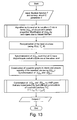
- Steps to be performed in case of a non-symmetric function f are shown in Fig. 13 .
- An explanation of the shown steps can be taken directly from the description given above in Sec. "Construction of a fault-tolerant circuit that computes an arbitrary Boolean function f with encoded input in a ⁇ -loose manner".
Landscapes
- Engineering & Computer Science (AREA)
- Computer Security & Cryptography (AREA)
- Physics & Mathematics (AREA)
- Theoretical Computer Science (AREA)
- Computer Networks & Wireless Communication (AREA)
- Signal Processing (AREA)
- Computer Hardware Design (AREA)
- General Physics & Mathematics (AREA)
- Evolutionary Computation (AREA)
- Geometry (AREA)
- General Engineering & Computer Science (AREA)
- Hardware Redundancy (AREA)
Abstract
Description
- The invention relates to the area of reliable and fault-tolerant integrated circuit (IC) design. In particular, the invention is related to a computer-implemented method for constructing a fault-tolerant integrated circuit (IC), a system for constructing a fault-tolerant integrated circuit, and a fault-tolerant integrated circuit. Specifically, the invention is related to a construction method for resilient ICs that can counteract malicious alterations to the IC after the design phase. A resilient IC according to the invention guarantees its proper functioning even if it is maliciously altered to a certain extent. That means the resilient IC is fault-tolerant against deliberate, non-random faults and hence, it can counteract the emerging threat of hardware Trojans.
- ICs are becoming more and more vulnerable to malicious alterations, known as hardware Trojans, as many in-house steps of an IC fabrication process are being outsourced to third parties. These hardware Trojans may impede ICs from functioning properly. In
Figs. 1 and 2 , examples of hardware Trojans are shown. When the Trojan inFig. 1 is activated, the data is sent to the output in plaintext. InFig. 2 , an infected IC, which is realized via FIB (Focused Ion Beam), is displayed. The right side shows the intended layout with three metal layers for the correct design, where malicious design alterations are marked by dashed and dotted lines. Left, an X-ray of the modified silicon is shown, where a line inmetal 1 was cut (dashed cross in layout) and was instead connected to another via (dotted bridge in layout). In terms of the taxonomy from Ref. [9] this Trojan was realized via FIB post fabrication on the physical level, which is always on, changes the functionality and can affect all elements of a system (processor, memory, I/O, power supply, and the clock grid). - Clearly, for all mission critical areas it is essential to use computer systems that ensure their correct functionality in all circumstances. Thus, a reasonable and challenging question is whether ICs can be designed in such a way that the functionality intended by the designers is guaranteed even if a malicious adversary is allowed to tamper with the ICs during certain production steps. However, the hardware Trojans lie outside the classical fault model by von Neumann since they closely resemble deliberately inserted faults. There is no implemented fault-tolerant IC design, which ensures the proper functioning of an IC even in the presence of such deliberate, non-random faults.
- Up to date there is no fault-tolerant IC design that can counteract hardware Trojans and the corresponding deliberate faults. The present invention extends and rounds out Gál and Szegedy's model of faulty gates for Boolean circuits. Their model is limited to Boolean circuits and the malicious alteration of gates only. However, the model of Gál and Szegedy is not directly applicable on arbitrary integrated circuits. In this context, it should be noted that the concept of an "integrated circuit" is more general than the concept of a "Boolean circuit", i.e., these notions must be carefully distinguished from each other (cf. the respective definitions given below). Moreover, the malicious alteration of wires is not considered in the model of Gál and Szegedy. Thus, it is not applicable to a real-world scenario. Fault-tolerant constructions in chip design are usually based on a model of randomly distributed faults. These constructions are not applicable either to a scenario of deliberately and maliciously induced faults.
- Research in the area of fault-tolerant circuits has mainly been based on the model of random faults by von Neumann [13]. In this model it is assumed that all gates of a Boolean circuit fail, i.e., produce a faulty value, independently and with probability bounded by some small constant. This scenario is examined well and fault-tolerant constructions are implemented in practice to counteract natural random errors [6, 11, 13]. There is a theoretical contribution by Gál and Szegedy on fault-tolerant Boolean circuit design addressing deliberate, non-random faults [7]. In their model, an adversary may arbitrarily choose a small constant fraction of the gates at each level of a Boolean circuit to be faulty. They introduce a constructive way to efficiently build fault-tolerant Boolean circuits with small redundancy even in the presence of non-random faulty gates.
- Thus, there is a need for fault-tolerant integrated circuits being fault-tolerant not only with respect to random faults, but also with respect to deliberately and maliciously induced faults. Also, there is a need for a method for constructing such a fault-tolerant integrated circuit as well as a need for a system for constructing such a fault-tolerant integrated circuit.
- The above described objectives are achieved by the fault-tolerant integrated circuit (IC), the computer-implemented method for constructing a fault-tolerant integrated circuit, and the system for constructing a fault-tolerant integrated circuit as disclosed by the claims presented in this document.
- The present invention provides a method for designing resilient ICs. Here and in the following, the term "resilient IC" shall refer to an IC with the required characteristic that the IC is fault-tolerant not only with respect to random faults, but also with respect to deliberately and maliciously induced faults. By the method of the invention, every IC can be transformed into a resilient IC that computes the same function as the original circuit even in the presence of an adversary tampering with it. This finding is highly relevant to industries, in which trust in computer systems is crucial. In particular, hardware Trojans have drawn attention to the potential threats to governmental and military systems as well as financial infrastructure and transportation security. By the design method according to the invention, ICs can be designed in such a way that the functionality intended by the designers is guaranteed. This method can be applied to that scenario, in which the design process is trusted, but the subsequent production steps are not trustworthy. Due to the so called "fabless" trend in semiconductor industries, this scenario is the most relevant one as outsourcing to silicon foundries is by virtue untrusted. Hence, the new method can be applied to develop highly reliable ICs for mission critical computer systems.
- In our new method, it can be assumed that a certain fraction of gates and wires are maliciously altered. That means, in the new method all components of a circuit may be tampered with by an adversary. Additionally, as already discussed, the new method is adapted to ICs, not only to Boolean circuits. Still, the proper functioning of the IC is guaranteed, if the IC is altered not more than to a certain extent.
- The following definitions will be used throughout the remainder of this document.
- A Boolean circuit C with NI input bits and one output bit is defined as an acyclic directed graph, in which every vertex (called gate) corresponds to either a Boolean function from the set B = {AND, OR, NOT} or an input gate (of in-degree 0) labeled by one of the NI input bits. Every edge represents a wire. One gate is labeled as output gate. A Boolean circuit C computes a Boolean function f : {0,1} N
1 → {0,1}. It is assumed that AND and OR gates have in-degree 2, NOT gates have in-degree 1, and all gates have a maximum out-degree of 2. A combinational (or combinatorial) circuit with NI inputs and one output is a Boolean circuit C with NI input bits x 1, ..., xNi and one output bit z. A circuit is called synchronous (or synchronized), if for any gate g all paths from the inputs to g have the same length. Let C be a circuit and let g be any gate in C. The depth of g is the length of the longest path from any input to g and the circuit depth D(C) is defined as the maximal depth of an output gate. The size S(C) of a circuit C is defined as the total number of gates it consists of. The i-th level of a circuit consists of all gates with depth equal to i. A circuit C is synchronous, if and only if every wire in C is between adjacent levels. An integrated circuit (IC) is composed of combinational logic having some inputs, which are output derived. There may also be independent inputs. All or some of the outputs are fed back into the input. In the following, it is denoted by C the combinational logic of an IC, and it is assumed that C is a synchronous circuit. For simplicity, only ICs with one output bit are considered. This single output bit may be clocked is fed back into the input. InFig. 3 , a sketch of an IC is given. - Loose computation: Let f : {0,1} n → {0,1} be a Boolean function, and M be any computational device. We say that M δ-loosely computes f, if the following holds:
- 1. If f(x) = 1, then M(x) =1.
- 2. If f(y) = 0 for every y with d(x,y) ≤ δn, then M(x) = 0,
- For En being an error correcting code with codewords of length qn and a function f : {0,1} n → {0,1}, it be defined the function f ο En : {0,1}q
n → {0,1} as follows: - 1. ((f ο En )(z) = 0 for all z where z is not a codeword of En.
- 2. If z = En (x), then (f ο En )(z) = f(x).
- If the Hamming distance of any two codewords in an error correcting code En with codewords of length qn is at least δqn and M is a computational device that computes f ο En in a 6-loose manner, then M(En (x)) = f (x) on any input x.
- It is known from coding theory, cf. Ref. [10], that there exist linear binary codes En with the following properties:
- 1. The matrix of En can be polynomially computed in n. (This also means that the length of the codeword qn is polynomial in n.)
- 2. The Hamming distance of any two codewords in En is at least δqn for some small constant δ.
- An ε-halver is a bounded depth comparator network with the following property: For any set of the l smallest (largest) inputs, where l ≤ n/2, at most εl elements will be among the last (first) n/2 outputs. Equivalently, an ε-halver can be defined as a halver (a network that separates the n/2 largest and the n/2 smallest inputs into two disjoint sets) that may misplace at most an ε fraction of the elements.
- The threshold function

value 1, if and only if at least k of the n input bits havevalue 1. Without loss of generality it is assumed that n is a power of 2. Otherwise, if n is not a power of 2, the threshold function

value 1 each. Then,

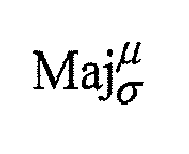
- The overwhelming majority function

- The IC design method relies on the extended and enhanced work by Gál and Szegedy on fault-tolerant circuits [7]. In order to design reliable ICs, the circuits are provided with more redundancy and robustness by techniques from the area of probabilistically checkable proofs (PCPs) [4] and from sorting networks [1]. This description is restricted to ICs with a single output bit, but it can be generalized straightforwardly. In a real-world scenario, an attacker would only slightly alter a computer chip, since large-scale alterations would later be detected during the testing phase. Thus, the concept for a resilient IC design according to the invention fulfils the requirement that small changes to the IC do not affect its correct functionality, whereas more serious changes should be detected otherwise.
- Given a specified IC design and its corresponding function, the combinatorial part of this IC is transformed by PCP techniques into a family of circuits with a certain completeness and soundness property. In the notion of PCPs, proofs can be efficiently encoded and provide enough redundancy such that a proof of a false statement will result in many errors. Additionally, a verifier can decide whether a proof is valid or not much more efficiently. The constructed circuits are restructured by adjusting the circuits' depth and inputs. Next, the restructured circuits are combined in a fault-tolerant way by using so-called ε-halvers from the field of sorting networks. Eventually, the original combinatorial part of the IC is replaced by the newly developed one.
- In the model underlying the method of the invention, an adversary is allowed to choose at most a small constant fraction α < 1 of the gates at each level of a circuit C to be faulty. Additionally, the adversary is allowed to choose at most a fraction β < 1 of the wires between any two consecutive levels of C to be faulty.
- One aspect of the invention is related to a computer-implemented method for constructing a fault-tolerant integrated circuit, IC, comprising a plurality of gates and a plurality of wires. The method comprises the steps of: (1a) providing a Boolean function f to be realised as a fault-tolerant Boolean circuit within the IC; (1b) providing a looseness δ > 0; (1c) providing a gate fault-tolerance α with 0 < α < 1 according to the maximum fraction of the gates being allowed to be faulty at each level of the fault-tolerant Boolean circuit; (1d) providing a wire fault-tolerance β with 0 < β < 1 according to the maximum fraction of the wires being allowed to be faulty between any two consecutive levels of the fault-tolerant Boolean circuit; (1e) deciding whether the Boolean function f is a symmetric function. The method further comprises the steps of: if the Boolean function f is a symmetric function: (1f) constructing a fault-tolerant Boolean circuit realisation of the Boolean function f by using δ -loose realisations of threshold functions; otherwise: (1g) implementing a family of Boolean circuits; (1h) implementing a combination of the outputs of the family of circuits by AND gates, the AND gates being realised by using δ - loose realisations of threshold functions. The method is characterised in that each of the δ - loose realisations of a threshold function


- Preferably, the comparator network K 1 comprises τ ε -halvers, each of the ε -halvers having depth c, the ε -halvers at the i-th level having v/2 i-1 inputs and v/2 i outputs, and wherein the ε-halvers of two subsequent levels are connected such that with λ 1,..., λ τ denoting the binary representation of the integer λ:
- if λ i = 0, the input to the (i+1)-st ε -halver is the lower part of the i-th ε -halver;
- if λ i =1, the input to the (i+1)-st ε -halver is the upper part of the i-th ε -halver.
- In one embodiment of the method according to the invention, step (1f) of constructing a fault-tolerant Boolean circuit realisation of the Boolean function f by using δ -loose realisations of threshold functions comprises the steps of: (3a) describing f by a string of length n+1, wherein n is the length of the input of f, and the i-th element of the string is 1 if and only if the value of f is 1 on inputs containing exactly i 1's; if every set of consecutive 0's in the string has length smaller than δn : (3b) constructing the Boolean circuit such that it is configured to output a 1 for every input; if in the string are h sets of consecutive 0's having a length equal to or greater than δn, wherein h is at least 1: (3c) implementing, for each set i ∈ {1,..., h} of the h sets of consecutive 0's, a δ-loose realisation of a negated first threshold function


- In a preferred embodiment of the method, the family of circuits {Ci } i∈I with I being an index set constructed in step (1g) fulfils the following conditions: (4a) the circuits of the family of circuits {Ci } i∈I are of constant size; (4b) each circuit Ci of the family takes as input an error correcting encoding G(x) and an advise string Y, wherein x is an input of the Boolean function f. Each circuit Ci of the family is configured such that: (4c) for every x, for which the Boolean function f evaluates to 1, there is an advise string Y such that for all i ∈ I: Ci (G(x), Y) =1, (4d) for every x, for which the Boolean function f evaluates to 0, and for every advise string Y it holds Prob i∈I [Ci (G(x),Y) = 0]≥ ε, for some ε̃.
- In one embodiment of the method according to invention, step (1g) of constructing a family of circuits {Ci }i∈I comprises the further step of: (5a) modifying the circuit family {Ci } i∈I such that in condition (4c), the advise string Y is unique for every x, and condition (4d) holds for every advise string Y; (5b) modifying the circuit family {Ci }i∈I further such that it contains all members of the circuit family according to step (5a) being configured such that: for every x, for which the Boolean function f evaluates to 1, there is a unique advise string Yx such that for all i ∈ I : Ci (G(x), Yx ) =1 and for every δ > 0 there exists ε̃ > 0 such that Probi∈I[Ci (H,Y) = 0] ≤ ε̃ implies that for some x, for which the Boolean function f evaluates to 1, it holds d((H,Y),(G(x),Yx ))≤δ̃|(H,Y)|; (5c) implementing the circuit family {Ci } i∈I as obtained in step (5b) into the IC.
- Preferably, the circuit family {Ci } i∈I is further modified in that the family is transformed into a family of synchronous circuits such that all of the members of the family of synchronous circuits have disjoint inputs and all outputs are at the same level.
- According to a preferred embodiment, the method further comprises a step of implementing an error correcting encoding means into the IC, wherein the error correcting encoding means is configured to perform a transformation of an input x according to an error correcting code E defined such that: (7a) every input x, for which the Boolean function f evaluates to 1, is transformed to E(x):= (G'(x), Y'x) ; and (7b) every input x, for which the Boolean function f evaluates to 0, is transformed to E(x):= (G'(x), 0, ..., 0), wherein: G'(x) is formed by repeating the bits of the output of the error correcting encoding G(x) as many times as the number of times for which they appear as input to some {Ci }i∈I as given by step (5b), and Y'x is formed by repeating the bits of the unique advise string Yx as many times as the number of times for which they appear as input to some {Ci } i∈I as given by step (5b).
- In one embodiment, the method further comprises a step of implementing a family of bounded degree expanders {Cj } j∈J into the IC with J being an index set, one bounded degree expander for each group of bits that have to be identical.
- According to one embodiment of the method, step (1h) of implementing a combination of the outputs of the family of circuits by AND gates further comprises the steps of: (9a) implementing a combination of the outputs of the family of bounded degree expanders by AND gates, the AND gates being realised by using δ -loose realisations of threshold functions; (9b) combining the output of the combination of the outputs of the family of circuits by AND gates according to step (1h) and output of the combination of the outputs of the family of bounded degree expanders by AND gates according to step (9a) by a further AND gate being realised by using δ -loose realisations of threshold functions.
- Preferably, in the method according to the invention, the overwhelming majority function

- In one embodiment of the method according to the invention, each of the majority preservers comprises a first ε-halver having m inputs and m outputs, a second ε-halver having m/2 inputs and m/2 outputs, and a third ε -halver having m/2 inputs and m/2 outputs, wherein: the upper part of the output of the first ε -halver is fed to the input of the second ε -halver, and the lower part of the output of the first ε -halver is fed to the input of the third ε -halver. Preferably, the first ε -halver, the second ε -halver, and the third ε -halver have the same parameter ε and the same depth c.
- A further aspect of the invention relates to a fault-tolerant integrated circuit configured for calculating a Boolean function f, comprising δ -loose realisations of threshold functions, wherein each of the δ -loose realisations of a threshold function

- In a preferred embodiment of the fault-tolerant integrated circuit according to the invention, the fault-tolerant integrated circuit is assembled according to any one of the embodiments of the method according to the invention for constructing a fault-tolerant integrated circuit.
- One aspect of the invention relates to a system for constructing a fault-tolerant integrated circuit according to any one of the embodiments of the method according to the invention for constructing a fault-tolerant integrated circuit. Preferably, the system comprises a computer.
- Other aspects, features, and advantages will be apparent from the summary above, as well as from the description that follows, including the figures and the claims.
-
- Fig. 1:
- 2-to-1 multiplexer as a simple Trojan.
- Fig. 2:
- An infected IC, realized via FIB (Focused Ion Beam).
- Fig. 3:
- Sketch of an IC with combinational logic C and one output.
- Fig. 4:
- Triplet of ε-halvers that form a majority preserver.
- Fig. 5:
- Composition of several majority preservers in order to build a circuit that computes the majority function.
- Fig. 6:
- Sketch of circuit C 1 from the construction of the threshold function.
- Fig. 7:
- Construction of the threshold function.
- Fig. 8:
- Truth table of a half adder.
- Fig. 9:
- Simple design of a half adder, which computes (a) the sum s and (b) the carry c.
- Fig. 10:
- Resilient design of a half adder, which computes (a) the sum s and (b) the carry c.
- Fig. 11:
- Flow chart of the general fault-tolerant IC design scheme.
- Fig. 12:
- Flow chart of fault-tolerant circuit construction for a symmetric function.
- Fig. 13:
- Flow chart of fault-tolerant circuit construction for an arbitrary Boolean function.
- Construction of a fault-tolerant circuit that computes the overwhelming majority function

- The construction is based on so-called majority preservers. In Ref. [5], such a component is defined as a comparator network with m inputs and m / 2 outputs that guarantees that if at least a given constant fraction greater than 1/2 m of the m inputs have the same value, then this value appears in at least the same given constant fraction of the m/2 outputs. A majority preserver that tolerates a small constant fraction of errors at each of its levels can be constructed by triplets of ε-halvers.
- An m-input ε-halver, denoted by M-halver, is applied to the m inputs. Next, one m/2-input ε-halver is applied to the upper part and another one is applied to the lower part of the output of the M-halver. They are called U-halver and L-halver. The output of this majority preserver consists of the upper part of the output of the L-halver and of the lower part of the output of the U-halver. A family of ε-halvers of depth c with the same parameters ε and c for all input lengths exists for an appropriate choice of the constants ε and c.
- By feeding the outputs of one majority preserver as inputs to the next, we combine j majority preservers. This construction with m/2 j outputs has the property that its overwhelming majority is the same as the overwhelming majority of the input.
- Once m/2 j < min{1/α, 1/β}, the computation can be finished by a small circuit that has fewer than 1 / α gates at each of its levels, fewer than 1/β wires between all levels and that computes the usual majority of its inputs. In this small circuit the adversary can destroy neither gates nor wires-according to the model underlying the method of the invention.
-
Fig. 4 displays the layout of a majority preserver, andFig. 5 illustrates the circuit that computes the majority function. - Construction of a fault-tolerant circuit that computes the threshold function

- Let δ > 0. Parameters t and l are chosen such that ln/2 t ≥n-k and (l+1)n/2 t ≤ n-k+δn. t depends on n and δ, but not on k. The construction consists of two components. First, a circuit, denoted by C 1, is constructed, which has n inputs and n/2 t outputs. The second component is the construction, which computes the overwhelming majority function

- Parameters ε, α, β, and γ = α + β are determined by the following inequality:

- Depending on the kind of ε-halvers that are used and depending on ε, c can be computed.
- Circuit C 1 is a comparator network consisting of t ε-halvers each of depth c. Here, the i-th ε-halver has n / 2 i-1 inputs and n / 2 i outputs. Denote by l 1, ..., lt the binary representation of l.
- If li = 0, the input to the (i + 1)-st ε-halver is the lower part of the output of the i-th ε-halver.
- If li = 1, the upper part is fed to the next ε-halver.
- In
Fig. 6 , the circuit C 1 from the construction, and inFig. 7 , the circuit that computes the threshold function is shown. - Let δ > 0. Every symmetric function f can be described by a binary string of
length n + 1. The i-th element of the string is 1, if and only if the value of f is 1 on inputs containing exactly i 1's. Suppose every set of consecutive 0's in this string has length<δn. In this case, the δ-loose computation of f becomes trivial since thevalue 1 can be output for every input. Now consider the case that the string contains h ≥ 1 sets of consecutive 0's of length ≥δn. Denote by (li , ui ) the i-th set. In order to compute f in a δ-loose way, it is sufficient to compute each

- Let C be a Boolean circuit and let f : {0,1} n → {0,1} be the corresponding Boolean function computed by C. Consider the subset C 1 of tuples from {0,1} n , for which C evaluates to 1 and the analogously defined subset C°. Arora et al. presented a procedure to transform a circuit C into a family {Ci } i∈I of constant size circuits with input (G(x), Y) [3]. Here, G(x) is an adequate error correcting encoding of the input x to C, and Y is an advise string (both have length polynomial in S(C)). For this family {C i } i we have:
- 1. For every x ∈ C 1 there is a Y such that for all i ∈ I : Ci (G(x), Y) =1.
- 2. For every x ∈ C 0 and for every Y it is true that Prob i∈I [Ci (G(x),Y)=0]≥ε, for some ε.
- Now, by applying techniques due to Valiant and Vazirani [12], we can modify the circuit family Ci such that Y of
property 1 is unique for every x andproperty 2 holds for every Y. Thus,properties - The circuit C' will consist of several parts. Circuit C' should contain all members of the modified family {Ci } i∈I with the property that:
- For every x∈ C 1 there is a unique Yx such that for all i ∈ I : Ci (G(x),Yx ) =1. Also, for every δ > 0 there exists ε > 0 such that Prob i∈I [Ci (H,Y) = 0] ≤ ε implies that d ((H,Y), (G(x),Yx )) ≤ δ|(H,Y)| for some x ∈ C 1.
- The members of the family should have disjoint inputs, which can be achieved by transforming G(x) into G'(x) and Yx into

- In this section, parts of the construction are illustrated by the simple example of a half adder. A half adder adds two bits x and y, and it has two outputs, s ("sum") and c ("carry"). In
Fig. 8 , the truth table of a half adder is displayed. A simple construction, which contains only elementary gates, is presented inFig. 9 . - The two outputs s and c can be computed by circuits consisting of resilient components. These components implement resilient circuits of threshold functions described above (cf. Section "Construction of a fault-tolerant circuit that computes the threshold function

function 
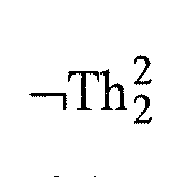

Fig. 10 shows the new, resilient circuits. The precise constructions of the circuits, which compute the threshold functions, depend on the kind of ε-halvers that are used and on the parameter δ for the δ-loose computation of the threshold functions. - Only to illustrate the method according to the invention,
Figs. 11 to 13 depict some of the steps of the method with the help of flow charts. -
Fig. 11 shows that according to the method of the invention, after being given a Boolean function f or a circuit C, it has to be decided whether or not f is a symmetric function. In either case, a corresponding fault-tolerant circuit is constructed. However, if f is symmetric, the steps according to the disclosure of Sec. "Construction of a fault-tolerant circuit that computes a symmetric function f in a δ-loose manner" (see above) have to be applied. Further details for this case are shown inFig. 12 . On the other hand, if f is a non-symmetric function, then the steps described in Sec. "Construction of a fault-tolerant circuit that computes an arbitrary Boolean function f with encoded input in a δ-loose manner" (see above) have to be used. Further details for the non-symmetric case are shown inFig. 13 . It should be noted that both cases are based on constructions described in Sec. "Construction of a fault-tolerant circuit that computes the threshold function
-
Fig. 12 is a flow chart showing in further detail some of the steps to be performed in case of a symmetric function f. An explanation of the steps can be taken directly from the description given above in Sec. "Construction of a fault-tolerant circuit that computes a symmetric function f in a δ-loose manner". - Steps to be performed in case of a non-symmetric function f are shown in
Fig. 13 . An explanation of the shown steps can be taken directly from the description given above in Sec. "Construction of a fault-tolerant circuit that computes an arbitrary Boolean function f with encoded input in a δ-loose manner". - While the invention has been illustrated and described in detail in the drawings and foregoing description, such illustration and description are to be considered illustrative or exemplary and not restrictive. It will be understood that changes and modifications may be made by those of ordinary skill within the scope of the following claims. In particular, the present invention covers further embodiments with any combination of features from different embodiments described above and below.
- Furthermore, in the claims the word "comprising" does not exclude other elements or steps, and the indefinite article "a" or "an" does not exclude a plurality. A single unit may fulfil the functions of several features recited in the claims. The terms "essentially", "about", "approximately" and the like in connection with an attribute or a value particularly also define exactly the attribute or exactly the value, respectively. Any reference signs in the claims should not be construed as limiting the scope.
- All related scientific publications, on which this work is based, are cited and listed in the bibliography. To the best of our knowledge, there is no prior work relating the area of fault-tolerant circuit computation with hardware Trojans.
- [1] M. Ajtai, J. Komlós, and E. Szemerédi. An O(n log n) sorting network. In Proceedings of the fifteenth annual ACM Symposium on Theory of Computing, volume 129, pages 1 - 9. ACM, 1983.
- [2] S. Arora and B. Barak. Computational Complexity: A Modem Approach, volume 6. Cambridge University Press, 2009.
- [3] S. Arora, C. Lund, R. Motwani, and M. Sudan. Proof verification and hardness of approximation problems. In Proceedings., 33rd Annual Symposium on Foundations of Computer Science, pages 14 - 23. Ieee, 1992.
- [4] S. Arora and S. Safra. Probabilistic Checking of Proofs. In Proceedings of the 33rd IEEE Symposium on Foundations of Computer Science, pages 2 - 13, 1992.
- [5] S. Assaf and E. Upfal. Fault tolerant sorting network. In Proceedings of 31st IEEE Symposium on Foundations of Computer Science, pages 275 - 284. IEEE Comput. Soc. Press, 1990.
- [6] R. Dobrushin and S. Ortyukov. Upper bound on the redundancy of self-correcting arrangements of unreliable functional elements. Problems of Information Transmission, 13(3):203 - 218, 1977.
- [7] A. Gál and M. Szegedy. Fault tolerant circuits and probabilistically checkable proofs. Proceedings of Structure in Complexity Theory. 10th Annual IEEE Conference, pages 65 - 73, 1995.
- [8] S. Hoory, N. Linial, and A. Wigderson. Expander graphs and their applications. Bulletin of the American Mathematical Society, 43(04):439 - 562, Aug. 2006.
- [9] R. Karri, J. Rajendran, K. Rosenfeld, and M. Tehranipoor. Trustworthy Hardware: Identifying and Classifying Hardware Trojans. IEEE Computer Magazine, 43(10):39 - 46, 2010.
- [10] F. J. MacWilliams and N. J. A. Sloane. The Theory of Error-Correcting Codes, volume 16. North-Holland, 1977.
- [11] N. Pippenger. On networks of noisy gates. In Proceedings of 26th IEEE Symposium on the Foundations of Computer Science, pages 30 - 36, 1985.
- [12] L. Valiant and V. Vazirani. NP is as easy as detecting unique solutions. Theoretical Computer Science, 47(3):85 - 93, 1986.
- [13] J. von Neumann. Probabilistic logics and the synthesis of reliable organisms from unreliable components. In C. E. Shannon and J. McCarthy, editors, Automata Studies, volume 34, pages 329 - 378. Princeton Univ., Princeton University Press, 1956.
Claims (14)
- Computer-implemented method for constructing a fault-tolerant integrated circuit, IC, comprising a plurality of gates and a plurality of wires, the method comprising the steps of:(1a) providing a Boolean function f to be realised as a fault-tolerant Boolean circuit within the IC;(1b) providing a looseness δ > 0;(1c) providing a gate fault-tolerance α with 0 < α < 1 according to the maximum fraction of the gates being allowed to be faulty at each level of the fault-tolerant Boolean circuit;(1d) providing a wire fault-tolerance β with 0 < β < 1 according to the maximum fraction of the wires being allowed to be faulty between any two consecutive levels of the fault-tolerant Boolean circuit;(1e) deciding whether the Boolean function f is a symmetric function;
if the Boolean function f is a symmetric function:(1f) constructing a fault-tolerant Boolean circuit realisation of the Boolean function f by using δ -loose realisations of threshold functions;
otherwise:(1g) implementing a family of Boolean circuits;(1h) implementing a combination of the outputs of the family of circuits by AND gates, the AND gates being realised by using δ -loose realisations of threshold functions,
the method characterised in that each of the δ -loose realisations of a threshold function a comparator network K 1 having v inputs and µ = v/2τ outputs, wherein the integer τ is related to the binary length of an integer λ, both integers λ and τ chosen such that the conditions λv/2τ≥v-κ and (λ+1)v/2τ ≤ v - κ+δv hold simultaneously;an implementation of the overwhelming majority function
- The method of claim 1, wherein the comparator network K 1 comprises τ ε -halvers, each of the ε -halvers having depth c, the ε-halvers at the i-th level having v/2 i-1 inputs and v/2 i outputs, and wherein the ε -halvers of two subsequent levels are connected such that with λ1, ..., λτ denoting the binary representation of the integer λ :if λ i = 0, the input to the (i+1)-st ε -halver is the lower part of the i-th ε -halver;if λ i =1, the input to the (i+1)-st ε -halver is the upper part of the i-th ε -halver.
- The method of claim 1 or 2, wherein step (1f) of constructing a fault-tolerant Boolean circuit realisation of the Boolean function f by using δ -loose realisations of threshold functions comprises the steps of:(3 a) describing f by a string of length n+1, wherein n is the length of the input of f, and the i-th element of the string is 1 if and only if the value of f is 1 on inputs containing exactly i 1's;
if every set of consecutive 0's in the string has length smaller than δn :(3b) constructing the Boolean circuit such that it is configured to output a 1 for every input;if in the string are h sets of consecutive 0's having a length equal to or greater than δn, wherein h is at least 1:(3c) implementing, for each set i ∈ {1, ..., h} of the h sets of consecutive 0's, a δ-loose realisation of a negated first threshold function
 (3d) connecting, for each i ∈ {1, ..., h} , the output of the implementation of the negated first threshold function
 (3e) connecting the outputs of the AND gates of step (3d) via OR gates.
 - The method of any one of claims 1 to 3, wherein the family of circuits {Ci } i∈I with I being an index set constructed in step (1g) fulfils the following conditions:(4a) the circuits of the family of circuits {Ci } i∈I are of constant size;(4b) each circuit Ci of the family takes as input an error correcting encoding G(x) and an advise string Y, wherein x is an input of the Boolean function f ;
each circuit Ci of the family is configured such that:(4c) for every x, for which the Boolean function f evaluates to 1, there is an advise string Y such that for all i ∈ I : Ci (G(x), Y) =1,(4d) for every x, for which the Boolean function f evaluates to 0, and for every advise string Y it holds Prob i∈I [Ci (G(x),Y) = 0] ≥ ε̃, for some ε̃. - The method of claim 4, wherein step (1g) of constructing a family of circuits {Ci } i∈I comprises the further step of:(5a) modifying the circuit family {Ci } i∈I such that in condition (4c), the advise string Y is unique for every x, and condition (4d) holds for every advise string Y;(5b) modifying the circuit family {Ci } i∈I further such that it contains all members of the circuit family according to step (5a) being configured such that:for every x, for which the Boolean function f evaluates to 1, there is a unique advise string Yx such that for all i∈I : Ci (G(x),Yx ) =1 and for every δ > 0 there exists ε̃ > 0 such that Prob i∈I [Ci (H,Y) =0]≤ε̃ implies that for some x, for which the Boolean function f evaluates to 1, it holds d((H,Y), (G(x),Yx )) ≤ δ̃|(H,Y)| ;(5c) implementing the circuit family {Ci } i∈I as obtained in step (5b) into the IC.
- The method of claim 5, wherein the circuit family {Ci } i∈I is further modified in that the family is transformed into a family of synchronous circuits such that all of the members of the family of synchronous circuits have disjoint inputs and all outputs are at the same level.
- The method of claim 5 or 6, further comprising a step of implementing an error correcting encoding means into the IC, wherein the error correcting encoding means is configured to perform a transformation of an input x according to an error correcting code E defined such that:(7a) every input x, for which the Boolean function f evaluates to 1, is transformed to E(x) := (G'(x), Y'x) , and(7b) every input x, for which the Boolean function f evaluates to 0, is transformed to E(x) := (G'(x), 0, ..., 0),
wherein:G'(x) is formed by repeating the bits of the output of the error correcting encoding G(x) as many times as the number of times for which they appear as input to some {Ci } i∈I as given by step (5b), andY'x is formed by repeating the bits of the unique advise string Yx as many times as the number of times for which they appear as input to some {Ci } i∈I as given by step (5b). - The method of claim 7, further comprising a step of implementing a family of bounded degree expanders {Cj } j∈J into the IC with J being an index set, one bounded degree expander for each group of bits that have to be identical.
- The method of claim 8, wherein step (1h) of implementing a combination of the outputs of the family of circuits by AND gates further comprises the steps of:(9a) implementing a combination of the outputs of the family of bounded degree expanders by AND gates, the AND gates being realised by using δ -loose realisations of threshold functions;(9b) combining the output of the combination of the outputs of the family of circuits by AND gates according to step (1h) and output of the combination of the outputs of the family of bounded degree expanders by AND gates according to step (9a) by a further AND gate being realised by using δ -loose realisations of threshold functions.
- The method of any one of claims 1 to 9, wherein the overwhelming majority function

- The method of claim 10, wherein each of the majority preservers comprises a first ε-halver having m inputs and m outputs, a second ε -halver having m/2 inputs and m/2 outputs, and a third E -halver having m/2 inputs and m/2 outputs, wherein:the upper part of the output of the first ε-halver is fed to the input of the second ε - halver, andthe lower part of the output of the first ε-halver is fed to the input of the third ε - halver;wherein preferably the first ε -halver, the second ε-halver, and the third ε -halver have the same parameter ε and the same depth c.
- Fault-tolerant integrated circuit configured for calculating a Boolean function f, comprising δ -loose realisations of threshold functions, wherein each of the δ -loose realisations of a threshold function
 a comparator network K 1 having v inputs and µ = v/2τ outputs, wherein the integer τ is related to the binary length of an integer λ, both integers λ and τ chosen such that the conditions λv/2τ≥v-κ and (λ+1)v/2τ≤v-κ+δv hold simultaneously;an implementation of the overwhelming majority function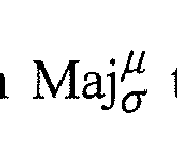
- The fault-tolerant integrated circuit of claim 12, assembled according to the method of any one of claims 1 to 11.
- System for constructing a fault-tolerant integrated circuit according to the method of any one of claims 1 to 11, wherein the system preferably comprises a computer.
Priority Applications (1)
| Application Number | Priority Date | Filing Date | Title |
|---|---|---|---|
| EP12191531.8A EP2731033B1 (en) | 2012-11-07 | 2012-11-07 | Construction method for resilient ICs |
Applications Claiming Priority (1)
| Application Number | Priority Date | Filing Date | Title |
|---|---|---|---|
| EP12191531.8A EP2731033B1 (en) | 2012-11-07 | 2012-11-07 | Construction method for resilient ICs |
Publications (2)
| Publication Number | Publication Date |
|---|---|
| EP2731033A1 true EP2731033A1 (en) | 2014-05-14 |
| EP2731033B1 EP2731033B1 (en) | 2016-02-03 |
Family
ID=47143709
Family Applications (1)
| Application Number | Title | Priority Date | Filing Date |
|---|---|---|---|
| EP12191531.8A Active EP2731033B1 (en) | 2012-11-07 | 2012-11-07 | Construction method for resilient ICs |
Country Status (1)
| Country | Link |
|---|---|
| EP (1) | EP2731033B1 (en) |
Cited By (1)
| Publication number | Priority date | Publication date | Assignee | Title |
|---|---|---|---|---|
| CN104950246A (en) * | 2015-06-11 | 2015-09-30 | 工业和信息化部电子第五研究所 | Hardware trojan detection method and system based on time delay |
-
2012
- 2012-11-07 EP EP12191531.8A patent/EP2731033B1/en active Active
Non-Patent Citations (15)
| Title |
|---|
| A. GAL; M. SZEGEDY: "Fault tolerant circuits and probabilistically checkable proofs. Proceedings of Structure in Complexity Theory", 10TH ANNUAL IEEE CONFERENCE, 1995, pages 65 - 73 |
| F. J. MACWILLIAMS; N. J. A. SLOANE, THE THEORY OF ERROR-CORRECTING CODES, vol. 16, 1977 |
| GAL A ET AL: "FAULT TOLERANT CIRCUITS AND PROBABILISTICALLY CHECKABLE PROOFS", PROCEEDINGS OF THE 10TH. ANNUAL STRUCTURE IN COMPLEXITY THEORY CONFERENCE. MINNEAPOLIS, JUNE 19 - 22, 1995; [PROCEEDINGS OF THE ANNUAL STRUCTURE IN COMPLEXITY THEORY CONFERENCE. (FROM 1996 ONWARDS: CONFERENCE ON COMPUTATIONAL COMPLEXITY)], LOS ALAMIT, vol. CONF. 10, 19 June 1995 (1995-06-19), pages 65 - 73, XP000544448, ISBN: 978-0-7803-2565-4 * |
| J. VON NEUMANN.: "Automata Studies", vol. 34, 1956, PRINCETON UNIVERSITY PRESS, article "Probabilistic logics and the synthesis of reliable organisms from unreliable components", pages: 329 - 378 |
| L. VALIANT; V. VAZIRANI.: "NP is as easy as detecting unique solutions", THEORETICAL COMPUTER SCIENCE, vol. 47, no. 3, 1986, pages 85 - 93 |
| M. AJTAI; J. KOMLOS; E. SZEMEREDI.: "Proceedings of the fifteenth annual ACM Symposium on Theory of Computing", vol. 129, 1983, ACM, article "An O(n log n) sorting network", pages: 1 - 9 |
| MOHAMMAD TEHRANIPOOR ET AL: "Trustworthy Hardware: Trojan Detection and Design-for-Trust Challenges", COMPUTER, vol. 44, no. 7, 1 July 2011 (2011-07-01), pages 66 - 74, XP055057878, ISSN: 0018-9162, DOI: 10.1109/MC.2010.369 * |
| N. PIPPENGER: "On networks of noisy gates", PROCEEDINGS OF 26TH IEEE SYMPOSIUM ON THE FOUNDATIONS OF COMPUTER SCIENCE, 1985, pages 30 - 36 |
| R. DOBRUSHIN; S. ORTYUKOV: "Upper bound on the redundancy of self-correcting arrangements of unreliable functional elements", PROBLEMS OF INFORMATION TRANSMISSION, vol. 13, no. 3, 1977, pages 203 - 218 |
| R. KARRI; J. RAJENDRAN; K. ROSENFELD; M. TEHRANIPOOR: "Trustworthy Hardware: Identifying and Classifying Hardware Trojans", IEEE COMPUTER MAGAZINE, vol. 43, no. 10, 2010, pages 39 - 46 |
| S. ARORA; B. BARAK.: "Computational Complexity: A Modem Approach", vol. 6, 2009, CAMBRIDGE UNIVERSITY PRESS |
| S. ARORA; C. LUND; R. MOTWANI; M. SUDAN.: "Proof verification and hardness of approximation problems", PROCEEDINGS., 33RD ANNUAL SYMPOSIUM ON FOUNDATIONS OF COMPUTER SCIENCE, 1992, pages 14 - 23 |
| S. ARORA; S. SAFRA.: "Probabilistic Checking of Proofs", PROCEEDINGS OF THE 33RD IEEE SYMPOSIUM ON FOUNDATIONS OF COMPUTER SCIENCE, 1992, pages 2 - 13 |
| S. ASSAF; E. UPFAL.: "Proceedings of 31st IEEE Symposium on Foundations of Computer Science", 1990, IEEE COMPUT. SOC. PRESS, article "Fault tolerant sorting network", pages: 275 - 284 |
| S. HOORY; N. LINIAL; A. WIGDERSON: "Expander graphs and their applications", BULLETIN OF THE AMERICAN MATHEMATICAL SOCIETY, vol. 43, no. 04, August 2006 (2006-08-01), pages 439 - 562 |
Cited By (2)
| Publication number | Priority date | Publication date | Assignee | Title |
|---|---|---|---|---|
| CN104950246A (en) * | 2015-06-11 | 2015-09-30 | 工业和信息化部电子第五研究所 | Hardware trojan detection method and system based on time delay |
| CN104950246B (en) * | 2015-06-11 | 2017-09-19 | 工业和信息化部电子第五研究所 | Hardware Trojan horse detection method and system based on delay |
Also Published As
| Publication number | Publication date |
|---|---|
| EP2731033B1 (en) | 2016-02-03 |
Similar Documents
| Publication | Publication Date | Title |
|---|---|---|
| JP7221954B2 (en) | A system for protecting verification keys from modification and validating proofs of correctness | |
| Mozaffari-Kermani et al. | Reliable hash trees for post-quantum stateless cryptographic hash-based signatures | |
| Furue et al. | Qr-uov | |
| Ge et al. | Reliable and secure memories based on algebraic manipulation detection codes and robust error correction | |
| Shakil et al. | Data science approaches to quantum vulnerability assessment and post-quantum cryptography schemes | |
| Touba et al. | Logic synthesis techniques for reduced area implementation of multilevel circuits with concurrent error detection | |
| Luo et al. | Concurrent error detection for reliable SHA-3 design | |
| Ottavi et al. | Dependable multicore architectures at nanoscale | |
| EP2731033B1 (en) | Construction method for resilient ICs | |
| Ban et al. | Critical Gates Identification for Fault‐Tolerant Design in Math Circuits | |
| Caşcaval | Approximate method to evaluate reliability of complex networks | |
| Schiller et al. | Enhancement of safety communication model: Preserving the black channel concept | |
| Han et al. | Station: State encoding-based attack-resilient sequential obfuscation | |
| Rashidi et al. | Efficient implementation of bit‐parallel fault tolerant polynomial basis multiplication and squaring over GF (2m) | |
| Nallathambi et al. | Fault diagnosis architecture for SKINNY family of block ciphers | |
| Müller et al. | Automated generation of fault-resistant circuits | |
| Ahmad et al. | Analysis and detection of errors in implementation of SHA-512 algorithms on FPGAs | |
| Ibrahim et al. | Minimization of CTS of k-CNOT circuits for SSF and MSF model | |
| Rashidi | Error‐correcting cryptographic S‐boxes with multiple error detection and correction | |
| Seifert et al. | Trojan-resilient circuits | |
| Bakoev | A method for fast computing the algebraic degree of boolean functions | |
| CN109541444B (en) | Integrated circuit fault injection detection method based on mixed granularity parity check | |
| Corral et al. | Combined CRC and bit framing for enhanced error detection | |
| Maly et al. | A remark on pseudo proof systems and hard instances of the satisfiability problem | |
| Song et al. | Reliability approximation evaluation of multi-stated weighted k-out-of-n systems |
Legal Events
| Date | Code | Title | Description |
|---|---|---|---|
| PUAI | Public reference made under article 153(3) epc to a published international application that has entered the european phase |
Free format text: ORIGINAL CODE: 0009012 |
|
| 17P | Request for examination filed |
Effective date: 20121107 |
|
| AK | Designated contracting states |
Kind code of ref document: A1 Designated state(s): AL AT BE BG CH CY CZ DE DK EE ES FI FR GB GR HR HU IE IS IT LI LT LU LV MC MK MT NL NO PL PT RO RS SE SI SK SM TR |
|
| AX | Request for extension of the european patent |
Extension state: BA ME |
|
| R17P | Request for examination filed (corrected) |
Effective date: 20141107 |
|
| RBV | Designated contracting states (corrected) |
Designated state(s): AL AT BE BG CH CY CZ DE DK EE ES FI FR GB GR HR HU IE IS IT LI LT LU LV MC MK MT NL NO PL PT RO RS SE SI SK SM TR |
|
| GRAJ | Information related to disapproval of communication of intention to grant by the applicant or resumption of examination proceedings by the epo deleted |
Free format text: ORIGINAL CODE: EPIDOSDIGR1 |
|
| GRAP | Despatch of communication of intention to grant a patent |
Free format text: ORIGINAL CODE: EPIDOSNIGR1 |
|
| INTG | Intention to grant announced |
Effective date: 20150331 |
|
| RAP1 | Party data changed (applicant data changed or rights of an application transferred) |
Owner name: DEUTSCHE TELEKOM AG |
|
| GRAS | Grant fee paid |
Free format text: ORIGINAL CODE: EPIDOSNIGR3 |
|
| GRAJ | Information related to disapproval of communication of intention to grant by the applicant or resumption of examination proceedings by the epo deleted |
Free format text: ORIGINAL CODE: EPIDOSDIGR1 |
|
| GRAR | Information related to intention to grant a patent recorded |
Free format text: ORIGINAL CODE: EPIDOSNIGR71 |
|
| GRAJ | Information related to disapproval of communication of intention to grant by the applicant or resumption of examination proceedings by the epo deleted |
Free format text: ORIGINAL CODE: EPIDOSDIGR1 |
|
| GRAR | Information related to intention to grant a patent recorded |
Free format text: ORIGINAL CODE: EPIDOSNIGR71 |
|
| INTG | Intention to grant announced |
Effective date: 20151110 |
|
| INTG | Intention to grant announced |
Effective date: 20151117 |
|
| GRAA | (expected) grant |
Free format text: ORIGINAL CODE: 0009210 |
|
| AK | Designated contracting states |
Kind code of ref document: B1 Designated state(s): AL AT BE BG CH CY CZ DE DK EE ES FI FR GB GR HR HU IE IS IT LI LT LU LV MC MK MT NL NO PL PT RO RS SE SI SK SM TR |
|
| REG | Reference to a national code |
Ref country code: GB Ref legal event code: FG4D |
|
| REG | Reference to a national code |
Ref country code: AT Ref legal event code: REF Ref document number: 773991 Country of ref document: AT Kind code of ref document: T Effective date: 20160215 Ref country code: CH Ref legal event code: EP |
|
| REG | Reference to a national code |
Ref country code: IE Ref legal event code: FG4D |
|
| REG | Reference to a national code |
Ref country code: DE Ref legal event code: R096 Ref document number: 602012014331 Country of ref document: DE |
|
| REG | Reference to a national code |
Ref country code: LT Ref legal event code: MG4D Ref country code: NL Ref legal event code: MP Effective date: 20160203 |
|
| PG25 | Lapsed in a contracting state [announced via postgrant information from national office to epo] |
Ref country code: FI Free format text: LAPSE BECAUSE OF FAILURE TO SUBMIT A TRANSLATION OF THE DESCRIPTION OR TO PAY THE FEE WITHIN THE PRESCRIBED TIME-LIMIT Effective date: 20160203 Ref country code: GR Free format text: LAPSE BECAUSE OF FAILURE TO SUBMIT A TRANSLATION OF THE DESCRIPTION OR TO PAY THE FEE WITHIN THE PRESCRIBED TIME-LIMIT Effective date: 20160504 Ref country code: ES Free format text: LAPSE BECAUSE OF FAILURE TO SUBMIT A TRANSLATION OF THE DESCRIPTION OR TO PAY THE FEE WITHIN THE PRESCRIBED TIME-LIMIT Effective date: 20160203 Ref country code: IT Free format text: LAPSE BECAUSE OF FAILURE TO SUBMIT A TRANSLATION OF THE DESCRIPTION OR TO PAY THE FEE WITHIN THE PRESCRIBED TIME-LIMIT Effective date: 20160203 Ref country code: NO Free format text: LAPSE BECAUSE OF FAILURE TO SUBMIT A TRANSLATION OF THE DESCRIPTION OR TO PAY THE FEE WITHIN THE PRESCRIBED TIME-LIMIT Effective date: 20160503 Ref country code: HR Free format text: LAPSE BECAUSE OF FAILURE TO SUBMIT A TRANSLATION OF THE DESCRIPTION OR TO PAY THE FEE WITHIN THE PRESCRIBED TIME-LIMIT Effective date: 20160203 |
|
| RIN2 | Information on inventor provided after grant (corrected) |
Inventor name: SEIFERT, JEAN-PIERRE Inventor name: BAYER, CHRISTOPH |
|
| PG25 | Lapsed in a contracting state [announced via postgrant information from national office to epo] |
Ref country code: LT Free format text: LAPSE BECAUSE OF FAILURE TO SUBMIT A TRANSLATION OF THE DESCRIPTION OR TO PAY THE FEE WITHIN THE PRESCRIBED TIME-LIMIT Effective date: 20160203 Ref country code: SE Free format text: LAPSE BECAUSE OF FAILURE TO SUBMIT A TRANSLATION OF THE DESCRIPTION OR TO PAY THE FEE WITHIN THE PRESCRIBED TIME-LIMIT Effective date: 20160203 Ref country code: RS Free format text: LAPSE BECAUSE OF FAILURE TO SUBMIT A TRANSLATION OF THE DESCRIPTION OR TO PAY THE FEE WITHIN THE PRESCRIBED TIME-LIMIT Effective date: 20160203 Ref country code: IS Free format text: LAPSE BECAUSE OF FAILURE TO SUBMIT A TRANSLATION OF THE DESCRIPTION OR TO PAY THE FEE WITHIN THE PRESCRIBED TIME-LIMIT Effective date: 20160603 Ref country code: PL Free format text: LAPSE BECAUSE OF FAILURE TO SUBMIT A TRANSLATION OF THE DESCRIPTION OR TO PAY THE FEE WITHIN THE PRESCRIBED TIME-LIMIT Effective date: 20160203 Ref country code: NL Free format text: LAPSE BECAUSE OF FAILURE TO SUBMIT A TRANSLATION OF THE DESCRIPTION OR TO PAY THE FEE WITHIN THE PRESCRIBED TIME-LIMIT Effective date: 20160203 Ref country code: PT Free format text: LAPSE BECAUSE OF FAILURE TO SUBMIT A TRANSLATION OF THE DESCRIPTION OR TO PAY THE FEE WITHIN THE PRESCRIBED TIME-LIMIT Effective date: 20160603 Ref country code: LV Free format text: LAPSE BECAUSE OF FAILURE TO SUBMIT A TRANSLATION OF THE DESCRIPTION OR TO PAY THE FEE WITHIN THE PRESCRIBED TIME-LIMIT Effective date: 20160203 |
|
| PG25 | Lapsed in a contracting state [announced via postgrant information from national office to epo] |
Ref country code: EE Free format text: LAPSE BECAUSE OF FAILURE TO SUBMIT A TRANSLATION OF THE DESCRIPTION OR TO PAY THE FEE WITHIN THE PRESCRIBED TIME-LIMIT Effective date: 20160203 Ref country code: DK Free format text: LAPSE BECAUSE OF FAILURE TO SUBMIT A TRANSLATION OF THE DESCRIPTION OR TO PAY THE FEE WITHIN THE PRESCRIBED TIME-LIMIT Effective date: 20160203 |
|
| REG | Reference to a national code |
Ref country code: DE Ref legal event code: R097 Ref document number: 602012014331 Country of ref document: DE |
|
| REG | Reference to a national code |
Ref country code: FR Ref legal event code: PLFP Year of fee payment: 5 |
|
| PG25 | Lapsed in a contracting state [announced via postgrant information from national office to epo] |
Ref country code: CZ Free format text: LAPSE BECAUSE OF FAILURE TO SUBMIT A TRANSLATION OF THE DESCRIPTION OR TO PAY THE FEE WITHIN THE PRESCRIBED TIME-LIMIT Effective date: 20160203 Ref country code: SM Free format text: LAPSE BECAUSE OF FAILURE TO SUBMIT A TRANSLATION OF THE DESCRIPTION OR TO PAY THE FEE WITHIN THE PRESCRIBED TIME-LIMIT Effective date: 20160203 Ref country code: RO Free format text: LAPSE BECAUSE OF FAILURE TO SUBMIT A TRANSLATION OF THE DESCRIPTION OR TO PAY THE FEE WITHIN THE PRESCRIBED TIME-LIMIT Effective date: 20160203 Ref country code: SK Free format text: LAPSE BECAUSE OF FAILURE TO SUBMIT A TRANSLATION OF THE DESCRIPTION OR TO PAY THE FEE WITHIN THE PRESCRIBED TIME-LIMIT Effective date: 20160203 |
|
| PLBE | No opposition filed within time limit |
Free format text: ORIGINAL CODE: 0009261 |
|
| STAA | Information on the status of an ep patent application or granted ep patent |
Free format text: STATUS: NO OPPOSITION FILED WITHIN TIME LIMIT |
|
| PG25 | Lapsed in a contracting state [announced via postgrant information from national office to epo] |
Ref country code: BE Free format text: LAPSE BECAUSE OF FAILURE TO SUBMIT A TRANSLATION OF THE DESCRIPTION OR TO PAY THE FEE WITHIN THE PRESCRIBED TIME-LIMIT Effective date: 20160203 |
|
| 26N | No opposition filed |
Effective date: 20161104 |
|
| PG25 | Lapsed in a contracting state [announced via postgrant information from national office to epo] |
Ref country code: BG Free format text: LAPSE BECAUSE OF FAILURE TO SUBMIT A TRANSLATION OF THE DESCRIPTION OR TO PAY THE FEE WITHIN THE PRESCRIBED TIME-LIMIT Effective date: 20160503 Ref country code: SI Free format text: LAPSE BECAUSE OF FAILURE TO SUBMIT A TRANSLATION OF THE DESCRIPTION OR TO PAY THE FEE WITHIN THE PRESCRIBED TIME-LIMIT Effective date: 20160203 |
|
| REG | Reference to a national code |
Ref country code: CH Ref legal event code: PL |
|
| PG25 | Lapsed in a contracting state [announced via postgrant information from national office to epo] |
Ref country code: LI Free format text: LAPSE BECAUSE OF NON-PAYMENT OF DUE FEES Effective date: 20161130 Ref country code: CH Free format text: LAPSE BECAUSE OF NON-PAYMENT OF DUE FEES Effective date: 20161130 |
|
| REG | Reference to a national code |
Ref country code: IE Ref legal event code: MM4A |
|
| PG25 | Lapsed in a contracting state [announced via postgrant information from national office to epo] |
Ref country code: LU Free format text: LAPSE BECAUSE OF NON-PAYMENT OF DUE FEES Effective date: 20161130 |
|
| REG | Reference to a national code |
Ref country code: FR Ref legal event code: PLFP Year of fee payment: 6 |
|
| PG25 | Lapsed in a contracting state [announced via postgrant information from national office to epo] |
Ref country code: IE Free format text: LAPSE BECAUSE OF NON-PAYMENT OF DUE FEES Effective date: 20161107 |
|
| REG | Reference to a national code |
Ref country code: AT Ref legal event code: UEP Ref document number: 773991 Country of ref document: AT Kind code of ref document: T Effective date: 20160203 |
|
| PG25 | Lapsed in a contracting state [announced via postgrant information from national office to epo] |
Ref country code: CY Free format text: LAPSE BECAUSE OF FAILURE TO SUBMIT A TRANSLATION OF THE DESCRIPTION OR TO PAY THE FEE WITHIN THE PRESCRIBED TIME-LIMIT Effective date: 20160203 Ref country code: HU Free format text: LAPSE BECAUSE OF FAILURE TO SUBMIT A TRANSLATION OF THE DESCRIPTION OR TO PAY THE FEE WITHIN THE PRESCRIBED TIME-LIMIT; INVALID AB INITIO Effective date: 20121107 |
|
| PG25 | Lapsed in a contracting state [announced via postgrant information from national office to epo] |
Ref country code: MC Free format text: LAPSE BECAUSE OF FAILURE TO SUBMIT A TRANSLATION OF THE DESCRIPTION OR TO PAY THE FEE WITHIN THE PRESCRIBED TIME-LIMIT Effective date: 20160203 Ref country code: MK Free format text: LAPSE BECAUSE OF FAILURE TO SUBMIT A TRANSLATION OF THE DESCRIPTION OR TO PAY THE FEE WITHIN THE PRESCRIBED TIME-LIMIT Effective date: 20160203 |
|
| PG25 | Lapsed in a contracting state [announced via postgrant information from national office to epo] |
Ref country code: MT Free format text: LAPSE BECAUSE OF NON-PAYMENT OF DUE FEES Effective date: 20161107 |
|
| PG25 | Lapsed in a contracting state [announced via postgrant information from national office to epo] |
Ref country code: TR Free format text: LAPSE BECAUSE OF FAILURE TO SUBMIT A TRANSLATION OF THE DESCRIPTION OR TO PAY THE FEE WITHIN THE PRESCRIBED TIME-LIMIT Effective date: 20160203 Ref country code: AL Free format text: LAPSE BECAUSE OF FAILURE TO SUBMIT A TRANSLATION OF THE DESCRIPTION OR TO PAY THE FEE WITHIN THE PRESCRIBED TIME-LIMIT Effective date: 20160203 |
|
| REG | Reference to a national code |
Ref country code: DE Ref legal event code: R079 Ref document number: 602012014331 Country of ref document: DE Free format text: PREVIOUS MAIN CLASS: G06F0017500000 Ipc: G06F0030000000 |
|
| PGFP | Annual fee paid to national office [announced via postgrant information from national office to epo] |
Ref country code: DE Payment date: 20251118 Year of fee payment: 14 |
|
| PGFP | Annual fee paid to national office [announced via postgrant information from national office to epo] |
Ref country code: GB Payment date: 20251120 Year of fee payment: 14 |
|
| PGFP | Annual fee paid to national office [announced via postgrant information from national office to epo] |
Ref country code: AT Payment date: 20251117 Year of fee payment: 14 |
|
| PGFP | Annual fee paid to national office [announced via postgrant information from national office to epo] |
Ref country code: FR Payment date: 20251120 Year of fee payment: 14 |