EP2729202B2 - Drug delivery injection pen with add-on dose capturing and display module - Google Patents
Drug delivery injection pen with add-on dose capturing and display module Download PDFInfo
- Publication number
- EP2729202B2 EP2729202B2 EP12735504.8A EP12735504A EP2729202B2 EP 2729202 B2 EP2729202 B2 EP 2729202B2 EP 12735504 A EP12735504 A EP 12735504A EP 2729202 B2 EP2729202 B2 EP 2729202B2
- Authority
- EP
- European Patent Office
- Prior art keywords
- drug
- drug delivery
- expelling
- delivery system
- dosing
- Prior art date
- Legal status (The legal status is an assumption and is not a legal conclusion. Google has not performed a legal analysis and makes no representation as to the accuracy of the status listed.)
- Active
Links
Images




Classifications
-
- G—PHYSICS
- G16—INFORMATION AND COMMUNICATION TECHNOLOGY [ICT] SPECIALLY ADAPTED FOR SPECIFIC APPLICATION FIELDS
- G16H—HEALTHCARE INFORMATICS, i.e. INFORMATION AND COMMUNICATION TECHNOLOGY [ICT] SPECIALLY ADAPTED FOR THE HANDLING OR PROCESSING OF MEDICAL OR HEALTHCARE DATA
- G16H20/00—ICT specially adapted for therapies or health-improving plans, e.g. for handling prescriptions, for steering therapy or for monitoring patient compliance
- G16H20/10—ICT specially adapted for therapies or health-improving plans, e.g. for handling prescriptions, for steering therapy or for monitoring patient compliance relating to drugs or medications, e.g. for ensuring correct administration to patients
- G16H20/17—ICT specially adapted for therapies or health-improving plans, e.g. for handling prescriptions, for steering therapy or for monitoring patient compliance relating to drugs or medications, e.g. for ensuring correct administration to patients delivered via infusion or injection
-
- A—HUMAN NECESSITIES
- A61—MEDICAL OR VETERINARY SCIENCE; HYGIENE
- A61M—DEVICES FOR INTRODUCING MEDIA INTO, OR ONTO, THE BODY; DEVICES FOR TRANSDUCING BODY MEDIA OR FOR TAKING MEDIA FROM THE BODY; DEVICES FOR PRODUCING OR ENDING SLEEP OR STUPOR
- A61M5/00—Devices for bringing media into the body in a subcutaneous, intra-vascular or intramuscular way; Accessories therefor, e.g. filling or cleaning devices, arm-rests
- A61M5/178—Syringes
- A61M5/24—Ampoule syringes, i.e. syringes with needle for use in combination with replaceable ampoules or carpules, e.g. automatic
-
- A—HUMAN NECESSITIES
- A61—MEDICAL OR VETERINARY SCIENCE; HYGIENE
- A61M—DEVICES FOR INTRODUCING MEDIA INTO, OR ONTO, THE BODY; DEVICES FOR TRANSDUCING BODY MEDIA OR FOR TAKING MEDIA FROM THE BODY; DEVICES FOR PRODUCING OR ENDING SLEEP OR STUPOR
- A61M5/00—Devices for bringing media into the body in a subcutaneous, intra-vascular or intramuscular way; Accessories therefor, e.g. filling or cleaning devices, arm-rests
- A61M5/178—Syringes
- A61M5/31—Details
- A61M5/315—Pistons; Piston-rods; Guiding, blocking or restricting the movement of the rod or piston; Appliances on the rod for facilitating dosing ; Dosing mechanisms
- A61M5/31525—Dosing
-
- A—HUMAN NECESSITIES
- A61—MEDICAL OR VETERINARY SCIENCE; HYGIENE
- A61M—DEVICES FOR INTRODUCING MEDIA INTO, OR ONTO, THE BODY; DEVICES FOR TRANSDUCING BODY MEDIA OR FOR TAKING MEDIA FROM THE BODY; DEVICES FOR PRODUCING OR ENDING SLEEP OR STUPOR
- A61M5/00—Devices for bringing media into the body in a subcutaneous, intra-vascular or intramuscular way; Accessories therefor, e.g. filling or cleaning devices, arm-rests
- A61M5/178—Syringes
- A61M5/31—Details
- A61M5/315—Pistons; Piston-rods; Guiding, blocking or restricting the movement of the rod or piston; Appliances on the rod for facilitating dosing ; Dosing mechanisms
- A61M5/31533—Dosing mechanisms, i.e. setting a dose
- A61M5/31535—Means improving security or handling thereof, e.g. blocking means, means preventing insufficient dosing, means allowing correction of overset dose
-
- G—PHYSICS
- G16—INFORMATION AND COMMUNICATION TECHNOLOGY [ICT] SPECIALLY ADAPTED FOR SPECIFIC APPLICATION FIELDS
- G16H—HEALTHCARE INFORMATICS, i.e. INFORMATION AND COMMUNICATION TECHNOLOGY [ICT] SPECIALLY ADAPTED FOR THE HANDLING OR PROCESSING OF MEDICAL OR HEALTHCARE DATA
- G16H15/00—ICT specially adapted for medical reports, e.g. generation or transmission thereof
-
- G—PHYSICS
- G16—INFORMATION AND COMMUNICATION TECHNOLOGY [ICT] SPECIALLY ADAPTED FOR SPECIFIC APPLICATION FIELDS
- G16H—HEALTHCARE INFORMATICS, i.e. INFORMATION AND COMMUNICATION TECHNOLOGY [ICT] SPECIALLY ADAPTED FOR THE HANDLING OR PROCESSING OF MEDICAL OR HEALTHCARE DATA
- G16H40/00—ICT specially adapted for the management or administration of healthcare resources or facilities; ICT specially adapted for the management or operation of medical equipment or devices
- G16H40/60—ICT specially adapted for the management or administration of healthcare resources or facilities; ICT specially adapted for the management or operation of medical equipment or devices for the operation of medical equipment or devices
- G16H40/63—ICT specially adapted for the management or administration of healthcare resources or facilities; ICT specially adapted for the management or operation of medical equipment or devices for the operation of medical equipment or devices for local operation
-
- A—HUMAN NECESSITIES
- A61—MEDICAL OR VETERINARY SCIENCE; HYGIENE
- A61M—DEVICES FOR INTRODUCING MEDIA INTO, OR ONTO, THE BODY; DEVICES FOR TRANSDUCING BODY MEDIA OR FOR TAKING MEDIA FROM THE BODY; DEVICES FOR PRODUCING OR ENDING SLEEP OR STUPOR
- A61M5/00—Devices for bringing media into the body in a subcutaneous, intra-vascular or intramuscular way; Accessories therefor, e.g. filling or cleaning devices, arm-rests
- A61M5/178—Syringes
- A61M5/31—Details
- A61M2005/3125—Details specific display means, e.g. to indicate dose setting
- A61M2005/3126—Specific display means related to dosing
-
- A—HUMAN NECESSITIES
- A61—MEDICAL OR VETERINARY SCIENCE; HYGIENE
- A61M—DEVICES FOR INTRODUCING MEDIA INTO, OR ONTO, THE BODY; DEVICES FOR TRANSDUCING BODY MEDIA OR FOR TAKING MEDIA FROM THE BODY; DEVICES FOR PRODUCING OR ENDING SLEEP OR STUPOR
- A61M5/00—Devices for bringing media into the body in a subcutaneous, intra-vascular or intramuscular way; Accessories therefor, e.g. filling or cleaning devices, arm-rests
- A61M5/178—Syringes
- A61M5/31—Details
- A61M5/3129—Syringe barrels
- A61M2005/3142—Modular constructions, e.g. supplied in separate pieces to be assembled by end-user
-
- A—HUMAN NECESSITIES
- A61—MEDICAL OR VETERINARY SCIENCE; HYGIENE
- A61M—DEVICES FOR INTRODUCING MEDIA INTO, OR ONTO, THE BODY; DEVICES FOR TRANSDUCING BODY MEDIA OR FOR TAKING MEDIA FROM THE BODY; DEVICES FOR PRODUCING OR ENDING SLEEP OR STUPOR
- A61M2205/00—General characteristics of the apparatus
- A61M2205/33—Controlling, regulating or measuring
- A61M2205/3306—Optical measuring means
-
- A—HUMAN NECESSITIES
- A61—MEDICAL OR VETERINARY SCIENCE; HYGIENE
- A61M—DEVICES FOR INTRODUCING MEDIA INTO, OR ONTO, THE BODY; DEVICES FOR TRANSDUCING BODY MEDIA OR FOR TAKING MEDIA FROM THE BODY; DEVICES FOR PRODUCING OR ENDING SLEEP OR STUPOR
- A61M2205/00—General characteristics of the apparatus
- A61M2205/50—General characteristics of the apparatus with microprocessors or computers
-
- A—HUMAN NECESSITIES
- A61—MEDICAL OR VETERINARY SCIENCE; HYGIENE
- A61M—DEVICES FOR INTRODUCING MEDIA INTO, OR ONTO, THE BODY; DEVICES FOR TRANSDUCING BODY MEDIA OR FOR TAKING MEDIA FROM THE BODY; DEVICES FOR PRODUCING OR ENDING SLEEP OR STUPOR
- A61M2205/00—General characteristics of the apparatus
- A61M2205/50—General characteristics of the apparatus with microprocessors or computers
- A61M2205/502—User interfaces, e.g. screens or keyboards
-
- A—HUMAN NECESSITIES
- A61—MEDICAL OR VETERINARY SCIENCE; HYGIENE
- A61M—DEVICES FOR INTRODUCING MEDIA INTO, OR ONTO, THE BODY; DEVICES FOR TRANSDUCING BODY MEDIA OR FOR TAKING MEDIA FROM THE BODY; DEVICES FOR PRODUCING OR ENDING SLEEP OR STUPOR
- A61M2205/00—General characteristics of the apparatus
- A61M2205/50—General characteristics of the apparatus with microprocessors or computers
- A61M2205/52—General characteristics of the apparatus with microprocessors or computers with memories providing a history of measured variating parameters of apparatus or patient
-
- A—HUMAN NECESSITIES
- A61—MEDICAL OR VETERINARY SCIENCE; HYGIENE
- A61M—DEVICES FOR INTRODUCING MEDIA INTO, OR ONTO, THE BODY; DEVICES FOR TRANSDUCING BODY MEDIA OR FOR TAKING MEDIA FROM THE BODY; DEVICES FOR PRODUCING OR ENDING SLEEP OR STUPOR
- A61M2205/00—General characteristics of the apparatus
- A61M2205/82—Internal energy supply devices
- A61M2205/8206—Internal energy supply devices battery-operated
- A61M2205/8212—Internal energy supply devices battery-operated with means or measures taken for minimising energy consumption
-
- A—HUMAN NECESSITIES
- A61—MEDICAL OR VETERINARY SCIENCE; HYGIENE
- A61M—DEVICES FOR INTRODUCING MEDIA INTO, OR ONTO, THE BODY; DEVICES FOR TRANSDUCING BODY MEDIA OR FOR TAKING MEDIA FROM THE BODY; DEVICES FOR PRODUCING OR ENDING SLEEP OR STUPOR
- A61M2209/00—Ancillary equipment
- A61M2209/04—Tools for specific apparatus
-
- A—HUMAN NECESSITIES
- A61—MEDICAL OR VETERINARY SCIENCE; HYGIENE
- A61M—DEVICES FOR INTRODUCING MEDIA INTO, OR ONTO, THE BODY; DEVICES FOR TRANSDUCING BODY MEDIA OR FOR TAKING MEDIA FROM THE BODY; DEVICES FOR PRODUCING OR ENDING SLEEP OR STUPOR
- A61M5/00—Devices for bringing media into the body in a subcutaneous, intra-vascular or intramuscular way; Accessories therefor, e.g. filling or cleaning devices, arm-rests
- A61M5/178—Syringes
- A61M5/31—Details
- A61M5/3129—Syringe barrels
Definitions
- the present invention relates to a system for capturing drug delivery dose data. Especially, the invention addresses the issue of generating a triggering or initialization signal for an electronic data capturing system.
- Drug Injection devices have greatly improved the lives of patients who must self-administer drugs and biological agents.
- Drug Injection devices may take many forms, including simple disposable devices that are little more than an ampoule with an injection means or they may be durable devices adapted to be used with pre-filled cartridges. Regardless of their form and type, they have proven to be great aids in assisting patients to self-administer injectable drugs and biological agents. They also greatly assist care givers in administering injectable medicines to those incapable of performing self-injections.
- Performing the necessary insulin injection at the right time and in the right size is essential for managing diabetes, i.e. compliance with the specified insulin regimen is important.
- diabetes patients are encouraged to keep a log of the size and time of each injection.
- logs are normally kept in handwritten notebooks, from the logged information may not be easily uploaded to a computer for data processing.
- the note book system requires that the patient remembers to log each injection, if the logged information is to have any value in the treatment of the patient's disease.
- a missing or erroneous record in the log results in a misleading picture of the injection history and thus a misleading basis for the medical personnel's decision making with respect to future medication. Accordingly, it may be desirable to automate the logging of ejection information from medication delivery systems.
- injection devices integrate this monitoring/acquisition mechanism into the device itself, e.g. as disclosed in US 2009/0318865 and WO 2010/052275 , most devices of today are without it.
- the most widely used devices are purely mechanical devices either durable or prefilled. The latter devices are to be discarded after being emptied and so inexpensive that it is not cost-effective to build-in electronic data acquisition functionality in the device it-self.
- data acquisition/monitoring functionality have been proposed to be provided in a separate device to be put on or in the injection device, i.e. some kind of accessory e.g. an add-on module to the injection device.
- WO 2010/098927 discloses a medical module which is configured to be attached to a drug delivery pen, the module being adapted to detect and store selected and ejected dosages as well as other data. Further arrangements adapted to capture dose data are known from WO 2010/128493 , EP 2 060 284 and WO 2010/052275 . Having regard to the above, it is an object of the present invention to provide systems and methods supporting simple and reliable yet cost- and energy-effective detection and storage of dose data related to use of a drug delivery device.
- the invention relates to a drug delivery system as claimed in claim 1.
- a drug delivery system as claimed in claim 1.
- the system When providing a data capture system, it should be secured that the system is operational in good time before the system shall make its data acquisition (of e.g. out-dosing amount and out-dosing time) in order to get the electronics ready for the measurement(s).
- Initialization may include power-up time for the electronics of a fully or partly dormant system, the time for initializing the electronics or the necessary time for the electronics to make a reliable measuring/data acquisition.
- an energy-effective system is provided which is energized just prior to out-dosing (i.e. when the user actuates the actuation member to its intermediate position), yet sufficiently early to allow the electronic data capture system to capture data prior to the expelling means being released or driven.
- the switch means is actuated when the actuation member is moved to its intermediate position, however, actuation of the switch means may take place directly, i.e. by the actuation member or a component attached thereto, or indirectly, i.e. by a component moved directly or indirectly by the actuation member.
- the drug delivery system may comprise a first indicator portion which moves when the actuation member is moved (e.g. linearly) between its initial and intermediate position.
- the switch means may comprise e.g. optical sensor means or a mechanical switch adapted to detect when the first indicator portion is moved in response to the actuation member being moved from its initial to its intermediate position.
- the drug delivery system may comprise an identifier associated with a second indicator portion which moves (e.g. rotationally) during drug expelling and represents a property related to the amount of drug expelled from a reservoir by the expelling means, the detection means being adapted to capture the identifier.
- the detection means may be in the form of optical sensor means adapted to capture values represented by the identifier.
- the pen may be provided with electronic means generating a wireless signal to be captured by the capturing system, it may be provided with magnetic means or the pen may produce an audible signal to be captured by the capturing system. unit releasably attachable to each other, the drug delivery
- the drug delivery system comprises a drug delivery unit and a data capture unit releasably attachable to each other, the drug delivery unit comprising the drug expelling means, the dose setting means, and the actuation means, whereas the data capture unit comprises the electronically controlled capturing system, and the switch means.
- a drug delivery system comprising a drug delivery unit comprising drug expelling means for expelling an amount of drug from a reservoir, the drug expelling means comprising setting means allowing a user to set a dose amount to be expelled from a drug reservoir, and actuation means for releasing or driving the drug expelling means to expel the set dose amount.
- the drug delivery system further comprises a data capture unit releasably attachable to the drug delivery unit (e.g. of the type described above), the data capture unit comprising an electronically controlled capturing system for capturing data representing a property related to the amount of drug expelled from the reservoir by the expelling means, and transmission means for transmitting, e.g.
- the drug delivery system further comprising a cap unit releasably mountable to the drug delivery unit, the cap unit comprising receiving means for receiving, e.g. wirelessly, the captured data from the data capture unit, and display means adapted to display a value corresponding to the captured data.
- the cap unit comprises a BGM.
- the cap display may also be in the form of the below-described tag device receiving RF data input from a data capture unit.
- the drug delivery system may be pre-filled comprising a drug reservoir not intended to be replaced after it has been emptied, or the system may be configured to receive a drug reservoir in the form of a replaceable drug cartridge, e.g. comprising a cartridge holder.
- a drug delivery system comprising a main portion comprising drug expelling means for expelling drug from a reservoir through an outlet.
- the drug delivery system further comprises a self-contained tag device adapted to display information, the tag device comprising a display, receiving means adapted to receive data from an external source, and controller means for controlling the display to display information in accordance with the received data.
- the tag device comprises no battery (i.e. electrochemical cell(s)) with the receiving means being adapted to receive a RF signal wherein the controller means is energized by received RF signals.
- the display may be based on e-paper technology (e.g. an electrical bi-stable display) and be adapted to display a numerical value representing a recommended dose size of drug to be expelled from the reservoir.
- the tag device may be in the form of a flexible foil member attached to e.g. a curved surface of the main portion of the drug delivery system. The display of the tag device may cover at least 50% of its surface area.
- the drug delivery system may comprise a cap portion releasably mountable to the main portion and adapted to cover the outlet in a mounted position, the tag device being in the form of a flexible foil member attached to e.g. a curved surface of the cap portion.
- the system may be adapted to communicate with external controller means adapted to transmit appearance data to be received by the tag device receiving means, the appearance data providing that a majority of the display is controlled to display e.g. a substantially uniform colour or a pattern, this indicating the type of drug contained in the reservoir, e.g. green for long-acting and orange for fast-acting insulin.
- the display may be used to personalize the device, e.g. cartoon figures for children.
- insulin is meant to encompass any drug-containing flowable medicine capable of being passed through a delivery means such as a cannula or hollow needle in a controlled manner, such as a liquid, solution, gel or fine suspension, and which has a blood glucose controlling effect, e.g. human insulin and analogues thereof as well as non-insulins such as GLP-1 and analogues thereof.
- a delivery means such as a cannula or hollow needle in a controlled manner, such as a liquid, solution, gel or fine suspension, and which has a blood glucose controlling effect
- a delivery means such as a cannula or hollow needle in a controlled manner, such as a liquid, solution, gel or fine suspension, and which has a blood glucose controlling effect
- a blood glucose controlling effect e.g. human insulin and analogues thereof as well as non-insulins such as GLP-1 and analogues thereof.
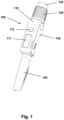
- Fig. 1 shows an embodiment of a drug delivery system comprising a pen-formed drug delivery unit and a data capture unit releasably attachable to each other.
- the drug delivery unit per se could be of any desirable design providing the necessary input to the data capture unit, however, the shown embodiment represents the type of pen in which a spring is loaded during setting of a dose, this allowing spring-driven drug expelling when the set and loaded mechanism is released by the user, this allowing a design in which the release (or actuation) button is axially stationary during dose setting.
- a more detailed description of such a pen can be found in e.g. US 2009/054839 , US 2008/306446 and US 2008/ 234634 .
- such a drug delivery device of the pen type comprises a proximal part having a mainly cylindrical housing portion with an expelling mechanism and a distal portion comprising a drug cartridge with an axially moveable piston driven by the expelling mechanism.
- the pen comprises a rotatable dose setting ring member allowing a user to set and adjust (i.e. dial-up and dial-down) a variable dose size of given increments (e.g. 1 IU insulin) to be expelled from the cartridge, the actual dose size (e.g. 25 IU insulin) being indicated by numbers shown in a window, the numbers being arranged on a rotating dose drum member.
- the maximum amount of drug that can be delivered during one out-dosing is defined by the injection device.
- the injection device may deliver variable dose amounts during one out-dosing between 1 IU insulin and 80 IU insulin.
- a push button is arranged at the proximal end and adapted to release the expelling mechanism when pushed distally by the user. As the mechanism is released the set dose will be expelled from the cartridge and the dose drum will correspondingly rotate back towards its initial zero position. If the mechanism is designed to stop expelling when the user stops pushing the release button, the number display in the window will show the portion of the dose (e.g. the numbers of units) not yet expelled, e.g. 10 units of insulin. Based on a drug delivery pen of the type described above fig.
- FIG. 1 shows an embodiment of a drug delivery system 100 comprising a pen-formed drug delivery unit and a data capture uni 110 the units being releasably attachable to each other.
- the system comprises a rotatable dose setting member 120 and a proximally arranged release button 130 adapted to be moved between an initial position, an intermediate position, and an actuated position in which the expelling means is actuated to expel the set dose.
- the distal reservoir part of the drug delivery device is covered by a cap member 150.
- the data capture unit 110 comprises electronic detection means for capturing data representing a property related to the amount of drug expelled from the reservoir by the expelling means (see below), and switch means for initiating data capture, the switch means being actuated when the release button is moved from its initial to its intermediate position.
- the data capture unit also comprises a display 111 adapted to show e.g. time and dose size for the last expelling action, as well as a key 112 allowing a user to e.g. toggle between a number of recent time-dose logs.
- the data capture unit may further be provided with an output port for wired or wireless upload of data to an external device, e.g. to the users smartphone or a doctors personal computer.
- an electronic data acquisition system could be based on the following concept: To save energy the system is dormant during non-use of the device as well as during setting of the dose. When the dose is thus set and the user actuates the release button this indicates to the system that the set dose is the actual dose to be captured. However, depending on the principle used to capture information about the set dose, the system may need time to "wake up” and capture dose information before the information "is gone", i.e. the only information representing the set (and expelled) dose is the position of mechanical components, e.g. the dose drum. This would for example be the case in a system based on optical detection of information arranged on member rotating during out-dosing (see below).
- the wake-up would have to take place during the time of travel for the release button between its initial position and the position in which the expelling mechanism is released, i.e. given such a travel is provided.
- the moving part may be a part of the out-dosing mechanism in the injection device itself, or a part in physical connection with a moving part in the out-dosing mechanism in the injection device (e.g. a mechanical or magnetic connection). The position of the moving part is related to the out-dosed amount.
- the optical detector/decoder is arranged in an add-on device to be mounted on or in the injection device.
- the following description of exemplary embodiments is based on a system where the optical detector is part of an add-on device to be mounted on or in an injection device.
- the optical detector/decoder is designed to be able to read a code pattern (or identifier) on a moving part.
- the position of the moving part is related to the amount of drug being out-dosed from the device, either by being an integrated part of the out-dosing mechanism in the injection device itself, or by having a physical connection with a moving part in the out-dosing mechanism in the injection device.
- the optical detector is arranged in a position relative to the moving part with the code pattern, where its field of view contains a portion of the code pattern.
- out-dosing from the injection device one or more elements of the internal out-dosing mechanism in the injection device is moved (or translated).
- elements of the out-dosing mechanism in the injection device move this will result in a related movement of the code pattern detectable by the optical detector/decoder.
- the part of the code pattern that is in the field of view of the optical detector changes as a consequence of the out-dosing.
- the code pattern is designed to be interpreted by the optical detector/decoder the changes of the code pattern in the field of view of the optical detector can be used to derive the position of the moving part when out-dosing starts and when out-dosing stops (and optionally during the out-dosing). Hence the out-dosing amount can be calculated and subsequently stored and/or communicated by the data acquisition system.
- the movement of the moving part with the code pattern may be rotational (around one or more axes), linear (in one or more directions) or a combination hereof.
- the code pattern may be either a discrete code (e.g. a binary code), where the code pattern changes instantly for each increment, or it may be an analogue (non-discrete) continuously changing code pattern (e.g. a grey scale code or a colour code, that changes floatingly from one tone/colour to another tone/colour).
- a discrete binary code where the values (0 or 1) are detected based on the intensity of light that reaches the optical detector/decoder.
- the optical detector must read the code value on the moving part with a time between readings that is fast enough to safely detect every time the code value changes (e.g. each out-dosing increment) during the movement of the moving part. If the code has more bits the time between readings can be prolonged and/or a system that is more robust towards e.g. tolerances may be designed. If the code has e.g. 7 bits a total of 128 different code values are possible. For an injection device with possible out-dosing amounts during one out-dosing event between e.g.
- the code pattern may be integrated on a moving part in multiple different ways.
- Examples of methods of producing detectable code patterns directly on the moving part that can be read by the optical detector/decoder system are: Printing on the moving part with different colours or tones of grey scale; providing areas on the moving part with dark tone and/or other areas with bright tone e.g. by means of printing, embossing or laser marking on areas; making areas on the moving part that reflects light towards the detector (e.g. by making surface concave or parallel with detector field of view) and/or other areas that reflects light away from the detector (e.g.
- the moving part by making surface convex or non-parallel with detector field of view or by making a rough surface texture); making holes, cut-outs or transparent areas at locations in the moving part that allows a direct passage of light through the holes/cut-outs/transparent areas to the optical detector and no passage or reduced passage of light outside the holes/cut-outs; making areas on the moving part with special optical properties (e.g. by adding an optical filter, by polarisation or by producing areas with different absorption of light or by producing areas that ensure diffuse reflection of light); making the movable part so it consists or two (or more) components, the two (or more) components having different optical characteristics (e.g.
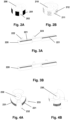
- Fig. 2A shows a rotatable part 200 with printed or laser marked areas 201 with dark colour and/or other areas 202 with bright colour, e.g. six areas with dark colour and six areas with bright colour.
- Fig. 2B shows a rotatable part 210 with areas of the structure which reflect light towards the optical detector/decoder and other areas which reflects light away from the optical detector/decoder, e.g. six areas 211 with concave surface that reflects light towards the optical detector/decoder and six areas 212 with rough surfaces that scatter or disperse light away from the optical detector/decoder.
- the code pattern may be placed on a continuous surface of the moving part, or it may be segmented onto multiple broken surfaces of the moving part. If the code pattern is placed on multiple broken surfaces of the moving part, additional optical detectors/decoders may be needed.
- Figs. 3A and 3B illustrate the principle of placing the code pattern on multiple broken surfaces 221 on a part 220 that moves linearly, such a system comprising two optical detectors/decoders 222, 223 securing that at least one detector/decoder will capture the moving code pattern.
- Figs. 4A and 4B illustrates the principle of placing the code pattern on multiple broken surfaces 231 on a part 230 that rotates, such a system also comprising two optical detectors/decoders 232, 233.
- the code pattern may be designed in multiple different ways. Examples of code patterns that can be read by an optical detector/decoder system are: Binary codes, i.e. codes with radix 2, e.g. designed as a code based on the binary number system, or as a binary-reflected Gray-code. A binary code with more than one bit may be produced by multiple code tracks, or by a single code track with multiple optical detectors/decoders, e.g. by the principle of quadrature encoding, or by a combination hereof; analogue (non-discrete) codes, e.g. designed as a grey scale code or as a colour tone code.
- Binary codes i.e. codes with radix 2
- a binary code with more than one bit may be produced by multiple code tracks, or by a single code track with multiple optical detectors/decoders, e.g. by the principle of quadrature encoding, or by a combination hereof
- analogue (non-discrete) codes e.g
- the optical detector/decoder and the moving part with the code pattern there may be an unobstructed passage of light or the passage of light may be limited by other structures e.g. a housing or a label material which is especially relevant in system designs where the moving part is integrated in the injection device itself and the optical detector/decoder is incorporated in an add-on device.
- the structure between the moving part with the code pattern and the optical detector/decoder can be modified by having an opening in the structure, or the material characteristics for the structure (e.g. a housing or a label) between the moving part with the special code pattern and the optical detector/decoder may be selected so it is sufficiently transparent for light to enable detection by the optical detector/decoder.
- the transparency may be limited to only relevant wave lengths, possibly being non-visual for the normal human eye.
- an add-on device may contain a system that penetrates the structure (e.g. a housing or a label) between the moving part with the code pattern and the optical detector/decoder before the time of detection, e.g. during mounting of the add-on device on or in the injection device.
- a mechanical part e.g. a lid, could be opened or removed from the device by the user.
- the moving part with the code pattern may either be an integrated part of the injection device, or it may be an integrated part of the add-on device. If the coded moving part is an integrated part of the add-on device, the coded moving part must be connected to a moving part of the out-dosing mechanism in the injection device, e.g. by use of a mechanical interface, e.g. gear wheels and/or belt drives.
- the out-dosing amount data acquisition system additionally comprises a triggering system that defines the relevant time for the optical detector/decoder to read the special code pattern on the moving part.
- the system may comprise a mechanically actuatable electro-mechanical switch detecting the position of a moving part of the out-dosing activation mechanism in the injection device, e.g. a user actuated push button and/or an element which position is related to the position or state of the user actuated push button.
- an electromechanical switch may detect when the out-dosing activation mechanism is in a state immediately before the actual out-dosing starts (corresponding to the above-described intermediate position), and immediately after the out-dosing stops.
- the optical detector/decoder When activated the optical detector/decoder reads the code pattern on the moving part immediately before the actual out-dosing starts, and immediately after the out-dosing stops, and optionally also a number of times in the time period between start and stop of the actual out-dosing. Based on these readings the out-dosed amount of drug can be calculated.
- the system comprises an optical trigger system comprising one or more optical detectors that detect when the injection device is about to enter the out-dosing state.
- the detection of whether the injection device is in the out-dosing state may be performed by means of an optical detector that detects the position of a moving part of the out-dosing mechanism (and/or of a part which position is related to the position or state of a part of the out-dosing mechanism) and/or of a moving part of the out-dosing activation mechanism in the injection device, e.g. a user actuated push button and/or a part which position is related to the position or state of the user actuated push button.
- the optical detector may detect when the out-dosing activation mechanism is in a state immediately before the actual out-dosing starts, and immediately after the out-dosing stops.
- the optical detector may detect when the out-dosing activation mechanism is in a state immediately before the actual out-dosing starts, and immediately after the out-dosing stops.
- the time interval between the readings by the optical detector is set so it ensures timely start-up of the optical out-dosing detector/decoder system, to safely determine the out-dosed amount.
- the energy consumption by an optical-based trigger system should be low, resulting in a low impact on the total power consumption of the total trigger and out-dosing amount acquisition system.
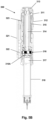
- Fig. 5A illustrates an example of a specific embodiment of a system 300 where an add-on device 320 (shown in axial cross-section) is mounted on a pen-formed device 310.
- the drug delivery device comprises a rotatable dose setting member 311 and a proximally arranged release button 313 adapted to be moved between an initial position, an intermediate position, and an actuated position in which the expelling means is actuated to expel the set dose.
- a drug reservoir in the form of a cartridge 318 is arranged in the distal part of the drug delivery device.
- the cartridge holder 318A may be permanently fixed to the pen housing as in a pre-filled device, or it may be releasable mounted allowing a user to replace a drug cartridge.
- the data capture unit 320 comprises a housing 321 comprising electronic detection means for capturing data representing a property related to the amount of drug expelled from the reservoir by the expelling means (see below), and switch means for initiating data capture, the switch means being actuated when the release button is moved from its initial to its intermediate position.
- Fig. 5B shows a longitudinal cross-sectional view of the system of fig. 5A .
- the optical detector/decoder is an integrated part of an add-on device to be mounted on an injection device.
- the injection device is of the type shown in US 2008/306446 in which the expelling mechanism comprises a piston rod 314 adapted to move a piston 317 forward in a container 318, a spring 315 as well as a member 316 which is rotationally stationary during setting of a dose and the corresponding straining of the spring (e.g. by being coupled to the housing) but which can be released from this rotationally locked position when the expelling mechanism is released, this allowing the member to rotate during expelling of a dose.
- such a member is an "active" element serving to transfer energy from the spring strained during the dose-setting action and to the piston rod pushing the reservoir piston during expelling of a dose of drug.
- the expelling mechanism is released by axially depressing a proximally arranged release button, this directly or indirectly resulting in the release of a coupling allowing the mechanism to expel the set amount of drug.
- the actuation of the release button between its different positions allows the detection means to be energized prior to begin of the out-dosing action per se.
- the rotating part 316 is an integrated part of the out-dosing mechanism in the injection device, and the angle of rotation of the rotating part is proportional with the out-dosed amount of drug, e.g. 15° rotation of the rotating part corresponds to 1 IU insulin being out-dosed.
- the user-actuated push button moves axially downwards when it is pushed.
- the movement of the user actuated push button has a mechanical coupling to an internal part of the out-dosing activation mechanism inside the injection device, which also moves axially downwards when the user-actuated push button is pressed.
- an electromechanical trigger switch 323 engages, via a circumferential gap 312 between the dose dial ring 311 and the pen body, the user-actuated push button and is activated when the user pushes down the button 313.
- the push button serves to provide an indicator portion for actuating the switch means.
- the trigger switch is activated a signal is sent to the optical detector/decoder system which subsequently starts to detect and decode the code pattern 316A printed on a rotating cylindrical ring member 316 of the out-dosing mechanism in the injection device.
- the optical detector/decoder 322 recognizes the optical code through an opening 319 (see fig. 5A ) in the housing of the injection device.
- the detection and decoding may be performed at a given frequency until the electromechanical switch is deactivated, e.g. when the user releases the user actuated push button.
- the code pattern on the moving part 316 is a single track code with six dark areas and six light areas as shown in fig. 2A .
- Two optical detectors/decoders are placed with 15° between them, resulting in a 2 bit binary-reflected Gray-code signal by use of quadrature encoding.
- the value of the Gray-code changes when the rotating part has been rotated 15°.
- the optical detectors/decoders detect and encode the code pattern at a frequency that is fast enough to register and count every time the rotating part with the special code pattern has rotated 15°.
- the optical detector/decoder counts the number of times the value of the Gray-code successively has changed step by step, and hereby the out-dosing amount of drug can be calculated from the time that the electro-mechanical switch has been activated to the time that the electromechanical switch is deactivated or end of out-dosing is captured by other means.
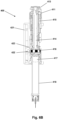
- Figs. 6A and 6B illustrate in an alternative embodiment a system 400 with a pen-formed drug delivery device 410 and an add-on unit 420 in which the electromechanical trigger switch 423 is instead activated by an inner component in the injection device through an opening 419 in the housing, which movement is mechanically coupled to the user actuated push button 413 on the injection device.
- the two systems of figs. 5 and 6 are otherwise or near-identical.
- Figs. 7A and 7B illustrate a further embodiment of a system 500 in which the optical detector/decoder is an integrated part of an add-on device 520 to be mounted on an injection device 510 of the same general design as the embodiments of figs. 6 and 7 , i.e. having a part 516 that rotates proportionally with a given member of the expelling mechanism during out-dosing of the drug, the part being released by a push button 513 that the user presses in order to activate the out-dosing mechanism in the injection device.
- a code pattern 526 is printed on a cylindrical "code wheel" 525 formed as an integrated part of the add-on device.
- the code wheel rotates due to a mechanical coupling, e.g. gearwheel, to a rotating part 516 of the out-dosing mechanism in the injection device.
- the value of the code pattern changes every time the rotating part of the out-dosing mechanism has rotated e.g. 15° corresponding to 1 IU.
- the add-on device contains a trigger system as described above (not shown) that detects when the user actuates the release button and thus initiates data capture.
- the gearing may be 1 to 4.
- all possible out-dosing amounts between 0 IU insulin to 95 IU insulin may be registered during less than 1 full rotation of the code wheel, every increment (corresponding to 3.75° on the code wheel) thus having a dedicated "absolute" code value, this in contrast to the above relative detection mode.
- the out-dosed amount of drug can be calculated based on an end-reading from the previous out-dosing.
- the triggering action could be based on initial capture of dose wheel movement, the determination of the out-dosed amount being based on the "absolute" position of the dose wheel at the end of the out-dosing action, e.g. either based on a triggering action or by a determination that the dose wheel has not moved for a given amount of time.
- a data capture system having low energy consumption in sleep mode as no separate wake-up triggering would be provided.
- the above-described embodiments are based on an arrangement in which the optical detector/decoder is fixed and the moving part with the code pattern moves relative to the detector.
- the code pattern 611 could be fixed, e.g. printed on the device housing 610, and the optical detector/decoder 612 could move relative to the code pattern.
- the optical detector/decoder could be physically connected, e.g. by a mechanical connection, with a moving part of the out-dosing mechanism.
- both the code pattern 621, 631 and the optical detector/decoder 622, 632 may be fixed.
- the field of view of the optical detector/decoder contains the entire code pattern, but it is only possible to read the code pattern for a specific area of the code.
- a third movable element e.g. a frame 623 or a light source 633 defines the readable area and moves during out-dosing.
- the third movable element that defines the readable area would be connected with a moving part of the out-dosing mechanism.
- the system 700 comprises a pen-formed drug delivery device 710 and an add-on assembly provided as two units, one unit 720 containing the data capture means and adapted to be coupled to the pen body, and one unit 750 containing an electronic display 751, the latter also serving as a cap for the drug deliver device.
- the two parts have means to communicate with each other (by wire or wirelessly) whereby the add-on display part is able to display information sent to it from the add-on device part.
- the display may be in the form of a flexible tag device comprising no battery (i.e. electrochemical cell) with receiving means adapted to receive RF signals also used to energize the display controller.
- the display may be based on mono-chromatic or colour e-ink paper or another bi-stable display technology.
- the display part can be an autonomous accessory device in itself with its own self-contained functions, e.g. a blood glucose meter (BGM) in a pen cap 760 adapted to receive BG test strips 762, and adapted to communicate with an add-on accessory on or in an injection device (or alternatively integrated into a pen body) in order to receive data and display information based on these on its electronic display 761.
- BGM blood glucose meter
- the pen cap may have other functions, e.g. a pen cap with an electromechanical interface and electronics able to sense if it has been dismounted from the pen and a display to show derived information thereof.
- a pen cap with an electromechanical interface and electronics able to sense if it has been dismounted from the pen and a display to show derived information thereof.
- the two parts have means to communicate with each other whereby the display accessory part is able to display information sent from the injection devices add-on device part on its electronic display.
Landscapes
- Health & Medical Sciences (AREA)
- Engineering & Computer Science (AREA)
- Public Health (AREA)
- General Health & Medical Sciences (AREA)
- Biomedical Technology (AREA)
- Medical Informatics (AREA)
- Primary Health Care (AREA)
- Epidemiology (AREA)
- Animal Behavior & Ethology (AREA)
- Anesthesiology (AREA)
- Vascular Medicine (AREA)
- Life Sciences & Earth Sciences (AREA)
- Veterinary Medicine (AREA)
- Hematology (AREA)
- Heart & Thoracic Surgery (AREA)
- Chemical & Material Sciences (AREA)
- Bioinformatics & Cheminformatics (AREA)
- Medicinal Chemistry (AREA)
- Business, Economics & Management (AREA)
- General Business, Economics & Management (AREA)
- Infusion, Injection, And Reservoir Apparatuses (AREA)
Description
- The present invention relates to a system for capturing drug delivery dose data. Especially, the invention addresses the issue of generating a triggering or initialization signal for an electronic data capturing system.
- In the disclosure of the present invention reference is mostly made to the treatment of diabetes by delivery of insulin, however, this is only an exemplary use of the present invention.
- Drug Injection devices have greatly improved the lives of patients who must self-administer drugs and biological agents. Drug Injection devices may take many forms, including simple disposable devices that are little more than an ampoule with an injection means or they may be durable devices adapted to be used with pre-filled cartridges. Regardless of their form and type, they have proven to be great aids in assisting patients to self-administer injectable drugs and biological agents. They also greatly assist care givers in administering injectable medicines to those incapable of performing self-injections.
- Performing the necessary insulin injection at the right time and in the right size is essential for managing diabetes, i.e. compliance with the specified insulin regimen is important. In order to make it possible for medical personnel to determine the effectiveness of a prescribed dosage pattern, diabetes patients are encouraged to keep a log of the size and time of each injection. However, such logs are normally kept in handwritten notebooks, from the logged information may not be easily uploaded to a computer for data processing. Furthermore, as only events, which are noted by the patient, are logged, the note book system requires that the patient remembers to log each injection, if the logged information is to have any value in the treatment of the patient's disease. A missing or erroneous record in the log results in a misleading picture of the injection history and thus a misleading basis for the medical personnel's decision making with respect to future medication. Accordingly, it may be desirable to automate the logging of ejection information from medication delivery systems.
- Though some injection devices integrate this monitoring/acquisition mechanism into the device itself, e.g. as disclosed in
US 2009/0318865 andWO 2010/052275 , most devices of today are without it. The most widely used devices are purely mechanical devices either durable or prefilled. The latter devices are to be discarded after being emptied and so inexpensive that it is not cost-effective to build-in electronic data acquisition functionality in the device it-self. Correspondingly, data acquisition/monitoring functionality have been proposed to be provided in a separate device to be put on or in the injection device, i.e. some kind of accessory e.g. an add-on module to the injection device.
For example,WO 2010/098927 discloses a medical module which is configured to be attached to a drug delivery pen, the module being adapted to detect and store selected and ejected dosages as well as other data. Further arrangements adapted to capture dose data are known fromWO 2010/128493 ,EP 2 060 284 andWO 2010/052275 .
Having regard to the above, it is an object of the present invention to provide systems and methods supporting simple and reliable yet cost- and energy-effective detection and storage of dose data related to use of a drug delivery device. - The invention relates to a drug delivery system as claimed in claim 1. In the disclosure of the present invention, embodiments and aspects will be described which will address one or more of the above objects or which will address objects apparent from the below disclosure as well as from the description of exemplary embodiments.
When providing a data capture system, it should be secured that the system is operational in good time before the system shall make its data acquisition (of e.g. out-dosing amount and out-dosing time) in order to get the electronics ready for the measurement(s). Initialization may include power-up time for the electronics of a fully or partly dormant system, the time for initializing the electronics or the necessary time for the electronics to make a reliable measuring/data acquisition. By the above arrangement an energy-effective system is provided which is energized just prior to out-dosing (i.e. when the user actuates the actuation member to its intermediate position), yet sufficiently early to allow the electronic data capture system to capture data prior to the expelling means being released or driven. - As stated, the switch means is actuated when the actuation member is moved to its intermediate position, however, actuation of the switch means may take place directly, i.e. by the actuation member or a component attached thereto, or indirectly, i.e. by a component moved directly or indirectly by the actuation member.
- The drug delivery system may comprise a first indicator portion which moves when the actuation member is moved (e.g. linearly) between its initial and intermediate position. The switch means may comprise e.g. optical sensor means or a mechanical switch adapted to detect when the first indicator portion is moved in response to the actuation member being moved from its initial to its intermediate position.
- The drug delivery system may comprise an identifier associated with a second indicator portion which moves (e.g. rotationally) during drug expelling and represents a property related to the amount of drug expelled from a reservoir by the expelling means, the detection means being adapted to capture the identifier. The detection means may be in the form of optical sensor means adapted to capture values represented by the identifier.
- Other means for communicating and capturing data related to dose size may be implemented. For example, the pen may be provided with electronic means generating a wireless signal to be captured by the capturing system, it may be provided with magnetic means or the pen may produce an audible signal to be captured by the capturing system. unit releasably attachable to each other, the drug delivery
- According to the invention, the drug delivery system comprises a drug delivery unit and a data capture unit releasably attachable to each other, the drug delivery unit comprising the drug expelling means, the dose setting means, and the actuation means, whereas the data capture unit comprises the electronically controlled capturing system, and the switch means.
- According to the invention, a drug delivery system is provided comprising a drug delivery unit comprising drug expelling means for expelling an amount of drug from a reservoir, the drug expelling means comprising setting means allowing a user to set a dose amount to be expelled from a drug reservoir, and actuation means for releasing or driving the drug expelling means to expel the set dose amount. The drug delivery system further comprises a data capture unit releasably attachable to the drug delivery unit (e.g. of the type described above), the data capture unit comprising an electronically controlled capturing system for capturing data representing a property related to the amount of drug expelled from the reservoir by the expelling means, and transmission means for transmitting, e.g. wirelessly, the captured data, the drug delivery system further comprising a cap unit releasably mountable to the drug delivery unit, the cap unit comprising receiving means for receiving, e.g. wirelessly, the captured data from the data capture unit, and display means adapted to display a value corresponding to the captured data. By this arrangement a simpler data capture unit can be provided in case the display of another unit can be used. In an exemplary embodiment the cap unit comprises a BGM. The cap display may also be in the form of the below-described tag device receiving RF data input from a data capture unit.
- For the above-described aspects and embodiments, the drug delivery system may be pre-filled comprising a drug reservoir not intended to be replaced after it has been emptied, or the system may be configured to receive a drug reservoir in the form of a replaceable drug cartridge, e.g. comprising a cartridge holder.
- In a yet further aspect a drug delivery system is provided comprising a main portion comprising drug expelling means for expelling drug from a reservoir through an outlet. The drug delivery system further comprises a self-contained tag device adapted to display information, the tag device comprising a display, receiving means adapted to receive data from an external source, and controller means for controlling the display to display information in accordance with the received data.
- In exemplary embodiments the tag device comprises no battery (i.e. electrochemical cell(s)) with the receiving means being adapted to receive a RF signal wherein the controller means is energized by received RF signals. The display may be based on e-paper technology (e.g. an electrical bi-stable display) and be adapted to display a numerical value representing a recommended dose size of drug to be expelled from the reservoir. The tag device may be in the form of a flexible foil member attached to e.g. a curved surface of the main portion of the drug delivery system. The display of the tag device may cover at least 50% of its surface area. The drug delivery system may comprise a cap portion releasably mountable to the main portion and adapted to cover the outlet in a mounted position, the tag device being in the form of a flexible foil member attached to e.g. a curved surface of the cap portion. The system may be adapted to communicate with external controller means adapted to transmit appearance data to be received by the tag device receiving means, the appearance data providing that a majority of the display is controlled to display e.g. a substantially uniform colour or a pattern, this indicating the type of drug contained in the reservoir, e.g. green for long-acting and orange for fast-acting insulin. In addition or alternatively the display may be used to personalize the device, e.g. cartoon figures for children.
- As used herein, the term "insulin" is meant to encompass any drug-containing flowable medicine capable of being passed through a delivery means such as a cannula or hollow needle in a controlled manner, such as a liquid, solution, gel or fine suspension, and which has a blood glucose controlling effect, e.g. human insulin and analogues thereof as well as non-insulins such as GLP-1 and analogues thereof. In the description of the exemplary embodiments reference will be made to the use of insulin.
- In the following the invention will be further described with reference to the drawings, wherein
-
fig. 1 shows a pen-type drug delivery device in combination with an add-on dose logging module, -
figs. 2A and 2B show in a schematic representation a first embodiment of an encoder/decoder system, -
figs. 3A and 3B show in a schematic representation a further embodiment of an encoder/decoder system, -
figs. 4A and 4B show in a schematic representation a further embodiment of an encoder/decoder system, -
fig. 5A shows a further embodiment of a pen-type drug delivery device in combination with an add-on dose logging module, -
fig. 5B shows a longitudinal cross-sectional view of the system offig. 5A , -
fig. 6A shows a further embodiment of a pen-type drug delivery device in combination with an add-on dose logging module, -
fig. 6B shows a longitudinal cross-sectional view of the system offig. 6A , -
fig. 7A shows a yet further embodiment of a pen-type drug delivery device in combination with an add-on dose logging module, -
fig. 7B shows a longitudinal cross-sectional view of the system offig. 7A , -
figs. 8A, 8B and 8C show in schematic representations further embodiments of an encoder/decoder system, -
fig. 9A shows an embodiment of a pen-type drug delivery device in combination with a two-part add-on dose logging system, and -
fig. 9B shows an embodiment of a BGM cap unit for a pen-type drug delivery device of the type shown infig. 9A . - In the figures like structures are mainly identified by like reference numerals.
- When in the following terms such as "upper" and "lower", "right" and "left", "horizontal" and "vertical" or similar relative expressions are used, these only refer to the appended figures and not necessarily to an actual situation of use. The shown figures are schematic representations for which reason the configuration of the different structures as well as their relative dimensions are intended to serve illustrative purposes only.
-
Fig. 1 shows an embodiment of a drug delivery system comprising a pen-formed drug delivery unit and a data capture unit releasably attachable to each other. The drug delivery unit per se could be of any desirable design providing the necessary input to the data capture unit, however, the shown embodiment represents the type of pen in which a spring is loaded during setting of a dose, this allowing spring-driven drug expelling when the set and loaded mechanism is released by the user, this allowing a design in which the release (or actuation) button is axially stationary during dose setting. A more detailed description of such a pen can be found in e.g.US 2009/054839 ,US 2008/306446 andUS 2008/ 234634 . More specifically, such a drug delivery device of the pen type comprises a proximal part having a mainly cylindrical housing portion with an expelling mechanism and a distal portion comprising a drug cartridge with an axially moveable piston driven by the expelling mechanism. The pen comprises a rotatable dose setting ring member allowing a user to set and adjust (i.e. dial-up and dial-down) a variable dose size of given increments (e.g. 1 IU insulin) to be expelled from the cartridge, the actual dose size (e.g. 25 IU insulin) being indicated by numbers shown in a window, the numbers being arranged on a rotating dose drum member. The maximum amount of drug that can be delivered during one out-dosing is defined by the injection device. For example the injection device may deliver variable dose amounts during one out-dosing between 1 IU insulin and 80 IU insulin. A push button is arranged at the proximal end and adapted to release the expelling mechanism when pushed distally by the user. As the mechanism is released the set dose will be expelled from the cartridge and the dose drum will correspondingly rotate back towards its initial zero position. If the mechanism is designed to stop expelling when the user stops pushing the release button, the number display in the window will show the portion of the dose (e.g. the numbers of units) not yet expelled, e.g. 10 units of insulin.
Based on a drug delivery pen of the type described abovefig. 1 shows an embodiment of adrug delivery system 100 comprising a pen-formed drug delivery unit and adata capture uni 110 the units being releasably attachable to each other. The system comprises a rotatabledose setting member 120 and a proximally arrangedrelease button 130 adapted to be moved between an initial position, an intermediate position, and an actuated position in which the expelling means is actuated to expel the set dose. The distal reservoir part of the drug delivery device is covered by acap member 150. Thedata capture unit 110 comprises electronic detection means for capturing data representing a property related to the amount of drug expelled from the reservoir by the expelling means (see below), and switch means for initiating data capture, the switch means being actuated when the release button is moved from its initial to its intermediate position. The data capture unit also comprises adisplay 111 adapted to show e.g. time and dose size for the last expelling action, as well as a key 112 allowing a user to e.g. toggle between a number of recent time-dose logs. The data capture unit may further be provided with an output port for wired or wireless upload of data to an external device, e.g. to the users smartphone or a doctors personal computer. - Based on the above pen design, an electronic data acquisition system could be based on the following concept: To save energy the system is dormant during non-use of the device as well as during setting of the dose. When the dose is thus set and the user actuates the release button this indicates to the system that the set dose is the actual dose to be captured. However, depending on the principle used to capture information about the set dose, the system may need time to "wake up" and capture dose information before the information "is gone", i.e. the only information representing the set (and expelled) dose is the position of mechanical components, e.g. the dose drum. This would for example be the case in a system based on optical detection of information arranged on member rotating during out-dosing (see below).
- In a straight-forward application of such a system onto a pen device design of the above-described type, the wake-up would have to take place during the time of travel for the release button between its initial position and the position in which the expelling mechanism is released, i.e. given such a travel is provided.
- With reference to
figs. 2-4 different principles for providing the switch actuation as well as the dose-related data capture will be described. More specifically, the described embodiments are primarily based on encoder/decoder systems that acquire information indicative of out-dosed amounts of drug from an injection device by means of optical detection of a code pattern on a moving part. Alternatively the same movements could be detected by means of other detection principles such as galvanic contacts, induction, capacitive coupling or magnetic field. The moving part may be a part of the out-dosing mechanism in the injection device itself, or a part in physical connection with a moving part in the out-dosing mechanism in the injection device (e.g. a mechanical or magnetic connection). The position of the moving part is related to the out-dosed amount. - The optical detector/decoder is arranged in an add-on device to be mounted on or in the injection device. The following description of exemplary embodiments is based on a system where the optical detector is part of an add-on device to be mounted on or in an injection device.
- The optical detector/decoder is designed to be able to read a code pattern (or identifier) on a moving part. The position of the moving part is related to the amount of drug being out-dosed from the device, either by being an integrated part of the out-dosing mechanism in the injection device itself, or by having a physical connection with a moving part in the out-dosing mechanism in the injection device.
- The optical detector is arranged in a position relative to the moving part with the code pattern, where its field of view contains a portion of the code pattern. When out-dosing from the injection device is performed one or more elements of the internal out-dosing mechanism in the injection device is moved (or translated). When elements of the out-dosing mechanism in the injection device move this will result in a related movement of the code pattern detectable by the optical detector/decoder. Hence the part of the code pattern that is in the field of view of the optical detector changes as a consequence of the out-dosing. Since the code pattern is designed to be interpreted by the optical detector/decoder the changes of the code pattern in the field of view of the optical detector can be used to derive the position of the moving part when out-dosing starts and when out-dosing stops (and optionally during the out-dosing). Hence the out-dosing amount can be calculated and subsequently stored and/or communicated by the data acquisition system. The movement of the moving part with the code pattern may be rotational (around one or more axes), linear (in one or more directions) or a combination hereof.
- The code pattern may be either a discrete code (e.g. a binary code), where the code pattern changes instantly for each increment, or it may be an analogue (non-discrete) continuously changing code pattern (e.g. a grey scale code or a colour code, that changes floatingly from one tone/colour to another tone/colour). The following description of exemplary embodiments is based on a discrete binary code, where the values (0 or 1) are detected based on the intensity of light that reaches the optical detector/decoder. By using more than one optical or binary type detector or by separating the field of view of a single optical detector a code value with more than one bit can be applied. If the code is a one bit code, the optical detector must read the code value on the moving part with a time between readings that is fast enough to safely detect every time the code value changes (e.g. each out-dosing increment) during the movement of the moving part. If the code has more bits the time between readings can be prolonged and/or a system that is more robust towards e.g. tolerances may be designed. If the code has e.g. 7 bits a total of 128 different code values are possible. For an injection device with possible out-dosing amounts during one out-dosing event between e.g. 1 IU insulin and 80 IU insulin in increments of 1 IU a 7 bits code enables absolute coding/ decoding of each increment and the frequency of reading the code may therefore be reduced to be performed only when out-dosing starts and when out-dosing stops.
- The code pattern may be integrated on a moving part in multiple different ways. Examples of methods of producing detectable code patterns directly on the moving part that can be read by the optical detector/decoder system are: Printing on the moving part with different colours or tones of grey scale; providing areas on the moving part with dark tone and/or other areas with bright tone e.g. by means of printing, embossing or laser marking on areas; making areas on the moving part that reflects light towards the detector (e.g. by making surface concave or parallel with detector field of view) and/or other areas that reflects light away from the detector (e.g. by making surface convex or non-parallel with detector field of view or by making a rough surface texture); making holes, cut-outs or transparent areas at locations in the moving part that allows a direct passage of light through the holes/cut-outs/transparent areas to the optical detector and no passage or reduced passage of light outside the holes/cut-outs; making areas on the moving part with special optical properties (e.g. by adding an optical filter, by polarisation or by producing areas with different absorption of light or by producing areas that ensure diffuse reflection of light); making the movable part so it consists or two (or more) components, the two (or more) components having different optical characteristics (e.g. different colours, brightness, reflection direction, filters, polarisation and/or absorption of light); making holes, cut-outs or transparent areas at special fields in the moving part that allows a direct view of the surface of another component and no passage or reduced view of the surface of the other component outside the holes/cut-outs/transparent areas (the other component may be fixed or moving), the surface of the other component having different optical characteristics than the moving part (e.g. different colours, brightness, reflection direction, filters, polarisation and/or absorption of light); a combination of two or more of the embodiments mentioned above.
-
Fig. 2A shows arotatable part 200 with printed or laser markedareas 201 with dark colour and/orother areas 202 with bright colour, e.g. six areas with dark colour and six areas with bright colour.Fig. 2B shows arotatable part 210 with areas of the structure which reflect light towards the optical detector/decoder and other areas which reflects light away from the optical detector/decoder, e.g. sixareas 211 with concave surface that reflects light towards the optical detector/decoder and sixareas 212 with rough surfaces that scatter or disperse light away from the optical detector/decoder. - The code pattern may be placed on a continuous surface of the moving part, or it may be segmented onto multiple broken surfaces of the moving part. If the code pattern is placed on multiple broken surfaces of the moving part, additional optical detectors/decoders may be needed.
Figs. 3A and 3B illustrate the principle of placing the code pattern on multiplebroken surfaces 221 on apart 220 that moves linearly, such a system comprising two optical detectors/decoders Figs. 4A and 4B illustrates the principle of placing the code pattern on multiplebroken surfaces 231 on apart 230 that rotates, such a system also comprising two optical detectors/decoders - The code pattern may be designed in multiple different ways. Examples of code patterns that can be read by an optical detector/decoder system are: Binary codes, i.e. codes with radix 2, e.g. designed as a code based on the binary number system, or as a binary-reflected Gray-code. A binary code with more than one bit may be produced by multiple code tracks, or by a single code track with multiple optical detectors/decoders, e.g. by the principle of quadrature encoding, or by a combination hereof; analogue (non-discrete) codes, e.g. designed as a grey scale code or as a colour tone code.
- Between the optical detector/decoder and the moving part with the code pattern there may be an unobstructed passage of light or the passage of light may be limited by other structures e.g. a housing or a label material which is especially relevant in system designs where the moving part is integrated in the injection device itself and the optical detector/decoder is incorporated in an add-on device. In such instances the structure between the moving part with the code pattern and the optical detector/decoder can be modified by having an opening in the structure, or the material characteristics for the structure (e.g. a housing or a label) between the moving part with the special code pattern and the optical detector/decoder may be selected so it is sufficiently transparent for light to enable detection by the optical detector/decoder. The transparency may be limited to only relevant wave lengths, possibly being non-visual for the normal human eye. Alternatively an add-on device may contain a system that penetrates the structure (e.g. a housing or a label) between the moving part with the code pattern and the optical detector/decoder before the time of detection, e.g. during mounting of the add-on device on or in the injection device. Alternatively a mechanical part, e.g. a lid, could be opened or removed from the device by the user.
- If the optical detector/decoder is integrated in an add-on device to be mounted on or in the injection device, the moving part with the code pattern may either be an integrated part of the injection device, or it may be an integrated part of the add-on device. If the coded moving part is an integrated part of the add-on device, the coded moving part must be connected to a moving part of the out-dosing mechanism in the injection device, e.g. by use of a mechanical interface, e.g. gear wheels and/or belt drives.
- The out-dosing amount data acquisition system additionally comprises a triggering system that defines the relevant time for the optical detector/decoder to read the special code pattern on the moving part. For example, the system may comprise a mechanically actuatable electro-mechanical switch detecting the position of a moving part of the out-dosing activation mechanism in the injection device, e.g. a user actuated push button and/or an element which position is related to the position or state of the user actuated push button. For example, an electromechanical switch may detect when the out-dosing activation mechanism is in a state immediately before the actual out-dosing starts (corresponding to the above-described intermediate position), and immediately after the out-dosing stops. When activated the optical detector/decoder reads the code pattern on the moving part immediately before the actual out-dosing starts, and immediately after the out-dosing stops, and optionally also a number of times in the time period between start and stop of the actual out-dosing. Based on these readings the out-dosed amount of drug can be calculated.
- Alternatively, the system comprises an optical trigger system comprising one or more optical detectors that detect when the injection device is about to enter the out-dosing state. The detection of whether the injection device is in the out-dosing state may be performed by means of an optical detector that detects the position of a moving part of the out-dosing mechanism (and/or of a part which position is related to the position or state of a part of the out-dosing mechanism) and/or of a moving part of the out-dosing activation mechanism in the injection device, e.g. a user actuated push button and/or a part which position is related to the position or state of the user actuated push button. For example, the optical detector may detect when the out-dosing activation mechanism is in a state immediately before the actual out-dosing starts, and immediately after the out-dosing stops. Hereby a system that is similar to the abovementioned system with mechanically actuatable electromechanical switch can be provided.
- In the above-mentioned system with an optical detector detecting the position of a moving part of the out-dosing mechanism or of a moving part of the out-dosing activation mechanism in the injection device, the time interval between the readings by the optical detector is set so it ensures timely start-up of the optical out-dosing detector/decoder system, to safely determine the out-dosed amount. Indeed, the energy consumption by an optical-based trigger system should be low, resulting in a low impact on the total power consumption of the total trigger and out-dosing amount acquisition system.
-
Fig. 5A illustrates an example of a specific embodiment of asystem 300 where an add-on device 320 (shown in axial cross-section) is mounted on a pen-formeddevice 310. The drug delivery device comprises a rotatabledose setting member 311 and a proximally arrangedrelease button 313 adapted to be moved between an initial position, an intermediate position, and an actuated position in which the expelling means is actuated to expel the set dose. In the distal part of the drug delivery device a drug reservoir in the form of acartridge 318 is arranged. Thecartridge holder 318A may be permanently fixed to the pen housing as in a pre-filled device, or it may be releasable mounted allowing a user to replace a drug cartridge. - The
data capture unit 320 comprises ahousing 321 comprising electronic detection means for capturing data representing a property related to the amount of drug expelled from the reservoir by the expelling means (see below), and switch means for initiating data capture, the switch means being actuated when the release button is moved from its initial to its intermediate position.Fig. 5B shows a longitudinal cross-sectional view of the system offig. 5A . - More specifically, the optical detector/decoder is an integrated part of an add-on device to be mounted on an injection device. The injection device is of the type shown in
US 2008/306446 in which the expelling mechanism comprises apiston rod 314 adapted to move apiston 317 forward in acontainer 318, aspring 315 as well as amember 316 which is rotationally stationary during setting of a dose and the corresponding straining of the spring (e.g. by being coupled to the housing) but which can be released from this rotationally locked position when the expelling mechanism is released, this allowing the member to rotate during expelling of a dose. Typically, such a member is an "active" element serving to transfer energy from the spring strained during the dose-setting action and to the piston rod pushing the reservoir piston during expelling of a dose of drug. As described above, the expelling mechanism is released by axially depressing a proximally arranged release button, this directly or indirectly resulting in the release of a coupling allowing the mechanism to expel the set amount of drug. As also described above, the actuation of the release button between its different positions allows the detection means to be energized prior to begin of the out-dosing action per se. - As shown in
fig. 5B therotating part 316 is an integrated part of the out-dosing mechanism in the injection device, and the angle of rotation of the rotating part is proportional with the out-dosed amount of drug, e.g. 15° rotation of the rotating part corresponds to 1 IU insulin being out-dosed. The user-actuated push button moves axially downwards when it is pushed. The movement of the user actuated push button has a mechanical coupling to an internal part of the out-dosing activation mechanism inside the injection device, which also moves axially downwards when the user-actuated push button is pressed. - In the shown embodiment an
electromechanical trigger switch 323 engages, via acircumferential gap 312 between thedose dial ring 311 and the pen body, the user-actuated push button and is activated when the user pushes down thebutton 313. As appears, the push button serves to provide an indicator portion for actuating the switch means. When the trigger switch is activated a signal is sent to the optical detector/decoder system which subsequently starts to detect and decode thecode pattern 316A printed on a rotatingcylindrical ring member 316 of the out-dosing mechanism in the injection device. The optical detector/decoder 322 recognizes the optical code through an opening 319 (seefig. 5A ) in the housing of the injection device. The detection and decoding may be performed at a given frequency until the electromechanical switch is deactivated, e.g. when the user releases the user actuated push button. The code pattern on the movingpart 316 is a single track code with six dark areas and six light areas as shown infig. 2A . Two optical detectors/decoders are placed with 15° between them, resulting in a 2 bit binary-reflected Gray-code signal by use of quadrature encoding. The value of the Gray-code changes when the rotating part has been rotated 15°. The optical detectors/decoders detect and encode the code pattern at a frequency that is fast enough to register and count every time the rotating part with the special code pattern has rotated 15°. The optical detector/decoder counts the number of times the value of the Gray-code successively has changed step by step, and hereby the out-dosing amount of drug can be calculated from the time that the electro-mechanical switch has been activated to the time that the electromechanical switch is deactivated or end of out-dosing is captured by other means. -
Figs. 6A and6B illustrate in an alternative embodiment asystem 400 with a pen-formeddrug delivery device 410 and an add-onunit 420 in which theelectromechanical trigger switch 423 is instead activated by an inner component in the injection device through anopening 419 in the housing, which movement is mechanically coupled to the user actuatedpush button 413 on the injection device. Apart from the circumferential gap in thefig. 5 embodiment and the opening 412 in thefig. 6 embodiment, the two systems offigs. 5 and6 are otherwise or near-identical. -
Figs. 7A and 7B illustrate a further embodiment of asystem 500 in which the optical detector/decoder is an integrated part of an add-ondevice 520 to be mounted on aninjection device 510 of the same general design as the embodiments offigs. 6 and7 , i.e. having apart 516 that rotates proportionally with a given member of the expelling mechanism during out-dosing of the drug, the part being released by apush button 513 that the user presses in order to activate the out-dosing mechanism in the injection device. - More specifically, in the
figs. 7 embodiment acode pattern 526 is printed on a cylindrical "code wheel" 525 formed as an integrated part of the add-on device. The code wheel rotates due to a mechanical coupling, e.g. gearwheel, to arotating part 516 of the out-dosing mechanism in the injection device. The value of the code pattern changes every time the rotating part of the out-dosing mechanism has rotated e.g. 15° corresponding to 1 IU. The add-on device contains a trigger system as described above (not shown) that detects when the user actuates the release button and thus initiates data capture. Due to a gearing between the rotating part of the out-dosing mechanism in the injection device and the code wheel, the angular movement of the code wheel is reduced compared to the angular movement of the rotating part of the out-dosing mechanism in the injection device, e.g. the gearing may be 1 to 4. Hereby all possible out-dosing amounts between 0 IU insulin to 95 IU insulin may be registered during less than 1 full rotation of the code wheel, every increment (corresponding to 3.75° on the code wheel) thus having a dedicated "absolute" code value, this in contrast to the above relative detection mode. Hereby the out-dosed amount of drug can be calculated based on an end-reading from the previous out-dosing. Thus, alternatively, the triggering action could be based on initial capture of dose wheel movement, the determination of the out-dosed amount being based on the "absolute" position of the dose wheel at the end of the out-dosing action, e.g. either based on a triggering action or by a determination that the dose wheel has not moved for a given amount of time. Indeed, such a system would necessitate a data capture system having low energy consumption in sleep mode as no separate wake-up triggering would be provided. - The above-described embodiments are based on an arrangement in which the optical detector/decoder is fixed and the moving part with the code pattern moves relative to the detector. Alternatively as shown in
figs. 8A-8C thecode pattern 611 could be fixed, e.g. printed on thedevice housing 610, and the optical detector/decoder 612 could move relative to the code pattern. For such an arrangement the optical detector/decoder could be physically connected, e.g. by a mechanical connection, with a moving part of the out-dosing mechanism. - As a further alternative (see
figs. 8B and 8C ) both thecode pattern decoder frame 623 or a light source 633) defines the readable area and moves during out-dosing. For such embodiments the third movable element that defines the readable area would be connected with a moving part of the out-dosing mechanism. - With reference to
figs. 9A and 9B an alternative configuration for a drug delivery system with data capture means will be described. More specifically, thesystem 700 comprises a pen-formeddrug delivery device 710 and an add-on assembly provided as two units, oneunit 720 containing the data capture means and adapted to be coupled to the pen body, and oneunit 750 containing anelectronic display 751, the latter also serving as a cap for the drug deliver device. The two parts have means to communicate with each other (by wire or wirelessly) whereby the add-on display part is able to display information sent to it from the add-on device part. The display may be in the form of a flexible tag device comprising no battery (i.e. electrochemical cell) with receiving means adapted to receive RF signals also used to energize the display controller. The display may be based on mono-chromatic or colour e-ink paper or another bi-stable display technology. - The display part can be an autonomous accessory device in itself with its own self-contained functions, e.g. a blood glucose meter (BGM) in a
pen cap 760 adapted to receiveBG test strips 762, and adapted to communicate with an add-on accessory on or in an injection device (or alternatively integrated into a pen body) in order to receive data and display information based on these on itselectronic display 761. - The pen cap may have other functions, e.g. a pen cap with an electromechanical interface and electronics able to sense if it has been dismounted from the pen and a display to show derived information thereof. When such an accessory device is used together with an add-on module on the device the two parts have means to communicate with each other whereby the display accessory part is able to display information sent from the injection devices add-on device part on its electronic display.
- In the above description of exemplary embodiments, the different structures and means providing the described functionality for the different components have been described to a degree to which the concept of the present invention will be apparent to the skilled reader. The detailed construction and specification for the different components are considered the object of a normal design procedure performed by the skilled person along the lines set out in the present specification.
Claims (11)
- A drug delivery system (300), comprising:- expelling means (314, 315) for expelling an amount of drug from a reservoir (318), comprising:(a) setting means (311) allowing a user to set a dose amount of drug to be expelled, and(b) actuation means (313) for releasing or driving the drug expelling means to expel the set dose amount,- an electronically controlled capturing system (320) for capturing data representing a property related to the amount of drug expelled from a reservoir by the expelling means, and- switch means (323) for starting initialization of the capturing system, wherein the actuation means comprises a push button (313), characterized in that the push button is adapted to be pushed distally, for said releasing or driving of the drug expelling means, between:(i) an initial position,(ii) an intermediate position in which the switch means is actuated to start initialization of the capturing system, and(iii) an actuated position in which the expelling means is actuated to expel the set dose, whereby the capturing system is allowed to initialize during the push button's movement between the intermediate position and the actuated position, the drug delivery system comprising a drug delivery unit and a data capture unit releasably attachable to each other, the drug delivery unit comprising:- the drug expelling means,- the setting means, and- the actuation means,the data capture unit comprising:- the electronically controlled capturing system, and- the switch means.
- A drug delivery system as in claim 1, comprising a first indicator portion (313) which moves when the actuation member is moved from its initial to its intermediate position.
- A drug delivery system as in claim 2, wherein the first indicator portion is moved linearly when the actuation member is moved from its initial to its intermediate position.
- A drug delivery system as in claim 2 or 3, wherein the switch means comprises optical sensor means adapted to detect when the first indicator portion is moved corresponding to the actuation member being moved to its intermediate position.
- A drug delivery system as in claim 2 or 3, wherein the switch means comprises a mechanical switch (323, 423) adapted to be actuated when the first indicator portion is moved corresponding to the actuation member being moved to its intermediate position.
- A drug delivery system as in any of claims 1-5, wherein the expelling means comprises an identifier (316A) associated with a second indicator portion (316) which moves during drug expelling and represents a property related to the amount of drug expelled from a reservoir by the expelling means, the capturing system being adapted to capture the identifier.
- A drug delivery system as in claim 6, wherein the second indicator portion moves rotationally during drug expelling.
- A drug delivery system as in claim 6 or 7, wherein- the capturing system comprises optical sensor means (322), and- the identifier (316A) is adapted to be captured by the optical sensor means.
- A drug delivery system as in claim 1, wherein- the data capture unit further comprises transmission means for wirelessly transmitting the captured data, and- the drug delivery system further comprises a cap unit releasably mountable to the drug delivery unit, comprising:(i) receiving means for receiving the captured data from the data capture unit, and(ii) display means adapted to display a value corresponding to the captured data.
- A drug delivery system as in any of claims 1-9, comprising a drug reservoir.
- A drug delivery system as in any of claims 1-9, the system being configured to receive a replaceable drug reservoir in the form of a drug cartridge.
Priority Applications (1)
| Application Number | Priority Date | Filing Date | Title |
|---|---|---|---|
| EP12735504.8A EP2729202B2 (en) | 2011-07-07 | 2012-07-09 | Drug delivery injection pen with add-on dose capturing and display module |
Applications Claiming Priority (4)
| Application Number | Priority Date | Filing Date | Title |
|---|---|---|---|
| EP11173080 | 2011-07-07 | ||
| US201161507222P | 2011-07-13 | 2011-07-13 | |
| PCT/EP2012/063350 WO2013004844A1 (en) | 2011-07-07 | 2012-07-09 | Drug delivery injection pen with add-on dose capturing and display module |
| EP12735504.8A EP2729202B2 (en) | 2011-07-07 | 2012-07-09 | Drug delivery injection pen with add-on dose capturing and display module |
Publications (3)
| Publication Number | Publication Date |
|---|---|
| EP2729202A1 EP2729202A1 (en) | 2014-05-14 |
| EP2729202B1 EP2729202B1 (en) | 2018-05-16 |
| EP2729202B2 true EP2729202B2 (en) | 2024-11-06 |
Family
ID=47436555
Family Applications (1)
| Application Number | Title | Priority Date | Filing Date |
|---|---|---|---|
| EP12735504.8A Active EP2729202B2 (en) | 2011-07-07 | 2012-07-09 | Drug delivery injection pen with add-on dose capturing and display module |
Country Status (5)
| Country | Link |
|---|---|
| US (1) | US9623188B2 (en) |
| EP (1) | EP2729202B2 (en) |
| JP (1) | JP6106666B2 (en) |
| CN (1) | CN103702699B (en) |
| WO (1) | WO2013004844A1 (en) |
Families Citing this family (125)
| Publication number | Priority date | Publication date | Assignee | Title |
|---|---|---|---|---|
| JP6616073B2 (en) | 2011-03-24 | 2019-12-04 | サノフィ−アベンティス・ドイチュラント・ゲゼルシャフト・ミット・ベシュレンクテル・ハフツング | Device and method for detecting an actuating action executable on a medical device |
| JP6109834B2 (en) | 2011-10-07 | 2017-04-05 | ノボ・ノルデイスク・エー/エス | System for determining the position of an element based on a three-axis magnetic sensor |
| KR20140122272A (en) * | 2012-02-13 | 2014-10-17 | 사노피-아벤티스 도이칠란트 게엠베하 | Supplemental device for attachment to an injection device |
| KR20130140301A (en) | 2012-06-14 | 2013-12-24 | 삼성전자주식회사 | Device for measuring dose in injector |
| CN104519930B (en) * | 2012-08-03 | 2017-11-07 | 赛诺菲-安万特德国有限公司 | Pen-type drug injection device and the additional monitoring module of electronics for monitoring and recording dosage setting with daily record is administered |
| US11872375B2 (en) | 2012-09-05 | 2024-01-16 | E3D Agricultural Cooperative Association Ltd. | Electronic auto-injection device |
| JP6366607B2 (en) | 2013-01-15 | 2018-08-01 | サノフィ−アベンティス・ドイチュラント・ゲゼルシャフト・ミット・ベシュレンクテル・ハフツング | Auxiliary devices attached to medical injection devices to generate usage reports in digital image format for use of injection devices |
| DK2945671T3 (en) | 2013-01-15 | 2021-07-05 | Sanofi Aventis Deutschland | PEN-LIKE DEVICE FOR DELIVERING MEDICINES WITH FRICTION-REDUCING DOSAGE ENCODING MECHANISM |
| US10112017B2 (en) | 2013-01-15 | 2018-10-30 | Sanofi-Aventis Deutschland Gmbh | Pen type drug injection device with low friction dose encoder mechanism on thread |
| WO2014111336A1 (en) * | 2013-01-15 | 2014-07-24 | Sanofi-Aventis Deutschland Gmbh | Pen-type drug injection device and electronic add-on monitoring module for monitoring and logging dose setting and administration |
| JP6411369B2 (en) * | 2013-01-15 | 2018-10-24 | サノフィ−アベンティス・ドイチュラント・ゲゼルシャフト・ミット・ベシュレンクテル・ハフツング | Decryption system |
| EP3248637B1 (en) * | 2013-01-15 | 2020-11-04 | Sanofi-Aventis Deutschland GmbH | Optical dose decoding method |
| DK2945670T3 (en) * | 2013-01-15 | 2018-02-26 | Sanofi Aventis Deutschland | PHARMACEUTICAL INJECTION DEVICE OF THE PENY TYPE WITH DOSAGE CODE MECHANISM AND SWITCHES BETWEEN DOSAGE SETTING AND DOSAGE DISPENSING CONDITIONS |
| EP2945674B1 (en) * | 2013-01-15 | 2017-03-08 | Sanofi-Aventis Deutschland GmbH | Pen type drug injection device with absolute angular dose encoder mechanism |
| CN104902944B (en) | 2013-01-15 | 2018-10-26 | 赛诺菲-安万特德国有限公司 | Pen type drug delivery device and optical dose value decoding system with additional sensor to differentiate between dose dial mode and dose delivery mode |
| WO2014128157A1 (en) | 2013-02-19 | 2014-08-28 | Novo Nordisk A/S | Drug delivery device with dose capturing module |
| EP2958610B1 (en) * | 2013-02-19 | 2016-11-30 | Novo Nordisk A/S | Dose capturing cartridge module for drug delivery device |
| CN105120925B (en) * | 2013-04-05 | 2018-11-06 | 诺和诺德股份有限公司 | Drug delivery device and logging module assembly |
| EP2981310B1 (en) | 2013-04-05 | 2017-07-12 | Novo Nordisk A/S | Dose logging device for a drug delivery device |
| CN105102024B (en) * | 2013-04-05 | 2019-02-05 | 诺和诺德股份有限公司 | Recording equipment suitable for combining doses |
| JP6756806B2 (en) * | 2013-04-05 | 2020-09-16 | ノボ・ノルデイスク・エー/エス | Logging device that combines multiple doses |
| CN105120927B (en) * | 2013-04-22 | 2019-02-01 | 赛诺菲-安万特德国有限公司 | Auxiliary device for collecting information related to the use of an injection device |
| CN105228678B (en) | 2013-04-22 | 2019-09-27 | 赛诺菲-安万特德国有限公司 | Sensor device with OLED |
| JP6781629B2 (en) * | 2013-04-22 | 2020-11-04 | サノフィ−アベンティス・ドイチュラント・ゲゼルシャフト・ミット・ベシュレンクテル・ハフツング | Sensor device for attachment to drug delivery device |
| EP2988805B1 (en) * | 2013-04-22 | 2022-01-05 | Sanofi-Aventis Deutschland GmbH | Supplemental device for use with an injection device, a method of operation thereof, and a computer program for controlling a supplemental device to perform the method |
| EP2994179B1 (en) * | 2013-05-07 | 2018-03-14 | Sanofi-Aventis Deutschland GmbH | A supplemental device for attachment to an injection device |
| US10226577B2 (en) | 2013-11-13 | 2019-03-12 | Novo Nordisk A/S | Drug delivery device with time indicator feature |
| US11311678B2 (en) | 2013-11-21 | 2022-04-26 | Novo Nordisk A/S | Rotary sensor assembly with space efficient design |
| JP6786389B2 (en) | 2013-11-21 | 2020-11-18 | ノボ・ノルデイスク・エー/エス | Rotation sensor assembly with axial switch and redundancy mechanism |
| WO2015103784A1 (en) * | 2014-01-13 | 2015-07-16 | 深圳市祥涛瑞杰贸易有限公司 | Medication injection information monitoring structure as well as system and medication injector thereof |
| CN106104576B (en) | 2014-01-24 | 2019-11-26 | 赛诺菲-安万特德国有限公司 | Auxiliary device for attaching to injection devices to record and display user-set dose values using Optical Character Recognition (OCR) |
| CN106456884A (en) * | 2014-03-14 | 2017-02-22 | 卡贝欧洲有限公司 | monitoring device |
| CN106659842B (en) | 2014-06-06 | 2019-12-24 | 诺和诺德股份有限公司 | Recording devices for drug delivery devices |
| CN106413781B (en) * | 2014-06-06 | 2020-04-21 | 诺和诺德股份有限公司 | Recording devices operated by drug delivery devices |
| DK3155378T3 (en) * | 2014-06-10 | 2019-08-19 | Sanofi Aventis Deutschland | SENSOR DEVICE ADJUSTABLE TO A PHARMACEUTICAL ADMINISTRATION DEVICE |
| CA2952167C (en) | 2014-06-13 | 2023-06-13 | Aterica Inc. | System and device for management of medication delivery devices |
| US10384014B2 (en) | 2014-09-02 | 2019-08-20 | Eli Lilly And Company | Sensing system for detecting a piston in a medical fluid container |
| US10704944B2 (en) | 2014-09-14 | 2020-07-07 | Becton, Dickinson And Company | System and method for capturing dose information |
| US10971260B2 (en) | 2014-09-14 | 2021-04-06 | Becton, Dickinson And Company | System and method for capturing dose information |
| WO2016050902A1 (en) * | 2014-10-03 | 2016-04-07 | Novo Nordisk A/S | Pen-type drug injector and add-on module with magnetic dosage sensor system and error detection |
| WO2016062807A1 (en) * | 2014-10-23 | 2016-04-28 | Novo Nordisk A/S | Pen-type drug delivery device with electronic display on clip member |
| EP3242698A1 (en) * | 2015-01-08 | 2017-11-15 | Novo Nordisk A/S | Drug injection device with visual end-of-contents indicator system |
| EP3045186A1 (en) | 2015-01-16 | 2016-07-20 | Sanofi-Aventis Deutschland GmbH | Sensor for use with a drug delivery device |
| EP3247428B1 (en) * | 2015-01-21 | 2024-04-10 | Sanofi-Aventis Deutschland GmbH | Supplemental device for attachment to a pen injector and determination of a set dose amount using optical incremental encoder |
| EP3058973A1 (en) * | 2015-02-19 | 2016-08-24 | Sanofi-Aventis Deutschland GmbH | Supplemental device for removable attachment to a medicament injection device |
| EP3058970A1 (en) | 2015-02-19 | 2016-08-24 | Sanofi-Aventis Deutschland GmbH | Data collection device for attachment to an injection device |
| WO2016138634A1 (en) * | 2015-03-03 | 2016-09-09 | 创新精密仪器有限公司 | Drug information monitoring apparatus and drug information monitoring type injection apparatus |
| CN104800932B (en) * | 2015-03-03 | 2017-11-10 | 创新精密仪器有限公司 | Medicine information monitoring device and medicine information monitoring type injection device |
| PL3265152T3 (en) * | 2015-03-06 | 2020-08-10 | Attila BEREY | Data acquisiton means, especially for a pen-type drug delivery devices |
| EP3067081A1 (en) * | 2015-03-12 | 2016-09-14 | Sanofi | Drug delivery device |
| JP2018515232A (en) * | 2015-05-12 | 2018-06-14 | ノボ・ノルデイスク・エー/エス | Rotation sensor structure for drug delivery device |
| WO2016191820A1 (en) * | 2015-06-02 | 2016-12-08 | Newsouth Innovations Pty Limited | Formulation and process for limiting nerve trauma |
| JP6901975B2 (en) | 2015-06-09 | 2021-07-14 | サノフィ−アベンティス・ドイチュラント・ゲゼルシャフト・ミット・ベシュレンクテル・ハフツング | Data acquisition device attached to the injection device |
| PL3419700T3 (en) * | 2015-07-21 | 2024-03-04 | Biocorp Production S.A. | Dose control device for injectable-drug delivery devices |
| ES2954088T3 (en) | 2015-07-21 | 2023-11-20 | Biocorp Production SA | Dose control system for injectable drug delivery devices and associated methods of use |
| EP3135330A1 (en) * | 2015-08-24 | 2017-03-01 | Carebay Europe Ltd. | Monitoring unit |
| WO2017032586A1 (en) * | 2015-08-24 | 2017-03-02 | Carebay Europe Ltd | Monitoring unit |
| US10576207B2 (en) | 2015-10-09 | 2020-03-03 | West Pharma. Services IL, Ltd. | Angled syringe patch injector |
| US10332699B2 (en) | 2015-09-30 | 2019-06-25 | Novo Nordisk A/S | Power efficient add-on device |
| JP7017512B2 (en) | 2015-10-09 | 2022-02-08 | ウェスト ファーマ サービシーズ イスラエル リミテッド | Bending fluid path type accessories for filled fluid containers |
| CN106610449B (en) * | 2015-10-23 | 2023-03-24 | 福建三洲电力科技有限公司 | Binary lightning stroke counting device for lightning arrester |
| JP6837483B2 (en) * | 2015-11-11 | 2021-03-03 | ノボ・ノルデイスク・エー/エス | Drug delivery device with information capture |
| EP3178507A1 (en) * | 2015-12-09 | 2017-06-14 | Carebay Europe Ltd. | Communication device for transmitting information from a medicament delivery device |
| EP3386569B1 (en) * | 2015-12-10 | 2025-08-13 | Sanofi-Aventis Deutschland GmbH | Drug delivery device with removably attachable sensor device |
| EP3184137A1 (en) * | 2015-12-23 | 2017-06-28 | Carebay Europe Ltd. | Medicament delivery device with user feedback capability |
| CN109219458B (en) * | 2016-01-21 | 2021-03-02 | 西医药服务以色列有限公司 | Medication delivery device including visual indicator |
| US11311674B2 (en) | 2016-01-21 | 2022-04-26 | West Pharma. Services IL, Ltd. | Medicament delivery device comprising a visual indicator |
| WO2017132577A1 (en) | 2016-01-29 | 2017-08-03 | Companion Medical, Inc. | Automatic medication delivery tracking |
| JP7201435B6 (en) | 2016-03-01 | 2023-01-23 | ノボ・ノルデイスク・エー/エス | Power efficient accessory device |
| EP3222309A1 (en) | 2016-03-22 | 2017-09-27 | Carebay Europe Ltd | Monitoring unit |
| EP3448470B1 (en) | 2016-04-29 | 2020-03-18 | Novo Nordisk A/S | Drug delivery system with dose capturing |
| CN109152884B (en) * | 2016-05-30 | 2022-02-11 | 诺和诺德股份有限公司 | Drug delivery device with zero position adjustment feature |
| JP6722774B2 (en) * | 2016-06-16 | 2020-07-15 | エス・ハー・エル・メディカル・アクチェンゲゼルシャフトShl Medical Ag | Auxiliary device for drug delivery device |
| US11554221B2 (en) | 2016-07-15 | 2023-01-17 | Eli Lilly And Company | Dose detection module for a medication delivery device |
| US9636464B1 (en) * | 2016-08-01 | 2017-05-02 | Innovative Precision Instruments Limited | Drug delivery device and a drug information detection device |
| WO2018036938A1 (en) | 2016-08-26 | 2018-03-01 | Sanofi-Aventis Deutschland Gmbh | A device for attachment to an injection device |
| CN108066849A (en) * | 2016-11-15 | 2018-05-25 | 广东东阳光药业有限公司 | Automatic gather syringe of scale data |
| CN110430907B (en) * | 2017-01-13 | 2022-10-11 | 西医药服务有限公司 | Portable device for monitoring patient compliance |
| CN108345396B (en) * | 2017-01-25 | 2021-06-04 | 禾伸堂企业股份有限公司 | Touch pen with magnetic induction wheel and operation method thereof |
| RS67428B1 (en) | 2017-02-28 | 2025-12-31 | Lilly Co Eli | Dose detection and drug identification for a medication delivery device |
| US20190054251A1 (en) * | 2017-08-17 | 2019-02-21 | Qualcomm Incorporated | Medicine delivery device |
| ES2985951T3 (en) | 2017-08-18 | 2024-11-07 | Lilly Co Eli | Dosing measurement module on injection pen |
| ES2996276T3 (en) | 2017-08-21 | 2025-02-12 | Lilly Co Eli | Dose detection module for a medication delivery device |
| MX2020005338A (en) | 2017-11-23 | 2020-10-14 | Sanofi Sa | Medicament injection device with rotary encoder. |
| US10987464B2 (en) | 2017-12-12 | 2021-04-27 | Bigfoot Biomedical, Inc. | Pen cap for insulin injection pens and associated methods and systems |
| AU2018383743A1 (en) | 2017-12-12 | 2020-07-23 | Bigfoot Biomedical, Inc. | Therapy assist information and/or tracking device and related methods and systems |
| US11083852B2 (en) | 2017-12-12 | 2021-08-10 | Bigfoot Biomedical, Inc. | Insulin injection assistance systems, methods, and devices |
| US11077243B2 (en) | 2017-12-12 | 2021-08-03 | Bigfoot Biomedical, Inc. | Devices, systems, and methods for estimating active medication from injections |
| US11116899B2 (en) | 2017-12-12 | 2021-09-14 | Bigfoot Biomedical, Inc. | User interface for diabetes management systems and devices |
| US11464459B2 (en) | 2017-12-12 | 2022-10-11 | Bigfoot Biomedical, Inc. | User interface for diabetes management systems including flash glucose monitor |
| US11197964B2 (en) | 2017-12-12 | 2021-12-14 | Bigfoot Biomedical, Inc. | Pen cap for medication injection pen having temperature sensor |
| US11738153B2 (en) | 2017-12-18 | 2023-08-29 | Patients Pending Ltd. | Liquid delivery cap devices, systems, and methods |
| WO2019121449A1 (en) * | 2017-12-18 | 2019-06-27 | Sanofi | Dose recording device |
| CN111565779A (en) * | 2017-12-28 | 2020-08-21 | 赛诺菲 | Dosimetry system |
| AU2018394953B2 (en) * | 2017-12-29 | 2021-05-06 | Genentech, Inc. | Injection monitoring device with delivery signature |
| AU2019208338B2 (en) | 2018-01-19 | 2024-11-07 | Birya Biotech, Inc. | Tool for servicing an auto-injector |
| SI3755404T1 (en) | 2018-02-22 | 2023-11-30 | Eli Lilly And Company | Dose detection system module for medication delivery device |
| TW202010527A (en) * | 2018-08-31 | 2020-03-16 | 榮晶生物科技股份有限公司 | Dose recording device and dose recording method |
| US11229749B2 (en) | 2018-09-06 | 2022-01-25 | Verily Life Sciences Llc | Plate capacitor for dosage sensing |
| US12205699B1 (en) | 2018-10-30 | 2025-01-21 | Bigfoot Biomedical, Inc. | Method of pairing therapy devices using shared secrets, and related systems, methods and devices |
| JP2022512884A (en) * | 2018-11-06 | 2022-02-07 | ノボ・ノルデイスク・エー/エス | Drug delivery assembly with sensors to sample features |
| US11948671B2 (en) | 2019-04-11 | 2024-04-02 | Medtronic Minimed, Inc. | Intelligent accessories for medicine dispensing device |
| US20220226583A1 (en) * | 2019-06-13 | 2022-07-21 | Sanofi | Apparatus for Detecting a Dose of Medicament Delivered from an Injection Device |
| JP7551662B2 (en) | 2019-06-13 | 2024-09-17 | サノフイ | Electronically controlled uptake system for drug delivery systems |
| CH714994A2 (en) | 2019-08-20 | 2019-11-15 | Tecpharma Licensing Ag | Electronic module with sensor unit and injection system. |
| CA3161462A1 (en) * | 2019-11-13 | 2021-05-20 | Janssen Biotech, Inc. | Drug delivery device sensing modules |
| CN115297915B (en) | 2020-03-27 | 2025-11-07 | 赛诺菲 | Electronic system for a drug delivery device |
| WO2021191329A1 (en) | 2020-03-27 | 2021-09-30 | Sanofi | Electronic system for a drug delivery device |
| EP4000670A1 (en) | 2020-11-16 | 2022-05-25 | Sanofi | Electronic system and method for determining failure of a second switch in a drug delivery device |
| CN115315286B (en) | 2020-03-27 | 2025-11-28 | 赛诺菲 | Switch assembly for an electronic system of a drug delivery device |
| WO2021191325A1 (en) | 2020-03-27 | 2021-09-30 | Sanofi | Electronic system for a drug delivery device |
| US20230330345A1 (en) | 2020-03-27 | 2023-10-19 | Sanofi | Drug delivery device with electronic system |
| JP2023532586A (en) * | 2020-07-08 | 2023-07-28 | ノボ・ノルデイスク・エー/エス | Dose-setting sensor assembly with algorithm auto-calibration |
| AU2021309966A1 (en) | 2020-07-15 | 2023-02-09 | Biogen Ma Inc. | Medical system including two access ports |
| US20230263959A1 (en) * | 2020-08-04 | 2023-08-24 | Sanofi | Drug delivery device and module herewith |
| JP2024505593A (en) * | 2021-02-09 | 2024-02-06 | サノフイ | dose counting system |
| EP4326364A1 (en) | 2021-04-23 | 2024-02-28 | Sanofi | Electronic encoder module and drug delivery device herewith |
| CN118355250A (en) * | 2021-09-24 | 2024-07-16 | 赛诺菲 | Measuring system for a drug delivery device, drug delivery device having such a measuring system, and method for measuring a dispensed dose and/or setting a dose for a drug delivery device |
| JP2024536052A (en) | 2021-09-24 | 2024-10-04 | サノフイ | Recording information in a drug delivery device |
| CN117915975A (en) | 2021-09-24 | 2024-04-19 | 赛诺菲 | Speed detection of dispensing operations using electronic systems of drug delivery devices |
| US12605537B2 (en) | 2022-02-15 | 2026-04-21 | Biogen Ma Inc. | Implantable medical device for use with or having recording electrode |
| WO2024046933A1 (en) * | 2022-08-30 | 2024-03-07 | Sanofi | Injection device and add-on device |
| CN119730893A (en) * | 2022-08-30 | 2025-03-28 | 赛诺菲 | Attachment for an injection device |
| CN120344283A (en) | 2022-12-14 | 2025-07-18 | 诺和诺德股份有限公司 | Drug delivery system with drug recognition function |
| EP4520365A1 (en) * | 2023-09-05 | 2025-03-12 | Ypsomed AG | Add-on module for an injection device |
Family Cites Families (29)
| Publication number | Priority date | Publication date | Assignee | Title |
|---|---|---|---|---|
| US5383865A (en) | 1993-03-15 | 1995-01-24 | Eli Lilly And Company | Medication dispensing device |
| AU1860697A (en) | 1995-09-08 | 1997-07-28 | Visionary Medical Products Corporation | Pen-type injector drive mechanism |
| US5830152A (en) | 1997-02-24 | 1998-11-03 | Tao; Liang-Che | Pencil-grip fine needle aspiration syringe holder |
| DE29904864U1 (en) | 1999-03-17 | 2000-08-03 | B. Braun Melsungen Ag, 34212 Melsungen | Injection device with a pen |
| US6585698B1 (en) | 1999-11-01 | 2003-07-01 | Becton, Dickinson & Company | Electronic medical delivery pen having a multifunction actuator |
| EP2319565A3 (en) | 2001-02-14 | 2013-07-17 | Novo Nordisk A/S | Electronically controlled device |
| WO2003047426A1 (en) | 2001-12-03 | 2003-06-12 | Eli Lilly And Company | Medication delivery device having communication capability with glucose monitor |
| GB0304822D0 (en) | 2003-03-03 | 2003-04-09 | Dca Internat Ltd | Improvements in and relating to a pen-type injector |
| WO2005009231A1 (en) | 2003-06-25 | 2005-02-03 | Janko Schildt | Arrangement for monitoring, in particular, patients having diabetes mellitus |
| SG179411A1 (en) | 2003-11-06 | 2012-04-27 | Lifescan Inc | Drug delivery pen with event notification means |
| EP1740254B1 (en) | 2004-04-30 | 2019-12-25 | Becton Dickinson and Company | Systems and methods for administering a medical regimen |
| US8357120B2 (en) | 2004-10-21 | 2013-01-22 | Novo Nordisk A/S | Injection device with torsion spring and rotatable display |
| JP5147407B2 (en) | 2004-10-21 | 2013-02-20 | ノボ・ノルデイスク・エー/エス | Infusion device with processor for collecting release information |
| PL1843809T3 (en) | 2005-01-21 | 2017-09-29 | Novo Nordisk A/S | An automatic injection device with a top release mechanism |
| JP5165387B2 (en) | 2005-02-11 | 2013-03-21 | イムノゲン インコーポレーティッド | Method for preparing stable drug conjugates |
| WO2006134173A2 (en) | 2005-06-17 | 2006-12-21 | Novo Nordisk Health Care Ag | Selective reduction and derivatization of engineered proteins comprising at least one non-native cysteine |
| GB0513852D0 (en) | 2005-07-06 | 2005-08-10 | Celltech R&D Ltd | Biological products |
| AU2006278928B2 (en) | 2005-07-27 | 2011-05-26 | Novo Nordisk A/S | Syringe device with a dose limiting mechanism and an additional safety mechanism |
| BRPI0717260A2 (en) | 2006-09-29 | 2013-10-15 | Novo Nordisk As | INJECTION DEVICES WITH ELECTRONIC DETECTION |
| US20080306434A1 (en) | 2007-06-08 | 2008-12-11 | Dexcom, Inc. | Integrated medicament delivery device for use with continuous analyte sensor |
| EP2060284A1 (en) | 2007-11-13 | 2009-05-20 | F.Hoffmann-La Roche Ag | Medical injection device having data input means and a pivotable display |
| AU2009312750B2 (en) | 2008-11-06 | 2014-06-05 | Novo Nordisk A/S | Electronically assisted drug delivery device |
| US8771233B2 (en) | 2008-12-16 | 2014-07-08 | Atsushi Watanabe | Medication administering device |
| JP5711155B2 (en) | 2009-02-27 | 2015-04-30 | ライフスキャン・インコーポレイテッドLifescan,Inc. | Medical module for drug delivery pen |
| DE102009003721A1 (en) * | 2009-04-01 | 2010-10-07 | Medimatik Gmbh | applicator |
| US20100286612A1 (en) | 2009-05-06 | 2010-11-11 | William Cirillo | Medication injection supervisor device |
| US20130123685A1 (en) | 2009-06-03 | 2013-05-16 | Novo Nordisk A/S | Electronically monitored injection device |
| EP2714093A1 (en) | 2011-05-27 | 2014-04-09 | Baxter International Inc. | Therapeutic proteins with increased half-life and methods of preparing same |
| WO2013004843A1 (en) | 2011-07-07 | 2013-01-10 | Novo Nordisk A/S | Drug delivery injection pen with add-on dose capturing and display module |
-
2012
- 2012-07-09 EP EP12735504.8A patent/EP2729202B2/en active Active
- 2012-07-09 CN CN201280033710.3A patent/CN103702699B/en active Active
- 2012-07-09 US US14/127,363 patent/US9623188B2/en active Active
- 2012-07-09 JP JP2014517841A patent/JP6106666B2/en active Active
- 2012-07-09 WO PCT/EP2012/063350 patent/WO2013004844A1/en not_active Ceased
Also Published As
| Publication number | Publication date |
|---|---|
| EP2729202B1 (en) | 2018-05-16 |
| CN103702699B (en) | 2016-08-17 |
| CN103702699A (en) | 2014-04-02 |
| JP6106666B2 (en) | 2017-04-05 |
| EP2729202A1 (en) | 2014-05-14 |
| WO2013004844A1 (en) | 2013-01-10 |
| US9623188B2 (en) | 2017-04-18 |
| JP2014520584A (en) | 2014-08-25 |
| US20140194825A1 (en) | 2014-07-10 |
Similar Documents
| Publication | Publication Date | Title |
|---|---|---|
| EP2729202B1 (en) | Drug delivery injection pen with add-on dose capturing and display module | |
| US20140194826A1 (en) | Drug delivery injection pen with add-on dose capturing and display module | |
| EP3463520B1 (en) | Mounting feature for accessory device | |
| EP3261692B1 (en) | Accessory device with mounting safety feature | |
| EP3209351B1 (en) | Pen-type drug delivery device with electronic display on clip member | |
| JP6316312B2 (en) | Pen-type drug injection device and optical dose value decoding system with additional sensor for distinguishing between dose dial setting mode and dose delivery mode | |
| EP3152693B1 (en) | Logging device operated by drug delivery device | |
| EP2943236B1 (en) | Medical injection system with dose capturing | |
| EP2958610B1 (en) | Dose capturing cartridge module for drug delivery device | |
| EP3151880B1 (en) | Logging device for drug delivery device | |
| EP2958612B1 (en) | Drug delivery device with dose capturing module | |
| CN108348695B (en) | Drug delivery device with information capture | |
| EP3185935B1 (en) | Accessory device with snap feature | |
| EP3548120B1 (en) | Accessory device with pairing feature | |
| WO2014111336A1 (en) | Pen-type drug injection device and electronic add-on monitoring module for monitoring and logging dose setting and administration | |
| US20250235625A1 (en) | Dose Logging Device With Scale Drum Scanner | |
| US20210228809A1 (en) | Drug delivery assembly with information capture |
Legal Events
| Date | Code | Title | Description |
|---|---|---|---|
| PUAI | Public reference made under article 153(3) epc to a published international application that has entered the european phase |
Free format text: ORIGINAL CODE: 0009012 |
|
| 17P | Request for examination filed |
Effective date: 20140207 |
|
| AK | Designated contracting states |
Kind code of ref document: A1 Designated state(s): AL AT BE BG CH CY CZ DE DK EE ES FI FR GB GR HR HU IE IS IT LI LT LU LV MC MK MT NL NO PL PT RO RS SE SI SK SM TR |
|
| DAX | Request for extension of the european patent (deleted) | ||
| 17Q | First examination report despatched |
Effective date: 20150119 |
|
| GRAP | Despatch of communication of intention to grant a patent |
Free format text: ORIGINAL CODE: EPIDOSNIGR1 |
|
| STAA | Information on the status of an ep patent application or granted ep patent |
Free format text: STATUS: GRANT OF PATENT IS INTENDED |
|
| INTG | Intention to grant announced |
Effective date: 20170906 |
|
| GRAJ | Information related to disapproval of communication of intention to grant by the applicant or resumption of examination proceedings by the epo deleted |
Free format text: ORIGINAL CODE: EPIDOSDIGR1 |
|
| STAA | Information on the status of an ep patent application or granted ep patent |
Free format text: STATUS: EXAMINATION IS IN PROGRESS |
|
| GRAP | Despatch of communication of intention to grant a patent |
Free format text: ORIGINAL CODE: EPIDOSNIGR1 |
|
| STAA | Information on the status of an ep patent application or granted ep patent |
Free format text: STATUS: GRANT OF PATENT IS INTENDED |
|
| INTC | Intention to grant announced (deleted) | ||
| INTG | Intention to grant announced |
Effective date: 20171207 |
|
| RIN1 | Information on inventor provided before grant (corrected) |
Inventor name: TIPSMARK, CLAUS Inventor name: SOERENSEN, MORTEN Inventor name: NIELSEN, OLE CHRISTIAN Inventor name: MADSEN, JOHN OESTERGAARD |
|
| GRAS | Grant fee paid |
Free format text: ORIGINAL CODE: EPIDOSNIGR3 |
|
| GRAA | (expected) grant |
Free format text: ORIGINAL CODE: 0009210 |
|
| STAA | Information on the status of an ep patent application or granted ep patent |
Free format text: STATUS: THE PATENT HAS BEEN GRANTED |
|
| AK | Designated contracting states |
Kind code of ref document: B1 Designated state(s): AL AT BE BG CH CY CZ DE DK EE ES FI FR GB GR HR HU IE IS IT LI LT LU LV MC MK MT NL NO PL PT RO RS SE SI SK SM TR |
|
| REG | Reference to a national code |
Ref country code: GB Ref legal event code: FG4D |
|
| REG | Reference to a national code |
Ref country code: CH Ref legal event code: EP |
|
| REG | Reference to a national code |
Ref country code: IE Ref legal event code: FG4D |
|
| REG | Reference to a national code |
Ref country code: DE Ref legal event code: R096 Ref document number: 602012046384 Country of ref document: DE |
|
| REG | Reference to a national code |
Ref country code: AT Ref legal event code: REF Ref document number: 998971 Country of ref document: AT Kind code of ref document: T Effective date: 20180615 |
|
| REG | Reference to a national code |
Ref country code: FR Ref legal event code: PLFP Year of fee payment: 7 |
|
| REG | Reference to a national code |
Ref country code: NL Ref legal event code: MP Effective date: 20180516 |
|
| REG | Reference to a national code |
Ref country code: LT Ref legal event code: MG4D |
|
| PG25 | Lapsed in a contracting state [announced via postgrant information from national office to epo] |
Ref country code: BG Free format text: LAPSE BECAUSE OF FAILURE TO SUBMIT A TRANSLATION OF THE DESCRIPTION OR TO PAY THE FEE WITHIN THE PRESCRIBED TIME-LIMIT Effective date: 20180816 Ref country code: FI Free format text: LAPSE BECAUSE OF FAILURE TO SUBMIT A TRANSLATION OF THE DESCRIPTION OR TO PAY THE FEE WITHIN THE PRESCRIBED TIME-LIMIT Effective date: 20180516 Ref country code: LT Free format text: LAPSE BECAUSE OF FAILURE TO SUBMIT A TRANSLATION OF THE DESCRIPTION OR TO PAY THE FEE WITHIN THE PRESCRIBED TIME-LIMIT Effective date: 20180516 Ref country code: SE Free format text: LAPSE BECAUSE OF FAILURE TO SUBMIT A TRANSLATION OF THE DESCRIPTION OR TO PAY THE FEE WITHIN THE PRESCRIBED TIME-LIMIT Effective date: 20180516 Ref country code: ES Free format text: LAPSE BECAUSE OF FAILURE TO SUBMIT A TRANSLATION OF THE DESCRIPTION OR TO PAY THE FEE WITHIN THE PRESCRIBED TIME-LIMIT Effective date: 20180516 Ref country code: NO Free format text: LAPSE BECAUSE OF FAILURE TO SUBMIT A TRANSLATION OF THE DESCRIPTION OR TO PAY THE FEE WITHIN THE PRESCRIBED TIME-LIMIT Effective date: 20180816 |
|
| PG25 | Lapsed in a contracting state [announced via postgrant information from national office to epo] |
Ref country code: RS Free format text: LAPSE BECAUSE OF FAILURE TO SUBMIT A TRANSLATION OF THE DESCRIPTION OR TO PAY THE FEE WITHIN THE PRESCRIBED TIME-LIMIT Effective date: 20180516 Ref country code: NL Free format text: LAPSE BECAUSE OF FAILURE TO SUBMIT A TRANSLATION OF THE DESCRIPTION OR TO PAY THE FEE WITHIN THE PRESCRIBED TIME-LIMIT Effective date: 20180516 Ref country code: LV Free format text: LAPSE BECAUSE OF FAILURE TO SUBMIT A TRANSLATION OF THE DESCRIPTION OR TO PAY THE FEE WITHIN THE PRESCRIBED TIME-LIMIT Effective date: 20180516 Ref country code: GR Free format text: LAPSE BECAUSE OF FAILURE TO SUBMIT A TRANSLATION OF THE DESCRIPTION OR TO PAY THE FEE WITHIN THE PRESCRIBED TIME-LIMIT Effective date: 20180817 Ref country code: HR Free format text: LAPSE BECAUSE OF FAILURE TO SUBMIT A TRANSLATION OF THE DESCRIPTION OR TO PAY THE FEE WITHIN THE PRESCRIBED TIME-LIMIT Effective date: 20180516 |
|
| REG | Reference to a national code |
Ref country code: AT Ref legal event code: MK05 Ref document number: 998971 Country of ref document: AT Kind code of ref document: T Effective date: 20180516 |
|
| PG25 | Lapsed in a contracting state [announced via postgrant information from national office to epo] |
Ref country code: SK Free format text: LAPSE BECAUSE OF FAILURE TO SUBMIT A TRANSLATION OF THE DESCRIPTION OR TO PAY THE FEE WITHIN THE PRESCRIBED TIME-LIMIT Effective date: 20180516 Ref country code: RO Free format text: LAPSE BECAUSE OF FAILURE TO SUBMIT A TRANSLATION OF THE DESCRIPTION OR TO PAY THE FEE WITHIN THE PRESCRIBED TIME-LIMIT Effective date: 20180516 Ref country code: PL Free format text: LAPSE BECAUSE OF FAILURE TO SUBMIT A TRANSLATION OF THE DESCRIPTION OR TO PAY THE FEE WITHIN THE PRESCRIBED TIME-LIMIT Effective date: 20180516 Ref country code: CZ Free format text: LAPSE BECAUSE OF FAILURE TO SUBMIT A TRANSLATION OF THE DESCRIPTION OR TO PAY THE FEE WITHIN THE PRESCRIBED TIME-LIMIT Effective date: 20180516 Ref country code: AT Free format text: LAPSE BECAUSE OF FAILURE TO SUBMIT A TRANSLATION OF THE DESCRIPTION OR TO PAY THE FEE WITHIN THE PRESCRIBED TIME-LIMIT Effective date: 20180516 Ref country code: EE Free format text: LAPSE BECAUSE OF FAILURE TO SUBMIT A TRANSLATION OF THE DESCRIPTION OR TO PAY THE FEE WITHIN THE PRESCRIBED TIME-LIMIT Effective date: 20180516 Ref country code: DK Free format text: LAPSE BECAUSE OF FAILURE TO SUBMIT A TRANSLATION OF THE DESCRIPTION OR TO PAY THE FEE WITHIN THE PRESCRIBED TIME-LIMIT Effective date: 20180516 |
|
| REG | Reference to a national code |
Ref country code: DE Ref legal event code: R026 Ref document number: 602012046384 Country of ref document: DE |
|
| PLBI | Opposition filed |
Free format text: ORIGINAL CODE: 0009260 |
|
| PG25 | Lapsed in a contracting state [announced via postgrant information from national office to epo] |
Ref country code: SM Free format text: LAPSE BECAUSE OF FAILURE TO SUBMIT A TRANSLATION OF THE DESCRIPTION OR TO PAY THE FEE WITHIN THE PRESCRIBED TIME-LIMIT Effective date: 20180516 Ref country code: IT Free format text: LAPSE BECAUSE OF FAILURE TO SUBMIT A TRANSLATION OF THE DESCRIPTION OR TO PAY THE FEE WITHIN THE PRESCRIBED TIME-LIMIT Effective date: 20180516 |
|
| PLAX | Notice of opposition and request to file observation + time limit sent |
Free format text: ORIGINAL CODE: EPIDOSNOBS2 |
|
| 26 | Opposition filed |
Opponent name: SANOFI-AVENTIS DEUTSCHLAND GMBH Effective date: 20190219 |
|
| PG25 | Lapsed in a contracting state [announced via postgrant information from national office to epo] |
Ref country code: LU Free format text: LAPSE BECAUSE OF NON-PAYMENT OF DUE FEES Effective date: 20180709 Ref country code: MC Free format text: LAPSE BECAUSE OF FAILURE TO SUBMIT A TRANSLATION OF THE DESCRIPTION OR TO PAY THE FEE WITHIN THE PRESCRIBED TIME-LIMIT Effective date: 20180516 |
|
| REG | Reference to a national code |
Ref country code: BE Ref legal event code: MM Effective date: 20180731 |
|
| REG | Reference to a national code |
Ref country code: IE Ref legal event code: MM4A |
|
| PG25 | Lapsed in a contracting state [announced via postgrant information from national office to epo] |
Ref country code: IE Free format text: LAPSE BECAUSE OF NON-PAYMENT OF DUE FEES Effective date: 20180709 |
|
| PG25 | Lapsed in a contracting state [announced via postgrant information from national office to epo] |
Ref country code: BE Free format text: LAPSE BECAUSE OF NON-PAYMENT OF DUE FEES Effective date: 20180731 Ref country code: SI Free format text: LAPSE BECAUSE OF FAILURE TO SUBMIT A TRANSLATION OF THE DESCRIPTION OR TO PAY THE FEE WITHIN THE PRESCRIBED TIME-LIMIT Effective date: 20180516 |
|
| PLBB | Reply of patent proprietor to notice(s) of opposition received |
Free format text: ORIGINAL CODE: EPIDOSNOBS3 |
|
| PG25 | Lapsed in a contracting state [announced via postgrant information from national office to epo] |
Ref country code: AL Free format text: LAPSE BECAUSE OF FAILURE TO SUBMIT A TRANSLATION OF THE DESCRIPTION OR TO PAY THE FEE WITHIN THE PRESCRIBED TIME-LIMIT Effective date: 20180516 |
|
| PG25 | Lapsed in a contracting state [announced via postgrant information from national office to epo] |
Ref country code: MT Free format text: LAPSE BECAUSE OF NON-PAYMENT OF DUE FEES Effective date: 20180709 |
|
| PG25 | Lapsed in a contracting state [announced via postgrant information from national office to epo] |
Ref country code: TR Free format text: LAPSE BECAUSE OF FAILURE TO SUBMIT A TRANSLATION OF THE DESCRIPTION OR TO PAY THE FEE WITHIN THE PRESCRIBED TIME-LIMIT Effective date: 20180516 |
|
| PG25 | Lapsed in a contracting state [announced via postgrant information from national office to epo] |
Ref country code: HU Free format text: LAPSE BECAUSE OF FAILURE TO SUBMIT A TRANSLATION OF THE DESCRIPTION OR TO PAY THE FEE WITHIN THE PRESCRIBED TIME-LIMIT; INVALID AB INITIO Effective date: 20120709 Ref country code: PT Free format text: LAPSE BECAUSE OF FAILURE TO SUBMIT A TRANSLATION OF THE DESCRIPTION OR TO PAY THE FEE WITHIN THE PRESCRIBED TIME-LIMIT Effective date: 20180516 |
|
| PG25 | Lapsed in a contracting state [announced via postgrant information from national office to epo] |
Ref country code: CY Free format text: LAPSE BECAUSE OF FAILURE TO SUBMIT A TRANSLATION OF THE DESCRIPTION OR TO PAY THE FEE WITHIN THE PRESCRIBED TIME-LIMIT Effective date: 20180516 Ref country code: MK Free format text: LAPSE BECAUSE OF NON-PAYMENT OF DUE FEES Effective date: 20180516 |
|
| PG25 | Lapsed in a contracting state [announced via postgrant information from national office to epo] |
Ref country code: IS Free format text: LAPSE BECAUSE OF FAILURE TO SUBMIT A TRANSLATION OF THE DESCRIPTION OR TO PAY THE FEE WITHIN THE PRESCRIBED TIME-LIMIT Effective date: 20180916 |
|
| APAH | Appeal reference modified |
Free format text: ORIGINAL CODE: EPIDOSCREFNO |
|
| APBM | Appeal reference recorded |
Free format text: ORIGINAL CODE: EPIDOSNREFNO |
|
| APBP | Date of receipt of notice of appeal recorded |
Free format text: ORIGINAL CODE: EPIDOSNNOA2O |
|
| APBM | Appeal reference recorded |
Free format text: ORIGINAL CODE: EPIDOSNREFNO |
|
| APBP | Date of receipt of notice of appeal recorded |
Free format text: ORIGINAL CODE: EPIDOSNNOA2O |
|
| PLAB | Opposition data, opponent's data or that of the opponent's representative modified |
Free format text: ORIGINAL CODE: 0009299OPPO |
|
| R26 | Opposition filed (corrected) |
Opponent name: SANOFI-AVENTIS DEUTSCHLAND GMBH Effective date: 20190219 |
|
| APBQ | Date of receipt of statement of grounds of appeal recorded |
Free format text: ORIGINAL CODE: EPIDOSNNOA3O |
|
| APBQ | Date of receipt of statement of grounds of appeal recorded |
Free format text: ORIGINAL CODE: EPIDOSNNOA3O |
|
| APBU | Appeal procedure closed |
Free format text: ORIGINAL CODE: EPIDOSNNOA9O |
|
| PUAH | Patent maintained in amended form |
Free format text: ORIGINAL CODE: 0009272 |
|
| STAA | Information on the status of an ep patent application or granted ep patent |
Free format text: STATUS: PATENT MAINTAINED AS AMENDED |
|
| 27A | Patent maintained in amended form |
Effective date: 20241106 |
|
| AK | Designated contracting states |
Kind code of ref document: B2 Designated state(s): AL AT BE BG CH CY CZ DE DK EE ES FI FR GB GR HR HU IE IS IT LI LT LU LV MC MK MT NL NO PL PT RO RS SE SI SK SM TR |
|
| REG | Reference to a national code |
Ref country code: DE Ref legal event code: R102 Ref document number: 602012046384 Country of ref document: DE |
|
| PGFP | Annual fee paid to national office [announced via postgrant information from national office to epo] |
Ref country code: GB Payment date: 20250619 Year of fee payment: 14 |
|
| PGFP | Annual fee paid to national office [announced via postgrant information from national office to epo] |
Ref country code: FR Payment date: 20250620 Year of fee payment: 14 |
|
| PGFP | Annual fee paid to national office [announced via postgrant information from national office to epo] |
Ref country code: DE Payment date: 20250620 Year of fee payment: 14 |
|
| PGFP | Annual fee paid to national office [announced via postgrant information from national office to epo] |
Ref country code: CH Payment date: 20250801 Year of fee payment: 14 |