EP2722718A1 - Communication system, communication device, and communication method - Google Patents
Communication system, communication device, and communication method Download PDFInfo
- Publication number
- EP2722718A1 EP2722718A1 EP12801339.8A EP12801339A EP2722718A1 EP 2722718 A1 EP2722718 A1 EP 2722718A1 EP 12801339 A EP12801339 A EP 12801339A EP 2722718 A1 EP2722718 A1 EP 2722718A1
- Authority
- EP
- European Patent Office
- Prior art keywords
- master stations
- master
- communication
- network
- information
- Prior art date
- Legal status (The legal status is an assumption and is not a legal conclusion. Google has not performed a legal analysis and makes no representation as to the accuracy of the status listed.)
- Granted
Links
Images



Classifications
-
- H—ELECTRICITY
- H04—ELECTRIC COMMUNICATION TECHNIQUE
- H04W—WIRELESS COMMUNICATION NETWORKS
- H04W56/00—Synchronisation arrangements
- H04W56/001—Synchronization between nodes
-
- H—ELECTRICITY
- H04—ELECTRIC COMMUNICATION TECHNIQUE
- H04J—MULTIPLEX COMMUNICATION
- H04J3/00—Time-division multiplex systems
- H04J3/02—Details
- H04J3/06—Synchronising arrangements
- H04J3/0635—Clock or time synchronisation in a network
- H04J3/0638—Clock or time synchronisation among nodes; Internode synchronisation
- H04J3/0641—Change of the master or reference, e.g. take-over or failure of the master
-
- H—ELECTRICITY
- H04—ELECTRIC COMMUNICATION TECHNIQUE
- H04W—WIRELESS COMMUNICATION NETWORKS
- H04W56/00—Synchronisation arrangements
- H04W56/001—Synchronization between nodes
- H04W56/0015—Synchronization between nodes one node acting as a reference for the others
-
- H—ELECTRICITY
- H04—ELECTRIC COMMUNICATION TECHNIQUE
- H04J—MULTIPLEX COMMUNICATION
- H04J3/00—Time-division multiplex systems
- H04J3/02—Details
- H04J3/06—Synchronising arrangements
- H04J3/0635—Clock or time synchronisation in a network
- H04J3/0638—Clock or time synchronisation among nodes; Internode synchronisation
- H04J3/0658—Clock or time synchronisation among packet nodes
- H04J3/0661—Clock or time synchronisation among packet nodes using timestamps
- H04J3/0667—Bidirectional timestamps, e.g. NTP or PTP for compensation of clock drift and for compensation of propagation delays
-
- H—ELECTRICITY
- H04—ELECTRIC COMMUNICATION TECHNIQUE
- H04J—MULTIPLEX COMMUNICATION
- H04J3/00—Time-division multiplex systems
- H04J3/02—Details
- H04J3/06—Synchronising arrangements
- H04J3/0635—Clock or time synchronisation in a network
- H04J3/0638—Clock or time synchronisation among nodes; Internode synchronisation
- H04J3/0658—Clock or time synchronisation among packet nodes
- H04J3/0673—Clock or time synchronisation among packet nodes using intermediate nodes, e.g. modification of a received timestamp before further transmission to the next packet node, e.g. including internal delay time or residence time into the packet
Definitions
- the present invention relates to a communication system, a communication device, and a communication method.
- a communication system that conforms to the foregoing wireless communication standard, ISA100.11a, broadly includes a system manager (control station) serving as a control device, a backbone router (master station) connected to the system manager, and a wireless field device (slave station) performing wireless communication with the backbone router.
- the system manager and the backbone router are connected to an asynchronous communication network called, for example, a backbone network.
- the backbone router and the wireless field device are connected to a synchronous wireless communication network.
- the backbone network is realized as a wired communication network in some cases and as a wireless communication network in other cases.
- Non-Patent Document 1 discloses a communication system in which a time-division multiplexing communication scheme is used as a communication scheme between master stations and slave stations, a plurality of master stations are installed separately (installed redundantly), and the plurality of master stations simultaneously receive signals transmitted from a plurality of slave stations, thereby ensuring a delay time with high reliability.
- the following Non-Patent Document 2 discloses a method of synchronizing times with high accuracy between devices on a network such as Ethernet (registered trademark) in which a delay time varies considerably.
- the following Patent Documents 1 and 2 disclose technologies for avoiding fluctuation in transmission delay inherent to a wireless local area network (LAN) in a wireless LAN standard such as IEEE 802.11.
- Patent Document 3 discloses a technology for performing time synchronization directly between a plurality of master stations when the master stations that perform communication in a time-division multiplexing communication scheme coexist.
- the times of the master stations are synchronized by allowing a control station to transmit a plurality of pieces of time information via a backbone network and allowing each of the master stations to perform timing based on the time information.
- NTP network time protocol
- general-purpose devices for example, routers or hubs
- synchronization accuracy may deteriorate. Therefore, it is necessary to improve the synchronization accuracy of the master stations using the method disclosed in, for example, the foregoing Non-Patent Document 2.
- the cost reduction advantage obtained using general-purpose devices may not be obtained, and thus cost may in fact increase.
- the cost includes, for example, a total cost associated with design of a backbone network, selection of devices, installation work, setting, experiment, and maintenance in addition to the prices of the devices.
- the backbone network When the backbone network is realized as a wireless communication network, fluctuation in transmission delay occurs in many cases. For example, in a wireless LAN such as IEEE 802.11, large fluctuation in transmission delay caused due to Carrier Sense Multiple Access/Collision Avoidance (CSMA/CA) used in a communication protocol mainly occurs. When the fluctuation in the transmission delay occurs, it is difficult to synchronize times of master stations with high accuracy.
- CSMA/CA Carrier Sense Multiple Access/Collision Avoidance
- the fluctuation in the transmission delay inherent to a wireless LAN can be considered to be avoidable. However, an increase in cost is unavoidable.
- the present invention provides a communication system, a communication device, and a communication method capable of synchronizing times of a plurality of master stations with high accuracy without a considerable increase in cost.
- a communication system including: first and second master stations configured to perform synchronous wireless communication with a slave station via a first network; and a control station configured to be connected to the first and second master stations via a second network.
- the control station transmits time information used to synchronize times of the first and second master stations to each of the first and second master stations via the second network.
- One of the first and second master stations performs timing based on the time information from the control station.
- the other of the first and second master stations performs the timing based on announcement information announcing the time information transmitted from the one of the first and second master stations via the first network.
- the timing of the one of the first and second master stations is performed based on the time information from the control station.
- the timing of the other of the first and second master stations is performed based on the announcement information transmitted from the one of the first and second master stations via the first network.
- the first and second master stations may transmit the announcement information to the second and first master stations via the first network, respectively, and receive the announcement information transmitted from the second and first master stations via the first network, respectively.
- the first and second master stations may transmit reception quality information indicating reception quality of the announcement information transmitted from the second and first master stations via the first network, respectively, to the control station via the second network.
- the control station may instruct the first and second master stations to serve as a master that performs the timing based on the time information from the control station or to serve as a slave performing the timing based on the announcement information.
- the other of the first and second master stations may perform the timing based on the time information from the control station.
- the other of the first and second master stations when the other of the first and second master stations is not able to receive the announcement information from the one of the first and second master stations during a time determined according to a time error occurring when the timing is not performed and time accuracy obtained in advance, the other of the first and second master stations may perform the timing based on the time information from the control station.
- the communication system may further include a relay device configured to relay communication performed via the first network between the first and second master stations.
- a communication device including: a first communication unit configured to be connected to a first network in which synchronous wireless communication is enabled; a second communication unit configured to be connected to a second network in which asynchronous communication is enabled; a clock device configured to regulate a time of the own communication device; and a synchronization-processing unit configured to perform one of a first process of performing timing of the clock device based on time information received by the second communication unit and a second process of performing the timing of the clock device based on announcement information of the time information received by the first communication unit, the announcement information being information announced by another communication device via the first network.
- the synchronization-processing unit may perform one of the first and second processes based on instruction information received by the second communication unit.
- the synchronization-processing unit may perform the first process instead of the second process.
- a communication method in a communication system including first and second master stations configured to perform synchronous wireless communication with a slave station via a first network, and a control station configured to be connected to the first and second master stations via a second network.
- the communication method includes: transmitting time information used to synchronize times of the first and second master stations from the control station to each of the first and second master stations via the second network, performing, by one of the first and second master stations, timing based on the time information from the control station, and performing, by the other of the first and second master stations, the timing based on announcement information announcing the time information transmitted from the one of the first and second master stations via the first network.
- the communication method may further include transmitting the announcement information to the second and first master stations via the first network, respectively, and receiving the announcement information transmitted between the second and first master stations via the first network, respectively, when the time information is received from the control station.
- the communication method may further include transmitting respective reception quality information indicating reception quality of the announcement information transmitted from the second and first master stations via the first network, to the control station via the second network; and instructing, based on the reception quality information from the first and second master stations, the first and second master stations to serve as a master that performs the timing based on the time information from the control station or to serve as a slave performing the timing based on the announcement information.
- the communication method may further include, performing, by the other of the first and second master stations, the timing based on the time information from the control station when the other of the first and second master stations does not receive the announcement information from one of the first and second master stations.
- the communication method may further include performing, by the other master station, the timing based on the time information from the control station, when the other of the first and second master stations is not able to receive the announcement information from the one of the first and second master stations during a time determined according to a time error occurring when the timing is not performed and time accuracy obtained in advance.
- the communication method may further include relaying communication performed via the first network between the first and second master stations.
- the timing of one of the first and second master stations is performed based on the time information from the control station and the timing of the other of the first and second master stations is performed based on the announcement information transmitted from the one of the first and second master stations via the first network. Therefore, in the communication system according to this embodiment, it is also possible to synchronize the times of the plurality of master stations with high accuracy without a considerable increase in cost.
- Fig. 1 is a diagram illustrating an overall configuration of a communication system in accordance with a first embodiment of the present invention.
- a communication system I includes a plurality of slave stations 11a to 11c, a plurality of master stations 12a and 12b (which are communication devices and first and second master stations), and a control station 13.
- the communication system 1 is a system which performs communication between the slave stations 11a to 11c and the master stations 12a and 12b under the control of the control station 13.
- three slave stations 11a to 11c are illustrated, but any number of slave stations may be used.
- the number of master stations 12a and 12b is not limited to two, but three or more master stations may be used.
- the slave stations 11a to 11c are wireless field devices which are installed in a plant or a factory, such as sensor devices such as flow meters or temperature sensors, valve devices such as flow rate control valves or on-off valves, or actuator devices such as fans or motors, and perform wireless communication in conformity with a wireless communication standard such as ISA100.11a.
- the slave stations can perform synchronization wireless communication such as wireless communication according to a time division multiplexing communication scheme and a wireless communication according to a frequency-hopping scheme. Operations of the slave stations 11a to 11c are controlled based on control data transmitted from the master stations 12a and 12b. Data (for example, measurement data) obtained by the slave stations 11a to 11c is transmitted to the master stations 12a and 12b.
- the master stations 12a and 12b can perform wireless communication in conformity with a wireless communication standard such as the foregoing ISA100.11a.
- the master stations 12a and 12b perform various kinds of communication with the slave stations 11a to 11c by forming a wireless communication network N1 (first network) in which wireless communication can be performed according to a time-division multiplexing communication scheme.
- the master stations 12a and 12b are also connected to a backbone network N2 (second network) and perform various kinds of communication with the control station 13 via the backbone network N2.
- the plurality of master stations 12a and 12b are provided to improve tolerance against a wireless path failure or multi-pass fading by allowing the master stations 12a and 12b to simultaneously receive signals transmitted from the slave stations 11a to 11c.
- the wireless communication network N1 in which the synchronization wireless communication such as the wireless communication according to the time-division multiplexing communication scheme can be performed is formed to ensure communication bands and delay times between the slave stations 11a to 11c and the master stations 12a and 12b.
- the master stations 12a and 12b perform a process of synchronizing times based on time information T1 when the time information T1 used to synchronize times is transmitted from the control station 13 via the backbone network N2. Specifically, one (for example, the master station 12a) of the master stations 12a and 12b performs timing based on the time information T1 from the control station 13 and the other master station (for example, the master station 12b) performs timing based on announcement information (information used to announce time information from the control station 13: for example, announcement information T2) transmitted from the one station (for example, the master station 12a) via the wireless communication network N1.
- announcement information information used to announce time information from the control station 13: for example, announcement information T2
- the control station 13 performs various kinds of control such that communication is normally performed between the slave stations 11a to 11c and the master stations 12a and 12b. For example, frequency channel allocation control, time slot allocation control, authentication control, and management of encryption keys in the wireless communication network N1 are performed.
- the communication system 1 includes the plurality of master stations 12a and 12b, and thus performs various kinds of synchronization control at the time of synchronization of times of the master stations 12a and 12b. Specifically, control is performed to transmit the time information T1 indicated by a clock device (not illustrated) of high accuracy included in the own communication system 1 to each of the master stations 12a and 12b via the network N2.
- the backbone network N2 to which the master stations 12a and 12b and the control station 13 are connected is, for example, a network formed of general-purpose devices such as routers or hubs used in Ethernet (registered trademark) or the like and in which asynchronous communication is performed.
- the backbone network N2 is formed using the general-purpose devices mainly to reduce the entire cost of the communication system 1.
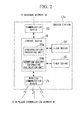
- Fig. 2 is a block diagram illustrating the configuration of main units of the master station serving as a communication device in accordance with the first embodiment of the present invention. Since the master stations 12a and 12b have the same configuration, only the master station 12a will be described here. As illustrated in Fig. 2 , the master station 12a includes a wireless communication device 21 (first communication unit), a communication device 22 (second communication unit), a clock device 24, a timer device 25, and a control device 26.
- the wireless communication device 21 is connected to the wireless communication network N1 and performs synchronization wireless communication with the slave stations 11 a to 11c.
- the communication device 22 is connected to the backbone network N2 and performs asynchronous communication with the control station 13 via the backbone network N2.
- the clock device 24 is a device that regulates a time of the master station 12a and performs reading of a current time or timing under the control of the control device 26.
- the timer device 25 measures a time designated by the control device 26 under the control of the control device 26.
- the control device 26 generally controls the master station 12a by controlling the wireless communication device 21 to the timer device 25 illustrated in Fig. 2 .
- the communication with the slave stations 11a to 11c via the wireless communication network N1 is controlled by controlling the wireless communication device 21 and communication with the control station 13 via the backbone network N2 is controlled by controlling the communication device 22.
- the control device 26 includes a synchronization-processing unit 26a and a reception quality information calculation unit 26b.
- the synchronization-processing unit 26a performs timing (a synchronization process) of the clock device 24. Specifically, the synchronization-processing unit 26a performs one of a first process of performing timing of the clock device 24 based on the time information T1 (the time information T1 from the control station 13) received by the communication device 22 and a second process of performing the timing of the clock device 24 based on announcement information T3 (announcement information T3 announced by the master station 12b via the wireless communication network N1 and received by the wireless communication device 21).
- announcement information T3 announcement information T3 announced by the master station 12b via the wireless communication network N1 and received by the wireless communication device 21.
- the synchronization-processing unit 26a performs a process of performing the timing of the clock device 24 based on the foregoing time information T1, when instruction information indicating that the master station will serve as a master is transmitted from the control station 13. On the other hand, the synchronization-processing unit 26a performs a process of performing the timing of the clock device 24 based on the foregoing announcement information T3 when instruction information indicating that the master station will serve as a slave is transmitted from the control station 13.
- the "master” refers to a master station which will perform the timing based on the time information T1 from the control station 13 and the "slave” refers to a master station which will perform the timing based on the announcement information from the master. Further, when the instruction information indicating that the master station will serve as the slave is transmitted from the control station 13 but the announcement information from the master is not received, the timing is performed in some cases based on the time information T1 from the control station 13.
- the reception quality information calculation unit 26b calculates reception quality information indicating reception quality of the announcement information T3 received by the wireless communication device 21. Specifically, the reception quality information calculation unit 26b calculates the reception quality information of which a value is considerably changed according to whether the announcement information T3 is received by the wireless communication device 21 and a value is changed according to a magnitude of reception power or an error rate when the announcement information T3 is received.
- the reception quality information calculation unit 26b calculates the reception quality information of which the value is assumed to be 0% at the time of no reception of the announcement information T3 and the value is changed within a range of ⁇ 30% according to the magnitude of the reception power and the error rate by setting the value of 70% as a criterion at the time of the reception of the announcement information T3.
- the calculated reception quality information is transmitted to the control station 13 under the control of the control device 26.
- Fig. 3 is a flowchart illustrating the operation of the master station serving as the communication device in accordance with the first embodiment of the present invention.
- the flowchart illustrated in Fig. 3 is a flowchart illustrating a process associated with the timing of the master stations 12a and 12b that starts when the time information T1 is transmitted from the control station 13 and is received via the backbone network N2.
- the time information T1 is transmitted from the control station 13
- the time information T1 is input to the master stations 12a and 12b via the backbone network N2 and is received by the communication device 22 of each of the master stations 12a and 12b.
- the backbone network N2 is a network formed by general-purpose devices and in which asynchronous communication is performed, as described above, it should be noted that the time information T1 transmitted from the control station 13 is influenced by fluctuation in transmission delay and is not necessarily received simultaneously by the master stations 12a and 12b.
- both of the master stations 12a and 12b perform the timing based on the time information T1. Specifically, in each of the master stations 12a and 12b, the time information T1 received by the communication device 22 is read to the control device 26 and the timing of the clock device 24 is performed based on the read time information T1 by the synchronization-processing unit 26a included in the control device 26. Since the time information T1 from the control station 13 may not necessarily be received simultaneously by the master stations 12a and 12b, as described above, the times of the master stations 12a and 12b are not necessarily synchronized with high accuracy through the synchronization process performed here.
- a process of transmitting the time information T1 received from each of the master stations 12a and 12b as announcement information to the other master stations (the master stations 12b and 12a) or the slave stations 11a to 11c via the wireless communication network N1 is performed.
- the wireless communication device 21 is controlled by the control device 26 and the time information T1 read from the communication device 22 is transmitted as the announcement information T2 and the announcement information T3 to the wireless communication network N1.
- a process of mutually receiving the announcement information transmitted from the other master stations (the master stations 12b and 12a) to the wireless communication network N1 is performed by each of the master stations 12a and 12b.
- the announcement information T3 transmitted from the master station 12b is received by the wireless communication device 21 of the master station 12a and the announcement information T2 transmitted from the master station 12a is received by the wireless communication device 21 of the master station 12b.
- a process of calculating the reception quality information indicating reception qualities of the announcement information T3 and the announcement information T2 received by each of the master stations 12a and 12b is performed. Specifically, in each of the master stations 12a and 12b, the reception quality information calculation unit 26b included in the control device 26 calculates the reception quality information of which the value is changed according to whether the announcement information T2 and the announcement information T3 are received or according to the magnitude of the reception power or the error rate.
- the reception quality information calculated in each of the master stations 12a and 12b is transmitted to the control station 13 by allowing the control device 26 to control the communication device 22.
- the control station 13 determines which master station serves as a master or a slave between the master stations 12a and 12b based on the reception quality information and transmits instruction information indicating that the master station will serve as the master and the instruction information indicating that the master station will serve as the slave via the backbone network N2.
- the master station 12a is assumed to be instructed to serve as the master and the master station 12b is assumed to be instructed to serve as the slave.
- the instruction information transmitted from the control station 13 and arriving via the backbone network N2 is received by the communication device 22 included in each of the master stations 12a and 12b.
- the control device 26 included in each of the master stations 12a and 12b determines whether the received instruction information is the instruction information indicating that the master station will serve as the master.
- the determination result of the control device 26 included in the master station 12a is "YES" and the determination result of the control device 26 included in the master station 12b is "NO.”
- the process associated with the timing of the master station 12a ends. Accordingly, the clock device 24 included in the master station 12a successively achieves the timing based on the time information T1 from the control station 13 in step S12.
- the control device 26 included in the master station 12b determines whether the announcement information from the master station 12a, which is the other master station, is received.
- step S 18 When it is determined that the announcement information from the master station 12a is received (the determination result of step S 18 is "YES"), the synchronization-processing unit 26a included in the control device 26 of the master station 12b performs the timing of the clock device 24 based on the announcement information T2 transmitted from the master station 12a, and then the process associated with the timing of the master station 12b ends. Accordingly, the clock device 24 included in the master station 12b successively achieves the timing based on the announcement information T2 transmitted from the master station 12a.
- step S 18 determines that the announcement information from the master station 12a is not received (the determination result of step S 18 is "NO")
- the process of step S19 is not performed and the process associated with the timing of the master station 12b ends. Accordingly, in this case, the clock device 24 included in the master station 12b successively achieves the timing based on the time information T1 from the control station 13 in step S12.
- the master station 12a instructed to serve as the master synchronizes with the time information T1 from the control station 13 and the master station 12b instructed to serve as the slave operates in synchronization with the announcement information T2 from the master station 12a.
- the master station 12b instructed to serve as the slave may not receive the announcement information T2 from the master station 12a instructed to serve as the master, for example, due to a change in a communication environment, is considered.
- the master station 12b instructed to serve as the slave preferably performs the timing based on the time information T1 from the control station 13.
- the time information T1 from the control station 13 is influenced by the fluctuation in the transmission delay. Therefore, even when the timing of the master station 12b is performed based on the time information T1, the master station 12b is not necessarily synchronized with the master station 12a with high accuracy. Further, even when the announcement information T2 from the master station 12a instructed to serve as the master is not receivable, a case in which the announcement information T2 is receivable again in a short time can be considered. Therefore, when the announcement information T2 is not receivable, the timing is not performed immediately based on the time information T1 from the control station 13. When the announcement information T2 is not receivable during a given period, the timing is preferably performed based on the time information T1 from the control station 13.
- the master station 12b instructed to serve as the slave may not receive the announcement information T2 from the master station 12a during a time determined according to a time error (a time error occurring when the timing is not performed) occurring in the clock device 24 included in the slave station and a time accuracy obtained in advance
- the timing is preferably performed based on the time information T1 from the control station 13.
- the time accuracy obtained in advance is 1 msec and 10 seconds has passed after the timing is performed on the assumption that the time error occurring in the clock device 24 is 0.1 msec per second
- the time error occurring in the clock device 24 may be larger than the time accuracy obtained in advance.
- the synchronization-processing unit 26a preferably performs the timing based on the time information T1 from the control station 13.
- both of the master stations 12a and 12b perform the timing in advance based on the time information T1, and the master station 12b instructed to serve as the slave by the control station 13 performs the timing based on the announcement information T2 transmitted from the master station 12a instructed to serve as the master via the wireless communication network N1. Therefore, even when the time information T1 transmitted from the control station 13 in the backbone network N2 connecting the control station 13 to the master stations 12a and 12b is influenced by the fluctuation in the transmission delay, the master stations 12a and 12b can be synchronized with accuracy necessary in the wireless communication network N1. Thus, in the communication system 1 according to this embodiment, it is possible to synchronize the times of the plurality of master stations 12a and 12b with high accuracy without a considerable increase in cost.
- both of the master stations 12a and 12b perform the timing in advance based on the time information T1 from the control station 13 (step S12) and the master station 12b serving as the slave at the time of the reception of the announcement information T2 from the master station 12a serving as the master performs the timing based on the announcement information T2 from the master station 12a serving as the master has been described.
- both of the master stations 12a and 12b may not necessarily perform the process (the process of step S12) of performing the timing in advance based on the time information T1 from the control station 13.
- the master station 12a serving as the master may first perform the timing based on the time information T1 from the control station 13 after the transmission of the instruction information from the control station 13, and the master station 12b serving as the slave may perform the timing based on the announcement information T2 from the master station 12a serving as the master.
- Fig. 4 is a diagram illustrating an overall configuration of a communication system in accordance with a second embodiment of the present invention.
- a communication system 2 includes a relay station 14 (relay device) in addition to the plurality of slave stations 11 a to 11c, the plurality of master stations 12a and 12b, and the control station 13 included in the communication system 1 illustrated in Fig. 1 .
- the relay station 14 is a device that relays communication between the master stations 12a and 12b via a wireless communication network N1.
- the master stations 12a and 12b may not perform direct communication due to a barrier B1 between the master stations 12a and 12b. However, by providing the relay station 14, communication can be performed between the master stations 12a and 12b via the relay station 14. Therefore, even when the barrier B1 is between the master stations 12a and 12b, one (for example, the master station 12b) of the master stations 12a and 12b can be synchronized with the other (for example, the master station 12a) of the master stations 12a and 12b.
- the relay station 14 may be a dedicated device that has a function of relaying communication between the master stations 12a and 12b, or may be a device that also has other functions in addition to the function of relaying communication between the master stations 12a and 12b.
- the relay station 14 may be a slave station serving as a wireless field device that has both of a measurement function of a fluid meter or the like and the function of relaying communication between the master stations 12a and 12b.
- the communication system 2 according to this embodiment is the same as the communication system 1 according to the first embodiment except that the communication between the master stations 12a and 12b is performed via the relay station 14. Therefore, even when time information T1 transmitted from the control station 13 is influenced by fluctuation in transmission delay in a backbone network N2 connecting the control station 13 to the master stations 12a and 12b, as in the communication system 1 according to the first embodiment, the master stations 12a and 12b can be synchronized with accuracy necessary in the wireless communication network N1. Thus, in the communication system 2 according to this embodiment, it is also possible to synchronize the times of the plurality of master stations 12a and 12b with high accuracy without a considerable increase in cost.
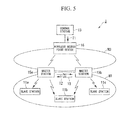
- Fig. 5 is a diagram illustrating an overall configuration of a communication system in accordance with a third embodiment of the present invention.
- the communication system 3 according to this embodiment is a communication system that has a configuration in which a plurality of master stations 15a and 15b are provided instead of the plurality of master stations 12a and 12b included in the communication system 1 illustrated in Fig. 1 , a wireless access point device 16 is added, and the backbone network N2 is realized as a wireless communication backbone network N3 (second network).
- the master stations 15a and 15b can perform wireless communication in conformity with a wireless LAN standard such as IEEE 802.11 as well as wireless communication in conformity with a wireless communication standard such as the foregoing ISA100.11a. That is, each of the master stations 15a and 15b includes a wireless communication unit (a second communication unit not illustrated) that performs wireless communication in conformity with a wireless LAN standard such as IEEE 802.11, instead of the communication device 22 illustrated in Fig. 2 .
- a wireless communication unit a second communication unit not illustrated
- the master stations 15a and 15b having this configuration realize various kinds of communication with the slave stations 11a to 11c by forming a wireless communication network N1 in which wireless communication is performed according to, for example, a time-division multiplexing communication scheme and perform various kinds of communication with the control station 13 via the wireless communication backbone network N3 and the wireless access point device 16.
- the wireless access point device 16 is a device that is connected to the control station 13 and relays various kinds of data transmitted and received between the control station 13 and the master stations 15a and 15b by forming the wireless communication backbone network N3 with the master stations 15a and 15b.
- the wireless access point device 16 also performs wireless communication in conformity with the foregoing wireless LAN standard such as IEEE 802.11.
- the communication system 3 according to this embodiment is the same as the communication system 1 according to the first embodiment except that the communication between the control station 13 and the master stations 15a and 15b is performed via the wireless communication backbone network N3 and the wireless access point device 16. Therefore, even when time information T1 transmitted from the control station 13 is influenced by fluctuation in transmission delay in the wireless communication backbone network N3 connecting the control station 13 to the master stations 15a and 15b, as in the communication system 1 according to the first embodiment, the master stations 15a and 15b can be synchronized with accuracy necessary in the wireless communication network N1. Thus, in the communication system 3 according to this embodiment, it is also possible to synchronize the times of the plurality of master stations 15a and 15b with high accuracy without a considerable increase in cost.
- the present invention is not limited to the foregoing embodiments and modifications can be made freely within the present invention.
- the present invention is applicable also when three or more master stations are included. In this case, when one of the plurality of installed master stations is instructed to serve as a master and the remaining master stations are instructed to serve as slaves, the plurality of master stations instructed to serve as the slaves are synchronized with the one master station instructed to serve as the master.
- the communication system, the communication device, and the communication method according to the present invention can be broadly applied, and thus it is possible to synchronize times of the plurality of master stations with high accuracy without a considerable increase in cost.
Landscapes
- Engineering & Computer Science (AREA)
- Computer Networks & Wireless Communication (AREA)
- Signal Processing (AREA)
- Mobile Radio Communication Systems (AREA)
- Synchronisation In Digital Transmission Systems (AREA)
- Telephonic Communication Services (AREA)
- Electric Clocks (AREA)
- Electromechanical Clocks (AREA)
Abstract
Description
- The present invention relates to a communication system, a communication device, and a communication method.
- Priority is claimed on Japanese Patent Application No.
2011-135236, filed on June 17, 2011 - In the past, in plants, factories, or the like, distributed control systems (DCSs) in which on-site devices (measurement devices or operation devices) called field devices and a control device controlling the field devices are connected by communication means have been structured to realize advanced automatic operations. Most communication systems which are bases of such distributed control systems perform communication in a wired manner. In recent years, however, communication systems have also been realized that perform communication wirelessly in conformity with a wireless communication standard such as ISA100.11a. Here, the foregoing ISA100.11a is an industrial automation wireless communication standard developed by the International Society of Automation (ISA).
- A communication system that conforms to the foregoing wireless communication standard, ISA100.11a, broadly includes a system manager (control station) serving as a control device, a backbone router (master station) connected to the system manager, and a wireless field device (slave station) performing wireless communication with the backbone router. The system manager and the backbone router are connected to an asynchronous communication network called, for example, a backbone network. The backbone router and the wireless field device are connected to a synchronous wireless communication network. The backbone network is realized as a wired communication network in some cases and as a wireless communication network in other cases.
- The following
Non-Patent Document 1 discloses a communication system in which a time-division multiplexing communication scheme is used as a communication scheme between master stations and slave stations, a plurality of master stations are installed separately (installed redundantly), and the plurality of master stations simultaneously receive signals transmitted from a plurality of slave stations, thereby ensuring a delay time with high reliability. Further, the following Non-Patent Document 2 discloses a method of synchronizing times with high accuracy between devices on a network such as Ethernet (registered trademark) in which a delay time varies considerably. The followingPatent Documents 1 and 2 disclose technologies for avoiding fluctuation in transmission delay inherent to a wireless local area network (LAN) in a wireless LAN standard such as IEEE 802.11. Further, the followingPatent Document 3 discloses a technology for performing time synchronization directly between a plurality of master stations when the master stations that perform communication in a time-division multiplexing communication scheme coexist. -
- [Patent Document 1]
Japanese Unexamined Patent Application, First Publication No.2010-50761 - [Patent Document 2]
Japanese Unexamined Patent Application, First Publication No.2009-111654 - [Patent Document 3]
Japanese Unexamined Patent Application, First Publication No.2007-6079 -
- [Non-Patent Document 1]
"ISA-100.11a-2009 Wireless systems for industrial automation: Process control and related applications," in 9.1.9.4.7 Duocast transaction - [Non-Patent Document 2]
"IEEE Std 1588-2008 IEEE Standard for a Precision Clock Synchronization Protocol for Networked Measurement and Control Systems," in IEEE Instrumentation and Measurement Society, 6.5 PTP device types - 6.6 Synchronization overview - In a communication system including a plurality of master stations as in the communication system disclosed in the foregoing
Non-Patent Document 1, however, it is necessary to synchronize times of the master stations with high accuracy. In the communication system disclosed in the foregoingNon-Patent Document 1, the times of the master stations are synchronized by allowing a control station to transmit a plurality of pieces of time information via a backbone network and allowing each of the master stations to perform timing based on the time information. - In recent years, to reduce cost, general-purpose protocols such as a network time protocol (NTP) have been used in some cases as means for synchronizing times using general-purpose devices (for example, routers or hubs) used as devices forming a backbone network in Ethernet (registered trademark) or the like. When such general-purpose devices or the like are used, synchronization accuracy may deteriorate. Therefore, it is necessary to improve the synchronization accuracy of the master stations using the method disclosed in, for example, the foregoing Non-Patent Document 2. However, when the method disclosed in Non-Patent Document 2 is used, the cost reduction advantage obtained using general-purpose devices may not be obtained, and thus cost may in fact increase. The cost includes, for example, a total cost associated with design of a backbone network, selection of devices, installation work, setting, experiment, and maintenance in addition to the prices of the devices.
- When the backbone network is realized as a wireless communication network, fluctuation in transmission delay occurs in many cases. For example, in a wireless LAN such as IEEE 802.11, large fluctuation in transmission delay caused due to Carrier Sense Multiple Access/Collision Avoidance (CSMA/CA) used in a communication protocol mainly occurs. When the fluctuation in the transmission delay occurs, it is difficult to synchronize times of master stations with high accuracy. Here, when the methods disclosed in the
foregoing Patent Documents 1 and 2 are used, the fluctuation in the transmission delay inherent to a wireless LAN can be considered to be avoidable. However, an increase in cost is unavoidable. - The present invention provides a communication system, a communication device, and a communication method capable of synchronizing times of a plurality of master stations with high accuracy without a considerable increase in cost.
- According to an aspect of the present invention, a communication system is provided, including: first and second master stations configured to perform synchronous wireless communication with a slave station via a first network; and a control station configured to be connected to the first and second master stations via a second network. The control station transmits time information used to synchronize times of the first and second master stations to each of the first and second master stations via the second network. One of the first and second master stations performs timing based on the time information from the control station. The other of the first and second master stations performs the timing based on announcement information announcing the time information transmitted from the one of the first and second master stations via the first network.
- In the aspect of the present invention, the timing of the one of the first and second master stations is performed based on the time information from the control station. The timing of the other of the first and second master stations is performed based on the announcement information transmitted from the one of the first and second master stations via the first network.
- In the communication system, when the first and second master stations receive the time information from the control station, the first and second master stations may transmit the announcement information to the second and first master stations via the first network, respectively, and receive the announcement information transmitted from the second and first master stations via the first network, respectively.
- In the communication system, the first and second master stations may transmit reception quality information indicating reception quality of the announcement information transmitted from the second and first master stations via the first network, respectively, to the control station via the second network. Based on the reception quality information from the first and second master stations, the control station may instruct the first and second master stations to serve as a master that performs the timing based on the time information from the control station or to serve as a slave performing the timing based on the announcement information.
- In the communication system, when the other of the first and second master stations does not receive the announcement information from one of the first and second master stations, the other of the first and second master stations may perform the timing based on the time information from the control station.
- In the communication system, when the other of the first and second master stations is not able to receive the announcement information from the one of the first and second master stations during a time determined according to a time error occurring when the timing is not performed and time accuracy obtained in advance, the other of the first and second master stations may perform the timing based on the time information from the control station.
- The communication system may further include a relay device configured to relay communication performed via the first network between the first and second master stations.
- According to another aspect of the present invention, a communication device is provided, including: a first communication unit configured to be connected to a first network in which synchronous wireless communication is enabled; a second communication unit configured to be connected to a second network in which asynchronous communication is enabled; a clock device configured to regulate a time of the own communication device; and a synchronization-processing unit configured to perform one of a first process of performing timing of the clock device based on time information received by the second communication unit and a second process of performing the timing of the clock device based on announcement information of the time information received by the first communication unit, the announcement information being information announced by another communication device via the first network.
- In the communication device, the synchronization-processing unit may perform one of the first and second processes based on instruction information received by the second communication unit.
- In the communication device, when the instruction information received by the second communication unit is information for instruction of the second process and the first communication unit is not able to receive the announcement information, the synchronization-processing unit may perform the first process instead of the second process.
- According to still another aspect of the present invention, a communication method is provided in a communication system including first and second master stations configured to perform synchronous wireless communication with a slave station via a first network, and a control station configured to be connected to the first and second master stations via a second network. The communication method includes: transmitting time information used to synchronize times of the first and second master stations from the control station to each of the first and second master stations via the second network, performing, by one of the first and second master stations, timing based on the time information from the control station, and performing, by the other of the first and second master stations, the timing based on announcement information announcing the time information transmitted from the one of the first and second master stations via the first network.
- The communication method may further include transmitting the announcement information to the second and first master stations via the first network, respectively, and receiving the announcement information transmitted between the second and first master stations via the first network, respectively, when the time information is received from the control station.
- The communication method may further include transmitting respective reception quality information indicating reception quality of the announcement information transmitted from the second and first master stations via the first network, to the control station via the second network; and instructing, based on the reception quality information from the first and second master stations, the first and second master stations to serve as a master that performs the timing based on the time information from the control station or to serve as a slave performing the timing based on the announcement information.
- The communication method may further include, performing, by the other of the first and second master stations, the timing based on the time information from the control station when the other of the first and second master stations does not receive the announcement information from one of the first and second master stations.
- The communication method may further include performing, by the other master station, the timing based on the time information from the control station, when the other of the first and second master stations is not able to receive the announcement information from the one of the first and second master stations during a time determined according to a time error occurring when the timing is not performed and time accuracy obtained in advance.
- The communication method may further include relaying communication performed via the first network between the first and second master stations.
- According to the present invention, the timing of one of the first and second master stations is performed based on the time information from the control station and the timing of the other of the first and second master stations is performed based on the announcement information transmitted from the one of the first and second master stations via the first network. Therefore, in the communication system according to this embodiment, it is also possible to synchronize the times of the plurality of master stations with high accuracy without a considerable increase in cost.
-
-
Fig. 1 is a diagram illustrating an overall configuration of a communication system in accordance with a first embodiment of the present invention. -
Fig. 2 is a block diagram illustrating the configuration of main units of a master station serving as a communication device in accordance with the first embodiment of the present invention. -
Fig. 3 is a flowchart illustrating an operation of the master station serving as the communication device in accordance with the first embodiment of the present invention. -
Fig. 4 is a diagram illustrating an overall configuration of a communication system in accordance with a second embodiment of the present invention. -
Fig. 5 is a diagram illustrating an overall configuration of a communication system in accordance with a third embodiment of the present invention. - Hereinafter, a communication system, a communication device, and a communication method according to embodiments of the present invention will be described in detail with reference to the drawings.
-
Fig. 1 is a diagram illustrating an overall configuration of a communication system in accordance with a first embodiment of the present invention. As illustrated inFig. 1 , a communication system I according to this embodiment includes a plurality ofslave stations 11a to 11c, a plurality ofmaster stations control station 13. Thecommunication system 1 is a system which performs communication between theslave stations 11a to 11c and themaster stations control station 13. InFig. 1 , threeslave stations 11a to 11c are illustrated, but any number of slave stations may be used. The number ofmaster stations - The
slave stations 11a to 11c are wireless field devices which are installed in a plant or a factory, such as sensor devices such as flow meters or temperature sensors, valve devices such as flow rate control valves or on-off valves, or actuator devices such as fans or motors, and perform wireless communication in conformity with a wireless communication standard such as ISA100.11a. For example, the slave stations can perform synchronization wireless communication such as wireless communication according to a time division multiplexing communication scheme and a wireless communication according to a frequency-hopping scheme. Operations of theslave stations 11a to 11c are controlled based on control data transmitted from themaster stations slave stations 11a to 11c is transmitted to themaster stations - The
master stations master stations slave stations 11a to 11c by forming a wireless communication network N1 (first network) in which wireless communication can be performed according to a time-division multiplexing communication scheme. Themaster stations control station 13 via the backbone network N2. - Here, the plurality of
master stations master stations slave stations 11a to 11c. Further, the wireless communication network N1 in which the synchronization wireless communication such as the wireless communication according to the time-division multiplexing communication scheme can be performed is formed to ensure communication bands and delay times between theslave stations 11a to 11c and themaster stations - The
master stations control station 13 via the backbone network N2. Specifically, one (for example, themaster station 12a) of themaster stations control station 13 and the other master station (for example, themaster station 12b) performs timing based on announcement information (information used to announce time information from the control station 13: for example, announcement information T2) transmitted from the one station (for example, themaster station 12a) via the wireless communication network N1. The details of themaster stations - The
control station 13 performs various kinds of control such that communication is normally performed between theslave stations 11a to 11c and themaster stations communication system 1 according to this embodiment includes the plurality ofmaster stations master stations own communication system 1 to each of themaster stations - The backbone network N2 to which the
master stations control station 13 are connected is, for example, a network formed of general-purpose devices such as routers or hubs used in Ethernet (registered trademark) or the like and in which asynchronous communication is performed. Here, the backbone network N2 is formed using the general-purpose devices mainly to reduce the entire cost of thecommunication system 1. - Next, the details of the
master stations Fig. 2 is a block diagram illustrating the configuration of main units of the master station serving as a communication device in accordance with the first embodiment of the present invention. Since themaster stations master station 12a will be described here. As illustrated inFig. 2 , themaster station 12a includes a wireless communication device 21 (first communication unit), a communication device 22 (second communication unit), aclock device 24, atimer device 25, and acontrol device 26. - The
wireless communication device 21 is connected to the wireless communication network N1 and performs synchronization wireless communication with theslave stations 11 a to 11c. Thecommunication device 22 is connected to the backbone network N2 and performs asynchronous communication with thecontrol station 13 via the backbone network N2. Theclock device 24 is a device that regulates a time of themaster station 12a and performs reading of a current time or timing under the control of thecontrol device 26. Thetimer device 25 measures a time designated by thecontrol device 26 under the control of thecontrol device 26. - The
control device 26 generally controls themaster station 12a by controlling thewireless communication device 21 to thetimer device 25 illustrated inFig. 2 . For example, the communication with theslave stations 11a to 11c via the wireless communication network N1 is controlled by controlling thewireless communication device 21 and communication with thecontrol station 13 via the backbone network N2 is controlled by controlling thecommunication device 22. - The
control device 26 includes a synchronization-processing unit 26a and a reception qualityinformation calculation unit 26b. The synchronization-processing unit 26a performs timing (a synchronization process) of theclock device 24. Specifically, the synchronization-processing unit 26a performs one of a first process of performing timing of theclock device 24 based on the time information T1 (the time information T1 from the control station 13) received by thecommunication device 22 and a second process of performing the timing of theclock device 24 based on announcement information T3 (announcement information T3 announced by themaster station 12b via the wireless communication network N1 and received by the wireless communication device 21). - The synchronization-
processing unit 26a performs a process of performing the timing of theclock device 24 based on the foregoing time information T1, when instruction information indicating that the master station will serve as a master is transmitted from thecontrol station 13. On the other hand, the synchronization-processing unit 26a performs a process of performing the timing of theclock device 24 based on the foregoing announcement information T3 when instruction information indicating that the master station will serve as a slave is transmitted from thecontrol station 13. - Here, the "master" refers to a master station which will perform the timing based on the time information T1 from the
control station 13 and the "slave" refers to a master station which will perform the timing based on the announcement information from the master. Further, when the instruction information indicating that the master station will serve as the slave is transmitted from thecontrol station 13 but the announcement information from the master is not received, the timing is performed in some cases based on the time information T1 from thecontrol station 13. - The reception quality
information calculation unit 26b calculates reception quality information indicating reception quality of the announcement information T3 received by thewireless communication device 21. Specifically, the reception qualityinformation calculation unit 26b calculates the reception quality information of which a value is considerably changed according to whether the announcement information T3 is received by thewireless communication device 21 and a value is changed according to a magnitude of reception power or an error rate when the announcement information T3 is received. For example, when the reception quality information has a value of 0% to 100%, the reception qualityinformation calculation unit 26b calculates the reception quality information of which the value is assumed to be 0% at the time of no reception of the announcement information T3 and the value is changed within a range of ±30% according to the magnitude of the reception power and the error rate by setting the value of 70% as a criterion at the time of the reception of the announcement information T3. The calculated reception quality information is transmitted to thecontrol station 13 under the control of thecontrol device 26. - Next, an operation of the communication system having the foregoing configuration will be described.
Fig. 3 is a flowchart illustrating the operation of the master station serving as the communication device in accordance with the first embodiment of the present invention. The flowchart illustrated inFig. 3 is a flowchart illustrating a process associated with the timing of themaster stations control station 13 and is received via the backbone network N2. - First, when the time information T1 is transmitted from the
control station 13, the time information T1 is input to themaster stations communication device 22 of each of themaster stations control station 13 is influenced by fluctuation in transmission delay and is not necessarily received simultaneously by themaster stations - When the time information T1 from the
control station 13 is received, both of themaster stations master stations communication device 22 is read to thecontrol device 26 and the timing of theclock device 24 is performed based on the read time information T1 by the synchronization-processing unit 26a included in thecontrol device 26. Since the time information T1 from thecontrol station 13 may not necessarily be received simultaneously by themaster stations master stations - Next, a process of transmitting the time information T1 received from each of the
master stations master stations slave stations 11a to 11c via the wireless communication network N1 is performed. Specifically, in each of themaster stations wireless communication device 21 is controlled by thecontrol device 26 and the time information T1 read from thecommunication device 22 is transmitted as the announcement information T2 and the announcement information T3 to the wireless communication network N1. - Next, a process of mutually receiving the announcement information transmitted from the other master stations (the
master stations master stations master station 12b is received by thewireless communication device 21 of themaster station 12a and the announcement information T2 transmitted from themaster station 12a is received by thewireless communication device 21 of themaster station 12b. - When the foregoing processes end, a process of calculating the reception quality information indicating reception qualities of the announcement information T3 and the announcement information T2 received by each of the
master stations master stations information calculation unit 26b included in thecontrol device 26 calculates the reception quality information of which the value is changed according to whether the announcement information T2 and the announcement information T3 are received or according to the magnitude of the reception power or the error rate. - The reception quality information calculated in each of the
master stations control station 13 by allowing thecontrol device 26 to control thecommunication device 22. - When the reception quality information is received from the
master stations control station 13 determines which master station serves as a master or a slave between themaster stations master station 12a is assumed to be instructed to serve as the master and themaster station 12b is assumed to be instructed to serve as the slave. - The instruction information transmitted from the
control station 13 and arriving via the backbone network N2 is received by thecommunication device 22 included in each of themaster stations - The
control device 26 included in each of themaster stations master station 12a is assumed to be instructed to serve as the master and themaster station 12b is assumed to be instructed to serve as the slave, the determination result of thecontrol device 26 included in themaster station 12a is "YES" and the determination result of thecontrol device 26 included in themaster station 12b is "NO." - When the determination result of the
control device 26 included in themaster station 12a is "YES," the process associated with the timing of themaster station 12a ends. Accordingly, theclock device 24 included in themaster station 12a successively achieves the timing based on the time information T1 from thecontrol station 13 in step S12. - Conversely, when the determination result of the
control device 26 included in themaster station 12b is "NO," thecontrol device 26 included in themaster station 12b determines whether the announcement information from themaster station 12a, which is the other master station, is received. - When it is determined that the announcement information from the
master station 12a is received (the determination result ofstep S 18 is "YES"), the synchronization-processing unit 26a included in thecontrol device 26 of themaster station 12b performs the timing of theclock device 24 based on the announcement information T2 transmitted from themaster station 12a, and then the process associated with the timing of themaster station 12b ends. Accordingly, theclock device 24 included in themaster station 12b successively achieves the timing based on the announcement information T2 transmitted from themaster station 12a. - Conversely, when it is determined that the announcement information from the
master station 12a is not received (the determination result ofstep S 18 is "NO"), the process of step S19 is not performed and the process associated with the timing of themaster station 12b ends. Accordingly, in this case, theclock device 24 included in themaster station 12b successively achieves the timing based on the time information T1 from thecontrol station 13 in step S12. - When the foregoing series of processes ends, the
master station 12a instructed to serve as the master synchronizes with the time information T1 from thecontrol station 13 and themaster station 12b instructed to serve as the slave operates in synchronization with the announcement information T2 from themaster station 12a. After the process of the timing is completed, for example, a case in which themaster station 12b instructed to serve as the slave may not receive the announcement information T2 from themaster station 12a instructed to serve as the master, for example, due to a change in a communication environment, is considered. In this case, themaster station 12b instructed to serve as the slave preferably performs the timing based on the time information T1 from thecontrol station 13. - However, the time information T1 from the
control station 13 is influenced by the fluctuation in the transmission delay. Therefore, even when the timing of themaster station 12b is performed based on the time information T1, themaster station 12b is not necessarily synchronized with themaster station 12a with high accuracy. Further, even when the announcement information T2 from themaster station 12a instructed to serve as the master is not receivable, a case in which the announcement information T2 is receivable again in a short time can be considered. Therefore, when the announcement information T2 is not receivable, the timing is not performed immediately based on the time information T1 from thecontrol station 13. When the announcement information T2 is not receivable during a given period, the timing is preferably performed based on the time information T1 from thecontrol station 13. - Specifically, when the
master station 12b instructed to serve as the slave may not receive the announcement information T2 from themaster station 12a during a time determined according to a time error (a time error occurring when the timing is not performed) occurring in theclock device 24 included in the slave station and a time accuracy obtained in advance, the timing is preferably performed based on the time information T1 from thecontrol station 13. For example, when the time accuracy obtained in advance is 1 msec and 10 seconds has passed after the timing is performed on the assumption that the time error occurring in theclock device 24 is 0.1 msec per second, the time error occurring in theclock device 24 may be larger than the time accuracy obtained in advance. Therefore, when 10 seconds is measured by thetimer device 25 from the time point at which the announcement information T2 from themaster station 12a is not receivable, the synchronization-processing unit 26a preferably performs the timing based on the time information T1 from thecontrol station 13. - In this embodiment, as described above, when the time information T1 is transmitted from the
control station 13, both of themaster stations master station 12b instructed to serve as the slave by thecontrol station 13 performs the timing based on the announcement information T2 transmitted from themaster station 12a instructed to serve as the master via the wireless communication network N1. Therefore, even when the time information T1 transmitted from thecontrol station 13 in the backbone network N2 connecting thecontrol station 13 to themaster stations master stations communication system 1 according to this embodiment, it is possible to synchronize the times of the plurality ofmaster stations - In the foregoing embodiment, the example in which both of the
master stations master station 12b serving as the slave at the time of the reception of the announcement information T2 from themaster station 12a serving as the master performs the timing based on the announcement information T2 from themaster station 12a serving as the master has been described. However, both of themaster stations control station 13. For example, themaster station 12a serving as the master may first perform the timing based on the time information T1 from thecontrol station 13 after the transmission of the instruction information from thecontrol station 13, and themaster station 12b serving as the slave may perform the timing based on the announcement information T2 from themaster station 12a serving as the master. -
Fig. 4 is a diagram illustrating an overall configuration of a communication system in accordance with a second embodiment of the present invention. As illustrated inFig. 4 , a communication system 2 according to this embodiment includes a relay station 14 (relay device) in addition to the plurality ofslave stations 11 a to 11c, the plurality ofmaster stations control station 13 included in thecommunication system 1 illustrated inFig. 1 . Therelay station 14 is a device that relays communication between themaster stations - The
master stations master stations relay station 14, communication can be performed between themaster stations relay station 14. Therefore, even when the barrier B1 is between themaster stations master station 12b) of themaster stations master station 12a) of themaster stations - The
relay station 14 may be a dedicated device that has a function of relaying communication between themaster stations master stations relay station 14 may be a slave station serving as a wireless field device that has both of a measurement function of a fluid meter or the like and the function of relaying communication between themaster stations - The communication system 2 according to this embodiment is the same as the
communication system 1 according to the first embodiment except that the communication between themaster stations relay station 14. Therefore, even when time information T1 transmitted from thecontrol station 13 is influenced by fluctuation in transmission delay in a backbone network N2 connecting thecontrol station 13 to themaster stations communication system 1 according to the first embodiment, themaster stations master stations -
Fig. 5 is a diagram illustrating an overall configuration of a communication system in accordance with a third embodiment of the present invention. As illustrated inFig. 5 , thecommunication system 3 according to this embodiment is a communication system that has a configuration in which a plurality ofmaster stations master stations communication system 1 illustrated inFig. 1 , a wirelessaccess point device 16 is added, and the backbone network N2 is realized as a wireless communication backbone network N3 (second network). - The
master stations master stations communication device 22 illustrated inFig. 2 . Themaster stations slave stations 11a to 11c by forming a wireless communication network N1 in which wireless communication is performed according to, for example, a time-division multiplexing communication scheme and perform various kinds of communication with thecontrol station 13 via the wireless communication backbone network N3 and the wirelessaccess point device 16. - The wireless
access point device 16 is a device that is connected to thecontrol station 13 and relays various kinds of data transmitted and received between thecontrol station 13 and themaster stations master stations access point device 16 also performs wireless communication in conformity with the foregoing wireless LAN standard such as IEEE 802.11. - The
communication system 3 according to this embodiment is the same as thecommunication system 1 according to the first embodiment except that the communication between thecontrol station 13 and themaster stations access point device 16. Therefore, even when time information T1 transmitted from thecontrol station 13 is influenced by fluctuation in transmission delay in the wireless communication backbone network N3 connecting thecontrol station 13 to themaster stations communication system 1 according to the first embodiment, themaster stations communication system 3 according to this embodiment, it is also possible to synchronize the times of the plurality ofmaster stations - The communication system, the communication device, and the communication method according to the embodiments of the present invention have been described above. However, the present invention is not limited to the foregoing embodiments and modifications can be made freely within the present invention. For example, in the foregoing first to third embodiments, the example in which the communication system includes two master stations (the
master stations master stations - The communication system, the communication device, and the communication method according to the present invention can be broadly applied, and thus it is possible to synchronize times of the plurality of master stations with high accuracy without a considerable increase in cost.
-
- 1 to 3 Communication systems
- 11a to 11 c: Slave stations
- 12a: Master station (first master station, communication device)
- 12b: Master station (second master station, communication device)
- 13: Control station
- 14: Relay station (relay device)
- 15a: Master station (first master station, communication device)
- 15b: Master station (second master station, communication device)
- 16: Wireless access point device
- 21: Wireless communication device (first communication unit)
- 22: Communication device (second communication unit)
- 24: Clock device
- 25: Timer device
- 26: Control device
- 26a: Synchronization-processing unit
- 26b: Reception quality information calculation unit
- B1: Barrier
- N1: Wireless communication network (first network)
- N2: Backbone network (second network)
- N3: Wireless communication backbone network (second network)
- T1: Time information
- T2, T3: Announcement information
Claims (15)
- A communication system, comprising:first and second master stations configured to perform synchronous wireless communication with a slave station via a first network; anda control station configured to be connected to the first and second master stations via a second network,wherein the control station transmits time information used to synchronize times of the first and second master stations to each of the first and second master stations via the second network,wherein one of the first and second master stations performs timing based on the time information from the control station, andwherein the other of the first and second master stations performs the timing based on announcement information announcing the time information transmitted from the one of the first and second master stations via the first network.
- The communication system according to Claim 1, wherein, when the first and second master stations receive the time information from the control station, the first and second master stations transmit the announcement information to the second and first master stations via the first network, respectively, and receive the announcement information transmitted from the second and first master stations via the first network, respectively.
- The communication system according to Claim 2,
wherein the first and second master stations transmit reception quality information indicating reception quality of the announcement information transmitted from the second and first master stations via the first network, respectively, to the control station via the second network, and
wherein, based on the reception quality information from the first and second master stations, the control station instructs the first and second master stations to serve as a master that performs the timing based on the time information from the control station or to serve as a slave performing the timing based on the announcement information. - The communication system according to Claim 1, wherein, when the other of the first and second master stations does not receive the announcement information from one of the first and second master stations, the other of the first and second master stations performs the timing based on the time information from the control station.
- The communication system according to Claim 4, wherein, when the other of the first and second master stations is not able to receive the announcement information from the one of the first and second master stations during a time determined according to a time error occurring when the timing is not performed and time accuracy obtained in advance, the other of the first and second master stations performs the timing based on the time information from the control station.
- The communication system according to Claim 1, further comprising:a relay device configured to relay communication performed via the first network between the first and second master stations.
- A communication device, comprising:a first communication unit configured to be connected to a first network in which synchronous wireless communication is enabled;a second communication unit configured to be connected to a second network in which asynchronous communication is enabled;a clock device configured to regulate a time of the own communication device; anda synchronization-processing unit configured to perform one of a first process of performing timing of the clock device based on time information received by the second communication unit and a second process of performing the timing of the clock device based on announcement information of the time information received by the first communication unit, the announcement information being information announced by another communication device via the first network.
- The communication device according to Claim 7, wherein the synchronization-processing unit performs one of the first and second processes based on instruction information received by the second communication unit.
- The communication device according to Claim 8, wherein, when the instruction information received by the second communication unit is information for instruction of the second process and the first communication unit is not able to receive the announcement information, the synchronization-processing unit performs the first process instead of the second process.
- A communication method in a communication system including first and second master stations configured to perform synchronous wireless communication with a slave station via a first network, and a control station configured to be connected to the first and second master stations via a second network, the communication method comprising:transmitting time information used to synchronize times of the first and second master stations from the control station to each of the first and second master stations via the second network,performing, by one of the first and second master stations, timing based on the time information from the control station, andperforming, by the other of the first and second master stations, the timing based on announcement information announcing the time information transmitted from the one of the first and second master stations via the first network.
- The communication method according to Claim 10, further comprising:transmitting the announcement information to the second and first master stations via the first network, respectively, and receiving the announcement information transmitted to the second and first master stations via the first network, respectively, when the time information is received from the control station.
- The communication method according to Claim 11, further comprising:transmitting reception quality information indicating reception quality of the announcement information transmitted from the second and first master stations via the first network, respectively, to the control station via the second network; andinstructing, based on the reception quality information from the first and second master stations, the first and second master stations to serve as a master that performs the timing based on the time information from the control station or to serve as a slave performing the timing based on the announcement information.
- The communication method according to Claim 10, further comprising:performing, by the other of the first and second master stations, the timing based on the time information from the control station when the other of the first and second master stations does not receive the announcement information from one of the first and second master stations.
- The communication method according to Claim 13, further comprising:performing, by the other master station, the timing based on the time information from the control station when the other of the first and second master stations is not able to receive the announcement information from the one of the first and second master stations during a time determined according to a time error occurring when the timing is not performed and time accuracy obtained in advance.
- The communication method according to Claim 10, further comprising:relaying communication performed via the first network between the first and second master stations.
Applications Claiming Priority (2)
| Application Number | Priority Date | Filing Date | Title |
|---|---|---|---|
| JP2011135236A JP5505373B2 (en) | 2011-06-17 | 2011-06-17 | COMMUNICATION SYSTEM, COMMUNICATION DEVICE, AND COMMUNICATION METHOD |
| PCT/JP2012/065111 WO2012173138A1 (en) | 2011-06-17 | 2012-06-13 | Communication system, communication device, and communication method |
Publications (3)
| Publication Number | Publication Date |
|---|---|
| EP2722718A1 true EP2722718A1 (en) | 2014-04-23 |
| EP2722718A4 EP2722718A4 (en) | 2014-12-10 |
| EP2722718B1 EP2722718B1 (en) | 2018-03-21 |
Family
ID=47357124
Family Applications (1)
| Application Number | Title | Priority Date | Filing Date |
|---|---|---|---|
| EP12801339.8A Not-in-force EP2722718B1 (en) | 2011-06-17 | 2012-06-13 | Communication system, communication device, and communication method |
Country Status (5)
| Country | Link |
|---|---|
| US (1) | US9326259B2 (en) |
| EP (1) | EP2722718B1 (en) |
| JP (1) | JP5505373B2 (en) |
| CN (1) | CN103562804B (en) |
| WO (1) | WO2012173138A1 (en) |
Cited By (1)
| Publication number | Priority date | Publication date | Assignee | Title |
|---|---|---|---|---|
| EP3723421A1 (en) * | 2017-07-01 | 2020-10-14 | Ruckus Wireless, Inc. | Identifying a synchronization master for radio nodes |
Families Citing this family (10)
| Publication number | Priority date | Publication date | Assignee | Title |
|---|---|---|---|---|
| EP3499985B1 (en) * | 2013-02-01 | 2020-03-04 | Samsung Electronics Co., Ltd. | Method and apparatus for providing common time reference in wireless communication system |
| CN104617983B (en) * | 2014-12-30 | 2017-02-22 | 中国电子科技集团公司第五十研究所 | Ultrashort wave network system with sub-main station |
| JP6461718B2 (en) * | 2015-06-05 | 2019-01-30 | 株式会社東芝 | Management apparatus, system and method |
| JP6820586B2 (en) * | 2016-08-31 | 2021-01-27 | 株式会社メディアリンクス | Time synchronization system |
| JP6681355B2 (en) * | 2017-02-28 | 2020-04-15 | 日本電信電話株式会社 | Time synchronization system and time synchronization method |
| CN108400652B (en) * | 2017-11-28 | 2020-11-06 | 蔚来(安徽)控股有限公司 | Wireless communication-based control system and power exchange station |
| US11233594B2 (en) * | 2017-12-19 | 2022-01-25 | Qualcomm Incorporated | Time synchronization for wireless communications |
| US20190223125A1 (en) * | 2018-01-12 | 2019-07-18 | Linear Technology Holding Llc | Measurement synchronization across networks |
| WO2020152861A1 (en) * | 2019-01-25 | 2020-07-30 | 株式会社安川電機 | Industrial machine system, method of communication, and wireless access point |
| CN116209959B (en) * | 2020-10-09 | 2025-02-25 | 三菱电机株式会社 | Time synchronization system, learning device, reasoning device and time synchronization device |
Family Cites Families (18)
| Publication number | Priority date | Publication date | Assignee | Title |
|---|---|---|---|---|
| JP2002055180A (en) * | 2000-08-11 | 2002-02-20 | Casio Comput Co Ltd | Time information transmitting / receiving system, time information transmitting device, and time information transmitting method |
| WO2002056542A1 (en) * | 2001-01-09 | 2002-07-18 | Adtec Corporation | Radio transmission system |
| JP4101644B2 (en) * | 2002-12-26 | 2008-06-18 | セイコープレシジョン株式会社 | Parent-child clock system and parent clock used therefor |
| JP4387263B2 (en) * | 2004-07-16 | 2009-12-16 | セイコープレシジョン株式会社 | Communication system and communication apparatus |
| CN101142773A (en) * | 2005-03-18 | 2008-03-12 | 皇家飞利浦电子股份有限公司 | Synchronization method for network nodes |
| JP4752350B2 (en) | 2005-06-23 | 2011-08-17 | パナソニック株式会社 | Wireless communication system |
| CN100421407C (en) * | 2005-11-22 | 2008-09-24 | 中国科学院计算机网络信息中心 | Separation and Convergence of IPv6 Address Space in Hierarchical Switching Networks |
| US7539889B2 (en) * | 2005-12-30 | 2009-05-26 | Avega Systems Pty Ltd | Media data synchronization in a wireless network |
| JP2008182385A (en) * | 2007-01-24 | 2008-08-07 | Nec Corp | Mobile communication system, time server and intra-station synchronization method used for the same |
| JP5080202B2 (en) | 2007-10-30 | 2012-11-21 | 独立行政法人情報通信研究機構 | Time synchronization processing system, time information distribution device, time synchronization processing device, time information distribution program, and time synchronization processing program |
| EP2073403B1 (en) * | 2007-12-18 | 2010-09-15 | Thales Alenia Space Italia S.p.A. | Method of synchronising nodes of a network, system and device therefor |
| JP5274853B2 (en) * | 2008-02-08 | 2013-08-28 | 関西電力株式会社 | COMMUNICATION SYSTEM, INFORMATION COMMUNICATION SYSTEM USING THE SAME, AND POWER SUPPLY MONITORING / CONTROL SYSTEM |
| CN102124700B (en) * | 2008-06-18 | 2014-04-09 | 爱默生过程管理电力和水力解决方案有限公司 | Systems and methods for wireless process communication over a differentiated network |
| JP2010050761A (en) | 2008-08-22 | 2010-03-04 | Meidensha Corp | Time synchronization mode and time synchronization method of radio communication system |
| CN101754436A (en) * | 2008-12-19 | 2010-06-23 | 中国科学院沈阳自动化研究所 | Blending agent access control method capable of facing wireless industrial network |
| CN101494900A (en) * | 2009-01-09 | 2009-07-29 | 吴鑫 | Method of synchronization of wireless sensing network node |
| JP4894076B2 (en) * | 2009-11-10 | 2012-03-07 | 横河電機株式会社 | Relay device and wireless control network management system using the same |
| US8279896B2 (en) * | 2010-03-02 | 2012-10-02 | Hewlett-Packard Development Company, L.P. | Synchronization in a wireless node |
-
2011
- 2011-06-17 JP JP2011135236A patent/JP5505373B2/en not_active Expired - Fee Related
-
2012
- 2012-06-13 CN CN201280026686.0A patent/CN103562804B/en active Active
- 2012-06-13 EP EP12801339.8A patent/EP2722718B1/en not_active Not-in-force
- 2012-06-13 US US14/125,825 patent/US9326259B2/en active Active
- 2012-06-13 WO PCT/JP2012/065111 patent/WO2012173138A1/en not_active Ceased
Cited By (3)
| Publication number | Priority date | Publication date | Assignee | Title |
|---|---|---|---|---|
| EP3723421A1 (en) * | 2017-07-01 | 2020-10-14 | Ruckus Wireless, Inc. | Identifying a synchronization master for radio nodes |
| US11363553B2 (en) | 2017-07-01 | 2022-06-14 | Arris Enterprises Llc | Identifying a synchronization master for radio nodes |
| US11792757B2 (en) | 2017-07-01 | 2023-10-17 | Arris Enterprises Llc | Identifying a synchronization master for radio nodes |
Also Published As
| Publication number | Publication date |
|---|---|
| CN103562804B (en) | 2016-08-17 |
| JP2013003000A (en) | 2013-01-07 |
| US20140198777A1 (en) | 2014-07-17 |
| EP2722718A4 (en) | 2014-12-10 |
| WO2012173138A1 (en) | 2012-12-20 |
| JP5505373B2 (en) | 2014-05-28 |
| US9326259B2 (en) | 2016-04-26 |
| EP2722718B1 (en) | 2018-03-21 |
| CN103562804A (en) | 2014-02-05 |
Similar Documents
| Publication | Publication Date | Title |
|---|---|---|
| US9326259B2 (en) | Communication system, communication device, and communication method | |
| Mahmood et al. | Over-the-air time synchronization for URLLC: Requirements, challenges and possible enablers | |
| CN101123465B (en) | Method and device for synchronization of network devices in wireless communication system | |
| US20140355619A1 (en) | Industrial network apparatus and data communication method | |
| CN101682542A (en) | suspend transmission on wireless network | |
| US20170214479A1 (en) | Method for transmitting time synchronization messages in a communication network, network component, and communication network | |
| CA2856444A1 (en) | Systems and methods for time synchronization of ieds via radio link | |
| US11419084B1 (en) | Time synchronization in hybrid wired-wireless time-sensitive networking | |
| CN103297246B (en) | Wireless communication system and method and wireless access point apparatus | |
| US20110116440A1 (en) | Data relay device and frame processing method by the same | |
| EP3935764B1 (en) | Network entities and methods for a wireless network system for determining time information | |
| CN111698666B (en) | Wireless TDMA communication method and system for industrial machine-to-machine communication | |
| JP5930952B2 (en) | Wireless communication system, wireless communication apparatus, and time correction method | |
| US8737285B2 (en) | Data relay system and operating time allocating method | |
| US8520652B2 (en) | Asynchronous coexistence arbitration | |
| WO2009066376A1 (en) | Communication device, base station device, data reception timing synchronization method | |
| US8248929B2 (en) | Master unit device and band management method used by the same master unit device | |
| EP3637640A1 (en) | Time synchronization method and device | |
| JP5849829B2 (en) | Wireless network system and time management device | |
| JP2001102988A (en) | Initial connection system and its control circuit | |
| EP2849523A1 (en) | Scheduling Method and Electronic Device using the same | |
| WO2020246357A1 (en) | Wireless communication system, wireless communication method, management station apparatus, base station apparatus, and terminal station apparatus | |
| EP4633068A1 (en) | Link adaptive synchronization protocol (lasp) | |
| KR20110034315A (en) | Method for micro base station synchronization and system therof | |
| JP2008244666A (en) | Mobile wireless communication system |
Legal Events
| Date | Code | Title | Description |
|---|---|---|---|
| PUAI | Public reference made under article 153(3) epc to a published international application that has entered the european phase |
Free format text: ORIGINAL CODE: 0009012 |
|
| 17P | Request for examination filed |
Effective date: 20131218 |
|
| AK | Designated contracting states |
Kind code of ref document: A1 Designated state(s): AL AT BE BG CH CY CZ DE DK EE ES FI FR GB GR HR HU IE IS IT LI LT LU LV MC MK MT NL NO PL PT RO RS SE SI SK SM TR |
|
| DAX | Request for extension of the european patent (deleted) | ||
| A4 | Supplementary search report drawn up and despatched |
Effective date: 20141106 |
|
| RIC1 | Information provided on ipc code assigned before grant |
Ipc: H04W 92/20 20090101ALI20141031BHEP Ipc: H04M 11/00 20060101ALI20141031BHEP Ipc: G04G 5/00 20130101AFI20141031BHEP Ipc: H04W 84/18 20090101ALI20141031BHEP Ipc: H04W 56/00 20090101ALI20141031BHEP |
|
| GRAP | Despatch of communication of intention to grant a patent |
Free format text: ORIGINAL CODE: EPIDOSNIGR1 |
|
| RIC1 | Information provided on ipc code assigned before grant |
Ipc: H04M 11/00 20060101ALI20170908BHEP Ipc: H04W 84/18 20090101ALI20170908BHEP Ipc: H04J 3/06 20060101ALN20170908BHEP Ipc: H04W 92/20 20090101ALI20170908BHEP Ipc: H04W 56/00 20090101ALI20170908BHEP Ipc: G04G 5/00 20130101AFI20170908BHEP |
|
| RIC1 | Information provided on ipc code assigned before grant |
Ipc: G04G 5/00 20130101AFI20170925BHEP Ipc: H04W 84/18 20090101ALI20170925BHEP Ipc: H04W 56/00 20090101ALI20170925BHEP Ipc: H04W 92/20 20090101ALI20170925BHEP Ipc: H04M 11/00 20060101ALI20170925BHEP Ipc: H04J 3/06 20060101ALN20170925BHEP |
|
| INTG | Intention to grant announced |
Effective date: 20171011 |
|
| GRAS | Grant fee paid |
Free format text: ORIGINAL CODE: EPIDOSNIGR3 |
|
| GRAA | (expected) grant |
Free format text: ORIGINAL CODE: 0009210 |
|
| AK | Designated contracting states |
Kind code of ref document: B1 Designated state(s): AL AT BE BG CH CY CZ DE DK EE ES FI FR GB GR HR HU IE IS IT LI LT LU LV MC MK MT NL NO PL PT RO RS SE SI SK SM TR |
|
| REG | Reference to a national code |
Ref country code: GB Ref legal event code: FG4D |
|
| REG | Reference to a national code |
Ref country code: CH Ref legal event code: EP |
|
| REG | Reference to a national code |
Ref country code: AT Ref legal event code: REF Ref document number: 981747 Country of ref document: AT Kind code of ref document: T Effective date: 20180415 |
|
| REG | Reference to a national code |
Ref country code: IE Ref legal event code: FG4D |
|
| REG | Reference to a national code |
Ref country code: DE Ref legal event code: R096 Ref document number: 602012044275 Country of ref document: DE |
|
| REG | Reference to a national code |
Ref country code: NL Ref legal event code: MP Effective date: 20180321 |
|
| PG25 | Lapsed in a contracting state [announced via postgrant information from national office to epo] |
Ref country code: LT Free format text: LAPSE BECAUSE OF FAILURE TO SUBMIT A TRANSLATION OF THE DESCRIPTION OR TO PAY THE FEE WITHIN THE PRESCRIBED TIME-LIMIT Effective date: 20180321 Ref country code: CY Free format text: LAPSE BECAUSE OF FAILURE TO SUBMIT A TRANSLATION OF THE DESCRIPTION OR TO PAY THE FEE WITHIN THE PRESCRIBED TIME-LIMIT Effective date: 20180321 Ref country code: NO Free format text: LAPSE BECAUSE OF FAILURE TO SUBMIT A TRANSLATION OF THE DESCRIPTION OR TO PAY THE FEE WITHIN THE PRESCRIBED TIME-LIMIT Effective date: 20180621 Ref country code: HR Free format text: LAPSE BECAUSE OF FAILURE TO SUBMIT A TRANSLATION OF THE DESCRIPTION OR TO PAY THE FEE WITHIN THE PRESCRIBED TIME-LIMIT Effective date: 20180321 Ref country code: FI Free format text: LAPSE BECAUSE OF FAILURE TO SUBMIT A TRANSLATION OF THE DESCRIPTION OR TO PAY THE FEE WITHIN THE PRESCRIBED TIME-LIMIT Effective date: 20180321 |
|
| REG | Reference to a national code |
Ref country code: LT Ref legal event code: MG4D |
|
| REG | Reference to a national code |
Ref country code: AT Ref legal event code: MK05 Ref document number: 981747 Country of ref document: AT Kind code of ref document: T Effective date: 20180321 |
|
| PG25 | Lapsed in a contracting state [announced via postgrant information from national office to epo] |
Ref country code: SE Free format text: LAPSE BECAUSE OF FAILURE TO SUBMIT A TRANSLATION OF THE DESCRIPTION OR TO PAY THE FEE WITHIN THE PRESCRIBED TIME-LIMIT Effective date: 20180321 Ref country code: LV Free format text: LAPSE BECAUSE OF FAILURE TO SUBMIT A TRANSLATION OF THE DESCRIPTION OR TO PAY THE FEE WITHIN THE PRESCRIBED TIME-LIMIT Effective date: 20180321 Ref country code: RS Free format text: LAPSE BECAUSE OF FAILURE TO SUBMIT A TRANSLATION OF THE DESCRIPTION OR TO PAY THE FEE WITHIN THE PRESCRIBED TIME-LIMIT Effective date: 20180321 Ref country code: GR Free format text: LAPSE BECAUSE OF FAILURE TO SUBMIT A TRANSLATION OF THE DESCRIPTION OR TO PAY THE FEE WITHIN THE PRESCRIBED TIME-LIMIT Effective date: 20180622 Ref country code: BG Free format text: LAPSE BECAUSE OF FAILURE TO SUBMIT A TRANSLATION OF THE DESCRIPTION OR TO PAY THE FEE WITHIN THE PRESCRIBED TIME-LIMIT Effective date: 20180621 |
|
| PG25 | Lapsed in a contracting state [announced via postgrant information from national office to epo] |
Ref country code: AL Free format text: LAPSE BECAUSE OF FAILURE TO SUBMIT A TRANSLATION OF THE DESCRIPTION OR TO PAY THE FEE WITHIN THE PRESCRIBED TIME-LIMIT Effective date: 20180321 Ref country code: IT Free format text: LAPSE BECAUSE OF FAILURE TO SUBMIT A TRANSLATION OF THE DESCRIPTION OR TO PAY THE FEE WITHIN THE PRESCRIBED TIME-LIMIT Effective date: 20180321 Ref country code: PL Free format text: LAPSE BECAUSE OF FAILURE TO SUBMIT A TRANSLATION OF THE DESCRIPTION OR TO PAY THE FEE WITHIN THE PRESCRIBED TIME-LIMIT Effective date: 20180321 Ref country code: EE Free format text: LAPSE BECAUSE OF FAILURE TO SUBMIT A TRANSLATION OF THE DESCRIPTION OR TO PAY THE FEE WITHIN THE PRESCRIBED TIME-LIMIT Effective date: 20180321 Ref country code: RO Free format text: LAPSE BECAUSE OF FAILURE TO SUBMIT A TRANSLATION OF THE DESCRIPTION OR TO PAY THE FEE WITHIN THE PRESCRIBED TIME-LIMIT Effective date: 20180321 Ref country code: ES Free format text: LAPSE BECAUSE OF FAILURE TO SUBMIT A TRANSLATION OF THE DESCRIPTION OR TO PAY THE FEE WITHIN THE PRESCRIBED TIME-LIMIT Effective date: 20180321 Ref country code: NL Free format text: LAPSE BECAUSE OF FAILURE TO SUBMIT A TRANSLATION OF THE DESCRIPTION OR TO PAY THE FEE WITHIN THE PRESCRIBED TIME-LIMIT Effective date: 20180321 |
|
| PG25 | Lapsed in a contracting state [announced via postgrant information from national office to epo] |
Ref country code: SK Free format text: LAPSE BECAUSE OF FAILURE TO SUBMIT A TRANSLATION OF THE DESCRIPTION OR TO PAY THE FEE WITHIN THE PRESCRIBED TIME-LIMIT Effective date: 20180321 Ref country code: SM Free format text: LAPSE BECAUSE OF FAILURE TO SUBMIT A TRANSLATION OF THE DESCRIPTION OR TO PAY THE FEE WITHIN THE PRESCRIBED TIME-LIMIT Effective date: 20180321 Ref country code: CZ Free format text: LAPSE BECAUSE OF FAILURE TO SUBMIT A TRANSLATION OF THE DESCRIPTION OR TO PAY THE FEE WITHIN THE PRESCRIBED TIME-LIMIT Effective date: 20180321 Ref country code: AT Free format text: LAPSE BECAUSE OF FAILURE TO SUBMIT A TRANSLATION OF THE DESCRIPTION OR TO PAY THE FEE WITHIN THE PRESCRIBED TIME-LIMIT Effective date: 20180321 |
|
| PG25 | Lapsed in a contracting state [announced via postgrant information from national office to epo] |
Ref country code: PT Free format text: LAPSE BECAUSE OF FAILURE TO SUBMIT A TRANSLATION OF THE DESCRIPTION OR TO PAY THE FEE WITHIN THE PRESCRIBED TIME-LIMIT Effective date: 20180723 |
|
| REG | Reference to a national code |
Ref country code: DE Ref legal event code: R097 Ref document number: 602012044275 Country of ref document: DE |
|
| PLBE | No opposition filed within time limit |
Free format text: ORIGINAL CODE: 0009261 |
|
| STAA | Information on the status of an ep patent application or granted ep patent |
Free format text: STATUS: NO OPPOSITION FILED WITHIN TIME LIMIT |
|
| PG25 | Lapsed in a contracting state [announced via postgrant information from national office to epo] |
Ref country code: DK Free format text: LAPSE BECAUSE OF FAILURE TO SUBMIT A TRANSLATION OF THE DESCRIPTION OR TO PAY THE FEE WITHIN THE PRESCRIBED TIME-LIMIT Effective date: 20180321 |
|
| REG | Reference to a national code |
Ref country code: CH Ref legal event code: PL |
|
| 26N | No opposition filed |
Effective date: 20190102 |
|
| REG | Reference to a national code |
Ref country code: BE Ref legal event code: MM Effective date: 20180630 |
|
| REG | Reference to a national code |
Ref country code: IE Ref legal event code: MM4A |
|
| PG25 | Lapsed in a contracting state [announced via postgrant information from national office to epo] |
Ref country code: MC Free format text: LAPSE BECAUSE OF FAILURE TO SUBMIT A TRANSLATION OF THE DESCRIPTION OR TO PAY THE FEE WITHIN THE PRESCRIBED TIME-LIMIT Effective date: 20180321 Ref country code: LU Free format text: LAPSE BECAUSE OF NON-PAYMENT OF DUE FEES Effective date: 20180613 |
|
| PG25 | Lapsed in a contracting state [announced via postgrant information from national office to epo] |
Ref country code: FR Free format text: LAPSE BECAUSE OF NON-PAYMENT OF DUE FEES Effective date: 20180630 Ref country code: CH Free format text: LAPSE BECAUSE OF NON-PAYMENT OF DUE FEES Effective date: 20180630 Ref country code: LI Free format text: LAPSE BECAUSE OF NON-PAYMENT OF DUE FEES Effective date: 20180630 Ref country code: IE Free format text: LAPSE BECAUSE OF NON-PAYMENT OF DUE FEES Effective date: 20180613 |
|
| PG25 | Lapsed in a contracting state [announced via postgrant information from national office to epo] |
Ref country code: BE Free format text: LAPSE BECAUSE OF NON-PAYMENT OF DUE FEES Effective date: 20180630 Ref country code: SI Free format text: LAPSE BECAUSE OF FAILURE TO SUBMIT A TRANSLATION OF THE DESCRIPTION OR TO PAY THE FEE WITHIN THE PRESCRIBED TIME-LIMIT Effective date: 20180321 |
|
| PG25 | Lapsed in a contracting state [announced via postgrant information from national office to epo] |
Ref country code: MT Free format text: LAPSE BECAUSE OF NON-PAYMENT OF DUE FEES Effective date: 20180613 |
|
| PG25 | Lapsed in a contracting state [announced via postgrant information from national office to epo] |
Ref country code: TR Free format text: LAPSE BECAUSE OF FAILURE TO SUBMIT A TRANSLATION OF THE DESCRIPTION OR TO PAY THE FEE WITHIN THE PRESCRIBED TIME-LIMIT Effective date: 20180321 |
|
| PG25 | Lapsed in a contracting state [announced via postgrant information from national office to epo] |
Ref country code: HU Free format text: LAPSE BECAUSE OF FAILURE TO SUBMIT A TRANSLATION OF THE DESCRIPTION OR TO PAY THE FEE WITHIN THE PRESCRIBED TIME-LIMIT; INVALID AB INITIO Effective date: 20120613 |
|
| PG25 | Lapsed in a contracting state [announced via postgrant information from national office to epo] |
Ref country code: MK Free format text: LAPSE BECAUSE OF NON-PAYMENT OF DUE FEES Effective date: 20180321 |
|
| PG25 | Lapsed in a contracting state [announced via postgrant information from national office to epo] |
Ref country code: IS Free format text: LAPSE BECAUSE OF FAILURE TO SUBMIT A TRANSLATION OF THE DESCRIPTION OR TO PAY THE FEE WITHIN THE PRESCRIBED TIME-LIMIT Effective date: 20180721 |
|
| P01 | Opt-out of the competence of the unified patent court (upc) registered |
Effective date: 20230603 |
|
| PGFP | Annual fee paid to national office [announced via postgrant information from national office to epo] |
Ref country code: GB Payment date: 20230427 Year of fee payment: 12 |
|
| PGFP | Annual fee paid to national office [announced via postgrant information from national office to epo] |
Ref country code: DE Payment date: 20240521 Year of fee payment: 13 |
|
| GBPC | Gb: european patent ceased through non-payment of renewal fee |
Effective date: 20240613 |
|
| PG25 | Lapsed in a contracting state [announced via postgrant information from national office to epo] |
Ref country code: GB Free format text: LAPSE BECAUSE OF NON-PAYMENT OF DUE FEES Effective date: 20240613 |
|
| REG | Reference to a national code |
Ref country code: DE Ref legal event code: R119 Ref document number: 602012044275 Country of ref document: DE |
|
| PG25 | Lapsed in a contracting state [announced via postgrant information from national office to epo] |
Ref country code: DE Free format text: LAPSE BECAUSE OF NON-PAYMENT OF DUE FEES Effective date: 20260101 |