EP2722356A2 - Optical film - Google Patents
Optical film Download PDFInfo
- Publication number
- EP2722356A2 EP2722356A2 EP12802738.0A EP12802738A EP2722356A2 EP 2722356 A2 EP2722356 A2 EP 2722356A2 EP 12802738 A EP12802738 A EP 12802738A EP 2722356 A2 EP2722356 A2 EP 2722356A2
- Authority
- EP
- European Patent Office
- Prior art keywords
- alkyl
- substituted
- hydrogen
- ring
- unsubstituted
- Prior art date
- Legal status (The legal status is an assumption and is not a legal conclusion. Google has not performed a legal analysis and makes no representation as to the accuracy of the status listed.)
- Withdrawn
Links
- 0 CC(C)(C(*)=*[*@](*)C(*)N)NC(C)(C)N Chemical compound CC(C)(C(*)=*[*@](*)C(*)N)NC(C)(C)N 0.000 description 2
- XCJIUMBGZXIEMM-UHFFFAOYSA-N CC1CC(C)(CNNC(NC)=S)NCC1 Chemical compound CC1CC(C)(CNNC(NC)=S)NCC1 XCJIUMBGZXIEMM-UHFFFAOYSA-N 0.000 description 1
- HCPPHEOEWUODBB-UHFFFAOYSA-N CN/C(/N)=S/C(CCc1ccccc11)C1=N Chemical compound CN/C(/N)=S/C(CCc1ccccc11)C1=N HCPPHEOEWUODBB-UHFFFAOYSA-N 0.000 description 1
- MSSMHAFIZJSDAL-JYRVWZFOSA-N CNC(N/N=C1/c2ccccc2NC1O)S Chemical compound CNC(N/N=C1/c2ccccc2NC1O)S MSSMHAFIZJSDAL-JYRVWZFOSA-N 0.000 description 1
- RXSYKXGYOAOGPY-UHFFFAOYSA-N CNC(NNCC1C=CC([N+]([O-])=O)=CC1)S Chemical compound CNC(NNCC1C=CC([N+]([O-])=O)=CC1)S RXSYKXGYOAOGPY-UHFFFAOYSA-N 0.000 description 1
- QWYIXTIDCJKHHN-FNCQTZNRSA-N COC(N/N=C/c1c(/C=N/NC(O)OC)cccc1)O Chemical compound COC(N/N=C/c1c(/C=N/NC(O)OC)cccc1)O QWYIXTIDCJKHHN-FNCQTZNRSA-N 0.000 description 1
- PUZYINLGXFSJPN-KPKJPENVSA-N C[NH+](CN/N=C/c(cc1)ccc1C(OC)=O)[S-] Chemical compound C[NH+](CN/N=C/c(cc1)ccc1C(OC)=O)[S-] PUZYINLGXFSJPN-KPKJPENVSA-N 0.000 description 1
- RYTBQXLUBSYEIC-WYMLVPIESA-N C[O](CN/N=C1/c2ccccc2CCC1)=O Chemical compound C[O](CN/N=C1/c2ccccc2CCC1)=O RYTBQXLUBSYEIC-WYMLVPIESA-N 0.000 description 1
Classifications
-
- C—CHEMISTRY; METALLURGY
- C08—ORGANIC MACROMOLECULAR COMPOUNDS; THEIR PREPARATION OR CHEMICAL WORKING-UP; COMPOSITIONS BASED THEREON
- C08J—WORKING-UP; GENERAL PROCESSES OF COMPOUNDING; AFTER-TREATMENT NOT COVERED BY SUBCLASSES C08B, C08C, C08F, C08G or C08H
- C08J5/00—Manufacture of articles or shaped materials containing macromolecular substances
- C08J5/18—Manufacture of films or sheets
-
- C—CHEMISTRY; METALLURGY
- C08—ORGANIC MACROMOLECULAR COMPOUNDS; THEIR PREPARATION OR CHEMICAL WORKING-UP; COMPOSITIONS BASED THEREON
- C08K—Use of inorganic or non-macromolecular organic substances as compounding ingredients
- C08K5/00—Use of organic ingredients
- C08K5/16—Nitrogen-containing compounds
-
- C—CHEMISTRY; METALLURGY
- C08—ORGANIC MACROMOLECULAR COMPOUNDS; THEIR PREPARATION OR CHEMICAL WORKING-UP; COMPOSITIONS BASED THEREON
- C08K—Use of inorganic or non-macromolecular organic substances as compounding ingredients
- C08K5/00—Use of organic ingredients
- C08K5/16—Nitrogen-containing compounds
- C08K5/22—Compounds containing nitrogen bound to another nitrogen atom
-
- C—CHEMISTRY; METALLURGY
- C08—ORGANIC MACROMOLECULAR COMPOUNDS; THEIR PREPARATION OR CHEMICAL WORKING-UP; COMPOSITIONS BASED THEREON
- C08K—Use of inorganic or non-macromolecular organic substances as compounding ingredients
- C08K5/00—Use of organic ingredients
- C08K5/16—Nitrogen-containing compounds
- C08K5/29—Compounds containing one or more carbon-to-nitrogen double bonds
- C08K5/30—Hydrazones; Semicarbazones
-
- C—CHEMISTRY; METALLURGY
- C08—ORGANIC MACROMOLECULAR COMPOUNDS; THEIR PREPARATION OR CHEMICAL WORKING-UP; COMPOSITIONS BASED THEREON
- C08K—Use of inorganic or non-macromolecular organic substances as compounding ingredients
- C08K5/00—Use of organic ingredients
- C08K5/16—Nitrogen-containing compounds
- C08K5/32—Compounds containing nitrogen bound to oxygen
-
- C—CHEMISTRY; METALLURGY
- C08—ORGANIC MACROMOLECULAR COMPOUNDS; THEIR PREPARATION OR CHEMICAL WORKING-UP; COMPOSITIONS BASED THEREON
- C08K—Use of inorganic or non-macromolecular organic substances as compounding ingredients
- C08K5/00—Use of organic ingredients
- C08K5/36—Sulfur-, selenium-, or tellurium-containing compounds
- C08K5/39—Thiocarbamic acids; Derivatives thereof, e.g. dithiocarbamates
- C08K5/405—Thioureas; Derivatives thereof
-
- G—PHYSICS
- G02—OPTICS
- G02B—OPTICAL ELEMENTS, SYSTEMS OR APPARATUS
- G02B1/00—Optical elements characterised by the material of which they are made; Optical coatings for optical elements
- G02B1/04—Optical elements characterised by the material of which they are made; Optical coatings for optical elements made of organic materials, e.g. plastics
-
- G—PHYSICS
- G02—OPTICS
- G02F—OPTICAL DEVICES OR ARRANGEMENTS FOR THE CONTROL OF LIGHT BY MODIFICATION OF THE OPTICAL PROPERTIES OF THE MEDIA OF THE ELEMENTS INVOLVED THEREIN; NON-LINEAR OPTICS; FREQUENCY-CHANGING OF LIGHT; OPTICAL LOGIC ELEMENTS; OPTICAL ANALOGUE/DIGITAL CONVERTERS
- G02F1/00—Devices or arrangements for the control of the intensity, colour, phase, polarisation or direction of light arriving from an independent light source, e.g. switching, gating or modulating; Non-linear optics
- G02F1/01—Devices or arrangements for the control of the intensity, colour, phase, polarisation or direction of light arriving from an independent light source, e.g. switching, gating or modulating; Non-linear optics for the control of the intensity, phase, polarisation or colour
- G02F1/13—Devices or arrangements for the control of the intensity, colour, phase, polarisation or direction of light arriving from an independent light source, e.g. switching, gating or modulating; Non-linear optics for the control of the intensity, phase, polarisation or colour based on liquid crystals, e.g. single liquid crystal display cells
- G02F1/133—Constructional arrangements; Operation of liquid crystal cells; Circuit arrangements
- G02F1/1333—Constructional arrangements; Manufacturing methods
- G02F1/1335—Structural association of cells with optical devices, e.g. polarisers or reflectors
- G02F1/13363—Birefringent elements, e.g. for optical compensation
- G02F1/133634—Birefringent elements, e.g. for optical compensation the refractive index Nz perpendicular to the element surface being different from in-plane refractive indices Nx and Ny, e.g. biaxial or with normal optical axis
-
- C—CHEMISTRY; METALLURGY
- C08—ORGANIC MACROMOLECULAR COMPOUNDS; THEIR PREPARATION OR CHEMICAL WORKING-UP; COMPOSITIONS BASED THEREON
- C08J—WORKING-UP; GENERAL PROCESSES OF COMPOUNDING; AFTER-TREATMENT NOT COVERED BY SUBCLASSES C08B, C08C, C08F, C08G or C08H
- C08J2301/00—Characterised by the use of cellulose, modified cellulose or cellulose derivatives
- C08J2301/08—Cellulose derivatives
- C08J2301/10—Esters of organic acids
- C08J2301/12—Cellulose acetate
-
- G—PHYSICS
- G02—OPTICS
- G02B—OPTICAL ELEMENTS, SYSTEMS OR APPARATUS
- G02B5/00—Optical elements other than lenses
- G02B5/30—Polarising elements
- G02B5/3083—Birefringent or phase retarding elements
Definitions
- the present invention relates to an optical film used for optical compensation, and more particularly to a cellulose acetate film having high retardation in a thickness direction (Rth).
- the present invention relates to an optical compensation sheet, a polarizing plate, an optical filter for a three dimensional image, and a liquid crystal display, using the optical film.
- a cellulose acetate film has high strength and flame retardancy, and thus, is used in various kinds of photographs or optical materials.
- the cellulose acetate film has a low optical anisotropy as compared with other polymer films, and thus provides relatively low retardation. Therefore, the cellulose acetate film has been used in a polarizing plate and the like.
- US Patent Laid-Open Publication No. 2008/0173215 discloses a cellulose acetate film having excellent light resistance
- Korean Patent Laid-Open Publication No. 2011-0075980 discloses a cellulose acetate film including a retardation improver.
- a vertical alignment (VA) mode transparent electrodes are formed on upper and lower plates.
- Polarizing plates are attached on outside surfaces of the upper and lower plates perpendicularly to optical axe, and thus, when an electric field is not applied, initial alignment directions are perpendicular thereto resulting in completely dark state, and when the electric field is applied, liquid crystal directors are appropriately rearranged allowing light to transmit therethrough.
- the optical compensation film of this VA mode liquid crystal display requires a high optical anisotropy, that is, high retardation.
- US Patent Laid-Open Publication No. 2010/0208181 discloses a cellulose acetate film containing a compound enabling a high contrast even at a wide viewing angle in a VA mode, but still requires a cellulose acetate film having excellent optical characteristics.
- An object of the present invention is to provide an optical film having a high retardation value in a thickness direction. More specifically, an object of the present invention is to provide an optical film, capable of being used in a VA mode liquid crystal display and improving viewing angle and contrast characteristics of a VA mode LCD panel.
- Another object of the present invention is to provide a retardation additive for satisfying these optical characteristics.
- Still another object of the present invention is to provide an optical compensation sheet, an optical filter for a three dimensional image, a polarizing plate, and a liquid crystal display, using the optical film.
- an optical film includes at least one retardation additive selected from the compounds of Chemical Formula 1 below.
- Ar may be further substituted with at least one selected from the group consisting of halogen, (C 1 -C 20 )alkyl, (C 3 -C 20 )cycloalkyl, (C 1 -C 20 )alkoxy, (C 6 -C 20 )aryloxy, (C 1 -C 20 )alkylacyl, (C 6 -C 20 )arylacyl, (C 1 -C 20 )alkoxycarbonyl, (C 6 -C 20 )aryloxycarbonyl, (C 1 -C 20 )alkylacyloxy, (C 6 -C 20 )arylacyloxy, sulfonylamino, nitro, hydroxy, cyano, amino, acylamino, Q, and 5- to 7-membered heterocycloalkyl containing at least one element selected from N, O, and S;
- alkyl and heterocycloalkyl of R 1 to R 3 , alkyl of R 4 , alkyl of Z, and alkyl of R 11 to R 13 each may be independently of one another further substituted with at least one selected from the group consisting of halogen, nitro, cyano, hydroxy, amino, (C 1 -C 20 )alkyl, (C 1 -C 20 )alkoxy, (C 2 -C 20 )alkenyl, (C 3 -C 20 )cycloalkyl, and 5- to 7- membered heterocycloalkyl containing at least one element selected from N, O, and S.
- the compound of Chemical Formula 1 may be represented by any one of Chemical Formulas 2 to 5 below.
- Chemical Formula 1 may be selected from, but not limited to the structures below.
- the optical film may have Rth( ⁇ ) satisfying Formulas (I) and (II) below. 50 ⁇ Rth 550 ⁇ 500 Rth 700 / Rth 550 > 1.0
- Rth( ⁇ ) is a retardation value (unit: nm) in a thickness direction of the film at a wavelength, ⁇ nm.)
- the optical film may be a cellulose acetate film.
- a composition for an optical film includes as a retardation additive, at least one selected from the compounds of Chemical Formula 1 in 1-15 parts by weight based on 100 parts by weight of a base resin.
- the composition may further include one or two or more additives selected from the group consisting of a UV inhibitor, a particle, a plasticizer, a deterioration inhibitor, a stripping agent, an infrared absorber, and an optically anisotropic controller.
- an optical film is manufactured by using the composition for an optical film.
- the optical film may be used in an optical compensation sheet, an optical filter for a three dimensional image, a polarizing plate, and a liquid crystal display, and preferably a liquid crystal display.
- the optical film according to the present invention can improve optical characteristics due to a high retardation value in a thickness direction.
- optical film according to the present invention can improve the viewing angle and contrast of a VA mode LCD panel due to high retardation.
- the optical compensation sheet, the optical filter for a three dimensional image, the polarizing plate, and the liquid crystal display, manufactured by using the optical film according to the present invention can have high contrast even at a wide viewing angle due to high retardation.
- the present invention provides an optical film including at least one selected from the compounds of Chemical Formula 1 below.
- ⁇ alkyl ⁇ , ⁇ alkoxy ⁇ , and substituents containing other ⁇ alkyl ⁇ moieties include both straight chain and branched chain ones, and ⁇ cycloalkyl ⁇ may include monocyclic hydrocarbon as well as polycyclic hydrocarbon such as substituted or unsubstituted adamantyl or substituted or unsubstituted (C 7 -C 20 )bicycloalkyl.
- aryl or heteroaryl of Ar may have, besides Q, a plurality of substitutions, which are the same as or different from each other, except for the compound in which OR (wherein R is hydrogen or (C 1 -C 20 )alkyl) is substituted in ortho position of Q. That is, aryl or heteroaryl of Chemical Formula 1 may be substituted or unsubstituted aryl or substituted or unsubstituted heteroaryl, and here, at least one substituent Q is necessarily substituted.
- Ar may be further substituted with at least one selected from the group consisting of halogen, (C 1 -C 20 )alkyl, (C 3 -C 20 ) cycloalkyl, (C 1 -C 20 )alkoxy, (C 6 -C 20 )aryloxy, (C 1 -C 20 )alkylacyl, (C 6 -C 20 )arylacyl, (C 1 -C 20 )alkoxycarbonyl, (C 6 -C 20 )aryloxycarbonyl, (C 1 -C 20 )alkylacyloxy, (C 6 -C 20 )arylacyloxy, sulfonylamino, nitro, hydroxy, cyano, amino, acylamino, Q, and 5- to 7- membered heterocycloalkyl containing at least one element selected from N, O, and S;
- the compound of Chemical Formula 1 may be represented by compounds of any one of Chemical Formulas 2 to 5 below.
- Chemical Formula 1 of the present invention may be selected from the structures below, but is not limited thereto.
- the compound of the present invention may be used as a retardation additive for the optical film.
- Rth( ⁇ ) may satisfy Formulas (I) and (II) below: 50 ⁇ Rth 550 ⁇ 500 Rth 700 / Rth 550 > 1.0
- Rth( ⁇ ) is a retardation value (unit: nm) in a thickness of the film at a wavelength, ⁇ nm.
- the optical film of the present invention may be preferably a cellulose acetate film.
- the cellulose acetate film may a substitution degree of 2.7 to 3.0, which is measured by the ASTM D-817-91.
- the compound of Chemical Formula 1 of the present invention may be prepared as shown in Reaction Scheme 1, and the preparing method below does not limit the method for preparing the compound of Chemical Formula 1. Therefore, modification of the preparing method below will be obvious to those skilled in the art.
- R 3 to R 4 , X, Y, and Z have the same meanings as those of Chemical Formula 1.
- the present invention provides a composition for an optical film comprising, as a retardation additive, at least one selected from the compounds of Chemical Formula 1 in 1-15 parts by weight based on 100 parts by weight of a base resin.
- the base resin may mean a basic resin usually used for the optical film, and may be preferably a cellulose acetate film having various substitution degrees.
- One or two or more additives selected from the group consisting of a UV inhibitor, fine particles, a plasticizer, a deterioration inhibitor, a stripping agent, an infrared absorber, and an optically anisotropic controller may be further added to the composition according an embodiment of the present invention.
- the optical film of the present invention may be a common optical film, but preferably a cellulose acetate film.
- a cellulose acetate film will be described.
- the cellulose acetate film according to an embodiment of the present invention has a density of about 1.2-1.35, but is not limited thereto.
- Cellulose acetate is ester of cellulose and acetic acid, and all or some of hydrogen atoms of hydroxyl groups at the positions 2, 3, and 6 of a glucose unit constituting cellulose are substituted by acetyl groups.
- the substitution degree of cellulose acetate is not limited, but is preferably 2.7 or higher, and more preferably 2.7 - 3.0. The substitution degree may be measured according to the ASTM D-817-91.
- the molecular weight range of cellulose acetate is not limited, but the weight average molecular weight thereof is preferably in the range of 200,000 - 350,000.
- the molecular weight distribution of cellulose acetate, Mw/Mn, (Mw is weight average molecular weight and Mn is number average molecular weight), is preferably 1.4 - 1.8, and more preferably 1.5 - 1.7.
- the cellulose acetate film is preferably manufactured by a solvent cast method using a cellulose acetate dope solution.
- the film is formed by casting a solution (dope) prepared by dissolving cellulose acetate in a solvent on a supporter and then evaporating the solvent.
- cellulose acetate particles are preferably used as a raw material of the cellulose acetate dope solution.
- 90wt% or higher of the cellulose acetate particles have an average particle size of 0.5 to 5 mm.
- 50 wt% or higher of the cellulose acetate particles used have an average particle size of 1 to 4 mm.
- the cellulose acetate particles preferably have a shape close to a sphere if possible.
- the cellulose acetate particles are dried such that they have a moisture content of 2 wt% or lower, and more preferably 1 wt% or lower, which are then used for the dope solution.
- cellulose acetate solution (dope) used in the solvent cast method various kinds of additives according to the uses of respective preparing processes, for example, a plasticizer, a UV inhibitor, a deterioration inhibitor, fine particles, a stripping agent, an infrared absorber, an optically anisotropic controller, and the like may be added.
- a plasticizer for example, a UV inhibitor, a deterioration inhibitor, fine particles, a stripping agent, an infrared absorber, an optically anisotropic controller, and the like
- specific kinds of these additives are not limited as long as they are usually used in the art, and the contents thereof may be preferably in the range in which physical properties of the film are not deteriorated.
- the time to add the additive is determined depending on the kind of additive.
- the additive may be added at the last stage of preparing the dope.
- the plasticizer is used for enhancing mechanical strength of the film, and in the case of using the plasticizer, the time for drying the film may be shortened.
- Any plasticizer may be used without limitation as long as it is usually used. Examples thereof may include phosphoric acid ester, and carboxylic acid ester selected from phthalic acid ester and citric acid ester, and the like. Examples of phosphoric acid ester may include triphenyl phosphate (TPP), biphenyldiphenyl phosphate, tricresylphosphate (TCP), and the like.
- phthalic acid ester may include dimethyl phthalate (DMP), diethyl phthalate (DEP), dibutyl phthalate (DBP), dioctyl phthalate (DOP), diphenyl phthalate (DPP), diethylhexyl phthalate (DEHP), and the like.
- citric acid ester may include o-acetyltriethyl citrate (OACTE), o-acetyltributyl citrate (OACTB), and the like.
- carboxylic acid ester may include butylolate, methylacetyllysinolate, dibutylsebacate, and various kinds of trimellitic acid ester.
- phthalic acid ester (DMP, DEP, DBP, DOP, DPP, and DEHP) plasticizer may be used.
- the content of the plasticizer is used in 2-20 parts by weight, more preferably 5-15 parts by weight based on 100 parts by weight of cellulose acetate.
- UV inhibitor hydroxybenzophenone based compounds, benzotriazole based compounds, salicylic acid ester based compounds, cyanoacrylate based compounds, and the like may be used.
- the content of the UV inhibitor is used in 0.1-3 parts by weight, more preferably 0.5-2 parts by weight based on 100 parts by weight of cellulose acetate.
- the deterioration inhibitor for example, an antioxidant, a peroxide decomposer, a radical inhibitor, a metal deactivator, a deoxidant, a photo-stabilizer (hindered amine or the like), or the like may be used.
- the deterioration inhibitor may include butylated hydroxy toluene (BHT) and tribenzyl amine (TBA).
- BHT butylated hydroxy toluene
- TSA tribenzyl amine
- the content of the deterioration inhibitor is used in 0.01-5 parts by weight, more preferably 0.1-1 parts by weight based on 100 parts by weight of cellulose acetate.
- the fine particles are added in order to favorably maintain anti-curling, conveyability, anti-adhesion in a roll shape, or anti-scratch of the film.
- Any one selected from an inorganic compound and an organic compound may be used for the fine particles.
- the inorganic compound a compound containing silicon, silicon dioxide, titanium dioxide, zinc oxide, aluminum oxide, barium oxide, zirconium oxide, strontium oxide, antimony oxide, tin oxide, tin oxide•antimony, calcium carbonate, talc, clay, calcined kaolin, calcined calcium silicate, calcium silicate hydrate, aluminum silicate, magnesium silicate, calcium phosphate, and the like are preferable, and the inorganic compound containing silicon, zirconium oxide, and the like are more preferably usable.
- the fine particles may have an average first particle size of 80nm or smaller, preferably 5 - 80nm, more preferably 5 - 60nm, and particularly preferably 8 - 50nm. If the average first particle size is above 80nm, smoothness of the film is damaged.
- an optical anisotropy regulator may be added.
- a wavelength dispersion regulator may be added.
- the present invention provides an optical film manufactured by using the composition for an optical film according to the present invention.
- a cellulose acetate composition as follows, that is, a dope solution is prepared in order to prepare the cellulose acetate film.
- the cellulose acetate composition may contain 1-15 parts by weight of the retardation improver of said Chemical Formula 1 based on 100 parts by weight of cellulose acetate.
- the solid concentration in the dope is favorably 15-25 wt%, preferably 16-23 wt%. If the solid concentration in the dope is below 15 wt%, fluidity thereof is too high to form the film. If the solid concentration is above 25 wt%, complete dissolution is difficult.
- the cellulose acetate content is 70 wt% or higher, preferably 70 - 90 wt%, and more preferably 80 - 85 wt%, based on the total solid content.
- two or more kinds of cellulose acetate having different substitution degrees, polymerization degrees, or molecular distributions may be mixed and used.
- the retardation additive is used in order to improve or deteriorate the retardation, and the retardation improver for improving the retardation is preferably used as the retardation additive of the present invention.
- the retardation additive is preferably used in the range of 1-15 parts by weight based on 100 parts by weight of cellulose acetate. In the case where the retardation additive is used within the range above, the desired range of retardation may be achieved.
- an organic solvent is preferable as a solvent for preparing the cellulose acetate composition (dope).
- Halogenated hydrocarbon is preferably used as an organic solvent. Examples of the halogenated hydrocarbon may include chlorinated hydrocarbon, methylene chloride, and chloroform, and among them, methylene chloride is most preferably used.
- the organic solvent besides halogenated hydrocarbon may be mixed therewith, and used.
- the organic solvent besides halogenated hydrocarbon may include ester, ketone, ether, alcohol, and hydrocarbon.
- ester methylformate, ethylformate, propylformate, pentylformate, methylacetate, ethylacetate, pentylacetate, and the like may be used;
- ketone acetone, methylethyl ketone, diethyl ketone, diisobutyl ketone, cyclopentanone, cyclohexanone, methylcyclohexanone, and the like may be used;
- ether diisopropylether, dimethoxymethane, dimethoxyethane, 1,4-dioxane, 1,3-dioxolane, tetrahydrofuran, anisole, penetol, and the like may be used;
- methylene chloride may be used as a main solvent, and alcohol may be used as a sub-solvent.
- methylene chloride and alcohol may be mixed in a weight ratio of 80:20 - 95:5, and then used.
- the cellulose acetate composition may be prepared depending on a room-temperature, high-temperature, and low-temperature dissolution method.
- the viscosity of the cellulose acetate composition is preferably 1 to 400 Pa•s, and more preferably 10 to 200 Pa•s, at 40 °C.
- the cellulose acetate film may be manufactured by the usual solvent casting method. More specifically, the prepared dope (cellulose acetate composition) is first stored in a storage, and bubbles contained in the dope are defoamed. The defoamed dope is sent to a pressurization type die through a pressurization type constant gear pump capable of sending a constant amount from a dope outlet at high precision depending on the number of rotations. Then, the dope is uniformly casted on a metal supporter that is endlessly revolved from a mouthpiece (slit) of the pressurization type die, and then the half-dried casting film is exfoliated from the metal supporter at an exfoliation point where the metal supporter is almost revolved.
- the prepared web is conveyed to a tenter while the width thereof is maintained by clipping both ends thereof, followed by drying. Then, the resultant web is conveyed to a roller of the drying unit, followed by drying, and then a predetermined length thereof is wound by using a winder.
- unilateral and bilateral stretching in mechanical and transverse directions may be possible while the amount of residual solvent is 10 - 40 wt%.
- offline stretching is also possible. The stretching degree is preferably in the range of 5-100%, more preferably 10-80%, and most preferably 20-50%.
- the space temperature is preferably -50 °C to 50 °C, more preferably -30 °C to 40 °C, and most preferably -20 °C to 30 °C.
- the cellulose acetate solution coated at a low space temperature is instantly cooled on the supporter, to thereby improve the gel strength, and thus, a film having large amount of organic solvent residual is obtained. Therefore, the film may be exfoliated from the supporter in a short time without evaporating the organic solvent from the cellulose acetate.
- gas for cooling a space ordinary air, nitrogen, argon, or helium may be used.
- the relative humidity is preferable 0 to 70%, and more preferably 0 to 50%.
- the temperature of the supporter (casting part) on which the cellulose acetate solution is coated is preferably -50 °C to 130 °C, more preferably -30 °C to 25 °C, and most preferably -20 °C to 15 °C.
- the cooled gas may be introduced to the casting part in order to cool the casting part.
- a cooling apparatus may be disposed in the casting part to cool the space. At the time of cooling, it is important to be careful so as to prevent water from adhering onto the casting part. In the case of cooling by using the gas, it is preferable to dry the gas in advance.
- the cellulose acetate film may be surface-treated.
- the surface treatment generally, is performed in order to improve adhesive property of the cellulose acetate film.
- glow discharge treatment ultraviolet irradiation treatment, corona treatment, flame treatment, saponification treatment, or the like may be employed.
- the thickness of the cellulose acetate film is preferably in the range of 20 - 140 ⁇ m, and more preferably 40 - 100 ⁇ m.
- the optical film according to the present invention may be used in the polarizing plate, optical compensation sheet, optical filter for a three dimensional image, and a liquid crystal display, and one or two or more sheets thereof may be laminated and used.
- the liquid crystal display is preferably operated in a VA mode.
- the Re value was measured by the incident light of wavelength 550 nm in a normal direction of the film in a birefringence measurement instrument (Axoscan, product name, manufactured by Axometrics, Inc.).
- the Rth value was obtained from the equation below by using three refractive index components of a refractive index ellipsoid, which are obtained by measuring the light of 550 nm, from 0 to 50 degrees at an interval of 10 degrees with respect to the normal direction of the film, using a slow axis in Re plane as a tilt axis.
- Rth n x + n y / 2 - n z ⁇ d
- Benzaldehyde (10 g, 94.2 mmol) was added to 300 mL of ethanol, and N-methylhydrazinecarbothioamide (9.90 g, 94.2 mmol) was added thereto, followed by stirring at room temperature for 18 hours.
- the solid compound generated during the reaction was filtered, and then washed with a small amount of ethanol solution, followed by drying, to obtain the title compound (16.5g, yield 92%).
- compositional components below were put into a stirrer, and dissolved at a temperature of 30 °C.
- compositional components below 2-(2H-Benzotriazol-2-yl)-6-(1-methyl-1-phenylethyl)-4-(1,1,3,3-tetramethylbutyl)phenol was used as a UV inhibitor.
- Cellulose acetate particles having a substitution degree of 2.87 100 parts by weight RIA Compound 10 parts by weight UV inhibitor 2 parts by weight Silicon dioxide, average particle size 16 nm 0.5 parts by weight Methylene chloride 440 parts by weight Methanol 50 parts by weight
- the obtained dope was warmed to 30 °C, transferred to a gear pump, filtered by a filter bed having an absolute filtering precision of 0.01 mm, and then again filtered by a cartridge filtering apparatus having an absolute filtering precision of 5 ⁇ m.
- the dope obtained through the filtering processes was casted on a glass supporter through a casting die, dried at room temperature for 7 min., and then exfoliated. Again, the exfoliated material was dried at 140 °C for 60 minutes, so that the amount of residual solvent was controlled to be 0.5 wt% or lower.
- the film was stretched by 102% in a width direction thereof. After the film was removed from the tenter, right and left-sided ends of the film were removed by 150 mm, respectively. The film having removed ends was dried by a drier. Both ends of the film come out of the drier were cut off by 3 cm, respectively.
- the film was subjected to a knurling process to have a 100 ⁇ m height knurling on a portion of the film which is distanced at 10 mm from the ends thereof, and wound in a role type.
- Optical anisotropy of the obtained specimen was measured by the method as described above, and the measurement results were tabulated in Table 1.
- Each film was manufactured by the same method as Example 1 except that the kind of compound was changed as shown in Table 1 below instead of RIA 1, the compound of Chemical Formula 1, and optical anisotropy thereof was measured and then the measurement results were tabulated in Table 1.
- the composition below was put into a stirrer, and dissolved at a temperature of 30 °C.
- compositional components below 2-(2H-Benzotriazol-2-yl)-6-(1-methyl-1-phenylethyl)-4-(1,1,3,3-tetramethylbutyl)phenol was used as a UV inhibitor.
- the obtained dope was warmed to 30 °C, transferred to a gear pump, filtered by a filter bed having an absolute filtering precision of 0.01 mm, and then again filtered by a cartridge filtering apparatus having an absolute filtering precision of 5 ⁇ m.
- the composition below was put into a stirrer, and dissolved at a temperature of 30 °C.
- compositional components below 2-(2H-Benzotriazol-2-yl)-6-(1-methyl-1-phenylethyl)-4-(1,1,3,3-tetramethylbutyl)phenol was used as a UV inhibitor.
- the obtained dope was warmed to 30 °C, transferred to a gear pump, filtered by a filter bed having an absolute filtering precision of 0.01 mm, and then again filtered by a cartridge filtering apparatus having an absolute filtering precision of 5 ⁇ m.
- each film was manufactured by the same method except that the kind of compound was changed as shown in Table 1 below instead of RIA 1, the compound of Chemical Formula 1, and optical anisotropy thereof was measured and then the measurement results were tabulated in Table 1.
- Example 1 Compound Thickness ( ⁇ m) Re (nm) Rth (nm)
- Example 1 RIA 1 40 1.11 210.91
- Example 2 RIA 2 40 3.22 127.62
- Example 3 RIA 3 40 0.23 87.50
- Example 4 RIA 4 40 2.64 168.44
- Example 5 RIA 5 40 1.83 81.51
- Example 6 RIA 6 40 1.51 69.88
- Example 7 RIA 7 40 1.28 68.80
- Example 10 RIA 10 40 0.68 73.94
- Example 11 RIA 11 40 0.73 61.99
- Example 12 RIA 12 40 0.96 86.19
- Example 13 RIA 13 40 1.20 140.54
- Example 14 RIA 14 40 0.45 60.86 Comparative Example 1
Landscapes
- Chemical & Material Sciences (AREA)
- Physics & Mathematics (AREA)
- Organic Chemistry (AREA)
- Chemical Kinetics & Catalysis (AREA)
- Medicinal Chemistry (AREA)
- Polymers & Plastics (AREA)
- Health & Medical Sciences (AREA)
- Engineering & Computer Science (AREA)
- Manufacturing & Machinery (AREA)
- Optics & Photonics (AREA)
- General Physics & Mathematics (AREA)
- Nonlinear Science (AREA)
- Materials Engineering (AREA)
- Crystallography & Structural Chemistry (AREA)
- Mathematical Physics (AREA)
- Polarising Elements (AREA)
- Compositions Of Macromolecular Compounds (AREA)
- Manufacture Of Macromolecular Shaped Articles (AREA)
- Organic Low-Molecular-Weight Compounds And Preparation Thereof (AREA)
Abstract
Description
- The present invention relates to an optical film used for optical compensation, and more particularly to a cellulose acetate film having high retardation in a thickness direction (Rth).
- Also, the present invention relates to an optical compensation sheet, a polarizing plate, an optical filter for a three dimensional image, and a liquid crystal display, using the optical film.
- A cellulose acetate film has high strength and flame retardancy, and thus, is used in various kinds of photographs or optical materials. The cellulose acetate film has a low optical anisotropy as compared with other polymer films, and thus provides relatively low retardation. Therefore, the cellulose acetate film has been used in a polarizing plate and the like.
-
US Patent Laid-Open Publication No. 2008/0173215 discloses a cellulose acetate film having excellent light resistance, and Korean Patent Laid-Open Publication No.2011-0075980 - In a vertical alignment (VA) mode, transparent electrodes are formed on upper and lower plates. Polarizing plates are attached on outside surfaces of the upper and lower plates perpendicularly to optical axe, and thus, when an electric field is not applied, initial alignment directions are perpendicular thereto resulting in completely dark state, and when the electric field is applied, liquid crystal directors are appropriately rearranged allowing light to transmit therethrough. The optical compensation film of this VA mode liquid crystal display requires a high optical anisotropy, that is, high retardation.
- Meanwhile,
US Patent Laid-Open Publication No. 2010/0208181 discloses a cellulose acetate film containing a compound enabling a high contrast even at a wide viewing angle in a VA mode, but still requires a cellulose acetate film having excellent optical characteristics. - An object of the present invention is to provide an optical film having a high retardation value in a thickness direction. More specifically, an object of the present invention is to provide an optical film, capable of being used in a VA mode liquid crystal display and improving viewing angle and contrast characteristics of a VA mode LCD panel.
- Another object of the present invention is to provide a retardation additive for satisfying these optical characteristics.
- Still another object of the present invention is to provide an optical compensation sheet, an optical filter for a three dimensional image, a polarizing plate, and a liquid crystal display, using the optical film.
- In one general aspect, an optical film includes at least one retardation additive selected from the compounds of Chemical Formula 1 below.

- In Chemical Formula 1,
- Ar is (C6-C20)aryl or (C3-C20)heteroaryl, provided that the compound in which OR (wherein R is hydrogen or (C1-C20)alkyl) is substituted in ortho position of Q is excluded;
- Q is

- A is

- R3 is hydrogen, halogen, hydroxy, (C1-C20)alkyl, (C1-C20)alkylcarbonyl, (C6-C20)aryl, (C3-C20)heteroaryl, or (C3-C20)heterocycloalkyl; R3 and a substituent of Ar may be linked to each other via substituted or unsubstituted (C3-C20)alkylene or substituted or unsubstituted (C3-C20)alkenylene, containing or not containing a fusion ring, to thereby form an alicyclic ring, or a monocyclic or polycyclic aromatic ring; and the carbon atom of the said alicyclic ring, or the said monocyclic or polycyclic aromatic ring may be substituted by at least one heteroatom selected from N, O, and S;
- R4 is hydrogen or (C1-C20)alkyl;
- X is O or S;
- Z is (C1-C20)alkyl, -N(R11R12), or -O(R13); R11 to R13 each are independently of one another selected from hydrogen and (C1-C20)alkyl; and R11 and R12 may be linked to each other via substituted or unsubstituted (C3-C20)alkylene or substituted or unsubstituted (C3-C20)alkenylene, containing or not containing a fusion ring, to thereby form an alicyclic ring, or a monocyclic or polycyclic aromatic ring; and the carbon atom of the said alicyclic ring, or the said monocyclic or polycyclic aromatic ring may be substituted by at least one heteroatom selected from N, O, and S;
- n is an integer of 0 to 3;
- m is an integer of 1 to 10; and
- aforementioned alkyl and heterocycloalkyl of R1 to R3, alkyl of R4, alkyl of Z, alkyl of R11 to R13, and the alicyclic ring or aromatic ring of Z and R3 each may be independently of one another further substituted with at least one selected from the group consisting of halogen, nitro, cyano, hydroxy, amino, (C1-C20)alkyl, (C1-C20)alkoxy, (C2-C20)alkenyl, (C3-C20)cycloalkyl, and 5- to 7- membered heterocycloalkyl containing at least one element selected from N, O, and S.
- In above Chemical Formula 1 according to one embodiment of the present invention, Ar may be further substituted with at least one selected from the group consisting of halogen, (C1-C20)alkyl, (C3-C20)cycloalkyl, (C1-C20)alkoxy, (C6-C20)aryloxy, (C1-C20)alkylacyl, (C6-C20)arylacyl, (C1-C20)alkoxycarbonyl, (C6-C20)aryloxycarbonyl, (C1-C20)alkylacyloxy, (C6-C20)arylacyloxy, sulfonylamino, nitro, hydroxy, cyano, amino, acylamino, Q, and 5- to 7-membered heterocycloalkyl containing at least one element selected from N, O, and S;
- R1 and R2 each are independently hydrogen;
- R3 is hydrogen, (C1-C20)alkyl, or (C1-C20)alkylcarbonyl;
- R4 is hydrogen or (C1-C20)alkyl;
- X i s O or S;
- Z is (C1-C20) alkyl, -N(R11R12), or -O(R13); R11 to R13 each are independently of one another selected from hydrogen and (C1-C20)alkyl; and R11 and R12 may be linked to each other via substituted or unsubstituted (C3-C20)alkylene or substituted or unsubstituted (C3-C20)alkenylene, containing or not containing a fusion ring, to thereby form an alicyclic ring, or a monocyclic or polycyclic aromatic ring; and the carbon atom of the said alicyclic ring, or the said monocyclic or polycyclic aromatic ring may be substituted by at least one heteroatom selected from N, O, and S;
- n is an integer of 0 to 3; and
- aforementioned alkyl and heterocycloalkyl of R1 to R3, alkyl of R4, alkyl of Z, and alkyl of R11 to R13 each may be independently of one another further substituted with at least one selected from the group consisting of halogen, nitro, cyano, hydroxy, amino, (C1-C20)alkyl, (C1-C20)alkoxy, (C2-C20)alkenyl, (C3-C20)cycloalkyl, and 5- to 7- membered heterocycloalkyl containing at least one element selected from N, O, and S.
- The compound of Chemical Formula 1 may be represented by any one of Chemical Formulas 2 to 5 below.


- In Chemical Formulas 2 to 5,
- R1 and R2 each are independently hydrogen, halogen, hydroxy, (C1-C20)alkyl, or (C3-C20)heterocycloalkyl;
- R3 is hydrogen, halogen, hydroxy, (C1-C20)alkyl, or (C3-C20)heterocycloalkyl; R3 and Ar may be linked to each other via substituted or unsubstituted (C3-C20)alkylene or substituted or unsubstituted (C3-C20)alkenylene, containing or not containing a fusion ring, to thereby form an alicyclic ring, or a monocyclic or polycyclic aromatic ring; and the carbon atom of the said alicyclic ring, or the said monocyclic or polycyclic aromatic ring may be substituted by at least one heteroatom selected from N, O, and S;
- R4 is hydrogen or (C1-C20)alkyl;
- X i s O or S;
- Z is (C1-C20)alkyl, -N(R11R12), or -O(R13); R11 to R13 each are independently of one another selected from hydrogen and (C1-C20)alkyl; and R11 and R12 may be linked to each other via substituted or unsubstituted (C3-C20)alkylene or substituted or unsubstituted (C3-C20)alkenylene, containing or not containing a fusion ring, to thereby form an alicyclic ring, or a monocyclic or polycyclic aromatic ring; and the carbon atom of the said alicyclic ring, or the said monocyclic or polycyclic aromatic ring may be substituted by at least one heteroatom selected from nitrogen, oxygen, and sulfur;
- n is an integer of 0 to 3;
- A1 and A2 each are independently CR7 or N;
- A3 is O, S, or NR8, and R8 is hydrogen or (C1-C20)alkyl;
- Y is selected from hydrogen, -N(R31R32), -O(R33), - S(R34), and -P=O(R35)(R36), and R31 to R36 each are independently hydrogen or (C1-C20)alkyl; and
- R21 to R24 and R7 are selected from hydrogen, halogen, Q, (C1-C20)alkyl, (C3-C20)cycloalkyl, (C1-C20)alkoxy, (C6-C20)aryloxy, (C1-C20)alkylacyl, (C6-C20)arylacyl, (C1-C20)alkoxycarbonyl, (C6-C20)aryloxycarbonyl, (C1-C20)alkylacyloxy, (C6-C20)arylacyloxy, sulfonylamino, hydroxy, cyano, amino, acylamino, and 5- to 7- membered heterocycloalkyl containing at least one element selected from N, O, and S.
- Chemical Formula 1 may be selected from, but not limited to the structures below.




- The optical film may have Rth(λ) satisfying Formulas (I) and (II) below.


- (In Formulas above, Rth(λ) is a retardation value (unit: nm) in a thickness direction of the film at a wavelength, λnm.)
- The optical film may be a cellulose acetate film.
- In another general aspect, a composition for an optical film includes as a retardation additive, at least one selected from the compounds of Chemical Formula 1 in 1-15 parts by weight based on 100 parts by weight of a base resin.
- The composition may further include one or two or more additives selected from the group consisting of a UV inhibitor, a particle, a plasticizer, a deterioration inhibitor, a stripping agent, an infrared absorber, and an optically anisotropic controller.
- In still another aspect, an optical film is manufactured by using the composition for an optical film.
- The optical film may be used in an optical compensation sheet, an optical filter for a three dimensional image, a polarizing plate, and a liquid crystal display, and preferably a liquid crystal display.
- The optical film according to the present invention can improve optical characteristics due to a high retardation value in a thickness direction.
- Further, the optical film according to the present invention can improve the viewing angle and contrast of a VA mode LCD panel due to high retardation.
- Further, the optical compensation sheet, the optical filter for a three dimensional image, the polarizing plate, and the liquid crystal display, manufactured by using the optical film according to the present invention, can have high contrast even at a wide viewing angle due to high retardation.
- The present invention provides an optical film including at least one selected from the compounds of Chemical Formula 1 below.

- In Chemical Formula 1,
- Ar is (C6-C20)aryl or (C3-C20)heteroaryl, provided that, the compound in which OR (wherein R is hydrogen or (C1-C20)alkyl) is substituted in ortho position of Q is excluded;
- Q is
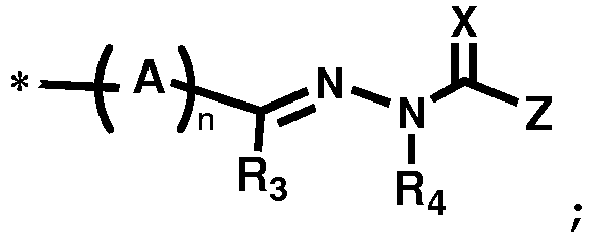
- A is

- R3 is hydrogen, halogen, hydroxy, (C1-C20)alkyl, (C1-C20)alkylcarbonyl, (C6-C20)aryl, (C3-C20)heteroaryl, or (C3-C20)heterocycloalkyl; R3 and a substituent of Ar may be linked to each other via substituted or unsubstituted (C3-C20)alkylene or substituted or unsubstituted (C3-C20)alkenylene, containing or not containing a fusion ring, to thereby form an alicyclic ring, or a monocyclic or polycyclic aromatic ring; and the carbon atom of the said alicyclic ring, or the said monocyclic or polycyclic aromatic ring may be substituted by at least one heteroatom selected from N, O, and S;
- R4 is hydrogen or (C1-C20)alkyl;
- X i s O or S;
- Z is (C1-C20)alkyl, -N(R11R12), or -O(R13); R11 to R13 each are independently of one another selected from hydrogen and (C1-C20)alkyl; and R11 and R12 may be linked to each other via substituted or unsubstituted (C3-C20)alkylene or substituted or unsubstituted (C3-C20)alkenylene, containing or not containing a fusion ring, to thereby form an alicyclic ring, or a monocyclic or polycyclic aromatic ring; and the carbon atom of the said alicyclic ring, or the said monocyclic or polycyclic aromatic ring may be substituted by at least one heteroatom selected from N, O, and S;
- n is an integer of 0 to 3;
- m is an integer of 1 to 10; and
- aforementioned alkyl and heterocycloalkyl of R1 to R3, alkyl of R4, alkyl of Z, alkyl of R11 to R13, and the alicyclic ring or aromatic ring of Z and R3 each may be independently of one another further substituted with at least one selected from the group consisting of halogen, nitro, cyano, hydroxy, amino, (C1-C20)alkyl, (C1-C20)alkoxy, (C2-C20)alkenyl, (C3-C20)cycloalkyl, and 5- to 7- membered heterocycloalkyl containing at least one element selected from N, O, and S.
- The compound of Chemical Formula 1 of the present invention has a substituent with a double bond or a triple bond, or a substituent including an imine (C=N) bond on aryl or heteroacyl. These plural conjugations enable the retardation of the optical film to be increased, to thereby improve the viewing angle and contrast of the optical film, and thus, the optical film according to the present invention is suitable for a liquid crystal display.
- As described herein, ┌alkyl┘, ┌alkoxy┘, and substituents containing other ┌alkyl┘ moieties include both straight chain and branched chain ones, and ┌cycloalkyl┘ may include monocyclic hydrocarbon as well as polycyclic hydrocarbon such as substituted or unsubstituted adamantyl or substituted or unsubstituted (C7-C20)bicycloalkyl.
- In Chemical Formula 1 of the present invention, aryl or heteroaryl of Ar may have, besides Q, a plurality of substitutions, which are the same as or different from each other, except for the compound in which OR (wherein R is hydrogen or (C1-C20)alkyl) is substituted in ortho position of Q. That is, aryl or heteroaryl of Chemical Formula 1 may be substituted or unsubstituted aryl or substituted or unsubstituted heteroaryl, and here, at least one substituent Q is necessarily substituted.
- In Chemical Formula 1 according to an embodiment of the present invention, Ar may be further substituted with at least one selected from the group consisting of halogen, (C1-C20)alkyl, (C3-C20) cycloalkyl, (C1-C20)alkoxy, (C6-C20)aryloxy, (C1-C20)alkylacyl, (C6-C20)arylacyl, (C1-C20)alkoxycarbonyl, (C6-C20)aryloxycarbonyl, (C1-C20)alkylacyloxy, (C6-C20)arylacyloxy, sulfonylamino, nitro, hydroxy, cyano, amino, acylamino, Q, and 5- to 7- membered heterocycloalkyl containing at least one element selected from N, O, and S;
- R1 and R2 each are independently hydrogen;
- R3 is hydrogen, (C1-C20)alkyl, or (C1-C20)alkylcarbonyl;
- R4 is hydrogen or (C1-C20)alkyl;
- X is O or S;
- Z is (C1-C20)alkyl, -N(R11R12), or -O(R13); R11 to R13 each are independently of one another selected from hydrogen and (C1-C20)alkyl; and R11 and R12 may be linked to each other via substituted or unsubstituted (C3-C20)alkylene or substituted or unsubstituted (C3-C20)alkenylene, containing or not containing a fusion ring, to thereby form an alicyclic ring, or a monocyclic or polycyclic aromatic ring; and the carbon atom of the said alicyclic ring, or the said monocyclic or polycyclic aromatic ring may be substituted by at least one heteroatom selected from N, O, and S;
- n is an integer of 0 to 3;
- aforementioned alkyl and heterocycloalkyl of R1 to R3, alkyl of R4, alkyl of Z, and alkyl of R11 to R13 each may be independently of one another further substituted with at least one selected from the group consisting of halogen, nitro, cyano, hydroxy, amino, (C1-C20)alkyl, (C1-C20)alkoxy, (C2-C20)alkenyl, (C3-C20)cycloalkyl, and 5- to 7- membered heterocycloalkyl containing at least one element selected from N, O, and S.
- Specifically, the compound of Chemical Formula 1 according to an embodiment of the present invention may be represented by compounds of any one of Chemical Formulas 2 to 5 below.
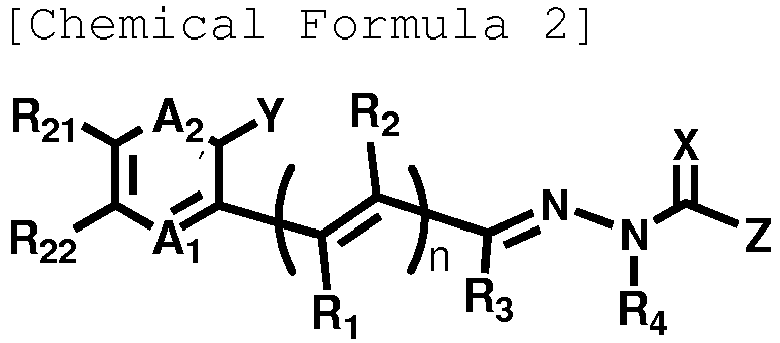


- In Chemical Formulas 2 or 5,
- R1 and R2 each are independently hydrogen, halogen, hydroxy, (C1-C20)alkyl, or (C3-C20)heterocycloalkyl;
- R3 is hydrogen, halogen, hydroxy, (C1-C20)alkyl, or (C3-C20)heterocycloalkyl; R3 and Ar may be linked to each other via substituted or unsubstituted (C3-C20)alkylene or substituted or unsubstituted (C3-C20)alkenylene, containing or not containing a fusion ring, to thereby form an alicyclic ring, or a monocyclic or polycyclic aromatic ring; and the carbon atom of the said alicyclic ring, or the said monocyclic or polycyclic aromatic ring may be substituted by at least one heteroatom selected from N, O, and S;
- R4 is hydrogen or (C1-C20)alkyl;
- X is O or S;
- Z is (C1-C20) alkyl, -N(R11R12), or -O(R13); R11 to R13 each are independently of one another selected from hydrogen and (C1-C20)alkyl; and R11 and R12 may be linked to each other via substituted or unsubstituted (C3-C20)alkylene or substituted or unsubstituted (C3-C20)alkenylene, containing or not containing a fusion ring, to thereby form an alicyclic ring, or a monocyclic or polycyclic aromatic ring; and the carbon atom of the said alicyclic ring, or the said monocyclic or polycyclic aromatic ring may be substituted by at least one heteroatom selected from N, O, and S;
- n is an integer of 0 to 3;
- A1 and A2 each are independently CR7 or N;
- A3 is O, S, or NR8, and R8 is hydrogen or (C1-C20)alkyl;
- Y is selected from hydrogen, -N(R31R32), -O(R33), - S(R34), and -P=O(R35)(R36), and R31 to R36 each are independently hydrogen or (C1-C20)alkyl; and
- R21 to R24 and R7 are selected from hydrogen, halogen, Q, (C1-C20)alkyl, (C3-C20)cycloalkyl, (C1-C20)alkoxy, (C6-C20)aryloxy, (C1-C20)alkylacyl, (C6-C20)arylacyl, (C1-C20)alkoxycarbonyl, (C6-C20)aryloxycarbonyl, (C1-C20)alkylacyloxy, (C6-C20)arylacyloxy, sulfonylamino, hydroxy, cyano, amino, acylamino, and 5- to 7- membered heterocycloalkyl containing at least one element selected from N, O, and S.
- More specifically, Chemical Formula 1 of the present invention may be selected from the structures below, but is not limited thereto.


- The compound of the present invention may be used as a retardation additive for the optical film.
- In the optical film according to an embodiment of the present invention, Rth(λ) may satisfy Formulas (I) and (II) below:


- In Formulas above, Rth(λ) is a retardation value (unit: nm) in a thickness of the film at a wavelength, λnm.
- In addition, the optical film of the present invention may be preferably a cellulose acetate film. Here, the cellulose acetate film may a substitution degree of 2.7 to 3.0, which is measured by the ASTM D-817-91.
- The compound of Chemical Formula 1 of the present invention may be prepared as shown in Reaction Scheme 1, and the preparing method below does not limit the method for preparing the compound of Chemical Formula 1. Therefore, modification of the preparing method below will be obvious to those skilled in the art.

- In Reaction Scheme 1,
- A, R3 to R4, X, Y, and Z have the same meanings as those of Chemical Formula 1.
- In addition, the present invention provides a composition for an optical film comprising, as a retardation additive, at least one selected from the compounds of Chemical Formula 1 in 1-15 parts by weight based on 100 parts by weight of a base resin.
- The base resin may mean a basic resin usually used for the optical film, and may be preferably a cellulose acetate film having various substitution degrees.
- One or two or more additives selected from the group consisting of a UV inhibitor, fine particles, a plasticizer, a deterioration inhibitor, a stripping agent, an infrared absorber, and an optically anisotropic controller may be further added to the composition according an embodiment of the present invention.
- Hereinafter, respective constitutions of the present invention will be described in more detail.
- The optical film of the present invention may be a common optical film, but preferably a cellulose acetate film. First, the cellulose acetate film will be described. The cellulose acetate film according to an embodiment of the present invention has a density of about 1.2-1.35, but is not limited thereto.
- Cellulose acetate is ester of cellulose and acetic acid, and all or some of hydrogen atoms of hydroxyl groups at the positions 2, 3, and 6 of a glucose unit constituting cellulose are substituted by acetyl groups. The substitution degree of cellulose acetate is not limited, but is preferably 2.7 or higher, and more preferably 2.7 - 3.0. The substitution degree may be measured according to the ASTM D-817-91.
- In the present invention, the molecular weight range of cellulose acetate is not limited, but the weight average molecular weight thereof is preferably in the range of 200,000 - 350,000. In addition, the molecular weight distribution of cellulose acetate, Mw/Mn, (Mw is weight average molecular weight and Mn is number average molecular weight), is preferably 1.4 - 1.8, and more preferably 1.5 - 1.7.
- The cellulose acetate film is preferably manufactured by a solvent cast method using a cellulose acetate dope solution. According to the solvent cast method, the film is formed by casting a solution (dope) prepared by dissolving cellulose acetate in a solvent on a supporter and then evaporating the solvent.
- As a raw material of the cellulose acetate dope solution, cellulose acetate particles are preferably used. Here, preferably, 90wt% or higher of the cellulose acetate particles have an average particle size of 0.5 to 5 mm. In addition, preferably, 50 wt% or higher of the cellulose acetate particles used have an average particle size of 1 to 4 mm.
- The cellulose acetate particles preferably have a shape close to a sphere if possible. The cellulose acetate particles are dried such that they have a moisture content of 2 wt% or lower, and more preferably 1 wt% or lower, which are then used for the dope solution.
- Then, the additive used in the cellulose acetate film will be described.
- In the cellulose acetate solution (dope) used in the solvent cast method, various kinds of additives according to the uses of respective preparing processes, for example, a plasticizer, a UV inhibitor, a deterioration inhibitor, fine particles, a stripping agent, an infrared absorber, an optically anisotropic controller, and the like may be added. Specific kinds of these additives are not limited as long as they are usually used in the art, and the contents thereof may be preferably in the range in which physical properties of the film are not deteriorated. The time to add the additive is determined depending on the kind of additive. The additive may be added at the last stage of preparing the dope.
- The plasticizer is used for enhancing mechanical strength of the film, and in the case of using the plasticizer, the time for drying the film may be shortened. Any plasticizer may be used without limitation as long as it is usually used. Examples thereof may include phosphoric acid ester, and carboxylic acid ester selected from phthalic acid ester and citric acid ester, and the like. Examples of phosphoric acid ester may include triphenyl phosphate (TPP), biphenyldiphenyl phosphate, tricresylphosphate (TCP), and the like. Examples of phthalic acid ester may include dimethyl phthalate (DMP), diethyl phthalate (DEP), dibutyl phthalate (DBP), dioctyl phthalate (DOP), diphenyl phthalate (DPP), diethylhexyl phthalate (DEHP), and the like. Examples of citric acid ester may include o-acetyltriethyl citrate (OACTE), o-acetyltributyl citrate (OACTB), and the like. Other examples of carboxylic acid ester may include butylolate, methylacetyllysinolate, dibutylsebacate, and various kinds of trimellitic acid ester. Preferably, phthalic acid ester (DMP, DEP, DBP, DOP, DPP, and DEHP) plasticizer may be used. The content of the plasticizer is used in 2-20 parts by weight, more preferably 5-15 parts by weight based on 100 parts by weight of cellulose acetate.
- As the UV inhibitor, hydroxybenzophenone based compounds, benzotriazole based compounds, salicylic acid ester based compounds, cyanoacrylate based compounds, and the like may be used. The content of the UV inhibitor is used in 0.1-3 parts by weight, more preferably 0.5-2 parts by weight based on 100 parts by weight of cellulose acetate.
- As the deterioration inhibitor, for example, an antioxidant, a peroxide decomposer, a radical inhibitor, a metal deactivator, a deoxidant, a photo-stabilizer (hindered amine or the like), or the like may be used. Particularly, preferable examples of the deterioration inhibitor may include butylated hydroxy toluene (BHT) and tribenzyl amine (TBA). The content of the deterioration inhibitor is used in 0.01-5 parts by weight, more preferably 0.1-1 parts by weight based on 100 parts by weight of cellulose acetate.
- The fine particles are added in order to favorably maintain anti-curling, conveyability, anti-adhesion in a roll shape, or anti-scratch of the film. Any one selected from an inorganic compound and an organic compound may be used for the fine particles. For example, as the inorganic compound, a compound containing silicon, silicon dioxide, titanium dioxide, zinc oxide, aluminum oxide, barium oxide, zirconium oxide, strontium oxide, antimony oxide, tin oxide, tin oxide•antimony, calcium carbonate, talc, clay, calcined kaolin, calcined calcium silicate, calcium silicate hydrate, aluminum silicate, magnesium silicate, calcium phosphate, and the like are preferable, and the inorganic compound containing silicon, zirconium oxide, and the like are more preferably usable. The fine particles may have an average first particle size of 80nm or smaller, preferably 5 - 80nm, more preferably 5 - 60nm, and particularly preferably 8 - 50nm. If the average first particle size is above 80nm, smoothness of the film is damaged.
- In addition, as necessary, an optical anisotropy regulator, a wavelength dispersion regulator, or the like may be added. These additives may be used without limitation as long as it is usually used in the art.
- In addition, the present invention provides an optical film manufactured by using the composition for an optical film according to the present invention.
- Then, a method for manufacturing the cellulose acetate film of the present invention will be described.
- In the present invention, a cellulose acetate composition as follows, that is, a dope solution is prepared in order to prepare the cellulose acetate film.
- The cellulose acetate composition may contain 1-15 parts by weight of the retardation improver of said Chemical Formula 1 based on 100 parts by weight of cellulose acetate.
- In the present invention, the solid concentration in the dope is favorably 15-25 wt%, preferably 16-23 wt%. If the solid concentration in the dope is below 15 wt%, fluidity thereof is too high to form the film. If the solid concentration is above 25 wt%, complete dissolution is difficult.
- In the present invention, the cellulose acetate content is 70 wt% or higher, preferably 70 - 90 wt%, and more preferably 80 - 85 wt%, based on the total solid content. In addition, two or more kinds of cellulose acetate having different substitution degrees, polymerization degrees, or molecular distributions may be mixed and used.
- The retardation additive is used in order to improve or deteriorate the retardation, and the retardation improver for improving the retardation is preferably used as the retardation additive of the present invention.
- The retardation additive is preferably used in the range of 1-15 parts by weight based on 100 parts by weight of cellulose acetate. In the case where the retardation additive is used within the range above, the desired range of retardation may be achieved.
- In the case where the film is manufactured by the solvent casting method, an organic solvent is preferable as a solvent for preparing the cellulose acetate composition (dope). Halogenated hydrocarbon is preferably used as an organic solvent. Examples of the halogenated hydrocarbon may include chlorinated hydrocarbon, methylene chloride, and chloroform, and among them, methylene chloride is most preferably used.
- Alternatively, as necessary, the organic solvent besides halogenated hydrocarbon may be mixed therewith, and used. Examples of the organic solvent besides halogenated hydrocarbon may include ester, ketone, ether, alcohol, and hydrocarbon. As the ester, methylformate, ethylformate, propylformate, pentylformate, methylacetate, ethylacetate, pentylacetate, and the like may be used; as the ketone, acetone, methylethyl ketone, diethyl ketone, diisobutyl ketone, cyclopentanone, cyclohexanone, methylcyclohexanone, and the like may be used; as the ether, diisopropylether, dimethoxymethane, dimethoxyethane, 1,4-dioxane, 1,3-dioxolane, tetrahydrofuran, anisole, penetol, and the like may be used; as the alcohol, methanol, ethanol, 1-propanol, 2-propanol, 1-butanol, 2-butanol, t-butanol, 1-pentanol, 2-methyl-2-butanol, cyclohexanol, 2-fluoro-ethanol, 2,2,2-trifluoroethanol, 2,2,3,3-tetrafluoro-1-propanol, and the like may be used.
- More preferably, methylene chloride may be used as a main solvent, and alcohol may be used as a sub-solvent. Specifically, methylene chloride and alcohol may be mixed in a weight ratio of 80:20 - 95:5, and then used.
- The cellulose acetate composition may be prepared depending on a room-temperature, high-temperature, and low-temperature dissolution method.
- The viscosity of the cellulose acetate composition is preferably 1 to 400 Pa•s, and more preferably 10 to 200 Pa•s, at 40 °C.
- The cellulose acetate film may be manufactured by the usual solvent casting method. More specifically, the prepared dope (cellulose acetate composition) is first stored in a storage, and bubbles contained in the dope are defoamed. The defoamed dope is sent to a pressurization type die through a pressurization type constant gear pump capable of sending a constant amount from a dope outlet at high precision depending on the number of rotations. Then, the dope is uniformly casted on a metal supporter that is endlessly revolved from a mouthpiece (slit) of the pressurization type die, and then the half-dried casting film is exfoliated from the metal supporter at an exfoliation point where the metal supporter is almost revolved. The prepared web is conveyed to a tenter while the width thereof is maintained by clipping both ends thereof, followed by drying. Then, the resultant web is conveyed to a roller of the drying unit, followed by drying, and then a predetermined length thereof is wound by using a winder. In addition, at the time of manufacturing the casting film, unilateral and bilateral stretching in mechanical and transverse directions may be possible while the amount of residual solvent is 10 - 40 wt%. In addition, after preparing the casting film, offline stretching is also possible. The stretching degree is preferably in the range of 5-100%, more preferably 10-80%, and most preferably 20-50%.
- At the time of solution coating, the space temperature is preferably -50 °C to 50 °C, more preferably -30 °C to 40 °C, and most preferably -20 °C to 30 °C. The cellulose acetate solution coated at a low space temperature is instantly cooled on the supporter, to thereby improve the gel strength, and thus, a film having large amount of organic solvent residual is obtained. Therefore, the film may be exfoliated from the supporter in a short time without evaporating the organic solvent from the cellulose acetate. As gas for cooling a space, ordinary air, nitrogen, argon, or helium may be used. The relative humidity is preferable 0 to 70%, and more preferably 0 to 50%.
- The temperature of the supporter (casting part) on which the cellulose acetate solution is coated is preferably -50 °C to 130 °C, more preferably -30 °C to 25 °C, and most preferably -20 °C to 15 °C. The cooled gas may be introduced to the casting part in order to cool the casting part. A cooling apparatus may be disposed in the casting part to cool the space. At the time of cooling, it is important to be careful so as to prevent water from adhering onto the casting part. In the case of cooling by using the gas, it is preferable to dry the gas in advance.
- In addition, as necessary, the cellulose acetate film may be surface-treated. The surface treatment, generally, is performed in order to improve adhesive property of the cellulose acetate film. As the surface treatment method, glow discharge treatment, ultraviolet irradiation treatment, corona treatment, flame treatment, saponification treatment, or the like may be employed.
- The thickness of the cellulose acetate film is preferably in the range of 20 - 140 µm, and more preferably 40 - 100µm.
- The optical film according to the present invention may be used in the polarizing plate, optical compensation sheet, optical filter for a three dimensional image, and a liquid crystal display, and one or two or more sheets thereof may be laminated and used. The liquid crystal display is preferably operated in a VA mode.
- Hereinafter, the present invention will be illustrated with the examples for the specific description, but the present invention is not limited to the following examples.
- Hereinafter, physical properties of the film were measured by the following methods.
- The Re value was measured by the incident light of wavelength 550 nm in a normal direction of the film in a birefringence measurement instrument (Axoscan, product name, manufactured by Axometrics, Inc.). The Rth value was obtained from the equation below by using three refractive index components of a refractive index ellipsoid, which are obtained by measuring the light of 550 nm, from 0 to 50 degrees at an interval of 10 degrees with respect to the normal direction of the film, using a slow axis in Re plane as a tilt axis.

- nx: larger refractive index between two refractive indexes in a plane
- ny: smaller refractive index between two refractive indexes in a plane
- nz: refractive index in a thickness direction
- d : thickness of the film
- Benzaldehyde (10 g, 94.2 mmol) was added to 300 mL of ethanol, and N-methylhydrazinecarbothioamide (9.90 g, 94.2 mmol) was added thereto, followed by stirring at room temperature for 18 hours. The solid compound generated during the reaction was filtered, and then washed with a small amount of ethanol solution, followed by drying, to obtain the title compound (16.5g, yield 92%).
- The compositional components below were put into a stirrer, and dissolved at a temperature of 30 °C.
- Among the compositional components below, 2-(2H-Benzotriazol-2-yl)-6-(1-methyl-1-phenylethyl)-4-(1,1,3,3-tetramethylbutyl)phenol was used as a UV inhibitor.
Cellulose acetate particles having a substitution degree of 2.87 100 parts by weight RIA I Compound 10 parts by weight UV inhibitor 2 parts by weight Silicon dioxide, average particle size 16 nm 0.5 parts by weight Methylene chloride 440 parts by weight Methanol 50 parts by weight - The obtained dope was warmed to 30 °C, transferred to a gear pump, filtered by a filter bed having an absolute filtering precision of 0.01 mm, and then again filtered by a cartridge filtering apparatus having an absolute filtering precision of 5µm.
- The dope obtained through the filtering processes was casted on a glass supporter through a casting die, dried at room temperature for 7 min., and then exfoliated. Again, the exfoliated material was dried at 140 °C for 60 minutes, so that the amount of residual solvent was controlled to be 0.5 wt% or lower. After connection to a tenter, the film was stretched by 102% in a width direction thereof. After the film was removed from the tenter, right and left-sided ends of the film were removed by 150 mm, respectively. The film having removed ends was dried by a drier. Both ends of the film come out of the drier were cut off by 3 cm, respectively. Then, the film was subjected to a knurling process to have a 100 µm height knurling on a portion of the film which is distanced at 10 mm from the ends thereof, and wound in a role type. Optical anisotropy of the obtained specimen was measured by the method as described above, and the measurement results were tabulated in Table 1.
- Each film was manufactured by the same method as Example 1 except that the kind of compound was changed as shown in Table 1 below instead of RIA 1, the compound of Chemical Formula 1, and optical anisotropy thereof was measured and then the measurement results were tabulated in Table 1.
- The composition below was put into a stirrer, and dissolved at a temperature of 30 °C.
- Among the compositional components below, 2-(2H-Benzotriazol-2-yl)-6-(1-methyl-1-phenylethyl)-4-(1,1,3,3-tetramethylbutyl)phenol was used as a UV inhibitor.
Cellulose acetate particles having a substitution degree of 2.87 100 parts by weight RIA 9 compound 6.7 parts by weight UV inhibitor 2 parts by weight Silicon dioxide, average particle size 16 nm 0.5 parts by weight Methylene chloride 277 parts by weight Methanol 24 parts by weight - The obtained dope was warmed to 30 °C, transferred to a gear pump, filtered by a filter bed having an absolute filtering precision of 0.01 mm, and then again filtered by a cartridge filtering apparatus having an absolute filtering precision of 5µm.
- The composition below was put into a stirrer, and dissolved at a temperature of 30 °C.
- Among the compositional components below, 2-(2H-Benzotriazol-2-yl)-6-(1-methyl-1-phenylethyl)-4-(1,1,3,3-tetramethylbutyl)phenol was used as a UV inhibitor.
Cellulose acetate particles having a substitution degree of 2.87 100 parts by weight RIA 10 compound 1.6 parts by weight UV inhibitor 2 parts by weight Silicon dioxide, average particle size 16 nm 0.5 parts by weight Methylene chloride 277 parts by weight Methanol 24 parts by weight - The obtained dope was warmed to 30 °C, transferred to a gear pump, filtered by a filter bed having an absolute filtering precision of 0.01 mm, and then again filtered by a cartridge filtering apparatus having an absolute filtering precision of 5µm.
- In Examples 9 and 10, each film was manufactured by the same method except that the kind of compound was changed as shown in Table 1 below instead of RIA 1, the compound of Chemical Formula 1, and optical anisotropy thereof was measured and then the measurement results were tabulated in Table 1.
- The cellulose acetate film was manufactured by the same method as Example 1 except that the dope was prepared without addition of the retardation additive in Example 1, and optical anisotropy thereof was measured by the method as described above and the measurement results were tabulated in Table 1.
[Table 1] Compound Thickness (µm) Re (nm) Rth (nm) Example 1 RIA 1 40 1.11 210.91 Example 2 RIA 2 40 3.22 127.62 Example 3 RIA 3 40 0.23 87.50 Example 4 RIA 4 40 2.64 168.44 Example 5 RIA 5 40 1.83 81.51 Example 6 RIA 6 40 1.51 69.88 Example 7 RIA 7 40 1.28 68.80 Example 8 RIA 8 40 0.74 109.33 Example 9 RIA 9 40 0.61 108.07 Example 10 RIA 10 40 0.68 73.94 Example 11 RIA 11 40 0.73 61.99 Example 12 RIA 12 40 0.96 86.19 Example 13 RIA 13 40 1.20 140.54 Example 14 RIA 14 40 0.45 60.86 Comparative Example 1 - 40 - 28.2 - As shown in Table 1, it can be confirmed that when the retardation additive described in the examples was added, unlike the existing plasticizer, the obtained film had a high Rth value.
Claims (11)
- An optical film comprising at least one retardation additive selected from compounds of Chemical Formula 1 below:
 Ar is (C6-C20)aryl or (C3-C20)heteroaryl, provided that the compound in which OR (wherein R is hydrogen or (C1-C20)alkyl) is substituted in ortho position of Q is excluded;Q is
 A is
A is R3 is hydrogen, halogen, hydroxy, (C1-C20)alkyl, (C1-C20)alkylcarbonyl, (C6-C20)aryl, (C3-C20)heteroaryl, or (C3-C20)heterocycloalkyl; R3 and a substituent of Ar may be linked to each other via substituted or unsubstituted (C3-C20)alkylene or substituted or unsubstituted (C3-C20)alkenylene, containing or not containing a fusion ring, to thereby form an alicyclic ring, or a monocyclic or polycyclic aromatic ring; and the carbon atom of the said alicyclic ring, or the said monocyclic or polycyclic aromatic ring may be substituted by at least one heteroatom selected from N, O, and S;R4 is hydrogen or (C1-C20)alkyl;X is O or S;Z is (C1-C20) alkyl, -N(R11R12), or -O(R13); R11 to R13 each are independently of one another selected from hydrogen and (C1-C20)alkyl; and R11 and R12 may be linked to each other via substituted or unsubstituted (C3-C20)alkylene or substituted or unsubstituted (C3-C20)alkenylene, containing or not containing a fusion ring, to thereby form an alicyclic ring, or a monocyclic or polycyclic aromatic ring; and the carbon atom of the said alicyclic ring, or the said monocyclic or polycyclic aromatic ring may be substituted by at least one heteroatom selected from N, O, and S;n is an integer of 0 to 3;m is an integer of 1 to 10; andaforementioned alkyl and heterocycloalkyl of R1 to R3, alkyl of R4, alkyl of Z, alkyl of R11 to R13, and the alicyclic ring or aromatic ring of Z and R3 each may be independently of one another further substituted with at least one selected from the group consisting of halogen, nitro, cyano, hydroxy, amino, (C1-C20)alkyl, (C1-C20)alkoxy, (C2-C20)alkenyl, (C3-C20)cycloalkyl, and 5- to 7- membered heterocycloalkyl containing at least one element selected from N, O, and S.
 - The optical film of claim 1, wherein Ar may be further substituted with at least one selected from the group consisting of halogen, (C1-C20)alkyl, (C3-C20)cycloalkyl, (C1-C20)alkoxy, (C6-C20)aryloxy, (C1-C20)alkylacyl, (C6-C20)arylacyl, (C1-C20)alkoxycarbonyl, (C6-C20)aryloxycarbonyl, (C1-C20)alkylacyloxy, (C6-C20)arylacyloxy, sulfonylamino, nitro, hydroxy, cyano, amino, acylamino, Q, and 5- to 7-membered heterocycloalkyl containing at least one element selected from N, O, and S;
R1 and R2 each are independently hydrogen;
R3 is hydrogen, (C1-C20)alkyl, or (C1-C20)alkylcarbonyl;
R4 is hydrogen or (C1-C20)alkyl;
X is O or S;
Z is (C1-C20)alkyl, -N(R11R12), or -O(R13); R11 to R13 each are independently of one another selected from hydrogen and (C1-C20)alkyl; and R11 and R12 may be linked to each other via substituted or unsubstituted (C3-C20)alkylene or substituted or unsubstituted (C3-C20)alkenylene, containing or not containing a fusion ring, to thereby form an alicyclic ring, or a monocyclic or polycyclic aromatic ring; and the carbon atom of the said alicyclic ring, or the said monocyclic or polycyclic aromatic ring may be substituted by at least one heteroatom selected from N, O, and S;
n is an integer of 0 to 3; and
aforementioned alkyl and heterocycloalkyl of R1 to R3, alkyl of R4, alkyl of Z, and alkyl of R11 to R13 each may be independently of one another further substituted with at least one selected from the group consisting of halogen, nitro, cyano, hydroxy, amino, (C1-C20)alkyl, (C1-C20)alkoxy, (C2-C20)alkenyl, (C3-C20)cycloalkyl, and 5- to 7- membered heterocycloalkyl containing at least one element selected from N, O, and S. - The optical film of claim 1, wherein the compound of Chemical Formula 1 is represented by any one of Chemical Formulas 2 to 5 below:


 R1 and R2 each are independently hydrogen, halogen, hydroxy, (C1-C20)alkyl, or (C3-C20)heterocycloalkyl;R3 is hydrogen, halogen, hydroxy, (C1-C20)alkyl, or (C3-C20)heterocycloalkyl; R3 and Ar may be linked to each other via substituted or unsubstituted (C3-C20)alkylene or substituted or unsubstituted (C3-C20)alkenylene, containing or not containing a fusion ring, to thereby form an alicyclic ring, or a monocyclic or polycyclic aromatic ring; and the carbon atom of the said alicyclic ring, or the said monocyclic or polycyclic aromatic ring may be substituted by at least one heteroatom selected from N, O, and S;R4 is hydrogen or (C1-C20)alkyl;X is O or S;Z is (C1-C20)alkyl, -N(R11R12), or -O(R13); R11 to R13 each are independently of one another selected from hydrogen and (C1-C20)alkyl; and R11 and R12 may be linked to each other via substituted or unsubstituted (C3-C20)alkylene or substituted or unsubstituted (C3-C20)alkenylene, containing or not containing a fusion ring, to thereby form an alicyclic ring, or a monocyclic or polycyclic aromatic ring; and the carbon atom of the said alicyclic ring, or the said monocyclic or polycyclic aromatic ring may be substituted by at least one heteroatom selected from nitrogen, oxygen, and sulfur;n is an integer of 0 to 3;A1 and A2 each are independently CR7 or N;A3 is O, S, or NR8, and R8 is hydrogen or (C1-C20)alkyl;Y is selected from hydrogen, -N(R31R32), -O(R33), -S(R34), and -P=O(R35)(R36), and R31 to R36 each are independently hydrogen or (C1-C20)alkyl; andR21 to R24 and R7 are selected from hydrogen, halogen, Q, (C1-C20)alkyl, (C3-C20)cycloalkyl, (C1-C20)alkoxy, (C6-C20)aryloxy, (C1-C20)alkylacyl, (C6-C20)arylacyl, (C1-C20)alkoxycarbonyl, (C6-C20)aryloxycarbonyl, (C1-C20)alkylacyloxy, (C6-C20)arylacyloxy, sulfonylamino, hydroxy, cyano, amino, acylamino, and 5- to 7- membered heterocycloalkyl containing at least one element selected from N, O, and S.
 - The optical film of claim 1, wherein the compound of Chemical Formula 1 is a cellulose acetate film selected from the structures below:

- The optical film of claim 1, wherein it has Rth(λ) satisfying Formulas (I) and (II) below:


(In Formulas above, Rth(λ) is a retardation value (unit: nm) in a thickness direction of the film at a wavelength, λnm.) - The optical film of any one of claims 1 to 5, wherein it is a cellulose acetate film.
- A composition for an optical film, comprising as a retardation additive, at least one selected from the compounds of Chemical Formula 1 below in 1-15 parts by weight based on 100 parts by weight of a base resin:
 Ar is (C6-C20)aryl or (C3-C20)heteroaryl, provided that the compound in which OR (wherein R is hydrogen or (C1-C20)alkyl) is substituted in ortho position of Q is excluded;Q is
 A is
A is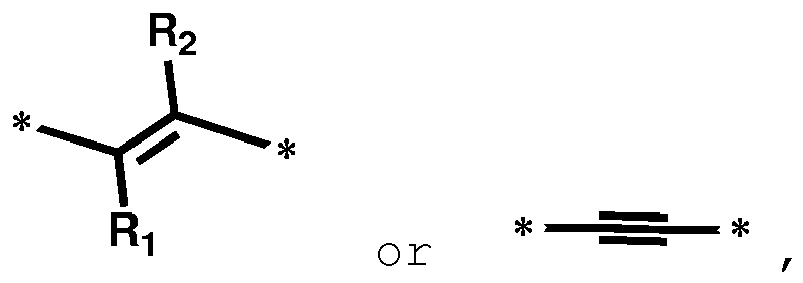 R3 is hydrogen, halogen, hydroxy, (C1-C20)alkyl, (C1-C20)alkylcarbonyl, or (C3-C20)heterocycloalkyl; R3 and Ar may be linked to each other via substituted or unsubstituted (C3-C20)alkylene or substituted or unsubstituted (C3-C20)alkenylene, containing or not containing a fusion ring, to thereby form an alicyclic ring, or a monocyclic or polycyclic aromatic ring; and the carbon atom of the said alicyclic ring, or the said monocyclic or polycyclic aromatic ring may be substituted by at least one heteroatom selected from N, O, and S;R4 is hydrogen or (C1-C20)alkyl;X is O or S;Z is (C1-C20)alkyl, -N(R11R12), or -O(R13); R11 to R13 each are independently of one another selected from hydrogen and (C1-C20)alkyl; and R11 and R12 may be linked to each other via substituted or unsubstituted (C3-C20)alkylene or substituted or unsubstituted (C3-C20)alkenylene, containing or not containing a fusion ring, to thereby form an alicyclic ring, or a monocyclic or polycyclic aromatic ring; and the carbon atom of the said alicyclic ring, or the said monocyclic or polycyclic aromatic ring may be substituted by at least one heteroatom selected from N, O, and S;n is an integer of 0 to 3;m is an integer of 1 to 10; andaforementioned alkyl and heterocycloalkyl of R1 to R3, alkyl of R4, alkyl of Z, alkyl of R11 to R13, and the alicyclic ring or aromatic ring of Z and R3 each are independently of one another further substituted with at least one selected from halogen, nitro, cyano, hydroxy, amino, (C1-C20)alkyl, (C1-C20)alkoxy, (C2-C20)alkenyl, (C3-C20)cycloalkyl, and 5- to 7- membered heterocycloalkyl containing at least one element selected from N, O, and S.
 - The composition of claim 7, further comprising one or two or more additives selected from the group consisting of a UV inhibitor, a particle, a plasticizer, a deterioration inhibitor, a stripping agent, an infrared absorber, and an optically anisotropic controller.
- An optical film manufactured by using the composition for an optical film of claim 7 or 8.
- The optical film of any one of claims 1 to 5, wherein it is used in an optical compensation sheet, an optical filter for a three dimensional image, a polarizing plate, and a liquid crystal display.
- A display device comprising the optical film of any one of claims 1 to 5.
Applications Claiming Priority (3)
| Application Number | Priority Date | Filing Date | Title |
|---|---|---|---|
| KR20110059697 | 2011-06-20 | ||
| KR20120065600A KR101322462B1 (en) | 2011-06-20 | 2012-06-19 | optical film |
| PCT/KR2012/004870 WO2012177044A2 (en) | 2011-06-20 | 2012-06-20 | Optical film |
Publications (2)
| Publication Number | Publication Date |
|---|---|
| EP2722356A2 true EP2722356A2 (en) | 2014-04-23 |
| EP2722356A4 EP2722356A4 (en) | 2015-04-15 |
Family
ID=47906328
Family Applications (2)
| Application Number | Title | Priority Date | Filing Date |
|---|---|---|---|
| EP12802092.2A Withdrawn EP2722355A4 (en) | 2011-06-20 | 2012-06-20 | OPTICAL FILM |
| EP12802738.0A Withdrawn EP2722356A4 (en) | 2011-06-20 | 2012-06-20 | OPTICAL FILM |
Family Applications Before (1)
| Application Number | Title | Priority Date | Filing Date |
|---|---|---|---|
| EP12802092.2A Withdrawn EP2722355A4 (en) | 2011-06-20 | 2012-06-20 | OPTICAL FILM |
Country Status (7)
| Country | Link |
|---|---|
| US (2) | US20140116292A1 (en) |
| EP (2) | EP2722355A4 (en) |
| JP (2) | JP2014520288A (en) |
| KR (2) | KR101322447B1 (en) |
| CN (2) | CN103649181B (en) |
| TW (2) | TWI560227B (en) |
| WO (2) | WO2012177044A2 (en) |
Families Citing this family (4)
| Publication number | Priority date | Publication date | Assignee | Title |
|---|---|---|---|---|
| KR101322447B1 (en) * | 2011-06-20 | 2013-10-28 | 에스케이이노베이션 주식회사 | Optical film |
| JP6450667B2 (en) * | 2015-09-30 | 2019-01-09 | 富士フイルム株式会社 | Polarizing plate protective film, polarizing plate, liquid crystal display device, and manufacturing method of polarizing plate protective film |
| KR102417140B1 (en) * | 2015-12-24 | 2022-07-04 | 삼성전자주식회사 | Polymer and compensation film and optical film and display device |
| TWI722154B (en) | 2016-03-30 | 2021-03-21 | 日商日本瑞翁股份有限公司 | Optically anisotropic layer and its manufacturing method, optically anisotropic laminated body and its manufacturing method, optically anisotropic transfer body, polarizing plate and image display device |
Family Cites Families (29)
| Publication number | Priority date | Publication date | Assignee | Title |
|---|---|---|---|---|
| JPS4910697B1 (en) * | 1968-12-10 | 1974-03-12 | ||
| JP3302733B2 (en) * | 1992-05-18 | 2002-07-15 | 株式会社東芝 | Organic nonlinear optical material |
| DE69828733T2 (en) * | 1997-10-20 | 2005-12-29 | Fuji Photo Film Co., Ltd., Minami-Ashigara | Optical compensatory sheet and liquid crystal display device |
| ATE537473T1 (en) * | 1999-03-12 | 2011-12-15 | Fujifilm Corp | ELLIPTICALLY POLARIZING TRANSPARENT PROTECTIVE LAYER, POLARIZATION LAYER, TRANSPARENT SUPPORT AND OPTICALLY ANISOTROPIC LAYER MADE OF LIQUID CRYSTAL MOLECULES |
| US6712896B2 (en) * | 2000-05-26 | 2004-03-30 | Konica Minolta Holdings, Inc. | Cellulose ester film, optical film, polarizing plate, optical compensation film and liquid crystal display |
| JP2002031715A (en) * | 2000-07-14 | 2002-01-31 | Konica Corp | Optical film, method for manufacturing cellulose ester film, polarizing plate and display device |
| JP4513181B2 (en) * | 2000-07-19 | 2010-07-28 | コニカミノルタホールディングス株式会社 | Optical film, polarizing plate and display device |
| JP3890972B2 (en) * | 2000-12-26 | 2007-03-07 | コニカミノルタホールディングス株式会社 | Cellulose ester film, protective film for polarizing plate and polarizing plate using the same |
| JP4317679B2 (en) * | 2002-05-23 | 2009-08-19 | 富士フイルム株式会社 | Retardation increasing agent for optical film, cellulose ester film, optical compensation sheet, elliptically polarizing plate, and liquid crystal display device |
| JP2005096095A (en) * | 2003-09-22 | 2005-04-14 | Konica Minolta Opto Inc | Hard coat film and its manufacturing method |
| KR20070086056A (en) * | 2004-12-15 | 2007-08-27 | 후지필름 가부시키가이샤 | Cellulose acylate film, manufacturing method of cellulose acylate film, polarizing plate and liquid crystal display device |
| JP2006282979A (en) | 2005-03-11 | 2006-10-19 | Fuji Photo Film Co Ltd | Cellulose acylate film, and polarizing plate and liquid crystal display device using the same |
| TW200700471A (en) * | 2005-03-22 | 2007-01-01 | Fuji Photo Film Co Ltd | Optical compensation film, polarizing plate and liquid crystal display |
| JP4546370B2 (en) | 2005-09-16 | 2010-09-15 | 富士フイルム株式会社 | Composition, film and liquid crystal imparting agent |
| JP2007204553A (en) * | 2006-01-31 | 2007-08-16 | Mitsubishi Chemicals Corp | Crystalline photochromic thin film and use thereof |
| JP2007326972A (en) * | 2006-06-08 | 2007-12-20 | Fujifilm Corp | Cellulose acylate film, optical compensation sheet, polarizing plate, and liquid crystal display device |
| JP2007332292A (en) * | 2006-06-15 | 2007-12-27 | Fujifilm Corp | Cellulose body, cellulose body film, optical compensation sheet, polarizing plate, liquid crystal display device |
| KR101440763B1 (en) * | 2006-07-31 | 2014-09-17 | 코니카 미놀타 어드밴스드 레이어즈 인코포레이티드 | Polarizing plate protection film, polarizing plate and liquid crystal display |
| US8309595B2 (en) | 2007-07-13 | 2012-11-13 | Board Of Regents, The University Of Texas System | Hydrazone modulators of cannabinoid receptors |
| WO2009060743A1 (en) | 2007-11-05 | 2009-05-14 | Konica Minolta Opto, Inc. | Optical compensation film, and polarizing plate and liquid crystal display device using the optical compensation film |
| KR101352529B1 (en) * | 2008-07-10 | 2014-01-15 | 에스케이이노베이션 주식회사 | Cellulose acetate film |
| DE102010005038A1 (en) | 2009-02-14 | 2010-08-19 | Lofo High Tech Film Gmbh | Optical compensation films |
| JP5286114B2 (en) * | 2009-03-13 | 2013-09-11 | 富士フイルム株式会社 | Cellulose acylate film and method for producing the same, polarizing plate and liquid crystal display device |
| JP5593077B2 (en) * | 2009-03-31 | 2014-09-17 | 富士フイルム株式会社 | Method for producing cellulose acylate film |
| KR20110040336A (en) * | 2009-10-14 | 2011-04-20 | 에스케이이노베이션 주식회사 | Cellulose acetate film |
| KR20110075980A (en) | 2009-12-29 | 2011-07-06 | 에스케이이노베이션 주식회사 | Cellulose acetate film |
| JP2012007015A (en) | 2010-06-22 | 2012-01-12 | Fujifilm Corp | Optical film, polarizing plate, display element and liquid crystal display device |
| KR20120035285A (en) * | 2010-10-05 | 2012-04-16 | 에스케이이노베이션 주식회사 | Cellulose acetate film |
| KR101322447B1 (en) * | 2011-06-20 | 2013-10-28 | 에스케이이노베이션 주식회사 | Optical film |
-
2012
- 2012-06-19 KR KR20120065581A patent/KR101322447B1/en not_active Expired - Fee Related
- 2012-06-19 KR KR20120065600A patent/KR101322462B1/en not_active Expired - Fee Related
- 2012-06-20 WO PCT/KR2012/004870 patent/WO2012177044A2/en not_active Ceased
- 2012-06-20 CN CN201280030269.3A patent/CN103649181B/en not_active Expired - Fee Related
- 2012-06-20 WO PCT/KR2012/004869 patent/WO2012177043A2/en not_active Ceased
- 2012-06-20 CN CN201280035927.8A patent/CN103703060B/en not_active Expired - Fee Related
- 2012-06-20 TW TW101122036A patent/TWI560227B/en not_active IP Right Cessation
- 2012-06-20 US US14/126,309 patent/US20140116292A1/en not_active Abandoned
- 2012-06-20 EP EP12802092.2A patent/EP2722355A4/en not_active Withdrawn
- 2012-06-20 TW TW101122035A patent/TWI560226B/en not_active IP Right Cessation
- 2012-06-20 JP JP2014516911A patent/JP2014520288A/en active Pending
- 2012-06-20 US US14/126,347 patent/US20140116293A1/en not_active Abandoned
- 2012-06-20 JP JP2014516910A patent/JP2014520192A/en active Pending
- 2012-06-20 EP EP12802738.0A patent/EP2722356A4/en not_active Withdrawn
Also Published As
| Publication number | Publication date |
|---|---|
| TW201305265A (en) | 2013-02-01 |
| TWI560227B (en) | 2016-12-01 |
| EP2722355A4 (en) | 2015-04-15 |
| KR20120140212A (en) | 2012-12-28 |
| CN103703060B (en) | 2016-05-11 |
| CN103649181B (en) | 2017-02-08 |
| TW201302882A (en) | 2013-01-16 |
| TWI560226B (en) | 2016-12-01 |
| WO2012177043A3 (en) | 2013-03-28 |
| KR101322462B1 (en) | 2013-10-28 |
| KR101322447B1 (en) | 2013-10-28 |
| CN103703060A (en) | 2014-04-02 |
| EP2722355A2 (en) | 2014-04-23 |
| CN103649181A (en) | 2014-03-19 |
| EP2722356A4 (en) | 2015-04-15 |
| JP2014520288A (en) | 2014-08-21 |
| US20140116292A1 (en) | 2014-05-01 |
| WO2012177044A3 (en) | 2013-03-28 |
| US20140116293A1 (en) | 2014-05-01 |
| KR20120140213A (en) | 2012-12-28 |
| WO2012177043A2 (en) | 2012-12-27 |
| JP2014520192A (en) | 2014-08-21 |
| WO2012177044A2 (en) | 2012-12-27 |
Similar Documents
| Publication | Publication Date | Title |
|---|---|---|
| KR101352529B1 (en) | Cellulose acetate film | |
| KR20140069158A (en) | Phase difference film, circularly polarizing plate using same, and image display device | |
| US8597551B2 (en) | Optical film | |
| US20140116293A1 (en) | Optical Film | |
| WO2015060241A1 (en) | Retardation film, and optical compensation layer, optical compensation polarizing plate, liquid crystal display device and organic el display device each using said retardation film | |
| JP5653351B2 (en) | Cellulose acetate film | |
| US20200025989A1 (en) | Retardation film | |
| US9096739B2 (en) | Cellulose acetate film | |
| US20150004333A1 (en) | Optical Film | |
| CN103261287B (en) | Cellulose acylate film | |
| KR20150134574A (en) | Cellulose acylate film | |
| KR20110040336A (en) | Cellulose acetate film | |
| KR20160095326A (en) | Cellulose acetate film | |
| KR101362775B1 (en) | Cellulose acetate film | |
| KR101304442B1 (en) | Optical film | |
| KR20140110379A (en) | Cellulose acylate film | |
| KR20150036959A (en) | Retardation film and manufacturing method thereof | |
| KR20140135850A (en) | Optical film | |
| KR20140133996A (en) | Optical film | |
| KR20150106303A (en) | Cellulose ester film and optical film, display device | |
| KR20140144503A (en) | Cellulose acylate film |
Legal Events
| Date | Code | Title | Description |
|---|---|---|---|
| PUAI | Public reference made under article 153(3) epc to a published international application that has entered the european phase |
Free format text: ORIGINAL CODE: 0009012 |
|
| 17P | Request for examination filed |
Effective date: 20140117 |
|
| AK | Designated contracting states |
Kind code of ref document: A2 Designated state(s): AL AT BE BG CH CY CZ DE DK EE ES FI FR GB GR HR HU IE IS IT LI LT LU LV MC MK MT NL NO PL PT RO RS SE SI SK SM TR |
|
| RIN1 | Information on inventor provided before grant (corrected) |
Inventor name: IM, MIN JOUNG Inventor name: KWAK, HYO SHIN Inventor name: CHO, YONG GYUN Inventor name: KIM, MYOUNG LAE Inventor name: LEE, SEUNG EON Inventor name: KIM, WON YEOB |
|
| DAX | Request for extension of the european patent (deleted) | ||
| A4 | Supplementary search report drawn up and despatched |
Effective date: 20150316 |
|
| RIC1 | Information provided on ipc code assigned before grant |
Ipc: C08J 5/18 20060101AFI20150310BHEP Ipc: G02B 1/04 20060101ALI20150310BHEP Ipc: C08K 5/22 20060101ALI20150310BHEP Ipc: C08L 1/12 20060101ALI20150310BHEP Ipc: C08K 5/32 20060101ALI20150310BHEP |
|
| STAA | Information on the status of an ep patent application or granted ep patent |
Free format text: STATUS: THE APPLICATION HAS BEEN WITHDRAWN |
|
| 18W | Application withdrawn |
Effective date: 20160607 |