EP2720178A2 - Gemeinsame Entscheidungsfindung - Google Patents
Gemeinsame Entscheidungsfindung Download PDFInfo
- Publication number
- EP2720178A2 EP2720178A2 EP13187829.0A EP13187829A EP2720178A2 EP 2720178 A2 EP2720178 A2 EP 2720178A2 EP 13187829 A EP13187829 A EP 13187829A EP 2720178 A2 EP2720178 A2 EP 2720178A2
- Authority
- EP
- European Patent Office
- Prior art keywords
- decision
- user
- data
- tag
- visualisation
- Prior art date
- Legal status (The legal status is an assumption and is not a legal conclusion. Google has not performed a legal analysis and makes no representation as to the accuracy of the status listed.)
- Withdrawn
Links
Images
Classifications
-
- G—PHYSICS
- G06—COMPUTING OR CALCULATING; COUNTING
- G06N—COMPUTING ARRANGEMENTS BASED ON SPECIFIC COMPUTATIONAL MODELS
- G06N5/00—Computing arrangements using knowledge-based models
- G06N5/02—Knowledge representation; Symbolic representation
-
- G—PHYSICS
- G06—COMPUTING OR CALCULATING; COUNTING
- G06Q—INFORMATION AND COMMUNICATION TECHNOLOGY [ICT] SPECIALLY ADAPTED FOR ADMINISTRATIVE, COMMERCIAL, FINANCIAL, MANAGERIAL OR SUPERVISORY PURPOSES; SYSTEMS OR METHODS SPECIALLY ADAPTED FOR ADMINISTRATIVE, COMMERCIAL, FINANCIAL, MANAGERIAL OR SUPERVISORY PURPOSES, NOT OTHERWISE PROVIDED FOR
- G06Q10/00—Administration; Management
- G06Q10/10—Office automation; Time management
- G06Q10/101—Collaborative creation, e.g. joint development of products or services
-
- G—PHYSICS
- G06—COMPUTING OR CALCULATING; COUNTING
- G06Q—INFORMATION AND COMMUNICATION TECHNOLOGY [ICT] SPECIALLY ADAPTED FOR ADMINISTRATIVE, COMMERCIAL, FINANCIAL, MANAGERIAL OR SUPERVISORY PURPOSES; SYSTEMS OR METHODS SPECIALLY ADAPTED FOR ADMINISTRATIVE, COMMERCIAL, FINANCIAL, MANAGERIAL OR SUPERVISORY PURPOSES, NOT OTHERWISE PROVIDED FOR
- G06Q10/00—Administration; Management
- G06Q10/10—Office automation; Time management
- G06Q10/103—Workflow collaboration or project management
-
- G—PHYSICS
- G06—COMPUTING OR CALCULATING; COUNTING
- G06N—COMPUTING ARRANGEMENTS BASED ON SPECIFIC COMPUTATIONAL MODELS
- G06N20/00—Machine learning
-
- G—PHYSICS
- G06—COMPUTING OR CALCULATING; COUNTING
- G06N—COMPUTING ARRANGEMENTS BASED ON SPECIFIC COMPUTATIONAL MODELS
- G06N5/00—Computing arrangements using knowledge-based models
- G06N5/01—Dynamic search techniques; Heuristics; Dynamic trees; Branch-and-bound
-
- G—PHYSICS
- G06—COMPUTING OR CALCULATING; COUNTING
- G06N—COMPUTING ARRANGEMENTS BASED ON SPECIFIC COMPUTATIONAL MODELS
- G06N5/00—Computing arrangements using knowledge-based models
- G06N5/04—Inference or reasoning models
-
- G—PHYSICS
- G06—COMPUTING OR CALCULATING; COUNTING
- G06Q—INFORMATION AND COMMUNICATION TECHNOLOGY [ICT] SPECIALLY ADAPTED FOR ADMINISTRATIVE, COMMERCIAL, FINANCIAL, MANAGERIAL OR SUPERVISORY PURPOSES; SYSTEMS OR METHODS SPECIALLY ADAPTED FOR ADMINISTRATIVE, COMMERCIAL, FINANCIAL, MANAGERIAL OR SUPERVISORY PURPOSES, NOT OTHERWISE PROVIDED FOR
- G06Q30/00—Commerce
- G06Q30/02—Marketing; Price estimation or determination; Fundraising
-
- G—PHYSICS
- G09—EDUCATION; CRYPTOGRAPHY; DISPLAY; ADVERTISING; SEALS
- G09B—EDUCATIONAL OR DEMONSTRATION APPLIANCES; APPLIANCES FOR TEACHING, OR COMMUNICATING WITH, THE BLIND, DEAF OR MUTE; MODELS; PLANETARIA; GLOBES; MAPS; DIAGRAMS
- G09B29/00—Maps; Plans; Charts; Diagrams, e.g. route diagram
Definitions
- the present invention relates to a computer-implemented method of generating decision options, and a computer system programmed to perform such a method.
- a known collaborative communication method is described in EP-A1-1933525 .
- a plurality of client devices are represented as an avatar in a central virtual reality environment.
- Data objects are received from the client devices and displayed in the virtual reality environment.
- a virtual command post is described in US6215498 .
- a networked computer system creates a virtual work environment wherein participants can work in parallel to create simultaneous sets of solutions to problems outside the virtual work environment.
- a first aspect of the invention provides a method of generating decision options as set out below in claim 1.
- Sensor data is received from a plurality of sensors and presented visually to two or more users. Those users can then analyse the images and enter tag data which is received and stored along with the sensor data.
- the sensor and tag data are input to a computer implemented decision support algorithm along with a stored operational plan.
- the algorithm then outputs one or more decision options which can assist a human decision maker in making a decision.
- the options may be output visually, in audio or by a combination of both.
- the present invention enables such a decision maker to make a decision quickly which complies with a previously stored operational plan and is based on inputs from multiple human users.
- the invention is capable of being easily scaled to deal with a high volume of sensor data and a large number of users.
- the sensor data is typically tagged or annotated with the tag data, which may be metadata or other meaningful information putting the sensor data in context.
- tag data is "data aware" in that it is tied to the underlying sensor data rather than being a freeform graphical annotation.
- the decision options generated by the decision support algorithm are typically output to a decision maker who may be the first or second user or a different person.
- the stored operational plan may be updated in accordance with the selection from the decision maker.
- a tag visualisation view is generated from at least some of the sensor data, at least some of the first tag data, and at least some of the second tag data.
- This tag visualisation view can then be presented to a tag visualiser who may be the first or second user, the decision maker, or a different person.
- the tag visualiser can then input third tag data in response to the presentation of the tag visualisation view, and that third tag data input into the decision support algorithm. This enables multiple users to work collaboratively on a problem, each viewing tag data from the other users.
- the visualisations may be presented to the first and second users at different times.
- the present invention enables the process to operate in such an asynchronous manner.
- the visualisation presented to the second human user is different to the visualisation presented to the first user, and the different visualisations presented to the first and second human users may be based on different subsets of the data.
- a second aspect of the invention provides a computer system programmed to perform the method of the first aspect of the invention.
- a sensor data store is provided for storing sensor data from the sensors.
- a tag data store is also provided, which may be the same store as the sensor data store or a different store.
- a visualisation server is programmed to generate one or more visualisations of at least some of the sensor data.
- One or more output devices are provided for displaying the visualisation(s) to the first and second user.
- One or more input devices (which may be the same as the output devices) are provided for receiving tag data from the first and second users.
- a decision support server is programmed to run a decision support algorithm which generates decision options in accordance with the first and second tag data, a stored operational plan, and at least some of the sensor data.
- An output device is arranged to output the decision options generated by the decision support algorithm. This output device may be the same device which displays the visualisation(s) to the first and second user, or a different device.
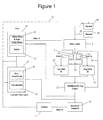
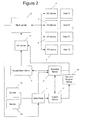
- a computer assisted method of collaborative decision making is illustrated in Figure 1 and implemented on the computer system of Figure 2 .
- a data store 1 receives and stores sensor data from a plurality of sensors 3a,b in a data layer 2. The sensors may monitor events on a computer network, or natural disasters for example.
- a visualisation server 4 generates a visualisation 5 of at least some of the sensor data and presents it to a first human user (User A) as an image via a multiplexer (MUX) server 19 and first input/output device 6 and to a second human user (User B) as an image via MUX server 19 and a second input/output device 7.
- MUX multiplexer
- Each user can be displayed the same image, or they may request different images which are based on different subsets of the sensor data and/or different ways of visualising the same sensor data.
- the visualisation of the sensor data is an interactive process which each user can control independently via their respective I/O device 6, 7. For instance a user may view a map displaying data acquired over a geographical area, and then zoom in to a small part of that map to view the sensor data in more detail. The user may also apply a filter to the displayed image.
- the sensor data may be displayed in its raw form, or sensor data from the different sensors may be fused by a fusion server 15 and/or analysed by an analytics server 16 before being displayed. Fusion of data from different sensors may involve for example representing multiple sets of sensor data on a single screen.
- a virtual world (VW) server 17 provides a virtual collaborative environment where the users are geographically dispersed, but all connected via a 3D persistent "virtual world" in which each user is represented as an avatar.
- the users each input tag data 10,11 into their respective I/O device.
- the MUX server 19 receives the tag data 10,11 from the devices 6,7 and stores it in an intelligence tag layer 12 on store 1.
- Each item of tag data 10, 11 is associated with an associated subset of the sensor data in the data layer 2. That is, the tags in the tag layer 12 are mapped directly to related data points in the data layer 2, augmenting the data in the data layer with derived insight from the users.
- An autonomous decision support algorithm 20 running on server 18 then generates decision options in accordance with at least some of the tag data 10,11 in the intelligence tag layer 12, at least some of the sensor data in the intelligence tag layer 12, and an operational plan 21 and domain description 22 in the data store 1.
- the tag data 10,11 is in a pre-defined format which is understood by the decision support algorithm 20.
- the operational plan 21 consists of a set of objectives 24 and tasks 25.
- the tasks are output to a User D via an I/O device 9 shown in Figure 2 .
- the objectives 24 include high-level objectives (such as "keep network service operational") and lower level sub-objectives (such as “ensure throughput levels are maintained >80% for all network availability", or "ensure non-authorised access to the system is prohibited”).
- the tasks 25 are specific actions (both abstract actions and ground actions) required to achieve the objectives 24.
- the domain description 22 consists of pre-conditions 26 (for example "all attacks should be monitored for intelligence purposes") and constraints 27 (for instance "subnets that provide major services cannot be disconnected”).
- the decision options generated by the autonomous decision support algorithm are output to a human decision maker (User C) via an input/output device 8.
- the decision maker decides on an action 23 based on the options 20 presented to him, and enters that action into their I/O device.
- the action 23 may be simply a selection of one of the options, or some other action.
- the action 23 is then used to update the stored operational plan 21 and/or domain description 22 in accordance with the selection from the decision maker.
- the intelligence tag layer 30 provides an input into the visualisation 5, which input can be used to add tags to the image(s) displayed to the users A,B in accordance with the tag data 10,11. This may prompt the users to add further tag data via their respective I/O devices 6,7 which further tag data can be added to the intelligence tag layer 12 and input into the autonomous decision support algorithm. This enables the process to proceed in an iterative and collaborative manner.
- one of the sensors 3a generates Intrusion Detection System (IDS) alerts 40 from a computer network (not shown) and the other sensor 3b generates network traffic log data 41 for that computer network.
- the plan 21 includes objectives 24 which include keeping network service operation and protecting confidentiality of data.
- IDS alert 40 When an IDS alert 40 is generated, User A is presented with an IDS alert image 43 which alerts User A to a potential malware infection which could be detrimental to the computer network being monitored by the IDS sensor 3a.
- the User A analyses the IDS alert image 43 and generates tag data 10 which gives insight into the importance and potential type of malware, along with a timestamp indicating the time of the alert 40.
- the tags in the tag layer 12 are mapped directly to related data points in the data layer 2, augmenting the data in the data layer with derived insight from the users.
- the insight is recorded (that is, "tagged") by the User A, saying that the data suggests that a certain attack has occurred, which links directly to the subset of data points for provenance.
- the User B is presented with a heatmap 42 in which the network traffic log data 41 is represented graphically in an easy to understand way.
- This heatmap 42 is updated regularly so the User B may notice some abnormal connections from a number of computers in the network.
- the User B analyses the heatmap 42 and generates tag data 11 which notes the abnormal connections, along with a timestamp.
- the visualisation server 4 then generates a shared tag visualisation view 50 which may be for example a heatmap annotated in accordance with the tag data 10,11.
- the users A and B can then work collaboratively to add even further tag data in response to the presentation of the tag visualisation view. For instance they may work together to confirm that the IDS alert 40 is not a false positive.
- Communication between the users may be verbal (face-to-face or via an audio or video remote connection) and/or by text.
- the decision maker (User C) is then prompted to request decision options from the autonomous decision support algorithm 20.
- These decision options could be in the form of a list or a visualisation. These options are based on the plan 21, the pre-conditions 26 and constraints 27 from the domain description 22, and the additional 'intelligence' insight information in the intelligence tag layer 12. This allows User C to make a timely and informed decision, which takes the complexities of the situation into account. This reduces the likelihood of an incorrect decision being taken due to a lack of human situational awareness, because the complexity of the possible options is handled by the system.
- An action 23 may have an effect on the computer network being monitored by the sensors 3a,3b - for instance closing down a port will have an effect on the network and therefore the data being sensed.
- This feedback loop is represented by a dashed line 31 in Figure 1 .
- the changed objectives 24 or tasks 25 of the plan provide a further input in the visualisation 5, so any or all of the views 42,43,50 may be updated with a description of the action 23 and/or the associated changes in the operational plan 21.
- the decision support algorithm 20 employs a hierarchical test network (HTN) planning process involving the iterative subdivision of goals until a set of fully ground, orderable (for parallel and/or sequential performance) activities is found.
- a user for instance User C participates in this mixed-initiative planning process through selecting the methods to be applied by the planner - which particular goal-to-subgoal decomposition will be applied when forming that plan.
- the decision support 20 thus presents User C with a set of options - goal decomposition - applicable to the current situation.
- This set of options is automatically derived from the current data set (the term "data set” including both the sensor data and any tag data which has been added by any of the users).
- the users add additional tag data to the original data set.
- the decision support 20 will automatically update its suggested options in response.
- tag data is used by the decision support 20 to provide prioritization suggestions for the available options.
- User B may highlight a particular item of sensor data as being of immediate concern, and the decision support 20 will thus prioritize options which directly address the state or cause of this item.
- User C views each option output by the decision support 20, they can be presented with a visualization of the justification for highlighting it - including the tag data, the age of that data, the identity of the user who added the relevant tag data and any conflicting tag data (such as if User A has a different opinion) within the augmented data set.
- the current plan 21 is revised accordingly. If a goal within the plan corresponds to a primitive activity, then this can be performed (leading to revision of the sensor data set in the data layer 2 with post-execution sensory information). User C may also opt to wait - depending on the urgency of response - for further tag data to be provided in order to aid option generation and prioritization.
Landscapes
- Engineering & Computer Science (AREA)
- Business, Economics & Management (AREA)
- Human Resources & Organizations (AREA)
- Strategic Management (AREA)
- Entrepreneurship & Innovation (AREA)
- Theoretical Computer Science (AREA)
- Physics & Mathematics (AREA)
- Data Mining & Analysis (AREA)
- General Physics & Mathematics (AREA)
- General Business, Economics & Management (AREA)
- Tourism & Hospitality (AREA)
- Quality & Reliability (AREA)
- Operations Research (AREA)
- Marketing (AREA)
- Economics (AREA)
- Software Systems (AREA)
- Computing Systems (AREA)
- Evolutionary Computation (AREA)
- General Engineering & Computer Science (AREA)
- Mathematical Physics (AREA)
- Artificial Intelligence (AREA)
- Computational Linguistics (AREA)
- Computer Vision & Pattern Recognition (AREA)
- Medical Informatics (AREA)
- User Interface Of Digital Computer (AREA)
- Information Transfer Between Computers (AREA)
- Collating Specific Patterns (AREA)
Applications Claiming Priority (1)
| Application Number | Priority Date | Filing Date | Title |
|---|---|---|---|
| GBGB1218116.0A GB201218116D0 (en) | 2012-10-10 | 2012-10-10 | Collaborative decision making |
Publications (2)
| Publication Number | Publication Date |
|---|---|
| EP2720178A2 true EP2720178A2 (de) | 2014-04-16 |
| EP2720178A3 EP2720178A3 (de) | 2015-05-06 |
Family
ID=47294537
Family Applications (1)
| Application Number | Title | Priority Date | Filing Date |
|---|---|---|---|
| EP20130187829 Withdrawn EP2720178A3 (de) | 2012-10-10 | 2013-10-09 | Gemeinsame Entscheidungsfindung |
Country Status (3)
| Country | Link |
|---|---|
| US (1) | US10395172B2 (de) |
| EP (1) | EP2720178A3 (de) |
| GB (1) | GB201218116D0 (de) |
Families Citing this family (7)
| Publication number | Priority date | Publication date | Assignee | Title |
|---|---|---|---|---|
| US10152336B2 (en) * | 2015-12-26 | 2018-12-11 | Intel Corporation | Technologies for managing sensor conflicts |
| US11055662B2 (en) | 2017-03-15 | 2021-07-06 | Walmart Apollo, Llc | System and method for perpetual inventory management |
| US10997552B2 (en) * | 2017-03-15 | 2021-05-04 | Walmart Apollo, Llc | System and method for determination and management of root cause for inventory problems |
| US20180268356A1 (en) | 2017-03-15 | 2018-09-20 | Walmart Apollo, Llc | System and method for perpetual inventory management |
| US20180268367A1 (en) | 2017-03-15 | 2018-09-20 | Walmart Apollo, Llc | System and method for management of perpetual inventory values based upon customer product purchases |
| US20180268355A1 (en) | 2017-03-15 | 2018-09-20 | Walmart Apollo, Llc | System and method for management of perpetual inventory values associated with nil picks |
| US10963972B1 (en) * | 2018-03-06 | 2021-03-30 | Wells Fargo Bank, N.A. | Adaptive life advisor system |
Citations (2)
| Publication number | Priority date | Publication date | Assignee | Title |
|---|---|---|---|---|
| US6215498B1 (en) | 1998-09-10 | 2001-04-10 | Lionhearth Technologies, Inc. | Virtual command post |
| EP1933525A1 (de) | 2006-12-12 | 2008-06-18 | General instrument Corporation | Verfahren und System für verteilte kollaborative Kommunikationen |
Family Cites Families (4)
| Publication number | Priority date | Publication date | Assignee | Title |
|---|---|---|---|---|
| CA2462165A1 (en) * | 2001-10-11 | 2003-04-17 | Visual Sciences, Llc | System, method, and computer program product for processing and visualization of information |
| US7647288B2 (en) * | 2006-09-07 | 2010-01-12 | International Business Machines Corporation | System and method for optimally customizable and adaptive personalized information display for information associated with managing a chaotic event |
| US20110134204A1 (en) * | 2007-12-05 | 2011-06-09 | Florida Gulf Coast University | System and methods for facilitating collaboration of a group |
| US20130185291A1 (en) * | 2011-07-12 | 2013-07-18 | Mat Tyndall | Online rating and feedback system |
-
2012
- 2012-10-10 GB GBGB1218116.0A patent/GB201218116D0/en not_active Ceased
-
2013
- 2013-10-09 US US14/049,881 patent/US10395172B2/en active Active
- 2013-10-09 EP EP20130187829 patent/EP2720178A3/de not_active Withdrawn
Patent Citations (2)
| Publication number | Priority date | Publication date | Assignee | Title |
|---|---|---|---|---|
| US6215498B1 (en) | 1998-09-10 | 2001-04-10 | Lionhearth Technologies, Inc. | Virtual command post |
| EP1933525A1 (de) | 2006-12-12 | 2008-06-18 | General instrument Corporation | Verfahren und System für verteilte kollaborative Kommunikationen |
Also Published As
| Publication number | Publication date |
|---|---|
| GB201218116D0 (en) | 2012-11-21 |
| US20140101088A1 (en) | 2014-04-10 |
| US10395172B2 (en) | 2019-08-27 |
| EP2720178A3 (de) | 2015-05-06 |
Similar Documents
| Publication | Publication Date | Title |
|---|---|---|
| US10395172B2 (en) | Collaborative decision making | |
| US11315056B2 (en) | Resource planning having improved visualization | |
| US10593118B2 (en) | Learning opportunity based display generation and presentation | |
| Preece et al. | Using the Viable System Model (VSM) to structure information processing complexity in disaster response | |
| US11954317B2 (en) | Systems and method for a customizable layered map for visualizing and analyzing geospatial data | |
| US12379820B2 (en) | Asset management system | |
| US20200169700A1 (en) | Systems and methods for managing and displaying video sources | |
| US8823508B2 (en) | User interfaces for enabling information infusion to improve situation awareness | |
| US8862532B2 (en) | Displaying information associated with an operation state of a building | |
| Ullah et al. | Future communication systems using artificial intelligence, internet of things and data science | |
| Prabowo et al. | Cognitive city platform as digital public infrastructure for developing a smart, sustainable and resilient city in Indonesia | |
| US9299178B2 (en) | Generation of animated gesture responses in a virtual world | |
| EP3035306B1 (de) | System und verfahren für ein interaktives bild und videobasierte kontextuelle alarmbetrachtung | |
| CN121153040A (zh) | 向社交媒体平台提供ai简档图片生成的服务器设备 | |
| CN105934753A (zh) | 在云视频服务中共享视频 | |
| US20210248525A1 (en) | Method and system for managing a technical installation | |
| US9811893B2 (en) | Composable situational awareness visualization system | |
| Creese et al. | Cybervis: visualizing the potential impact of cyber attacks on the wider enterprise | |
| US20200151641A1 (en) | Dynamic assignment of tasks to internet connected devices | |
| US20220197585A1 (en) | Shared information fields with head mounted displays | |
| US9921728B2 (en) | Service providing device, and method of providing a user interface | |
| US11902038B2 (en) | Securing data presented during videoconferencing | |
| US9292831B2 (en) | Monitoring data elements across multiple networks and processes | |
| CN113836216A (zh) | 数据展示方法、装置、存储介质及电子设备 | |
| Adonis | A systematic review on Integrating Artificial Intelligence (AI) into disaster risk management |
Legal Events
| Date | Code | Title | Description |
|---|---|---|---|
| PUAI | Public reference made under article 153(3) epc to a published international application that has entered the european phase |
Free format text: ORIGINAL CODE: 0009012 |
|
| AK | Designated contracting states |
Kind code of ref document: A2 Designated state(s): AL AT BE BG CH CY CZ DE DK EE ES FI FR GB GR HR HU IE IS IT LI LT LU LV MC MK MT NL NO PL PT RO RS SE SI SK SM TR |
|
| AX | Request for extension of the european patent |
Extension state: BA ME |
|
| PUAL | Search report despatched |
Free format text: ORIGINAL CODE: 0009013 |
|
| AK | Designated contracting states |
Kind code of ref document: A3 Designated state(s): AL AT BE BG CH CY CZ DE DK EE ES FI FR GB GR HR HU IE IS IT LI LT LU LV MC MK MT NL NO PL PT RO RS SE SI SK SM TR |
|
| AX | Request for extension of the european patent |
Extension state: BA ME |
|
| RIC1 | Information provided on ipc code assigned before grant |
Ipc: G06Q 10/10 20120101AFI20150401BHEP Ipc: G09B 29/00 20060101ALN20150401BHEP |
|
| RAP1 | Party data changed (applicant data changed or rights of an application transferred) |
Owner name: AIRBUSGROUP LIMITED |
|
| 17P | Request for examination filed |
Effective date: 20151103 |
|
| RBV | Designated contracting states (corrected) |
Designated state(s): AL AT BE BG CH CY CZ DE DK EE ES FI FR GB GR HR HU IE IS IT LI LT LU LV MC MK MT NL NO PL PT RO RS SE SI SK SM TR |
|
| 17Q | First examination report despatched |
Effective date: 20161004 |
|
| STAA | Information on the status of an ep patent application or granted ep patent |
Free format text: STATUS: EXAMINATION IS IN PROGRESS |
|
| STAA | Information on the status of an ep patent application or granted ep patent |
Free format text: STATUS: THE APPLICATION IS DEEMED TO BE WITHDRAWN |
|
| 18D | Application deemed to be withdrawn |
Effective date: 20170215 |