EP2719512A2 - Production method for a bezel for a display panel using mould casting, and bezel for a display panel produced thereby - Google Patents
Production method for a bezel for a display panel using mould casting, and bezel for a display panel produced thereby Download PDFInfo
- Publication number
- EP2719512A2 EP2719512A2 EP12800973.5A EP12800973A EP2719512A2 EP 2719512 A2 EP2719512 A2 EP 2719512A2 EP 12800973 A EP12800973 A EP 12800973A EP 2719512 A2 EP2719512 A2 EP 2719512A2
- Authority
- EP
- European Patent Office
- Prior art keywords
- bezel
- raw material
- mold
- molding surface
- lower mold
- Prior art date
- Legal status (The legal status is an assumption and is not a legal conclusion. Google has not performed a legal analysis and makes no representation as to the accuracy of the status listed.)
- Granted
Links
Images



Classifications
-
- B—PERFORMING OPERATIONS; TRANSPORTING
- B05—SPRAYING OR ATOMISING IN GENERAL; APPLYING FLUENT MATERIALS TO SURFACES, IN GENERAL
- B05D—PROCESSES FOR APPLYING FLUENT MATERIALS TO SURFACES, IN GENERAL
- B05D5/00—Processes for applying liquids or other fluent materials to surfaces to obtain special surface effects, finishes or structures
- B05D5/06—Processes for applying liquids or other fluent materials to surfaces to obtain special surface effects, finishes or structures to obtain multicolour or other optical effects
-
- B—PERFORMING OPERATIONS; TRANSPORTING
- B29—WORKING OF PLASTICS; WORKING OF SUBSTANCES IN A PLASTIC STATE IN GENERAL
- B29C—SHAPING OR JOINING OF PLASTICS; SHAPING OF MATERIAL IN A PLASTIC STATE, NOT OTHERWISE PROVIDED FOR; AFTER-TREATMENT OF THE SHAPED PRODUCTS, e.g. REPAIRING
- B29C45/00—Injection moulding, i.e. forcing the required volume of moulding material through a nozzle into a closed mould; Apparatus therefor
- B29C45/0053—Injection moulding, i.e. forcing the required volume of moulding material through a nozzle into a closed mould; Apparatus therefor combined with a final operation, e.g. shaping
-
- B—PERFORMING OPERATIONS; TRANSPORTING
- B29—WORKING OF PLASTICS; WORKING OF SUBSTANCES IN A PLASTIC STATE IN GENERAL
- B29C—SHAPING OR JOINING OF PLASTICS; SHAPING OF MATERIAL IN A PLASTIC STATE, NOT OTHERWISE PROVIDED FOR; AFTER-TREATMENT OF THE SHAPED PRODUCTS, e.g. REPAIRING
- B29C33/00—Moulds or cores; Details thereof or accessories therefor
- B29C33/42—Moulds or cores; Details thereof or accessories therefor characterised by the shape of the moulding surface, e.g. ribs or grooves
-
- B—PERFORMING OPERATIONS; TRANSPORTING
- B29—WORKING OF PLASTICS; WORKING OF SUBSTANCES IN A PLASTIC STATE IN GENERAL
- B29C—SHAPING OR JOINING OF PLASTICS; SHAPING OF MATERIAL IN A PLASTIC STATE, NOT OTHERWISE PROVIDED FOR; AFTER-TREATMENT OF THE SHAPED PRODUCTS, e.g. REPAIRING
- B29C39/00—Shaping by casting, i.e. introducing the moulding material into a mould or between confining surfaces without significant moulding pressure; Apparatus therefor
- B29C39/02—Shaping by casting, i.e. introducing the moulding material into a mould or between confining surfaces without significant moulding pressure; Apparatus therefor for making articles of definite length, i.e. discrete articles
- B29C39/10—Shaping by casting, i.e. introducing the moulding material into a mould or between confining surfaces without significant moulding pressure; Apparatus therefor for making articles of definite length, i.e. discrete articles incorporating preformed parts or layers, e.g. casting around inserts or for coating articles
-
- B—PERFORMING OPERATIONS; TRANSPORTING
- B29—WORKING OF PLASTICS; WORKING OF SUBSTANCES IN A PLASTIC STATE IN GENERAL
- B29C—SHAPING OR JOINING OF PLASTICS; SHAPING OF MATERIAL IN A PLASTIC STATE, NOT OTHERWISE PROVIDED FOR; AFTER-TREATMENT OF THE SHAPED PRODUCTS, e.g. REPAIRING
- B29C45/00—Injection moulding, i.e. forcing the required volume of moulding material through a nozzle into a closed mould; Apparatus therefor
- B29C45/17—Component parts, details or accessories; Auxiliary operations
- B29C45/26—Moulds
- B29C45/263—Moulds with mould wall parts provided with fine grooves or impressions, e.g. for record discs
-
- C—CHEMISTRY; METALLURGY
- C09—DYES; PAINTS; POLISHES; NATURAL RESINS; ADHESIVES; COMPOSITIONS NOT OTHERWISE PROVIDED FOR; APPLICATIONS OF MATERIALS NOT OTHERWISE PROVIDED FOR
- C09D—COATING COMPOSITIONS, e.g. PAINTS, VARNISHES OR LACQUERS; FILLING PASTES; CHEMICAL PAINT OR INK REMOVERS; INKS; CORRECTING FLUIDS; WOODSTAINS; PASTES OR SOLIDS FOR COLOURING OR PRINTING; USE OF MATERIALS THEREFOR
- C09D183/00—Coating compositions based on macromolecular compounds obtained by reactions forming in the main chain of the macromolecule a linkage containing silicon, with or without sulfur, nitrogen, oxygen, or carbon only; Coating compositions based on derivatives of such polymers
- C09D183/16—Coating compositions based on macromolecular compounds obtained by reactions forming in the main chain of the macromolecule a linkage containing silicon, with or without sulfur, nitrogen, oxygen, or carbon only; Coating compositions based on derivatives of such polymers in which all the silicon atoms are connected by linkages other than oxygen atoms
-
- H—ELECTRICITY
- H05—ELECTRIC TECHNIQUES NOT OTHERWISE PROVIDED FOR
- H05K—PRINTED CIRCUITS; CASINGS OR CONSTRUCTIONAL DETAILS OF ELECTRIC APPARATUS; MANUFACTURE OF ASSEMBLAGES OF ELECTRICAL COMPONENTS
- H05K7/00—Constructional details common to different types of electric apparatus
-
- B—PERFORMING OPERATIONS; TRANSPORTING
- B29—WORKING OF PLASTICS; WORKING OF SUBSTANCES IN A PLASTIC STATE IN GENERAL
- B29C—SHAPING OR JOINING OF PLASTICS; SHAPING OF MATERIAL IN A PLASTIC STATE, NOT OTHERWISE PROVIDED FOR; AFTER-TREATMENT OF THE SHAPED PRODUCTS, e.g. REPAIRING
- B29C45/00—Injection moulding, i.e. forcing the required volume of moulding material through a nozzle into a closed mould; Apparatus therefor
- B29C45/0053—Injection moulding, i.e. forcing the required volume of moulding material through a nozzle into a closed mould; Apparatus therefor combined with a final operation, e.g. shaping
- B29C2045/0075—Injection moulding, i.e. forcing the required volume of moulding material through a nozzle into a closed mould; Apparatus therefor combined with a final operation, e.g. shaping curing or polymerising by irradiation
-
- B—PERFORMING OPERATIONS; TRANSPORTING
- B29—WORKING OF PLASTICS; WORKING OF SUBSTANCES IN A PLASTIC STATE IN GENERAL
- B29L—INDEXING SCHEME ASSOCIATED WITH SUBCLASS B29C, RELATING TO PARTICULAR ARTICLES
- B29L2031/00—Other particular articles
- B29L2031/34—Electrical apparatus, e.g. sparking plugs or parts thereof
- B29L2031/3475—Displays, monitors, TV-sets, computer screens
-
- C—CHEMISTRY; METALLURGY
- C08—ORGANIC MACROMOLECULAR COMPOUNDS; THEIR PREPARATION OR CHEMICAL WORKING-UP; COMPOSITIONS BASED THEREON
- C08G—MACROMOLECULAR COMPOUNDS OBTAINED OTHERWISE THAN BY REACTIONS ONLY INVOLVING UNSATURATED CARBON-TO-CARBON BONDS
- C08G77/00—Macromolecular compounds obtained by reactions forming a linkage containing silicon with or without sulfur, nitrogen, oxygen or carbon in the main chain of the macromolecule
- C08G77/60—Macromolecular compounds obtained by reactions forming a linkage containing silicon with or without sulfur, nitrogen, oxygen or carbon in the main chain of the macromolecule in which all the silicon atoms are connected by linkages other than oxygen atoms
- C08G77/62—Nitrogen atoms
Definitions
- the present invention relates to a method for manufacturing a bezel which is attached to a rim of a display panel and supports the display panel, and a bezel for display panels manufactured by the same, and more particularly, to a method for manufacturing a bezel for display panels using mold casting, which facilitates formation of a three-dimensional pattern while reducing unnecessary material costs.
- Bezels refer to frames, chassis, and the like, which are used to support and/or receive various panels such as liquid crystal display panels, plasma display panels, and the like.
- a liquid crystal display device used as a display device for televisions, monitors for personal computers, mobile phones, and the like, includes a display panel and a bezel supporting and receiving the display panel.
- such a bezel for liquid crystal display panels is manufactured by extruding an acrylic resin and removing a central portion of the resultant to form a planar frame.
- a planar frame is prepared by removing a central portion of an acrylic plate, so that large amounts of the acrylic plate are cut and discarded, thereby causing increase in manufacturing costs.
- extrusion molding In the case of forming a three dimensional surface pattern through extrusion molding, there is a problem in that extrusion molding can only provide a relatively thin three-dimensional pattern due to bezel strength.
- a method for manufacturing a bezel for display panels includes: (a) preparing a lower mold, the lower mold being formed on a molding surface thereof with a three-dimensional pattern for imparting a surface shape to a bezel; (b) fastening a gasket to a rim of the molding surface of the lower mold; (c) fastening an upper mold to the gasket, the upper mold being formed with a raw-material injection port; (d) injecting a polymeric raw-material for the bezel through the raw-material injection port of the upper mold; and (e) curing the polymeric raw-material while transferring the three-dimensional pattern from the molding surface of the lower mold to the polymeric raw-material.
- a method for manufacturing a bezel for display panels includes: (a) preparing a lower mold, the lower mold being formed on a molding surface thereof with a three-dimensional pattern for imparting a surface shape to a bezel; (b) fastening a gasket to a rim of the molding surface of the lower mold; (c) injecting a polymeric raw-material for the bezel onto the molding surface of the lower mold; (d) fastening an upper mold to the gasket on the lower mold; and (e) curing the polymeric raw-material while transferring the three-dimensional pattern from the molding surface of the lower mold to the polymeric raw-material.
- a method for manufacturing a bezel for display panels includes: (a) preparing a mold, the mold being formed on a molding surface thereof with a three-dimensional pattern for imparting a surface shape to a bezel; (b) fastening a gasket to a rim of the molding surface of the mold; (c) injecting a polymeric raw-material for the bezel onto the molding surface of the mold; and (d) curing the polymeric raw-material while transferring the three-dimensional pattern from the molding surface of the lower mold to the polymeric raw-material.
- a bezel for display panels includes: a substrate formed of a cured product of a resin composition, the substrate having a three-dimensional pattern on at least one surface thereof; and a glass film coated on the at least one surface of the substrate.
- a bezel is manufactured by mold casting instead of extrusion, thereby reducing material costs.
- a three-dimensional pattern formed on a molding surface of a mold can be transferred to a cured product during curing inside a mold, thereby making it easy to impart the three-dimensional pattern to the surface of the bezel.
- deformation of a mold can be prevented by attaching a frame formed of a material such as glass and the like, to an outer surface of a mold.
- Fig. 1 is a schematic flowchart of a method for manufacturing a bezel for display panels according to one embodiment of the present invention.
- a method for manufacturing a bezel for display panels includes: preparing a lower mold (S110); fastening a gasket (S120); fastening an upper mold (S130); injecting a raw-material (S140); and curing/transferring a three-dimensional pattern (S150).
- the method may further include heat treatment (S160), and may further include coating a glass film (S 170).
- a lower mold formed on a molding surface thereof with a three-dimensional pattern for imparting a surface shape to a bezel is prepared.
- Figs. 2 and 3 are a sectional view and a plan view of one example of a lower mold applicable to the present invention, respectively.
- the lower mold 210 is formed of a material such as a metal, Teflon, rubber, and the like, which allow easy formation of the three-dimensional pattern thereon. More preferably, the lower mold 20 is formed of stainless steel exhibiting excellent corrosion resistance and strength.
- the three-dimensional pattern formed on the molding surface 215 of the lower mold 210 may be formed depending on a shape of the bezel for display panels.
- a frame 310 formed of a material such as a glass plate, a metal honeycomb plate and the like may be attached to an outer surface of the mold, as shown in Fig. 4 .
- the frame 310 formed of the glass plate is resistant to bending, and thus can prevent deformation of the lower mold 210.
- the three-dimensional pattern formed on the molding surface 215 of the lower mold 210 may be formed by various methods, such as NC (numerical control) machining, chemical etching, stamping, and the like.
- the thickness of the three-dimensional pattern to be formed on the surface of the bezel is determined depending on the three-dimensional pattern on the molding surface 215 of the lower mold 210. Therefore, when the three-dimensional pattern is formed to a thickness of 1 mm or more on the molding surface 215 of the lower mold 210, the three-dimensional pattern may also be formed to a thickness of 1 mm or more on the surface of the bezel.
- the molding surface 215 of the lower mold 210 may be coated with a release agent to a thickness of about 2 ⁇ m to facilitate mold separation.
- the gasket 220 forms a seal between the upper mold and lower mold, and the thickness of a molded article is determined depending on the thickness of the gasket 220.
- the gasket 220 may be prepared from a material, such as silicones rubbers, and the like.
- the upper mold may have a planar shape or a three-dimensional pattern on a molding surface thereof.
- the upper mold 410 may have a planar molding surface.
- the upper mold since the molding surface is required to have a smooth surface, the upper mold may be made of glass or metal, particularly, glass. Since the molding surface of the upper mold 410 has a planar shape, the bezel for display panels has a three-dimensional pattern on at least one surface thereof. Since the other surface of the bezel has a planar shape, it is easy to perform subsequent processes such as coating for surface treatment, printing for design effects, and the like on the other surface of the bezel.
- the upper mold 410 may be provided with an opposite pattern to the three-dimensional pattern formed on the molding surface 215 of the lower mold 210. That is, the molding surface 415 of the upper mold 410 may have a concave portion corresponding to a convex portion on the molding surface 215 of the lower mold 210. In addition, the molding surface 415 of the upper mold 410 may have a convex portion corresponding to a concave portion on the molding surface 215 of the lower mold 210.
- an injected resin composition can uniformly shrink during curing of the resin composition for the bezel. Accordingly, thickness uniformity of the three-dimensional pattern formed on the bezel for display panels may be secured, while reducing voids, which can be generated on the surface or the interior of the bezel.
- each of the upper mold 410 and the lower mold 210 has a thickness of 3 mm to 20 mm. If the thickness of each of the upper mold 410 and the lower mold 210 is below 3 mm, the upper and lower molds can be bent. On the contrary, if the thicknesses of the upper mold 410 and the lower mold 210 exceeds 20 mm, it is difficult to handle the upper and lower molds.
- the raw material for the bezel is injected onto the molding surface of the lower mold via the raw-material injection port of the upper mold.
- the raw-material injection port may have a hole or slit shape penetrating the upper mold.
- Injection of the raw material may be performed at room , namely, about 18°C to about 25°C.
- the raw material may be a thermosetting resin composition.
- the resin composition may include acrylic resins, polycarbonate resins, ABS resin, polyurethane resins, olefin resins, epoxy resins, melamine resins, unsaturated polyester resins, and the like.
- the resin composition may further include alumina trihydrate (ATH) and the like as fillers.
- ATH alumina trihydrate
- the resin composition may be prepared from these resins.
- a resin composition including methyl methacrylate (MMA) and alumina trihydrate (ATH) as main components may be used as the raw material.
- the resin composition may have a viscosity of 300 cPs to 500 cPs. Within this range, injection molding of the resin composition can be easily performed. If the viscosity of the resin composition is less than 300cPs, curing time can increase and a molded article can have insufficient density. On the contrary, if the viscosity of the resin composition exceeds 500cPs, injection molding of the resin composition becomes difficult.
- raw material may further include pearls, pigments, chips, and the like to impart design effects to the bezel.
- the raw material injected onto the molding surface of the lower mold is cured using a heat curing method.
- Methods for heat curing are not specifically limited.
- the resin composition inside the molds can be cured by heating the upper mold and the lower mold into which the resin composition (P) is injected.
- the three-dimensional pattern is transferred from the molding surface of the lower mold to a cured product of the raw material.
- this operation is performed to further cure the monomers and other components unreacted during curing, this process is performed using steam at 100°C or more, more preferably at about 100°C to 200°C.
- Duration for operation (S150) of curing/transferring a three-dimensional pattern and for operation (S160) of heat treatment may vary depending on the raw material.
- a resin composition including methyl methacrylate (MMA) as a main component is used as the raw material to prepare a transparent bezel for display panels
- curing and heat treatment may be performed for about 3 hours and for about 2 hours, respectively.
- a resin composition including methyl methacrylate (MMA) and alumina trihydrate (ATH) as main components is used as the raw material to prepare a white bezel for display panels
- curing and heat treatment may be carried out for about 1 hour to about 2 hours and for about 30 minutes to 1 hour, respectively.
- the upper mold and the lower mold are separated from the bezel for display panels.
- the glass film performs a function of protecting the surface of the bezel and a function of retaining an outer appearance of the bezel.
- the glass film may be formed of glass paints, inorganic coating solutions, or coating solutions including polysilazanes.
- the glass film may be prepared using a coating solution containing a polysilazane.
- the polysilazane is a polymer having repeated Si-N (silicon-nitrogen) bonds, and any polymer allowing easy conversion into silica can be used without limitation.
- a Si-N (silicon-nitrogen) bond includes a silicon atom bonded with two hydrogen atoms, and is readily converted into silica.
- Polysilazanes may have molecular structures such as a straight chain structure, a branched straight chain structure, a branch structure, a ring structure, a cross-linking structure, or a combination thereof. These polysilazanes may be used alone or in combination thereof. As representative examples of these polysilazanes, there are polymers including repeated silazane units represented by Formula 1. It should be noted that the polymers include an oligomer. wherein R 1 , R 2 , and R 3 are a hydrogen atom or a C 1 -C 8 alkyl group, such as a methyl group, an ethyl group, a propyl group, and a butyl group.
- the polysilazane preferably includes repeated units in which both R 1 and R 2 are hydrogen atoms, and more preferably, repeated units in which all of R 1 , R 2 and R 3 are hydrogen atoms.
- the polysilazane has repeated units represented by Formula 2, and is called perhydropolysilazane.
- Perhydropolysilazane includes chemical structure moieties represented by Formula 3:
- Some hydrogen atoms bonded to silicon atoms in the perhydropolysilazane may be substituted by hydroxyl groups.
- the perhydropolysilazane may be easily obtained by reacting the adducts with ammonia.
- the polysilazane particularly, perhydropolysilazane generally has a number-average molecular weight of 100 to 50,000, preferably 200 to 2,500 in consideration of volatility and solubility.
- the polysilazane particularly, perhydropolysilazane, which is included in the glass film of the bezel according to the embodiment, may include a small amount of silica conversion accelerating catalyst.
- Examples of the silica conversion accelerating catalyst may include organic amine compounds, organic acids, inorganic acids, carboxylic acid metallic salts, and organo-metallic complex salts.
- organic amine compounds are preferred, and examples of organic amine compounds may include nitrogen-containing cyclic organic amines, such as 1-methylpiperazine, 1-methylpiperizine, 4,4'-trimethylenedipiperizine, 4,4'-trimethylenebis(1-methylpiperizine), diazabicyclo-[2,2,2]octane, cis-2,6-dimethylpiperazine, 4-(4-methylperizine)pyridine, pyrizine, dipyridine, ⁇ -picoline, ⁇ -picoline, ⁇ -picoline, piperizine, lutidine, pyrimidine, pyridazine, 4,4'-trimethylenedipyridine, 2-(methylamino)pyrizine, pyrazine, quinoline, quinoxaline, triazine, pyrrole, 3-pyrroline, imidazole, triazole, tetrazole, 1-methylpyrrolidine, and the like; aliphatic or
- the silica conversion accelerating catalyst may be present in an amount of 0.1 % by weight (wt%) to 10 wt% in a total weight of the polysilazine, particularly, perhydropolysilazane.
- the bezel according to the invention has outstanding properties in terms of corrosion resistance, abrasion resistance, antifouling, ease of cleaning, wettability, sealing effects, chemical resistance, oxidation resistance, physical barrier effects, heat resistance, fire resistance, low shrinkage, smoothing effects, durability, antistatic properties, scratch resistance, and the like.
- Any coating method may be used without limitation to coat the surface of the bezel with the glass film.
- spray coating, dip coating, spin coating, and the like may be used.
- Fig. 8 is a schematic flowchart of a method for manufacturing a bezel for display panels according to another embodiment of the present invention.
- a method for manufacturing a bezel for display panels includes: preparing a lower mold (S510); fastening a gasket (S520); injecting araw material (S530); fastening an upper mold (S540); and curing/transferring a three-dimensional pattern (S550).
- the method may further include heat treatment (S560), and may further include coating a glass film (S570).
- At least one surface of the bezel formed of a cured polymeric raw material is coated with the glass film, wherein the at least one surface has a transferred three-dimensional pattern.
- the upper mold may be fastened to the lower mold.
- the upper mold may not have a raw material injection port.
- the raw material may be injected after fastening the upper mold and the lower mold in order to prevent foreign matter from entering the molds and to adjust an injection amount of the raw material.
- the upper mold may be fastened to the lower mold after injecting the raw material onto the molding surface of the lower mold in order to allow convenient injection of the raw material.
- Fig. 9 is a schematic flowchart of a method for manufacturing a bezel for display panels according to a further embodiment of the present invention.
- the method for manufacturing a bezel for display panels includes: preparing a mold (S610); fastening a gasket (S620); injecting a raw material (S630); and curing/transferring a three-dimensional pattern (S640).
- the method may further include coating a glass film (S640).
- a mold formed on a molding surface thereof with a three-dimensional pattern for imparting a surface shape to the bezel is prepared.
- the raw material for the bezel is injected onto the molding surface of the mold.
- the raw material may be a resin composition curable by heat, light or electron beam.
- the injected raw material is cured while transferring the three-dimensional pattern from the molding surface of the mold to a cured product of the raw material.
- various curing processes may be applied depending on which raw materials employed.
- thermosetting resin composition when using a thermosetting resin composition as the raw material, heat curing may be used.
- ultraviolet curing when using an ultraviolet curable resin composition as the raw material, ultraviolet curing may be carried out.
- At least one surface of the bezel formed of a cured polymeric raw material is coated with the glass film, in which the at least one surface has a transferred three-dimensional pattern.
- a bezel for display panels manufactured by the method according to embodiments of the invention facilitates formation of a three-dimensional pattern on a surface thereof while reducing unnecessary material costs.
- the bezel for display panels includes: a substrate formed of a cured product of a resin composition, the substrate having a three-dimensional pattern on at least one surface thereof; and a glass film coated on the at least one surface of the substrate.
- the bezel may be formed to have a transparent color or a white color depending on which raw materials are employed.
- the three-dimensional pattern may be formed to have a thickness of 1 mm or more on a surface of the bezel. As described above, this can be achieved using metals, and the like having properties for easy formation of patterns as a material for a mold, and applying NC machining, and the like to a molding surface of the mold, and as a result, by forming a three-dimensional pattern having a thickness of 1mm or more on the mold.
Landscapes
- Engineering & Computer Science (AREA)
- Chemical & Material Sciences (AREA)
- Mechanical Engineering (AREA)
- Manufacturing & Machinery (AREA)
- Materials Engineering (AREA)
- Life Sciences & Earth Sciences (AREA)
- Chemical Kinetics & Catalysis (AREA)
- Wood Science & Technology (AREA)
- Organic Chemistry (AREA)
- Microelectronics & Electronic Packaging (AREA)
- Casting Or Compression Moulding Of Plastics Or The Like (AREA)
- Devices For Indicating Variable Information By Combining Individual Elements (AREA)
- Moulds For Moulding Plastics Or The Like (AREA)
Abstract
Description
- The present invention relates to a method for manufacturing a bezel which is attached to a rim of a display panel and supports the display panel, and a bezel for display panels manufactured by the same, and more particularly, to a method for manufacturing a bezel for display panels using mold casting, which facilitates formation of a three-dimensional pattern while reducing unnecessary material costs.
- "Bezels" refer to frames, chassis, and the like, which are used to support and/or receive various panels such as liquid crystal display panels, plasma display panels, and the like.
- Generally, a liquid crystal display device, used as a display device for televisions, monitors for personal computers, mobile phones, and the like, includes a display panel and a bezel supporting and receiving the display panel.
- Typically, such a bezel for liquid crystal display panels is manufactured by extruding an acrylic resin and removing a central portion of the resultant to form a planar frame.
- However, in a typical method for manufacturing a bezel for display panels in the related art, a planar frame is prepared by removing a central portion of an acrylic plate, so that large amounts of the acrylic plate are cut and discarded, thereby causing increase in manufacturing costs.
- In addition, since conventional bezels for display panels are manufactured by extruding acrylic resins, it is difficult to realize a three-dimensional pattern providing a sense of depth.
- In the case of forming a three dimensional surface pattern through extrusion molding, there is a problem in that extrusion molding can only provide a relatively thin three-dimensional pattern due to bezel strength.
- Moreover, in the case of forming a three dimensional surface pattern through injection molding, although a relatively thick three-dimensional pattern can be formed, it is difficult to provide large screen size due to mold deformation or mold separation.
- It is an aspect of the present invention to provide a method for manufacturing a bezel for display panels, which can reduce material costs, prevent deformation of a three dimensional surface pattern, and facilitate mold separation.
- It is another aspect of the present invention to provide a bezel for display panels in which a three dimensional surface pattern is formed using the method.
- In accordance with one aspect of the present invention, a method for manufacturing a bezel for display panels includes: (a) preparing a lower mold, the lower mold being formed on a molding surface thereof with a three-dimensional pattern for imparting a surface shape to a bezel; (b) fastening a gasket to a rim of the molding surface of the lower mold; (c) fastening an upper mold to the gasket, the upper mold being formed with a raw-material injection port; (d) injecting a polymeric raw-material for the bezel through the raw-material injection port of the upper mold; and (e) curing the polymeric raw-material while transferring the three-dimensional pattern from the molding surface of the lower mold to the polymeric raw-material.
- In accordance with another aspect of the present invention, a method for manufacturing a bezel for display panels includes: (a) preparing a lower mold, the lower mold being formed on a molding surface thereof with a three-dimensional pattern for imparting a surface shape to a bezel; (b) fastening a gasket to a rim of the molding surface of the lower mold; (c) injecting a polymeric raw-material for the bezel onto the molding surface of the lower mold; (d) fastening an upper mold to the gasket on the lower mold; and (e) curing the polymeric raw-material while transferring the three-dimensional pattern from the molding surface of the lower mold to the polymeric raw-material.
- In accordance with a further aspect of the present invention, a method for manufacturing a bezel for display panels includes: (a) preparing a mold, the mold being formed on a molding surface thereof with a three-dimensional pattern for imparting a surface shape to a bezel; (b) fastening a gasket to a rim of the molding surface of the mold; (c) injecting a polymeric raw-material for the bezel onto the molding surface of the mold; and (d) curing the polymeric raw-material while transferring the three-dimensional pattern from the molding surface of the lower mold to the polymeric raw-material.
- In accordance with yet another aspect of the present invention, a bezel for display panels includes: a substrate formed of a cured product of a resin composition, the substrate having a three-dimensional pattern on at least one surface thereof; and a glass film coated on the at least one surface of the substrate.
- In a method for manufacturing a bezel for display panels according to embodiments, a bezel is manufactured by mold casting instead of extrusion, thereby reducing material costs.
- In addition, in the method according to the embodiments, a three-dimensional pattern formed on a molding surface of a mold can be transferred to a cured product during curing inside a mold, thereby making it easy to impart the three-dimensional pattern to the surface of the bezel.
- Further, in the method according to the embodiments, deformation of a mold can be prevented by attaching a frame formed of a material such as glass and the like, to an outer surface of a mold.
-
-
Fig. 1 is a schematic flowchart of a method for manufacturing a bezel for display panels according to one embodiment of the present invention; -
Fig. 2 is a sectional view of one example of a lower mold applicable to the present invention; -
Fig. 3 is a plan view of one example of a lower mold applicable to the present invention; -
Fig. 4 is a sectional view of another example of a lower mold applicable to the present invention; -
Fig. 5 is a sectional view of one example of upper molds and lower molds applicable to the present invention; -
Fig. 6 is a sectional view of another example of upper molds and lower molds applicable to the present invention; -
Fig. 7 is a schematic diagram of a resin composition injected into an upper mold and a lower mold according to one embodiment of the present invention; -
Fig. 8 is a schematic flowchart of a method for manufacturing a bezel for display panels according to another embodiment of the present invention; -
Fig. 9 is a schematic flowchart of a method for manufacturing a bezel for display panels according to a further embodiment of the present invention. - The above and other aspects, features, and advantages of the present invention will become apparent from the detailed description of the following embodiments in conjunction with the accompanying drawings. It should be understood that the present invention is not limited to the following embodiments and may be embodied in different ways, and that the embodiments are provided for complete disclosure and thorough understanding of the invention by those skilled in the art. The scope of the present invention is defined only by the claims. Like components will be denoted by like reference numerals throughout the specification.
- Now, exemplary embodiments of the invention will be described in detail with reference to the accompanying drawings.
-
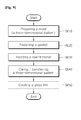
Fig. 1 is a schematic flowchart of a method for manufacturing a bezel for display panels according to one embodiment of the present invention. - Referring to
Fig. 1 , a method for manufacturing a bezel for display panels includes: preparing a lower mold (S110); fastening a gasket (S120); fastening an upper mold (S130); injecting a raw-material (S140); and curing/transferring a three-dimensional pattern (S150). The method may further include heat treatment (S160), and may further include coating a glass film (S 170). - In operation (S110) of preparing a lower mold, a lower mold formed on a molding surface thereof with a three-dimensional pattern for imparting a surface shape to a bezel is prepared.
-
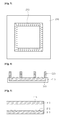
Figs. 2 and3 are a sectional view and a plan view of one example of a lower mold applicable to the present invention, respectively. - Preferably, the
lower mold 210 is formed of a material such as a metal, Teflon, rubber, and the like, which allow easy formation of the three-dimensional pattern thereon. More preferably, the lower mold 20 is formed of stainless steel exhibiting excellent corrosion resistance and strength. - As shown in
Fig. 3 , the three-dimensional pattern formed on themolding surface 215 of thelower mold 210 may be formed depending on a shape of the bezel for display panels. - However, these materials are vulnerable to bending and can cause deformation of the mold when used alone.
- To prevent such a problem, a
frame 310 formed of a material such as a glass plate, a metal honeycomb plate and the like may be attached to an outer surface of the mold, as shown inFig. 4 . Theframe 310 formed of the glass plate is resistant to bending, and thus can prevent deformation of thelower mold 210. - The three-dimensional pattern formed on the
molding surface 215 of thelower mold 210 may be formed by various methods, such as NC (numerical control) machining, chemical etching, stamping, and the like. - The thickness of the three-dimensional pattern to be formed on the surface of the bezel is determined depending on the three-dimensional pattern on the
molding surface 215 of thelower mold 210. Therefore, when the three-dimensional pattern is formed to a thickness of 1 mm or more on themolding surface 215 of thelower mold 210, the three-dimensional pattern may also be formed to a thickness of 1 mm or more on the surface of the bezel. - The
molding surface 215 of thelower mold 210 may be coated with a release agent to a thickness of about 2 µm to facilitate mold separation. - Next, in operation S210 of fastening a gasket, the gasket is fastened to a rim of the molding surface of the lower mold.
- The
gasket 220 forms a seal between the upper mold and lower mold, and the thickness of a molded article is determined depending on the thickness of thegasket 220. In addition, thegasket 220 may be prepared from a material, such as silicones rubbers, and the like. - Next, in operation (S130) of fastening an upper mold, the upper mold having a raw-material injection port is fastened to the gasket on the lower mold.
- The upper mold may have a planar shape or a three-dimensional pattern on a molding surface thereof.
- As shown in
Fig. 5 , theupper mold 410 may have a planar molding surface. In this case, since the molding surface is required to have a smooth surface, the upper mold may be made of glass or metal, particularly, glass. Since the molding surface of theupper mold 410 has a planar shape, the bezel for display panels has a three-dimensional pattern on at least one surface thereof. Since the other surface of the bezel has a planar shape, it is easy to perform subsequent processes such as coating for surface treatment, printing for design effects, and the like on the other surface of the bezel. - As shown in
Fig. 6 , theupper mold 410 may be provided with an opposite pattern to the three-dimensional pattern formed on themolding surface 215 of thelower mold 210. That is, themolding surface 415 of theupper mold 410 may have a concave portion corresponding to a convex portion on themolding surface 215 of thelower mold 210. In addition, themolding surface 415 of theupper mold 410 may have a convex portion corresponding to a concave portion on themolding surface 215 of thelower mold 210. - As shown in
Fig. 6 , when theupper mold 410 and thelower mold 210 have opposite three-dimensional patterns formed on the molding surfaces thereof, an injected resin composition can uniformly shrink during curing of the resin composition for the bezel. Accordingly, thickness uniformity of the three-dimensional pattern formed on the bezel for display panels may be secured, while reducing voids, which can be generated on the surface or the interior of the bezel. - Advantageously, each of the
upper mold 410 and thelower mold 210 has a thickness of 3 mm to 20 mm. If the thickness of each of theupper mold 410 and thelower mold 210 is below 3 mm, the upper and lower molds can be bent. On the contrary, if the thicknesses of theupper mold 410 and thelower mold 210 exceeds 20 mm, it is difficult to handle the upper and lower molds. - Next, in operation (S140) of injecting a raw material, the raw material for the bezel is injected onto the molding surface of the lower mold via the raw-material injection port of the upper mold. The raw-material injection port may have a hole or slit shape penetrating the upper mold.
- Injection of the raw material may be performed at room , namely, about 18°C to about 25°C.
- The raw material may be a thermosetting resin composition.
- Examples of the resin composition may include acrylic resins, polycarbonate resins, ABS resin, polyurethane resins, olefin resins, epoxy resins, melamine resins, unsaturated polyester resins, and the like.
- These resins may be used alone or in combination thereof. In addition, the resin composition may further include alumina trihydrate (ATH) and the like as fillers.
- Depending on colors and physical properties of the bezel for display panels, the resin composition may be prepared from these resins.
- For example, when manufacturing a transparent bezel for display panels, a resin composition including methyl methacrylate (MMA) and alumina trihydrate (ATH) as main components may be used as the raw material. In this case, the resin composition may have a viscosity of 300 cPs to 500 cPs. Within this range, injection molding of the resin composition can be easily performed. If the viscosity of the resin composition is less than 300cPs, curing time can increase and a molded article can have insufficient density. On the contrary, if the viscosity of the resin composition exceeds 500cPs, injection molding of the resin composition becomes difficult.
- In addition, the raw material may further include pearls, pigments, chips, and the like to impart design effects to the bezel.
- Next, in operation (S150) of curing/transferring a three-dimensional pattern, the raw material injected onto the molding surface of the lower mold is cured using a heat curing method. Methods for heat curing are not specifically limited. As shown in
Fig. 7 , the resin composition inside the molds can be cured by heating the upper mold and the lower mold into which the resin composition (P) is injected. In this case, the three-dimensional pattern is transferred from the molding surface of the lower mold to a cured product of the raw material. - Next, in operation (S160) of heat treatment, some of the raw material, unreacted in operation of curing/transferring a three-dimensional pattern, may be further cured through heat treatment.
- That is, in operation of heat treatment, monomers and other components unreacted during curing are further cured, thereby completing curing the bezel for display panels.
- Since this operation is performed to further cure the monomers and other components unreacted during curing, this process is performed using steam at 100°C or more, more preferably at about 100°C to 200°C.
- Duration for operation (S150) of curing/transferring a three-dimensional pattern and for operation (S160) of heat treatment may vary depending on the raw material. For example, when a resin composition including methyl methacrylate (MMA) as a main component is used as the raw material to prepare a transparent bezel for display panels, curing and heat treatment may be performed for about 3 hours and for about 2 hours, respectively. On the contrary, when a resin composition including methyl methacrylate (MMA) and alumina trihydrate (ATH) as main components is used as the raw material to prepare a white bezel for display panels, curing and heat treatment may be carried out for about 1 hour to about 2 hours and for about 30 minutes to 1 hour, respectively.
- Then, the upper mold and the lower mold are separated from the bezel for display panels.
- Next, in operation (S170) of coating a glass film, at least one surface of the bezel formed of a cured polymeric raw material is coated with the glass film, wherein the at least one surface has a transferred three-dimensional pattern.
- The glass film performs a function of protecting the surface of the bezel and a function of retaining an outer appearance of the bezel.
- The glass film may be formed of glass paints, inorganic coating solutions, or coating solutions including polysilazanes.
- In the method for manufacturing a bezel for display panels according to the embodiment, the glass film may be prepared using a coating solution containing a polysilazane.
- The polysilazane is a polymer having repeated Si-N (silicon-nitrogen) bonds, and any polymer allowing easy conversion into silica can be used without limitation. Generally, a Si-N (silicon-nitrogen) bond includes a silicon atom bonded with two hydrogen atoms, and is readily converted into silica.
- Polysilazanes may have molecular structures such as a straight chain structure, a branched straight chain structure, a branch structure, a ring structure, a cross-linking structure, or a combination thereof. These polysilazanes may be used alone or in combination thereof. As representative examples of these polysilazanes, there are polymers including repeated silazane units represented by Formula 1. It should be noted that the polymers include an oligomer.

- To facilitate conversion into silica, the polysilazane preferably includes repeated units in which both R1 and R2 are hydrogen atoms, and more preferably, repeated units in which all of R1, R2 and R3 are hydrogen atoms.
- When all of R1, R2 and R3 are hydrogen atoms, the polysilazane has repeated units represented by Formula 2, and is called perhydropolysilazane.


- Perhydropolysilazane includes chemical structure moieties represented by Formula 3:
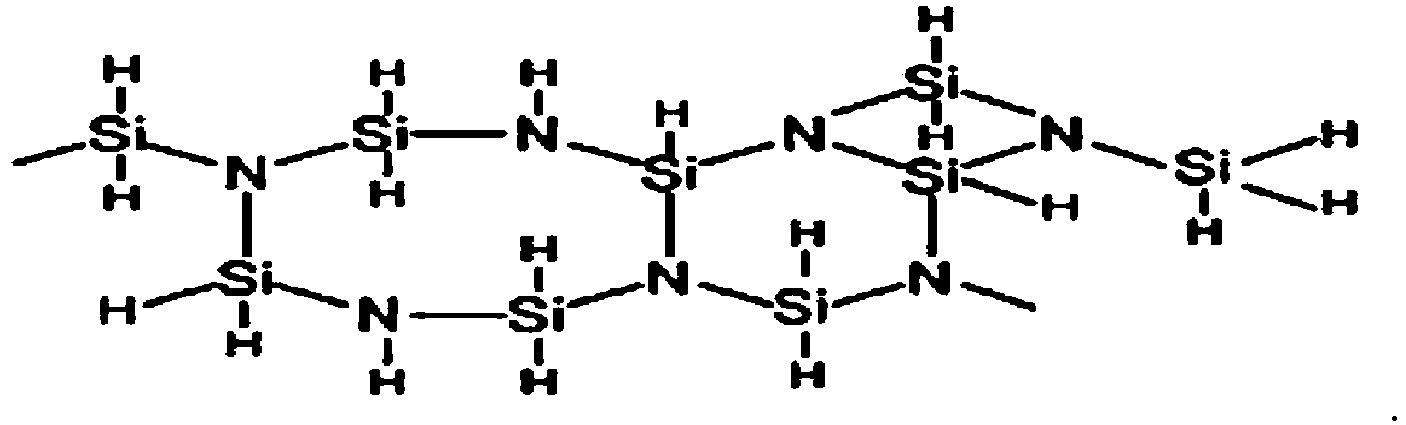
- Some hydrogen atoms bonded to silicon atoms in the perhydropolysilazane may be substituted by hydroxyl groups.
- After obtaining adducts through reaction between dihydrogendichlorosilane and an organic base (for example, pyridine or picoline), the perhydropolysilazane may be easily obtained by reacting the adducts with ammonia.
- The polysilazane, particularly, perhydropolysilazane generally has a number-average molecular weight of 100 to 50,000, preferably 200 to 2,500 in consideration of volatility and solubility.
- The polysilazane, particularly, perhydropolysilazane, which is included in the glass film of the bezel according to the embodiment, may include a small amount of silica conversion accelerating catalyst.
- Examples of the silica conversion accelerating catalyst may include organic amine compounds, organic acids, inorganic acids, carboxylic acid metallic salts, and organo-metallic complex salts.
- Particularly, organic amine compounds are preferred, and examples of organic amine compounds may include nitrogen-containing cyclic organic amines, such as 1-methylpiperazine, 1-methylpiperizine, 4,4'-trimethylenedipiperizine, 4,4'-trimethylenebis(1-methylpiperizine), diazabicyclo-[2,2,2]octane, cis-2,6-dimethylpiperazine, 4-(4-methylperizine)pyridine, pyrizine, dipyridine, α -picoline, β -picoline, γ -picoline, piperizine, lutidine, pyrimidine, pyridazine, 4,4'-trimethylenedipyridine, 2-(methylamino)pyrizine, pyrazine, quinoline, quinoxaline, triazine, pyrrole, 3-pyrroline, imidazole, triazole, tetrazole, 1-methylpyrrolidine, and the like; aliphatic or aromatic amines, such as methylamine, dimethylamine, trimethylamine, ethyamine, diethyamine, triethylamine, propylamine, dipropylamine, tripropylamine, butylamine, dibutylamine, tributylamine, pentylamine, dipentylamine, tripentylamine, hexylamine, dihexylamine, trihexylamine, heptylamine, diheptylamine, octylamine, dioctylamine, trioctylamine, phenylamine, diphenylamine, triphenylamine, and the like; DBU(1,8-diazabicyclo[5,4,0]7-undecene), DBN(1,5-diazabicyclo[4,3,0]5-nonene), 1,5,9-triazacyclododecane, and 1,4,7-triazacyclononane.
- The silica conversion accelerating catalyst may be present in an amount of 0.1 % by weight (wt%) to 10 wt% in a total weight of the polysilazine, particularly, perhydropolysilazane.
- By coating the surface of the bezel for display panels according to the invention with a polysilazane solution, a highly dense film may be formed on the surface of the bezel. In addition, the bezel according to the invention has outstanding properties in terms of corrosion resistance, abrasion resistance, antifouling, ease of cleaning, wettability, sealing effects, chemical resistance, oxidation resistance, physical barrier effects, heat resistance, fire resistance, low shrinkage, smoothing effects, durability, antistatic properties, scratch resistance, and the like.
- Any coating method may be used without limitation to coat the surface of the bezel with the glass film. Advantageously, spray coating, dip coating, spin coating, and the like may be used.
-
Fig. 8 is a schematic flowchart of a method for manufacturing a bezel for display panels according to another embodiment of the present invention. - Referring to
Fig. 8 , a method for manufacturing a bezel for display panels includes: preparing a lower mold (S510); fastening a gasket (S520); injecting araw material (S530); fastening an upper mold (S540); and curing/transferring a three-dimensional pattern (S550). In addition, the method may further include heat treatment (S560), and may further include coating a glass film (S570). - In operation (S510) of preparing a lower mold, the lower mold formed on a molding surface thereof with a three-dimensional pattern for imparting a surface shape to the bezel is prepared. In operation (S520) of fastening a gasket, the gasket is fastened to a rim of the molding surface of the lower mold.
- In operation (S530) of injecting a raw material, the raw material for the bezel is injected onto the molding surface of the lower mold. In operation (S540) of fastening an upper mold, the upper mold is fastened to the gasket on the lower mold.
- In operation (S550) of curing/transferring a three-dimensional pattern, the injected raw material is thermally cured, while transferring the three-dimensional pattern from the molding surface of the lower mold to a cured product of the raw material. In operation (S560) of heat treatment, monomers and other components unreacted during curing are further cured.
- In operation (S570) of coating a glass film, at least one surface of the bezel formed of a cured polymeric raw material is coated with the glass film, wherein the at least one surface has a transferred three-dimensional pattern.
- As shown in
Fig. 8 , after the raw material is injected onto the molding surface of the lower mold, the upper mold may be fastened to the lower mold. In this case, the upper mold may not have a raw material injection port. - As shown in
Fig. 1 , the raw material may be injected after fastening the upper mold and the lower mold in order to prevent foreign matter from entering the molds and to adjust an injection amount of the raw material. On the other hand, as shown inFig. 8 , the upper mold may be fastened to the lower mold after injecting the raw material onto the molding surface of the lower mold in order to allow convenient injection of the raw material. - In the embodiments shown in
Figs. 1 and8 , the methods for manufacturing a bezel for display panels through heat curing are illustrated. - However, it should be understood that the present invention is not limited to the embodiments shown in
Figs. 1 and8 and various curing processes may be applied to the method for manufacturing a bezel for display panels. -
Fig. 9 is a schematic flowchart of a method for manufacturing a bezel for display panels according to a further embodiment of the present invention. - Referring to
Fig. 9 , the method for manufacturing a bezel for display panels includes: preparing a mold (S610); fastening a gasket (S620); injecting a raw material (S630); and curing/transferring a three-dimensional pattern (S640). - The method may further include coating a glass film (S640).
- In operation (S610) of preparing a mold, a mold formed on a molding surface thereof with a three-dimensional pattern for imparting a surface shape to the bezel is prepared.
- In operation (S620) of fastening a gasket, the gasket is fastened to a rim of the molding surface of the mold.
- In operation (S630) of injecting a raw material, the raw material for the bezel is injected onto the molding surface of the mold. The raw material may be a resin composition curable by heat, light or electron beam.
- In operation (S640) of curing/transferring a three-dimensional pattern, the injected raw material is cured while transferring the three-dimensional pattern from the molding surface of the mold to a cured product of the raw material. In this case, various curing processes may be applied depending on which raw materials employed.
- For example, when using a thermosetting resin composition as the raw material, heat curing may be used. On the other hand, when using an ultraviolet curable resin composition as the raw material, ultraviolet curing may be carried out.
- In operation (S650) of coating a glass film, at least one surface of the bezel formed of a cured polymeric raw material is coated with the glass film, in which the at least one surface has a transferred three-dimensional pattern.
- A bezel for display panels manufactured by the method according to embodiments of the invention facilitates formation of a three-dimensional pattern on a surface thereof while reducing unnecessary material costs.
- The bezel for display panels includes: a substrate formed of a cured product of a resin composition, the substrate having a three-dimensional pattern on at least one surface thereof; and a glass film coated on the at least one surface of the substrate.
- The bezel may be formed to have a transparent color or a white color depending on which raw materials are employed.
- Particularly, the three-dimensional pattern may be formed to have a thickness of 1 mm or more on a surface of the bezel. As described above, this can be achieved using metals, and the like having properties for easy formation of patterns as a material for a mold, and applying NC machining, and the like to a molding surface of the mold, and as a result, by forming a three-dimensional pattern having a thickness of 1mm or more on the mold.
Claims (38)
- A method for manufacturing a bezel surrounding and supporting a rim of a display panel, comprising:(a) preparing a lower mold, the lower mold being formed on a molding surface thereof with a three-dimensional pattern for imparting a surface shape to a bezel;(b) fastening a gasket to a rim of the molding surface of the lower mold;(c) fastening an upper mold to the gasket, the upper mold being formed with a raw material injection port;(d) injecting a polymeric raw material for the bezel through the raw material injection port of the upper mold; and(e) curing the polymeric raw material while transferring the three-dimensional pattern from the molding surface of the lower mold to the polymeric raw material.
- A method for manufacturing a bezel surrounding and supporting a rim of a display panel, comprising:(a) preparing a lower mold, the lower mold being formed on a molding surface thereof with a three-dimensional pattern for imparting a surface shape to a bezel;(b) fastening a gasket to a rim of the molding surface of the lower mold;(c) injecting a polymeric raw material for the bezel onto the molding surface of the lower mold;(d) fastening an upper mold to the gasket on the lower mold; and(e) curing the polymeric raw material while transferring the three-dimensional pattern from the molding surface of the lower mold to the polymeric raw material.
- The method according to claim 1 or 2, further comprising:(f) further curing the polymeric raw material at an unreacted portion of the raw material through heat treatment.
- The method according to claim 1 or 2, further comprising:(g) coating at least one surface of the bezel with a glass film, the at least one surface of the bezel comprising a transferred three-dimensional pattern, and the bezel being formed of a cured polymeric raw material.
- The method according to claim 4, wherein the glass film comprises a polysilazane.
- The method according to claim 5, wherein the polysilazane comprises repeated units represented by Formula 1:

- The method according to claim 5, wherein the polysilazane is perhydropolysilazane.
- The method according to claim 5, wherein the polysilazane comprises a catalytic amount of a silica conversion accelerating catalyst, and the silica conversion accelerating catalyst comprises an amine catalyst.
- The method according to claim 1 or 2, wherein the three-dimensional pattern on the molding surface of the lower mold is formed using at least one process ofNC (numerical control) machining, chemical etching, and stamping.
- The method according to claim 1 or 2, wherein the polymeric raw material is a thermosetting resin composition.
- The method according to claim 10, wherein the resin composition has a viscosity of 300 cPs to 500 cPs.
- The method according to claim 10, wherein the resin composition comprises at least one selected from the group consisting of acrylic resins, polycarbonate resins, acrylonitrile-butadiene-styrene resins, polyurethane resins, olefin resins, epoxy resins, melamine resins, and unsaturated polyester resins.
- The method according to claim 1 or 2, wherein the polymeric raw material further comprises at least one type selected from the group consisting of pearls, pigments, and chips.
- The method according to claim 1 or 2, wherein the molding surface of the lower mold is coated with a release agent.
- The method according to claim 1 or 2, wherein the lower mold is formed of at least one material selected from the group consisting of metal, Teflon, and rubber materials.
- The method according to claim 1 or 2, wherein the lower mold comprises a frame attached to an outer surface thereof, and the frame is formed of a glass or metal honeycomb plate.
- The method according to claim 1 or 2, wherein the upper mold is formed of glass or metal.
- The method according to claim 1 or 2, wherein the upper mold has a planar molding surface.
- The method according to claim 1 or 2, wherein the upper mold is formed on a molding surface thereof with an opposite pattern to the three-dimensional pattern formed on the molding surface of the lower mold.
- A method for manufacturing a bezel surrounding and supporting a rim of a display panel, comprising:(a) preparing a mold, the mold being formed on a molding surface thereof with a three-dimensional pattern for imparting a surface shape to a bezel;(b) fastening a gasket to a rim of the molding surface of the mold;(c) injecting a polymeric raw material for the bezel onto the molding surface of the mold; and(d) curing the polymeric raw material while transferring the three-dimensional pattern from the molding surface of the lower mold to the polymeric raw material.
- The method according to claim 20, further comprising:(e) coating at least one surface of the bezel with a glass film, the at least one surface of the bezel comprising a transferred three-dimensional pattern, the bezel being formed of a cured polymeric raw material.
- The method according to claim 21, wherein the glass film comprises a polysilazane.
- The method according to claim 22, wherein the polysilazane comprises repeated units represented by Formula 1:

- The method according to claim 22, wherein the polysilazane is perhydropolysilazane.
- The method according to claim 22, wherein the polysilazane comprises a catalytic amount of a silica conversion accelerating catalyst, and the silica conversion accelerating catalyst comprises an amine catalyst.
- The method according to claim 20, wherein the three-dimensional pattern on the molding surface of the mold is formed by at least one process of NC (numerical control) machining, chemical etching, and stamping.
- The method according to claim 20, wherein the polymeric raw material is a heat, light, or electron beam curable resin composition.
- The method according to claim 27, wherein the resin composition has a viscosity of 300 cPs to 500 cPs.
- The method according to claim 20, wherein the polymeric raw material further comprises at least one type selected from the group consisting of pearls, pigments, and chips.
- The method according to claim 20, wherein the molding surface of the mold is coated with a release agent.
- The method according to claim 20, wherein the mold is formed of at least one material selected from the group consisting of metal, Teflon, and rubber materials.
- The method according to claim 20, wherein the mold comprises a frame attached to an outer surface of the mold, and the frame is formed of a glass or metal honeycomb plate.
- A bezel for display panels surrounding and supporting a rim of a display panel, comprising:a substrate formed of a cured product of a resin composition, the substrate having a three-dimensional pattern on at least one surface thereof; anda glass film coated on the at least one surface of the substrate.
- The bezel according to claim 33, wherein the resin composition comprises at least one selected from the group consisting of acrylic resins, polycarbonate resins, acrylonitrile-butadiene-styrene resins, polyurethane resins, olefin resins, epoxy resins, melamine resins, and unsaturated polyester resins.
- The bezel according to claim 33, wherein the glass film comprises a polysilazane.
- The bezel according to claim 35, wherein the polysilazane comprises repeated units represented by Formula 1:

- The bezel according to claim 35, wherein the polysilazane is perhydropolysilazane.
- The bezel according to claim 35, wherein the polysilazane comprises a catalytic amount of a silica conversion accelerating catalyst, and the silica conversion accelerating catalyst comprises an amine catalyst.
Applications Claiming Priority (2)
| Application Number | Priority Date | Filing Date | Title |
|---|---|---|---|
| KR1020110056663A KR101308857B1 (en) | 2011-06-13 | 2011-06-13 | Method of manufacturing bezel for display panel using mold casting and the bezel for display panel using the same |
| PCT/KR2012/004520 WO2012173356A2 (en) | 2011-06-13 | 2012-06-08 | Production method for a bezel for a display panel using mould casting, and bezel for a display panel produced thereby |
Publications (3)
| Publication Number | Publication Date |
|---|---|
| EP2719512A2 true EP2719512A2 (en) | 2014-04-16 |
| EP2719512A4 EP2719512A4 (en) | 2015-04-15 |
| EP2719512B1 EP2719512B1 (en) | 2017-06-07 |
Family
ID=47357576
Family Applications (1)
| Application Number | Title | Priority Date | Filing Date |
|---|---|---|---|
| EP12800973.5A Not-in-force EP2719512B1 (en) | 2011-06-13 | 2012-06-08 | Production method for a bezel for a display panel using mould casting. |
Country Status (7)
| Country | Link |
|---|---|
| US (1) | US20130321996A1 (en) |
| EP (1) | EP2719512B1 (en) |
| JP (1) | JP5719042B2 (en) |
| KR (1) | KR101308857B1 (en) |
| CN (1) | CN103442867A (en) |
| TW (1) | TWI531461B (en) |
| WO (1) | WO2012173356A2 (en) |
Cited By (1)
| Publication number | Priority date | Publication date | Assignee | Title |
|---|---|---|---|---|
| EP2664431A4 (en) * | 2011-01-11 | 2016-08-24 | Lg Hausys Ltd | Method for manufacturing a polymer-molded material using a mold which easily forms a 3-dimensional surface pattern, and molded material for a home appliance having the 3-dimensional surface pattern |
Families Citing this family (2)
| Publication number | Priority date | Publication date | Assignee | Title |
|---|---|---|---|---|
| KR101304149B1 (en) * | 2010-09-27 | 2013-09-05 | (주)엘지하우시스 | Forming mold with dual structure and method of manufacturing exterior panel for household electric appliance using the forming mold |
| US10723900B2 (en) * | 2014-10-21 | 2020-07-28 | Lg Chem, Ltd. | UV curable ink for inkjet, method for manufacturing a bezel using the same, a bezel pattern using the same method and display panel comprising the bezel pattern |
Family Cites Families (25)
| Publication number | Priority date | Publication date | Assignee | Title |
|---|---|---|---|---|
| US2566817A (en) * | 1948-12-09 | 1951-09-04 | Leader Electric Company | Mold for making plastic grids |
| JPH04325211A (en) * | 1991-04-25 | 1992-11-13 | Dainippon Printing Co Ltd | Reactive injection molding method and manufacture of transmission type screen |
| JP3141457B2 (en) * | 1991-11-01 | 2001-03-05 | 日本油脂株式会社 | Method for producing optical casting resin and optical casting resin composition |
| US5528155A (en) * | 1994-04-29 | 1996-06-18 | Massachusetts Institute Of Technology | Sensor for measuring material properties |
| US6194051B1 (en) * | 1997-07-15 | 2001-02-27 | Bradley Corporation | Composite structural components for outdoor use |
| JP2001062857A (en) * | 1999-08-24 | 2001-03-13 | Sekisui Chem Co Ltd | Method for producing thermosetting resin molded article having silica surface layer |
| JP4128394B2 (en) * | 2002-05-16 | 2008-07-30 | クラリアント インターナショナル リミテッド | Hydrophilic accelerator and hydrophilic maintenance agent for polysilazane-containing coating film |
| JP2004050819A (en) * | 2002-05-31 | 2004-02-19 | Nippon Zeon Co Ltd | Molding method of molded article and molded article |
| JP2004024928A (en) * | 2002-06-21 | 2004-01-29 | Koichi Tanaka | Method for applying polysilazane solution to form glossy protective film |
| KR100495326B1 (en) * | 2002-07-13 | 2005-06-14 | 삼성아이텍 주식회사 | A method and tool for manufacturing polarized light lens |
| WO2004039904A1 (en) * | 2002-11-01 | 2004-05-13 | Clariant International Ltd | Polysilazane-containing coating solution |
| TW559599B (en) * | 2002-12-27 | 2003-11-01 | Big Bazar Corp | Method for assembling molded article with stereoscopic differently colored embossment |
| WO2008032443A1 (en) * | 2006-09-12 | 2008-03-20 | Mitsubishi Engineering-Plastics Corporation | Panel-shaped molded product |
| JP5066182B2 (en) * | 2007-05-31 | 2012-11-07 | 日本写真印刷株式会社 | Insert molding laminate and manufacturing method thereof, insert molding product and manufacturing method thereof |
| KR100886748B1 (en) * | 2007-06-15 | 2009-03-04 | 주식회사 고려광학 | Polarizing Lens Manufacturing Equipment |
| JP2010210648A (en) * | 2007-07-05 | 2010-09-24 | Sharp Corp | Method for repairing glass substrate, process for producing glass substrate, glass substrate, and flat panel display |
| KR100928730B1 (en) * | 2007-08-20 | 2009-11-27 | 전자부품연구원 | Surface protection glass film formation method |
| JP4669031B2 (en) * | 2007-08-22 | 2011-04-13 | 株式会社セイエイ | Molding apparatus and molding method |
| US20090109367A1 (en) * | 2007-10-31 | 2009-04-30 | James Chu | Flat display panel with special surface design |
| JP2010052147A (en) * | 2008-08-26 | 2010-03-11 | Meiki Co Ltd | Injection compression molding die for cavity frame structure |
| CN101733874A (en) * | 2008-11-04 | 2010-06-16 | 江俊慧 | Method for manufacturing light guide plate and mould used by same |
| KR101080765B1 (en) * | 2008-11-28 | 2011-11-07 | 기아자동차주식회사 | Three-Dimensional Pattern Forming Method for part |
| KR20110012581A (en) * | 2009-07-31 | 2011-02-09 | (주)디엔에프 | Polysilazane Coating Composition Comprising Hydrogen Silsesquioxane |
| KR101304149B1 (en) * | 2010-09-27 | 2013-09-05 | (주)엘지하우시스 | Forming mold with dual structure and method of manufacturing exterior panel for household electric appliance using the forming mold |
| KR101308763B1 (en) * | 2011-01-11 | 2013-09-17 | (주)엘지하우시스 | Method of manufacturing polymer product with 3-dimension surface pattern using mold |
-
2011
- 2011-06-13 KR KR1020110056663A patent/KR101308857B1/en not_active Expired - Fee Related
-
2012
- 2012-06-08 WO PCT/KR2012/004520 patent/WO2012173356A2/en not_active Ceased
- 2012-06-08 US US14/001,452 patent/US20130321996A1/en not_active Abandoned
- 2012-06-08 EP EP12800973.5A patent/EP2719512B1/en not_active Not-in-force
- 2012-06-08 CN CN2012800146360A patent/CN103442867A/en active Pending
- 2012-06-08 JP JP2013558800A patent/JP5719042B2/en not_active Expired - Fee Related
- 2012-06-13 TW TW101121174A patent/TWI531461B/en not_active IP Right Cessation
Cited By (1)
| Publication number | Priority date | Publication date | Assignee | Title |
|---|---|---|---|---|
| EP2664431A4 (en) * | 2011-01-11 | 2016-08-24 | Lg Hausys Ltd | Method for manufacturing a polymer-molded material using a mold which easily forms a 3-dimensional surface pattern, and molded material for a home appliance having the 3-dimensional surface pattern |
Also Published As
| Publication number | Publication date |
|---|---|
| TWI531461B (en) | 2016-05-01 |
| JP5719042B2 (en) | 2015-05-13 |
| JP2014512986A (en) | 2014-05-29 |
| WO2012173356A3 (en) | 2013-04-04 |
| KR20120137677A (en) | 2012-12-24 |
| CN103442867A (en) | 2013-12-11 |
| EP2719512B1 (en) | 2017-06-07 |
| EP2719512A4 (en) | 2015-04-15 |
| KR101308857B1 (en) | 2013-09-13 |
| US20130321996A1 (en) | 2013-12-05 |
| WO2012173356A2 (en) | 2012-12-20 |
| TW201302424A (en) | 2013-01-16 |
Similar Documents
| Publication | Publication Date | Title |
|---|---|---|
| KR101653417B1 (en) | Coating liquid, cured film, resin multilayer body, method for producing the cured film and method for producing the resin multilayer body | |
| JP4618512B2 (en) | UV curable resin compositions, UV curable paints and painted products. | |
| EP2719512B1 (en) | Production method for a bezel for a display panel using mould casting. | |
| KR101308763B1 (en) | Method of manufacturing polymer product with 3-dimension surface pattern using mold | |
| US20070021582A1 (en) | One-component epoxy resin composition | |
| KR20050057649A (en) | Bond layer for coatings on plastic substrates | |
| US20130309503A1 (en) | Method for manufacturing a flame-resistant and transparent film, and flame-resistant and transparent film manufactured using same | |
| MXPA02005824A (en) | Layered article with improved microcrack resistance and method of making. | |
| EP3733719B1 (en) | A substrate for formation of a polymer brush, a process of producing the substrate, and a precursor solution for use in the process | |
| TW201838816A (en) | Laminate and method of producing same | |
| TWI543686B (en) | Shell for electronic machine and method for manufacturing the same | |
| KR101333359B1 (en) | Method of manufacturing transparent substrate for touchscreen panel using mold casting and the transparent substrate for touchscreen panel using the same | |
| JP2002264289A (en) | Resin molding and method for producing the same | |
| WO2019123731A1 (en) | Siloxane-type curable resin composition and hard coating liquid | |
| KR101665186B1 (en) | Base material having surface-treating coat and preparing method of the same | |
| KR101967146B1 (en) | Composition For Hard Coating and Hard Coating Film Including Cured Product Of The Same As The Coating Layer | |
| KR20220165976A (en) | Preparation method of back-cover for mobile communication device housing with double layers and composite sheet | |
| JPH09278901A (en) | Pre-cured product of silsesquioxane ladder polymer and method for producing molded product using the same | |
| KR20120117096A (en) | Base material having surface-treating coat and preparing method of the same | |
| EP1721733A1 (en) | Decorative member and process for producing the same | |
| KR20040078329A (en) | A plastic film for display panel and manufacturing method thereof | |
| CN208484128U (en) | A molding device for car windows | |
| JP6713340B2 (en) | Film forming liquid composition and method for producing the same | |
| JP2025507679A (en) | Method for manufacturing a three-dimensional article having a metal pattern | |
| JP5891822B2 (en) | Method for producing water vapor barrier film and electric device using the same |
Legal Events
| Date | Code | Title | Description |
|---|---|---|---|
| PUAI | Public reference made under article 153(3) epc to a published international application that has entered the european phase |
Free format text: ORIGINAL CODE: 0009012 |
|
| 17P | Request for examination filed |
Effective date: 20130827 |
|
| AK | Designated contracting states |
Kind code of ref document: A2 Designated state(s): AL AT BE BG CH CY CZ DE DK EE ES FI FR GB GR HR HU IE IS IT LI LT LU LV MC MK MT NL NO PL PT RO RS SE SI SK SM TR |
|
| DAX | Request for extension of the european patent (deleted) | ||
| A4 | Supplementary search report drawn up and despatched |
Effective date: 20150317 |
|
| RIC1 | Information provided on ipc code assigned before grant |
Ipc: B29C 45/26 20060101ALI20150311BHEP Ipc: C08L 83/16 20060101ALI20150311BHEP Ipc: B29C 33/42 20060101AFI20150311BHEP |
|
| 17Q | First examination report despatched |
Effective date: 20160504 |
|
| STAA | Information on the status of an ep patent application or granted ep patent |
Free format text: STATUS: EXAMINATION IS IN PROGRESS |
|
| GRAP | Despatch of communication of intention to grant a patent |
Free format text: ORIGINAL CODE: EPIDOSNIGR1 |
|
| STAA | Information on the status of an ep patent application or granted ep patent |
Free format text: STATUS: GRANT OF PATENT IS INTENDED |
|
| INTG | Intention to grant announced |
Effective date: 20170208 |
|
| GRAS | Grant fee paid |
Free format text: ORIGINAL CODE: EPIDOSNIGR3 |
|
| GRAA | (expected) grant |
Free format text: ORIGINAL CODE: 0009210 |
|
| STAA | Information on the status of an ep patent application or granted ep patent |
Free format text: STATUS: THE PATENT HAS BEEN GRANTED |
|
| AK | Designated contracting states |
Kind code of ref document: B1 Designated state(s): AL AT BE BG CH CY CZ DE DK EE ES FI FR GB GR HR HU IE IS IT LI LT LU LV MC MK MT NL NO PL PT RO RS SE SI SK SM TR |
|
| REG | Reference to a national code |
Ref country code: GB Ref legal event code: FG4D |
|
| REG | Reference to a national code |
Ref country code: FR Ref legal event code: PLFP Year of fee payment: 6 |
|
| GRAA | (expected) grant |
Free format text: ORIGINAL CODE: 0009210 |
|
| REG | Reference to a national code |
Ref country code: CH Ref legal event code: EP Ref country code: AT Ref legal event code: REF Ref document number: 898892 Country of ref document: AT Kind code of ref document: T Effective date: 20170615 |
|
| REG | Reference to a national code |
Ref country code: IE Ref legal event code: FG4D |
|
| REG | Reference to a national code |
Ref country code: DE Ref legal event code: R096 Ref document number: 602012033267 Country of ref document: DE |
|
| REG | Reference to a national code |
Ref country code: NL Ref legal event code: MP Effective date: 20170607 |
|
| REG | Reference to a national code |
Ref country code: LT Ref legal event code: MG4D |
|
| PG25 | Lapsed in a contracting state [announced via postgrant information from national office to epo] |
Ref country code: LT Free format text: LAPSE BECAUSE OF FAILURE TO SUBMIT A TRANSLATION OF THE DESCRIPTION OR TO PAY THE FEE WITHIN THE PRESCRIBED TIME-LIMIT Effective date: 20170607 Ref country code: GR Free format text: LAPSE BECAUSE OF FAILURE TO SUBMIT A TRANSLATION OF THE DESCRIPTION OR TO PAY THE FEE WITHIN THE PRESCRIBED TIME-LIMIT Effective date: 20170908 Ref country code: FI Free format text: LAPSE BECAUSE OF FAILURE TO SUBMIT A TRANSLATION OF THE DESCRIPTION OR TO PAY THE FEE WITHIN THE PRESCRIBED TIME-LIMIT Effective date: 20170607 Ref country code: NO Free format text: LAPSE BECAUSE OF FAILURE TO SUBMIT A TRANSLATION OF THE DESCRIPTION OR TO PAY THE FEE WITHIN THE PRESCRIBED TIME-LIMIT Effective date: 20170907 Ref country code: HR Free format text: LAPSE BECAUSE OF FAILURE TO SUBMIT A TRANSLATION OF THE DESCRIPTION OR TO PAY THE FEE WITHIN THE PRESCRIBED TIME-LIMIT Effective date: 20170607 Ref country code: ES Free format text: LAPSE BECAUSE OF FAILURE TO SUBMIT A TRANSLATION OF THE DESCRIPTION OR TO PAY THE FEE WITHIN THE PRESCRIBED TIME-LIMIT Effective date: 20170607 |
|
| REG | Reference to a national code |
Ref country code: AT Ref legal event code: MK05 Ref document number: 898892 Country of ref document: AT Kind code of ref document: T Effective date: 20170607 |
|
| PG25 | Lapsed in a contracting state [announced via postgrant information from national office to epo] |
Ref country code: SE Free format text: LAPSE BECAUSE OF FAILURE TO SUBMIT A TRANSLATION OF THE DESCRIPTION OR TO PAY THE FEE WITHIN THE PRESCRIBED TIME-LIMIT Effective date: 20170607 Ref country code: RS Free format text: LAPSE BECAUSE OF FAILURE TO SUBMIT A TRANSLATION OF THE DESCRIPTION OR TO PAY THE FEE WITHIN THE PRESCRIBED TIME-LIMIT Effective date: 20170607 Ref country code: NL Free format text: LAPSE BECAUSE OF FAILURE TO SUBMIT A TRANSLATION OF THE DESCRIPTION OR TO PAY THE FEE WITHIN THE PRESCRIBED TIME-LIMIT Effective date: 20170607 Ref country code: BG Free format text: LAPSE BECAUSE OF FAILURE TO SUBMIT A TRANSLATION OF THE DESCRIPTION OR TO PAY THE FEE WITHIN THE PRESCRIBED TIME-LIMIT Effective date: 20170907 Ref country code: LV Free format text: LAPSE BECAUSE OF FAILURE TO SUBMIT A TRANSLATION OF THE DESCRIPTION OR TO PAY THE FEE WITHIN THE PRESCRIBED TIME-LIMIT Effective date: 20170607 |
|
| PG25 | Lapsed in a contracting state [announced via postgrant information from national office to epo] |
Ref country code: CZ Free format text: LAPSE BECAUSE OF FAILURE TO SUBMIT A TRANSLATION OF THE DESCRIPTION OR TO PAY THE FEE WITHIN THE PRESCRIBED TIME-LIMIT Effective date: 20170607 Ref country code: SK Free format text: LAPSE BECAUSE OF FAILURE TO SUBMIT A TRANSLATION OF THE DESCRIPTION OR TO PAY THE FEE WITHIN THE PRESCRIBED TIME-LIMIT Effective date: 20170607 Ref country code: EE Free format text: LAPSE BECAUSE OF FAILURE TO SUBMIT A TRANSLATION OF THE DESCRIPTION OR TO PAY THE FEE WITHIN THE PRESCRIBED TIME-LIMIT Effective date: 20170607 Ref country code: AT Free format text: LAPSE BECAUSE OF FAILURE TO SUBMIT A TRANSLATION OF THE DESCRIPTION OR TO PAY THE FEE WITHIN THE PRESCRIBED TIME-LIMIT Effective date: 20170607 Ref country code: RO Free format text: LAPSE BECAUSE OF FAILURE TO SUBMIT A TRANSLATION OF THE DESCRIPTION OR TO PAY THE FEE WITHIN THE PRESCRIBED TIME-LIMIT Effective date: 20170607 |
|
| REG | Reference to a national code |
Ref country code: CH Ref legal event code: PL |
|
| PG25 | Lapsed in a contracting state [announced via postgrant information from national office to epo] |
Ref country code: IS Free format text: LAPSE BECAUSE OF FAILURE TO SUBMIT A TRANSLATION OF THE DESCRIPTION OR TO PAY THE FEE WITHIN THE PRESCRIBED TIME-LIMIT Effective date: 20171007 Ref country code: PL Free format text: LAPSE BECAUSE OF FAILURE TO SUBMIT A TRANSLATION OF THE DESCRIPTION OR TO PAY THE FEE WITHIN THE PRESCRIBED TIME-LIMIT Effective date: 20170607 Ref country code: SM Free format text: LAPSE BECAUSE OF FAILURE TO SUBMIT A TRANSLATION OF THE DESCRIPTION OR TO PAY THE FEE WITHIN THE PRESCRIBED TIME-LIMIT Effective date: 20170607 Ref country code: IT Free format text: LAPSE BECAUSE OF FAILURE TO SUBMIT A TRANSLATION OF THE DESCRIPTION OR TO PAY THE FEE WITHIN THE PRESCRIBED TIME-LIMIT Effective date: 20170607 |
|
| REG | Reference to a national code |
Ref country code: FR Ref legal event code: PLFP Year of fee payment: 7 Ref country code: DE Ref legal event code: R097 Ref document number: 602012033267 Country of ref document: DE |
|
| REG | Reference to a national code |
Ref country code: IE Ref legal event code: MM4A |
|
| PG25 | Lapsed in a contracting state [announced via postgrant information from national office to epo] |
Ref country code: MC Free format text: LAPSE BECAUSE OF FAILURE TO SUBMIT A TRANSLATION OF THE DESCRIPTION OR TO PAY THE FEE WITHIN THE PRESCRIBED TIME-LIMIT Effective date: 20170607 |
|
| PLBE | No opposition filed within time limit |
Free format text: ORIGINAL CODE: 0009261 |
|
| STAA | Information on the status of an ep patent application or granted ep patent |
Free format text: STATUS: NO OPPOSITION FILED WITHIN TIME LIMIT |
|
| PG25 | Lapsed in a contracting state [announced via postgrant information from national office to epo] |
Ref country code: IE Free format text: LAPSE BECAUSE OF NON-PAYMENT OF DUE FEES Effective date: 20170608 Ref country code: CH Free format text: LAPSE BECAUSE OF NON-PAYMENT OF DUE FEES Effective date: 20170630 Ref country code: LU Free format text: LAPSE BECAUSE OF NON-PAYMENT OF DUE FEES Effective date: 20170608 Ref country code: LI Free format text: LAPSE BECAUSE OF NON-PAYMENT OF DUE FEES Effective date: 20170630 Ref country code: DK Free format text: LAPSE BECAUSE OF FAILURE TO SUBMIT A TRANSLATION OF THE DESCRIPTION OR TO PAY THE FEE WITHIN THE PRESCRIBED TIME-LIMIT Effective date: 20170607 |
|
| 26N | No opposition filed |
Effective date: 20180308 |
|
| PG25 | Lapsed in a contracting state [announced via postgrant information from national office to epo] |
Ref country code: SI Free format text: LAPSE BECAUSE OF FAILURE TO SUBMIT A TRANSLATION OF THE DESCRIPTION OR TO PAY THE FEE WITHIN THE PRESCRIBED TIME-LIMIT Effective date: 20170607 |
|
| PGFP | Annual fee paid to national office [announced via postgrant information from national office to epo] |
Ref country code: FR Payment date: 20180308 Year of fee payment: 7 |
|
| REG | Reference to a national code |
Ref country code: BE Ref legal event code: MM Effective date: 20170630 |
|
| PGFP | Annual fee paid to national office [announced via postgrant information from national office to epo] |
Ref country code: DE Payment date: 20180305 Year of fee payment: 7 |
|
| PG25 | Lapsed in a contracting state [announced via postgrant information from national office to epo] |
Ref country code: BE Free format text: LAPSE BECAUSE OF NON-PAYMENT OF DUE FEES Effective date: 20170630 |
|
| PG25 | Lapsed in a contracting state [announced via postgrant information from national office to epo] |
Ref country code: MT Free format text: LAPSE BECAUSE OF NON-PAYMENT OF DUE FEES Effective date: 20170608 |
|
| PGFP | Annual fee paid to national office [announced via postgrant information from national office to epo] |
Ref country code: GB Payment date: 20180405 Year of fee payment: 7 |
|
| PG25 | Lapsed in a contracting state [announced via postgrant information from national office to epo] |
Ref country code: HU Free format text: LAPSE BECAUSE OF FAILURE TO SUBMIT A TRANSLATION OF THE DESCRIPTION OR TO PAY THE FEE WITHIN THE PRESCRIBED TIME-LIMIT; INVALID AB INITIO Effective date: 20120608 |
|
| PG25 | Lapsed in a contracting state [announced via postgrant information from national office to epo] |
Ref country code: CY Free format text: LAPSE BECAUSE OF NON-PAYMENT OF DUE FEES Effective date: 20170607 |
|
| PG25 | Lapsed in a contracting state [announced via postgrant information from national office to epo] |
Ref country code: MK Free format text: LAPSE BECAUSE OF FAILURE TO SUBMIT A TRANSLATION OF THE DESCRIPTION OR TO PAY THE FEE WITHIN THE PRESCRIBED TIME-LIMIT Effective date: 20170607 |
|
| REG | Reference to a national code |
Ref country code: DE Ref legal event code: R119 Ref document number: 602012033267 Country of ref document: DE |
|
| REG | Reference to a national code |
Ref country code: DE Ref legal event code: R082 Ref document number: 602012033267 Country of ref document: DE Representative=s name: 2K PATENT- UND RECHTSANWAELTE PARTNERSCHAFT MB, DE |
|
| GBPC | Gb: european patent ceased through non-payment of renewal fee |
Effective date: 20190608 |
|
| PG25 | Lapsed in a contracting state [announced via postgrant information from national office to epo] |
Ref country code: TR Free format text: LAPSE BECAUSE OF FAILURE TO SUBMIT A TRANSLATION OF THE DESCRIPTION OR TO PAY THE FEE WITHIN THE PRESCRIBED TIME-LIMIT Effective date: 20170607 |
|
| PG25 | Lapsed in a contracting state [announced via postgrant information from national office to epo] |
Ref country code: GB Free format text: LAPSE BECAUSE OF NON-PAYMENT OF DUE FEES Effective date: 20190608 Ref country code: DE Free format text: LAPSE BECAUSE OF NON-PAYMENT OF DUE FEES Effective date: 20200101 |
|
| PG25 | Lapsed in a contracting state [announced via postgrant information from national office to epo] |
Ref country code: PT Free format text: LAPSE BECAUSE OF FAILURE TO SUBMIT A TRANSLATION OF THE DESCRIPTION OR TO PAY THE FEE WITHIN THE PRESCRIBED TIME-LIMIT Effective date: 20170607 |
|
| PG25 | Lapsed in a contracting state [announced via postgrant information from national office to epo] |
Ref country code: FR Free format text: LAPSE BECAUSE OF NON-PAYMENT OF DUE FEES Effective date: 20190630 |
|
| PG25 | Lapsed in a contracting state [announced via postgrant information from national office to epo] |
Ref country code: AL Free format text: LAPSE BECAUSE OF FAILURE TO SUBMIT A TRANSLATION OF THE DESCRIPTION OR TO PAY THE FEE WITHIN THE PRESCRIBED TIME-LIMIT Effective date: 20170607 |