EP2711368B1 - Benzoxazepin PI3K inhibitor compounds and methods of use - Google Patents
Benzoxazepin PI3K inhibitor compounds and methods of use Download PDFInfo
- Publication number
- EP2711368B1 EP2711368B1 EP13193562.9A EP13193562A EP2711368B1 EP 2711368 B1 EP2711368 B1 EP 2711368B1 EP 13193562 A EP13193562 A EP 13193562A EP 2711368 B1 EP2711368 B1 EP 2711368B1
- Authority
- EP
- European Patent Office
- Prior art keywords
- mmol
- mixture
- concentrated
- etoac
- dihydro
- Prior art date
- Legal status (The legal status is an assumption and is not a legal conclusion. Google has not performed a legal analysis and makes no representation as to the accuracy of the status listed.)
- Active
Links
- 0 *c(cc12)ccc1OCCN=C2N Chemical compound *c(cc12)ccc1OCCN=C2N 0.000 description 3
- WWEHAOQAIBGCHE-UHFFFAOYSA-N C=[Br]CC(c1ccccc1)=O Chemical compound C=[Br]CC(c1ccccc1)=O WWEHAOQAIBGCHE-UHFFFAOYSA-N 0.000 description 1
- WLTNPZPMVAIRRH-UHFFFAOYSA-N CC(C)[n]1nc(C)nc1-c1c[n](CCOc2cc(Br)ccc2-2)c-2n1 Chemical compound CC(C)[n]1nc(C)nc1-c1c[n](CCOc2cc(Br)ccc2-2)c-2n1 WLTNPZPMVAIRRH-UHFFFAOYSA-N 0.000 description 1
- YTMULAJAIJJXBR-UHFFFAOYSA-N CCOC(c1c[n](CCOc(c-2c3)ccc3Br)c-2n1)=O Chemical compound CCOC(c1c[n](CCOc(c-2c3)ccc3Br)c-2n1)=O YTMULAJAIJJXBR-UHFFFAOYSA-N 0.000 description 1
- IBNUNAUYUOQRFS-UHFFFAOYSA-N Fc(cc1F)ccc1-[n]1ncnc1 Chemical compound Fc(cc1F)ccc1-[n]1ncnc1 IBNUNAUYUOQRFS-UHFFFAOYSA-N 0.000 description 1
- RKNKCQUKRNHQQK-UHFFFAOYSA-N O=C(CCl)c1ncn[n]1-c(c(F)c1)ccc1F Chemical compound O=C(CCl)c1ncn[n]1-c(c(F)c1)ccc1F RKNKCQUKRNHQQK-UHFFFAOYSA-N 0.000 description 1
- IRSCQONAQHCRLC-UHFFFAOYSA-N OC(c1c[n](CCOc2cc(Br)ccc2-2)c-2n1)=O Chemical compound OC(c1c[n](CCOc2cc(Br)ccc2-2)c-2n1)=O IRSCQONAQHCRLC-UHFFFAOYSA-N 0.000 description 1
- ZKOALBDCQRXXIL-UHFFFAOYSA-O [NH2+]=C/N=C(/c1c[n](CCOc(c-2c3)ccc3Br)c-2n1)\Nc(c(F)c1)ccc1F Chemical compound [NH2+]=C/N=C(/c1c[n](CCOc(c-2c3)ccc3Br)c-2n1)\Nc(c(F)c1)ccc1F ZKOALBDCQRXXIL-UHFFFAOYSA-O 0.000 description 1
Classifications
-
- C—CHEMISTRY; METALLURGY
- C07—ORGANIC CHEMISTRY
- C07D—HETEROCYCLIC COMPOUNDS
- C07D498/00—Heterocyclic compounds containing in the condensed system at least one hetero ring having nitrogen and oxygen atoms as the only ring hetero atoms
- C07D498/02—Heterocyclic compounds containing in the condensed system at least one hetero ring having nitrogen and oxygen atoms as the only ring hetero atoms in which the condensed system contains two hetero rings
- C07D498/04—Ortho-condensed systems
-
- A—HUMAN NECESSITIES
- A61—MEDICAL OR VETERINARY SCIENCE; HYGIENE
- A61K—PREPARATIONS FOR MEDICAL, DENTAL OR TOILETRY PURPOSES
- A61K31/00—Medicinal preparations containing organic active ingredients
- A61K31/33—Heterocyclic compounds
- A61K31/395—Heterocyclic compounds having nitrogen as a ring hetero atom, e.g. guanethidine or rifamycins
- A61K31/41—Heterocyclic compounds having nitrogen as a ring hetero atom, e.g. guanethidine or rifamycins having five-membered rings with two or more ring hetero atoms, at least one of which being nitrogen, e.g. tetrazole
- A61K31/415—1,2-Diazoles
- A61K31/4162—1,2-Diazoles condensed with heterocyclic ring systems
-
- A—HUMAN NECESSITIES
- A61—MEDICAL OR VETERINARY SCIENCE; HYGIENE
- A61K—PREPARATIONS FOR MEDICAL, DENTAL OR TOILETRY PURPOSES
- A61K31/00—Medicinal preparations containing organic active ingredients
- A61K31/33—Heterocyclic compounds
- A61K31/395—Heterocyclic compounds having nitrogen as a ring hetero atom, e.g. guanethidine or rifamycins
- A61K31/41—Heterocyclic compounds having nitrogen as a ring hetero atom, e.g. guanethidine or rifamycins having five-membered rings with two or more ring hetero atoms, at least one of which being nitrogen, e.g. tetrazole
- A61K31/4164—1,3-Diazoles
- A61K31/4188—1,3-Diazoles condensed with other heterocyclic ring systems, e.g. biotin, sorbinil
-
- A—HUMAN NECESSITIES
- A61—MEDICAL OR VETERINARY SCIENCE; HYGIENE
- A61K—PREPARATIONS FOR MEDICAL, DENTAL OR TOILETRY PURPOSES
- A61K31/00—Medicinal preparations containing organic active ingredients
- A61K31/33—Heterocyclic compounds
- A61K31/395—Heterocyclic compounds having nitrogen as a ring hetero atom, e.g. guanethidine or rifamycins
- A61K31/41—Heterocyclic compounds having nitrogen as a ring hetero atom, e.g. guanethidine or rifamycins having five-membered rings with two or more ring hetero atoms, at least one of which being nitrogen, e.g. tetrazole
- A61K31/4196—1,2,4-Triazoles
-
- A—HUMAN NECESSITIES
- A61—MEDICAL OR VETERINARY SCIENCE; HYGIENE
- A61K—PREPARATIONS FOR MEDICAL, DENTAL OR TOILETRY PURPOSES
- A61K31/00—Medicinal preparations containing organic active ingredients
- A61K31/33—Heterocyclic compounds
- A61K31/395—Heterocyclic compounds having nitrogen as a ring hetero atom, e.g. guanethidine or rifamycins
- A61K31/55—Heterocyclic compounds having nitrogen as a ring hetero atom, e.g. guanethidine or rifamycins having seven-membered rings, e.g. azelastine, pentylenetetrazole
- A61K31/553—Heterocyclic compounds having nitrogen as a ring hetero atom, e.g. guanethidine or rifamycins having seven-membered rings, e.g. azelastine, pentylenetetrazole having at least one nitrogen and one oxygen as ring hetero atoms, e.g. loxapine, staurosporine
-
- A—HUMAN NECESSITIES
- A61—MEDICAL OR VETERINARY SCIENCE; HYGIENE
- A61K—PREPARATIONS FOR MEDICAL, DENTAL OR TOILETRY PURPOSES
- A61K45/00—Medicinal preparations containing active ingredients not provided for in groups A61K31/00 - A61K41/00
- A61K45/06—Mixtures of active ingredients without chemical characterisation, e.g. antiphlogistics and cardiaca
-
- A—HUMAN NECESSITIES
- A61—MEDICAL OR VETERINARY SCIENCE; HYGIENE
- A61P—SPECIFIC THERAPEUTIC ACTIVITY OF CHEMICAL COMPOUNDS OR MEDICINAL PREPARATIONS
- A61P1/00—Drugs for disorders of the alimentary tract or the digestive system
- A61P1/16—Drugs for disorders of the alimentary tract or the digestive system for liver or gallbladder disorders, e.g. hepatoprotective agents, cholagogues, litholytics
-
- A—HUMAN NECESSITIES
- A61—MEDICAL OR VETERINARY SCIENCE; HYGIENE
- A61P—SPECIFIC THERAPEUTIC ACTIVITY OF CHEMICAL COMPOUNDS OR MEDICINAL PREPARATIONS
- A61P25/00—Drugs for disorders of the nervous system
-
- A—HUMAN NECESSITIES
- A61—MEDICAL OR VETERINARY SCIENCE; HYGIENE
- A61P—SPECIFIC THERAPEUTIC ACTIVITY OF CHEMICAL COMPOUNDS OR MEDICINAL PREPARATIONS
- A61P29/00—Non-central analgesic, antipyretic or antiinflammatory agents, e.g. antirheumatic agents; Non-steroidal antiinflammatory drugs [NSAID]
-
- A—HUMAN NECESSITIES
- A61—MEDICAL OR VETERINARY SCIENCE; HYGIENE
- A61P—SPECIFIC THERAPEUTIC ACTIVITY OF CHEMICAL COMPOUNDS OR MEDICINAL PREPARATIONS
- A61P3/00—Drugs for disorders of the metabolism
- A61P3/08—Drugs for disorders of the metabolism for glucose homeostasis
- A61P3/10—Drugs for disorders of the metabolism for glucose homeostasis for hyperglycaemia, e.g. antidiabetics
-
- A—HUMAN NECESSITIES
- A61—MEDICAL OR VETERINARY SCIENCE; HYGIENE
- A61P—SPECIFIC THERAPEUTIC ACTIVITY OF CHEMICAL COMPOUNDS OR MEDICINAL PREPARATIONS
- A61P31/00—Antiinfectives, i.e. antibiotics, antiseptics, chemotherapeutics
- A61P31/12—Antivirals
-
- A—HUMAN NECESSITIES
- A61—MEDICAL OR VETERINARY SCIENCE; HYGIENE
- A61P—SPECIFIC THERAPEUTIC ACTIVITY OF CHEMICAL COMPOUNDS OR MEDICINAL PREPARATIONS
- A61P35/00—Antineoplastic agents
-
- A—HUMAN NECESSITIES
- A61—MEDICAL OR VETERINARY SCIENCE; HYGIENE
- A61P—SPECIFIC THERAPEUTIC ACTIVITY OF CHEMICAL COMPOUNDS OR MEDICINAL PREPARATIONS
- A61P35/00—Antineoplastic agents
- A61P35/02—Antineoplastic agents specific for leukemia
-
- A—HUMAN NECESSITIES
- A61—MEDICAL OR VETERINARY SCIENCE; HYGIENE
- A61P—SPECIFIC THERAPEUTIC ACTIVITY OF CHEMICAL COMPOUNDS OR MEDICINAL PREPARATIONS
- A61P37/00—Drugs for immunological or allergic disorders
- A61P37/02—Immunomodulators
-
- A—HUMAN NECESSITIES
- A61—MEDICAL OR VETERINARY SCIENCE; HYGIENE
- A61P—SPECIFIC THERAPEUTIC ACTIVITY OF CHEMICAL COMPOUNDS OR MEDICINAL PREPARATIONS
- A61P37/00—Drugs for immunological or allergic disorders
- A61P37/02—Immunomodulators
- A61P37/04—Immunostimulants
-
- A—HUMAN NECESSITIES
- A61—MEDICAL OR VETERINARY SCIENCE; HYGIENE
- A61P—SPECIFIC THERAPEUTIC ACTIVITY OF CHEMICAL COMPOUNDS OR MEDICINAL PREPARATIONS
- A61P43/00—Drugs for specific purposes, not provided for in groups A61P1/00-A61P41/00
-
- A—HUMAN NECESSITIES
- A61—MEDICAL OR VETERINARY SCIENCE; HYGIENE
- A61P—SPECIFIC THERAPEUTIC ACTIVITY OF CHEMICAL COMPOUNDS OR MEDICINAL PREPARATIONS
- A61P7/00—Drugs for disorders of the blood or the extracellular fluid
-
- A—HUMAN NECESSITIES
- A61—MEDICAL OR VETERINARY SCIENCE; HYGIENE
- A61P—SPECIFIC THERAPEUTIC ACTIVITY OF CHEMICAL COMPOUNDS OR MEDICINAL PREPARATIONS
- A61P9/00—Drugs for disorders of the cardiovascular system
-
- C—CHEMISTRY; METALLURGY
- C07—ORGANIC CHEMISTRY
- C07D—HETEROCYCLIC COMPOUNDS
- C07D491/00—Heterocyclic compounds containing in the condensed ring system both one or more rings having oxygen atoms as the only ring hetero atoms and one or more rings having nitrogen atoms as the only ring hetero atoms, not provided for by groups C07D451/00 - C07D459/00, C07D463/00, C07D477/00 or C07D489/00
- C07D491/02—Heterocyclic compounds containing in the condensed ring system both one or more rings having oxygen atoms as the only ring hetero atoms and one or more rings having nitrogen atoms as the only ring hetero atoms, not provided for by groups C07D451/00 - C07D459/00, C07D463/00, C07D477/00 or C07D489/00 in which the condensed system contains two hetero rings
- C07D491/04—Ortho-condensed systems
- C07D491/044—Ortho-condensed systems with only one oxygen atom as ring hetero atom in the oxygen-containing ring
-
- C—CHEMISTRY; METALLURGY
- C07—ORGANIC CHEMISTRY
- C07D—HETEROCYCLIC COMPOUNDS
- C07D498/00—Heterocyclic compounds containing in the condensed system at least one hetero ring having nitrogen and oxygen atoms as the only ring hetero atoms
- C07D498/12—Heterocyclic compounds containing in the condensed system at least one hetero ring having nitrogen and oxygen atoms as the only ring hetero atoms in which the condensed system contains three hetero rings
- C07D498/14—Ortho-condensed systems
-
- C—CHEMISTRY; METALLURGY
- C07—ORGANIC CHEMISTRY
- C07D—HETEROCYCLIC COMPOUNDS
- C07D519/00—Heterocyclic compounds containing more than one system of two or more relevant hetero rings condensed among themselves or condensed with a common carbocyclic ring system not provided for in groups C07D453/00 or C07D455/00
Definitions
- the invention relates to the compound 9-bromo-2-(2-isopropyl-5-methyl-1,2,4-triazol-3-yl)-5,6-dihydroimidazo[1,2-d] [1,4]benzoxazepine which is used to prepare compounds with anti-cancer activity and more specifically to compounds which inhibit PI3 kinase activity.
- benzoxazepin compounds and pharmaceutical formulations thereof, which are potentially useful in the treatment of diseases, conditions and/or disorders modulated by PI3 kinases, namely compounds of Formula I: stereoisomers, geometric isomers, tautomers, and pharmaceutically acceptable salts thereof, wherein:
- alkyl refers to a saturated linear or branched-chain monovalent hydrocarbon radical of one to twelve carbon atoms (C 1 -C 12 ), wherein the alkyl radical may be optionally substituted independently with one or more substituents described below.
- an alkyl radical is one to eight carbon atoms (C 1- C 8 ), or one to six carbon atoms (C 1 -C 6 ).
- alkyl groups include methyl (Me, -CH 3 ), ethyl (Et, -CH 2 CH 3 ), 1-propyl (n-Pr, n-propyl, -CH 2 CH 2 CH 3 ), 2-propyl (i-Pr, i-propyl, -CH(CH 3 ) 2 ), 1-butyl (n-Bu, n-butyl, - CH 2 CH 2 CH 2 CH 3 ),2-methyl-1-propyl (i-Bu, i-butyl, -CH 2 CH(CH 3 ) 2 ), 2-butyl (s-Bu, s-butyl, -CH(CH 3 )CH 2 CH 3 ), 2-methyl-2-propyl (t-Bu, t-butyl,-C(CH 3 ) 3 ), 1-pentyl (n-pentyl, -CH 2 CH 2 CH 2 CH 3 ), 2-pentyl (-CH(CH 3 )CH 2 CH 2 CH 3 ),
- alkylene refers to a saturated linear or branched-chain divalent hydrocarbon radical of one to twelve carbon atoms (C 1 -C 12 ), wherein the alkylene radical may be optionally substituted independently with one or more substituents described below.
- an alkylene radical is one to eight carbon atoms (C 1 -C 8 ), or one to six carbon atoms (C 1 -C 6 ).
- alkylene groups include methylene (-CH 2 -), ethylene (-CH 2 CH 2 -), and propylene (-CH 2 CH 2 CH 2 -).
- alkynyl refers to a linear or branched monovalent hydrocarbon radical of two to eight carbon atoms (C 2 -C 8 ) with at least one site of unsaturation, i.e., a carbon-carbon, sp triple bond, wherein the alkynyl radical may be optionally substituted independently with one or more substituents described herein. Examples include ethynyl (-C ⁇ CH), and propynyl (propargyl, -CH 2 C ⁇ CH).
- alkynylene refers to a linear or branched divalent hydrocarbon radical of two to eight carbon atoms (C 2 -C 8 ) with at least one site of unsaturation, i.e., a carbon-carbon, sp triple bond, wherein the alkynyl radical may be optionally. Examples include ethynylene (-C ⁇ C-), and propynylene (propargylene, -CH 2 C ⁇ C-).
- carrier refers to a monovalent non-aromatic, saturated or partially unsaturated ring having 3 to 12 carbon atoms (C 3 -C 12 ) as a monocyclic ring or 7 to 12 carbon atoms as a bicyclic ring.
- Bicyclic carbocycles having 7 to 12 atoms can be arranged, e.g., as a bicyclo [4,5], [5,5], [5,6] or [6,6] system, and bicyclic carbocycles having 9 or 10 ring atoms can be arranged as a bicyclo [5,6] or [6,6] system, or as bridged systems such as bicyclo[2.2.1]heptane, bicyclo[2.2.2]octane and bicyclo[3.2.2]nonane.
- Examples of monocyclic carbocycles include cyclopropyl, cyclobutyl, cyclopentyl, 1-cyclopent-1-enyl, 1-cyclopent-2-enyl, 1-cyclopent-3-enyl, cyclohexyl, 1-cyclohex-1-enyl, 1-cyclohex-2-enyl, 1-cyclohex-3-enyl, cyclohexadienyl, cycloheptyl, cyclooctyl, cyclononyl, cyclodecyl, cycloundecyl, and cyclododecyl.
- Aryl means a monovalent aromatic hydrocarbon radical of 6-20 carbon atoms (C 6 -C 20 ) derived by the removal of one hydrogen atom from a single carbon atom of a parent aromatic ring system. Some aryl groups are represented in the exemplary structures as "Ar”. Aryl includes bicyclic radicals comprising an aromatic ring fused to a saturated, partially unsaturated ring, or aromatic carbocyclic ring.
- Typical aryl groups include radicals derived from benzene (phenyl), substituted benzenes, naphthalene, anthracene, biphenyl, indenyl, indanyl, 1,2-dihydronaphthalene, and 1,2,3,4-tetrahydronaphthyl.
- Aryl groups are optionally substituted independently with one or more substituents described herein.
- Arylene means a divalent aromatic hydrocarbon radical of 6-20 carbon atoms (C 6 -C 20 ) derived by the removal of two hydrogen atom from a two carbon atoms of a parent aromatic ring system. Some arylene groups are represented in the exemplary structures as "Ar”. Arylene includes bicyclic radicals comprising an aromatic ring fused to a saturated, partially unsaturated ring, or aromatic carbocyclic ring.
- Typical arylene groups include radicals derived from benzene (phenylene), substituted benzenes, naphthalene, anthracene, biphenylene, indenylene, indanylene, 1,2-dihydronaphthalene, and 1,2,3,4-tetrahydronaphthyl.
- Arylene groups are optionally substituted.
- heterocycle refers to a saturated or a partially unsaturated (i.e., having one or more double and/or triple bonds within the ring) carbocyclic radical of 3 to about 20 ring atoms in which at least one ring atom is a heteroatom selected from nitrogen, oxygen, phosphorus and sulfur, the remaining ring atoms being C, where one or more ring atoms is optionally substituted independently with one or more substituents described below.
- a heterocycle may be a monocycle having 3 to 7 ring members (2 to 6 carbon atoms and 1 to 4 heteroatoms selected from N, O, P, and S) or a bicycle having 7 to 10 ring members (4 to 9 carbon atoms and 1 to 6 heteroatoms selected from N, O, P, and S), e.g.: a bicyclo [4,5], [5,5], [5,6], or [6,6] system.
- Heterocycles are described in Paquette, Leo A.; "Principles of Modern Heterocyclic Chemistry" (W.A.
- Heterocyclyl also includes radicals where heterocycle radicals are fused with a saturated, partially unsaturated ring, or aromatic carbocyclic or heterocyclic ring.
- heterocyclic rings examples include morpholin-4-yl, piperidin-1-yl, piperazinyl, piperazin-4-yl-2-one, piperazin-4-yl-3-one, pyrrolidin-1-yl, thiomorpholin-4-yl, S-dioxothiomorpholin-4-yl, azocan-1-yl, azetidin-1-yl, octahydropyrido[1,2-a]pyrazin-2-yl, [1,4]diazepan-1-yl, pyrrolidinyl, tetrahydrofuranyl, dihydrofuranyl, tetrahydrothienyl, tetrahydropyranyl, dihydropyranyl, tetrahydrothiopyranyl, piperidino, morpholino, thiomorpholino, thioxanyl, piperazinyl, homopiperazinyl, azetidinyl,
- Spiro moieties are also included within the scope of this definition.
- the heterocycle groups herein are optionally substituted independently with one or more substituents described herein.
- heteroaryl refers to a monovalent aromatic radical of 5-, 6-, or 7-membered rings, and includes fused ring systems (at least one of which is aromatic) of 5-20 atoms, containing one or more heteroatoms independently selected from nitrogen, oxygen, and sulfur.
- heteroaryl groups are pyridinyl (including, e.g., 2-hydroxypyridinyl), imidazolyl, imidazopyridinyl, pyrimidinyl (including, e.g., 4-hydroxypyrimidinyl), pyrazolyl, triazolyl, pyrazinyl, tetrazolyl, furyl, thienyl, isoxazolyl, thiazolyl, oxadiazolyl, oxazolyl, isothiazolyl, pyrrolyl, quinolinyl, isoquinolinyl, tetrahydroisoquinolinyl, indolyl, benzimidazolyl, benzofuranyl, cinnolinyl, indazolyl, indolizinyl, phthalazinyl, pyridazinyl, triazinyl, isoindolyl, pteridinyl, purinyl
- the heterocycle or heteroaryl groups may be carbon (carbon-linked), or nitrogen (nitrogen-linked) bonded where such is possible.
- carbon bonded heterocycles or heteroaryls are bonded at position 2, 3, 4, 5, or 6 of a pyridine, position 3, 4, 5, or 6 of a pyridazine, position 2, 4, 5, or 6 of a pyrimidine, position 2, 3, 5, or 6 of a pyrazine, position 2, 3, 4, or 5 of a furan, tetrahydrofuran, thiofuran, thiophene, pyrrole or tetrahydropyrrole, position 2, 4, or 5 of an oxazole, imidazole or thiazole, position 3, 4, or 5 of an isoxazole, pyrazole, or isothiazole, position 2 or 3 of an aziridine, position 2, 3, or 4 of an azetidine, position 2, 3, 4, 5, 6, 7, or 8 of a quinoline or position 1, 3, 4, 5, 6, 7, or 8
- nitrogen bonded heterocycles or heteroaryls are bonded at position 1 of an aziridine, azetidine, pyrrole, pyrrolidine, 2-pyrroline, 3-pyrroline, imidazole, imidazolidine, 2-imidazoline, 3-imidazoline, pyrazole, pyrazoline, 2-pyrazoline, 3-pyrazoline, piperidine, piperazine, indole, indoline, 1H-indazole, position 2 of a isoindole, or isoindoline, position 4 of a morpholine, and position 9 of a carbazole, or ⁇ -carboline.
- beneficial or desired clinical results include alleviation of symptoms, diminishment of extent of disease, stabilized (i.e., not worsening) state of disease, delay or slowing of disease progression, amelioration or palliation of the disease state, and remission (whether partial or total), whether detectable or undetectable.
- Treatment can also mean prolonging survival as compared to expected survival if not receiving treatment.
- Those in need of treatment include those already with the condition or disorder as well as those prone to have the condition or disorder or those in which the condition or disorder is to be prevented.
- cancer refers to or describe the physiological condition in mammals that is typically characterized by unregulated cell growth.
- a “tumor” comprises one or more cancerous cells. Examples of cancer include, carcinoma, lymphoma, blastoma, sarcoma, and leukemia or lymphoid malignancies.
- cancers include squamous cell cancer (e.g., epithelial squamous cell cancer), lung cancer including small- cell lung cancer, non-small cell lung cancer ("NSCLC”), adenocarcinoma of the lung and squamous carcinoma of the lung, cancer of the peritoneum, hepatocellular cancer, gastric or stomach cancer including gastrointestinal cancer, pancreatic cancer, glioblastoma, cervical cancer, ovarian cancer, liver cancer, bladder cancer, hepatoma, breast cancer, colon cancer, rectal cancer, colorectal cancer, endometrial or uterine carcinoma, salivary gland carcinoma, kidney or renal cancer, prostate cancer, vulval cancer, thyroid cancer, hepatic carcinoma, anal carcinoma, penile carcinoma, as well as head and neck cancer.
- NSCLC non-small cell lung cancer
- adenocarcinoma of the lung and squamous carcinoma of the lung cancer of the peritoneum, hepatocellular cancer, gastric or stomach cancer including
- chiral refers to molecules which have the property of non-superimposability of the mirror image partner, while the term “achiral” refers to molecules which are superimposable on their mirror image partner.
- stereoisomers refers to compounds which have identical chemical constitution, but differ with regard to the arrangement of the atoms or groups in space.
- Diastereomer refers to a stereoisomer with two or more centers of chirality and whose molecules are not mirror images of one another. Diastereomers have different physical properties, e.g. melting points, boiling points, spectral properties, and reactivities. Mixtures of diastereomers may separate under high resolution analytical procedures such as electrophoresis and chromatography.
- Enantiomers refer to two stereoisomers of a compound which are non-superimposable mirror images of one another.
- the compounds of the invention may contain asymmetric or chiral centers, and therefore exist in different stereoisomeric forms. It is intended that all stereoisomeric forms of the compounds of the invention, including diastereomers, enantiomers and atropisomers, as well as mixtures thereof such as racemic mixtures, form part of the present invention.
- optically active compounds i.e., they have the ability to rotate the plane of plane-polarized light.
- the prefixes D and L, or R and S are used to denote the absolute configuration of the molecule about its chiral center(s).
- the prefixes d and 1 or (+) and (-) are employed to designate the sign of rotation of plane-polarized light by the compound, with (-) or 1 meaning that the compound is levorotatory.
- a compound prefixed with (+) or d is dextrorotatory. For a given chemical structure, these stereoisomers are identical except that they are mirror images of one another.
- a specific stereoisomer may also be referred to as an enantiomer, and a mixture of such isomers is often called an enantiomeric mixture.
- a 50:50 mixture of enantiomers is referred to as a racemic mixture or a racemate, which may occur where there has been no stereoselection or stereospecificity in a chemical reaction or process.
- the terms “racemic mixture” and “racemate” refer to an equimolar mixture of two enantiomeric species, devoid of optical activity.
- tautomer or “tautomeric form” refers to structural isomers of different energies which are interconvertible via a low energy barrier.
- proton tautomers also known as prototropic tautomers
- Valence tautomers include interconversions by reorganization of some of the bonding electrons.
- phrases "pharmaceutically acceptable salt” as used herein, refers to pharmaceutically acceptable organic or inorganic salts of a compound of the invention.
- Exemplary salts include to sulfate, citrate, acetate, oxalate, chloride., bromide, iodide, nitrate, bisulfate, phosphate, acid phosphate, isonicotinate, lactate, salicylate, acid citrate, tartrate, oleate, tannate, pantothenate, bitartrate, ascorbate, succinate, maleate, gentisinate, fumarate, gluconate, glucuronate, saccharate, formate, benzoate, glutamate, methanesulfonate "mesylate", ethanesulfonate, benzenesulfonate, p -toluenesulfonate, and pamoate (i.e., 1,1'-methylene-bis(2-hydroxy-3-
- a pharmaceutically acceptable salt may involve the inclusion of another molecule such as an acetate ion, a succinate ion or other counter ion.
- the counter ion may be any organic or inorganic moiety that stabilizes the charge on the parent compound.
- a pharmaceutically acceptable salt may have more than one charged atom in its structure. Instances where multiple charged atoms are part of the pharmaceutically acceptable salt can have multiple counter ions. Hence, a pharmaceutically acceptable salt can have one or more charged atoms and/or one or more counter ion.
- the desired pharmaceutically acceptable salt may be prepared by any suitable method available in the art, e.g., treatment of the free base with an inorganic acid, such as hydrochloric acid, hydrobromic acid, sulfuric acid, nitric acid, methanesulfonic acid, and phosphoric acid, or with an organic acid, such as acetic acid, trifluoroacetic acid, maleic acid, succinic acid, mandelic acid, fumaric acid, malonic acid, pyruvic acid, oxalic acid, glycolic acid, salicylic acid, a pyranosidyl acid, such as glucuronic acid or galacturonic acid, an alpha hydroxy acid, such as citric acid or tartaric acid, an amino acid, such as aspartic acid or glutamic acid, an aromatic acid, such as benzoic acid or cinnamic acid, a sulfonic acid, such as p-toluenesulfonic acid or
- the desired pharmaceutically acceptable salt may be prepared by any suitable method, e.g., treatment of the free acid with an inorganic or organic base, such as an amine (primary, secondary or tertiary), an alkali metal hydroxide or alkaline earth metal hydroxide, or the like.
- suitable salts include organic salts derived from amino acids, such as glycine and arginine, ammonia, primary, secondary, and tertiary amines, and cyclic amines, such as piperidine, morpholine and piperazine, and inorganic salts derived from sodium, calcium, potassium, magnesium, manganese, iron, copper, zinc, aluminum and lithium.
- phrases "pharmaceutically acceptable” indicates that the substance or composition must be compatible chemically and/or toxicologically, with the other ingredients comprising a formulation, and/or the mammal being treated therewith.
- a “solvate” refers to an association or complex of one or more solvent molecules and a compound of the invention.
- solvents that form solvates include water, isopropanol, ethanol, methanol, DMSO, ethylacetate, acetic acid, and ethanolamine.
- compound of this invention and “compounds of the present invention” and “compounds of Formula I” include compounds of Formulas I and stereoisomers, geometric isomers, tautomers, solvates, metabolites, and pharmaceutically acceptable salts and prodrugs thereof.
- any formula or structure given herein, including Formula I compounds, is also intended to represent unlabeled forms as well as isotopically labeled forms of the compounds.
- Isotopically labeled compounds have structures depicted by the formulas given herein except that one or more atoms are replaced by an atom having a selected atomic mass or mass number.
- isotopes that can be incorporated into compounds of the invention include isotopes of hydrogen, carbon, nitrogen, oxygen, phosphorous, fluorine, and chlorine, such as, 2H (deuterium, D), 3H (tritium), 11C, 13C, 14C, 15N, 18F, 31P, 32P, 35S, 36Cl, and 125I.
- isotopically labeled compounds of the present invention e.g. those into which radioactive isotopes such as 3H, 13C, and 14C are incorporated.
- Such isotopically labelled compounds may be useful in metabolic studies, reaction kinetic studies, detection or imaging techniques, such as positron emission tomography (PET) or single-photon emission computed tomography (SPECT) including drug or substrate tissue distribution assays, or in radioactive treatment of patients.
- Deuterium labelled or substituted therapeutic compounds of the invention may have improved DMPK (drug metabolism and pharmacokinetics) properties, relating to distribution, metabolism, and excretion (ADME).
- substitution with heavier isotopes such as deuterium may afford certain therapeutic advantages resulting from greater metabolic stability, e.g. increased in vivo half-life or reduced dosage requirements.
- An 18F labeled compound may be useful for PET or SPECT studies.
- Isotopically labeled compounds of this invention and prodrugs thereof can generally be prepared by carrying out the procedures disclosed in the schemes or in the examples and preparations described below by substituting a readily available isotopically labeled reagent for a non-isotopically labeled reagent.
- substitution with heavier isotopes, particularly deuterium i.e., 2H or D
- substitution with heavier isotopes, particularly deuterium may afford certain therapeutic advantages resulting from greater metabolic stability, e.g.
- deuterium in this context is regarded as a substituent in the compound of the formula (I).
- concentration of such a heavier isotope, specifically deuterium may be defined by an isotopic enrichment factor.
- any atom not specifically designated as a particular isotope is meant to represent any stable isotope of that atom.
- H hydrogen
- hydrogen the position is understood to have hydrogen at its natural abundance isotopic composition.
- any atom specifically designated as a deuterium (D) is meant to represent deuterium.
- the General Procedures show general methods which may be applied for preparation of Formula I compounds, as well as key intermediates.
- the Schemes and Examples sections contain more detailed description of individual reaction steps. Those skilled in the art will appreciate that other synthetic routes may be used to synthesize the inventive compounds. Although certain starting materials and routes are depicted in the Schemes, General Procedures and Examples, other similar starting materials and routes can be substituted to provide a variety of derivatives and/or reaction conditions.
- many of the compounds prepared by the methods described below can be further modified in light of this disclosure using conventional chemistry well known to those skilled in the art.
- Suitable amino-protecting groups include acetyl, trifluoroacetyl, t-butoxycarbonyl (BOC), benzyloxycarbonyl (CBz) and 9-fluorenylmethyleneoxycarbonyl (Fmoc).
- BOC t-butoxycarbonyl
- CBz benzyloxycarbonyl
- Fmoc 9-fluorenylmethyleneoxycarbonyl
- reaction products from one another and/or from starting materials.
- the desired products of each step or series of steps is separated and/or purified (hereinafter separated) to the desired degree of homogeneity by the techniques common in the art.
- separations involve multiphase extraction, crystallization from a solvent or solvent mixture, distillation, sublimation, or chromatography.
- Chromatography can involve any number of methods including, e.g.: reverse-phase and normal phase; size exclusion; ion exchange; high, medium and low pressure liquid chromatography methods and apparatus; small scale analytical; simulated moving bed (SMB) and preparative thin or thick layer chromatography, as well as techniques of small scale thin layer and flash chromatography.
- SMB simulated moving bed
- reagents selected to bind to or render otherwise separable a desired product, unreacted starting material, reaction by product, or the like.
- reagents include adsorbents or absorbents such as activated carbon, molecular sieves, ion exchange media, or the like.
- the reagents can be acids in the case of a basic material, bases in the case of an acidic material, binding reagents such as antibodies, binding proteins, selective chelators such as crown ethers, or liquid/liquid ion extraction reagents (LIX).
- Diastereomeric mixtures can be separated into their individual diastereomers on the basis of their physical chemical differences by methods well known to those skilled in the art, such as by chromatography and/or fractional crystallization.
- Enantiomers can be separated by converting the enantiomeric mixture into a diastereomeric mixture by reaction with an appropriate optically active compound (e.g., chiral auxiliary such as a chiral alcohol or Mosher's acid chloride), separating the diastereomers and converting (e.g., hydrolyzing) the individual diastereoisomers to the corresponding pure enantiomers.
- an appropriate optically active compound e.g., chiral auxiliary such as a chiral alcohol or Mosher's acid chloride
- converting e.g., hydrolyzing
- some of the compounds of the present invention may be atropisomers (e.g., substituted biaryls) and are considered as part of this invention.
- Enantiomers can also be
- a single stereoisomer, e.g., an enantiomer, substantially free of its stereoisomer may be obtained by resolution of the racemic mixture using a method such as formation of diastereomers using optically active resolving agents ( Eliel, E. and Wilen, S. "Stereochemistry of Organic Compounds," John Wiley & Sons, Inc., New York, 1994 ; Lochmuller, C. H., (1975) J. Chromatogr., 113(3):283-302 ).
- Racemic mixtures of chiral compounds of the invention can be separated and isolated by any suitable method, including: (1) formation of ionic, diastereomeric salts with chiral compounds and separation by fractional crystallization or other methods, (2) formation of diastereomeric compounds with chiral derivatizing reagents, separation of the diastereomers, and conversion to the pure stereoisomers, and (3) separation of the substantially pure or enriched stereoisomers directly under chiral conditions. See: “ Drug Stereochemistry, Analytical Methods and Pharmacology," Irving W. Wainer, Ed., Marcel Dekker, Inc., New York (1993 ).
- diastereomeric salts can be formed by reaction of enantiomerically pure chiral bases such as brucine, quinine, ephedrine, strychnine, ⁇ -methyl- ⁇ -phenylethylamine (amphetamine), with asymmetric compounds bearing acidic functionality, such as carboxylic acid and sulfonic acid.
- the diastereomeric salts may be induced to separate by fractional crystallization or ionic chromatography.
- addition of chiral carboxylic or sulfonic acids such as camphorsulfonic acid, tartaric acid, mandelic acid, or lactic acid can result in formation of the diastereomeric salts.
- the substrate to be resolved is reacted with one enantiomer of a chiral compound to form a diastereomeric pair
- a diastereomeric pair E. and Wilen, S. "Stereochemistry of Organic Compounds", John Wiley & Sons, Inc., 1994, p. 322 .
- Diastereomeric compounds can be formed by reacting asymmetric compounds with enantiomerically pure chiral derivatizing reagents, such as menthyl derivatives, followed by separation of the diastereomers and hydrolysis to yield the pure or enriched enantiomer.
- a method of determining optical purity involves making chiral esters, such as a menthyl ester, e.g., (-) menthyl chloroformate in the presence of base, or Mosher ester, ⁇ -methoxy- ⁇ -(trifluoromethyl)phenyl acetate ( Jacob III. J. Org. Chem. (1982) 47:4165 ), of the racemic mixture, and analyzing the 1 H NMR spectrum for the presence of the two atropisomeric enantiomers or diastereomers.
- chiral esters such as a menthyl ester, e.g., (-) menthyl chloroformate in the presence of base, or Mosher ester, ⁇ -methoxy- ⁇ -(trifluoromethyl)phenyl acetate ( Jacob III. J. Org. Chem. (1982) 47:4165 ), of the racemic mixture, and analyzing the 1 H NMR spectrum for the presence of the two atropisomeric en
- Stable diastereomers of atropisomeric compounds can be separated and isolated by normal- and reverse-phase chromatography following methods for separation of atropisomeric naphthyl-isoquinolines ( WO 96/15111 ).
- a racemic mixture of two enantiomers can be separated by chromatography using a chiral stationary phase (" Chiral Liquid Chromatography" (1989) W. J. Lough, Ed., Chapman and Hall, New York ; Okamoto, J. Chromatogr., (1990) 513:375-378 ).
- Enriched or purified enantiomers can be distinguished by methods used to distinguish other chiral molecules with asymmetric carbon atoms, such as optical rotation and circular dichroism.
- This invention refers to 9-bromo-2-(2-isopropyl-5-methyl-1,2,4-triazol-3-yl)-5,6-dihydroimidazo[1,2-d] [1,4]benzoxazepine which is a novel intermediates useful for preparing Formula I compounds.
- LCMS Liquid Chromatography Mass Spectrometry
- DCM dichloromethane or methylene chloride
- DMF N,N-dimethylformamide
- DMSO dimethyl sulfoxide
- EtOAc ethyl acetate
- HATU N,N,N',N'- tetramethyl-O-(7-azabenzotriazol-1-yl)uranium hexafluorophosphate
- hr hour(s)
- IPA isopropyl alcohol
- min minute(s)
- NIS N-iodo-succinimide
- Pd(PPh 3 ) 4 tetrakis(triphenylphosphine)-palladium(0)
- PPA polyphosphoric acid
- RT room temperature
- TEA triethylamine
- TFA trifluoroacetic acid
- THF tetrahydrofuran
- IMS Industrial Methylated Spirits
- Ethyl 4-(3-bromophenoxy)butanoate 6 was taken up in 100 mL THF and 50 mL water and treated with lithium hydroxide LiOH (hydrate, 4.9 g). The whole was heated at 50°C for 2 days. The mixture was cooled to RT and acidified to pH 1 with 2N HCl. The aqueous was extracted with ethylacetate. The combined organics were washed with brine and dried over sodium sulfate to give crude 4-(3-bromophenoxy)butanoic acid as a sticky solid.
- Phosphorus oxychloride, POCl 3 (1.88 mL, 20.8 mmol) was added dropwise to DMF (5 mL) at 0°C. After 30 min a solution of 18 (2.0 g, 8.3 mmol) (Example 1) in 8 mL DMF was added dropwise. The reaction mixture was allowed to reach RT to stir 2 hr, then poured slowly over rapidly stirred ice water. The aqueous phase was extracted with ethylacetate and the combined organics were washed with brine, dried over sodium sulfate and concentrated to give 2.
- Methylhydrazine and trimethylsilylisocyanate were reacted in THF at 0°C and then quenched and hydrolyzed with methanol to give 1-methylhydrazinecarboxamide.
- Example 6 1,3-dimethyl-1H-1,2,4-triazol-5(4H)-one 6a and 1-isopropyl-3-methyl-1H-1,2,4-triazol-5(4H)-one 6b (reference compound)
- Acetamide and ethyl chloroformate were mixed at 45°C to give the hydrochloride salt of ethyl acetimidate which was further reacted with ethyl chloroformate, diisopropylethylamine, and DCM at 0°C to give ethyl N-ethoxycarbonylacetimidate which was reacted with methyl hydrazine or isopropyl hydrazine hydrochloride in TEA and toluene to give 6a and 6b, respectively.
- Triphenylmethyl chloride (16.0 g, 57.5 mmol) was added portionwise to a solution of 2-methylimidazole (4.10 g, 50.0 mmol) and TEA (9.02 mL, 64.7 mmol) in 20 ml of N,N-dimethylformamide. The mixture was stirred for 18 hr, mixed with 300 ml of water and extracted with 1000 ml of EtOAc. The organic extract was washed with 1 L of water, brine, dried over MgSO 4 and concentrate in vacuum to 50 ml volume. A precipitate was collected, washed with EtOAc and dried in high vacuum for 18 hr. Weight 15.0 g (92.5%).
- Diisopropyl azodicarboxylate (1160 uL, 5.90 mmol) was added dropwise to a mixture of 2-(1-tutyl-1H-imidazol-2-yl)ethanol (1900 mg, 5.4 mmol), methyl 5-hydroxy-6-iodonicotinate (1570 mg, 5.63 mmol) and triphenylphosphine (1550 mg, 5.90 mmol) in THF (45.0 mL, 555 mmol) at 0°C. After stirring for 3 hr the mixture was mixed with water and extracted with EtOAc. The organic layer was washed with water, brine, dried over MgSO 4 and concentrated in vacuum.
- Triethylsilane (0.160 mL, 1.00 mmol) was added to a solution of 1.45 g (2.36 mmol) of methyl 6-iodo-5-(2-(1-trityl-1H-imidazol-2-yl)ethoxy)nicotinate in TFA (30.0 mL, 389 mmol). The mixture was stirred for 4 hr, concentrated in vacuum and triturated with 50 ml of anhydrous ethyl ether. The solid material was collected, washed with several portions of ether and partitioned between 1 M of aqueous sodium carbonate and EtOAc.
- N-Iodosuccinimide (394 mg, 1.75 mmol) was added to a solution of methyl 5-(2-(1H-imidazol-2-yl)ethoxy)-6-iodonicotinate (220 mg, 0.90 mmol) in DMF (8.0 mL, 100 mmol). The mixture was stirred for 6 hr at RT and 18 hr at 60°C. The mixture was concentrated in vacuum and the residue was partitioned between EtOAc and 1M aq Na 2 CO 3 . The organic layer was washed with water, brine, dried over Na 2 SO 4 and concentrated. The residue was purified on a 4 g silica column eluting with 40% of EtOAc in heptane. Weight 130 mg.
- Amyl nitrite (13.00 g, 111.0 mmol) was added to a suspension of 5-amino-1-isopropyl-1H-pyrazole-4-carbonitrile (1.77 g, 11.8 mmol) in diiodomethane (56.0 mL, 695 mmol) at -10°C in 30 min. The mixture was stirred for 30 min at RT and then heated at 100°C for 2 hr. The mixture was then cooled and concentrated in high vacuum to give a residue which was partitioned between EtOAc and 5% Na 2 S 2 O 5 . The organic layer was washed with water, 0.1% of aq HCl, water, brine, dried and concentrated in vacuum. The residue was purified on silica column eluting with 20-30% EtOAc in heptane. Yield 1.68 g (55%). MS(ESI+): 262.2
- NIS (5.771 g, 25.65 mmol) was added to 1.89 g (8.55 mmol) of 17 in DMF (28 mL, 360 mmol) and the mixture was heated at 80°C for 48 hr. A precipitate was collected, washed with DMF and ethyl ether and dried on air and then in high vacuum. Weight 2.85 g (70%). MS:473.9. 1H NMR (500 MHz, CDCl3) ⁇ 8.33 (s, 1H), 8.19 (s, 1H), 4.53 - 4.46 (m, 2H), 4.45 - 4.38 (m, 2H).
- Example 22 10-chloro-2-(1-isopropyl-1H-1,2,4-triazol-5-yl)-5,6-dihydroimidazo[1,2-d]-pyrido[4,3-f][1,4]oxazepine 22 (reference compound)
- Example 38a 10-Bromo-5,6-dihydrobenzo[f]imidazo[1,2-d][1,4]oxazepine 38a (reference compound)
- Step 1 8-Bromo-4,5-dihydro-6-oxa-1,3a-diaza-benzo[e]azulene-2-carboxylic acid methyl ester
- Step 3 ⁇ [(E)-8-Bromo-4,5-dihydro-6-oxa-1,3a-diaza-benzo[e]azulene-2-carbonylimino]-methylthiomethyl ⁇ -carbamic acid tert-butyl ester
- 48 was prepared whereby a mixture of 4-bromo-2-fluoro-benzamidine hydrochloride (5.67 g, 22.3 mmol), potassium hydrogen carbonate (8.95 g, 89.4 mmol), THF (45 mL) and water (10 mL) was heated to reflux and a solution of 91 (5.5 g, 22.3 mmol) in THF (15 mL) added dropwise. The reaction mixture was heated at reflux for 18h before removal of volatile solvent in vacuo.
- Step 2 7-Bromo-4-[1-dimethylamino-meth-(E)-ylidene]-3,4-dihydro-2H-benzo[b]-oxepin-5-one
- Step 1 8-Bromo-4-[1-dimethylamino-meth-(E)-ylidene]-3,4-dihydro-2H-benzo[b]-oxepin-5-one
- Step 1 8-Bromo-4,5-dihydro-6-oxa-1,3a-diaza-benzo[e]azulene-2-carboxylic acid 1-dimethylamino-meth-(Z)-ylideneamide
- Example 53 1-(2-(tetrahydro-2H-pyran-2-yloxy)ethyl)-4-(tributylstannyl)-1H-imidazole 53a and 1-(2-(tetrahydro-2H-pyran-2-yloxy)ethyl)-5-(tributylstannyl)-1H-imidazole 53b (reference compound)
- Isopropylmagnesium chloride (iPrMgCl-LiCl, 4.3 mL of 1.3 M) in THF was added dropwise to a solution of 4-iodo-1-(2-(tetrahydro-2H-pyran-2-yloxy)ethyl)-1H-imidazole (1.50g, 4.66 mmol, mixture of regioisomers) in THF (20 mL, 0.3 mol) at 0°C. The reaction mixture was stirred at 0°C for 1 hr. Tributyltin chloride (1.64mL, 6.05 mmol) was added and the mixture warmed to RT and stirred overnite.
- reaction mixture was rotovapped and quenched with water, diluted with DCM and filtered over Celite®.
- the aqueous layer was extracted and the crude, concentrated organic purified by flash column chromatography 50-100% ethylacetate in hexanes. NMR showed a 2:1 ratio of 53a and 53b (assumed by literature references of similar imidazole substitutions). Regioisomers were not separated.
- Example 54 1-(4-bromo-1H-imidazol-1-yl)-2-methylpropan-2-ol and 1-(5-bromo-1H-imidazol-1-yl)-2-methylpropan-2-ol 54 (reference compound)
- the major regioisomer was 1-(4-bromo-1H-imidazol-1-yl)-2-methylpropan-2-ol (0.8 g, 54% yield, M+1 220) while the minor regioisomer was 1-(5-bromo-1H-imidazol-1-yl)-2-methylpropan-2-ol (0.32g, 21% yield M+1 220).
- Step 1 9-bromo-2-(1-isopropyl-4-methyl-1H-imidazol-2-yl)-5,6-dihydrobenzo[f]imidazo[1,2-d][1,4]oxazepine
- 58 was prepared similarly to 8-bromo-2-(2-isopropyl-2H-[1,2,4]triazol-3-yl)-4,5-dihydro-2H-6-oxa-1,2-diaza-benzo[e]azulene from 49 (450 mg, 1.7 mmol) and 5-chloro-1-isopropyl-1H-[1,2,4]triazole (369 mg, 2.55 mmol) to give 58 as a white solid (375 mg, 59%).
- 59 was prepared similarly to 8-bromo-2-[2-(2,4-difluoro-phenyl)-2H-[1,2,4]triazol-3-yl]-4,5-dihydro-2H-6-oxa-1,2-diaza-benzo[e]azulene from 5-chloro-1-(2,4-difluoro-phenyl)-1H-[1,2,4]triazole (1.33 g, 6.16 mmol) and 49 (1.36 g, 5.13 mmol), the crude product was subjected to flash chromatography (SiO 2 , gradient 0 to 35% EtOAc in cyclohexane) to give 59 (1.42 g, 62%).
- 60 was prepared similarly to 8-bromo-2-[2-(2,4-difluoro-phenyl)-2H-[1,2,4]triazol-3-yl]-4,5-dihydro-2H-6-oxa-1,2-diaza-benzo[e]azulene from 5-chloro-1-(2-chloro-phenyl)-1H-[1,2,4]triazole (2.25 g, 10.5 mmol) and 49 (1.9 g, 7 mmol), the crude product was subjected to flash chromatography (SiO 2 , gradient 0 to 60% DCM (+10% EtOAc) in cyclohexane) to give 60 (1.3 g, 33%).
- Step 1 4-Bromo-1-but-3-ynyloxy-2-nitro-benzene 61_1
- Step 2 5-Bromo-2-but-3-ynyloxy-phenylamine 61_2
- Step 3 Chloro-(5-bromo-2-but-3-ynyloxyphenylhydrazono)acetic acid ethyl ester 61_3
- Step 4 9-Bromo-4,5-dihydro-6-oxa-1,10b-diaza-benzo[e]azulene-2-carboxylic acid ethyl ester 61_4
- Step 5 9-Bromo-4,5-dihydro-6-oxa-1,10b-diaza-benzo[e]azulene-2-carboxylic acid amide 61_5
- Step 6 9-Bromo-4,5-dihydro-6-oxa-1,10b-diaza-benzo[e]azulene-2-carboxylic acid 1-dimethylaminomethylideneamide 61_6
- Example 63 8-Azetidin-3-yl-2-[2-(2,4-difluoro-phenyl)-2H-[1,2,4]triazol-3-yl]-4,5-dihydro-2H-6-oxa-1,2-diaza-benzo[e]azulene hydrochloride 63 (reference compound)
- Step 1 3-Azetidine-1-carboxylic acid tert-butyl ester zinc iodide 63_1
- reaction mixture was aged at RT for 15 min before the dropwise addition of 3-iodo-azetidine-1-carboxylic acid tert-butyl ester (0.96 g, 3.38 mmol) as a solution in DMA (2 mL).
- the reaction mixture was stirred at RT for 1.5 hr before being filtered to give 63_1 as a colourless solution in DMA.
- Step 2 3- ⁇ 2-[2-(2,4-Difluoro-phenyl)-2H-[1,2,4]triazol-3-yl]-4,5-dihydro-2H-6-oxa-1,2-di-aza-benzo[e]azulen-8-yl ⁇ -azetidine-1-carboxylic acid tert-butyl ester 63_2
- Example 64 8-Azetidin-3-yl-2-(2-isopropyl-2H-[1,2,4]triazol-3-yl)-4,5-dihydro-2H-6-oxa-1,2-diaza-benzo[e]azulene hydrochloride 64 (reference compound)
- Step 1 3-[2-(2-Isopropyl-2H-[1,2,4]triazol-3-yl)-4,5-dihydro-2H-6-oxa-1,2-diaza-benzo-[e]azulen-8-yl]-azetidine-1-carboxylic acid tert-butyl ester
- Example 65 8-Azetidin-3-yl-2-(2-isopropyl-2H-[1,2,4]triazol-3-yl)-4,5-dihydro-6-oxa-1,3a-diaza-benzo[e]azulene hydrochloride 65 (reference compound)
- Step 1 3-[2-(2-Isopropyl-2H-[1,2,4]triazol-3-yl)-4,5-dihydro-6-oxa-1,3a-diaza-benzo-[e]azulen-8-yl]-azetidine-1-carboxylic acid tert-butyl ester
- Step 1 4-[2-(2-Isopropyl-2H-[1,2,4]triazol-3-yl)-4,5-dihydro-6-oxa-1,3a-diaza-benzo-[e]azulen-8-yl]-piperidine-1-carboxylic acid tert-butyl ester 66_1
- 2-(2-isopropyl-2H-[1,2,4]triazol-3-yl)-8-piperidin-4-yl-4,5-dihydro-6-oxa-1,3a-diaza-benzo[e]azulene hydrochloride was prepared whereby 52 (2.1 g, 5.4 mmol), 3,6-dihydro-2H-pyridine-1-N-Boc-4-boronic acid pinacol ester (2.59 g, 8.3 mmol) and potassium carbonate (1.92 g, 13.9 mmol) were mixed with DMF (13 mL) and purged with argon.
- Step 1 4- ⁇ 2-[2-(2,4-Difluoro-phenyl)-2H-[1,2,4]tuazol-3-yl]-4,5-dihydro-2H-6-oxa-1,2-diaza-benzo[e]azulen-9-yl ⁇ -3,6-dihydro-2H-pyridine-1-carboxylic acid tert-butyl ester 67_1
- Example 68 (4- ⁇ 2-[2-(2,4-Difluoro-phenyl)-2H-[1,2,4]triazol-3-yl]-4,5-dihydro-2H-6-oxa-1,2-diaza-benzo[e]azulen-9-yl ⁇ -piperidin-4-yl)-methanol hydrochloride 68 (reference compound)
- Step 1 4- ⁇ 2-[2-(2,4-Difluoro-phenyl)-2H-[1,2,4]triazol-3-yl]-4,5-dihydro-2H-6-oxa-1,2-diaza-benzo[e]azulen-9-yl ⁇ -piperidine-1,4-dicarboxylic acid 1-tert-butyl ester 4-ethyl ester 68_1
- Step 1 2-[2-(2,2,2-Trifluoro-ethyl)-2H-[1,2,4]triazol-3-yl]-4,5-dihydro-6-oxa-1,10b-diaza-benzo[e]azulene-9-carboxylic acid methyl ester
- Step 2 2-[2-(2,2,2-Trifluoro-ethyl)-2H-[1,2,4]triazol-3-yl]-4,5-dihydro-6-oxa-1,10b-diaza-benzo[e]azulene-9-carboxylic acid
- Step 3 ⁇ 2-[2-(2,2,2-Trifluoro-ethyl)-2H-[1,2,4]triazol-3-yl]-4,5-dihydro-6-oxa-1,10b-diaza-benzo[e]azulen-9-yl ⁇ -methanol
- Example 70 2-(2-Isopropyl-2H-[1,2,4]triazol-3-yl)-4,5-dihydro-6-oxa-1,10b-diaza-benzo[e]azulene-9-carboxylic acid 70 (reference compound)
- Step 1 2-(2-Isopropyl-2H-[1,2,4]triazol-3-yl)-4,5-dihydro-6-oxa-1,10b-diaza-benzo-[e]azulene-9-carboxylic acid methyl ester
- Step 3 2-(2-Isopropyl-2H-[1,2,4]triazol-3-yl)-4,5-dihydro-6-oxa-1,10b-diaza-benzo-[e] azulene-9-carbaldehyde
- 2-(2-Isopropyl-2H-[1,2,4]triazol-3-yl)-4,5-dihydro-6-oxa-1,10b-diaza-benzo[e]azulene-9-carboxylic acid was prepared similarly to 2-[2-(2,2,2-trifluoro-ethyl)-2H-[1,2,4]triazol-3-yl]-4,5-dihydro-6-oxa-1,10b-diaza-benzo[e]azulene-9-carboxylic acid from 2-(2-isopropyl-2H-[1,2,4]triazol-3-yl)-4,5-dihydro-6-oxa-1,10b-diaza-benzo[e]azulene-9-carboxylic acid methyl ester (720 mg, 2.04 mmol).
- Step 1 10-bromo-5,6-dihydrobenzo[f]imidazo[1,2-d][1,4]oxazepine-2-carbaldehyde 10-bromo-2-iodo-5,6-dihydrobenzo[f]imidazo[1,2-d][1,4]oxazepine was formylated to give 10-bromo-5,6-dihydrobenzo[f]imidazo[1,2-d][1,4]oxazepine-2-carbaldehyde.Yield 84%. MS: 293.1
- Acetic acid hydrazide (100 g, 1.35 mol) was suspended in acetone (991 mL, 13.5 mol) and cyclohexane (1.5 L). The reaction mixture was heated at 55°C for 16h, during which the solids dissolved to give a colourless solution. The reaction mixture was concentrated in vacuo to give acetic acid isopropylidenehydrazide as a white solid (153 g, 100%).
- Step 5 4-Chloro-5-[4-(2-isopropyl-5-methyl-2H-[1,2,4]triazol-3-yl)-1H-imidazol-2-yl]-2-methoxy-pyridine
- Step 6 2-[2-(4-Chloro-6-methoxy-pyridin-3-yl)-4-(2-isopropyl-5-methyl-2H-[1,2,4]triazol-3-yl)-imidazol-1-yl]-ethanol
- Step 7 2-(2-Isopropyl-5-methyl-2H-[1,2,4]triazol-3-yl)-8-methoxy-4,5-dihydro-6-oxa-1,3a,9-triaza-benzo[e]azulene
- Step 1 4-Chloro-5-[4-(2-isopropyl-2H-[1,2,4]triazol-3-yl)-1H-imidazol-2-yl]-2-methoxy-pyridine
- Step 2 2-[2-(4-Chloro-6-methoxy-pyridin-3-yl)-4-(2-isopropyl-2H-[1,2,4]triazol-3-yl)-imidazol-1-yl]-ethanol
- Step 3 2-(2-Isopropyl-2H-[1,2,4]triazol-3-yl)-8-methoxy-4,5-dihydro-6-oxa-1,3a,9-triaza-benzo[e]azulene
- Step 1 Trifluoro-methanesulfonic acid 2-(2-isopropyl-2H-[1,2,4]triazol-3-yl)-4,5-dihydro-6-oxa-1,3a,9-triaza-benzo[e]azulen-8-yl ester
- reaction mixture was degassed and then heated at 90°C under an atmosphere of argon for 2h before being concentrated in vacuo.
- the resultant residue was partitioned between EtOAc and water, the aqueous extracted with EtOAc (x 3) and the combined organic extracts dried (MgSO 4 ), filtered and concentrated in vacuo.
- Example 182 2-(4-(2-(1-isopropyl-1H-1,2,4-triazol-5-yl)-5,6-dihydrobenzo[f]imidazo-[1,2-d][1,4]oxazepin-9-yl)-1H-pyrazol-1-yl)ethanol 182 (reference compound)
- Step 1 4-Bromo-2-fluoro-benzimidic acid ethyl ester hydrochloride
- Step 5 5-[2-(4-Bromo-2-fluoro-phenyl)-1H-imidazol-4-yl]-1-isopropyl-1H-[1,2,4]triazole
- Example 196 2-(4-(2-(1-isopropyl-3-methyl-1H-1,2,4-triazol-5-yl)-5,6-dihydrobenzo[f]-imidazo[1,2-d][1,4]oxazepin-9-yl)-1H-pyrazol-1-yl)-2-methylpropanamide 196 (reference compound)
- Example 215 2-(4-(2-(1-isopropyl-1H-1,2,4-triazol-5-yl)-5,6-dihydrobenzo[f]imidazo[1,2-d][1,4]oxazepin-9-yl)-1H-pyrazol-1-yl)-2-methylpropanamide 215 (reference compound)
- the carboxylic acid product from the preceding transformation (100 mg, 0.22 mmol) was dissolved in DMF (1 mL) and treated sequentially with N,N-diisopropylethylamine (0.3 mL, 2.0 mmol), ammonium chloride (50 mg, 0.9 mmol) and N,N,N',N'-tetramethyl-O-(7-azabenzotri-azol-1-yl)uronium hexafluorophosphate (200 mg, 0.6 mmol). The resulting mixture was stirred at RT for an overnight period. Saturated sodium bicarbonate was added, and the mixture was extracted with EtOAc. The combined organics were dried over sodium sulfate and concentrated.
Landscapes
- Health & Medical Sciences (AREA)
- Chemical & Material Sciences (AREA)
- Organic Chemistry (AREA)
- Life Sciences & Earth Sciences (AREA)
- Veterinary Medicine (AREA)
- Public Health (AREA)
- General Health & Medical Sciences (AREA)
- Medicinal Chemistry (AREA)
- Animal Behavior & Ethology (AREA)
- Pharmacology & Pharmacy (AREA)
- General Chemical & Material Sciences (AREA)
- Nuclear Medicine, Radiotherapy & Molecular Imaging (AREA)
- Chemical Kinetics & Catalysis (AREA)
- Engineering & Computer Science (AREA)
- Bioinformatics & Cheminformatics (AREA)
- Epidemiology (AREA)
- Immunology (AREA)
- Diabetes (AREA)
- Hematology (AREA)
- Oncology (AREA)
- Virology (AREA)
- Communicable Diseases (AREA)
- Heart & Thoracic Surgery (AREA)
- Emergency Medicine (AREA)
- Endocrinology (AREA)
- Obesity (AREA)
- Pain & Pain Management (AREA)
- Rheumatology (AREA)
- Biomedical Technology (AREA)
- Neurology (AREA)
- Neurosurgery (AREA)
- Gastroenterology & Hepatology (AREA)
- Cardiology (AREA)
- Pharmaceuticals Containing Other Organic And Inorganic Compounds (AREA)
- Nitrogen Condensed Heterocyclic Rings (AREA)
- Nitrogen And Oxygen Or Sulfur-Condensed Heterocyclic Ring Systems (AREA)
- Medicines That Contain Protein Lipid Enzymes And Other Medicines (AREA)
- Heterocyclic Carbon Compounds Containing A Hetero Ring Having Oxygen Or Sulfur (AREA)
- Heterocyclic Carbon Compounds Containing A Hetero Ring Having Nitrogen And Oxygen As The Only Ring Hetero Atoms (AREA)
- Plural Heterocyclic Compounds (AREA)
Description
- The invention relates to the compound 9-bromo-2-(2-isopropyl-5-methyl-1,2,4-triazol-3-yl)-5,6-dihydroimidazo[1,2-d] [1,4]benzoxazepine

- The present application provides benzoxazepin compounds, and pharmaceutical formulations thereof, which are potentially useful in the treatment of diseases, conditions and/or disorders modulated by PI3 kinases, namely compounds of Formula I:
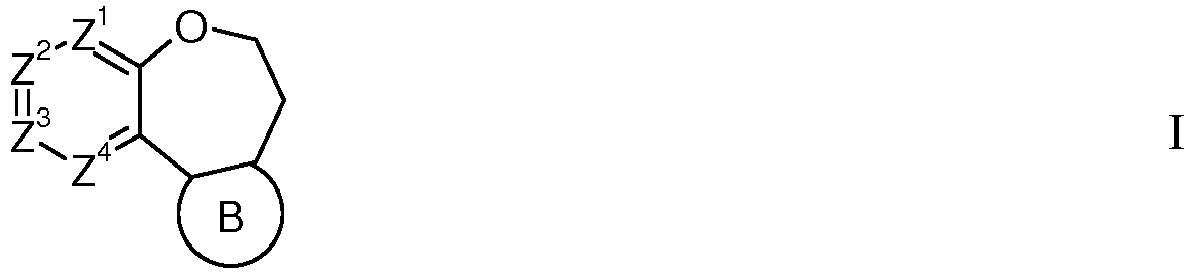
- Z1
- is CR1 or N;
- Z2
- is CR2 or N;
- Z3
- is CR3 or N;
- Z4
- is CR4 or N;
- B
- is a pyrazolyl, imidazolyl, or triazolyl ring fused to the benzoxepin ring and selected from the structures:
- The term "alkyl" as used herein refers to a saturated linear or branched-chain monovalent hydrocarbon radical of one to twelve carbon atoms (C1-C12), wherein the alkyl radical may be optionally substituted independently with one or more substituents described below. In another embodiment, an alkyl radical is one to eight carbon atoms (C1-C8), or one to six carbon atoms (C1-C6). Examples of alkyl groups include methyl (Me, -CH3), ethyl (Et, -CH2CH3), 1-propyl (n-Pr, n-propyl, -CH2CH2CH3), 2-propyl (i-Pr, i-propyl, -CH(CH3)2), 1-butyl (n-Bu, n-butyl, - CH2CH2CH2CH3),2-methyl-1-propyl (i-Bu, i-butyl, -CH2CH(CH3)2), 2-butyl (s-Bu, s-butyl, -CH(CH3)CH2CH3), 2-methyl-2-propyl (t-Bu, t-butyl,-C(CH3)3), 1-pentyl (n-pentyl, -CH2CH2CH2CH2CH3), 2-pentyl (-CH(CH3)CH2CH2CH3), 3-pentyl (-CH(CH2CH3)2), 2-methyl-2-butyl (-C(CH3)2CH2CH3), 3-methyl-2-butyl (-CH(CH3)CH(CH3)2), 3-methyl-1-butyl (-CH2CH2CH(CH3)2), 2-methyl-1-butyl (-CH2CH(CH3)CH2CH3), 1-hexyl (-CH2CH2CH2CH2CH2CH3), 2-hexyl (-CH(CH3)CH2CH2CH2CH3), 3-hexyl (-CH(CH2CH3)(CH2CH2CH3)), 2-methyl-2-pentyl (-C(CH3)2CH2CH2CH3), 3-methyl-2-pentyl (-CH(CH3)CH(CH3)CH2CH3), 4-methyl-2-pentyl (-CH(CH3)CH2CH(CH3)2), 3-methyl-3-pentyl (-C(CH3)(CH2CH3)2), 2-methyl-3-pentyl (-CH(CH2CH3)CH(CH3)2), 2,3-dimethyl-2-butyl (-C(CH3)2CH(CH3)2), 3,3-dimethyl-2-butyl (-CH(CH3)C(CH3)3, 1-heptyl, and 1-octyl.
- The term "alkylene" as used herein refers to a saturated linear or branched-chain divalent hydrocarbon radical of one to twelve carbon atoms (C1-C12), wherein the alkylene radical may be optionally substituted independently with one or more substituents described below. In another embodiment, an alkylene radical is one to eight carbon atoms (C1-C8), or one to six carbon atoms (C1-C6). Examples of alkylene groups include methylene (-CH2-), ethylene (-CH2CH2-), and propylene (-CH2CH2CH2-).
- The term "alkenyl" refers to linear or branched-chain monovalent hydrocarbon radical of two to eight carbon atoms (C2-C8) with at least one site of unsaturation, i.e., a carbon-carbon, sp2 double bond, wherein the alkenyl radical may be optionally substituted independently with one or more substitueandnts described herein, and includes radicals having "cis" and "trans" orientations, or alternatively, "E" and "Z" orientations. Examples include ethylenyl or vinyl (-CH=CH2), and allyl (-CH2CH=CH2).
- The term "alkenylene" refers to linear or branched-chain divalent hydrocarbon radical of two to eight carbon atoms (C2-C8) with at least one site of unsaturation, i.e., a carbon-carbon, sp2 double bond, wherein the alkenyl radical may be optionally substituted, and includes radicals having "cis" and "trans" orientations, or alternatively, "E" and "Z" orientations. Examples include ethylenylene or vinylene (-CH=CH-), and allyl (-CH2CH=CH-).
- The term "alkynyl" refers to a linear or branched monovalent hydrocarbon radical of two to eight carbon atoms (C2-C8) with at least one site of unsaturation, i.e., a carbon-carbon, sp triple bond, wherein the alkynyl radical may be optionally substituted independently with one or more substituents described herein. Examples include ethynyl (-C≡CH), and propynyl (propargyl, -CH2C≡CH).
- The term "alkynylene" refers to a linear or branched divalent hydrocarbon radical of two to eight carbon atoms (C2-C8) with at least one site of unsaturation, i.e., a carbon-carbon, sp triple bond, wherein the alkynyl radical may be optionally. Examples include ethynylene (-C≡C-), and propynylene (propargylene, -CH2C≡C-).
- The terms "carbocycle", "carbocyclyl", "carbocyclic ring" and "cycloalkyl" refer to a monovalent non-aromatic, saturated or partially unsaturated ring having 3 to 12 carbon atoms (C3-C12) as a monocyclic ring or 7 to 12 carbon atoms as a bicyclic ring. Bicyclic carbocycles having 7 to 12 atoms can be arranged, e.g., as a bicyclo [4,5], [5,5], [5,6] or [6,6] system, and bicyclic carbocycles having 9 or 10 ring atoms can be arranged as a bicyclo [5,6] or [6,6] system, or as bridged systems such as bicyclo[2.2.1]heptane, bicyclo[2.2.2]octane and bicyclo[3.2.2]nonane. Examples of monocyclic carbocycles include cyclopropyl, cyclobutyl, cyclopentyl, 1-cyclopent-1-enyl, 1-cyclopent-2-enyl, 1-cyclopent-3-enyl, cyclohexyl, 1-cyclohex-1-enyl, 1-cyclohex-2-enyl, 1-cyclohex-3-enyl, cyclohexadienyl, cycloheptyl, cyclooctyl, cyclononyl, cyclodecyl, cycloundecyl, and cyclododecyl.
- "Aryl" means a monovalent aromatic hydrocarbon radical of 6-20 carbon atoms (C6-C20) derived by the removal of one hydrogen atom from a single carbon atom of a parent aromatic ring system. Some aryl groups are represented in the exemplary structures as "Ar". Aryl includes bicyclic radicals comprising an aromatic ring fused to a saturated, partially unsaturated ring, or aromatic carbocyclic ring. Typical aryl groups include radicals derived from benzene (phenyl), substituted benzenes, naphthalene, anthracene, biphenyl, indenyl, indanyl, 1,2-dihydronaphthalene, and 1,2,3,4-tetrahydronaphthyl. Aryl groups are optionally substituted independently with one or more substituents described herein.
- "Arylene" means a divalent aromatic hydrocarbon radical of 6-20 carbon atoms (C6-C20) derived by the removal of two hydrogen atom from a two carbon atoms of a parent aromatic ring system. Some arylene groups are represented in the exemplary structures as "Ar". Arylene includes bicyclic radicals comprising an aromatic ring fused to a saturated, partially unsaturated ring, or aromatic carbocyclic ring. Typical arylene groups include radicals derived from benzene (phenylene), substituted benzenes, naphthalene, anthracene, biphenylene, indenylene, indanylene, 1,2-dihydronaphthalene, and 1,2,3,4-tetrahydronaphthyl. Arylene groups are optionally substituted.
- The terms "heterocycle", "heterocyclyl" and "heterocyclic ring" are used interchangeably herein and refer to a saturated or a partially unsaturated (i.e., having one or more double and/or triple bonds within the ring) carbocyclic radical of 3 to about 20 ring atoms in which at least one ring atom is a heteroatom selected from nitrogen, oxygen, phosphorus and sulfur, the remaining ring atoms being C, where one or more ring atoms is optionally substituted independently with one or more substituents described below. A heterocycle may be a monocycle having 3 to 7 ring members (2 to 6 carbon atoms and 1 to 4 heteroatoms selected from N, O, P, and S) or a bicycle having 7 to 10 ring members (4 to 9 carbon atoms and 1 to 6 heteroatoms selected from N, O, P, and S), e.g.: a bicyclo [4,5], [5,5], [5,6], or [6,6] system. Heterocycles are described in Paquette, Leo A.; "Principles of Modern Heterocyclic Chemistry" (W.A. Benjamin, New York, 1968), particularly Chapters 1, 3, 4, 6, 7, and 9; "The Chemistry of Heterocyclic Compounds, A series of Monographs" (John Wiley & Sons, New York, 1950 to present), in particular Volumes 13, 14, 16, 19, and 28; and J. Am. Chem. Soc. (1960) 82:5566. "Heterocyclyl" also includes radicals where heterocycle radicals are fused with a saturated, partially unsaturated ring, or aromatic carbocyclic or heterocyclic ring. Examples of heterocyclic rings include morpholin-4-yl, piperidin-1-yl, piperazinyl, piperazin-4-yl-2-one, piperazin-4-yl-3-one, pyrrolidin-1-yl, thiomorpholin-4-yl, S-dioxothiomorpholin-4-yl, azocan-1-yl, azetidin-1-yl, octahydropyrido[1,2-a]pyrazin-2-yl, [1,4]diazepan-1-yl, pyrrolidinyl, tetrahydrofuranyl, dihydrofuranyl, tetrahydrothienyl, tetrahydropyranyl, dihydropyranyl, tetrahydrothiopyranyl, piperidino, morpholino, thiomorpholino, thioxanyl, piperazinyl, homopiperazinyl, azetidinyl, oxetanyl, thietanyl, homopiperidinyl, oxepanyl, thiepanyl, oxazepinyl, diazepinyl, thiazepinyl, 2-pyrrolinyl, 3-pyrrolinyl, indolinyl, 2H-pyranyl, 4H-pyranyl, dioxanyl, 1,3-dioxolanyl, pyrazolinyl, dithianyl, dithiolanyl, dihydropyranyl, dihydrothienyl, dihydrofuranyl, pyrazolidinylimidazolinyl, imidazolidinyl, 3-azabicyco[3.1.0]hexanyl, 3-azabicyclo[4.1.0]heptanyl, azabicyclo[2.2.2]hexanyl, 3H-indolyl quinolizinyl and N-pyridyl ureas. Spiro moieties are also included within the scope of this definition. Examples of a heterocyclic group wherein 2 ring atoms are substituted with oxo (=O) moieties are pyrimidinonyl and 1,1-dioxo-thiomorpholinyl. The heterocycle groups herein are optionally substituted independently with one or more substituents described herein.
- The term "heteroaryl" refers to a monovalent aromatic radical of 5-, 6-, or 7-membered rings, and includes fused ring systems (at least one of which is aromatic) of 5-20 atoms, containing one or more heteroatoms independently selected from nitrogen, oxygen, and sulfur. Examples of heteroaryl groups are pyridinyl (including, e.g., 2-hydroxypyridinyl), imidazolyl, imidazopyridinyl, pyrimidinyl (including, e.g., 4-hydroxypyrimidinyl), pyrazolyl, triazolyl, pyrazinyl, tetrazolyl, furyl, thienyl, isoxazolyl, thiazolyl, oxadiazolyl, oxazolyl, isothiazolyl, pyrrolyl, quinolinyl, isoquinolinyl, tetrahydroisoquinolinyl, indolyl, benzimidazolyl, benzofuranyl, cinnolinyl, indazolyl, indolizinyl, phthalazinyl, pyridazinyl, triazinyl, isoindolyl, pteridinyl, purinyl, oxadiazolyl, triazolyl, thiadiazolyl, thiadiazolyl, furazanyl, benzofurazanyl, benzothiophenyl, benzothiazolyl, benzoxazolyl, quinazolinyl, quinoxalinyl, naphthyridinyl, and furopyridinyl. Heteroaryl groups are optionally substituted independently with one or more substituents described herein.
- The heterocycle or heteroaryl groups may be carbon (carbon-linked), or nitrogen (nitrogen-linked) bonded where such is possible. By way of example, carbon bonded heterocycles or heteroaryls are bonded at position 2, 3, 4, 5, or 6 of a pyridine, position 3, 4, 5, or 6 of a pyridazine, position 2, 4, 5, or 6 of a pyrimidine, position 2, 3, 5, or 6 of a pyrazine, position 2, 3, 4, or 5 of a furan, tetrahydrofuran, thiofuran, thiophene, pyrrole or tetrahydropyrrole, position 2, 4, or 5 of an oxazole, imidazole or thiazole, position 3, 4, or 5 of an isoxazole, pyrazole, or isothiazole, position 2 or 3 of an aziridine, position 2, 3, or 4 of an azetidine, position 2, 3, 4, 5, 6, 7, or 8 of a quinoline or position 1, 3, 4, 5, 6, 7, or 8 of an isoquinoline.
- By way of example, nitrogen bonded heterocycles or heteroaryls are bonded at position 1 of an aziridine, azetidine, pyrrole, pyrrolidine, 2-pyrroline, 3-pyrroline, imidazole, imidazolidine, 2-imidazoline, 3-imidazoline, pyrazole, pyrazoline, 2-pyrazoline, 3-pyrazoline, piperidine, piperazine, indole, indoline, 1H-indazole, position 2 of a isoindole, or isoindoline, position 4 of a morpholine, and position 9 of a carbazole, or β-carboline.
- The terms "treat" and "treatment" refer to both therapeutic treatment and prophylactic or preventative measures, wherein the object is to prevent or slow down (lessen) an undesired physiological change or disorder, such as the development or spread of cancer. For purposes of this invention, beneficial or desired clinical results include alleviation of symptoms, diminishment of extent of disease, stabilized (i.e., not worsening) state of disease, delay or slowing of disease progression, amelioration or palliation of the disease state, and remission (whether partial or total), whether detectable or undetectable. "Treatment" can also mean prolonging survival as compared to expected survival if not receiving treatment. Those in need of treatment include those already with the condition or disorder as well as those prone to have the condition or disorder or those in which the condition or disorder is to be prevented.
- The terms "cancer" refers to or describe the physiological condition in mammals that is typically characterized by unregulated cell growth. A "tumor" comprises one or more cancerous cells. Examples of cancer include, carcinoma, lymphoma, blastoma, sarcoma, and leukemia or lymphoid malignancies. More particular examples of such cancers include squamous cell cancer (e.g., epithelial squamous cell cancer), lung cancer including small- cell lung cancer, non-small cell lung cancer ("NSCLC"), adenocarcinoma of the lung and squamous carcinoma of the lung, cancer of the peritoneum, hepatocellular cancer, gastric or stomach cancer including gastrointestinal cancer, pancreatic cancer, glioblastoma, cervical cancer, ovarian cancer, liver cancer, bladder cancer, hepatoma, breast cancer, colon cancer, rectal cancer, colorectal cancer, endometrial or uterine carcinoma, salivary gland carcinoma, kidney or renal cancer, prostate cancer, vulval cancer, thyroid cancer, hepatic carcinoma, anal carcinoma, penile carcinoma, as well as head and neck cancer.
- The term "chiral" refers to molecules which have the property of non-superimposability of the mirror image partner, while the term "achiral" refers to molecules which are superimposable on their mirror image partner.
- The term "stereoisomers" refers to compounds which have identical chemical constitution, but differ with regard to the arrangement of the atoms or groups in space.
- "Diastereomer" refers to a stereoisomer with two or more centers of chirality and whose molecules are not mirror images of one another. Diastereomers have different physical properties, e.g. melting points, boiling points, spectral properties, and reactivities. Mixtures of diastereomers may separate under high resolution analytical procedures such as electrophoresis and chromatography.
- "Enantiomers" refer to two stereoisomers of a compound which are non-superimposable mirror images of one another.
- Stereochemical definitions and conventions used herein generally follow S. P. Parker, Ed., McGraw-Hill Dictionary of Chemical Terms (1984) McGraw-Hill Book Company, New York; and Eliel, E. and Wilen, S., "Stereochemistry of Organic Compounds", John Wiley & Sons, Inc., New York, 1994. The compounds of the invention may contain asymmetric or chiral centers, and therefore exist in different stereoisomeric forms. It is intended that all stereoisomeric forms of the compounds of the invention, including diastereomers, enantiomers and atropisomers, as well as mixtures thereof such as racemic mixtures, form part of the present invention. Many organic compounds exist in optically active forms, i.e., they have the ability to rotate the plane of plane-polarized light. In describing an optically active compound, the prefixes D and L, or R and S, are used to denote the absolute configuration of the molecule about its chiral center(s). The prefixes d and 1 or (+) and (-) are employed to designate the sign of rotation of plane-polarized light by the compound, with (-) or 1 meaning that the compound is levorotatory. A compound prefixed with (+) or d is dextrorotatory. For a given chemical structure, these stereoisomers are identical except that they are mirror images of one another. A specific stereoisomer may also be referred to as an enantiomer, and a mixture of such isomers is often called an enantiomeric mixture. A 50:50 mixture of enantiomers is referred to as a racemic mixture or a racemate, which may occur where there has been no stereoselection or stereospecificity in a chemical reaction or process. The terms "racemic mixture" and "racemate" refer to an equimolar mixture of two enantiomeric species, devoid of optical activity.
- The term "tautomer" or "tautomeric form" refers to structural isomers of different energies which are interconvertible via a low energy barrier. For example, proton tautomers (also known as prototropic tautomers) include interconversions via migration of a proton, such as keto-enol and imine-enamine isomerizations. Valence tautomers include interconversions by reorganization of some of the bonding electrons.
- The phrase "pharmaceutically acceptable salt" as used herein, refers to pharmaceutically acceptable organic or inorganic salts of a compound of the invention. Exemplary salts include to sulfate, citrate, acetate, oxalate, chloride., bromide, iodide, nitrate, bisulfate, phosphate, acid phosphate, isonicotinate, lactate, salicylate, acid citrate, tartrate, oleate, tannate, pantothenate, bitartrate, ascorbate, succinate, maleate, gentisinate, fumarate, gluconate, glucuronate, saccharate, formate, benzoate, glutamate, methanesulfonate "mesylate", ethanesulfonate, benzenesulfonate, p-toluenesulfonate, and pamoate (i.e., 1,1'-methylene-bis(2-hydroxy-3-naphthoate)) salts. A pharmaceutically acceptable salt may involve the inclusion of another molecule such as an acetate ion, a succinate ion or other counter ion. The counter ion may be any organic or inorganic moiety that stabilizes the charge on the parent compound. Furthermore, a pharmaceutically acceptable salt may have more than one charged atom in its structure. Instances where multiple charged atoms are part of the pharmaceutically acceptable salt can have multiple counter ions. Hence, a pharmaceutically acceptable salt can have one or more charged atoms and/or one or more counter ion.
- If the compound of the application is a base, the desired pharmaceutically acceptable salt may be prepared by any suitable method available in the art, e.g., treatment of the free base with an inorganic acid, such as hydrochloric acid, hydrobromic acid, sulfuric acid, nitric acid, methanesulfonic acid, and phosphoric acid, or with an organic acid, such as acetic acid, trifluoroacetic acid, maleic acid, succinic acid, mandelic acid, fumaric acid, malonic acid, pyruvic acid, oxalic acid, glycolic acid, salicylic acid, a pyranosidyl acid, such as glucuronic acid or galacturonic acid, an alpha hydroxy acid, such as citric acid or tartaric acid, an amino acid, such as aspartic acid or glutamic acid, an aromatic acid, such as benzoic acid or cinnamic acid, a sulfonic acid, such as p-toluenesulfonic acid or ethanesulfonic acid.
- If the compound of the application is an acid, the desired pharmaceutically acceptable salt may be prepared by any suitable method, e.g., treatment of the free acid with an inorganic or organic base, such as an amine (primary, secondary or tertiary), an alkali metal hydroxide or alkaline earth metal hydroxide, or the like. Illustrative examples of suitable salts include organic salts derived from amino acids, such as glycine and arginine, ammonia, primary, secondary, and tertiary amines, and cyclic amines, such as piperidine, morpholine and piperazine, and inorganic salts derived from sodium, calcium, potassium, magnesium, manganese, iron, copper, zinc, aluminum and lithium.
- The phrase "pharmaceutically acceptable" indicates that the substance or composition must be compatible chemically and/or toxicologically, with the other ingredients comprising a formulation, and/or the mammal being treated therewith.
- A "solvate" refers to an association or complex of one or more solvent molecules and a compound of the invention. Examples of solvents that form solvates include water, isopropanol, ethanol, methanol, DMSO, ethylacetate, acetic acid, and ethanolamine.
- The terms "compound of this invention" and "compounds of the present invention" and "compounds of Formula I" include compounds of Formulas I and stereoisomers, geometric isomers, tautomers, solvates, metabolites, and pharmaceutically acceptable salts and prodrugs thereof.
- Any formula or structure given herein, including Formula I compounds, is also intended to represent hydrates, solvates, and polymorphs of such compounds, and mixtures thereof.
- Any formula or structure given herein, including Formula I compounds, is also intended to represent unlabeled forms as well as isotopically labeled forms of the compounds. Isotopically labeled compounds have structures depicted by the formulas given herein except that one or more atoms are replaced by an atom having a selected atomic mass or mass number. Examples of isotopes that can be incorporated into compounds of the invention include isotopes of hydrogen, carbon, nitrogen, oxygen, phosphorous, fluorine, and chlorine, such as, 2H (deuterium, D), 3H (tritium), 11C, 13C, 14C, 15N, 18F, 31P, 32P, 35S, 36Cl, and 125I. Various isotopically labeled compounds of the present invention, e.g. those into which radioactive isotopes such as 3H, 13C, and 14C are incorporated. Such isotopically labelled compounds may be useful in metabolic studies, reaction kinetic studies, detection or imaging techniques, such as positron emission tomography (PET) or single-photon emission computed tomography (SPECT) including drug or substrate tissue distribution assays, or in radioactive treatment of patients. Deuterium labelled or substituted therapeutic compounds of the invention may have improved DMPK (drug metabolism and pharmacokinetics) properties, relating to distribution, metabolism, and excretion (ADME). Substitution with heavier isotopes such as deuterium may afford certain therapeutic advantages resulting from greater metabolic stability, e.g. increased in vivo half-life or reduced dosage requirements. An 18F labeled compound may be useful for PET or SPECT studies. Isotopically labeled compounds of this invention and prodrugs thereof can generally be prepared by carrying out the procedures disclosed in the schemes or in the examples and preparations described below by substituting a readily available isotopically labeled reagent for a non-isotopically labeled reagent. Further, substitution with heavier isotopes, particularly deuterium (i.e., 2H or D) may afford certain therapeutic advantages resulting from greater metabolic stability, e.g. increased in vivo half-life or reduced dosage requirements or an improvement in therapeutic index. It is understood that deuterium in this context is regarded as a substituent in the compound of the formula (I). The concentration of such a heavier isotope, specifically deuterium, may be defined by an isotopic enrichment factor. In the compounds of this invention any atom not specifically designated as a particular isotope is meant to represent any stable isotope of that atom. Unless otherwise stated, when a position is designated specifically as "H" or "hydrogen", the position is understood to have hydrogen at its natural abundance isotopic composition. Accordingly, in the compounds of this invention any atom specifically designated as a deuterium (D) is meant to represent deuterium.
- For illustrative purposes, the General Procedures show general methods which may be applied for preparation of Formula I compounds, as well as key intermediates. The Schemes and Examples sections contain more detailed description of individual reaction steps. Those skilled in the art will appreciate that other synthetic routes may be used to synthesize the inventive compounds. Although certain starting materials and routes are depicted in the Schemes, General Procedures and Examples, other similar starting materials and routes can be substituted to provide a variety of derivatives and/or reaction conditions. In addition, many of the compounds prepared by the methods described below can be further modified in light of this disclosure using conventional chemistry well known to those skilled in the art.
- In preparing compounds of Formulas I, protection of remote functionality (e.g., primary or secondary amine) of intermediates may be necessary. The need for such protection will vary depending on the nature of the remote functionality and the conditions of the preparation methods. Suitable amino-protecting groups include acetyl, trifluoroacetyl, t-butoxycarbonyl (BOC), benzyloxycarbonyl (CBz) and 9-fluorenylmethyleneoxycarbonyl (Fmoc). The need for such protection is readily determined by one skilled in the art. For a general description of protecting groups and their use, see T. W. Greene, Protective Groups in Organic Synthesis, John Wiley & Sons, New York, Third Ed., 1999.
- In the methods of preparing the compounds of this invention, it may be advantageous to separate reaction products from one another and/or from starting materials. The desired products of each step or series of steps is separated and/or purified (hereinafter separated) to the desired degree of homogeneity by the techniques common in the art. Typically such separations involve multiphase extraction, crystallization from a solvent or solvent mixture, distillation, sublimation, or chromatography. Chromatography can involve any number of methods including, e.g.: reverse-phase and normal phase; size exclusion; ion exchange; high, medium and low pressure liquid chromatography methods and apparatus; small scale analytical; simulated moving bed (SMB) and preparative thin or thick layer chromatography, as well as techniques of small scale thin layer and flash chromatography.
- Another class of separation methods involves treatment of a mixture with a reagent selected to bind to or render otherwise separable a desired product, unreacted starting material, reaction by product, or the like. Such reagents include adsorbents or absorbents such as activated carbon, molecular sieves, ion exchange media, or the like. Alternatively, the reagents can be acids in the case of a basic material, bases in the case of an acidic material, binding reagents such as antibodies, binding proteins, selective chelators such as crown ethers, or liquid/liquid ion extraction reagents (LIX).
- Selection of appropriate methods of separation depends on the nature of the materials involved. For example, boiling point and molecular weight in distillation and sublimation, presence or absence of polar functional groups in chromatography, stability of materials in acidic and basic media in multiphase extraction. One skilled in the art will apply techniques most likely to achieve the desired separation.
- Diastereomeric mixtures can be separated into their individual diastereomers on the basis of their physical chemical differences by methods well known to those skilled in the art, such as by chromatography and/or fractional crystallization. Enantiomers can be separated by converting the enantiomeric mixture into a diastereomeric mixture by reaction with an appropriate optically active compound (e.g., chiral auxiliary such as a chiral alcohol or Mosher's acid chloride), separating the diastereomers and converting (e.g., hydrolyzing) the individual diastereoisomers to the corresponding pure enantiomers. Also, some of the compounds of the present invention may be atropisomers (e.g., substituted biaryls) and are considered as part of this invention. Enantiomers can also be separated by use of a chiral HPLC column.
- A single stereoisomer, e.g., an enantiomer, substantially free of its stereoisomer may be obtained by resolution of the racemic mixture using a method such as formation of diastereomers using optically active resolving agents (Eliel, E. and Wilen, S. "Stereochemistry of Organic Compounds," John Wiley & Sons, Inc., New York, 1994; Lochmuller, C. H., (1975) J. Chromatogr., 113(3):283-302). Racemic mixtures of chiral compounds of the invention can be separated and isolated by any suitable method, including: (1) formation of ionic, diastereomeric salts with chiral compounds and separation by fractional crystallization or other methods, (2) formation of diastereomeric compounds with chiral derivatizing reagents, separation of the diastereomers, and conversion to the pure stereoisomers, and (3) separation of the substantially pure or enriched stereoisomers directly under chiral conditions. See: "Drug Stereochemistry, Analytical Methods and Pharmacology," Irving W. Wainer, Ed., Marcel Dekker, Inc., New York (1993).
- Under method (1), diastereomeric salts can be formed by reaction of enantiomerically pure chiral bases such as brucine, quinine, ephedrine, strychnine, α-methyl-β-phenylethylamine (amphetamine), with asymmetric compounds bearing acidic functionality, such as carboxylic acid and sulfonic acid. The diastereomeric salts may be induced to separate by fractional crystallization or ionic chromatography. For separation of the optical isomers of amino compounds, addition of chiral carboxylic or sulfonic acids, such as camphorsulfonic acid, tartaric acid, mandelic acid, or lactic acid can result in formation of the diastereomeric salts.
- Alternatively, by method (2), the substrate to be resolved is reacted with one enantiomer of a chiral compound to form a diastereomeric pair (E. and Wilen, S. "Stereochemistry of Organic Compounds", John Wiley & Sons, Inc., 1994, p. 322). Diastereomeric compounds can be formed by reacting asymmetric compounds with enantiomerically pure chiral derivatizing reagents, such as menthyl derivatives, followed by separation of the diastereomers and hydrolysis to yield the pure or enriched enantiomer. A method of determining optical purity involves making chiral esters, such as a menthyl ester, e.g., (-) menthyl chloroformate in the presence of base, or Mosher ester, α-methoxy-α-(trifluoromethyl)phenyl acetate (Jacob III. J. Org. Chem. (1982) 47:4165), of the racemic mixture, and analyzing the 1H NMR spectrum for the presence of the two atropisomeric enantiomers or diastereomers. Stable diastereomers of atropisomeric compounds can be separated and isolated by normal- and reverse-phase chromatography following methods for separation of atropisomeric naphthyl-isoquinolines (
WO 96/15111 - The following SCHEMES illustrate the manufacture of the compound 9-bromo-2-(2-isopropyl-5-methyl-1,2,4-triazol-3-yl)-5,6-dihydroimidazo[1,2-d][1,4]benzoxazepine and its use as intermediate.


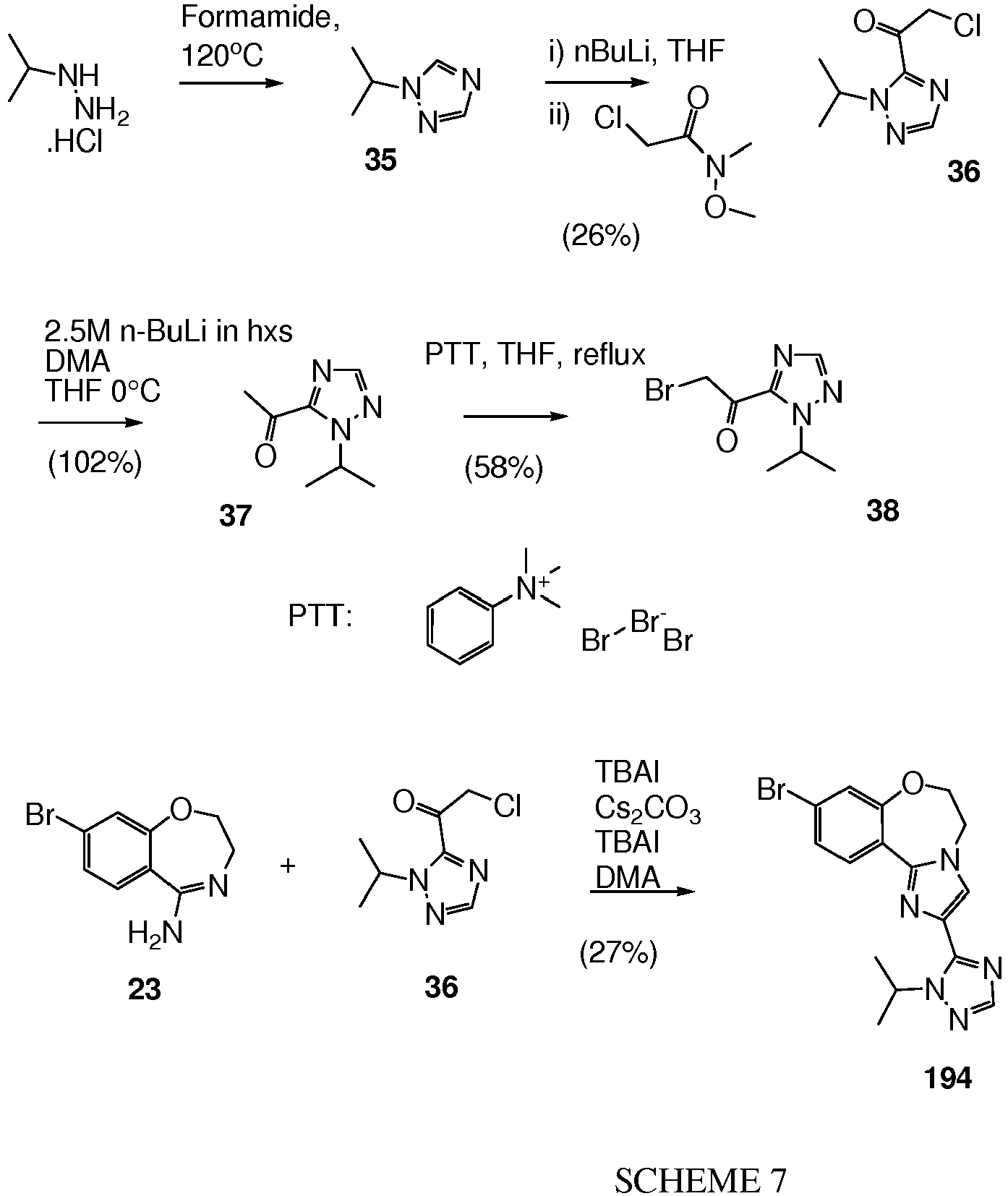


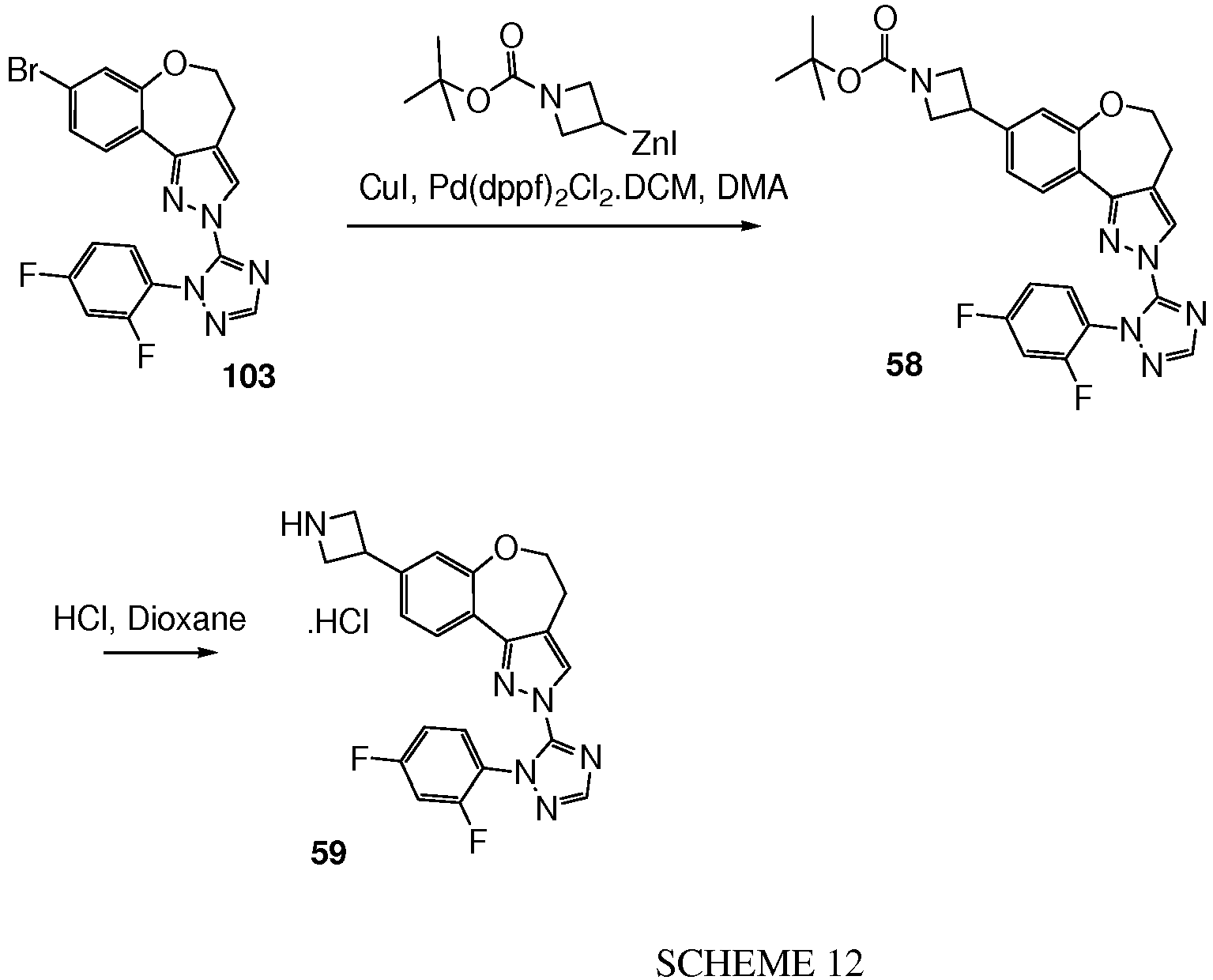


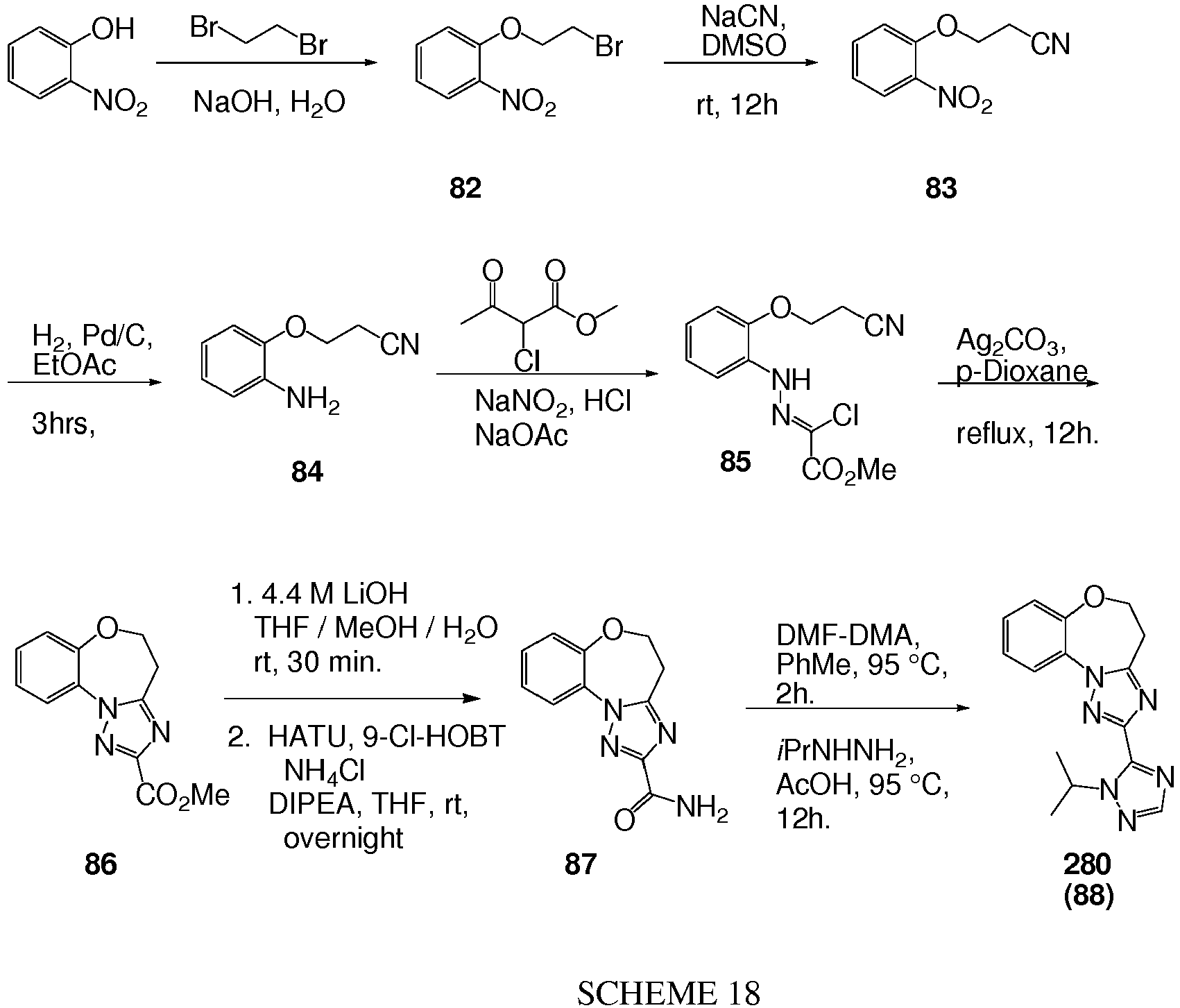


- This invention refers to 9-bromo-2-(2-isopropyl-5-methyl-1,2,4-triazol-3-yl)-5,6-dihydroimidazo[1,2-d] [1,4]benzoxazepine

- The chemical reactions described in the Examples may be readily adapted to prepare a number of other PI3K inhibitors of the invention, and alternative methods for preparing the compounds of this invention are deemed to be within the scope of this invention. For example, the synthesis of non-exemplified compounds according to the invention may be successfully performed by modifications apparent to those skilled in the art, e.g., by appropriately protecting interfering groups, by utilizing other suitable reagents known in the art other than those described, and/or by making routine modifications of reaction conditions. Alternatively, other reactions disclosed herein or known in the art will be recognized as having applicability for preparing other compounds of the invention.
- In the Examples described below, unless otherwise indicated all temperatures are set forth in degrees Celsius. Reagents were purchased from commercial suppliers such as Sigma Aldrich Chemical Company, and were used without further purification unless otherwise indicated. The reactions set forth below were conducted generally under a positive pressure of nitrogen or argon or with a drying tube (unless otherwise stated) in anhydrous solvents, and the reaction flasks were typically fitted with rubber septa for the introduction of substrates and reagents via syringe. Glassware was oven dried and/or heat dried. Column chromatography was conducted on a Biotage system (Manufacturer: Dyax Corporation) having a silica gel column or on a silica SEP PAK@ cartridge (Waters). 1H NMR spectra were obtained at 400 MHz in deuterated CDCl3, d6-DMSO, CH3OD or d6-acetone solutions (reported in ppm), using chloroform as the reference standard (7.25 ppm). When peak multiplicities are reported, the following abbreviations are used: s (singlet), d (doublet), t (triplet), m (multiplet), br (broadened), dd (doublet of doublets), dt (doublet of triplets). Coupling constants, when given, are reported in Hertz (Hz).
- Liquid Chromatography Mass Spectrometry (LCMS) experiments to determine retention times (RT) and associated mass ions were performed using various methods familiar to those skilled in the art of analytical methods of organic compounds.
- Chemical structures were named according to: vendor designation; IUPAC convention; ChemDraw Ultra, Version 9.0.1, CambridgeSoft Corp., Cambridge MA; or Autonom 2000 Name, MDL Inc. It is recognized by those skilled in the art that a compound may have more than one name, according to different conventions.
- The following abbreviations were used: DCM: dichloromethane or methylene chloride; DMF: N,N-dimethylformamide; DMSO: dimethyl sulfoxide; EtOAc: ethyl acetate; HATU: N,N,N',N'-tetramethyl-O-(7-azabenzotriazol-1-yl)uranium hexafluorophosphate; hr: hour(s); IPA: isopropyl alcohol; min: minute(s); NIS: N-iodo-succinimide; Pd(PPh3)4: tetrakis(triphenylphosphine)-palladium(0); PPA: polyphosphoric acid; RT: room temperature; TEA: triethylamine; TFA: trifluoroacetic acid; THF: tetrahydrofuran; IMS: Industrial Methylated Spirits
- Solid 3-bromophenol (10.0 g, 58 mmol) was added portion wise to a stirred suspension of K2CO3 in acetone (100 mL) at RT. Sodium iodide (NaI, 1.0 g) was added, followed by ethyl-4-bromo-butyrate (9.2 mL, 64 mmol). The reaction mixture was heated at 80°C overnight, cooled to RT, diluted with water and extracted with ethylacetate to give ethyl 4-(3-bromophenoxy)butanoate 6.
- Ethyl 4-(3-bromophenoxy)butanoate 6 was taken up in 100 mL THF and 50 mL water and treated with lithium hydroxide LiOH (hydrate, 4.9 g). The whole was heated at 50°C for 2 days. The mixture was cooled to RT and acidified to pH 1 with 2N HCl. The aqueous was extracted with ethylacetate. The combined organics were washed with brine and dried over sodium sulfate to give crude 4-(3-bromophenoxy)butanoic acid as a sticky solid. 1H NMR (DMSO-d6, 500 MHz) 7.24 (m, 1H), 7.13 (m, 1H), 7.11 (m, 1H), 6.95 (m, 1H), 3.99 (m, 2H), 2.37 (m, 2H), 1.94 (m, 2H).
- To a stirred suspension of PPA (ca. 60 g) and Celite® (ca. 40 g) in 100 mL toluene was added crude 4-(3-bromophenoxy)butanoic acid 7 (ca. 58 mmol) in one portion, 10 mL toluene rinse. The resultant suspension was heated at 110°C for 5 hr. The toluene was decanted through a plug of Celite® and the remaining slurry was washed repeatedly with toluene and ethylacetate. The eluent was concentrated and purified by flash column chromatography (4:1 hex:EtOAc) to give 1 (7 g, ca. 50% y). 1H NMR (DMSO-d6, 500 MHz) 7.55 (d, J= 8.5 Hz, 1H), 7.37 (d, J = 1.5 Hz, 1H), 7.35 (dd, J= 8.5, 1.5 Hz, 1H), 4.24 (t, J= 6.5 Hz, 2H), 2.79 (t, J = 7.0 Hz, 2H), 2.14 (m, 2H).
- Phosphorus oxychloride, POCl3 (1.88 mL, 20.8 mmol) was added dropwise to DMF (5 mL) at 0°C. After 30 min a solution of 18 (2.0 g, 8.3 mmol) (Example 1) in 8 mL DMF was added dropwise. The reaction mixture was allowed to reach RT to stir 2 hr, then poured slowly over rapidly stirred ice water. The aqueous phase was extracted with ethylacetate and the combined organics were washed with brine, dried over sodium sulfate and concentrated to give 2.
- To a slurry of NaH (60% dispersion in mineral oil) (1.48 g, 37.1 mmol) in THF (∼50 mL) at RT was added 1-(5-bromo-2-(2-bromoethoxy)phenyl)ethanone (8.07 g, 25.1 mmol). The reaction mixture was slowly heated to reflux and allowed to stir for 20 h. The solvent was removed under vacuum pressure and the concentrated residue was absorbed onto silica gel and purified by column chromatography (4:1 EtOAc/petroleum ether). The product was afforded as a yellow oil after the solvents were removed, providing 4.22 g (70%) of 3. 1H NMR (CDCl3) δ 7.87 (d, J = 2.6 Hz, 1H), 7.50 (dd, J = 2.6, 8.1 Hz, 1H), 6.97 (d, J = 8.8 Hz, 2H), 4.24 (t, J = 6.6 Hz, 2H), 2.89 (t, J = 7.0 Hz, 2H), 2.15-2.29 (m, 2H).
- To 3 (3 g, 12 mmol) in ether (110 mL) was added bromine (0.7 mL, 14 mmol) and allowed to stir at RT overnight. The reaction mixture was concentrated under reduced pressure and purified via ISCO chromatography (hexane to 20% hexane in EtOAc over 45 min). Collected fractions and concentrated to give 4 (3.53 g, 89%). 1H NMR (500 MHz, CDCl3) δ 7.86 (d, J= 2.5, 1H), 7.52 (dt, J = 28.5, 14.2, 1H), 6.97 (d, J = 8.7, 1H), 4.95 (dd, J = 7.6, 6.8, 1H), 4.53 - 4.36 (m, 1H), 4.17 (ddd, J = 12.8, 9.9, 4.4, 1H), 3.04-2.84 (m, 1H), 2.52 (ddt, J = 14.7, 7.8, 4.5, 1H)
-

- Methylhydrazine and trimethylsilylisocyanate were reacted in THF at 0°C and then quenched and hydrolyzed with methanol to give 1-methylhydrazinecarboxamide.
-

-

- 2-Isobutyryl-1-methylhydrazinecarboxamide was cyclized with 10-camphorsulfonic acid at reflux in ethylacetate to give 5.
-

- Acetamide and ethyl chloroformate were mixed at 45°C to give the hydrochloride salt of ethyl acetimidate which was further reacted with ethyl chloroformate, diisopropylethylamine, and DCM at 0°C to give ethyl N-ethoxycarbonylacetimidate which was reacted with methyl hydrazine or isopropyl hydrazine hydrochloride in TEA and toluene to give 6a and 6b, respectively.
-

- 3-Methylbutan-2-one was brominated with bromine in methanol to give 1-bromo-3-methylbutan-2-one which was reacted with 4-methoxybenzylamine and cyclized with sodium cyanate to give 7.
- Triphenylmethyl chloride (16.0 g, 57.5 mmol) was added portionwise to a solution of 2-methylimidazole (4.10 g, 50.0 mmol) and TEA (9.02 mL, 64.7 mmol) in 20 ml of N,N-dimethylformamide. The mixture was stirred for 18 hr, mixed with 300 ml of water and extracted with 1000 ml of EtOAc. The organic extract was washed with 1 L of water, brine, dried over MgSO4 and concentrate in vacuum to 50 ml volume. A precipitate was collected, washed with EtOAc and dried in high vacuum for 18 hr. Weight 15.0 g (92.5%). 1H NMR (400 MHz, CDC13) δ 7.34 - 7.29 (m, 9H), 7.16-7.11 (m, 6H), 6.90 (d, J = 1.5, 1H), 6.71 (d, J = 1.5, 1H), 1.65 (s, 3H).
- 1.6 M of n-butyllithium in hexane (7.5 mL) was added dropwise to a solution of 2-methyl-1-trityl-1H-imidazole (3.244 g, 10.00 mmol) in THF (100.0 mL, 1233 mmol) at -76°C. The dark red mixture was stirred for 45 min. Ethyl formate (4.039 mL, 50.00 mmol) was added quickly and the mixture (turned yellowish) was stirred for 20 min. 6 ml of 5% aq. citric acid were added and the mixture was mixed with 60 ml of aq citric acid and extracted with EtOAc. The organic layer was washed with water, brine, dried over MgSO4 and concentrated in vacuum. Pale yellow semisolid material (2.025 g, 57.5%) was used in the next step without further purification.
- Crude 2-(1-trityl-1H-imidazol-2-yl)acetaldehyde (2.025 g, 5.75 mmol) was dissolved in MeOH/THF (1:1, 40 ml) and NaBH4 (0.435 g, 11.5 mmol) was added portionwise to the above mixture. The mixture was stirred for 18 hr, diluted with 100 ml of water and extracted with 2x DCM. The combined organic extracts were washed with water, brine, dried over Na2SO4 and concentrated in vacuum. Weight of the residue 1.915 g (94%). 1H NMR (500 MHz, CDCl3 δ 7.35 - 7.31 (m, 9H), 7.12 (dd, J = 6.7, 2.7, 6H), 6.93 (d, J = 1.0, 1H), 6.74 (d, J = 1.0, 1H), 5.04 (br, 1H), 3.46 (t, J = 5.4, 2H), 2.00 (t, J = 5.4, 2H).
- Diisopropyl azodicarboxylate (1160 uL, 5.90 mmol) was added dropwise to a mixture of 2-(1-tutyl-1H-imidazol-2-yl)ethanol (1900 mg, 5.4 mmol), methyl 5-hydroxy-6-iodonicotinate (1570 mg, 5.63 mmol) and triphenylphosphine (1550 mg, 5.90 mmol) in THF (45.0 mL, 555 mmol) at 0°C. After stirring for 3 hr the mixture was mixed with water and extracted with EtOAc. The organic layer was washed with water, brine, dried over MgSO4 and concentrated in vacuum. The residue was purified on 40 g silica column eluting with 50% EtOAc in DCM to give 1.45 g (44%) of methyl 6-iodo-5-(2-(1-trityl-1H-imidazol-2-yl)ethoxy)nicotinate. MS(ESI+): 616.0. 1H NMR (400 MHz, CDCl3) δ 8.52 (d, J = 1.9, 1H), 7.40 - 7.28 (m, 10H), 7.20 - 7.16 (m, 6H), 6.99 (d, J = 1.5, 1H), 6.81 (d, J = 1.5, 1H), 3.98 - 3.91 (m, 5H), 2.46 (t, J = 7.3, 2H).
- Triethylsilane (0.160 mL, 1.00 mmol) was added to a solution of 1.45 g (2.36 mmol) of methyl 6-iodo-5-(2-(1-trityl-1H-imidazol-2-yl)ethoxy)nicotinate in TFA (30.0 mL, 389 mmol). The mixture was stirred for 4 hr, concentrated in vacuum and triturated with 50 ml of anhydrous ethyl ether. The solid material was collected, washed with several portions of ether and partitioned between 1 M of aqueous sodium carbonate and EtOAc. The organic extracts were washed with water, brine, dried over magnesium sulfate and concentrated in vacuum to give a residue (0.55 g, 62%) of methyl 5-(2-(1H-imidazol-2-yl)ethoxy)-6-iodonicotinate. MS(ESI+): 374.0
- A mixture of methyl 5-(2-(1H-imidazol-2-yl)ethoxy)-6-iodonicotinate (373 mg, 1.00 mmol), copper(I) oxide (14.3 mg, 0.10 mmol), ninhydrin (35.6 mg, 0.20 mmol) and potassium carbonate (290 mg, 2.10 mmol) in DMSO (10.0 mL) was heated at 110°C for 2 hr. The mixture was poured into 20 ml of water and extracted with EtOAc (3x15 ml). The organic extracts were washed with water (3x15 ml), brine, dried over MgSO4 and concentrated. The residue (0.220 g, 90%) was used without further purification in the next step. MS(ESI+): 246.0. 1H NMR (500 MHz, CDCl3) δ 8.77 (d, J= 1.9, 1H), 8.10 (s, 1H), 8.04 (d, J= 1.9, 1H), 7.08 (s, 1H), 4.47 (t, J= 5.1, 2H), 3.97 (s, 3H), 3.46 (t, J = 5.1, 2H).
- N-Iodosuccinimide (394 mg, 1.75 mmol) was added to a solution of methyl 5-(2-(1H-imidazol-2-yl)ethoxy)-6-iodonicotinate (220 mg, 0.90 mmol) in DMF (8.0 mL, 100 mmol). The mixture was stirred for 6 hr at RT and 18 hr at 60°C. The mixture was concentrated in vacuum and the residue was partitioned between EtOAc and 1M aq Na2CO3. The organic layer was washed with water, brine, dried over Na2SO4 and concentrated. The residue was purified on a 4 g silica column eluting with 40% of EtOAc in heptane. Weight 130 mg. MS(ESI+): 497.9. 1H NMR (500 MHz, CDCl3) δ 9.02 (d, J= 1.9, 1H), 8.21 (d, J= 1.9, 1H), 4.65 (t, J= 6.4, 2H), 4.00 (s, 3H), 3.14 (t, J = 6.4, 2H).
- Ethylmagnesium bromide in ethyl ether (3.0 M, 0.104 mL) was added dropwise to a suspension of 9 (130 mg, 0.26 mmol) in THF (5.0 mL, 62 mmol) at -15°C. The mixture was stirred for 15-20 min (a completion was monitored by LCMS), poured into 20 ml of sat. aq. NH4Cl and extracted with EtOAc. The organic extracts were washed with water (2x20 ml), brine, dried over MgSO4 and concentrated in vacuum. Weight 92 mg (94%). MS(ESI+): 372.0.
- A mixture of 1-isopropyl-5-(4,4,5,5-tetramethyl-1,3,2-dioxaborolan-2-yl)-1H-pyrazole (117.1 mg, 0.4958 mmol), 10 (92.0 mg, 0.248 mmol), [1,1'-bis(diphenylphosphino)ferrocene]dichloro-palladium(II), complex with DCM (1:1) (20.24 mg, 0.02479 mmol) and 1.0 M of potassium acetate in water (0.49 mL) in 1,2-dimethoxyethane (5.0 mL, 48 mmol) was degassed. The reaction was microwaved on 200 watts, 140°C for 40 min. The reaction mixture was filtered, washed with DME, mixed with water and extracted with EtOAc. Combined organic extracts were washed with 1% aq NaOH to remove a phenolic byproduct, then 5% aq citric acid, water, brine, dried over Na2SO4 and concentrated in vacuum. The residue was purified on 4 g silica column, eluting with 60-70% of EtOAc in heptane. Yield 21 mg. MS(ESI+): 354.2.
- A mixture of 21mg (0.06 mmol) of 11 and 1.0 ml of 1 N aq LiOH in 4 ml of methanol and 4 ml of THF was stirred for 6 hr. The mixture was acidified to pH 3 by addition of 1 N HCl and concentrated in vacuum. The residue was partitioned between EtOAc and water, the organic layer was washed with brine, dried over Na2SO4 and concentrated. Yield 17 mg. MS(ESI+): 340.1
- A mixture of 26 (370.1 mg, 1.000 mmol), 1-isopropyl-5-(4,4,5,5-tetramethyl-1,3,2-dioxaborolan-2-yl)-1H-pyrazole(354 mg, 1.50 mmol), [1,1'-bis(diphenylphosphino)ferrocene]dichloropalladium(II), complex with DCM (1:1) (40.8 mg, 0.0500 mmol) and 2.0 M of potassium acetate in water (1.00 mL) in acetonitrile (12 mL, 230 mmol) was degassed. The reaction was microwaved on 200 watts, 140°C for 30 min. The reaction mixture was partitioned between water and EtOAc, filtered, the organic layer was washed with water, brine, dried over MgSO4 and concentrated in vacuum. The residue was purified on 12 g silica column eluting with 35-40% EtOAc in heptane. Yield 119 mg (34%). MS: (ESI+): 353.1.
- Following the procedure in Example 10, 13 was hydrolized to give 14. MS(ESI+): 339.4.
- Sodium methoxide (2.139 g, 39.60 mmol) was added to a solution of ethoxymethylenemalonitrile (2.198 g, 18.00 mmol) and isopropylhydrazine hydrochloride (2.212 g, 20.00 mmol) in ethanol (50 mL, 800 mmol). The mixture was heated under reflux for 18 hr. The solvent was removed in vacuum, the residue partitioned between EtOAc and water. The organic layer was washed with water, brine, dried over Na2SO4, concentrated in vacuum and purified on 25 g silica column, eluting with 25-30% of EtOAc in heptane, to give 5-amino-1-isopropyl-1H-pyrazole-4-carbonitrile (yield 1.77 g, 65%). MS(ESI+): 151.2. 1H NMR (400 MHz, CDCl3) δ 7.51 (d, J = 6.4, 1H), 4.23 (ddd, J = 19.8, 16.6, 9.8, 3H), 1.46 (d, J= 6.6, 7H).
- Amyl nitrite (13.00 g, 111.0 mmol) was added to a suspension of 5-amino-1-isopropyl-1H-pyrazole-4-carbonitrile (1.77 g, 11.8 mmol) in diiodomethane (56.0 mL, 695 mmol) at -10°C in 30 min. The mixture was stirred for 30 min at RT and then heated at 100°C for 2 hr. The mixture was then cooled and concentrated in high vacuum to give a residue which was partitioned between EtOAc and 5% Na2S2O5. The organic layer was washed with water, 0.1% of aq HCl, water, brine, dried and concentrated in vacuum. The residue was purified on silica column eluting with 20-30% EtOAc in heptane. Yield 1.68 g (55%). MS(ESI+): 262.2
- Isopropylmagnesium chloride in THF (2.0 M, 1.5 mL, 3.00 mmol) was added dropwise to a solution of 40 (740 mg, 2.00 mmol) in THF (12 mL, 150 mmol) at RT. The mixture was stirred for 2.5 hr. Tributyltin chloride (0.8138 mL, 3.000 mmol) was added and the mixture was stirred for 18 hr. The mixture was mixed with sat aq. NH4Cl and extracted with ehyl acetate. The organic layer was washed with brine, dried over Na2SO4 and purified on 25 g silica column eluting with 15-20% EtOAc in heptane. Yield 160 mg (15%). MS(ESI+): 535.2
- A mixture of methyl 2-(tributylstannyl)-5,6-dihydrobenzo[f]imidazo[1,2-d][1,4]oxazepine-9-carboxylate (155 mg, 0.291 mmol), 5-amino-1-isopropyl-1H-pyrazole-4-carbonitrile (133 mg, 0.509 mmol) and Pd(PPh3)4 (16.8 mg, 0.0145 mmol) in toluene (6.0 mL, 56 mmol) was heated for 18 hr. The mixture was concentrated in vacuum, the residue purified on 4 g silica column eluting with 30% EtOAc in heptane. Yield 65 mg (59%). MS(ESI+): 378.2
- Following the procedure in Example 10, 15 was hydrolyzed to give 16. MS(ESI+): 364.3
- Sodium hydride, 60% dispension in mineral oil (3:2, sodium hydride:mineral Oil, 2.32 g) was added portion wise to a solution of 6-chloro-pyridin-3-ol (5.00 g, 38.6 mmol) in a mixture of THF (10.0 mL, 123 mmol) and DMF (20.0 mL, 258 mmol). The mixture formed was stirred for 15 min and chloromethyl methyl ether (3.66 mL, 48.2 mmol) was added dropwise. The above mixture was stirred for 6 hr (monitored by LCMS), poured into water and extracted with EtOAc. The organic extracts were washed with water, brine, dried over MgSO4 and concentrated in vacuum. Purified on 40 g silica column eluting with 10-40% EtOAc in heptane to give 6.33 g of 2-chloro-5-(methoxymethoxy)pyridine.
- tert-Butyllithium in pentane (1.7 M, 19.0 mL) was added dropwise to a solution of 2-chloro-5-(methoxymethoxy)pyridine (4.880 g, 28.11 mmol) in 100 ml of ethyl ether at -76°C. Some precipitate appeared. The mixture was kept at -76°C for 20 min then DMF (2.938 mL, 37.95 mmol) was added dropwise. The mixture was stirred for 10 min at -76°C and then allowed to warm to 0°C for a 1 h period. 10% aq NH4Cl was added and the mixture was extracted with EtOAc. The organic solution was washed with water, brine and dried over Na2SO4. After concentration in vacuum the yield of the crude 2-chloro-5-(methoxymethoxy)isonicotinaldehyde was 5.49 g. MS: 202.0, 172.0. and without further purification was used in the next step.
- Crude 2-chloro-5-(methoxymethoxy)isonicotinaldehyde (5.20 g, 25.87 mmol) was dissolved in 60 ml of methanol and mixed with 40% aqueous ethanedial (16.31 g, 112.4 mmol) and aqueous ammonia (19.15 g, 337.3 mmol). The mixture was stirred for 3 hr, concentrated in vacuum and acidified to pH <1 with 60 ml of 1 N aq HCl. The aqueous solution was extracted with EtOAc (3x30 ml). The organic extracts were discarded while the aqueous phase was basified by addition of sat NaHCO3. The mixture was extracted with EtOAc (3x30 ml), combined organic extracts were washed with water, brine, dried and concentrated in vacuum. The residue (crude 4.185 g) was purified on 40 g silica column eluting with 60-70% of EtOAc in heptane. Yield 2.06 g (33%). MS(ESI+): 208 (loss of HOMe). 1H NMR (500 MHz, CDCl3) δ 10.56 (s, 1H), 8.35 (s, 1H), 8.23 (s, 1H), 7.30 (s, 1H), 7.22 (s, 1H), 5.43 (s, 2H), 3.54 (d, J = 14.0, 3H).
- Hydrogen chloride in dioxane (4 M, 40 mL) was added dropwise to a solution of 2.06g (8.60 mmol) of 2-chloro-4-(1H-imidazol-2-yl)-5-(methoxymethoxy)pyridine in DCM (40 mL, 600 mmol). The suspension was stirred for 2 hr and filtered. The solid was washed with DCM, ether and dried in vacuum. Yield of 6-chloro-4-(1H-imidazol-2-yl)pyridin-3-ol dihydrochloride 2.31 g (100%). MS(ESI+): 196.2. 1H NMR (400 MHz, DMSO) δ 13.20 (s, 1H), 8.14 (s, 1H), 7.96 (s, 1H), 7.42 (s, 2H).
- A mixture of 2.30 g (8.55 mmol) of 6-chloro-4-(1H-imidazol-2-yl)pyridin-3-ol dihydrochloride, 1,2-dibromoethane (1.842 mL, 21.37 mmol) and cesium carbonate (19.46 g, 59.74 mmol) in 120 ml of DMF was heated for 3 hr at 90°C. The mixture was filtered and concentrated in high vacuum to give 17. Weight 1.88 g (99%) MS(ESI+): 222.2. 1H NMR (400 MHz, CDCl3) δ 8.37 (s, 1H), 8.17 (s, 1H), 7.24 (d, J= 1.0, 1H), 7.10 (d, J= 0.9, 1H), 4.51-4.45 (m, 4H).
- NIS (5.771 g, 25.65 mmol) was added to 1.89 g (8.55 mmol) of 17 in DMF (28 mL, 360 mmol) and the mixture was heated at 80°C for 48 hr. A precipitate was collected, washed with DMF and ethyl ether and dried on air and then in high vacuum. Weight 2.85 g (70%). MS:473.9. 1H NMR (500 MHz, CDCl3) δ 8.33 (s, 1H), 8.19 (s, 1H), 4.53 - 4.46 (m, 2H), 4.45 - 4.38 (m, 2H).
- Isopropylmagnesium chloride in THF (2.0 M, 3.311 mL) was added dropwise to a solution of 18 (2.850 g, 6.020 mmol) in 110 ml of THF at -10°C. The mixture was allowed to warm to 10°C in 45 min and then mixed with 250 ml of cold 10% NH4Cl. The organic layer was washed with brine and dried over Na2SO4. Concentration in vacuum afforded 2.06 g (98.5%). MS: 348.0. 1H NMR (500 MHz, CDCl3) δ 8.33 (d, J = 10.1, 1H), 8.18 (s, 1H), 7.18 (s, 1H), 4.46 (q, J= 5.8, 4H).
- A mixture of 19 (2056 mg, 5.916 mmol), bis(triphenylphosphine)palladium(II) chloride (0.00210 mg, 0.300 mmol) and hexamethyldisilazane (7.488 mL, 35.50 mmol) in 60 ml of DMF was subjected to carbonylation at 1 atm with CO from balloon. The reaction mixture was heated at 70°C for 1 h. The mixture was concentrated in vacuum, the residue partitioned between EtOAc and 1 M aqueous sodium carbonate. The organic extracts were washed with water, brine, dried over magnesium sulfate, concentrated in vacuum and purified on a 12 g silica column eluting with 0-5% MeOH in DCM to give 1300 mg (83%). MS(ESI+): 265.0. 1H NMR (500 MHz, DMSO) δ 8.37 (s, 1H), 8.22 (s, 1H), 7.93 (s, 1H), 7.70 (s, 1H), 7.25 (s, 1H), 4.56 (s,4H).
- A mixture of 20 (1.290 g, 4.875 mmol) and 1,1-dimethoxy-N,N-dimethylmethanamine (3.238 mL, 24.37 mmol) in 70 ml of toluene was heated under reflux for 1 hr. After cooling the product precipitated from the reaction mixture, collected, washed with ethyl ether and dried on air. Weight 0.705 g (85%). MS(ESI+): 320.1
- A mixture of 660 mg (2.06 mmol) of 21 and isopropylhydrazine hydrochloride (0.332 g, 3.00 mmol) in 44 ml of acetic acid was heated at 85°C for 3 hr. The mixture was cooled, filtered and mixed with 15 ml of water. A precipitate was filtered out, washed with water and dried in high vacuum. The above solid was triturated with 10 ml of EtOAc, filtered out, washed with EtOAc, ethyl ether and dried on air. Yield 0.710 g. MS: 331.2. 1H NMR (500 MHz, DMSO) δ 8.26 (s, 1H), 8.20 (s, 1H), 8.11 (s, 1H), 7.96 (s, 1H), 5.76 (dt, J = 13.1, 6.6, 1H), 4.62 (q, J= 5.6, 4H), 1.50 (d, J=6.6, 6H).
- Following the procedure in Example 22, methyl 3-formyl-4-hydroxybenzoate was coupled with ethanal and ammonia to give 23. Yield 78%. MS(ESI+): 219.1
- Following the procedure in Example 17, 23 reacted with 1,2-dibromoethane to give 24. Yield 76%. MS(ESI+): 245.0. 1H NMR (400 MHz, CDCl3) δ 9.21 (d, J = 2.2, 1H), 7.91 (dd, J = 8.6, 2.2, 1H), 7.20 (t, J = 4.8, 1H), 7.05 (d, J= 8.6, 1H), 7.00 (d, J= 0.8, 1H), 4.53 - 4.48 (m, 2H), 4.43 - 4.39 (m, 2H), 3.91 (d, J = 5.9, 3H).
- A mixture of 24 (2670 mg, 9.29 mmol) and NIS (5230 mg, 23.2 mmol) in 100 ml of DMF was heated at 80°C for 3 hr. The mixture was mixed 300 ml of water and extracted 3x120 ml of DCM. The combined organic extracts were washed with 5% aq sodium bicarbonate, 2x50 ml of 10% aq sodium thiosulfate, water, brine, dried over MgSO4 and concentrated in vacuum to a small volume. The precipitate was filtered, washed with DCM and dried in vacuum. Yield 3.86 g (84%). MS 497.0. 1H NMR (500 MHz, CDCl3) δ 9.12 (d, J = 2.0, 1H), 7.93 (dd, J= 8.6, 2.1, 1H), 7.05 (d, J= 8.6, 1H), 4.55-4.46 (m, 2H), 4.38 (dd, J = 5.0, 2.9, 2H), 3.92 (s, 3H).
- Following the procedure in Example 19, 25 was converted to 26. Yield 95%. MS(ESI+): 370.9. 1H NMR (400 MHz, CDCl3) δ 9.15 (d, J = 2.1, 1H), 7.92 (dd, J= 8.6, 2.2, 1H), 7.08 (s, 1H), 7.04 (t, J = 7.9, 1H), 4.48 (dd, J= 9.5, 5.5, 2H), 4.40 (dd, J= 9.4, 5.5, 2H), 3.92 (s, 3H).
- 2-Iodo-5,6-dihydrobenzo[f]imidazo[1,2-d][1,4]oxazepine-10-carboxylate (370.1 mg, 1.0 mmol) and copper cyanide (268.6 mg, 3.000 mmol) were mixed in 8 ml of DMF. The reaction was microwaved on 200 watts, 150°C, for 40 min. The reaction mixture was partitioned between 25 ml of 5% ammonia in water and 25 ml of EtOAc. The aqueous layer was additionally extracted with 3x20 ml EtOAc, combined extracts were washed with water, brine and dried over MgSO4 to afford 225 mg of 27. Yield 81%. (MS: 270.0).
- 27 (220 mg, 0.82 mmol) was dissolved in 4.0 ml of DMSO and treated with a solution of potassium carbonate (136 mg, 0.980 mmol) in water (1.60 mL, 88.8 mmol). After cooling at 0°C, hydrogen peroxide (0.751 mL, 9.80 mmol) was added slowly. The mixture was stirred at RT for 2 hr. The mixture was diluted with 20 ml of water and extracted with EtOAc (3x20 ml). The organic extracts were washed with 5% sodium thiosulfate, sat. NaHCO3, brine, dried over sodium sulfate and concentrated to give 180 mg (77%) of crude 28. MS(ESI+): 288.0.
- Following the procedure in Example 21, 28 was converted to 29 Yield 82%. MS(ESI+): 343.1
- Following the procedure in Example 22, 29 was coupled with 2-chlorophenylhydrazine hydrochloride to give 30. Yield 59%. MS(ESI+): 422.1
- Following the procedure in Example 12, 30 was hydrolyzed to give 31. Yield 75%. MS(ESI+): 408.1
- Ethylmagnesium bromide in ethyl ether (3.0 M, 3.472 mL) was added dropwise to a solution of 9-bromo-2-iodo-5,6-dihydrobenzo[f]imidazo[1,2-d][1,4]oxazepine (1173 mg, 3.000 mmol) in 20 ml of THF at -30°C. The mixture was stirred at this temperature for 20 min and allowed to warm to 15°C. The mixture was cooled to -25°C again and DMF (929.2 µL, 12.00 mmol) was added. The mixture was left for 18 hr. The mixture was quenched with sat. aq. NH4Cl and extracted with EtOAc. The organic extracts were washed with water, brine, dried over MgSO4 and concentrated in vacuum. Yield 0.92 g. MS: 293.1
- Ammonia in water (16.0 M, 0.819 mL) was added to a solution of 33 (640 mg, 2.2 mmol) and pyruvaldehyde (0.787 g, 4.37 mmol) in methanol (17 mL, 420 mmol) and THF (6 mL, 70 mmol). After 1 hr the same amount of pyruvaldehyde and 16.0 M of ammonia in water were added again. The mixture was stirred for 2 h, concentrated in vacuum and the residue partitioned between EtOAc and water. The organic extract was washed with water, brine, dried over MgSO4 and concentrated. The residue was purified on 4 g silica column using EtOAc gradient in DCM. Weight 0.417 g. MS: 344.9.
- Ethanedial (0.689 mL, 6.01 mmol) and 16.0 M of Ammonia in water (1.50 mL) were added to 33 (550 mg, 1.5 mmol) in methanol (30.0 mL, 742 mmol). After 1 hr, additional quantity of ethanedial and ammonia were added and the mixture was stirred for 4 hr. The mixture then was concentrated in vacuum and partitioned between 0.5 N HCl and EtOAc. The organic extract was discarded, the acidic aqueous basified by careful addition of sat. NaHCO3. The mixture was extracted with EtOAc, the organic extracts were washed with water, brine, dried and concentrated. The residue was triturated with DCM to produce a precipitate which was collected, washed with cold DCM and dried to give 35. MS: (ESI+) = 331.2
- To a solution of 35 (0.237 g, 0.716 mmol) and cesium carbonate (0.280 g, 0.859 mmol) in DMF (4.74 mL, 61.2 mmol) was added isopropyl iodide (0.0859 mL, 0.859 mmol). The reaction was stirred 18h at 50°C. The reaction was quenched with water then extracted EtOAc 2x. The crude product was purified to give 36. MS: (ESI+) = 373.1
- 4-Formyl-3-hydroxybenzoic acid (5 g, 30 mmol) was suspended in methanol (70 mL) and treated with thionyl chloride (3.29 mL 45 mmol) dropwise. The mixture was heated to reflux overnight. Concentrated to dryness, and 50 mL of toluene was added, and concentrated again. The residue was recrystallized from EtOAc -hexane. A total of 4.8 g (85%) of methyl4-formyl-3-hydroxybenzoate was obtained.
A mixture of methyl 4-formyl-3-hydroxybenzoate (4.8 g, 27 mmol), 40% aqueous solution of ethanedial (11.6 g, 79.93 mmol) and 50% aqueous ammonia (6.8 g, 399 mmol) in methanol (50 mL) was stirred for 2 hr or longer until the reaction was done. The solvent was removed by rotary evaporation, and the residue was partitioned between EtOAc and water. The mixture was filtered to remove the precipitates. pH was adjusted to 5-6 by careful addition of 1 N HCl. The aqueous layer was extracted with EtOAc three times. The combined organic layer was washed with water, brine and dried over MgSO4. The residue was purified by flash chromatography to yield 37 as a yellow solid (4 g, 71%) - A mixture of 37 (2.2g, 10 mmol), 1,2-dibromoethane (3.12 mL, 36 mmol) and cesium carbonate (13.14 g, 40 mmol) in DMF (100 mL) was heated at 90°C for 12 hr. The mixture was filtered, the mother liquor was concentrated in vacuo, and the residue was partitioned between water and EtOAc. The suspension was filtered and the solid was pure byproduct. The organic layer was washed with water, brine and dried over MgSO4 and concentrated to give crude 38 (2 g, 80%).
- To a solution of 10-bromo-2-iodo-5,6-dihydrobenzo[f]imidazo[1,2-d][1,4]oxazepine (9 g, 20 mmol) in THF (40 mL) was added ethylmagnesium bromide in ethyl ether (22 mL) at -20°C. The mixture was allowed to warm to RT and in 1.5 hr the completion was shown by LCMS. The reaction mixture was poured into 10% NH4Cl and extracted by EtOAc. Organic layer was washed by brine, dried by MgSO4 and concentrated. The crude was purified by Isco chromatography to afford 38a. LC/MS (ESI+): m/z 265 (M+H).
- To 38a (140 mg, 0.53 mmol) in DMF (20 mL) and water (2 mL) was added 2-fluoropyridine-3-boronic acid (89 mg, 0.632 mml), potassium acetate (207 mg, 2.11 mmol) and tetrakis(triphenylphosphine)palladium (30 mg, 0.0264 mmol). The reaction mixture was degassed for 5 min, and heated at 100°C overnight. LCMS showed desired product peak. The reaction was allowed to cool to RT, diluted with EtOAc, and filtered through a thin pad of Celite®. The filtrate was washed with water followed by brine, dried over MgSO4 and concentrated. The crude residue was purified by Prep HPLC to provide 38b. LC/MS (ESI+): m/z 282 (M+H)
- To a solution of 38b (100 mg, 0.4 mmol) in DME (4 mL) was added 10% aqueous HCl (4 mL). The reaction was allowed to stir and heated at 80°C overnight. The reaction was allowed to cool to RT and concentrated under reduced pressure. The crude was purified by Prep HPLC to provide 38c. LC/MS (ESI+): m/z 280 (M+H). 1H NMR (500 MHz, DMSO) δ 11.73 (s, 1H), 8.71 (d, J = 2.3, 1H), 7.72-7.50 (m, 1H), 7.47-7.21 (m, 1H), 7.15-6.86 (m, 2H), 6.29 (t, J = 6.6, 1H), 4.44 (d, J=6.1, 4H).
- Following the procedures of Examples 38a-c, 38d was prepared. LC/MS (ESI+): m/z 280 (M+H). H NMR (500 MHz, DMSO) δ 8.70 (d, J = 2.5, 1H), 7.59 (dd, J=8.5, 2.5, 1H), 7.45 (d, J = 6.8, 1H), 7.35 (s, 1H), 7.09 (dd, J = 16.9, 4.7, 2H), 6.57 - 6.36 (m, 2H), 4.47 (dd, J= 11.6, 5.6, 4H).
- Following the procedures of Examples 38a-c, 38e was prepared. LC/MS (ESI+): m/z 280 (M+H). 1H NMR (500 MHz, DMSO) δ 8.48 (s, 1H), 8.03 (s, 1H), 7.94 (s, 1H), 7.83 (d, J = 10.8, 1H), 7.77 (d, J = 8.7, 1H), 7.21 (d, J = 8.7, 2H), 6.46 (d, J = 9.8, 1H), 4.65 (dd, J = 24.3, 4.8, 4H).
- A mixture of 38 (2 g, 8 mmol) and NIS (9.2 g, 41 mmol) in DMF was heated at 80°C overnight. The mixture was diluted with EtOAc and water. The thick suspension was filtered through a glass filter. The solid was washed with EtOAc, then further diluted with THF, and dried over MgSO4. LCMS indicated that this solution contained pure product. The brown solution was washed with 10% sodium thiosulfate, water, bune dried over MgSO4 and concentrated to small volume. The precipitate was filtered and dried to give 39 (3.4 g, 81% yield).
- Fresh ethyl magnesium bromide in ethyl ether (3.0 M 1.1 mL) was added dropwise to a suspension of 39 (1.1 g, 2.2 mmol) in THF at -15°C. The mixture was stirred and monitored using LC/MS. After 1 hr, there was no remaining starting material and the reaction was poured into sat. NH4Cl and extracted with EtOAc. The organic extracts were washed with water, brine, dried over MgSO4 and concentrated. At the end of this process, 0.7 g (80%) of 40 was obtained.
- 40 (740, 2.3 mmol) and copper cyanide (537 mg, 6.9 mmol) were mixed in DMF (8 mL). The reaction was microwaved on 200 watts, 150°C for 40 min. The reaction mixture was partitioned between 15% ammonia in water and EtOAc. The aqueous layer was extracted with EtOAc three times, combined organic extracts were washed with water, brine and dried over MgSO4 to produce 0.46 g (74% yield) of 41.
- 41 (0.46g, 1.7mmol) was stirred with potassium carbonate (469 mg, 3.4mmmol), water (1.2 mL) and hydrogen peroxide (408 mg, 6 mmol) in DMSO (7 mL) for 4 hr. The mixture was diluted with 70 mL of water and extracted with EtOAc. EtOAc solution was washed with water, 5% Na2S2O3, water, brine, dried over MgSO4 and concentrated under vacuum to give 42 (0.37 g).
- 4-Bromo-2-hydroxybenzaldehyde (1.0 g, 5 mmol), 40% aqueous solution of ethanedial (3.6 g, 24.87 mmol) and 50% aqueous ammonia (2.5 g) in methanol (20 mL) was stirred for 2 h or longer until the reaction was done. The solvent was concentrated by rotary evaporation and the residue was partitioned between EtOAc and water. The mixture was filtered to remove the precipitate. pH was adjusted to 5-6 by careful addition of 1 N HCl. The aqueous layer was extracted with EtOAc three times. The combined organic layer was washed with water, brine and dried over MgSO4. Purified by ISCO chromatography (30% EtOAc/DCM) yielded 5-bromo-2-(1H-imidazol-2-yl)phenol as yellow solid 0.9 g.
- A mixture of 5-bromo-2-(1H-imidazol-2-yl)phenol (0.9 g, 4 mmol), 1,2-dibromoethane (1.3 mL, 15 mmol) and cesium carbonate (4.9 g, 15 mmol) in DMF (20 mL) was heated to 90°C for 12 h. The mixture was partitioned between water and EtOAc. The organic layer was washed with water, brine and dried over MgSO4 and concentrated to give 9-bromo-5,6-dihydrobenzo[f]-imidazo[1,2-d][1,4]oxazepine (0.8 g).
- A mixture of 9-bromo-5,6-dihydrobenzo[f]imidazo[1,2-d][1,4]oxazepine (0.8 g, 3 mmol) and NIS (1.87 g, 8.3 mmol) in DMF was stirred at RT for 48 h. The mixture was diluted with EtOAc, washed with 5% sodium bicarbonate, 10% sodium thiosulfate, water and brine and the organic layer was dried over MgSO4 and concentrated to a solid residue. Purified by ISCO chromatography (30% EtOAc/Heptane) yielded 9-bromo-2,3-diiodo-5,6-dihydrobenzo[f]imidazo[1,2-d]-[1,4]oxazepine 1.2 g.
- A 3.0 M solution of ethylmagnesium bromide in ethyl ether (1.1 mL) was added dropwise to a suspension of 9-bromo-2,3-diiodo-5,6-dihydrobenzo[f]imidazo[1,2-d][1,4]oxazepine (1.1 g, 2.2 mmol) in THF at -15°C. The mixture was stirred and followed by LC/MS. After 1 hr, there was no starting material left and the reaction was poured into sat. NH4Cl and extracted with EtOAc. The organic extracts were washed with water, brine, dried over MgSO4 and concentrated. The crude residue was purified by flash column chromatography to provide 9-bromo-2-iodo-5,6-dihydrobenzo[f]imidazo[1,2-d][1,4]oxazepine as white solid (0.7 g).
- 9-Bromo-2-iodo-5,6-dihydrobenzo[f]imidazo[1,2-d][1,4]oxazepine (1.5 g, 3.8 mmol) andbis(triphenylphosphine) palladium(II) chloride (142 mg, 0.202 mmol), DMF (45 mL) and hexamethyldisilazane (4.34 mL, 20.6 mmol) were mixed. The entire solution was purged with a CO balloon and sealed with the CO balloon attached. The reaction flask was heated at 70°C for 2 h. LC/MS indicated clean conversion. Cooled to RT and poured into 1 N HCl (30 mL). Stirred for 5 min and neutralized with sat. aq. NaHCO3 soln. Extracted three times with EtOAc, dried over MgSO4, filtered and concentrated in vacuo. Triturated with IPA and the solids were collected after filtration and EtOAc wash. This provided 734 mg (62% yield) of 43 as a tan solid. LC/MS (ESI+): m/z 310 (M+H). 1H NMR (400 MHz, CDCl3) δ 8.36 (d, J= 8.5, 1H), 7.63 (s, 1H), 7.24 (dd, J= 7.2, 4.2, 1H), 7.09-6.99 (m, 1H), 4.51 - 4.36 (m, 4H).
- 9-Bromo-2-iodo-5,6-dihydrobenzo[f]imidazo[1,2-d][1,4] oxazepine (10 g, 25.6 mmol) was heated in formamide (200 mL) with Pd(dppf)Cl2 (0.94 g, 1.28 mmol) and DMAP (3.13 g, 25.6 mmol) under CO balloon at 70°C for 2.5 h. The mixture was cooled to RT, diluted with EtOAc and filtered. The resulting precipitate was dried to obtain 44 (6.7 g, 78 %). 1H NMR (DMSO-d 6, 400 MHz): δ 11.10 (d, J= 9.6 Hz, 1H), 9.21 (d, J= 9.6 Hz, 1H), 8.53 (d, J= 8.8 Hz, 1H), 8.24 (s, 1H), 7.34-7.28 (m, 2H), 4.53-4.50 (m, 4H). LC-MS: (ESI, m/z) = 336 [M+H]+
- To a solution of 51 (0.280 g, 0.000909 mol) in toluene (5 mL) was added dimethylacetamide-dimethylacetal (0.405 mL, 0.00273 mol) . The solution was stirred at 95°C for 4h. The toluene was removed in vacuo to give 46. MS(ESI+) 377.1/379.1.
- 8-Bromo-2-iodo-4,5-dihydro-6-oxa-1,3a-diaza-benzo[e]azulene (6.000 g, 0.01534 mol) followed by palladium acetate (0.1722 g, 0.0007672 mol) and 4,5-bis(diphenylphosphino)-9,9-dimethylxanthene (0.8879 g, 0.001534 mol) were added sequentially to a dry nitrogen-filled flask. Degassed TEA (180 mL, 1.3 mol) and methanol (60 mL) were added, and the reaction mixture was thoroughly purged with a carbon monoxide balloon for about 3 min. Two carbon monoxide balloons were fixed to the flask and the reaction was heated to 50°C for 3 hr. The reaction was purged with nitrogen, concentrated in vacuo, and dry loaded onto silica gel. The crude was purified by flash chromatography (40-100% EtOAc in hexanes followed by 5-15% MeOH in DCM) to give 8-bromo-4,5-dihydro-6-oxa-1,3a-diaza-benzo[e]azulene-2-carboxylic acid methyl ester (4.242 g) as a light brown solid. MS(ESI+) 323.0/325.0
- To a solution of 8-bromo-4,5-dihydro-6-oxa-1,3a-diaza-benzo[e]azulene-2-carboxylic acid methyl ester (1.000 g, 0.003095 mol) in THF (7.50 mL) and water (4.5 mL) was added lithium hydroxide (0.2964 g, 0.01238 mol). The reaction was stirred at 45°C for 2h. The mixture was acidified to pH=1 with 2N HCl. The resulting precipitate was filtered and rinsed with cold water to obtain 8-bromo-4,5-dihydro-6-oxa-1,3a-diaza-benzo[e]azulene-2-carboxylic acid (860 mg) as an off-white solid. MS(ESI+) 309.0/311.0
- Alternatively, to a solution of 8-bromo-2-iodo-4,5-dihydro-6-oxa-1,3a-diaza-enzo[e]azulene (10 g, 25.6 mmol) in THF (120 mL) at -78°C was added nBuLi (19.2 mL, 1.6 M in hexanes, 30.7 mmol) at such a rate that Tmax < -73°C. During the addition the purple colour faded and a tan precipitate formed. The reaction mixture was stirred at -78°C for 20 min. CO2 generated from dry-ice and passed over drying silica was bubbled through the reaction for 30 min. The temperature rose to -55°C before dropping back to -78°C. A thick precipitate formed quickly during the addition of CO2. The reaction was stirred at -78°C for 1h. The reaction was quenched by pouring onto 20 mL water (CARE:effervescent). The mixture was allowed to warm to RT. The pH of the mixture was adjusted to ~pH 8 by addition of saturated aqueous NaHCO3 and the aqueous layer washed with EtOAc. The aqueous fraction was collected and the pH adjusted to ~pH 4 by addition of AcOH. The precipitate formed was collected by filtration, washed with water and dried in vacuo to give 8-bromo-4,5-dihydro-6-oxa-1,3a-diaza-benzo[e]azulene-2-carboxylic acid as a beige solid (4.38 g, 55%). 1H NMR (400MHz, d6-DMSO) 8.31 (1H, d, J= 8.5 Hz), 7.98 (1H, s), 7.32 (1H, dd, J = 8.5, 2.2 Hz), 7.27 (1H, d, J= 2.2 Hz), 4.51-4.47 (4H, m). LCMS: RT = 3.67 min, M+H+ = 309/311 (40%), M+Na+ = 323/325 (100%). 1H NMR showed product to contain ∼5% 8-iodo-4,5-dihydro-6-oxa-l,3a-diaza-benzo[e]azulene-2-carboxylic acid.
- To a solution of 8-bromo-4,5-dihydro-6-oxa-1,3a-diaza-benzo[e]azulene-2-carboxylic acid (0.839 g, 0.00271 mol) and oxalyl chloride (2M in DCM, 1.36 mL, 0.002714 mol), in DCM (16.70 mL) under nitrogen atmosphere was added 1 drop of DMF. The solution was stirred at RT for 2h. The reaction was concentrated in vacuo and the acid chloride was redissolved in DCM (9.0 mL). The solution was added dropwise to a solution of N-tertbutoxycarbonyl-S-methylpseudothiourea (0.5164 g, 0.002714 mol) and TEA (1.173 mL, 0.008414 mol) in DCM (9.0 mL). The reaction was stirred at RT for 1.5h. DCM and water were added and the mixture was extracted 3x with DCM. Saturated sodium carbonate was then added and the mixture was extracted with chloroform. The organic layers were combined and concentrated. The product was redissolved in DCM and methanol and filtered. The filtrate was collected, concentrated and dry loaded onto silica gel and purified by flash chromatography (0-15% MeOH in DCM) to give {[(E)-8-bromo-4,5-dihydro-6-oxa-1,3a-diaza-benzo[e]azulene-2-carbonylimino]-methylthiomethyl}-carbamic acid tert-butyl ester (658 mg) as an off-white solid. MS(ESI+) 481.0/483.0
- To a solution of {[(E)-8-bromo-4,5-dihydro-6-oxa-1,3a-diaza-benzo[e]azulene-2-carbonylimino]-methylthiomethyl}-carbamic acid tert-butyl ester (0.658 g, 0.00137 mol) in DMF (7.50 mL) was added N,N-diisopropylethylamine (0.9524 mL, 0.005468 mol) then isopropylhydrazine hydrochloride (0.2267 g, 0.002050 mol). The reaction was stirred at RT for 4h. Water and DCM were added and the mixture was extracted 3x with DCM. The organic layers were combined, dried with MgSO4 and concentrated. The crude was purified by flash chromatography (0-10% MeOH in DCM) to give 47 (642 mg) a sticky light yellow solid. The material was carried forward without any further purification. MS(ESI+) 489.1/491.1
- To a solution of 46 (0.340 g, 0.000901 mol) in acetic acid (3.0 mL, 0.053 mol) was added isopropylhydrazine hydrochloride (0.1196 g, 0.001082 mol) . The reaction was heated to 95°C for 3h. The acetic acid was removed in vacuo and the product was loaded as a solid onto silica and purified by flash chromatography (0-10% MeOH in DCM) to give 48 (293 mg) as an orange solid. MS(ESI+) 388.1/390.1
- Alternatively, 48 was prepared whereby a mixture of 4-bromo-2-fluoro-benzamidine hydrochloride (5.67 g, 22.3 mmol), potassium hydrogen carbonate (8.95 g, 89.4 mmol), THF (45 mL) and water (10 mL) was heated to reflux and a solution of 91 (5.5 g, 22.3 mmol) in THF (15 mL) added dropwise. The reaction mixture was heated at reflux for 18h before removal of volatile solvent in vacuo. The resultant suspension was filtered and the residue triturated in hot diethyl ether to give 5-[2-(4-bromo-2-fluoro-phenyl)-1H-imidazol-4-yl]-1-isopropyl-3-methyl-1H-[1,2,4]triazole as an off-white solid (6.4 g, 79%). 1H NMR 400MHz (DMSO-d6) δ: 7.97 (1 H, t, J = 8.30 Hz), 7.81 (1 H, s), 7.76 (1 H, dd, J = 10.68, 1.92 Hz), 7.58 (1 H, dd, J = 8.42, 1.93 Hz), 5.79 (1 H, br, m), 2.26 (3 H, s), 1.44 (6 H, d, J = 6.60 Hz).
- A suspension of 5-[2-(4-bromo-2-fluoro-phenyl)-1H-imidazol-4-yl]-1-isopropyl-3-methyl-1H-[1,2,4]triazole (2.9 g, 7.96 mmol) in toluene (50 mL) was treated with ethylene carbonate (25 mL) and heated at reflux for 5h. The cooled reaction mixture was diluted with DCM and passed through a pad of silica eluting with DCM, then 20% methanol in DCM. Methanolic fractions were combined and concentrated in vacuo to give a pale tan solid. The solid was triturated in diethyl ether to give 2-[2-(4-bromo-2-fluoro-phenyl)-4-(2-isopropyl-5-methyl-2H-[1,2,4]triazol-3-yl)-imidazol-1-yl]-ethanol as a white solid (2.3 g, 71%). LCMS: RT = 2.85 min, [M+H]+= 408/410. 1H NMR 400MHz (CDCl3) δ: 8.16 (1 H, s), 7.67-7.20 (3 H, m), 5.83 (1 H, m), 4.05 (2 H, t, J = 5.10 Hz), 3.92 (2 H, t, J = 5.10 Hz), 2.44 (3 H, s), 1.50 (6 H, d, J = 6.65 Hz).
- A suspension of 2-[2-(4-bromo-2-fluoro-phenyl)-4-(2-isopropyl-5-methyl-2H-[1,2,4]triazol-3-yl)-imidazol-1-yl]-ethanol (2.3 g, 5.6 mmol) in DMF (50 mL) was treated with sodium hydride (60% dispersion, 247 mg, 6.2 mmol) portionwise over 5 min and the mixture stirred at RT for 1h. The reaction was quenched by the slow addition of water (200 mL). The precipitate formed was filtered off, washed with water to give 48 as a white solid (1.64 g, 53%). LCMS : RT = 3.43 min, [M+H]+ = 388/390. 1H NMR 400MHz (CDCl3) δ: 8.37 (1 H, d, J = 8.61 Hz), 7.70 (1 H, s), 7.26-7.25 (2 H, m), 5.87-5.86 (1 H, m), 4.50-4.48 (2 H, m), 4.46-4.42 (2 H, m), 2.42 (3 H, s), 1.57 (6 H, d, J = 6.64 Hz)
- To a stirred solution of 5'-bromo-2'-hydroxyacetophenone (10 g, 46.5 mmol) in methyl ethyl ketone (100 mL) was added K2CO3 (13.5 g, 97.7 mmol) followed by 1,2-dibromoethane (20 mL, 232.5 mmol). The reaction mixture was heated at a mild reflux temperature for 16h then cooled to RT. The reaction mixture was filtered and then concentrated in vacuo. The resultant residue was dissolved in diethyl ether/ EtOAc (4:1, 500 mL) and the precipitated solid was removed by filtration. The filtrate was washed with 2 N NaOH (100 mL) and the organic portion was dried over Na2SO4 and concentrated in vacuo to give 1-[5-bromo-2-(2-bromo-ethoxy)-phenyl]-ethanone (8.07 g, 55%) which was used in the subsequent step without further purification.
- To a slurry of NaH (60% dispersion in mineral oil) (1.48 g, 37.1 mmol) in THF (50 mL) at RT was added [5-bromo-2-(2-bromo-ethoxy)-phenyl]-ethanone (8.07 g, 25.1 mmol). The reaction mixture was slowly heated to reflux and allowed to stir for 20h. The solvent was removed in vacuo and the residue subjected to flash chromatography (SiO2, 4:1 EtOAc/petroleum ether) to give 7-bromo-3,4-dihydro-2H-benzo[b]oxepin-5-one as a yellow oil (4.22 g, 70%). 1H NMR (CDCl3) δ 2.15-2.29 (2H, m), 2.89 (2H, t, J = 7.0 Hz), 4.24 (2H, t, J = 6.6 Hz), 6.97 (1H, d, J = 8.8 Hz), 7.50 (1H, dd, J = 2.6, 8.1 Hz), 7.87 (1H, d, J = 2.6 Hz).
- 7-Bromo-3,4-dihydro-2H-benzo[b]oxepin-5-one (10.0 g, 41.5 mmol) in dimethylformamide dimethylacetal (100 mL) was heated at 110°C for 18h. The reaction was allowed to cool to RT and cyclohexane (100 mL) was added. The resulting solid precipitate was collected by filtration, washed with cyclohexane and then dried under vacuum at 40°C to yield 7-bromo-4-[1-dimethylamino-meth-(E)-ylidene]-3,4-dihydro-2H-benzo[b]-oxepin-5-one as yellow crystals (8.19 g, 67%). 1H NMR δ (ppm)(CDCl3): 7.83 (1 H, d, J = 2.59 Hz), 7.74 (1 H, s), 7.46 (1 H, dd, J = 8.51, 2.58 Hz), 6.88 (1 H, d, J = 8.52 Hz), 4.27-4.19 (2 H, m), 3.14 (6 H, s), 2.76-2.69 (2 H, m).
- To a suspension of 8-bromo-4-[1-dimethylamino-meth-(E)-ylidene]-3,4-dihydro-2H-benzo[b]-oxepin-5-one (8.19 g, 27.7 mmol) in ethanol (100 mL) was added powdered hydrazine dihydrochloride (5.81 g, 55.3 mmol) at RT and the mixture stirred for 3h. The reaction mixture was concentrated to near dryness in vacuo and isopropyl alcohol (200 mL) and water (100 mL) added. The resultant mixture was heated at reflux for 3h then allowed to cool to RT. The mixture was concentrated in vacuo to remove the volatile solvent then diluted to 400 mL with water. The resulting solid precipitate was collected by filtration, washed with water and dried under vacuum at 40°C to yield 49 as a pale yellow solid (7.8 g, 106%). it NMR δ (ppm)(CDCl3): 8.27 (1 H, d, J = 2.45 Hz), 7.59 (1 H, s), 7.32 (1 H, dd, J = 8.64, 2.41 Hz), 6.94 (1 H, d, J = 8.64 Hz), 4.34-4.28 (2 H, m), 3.15-3.09 (2 H, m).
- 8-Bromo-3,4-dihydro-2H-benzo[b]oxepin-5-one (5.0 g, 20.7 mmol) in dimethylformamide dimethylacetal (15 mL) was heated at 110°C for 18h. The reaction was allowed to cool to RT and cyclohexane (20 mL) was added. The resulting solid precipitate was collected by filtration, washed with cyclohexane and then dried under vacuum at 40°C to yield 8-bromo-4-[1-dimethylamino-meth-(E)-ylidene]-3,4-dihydro-2H-benzo[b]-oxepin-5-one as yellow crystals (5.32 g, 86%). 1H NMR δ (ppm)(CDCl3): 7.73 (1 H, s), 7.61 (1 H, d, J = 8.29 Hz), 7.29 (1 H, dd, J = 8.29, 1.94 Hz), 7.18 (1 H, d, J = 1.91 Hz), 4.28-4.21 (2 H, m), 3.14 (6 H, s), 2.77-2.70 (2 H, m).
- To a suspension of 8-bromo-4-[1-dimethylamino-meth-(E)-ylidene]-3,4-dihydro-2H-benzo-[b]oxepin-5-one (5.32 g, 17.9 mmol) in isopropyl alcohol (50 mL) was added powdered hydrazine dihydrochloride (3.77 g, 35.9 mmol) at RT, then the mixture stirred for 2h. The reaction mixture was diluted with water (20 mL) and then heated at 100°C for 2h before cooling to RT. The reaction mixture was concentrated in vacuo to remove the volatile solvent. The resulting suspension was filtered and the filtrate washed with water and dried under vacuum at 40°C to yield 50 as a pale yellow solid (4.28 g, 90%). 1H NMR δ (ppm)(DMSO-d6): 8.07 (1 H, d, J = 8.52 Hz), 7.64 (1 H, s), 7.30-7.24 (1 H, m), 7.21 (1 H, d, J = 2.07 Hz), 4.24 (2 H, dd, J = 5.63, 4.50 Hz), 3.00 (2 H, t, J = 5.09 Hz).
- To a solution of 8-bromo-4,5-dihydro-6-oxa-1,3a-diaza-benzo[e]azulene-2-carboxylic acid (8.27 g, 26.7 mmol), EDCI (6.66 g, 34.8 mmol), HOBt (4.69 g, 34.8 mmol) and ammonium chloride (4.29 g, 80.2 mmol) in DMF (80 mL) was added TEA (7.49 mL, 53.5 mmol) and the reaction mixture stirred at 45°C for 1.5h. The reaction mixture was concentrated in vacuo and the residue triturated with water (250 mL). The precipitated product was collected by filtration and dried in vacuo at 45°C for 16 h to give 51 as a buff coloured solid (7.67 g, 93%). 1H NMR (400MHz, d6-DMSO) 8.40 (1H, d, J= 8.7 Hz), 7.80 (1H, s), 7.42 (1H, br s), 7.32 (1H, dd, J= 8.7, 2.0 Hz), 7.27 (1H, d, J= 2.1 Hz), 7.15 (1H, br s), 4.50-4.46 (4H, m). LCMS: RT = 3.07 min, M+H+ = 308/310. 1H NMR showed product to contain 5% 8-iodo-4,5-dihydro-6-oxa-1,3a-diazabenzo[e]azulene-2-carboxylic acid amide.
- Alternatively, a solution of 8-bromo-2-iodo-4,5-dihydro-6-oxa-1,3a-diaza-benzo[e]azulene (10.00 g, 0.02558 mol) in DMF (250 mL) was thoroughly degassed with N2. Bis(triphenylphosphine)palladium(II) chloride (0.807 g, 0.00115 mol) was added followed by hexamethyldisilazane (21.58 mL, 0.1023 mol). The solution was flushed with CO for 2 min and then sealed with a CO balloon attached. The reaction was heated to 70°C for 2.5 hr. DCM and saturated NH4Cl were added and the mixture was extracted 4 times with DCM. The organic phases were combined, dried with MgSO4 and concentrated. A small amount of isopropanol was added and the mixture was triturated overnight. The mixture was filtered to yield 5.97 g (76 % yield) of 51 as a fine brown powder. MS(ESI+) 308.0/310.0
- To a suspension of 51 (7.67 g, 24.9 mmol) in dioxane (150 mL) was added DMF-DMA (9.92 mL, 74.7 mmol) and the reaction mixture heated at 100°C for 1h. During the reaction the solids dissolved to give a brown solution. The reaction mixture was concentrated in vacuo and the solid residue triturated with diethyl ether (∼150 mL). The product was collected by filtration and dried in vacuo at 45°C for 3h to yield 8-bromo-4,5-dihydro-6-oxa-1,3a-diaza-benzo[e]azulene-2-carboxylic acid 1-dimethylamino-meth-(Z)-ylideneamide as a buff coloured solid (8.52 g, 94%). 1H NMR (400MHz, d6-DMSO) 8.56 (1H, s), 8.34 (1H, d, J= 8.6 Hz), 7.96 (1H, s), 7.32 (1H, dd, J = 8.6, 2.0 Hz), 7.26 (1H, d, J= 2.1 Hz), 4.51-4.46 (4H, m), 3.16 (3H, s), 3.08 (3H, s). 1H NMR showed product to contain 5% 8-iodo-4,5-dihydro-6-oxa-1,3a-diaza-benzo[e]azulene-2-carboxylic acid 1-dimethylamino-meth-(Z)-ylideneamide.
- To a solution of 8-bromo-4,5-dihydro-6-oxa-1,3a-diaza-benzo[e]azulene-2-carb-oxylic acid 1-dimethylamino-meth-(Z)-ylideneamide in acetic acid was added isopropylhydrazine hydrochloride. The reaction was heated to 95°C for 3h. The acetic acid was removed in vacuo and the product was loaded as a solid onto silica and purified by flash chromatography (0-10% MeOH in DCM) to give 8-Bromo-4,5-dihydro-6-oxa-1,3a-diaza-benzo[e]azulene-2-carboxylic acid 1-dimethylamino-meth-(Z)-ylideneamide.
- Isopropylmagnesium chloride (iPrMgCl-LiCl, 4.3 mL of 1.3 M) in THF was added dropwise to a solution of 4-iodo-1-(2-(tetrahydro-2H-pyran-2-yloxy)ethyl)-1H-imidazole (1.50g, 4.66 mmol, mixture of regioisomers) in THF (20 mL, 0.3 mol) at 0°C. The reaction mixture was stirred at 0°C for 1 hr. Tributyltin chloride (1.64mL, 6.05 mmol) was added and the mixture warmed to RT and stirred overnite. The reaction mixture was rotovapped and quenched with water, diluted with DCM and filtered over Celite®. The aqueous layer was extracted and the crude, concentrated organic purified by flash column chromatography 50-100% ethylacetate in hexanes. NMR showed a 2:1 ratio of 53a and 53b (assumed by literature references of similar imidazole substitutions). Regioisomers were not separated.
- To a suspension of 4-bromo-1H-imidazole (1.0 g, 6.8 mmol) and isobutylene oxide (0.665 mL, 7.48 mmol) in methanol (0.331 mL, 8.16 mmol) was added cesium carbonate (0.63 g, 1.9 mmol). The reaction mixture was heated in a sealed vessel cautiously at 110°C for 1.5 hr. The reaction was cooled to RT, diluted with diethylether and washed 2 times with water. The organics were washed with brine, dried over magnesium sulfate and concentrated in vacuo to give a white solid which was flash purified with 100% EtOAc to get the two distinct intermediates. The major regioisomer was 1-(4-bromo-1H-imidazol-1-yl)-2-methylpropan-2-ol (0.8 g, 54% yield, M+1 220) while the minor regioisomer was 1-(5-bromo-1H-imidazol-1-yl)-2-methylpropan-2-ol (0.32g, 21% yield M+1 220).
- To a solution of 4,4,5,5-tetramethyl-2-(1H-pyrazol-4-yl)-1,3,2-dioxaborolane (250 mg, 1.29 mmol) and sodium hydride (61.8 mg, 2.58 mmol) in THF at 0°C was added 2-bromo-N,N-di-ethylethanamine (558 mg, 2.58 mmol). The reaction was allowed to warm up to RT and was monitored by LCMS. After 90 min there was still no reaction and potassium iodide (1.71 g, 10.3 mmol) was added and the reaction was heated at 50° C overnight. The reaction mixture was diluted with a large volume of EtOAc and water and partitioned. The organic layer containing the product was washed with brine and concentrated in vacuo to give clear thick oil confirmed by LCMS to be 100% pure 55 (340 mg, yield 90%, M+1 294.2)
- To a mixture of 1H-imidazole (50 g, 0.73 mol) in DMF (200 mL) was added NIS (328 g, 1.46 mol) portionwise, the reaction mixture was stirred at RT for 4 hr. The reaction mixture was poured in sat. Na2CO3 solution, filtered, the residue was washed with water and dried to give 150 g of 2,4,5-triiodo-1H-imidazole (Yield = 46%).
- 2,4,5-tuiodo-1H-imidazole was reacted with Na2SO3 in DMF (250 mL) and stirring at 110°C for over night under N2 atmosphere. The reaction mixture was filtered, the filtrate was concentrated and poured into water, then extracted with EtOAc, the organic was washed with water, dried over Na2SO4, concentrated and purified by silica gel column to give 4-iodo-1H-imidazole (Yield = 55%). LC-MS: m/z= 195 [M+H+]
- A mixture of 4-iodo-1H-imidazole, 0.5 eq. Cs2CO3 in 2,2-dimethyl oxirane was stirred at 120°C for 20 min under irradiation with microwave. The reaction mixture was concentrated, and purified to give 1-(4-iodo-1H-imidazol-1-yl)-2-methylpropan-2-ol (Yield = 71 %). LC-MS: m/z= 266 [M+H+] 1H NMR (CDCl3, 400 MHz): δ7.36 (s, 1 H), 7.06 (s, 1 H), 3.84 (s, 2 H), 1.22 (s, 6 H).
- 1-(4-iodo-1H-imidazol-1-yl)-2-methylpropan-2-ol was dissolved in DCM and lutidine was added dropwise at 0°C. The mixture was stirred at 0°C for 30 min then tert-butyldimethylsilyl triflate (TBSOTf) was added dropwise. The mixture was warmed to RT and sitted for about 1 hr, then quenched with 30% acetic acid, extracted ethylacetate, dried, and concentrated to give 1-(2-(tert-butyldimethylsilyloxy)-2-methylpropyl)-4-iodo-1H- imidazole (Yield = 74%). LC-MS: m/z= 381[M+H+]
- To a mixture of 1-(2-(tert-butyldimethylsilyloxy)-2-methylpropyl)-4-iodo-1H- imidazole in DCM was added ethylmagnesium bromide (1.5 eq) at -78°C. The temperature of the mixture was allowed to warm up to about 10°C slowly and cooled again. Trimethyltin chloride (1.6 eq) was added dropwise at -78°C. After the addition, the temperature was allowed to slowly warm up to RT. The reaction mixture was poured into saturate NH4Cl solution, then extracted with DCM. The organic phase was washed with water twice, dried over anhydrous Na2SO4, and concentrated to give 56 (Yield = 74%). LC-MS: m/z= 419[M+H+] 1H NMR (CDCl3, 400 MHz): δ 7.63 (s, 1 H), 7.00 (s, 1 H), 3.79 (s, 2 H), 1.22 - 1.19 (s, 6 H), 0.86 (s, 9 H), 0.27 (s, 6 H), 0.02 (s, 6 H)
- Isopropyl iodide (165 µL, 1.65 mmol) was added to a mixture of 417 mg (1.21 mmol) of 34 and cesium carbonate (538 mg, 1.65 mmol) in 3 ml of DMF. The reaction mixture was stirred at RT for 18 hr, mixed with water and extracted with EtOAc. The organic extract was washed with water, brine, dried over MgSO4, concentrated, and purified on 4 g silica column eluting with 4-5% methanol in DCM to give 210 mg of 9-bromo-2-(1-isopropyl-4-methyl-1H-imidazol-2-yl)-5,6-dihydrobenzo[f]imidazo[1,2-d][1,4]oxazepine. MS: 387.1.
- A solution of 9-bromo-2-(1-isopropyl-4-methyl-lH-imidazol-2-yl)-5,6-dihydrobenzo[f]imidazo[1,2-d][1,4]oxazepine (1.00 g, 0.00258 mol) and potassium acetate (0.758 g, 0.00773 mol) in DMSO (8.5 mL, 0.12 mol) in a round bottom flask equipped with a magnetic stir bar was thoroughly purged with nitrogen. Bispinacol ester boronate (0.719 g, 0.00283 mol) and [1,1'-bis(diphenylphosphino)ferrocene]dichloropalladium(II), complex with DCM (1:1) (0.210 g, 0.258 mmol) was added and the reaction was heated to 85°C under inert atmosphere. The reaction was monitored by LC/MS and was complete after 6 hr. The mixture was partitioned between water and DCM and the mixture was extracted 3x with DCM. The organic phases were combined, dried with MgSO4 and concentrated. The whole was loaded onto silica and purified by flash chromatography (0-10% MeOH in DCM followed by 100% EtOAC) to give 57 (488 mg) as a beige solid. MS(ESI+) 436.2.
- 58 was prepared similarly to 8-bromo-2-(2-isopropyl-2H-[1,2,4]triazol-3-yl)-4,5-dihydro-2H-6-oxa-1,2-diaza-benzo[e]azulene from 49 (450 mg, 1.7 mmol) and 5-chloro-1-isopropyl-1H-[1,2,4]triazole (369 mg, 2.55 mmol) to give 58 as a white solid (375 mg, 59%). LCMS RT = 5.05 min M+H+= 374/376
- 59 was prepared similarly to 8-bromo-2-[2-(2,4-difluoro-phenyl)-2H-[1,2,4]triazol-3-yl]-4,5-dihydro-2H-6-oxa-1,2-diaza-benzo[e]azulene from 5-chloro-1-(2,4-difluoro-phenyl)-1H-[1,2,4]triazole (1.33 g, 6.16 mmol) and 49 (1.36 g, 5.13 mmol), the crude product was subjected to flash chromatography (SiO2, gradient 0 to 35% EtOAc in cyclohexane) to give 59 (1.42 g, 62%). LCMS RT = 4.80 M+H+ = 444/446.
- Following the procedure for 1-(2,4-difluoro-phenyl)-1H-[1,2,4]triazole (Example 103), 2,4-dichlorophenyl hydrazine hydrochloride was reacted with formamide to give 1-(2-Chloro-phenyl)-1H-[1,2,4]triazole as an off-white solid. 1H NMR δ (ppm)(CDCl3): 8.54 (1 H, s), 8.14 (1 H, s), 7.61-7.54 (2 H, m), 7.46-7.39 (2 H, m).
- Following the procedure for 5-chloro-1-(2,4-difluoro-phenyl)-1H-[1,2,4]triazole (Example 103), 1-(2-chloro-phenyl)-1H-[1,2,4]triazole was reacted with n-butyllithium and hexachloroethane to give 5-chloro-1-(2-chloro-phenyl)-1H-[1,2,4]triazole as a white solid. 1H NMR δ (ppm)(CDCl3): 8.05 (1 H, s), 7.61-7.58 (1 H, m), 7.55-7.48 (1 H, m), 7.46-7.43 (2 H, m).
- 60 was prepared similarly to 8-bromo-2-[2-(2,4-difluoro-phenyl)-2H-[1,2,4]triazol-3-yl]-4,5-dihydro-2H-6-oxa-1,2-diaza-benzo[e]azulene from 5-chloro-1-(2-chloro-phenyl)-1H-[1,2,4]triazole (2.25 g, 10.5 mmol) and 49 (1.9 g, 7 mmol), the crude product was subjected to flash chromatography (SiO2, gradient 0 to 60% DCM (+10% EtOAc) in cyclohexane) to give 60 (1.3 g, 33%). LCMS RT = 4.82 M+H+ = 442/444
- A mixture of 4-bromo-1-fluoro-2-nitrobenzene (20.0 g, 90 mmol), 3-butyn-1-ol (7.0 g, 99.8 mmol) and potassium carbonate (13.8 g, 99.8 mmol) in dry DMF (20 mL) was heated with 4Å molecular sieves for 43h. The mixture was cooled, diluted with water to approximately 500 mL and extracted three times with EtOAc. The combined organic extracts were washed with water and then brine, dried and concentrated in vacuo. The resultant residue was subjected to flash chromatography (SiO2, gradient 5 to 10% EtOAc in cyclohexane) to give 61_1 as a yellow solid (17.35 g, 71%). NMR showed an impurity (19%) which was not removed at this stage. LCMS: RT = 4.41 min, [M+Na]+ = 292/294.
- 4-Bromo-1-but-3-ynyloxy-2-nitro-benzene (82% pure, 4.22g, 12.5 mmol) was heated in a mixture of IMS (40 mL) and glacial acetic acid (2 mL) at approx. 50°C until a solution was formed. Iron powder (5.05 g, 89.8 mmol) and iron (III) chloride hexahydrate (0.56 g, 1.56 mmol) were added and the mixture was heated under reflux for 18h. The cooled mixture was filtered through Celite®, and washed through with EtOAc. The filtrate was washed with water, followed by brine, dried (Na2SO4), filtered and concentrated in vacuo. The resultant residue was subjected to flash chromatography (SiO2, gradient 10 to 20% EtOAc in cyclohexane) to give 61_2 as an orange oil (2.68 g, 89%). LCMS: RT = 4.10 min, M+H+ = 240/242.
- 2-Chloro-3-oxo-butyric acid ethyl ester (1.94 g, 11.2 mmol) and sodium acetate (1.45 g, 17.8 mmol) were stirred in IMS (100 mL) to give a clear solution, then cooled to 0°C. Separately, 5-bromo-2-but-3-ynyloxy-phenylamine (2.68 g, 11.2 mmol) in 6M hydrochloric acid (6.8 mL) was cooled to 0°C and a solution of sodium nitrite (0.77 g, 11.2 mmol) in water (11.2 mL) was added dropwise with stirring, keeping the temperature below 5°C. The aqueous acidic solution was added to the IMS solution, washed in with a little water, keeping the temperature below 5°C. After 1hr at 0-5°C, the mixture was diluted with water and extracted several times with EtOAc. The combined organic extracts were washed with water, dried (Na2SO4), filtered and concentrated in vacuo to give 61_3 as a pale brown solid (3.96 g, 95%). LCMS: RT = 4.97 min, [M+Na]+ = 395/397/399.
- A mixture of chloro-(5-bromo-2-but-3-ynyloxyphenylhydrazono)acetic acid ethyl ester (3.28 g, 8.78 mmol) and TEA (12.2 mL, 88 mmol) in dry toluene (900 mL) was heated at gentle reflux (120°C) for 54h. The cooled mixture was filtered, the residue washed with EtOAc and the filtrate concentrated in vacuo. The resultant residue was subjected to flash chromatography (SiO2, gradient 10 to15% EtOAc in cyclohexane) to give 61_4 as a yellow solid (2.52 g, 85%). LCMS: RT = 4.52 min, M+H+ = 337/339, [M+Na]+ = 359/361.
- 9-Bromo-4,5-dihydro-6-oxa-1,10b-diaza-benzo[e]azulene-2-carboxylic acid ethyl ester (1.51 g, 4.48 mmol) in 2M ammonia/methanol solution (70 mL) was heated in a pressure bomb at approximately 120°C (external temperature) for 30h, then allowed to cool. The mixture was filtered and concentrated in vacuo. The resultant residue was subjected to flash chromatography (SiO2, gradient 50 to100% EtOAc in cyclohexane) to give 61_5 as a pale yellow solid (1.11 g, 80%). LCMS: RT = 4.00 min, M+H+= 308/310, [M+Na]+= 330/332.
- A mixture of 9-bromo-4,5-dihydro-6-oxa-1,10b-diaza-benzo[e]azulene-2-carboxylic acid amide (1.11 g, 3.60 mmol) and dimethylformamide dimethylacetal (1.44 mL,10.8 mmol) in dry 1,4-dioxane (25 mL) was heated at 100°C for 2h, then concentrated in vacuo. The resultant residue was triturated in diethyl ether to give 61_6 as a yellow solid (1.27 g, 97%). LCMS: RT = 3.27 min, M+H+= 363/365.
- A mixture of 9-bromo-4,5-dihydro-6-oxa-1,10b-diaza-benzo[e]azulene-2-carboxylic acid 1-dimethylaminomethylideneamide (1.27 g, 3.5 mmol), isopropylhydrazine hydrochloride (0.48 g, 4.37 mmol) and glacial acetic acid (6 mL) was heated at 110°C for 6.5h, then cooled and concentrated in vacuo. The resultant residue was dissolved in aqueous sodium bicarbonate and DCM and the phases were separated. The aqueous phase was extracted several times with DCM, the combined organic extracts dried (MgSO4) and concentrated in vacuo. The resultant residue was subjected to flash chromatography (SiO2, gradient 30 to 70% EtOAc in cyclohexane) to give 61 (0.99 g, 76%). LCMS: RT = 5.07 min, M+H+ = 374/376. 1H NMR δ (ppm)(CDCl3): 8.07 (1 H, d, J = 2.41 Hz), 7.96 (1 H, s), 7.39 (1 H, dd, J = 8.63, 2.43 Hz), 7.08 (1 H, d, J = 8.63 Hz), 6.91 (1 H, s), 5.73-5.65 (1 H, m), 4.53 (2 H, t, J = 5.91 Hz), 3.18 (2 H, t, J = 5.91 Hz), 1.60 (6 H, d, J = 6.62 Hz)
- Following the procedure for 61, 9-bromo-4,5-dihydro-6-oxa-1,10b-diaza-benzo[e]azulene-2-carboxylic acid 1-dimethylaminomethylideneamide was reacted with trifluoroethyl hydrazine (70% aqueous) to give 62 as a white solid. LCMS RT = 4.49 min, M+H+ = 414/416.
- In a sealed flask were placed zinc dust (276 mg, 4.22 mmol) and Celpure P65 filter agent (60 mg) and the mixture heated at 300°C under vacuum for 10 min. The flask was purged with argon and allowed to cool to RT. To the mixture was added DMA (2.4 mL), followed by dropwise addition of a mixture of chlorotrimethylsilane (TMSCl) and 1,2-dibromoethane (84 µL, 7:5 v:v), causing a slight exotherm and a small amount of effervescence. The reaction mixture was aged at RT for 15 min before the dropwise addition of 3-iodo-azetidine-1-carboxylic acid tert-butyl ester (0.96 g, 3.38 mmol) as a solution in DMA (2 mL). The reaction mixture was stirred at RT for 1.5 hr before being filtered to give 63_1as a colourless solution in DMA.
- A solution of 8-bromo-2-[2-(2,4-difluoro-phenyl)-2H-[1,2,4]triazol-3-yl]-4,5-dihydro-2H-6-oxa-1,2-diaza-benzo[e]azulene (1 g, 2.25 mmol), [1,1'-bis(diphenylphosphino)ferrocene]dichloro-palladium(II), complex with DCM (183 mg, 0.22 mmol) and copper (I) iodide (56 mg, 0.29 mmol) in DMA (10 mL) was degassed by vacuum purging then bubbling argon through the mixture (x 3). To the dark red mixture was added 3-azetidine-1-carboxylic acid tert-butyl ester zinc iodide (1.17 g, 3.38 mmol) as a solution in DMA (4.4 mL) and the mixture heated at 85°C for 2h. During the reaction the mixture turned green, then pale orange before finally turning black. The reaction mixture was diluted with water (20 mL) and EtOAc (20 mL) and the mixture filtered through Celite®. The organic portion of the filtrate was separated and the aqueous extracted with EtOAc (2 x 20 mL). The combined organic fractions were washed with brine (100 mL), dried (MgSO4) and then concentrated in vacuo. The resultant residue was subjected to flash chromatography (SiO2, gradient 0 to 100% EtOAc in cyclohexane) to give 63_2 as a yellow oil (1.1 g, 94%). LCMS: RT = 4.81 min, M+H+ = 521 (100%), M+H+-OtBu = 465 (60%), M+H+-Boc = 421(20%).
- 3-{2-[2-(2,4-Difluoro-phenyl)-2H-[1,2,4]triazol-3-yl]-4,5-dihydro-2H-6-oxa-1,2-diaza-benzo[e]-azulen-8-yl}-azetidine-1-carboxylic acid tert-butyl ester (1.1 g, 2.11 mmol) was dissolved in hydrochloric acid in dioxane (10 mL, 4N) and the reaction stirred at RT for 1h. After approximately 5 min a thick white precipitate formed. The reaction was concentrated in vacuo to yield 63 as a yellow solid (1.0 g, 100%). LCMS: RT = 3.00 min, M+H+ = 421.
- 3-[2-(2-Isopropyl-2H-[1,2,4]triazol-3-yl)-4,5-dihydro-2H-6-oxa-1,2-diaza-benzo[e]azulen-8-yl]-azetidine-1-carboxylic acid tert-butyl ester was prepared similarly to 3-{2-[2-(2,4-difluorophenyl)-2H-[1,2,4]ttiazol-3-yl]-4,5-dihydro-2H-6-oxa-1,2-diaza-benzo[e]azulen-8-yl}-azetidine-1-carboxylic acid tert-butyl ester from 8-bromo-2-(2-isopropyl-2H-[1,2,4]triazol-3-yl)-4,5-dihydro-2H-6-oxa-1,2-diaza-benzo[e]azulene and 3-azetidine-1-carboxylic acid tert-butyl ester zinc iodide. LCMS: RT = 4.85 min, M+H+ = 451 (40%), M+H+-OtBu = 395 (100%), M+H+-Boc =351 (10%).
- 64 was prepared similarly to 63 from 3-[2-(2-isopropyl-2H-[1,2,4]triazol-3-yl)-4,5-dihydro-2H-6-oxa-1,2-diaza-benzo[e]azulen-8-yl]-azetidine-1-carboxylic acid tert-butyl ester. LCMS: RT = 2.86 min, M+H+ = 351 (20%), M+H+-iPr = 308 (100%).
- 3-[2-(2-Isopropyl-2H-[1,2,4]triazol-3-yl)-4,5-dihydro-6-oxa-1,3a-diaza-benzo[e]azulen-8-yl]-azetidine-1-carboxylic acid tert-butyl ester was prepared similarly to 3-{2-[2-(2,4-difluorophenyl)-2H-[1,2,4]ttiazol-3-yl]-4,5-dihydro-2H-6-oxa-1,2-diaza-benzo[e]azulen-8-yl}-azetidine1-carboxylic acid tert-butyl ester from 52 and 3-azetidine-1-carboxylic acid tert-butyl ester zinc iodide. LCMS: RT = 4.61 min, M+H+ = 451.
- 65 was prepared similarly to 63 from 3-[2-(2-isopropyl-2H-[1,2,4]triazol-3-yl)-4,5-dihydro-6-oxa-1,3a-diaza-benzo[e]azulen-8-yl]-azetidine-1-carboxylic acid tert-butyl ester. LCMS: RT = 2.44 min, M+H+ = 351
- 4-[2-(2-Isopropyl-2H-[1,2,4]triazol-3-yl)-4,5-dihydro-6-oxa-1,3a-diaza-benzo[e]azulen-8-yl]-piperidine-1-carboxylic acid tert-butyl ester was prepared similarly to 3-{2-[2-(2,4-difluoro-phenyl)-2H-[1,2,4]triazol-3-yl]-4,5-dihydro-2H-6-oxa-1,2-diaza-benzo[e]azulen-8-yl}-azetidine-1-carboxylic acid tert-butyl ester from 52 (3.0 g, 8.0 mmol) and 4-piperidine-1-carboxylic acid tert-butyl ester zinc iodide (12 mmol) (prepared similarly to 3-azetidine-1-carboxylic acid tert-butyl ester zinc iodide) to give 66_1 (1.2 g, 31%). LCMS: RT= 5.06 min, M+H+= 479
- To a solution of 4-[2-(2-isopropyl-2H-[1,2,4]triazol-3-yl)-4,5-dihydro-6-oxa-1,3a-diaza-benzo[e]azulen-8-yl]-piperidine-1-carboxylic acid tert-butyl ester (1.2 g, 2.51 mmol) in DCM (12 mL) was added TFA (8 mL) and the reaction mixture stirred at RT for 1h. The reaction mixture was concentrated in vacuo, the residue triturated in diethyl ether to give 66 as a grey solid (1.34 g, 100%). LCMS: RT= 2.88 min, M+H+= 379
- Alternatively, 2-(2-isopropyl-2H-[1,2,4]triazol-3-yl)-8-piperidin-4-yl-4,5-dihydro-6-oxa-1,3a-diaza-benzo[e]azulene hydrochloride was prepared whereby 52 (2.1 g, 5.4 mmol), 3,6-dihydro-2H-pyridine-1-N-Boc-4-boronic acid pinacol ester (2.59 g, 8.3 mmol) and potassium carbonate (1.92 g, 13.9 mmol) were mixed with DMF (13 mL) and purged with argon. PdCl2dppf.DCM (310 mg, 0.42 mmol) was added, purging repeated and the mixture heated to 80°C for 18h. After cooling the reaction mixture was filtered through Celite®, washing with EtOAc, and the filtrate concentrated in vacuo. The residue was partitioned between EtOAc and water, the organic layer separated, dried (Na2SO4), filtered and concentrated in vacuo. The resultant residue was subjected to flash chromatography (SiO2, gradient 0 to 2% methanol in EtOAc) to give 4-[2-(2-Iso-propyl-2H-[1,2,4]triazol-3-yl)-4,5-dihydro-6-oxa-1,3a-diaza-benzo[e]azulen-8-yl]-3,6-dihydro-2H-pyridine-1-carboxylic acid tert-butyl ester (2.56g, 96%). LCMS RT= 4.79, [M+H]+= 477. 1H NMR 400MHz (CDCl3) δ: 8.45 (1 H, d, J = 8.46 Hz), 7.89 (1 H, s), 7.73 (1 H, s), 7.19 (1 H, dd, J = 8.37, 1.80 Hz), 7.04 (1 H, d, J = 1.87 Hz), 6.15 (1 H, s), 6.04-5.96 (1 H, m), 4.51-4.43 (4 H, m), 4.09 (2 H, d, J = 3.68 Hz), 3.64 (2 H, t, J = 5.64 Hz), 2.52 (2 H, s), 1.59 (6 H, d, J = 6.63 Hz), 1.49 (9 H, s)
- 4-[2-(2-Isopropyl-2H-[1,2,4]triazol-3-yl)-4,5-dihydro-6-oxa-1,3a-diaza-benzo[e]azulen-8-yl]-3,6-dihydro-2H-pyridine-1-carboxylic acid tert-butyl ester was treated with hydrochloric acid to give 2-(2-Isopropyl-2H-[1,2,4]triazol-3-yl)-8-piperidin-4-yl-4,5-dihydro-6-oxa-1,3a-diaza-benzo[e]azulene hydrochloride.1H NMR 400MHz (DMSO-d6) δ: 9.08 (2 H, s), 8.37 (1 H, d, J = 8.30 Hz), 8.18 (1 H, s), 8.07 (1 H, s), 7.06 (1 H, dd, J = 8.35, 1.80 Hz), 6.91 (1 H, d, J = 1.80 Hz), 5.85 (1 H,m), 4.53 (4 H, m), 3.35 (2 H, d, J = 12.46 Hz), 2.98 (2 H, m), 2.87 (1 H, m), 1.93 (4 H, m), 1.50 (6 H, d, J = 6.57 Hz)
- 4-{2-[2-(2,4-Difluoro-phenyl)-2H-[1,2,4]triazol-3-yl]-4,5-dihydro-2H-6-oxa-1,2-diaza-benzo[e]-azulen-9-yl}-3,6-dihydro-2H-pyridine-1-carboxylic acid tert-butyl ester was prepared similarly to 4-{2-[2-(2,2,2-trifluoro-ethyl)-2H-[1,2,4]triazol-3-yl]-4,5-dihydro-6-oxa-1,10b-diaza-benzo-[e]azulen-9-yl}-3,6-dihydro-2H-pyridine-1-carboxylic acid tert-butyl ester from 59 (1.55 mg, 1.13 mmol) to give 67_1as a colourless gum (1.47 g, 77%). LCMS RT= 5.01 min, M+H+= 547
- 2-[2-(2,4-Difluoro-phenyl)-2H-[1,2,4]triazol-3-yl]-9-piperidin-4-yl-4,5-dihydro-2H-6-oxa-1,2-diaza-benzo[e]azulene hydrochloride was prepared similarly to 9-piperidin-4-yl-2-[2-(2,2,2-trifluoro-ethyl)-2H-[1,2,4]triazol-3-yl]-4,5-dihydro-6-oxa-1,10b-diaza-benzo[e]azulene from 4-{2-[2-(2,4-difluoro-phenyl)-2H-[1,2,4]triazol-3-yl]-4,5-dihydro-2H-6-oxa-1,2-diaza-benzo[e]-azulen-9-yl}-3,6-dihydro-2H-pyridine-1-carboxylic acid tert-butyl ester (2.06 g, 3.77 mmol) to give 67 as a white solid (1.15 g, 62%). LCMS RT= 3.04 min, M+H+= 449
- To a solution of dicyclohexylamine (291 µL, 1.463 mmol) in anhydrous toluene (3 mL) was added 2.5M n-butyllithium in hexanes (563 µL, 1.575 mmol) dropwise at RT under nitrogen. After complete addition the mixture was stirred at RT for 10 min then ethyl N-Boc-piperidine-4-carboxylate (305 µL, 1.24 mmol) was added dropwise at RT and the mixture was stirred for 30 min. The mixture was added to 59 (500 mg, 1.13 mmol), di(dibenzylideneacetone)-palladium (35 mg, 0.06 mmol), tri-tert-butylphosphonium tetrafluoroborate (17.4 mg, 0.06 mmol) at RT under nitrogen then heated to 100°C. After heating for 17 hr the mixture was allowed to cool to RT and subjected to flash chromatography (SiO2, gradient 0 to 50 % EtOAc in cyclohexane) to afford 68_1 (200 mg, 29 %). LCMS RT = 4.93 min, M+H+ = 621.
- To a solution of 4-{2-[2-(2,4-difluoro-phenyl)-2H-[1,2,4]triazol-3-yl]-4,5-dihydro-2H-6-oxa-1,2-diaza-benzo[e]azulen-9-yl}-piperidine-1,4-dicarboxylic acid 1-tert-butyl ester 4-ethyl ester (200 mg, 0.323 mmol) in anhydrous THF (10 mL) at 0°C under nitrogen was added 1M lithium aluminum hydride in THF (485 µL, 0.485 mmol) dropwise. The mixture was stirred at 0°C for 15 min then allowed to warm to RT. After 60 min additional 1M lithium aluminium hydride in THF (485 µL, 0.485 mmol) was added and stirring continued. After 2h the mixture was cooled to 0°C and carefully quenched with saturated NH4Cl solution. The mixture was extracted with DCM and the organic layer washed with water then brine, dried (Na2SO4), and the solvents removed in vacuo. The resultant residue was dissolved in DCM (10 mL) and treated with 4N HCl in dioxane (2 mL) at RT. After stirring for 5h the solvent was removed in vacuo, the solid triturated with diethyl ether and collected by filtration to afford 68 (97 mg, 58%). LCMS RT = 2.84 min, M+H+ = 479
- A suspension of 62 (2.18 g, 5.28 mmol), molybdenum hexacarbonyl (696 mg, 2.64 mmol), trans-di(mu-acetato)bis[o-(di-o-tolylphosphino)benzyl]dipalladium (II) (240 mg, 0.24 mmol), tri-tert-butylphosphonium tetrafluoroborate (156 mg, 0.52 mmol) and DBU (792 µL, 5.28 mmol) in methanol (15 mL) and dioxane (15 mL) was degassed, then heated at 150°C for 30 min using microwave irradiation. The reaction mixture was diluted with EtOAc (20 mL), filtered and the filtrate concentrated in vacuo. The resultant residue was subjected to flash chromatography (SiO2, gradient 30 to 60% EtOAc in cyclohexane) to yield the title compound (1.02 g, 49%).1H NMR δ (ppm)(CDCl3): 8.69 (1 H, d, J = 2.12 Hz), 8.03 (1 H, s), 7.96 (1 H, dd, J = 8.48, 2.12 Hz), 7.22 (1 H, d, J = 8.50 Hz), 6.94 (1 H, s), 5.57 (2 H, dd, J = 16.24, 8.12 Hz), 4.62-4.56 (2 H, m), 3.94 (3 H, s), 3.29-3.23 (2 H, m).
- To a solution of 2-[2-(2,2,2-trifluoro-ethyl)-2H-[1,2,4]tliazol-3-yl]-4,5-dihydro-6-oxa-1,10b-diaza-benzo[e]azulene-9-carboxylic acid methyl ester (553 mg, 1.4 mmol) in dioxane (12.5 mL) and water (12.5 mL) was added lithium hydroxide (67 mg, 2.8 mmol) and the reaction mixture stirred at RT for 2h. The reaction mixture was concentrated in vacuo to remove the dioxane and the resultant solution acidified to pH 1 by the addition of HCl (12 N). The precipitate formed was collected by filtration, washed with water and dried in vacuo at 40°C to give the title compound (519 mg, 98%). LCMS: RT = 4.04 min, M+H+ = 380
- To a solution of 2-[2-(2,2,2-trifluoro-ethyl)-2H-[1,2,4]triazol-3-yl]-4,5-dihydro-6-oxa-1,10b-diaza-benzo[e]azulene-9-carboxylic acid methyl ester (393 mg, 1 mmol) in THF (10 mL) at -70°C was added DIBAL (3 mL, 1 M solution in toluene, 3 mmol) and the reaction mixture stirred at 0°C for 1h. The reaction mixture was diluted with methanol (5 mL), then with saturated aqueous sodium potassium tartrate solution. The resultant mixture was extracted with EtOAc (3 x 20 mL), then the combined organic fractions dried (MgSO4) and concentrated in vacuo to give the title compound (370 mg, 100%).
- To a solution of {2-[2-(2,2,2-trifluoro-ethyl)-2H-[1,2,4]triazol-3-yl]-4,5-dihydro-6-oxa-1,10b-di-aza-benzo[e]azulen-9-yl}-methanol (370 mg, 1 mmol) in DCM (20 mL) was added Dess-Martin periodinane (467 mg, 1.1 mmol) and the reaction mixture stirred at RT for 30 min. The reaction mixture was diluted with DCM (20 mL) and the solution washed with sodium hydroxide solution (1 M, aqueous). The organic layer was separated, dried (MgSO4) and then concentrated in vacuo. The resultant residue was subjected to flash chromatography (SiO2, gradient 0 to 90% EtOAc in cyclohexane) to yield 69 as a white solid (253 mg, 70%). LCMS: RT = 4.10, M+H+ = 364
- 2-(2-Isopropyl-2H-[1,2,4]triazol-3-yl)-4,5-dihydro-6-oxa-1,10b-diaza-benzo[e]azulene-9-carboxylic acid methyl ester was prepared similarly to 2-[2-(2,2,2-trifluoro-ethyl)-2H-[1,2,4]-triazol-3-yl]-4,5-dihydro-6-oxa-1,10b-diaza-benzo[e]azulene-9-carboxylic acid methyl ester from 61 (0.99 g, 2.65 mmol). The reaction mixture was diluted with EtOAc (20 mL), filtered and the filtrate concentrated in vacuo. The resultant residue was subjected to flash chromatography (SiO2, gradient 50 to 100% EtOAc in cyclohexane) to give the title compound (0.32 g, 34%). LCMS: RT = 4.73, M+H+ = 354.
- [2-(2-Isopropyl-2H-[1,2,4]triazol-3-yl)-4,5-dihydro-6-oxa-1,10b-diaza-enzo[e]azulen-9-yl]-methanol was prepared similarly to {2-[2-(2,2,2-trifluoro-ethyl)-2H-[1,2,4]triazol-3-yl]-4,5-dihydro-6-oxa-1,10b-diaza-benzo[e]azulen-9-yl}-methanol from 2-(2-isopropyl-2H-[1,2,4]-triazol-3-yl)-4,5-dihydro-6-oxa-1,10b-diaza-benzo[e]azulene-9-carboxylic acid methyl ester (0.50 g, 1.42 mmol) to give the title compound (360 mg, 78%). LCMS: RT = 3.81, M+H+ = 326.
- 2-(2-Isopropyl-2H-[1,2,4]triazol-3-yl)-4,5-dihydro-6-oxa-1,10b-diaza-benzo[e]azulene-9-carbaldehyde was prepared similarly to 69 from [2-(2-isopropyl-2H-[1,2,4]triazol-3-yl)-4,5-dihydro-6-oxa-1,10b-diaza-benzo[e]azulen-9-yl]-methanol (360 mg, 1.11 mmol). The reaction mixture was diluted with DCM (20 mL) and the solution washed with sodium hydroxide solution (1 M, aqueous). The organic layer was separated, dried (MgSO4) and concentrated in vacuo. The resultant residue was subjected to flash chromatography (SiO2, 100% EtOAc) to yield the title compound as a white solid (410 mg, 114%). LCMS: RT = 4.15, M+H+ = 324.
- 2-(2-Isopropyl-2H-[1,2,4]triazol-3-yl)-4,5-dihydro-6-oxa-1,10b-diaza-benzo[e]azulene-9-carboxylic acid was prepared similarly to 2-[2-(2,2,2-trifluoro-ethyl)-2H-[1,2,4]triazol-3-yl]-4,5-dihydro-6-oxa-1,10b-diaza-benzo[e]azulene-9-carboxylic acid from 2-(2-isopropyl-2H-[1,2,4]triazol-3-yl)-4,5-dihydro-6-oxa-1,10b-diaza-benzo[e]azulene-9-carboxylic acid methyl ester (720 mg, 2.04 mmol). The reaction mixture was concentrated in vacuo to remove dioxane and the resultant solution acidified to pH 1 by the addition of HCl (12 N). The precipitate that formed was collected by filtration, washed with water and dried in vacuo at 50°C to give 70 (584 mg, 84%). LCMS: RT = 4.61 min, M+H+ = 340.
- To a solution of 1-(2-chlorophenyl)-1H-imidazole (0.133 g, 0.743 mmol) in THF (5.43 mL, 66.9 mmol;) at -78°C was added 1.60 M of n-butyllithium in hexane (0.464 mL) dropwise. The reaction mixture was stirred at -78°C for 1h then 0.50 M of Zinc dichloride in THF (1.48 mL) was added. The reaction mixture was warmed to RT 30min then added Pd(PPh3)4 (0.0780 g, 0.0675 mmol), solution of 26 (0.250 g, 0.675 mmol) in 2ml THF. The reaction was reflux for 2h followed by treating with additional 0.50 M of zinc dichloride in THF 2.2 ml and refluxed 3h. The mixture was diluted with EtOAc then washed with sat. Na2CO3, and brine. The organic layer was dried over Na2SO4, concentrated in vacuo. The crude product, methyl 2-(1-(2-chloro-phenyl)-1H-imidazol-2-yl)-5,6-dihydrobenzo[f]imidazo[1,2-d][1,4]oxazepine-10-carboxylate, was purified by chromatography. MS: (ESI+) = 421.2
- To a solution of methyl 2-(1-(2-chlorophenyl)-1H-imidazol-2-yl)-5,6-dihydrobenzo[f]imidazo[1,2-d][1,4]oxazepine-10-carboxylate (0.100 g, 0.238 mmol) in THF (5.56 mL, 68.5 mmol) and water (5.56 mL, 308 mmol) was added lithium hydroxide, monohydrate (0.0399 g, 0.950 mmol) . The reaction mixture was stirred at RT overnight. The reaction mixture was concentrated. The reaction mixture was acidified with 1M HCl then extracted with DCM (3X). The combined organics were dried over Na2SO4, filtered and concentrated to give 72. MS: (ESI+) = 407.2
- Step 1: 10-bromo-5,6-dihydrobenzo[f]imidazo[1,2-d][1,4]oxazepine-2-carbaldehyde 10-bromo-2-iodo-5,6-dihydrobenzo[f]imidazo[1,2-d][1,4]oxazepine was formylated to give 10-bromo-5,6-dihydrobenzo[f]imidazo[1,2-d][1,4]oxazepine-2-carbaldehyde.Yield 84%. MS: 293.1
- 10-bromo-5,6-dihydrobenzo[f]imidazo[1,2-d][1,4]oxazepine-2-carbaldehyde was coupled with ethanedial in the presence of ammonia to give 74. Yield 37%. MS: 331.0
- To 2-nitrophenol (25.0 g, 0.180 mol) in sodium hydroxide (14.4 g, 359 mmol) and water (6.0 mL, 330 mmol) in a 500 mL flask at 107°C with a reflux condenser was added 1,2-dibromoethane (61.9 mL, 719 mmol), and the flask was heated at 107°C for three days (Scheme 18). Then, the product was extracted twice with 100 mL DCM, washed with 2M NaOH and brine, dried with sodium sulfate, and concentrated. Silica gel chromatography eluting with hexanes and EtOAc provided the bromide 82 in 63% yield. 1H NMR (500 MHz, CDCl3) δ 7.83 (dd, J = 8.4, 1.6 Hz, 1H), 7.53 (td, J = 8.1, 1.6 Hz, 1H), 7.12 - 7.01 (m, 2H), 4.45 - 4.34 (m, 2H), 3.67 (t, J = 6.5 Hz, 2H), according to:
WO 2002076926 - To sodium cyanide (0.398 g, 8.13 mmol) in DMSO (29.0 mL, 409 mmol) at 45°C was added bromide 82 (2.00 g, 8.13 mmol) in one portion, and the reaction was stirred for 4 hr at 70°C (Scheme 18). Then, the reaction was extracted with EtOAc, and the organic layers were dried with sodium sulfate, and concentrated. Silica gel chromatography eluting with hexanes and EtOAc provided the nitrile 83 in 43% yield. 1H NMR (400 MHz, CDCl3) δ 7.89 (dd, J = 8.1, 1.7 Hz, 1H), 7.62 - 7.55 (m, 1H), 7.19 - 7.13 (m, 1H), 7.11 (dd, J = 8.4, 0.8 Hz, 1H), 4.36 (t, J = 6.6 Hz, 2H), 2.94 (t, J= 6.6 Hz, 2H), according to Vitale et al (1994) Anales de la Asociacion Quimica Argentina 82(1):19-23.
- To palladium (0.00748 g, 0.0702 mmol) in a 50 mL flask with stirbar was added EtOAc (11.7 g, 133 mmol) under nitrogen, and then nitrile 83 (0.675 g, 3.51 mmol) was added (Scheme 18). The flask was fitted with a balloon containing hydrogen, and the nitrogen inlet was removed. The reaction was stirred vigorously for 4 hr, and then was filtered through Celite®, washing with EtOAc. The product 84 required no further purification, 98% yield. 1H NMR (500 MHz, CDCl3) δ 6.85 - 6.77 (m, 1H), 6.74 - 6.62 (m, 3H), 4.08 (t, J= 6.1 Hz, 2H), 3.94 - 3.74 (m, 2H), 2.72 (t, J= 6.1 Hz, 2H). LRMS m/z Calcd. for C9H10N2O: 162.07931, found: 163.1 [M+1].
- To aniline 84 (1.65 g, 10.2 mmol) in acetic acid (6.80 mL, 120 mmol) and 2 M of hydrogen chloride in water (13.59 mL), then sodium nitrite (1.0290 g, 14.914 mmol;) was added while stirring vigorously at 0°C (Scheme 18). After 20 min, 2-chloroacetoacetate methyl ester (1.5317 g, 10.173 mmol) was added dropwise via syringe and the mixture was warmed to RT over 5 hr. Then, the organic layer was extracted twice with 100 mL diethyl ether and dried with sodium sulfate, and concentrated. The crude product 85 was taken forward for next step. LRMS m/z Calcd. for C12H12ClN3O3: 281.05672, found: 282.1 [M+1].
- To chlorohydrazone 85 (2.87 g, 10.2 mmol) in a 200 mL flask was added 1,4-dioxane (100 mL) and silver carbonate (4.22 g, 15.3 mmol) under nitrogen (Scheme 18). The flask was fitted with a reflux condenser, and wrapped in tin foil (to keep in the dark). Next, the reaction was refluxed while stirring for 4 hr. Then, the reaction was filtered, concentrated, and purified by silica gel chromatography to provide ester 86 in 7% yield over two steps. 1H NMR (500 MHz, CDCl3) δ 8.19 (dd, J = 8.2, 1.4 Hz, 1H), 7.31 (td, J = 8.0, 1.6 Hz, 1H), 7.25 - 7.20 (m, 1H), 7.18 (dd, J = 8.1, 1.3 Hz, 1H), 4.50 (t, J = 5.7 Hz, 2H), 4.03 (s, 3H), 3.50 (t, J = 5.7 Hz, 2H). LRMS m/z Calcd. for C12H11N3O3: 245.08004, found: 246.1 [M+1].
- Ester 86 (0.166 g, 0.677 mmol) was dissolved in 3:2:1 THF:MeOH:H2O (31.2 mL), treated with 4 N aqueous lithium hydroxide (1.32 mL), and the mixture was stirred for 30 min at 25°C (Scheme 18). The reaction was quenched with 1 N aq. HCl (20 mL) and the solution was extracted three times with 20 mL EtOAc. The combined organic extracts were dried with sodium sulfate, and concentrated to give crude 4,5-dihydrobenzo[b][1,2,4]triazolo[1,5-d][1,4]oxazepine-2-carboxylic acid which was taken forward to the next step. LRMS m/z Calcd. for C12H9N3O3: 231.06439, found: 232.1 [M+1].
- To crude 4,5-dihydrobenzo[b][1,2,4]triazolo[1,5-d][1,4]oxazepine-2-carboxylic acid (0.177 g) in DMF (1.55 mL, 20.0 mmol) was added N,N,N',N'-tetramethyl-O-(7-azabenzotriazol-1-yl)uronium hexafluorophosphate (0.761 g, 2.00 mmol) and 6-chloro-1-hydroxybenzotriazole (0.339 g, 2.00 mmol) (Scheme 18). The reaction was stirred vigorously, and to the reaction was added ammonium chloride (0.285 g, 5.34 mmol). Then, N,N-diisopropylethylamine (0.465 mL, 2.67 mmol) was added after 10 min. After 3 hr the reaction was taken to dryness. Preparative HPLC (acetonitrile / water) gave amide 87 (0.0485 grams, 31% over two steps). 1H NMR (500 MHz, CDCl3) δ 8.22 (d, J = 8.2 Hz, 1H), 7.30 (t, J = 7.7 Hz, 1H), 7.22 (t, J = 7.7 Hz, 1H), 7.18 (d, J = 8.0 Hz, 1H), 6.97 (s, 1H), 5.75 (s, 1H), 4.49 (t, J = 5.7 Hz, 2H), 3.48 (t, J = 4.0 Hz, 2H). LRMS m/z Calcd. for C12H10N4O2: 230.08038, found: 231.08 [M+1].
- 4-Fluoro-2-hydroxybenzaldehyde (1.918 g, 0.01369 mol), ethanedial (1.884 mL, 0.04107 mol), 14.8 M ammonium hydroxide in water (14 mL, 0.21 mol) and methanol (34 mL, 0.84 mol) were combined in a round botton flask and the reaction mixture stirred overnight at RT. Complete by LCMS. Concentrated in vacuo and the crude solid was dissolved in 1 M HCl until pH was ∼8 with pH paper. Extracted the product with EtOAc, washed with brine, dried over magnesium sulfate and concentrated in vacuo again. Purified by flash chromatography in the ISCO 0% to 50% EtOAc in heptanes and concentrated in vacuo to give 5-fluoro-2-(1H-imidazol-2-yl)phenol (0.92 g, 37.7% yield).
- 5-fluoro-2-(1H-imidazole-2-yl)phenol (0.90 g, 5.0 mmol) was dissolved in DMF (40mL, 500 mmol). Cesium carbonate (6.6 g, 20 mmol) was added, followed by 1,2-dibromoethane (1.7 mL, 20 mmol) and heated at 90°C with a vigreux condensation column attached for 3 hr. Complete by LCMS. Diluted with water and extracted with EtOAc. Acidified the aqueous layer to pH ∼5 with HCl and extracted with EtOAc. The combined organics were concentrated in vacuo and purified by flash chromatography on the ISCO 0-50% EtOAc in hexanes and concentrated in vacuo to give 9-fluoro-5,6-dihydrobenzo[f]imidazo[1,2-d][1,4]oxazepine (0.69 g, 67% yield)
- 9-fluoro-5,6-dihydrobenzo[f]imidazo[1,2-d][1,4]oxazepine (0.69 g, 3.4 mmol), NIS (2.83 g, 12.6 mmol), and DMF in a round bottom flask and let stir for four days. Diluted with EtOAc and partitioned with sat. sodium bicarbonate and water (50/50). The aqueous layer was extracted once more with EtOAc and the combined organics were dried over magnesium sulfate and concentrated in vacuo and purified by flash chromatography on the ISCO 0-40% EtOAc in hexanes to give 9-fluoro-2,3-diiodo-5,6-dihydrobenzo[f]imidazo[1,2-d][1,4]oxazepine (1.25 g, 81% yield)
- 9-fluoro-2,3-diiodo-5,6-dihydrobenzo[f]imidazo[1,2-d][1,4]oxazepine (1.24 g, 2.74 mmol) was dissolved in THF (25 mL, 310 mmol) and cooled to -78°C in a dry ice/acetone bath. Added 3.0 M ethylmagnesium bromide in ether (1.37 mL and allowed the reaction to warm up to -40°C and stir for 4 hr. Complete by LCMS. Diluted with 100 mL of saturated ammonium chloride and extracted with EtOAc. Dried over magnesium sulfate, concentrated in vacuo and purified by flash chromatography on the ISCO 0-40% EtOAc in hexanes to give 9-fluoro-2-iodo-5,6-dihydrobenzo[f]imidazo[1,2-d][1,4]oxazepine (0.794 g, 88% yield)
- A round bottom flask containing 9-fluoro-2-iodo-5,6-dihydrobenzo[f]imidazo[1,2-d][1,4]oxazepine (0.794 g, 2.40mmol) was purged thoroughly with nitrogen. Palladium (II) acetate (27mg, 0.12 mmol) and 4,5-bis(diphenylphosphino)-9,9-dimethylxanthene (139 mg, 0.24 mmol) was added sequentially with more purging. Methanol (10 mL, 200 mmol) and TEA (30 mL, 200mmol) purged with nitrogen were added and the reaction mixture was purged with carbon monoxide for 5 min. Two carbon monoxide balloons were attached and the reaction mixture was heated at 50°C for 4.5 hr. Complete formation of the methyl ester was confirmed by LCMS. Purged reaction with nitrogen and concentrated in vacuo. Purified the ester by flash chromatography on the ISCO 0 to 50% EtOAc in heptane and concentrated in vacuo. The ester was dissolved in THF (20 mL, 200 mmol) and 1 M Lithium hydroxide was added (7.22 mL) and the reaction was stirred for three days. Complete hydrolysis by LCMS. Adjusted to pH ∼5 with 1 M HCl and extracted off the product with DCM and 5% methanol to give 9-fluoro-5,6-dihydrobenzo[f]imidazo[1,2-d][1,4]oxazepine-2-carboxylic acid (0.386 g, 64.6% yield)
- Suspended 9-fluoro-5,6-dihydrobenzo[f]imidazo[1,2-d][1,4]oxazepine-2-carboxylic acid (0.65 g, 2.6mmol) in DCM (15 mL, 230 mmol) and added 2.0 M oxalyl chloride in DCM (2.0 mL) followed by DMF (81 µL) and since the reaction still was not in solution toluene was added (15 mL, 140mmol) and the mixture heated with a heat gun until about half was dissolved. Let stir 30 min and concentrated in vacuo to get the acid chloride. This was dissolved in 20 mL DCM and the intermediate was added (0.50 g, 2.6 mmol) and TEA (1.1 mL, 7.8mmol) in DCM (50 mL, 800mmol). The reaction mixture was stirred for 3 hr and was mostly complete by LCMS. Added water and extracted with DCM 3X. Washed with brine, dried over magnesium sulfate and concentrated in vacuo and purified by flash chromatography on the ISCO 0-50% EtOAc in heptane to give acylthiourea intermediate (0.20 g, 18% yield).
- Acylthiourea intermediate (200 mg, 0.4 mmol) was dissolved in DMF (10 mL, 100 mmol) and N,N-diisopropylamine (0.29 mL, 1.662 mmol) was added followed by isopropylhydrazine hydrochloride (68.92 mg, 0.62 mmol). The reaction was stirred at RT overnight. Complete reaction confirmed by LCMS. Diluted with water and extracted with DCM 3 times. The combined organic layers were dried over dried over magnesium sulfate and concentrated in vacuo. The product was purified by flash chromatography on the ISCO 0 to 10% methanol in DCM to give 89 (200 mg, 100% yield)
- 5-fluoro-2-hydroxybenzaldehyde (5.0 g, 36 mmol), ethanedial (4.912 mL, 107 mmol), 14.8 M ammonium hydroxide in water (40 mL, 600 mmol), and methanol (90 mL, 2000 mmol) were combined in a round bottom flask and let stir at RT overnight. Complete reaction was confirmed by LCMS. Concentrated in vacuo and added 1 M HCL until pH was ∼8. Extracted with EtOAc, washed with brine, dried over magnesium sulfate and concentrated in vacuo. Purified by flash chromatography 0 to 50% EtOAc in heptane to give 4-fluoro-2-(1H-imidazol-2-yl)phenol (2.24g, 35% yield)
- 4-fluoro-2-(1H-imidazol-2-yl)phenol was converted to 90.
- Acetic acid hydrazide (100 g, 1.35 mol) was suspended in acetone (991 mL, 13.5 mol) and cyclohexane (1.5 L). The reaction mixture was heated at 55°C for 16h, during which the solids dissolved to give a colourless solution. The reaction mixture was concentrated in vacuo to give acetic acid isopropylidenehydrazide as a white solid (153 g, 100%). 1H NMR 400MHz (CDCl3) δ: 8.25 (1H, br s), 2.26 (3H, s), 2.00 (3H, s), 1.83 (3H, s)
- To a solution of acetic acid isopropylidenehydrazide (153 g, 1.35 mol) in IMS (1.5 L) was added platinum oxide (0.66 g) and the reaction mixture stirred under an atmosphere of hydrogen at RT until 1H NMR showed complete consumption of acetic acid isopropylidenehydrazide (∼48h). The reaction mixture was filtered through a plug of Celite® and the filtrate concentrated in vacuo to give acetic acid N'-isopropylhydrazide as a colourless oil which crystallised on standing (154.6 g). 1H NMR 400MHz (CDCl3) δ: 3.12 (1H, sept, J = 6.3 Hz), 1.96 (3H, s), 1.04 (6H, d, J = 6.3 Hz)
- To a solution of ethyl thiooxamate (29.6 g, 0.22 mol) in DCM (260 mL) at RT was added tri-methyloxonium tetrafluroborate (34.5 g, 0.23 mol) and the mixture stirred at RT for 2h. During this time the yellow colour faded and a thick white precipitate was formed. Acetic acid N'-iso-propylhydrazide (27.1 g, 0.23 mol) and TEA (30.9 mL, 0.22 mol) were added as a solution in DCM (75 mL) causing the precipitate to dissolve. The reaction mixture was stirred at reflux for 5h then at RT for 10h. The reaction mixture was washed with water, and the aqueous layer extracted with DCM (2 x 50 mL). The combined organic extracts were washed with brine, dried (MgSO4) and concentrated in vacuo. The resultant residue was subjected to flash chromatography (SiO2, gradient 0-100% EtOAc in cyclohexane) to give 2-isopropyl-5-methyl-2H-[1,2,4]triazole-3-carboxylic acid ethyl ester as a pale yellow oil which crystallised on standing (15.6 g, 32%). 1H NMR 400MHz (CDCl3) δ: 5.49 (1H, sept, J = 6.7 Hz), 4.45 (2H, t, J= 7.2 Hz), 2.43 (3H, s), 1.50 (6H, d, J = 6.7 Hz), 1.44 (3H, t, J = 7.2 Hz)
- To a solution of 2-isopropyl-5-methyl-2H-[1,2,4]triazole-3-carboxylic acid ethyl ester (12.09 g, 61.3 mmol) and dibromomethane (8.63 mL, 122.6 mmol) in THF (500 mL) at -78°C was added methyllithium (40.9 mL, 122.6 mmol, 3M solution in diethoxymethane) dropwise. The reaction mixture was stirred at -78°C for 15 min. Acetic acid (3 mL) was added and the reaction mixture allowed to warm to RT. The reaction mixture was diluted with water and extracted with EtOAc (3 x 30 mL). The combined organic extracts were washed with brine, dried (MgSO4) and concentrated in vacuo. The resultant residue was subjected to flash chromatography (SiO2, gradient 0-100% EtOAc in cyclohexane) to give 91 as a colourless oil which crystallised on standing (11.26 g, 75%). 1H NMR 400MHz (CDCl3) δ: 5.41 (1H, sept, J = 6.6 Hz), 4.67 (2H, s), 2.44 (3H, s), 1.49 (6H, d, J = 6.6 Hz)
- To a solution of 2-amino-4-chloropyridine (150 g, 0.78 mol) in DMF (1.5 L) was added NIS (341 g, 1.52 mol) and the reaction mixture stirred at RT for 18h before being concentrated in vacuo to 300 mL volume. The resultant residue was poured into 10% aqueous sodium thiosulfate solution (1.2 L), stirred for 15 min and the precipitate formed collected by filtration, washed with water then dried at 35°C in vacuo to give the title compound as a pale brown solid (185 g, 62%). 1H NMR 400MHz (CDCl3) δ: 8.33 (1 H, s), 6.68 (1 H, s), 4.52 (2 H, s).
- To a solution of 4-chloro-5-iodo-pyridin-2-ylamine (64.2 g, 0.25 mol) in methanol (1.1 L) and TFA (93.7 mL, 1.26 mol) was added tert-butyl nitrite (150 mL, 1.26 mol) so as to maintain temperature less than 3°C. The resultant mixture was stirred at RT for 1 hr then allowed to warm to RT and stirred for 16 hr. The reaction was quenched by the careful addition of water then concentrated in vacuo to ¼ volume. The resultant residue was treated with water (1 L) and the precipitate formed collected by filtration and dried in vacuo at 35°C to give the title compound (62.3 g, 92%). Contains 16% impurity. 1H NMR 400MHz (DMSO-d6) δ: 8.56 (1 H, s), 7.20 (1 H, s), 3.86 (3 H, s).
- A suspension of 4-chloro-5-iodo-2-methoxy-pyridine (30.5 g, 0.11 mol), zinc (II) cyanide (7.97 g, 68 mmol), Pd(PPh3)4 (6.56 g, 5.66 mmol) and DMF (450 mL) was degassed and then heated at 120°C for 1h before being concentrated in vacuo. The resultant residue was treated with water then extracted with DCM, the organic extract dried (MgSO4), filtered, then concentrated in vacuo. The resultant residue was crystallized from DCM to give the title compound (10.1 g, 54%). The mother liquors were concentrated in vacuo and the residue subjected to flash chromatography (SiO2 gradient 0 to 100% EtOAc in cyclohexane) then crystallization from cyclohexane to give the further title compound (5.16 g, 28%, 82% total). 1H NMR 400MHz (CDCl3) δ: 8.45 (1 H, s), 6.90 (1 H, s), 4.01 (3 H, s).
- To a solution of 4-chloro-6-methoxy-nicotinonitrile (10.1 g, 59.7 mmol) in THF (300 mL) at -78°C was added LiHMDS (65.7 mL) dropwise and the reaction mixture stirred for 30 min before allowing to warm to RT and stirring for a further 1h. The reaction was quenched by the addition of 1N HCl (to pH ∼1) and then extracted three times with EtOAc. The aqueous layer was concentrated in vacuo to give brown solid which was azeotroped with toluene to give the title compound as a tan solid. Mixture with ammonium chloride, 72% title compound by weight. (15.2 g, 83%). 1H NMR 400MHz (DMSO-d6) δ: 9.68 (4 H, d, J = 15.79 Hz), 8.46 (1 H, s), 7.47 (5 H, t, J = 50.66 Hz), 7.27 (1 H, s), 3.95 (3 H, s).
- A suspension of 4-chloro-6-methoxy-nicotinamidine hydrochloride (18.4 mmol) and potassium bicarbonate (7.37 g, 73.6 mmol) in THF (42 mL) and water (8.5 mL) was heated to reflux and treated with a solution of 91 (4.53 g, 18.4 mmol) in THF (14 mL) added dropwise. The reaction mixture was heated at reflux for 18h before removal of volatile solvent in vacuo. The resultant suspension was filtered and the residue washed with water then dried to give the title compound as a brown solid (5.91 g, 97%). LCMS : RT = 2.68 min, [M+H]+ = 333/335. 1H NMR 400MHz (CDCl3) δ: 10.41 (1 H, s), 9.02 (1 H, s), 7.81 (1 H, s), 6.87 (1 H, s), 5.91 (1 H, m), 4.00 (3 H, s), 2.41 (3 H, s), 1.55 (6 H, d, J = 6.71 Hz).
- A suspension of 4-chloro-5-[4-(2-isopropyl-5-methyl-2H-[1,2,4]triazol-3-yl)-1H-imidazol-2-yl]-2-methoxy-pyridine (5.9 g, 17.7 mmol) in toluene (20 mL) was treated with ethylene carbonate (50 mL) and heated at 130°C for 2.5h. The cooled reaction mixture was concentrated in vacuo then diluted with DCM and passed through a pad of silica eluting with DCM then 20% methanol in DCM. Methanolic fractions were combined and concentrated in vacuo and the resultant residue subjected to recrystallisation from acetonitrile to give the title compound as a pale tan solid (2.27 g, 34%). LCMS: RT= 2.53 min [M+H]+ = 377/379. 1H NMR 400MHz (CDCl3) δ: 8.25 (1H, s), 8.05 (1H, s), 6.92 (1H, s), 5.82-5.80 (1H, m), 4.00 (3H, s), 3.97 (2H, t, J = 4.92 Hz), 3.88 (2H, t, J = 4.92 Hz), 2.38 (3H, s), 1.48 (6H, d, J = 6.63 Hz).
- A solution of 2-[2-(4-chloro-6-methoxy-pyridin-3-yl)-4-(2-isopropyl-5-methyl-2H-[1,2,4]triazol-3-yl)-imidazol-1-yl]-ethanol (2.25 g, 5.97 mmol) in DMF (30 mL) was cooled to 0°C and treated with sodium hydride (239 mg, 5.97 mmol), the reaction mixture stirred at 0°C for 30 min then allowed to warm to RT and stirred for 2h. The reaction mixture was re-cooled to 0°C and treated with water (400 mL), the precipitated product filtered off and washed with water then dried in vacuo to give the title compound as a white solid (1.02 g, 50%). LCMS RT= 2.68 min, [M+H]+= 341. 1H NMR 400MHz (DMSO-d6) δ: 9.15 (1 H, s), 7.87 (1 H, s), 6.42 (1 H, s), 5.84 (1 H, m), 4.57-4.56 (4 H, m), 3.89 (3 H, s), 2.25 (3 H, s), 1.46 (6 H, d, J = 6.60 Hz).
- A solution of 2-(2-isopropyl-5-methyl-2H-[1,2,4]triazol-3-yl)-8-methoxy-4,5-dihydro-6-oxa-1,3a,9-triaza-benzo[e]azulene (1.0 g, 2.97 mmol) in 48% aqueous HBr (5 mL) and acetic acid (5 mL) was heated at 80°C for 7.5h before being concentrated in vacuo. The resultant residue was suspended in water (10 mL) and pH adjusted to ∼6 using 5N aqueous NaOH. The precipitate formed was filtered off, washed with water then dried in vacuo to give 92 as a white solid (1.01 g, 100%). LCMS RT= 2.01 min, [M+H]+= 327. 1H NMR 400MHz (DMSO-d6) δ: 8.42 (1 H, s), 7.85 (1 H, s), 5.85 (1 H, s), 5.69-5.65 (1 H, m), 4.55-4.54 (2 H, m), 4.50-4.46 (2 H, m), 2.27 (3 H, s), 1.44 (6 H, d, J = 6.59 Hz).
- A suspension of 4-chloro-6-methoxy-nicotinamidine hydrochloride (50.9 mmol) and potassium bicarbonate (20.4 g, 202.5 mmol) in THF (128 mL) and water (21 mL) was heated to reflux and treated with a solution of 2-chloro-1-(2-isopropyl--2H-[1,2,4]triazol-3-yl)-ethanone (9.55 g, 50.9 mmol) in THF (25 mL) added dropwise. The reaction mixture was heated at reflux for 24h before removal of volatile solvent in vacuo. The resultant residue was diluted with water and extracted with EtOAc. The combined extracts were dried (Na2SO4), treated with charcoal (15 g), filtered and concentrated in vacuo to give a solid. The solid was triturated with 10% diethyl ether in pentane then dried at 50°C in vacuo to give the title compound as a pale brown solid (8.74 g, 54%). LCMS RT= 2.86 min, [M+H]+= 319/321. 1H NMR 400MHz (CDCl3) δ: 9.03 (1 H, s), 7.89 (1 H, s), 7.83 (1 H, s), 7.26 (1 H, s) 6.88 (1 H, s), 4.01 (3 H, s), 1.58 (6 H, d, J = 6.63 Hz).
- To warmed ethylene carbonate (34 g) was added 4-chloro-5-[4-(2-isopropyl-2H-[1,2,4]triazol-3-yl)-1H-imidazol-2-yl]-2-methoxy-pyridin (8.74 g, 27.4 mmol) and the mixture heated at 130°C for 3h. The cooled reaction mixture was diluted with DCM and loaded onto silica (150 g). The silica was washed with DCM then 5% methanol in DCM. Methanolic fractions were combined and concentrated in vacuo to give the title compound as a brown foam (7.52 g, 75%). LCMS RT= 2.65, [M+H]+= 363/365. 1H NMR 400MHz (CDCl3) δ: 8.27 (1 H, s), 8.02 (1 H, s), 7.85 (1 H, s), 6.93 (1 H, s), 5.98-5.82 (1 H, m), 4.00 (5 H, m), 3.88 (2 H, t, J = 5.11 Hz), 1.51 (6 H, d, J = 6.62 Hz).
- A solution of 2-[2-(4-chloro-6-methoxy-pyridin-3-yl)-4-(2-isopropyl-2H-[1,2,4]triazol-3-yl)-imidazol-1-yl]-ethanol (7.52 g, 20.7 mmol) in DMF (100 mL) was cooled to 0°C and treated with sodium hydride (804 mg, 20.1 mmol), the reaction mixture stirred at 0°C for 10 min then allowed to warm to RT and stirred for 72h. Further sodium hydride (150 mg) was added and stirring continued until no starting material remained before removal of solvent in vacuo. The residue was dissolved in EtOAc and the resultant solution washed three times with saturated brine then dried (Na2SO4), filtered and concentrated in vacuo. The resultant residue was triturated in pentane/diethyl ether (5:1) to give the title compound as a brown solid (5.38 g, 79%). LCMS RT= 2.86, [M+H]+= 327. 1H NMR 400MHz (CDCl3) δ: 9.35 (1 H, s), 7.87 (1 H, s), 7.63 (1 H, s), 6.37 (1 H, s), 6.03-6.02 (1 H, m), 4.54-4.53 (2 H, m), 4.53-4.33 (2 H, m), 3.99 (3 H, s), 1.57 (6 H, d, J = 6.63 Hz).
- A solution of 2-(2-isopropyl-2H-[1,2,4]triazol-3-yl)-8-methoxy-4,5-dihydro-6-oxa-1,3a,9-triaza-benzo[e]azulene (1.0 g, 2.97 mmol) in acetic acid (40 mL) was treated with 48% aqueous HBr (37.7 mL) and heated at 80°C for 5h before being concentrated in vacuo. The resultant residue was suspended in water (60 mL) and pH adjusted to ∼6 using 5N aqueous NaOH. The precipitate formed was filtered off, washed with water then dried in vacuo. The resultant solid was triturated in acetone to give 93 as a beige solid (3.58 g, 69%). LCMS RT= 2.04 min, [M+H]+= 313. 1H NMR 400MHz (DMSO-d6) δ: 8.42 (1 H, s), 7.90 (1 H, s), 7.83 (1 H, s), 5.84 (1 H, s), 5.78 (1 H, m), 4.71-4.30 (4 H, m), 1.45 (6 H, d, J = 6.60 Hz).
- A suspension of 93 (238 mg, 0.76 mmol) in DMF (2.2 mL) was treated with sodium hydride (65% dispersion in mineral oil, 34 mg, 0.91 mmol), the reaction mixture heated at 40°C for 1.5h then cooled to RT. Benzenebis(trifluoromethane) sulfonamide (327 mg, 0.91 mmol) was added and the reaction mixture stirred at RT for 24h before being diluted with EtOAc (60 mL) and washed with brine (4 x 20 mL). The resultant solution was dried (MgSO4), filtered and concentrated in vacuo to give a solid which was triturated in diethyl ether to give trifluoro-methanesulfonic acid 2-(2-isopropyl-2H-[1,2,4]triazol-3-yl)-4,5-dihydro-6-oxa-1,3a,9-triaza-benzo[e]azulen-8-yl ester as a white solid (44 mg). The mother liquors from trituration were concentrated in vacuo, the resultant residue recrystallised from methanol to give further compound (39 mg, 25% total). LCMS RT= 3.27 min, [M+H]+= 445. 1H NMR 400MHz (DMSO-d6) δ: 9.32 (1 H, s), 8.04 (1 H, s), 7.93 (1 H, s), 7.36 (1 H, s), 5.89 (1 H, m), 4.74 (2 H, m), 4.63 (2 H, m), 1.48 (6 H, d, J = 6.58 Hz)
- To a mixture of trifluoro-methanesulfonic acid 2-(2-isopropyl-2H-[1,2,4]triazol-3-yl)-4,5-dihydro-6-oxa-1,3a,9-triaza-benzo[e]azulen-8-yl ester (83 mg, 0.19 mmol) and 2N aqueous sodium carbonate (600 µL) in DMF (1.2 mL) was added palladium bis(dibenzylideneacetone) (6 mg, 0.01 mmol), triphenylphosphine (4 mg, 0.015 mmol) and 4-(4,4,5,5-tetramethyl-[1,3,2]dioxa-borolan-2-yl)-3,6-dihydro-2H-pyridine-1-carboxylic acid tert-butyl ester (75 mg, 0.24 mmol). The reaction mixture was degassed and then heated at 90°C under an atmosphere of argon for 2h before being concentrated in vacuo. The resultant residue was partitioned between EtOAc and water, the aqueous extracted with EtOAc (x 3) and the combined organic extracts dried (MgSO4), filtered and concentrated in vacuo. The resultant residue was subjected to flash chromatography (SiO2, gradient 0 to 10% methanol in EtOAc) to give 4-[2-(2-Isopropyl-2H-[1,2,4]triazol-3-yl)-4,5-dihydro-6-oxa-1,3a,9-triaza-benzo[e]azulen-8-yl]-3,6-dihydro-2H-pyridine-1-carboxylic acid tert-butyl ester as a white solid (41 mg, 45%). LCMS (*) RT= 3.24 min, [M+H]+= 478. 1H NMR 400MHz (CDCl3) δ: 9.65 (1 H, s), 7.94 (1 H, s), 7.89 (1 H, s), 7.00 (1 H, s), 6.84 (1 H, s), 4.60 (2 H, s), 4.50 (2 H, s), 4.18 (2 H, s), 3.67 (2 H, s), 2.62 (2H, s), 1.59 (6 H, d, J = 6.62 Hz), 1.50 (9 H, s)
- A mixture of 4-[2-(2-isopropyl-2H-[1,2,4]triazol-3-yl)-4,5-dihydro-6-oxa-1,3a,9-triaza-benzo[e]-azulen-8-yl]-3,6-dihydro-2H-pyridine-1-carboxylic acid tert-butyl ester (89 mg, 0.19 mmol) in IMS (10 mL) was treated with platinum oxide (10 mg), the reaction mixture degassed and stirred at RT under an atmosphere of hydrogen for 72h. Further platinum oxide (10 mg) was added and stirring continued at RT for 18h before the filtering through Celite® and concentrating in vacuo. The resultant residue was subjected to flash chromatography (SiO2, gradient 0 to 5% methanol in DCM) to give 4-[2-(2-isopropyl-2H-[1,2,4]triazol-3-yl)-4,5-dihydro-6-oxa-1,3a,9-triaza-benzo-[e]azulen-8-yl]-piperidine-1-carboxylic acid tert-butyl ester (58 g, 64%). LCMS (*) RT= 2.72, [M+H]+= 480
- A solution of 4-[2-(2-isopropyl-2H-[1,2,4]triazol-3-yl)-4,5-dihydro-6-oxa-1,3a,9-triaza-benzo[e]azulen-8-yl]-piperidine-1-carboxylic acid tert-butyl ester (58 mg, 0.12 mmol) in DCM (0.5 mL) and methanol (0.3 mL) was treated with 4M HCl in dioxane (0.8 mL) and the reaction mixture stirred at RT for 1.5h before being concentrated in vacuo. The resultant residue was triturated with diethyl ether to give 94 (66 mg, 100%). LCMS RT= 1.68 min, [M+H]+= 380
- To a 10-mL microwave vial was added 194 (0.210 g, 0.56 mmol) and potassium acetate (0.17 g, 1.68 mmol), MeCN (1 mL) and water (2 mL). The mixture was thoroughly purged with N2. A solution of 1-(2-(tetrahydro-2H-pyran-2-yloxy)ethyl)-4-(4,4,5,5-tetramethyl-1,3,2-dioxaborolan-2-yl)-1H-pyrazole (0.271 g, 0.84 mmol) in MeCN (1 mL) was added, followed by tetrakis(triphenylphosphine) palladium (65 mg, 0.056 mmol) and the vial was sealed immediately. The mixture was irradiated with microwave at 150°C for 20 min. Complete conversion was observed by LC/MS (a small amount of des-THP product was observed). The reaction mixture was diluted with EtOAc and water and extracted three times with EtOAc. The organic phases were combined, dried with MgSO4 and concentrated. The residue was purified using ISCO chromatography using 10% MeOH/EtOAc, which gave 170 mg, 0.35 mmol (62%) a white foaming solid as product which was was immediately dissolved in DCM (2 mL) and treated with 4 M hydrogen chloride in 1,4-dioxane (0.35 mL). A white precipitate developed during the addition. The reaction was stirred at RT for 1 h. The reaction mixture was concentrated to dryness and dissolved in DMF/H2O. This mixture was purified by rp-HPLC to provide 105 mg (74% yield) of 182 as a white, partially crystalline solid. LS/MS (ESI+): m/z 406 (M+H). 1H NMR (400 MHz, DMSO) δ 8.37 (d, J = 8.4, 1H), 8.22 (s, 1H), 7.95 (s, 1H), 7.91 (s, 2H), 7.38 (dd, J = 8.4, 1.8, 1H), 7.27 (d, J = 1.7, 1H), 5.91 (dq, J = 13.3, 6.7, 1H), 4.91 (t, J = 5.3, 1H), 4.58 - 4.44 (m, 4H), 4.16 (t, J = 5.6, 2H), 3.77 (q, J = 5.4, 2H), 1.49 (d, J = 6.6, 6H)
- 43 (4.93 g, 16.0 mmol) was taken up in 1,1-dimethoxy-N,N-dimethylmethanamine (25 mL, 0.18 mol) and 1,2-dimethoxyethane (66.5 mL, 0.640 mol). The heterogeneous mixture was stirred very vigorously and heated at 65°C for 1 hr. LC/MS showed complete consumption of starting material at the end of this period. The reaction mixture was concentrated in vacuo and carried on to the subsequent reaction with no further purification steps applied. The crude product from the previous reaction (5.8 g, 16.0 mmol) was suspended in glacial acetic acid (53.2 mL) and isopropylhydrazine hydrochloride (4.36 g, 39.4 mmol) was added. The mixture was heated at 100°C for 2 hr. The reaction vessel was cooled to RT and the solvent was removed in vacuo. The resultant residue was dry loaded onto silica gel and purified by ISCO chromatography (120 g column, 100% EtOAc). In total, 2.3 g (39% yield) of 194 was isolated over the two steps. LC/MS (ESI+): m/z 376 (M+H, with halide isotope). 1H NMR (400 MHz, DMSO) δ 8.34 (d, J = 8.6, 1H), 7.95 (s, 1H), 7.91 (s, 1H), 7.36 (dd, J= 8.7, 2.0, 1H), 7.30 (d, J= 2.0, 1H), 5.85 (dt, J = 13.3, 6.6, 1H), 4.55 (d, J = 15.5, 4H), 1.48 (d, J = 6.6, 6H)
- Alternatively, to a suspension of 8-bromo-4,5-dihydro-6-oxa-1,3a-diaza-benzo[e]azulene-2-carboxylic acid 1-dimethylamino-meth-(Z)-ylideneamide (8.52 g, 23.5 mmol) in acetic acid (50 mL) was added isopropylhydrazine hydrochloride (3.37g, 30.5 mmol) and the reaction mixture heated at 100°C for 1 hr. The reaction mixture was allowed to cool to RT and was poured onto water (500 mL) causing the product to precipitate as an off-white solid. The product was collected by filtration, washed with water (∼200 mL) and dried in vacuo at 45°C for 16 hr to yield 194 as an off-white solid (7.88 g, 86%). 1H NMR (400MHz, d6-DMSO) 8.43 (1H, d, J= 8.6 Hz), 7.97 (1H, s), 7.92 (1H, d, J = 0.6 Hz), 7.36 (1H, dd, J = 8.6, 2.0 Hz), 7.30 (1H, d, J = 2.0 Hz), 5.86 (1H, sept, J = 6.6 Hz), 4.56-4.52 (4H, m), 1.48 (6H, d, J= 6.6 Hz). LCMS: RT = 4.69 min, M+H+ = 374/376. 1H NMR showed product to contain ∼5% 8-iodo-2-(2-isopropyl-2H-[1,2,4]triazol-3-yl)-4,5-dihydro-6-oxa-1,3a-diaza-benzo[e]azulene.
- Also alternatively:
- A suspension of 4-bromo-2-fluorobenzonitrile (25.0g, 125 mmol) in IMS (88 mL) at 0-5°C and treated dropwise with acetyl chloride (71 mL, 1 mol) maintaining the temperature below 10°C. The reaction vessel was sealed and the mixture stirred at RT for 18 hr before concentrating in vacuo. The resultant residue was triturated in diethyl ether to give 4-bromo-2-fluoro-benzimidic acid ethyl ester hydrochloride as a white solid (20.3 g, 57%). 1H NMR δ (ppm)(DMSO-d6): 7.93-7.88 (1 H, m), 7.85-7.76 (1 H, m), 7.72-7.64 (1 H, m), 4.60 (2 H, q, J = 7.02 Hz), 1.47-1.38 (3 H, m).
- A mixture of 4-bromo-2-fluoro-benzimidic acid ethyl ester hydrochloride (20.3 g, 72 mmol) in IMS (250 mL) at 0-5°C was saturated with NH3 (gas), and the flask sealed before allowing to warm to RT and stirring for 18h. Solvent was removed in vacuo and the residue triturated in diethyl ether to give 4-bromo-2-fluoro-benzamidine hydrochloride as a white solid (18.1 g, 100%). 1H NMR δ (ppm)(DMSO-d6): 9.26 (4 H, s), 7.92-7.87 (1 H, m), 7.71-7.62 (2 H, m).
- To a solution of 1-isopropyl-1H-[1,2,4]triazole (33 g, 300 mmol) in THF at -10°C was added n-butyllithium (145 mL, 2.5M, 360 mmol) dropwise over 45 min, and then the mixture stirred at 0°C for 30 min. DMA (35 mL) was added, the mixture allowed to warm to RT and stirred for 1 hr. The resultant suspension was treated with saturated aqueous ammonium chloride (300 mL). The aqueous phase was extracted with EtOAc and the combined organic extracts dried (Na2SO4), filtered and concentrated in vacuo to give 1-(2-isopropyl-2H-[1,2,4]triazol-3-yl)-ethanone as a pale orange oil (40.1 g, 87%). 1H NMR δ (ppm)(CDCl3): 7.93 (1 H, s), 5.58-5.46 (1 H, m), 2.72 (3 H, d, J = 0.78 Hz), 1.49 (6 H, dd, J = 6.61, 0.78 Hz).
- To a solution of 1-(2-isopropyl-2H-[1,2,4]triazol-3-yl)-ethanone (10 g, 65.3 mmol) in acetic acid (1 mL) and THF (100 mL) was added a solution of PTT (phenyltrimethylammonium tribromide, 24.5 g, 65.3 mmol) in THF (100 mL) over 20 min. The reaction mixture was heated at 75°C before cooling to RT. The resultant mixture was concentrated in vacuo and the products partitioned between EtOAc and saturated aqueous sodium bicarbonate solution. The organic layer was separated, dried (Na2SO4), filtered and concentrated in vacuo to give a residue which was subjected to flash chromatography (SiO2, gradient 0 to 20% EtOAc in cyclohexane) to give 2-bromo-1-(2-isopropyl-2H-[1,2,4]triazol-3-yl)-ethanone as an oil (5.4 g, 36 %). 1H NMR δ (ppm)(CDCl3): 7.98 (1 H, s), 5.53-5.42 (1 H, m), 4.69 (2 H, s), 1.52 (6 H, d, J = 6.63 Hz).
- To a rapidly stirred mixture of 4-bromo-2-fluoro-benzamidine hydrochloride (9.84 g, 38.8 mmol), potassium hydrogen carbonate (15.6 g, 154.8 mmol), THF (98 mL) and water (16 mL) at reflux was added a solution of 2-bromo-1-(2-isopropyl-2H-[1,2,4]triazol-3-yl)-ethanone (9.0 g, 38.8 mmol) in THF (19 mL) over 15 min. The resulting mixture was stirred for 18 hr at reflux before concentrating in vacuo. The resultant residue was treated with water and the solid formed collected by filtration, washed (water, then 1:1 diethyl ether:cyclohexane then diethyl ether) to give 5-[2-(4-bromo-2-fluoro-phenyl)-1H-imidazol-4-yl]-1-isopropyl-1H-[1,2,4]triazole as a brown solid (10.1 g, 74%). 1H NMR δ (ppm)(CDCl3): 8.21-8.14 (1 H, m), 7.90 (1 H, s), 7.80 (1 H, s), 7.47-7.38 (2 H, m), 7.26 (1 H, s), 5.91 (1 H, br, s), 1.59 (6 H, d, J = 6.63 Hz).
- A solution of 5-[2-(4-bromo-2-fluoro-phenyl)-1H-imidazol-4-yl]-1-isopropyl-1H-[1,2,4]triazole (10.0 g, 28.6 mmol) in DMF (100 mL) was treated with ethylene carbonate (5.3 g, 60.1 mmol) and cesium carbonate (13.9 g, 42.5 mmol) and then heated at 100°C for 72 hr. Further cesium carbonate (9.0 g, 27.5 mmol) and water (0.5 mL) were added and heating continued for 24 hr before concentrating the reaction mixture in vacuo. The resultant residue was partitioned between DCM and water, the organic layer was isolated, washed with water then brine, dried (Na2SO4), filtered and concentrated in vacuo. The resultant residue was subjected to flash chromatography (SiO2, 1% MeOH in DCM) to give 194 as an off-white solid (5.78 g, 58%). 1H NMR δ (ppm)(CDCl3): 8.04 (1 H, s), 7.83 (1 H, s), 7.50-7.38 (3 H, m), 5.93-5.84 (1 H, m), 4.07-4.02 (2 H, m), 3.93-3.88 (2 H, m), 1.53-1.46 (6 H, m)
- A similar procedure to that described for the preparation of 215 was applied for the preparation of 196 as a white crystalline solid in 72% overall yield from 9-bromo-2-(1-isopropyl-4-methyl-1H-imidazol-2-yl)-5,6-dihydrobenzo[f]imidazo[1,2-d][1,4]oxazepine. LS/MS (ESI+): m/z 461 (M+H). 1H NMR (400 MHz, DMSO) δ 8.40 (s, 1H), 8.36 (d, J= 8.4, 1H), 8.01 (s, 1H), 7.87 (s, 1H), 7.45 (dd, J= 8.4, 1.8, 1H), 7.35 (d, J= 1.7, 1H), 7.17 (s, 1H), 6.81 (s, 1H), 5.82 (dt, J = 13.3, 6.6, 1H), 4.52 (s, 4H), 2.25 (s, 3H), 1.74 (s, 6H), 1.47 (d, J= 6.6, 6H)
- Following the same procedure as for 182,194 and 2-methyl-2-(4-(4,4,5,5-tetramethyl-1,3,2-dioxaborolan-2-yl)-1H-pyrazol-1-yl)propanamide. This provided the intermediate ester, methyl 2-(4-(2-(1-isopropyl-1H-1,2,4-triazol-5-yl)-5,6-dihydrobenzo[f]imidazo[1,2-d][1,4]oxazepin-9-yl)-1H-pyrazol-1-yl)-2-methylpropanoate (plus the corresponding acid) in 62% yield. LS/MS (ESI+): m/z 388 (M+H)
- This mixture containing the ester and corresponding acid (100 mg, 0.22 mmol) was treated with 1 M of lithium hydroxide in water (2 mL) and methanol (0.37 mL). The reaction was stirred at RT for 12 hr. Acidified by 10% aqueous citric acid to pH = 5 and extracted with EtOAc twice. The combined organic layers were washed with brine, dried and concentrated. The resultant carboxylic acid was used as is with no further purification steps applied. 1H NMR (400 MHz, DMSO) δ 8.44 (s, 1H), 8.39 (s, 0H), 8.37 (s, 1H), 7.98 (s, 1H), 7.92 (s, 2H), 7.45 (dd, J = 8.4, 1.8, 1H), 7.36 (d, J = 1.7, 1H), 5.90 (dt, J = 13.2, 6.6, 1H), 4.53 (q, J = 6.0, 4H), 1.72 (d, J = 42.8, 6H), 1.50 (d, J = 6.6, 6H).
- The carboxylic acid product from the preceding transformation (100 mg, 0.22 mmol) was dissolved in DMF (1 mL) and treated sequentially with N,N-diisopropylethylamine (0.3 mL, 2.0 mmol), ammonium chloride (50 mg, 0.9 mmol) and N,N,N',N'-tetramethyl-O-(7-azabenzotri-azol-1-yl)uronium hexafluorophosphate (200 mg, 0.6 mmol). The resulting mixture was stirred at RT for an overnight period. Saturated sodium bicarbonate was added, and the mixture was extracted with EtOAc. The combined organics were dried over sodium sulfate and concentrated. Purified by rp-HPLC to provide 53 mg (54% yield) of 215. LC/MS (ESI+): m/z 447 (M+H). 1H NMR (400 MHz, DMSO) δ 8.41 (s, 1H), 8.39 (s, 0H), 8.37 (s, 1H), 8.02 (s, 1H), 7.46 (dd, J = 8.4, 1.7, 1H), 7.35 (t, J= 7.2, 1H), 7.20 (s, 1H), 6.85 (s, 1H), 5.90 (hept, J = 6.6, 1H), 4.53 (q, J = 5.9, 4H), 1.74 (s, 6H), 1.50 (d, J = 6.6, 6H)

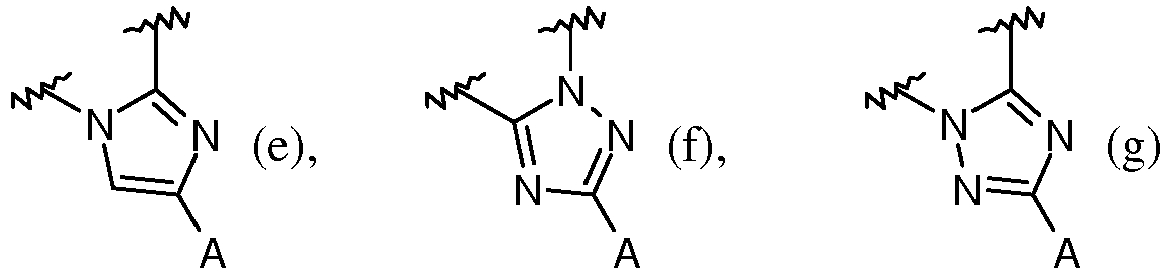
where alkyl, alkenyl, alkynyl, alkylene, carbocyclyl, heterocyclyl, aryl, and heteroaryl are optionally substituted with one or more groups independently selected from F, Cl, Br, I, R10, -SR10, -S(O)2R10, -S(O)2NR10R11, -NR10R11, -NR12C(O)R10, -CO2R10, -C(O)R10, -CONR10R11, oxo, and -OR10;
A is selected from -C(=O)NR5R6, -NR5R6, C6-C20 aryl, C2-C20 heterocyclyl and C1-C20 heteroaryl wherein aryl, heterocyclyl and heteroaryl are optionally substituted with one or more groups independently selected from F, Cl, Br, I, -CN, -COR10, -CO2R10, -C(=O)N(R10)OR11, -C(=NR10)NR10R11, -C(=O)NR10R11, -NO2, -NR10R11, -NR12C(=O)R10, -NR12C(=O)OR11, -NR12C(=O)NR10R11, -NR12C(=O)(C1-C12alkylene)NR10R11, -NR12(C1-C12 alkylene)NR10R11, -NR12(C1-C12alkylene)OR10, -NR12(C1-C12alkylene)C(=O)NR10R11, -OR10, -S(O)2R10, -C(=O)NR10(C1-C12 alkylene)NR10R11, -C(=O)NR10(C1-C12 alkylene)NR10C(=O)OR11, -C(=O)NR10(C1-C12 alkylene)NR10C(=O)R11, -C(=O)NR10(C1-C12 alkylene)R10, C1-C12 alkyl, C2-C8 alkenyl, C2-C8 alkynyl, C3-C12 carbocyclyl, C2-C20 heterocyclyl, C6-C20 aryl, C1-C20 heteroaryl, -(C3-C12 carbocyclyl)-(C1-C12 alkyl), -(C2-C20 heterocyclyl)-(C1-C12 alkyl), -(C6-C20 aryl)-(C1-C12 alkyl), -(C1-C20 heteroaryl)-(C1-C12 alkyl), -(C1-C12 alkylene)-(C3-C12 carbocyclyl), -(C1-C12 alkylene)-(C2-C20 heterocyclyl), -(C1-C12 alkylene)-(C2-C20 heterocyclyl)-(C2-C20 heterocyclyl), -(C1-C12 alkylene)-(C2-C2 heterocyclyl)-(C3-C12 carbocyclyl), -(C1-C12 alkylene)-(C2-C20 heterocyclyl)-C(=O)-(C2-C20 heterocyclyl), -(C1-C12 alkylene)-(C1-C20 heteroaryl), -(C1-C12 alkylene)-(C2-C20 heterocyclyl)-(C1-C12 alkyl), -(C1-C12 alkylene)-(C6-C20 aryl)-(C1-C12 alkyl), -(C1-C12 alkylene)-(C1-C20 heteroaryl)-(C1-C12 alkyl), -(C1-C12 alkylene)-C(=O)-(C2-C20 heterocyclyl), -(C1-C12 alkylene)C(=O)OR10, -(C1-C12 alkylene)-NR10R11, -(C1-C12 alkylene)NR12C(=O)R10, -(C1-C12 alkylene)OR10, -(C1-C12 alkylene)-NR10-(C1-C12 alkylene)-(C1-C20 heteroaryl), -(C1-C12 alkylene)-NR10-(C1-C12 alkylene)-(C1-C20 heterocyclyl), -(C1-C12 alkylene)-NR10-(C1-C12 alkylene)-NHC(=O)-(C1-C20 heteroaryl), -(C1-C12 alkylene)-(C2-C20 heterocyclyl)-NR10R11, and -(C1-C12 alkylene)-(C2-C20 heterocyclyl)-(C1-C12 alkyl)-NR10R11,
where alkyl, alkenyl, alkynyl, alkylene, carbocyclyl, heterocyclyl, aryl, and heteroaryl are optionally substituted with one or more groups independently selected from F, Cl, Br, I, R10, -SR10, -S(O)2R10, -NR10R11, -NR12C(O)R10, -CO2R10, -C(O)R10, -CONR10R11, and -OR10;
R5 is selected from H, and C1-C12 alkyl, optionally substituted with one or more groups independently selected from F, Cl, Br, I, -CN, -CO2H, -CONH2, -CONHCH3, -N2, -NO2, -N(CH3)2, -NHCOCH3, -NHS(O)2CH3, -OH, -OCH3, -OCH2CH3, -S(O)2NH2, and -S(O)2CH3;
R6 is selected from C1-C12 alkyl, C3-C12 carbocyclyl, C2-C20 heterocyclyl, C1-C20 heteroaryl, and C6-C20 aryl, each optionally substituted with one or more groups independently selected from F, Cl, Br, I, -CH3, -CH2OH, -CH2C6H5, -CN, -CF3, -CO2H, -C(O)CH3, -NH2, -NO2, -N(CH3)2, -NHCOCH3, -NHS(O)2CH3, -OH, oxo, -OCH3, -OCH2CH3, -S(O)2NH2, -S(O)2CH3, -C(=O)NR10(C1-C12 alkylene)NR10R11, phenyl, pyridinyl, tetrahydro-furan-2-yl, 2,3-dihydro-benzofuran-2-yl, 1-isopropyl-pyrrolidin-3-ylmethyl, morpholin-4-yl, piperidin-1-yl, piperazinyl, piperazin-4-yl-2-one, piperazin-4-yl-3-one, pyrrolidin-1-yl, thiomorpholin-4-yl, S-dioxothiomorpholin-4-yl, -C≡CR13, -CH=CHR13, and -C(=O)NR10R11; or
R5 and R6 together with the nitrogen atom to which they are attached form C2-C20 heterocyclyl or C1-C20 heteroaryl, optionally substituted with one or more groups selected from F, Cl, Br, I, CH3, C(CH3)3, -CH2OH, -CH2CH2OH, -CH2C6H5, pyridin-2-yl, 6-methyl-pyridin-2-yl, pyridin-4-yl, pyridin-3-yl, pyrimidin-2-yl, pyrazin-2-yl, tetrahydrofuran-carbonyl, 2-methoxy-phenyl, benzoyl, cyclopropylmethyl, (tetrahydrofuran-2-yl)methyl, 2,6-dimethyl-morpholin-4-yl, 4-methyl-piperazine-carbonyl, pyrrolidine-1-carbonyl, cyclopropanecarbonyl, 2,4-difluoro-phenyl, pyridin-2-ylmethyl, morpholin-4-yl, -CN, -CF3, -CO2H, -CONH2, -CONHCH3, -CON(CH3)2, -COCF3, -COCH3, -COCH(CH3)2, -NO2, NHCH3, -N(CH3)2, -N(CH2CH3)2, -NHCOCH3, -NCH3COCH3, -NHS(O)2CH3, -OH, -OCH3, -OCH2CH3, -CH2OCH3, -CH2CH2OCH3, -CH2S(O)2NHCH3, -CH2S(O)CH2CH3, -S(O)2NHCH3, -S(O)2CH2CH3, -S(O)2NH2, -S(O)2N(CH3)2 and -S(O)2CH3;
R10, R11 and R12 are independently selected from H, C1-C12 alkyl, -(C1-C12 alkylene)-(C2-C20 heterocyclyl), -(C1-C12 alkylene)-(C6-C20 aryl), -(C1-C12 alkylene)-(C3-C12 carbocyclyl), C2-C8 alkenyl, C2-C8 alkynyl, C3-C12 carbocyclyl, C2-C20 heterocyclyl, C6-C20 aryl, and C1-C20 heteroaryl, each of which are optionally substituted with one or more groups independently selected from F, Cl, Br, I, -CH3, -CH2CH3, -CH(CH3)2, -CH2OH, -CH2OCH3, -CH2CH2OH, -C(CH3)2OH, -CH2C(CH3)2OH, -CH2CH(CH3)OH, -CH2CO2H, -CH2CO2CH3, -CH2NH2, -(CH2)2N(CH3)2, -CH2C6H5, -CN, -CF3, -CO2H, -C(O)CH3, -C(O)CH(OH)CH3, -CO2CH3, -CONH2, -CONHCH3, -CON(CH3)2, -C(CH3)2CONH2, -NH2, -NO2, -N(CH3)2, -N(CH3)C(CH3)2CONH2, -N(CH3)CH2CH2S(O)2CH3, -NHCOCH3, -NHS(O)2CH3, =O (oxo), -OH, -OCH3, -OCH2CH3, -OCH2CH2OH, -OP(O)(OH)2, -SCH3, -S(O)2CH3, -S(O)2NH2, -S(O)2N(CH3)2, -CH2S(O)2NHCH3, -CH2S(O)2CH2CH3, -S(O)2NHCH3, -S(O)2CH2CH3, pyrrolidin-1-yl, 2-oxopyrrolidin-1-yl, cyclopropyl, cyclopentyl, oxetanyl, 4-methylpiperazin-1-yl, and 4-morpholinyl; or
R10 and R11 when attached to a nitrogen atom together with the nitrogen atoms to which they are attached form a C2-C20 heterocyclyl ring or C1-C20 heteroaryl each of which are optionally substituted with one or more groups independently selected from F, Cl, Br, I, -CH3, -CH2OH, -CH2C6H5, -CN, -CF3, -CO2H, -CONH2, -CONHCH3, -NO2, -N(CH3)2, -NHCOCH3, -NHS(O)2CH3, -OH, oxo, -OCH3, -OCH2CH3, -S(O)2NH2, -S(O)2CH3, -CH(CH3)2, -CH2CF3, -CH2CH2OH and -C(CH3)2OH; and
R13 is selected from H, F, Cl, Br, I, -CH3, -CH2CH3, -CN, -CF3, -CH2N(CH3)2, -CH2OH, -CO2H, -CONH2, -CON(CH3)2, -NO2, and -S(O)2CH3.
Claims (1)
- A compound having the structure:

Priority Applications (1)
| Application Number | Priority Date | Filing Date | Title |
|---|---|---|---|
| EP20140190276 EP2845592A1 (en) | 2009-09-28 | 2010-09-27 | Benzoxazepin PI3K inhibitor compounds and methods of use |
Applications Claiming Priority (3)
| Application Number | Priority Date | Filing Date | Title |
|---|---|---|---|
| US24638109P | 2009-09-28 | 2009-09-28 | |
| US33068510P | 2010-05-03 | 2010-05-03 | |
| EP10757213.3A EP2483278B1 (en) | 2009-09-28 | 2010-09-27 | Benzoxazepin pi3k inhibitor compounds and their use in the treatment of cancer |
Related Parent Applications (2)
| Application Number | Title | Priority Date | Filing Date |
|---|---|---|---|
| EP10757213.3A Division EP2483278B1 (en) | 2009-09-28 | 2010-09-27 | Benzoxazepin pi3k inhibitor compounds and their use in the treatment of cancer |
| EP10757213.3A Previously-Filed-Application EP2483278B1 (en) | 2009-09-28 | 2010-09-27 | Benzoxazepin pi3k inhibitor compounds and their use in the treatment of cancer |
Related Child Applications (3)
| Application Number | Title | Priority Date | Filing Date |
|---|---|---|---|
| EP20140190276 Division EP2845592A1 (en) | 2009-09-28 | 2010-09-27 | Benzoxazepin PI3K inhibitor compounds and methods of use |
| EP20140190276 Previously-Filed-Application EP2845592A1 (en) | 2009-09-28 | 2010-09-27 | Benzoxazepin PI3K inhibitor compounds and methods of use |
| EP20140190276 Division-Into EP2845592A1 (en) | 2009-09-28 | 2010-09-27 | Benzoxazepin PI3K inhibitor compounds and methods of use |
Publications (2)
| Publication Number | Publication Date |
|---|---|
| EP2711368A1 EP2711368A1 (en) | 2014-03-26 |
| EP2711368B1 true EP2711368B1 (en) | 2016-03-23 |
Family
ID=43037239
Family Applications (3)
| Application Number | Title | Priority Date | Filing Date |
|---|---|---|---|
| EP13193562.9A Active EP2711368B1 (en) | 2009-09-28 | 2010-09-27 | Benzoxazepin PI3K inhibitor compounds and methods of use |
| EP20140190276 Withdrawn EP2845592A1 (en) | 2009-09-28 | 2010-09-27 | Benzoxazepin PI3K inhibitor compounds and methods of use |
| EP10757213.3A Active EP2483278B1 (en) | 2009-09-28 | 2010-09-27 | Benzoxazepin pi3k inhibitor compounds and their use in the treatment of cancer |
Family Applications After (2)
| Application Number | Title | Priority Date | Filing Date |
|---|---|---|---|
| EP20140190276 Withdrawn EP2845592A1 (en) | 2009-09-28 | 2010-09-27 | Benzoxazepin PI3K inhibitor compounds and methods of use |
| EP10757213.3A Active EP2483278B1 (en) | 2009-09-28 | 2010-09-27 | Benzoxazepin pi3k inhibitor compounds and their use in the treatment of cancer |
Country Status (31)
| Country | Link |
|---|---|
| US (7) | US8242104B2 (en) |
| EP (3) | EP2711368B1 (en) |
| JP (2) | JP5540101B2 (en) |
| KR (1) | KR101428346B1 (en) |
| CN (2) | CN104744491B (en) |
| AR (1) | AR078187A1 (en) |
| AU (1) | AU2010299816C1 (en) |
| BR (1) | BR112012006807A2 (en) |
| CA (1) | CA2772691C (en) |
| CL (1) | CL2012000754A1 (en) |
| CO (1) | CO6491026A2 (en) |
| CR (1) | CR20120121A (en) |
| DK (1) | DK2483278T3 (en) |
| EC (1) | ECSP12011755A (en) |
| ES (2) | ES2570569T3 (en) |
| HR (1) | HRP20140229T1 (en) |
| IL (2) | IL217558A (en) |
| MA (1) | MA33531B1 (en) |
| MX (1) | MX2012003591A (en) |
| MY (2) | MY160064A (en) |
| NZ (1) | NZ597833A (en) |
| PE (1) | PE20121025A1 (en) |
| PL (1) | PL2483278T3 (en) |
| PT (1) | PT2483278E (en) |
| RS (1) | RS53164B (en) |
| RU (2) | RU2600927C2 (en) |
| SG (1) | SG10201405049RA (en) |
| SI (1) | SI2483278T1 (en) |
| TW (1) | TWI423980B (en) |
| WO (1) | WO2011036280A1 (en) |
| ZA (1) | ZA201202199B (en) |
Families Citing this family (52)
| Publication number | Priority date | Publication date | Assignee | Title |
|---|---|---|---|---|
| PT2464645T (en) * | 2009-07-27 | 2017-10-11 | Gilead Sciences Inc | HETEROCYCLIC COMPOUNDS FUSIONED AS ION CHANNEL MODULATORS |
| CA2772691C (en) * | 2009-09-28 | 2017-10-03 | F. Hoffmann-La Roche Ag | Benzoxazepin pi3k inhibitor compounds and methods of use |
| AU2010299820A1 (en) | 2009-09-28 | 2012-04-19 | F. Hoffmann-La Roche Ag | Benzoxepin PI3K inhibitor compounds and methods of use |
| WO2012003392A1 (en) | 2010-07-02 | 2012-01-05 | Gilead Sciences, Inc. | Fused heterocyclic compounds as ion channel modulators |
| BR112013024122A2 (en) * | 2011-03-21 | 2019-09-24 | Hoffmann La Roche | p110 delta pi3k selective benzoxazepine compounds and methods of use |
| AU2012253653A1 (en) | 2011-05-10 | 2013-05-02 | Gilead Sciences, Inc. | Fused heterocyclic compounds as sodium channel modulators |
| WO2012156379A1 (en) | 2011-05-13 | 2012-11-22 | Universität Zürich | PIK3/P110α INHIBITORS FOR PREVENTION OF RESTENOSIS BY APPLICATION AS AN IMPLANT COATING |
| TWI622583B (en) | 2011-07-01 | 2018-05-01 | 基利科學股份有限公司 | Fused heterocyclic compound as ion channel regulator |
| NO3175985T3 (en) * | 2011-07-01 | 2018-04-28 | ||
| PT4241849T (en) | 2011-10-14 | 2024-10-30 | Hoffmann La Roche | Uses for and article of manufacture including her2 dimerization inhibitor pertuzumab |
| KR20140131359A (en) * | 2012-02-17 | 2014-11-12 | 에프. 호프만-라 로슈 아게 | Tricyclic compounds and methods of use therefor |
| KR101915942B1 (en) * | 2012-06-08 | 2018-11-06 | 에프. 호프만-라 로슈 아게 | Mutant selectivity and combinations of a phosphoinositide 3 kinase inhibitor compound and chemotherapeutic agents for the treatment of cancer |
| SG10201610869TA (en) | 2012-06-26 | 2017-02-27 | Del Mar Pharmaceuticals | Methods for treating tyrosine-kinase-inhibitor-resistant malignancies in patients with genetic polymorphisms or ahi1 dysregulations or mutations employing dianhydrogalactitol, diacetyldianhydrogalacti |
| CN102775395A (en) * | 2012-07-12 | 2012-11-14 | 江苏七洲绿色化工股份有限公司 | Preparation method of propiconazole and propiconazole intermediate |
| CN104870454B (en) * | 2012-08-07 | 2020-03-03 | 詹森药业有限公司 | Process for the preparation of heterocyclic ester derivatives |
| EP3404032B1 (en) * | 2013-03-13 | 2025-07-02 | F. Hoffmann-La Roche AG | Process for making benzoxazepin compounds |
| EP2983674A4 (en) | 2013-04-08 | 2017-05-10 | Dennis M. Brown | Therapeutic benefit of suboptimally administered chemical compounds |
| EP3083640A1 (en) * | 2013-12-16 | 2016-10-26 | F. Hoffmann-La Roche AG | Polymorphs of 2-(4-(2-(1-isopropyl-3-methyl-1h-1,2,4-triazol-5-yl)-5,6-dihydrobenzo[f]imidazo[1,2-d][1,4]oxazepin-9-yl)-1h-pyrazol-1-yl)-2-methylpropanamide, methods of production, and pharmaceutical uses thereof |
| AU2015228859A1 (en) | 2014-03-13 | 2016-07-07 | F. Hoffmann-La Roche Ag | Therapeutic combinations with estrogen receptor modulators |
| WO2016126726A1 (en) | 2015-02-02 | 2016-08-11 | Forma Therapeutics, Inc. | Bicyclic [4,6,0] hydroxamic acids as hdac6 inhibitors |
| WO2016126721A1 (en) | 2015-02-02 | 2016-08-11 | Forma Therapeutics, Inc. | 3-aryl-bicyclic [4,5,0] hydroxamic acids as hdac inhibitors |
| AR104068A1 (en) | 2015-03-26 | 2017-06-21 | Hoffmann La Roche | COMBINATIONS OF A 3-KINASE PHOSFOINOSYTIDE INHIBITOR COMPOSITE AND A CDK4 / 6 INHIBITOR COMPOUND FOR CANCER TREATMENT |
| WO2016174616A1 (en) * | 2015-04-30 | 2016-11-03 | Novartis Ag | Fused tricyclic pyrazole derivatives useful for modulating farnesoid x receptors |
| JP6871919B2 (en) | 2015-06-16 | 2021-05-19 | ナノファギックス エルエルシー | Drug Delivery and Imaging Chemical Conjugates, Formulations and Methods of Use |
| JP6698712B2 (en) | 2015-06-29 | 2020-05-27 | エフ・ホフマン−ラ・ロシュ・アクチェンゲゼルシャフト | Treatment method using TASELISB |
| CN111848643A (en) * | 2015-07-02 | 2020-10-30 | 豪夫迈·罗氏有限公司 | Benzoxazepine*oxazolidinone compounds and methods of using the same |
| TWI649326B (en) * | 2015-07-02 | 2019-02-01 | 瑞士商赫孚孟拉羅股份公司 | Benzooxazole oxazolidinone compound and preparation method thereof |
| JP6873977B2 (en) * | 2015-09-08 | 2021-05-19 | エフ・ホフマン−ラ・ロシュ・アクチェンゲゼルシャフト | Tricyclic PI3K inhibitor compound and usage |
| US9721369B2 (en) * | 2015-09-15 | 2017-08-01 | Facebook, Inc. | Systems and methods for utilizing multiple map portions from multiple map data sources |
| EP3472131B1 (en) | 2016-06-17 | 2020-02-19 | Forma Therapeutics, Inc. | 2-spiro-5- and 6-hydroxamic acid indanes as hdac inhibitors |
| TW201815787A (en) | 2016-09-23 | 2018-05-01 | 美商基利科學股份有限公司 | Phosphatidylinositol 3-kinase inhibitors |
| TW201825465A (en) | 2016-09-23 | 2018-07-16 | 美商基利科學股份有限公司 | Phosphatidylinositol 3-kinase inhibitors |
| TW201813963A (en) | 2016-09-23 | 2018-04-16 | 美商基利科學股份有限公司 | Phosphatidylinositol 3-kinase inhibitors |
| MX2019003714A (en) | 2016-09-29 | 2019-06-24 | Bayer Cropscience Ag | Novel 5-substituted imidazolylmethyl derivatives. |
| ES2953833T3 (en) * | 2016-12-15 | 2023-11-16 | Hoffmann La Roche | The invention relates to methods of preparing benzoxazeppine oxazolidinone compounds and useful intermediates. |
| US11077189B2 (en) | 2017-03-02 | 2021-08-03 | Genentech Inc. | Adjuvant treatment of HER2-positive breast cancer |
| JP6998969B2 (en) * | 2017-04-28 | 2022-02-10 | エフ・ホフマン-ラ・ロシュ・アクチェンゲゼルシャフト | (S) -2-((2-((S) -4- (difluoromethyl) -2-oxooxazolidine-3-yl) -5,6-dihydrobenzo [F] imidazole [1,2-D] [ 1,4] Oxazepine-9-yl) amino) Propanamide polymorphic and solid forms and production methods |
| WO2019084459A1 (en) * | 2017-10-26 | 2019-05-02 | Xynomic Pharmaceuticals, Inc. | Crystalline salts of a b-raf kinase inhibitor |
| WO2019228341A1 (en) * | 2018-05-30 | 2019-12-05 | 江苏豪森药业集团有限公司 | Inhibitor containing tricyclic derivative, preparation method therefor, and application thereof |
| CN111909157B (en) | 2019-05-07 | 2023-02-03 | 南京药石科技股份有限公司 | EZH2 inhibitors and uses thereof |
| EP4056575A4 (en) * | 2019-11-04 | 2023-11-08 | Betta Pharmaceuticals Co., Ltd | IMIDAZOLIDINONE COMPOUND, PREPARATION METHOD AND USE THEREOF |
| CN114599656A (en) * | 2019-11-04 | 2022-06-07 | 贝达药业股份有限公司 | Imidazolidinone compound and preparation method and application thereof |
| KR20220119610A (en) | 2019-11-25 | 2022-08-30 | 상하이 한서 바이오메디컬 컴퍼니 리미티드 | Three fused ring derivative-containing salt or crystal form and pharmaceutical composition thereof |
| WO2022233263A1 (en) * | 2021-05-03 | 2022-11-10 | 山东轩竹医药科技有限公司 | Tricyclic ubiquitin specific protease 1 inhibitor and use thereof |
| AU2022275275A1 (en) * | 2021-05-13 | 2023-12-14 | Betta Pharmaceuticals Co., Ltd | Polymorph of imidazolidinone compound, preparation method therefor and use thereof |
| BR112023024764A2 (en) | 2021-05-28 | 2024-02-15 | Genentech Inc | COMPOUNDS, PROCESSES FOR PREPARING A COMPOUND OF FORMULA (8C), FOR PREPARING A COMPOUND OF FORMULA (8A), AND FOR PREPARING A COMPOUND OF FORMULA (9-1), AND PROCESS FOR MAKING A COMPOUND OF FORMULA (10-2) |
| CN120202205A (en) * | 2022-11-17 | 2025-06-24 | 微境生物医药科技(上海)有限公司 | Tricyclic PI3Kα inhibitors and preparation method and medical use thereof |
| CN116003280B (en) * | 2022-12-30 | 2024-11-19 | 合肥工业大学 | Photochemical synthesis method of aryl formamide compound |
| WO2025082533A1 (en) * | 2023-10-21 | 2025-04-24 | 上海轶诺药业有限公司 | Fused-ring compounds, preparation therefor and use thereof |
| WO2025237374A1 (en) * | 2024-05-16 | 2025-11-20 | 微境生物医药科技(上海)有限公司 | PI3Kα INHIBITOR, AND PREPARATION METHOD THEREFOR AND PHARMACEUTICAL USE THEREOF |
| EP4686476A1 (en) | 2024-07-31 | 2026-02-04 | Klostermeier, Stefanie | Phosphoinositide 3 kinase (pi3k) inhibitor for use in the treatment of neurological diseases |
| WO2026027658A1 (en) | 2024-07-31 | 2026-02-05 | Klostermeier Stefanie | Phosphoinositide 3 kinase (pi3k) inhibitor for use in the treatment of neurological diseases |
Family Cites Families (37)
| Publication number | Priority date | Publication date | Assignee | Title |
|---|---|---|---|---|
| US3773919A (en) | 1969-10-23 | 1973-11-20 | Du Pont | Polylactide-drug mixtures |
| GB8504702D0 (en) | 1985-02-23 | 1985-03-27 | Zyma Sa | Tricyclic compounds |
| US5583024A (en) | 1985-12-02 | 1996-12-10 | The Regents Of The University Of California | Recombinant expression of Coleoptera luciferase |
| FR2677356B1 (en) | 1991-06-05 | 1995-03-17 | Sanofi Sa | HETEROCYCLIC DERIVATIVES OF SUBSTITUTED ACYLAMINO-2 THIAZOLES-5, THEIR PREPARATION AND PHARMACEUTICAL COMPOSITIONS CONTAINING THE SAME. |
| ES2102195T3 (en) | 1992-12-28 | 1997-07-16 | Eisai Co Ltd | HETERO-CYCLIC DERIVATIVES OF CARBONIC ACID WHICH ARE FIXED IN RETINOID RECEPTORS. |
| AU678503B2 (en) * | 1993-09-24 | 1997-05-29 | Takeda Chemical Industries Ltd. | Condensed heterocyclic compounds and their use as squalene synthetase inhibitors |
| US5543523A (en) | 1994-11-15 | 1996-08-06 | Regents Of The University Of Minnesota | Method and intermediates for the synthesis of korupensamines |
| JPH08336393A (en) | 1995-04-13 | 1996-12-24 | Mitsubishi Chem Corp | Process for producing optically active γ-substituted-β-hydroxybutyric acid ester |
| EP0876375A1 (en) | 1995-11-17 | 1998-11-11 | E.I. Du Pont De Nemours And Company | Tricyclic herbicidal heterocycles |
| US6602677B1 (en) | 1997-09-19 | 2003-08-05 | Promega Corporation | Thermostable luciferases and methods of production |
| DE19908538A1 (en) | 1999-02-26 | 2000-08-31 | Aventis Pharma Gmbh | Polycyclic 2-amino-thiazole systems, processes for their preparation and medicaments containing these compounds |
| DE19908533A1 (en) | 1999-02-26 | 2000-08-31 | Aventis Pharma Gmbh | Polycyclic thiazole systems, processes for their preparation and medicaments containing these compounds |
| DE19908537A1 (en) | 1999-02-26 | 2000-08-31 | Aventis Pharma Gmbh | Use of polycyclic 2-amino-thiazole systems for the preparation of medicaments for the prophylaxis or treatment of obesity |
| DE19908535A1 (en) | 1999-02-26 | 2000-08-31 | Aventis Pharma Gmbh | Use of polycyclic thiazole systems for the preparation of medicaments for the prophylaxis or treatment of obesity |
| US7273880B2 (en) | 1999-06-30 | 2007-09-25 | H. Lunbeck A/S | Selective NPY (Y5) antagonists |
| WO2001064675A1 (en) | 2000-03-03 | 2001-09-07 | Novartis Ag | Condensed thiazolamines and their use as neuropeptide y5 antagonists |
| IL156793A0 (en) | 2001-02-02 | 2004-02-08 | Schering Corp | 3,4-di-substituted cyclobutene-1,2-diones as cxc chemokine receptor antagonists |
| TWI232863B (en) * | 2001-06-11 | 2005-05-21 | Akzo Nobel Nv | Benzoxazepine derivatives |
| CA2492922A1 (en) | 2002-07-19 | 2004-01-29 | Pharmacia Corporation | Substituted thiophene carboxamide compounds for the treatment of inflammation |
| MXPA05008400A (en) * | 2003-02-07 | 2005-10-05 | Warner Lambert Co | Oxazolidinone derivates n-substituted by a tricyclic ring, for use as antibacterial agents. |
| TW200510356A (en) * | 2003-08-01 | 2005-03-16 | Takeda Chemical Industries Ltd | Benzoxaepine compounds |
| US20050239767A1 (en) | 2003-10-28 | 2005-10-27 | Chan Michael K | Intermolecular SNAr of the heterocycle-activated nitro and fluoro groups-application in the synthesis of polyazamacrocyclic ligands |
| AU2005262373B2 (en) * | 2004-07-01 | 2011-03-17 | Merck Sharp & Dohme Corp. | Mitotic kinesin inhibitors |
| RU2403258C2 (en) | 2004-10-07 | 2010-11-10 | Бёрингер Ингельхайм Интернациональ Гмбх | Thiazolyldihydroindazoles |
| CN103524392B (en) | 2005-10-07 | 2018-06-01 | 埃克塞利希斯股份有限公司 | As for treating the azetidine of the MEK inhibitor of proliferative disease |
| US20070238718A1 (en) * | 2006-04-06 | 2007-10-11 | Matthias Grauert | Thiazolyl-dihydro-indazole |
| US20070238746A1 (en) * | 2006-04-06 | 2007-10-11 | Trixi Brandl | Thiazolyl-dihydro-chinazoline |
| GB0610866D0 (en) * | 2006-06-02 | 2006-07-12 | Hammersmith Imanet Ltd | Novel in vivo imaging compounds |
| CA2659280A1 (en) * | 2006-07-28 | 2008-01-31 | Alcan Packaging Flexible France | Coextruded film with polylactic acid (pla) and ethylene vinyl acetate (eva) |
| ES2614931T3 (en) | 2006-08-04 | 2017-06-02 | Beth Israel Deaconess Medical Center | Pyruvate kinase inhibitors and disease treatment methods |
| US8779154B2 (en) | 2006-09-26 | 2014-07-15 | Qinglin Che | Fused ring compounds for inflammation and immune-related uses |
| PT2439205E (en) * | 2006-12-29 | 2015-07-16 | Abbvie Deutschland | Carboxamide compounds and their use as calpain inhibitors |
| WO2009038795A2 (en) | 2007-09-19 | 2009-03-26 | The Regents Of The University Of California | Positron emission tomography probes for imaging immune activation and selected cancers |
| RU2506267C2 (en) | 2008-03-31 | 2014-02-10 | Дженентек, Инк. | Benzopyrazine and benzoxepine pi3k inhibitors and use thereof |
| WO2010043676A1 (en) * | 2008-10-17 | 2010-04-22 | Boehringer Ingelheim International Gmbh | Tetra-aza-heterocycles as phosphatidylinositol-3-kinases (pi3-kinases) inhibitor |
| CA2772691C (en) * | 2009-09-28 | 2017-10-03 | F. Hoffmann-La Roche Ag | Benzoxazepin pi3k inhibitor compounds and methods of use |
| AU2010299820A1 (en) * | 2009-09-28 | 2012-04-19 | F. Hoffmann-La Roche Ag | Benzoxepin PI3K inhibitor compounds and methods of use |
-
2010
- 2010-09-27 CA CA2772691A patent/CA2772691C/en active Active
- 2010-09-27 BR BR112012006807-5A patent/BR112012006807A2/en not_active Application Discontinuation
- 2010-09-27 PE PE2012000390A patent/PE20121025A1/en active IP Right Grant
- 2010-09-27 MX MX2012003591A patent/MX2012003591A/en active IP Right Grant
- 2010-09-27 US US12/890,812 patent/US8242104B2/en active Active
- 2010-09-27 PT PT107572133T patent/PT2483278E/en unknown
- 2010-09-27 AR ARP100103491A patent/AR078187A1/en unknown
- 2010-09-27 HR HRP20140229AT patent/HRP20140229T1/en unknown
- 2010-09-27 MY MYPI2012000823A patent/MY160064A/en unknown
- 2010-09-27 AU AU2010299816A patent/AU2010299816C1/en active Active
- 2010-09-27 EP EP13193562.9A patent/EP2711368B1/en active Active
- 2010-09-27 KR KR1020127010974A patent/KR101428346B1/en active Active
- 2010-09-27 RU RU2012117398/04A patent/RU2600927C2/en active
- 2010-09-27 NZ NZ597833A patent/NZ597833A/en unknown
- 2010-09-27 RU RU2016105810A patent/RU2654068C1/en active
- 2010-09-27 DK DK10757213.3T patent/DK2483278T3/en active
- 2010-09-27 EP EP20140190276 patent/EP2845592A1/en not_active Withdrawn
- 2010-09-27 RS RS20140060A patent/RS53164B/en unknown
- 2010-09-27 WO PCT/EP2010/064208 patent/WO2011036280A1/en not_active Ceased
- 2010-09-27 ES ES13193562T patent/ES2570569T3/en active Active
- 2010-09-27 PL PL10757213T patent/PL2483278T3/en unknown
- 2010-09-27 CN CN201510043641.XA patent/CN104744491B/en active Active
- 2010-09-27 MY MYPI2015002473A patent/MY184074A/en unknown
- 2010-09-27 ES ES10757213.3T patent/ES2444779T3/en active Active
- 2010-09-27 EP EP10757213.3A patent/EP2483278B1/en active Active
- 2010-09-27 SI SI201030536T patent/SI2483278T1/en unknown
- 2010-09-27 JP JP2012530282A patent/JP5540101B2/en active Active
- 2010-09-27 CN CN201080053938.XA patent/CN102762576B/en active Active
- 2010-09-27 SG SG10201405049RA patent/SG10201405049RA/en unknown
- 2010-09-27 TW TW099132661A patent/TWI423980B/en active
-
2012
- 2012-01-10 CO CO12002995A patent/CO6491026A2/en active IP Right Grant
- 2012-01-16 IL IL217558A patent/IL217558A/en active IP Right Grant
- 2012-02-15 MA MA34637A patent/MA33531B1/en unknown
- 2012-03-13 CR CR20120121A patent/CR20120121A/en unknown
- 2012-03-26 ZA ZA2012/02199A patent/ZA201202199B/en unknown
- 2012-03-27 CL CL2012000754A patent/CL2012000754A1/en unknown
- 2012-03-28 EC ECSP12011755 patent/ECSP12011755A/en unknown
- 2012-05-22 US US13/477,587 patent/US8343955B2/en active Active
- 2012-11-20 US US13/681,763 patent/US8586574B2/en active Active
-
2013
- 2013-10-07 US US14/047,206 patent/US8785626B2/en active Active
- 2013-11-01 JP JP2013228826A patent/JP5625101B2/en active Active
-
2014
- 2014-06-05 US US14/297,142 patent/US9198918B2/en active Active
-
2015
- 2015-05-28 IL IL239081A patent/IL239081B/en active IP Right Grant
- 2015-11-03 US US14/930,929 patent/US9546178B2/en active Active
-
2016
- 2016-12-05 US US15/368,937 patent/US9670228B2/en active Active
Also Published As
Similar Documents
| Publication | Publication Date | Title |
|---|---|---|
| CN114615981B (en) | KRAS G12D inhibitors | |
| JP7453989B2 (en) | Fused tricyclic compounds useful as anticancer agents | |
| CN105102453B (en) | benzimidazolone derivatives as bromodomain inhibitors | |
| EP3670506B1 (en) | Thiazolecarboxamides and pyridinecarboxamide compounds useful as pim kinase inhibitors | |
| EP3256468B1 (en) | Tricyclic compounds and uses thereof in medicine | |
| CN115557974A (en) | KRAS G12D inhibitor and application thereof | |
| EP3080115B1 (en) | Fused imidazole and pyrazole derivatives as modulators of tnf activity | |
| KR20220061958A (en) | Heterobicyclic amides as inhibitors of CD38 | |
| CN117916241A (en) | Spirocyclic compounds | |
| AU2008277676A1 (en) | Heterocyclic compounds useful as MK2 inhibitors | |
| CA2772691A1 (en) | Benzoxazepin pi3k inhibitor compounds and methods of use | |
| WO2015095492A1 (en) | Tricyclic heterocycles as bet protein inhibitors | |
| AU2010334591B2 (en) | Inhibitors of AKT activity | |
| CA2679657A1 (en) | Antimicrobial heterocyclic compounds for treatment of bacterial infections | |
| TW201011028A (en) | 2-alkyl-6-cycloamino-3-(pyridin-4-yl)imidazo[1,2-b]pyridazine derivatives, their preparation and their therapeutic use | |
| EP3252059A1 (en) | Anti-pulmonary tuberculosis nitroimidazole derivative | |
| CN102325773A (en) | 6-ring amino-2,3-bipyridyl imidazo [1,2-b]-pyridazine derivatives and preparation thereof and treatment are used | |
| MX2013013572A (en) | 2-amino-3-(imidazol-2-yl)-pyridin-4-one derivatives and their use as vegf receptor kinase inhibitors. | |
| HK40093304A (en) | Pyridinecarboxamide compound useful as pim kinase inhibitor | |
| BR122025022632A2 (en) | Indole compounds as androgen receptor modulators, pharmaceutical composition comprising said compounds and uses thereof. | |
| HK1244279B (en) | Tricyclic compounds and uses thereof in medicine | |
| HK1171013B (en) | Inhibitors of akt activity | |
| HK1216424B (en) | Thiazolecarboxamides and pyridinecarboxamide compounds useful as pim kinase inhibitors | |
| EA039704B1 (en) | THIAZOLECARBOXAMIDES AND PYRIDINECARBOXAMIDES USEFUL AS Pim KINASE INHIBITORS |
Legal Events
| Date | Code | Title | Description |
|---|---|---|---|
| PUAI | Public reference made under article 153(3) epc to a published international application that has entered the european phase |
Free format text: ORIGINAL CODE: 0009012 |
|
| AC | Divisional application: reference to earlier application |
Ref document number: 2483278 Country of ref document: EP Kind code of ref document: P |
|
| AK | Designated contracting states |
Kind code of ref document: A1 Designated state(s): AL AT BE BG CH CY CZ DE DK EE ES FI FR GB GR HR HU IE IS IT LI LT LU LV MC MK MT NL NO PL PT RO SE SI SK SM TR |
|
| AX | Request for extension of the european patent |
Extension state: RS |
|
| 17P | Request for examination filed |
Effective date: 20140926 |
|
| RAX | Requested extension states of the european patent have changed |
Extension state: RS Payment date: 20140926 |
|
| RBV | Designated contracting states (corrected) |
Designated state(s): AL AT BE BG CH CY CZ DE DK EE ES FI FR GB GR HR HU IE IS IT LI LT LU LV MC MK MT NL NO PL PT RO SE SI SK SM TR |
|
| 17Q | First examination report despatched |
Effective date: 20150202 |
|
| GRAP | Despatch of communication of intention to grant a patent |
Free format text: ORIGINAL CODE: EPIDOSNIGR1 |
|
| INTG | Intention to grant announced |
Effective date: 20150918 |
|
| GRAS | Grant fee paid |
Free format text: ORIGINAL CODE: EPIDOSNIGR3 |
|
| GRAA | (expected) grant |
Free format text: ORIGINAL CODE: 0009210 |
|
| AC | Divisional application: reference to earlier application |
Ref document number: 2483278 Country of ref document: EP Kind code of ref document: P |
|
| AK | Designated contracting states |
Kind code of ref document: B1 Designated state(s): AL AT BE BG CH CY CZ DE DK EE ES FI FR GB GR HR HU IE IS IT LI LT LU LV MC MK MT NL NO PL PT RO SE SI SK SM TR |
|
| AX | Request for extension of the european patent |
Extension state: RS |
|
| REG | Reference to a national code |
Ref country code: GB Ref legal event code: FG4D |
|
| REG | Reference to a national code |
Ref country code: CH Ref legal event code: EP |
|
| REG | Reference to a national code |
Ref country code: AT Ref legal event code: REF Ref document number: 783024 Country of ref document: AT Kind code of ref document: T Effective date: 20160415 |
|
| REG | Reference to a national code |
Ref country code: IE Ref legal event code: FG4D |
|
| REG | Reference to a national code |
Ref country code: DE Ref legal event code: R096 Ref document number: 602010031531 Country of ref document: DE |
|
| REG | Reference to a national code |
Ref country code: ES Ref legal event code: FG2A Ref document number: 2570569 Country of ref document: ES Kind code of ref document: T3 Effective date: 20160519 |
|
| REG | Reference to a national code |
Ref country code: LT Ref legal event code: MG4D |
|
| REG | Reference to a national code |
Ref country code: NL Ref legal event code: MP Effective date: 20160323 |
|
| PG25 | Lapsed in a contracting state [announced via postgrant information from national office to epo] |
Ref country code: FI Free format text: LAPSE BECAUSE OF FAILURE TO SUBMIT A TRANSLATION OF THE DESCRIPTION OR TO PAY THE FEE WITHIN THE PRESCRIBED TIME-LIMIT Effective date: 20160323 Ref country code: GR Free format text: LAPSE BECAUSE OF FAILURE TO SUBMIT A TRANSLATION OF THE DESCRIPTION OR TO PAY THE FEE WITHIN THE PRESCRIBED TIME-LIMIT Effective date: 20160624 Ref country code: NO Free format text: LAPSE BECAUSE OF FAILURE TO SUBMIT A TRANSLATION OF THE DESCRIPTION OR TO PAY THE FEE WITHIN THE PRESCRIBED TIME-LIMIT Effective date: 20160623 Ref country code: HR Free format text: LAPSE BECAUSE OF FAILURE TO SUBMIT A TRANSLATION OF THE DESCRIPTION OR TO PAY THE FEE WITHIN THE PRESCRIBED TIME-LIMIT Effective date: 20160323 |
|
| REG | Reference to a national code |
Ref country code: AT Ref legal event code: MK05 Ref document number: 783024 Country of ref document: AT Kind code of ref document: T Effective date: 20160323 |
|
| REG | Reference to a national code |
Ref country code: FR Ref legal event code: PLFP Year of fee payment: 7 |
|
| PG25 | Lapsed in a contracting state [announced via postgrant information from national office to epo] |
Ref country code: NL Free format text: LAPSE BECAUSE OF FAILURE TO SUBMIT A TRANSLATION OF THE DESCRIPTION OR TO PAY THE FEE WITHIN THE PRESCRIBED TIME-LIMIT Effective date: 20160323 Ref country code: LV Free format text: LAPSE BECAUSE OF FAILURE TO SUBMIT A TRANSLATION OF THE DESCRIPTION OR TO PAY THE FEE WITHIN THE PRESCRIBED TIME-LIMIT Effective date: 20160323 Ref country code: LT Free format text: LAPSE BECAUSE OF FAILURE TO SUBMIT A TRANSLATION OF THE DESCRIPTION OR TO PAY THE FEE WITHIN THE PRESCRIBED TIME-LIMIT Effective date: 20160323 Ref country code: SE Free format text: LAPSE BECAUSE OF FAILURE TO SUBMIT A TRANSLATION OF THE DESCRIPTION OR TO PAY THE FEE WITHIN THE PRESCRIBED TIME-LIMIT Effective date: 20160323 |
|
| PG25 | Lapsed in a contracting state [announced via postgrant information from national office to epo] |
Ref country code: EE Free format text: LAPSE BECAUSE OF FAILURE TO SUBMIT A TRANSLATION OF THE DESCRIPTION OR TO PAY THE FEE WITHIN THE PRESCRIBED TIME-LIMIT Effective date: 20160323 Ref country code: IS Free format text: LAPSE BECAUSE OF FAILURE TO SUBMIT A TRANSLATION OF THE DESCRIPTION OR TO PAY THE FEE WITHIN THE PRESCRIBED TIME-LIMIT Effective date: 20160723 Ref country code: PL Free format text: LAPSE BECAUSE OF FAILURE TO SUBMIT A TRANSLATION OF THE DESCRIPTION OR TO PAY THE FEE WITHIN THE PRESCRIBED TIME-LIMIT Effective date: 20160323 |
|
| PG25 | Lapsed in a contracting state [announced via postgrant information from national office to epo] |
Ref country code: RO Free format text: LAPSE BECAUSE OF FAILURE TO SUBMIT A TRANSLATION OF THE DESCRIPTION OR TO PAY THE FEE WITHIN THE PRESCRIBED TIME-LIMIT Effective date: 20160323 Ref country code: SK Free format text: LAPSE BECAUSE OF FAILURE TO SUBMIT A TRANSLATION OF THE DESCRIPTION OR TO PAY THE FEE WITHIN THE PRESCRIBED TIME-LIMIT Effective date: 20160323 Ref country code: CZ Free format text: LAPSE BECAUSE OF FAILURE TO SUBMIT A TRANSLATION OF THE DESCRIPTION OR TO PAY THE FEE WITHIN THE PRESCRIBED TIME-LIMIT Effective date: 20160323 Ref country code: SM Free format text: LAPSE BECAUSE OF FAILURE TO SUBMIT A TRANSLATION OF THE DESCRIPTION OR TO PAY THE FEE WITHIN THE PRESCRIBED TIME-LIMIT Effective date: 20160323 Ref country code: PT Free format text: LAPSE BECAUSE OF FAILURE TO SUBMIT A TRANSLATION OF THE DESCRIPTION OR TO PAY THE FEE WITHIN THE PRESCRIBED TIME-LIMIT Effective date: 20160725 Ref country code: AT Free format text: LAPSE BECAUSE OF FAILURE TO SUBMIT A TRANSLATION OF THE DESCRIPTION OR TO PAY THE FEE WITHIN THE PRESCRIBED TIME-LIMIT Effective date: 20160323 |
|
| PG25 | Lapsed in a contracting state [announced via postgrant information from national office to epo] |
Ref country code: BE Free format text: LAPSE BECAUSE OF FAILURE TO SUBMIT A TRANSLATION OF THE DESCRIPTION OR TO PAY THE FEE WITHIN THE PRESCRIBED TIME-LIMIT Effective date: 20160323 |
|
| REG | Reference to a national code |
Ref country code: DE Ref legal event code: R097 Ref document number: 602010031531 Country of ref document: DE |
|
| PLBE | No opposition filed within time limit |
Free format text: ORIGINAL CODE: 0009261 |
|
| STAA | Information on the status of an ep patent application or granted ep patent |
Free format text: STATUS: NO OPPOSITION FILED WITHIN TIME LIMIT |
|
| PG25 | Lapsed in a contracting state [announced via postgrant information from national office to epo] |
Ref country code: DK Free format text: LAPSE BECAUSE OF FAILURE TO SUBMIT A TRANSLATION OF THE DESCRIPTION OR TO PAY THE FEE WITHIN THE PRESCRIBED TIME-LIMIT Effective date: 20160323 |
|
| PG25 | Lapsed in a contracting state [announced via postgrant information from national office to epo] |
Ref country code: BG Free format text: LAPSE BECAUSE OF FAILURE TO SUBMIT A TRANSLATION OF THE DESCRIPTION OR TO PAY THE FEE WITHIN THE PRESCRIBED TIME-LIMIT Effective date: 20160623 |
|
| 26N | No opposition filed |
Effective date: 20170102 |
|
| PG25 | Lapsed in a contracting state [announced via postgrant information from national office to epo] |
Ref country code: MC Free format text: LAPSE BECAUSE OF FAILURE TO SUBMIT A TRANSLATION OF THE DESCRIPTION OR TO PAY THE FEE WITHIN THE PRESCRIBED TIME-LIMIT Effective date: 20160323 |
|
| PG25 | Lapsed in a contracting state [announced via postgrant information from national office to epo] |
Ref country code: SI Free format text: LAPSE BECAUSE OF FAILURE TO SUBMIT A TRANSLATION OF THE DESCRIPTION OR TO PAY THE FEE WITHIN THE PRESCRIBED TIME-LIMIT Effective date: 20160323 |
|
| REG | Reference to a national code |
Ref country code: IE Ref legal event code: MM4A |
|
| PG25 | Lapsed in a contracting state [announced via postgrant information from national office to epo] |
Ref country code: IE Free format text: LAPSE BECAUSE OF NON-PAYMENT OF DUE FEES Effective date: 20160927 |
|
| REG | Reference to a national code |
Ref country code: FR Ref legal event code: PLFP Year of fee payment: 8 |
|
| PG25 | Lapsed in a contracting state [announced via postgrant information from national office to epo] |
Ref country code: LU Free format text: LAPSE BECAUSE OF NON-PAYMENT OF DUE FEES Effective date: 20160927 |
|
| PG25 | Lapsed in a contracting state [announced via postgrant information from national office to epo] |
Ref country code: CY Free format text: LAPSE BECAUSE OF FAILURE TO SUBMIT A TRANSLATION OF THE DESCRIPTION OR TO PAY THE FEE WITHIN THE PRESCRIBED TIME-LIMIT Effective date: 20160323 Ref country code: HU Free format text: LAPSE BECAUSE OF FAILURE TO SUBMIT A TRANSLATION OF THE DESCRIPTION OR TO PAY THE FEE WITHIN THE PRESCRIBED TIME-LIMIT; INVALID AB INITIO Effective date: 20100927 |
|
| PG25 | Lapsed in a contracting state [announced via postgrant information from national office to epo] |
Ref country code: MT Free format text: LAPSE BECAUSE OF NON-PAYMENT OF DUE FEES Effective date: 20160930 Ref country code: MK Free format text: LAPSE BECAUSE OF FAILURE TO SUBMIT A TRANSLATION OF THE DESCRIPTION OR TO PAY THE FEE WITHIN THE PRESCRIBED TIME-LIMIT Effective date: 20160323 |
|
| REG | Reference to a national code |
Ref country code: FR Ref legal event code: PLFP Year of fee payment: 9 |
|
| PG25 | Lapsed in a contracting state [announced via postgrant information from national office to epo] |
Ref country code: AL Free format text: LAPSE BECAUSE OF FAILURE TO SUBMIT A TRANSLATION OF THE DESCRIPTION OR TO PAY THE FEE WITHIN THE PRESCRIBED TIME-LIMIT Effective date: 20160323 |
|
| P01 | Opt-out of the competence of the unified patent court (upc) registered |
Effective date: 20230412 |
|
| REG | Reference to a national code |
Ref country code: CH Ref legal event code: U11 Free format text: ST27 STATUS EVENT CODE: U-0-0-U10-U11 (AS PROVIDED BY THE NATIONAL OFFICE) Effective date: 20251001 |
|
| PGFP | Annual fee paid to national office [announced via postgrant information from national office to epo] |
Ref country code: DE Payment date: 20250820 Year of fee payment: 16 |
|
| PGFP | Annual fee paid to national office [announced via postgrant information from national office to epo] |
Ref country code: TR Payment date: 20250902 Year of fee payment: 16 Ref country code: IT Payment date: 20250820 Year of fee payment: 16 |
|
| PGFP | Annual fee paid to national office [announced via postgrant information from national office to epo] |
Ref country code: GB Payment date: 20250822 Year of fee payment: 16 |
|
| PGFP | Annual fee paid to national office [announced via postgrant information from national office to epo] |
Ref country code: FR Payment date: 20250821 Year of fee payment: 16 |
|
| PGFP | Annual fee paid to national office [announced via postgrant information from national office to epo] |
Ref country code: CH Payment date: 20251001 Year of fee payment: 16 |
|
| PGFP | Annual fee paid to national office [announced via postgrant information from national office to epo] |
Ref country code: ES Payment date: 20251001 Year of fee payment: 16 |