EP2708024B1 - Moca-wifi-multiplexierung - Google Patents
Moca-wifi-multiplexierung Download PDFInfo
- Publication number
- EP2708024B1 EP2708024B1 EP12782382.1A EP12782382A EP2708024B1 EP 2708024 B1 EP2708024 B1 EP 2708024B1 EP 12782382 A EP12782382 A EP 12782382A EP 2708024 B1 EP2708024 B1 EP 2708024B1
- Authority
- EP
- European Patent Office
- Prior art keywords
- moca
- communications
- wifi
- network
- map
- Prior art date
- Legal status (The legal status is an assumption and is not a legal conclusion. Google has not performed a legal analysis and makes no representation as to the accuracy of the status listed.)
- Not-in-force
Links
- 238000004891 communication Methods 0.000 claims description 145
- 238000000034 method Methods 0.000 claims description 63
- 238000004590 computer program Methods 0.000 claims description 7
- 241001112258 Moca Species 0.000 claims 36
- 238000009448 modified atmosphere packaging Methods 0.000 claims 25
- 235000019837 monoammonium phosphate Nutrition 0.000 claims 2
- 238000010586 diagram Methods 0.000 description 23
- 230000005540 biological transmission Effects 0.000 description 18
- 230000008569 process Effects 0.000 description 10
- 230000006870 function Effects 0.000 description 8
- 230000008901 benefit Effects 0.000 description 5
- 230000003068 static effect Effects 0.000 description 5
- 230000007246 mechanism Effects 0.000 description 4
- 230000006855 networking Effects 0.000 description 4
- 230000003287 optical effect Effects 0.000 description 4
- 238000005516 engineering process Methods 0.000 description 3
- 238000003491 array Methods 0.000 description 2
- 230000001413 cellular effect Effects 0.000 description 2
- 230000000694 effects Effects 0.000 description 2
- 230000004044 response Effects 0.000 description 2
- 101100283411 Arabidopsis thaliana GMII gene Proteins 0.000 description 1
- 101100513399 Eubacterium barkeri mii gene Proteins 0.000 description 1
- XUIMIQQOPSSXEZ-UHFFFAOYSA-N Silicon Chemical compound [Si] XUIMIQQOPSSXEZ-UHFFFAOYSA-N 0.000 description 1
- 101710186384 Tropomyosin-2 Proteins 0.000 description 1
- 230000003321 amplification Effects 0.000 description 1
- 230000003466 anti-cipated effect Effects 0.000 description 1
- 230000008859 change Effects 0.000 description 1
- 238000006243 chemical reaction Methods 0.000 description 1
- 230000003750 conditioning effect Effects 0.000 description 1
- 239000000470 constituent Substances 0.000 description 1
- 239000000835 fiber Substances 0.000 description 1
- 230000003993 interaction Effects 0.000 description 1
- 238000012423 maintenance Methods 0.000 description 1
- 238000003199 nucleic acid amplification method Methods 0.000 description 1
- 238000005192 partition Methods 0.000 description 1
- 230000002093 peripheral effect Effects 0.000 description 1
- 229920001690 polydopamine Polymers 0.000 description 1
- 230000035755 proliferation Effects 0.000 description 1
- 238000010008 shearing Methods 0.000 description 1
- 229910052710 silicon Inorganic materials 0.000 description 1
- 239000010703 silicon Substances 0.000 description 1
- 238000000638 solvent extraction Methods 0.000 description 1
- 230000001360 synchronised effect Effects 0.000 description 1
Images








Classifications
-
- H—ELECTRICITY
- H04—ELECTRIC COMMUNICATION TECHNIQUE
- H04W—WIRELESS COMMUNICATION NETWORKS
- H04W74/00—Wireless channel access
- H04W74/04—Scheduled access
-
- H—ELECTRICITY
- H04—ELECTRIC COMMUNICATION TECHNIQUE
- H04L—TRANSMISSION OF DIGITAL INFORMATION, e.g. TELEGRAPHIC COMMUNICATION
- H04L12/00—Data switching networks
- H04L12/28—Data switching networks characterised by path configuration, e.g. LAN [Local Area Networks] or WAN [Wide Area Networks]
- H04L12/2801—Broadband local area networks
-
- H—ELECTRICITY
- H04—ELECTRIC COMMUNICATION TECHNIQUE
- H04L—TRANSMISSION OF DIGITAL INFORMATION, e.g. TELEGRAPHIC COMMUNICATION
- H04L12/00—Data switching networks
- H04L12/28—Data switching networks characterised by path configuration, e.g. LAN [Local Area Networks] or WAN [Wide Area Networks]
- H04L12/2803—Home automation networks
-
- H—ELECTRICITY
- H04—ELECTRIC COMMUNICATION TECHNIQUE
- H04W—WIRELESS COMMUNICATION NETWORKS
- H04W84/00—Network topologies
- H04W84/18—Self-organising networks, e.g. ad-hoc networks or sensor networks
- H04W84/22—Self-organising networks, e.g. ad-hoc networks or sensor networks with access to wired networks
Definitions
- the disclosed method and apparatus relates generally to communication networks, and more particularly, some embodiments relate to systems and methods for sharing MoCA and WiFi resources.
- a home network may include several types of devices that provide subscriber services throughout a home. These subscriber services include delivering multimedia content, such as streaming audio and video, to devices located throughout the home. As the number of available subscriber services has increased and they become more popular, the number of devices being connected within each home network has also increased. With increasing devices delivering and accessing multimedia content in the home, the number and types of networks over which such content is shared has also increased.
- multimedia content such as streaming audio and video
- the network of Figure 1 is one example of a Multimedia over Coax Alliance (MoCA) network implemented in a home.
- a wired communications medium 100 is shown.
- the wired communications medium 100 might be a coaxial cable system, a power line system, a fiber optic cable system, an Ethernet cable system, or other similar communications medium.
- the communications medium 100 might be a wireless transmission system.
- the communications medium 100 is preinstalled coaxial cabling deployed within a residence 101.
- the network of Figure 1 comprises a plurality of network nodes 102, 103, 104, 105, 106 in communication according to a communications protocol.
- the communications protocol might conform to a networking standard, such as the well known MoCA standard.
- the communications protocol specifies a packet based communications system.
- NC Network Coordinator
- QoS Quality-of-service
- the NC manages access to the shared communications medium and manages the "quality-of-service" (QoS) of transmissions on the network.
- QoS generally refers to the reliability of the access to the medium that devices attempting to transmit information on the network will have.
- one of the nodes is selected to perform the functions of the NC based upon a process defined by the communications protocol. For example, in a MoCA network, the first node to communicate over a communication medium will search to see whether any other node is already performing the functions of the NC. Being the first node, there will not be another node yet on the network. Accordingly, the first node will become the NC. When a second node does a similar search, the first node will be sending out a beacon that will be detected by the second node. An admission process will occur between the nodes according to the admission procedures of the MoCA protocol. The result of the admission process will be the admission of the second node to the network. The NC also performs admission procedures as each other new node requests admission to the network. In one such case, after two or more nodes form the network, a protocol is used to select which node will continue to function as the NC by using a set of well defined criteria.
- the NC schedules network communications between network nodes using a Media Access Plan (MAP).
- MAP Media Access Plan
- the MAP is sent as a packet.
- MAP packets are sent on a regular basis.
- MAPs schedule all of the traffic on the medium 100. That includes scheduling the times during which nodes can transmit.
- Transmit times for data packets are scheduled by the NC in response to reservation requests (RRs) by the nodes of the network.
- the NC may also schedule control and management packets on its own (without receiving a RR from another node).
- one of the nodes 102 serves as a network communications module (e.g., a MoCA node).
- the node 102 is coupled to one of the computers 109.
- Such nodes 102 allow the computers 109 to communicate on the communications medium 100 in accordance with the communications protocol used on the medium 100.
- One node 106 is shown as a module associated with a television 111 to allow the television 111 to receive and display media streamed from one or more other network nodes.
- a node can be associated with (i.e., coupled to or integrated into) a speaker or other music or video device 103.
- a node can also be associated with a module configured to interface with an internet or cable service provider 112, for example to provide Internet access, digital video recording capabilities, media streaming functions, or network management services to the residence 101.
- Some proponents of wireless networks have claimed that the video content needs of an entire household can be serviced entirely with a WiFi network. However this has not always proven to be practical, or even possible in some circumstances. Even with contemporary multiple-input multiple-output (MIMO) systems such as 802.11n, limitations on providing high enough data rates to large numbers of devices hinder practical use. Therefore, with the proliferation of devices, it is becoming more commonplace to use multiple networks to service the growing number of devices in a home or like setting. For example, in some environments, combinations of hardwired and wireless networks are used to service all the devices to which the user desires to connect. As a further example, some implementations use the combination of a MoCA network with a WiFi network share content among a plurality of devices in a home.
- MIMO multiple-input multiple-output
- the MoCA network can be used for longer runs, such as to run from the initial cable drop to each room or group of rooms in the network space.
- a WiFi router can be provided as an access point to communicate to the group of devices in that space.
- FIG. 2 is a diagram illustrating an example of a home networking environment using a combination of a wired network and a wireless network.
- the example illustrated in Figure 2 is similar to Figure 1 , but shows the second-story rooms as having a bridge 113, 114 between the wireless and wired networks.
- this example shows bridges 113, 114 that can communicate with the MoCA backbone and can also communicate wirelessly to wireless 802.11 network devices.
- wireless network devices with which bridges 113, 114 can communicate include televisions 107, 109, 112, 115, 116, 117.
- bridges 113, 114 may also communicate with other wireless devices 1116, 1117, 1118, 1119, 1120, which can include, for example, DVD players, gaming consoles, computers, smart phones, tablets, and other content devices with wireless networking capabilities.
- FIG. 3 is a diagram illustrating an example configuration of a bridge 300 between two networks having two separate systems mutually communicating via a standard interface.
- network 1 is a MoCA network
- network 2 is a WiFi network.
- the transmit/receive chain for the MoCA network includes a transceiver 131, appropriate amplification, including power amplifiers and low noise amplifiers 141, and a diplexer 137.
- the transmit/receive chain for the WiFi network includes transceivers 132, 133, 134, amplifiers 142, 143, 144, a diplexer 138 and filter 139.
- transceivers 132, 133, 134 include a 2.4 GHz transceiver and two 5 GHz transceivers.
- An interface 140 can be included to allow communications between MoCA baseband 121 and WiFi baseband 122. Examples of interface 140 can include RGMII, GMII, MII, TMII (double clocked MII), PCI, and the like.
- the bridge 300 can also include additional communication interfaces to communicate with devices through means other than via the associated networks.
- US2009/0092154 discloses a bridge between a MoCA network and wireless LAN.
- the process includes: (1) in an access cycle of the MoCA network, receiving a Media Access Plan (MAP) from a MoCA Network Coordinator (NC) on the MoCA network and checking the MAP to determine whether the MoCA NC has scheduled MoCA communications in an upcoming MAP cycle; (2) in instances where the MAP indicates that the MoCA NC has scheduled MoCA communications in an upcoming MAP cycle, configuring the shared network bridge resources for MoCA communications; (3) in instances where the MAP indicates that the MoCA NC has not scheduled any MoCA communications in an upcoming MAP cycle, configuring the shared network bridge resources for WiFi communications; and (4) at the conclusion of a WiFi communication period, sending a Clear-to-Send (CTS) to the WiFi devices on the network and configuring the shared network bridge resources for MoCA communications (e.g. sending MAPs).
- CTS Clear-to-Send
- checking the MAP to determine whether the MoCA NC has scheduled MoCA communications in an upcoming MAP cycle includes parsing the MAP to determine a time period for scheduled MoCA communications.
- the process can further include, upon configuration of the shared network bridge resources for WiFi communications, checking for the occurrence of WiFi communications and, if WiFi communications do not occur within a predetermined time period, sending a CTS to the WiFi devices on the network and configuring the shared network bridge resources for MoCA communications.
- the predetermined time period may be chosen to ensure that they can be completed before the next scheduled MAP.
- the process also includes, when the shared resources are configured for WiFi communications, sending a CTS before each MAP and RR to cease WiFi communications, and reconfiguring the shared resources for MoCA communications to allow communication of the MAPs and RRs among MoCA devices.
- the process may further include communicating with a second network bridge to coordinate WiFi communications by the bridges to avoid overlapping WiFi communications by the bridges.
- Resources that can be shared can include a baseband processor, memory, a transceiver, a power amplifier and a low noise amplifier.
- the disclosed method and apparatus is directed to systems and methods for efficiently using resources when communicating over different network types. Particularly, some embodiments are directed toward systems and methods for sharing resources between two systems of a network bridge. Even more particularly, some embodiments are directed toward systems and methods for sharing resources between two systems of a network bridge supporting WiFi and Multi-media over Coax Alliance (MoCA) networks.
- the methodologies implemented to allow sharing of network bridge resources are implemented in a manner that allows the WiFi and MoCA devices to continue to operate in accordance with their respective standards. In other words, no changes to the respective network standards are required.
- the network bridge interacts with the MoCA and WiFi devices in such a way that these devices continue to operate in accordance with their own network protocols.
- the bridge implements the sharing arrangement. For example, as further described below, in some embodiments the bridge relies on Media Access Plans (MAPs) from the MoCA network to determine when the MoCA devices will not be operating on the network. During these "free times", the bridge configures itself to handle WiFi communications in accordance with WiFi protocols. To free the shared resources for subsequent WiFi operations, the bridge sends a Clear-to-Send (CTS) message to the WiFi devices, which signals to them in their native protocol that they should yield network time. This frees the resources for MoCA communications.
- MAPs Media Access Plans
- CTS Clear-to-Send
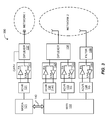
- FIG. 4 is a diagram illustrating an example of resource sharing in a network bridge in accordance with one embodiment of the systems and methods described herein.
- the bridge 220 includes a baseband component 221.
- the baseband component 221 includes a MoCA baseband module 223 and a WiFi baseband module 224.
- certain of the components of MoCA baseband module 223 and of the WiFi baseband module 224 are shared, as illustrated by the shared components 222.
- Some of the benefits that may be obtained in some embodiments by sharing components among MoCA baseband 223 and WiFi baseband 224 include, reduced cost, reduced silicon real estate, and lower power consumption. Examples of components that can be shared include memory, processor, other digital hardware, Digital Signal Processor (DSP), and some interfaces.
- DSP Digital Signal Processor
- the bridge 220 also includes transceivers 230, 233, 234, amplifiers 241, 242, 243, 244, diplexers 237, 238, and a filter 239.
- the baseband component 221 can include, for example, one or more processors, memory, interfaces, bus, power management/conditioning and other baseband components.
- Processing components of a baseband chip or chipset can include for example, a general-purpose processor, a digital signal processor, a communication core, and an application core.
- the interfaces can include, for example, a Universal Asynchronous Receiver/Transmitter (UART), Serial Peripheral Interface (SPI), and other interfaces.
- UART Universal Asynchronous Receiver/Transmitter
- SPI Serial Peripheral Interface
- the example illustrated in Figure 4 also shows the sharing of Radio Frequency (RF) components for the WiFi and MoCA transmit/receive chains.
- RF Radio Frequency
- this example illustrates a shared transceiver 230 that is shared between the MoCA network and the WiFi network. More particularly, in this example a single transceiver is shared between the MoCA network and the 2.4 GHz communication path for the WiFi network.
- the shared transceiver 230 operates in the frequency bands of both the MoCA network and the 2.4 GHz WiFi network.
- the transceiver is implemented as a wideband transceiver operating across a frequency band wide enough covering all channels in both bands. Such transceivers may be implemented to cover all channels in both bands without the need for switching or tuning.
- the instantaneous bandwidth of the transceiver 230 is narrower, but the transceiver 230 is capable of operating across a wider frequency band.
- the operation in different bands and channels may be achieved in various embodiments by tuning or switching components or blocks of the transceiver.
- switching or tuning is performed with sufficient speed so as to not significantly impact network communications as a result of timesharing the transceiver 230.
- a transceiver can also be implemented and shared among other combinations of transceivers including among the MoCA network and the WiFi 5 GHz networks.
- sharing the MoCA network transceiver with transceivers for the WiFi 5 GHz networks requires a wider operational bandwidth of the transceiver.
- the wider operational bandwidth can be accomplished, for example, with a wideband transceiver, through tuning or through switching of components or blocks configured to handle the appropriate frequency bands.
- the sharing can be a "dynamic sharing” or a "static sharing”. Dynamic sharing can be implemented to allow simultaneous operation of MoCA and WiFi communications through a real-time multiplexing scheme between the two networks.
- the WiFi communications are operated between MoCA MAP cycles (1 ms repetition) with no change in the MoCA standard protocols.
- WiFi communications are operated during one or multiple MoCA MAP cycles. For example, WiFi communications can be allowed to take place during time intervals that are not reserved by MoCA devices.
- WiFi communications may be permitted to preempt MoCA communications. Limits can be placed on such preemption to prevent or minimize the occurrence of WiFi dominating the communication bandwidth. Likewise, MoCA communications may be given this priority.
- the MoCA protocol in some embodiments may be altered to allow a leave of absence for MoCA devices.
- the shared components in some embodiments are configured for either the MoCA mode or the WiFi mode, using only one service at a time.
- Static sharing can allow a full performance for each mode of operation in the allotted time interval, but may lead to lower cost advantage as compared to dynamic sharing.
- static sharing the node is limited to one service at a time and cannot be a wire-fed access point in a WiFi mode.
- One advantage of static sharing is that when the node is servicing a particular mode, that mode gets full service.
- Figure 4 illustrates sharing of baseband components and some transceiver components
- different levels of sharing can be implemented.
- resource sharing can be maximized. That is, in implementations where WiFi is suspended for a period on-demand during the MoCA time slots, and MoCA is suspended for a period on-demand during WiFi timeslots, the system components can be dedicated to one network at a time and sharing can be maximized. In embodiments where fewer than all components are shared, there may be some simultaneous, or effectively simultaneous, communications across both networks.
- near real-time processing of WiFi packets and near real-time processing of MoCA packets can be performed by the processor while each packet type can be communicated using the still dedicated front end.
- the memory can handle simultaneous accesses to different addresses of the memory by WiFi and MoCA.
- fine lock-synchronization or software transactional memory may be used to facilitate memory sharing.
- MAC/PHY Media Access Control/Physical Layer
- FIG. 5 is a diagram illustrating an example for microsharing among WiFi and MoCA communications in accordance with embodiments of the systems and methods described herein.
- the standard MoCA MAC/PHY protocol specifies a packet-based communications system.
- PHY packets comprise preambles and payloads.
- a PHY preamble is typically inserted at the beginning of each packet to assist receivers in detecting and acquiring the physical layer parameters to decode the packet properly.
- the communications protocol may have a plurality of pre-defined PHY preambles to use with different types of network communications. For example, one type of preamble may be used when transmitting in a diversity mode (a communication mode in which little is known about the communication channel). Another type of preamble may be used when transmitting a media access plan (MAP) message. Other types of packets may use other types of preambles.
- MAP media access plan
- a PHY payload is used to transmit the data content of the packet.
- the PHY payload has a predetermined format.
- network maintenance messages and MAP messages each have a format that is determined by the MoCA protocol.
- the PHY payload may have an undetermined format.
- the PHY payload of a media streaming transmission might comprise an embedded Ethernet packet or a portion thereof.
- a network coordinator Often, a node is selected from among the nodes of the network to be the NC. Accordingly, the selected node performs the functions of the NC. The node is selected based upon a process defined by the communications protocol.
- the NC schedules network communications between network nodes using a MAP cycle.
- the MAP is sent as a packet. Such MAP packets are sent on a regular basis.
- MAPs are generated in response to reservation requests (RRs) sent by the nodes of the network.
- the baseband module 220 recognizes that there will be available network time. Accordingly, the MoCA baseband module 223 together with the WiFi baseband module 224 configures the system for WiFi communications.
- WiFi communications 320 occur during map-to-map interval 302. Shared resources are used for the WiFi communications during this time interval 302.
- a WiFi access point can use a CTS-to-self 322 to "block off" a time period for MoCA communications.
- the WiFi access point sends the CTS-to-self 322
- other participating WiFi devices will interpret that as an indication that the sending access point is reserving the network for itself. Accordingly, the other WiFi devices on the network will refrain from communicating over the WiFi network. Accordingly, the shared resources are made available to the MoCA nodes of the MoCA network.
- MoCA is given a higher priority than WiFi because the decision for time division access is made based on the absence or presence of a MoCA RR.
- the system can "hold off” WiFi transmissions in favor of MoCA operations.
- the CTS can be used by a WiFi access point to "self block” WiFi communications and thus make the shared resources available for MoCA communications.
- CTS 325 is sent by the WiFi access point. This blocks all other WiFi devices from transmission during the defined time interval 307. Therefore, MoCA communications can resume at the beginning of interval 307. Because there was a MoCA RR, however, at the end of interval 307, the remainder 308 of the map-to-map interval 315 is free for WiFi communications. Accordingly, in some embodiments, the available resources can be switched between WiFi and MoCA opportunistically in sub-map-to-map intervals. In one embodiment, the maximum time that can be self blocked using a CTS for MoCA is 64 ms. Accordingly, a map-to-map interval 315 would be available for WiFi communications. However, as described above, CTS 325 blocks the period 307 for MoCA communications.
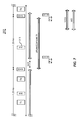
- FIGS 6 and 7 are diagrams illustrating an example of time division multiple access between WiFi and MoCA in accordance with embodiments of the systems and methods described herein.
- a transmission opportunity is a time interval during which a WiFi device is permitted to send frames of data. The transmission cannot exceed the maximum duration specified for the TXOP. If a frame is too large to fit in a single TXOP, it may be fragmented.
- the maximum WiFi transmission opportunity length is set to be equal to, or substantially equal to, the minimum inter-MAP gap length. For MoCA, this is 200 microseconds. For synchronous MAP operations, in a scenario such as that illustrated in Figures 6 and 7 , the inter-MAP gap length is 1.25 ms.
- the TXOP limit is set to 1.25 ms or a number slightly less than 1.25 ms (e.g. 1.1 ms).
- the TXOP limit may be set to .65 ms.
- downlink WiFi transmission (Tx) operations are opportunistic in some embodiments and mixed with MoCA Tx/receive (Rx).
- Rx MoCA Tx/receive
- Uplink WiFi transmissions are scheduled only in the entire interval between adjacent MAPs. In other words, an Uplink WiFi transmission will only be scheduled if there are no MoCA communications during the entire interval between MAPs.
- the system is configured to monitor WiFi during WiFi available intervals to see if the system is being used. If a time interval is available for WiFi, but no WiFi transmission starts by a given time within that interval, no WiFi transmission is allowed to start up in that interval. This technique can be used to ensure that WiFi communications don't overrun the available time interval.
- the time is divided between MoCA and WiFi operations by giving priority to MoCA communications and allowing WiFi to use remaining bandwidth.
- the network bridge first evaluates the schedule for MoCA communications. For example, this can be accomplished by looking at the MoCA MAP. In MoCA operations, the NC schedules the nodes in the MAP. The bridge then determines from the MAP when MoCA communications are not scheduled. It is during these unscheduled times that the bridge allows the WiFi devices to communicate over the network and use shared resources on the bridge. During these unscheduled times, the WiFi devices use standard WiFi protocols to share this available time. This can be accomplished using, for example the Request-to-Send (RTS) and CTS messaging protocols.
- RTS Request-to-Send
- the access point sends a CTS-to-self notification to block other WiFi nodes from communicating. Because all the WiFi nodes receive this CTS, they remain silent during the blocked period (e.g., ⁇ 64ms in one embodiment) so that the MoCA devices can utilize the network and the shared resources.
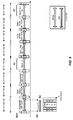
- Figure 8 is a diagram illustrating another example of time division multiple access between WiFi and MoCA in accordance with embodiments of the systems and methods described herein. An example of this is illustrated in Figure 8 , in which the network bridge determines from MAP 352 that no MoCA devices are transmitting during period 353. A MoCA Notice of Absence may be used to indicate to the MoCA devices to refrain from using MoCA on demand services. Period 353 is therefore reserved for WiFi communications. As illustrated, at the end of reserved period 353, the WiFi access point bridge sends a CTS 354 to reserve the communication network for MoCA traffic.
- FIG. 9 Another example another example of time division multiple access between WiFi and MoCA is illustrated in Figure 9 , in which sub-millisecond sharing is used.
- cycles that are not used for MoCA are designated as opportunistic windows for WiFi TXOP.
- the WiFi communications end in time for the bridge to receive the MAPs and the RRs. This is accomplished using CTS notifications by the access point. Because the network is free for the regularly scheduled MAPs and RRs, no changes to the MoCA protocol are required.
- intervals 362, 363 are reserved for MoCA communications. These intervals are scheduled using RRs as per conventional MoCA protocol so that sharing can be performed without altering MoCA nodes.
- the example in Figure 10 illustrates another example for time division sharing in accordance with the systems and methods described herein.
- the CTS-to-self message sent by the access point can be used to reserve the shared resources for WiFi communications.
- the RR can be used by the bridge to reserve network time for WiFi communications. Because the bridge makes a reservation using the RR, the NC and other network devices ensure that the MoCA resources are available for the bridge. During this available time, the bridge allows the WiFi devices to communicate using the shared resources.
- FIG 11 illustrates an example embodiment that uses CTS notifications to ensure that the time for MAPs is properly reserved for MoCA devices.
- the access point sends a CTS-to-self message 375 to reserve the time 373 for MAP 376 to occur on the MoCA network.
- CTS-to-self message 372 reserves the subsequent MoCA communication window 378.
- more than one bridge will be in communication with network nodes and with one another. Therefore, some embodiments permit coordination between bridges so the two access points can use the same frequency.
- FIG 12 is a diagram illustrating an example implementation for time multiplexing a transceiver between two networks in accordance with the systems and methods described herein.
- Figure 12 is described in terms of the example transceiver 230 discussed above with respect to Figure 4 . After reading this description, it will become apparent to one of ordinary skill in the art how this description can apply to other transceivers for time multiplexing between two networks.
- transceiver 230 includes receiver 260, transmitter 261 and switches 262.
- receiver 260 and transmitter 261 are of a sufficiently wide bandwidth to accommodate the two networks over which they are to communicate.
- blocks or components of receiver 260 and transmitter 261 can be switched in and out to allow operation at different frequency bands.
- Switches 262 are used to switch receiver 260 and transmitter 261 to amplifiers 241 or amplifiers 242 as appropriate for communication on the MoCA network 251 or the WiFi network 252. As illustrated in Figure 7 , switches 262 are controlled by a switch control signal 263. In some embodiments, switch control signal 263 is generated by baseband components 221 to control the switches for the appropriate network with which the bridge is currently communicating. As discussed above with reference to Figures 5 and 6 , baseband block 221 can be configured to determine and direct the shearing operation and the times at which the bridge will be communicating with a particular network. Accordingly, as part of this process, baseband block 221 is configured to generate the appropriate switch control signal 263 to switch the receiver 260 and transmitter 261 to the appropriate network coordination with the network in use at the time.
- FIG. 13 is a diagram illustrating another example implementation of a shared transceiver 230 in accordance with embodiments of the systems and methods described herein.
- a tunable local oscillator LO is provided to allow tuning of the receiver 270 and transmitter 271 to the appropriate conversion frequencies for the selected network communications.
- the local oscillator 272 can be tuned in real-time or near real-time to downconvert the received signal to baseband in the case of receiver 270; or to upconvert the baseband to the appropriate part of frequency in the case of transmitter 271.
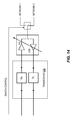
- FIG 14 is a diagram illustrating another example of resource sharing in accordance with embodiments of the systems and methods described herein.
- two amplifiers 290 are shared in addition to transceiver 230.
- the amplifiers 290 can be tuned rapidly between the channels and bands as required to accommodate the operating frequencies of the selected network.
- wideband amplifiers can be provided to cover both bands in all operating channels.
- module might describe a given unit of functionality that can be performed in accordance with one or more embodiments of the present invention.
- a module might be implemented utilizing any form of hardware, software, or a combination thereof.
- processors, controllers, Application Specific Integrated Circuits (ASICs), Programmable Logic Arrays (PLAs), Programmable Array Logics (PALs), Complex Programmable Logic Devices (CPLDs), Field Programmable Gate Arrays (FPGAs), logical components, software routines or other mechanisms might be implemented to make up a module.
- ASICs Application Specific Integrated Circuits
- PPAs Programmable Logic Arrays
- PALs Programmable Array Logics
- CPLDs Complex Programmable Logic Devices
- FPGAs Field Programmable Gate Arrays
- the various modules described herein might be implemented as discrete modules or the functions and features described can be shared in part or in total among one or more modules.
- these software elements can be implemented using any computing or processing module capable of carrying out the described functionality.
- a computing module is shown in Figure 15 .
- Various embodiments of the disclosed method and apparatus include this computing module 600. After reading this description, it will become apparent to a person skilled in the relevant art how to implement the disclosed method and apparatus using both this computing module and other computing modules or architectures as well.
- the computing module 600 may represent computing or processing capabilities found within: desktop, laptop, notebook computers, hand-held computing devices (Personal Data Assistants (PDAs), smart phones, cell phones, palmtops, etc.), mainframe computers, supercomputers, workstations, servers, or any other type of special-purpose or general-purpose computing devices, as may be desirable or appropriate to perform the described functionality for a given application or environment.
- the computing module 600 might also represent computing capabilities embedded within or otherwise available to a given device.
- a computing module 600 might be found in or implemented by electronic devices such as digital cameras, navigation systems, cellular telephones, portable computing devices, modems, routers, Wireless Access Points (WAPs), terminals and other electronic devices that might include some form of processing capability.
- electronic devices such as digital cameras, navigation systems, cellular telephones, portable computing devices, modems, routers, Wireless Access Points (WAPs), terminals and other electronic devices that might include some form of processing capability.
- WAPs Wireless Access Points
- the computing module 600 might include, for example, one or more processors, controllers, control modules, or other processing devices, such as a processor 604.
- the processor 604 might be implemented using a general-purpose or special-purpose processing engine such as, for example, a microprocessor, controller, or other control logic.
- the processor 604 is connected to a bus 602, although any communication medium can be used to facilitate interaction with other components of the computing module 600 or to communicate externally.
- the computing module 600 might also include one or more memory modules, simply referred to herein as the main memory 608.
- RAM Random Access Memory
- main memory 608 might also be used for storing temporary variables or other intermediate information during execution of instructions to be executed by the processor 604.
- the computing module 600 might likewise include a Read Only Memory (“ROM”) or other storage device coupled to bus 602 for storing information and instructions for the processor 604.
- ROM Read Only Memory
- the computing module 600 might also include one or more mechanisms for information storage 610, which might include, for example, a media drive 612 and a storage unit interface 620.
- the media drive 612 might include a drive or other mechanism to support fixed or removable storage media 614.
- a hard disk drive, a floppy disk drive, a magnetic tape drive, an optical disk drive, a Compact Disk (CD) or Digital Video Device (DVD) drive (Read (R) or Read/Write (RW)), or other removable or fixed media drive might be provided.
- storage media 614 might include, for example, a hard disk, a floppy disk, magnetic tape, cartridge, optical disk, a CD or DVD, or other fixed or removable medium that is read by, written to or accessed by media drive 612.
- the storage media 614 can include a computer usable storage medium having stored therein computer software or data.
- information storage mechanism 610 might include other similar instrumentalities for allowing computer programs or other instructions or data to be loaded into the computing module 600.
- Such instrumentalities might include, for example, a fixed or removable storage unit 622 and an interface 620.
- Examples of such storage units 622 and interfaces 620 can include a program cartridge and cartridge interface, a removable memory (for example, a flash memory or other removable memory module) and memory slot, a Personal Computer Memory Card International Association (PCMCIA) slot and card, and other fixed or removable storage units 622 and interfaces 620 that allow software and data to be transferred from the storage unit 622 to the computing module 600.
- PCMCIA Personal Computer Memory Card International Association
- the computing module 600 might also include a communications interface 624.
- Communications interface 624 might be used to allow software and data to be transferred between the computing module 600 and external devices.
- Examples of communications interface 624 might include a modem or soft modem, a network interface (such as an Ethernet, network interface card, WiMedia, IEEE 802.XX or other interface), a communications port (such as for example, a USB port, Infra-Red (IR) port, RS232 port Bluetooth® interface, or other port), or other communications interface.
- Software and data transferred via communications interface 624 might typically be carried on signals, which can be electronic, electromagnetic (which includes optical) or other signals capable of being exchanged by a given communications interface 624. These signals might be provided to communications interface 624 via a channel 628.
- This channel 628 might carry signals and might be implemented using a wired or wireless communication medium.
- a channel might include a MoCA channel over coaxial cable, phone line, a cellular link, an RF link, an optical link, a network interface, a local or wide area network, and other wired or wireless communications channels.
- computer program medium and “computer usable medium” are used to generally refer to physical storage media such as, for example, memory 608, storage unit 622, and media 614. These and other various forms of computer program storage media or computer usable storage media may be involved in storing and providing one or more sequences of one or more instructions to a processing device for execution. Such instructions embodied on the medium, are generally referred to as “computer program code” or a “computer program product” (which may be grouped in the form of computer programs or other groupings). When executed, such instructions might enable the computing module 600 to perform features or functions of the disclosed method and apparatus as discussed herein.
- module does not imply that the components or functionality described or claimed as part of the module are all configured in a common package. Indeed, any or all of the various components of a module, whether control logic or other components, can be combined in a single package or separately maintained and can further be distributed in multiple groupings or packages or across multiple locations.
Landscapes
- Engineering & Computer Science (AREA)
- Computer Networks & Wireless Communication (AREA)
- Signal Processing (AREA)
- Automation & Control Theory (AREA)
- Mobile Radio Communication Systems (AREA)
Claims (15)
- Eine Netzwerkbrücke (221) die eingerichtet ist, um Kommunikationen in einem MoCA-Netzwerk und einem WiFi-Netzwerk unter Verwendung von geteilten Netzwerkbrücken-Ressourcen (222) durchzuführen, wobei die Netzwerkbrücke aufweist:einen Prozessor; undeinen Speicher, der mit dem Prozessor verbunden ist, auf dem computerausführbarer Code gespeichert ist, wenn er durch den Prozessor ausgeführt wird, die Netzwerkbrücke dazu veranlasst, die Vorgänge durchzuführen:a) in einem aktuellen Zugriffszyklus des MoCA-Netzwerks, Empfangen eines Medien-Zugriffsplans, MAP, von einem MoCA-Netzkoordinator, NC, in dem MoCA-Netzwerk und Überprüfen des MAP, um zu bestimmen, ob der MoCA-NC MoCA-Kommunikationen in einem bevorstehenden MAP-Zyklus geplant hat;b) in Fällen, in denen der MAP angibt, dass der MoCA-NC die MoCA-Kommunikationen in einem bevorstehenden MAP-Zyklus geplant hat, Einrichten der geteilten Netzwerkbrücken-Ressourcen für die MoCA-Kommunikationen;c) in Fällen, in denen der MAP angibt, dass der MoCA-NC keine MoCA-Kommunikationen in einem bevorstehenden MAP-Zyklus geplant hat, Einrichten der geteilten Netzwerkbrücken-Ressourcen für WiFi-Kommunikationen;d) bei dem Abschluss einer WiFi-Kommunikationsperiode, Senden eines CTS an die WiFi-Vorrichtungen in dem Netzwerk und Einrichten der geteilten Netzwerkbrücken-Ressourcen für die MoCA-Kommunikationen.
- Netzwerkbrücke nach Anspruch 1, wobei das Überprüfen des MAP, um zu bestimmen, ob der MoCA-NC die MoCA-Kommunikationen in einem bevorstehenden MAP-Zyklus geplant hat, das Parsen des MAP aufweist, um eine Zeitdauer für die geplanten MoCA-Kommunikationen zu bestimmen.
- Netzwerkbrücke nach Anspruch 1, weiterhin aufweisend, nach dem Einrichten der geteilten Netzwerkbrücken-Ressourcen für die WiFi-Kommunikationen, Überprüfen des Auftretens von WiFi-Kommunikationen und, falls die WiFi-Kommunikationen nicht innerhalb einer vorbestimmten Zeitdauer auftreten, Senden eines CTS an die WiFi-Vorrichtungen im Netzwerk und Einrichten der geteilten Netzwerkbrücken-Ressourcen für die MoCA-Kommunikationen.
- Netzwerkbrücke nach Anspruch 3, wobei die vorbestimmte Zeitdauer so gewählt ist, dass, falls die WiFi-Kommunikationen begonnen werden, sie vor dem nächsten geplanten MAP beendet werden können.
- Netzwerkbrücke nach Anspruch 1, weiterhin aufweisend, falls die geteilten Ressourcen für die WiFi-Kommunikationen eingerichtet werden, Senden eines CTS vor jedem MAP und R, um die WiFi-Kommunikationen aufzugeben und neu Einrichten der geteilten Ressourcen für die MoCA-Kommunikationen, um die Kommunikation der MAPs und der RPvS neben den MoCA-Vorrichtungen zu ermöglichen.
- Netzwerkbrücke nach Anspruch 1, weiterhin aufweisend, Kommunizieren mit einer zweiten Netzwerkbrücke, um die WiFi-Kommunikationen durch die Brücken zu koordinieren, um überlappende WiFi-Kommunikationen durch die Brücken zu vermeiden.
- Netzwerkbrücke nach Anspruch 1, wobei die geteilten Ressourcen mindestens eines von einem Basisbandprozessor, einen Speicher, einen Transceiver, einen Leistungsverstärker und einen rauscharmen Verstärker aufweisen.
- Verfahren zum Freigeben von Ressourcen für eine Netzwerkbrücke (221), die eingerichtet ist, um Kommunikationen auf einem MoCA-Netzwerk und einem WiFi-Netzwerk unter Verwendung der geteilten Netzwerkbrücken-Ressourcen (222) durchzuführen, wobei die Netzwerkbrücke aufweist:a) in einem aktuellen Zugriffszyklus des MoCA-Netzwerks, Empfangen eines MAP von einem MoCA-NC in dem MoCA-Netzwerk und Überprüfen des MAP, um zu bestimmen, ob der MOCA-NC MoCA-Kommunikationen in einem bevorstehenden MAP-Zyklus geplant hat;b) in Fällen, in denen der MAP angibt, dass der MoCA-NC die MoCA-Kommunikationen in einem bevorstehenden MAP-Zyklus geplant hat, Einrichten der geteilten Netzwerkbrücken-Ressourcen für die MoCA-Kommunikationen;c) in Fällen, in denen der MAP angibt, dass der MoCA-NC keine MoCA-Kommunikationen in einem bevorstehenden MAP-Zyklus geplant hat, Einrichten der geteilten Netzwerkbrücken-Ressourcen für WiFi-Kommunikationen;d) bei dem Abschluss einer WiFi-Kommunikationsperiode, Senden eines CTS an die WiFi-Vorrichtungen in dem Netzwerk und Einrichten der geteilten Netzwerkbrücken-Ressourcen für die MoCA-Kommunikationen.
- Verfahren nach Anspruch 8, wobei das Überprüfen des MAP, um zu bestimmen, ob der MoCA-NC die MoCA-Kommunikationen in einem bevorstehenden MAP-Zyklus geplant hat, das Parsen des MAP aufweist, um eine Zeitdauer für die geplanten MoCA-Kommunikationen zu bestimmen.
- Verfahren nach Anspruch 8, weiterhin aufweisend, nach dem Einrichten der geteilten Netzwerkbrücken-Ressourcen für die WiFi-Kommunikationen, Überprüfen des Auftretens von WiFi-Kommunikationen und, falls die WiFi-Kommunikationen nicht innerhalb einer vorbestimmten Zeitdauer auftreten, Senden eines CTS an die WiFi-Vorrichtungen im Netzwerk und Einrichten der geteilten Netzwerkbrücken-Ressourcen für die MoCA-Kommunikationen.
- Verfahren nach Anspruch 10, wobei die vorbestimmte Zeitdauer so gewählt ist, dass, falls die WiFi-Kommunikationen begonnen werden, sie vor dem nächsten geplanten MAP beendet werden können.
- Verfahren nach Anspruch 8, weiterhin aufweisend, falls die geteilten Ressourcen für die WiFi-Kommunikationen eingerichtet werden, Senden eines CTS vor jedem MAP und eines ausgewählten R, um die WiFi-Kommunikationen aufzugeben und neu Einrichten der geteilten Ressourcen für die MoCA-Kommunikationen, um die Kommunikation der MAPs und der ausgewählten RRs neben den MoCA-Vorrichtungen zu ermöglichen.
- Verfahren nach Anspruch 8, weiterhin aufweisend, Kommunizieren mit einer zweiten Netzwerkbrücke, um die WiFi-Kommunikationen durch die Brücken zu koordinieren, um überlappende WiFi-Kommunikationen durch die Brücken zu vermeiden.
- Verfahren nach Anspruch 8, wobei die geteilten Ressourcen mindestens eines von einem Basisbandprozessor, einen Speicher, einen Transceiver, einen Leistungsverstärker und einen rauscharmen Verstärker aufweisen.
- Computer-Programm aufweisend Anweisungen zum Durchführen eines Verfahrens nach einem der Ansprüche 8 bis 14.
Applications Claiming Priority (3)
| Application Number | Priority Date | Filing Date | Title |
|---|---|---|---|
| US201161484642P | 2011-05-10 | 2011-05-10 | |
| US13/213,370 US8831015B2 (en) | 2011-05-10 | 2011-08-19 | MoCA-WiFi multiplexing |
| PCT/US2012/037023 WO2012154783A1 (en) | 2011-05-10 | 2012-05-09 | Moca-wifi multiplexing |
Publications (3)
| Publication Number | Publication Date |
|---|---|
| EP2708024A1 EP2708024A1 (de) | 2014-03-19 |
| EP2708024A4 EP2708024A4 (de) | 2014-10-29 |
| EP2708024B1 true EP2708024B1 (de) | 2015-10-07 |
Family
ID=47139609
Family Applications (1)
| Application Number | Title | Priority Date | Filing Date |
|---|---|---|---|
| EP12782382.1A Not-in-force EP2708024B1 (de) | 2011-05-10 | 2012-05-09 | Moca-wifi-multiplexierung |
Country Status (6)
| Country | Link |
|---|---|
| US (1) | US8831015B2 (de) |
| EP (1) | EP2708024B1 (de) |
| CN (1) | CN103650484A (de) |
| BR (1) | BR112013028916A2 (de) |
| CL (1) | CL2013003205A1 (de) |
| WO (1) | WO2012154783A1 (de) |
Families Citing this family (13)
| Publication number | Priority date | Publication date | Assignee | Title |
|---|---|---|---|---|
| US9431702B2 (en) * | 2011-05-24 | 2016-08-30 | Xirrus, Inc. | MIMO antenna system having beamforming networks |
| US8867501B2 (en) * | 2011-06-23 | 2014-10-21 | Qualcomm Incorporated | Multi-radio coexistence |
| US8792521B2 (en) * | 2011-09-23 | 2014-07-29 | Broadcom Corporation | Multi-standard front end using wideband data converters |
| US8787283B2 (en) * | 2011-11-21 | 2014-07-22 | Maxlinear, Inc. | Method and system for providing reduced bandwidth acquisition latency |
| US20130176900A1 (en) * | 2012-01-05 | 2013-07-11 | Entropic Communications, Inc. | Discovery in MoCA Networks |
| US10103776B2 (en) | 2013-03-11 | 2018-10-16 | Entropic Communications, Llc | Synchronized multi-channel access system |
| CN103152235B (zh) * | 2013-03-15 | 2017-02-22 | 江苏亿通高科技股份有限公司 | 无线MoCA终端 |
| US20170093745A1 (en) * | 2015-09-24 | 2017-03-30 | Qualcomm Incorporated | Scheduling of shared hardware for dual network operation |
| US9847909B2 (en) | 2015-09-24 | 2017-12-19 | Qualcomm Incorporated | Network device with shared hardware for multiple communication networks |
| EP3334090A1 (de) * | 2016-12-08 | 2018-06-13 | InCoax Networks Europe AB | Verfahren und system zur synchronisierung von knotenvorrichtungen in einem koaxialnetzwerk |
| US12526751B2 (en) * | 2021-10-15 | 2026-01-13 | Skyworks Solutions, Inc. | Multiple antenna transmission to manage radiated power |
| CN115913275B (zh) * | 2022-11-17 | 2025-12-12 | 芯翼信息科技(上海)有限公司 | 射频前端的共享方法、终端设备和计算机可读存储介质 |
| US20250305236A1 (en) * | 2024-03-29 | 2025-10-02 | Eric Richardson | Apparatus tool and attachment for excavator for forming a drainage system and method |
Family Cites Families (9)
| Publication number | Priority date | Publication date | Assignee | Title |
|---|---|---|---|---|
| US7853221B2 (en) * | 2004-11-12 | 2010-12-14 | Homerun Holdings Corp. | Network bridge device and methods for programming and using the same |
| US20060203841A1 (en) * | 2005-03-09 | 2006-09-14 | Fischer Matthew J | Coordination of multiple protocols using a shared communication medium |
| TW200707204A (en) * | 2005-08-02 | 2007-02-16 | Pixart Imaging Inc | Method and apparatus for exchanging signals with a computer system through wired and wireless communication in an input device of the computer system |
| US8347341B2 (en) | 2006-03-16 | 2013-01-01 | Time Warner Cable Inc. | Methods and apparatus for centralized content and data delivery |
| US9374834B2 (en) * | 2006-12-19 | 2016-06-21 | Nokia Technologies Oy | Techniques for RTS/CTS usage for wireless networks |
| US8649386B2 (en) | 2007-09-11 | 2014-02-11 | Prodea Systems, Inc | Multi-interface wireless adapter and network bridge |
| TW200926809A (en) | 2007-10-05 | 2009-06-16 | Nxp Bv | Method, system and apparatus for extended rate/range communication over a communication network |
| US8804516B2 (en) | 2008-12-04 | 2014-08-12 | Cisco Technology, Inc. | Opportunistic transmissions within MoCA |
| US9106435B2 (en) * | 2008-12-04 | 2015-08-11 | Cisco Technology, Inc. | Efficient data transmission within MoCA |
-
2011
- 2011-08-19 US US13/213,370 patent/US8831015B2/en active Active
-
2012
- 2012-05-09 CN CN201280034198.4A patent/CN103650484A/zh active Pending
- 2012-05-09 BR BR112013028916A patent/BR112013028916A2/pt not_active IP Right Cessation
- 2012-05-09 WO PCT/US2012/037023 patent/WO2012154783A1/en not_active Ceased
- 2012-05-09 EP EP12782382.1A patent/EP2708024B1/de not_active Not-in-force
-
2013
- 2013-11-08 CL CL2013003205A patent/CL2013003205A1/es unknown
Also Published As
| Publication number | Publication date |
|---|---|
| EP2708024A1 (de) | 2014-03-19 |
| WO2012154783A1 (en) | 2012-11-15 |
| US20120287866A1 (en) | 2012-11-15 |
| CN103650484A (zh) | 2014-03-19 |
| US8831015B2 (en) | 2014-09-09 |
| EP2708024A4 (de) | 2014-10-29 |
| CL2013003205A1 (es) | 2014-08-01 |
| BR112013028916A2 (pt) | 2017-01-31 |
Similar Documents
| Publication | Publication Date | Title |
|---|---|---|
| US8831015B2 (en) | MoCA-WiFi multiplexing | |
| US8639284B2 (en) | System and method providing concurrent multimode communication | |
| TWI558119B (zh) | 具有多個同質無線電共存的無線感測器基地台 | |
| US20220400503A1 (en) | Communication of asynchronous ultra-low latency transmissions within a synchronized transmission opportunity (s-txop) | |
| US20220416964A1 (en) | A-mpdu preemption for time-critical ultra-low latency (ull) communications | |
| EP4278585A1 (de) | Verwaltung eines drahtlosen lokalen netzwerks (wlan) zur unterstützung eines mobilen kommunikationsnetzwerkdienstes | |
| EP3751936A1 (de) | Verfahren und vorrichtung zur bestimmung des trägersatzes, speichermedium und elektronische vorrichtung | |
| US8385259B2 (en) | Cross channel coexistence beaconing protocol for wireless dynamic spectrum access networks | |
| US20230028874A1 (en) | Ultra-low latency (ull) communications using a dedicated resource unit (ru) | |
| CN1890923B (zh) | 信道访问装置、系统和方法 | |
| EP2832168B1 (de) | Dynamisches festlegen von übertragunszeit in einem wettbewerb-basierten funksystem | |
| EP1622317B1 (de) | Mediumzugriffssteuerungsgerät zur Verwendung in einem Kanalüberlagerungsnetz | |
| US7796566B2 (en) | Methods and apparatus to perform dynamic channel management and dynamic bandwidth changes in wireless local area networks | |
| US12574965B2 (en) | Communication within synchronized transmission opportunities (S-TXOPS) using short preamble | |
| KR101109507B1 (ko) | 1x 에볼루션 데이터 전용(1XEV-DO) 통신 네트워크에서 QUICKCONFIG 메시지 구성 방법 및 추가 호 셋업 레이턴스의 유발없이 1XEV-DO 네트워크에서 호 및 핸드오프 실패율을 감소시키는 방법 | |
| EP4160964A1 (de) | An der überwachung eines downlink-steuerungskanals beteiligtes benutzergerät und basisstation | |
| EP3994826B1 (de) | Vorrichtung und verfahren für zugriff auf ein drahtlosnetzwerk | |
| Han et al. | Resource sharing in dual-stack devices: Opportunistic Bluetooth transmissions in WLAN busy periods | |
| US20220312528A1 (en) | Radio module, method to operate a radio module, radio terminal, method to operate a radio terminal | |
| JP7416268B2 (ja) | 中継方法、及び中継装置 | |
| CN120435835A (zh) | Harq进程处理方法、装置、设备、存储介质及产品 | |
| US20260089613A1 (en) | Unsynchronized service discovery | |
| CN115334617B (zh) | 通过建立接入点进行数据传输的方法、装置及存储介质 | |
| CN121729975A (zh) | 管理用户设备中的通信协议的共存 | |
| KR101568369B1 (ko) | 매체 액세스 제어 방법 및 매체 액세스 제어 시스템 |
Legal Events
| Date | Code | Title | Description |
|---|---|---|---|
| PUAI | Public reference made under article 153(3) epc to a published international application that has entered the european phase |
Free format text: ORIGINAL CODE: 0009012 |
|
| 17P | Request for examination filed |
Effective date: 20131105 |
|
| AK | Designated contracting states |
Kind code of ref document: A1 Designated state(s): AL AT BE BG CH CY CZ DE DK EE ES FI FR GB GR HR HU IE IS IT LI LT LU LV MC MK MT NL NO PL PT RO RS SE SI SK SM TR |
|
| DAX | Request for extension of the european patent (deleted) | ||
| A4 | Supplementary search report drawn up and despatched |
Effective date: 20140929 |
|
| RIC1 | Information provided on ipc code assigned before grant |
Ipc: H04L 12/28 20060101AFI20140923BHEP |
|
| REG | Reference to a national code |
Ref country code: DE Ref legal event code: R079 Ref document number: 602012011400 Country of ref document: DE Free format text: PREVIOUS MAIN CLASS: H04N0007180000 Ipc: H04L0012280000 |
|
| GRAP | Despatch of communication of intention to grant a patent |
Free format text: ORIGINAL CODE: EPIDOSNIGR1 |
|
| RIC1 | Information provided on ipc code assigned before grant |
Ipc: H04W 84/22 20090101ALN20150326BHEP Ipc: H04L 12/28 20060101AFI20150326BHEP Ipc: H04W 74/04 20090101ALI20150326BHEP |
|
| INTG | Intention to grant announced |
Effective date: 20150413 |
|
| RIC1 | Information provided on ipc code assigned before grant |
Ipc: H04L 12/28 20060101AFI20150327BHEP |
|
| GRAS | Grant fee paid |
Free format text: ORIGINAL CODE: EPIDOSNIGR3 |
|
| GRAA | (expected) grant |
Free format text: ORIGINAL CODE: 0009210 |
|
| AK | Designated contracting states |
Kind code of ref document: B1 Designated state(s): AL AT BE BG CH CY CZ DE DK EE ES FI FR GB GR HR HU IE IS IT LI LT LU LV MC MK MT NL NO PL PT RO RS SE SI SK SM TR |
|
| REG | Reference to a national code |
Ref country code: GB Ref legal event code: FG4D |
|
| REG | Reference to a national code |
Ref country code: AT Ref legal event code: REF Ref document number: 754301 Country of ref document: AT Kind code of ref document: T Effective date: 20151015 Ref country code: CH Ref legal event code: EP |
|
| REG | Reference to a national code |
Ref country code: IE Ref legal event code: FG4D |
|
| REG | Reference to a national code |
Ref country code: DE Ref legal event code: R096 Ref document number: 602012011400 Country of ref document: DE |
|
| REG | Reference to a national code |
Ref country code: NL Ref legal event code: MP Effective date: 20151007 |
|
| REG | Reference to a national code |
Ref country code: AT Ref legal event code: MK05 Ref document number: 754301 Country of ref document: AT Kind code of ref document: T Effective date: 20151007 |
|
| REG | Reference to a national code |
Ref country code: LT Ref legal event code: MG4D |
|
| PG25 | Lapsed in a contracting state [announced via postgrant information from national office to epo] |
Ref country code: NO Free format text: LAPSE BECAUSE OF FAILURE TO SUBMIT A TRANSLATION OF THE DESCRIPTION OR TO PAY THE FEE WITHIN THE PRESCRIBED TIME-LIMIT Effective date: 20160107 Ref country code: ES Free format text: LAPSE BECAUSE OF FAILURE TO SUBMIT A TRANSLATION OF THE DESCRIPTION OR TO PAY THE FEE WITHIN THE PRESCRIBED TIME-LIMIT Effective date: 20151007 Ref country code: IS Free format text: LAPSE BECAUSE OF FAILURE TO SUBMIT A TRANSLATION OF THE DESCRIPTION OR TO PAY THE FEE WITHIN THE PRESCRIBED TIME-LIMIT Effective date: 20160207 Ref country code: HR Free format text: LAPSE BECAUSE OF FAILURE TO SUBMIT A TRANSLATION OF THE DESCRIPTION OR TO PAY THE FEE WITHIN THE PRESCRIBED TIME-LIMIT Effective date: 20151007 Ref country code: NL Free format text: LAPSE BECAUSE OF FAILURE TO SUBMIT A TRANSLATION OF THE DESCRIPTION OR TO PAY THE FEE WITHIN THE PRESCRIBED TIME-LIMIT Effective date: 20151007 Ref country code: LT Free format text: LAPSE BECAUSE OF FAILURE TO SUBMIT A TRANSLATION OF THE DESCRIPTION OR TO PAY THE FEE WITHIN THE PRESCRIBED TIME-LIMIT Effective date: 20151007 Ref country code: IT Free format text: LAPSE BECAUSE OF FAILURE TO SUBMIT A TRANSLATION OF THE DESCRIPTION OR TO PAY THE FEE WITHIN THE PRESCRIBED TIME-LIMIT Effective date: 20151007 |
|
| PG25 | Lapsed in a contracting state [announced via postgrant information from national office to epo] |
Ref country code: FI Free format text: LAPSE BECAUSE OF FAILURE TO SUBMIT A TRANSLATION OF THE DESCRIPTION OR TO PAY THE FEE WITHIN THE PRESCRIBED TIME-LIMIT Effective date: 20151007 Ref country code: PT Free format text: LAPSE BECAUSE OF FAILURE TO SUBMIT A TRANSLATION OF THE DESCRIPTION OR TO PAY THE FEE WITHIN THE PRESCRIBED TIME-LIMIT Effective date: 20160208 Ref country code: RS Free format text: LAPSE BECAUSE OF FAILURE TO SUBMIT A TRANSLATION OF THE DESCRIPTION OR TO PAY THE FEE WITHIN THE PRESCRIBED TIME-LIMIT Effective date: 20151007 Ref country code: LV Free format text: LAPSE BECAUSE OF FAILURE TO SUBMIT A TRANSLATION OF THE DESCRIPTION OR TO PAY THE FEE WITHIN THE PRESCRIBED TIME-LIMIT Effective date: 20151007 Ref country code: PL Free format text: LAPSE BECAUSE OF FAILURE TO SUBMIT A TRANSLATION OF THE DESCRIPTION OR TO PAY THE FEE WITHIN THE PRESCRIBED TIME-LIMIT Effective date: 20151007 Ref country code: AT Free format text: LAPSE BECAUSE OF FAILURE TO SUBMIT A TRANSLATION OF THE DESCRIPTION OR TO PAY THE FEE WITHIN THE PRESCRIBED TIME-LIMIT Effective date: 20151007 Ref country code: GR Free format text: LAPSE BECAUSE OF FAILURE TO SUBMIT A TRANSLATION OF THE DESCRIPTION OR TO PAY THE FEE WITHIN THE PRESCRIBED TIME-LIMIT Effective date: 20160108 Ref country code: SE Free format text: LAPSE BECAUSE OF FAILURE TO SUBMIT A TRANSLATION OF THE DESCRIPTION OR TO PAY THE FEE WITHIN THE PRESCRIBED TIME-LIMIT Effective date: 20151007 |
|
| REG | Reference to a national code |
Ref country code: DE Ref legal event code: R097 Ref document number: 602012011400 Country of ref document: DE |
|
| PG25 | Lapsed in a contracting state [announced via postgrant information from national office to epo] |
Ref country code: CZ Free format text: LAPSE BECAUSE OF FAILURE TO SUBMIT A TRANSLATION OF THE DESCRIPTION OR TO PAY THE FEE WITHIN THE PRESCRIBED TIME-LIMIT Effective date: 20151007 |
|
| PGFP | Annual fee paid to national office [announced via postgrant information from national office to epo] |
Ref country code: DE Payment date: 20160527 Year of fee payment: 5 |
|
| PLBE | No opposition filed within time limit |
Free format text: ORIGINAL CODE: 0009261 |
|
| STAA | Information on the status of an ep patent application or granted ep patent |
Free format text: STATUS: NO OPPOSITION FILED WITHIN TIME LIMIT |
|
| PG25 | Lapsed in a contracting state [announced via postgrant information from national office to epo] |
Ref country code: SM Free format text: LAPSE BECAUSE OF FAILURE TO SUBMIT A TRANSLATION OF THE DESCRIPTION OR TO PAY THE FEE WITHIN THE PRESCRIBED TIME-LIMIT Effective date: 20151007 Ref country code: BE Free format text: LAPSE BECAUSE OF NON-PAYMENT OF DUE FEES Effective date: 20160531 Ref country code: DK Free format text: LAPSE BECAUSE OF FAILURE TO SUBMIT A TRANSLATION OF THE DESCRIPTION OR TO PAY THE FEE WITHIN THE PRESCRIBED TIME-LIMIT Effective date: 20151007 Ref country code: SK Free format text: LAPSE BECAUSE OF FAILURE TO SUBMIT A TRANSLATION OF THE DESCRIPTION OR TO PAY THE FEE WITHIN THE PRESCRIBED TIME-LIMIT Effective date: 20151007 Ref country code: EE Free format text: LAPSE BECAUSE OF FAILURE TO SUBMIT A TRANSLATION OF THE DESCRIPTION OR TO PAY THE FEE WITHIN THE PRESCRIBED TIME-LIMIT Effective date: 20151007 Ref country code: RO Free format text: LAPSE BECAUSE OF FAILURE TO SUBMIT A TRANSLATION OF THE DESCRIPTION OR TO PAY THE FEE WITHIN THE PRESCRIBED TIME-LIMIT Effective date: 20151007 |
|
| 26N | No opposition filed |
Effective date: 20160708 |
|
| PG25 | Lapsed in a contracting state [announced via postgrant information from national office to epo] |
Ref country code: SI Free format text: LAPSE BECAUSE OF FAILURE TO SUBMIT A TRANSLATION OF THE DESCRIPTION OR TO PAY THE FEE WITHIN THE PRESCRIBED TIME-LIMIT Effective date: 20151007 |
|
| PG25 | Lapsed in a contracting state [announced via postgrant information from national office to epo] |
Ref country code: LU Free format text: LAPSE BECAUSE OF FAILURE TO SUBMIT A TRANSLATION OF THE DESCRIPTION OR TO PAY THE FEE WITHIN THE PRESCRIBED TIME-LIMIT Effective date: 20160509 Ref country code: BE Free format text: LAPSE BECAUSE OF FAILURE TO SUBMIT A TRANSLATION OF THE DESCRIPTION OR TO PAY THE FEE WITHIN THE PRESCRIBED TIME-LIMIT Effective date: 20151007 |
|
| REG | Reference to a national code |
Ref country code: CH Ref legal event code: PL |
|
| GBPC | Gb: european patent ceased through non-payment of renewal fee |
Effective date: 20160509 |
|
| PG25 | Lapsed in a contracting state [announced via postgrant information from national office to epo] |
Ref country code: LI Free format text: LAPSE BECAUSE OF NON-PAYMENT OF DUE FEES Effective date: 20160531 Ref country code: CH Free format text: LAPSE BECAUSE OF NON-PAYMENT OF DUE FEES Effective date: 20160531 |
|
| REG | Reference to a national code |
Ref country code: IE Ref legal event code: MM4A |
|
| REG | Reference to a national code |
Ref country code: FR Ref legal event code: ST Effective date: 20170131 |
|
| PG25 | Lapsed in a contracting state [announced via postgrant information from national office to epo] |
Ref country code: FR Free format text: LAPSE BECAUSE OF NON-PAYMENT OF DUE FEES Effective date: 20160531 |
|
| PG25 | Lapsed in a contracting state [announced via postgrant information from national office to epo] |
Ref country code: IE Free format text: LAPSE BECAUSE OF NON-PAYMENT OF DUE FEES Effective date: 20160509 Ref country code: GB Free format text: LAPSE BECAUSE OF NON-PAYMENT OF DUE FEES Effective date: 20160509 |
|
| REG | Reference to a national code |
Ref country code: DE Ref legal event code: R119 Ref document number: 602012011400 Country of ref document: DE |
|
| PG25 | Lapsed in a contracting state [announced via postgrant information from national office to epo] |
Ref country code: DE Free format text: LAPSE BECAUSE OF NON-PAYMENT OF DUE FEES Effective date: 20171201 |
|
| PG25 | Lapsed in a contracting state [announced via postgrant information from national office to epo] |
Ref country code: CY Free format text: LAPSE BECAUSE OF FAILURE TO SUBMIT A TRANSLATION OF THE DESCRIPTION OR TO PAY THE FEE WITHIN THE PRESCRIBED TIME-LIMIT Effective date: 20151007 Ref country code: HU Free format text: LAPSE BECAUSE OF FAILURE TO SUBMIT A TRANSLATION OF THE DESCRIPTION OR TO PAY THE FEE WITHIN THE PRESCRIBED TIME-LIMIT; INVALID AB INITIO Effective date: 20120509 |
|
| PG25 | Lapsed in a contracting state [announced via postgrant information from national office to epo] |
Ref country code: MK Free format text: LAPSE BECAUSE OF FAILURE TO SUBMIT A TRANSLATION OF THE DESCRIPTION OR TO PAY THE FEE WITHIN THE PRESCRIBED TIME-LIMIT Effective date: 20151007 Ref country code: MC Free format text: LAPSE BECAUSE OF FAILURE TO SUBMIT A TRANSLATION OF THE DESCRIPTION OR TO PAY THE FEE WITHIN THE PRESCRIBED TIME-LIMIT Effective date: 20151007 Ref country code: TR Free format text: LAPSE BECAUSE OF FAILURE TO SUBMIT A TRANSLATION OF THE DESCRIPTION OR TO PAY THE FEE WITHIN THE PRESCRIBED TIME-LIMIT Effective date: 20151007 Ref country code: MT Free format text: LAPSE BECAUSE OF NON-PAYMENT OF DUE FEES Effective date: 20160531 |
|
| PG25 | Lapsed in a contracting state [announced via postgrant information from national office to epo] |
Ref country code: BG Free format text: LAPSE BECAUSE OF FAILURE TO SUBMIT A TRANSLATION OF THE DESCRIPTION OR TO PAY THE FEE WITHIN THE PRESCRIBED TIME-LIMIT Effective date: 20151007 |
|
| PG25 | Lapsed in a contracting state [announced via postgrant information from national office to epo] |
Ref country code: AL Free format text: LAPSE BECAUSE OF FAILURE TO SUBMIT A TRANSLATION OF THE DESCRIPTION OR TO PAY THE FEE WITHIN THE PRESCRIBED TIME-LIMIT Effective date: 20151007 |