EP2704429B1 - Video conference systems implementing orchestration models - Google Patents
Video conference systems implementing orchestration models Download PDFInfo
- Publication number
- EP2704429B1 EP2704429B1 EP12182267.0A EP12182267A EP2704429B1 EP 2704429 B1 EP2704429 B1 EP 2704429B1 EP 12182267 A EP12182267 A EP 12182267A EP 2704429 B1 EP2704429 B1 EP 2704429B1
- Authority
- EP
- European Patent Office
- Prior art keywords
- display state
- video conference
- video
- actions
- observation
- Prior art date
- Legal status (The legal status is an assumption and is not a legal conclusion. Google has not performed a legal analysis and makes no representation as to the accuracy of the status listed.)
- Not-in-force
Links
- 230000009471 action Effects 0.000 claims description 71
- 230000007704 transition Effects 0.000 claims description 44
- 238000000034 method Methods 0.000 claims description 42
- 239000011159 matrix material Substances 0.000 claims description 33
- 230000033001 locomotion Effects 0.000 claims description 19
- 238000004891 communication Methods 0.000 claims description 15
- 230000008921 facial expression Effects 0.000 claims description 13
- 230000006870 function Effects 0.000 description 16
- 210000003128 head Anatomy 0.000 description 12
- 230000008569 process Effects 0.000 description 7
- 238000012549 training Methods 0.000 description 7
- 230000001360 synchronised effect Effects 0.000 description 6
- 230000006399 behavior Effects 0.000 description 4
- 230000000694 effects Effects 0.000 description 3
- 230000007246 mechanism Effects 0.000 description 2
- 230000003068 static effect Effects 0.000 description 2
- 230000002123 temporal effect Effects 0.000 description 2
- 238000010200 validation analysis Methods 0.000 description 2
- 230000008859 change Effects 0.000 description 1
- 230000021615 conjugation Effects 0.000 description 1
- 238000010276 construction Methods 0.000 description 1
- 238000001514 detection method Methods 0.000 description 1
- 210000000887 face Anatomy 0.000 description 1
- 238000007654 immersion Methods 0.000 description 1
- 230000001404 mediated effect Effects 0.000 description 1
- 230000004048 modification Effects 0.000 description 1
- 238000012986 modification Methods 0.000 description 1
- 230000008447 perception Effects 0.000 description 1
- 230000036544 posture Effects 0.000 description 1
- 238000012545 processing Methods 0.000 description 1
- 238000011160 research Methods 0.000 description 1
- 230000004044 response Effects 0.000 description 1
- 230000003997 social interaction Effects 0.000 description 1
Images

Classifications
-
- H—ELECTRICITY
- H04—ELECTRIC COMMUNICATION TECHNIQUE
- H04N—PICTORIAL COMMUNICATION, e.g. TELEVISION
- H04N7/00—Television systems
- H04N7/14—Systems for two-way working
- H04N7/141—Systems for two-way working between two video terminals, e.g. videophone
- H04N7/147—Communication arrangements, e.g. identifying the communication as a video-communication, intermediate storage of the signals
-
- H—ELECTRICITY
- H04—ELECTRIC COMMUNICATION TECHNIQUE
- H04L—TRANSMISSION OF DIGITAL INFORMATION, e.g. TELEGRAPHIC COMMUNICATION
- H04L65/00—Network arrangements, protocols or services for supporting real-time applications in data packet communication
- H04L65/1066—Session management
- H04L65/1083—In-session procedures
- H04L65/1093—In-session procedures by adding participants; by removing participants
-
- H—ELECTRICITY
- H04—ELECTRIC COMMUNICATION TECHNIQUE
- H04L—TRANSMISSION OF DIGITAL INFORMATION, e.g. TELEGRAPHIC COMMUNICATION
- H04L65/00—Network arrangements, protocols or services for supporting real-time applications in data packet communication
- H04L65/40—Support for services or applications
- H04L65/403—Arrangements for multi-party communication, e.g. for conferences
- H04L65/4038—Arrangements for multi-party communication, e.g. for conferences with floor control
-
- H—ELECTRICITY
- H04—ELECTRIC COMMUNICATION TECHNIQUE
- H04N—PICTORIAL COMMUNICATION, e.g. TELEVISION
- H04N7/00—Television systems
- H04N7/14—Systems for two-way working
- H04N7/15—Conference systems
- H04N7/152—Multipoint control units therefor
Definitions
- the invention relates to methods for generating an immersive video from multiple sources, of a plurality of persons, in particular in a multi-participant video-conferencing system.
- Video communication systems use audio and video telecommunications to bring people at different sites together. This can be as simple as a conversation between people in private offices or involve several multipoint sites in large rooms at multiple locations. The systems are able to manage point-to-point and multipoint communications.
- new techniques include an orchestrator based on a rule engine and rules templates.
- the rules templates set is created by an expert and cannot be modified or enhanced by a single user.
- the invention provides a method for generating an output video stream in a video conference, the method comprising:
- such a method can comprise one or more of the features below.
- the observable actions are selected in the group of action categories consisting of gestures, head motions, face expressions, audio actions, enunciation of keywords, actions relating to presentation slides.
- the observable actions are selected in the group consisting of:
- the input video streams are selected in a group consisting of: views of individual participants, views of a speaker, views of a conference room and views of presentation slides.
- a screen template comprises a predefined arrangement of the input video streams belonging to the corresponding subset.
- the transition probabilities are arranged as a transition matrix.
- the observation probabilities are arranged as an emission matrix.
- the invention provides also a video conference control device for generating an output video stream in a video conference, the device comprising:
- such a video conference control device can comprise one or more of the features below.
- the observable actions are selected in the group of action categories consisting of gestures, head motions, face expressions, audio actions, enunciation of keywords, actions relating to presentation slides.
- the observable actions are selected in the group consisting of:
- the input video streams are selected in a group consisting of: views of individual participants, views of a speaker, views of a conference room and views of presentation slides.
- a screen template comprises a predefined arrangement of the input video streams belonging to the corresponding subset.
- the transition probabilities are arranged as a transition matrix.
- observation probabilities are arranged as an emission matrix.
- the invention also provides a video conference system, comprising a video conference control device, connected by a communication network to a plurality of terminals, wherein each terminal comprises means for generating an input video stream and wherein the communication network is adapted to transmit the video stream from the terminals to the control device and to transmit the output video stream generated by the control device to a terminal.
- the invention provides also a method for generating an orchestration model of video streams in a video conference comprising a plurality of input video streams and a series of input observation events, said observation events belonging to a plurality of observable actions, the orchestration model comprising:
- such a method can comprise one or more of the features below.
- the method further comprises:
- the observable actions are selected in the group of action categories consisting of gestures, head motions, face expressions, audio actions, enunciation of keywords, actions relating to presentation slides.
- the observable actions are selected in the group consisting of:
- the input video streams are selected in a group consisting of: views of individual participants, views of a speaker, views of a conference room and views of presentation slides.
- a screen template comprises a predefined arrangement of the input video streams belonging to the corresponding subset.
- the transition probabilities are arranged as a transition matrix.
- observation probabilities are arranged as an emission matrix.
- the invention provides also a video conference learning module for generating an orchestration model of video streams in a video conference comprising a plurality of input video streams and a series of input observation events, said observation events belonging to a plurality of observable actions, the orchestration model comprising:
- such a video conference learning module can comprise one or more of the features below.
- the module further comprises:
- the user input interface further comprises a validation button to trigger the determining of the transition probabilities and observation probabilities in response to actuation of the validation button.
- the observable actions are selected in the group of action categories consisting of gestures, head motions, face expressions, audio actions, enunciation of keywords, actions relating to presentation slides.
- the video-conference system described below is able to deal with multiple sources to provide an enhanced immersive communication experience
- a video conference system is a telecommunication system able to share audio and video communications between at least two locations. This live connection between people in separate locations increases the social interaction.
- an embodiment of a video conference system comprises a video controller 1 named orchestrator in this description and a plurality of terminals 2. These terminals are connected to the orchestrator by a communication network 10.
- the communication network is adapted to transmit audio and video streams.
- the orchestrator is able to manage different live input video streams 11 sent by the terminals 2.
- This disclosure proposes a dynamic mixing method implemented by the orchestrator.
- the solution receives as inputs multimedia streams coming from the different camera of people participating to the video-conference and Video events metadata coming from the different video analyzer 32s and the metadata aggregator.
- the orchestrator mixes the input video streams 11 in accordance with orchestration models and screen templates 44 and generates one or more output video streams 12 which it sends to the terminals 2.
- each terminal 2 includes some capture means.
- a terminal 2 comprises an audio and a video capture means like a camera 21 and a microphone 22. These means are used to generate each input video stream 11.
- a terminal 2 includes also a display 23 to watch the output video stream 12 generated by the orchestrator 1.
- the orchestrator 1 performs specific functions (e.g. learning mechanisms, scenario recognition%) based on Hidden Markov Models (HMM).
- specific functions e.g. learning mechanisms, scenario recognition
- HMM Hidden Markov Models
- the orchestrator 1 takes as inputs:
- Video analyzer 32 detects video events such as gestures, postures, faces.
- An audio analyzer 32 detects audio events such as who is speaking, keywords, silence, and noise level.
- the output video stream 12, generated by orchestrator, is mixed by the video mixer 34.
- the video mixer 34 uses the results of an HMM engine 35 to mix in the input video streams 11 received in accordance with predefined screen templates, as will be further explained below.
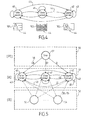
- the screen templates 44 are stored in a screen templates repository 38. The processes performed by the HMM engine 35 will now be described in reference to figure 4 and 5 .
- a screen template 44 is a predefined disposition of at least one input video stream on a screen.
- the template 44 is made to organize and sometimes split a screen between different sources of information.
- the context of the video conference is a virtual classroom.
- screen templates 44 There are three: screen templates 44, the tutor screen templates 701 showing a single view of the tutor, the virtual class screen template 702 with a mosaic of views of participants and a learner screen template 703 showing a participant who wishes to ask a question for example.
- each screen template 44 is linked with a display state.
- a transition matrix A of the HMM model defines the transitions 43 between these states.
- Figure 5 represents also an initial screen state 57, and the states 40, 41, 42 mentioned above. This figure also shows a plurality of observable actions:
- the HMM engine 35 deals with 16 observable actions. These observable action actions two Gestures (raising a finger, raising a hand), two Motions (making a head top down movement, making a head right left movement), two Face Expressions (making a face expression that corresponds to speaking (Face + Speech/Lips are moving), or sleeping (No eyes/Eyes closed/Face not behind the screen)), two Keyword actions (enunciating a name of the an auditor or a subtitle), four Audio actions (speaking by the tutor, speaking by the learner, making noise, making silence), two Slide actions (switching a slide, moving a pointer), and two Sub events (beginning a question, ending a question).
- observable action actions two Gestures (raising a finger, raising a hand), two Motions (making a head top down movement, making a head right left movement), two Face Expressions (making a face expression that corresponds to speaking (Face + Speech/Lips are moving), or sleeping (No eyes/Eyes closed/Face not behind the
- the figure 5 shows also the probabilities 55 of an observation event to occur in a determined display state. There is one probability for each couple [observation event, display state].
- Figure 5 also shows the probabilities 58, associated to each transition 43 between two states and the initialization probabilities 56.
- HMM Hidden Markov Model
- A is the transition matrix
- B the emission matrix
- ⁇ is the initialization matrix.
- A contains transition probabilities between the display states, i.e. diverse camera views;
- B contains emission probabilities of each observable action knowing the current display state;
- ⁇ contains the probability that a display state will be showed in the first place.
- the three matrixes are mathematically described as follow:
- A a ij
- s t q j
- B b jk
- the orchestration model described above is used by the HMM engine 35 of the orchestrator 1 described with the figure 3 .
- the goal of the HMM engine 35 is to forecast the best suitable screen templates, using the orchestration model ⁇ and the observation sequence O.
- the observation sequence O is provided by the analyzer 32.
- the HMM engine 35 uses the Viterbi algorithm. In the course of time, the decoding is done at a given clock rate by the HMM engine 35. The decoding results in a sequence of states in the course of time. The HMM engine 35 orchestrates the video through the video mixer 34.
- the orchestrator 1 has a plurality of orchestration models.
- the orchestrator 1 includes a HMM model repository 37.
- This repository 37 stores a plurality of predefined orchestration models.
- a further embodiment of the orchestrator 1 proposes also a dynamical selection of the orchestration model used by the HMM engine 35.
- the orchestrator 1 is able to recognize the video orchestration model that best fits the video conference context or scenario and the user profile. This is the goal of the classifier 36 to identify dynamically which orchestration model A available in the HMM repository 37 is the best suited to the current use case.
- the classifier 36 selects the HMM orchestration model that fits best the temporal sequence of observation events. During the video conference session, the classifier 36 can change the HMM model if another one better fits the temporal sequence of observation events.
- the classifier 36 implements this function with a Forward algorithm or a Backward algorithm.
- the orchestrator 1 is able to provide smart video orchestration capabilities.
- the system is more flexible and more dynamic.
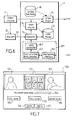
- the learning process enables a non-expert user to create their own orchestration models based on their uses without any technical skills. It is implemented by 3 modules: the user learner interface 700, the user activities recorder 602 and the HMM generator 603.
- the learning module 601 records the display states selected by the user in the course of time and observation events and generates a new HMM model or update an existing model with the associated probabilities based on the selections of the user.
- an example of a graphical user learner interface 700 displays the different screen templates showing the different input video streams 11. This example proposes three display states: a tutor screen 701, a screen of a general view of the class 702, and a screen on a specific learner 703.
- An observation event window 704 displays the current observation events in the course of time.
- the user learning interface 700 includes also some input mean, like buttons 705 to allow the user to make a choice between the different screens.
- a button 706 serves to start a new recording sequence.
- a button 707 serves to terminate and validate the recording sequence. Actuation of button 707 causes the learning module 601 to record the choices made by the user and then generate the corresponding orchestration model.
- the user is invited to choose a screen template, i.e. to select in fact the corresponding display state of the HMM model to be generated.
- the video streams are displayed.
- an observation event occurs, the user is invited to select a screen with the screen buttons 705 and in the end the user validates his choices with the button 707.
- the user inputs are recorded and translated into a HMM orchestration model ⁇ that can be stored in the HMM repository 37.
- the learning module 601 is also able to update an existing model.
- the model creation feature is very interesting to improve the immersive communication quality result. However, it may not be useful to store a model which is very similar to an already existing model.
- the learning module 601 is able to measure the distance between a new model and the models already stored in the HMM repository 37. The learning module 601 measures the dissimilarity between different HMMs model with the Kullback Leibner distance.
- the user can personalize an existing orchestration model. But he can also create a new orchestrator model; the module records the choosing done by the user and creates a new HMM model from these observations. Then the Kullback Leibner distance is used to decide if this template is different enough from the existing ones in order to be saved and validated.
- a process implemented by the learning module 601 comprises the following steps:
- the training of the initialization matrix ⁇ is made with the initialization probability: the first state selected by the user is set to 1 and the others to 0.
- the algorithm of the training of the transition matrix A is composed of 4 steps:
- the Learning module 601 receive the user inputs through the user learning interface 700, records the decisions of this user with the user activities recorder 602 and computes a HMM model with the HMM generator 603. The result is stored in the HMM model repository 37.
- the other modules of the orchestrator 1 shown on figure 6 are similar to those of figure 3 .
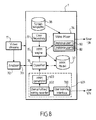
- FIG. 8 another embodiment of the orchestrator 1 integrates the learning module 601 and with a centralized video mixer 34 supporting several instances 80.
- the Video mixer 34 module support different instances 80 of video displaying in a centralized manner. Each user is able to create and personalize his owns video orchestration and to receive a personalized orchestrated video stream. The video orchestration is done in the several video mixer instances 80. Users have just to see them (i.e. no video orchestration on the user devices).
- the "user repository" 81 module is use to manage the different users (id, profile, orchestration model, etc%)
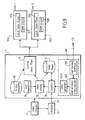
- an embodiment of the orchestrator 1 comprises the learning module 601 whereas the video mixers 34 and the HMM engines 35 are distributed in the remote terminals 2.
- This implementation enables to implement the orchestration closer to the user in order to avoid too much processing on the server.
- the HMM orchestration model selected by the orchestrator 1 is uploaded on the user terminal 2.
- a local video orchestrator 902 uses this orchestration model to compose the video streams coming from the server.
- the local video orchestrator 902 comprises a local video mixer 934 and an HMM engine 935.
- the local video orchestrator 902 is also shown on figure 2 . Only video streams required by the local video orchestrators are sent by the central video mixer 34.
- a user can personalize or define its own model locally and store or share them on the central server. In the case the local orchestrator interacts with the central HMM manager, engine, mixer, template and learner.
- control units could be e.g. hardware means like e.g. an ASIC, or a combination of hardware and software means, e.g. an ASIC and an FPGA, or at least one microprocessor and at least one memory with software modules located therein.
Landscapes
- Engineering & Computer Science (AREA)
- Multimedia (AREA)
- Signal Processing (AREA)
- Computer Networks & Wireless Communication (AREA)
- Business, Economics & Management (AREA)
- General Business, Economics & Management (AREA)
- Two-Way Televisions, Distribution Of Moving Picture Or The Like (AREA)
- Telephonic Communication Services (AREA)
Priority Applications (7)
| Application Number | Priority Date | Filing Date | Title |
|---|---|---|---|
| EP12182267.0A EP2704429B1 (en) | 2012-08-29 | 2012-08-29 | Video conference systems implementing orchestration models |
| US14/424,683 US9369666B2 (en) | 2012-08-29 | 2013-06-05 | Video conference systems implementing orchestration models |
| IN1262DEN2015 IN2015DN01262A (enExample) | 2012-08-29 | 2013-06-05 | |
| PCT/EP2013/061544 WO2014032823A1 (en) | 2012-08-29 | 2013-06-05 | Video conference systems implementing orchestration models |
| JP2015528911A JP5959748B2 (ja) | 2012-08-29 | 2013-06-05 | オーケストレーション・モデルを実施するビデオ会議システム |
| CN201380044731.XA CN104704813A (zh) | 2012-08-29 | 2013-06-05 | 实现编排模型的视频会议系统 |
| KR20157005234A KR20150040981A (ko) | 2012-08-29 | 2013-06-05 | 조직화 모델들을 구현하는 화상 회의 시스템들 |
Applications Claiming Priority (1)
| Application Number | Priority Date | Filing Date | Title |
|---|---|---|---|
| EP12182267.0A EP2704429B1 (en) | 2012-08-29 | 2012-08-29 | Video conference systems implementing orchestration models |
Publications (2)
| Publication Number | Publication Date |
|---|---|
| EP2704429A1 EP2704429A1 (en) | 2014-03-05 |
| EP2704429B1 true EP2704429B1 (en) | 2015-04-15 |
Family
ID=46754339
Family Applications (1)
| Application Number | Title | Priority Date | Filing Date |
|---|---|---|---|
| EP12182267.0A Not-in-force EP2704429B1 (en) | 2012-08-29 | 2012-08-29 | Video conference systems implementing orchestration models |
Country Status (7)
| Country | Link |
|---|---|
| US (1) | US9369666B2 (enExample) |
| EP (1) | EP2704429B1 (enExample) |
| JP (1) | JP5959748B2 (enExample) |
| KR (1) | KR20150040981A (enExample) |
| CN (1) | CN104704813A (enExample) |
| IN (1) | IN2015DN01262A (enExample) |
| WO (1) | WO2014032823A1 (enExample) |
Families Citing this family (14)
| Publication number | Priority date | Publication date | Assignee | Title |
|---|---|---|---|---|
| IN2013MU04124A (enExample) * | 2013-12-30 | 2015-08-07 | Tata Consultancy Services Ltd | |
| US9443192B1 (en) | 2015-08-30 | 2016-09-13 | Jasmin Cosic | Universal artificial intelligence engine for autonomous computing devices and software applications |
| US9582762B1 (en) | 2016-02-05 | 2017-02-28 | Jasmin Cosic | Devices, systems, and methods for learning and using artificially intelligent interactive memories |
| US9864933B1 (en) | 2016-08-23 | 2018-01-09 | Jasmin Cosic | Artificially intelligent systems, devices, and methods for learning and/or using visual surrounding for autonomous object operation |
| US10452974B1 (en) | 2016-11-02 | 2019-10-22 | Jasmin Cosic | Artificially intelligent systems, devices, and methods for learning and/or using a device's circumstances for autonomous device operation |
| US10607134B1 (en) | 2016-12-19 | 2020-03-31 | Jasmin Cosic | Artificially intelligent systems, devices, and methods for learning and/or using an avatar's circumstances for autonomous avatar operation |
| US11568609B1 (en) | 2017-07-25 | 2023-01-31 | Meta Platforms Technologies, Llc | Image sensor having on-chip compute circuit |
| CN107959876B (zh) * | 2017-11-20 | 2021-03-16 | 中央电视台 | 一种节目编排的方法、装置及电子设备 |
| US10102449B1 (en) | 2017-11-21 | 2018-10-16 | Jasmin Cosic | Devices, systems, and methods for use in automation |
| US10474934B1 (en) | 2017-11-26 | 2019-11-12 | Jasmin Cosic | Machine learning for computing enabled systems and/or devices |
| US10402731B1 (en) | 2017-12-15 | 2019-09-03 | Jasmin Cosic | Machine learning for computer generated objects and/or applications |
| US11637989B2 (en) | 2020-12-23 | 2023-04-25 | Motorola Mobility Llc | Methods, systems, and devices for presenting an audio difficulties user actuation target in an audio or video conference |
| US11558212B2 (en) * | 2021-03-04 | 2023-01-17 | Microsoft Technology Licensing, Llc | Automatically controlling participant indication request for a virtual meeting |
| US12406194B1 (en) | 2021-03-10 | 2025-09-02 | Jasmin Cosic | Devices, systems, and methods for machine consciousness |
Family Cites Families (9)
| Publication number | Priority date | Publication date | Assignee | Title |
|---|---|---|---|---|
| US6751354B2 (en) * | 1999-03-11 | 2004-06-15 | Fuji Xerox Co., Ltd | Methods and apparatuses for video segmentation, classification, and retrieval using image class statistical models |
| US7433327B2 (en) * | 2003-10-09 | 2008-10-07 | Hewlett-Packard Development Company, L.P. | Method and system for coordinating communication devices to create an enhanced representation of an ongoing event |
| JP2006033657A (ja) * | 2004-07-21 | 2006-02-02 | Ics:Kk | 議長主導形テレビ会議システムおよび方法 |
| US20070157228A1 (en) * | 2005-12-30 | 2007-07-05 | Jason Bayer | Advertising with video ad creatives |
| CN101159843A (zh) * | 2007-10-29 | 2008-04-09 | 中兴通讯股份有限公司 | 在视频会议中改进视频切换效果的图像切换方法及系统 |
| CN101626482B (zh) * | 2008-07-11 | 2011-11-09 | 华为技术有限公司 | 视频会议实现方法、设备及系统 |
| JP2011199847A (ja) * | 2010-02-25 | 2011-10-06 | Ricoh Co Ltd | 会議システムの端末装置、会議システム |
| US8248448B2 (en) * | 2010-05-18 | 2012-08-21 | Polycom, Inc. | Automatic camera framing for videoconferencing |
| JP5012968B2 (ja) * | 2010-07-15 | 2012-08-29 | コニカミノルタビジネステクノロジーズ株式会社 | 会議システム |
-
2012
- 2012-08-29 EP EP12182267.0A patent/EP2704429B1/en not_active Not-in-force
-
2013
- 2013-06-05 JP JP2015528911A patent/JP5959748B2/ja not_active Expired - Fee Related
- 2013-06-05 IN IN1262DEN2015 patent/IN2015DN01262A/en unknown
- 2013-06-05 WO PCT/EP2013/061544 patent/WO2014032823A1/en not_active Ceased
- 2013-06-05 US US14/424,683 patent/US9369666B2/en not_active Expired - Fee Related
- 2013-06-05 KR KR20157005234A patent/KR20150040981A/ko not_active Abandoned
- 2013-06-05 CN CN201380044731.XA patent/CN104704813A/zh active Pending
Also Published As
| Publication number | Publication date |
|---|---|
| US20150264306A1 (en) | 2015-09-17 |
| CN104704813A (zh) | 2015-06-10 |
| WO2014032823A1 (en) | 2014-03-06 |
| JP5959748B2 (ja) | 2016-08-02 |
| KR20150040981A (ko) | 2015-04-15 |
| JP2015532807A (ja) | 2015-11-12 |
| EP2704429A1 (en) | 2014-03-05 |
| US9369666B2 (en) | 2016-06-14 |
| IN2015DN01262A (enExample) | 2015-07-03 |
Similar Documents
| Publication | Publication Date | Title |
|---|---|---|
| EP2704429B1 (en) | Video conference systems implementing orchestration models | |
| US11785180B2 (en) | Management and analysis of related concurrent communication sessions | |
| CN110099039B (zh) | 一种在线协作会议的录制和回放的方法及系统 | |
| US10541824B2 (en) | System and method for scalable, interactive virtual conferencing | |
| US9521364B2 (en) | Ambulatory presence features | |
| CN113170076B (zh) | 一种用于通信会话的方法和系统 | |
| WO2018026967A1 (en) | Computer-assisted agendas for video-conferences | |
| CN114902629A (zh) | 用于在通信会话期间提供动态控制的视图状态以改进参与的方法和系统 | |
| WO2013043207A1 (en) | Event management/production for an online event | |
| US12395369B2 (en) | Systems and methods for decentralized generation of a summary of a virtual meeting | |
| US20230072128A1 (en) | Remote audience feedback mechanism | |
| US12058217B2 (en) | Systems and methods for recommending interactive sessions based on social inclusivity | |
| US20140047025A1 (en) | Event Management/Production for an Online Event | |
| WO2023074898A1 (ja) | 端末、情報処理方法、プログラム、および記録媒体 | |
| WO2022137547A1 (ja) | コミュニケーション支援システム | |
| EP2704430B1 (en) | Orchestration models learning for video conference systems | |
| JP6023684B2 (ja) | 感情情報表示制御装置、その方法及びプログラム | |
| US11949727B2 (en) | Organic conversations in a virtual group setting | |
| JP2015075906A (ja) | 感情情報表示制御装置、その方法及びプログラム | |
| CN114629868B (zh) | 适用于远程工作的多媒体群聊室通信方法和系统及智能终端 | |
| Marilly | Smart Video Orchestration for Immersive Communication | |
| James | Budget Conscious Witness Preparation |
Legal Events
| Date | Code | Title | Description |
|---|---|---|---|
| AK | Designated contracting states |
Kind code of ref document: A1 Designated state(s): AL AT BE BG CH CY CZ DE DK EE ES FI FR GB GR HR HU IE IS IT LI LT LU LV MC MK MT NL NO PL PT RO RS SE SI SK SM TR |
|
| AX | Request for extension of the european patent |
Extension state: BA ME |
|
| PUAI | Public reference made under article 153(3) epc to a published international application that has entered the european phase |
Free format text: ORIGINAL CODE: 0009012 |
|
| 111Z | Information provided on other rights and legal means of execution |
Free format text: AL AT BE BG CH CY CZ DE DK EE ES FI FR GB GR HR HU IE IS IT LI LT LU LV MC MK MT NL NO PL PT RO RS SE SI SK SM TR Effective date: 20140516 |
|
| RAP1 | Party data changed (applicant data changed or rights of an application transferred) |
Owner name: ALCATEL LUCENT |
|
| 17P | Request for examination filed |
Effective date: 20140905 |
|
| RBV | Designated contracting states (corrected) |
Designated state(s): AL AT BE BG CH CY CZ DE DK EE ES FI FR GB GR HR HU IE IS IT LI LT LU LV MC MK MT NL NO PL PT RO RS SE SI SK SM TR |
|
| D11X | Information provided on other rights and legal means of execution (deleted) | ||
| GRAJ | Information related to disapproval of communication of intention to grant by the applicant or resumption of examination proceedings by the epo deleted |
Free format text: ORIGINAL CODE: EPIDOSDIGR1 |
|
| GRAP | Despatch of communication of intention to grant a patent |
Free format text: ORIGINAL CODE: EPIDOSNIGR1 |
|
| INTG | Intention to grant announced |
Effective date: 20141218 |
|
| GRAS | Grant fee paid |
Free format text: ORIGINAL CODE: EPIDOSNIGR3 |
|
| GRAA | (expected) grant |
Free format text: ORIGINAL CODE: 0009210 |
|
| AK | Designated contracting states |
Kind code of ref document: B1 Designated state(s): AL AT BE BG CH CY CZ DE DK EE ES FI FR GB GR HR HU IE IS IT LI LT LU LV MC MK MT NL NO PL PT RO RS SE SI SK SM TR |
|
| REG | Reference to a national code |
Ref country code: GB Ref legal event code: FG4D Ref country code: CH Ref legal event code: EP |
|
| REG | Reference to a national code |
Ref country code: IE Ref legal event code: FG4D |
|
| REG | Reference to a national code |
Ref country code: AT Ref legal event code: REF Ref document number: 722546 Country of ref document: AT Kind code of ref document: T Effective date: 20150515 |
|
| REG | Reference to a national code |
Ref country code: DE Ref legal event code: R096 Ref document number: 602012006660 Country of ref document: DE Effective date: 20150528 |
|
| REG | Reference to a national code |
Ref country code: FR Ref legal event code: PLFP Year of fee payment: 4 |
|
| REG | Reference to a national code |
Ref country code: NL Ref legal event code: VDEP Effective date: 20150415 |
|
| REG | Reference to a national code |
Ref country code: AT Ref legal event code: MK05 Ref document number: 722546 Country of ref document: AT Kind code of ref document: T Effective date: 20150415 |
|
| REG | Reference to a national code |
Ref country code: LT Ref legal event code: MG4D |
|
| PG25 | Lapsed in a contracting state [announced via postgrant information from national office to epo] |
Ref country code: NL Free format text: LAPSE BECAUSE OF FAILURE TO SUBMIT A TRANSLATION OF THE DESCRIPTION OR TO PAY THE FEE WITHIN THE PRESCRIBED TIME-LIMIT Effective date: 20150415 |
|
| PG25 | Lapsed in a contracting state [announced via postgrant information from national office to epo] |
Ref country code: NO Free format text: LAPSE BECAUSE OF FAILURE TO SUBMIT A TRANSLATION OF THE DESCRIPTION OR TO PAY THE FEE WITHIN THE PRESCRIBED TIME-LIMIT Effective date: 20150715 Ref country code: ES Free format text: LAPSE BECAUSE OF FAILURE TO SUBMIT A TRANSLATION OF THE DESCRIPTION OR TO PAY THE FEE WITHIN THE PRESCRIBED TIME-LIMIT Effective date: 20150415 Ref country code: PT Free format text: LAPSE BECAUSE OF FAILURE TO SUBMIT A TRANSLATION OF THE DESCRIPTION OR TO PAY THE FEE WITHIN THE PRESCRIBED TIME-LIMIT Effective date: 20150817 Ref country code: FI Free format text: LAPSE BECAUSE OF FAILURE TO SUBMIT A TRANSLATION OF THE DESCRIPTION OR TO PAY THE FEE WITHIN THE PRESCRIBED TIME-LIMIT Effective date: 20150415 Ref country code: LT Free format text: LAPSE BECAUSE OF FAILURE TO SUBMIT A TRANSLATION OF THE DESCRIPTION OR TO PAY THE FEE WITHIN THE PRESCRIBED TIME-LIMIT Effective date: 20150415 Ref country code: HR Free format text: LAPSE BECAUSE OF FAILURE TO SUBMIT A TRANSLATION OF THE DESCRIPTION OR TO PAY THE FEE WITHIN THE PRESCRIBED TIME-LIMIT Effective date: 20150415 |
|
| PG25 | Lapsed in a contracting state [announced via postgrant information from national office to epo] |
Ref country code: IS Free format text: LAPSE BECAUSE OF FAILURE TO SUBMIT A TRANSLATION OF THE DESCRIPTION OR TO PAY THE FEE WITHIN THE PRESCRIBED TIME-LIMIT Effective date: 20150815 Ref country code: RS Free format text: LAPSE BECAUSE OF FAILURE TO SUBMIT A TRANSLATION OF THE DESCRIPTION OR TO PAY THE FEE WITHIN THE PRESCRIBED TIME-LIMIT Effective date: 20150415 Ref country code: AT Free format text: LAPSE BECAUSE OF FAILURE TO SUBMIT A TRANSLATION OF THE DESCRIPTION OR TO PAY THE FEE WITHIN THE PRESCRIBED TIME-LIMIT Effective date: 20150415 Ref country code: GR Free format text: LAPSE BECAUSE OF FAILURE TO SUBMIT A TRANSLATION OF THE DESCRIPTION OR TO PAY THE FEE WITHIN THE PRESCRIBED TIME-LIMIT Effective date: 20150716 Ref country code: LV Free format text: LAPSE BECAUSE OF FAILURE TO SUBMIT A TRANSLATION OF THE DESCRIPTION OR TO PAY THE FEE WITHIN THE PRESCRIBED TIME-LIMIT Effective date: 20150415 |
|
| REG | Reference to a national code |
Ref country code: DE Ref legal event code: R097 Ref document number: 602012006660 Country of ref document: DE |
|
| PG25 | Lapsed in a contracting state [announced via postgrant information from national office to epo] |
Ref country code: EE Free format text: LAPSE BECAUSE OF FAILURE TO SUBMIT A TRANSLATION OF THE DESCRIPTION OR TO PAY THE FEE WITHIN THE PRESCRIBED TIME-LIMIT Effective date: 20150415 Ref country code: DK Free format text: LAPSE BECAUSE OF FAILURE TO SUBMIT A TRANSLATION OF THE DESCRIPTION OR TO PAY THE FEE WITHIN THE PRESCRIBED TIME-LIMIT Effective date: 20150415 |
|
| PLBE | No opposition filed within time limit |
Free format text: ORIGINAL CODE: 0009261 |
|
| STAA | Information on the status of an ep patent application or granted ep patent |
Free format text: STATUS: NO OPPOSITION FILED WITHIN TIME LIMIT |
|
| PG25 | Lapsed in a contracting state [announced via postgrant information from national office to epo] |
Ref country code: PL Free format text: LAPSE BECAUSE OF FAILURE TO SUBMIT A TRANSLATION OF THE DESCRIPTION OR TO PAY THE FEE WITHIN THE PRESCRIBED TIME-LIMIT Effective date: 20150415 Ref country code: CZ Free format text: LAPSE BECAUSE OF FAILURE TO SUBMIT A TRANSLATION OF THE DESCRIPTION OR TO PAY THE FEE WITHIN THE PRESCRIBED TIME-LIMIT Effective date: 20150415 Ref country code: RO Free format text: LAPSE BECAUSE OF NON-PAYMENT OF DUE FEES Effective date: 20150415 Ref country code: SK Free format text: LAPSE BECAUSE OF FAILURE TO SUBMIT A TRANSLATION OF THE DESCRIPTION OR TO PAY THE FEE WITHIN THE PRESCRIBED TIME-LIMIT Effective date: 20150415 |
|
| 26N | No opposition filed |
Effective date: 20160118 |
|
| PG25 | Lapsed in a contracting state [announced via postgrant information from national office to epo] |
Ref country code: LU Free format text: LAPSE BECAUSE OF FAILURE TO SUBMIT A TRANSLATION OF THE DESCRIPTION OR TO PAY THE FEE WITHIN THE PRESCRIBED TIME-LIMIT Effective date: 20150829 Ref country code: MC Free format text: LAPSE BECAUSE OF FAILURE TO SUBMIT A TRANSLATION OF THE DESCRIPTION OR TO PAY THE FEE WITHIN THE PRESCRIBED TIME-LIMIT Effective date: 20150415 |
|
| REG | Reference to a national code |
Ref country code: CH Ref legal event code: PL |
|
| PG25 | Lapsed in a contracting state [announced via postgrant information from national office to epo] |
Ref country code: LI Free format text: LAPSE BECAUSE OF NON-PAYMENT OF DUE FEES Effective date: 20150831 Ref country code: CH Free format text: LAPSE BECAUSE OF NON-PAYMENT OF DUE FEES Effective date: 20150831 Ref country code: IT Free format text: LAPSE BECAUSE OF FAILURE TO SUBMIT A TRANSLATION OF THE DESCRIPTION OR TO PAY THE FEE WITHIN THE PRESCRIBED TIME-LIMIT Effective date: 20150415 |
|
| PG25 | Lapsed in a contracting state [announced via postgrant information from national office to epo] |
Ref country code: SI Free format text: LAPSE BECAUSE OF FAILURE TO SUBMIT A TRANSLATION OF THE DESCRIPTION OR TO PAY THE FEE WITHIN THE PRESCRIBED TIME-LIMIT Effective date: 20150415 |
|
| REG | Reference to a national code |
Ref country code: IE Ref legal event code: MM4A |
|
| PG25 | Lapsed in a contracting state [announced via postgrant information from national office to epo] |
Ref country code: IE Free format text: LAPSE BECAUSE OF NON-PAYMENT OF DUE FEES Effective date: 20150829 |
|
| REG | Reference to a national code |
Ref country code: FR Ref legal event code: PLFP Year of fee payment: 5 |
|
| PG25 | Lapsed in a contracting state [announced via postgrant information from national office to epo] |
Ref country code: BE Free format text: LAPSE BECAUSE OF FAILURE TO SUBMIT A TRANSLATION OF THE DESCRIPTION OR TO PAY THE FEE WITHIN THE PRESCRIBED TIME-LIMIT Effective date: 20150415 |
|
| PG25 | Lapsed in a contracting state [announced via postgrant information from national office to epo] |
Ref country code: MT Free format text: LAPSE BECAUSE OF FAILURE TO SUBMIT A TRANSLATION OF THE DESCRIPTION OR TO PAY THE FEE WITHIN THE PRESCRIBED TIME-LIMIT Effective date: 20150415 |
|
| PG25 | Lapsed in a contracting state [announced via postgrant information from national office to epo] |
Ref country code: HU Free format text: LAPSE BECAUSE OF FAILURE TO SUBMIT A TRANSLATION OF THE DESCRIPTION OR TO PAY THE FEE WITHIN THE PRESCRIBED TIME-LIMIT; INVALID AB INITIO Effective date: 20120829 Ref country code: BG Free format text: LAPSE BECAUSE OF FAILURE TO SUBMIT A TRANSLATION OF THE DESCRIPTION OR TO PAY THE FEE WITHIN THE PRESCRIBED TIME-LIMIT Effective date: 20150415 Ref country code: SM Free format text: LAPSE BECAUSE OF FAILURE TO SUBMIT A TRANSLATION OF THE DESCRIPTION OR TO PAY THE FEE WITHIN THE PRESCRIBED TIME-LIMIT Effective date: 20150415 |
|
| PG25 | Lapsed in a contracting state [announced via postgrant information from national office to epo] |
Ref country code: SE Free format text: LAPSE BECAUSE OF FAILURE TO SUBMIT A TRANSLATION OF THE DESCRIPTION OR TO PAY THE FEE WITHIN THE PRESCRIBED TIME-LIMIT Effective date: 20150415 Ref country code: CY Free format text: LAPSE BECAUSE OF FAILURE TO SUBMIT A TRANSLATION OF THE DESCRIPTION OR TO PAY THE FEE WITHIN THE PRESCRIBED TIME-LIMIT Effective date: 20150415 |
|
| REG | Reference to a national code |
Ref country code: FR Ref legal event code: PLFP Year of fee payment: 6 |
|
| PGFP | Annual fee paid to national office [announced via postgrant information from national office to epo] |
Ref country code: GB Payment date: 20170822 Year of fee payment: 6 Ref country code: FR Payment date: 20170822 Year of fee payment: 6 Ref country code: DE Payment date: 20170822 Year of fee payment: 6 |
|
| PG25 | Lapsed in a contracting state [announced via postgrant information from national office to epo] |
Ref country code: MK Free format text: LAPSE BECAUSE OF FAILURE TO SUBMIT A TRANSLATION OF THE DESCRIPTION OR TO PAY THE FEE WITHIN THE PRESCRIBED TIME-LIMIT Effective date: 20150415 Ref country code: TR Free format text: LAPSE BECAUSE OF FAILURE TO SUBMIT A TRANSLATION OF THE DESCRIPTION OR TO PAY THE FEE WITHIN THE PRESCRIBED TIME-LIMIT Effective date: 20150415 |
|
| PG25 | Lapsed in a contracting state [announced via postgrant information from national office to epo] |
Ref country code: AL Free format text: LAPSE BECAUSE OF FAILURE TO SUBMIT A TRANSLATION OF THE DESCRIPTION OR TO PAY THE FEE WITHIN THE PRESCRIBED TIME-LIMIT Effective date: 20150415 |
|
| REG | Reference to a national code |
Ref country code: DE Ref legal event code: R119 Ref document number: 602012006660 Country of ref document: DE |
|
| GBPC | Gb: european patent ceased through non-payment of renewal fee |
Effective date: 20180829 |
|
| REG | Reference to a national code |
Ref country code: GB Ref legal event code: 732E Free format text: REGISTERED BETWEEN 20190418 AND 20190426 |
|
| PG25 | Lapsed in a contracting state [announced via postgrant information from national office to epo] |
Ref country code: DE Free format text: LAPSE BECAUSE OF NON-PAYMENT OF DUE FEES Effective date: 20190301 |
|
| PG25 | Lapsed in a contracting state [announced via postgrant information from national office to epo] |
Ref country code: FR Free format text: LAPSE BECAUSE OF NON-PAYMENT OF DUE FEES Effective date: 20180831 |
|
| PG25 | Lapsed in a contracting state [announced via postgrant information from national office to epo] |
Ref country code: GB Free format text: LAPSE BECAUSE OF NON-PAYMENT OF DUE FEES Effective date: 20180829 |