EP2703805A2 - Pretreatment system and method before measuring the calcium ion concentration in a sample solution - Google Patents
Pretreatment system and method before measuring the calcium ion concentration in a sample solution Download PDFInfo
- Publication number
- EP2703805A2 EP2703805A2 EP13181666.2A EP13181666A EP2703805A2 EP 2703805 A2 EP2703805 A2 EP 2703805A2 EP 13181666 A EP13181666 A EP 13181666A EP 2703805 A2 EP2703805 A2 EP 2703805A2
- Authority
- EP
- European Patent Office
- Prior art keywords
- sample solution
- acid
- calcium ion
- base
- pretreatment
- Prior art date
- Legal status (The legal status is an assumption and is not a legal conclusion. Google has not performed a legal analysis and makes no representation as to the accuracy of the status listed.)
- Withdrawn
Links
- 239000012488 sample solution Substances 0.000 title claims abstract description 116
- 229910001424 calcium ion Inorganic materials 0.000 title claims abstract description 85
- BHPQYMZQTOCNFJ-UHFFFAOYSA-N Calcium cation Chemical compound [Ca+2] BHPQYMZQTOCNFJ-UHFFFAOYSA-N 0.000 title claims abstract description 82
- 238000000034 method Methods 0.000 title description 22
- 239000002253 acid Substances 0.000 claims abstract description 55
- 229940043430 calcium compound Drugs 0.000 claims abstract description 21
- 150000001674 calcium compounds Chemical class 0.000 claims abstract description 21
- 239000000243 solution Substances 0.000 claims description 39
- 238000002203 pretreatment Methods 0.000 claims description 20
- VEXZGXHMUGYJMC-UHFFFAOYSA-N Hydrochloric acid Chemical compound Cl VEXZGXHMUGYJMC-UHFFFAOYSA-N 0.000 claims description 14
- HEMHJVSKTPXQMS-UHFFFAOYSA-M Sodium hydroxide Chemical compound [OH-].[Na+] HEMHJVSKTPXQMS-UHFFFAOYSA-M 0.000 claims description 12
- 239000007853 buffer solution Substances 0.000 claims description 10
- KWYUFKZDYYNOTN-UHFFFAOYSA-M Potassium hydroxide Chemical compound [OH-].[K+] KWYUFKZDYYNOTN-UHFFFAOYSA-M 0.000 claims description 8
- 239000007983 Tris buffer Substances 0.000 claims description 7
- LENZDBCJOHFCAS-UHFFFAOYSA-N tris Chemical compound OCC(N)(CO)CO LENZDBCJOHFCAS-UHFFFAOYSA-N 0.000 claims description 7
- -1 calcium ion compound Chemical class 0.000 claims description 6
- 239000006173 Good's buffer Substances 0.000 claims description 5
- QKNYBSVHEMOAJP-UHFFFAOYSA-N 2-amino-2-(hydroxymethyl)propane-1,3-diol;hydron;chloride Chemical compound Cl.OCC(N)(CO)CO QKNYBSVHEMOAJP-UHFFFAOYSA-N 0.000 claims description 4
- QGZKDVFQNNGYKY-UHFFFAOYSA-N Ammonia Chemical compound N QGZKDVFQNNGYKY-UHFFFAOYSA-N 0.000 claims description 4
- GRYLNZFGIOXLOG-UHFFFAOYSA-N Nitric acid Chemical compound O[N+]([O-])=O GRYLNZFGIOXLOG-UHFFFAOYSA-N 0.000 claims description 4
- 150000007522 mineralic acids Chemical class 0.000 claims description 4
- 229910017604 nitric acid Inorganic materials 0.000 claims description 4
- 229910021529 ammonia Inorganic materials 0.000 claims description 2
- 229910017053 inorganic salt Inorganic materials 0.000 claims description 2
- 230000001105 regulatory effect Effects 0.000 description 37
- 239000002585 base Substances 0.000 description 33
- 239000000523 sample Substances 0.000 description 28
- 239000003115 supporting electrolyte Substances 0.000 description 24
- 238000004255 ion exchange chromatography Methods 0.000 description 19
- OYPRJOBELJOOCE-UHFFFAOYSA-N Calcium Chemical compound [Ca] OYPRJOBELJOOCE-UHFFFAOYSA-N 0.000 description 16
- 239000011575 calcium Substances 0.000 description 16
- 229910052791 calcium Inorganic materials 0.000 description 16
- 239000003637 basic solution Substances 0.000 description 11
- 238000004458 analytical method Methods 0.000 description 10
- 239000007788 liquid Substances 0.000 description 9
- 235000020124 milk-based beverage Nutrition 0.000 description 8
- 230000002572 peristaltic effect Effects 0.000 description 7
- 238000011088 calibration curve Methods 0.000 description 5
- 239000005018 casein Substances 0.000 description 5
- BECPQYXYKAMYBN-UHFFFAOYSA-N casein, tech. Chemical compound NCCCCC(C(O)=O)N=C(O)C(CC(O)=O)N=C(O)C(CCC(O)=N)N=C(O)C(CC(C)C)N=C(O)C(CCC(O)=O)N=C(O)C(CC(O)=O)N=C(O)C(CCC(O)=O)N=C(O)C(C(C)O)N=C(O)C(CCC(O)=N)N=C(O)C(CCC(O)=N)N=C(O)C(CCC(O)=N)N=C(O)C(CCC(O)=O)N=C(O)C(CCC(O)=O)N=C(O)C(COP(O)(O)=O)N=C(O)C(CCC(O)=N)N=C(O)C(N)CC1=CC=CC=C1 BECPQYXYKAMYBN-UHFFFAOYSA-N 0.000 description 5
- 235000021240 caseins Nutrition 0.000 description 5
- 238000002354 inductively-coupled plasma atomic emission spectroscopy Methods 0.000 description 5
- 238000002347 injection Methods 0.000 description 5
- 239000007924 injection Substances 0.000 description 5
- 150000002500 ions Chemical class 0.000 description 5
- 238000005259 measurement Methods 0.000 description 5
- 235000013336 milk Nutrition 0.000 description 5
- 239000008267 milk Substances 0.000 description 5
- 210000004080 milk Anatomy 0.000 description 5
- XLYOFNOQVPJJNP-UHFFFAOYSA-N water Substances O XLYOFNOQVPJJNP-UHFFFAOYSA-N 0.000 description 5
- 235000015140 cultured milk Nutrition 0.000 description 4
- 229910052500 inorganic mineral Inorganic materials 0.000 description 3
- 239000011707 mineral Substances 0.000 description 3
- 238000003756 stirring Methods 0.000 description 3
- 235000013618 yogurt Nutrition 0.000 description 3
- IHPYMWDTONKSCO-UHFFFAOYSA-N 2,2'-piperazine-1,4-diylbisethanesulfonic acid Chemical compound OS(=O)(=O)CCN1CCN(CCS(O)(=O)=O)CC1 IHPYMWDTONKSCO-UHFFFAOYSA-N 0.000 description 2
- JKMHFZQWWAIEOD-UHFFFAOYSA-N 2-[4-(2-hydroxyethyl)piperazin-1-yl]ethanesulfonic acid Chemical compound OCC[NH+]1CCN(CCS([O-])(=O)=O)CC1 JKMHFZQWWAIEOD-UHFFFAOYSA-N 0.000 description 2
- AJTVSSFTXWNIRG-UHFFFAOYSA-N 2-[bis(2-hydroxyethyl)amino]ethanesulfonic acid Chemical compound OCC[NH+](CCO)CCS([O-])(=O)=O AJTVSSFTXWNIRG-UHFFFAOYSA-N 0.000 description 2
- NLXLAEXVIDQMFP-UHFFFAOYSA-N Ammonium chloride Substances [NH4+].[Cl-] NLXLAEXVIDQMFP-UHFFFAOYSA-N 0.000 description 2
- VHUUQVKOLVNVRT-UHFFFAOYSA-N Ammonium hydroxide Chemical compound [NH4+].[OH-] VHUUQVKOLVNVRT-UHFFFAOYSA-N 0.000 description 2
- BVKZGUZCCUSVTD-UHFFFAOYSA-L Carbonate Chemical compound [O-]C([O-])=O BVKZGUZCCUSVTD-UHFFFAOYSA-L 0.000 description 2
- VEXZGXHMUGYJMC-UHFFFAOYSA-M Chloride anion Chemical compound [Cl-] VEXZGXHMUGYJMC-UHFFFAOYSA-M 0.000 description 2
- 239000007995 HEPES buffer Substances 0.000 description 2
- JOCBASBOOFNAJA-UHFFFAOYSA-N N-tris(hydroxymethyl)methyl-2-aminoethanesulfonic acid Chemical compound OCC(CO)(CO)NCCS(O)(=O)=O JOCBASBOOFNAJA-UHFFFAOYSA-N 0.000 description 2
- 239000007990 PIPES buffer Substances 0.000 description 2
- 235000011114 ammonium hydroxide Nutrition 0.000 description 2
- 239000003795 chemical substances by application Substances 0.000 description 2
- 238000010586 diagram Methods 0.000 description 2
- JVTAAEKCZFNVCJ-UHFFFAOYSA-N lactic acid Chemical compound CC(O)C(O)=O JVTAAEKCZFNVCJ-UHFFFAOYSA-N 0.000 description 2
- FGIUAXJPYTZDNR-UHFFFAOYSA-N potassium nitrate Chemical compound [K+].[O-][N+]([O-])=O FGIUAXJPYTZDNR-UHFFFAOYSA-N 0.000 description 2
- 239000003643 water by type Substances 0.000 description 2
- 102000014171 Milk Proteins Human genes 0.000 description 1
- 108010011756 Milk Proteins Proteins 0.000 description 1
- 102000007982 Phosphoproteins Human genes 0.000 description 1
- 108010089430 Phosphoproteins Proteins 0.000 description 1
- PTFCDOFLOPIGGS-UHFFFAOYSA-N Zinc dication Chemical compound [Zn+2] PTFCDOFLOPIGGS-UHFFFAOYSA-N 0.000 description 1
- 239000000654 additive Substances 0.000 description 1
- 230000000996 additive effect Effects 0.000 description 1
- 235000013361 beverage Nutrition 0.000 description 1
- 239000000872 buffer Substances 0.000 description 1
- 150000001875 compounds Chemical class 0.000 description 1
- 239000000470 constituent Substances 0.000 description 1
- 230000001276 controlling effect Effects 0.000 description 1
- 230000000694 effects Effects 0.000 description 1
- 239000003792 electrolyte Substances 0.000 description 1
- 230000006870 function Effects 0.000 description 1
- 239000011521 glass Substances 0.000 description 1
- 230000010365 information processing Effects 0.000 description 1
- 230000002452 interceptive effect Effects 0.000 description 1
- XEEYBQQBJWHFJM-UHFFFAOYSA-N iron Substances [Fe] XEEYBQQBJWHFJM-UHFFFAOYSA-N 0.000 description 1
- 229910052742 iron Inorganic materials 0.000 description 1
- 239000004310 lactic acid Substances 0.000 description 1
- 235000014655 lactic acid Nutrition 0.000 description 1
- 239000012528 membrane Substances 0.000 description 1
- 235000021239 milk protein Nutrition 0.000 description 1
- 235000010755 mineral Nutrition 0.000 description 1
- 239000000203 mixture Substances 0.000 description 1
- 150000007524 organic acids Chemical class 0.000 description 1
- 150000003839 salts Chemical class 0.000 description 1
- 235000011496 sports drink Nutrition 0.000 description 1
Images


Classifications
-
- G—PHYSICS
- G01—MEASURING; TESTING
- G01N—INVESTIGATING OR ANALYSING MATERIALS BY DETERMINING THEIR CHEMICAL OR PHYSICAL PROPERTIES
- G01N1/00—Sampling; Preparing specimens for investigation
- G01N1/28—Preparing specimens for investigation including physical details of (bio-)chemical methods covered elsewhere, e.g. G01N33/50, C12Q
-
- G—PHYSICS
- G01—MEASURING; TESTING
- G01N—INVESTIGATING OR ANALYSING MATERIALS BY DETERMINING THEIR CHEMICAL OR PHYSICAL PROPERTIES
- G01N27/00—Investigating or analysing materials by the use of electric, electrochemical, or magnetic means
- G01N27/26—Investigating or analysing materials by the use of electric, electrochemical, or magnetic means by investigating electrochemical variables; by using electrolysis or electrophoresis
- G01N27/416—Systems
- G01N27/4166—Systems measuring a particular property of an electrolyte
-
- G—PHYSICS
- G01—MEASURING; TESTING
- G01N—INVESTIGATING OR ANALYSING MATERIALS BY DETERMINING THEIR CHEMICAL OR PHYSICAL PROPERTIES
- G01N27/00—Investigating or analysing materials by the use of electric, electrochemical, or magnetic means
- G01N27/26—Investigating or analysing materials by the use of electric, electrochemical, or magnetic means by investigating electrochemical variables; by using electrolysis or electrophoresis
- G01N27/28—Electrolytic cell components
- G01N27/30—Electrodes, e.g. test electrodes; Half-cells
- G01N27/333—Ion-selective electrodes or membranes
-
- Y—GENERAL TAGGING OF NEW TECHNOLOGICAL DEVELOPMENTS; GENERAL TAGGING OF CROSS-SECTIONAL TECHNOLOGIES SPANNING OVER SEVERAL SECTIONS OF THE IPC; TECHNICAL SUBJECTS COVERED BY FORMER USPC CROSS-REFERENCE ART COLLECTIONS [XRACs] AND DIGESTS
- Y10—TECHNICAL SUBJECTS COVERED BY FORMER USPC
- Y10T—TECHNICAL SUBJECTS COVERED BY FORMER US CLASSIFICATION
- Y10T436/00—Chemistry: analytical and immunological testing
- Y10T436/25—Chemistry: analytical and immunological testing including sample preparation
Definitions
- This invention relates to a pretreatment system and method for performing pretreatment before measuring calcium ion concentration in a sample solution containing a calcium compound with a calcium ion electrode.
- the measuring method described in Patent literature 1 is one that prepares a calibration curve between calcium ion concentration and an ion meter indication of a sample solution having known calcium content, in which acid is added to the sample solution to regulate a pH value to 4.3 to 7.0; measures an ion meter indication of an analysis sample having unknown calcium content, in which acid is added to the analysis sample, which is the same type of solution as the sample solution, to regulate a pH value to 4.3 to 7.0; and from the prepared calibration curve and the ion meter indication of the analysis sample, measures calcium concentration of the analysis sample.
- Patent literature 1 has a problem of taking time for the measurement because the method cannot measure calcium ion concentration of the analysis sample unless the calibration curve is prepared, and also has a problem that the measuring method is complicated because the method can grasp only calcium concentration of the same type of analysis sample as a sample solution for which a calibration curve is prepared, and therefore for all analysis samples of which calcium concentrations are to be measured, calibration curves should be prepared.
- the present invention is intended to solve the above-described problems, and made in order to provide a pretreatment system and method that, in order to simply and accurately measure calcium ion concentration in a sample solution, perform pretreatment before the measurement.
- the pretreatment system according to the present invention is a pretreatment system that is intended to perform pretreatment before measuring calcium ion concentration in a sample solution containing a calcium compound with a calcium ion electrode, and provided with: an acid adding mechanism that adds acid to the sample solution; and a base adding mechanism that adds base to the sample solution added with the acid.
- an amount of the acid to be added from the acid adding mechanism can be regulated to substantially completely ionize the calcium compound in the sample solution, and also with the calcium compound being ionized, the base can be added to the sample solution from the base adding mechanism to meet a pH value that is measurable with the calcium ion electrode, so that the pretreatment can be performed so as to be able to simply and accurately measure the calcium ion concentration.
- the acid is an inorganic acid, and in particular, one type of acid selected from a group consisting of a hydrochloric acid and a nitric acid
- the base is one type of base selected from a group consisting of sodium hydroxide, potassium hydroxide, ammonia, a Good's buffer solution, a tris buffer solution, and a tris-hydrochloric acid buffer solution, and in particular, a buffer solution.
- the inorganic acid does not form a hardly soluble salt by bonding to calcium, and as compared with the case of adding an organic acid, the measurement can be performed with accuracy.
- the buffer solution can easily perform regulation without largely changing pH at the time of the addition.
- the Good' buffer solution for example, MES, PIPES, cholamine chloride, BES, TES, HEPES, or the like can be cited.
- the pH can be regulated without rebonding of a calcium ion contained in the sample solution, and therefore the calcium ion concentration can be measured with accuracy.
- the acid adding mechanism is a mechanism that adds such an amount of acid as to make a pH value of the sample solution equal to or less than 3; and the base adding mechanism is a mechanism that adds such an amount of base as to make the pH value of the sample solution equal to or more than 4.
- the calcium compound can be almost completely ionized by the acid added by the acid adding mechanism.
- the calcium ion electrode to measure the calcium ion concentration has a measurable pH region of 4 or more in terms of characteristics of the electrode, and therefore, preferably, the base adding mechanism adds the base to the sample solution so as to make the pH value of the sample solution equal to or more than 4.
- the base adding mechanism is preferably a mechanism that adds such an amount of base as to make the pH value of the sample solution equal to or more than 5.
- a pretreatment method that is performed before measuring calcium ion concentration in a sample solution containing a calcium compound with a calcium ion electrode, and provided with: an acid adding step of adding acid to the sample solution to ionize the calcium compound in the solution; and a base adding step of adding base to the sample solution in a state where a calcium ion compound is ionized can be cited.
- the calcium ion electrode can be used to accurately measure the calcium ion concentration.
- a pretreatment system 1 of the present embodiment is one that is used for pretreatment at the time of measuring calcium ion concentration in a sample solution containing a calcium compound with a calcium ion electrode.
- the pretreatment system 1 of the present embodiment is, as illustrated in FIG. 1 , provided with: a regulating tank 2 that contains the sample solution; an acid adding mechanism 3 that adds an acid solution to the sample solution contained in the regulating tank 2; a base adding mechanism 4 that adds a basic solution to the sample solution contained in the regulating tank 2; a pH meter 5 that measures a pH value of the sample solution contained in the regulating tank 2; and a control part 6 that controls the regulating tank2, acid adding mechanism 3, and base adding mechanism 4.
- the regulating tank 2 is, on lateral surfaces thereof, provided with two introduction ports, and one of the introduction ports is connected to a sample solution injection path 7 provided with a peristaltic pump P1, whereas the other introduction port is connected to a sample solution discharge path 8 provided with a peristaltic pump P2.
- the sample solution injection path 7 and sample solution discharge path 8 near the respective introduction ports are provided with unillustrated valves.
- the sample solution appropriately sent through the sample solution injection path 7 by the peristaltic pump P1 is contained in the regulating tank 2, and the sample solution regulated in the regulating tank 2 is discharged through the sample solution discharge path 8 by the peristaltic pump P2.
- the valves respectively provided in the sample solution injection path 7 and the sample solution discharge path 8 are closed to prevent an error from occurring in the sample solution.
- a stirring bar 11 is arranged, and in a location facing to the stirring bar across the bottom surface of the regulating tank 2, a magnetic stirrer 12 is arranged.
- the sample solution contained in the regulating tank 2 is stirred by the stirring bar 11 that is rotated by magnetic force generated in the magnetic stirrer 12.
- the acid adding mechanism 3 is provided with: an unillustrated storage tank that contains the acid solution; and a tube 32 having a valve 31, which connects the storage tank and the regulating tank 2 to each other.
- Part of the unillustrated storage tank is provided with a hole part, and one end of the tube 32 provided with the valve 31 is connected with the hole part, whereas the other end of the tube 32 is inserted into the sample solution contained in the regulating tank 2.
- the acid adding mechanism 3 adds the acid solution to the sample solution contained in the regulating tank 2.
- a solution not having bondability to calcium is used, such as a hydrochloric acid solution or a nitric acid solution.
- the base adding mechanism 4 is provided with: an unillustrated storage tank that contains the basic solution; and a tube 42 having a valve 41, which connects the storage tank and the regulating tank 2 to each other.
- Part of the unillustrated storage tank is provided with a hole part, and one end of the tube 42 provided with the valve 41 is connected with the hole part, whereas the other end of the tube 42 is inserted into the sample solution contained in the regulating tank 2.
- the base adding mechanism 4 adds the basic solution to the sample solution contained in the regulating tank 2.
- a solution such as a sodium hydroxide solution, potassium hydroxide solution, ammonia solution, Good's buffer solution, tris buffer solution, or tris-hydrochloric acid buffer solution is used.
- the basic solution sent from the base adding mechanism 4 may be added with a certain amount of supporting electrolyte (e.g., an ionic strength regulating agent or a solution containing an ionic strength regulating agent).
- supporting electrolyte e.g., KCl, KNO 3 , or the like can be cited.
- the pH meter 5 is provided with: a pH electrode 5a that is inserted into the sample solution in the regulating tank 2; and a main body part 5b that is directly or indirectly connected to the pH electrode 5a.
- the pH electrode 5a is a complex one in which a pH electrode and a comparison electrode are integrated, and on the basis of a potential difference generated between the pH electrode and the comparison electrode, measures the pH value of the solution.
- a glass electrode is also possible, or a liquid membrane type may be used as the pH electrode 5a.
- the control part 6 is a so-called computer circuit that structurally has a CPU, an internal memory, an I/O buffer circuit, an A/D converter, and the like. Also, the control part 6 operates according to a program stored in a predetermined area of the internal memory, and thereby performs information processing to fulfill a function of controlling the peristaltic pumps P1 and P2 and the valves 31 and 41.
- an amount of acid to be added from the acid adding mechanism 3 can be regulated to substantially completely ionize the calcium compound in the sample solution, and also with the calcium compound being ionized, base can be added from the base adding mechanism 4 to the sample solution so as to make the pH value equal to a pH value measurable with the calcium ion electrode, so that the pretreatment enabling simple and accurate measurement can be performed.
- the acid solution using a solution not having bondability to calcium, such as a hydrochloric acid solution or a nitric acid solution
- a solution such as a sodium hydroxide solution, potassium hydroxide solution, ammonia solution, Good's buffer solution, tris buffer solution, or tris-hydrochloric acid buffer solution, without bonding of acid or base to a calcium ion in the sample solution
- pH can be regulated to measure the calcium ion concentration with accuracy.
- the Good's buffer solution for example, MES, PIPES, cholamine chloride, BES, TES, HEPES, or the like can be cited.
- the certain amount of supporting electrolyte is added to the basic solution, and therefore ionic strength of the sample solution and that of the calibration liquid can be made to coincide with each other to measure a more accurate measured value.
- the pretreatment of, while measuring the electrical conductivity of the sample solution with the electrical conductivity meter 9, regulating an additive amount of the supporting electrolyte so as to make the electrical conductivity of the sample solution coincide with that of the calibration liquid can also be performed.
- the sample solution is diluted by being added with pure water, and therefore the calcium ion in the sample solution can be more separated to obtain an accurate measured value.
- the present invention is not limited to the above-described embodiment.
- the present invention may make up a kit of an instruction manual that describes the above-described pretreatment method, the acid solution, and the basic solution, and perform the pretreatment with use of the kit.
- the basic solution may be mixed with a supporting electrolyte.
- the pretreatment system 1 may be separately provided with the electrical conductivity meter 9.
- the electrical conductivity meter 9 is provided with: an electrode 9a that is inserted into the sample solution in the regulating tank 2; and a main body part 9b that is directly or indirectly connected to the electrode 9a.
- the electrode 9a is one that uses an AC two-electrode method, and is intended to measure current flowing between two electrodes inserted into the solution to thereby measure electrical conductivity. Note that an electrical conductivity meter based not on the AC two-electrode method but on an AC four-electrode method may be used.
- Milk beverages such as milk and yoghurt were used as sample solutions (sample 1 to sample 4) to measure calcium contents.
- the samples 1 and 2 were milk
- the sample 3 was fermented milk
- the sample 4 was a milk beverage.
- IC ion chromatography
- ICP-OES analytical method ICP-OES analytical method
- calcium ion electrode method LAQUAtwin calcium ion meter manufactured by Horiba, Ltd.
- an unpretreated sample and pretreated samples were prepared.
- samples respectively pretreated by the following two methods were separately prepared.
- Results of the first test example are listed in Table 1. Note that in Table 1, an indicated value refers to a value preliminarily indicated on a product by a manufacturer, respectively.
- Table 1 Indicated value (ppm) IC (ppm) ICP-OES (ppm) Calcium ion electrode (ppm) Without pretreatment With pretreatment (first pretreatment method) With pretreatment (second pretreatment method) Sample 1 1135 1022 1041 98 1100 620 Sample 2 1320 1300 1286 120 1300 1100 Sample 3 1000 1282 1104 630 990 840 Sample 4 540 600 573 300 510 110
- the calcium ion electrode measured values of the samples pretreated by the first pretreatment method are values more approximate to the indicated values, respectively.
- the fermented milk used as the sample 3 or the milk beverage used as the sample 4 is in a state where the calcium ion bonds to a lactic acid, and therefore it is difficult to measure accurate calcium ion concentration; however, by using the first pretreatment method, accurate calcium ion concentration can be measured even for the fermented milk or the milk beverage.
- the calcium ion electrode measured values are more approximate to the indicated values than the IC or ICP-OES measured values.
- FIG. 3 is a graph illustrating a correlationship between the indicated values and the calcium ion electrode measured values (measured using the first pretreatment method). As illustrated in FIG. 3 , a correlation coefficient between the indicated values and the calcium ion electrode measured values is approximately 0.99, which is close to 1. Therefore, it turns out that the calcium ion electrode measured values have a correlationship with the indicated values, and the calcium ion electrode measured values of the samples pretreated by the first pretreatment method of the present invention are accurate values approximate to the indicated values.
- samples without pretreatment and samples with pretreatment were prepared. Also, as both of the samples without pretreatment and the samples with pretreatment, samples with supporting electrolyte, each of which was, as the supporting electrolyte, added with KCL to make electrical conductivity of the sample solution coincide with that of calibration liquid, and samples each of which was not added with KCL as an electrolyte were separately prepared.
- the pretreatment the following method was performed.
- FIG. 4 is a graph illustrating a correlationship between the IC measured values and the calcium ion electrode measured values.
- a correlation coefficient with the IC measured values is a value more approximate to 1 as compared with the calcium ion electrode measured values of the other samples. For this reason, it is considered that by performing the pretreatment and adding the supporting electrolyte, the calcium ion concentrations of the samples can be more accurately measured.
Landscapes
- Chemical & Material Sciences (AREA)
- Life Sciences & Earth Sciences (AREA)
- Health & Medical Sciences (AREA)
- Physics & Mathematics (AREA)
- Analytical Chemistry (AREA)
- Biochemistry (AREA)
- General Health & Medical Sciences (AREA)
- General Physics & Mathematics (AREA)
- Immunology (AREA)
- Pathology (AREA)
- Chemical Kinetics & Catalysis (AREA)
- Electrochemistry (AREA)
- Molecular Biology (AREA)
- Investigating Or Analyzing Non-Biological Materials By The Use Of Chemical Means (AREA)
- Coloring Foods And Improving Nutritive Qualities (AREA)
Abstract
The present invention is mainly intended to provide a pretreatment system that can use an calcium ion electrode to accurately measure calcium ion concentration with a simple configuration, and the pretreatment system is a pretreatment system 1 that is intended to perform pretreatment before measuring calcium ion concentration in a sample solution containing a calcium compound with a calcium ion electrode, and provided with: an acid adding mechanism 3 that adds acid to the sample solution; and a base adding mechanism 4 that adds base to the sample solution added with the acid.
Description
- This invention relates to a pretreatment system and method for performing pretreatment before measuring calcium ion concentration in a sample solution containing a calcium compound with a calcium ion electrode.
- As a method for measuring calcium content of each of various types of beverages such as milk beverages such as milk, sports drinks, and mineral waters, various methods such as ion chromatography (IC) and ICP-OES analysis are known; however, as a method that can be simply performed at low cost, for example, there is a calcium ion electrode method described in
Patent literature 1. - The measuring method described in
Patent literature 1 is one that prepares a calibration curve between calcium ion concentration and an ion meter indication of a sample solution having known calcium content, in which acid is added to the sample solution to regulate a pH value to 4.3 to 7.0; measures an ion meter indication of an analysis sample having unknown calcium content, in which acid is added to the analysis sample, which is the same type of solution as the sample solution, to regulate a pH value to 4.3 to 7.0; and from the prepared calibration curve and the ion meter indication of the analysis sample, measures calcium concentration of the analysis sample. Citation List Patent Literature - [Patent literature 1]
JPA 04-64054 - However, many calcium compounds are hardly soluble as their properties, and in a solution, often present not as ion states but as the compounds. For this reason, only regulating a pH value of a liquid mixture to 4.3 as in the method described in
Patent literature 1 has a problem that it is not sufficient to obtain a measured value taking into account an accurate ionization ratio of a calcium compound contained in the analysis sample, and therefore a measured value of a calcium ion electrode is uncertain. - Also, the method described in
Patent literature 1 has a problem of taking time for the measurement because the method cannot measure calcium ion concentration of the analysis sample unless the calibration curve is prepared, and also has a problem that the measuring method is complicated because the method can grasp only calcium concentration of the same type of analysis sample as a sample solution for which a calibration curve is prepared, and therefore for all analysis samples of which calcium concentrations are to be measured, calibration curves should be prepared. - The present invention is intended to solve the above-described problems, and made in order to provide a pretreatment system and method that, in order to simply and accurately measure calcium ion concentration in a sample solution, perform pretreatment before the measurement. Solution to Problem
- That is, the pretreatment system according to the present invention is a pretreatment system that is intended to perform pretreatment before measuring calcium ion concentration in a sample solution containing a calcium compound with a calcium ion electrode, and provided with: an acid adding mechanism that adds acid to the sample solution; and a base adding mechanism that adds base to the sample solution added with the acid.
- According to such a pretreatment system, an amount of the acid to be added from the acid adding mechanism can be regulated to substantially completely ionize the calcium compound in the sample solution, and also with the calcium compound being ionized, the base can be added to the sample solution from the base adding mechanism to meet a pH value that is measurable with the calcium ion electrode, so that the pretreatment can be performed so as to be able to simply and accurately measure the calcium ion concentration.
- Also, preferably, for example, the acid is an inorganic acid, and in particular, one type of acid selected from a group consisting of a hydrochloric acid and a nitric acid, and the base is one type of base selected from a group consisting of sodium hydroxide, potassium hydroxide, ammonia, a Good's buffer solution, a tris buffer solution, and a tris-hydrochloric acid buffer solution, and in particular, a buffer solution. In particular, the inorganic acid does not form a hardly soluble salt by bonding to calcium, and as compared with the case of adding an organic acid, the measurement can be performed with accuracy. Also, the buffer solution can easily perform regulation without largely changing pH at the time of the addition. In addition, as the Good' buffer solution, for example, MES, PIPES, cholamine chloride, BES, TES, HEPES, or the like can be cited.
- By using such acid and base, the pH can be regulated without rebonding of a calcium ion contained in the sample solution, and therefore the calcium ion concentration can be measured with accuracy.
- In the pretreatment system according to the present invention, preferably, the acid adding mechanism is a mechanism that adds such an amount of acid as to make a pH value of the sample solution equal to or less than 3; and the base adding mechanism is a mechanism that adds such an amount of base as to make the pH value of the sample solution equal to or more than 4.
- According to such a pretreatment system, the calcium compound can be almost completely ionized by the acid added by the acid adding mechanism. Also, the calcium ion electrode to measure the calcium ion concentration has a measurable pH region of 4 or more in terms of characteristics of the electrode, and therefore, preferably, the base adding mechanism adds the base to the sample solution so as to make the pH value of the sample solution equal to or more than 4.
- Also, in the above-described configuration, in particular, in the case where the calcium compound contained in the sample solution is an inorganic salt, the base adding mechanism is preferably a mechanism that adds such an amount of base as to make the pH value of the sample solution equal to or more than 5.
- As the pretreatment method according to the present invention, a pretreatment method that is performed before measuring calcium ion concentration in a sample solution containing a calcium compound with a calcium ion electrode, and provided with: an acid adding step of adding acid to the sample solution to ionize the calcium compound in the solution; and a base adding step of adding base to the sample solution in a state where a calcium ion compound is ionized can be cited.
- As described, according to the present invention, with the pretreatment system having a simple configuration, the calcium ion electrode can be used to accurately measure the calcium ion concentration. Brief Description of Drawings
-
FIG. 1 is a schematic diagram of a pretreatment system in one embodiment of the present invention; -
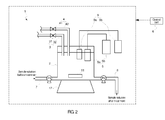
FIG. 2 is a schematic diagram of a pretreatment system in another embodiment of the present invention; -
FIG. 3 is a graph illustrating a correlationship between a calcium ion electrode measured value and an indicated value in a first test example; and -
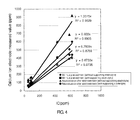
FIG. 4 is a graph illustrating a correlationship between a calcium ion electrode measured value and an IC measured value in a second test example. - In the following, one embodiment of the present invention is described.
- A
pretreatment system 1 of the present embodiment is one that is used for pretreatment at the time of measuring calcium ion concentration in a sample solution containing a calcium compound with a calcium ion electrode. - The
pretreatment system 1 of the present embodiment is, as illustrated inFIG. 1 , provided with: a regulatingtank 2 that contains the sample solution; anacid adding mechanism 3 that adds an acid solution to the sample solution contained in the regulatingtank 2; abase adding mechanism 4 that adds a basic solution to the sample solution contained in the regulatingtank 2; apH meter 5 that measures a pH value of the sample solution contained in the regulatingtank 2; and acontrol part 6 that controls the regulating tank2,acid adding mechanism 3, andbase adding mechanism 4. - The regulating
tank 2 is, on lateral surfaces thereof, provided with two introduction ports, and one of the introduction ports is connected to a samplesolution injection path 7 provided with a peristaltic pump P1, whereas the other introduction port is connected to a samplesolution discharge path 8 provided with a peristaltic pump P2. The samplesolution injection path 7 and samplesolution discharge path 8 near the respective introduction ports are provided with unillustrated valves. Also, the sample solution appropriately sent through the samplesolution injection path 7 by the peristaltic pump P1 is contained in the regulatingtank 2, and the sample solution regulated in the regulatingtank 2 is discharged through the samplesolution discharge path 8 by the peristaltic pump P2. During the regulation of the sample solution in the regulatingtank 2, the valves respectively provided in the samplesolution injection path 7 and the samplesolution discharge path 8 are closed to prevent an error from occurring in the sample solution. - Also, on a bottom surface of the regulating
tank 2, astirring bar 11 is arranged, and in a location facing to the stirring bar across the bottom surface of the regulatingtank 2, amagnetic stirrer 12 is arranged. The sample solution contained in the regulatingtank 2 is stirred by thestirring bar 11 that is rotated by magnetic force generated in themagnetic stirrer 12. - The
acid adding mechanism 3 is provided with: an unillustrated storage tank that contains the acid solution; and atube 32 having avalve 31, which connects the storage tank and the regulatingtank 2 to each other. Part of the unillustrated storage tank is provided with a hole part, and one end of thetube 32 provided with thevalve 31 is connected with the hole part, whereas the other end of thetube 32 is inserted into the sample solution contained in the regulatingtank 2. When thevalve 31 is opened, theacid adding mechanism 3 adds the acid solution to the sample solution contained in the regulatingtank 2. As the acid solution, a solution not having bondability to calcium is used, such as a hydrochloric acid solution or a nitric acid solution. - The
base adding mechanism 4 is provided with: an unillustrated storage tank that contains the basic solution; and atube 42 having avalve 41, which connects the storage tank and the regulatingtank 2 to each other. Part of the unillustrated storage tank is provided with a hole part, and one end of thetube 42 provided with thevalve 41 is connected with the hole part, whereas the other end of thetube 42 is inserted into the sample solution contained in the regulatingtank 2. When thevalve 41 is opened, thebase adding mechanism 4 adds the basic solution to the sample solution contained in the regulatingtank 2. As the basic solution, a solution such as a sodium hydroxide solution, potassium hydroxide solution, ammonia solution, Good's buffer solution, tris buffer solution, or tris-hydrochloric acid buffer solution is used. Note that the basic solution sent from thebase adding mechanism 4 may be added with a certain amount of supporting electrolyte (e.g., an ionic strength regulating agent or a solution containing an ionic strength regulating agent). As the supporting electrolyte, for example, KCl, KNO3, or the like can be cited. - The
pH meter 5 is provided with: apH electrode 5a that is inserted into the sample solution in the regulatingtank 2; and amain body part 5b that is directly or indirectly connected to thepH electrode 5a. ThepH electrode 5a is a complex one in which a pH electrode and a comparison electrode are integrated, and on the basis of a potential difference generated between the pH electrode and the comparison electrode, measures the pH value of the solution. In addition, as thepH electrode 5a, a glass electrode is also possible, or a liquid membrane type may be used. - The
control part 6 is a so-called computer circuit that structurally has a CPU, an internal memory, an I/O buffer circuit, an A/D converter, and the like. Also, thecontrol part 6 operates according to a program stored in a predetermined area of the internal memory, and thereby performs information processing to fulfill a function of controlling the peristaltic pumps P1 and P2 and thevalves - An example of a pretreatment method using the
pretreatment system 1 configured as described above is described below. - (1) The sample solution appropriately sent through the sample
solution injection path 7 by the peristaltic pump P1 is injected into the regulatingtank 2. - (2) An acid adding step of, while measuring the pH value of the sample solution with the
pH meter 5, opening thevalve 31 to add an appropriate amount of acid solution from theacid adding mechanism 3 to the sample solution, and thereby regulating the pH value of the sample solution to 3 or less is performed. For example, it is preferable to regulate the pH value of the sample solution to a value between 2.0 and 2.7. - (3) The sample solution is diluted by being added with pure water.
- (4) A base adding step of, while measuring the pH value of the sample solution with the
pH meter 5, opening thevalve 41 to add an appropriate amount of basic solution and a certain amount of supporting electrolyte from thebase adding mechanism 4 to the sample solution, and thereby regulating the pH value of the sample solution to 4 or more is performed. Note that, for example, in the case where the sample solution is a milk beverage such as milk or yoghurt, it is preferable to regulate the pH value of the sample solution to a value between 4.0 and 5.0. In addition, in the case where the sample solution is a drink such as a mineral water or a sport drink, it is preferable to regulate the pH value of the sample solution to a value between 6.0 and 7.0. Note that in the case where the basic solution is not added with the certain amount of supporting electrolyte, the regulation may be performed so as to, while measuring electrical conductivity of the sample solution with anelectrical conductivity meter 9, adding an appropriate amount of supporting electrolyte to the sample solution to make the electrical conductivity of the sample solution coincide with that of calibration liquid. - (5) The sample solution in the
regulating tank 2 is appropriately sent to the samplesolution discharge path 8 by the peristaltic pump P2. - According to such a
pretreatment system 1, an amount of acid to be added from theacid adding mechanism 3 can be regulated to substantially completely ionize the calcium compound in the sample solution, and also with the calcium compound being ionized, base can be added from thebase adding mechanism 4 to the sample solution so as to make the pH value equal to a pH value measurable with the calcium ion electrode, so that the pretreatment enabling simple and accurate measurement can be performed. - Also, by, as the acid solution, using a solution not having bondability to calcium, such as a hydrochloric acid solution or a nitric acid solution, and as the basic solution, using a solution such as a sodium hydroxide solution, potassium hydroxide solution, ammonia solution, Good's buffer solution, tris buffer solution, or tris-hydrochloric acid buffer solution, without bonding of acid or base to a calcium ion in the sample solution, pH can be regulated to measure the calcium ion concentration with accuracy. In addition, as the Good's buffer solution, for example, MES, PIPES, cholamine chloride, BES, TES, HEPES, or the like can be cited.
- Also, the certain amount of supporting electrolyte is added to the basic solution, and therefore ionic strength of the sample solution and that of the calibration liquid can be made to coincide with each other to measure a more accurate measured value. In addition, by further providing such a
pretreatment system 1 with theelectrical conductivity meter 9, the pretreatment of, while measuring the electrical conductivity of the sample solution with theelectrical conductivity meter 9, regulating an additive amount of the supporting electrolyte so as to make the electrical conductivity of the sample solution coincide with that of the calibration liquid can also be performed. - According to such a pretreatment method, the sample solution is diluted by being added with pure water, and therefore the calcium ion in the sample solution can be more separated to obtain an accurate measured value.
- Note that the present invention is not limited to the above-described embodiment. For example, the present invention may make up a kit of an instruction manual that describes the above-described pretreatment method, the acid solution, and the basic solution, and perform the pretreatment with use of the kit. Also, the basic solution may be mixed with a supporting electrolyte.
- Further, as illustrated in
FIG. 2 , thepretreatment system 1 may be separately provided with theelectrical conductivity meter 9. Theelectrical conductivity meter 9 is provided with: anelectrode 9a that is inserted into the sample solution in theregulating tank 2; and amain body part 9b that is directly or indirectly connected to theelectrode 9a. Theelectrode 9a is one that uses an AC two-electrode method, and is intended to measure current flowing between two electrodes inserted into the solution to thereby measure electrical conductivity. Note that an electrical conductivity meter based not on the AC two-electrode method but on an AC four-electrode method may be used. - Besides, the present invention can be variously modified without departing from the scope thereof.
- In the following, examples are taken to describe the present invention in more detail; however, the present invention is not limited to only any of the examples.
- Milk beverages such as milk and yoghurt were used as sample solutions (
sample 1 to sample 4) to measure calcium contents. Here, thesamples sample 3 was fermented milk, and thesample 4 was a milk beverage. - As a method for measuring the calcium contents of the sample solutions, ion chromatography (IC), ICP-OES analytical method, and calcium ion electrode method (LAQUAtwin calcium ion meter manufactured by Horiba, Ltd.) were used.
- For each of the
samples 1 to 4 that were to be measured with a calcium ion electrode, for comparison, an unpretreated sample and pretreated samples were prepared. As the pretreated samples, samples respectively pretreated by the following two methods were separately prepared. -
- (1) An acid adding step of adding 100 µL of 5 mol/L hydrochloric acid solution to 5 mL of sample solution to regulate a pH value of the sample solution to a value between 2.0 and 2.7 was performed.
- (2) The sample solution was diluted 10 times by being added with 45 mL of pure water.
- (3) A base adding step of adding Tris to regulate the pH value of the sample solution to a value between 4.0 and 5.0 was performed.
- (4) As a supporting electrolyte, KCl was added to make electrical conductivity of the sample solution coincide with that of calibration liquid.
-
- (1) An acid adding step of adding 100 µL of 5 mol/L hydrochloric acid solution to 5 mL of sample solution to regulate a pH value of the sample solution to a value between 2.0 and 2.7 was performed.
- (2) The sample solution was diluted 10 times by being added with 45 mL of pure water.
- (3) A base adding step of adding Tris to regulate the pH value of the sample solution to a value between 6.0 and 7.0 was performed.
- (4) As a supporting electrolyte, KCl was added to make electrical conductivity of the sample solution coincide with that of calibration liquid.
- Results of the first test example are listed in Table 1. Note that in Table 1, an indicated value refers to a value preliminarily indicated on a product by a manufacturer, respectively.
[Table 1] Indicated value (ppm) IC (ppm) ICP-OES (ppm) Calcium ion electrode (ppm) Without pretreatment With pretreatment (first pretreatment method) With pretreatment (second pretreatment method) Sample 11135 1022 1041 98 1100 620 Sample 21320 1300 1286 120 1300 1100 Sample 31000 1282 1104 630 990 840 Sample 4540 600 573 300 510 110 - As listed in Table 1, between "with pretreatment" and "without pretreatment", large differences are found in measured values respectively obtained by measuring calcium ion concentrations of the
samples 1 to 4 with the calcium ion electrode. The calcium ion electrode measured values of the samples without pretreatment exhibit different values from the indicated values preliminarily indicated on packages of the samples, respectively. On the other hand, it turns out that the calcium ion electrode measured values of the samples with pretreatment are clearly close to the indicated values as compared with the calcium ion electrode measured values of the samples without pretreatment. - Regarding the calcium ion electrode measured values of the samples with pretreatment, when comparing the calcium ion electrode measured values of the samples pretreated by the first pretreatment method and the calcium ion electrode measured values of the samples pretreated by the second pretreatment method with each other, the calcium ion electrode measured values of the samples pretreated by the first pretreatment method are values more approximate to the indicated values, respectively.
- This is, as a cause, considered to be related to casein. That is, the sample solutions of the present example are the milk beverages such as milk and yoghurt, and therefore in the sample solutions, a lot of casein that is a main constituent of milk protein and phosphoprotein is contained. Note that the isoelectric point of casein is 4.6. For this reason, in the case of the first pretreatment method that, in the base adding step, regulates the pH value of each of the sample solutions to a value between 4.0 and 5.0, it is considered that casein in the sample solution does not rebond to the calcium ion once ionized in the acid adding step, and therefore more accurate calcium ion concentration can be measured. However, in the case of the
second pretreatment method 2 that, in the base adding step, regulates the pH value of each of the sample solutions to a value between 6.0 and 7.0, it is considered that casein in the sample solution rebonds to the calcium ion once ionized in the acid adding step, and therefore as compared with the first pretreatment method, accurate calcium ion concentration cannot be measured. - Note that, in particular, regarding the fermented milk used as the
sample 3, or the milk beverage used as thesample 4, the fermented milk or the milk beverage is in a state where the calcium ion bonds to a lactic acid, and therefore it is difficult to measure accurate calcium ion concentration; however, by using the first pretreatment method, accurate calcium ion concentration can be measured even for the fermented milk or the milk beverage. - In addition, as listed in Table 1, when comparing the indicated values, IC measured values, ICP-OES measured values, and calcium ion electrode measured values (measured using the first pretreatment method) with one another, the calcium ion electrode measured values are more approximate to the indicated values than the IC or ICP-OES measured values.
-
FIG. 3 is a graph illustrating a correlationship between the indicated values and the calcium ion electrode measured values (measured using the first pretreatment method). As illustrated inFIG. 3 , a correlation coefficient between the indicated values and the calcium ion electrode measured values is approximately 0.99, which is close to 1. Therefore, it turns out that the calcium ion electrode measured values have a correlationship with the indicated values, and the calcium ion electrode measured values of the samples pretreated by the first pretreatment method of the present invention are accurate values approximate to the indicated values. - Mineral waters of which calcium contents were unknown were used as sample solutions (
sample 5 to sample 10) to measure calcium contents. - As a method for measuring the calcium contents, ion chromatography method (IC), and calcium ion electrode method (LAQUAtwin calcium ion meter manufactured by Horiba, Ltd.) were used.
- For each of the
samples 5 to 10 that were to be measured with a calcium ion electrode, for comparison, samples without pretreatment and samples with pretreatment were prepared. Also, as both of the samples without pretreatment and the samples with pretreatment, samples with supporting electrolyte, each of which was, as the supporting electrolyte, added with KCL to make electrical conductivity of the sample solution coincide with that of calibration liquid, and samples each of which was not added with KCL as an electrolyte were separately prepared. As the pretreatment, the following method was performed. - (1) An acid adding step of adding 10 to 30 µL of 5 mol/L hydrochloric acid solution to 5 mL of sample solution to regulate a pH value of the sample solution to a value between 2.0 and 2.7 was performed.
- (2) A base adding step of adding a tris buffer solution (a buffer solution having a pH value of 7.0) to dilute the
sample solution 3 to 5 times, and regulating the pH value of the sample solution to a value between 6.0 and 6.8 was performed. - Results of the second test example are listed in Table 2.
[Table 2] IC (ppm) Calcium ion electrode (ppm) Without pretreatment With pretreatment Without supporting electrolyte With supporting electrolyte Without supporting electrolyte With supporting electrolyte Sample 5 54 110 65 140 68 Sample 682 130 82 165 90 Sample 796 110 88 168 108 Sample 8432 410 320 600 405 Sample 9591 440 390 690 510 Sample 10 627 440 400 920 600 - As listed in Table 2, between "without supporting electrolyte" and "with supporting electrolyte", large differences are found in the calcium ion electrode measured values of the
samples 5 to 10, and the samples with supporting electrolyte obtains values more approximate to IC measured values, respectively. This is considered to be because by adding the supporting electrolyte to make ionic strength of each of the sample solutions coincide with that of the calibration liquid, electrical conductivity of the solution is increased to make it difficult for a measurement error to occur. - Also as listed in Table 2, between the calcium ion electrode measured values of the samples without pretreatment (with supporting electrolyte) and the calcium ion electrode measured values of the samples with pretreatment (with supporting electrolyte), more significant differences are found as the calcium content of a sample is increased, and the calcium ion electrode measured values of the samples with pretreatment are values more approximate to the IC measured values, respectively.
- The reason why as the calcium ion content of a sample is increased, calcium ion electrode measured values of samples with pretreatment are more approximate to corresponding IC measured values is considered as follows. That is, it is considered that as the calcium content is increased, an equilibrium state shifts in a direction in which a free calcium ion converts to a calcium compound, so that in the samples without pretreatment, a calcium ion ionization degree is low, and therefore the calcium ion electrode measured values of the samples are different from the IC measured values, respectively. On the other hand, regarding the samples with pretreatment, even in the case where the calcium compound content in a sample solution is increased, a calcium compound is ionized in the acid adding step, so that the calcium ion ionization degree is high, and therefore the calcium ion electrode measured values are values approximate to the IC measured values, respectively.
- Also, the reason why the calcium ion electrode measured values of the samples with pretreatment are values approximate to the IC measured values, respectively is considered to be because the acid adding step of regulating the pH values of the sample solutions to values between 2.0 and 2.7 causes carbonate ions contained in the sample solutions to gasify and outgas, and in the subsequent base adding step of regulating the pH values to values between 6.0 and 6.8, the carbonate ions do not rebond to any calcium ion. It is also considered that by performing the acid adding step and the base adding step on the sample solutions, interfering ions such as an iron ion and a zinc ion are unlikely to influence the sample solutions.
-
FIG. 4 is a graph illustrating a correlationship between the IC measured values and the calcium ion electrode measured values. As illustrated inFIG. 4 , regarding the calcium ion electrode measured values of the samples prepared by performing the pretreatment and adding the supporting electrolyte, a correlation coefficient with the IC measured values is a value more approximate to 1 as compared with the calcium ion electrode measured values of the other samples. For this reason, it is considered that by performing the pretreatment and adding the supporting electrolyte, the calcium ion concentrations of the samples can be more accurately measured. Reference Signs List - 1: Pretreatment system
- 2: Regulating tank
- 3: Acid adding mechanism
- 4: Base adding mechanism
- 5: pH meter
Claims (8)
- A pretreatment system that is intended to perform pretreatment before measuring calcium ion concentration in a sample solution containing a calcium compound with a calcium ion electrode, the pretreatment system comprising:an acid adding mechanism that adds acid to the sample solution; anda base adding mechanism that adds base to the sample solution added with the acid.
- The pretreatment system according to claim 1, wherein:the acid is an inorganic acid; andthe base is a buffer solution.
- The pretreatment system according to claim 1, wherein
the acid is one type of acid selected from a group consisting of a hydrochloric acid and a nitric acid. - The pretreatment system according to claim 1, wherein
the base is one type of base selected from a group consisting of a sodium hydroxide, a potassium hydroxide, ammonia, a Good's buffer solution, a tris buffer solution, and a tris-hydrochloric acid buffer solution. - The pretreatment system according to claim 1, wherein:the acid adding mechanism adds such an amount of acid as to make a pH value of the sample solution equal to or less than 3; andthe base adding mechanism adds such an amount of base as to make the pH value of the sample solution equal to or more than 4.
- The pretreatment system according to claim 1, where in
in a case where the calcium compound contained in the sample solution is an inorganic salt,
the base adding mechanism adds such an amount of base as to make a pH value of the sample solution equal to or more than 5. - A pretreatment method that is performed before measuring calcium ion concentration in a sample solution containing a calcium compound with a calcium ion electrode, the pretreatment method comprising:an acid adding step of adding acid to the sample solution to ionize the calcium compound in the solution; anda base adding step of adding base to the sample solution in a state where a calcium ion compound is ionized.
- The pretreatment method according to claim 7, wherein:the acid is an inorganic acid; andthe base is a buffer solution.
Applications Claiming Priority (1)
| Application Number | Priority Date | Filing Date | Title |
|---|---|---|---|
| JP2012194597A JP2014050318A (en) | 2012-09-04 | 2012-09-04 | Pretreatment equipment and pretreatment method |
Publications (1)
| Publication Number | Publication Date |
|---|---|
| EP2703805A2 true EP2703805A2 (en) | 2014-03-05 |
Family
ID=49326508
Family Applications (1)
| Application Number | Title | Priority Date | Filing Date |
|---|---|---|---|
| EP13181666.2A Withdrawn EP2703805A2 (en) | 2012-09-04 | 2013-08-26 | Pretreatment system and method before measuring the calcium ion concentration in a sample solution |
Country Status (4)
| Country | Link |
|---|---|
| US (1) | US20140170764A1 (en) |
| EP (1) | EP2703805A2 (en) |
| JP (1) | JP2014050318A (en) |
| CN (1) | CN103675055A (en) |
Families Citing this family (2)
| Publication number | Priority date | Publication date | Assignee | Title |
|---|---|---|---|---|
| JP7436368B2 (en) | 2018-08-28 | 2024-02-21 | 株式会社 堀場アドバンスドテクノ | Calcium ion concentration measuring device |
| TWI898121B (en) | 2021-03-23 | 2025-09-21 | 日商陶氏東麗股份有限公司 | Organic polysiloxane composition |
Citations (1)
| Publication number | Priority date | Publication date | Assignee | Title |
|---|---|---|---|---|
| JPH0464054A (en) | 1990-07-03 | 1992-02-28 | Morinaga Milk Ind Co Ltd | Measuring method of concentration of calcium |
-
2012
- 2012-09-04 JP JP2012194597A patent/JP2014050318A/en active Pending
-
2013
- 2013-08-26 EP EP13181666.2A patent/EP2703805A2/en not_active Withdrawn
- 2013-08-28 CN CN201310381680.1A patent/CN103675055A/en active Pending
- 2013-09-03 US US14/016,470 patent/US20140170764A1/en not_active Abandoned
Patent Citations (1)
| Publication number | Priority date | Publication date | Assignee | Title |
|---|---|---|---|---|
| JPH0464054A (en) | 1990-07-03 | 1992-02-28 | Morinaga Milk Ind Co Ltd | Measuring method of concentration of calcium |
Also Published As
| Publication number | Publication date |
|---|---|
| US20140170764A1 (en) | 2014-06-19 |
| CN103675055A (en) | 2014-03-26 |
| JP2014050318A (en) | 2014-03-20 |
Similar Documents
| Publication | Publication Date | Title |
|---|---|---|
| Smith et al. | Copper determination in water by standard addition potentiometry | |
| Gore et al. | A novel FRET probe for selective and sensitive determination of vitamin B 12 by functionalized CdS QDs in aqueous media: applications to pharmaceutical and biomedical analysis | |
| CN102636653A (en) | Compounded latex particle-enveloped cystatin C detection kit | |
| US9446072B2 (en) | Methods of ameliorating oxidative stress by increasing the efficiency of GPX and SOD activity | |
| CN101464453A (en) | Hemolytic agent | |
| US20140170764A1 (en) | Pretreatment system and method | |
| JP7542598B2 (en) | Electrolyte Analyzer | |
| Shin et al. | Quantitation of glycated albumin by isotope dilution mass spectrometry | |
| Asakai | Chlorate ion standard solution established by multipath titration techniques | |
| JP6434843B2 (en) | Heme protein preservation solution and method for stabilizing heme protein | |
| EP4528273A1 (en) | Quality control solution and use thereof | |
| DK165655B (en) | PROCEDURE FOR POTENTIOMETRIC DETERMINATION OF THE TOTAL CALCIUM CONTENT OF A BIOLOGICAL SAMPLE AND A RINSE SOLUTION TO USE THIS | |
| Brunt | Rapid determination of sulfide in waste waters by continuous flow analysis and gas diffusion and a potentiometric detector | |
| Samardzic et al. | The analysis of anionic surfactants in effluents using a DDA-TPB potentiometric sensor | |
| CN106525552A (en) | A serum sample diluent and detection kit | |
| Fujita et al. | Sugar chain-binding specificity and native folding state of lectins preserved in hydrated ionic liquids | |
| CN103940876A (en) | Ionic liquid/surface active agent modified glassy carbon electrode as well as preparation method and application thereof | |
| EP0341793B1 (en) | Buffer solution systems for standardizing ph analyzers and electrolytes | |
| Lebeda et al. | Potentiometric measurements of hydrogen and cyanide ions in buffered media | |
| Seetharam et al. | Protonation equilibria of glycylglycine and histamine in cationic micellar media | |
| JPWO2016159203A1 (en) | Heme protein preservation solution and method for stabilizing heme protein | |
| CN105181410B (en) | The assay method of content of formaldehyde in a kind of N- methylols Methionine calcium salt product | |
| Kowalik-Jankowska et al. | Coordination abilities of neurokinin A and its derivative and products of metal-catalyzed oxidation | |
| CN102297844B (en) | A method and kit for detecting sodium ions | |
| EP3761030A1 (en) | Method for stabilizing protein contained in sample and solution for stabilizing protein contained in sample |
Legal Events
| Date | Code | Title | Description |
|---|---|---|---|
| AK | Designated contracting states |
Kind code of ref document: A2 Designated state(s): AL AT BE BG CH CY CZ DE DK EE ES FI FR GB GR HR HU IE IS IT LI LT LU LV MC MK MT NL NO PL PT RO RS SE SI SK SM TR |
|
| AX | Request for extension of the european patent |
Extension state: BA ME |
|
| PUAI | Public reference made under article 153(3) epc to a published international application that has entered the european phase |
Free format text: ORIGINAL CODE: 0009012 |
|
| STAA | Information on the status of an ep patent application or granted ep patent |
Free format text: STATUS: THE APPLICATION HAS BEEN WITHDRAWN |
|
| 18W | Application withdrawn |
Effective date: 20150115 |