EP2703793A1 - Terahertz spectrometry device and method, and nonlinear optical crystal inspection device and method - Google Patents
Terahertz spectrometry device and method, and nonlinear optical crystal inspection device and method Download PDFInfo
- Publication number
- EP2703793A1 EP2703793A1 EP13182090.4A EP13182090A EP2703793A1 EP 2703793 A1 EP2703793 A1 EP 2703793A1 EP 13182090 A EP13182090 A EP 13182090A EP 2703793 A1 EP2703793 A1 EP 2703793A1
- Authority
- EP
- European Patent Office
- Prior art keywords
- measurement
- intensity
- terahertz
- optical crystal
- terahertz waves
- Prior art date
- Legal status (The legal status is an assumption and is not a legal conclusion. Google has not performed a legal analysis and makes no representation as to the accuracy of the status listed.)
- Granted
Links
Images





Classifications
-
- G—PHYSICS
- G01—MEASURING; TESTING
- G01N—INVESTIGATING OR ANALYSING MATERIALS BY DETERMINING THEIR CHEMICAL OR PHYSICAL PROPERTIES
- G01N21/00—Investigating or analysing materials by the use of optical means, i.e. using sub-millimetre waves, infrared, visible or ultraviolet light
- G01N21/84—Systems specially adapted for particular applications
- G01N21/88—Investigating the presence of flaws or contamination
- G01N21/95—Investigating the presence of flaws or contamination characterised by the material or shape of the object to be examined
-
- G—PHYSICS
- G01—MEASURING; TESTING
- G01J—MEASUREMENT OF INTENSITY, VELOCITY, SPECTRAL CONTENT, POLARISATION, PHASE OR PULSE CHARACTERISTICS OF INFRARED, VISIBLE OR ULTRAVIOLET LIGHT; COLORIMETRY; RADIATION PYROMETRY
- G01J3/00—Spectrometry; Spectrophotometry; Monochromators; Measuring colours
- G01J3/02—Details
- G01J3/027—Control of working procedures of a spectrometer; Failure detection; Bandwidth calculation
-
- G—PHYSICS
- G01—MEASURING; TESTING
- G01J—MEASUREMENT OF INTENSITY, VELOCITY, SPECTRAL CONTENT, POLARISATION, PHASE OR PULSE CHARACTERISTICS OF INFRARED, VISIBLE OR ULTRAVIOLET LIGHT; COLORIMETRY; RADIATION PYROMETRY
- G01J3/00—Spectrometry; Spectrophotometry; Monochromators; Measuring colours
- G01J3/28—Investigating the spectrum
- G01J3/42—Absorption spectrometry; Double beam spectrometry; Flicker spectrometry; Reflection spectrometry
-
- G—PHYSICS
- G01—MEASURING; TESTING
- G01N—INVESTIGATING OR ANALYSING MATERIALS BY DETERMINING THEIR CHEMICAL OR PHYSICAL PROPERTIES
- G01N21/00—Investigating or analysing materials by the use of optical means, i.e. using sub-millimetre waves, infrared, visible or ultraviolet light
- G01N21/17—Systems in which incident light is modified in accordance with the properties of the material investigated
- G01N21/25—Colour; Spectral properties, i.e. comparison of effect of material on the light at two or more different wavelengths or wavelength bands
- G01N21/31—Investigating relative effect of material at wavelengths characteristic of specific elements or molecules, e.g. atomic absorption spectrometry
- G01N21/35—Investigating relative effect of material at wavelengths characteristic of specific elements or molecules, e.g. atomic absorption spectrometry using infrared light
- G01N21/3581—Investigating relative effect of material at wavelengths characteristic of specific elements or molecules, e.g. atomic absorption spectrometry using infrared light using far infrared light; using Terahertz radiation
-
- G—PHYSICS
- G01—MEASURING; TESTING
- G01N—INVESTIGATING OR ANALYSING MATERIALS BY DETERMINING THEIR CHEMICAL OR PHYSICAL PROPERTIES
- G01N21/00—Investigating or analysing materials by the use of optical means, i.e. using sub-millimetre waves, infrared, visible or ultraviolet light
- G01N21/62—Systems in which the material investigated is excited whereby it emits light or causes a change in wavelength of the incident light
- G01N21/63—Systems in which the material investigated is excited whereby it emits light or causes a change in wavelength of the incident light optically excited
- G01N21/636—Systems in which the material investigated is excited whereby it emits light or causes a change in wavelength of the incident light optically excited using an arrangement of pump beam and probe beam; using the measurement of optical non-linear properties
-
- G—PHYSICS
- G02—OPTICS
- G02F—OPTICAL DEVICES OR ARRANGEMENTS FOR THE CONTROL OF LIGHT BY MODIFICATION OF THE OPTICAL PROPERTIES OF THE MEDIA OF THE ELEMENTS INVOLVED THEREIN; NON-LINEAR OPTICS; FREQUENCY-CHANGING OF LIGHT; OPTICAL LOGIC ELEMENTS; OPTICAL ANALOGUE/DIGITAL CONVERTERS
- G02F2203/00—Function characteristic
- G02F2203/13—Function characteristic involving THZ radiation
Definitions
- the present invention relates to a terahertz spectrometry device and method and to a nonlinear optical crystal inspection device and method.
- an apparatus for investigating a sample comprising: an emitter for irradiating the sample with a beam of emitted electromagnetic radiation; and a detector for detecting the radiation reflected from the sample, wherein there is an optically nonlinear member which functions as both an active part of the emitter and an active part of the detector, said emitter and detector using the same part of the optically nonlinear member (e.g., see JP-A No. 2003-529760 ).
- an optically nonlinear member which functions as both an active part of the emitter and an active part of the detector, said emitter and detector using the same part of the optically nonlinear member
- the optical paths for the application and detection of the terahertz waves are made the same and a terahertz reflection mirror is installed on the application optical path, whereby terahertz waves are generated and detected and reference light is acquired.
- a semiconductor laser excitation laser device in which an intensity of laser output light is detected, and in accordance with the value thereof, a driving current and a temperature of a semiconductor laser for excitation is controlled so as to stabilize the intensity of the laser output light (e.g., see JP-A No. H05-029695 ).
- JP-A No. 2008-268162 acquires the reference light for performing intensity correction of the terahertz measurement light by separating it from the terahertz light source.
- the light of the light source is laser output light
- a portion of the laser output light that has been output from the laser device is taken out in the technology of JP-A No. H05-029695 in order to stabilize the intensity of the laser output light, and the problem that the intensity of the light of the light source irradiated to the measurement object drops similarly exists even in the case where the light of the light source is laser output light.
- terahertz waves by nature are weak in intensity
- the reference light is separated from the terahertz light source, the drop in the intensity of the terahertz light source ends up becoming pronounced.
- JP-A No. 2003-529760 detects the detection light and the reference light on the same optical path by inserting the terahertz reflection mirror, so the detector for detecting the terahertz waves can be configured by a single detector.
- the technology of JP-A No. 2003-529760 has the problem that it cannot perform intensity correction with good precision because the timings when the detection light and the reference light are acquired differ.
- the present invention has been made in order to solve the above problems, and at least the preferred embodiments thereof provide a terahertz spectrometry device and method that can perform intensity correction of terahertz measurement values with good precision without lowering the intensity of terahertz waves to be generated.
- the present invention also provides a nonlinear optical crystal inspection device and method that can inspect the condition of a nonlinear optical crystal used for measurement.
- a terahertz spectrometry device comprises a nonlinear optical crystal that has a unique nonlinear coefficient and generates, from light beams of two different wavelengths made incident thereon, terahertz waves resulting from sum frequency generation or difference frequency generation according to the nonlinear coefficient and optical harmonics in which the light beams of two different wavelengths have been wavelength converted in accordance with the nonlinear coefficient; first detecting means that directly detects the terahertz waves generated from the nonlinear optical crystal or detects measurement terahertz waves that have passed through or been reflected from a measurement target to which the terahertz waves have been applied; second detecting means that detects at least one of the optical harmonics generated from the nonlinear optical crystal; and measuring means that obtains measurement values in which an intensity of the measurement terahertz waves detected by the first detecting means has been corrected on the basis of an intensity of the at least one optical harmonic detected by the second detecting means.
- the nonlinear optical crystal when the light beams of two different wavelengths are made incident as excitation light on the nonlinear optical crystal having the unique nonlinear coefficient, the nonlinear optical crystal generates terahertz waves resulting from sum frequency generation or difference frequency generation according to the nonlinear coefficient that the crystal itself has and optical harmonics in which the light beams of two different wavelengths have been wavelength converted in accordance with the nonlinear coefficient.
- the terahertz waves generated from the nonlinear optical crystal are detected by the first detecting means directly or as measurement terahertz waves that have passed through or been reflected from the measurement target to which the terahertz waves have been applied.
- the measuring means obtains measurement values in which the intensity of the measurement terahertz waves detected by the first detecting means has been corrected on the basis of the intensity of the at least one optical harmonic detected by the second detecting means.
- intensity correction of the terahertz measurement values can be performed with good precision without lowering the intensity of the terahertz waves to be generated.
- the measuring means can acquire, as baseline terahertz waves, terahertz waves directly detected by the first detecting means, acquire, as a baseline optical harmonic, an optical harmonic detected at the same time as the baseline terahertz waves, and obtain the corrected measurement values on the basis of a relationship between the baseline terahertz waves, the baseline optical harmonic, the measurement terahertz waves, and the optical harmonic detected at the same time as the measurement terahertz waves.
- this baseline correction appropriate intensity correction can be performed.
- the optical harmonic is a second harmonic of the light beams of two different wavelengths.
- the measuring means may obtain the measurement values using the measurement terahertz waves detected by applying the terahertz waves generated from the nonlinear optical crystal to the measurement target while performing a frequency sweep or the measurement terahertz waves detected by applying terahertz waves of a specific frequency generated from the nonlinear optical crystal to the measurement target.
- the present invention can be applied regardless of the measurement method.
- the terahertz spectrometry device of the present invention may be configured to further include determining means that determines whether or not there is damage to the nonlinear optical crystal on the basis of a correlation between the intensity of the measurement terahertz waves detected by the first detecting means and the intensity of the at least one optical harmonic detected by the second detecting means.
- the determining means may determine that there is damage to the nonlinear optical crystal in a case where an absolute value of a correlation coefficient, or a coefficient of determination, between the intensity of the measurement terahertz waves detected by the first detecting means and the intensity of the at least one optical harmonic detected by the second detecting means is smaller than a predetermined threshold value.
- the determining means may determine that there is damage to the nonlinear optical crystal in a case where a difference between an absolute value of a correlation coefficient, or a coefficient of determination, between the intensity of the measurement terahertz waves detected by the first detecting means and the intensity of the at least one optical harmonic detected by the second detecting means and an absolute value of a correlation coefficient, or a coefficient of determination, obtained using the nonlinear optical crystal in a normal condition is larger than a predetermined threshold value.
- the terahertz spectrometry device of the present invention may be configured to further include determining means that determines that there is damage to the nonlinear optical crystal in a case where a difference between either one intensity of the intensity of the measurement terahertz waves detected by the first detecting means and the intensity of the at least one optical harmonic detected by the second detecting means, a computed value representing the other intensity obtained on the basis of a relational equation between the intensity of the measurement terahertz waves and the intensity of the at least one optical harmonic obtained using the nonlinear optical crystal in a normal condition, and the other intensity that has been detected is larger than a predetermined threshold value.
- this determining means also, whether or not there is damage to the nonlinear optical crystal can be determined.
- a terahertz spectrometry method which: detects measurement terahertz waves that have passed through or been reflected from a measurement target to which have been applied terahertz waves generated from a nonlinear optical crystal that has a unique nonlinear coefficient and generates, from light beams of two different wavelengths made incident thereon, terahertz waves resulting from sum frequency generation or difference frequency generation according to the nonlinear coefficient and optical harmonics in which the light beams of two different wavelengths have been wavelength converted in accordance with the nonlinear coefficient; detects at least one of the optical harmonics generated from the nonlinear optical crystal; and obtains measurement values in which an intensity of the measurement terahertz waves that have been detected has been corrected on the basis of an intensity of the at least one optical harmonic that has been detected.
- a nonlinear optical crystal inspection device comprising: a nonlinear optical crystal that has a unique nonlinear coefficient and generates, from light beams of two different wavelengths made incident thereon, terahertz waves resulting from sum frequency generation or difference frequency generation according to the nonlinear coefficient and optical harmonics in which the light beams of two different wavelengths have been wavelength converted in accordance with the nonlinear coefficient; first detecting means that directly detects the terahertz waves generated from the nonlinear optical crystal or detects measurement terahertz waves that have passed through or been reflected from a measurement target to which the terahertz waves have been applied; second detecting means that detects at least one of the optical harmonics generated from the nonlinear optical crystal; and determining means that determines whether or not there is damage to the nonlinear optical crystal on the basis of a correlation between an intensity of the measurement terahertz waves detected by the first detecting means and an intensity of the at least one optical harmonic detected by the second
- a nonlinear optical crystal inspection method which: detects measurement terahertz waves that have passed through or been reflected from a measurement target to which have been applied terahertz waves generated from a nonlinear optical crystal that has a unique nonlinear coefficient and generates, from light beams of two different wavelengths made incident thereon, terahertz waves resulting from sum frequency generation or difference frequency generation according to the nonlinear coefficient and optical harmonics in which the light beams of two different wavelengths have been wavelength converted in accordance with the nonlinear coefficient; detects at least one of the optical harmonics generated from the nonlinear optical crystal; and determines whether or not there is damage to the nonlinear optical crystal on the basis of a correlation between an intensity of the measurement terahertz waves that have been detected and an intensity of the at least one optical harmonic that has been detected.
- the condition of the nonlinear optical crystal used for measurement can be inspected on the basis of the correlation between the intensity of the measurement terahertz waves and the intensity of the optical harmonic.
- the terahertz spectrometry device and method of the present invention there is obtained the effect that, by correcting the intensity of the terahertz waves using the intensity of the optical harmonics that have not been utilized in conventional terahertz measurement systems and which are generated in accordance with the same nonlinear coefficient as the terahertz waves, intensity correction of the terahertz measurement values can be performed with good precision without lowering the intensity of the terahertz waves to be generated.
- the condition of the nonlinear optical crystal used for measurement can be inspected on the basis of the correlation between the intensity of the measurement terahertz waves and the intensity of the optical harmonic.
- a terahertz spectrometry device 10 pertaining to the present embodiment is configured to include a nonlinear optical crystal 12 that has a unique nonlinear coefficient, an excitation light source 14 that generates excitation light beams of two different wavelengths made incident on the nonlinear optical crystal 12, a filter 16 that separates terahertz waves (abbreviated as "THz waves” below) and second harmonics (abbreviated as "SHG waves” below) generated from the nonlinear optical crystal 12, a measurement stage 18 on which a measurement target sample is set, a THz detector 20 that detects the THz waves, a SHG detector 22 that detects the SHG waves, a control unit 24 that executes processing for spectral measurement of the THz waves, and a display and operation unit 26 with which various types of information are input as a result of the display and operation unit 26 being operated and which is configured by a touch panel display or the like for displaying measurement results and so forth.
- the THz detector 20 is an example of first terahertz waves
- the nonlinear optical crystal 12 generates, from the excitation light beams of two different wavelengths made incident from the excitation light source 14, the THz waves by sum frequency generation or difference frequency generation according to the nonlinear coefficient that the nonlinear optical crystal 12 has. Further, at the same time as when the nonlinear optical crystal 12 generates the THz waves, the nonlinear optical crystal 12 generates the SHG waves in which the excitation light beams of two wavelengths made incident have been wavelength converted in accordance with the nonlinear coefficient.
- the nonlinear optical crystal 12 in a case where the frequencies of the excitation light beams of two wavelengths are ⁇ 1 and ⁇ 2 , the nonlinear optical crystal 12 generates THz waves having a frequency ⁇ 3 equal to
- the nonlinear optical crystal 12 for example DAST (4-dimethylamino-N-methyl-4-stilbazolium tosylate) crystal or DASC (4-dimethylamino-N-methyl-4-stilbazolium p-chlorobenzenesulfonate) crystal can be used.
- the excitation light source 14 for example, a two wavelength generating semiconductor laser that can generates light beams of two different wavelengths can be used.
- the filter 16 a dichroic filter that allows light in the frequency band of the THz waves to pass through it and reflects light in the frequency band of the SHG waves can be used. It suffices provided that the filter 16 can separate the THz waves and the SHz waves.
- the THz detector 20 detects the THz waves and outputs electrical signals according to the intensity of the detected THz waves as THz measurement values.
- the THz detector 20 for example, a pyroelectric detector can be used.
- the SHG detector 22 detects the SHG waves and outputs electrical signals according to the intensity of the detected SHG waves as SHG measurement values.
- a silicon (Si) bolometer can be used as the SHG detector 22 .
- SHG waves having the two frequencies of 2 ⁇ 1 and 2 ⁇ 2 are generated, but the SHG detector 22 may be configured to detect either of the two frequencies of the SHG waves or may be configured to detect the two frequencies of the SHG waves and output the sum of the intensities of the SHG waves as the SHG measurement values.
- the control unit 24 is configured by a computer including a CPU 30 that controls the entire terahertz spectrometry device 10, a ROM 32 serving as a storage medium that stores a program for executing terahertz spectrometry processing including baseline correction value calculation processing and sample measurement processing described later, a RAM 34 that temporarily stores data as a work area, a memory 36 serving as storage means in which various types of information are stored, an input/output port (I/O port) 38, and a bus that interconnects these.
- the control unit 24 may further include a HDD serving as storage means.
- the THz detector 20, the SHG detector 22, and the display and operation unit 26 are connected to the I/O port 38.
- the terahertz spectrometry device 10 pertaining to the present embodiment uses the SHG waves detected by the SHG detector 22 as reference light to perform intensity correction of the THz measurement values.
- the SHG waves are light that is unnecessary in terahertz measurement systems and conventionally have been cut by a filter, for example, and not utilized. For that reason, even if the SHG waves are acquired as reference light, the intensity of the THz waves generated from the nonlinear optical crystal 12 does not drop.
- the excitation light (fundamental waves) that has passed through the nonlinear optical crystal 12, for example, rather than separating the THz waves themselves.
- the fundamental waves are not light that has been wavelength converted in accordance with the nonlinear coefficient of the nonlinear optical crystal 12, so although fluctuations in the intensity of the THz waves resulting from factor (a) can be eliminated, fluctuations in the intensity of the THz waves whose factors are the structure of the nonlinear optical crystal 12 and so forth, like (b) to (d), cannot be eliminated.
- FIG. 3 shows a graph in which THz measurement values and SHG measurement values, which have been measured at the same time while changing the excitation light output to vary the intensity of the THz waves generated from the nonlinear optical crystal 12, have been plotted taking the THz measurement values (voltage values [V]) on the X axis and the SHG measurement values (voltage values [V] ) on the Y axis.
- THz measurement values voltage values [V]
- SHG measurement values voltage values [V]
- FIG. 4 shows measurement results of frequency-THz measurement values when a frequency sweep of the THz waves has been performed in each of a case where the output of the excitation light has been fixed and a case where the output of the excitation light has been varied.
- the frequency-THz measurement values in the case where the output of the excitation light was fixed are denoted by baseline THz measurement values TB, and the measurement commencement time is denoted by t0.
- the variations in the excitation light output assume light source drift in the terahertz light source, and as frequency-THz measurement values in the case where the output of the excitation light was varied, THz measurement values T1 at a measurement commencement time t1 (t1>t0) and THz measurement values T2 at a measurement commencement time t2 (t2>t1) were measured. As shown in FIG. 4 , in a case where light source drift has occurred, the drop in the THz measurement values becomes pronounced at frequencies from 4 THz on.
- a frequency sweep such as described above is performed to measure the baseline THz measurement values TB, and single beam correction is performed taking T/TB with respect to THz measurement values T at the time of sample measurement.
- FIG. 5 shows results in which the measurement results of FIG. 4 have been applied to these correction values.
- TB, T1, and T2 are all values that have been measured without the sample, so the fitness values of the correction values should be in the vicinity of 1, but as shown in FIG. 5 , in a case where light source drift has occurred, a misalignment occurs between the correction values and the fitness values. Further, a misalignment of the correction values also occurs between T1/TB and T2/TB, and this shows that, because fluctuations in the intensity of the THz waves occur due to various factors, the condition of the fluctuations also differs for each measurement, causing misalignment of the measurement values.
- SHG measurement values S are used to perform intensity correction of the THz measurement values T using the following equation (1).
- THz measurement value intensity correction equation T / S
- FIG. 6 shows results in which the measurement results shown in FIG. 4 have been corrected using equation (1). As shown in FIG. 6 , the drops in the THz measurement values seen in the measurement results of FIG. 4 are eliminated.
- baseline correction T / S / TB / SB
- SB denotes baseline SHG measurement values that have been measured at the same time as baseline THz measurement values TB.
- Correction equation (2) is an example and may also be used in an appropriately altered form such as (T/TB) ⁇ (SB/S).
- FIG. 7 shows baseline correction results resulting from equation (2). As shown in FIG. 7 , the misalignment between the measurement values and the fitness values (here, 1) and the misalignment between the measurements (here, T1 and T2) seen in the correction results of FIG. 5 are both eliminated.
- the terahertz spectrometry device 10 executes the baseline correction value calculation processing shown in FIG. 8 at a predetermined timing such as before sample measurement when the sample has not been set on the measurement stage 18. Additionally, the terahertz spectrometry device 10 executes the sample measurement processing shown in FIG. 9 at the time of sample measurement when the sample has been set on the measurement stage 18. Each type of processing is performed as a result of the CPU 30 reading out and executing a program stored in the ROM 32. Each type of processing will be described in detail below.
- the control unit 24 causes the excitation light beams to be generated from the excitation light source 14, causes the excitation light beams to start to be applied to the nonlinear optical crystal 12, and, in order to perform a frequency sweep of the THz waves, adjusts the excitation light beams in such a way that the difference between the two frequencies varies.
- the THz waves and the SHG waves that correlate with the THz waves are generated from the nonlinear optical crystal 12.
- step 102 the control unit 24 causes the THz detector 20 to detect the THz waves generated from the nonlinear optical crystal 12 at each frequency in the frequency sweep and causes the SHG detector 22 to detect the generated SHG waves. Because of this, electrical signals of voltage values according to the intensity of the detected THz waves are output from the THz detector 20, and electrical signals of voltage values according to the intensity of the detected SHG waves are output from the SHG detector 22.
- step 104 the control unit 24 acquires the electrical signals output from the THz detector 20 as the baseline THz measurement values TB and acquires the electrical signals output from the SHG detector 22 as the baseline SHG measurement values SB.
- step 106 the control unit 24 calculates TB/SB for each frequency from the baseline THz measurement values TB and baseline SHG measurement values SB acquired in step 104, saves the values TB/SB in a predetermined storage region of the memory 36 or the like as baseline correction values, and ends the baseline correction value calculation processing.
- the control unit 24 causes the THz waves and the SHG waves to be generated while performing a frequency sweep and causes the THz detector 20 and the SHG detector 22 to detect the THz waves and the SHG waves, respectively, using processing steps that are the same as steps 100 and 102 of the baseline correction value calculation processing.
- the THz waves detected by the THz detector 20 are THz waves that have passed through or been reflected from the sample set on the measurement stage 18.
- step 114 the control unit 24 acquires the electrical signals output from the THz detector 20 as the THz measurement values T and acquires the electrical signals output from the SHG detector 22 as the SHG measurement values S.
- step 116 the control unit 24 reads out the baseline correction values TB/SB from the predetermined storage region and uses the THz measurement values T and SHG measurement values S acquired in step 114 to perform baseline correction using equation (2).
- the control unit 24 outputs the measurement results corrected in step 116 to the display and operation unit 26 and ends the sample measurement processing.
- the control unit 24 may be configured to have the display and operation unit 26 display a graph of the THz wave optical spectrum expressed by frequency-(T/S)/(TB/SB) or may be configured to identify the sample type by comparing the measured THz wave optical spectrum with THz wave optical spectra per sample type separately stored beforehand and output the identification result.
- the terahertz spectrometry device pertaining to the first embodiment, by using, as the reference light, the SHG waves that have not been utilized in conventional terahertz measurement systems and which are generated in accordance with the same nonlinear coefficient as the terahertz waves, intensity correction of the terahertz measurement values can be performed with good precision without lowering the intensity of the terahertz waves to be generated.
- the terahertz spectrometry device determines whether or not there is damage to the nonlinear optical crystal on the basis of the correlation between the THz waves and the SHG waves and thereafter performs terahertz spectrometry will be described.
- the configuration of the terahertz spectrometry device pertaining to the second embodiment is the same as the configuration of the terahertz spectrometry device 10 pertaining to the first embodiment, so the same reference signs will be assigned thereto and detailed description thereof will be omitted.
- the control unit 24 is an example of determining means of the present invention. The working of the terahertz spectrometry device pertaining to the second embodiment will be described below.
- the terahertz spectrometry device executes the baseline correction value calculation processing shown in FIG. 8 at a predetermined timing such as before sample measurement when the sample has not been set on the measurement stage 18. Then, the terahertz spectrometry device executes the sample measurement processing shown in FIG. 10 at the time of sample measurement when the sample has been set on the measurement stage 18. Each type of processing is performed as a result of the CPU 30 reading out and executing a program stored in the ROM 32.
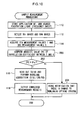
- the sample measurement processing in the second embodiment will be described in detail below. In regard to processing steps that are the same as those of the sample measurement processing in the first embodiment, the same reference signs will be assigned thereto and detailed description thereof will be omitted.
- the control unit 24 acquires the THz measurement values T and the SHG measurement values S.
- the control unit 24 computes an absolute value
- the correlation between the THz measurement values T and the SHG measurement values S becomes weaker and the absolute value
- step 202 the control unit 24 determines whether or not the absolute value
- th 1 e.g. 0.95
- the control unit 24 determines that the correlation between the THz measurement values T and the SHG measurement values S is weak and that there is damage to the nonlinear optical crystal 12 and moves to step 204.
- the control unit 24 issues a notification that there is damage to the nonlinear optical crystal 12 by displaying on the display and operation unit 26 a message indicating that there is damage to the nonlinear optical crystal 12 or by outputting an audio message or beeping sound from an unillustrated speaker. Thereafter, the control unit 24 ends the sample measurement processing.
- the control unit 24 may also be configured to perform the processing of steps 116 and 118 as well as issue a notification that there is damage to the nonlinear optical crystal 12.
- whether or not there is damage to the nonlinear optical crystal can also be determined on the basis of the correlation between the THz waves and the SHG waves.
- the control unit 24 uses the absolute value of the correlation coefficient as an index expressing the correlation between the THz measurement values T and the SHG measurement values S was described, but the control unit 24 may also be configured to use a coefficient of determination to determine the correlation between the THz measurement values T and the SHG measurement values S.
- the control unit 24 computes a coefficient of determination R 2 .
- the coefficient of determination R 2 also becomes smaller in a case where the correlation between the THz measurement values T and the SHG measurement values S is weak. Therefore, in step 202, the control unit 24 determines whether or not the coefficient of determination R 2 exceeds a predetermined threshold value th 2 (e.g., 0.90). In a case where R 2 > th 2 , the control unit 24 determines that the nonlinear optical crystal 12 is normal. In a case where R 2 ⁇ th 2 , the control unit 24 determines that there is damage to the nonlinear optical crystal 12.
- th 2 e.g. 0.90
- the terahertz spectrometry device determines whether or not there is damage to the nonlinear optical crystal on the basis of the correlation between the THz waves and the SHG waves obtained by a method differing from that of the second embodiment and thereafter performs terahertz spectrometry will be described.
- the configuration of the terahertz spectrometry device pertaining to the third embodiment is the same as the configuration of the terahertz spectrometry device 10 pertaining to the first embodiment, so the same reference signs will be assigned thereto and detailed description thereof will be omitted.
- the control unit 24 is an example of determining means of the present invention. The working of the terahertz spectrometry device pertaining to the third embodiment will be described below.
- the terahertz spectrometry device executes the baseline correction value calculation processing shown in FIG. 8 at a predetermined timing such as before sample measurement when the sample has not been set on the measurement stage 18. Further, in a normal condition in which there is no damage to the nonlinear optical crystal 12, the terahertz spectrometry device finds, by a processing step that is the same as step 200 of the sample measurement processing in the second embodiment, an absolute value
- the terahertz spectrometry device executes the sample measurement processing shown in FIG. 12 at the time of sample measurement when the sample has been set on the measurement stage 18.
- Each type of processing is performed as a result of the CPU 30 reading out and executing a program stored in the ROM 32.
- the sample measurement processing in the third embodiment will be described in detail below. In regard to processing steps that are the same as those of the sample measurement processing in the first and second embodiments, the same reference signs will be assigned thereto and detailed description thereof will be omitted.
- control unit 24 computes the absolute value
- step 300 the control unit 24 reads out the absolute value
- the baseline THz measurement values and the baseline SHG measurement values show a strong correlation, so the absolute value
- step 302 the control unit 24 determines whether or not an absolute value
- a predetermined threshold value th 3 e.g., 0.05.
- the control unit 24 determines that the nonlinear optical crystal 12 is normal and executes the measurement processing of steps 116 and 118.
- the control unit 24 determines that there is damage to the nonlinear optical crystal 12 and moves to step 204.
- the control unit 24 issues a notification that there is damage to the nonlinear optical crystal 12. Thereafter, the control unit 24 ends the sample measurement processing.
- the control unit 24 may also be configured to perform the processing of steps 116 and 118 as well as issue a notification that there is damage to the nonlinear optical crystal 12.
- whether or not there is damage to the nonlinear optical crystal can also be determined on the basis of the correlation between the THz waves and the SHG waves.
- control unit 24 uses the difference between the absolute values of the correlation coefficient as an index expressing the correlation between the THz measurement values T and the SHG measurement values S, but the control unit 24 may also be configured to use a difference between coefficients of determination to determine the correlation between the THz measurement values T and the SHG measurement values S.
- step 302 the control unit 24 determines whether or not an absolute value
- th 4 e.g. 0.10
- the configuration of the terahertz spectrometry device pertaining to the fourth embodiment is the same as the configuration of the terahertz spectrometry device 10 pertaining to the first embodiment, so the same reference signs will be assigned thereto and detailed description thereof will be omitted.
- the control unit 24 is an example of determining means of the present invention. The working of the terahertz spectrometry device pertaining to the fourth embodiment will be described below.
- the terahertz spectrometry device executes the baseline correction value calculation processing shown in FIG. 8 at a predetermined timing such as before sample measurement when the sample has not been set on the measurement stage 18. Further, the terahertz spectrometry device finds a relational equation between the THz measurement values and the SHG measurement values such as shown in FIG. 3 using the baseline THz measurement values and baseline SHG measurement values acquired in step 104 of the baseline correction value calculation processing in a normal condition in which there is no damage to the nonlinear optical crystal 12 and saves the relational equation in a predetermined storage region of the memory 36 or the like. As shown in FIG.
- the terahertz spectrometry device uses the relational equation between the THz measurement values and the SHG measurement values to grasp this change and determine whether or not there is damage to the nonlinear optical crystal 12.
- the terahertz spectrometry device can use an approximation such as linear approximation or polynomial approximation.
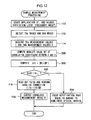
- the terahertz spectrometry device executes the sample measurement processing shown in FIG. 13 at the time of sample measurement when the sample has been set on the measurement stage 18.
- Each type of processing is performed as a result of the CPU 30 reading out and executing a program stored in the ROM 32.
- the sample measurement processing in the fourth embodiment will be described in detail below. In regard to processing steps that are the same as those of the sample measurement processing in the first and second embodiments, the same reference signs will be assigned thereto and detailed description thereof will be omitted.
- the control unit 24 acquires the THz measurement values T and the SHG measurement values S.
- step 400 the control unit 24 reads out the relational equation between the THz measurement values and the SHG measurement values when the nonlinear optical crystal 12 is normal from the predetermined storage region, computes values of the SHG measurement values imagined in a case where the nonlinear optical crystal 12 is normal on the basis of the relational equation and the THz measurement values T acquired in step 114, and denotes the values as SHG computed values S'.
- step 402 the control unit 24 computes a difference ⁇ S between the SHG measurement values S acquired in step 114 and the SHG computed values S' computed in step 400.
- a difference ⁇ S means that the correlation between the THz measurement values and the SHG measurement values becomes weaker.
- step 404 the control unit 24 determines whether or not an absolute value
- th 5 e.g., 0.05 V.
- the control unit 24 determines that the nonlinear optical crystal 12 is normal and executes the measurement processing of steps 116 and 118.
- the control unit 24 determines that there is damage to the nonlinear optical crystal 12 and moves to step 204.
- step 204 the control unit 24 issues a notification that there is damage to the nonlinear optical crystal 12. Thereafter, the control unit 24 ends the sample measurement processing.
- the control unit 24 may also be configured to perform the processing of steps 116 and 118 as well as issue a notification that there is damage to the nonlinear optical crystal 12.
- control unit 24 can determine whether or not there is damage to the nonlinear optical crystal not only on the basis of the correlation between the THz waves and the SHG waves but also on the basis of the difference between the detected THz measurement values and the relational equation between the THz measurement values and the SHG measurement values when the nonlinear optical crystal is normal.
- control unit 24 determines whether or not there is damage to the nonlinear optical crystal using the difference ⁇ S between the SHG measurement values S and the SHG computed values S' was described, but the control unit 24 may also be configured to determine whether or not there is damage to the nonlinear optical crystal using a difference ⁇ T between the THz measurement values T and THz computed values T'.
- the control unit 24 computes, as the THz computed values T', values of the THz measurement values imagined in a case where the nonlinear optical crystal 12 is normal on the basis of the relational equation when the nonlinear optical crystal 12 is normal and the SHG measurement values S acquired in step 114.
- step 402 the control unit 24 computes the difference ⁇ T between the THz measurement values T acquired in step 114 and the THz computed values T' computed in step 400. Then, in step 404, the control unit 24 determines whether or not an absolute value
- th 6 e.g., 0.05 V
- the fifth embodiment an inspection device that inspects the condition of the nonlinear optical crystal will be described.
- the configuration of the nonlinear optical crystal inspection device pertaining to the fifth embodiment is the same as the configuration of the terahertz spectrometry device 10 pertaining to the first embodiment, so the same reference signs will be assigned thereto and detailed description thereof will be omitted.
- the working of the inspection device pertaining to the fifth embodiment will be described below.
- Inspection processing executed in the nonlinear optical crystal inspection device pertaining to the fifth embodiment will be described with reference to FIG. 15 .
- the inspection processing is performed as a result of the CPU 30 reading out and executing a program stored in the ROM 32.
- processing steps in the inspection processing pertaining to the fifth embodiment that are the same as those of the sample measurement processing in the first and second embodiments, the same reference signs will be assigned thereto and detailed description thereof will be omitted.
- the control unit 24 computes the absolute value
- step 202 the control unit 24 determines whether or not
- the control unit 24 determines that the correlation between the THz measurement values T and the SHG measurement values S is weak and that there is damage to the nonlinear optical crystal 12 and moves to step 502. In step 502, the control unit 24 outputs "damaged" as the inspection result. Thereafter, the control unit 24 ends the inspection processing.
- the condition of the nonlinear optical crystal can be inspected on the basis of the correlation between the THz waves and the SHG waves.
- the inspection device uses the absolute value of the correlation coefficient as an index indicating the correlation between the THz measurement values T and the SHG measurement values S was described, but the inspection device may also be configured to inspect the condition of the nonlinear optical crystal using the same method as in the third or fourth embodiment.
- the reference light is not limited to this. It suffices for the reference light to be an optical harmonic that has been frequency converted in accordance with the nonlinear coefficient that the nonlinear optical crystal has.
- the present invention may also use the third harmonic.
- the terahertz spectrometry device of the present invention is realized as a result of the CPU executing a program was described, but it is also possible to realize the terahertz spectrometry device using a semiconductor integrated circuit such as an application-specific integrated circuit (ASIC).
- ASIC application-specific integrated circuit
Landscapes
- Physics & Mathematics (AREA)
- Spectroscopy & Molecular Physics (AREA)
- General Physics & Mathematics (AREA)
- Health & Medical Sciences (AREA)
- Immunology (AREA)
- Biochemistry (AREA)
- General Health & Medical Sciences (AREA)
- Analytical Chemistry (AREA)
- Chemical & Material Sciences (AREA)
- Pathology (AREA)
- Life Sciences & Earth Sciences (AREA)
- Toxicology (AREA)
- Optical Modulation, Optical Deflection, Nonlinear Optics, Optical Demodulation, Optical Logic Elements (AREA)
- Investigating Or Analysing Materials By Optical Means (AREA)
- Spectrometry And Color Measurement (AREA)
- Testing Of Optical Devices Or Fibers (AREA)
Abstract
Description
- The present invention relates to a terahertz spectrometry device and method and to a nonlinear optical crystal inspection device and method.
- Conventionally, there has been proposed a frequency sweep terahertz spectrum measurement device which, in the case of frequency calibrating the terahertz spectrum of a measurement sample, separates reference light from terahertz light applied to the sample while performing a frequency sweep and performs intensity correction of the terahertz light to be applied (e.g., see Japanese Patent Application Laid-Open (JP-A) No.
2008-268162 - There has also been proposed an apparatus for investigating a sample, the apparatus comprising: an emitter for irradiating the sample with a beam of emitted electromagnetic radiation; and a detector for detecting the radiation reflected from the sample, wherein there is an optically nonlinear member which functions as both an active part of the emitter and an active part of the detector, said emitter and detector using the same part of the optically nonlinear member (e.g., see
JP-A No. 2003-529760 JP-A No. 2003-529760 - Further, it is known that, in a semiconductor laser excitation laser device, an intensity of laser output light that is output from the laser device changes according to a wavelength or intensity of excitation light. In this regard, a semiconductor laser excitation laser device has been proposed, in which an intensity of laser output light is detected, and in accordance with the value thereof, a driving current and a temperature of a semiconductor laser for excitation is controlled so as to stabilize the intensity of the laser output light (e.g., see JP-A No.
H05-029695 - Generally, in order to raise measurement sensitivity in spectral analysis, it is extremely important to improve the signal-to-noise ratio (S/N ratio)-that is, to increase signal strength and reduce noise. Further, in order to raise measurement reproducibility, it is important to perform intensity correction of the measurement light taking changes in the intensity of the light of the light source as a reference. This also applies to terahertz spectral analysis, and a high-intensity terahertz light source and intensity correction of the measurement light are essential.
- However, the technology of
JP-A No. 2008-268162 - Further, even in a case where the light of the light source is laser output light, a portion of the laser output light that has been output from the laser device is taken out in the technology of
JP-A No. H05-029695 - Further, in a method that separates the reference light from the terahertz light source like in the technology of
JP-A No. 2008-268162 - Further, the technology of
JP-A No. 2003-529760 JP-A No. 2003-529760 - The present invention has been made in order to solve the above problems, and at least the preferred embodiments thereof provide a terahertz spectrometry device and method that can perform intensity correction of terahertz measurement values with good precision without lowering the intensity of terahertz waves to be generated. The present invention also provides a nonlinear optical crystal inspection device and method that can inspect the condition of a nonlinear optical crystal used for measurement.
- According to a first aspect of the present invention, a terahertz spectrometry device comprises a nonlinear optical crystal that has a unique nonlinear coefficient and generates, from light beams of two different wavelengths made incident thereon, terahertz waves resulting from sum frequency generation or difference frequency generation according to the nonlinear coefficient and optical harmonics in which the light beams of two different wavelengths have been wavelength converted in accordance with the nonlinear coefficient; first detecting means that directly detects the terahertz waves generated from the nonlinear optical crystal or detects measurement terahertz waves that have passed through or been reflected from a measurement target to which the terahertz waves have been applied; second detecting means that detects at least one of the optical harmonics generated from the nonlinear optical crystal; and measuring means that obtains measurement values in which an intensity of the measurement terahertz waves detected by the first detecting means has been corrected on the basis of an intensity of the at least one optical harmonic detected by the second detecting means.
- According to the terahertz spectrometry device of the present invention, when the light beams of two different wavelengths are made incident as excitation light on the nonlinear optical crystal having the unique nonlinear coefficient, the nonlinear optical crystal generates terahertz waves resulting from sum frequency generation or difference frequency generation according to the nonlinear coefficient that the crystal itself has and optical harmonics in which the light beams of two different wavelengths have been wavelength converted in accordance with the nonlinear coefficient. The terahertz waves generated from the nonlinear optical crystal are detected by the first detecting means directly or as measurement terahertz waves that have passed through or been reflected from the measurement target to which the terahertz waves have been applied. Further, at least one of the optical harmonics generated from the nonlinear optical crystal is detected by the second detecting means. Additionally, the measuring means obtains measurement values in which the intensity of the measurement terahertz waves detected by the first detecting means has been corrected on the basis of the intensity of the at least one optical harmonic detected by the second detecting means.
- In this way, by correcting the intensity of the terahertz waves using the intensity of the optical harmonics that have not been utilized in conventional terahertz measurement systems and which are generated in accordance with the same nonlinear coefficient as the terahertz waves, intensity correction of the terahertz measurement values can be performed with good precision without lowering the intensity of the terahertz waves to be generated.
- Preferably, the measuring means can acquire, as baseline terahertz waves, terahertz waves directly detected by the first detecting means, acquire, as a baseline optical harmonic, an optical harmonic detected at the same time as the baseline terahertz waves, and obtain the corrected measurement values on the basis of a relationship between the baseline terahertz waves, the baseline optical harmonic, the measurement terahertz waves, and the optical harmonic detected at the same time as the measurement terahertz waves. By performing this baseline correction, appropriate intensity correction can be performed.
- Preferably, the optical harmonic is a second harmonic of the light beams of two different wavelengths.
- Preferably, the measuring means may obtain the measurement values using the measurement terahertz waves detected by applying the terahertz waves generated from the nonlinear optical crystal to the measurement target while performing a frequency sweep or the measurement terahertz waves detected by applying terahertz waves of a specific frequency generated from the nonlinear optical crystal to the measurement target. In this way, the present invention can be applied regardless of the measurement method.
- Preferably, the terahertz spectrometry device of the present invention may be configured to further include determining means that determines whether or not there is damage to the nonlinear optical crystal on the basis of a correlation between the intensity of the measurement terahertz waves detected by the first detecting means and the intensity of the at least one optical harmonic detected by the second detecting means. The terahertz waves and the optical harmonic generated in accordance with the nonlinear coefficient that the nonlinear optical crystal has show a strong correlation if the nonlinear optical crystal is in a normal condition, so whether or not there is damage to the nonlinear optical crystal can be determined on the basis of the correlation between the intensity of the terahertz waves and the intensity of the optical harmonic.
- The determining means may determine that there is damage to the nonlinear optical crystal in a case where an absolute value of a correlation coefficient, or a coefficient of determination, between the intensity of the measurement terahertz waves detected by the first detecting means and the intensity of the at least one optical harmonic detected by the second detecting means is smaller than a predetermined threshold value.
- The determining means may determine that there is damage to the nonlinear optical crystal in a case where a difference between an absolute value of a correlation coefficient, or a coefficient of determination, between the intensity of the measurement terahertz waves detected by the first detecting means and the intensity of the at least one optical harmonic detected by the second detecting means and an absolute value of a correlation coefficient, or a coefficient of determination, obtained using the nonlinear optical crystal in a normal condition is larger than a predetermined threshold value.
- Preferably, the terahertz spectrometry device of the present invention may be configured to further include determining means that determines that there is damage to the nonlinear optical crystal in a case where a difference between either one intensity of the intensity of the measurement terahertz waves detected by the first detecting means and the intensity of the at least one optical harmonic detected by the second detecting means, a computed value representing the other intensity obtained on the basis of a relational equation between the intensity of the measurement terahertz waves and the intensity of the at least one optical harmonic obtained using the nonlinear optical crystal in a normal condition, and the other intensity that has been detected is larger than a predetermined threshold value. By using this determining means also, whether or not there is damage to the nonlinear optical crystal can be determined.
- According to a second aspect of the present invention, there is provided a terahertz spectrometry method which: detects measurement terahertz waves that have passed through or been reflected from a measurement target to which have been applied terahertz waves generated from a nonlinear optical crystal that has a unique nonlinear coefficient and generates, from light beams of two different wavelengths made incident thereon, terahertz waves resulting from sum frequency generation or difference frequency generation according to the nonlinear coefficient and optical harmonics in which the light beams of two different wavelengths have been wavelength converted in accordance with the nonlinear coefficient; detects at least one of the optical harmonics generated from the nonlinear optical crystal; and obtains measurement values in which an intensity of the measurement terahertz waves that have been detected has been corrected on the basis of an intensity of the at least one optical harmonic that has been detected.
- According to a third aspect of the present invention, there is provided a nonlinear optical crystal inspection device comprising: a nonlinear optical crystal that has a unique nonlinear coefficient and generates, from light beams of two different wavelengths made incident thereon, terahertz waves resulting from sum frequency generation or difference frequency generation according to the nonlinear coefficient and optical harmonics in which the light beams of two different wavelengths have been wavelength converted in accordance with the nonlinear coefficient; first detecting means that directly detects the terahertz waves generated from the nonlinear optical crystal or detects measurement terahertz waves that have passed through or been reflected from a measurement target to which the terahertz waves have been applied; second detecting means that detects at least one of the optical harmonics generated from the nonlinear optical crystal; and determining means that determines whether or not there is damage to the nonlinear optical crystal on the basis of a correlation between an intensity of the measurement terahertz waves detected by the first detecting means and an intensity of the at least one optical harmonic detected by the second detecting means.
- According to a fourth aspect of the present invention, there is provided a nonlinear optical crystal inspection method which: detects measurement terahertz waves that have passed through or been reflected from a measurement target to which have been applied terahertz waves generated from a nonlinear optical crystal that has a unique nonlinear coefficient and generates, from light beams of two different wavelengths made incident thereon, terahertz waves resulting from sum frequency generation or difference frequency generation according to the nonlinear coefficient and optical harmonics in which the light beams of two different wavelengths have been wavelength converted in accordance with the nonlinear coefficient; detects at least one of the optical harmonics generated from the nonlinear optical crystal; and determines whether or not there is damage to the nonlinear optical crystal on the basis of a correlation between an intensity of the measurement terahertz waves that have been detected and an intensity of the at least one optical harmonic that has been detected.
- According to the nonlinear optical crystal inspection device and method of the present invention, the condition of the nonlinear optical crystal used for measurement can be inspected on the basis of the correlation between the intensity of the measurement terahertz waves and the intensity of the optical harmonic.
- As described above, according to the terahertz spectrometry device and method of the present invention, there is obtained the effect that, by correcting the intensity of the terahertz waves using the intensity of the optical harmonics that have not been utilized in conventional terahertz measurement systems and which are generated in accordance with the same nonlinear coefficient as the terahertz waves, intensity correction of the terahertz measurement values can be performed with good precision without lowering the intensity of the terahertz waves to be generated.
- Further, according to the nonlinear optical crystal inspection device and method of the present invention, the condition of the nonlinear optical crystal used for measurement can be inspected on the basis of the correlation between the intensity of the measurement terahertz waves and the intensity of the optical harmonic.
- Certain preferred embodiments of the present invention will now be described by way of example only and with reference to the drawings in which:
-
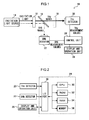
FIG. 1 is a schematic diagram showing the configuration of a terahertz spectrometry device pertaining to a first embodiment; -
FIG. 2 is a block diagram showing the configuration of a control unit; -
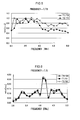
FIG. 3 is a graph showing the correlation between THz measurement values and SHG measurement values; -
FIG. 4 is a graph showing THz measurement values with respect to a frequency sweep; -
FIG. 5 is a graph showing THz measurement values on which conventional baseline correction has been performed; -
FIG. 6 is a graph showing THz measurement values on which intensity correction in the first embodiment has been performed; -
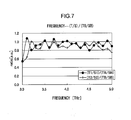
FIG. 7 is a graph showing THZ measurement values on which baseline correction in the first embodiment has been performed; -
FIG. 8 is a flowchart showing the content of baseline correction value calculation processing in the first embodiment; -
FIG. 9 is a flowchart showing the content of sample measurement processing in the first embodiment; -
FIG. 10 is a flowchart showing the content of sample measurement processing in a second embodiment; -
FIG. 11 is a graph showing the correlation between THz measurement values and SHG measurement values when a nonlinear optical crystal is normal and when it is damaged; -
FIG. 12 is a flowchart showing the content of sample measurement processing in a third embodiment; -
FIG. 13 is a flowchart showing the content of sample measurement processing in a fourth embodiment; -
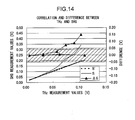
FIG. 14 is a graph showing the correlation between THz measurement values and SHG measurement values and the differences between SHG measurement values and SHG computed values; and -
FIG. 15 is a flowchart showing the content of inspection processing in a fifth embodiment. - Embodiments of the present invention will be described in detail below with reference to the drawings.
- As shown in
FIG. 1 , a terahertz spectrometry device 10 pertaining to the present embodiment is configured to include a nonlinearoptical crystal 12 that has a unique nonlinear coefficient, anexcitation light source 14 that generates excitation light beams of two different wavelengths made incident on the nonlinearoptical crystal 12, afilter 16 that separates terahertz waves (abbreviated as "THz waves" below) and second harmonics (abbreviated as "SHG waves" below) generated from the nonlinearoptical crystal 12, ameasurement stage 18 on which a measurement target sample is set, aTHz detector 20 that detects the THz waves, aSHG detector 22 that detects the SHG waves, acontrol unit 24 that executes processing for spectral measurement of the THz waves, and a display andoperation unit 26 with which various types of information are input as a result of the display andoperation unit 26 being operated and which is configured by a touch panel display or the like for displaying measurement results and so forth. TheTHz detector 20 is an example of first detecting means of the present invention, theSHG detector 22 is an example of second detecting means of the present invention, and thecontrol unit 24 is an example of measuring means of the present invention. - The nonlinear
optical crystal 12 generates, from the excitation light beams of two different wavelengths made incident from theexcitation light source 14, the THz waves by sum frequency generation or difference frequency generation according to the nonlinear coefficient that the nonlinearoptical crystal 12 has. Further, at the same time as when the nonlinearoptical crystal 12 generates the THz waves, the nonlinearoptical crystal 12 generates the SHG waves in which the excitation light beams of two wavelengths made incident have been wavelength converted in accordance with the nonlinear coefficient. For example, in a case where the frequencies of the excitation light beams of two wavelengths are ω1 and ω2, the nonlinearoptical crystal 12 generates THz waves having a frequency ω3 equal to |ω1+ω2| or |ω1-ω2| and also generates SHG waves having frequencies 2ω1 and 2ω2. As the nonlinearoptical crystal 12, for example DAST (4-dimethylamino-N-methyl-4-stilbazolium tosylate) crystal or DASC (4-dimethylamino-N-methyl-4-stilbazolium p-chlorobenzenesulfonate) crystal can be used. - As the
excitation light source 14, for example, a two wavelength generating semiconductor laser that can generates light beams of two different wavelengths can be used. - As the
filter 16, a dichroic filter that allows light in the frequency band of the THz waves to pass through it and reflects light in the frequency band of the SHG waves can be used. It suffices provided that thefilter 16 can separate the THz waves and the SHz waves. - The
THz detector 20 detects the THz waves and outputs electrical signals according to the intensity of the detected THz waves as THz measurement values. As theTHz detector 20, for example, a pyroelectric detector can be used. - The
SHG detector 22 detects the SHG waves and outputs electrical signals according to the intensity of the detected SHG waves as SHG measurement values. As theSHG detector 22, for example, a silicon (Si) bolometer can be used. As described above, SHG waves having the two frequencies of 2ω1 and 2ω2 are generated, but theSHG detector 22 may be configured to detect either of the two frequencies of the SHG waves or may be configured to detect the two frequencies of the SHG waves and output the sum of the intensities of the SHG waves as the SHG measurement values. - As shown in
FIG. 2 , thecontrol unit 24 is configured by a computer including aCPU 30 that controls the entire terahertz spectrometry device 10, aROM 32 serving as a storage medium that stores a program for executing terahertz spectrometry processing including baseline correction value calculation processing and sample measurement processing described later, aRAM 34 that temporarily stores data as a work area, amemory 36 serving as storage means in which various types of information are stored, an input/output port (I/O port) 38, and a bus that interconnects these. Thecontrol unit 24 may further include a HDD serving as storage means. TheTHz detector 20, theSHG detector 22, and the display andoperation unit 26 are connected to the I/O port 38. - Here, the principle of the present embodiment will be described.
- The terahertz spectrometry device 10 pertaining to the present embodiment uses the SHG waves detected by the
SHG detector 22 as reference light to perform intensity correction of the THz measurement values. The SHG waves are light that is unnecessary in terahertz measurement systems and conventionally have been cut by a filter, for example, and not utilized. For that reason, even if the SHG waves are acquired as reference light, the intensity of the THz waves generated from the nonlinearoptical crystal 12 does not drop. - Further, fluctuations occur in the intensity of the THz waves generated from the nonlinear
optical crystal 12 due to factors indicated below. - (a) Fluctuations in the output value of the excitation light
- (b) Partial disruptions in the crystal structure included in the nonlinear
optical crystal 12, and dislocations and lattice defects within the crystal structure - (c) The thermal lens effect, which occurs in the nonlinear
optical crystal 12 when the excitation light is applied - (d) Changes in the amount of heat accumulated in the nonlinear
optical crystal 12 in accompaniment with the elapse of the application time of the excitation light resulting from fluctuations in the output value of the excitation light - Fluctuations in the intensity of the THz waves affect the THz measurement values that are measured, so it is necessary to perform intensity correction of the THz measurement values taking the above factors into consideration.
- Here, in order to suppress a drop in the intensity of the THz waves to be generated, it is also conceivable to acquire, as the reference light, the excitation light (fundamental waves) that has passed through the nonlinear
optical crystal 12, for example, rather than separating the THz waves themselves. However, in this case, the fundamental waves are not light that has been wavelength converted in accordance with the nonlinear coefficient of the nonlinearoptical crystal 12, so although fluctuations in the intensity of the THz waves resulting from factor (a) can be eliminated, fluctuations in the intensity of the THz waves whose factors are the structure of the nonlinearoptical crystal 12 and so forth, like (b) to (d), cannot be eliminated. - The THz waves and the SHG waves are generated in accordance with the same nonlinear coefficient of the nonlinear
optical crystal 12, so fluctuations that are in alignment with the fluctuations in the THz waves resulting from factors such as (b) to (d) also occur in the SHG waves.FIG. 3 shows a graph in which THz measurement values and SHG measurement values, which have been measured at the same time while changing the excitation light output to vary the intensity of the THz waves generated from the nonlinearoptical crystal 12, have been plotted taking the THz measurement values (voltage values [V]) on the X axis and the SHG measurement values (voltage values [V] ) on the Y axis. As shown inFIG. 3 , it will be understood that there is a proportional correlation between the THz measurement values and the SHG measurement values. - In this way, by using the SHG waves that have not conventionally been utilized, intensity correction of the THz measurement values corresponding to the fluctuations in the intensity of the THz waves that occur due to various factors can be performed without lowering the intensity of the THz waves.
- Next, the principle of intensity correction of the THz measurement values using the SHG waves will be described.
-
FIG. 4 shows measurement results of frequency-THz measurement values when a frequency sweep of the THz waves has been performed in each of a case where the output of the excitation light has been fixed and a case where the output of the excitation light has been varied. The frequency-THz measurement values in the case where the output of the excitation light was fixed are denoted by baseline THz measurement values TB, and the measurement commencement time is denoted by t0. Further, the variations in the excitation light output assume light source drift in the terahertz light source, and as frequency-THz measurement values in the case where the output of the excitation light was varied, THz measurement values T1 at a measurement commencement time t1 (t1>t0) and THz measurement values T2 at a measurement commencement time t2 (t2>t1) were measured. As shown inFIG. 4 , in a case where light source drift has occurred, the drop in the THz measurement values becomes pronounced at frequencies from 4 THz on. - Further, in conventional terahertz measurement systems (single beam systems), before measurement with respect to the measurement target sample, a frequency sweep such as described above is performed to measure the baseline THz measurement values TB, and single beam correction is performed taking T/TB with respect to THz measurement values T at the time of sample measurement.
-
FIG. 5 shows results in which the measurement results ofFIG. 4 have been applied to these correction values. TB, T1, and T2 are all values that have been measured without the sample, so the fitness values of the correction values should be in the vicinity of 1, but as shown inFIG. 5 , in a case where light source drift has occurred, a misalignment occurs between the correction values and the fitness values. Further, a misalignment of the correction values also occurs between T1/TB and T2/TB, and this shows that, because fluctuations in the intensity of the THz waves occur due to various factors, the condition of the fluctuations also differs for each measurement, causing misalignment of the measurement values. - Consequently, conventional baseline correction cannot correct misalignment of the measurement values resulting from fluctuations in the terahertz waves that have occurred due to various factors.
- In the present embodiment, on the basis of the fact that the correlation between the SHG waves and the THz waves is strong, that is, on the basis of the fact that the SHG waves fluctuate in alignment with the THz waves, SHG measurement values S are used to perform intensity correction of the THz measurement values T using the following equation (1).

- Here, T and S are measurement values that have been measured at the same time.
FIG. 6 shows results in which the measurement results shown inFIG. 4 have been corrected using equation (1). As shown inFIG. 6 , the drops in the THz measurement values seen in the measurement results ofFIG. 4 are eliminated. - Further, using intensity correction equation (1), baseline correction is performed using the following equation (2).

- Here, SB denotes baseline SHG measurement values that have been measured at the same time as baseline THz measurement values TB. Correction equation (2) is an example and may also be used in an appropriately altered form such as (T/TB)×(SB/S).
-
FIG. 7 shows baseline correction results resulting from equation (2). As shown inFIG. 7 , the misalignment between the measurement values and the fitness values (here, 1) and the misalignment between the measurements (here, T1 and T2) seen in the correction results ofFIG. 5 are both eliminated. - Next, the working of the terahertz spectrometry device 10 pertaining to the first embodiment will be described. First, the terahertz spectrometry device 10 executes the baseline correction value calculation processing shown in
FIG. 8 at a predetermined timing such as before sample measurement when the sample has not been set on themeasurement stage 18. Additionally, the terahertz spectrometry device 10 executes the sample measurement processing shown inFIG. 9 at the time of sample measurement when the sample has been set on themeasurement stage 18. Each type of processing is performed as a result of theCPU 30 reading out and executing a program stored in theROM 32. Each type of processing will be described in detail below. - First, in the baseline correction value calculation processing, in
step 100, thecontrol unit 24 causes the excitation light beams to be generated from theexcitation light source 14, causes the excitation light beams to start to be applied to the nonlinearoptical crystal 12, and, in order to perform a frequency sweep of the THz waves, adjusts the excitation light beams in such a way that the difference between the two frequencies varies. At this time, the THz waves and the SHG waves that correlate with the THz waves are generated from the nonlinearoptical crystal 12. - Next, in
step 102, thecontrol unit 24 causes theTHz detector 20 to detect the THz waves generated from the nonlinearoptical crystal 12 at each frequency in the frequency sweep and causes theSHG detector 22 to detect the generated SHG waves. Because of this, electrical signals of voltage values according to the intensity of the detected THz waves are output from theTHz detector 20, and electrical signals of voltage values according to the intensity of the detected SHG waves are output from theSHG detector 22. - Next, in
step 104, thecontrol unit 24 acquires the electrical signals output from theTHz detector 20 as the baseline THz measurement values TB and acquires the electrical signals output from theSHG detector 22 as the baseline SHG measurement values SB. - Next, in
step 106, thecontrol unit 24 calculates TB/SB for each frequency from the baseline THz measurement values TB and baseline SHG measurement values SB acquired instep 104, saves the values TB/SB in a predetermined storage region of thememory 36 or the like as baseline correction values, and ends the baseline correction value calculation processing. - Next, in the sample measurement processing, in
steps control unit 24 causes the THz waves and the SHG waves to be generated while performing a frequency sweep and causes theTHz detector 20 and theSHG detector 22 to detect the THz waves and the SHG waves, respectively, using processing steps that are the same assteps THz detector 20 are THz waves that have passed through or been reflected from the sample set on themeasurement stage 18. - Next, in
step 114, thecontrol unit 24 acquires the electrical signals output from theTHz detector 20 as the THz measurement values T and acquires the electrical signals output from theSHG detector 22 as the SHG measurement values S. - Next, in
step 116, thecontrol unit 24 reads out the baseline correction values TB/SB from the predetermined storage region and uses the THz measurement values T and SHG measurement values S acquired instep 114 to perform baseline correction using equation (2). - Next, in
step 118, thecontrol unit 24 outputs the measurement results corrected instep 116 to the display andoperation unit 26 and ends the sample measurement processing. As for the output of the measurement results, for example, thecontrol unit 24 may be configured to have the display andoperation unit 26 display a graph of the THz wave optical spectrum expressed by frequency-(T/S)/(TB/SB) or may be configured to identify the sample type by comparing the measured THz wave optical spectrum with THz wave optical spectra per sample type separately stored beforehand and output the identification result. - As described above, according to the terahertz spectrometry device pertaining to the first embodiment, by using, as the reference light, the SHG waves that have not been utilized in conventional terahertz measurement systems and which are generated in accordance with the same nonlinear coefficient as the terahertz waves, intensity correction of the terahertz measurement values can be performed with good precision without lowering the intensity of the terahertz waves to be generated.
- For that reason, measurement sensitivity can be improved while maintaining measurement reproducibility.
- Next, a second embodiment will be described. In the second embodiment, a case where the terahertz spectrometry device determines whether or not there is damage to the nonlinear optical crystal on the basis of the correlation between the THz waves and the SHG waves and thereafter performs terahertz spectrometry will be described. The configuration of the terahertz spectrometry device pertaining to the second embodiment is the same as the configuration of the terahertz spectrometry device 10 pertaining to the first embodiment, so the same reference signs will be assigned thereto and detailed description thereof will be omitted. The
control unit 24 is an example of determining means of the present invention. The working of the terahertz spectrometry device pertaining to the second embodiment will be described below. - First, like in the first embodiment, the terahertz spectrometry device executes the baseline correction value calculation processing shown in
FIG. 8 at a predetermined timing such as before sample measurement when the sample has not been set on themeasurement stage 18. Then, the terahertz spectrometry device executes the sample measurement processing shown inFIG. 10 at the time of sample measurement when the sample has been set on themeasurement stage 18. Each type of processing is performed as a result of theCPU 30 reading out and executing a program stored in theROM 32. The sample measurement processing in the second embodiment will be described in detail below. In regard to processing steps that are the same as those of the sample measurement processing in the first embodiment, the same reference signs will be assigned thereto and detailed description thereof will be omitted. - Through
steps 110 to 114, thecontrol unit 24 acquires the THz measurement values T and the SHG measurement values S. Next, instep 200, thecontrol unit 24 computes an absolute value |R| of a correlation coefficient between the THz measurement values T and the SHG measurement values S acquired instep 114. As shown inFIG. 11 , in a case where there is damage to the nonlinearoptical crystal 12, the correlation between the THz measurement values T and the SHG measurement values S becomes weaker and the absolute value |R| of the correlation coefficient becomes smaller. - Therefore, in
step 202, thecontrol unit 24 determines whether or not the absolute value |R| of the correlation coefficient computed instep 200 exceeds a predetermined threshold value th1 (e.g., 0.95). In a case where |R| > th1, thecontrol unit 24 determines that the correlation between the THz measurement values T and the SHG measurement values S is strong and that the nonlinearoptical crystal 12 is normal and moves to step 116. Then, like in the first embodiment, thecontrol unit 24 performs baseline correction instep 116, outputs the corrected measurement results in thenext step 118, and thereafter ends the sample measurement processing. - In a case where |R| ≤ th1, the
control unit 24 determines that the correlation between the THz measurement values T and the SHG measurement values S is weak and that there is damage to the nonlinearoptical crystal 12 and moves to step 204. Instep 204, thecontrol unit 24 issues a notification that there is damage to the nonlinearoptical crystal 12 by displaying on the display and operation unit 26 a message indicating that there is damage to the nonlinearoptical crystal 12 or by outputting an audio message or beeping sound from an unillustrated speaker. Thereafter, thecontrol unit 24 ends the sample measurement processing. In a case where |R| ≤ th1, thecontrol unit 24 may also be configured to perform the processing ofsteps optical crystal 12. - As described above, according to the terahertz spectrometry device pertaining to the second embodiment, whether or not there is damage to the nonlinear optical crystal can also be determined on the basis of the correlation between the THz waves and the SHG waves.
- In the second embodiment, a case where the
control unit 24 uses the absolute value of the correlation coefficient as an index expressing the correlation between the THz measurement values T and the SHG measurement values S was described, but thecontrol unit 24 may also be configured to use a coefficient of determination to determine the correlation between the THz measurement values T and the SHG measurement values S. In this case, instep 200, thecontrol unit 24 computes a coefficient of determination R2. Like the absolute value |R| of the correlation coefficient, the coefficient of determination R2 also becomes smaller in a case where the correlation between the THz measurement values T and the SHG measurement values S is weak. Therefore, instep 202, thecontrol unit 24 determines whether or not the coefficient of determination R2 exceeds a predetermined threshold value th2 (e.g., 0.90). In a case where R2 > th2, thecontrol unit 24 determines that the nonlinearoptical crystal 12 is normal. In a case where R2 ≤ th2, thecontrol unit 24 determines that there is damage to the nonlinearoptical crystal 12. - Next, a third embodiment will be described. In the third embodiment, a case where the terahertz spectrometry device determines whether or not there is damage to the nonlinear optical crystal on the basis of the correlation between the THz waves and the SHG waves obtained by a method differing from that of the second embodiment and thereafter performs terahertz spectrometry will be described. The configuration of the terahertz spectrometry device pertaining to the third embodiment is the same as the configuration of the terahertz spectrometry device 10 pertaining to the first embodiment, so the same reference signs will be assigned thereto and detailed description thereof will be omitted. The
control unit 24 is an example of determining means of the present invention. The working of the terahertz spectrometry device pertaining to the third embodiment will be described below. - First, like in the first embodiment, the terahertz spectrometry device executes the baseline correction value calculation processing shown in
FIG. 8 at a predetermined timing such as before sample measurement when the sample has not been set on themeasurement stage 18. Further, in a normal condition in which there is no damage to the nonlinearoptical crystal 12, the terahertz spectrometry device finds, by a processing step that is the same asstep 200 of the sample measurement processing in the second embodiment, an absolute value |R,| of a correlation coefficient between the baseline THz measurement values and baseline SHG measurement values acquired instep 104 of the baseline correction value calculation processing and saves the absolute value |R'| in a predetermined storage region of thememory 36 or the like. - Then, the terahertz spectrometry device executes the sample measurement processing shown in
FIG. 12 at the time of sample measurement when the sample has been set on themeasurement stage 18. Each type of processing is performed as a result of theCPU 30 reading out and executing a program stored in theROM 32. The sample measurement processing in the third embodiment will be described in detail below. In regard to processing steps that are the same as those of the sample measurement processing in the first and second embodiments, the same reference signs will be assigned thereto and detailed description thereof will be omitted. - Through
steps 110 to 114 and 200, thecontrol unit 24 computes the absolute value |R| of the correlation coefficient between the THz measurement values T and the SHG measurement values S. - Next, in
step 300, thecontrol unit 24 reads out the absolute value |R'| of the correlation coefficient between the baseline THz measurement values and the baseline SHG measurement values when the nonlinear optical crystal is normal which is stored in the predetermined region and computes a difference ΔR between |R| computed instep 200 and |R'| When the nonlinearoptical crystal 12 is normal, the baseline THz measurement values and the baseline SHG measurement values show a strong correlation, so the absolute value |R'| of the correlation coefficient becomes a large value. It is difficult to imagine that, in temporal changes thereafter, the absolute value |R| of the correlation coefficient will change in the direction in which it becomes even larger, so an increase in the difference ΔR means that the correlation between the THz measurement values and the SHG measurement values becomes weaker. - Therefore, in
step 302, thecontrol unit 24 determines whether or not an absolute value |ΔR| of the difference ΔR computed instep 300 is less than a predetermined threshold value th3 (e.g., 0.05). In a case where |ΔR| < th3, thecontrol unit 24 determines that the nonlinearoptical crystal 12 is normal and executes the measurement processing ofsteps control unit 24 determines that there is damage to the nonlinearoptical crystal 12 and moves to step 204. Instep 204, thecontrol unit 24 issues a notification that there is damage to the nonlinearoptical crystal 12. Thereafter, thecontrol unit 24 ends the sample measurement processing. In a case where |R| ≥ th3, thecontrol unit 24 may also be configured to perform the processing ofsteps optical crystal 12. - As described above, according to the terahertz spectrometry device pertaining to the third embodiment, whether or not there is damage to the nonlinear optical crystal can also be determined on the basis of the correlation between the THz waves and the SHG waves.
- In the third embodiment, a case where the
control unit 24 uses the difference between the absolute values of the correlation coefficient as an index expressing the correlation between the THz measurement values T and the SHG measurement values S was described, but thecontrol unit 24 may also be configured to use a difference between coefficients of determination to determine the correlation between the THz measurement values T and the SHG measurement values S. In this case, in a normal condition in which there is no damage to the nonlinearoptical crystal 12, thecontrol unit 24 finds a coefficient of determination R'2 between the baseline THz measurement values and the baseline SHG measurement values beforehand. Then, thecontrol unit 24 computes a coefficient of determination R2 instep 200 and computes a difference ΔR2 (=R2-R'2) instep 300. Then, instep 302, thecontrol unit 24 determines whether or not an absolute value |ΔR2| of the difference ΔR2 is less than a predetermined threshold value th4 (e.g., 0.10). In a case where |ΔR2| < th4, thecontrol unit 24 determines that the nonlinearoptical crystal 12 is normal. In a case where |ΔR2| ≥ th4, thecontrol unit 24 determines that there is damage to the nonlinearoptical crystal 12. - Next, a fourth embodiment will be described. In the second and third embodiments, cases where the terahertz spectrometry device determines whether or not there is damage to the nonlinear optical crystal on the basis of the correlation between the THz waves and the SHG waves were described, but in the fourth embodiment, a case where the terahertz spectrometry device determines whether or not there is damage to the nonlinear optical crystal on the basis of whether or not the intensity of the THz waves and the intensity of the SHG waves that have been detected are obtained as values according to a relational equation between the THz waves and the SHG waves when the nonlinear optical crystal is in a normal condition will be described.
- The configuration of the terahertz spectrometry device pertaining to the fourth embodiment is the same as the configuration of the terahertz spectrometry device 10 pertaining to the first embodiment, so the same reference signs will be assigned thereto and detailed description thereof will be omitted. The
control unit 24 is an example of determining means of the present invention. The working of the terahertz spectrometry device pertaining to the fourth embodiment will be described below. - First, like in the first embodiment, the terahertz spectrometry device executes the baseline correction value calculation processing shown in
FIG. 8 at a predetermined timing such as before sample measurement when the sample has not been set on themeasurement stage 18. Further, the terahertz spectrometry device finds a relational equation between the THz measurement values and the SHG measurement values such as shown inFIG. 3 using the baseline THz measurement values and baseline SHG measurement values acquired instep 104 of the baseline correction value calculation processing in a normal condition in which there is no damage to the nonlinearoptical crystal 12 and saves the relational equation in a predetermined storage region of thememory 36 or the like. As shown inFIG. 11 , in a case where there is damage to the nonlinearoptical crystal 12, the correlation between the THz measurement values and the SHG measurement values becomes weaker compared to when the nonlinearoptical crystal 12 is normal. The terahertz spectrometry device uses the relational equation between the THz measurement values and the SHG measurement values to grasp this change and determine whether or not there is damage to the nonlinearoptical crystal 12. As the relational equation, the terahertz spectrometry device can use an approximation such as linear approximation or polynomial approximation. - Then, the terahertz spectrometry device executes the sample measurement processing shown in
FIG. 13 at the time of sample measurement when the sample has been set on themeasurement stage 18. Each type of processing is performed as a result of theCPU 30 reading out and executing a program stored in theROM 32. The sample measurement processing in the fourth embodiment will be described in detail below. In regard to processing steps that are the same as those of the sample measurement processing in the first and second embodiments, the same reference signs will be assigned thereto and detailed description thereof will be omitted. - Through
steps 110 to 114, thecontrol unit 24 acquires the THz measurement values T and the SHG measurement values S. Next, instep 400, thecontrol unit 24 reads out the relational equation between the THz measurement values and the SHG measurement values when the nonlinearoptical crystal 12 is normal from the predetermined storage region, computes values of the SHG measurement values imagined in a case where the nonlinearoptical crystal 12 is normal on the basis of the relational equation and the THz measurement values T acquired instep 114, and denotes the values as SHG computed values S'. - Next, in
step 402, thecontrol unit 24 computes a difference ΔS between the SHG measurement values S acquired instep 114 and the SHG computed values S' computed instep 400. As shown inFIG. 14 , an increase in the difference ΔS means that the correlation between the THz measurement values and the SHG measurement values becomes weaker. - Therefore, in
step 404, thecontrol unit 24 determines whether or not an absolute value |ΔS| of the difference ΔS computed instep 402 is less than a predetermined threshold value th5 (e.g., 0.05 V). In a case where |ΔS| < th5, thecontrol unit 24 determines that the nonlinearoptical crystal 12 is normal and executes the measurement processing ofsteps control unit 24 determines that there is damage to the nonlinearoptical crystal 12 and moves to step 204. Instep 204, thecontrol unit 24 issues a notification that there is damage to the nonlinearoptical crystal 12. Thereafter, thecontrol unit 24 ends the sample measurement processing. In a case where |ΔS| ≤ th5, thecontrol unit 24 may also be configured to perform the processing ofsteps optical crystal 12. - As described above, according to the terahertz spectrometry device pertaining to the fourth embodiment, the
control unit 24 can determine whether or not there is damage to the nonlinear optical crystal not only on the basis of the correlation between the THz waves and the SHG waves but also on the basis of the difference between the detected THz measurement values and the relational equation between the THz measurement values and the SHG measurement values when the nonlinear optical crystal is normal. - In the fourth embodiment, a case where the
control unit 24 determines whether or not there is damage to the nonlinear optical crystal using the difference ΔS between the SHG measurement values S and the SHG computed values S' was described, but thecontrol unit 24 may also be configured to determine whether or not there is damage to the nonlinear optical crystal using a difference ΔT between the THz measurement values T and THz computed values T'. In this case, instep 400, thecontrol unit 24 computes, as the THz computed values T', values of the THz measurement values imagined in a case where the nonlinearoptical crystal 12 is normal on the basis of the relational equation when the nonlinearoptical crystal 12 is normal and the SHG measurement values S acquired instep 114. Instep 402, thecontrol unit 24 computes the difference ΔT between the THz measurement values T acquired instep 114 and the THz computed values T' computed instep 400. Then, instep 404, thecontrol unit 24 determines whether or not an absolute value |ΔT| of the difference ΔT is less than a predetermined threshold value th6 (e.g., 0.05 V). In a case where |ΔT| < th6, thecontrol unit 24 determines that the nonlinearoptical crystal 12 is normal. In a case where |ΔT| ≥ th6, thecontrol unit 24 determines that there is damage to the nonlinearoptical crystal 12. - Next, a fifth embodiment will be described. In the fifth embodiment, an inspection device that inspects the condition of the nonlinear optical crystal will be described. The configuration of the nonlinear optical crystal inspection device pertaining to the fifth embodiment is the same as the configuration of the terahertz spectrometry device 10 pertaining to the first embodiment, so the same reference signs will be assigned thereto and detailed description thereof will be omitted. The working of the inspection device pertaining to the fifth embodiment will be described below.
- Inspection processing executed in the nonlinear optical crystal inspection device pertaining to the fifth embodiment will be described with reference to
FIG. 15 . The inspection processing is performed as a result of theCPU 30 reading out and executing a program stored in theROM 32. In regard to processing steps in the inspection processing pertaining to the fifth embodiment that are the same as those of the sample measurement processing in the first and second embodiments, the same reference signs will be assigned thereto and detailed description thereof will be omitted. - Through
steps 110 to 114 and 200, thecontrol unit 24 computes the absolute value |R| of the correlation coefficient between the THz measurement values T and the SHG measurement values S. Next, instep 202, thecontrol unit 24 determines whether or not |R| > th1. In a case where |R| > th1, thecontrol unit 24 determines that the correlation between the THz measurement values T and the SHG measurement values S is strong and that the nonlinearoptical crystal 12 is normal and moves to step 500. Instep 500, thecontrol unit 24 outputs "normal" as the inspection result. Thereafter, thecontrol unit 24 ends the inspection processing. In a case where |R| ≤ th1, thecontrol unit 24 determines that the correlation between the THz measurement values T and the SHG measurement values S is weak and that there is damage to the nonlinearoptical crystal 12 and moves to step 502. Instep 502, thecontrol unit 24 outputs "damaged" as the inspection result. Thereafter, thecontrol unit 24 ends the inspection processing. - As described above, according to the nonlinear optical crystal inspection device pertaining to the fifth embodiment, the condition of the nonlinear optical crystal can be inspected on the basis of the correlation between the THz waves and the SHG waves.
- In the fifth embodiment, a case where, like in the second embodiment, the inspection device uses the absolute value of the correlation coefficient as an index indicating the correlation between the THz measurement values T and the SHG measurement values S was described, but the inspection device may also be configured to inspect the condition of the nonlinear optical crystal using the same method as in the third or fourth embodiment.
- Further, in each of the above embodiments, a case where the present invention uses the SHG waves as the reference light was described, but the reference light is not limited to this. It suffices for the reference light to be an optical harmonic that has been frequency converted in accordance with the nonlinear coefficient that the nonlinear optical crystal has. For example, the present invention may also use the third harmonic.
- Further, in each of the above embodiments, a case where the present invention performs terahertz spectrometry using a frequency sweep was taken as an example and described, but the present invention can also be applied to the case of measurement resulting from THz waves of a specific frequency. In this case, the processing that was performed for each frequency in the above embodiments is performed only in regard to the specific frequency.
- Further, in each of the above embodiments, a case where the terahertz spectrometry device of the present invention is realized as a result of the CPU executing a program was described, but it is also possible to realize the terahertz spectrometry device using a semiconductor integrated circuit such as an application-specific integrated circuit (ASIC).
Claims (11)
- A terahertz spectrometry device comprising:a nonlinear optical crystal that has a unique nonlinear coefficient and generates, from light beams of two different wavelengths made incident thereon, terahertz waves resulting from sum frequency generation or difference frequency generation according to the nonlinear coefficient and optical harmonics in which the light beams of two different wavelengths have been wavelength converted in accordance with the nonlinear coefficient;first detecting means that directly detects the terahertz waves generated from the nonlinear optical crystal or detects measurement terahertz waves that have passed through or been reflected from a measurement target to which the terahertz waves have been applied;second detecting means that detects at least one of the optical harmonics generated from the nonlinear optical crystal; andmeasuring means that obtains measurement values in which an intensity of the measurement terahertz waves detected by the first detecting means has been corrected on the basis of an intensity of the at least one optical harmonic detected by the second detecting means.
- The terahertz spectrometry device according to claim 1, wherein the measuring means acquires, as baseline terahertz waves, terahertz waves directly detected by the first detecting means, acquires, as a baseline optical harmonic, an optical harmonic detected at the same time as the baseline terahertz waves, and obtains the corrected measurement values on the basis of a relationship between the baseline terahertz waves, the baseline optical harmonic, the measurement terahertz waves, and the optical harmonic detected at the same time as the measurement terahertz waves.
- The terahertz spectrometry device according to claim 1 or claim 2, wherein the optical harmonic is a second harmonic of the light beams of two different wavelengths.
- The terahertz spectrometry device according to any one of claim 1 to claim 3, wherein the measuring means obtains the measurement values using the measurement terahertz waves detected by applying the terahertz waves generated from the nonlinear optical crystal to the measurement target while performing a frequency sweep or the measurement terahertz waves detected by applying terahertz waves of a specific frequency generated from the nonlinear optical crystal to the measurement target.
- The terahertz spectrometry device according to any one of claim 1 to claim 4, further comprising determining means that determines whether or not there is damage to the nonlinear optical crystal on the basis of a correlation between the intensity of the measurement terahertz waves detected by the first detecting means and the intensity of the at least one optical harmonic detected by the second detecting means.
- The terahertz spectrometry device according to claim 5, wherein the determining means determines that there is damage to the nonlinear optical crystal in a case where an absolute value of a correlation coefficient, or a coefficient of determination, between the intensity of the measurement terahertz waves detected by the first detecting means and the intensity of the at least one optical harmonic detected by the second detecting means is smaller than a predetermined threshold value.
- The terahertz spectrometry device according to claim 5, wherein the determining means determines that there is damage to the nonlinear optical crystal in a case where a difference between an absolute value of a correlation coefficient, or a coefficient of determination, between the intensity of the measurement terahertz waves detected by the first detecting means and the intensity of the at least one optical harmonic detected by the second detecting means and an absolute value of a correlation coefficient, or a coefficient of determination, obtained using the nonlinear optical crystal in a normal condition is larger than a predetermined threshold value.
- The terahertz spectrometry device according to any one of claim 1 to claim 4, further comprising determining means that determines that there is damage to the nonlinear optical crystal in a case where a difference between either one intensity of the intensity of the measurement terahertz waves detected by the first detecting means and the intensity of the at least one optical harmonic detected by the second detecting means, a computed value representing the other intensity obtained on the basis of a relational expression between the intensity of the measurement terahertz waves and the intensity of the at least one optical harmonic obtained using the nonlinear optical crystal in a normal condition, and the other intensity that has been detected is larger than a predetermined threshold value.
- A terahertz spectrometry method comprising:detecting measurement terahertz waves that have passed through or been reflected from a measurement target to which have been applied terahertz waves generated from a nonlinear optical crystal that has a unique nonlinear coefficient and generates, from light beams of two different wavelengths made incident thereon, terahertz waves resulting from sum frequency generation or difference frequency generation according to the nonlinear coefficient and optical harmonics in which the light beams of two different wavelengths have been wavelength converted in accordance with the nonlinear coefficient;detecting at least one of the optical harmonics generated from the nonlinear optical crystal; andobtaining measurement values in which an intensity of the measurement terahertz waves that have been detected has been corrected on the basis of an intensity of the at least one optical harmonic that has been detected.
- A nonlinear optical crystal inspection device comprising:a nonlinear optical crystal that has a unique nonlinear coefficient and generates, from light beams of two different wavelengths made incident thereon, terahertz waves resulting from sum frequency generation or difference frequency generation according to the nonlinear coefficient and optical harmonics in which the light beams of two different wavelengths have been wavelength converted in accordance with the nonlinear coefficient;first detecting means that directly detects the terahertz waves generated from the nonlinear optical crystal or detects measurement terahertz waves that have passed through or been reflected from a measurement target to which the terahertz waves have been applied;second detecting means that detects at least one of the optical harmonics generated from the nonlinear optical crystal; anddetermining means that determines whether or not there is damage to the nonlinear optical crystal on the basis of a correlation between an intensity of the measurement terahertz waves detected by the first detecting means and an intensity of the at least one optical harmonic detected by the second detecting means.
- A nonlinear optical crystal inspection method comprising:detecting measurement terahertz waves that have passed through or been reflected from a measurement target to which have been applied terahertz waves generated from a nonlinear optical crystal that has a unique nonlinear coefficient and generates, from light beams of two different wavelengths made incident thereon, terahertz waves resulting from sum frequency generation or difference frequency generation according to the nonlinear coefficient and optical harmonics in which the light beams of two different wavelengths have been wavelength converted in accordance with the nonlinear coefficient;detecting at least one of the optical harmonics generated from the nonlinear optical crystal; anddetermining whether or not there is damage to the nonlinear optical crystal on the basis of a correlation between an intensity of the measurement terahertz waves that have been detected and an intensity of the at least one optical harmonic that has been detected.
Applications Claiming Priority (2)
| Application Number | Priority Date | Filing Date | Title |
|---|---|---|---|
| JP2012190276 | 2012-08-30 | ||
| JP2013168673A JP6139327B2 (en) | 2012-08-30 | 2013-08-14 | Terahertz wave spectroscopy measuring apparatus and method, non-linear optical crystal inspection apparatus and method |
Publications (2)
| Publication Number | Publication Date |
|---|---|
| EP2703793A1 true EP2703793A1 (en) | 2014-03-05 |
| EP2703793B1 EP2703793B1 (en) | 2015-03-25 |
Family
ID=49035475
Family Applications (1)
| Application Number | Title | Priority Date | Filing Date |
|---|---|---|---|
| EP20130182090 Active EP2703793B1 (en) | 2012-08-30 | 2013-08-28 | Terahertz spectrometry device and method, and nonlinear optical crystal inspection device and method |
Country Status (4)
| Country | Link |
|---|---|
| US (1) | US9091665B2 (en) |
| EP (1) | EP2703793B1 (en) |
| JP (1) | JP6139327B2 (en) |
| CN (1) | CN103674245B (en) |
Families Citing this family (13)
| Publication number | Priority date | Publication date | Assignee | Title |
|---|---|---|---|---|
| JP6479803B2 (en) * | 2013-12-04 | 2019-03-06 | マイクロテック インストゥルメンツ, インコーポレイテッドMicroTech Instruments, Inc. | System and method for high contrast near real time acquisition of terahertz images |
| JP6333676B2 (en) * | 2014-09-02 | 2018-05-30 | 浜松ホトニクス株式会社 | Nonlinear optical crystal and method for manufacturing the same, terahertz wave generating device, and terahertz wave measuring device. |
| JP6685553B2 (en) * | 2014-10-08 | 2020-04-22 | 国立研究開発法人理化学研究所 | Optical response measuring device and optical response measuring method |
| US9557263B2 (en) * | 2014-10-22 | 2017-01-31 | The Boeing Company | Terahertz material evaluation and characterization via material difference frequency generation |
| US9557267B2 (en) * | 2014-10-22 | 2017-01-31 | The Boeing Company | Terahertz imaging via simultaneous surface and sub-surface evaluation via non-linear optical response |
| JPWO2016208048A1 (en) * | 2015-06-26 | 2017-08-03 | 株式会社日立製作所 | Gas analyzer |
| DE112017007750T5 (en) * | 2017-08-22 | 2020-04-02 | Hitachi High-Technologies Corporation | Far infrared spectral device and far infrared spectral method |
| CN109142266B (en) * | 2018-07-05 | 2021-11-30 | 中国工程物理研究院电子工程研究所 | Terahertz fine spectrum detector |
| CN110743104B (en) * | 2019-10-28 | 2023-03-17 | 鲍玉珍 | Terahertz wave physiotherapy terminal and terahertz wave physiotherapy system for cervical cancer |
| CN112902835A (en) * | 2019-12-04 | 2021-06-04 | 阳程科技股份有限公司 | Optical alignment detection device and detection method thereof |
| CN114910565B (en) * | 2022-07-19 | 2022-09-27 | 天津市特种设备监督检验技术研究院(天津市特种设备事故应急调查处理中心) | Method for correcting relative nonlinear coefficient in nonlinear ultrasonic detection |
| CN116124289A (en) * | 2023-03-23 | 2023-05-16 | 中国科学院沈阳自动化研究所 | A terahertz frequency meter with wide range density |
| CN116678950A (en) * | 2023-06-02 | 2023-09-01 | 长春理工大学 | A terahertz nondestructive testing device with adjustable acoustic excitation |
Citations (5)
| Publication number | Priority date | Publication date | Assignee | Title |
|---|---|---|---|---|
| JPH0529695A (en) | 1991-07-23 | 1993-02-05 | Nippon Steel Corp | Laser equipment |
| JP2003529760A (en) | 2000-03-31 | 2003-10-07 | テラビュー リミテッド | Apparatus and method for investigating a sample |
| US20050162658A1 (en) * | 2004-01-23 | 2005-07-28 | Hrl Laboratories, Llc | Terahertz modulation spectrometer |
| WO2007121598A1 (en) * | 2006-04-21 | 2007-11-01 | Eth Zurich | Broadband terahertz radiation generation and detection system and method |
| JP2008268162A (en) | 2007-04-18 | 2008-11-06 | Terahertz Laboratory Co | Frequency sweep type terahertz spectrum measuring device |
Family Cites Families (7)
| Publication number | Priority date | Publication date | Assignee | Title |
|---|---|---|---|---|
| JP4296070B2 (en) * | 2003-10-01 | 2009-07-15 | 浜松ホトニクス株式会社 | Phase characteristic measuring device |
| WO2006092874A1 (en) * | 2005-03-01 | 2006-09-08 | Osaka University | High-resolution high-speed terahertz spectrometer |
| CN101730961A (en) * | 2007-03-16 | 2010-06-09 | 哈佛大学 | Method and apparatus for generating terahertz radiation |
| JP4996428B2 (en) * | 2007-11-16 | 2012-08-08 | 独立行政法人理化学研究所 | Apparatus and method for measuring moisture content in thin section sample |
| EP2224284A4 (en) * | 2007-12-12 | 2012-04-18 | Univ Osaka Prefect Public Corp | COMPOSITE PHOTONIC STRUCTURE ELEMENT, SURFACE-EMITTING LSER USING THE COMPOSITE PHOTONIC STRUCTURE ELEMENT, WAVE-LENGTH CONVERTING ELEMENT, AND LASER PROCESSING DEVICE USING THE WAVELENGTH CONVERTING ELEMENT |
| JP5407794B2 (en) * | 2009-11-19 | 2014-02-05 | 日本電気株式会社 | Substance component analysis apparatus using terahertz light and substance component analysis method using terahertz light |
| JP2012068621A (en) * | 2010-08-24 | 2012-04-05 | Canon Inc | Terahertz wave generating element, terahertz wave detecting element, and terahertz time domain spectroscopy system |
-
2013
- 2013-08-14 JP JP2013168673A patent/JP6139327B2/en active Active
- 2013-08-26 US US13/975,502 patent/US9091665B2/en active Active
- 2013-08-28 EP EP20130182090 patent/EP2703793B1/en active Active
- 2013-08-29 CN CN201310384997.0A patent/CN103674245B/en active Active
Patent Citations (5)
| Publication number | Priority date | Publication date | Assignee | Title |
|---|---|---|---|---|
| JPH0529695A (en) | 1991-07-23 | 1993-02-05 | Nippon Steel Corp | Laser equipment |
| JP2003529760A (en) | 2000-03-31 | 2003-10-07 | テラビュー リミテッド | Apparatus and method for investigating a sample |
| US20050162658A1 (en) * | 2004-01-23 | 2005-07-28 | Hrl Laboratories, Llc | Terahertz modulation spectrometer |
| WO2007121598A1 (en) * | 2006-04-21 | 2007-11-01 | Eth Zurich | Broadband terahertz radiation generation and detection system and method |
| JP2008268162A (en) | 2007-04-18 | 2008-11-06 | Terahertz Laboratory Co | Frequency sweep type terahertz spectrum measuring device |
Also Published As
| Publication number | Publication date |
|---|---|
| JP2014062892A (en) | 2014-04-10 |
| EP2703793B1 (en) | 2015-03-25 |
| US9091665B2 (en) | 2015-07-28 |
| JP6139327B2 (en) | 2017-05-31 |
| US20140061474A1 (en) | 2014-03-06 |
| CN103674245A (en) | 2014-03-26 |
| CN103674245B (en) | 2017-03-01 |
Similar Documents
| Publication | Publication Date | Title |
|---|---|---|
| EP2703793B1 (en) | Terahertz spectrometry device and method, and nonlinear optical crystal inspection device and method | |
| CN110376125B (en) | Transient absorption spectroscopy measurement system and method | |
| JP5357531B2 (en) | Information acquisition apparatus and information acquisition method | |
| JP5983779B2 (en) | Gas absorption spectroscopy apparatus and gas absorption spectroscopy method | |
| EP3336522B1 (en) | Analysis apparatus, non-transitory computer readable medium for analysis apparatus, and analysis method | |
| JP4421229B2 (en) | Fiber Bragg Grating Physical Quantity Measuring Method and Apparatus | |
| US9012833B2 (en) | Terahertz wave measuring apparatus and measurement method | |
| US8891085B2 (en) | Gas analyzer | |
| US11293859B2 (en) | Fermentation state monitoring apparatus and fermentation state monitoring method | |
| US20210262929A1 (en) | Gas measurement device and gas measurement method | |
| CN210071661U (en) | Laser gas analyzer | |
| US20110260905A1 (en) | Millimeter Wave Imaging Apparatus | |
| JP5117039B2 (en) | Film thickness measuring method and film thickness measuring apparatus | |
| US12111270B2 (en) | Method of inspecting a wafer and apparatus for performing the same | |
| WO2023084946A1 (en) | Raman scattered light measuring system and raman scattered light measuring method | |
| US8780337B2 (en) | System and method for eliminating the effect of non-primary laser modes on characterization of optical components through characterized decomposition | |
| JP7610478B2 (en) | Photoacoustic property measurement equipment | |
| KR101106726B1 (en) | Measurement Method for Improving Temperature-Compensated Strain Resolution Using Optical Cables | |
| KR20250104617A (en) | Temperature measurement device and temperature measurement method | |
| JP5351848B2 (en) | Component concentration measuring method and apparatus | |
| JPH01319238A (en) | X-ray spectrum analyzer | |
| JP2006258606A (en) | Fluorescence analysis device | |
| JPH11237285A (en) | Optical pulse diagnostic device | |
| JP2008107120A (en) | Detection apparatus and method | |
| JPS608735A (en) | Plasma monitoring apparatus |
Legal Events
| Date | Code | Title | Description |
|---|---|---|---|
| AK | Designated contracting states |
Kind code of ref document: A1 Designated state(s): AL AT BE BG CH CY CZ DE DK EE ES FI FR GB GR HR HU IE IS IT LI LT LU LV MC MK MT NL NO PL PT RO RS SE SI SK SM TR |
|
| AX | Request for extension of the european patent |
Extension state: BA ME |
|
| PUAI | Public reference made under article 153(3) epc to a published international application that has entered the european phase |
Free format text: ORIGINAL CODE: 0009012 |
|
| 17P | Request for examination filed |
Effective date: 20140905 |
|
| RBV | Designated contracting states (corrected) |
Designated state(s): AL AT BE BG CH CY CZ DE DK EE ES FI FR GB GR HR HU IE IS IT LI LT LU LV MC MK MT NL NO PL PT RO RS SE SI SK SM TR |
|
| GRAP | Despatch of communication of intention to grant a patent |
Free format text: ORIGINAL CODE: EPIDOSNIGR1 |
|
| RIC1 | Information provided on ipc code assigned before grant |
Ipc: G01J 3/42 20060101AFI20140922BHEP Ipc: G01J 3/02 20060101ALI20140922BHEP |
|
| INTG | Intention to grant announced |
Effective date: 20141017 |
|
| RIN1 | Information on inventor provided before grant (corrected) |
Inventor name: KITAMURA, SHIGERU |
|
| GRAS | Grant fee paid |
Free format text: ORIGINAL CODE: EPIDOSNIGR3 |
|
| GRAA | (expected) grant |
Free format text: ORIGINAL CODE: 0009210 |
|
| AK | Designated contracting states |
Kind code of ref document: B1 Designated state(s): AL AT BE BG CH CY CZ DE DK EE ES FI FR GB GR HR HU IE IS IT LI LT LU LV MC MK MT NL NO PL PT RO RS SE SI SK SM TR |
|
| REG | Reference to a national code |
Ref country code: GB Ref legal event code: FG4D |
|
| REG | Reference to a national code |
Ref country code: CH Ref legal event code: EP |
|
| REG | Reference to a national code |
Ref country code: IE Ref legal event code: FG4D |
|
| REG | Reference to a national code |
Ref country code: DE Ref legal event code: R096 Ref document number: 602013001298 Country of ref document: DE Effective date: 20150507 |
|
| REG | Reference to a national code |
Ref country code: AT Ref legal event code: REF Ref document number: 718143 Country of ref document: AT Kind code of ref document: T Effective date: 20150515 |
|
| PG25 | Lapsed in a contracting state [announced via postgrant information from national office to epo] |
Ref country code: LT Free format text: LAPSE BECAUSE OF FAILURE TO SUBMIT A TRANSLATION OF THE DESCRIPTION OR TO PAY THE FEE WITHIN THE PRESCRIBED TIME-LIMIT Effective date: 20150325 Ref country code: SE Free format text: LAPSE BECAUSE OF FAILURE TO SUBMIT A TRANSLATION OF THE DESCRIPTION OR TO PAY THE FEE WITHIN THE PRESCRIBED TIME-LIMIT Effective date: 20150325 Ref country code: FI Free format text: LAPSE BECAUSE OF FAILURE TO SUBMIT A TRANSLATION OF THE DESCRIPTION OR TO PAY THE FEE WITHIN THE PRESCRIBED TIME-LIMIT Effective date: 20150325 Ref country code: HR Free format text: LAPSE BECAUSE OF FAILURE TO SUBMIT A TRANSLATION OF THE DESCRIPTION OR TO PAY THE FEE WITHIN THE PRESCRIBED TIME-LIMIT Effective date: 20150325 |
|
| RAP2 | Party data changed (patent owner data changed or rights of a patent transferred) |
Owner name: ARKRAY, INC. |
|
| REG | Reference to a national code |
Ref country code: AT Ref legal event code: MK05 Ref document number: 718143 Country of ref document: AT Kind code of ref document: T Effective date: 20150325 |
|
| REG | Reference to a national code |
Ref country code: LT Ref legal event code: MG4D |
|
| PG25 | Lapsed in a contracting state [announced via postgrant information from national office to epo] |
Ref country code: GR Free format text: LAPSE BECAUSE OF FAILURE TO SUBMIT A TRANSLATION OF THE DESCRIPTION OR TO PAY THE FEE WITHIN THE PRESCRIBED TIME-LIMIT Effective date: 20150626 Ref country code: LV Free format text: LAPSE BECAUSE OF FAILURE TO SUBMIT A TRANSLATION OF THE DESCRIPTION OR TO PAY THE FEE WITHIN THE PRESCRIBED TIME-LIMIT Effective date: 20150325 Ref country code: RS Free format text: LAPSE BECAUSE OF FAILURE TO SUBMIT A TRANSLATION OF THE DESCRIPTION OR TO PAY THE FEE WITHIN THE PRESCRIBED TIME-LIMIT Effective date: 20150325 |
|
| PG25 | Lapsed in a contracting state [announced via postgrant information from national office to epo] |
Ref country code: NL Free format text: LAPSE BECAUSE OF FAILURE TO SUBMIT A TRANSLATION OF THE DESCRIPTION OR TO PAY THE FEE WITHIN THE PRESCRIBED TIME-LIMIT Effective date: 20150325 |
|
| PG25 | Lapsed in a contracting state [announced via postgrant information from national office to epo] |
Ref country code: PT Free format text: LAPSE BECAUSE OF FAILURE TO SUBMIT A TRANSLATION OF THE DESCRIPTION OR TO PAY THE FEE WITHIN THE PRESCRIBED TIME-LIMIT Effective date: 20150727 Ref country code: CZ Free format text: LAPSE BECAUSE OF FAILURE TO SUBMIT A TRANSLATION OF THE DESCRIPTION OR TO PAY THE FEE WITHIN THE PRESCRIBED TIME-LIMIT Effective date: 20150325 Ref country code: EE Free format text: LAPSE BECAUSE OF FAILURE TO SUBMIT A TRANSLATION OF THE DESCRIPTION OR TO PAY THE FEE WITHIN THE PRESCRIBED TIME-LIMIT Effective date: 20150325 Ref country code: ES Free format text: LAPSE BECAUSE OF FAILURE TO SUBMIT A TRANSLATION OF THE DESCRIPTION OR TO PAY THE FEE WITHIN THE PRESCRIBED TIME-LIMIT Effective date: 20150325 Ref country code: RO Free format text: LAPSE BECAUSE OF FAILURE TO SUBMIT A TRANSLATION OF THE DESCRIPTION OR TO PAY THE FEE WITHIN THE PRESCRIBED TIME-LIMIT Effective date: 20150325 Ref country code: SK Free format text: LAPSE BECAUSE OF FAILURE TO SUBMIT A TRANSLATION OF THE DESCRIPTION OR TO PAY THE FEE WITHIN THE PRESCRIBED TIME-LIMIT Effective date: 20150325 |
|
| PG25 | Lapsed in a contracting state [announced via postgrant information from national office to epo] |
Ref country code: IS Free format text: LAPSE BECAUSE OF FAILURE TO SUBMIT A TRANSLATION OF THE DESCRIPTION OR TO PAY THE FEE WITHIN THE PRESCRIBED TIME-LIMIT Effective date: 20150725 Ref country code: PL Free format text: LAPSE BECAUSE OF FAILURE TO SUBMIT A TRANSLATION OF THE DESCRIPTION OR TO PAY THE FEE WITHIN THE PRESCRIBED TIME-LIMIT Effective date: 20150325 Ref country code: AT Free format text: LAPSE BECAUSE OF FAILURE TO SUBMIT A TRANSLATION OF THE DESCRIPTION OR TO PAY THE FEE WITHIN THE PRESCRIBED TIME-LIMIT Effective date: 20150325 |
|
| REG | Reference to a national code |
Ref country code: DE Ref legal event code: R097 Ref document number: 602013001298 Country of ref document: DE |
|
| REG | Reference to a national code |
Ref country code: DE Ref legal event code: R081 Ref document number: 602013001298 Country of ref document: DE Owner name: ARKRAY, INC., JP Free format text: FORMER OWNER: ARKRAY, INC., KYOTO-SHI, JP Ref country code: DE Ref legal event code: R082 Ref document number: 602013001298 Country of ref document: DE Representative=s name: HOFFMANN - EITLE PATENT- UND RECHTSANWAELTE PA, DE |
|
| PG25 | Lapsed in a contracting state [announced via postgrant information from national office to epo] |
Ref country code: DK Free format text: LAPSE BECAUSE OF FAILURE TO SUBMIT A TRANSLATION OF THE DESCRIPTION OR TO PAY THE FEE WITHIN THE PRESCRIBED TIME-LIMIT Effective date: 20150325 |
|
| PLBE | No opposition filed within time limit |
Free format text: ORIGINAL CODE: 0009261 |
|
| STAA | Information on the status of an ep patent application or granted ep patent |
Free format text: STATUS: NO OPPOSITION FILED WITHIN TIME LIMIT |
|
| 26N | No opposition filed |
Effective date: 20160105 |
|
| PG25 | Lapsed in a contracting state [announced via postgrant information from national office to epo] |
Ref country code: LU Free format text: LAPSE BECAUSE OF FAILURE TO SUBMIT A TRANSLATION OF THE DESCRIPTION OR TO PAY THE FEE WITHIN THE PRESCRIBED TIME-LIMIT Effective date: 20150828 Ref country code: MC Free format text: LAPSE BECAUSE OF FAILURE TO SUBMIT A TRANSLATION OF THE DESCRIPTION OR TO PAY THE FEE WITHIN THE PRESCRIBED TIME-LIMIT Effective date: 20150325 |
|
| PG25 | Lapsed in a contracting state [announced via postgrant information from national office to epo] |
Ref country code: SI Free format text: LAPSE BECAUSE OF FAILURE TO SUBMIT A TRANSLATION OF THE DESCRIPTION OR TO PAY THE FEE WITHIN THE PRESCRIBED TIME-LIMIT Effective date: 20150325 |
|
| REG | Reference to a national code |
Ref country code: IE Ref legal event code: MM4A |
|
| PG25 | Lapsed in a contracting state [announced via postgrant information from national office to epo] |
Ref country code: IE Free format text: LAPSE BECAUSE OF NON-PAYMENT OF DUE FEES Effective date: 20150828 |
|
| REG | Reference to a national code |
Ref country code: FR Ref legal event code: PLFP Year of fee payment: 4 |
|
| PG25 | Lapsed in a contracting state [announced via postgrant information from national office to epo] |
Ref country code: BE Free format text: LAPSE BECAUSE OF FAILURE TO SUBMIT A TRANSLATION OF THE DESCRIPTION OR TO PAY THE FEE WITHIN THE PRESCRIBED TIME-LIMIT Effective date: 20150325 |
|
| PG25 | Lapsed in a contracting state [announced via postgrant information from national office to epo] |
Ref country code: MT Free format text: LAPSE BECAUSE OF FAILURE TO SUBMIT A TRANSLATION OF THE DESCRIPTION OR TO PAY THE FEE WITHIN THE PRESCRIBED TIME-LIMIT Effective date: 20150325 |
|
| REG | Reference to a national code |
Ref country code: CH Ref legal event code: PL |
|
| PG25 | Lapsed in a contracting state [announced via postgrant information from national office to epo] |
Ref country code: CH Free format text: LAPSE BECAUSE OF NON-PAYMENT OF DUE FEES Effective date: 20160831 Ref country code: LI Free format text: LAPSE BECAUSE OF NON-PAYMENT OF DUE FEES Effective date: 20160831 |
|
| PG25 | Lapsed in a contracting state [announced via postgrant information from national office to epo] |
Ref country code: NO Free format text: LAPSE BECAUSE OF FAILURE TO SUBMIT A TRANSLATION OF THE DESCRIPTION OR TO PAY THE FEE WITHIN THE PRESCRIBED TIME-LIMIT Effective date: 20150625 Ref country code: BG Free format text: LAPSE BECAUSE OF FAILURE TO SUBMIT A TRANSLATION OF THE DESCRIPTION OR TO PAY THE FEE WITHIN THE PRESCRIBED TIME-LIMIT Effective date: 20150325 Ref country code: HU Free format text: LAPSE BECAUSE OF FAILURE TO SUBMIT A TRANSLATION OF THE DESCRIPTION OR TO PAY THE FEE WITHIN THE PRESCRIBED TIME-LIMIT; INVALID AB INITIO Effective date: 20130828 |
|
| PG25 | Lapsed in a contracting state [announced via postgrant information from national office to epo] |
Ref country code: CY Free format text: LAPSE BECAUSE OF FAILURE TO SUBMIT A TRANSLATION OF THE DESCRIPTION OR TO PAY THE FEE WITHIN THE PRESCRIBED TIME-LIMIT Effective date: 20150325 |
|
| REG | Reference to a national code |
Ref country code: FR Ref legal event code: PLFP Year of fee payment: 5 |
|
| PG25 | Lapsed in a contracting state [announced via postgrant information from national office to epo] |
Ref country code: SM Free format text: LAPSE BECAUSE OF FAILURE TO SUBMIT A TRANSLATION OF THE DESCRIPTION OR TO PAY THE FEE WITHIN THE PRESCRIBED TIME-LIMIT Effective date: 20150325 |
|
| PG25 | Lapsed in a contracting state [announced via postgrant information from national office to epo] |
Ref country code: MK Free format text: LAPSE BECAUSE OF FAILURE TO SUBMIT A TRANSLATION OF THE DESCRIPTION OR TO PAY THE FEE WITHIN THE PRESCRIBED TIME-LIMIT Effective date: 20150325 Ref country code: TR Free format text: LAPSE BECAUSE OF FAILURE TO SUBMIT A TRANSLATION OF THE DESCRIPTION OR TO PAY THE FEE WITHIN THE PRESCRIBED TIME-LIMIT Effective date: 20150325 |
|
| REG | Reference to a national code |
Ref country code: FR Ref legal event code: PLFP Year of fee payment: 6 |
|
| PG25 | Lapsed in a contracting state [announced via postgrant information from national office to epo] |
Ref country code: AL Free format text: LAPSE BECAUSE OF FAILURE TO SUBMIT A TRANSLATION OF THE DESCRIPTION OR TO PAY THE FEE WITHIN THE PRESCRIBED TIME-LIMIT Effective date: 20150325 |
|
| PGFP | Annual fee paid to national office [announced via postgrant information from national office to epo] |
Ref country code: DE Payment date: 20250820 Year of fee payment: 13 |
|
| PGFP | Annual fee paid to national office [announced via postgrant information from national office to epo] |
Ref country code: IT Payment date: 20250825 Year of fee payment: 13 |
|
| PGFP | Annual fee paid to national office [announced via postgrant information from national office to epo] |
Ref country code: GB Payment date: 20250820 Year of fee payment: 13 |
|
| PGFP | Annual fee paid to national office [announced via postgrant information from national office to epo] |
Ref country code: FR Payment date: 20250829 Year of fee payment: 13 |