EP2699579B1 - Pyrazolo[4,3-d]pyrimidines useful as kinase inhibitors - Google Patents
Pyrazolo[4,3-d]pyrimidines useful as kinase inhibitors Download PDFInfo
- Publication number
- EP2699579B1 EP2699579B1 EP12717198.1A EP12717198A EP2699579B1 EP 2699579 B1 EP2699579 B1 EP 2699579B1 EP 12717198 A EP12717198 A EP 12717198A EP 2699579 B1 EP2699579 B1 EP 2699579B1
- Authority
- EP
- European Patent Office
- Prior art keywords
- pyrazolo
- pyrimidin
- amine
- phenyl
- amino
- Prior art date
- Legal status (The legal status is an assumption and is not a legal conclusion. Google has not performed a legal analysis and makes no representation as to the accuracy of the status listed.)
- Active
Links
- 0 *c(c1nc(*)n2)n[n](*)c1c2Cl Chemical compound *c(c1nc(*)n2)n[n](*)c1c2Cl 0.000 description 2
- ITTYVQYPYMAMMO-UHFFFAOYSA-N CC(N(CC1)CCN1c1ccc(C)cc1)=O Chemical compound CC(N(CC1)CCN1c1ccc(C)cc1)=O ITTYVQYPYMAMMO-UHFFFAOYSA-N 0.000 description 2
- ONDXQEBROQEDSF-UHFFFAOYSA-N Cc1cc(S(N2CCOCC2)(=O)=O)ccc1 Chemical compound Cc1cc(S(N2CCOCC2)(=O)=O)ccc1 ONDXQEBROQEDSF-UHFFFAOYSA-N 0.000 description 2
- PPFBZTLUJYKXLB-MRWCJKGFSA-N C/C(/N)=C/C=C\C(C(O)=O)=C Chemical compound C/C(/N)=C/C=C\C(C(O)=O)=C PPFBZTLUJYKXLB-MRWCJKGFSA-N 0.000 description 1
- NCJVAIADLWLZIG-UHFFFAOYSA-N CC(C)(C)c1cc(S(C(F)(F)F)(=O)=O)ccc1 Chemical compound CC(C)(C)c1cc(S(C(F)(F)F)(=O)=O)ccc1 NCJVAIADLWLZIG-UHFFFAOYSA-N 0.000 description 1
- JSBZPNRRLJLZBE-UHFFFAOYSA-N Cc(cc1)cc(N2)c1OCC2=O Chemical compound Cc(cc1)cc(N2)c1OCC2=O JSBZPNRRLJLZBE-UHFFFAOYSA-N 0.000 description 1
- VKWQSTIJYWQSAL-UHFFFAOYSA-N Cc(cc1)cc2c1OCCN2 Chemical compound Cc(cc1)cc2c1OCCN2 VKWQSTIJYWQSAL-UHFFFAOYSA-N 0.000 description 1
- AUJPGGARDMBNMW-UHFFFAOYSA-N Cc(cc1)ccc1C(N1CCOCC1)=O Chemical compound Cc(cc1)ccc1C(N1CCOCC1)=O AUJPGGARDMBNMW-UHFFFAOYSA-N 0.000 description 1
- WZKOKGOAHBIPCI-UHFFFAOYSA-N Cc(cc1)ccc1S(N(C)C)(=O)=O Chemical compound Cc(cc1)ccc1S(N(C)C)(=O)=O WZKOKGOAHBIPCI-UHFFFAOYSA-N 0.000 description 1
- PQNUIDJXNXPHGG-UHFFFAOYSA-N Cc(cc1)cnc1N1CCCC1 Chemical compound Cc(cc1)cnc1N1CCCC1 PQNUIDJXNXPHGG-UHFFFAOYSA-N 0.000 description 1
- BZACBBRLMWHCNM-UHFFFAOYSA-N Cc1c[n](cccc2)c2n1 Chemical compound Cc1c[n](cccc2)c2n1 BZACBBRLMWHCNM-UHFFFAOYSA-N 0.000 description 1
- SDPIYANSVNVIIC-UHFFFAOYSA-N Cc1cc(NC(CCC2)=O)c2cc1 Chemical compound Cc1cc(NC(CCC2)=O)c2cc1 SDPIYANSVNVIIC-UHFFFAOYSA-N 0.000 description 1
- QWDXSKWKKPIBPA-UHFFFAOYSA-N Cc1cc(S(C(F)(F)F)(=O)=O)ccc1 Chemical compound Cc1cc(S(C(F)(F)F)(=O)=O)ccc1 QWDXSKWKKPIBPA-UHFFFAOYSA-N 0.000 description 1
- DECFKRONMQYSOL-UHFFFAOYSA-N Cc1cc(S(CCO)(=O)=O)ccc1 Chemical compound Cc1cc(S(CCO)(=O)=O)ccc1 DECFKRONMQYSOL-UHFFFAOYSA-N 0.000 description 1
- CPZCBFUBJPXBOK-UHFFFAOYSA-N Cc1cc(S(N(C)C)(=O)=O)ccc1 Chemical compound Cc1cc(S(N(C)C)(=O)=O)ccc1 CPZCBFUBJPXBOK-UHFFFAOYSA-N 0.000 description 1
- IGJVRTGOWHNMOJ-UHFFFAOYSA-N Cc1cc(S(NC)(=O)=O)ccc1 Chemical compound Cc1cc(S(NC)(=O)=O)ccc1 IGJVRTGOWHNMOJ-UHFFFAOYSA-N 0.000 description 1
- HMMPHXCOTBASBC-UHFFFAOYSA-N Cc1ccc(cn[nH]2)c2c1 Chemical compound Cc1ccc(cn[nH]2)c2c1 HMMPHXCOTBASBC-UHFFFAOYSA-N 0.000 description 1
- GWZNHKMUSLKULV-UHFFFAOYSA-N Cc1cccc(-c2n[nH]nn2)c1 Chemical compound Cc1cccc(-c2n[nH]nn2)c1 GWZNHKMUSLKULV-UHFFFAOYSA-N 0.000 description 1
- HWCMIABYHBVAJW-UHFFFAOYSA-N Cc1cccc(S(C)(=O)=O)c1 Chemical compound Cc1cccc(S(C)(=O)=O)c1 HWCMIABYHBVAJW-UHFFFAOYSA-N 0.000 description 1
- XKVUYEYANWFIJX-UHFFFAOYSA-N Cc1n[nH]cc1 Chemical compound Cc1n[nH]cc1 XKVUYEYANWFIJX-UHFFFAOYSA-N 0.000 description 1
- OJXHADUWVXTIDS-UHFFFAOYSA-N Cc1nc(CCC=C2)c2[s]1 Chemical compound Cc1nc(CCC=C2)c2[s]1 OJXHADUWVXTIDS-UHFFFAOYSA-N 0.000 description 1
- LDZYRENCLPUXAX-UHFFFAOYSA-N Cc1nc(cccc2)c2[nH]1 Chemical compound Cc1nc(cccc2)c2[nH]1 LDZYRENCLPUXAX-UHFFFAOYSA-N 0.000 description 1
- PJQIBTFOXWGAEN-UHFFFAOYSA-N Cc1nc(cccc2)c2[n]1C Chemical compound Cc1nc(cccc2)c2[n]1C PJQIBTFOXWGAEN-UHFFFAOYSA-N 0.000 description 1
Images

Classifications
-
- C—CHEMISTRY; METALLURGY
- C07—ORGANIC CHEMISTRY
- C07D—HETEROCYCLIC COMPOUNDS
- C07D487/00—Heterocyclic compounds containing nitrogen atoms as the only ring hetero atoms in the condensed system, not provided for by groups C07D451/00 - C07D477/00
- C07D487/02—Heterocyclic compounds containing nitrogen atoms as the only ring hetero atoms in the condensed system, not provided for by groups C07D451/00 - C07D477/00 in which the condensed system contains two hetero rings
- C07D487/04—Ortho-condensed systems
-
- A—HUMAN NECESSITIES
- A61—MEDICAL OR VETERINARY SCIENCE; HYGIENE
- A61K—PREPARATIONS FOR MEDICAL, DENTAL OR TOILETRY PURPOSES
- A61K31/00—Medicinal preparations containing organic active ingredients
- A61K31/33—Heterocyclic compounds
- A61K31/395—Heterocyclic compounds having nitrogen as a ring hetero atom, e.g. guanethidine or rifamycins
- A61K31/495—Heterocyclic compounds having nitrogen as a ring hetero atom, e.g. guanethidine or rifamycins having six-membered rings with two or more nitrogen atoms as the only ring heteroatoms, e.g. piperazine or tetrazines
- A61K31/505—Pyrimidines; Hydrogenated pyrimidines, e.g. trimethoprim
- A61K31/519—Pyrimidines; Hydrogenated pyrimidines, e.g. trimethoprim ortho- or peri-condensed with heterocyclic rings
-
- A—HUMAN NECESSITIES
- A61—MEDICAL OR VETERINARY SCIENCE; HYGIENE
- A61P—SPECIFIC THERAPEUTIC ACTIVITY OF CHEMICAL COMPOUNDS OR MEDICINAL PREPARATIONS
- A61P1/00—Drugs for disorders of the alimentary tract or the digestive system
-
- A—HUMAN NECESSITIES
- A61—MEDICAL OR VETERINARY SCIENCE; HYGIENE
- A61P—SPECIFIC THERAPEUTIC ACTIVITY OF CHEMICAL COMPOUNDS OR MEDICINAL PREPARATIONS
- A61P11/00—Drugs for disorders of the respiratory system
-
- A—HUMAN NECESSITIES
- A61—MEDICAL OR VETERINARY SCIENCE; HYGIENE
- A61P—SPECIFIC THERAPEUTIC ACTIVITY OF CHEMICAL COMPOUNDS OR MEDICINAL PREPARATIONS
- A61P11/00—Drugs for disorders of the respiratory system
- A61P11/02—Nasal agents, e.g. decongestants
-
- A—HUMAN NECESSITIES
- A61—MEDICAL OR VETERINARY SCIENCE; HYGIENE
- A61P—SPECIFIC THERAPEUTIC ACTIVITY OF CHEMICAL COMPOUNDS OR MEDICINAL PREPARATIONS
- A61P11/00—Drugs for disorders of the respiratory system
- A61P11/06—Antiasthmatics
-
- A—HUMAN NECESSITIES
- A61—MEDICAL OR VETERINARY SCIENCE; HYGIENE
- A61P—SPECIFIC THERAPEUTIC ACTIVITY OF CHEMICAL COMPOUNDS OR MEDICINAL PREPARATIONS
- A61P13/00—Drugs for disorders of the urinary system
-
- A—HUMAN NECESSITIES
- A61—MEDICAL OR VETERINARY SCIENCE; HYGIENE
- A61P—SPECIFIC THERAPEUTIC ACTIVITY OF CHEMICAL COMPOUNDS OR MEDICINAL PREPARATIONS
- A61P15/00—Drugs for genital or sexual disorders; Contraceptives
-
- A—HUMAN NECESSITIES
- A61—MEDICAL OR VETERINARY SCIENCE; HYGIENE
- A61P—SPECIFIC THERAPEUTIC ACTIVITY OF CHEMICAL COMPOUNDS OR MEDICINAL PREPARATIONS
- A61P17/00—Drugs for dermatological disorders
-
- A—HUMAN NECESSITIES
- A61—MEDICAL OR VETERINARY SCIENCE; HYGIENE
- A61P—SPECIFIC THERAPEUTIC ACTIVITY OF CHEMICAL COMPOUNDS OR MEDICINAL PREPARATIONS
- A61P17/00—Drugs for dermatological disorders
- A61P17/04—Antipruritics
-
- A—HUMAN NECESSITIES
- A61—MEDICAL OR VETERINARY SCIENCE; HYGIENE
- A61P—SPECIFIC THERAPEUTIC ACTIVITY OF CHEMICAL COMPOUNDS OR MEDICINAL PREPARATIONS
- A61P19/00—Drugs for skeletal disorders
- A61P19/02—Drugs for skeletal disorders for joint disorders, e.g. arthritis, arthrosis
-
- A—HUMAN NECESSITIES
- A61—MEDICAL OR VETERINARY SCIENCE; HYGIENE
- A61P—SPECIFIC THERAPEUTIC ACTIVITY OF CHEMICAL COMPOUNDS OR MEDICINAL PREPARATIONS
- A61P19/00—Drugs for skeletal disorders
- A61P19/08—Drugs for skeletal disorders for bone diseases, e.g. rachitism, Paget's disease
-
- A—HUMAN NECESSITIES
- A61—MEDICAL OR VETERINARY SCIENCE; HYGIENE
- A61P—SPECIFIC THERAPEUTIC ACTIVITY OF CHEMICAL COMPOUNDS OR MEDICINAL PREPARATIONS
- A61P25/00—Drugs for disorders of the nervous system
-
- A—HUMAN NECESSITIES
- A61—MEDICAL OR VETERINARY SCIENCE; HYGIENE
- A61P—SPECIFIC THERAPEUTIC ACTIVITY OF CHEMICAL COMPOUNDS OR MEDICINAL PREPARATIONS
- A61P27/00—Drugs for disorders of the senses
- A61P27/02—Ophthalmic agents
-
- A—HUMAN NECESSITIES
- A61—MEDICAL OR VETERINARY SCIENCE; HYGIENE
- A61P—SPECIFIC THERAPEUTIC ACTIVITY OF CHEMICAL COMPOUNDS OR MEDICINAL PREPARATIONS
- A61P27/00—Drugs for disorders of the senses
- A61P27/02—Ophthalmic agents
- A61P27/14—Decongestants or antiallergics
-
- A—HUMAN NECESSITIES
- A61—MEDICAL OR VETERINARY SCIENCE; HYGIENE
- A61P—SPECIFIC THERAPEUTIC ACTIVITY OF CHEMICAL COMPOUNDS OR MEDICINAL PREPARATIONS
- A61P29/00—Non-central analgesic, antipyretic or antiinflammatory agents, e.g. antirheumatic agents; Non-steroidal antiinflammatory drugs [NSAID]
-
- A—HUMAN NECESSITIES
- A61—MEDICAL OR VETERINARY SCIENCE; HYGIENE
- A61P—SPECIFIC THERAPEUTIC ACTIVITY OF CHEMICAL COMPOUNDS OR MEDICINAL PREPARATIONS
- A61P35/00—Antineoplastic agents
-
- A—HUMAN NECESSITIES
- A61—MEDICAL OR VETERINARY SCIENCE; HYGIENE
- A61P—SPECIFIC THERAPEUTIC ACTIVITY OF CHEMICAL COMPOUNDS OR MEDICINAL PREPARATIONS
- A61P35/00—Antineoplastic agents
- A61P35/02—Antineoplastic agents specific for leukemia
-
- A—HUMAN NECESSITIES
- A61—MEDICAL OR VETERINARY SCIENCE; HYGIENE
- A61P—SPECIFIC THERAPEUTIC ACTIVITY OF CHEMICAL COMPOUNDS OR MEDICINAL PREPARATIONS
- A61P35/00—Antineoplastic agents
- A61P35/04—Antineoplastic agents specific for metastasis
-
- A—HUMAN NECESSITIES
- A61—MEDICAL OR VETERINARY SCIENCE; HYGIENE
- A61P—SPECIFIC THERAPEUTIC ACTIVITY OF CHEMICAL COMPOUNDS OR MEDICINAL PREPARATIONS
- A61P37/00—Drugs for immunological or allergic disorders
-
- A—HUMAN NECESSITIES
- A61—MEDICAL OR VETERINARY SCIENCE; HYGIENE
- A61P—SPECIFIC THERAPEUTIC ACTIVITY OF CHEMICAL COMPOUNDS OR MEDICINAL PREPARATIONS
- A61P37/00—Drugs for immunological or allergic disorders
- A61P37/02—Immunomodulators
- A61P37/06—Immunosuppressants, e.g. drugs for graft rejection
-
- A—HUMAN NECESSITIES
- A61—MEDICAL OR VETERINARY SCIENCE; HYGIENE
- A61P—SPECIFIC THERAPEUTIC ACTIVITY OF CHEMICAL COMPOUNDS OR MEDICINAL PREPARATIONS
- A61P37/00—Drugs for immunological or allergic disorders
- A61P37/08—Antiallergic agents
-
- A—HUMAN NECESSITIES
- A61—MEDICAL OR VETERINARY SCIENCE; HYGIENE
- A61P—SPECIFIC THERAPEUTIC ACTIVITY OF CHEMICAL COMPOUNDS OR MEDICINAL PREPARATIONS
- A61P43/00—Drugs for specific purposes, not provided for in groups A61P1/00-A61P41/00
-
- A—HUMAN NECESSITIES
- A61—MEDICAL OR VETERINARY SCIENCE; HYGIENE
- A61P—SPECIFIC THERAPEUTIC ACTIVITY OF CHEMICAL COMPOUNDS OR MEDICINAL PREPARATIONS
- A61P7/00—Drugs for disorders of the blood or the extracellular fluid
-
- A—HUMAN NECESSITIES
- A61—MEDICAL OR VETERINARY SCIENCE; HYGIENE
- A61P—SPECIFIC THERAPEUTIC ACTIVITY OF CHEMICAL COMPOUNDS OR MEDICINAL PREPARATIONS
- A61P9/00—Drugs for disorders of the cardiovascular system
-
- C—CHEMISTRY; METALLURGY
- C07—ORGANIC CHEMISTRY
- C07D—HETEROCYCLIC COMPOUNDS
- C07D519/00—Heterocyclic compounds containing more than one system of two or more relevant hetero rings condensed among themselves or condensed with a common carbocyclic ring system not provided for in groups C07D453/00 or C07D455/00
Definitions
- the present invention relates to novel compounds that are capable of inhibiting one or more kinases, especially SYK (Spleen Tyrosine Kinase), LRRK2 (Leucine-rich repeat kinase 2) and/or MYLK (Myosin light chain kinase) or mutants thereof.
- SYK Seleukin Kinase
- LRRK2 Leucine-rich repeat kinase 2
- MYLK Myosin light chain kinase
- the compounds find applications in the treatment of a variety of diseases. These diseases include autoimmune diseases, inflammatory diseases, bone diseases, metabolic diseases, neurological and neurodegenerative diseases, cancer, cardiovascular diseases, allergies, asthma, alzheimer's disease, parkinson's disease, skin disorders, eye diseases, infectious diseases and hormone-related diseases.
- Protein kinases constitute a large family of structurally related enzymes that are responsible for the control of a variety of signal transduction processes within cells (see, e.g., Hardie and Hanks, The Protein Kinase Facts Book, I and II, Academic Press, San Diego, Calif., 1995 ). Protein kinases are thought to have evolved from a common ancestral gene due to the conservation of their structure and catalytic function. Almost all kinases contain a similar 250-300 amino acid catalytic domain. The kinases can be categorized into families by the substrates they phosphorylate (e.g., protein-tyrosine, protein-serine/threonine, lipids, etc.).
- diseases are associated with abnormal cellular responses triggered by protein kinase-mediated events. These diseases include autoimmune diseases, inflammatory diseases, bone diseases, metabolic diseases, neurological and neurodegenerative diseases, cancer, cardiovascular diseases, allergies, asthma, alzheimer's disease, parkinson's disease skin disorders, infectious diseases and hormone-related diseases. As a consequence, there has been substantial effort in medicinal chemistry to find inhibitors of protein kinases for use as therapeutic agents.
- Syk is known to play an essential role in adaptive immune response and immune cell signaling. Recent findings impressively demonstrate a variety of further biological functions as cellular adhesion, innate immune recognition, osteoclast maturation, platelet activation and vascular development ( Moscai, A. et al., Nat Rev Immunol, 10:387 - 402, 2010 ). Syk associates with a variety of receptors of immune cells (mast cells, B cells, macrophages and neutrophils) and non-immune cells (osteoclasts, breast cancer cells) and orchestrates various different cellular processes including cytokine production, bone resorption and phagocytosis. Due to the interaction with immunoreceptors and G-coupled receptors Syk not only functions as a protein kinase but also as a true protein adaptor and therefore became a central paradigm in immune cell signaling.
- ITAM-mediated and hemITAM-mediated signaling is responsible for relaying activation signals initiated at classical immune receptors such as T-cell receptors, B-cell receptors, Fc receptors in immune cells and at GPVI and FcgammaRIIa in platelets to downstream intracellular molecules such as Syk and ZAP-70 ( Underhill, D. M and Goodridge, H. S., Trends Immunol., 28:66-73, 2007 ) but also furthermore with hemITAM-containing factors as CLEC7A and other C-type lectins.
- the binding of a ligand to an ITAM-containing receptor triggers signaling events which allows for the recruitment of proteins from a family of nonreceptor tyrosine kinases called the Src family. These kinases phosphorylate tyrosine residues within the ITAM sequence, a region with which the tandem SH2 domains on either Syk or ZAP-70 interact.
- Syk along with Zap-70, is a member of the Syk family of protein tyrosine kinases.
- the interaction of Syk or ZAP-70 with diphosphorylated ITAM sequences induces a conformation change in the kinases that allows for tyrosine phosphorylation of the kinase itself.
- Phosphorylated Syk family members activate a multitude of downstream signaling pathway proteins which include Src homology 2 (SH2) domains.
- Direct binding partners of Syk are VAV family members, phospholipase C gamma (PLCgamma, PLCgamma 2), phosphoinositide 3-kinases (PI3Ks), SH2 domain-containing leukocyte protein family members (SLP-76 or SLP-65).
- JNK Janus kinase
- RAS homologue RHO
- Ca++ diacylglycerol DAG
- TEC family caspase-recruitment domain - B cell lymphoma 10 - mucosa-associated lymphoid tissue lymphoma translocation protein 1 (CARD-BCL-10-MALT1) complex, protein tyrosine kinase 2 (PYK2), nuclear factor of activated T cells (NFAT), protein kinase C (PKC), RAS guanyl-releasing protein (RASGRP), extracellular signal-regulated kinase (ERK), AKT, NLR family, pyrin domain-containing 3 (NLRP3) inflammasome, NLR family and nuclear factor kappaB (NFkappaB) and factors in the canonical and non-canonical signaling pathways.
- JNK Janus kinase
- RHO RAS homologue
- Syk as a key mediator of immunoreceptor and non immuno receptor signaling in a host of inflammatory cells is identified as a key player in the pathogenesis of a variety of diseases and disorders attributed to dysfunctional signaling including autoimmune diseases such as rheumatoid arthritis, systemic lupus, multiple sclerosis, hemolytic anemia, immune-thrombocytopenia purpura, and heparin-induced thrombocytopenia, functional gastrointestinal disorders, asthma, allergic disorders, anaphylactic shock and arteriosclerosis ( Riccaboni, M. et al., DDT, 15:517 - 529, 2010 ).
- autoimmune diseases such as rheumatoid arthritis, systemic lupus, multiple sclerosis, hemolytic anemia, immune-thrombocytopenia purpura, and heparin-induced thrombocytopenia
- functional gastrointestinal disorders asthma, allergic disorders, anaphylactic shock and arteriosclerosis ( Riccaboni, M. et al., D
- Syk has also been shown to mediate signaling by classes of receptors that do not contain conventional ITAM motifs as integrins and lectins ( Kerrigan, A. M. et al., Immunol. Rev., 234:335-352, 2010 ). Furthermore Syk plays an important role in pathogen recognition like fungi, bacteria and viruses ( Hughes, C. E., et al., Blood, 115:2947-2955, 2010 ; Geijtenbeek, T. B. et al., Nat Rev Immunol, 9:465-479, 2009 ) The mechanism of Syk activation by integrins-mediated Platelet agonists induce inside-out integrin signaling resulting in fibrinogen binding and platelet aggregation.
- Syk is activated during both phases of integrin signaling, and inhibition of Syk is shown to inhibit platelet adhesion to immobilized proteins ( Law, D. A. et al., Blood, 93:2645-2652, 1999 ). Release of arachidonic acid and serotonin and platelet aggregation induced by collagen are markedly inhibited in platelets derived from Syk deficient mouse ( Poole, A. et al., EMBO J., 16:2333-2341, 1997 ). Thus Syk inhibitors may also possess anticoagulation action.
- Arteriosclerosis is a class of diseases characterized by the thickening and hardening of the arterial walls of blood vessels. Although all blood vessels are susceptible to this serious degenerative condition, the aorta and the coronary arteries serving the heart are most often affected. Arteriosclerosis is of profound clinical importance since it can increase the risk of heart attacks, myocardial infarctions, strokes, and aneurysms.
- the traditional treatment for arteriosclerosis includes vascular recanalization procedures for less-serious blockages and coronary bypass surgery for major blockages.
- a serious shortcoming of intravascular procedures is that, in a significant number of treated individuals, some or all of the treated vessels restenose (i.e., re-narrow). While the exact hormonal and cellular processes promoting restenosis have not been determined, restenosis is thought to be due in part to mechanical injury to the walls of the blood vessels caused by the balloon catheter or other intravascular device.
- adhering platelets, infiltrating macrophages, leukocytes, or the smooth muscle cells themselves release cell-derived growth factors such as platelet-derived growth factor (PDGF), with subsequent proliferation and migration of medial smooth muscle cells (SMCs) through the internal elastic lamina to the area of the vessel intima.
- PDGF platelet-derived growth factor
- SMCs medial smooth muscle cells
- Syk plays a very important role in collagen-mediated signaling.
- the primary adhesive protein responsible for platelet adhesion and activation is collagen.
- Collagen is a filamentous protein contained within the fibrotic caps of atheromas which becomes exposed to blood during plaque rupture. Collagen functions initially by binding von Willebrand factor which tethers platelets through binding platelet membrane GPIb. Collagen functions secondarily by engaging the two collagen receptors on platelets, GPVI and integrin alpha2betal.
- GPVI exists in platelet membranes as a complex with FcRgamma, an interaction required for the expression of GPVI.
- Activation of FcgammaRIIa on platelets results in platelet shape change, secretion and thrombosis.
- Signaling by the GPVI/FcRgamma complex is initiated by tyrosine phosphorylation of the ITAM domain of FCRgamma followed by the recruitment of Syk.
- GPVI Activation of GPVI leads to induction of multiple platelet functions including: activation of integrins alpha2betal to achieve firm platelet adhesion, and GP IIb-IIIa which mediates platelet aggregation and thrombosis growth; platelet secretion, allowing for the delivery of inflammatory proteins such as CD40L, RANTES and TGFbeta to the vessel wall; and the expression of P-selectin which allows for the recruitment of leukocytes. Therefore, it is believed that Syk inhibitors can inhibit thrombotic events mediated by platelet adhesion, activation and aggregation.
- Syk is important for the activation of B-cells via a B-cell antigen receptor and is involved in the phosphatidylinositol metabolism and increase in the intracellular calcium concentration caused by the antigen receptor stimulation ( Hutchcroft, J E. et al., J. Biol. Chem., 267:8613-8619, 1992 ; and Takata, M. et al., EMBO J., 13:1341-1349, 1994 ).
- Syk inhibitors may be used to control the function of B-cells and are, therefore, expected to serve as therapeutic agents for antibody-related diseases.
- Syk binds to a T-cell antigen receptor, quickly undergoes tyrosine phosphorylation through crosslinking of the receptor and synergistically acts upon intracellular signals mediated by Src tyrosine kinases such as Lck ( Couture, C. et al., Proc. Natl. Acad. Sci. USA, 91:5301-5305, 1994 ; and Couture, C. et al., Mol. Cell. Biol., 14:5249-5258, 1994 ).
- Lck Couture, C. et al., Proc. Natl. Acad. Sci. USA, 91:5301-5305, 1994 ; and Couture, C. et al., Mol. Cell. Biol., 14:5249-5258, 1994 ).
- Syk is present in mature T-cell populations, such as intraepithelial gammadelta T-cells and naive alphabeta T-cells, and has been reported to be capable of phosphorylation of multiple components of the TCR signaling cascade ( Latour, S. et. al., Mol Cell Biol., 17:4434-4441, 1997 ).
- Syk inhibitors may serve as agents for inhibiting cellular immunity mediated by T-cell antigen receptor.
- MCL Mantle Cell Lymphoma
- BCR signaling induces receptor oligomerization and phosphorylation of Igalpha and beta immunoreceptor tyrosine-based activated motifs by SRC family kinases. ITAM phosphorylation results in the recruitment and activation of Syk that initiates downstream events and amplifies the original BCR signal.
- Syk over-expression is reported in Mantle Cell Lymphoma ( Rinaldi, A, et. al, Br. J. Haematol., 2006; 132:303-316 ) and the TEL-Syk fusion protein (Translocated ETS Leukemia) generated by a chromosomal translocation (t(9;12)(q22;p12)) leads to increased Syk activity and is associated with myelodysplastic syndrome ( Kuno, Y., et. al, Blood, 2001; 97:1050-1055 ).
- TEL-Syk fusion protein Translocated ETS Leukemia
- Leukemia is induced in mice by adoptively transferring bone marrow cells that express human TEL-Syk ( Wossning, T., JEM, 2006; 203:2829-2840 ). Further, in mouse primary bone marrow cells, over-expression of Syk results in IL-7 independent growth in culture ( Wossning, T., et. al, JEM, 2006; 203:2829-2840 ).
- BCR antigen-specific B cell receptor
- Syk docks with and phosphorylates the ITAM a process that enhances its kinase activity, resulting in Syk autophosphorylation and tyrosine phosphorylation of multiple downstream substrates ( Rolli, Gallwitz et al. Mol Cell 10(5): 1057-69 (2002 ).
- This signaling pathway is active in B cells beginning at the transition from pro- to pre-B cell stage of development, when the newly formed pre-BCR is expressed. In fact, B cell development arrests at the pro-B cell stage in Syk knockout mice (Cheng, Rowley et al. 1995; Turner, Mee et al. Nature 378(6554): 303-6 (1995 ). Inducible loss of the B cell receptor ( Lam, Kuhn et al.
- Syk over-expression is reported in Mantle Cell Lymphoma ( Rinaldi, Kwee et al. Br J Haematol 132(3): 303-16 (2006 ) and the TEL-Syk fusion protein (Translocated ETS Leukemia) generated by a chromosomal translocation (t(9;12)(q22;p12)) leads to increased Syk activity and is associated with myelodysplastic syndrome ( Kuno, Abe et al. Blood 97(4): 1050-5 (2001 ).
- Leukemia is induced in mice by the adoptive transfer of bone marrow cells that express human TEL-Syk ( Wossning, Herzog et al. J Exp Med 203(13): 2829-40 (2006 ). Further, in mouse primary bone marrow cells, over-expression of Syk results in IL-7 independent growth in culture (Wossning, Herzog et al. 2006). Consistently, Syk was reported to mediate mTOR (mammalian target of Rapamycin) survival signals in follicular, mantle cell, Burkitt's, and diffuse large B-cell NHL ( Leseux, Hamdi et al. Blood 108(13): 4156-62 (2006 ).
- mTOR mimalian target of Rapamycin
- Syk-dependant survival signals may play a role in B-cell malignancies, including DLBCL, mantle cell lymphoma and follicular lymphoma (Gururajan, Jennings et al. 2006; Irish, Czerwinski et al. J Immunol 176(10): 5715-9 (2006 )).
- DLBCL mantle cell lymphoma
- follicular lymphoma follicular lymphoma
- R406 (Rigel Pharmaceuticals) was reported to inhibit ITAM signaling in response to various stimuli, including FcepsilonR1 and BCR induced Syk activation ( Braselmann, Taylor et al. J Pharmacol Exp Ther 319(3): 998-1008 (2006 ). Interestingly, this ATP-competitive inhibitor of Syk was also active against Flt3, cKit, and JAK kinases, but not against Src kinsase (Braselmann, Taylor et al. 2006).
- Activating mutations to Flt3 are associated with AML and inhibition of this kinase is currently under clinical development ( Burnett and Knapper Hematology Am Soc Hematol Educ Program 2007: 429-34 (2007 ). Over-activation of the tyrosine kinase cKit is also associated with hematologic malignancies, and a target for cancer therapy ( Heinrich, Griffith et al. Blood 96(3): 925-32 (2000 ). Similarly, JAK3 signaling is implicated in leukemias and lymphomas, and is currently exploited as a potential therapeutic target (Heinrich, Griffith et al. 2000).
- the multi-kinase inhibitory activity of R406 attenuates BCR signaling in lymphoma cell lines and primary human lymphoma samples, resulting in apoptosis of the former ( Chen, Monti et al. Blood 111(4): 2230-7 (2008 ). Further, a phase II clinical trial reported favorable results by this compound in refractory NHL and chronic lymphocytic leukemia ( Friedberg J W et al, Blood 2008; 112(11), Abstract 3 ). Although the precise mechanism of action is unclear for R406, the data suggest that inhibition of kinases that mediate survival signaling in lymphocytes is clinically beneficial.
- Syk-dependant survival signals may play a role in B-cell malignancies, including DLBCL, mantle cell lymphoma and follicular lymphoma (see e.g., S. Linfengshen et al. Blood, February 2008; 111: 2230-2237 ; J. M. Irish et al. Blood, 2006; 108: 3135-3142 ; A. Renaldi et al. Brit J. Haematology, 2006; 132: 303-316 ; M. Guruoajan et al. J. Immunol, 2006; 176: 5715-5719 ; L. Laseux et al. Blood, 2006; 108: 4156-4162 .
- SYK is also a relevant target in the treatment of fungal, viral and bacterial infections of the eye e.g. fungal keratitis.
- Dectin-1 mediated activation of p-Syk, and further factors as p-IkB or NFkB lead to the production of IL-lb and CXCL1/KC that are important for neutrophil and mononuclear cell recruitment to the corneal stroma.
- PLoS Pathogens 6 .
- the present invention provides compounds that are capable of inhibiting one or more kinases, more particularly SYK and mutants thereof.
- LRRK2 a common pathway for parkinsonism, pathogenesis and prevention? Trends MoI Med. 12, 76-82 ).
- the genetic analysis undertaken to date indicates that mutations in LRRK2 are relatively frequent, not only accounting for 5-10% of familial PD, but also being found in a significant proportion of sporadic PD cases (see Farrer, M., Stone, J., Mata, I. F., Lincoln, S., Kachergus, J., Hulihan, M., Strain, K. J. and Maraganore, D. M. (2005) LRRK2 mutations in Parkinson disease. Neurology. 65, 738-740 ; Zabetian, C. P., Samii, A., Mosley, A.
- the LRRK2 G2019S mutation is associated with Parkinson disease and concomitant non-skin cancers.
- Neurology, 2012, 78, 781-786 Zhao, Y., Ho, P., Yih, Y., Chen, C., Lee, W. L., & Tan, E. K. (2011).
- LRRK2 variant associated with Alzheimer's disease. Neurobiology of aging, 32(11), 1990-1993 . Lewis, P. A., & Manzoni, C. (2012). LRRK2 and Human Disease: A Complicated Question or a Question of Complexes? Science Signaling, 5(207 ).
- LRRK2 Crohn's disease
- LRRK2 deficiency in mice confers enhanced susceptibility to experimental colitis.
- the complex nature of the multidomain LRRK2 protein makes it plausible that LRRK2 may also regulate different pathways in immune reactions through its involvment in NFAT1 regulation in participating in the NRON complex in immune cells.
- the present invention provides compounds that are capable of inhibiting one or more kinases, more particularly, LRRK, even more preferably LRRK2.
- Inhibitors of MYLK are of interest in the treatment and/or prevention of any disorder where tissue barrier dysfunction or changes in cell motility are part of the disease mechanism or progression of pathophysiology.
- diseases include a large number of diseases in a variety of categories, including but not limited to skin disorders: including ichthyosis vulgaris, atopic dermatitis, psoriasis, eczema, allergic skin disease, and hypersensitivity reactions; intestinal disorders: including inflammatory bowel disease, Crohn's disease, ulcers, bacterial infections hemorrhagic shock, diarrhea, colitis, viral and alcoholic liver disease, pancreatitis; lung disorders: including acute lung injury after infection, mechanical ventilation-induced injury, sepsis, thrombin-induced lung injury, lung injury after reperfusion; interstitial cystitis of the bladder; coronary disease after ischemia-reperfusion injury, flow-induced injury, aortic aneurysm, hypertension; burn-induced injury; chorioretinal
- the present invention provides compounds that are capable of inhibiting one or more kinases, especially MYLK (or MLCK).
- the present invention provides one or more compounds of formula (I) wherein
- alkyl refers to a saturated, straight-chain or branched hydrocarbon group that contains from 1 to 20 carbon atoms, preferably from 1 to 12 carbon atoms, especially from 1 to 6 (e.g. 1, 2, 3 or 4) carbon atoms, for example a methyl, ethyl, propyl, iso-propyl, n-butyl, iso-butyl, sec-butyl, tert-butyl, n-pentyl, iso-pentyl, n-hexyl, 2,2-dimethylbutyl or n-octyl group.
- alkyl refers to groups in which one or more hydrogen atoms have been replaced by a halogen atom (preferably F or Cl) such as, for example, a 2,2,2-trichloroethyl or a trifluoromethyl group.
- a halogen atom preferably F or Cl
- alkenyl and alkynyl refer to at least partially unsaturated, straight-chain or branched hydrocarbon groups that contain from 2 to 20 carbon atoms, preferably from 2 to 12 carbon atoms, especially from 2 to 6 (e.g. 2, 3 or 4) carbon atoms, for example an ethenyl (vinyl), propenyl (allyl), iso-propenyl, butenyl, ethinyl, propinyl, butinyl, acetylenyl, propargyl, isoprenyl or hex-2-enyl group.
- alkenyl groups have one or two (especially preferably one) double bond(s), and alkynyl groups have one or two (especially preferably one) triple bond(s).
- alkenyl and alkynyl refer to groups in which one or more hydrogen atoms have been replaced by a halogen atom (preferably F or Cl).
- heteroalkyl refers to an alkyl, alkenyl or alkynyl group in which one or more (preferably 1, 2 or 3) carbon atoms have been replaced by an oxygen, nitrogen, phosphorus, boron, selenium, silicon or sulfur atom (preferably by an oxygen, sulfur or nitrogen atom).
- the expression heteroalkyl furthermore refers to a carboxylic acid or to a group derived from a carboxylic acid, such as, for example, acyl, acylalkyl, alkoxycarbonyl, acyloxy, acyloxyalkyl, carboxyalkylamide or alkoxycarbonyloxy.
- a heteroalkyl group contains from 1 to 12 carbon atoms and from 1 to 4 hetero atoms selected from oxygen, nitrogen and sulphur (especially oxygen and nitrogen).
- a heteroalkyl group contains from 1 to 6 (e.g. 1, 2, 3 or 4) carbon atoms and 1, 2 or 3 (especially 1 or 2) hetero atoms selected from oxygen, nitrogen and sulphur (especially oxygen and nitrogen).
- the term C 1 -C 6 heteroalkyl refers to a heteroalkyl group containing from 1 to 6 carbon atoms and 1, 2 or 3 heteroatoms selected from O, S and/or N (especially O and/or N).
- C 1 -C 4 heteroalkyl refers to a heteroalkyl group containing from 1 to 4 carbon atoms and 1, 2 or 3 heteroatoms selected from O, S and/or N (especially O and/or N).
- heteroalkyl refers to groups in which one or more hydrogen atoms have been replaced by a halogen atom (preferably F or Cl).
- heteroalkyl groups are groups of formulae: R a -O-Y a -, R a -S-Y a -, R a -N(R b )-Y a -, R a -CO-Y a -, R a -O-CO-Y a -, R a -CO-O-Y a -, R a -CO-N(R b )-Y a -, R a -N(R b )-CO-Y a -, R a -O-CO-N(R b )-Y a -, R a -N(R b )-CO-O-Y a -, R a -N(R b )-CO-O-Y a -, R a -N(R b )-CO-O-Y a -, R a -N(R b )-CO-O-Y a
- heteroalkyl groups are methoxy, trifluoromethoxy, ethoxy, n-propyloxy, isopropyloxy, butoxy, tert -butyloxy, methoxymethyl, ethoxymethyl, -CH 2 CH 2 OH, -CH 2 OH, methoxyethyl, 1-methoxyethyl, 1-ethoxyethyl, 2-methoxyethyl or 2-ethoxyethyl, methylamino, ethylamino, propylamino, isopropylamino, dimethylamino, diethylamino, isopropyl-ethylamino, methylamino methyl, ethylamino methyl, diiso-propylamino ethyl, methylthio, ethylthio, isopropylthio, enol ether, dimethylamino methyl, dimethylamino eththy
- cycloalkyl refers to a saturated or partially unsaturated (for example, a cycloalkenyl group) cyclic group that contains one or more rings (preferably 1 or 2), and contains from 3 to 14 ring carbon atoms, preferably from 3 to 10 (especially 3, 4, 5, 6 or 7) ring carbon atoms.
- cycloalkyl groups are a cyclopropyl, cyclobutyl, cyclopentyl, spiro[4,5]decanyl, norbornyl, cyclohexyl, cyclopentenyl, cyclohexadienyl, decalinyl, bicyclo[4.3.0]nonyl, tetraline, cyclopentylcyclohexyl, fluorocyclohexyl or cyclohex-2-enyl group.
- heterocycloalkyl refers to a cycloalkyl group as defined above in which one or more (preferably 1, 2 or 3) ring carbon atoms have been replaced by an oxygen, nitrogen, silicon, selenium, phosphorus or sulfur atom (preferably by an oxygen, sulfur or nitrogen atom).
- a heterocycloalkyl group has preferably 1 or 2 ring(s) containing from 3 to 10 (especially 3, 4, 5, 6 or 7) ring atoms (preferably secected from C, O, N and S).
- Examples are a piperidyl, prolinyl, imidazolidinyl, piperazinyl, morpholinyl, urotro-pinyl, pyrrolidinyl, tetrahydrothiophenyl, tetrahydropyranyl, tetrahydrofuryl or 2-pyrazolinyl group and also lactames, lactones, cyclic imides and cyclic anhydrides.
- alkylcycloalkyl refers to groups that contain both cycloalkyl and also alkyl, alkenyl or alkynyl groups in accordance with the above definitions, for example alkylcycloalkyl, cycloalkylalkyl, alkylcycloalkenyl, alkenylcycloalkyl and alkynylcycloalkyl groups.
- An alkylcycloalkyl group preferably contains a cycloalkyl group that contains one or two rings having from 3 to 10 (especially 3, 4, 5, 6 or 7) ring carbon atoms, and one or two alkyl, alkenyl or alkynyl groups (especially alkyl groups) having 1 or 2 to 6 carbon atoms.
- heteroalkylcycloalkyl refers to alkylcycloalkyl groups as defined above in which one or more (preferably 1, 2 or 3) carbon atoms have been replaced by an oxygen, nitrogen, silicon, selenium, phosphorus or sulfur atom (preferably by an oxygen, sulfur or nitrogen atom).
- a heteroalkylcycloalkyl group preferably contains 1 or 2 rings having from 3 to 10 (especially 3, 4, 5, 6 or 7) ring atoms, and one or two alkyl, alkenyl, alkynyl or heteroalkyl groups (especially alkyl or heteroalkyl groups) having from 1 or 2 to 6 carbon atoms.
- Examples of such groups are alkylheterocycloalkyl, alkylheterocycloalkenyl, alkenylheterocycloalkyl, alkynylheterocycloalkyl, heteroalkylcycloalkyl, heteroalkyl-heterocycloalkyl and heteroalkylheterocycloalkenyl, the cyclic groups being saturated or mono-, di- or tri-unsaturated.
- aryl refers to an aromatic group that contains one or more rings containing from 6 to 14 ring carbon atoms, preferably from 6 to 10 (especially 6) ring carbon atoms.
- the expression aryl refers furthermore to groups in which one or more hydrogen atoms have been replaced by fluorine, chlorine, bromine or iodine atoms or by OH, SH, NH 2 , N 3 or NO 2 groups. Examples are the phenyl, naphthyl, biphenyl, 2-fluorophenyl, anilinyl, 3-nitrophenyl or 4-hydroxyphenyl group.
- heteroaryl refers to an aromatic group that contains one or more rings containing from 5 to 14 ring atoms, preferably from 5 to 10 (especially 5 or 6 or 9 or 10) ring atoms, and contains one or more (preferably 1, 2, 3 or 4) oxygen, nitrogen, phosphorus or sulfur ring atoms (preferably O, S or N).
- heteroaryl refers furthermore to groups in which one or more hydrogen atoms have been replaced by fluorine, chlorine, bromine or iodine atoms or by OH, SH, N 3 , NH 2 or NO 2 groups. Examples are pyridyl (e.g. 4-pyridyl), imidazolyl (e.g.
- 2-imidazolyl 2-imidazolyl
- phenylpyrrolyl e.g. 3-phenylpyrrolyl
- thiazolyl isothiazolyl, 1,2,3-triazolyl, 1,2,4-triazolyl, oxadiazolyl,thiadiazolyl, indolyl, indazolyl, tetrazolyl, pyrazinyl, pyrimidinyl, pyridazinyl, oxazolyl, isoxazolyl, triazolyl, tetrazolyl, isoxazolyl, indazolyl, indolyl, benzimidazolyl, benzoxazolyl, benzisoxazolyl, benzthiazolyl, pyridazinyl, quinolinyl, isoquinolinyl, pyrrolyl, purinyl, carbazolyl, acridinyl, pyrimidyl,
- aralkyl refers to groups containing both aryl and also alkyl, alkenyl, alkynyl and/or cycloalkyl groups in accordance with the above definitions, such as, for example, arylalkyl, arylalkenyl, arylalkynyl, arylcycloalkyl, aryl-cycloalkenyl, alkylarylcycloalkyl and alkylarylcycloalkenyl groups.
- aralkyls are toluene, xylene, mesitylene, styrene, benzyl chloride, o-fluorotoluene, 1H-indene, tetraline, dihydronaphthalene, indanone, phenylcyclopentyl, cumene, cyclohexylphenyl, fluorene and indane.
- An aralkyl group preferably contains one or two aromatic ring systems (1 or 2 rings) containing from 6 to 10 carbon atoms and one or two alkyl, alkenyl and/or alkynyl groups containing from 1 or 2 to 6 carbon atoms and/or a cycloalkyl group containing 5 or 6 ring carbon atoms.
- heteroaralkyl refers to an aralkyl group as defined above in which one or more (preferably 1, 2, 3 or 4) carbon atoms have been replaced by an oxygen, nitrogen, silicon, selenium, phosphorus, boron or sulfur atom (preferably oxygen, sulfur or nitrogen), that is to say to groups containing both aryl or heteroaryl, respectively, and also alkyl, alkenyl, alkynyl and/or heteroalkyl and/or cycloalkyl and/or heterocycloalkyl groups in accordance with the above definitions.
- a heteroaralkyl group preferably contains one or two aromatic ring systems (1 or 2 rings) containing from 5 or 6 to 10 ring carbon atoms and one or two alkyl, alkenyl and/or alkynyl groups containing 1 or 2 to 6 carbon atoms and/or a cycloalkyl group containing 5 or 6 ring carbon atoms, wherein 1, 2, 3 or 4 of these carbon atoms have been replaced by oxygen, sulfur or nitrogen atoms.
- Examples are arylheteroalkyl, arylheterocycloalkyl, arylheterocycloalkenyl, arylalkylheterocycloalkyl, arylalkenylheterocycloalkyl, arylalkynylheterocycloalkyl, arylalkylheterocycloalkenyl, heteroarylalkyl, heteroarylalkenyl, heteroarylalkynyl, heteroarylheteroalkyl, heteroarylcycloalkyl, heteroarylcycloalkenyl, heteroarylheterocycloalkyl, heteroarylheterocycloalkenyl, heteroarylalkylcycloalkyl, heteroarylheterocycloalkenyl, heteroarylalkylcycloalkyl, heteroarylalkylheterocycloalkenyl, heteroarylalkylcycloalkyl, heteroarylalkylheterocycl
- This expression refers furthermore to groups that may be substituted by one, two, three or more unsubstituted C 1 -C 10 alkyl, C 2 -C 10 alkenyl, C 2 -C 10 alkynyl, C 1 -C 10 heteroalkyl, C 3 -C 18 cycloalkyl, C 2 -C 17 heterocycloalkyl, C 4 -C 20 alkylcycloalkyl, C 2 -C 19 heteroalkylcycloalkyl, C 6 -C 18 aryl, C 1 -C 17 heteroaryl, C 7 -C 20 aralkyl or C 2 -C 19 heteroaralkyl groups.
- This expression refers furthermore especially to groups that may be substituted by one, two, three or more unsubstituted C 1 -C 6 alkyl, C 2 -C 6 alkenyl, C 2 -C 6 alkynyl, C 1 -C 6 heteroalkyl, C 3 -C 10 cycloalkyl, C 2 -C 9 heterocycloalkyl, C 7 -C 12 alkylcycloalkyl, C 2 -C 11 heteroalkylcycloalkyl, C 6 -C 10 aryl, C 1 -C 9 heteroaryl, C 7 -C 12 aralkyl or C 2 -C 11 heteroaralkyl groups.
- substituents are F, Cl, Br, OH, NH 2 , Me, Ethyl, NMe 2 , CONH 2 , OMe, CN or CF 3 .
- all alkyl, alkenyl, alkynyl, heteroalkyl, aryl, heteroaryl, cycloalkyl, heterocycloalkyl, alkylcycloalkyl, heteroalkylcycloalkyl, aralkyl and heteroaralkyl groups described herein may optionally be substituted.
- aryl, heteroaryl, cycloalkyl, alkylcycloalkyl, heteroalkylcycloalkyl, heterocycloalkyl, aralkyl or heteroaralkyl group contains more than one ring, these rings may be bonded to each other via a single or double bond or these rings may be annulated.
- R 1 is an optionally substituted aryl, heteroaryl, cycloalkyl, heterocycloalkyl, alkylcycloalkyl, heteroalkylcycloalkyl, aralkyl or heteroaralkyl group.
- R 1 is an optionally substituted phenyl or naphthyl group or an optionally substituted heteroaryl group having one or two rings containing 5, 6, 7, 8, 9 or 10 ring atoms, or an optionally substituted arylheterocycloalkyl or heteroarylheterocycloalkyl group containing two or three (especially two) rings and from 9 to 20 (especially 9 or 10) ring atoms.
- the heteroatoms are selected from S, O and N, especially from N and O. Further preferably, the number of heteroatoms is from 1 to 6 (especially 1, 2, 3 or 4).
- R 2 is an optionally substituted aryl, heteroaryl, cycloalkyl, heterocycloalkyl, alkylcycloalkyl, heteroalkylcycloalkyl, aralkyl or heteroaralkyl group.
- R 2 is an optionally substituted phenyl or naphthyl group or an optionally substituted heteroaryl group having one or two rings containing 5, 6, 7, 8, 9 or 10 ring atoms, or an optionally substituted arylheterocycloalkyl, heteroarylcycloalkyl or heteroarylheterocycloalkyl group containing two or three (especially two) rings and from 9 to 20 (especially 9 or 10) ring atoms.
- the heteroatoms are selected from S, O and N. Further preferably, the number of heteroatoms is from 1 to 6 (especially 1, 2, 3 or 4).
- R 2 is bound to the pyrimidine ring of formula (I) or (Ia) via a carbon-carbon bond.
- R 2 is bound to the pyrimidine moiety of formula (I) or (Ia) via a carbon atom, i.e. a carbon atom of group R 2 is bound to the pyrimidine moiety.
- R 2 is selected from the following groups: phenyl; 3-anisyl; 4-anisyl; 2-anisyl; 4,5 dimethoxyphenyl; 6-hydroxyphenyl; 4-pyridyl; 6-pyrrolidinyl-3-pyridinyl; 3-pyrid-3-ylphenyl; 3-morpholinophenyl; 1-methyl-4-piperidyl; 2-thienyl; 3-thienyl; 3-pyrazolyl; 2-benzthiazolyl; imidazo[1,2-a]pyridin-2-yl; 3,6 dimethoxyphenyl; benzimidaz-2-yl and 1-methyl-2-benzimidazolyl.
- R 2 is selected from the following groups:
- R 2 is derived from the following aldehydes: benzaldehyde; isonicotinaldehyde; 6-(pyrrolidin-1-yl)nicotinaldehyde; 3,4-dimethoxybenzaldehyde; 1-methylpiperidine-4-carbaldehyde; 1H-pyrazole-3-carbaldehyde; 4-methoxybenzaldehyde; 3-methoxybenzaldehyde; thiophene-2-carbaldehyde; thiophene-3-carbaldehyde; benzo[d]thiazole-2-carbaldehyde; 3-(pyridin-3-yl)benzaldehyde; 2-hydroxybenzaldehyde; 3-morpholinobenzaldehyde; 2-methoxybenzaldehyde; 2,5-dimethoxybenzaldehyde; N-(2-aminoethyl)-3-formylbenzamide; imidazo[1,2-aminoe
- R 8 and R 9 together are part of an optionally substituted cycloalkyl, heterocycloalkyl, aryl or heteroaryl group and R 1 is as defined above.
- R 1 is an aryl, heteroaryl, cycloalkyl, heterocycloalkyl, alkylcycloalkyl, heteroalkylcycloalkyl, aralkyl or heteroaralkyl group, all of which may optionally be substituted.
- R 1 is an aryl, heteroaryl, CH 2 -aryl or CH 2 -heteroaryl group, all of which may optionally be substituted.
- R 1 is an optionally substituted phenyl or naphthyl group or an optionally substituted heteroaryl group having one or two rings containing 5, 6, 7, 8, 9 or 10 ring atoms, or an optionally substituted arylheterocycloalkyl, heteroarylcycloalkyl or heteroarylheterocycloalkyl group containing two or three (especially two) rings and from 9 to 20 (especially 9 or 10) ring atoms.
- the heteroatoms are selected from S, O and N, especially from N and O. Further preferably, the number of heteroatoms is from 1 to 6 (especially 1, 2, 3 or 4).
- R 1 is an optionally substituted phenyl group or an optionally substituted heteroaryl group having one ring containing 5 or 6 ring atoms.
- this phenyl or heteroaryl group is substituted by one or more (especially one) C 1 -C 10 alkyl, C 2 -C 10 alkenyl, C 2 -C 10 alkynyl, C 1 -C 10 heteroalkyl, C 3 -C 18 cycloalkyl, C 2 -C 17 heterocycloalkyl, C 4 -C 20 alkylcycloalkyl, C 2 -C 19 heteroalkylcycloalkyl, C 6 -C 18 aryl, C 1 -C 17 heteroaryl, C 7 -C 20 aralkyl or C 2 -C 19 heteroaralkyl group(s).
- the heteroatoms are selected from S, O and N, especially from N and O.
- the phenyl or heteroaryl group is substituted by one or more (especially one) C 1 -C 6 alkyl, C 2 -C 6 alkenyl, C 2 -C 6 alkynyl, C 1 -C 6 heteroalkyl, C 3 -C 10 cycloalkyl, C 2 -C 9 heterocycloalkyl, C 7 -C 12 alkylcycloalkyl, C 2 -C 11 heteroalkylcycloalkyl, C 6 -C 10 aryl, C 1 -C 9 heteroaryl, C 7 -C 12 aralkyl or C 2 -C 11 heteroaralkyl group(s).
- the heteroatoms are selected from S, O and N, especially from N and O.
- R 1 is a group of formula -CH 2 -Ar wherein Ar is an optionally substituted phenyl or naphthyl group or an optionally substituted heteroaryl group having one or two rings containing 5, 6, 7, 8, 9 or 10 ring atoms, or an optionally substituted arylheterocycloalkyl, heteroarylcycloalkyl or heteroarylheterocycloalkyl group containing two or three (especially two) rings and from 9 to 20 (especially 9 or 10) ring atoms.
- the heteroatoms are selected from S, O and N, especially from N and O. Further preferably, the number of heteroatoms is from 1 to 6 (especially 1, 2, 3 or 4).
- Ar is an optionally substituted phenyl group or an optionally substituted heteroaryl group having one ring containing 5 or 6 ring atoms.
- this phenyl or heteroaryl group is substituted by one or more (especially one) C 1 -C 10 alkyl, C 2 -C 10 alkenyl, C 2 -C 10 alkynyl, C 1 -C 10 heteroalkyl, C 3 -C 18 cycloalkyl, C 2 -C 17 heterocycloalkyl, C 4 -C 20 alkylcycloalkyl, C 2 -C 19 heteroalkylcycloalkyl, C 6 -C 18 aryl, C 1 -C 17 heteroaryl, C 7 -C 20 aralkyl or C 2 -C 19 heteroaralkyl group(s).
- the heteroatoms are selected from S, O and N, especially from N and O.
- the phenyl or heteroaryl group is substituted by one or more (especially one) C 1 -C 6 alkyl, C 2 -C 6 alkenyl, C 2 -C 6 alkynyl, C 1 -C 6 heteroalkyl, C 3 -C 10 cycloalkyl, C 2 -C 9 heterocycloalkyl, C 7 -C 12 alkylcycloalkyl, C 2 -C 11 heteroalkylcycloalkyl, C 6 -C 10 aryl, C 1 -C 9 heteroaryl, C 7 -C 12 aralkyl or C 2 -C 11 heteroaralkyl group(s).
- the heteroatoms are selected from S, O and N, especially from N and O.
- R 1 is selected from the following groups: 4-morpholinophenyl; 4-(4-methylpiperazino)phenyl; 6-(4-methylpiperazino)-3-pyridyl; 4-piperidinophenyl; 4-pyrrolidinophenyl; 4-carboxyphenyl; 4-(di-methylamino)phenyl; p-amino-carbonylphenyl; 4-cyanophenyl; 4,5 dimethoxyphenyl; 3-hydroxyphenyl; 3-aminophenyl; 3-anisyl; 1,6-benzomorpholinylene; 6-indazolyl; 2H-1,4-benzoxazin-3-on-6-yl; 2-methyl-benzimidazol-6-yl; 6-benzotriazolyl; 5-cyclopropylpyrazol-3-yl; 3-pyrazolyl; 2-aminocyclohexy
- R 1 is selected from the following groups:
- R 1 is derived from the following amines: m-toluidine; 3-(trifluoromethyl)aniline; 3,4,5-trimethoxyaniline; 1H-indazol-5-amine; aniline; 1H-indazol-6-amine; 3-chloroaniline; 7-methyl-1H-indazol-5-amine; 2-methoxyethan-1-amine; thiophen-2-ylmethanamine; 6-methyl-1H-indazol-5-amine; 2H-indazol-6-amine; methyl 4-aminobenzoate; 1H-benzo[d]imidazol-5-amine; 2H-indazol-7-amine; (1-methyl-1H-pyrrol-2-yl)methanamine; benzo[d][1,3]dioxol-5-amine; pyridin-3-amine; 1-methyl-1H-indazol-6-amine;
- R 1 can be derived from the following amines: formamide; 2-aminoethan-1-ol; prop-2-yn-1-amine; N1-methylethane-1,2-diamine; 2-aminoacetonitrile; 3-aminopropan-1-ol; butan-1-amine; cyclopropanamine; propan-2-amine; 3-aminopropanenitrile; 4-aminobutan-1-ol; cyclobutanamine; 2-aminopropan-1-ol; acetamide; cyclopropylmethanamine; 5-aminopentan-1-ol; 2-aminoacetamide; isoxazol-3-amine; thiazol-2-amine; 3-aminopropane-1,2-diol; cyclopentanamine; piperidin-4-amine; piperidin-3-amine; pyrimidin-2-amine; 2-aminocyclopentanol; 3-aminopropanamide; tetrahydro-2H-pyran
- Especially preferred compounds of formula (I) are: N-(1H-indazol-5-yl)-5-phenyl-1H-pyrazolo[4,3-d]pyrimidin-7-amine; N-(1H-benzo[d][1,2,3]triazol-5-yl)-5-phenyl-1H-pyrazolo[4,3-d]pyrimidin-7-amine; 5-phenyl-N-(4-(piperidin-1-yl)phenyl)-1H-pyrazolo[4,3-d]pyrimidin-7-amine; N1,N1-dimethyl-N4-(5-phenyl-1H-pyrazolo[4,3-d]pyrimidin-7-yl)benzene-1,4-diamine; 3-((5-phenyl-1H-pyrazolo[4,3-d]pyrimidin-7-yl)amino)benzamide; N-(3,4-dimethoxyphenyl)-5-phenyl-1H-pyrazol
- the present invention further provides pharmaceutical compositions comprising one or more compounds of formula (I), (Ia), (Ib) and/or (Ic) as defined herein or a pharmaceutically acceptable ester, hydrate, solvate or salt thereof, optionally in combination with a pharmaceutically acceptable carrier.
- the pharmaceutical composition optionally comprises one or more of the following compounds or is administered in combination with one or more of these compounds:
- the compounds of the present invention may be used for the treatment and/or prevention of the following conditions:
- a therapeutically effective amount of a compound in accordance with this invention means an amount of compound that is effective to prevent, alleviate or ameliorate symptoms of disease or prolong the survival of the subject being treated. Determination of a therapeutically effective amount is within the skill in the art.
- the therapeutically effective amount or dosage of a compound according to this invention can vary within wide limits and may be determined in a manner known in the art. Such dosage may be adjusted to the individual requirements in each particular case including the specific compound being administered, the route of administration, the condition being treated, as well as the patient being treated.
- Examples of pharmacologically acceptable salts of sufficiently basic compounds of formula (I), (Ia), (Ib) and (Ic) are salts of physiologically acceptable mineral acids like hydrochloric, hydrobromic, sulfuric and phosphoric acid; or salts of organic acids like methanesulfonic, p-toluenesulfonic, lactic, acetic, trifluoroacetic, citric, succinic, fumaric, maleic and salicylic acid.
- a sufficiently acidic compound of formula (I), (Ia), (Ib) and (Ic) may form alkali or earth alkali metal salts, for example sodium, potassium, lithium, calcium or magnesium salts; ammonium salts; or organic base salts, for example methylamine, dimethylamine, trimethylamine, triethylamine, ethylenediamine, ethanolamine, choline hydroxide, meglumin, piperidine, morpholine, tris-(2-hydroxyethyl)amine, lysine or arginine salts; all of which are also further examples of salts of formula (I), (Ia), (Ib) and (Ic).
- alkali or earth alkali metal salts for example sodium, potassium, lithium, calcium or magnesium salts; ammonium salts; or organic base salts, for example methylamine, dimethylamine, trimethylamine, triethylamine, ethylenediamine, ethanolamine, choline hydroxide, meglumin, piperidine,
- Compounds of formula (I), (Ia), (Ib) and (Ic) may be solvated, especially hydrated.
- the hydratization/hydration may occur during the process of production or as a consequence of the hygroscopic nature of the initially water free compounds of formula (I), (Ia), (Ib) and (Ic).
- the solvates and/or hydrates may e.g. be present in solid or liquid form.
- the compounds of formula (I), (Ia), (Ib) and (Ic) may contain asymmetric C-atoms, they may be present either as achiral compounds, mixtures of diastereomers, mixtures of enantiomers or as optically pure compounds.
- the present invention comprises both all pure enantiomers and all pure diastereomers, and also the mixtures thereof in any mixing ratio.
- one or more hydrogen atoms of the compounds of the present invention may be replaced by deuterium.
- Deuterium modification improves the metabolic properties of a drug with little or no change in its intrinsic pharmacology.
- Deuterium substitution at specific molecular positions improves metabolic stability, reduces formation of toxic metabolites and/or increases the formation of desired active metabolites.
- the present invention also encompasses the partially and fully deuterated compounds of formula (I), (Ia), (Ib) and (Ic).
- the term hydrogen also encompasses deuterium.
- compositions according to the present invention comprise at least one compound of formula (I), (Ia), (Ib) and (Ic) as an active ingredient and, optionally, carrier substances and/or adjuvants.
- ester especially refers to esters which hydrolyze in vivo and include those that break down readily in the human body to leave the parent compound or a salt thereof.
- Suitable ester groups include, for example, those derived from pharmaceutically acceptable aliphatic carboxylic acids, particularly alkanoic, alkenoic, cycloalkanoic and alkanedioic acids, in which each alkyl or alkenyl moiety advantageously has not more than 6 carbon atoms.
- esters include, but are not limited to, formates, acetates, propionates, butyrates, acrylates and ethylsuccinates.
- therapeutically useful agents that contain compounds of formula (I), (Ia), (Ib) and/or (Ic), their solvates, salts or formulations are also comprised in the scope of the present invention.
- compounds of formula (I), (Ia), (Ib) and/or (Ic) will be administered by using the known and acceptable modes known in the art, either alone or in combination with any other therapeutic agent.
- such therapeutically useful agents can be administered by one of the following routes: oral, e.g. as tablets, dragees, coated tablets, pills, semisolids, soft or hard capsules, for example soft and hard gelatine capsules, aqueous or oily solutions, emulsions, suspensions or syrups, parenteral including intravenous, intramuscular and subcutaneous injection, e.g. as an injectable solution or suspension, rectal as suppositories, by inhalation or insufflation, e.g. as a powder formulation, as microcrystals or as a spray (e.g.
- liquid aerosol transdermal
- TDS transdermal delivery system
- the therapeutically useful product may be mixed with pharmaceutically inert, inorganic or organic excipients as are e.g. lactose, sucrose, glucose, gelatine, malt, silica gel, starch or derivatives thereof, talc, stearinic acid or their salts, dried skim milk, and the like.
- pharmaceutically inert, inorganic or organic excipients as are e.g. lactose, sucrose, glucose, gelatine, malt, silica gel, starch or derivatives thereof, talc, stearinic acid or their salts, dried skim milk, and the like.
- excipients as are e.g.
- excipients e.g. water, alcohols, aqueous saline, aqueous dextrose, polyols, glycerin, lipids, phospholipids, cyclodextrins, vegetable, petroleum, animal or synthetic oils.
- lipids and more preferred are phospholipids (preferred of natural origin; especially preferred with a particle size between 300 to 350 nm) preferred in phosphate buffered saline (pH 7 to 8, preferred 7.4).
- excipients as are e.g.
- the pharmaceutically useful agents may also contain additives for conservation, stabilization, e.g. UV stabilizers, emulsifiers, sweetener, aromatizers, salts to change the osmotic pressure, buffers, coating additives and antioxidants.
- stabilization e.g. UV stabilizers, emulsifiers, sweetener, aromatizers, salts to change the osmotic pressure, buffers, coating additives and antioxidants.
- the daily dosage can be administered as a single dose or in divided doses, or for parenteral administration, it may be given as continuous infusion or subcutaneous injection.
- the present invention refers furthermore to compounds of formulas (II), (IIIa) and/or (IIIb) wherein R 2 is an alkenyl, alkynyl, heteroalkyl, aryl, heteroaryl, cycloalkyl, alkylcycloalkyl, heteroalkylcycloalkyl, hetero-cycloalkyl, aralkyl or heteroaralkyl group, wherein R 2 is bound to the pyrimidine ring of formula (II), (IIIa) or (IIIb) via a carbon-carbon bond; and R 3 is H, F, Cl, CH 3 , CF 3 , NO 2 , cyclopropyl, CN, N 3 , OH, SH, OMe, SMe, NHMe, NMe 2 or NH 2 ; and PG is a 4-methoxy benzyl group or a carboxybenzyl group:
- Preferred compounds of formula (II) are: 7-chloro-5-phenyl-2H-pyrazolo[4,3-d]pyrimidine; 7-chloro-5-(pyridin-4-yl)-2H-pyrazolo[4,3-d]pyrimidine; 7-chloro-5-(6-(pyrrolidin-1-yl)pyridin-3-yl)-2H-pyrazolo[4,3-d]pyrimidine; 7-chloro-5-(3,4-dimethoxyphenyl)-2H-pyrazolo[4,3-d]pyrimidine; 7-chloro-5-(1-methylpiperidin-4-yl)-2H-pyrazolo[4,3-d]pyrimidine; 7-chloro-5-(1H-pyrazol-3-yl)-2H-pyrazolo[4,3-d]pyrimidine; 7-chloro-5-(4-methoxyphenyl)-2H-pyrazolo[4,3-d]
- Preferred compounds of formula (IIIa) and (IIIb) are: 7-chloro-2-(4-methoxybenzyl)-5-phenyl-2H-pyrazolo[4,3-d]pyrimidine; 7-chloro-2-(4-methoxybenzyl)-5-(pyridin-4-yl)-2H-pyrazolo[4,3-d]pyrimidine; 7-chloro-2-(4-methoxybenzyl)-5-(6-(pyrrolidin-1-yl)pyridin-3-yl)-2H-pyrazolo[4,3-d]pyrimidine; 7-chloro-5-(3,4-dimethoxyphenyl)-2-(4-methoxybenzyl)-2H-pyrazolo[4,3-d]pyrimidine; 7-chloro-2-(4-methoxybenzyl)-5-(1-methylpiperidin-4-yl)-2H-pyrazolo[4, d]pyrimidine; 7-
- the procedures shown in the following synthesis schemes may be used to provide chloride intermediates.
- the chloride intermediates may then be used in an amination reaction with various amines and a subsequent deprotection to provide the final products.
- 4-Amino-2H-pyrazole-3-carboxylic acid amide is reacted with an aldehyde in the presence of an oxidant esp. 2,3-Dichloro-5,6-dicyano-1,4-benzoquinone to result in the formation of 5-substituted 1,6-dihydro-pyrazolo[4,3-d]pyrimidin-7-one.
- the pyrazole is protected e.g. with a para-methoxy-benzyl protection group.
- This step results in the formation of two isomers - 5-substituted 1-(4-Methoxy-benzyl)-1,6-dihydro-pyrazolo[4,3-d]pyrimidin-7-one and 5-substituted 2-(4-Methoxy-benzyl)-2,6-dihydro-pyrazolo[4,3-d]pyrimidin-7-one. Both isomers can be used in the following steps.
- 5-substituted 1-(4-Methoxy-benzyl)-1,6-dihydro-pyrazolo[4,3-d]pyrimidin-7-one and 5-substituted 2-(4-Methoxy-benzyl)-2,6-dihydro-pyrazolo[4,3-d]pyrimidin-7-one are chlorinated e.g. with POCl 3 resulting in the formation of 5-substituted 7-Chloro-1-(4-methoxy-benzyl)-1H-pyrazolo[4,3-d]pyrimidine and 5-substituted 7-Chloro-2-(4-methoxy-benzyl)-2H-pyrazolo[4,3-d]pyrimidine.
- the para-methoxy-benzyl protection group is removed e.g. with trifluoroacetic acid to provide the final product for biological characterisation.
- the effect of invention of a compound on the phosphorylation is determined by measurement of fluorescence intensity of a chelation-enhanced fluorophore called SOX.
- SOX a chelation-enhanced fluorophore
- Mg2+ is chelated to form a bridge between the SOX moiety and the phosphate group that is transferred to the specific tyrosine on the peptide.
- the fluorescence intensity is directly proportional to the amount of peptide phosphorylation.
- the Master Mix and the assay plate was incubated to reaction temperature before the measurement (30° C).
- the reaction was started with addition of (iii) 2 ⁇ l 4 ⁇ g/ml SYK kinase (Invitrogen, Carlsbad).
- fluorescence intensitiy readings were collected using a TECAN M1000 at a wavelength of ⁇ ex 360/ ⁇ em 485 nm every 30 s for 30 minutes.
- the reaction velocity was plotted versus the inhibitor concentration to determine the IC50 using XLFit 5.0 (IDBS, Guildford) to fit to a sigmoidal dose response curve, and the apparent Ki values were calculated from the IC50 using the Cheng-Prusoff equation ( Cheng, Y.; Prusoff, W. H. Biochem. Pharmacol. 22, 3099-3108, 1973 ).
- ATP dependency was determined according to Lai C-J-,Wu JC A Simple Kinetic Method for Rapid Mechanistic Analysis of Reversible Enzyme Inhibitors. Assays and Drug Dev. Technologies. 2003;1(4):527-535 . To demonstrate a competition effect of the test compounds towards ATP the corresponding test compound was used at the 50% inhibitory concentration. Assay conditions as described previously were maintained. ATP concentrations used was 1000, 333, 100, 33.3, 10, 3.3, 1 ⁇ M.
- LanthaScreen TM Eu Kinase Binding Assay by Invitrogen Corporation the effect of invention of a compound on the phosphorylation is determined by measurement of fluorescence intensity emission ratio based on the binding and displacement of a proprietary, Alexa Fluor ® 647- labeled, ATP-competitive kinase inhibitor scaffold (kinase tracer) to the kinase of interest. Binding of the tracer to the kinase is detected using a europium-labeled anti-tag antibody, which binds to the kinase of interest.
- kinase tracer a proprietary, Alexa Fluor ® 647- labeled, ATP-competitive kinase inhibitor scaffold
- the assay plate was incubated at RT for 1 h and fluorescence intensitiy readings were collected using a TECAN M1000 at two wavelengthes of ⁇ ex 340/ ⁇ em 615 nm and ⁇ ex 340/ ⁇ em 665 nm with a delay time of 100 ⁇ s and an integration time of 200 ⁇ s after 60 minutes.
- the emission ratio was calculated by division of the acceptor/tracer emission (665 nM) by the antibody/donor emission (615 nM).
- the inhibitor concentration was plotted versus the emission ratio to determine the IC50 using XLFit 5.0 (IDBS, Guildford) to fit to a sigmoidal dose response curve with a variable slope.
- the assay plate was incubated at RT for 1 h and fluorescence intensitiy readings were collected using a TECAN M1000 at two wavelengthes of ⁇ ex 340/ ⁇ em 615 nm and ⁇ ex 340/ ⁇ em 665 nm with a delay time of 100 ⁇ s and an integration time of 200 ⁇ s after 60 minutes.
- the emission ratio was calculated by division of the acceptor/tracer emission (665 nM) by the antibody/donor emission (615 nM).
- the inhibitor concentration was plotted versus the emission ratio to determine the IC50 using XLFit 5.0 (IDBS, Guildford) to fit to a sigmoidal dose response curve with a variable slope.
- HCTMCs Human conjunctival tissue mast cells
- LAD2 mast cells Leuk Res. 2003 Aug. 27(8): 677-82 .
- HCTMCs Human conjunctival tissue mast cells
- HCTMCs are obtained using the methodology outlined in U.S. Patent No. 5,360,720 , for example. Briefly, HCTMCs are enzymatically released from human conjunctival tissues and then partially enriched by density centrifugation over a PERCOLL(R) cushion. A monodispersed cell suspension is obtained from the resulting pellet, and these cells are used for a histamine release assay.
- the LAD2 mast cell line is used in much the same way with the exception that the cells are passively sensitized with human IgE myeloma prior to stimulation with anti-human IgE to crosslink receptor bound IgE and trigger degranulation.
- Time table for gradient Time (min) Solv. A Solv. B 0.0 30.00 70.00 10.0 100.00 0.00 14.0 100.00 0.00 14.4 30.00 70.00 16.4 30.00 70.00
- the product was used without further purification.
- the product is an isomeric mixture of 7-Chloro-1-(4-methoxy-benzyl)-5-phenyl-1H-pyrazolo[4,3-d]pyrimidine and 7-Chloro-2-(4-methoxy-benzyl)-5-phenyl-2H-pyrazolo[4,3-d]pyrimidine Both isomers can be used for the next steps.
- reaction mixture was concentrated and purified by semi-preparative HPLC-MS and freeze dried from water/t-BuOH 4/1.
- the reaction mixture was irradiated in a microwave reactor for 5 min at 140°C.
- the reaction mixture was concentrated and dissolved in THF (dry) LiAlH4 powder was added (excess, 2 by 2 eq) until completion of reaction is observed (by LCMS).
- the reaction was quenched with water (1mL per gram LiAlH4), then NaOH (ca. 15% aq., 1mL per g LiAlH4), water (3mL per gram LiAlH4).
- the mixture was filtered, washed with THF, MeOH, MeCN (ca. 10ML each).
- the reaction mixture was concentrated and purified by semi-preparative HPLC-MS and freeze dried from water/t-BuOH 4/1.
- the reaction mixture was irradiated in a microwave reactor for 5 min at 140°C.
- the reaction mixture was concentrated and dissolved in THF (dry) LiAlH4 powder was added (excess, 2 by 2 eq) until completion of reaction is observed (by LCMS).
- the reaction was quenched with water (1mL per gram LiAlH4), then NaOH (ca. 15% aq., 1mL per g LiAlH4), water (3mL per gram LiAlH4).
- the mixture was filtered, washed with THF, MeOH, MeCN (ca. 10ML each).
- the reaction mixture was concentrated and purified by semi-preparative HPLC-MS and freeze dried from water/t-BuOH 4/1.
Landscapes
- Health & Medical Sciences (AREA)
- Chemical & Material Sciences (AREA)
- Organic Chemistry (AREA)
- Medicinal Chemistry (AREA)
- Pharmacology & Pharmacy (AREA)
- Veterinary Medicine (AREA)
- Public Health (AREA)
- General Health & Medical Sciences (AREA)
- Animal Behavior & Ethology (AREA)
- Life Sciences & Earth Sciences (AREA)
- General Chemical & Material Sciences (AREA)
- Nuclear Medicine, Radiotherapy & Molecular Imaging (AREA)
- Chemical Kinetics & Catalysis (AREA)
- Engineering & Computer Science (AREA)
- Bioinformatics & Cheminformatics (AREA)
- Immunology (AREA)
- Pulmonology (AREA)
- Rheumatology (AREA)
- Physical Education & Sports Medicine (AREA)
- Orthopedic Medicine & Surgery (AREA)
- Oncology (AREA)
- Dermatology (AREA)
- Ophthalmology & Optometry (AREA)
- Hematology (AREA)
- Diabetes (AREA)
- Otolaryngology (AREA)
- Endocrinology (AREA)
- Transplantation (AREA)
- Heart & Thoracic Surgery (AREA)
- Cardiology (AREA)
- Urology & Nephrology (AREA)
- Reproductive Health (AREA)
- Pain & Pain Management (AREA)
- Epidemiology (AREA)
- Biomedical Technology (AREA)
- Neurology (AREA)
- Neurosurgery (AREA)
- Pharmaceuticals Containing Other Organic And Inorganic Compounds (AREA)
- Nitrogen Condensed Heterocyclic Rings (AREA)
Description
- The present invention relates to novel compounds that are capable of inhibiting one or more kinases, especially SYK (Spleen Tyrosine Kinase), LRRK2 (Leucine-rich repeat kinase 2) and/or MYLK (Myosin light chain kinase) or mutants thereof. The compounds find applications in the treatment of a variety of diseases. These diseases include autoimmune diseases, inflammatory diseases, bone diseases, metabolic diseases, neurological and neurodegenerative diseases, cancer, cardiovascular diseases, allergies, asthma, alzheimer's disease, parkinson's disease, skin disorders, eye diseases, infectious diseases and hormone-related diseases.
- Protein kinases constitute a large family of structurally related enzymes that are responsible for the control of a variety of signal transduction processes within cells (see, e.g., Hardie and Hanks, The Protein Kinase Facts Book, I and II, Academic Press, San Diego, Calif., 1995). Protein kinases are thought to have evolved from a common ancestral gene due to the conservation of their structure and catalytic function. Almost all kinases contain a similar 250-300 amino acid catalytic domain. The kinases can be categorized into families by the substrates they phosphorylate (e.g., protein-tyrosine, protein-serine/threonine, lipids, etc.). Sequence motifs have been identified that generally correspond to each of these families (see, e.g., Hanks & Hunter, (1995), FASEB J. 9:576-596; Knighton et al., (1991), Science 253:407-414; Hiles et al., (1992), Cell 70:419-429; Kunz et al., (1993), Cell 73:585-596; Garcia-Bustos et al., (1994), EMBO J. 13:2352-2361).
- Many diseases are associated with abnormal cellular responses triggered by protein kinase-mediated events. These diseases include autoimmune diseases, inflammatory diseases, bone diseases, metabolic diseases, neurological and neurodegenerative diseases, cancer, cardiovascular diseases, allergies, asthma, alzheimer's disease, parkinson's disease skin disorders, infectious diseases and hormone-related diseases. As a consequence, there has been substantial effort in medicinal chemistry to find inhibitors of protein kinases for use as therapeutic agents.
- Syk is known to play an essential role in adaptive immune response and immune cell signaling. Recent findings impressively demonstrate a variety of further biological functions as cellular adhesion, innate immune recognition, osteoclast maturation, platelet activation and vascular development (Moscai, A. et al., Nat Rev Immunol, 10:387 - 402, 2010). Syk associates with a variety of receptors of immune cells (mast cells, B cells, macrophages and neutrophils) and non-immune cells (osteoclasts, breast cancer cells) and orchestrates various different cellular processes including cytokine production, bone resorption and phagocytosis. Due to the interaction with immunoreceptors and G-coupled receptors Syk not only functions as a protein kinase but also as a true protein adaptor and therefore became a central paradigm in immune cell signaling.
- Immunoreceptor tyrosine activation motif (ITAM)-mediated signaling has emerged as a primary event in signaling pathways responsible for human pathologies. ITAM-mediated and hemITAM-mediated signaling is responsible for relaying activation signals initiated at classical immune receptors such as T-cell receptors, B-cell receptors, Fc receptors in immune cells and at GPVI and FcgammaRIIa in platelets to downstream intracellular molecules such as Syk and ZAP-70 (Underhill, D. M and Goodridge, H. S., Trends Immunol., 28:66-73, 2007) but also furthermore with hemITAM-containing factors as CLEC7A and other C-type lectins.
- The binding of a ligand to an ITAM-containing receptor triggers signaling events which allows for the recruitment of proteins from a family of nonreceptor tyrosine kinases called the Src family. These kinases phosphorylate tyrosine residues within the ITAM sequence, a region with which the tandem SH2 domains on either Syk or ZAP-70 interact.
- Syk, along with Zap-70, is a member of the Syk family of protein tyrosine kinases. The interaction of Syk or ZAP-70 with diphosphorylated ITAM sequences induces a conformation change in the kinases that allows for tyrosine phosphorylation of the kinase itself. Phosphorylated Syk family members activate a multitude of downstream signaling pathway proteins which include Src homology 2 (SH2) domains. Direct binding partners of Syk are VAV family members, phospholipase C gamma (PLCgamma, PLCgamma 2), phosphoinositide 3-kinases (PI3Ks), SH2 domain-containing leukocyte protein family members (SLP-76 or SLP-65). Other signaling intermediates are p38, Janus kinase (JNK), RAS homologue (RHO) family, Ca++, diacylglycerol DAG, TEC family, caspase-recruitment domain - B cell lymphoma 10 - mucosa-associated lymphoid tissue lymphoma translocation protein 1 (CARD-BCL-10-MALT1) complex, protein tyrosine kinase 2 (PYK2), nuclear factor of activated T cells (NFAT), protein kinase C (PKC), RAS guanyl-releasing protein (RASGRP), extracellular signal-regulated kinase (ERK), AKT, NLR family, pyrin domain-containing 3 (NLRP3) inflammasome, NLR family and nuclear factor kappaB (NFkappaB) and factors in the canonical and non-canonical signaling pathways. These contribute to a variety of cellular responses as cytoskelletal changes, ROS production, differentiation, proliferation, survival of cells and cytokine release.
- Syk as a key mediator of immunoreceptor and non immuno receptor signaling in a host of inflammatory cells is identified as a key player in the pathogenesis of a variety of diseases and disorders attributed to dysfunctional signaling including autoimmune diseases such as rheumatoid arthritis, systemic lupus, multiple sclerosis, hemolytic anemia, immune-thrombocytopenia purpura, and heparin-induced thrombocytopenia, functional gastrointestinal disorders, asthma, allergic disorders, anaphylactic shock and arteriosclerosis (Riccaboni, M. et al., DDT, 15:517 - 529, 2010). Interestingly, many of the above mentioned diseases are thought to occur through crosslinking of Fc receptors by antibodies which, via Syk, activate a signaling cascade in mast, basophil and other immune cells that result in the release of cell mediators responsible for inflammatory reactions. The release of mediators and the production of cytokines in IgE stimulation-dependent allergic and inflammatory reactions from mast cells and basophiles can be controlled by inhibiting the kinase activity of Syk (Rossi, A. B. et al., J Allergy Clin Immunol., 118:749-755, 2006). In immune-thrombocytopenia, antibody bound platelets are cleared by the spleen by an Fc receptor/ITAM/Syk-mediated process (Crow, A. R. et al., Blood, 106:abstract 2165, 2005). Drug-induced thrombocytopenia, caused by heparin-platelet factor 4 immune complexes that activate platelet FcgammaRIIa, also involve Syk signaling downstream of receptor engagement (Reilly, M. P., Blood, 98:2442-2447, 2001).
- Syk has also been shown to mediate signaling by classes of receptors that do not contain conventional ITAM motifs as integrins and lectins (Kerrigan, A. M. et al., Immunol. Rev., 234:335-352, 2010). Furthermore Syk plays an important role in pathogen recognition like fungi, bacteria and viruses (Hughes, C. E., et al., Blood, 115:2947-2955, 2010; Geijtenbeek, T. B. et al., Nat Rev Immunol, 9:465-479, 2009) The mechanism of Syk activation by integrins-mediated Platelet agonists induce inside-out integrin signaling resulting in fibrinogen binding and platelet aggregation. This initiates outside-in signaling which produces further stimulation of platelets. Syk is activated during both phases of integrin signaling, and inhibition of Syk is shown to inhibit platelet adhesion to immobilized proteins (Law, D. A. et al., Blood, 93:2645-2652, 1999). Release of arachidonic acid and serotonin and platelet aggregation induced by collagen are markedly inhibited in platelets derived from Syk deficient mouse (Poole, A. et al., EMBO J., 16:2333-2341, 1997). Thus Syk inhibitors may also possess anticoagulation action.
- Because of the role Syk plays in Ig-induced platelet activations, it is of interest in arteriosclerosis and restenosis. Arteriosclerosis is a class of diseases characterized by the thickening and hardening of the arterial walls of blood vessels. Although all blood vessels are susceptible to this serious degenerative condition, the aorta and the coronary arteries serving the heart are most often affected. Arteriosclerosis is of profound clinical importance since it can increase the risk of heart attacks, myocardial infarctions, strokes, and aneurysms.
- The traditional treatment for arteriosclerosis includes vascular recanalization procedures for less-serious blockages and coronary bypass surgery for major blockages. A serious shortcoming of intravascular procedures is that, in a significant number of treated individuals, some or all of the treated vessels restenose (i.e., re-narrow). While the exact hormonal and cellular processes promoting restenosis have not been determined, restenosis is thought to be due in part to mechanical injury to the walls of the blood vessels caused by the balloon catheter or other intravascular device. In response to this injury, adhering platelets, infiltrating macrophages, leukocytes, or the smooth muscle cells themselves release cell-derived growth factors such as platelet-derived growth factor (PDGF), with subsequent proliferation and migration of medial smooth muscle cells (SMCs) through the internal elastic lamina to the area of the vessel intima. Further proliferation and hyperplasia of intimal SMCs and, most significantly, production of large amounts of extracellular matrix over a period of three to six months results in the filling in and narrowing of the vascular space sufficient to significantly obstruct blood flow.
- In addition to the role Syk plays in Ig-induced platelet activations, Syk plays a very important role in collagen-mediated signaling. The primary adhesive protein responsible for platelet adhesion and activation is collagen. Collagen is a filamentous protein contained within the fibrotic caps of atheromas which becomes exposed to blood during plaque rupture. Collagen functions initially by binding von Willebrand factor which tethers platelets through binding platelet membrane GPIb. Collagen functions secondarily by engaging the two collagen receptors on platelets, GPVI and integrin alpha2betal.
- GPVI exists in platelet membranes as a complex with FcRgamma, an interaction required for the expression of GPVI. Activation of FcgammaRIIa on platelets results in platelet shape change, secretion and thrombosis. Signaling by the GPVI/FcRgamma complex is initiated by tyrosine phosphorylation of the ITAM domain of FCRgamma followed by the recruitment of Syk. Activation of GPVI leads to induction of multiple platelet functions including: activation of integrins alpha2betal to achieve firm platelet adhesion, and GP IIb-IIIa which mediates platelet aggregation and thrombosis growth; platelet secretion, allowing for the delivery of inflammatory proteins such as CD40L, RANTES and TGFbeta to the vessel wall; and the expression of P-selectin which allows for the recruitment of leukocytes. Therefore, it is believed that Syk inhibitors can inhibit thrombotic events mediated by platelet adhesion, activation and aggregation.
- It has been reported that the tyrosine phosphorylation of intracellular protein (activation) induced by stimulation of a receptor for IgG antibody, FcgammaR, and the phagocytosis mediated by FcgammaR are considerably inhibited in macrophages derived from Syk deficient mouse (Crowley, M. T. et al., J. Exp. Med., 186:1027-1039, 1997). This suggests that Syk has a markedly important role in the FcgammaR-mediated phagocytosis of macrophages.
- It has also been reported that an antisense oligonucleotide of Syk suppresses the apoptosis inhibition of eosinophils induced by GM-CSF (Yousefi, S. et al., J. E. Med., 183:1407-1414, 1996), showing that Syk is essential for the life extending signal of eosinophils caused by GM-CSF and the like. Since life extension of eosinophils is closely related to the transition of diseases into a chronic state in allergic disorders, such as asthma, Syk inhibitors can also serve as therapeutic agents for chronic eosinophilic inflammation.
- Syk is important for the activation of B-cells via a B-cell antigen receptor and is involved in the phosphatidylinositol metabolism and increase in the intracellular calcium concentration caused by the antigen receptor stimulation (Hutchcroft, J E. et al., J. Biol. Chem., 267:8613-8619, 1992; and Takata, M. et al., EMBO J., 13:1341-1349, 1994). Thus, Syk inhibitors may be used to control the function of B-cells and are, therefore, expected to serve as therapeutic agents for antibody-related diseases.
- Syk binds to a T-cell antigen receptor, quickly undergoes tyrosine phosphorylation through crosslinking of the receptor and synergistically acts upon intracellular signals mediated by Src tyrosine kinases such as Lck (Couture, C. et al., Proc. Natl. Acad. Sci. USA, 91:5301-5305, 1994; and Couture, C. et al., Mol. Cell. Biol., 14:5249-5258, 1994). Syk is present in mature T-cell populations, such as intraepithelial gammadelta T-cells and naive alphabeta T-cells, and has been reported to be capable of phosphorylation of multiple components of the TCR signaling cascade (Latour, S. et. al., Mol Cell Biol., 17:4434-4441, 1997). As a consequence, Syk inhibitors may serve as agents for inhibiting cellular immunity mediated by T-cell antigen receptor.
- Recent comparative genomic hybridization studies have identified Syk as another gene important in the pathogenesis of Mantle Cell Lymphoma (MCL) (Chen, R. et al. Journal of Clinical Oncology, 2007 ASCO Annual Meeting Proceedings (Post-Meeting Edition), Vol 25, No 18S (June 20 Supplement), 2007: 8056). MCL represents 5-10% of all non-Hodgkins lymphomas and it is a difficult form of lymphoma to treat. It has the worst prognosis among the B cell lymphomas with median survival of three years. It has been reported that Syk is overexpressed in MCL (Rinaldi, A, et. al, Br. J. Haematol, 2006; 132:303-316) and that Syk mediates mTOR (mammalian target of Rapamycin) survival signals in follicular, mantel cell, Burkitt's, and diffuse large B-cell non-Hodgkin's lymphomas (Leseux, L., et. al, Blood, 2006; 108:4156-4162).
- Several lines of evidence suggest that many B-cell lymphomas depend upon B-cell receptor (BCR)-mediated survival signals. BCR signaling induces receptor oligomerization and phosphorylation of Igalpha and beta immunoreceptor tyrosine-based activated motifs by SRC family kinases. ITAM phosphorylation results in the recruitment and activation of Syk that initiates downstream events and amplifies the original BCR signal. Given the role of tonic BCR signaling in normal B cell and Syk-dependent survival of non-Hodgkins lymphoma cell lines in vitro (Chen, L., et. al, Blood, 2006; 108:3428-3433), Syk inhibition is a promising rational treatment target for certain B-cell lymphomas and chronic lymphocytic leukemia (CLL) (Stefania Gobessi, Luca Laurenti, Pablo Longo, Laura Carsetti, Giuseppe Leone, Dimitar G. Efremov, Constitutive activation of the protein tyrosine kinase Syk in Chronic Lymphocytic Leukemia B-cells, Blood, 2007, 110, Abstract 1123). Recent data shows that administration of a multikinase inhibitor which inhibits Syk, may have significant clinical activity in CLL patients (Friedberg J W et al, Blood 2008; 112(11), Abstract 3).
- The oncogenic potential of Syk has been described in a number of different settings. Clinically, Syk over-expression is reported in Mantle Cell Lymphoma (Rinaldi, A, et. al, Br. J. Haematol., 2006; 132:303-316) and the TEL-Syk fusion protein (Translocated ETS Leukemia) generated by a chromosomal translocation (t(9;12)(q22;p12)) leads to increased Syk activity and is associated with myelodysplastic syndrome (Kuno, Y., et. al, Blood, 2001; 97:1050-1055). Leukemia is induced in mice by adoptively transferring bone marrow cells that express human TEL-Syk (Wossning, T., JEM, 2006; 203:2829-2840). Further, in mouse primary bone marrow cells, over-expression of Syk results in IL-7 independent growth in culture (Wossning, T., et. al, JEM, 2006; 203:2829-2840).
- Interestingly, Syk signaling appears to be required for B-cell development and survival in humans and mouse. Inducible loss of the B-cell receptor (Lam, K., et. al, Cell, 1997; 90:1073-1083) or Igalpha (Kraus, M., et. al, Cell, 2004; 117:787-800) results in loss of peripheral B-cells in mice. Over-expression of the protein tyrosine phosphatase PTP-RO, which is known to negatively regulate Syk activity, inhibits proliferation and induces apoptosis in cell lines derived from non-Hodgkin's lymphomas (Chen, L., et. al, Blood, 2006; 108:3428-3433). Finally, B-cell lymphomas rarely exhibit loss of BCR expression, and anti-idiotype therapy rarely leads to resistance (Kuppers, R. Nat Rev Cancer, 2005; 5:251-262).
- Engagement of the antigen-specific B cell receptor (BCR) activates multiple signaling pathways that ultimately regulate the cells activation status, promoting survival and clonal expansion. Signaling through the BCR is made possible by its association with two other members of the immunoglobulin super-family; Igalpha and Igbeta, each bearing an immuno-tyrosine based activation motif (ITAM) (Jumaa, Hendriks et al. Annu Rev Immunol 23: 415-45 (2005). The ITAM domain is directly phosphorylated by Src family kinases in response to BCR engagement. Syk docks with and phosphorylates the ITAM, a process that enhances its kinase activity, resulting in Syk autophosphorylation and tyrosine phosphorylation of multiple downstream substrates (Rolli, Gallwitz et al. Mol Cell 10(5): 1057-69 (2002). This signaling pathway is active in B cells beginning at the transition from pro- to pre-B cell stage of development, when the newly formed pre-BCR is expressed. In fact, B cell development arrests at the pro-B cell stage in Syk knockout mice (Cheng, Rowley et al. 1995; Turner, Mee et al. Nature 378(6554): 303-6 (1995). Inducible loss of the B cell receptor (Lam, Kuhn et al. Cell 90(6): 1073-83 (1997) or Igalpha (Kraus, Alimzhanov et al. Cell 117(6): 787-800 (2004) results in loss of peripheral B cells in mice. Human B cells also appear to require Syk for proliferation and survival. Over-expression of the protein tyrosine phosphatase PTP-RO, a negative regulator of Syk activity, inhibits proliferation and induces apoptosis in cell lines derived from non-Hodgkin's lymphomas (NHL) (Chen, Juszczynski et al. Blood 108(10): 3428-33 (2006). Knock down of Syk by siRNA in the NHL line SUDHL-4 led to a block in the G1/S transition of the cell cycle (Gururaj an, Dasu et al. J Immunol 178(1): 111-21 (2007). Together, these data suggest that Syk signaling is required for the development, proliferation, and even survival of human and mouse B cells.
- Conversely, the oncogenic potential of Syk has been described in a number of different settings. Clinically, Syk over-expression is reported in Mantle Cell Lymphoma (Rinaldi, Kwee et al. Br J Haematol 132(3): 303-16 (2006) and the TEL-Syk fusion protein (Translocated ETS Leukemia) generated by a chromosomal translocation (t(9;12)(q22;p12)) leads to increased Syk activity and is associated with myelodysplastic syndrome (Kuno, Abe et al. Blood 97(4): 1050-5 (2001). Leukemia is induced in mice by the adoptive transfer of bone marrow cells that express human TEL-Syk (Wossning, Herzog et al. J Exp Med 203(13): 2829-40 (2006). Further, in mouse primary bone marrow cells, over-expression of Syk results in IL-7 independent growth in culture (Wossning, Herzog et al. 2006). Consistently, Syk was reported to mediate mTOR (mammalian target of Rapamycin) survival signals in follicular, mantle cell, Burkitt's, and diffuse large B-cell NHL (Leseux, Hamdi et al. Blood 108(13): 4156-62 (2006). Additional recent studies also suggest that Syk-dependant survival signals may play a role in B-cell malignancies, including DLBCL, mantle cell lymphoma and follicular lymphoma (Gururajan, Jennings et al. 2006; Irish, Czerwinski et al. J Immunol 176(10): 5715-9 (2006)). Given the role of tonic BCR signaling in normal B cells and Syk-dependent survival of NHL cell lines in vitro, the specific inhibition of Syk may prove promising for the treatment of certain B-cell lymphomas.
- Recently, R406 (Rigel Pharmaceuticals) was reported to inhibit ITAM signaling in response to various stimuli, including FcepsilonR1 and BCR induced Syk activation (Braselmann, Taylor et al. J Pharmacol Exp Ther 319(3): 998-1008 (2006). Interestingly, this ATP-competitive inhibitor of Syk was also active against Flt3, cKit, and JAK kinases, but not against Src kinsase (Braselmann, Taylor et al. 2006). Activating mutations to Flt3 are associated with AML and inhibition of this kinase is currently under clinical development (Burnett and Knapper Hematology Am Soc Hematol Educ Program 2007: 429-34 (2007). Over-activation of the tyrosine kinase cKit is also associated with hematologic malignancies, and a target for cancer therapy (Heinrich, Griffith et al. Blood 96(3): 925-32 (2000). Similarly, JAK3 signaling is implicated in leukemias and lymphomas, and is currently exploited as a potential therapeutic target (Heinrich, Griffith et al. 2000). Importantly, the multi-kinase inhibitory activity of R406 attenuates BCR signaling in lymphoma cell lines and primary human lymphoma samples, resulting in apoptosis of the former (Chen, Monti et al. Blood 111(4): 2230-7 (2008). Further, a phase II clinical trial reported favorable results by this compound in refractory NHL and chronic lymphocytic leukemia (Friedberg J W et al, Blood 2008; 112(11), Abstract 3). Although the precise mechanism of action is unclear for R406, the data suggest that inhibition of kinases that mediate survival signaling in lymphocytes is clinically beneficial.
- Additional recent studies also suggest that Syk-dependant survival signals may play a role in B-cell malignancies, including DLBCL, mantle cell lymphoma and follicular lymphoma (see e.g., S. Linfengshen et al. Blood, February 2008; 111: 2230-2237; J. M. Irish et al. Blood, 2006; 108: 3135-3142; A. Renaldi et al. Brit J. Haematology, 2006; 132: 303-316; M. Guruoajan et al. J. Immunol, 2006; 176: 5715-5719; L. Laseux et al. Blood, 2006; 108: 4156-4162.
- A recent publication summarizes the frequent finding of eye involvemment with rheumatoid arthritis and other autoimmune diseases. Scleritis, episcleritis and keratoconjunctivitis sicca may represent the leading clinical manifestation of these autoimmune diseases. All components of the visual organ might be affected. Autoimmune reactions based on the patient's genetic predisposition are assumed to be of significance in pathogenesis of eye diseases.
This manifests Syk as relevant therapeutic target in occular diseases. (Feist, E., Pleyer, U., Z Rheumatol, 69: 403 - 410, 2010). - Furthermore SYK is also a relevant target in the treatment of fungal, viral and bacterial infections of the eye e.g. fungal keratitis. Dectin-1 mediated activation of p-Syk, and further factors as p-IkB or NFkB lead to the production of IL-lb and CXCL1/KC that are important for neutrophil and mononuclear cell recruitment to the corneal stroma. Leal, S. M., Cowden, S., Hsia, Y.-C., Ghannoum, M. A., Momany, M., & Pearlman, E. (2010). Distinct roles for Dectin-1 and TLR4 in the pathogenesis of Aspergillus fumigatus keratitis. PLoS Pathogens, 6.
- In general recent evidence shows that SYK is a essential target for treatment of PRR and CLR mediated adaptive immune response. Kingeter, L. M., & Lin, X. (2012). C-type lectin receptor-induced NF-κB activation in innate immune and inflammatory responses. Cellular & molecular immunology, 9(2), 105-112. Drummond, R. A., Saijo, S., Iwakura, Y., & Brown, G. D. (2011). The role of Syk/CARD9 coupled C-type lectins in antifungal immunity. European journal of immunology, 41(2), 276-281.Lee, H.-M., Yuk, J.-M., Kim, K.-H., Jang, J., Kang, G., Park, J. B., Son, J.-W., et al. (2011). Mycobacterium abscessus activates the NLRP3 inflammasome via Dectin-1-Syk and p62/SQSTM1. Immunology and cell biology.
- According to one embodiment, the present invention provides compounds that are capable of inhibiting one or more kinases, more particularly SYK and mutants thereof.
- There has been much interest raised by the discovery that different autosomal dominant point mutations within the gene encoding for LRRK2 predispose humans to develop late-onset Parkinson's disease (PD), with a clinical appearance indistinguishable from idiopathic PD (see Paisan-Ruiz, C, Jain, S., Evans, E. W., Gilks, W. P., Simon, J., van der Brug, M., Lopez de Munain, A., Aparicio, S., GiI1 A. M., Khan, N., Johnson, J., Martinez, J. R., Nicholl, D., Carrera, I. M., Pena, A. S., de Silva, R., Lees, A., Marti-Masso, J. F., Perez- Tur, J., Wood, N. W. and Singleton, A. B. (2004) Cloning of the gene containing mutations that cause PARK8-linked Parkinson's disease. Neuron. 44, 595-600; Mata, I. F., Wedemeyer, W. J., Farrer, M. J., Taylor, J. P. and GaIIo, K. A. (2006) LRRK2 in Parkinson's disease: protein domains and functional insights. Trends Neurosci. 29, 286-293; Taylor, J. P., Mata, I. F. and Farrer, M. J. (2006) LRRK2: a common pathway for parkinsonism, pathogenesis and prevention? Trends MoI Med. 12, 76-82). The genetic analysis undertaken to date indicates that mutations in LRRK2 are relatively frequent, not only accounting for 5-10% of familial PD, but also being found in a significant proportion of sporadic PD cases (see Farrer, M., Stone, J., Mata, I. F., Lincoln, S., Kachergus, J., Hulihan, M., Strain, K. J. and Maraganore, D. M. (2005) LRRK2 mutations in Parkinson disease. Neurology. 65, 738-740; Zabetian, C. P., Samii, A., Mosley, A. D., Roberts, J. W., Leis, B. C, Yearout, D., Raskind, W. H. and Griffith, A. (2005) A clinic-based study of the LRRK2 gene in Parkinson disease yields new mutations. Neurology. 65, 741-744. Little is known about how LRRK2 is regulated in cells, what its physiological substrates are and how mutations cause or increase risk of PD.
Genomewide-wide association studies show a possible involvement in further neurodegenerative diseases like Alzheimer furthermore leprosy but also revealed a higher probability of cancer occurrence for carriers of LRRK2 mutants and may indicate an involvement of this kinase and mutants in cancer development. Inzelberg, et al. The LRRK2 G2019S mutation is associated with Parkinson disease and concomitant non-skin cancers. Neurology, 2012, 78, 781-786. Zhao, Y., Ho, P., Yih, Y., Chen, C., Lee, W. L., & Tan, E. K. (2011). LRRK2 variant associated with Alzheimer's disease. Neurobiology of aging, 32(11), 1990-1993. Lewis, P. A., & Manzoni, C. (2012). LRRK2 and Human Disease: A Complicated Question or a Question of Complexes? Science Signaling, 5(207). - An unexpected finding was the involvement of LRRK2 as a major susceptibility gene for Crohn's disease (CD) and other related inflammatory diseases. LRRK2 deficiency in mice confers enhanced susceptibility to experimental colitis. The complex nature of the multidomain LRRK2 protein makes it plausible that LRRK2 may also regulate different pathways in immune reactions through its involvment in NFAT1 regulation in participating in the NRON complex in immune cells. Liu, Z., & Lenardo, M. J. (2012) "The role of LRRK2 in inflammatory bowel disease", Cell research; "LRRK2 as a negative regulator of NFAT: implications for the pathogenesis of inflammatory bowel disease" Puja Vora, Dermot PB McGovern. Expert Review of Clinical Immunology, Mar 2012, Vol. 8, No. 3, Pages 227-229.
- According to one embodiment, the present invention provides compounds that are capable of inhibiting one or more kinases, more particularly, LRRK, even more preferably LRRK2.
- Inhibitors of MYLK (or MLCK) are of interest in the treatment and/or prevention of any disorder where tissue barrier dysfunction or changes in cell motility are part of the disease mechanism or progression of pathophysiology. These include a large number of diseases in a variety of categories, including but not limited to skin disorders: including ichthyosis vulgaris, atopic dermatitis, psoriasis, eczema, allergic skin disease, and hypersensitivity reactions; intestinal disorders: including inflammatory bowel disease, Crohn's disease, ulcers, bacterial infections hemorrhagic shock, diarrhea, colitis, viral and alcoholic liver disease, pancreatitis; lung disorders: including acute lung injury after infection, mechanical ventilation-induced injury, sepsis, thrombin-induced lung injury, lung injury after reperfusion; interstitial cystitis of the bladder; coronary disease after ischemia-reperfusion injury, flow-induced injury, aortic aneurysm, hypertension; burn-induced injury; chorioretinal vascular disease; neurologic disorders: including multiple sclerosis, Alzheimer's disease, vascular dementia, traumatic brain injury, ALS, Parkinson's disease, stroke, meningoencephalitis, cerebral hemorrhage, Guillain-Barre syndrome, vasogenic brain edema, hypoxia-induced injury and blood brain barrier compromise after ethanol toxicity; and cancers, including metastatic cancers such as non-small cell lung cancers, pancreatic cancer, adenocarcinoma and prostate cancer. See, e.g., Behanna H A, Watterson D M and Ralay Ranaivo H (2006) Development of a novel bioavailable inhibitor of the calmodulin-regulated protein kinase MLCK: a lead compound that attenuates vascular leak. Biochim Biophys Acta 1763: 1266-1274; Behanna H A, Bergan R and Watterson D M (2007), unpublished observations; Bratcher J M and Korelitz B I (2006) Toxicity of infliximab in the course of Crohn's disease. Expert Opin Drug Saf 5: 9-16; Clayburgh D R, Shen L and Turner J R (2004) A porous defense: the leaky epithelial barrier in intestinal disease. Lab Invest 84: 282-291; Clayburgh D R, Barrett T A, Tang Y, Meddings J B, Van Eldik L J, Watterson D M, Clarke L L, Mrsny R J and Turner J R (2005) Epithelial myosin light chain kinase-dependent barrier dysfunction mediates T cell activation-induced diarrhea in vivo. J Clin Invest 115: 2702-2715; Demling R H (2005) The burn edema process: current concepts. J Burn Care Rehabil 26: 207-227; Dreyfuss D and Saumon G (1998) Ventilator-induced lung injury: lessons from experimental studies. Am J Respir Crit. Care Med 157: 294-323; Haorah J, Heilman D, Knipe B, Chrastil J, Leibhart J, Ghorpade A, Miller D W and Persidsky Y (2005) Ethanol-induced activation of myosin light chain kinase leads to dysfunction of tight junctions and blood-brain barrier compromise. Alcohol Clin Exp Res 29: 999-1009; Huang Q, Xu W, Ustinova E, Wu M, Childs E, Hunter F and Yuan S (2003) Myosin light chain kinase-dependent microvascular hyperpermeability in thermal injury. Shock 20: 363-368; Kaneko K, Satoh K, Masamune A, Satoh A and Shimosegawa T (2002) Myosin light chain kinase inhibitors can block invasion and adhesion of human pancreatic cancer cell lines. Pancreas 24: 34-41; Ma T Y, Boivin M A, Ye D, Pedram A and Said H M (2005) Mechanism of TNFalpha modulation of Caco-2 intestinal epithelial tight junction barrier: role of myosin light-chain kinase protein expression. Am J Physiol Gastrointest Liver Physiol 288: G422-G430; Minamiya Y, Nakagawa T, Saito H, Matsuzaki I, Taguchi K, Ito M and Ogawa J (2005) Increased expression of myosin light chain kinase mRNA is related to metastasis in non-small cell lung cancer. Tumour Biol 26: 153-157; Ralay Ranaivo H, Carusio N, Wangensteen R, Ohlmann P, Loichot C, Tesse A, Chalupsky K, Lobysheva I, Haiech J, Watterson D M and Andriantsitohaina R (2007) Protection against endotoxic shock as a consequence of reduced nitrosative stress in MLCK210-null mice. Am J Pathol 170:439-446; Reynoso R, Perrin R M, Breslin J W, Daines D A, Watson K D, Watterson D M, Wu M H and Yuan S A role for long chain myosin light chain kinase (MLCK-210) in microvascular hyperpermeability during severe burns. Shock, June 14 epub; Rossi J, Bayram M, Udelson J E, Lloyd-Jones D, Adams K F, Oconnor C M, Stough W G, Ouyang J, Shin D D, Orlandi C and Gheorghiade M (2007) Improvement in hyponatremia during hospitalization for worsening heart failure is associated with improved outcomes: insights from the Acute and Chronic Therapeutic Impact of a Vasopressin Antagonist in Chronic Heart Failure (ACTIV in CHF) trial. Acute Card Care 9:82-86; Scott K G, Meddings J B, Kirk D R, Lees-Miller S P and Buret A G (2002) Intestinal infection with Giardia spp. reduces epithelial barrier function in a myosin light chain kinase-dependent fashion. Gastroenterology 123: 1179-1190; Tohtong R, Phattarasakul K, Jiraviriyakul A and Sutthiphongchai T (2003) Dependence of metastatic cancer cell invasion on MLCK-catalyzed phosphorylation of myosin regulatory light chain. Prostate Cancer Prostatic Dis 6: 212-216; Yuan S Y (2002) Protein kinase signaling in the modulation of microvascular permeability. Vascul Pharmacol 39: 213-223; Yuan S Y, Wu M H, Ustinova E E, Guo M, Tinsley J H, De Lanerolle P and Xu W (2002) Myosin light chain phosphorylation in neutrophil-stimulated coronary microvascular leakage. Circ Res 90: 1214-1221; Zolotarevsky Y, Hecht G, Koutsouris A, Gonzalez D E, Quan C, Tom J, Mrsny R J and Turner JR (2002) A membrane-permeant peptide that inhibits MLC kinase restores barrier function in in vitro models of intestinal disease. Gastroenterology 123 (2002) 163-172. Role of myosin light chain kinase in regulation of basal blood pressure and maintenance of salt-induced hypertension. (2011). Role of myosin light chain kinase in regulation of basal blood pressure and maintenance of salt-induced hypertension. American journal of physiology. Heart and circulatory physiology, 301(2).
- According to one embodiment, the present invention provides compounds that are capable of inhibiting one or more kinases, especially MYLK (or MLCK).
- The present invention provides one or more compounds of formula (I)

- A is O, S, C=O, NR4 or CR5R6 (especially NH) ;
- R1 is an optionally substituted alkyl, alkenyl, alkynyl, heteroalkyl, aryl, heteroaryl, cycloalkyl, alkylcycloalkyl, heteroalkylcycloalkyl, heterocycloalkyl, aralkyl or heteroaralkyl group;
- R2 is an optionally substituted alkyl, alkenyl, alkynyl, heteroalkyl, aryl, heteroaryl, cycloalkyl, alkylcycloalkyl, heteroalkylcycloalkyl, heterocycloalkyl, aralkyl or heteroaralkyl group, wherein R2 is preferably bound to the pyrimidine ring of formula (I) via a carbon-carbon bond;
- R3 is H, F, Cl, CH3, CF3, NO2, cyclopropyl, CN, N3, OH, SH, OMe, SMe, NHMe, NMe2 or NH2;
- R4 is a hydrogen atom or an alkyl, alkenyl, alkynyl, hetero-alkyl, aryl, heteroaryl, cycloalkyl, alkylcycloalkyl, heteroalkylcycloalkyl, heterocycloalkyl, aralkyl or heteroaralkyl group;
- R5 is a hydrogen atom, NO2, N3, OH, SH, NH2 or an alkyl, alkenyl, alkynyl, heteroalkyl, aryl, heteroaryl, cycloalkyl, alkylcycloalkyl, heteroalkylcycloalkyl, heterocycloalkyl, aralkyl or heteroaralkyl group; and
- R6 is a hydrogen atom, NO2, N3, OH, SH, NH2 or an alkyl, alkenyl, alkynyl, heteroalkyl, aryl, heteroaryl, cycloalkyl, alkylcycloalkyl, heteroalkylcycloalkyl, heterocycloalkyl, aralkyl or heteroaralkyl group;
- The expression alkyl refers to a saturated, straight-chain or branched hydrocarbon group that contains from 1 to 20 carbon atoms, preferably from 1 to 12 carbon atoms, especially from 1 to 6 (e.g. 1, 2, 3 or 4) carbon atoms, for example a methyl, ethyl, propyl, iso-propyl, n-butyl, iso-butyl, sec-butyl, tert-butyl, n-pentyl, iso-pentyl, n-hexyl, 2,2-dimethylbutyl or n-octyl group. Furthermore, the term alkyl refers to groups in which one or more hydrogen atoms have been replaced by a halogen atom (preferably F or Cl) such as, for example, a 2,2,2-trichloroethyl or a trifluoromethyl group.
- The expressions alkenyl and alkynyl refer to at least partially unsaturated, straight-chain or branched hydrocarbon groups that contain from 2 to 20 carbon atoms, preferably from 2 to 12 carbon atoms, especially from 2 to 6 (e.g. 2, 3 or 4) carbon atoms, for example an ethenyl (vinyl), propenyl (allyl), iso-propenyl, butenyl, ethinyl, propinyl, butinyl, acetylenyl, propargyl, isoprenyl or hex-2-enyl group. Preferably, alkenyl groups have one or two (especially preferably one) double bond(s), and alkynyl groups have one or two (especially preferably one) triple bond(s). Furthermore, the terms alkenyl and alkynyl refer to groups in which one or more hydrogen atoms have been replaced by a halogen atom (preferably F or Cl).
- The expression heteroalkyl refers to an alkyl, alkenyl or alkynyl group in which one or more (preferably 1, 2 or 3) carbon atoms have been replaced by an oxygen, nitrogen, phosphorus, boron, selenium, silicon or sulfur atom (preferably by an oxygen, sulfur or nitrogen atom). The expression heteroalkyl furthermore refers to a carboxylic acid or to a group derived from a carboxylic acid, such as, for example, acyl, acylalkyl, alkoxycarbonyl, acyloxy, acyloxyalkyl, carboxyalkylamide or alkoxycarbonyloxy.
- Preferably, a heteroalkyl group contains from 1 to 12 carbon atoms and from 1 to 4 hetero atoms selected from oxygen, nitrogen and sulphur (especially oxygen and nitrogen). Especially preferably, a heteroalkyl group contains from 1 to 6 (e.g. 1, 2, 3 or 4) carbon atoms and 1, 2 or 3 (especially 1 or 2) hetero atoms selected from oxygen, nitrogen and sulphur (especially oxygen and nitrogen). The term C1-C6 heteroalkyl refers to a heteroalkyl group containing from 1 to 6 carbon atoms and 1, 2 or 3 heteroatoms selected from O, S and/or N (especially O and/or N). The term C1-C4 heteroalkyl refers to a heteroalkyl group containing from 1 to 4 carbon atoms and 1, 2 or 3 heteroatoms selected from O, S and/or N (especially O and/or N). Furthermore, the term heteroalkyl refers to groups in which one or more hydrogen atoms have been replaced by a halogen atom (preferably F or Cl).
- Examples of heteroalkyl groups are groups of formulae: Ra-O-Ya-, Ra-S-Ya-, Ra-N(Rb)-Ya-, Ra-CO-Ya-, Ra-O-CO-Ya-, Ra-CO-O-Ya-, Ra-CO-N(Rb)-Ya-, Ra-N(Rb)-CO-Ya-, Ra-O-CO-N(Rb)-Ya-, Ra-N(Rb)-CO-O-Ya-, Ra-N(Rb)-CO-N(Rc)-Ya-, Ra-O-CO-O-Ya-, Ra-N(Rb)-C(=NRd)-N(Rc)-Ya-, Ra-CS-Ya-, Ra-O-CS-Ya-, Ra-CS-O-Ya-, Ra-CS-N(Rb)-Ya-, Ra-N(Rb)-CS-Ya-, Ra-O-CS-N(Rb)-Ya-, Ra-N(Rb)-CS-O-Ya-, Ra-N(Rb)-CS-N(Rc)-Ya-, Ra-O-CS-O-Ya-, Ra-S-CO-Ya-, Ra-CO-S-Ya-, Ra-S-CO-N(Rb)-Ya-, Ra-N(Rb)-CO-S-Ya-, Ra-S-CO-O-Ya-, Ra-O-CO-S-Ya-, Ra-S-CO-S-Ya-, Ra-S-CS-Ya-, Ra-CS-S-Ya-, Ra-S-CS-N(Rb)-Ya-, Ra-N(Rb)-CS-S-Ya-, Ra-S-CS-O-Ya-, Ra-O-CS-S-Ya-, wherein Ra being a hydrogen atom, a C1-C6 alkyl, a C2-C6 alkenyl or a C2-C6 alkynyl group; Rb being a hydrogen atom, a C1-C6 alkyl, a C2-C6 alkenyl or a C2-C6 alkynyl group; Rc being a hydrogen atom, a C1-C6 alkyl, a C2-C6 alkenyl or a C2-C6 alkynyl group; Rd being a hydrogen atom, a C1-C6 alkyl, a C2-C6 alkenyl or a C2-C6 alkynyl group and Ya being a direct bond, a C1-C6 alkylene, a C2-C6 alkenylene or a C2-C6 alkynylene group, wherein each heteroalkyl group contains at least one carbon atom and one or more hydrogen atoms may be replaced by fluorine or chlorine atoms.
- Specific examples of heteroalkyl groups are methoxy, trifluoromethoxy, ethoxy, n-propyloxy, isopropyloxy, butoxy, tert-butyloxy, methoxymethyl, ethoxymethyl, -CH2CH2OH, -CH2OH, methoxyethyl, 1-methoxyethyl, 1-ethoxyethyl, 2-methoxyethyl or 2-ethoxyethyl, methylamino, ethylamino, propylamino, isopropylamino, dimethylamino, diethylamino, isopropyl-ethylamino, methylamino methyl, ethylamino methyl, diiso-propylamino ethyl, methylthio, ethylthio, isopropylthio, enol ether, dimethylamino methyl, dimethylamino ethyl, acetyl, propionyl, butyryloxy, acetyloxy, methoxycarbonyl, ethoxycarbonyl, propionyloxy, acetylamino or propionylamino, carboxymethyl, carboxyethyl or carboxypropyl, N-ethyl-N-methylcarbamoyl or N-methylcarbamoyl. Further examples of heteroalkyl groups are nitrile, isonitrile, cyanate, thiocyanate, isocyanate, isothiocyanate and alkylnitrile groups.
- The expression cycloalkyl refers to a saturated or partially unsaturated (for example, a cycloalkenyl group) cyclic group that contains one or more rings (preferably 1 or 2), and contains from 3 to 14 ring carbon atoms, preferably from 3 to 10 (especially 3, 4, 5, 6 or 7) ring carbon atoms. The expression cycloalkyl refers furthermore to groups in which one or more hydrogen atoms have been replaced by fluorine, chlorine, bromine or iodine atoms or by OH, =O, SH, =S, NH2, =NH, N3 or NO2 groups, thus, for example, cyclic ketones such as, for example, cyclohexanone, 2-cyclohexenone or cyclopentanone. Further specific examples of cycloalkyl groups are a cyclopropyl, cyclobutyl, cyclopentyl, spiro[4,5]decanyl, norbornyl, cyclohexyl, cyclopentenyl, cyclohexadienyl, decalinyl, bicyclo[4.3.0]nonyl, tetraline, cyclopentylcyclohexyl, fluorocyclohexyl or cyclohex-2-enyl group.
- The expression heterocycloalkyl refers to a cycloalkyl group as defined above in which one or more (preferably 1, 2 or 3) ring carbon atoms have been replaced by an oxygen, nitrogen, silicon, selenium, phosphorus or sulfur atom (preferably by an oxygen, sulfur or nitrogen atom). A heterocycloalkyl group has preferably 1 or 2 ring(s) containing from 3 to 10 (especially 3, 4, 5, 6 or 7) ring atoms (preferably secected from C, O, N and S). The expression heterocycloalkyl refers furthermore to groups in which one or more hydrogen atoms have been replaced by fluorine, chlorine, bromine or iodine atoms or by OH, =O, SH, =S, NH2, =NH, N3 or NO2 groups. Examples are a piperidyl, prolinyl, imidazolidinyl, piperazinyl, morpholinyl, urotro-pinyl, pyrrolidinyl, tetrahydrothiophenyl, tetrahydropyranyl, tetrahydrofuryl or 2-pyrazolinyl group and also lactames, lactones, cyclic imides and cyclic anhydrides.
- The expression alkylcycloalkyl refers to groups that contain both cycloalkyl and also alkyl, alkenyl or alkynyl groups in accordance with the above definitions, for example alkylcycloalkyl, cycloalkylalkyl, alkylcycloalkenyl, alkenylcycloalkyl and alkynylcycloalkyl groups. An alkylcycloalkyl group preferably contains a cycloalkyl group that contains one or two rings having from 3 to 10 (especially 3, 4, 5, 6 or 7) ring carbon atoms, and one or two alkyl, alkenyl or alkynyl groups (especially alkyl groups) having 1 or 2 to 6 carbon atoms.
- The expression heteroalkylcycloalkyl refers to alkylcycloalkyl groups as defined above in which one or more (preferably 1, 2 or 3) carbon atoms have been replaced by an oxygen, nitrogen, silicon, selenium, phosphorus or sulfur atom (preferably by an oxygen, sulfur or nitrogen atom). A heteroalkylcycloalkyl group preferably contains 1 or 2 rings having from 3 to 10 (especially 3, 4, 5, 6 or 7) ring atoms, and one or two alkyl, alkenyl, alkynyl or heteroalkyl groups (especially alkyl or heteroalkyl groups) having from 1 or 2 to 6 carbon atoms. Examples of such groups are alkylheterocycloalkyl, alkylheterocycloalkenyl, alkenylheterocycloalkyl, alkynylheterocycloalkyl, heteroalkylcycloalkyl, heteroalkyl-heterocycloalkyl and heteroalkylheterocycloalkenyl, the cyclic groups being saturated or mono-, di- or tri-unsaturated.
- The expression aryl refers to an aromatic group that contains one or more rings containing from 6 to 14 ring carbon atoms, preferably from 6 to 10 (especially 6) ring carbon atoms. The expression aryl refers furthermore to groups in which one or more hydrogen atoms have been replaced by fluorine, chlorine, bromine or iodine atoms or by OH, SH, NH2, N3 or NO2 groups. Examples are the phenyl, naphthyl, biphenyl, 2-fluorophenyl, anilinyl, 3-nitrophenyl or 4-hydroxyphenyl group.
- The expression heteroaryl refers to an aromatic group that contains one or more rings containing from 5 to 14 ring atoms, preferably from 5 to 10 (especially 5 or 6 or 9 or 10) ring atoms, and contains one or more (preferably 1, 2, 3 or 4) oxygen, nitrogen, phosphorus or sulfur ring atoms (preferably O, S or N). The expression heteroaryl refers furthermore to groups in which one or more hydrogen atoms have been replaced by fluorine, chlorine, bromine or iodine atoms or by OH, SH, N3, NH2 or NO2 groups. Examples are pyridyl (e.g. 4-pyridyl), imidazolyl (e.g. 2-imidazolyl), phenylpyrrolyl (e.g. 3-phenylpyrrolyl), thiazolyl, isothiazolyl, 1,2,3-triazolyl, 1,2,4-triazolyl, oxadiazolyl,thiadiazolyl, indolyl, indazolyl, tetrazolyl, pyrazinyl, pyrimidinyl, pyridazinyl, oxazolyl, isoxazolyl, triazolyl, tetrazolyl, isoxazolyl, indazolyl, indolyl, benzimidazolyl, benzoxazolyl, benzisoxazolyl, benzthiazolyl, pyridazinyl, quinolinyl, isoquinolinyl, pyrrolyl, purinyl, carbazolyl, acridinyl, pyrimidyl, 2,3'-bifuryl, pyrazolyl (e.g. 3-pyrazolyl) and isoquinolinyl groups.
- The expression aralkyl refers to groups containing both aryl and also alkyl, alkenyl, alkynyl and/or cycloalkyl groups in accordance with the above definitions, such as, for example, arylalkyl, arylalkenyl, arylalkynyl, arylcycloalkyl, aryl-cycloalkenyl, alkylarylcycloalkyl and alkylarylcycloalkenyl groups. Specific examples of aralkyls are toluene, xylene, mesitylene, styrene, benzyl chloride, o-fluorotoluene, 1H-indene, tetraline, dihydronaphthalene, indanone, phenylcyclopentyl, cumene, cyclohexylphenyl, fluorene and indane. An aralkyl group preferably contains one or two aromatic ring systems (1 or 2 rings) containing from 6 to 10 carbon atoms and one or two alkyl, alkenyl and/or alkynyl groups containing from 1 or 2 to 6 carbon atoms and/or a cycloalkyl group containing 5 or 6 ring carbon atoms.
- The expression heteroaralkyl refers to an aralkyl group as defined above in which one or more (preferably 1, 2, 3 or 4) carbon atoms have been replaced by an oxygen, nitrogen, silicon, selenium, phosphorus, boron or sulfur atom (preferably oxygen, sulfur or nitrogen), that is to say to groups containing both aryl or heteroaryl, respectively, and also alkyl, alkenyl, alkynyl and/or heteroalkyl and/or cycloalkyl and/or heterocycloalkyl groups in accordance with the above definitions. A heteroaralkyl group preferably contains one or two aromatic ring systems (1 or 2 rings) containing from 5 or 6 to 10 ring carbon atoms and one or two alkyl, alkenyl and/or alkynyl groups containing 1 or 2 to 6 carbon atoms and/or a cycloalkyl group containing 5 or 6 ring carbon atoms, wherein 1, 2, 3 or 4 of these carbon atoms have been replaced by oxygen, sulfur or nitrogen atoms.
- Examples are arylheteroalkyl, arylheterocycloalkyl, arylheterocycloalkenyl, arylalkylheterocycloalkyl, arylalkenylheterocycloalkyl, arylalkynylheterocycloalkyl, arylalkylheterocycloalkenyl, heteroarylalkyl, heteroarylalkenyl, heteroarylalkynyl, heteroarylheteroalkyl, heteroarylcycloalkyl, heteroarylcycloalkenyl, heteroarylheterocycloalkyl, heteroarylheterocycloalkenyl, heteroarylalkylcycloalkyl, heteroarylalkylheterocycloalkenyl, heteroarylheteroalkylcycloalkyl, heteroarylheteroalkylcycloalkenyl and heteroarylheteroalkylheterocycloalkyl groups, the cyclic groups being saturated or mono-, di- or tri-unsaturated. Specific examples are a tetrahydroisoquinolinyl, benzoyl, 2- or 3-ethylindolyl, 4-methylpyridino, 2-, 3- or 4-methoxyphenyl, 4-ethoxyphenyl, 2-, 3- or 4-carboxyphenylalkyl group.
- The expression "optionally substituted" especially refers to groups in which one, two, three or more hydrogen atoms may have been replaced by fluorine, chlorine, bromine or iodine atoms or by OH, =O, SH, =S, NH2, =NH, N3 or NO2 groups. This expression refers furthermore to groups that may be substituted by one, two, three or more unsubstituted C1-C10 alkyl, C2-C10 alkenyl, C2-C10 alkynyl, C1-C10 heteroalkyl, C3-C18 cycloalkyl, C2-C17 heterocycloalkyl, C4-C20 alkylcycloalkyl, C2-C19 heteroalkylcycloalkyl, C6-C18 aryl, C1-C17 heteroaryl, C7-C20 aralkyl or C2-C19 heteroaralkyl groups. This expression refers furthermore especially to groups that may be substituted by one, two, three or more unsubstituted C1-C6 alkyl, C2-C6 alkenyl, C2-C6 alkynyl, C1-C6 heteroalkyl, C3-C10 cycloalkyl, C2-C9 heterocycloalkyl, C7-C12 alkylcycloalkyl, C2-C11 heteroalkylcycloalkyl, C6-C10 aryl, C1-C9 heteroaryl, C7-C12 aralkyl or C2-C11 heteroaralkyl groups.
- Preferred substituents are F, Cl, Br, OH, =O, NH2, C1-4 alkyl (e.g. methyl, ethyl, t-butyl), NMe2, CONH2, CH2NMe2, NHSO2Me, C(CH3)2CN, COMe, OMe, SMe, COOMe, COOEt, CH2COOH, OCH2COOH, COOH, SOMe, SO2Me, cyclopropyl, SO2NH2, SO2NHMe, SO2CH2CH2OH, SF5, SO2NMe2, OCF3, SO2CF3, COMe, CN or CF3.
- Especially preferred substituents are F, Cl, Br, OH, NH2, Me, Ethyl, NMe2, CONH2, OMe, CN or CF3.
- According to a preferred embodiment, all alkyl, alkenyl, alkynyl, heteroalkyl, aryl, heteroaryl, cycloalkyl, heterocycloalkyl, alkylcycloalkyl, heteroalkylcycloalkyl, aralkyl and heteroaralkyl groups described herein may optionally be substituted.
- When an aryl, heteroaryl, cycloalkyl, alkylcycloalkyl, heteroalkylcycloalkyl, heterocycloalkyl, aralkyl or heteroaralkyl group contains more than one ring, these rings may be bonded to each other via a single or double bond or these rings may be annulated.
- Further preferred are compounds of formula (I) or (Ia) wherein R1 is an optionally substituted aryl, heteroaryl, cycloalkyl, heterocycloalkyl, alkylcycloalkyl, heteroalkylcycloalkyl, aralkyl or heteroaralkyl group.
- Morover preferred are compounds of formula (I) or (Ia) wherein R1 is an optionally substituted phenyl or naphthyl group or an optionally substituted heteroaryl group having one or two rings containing 5, 6, 7, 8, 9 or 10 ring atoms, or an optionally substituted arylheterocycloalkyl or heteroarylheterocycloalkyl group containing two or three (especially two) rings and from 9 to 20 (especially 9 or 10) ring atoms. Preferably, the heteroatoms are selected from S, O and N, especially from N and O. Further preferably, the number of heteroatoms is from 1 to 6 (especially 1, 2, 3 or 4).
- Preferred are compounds of formula (I) wherein A is NH.
- Moreover preferred are compounds of formula (I) wherein R3 is a hydrogen atom.
- Especially preferred are compounds of formula (I) wherein A is NH and R3 is H, i.e. compounds of formula (Ia):

- Further preferred are compounds of formula (I) or (Ia) wherein R2 is an optionally substituted aryl, heteroaryl, cycloalkyl, heterocycloalkyl, alkylcycloalkyl, heteroalkylcycloalkyl, aralkyl or heteroaralkyl group.
- Moreover preferred are compounds of formula (I) or (Ia) wherein R2 is an optionally substituted phenyl or naphthyl group or an optionally substituted heteroaryl group having one or two rings containing 5, 6, 7, 8, 9 or 10 ring atoms, or an optionally substituted arylheterocycloalkyl, heteroarylcycloalkyl or heteroarylheterocycloalkyl group containing two or three (especially two) rings and from 9 to 20 (especially 9 or 10) ring atoms. Preferably, the heteroatoms are selected from S, O and N. Further preferably, the number of heteroatoms is from 1 to 6 (especially 1, 2, 3 or 4).
- As already mentioned above, according to a preferred embodiment of the present invention, R2 is bound to the pyrimidine ring of formula (I) or (Ia) via a carbon-carbon bond. In other words, R2 is bound to the pyrimidine moiety of formula (I) or (Ia) via a carbon atom, i.e. a carbon atom of group R2 is bound to the pyrimidine moiety.
- Especially preferred are compounds of formula (I) or (Ia) wherein, R2 is selected from the following groups: phenyl; 3-anisyl; 4-anisyl; 2-anisyl; 4,5 dimethoxyphenyl; 6-hydroxyphenyl; 4-pyridyl; 6-pyrrolidinyl-3-pyridinyl; 3-pyrid-3-ylphenyl; 3-morpholinophenyl; 1-methyl-4-piperidyl; 2-thienyl; 3-thienyl; 3-pyrazolyl; 2-benzthiazolyl; imidazo[1,2-a]pyridin-2-yl; 3,6 dimethoxyphenyl; benzimidaz-2-yl and 1-methyl-2-benzimidazolyl.
- Especially preferably, R2 is selected from the following groups:





- Moreover preferably, R2 is derived from the following aldehydes: benzaldehyde; isonicotinaldehyde; 6-(pyrrolidin-1-yl)nicotinaldehyde; 3,4-dimethoxybenzaldehyde; 1-methylpiperidine-4-carbaldehyde; 1H-pyrazole-3-carbaldehyde; 4-methoxybenzaldehyde; 3-methoxybenzaldehyde; thiophene-2-carbaldehyde; thiophene-3-carbaldehyde; benzo[d]thiazole-2-carbaldehyde; 3-(pyridin-3-yl)benzaldehyde; 2-hydroxybenzaldehyde; 3-morpholinobenzaldehyde; 2-methoxybenzaldehyde; 2,5-dimethoxybenzaldehyde; N-(2-aminoethyl)-3-formylbenzamide; imidazo[1,2-a]pyridine-2-carbaldehyde; 1H-benzo[d]imidazole-2-carbaldehyde; 1-methyl-1H-benzo[d]imidazole-2-carbaldehyde; 1H-imidazole-5-carbaldehyde; 1H-imidazole-2-carbaldehyde; 3-(2H-tetrazol-5-yl)benzaldehyde; 2-oxo-2-phenylacetaldehyde; 3-formylbenzoic acid; 2-(3-formylphenoxy)acetic acid; 5-formylthiophene-3-carboxylic acid; 2-(3-formylphenyl)acetic acid; 6-formylpicolinic acid; thiazole-2-carbaldehyde; 3-(((4-methylbenzyl)amino)methyl)benzaldehyde; 3-(3-(dimethylamino)propoxy)benzaldehyde; 3-formylbenzenesulfonamide; N-(3-formylphenyl)methanesulfonamide; thiazole-4-carbaldehyde; oxazole-4-carbaldehyde; oxazole-2-carbaldehyde; methyl 3-formylbenzoate; methyl 4-formylbenzoate; 3-(pentafluorosulfanyl)benzaldehyde; 3-(methylthio)benzaldehyde; 3-(trifluoromethoxy)benzaldehyde; 3-(trifluoromethyl)benzaldehyde; 3-chlorobenzaldehyde; 2-fluorobenzaldehyde; 3-fluorobenzaldehyde; 4-formylbenzoic acid; 3-(methylsulfonyl)benzaldehyde; 1H-indazole-6-carbaldehyde; 1H-pyrrolo[3,2-b]pyridine-6-carbaldehyde; 4-fluorobenzaldehyde; 3,4-difluorobenzaldehyde; 3,5-difluorobenzaldehyde; 2,6-difluorobenzaldehyde; 2,4-difluorobenzaldehyde; 3-oxo-3,4-dihydro-2H-benzo[b][1,4]oxazine-6-carbaldehyde;
- Further preferred are compounds of formula (Ib):

- Further preferred are compounds of formula (Ic):

- Further preferred are compounds of formula (I), (Ia), (Ib) and (Ic) wherein R1 is an aryl, heteroaryl, cycloalkyl, heterocycloalkyl, alkylcycloalkyl, heteroalkylcycloalkyl, aralkyl or heteroaralkyl group, all of which may optionally be substituted.
- Further preferred are compounds of formula (I), (Ia), (Ib) and (Ic) wherein R1 is an aryl, heteroaryl, CH2-aryl or CH2-heteroaryl group, all of which may optionally be substituted.
- Moreover preferred are compounds of formula (I), (Ia), (Ib) and (Ic) wherein R1 is an optionally substituted phenyl or naphthyl group or an optionally substituted heteroaryl group having one or two rings containing 5, 6, 7, 8, 9 or 10 ring atoms, or an optionally substituted arylheterocycloalkyl, heteroarylcycloalkyl or heteroarylheterocycloalkyl group containing two or three (especially two) rings and from 9 to 20 (especially 9 or 10) ring atoms. Preferably, the heteroatoms are selected from S, O and N, especially from N and O. Further preferably, the number of heteroatoms is from 1 to 6 (especially 1, 2, 3 or 4).
- Especially preferably, R1 is an optionally substituted phenyl group or an optionally substituted heteroaryl group having one ring containing 5 or 6 ring atoms. Preferably this phenyl or heteroaryl group is substituted by one or more (especially one) C1-C10 alkyl, C2-C10 alkenyl, C2-C10 alkynyl, C1-C10 heteroalkyl, C3-C18 cycloalkyl, C2-C17 heterocycloalkyl, C4-C20 alkylcycloalkyl, C2-C19 heteroalkylcycloalkyl, C6-C18 aryl, C1-C17 heteroaryl, C7-C20 aralkyl or C2-C19 heteroaralkyl group(s). Preferably, the heteroatoms are selected from S, O and N, especially from N and O. Especially preferably the phenyl or heteroaryl group is substituted by one or more (especially one) C1-C6 alkyl, C2-C6 alkenyl, C2-C6 alkynyl, C1-C6 heteroalkyl, C3-C10 cycloalkyl, C2-C9 heterocycloalkyl, C7-C12 alkylcycloalkyl, C2-C11 heteroalkylcycloalkyl, C6-C10 aryl, C1-C9 heteroaryl, C7-C12 aralkyl or C2-C11 heteroaralkyl group(s). Preferably, the heteroatoms are selected from S, O and N, especially from N and O.
- Further preferred are compounds of formula (I), (Ia), (Ib) and (Ic) wherein R1 is a group of formula -CH2-Ar wherein Ar is an optionally substituted phenyl or naphthyl group or an optionally substituted heteroaryl group having one or two rings containing 5, 6, 7, 8, 9 or 10 ring atoms, or an optionally substituted arylheterocycloalkyl, heteroarylcycloalkyl or heteroarylheterocycloalkyl group containing two or three (especially two) rings and from 9 to 20 (especially 9 or 10) ring atoms. Preferably, the heteroatoms are selected from S, O and N, especially from N and O. Further preferably, the number of heteroatoms is from 1 to 6 (especially 1, 2, 3 or 4).
- Especially preferably, Ar is an optionally substituted phenyl group or an optionally substituted heteroaryl group having one ring containing 5 or 6 ring atoms. Preferably this phenyl or heteroaryl group is substituted by one or more (especially one) C1-C10 alkyl, C2-C10 alkenyl, C2-C10 alkynyl, C1-C10 heteroalkyl, C3-C18 cycloalkyl, C2-C17 heterocycloalkyl, C4-C20 alkylcycloalkyl, C2-C19 heteroalkylcycloalkyl, C6-C18 aryl, C1-C17 heteroaryl, C7-C20 aralkyl or C2-C19 heteroaralkyl group(s). Preferably, the heteroatoms are selected from S, O and N, especially from N and O. Especially preferably the phenyl or heteroaryl group is substituted by one or more (especially one) C1-C6 alkyl, C2-C6 alkenyl, C2-C6 alkynyl, C1-C6 heteroalkyl, C3-C10 cycloalkyl, C2-C9 heterocycloalkyl, C7-C12 alkylcycloalkyl, C2-C11 heteroalkylcycloalkyl, C6-C10 aryl, C1-C9 heteroaryl, C7-C12 aralkyl or C2-C11 heteroaralkyl group(s). Preferably, the heteroatoms are selected from S, O and N, especially from N and O.
- Further preferably, R1 is a group of formula X1-L1-Y1 or a group of formula X1-L1-Y1-L2-Z1 wherein
X1 is an optionally substituted phenyl group or an optionally substituted heteroaryl group containing 5 or 6 ring atoms and 1, 2, 3 or 4 heteroatoms selected from O, S and N;
L1 is a bond or a group of formula -CH2-, -C(=O)-, -SO-, -SO2-, -NH-C(=O)-, -C(=O)-NH-; -C(=O)-O-, -O-C(=O)-, -NH-C(=O)-O-, -O-C(=O)-NH-, -NH-SO2-NH-, -CH2-NH-CH2-, -NH-SO2-, -SO2-NH- or -NH-C(=O)-NH- (preferably, L1 is a bond or a group of formula -CH2-, -C(=O)-, -SO2- or -NH-C(=O)-NH-);
Y1 is an optionally substituted phenyl group, an optionally substituted heteroaryl group containing 5 or 6 ring atoms and 1, 2, 3 or 4 heteroatoms selected from O, S and N, an optionally substituted C3-C7 cycloalkyl group or an optionally substituted heterocycloalkyl group containing 3, 4, 5, 6 or 7 ring atoms and 1, 2, 3 or 4 heteroatoms selected from O, S and N (preferably, Y1 is an optionally substituted C3-C7 cycloalkyl group or an optionally substituted heterocycloalkyl group containing 3, 4, 5, 6 or 7 ring atoms and 1, 2, 3 or 4 heteroatoms selected from O, S and N);
L2 is a bond or a group of formula -CH2-, -C(=O)-, -SO-, -SO2-, -NH-C(=O)-, -C(=O)-NH-; -C(=O)-O-, -O-C(=O)-, -NH-C(=O)-O-, -O-C(=O)-NH-, -NH-SO2-NH-, -CH2-NH-CH2-, -NH-SO2-, -SO2-NH- or -NH-C(=O)-NH- (preferably, L2 is a bond or a group of formula -CH2-, -C(=O)-, -SO2- or -NH-C(=O)-NH-; especially preferably, L2 is a bond) ; and
Z1 is an optionally substituted phenyl group, an optionally substituted heteroaryl group containing 5 or 6 ring atoms and 1, 2, 3 or 4 heteroatoms selected from O, S and N, an optionally substituted C3-C7 cycloalkyl group or an optionally substituted heterocycloalkyl group containing 3, 4, 5, 6 or 7 ring atoms and 1, 2, 3 or 4 heteroatoms selected from O, S and N (preferably, Z1 is an optionally substituted C3-C7 cycloalkyl group or an optionally substituted heterocycloalkyl group containing 3, 4, 5, 6 or 7 ring atoms and 1, 2, 3 or 4 heteroatoms selected from O, S and N). - Further preferably, R2 is a group of formula X2-L3-Y2 or a group of formula X2-L3-Y2-L4-Z2 wherein
X2 is an optionally substituted phenyl group or an optionally substituted heteroaryl group containing 5 or 6 ring atoms and 1, 2, 3 or 4 heteroatoms selected from O, S and N;
L3 is a bond or a group of formula -CH2-, -C(=O)-, -SO-, -SO2-, -NH-C(=O)-, -C(=O)-NH-; -C(=O)-O-, -O-C(=O)-, -NH-C(=O)-O-, -O-C(=O)-NH-, -NH-SO2-NH-, -CH2-NH-CH2-, -NH-SO2-, -SO2-NH- or -NH-C(=O)-NH- (preferably, L3 is a bond or a group of formula -CH2-, -C(=O)-, -SO2- or -NH-C(=O)-NH-);
Y2 is an optionally substituted phenyl group, an optionally substituted heteroaryl group containing 5 or 6 ring atoms and 1, 2, 3 or 4 heteroatoms selected from O, S and N, an optionally substituted C3-C7 cycloalkyl group or an optionally substituted heterocycloalkyl group containing 3, 4, 5, 6 or 7 ring atoms and 1, 2, 3 or 4 heteroatoms selected from O, S and N (preferably, Y2 is an optionally substituted C3-C7 cycloalkyl group or an optionally substituted heterocycloalkyl group containing 3, 4, 5, 6 or 7 ring atoms and 1, 2, 3 or 4 heteroatoms selected from O, S and N);
L4 is a bond or a group of formula -CH2-, -C(=O)-, -SO-, -SO2-, -NH-C(=O)-, -C(=O)-NH-; -C(=O)-O-, -O-C(=O)-, -NH-C(=O)-O-, -O-C(=O)-NH-, -NH-SO2-NH-, -CH2-NH-CH2-, -NH-SO2-, -SO2-NH- or -NH-C(=O)-NH- (preferably, L4 is a bond or a group of formula -CH2-, -C(=O)-, -SO2- or -NH-C(=O)-NH-; especially preferably, L4 is a bond); and
Z2 is an optionally substituted phenyl group, an optionally substituted heteroaryl group containing 5 or 6 ring atoms and 1, 2, 3 or 4 heteroatoms selected from O, S and N, an optionally substituted C3-C7 cycloalkyl group or an optionally substituted heterocycloalkyl group containing 3, 4, 5, 6 or 7 ring atoms and 1, 2, 3 or 4 heteroatoms selected from O, S and N (preferably, Z2 is an optionally substituted C3-C7 cycloalkyl group or an optionally substituted heterocycloalkyl group containing 3, 4, 5, 6 or 7 ring atoms and 1, 2, 3 or 4 heteroatoms selected from O, S and N). - Especially preferred are compounds of formula (I), (Ia), (Ib) and/or (Ic)wherein, R1 is selected from the following groups: 4-morpholinophenyl; 4-(4-methylpiperazino)phenyl; 6-(4-methylpiperazino)-3-pyridyl; 4-piperidinophenyl; 4-pyrrolidinophenyl; 4-carboxyphenyl; 4-(di-methylamino)phenyl; p-amino-carbonylphenyl; 4-cyanophenyl; 4,5 dimethoxyphenyl; 3-hydroxyphenyl; 3-aminophenyl; 3-anisyl; 1,6-benzomorpholinylene; 6-indazolyl; 2H-1,4-benzoxazin-3-on-6-yl; 2-methyl-benzimidazol-6-yl; 6-benzotriazolyl; 5-cyclopropylpyrazol-3-yl; 3-pyrazolyl; 2-aminocyclohexyl; 4-chlorphenyl; 3-dimethylaminophenyl; 3-(aminocarbonyl)phenyl; 2-(aminocarbonyl)phenyl; 4-(N-ethylpiperazino)phenyl; 4-(4-cyclopropyl-1-piperazinyl)phenyl; 4-dimethylaminomethyl-phenyl; 4-(4-methylpiperazinomethyl) phenyl and 4-pyrrolidinomethyl-phenyl.
- Especially preferably, R1 is selected from the following groups:





- Especially preferred are compounds of formula (I), (Ia), (Ib) and/or (Ic) wherein, R1 is derived from the following amines: m-toluidine; 3-(trifluoromethyl)aniline; 3,4,5-trimethoxyaniline; 1H-indazol-5-amine; aniline; 1H-indazol-6-amine; 3-chloroaniline; 7-methyl-1H-indazol-5-amine; 2-methoxyethan-1-amine; thiophen-2-ylmethanamine; 6-methyl-1H-indazol-5-amine; 2H-indazol-6-amine; methyl 4-aminobenzoate; 1H-benzo[d]imidazol-5-amine; 2H-indazol-7-amine; (1-methyl-1H-pyrrol-2-yl)methanamine; benzo[d][1,3]dioxol-5-amine; pyridin-3-amine; 1-methyl-1H-indazol-6-amine; 6-methoxypyridin-3-amine; 4-(4-methylpiperazin-1-yl)aniline; 4-(4-methyl-1,4-diazepan-1-yl)aniline; pyridin-2-amine; 5-bromopyridin-2-amine; isoquinolin-3-amine; 4-methylpyridin-2-amine; 4,6-dimethylpyridin-2-amine; 1H-indazol-7-amine; benzene-1,3-diamine; 6-amino-2H-benzo[b][1,4]oxazin-3(4H)-one; 1H-benzo[d][1,2,3]triazol-5-amine; 3-aminobenzimidamide; 4-(piperidin-1-yl)aniline; N1,N1-dimethylbenzene-1,4-diamine; 3-aminobenzamide; 3,4-dimethoxyaniline; 4-morpholinoaniline; 2-methyl-1H-benzo[d]imidazol-6-amine; 4-aminobenzoic acid; 4-aminobenzamide; 4-aminobenzonitrile; 3-methoxyaniline; 4-methoxyaniline; 3-aminobenzonitrile; benzo[c][1,2,5]thiadiazol-5-amine; 3-aminopyridin-2(1H)-one; 2-ethoxyaniline; 1H-pyrazol-3-amine; 5-amino-1H-pyrazole-4-carboxamide; 2-phenoxyaniline; 3-phenoxyaniline; 5-amino-1H-benzo[d]imidazol-2(3H)-one; 1H-indol-5-amine; 4-(aminomethyl)aniline; 1H-indol-6-amine; N1,N1-dimethylbenzene-1,3-diamine; 3-phenyl-1H-pyrazol-5-amine; N1,N1-diethylbenzene-1,4-diamine; 4-(pyrrolidin-1-yl)aniline; 4H-1,2,4-triazole-3,5-diamine; 3-morpholinoaniline; 3-cyclobutyl-1H-pyrazol-5-amine; 4-(4,5-dihydro-1H-imidazol-2-yl)aniline; 4-(4-aminophenyl)morpholin-3-one; 2,2-dimethyl-3,4-dihydro-2H-benzo[b][1,4]thiazin-6-amine; 7-amino-3,4-dihydroquinolin-2(1H)-one; 6-amino-2H-benzo[b][1,4]thiazin-3(4H)-one; 5-(tert-butyl)-1H-pyrazol-3-amine; 3-methyl-1H-pyrazol-5-amine; 5-cyclopropyl-lH-pyrazol-3-amine; 4-(1H-tetrazol-5-yl)aniline; 2,3-dihydrobenzo[b][1,4]dioxin-6-amine; 4-(1-methylpiperidin-4-yl)aniline; 6-morpholinopyridin-3-amine; 4-(2-methoxyethoxy)aniline; 4-ethoxy-3-methoxyaniline; 1-(4-aminophenyl)pyrrolidin-2-one; 4-thiomorpholinoaniline; 5-aminobenzo[d]oxazol-2(3H)-one; 3,4-dihydro-2H-benzo[b][1,4]oxazin-6-amine; 7-aminoquinazolin-4-ol; 4-(4-aminophenyl)thiomorpholine 1,1-dioxide; 2-(4-aminophenyl)acetamide; 3-aminophenol; 3,4-diethoxyaniline; 6-amino-1H-benzo[d][1,3]oxazine-2,4-dione; 5-amino-2-methoxyphenol; 3-methoxy-N-methylaniline; N-(3-aminophenyl)acetamide; 1H-pyrazol-4-amine; 4-fluoro-3-methoxyaniline; 3-fluoro-4-methoxyaniline; 1-methyl-1H-benzo[d]imidazol-5-amine; 1-(3-aminophenyl)ethan-1-one; N-(4-aminophenyl)acetamide; 1H-pyrrolo[2,3-b]pyridin-6-amine; 3-aminobenzenesulfonamide; 4-aminobenzenesulfonamide; pyridine-2,6-diamine; 1,2,3-trimethyl-1H-indol-5-amine; pyrimidine-2,4-diamine; 5-(methylthio)-4H-1,2,4-triazol-3-amine; 5-cyclopropyl-4H-1,2,4-triazol-3-amine; N-(5-amino-2-methoxyphenyl)acetamide; 1H-benzo[d]imidazol-2-amine; 1H-imidazol-2-amine; 1-(4-aminophenyl)ethan-1-one; 4H-benzo[d][1,3]dioxin-6-amine; 1,3-dihydroisobenzofuran-5-amine; 1-methyl-1H-benzo[d]imidazol-6-amine; 4,5-dimethylthiazol-2-amine; 2-methyl-4-(4-methylpiperazin-1-yl)aniline; 6-methylpyridin-2-amine; 4-methylthiazol-2-amine; 4,5,6,7-tetrahydrobenzo[d]thiazol-2-amine; 4-phenoxyaniline; 2-methyl-1,2,3,4-tetrahydrobenzo[4,5]imidazo[1,2-a]pyrazin-8-amine; 4-(pyridin-4-ylmethyl)aniline; 4-aminobenzene-1,2-diol; 4-((1-methylpiperidin-4-yl)oxy)aniline; 1-(4-(4-aminophenyl)piperazin-1-yl)ethan-1-one; 6-(4-methylpiperazin-1-yl)pyridin-3-amine; N1,N1,2-trimethylbenzene-1,4-diamine; 4-(4-cyclopropylpiperazin-1-yl)aniline; ammonia; 3-fluoro-4-morpholinoaniline; 7-aminoquinoxalin-2(1H)-one; 3-methyl-4-(4-methylpiperazin-1-yl)aniline; 4-(piperazin-1-yl)aniline; 4-((dimethylamino)methyl)aniline; 2-fluoro-4-morpholinoaniline; 4-(4-ethylpiperazin-1-yl)aniline; 8-amino-4,5-dihydro-1H-benzo[b]azepin-2(3H)-one; 5-amino-1,3-dimethyl-1H-benzo[d]imidazol-2(3H)-one; 4-benzylaniline; 2-methyl-4-morpholinoaniline; N1-methyl-N1-(1-methylpiperidin-4-yl)benzene-1,4-diamine; 4-(2-morpholinoethyl)aniline; 3-chloro-4-(4-methylpiperazin-1-yl)aniline; 1,2,3,4-tetrahydroquinolin-7-amine; cyclohexane-1,2-diamine; pyridin-4-amine; 2-(4-aminophenyl)-N-(4-methoxyphenethyl)acetamide; 3-(piperazin-1-yl)aniline; 4-amino-N-(2-(diethylamino)ethyl)benzamide; 2-(4-methylpiperazin-1-yl)pyrimidin-5-amine; 7-amino-2H-benzo[b][1,4]oxazin-3(4H)-one; 3,4-dihydro-2H-benzo[b][1,4]oxazin-7-amine; 3-(4-methylpiperazin-1-yl)aniline; 3-(2-(piperazin-1-yl)ethoxy)aniline; 6-methyl-5,6,7,8-tetrahydro-1,6-naphthyridin-3-amine; (4-aminophenyl)(pyrrolidin-1-yl)methanone; (4-aminophenyl)(morpholino)methanone; 4-(pyrrolidin-1-ylmethyl)aniline; (4-aminophenyl)(4-methylpiperazin-1-yl)methanone; N2-(2-(dimethylamino)ethyl)pyrimidine-2,5-diamine; 4-(morpholinomethyl)aniline; 4-((4-methylpiperazin-1-yl)methyl)aniline; 4-(4-ethylpiperazin-1-yl)-3-fluoroaniline; 4-(2-(4-benzylpiperidin-1-yl)ethyl)aniline; 4-((4-benzylpiperidin-1-yl)methyl)aniline; p-toluidine; 6-(2-(dimethylamino)ethoxy)pyridin-3-amine; 2-methyl-1H-benzo[d]imidazol-5-amine; N2-(3-(dimethylamino)propyl)pyridine-2,5-diamine; N2-(2-(dimethylamino)ethyl)pyridine-2,5-diamine; 6-((1-methylpiperidin-4-yl)oxy)pyridin-3-amine; 4-(4-cyclopentylpiperazin-1-yl)aniline; 4-(4-isobutylpiperazin-1-yl)aniline; 4-(4-isopropylpiperazin-1-yl)aniline; 4-(4-(cyclopropylmethyl)piperazin-1-yl)aniline; 4-(4-(tert-butyl)piperazin-1-yl)aniline; 2-(4-(4-aminophenyl)piperazin-1-yl)acetic acid; 2-(4-amino-2-methoxyphenoxy)acetic acid; (4-aminophenyl)methanol; 4-(4-(2-(dimethylamino)ethyl)piperazin-1-yl)aniline; 2-(4-aminophenyl)acetic acid; 6-amino-2-naphthoic acid; 3-aminobenzoic acid; 4'-amino-[1,1'-biphenyl]-4-carboxylic acid; 1-(4-aminophenyl)-3-(m-tolyl)urea; 2-(4-aminophenoxy)acetic acid; 2-methylisoindolin-5-amine; (4-amino-3-methoxyphenyl)(4-(4-methylpiperazin-1-yl)piperidin-1-yl)methanone; 4-amino-N-(2-(dimethylamino)ethyl)-N-methylbenzamide; (4-aminophenyl)(2-(methoxymethyl)pyrrolidin-1-yl)methanone; (4-aminophenyl)(azetidin-1-yl)methanone; 4-amino-N,N-dimethylbenzamide; (4-aminophenyl)(4-methyl-1,4-diazepan-1-yl)methanone; 1-(4-aminobenzoyl)piperidin-4-one; (4-aminophenyl)(1,4-dioxa-8-azaspiro[4.5]decan-8-yl)methanone; (4-aminophenyl)(3-(dimethylamino)pyrrolidin-1-yl)methanone; 1-methyl-1,2,3,4-tetrahydroquinolin-6-amine; 3-aminophenylsulphur pentafluoride; 4-fluoroaniline; 3,4-difluoroaniline; N-(4-aminophenyl)-2,2,2-trifluoroacetamide; 3-((6-amino-2H-benzo[b][1,4]oxazin-3-yl)amino)propan-1-ol; N3-phenethyl-2H-benzo[b][1,4]oxazine-3,6-diamine; 3,5-difluoroaniline; 3-fluoro-4-methylaniline; 3,4,5-trifluoroaniline; 4-nitroaniline; 3-methoxy-4-morpholinoaniline; 3-(methylsulfonyl)aniline; 2-(4-aminophenyl)-1,1,1,3,3,3-hexafluoropropan-2-ol; 4-(difluoromethoxy)-3-methoxyaniline; 3-fluoro-4-(trifluoromethyl)aniline; 3-fluoro-4-(trifluoromethoxy)aniline; 2,3-dimethoxyaniline; 2,4-dimethoxyaniline; 3,5-dimethoxyaniline; 4-amino-N,N-dimethylbenzenesulfonamide; 3-amino-N-cyclopropylbenzenesulfonamide; 4-(2H-1,2,3-triazol-2-yl)aniline; 3-(methylsulfinyl)aniline; 3-(2H-1,2,3-triazol-2-yl)aniline; 3-amino-N-methylbenzenesulfonamide; 3-(morpholinosulfonyl)aniline; 3-((trifluoromethyl)sulfonyl)aniline; 2-((3-aminophenyl)sulfonyl)ethan-1-ol; N-(4-aminophenyl)-4-fluorobenzamide; 4-morpholino-3-nitroaniline; 2,4-difluoroaniline; 2-aminobenzamide; 4-chloroaniline; N1,N1-dimethylethane-1,2-diamine; (1-methylpiperidin-4-yl)methanamine; 1-methyl-1,2,3,4-tetrahydroquinolin-7-amine; 2-(4-aminophenyl)-2-methylpropanenitrile; 4-aminophenylsulphur pentafluoride; 3-amino-N,N-dimethylbenzenesulfonamide; 2-(methylsulfonyl)aniline; 4-(4-(4-methylpiperazin-1-yl)piperidin-1-yl)aniline; 3-((dimethylamino)methyl)aniline; (4-aminophenyl)(4-(4-methylpiperazin-1-yl)piperidin-1-yl)methanone.
- Furthermore R1 can be derived from the following amines: formamide; 2-aminoethan-1-ol; prop-2-yn-1-amine; N1-methylethane-1,2-diamine; 2-aminoacetonitrile; 3-aminopropan-1-ol; butan-1-amine; cyclopropanamine; propan-2-amine; 3-aminopropanenitrile; 4-aminobutan-1-ol; cyclobutanamine; 2-aminopropan-1-ol; acetamide; cyclopropylmethanamine; 5-aminopentan-1-ol; 2-aminoacetamide; isoxazol-3-amine; thiazol-2-amine; 3-aminopropane-1,2-diol; cyclopentanamine; piperidin-4-amine; piperidin-3-amine; pyrimidin-2-amine; 2-aminocyclopentanol; 3-aminopropanamide; tetrahydro-2H-pyran-4-amine; 2-methylpropan-2-amine; o-toluidine; 2,2,2-trifluoroethan-1-amine; phenylmethanamine; piperidin-4-ylmethanamine; 2-aminocyclohexanol; 4-aminobutanamide; piperidin-3-ylmethanamine; 1-methyl-1H-pyrazol-4-amine; 2-methoxyaniline; 2-chloroaniline; 2-aminopropanamide; 4-methylthiophen-2-amine; 2-phenylethan-1-amine; 1H-pyrazol-5-amine; 5-methylisoxazol-3-amine; 2-morpholinoethan-1-amine; 1-(aminomethyl)-N-methylcyclopropanamine; 1-methyl-1H-pyrrol-3-amine; 5-methylthiazol-2-amine; 5-methylthiophen-2-amine; 4-aminophenol; 3-fluoroaniline; 3,5-dimethylisoxazol-4-amine; 3-morpholinopropan-1-amine; 2-aminobutanamide; 4-iodoaniline; (3-aminophenyl)methanol; 2-aminothiazole-4-carbaldehyde; 3-bromoaniline; 2,6-dimethylaniline; 4-ethylaniline; 3-amino-2-methylphenol; 4-(methylthio)aniline; 3-ethylaniline; 1-phenylethan-1-amine; 2-(4-aminophenyl)ethan-1-ol; 5-aminonicotinaldehyde; 6-aminonicotinaldehyde; 4-aminobenzaldehyde; 3-aminobenzaldehyde; indolin-6-amine; 4-amino-2-methoxyphenol; 2-aminopyrimidine-5-carbaldehyde; 5-aminopyrazine-2-carbaldehyde; 5-aminopicolinaldehyde; 3-methoxy-4-methylaniline; 6-aminopyrazine-2-carbaldehyde; N1,6-dimethylbenzene-1,3-diamine; 5-methyl-1H-pyrazol-3-amine; 4-ethoxyaniline; 2,3-dihydrobenzofuran-5-amine; 3-ethoxyaniline; benzo[d]thiazol-5-amine; benzo[d]thiazol-6-amine; piperidine-3-carboxamide; imidazo[1,2-a]pyridin-6-amine; piperidine-4-carboxamide; benzo[d]thiazol-7-amine; benzo[d]isoxazol-5-amine; 4-methoxy-3-methylaniline; benzo[d]thiazol-2-amine; 4-vinylaniline; benzo[c][1,2,5]thiadiazol-4-amine; 1-aminocyclopropanecarboxamide; 2-phenylcyclopropanamine; 2-aminocyclopentanecarboxamide; 3-vinylaniline; (5-amino-2-methoxyphenyl)methanol; 2-(4-aminophenoxy)ethan-1-ol; 1,2,3,4-tetrahydroisoquinolin-6-amine; (4-amino-2-methoxyphenyl)methanol; 2-amino-4-methylpyrimidine-5-carbaldehyde; 6-amino-4-methylnicotinaldehyde; 2-isopropoxyaniline; 6-amino-2-methylnicotinaldehyde; 4-amino-2-methylphenol; 5-amino-2-methylphenol; 3-chloro-4-methoxyaniline; 3,5-dimethylaniline; N-(3-aminophenyl)formamide; 2-(3-aminophenoxy)ethan-1-ol; N-(6-aminopyridin-2-yl)formamide; 4-amino-2-fluorophenol; 5-amino-2-hydroxybenzonitrile; 4-amino-3-fluorophenol; N-(4-aminophenyl)formamide; 2,4-dimethylaniline; 3,4-dimethylaniline; 2-fluoro-5-methylaniline; 2,5-dimethylaniline; quinoxalin-6-amine; quinolin-6-amine; 2-amino-3-methylbutanamide; quinoxalin-5-amine; naphthalen-1-amine; naphthalen-2-amine; 4-fluoro-3-methylaniline; quinolin-5-amine; quinolin-8-amine; 2,6-dimethylpyrimidin-4-amine; 1-(4-aminophenyl)ethan-1-ol; 2,3,4,5-tetrahydrobenzo[b][1,4]oxazepin-7-amine; 3-methoxy-4-(methoxymethyl)aniline; 2-fluoro-4-methoxyaniline; 5-amino-6-methoxypyrazine-2-carbaldehyde; 2-amino-4-methoxypyrimidine-5-carbaldehyde; 6-amino-5-methoxynicotinaldehyde; 3-chloro-4-fluoroaniline; 4H-benzo[b][1,4]oxazin-6-amine; 4-isopropylaniline; 4-amino-2,5-dimethylphenol; 4-amino-2-chlorophenol; 4H-benzo[b][1,4]oxazin-7-amine; 3-(2-methoxyethoxy)aniline; 4-methoxy-2-methylaniline; 5-methoxy-2-methylaniline; 3-(2-(methylamino)ethoxy)aniline; 3-isopropylaniline; 4-amino-2,3-dimethylphenol; N-(5-amino-2-methylphenyl)formamide; 2-amino-4-methylpentanamide; 4-chloro-3-methylaniline; 3-aminocyclopentanecarboxamide; 2-chloro-5-fluoropyrimidin-4-amine; 3,4-dihydroquinolin-6-amine; 2-amino-4-methylpentanethioamide; 2-(isopentyloxy)aniline; 6-amino-5-methylnicotinaldehyde; 5-amino-6-methylpyrazine-2-carbaldehyde; 2-amino-6-methylpyrimidine-4-carbaldehyde; 2-methyl-2H-indazol-6-amine; 5-amino-6-methylpicolinaldehyde; 5-amino-4-methylpicolinaldehyde; 4-isopropoxyaniline; 1-methyl-1H-indazol-5-amine; 3,5-dichloroaniline; 3,4-dichloroaniline; [1,1'-biphenyl]-2-amine; 2,6-dimethoxypyridin-3-amine; 4-methoxy-3,5-dimethylaniline; 2-methyl-2H-indazol-5-amine; 3-(ethyl(hydroxy)amino)aniline; 3-isopropoxyaniline; N1-isopropylbenzene-1,3-diamine; 4-amino-5-chloro-2-methylphenol; 1-methyl-1H-indol-4-amine; 1H-indazol-4-amine; 1-methyl-1H-indazol-4-amine; 2-methyl-2H-indazol-4-amine; 1H-indol-4-amine; 1H-benzo[d]imidazol-6-amine; 1H-benzo[d][1,2,3]triazol-6-amine; 2-methylbenzo[d]thiazol-5-amine; 4-(methylsulfinyl)aniline; 1-methyl-1H-indol-5-amine; 3-(2-aminophenyl)propanamide; 2-((2-aminocyclohexyl)amino)acetic acid; (2,3,6-trifluorophenyl)methanamine; 5-bromo-2-chloropyrimidin-4-amine; 1-methyl-1H-indazol-7-amine; 1-methyl-1H-benzo[d]imidazol-4-amine; 2-methyl-2H-indazol-7-amine; 2-methylbenzo[d]oxazol-7-amine; 4-methyl-3,4-dihydro-2H-benzo[b][1,4]oxazin-7-amine; 4-methyl-3,4-dihydro-2H-benzo[b][1,4]oxazin-6-amine; 4-(4H-1,2,4-triazol-4-yl)aniline; 4-(1H-imidazol-1-yl)aniline; 4-(1H-pyrazol-1-yl)aniline; 5-aminoindolin-2-one; 6-aminoindolin-2-one; 3-methoxy-4-(2-methoxyethoxy)aniline; 3-(4-amino-2-methoxyphenoxy)propan-1-ol; 2-((4-aminophenyl)(methyl)amino)ethan-1-ol; 2-methyl-1,2,3,4-tetrahydroisoquinolin-6-amine; 4-amino-N-methylbenzamide; 3-amino-N-methylbenzamide; 1-(piperidin-4-yl)-1H-pyrazol-4-amine; 4-(oxazol-4-yl)aniline; 4-(pyrrolidin-3-yl)aniline; 2-(trifluoromethoxy)aniline; 3-chloro-4-methoxy-5-methylaniline; 2-((2-aminophenyl)imino)acetic acid; 3-(oxazol-5-yl)aniline; (5-aminobenzofuran-2-yl)methanol; 3,4,5-trimethylaniline; N-(5-amino-2-fluorophenyl)formamide; methyl 4-amino-1-methyl-1H-pyrrole-2-carboxylate; methyl 3-aminobenzoate; N-(3-amino-4-ethoxyphenyl)formamide; 2-((3-aminophenyl)amino)propan-1-ol; 2-methyl-2,3-dihydrobenzo[b][1,4]dioxin-6-amine; 4-(1H-1,2,4-triazol-1-yl)aniline; 3-(1H-pyrazol-1-yl)aniline; 2-amino-2-phenylacetamide; 4-(thiazol-4-yl)aniline; 1,2-dimethyl-1H-indol-4-amine; 4-(oxazol-5-yl)aniline; 1-ethyl-1H-indol-4-amine; 3-(thiazol-2-yl)aniline; 4-(1,2,3-thiadiazol-4-yl)aniline; 3-(isoxazol-3-yl)aniline; 4-(isoxazol-3-yl)aniline; 4-(isoxazol-5-yl)aniline; 4-(thiophen-2-yl)aniline; 3-(1H-tetrazol-1-yl)aniline; 4-(1H-tetrazol-1-yl)aniline; 3-(1H-imidazol-1-yl)aniline; 5-aminobenzofuran-2(3H)-one; 8-methylquinolin-4-amine; 2-amino-2-(pyridin-3-yl)acetamide; 1-phenyl-1H-pyrazol-4-amine; 1-phenyl-1H-pyrrol-3-amine; 3-(2H-tetrazol-2-yl)aniline; 3-(1H-1,2,4-triazol-1-yl)aniline; 3-(1H-1,2,3-triazol-1-yl)aniline; 4-(1H-1,2,3-triazol-1-yl)aniline; 3-(pyrrolidin-1-yl)aniline; 3-(1H-pyrrol-1-yl)aniline; 4-(1H-pyrrol-1-yl)aniline; 4-(1,3,4-oxadiazol-2-yl)aniline; 4-(thiazol-2-yl)aniline; 3-(thiazol-4-yl)aniline; 3-(oxazol-4-yl)aniline; 3-(thiazol-5-yl)aniline; 4-(thiazol-5-yl)aniline; 6-fluoronaphthalen-2-amine; methyl 2-((2-aminocyclohexyl)amino)acetate; 4-isobutoxyaniline; 2-methylquinolin-6-amine; 2-methylquinolin-8-amine; 3-methylcinnolin-5-amine; 2-(4-aminophenyl)propan-2-ol; 2-((4-aminophenyl)(ethyl)amino)ethan-1-ol; 4-(2-(dimethylamino)ethoxy)aniline; 4-(tetrahydro-2H-pyran-4-yl)aniline; 3-methoxy-4-((2-methoxyethoxy)methyl)aniline; N1-(2-methoxyethyl)-N1-methylbenzene-1,4-diamine; 4-isopropoxy-3-methoxyaniline; 4-amino-2-methoxybenzoic acid; 4-(piperidin-4-yl)aniline; 4-amino-N,2-dimethylbenzamide; 6-(tetrahydro-2H-pyran-4-yl)pyridin-3-amine; 6-(piperidin-4-yl)pyridin-3-amine; 4-(3-(dimethylamino)propyl)aniline; 4-(pyridin-3-yl)aniline; 4-(piperidin-3-yl)aniline; 2-ethyl-1,2,3,4-tetrahydroisoquinolin-6-amine; 3,5-dichloro-4-methoxyaniline; 4-amino-2-chloro-6-methylphenol; 3-(4-aminophenoxy)propane-1,2-diol; 3-(tert-butyl)aniline; 2-(5-amino-1H-indazol-1-yl)ethan-1-ol; 2-(6-amino-1H-indazol-1-yl)ethan-1-ol; 4-chloro-2,5-dimethoxyaniline; ethyl 3-aminobenzoate; 4-(tert-butyl)aniline; 4-chloro-3,5-dimethylaniline; N-(3-amino-5-chlorophenyl)formamide; 4-(trifluoromethyl)aniline; [1,1'-biphenyl]-3-amine; 6-amino-2H-chromen-2-one; 7-amino-2H-chromen-2-one; methyl 2-(4-aminophenyl)acetate; methyl 2-(3-aminophenyl)acetate; methyl 5-amino-2-hydroxybenzoate; methyl 4-amino-2-hydroxybenzoate; 5-amino-2-methoxybenzoic acid; 3-(2-(dimethylamino)ethoxy)aniline; 4-methyl-4H-benzo[b][1,4]oxazin-7-amine; 3-amino-4-isopropylphenol; 5-methyl-3-phenylisoxazol-4-amine; 3-(pyrimidin-2-yl)aniline; 3-(pyrimidin-5-yl)aniline; 2,3-dihydro-1H-pyrrolo[1,2-a]indol-8-amine; 4-(pyrimidin-2-yl)aniline; 3-(pyridin-3-yl)aniline; 4-(pyridin-2-yl)aniline; 6-methoxynaphthalen-2-amine; 2-methyl-2H-indol-4-amine; 4-chloronaphthalen-1-amine; 3-(pyridin-4-yl)aniline; 4-amino-2-methoxybenzamide; 3-(5-methyl-1H-tetrazol-1-yl)aniline; 2-fluoro-4-(1H-pyrazol-1-yl)aniline; 2-fluoro-4-(thiazol-4-yl)aniline; 4-(pyrimidin-5-yl)aniline; 3-(pyrazin-2-yl)aniline; 4-(pyrazin-2-yl)aniline; 3-(tetrahydro-2H-pyran-4-yl)aniline; 3-(pyridazin-4-yl)aniline; 4-(pyridazin-4-yl)aniline; 4-(pyridin-4-yl)aniline; 3-(pyridin-2-yl)aniline; [1,1'-biphenyl]-4-amine; 7-chloro-1H-indazol-6-amine; 6-bromonaphthalen-2-amine; 3-(1-methyl-1H-tetrazol-5-yl)aniline; 4-(4-methyl-4H-1,2,4-triazol-3-yl)aniline; 4-(1-methyl-1H-imidazol-2-yl)aniline; 3-(1-methyl-1H-imidazol-2-yl)aniline; 4-(2-methyl-1H-imidazol-1-yl)aniline; 3-(2-methyl-1H-imidazol-1-yl)aniline; 2-(4-aminophenyl)-2-methylpropan-1-ol; 1-(4-aminophenyl)azetidin-3-ol; 2-aminoquinazoline-6-carbaldehyde; 1-(4-aminophenyl)-2-methylpropan-2-ol; 2-(4-aminophenoxy)-N-methylacetamide; 4-(1,4-oxazepan-4-yl)aniline; 3-methoxy-4-(pyrrolidin-1-yl)aniline; 4-amino-N-propylbenzamide; 3-aminoquinoline-6-carbaldehyde; 4-((tetrahydrofuran-2-yl)methoxy)aniline; 4-((tetrahydro-2H-pyran-4-yl)oxy)aniline; 4-(pyridin-4-yloxy)aniline; 4-(3-fluoroazetidin-1-yl)aniline; 4-amino-N-(2-hydroxyethyl)benzamide; 1-(4-aminophenyl)cyclobutanol; 2-aminoquinoline-6-carbaldehyde; 4-(2-methoxypropan-2-yl)aniline; 2-((4-amino-2-methoxyphenyl)(methyl)amino)ethan-1-ol; 4-methoxy-3-(pyrrolidin-1-yl)aniline; 4-(3-methylazetidin-1-yl)aniline; 2,3-dimethyl-2H-indazol-6-amine; 4-(trifluoromethoxy)aniline; 3-methyl-1H-indazol-6-amine; 1-(2-morpholinoethyl)-1H-pyrazol-4-amine; 3-(trifluoromethoxy)aniline; 4-amino-N-ethoxybenzamide; 3-amino-N-propylbenzamide; 4-((2-methyl-1H-imidazol-1-yl)methyl)aniline; 3-(5-amino-1H-indazol-1-yl)propan-1-ol; 4-amino-2,6-dichlorophenol; 3-(6-amino-1H-indazol-1-yl)propan-1-ol; 2-((3-aminophenyl)imino)acetamide; methyl 5-amino-2-methoxybenzoate; ethyl 2-((2-aminophenyl)imino)acetate; 4-((trifluoromethyl)thio)aniline; 5-amino-2-hydroxybenzoic acid; 4-amino-2-hydroxybenzoic acid; 2-((3-aminophenyl)imino)acetic acid; 2,2'-((3-aminophenyl)azanediyl)bis(ethan-1-ol); 2,2-difluorobenzo[d][1,3]dioxol-5-amine; 2-((methylamino)methylene)-2,3-dihydrobenzofuran-5-amine; 3-aminophenyl ethylcarbamate; 1-(4-aminophenyl)-3-ethylurea; 1-(3-aminophenyl)-3-ethylurea; 6-amino-2-methyl-2H-benzo[b][1,4]oxazin-3(4H)-one; 4-methyl-[1,1'-biphenyl]-3-amine; 2-methyl-1H-indol-4-amine; 3-(4-aminopiperidin-1-yl)-3-oxopropanenitrile; 4-(pyridin-3-yloxy)aniline; 1-(3-aminophenyl)pyrrolidin-2-one; 4-(5,6-dihydro-4H-1,3-oxazin-2-yl)aniline; 4-(3,6-dihydro-2H-pyran-4-yl)aniline; 6-aminoquinoline-2-carbonitrile; 2-chloro-5-cyclopropylpyrimidin-4-amine; 3-(3-aminopiperidin-1-yl)-3-oxopropanenitrile; 3-((tetrahydro-2H-pyran-4-yl)oxy)aniline; 3-(3,6-dihydro-2H-pyran-4-yl)aniline; dibenzo[b,d]furan-2-amine; 3-methoxy-4-(oxazol-5-yl)aniline; 4-methoxy-3-(2H-1,2,3-triazol-2-yl)aniline; 1-(4-aminophenyl)pyrrolidin-3-ol; 1-(4-aminophenoxy)-2-methylpropan-2-ol; 4-((tetrahydro-2H-pyran-4-yl)methoxy)aniline; (4-(4-aminophenyl)morpholin-3-yl)methanol; 4-(2H-tetrazol-5-yl)aniline; 2-methoxy-N1-(2-methoxyethyl)-N1-methylbenzene-1,4-diamine; 4-(1-methoxy-2-methylpropan-2-yl)aniline; 5-amino-1-methyl-6-oxo-1,6-dihydropyridine-3-carbaldehyde; 2-((4-amino-2-ethoxyphenyl)(methyl)amino)ethan-1-ol; 4-(2-(pyrrolidin-1-yl)ethoxy)aniline; 4-(1-methyl-1H-pyrazol-4-yl)aniline; 4-(1H-imidazol-4-yl)aniline; 4-(methylsulfonyl)aniline; 2-methoxy-[1,1'-biphenyl]-4-amine; 4-(1-methylpyrrolidin-3-yl)aniline; 5-amino-2-methylisoindolin-1-one; 6-amino-2-methylisoindolin-1-one; 3-(2-(pyrrolidin-1-yl)ethoxy)aniline; 2-(2-methoxyethyl)-1,2,3,4-tetrahydroisoquinolin-6-amine; 4-methoxy-3-(trifluoromethyl)aniline; 2-((3-aminophenyl)imino)-N-methylacetamide; 3-(1H-tetrazol-5-yl)aniline; N-(4-aminophenyl)-N-methylacetamide; 3-(benzyloxy)aniline; 3-(1H-pyrazol-3-yl)aniline; 2-amino-7-oxabicyclo[4.2.0]octa-1,3,5-triene-8-carboxylic acid; (5-amino-1H-indol-2-yl)methanol; 6-methoxy-[1,1']-biphenyl]-3-amine; 4-methoxy-[1,1'-biphenyl]-3-amine; ethyl (4-amino-2-hydroxyphenyl)carbamate; 3-fluoro-4-(thiazol-4-yl)aniline; 3-fluoro-4-(1H-pyrazol-1-yl)aniline; 4-amino-N-(3-hydroxypropyl)benzamide; 3-fluoro-4-(1H-imidazol-1-yl)aniline; 1-(4-aminophenyl)pyridin-2(1H)-one; 1-(4-aminophenyl)-1-methylurea; butyl 4-aminobenzoate; 4-(5-methyl-1,2,4-oxadiazol-3-yl)aniline; 3-(2-methylthiazol-4-yl)aniline; 4-(3-methyl-1H-pyrazol-1-yl)aniline; 3-methyl-5-(2H-1,2,3-triazol-2-yl)aniline; 4-methyl-3-(2H-1,2,3-triazol-2-yl)aniline; 2-amino-2-(3-hydroxyphenyl)acetamide; 2-amino-2-(3-fluorophenyl)acetamide; 3-fluoro-5-(2H-1,2,3-triazol-2-yl)aniline; 4-fluoro-3-(2H-1,2,3-triazol-2-yl)aniline; 4-amino-2-(2H-1,2,3-triazol-2-yl)benzonitrile; 3-fluoro-4-(2H-1,2,3-triazol-2-yl)aniline; 3-(2H-tetrazol-5-yl)aniline; 3-chloro-1H-indazol-5-amine; 4-(methylthio)-7H-pyrrolo[2,3-d]pyrimidin-2-amine; 4-(2-(methoxymethyl)pyrrolidin-1-yl)aniline; 2'-methoxy-[1,1'-biphenyl]-3-amine; 4-(1-methyl-1H-pyrazol-3-yl)aniline; 3-(1-methyl-1H-pyrazol-3-yl)aniline; 3-(1-methyl-1H-pyrazol-4-yl)aniline; 4-(5-methyl-1,3,4-thiadiazol-2-yl)aniline; 3-(5-methyl-1,2,4-oxadiazol-3-yl)aniline; 3-(4-methyl-2H-1,2,3-triazol-2-yl)aniline; 3-(4-methyl-1H-1,2,3-triazol-1-yl)aniline; 3-(5-methylisoxazol-3-yl)aniline; 3-methyl-5-(2H-tetrazol-2-yl)aniline; 3-methyl-4-(2H-1,2,3-triazol-2-yl)aniline; 3-methyl-4-(1H-pyrazol-1-yl)aniline; 3-(5-methylfuran-2-yl)aniline; 2-amino-2-(m-tolyl)acetamide; 2-amino-2-(p-tolyl)acetamide; 3-amino-1H-indazole-6-carbaldehyde; 3-ethoxy-4-morpholinoaniline; 3-amino-1H-indazole-5-carbaldehyde; 1-(4-aminophenyl)piperidin-3-oil; 3-methoxy-4-((tetrahydro-2H-pyran-4-yl)oxy)aniline; 2-(4-amino-2-methoxyphenoxy)-N-methylacetamide; 2-amino-1H-benzo[d]imidazole-6-carbaldehyde; 2-(4-aminophenoxy)-N-(2-hydroxyethyl)acetamide; 5-amino-2-morpholinobenzonitrile; 1-(4-aminophenyl)piperidin-4-ol; (1-(4-aminophenyl)pyrrolidin-3-yl)methanol; 4-(4-fluoropiperidin-1-yl)aniline; 3-(methoxymethyl)-4-morpholinoaniline; 3-methoxy-4-((tetrahydrofuran-2-yl)methoxy)aniline; 4-(3-(dimethylamino)propoxy)-3-methoxyaniline; 1-(4-amino-2-methoxyphenyl)azetidin-3-ol; 4-amino-N-(2-hydroxyethyl)-2-methoxybenzamide; 1-(4-amino-2-methoxyphenyl)-2-methylpropan-2-ol; 3-(4-aminophenoxy)-2,2-dimethylpropan-1-ol; 4-(2-methylmorpholino)aniline; 6-(2-methylmorpholino)pyridin-3-amine; 3-methyl-4-(piperidin-4-yl)aniline; 4-(2-morpholinoethoxy)aniline; 3-(2-morpholinoethoxy)aniline; 3-methyl-4-morpholinoaniline; (1-(4-aminophenethyl)pyrrolidin-2-yl)methanol; 4-(2-methylpyridin-4-yl)aniline; 6-(1-methylpiperidin-4-yl)pyridin-3-amine; 2-(2-methylmorpholino)pyrimidin-5-amine; 3-methyl-4-(tetrahydro-2H-pyran-4-yl)aniline; 4-amino-N-cyclopropylbenzamide; 4-(1-methylpiperidin-3-yl)aniline; 4-(1-ethylpyrrolidin-3-yl)aniline; 5-methyl-6-morpholinopyridin-3-amine; 4-methyl-3-(trifluoromethyl)aniline; 5-aminobenzofuran-2-carboxylic acid; 2-((dimethylamino)methyl)benzofuran-5-amine; ethyl 2-((3-aminophenyl)imino)acetate; 3-fluoro-5-(trifluoromethyl)aniline; 4-amino-2-(trifluoromethyl)phenol; 5-amino-2,3-dihydrobenzofuran-2-carboxylic acid; N-(4-aminophenyl)methanesulfonamide; 7-amino-4-methyl-2H-benzo[b][1,4]oxazin-3(4H)-one; 6-amino-4-methyl-2H-benzo[b][1,4]oxazin-3(4H)-one; 3-methyl-5-(trifluoromethyl)aniline; 6-amino-1-methyl-3,4-dihydroquinolin-2(1H)-one; methyl (4-aminophenyl)(methyl)carbamate; N-(4-aminophenyl)-2-hydroxy-N-methylacetamide; 6-aminoquinolin-2(1H)-one; 6-amino-1-methylquinolin-2(1H)-one; 4-(ethylsulfonyl)aniline; N-(4-aminophenyl)-N-methylpropionamide; 4-(3,5-dimethyl-1H-pyrazol-1-yl)aniline; 2-amino-2-(3-chlorophenyl)acetamide; 5-fluoro-4-(piperazin-1-yl)pyrimidin-2-amine; 4-(2-(piperidin-1-yl)ethoxy)aniline; 3-chloro-5-(2H-1,2,3-triazol-2-yl)aniline; 4-chloro-3-(2H-1,2,3-triazol-2-yl)aniline; (1-(4-aminophenyl)-1H-1,2,3-triazol-4-yl)methanol; 3-(5-fluoropyrimidin-2-yl)aniline; 4'-fluoro-[1,1'-biphenyl]-3-amine; 3'-fluoro-[1,1'-biphenyl]-3-amine; 4-bromo-3-(2H-1,2,3-triazol-2-yl)aniline; dibenzo[b,d]furan-3-amine; 3-bromo-5-(2H-1,2,3-triazol-2-yl)aniline; 3-methoxy-5-(2H-1,2,3-triazol-2-yl)aniline; 3-methoxy-5-(1H-tetrazol-1-yl)aniline; 2-amino-2-(4-methoxyphenyl)acetamide; 1-(4-aminophenyl)-3-methylazetidin-3-ol; (4-(4-aminophenyl)morpholin-2-yl)methanol; 1-(4-amino-2-methoxyphenyl)pyrrolidin-3-ol; 2-(5-amino-2-morpholinophenoxy)ethan-1-ol; (1-(4-aminophenyl)piperidin-4-yl)methanol; 4-(4-aminophenoxy)cyclohexanol; 4-(4-aminophenyl)piperazin-2-one; 4-(3,3-difluoroazetidin-1-yl)aniline; 2-(1-(4-aminophenyl)pyrrolidin-3-yl)ethan-1-ol; 4-amino-N-(oxetan-3-yl)benzamide; 1-(4-aminophenyl)-2,2,2-trifluoroethan-1-ol; 1-(4-amino-2-methoxyphenoxy)-2-methylpropan-2-ol; 3-methoxy-4-((tetrahydro-2H-pyran-4-yl)methoxy)aniline; 4-amino-N-(2-hydroxyethyl)-N-methylbenzamide; 2-(4-aminophenoxy)-N,N-dimethylacetamide; 4-(3-fluoro-3-methylazetidin-1-yl)aniline; 3-methyl-4-(2-methylmorpholino)aniline; 4-(1-ethylpiperidin-4-yl)aniline; 3-fluoro-4-(2-methylmorpholino)aniline; 3-methyl-4-(1-methylpiperidin-4-yl)aniline; 4-(2,3-dihydroimidazo[2,1-b]thiazol-6-yl)aniline; 3-fluoro-4-(1-methylpiperidin-4-yl)aniline; 5-methyl-6-(2-methylmorpholino)pyridin-3-amine; 3-fluoro-4-(piperazin-1-ylmethyl)aniline; 4'-methoxy-[1,1'-biphenyl]-4-amine; 1-(6-amino-3,4-dihydroisoquinolin-2(1H)-yl)ethan-1-one; 4-amino-N,N-diethylbenzamide; 5-(4-ethylpiperazin-1-yl)pyridin-2-amine; 2-(isopropylsulfonyl)aniline; 3-methyl-4-(1,2,3,6-tetrahydropyridin-4-yl)aniline; 2-methyl-5-(2-morpholinoethoxy)aniline; methyl 5-aminobenzofuran-2-carboxylate; 5-amino-N-methyl-2,3-dihydrobenzofuran-2-carboxamide; methyl 5-amino-2,3-dihydrobenzofuran-2-carboxylate; 3-methoxy-5-(trifluoromethyl)aniline; 5-amino-N-methylbenzofuran-2-carboxamide; 2-((3-aminophenyl)imino)-N-(2-hydroxyethyl)acetamide; 4-chloro-3-(trifluoromethyl)aniline; 3-nitroaniline; methyl 4-amino-2,3-dihydrobenzofuran-7-carboxylate; 6-amino-N-methyl-1H-indole-1-carboxamide; ethyl 2-amino-7-oxabicyclo[4.2.0]octa-1(6),2,4-triene-8-carboxylate; 3-aminophenyl isopropylcarbamate; 3-chloro-4-morpholinoaniline; 2-(6-amino-1H-indazol-1-yl)acetamide; 1-(4-aminophenyl)azetidine-2-carboxamide; 6-amino-2-naphthamide; 3-amino-5-(2H-1,2,3-triazol-2-yl)benzonitrile; 3-amino-5-(1H-1,2,3-triazol-1-yl)benzonitrile; 4-amino-N-cyclobutylbenzamide; 3-(4-methoxypyrimidin-2-yl)aniline; 4-(6-methoxypyridin-3-yl)aniline; 3-(6-methoxypyridin-2-yl)aniline; 3-(6-methoxypyridin-3-yl)aniline; 3'-methoxy-[1,1'-biphenyl]-3-amine; 4'-methoxy-[1,1'-biphenyl]-3-amine; N-(4-aminophenyl)-3-hydroxy-N-methylpropanamide; 9-methyl-9H-carbazol-3-amine; 2-(1-(4-aminophenyl)piperidin-4-yl)ethan-1-ol; 1-(4-amino-2-methoxyphenyl)piperidin-3-ol; 1-(4-aminophenyl)-3-methylpyrrolidin-3-ol; 2-(4-(4-aminophenyl)piperazin-1-yl)ethan-1-ol; 4-(3,3-difluoropyrrolidin-1-yl)aniline; 4-(2-oxa-6-azaspiro[3.3]heptan-6-yl)aniline; 3-(2-methoxyethoxy)-4-morpholinoaniline; 3-(4-amino-2-methoxyphenoxy)-2,2-dimethylpropan-1-ol; 1-(4-amino-2-methoxyphenyl)piperidin-4-ol; (1-(4-amino-2-methoxyphenyl)pyrrolidin-3-yl)methanol; 4-(3-methoxy-3-methylazetidin-1-yl)aniline; 1-(4-amino-2-ethoxyphenoxy)-2-methylpropan-2-ol; 1-(4-amino-2-ethoxyphenyl)pyrrolidin-3-ol; 4-amino-N-ethyl-N-(2-hydroxyethyl)benzamide; 4-((4-ethylpiperazin-1-yl)methyl)aniline; 1-(4-aminophenyl)-3-ethylazetidin-3-ol; 3-methyl-4-(2-(pyrrolidin-1-yl)ethoxy)aniline; 4-methyl-3-(2-(pyrrolidin-1-yl)ethoxy)aniline; 1-(4-aminophenethyl)piperidin-4-ol; 2-(4-(4-aminophenyl)piperidin-1-yl)ethan-1-ol; 3-methyl-4-((1-methylpiperidin-4-yl)oxy)aniline; 2-methoxy-5-methyl-4-(piperidin-4-yl)aniline; 4-(1-(2-methoxyethyl)-1H-pyrazol-4-yl)aniline; 3-fluoro-4-(2-(pyrrolidin-1-yl)ethoxy)aniline; 4-amino-N-cyclopentylbenzamide; 4-(1-(2-methoxyethyl)pyrrolidin-3-yl)aniline; 2-methoxy-4-(4-methylpiperazin-1-yl)aniline; 2-(4-(4-amino-1H-pyrazol-1-yl)piperidin-1-yl)acetonitrile; (4-aminophenyl)(piperazin-1-yl)methanone; 1-(1-(2-methoxyethyl)piperidin-4-yl)-1H-pyrazol-4-amine; 4-(2-(4-methylpiperazin-1-yl)ethyl)aniline; 4-(1,2-dimethylpiperidin-4-yl)-3-fluoroaniline; methyl 2-(5-amino-1H-indazol-1-yl)acetate; methyl 2-(6-amino-1H-indazol-1-yl)acetate; 2-(5-amino-1H-indazol-1-yl)-N-methylacetamide; 3-chloro-4-(trifluoromethoxy)aniline; 4-(4,5-dichloro-1H-imidazol-1-yl)aniline; 2-(6-amino-1H-indazol-1-yl)-N-methylacetamide; (3-aminophenyl)(phenyl)methanone; methyl 3-amino-5-formamidobenzoate; 5-methoxy-2-methyl-[1,1'-biphenyl]-4-amine; 2-((3-aminophenyl)imino)-N,N-dimethylacetamide; 2-((3-aminophenyl)imino)-N-(2-(methylamino)ethyl)acetamide; ethyl 5-aminobenzofuran-2-carboxylate; 1-(4-aminophenyl)pyrrolidine-2-carboxamide; (1-(2-amino-5-fluoropyrimidin-4-yl)piperidin-4-yl)methanol; 4-amino-N-(2-hydroxyethyl)benzenesulfonamide; 4-(2-amino-5-fluoropyrimidin-4-yl)piperazin-2-one; 3-(1H-benzo[d][1,2,3]triazol-1-yl)aniline; 3-(1H-indazol-1-yl)aniline; 3-(2H-benzo[d][1,2,3]triazol-2-yl)aniline; 3-(1H-benzo[d]imidazol-1-yl)aniline; 3-(2H-indazol-2-yl)aniline; 3-(imidazo[1,2-a]pyridin-2-yl)aniline; 3-(4-aminophenyl)pyridin-2(1H)-one; 3-(benzo[d][1,3]dioxol-4-yl)aniline; 3-(benzo[d][1,3]dioxol-5-yl)aniline; 3-(2,3-dihydrobenzofuran-5-yl)aniline; 3-(imidazo[1,2-a]pyridin-6-yl)aniline; 4-(imidazo[1,2-a]pyridin-6-yl)aniline; 6-amino-N-methyl-2-naphthamide; 3-fluoro-4-(4-methyl-1H-pyrazol-1-yl)aniline; 1-(4-aminophenyl)-4-methylpiperidin-4-ol; 1-(4-amino-2-methoxyphenyl)-3-methylazetidin-3-ol; (4-(4-amino-2-methoxyphenyl)morpholin-2-yl)methanol; 2-(4-(4-aminophenyl)piperazin-1-yl)acetaldehyde; 4-(4-(3-fluoropropyl)piperazin-1-yl)aniline; 4-(4,4-difluoropiperidin-1-yl)aniline; 4-(3,3-difluoropiperidin-1-yl)aniline; 4-(8-oxa-3-azabicyclo[3.2.1]octan-3-yl)aniline; 4-amino-N-(tetrahydro-2H-pyran-4-yl)benzamide; (4-aminophenyl)(3-hydroxyazetidin-1-yl)methanone; 3-(4-amino-2-ethoxyphenoxy)-2,2-dimethylpropan-1-ol; 4-(4-ethylpiperazin-1-yl)-3-methoxyaniline; 4-(2,6-dimethylmorpholino)aniline; 1-(4-aminophenyl)-3-methylpiperidin-3-ol; 2-(4-aminophenyl)-N,2-dimethylpropanamide; 4-(1-(2-methoxyethyl)piperidin-4-yl)aniline; 4-(1-(3-fluoropropyl)piperidin-4-yl)aniline; 4-(2-(4-ethylpiperazin-1-yl)ethyl)aniline; 4-amino-N-phenylbenzamide; 3-((dimethylamino)methyl)-1H-indazol-6-amine; 1-(4-aminophenyl)-N,N-dimethylpyrrolidin-3-amine; 4-(4-ethoxypiperidin-1-yl)-3-fluoroaniline; 6-(2,6-dimethylmorpholino)pyridin-3-amine; 6-(1-(2-methoxyethyl)piperidin-4-yl)pyridin-3-amine; 4-methyl-3-(2-morpholinoethoxy)aniline; 6-amino-2,2-dimethyl-2H-benzo[b][1,4]oxazin-3(4H)-one; 3-(5-amino-1H-indazol-1-yl)-N-methylpropanamide; 3-(6-amino-1H-indazol-1-yl)-N-methylpropanamide; 5-amino-N-(2-hydroxyethyl)benzofuran-2-carboxamide; 3-(5-amino-2H-indazol-2-yl)-N-methylpropanamide; N-(3-amino-5-(trifluoromethyl)phenyl)formamide; 4-(benzyloxy)-3-chloroaniline; 6-amino-2,2-difluoro-2H-benzo[b][1,4]oxazin-3(4H)-one; 5-amino-N-(2-hydroxyethyl)-2,3-dihydrobenzofuran-2-carboxamide; 5-amino-1H-indole-2-carboxylic acid; methyl 5-amino-3-oxo-2,3-dihydrobenzofuran-2-carboxylate; methyl 2-amino-8-methyl-7-oxabicyclo[4.2.0]octa-1,3,5-triene-5-carboxylate; 2-methoxy-5-nitroaniline; N-(3-aminophenyl)pivalamide; N-(4-aminophenyl)-N-methylcyclopropanecarboxamide; N-(4-amino-2-chlorophenyl)-N-methylacetamide; 3-((4-aminophenyl)sulfonyl)propanenitrile; 2-morpholinoquinolin-6-amine; 4-amino-N-(2-methoxyethyl)benzenesulfonamide; 4-amino-N-cyclopropyl-N-methylbenzamide; tert-butyl 4-aminopiperidine-1-carboxylate; 1-(4-aminophenyl)piperidine-2-carboxamide; 3,5-difluoro-4-morpholinoaniline; 4-(4-aminophenyl)thiomorpholine-2,3-dione; 3-(2H-benzo[b][1,4]oxazin-4(3H)-yl)aniline; 3-(quinolin-3-yl)aniline; 3-(quinolin-4-yl)aniline; 3',4'-difluoro-[1,1'-biphenyl]-3-amine; 3-(quinolin-5-yl)aniline; 3-(quinolin-8-yl)aniline; 3-(2,3-dihydrobenzo[b][1,4]dioxin-6-yl)aniline; 4-(2,3-dihydrobenzo[b][1,4]dioxin-6-yl)aniline; 3-(quinolin-6-yl)aniline; 4-(methylsulfinyl)-7H-pyrrolo[2,3-d]pyrimidin-2-amine; 4-(4-(2-methoxyethyl)piperazin-1-yl)aniline; 2',4'-dimethoxy-[1,1'-biphenyl]-3-amine; 2',3'-dimethoxy-[1,1'-biphenyl]-3-amine; 3',4'-dimethoxy-[1,1'-biphenyl]-3-amine; 1-(4-aminophenyl)-N-methylpyrrolidine-2-carboxamide; tert-butyl 3-aminopiperidine-1-carboxylate; 2-(4-(4-amino-2-methoxyphenyl)piperazin-1-yl)ethan-1-ol; 1-(4-amino-2-ethoxyphenyl)-3-methylazetidin-3-ol; 4-(2-oxa-7-azaspiro[3.5]nonan-7-yl)aniline; 4-(7-oxa-2-azaspiro[3.5]nonan-2-yl)aniline; 1-(4-amino-2-methoxyphenyl)-3-methylpyrrolidin-3-ol; 1-(4-aminophenyl)-N,N-dimethylpiperidin-4-amine; 2-(4-aminophenyl)-1,1,1-trifluoropropan-2-ol; 1-(4-amino-2-fluorophenyl)-3-methylazetidin-3-ol; 4-(1-cyclopropylpiperidin-4-yl)aniline; 4-(1-(2-methoxyethyl)piperidin-4-yl)-3-methylaniline; 3-(4-(4-aminophenyl)piperidin-1-yl)propanenitrile; 4-amino-N-(3-methoxypropyl)benzenesulfonamide; 2-fluoro-5-methyl-4-(1-methylpiperidin-4-yl)aniline; 4-(1-isopropylpiperidin-4-yl)aniline; 2-(3-aminophenoxy)-1-morpholinoethan-1-one; 2-(4-(4-amino-2-methylphenyl)piperidin-1-yl)acetonitrile; 4-(1-(3-fluoropropyl)piperidin-4-yl)-3-methylaniline; ethyl 3-(5-amino-1H-indazol-1-yl)propanoate; ethyl 3-(6-amino-1H-indazol-1-yl)propanoate; 5-amino-N,N-dimethyl-2,3-dihydrobenzofuran-2-carboxamide; ethyl 2-(4-aminophenyl)-2-methylpropanoate; ethyl 3-(5-amino-2H-indazol-2-yl)propanoate; 4-fluoro-3-nitroaniline; 2-fluoro-5-nitroaniline; methyl 5-amino-1H-indole-2-carboxylate; tert-butyl (4-aminophenyl)carbamate; tert-butyl (3-aminophenyl)carbamate; 4-methyl-3-nitroaniline; 2-methyl-5-nitroaniline; 1-(4-aminophenyl)-N-methylpiperidine-2-carboxamide; tert-butyl 4-(aminomethyl)piperidine-1-carboxylate; isopropyl (4-aminophenyl)(methyl)carbamate; 2-(morpholinomethyl)quinolin-6-amine; 4-(pyrrolidin-1-yl)-7H-pyrrolo[2,3-d]pyrimidin-2-amine; benzyl 4-aminocyclohexanecarboxylate; 4-amino-N-cyclobutyl-N-methylbenzamide; 1-(4-aminophenyl)-1H-1,2,3-triazole-4-carboxamide; 2-(4-aminophenoxy)-1-morpholinoethan-1-one; 4-amino-N-cyclopropylbenzenesulfonamide; 2'-(pyrrolidin-3-yl)-[1,1'-biphenyl]-3-amine; 1-(methylsulfonyl)-1H-indazol-6-amine; N-(4-aminophenyl)-2-(dimethylamino)-N-methylacetamide; 5-(4-aminophenyl)-N,N-dimethylpyridin-2-amine; 4-(2-methyl-1-morpholinopropan-2-yl)aniline; 1-(4-amino-2-methoxyphenyl)-4-methylpiperidin-4-ol; 5-amino-2-morpholinobenzamide; (4-aminophenyl)(4-hydroxypiperidin-1-yl)methanone; 3-methoxy-4-(4-(2-methoxyethyl)piperazin-1-yl)aniline; 1-(4-amino-2-methoxyphenyl)-3-methylpiperidin-3-ol; 3-(4-aminophenyl)-1,4-dimethylpiperazin-2-one; 1-(4-(4-aminophenyl)piperidin-1-yl)ethan-1-one; 4-(2-(4-(2-methoxyethyl)piperazin-1-yl)ethyl)aniline; 4-amino-N-(2-morpholinoethyl)benzamide; 2-(methylsulfonyl)-1,2,3,4-tetrahydroisoquinolin-6-amine; 1-(4-aminophenethyl)-N,N-dimethylpyrrolidin-3-amine; 3-methyl-4-(3-(4-methylpiperazin-1-yl)propoxy)aniline; 3-(4-(4-amino-2-methylphenyl)piperidin-1-yl)propanenitrile; 3-chloro-4-(2,6-dimethylmorpholino)aniline; ethyl 5-amino-1H-indole-2-carboxylate; 2-((3-aminophenyl)imino)-1-morpholinoethan-1-one; 2-((3-aminophenyl)imino)-N-(2,3-dihydroxypropyl)acetamide; 2-((3-aminophenyl)imino)-1-(piperazin-1-yl)ethan-1-one; 4-chloro-3-nitroaniline; 4-(pyrrolidin-1-ylsulfonyl)aniline; 2,2,3,3-tetrafluoro-2,3-dihydrobenzo[b][1,4]dioxin-6-amine; methyl 5-amino-2-(trifluoromethoxy)benzoate; ethyl 7-amino-1H-indole-2-carboxylate; 5-amino-N-isopropyl-2,3-dihydrobenzofuran-2-carboxamide; 1-(4-(5-aminopyridin-2-yl)piperazin-1-yl)ethan-1-one; benzyl 3-(aminomethyl)piperidine-1-carboxylate; 6-amino-N,N-dimethyl-2-naphthamide; 4-(4-aminophenyl)piperazine-1-carboxamide; 1-(4-aminophenyl)piperidine-3-carboxamide; 4-(piperidin-1-yl)-7H-pyrrolo[2,3-d]pyrimidin-2-amine; 4-amino-N-cyclobutylbenzenesulfonamide; 1-(4-aminophenyl)piperidine-4-carboxylic acid; 1-(4-aminophenyl)-4-hydroxypyrrolidine-2-carboxamide; 1-(4-aminophenyl)piperidine-4-carboxamide; 2'-(piperidin-4-yl)-[1,1'-biphenyl]-3-amine; 2'-(piperidin-3-yl)-[1,1'-biphenyl]-3-amine; 2-phenyl-1H-indol-4-amine; 2',5'-dimethoxy-[1,1'-biphenyl]-3-amine; 1-(4-aminophenyl)-N-methylpyrrolidine-3-carboxamide; tert-butyl 2-(4-aminophenoxy)acetate; (4-aminophenyl)(2-(hydroxymethyl)morpholino)methanone; 4-amino-N-methyl-N-(tetrahydro-2H-pyran-4-yl)benzamide; 1-(4-amino-2-ethoxyphenyl)-4-methylpiperidin-4-ol; (4-aminophenyl)(3-hydroxy-3-methylazetidin-1-yl)methanone; 3-(4-(4-aminophenyl)piperidin-1-yl)propane-1,2-diol; 1-(4-aminophenethyl)-N,N-dimethylpiperidin-4-amine; 4-(2,2-dimethylmorpholino)-3-methylaniline; 4-amino-N-(1-methylpiperidin-4-yl)benzamide; 4-(2-(tetrahydro-2H-pyran-4-yl)thiazol-4-yl)aniline; 4-(2-(piperidin-3-yl)thiazol-4-yl)aniline; 4-(2-(pyridin-3-yl)thiazol-4-yl)aniline; 4-(1-(piperidin-4-yl)-1H-pyrazol-4-yl)aniline; 4-(1-cyclopentylpiperidin-4-yl)aniline; 3-(1,2,3,6-tetrahydropyridin-4-yl)-1H-indazol-6-amine; 4-(1-ethylpiperidin-4-yl)-2-methoxy-5-methylaniline; methyl 4-(4-aminophenyl)piperazine-1-carboxylate; tert-butyl 2-((3-aminophenyl)imino)acetate; (5-aminobenzofuran-2-yl)(pyrrolidin-1-yl)methanone; methyl 3-amino-5-(trifluoromethyl)benzoate; 2-((3-aminophenyl)imino)-N-(3-(dimethylamino)propyl)acetamide; ethyl 6-amino-4H-benzo[b]imidazo[1,5-d][1,4]oxazine-3-carboxylate; 1-(2-amino-5-fluoropyrimidin-4-yl)piperidine-3-carboxamide; 1-(4-(4-aminophenyl)piperazin-1-yl)propan-1-one; 2-amino-4-(m-tolyl)pyrimidine-5-carboxamide; 2-amino-4-(2-(2-hydroxyethyl)piperidin-1-yl)pyrimidine-5-carboxamide; 4-(morpholinosulfonyl)aniline; 4-((thiazol-4-ylmethyl)sulfonyl)aniline; 4-((tetrahydro-2H-pyran-4-yl)sulfonyl)aniline; 3-(2H-1,2,3-triazol-2-yl)-5-(trifluoromethyl)aniline; 1-(4-aminophenyl)-N-methylpiperidine-3-carboxamide; 1-(4-aminophenyl)-N-methylpiperidine-4-carboxamide; 6-amino-2,2,4-trimethyl-2H-benzo[b][1,4]oxazin-3(4H)-one; 1-(4-(4-aminophenyl)-3-methylpiperazin-1-yl)ethan-1-one; 2-(4-aminophenylsulfonamido)acetamide; 4-(phenylsulfonyl)aniline; 3-(2H-1,2,3-triazol-2-yl)-4-(trifluoromethyl)aniline; 3-morpholino-4-(1H-pyrazol-1-yl)aniline; 3-(1H-1,2,3-triazol-1-yl)-4-(trifluoromethyl)aniline; 4-(3-(trifluoromethyl)-1H-pyrazol-1-yl)aniline; 2-(6-amino-2-oxo-3,4-dihydroquinolin-1(2H)-yl)acetic acid; 1-(4-aminophenyl)-4-hydroxy-N-methylpyrrolidine-2-carboxamide; 1-(4-aminophenyl)-N,N-dimethylpyrrolidine-2-carboxamide; 4-(4-((dimethylamino)methyl)piperidin-1-yl)-5-fluoropyrimidin-2-amine; 7-amino-2,2,4-trimethyl-2H-benzo[b][1,4]oxazin-3(4H)-one; 3-(4-methyl-3,4-dihydro-2H-benzo[b][1,4]oxazin-7-yl)aniline; N-(1-(4-aminophenyl)piperidin-4-yl)acetamide; 1-(4-(4-aminophenyl)-1,4-diazepan-1-yl)ethan-1-one; 1-(4-(4-aminophenyl)-5,6-dihydropyridin-1(2H)-yl)ethan-1-one; 1-(4-(4-aminophenyl)-1,2,3,6-tetrahydropyridin-2-yl)ethan-1-one; 2-(1-(4-aminophenyl)piperidin-4-yl)propan-2-ol; 4-(piperidin-4-yl)-3-(trifluoromethyl)aniline; 4-(1-cyclopropylpiperidin-4-yl)-3-methylaniline; 4-(piperazin-1-yl)-3-(trifluoromethyl)aniline; 1-(4-aminophenethyl)piperidine-3-carboxylic acid; 1-(4-aminophenethyl)piperidine-4-carboxylic acid; 4-morpholino-3-(trifluoromethyl)aniline; 4-amino-N-(4-chlorophenyl)benzamide; 4-(4-(4-aminophenyl)piperidin-1-yl)butan-2-one; 4-(4-aminophenyl)-N-ethylpiperidine-1-carboxamide; 4-(1-isopropylpiperidin-4-yl)-3-methylaniline; 2-(4-(4-amino-2-methylphenyl)piperidin-1-yl)acetamide; (5-aminobenzofuran-2-yl)(morpholino)methanone; 5-amino-N-(2,3-dihydroxypropyl)-2,3-dihydrobenzofuran-2-carboxamide; 5-amino-N-(2,3-dihydroxypropyl)benzofuran-2-carboxamide; 5-amino-N-(1,3-dihydroxypropan-2-yl)benzofuran-2-carboxamide; 2-amino-4-(3-methoxyphenyl)pyrimidine-5-carboxamide; 3-amino-N-methoxy-N-phenylbenzamide; 1-(4-aminophenyl)-N,N-dimethylpiperidine-2-carboxamide; 2-amino-4-(3-ethylphenyl)pyrimidine-5-carboxamide; 1-(1-(2-amino-5-fluoropyrimidin-4-yl)piperidin-4-yl)urea; 2-(1-(2-amino-5-fluoropyrimidin-4-yl)piperidin-4-yl)acetamide; 2-amino-4-(3-(hydroxymethyl)piperidin-1-yl)pyrimidine-5-carboxamide; 4-(4-(pyridin-2-yl)piperazin-1-yl)aniline; 3-(4-phenylpiperazin-1-yl)aniline; 3'-morpholino-[1,1'-biphenyl]-3-amine; 4'-morpholino-[1,1'-biphenyl]-3-amine; 3'-morpholino-[1,1'-biphenyl]-4-amine; 4'-morpholino-[1,1'-biphenyl]-4-amine; 2'-(methylsulfonyl)-[1,1'-biphenyl]-3-amine; 1-(4-(4-aminophenyl)piperazin-1-yl)-2-methoxyethan-1-one; 2',3',4'-trimethoxy-[1,1'-biphenyl]-3-amine; 4-acetyl-1-(4-aminophenyl)piperazin-2-one; (2-aminocyclohexyl)(tert-butyl)carbamate; 4-(4-(1-methylcyclopropyl)piperazin-1-yl)aniline; 2-(4-aminophenoxy)-1-(3-hydroxy-3-methylazetidin-1-yl)ethan-1-one; (4-aminophenyl)(4-hydroxy-4-methylpiperidin-1-yl)methanone; 4-(2-(4-(pyrrolidin-1-yl)piperidin-1-yl)ethyl)aniline; 1-(4-(4-amino-2-methylphenyl)piperidin-1-yl)ethan-1-one; 4-(1-(methylsulfonyl)pyrrolidin-3-yl)aniline; 4-(1-(2-morpholinoethyl)-1H-pyrazol-4-yl)aniline; 4-(1-methylpiperidin-4-yl)-3-(trifluoromethyl)aniline; 1-(4-(4-aminophenyl)piperidin-1-yl)-2-(ethylamino)ethan-1-one; 4-(1-(2,2,2-trifluoroethyl)piperidin-4-yl)aniline; 4-(4-aminophenyl)piperidine-1-carboxylate; 1-(4-(4-amino-2-methylphenyl)piperidin-1-yl)-3-methoxypropan-2-ol; 2-(4-(4-amino-2-methylphenyl)piperidin-1-yl)-N-methylacetamide; 4-(4-benzylpiperazin-1-yl)aniline; 2-((3-aminophenyl)imino)-1-(4-methylpiperazin-1-yl)ethan-1-one; 2-((3-aminophenyl)imino)-N-(2-morpholinoethyl)acetamide; (5-aminobenzofuran-2-yl)(1,4-diazepan-1-yl)methanone; (6-aminonaphthalen-2-yl)(morpholino)methanone; 1-(4-(4-amino-3-methylphenyl)piperazin-1-yl)ethan-1-one; 1-((1-(2-amino-5-fluoropyrimidin-4-yl)piperidin-4-yl)methyl)urea; 4-(2-amino-5-fluoropyrimidin-4-yl)piperazine-1-carboxamide; 1-(4-(4-amino-2-fluorophenyl)piperazin-1-yl)ethan-1-one; 1-(4-(4-aminophenyl)-2-methylpiperazin-1-yl)ethan-1-one; 4-(1-(methylsulfonyl)piperidin-4-yl)aniline; 4-(2-(4-morpholinopiperidin-1-yl)ethyl)aniline; 3-methyl-4-(1-(piperidin-4-yl)-1H-pyrazol-4-yl)aniline; 4-(1-(methylsulfonyl)piperidin-3-yl)aniline; 1-(4-(4-amino-2-methylphenyl)piperidin-1-yl)-2-(ethylamino)ethan-1-one; 1-(3-(4-aminophenyl)pyrrolidin-1-yl)-2-(dimethylamino)ethan-1-one; ethyl 3-(4-(4-aminophenyl)piperidin-1-yl)propanoate; tert-butyl 6-amino-3,4-dihydroisoquinoline-2(1H)-carboxylate; 4-(benzyloxy)-3-(trifluoromethyl)aniline; 5-amino-N-(1-hydroxy-2-methylpropan-2-yl)benzofuran-2-carboxamide; 1-((4-aminophenyl)sulfonyl)piperidin-4-ol; 4-(4-(methylsulfonyl)piperazin-1-yl)aniline; 1-(4-aminophenyl)-N,N-dimethylpiperidine-4-carboxamide; 2-amino-4-(4-(2-hydroxyethyl)-1,4-diazepan-1-yl)pyrimidine-5-carboxamide; 4-(4-aminophenyl)-N,N-dimethylpiperazine-1-carboxamide; 1-(4-(4-amino-2-chlorophenyl)piperazin-1-yl)ethan-1-one; 3-(2-amino-5-nitrophenyl)propanamide; 3-(4-(2-amino-5-fluoropyrimidin-4-yl)piperazin-1-yl)-3-oxopropanenitrile; 3-fluoro-4-(3-(trifluoromethyl)-1H-pyrazol-1-yl)aniline; (4-(4-aminophenyl)piperazin-1-yl)(cyclopropyl)methanone; 1-(3'-amino-[1,1'-biphenyl]-4-yl)piperidin-2-one; 1-(3'-amino-[1,1'-biphenyl]-3-yl)pyridin-2(1H)-one; 1-(3'-amino-[1,1'-biphenyl]-4-yl)pyridin-2(1H)-one; 4-(methylsulfonyl)-3-morpholinoaniline; 3'-(methylsulfonyl)-[1,1'-biphenyl]-4-amine; 4'-(methylsulfonyl)-[1,1'-biphenyl]-4-amine; 3'-(methylsulfonyl)-[1,1'-biphenyl]-3-amine; 4'-(methylsulfonyl)-[1,1'-biphenyl]-3-amine; methyl 4-(4-aminophenyl)-3-methylpiperazine-1-carboxylate; N-(4-aminophenyl)-2-(benzyloxy)-N-methylacetamide; 2-(4-amino-N-methylphenylsulfonamido)acetic acid; 1-(4-aminophenyl)-4-hydroxy-N,N-dimethylpyrrolidine-2-carboxamide; 1-(4-aminophenyl)-N,N-dimethylpiperidine-3-carboxamide; N-(1-(4-aminophenyl)piperidin-4-yl)-N-methylacetamide; 1-(4-(4-aminophenyl)piperidin-1-yl)-2-(dimethylamino)ethan-1-one; 4-(1-(4,4,4-trifluorobutyl)piperidin-4-yl)aniline; 3-methyl-4-(6-(piperazin-1-yl)pyridin-3-yl)aniline; 1-(1-(2-(methylsulfonyl)ethyl)piperidin-4-yl)-1H-pyrazol-4-amine; 1-(4-(5-aminopyridin-2-yl)piperidin-1-yl)-2-(dimethylamino)ethan-1-one; 4-(1-(ethylsulfonyl)piperidin-4-yl)aniline; 2-((3-aminophenyl)imino)-N-(2-(benzylamino)ethyl)acetamide; 1-(4-(4-aminophenyl)-3-methylpiperazin-1-yl)-2-methoxyethan-1-one; N-(1-(2-amino-5-fluoropyrimidin-4-yl)piperidin-4-yl)-2-cyanoacetamide; 4-((4-(methylsulfonyl)piperazin-1-yl)methyl)aniline; 4-(4-(methylsulfonyl)-1,4-diazepan-1-yl)aniline; 4-(1-(methylsulfonyl)-1,2,3,6-tetrahydropyridin-4-yl)aniline; 4-(2-(methylsulfonyl)-1,2,3,6-tetrahydropyridin-4-yl)aniline; 2-amino-4-(methyl(1-methylpiperidin-4-yl)amino)pyrimidine-5-carboxamide; 4-(4-(ethylsulfonyl)piperazin-1-yl)aniline; 1-(4-(4-aminobenzoyl)piperazin-1-yl)ethan-1-one; 4-(2-methyl-4-(methylsulfonyl)piperazin-1-yl)aniline; 2,6-diisopropyl-4-phenoxyaniline; 2-methyl-4-(4-(methylsulfonyl)piperazin-1-yl)aniline; 3-methyl-4-(1-(2-morpholinoethyl)-1H-pyrazol-4-yl)aniline; 4-(1-(2-(methylsulfonyl)ethyl)piperidin-4-yl)aniline; 1-(4-(4-amino-2-methylphenyl)piperidin-1-yl)-2-(dimethylamino)ethan-1-one; 5-amino-2-(morpholine-4-carbonyl)benzofuran-3(2H)-one; tert-butyl (6-amino-4H-chromen-4-yl)carbamate; 2-amino-4-(3,5-dimethylphenyl)pyrimidine-5-carboxamide; (1-(4-aminophenyl)piperidin-4-yl)(pyrrolidin-1-yl)methanone; 4-acetyl-1-(4-aminophenyl)piperazine-2-carboxamide; 3-(4-(4-aminophenyl)piperidin-1-yl)-1,1,1-trifluoropropan-2-ol; tert-butyl 3-(4-aminophenyl)pyrrolidine-1-carboxylate; ethyl 1-(3-aminobenzoyl)piperidine-4-carboxylate; (1-(4-aminophenyl)piperidin-4-yl)(morpholino)methanone; (1-(4-aminophenyl)piperidin-4-yl)(piperidin-1-yl)methanone; 4-acetyl-1-(4-aminophenyl)-N-methylpiperazine-2-carboxamide; tert-butyl 4-(4-aminophenyl)piperidine-1-carboxylate; butyl 2-(4-amino-N-methylphenylsulfonamido)acetate; 4-(4-(cyclopropylsulfonyl)piperazin-1-yl)aniline; N-(1-(4-aminophenyl)piperidin-4-yl)-N-methylmethanesulfonamide; 4-(4-(ethylsulfonyl)-2-methylpiperazin-1-yl)aniline; 3-methyl-4-(1-(2-(methylsulfonyl)ethyl)piperidin-4-yl)aniline; (4-aminophenyl)(4-(methylsulfonyl)piperazin-1-yl)methanone; 4-(4-(cyclopropylsulfonyl)-2-methylpiperazin-1-yl)aniline; 1-(4-(4-aminophenyl)piperidin-1-yl)-2-(methylsulfonyl)ethan-1-one; methyl 4-((6-amino-2H-indazol-2-yl)methyl)-3-methoxybenzoate; methyl 4-((6-amino-1H-indazol-1-yl)methyl)-3-methoxybenzoate; 4-((6-amino-1H-indazol-1-yl)methyl)-3-methoxy-N-methylbenzamide; 2-isopropyl-5-methylcyclohexyl 5-amino-2,3-dihydrobenzofuran-2-carboxylate; ethyl 4-amino-3-(2-amino-5-nitrobenzyl)-4-oxobutanoate; 3,4-bis(3-(trifluoromethyl)-1H-pyrazol-1-yl)aniline.
- Especially preferred compounds of formula (I) are: N-(1H-indazol-5-yl)-5-phenyl-1H-pyrazolo[4,3-d]pyrimidin-7-amine; N-(1H-benzo[d][1,2,3]triazol-5-yl)-5-phenyl-1H-pyrazolo[4,3-d]pyrimidin-7-amine; 5-phenyl-N-(4-(piperidin-1-yl)phenyl)-1H-pyrazolo[4,3-d]pyrimidin-7-amine; N1,N1-dimethyl-N4-(5-phenyl-1H-pyrazolo[4,3-d]pyrimidin-7-yl)benzene-1,4-diamine; 3-((5-phenyl-1H-pyrazolo[4,3-d]pyrimidin-7-yl)amino)benzamide; N-(3,4-dimethoxyphenyl)-5-phenyl-1H-pyrazolo[4,3-d]pyrimidin-7-amine; N-(4-morpholinophenyl)-5-phenyl-1H-pyrazolo[4,3-d]pyrimidin-7-amine; N-(3-methoxyphenyl)-5-phenyl-1H-pyrazolo[4,3-d]pyrimidin-7-amine; N-(2-methyl-1H-benzo[d]imidazol-5-yl)-5-phenyl-1H-pyrazolo[4,3-d]pyrimidin-7-amine; 4-((5-phenyl-1H-pyrazolo[4,3-d]pyrimidin-7-yl)amino)benzoic acid; 4-((5-phenyl-1H-pyrazolo[4,3-d]pyrimidin-7-yl)amino)benzamide; 4-((5-phenyl-1H-pyrazolo[4,3-d]pyrimidin-7-yl)amino)benzonitrile; N-(1H-indazol-5-yl)-5-(pyridin-4-yl)-1H-pyrazolo[4,3-d]pyrimidin-7-amine; N-(1H-indazol-5-yl)-5-(6-(pyrrolidin-1-yl)pyridin-3-yl)-1H-pyrazolo[4,3-d]pyrimidin-7-amine; 2-((5-(3,4-dimethoxyphenyl)-1H-pyrazolo[4,3-d]pyrimidin-7-yl)amino)benzamide; N-(1H-indazol-6-yl)-5-(pyridin-4-yl)-1H-pyrazolo[4,3-d]pyrimidin-7-amine; N1,N1-dimethyl-N4-(5-(pyridin-4-yl)-1H-pyrazolo[4,3-d]pyrimidin-7-yl)benzene-1,4-diamine; N-(3,4-dimethoxyphenyl)-5-(pyridin-4-yl)-1H-pyrazolo[4,3-d]pyrimidin-7-amine; N-(4-morpholinophenyl)-5-(pyridin-4-yl)-1H-pyrazolo[4,3-d]pyrimidin-7-amine; N-(4-(4-methylpiperazin-1-yl)phenyl)-5-(pyridin-4-yl)-1H-pyrazolo[4,3-d]pyrimidin-7-amine; 6-((5-(pyridin-4-yl)-1H-pyrazolo[4,3-d]pyrimidin-7-yl)amino)-2H-benzo[b][1,4]oxazin-3(4H)-one; 5-(3,4-dimethoxyphenyl)-N-(1H-indazol-6-yl)-1H-pyrazolo[4,3-d]pyrimidin-7-amine; N1-(5-(3,4-dimethoxyphenyl)-1H-pyrazolo[4,3-d]pyrimidin-7-yl)-N4,N4-dimethylbenzene-1,4-diamine; N,5-bis(3,4-dimethoxyphenyl)-1H-pyrazolo[4,3-d]pyrimidin-7-amine; 5-(3,4-dimethoxyphenyl)-N-(4-morpholinophenyl)-1H-pyrazolo[4,3-d]pyrimidin-7-amine; 6-((5-(3,4-dimethoxyphenyl)-1H-pyrazolo[4,3-d]pyrimidin-7-yl)amino)-2H-benzo[b][1,4]oxazin-3(4H)-one; N-(1H-indazol-6-yl)-5-(1-methylpiperidin-4-yl)-1H-pyrazolo[4,3-d]pyrimidin-7-amine; N1,N1-dimethyl-N4-(5-(1-methylpiperidin-4-yl)-1H-pyrazolo[4,3-d]pyrimidin-7-yl)benzene-1,4-diamine; N-(4-chlorophenyl)-5-(1-methylpiperidin-4-yl)-1H-pyrazolo[4,3-d]pyrimidin-7-amine; N-(1H-indazol-6-yl)-5-(6-(pyrrolidin-1-yl)pyridin-3-yl)-1H-pyrazolo[4,3-d]pyrimidin-7-amine; N1,N1-dimethyl-N4-(5-(6-(pyrrolidin-1-yl)pyridin-3-yl)-1H-pyrazolo[4,3-d]pyrimidin-7-yl)benzene-1,4-diamine; N-(3,4-dimethoxyphenyl)-5-(6-(pyrrolidin-1-yl)pyridin-3-yl)-1H-pyrazolo[4,3-d]pyrimidin-7-amine; N-(4-morpholinophenyl)-5-(6-(pyrrolidin-1-yl)pyridin-3-yl)-1H-pyrazolo[4,3-d]pyrimidin-7-amine; 5-(3,4-dimethoxyphenyl)-N-(4-(4-methylpiperazin-1-yl)phenyl)-1H-pyrazolo[4,3-d]pyrimidin-7-amine; N-(4-(4-methylpiperazin-1-yl)phenyl)-5-phenyl-1H-pyrazolo[4,3-d]pyrimidin-7-amine; N-(1H-indazol-6-yl)-5-phenyl-1H-pyrazolo[4,3-d]pyrimidin-7-amine; 6-((5-phenyl-1H-pyrazolo[4,3-d]pyrimidin-7-yl)amino)-2H-benzo[b][1,4]oxazin-3(4H)-one; 5-phenyl-N-(1H-pyrazol-3-yl)-1H-pyrazolo[4,3-d]pyrimidin-7-amine; 5-phenyl-N-(4-(pyrrolidin-1-yl)phenyl)-1H-pyrazolo[4,3-d]pyrimidin-7-amine; 5-(3,4-dimethoxyphenyl)-N-(1H-indazol-5-yl)-1H-pyrazolo[4,3-d]pyrimidin-7-amine; 5-(3,4-dimethoxyphenyl)-N-(1H-pyrazol-3-yl)-1H-pyrazolo[4,3-d]pyrimidin-7-amine; 5-(3,4-dimethoxyphenyl)-N-(4-(pyrrolidin-1-yl)phenyl)-1H-pyrazolo[4,3-d]pyrimidin-7-amine; N-(1H-pyrazol-3-yl)-5-(pyridin-4-yl)-1H-pyrazolo[4,3-d]pyrimidin-7-amine; 5-(pyridin-4-yl)-N-(4-(pyrrolidin-1-yl)phenyl)-1H-pyrazolo[4,3-d]pyrimidin-7-amine; N,5-di(1H-pyrazol-3-yl)-1H-pyrazolo[4,3-d]pyrimidin-7-amine; N-(4-(4-methylpiperazin-1-yl)phenyl)-5-(6-(pyrrolidin-1-yl)pyridin-3-yl)-1H-pyrazolo[4,3-d]pyrimidin-7-amine; 6-((5-(6-(pyrrolidin-1-yl)pyridin-3-yl)-1H-pyrazolo[4,3-d]pyrimidin-7-yl)amino)-2H-benzo[b][1,4]oxazin-3(4H)-one; N-(1H-pyrazol-3-yl)-5-(6-(pyrrolidin-1-yl)pyridin-3-yl)-1H-pyrazolo[4,3-d]pyrimidin-7-amine; N-(4-(pyrrolidin-1-yl)phenyl)-5-(6-(pyrrolidin-1-yl)pyridin-3-yl)-1H-pyrazolo[4,3-d]pyrimidin-7-amine; N-(1H-indazol-5-yl)-5-(1-methylpiperidin-4-yl)-1H-pyrazolo[4,3-d]pyrimidin-7-amine; N-(3,4-dimethoxyphenyl)-5-(1-methylpiperidin-4-yl)-1H-pyrazolo[4,3-d]pyrimidin-7-amine; 5-(1-methylpiperidin-4-yl)-N-(4-morpholinophenyl)-1H-pyrazolo[4,3-d]pyrimidin-7-amine; N-(4-(4-methylpiperazin-1-yl)phenyl)-5-(1-methylpiperidin-4-yl)-1H-pyrazolo[4,3-d]pyrimidin-7-amine; 6-((5-(1-methylpiperidin-4-yl)-1H-pyrazolo[4,3-d]pyrimidin-7-yl)amino)-2H-benzo[b][1,4]oxazin-3(4H)-one; 5-(1-methylpiperidin-4-yl)-N-(1H-pyrazol-3-yl)-1H-pyrazolo[4,3-d]pyrimidin-7-amine; 5-(1-methylpiperidin-4-yl)-N-(4-(pyrrolidin-1-yl)phenyl)-1H-pyrazolo[4,3-d]pyrimidin-7-amine; N-(5-cyclopropyl-1H-pyrazol-3-yl)-5-phenyl-1H-pyrazolo[4,3-d]pyrimidin-7-amine; N-(3,4-dimethoxyphenyl)-5-(4-methoxyphenyl)-1H-pyrazolo[4,3-d]pyrimidin-7-amine; 5-(4-methoxyphenyl)-N-(4-morpholinophenyl)-1H-pyrazolo[4,3-d]pyrimidin-7-amine; N-(3,4-dimethoxyphenyl)-5-(3-methoxyphenyl)-1H-pyrazolo[4,3-d]pyrimidin-7-amine; 5-(3-methoxyphenyl)-N-(4-morpholinophenyl)-1H-pyrazolo[4,3-d]pyrimidin-7-amine; 5-(3-methoxyphenyl)-N-(4-(4-methylpiperazin-1-yl)phenyl)-1H-pyrazolo[4,3-d]pyrimidin-7-amine; N1-(5-(3-methoxyphenyl)-1H-pyrazolo[4,3-d]pyrimidin-7-yl)-N4,N4-dimethylbenzene-1,4-diamine; N-(5-phenyl-1H-pyrazolo[4,3-d]pyrimidin-7-yl)-3,4-dihydro-2H-benzo[b][1,4]oxazin-6-amine; 3-((5-phenyl-1H-pyrazolo[4,3-d]pyrimidin-7-yl)amino)phenol; 5-(4-methoxyphenyl)-N-(4-(4-methylpiperazin-1-yl)phenyl)-1H-pyrazolo[4,3-d]pyrimidin-7-amine; N-(1H-indazol-6-yl)-5-(3-methoxyphenyl)-1H-pyrazolo[4,3-d]pyrimidin-7-amine; N-(3,4-dimethoxyphenyl)-5-(thiophen-2-yl)-1H-pyrazolo[4,3-d]pyrimidin-7-amine; N-(4-morpholinophenyl)-5-(thiophen-2-yl)-1H-pyrazolo[4,3-d]pyrimidin-7-amine; N-(4-(4-methylpiperazin-1-yl)phenyl)-5-(thiophen-2-yl)-1H-pyrazolo[4,3-d]pyrimidin-7-amine; N1,N1-dimethyl-N4-(5-(thiophen-2-yl)-1H-pyrazolo[4,3-d]pyrimidin-7-yl)benzene-1,4-diamine; N-(3,4-dimethoxyphenyl)-5-(thiophen-3-yl)-1H-pyrazolo[4,3-d]pyrimidin-7-amine; N-(4-morpholinophenyl)-5-(thiophen-3-yl)-1H-pyrazolo[4,3-d]pyrimidin-7-amine; N-(4-(4-methylpiperazin-1-yl)phenyl)-5-(thiophen-3-yl)-1H-pyrazolo[4,3-d]pyrimidin-7-amine; N1,N1-dimethyl-N4-(5-(thiophen-3-yl)-1H-pyrazolo[4,3-d]pyrimidin-7-yl)benzene-1,4-diamine; N-(1H-indazol-6-yl)-5-(thiophen-3-yl)-1H-pyrazolo[4,3-d]pyrimidin-7-amine; N-(5-cyclopropyl-1H-pyrazol-3-yl)-5-(thiophen-3-yl)-1H-pyrazolo[4,3-d]pyrimidin-7-amine; N1-(5-(4-methoxyphenyl)-1H-pyrazolo[4,3-d]pyrimidin-7-yl)-N4,N4-dimethylbenzene-1,4-diamine; N-(1H-indazol-6-yl)-5-(4-methoxyphenyl)-1H-pyrazolo[4,3-d]pyrimidin-7-amine; 3-((5-(4-methoxyphenyl)-1H-pyrazolo[4,3-d]pyrimidin-7-yl)amino)phenol; 3-((5-(3-methoxyphenyl)-1H-pyrazolo[4,3-d]pyrimidin-7-yl)amino)phenol; N-(1H-indazol-6-yl)-5-(thiophen-2-yl)-1H-pyrazolo[4,3-d]pyrimidin-7-amine; 3-((5-(thiophen-2-yl)-1H-pyrazolo[4,3-d]pyrimidin-7-yl)amino)phenol; N-(5-(thiophen-3-yl)-1H-pyrazolo[4,3-d]pyrimidin-7-yl)-3,4-dihydro-2H-benzo[b][1,4]oxazin-6-amine; 3-((5-(thiophen-3-yl)-1H-pyrazolo[4,3-d]pyrimidin-7-yl)amino)phenol; N-(5-cyclopropyl-1H-pyrazol-3-yl)-5-(4-methoxyphenyl)-1H-pyrazolo[4,3-d]pyrimidin-7-amine; N-(5-(4-methoxyphenyl)-1H-pyrazolo[4,3-d]pyrimidin-7-yl)-3,4-dihydro-2H-benzo[b][1,4]oxazin-6-amine; N-(5-cyclopropyl-1H-pyrazol-3-yl)-5-(3-methoxyphenyl)-1H-pyrazolo[4,3-d]pyrimidin-7-amine; N-(5-(3-methoxyphenyl)-1H-pyrazolo[4,3-d]pyrimidin-7-yl)-3,4-dihydro-2H-benzo[b][1,4]oxazin-6-amine; N-(5-cyclopropyl-1H-pyrazol-3-yl)-5-(thiophen-2-yl)-1H-pyrazolo[4,3-d]pyrimidin-7-amine; N-(5-(thiophen-2-yl)-1H-pyrazolo[4,3-d]pyrimidin-7-yl)-3,4-dihydro-2H-benzo[b][1,4]oxazin-6-amine; N-(5-cyclopropyl-1H-pyrazol-3-yl)-5-(1-methylpiperidin-4-yl)-1H-pyrazolo[4,3-d]pyrimidin-7-amine; N-(5-(1-methylpiperidin-4-yl)-1H-pyrazolo[4,3-d]pyrimidin-7-yl)-3,4-dihydro-2H-benzo[b][1,4]oxazin-6-amine; 3-((5-(1-methylpiperidin-4-yl)-1H-pyrazolo[4,3-d]pyrimidin-7-yl)amino)phenol; 5-(benzo[d]thiazol-2-yl)-N-(4-(4-methylpiperazin-1-yl)phenyl)-1H-pyrazolo[4,3-d]pyrimidin-7-amine; 5-(benzo[d]thiazol-2-yl)-N-(3,4-dimethoxyphenyl)-1H-pyrazolo[4,3-d]pyrimidin-7-amine; N-(5-(benzo[d]thiazol-2-yl)-1H-pyrazolo[4,3-d]pyrimidin-7-yl)-3,4-dihydro-2H-benzo[b][1,4]oxazin-6-amine; 5-(benzo[d]thiazol-2-yl)-N-(1H-indazol-6-yl)-1H-pyrazolo[4,3-d]pyrimidin-7-amine; N-(4-(4-methylpiperazin-1-yl)phenyl)-5-(3-(pyridin-3-yl)phenyl)-1H-pyrazolo[4,3-d]pyrimidin-7-amine; N-(5-cyclopropyl-1H-pyrazol-3-yl)-5-(3-(pyridin-3-yl)phenyl)-1H-pyrazolo[4,3-d]pyrimidin-7-amine; N-(3,4-dimethoxyphenyl)-5-(3-(pyridin-3-yl)phenyl)-1H-pyrazolo[4,3-d]pyrimidin-7-amine; N-(4-morpholinophenyl)-5-(3-(pyridin-3-yl)phenyl)-1H-pyrazolo[4,3-d]pyrimidin-7-amine; N-(5-(3-(pyridin-3-yl)phenyl)-1H-pyrazolo[4,3-d]pyrimidin-7-yl)-3,4-dihydro-2H-benzo[b][1,4]oxazin-6-amine; N-(1H-indazol-6-yl)-5-(3-(pyridin-3-yl)phenyl)-1H-pyrazolo[4,3-d]pyrimidin-7-amine; 2-(7-((4-(4-methylpiperazin-1-yl)phenyl)amino)-1H-pyrazolo[4,3-d]pyrimidin-5-yl)phenol; N-(4-(4-methylpiperazin-1-yl)phenyl)-5-(3-morpholinophenyl)-1H-pyrazolo[4,3-d]pyrimidin-7-amine; N-(3,4-dimethoxyphenyl)-5-(3-morpholinophenyl)-1H-pyrazolo[4,3-d]pyrimidin-7-amine; 5-(2-methoxyphenyl)-N-(4-(4-methylpiperazin-1-yl)phenyl)-1H-pyrazolo[4,3-d]pyrimidin-7-amine; N-(3,4-dimethoxyphenyl)-5-(2-methoxyphenyl)-1H-pyrazolo[4,3-d]pyrimidin-7-amine; N-(5-(2-methoxyphenyl)-1H-pyrazolo[4,3-d]pyrimidin-7-yl)-3,4-dihydro-2H-benzo[b][1,4]oxazin-6-amine; N-(1H-indazol-6-yl)-5-(2-methoxyphenyl)-1H-pyrazolo[4,3-d]pyrimidin-7-amine; 5-(2-methoxyphenyl)-N-(4-morpholinophenyl)-1H-pyrazolo[4,3-d]pyrimidin-7-amine; N-(5-cyclopropyl-1H-pyrazol-3-yl)-5-(2-methoxyphenyl)-1H-pyrazolo[4,3-d]pyrimidin-7-amine; N1,N1-dimethyl-N3-(5-(thiophen-3-yl)-1H-pyrazolo[4,3-d]pyrimidin-7-yl)benzene-1,3-diamine; N1-(5-(thiophen-3-yl)-1H-pyrazolo[4,3-d]pyrimidin-7-yl)cyclohexane-1,2-diamine; Nl-(5-(thiophen-3-yl)-1H-pyrazolo[4,3-d]pyrimidin-7-yl)benzene-1,3-diamine; N-(6-(4-methylpiperazin-1-yl)pyridin-3-yl)-5-(thiophen-3-yl)-1H-pyrazolo[4,3-d]pyrimidin-7-amine; N-(4-(4-ethylpiperazin-1-yl)phenyl)-5-phenyl-1H-pyrazolo[4,3-d]pyrimidin-7-amine; N-(4-((dimethylamino)methyl)phenyl)-5-phenyl-1H-pyrazolo[4,3-d]pyrimidin-7-amine; 5-(2,5-dimethoxyphenyl)-N-(3,4-dimethoxyphenyl)-1H-pyrazolo[4,3-d]pyrimidin-7-amine; 5-(2,5-dimethoxyphenyl)-N-(4-(4-ethylpiperazin-1-yl)phenyl)-1H-pyrazolo[4,3-d]pyrimidin-7-amine; N-(4-(4-cyclopropylpiperazin-1-yl)phenyl)-5-(2,5-dimethoxyphenyl)-1H-pyrazolo[4,3-d]pyrimidin-7-amine; N-(2-aminoethyl)-3-(7-((4-morpholinophenyl)amino)-1H-pyrazolo[4,3-d]pyrimidin-5-yl)benzamide; N-(3,4-dimethoxyphenyl)-5-(imidazo[1,2-a]pyridin-2-yl)-1H-pyrazolo[4,3-d]pyrimidin-7-amine; N-(4-(4-ethylpiperazin-1-yl)phenyl)-5-(imidazo[1,2-a]pyridin-2-yl)-1H-pyrazolo[4,3-d]pyrimidin-7-amine; 5-(imidazo[1,2-a]pyridin-2-yl)-N-(1H-indazol-5-yl)-1H-pyrazolo[4,3-d]pyrimidin-7-amine; 5-(imidazo[1,2-a]pyridin-2-yl)-N-(1H-indazol-6-yl)-1H-pyrazolo[4,3-d]pyrimidin-7-amine; 4-((5-(imidazo[1,2-a]pyridin-2-yl)-1H-pyrazolo[4,3-d]pyrimidin-7-yl)amino)benzoic acid; 5-(1H-benzo[d]imidazol-2-yl)-N-(3,4-dimethoxyphenyl)-1H-pyrazolo[4,3-d]pyrimidin-7-amine; N-(3,4-dimethoxyphenyl)-5-(1-methyl-1H-benzo[d]imidazol-2-yl)-1H-pyrazolo[4,3-d]pyrimidin-7-amine; 5-(3-methoxyphenyl)-N-(4-((4-methylpiperazin-1-yl)methyl)phenyl)-1H-pyrazolo[4,3-d]pyrimidin-7-amine; 5-(3-methoxyphenyl)-N-(4-(pyrrolidin-1-ylmethyl)phenyl)-1H-pyrazolo[4,3-d]pyrimidin-7-amine; 1-(4-((5-(thiophen-3-yl)-1H-pyrazolo[4,3-d]pyrimidin-7-yl)amino)phenyl)-3-(m-tolyl)urea; (4-methylpiperazin-1-yl)(4-((5-(thiophen-2-yl)-1H-pyrazolo[4,3-d]pyrimidin-7-yl)amino)phenyl)methanone; pyrrolidin-1-yl(4-((5-(thiophen-2-yl)-1H-pyrazolo[4,3-d]pyrimidin-7-yl)amino)phenyl)methanone; N-(4-thiomorpholinophenyl)-5-(thiophen-2-yl)-1H-pyrazolo[4,3-d]pyrimidin-7-amine; 4-(4-((5-(thiophen-2-yl)-1H-pyrazolo[4,3-d]pyrimidin-7-yl)amino)phenyl)thiomorpholine 1,1-dioxide; 1-(4-(4-((5-(thiophen-2-yl)-1H-pyrazolo[4,3-d]pyrimidin-7-yl)amino)phenyl)piperazin-1-yl)ethan-1-one; (3-methoxy-4-((5-(thiophen-2-yl)-1H-pyrazolo[4,3-d]pyrimidin-7-yl)amino)phenyl)(4-(4-methylpiperazin-1-yl)piperidin-1-yl)methanone; 5-(1H-imidazol-5-yl)-N-(4-(4-methylpiperazin-1-yl)phenyl)-1H-pyrazolo[4,3-d]pyrimidin-7-amine; 5-(1H-imidazol-2-yl)-N-(4-(4-methylpiperazin-1-yl)phenyl)-1H-pyrazolo[4,3-d]pyrimidin-7-amine; pyrrolidin-1-yl(4-((5-(thiophen-3-yl)-1H-pyrazolo[4,3-d]pyrimidin-7-yl)amino)phenyl)methanone; 4-(4-((5-(thiophen-3-yl)-1H-pyrazolo[4,3-d]pyrimidin-7-yl)amino)phenyl)thiomorpholine 1,1-dioxide; 1-(4-(4-((5-(thiophen-3-yl)-1H-pyrazolo[4,3-d]pyrimidin-7-yl)amino)phenyl)piperazin-1-yl)ethan-1-one; N-(4-thiomorpholinophenyl)-5-(thiophen-3-yl)-1H-pyrazolo[4,3-d]pyrimidin-7-amine; 6-((5-(thiophen-3-yl)-1H-pyrazolo[4,3-d]pyrimidin-7-yl)amino)-2H-benzo[b][1,4]oxazin-3(4H)-one; (4-methylpiperazin-1-yl)(4-((5-(thiophen-3-yl)-1H-pyrazolo[4,3-d]pyrimidin-7-yl)amino)phenyl)methanone; 2,2-dimethyl-N-(5-(thiophen-3-yl)-1H-pyrazolo[4,3-d]pyrimidin-7-yl)-3,4-dihydro-2H-benzo[b][1,4]thiazin-6-amine; 5-(3-(2H-tetrazol-5-yl)phenyl)-N-(4-(4-methylpiperazin-1-yl)phenyl)-1H-pyrazolo[4,3-d]pyrimidin-7-amine; (7-((2-(dimethylamino)ethyl)amino)-1H-pyrazolo[4,3-d]pyrimidin-5-yl)(phenyl)methanone; (7-(((1-methylpiperidin-4-yl)methyl)amino)-1H-pyrazolo[4,3-d]pyrimidin-5-yl)(phenyl)methanone; (7-((4-(4-methylpiperazin-1-yl)phenyl)amino)-1H-pyrazolo[4,3-d]pyrimidin-5-yl)(phenyl)methanone; (7-((3,4-dimethoxyphenyl)amino)-1H-pyrazolo[4,3-d]pyrimidin-5-yl)(phenyl)methanone; (4-((5-benzoyl-1H-pyrazolo[4,3-d]pyrimidin-7-yl)amino)phenyl)(pyrrolidin-1-yl)methanone; 7-((5-benzoyl-1H-pyrazolo[4,3-d]pyrimidin-7-yl)amino)-3,4-dihydroquinolin-2(1H)-one; 3-(7-((4-morpholinophenyl)amino)-1H-pyrazolo[4,3-d]pyrimidin-5-yl)benzoic acid; morpholino(4-((5-(thiophen-3-yl)-1H-pyrazolo[4,3-d]pyrimidin-7-yl)amino)phenyl)methanone; 6-((5-(thiophen-3-yl)-1H-pyrazolo[4,3-d]pyrimidin-7-yl)amino)-2H-benzo[b][1,4]thiazin-3(4H)-one; 7-((5-(4-methoxyphenyl)-1H-pyrazolo[4,3-d]pyrimidin-7-yl)amino)-3,4-dihydroquinolin-2(1H)-one; (4-((5-(4-methoxyphenyl)-1H-pyrazolo[4,3-d]pyrimidin-7-yl)amino)phenyl)(pyrrolidin-1-yl)methanone; N-(4-(4-(tert-butyl)piperazin-1-yl)phenyl)-5-(thiophen-3-yl)-1H-pyrazolo[4,3-d]pyrimidin-7-amine; 6-((5-(thiophen-2-yl)-1H-pyrazolo[4,3-d]pyrimidin-7-yl)amino)-2H-benzo[b][1,4]oxazin-3(4H)-one; N-(4-(4-(tert-butyl)piperazin-1-yl)phenyl)-5-(thiophen-2-yl)-1H-pyrazolo[4,3-d]pyrimidin-7-amine; 8-((5-(4-methoxyphenyl)-1H-pyrazolo[4,3-d]pyrimidin-7-yl)amino)-4,5-dihydro-1H-benzo[b]azepin-2(3H)-one; 6-((5-(thiophen-2-yl)-1H-pyrazolo[4,3-d]pyrimidin-7-yl)amino)-2H-benzo[b][1,4]thiazin-3(4H)-one; 1-methyl-N-(5-(thiophen-2-yl)-1H-pyrazolo[4,3-d]pyrimidin-7-yl)-1,2,3,4-tetrahydroquinolin-7-amine; 2-methyl-2-(4-((5-(thiophen-2-yl)-1H-pyrazolo[4,3-d]pyrimidin-7-yl)amino)phenyl)propanenitrile; 5-(4-methoxyphenyl)-N-(4-thiomorpholinophenyl)-1H-pyrazolo[4,3-d]pyrimidin-7-amine; 4-(4-((5-(4-methoxyphenyl)-1H-pyrazolo[4,3-d]pyrimidin-7-yl)amino)phenyl)thiomorpholine 1,1-dioxide; 1-(4-(4-((5-(4-methoxyphenyl)-1H-pyrazolo[4,3-d]pyrimidin-7-yl)amino)phenyl)piperazin-1-yl)ethan-1-one; 6-((5-(4-methoxyphenyl)-1H-pyrazolo[4,3-d]pyrimidin-7-yl)amino)-2H-benzo[b][1,4]oxazin-3(4H)-one; N-(4-(4-(tert-butyl)piperazin-1-yl)phenyl)-5-(4-methoxyphenyl)-1H-pyrazolo[4,3-d]pyrimidin-7-amine; 2,2-dimethyl-N-(5-(thiophen-2-yl)-1H-pyrazolo[4,3-d]pyrimidin-7-yl)-3,4-dihydro-2H-benzo[b][1,4]thiazin-6-amine; 2-(3-(7-((4-(4-methylpiperazin-1-yl)phenyl)amino)-1H-pyrazolo[4,3-d]pyrimidin-5-yl)phenoxy)acetic acid; 5-(7-((4-(4-methylpiperazin-1-yl)phenyl)amino)-1H-pyrazolo[4,3-d]pyrimidin-5-yl)thiophene-3-carboxylic acid; 2-(3-(7-((4-(4-methylpiperazin-1-yl)phenyl)amino)-1H-pyrazolo[4,3-d]pyrimidin-5-yl)phenyl)acetic acid; 6-(7-((4-(4-methylpiperazin-1-yl)phenyl)amino)-1H-pyrazolo[4,3-d]pyrimidin-5-yl)picolinic acid; N-(4-(pentafluorosulfanyl)phenyl)-5-(thiophen-3-yl)-1H-pyrazolo[4,3-d]pyrimidin-7-amine; N-(4-(4-methylpiperazin-1-yl)phenyl)-5-(thiazol-2-yl)-1H-pyrazolo[4,3-d]pyrimidin-7-amine; 5-(3-(((4-methylbenzyl)amino)methyl)phenyl)-N-(4-(4-methylpiperazin-1-yl)phenyl)-1H-pyrazolo[4,3-d]pyrimidin-7-amine; 5-(3-(3-(dimethylamino)propoxy)phenyl)-N-(4-(4-methylpiperazin-1-yl)phenyl)-1H-pyrazolo[4,3-d]pyrimidin-7-amine; 3-(7-((4-(4-methylpiperazin-1-yl)phenyl)amino)-1H-pyrazolo[4,3-d]pyrimidin-5-yl)benzenesulfonamide; 3-(7-((3,4-dimethoxyphenyl)amino)-1H-pyrazolo[4,3-d]pyrimidin-5-yl)benzenesulfonamide; 1-(4-(4-((5-(thiazol-2-yl)-1H-pyrazolo[4,3-d]pyrimidin-7-yl)amino)phenyl)piperazin-1-yl)ethan-1-one; N-(3,4-dimethoxyphenyl)-5-(thiazol-2-yl)-1H-pyrazolo[4,3-d]pyrimidin-7-amine; 7-((5-(thiazol-2-yl)-1H-pyrazolo[4,3-d]pyrimidin-7-yl)amino)-3,4-dihydroquinolin-2(1H)-one; N-(3-(7-((4-(4-methylpiperazin-1-yl)phenyl)amino)-1H-pyrazolo[4,3-d]pyrimidin-5-yl)phenyl)methanesulfonamide; N-(3-(7-((4-(piperazin-1-yl)phenyl)amino)-1H-pyrazolo[4,3-d]pyrimidin-5-yl)phenyl)methanesulfonamide; N-(3-(7-((3,4-dimethoxyphenyl)amino)-1H-pyrazolo[4,3-d]pyrimidin-5-yl)phenyl)methanesulfonamide; N-(3-(7-((2-oxo-1,2,3,4-tetrahydroquinolin-7-yl)amino)-1H-pyrazolo[4,3-d]pyrimidin-5-yl)phenyl)methanesulfonamide; N-(3-(7-((4-(4-acetylpiperazin-1-yl)phenyl)amino)-1H-pyrazolo[4,3-d]pyrimidin-5-yl)phenyl)methanesulfonamide; 1-(4-(4-((5-(3-(2H-tetrazol-5-yl)phenyl)-1H-pyrazolo[4,3-d]pyrimidin-7-yl)amino)phenyl)piperazin-1-yl)ethan-1-one; 5-(3-(2H-tetrazol-5-yl)phenyl)-N-(3,4-dimethoxyphenyl)-1H-pyrazolo[4,3-d]pyrimidin-7-amine; 3-(7-((3,4-dimethoxyphenyl)amino)-1H-pyrazolo[4,3-d]pyrimidin-5-yl)benzoic acid; 3-(7-((2-oxo-1,2,3,4-tetrahydroquinolin-7-yl)amino)-1H-pyrazolo[4,3-d]pyrimidin-5-yl)benzoic acid; 7-((5-(3-(2H-tetrazol-5-yl)phenyl)-1H-pyrazolo[4,3-d]pyrimidin-7-yl)amino)-3,4-dihydroquinolin-2(1H)-one; N-(4-(4-methylpiperazin-1-yl)phenyl)-5-(thiazol-4-yl)-1H-pyrazolo[4,3-d]pyrimidin-7-amine; 1-(4-(4-((5-(thiazol-4-yl)-1H-pyrazolo[4,3-d]pyrimidin-7-yl)amino)phenyl)piperazin-1l-yl)ethan-1-one; N-(3,4-dimethoxyphenyl)-5-(thiazol-4-yl)-1H-pyrazolo[4,3-d]pyrimidin-7-amine; N-(4-(4-methylpiperazin-1-yl)phenyl)-5-(oxazol-4-yl)-1H-pyrazolo[4,3-d]pyrimidin-7-amine; 1-(4-(4-((5-(oxazol-4-yl)-1H-pyrazolo[4,3-d]pyrimidin-7-yl)amino)phenyl)piperazin-1-yl)ethan-1-one; N-(3,4-dimethoxyphenyl)-5-(oxazol-4-yl)-1H-pyrazolo[4,3-d]pyrimidin-7-amine; N-(4-(4-methylpiperazin-1-yl)phenyl)-5-(oxazol-2-yl)-1H-pyrazolo[4,3-d]pyrimidin-7-amine; 1-(4-(4-((5-(oxazol-2-yl)-1H-pyrazolo[4,3-d]pyrimidin-7-yl)amino)phenyl)piperazin-1-yl)ethan-1-one; N-(3,4-dimethoxyphenyl)-5-(oxazol-2-yl)-1H-pyrazolo[4,3-d]pyrimidin-7-amine; 7-((5-(thiazol-4-yl)-1H-pyrazolo[4,3-d]pyrimidin-7-yl)amino)-3,4-dihydroquinolin-2(1H)-one; 7-((5-(oxazol-4-yl)-1H-pyrazolo[4,3-d]pyrimidin-7-yl)amino)-3,4-dihydroquinolin-2(1H)-one; 7-((5-(oxazol-2-yl)-1H-pyrazolo[4,3-d]pyrimidin-7-yl)amino)-3,4-dihydroquinolin-2(1H)-one; N-(4-(1-methylpiperidin-4-yl)phenyl)-5-(thiophen-2-yl)-1H-pyrazolo[4,3-d]pyrimidin-7-amine; methyl 3-(7-((2-oxo-1,2,3,4-tetrahydroquinolin-7-yl)amino)-1H-pyrazolo[4,3-d]pyrimidin-5-yl)benzoate; methyl 3-(7-((3-oxo-3,4-dihydro-2H-benzo[b][1,4]oxazin-6-yl)amino)-1H-pyrazolo[4,3-d]pyrimidin-5-yl)benzoate; 3-(7-((3-oxo-3,4-dihydro-2H-benzo[b][1,4]oxazin-6-yl)amino)-1H-pyrazolo[4,3-d]pyrimidin-5-yl)benzoic acid; methyl 4-(7-((4-(4-methylpiperazin-1-yl)phenyl)amino)-1H-pyrazolo[4,3-d]pyrimidin-5-yl)benzoate; methyl 4-(7-((3,4-dimethoxyphenyl)amino)-1H-pyrazolo[4,3-d]pyrimidin-5-yl)benzoate; methyl 4-(7-((2-oxo-1,2,3,4-tetrahydroquinolin-7-yl)amino)-1H-pyrazolo[4,3-d]pyrimidin-5-yl)benzoate; methyl 3-(7-((3-oxo-3,4-dihydro-2H-benzo[b][1,4]thiazin-6-yl)amino)-1H-pyrazolo[4,3-d]pyrimidin-5-yl)benzoate; methyl 3-(7-((2-oxo-2,3,4,5-tetrahydro-1H-benzo[b]azepin-8-yl)amino)-1H-pyrazolo[4,3-d]pyrimidin-5-yl)benzoate; 3-(7-((2-oxo-2,3,4,5-tetrahydro-1H-benzo[b]azepin-8-yl)amino)-1H-pyrazolo[4,3-d]pyrimidin-5-yl)benzoic acid; N-(3,4-dimethoxyphenyl)-5-(3-(pentafluorosulfanyl)phenyl)-1H-pyrazolo[4,3-d]pyrimidin-7-amine; 5-(3-(pentafluorosulfanyl)phenyl)-N-(4-morpholinophenyl)-1H-pyrazolo[4,3-d]pyrimidin-7-amine; N-(4-(4-methylpiperazin-1-yl)phenyl)-5-(3-(pentafluorosulfanyl)phenyl)-1H-pyrazolo[4,3-d]pyrimidin-7-amine; 7-((5-(3-(pentafluorosulfanyl)phenyl)-1H-pyrazolo[4,3-d]pyrimidin-7-yl)amino)-3,4-dihydroquinolin-2(1H)-one; N-(3,4-dimethoxyphenyl)-5-(3-(methylthio)phenyl)-1H-pyrazolo[4,3-d]pyrimidin-7-amine; 5-(3-(methylthio)phenyl)-N-(4-morpholinophenyl)-1H-pyrazolo[4,3-d]pyrimidin-7-amine; N-(4-(4-methylpiperazin-1-yl)phenyl)-5-(3-(methylthio)phenyl)-1H-pyrazolo[4,3-d]pyrimidin-7-amine; N-(3,4-dimethoxyphenyl)-5-(3-(trifluoromethoxy)phenyl)-1H-pyrazolo[4,3-d]pyrimidin-7-amine; N-(4-morpholinophenyl)-5-(3-(trifluoromethoxy)phenyl)-1H-pyrazolo[4,3-d]pyrimidin-7-amine; N-(3,4-dimethoxyphenyl)-5-(3-(trifluoromethyl)phenyl)-1H-pyrazolo[4,3-d]pyrimidin-7-amine; N-(4-morpholinophenyl)-5-(3-(trifluoromethyl)phenyl)-1H-pyrazolo[4,3-d]pyrimidin-7-amine; 5-(3-chlorophenyl)-N-(3,4-dimethoxyphenyl)-1H-pyrazolo[4,3-d]pyrimidin-7-amine; 5-(3-chlorophenyl)-N-(4-morpholinophenyl)-1H-pyrazolo[4,3-d]pyrimidin-7-amine; N-(3,4-dimethoxyphenyl)-5-(2-fluorophenyl)-1H-pyrazolo[4,3-d]pyrimidin-7-amine; 5-(2-fluorophenyl)-N-(4-morpholinophenyl)-1H-pyrazolo[4,3-d]pyrimidin-7-amine; N-(3,4-dimethoxyphenyl)-5-(3-fluorophenyl)-1H-pyrazolo[4,3-d]pyrimidin-7-amine; 5-(3-fluorophenyl)-N-(4-morpholinophenyl)-1H-pyrazolo[4,3-d]pyrimidin-7-amine; 7-((5-(3-(methylthio)phenyl)-1H-pyrazolo[4,3-d]pyrimidin-7-yl)amino)-3,4-dihydroquinolin-2(1H)-one; 3-(7-((4-(4-acetylpiperazin-1-yl)phenyl)amino)-1H-pyrazolo[4,3-d]pyrimidin-5-yl)benzenesulfonamide; 3-(7-((2-oxo-1,2,3,4-tetrahydroquinolin-7-yl)amino)-1H-pyrazolo[4,3-d]pyrimidin-5-yl)benzenesulfonamide; 3-(7-((4-morpholinophenyl)amino)-1H-pyrazolo[4,3-d]pyrimidin-5-yl)benzenesulfonamide; 3-(7-((3-methoxy-4-morpholinophenyl)amino)-1H-pyrazolo[4,3-d]pyrimidin-5-yl)benzenesulfonamide; 4-(7-((4-(4-methylpiperazin-1-yl)phenyl)amino)-1H-pyrazolo[4,3-d]pyrimidin-5-yl)benzoic acid; methyl 4-(7-((4-morpholinophenyl)amino)-1H-pyrazolo[4,3-d]pyrimidin-5-yl)benzoate; 4-(7-((4-morpholinophenyl)amino)-1H-pyrazolo[4,3-d]pyrimidin-5-yl)benzoic acid; 4-(7-((3,4-dimethoxyphenyl)amino)-1H-pyrazolo[4,3-d]pyrimidin-5-yl)benzoic acid; N-(2-methyl-1H-benzo[d]imidazol-5-yl)-5-(thiophen-2-yl)-1H-pyrazolo[4,3-d]pyrimidin-7-amine; 1-(4-(4-((5-(3-(methylsulfonyl)phenyl)-1H-pyrazolo[4,3-d]pyrimidin-7-yl)amino)phenyl)piperazin-1-yl)ethan-1-one; 5-(1H-indazol-6-yl)-N-(4-morpholinophenyl)-1H-pyrazolo[4,3-d]pyrimidin-7-amine; 5-(1H-indazol-6-yl)-N-(4-(4-methylpiperazin-1-yl)phenyl)-1H-pyrazolo[4,3-d]pyrimidin-7-amine; N-(3,4-dimethoxyphenyl)-5-(3-(methylsulfonyl)phenyl)-1H-pyrazolo[4,3-d]pyrimidin-7-amine; 7-((5-(3-(methylsulfonyl)phenyl)-1H-pyrazolo[4,3-d]pyrimidin-7-yl)amino)-3,4-dihydroquinolin-2(1H)-one; 5-(3-(methylsulfonyl)phenyl)-N-(4-morpholinophenyl)-1H-pyrazolo[4,3-d]pyrimidin-7-amine; N-(2-methyl-1H-benzo[d]imidazol-5-yl)-5-(3-(methylsulfonyl)phenyl)-1H-pyrazolo[4,3-d]pyrimidin-7-amine; N,5-bis(3-(methylsulfonyl)phenyl)-1H-pyrazolo[4,3-d]pyrimidin-7-amine; N-(3-(methylsulfonyl)phenyl)-5-(thiophen-2-yl)-1H-pyrazolo[4,3-d]pyrimidin-7-amine; 2-((3-((5-(thiophen-2-yl)-1H-pyrazolo[4,3-d]pyrimidin-7-yl)amino)phenyl)sulfonyl)ethan-1-ol; 1-(4-(4-((5-(1H-pyrrolo[3,2-b]pyridin-6-yl)-1H-pyrazolo[4,3-d]pyrimidin-7-yl)amino)phenyl)piperazin-1-yl)ethan-1-one; 7-((5-(1H-pyrrolo[3,2-b]pyridin-6-yl)-1H-pyrazolo[4,3-d]pyrimidin-7-yl)amino)-3,4-dihydroquinolin-2(1H)-one; N-(4-morpholinophenyl)-5-(1H-pyrrolo[3,2-b]pyridin-6-yl)-1H-pyrazolo[4,3-d]pyrimidin-7-amine; N-(2-methyl-1H-benzo[d]imidazol-5-yl)-5-(1H-pyrrolo[3,2-b]pyridin-6-yl)-1H-pyrazolo[4,3-d]pyrimidin-7-amine; N,N-dimethyl-4-((5-(thiophen-2-yl)-lH-pyrazolo[4,3-d]pyrimidin-7-yl)amino)benzenesulfonamide; N-cyclopropyl-3-((5-(thiophen-2-yl)-lH-pyrazolo[4,3-d]pyrimidin-7-yl)amino)benzenesulfonamide; N-(3-(2H-1,2,3-triazol-2-yl)phenyl)-5-(thiophen-2-yl)-1H-pyrazolo[4,3-d]pyrimidin-7-amine; N-(4-(2H-1,2,3-triazol-2-yl)phenyl)-5-(thiophen-2-yl)-1H-pyrazolo[4,3-d]pyrimidin-7-amine; N,N-dimethyl-3-((5-(thiophen-2-yl)-1H-pyrazolo[4,3-d]pyrimidin-7-yl)amino)benzenesulfonamide; N-methyl-3-((5-(thiophen-2-yl)-1H-pyrazolo[4,3-d]pyrimidin-7-yl)amino)benzenesulfonamide; N-(3-(morpholinosulfonyl)phenyl)-5-(thiophen-2-yl)-1H-pyrazolo[4,3-d]pyrimidin-7-amine; 5-(thiophen-2-yl)-N-(3-((trifluoromethyl)sulfonyl)phenyl)-1H-pyrazolo[4,3-d]pyrimidin-7-amine; N-(3-(methylsulfinyl)phenyl)-5-(thiophen-2-yl)-1H-pyrazolo[4,3-d]pyrimidin-7-amine; 7-((5-(1H-indazol-6-yl)-1H-pyrazolo[4,3-d]pyrimidin-7-yl)amino)-3,4-dihydroquinolin-2(1H)-one; N-(3,4-dimethoxyphenyl)-5-(4-fluorophenyl)-1H-pyrazolo[4,3-d]pyrimidin-7-amine; 5-(4-fluorophenyl)-N-(4-morpholinophenyl)-1H-pyrazolo[4,3-d]pyrimidin-7-amine; 5-(3,4-difluorophenyl)-N-(3,4-dimethoxyphenyl)-1H-pyrazolo[4,3-d]pyrimidin-7-amine; 5-(3,4-difluorophenyl)-N-(4-morpholinophenyl)-1H-pyrazolo[4,3-d]pyrimidin-7-amine; 5-(3,5-difluorophenyl)-N-(3,4-dimethoxyphenyl)-1H-pyrazolo[4,3-d]pyrimidin-7-amine; 5-(2-fluorophenyl)-N-(4-(4-methylpiperazin-1-yl)phenyl)-1H-pyrazolo[4,3-d]pyrimidin-7-amine; 5-(2-fluorophenyl)-N-(3-(methylsulfonyl)phenyl)-1H-pyrazolo[4,3-d]pyrimidin-7-amine; 5-(2-fluorophenyl)-N-(2-(methylsulfonyl)phenyl)-1H-pyrazolo[4,3-d]pyrimidin-7-amine; 5-(2-fluorophenyl)-N-(4-(4-(4-methylpiperazin-1-yl)piperidin-1-yl)phenyl)-1H-pyrazolo[4,3-d]pyrimidin-7-amine; N-(4-(4-cyclopropylpiperazin-1-yl)phenyl)-5-(2-fluorophenyl)-1H-pyrazolo[4,3-d]pyrimidin-7-amine; N-(3,4-dimethoxyphenyl)-5-(1H-indazol-6-yl)-1H-pyrazolo[4,3-d]pyrimidin-7-amine; 5-(2,6-difluorophenyl)-N-(3,4-dimethoxyphenyl)-1H-pyrazolo[4,3-d]pyrimidin-7-amine; 5-(2,6-difluorophenyl)-N-(4-morpholinophenyl)-1H-pyrazolo[4,3-d]pyrimidin-7-amine; N-(4-(4-cyclopropylpiperazin-1-yl)phenyl)-5-(2,6-difluorophenyl)-1H-pyrazolo[4,3-d]pyrimidin-7-amine; 5-(2,6-difluorophenyl)-N-(4-(4-(4-methylpiperazin-1-yl)piperidin-1-yl)phenyl)-1H-pyrazolo[4,3-d]pyrimidin-7-amine; 5-(2,4-difluorophenyl)-N-(3,4-dimethoxyphenyl)-1H-pyrazolo[4,3-d]pyrimidin-7-amine; 5-(2,4-difluorophenyl)-N-(4-morpholinophenyl)-1H-pyrazolo[4,3-d]pyrimidin-7-amine; 6-(7-((2-oxo-1,2,3,4-tetrahydroquinolin-7-yl)amino)-1H-pyrazolo[4,3-d]pyrimidin-5-yl)-2H-benzo[b][1,4]oxazin-3(4H)-one; 6-(7-((4-morpholinophenyl)amino)-1H-pyrazolo[4,3-d]pyrimidin-5-yl)-2H-benzo[b][1,4]oxazin-3(4H)-one; 6-(7-((2-methyl-1H-benzo[d]imidazol-5-yl)amino)-1H-pyrazolo[4,3-d]pyrimidin-5-yl)-2H-benzo[b][1,4]oxazin-3(4H)-one; N-(4-(4-(4-methylpiperazin-1-yl)piperidin-1-yl)phenyl)-5-(thiophen-2-yl)-1H-pyrazolo[4,3-d]pyrimidin-7-amine; N-(2-(methylsulfonyl)phenyl)-5-(thiophen-2-yl)-1H-pyrazolo[4,3-d]pyrimidin-7-amine; N-(3-((dimethylamino)methyl)phenyl)-5-(thiophen-2-yl)-1H-pyrazolo[4,3-d]pyrimidin-7-amine; N-(4-(4-cyclopropylpiperazin-1-yl)phenyl)-5-(thiophen-2-yl)-1H-pyrazolo[4,3-d]pyrimidin-7-amine; morpholino(4-((5-(thiophen-2-yl)-1H-pyrazolo[4,3-d]pyrimidin-7-yl)amino)phenyl)methanone; N-(4-(morpholinomethyl)phenyl)-5-(thiophen-2-yl)-1H-pyrazolo[4,3-d]pyrimidin-7-amine; N-(3-fluoro-4-morpholinophenyl)-5-(thiophen-2-yl)-1H-pyrazolo[4,3-d]pyrimidin-7-amine; (4-(4-methylpiperazin-1-yl)piperidin-1-yl)(4-((5-(thiophen-2-yl)-1H-pyrazolo[4,3-d]pyrimidin-7-yl)amino)phenyl)methanone; 6-(7-((4-(4-acetylpiperazin-1-yl)phenyl)amino)-1H-pyrazolo[4,3-d]pyrimidin-5-yl)-2H-benzo[b][1,4]oxazin-3(4H)-one; 6-(7-((3,4-dimethoxyphenyl)amino)-1H-pyrazolo[4,3-d]pyrimidin-5-yl)-2H-benzo[b][1,4]oxazin-3(4H)-one; 5-(3,4-dihydro-2H-benzo[b][1,4]oxazin-6-yl)-N-(3,4-dimethoxyphenyl)-1H-pyrazolo[4,3-d]pyrimidin-7-amine; 5-(3,4-dihydro-2H-benzo[b][1,4]oxazin-6-yl)-N-(4-morpholinophenyl)-1H-pyrazolo[4,3-d]pyrimidin-7-amine; 5-(3,4-dihydro-2H-benzo[b][1,4]oxazin-6-yl)-N-(2-methyl-1H-benzo[d]imidazol-5-yl)-1H-pyrazolo[4,3-d]pyrimidin-7-amine; N-(2-methylisoindolin-5-yl)-5-(thiophen-2-yl)-1H-pyrazolo[4,3-d]pyrimidin-7-amine; N-(1,3-dihydroisobenzofuran-5-yl)-5-(thiophen-2-yl)-1H-pyrazolo[4,3-d]pyrimidin-7-amine; N-(3-(tert-butyl)phenyl)-5-(thiophen-2-yl)-1H-pyrazolo[4,3-d]pyrimidin-7-amine; methyl 3-(7-((4-(4-acetylpiperazin-1-yl)phenyl)amino)-1H-pyrazolo[4,3-d]pyrimidin-5-yl)benzoate; methyl 3-(7-((1H-indazol-6-yl)amino)-1H-pyrazolo[4,3-d]pyrimidin-5-yl)benzoate; methyl 3-(7-((4-morpholinophenyl)amino)-1H-pyrazolo[4,3-d]pyrimidin-5-yl)benzoate; 5-(3-aminophenyl)-N-(4-((dimethylamino)methyl)phenyl)-1H-pyrazolo[4,3-d]pyrimidin-7-amine; 5-(2-fluorophenyl)-N-(2-methylisoindolin-5-yl)-1H-pyrazolo[4,3-d]pyrimidin-7-amine; N-(4-((dimethylamino)methyl)phenyl)-5-(2-fluorophenyl)-1H-pyrazolo[4,3-d]pyrimidin-7-amine; N-(3-((dimethylamino)methyl)phenyl)-5-(2-fluorophenyl)-1H-pyrazolo[4,3-d]pyrimidin-7-amine.
- The present invention further provides pharmaceutical compositions comprising one or more compounds of formula (I), (Ia), (Ib) and/or (Ic) as defined herein or a pharmaceutically acceptable ester, hydrate, solvate or salt thereof, optionally in combination with a pharmaceutically acceptable carrier.
- The pharmaceutical composition optionally comprises one or more of the following compounds or is administered in combination with one or more of these compounds:
- Chlorhexidine; polynoxylin; domiphen; oxyquinoline; neomycin; miconazole; natamycin; various; hexetidine; tetracycline; mepartricin; metronidazole; clotrimazole; chlortetracycline; doxycycline; minocycline; triamcinolone; dexamethasone; hydrocortisone; epinephrine; benzydamine; adrenalone; amlexanox; becaplermin; algeldrate; aloglutamol; magaldrate; almagate; hydrotalcite; almasilate; cimetidine; ranitidine; famotidine; nizatidine; niperotidine; roxatidine; lafutidine; misoprostol; enprostil; omeprazole; pantoprazole; lansoprazole; rabeprazole; esomeprazole; carbenoxolone; sucralfate; pirenzepine; proglumide; gefarnate; sulglicotide; acetoxolone; zolimidine; troxipide; oxyphencyclimine; camylofin; mebeverine; trimebutine; rociverine; dicycloverine; dihexyverine; difemerine; piperidolate; benzilone; glycopyrronium; oxyphenonium; penthienate; propantheline; methantheline; tridihexethyl; isopropamide; hexocyclium; poldine; mepenzolate; bevonium; pipenzolate; diphemanil; fenpiverinium; dimethylaminopropionylphenothiazine; nicofetamide; tiropramide; papaverine; drotaverine; moxaverine; alosetron; tegaserod; cilansetron; prucalopride; fenpiprane; diisopromine; chlorbenzoxamine; pinaverium; fenoverine; idanpramine; proxazole; alverine; trepibutone; isometheptene; caroverine; phloroglucinol; silicones; trimethyldiphenylpropylamine; atropine; hyoscyamine; butylscopolamine; methylatropine; methylscopolamine; fentonium; metoclopramide; cisapride; domperidone; bromopride; alizapride; clebopride; ondansetron; granisetron; tropisetron; dolasetron; palonosetron; scopolamine; chlorobutanol; metopimazine; dronabinol; nabilone; aprepitant; casopitant; piprozolin; hymecromone; cyclobutyrol; silymarin; citiolone; epomediol; oxyphenisatine; bisacodyl; dantron; phenolphthalein; cascara; bisoxatin; ethulose; sterculia; linseed; methylcellulose; lactulose; lactitol; pentaerithrityl; macrogol; mannitol; sorbitol; glycerol; oil; alvimopan; lubiprostone; nystatin; streptomycin; paromomycin; kanamycin; vancomycin; colistin; rifaximin; phthalylsulfathiazole; sulfaguanidine; succinylsulfathiazole; broxyquinoline; acetarsol; nifuroxazide; nifurzide; pectin; kaolin; crospovidone; attapulgite; diosmectite; diphenoxylate; opium; loperamide; difenoxin; prednisolone; prednisone; betamethasone; tixocortol; budesonide; beclometasone; sulfasalazine; mesalazine; olsalazine; balsalazide; ceratonia; racecadotril; phentermine; fenfluramine; amfepramone; dexfenfluramine; mazindol; etilamfetamine; cathine; clobenzorex; mefenorex; sibutramine; orlistat; rimonabant; diastase; pepsin; tilactase; phenformin; metformin; buformin; glibenclamide; chlorpropamide; tolbutamide; glibornuride; tolazamide; carbutamide; glipizide; gliquidone; gliclazide; metahexamide; glisoxepide; glimepiride; acetohexamide; glymidine; acarbose; miglitol; voglibose; troglitazone; rosiglitazone; pioglitazone; sitagliptin; vildagliptin; saxagliptin; alogliptin; repaglinide; nateglinide; exenatide; pramlintide; benfluorex; liraglutide; mitiglinide; tolrestat; betacarotene; ergocalciferol; dihydrotachysterol; alfacalcidol; calcitriol; colecalciferol; calcifediol; sulbutiamine; benfotiamine; nicotinamide; biotin; inositol; tocofersolan; dexpanthenol; pantethine; androstanolone; stanozolol; metandienone; metenolone; oxymetholone; quinbolone; prasterone; oxandrolone; norethandrolone; nandrolone; ethylestrenol; levocarnitine; ademetionine; glutamine; mercaptamine; betaine; alglucerase; imiglucerase; laronidase; sacrosidase; galsulfase; idursulfase; nitisinone; miglustat; sapropterin; dicoumarol; phenindione; warfarin; phenprocoumon; acenocoumarol; clorindione; diphenadione; tioclomarol; heparin; dalteparin; enoxaparin; nadroparin; parnaparin; reviparin; danaparoid; tinzaparin; sulodexide; bemiparin; ditazole; cloricromen; picotamide; clopidogrel; ticlopidine; dipyridamole; epoprostenol; indobufen; iloprost; abciximab; aloxiprin; eptifibatide; tirofiban; triflusal; beraprost; treprostinil; prasugrel; streptokinase; alteplase; anistreplase; urokinase; fibrinolysin; brinase; reteplase; saruplase; ancrod; tenecteplase; desirudin; lepirudin; argatroban; melagatran; ximelagatran; bivalirudin; defibrotide; fondaparinux; rivaroxaban; camostat; phytomenadione; menadione;thrombin; collagen; etamsylate; carbazochrome; batroxobin; romiplostim; eltrombopag; dextriferron; cyanocobalamin; hydroxocobalamin; cobamamide; mecobalamin; erythropoietin; albumin; dextran; hydroxyethylstarch; erythrocytes; thrombocytes; carbohydrates; electrolytes; trometamol; carbamide; cetylpyridinium; nitrofural; sulfamethizole; taurolidine; noxytiolin; glucose; glycine; lysine; hyaluronidase; chymotrypsin; trypsin; desoxyribonuclease; bromelains; hematin; acetyldigitoxin; acetyldigoxin; digitoxin; digoxin; deslanoside; metildigoxin; gitoformate; proscillaridin; g-strophanthin; cymarin; peruvoside; quinidine; procainamide; disopyramide; sparteine; ajmaline; prajmaline; lorajmine; lidocaine; mexiletine; tocainide; aprindine; propafenone; flecainide; lorcainide; encainide; amiodarone; bunaftine; dofetilide; ibutilide; tedisamil; moracizine; cibenzoline; etilefrine; isoprenaline; norepinephrine; dopamine; norfenefrine; phenylephrine; dobutamine; oxedrine; metaraminol; methoxamine; mephentermine; dimetofrine; prenalterol; dopexamine; gepefrine; ibopamine; midodrine; octopamine; fenoldopam; cafedrine; arbutamine; theodrenaline; amrinone; milrinone; enoximone; bucladesine; angiotensinamide; xamoterol; levosimendan; propatylnitrate; trolnitrate; tenitramine; flosequinan; prenylamine; oxyfedrine; benziodarone; carbocromen; hexobendine; etafenone; heptaminol; imolamine; dilazep; trapidil; molsidomine; efloxate; cinepazet; cloridarol; nicorandil; linsidomine; nesiritide; alprostadil; camphora; indometacin; creatinolfosfate; fosfocreatine; ubidecarenone; adenosine; tiracizine; acadesine; trimetazidine; ibuprofen; ivabradine; ranolazine; icatibant; regadenoson; rescinnamine; reserpine; deserpidine; methoserpidine; bietaserpine; clonidine; guanfacine; tolonidine; moxonidine; rilmenidine; trimetaphan; mecamylamine; prazosin; indoramin; trimazosin; doxazosin; urapidil; betanidine; guanethidine; guanoxan; debrisoquine; guanoclor; guanazodine; guanoxabenz; diazoxide; dihydralazine; hydralazine; endralazine; cadralazine; minoxidil; nitroprusside; pinacidil; veratrum; metirosine; pargyline; ketanserin; bosentan; ambrisentan; sitaxentan; bendroflumethiazide; hydroflumethiazide; hydrochlorothiazide; chlorothiazide; polythiazide; trichlormethiazide; cyclopenthiazide; methyclothiazide; cyclothiazide; mebutizide; quinethazone; clopamide; chlortalidone; mefruside; clofenamide; metolazone; meticrane; xipamide; indapamide; clorexolone; fenquizone; mersalyl; theobromine; cicletanine; furosemide; bumetanide; piretanide; torasemide; muzolimine; etozolin; spironolactone; canrenone; eplerenone; amiloride; triamterene; tolvaptan; conivaptan; isoxsuprine; buphenine; bamethan; phentolamine; tolazoline; ciclonicate; pentifylline; pentoxifylline; nicergoline; dihydroergocristine; kallidinogenase; cyclandelate; phenoxybenzamine; vincamine; moxisylyte; bencyclane; vinburnine; suloctidil; buflomedil; naftidrofuryl; butalamine; visnadine; cetiedil; cinepazide; ifenprodil; azapetine; fasudil; fluorometholone; fluocortolone; fluocinonide; tetracaine; benzocaine; cinchocaine; procaine; oxetacaine; pramocaine; tribenoside; organo-heparinoid; polidocanol; phenol; rutoside; monoxerutin; diosmin; troxerutin; hidrosmin; alprenolol; oxprenolol; pindolol; propranolol; timolol; sotalol; nadolol; mepindolol; carteolol; tertatolol; bopindolol; bupranolol; penbutolol; cloranolol; practolol; metoprolol; atenolol; acebutolol; betaxolol; bevantolol; bisoprolol; celiprolol; esmolol; epanolol; s-atenolol; nebivolol; talinolol; labetalol; carvedilol; amlodipine; felodipine; isradipine; nicardipine; nifedipine; nimodipine; nisoldipine; nitrendipine; lacidipine; nilvadipine; manidipine; barnidipine; lercanidipine; cilnidipine; benidipine; mibefradil; verapamil; gallopamil; diltiazem; fendiline; bepridil; lidoflazine; perhexiline; captopril; enalapril; lisinopril; perindopril; ramipril; quinapril; benazepril; cilazapril; fosinopril; trandolapril; spirapril; delapril; moexipril; temocapril; zofenopril; imidapril; losartan; eprosartan; valsartan; irbesartan; tasosartan; candesartan; telmisartan; remikiren; aliskiren; simvastatin; lovastatin; pravastatin; fluvastatin; atorvastatin; cerivastatin; rosuvastatin; pitavastatin; clofibrate; bezafibrate; gemfibrozil; fenofibrate; simfibrate; ronifibrate; ciprofibrate; etofibrate; clofibride; colestyramine; colestipol; colextran; colesevelam; niceritrol; nicofuranose; acipimox; dextrothyroxine; probucol; tiadenol; meglutol; policosanol; ezetimibe; hachimycin; pecilocin; pyrrolnitrin; griseofulvin; econazole; chlormidazole; isoconazole; tiabendazole; tioconazole; ketoconazole; sulconazole; bifonazole; oxiconazole; fenticonazole; omoconazole; sertaconazole; fluconazole; flutrimazole; bromochlorosalicylanilide; methylrosaniline; tribromometacresol; chlorphenesin; ticlatone; sulbentine; haloprogin; ciclopirox; terbinafine; amorolfine; dimazole; tolnaftate; tolciclate; flucytosine; naftifine; butenafine; octinoxate; dextranomer; crilanomer; enoxolone; collagenase; thonzylamine; mepyramine; thenalidine; tripelennamine; chloropyramine; promethazine; tolpropamine; dimetindene; clemastine; bamipine; isothipendyl; diphenhydramine; chlorphenoxamine; oxybuprocaine; quinisocaine; dithranol; trioxysalen; methoxsalen; calcipotriol; tacalcitol; tazarotene; bergapten; etretinate; acitretin; demeclocycline; oxytetracycline; chloramphenicol; bacitracin; gentamicin; tyrothricin; mupirocin; virginiamycin; amikacin; retapamulin; sulfathiazole; mafenide; sulfanilamide; sulfamerazine; idoxuridine; tromantadine; aciclovir; podophyllotoxin; inosine; penciclovir; lysozyme; ibacitabine; edoxudine; imiquimod; docosanol; methylprednisolone; clobetasone; flumetasone; fluocortin; fluperolone; fluprednidene; desonide; alclometasone; clocortolone; fluclorolone; desoximetasone; diflucortolone; fludroxycortide; diflorasone; amcinonide; halometasone; mometasone; fluticasone; prednicarbate; difluprednate; ulobetasol; clobetasol; halcinonide; aminoacridine; euflavine; dibrompropamidine; propamidine; hexamidine; polihexanide; hexachlorophene; policresulen; triclosan; chloroxylenol; biphenylol; iodine/octylphenoxypolyglycolether; povidone-iodine; iodine; diiodohydroxypropane; dequalinium; chlorquinaldol; clioquinol; benzalkonium; cetrimonium; cetrimide; mercurochrome; thiomersal; silver; eosin; propanol; isopropanol; ethanol; framycetin; benzododecinium; iodoform; bithionol; sulfur; tioxolone; mesulfen; tretinoin; retinol; adapalene; isotretinoin; motretinide; clindamycin; erythromycin; meclocycline; resorcinol; dapsone; ichtasol; xenysalate; others; tacrolimus; pimecrolimus; mequinol; tiratricol; oxaceprol; finasteride; hydroquinone; monobenzone; eflornithine; diclofenac; alitretinoin; candicidin; carfecillin; pentamycin; diiodohydroxyquinoline; Sulfonamides: sulfatolamide; ornidazole; azanidazole; propenidazole; butoconazole; terconazole; clodantoin; nifuratel; furazolidone; protiofate; methylergometrine; ergometrine; dinoprost; dinoprostone; gemeprost; carboprost; sulprostone; ritodrine; fenoterol; bromocriptine; lisuride; cabergoline; quinagolide; metergoline; terguride; naproxen; flunoxaprofen; atosiban; norethisterone; lynestrenol; levonorgestrel; quingestanol; megestrol; medroxyprogesterone; norgestrienone; etonogestrel; desogestrel; fluoxymesterone; methyltestosterone; testosterone; mesterolone; ethinylestradiol; estradiol; estriol; chlorotrianisene; estrone; promestriene; dienestrol; diethylstilbestrol; methallenestril; moxestrol; tibolone; gestonorone; hydroxyprogesterone; progesterone; dydrogesterone; medrogestone; nomegestrol; demegestone; chlormadinone; promegestone; allylestrenol; ethisterone; etynodiol; methylestrenolone; urofollitropin; cyclofenil; clomifene; epimestrol; cyproterone; danazol; gestrinone; mifepristone; raloxifene; bazedoxifene; emepronium; flavoxate; meladrazine; oxybutynin; terodiline; propiverine; tolterodine; solifenacin; trospium; darifenacin; fesoterodine; sildenafil; yohimbine; apomorphine; tadalafil; vardenafil; phenazopyridine; succinimide; dapoxetine; alfuzosin; tamsulosin; terazosin; silodosin; dutasteride; corticotropin; tetracosactide; thyrotropin; somatropin; somatrem; mecasermin; sermorelin; pegvisomant; vasopressin; desmopressin; lypressin; terlipressin; ornipressin; argipressin; demoxytocin; oxytocin; carbetocin; gonadorelin; nafarelin; histrelin; somatostatin; octreotide; lanreotide; vapreotide; ganirelix; cetrorelix; aldosterone; fludrocortisone; desoxycortone; paramethasone; cortisone; prednylidene; rimexolone; deflazacort; cloprednol; meprednisone; cortivazol; trilostane; methylthiouracil; propylthiouracil; benzylthiouracil; carbimazole; thiamazole; diiodotyrosine; dibromotyrosine; glucagon; teriparatide; elcatonin; cinacalcet; paricalcitol; doxercalciferol; lymecycline; metacycline; rolitetracycline; penimepicycline; clomocycline; tigecycline; thiamphenicol; ampicillin; pivampicillin; carbenicillin; amoxicillin; carindacillin; bacampicillin; epicillin; pivmecillinam; azlocillin; mezlocillin; mecillinam; piperacillin; ticarcillin; metampicillin; talampicillin; sulbenicillin; temocillin; hetacillin; benzylpenicillin; phenoxymethylpenicillin; propicillin; azidocillin; pheneticillin; penamecillin; clometocillin; dicloxacillin; cloxacillin; meticillin; oxacillin; flucloxacillin; sulbactam; tazobactam; sultamicillin; cefalexin; cefaloridine; cefalotin; cefazolin; cefadroxil; cefazedone; cefatrizine; cefapirin; cefradine; cefacetrile; cefroxadine; ceftezole; cefoxitin; cefuroxime; cefamandole; cefaclor; cefotetan; cefonicid; cefotiam; loracarbef; cefmetazole; cefprozil; ceforanide; cefotaxime; ceftazidime; cefsulodin; ceftriaxone; cefmenoxime; latamoxef; ceftizoxime; cefixime; cefodizime; cefetamet; cefpiramide; cefoperazone; cefpodoxime; ceftibuten; cefdinir; cefditoren; cefcapene; cefepime; cefpirome; cefozopran; meropenem; ertapenem; doripenem; biapenem; trimethoprim; brodimoprim; iclaprim; sulfaisodimidine; sulfadimidine; sulfapyridine; sulfafurazole; sulfathiourea; sulfamethoxazole; sulfadiazine; sulfamoxole; sulfadimethoxine; sulfalene; sulfametomidine; sulfametoxydiazine; sulfamethoxypyridazine; sulfaperin; sulfaphenazole; sulfamazone; spiramycin; midecamycin; oleandomycin; roxithromycin; josamycin; troleandomycin; clarithromycin; azithromycin; miocamycin; rokitamycin; dirithromycin; flurithromycin; telithromycin; lincomycin; pristinamycin; quinupristin/dalfopristin; streptoduocin; tobramycin; netilmicin; sisomicin; dibekacin; ribostamycin; isepamicin; arbekacin; ofloxacin; ciprofloxacin; pefloxacin; enoxacin; temafloxacin; norfloxacin; lomefloxacin; fleroxacin; sparfloxacin; rufloxacin; grepafloxacin; levofloxacin; trovafloxacin; moxifloxacin; gemifloxacin; gatifloxacin; prulifloxacin; pazufloxacin; garenoxacin; rosoxacin; cinoxacin; flumequine; teicoplanin; telavancin; dalbavancin; oritavancin; tinidazole; nitrofurantoin; nifurtoinol; fosfomycin; xibornol; clofoctol; spectinomycin; methenamine; nitroxoline; linezolid; daptomycin; itraconazole; voriconazole; posaconazole; caspofungin; micafungin; anidulafungin; cycloserine; rifampicin; rifamycin; rifabutin; rifapentine; capreomycin; isoniazid; protionamide; tiocarlide; ethionamide; pyrazinamide; ethambutol; terizidone; morinamide; clofazimine; metisazone; vidarabine; ribavirin; ganciclovir; famciclovir; valaciclovir; cidofovir; valganciclovir; brivudine; rimantadine; foscarnet; fosfonet; saquinavir; indinavir; ritonavir; nelfinavir; amprenavir; lopinavir; fosamprenavir; atazanavir; tipranavir; darunavir; zidovudine; didanosine; zalcitabine; stavudine; lamivudine; abacavir; emtricitabine; entecavir; telbivudine; clevudine; nevirapine; delavirdine; efavirenz; etravirine; zanamivir; oseltamivir; moroxydine; pleconaril; enfuvirtide; raltegravir; maraviroc; maribavir; palivizumab; nebacumab; diphtheria-poliomyelitis-tetanus; diphtheria-pertussis-poliomyelitis-tetanus; diphtheria-rubella-tetanus; cyclophosphamide; chlorambucil; melphalan; chlormethine; ifosfamide; trofosfamide; prednimustine; bendamustine; busulfan; treosulfan; mannosulfan; thiotepa; triaziquone; carboquone; carmustine; lomustine; semustine; streptozocin; fotemustine; nimustine; ranimustine; etoglucid; mitobronitol; pipobroman; temozolomide; dacarbazine; methotrexate; raltitrexed; pemetrexed; pralatrexate; mercaptopurine; tioguanine; cladribine; fludarabine; clofarabine; nelarabine; cytarabine; fluorouracil; tegafur; carmofur; gemcitabine; capecitabine; azacitidine; decitabine; vinblastine; vincristine; vindesine; vinorelbine; vinflunine; etoposide; teniposide; demecolcine; paclitaxel; docetaxel; trabectedin; dactinomycin; doxorubicin; daunorubicin; epirubicin; aclarubicin; zorubicin; idarubicin; mitoxantrone; pirarubicin; valrubicin; bleomycin; plicamycin; mitomycin; ixabepilone; cisplatin; carboplatin; oxaliplatin; satraplatin; procarbazine; edrecolomab; rituximab; trastuzumab; alemtuzumab; gemtuzumab; cetuximab; bevacizumab; panitumumab; catumaxomab; ofatumumab; temoporfin; efaproxiral; imatinib; gefitinib; erlotinib; sunitinib; sorafenib; dasatinib; lapatinib; nilotinib; temsirolimus; everolimus; pazopanib; amsacrine; asparaginase; altretamine; hydroxycarbamide; lonidamine; pentostatin; miltefosine; masoprocol; estramustine; mitoguazone; topotecan; tiazofurine; irinotecan; mitotane; pegaspargase; bexarotene; bortezomib; celecoxib; anagrelide; oblimersen; vorinostat; romidepsin; fosfestrol; buserelin; leuprorelin; goserelin; triptorelin; tamoxifen; toremifene; fulvestrant; flutamide; nilutamide; bicalutamide; aminoglutethimide; formestane; anastrozole; letrozole; vorozole; exemestane; abarelix; degarelix; filgrastim; molgramostim; sargramostim; lenograstim; ancestim; pegfilgrastim; aldesleukin; oprelvekin; lentinan; roquinimex; pegademase; pidotimod; thymopentin; immunocyanin; tasonermin; mifamurtide; plerixafor; muromonab-CD3; sirolimus; leflunomide; alefacept; gusperimus; efalizumab; abetimus; natalizumab; abatacept; eculizumab; etanercept; infliximab; afelimomab; adalimumab; golimumab; daclizumab; basiliximab; anakinra; rilonacept; ustekinumab; mepolizumab; tocilizumab; canakinumab; ciclosporin; azathioprine; thalidomide; lenalidomide; phenylbutazone; mofebutazone; oxyphenbutazone; clofezone; kebuzone; sulindac; tolmetin; zomepirac; alclofenac; bumadizone; etodolac; lonazolac; fentiazac; acemetacin; difenpiramide; oxametacin; proglumetacin; ketorolac; aceclofenac; bufexamac; piroxicam; tenoxicam; droxicam; lornoxicam; meloxicam; ketoprofen; fenoprofen; fenbufen; benoxaprofen; suprofen; pirprofen; flurbiprofen; indoprofen; oxaprozin; ibuproxam; dexibuprofen; alminoprofen; dexketoprofen; rofecoxib; valdecoxib; parecoxib; etoricoxib; lumiracoxib; nabumetone; azapropazone; glucosamine; proquazone; orgotein; nimesulide; feprazone; diacerein; morniflumate; tenidap; oxycinchophen; auranofin; aurothioglucose; aurotioprol; penicillamine; bucillamine; etofenamate; felbinac; bendazac; suxibuzone; nifenazone; capsaicin; zucapsaicin; alcuronium; tubocurarine; dimethyltubocurarine; suxamethonium; pancuronium; gallamine; vecuronium; atracurium; hexafluronium; cisatracurium; phenprobamate; carisoprodol; methocarbamol; styramate; febarbamate; chlormezanone; chlorzoxazone; baclofen; tizanidine; pridinol; tolperisone; thiocolchicoside; mephenesin; tetrazepam; cyclobenzaprine; eperisone; fenyramidol; dantrolene; allopurinol; tisopurine; febuxostat; probenecid; sulfinpyrazone; benzbromarone; isobromindione; colchicine; cinchophen; pegloticase; ipriflavone; denosumab; hydroquinine; chymopapain; halothane; chloroform; enflurane; trichloroethylene; isoflurane; desflurane; sevoflurane; methohexital; hexobarbital; thiopental; narcobarbital; fentanyl; alfentanil; sufentanil; phenoperidine; anileridine; remifentanil; droperidol; ketamine; propanidid; alfaxalone; etomidate; propofol; esketamine; xenon; metabutethamine; chloroprocaine; bupivacaine; mepivacaine; prilocaine; butanilicaine; etidocaine; articaine; ropivacaine; levobupivacaine; cocaine; dyclonine; morphine; hydromorphone; nicomorphine; oxycodone; dihydrocodeine; diamorphine; papaveretum; ketobemidone; pethidine; dextromoramide; piritramide; dextropropoxyphene; bezitramide; pentazocine; phenazocine; buprenorphine; butorphanol; nalbuphine; tilidine; tramadol; dezocine; meptazinol; tapentadol; salicylamide; salsalate; ethenzamide; dipyrocetyl; benorilate; diflunisal; guacetisal; phenazone; aminophenazone; propyphenazone; paracetamol; phenacetin; bucetin; propacetamol; rimazolium; glafenine; floctafenine; viminol; nefopam; flupirtine; ziconotide; methoxyflurane; nabiximols; dihydroergotamine; ergotamine; methysergide; flumedroxone; sumatriptan; naratriptan; zolmitriptan; rizatriptan; almotriptan; eletriptan; frovatriptan; pizotifen; iprazochrome; dimetotiazine; oxetorone; methylphenobarbital; phenobarbital; primidone; barbexaclone; metharbital; ethotoin; phenytoin; mephenytoin; fosphenytoin; paramethadione; trimethadione; ethadione; ethosuximide; phensuximide; mesuximide; clonazepam; carbamazepine; oxcarbazepine; rufinamide; eslicarbazepine; valpromide; vigabatrin; progabide; tiagabine; sultiame; phenacemide; lamotrigine; felbamate; topiramate; gabapentin; pheneturide; levetiracetam; zonisamide; pregabalin; stiripentol; lacosamide; carisbamate; beclamide; trihexyphenidyl; biperiden; metixene; procyclidine; profenamine; dexetimide; phenglutarimide; mazaticol; bornaprine; tropatepine; etanautine; benzatropine; etybenzatropine; levodopa; melevodopa; amantadine; pergolide; ropinirole; pramipexole; piribedil; rotigotine; selegiline; rasagiline; tolcapone; entacapone; budipine; chlorpromazine; levomepromazine; promazine; acepromazine; triflupromazine; cyamemazine; chlorproethazine; dixyrazine; fluphenazine; perphenazine; prochlorperazine; thiopropazate; trifluoperazine; acetophenazine; thioproperazine; butaperazine; perazine; periciazine; thioridazine; mesoridazine; pipotiazine; haloperidol; trifluperidol; melperone; moperone; pipamperone; bromperidol; benperidol; fluanisone; oxypertine; molindone; sertindole; ziprasidone; flupentixol; clopenthixol; chlorprothixene; tiotixene; zuclopenthixol; fluspirilene; pimozide; penfluridol; loxapine; clozapine; olanzapine; quetiapine; asenapine; clotiapine; #sulpiride; sultopride; tiapride; remoxipride; amisulpride; veralipride; levosulpiride; lithium; prothipendyl; risperidone; mosapramine; zotepine; aripiprazole; paliperidone; diazepam; chlordiazepoxide; medazepam; oxazepam; lorazepam; adinazolam; bromazepam; clobazam; ketazolam; prazepam; alprazolam; halazepam; pinazepam; camazepam; nordazepam; fludiazepam; etizolam; clotiazepam; cloxazolam; tofisopam; hydroxyzine; captodiame; meprobamate; emylcamate; mebutamate; benzoctamine; buspirone; mephenoxalone; gedocarnil; etifoxine; pentobarbital; amobarbital; butobarbital; barbital; aprobarbital; secobarbital; talbutal; vinylbital; vinbarbital; cyclobarbital; heptabarbital; reposal; etallobarbital; allobarbital; proxibarbal; chloralodol; dichloralphenazone; paraldehyde; flurazepam; nitrazepam; flunitrazepam; estazolam; triazolam; lormetazepam; temazepam; midazolam; brotizolam; quazepam; loprazolam; doxefazepam; cinolazepam; glutethimide; methyprylon; pyrithyldione; zopiclone; zolpidem; zaleplon; eszopiclone; melatonin; ramelteon; methaqualone; clomethiazole; bromisoval; carbromal; propiomazine; triclofos; ethchlorvynol; valerian; hexapropymate; bromides; apronal; valnoctamide; methylpentynol; niaprazine; dexmedetomidine; desipramine; imipramine; clomipramine; opipramol; trimipramine; lofepramine; dibenzepin; amitriptyline; nortriptyline; protriptyline; doxepin; iprindole; melitracen; butriptyline; dosulepin; amoxapine; dimetacrine; amineptine; maprotiline; quinupramine; zimeldine; fluoxetine; citalopram; paroxetine; sertraline; alaproclate; fluvoxamine; etoperidone; escitalopram; isocarboxazid; nialamide; phenelzine; tranylcypromine; iproniazide; iproclozide; moclobemide; toloxatone; oxitriptan; tryptophan; mianserin; nomifensine; trazodone; nefazodone; minaprine; bifemelane; viloxazine; oxaflozane; mirtazapine; bupropion; medifoxamine; tianeptine; pivagabine; venlafaxine; milnacipran; reboxetine; gepirone; duloxetine; agomelatine; desvenlafaxine; amfetamine; dexamfetamine; metamfetamine; methylphenidate;
- pemoline; fencamfamin; modafinil; fenozolone; atomoxetine; fenetylline; dexmethylphenidate; caffeine; propentofylline; meclofenoxate; pyritinol; piracetam; deanol; fipexide; citicoline; oxiracetam; pirisudanol; linopirdine; nizofenone; aniracetam; acetylcarnitine; idebenone; prolintane; pipradrol; pramiracetam; adrafinil; vinpocetine; tacrine; donepezil; rivastigmine; galantamine; memantine; neostigmine; pyridostigmine; distigmine; ambenonium; carbachol; bethanechol; pilocarpine; cevimeline; nicotine; varenicline; disulfiram; acamprosate; naltrexone; methadone; levacetylmethadol; lofexidine; betahistine; cinnarizine; flunarizine; acetylleucine; tirilazad; riluzole; xaliproden; amifampridine; tetrabenazine;tilbroquinol; nimorazole; secnidazole; diloxanide; clefamide; etofamide; teclozan; arsthinol; difetarsone; glycobiarsol; chiniofon; emetine; phanquinone; mepacrine; atovaquone; trimetrexate; tenonitrozole; dihydroemetine; fumagillin; nitazoxanide; chloroquine; hydroxychloroquine; primaquine; amodiaquine; proguanil; quinine; mefloquine; pyrimethamine; artemisinin; artemether; artesunate; artemotil; artenimol; halofantrine; benznidazole; nifurtimox; melarsoprol; praziquantel; oxamniquine; metrifonate; niridazole; stibophen; triclabendazole; mebendazole; albendazole; ciclobendazole; flubendazole; fenbendazole; piperazine; diethylcarbamazine; pyrantel; oxantel; levamisole ;ivermectin; pyrvinium; bephenium; niclosamide; desaspidin; dichlorophen; dixanthogen; thiram; clofenotane; lindane; pyrethrum; bioallethrin; phenothrin; permethrin; malathion; quassia; cyfluthrin; cypermethrin; decamethrin; tetramethrin; diethyltoluamide; dimethylphthalate; dibutylphthalate; dibutylsuccinate; dimethylcarbate; etohexadiol; cyclopentamine; ephedrine; oxymetazoline; tetryzoline; xylometazoline; naphazoline; tramazoline; metizoline; tuaminoheptane; fenoxazoline; tymazoline; levocabastine; azelastine; antazoline; nedocromil; olopatadine; flunisolide; ritiometan; phenylpropanolamine; pseudoephedrine; ambazone; benzethonium; myristyl-benzalkonium; hexylresorcinol; fusafungine; gramicidin; orciprenaline; salbutamol; terbutaline; rimiterol; hexoprenaline; isoetarine; pirbuterol; tretoquinol; carbuterol; tulobuterol; salmeterol; formoterol; clenbuterol; reproterol; procaterol; bitolterol; indacaterol; ciclesonide; fenspiride; methoxyphenamine; bambuterol; diprophylline; proxyphylline; theophylline; aminophylline; etamiphylline; bamifylline; bufylline; doxofylline; zafirlukast; pranlukast; montelukast; ibudilast; eprozinol; omalizumab; seratrodast; roflumilast; tyloxapol; guaifenesin; ipecacuanha; senega; creosote; guaiacolsulfonate; levoverbenone; acetylcysteine; bromhexine; carbocisteine; eprazinone; mesna; ambroxol; sobrerol; domiodol; letosteine; stepronin; tiopronin; neltenexine; erdosteine; ethylmorphine; hydrocodone; codeine; normethadone; noscapine; pholcodine; dextromethorphan; thebacon; dimemorfan; acetyldihydrocodeine; benzonatate; benproperine; clobutinol; isoaminile; pentoxyverine; oxolamine; oxeladin; clofedanol; pipazetate; butamirate; fedrilate; zipeprol; dibunate; droxypropine; prenoxdiazine; dropropizine; cloperastine; meprotixol; piperidione; tipepidine; morclofone; nepinalone; levodropropizine; dimethoxanate; bromazine; diphenylpyraline; carbinoxamine; doxylamine; brompheniramine; dexchlorpheniramine; chlorphenamine; pheniramine; dexbrompheniramine; talastine; histapyrrodine; methapyrilene; alimemazine; thiethylperazine; methdilazine; hydroxyethylpromethazine; thiazinam; mequitazine; oxomemazine; buclizine; cyclizine; chlorcyclizine; meclozine; oxatomide; cetirizine; levocetirizine; cyproheptadine; phenindamine; triprolidine; pyrrobutamine; azatadine; astemizole; terfenadine; loratadine; mebhydrolin; deptropine; ketotifen; acrivastine; tritoqualine; ebastine; pimethixene; epinastine; mizolastine; fexofenadine; desloratadine; rupatadine; doxapram; nikethamide; pentetrazol; etamivan; bemegride; prethcamide; almitrine; dimefline; mepixanox; dihydrostreptomycin; micronomicin; azidamfenicol; sulfadicramide; sulfacetamide; sulfafenazol; trifluridine; interferon; fomivirsen; bibrocathol; picloxydine; medrysone; formocortal; loteprednol; pranoprofen; nepafenac; bromfenac; dipivefrine; apraclonidine; brimonidine; ecothiopate; demecarium; physostigmine; fluostigmine; aceclidine; acetylcholine; paraoxon; acetazolamide; diclofenamide; dorzolamide; brinzolamide; methazolamide; levobunolol; metipranolol; befunolol; latanoprost; unoprostone; bimatoprost; travoprost; tafluprost; dapiprazole; cyclopentolate; homatropine; tropicamide; lodoxamide; emedastine; proxymetacaine; fluorescein; hypromellose; verteporfin; anecortave; pegaptanib; ranibizumab; guaiazulen; alum; iodoheparinate; nalorphine; edetates; pralidoxime; thiosulfate; dimercaprol; obidoxime; protamine; naloxone; flumazenil; methionine; cholinesterase; glutathione; fomepizole; sugammadex; deferoxamine; deferiprone; deferasirox; sevelamer; dexrazoxane; amifostine; rasburicase; palifermin; glucarpidase; oxygen; helium; nitrogen; nalfurafine; sincalide; ceruletide; metyrapone; corticorelin; somatorelin; galactose; sulfobromophthalein; tuberculin; betazole; pentagastrin; phenolsulfonphthalein; alsactide; protirelin; secretin; bentiromide; iodamide; methiodal; diodone; metrizamide; iohexol; iopamidol; iopromide; iotrolan; ioversol; iopentol; iodixanol; iomeprol; iobitridol; ioxilan; adipiodone; iopydol; propyliodone; iofendylate; gadodiamide; gadoteridol; mangafodipir; gadoversetamide; gadobutrol; gadofosveset; ferumoxsil; ferristene; perflubron; perflenapent.
- It is a further object of the present invention to provide a compound of formula (I), (Ia), (Ib) and/or (Ic) as defined herein or a pharmaceutical composition as defined herein for the preparation of a medicament for the treatment of one or more diseases mentioned herein.
- Preferably the compounds of the present invention may be used for the treatment and/or prevention of the following conditions:
- respiratory tract/obstructive airways diseases and disorders including:
- rhinorrhea, tracheal constriction, airway contraction, acute-, allergic, atrophic rhinitis or chronic rhinitis (such as rhinitis caseosa, hypertrophic rhinitis, rhinitis purulenta, rhinitis sicca), rhinitis medicamentosa, membranous rhinitis (including croupous, fibrinous and pseudomembranous rhinitis), scrofulous rhinitis, perennial allergic rhinitis, seasonal rhinitis (including rhinitis nervosa (hay fever) and vasomotor rhinitis), pollinosis, asthma (such as bronchial, atopic, allergic, intrinsic, extrinsic, exercise-induced, cold air-induced, occupational, bacterial infection-induced, and dust asthma particularly chronic or inveterate asthma (e.g. late asthma and airways hyper-responsiveness)), bronchitis (including chronic, acute, arachidic, catarrhal, croupus, phthinoid and eosinophilic bronchitis), cardiobronchitis, pneumoconiosis, chronic inflammatory disease of the lung which result in interstitial fibrosis, such as interstitial lung disease (ILD) (e.g., idiopathic pulmonary fibrosis, or ILD associated with rheumatoid arthritis, or other autoimmune conditions), acute lung injury (ALI), adult respiratory distress syndrome (ARDS), chronic obstructive pulmonary, airways or lung disease (CORD, COAD, COLD or COPD, such as irreversible COPD), chronic sinusitis, conjunctivitis (e.g. allergic conjunctivitis), cystic fibrosis, extrinsic allergic alveolitis (like farmer's lung and related diseases), fibroid lung, hypersensitivity lung diseases, hypersensitivity pneumonitis, idiopathic interstitial pneumonia, nasal congestion, nasal polyposis, otitis media, and cough (chronic cough associated with inflammation or iatrogenic induced), pleurisy, pulmonary congestion, emphysema, bronchiectasis, sarcoidosis, lung fibrosis, including cryptogenic fibrosing alveolitis, fibrosis complicating anti-neoplastic therapy and chronic infection, including tuberculosis and aspergillosis and other fungal infections, vasculitic and thrombotic disorders of the lung vasculature, and pulmonary hypertension, acute viral infection including the common cold, and infection due to respiratory syncytial virus, influenza, coronavirus (including SARS) and adenovirus, allergic bronchopulmonary mycosis, emphysema, diffuse panbronchiolitis, systemic anaphylaxis or hypersensitivity responses, drug allergies (e.g., to penicillin, cephalosporins), insect sting allergies, and food related allergies which may have effects remote from the gut (such as migraine, rhinitis and eczema), anaphylactic shock, vascular spasms;
- bone and joint related diseases and disorders including:
- osteoporosis, arthritis (including rheumatic, infectious, autoimmune, chronic, malignant), seronegative spondyloarthropathies (such as ankylosing spondylitis, rheumatoid spondylitis, psoriatic arthritis, enthesopathy, Bechet's disease, Marie-Strümpell arthritis, arthritis of inflammatory bowel disease, and Reiter's disease), systemic sclerosis, osteoarthritis, osteoarthrosis, both primary and secondary to e.g. congenital hip dysplasia, cervical and lumbar spondylitis, and low back and neck pain, Still's disease, reactive arthritis and undifferentiated spondarthropathy, septic arthritis and other infection-related arthropathies and bone disorders such as tuberculosis, including Pott's disease and Poncet's syndrome, acute and chronic crystal-induced synovitis including urate gout, calcium pyrophosphate deposition disease, and calcium apatite related tendon, bursar and synovial inflammation, primary and secondary Sjogren's syndrome, systemic sclerosis and limited scleroderma, mixed connective tissue disease, and undifferentiated connective tissue disease, inflammatory myopathies including, polymalgia rheumatica, juvenile arthritis including idiopathic inflammatory arthritides of whatever joint distribution and associated syndromes, other joint disease (such as intervertebral disc degeneration or temporomandibular joint degeneration), rheumatic fever and its systemic complications, vasculitides including giant cell arteritis, Takayasu's arteritis, polyarteritis nodosa, microscopic polyarteritis, and vasculitides to associated with viral infection, hypersensitivity reactions, cryoglobulins, paraproteins, low back pain, Familial Mediterranean fever, Muckle-Wells syndrome, and Familial Hibenian Fever, Kikuchi disease, drug-induced arthalgias, tendonititides, polychondritis, and myopathies, osteoporosis, osteomalacia like osteoporosis, osteopenia, osteogenesis imperfects, osteopetrosis, osteofibrosis, osteonecrosis, Paget's disease of bone, hypophosphatemia, Felty's syndrome, Still's disease, slack of artificial joint implant, sprain or strain of muscle or joint, tendinitis, fasciitis, periarthritis humeroscapularis, cervico-omo-brachial syndrome, tenosynovitis;
- Skin and eye related diseases and disorders including:
- glaucoma, ocular hypertension, cataract, retinal detachment, psoriasis (including psoriasis vulgaris, pustular psoriasis, arthritic psoriasis, erythroderma psoriaticum), palmoplantar pustulosis, xerodoma, eczematous diseases (like atopic dermatitis, ultraviolet radiation dermatitis, contact dermatitis, and seborrheic dermatitis), phytodermatitis, photodermatitis, cutaneous eosinophilias, chronic skin ulcers, cutaneous lupus erythematosus, contact hypersensitivity/allergic contact dermatitis (including sensitivity to poison ivy, sumac, or oak), and eosinophilic folliculitis (Ofuji's disease), pruritus, drug eruptions, urticaria (acute or chronic, allergic or non-allergic), acne, erythema, dermatitis herpetiformis, scleroderma, vitiligo, lichen planus, lichen sclerosus et atrophica, pyodenna gangrenosum, skin sarcoid, pemphigus, ocular pemphigus, pemphigoid, epidennolysis bullosa, angioedema, vasculitides, toxic erythemas, cutaneous eosinophilias, alopecia areata, male-pattern baldness, Sweet's syndrome, Stevens-Johnson syndrome, Weber-Christian syndrome, erythema multiforme, cellulitis, botl, infective and non infective, panniculitis, cutaneous Lymphomas, non-melanoma skin cancer and other dysplastic lesions, blepharitis, iritis, anterior and posterior uveitis, choroiditis, autoimmune, degenerative or inflammatory disorders affecting the retina, ophthalmitis including sympathetic ophthalmitis, sarcoidosis, xerosis infections including viral, fungal, and bacterial, allergic conjunctivitis, increased fibrosis, keloids, keloplasty, post-surgical scars, epidermolysis bullosa, dry eye, ocular inflammation, allergic conjunctivitis, vernal conjunctivitis, vernal keratoconjunctivitis, and giant papillary conjunctivitis, ocular angiogenesis, cornea damage and scar, all forms of macular degeneration, macular edema, macular dystrophy, abnormal wound healing, scleritis, episcleritis, pachydermia, peripheral ulcerative keratitis, fungal keratitis, herpetic keratitis, invasive aspergillosis; conical cornea, dystorphia epithelialis corneae, severe intraocular inflammation;
- gastrointestinal tract and abdominal related diseases and disorders including:
- celiac/coeliac disease (e.g. celiac sprue), cholecystitis, enteritis (including infectious, ischemic, radiation, drug-induced, and eosinophilic gastroenteritis), eosinophilic esophagitis, eosinophilic gastrointestinal inflammation, allergen induced diarrhea, enteropathy associated with seronegative arthropathies, gastritis, autoimmune atrophic gastritis, ischemic bowel disease, inflammatory bowel disease (Crohn's disease and ulcerative colitis), colitis, Mooren's ulcer, irritable bowel syndrome, necrotizing enterocolitis, gut ischemia, glossitis, gingivitis, periodontitis, oesophagitis, including reflex, proctitis, fibrosis and cirrhosis of the liver, pancreatitis, both acute and chronic, pancreatic fibrosis, pancreatic sclerosis, pancreatolithiasis, hepatic cirrhosis, hepatitis (congestive, autoimmune, acute, fulminant, chronic, drug-induced, alcoholic, lupoid, steatohepatitis and chronic viral), fatty liver, primary biliary cirrhosis, hepatic porphyria, and gastrointestinal related allergic disorders, spastic colon, diverticulitis, gastroenteric bleeding, Behcet's disease; partial liver resection, acute liver necrosis (e.g. necrosis caused by toxins, viral hepatitis, shock or anoxia), hemolytic uremic syndrome;
- hematological disorders including:
- anemias, coagulation, myeloproliferative disorders, hemorrhagic disorders, leukopenia, eosinophilic disorders, leukemias (e.g. myelogenous, lymphomas, plasma cell dyscrasias, disorders of the spleen, Banti's disease, hemophilia, purpura (including idiopathic thrombocytopenic purpura), Wiskott-Aldrich syndrome;
- metabolic disorders including:
- obesity, amyloidosis, disturbances of the amino and acid metabolism like branched chain disease, hyperaminoacidemia, hyperaminoaciduria, disturbances of the metabolism of urea, hyperammonemia, mucopolysaccharidoses e.g. Maroteaux-Lamy syndrome, storage disease like glycogen storage diseases and lipid storage diseases, glycogenosis I diseases like Cori's disease, malabsorption diseases like intestinal carbohydrate malabsorption, oligosaccharidase deficiency like maltase-, lactase-, sucrase-insufficiency, disorders of the metabolism of fructose, disorders of the metabolism of galactose, galactosaemia, disturbances of carbohydrate utilization like diabetes, hypoglycemia, disturbances of pyruvate metabolism, hypolipidemia, hypolipoproteinemia, hyperlipidemia, hyperlipoproteinemia, carnitine or carnitine acyltransferase deficiency, disturbances of the porphyrin metabolism, porphyrins, disturbances of the purine metabolism, lysosomal diseases, metabolic diseases of nerves and nervous systems like gangliosidoses, sphingolipidoses, sulfatidoses, leucodystrophies, Lesch-Nyhan syndrome;
- cerebellar dysfunction, disturbances of brain metabolism like: dementia, Alzheimer's disease, Huntington's chores, Parkinson's disease, Pick's disease, toxic encepha-lopathy, demyelinating neuropathies like inflammatory neuropathy, Guillain-Barre syndrome; Meniere's disease and radiculopathy, primary and secondary metabolic disorders associated with hormonal defects like any disorder stemming from either an hyperfunction or hypofunction of some hormone- secreting endocrine gland and any combination thereof. Sipple's syndrome, pituitary gland dysfunction and its effects on other endocrine glands, such as the thyroid, adrenals, ovaries, and testes, acromegaly, hyper- and hypothyroidism, euthyroid. goiter, euthyroid sick syndrome, thyroiditis, and thyroid cancer, over or underproduction of the adrenal steroid hormones, adrenogenital syndrome, Cushing's syndrome, Addison's disease of the adrenal cortex, Addison's pernicious anemia, primary and secondary aldosteronism, diabetes insipidus, diabetes mellitus, carcinoid syndrome, disturbances caused by the dysfunction of the parathyroid glands, pancreatic islet cell dysfunction, diabetes, disturbances of the endocrine system of the female like estrogen deficiency, resistant ovary syndrome; muscle weakness, myotonia. Duchenne's and other muscular dystrophies, dystrophia myotonica of Steinert, mitochondrial myopathies like I disturbances of the catabolic metabolism in the muscle, carbohydrate and lipid storage myopathies, glycogenoses, myoglobinuria, malignant hyperthermia, polymyalgia rheumatics, dermatomyositis, multiple myositis, primary myocardial disease, cardiomyopathy; disorders of the ectoderm, neurofibromatosis, scleroderma and polyar teritis, Louis-Bar syndrome, von Hippel-Lindau disease, Sturge-Weber syndrome, tuberous sclerosis, amyloidosis, porphyria; sexual dysfunction of the male and female; confused states and seizures due to inappropriate secretion of antidiuretic hormone from the pituitary gland, Liddle's syndrome, Bartter's syndrome, Fanconi's I syndrome, and renal electrolyte wasting;
- transplant rejection related conditions including:
- acute and chronic allograft rejection following solid organ transplant, for example, transplantation of kidney, heart, liver, lung, and cornea, chronic graft versus host disease, skin graft rejection, and bone marrow transplant rejection, immunosuppresion;
- genitourinary related conditions including:
- nephritis (interstitial, acute interstitial (allergic), and glomerulonephritis), nephrotic syndrome, cystitis including acute and chronic (interstitial) cystitis and Hunner's ulcer, acute and chronic urethritis, prostatitis, epididymitis, oophoritis, salpingitis, vulvo vaginitis, vulvovaginal candidiasis, Peyronie's disease, and erectile dysfunction, renal disease, renal fibrosis, nephropyelitis, secondary contracted kidney, steroid dependent and steroid-resistant nephrosis, Goodpasture's syndrome;
- CNS related diseases and disorders including:
- neurodegenerative diseases, Alzheimer's disease and other cementing disorders including CJD and nvCJD, amyloidosis, and other demyelinating syndromes, cerebral atherosclerosis and vasculitis, temporal arteritis, myasthenia gravis, acute and chronic so pain (acute, intermittent or persistent, whether of central or peripheral origin) including post-operative, visceral pain, headache, migraine, neuralgia (including trigeminal), atypical facial pain, joint and bone pain, pain arising from cancer and tumor invasion, neuropathic pain syndromes including diabetic, post-herpetic, and HIV-associated neuropathies, neurosarcoidosis, to brain injuries, cerebrovascular diseases and their consequences, Parkinson's disease, corticobasal degeneration, motor neuron disease, dementia, including ALS (Amyotrophic lateral sclerosis), multiple sclerosis, traumatic brain injury, stroke, post-stroke, post- traumatic brain injury, and small-vessel cerebrovascular disease, dementias, vascular dementia, dementia with Lewy bodies, frontotemporal dementia and Parkinsonism linked 1 to chromosome 17, frontotemporal dementias, including Pick's disease, progressive supranuclear palsy, corticobasal degeneration, Huntington's disease, thalamic degeneration, HIV dementia, schizophrenia with dementia, and Korsakoff's psychosis, within the meaning of the definition are also considered to be CNS disorders central and peripheral nervous system complications of malignant, infectious or autoimmune processes, algesia, cerebral infarction, attack, cerebral ischemia, head injury, spinal cord injury, myelopathic muscular atrophy, Shy-Drager syndrome, Reye's syndrome, progressive multifocal leukoencephalopathy, normal pressure hydrocephalus, sclerosing panencephalitis, frontal lobe type dementia, acute anterior poliomyelitis (poliomyelitis), poliomyelitis neurosis, viral encephalitis, allergic encephalomyelitis, epileptic encephalopathies, Creutzfeldt-Jakob disease, Kuru disease, bovine spongiform encephalopathy (mad cow disease), scrapie, epilepsy, cerebral amyloid angiopathy, depression, mania, manic-depressive psychosis, hereditary cerebellar ataxia, peripheral neuropathy, Nasu-Hakola syndrome, Machado-Joseph disease;
- inflammatory or immunological diseases or disorders including:
- general inflammation (of the ocular, nasal, pulmonary, and gastrointestinal passages), mastocytosis/mast cell disorders (cutaneous, systemic, mast cell activation syndrome, and pediatric mast cell diseases), mastitis (mammary gland), vaginitis, vasculitis (e.g., necrotizing, cutaneous, and hypersensitivity vasculitis), Wegener granulamatosis, myyositis (including polyinyositis, dermatomyositis), basophil related diseases including basophilic leukemia and basophilic leukocytosis, and eosinophil related diseases such as Churg-Strauss syndrome, eosinophilic granuloma, lupus erythematosus (such as, systemic lupus erythematosus, subacute cutaneous lupus erythematosus, and discoid lupus erythematosus), chronic thyroiditis, Hashimoto's thyroiditis, Grave's disease, type I diabetes, complications arising from diabetes mellitus, other immune disorders, eosinophilia fasciitis, hyper IgE syndrome, Addison's disease, antiphospholipid syndrome, immunodeficiency disease, acquired immune deficiency syndrome (AIDS), leprosy, Sezary syndrome, paraneoplastic syndromes, and other autoimmune disorders, fervescence, myositis, nervous diseases selected from multiple myositis, bursitis, Evans syndrome, leukotriene B4-mediated diseases, idiopathic hypoparathyroidism, nephrotic syndrome lupus, immunosuppression;
- cardiovascular diseases and disorders including:
- congestive heart failure, myocardial infarction, ischemic diseases of the heart, all kinds of atrial and ventricular arrhythmias, hypertension, cerebral trauma, occlusive vascular disease, stroke, cerebrovascular disorder, atherosclerosis, restenosis, affecting the coronary and peripheral is circulation, pericarditis, myocarditis, inflammatory and autoimmune cardiomyopathies including myocardial sarcoid, endocarditis, valvulitis, and aortitis including infective (e.g. syphilitic), hypertensive vascular diseases, peripheral vascular diseases, and atherosclerosis, vasculitides, disorders of the proximal and peripheral veins including phlebitis and thrombosis, including deep vein thrombosis and complications of varicose veins, aortic aneurism, periarteritis nodosa, cardiac fibrosis, post-myocardial infarction, idiopathic cardiomyopathy; angioplasty;
- oncological diseases and disorders including:
- common cancers (prostrate, breast, lung, ovarian, pancreatic, bowel and colon, abdomen, stomach (and any other digestive system cancers), liver, pancreas, peritoneum, endocrine glands (adrenal, parathyroid, pituitary, testicles, ovary, thymus, thyroid), eye, head, neck, nervous system (central and peripheral), lymphatic system, blood, pelvic, skin, bone, soft tissue, spleen, thoracic, urogenital, and brain tumors), breast cancer, genitourinary cancer, lung cancer, gastrointestinal cancer, epidermoid cancer, melanoma, ovarian cancer, pancreas cancer, neuroblastoma, malignancies affecting the bone marrow (including the leukaemias) and lymphoproliferative systems, such as Hodgkin's and non-Hodgkin's lymphoma, B-cell lymphoma, follicular lymphoma, metastatic disease and tumour recurrences, and paraneoplastic syndromes, as well as hypergammaglobulinemia, lymphoproliferative diseases, disorders, and/or conditions, paraproteinemias, purpura (including idiopathic thrombocytopenic purpura), Waldenstron's Macroglobulinemia, Gaucher's Disease, histiocytosis, retinoblastoma and any other hyperproliferative disease, sarcomata, cachexia, tumor growth, tumor invasion, metastasis, AIDS-related lymphomas, malignant immunoproliferative diseases, multiple myeloma and malignant plasma cell neoplasms, lymphoid leukemia, acute or chronic myeloid leukemia, acute or chronic lymphocytic leukemia, monocytic leukemia, other leukemias of specified cell type, leukemia of unspecified cell type, other and unspecified malignant neoplasms of lymphoid, haematopoietic and related tissues, for example diffuse large cell lymphoma, T-cell lymphoma or cutaneous T-cell lymphoma). Myeloid cancer includes e.g. acute or chronic myeloid leukaemia, keratoleukoma and
- other diseases and disorders including:
- pain, migraine, sleep disorders, fever, sepsis, idiopathic thrombocytopenia pupura, post-operative adhesions, flushing, ischemic/reperfusion injury in the heart, brain, peripheral limbs, bacterial infection, viral infection, fungal infection, thrombosis, endotoxin shock, septic shock, thermal regulation including fever, Raynaud's disease, gangrene, diseases requiring anti-coagulation therapy, congestive heart failure, mucus secretion disorders, pulmonary hypotension, prostanoid-induced smooth muscle contract associated with dysmenorrhea and premature labor, premature delivery, reperfusion injury, burn, thermal injury, hemorrhage or traumatic shock, menstrual pain, menstrual cramp, dysmenorrhea, periodontosis, rickettsial infectious disease, protozoal disease, reproduction disease, toothache, pain after tooth extraction, Herpes zoster, Herpes simplex, retroperitoneal fibrosis, various radiation injuries and the like.
- A therapeutically effective amount of a compound in accordance with this invention means an amount of compound that is effective to prevent, alleviate or ameliorate symptoms of disease or prolong the survival of the subject being treated. Determination of a therapeutically effective amount is within the skill in the art.
- The therapeutically effective amount or dosage of a compound according to this invention can vary within wide limits and may be determined in a manner known in the art. Such dosage may be adjusted to the individual requirements in each particular case including the specific compound being administered, the route of administration, the condition being treated, as well as the patient being treated.
- Examples of pharmacologically acceptable salts of sufficiently basic compounds of formula (I), (Ia), (Ib) and (Ic) are salts of physiologically acceptable mineral acids like hydrochloric, hydrobromic, sulfuric and phosphoric acid; or salts of organic acids like methanesulfonic, p-toluenesulfonic, lactic, acetic, trifluoroacetic, citric, succinic, fumaric, maleic and salicylic acid. Further, a sufficiently acidic compound of formula (I), (Ia), (Ib) and (Ic) may form alkali or earth alkali metal salts, for example sodium, potassium, lithium, calcium or magnesium salts; ammonium salts; or organic base salts, for example methylamine, dimethylamine, trimethylamine, triethylamine, ethylenediamine, ethanolamine, choline hydroxide, meglumin, piperidine, morpholine, tris-(2-hydroxyethyl)amine, lysine or arginine salts; all of which are also further examples of salts of formula (I), (Ia), (Ib) and (Ic). Compounds of formula (I), (Ia), (Ib) and (Ic) may be solvated, especially hydrated. The hydratization/hydration may occur during the process of production or as a consequence of the hygroscopic nature of the initially water free compounds of formula (I), (Ia), (Ib) and (Ic). The solvates and/or hydrates may e.g. be present in solid or liquid form.
- It should be appreciated that certain compounds of formula (I), (Ia), (Ib) and (Ic) may have tautomeric forms from which only one might be specifically mentioned or depicted in the following description, different geometrical isomers (which are usually denoted as cis/trans isomers or more generally as (E) and (Z) isomers) or different optical isomers as a result of one or more chiral carbon atoms (which are usually nomenclatured under the Cahn-Ingold-Prelog or R/S system). All these tautomeric forms, geometrical or optical isomers (as well as racemates and diastereomers) and polymorphous forms are included in the invention. Since the compounds of formula (I), (Ia), (Ib) and (Ic) may contain asymmetric C-atoms, they may be present either as achiral compounds, mixtures of diastereomers, mixtures of enantiomers or as optically pure compounds. The present invention comprises both all pure enantiomers and all pure diastereomers, and also the mixtures thereof in any mixing ratio.
- According to a further embodiment of the present invention, one or more hydrogen atoms of the compounds of the present invention may be replaced by deuterium. Deuterium modification improves the metabolic properties of a drug with little or no change in its intrinsic pharmacology. Deuterium substitution at specific molecular positions improves metabolic stability, reduces formation of toxic metabolites and/or increases the formation of desired active metabolites. Accordingly, the present invention also encompasses the partially and fully deuterated compounds of formula (I), (Ia), (Ib) and (Ic). The term hydrogen also encompasses deuterium.
- The pharmaceutical compositions according to the present invention comprise at least one compound of formula (I), (Ia), (Ib) and (Ic) as an active ingredient and, optionally, carrier substances and/or adjuvants.
- As used herein, the term pharmaceutically acceptable ester especially refers to esters which hydrolyze in vivo and include those that break down readily in the human body to leave the parent compound or a salt thereof. Suitable ester groups include, for example, those derived from pharmaceutically acceptable aliphatic carboxylic acids, particularly alkanoic, alkenoic, cycloalkanoic and alkanedioic acids, in which each alkyl or alkenyl moiety advantageously has not more than 6 carbon atoms. Examples of particular esters include, but are not limited to, formates, acetates, propionates, butyrates, acrylates and ethylsuccinates.
- As mentioned above, therapeutically useful agents that contain compounds of formula (I), (Ia), (Ib) and/or (Ic), their solvates, salts or formulations are also comprised in the scope of the present invention. In general, compounds of formula (I), (Ia), (Ib) and/or (Ic) will be administered by using the known and acceptable modes known in the art, either alone or in combination with any other therapeutic agent.
- For oral administration such therapeutically useful agents can be administered by one of the following routes: oral, e.g. as tablets, dragees, coated tablets, pills, semisolids, soft or hard capsules, for example soft and hard gelatine capsules, aqueous or oily solutions, emulsions, suspensions or syrups, parenteral including intravenous, intramuscular and subcutaneous injection, e.g. as an injectable solution or suspension, rectal as suppositories, by inhalation or insufflation, e.g. as a powder formulation, as microcrystals or as a spray (e.g. liquid aerosol), transdermal, for example via an transdermal delivery system (TDS) such as a plaster containing the active ingredient or intranasal. For the production of such tablets, pills, semisolids, coated tablets, dragees and hard, e.g. gelatine, capsules the therapeutically useful product may be mixed with pharmaceutically inert, inorganic or organic excipients as are e.g. lactose, sucrose, glucose, gelatine, malt, silica gel, starch or derivatives thereof, talc, stearinic acid or their salts, dried skim milk, and the like. For the production of soft capsules one may use excipients as are e.g. vegetable, petroleum, animal or synthetic oils, wax, fat, polyols. For the production of liquid solutions, emulsions or suspensions or syrups one may use as excipients e.g. water, alcohols, aqueous saline, aqueous dextrose, polyols, glycerin, lipids, phospholipids, cyclodextrins, vegetable, petroleum, animal or synthetic oils. Especially preferred are lipids and more preferred are phospholipids (preferred of natural origin; especially preferred with a particle size between 300 to 350 nm) preferred in phosphate buffered saline (pH = 7 to 8, preferred 7.4). For suppositories one may use excipients as are e.g. vegetable, petroleum, animal or synthetic oils, wax, fat and polyols. For aerosol formulations one may use compressed gases suitable for this purpose, as are e.g. oxygen, nitrogen and carbon dioxide. The pharmaceutically useful agents may also contain additives for conservation, stabilization, e.g. UV stabilizers, emulsifiers, sweetener, aromatizers, salts to change the osmotic pressure, buffers, coating additives and antioxidants.
- In general, in the case of oral or parenteral administration to adult humans weighing approximately 80 kg, a daily dosage of about 10 mg to about 10,000 mg, preferably from about 20 mg to about 1,000 mg, should be appropriate, although the upper limit may be exceeded when indicated. The daily dosage can be administered as a single dose or in divided doses, or for parenteral administration, it may be given as continuous infusion or subcutaneous injection.
- The present invention refers furthermore to compounds of formulas (II), (IIIa) and/or (IIIb) wherein
R2 is an alkenyl, alkynyl, heteroalkyl, aryl, heteroaryl, cycloalkyl, alkylcycloalkyl, heteroalkylcycloalkyl, hetero-cycloalkyl, aralkyl or heteroaralkyl group, wherein R2 is bound to the pyrimidine ring of formula (II), (IIIa) or (IIIb) via a carbon-carbon bond; and
R3 is H, F, Cl, CH3, CF3, NO2, cyclopropyl, CN, N3, OH, SH, OMe, SMe, NHMe, NMe2 or NH2; and
PG is a 4-methoxy benzyl group or a carboxybenzyl group:


- Protecting groups are known to a person skilled in the art and e.g. described in P. J. Kocienski, Protecting Groups, Georg Thieme Verlag, Stuttgart, 1994 and in T. W. Greene, P. G. M. Wuts, Protective Groups in Organic Synthesis, John Wiley & Sons, New York, 1999.
- Preferred compounds of formula (II) are: 7-chloro-5-phenyl-2H-pyrazolo[4,3-d]pyrimidine; 7-chloro-5-(pyridin-4-yl)-2H-pyrazolo[4,3-d]pyrimidine; 7-chloro-5-(6-(pyrrolidin-1-yl)pyridin-3-yl)-2H-pyrazolo[4,3-d]pyrimidine; 7-chloro-5-(3,4-dimethoxyphenyl)-2H-pyrazolo[4,3-d]pyrimidine; 7-chloro-5-(1-methylpiperidin-4-yl)-2H-pyrazolo[4,3-d]pyrimidine; 7-chloro-5-(1H-pyrazol-3-yl)-2H-pyrazolo[4,3-d]pyrimidine; 7-chloro-5-(4-methoxyphenyl)-2H-pyrazolo[4,3-d]pyrimidine; 7-chloro-5-(3-methoxyphenyl)-2H-pyrazolo[4,3-d]pyrimidine; 7-chloro-5-(thiophen-2-yl)-2H-pyrazolo[4,3-d]pyrimidine; 7-chloro-5-(thiophen-3-yl)-2H-pyrazolo[4,3-d]pyrimidine; 2-(7-chloro-2H-pyrazolo[4,3-d]pyrimidin-5-yl)benzo[d]thiazole; 7-chloro-5-(3-(pyridin-3-yl)phenyl)-2H-pyrazolo[4,3-d]pyrimidine; 2-(7-chloro-2H-pyrazolo[4,3-d]pyrimidin-5-yl)phenol; 4-(3-(7-chloro-2H-pyrazolo[4,3-d]pyrimidin-5-yl)phenyl)morpholine; 7-chloro-5-(2-methoxyphenyl)-2H-pyrazolo[4,3-d]pyrimidine; 7-chloro-5-(2,5-dimethoxyphenyl)-2H-pyrazolo[4,3-d]pyrimidine; N-(2-aminoethyl)-3-(7-chloro-2H-pyrazolo[4,3-d]pyrimidin-5-yl)benzamide; 7-chloro-5-(imidazo[1,2-a]pyridin-2-yl)-2H-pyrazolo[4,3-d]pyrimidine; 5-(1H-benzo[d]imidazol-2-yl)-7-chloro-2H-pyrazolo[4,3-d]pyrimidine; 7-chloro-5-(1-methyl-1H-benzo[d]imidazol-2-yl)-2H-pyrazolo[4,3-d]pyrimidine; 7-chloro-5-(1H-imidazol-5-yl)-2H-pyrazolo[4,3-d]pyrimidine; 7-chloro-5-(1H-imidazol-2-yl)-2H-pyrazolo[4,3-d]pyrimidine; 5-(3-(2H-tetrazol-5-yl)phenyl)-7-chloro-2H-pyrazolo[4,3-d]pyrimidine; (7-chloro-2H-pyrazolo[4,3-d]pyrimidin-5-yl)(phenyl)methanone; 3-(7-chloro-2H-pyrazolo[4,3-d]pyrimidin-5-yl)benzoic acid; 2-(3-(7-chloro-2H-pyrazolo[4,3-d]pyrimidin-5-yl)phenoxy)acetic acid; 5-(7-chloro-2H-pyrazolo[4,3-d]pyrimidin-5-yl)thiophene-3-carboxylic acid; 2-(3-(7-chloro-2H-pyrazolo[4,3-d]pyrimidin-5-yl)phenyl)acetic acid; 6-(7-chloro-2H-pyrazolo[4,3-d]pyrimidin-5-yl)picolinic acid; 2-(7-chloro-2H-pyrazolo[4,3-d]pyrimidin-5-yl)thiazole; N-(3-(7-chloro-2H-pyrazolo[4,3-d]pyrimidin-5-yl)benzyl)-1-(p-tolyl)methanamine; 3-(3-(7-chloro-2H-pyrazolo[4,3-d]pyrimidin-5-yl)phenoxy)-N,N-dimethylpropan-1-amine; 3-(7-chloro-2H-pyrazolo[4,3-d]pyrimidin-5-yl)benzenesulfonamide; N-(3-(7-chloro-2H-pyrazolo[4,3-d]pyrimidin-5-yl)phenyl)methanesulfonamide; 4-(7-chloro-2H-pyrazolo[4,3-d]pyrimidin-5-yl)thiazole; 4-(7-chloro-2H-pyrazolo[4,3-d]pyrimidin-5-yl)oxazole; 2-(7-chloro-2H-pyrazolo[4,3-d]pyrimidin-5-yl)oxazole; methyl 3-(7-chloro-2H-pyrazolo[4,3-d]pyrimidin-5-yl)benzoate; methyl 4-(7-chloro-2H-pyrazolo[4,3-d]pyrimidin-5-yl)benzoate; 7-chloro-5-(3-(pentafluorosulfanyl)phenyl)-2H-pyrazolo[4,3-d]pyrimidine; 7-chloro-5-(3-(methylthio)phenyl)-2H-pyrazolo[4,3-d]pyrimidine; 7-chloro-5-(3-(trifluoromethoxy)phenyl)-2H-pyrazolo[4,3-d]pyrimidine; 7-chloro-5-(3-(trifluoromethyl)phenyl)-2H-pyrazolo[4,3-d]pyrimidine; 7-chloro-5-(3-chlorophenyl)-2H-pyrazolo[4,3-d]pyrimidine; 7-chloro-5-(2-fluorophenyl)-2H-pyrazolo[4,3-d]pyrimidine; 7-chloro-5-(3-fluorophenyl)-2H-pyrazolo[4,3-d]pyrimidine; 4-(7-chloro-2H-pyrazolo[4,3-d]pyrimidin-5-yl)benzoic acid; 7-chloro-5-(3-(methylsulfonyl)phenyl)-2H-pyrazolo[4,3-d]pyrimidine; 7-chloro-5-(1H-indazol-6-yl)-2H-pyrazolo[4,3-d]pyrimidine; 7-chloro-5-(1H-pyrrolo[3,2-b]pyridin-6-yl)-2H-pyrazolo[4,3-d]pyrimidine; 7-chloro-5-(4-fluorophenyl)-2H-pyrazolo[4,3-d]pyrimidine; 7-chloro-5-(3,4-difluorophenyl)-2H-pyrazolo[4,3-d]pyrimidine; 7-chloro-5-(3,5-difluorophenyl)-2H-pyrazolo[4,3-d]pyrimidine; 7-chloro-5-(2,6-difluorophenyl)-2H-pyrazolo[4,3-d]pyrimidine; 7-chloro-5-(2,4-difluorophenyl)-2H-pyrazolo[4,3-d]pyrimidine; 6-(7-chloro-2H-pyrazolo[4,3-d]pyrimidin-5-yl)-2H-benzo[b][1,4]oxazin-3(4H)-one.
- Preferred compounds of formula (IIIa) and (IIIb) are: 7-chloro-2-(4-methoxybenzyl)-5-phenyl-2H-pyrazolo[4,3-d]pyrimidine; 7-chloro-2-(4-methoxybenzyl)-5-(pyridin-4-yl)-2H-pyrazolo[4,3-d]pyrimidine; 7-chloro-2-(4-methoxybenzyl)-5-(6-(pyrrolidin-1-yl)pyridin-3-yl)-2H-pyrazolo[4,3-d]pyrimidine; 7-chloro-5-(3,4-dimethoxyphenyl)-2-(4-methoxybenzyl)-2H-pyrazolo[4,3-d]pyrimidine; 7-chloro-2-(4-methoxybenzyl)-5-(1-methylpiperidin-4-yl)-2H-pyrazolo[4, d]pyrimidine; 7-chloro-2-(4-methoxybenzyl)-5-(1H-pyrazol-3-yl)-2H-pyrazolo[4,3-d]pyrimidine; 7-chloro-2-(4-methoxybenzyl)-5-(4-methoxyphenyl)-2H-pyrazolo[4,3-d]pyrimidine; 7-chloro-2-(4-methoxybenzyl)-5-(3-methoxyphenyl)-2H-pyrazolo[4,3-d]pyrimidine; 7-chloro-2-(4-methoxybenzyl)-5-(thiophen-2-yl)-2H-pyrazolo[4,3-d]pyrimidine; 7-chloro-2-(4-methoxybenzyl)-5-(thiophen-3-yl)-2H-pyrazolo[4,3-d]pyrimidine; 2-(7-chloro-2-(4-methoxybenzyl)-2H-pyrazolo[4,3-d]pyrimidin-5-yl)benzo[d]thiazole; 7-chloro-2-(4-methoxybenzyl)-5-(3-(pyridin-3-yl)phenyl)-2H-pyrazolo[4,3-d]pyrimidine; 2-(7-chloro-2-(4-methoxybenzyl)-2H-pyrazolo[4,3-d]pyrimidin-5-yl)phenol; 4-(3-(7-chloro-2-(4-methoxybenzyl)-2H-pyrazolo[4,3-d]pyrimidin-5-yl)phenyl)morpholine; 7-chloro-2-(4-methoxybenzyl)-5-(2-methoxyphenyl)-2H-pyrazolo[4,3-d]pyrimidine; 7-chloro-5-(2,5-dimethoxyphenyl)-2-(4-methoxybenzyl)-2H-pyrazolo[4,3-d]pyrimidine; N-(2-aminoethyl)-3-(7-chloro-2-(4-methoxybenzyl)-2H-pyrazolo[4,3-d]pyrimidin-5-yl)benzamide; 7-chloro-5-(imidazo[1,2-a]pyridin-2-yl)-2-(4-methoxybenzyl)-2H-pyrazolo[4,3-d]pyrimidine; 5-(1H-benzo[d]imidazol-2-yl)-7-chloro-2-(4-methoxybenzyl)-2H-pyrazolo[4,3-d]pyrimidine; 7-chloro-2-(4-methoxybenzyl)-5-(1-methyl-1H-benzo[d]imidazol-2-yl)-2H-pyrazolo[4,3-d]pyrimidine; 7-chloro-5-(1H-imidazol-5-yl)-2-(4-methoxybenzyl)-2H-pyrazolo[4,3-d]pyrimidine; 7-chloro-5-(1H-imidazol-2-yl)-2-(4-methoxybenzyl)-2H-pyrazolo[4,3-d]pyrimidine; 5-(3-(2H-tetrazol-5-yl)phenyl)-7-chloro-2-(4-methoxybenzyl)-2H-pyrazolo[4,3-d]pyrimidine; (7-chloro-2-(4-methoxybenzyl)-2H-pyrazolo[4,3-d]pyrimidin-5-yl)(phenyl)methanone; 3-(7-chloro-2-(4-methoxybenzyl)-2H-pyrazolo[4,3-d]pyrimidin-5-yl)benzoic acid; 2-(3-(7-chloro-2-(4-methoxybenzyl)-2H-pyrazolo[4,3-d]pyrimidin-5-yl)phenoxy)acetic acid; 5-(7-chloro-2-(4-methoxybenzyl)-2H-pyrazolo[4,3-d]pyrimidin-5-yl)thiophene-3-carboxylic acid; 2-(3-(7-chloro-2-(4-methoxybenzyl)-2H-pyrazolo[4,3-d]pyrimidin-5-yl)phenyl)acetic acid; 6-(7-chloro-2-(4-methoxybenzyl)-2H-pyrazolo[4,3-d]pyrimidin-5-yl)picolinic acid; 2-(7-chloro-2-(4-methoxybenzyl)-2H-pyrazolo[4,3-d]pyrimidin-5-yl)thiazole; N-(3-(7-chloro-2-(4-methoxybenzyl)-2H-pyrazolo[4,3-d]pyrimidin-5-yl)benzyl)-1-(p-tolyl)methanamine; 3-(3-(7-chloro-2-(4-methoxybenzyl)-2H-pyrazolo[4,3-d]pyrimidin-5-yl)phenoxy)-N,N-dimethylpropan-1-amine; 3-(7-chloro-2-(4-methoxybenzyl)-2H-pyrazolo[4,3-d]pyrimidin-5-yl)benzenesulfonamide; N-(3-(7-chloro-2-(4-methoxybenzyl)-2H-pyrazolo[4,3-d]pyrimidin-5-yl)phenyl)methanesulfonamide; 4-(7-chloro-2-(4-methoxybenzyl)-2H-pyrazolo[4,3-d]pyrimidin-5-yl)thiazole; 4-(7-chloro-2-(4-methoxybenzyl)-2H-pyrazolo[4,3-d]pyrimidin-5-yl)oxazole; 2-(7-chloro-2-(4-methoxybenzyl)-2H-pyrazolo[4,3-d]pyrimidin-5-yl)oxazole; methyl 3-(7-chloro-2-(4-methoxybenzyl)-2H-pyrazolo[4,3-d]pyrimidin-5-yl)benzoate; methyl 4-(7-chloro-2-(4-methoxybenzyl)-2H-pyrazolo[4,3-d]pyrimidin-5-yl)benzoate; 7-chloro-5-(3-(pentafluorosulfanyl)phenyl)-2-(4-methoxybenzyl)-2H-pyrazolo[4,3-d]pyrimidine; 7-chloro-2-(4-methoxybenzyl)-5-(3-(methylthio)phenyl)-2H-pyrazolo[4,3-d]pyrimidine; 7-chloro-2-(4-methoxybenzyl)-5-(3-(trifluoromethoxy)phenyl)-2H-pyrazolo[4,3-d]pyrimidine; 7-chloro-2-(4-methoxybenzyl)-5-(3-(trifluoromethyl)phenyl)-2H-pyrazolo[4,3-d]pyrimidine; 7-chloro-5-(3-chlorophenyl)-2-(4-methoxybenzyl)-2H-pyrazolo[4,3-d]pyrimidine; 7-chloro-5-(2-fluorophenyl)-2-(4-methoxybenzyl)-2H-pyrazolo[4,3-d]pyrimidine; 7-chloro-5-(3-fluorophenyl)-2-(4-methoxybenzyl)-2H-pyrazolo[4,3-d]pyrimidine; 4-(7-chloro-2-(4-methoxybenzyl)-2H-pyrazolo[4,3-d]pyrimidin-5-yl)benzoic acid; 7-chloro-2-(4-methoxybenzyl)-5-(3-(methylsulfonyl)phenyl)-2H-pyrazolo[4,3-d]pyrimidine; 7-chloro-5-(1H-indazol-6-yl)-2-(4-methoxybenzyl)-2H-pyrazolo[4,3-d]pyrimidine; 7-chloro-2-(4-methoxybenzyl)-5-(1H-pyrrolo[3,2-b]pyridin-6-yl)-2H-pyrazolo[4,3-d]pyrimidine; 7-chloro-5-(4-fluorophenyl)-2-(4-methoxybenzyl)-2H-pyrazolo[4,3-d]pyrimidine; 7-chloro-5-(3,4-difluorophenyl)-2-(4-methoxybenzyl)-2H-pyrazolo[4,3-d]pyrimidine; 7-chloro-5-(3,5-difluorophenyl)-2-(4-methoxybenzyl)-2H-pyrazolo[4,3-d]pyrimidine; 7-chloro-5-(2,6-difluorophenyl)-2-(4-methoxybenzyl)-2H-pyrazolo[4,3-d]pyrimidine; 7-chloro-5-(2,4-difluorophenyl)-2-(4-methoxybenzyl)-2H-pyrazolo[4,3-d]pyrimidine; 6-(7-chloro-2-(4-methoxybenzyl)-2H-pyrazolo[4,3-d]pyrimidin-5-yl)-2H-benzo[b][1,4]oxazin-3(4H)-one.
- The procedures shown in the following synthesis schemes may be used to provide chloride intermediates. The chloride intermediates may then be used in an amination reaction with various amines and a subsequent deprotection to provide the final products.
-

- 4-Amino-2H-pyrazole-3-carboxylic acid amide is reacted with an aldehyde in the presence of an oxidant esp. 2,3-Dichloro-5,6-dicyano-1,4-benzoquinone to result in the formation of 5-substituted 1,6-dihydro-pyrazolo[4,3-d]pyrimidin-7-one.
-

- The pyrazole is protected e.g. with a para-methoxy-benzyl protection group. This step results in the formation of two isomers - 5-substituted 1-(4-Methoxy-benzyl)-1,6-dihydro-pyrazolo[4,3-d]pyrimidin-7-one and 5-substituted 2-(4-Methoxy-benzyl)-2,6-dihydro-pyrazolo[4,3-d]pyrimidin-7-one. Both isomers can be used in the following steps.
-

- 5-substituted 1-(4-Methoxy-benzyl)-1,6-dihydro-pyrazolo[4,3-d]pyrimidin-7-one and 5-substituted 2-(4-Methoxy-benzyl)-2,6-dihydro-pyrazolo[4,3-d]pyrimidin-7-one are chlorinated e.g. with POCl3 resulting in the formation of 5-substituted 7-Chloro-1-(4-methoxy-benzyl)-1H-pyrazolo[4,3-d]pyrimidine and 5-substituted 7-Chloro-2-(4-methoxy-benzyl)-2H-pyrazolo[4,3-d]pyrimidine.
-

- 5-substituted 7-Chloro-1-(4-methoxy-benzyl)-1H-pyrazolo[4,3-d]pyrimidine and 5-substituted 7-Chloro-2-(4-methoxy-benzyl)-2H-pyrazolo[4,3-d]pyrimidine are reacted e.g. with the corresponding amine to result in the formation of the protected final products.
-

- In a final step the para-methoxy-benzyl protection group is removed e.g. with trifluoroacetic acid to provide the final product for biological characterisation.
- In the assay OMNIA® KINASE ASSAY by Invitrogen Corporation (Carlsbad) the effect of invention of a compound on the phosphorylation is determined by measurement of fluorescence intensity of a chelation-enhanced fluorophore called SOX. Upon phosphorylation of the peptide by the kinase of interest, Mg2+ is chelated to form a bridge between the SOX moiety and the phosphate group that is transferred to the specific tyrosine on the peptide. The fluorescence intensity is directly proportional to the amount of peptide phosphorylation.
- To the wells of an 384 well small volume plate (Greiner, Frickenhausen) are added (i) the compound under test in 5 % DMSO/distilled water (2 µl), (ii) 16 µl of the master mix containing ATP, DTT, Kinase Reaction Buffer, Omina Peptide Substrate Tyr 7 resulting in a final concentration of 1 mM ATP, 0.2 mM DTT and 10 µM Peptide Substrate.
- The Master Mix and the assay plate was incubated to reaction temperature before the measurement (30° C). The reaction was started with addition of (iii) 2 µl 4µg/ml SYK kinase (Invitrogen, Carlsbad). During measurement fluorescence intensitiy readings were collected using a TECAN M1000 at a wavelength of λex 360/ λem 485 nm every 30 s for 30 minutes. The reaction velocity was plotted versus the inhibitor concentration to determine the IC50 using XLFit 5.0 (IDBS, Guildford) to fit to a sigmoidal dose response curve, and the apparent Ki values were calculated from the IC50 using the Cheng-Prusoff equation (Cheng, Y.; Prusoff, W. H. Biochem. Pharmacol. 22, 3099-3108, 1973).
- The ATP dependency was determined according to Lai C-J-,Wu JC A Simple Kinetic Method for Rapid Mechanistic Analysis of Reversible Enzyme Inhibitors. Assays and Drug Dev. Technologies. 2003;1(4):527-535. To demonstrate a competition effect of the test compounds towards ATP the corresponding test compound was used at the 50% inhibitory concentration. Assay conditions as described previously were maintained. ATP concentrations used was 1000, 333, 100, 33.3, 10, 3.3, 1 µM.
- In the assay LanthaScreen™ Eu Kinase Binding Assay by Invitrogen Corporation (Carlsbad) the effect of invention of a compound on the phosphorylation is determined by measurement of fluorescence intensity emission ratio based on the binding and displacement of a proprietary, Alexa Fluor® 647- labeled, ATP-competitive kinase inhibitor scaffold (kinase tracer) to the kinase of interest. Binding of the tracer to the kinase is detected using a europium-labeled anti-tag antibody, which binds to the kinase of interest. Simultaneous binding of both the tracer and antibody to the kinase results in a high degree of FRET (fluorescence resonance energy transfer) from the europium (Eu) donor fluorophore to the Alexa Fluor® 647 acceptor fluorophore on the kinase tracer. Binding of an inhibitor to the kinase competes for binding with the tracer, resulting in a loss of FRET. The fluorescence intensity ratio is directly proportional to the amount of peptide phosphorylation.
- To the wells of an 384 well small volume plate (Greiner, Frickenhausen) are added (i) the compound under test in 5 % DMSO/distilled water (5 µl), (ii) 5 µl of the kinase antibody mixture resulting in a final concentration 5 nM LRRK2 or their mutants, 2 nM EU-Anti-GST antibody in 1x kinase buffer A. The reaction was started with addition of (iii) 5 µl resulting in a final concentration of 10 nM tracer 236. The assay plate was incubated at RT for 1 h and fluorescence intensitiy readings were collected using a TECAN M1000 at two wavelengthes of λex 340/ λem 615 nm and λex 340/ λem 665 nm with a delay time of 100 µs and an integration time of 200 µs after 60 minutes. The emission ratio was calculated by division of the acceptor/tracer emission (665 nM) by the antibody/donor emission (615 nM). The inhibitor concentration was plotted versus the emission ratio to determine the IC50 using XLFit 5.0 (IDBS, Guildford) to fit to a sigmoidal dose response curve with a variable slope.
- In the assay LanthaScreen™ Eu Kinase Binding Assay by Invitrogen Corporation (Carlsbad) the effect of invention of a compound on the phosphorylation is determined by measurement of fluorescence intensity emission ratio based on the binding and displacement of a proprietary, Alexa Fluor® 647- labeled, ATP-competitive kinase inhibitor scaffold (kinase tracer) to the kinase of interest as described above.
- To the wells of an 384 well small volume plate (Greiner, Frickenhausen) are added (i) the compound under test in 5 % DMSO/distilled water (5 µl), (ii) 5 µl of the kinase antibody mixture resulting in a final concentration 5 nM MYLK, 2 nM EU-Anti-GST antibody in 1x kinase buffer A. The reaction was started with addition of (iii) 5 µl resulting in a final concentration of 30 nM tracer 236. The assay plate was incubated at RT for 1 h and fluorescence intensitiy readings were collected using a TECAN M1000 at two wavelengthes of λex 340/ λem 615 nm and λex 340/ λem 665 nm with a delay time of 100 µs and an integration time of 200 µs after 60 minutes. The emission ratio was calculated by division of the acceptor/tracer emission (665 nM) by the antibody/donor emission (615 nM). The inhibitor concentration was plotted versus the emission ratio to determine the IC50 using XLFit 5.0 (IDBS, Guildford) to fit to a sigmoidal dose response curve with a variable slope.
- The inhibition of Syk may also be determined by examining IgE mediated release of histamine in vitro using human conjunctival tissue mast cells or in LAD2 mast cells (Leuk Res. 2003 Aug. 27(8): 677-82). Human conjunctival tissue mast cells (HCTMCs) are obtained using the methodology outlined in
U.S. Patent No. 5,360,720 , for example. Briefly, HCTMCs are enzymatically released from human conjunctival tissues and then partially enriched by density centrifugation over a PERCOLL(R) cushion. A monodispersed cell suspension is obtained from the resulting pellet, and these cells are used for a histamine release assay. Cells are exposed to drug or control prior to stimulation with anti-human IgE, which triggers mast cell degranulation and histamine release to the supernatant. Histamine is then measured in the supernatant by EIA (Beckman Coulter), RIA (Beckman Coulter) or other method known to one of skill in the art. A decrease in histamine release drug treated cells indicates that the compound has potential for further investigation. - The LAD2 mast cell line is used in much the same way with the exception that the cells are passively sensitized with human IgE myeloma prior to stimulation with anti-human IgE to crosslink receptor bound IgE and trigger degranulation.
- The compound verification via analytical HPLC-MS was done after purification using the following instrumentation, column and method:
- Analytical method for compound purity
- Instrumentation:
- Agilent MSD 1100
- Analytical Methods:
- Solvents:
- A: acetonitrile
- B: H2O
- C: 2% HCOOH in acetonitrile
- D: 0.1% NEt3 in acetonitrile
- The following analytical methods were used:
- Column SunFire C18 from Waters 2.1x50mm 2.5µm particle size, thermostated @ 40°
- Gradient:
Time [min] %B %C %D Flow [mL/min] 0 90 5 0 0.6 2.5 10 5 0 0.6 4 10 5 0 0.6 4.5 90 5 0 0.6 6 90 5 0 0.6 - Stop time @ 7min
- MS: ESI positive, Mass scan from 100 to 800
gradient fragmentation: 50 to 125V - UV: detection @ 220 and 254nm
- Column ODS-AQ from YMC 4.0x50mm 2.5µm particle size, thermostated @ RT
- Gradient:
Time [min] %B %C %D Flow [mL/min] 0 90 5 0 1.3 2.5 10 5 0 1.3 4 10 5 0 1.3 4.5 90 5 0 1.3 6 90 5 0 1.3 - Stop time @ 7min
- MS: ESI positive, Mass scan from 100 to 800
gradient fragmentation: 50 to 125V - UV: detection @ 220 and 254nm
- Column ODS-AQ from YMC 2.1x50mm 3pm particle size, thermostated @ 40°C
- Gradient:
Time [min] %B %C %D Flow [mL/min] 0 90 5 0 0.6 2.5 10 5 0 0.6 4 10 5 0 0.6 4.5 90 5 0 0.6 6 90 5 0 0.6 - Stop time @ 7min
- MS: ESI positive, Mass scan from 100 to 800
gradient fragmentation: 50 to 125V - UV: detection @ 220 and 254nm
- Column ODS-AQ from YMC 2.1x50mm 3µm particle size, incl. GuardCol 2.1x10mm, 3µm particle size
thermostated @ 40°C - Gradient:
Time [min] %B %C %D Flow [mL/min] 0 90 5 0 0.6 10.0 10 5 0 0.6 13.0 10 5 0 0.6 14.0 90 5 0 0.6 - Stop time @ 15min
- MS: ESI positive, Mass scan from 100 to 800
gradient fragmentation: 50 to 125V - UV: detection @ 220 and 254nm
- Column ODS-AQ from YMC 2.1x50mm 3µm particle size,
thermostated @ 40C - Gradient:
Time [min] %B %C %D Flow [mL/min] 0 90 5 0 0.6 5.0 10 5 0 0.6 7.0 10 5 0 0.6 8.0 90 5 0 0.6 - Stop time @ 10min
- MS: ESI positive, Mass scan from 100 to 800
gradient fragmentation: 50 to 125V - UV: detection @ 220 and 254nm
- Column SunFire C18 from Waters 2.1x50mm 2.5µm particle size, thermostated @ 40°
- Gradient:
Time [min] %B %C %D Flow [mL/min] 0 90 5 0 1.2 7.0 10 5 0 1.2 8.5 10 5 0 1.2 9.0 90 5 0 1.2 11.0 90 5 0 1.2 - Stop time @ 12min
- MS: ESI positive, Mass scan from 100 to 800
gradient fragmentation: 50 to 125V - UV: detection @ 220 and 254nm
- Column YMC C8 OS 4.0x50mm 4µm particle size,
thermostated @ 40° - Gradient:
Time [min] %B %C %D Flow [mL/min] 0 90 5 0 1.5 2.5 10 5 0 1,5 4.0 10 5 0 1.5 4.5 90 5 0 1.5 6.0 90 5 0 1.5 - Stop time @ 6min
- MS: ESI positive, Mass scan from 100 to 800
gradient fragmentation: 50 to 125V - UV: detection @ 220 and 254nm
- Column Waters XBridge C18 2.1x50mm 2.5µm particle size,
thermostated @ 40° - Gradient:
Time [min] %B %C %D Flow [mL/min] 0 90 5 0 0.55 2.5 10 5 0 0.55 4.0 10 5 0 0.55 4.5 90 5 0 0.55 6.0 90 5 0 0.55 - Stop time @ 6 min
- MS: ESI positive, Mass scan from 100 to 800
gradient fragmentation: 50 to 125V
UV: detection @ 220 and 254nm - Column Waters XBridge C18 2.1x50mm 2.5µm particle size, thermostated @ 40°
- Gradient:
Time [min] %B %C %D Flow [mL/min] 0 90 0 5 0.55 2.5 10 0 5 0.55 4.0 10 0 5 0.55 4.5 90 0 5 0.55 6.0 90 0 5 0.55 - Stop time @ 6 min
- MS: ESI positive, Mass scan from 100 to 800
gradient fragmentation: 50 to 125V - UV: detection @ 220 and 254nm
- Column Waters SunFire C18 2.1x50mm, 2.5µm particle size
thermostated@40°C - Gradient:
Time [min] %B %C %D Flow [mL/min] 0 90 5 0 0.6 10 10 5 0 0.6 13 10 5 0 0.6 14 90 5 0 0.6 - Stoptime@15min
- MS: ESI positive, Mass scan from 100 to 800
gradient fragmentation: 50 to 125V - UV: detection @ 220 and 254nm
- Column YMC ODS-AQ 2.1x50mm, 3µm particle size
incl. GuardCol 2.1x10mm, 3µm particle size
thermostatedQ40°C - Gradient:
Time [min] %B %C %D Flow [mL/min] 0 99 5 0 0.6 2.5 10 5 0 0.6 4 10 5 0 0.6 4.5 99 5 0 0.6 6 99 5 0 0.6 - Stoptime@7min
- MS: ESI positive, Mass scan from 100 to 800
gradient fragmentation: 50 to 125V - UV: detection @ 220 and 254nm
- Column YMC TriArt C18 2.0x50mm, 1.9µm, #TA12SP90502WT
thermostated@40°C - Gradient:
Time [min] %B %C %D Flow [mL/min] 0 90 5 0 0.45 0.5 90 5 0 0.45 4.5 10 5 0 0.45 5.5 10 5 0 0.45 5.6 90 5 0 0.45 - Stoptime@10min
- MS: ESI positive, Mass scan from 100 to 800
gradient fragmentation: 50 to 125V - UV: detection @ 220 and 254nm
- The resulting crude reaction products were purified in an automatic process using a semi-preparative HPLC-MS with mass-triggered sampling of the desired peak:
-
- 2x Varian PrepStar SD-1
- 1x Dionex P580 Pump 1 Channel(MakeUP I)
- 1x Dionex AXP-MS (MakeUP II)
- 1x Dionex MSQ
- 1x Dionex UVD 340V - Prep Flow Cell
- Gilson 215 Liquid Handler
- SunFire Prep C18 OBD 5µm 19x50mm
- Column Flow: 30 ml/min
Solvent A: methanol, 0,3% acetic acid
Solvent B: water, 0,3 % acetic acid - Time table for gradient:
Time (min) Solv. A Solv. B 0.0 30.00 70.00 10.0 100.00 0.00 14.0 100.00 0.00 14.4 30.00 70.00 16.4 30.00 70.00 - UV 254nm, Mass Spectrometer Detector (API-ES, positive)
- Where the preparation of starting materials is not described, these are commercially available, known in the literature, or readily obtainable by those skilled in the art using standard procedures. Where it is stated that compounds were prepared analogously to earlier examples or intermediates, it will be appreciated by the skilled person that the reaction time, number of equivalents of reagents and temperature can be modified for each specific reaction and that it may be necessary or desirable to employ different workup or purification techniques. Where reactions are carried out using microwave irradiation, the microwave used is an Initiator 60 supplied by Biotage. The actual power supplied varies during the course of the reaction in order to maintain a constant temperature.
-
- DCM = Dichloromethane
- DMF = N,N-Dimethylformamide
- DDQ = 2,3-Dichloro-5,6-dicyano-1,4-benzoquinone
- THF = Tetrahydrofuran
- MeOH = Methanol
- TFA = Trifluoroacetic acid
- TEA = Triethylamine
- rm = Reaction mixture
- rt = Room temperature
- AcOH = Acetic acid
- MeCN = Acetonitrile
- EtOH = Ethanol
- EtOAc = Ethyl Acetate
- LCMS = Mass spectrometry directed high pressure liquid chromatography
- UV = Ultraviolet
- DMSO = Dimethylsulphoxide
- 4-Amino-2H-pyrazole-3-carboxylic acid amide (5mmol) and benzaldehyde (5mmol) were dissolved in acetic acid (14ml). Subsequently DDQ (3.75mmol) were added and the reaction mixture is heated in the microwave to 180°C for 30 minutes. The precipitate was filtered and washed with Et2O.
- Mexact = 212,079
Yield 80%
HPLC-MS method: A
Retention Time: 2.1 min
mass found (m+H): 213.1 - 5-Phenyl-1,6-dihydro-pyrazolo[4,3-d]pyrimidin-7-one (3.9 mmol) was disolved in 14ml acetonitrile. 1-Chloromethyl-4-methoxybenzene (4.7 mmol), 1.2 eq triethylamine (4.7 mmol) and sodiumiodide (0.39mmol) was added subsequently. The reaction mixture was heated in the microwave for 30min at 160°C. After cooling down the reaction the resulting precipitate was filtered and washed with Et2O.
- The reaction is leading to two isomers (1-(4-Methoxy-benzyl)-5-phenyl-1,6-dihydro-pyrazolo[4,3-d]pyrimidin-7-one and 2-(4-Methoxy-benzyl)-5-phenyl-2,6-dihydro-pyrazolo[4,3-d]pyrimidin-7-one).
Both isomers can be used for the next steps. - Yield: 47%
Mexact = 332,149
HPLC-MS method: A
Retention time: 2.96 min / 3.2 min (Isomers)
Mass found (m+H): 333.1 - The mixture of 1-(4-Methoxy-benzyl)-5-phenyl-1,6-dihydro-pyrazolo[4,3-d]pyrimidin-7-one and 2-(4-Methoxy-benzyl)-5-phenyl-2,6-dihydro-pyrazolo[4,3-d]pyrimidin-7-one (0.18 mmol) was suspended in POCl3. The mixture was heated to 100°C in a reaction vessel. After 0,5h - 24h LC-MS showed reaction completion. The mixture was cooled to rt. The mixture was concentrated to dryness, cooled to 0°C, and quenched with ice/water. The mixture was extracted with DCM. The organic layer was washed with NaHCO3 sat. aq. and water, dried (Na2SO4) filtered and concentrated.
- The product was used without further purification.
The product is an isomeric mixture of 7-Chloro-1-(4-methoxy-benzyl)-5-phenyl-1H-pyrazolo[4,3-d]pyrimidine and 7-Chloro-2-(4-methoxy-benzyl)-5-phenyl-2H-pyrazolo[4,3-d]pyrimidine
Both isomers can be used for the next steps. - Mexact = 350,113
HPLC-MS method: A
Retention time: 3.98 min / 4.3 min
Mass found (m+H): 351.1 - The following Chlorides and Isomers were synthezised according the above mentioned procedure:
- 7-chloro-2-(4-methoxybenzyl)-5-phenyl-2H-pyrazolo[4,3-d]pyrimidine; 7-chloro-2-(4-methoxybenzyl)-5-(pyridin-4-yl)-2H-pyrazolo[4,3-d]pyrimidine; 7-chloro-2-(4-methoxybenzyl)-5-(6-(pyrrolidin-1-yl)pyridin-3-yl)-2H-pyrazolo[4,3-d]pyrimidine; 7-chloro-5-(3,4-dimethoxyphenyl)-2-(4-methoxybenzyl)-2H-pyrazolo[4,3-d]pyrimidine; 7-chloro-2-(4-methoxybenzyl)-5-(1-methylpiperidin-4-yl)-2H-pyrazolo[4,3-d]pyrimidine; 7-chloro-2-(4-methoxybenzyl)-5-(1H-pyrazol-3-yl)-2H-pyrazolo[4,3-d]pyrimidine; 7-chloro-2-(4-methoxybenzyl)-5-(4-methoxyphenyl)-2H-pyrazolo[4,3-d]pyrimidine; 7-chloro-2-(4-methoxybenzyl)-5-(3-methoxyphenyl)-2H-pyrazolo[4,3-d]pyrimidine; 7-chloro-2-(4-methoxybenzyl)-5-(thiophen-2-yl)-2H-pyrazolo[4,3-d]pyrimidine; 7-chloro-2-(4-methoxybenzyl)-5-(thiophen-3-yl)-2H-pyrazolo[4,3-d]pyrimidine; 2-(7-chloro-2-(4-methoxybenzyl)-2H-pyrazolo[4,3-d]pyrimidin-5-yl)benzo[d]thiazole; 7-chloro-2-(4-methoxybenzyl)-5-(3-(pyridin-3-yl)phenyl)-2H-pyrazolo[4,3-d]pyrimidine; 2-(7-chloro-2-(4-methoxybenzyl)-2H-pyrazolo[4,3-d]pyrimidin-5-yl)phenol; 4-(3-(7-chloro-2-(4-methoxybenzyl)-2H-pyrazolo[4,3-d]pyrimidin-5-yl)phenyl)morpholine; 7-chloro-2-(4-methoxybenzyl)-5-(2-methoxyphenyl)-2H-pyrazolo[4,3-d]pyrimidine; 7-chloro-5-(2,5-dimethoxyphenyl)-2-(4-methoxybenzyl)-2H-pyrazolo[4,3-d]pyrimidine; N-(2-aminoethyl)-3-(7-chloro-2-(4-methoxybenzyl)-2H-pyrazolo[4,3-d]pyrimidin-5-yl)benzamide; 7-chloro-5-(imidazo[1,2-a]pyridin-2-yl)-2-(4-methoxybenzyl)-2H-pyrazolo[4,3-d]pyrimidine; 5-(1H-benzo[d]imidazol-2-yl)-7-chloro-2-(4-methoxybenzyl)-2H-pyrazolo[4,3-d]pyrimidine; 7-chloro-2-(4-methoxybenzyl)-5-(1-methyl-1H-benzo[d]imidazol-2-yl)-2H-pyrazolo[4,3-d]pyrimidine; 7-chloro-5-(1H-imidazol-5-yl)-2-(4-methoxybenzyl)-2H-pyrazolo[4,3-d]pyrimidine; 7-chloro-5-(1H-imidazol-2-yl)-2-(4-methoxybenzyl)-2H-pyrazolo[4,3-d]pyrimidine; 5-(3-(2H-tetrazol-5-yl)phenyl)-7-chloro-2-(4-methoxybenzyl)-2H-pyrazolo[4,3-d]pyrimidine; (7-chloro-2-(4-methoxybenzyl)-2H-pyrazolo[4,3-d]pyrimidin-5-yl)(phenyl)methanone; 3-(7-chloro-2-(4-methoxybenzyl)-2H-pyrazolo[4,3-d]pyrimidin-5-yl)benzoic acid methyl ester; 2-(3-(7-chloro-2-(4-methoxybenzyl)-2H-pyrazolo[4,3-d]pyrimidin-5-yl)phenoxy)acetic acid methyl ester; 5-(7-chloro-2-(4-methoxybenzyl)-2H-pyrazolo[4,3-d]pyrimidin-5-yl)thiophene-3-carboxylic acid methyl ester; 2-(3-(7-chloro-2-(4-methoxybenzyl)-2H-pyrazolo[4,3-d]pyrimidin-5-yl)phenyl)acetic acid methyl ester; 6-(7-chloro-2-(4-methoxybenzyl)-2H-pyrazolo[4,3-d]pyrimidin-5-yl)picolinic acid methyl ester; 2-(7-chloro-2-(4-methoxybenzyl)-2H-pyrazolo[4,3-d]pyrimidin-5-yl)thiazole; N-(3-(7-chloro-2-(4-methoxybenzyl)-2H-pyrazolo[4,3-d]pyrimidin-5-yl)benzyl)-1-(p-tolyl)methanamine; 3-(3-(7-chloro-2-(4-methoxybenzyl)-2H-pyrazolo[4,3-d]pyrimidin-5-yl)phenoxy)-N,N-dimethylpropan-1-amine; 3-(7-chloro-2-(4-methoxybenzyl)-2H-pyrazolo[4,3-d]pyrimidin-5-yl)benzenesulfonamide; N-(3-(7-chloro-2-(4-methoxybenzyl)-2H-pyrazolo[4,3-d]pyrimidin-5-yl)phenyl)methanesulfonamide; 4-(7-chloro-2-(4-methoxybenzyl)-2H-pyrazolo[4,3-d]pyrimidin-5-yl)thiazole; 4-(7-chloro-2-(4-methoxybenzyl)-2H-pyrazolo[4,3-d]pyrimidin-5-yl)oxazole; 2-(7-chloro-2-(4-methoxybenzyl)-2H-pyrazolo[4,3-d]pyrimidin-5-yl)oxazole; methyl 3-(7-chloro-2-(4-methoxybenzyl)-2H-pyrazolo[4,3-d]pyrimidin-5-yl)benzoate; methyl 4-(7-chloro-2-(4-methoxybenzyl)-2H-pyrazolo[4,3-d]pyrimidin-5-yl)benzoate; 7-chloro-5-(3-(pentafluorosulfanyl)phenyl)-2-(4-methoxybenzyl)-2H-pyrazolo[4,3-d]pyrimidine; 7-chloro-2-(4-methoxybenzyl)-5-(3-(methylthio)phenyl)-2H-pyrazolo[4,3-d]pyrimidine; 7-chloro-2-(4-methoxybenzyl)-5-(3-(trifluoromethoxy)phenyl)-2H-pyrazolo[4,3-d]pyrimidine; 7-chloro-2-(4-methoxybenzyl)-5-(3-(trifluoromethyl)phenyl)-2H-pyrazolo[4,3-d]pyrimidine; 7-chloro-5-(3-chlorophenyl)-2-(4-methoxybenzyl)-2H-pyrazolo[4,3-d]pyrimidine; 7-chloro-5-(2-fluorophenyl)-2-(4-methoxybenzyl)-2H-pyrazolo[4,3-d]pyrimidine; 7-chloro-5-(3-fluorophenyl)-2-(4-methoxybenzyl)-2H-pyrazolo[4,3-d]pyrimidine; 4-(7-chloro-2-(4-methoxybenzyl)-2H-pyrazolo[4,3-d]pyrimidin-5-yl)benzoic acid methyl ester; 7-chloro-2-(4-methoxybenzyl)-5-(3-(methylsulfonyl)phenyl)-2H-pyrazolo[4,3-d]pyrimidine; 7-chloro-5-(1H-indazol-6-yl)-2-(4-methoxybenzyl)-2H-pyrazolo[4,3-d]pyrimidine; 7-chloro-2-(4-methoxybenzyl)-5-(1H-pyrrolo[3,2-b]pyridin-6-yl)-2H-pyrazolo[4,3-d]pyrimidine; 7-chloro-5-(4-fluorophenyl)-2-(4-methoxybenzyl)-2H-pyrazolo[4,3-d]pyrimidine; 7-chloro-5-(3,4-difluorophenyl)-2-(4-methoxybenzyl)-2H-pyrazolo[4,3-d]pyrimidine; 7-chloro-5-(3,5-difluorophenyl)-2-(4-methoxybenzyl)-2H-pyrazolo[4,3-d]pyrimidine; 7-chloro-5-(2,6-difluorophenyl)-2-(4-methoxybenzyl)-2H-pyrazolo[4,3-d]pyrimidine; 7-chloro-5-(2,4-difluorophenyl)-2-(4-methoxybenzyl)-2H-pyrazolo[4,3-d]pyrimidine; 7-Chloro-2-(4-methoxy-benzyl)-5-(3-nitro-phenyl)-2H-pyrazolo[4,3-d]pyrimidine; 6-(7-chloro-2-(4-methoxybenzyl)-2H-pyrazolo[4,3-d]pyrimidin-5-yl)-2H-benzo[b][1,4]oxazin-3(4H)-one;
- 7-chloro-2-(4-methoxybenzyl)-5-phenyl-2H-pyrazolo[4,3-d]pyrimidine (0.16 mmol) and 1H-indazol-5-amine (0.3 mmol 2 eq.,) were suspended in MeOH (dry, 3mL) in a microwave vial (2-5mL), HCl in dioxane (4M, 3 drops) was added. The reaction mixture was irradiated in a microwave reactor for 5 min at 140°C. The reaction mixture was evaporated and used without further purification. The residue was dissolved in TFA (3mL). The reaction mixture was irradiated in a microwave reactor for 5 min at 140°C. The reaction mixture was concentrated and purified by semi-preparative HPLC-MS and freeze dried from water/t-BuOH 4/1.
- exact mass: 327.1386 g/mol
- HPLC-MS: analytical method A
rt: 2.194 min - found mass: 328 (m/z+H) - 7-chloro-2-(4-methoxybenzyl)-5-phenyl-2H-pyrazolo[4,3-d]pyrimidine (0.16 mmol) and 1H-benzo[d][1,2,3]triazol-5-amine (0.3 mmol 2 eq.,) were suspended in MeOH (dry, 3mL) in a microwave vial (2-5mL), HCl in dioxane (4M, 3 drops) was added. The reaction mixture was irradiated in a microwave reactor for 5 min at 140°C. The reaction mixture was evaporated and used without further purification. The residue was dissolved in TFA (3mL). The reaction mixture was irradiated in a microwave reactor for 5 min at 140°C. The reaction mixture was concentrated and purified by semi-preparative HPLC-MS and freeze dried from water/t-BuOH 4/1.
- exact mass: 328.1316 g/mol
- HPLC-MS: analytical method A
rt: 2.336 min - found mass: 329 (m/z+H) - 7-chloro-2-(4-methoxybenzyl)-5-phenyl-2H-pyrazolo[4,3-d]pyrimidine (0.16 mmol) and 4-(piperidin-1-yl)aniline (0.3 mmol 2 eq.,) were suspended in MeOH (dry, 3mL) in a microwave vial (2-5mL), HCl in dioxane (4M, 3 drops) was added. The reaction mixture was irradiated in a microwave reactor for 5 min at 140°C. The reaction mixture was evaporated and used without further purification. The residue was dissolved in TFA (3mL). The reaction mixture was irradiated in a microwave reactor for 5 min at 140°C. The reaction mixture was concentrated and purified by semi-preparative HPLC-MS and freeze dried from water/t-BuOH 4/1.
- exact mass: 370.2241 g/mol
- HPLC-MS: analytical method A
rt: 2.245 min - found mass: 371 (m/z+H) - 7-chloro-2-(4-methoxybenzyl)-5-phenyl-2H-pyrazolo[4,3-d]pyrimidine (0.16 mmol) and N1,N1-dimethylbenzene-1,4-diamine (0.3 mmol 2 eq.,) were suspended in MeOH (dry, 3mL) in a microwave vial (2-5mL), HCl in dioxane (4M, 3 drops) was added. The reaction mixture was irradiated in a microwave reactor for 5 min at 140°C. The reaction mixture was evaporated and used without further purification. The residue was dissolved in TFA (3mL). The reaction mixture was irradiated in a microwave reactor for 5 min at 140°C. The reaction mixture was concentrated and purified by semi-preparative HPLC-MS and freeze dried from water/t-BuOH 4/1.
- exact mass: 330.1856 g/mol
- HPLC-MS: analytical method I
rt: 3.175 min - found mass: 331 (m/z+H) - 7-chloro-2-(4-methoxybenzyl)-5-phenyl-2H-pyrazolo[4,3-d]pyrimidine (0.16 mmol) and 3-aminobenzamide (0.3 mmol 2 eq.,) were suspended in MeOH (dry, 3mL) in a microwave vial (2-5mL), HCl in dioxane (4M, 3 drops) was added. The reaction mixture was irradiated in a microwave reactor for 5 min at 140°C. The reaction mixture was evaporated and used without further purification. The residue was dissolved in TFA (3mL). The reaction mixture was irradiated in a microwave reactor for 5 min at 140°C. The reaction mixture was concentrated and purified by semi-preparative HPLC-MS and freeze dried from water/t-BuOH 4/1.
- exact mass: 330.1405 g/mol
- HPLC-MS: analytical method A
rt: 2.290 min - found mass: 331 (m/z+H) - 7-chloro-2-(4-methoxybenzyl)-5-phenyl-2H-pyrazolo[4,3-d]pyrimidine (0.16 mmol) and 3,4-dimethoxyaniline (0.3 mmol 2 eq.,) were suspended in MeOH (dry, 3mL) in a microwave vial (2-5mL), HCl in dioxane (4M, 3 drops) was added. The reaction mixture was irradiated in a microwave reactor for 5 min at 140°C. The reaction mixture was evaporated and used without further purification. The residue was dissolved in TFA (3mL). The reaction mixture was irradiated in a microwave reactor for 5 min at 140°C. The reaction mixture was concentrated and purified by semi-preparative HPLC-MS and freeze dried from water/t-BuOH 4/1.
- exact mass: 347.1618 g/mol
- HPLC-MS: analytical method A
rt: 2.544 min - found mass: 348 (m/z+H) - 7-chloro-2-(4-methoxybenzyl)-5-phenyl-2H-pyrazolo[4,3-d]pyrimidine (0.16 mmol) and 4-morpholinoaniline (0.3 mmol 2 eq.,) were suspended in MeOH (dry, 3mL) in a microwave vial (2-5mL), HCl in dioxane (4M, 3 drops) was added. The reaction mixture was irradiated in a microwave reactor for 5 min at 140°C. The reaction mixture was evaporated and used without further purification. The residue was dissolved in TFA (3mL). The reaction mixture was irradiated in a microwave reactor for 5 min at 140°C. The reaction mixture was concentrated and purified by semi-preparative HPLC-MS and freeze dried from water/t-BuOH 4/1.
- exact mass: 372.199 g/mol
- HPLC-MS: analytical method A
rt: 2.546 min - found mass: 373 (m/z+H) - 7-chloro-2-(4-methoxybenzyl)-5-phenyl-2H-pyrazolo[4,3-d]pyrimidine (0.16 mmol) and 3-methoxyaniline (0.3 mmol 2 eq.,) were suspended in MeOH (dry, 3mL) in a microwave vial (2-5mL), HCl in dioxane (4M, 3 drops) was added. The reaction mixture was irradiated in a microwave reactor for 5 min at 140°C. The reaction mixture was evaporated and used without further purification. The residue was dissolved in TFA (3mL). The reaction mixture was irradiated in a microwave reactor for 5 min at 140°C. The reaction mixture was concentrated and purified by semi-preparative HPLC-MS and freeze dried from water/t-BuOH 4/1.
- exact mass: 317.1479 g/mol
- HPLC-MS: analytical method A
rt: 2.867 min - found mass: 318 (m/z+H) - 7-chloro-2-(4-methoxybenzyl)-5-phenyl-2H-pyrazolo[4,3-d]pyrimidine (0.16 mmol) and 2-methyl-1H-benzo[d]imidazol-5-amine (0.3 mmol 2 eq.,) were suspended in MeOH (dry, 3mL) in a microwave vial (2-5mL), HCl in dioxane (4M, 3 drops) was added. The reaction mixture was irradiated in a microwave reactor for 5 min at 140°C. The reaction mixture was evaporated and used without further purification. The residue was dissolved in TFA (3mL). The reaction mixture was irradiated in a microwave reactor for 5 min at 140°C. The reaction mixture was concentrated and purified by semi-preparative HPLC-MS and freeze dried from water/t-BuOH 4/1.
- exact mass: 341.1581 g/mol
- HPLC-MS: analytical method I
rt: 2.576 min - found mass: 342 (m/z+H) - 7-chloro-2-(4-methoxybenzyl)-5-phenyl-2H-pyrazolo[4,3-d]pyrimidine (0.16 mmol) and 4-aminobenzoic-acid (0.3 mmol 2 eq.,) were suspended in MeOH (dry, 3mL) in a microwave vial (2-5mL), HCl in dioxane (4M, 3 drops) was added. The reaction mixture was irradiated in a microwave reactor for 5 min at 140°C. The reaction mixture was evaporated and used without further purification. The residue was dissolved in TFA (3mL). The reaction mixture was irradiated in a microwave reactor for 5 min at 140°C. The reaction mixture was concentrated and purified by semi-preparative HPLC-MS and freeze dried from water/t-BuOH 4/1.
- exact mass: 331.1224 g/mol
- HPLC-MS: analytical method A
rt: 2.581 min - found mass: 332 (m/z+H) - 7-chloro-2-(4-methoxybenzyl)-5-phenyl-2H-pyrazolo[4,3-d]pyrimidine (0.16 mmol) and 4-aminobenzamide (0.3 mmol 2 eq.,) were suspended in MeOH (dry, 3mL) in a microwave vial (2-5mL), HCl in dioxane (4M, 3 drops) was added. The reaction mixture was irradiated in a microwave reactor for 5 min at 140°C. The reaction mixture was evaporated and used without further purification. The residue was dissolved in TFA (3mL). The reaction mixture was irradiated in a microwave reactor for 5 min at 140°C. The reaction mixture was concentrated and purified by semi-preparative HPLC-MS and freeze dried from water/t-BuOH 4/1.
- exact mass: 330.1405 g/mol
- HPLC-MS: analytical method A
rt: 2.287 min - found mass: 331 (m/z+H) - 7-chloro-2-(4-methoxybenzyl)-5-phenyl-2H-pyrazolo[4,3-d]pyrimidine (0.16 mmol) and 4-aminobenzonitrile (0.3 mmol 2 eq.,) were suspended in MeOH (dry, 3mL) in a microwave vial (2-5mL), HCl in dioxane (4M, 3 drops) was added. The reaction mixture was irradiated in a microwave reactor for 5 min at 140°C. The reaction mixture was evaporated and used without further purification. The residue was dissolved in TFA (3mL). The reaction mixture was irradiated in a microwave reactor for 5 min at 140°C. The reaction mixture was concentrated and purified by semi-preparative HPLC-MS and freeze dried from water/t-BuOH 4/1.
- exact mass: 312.126 g/mol
- HPLC-MS: analytical method A
rt: 3.081 min - found mass: 313 (m/z+H) - 7-chloro-2-(4-methoxybenzyl)-5-(pyridin-4-yl)-2H-pyrazolo[4,3-d]pyrimidine (0.16 mmol) and 1H-indazol-5-amine (0.3 mmol 2 eq.,) were suspended in MeOH (dry, 3mL) in a microwave vial (2-5mL), HCl in dioxane (4M, 3 drops) was added. The reaction mixture was irradiated in a microwave reactor for 5 min at 140°C. The reaction mixture was evaporated and used without further purification. The residue was dissolved in TFA (3mL). The reaction mixture was irradiated in a microwave reactor for 5 min at 140°C. The reaction mixture was concentrated and purified by semi-preparative HPLC-MS and freeze dried from water/t-BuOH 4/1.
- exact mass: 328.1316 g/mol
- HPLC-MS: analytical method A
rt: 1.850 min - found mass: 329 (m/z+H) - 7-chloro-2-(4-methoxybenzyl)-5-(6-(pyrrolidin-1-yl)pyridin-3-yl)-2H-pyrazolo[4,3-d]pyrimidine (0.16 mmol) and 1H-indazol-5-amine (0.3 mmol 2 eq.,) were suspended in MeOH (dry, 3mL) in a microwave vial (2-5mL), HCl in dioxane (4M, 3 drops) was added. The reaction mixture was irradiated in a microwave reactor for 5 min at 140°C. The reaction mixture was evaporated and used without further purification. The residue was dissolved in TFA (3mL). The reaction mixture was irradiated in a microwave reactor for 5 min at 140°C. The reaction mixture was concentrated and purified by semi-preparative HPLC-MS and freeze dried from water/t-BuOH 4/1.
- exact mass: 397.2021 g/mol
- HPLC-MS: analytical method A
rt: 2.011 min - found mass: 398 (m/z+H) - 7-chloro-5-(3,4-dimethoxyphenyl)-2-(4-methoxybenzyl)-2H-pyrazolo[4,3-d]pyrimidine (0.16 mmol) and 2-aminobenzamide (0.3 mmol 2 eq.,) were suspended in MeOH (dry, 3mL) in a microwave vial (2-5mL), HCl in dioxane (4M, 3 drops) was added. The reaction mixture was irradiated in a microwave reactor for 5 min at 140°C. The reaction mixture was evaporated and used without further purification. The residue was dissolved in TFA (3mL). The reaction mixture was irradiated in a microwave reactor for 5 min at 140°C. The reaction mixture was concentrated and purified by semi-preparative HPLC-MS and freeze dried from water/t-BuOH 4/1.
- exact mass: 390.1682 g/mol
- HPLC-MS: analytical method A
rt: 1.960 min - found mass: 391 (m/z+H) - 7-chloro-2-(4-methoxybenzyl)-5-(pyridin-4-yl)-2H-pyrazolo[4,3-d]pyrimidine (0.16 mmol) and 1H-indazol-6-amine (0.3 mmol 2 eq.,) were suspended in MeOH (dry, 3mL) in a microwave vial (2-5mL), HCl in dioxane (4M, 3 drops) was added. The reaction mixture was irradiated in a microwave reactor for 5 min at 140°C. The reaction mixture was evaporated and used without further purification. The residue was dissolved in TFA (3mL). The reaction mixture was irradiated in a microwave reactor for 5 min at 140°C. The reaction mixture was concentrated and purified by semi-preparative HPLC-MS and freeze dried from water/t-BuOH 4/1.
- exact mass: 328.1316 g/mol
- HPLC-MS: analytical method A
rt: 1.935 min - found mass: 329 (m/z+H) - 7-chloro-2-(4-methoxybenzyl)-5-(pyridin-4-yl)-2H-pyrazolo[4,3-d]pyrimidine (0.16 mmol) and N1,N1-dimethylbenzene-1,4-diamine (0.3 mmol 2 eq.,) were suspended in MeOH (dry, 3mL) in a microwave vial (2-5mL), HCl in dioxane (4M, 3 drops) was added. The reaction mixture was irradiated in a microwave reactor for 5 min at 140°C. The reaction mixture was evaporated and used without further purification. The residue was dissolved in TFA (3mL). The reaction mixture was irradiated in a microwave reactor for 5 min at 140°C. The reaction mixture was concentrated and purified by semi-preparative HPLC-MS and freeze dried from water/t-BuOH 4/1.
- exact mass: 331.1786 g/mol
- HPLC-MS: analytical method A
rt: 0.678 min - found mass: 332 (m/z+H) - 7-chloro-2-(4-methoxybenzyl)-5-(pyridin-4-yl)-2H-pyrazolo[4,3-d]pyrimidine (0.16 mmol) and 3,4-dimethoxyaniline (0.3 mmol 2 eq.,) were suspended in MeOH (dry, 3mL) in a microwave vial (2-5mL), HCl in dioxane (4M, 3 drops) was added. The reaction mixture was irradiated in a microwave reactor for 5 min at 140°C. The reaction mixture was evaporated and used without further purification. The residue was dissolved in TFA (3mL). The reaction mixture was irradiated in a microwave reactor for 5 min at 140°C. The reaction mixture was concentrated and purified by semi-preparative HPLC-MS and freeze dried from water/t-BuOH 4/1.
- exact mass: 348.1548 g/mol
- HPLC-MS: analytical method A
rt: 2.013 min - found mass: 349 (m/z+H) - 7-chloro-2-(4-methoxybenzyl)-5-(pyridin-4-yl)-2H-pyrazolo[4,3-d]pyrimidine (0.16 mmol) and 4-morpholinoaniline (0.3 mmol 2 eq.,) were suspended in MeOH (dry, 3mL) in a microwave vial (2-5mL), HCl in dioxane (4M, 3 drops) was added. The reaction mixture was irradiated in a microwave reactor for 5 min at 140°C. The reaction mixture was evaporated and used without further purification. The residue was dissolved in TFA (3mL). The reaction mixture was irradiated in a microwave reactor for 5 min at 140°C. The reaction mixture was concentrated and purified by semi-preparative HPLC-MS and freeze dried from water/t-BuOH 4/1.
- exact mass: 373.192 g/mol
- HPLC-MS: analytical method A
rt: 1.974 min - found mass: 374 (m/z+H) - 7-chloro-2-(4-methoxybenzyl)-5-(pyridin-4-yl)-2H-pyrazolo[4,3-d]pyrimidine (0.16 mmol) and 4-(4-methylpiperazin-1-yl)aniline (0.3 mmol 2 eq.,) were suspended in MeOH (dry, 3mL) in a microwave vial (2-5mL), HCl in dioxane (4M, 3 drops) was added. The reaction mixture was irradiated in a microwave reactor for 5 min at 140°C. The reaction mixture was evaporated and used without further purification. The residue was dissolved in TFA (3mL). The reaction mixture was irradiated in a microwave reactor for 5 min at 140°C. The reaction mixture was concentrated and purified by semi-preparative HPLC-MS and freeze dried from water/t-BuOH 4/1.
- exact mass: 386.2296 g/mol
- HPLC-MS: analytical method A
rt: 0.504 min - found mass: 387 (m/z+H) - 7-chloro-2-(4-methoxybenzyl)-5-(pyridin-4-yl)-2H-pyrazolo[4,3-d]pyrimidine (0.16 mmol) and 6-amino-2H-benzo[b] [1,4]oxazin-3(4H)-one (0.3 mmol 2 eq.,) were suspended in MeOH (dry, 3mL) in a microwave vial (2-5mL), HCl in dioxane (4M, 3 drops) was added. The reaction mixture was irradiated in a microwave reactor for 5 min at 140°C. The reaction mixture was evaporated and used without further purification. The residue was dissolved in TFA (3mL). The reaction mixture was irradiated in a microwave reactor for 5 min at 140°C. The reaction mixture was concentrated and purified by semi-preparative HPLC-MS and freeze dried from water/t-BuOH 4/1.
- exact mass: 359.1274 g/mol
- HPLC-MS: analytical method A
rt: 1.930 min - found mass: 360 (m/z+H) - 7-chloro-5-(3,4-dimethoxyphenyl)-2-(4-methoxybenzyl)-2H-pyrazolo[4,3-d]pyrimidine (0.16 mmol) and 1H-indazol-6-amine (0.3 mmol 2 eq.,) were suspended in MeOH (dry, 3mL) in a microwave vial (2-5mL), HCl in dioxane (4M, 3 drops) was added. The reaction mixture was irradiated in a microwave reactor for 5 min at 140°C. The reaction mixture was evaporated and used without further purification. The residue was dissolved in TFA (3mL). The reaction mixture was irradiated in a microwave reactor for 5 min at 140°C. The reaction mixture was concentrated and purified by semi-preparative HPLC-MS and freeze dried from water/t-BuOH 4/1.
- exact mass: 387.1664 g/mol
- HPLC-MS: analytical method A
rt: 2.233 min - found mass: 388 (m/z+H) - 7-chloro-5-(3,4-dimethoxyphenyl)-2-(4-methoxybenzyl)-2H-pyrazolo[4,3-d]pyrimidine (0.16 mmol) and N1,N1-dimethylbenzene-1,4-diamine (0.3 mmol 2 eq.,) were suspended in MeOH (dry, 3mL) in a microwave vial (2-5mL), HCl in dioxane (4M, 3 drops) was added. The reaction mixture was irradiated in a microwave reactor for 5 min at 140°C. The reaction mixture was evaporated and used without further purification. The residue was dissolved in TFA (3mL). The reaction mixture was irradiated in a microwave reactor for 5 min at 140°C. The reaction mixture was concentrated and purified by semi-preparative HPLC-MS and freeze dried from water/t-BuOH 4/1.
- exact mass: 390.2133 g/mol
- HPLC-MS: analytical method A
rt: 2.173 min - found mass: 391 (m/z+H) - 7-chloro-5-(3,4-dimethoxyphenyl)-2-(4-methoxybenzyl)-2H-pyrazolo[4,3-d]pyrimidine (0.16 mmol) and 3,4-dimethoxyaniline (0.3 mmol 2 eq.,) were suspended in MeOH (dry, 3mL) in a microwave vial (2-5mL), HCl in dioxane (4M, 3 drops) was added. The reaction mixture was irradiated in a microwave reactor for 5 min at 140°C. The reaction mixture was evaporated and used without further purification. The residue was dissolved in TFA (3mL). The reaction mixture was irradiated in a microwave reactor for 5 min at 140°C. The reaction mixture was concentrated and purified by semi-preparative HPLC-MS and freeze dried from water/t-BuOH 4/1.
- exact mass: 407.1896 g/mol
- HPLC-MS: analytical method A
rt: 2.303 min - found mass: 408 (m/z+H) - 7-chloro-5-(3,4-dimethoxyphenyl)-2-(4-methoxybenzyl)-2H-pyrazolo[4,3-d]pyrimidine (0.16 mmol) and 4-morpholinoaniline (0.3 mmol 2 eq.,) were suspended in MeOH (dry, 3mL) in a microwave vial (2-5mL), HCl in dioxane (4M, 3 drops) was added. The reaction mixture was irradiated in a microwave reactor for 5 min at 140°C. The reaction mixture was evaporated and used without further purification. The residue was dissolved in TFA (3mL). The reaction mixture was irradiated in a microwave reactor for 5 min at 140°C. The reaction mixture was concentrated and purified by semi-preparative HPLC-MS and freeze dried from water/t-BuOH 4/1.
- exact mass: 432.2267 g/mol
- HPLC-MS: analytical method A
rt: 2.282 min - found mass: 433 (m/z+H) - 7-chloro-5-(3,4-dimethoxyphenyl)-2-(4-methoxybenzyl)-2H-pyrazolo[4,3-d]pyrimidine (0.16 mmol) and 6-amino-2H-benzo[b][1,4]oxazin-3(4H)-one (0.3 mmol 2 eq.,) were suspended in MeOH (dry, 3mL) in a microwave vial (2-5mL), HCl in dioxane (4M, 3 drops) was added. The reaction mixture was irradiated in a microwave reactor for 5 min at 140°C. The reaction mixture was evaporated and used without further purification. The residue was dissolved in TFA (3mL). The reaction mixture was irradiated in a microwave reactor for 5 min at 140°C. The reaction mixture was concentrated and purified by semi-preparative HPLC-MS and freeze dried from water/t-BuOH 4/1.
- exact mass: 418.1621 g/mol
- HPLC-MS: analytical method A
rt: 2.218 min - found mass: 419 (m/z+H) - 7-chloro-2-(4-methoxybenzyl)-5-(1-methylpiperidin-4-yl)-2H-pyrazolo[4,3-d]pyrimidine (0.16 mmol) and 1H-indazol-6-amine (0.3 mmol 2 eq.,) were suspended in MeOH (dry, 3mL) in a microwave vial (2-5mL), HCl in dioxane (4M, 3 drops) was added. The reaction mixture was irradiated in a microwave reactor for 5 min at 140°C. The reaction mixture was evaporated and used without further purification. The residue was dissolved in TFA (3mL). The reaction mixture was irradiated in a microwave reactor for 5 min at 140°C. The reaction mixture was concentrated and purified by semi-preparative HPLC-MS and freeze dried from water/t-BuOH 4/1.
- exact mass: 348.211 g/mol
- HPLC-MS: analytical method A
rt: 0.486 min - found mass: 349 (m/z+H) - 7-chloro-2-(4-methoxybenzyl)-5-(1-methylpiperidin-4-yl)-2H-pyrazolo[4,3-d]pyrimidine (0.16 mmol) and N1,N1-dimethylbenzene-1,4-diamine (0.3 mmol 2 eq.,) were suspended in MeOH (dry, 3mL) in a microwave vial (2-5mL), HCl in dioxane (4M, 3 drops) was added. The reaction mixture was irradiated in a microwave reactor for 5 min at 140°C. The reaction mixture was evaporated and used without further purification. The residue was dissolved in TFA (3mL). The reaction mixture was irradiated in a microwave reactor for 5 min at 140°C. The reaction mixture was concentrated and purified by semi-preparative HPLC-MS and freeze dried from water/t-BuOH 4/1.
- exact mass: 351.258 g/mol
- HPLC-MS: analytical method A
rt: 0.293 min - found mass: 352 (m/z+H) - 7-chloro-2-(4-methoxybenzyl)-5-(1-methylpiperidin-4-yl)-2H-pyrazolo[4,3-d]pyrimidine (0.16 mmol) and 4-chloroaniline (0.3 mmol 2 eq.,) were suspended in MeOH (dry, 3mL) in a microwave vial (2-5mL), HCl in dioxane (4M, 3 drops) was added. The reaction mixture was irradiated in a microwave reactor for 5 min at 140°C. The reaction mixture was evaporated and used without further purification. The residue was dissolved in TFA (3mL). The reaction mixture was irradiated in a microwave reactor for 5 min at 140°C. The reaction mixture was concentrated and purified by semi-preparative HPLC-MS and freeze dried from water/t-BuOH 4/1.
- exact mass: 342.1648 g/mol
- HPLC-MS: analytical method A
rt: 0.935 min - found mass: 343 (m/z+H) - 7-chloro-2-(4-methoxybenzyl)-5-(6-(pyrrolidin-1-yl)pyridin-3-yl)-2H-pyrazolo[4,3-d]pyrimidine (0.16 mmol) and 1H-indazol-6-amine (0.3 mmol 2 eq.,) were suspended in MeOH (dry, 3mL) in a microwave vial (2-5mL), HCl in dioxane (4M, 3 drops) was added. The reaction mixture was irradiated in a microwave reactor for 5 min at 140°C. The reaction mixture was evaporated and used without further purification. The residue was dissolved in TFA (3mL). The reaction mixture was irradiated in a microwave reactor for 5 min at 140°C. The reaction mixture was concentrated and purified by semi-preparative HPLC-MS and freeze dried from water/t-BuOH 4/1.
- exact mass: 397.2021 g/mol
- HPLC-MS: analytical method A
rt: 2.060 min - found mass: 398 (m/z+H) - 7-chloro-2-(4-methoxybenzyl)-5-(6-(pyrrolidin-1-yl)pyridin-3-yl)-2H-pyrazolo[4,3-d]pyrimidine (0.16 mmol) and N1,N1-dimethylbenzene-1,4-diamine (0.3 mmol 2 eq.,) were suspended in MeOH (dry, 3mL) in a microwave vial (2-5mL), HCl in dioxane (4M, 3 drops) was added. The reaction mixture was irradiated in a microwave reactor for 5 min at 140°C. The reaction mixture was evaporated and used without further purification. The residue was dissolved in TFA (3mL). The reaction mixture was irradiated in a microwave reactor for 5 min at 140°C. The reaction mixture was concentrated and purified by semi-preparative HPLC-MS and freeze dried from water/t-BuOH 4/1.
- exact mass: 400.2491 g/mol
- HPLC-MS: analytical method A
rt: 1.890 min - found mass: 401 (m/z+H) - 7-chloro-2-(4-methoxybenzyl)-5-(6-(pyrrolidin-1-yl)pyridin-3-yl)-2H-pyrazolo[4,3-d]pyrimidine (0.16 mmol) and 3,4-dimethoxyaniline (0.3 mmol 2 eq.,) were suspended in MeOH (dry, 3mL) in a microwave vial (2-5mL), HCl in dioxane (4M, 3 drops) was added. The reaction mixture was irradiated in a microwave reactor for 5 min at 140°C. The reaction mixture was evaporated and used without further purification. The residue was dissolved in TFA (3mL). The reaction mixture was irradiated in a microwave reactor for 5 min at 140°C. The reaction mixture was concentrated and purified by semi-preparative HPLC-MS and freeze dried from water/t-BuOH 4/1.
- exact mass: 417.2253 g/mol
- HPLC-MS: analytical method I
rt: 2.551 min - found mass: 418 (m/z+H) - 7-chloro-2-(4-methoxybenzyl)-5-(6-(pyrrolidin-1-yl)pyridin-3-yl)-2H-pyrazolo[4,3-d]pyrimidine (0.16 mmol) and 4-morpholinoaniline (0.3 mmol 2 eq.,) were suspended in MeOH (dry, 3mL) in a microwave vial (2-5mL), HCl in dioxane (4M, 3 drops) was added. The reaction mixture was irradiated in a microwave reactor for 5 min at 140°C. The reaction mixture was evaporated and used without further purification. The residue was dissolved in TFA (3mL). The reaction mixture was irradiated in a microwave reactor for 5 min at 140°C. The reaction mixture was concentrated and purified by semi-preparative HPLC-MS and freeze dried from water/t-BuOH 4/1.
- exact mass: 442.2624 g/mol
- HPLC-MS: analytical method I
rt: 2.553 min - found mass: 443 (m/z+H) - 7-chloro-5-(3,4-dimethoxyphenyl)-2-(4-methoxybenzyl)-2H-pyrazolo[4,3-d]pyrimidine (0.16 mmol) and 4-(4-methylpiperazin-1-yl)aniline (0.3 mmol 2 eq.,) were suspended in MeOH (dry, 3mL) in a microwave vial (2-5mL), HCl in dioxane (4M, 3 drops) was added. The reaction mixture was irradiated in a microwave reactor for 5 min at 140°C. The reaction mixture was evaporated and used without further purification. The residue was dissolved in TFA (3mL). The reaction mixture was irradiated in a microwave reactor for 5 min at 140°C. The reaction mixture was concentrated and purified by semi-preparative HPLC-MS and freeze dried from water/t-BuOH 4/1.
- exact mass: 445.2643 g/mol
- HPLC-MS: analytical method A
rt: 1.761 min - found mass: 446 (m/z+H) - 7-chloro-2-(4-methoxybenzyl)-5-phenyl-2H-pyrazolo[4,3-d]pyrimidine (0.16 mmol) and 4-(4-methylpiperazin-1-yl)aniline (0.3 mmol 2 eq.,) were suspended in MeOH (dry, 3mL) in a microwave vial (2-5mL), HCl in dioxane (4M, 3 drops) was added. The reaction mixture was irradiated in a microwave reactor for 5 min at 140°C. The reaction mixture was evaporated and used without further purification. The residue was dissolved in TFA (3mL). The reaction mixture was irradiated in a microwave reactor for 5 min at 140°C. The reaction mixture was concentrated and purified by semi-preparative HPLC-MS and freeze dried from water/t-BuOH 4/1.
- exact mass: 385.2366 g/mol
- HPLC-MS: analytical method I
rt: 2.028 min - found mass: 386 (m/z+H) - 7-chloro-2-(4-methoxybenzyl)-5-phenyl-2H-pyrazolo[4,3-d]pyrimidine (0.16 mmol) and 1H-indazol-6-amine (0.3 mmol 2 eq.,) were suspended in MeOH (dry, 3mL) in a microwave vial (2-5mL), HCl in dioxane (4M, 3 drops) was added. The reaction mixture was irradiated in a microwave reactor for 5 min at 140°C. The reaction mixture was evaporated and used without further purification. The residue was dissolved in TFA (3mL). The reaction mixture was irradiated in a microwave reactor for 5 min at 140°C. The reaction mixture was concentrated and purified by semi-preparative HPLC-MS and freeze dried from water/t-BuOH 4/1.
- exact mass: 327.1386 g/mol
- HPLC-MS: analytical method A
rt: 2.428 min - found mass: 328 (m/z+H) - 7-chloro-2-(4-methoxybenzyl)-5-phenyl-2H-pyrazolo[4,3-d]pyrimidine (0.16 mmol) and 6-amino-2H-benzo[b][1,4]oxazin-3(4H)-one (0.3 mmol 2 eq.,) were suspended in MeOH (dry, 3mL) in a microwave vial (2-5mL), HCl in dioxane (4M, 3 drops) was added. The reaction mixture was irradiated in a microwave reactor for 5 min at 140°C. The reaction mixture was evaporated and used without further purification. The residue was dissolved in TFA (3mL). The reaction mixture was irradiated in a microwave reactor for 5 min at 140°C. The reaction mixture was concentrated and purified by semi-preparative HPLC-MS and freeze dried from water/t-BuOH 4/1.
- exact mass: 358.1344 g/mol
- HPLC-MS: analytical method A
rt: 2.390 min - found mass: 359 (m/z+H) - 7-chloro-2-(4-methoxybenzyl)-5-phenyl-2H-pyrazolo[4,3-d]pyrimidine (0.16 mmol) and 1H-pyrazol-3-amine (0.3 mmol 2 eq.,) were suspended in MeOH (dry, 3mL) in a microwave vial (2-5mL), HCl in dioxane (4M, 3 drops) was added. The reaction mixture was irradiated in a microwave reactor for 5 min at 140°C. The reaction mixture was evaporated and used without further purification. The residue was dissolved in TFA (3mL). The reaction mixture was irradiated in a microwave reactor for 5 min at 140°C. The reaction mixture was concentrated and purified by semi-preparative HPLC-MS and freeze dried from water/t-BuOH 4/1.
- exact mass: 277.1205 g/mol
- HPLC-MS: analytical method A
rt: 2.202 min - found mass: 278 (m/z+H) - 7-chloro-2-(4-methoxybenzyl)-5-phenyl-2H-pyrazolo[4,3-d]pyrimidine (0.16 mmol) and 4-(pyrrolidin-1-yl)aniline (0.3 mmol 2 eq.,) were suspended in MeOH (dry, 3mL) in a microwave vial (2-5mL), HCl in dioxane (4M, 3 drops) was added. The reaction mixture was irradiated in a microwave reactor for 5 min at 140°C. The reaction mixture was evaporated and used without further purification. The residue was dissolved in TFA (3mL). The reaction mixture was irradiated in a microwave reactor for 5 min at 140°C. The reaction mixture was concentrated and purified by semi-preparative HPLC-MS and freeze dried from water/t-BuOH 4/1.
- exact mass: 356.2046 g/mol
- HPLC-MS: analytical method A
rt: 2.714 min - found mass: 357 (m/z+H) - 7-chloro-5-(3,4-dimethoxyphenyl)-2-(4-methoxybenzyl)-2H-pyrazolo[4,3-d]pyrimidine (0.16 mmol) and 1H-indazol-5-amine (0.3 mmol 2 eq.,) were suspended in MeOH (dry, 3mL) in a microwave vial (2-5mL), HCl in dioxane (4M, 3 drops) was added. The reaction mixture was irradiated in a microwave reactor for 5 min at 140°C. The reaction mixture was evaporated and used without further purification. The residue was dissolved in TFA (3mL). The reaction mixture was irradiated in a microwave reactor for 5 min at 140°C. The reaction mixture was concentrated and purified by semi-preparative HPLC-MS and freeze dried from water/t-BuOH 4/1.
- exact mass: 387.1664 g/mol
- HPLC-MS: analytical method A
rt: 2.102 min - found mass: 388 (m/z+H) - 7-chloro-5-(3,4-dimethoxyphenyl)-2-(4-methoxybenzyl)-2H-pyrazolo[4,3-d]pyrimidine (0.16 mmol) and 1H-pyrazol-3-amine (0.3 mmol 2 eq.,) were suspended in MeOH (dry, 3mL) in a microwave vial (2-5mL), HCl in dioxane (4M, 3 drops) was added. The reaction mixture was irradiated in a microwave reactor for 5 min at 140°C. The reaction mixture was evaporated and used without further purification. The residue was dissolved in TFA (3mL). The reaction mixture was irradiated in a microwave reactor for 5 min at 140°C. The reaction mixture was concentrated and purified by semi-preparative HPLC-MS and freeze dried from water/t-BuOH 4/1.
- exact mass: 337.1483 g/mol
- HPLC-MS: analytical method A
rt: 2.046 min - found mass: 338 (m/z+H) - 7-chloro-5-(3,4-dimethoxyphenyl)-2-(4-methoxybenzyl)-2H-pyrazolo[4,3-d]pyrimidine (0.16 mmol) and 4-(pyrrolidin-1-yl)aniline (0.3 mmol 2 eq.,) were suspended in MeOH (dry, 3mL) in a microwave vial (2-5mL), HCl in dioxane (4M, 3 drops) was added. The reaction mixture was irradiated in a microwave reactor for 5 min at 140°C. The reaction mixture was evaporated and used without further purification. The residue was dissolved in TFA (3mL). The reaction mixture was irradiated in a microwave reactor for 5 min at 140°C. The reaction mixture was concentrated and purified by semi-preparative HPLC-MS and freeze dried from water/t-BuOH 4/1.
- exact mass: 416.2323 g/mol
- HPLC-MS: analytical method A
rt: 2.560 min - found mass: 417 (m/z+H) - 7-chloro-2-(4-methoxybenzyl)-5-(pyridin-4-yl)-2H-pyrazolo[4,3-d]pyrimidine (0.16 mmol) and 1H-pyrazol-3-amine (0.3 mmol 2 eq.,) were suspended in MeOH (dry, 3mL) in a microwave vial (2-5mL), HCl in dioxane (4M, 3 drops) was added. The reaction mixture was irradiated in a microwave reactor for 5 min at 140°C. The reaction mixture was evaporated and used without further purification. The residue was dissolved in TFA (3mL). The reaction mixture was irradiated in a microwave reactor for 5 min at 140°C. The reaction mixture was concentrated and purified by semi-preparative HPLC-MS and freeze dried from water/t-BuOH 4/1.
- exact mass: 278.1135 g/mol
- HPLC-MS: analytical method A
rt: 0.823 min - found mass: 279 (m/z+H) - 7-chloro-2-(4-methoxybenzyl)-5-(pyridin-4-yl)-2H-pyrazolo[4,3-d]pyrimidine (0.16 mmol) and 4-(pyrrolidin-1-yl)aniline (0.3 mmol 2 eq.,) were suspended in MeOH (dry, 3mL) in a microwave vial (2-5mL), HCl in dioxane (4M, 3 drops) was added. The reaction mixture was irradiated in a microwave reactor for 5 min at 140°C. The reaction mixture was evaporated and used without further purification. The residue was dissolved in TFA (3mL). The reaction mixture was irradiated in a microwave reactor for 5 min at 140°C. The reaction mixture was concentrated and purified by semi-preparative HPLC-MS and freeze dried from water/t-BuOH 4/1.
- exact mass: 357.1976 g/mol
- HPLC-MS: analytical method A
rt: 2.138 min - found mass: 358 (m/z+H) - 7-chloro-2-(4-methoxybenzyl)-5-(1H-pyrazol-3-yl)-2H-pyrazolo[4,3-d]pyrimidine (0.16 mmol) and 1H-pyrazol-3-amine (0.3 mmol 2 eq.,) were suspended in MeOH (dry, 3mL) in a microwave vial (2-5mL), HCl in dioxane (4M, 3 drops) was added. The reaction mixture was irradiated in a microwave reactor for 5 min at 140°C. The reaction mixture was evaporated and used without further purification. The residue was dissolved in TFA (3mL). The reaction mixture was irradiated in a microwave reactor for 5 min at 140°C. The reaction mixture was concentrated and purified by semi-preparative HPLC-MS and freeze dried from water/t-BuOH 4/1.
- exact mass: 267.1069 g/mol
- HPLC-MS: analytical method A
rt: 0.817 min - found mass: 268 (m/z+H) - 7-chloro-2-(4-methoxybenzyl)-5-(6-(pyrrolidin-l-yl)pyridin-3-yl)-2H-pyrazolo[4,3-d]pyrimidine (0.16 mmol) and 4-(4-methylpiperazin-1-yl)aniline (0.3 mmol 2 eq.,) were suspended in MeOH (dry, 3mL) in a microwave vial (2-5mL), HCl in dioxane (4M, 3 drops) was added. The reaction mixture was irradiated in a microwave reactor for 5 min at 140°C. The reaction mixture was evaporated and used without further purification. The residue was dissolved in TFA (3mL). The reaction mixture was irradiated in a microwave reactor for 5 min at 140°C. The reaction mixture was concentrated and purified by semi-preparative HPLC-MS and freeze dried from water/t-BuOH 4/1.
- exact mass: 455.3001 g/mol
- HPLC-MS: analytical method A
rt: 1.038 min - found mass: 456 (m/z+H) - 7-chloro-2-(4-methoxybenzyl)-5-(6-(pyrrolidin-1-yl)pyridin-3-yl)-2H-pyrazolo[4,3-d]pyrimidine (0.16 mmol) and 6-amino-2H-benzo[b][1,4]oxazin-3(4H)-one (0.3 mmol 2 eq.,) were suspended in MeOH (dry, 3mL) in a microwave vial (2-5mL), HCl in dioxane (4M, 3 drops) was added. The reaction mixture was irradiated in a microwave reactor for 5 min at 140°C. The reaction mixture was evaporated and used without further purification. The residue was dissolved in TFA (3mL). The reaction mixture was irradiated in a microwave reactor for 5 min at 140°C. The reaction mixture was concentrated and purified by semi-preparative HPLC-MS and freeze dried from water/t-BuOH 4/1.
- exact mass: 428.1979 g/mol
- HPLC-MS: analytical method A
rt: 2.047 min - found mass: 429 (m/z+H) - 7-chloro-2-(4-methoxybenzyl)-5-(6-(pyrrolidin-1-yl)pyridin-3-yl)-2H-pyrazolo[4,3-d]pyrimidine (0.16 mmol) and 1H-pyrazol-3-amine (0.3 mmol 2 eq.,) were suspended in MeOH (dry, 3mL) in a microwave vial (2-5mL), HCl in dioxane (4M, 3 drops) was added. The reaction mixture was irradiated in a microwave reactor for 5 min at 140°C. The reaction mixture was evaporated and used without further purification. The residue was dissolved in TFA (3mL). The reaction mixture was irradiated in a microwave reactor for 5 min at 140°C. The reaction mixture was concentrated and purified by semi-preparative HPLC-MS and freeze dried from water/t-BuOH 4/1.
- exact mass: 347.184 g/mol
- HPLC-MS: analytical method A
rt: 1.867 min - found mass: 348 (m/z+H) - 7-chloro-2-(4-methoxybenzyl)-5-(6-(pyrrolidin-1-yl)pyridin-3-yl)-2H-pyrazolo[4,3-d]pyrimidine (0.16 mmol) and 4-(pyrrolidin-1-yl)aniline (0.3 mmol 2 eq.,) were suspended in MeOH (dry, 3mL) in a microwave vial (2-5mL), HCl in dioxane (4M, 3 drops) was added. The reaction mixture was irradiated in a microwave reactor for 5 min at 140°C. The reaction mixture was evaporated and used without further purification. The residue was dissolved in TFA (3mL). The reaction mixture was irradiated in a microwave reactor for 5 min at 140°C. The reaction mixture was concentrated and purified by semi-preparative HPLC-MS and freeze dried from water/t-BuOH 4/1.
- exact mass: 426.2681 g/mol
- HPLC-MS: analytical method A
rt: 2.326 min - found mass: 427 (m/z+H) - 7-chloro-2-(4-methoxybenzyl)-5-(1-methylpiperidin-4-yl)-2H-pyrazolo[4,3-d]pyrimidine (0.16 mmol) and 1H-indazol-5-amine (0.3 mmol 2 eq.,) were suspended in MeOH (dry, 3mL) in a microwave vial (2-5mL), HCl in dioxane (4M, 3 drops) was added. The reaction mixture was irradiated in a microwave reactor for 5 min at 140°C. The reaction mixture was evaporated and used without further purification. The residue was dissolved in TFA (3mL). The reaction mixture was irradiated in a microwave reactor for 5 min at 140°C. The reaction mixture was concentrated and purified by semi-preparative HPLC-MS and freeze dried from water/t-BuOH 4/1.
- exact mass: 348.211 g/mol
- HPLC-MS: analytical method I
rt: 0.465 min - found mass: 349 (m/z+H) - 7-chloro-2-(4-methoxybenzyl)-5-(1-methylpiperidin-4-yl)-2H-pyrazolo[4,3-d]pyrimidine (0.16 mmol) and 3,4-dimethoxyaniline (0.3 mmol 2 eq.,) were suspended in MeOH (dry, 3mL) in a microwave vial (2-5mL), HCl in dioxane (4M, 3 drops) was added. The reaction mixture was irradiated in a microwave reactor for 5 min at 140°C. The reaction mixture was evaporated and used without further purification. The residue was dissolved in TFA (3mL). The reaction mixture was irradiated in a microwave reactor for 5 min at 140°C. The reaction mixture was concentrated and purified by semi-preparative HPLC-MS and freeze dried from water/t-BuOH 4/1.
- exact mass: 368.2343 g/mol
- HPLC-MS: analytical method I
rt: 0.331 min - found mass: 369 (m/z+H) - 7-chloro-2-(4-methoxybenzyl)-5-(1-methylpiperidin-4-yl)-2H-pyrazolo[4,3-d]pyrimidine (0.16 mmol) and 4-morpholinoaniline (0.3 mmol 2 eq.,) were suspended in MeOH (dry, 3mL) in a microwave vial (2-5mL), HCl in dioxane (4M, 3 drops) was added. The reaction mixture was irradiated in a microwave reactor for 5 min at 140°C. The reaction mixture was evaporated and used without further purification. The residue was dissolved in TFA (3mL). The reaction mixture was irradiated in a microwave reactor for 5 min at 140°C. The reaction mixture was concentrated and purified by semi-preparative HPLC-MS and freeze dried from water/t-BuOH 4/1.
- exact mass: 393.2714 g/mol
- HPLC-MS: analytical method I
rt: 0.331 min - found mass: 394 (m/z+H) - 7-chloro-2-(4-methoxybenzyl)-5-(1-methylpiperidin-4-yl)-2H-pyrazolo[4,3-d]pyrimidine (0.16 mmol) and 4-(4-methylpiperazin-1-yl)aniline (0.3 mmol 2 eq.,) were suspended in MeOH (dry, 3mL) in a microwave vial (2-5mL), HCl in dioxane (4M, 3 drops) was added. The reaction mixture was irradiated in a microwave reactor for 5 min at 140°C. The reaction mixture was evaporated and used without further purification. The residue was dissolved in TFA (3mL). The reaction mixture was irradiated in a microwave reactor for 5 min at 140°C. The reaction mixture was concentrated and purified by semi-preparative HPLC-MS and freeze dried from water/t-BuOH 4/1.
- exact mass: 406.309 g/mol
- HPLC-MS: analytical method I
rt: 0.326 min - found mass: 407 (m/z+H) - 7-chloro-2-(4-methoxybenzyl)-5-(1-methylpiperidin-4-yl)-2H-pyrazolo[4,3-d]pyrimidine (0.16 mmol) and 6-amino-2H-benzo[b][1,4]oxazin-3(4H)-one (0.3 mmol 2 eq.,) were suspended in MeOH (dry, 3mL) in a microwave vial (2-5mL), HCl in dioxane (4M, 3 drops) was added. The reaction mixture was irradiated in a microwave reactor for 5 min at 140°C. The reaction mixture was evaporated and used without further purification. The residue was dissolved in TFA (3mL). The reaction mixture was irradiated in a microwave reactor for 5 min at 140°C. The reaction mixture was concentrated and purified by semi-preparative HPLC-MS and freeze dried from water/t-BuOH 4/1.
- exact mass: 379.2068 g/mol
- HPLC-MS: analytical method I
rt: 0.331 min - found mass: 380 (m/z+H) - 7-chloro-2-(4-methoxybenzyl)-5-(1-methylpiperidin-4-yl)-2H-pyrazolo[4,3-d]pyrimidine (0.16 mmol) and 1H-pyrazol-3-amine (0.3 mmol 2 eq.,) were suspended in MeOH (dry, 3mL) in a microwave vial (2-5mL), HCl in dioxane (4M, 3 drops) was added. The reaction mixture was irradiated in a microwave reactor for 5 min at 140°C. The reaction mixture was evaporated and used without further purification. The residue was dissolved in TFA (3mL). The reaction mixture was irradiated in a microwave reactor for 5 min at 140°C. The reaction mixture was concentrated and purified by semi-preparative HPLC-MS and freeze dried from water/t-BuOH 4/1.
- exact mass: 298.193 g/mol
- HPLC-MS: analytical method I
rt: 0.344 min - found mass: 299 (m/z+H) - 7-chloro-2-(4-methoxybenzyl)-5-(1-methylpiperidin-4-yl)-2H-pyrazolo[4,3-d]pyrimidine (0.16 mmol) and 4-(pyrrolidin-1-yl)aniline (0.3 mmol 2 eq.,) were suspended in MeOH (dry, 3mL) in a microwave vial (2-5mL), HCl in dioxane (4M, 3 drops) was added. The reaction mixture was irradiated in a microwave reactor for 5 min at 140°C. The reaction mixture was evaporated and used without further purification. The residue was dissolved in TFA (3mL). The reaction mixture was irradiated in a microwave reactor for 5 min at 140°C. The reaction mixture was concentrated and purified by semi-preparative HPLC-MS and freeze dried from water/t-BuOH 4/1.
- exact mass: 377.277 g/mol
- HPLC-MS: analytical method I
rt: 2.282 min - found mass: 378 (m/z+H) - 7-chloro-2-(4-methoxybenzyl)-5-phenyl-2H-pyrazolo[4,3-d]pyrimidine (0.16 mmol) and 5-cyclopropyl-1H-pyrazol-3-amine (0.3 mmol 2 eq.,) were suspended in MeOH (dry, 3mL) in a microwave vial (2-5mL), HCl in dioxane (4M, 3 drops) was added. The reaction mixture was irradiated in a microwave reactor for 5 min at 140°C. The reaction mixture was evaporated and used without further purification. The residue was dissolved in TFA (3mL). The reaction mixture was irradiated in a microwave reactor for 5 min at 140°C. The reaction mixture was concentrated and purified by semi-preparative HPLC-MS and freeze dried from water/t-BuOH 4/1.
- exact mass: 317.159 g/mol
- HPLC-MS: analytical method A
rt: 2.540 min - found mass: 318 (m/z+H) - 7-chloro-2-(4-methoxybenzyl)-5-(4-methoxyphenyl)-2H-pyrazolo[4,3-d]pyrimidine (0.16 mmol) and 3,4-dimethoxyaniline (0.3 mmol 2 eq.,) were suspended in MeOH (dry, 3mL) in a microwave vial (2-5mL), HCl in dioxane (4M, 3 drops) was added. The reaction mixture was irradiated in a microwave reactor for 5 min at 140°C. The reaction mixture was evaporated and used without further purification. The residue was dissolved in TFA (3mL). The reaction mixture was irradiated in a microwave reactor for 5 min at 140°C. The reaction mixture was concentrated and purified by semi-preparative HPLC-MS and freeze dried from water/t-BuOH 4/1.
- exact mass: 377.1757 g/mol
- HPLC-MS: analytical method A
rt: 2.386 min - found mass: 378 (m/z+H) - 7-chloro-2-(4-methoxybenzyl)-5-(4-methoxyphenyl)-2H-pyrazolo[4,3-d]pyrimidine (0.16 mmol) and 4-morpholinoaniline (0.3 mmol 2 eq.,) were suspended in MeOH (dry, 3mL) in a microwave vial (2-5mL), HCl in dioxane (4M, 3 drops) was added. The reaction mixture was irradiated in a microwave reactor for 5 min at 140°C. The reaction mixture was evaporated and used without further purification. The residue was dissolved in TFA (3mL). The reaction mixture was irradiated in a microwave reactor for 5 min at 140°C. The reaction mixture was concentrated and purified by semi-preparative HPLC-MS and freeze dried from water/t-BuOH 4/1.
- exact mass: 402.2128 g/mol
- HPLC-MS: analytical method A
rt: 2.336 min - found mass: 403 (m/z+H) - 7-chloro-2-(4-methoxybenzyl)-5-(3-methoxyphenyl)-2H-pyrazolo[4,3-d]pyrimidine (0.16 mmol) and 3,4-dimethoxyaniline (0.3 mmol 2 eq.,) were suspended in MeOH (dry, 3mL) in a microwave vial (2-5mL), HCl in dioxane (4M, 3 drops) was added. The reaction mixture was irradiated in a microwave reactor for 5 min at 140°C. The reaction mixture was evaporated and used without further purification. The residue was dissolved in TFA (3mL). The reaction mixture was irradiated in a microwave reactor for 5 min at 140°C. The reaction mixture was concentrated and purified by semi-preparative HPLC-MS and freeze dried from water/t-BuOH 4/1.
- exact mass: 377.1757 g/mol
- HPLC-MS: analytical method A
rt: 2.561 min - found mass: 378 (m/z+H) - 7-chloro-2-(4-methoxybenzyl)-5-(3-methoxyphenyl)-2H-pyrazolo[4,3-d]pyrimidine (0.16 mmol) and 4-morpholinoaniline (0.3 mmol 2 eq.,) were suspended in MeOH (dry, 3mL) in a microwave vial (2-5mL), HCl in dioxane (4M, 3 drops) was added. The reaction mixture was irradiated in a microwave reactor for 5 min at 140°C. The reaction mixture was evaporated and used without further purification. The residue was dissolved in TFA (3mL). The reaction mixture was irradiated in a microwave reactor for 5 min at 140°C. The reaction mixture was concentrated and purified by semi-preparative HPLC-MS and freeze dried from water/t-BuOH 4/1.
- exact mass: 402.2128 g/mol
- HPLC-MS: analytical method A
rt: 2.487 min - found mass: 403 (m/z+H) - 7-chloro-2-(4-methoxybenzyl)-5-(3-methoxyphenyl)-2H-pyrazolo[4,3-d]pyrimidine (0.16 mmol) and 4-(4-methylpiperazin-1-yl)aniline (0.3 mmol 2 eq.,) were suspended in MeOH (dry, 3mL) in a microwave vial (2-5mL), HCl in dioxane (4M, 3 drops) was added. The reaction mixture was irradiated in a microwave reactor for 5 min at 140°C. The reaction mixture was evaporated and used without further purification. The residue was dissolved in TFA (3mL). The reaction mixture was irradiated in a microwave reactor for 5 min at 140°C. The reaction mixture was concentrated and purified by semi-preparative HPLC-MS and freeze dried from water/t-BuOH 4/1.
- exact mass: 415.2504 g/mol
- HPLC-MS: analytical method B
rt: 1.631 min - found mass: 416 (m/z+H) - 7-chloro-2-(4-methoxybenzyl)-5-(3-methoxyphenyl)-2H-pyrazolo[4,3-d]pyrimidine (0.16 mmol) and N1,N1-dimethylbenzene-1,4-diamine (0.3 mmol 2 eq.,) were suspended in MeOH (dry, 3mL) in a microwave vial (2-5mL), HCl in dioxane (4M, 3 drops) was added. The reaction mixture was irradiated in a microwave reactor for 5 min at 140°C. The reaction mixture was evaporated and used without further purification. The residue was dissolved in TFA (3mL). The reaction mixture was irradiated in a microwave reactor for 5 min at 140°C. The reaction mixture was concentrated and purified by semi-preparative HPLC-MS and freeze dried from water/t-BuOH 4/1.
- exact mass: 360.1994 g/mol
- HPLC-MS: analytical method A
rt: 2.312 min - found mass: 361 (m/z+H) - 7-chloro-2-(4-methoxybenzyl)-5-phenyl-2H-pyrazolo[4,3-d]pyrimidine (0.16 mmol) and 3,4-dihydro-2H-benzo[b][1,4]oxazin-6-amine (0.3 mmol 2 eq.,) were suspended in MeOH (dry, 3mL) in a microwave vial (2-5mL), HCl in dioxane (4M, 3 drops) was added. The reaction mixture was irradiated in a microwave reactor for 5 min at 140°C. The reaction mixture was evaporated and used without further purification. The residue was dissolved in TFA (3mL). The reaction mixture was irradiated in a microwave reactor for 5 min at 140°C. The reaction mixture was concentrated and purified by semi-preparative HPLC-MS and freeze dried from water/t-BuOH 4/1.
- exact mass: 344.16 g/mol
- HPLC-MS: analytical method A
rt: 2.358 min - found mass: 345 (m/z+H) - 7-chloro-2-(4-methoxybenzyl)-5-phenyl-2H-pyrazolo[4,3-d]pyrimidine (0.16 mmol) and 3-aminophenol (0.3 mmol 2 eq.,) were suspended in MeOH (dry, 3mL) in a microwave vial (2-5mL), HCl in dioxane (4M, 3 drops) was added. The reaction mixture was irradiated in a microwave reactor for 5 min at 140°C. The reaction mixture was evaporated and used without further purification. The residue was dissolved in TFA (3mL). The reaction mixture was irradiated in a microwave reactor for 5 min at 140°C. The reaction mixture was concentrated and purified by semi-preparative HPLC-MS and freeze dried from water/t-BuOH 4/1.
- exact mass: 303.1284 g/mol
- HPLC-MS: analytical method A
rt: 2.408 min - found mass: 304 (m/z+H) - 7-chloro-2-(4-methoxybenzyl)-5-(4-methoxyphenyl)-2H-pyrazolo[4,3-d]pyrimidine (0.16 mmol) and 4-(4-methylpiperazin-1-yl)aniline (0.3 mmol 2 eq.,) were suspended in MeOH (dry, 3mL) in a microwave vial (2-5mL), HCl in dioxane (4M, 3 drops) was added. The reaction mixture was irradiated in a microwave reactor for 5 min at 140°C. The reaction mixture was evaporated and used without further purification. The residue was dissolved in TFA (3mL). The reaction mixture was irradiated in a microwave reactor for 5 min at 140°C. The reaction mixture was concentrated and purified by semi-preparative HPLC-MS and freeze dried from water/t-BuOH 4/1.
- exact mass: 415.2504 g/mol
- HPLC-MS: analytical method B
rt: 1.540 min - found mass: 416 (m/z+H) - 7-chloro-2-(4-methoxybenzyl)-5-(3-methoxyphenyl)-2H-pyrazolo[4,3-d]pyrimidine (0.16 mmol) and 1H-indazol-6-amine (0.3 mmol 2 eq.,) were suspended in MeOH (dry, 3mL) in a microwave vial (2-5mL), HCl in dioxane (4M, 3 drops) was added. The reaction mixture was irradiated in a microwave reactor for 5 min at 140°C. The reaction mixture was evaporated and used without further purification. The residue was dissolved in TFA (3mL). The reaction mixture was irradiated in a microwave reactor for 5 min at 140°C. The reaction mixture was concentrated and purified by semi-preparative HPLC-MS and freeze dried from water/t-BuOH 4/1.
- exact mass: 357.1524 g/mol
- HPLC-MS: analytical method A
rt: 2.485 min - found mass: 358 (m/z+H) - 7-chloro-2-(4-methoxybenzyl)-5-(thiophen-2-yl)-2H-pyrazolo[4,3-d]pyrimidine (0.16 mmol) and 3,4-dimethoxyaniline (0.3 mmol 2 eq.,) were suspended in MeOH (dry, 3mL) in a microwave vial (2-5mL), HCl in dioxane (4M, 3 drops) was added. The reaction mixture was irradiated in a microwave reactor for 5 min at 140°C. The reaction mixture was evaporated and used without further purification. The residue was dissolved in TFA (3mL). The reaction mixture was irradiated in a microwave reactor for 5 min at 140°C. The reaction mixture was concentrated and purified by semi-preparative HPLC-MS and freeze dried from water/t-BuOH 4/1.
- exact mass: 353.1143 g/mol
- HPLC-MS: analytical method A
rt: 2.541 min - found mass: 354 (m/z+H) - 7-chloro-2-(4-methoxybenzyl)-5-(thiophen-2-yl)-2H-pyrazolo[4,3-d]pyrimidine (0.16 mmol) and 4-morpholinoaniline (0.3 mmol 2 eq.,) were suspended in MeOH (dry, 3mL) in a microwave vial (2-5mL), HCl in dioxane (4M, 3 drops) was added. The reaction mixture was irradiated in a microwave reactor for 5 min at 140°C. The reaction mixture was evaporated and used without further purification. The residue was dissolved in TFA (3mL). The reaction mixture was irradiated in a microwave reactor for 5 min at 140°C. The reaction mixture was concentrated and purified by semi-preparative HPLC-MS and freeze dried from water/t-BuOH 4/1.
- exact mass: 378.1515 g/mol
- HPLC-MS: analytical method A
rt: 2.497 min - found mass: 379 (m/z+H) - 7-chloro-2-(4-methoxybenzyl)-5-(thiophen-2-yl)-2H-pyrazolo[4,3-d]pyrimidine (0.16 mmol) and 4-(4-methylpiperazin-1-yl)aniline (0.3 mmol 2 eq.,) were suspended in MeOH (dry, 3mL) in a microwave vial (2-5mL), HCl in dioxane (4M, 3 drops) was added. The reaction mixture was irradiated in a microwave reactor for 5 min at 140°C. The reaction mixture was evaporated and used without further purification. The residue was dissolved in TFA (3mL). The reaction mixture was irradiated in a microwave reactor for 5 min at 140°C. The reaction mixture was concentrated and purified by semi-preparative HPLC-MS and freeze dried from water/t-BuOH 4/1.
- exact mass: 391.1891 g/mol
- HPLC-MS: analytical method B
rt: 1.587 min - found mass: 392 (m/z+H) - 7-chloro-2-(4-methoxybenzyl)-5-(thiophen-2-yl)-2H-pyrazolo[4,3-d]pyrimidine (0.16 mmol) and N1,N1-dimethylbenzene-1,4-diamine (0.3 mmol 2 eq.,) were suspended in MeOH (dry, 3mL) in a microwave vial (2-5mL), HCl in dioxane (4M, 3 drops) was added. The reaction mixture was irradiated in a microwave reactor for 5 min at 140°C. The reaction mixture was evaporated and used without further purification. The residue was dissolved in TFA (3mL). The reaction mixture was irradiated in a microwave reactor for 5 min at 140°C. The reaction mixture was concentrated and purified by semi-preparative HPLC-MS and freeze dried from water/t-BuOH 4/1.
- exact mass: 336.138 g/mol
- HPLC-MS: analytical method A
rt: 2.230 min - found mass: 337 (m/z+H) - 7-chloro-2-(4-methoxybenzyl)-5-(thiophen-3-yl)-2H-pyrazolo[4,3-d]pyrimidine (0.16 mmol) and 3,4-dimethoxyaniline (0.3 mmol 2 eq.,) were suspended in MeOH (dry, 3mL) in a microwave vial (2-5mL), HCl in dioxane (4M, 3 drops) was added. The reaction mixture was irradiated in a microwave reactor for 5 min at 140°C. The reaction mixture was evaporated and used without further purification. The residue was dissolved in TFA (3mL). The reaction mixture was irradiated in a microwave reactor for 5 min at 140°C. The reaction mixture was concentrated and purified by semi-preparative HPLC-MS and freeze dried from water/t-BuOH 4/1.
- exact mass: 353.1143 g/mol
- HPLC-MS: analytical method A
rt: 2.319 min - found mass: 354 (m/z+H) - 7-chloro-2-(4-methoxybenzyl)-5-(thiophen-3-yl)-2H-pyrazolo[4,3-d]pyrimidine (0.16 mmol) and 4-morpholinoaniline (0.3 mmol 2 eq.,) were suspended in MeOH (dry, 3mL) in a microwave vial (2-5mL), HCl in dioxane (4M, 3 drops) was added. The reaction mixture was irradiated in a microwave reactor for 5 min at 140°C. The reaction mixture was evaporated and used without further purification. The residue was dissolved in TFA (3mL). The reaction mixture was irradiated in a microwave reactor for 5 min at 140°C. The reaction mixture was concentrated and purified by semi-preparative HPLC-MS and freeze dried from water/t-BuOH 4/1.
- exact mass: 378.1515 g/mol
- HPLC-MS: analytical method A
rt: 2.288 min - found mass: 379 (m/z+H) - 7-chloro-2-(4-methoxybenzyl)-5-(thiophen-3-yl)-2H-pyrazolo[4,3-d]pyrimidine (0.16 mmol) and 4-(4-methylpiperazin-1-yl)aniline (0.3 mmol 2 eq.,) were suspended in MeOH (dry, 3mL) in a microwave vial (2-5mL), HCl in dioxane (4M, 3 drops) was added. The reaction mixture was irradiated in a microwave reactor for 5 min at 140°C. The reaction mixture was evaporated and used without further purification. The residue was dissolved in TFA (3mL). The reaction mixture was irradiated in a microwave reactor for 5 min at 140°C. The reaction mixture was concentrated and purified by semi-preparative HPLC-MS and freeze dried from water/t-BuOH 4/1.
- exact mass: 391.1891 g/mol
- HPLC-MS: analytical method B
rt: 1.478 min - found mass: 392 (m/z+H) - 7-chloro-2-(4-methoxybenzyl)-5-(thiophen-3-yl)-2H-pyrazolo[4,3-d]pyrimidine (0.16 mmol) and N1,N1-dimethylbenzene-1,4-diamine (0.3 mmol 2 eq.,) were suspended in MeOH (dry, 3mL) in a microwave vial (2-5mL), HCl in dioxane (4M, 3 drops) was added. The reaction mixture was irradiated in a microwave reactor for 5 min at 140°C. The reaction mixture was evaporated and used without further purification. The residue was dissolved in TFA (3mL). The reaction mixture was irradiated in a microwave reactor for 5 min at 140°C. The reaction mixture was concentrated and purified by semi-preparative HPLC-MS and freeze dried from water/t-BuOH 4/1.
- exact mass: 336.138 g/mol
- HPLC-MS: analytical method A
rt: 2.121 min - found mass: 337 (m/z+H) - 7-chloro-2-(4-methoxybenzyl)-5-(thiophen-3-yl)-2H-pyrazolo[4,3-d]pyrimidine (0.16 mmol) and 1H-indazol-6-amine (0.3 mmol 2 eq.,) were suspended in MeOH (dry, 3mL) in a microwave vial (2-5mL), HCl in dioxane (4M, 3 drops) was added. The reaction mixture was irradiated in a microwave reactor for 5 min at 140°C. The reaction mixture was evaporated and used without further purification. The residue was dissolved in TFA (3mL). The reaction mixture was irradiated in a microwave reactor for 5 min at 140°C. The reaction mixture was concentrated and purified by semi-preparative HPLC-MS and freeze dried from water/t-BuOH 4/1.
- exact mass: 333.091 g/mol
- HPLC-MS: analytical method A
rt: 2.242 min - found mass: 334 (m/z+H) - 7-chloro-2-(4-methoxybenzyl)-5-(thiophen-3-yl)-2H-pyrazolo[4,3-d]pyrimidine (0.16 mmol) and 5-cyclopropyl-1H-pyrazol-3-amine (0.3 mmol 2 eq.,) were suspended in MeOH (dry, 3mL) in a microwave vial (2-5mL), HCl in dioxane (4M, 3 drops) was added. The reaction mixture was irradiated in a microwave reactor for 5 min at 140°C. The reaction mixture was evaporated and used without further purification. The residue was dissolved in TFA (3mL). The reaction mixture was irradiated in a microwave reactor for 5 min at 140°C. The reaction mixture was concentrated and purified by semi-preparative HPLC-MS and freeze dried from water/t-BuOH 4/1.
- exact mass: 323.1115 g/mol
- HPLC-MS: analytical method A
rt: 2.379 min - found mass: 324 (m/z+H) - 7-chloro-2-(4-methoxybenzyl)-5-(4-methoxyphenyl)-2H-pyrazolo[4,3-d]pyrimidine (0.16 mmol) and N1,N1-dimethylbenzene-1,4-diamine (0.3 mmol 2 eq.,) were suspended in MeOH (dry, 3mL) in a microwave vial (2-5mL), HCl in dioxane (4M, 3 drops) was added. The reaction mixture was irradiated in a microwave reactor for 5 min at 140°C. The reaction mixture was evaporated and used without further purification. The residue was dissolved in TFA (3mL). The reaction mixture was irradiated in a microwave reactor for 5 min at 140°C. The reaction mixture was concentrated and purified by semi-preparative HPLC-MS and freeze dried from water/t-BuOH 4/1.
- exact mass: 360.1994 g/mol
- HPLC-MS: analytical method A
rt: 2.244 min - found mass: 361 (m/z+H) - 7-chloro-2-(4-methoxybenzyl)-5-(4-methoxyphenyl)-2H-pyrazolo[4,3-d]pyrimidine (0.16 mmol) and 1H-indazol-6-amine (0.3 mmol 2 eq.,) were suspended in MeOH (dry, 3mL) in a microwave vial (2-5mL), HCl in dioxane (4M, 3 drops) was added. The reaction mixture was irradiated in a microwave reactor for 5 min at 140°C. The reaction mixture was evaporated and used without further purification. The residue was dissolved in TFA (3mL). The reaction mixture was irradiated in a microwave reactor for 5 min at 140°C. The reaction mixture was concentrated and purified by semi-preparative HPLC-MS and freeze dried from water/t-BuOH 4/1.
- exact mass: 357.1524 g/mol
- HPLC-MS: analytical method A
rt: 2.294 min - found mass: 358 (m/z+H) - 7-chloro-2-(4-methoxybenzyl)-5-(4-methoxyphenyl)-2H-pyrazolo[4,3-d]pyrimidine (0.16 mmol) and 3-aminophenol (0.3 mmol 2 eq.,) were suspended in MeOH (dry, 3mL) in a microwave vial (2-5mL), HCl in dioxane (4M, 3 drops) was added. The reaction mixture was irradiated in a microwave reactor for 5 min at 140°C. The reaction mixture was evaporated and used without further purification. The residue was dissolved in TFA (3mL). The reaction mixture was irradiated in a microwave reactor for 5 min at 140°C. The reaction mixture was concentrated and purified by semi-preparative HPLC-MS and freeze dried from water/t-BuOH 4/1.
- exact mass: 333.1423 g/mol
- HPLC-MS: analytical method A
rt: 2.253 min - found mass: 334 (m/z+H) - 7-chloro-2-(4-methoxybenzyl)-5-(3-methoxyphenyl)-2H-pyrazolo[4,3-d]pyrimidine (0.16 mmol) and 3-aminophenol (0.3 mmol 2 eq.,) were suspended in MeOH (dry, 3mL) in a microwave vial (2-5mL), HCl in dioxane (4M, 3 drops) was added. The reaction mixture was irradiated in a microwave reactor for 5 min at 140°C. The reaction mixture was evaporated and used without further purification. The residue was dissolved in TFA (3mL). The reaction mixture was irradiated in a microwave reactor for 5 min at 140°C. The reaction mixture was concentrated and purified by semi-preparative HPLC-MS and freeze dried from water/t-BuOH 4/1.
- exact mass: 333.1423 g/mol
- HPLC-MS: analytical method A
rt: 2.486 min - found mass: 334 (m/z+H) - 7-chloro-2-(4-methoxybenzyl)-5-(thiophen-2-yl)-2H-pyrazolo[4,3-d]pyrimidine (0.16 mmol) and 1H-indazol-6-amine (0.3 mmol 2 eq.,) were suspended in MeOH (dry, 3mL) in a microwave vial (2-5mL), HCl in dioxane (4M, 3 drops) was added. The reaction mixture was irradiated in a microwave reactor for 5 min at 140°C. The reaction mixture was evaporated and used without further purification. The residue was dissolved in TFA (3mL). The reaction mixture was irradiated in a microwave reactor for 5 min at 140°C. The reaction mixture was concentrated and purified by semi-preparative HPLC-MS and freeze dried from water/t-BuOH 4/1.
- exact mass: 333.091 g/mol
- HPLC-MS: analytical method A
rt: 2.463 min - found mass: 334 (m/z+H) - 7-chloro-2-(4-methoxybenzyl)-5-(thiophen-2-yl)-2H-pyrazolo[4,3-d]pyrimidine (0.16 mmol) and 3-aminophenol (0.3 mmol 2 eq.,) were suspended in MeOH (dry, 3mL) in a microwave vial (2-5mL), HCl in dioxane (4M, 3 drops) was added. The reaction mixture was irradiated in a microwave reactor for 5 min at 140°C. The reaction mixture was evaporated and used without further purification. The residue was dissolved in TFA (3mL). The reaction mixture was irradiated in a microwave reactor for 5 min at 140°C. The reaction mixture was concentrated and purified by semi-preparative HPLC-MS and freeze dried from water/t-BuOH 4/1.
- exact mass: 309.0809 g/mol
- HPLC-MS: analytical method A
rt: 2.441 min - found mass: 310 (m/z+H) - 7-chloro-2-(4-methoxybenzyl)-5-(thiophen-3-yl)-2H-pyrazolo[4,3-d]pyrimidine (0.16 mmol) and 3,4-dihydro-2H-benzo[b][1,4]oxazin-6-amine (0.3 mmol 2 eq.,) were suspended in MeOH (dry, 3mL) in a microwave vial (2-5mL), HCl in dioxane (4M, 3 drops) was added. The reaction mixture was irradiated in a microwave reactor for 5 min at 140°C. The reaction mixture was evaporated and used without further purification. The residue was dissolved in TFA (3mL). The reaction mixture was irradiated in a microwave reactor for 5 min at 140°C. The reaction mixture was concentrated and purified by semi-preparative HPLC-MS and freeze dried from water/t-BuOH 4/1.
- exact mass: 350.1124 g/mol
- HPLC-MS: analytical method A
rt: 2.255 min - found mass: 351 (m/z+H) - 7-chloro-2-(4-methoxybenzyl)-5-(thiophen-3-yl)-2H-pyrazolo[4,3-d]pyrimidine (0.16 mmol) and 3-aminophenol (0.3 mmol 2 eq.,) were suspended in MeOH (dry, 3mL) in a microwave vial (2-5mL), HCl in dioxane (4M, 3 drops) was added. The reaction mixture was irradiated in a microwave reactor for 5 min at 140°C. The reaction mixture was evaporated and used without further purification. The residue was dissolved in TFA (3mL). The reaction mixture was irradiated in a microwave reactor for 5 min at 140°C. The reaction mixture was concentrated and purified by semi-preparative HPLC-MS and freeze dried from water/t-BuOH 4/1.
- exact mass: 309.0809 g/mol
- HPLC-MS: analytical method A
rt: 2.255 min - found mass: 310 (m/z+H) - 7-chloro-2-(4-methoxybenzyl)-5-(4-methoxyphenyl)-2H-pyrazolo[4,3-d]pyrimidine (0.16 mmol) and 5-cyclopropyl-1H-pyrazol-3-amine (0.3 mmol 2 eq.,) were suspended in MeOH (dry, 3mL) in a microwave vial (2-5mL), HCl in dioxane (4M, 3 drops) was added. The reaction mixture was irradiated in a microwave reactor for 5 min at 140°C. The reaction mixture was evaporated and used without further purification. The residue was dissolved in TFA (3mL). The reaction mixture was irradiated in a microwave reactor for 5 min at 140°C. The reaction mixture was concentrated and purified by semi-preparative HPLC-MS and freeze dried from water/t-BuOH 4/1.
- exact mass: 347.1729 g/mol
- HPLC-MS: analytical method A
rt: 2.412 min - found mass: 348 (m/z+H) - 7-chloro-2-(4-methoxybenzyl)-5-(4-methoxyphenyl)-2H-pyrazolo[4,3-d]pyrimidine (0.16 mmol) and 3,4-dihydro-2H-benzo[b][1,4]oxazin-6-amine (0.3 mmol 2 eq.,) were suspended in MeOH (dry, 3mL) in a microwave vial (2-5mL), HCl in dioxane (4M, 3 drops) was added. The reaction mixture was irradiated in a microwave reactor for 5 min at 140°C. The reaction mixture was evaporated and used without further purification. The residue was dissolved in TFA (3mL). The reaction mixture was irradiated in a microwave reactor for 5 min at 140°C. The reaction mixture was concentrated and purified by semi-preparative HPLC-MS and freeze dried from water/t-BuOH 4/1.
- exact mass: 374.1738 g/mol
- HPLC-MS: analytical method A
rt: 2.296 min - found mass: 375 (m/z+H) - 7-chloro-2-(4-methoxybenzyl)-5-(3-methoxyphenyl)-2H-pyrazolo[4,3-d]pyrimidine (0.16 mmol) and 5-cyclopropyl-1H-pyrazol-3-amine (0.3 mmol 2 eq.,) were suspended in MeOH (dry, 3mL) in a microwave vial (2-5mL), HCl in dioxane (4M, 3 drops) was added. The reaction mixture was irradiated in a microwave reactor for 5 min at 140°C. The reaction mixture was evaporated and used without further purification. The residue was dissolved in TFA (3mL). The reaction mixture was irradiated in a microwave reactor for 5 min at 140°C. The reaction mixture was concentrated and purified by semi-preparative HPLC-MS and freeze dried from water/t-BuOH 4/1.
- exact mass: 347.1729 g/mol
- HPLC-MS: analytical method A
rt: 2.604 min - found mass: 348 (m/z+H) - 7-chloro-2-(4-methoxybenzyl)-5-(3-methoxyphenyl)-2H-pyrazolo[4,3-d]pyrimidine (0.16 mmol) and 3,4-dihydro-2H-benzo[b][1,4]oxazin-6-amine (0.3 mmol 2 eq.,) were suspended in MeOH (dry, 3mL) in a microwave vial (2-5mL), HCl in dioxane (4M, 3 drops) was added. The reaction mixture was irradiated in a microwave reactor for 5 min at 140°C. The reaction mixture was evaporated and used without further purification. The residue was dissolved in TFA (3mL). The reaction mixture was irradiated in a microwave reactor for 5 min at 140°C. The reaction mixture was concentrated and purified by semi-preparative HPLC-MS and freeze dried from water/t-BuOH 4/1.
- exact mass: 374.1738 g/mol
- HPLC-MS: analytical method A
rt: 2.434 min - found mass: 375 (m/z+H) - 7-chloro-2-(4-methoxybenzyl)-5-(thiophen-2-yl)-2H-pyrazolo[4,3-d]pyrimidine (0.16 mmol) and 5-cyclopropyl-1H-pyrazol-3-amine (0.3 mmol 2 eq.,) were suspended in MeOH (dry, 3mL) in a microwave vial (2-5mL), HCl in dioxane (4M, 3 drops) was added. The reaction mixture was irradiated in a microwave reactor for 5 min at 140°C. The reaction mixture was evaporated and used without further purification. The residue was dissolved in TFA (3mL). The reaction mixture was irradiated in a microwave reactor for 5 min at 140°C. The reaction mixture was concentrated and purified by semi-preparative HPLC-MS and freeze dried from water/t-BuOH 4/1.
- exact mass: 323.1115 g/mol
- HPLC-MS: analytical method F
rt: 5.010 min - found mass: 324 (m/z+H) - 7-chloro-2-(4-methoxybenzyl)-5-(thiophen-2-yl)-2H-pyrazolo[4,3-d]pyrimidine (0.16 mmol) and 3,4-dihydro-2H-benzo[b][1,4]oxazin-6-amine (0.3 mmol 2 eq.,) were suspended in MeOH (dry, 3mL) in a microwave vial (2-5mL), HCl in dioxane (4M, 3 drops) was added. The reaction mixture was irradiated in a microwave reactor for 5 min at 140°C. The reaction mixture was evaporated and used without further purification. The residue was dissolved in TFA (3mL). The reaction mixture was irradiated in a microwave reactor for 5 min at 140°C. The reaction mixture was concentrated and purified by semi-preparative HPLC-MS and freeze dried from water/t-BuOH 4/1.
- exact mass: 350.1124 g/mol
- HPLC-MS: analytical method A
rt: 2.425 min - found mass: 351 (m/z+H) - 7-chloro-2-(4-methoxybenzyl)-5-(1-methylpiperidin-4-yl)-2H-pyrazolo[4,3-d]pyrimidine (0.16 mmol) and 5-cyclopropyl-1H-pyrazol-3-amine (0.3 mmol 2 eq.,) were suspended in MeOH (dry, 3mL) in a microwave vial (2-5mL), HCl in dioxane (4M, 3 drops) was added. The reaction mixture was irradiated in a microwave reactor for 5 min at 140°C. The reaction mixture was evaporated and used without further purification. The residue was dissolved in TFA (3mL). The reaction mixture was irradiated in a microwave reactor for 5 min at 140°C. The reaction mixture was concentrated and purified by semi-preparative HPLC-MS and freeze dried from water/t-BuOH 4/1.
- exact mass: 338.2315 g/mol
- HPLC-MS: analytical method A
rt: 0.330 min - found mass: 339 (m/z+H) - 7-chloro-2-(4-methoxybenzyl)-5-(1-methylpiperidin-4-yl)-2H-pyrazolo[4,3-d]pyrimidine (0.16 mmol) and 3,4-dihydro-2H-benzo[b][1,4]oxazin-6-amine (0.3 mmol 2 eq.,) were suspended in MeOH (dry, 3mL) in a microwave vial (2-5mL), HCl in dioxane (4M, 3 drops) was added. The reaction mixture was irradiated in a microwave reactor for 5 min at 140°C. The reaction mixture was evaporated and used without further purification. The residue was dissolved in TFA (3mL). The reaction mixture was irradiated in a microwave reactor for 5 min at 140°C. The reaction mixture was concentrated and purified by semi-preparative HPLC-MS and freeze dried from water/t-BuOH 4/1.
- exact mass: 365.2325 g/mol
- HPLC-MS: analytical method A
rt: 0.321 min - found mass: 366 (m/z+H) - 7-chloro-2-(4-methoxybenzyl)-5-(1-methylpiperidin-4-yl)-2H-pyrazolo[4,3-d]pyrimidine (0.16 mmol) and 3-aminophenol (0.3 mmol 2 eq.,) were suspended in MeOH (dry, 3mL) in a microwave vial (2-5mL), HCl in dioxane (4M, 3 drops) was added. The reaction mixture was irradiated in a microwave reactor for 5 min at 140°C. The reaction mixture was evaporated and used without further purification. The residue was dissolved in TFA (3mL). The reaction mixture was irradiated in a microwave reactor for 5 min at 140°C. The reaction mixture was concentrated and purified by semi-preparative HPLC-MS and freeze dried from water/t-BuOH 4/1.
- exact mass: 324.2009 g/mol
- HPLC-MS: analytical method A
rt: 0.308 min - found mass: 325 (m/z+H) - 2-(7-chloro-2-(4-methoxybenzyl)-2H-pyrazolo[4,3-d]pyrimidin-5-yl)benzo[d]thiazole (0.16 mmol) and 4-(4-methylpiperazin-1-yl)aniline (0.3 mmol 2 eq.,) were suspended in MeOH (dry, 3mL) in a microwave vial (2-5mL), HCl in dioxane (4M, 3 drops) was added. The reaction mixture was irradiated in a microwave reactor for 5 min at 140°C. The reaction mixture was evaporated and used without further purification. The residue was dissolved in TFA (3mL). The reaction mixture was irradiated in a microwave reactor for 5 min at 140°C. The reaction mixture was concentrated and purified by semi-preparative HPLC-MS and freeze dried from water/t-BuOH 4/1.
- exact mass: 442.2001 g/mol
- HPLC-MS: analytical method A
rt: 2.111 min - found mass: 443 (m/z+H) - 2-(7-chloro-2-(4-methoxybenzyl)-2H-pyrazolo[4,3-d]pyrimidin-5-yl)benzo[d]thiazole (0.16 mmol) and 3,4-dimethoxyaniline (0.3 mmol 2 eq.,) were suspended in MeOH (dry, 3mL) in a microwave vial (2-5mL), HCl in dioxane (4M, 3 drops) was added. The reaction mixture was irradiated in a microwave reactor for 5 min at 140°C. The reaction mixture was evaporated and used without further purification. The residue was dissolved in TFA (3mL). The reaction mixture was irradiated in a microwave reactor for 5 min at 140°C. The reaction mixture was concentrated and purified by semi-preparative HPLC-MS and freeze dried from water/t-BuOH 4/1.
- exact mass: 404.1254 g/mol
- HPLC-MS: analytical method A
rt: 3.058 min - found mass: 405 (m/z+H) - 2-(7-chloro-2-(4-methoxybenzyl)-2H-pyrazolo[4,3-d]pyrimidin-5-yl)benzo[d]thiazole (0.16 mmol) and 3,4-dihydro-2H-benzo[b][1,4]oxazin-6-amine (0.3 mmol 2 eq.,) were suspended in MeOH (dry, 3mL) in a microwave vial (2-5mL), HCl in dioxane (4M, 3 drops) was added. The reaction mixture was irradiated in a microwave reactor for 5 min at 140°C. The reaction mixture was evaporated and used without further purification. The residue was dissolved in TFA (3mL). The reaction mixture was irradiated in a microwave reactor for 5 min at 140°C. The reaction mixture was concentrated and purified by semi-preparative HPLC-MS and freeze dried from water/t-BuOH 4/1.
- exact mass: 401.1235 g/mol
- HPLC-MS: analytical method A
rt: 2.909 min - found mass: 402 (m/z+H) - 2-(7-chloro-2-(4-methoxybenzyl)-2H-pyrazolo[4,3-d]pyrimidin-5-yl)benzo[d]thiazole (0.16 mmol) and 1H-indazol-6-amine (0.3 mmol 2 eq.,) were suspended in MeOH (dry, 3mL) in a microwave vial (2-5mL), HCl in dioxane (4M, 3 drops) was added. The reaction mixture was irradiated in a microwave reactor for 5 min at 140°C. The reaction mixture was evaporated and used without further purification. The residue was dissolved in TFA (3mL). The reaction mixture was irradiated in a microwave reactor for 5 min at 140°C. The reaction mixture was concentrated and purified by semi-preparative HPLC-MS and freeze dried from water/t-BuOH 4/1.
- exact mass: 384.1021 g/mol
- HPLC-MS: analytical method C
rt: 2.360 min - found mass: 385 (m/z+H) - 7-chloro-2-(4-methoxybenzyl)-5-(3-(pyridin-3-yl)phenyl)-2H-pyrazolo[4,3-d]pyrimidine (0.16 mmol) and 4-(4-methylpiperazin-1-yl)aniline (0.3 mmol 2 eq.,) were suspended in MeOH (dry, 3mL) in a microwave vial (2-5mL), HCl in dioxane (4M, 3 drops) was added. The reaction mixture was irradiated in a microwave reactor for 5 min at 140°C. The reaction mixture was evaporated and used without further purification. The residue was dissolved in TFA (3mL). The reaction mixture was irradiated in a microwave reactor for 5 min at 140°C. The reaction mixture was concentrated and purified by semi-preparative HPLC-MS and freeze dried from water/t-BuOH 4/1.
- exact mass: 462.2667 g/mol
- HPLC-MS: analytical method A
rt: 1.861 min - found mass: 463 (m/z+H) - 7-chloro-2-(4-methoxybenzyl)-5-(3-(pyridin-3-yl)phenyl)-2H-pyrazolo[4,3-d]pyrimidine (0.16 mmol) and 5-cyclopropyl-1H-pyrazol-3-amine (0.3 mmol 2 eq.,) were suspended in MeOH (dry, 3mL) in a microwave vial (2-5mL), HCl in dioxane (4M, 3 drops) was added. The reaction mixture was irradiated in a microwave reactor for 5 min at 140°C. The reaction mixture was evaporated and used without further purification. The residue was dissolved in TFA (3mL). The reaction mixture was irradiated in a microwave reactor for 5 min at 140°C. The reaction mixture was concentrated and purified by semi-preparative HPLC-MS and freeze dried from water/t-BuOH 4/1.
- exact mass: 394.1891 g/mol
- HPLC-MS: analytical method A
rt: 2.318 min - found mass: 395 (m/z+H) - 7-chloro-2-(4-methoxybenzyl)-5-(3-(pyridin-3-yl)phenyl)-2H-pyrazolo[4,3-d]pyrimidine (0.16 mmol) and 3,4-dimethoxyaniline (0.3 mmol 2 eq.,) were suspended in MeOH (dry, 3mL) in a microwave vial (2-5mL), HCl in dioxane (4M, 3 drops) was added. The reaction mixture was irradiated in a microwave reactor for 5 min at 140°C. The reaction mixture was evaporated and used without further purification. The residue was dissolved in TFA (3mL). The reaction mixture was irradiated in a microwave reactor for 5 min at 140°C. The reaction mixture was concentrated and purified by semi-preparative HPLC-MS and freeze dried from water/t-BuOH 4/1.
- exact mass: 424.1919 g/mol
- HPLC-MS: analytical method A
rt: 2.349 min - found mass: 425 (m/z+H) - 7-chloro-2-(4-methoxybenzyl)-5-(3-(pyridin-3-yl)phenyl)-2H-pyrazolo[4,3-d]pyrimidine (0.16 mmol) and 4-morpholinoaniline (0.3 mmol 2 eq.,) were suspended in MeOH (dry, 3mL) in a microwave vial (2-5mL), HCl in dioxane (4M, 3 drops) was added. The reaction mixture was irradiated in a microwave reactor for 5 min at 140°C. The reaction mixture was evaporated and used without further purification. The residue was dissolved in TFA (3mL). The reaction mixture was irradiated in a microwave reactor for 5 min at 140°C. The reaction mixture was concentrated and purified by semi-preparative HPLC-MS and freeze dried from water/t-BuOH 4/1.
- exact mass: 449.2291 g/mol
- HPLC-MS: analytical method A
rt: 2.299 min - found mass: 450 (m/z+H) - 7-chloro-2-(4-methoxybenzyl)-5-(3-(pyridin-3-yl)phenyl)-2H-pyrazolo[4,3-d]pyrimidine (0.16 mmol) and 3,4-dihydro-2H-benzo[b][1,4]oxazin-6-amine (0.3 mmol 2 eq.,) were suspended in MeOH (dry, 3mL) in a microwave vial (2-5mL), HCl in dioxane (4M, 3 drops) was added. The reaction mixture was irradiated in a microwave reactor for 5 min at 140°C. The reaction mixture was evaporated and used without further purification. The residue was dissolved in TFA (3mL). The reaction mixture was irradiated in a microwave reactor for 5 min at 140°C. The
- reaction mixture was concentrated and purified by semi-preparative HPLC-MS and freeze dried from water/t-BuOH 4/1.
- exact mass: 421.1901 g/mol
- HPLC-MS: analytical method A
rt: 2.218 min - found mass: 422 (m/z+H) - 7-chloro-2-(4-methoxybenzyl)-5-(3-(pyridin-3-yl)phenyl)-2H-pyrazolo[4,3-d]pyrimidine (0.16 mmol) and 1H-indazol-6-amine (0.3 mmol 2 eq.,) were suspended in MeOH (dry, 3mL) in a microwave vial (2-5mL), HCl in dioxane (4M, 3 drops) was added. The reaction mixture was irradiated in a microwave reactor for 5 min at 140°C. The reaction mixture was evaporated and used without further purification. The residue was dissolved in TFA (3mL). The reaction mixture was irradiated in a microwave reactor for 5 min at 140°C. The reaction mixture was concentrated and purified by semi-preparative HPLC-MS and freeze dried from water/t-BuOH 4/1.
- exact mass: 404.1687 g/mol
- HPLC-MS: analytical method A
rt: 2.238 min - found mass: 405 (m/z+H) - 2-(7-chloro-2-(4-methoxybenzyl)-2H-pyrazolo[4,3-d]pyrimidin-5-yl)phenol (0.16 mmol) and 4-(4-methylpiperazin-1-yl)aniline (0.3 mmol 2 eq.,) were suspended in MeOH (dry, 3mL) in a microwave vial (2-5mL), HCl in dioxane (4M, 3 drops) was added. The reaction mixture was irradiated in a microwave reactor for 5 min at 140°C. The reaction mixture was evaporated and used without further purification. The residue was dissolved in TFA (3mL). The reaction mixture was irradiated in a microwave reactor for 5 min at 140°C. The reaction mixture was concentrated and purified by semi-preparative HPLC-MS and freeze dried from water/t-BuOH 4/1.
- exact mass: 401.231 g/mol
- HPLC-MS: analytical method A
rt: 2.011 min - found mass: 402 (m/z+H) - 4-(3-(7-chloro-2-(4-methoxybenzyl)-2H-pyrazolo[4,3-d]pyrimidin-5-yl)phenyl)morpholine (0.16 mmol) and 4-(4-methylpiperazin-1-yl)aniline (0.3 mmol 2 eq.,) were suspended in MeOH (dry, 3mL) in a microwave vial (2-5mL), HCl in dioxane (4M, 3 drops) was added. The reaction mixture was irradiated in a microwave reactor for 5 min at 140°C. The reaction mixture was evaporated and used without further purification. The residue was dissolved in TFA (3mL). The reaction mixture was irradiated in a microwave reactor for 5 min at 140°C. The reaction mixture was concentrated and purified by semi-preparative HPLC-MS and freeze dried from water/t-BuOH 4/1.
- exact mass: 470.3015 g/mol
- HPLC-MS: analytical method A
rt: 1.793 min - found mass: 471 (m/z+H) - 4-(3-(7-chloro-2-(4-methoxybenzyl)-2H-pyrazolo[4,3-d]pyrimidin-5-yl)phenyl)morpholine (0.16 mmol) and 3,4-dimethoxyaniline (0.3 mmol 2 eq.,) were suspended in MeOH (dry, 3mL) in a microwave vial (2-5mL), HCl in dioxane (4M, 3 drops) was added. The reaction mixture was irradiated in a microwave reactor for 5 min at 140°C. The reaction mixture was evaporated and used without further purification. The residue was dissolved in TFA (3mL). The reaction mixture was irradiated in a microwave reactor for 5 min at 140°C. The reaction mixture was concentrated and purified by semi-preparative HPLC-MS and freeze dried from water/t-BuOH 4/1.
- exact mass: 432.2267 g/mol
- HPLC-MS: analytical method A
rt: 2.410 min - found mass: 433 (m/z+H) - 7-chloro-2-(4-methoxybenzyl)-5-(2-methoxyphenyl)-2H-pyrazolo[4,3-d]pyrimidine (0.16 mmol) and 4-(4-methylpiperazin-1-yl)aniline (0.3 mmol 2 eq.,) were suspended in MeOH (dry, 3mL) in a microwave vial (2-5mL), HCl in dioxane (4M, 3 drops) was added. The reaction mixture was irradiated in a microwave reactor for 5 min at 140°C. The reaction mixture was evaporated and used without further purification. The residue was dissolved in TFA (3mL). The reaction mixture was irradiated in a microwave reactor for 5 min at 140°C. The reaction mixture was concentrated and purified by semi-preparative HPLC-MS and freeze dried from water/t-BuOH 4/1.
- exact mass: 415.2504 g/mol
- HPLC-MS: analytical method A
rt: 1.338 min - found mass: 416 (m/z+H) - 7-chloro-2-(4-methoxybenzyl)-5-(2-methoxyphenyl)-2H-pyrazolo[4,3-d]pyrimidine (0.16 mmol) and 3,4-dimethoxyaniline (0.3 mmol 2 eq.,) were suspended in MeOH (dry, 3mL) in a microwave vial (2-5mL), HCl in dioxane (4M, 3 drops) was added. The reaction mixture was irradiated in a microwave reactor for 5 min at 140°C. The reaction mixture was evaporated and used without further purification. The residue was dissolved in TFA (3mL). The reaction mixture was irradiated in a microwave reactor for 5 min at 140°C. The reaction mixture was concentrated and purified by semi-preparative HPLC-MS and freeze dried from water/t-BuOH 4/1.
- exact mass: 377.1757 g/mol
- HPLC-MS: analytical method A
rt: 2.215 min - found mass: 378 (m/z+H) - 7-chloro-2-(4-methoxybenzyl)-5-(2-methoxyphenyl)-2H-pyrazolo[4,3-d]pyrimidine (0.16 mmol) and 3,4-dihydro-2H-benzo[b][1,4]oxazin-6-amine (0.3 mmol 2 eq.,) were suspended in MeOH (dry, 3mL) in a microwave vial (2-5mL), HCl in dioxane (4M, 3 drops) was added. The reaction mixture was irradiated in a microwave reactor for 5 min at 140°C. The reaction mixture was evaporated and used without further purification. The residue was dissolved in TFA (3mL). The reaction mixture was irradiated in a microwave reactor for 5 min at 140°C. The reaction mixture was concentrated and purified by semi-preparative HPLC-MS and freeze dried from water/t-BuOH 4/1.
- exact mass: 374.1738 g/mol
- HPLC-MS: analytical method A
rt: 2.227 min - found mass: 375 (m/z+H) - 7-chloro-2-(4-methoxybenzyl)-5-(2-methoxyphenyl)-2H-pyrazolo[4,3-d]pyrimidine (0.16 mmol) and 1H-indazol-6-amine (0.3 mmol 2 eq.,) were suspended in MeOH (dry, 3mL) in a microwave vial (2-5mL), HCl in dioxane (4M, 3 drops) was added. The reaction mixture was irradiated in a microwave reactor for 5 min at 140°C. The reaction mixture was evaporated and used without further purification. The residue was dissolved in TFA (3mL). The reaction mixture was irradiated in a microwave reactor for 5 min at 140°C. The reaction mixture was concentrated and purified by semi-preparative HPLC-MS and freeze dried from water/t-BuOH 4/1.
- exact mass: 357.1524 g/mol
- HPLC-MS: analytical method A
rt: 2.125 min - found mass: 358 (m/z+H) - 7-chloro-2-(4-methoxybenzyl)-5-(2-methoxyphenyl)-2H-pyrazolo[4,3-d]pyrimidine (0.16 mmol) and 4-morpholinoaniline (0.3 mmol 2 eq.,) were suspended in MeOH (dry, 3mL) in a microwave vial (2-5mL), HCl in dioxane (4M, 3 drops) was added. The reaction mixture was irradiated in a microwave reactor for 5 min at 140°C. The reaction mixture was evaporated and used without further purification. The residue was dissolved in TFA (3mL). The reaction mixture was irradiated in a microwave reactor for 5 min at 140°C. The reaction mixture was concentrated and purified by semi-preparative HPLC-MS and freeze dried from water/t-BuOH 4/1.
- exact mass: 402.2128 g/mol
- HPLC-MS: analytical method A
rt: 2.252 min - found mass: 403 (m/z+H) - 7-chloro-2-(4-methoxybenzyl)-5-(2-methoxyphenyl)-2H-pyrazolo[4,3-d]pyrimidine (0.16 mmol) and 5-cyclopropyl-1H-pyrazol-3-amine (0.3 mmol 2 eq.,) were suspended in MeOH (dry, 3mL) in a microwave vial (2-5mL), HCl in dioxane (4M, 3 drops) was added. The reaction mixture was irradiated in a microwave reactor for 5 min at 140°C. The reaction mixture was evaporated and used without further purification. The residue was dissolved in TFA (3mL). The reaction mixture was irradiated in a microwave reactor for 5 min at 140°C. The reaction mixture was concentrated and purified by semi-preparative HPLC-MS and freeze dried from water/t-BuOH 4/1.
- exact mass: 347.1729 g/mol
- HPLC-MS: analytical method A
rt: 2.242 min - found mass: 348 (m/z+H) - 7-chloro-2-(4-methoxybenzyl)-5-(thiophen-3-yl)-2H-pyrazolo[4,3-d]pyrimidine (0.16 mmol) and N1,N1-dimethylbenzene-1,3-diamine (0.3 mmol 2 eq.,) were suspended in MeOH (dry, 3mL) in a microwave vial (2-5mL), HCl in dioxane (4M, 3 drops) was added. The reaction mixture was irradiated in a microwave reactor for 5 min at 140°C. The reaction mixture was evaporated and used without further purification. The residue was dissolved in TFA (3mL). The reaction mixture was irradiated in a microwave reactor for 5 min at 140°C. The reaction mixture was concentrated and purified by semi-preparative HPLC-MS and freeze dried from water/t-BuOH 4/1.
- exact mass: 336.138 g/mol
- HPLC-MS: analytical method C
rt: 2.085 min - found mass: 337 (m/z+H) - 7-chloro-2-(4-methoxybenzyl)-5-(thiophen-3-yl)-2H-pyrazolo[4,3-d]pyrimidine (0.16 mmol) and ((1R,2R)-2-Amino-cyclohexyl)-carbamic acid tert-butyl ester (0.3 mmol 2 eq.,) were suspended in MeOH (dry, 3mL) in a microwave vial (2-5mL), HCl in dioxane (4M, 3 drops) was added. The reaction mixture was irradiated in a microwave reactor for 5 min at 140°C. The reaction mixture was evaporated and used without further purification. The residue was dissolved in TFA (3mL). The reaction mixture was irradiated in a microwave reactor for 5 min at 140°C. The reaction mixture was concentrated and purified by semi-preparative HPLC-MS and freeze dried from water/t-BuOH 4/1.
- exact mass: 314.159 g/mol
- HPLC-MS: analytical method C
rt: 1.411 min - found mass: 315 (m/z+H) - 7-chloro-2-(4-methoxybenzyl)-5-(thiophen-3-yl)-2H-pyrazolo[4,3-d]pyrimidine (0.16 mmol) and ((1S,2R)-2-Aminocyclohexyl)-carbamic acid tert-butyl ester (0.3 mmol 2 eq.,) were suspended in MeOH (dry, 3mL) in a microwave vial (2-5mL), HCl in dioxane (4M, 3 drops) was added. The reaction mixture was irradiated in a microwave reactor for 5 min at 140°C. The reaction mixture was evaporated and used without further purification. The residue was dissolved in TFA (3mL). The reaction mixture was irradiated in a microwave reactor for 5 min at 140°C. The reaction mixture was concentrated and purified by semi-preparative HPLC-MS and freeze dried from water/t-BuOH 4/1.
- exact mass: 314.159 g/mol
- HPLC-MS: analytical method C
rt: 1.388 min - found mass: 315 (m/z+H) - 7-chloro-2-(4-methoxybenzyl)-5-(thiophen-3-yl)-2H-pyrazolo[4,3-d]pyrimidine (0.16 mmol) and benzene-1,3-diamine (0.3 mmol 2 eq.,) were suspended in MeOH (dry, 3mL) in a microwave vial (2-5mL), HCl in dioxane (4M, 3 drops) was added. The reaction mixture was irradiated in a microwave reactor for 5 min at 140°C. The reaction mixture was evaporated and used without further purification. The residue was dissolved in TFA (3mL). The reaction mixture was irradiated in a microwave reactor for 5 min at 140°C. The reaction mixture was concentrated and purified by semi-preparative HPLC-MS and freeze dried from water/t-BuOH 4/1.
- exact mass: 308.099 g/mol
- HPLC-MS: analytical method A
rt: 1.937 min - found mass: 309 (m/z+H) - 7-chloro-2-(4-methoxybenzyl)-5-(thiophen-3-yl)-2H-pyrazolo[4,3-d]pyrimidine (0.16 mmol) and 6-(4-methylpiperazin-1-yl)pyridin-3-amine (0.3 mmol 2 eq.,) were suspended in MeOH (dry, 3mL) in a microwave vial (2-5mL), HCl in dioxane (4M, 3 drops) was added. The reaction mixture was irradiated in a microwave reactor for 5 min at 140°C. The reaction mixture was evaporated and used without further purification. The residue was dissolved in TFA (3mL). The reaction mixture was irradiated in a microwave reactor for 5 min at 140°C. The reaction mixture was concentrated and purified by semi-preparative HPLC-MS and freeze dried from water/t-BuOH 4/1.
- exact mass: 392.1821 g/mol
- HPLC-MS: analytical method C
rt: 1.428 min - found mass: 393 (m/z+H) - 7-chloro-2-(4-methoxybenzyl)-5-phenyl-2H-pyrazolo[4,3-d]pyrimidine (0.16 mmol) and 4-(4-ethylpiperazin-1-yl)aniline (0.3 mmol 2 eq.,) were suspended in MeOH (dry, 3mL) in a microwave vial (2-5mL), HCl in dioxane (4M, 3 drops) was added. The reaction mixture was irradiated in a microwave reactor for 5 min at 140°C. The reaction mixture was evaporated and used without further purification. The residue was dissolved in TFA (3mL). The reaction mixture was irradiated in a microwave reactor for 5 min at 140°C. The reaction mixture was concentrated and purified by semi-preparative HPLC-MS and freeze dried from water/t-BuOH 4/1.
- exact mass: 399.2561 g/mol
- HPLC-MS: analytical method C
rt: 1.586 min - found mass: 400 (m/z+H) - 7-chloro-2-(4-methoxybenzyl)-5-phenyl-2H-pyrazolo[4,3-d]pyrimidine (0.16 mmol) and 4-((dimethylamino)methyl)aniline (0.3 mmol 2 eq.,) were suspended in MeOH (dry, 3mL) in a microwave vial (2-5mL), HCl in dioxane (4M, 3 drops) was added. The reaction mixture was irradiated in a microwave reactor for 5 min at 140°C. The reaction mixture was evaporated and used without further purification. The residue was dissolved in TFA (3mL). The reaction mixture was irradiated in a microwave reactor for 5 min at 140°C. The reaction mixture was concentrated and purified by semi-preparative HPLC-MS and freeze dried from water/t-BuOH 4/1.
- exact mass: 344.2051 g/mol
- HPLC-MS: analytical method C
rt: 1.601 min - found mass: 345 (m/z+H) - 7-chloro-5-(2,5-dimethoxyphenyl)-2-(4-methoxybenzyl)-2H-pyrazolo[4,3-d]pyrimidine (0.16 mmol) and 3,4-dimethoxyaniline (0.3 mmol 2 eq.,) were suspended in MeOH (dry, 3mL) in a microwave vial (2-5mL), HCl in dioxane (4M, 3 drops) was added. The reaction mixture was irradiated in a microwave reactor for 5 min at 140°C. The reaction mixture was evaporated and used without further purification. The residue was dissolved in TFA (3mL). The reaction mixture was irradiated in a microwave reactor for 5 min at 140°C. The reaction mixture was concentrated and purified by semi-preparative HPLC-MS and freeze dried from water/t-BuOH 4/1.
- exact mass: 407.1896 g/mol
- HPLC-MS: analytical method A
rt: 2.363 min - found mass: 408 (m/z+H) - 7-chloro-5-(2,5-dimethoxyphenyl)-2-(4-methoxybenzyl)-2H-pyrazolo[4,3-d]pyrimidine (0.16 mmol) and 4-(4-ethylpiperazin-1-yl)aniline (0.3 mmol 2 eq.,) were suspended in MeOH (dry, 3mL) in a microwave vial (2-5mL), HCl in dioxane (4M, 3 drops) was added. The reaction mixture was irradiated in a microwave reactor for 5 min at 140°C. The reaction mixture was evaporated and used without further purification. The residue was dissolved in TFA (3mL). The reaction mixture was irradiated in a microwave reactor for 5 min at 140°C. The reaction mixture was concentrated and purified by semi-preparative HPLC-MS and freeze dried from water/t-BuOH 4/1.
- exact mass: 459.2839 g/mol
- HPLC-MS: analytical method A
rt: 1.848 min - found mass: 460 (m/z+H) - 7-chloro-5-(2,5-dimethoxyphenyl)-2-(4-methoxybenzyl)-2H-pyrazolo[4,3-d]pyrimidine (0.16 mmol) and 4-(4-cyclopropylpiperazin-1-yl)aniline (0.3 mmol 2 eq.,) were suspended in MeOH (dry, 3mL) in a microwave vial (2-5mL), HCl in dioxane (4M, 3 drops) was added. The reaction mixture was irradiated in a microwave reactor for 5 min at 140°C. The reaction mixture was evaporated and used without further purification. The residue was dissolved in TFA (3mL). The reaction mixture was irradiated in a microwave reactor for 5 min at 140°C. The reaction mixture was concentrated and purified by semi-preparative HPLC-MS and freeze dried from water/t-BuOH 4/1.
- exact mass: 471.2833 g/mol
- HPLC-MS: analytical method A
rt: 1.976 min - found mass: 472 (m/z+H) - 7-chloro-5-(imidazo[1,2-a]pyridin-2-yl)-2-(4-methoxybenzyl)-2H-pyrazolo[4,3-d]pyrimidine (0.16 mmol) and 3,4-dimethoxyaniline (0.3 mmol 2 eq.,) were suspended in MeOH (dry, 3mL) in a microwave vial (2-5mL), HCl in dioxane (4M, 3 drops) was added. The reaction mixture was irradiated in a microwave reactor for 5 min at 140°C. The reaction mixture was evaporated and used without further purification. The residue was dissolved in TFA (3mL). The reaction mixture was irradiated in a microwave reactor for 5 min at 140°C. The reaction mixture was concentrated and purified by semi-preparative HPLC-MS and freeze dried from water/t-BuOH 4/1.
- exact mass: 387.1664 g/mol
- HPLC-MS: analytical method A
rt: 1.962 min - found mass: 388 (m/z+H) - 7-chloro-5-(imidazo[1,2-a]pyridin-2-yl)-2-(4-methoxybenzyl)-2H-pyrazolo[4,3-d]pyrimidine (0.16 mmol) and 4-(4-ethylpiperazin-1-yl)aniline (0.3 mmol 2 eq.,) were suspended in MeOH (dry, 3mL) in a microwave vial (2-5mL), HCl in dioxane (4M, 3 drops) was added. The reaction mixture was irradiated in a microwave reactor for 5 min at 140°C. The reaction mixture was evaporated and used without further purification. The residue was dissolved in TFA (3mL). The reaction mixture was irradiated in a microwave reactor for 5 min at 140°C. The reaction mixture was concentrated and purified by semi-preparative HPLC-MS and freeze dried from water/t-BuOH 4/1.
- exact mass: 439.2607 g/mol
- HPLC-MS: analytical method C
rt: 1.787 min - found mass: 440 (m/z+H) - 7-chloro-5-(imidazo[1,2-a]pyridin-2-yl)-2-(4-methoxybenzyl)-2H-pyrazolo[4,3-d]pyrimidine (0.16 mmol) and 1H-indazol-5-amine (0.3 mmol 2 eq.,) were suspended in MeOH (dry, 3mL) in a microwave vial (2-5mL), HCl in dioxane (4M, 3 drops) was added. The reaction mixture was irradiated in a microwave reactor for 5 min at 140°C. The reaction mixture was evaporated and used without further purification. The residue was dissolved in TFA (3mL). The reaction mixture was irradiated in a microwave reactor for 5 min at 140°C. The reaction mixture was concentrated and purified by semi-preparative HPLC-MS and freeze dried from water/t-BuOH 4/1.
- exact mass: 367.1431 g/mol
- HPLC-MS: analytical method A
rt: 1.835 min - found mass: 368 (m/z+H) - 7-chloro-5-(imidazo[1,2-a]pyridin-2-yl)-2-(4-methoxybenzyl)-2H-pyrazolo[4,3-d]pyrimidine (0.16 mmol) and 1H-indazol-6-amine (0.3 mmol 2 eq.,) were suspended in MeOH (dry, 3mL) in a microwave vial (2-5mL), HCl in dioxane (4M, 3 drops) was added. The reaction mixture was irradiated in a microwave reactor for 5 min at 140°C. The reaction mixture was evaporated and used without further purification. The residue was dissolved in TFA (3mL). The reaction mixture was irradiated in a microwave reactor for 5 min at 140°C. The reaction mixture was concentrated and purified by semi-preparative HPLC-MS and freeze dried from water/t-BuOH 4/1.
- exact mass: 367.1431 g/mol
- HPLC-MS: analytical method A
rt: 1.900 min - found mass: 368 (m/z+H) - 7-chloro-5-(imidazo[1,2-a]pyridin-2-yl)-2-(4-methoxybenzyl)-2H-pyrazolo[4,3-d]pyrimidine (0.16 mmol) and 4-aminobenzoic-acid (0.3 mmol 2 eq.,) were suspended in MeOH (dry, 3mL) in a microwave vial (2-5mL), HCl in dioxane (4M, 3 drops) was added. The reaction mixture was irradiated in a microwave reactor for 5 min at 140°C. The reaction mixture was evaporated and used without further purification. The residue was dissolved in TFA (3mL). The reaction mixture was irradiated in a microwave reactor for 5 min at 140°C. The reaction mixture was concentrated and purified by semi-preparative HPLC-MS and freeze dried from water/t-BuOH 4/1.
- exact mass: 371.1269 g/mol
- HPLC-MS: analytical method C
rt: 2.104 min - found mass: 372 (m/z+H) - 5-(1H-benzo[d]imidazol-2-yl)-7-chloro-2-(4-methoxybenzyl)-2H-pyrazolo[4,3-d]pyrimidine (0.16 mmol) and 3,4-dimethoxyaniline (0.3 mmol 2 eq.,) were suspended in MeOH (dry, 3mL) in a microwave vial (2-5mL), HCl in dioxane (4M, 3 drops) was added. The reaction mixture was irradiated in a microwave reactor for 5 min at 140°C. The reaction mixture was evaporated and used without further purification. The residue was dissolved in TFA (3mL). The reaction mixture was irradiated in a microwave reactor for 5 min at 140°C. The reaction mixture was concentrated and purified by semi-preparative HPLC-MS and freeze dried from water/t-BuOH 4/1.
- exact mass: 387.1664 g/mol
- HPLC-MS: analytical method A
rt: 2.255 min - found mass: 388 (m/z+H) - 7-chloro-2-(4-methoxybenzyl)-5-(1-methyl-1H-benzo[d]imidazol-2-yl)-2H-pyrazolo[4,3-d]pyrimidine (0.16 mmol) and 3,4-dimethoxyaniline (0.3 mmol 2 eq.,) were suspended in MeOH (dry, 3mL) in a microwave vial (2-5mL) , HCl in dioxane (4M, 3 drops) was added. The reaction mixture was irradiated in a microwave reactor for 5 min at 140°C. The reaction mixture was evaporated and used without further purification. The residue was dissolved in TFA (3mL). The reaction mixture was irradiated in a microwave reactor for 5 min at 140°C. The reaction mixture was concentrated and purified by semi-preparative HPLC-MS and freeze dried from water/t-BuOH 4/1.
- exact mass: 401.1859 g/mol
- HPLC-MS: analytical method A
rt: 2.267 min - found mass: 402 (m/z+H) - 7-chloro-2-(4-methoxybenzyl)-5-(3-methoxyphenyl)-2H-pyrazolo[4,3-d]pyrimidine (0.16 mmol) and 4-Amino-phenyl)-(4-methyl-piperazin-1-yl)-methanone (0.3 mmol 2 eq.,) were suspended in MeOH (dry, 3mL) in a microwave vial (2-5mL), HCl in dioxane (4M, 3 drops) was added. The reaction mixture was irradiated in a microwave reactor for 5 min at 140°C. The reaction mixture was evaporated and used without further purification. The residue was dissolved in TFA (3mL). The reaction mixture was irradiated in a microwave reactor for 5 min at 140°C. The reaction mixture was concentrated and dissolved in THF (dry) LiAlH4 powder was added (excess, 2 by 2 eq) until completion of reaction is observed (by LCMS). The reaction was quenched with water (1mL per gram LiAlH4), then NaOH (ca. 15% aq., 1mL per g LiAlH4), water (3mL per gram LiAlH4). The mixture was filtered, washed with THF, MeOH, MeCN (ca. 10ML each). The reaction mixture was concentrated and purified by semi-preparative HPLC-MS and freeze dried from water/t-BuOH 4/1.
- exact mass: 429.27 g/mol
- HPLC-MS: analytical method A
rt: 2.239 min - found mass: 430 (m/z+H) - 7-chloro-2-(4-methoxybenzyl)-5-(3-methoxyphenyl)-2H-pyrazolo[4,3-d]pyrimidine (0.16 mmol) and (4-Amino-phenyl)-pyrrolidin-1-yl-methanone (0.3 mmol 2 eq.,) were suspended in MeOH (dry, 3mL) in a microwave vial (2-5mL), HCl in dioxane (4M, 3 drops) was added. The reaction mixture was irradiated in a microwave reactor for 5 min at 140°C. The reaction mixture was evaporated and used without further purification. The residue was dissolved in TFA (3mL). The reaction mixture was irradiated in a microwave reactor for 5 min at 140°C. The reaction mixture was concentrated and dissolved in THF (dry) LiAlH4 powder was added (excess, 2 by 2 eq) until completion of reaction is observed (by LCMS). The reaction was quenched with water (1mL per gram LiAlH4), then NaOH (ca. 15% aq., 1mL per g LiAlH4), water (3mL per gram LiAlH4). The mixture was filtered, washed with THF, MeOH, MeCN (ca. 10ML each). The reaction mixture was concentrated and purified by semi-preparative HPLC-MS and freeze dried from water/t-BuOH 4/1.
- exact mass: 400.238 g/mol
- HPLC-MS: analytical method A
rt: 2.021 min - found mass: 401 (m/z+H) - 7-chloro-2-(4-methoxybenzyl)-5-(thiophen-3-yl)-2H-pyrazolo[4,3-d]pyrimidine (0.16 mmol) and 1-(4-aminophenyl)-3-(m-tolyl)urea (0.3 mmol 2 eq.,) were suspended in MeOH (dry, 3mL) in a microwave vial (2-5mL), HCl in dioxane (4M, 3 drops) was added. The reaction mixture was irradiated in a microwave reactor for 5 min at 140°C. The reaction mixture was evaporated and used without further purification. The residue was dissolved in TFA (3mL). The reaction mixture was irradiated in a microwave reactor for 5 min at 140°C. The reaction mixture was concentrated and purified by semi-preparative HPLC-MS and freeze dried from water/t-BuOH 4/1.
- exact mass: 441.1620 g/mol
- HPLC-MS: analytical method C
rt: 2.74 min - found mass: 442 (m/z+H) - 7-chloro-2-(4-methoxybenzyl)-5-(thiophen-2-yl)-2H-pyrazolo[4,3-d]pyrimidine (0.16 mmol) and (4-aminophenyl)(4-methylpiperazin-1-yl)methanone (0.3 mmol 2 eq.,) were suspended in MeOH (dry, 3mL) in a microwave vial (2-5mL), HCl in dioxane (4M, 3 drops) was added. The reaction mixture was irradiated in a microwave reactor for 5 min at 140°C. The reaction mixture was evaporated and used without further purification. The residue was dissolved in TFA (3mL). The reaction mixture was irradiated in a microwave reactor for 5 min at 140°C. The reaction mixture was concentrated and purified by semi-preparative HPLC-MS and freeze dried from water/t-BuOH 4/1.
- exact mass: 419.1830 g/mol
- HPLC-MS: analytical method C
rt: 1.97 min - found mass: 420 (m/z+H) - 7-chloro-2-(4-methoxybenzyl)-5-(thiophen-2-yl)-2H-pyrazolo[4,3-d]pyrimidine (0.16 mmol) and (4-aminophenyl)(pyrrolidin-1-yl)methanone (0.3 mmol 2 eq.,) were suspended in MeOH (dry, 3mL) in a microwave vial (2-5mL), HCl in dioxane (4M, 3 drops) was added. The reaction mixture was irradiated in a microwave reactor for 5 min at 140°C. The reaction mixture was evaporated and used without further purification. The residue was dissolved in TFA (3mL). The reaction mixture was irradiated in a microwave reactor for 5 min at 140°C. The reaction mixture was concentrated and purified by semi-preparative HPLC-MS and freeze dried from water/t-BuOH 4/1.
- exact mass: 390.1510 g/mol
- HPLC-MS: analytical method J
rt: 5.14 min - found mass: 391 (m/z+H) - 7-chloro-2-(4-methoxybenzyl)-5-(thiophen-2-yl)-2H-pyrazolo[4,3-d]pyrimidine (0.16 mmol) and 4-thiomorpholinoaniline (0.3 mmol 2 eq.,) were suspended in MeOH (dry, 3mL) in a microwave vial (2-5mL), HCl in dioxane (4M, 3 drops) was added. The reaction mixture was irradiated in a microwave reactor for 5 min at 140°C. The reaction mixture was evaporated and used without further purification. The residue was dissolved in TFA (3mL). The reaction mixture was irradiated in a microwave reactor for 5 min at 140°C. The reaction mixture was concentrated and purified by semi-preparative HPLC-MS and freeze dried from water/t-BuOH 4/1.
- exact mass: 394.1286 g/mol
- HPLC-MS: analytical method C
rt: 2.81 min - found mass: 395 (m/z+H) - 7-chloro-2-(4-methoxybenzyl)-5-(thiophen-2-yl)-2H-pyrazolo[4,3-d]pyrimidine (0.16 mmol) and 4-(4-aminophenyl)thiomorpholine 1,1-dioxide (0.3 mmol 2 eq.,) were suspended in MeOH (dry, 3mL) in a microwave vial (2-5mL), HCl in dioxane (4M, 3 drops) was added. The reaction mixture was irradiated in a microwave reactor for 5 min at 140°C. The reaction mixture was evaporated and used without further purification. The residue was dissolved in TFA (3mL). The reaction mixture was irradiated in a microwave reactor for 5 min at 140°C. The reaction mixture was concentrated and purified by semi-preparative HPLC-MS and freeze dried from water/t-BuOH 4/1.
- exact mass: 426.1174 g/mol
- HPLC-MS: analytical method A
rt: 2.32 min - found mass: 427 (m/z+H) - 7-chloro-2-(4-methoxybenzyl)-5-(thiophen-2-yl)-2H-pyrazolo[4,3-d]pyrimidine (0.16 mmol) and 1-(4-(4-aminophenyl)piperazin-1-yl)ethan-1-one (0.3 mmol 2 eq.,) were suspended in MeOH (dry, 3mL) in a microwave vial (2-5mL), HCl in dioxane (4M, 3 drops) was added. The reaction mixture was irradiated in a microwave reactor for 5 min at 140°C. The reaction mixture was evaporated and used without further purification. The residue was dissolved in TFA (3mL). The reaction mixture was irradiated in a microwave reactor for 5 min at 140°C. The reaction mixture was concentrated and purified by semi-preparative HPLC-MS and freeze dried from water/t-BuOH 4/1.
- exact mass: 419.1830 g/mol
- HPLC-MS: analytical method J
rt: 4.21 min - found mass: 420 (m/z+H) - 7-chloro-2-(4-methoxybenzyl)-5-(thiophen-2-yl)-2H-pyrazolo[4,3-d]pyrimidine (0.16 mmol) and (4-amino-3-methoxyphenyl)(4-(4-methylpiperazin-1-yl)piperidin-1-yl)methanone (0.3 mmol 2 eq.,) were suspended in MeOH (dry, 3mL) in a microwave vial (2-5mL), HCl in dioxane (4M, 3 drops) was added. The reaction mixture was irradiated in a microwave reactor for 5 min at 140°C. The reaction mixture was evaporated and used without further purification. The residue was dissolved in TFA (3mL). The reaction mixture was irradiated in a microwave reactor for 5 min at 140°C. The reaction mixture was concentrated and purified by semi-preparative HPLC-MS and freeze dried from water/t-BuOH 4/1.
- exact mass: 532.2869 g/mol
- HPLC-MS: analytical method A
rt: 1.91 min - found mass: 533 (m/z+H) - 7-chloro-5-(1H-imidazol-5-yl)-2-(4-methoxybenzyl)-2H-pyrazolo[4,3-d]pyrimidine (0.16 mmol) and 4-(4-methylpiperazin-1-yl)aniline (0.3 mmol 2 eq.,) were suspended in MeOH (dry, 3mL) in a microwave vial (2-5mL), HCl in dioxane (4M, 3 drops) was added. The reaction mixture was irradiated in a microwave reactor for 5 min at 140°C. The reaction mixture was evaporated and used without further purification. The residue was dissolved in TFA (3mL). The reaction mixture was irradiated in a microwave reactor for 5 min at 140°C. The reaction mixture was concentrated and purified by semi-preparative HPLC-MS and freeze dried from water/t-BuOH 4/1.
- exact mass: 375.2231 g/mol
- HPLC-MS: analytical method A
rt: 0.47 min - found mass: 376 (m/z+H) - 7-chloro-5-(1H-imidazol-2-yl)-2-(4-methoxybenzyl)-2H-pyrazolo[4,3-d]pyrimidine (0.16 mmol) and 4-(4-methylpiperazin-1-yl)aniline (0.3 mmol 2 eq.,) were suspended in MeOH (dry, 3mL) in a microwave vial (2-5mL), HCl in dioxane (4M, 3 drops) was added. The reaction mixture was irradiated in a microwave reactor for 5 min at 140°C. The reaction mixture was evaporated and used without further purification. The residue was dissolved in TFA (3mL). The reaction mixture was irradiated in a microwave reactor for 5 min at 140°C. The reaction mixture was concentrated and purified by semi-preparative HPLC-MS and freeze dried from water/t-BuOH 4/1.
- exact mass: 375.2231 g/mol
- HPLC-MS: analytical method A
rt: 0.41 min - found mass: 376 (m/z+H) - 7-chloro-2-(4-methoxybenzyl)-5-(thiophen-3-yl)-2H-pyrazolo[4,3-d]pyrimidine (0.16 mmol) and (4-aminophenyl)(pyrrolidin-1-yl)methanone (0.3 mmol 2 eq.,) were suspended in MeOH (dry, 3mL) in a microwave vial (2-5mL), HCl in dioxane (4M, 3 drops) was added. The reaction mixture was irradiated in a microwave reactor for 5 min at 140°C. The reaction mixture was evaporated and used without further purification. The residue was dissolved in TFA (3mL). The reaction mixture was irradiated in a microwave reactor for 5 min at 140°C. The reaction mixture was concentrated and purified by semi-preparative HPLC-MS and freeze dried from water/t-BuOH 4/1.
- exact mass: 390.1510 g/mol
- HPLC-MS: analytical method A
rt: 2.40 min - found mass: 391 (m/z+H) - 7-chloro-2-(4-methoxybenzyl)-5-(thiophen-3-yl)-2H-pyrazolo[4,3-d]pyrimidine (0.16 mmol) and 4-(4-aminophenyl)thiomorpholine 1,1-dioxide (0.3 mmol 2 eq.,) were suspended in MeOH (dry, 3mL) in a microwave vial (2-5mL), HCl in dioxane (4M, 3 drops) was added. The reaction mixture was irradiated in a microwave reactor for 5 min at 140°C. The reaction mixture was evaporated and used without further purification. The residue was dissolved in TFA (3mL). The reaction mixture was irradiated in a microwave reactor for 5 min at 140°C. The reaction mixture was concentrated and purified by semi-preparative HPLC-MS and freeze dried from water/t-BuOH 4/1.
- exact mass: 426.1174 g/mol
- HPLC-MS: analytical method A
rt: 2.14 min - found mass: 427 (m/z+H) - 7-chloro-2-(4-methoxybenzyl)-5-(thiophen-3-yl)-2H-pyrazolo[4,3-d]pyrimidine (0.16 mmol) and 1-(4-(4-aminophenyl)piperazin-1-yl)ethan-1-one (0.3 mmol 2 eq.,) were suspended in MeOH (dry, 3mL) in a microwave vial (2-5mL), HCl in dioxane (4M, 3 drops) was added. The reaction mixture was irradiated in a microwave reactor for 5 min at 140°C. The reaction mixture was evaporated and used without further purification. The residue was dissolved in TFA (3mL). The reaction mixture was irradiated in a microwave reactor for 5 min at 140°C. The reaction mixture was concentrated and purified by semi-preparative HPLC-MS and freeze dried from water/t-BuOH 4/1.
- exact mass: 419.1830 g/mol
- HPLC-MS: analytical method A
rt: 2.11 min - found mass: 420 (m/z+H) - 7-chloro-2-(4-methoxybenzyl)-5-(thiophen-3-yl)-2H-pyrazolo[4,3-d]pyrimidine (0.16 mmol) and 4-thiomorpholinoaniline (0.3 mmol 2 eq.,) were suspended in MeOH (dry, 3mL) in a microwave vial (2-5mL), HCl in dioxane (4M, 3 drops) was added. The reaction mixture was irradiated in a microwave reactor for 5 min at 140°C. The reaction mixture was evaporated and used without further purification. The residue was dissolved in TFA (3mL). The reaction mixture was irradiated in a microwave reactor for 5 min at 140°C. The reaction mixture was concentrated and purified by semi-preparative HPLC-MS and freeze dried from water/t-BuOH 4/1.
- exact mass: 394.1286 g/mol
- HPLC-MS: analytical method A
rt: 2.50 min - found mass: 395 (m/z+H) - 7-chloro-2-(4-methoxybenzyl)-5-(thiophen-3-yl)-2H-pyrazolo[4,3-d]pyrimidine (0.16 mmol) and 6-amino-2H-benzo[b][1,4]oxazin-3(4H)-one (0.3 mmol 2 eq.,) were suspended in MeOH (dry, 3mL) in a microwave vial (2-5mL), HCl in dioxane (4M, 3 drops) was added. The reaction mixture was irradiated in a microwave reactor for 5 min at 140°C. The reaction mixture was evaporated and used without further purification. The residue was dissolved in TFA (3mL). The reaction mixture was irradiated in a microwave reactor for 5 min at 140°C. The reaction mixture was concentrated and purified by semi-preparative HPLC-MS and freeze dried from water/t-BuOH 4/1.
- exact mass: 364.0869 g/mol
- HPLC-MS: analytical method A
rt: 2.17 min - found mass: 365 (m/z+H) - 7-chloro-2-(4-methoxybenzyl)-5-(thiophen-3-yl)-2H-pyrazolo[4,3-d]pyrimidine (0.16 mmol) and (4-aminophenyl)(4-methylpiperazin-1-yl)methanone (0.3 mmol 2 eq.,) were suspended in MeOH (dry, 3mL) in a microwave vial (2-5mL), HCl in dioxane (4M, 3 drops) was added. The reaction mixture was irradiated in a microwave reactor for 5 min at 140°C. The reaction mixture was evaporated and used without further purification. The residue was dissolved in TFA (3mL). The reaction mixture was irradiated in a microwave reactor for 5 min at 140°C. The reaction mixture was concentrated and purified by semi-preparative HPLC-MS and freeze dried from water/t-BuOH 4/1.
- exact mass: 419.1830 g/mol
- HPLC-MS: analytical method A
rt: 0.29 min - found mass: 420 (m/z+H) - 7-chloro-2-(4-methoxybenzyl)-5-(thiophen-3-yl)-2H-pyrazolo[4,3-d]pyrimidine (0.16 mmol) and 2,2-dimethyl-3,4-dihydro-2H-benzo[b][1,4]thiazin-6-amine (0.3 mmol 2 eq.,) were suspended in MeOH (dry, 3mL) in a microwave vial (2-5mL), HCl in dioxane (4M, 3 drops) was added. The reaction mixture was irradiated in a microwave reactor for 5 min at 140°C. The reaction mixture was evaporated and used without further purification. The residue was dissolved in TFA (3mL). The reaction mixture was irradiated in a microwave reactor for 5 min at 140°C. The reaction mixture was concentrated and purified by semi-preparative HPLC-MS and freeze dried from water/t-BuOH 4/1.
- exact mass: 394.1286 g/mol
- HPLC-MS: analytical method C
rt: 2.95 min - found mass: 395 (m/z+H) - 5-(3-(2H-tetrazol-5-yl)phenyl)-7-chloro-2-(4-methoxybenzyl)-2H-pyrazolo[4,3-d]pyrimidine (0.16 mmol) and 4-(4-methylpiperazin-1-yl)aniline (0.3 mmol 2 eq.,) were suspended in MeOH (dry, 3mL) in a microwave vial (2-5mL), HCl in dioxane (4M, 3 drops) was added. The reaction mixture was irradiated in a microwave reactor for 5 min at 140°C. The reaction mixture was evaporated and used without further purification. The residue was dissolved in TFA (3mL). The reaction mixture was irradiated in a microwave reactor for 5 min at 140°C. The reaction mixture was concentrated and purified by semi-preparative HPLC-MS and freeze dried from water/t-BuOH 4/1.
- exact mass: 453.2462 g/mol
- HPLC-MS: analytical method L
rt: 3.29 min - found mass: 454 (m/z+H) - (7-chloro-2-(4-methoxybenzyl)-2H-pyrazolo[4,3-d]pyrimidin-5-yl)(phenyl)methanone (0.16 mmol) and N1,N1-dimethylethane-1,2-diamine (0.3 mmol 2 eq.,) were suspended in MeOH (dry, 3mL) in a microwave vial (2-5mL), HCl in dioxane (4M, 3 drops) was added. The reaction mixture was irradiated in a microwave reactor for 5 min at 140°C. The reaction mixture was evaporated and used without further purification. The residue was dissolved in TFA (3mL). The reaction mixture was irradiated in a microwave reactor for 5 min at 140°C. The reaction mixture was concentrated and purified by semi-preparative HPLC-MS and freeze dried from water/t-BuOH 4/1.
- exact mass: 310.1815 g/mol
- HPLC-MS: analytical method L
rt: 3.17 min - found mass: 311 (m/z+H) - (7-chloro-2-(4-methoxybenzyl)-2H-pyrazolo[4,3-d]pyrimidin-5-yl)(phenyl)methanone (0.16 mmol) and (1-methylpiperidin-4-yl)methanamine (0.3 mmol 2 eq.,) were suspended in MeOH (dry, 3mL) in a microwave vial (2-5mL), HCl in dioxane (4M, 3 drops) was added. The reaction mixture was irradiated in a microwave reactor for 5 min at 140°C. The reaction mixture was evaporated and used without further purification. The residue was dissolved in TFA (3mL). The reaction mixture was irradiated in a microwave reactor for 5 min at 140°C. The reaction mixture was concentrated and purified by semi-preparative HPLC-MS and freeze dried from water/t-BuOH 4/1.
- exact mass: 350.2200 g/mol
- HPLC-MS: analytical method L
rt: 2.92 min - found mass: 351 (m/z+H) - (7-chloro-2-(4-methoxybenzyl)-2H-pyrazolo[4,3-d]pyrimidin-5-yl)(phenyl)methanone (0.16 mmol) and 4-(4-methylpiperazin-1-yl)aniline (0.3 mmol 2 eq.,) were suspended in MeOH (dry, 3mL) in a microwave vial (2-5mL), HCl in dioxane (4M, 3 drops) was added. The reaction mixture was irradiated in a microwave reactor for 5 min at 140°C. The reaction mixture was evaporated and used without further purification. The residue was dissolved in TFA (3mL). The reaction mixture was irradiated in a microwave reactor for 5 min at 140°C. The reaction mixture was concentrated and purified by semi-preparative HPLC-MS and freeze dried from water/t-BuOH 4/1.
- exact mass: 413.2305 g/mol
- HPLC-MS: analytical method L
rt: 3.50 min - found mass: 414 (m/z+H) - (7-chloro-2-(4-methoxybenzyl)-2H-pyrazolo[4,3-d]pyrimidin-5-yl)(phenyl)methanone (0.16 mmol) and 3,4-dimethoxyaniline (0.3 mmol 2 eq.,) were suspended in MeOH (dry, 3mL) in a microwave vial (2-5mL), HCl in dioxane (4M, 3 drops) was added. The reaction mixture was irradiated in a microwave reactor for 5 min at 140°C. The reaction mixture was evaporated and used without further purification. The residue was dissolved in TFA (3mL). The reaction mixture was irradiated in a microwave reactor for 5 min at 140°C. The reaction mixture was concentrated and purified by semi-preparative HPLC-MS and freeze dried from water/t-BuOH 4/1.
- exact mass: 375.1558 g/mol
- HPLC-MS: analytical method L
rt: 4.51 min - found mass: 376 (m/z+H) - (7-chloro-2-(4-methoxybenzyl)-2H-pyrazolo[4,3-d]pyrimidin-5-yl)(phenyl)methanone (0.16 mmol) and (4-aminophenyl)(pyrrolidin-1-yl)methanone (0.3 mmol 2 eq.,) were suspended in MeOH (dry, 3mL) in a microwave vial (2-5mL), HCl in dioxane (4M, 3 drops) was added. The reaction mixture was irradiated in a microwave reactor for 5 min at 140°C. The reaction mixture was evaporated and used without further purification. The residue was dissolved in TFA (3mL). The reaction mixture was irradiated in a microwave reactor for 5 min at 140°C. The reaction mixture was concentrated and purified by semi-preparative HPLC-MS and freeze dried from water/t-BuOH 4/1.
- exact mass: 412.1924 g/mol
- HPLC-MS: analytical method L
rt: 4.42 min - found mass: 413 (m/z+H) - (7-chloro-2-(4-methoxybenzyl)-2H-pyrazolo[4,3-d]pyrimidin-5-yl)(phenyl)methanone (0.16 mmol) and 7-amino-3,4-dihydroquinolin-2(1H)-one (0.3 mmol 2 eq.,) were suspended in MeOH (dry, 3mL) in a microwave vial (2-5mL), HCl in dioxane (4M, 3 drops) was added. The reaction mixture was irradiated in a microwave reactor for 5 min at 140°C. The reaction mixture was evaporated and used without further purification. The residue was dissolved in TFA (3mL). The reaction mixture was irradiated in a microwave reactor for 5 min at 140°C. The reaction mixture was concentrated and purified by semi-preparative HPLC-MS and freeze dried from water/t-BuOH 4/1.
- exact mass: 384.1534 g/mol
- HPLC-MS: analytical method L
rt: 4.22 min - found mass: 385 (m/z+H) - Methyl 3-(7-chloro-2-(4-methoxybenzyl)-2H-pyrazolo[4,3-d]pyrimidin-5-yl)benzoate (0.16 mmol) and 4-morpholinoaniline (0.3 mmol 2 eq.,) were suspended in MeOH (dry, 3mL) in a microwave vial (2-5mL), HCl in dioxane (4M, 3 drops) was added. The reaction mixture was irradiated in a microwave reactor for 5 min at 140°C. The reaction mixture was evaporated and used without further purification. The residue was dissolved in TFA (3mL). The reaction mixture was irradiated in a microwave reactor for 5 min at 140°C. The reaction mixture was evaporated and used without further purification. For the saponification the residue was disolved in methanol. 2M aqueous NaOH-solution was added to ensure basic conditions. The mixture was irradiated in a micrawave reactor for 10min at 120°C. The reaction mixture was concentrated and purified by semi-preparative HPLC-MS and freeze dried from water/t-BuOH 4/1.
- exact mass: 416.1872 g/mol
- HPLC-MS: analytical method A
rt: 2.39 min - found mass: 417 (m/z+H) - 7-chloro-2-(4-methoxybenzyl)-5-(thiophen-3-yl)-2H-pyrazolo[4,3-d]pyrimidine (0.16 mmol) and (4-aminophenyl)(morpholino)methanone (0.3 mmol 2 eq.,) were suspended in MeOH (dry, 3mL) in a microwave vial (2-5mL), HCl in dioxane (4M, 3 drops) was added. The reaction mixture was irradiated in a microwave reactor for 5 min at 140°C. The reaction mixture was evaporated and used without further purification. The residue was dissolved in TFA (3mL). The reaction mixture was irradiated in a microwave reactor for 5 min at 140°C. The reaction mixture was concentrated and purified by semi-preparative HPLC-MS and freeze dried from water/t-BuOH 4/1.
- exact mass: 406.1454 g/mol
- HPLC-MS: analytical method A
rt: 2.44 min - found mass: 407 (m/z+H) - 7-chloro-2-(4-methoxybenzyl)-5-(thiophen-3-yl)-2H-pyrazolo[4,3-d]pyrimidine (0.16 mmol) and 6-amino-2H-benzo[b][1,4]thiazin-3(4H)-one (0.3 mmol 2 eq.,) were suspended in MeOH (dry, 3mL) in a microwave vial (2-5mL), HCl in dioxane (4M, 3 drops) was added. The reaction mixture was irradiated in a microwave reactor for 5 min at 140°C. The reaction mixture was evaporated and used without further purification. The residue was dissolved in TFA (3mL). The reaction mixture was irradiated in a microwave reactor for 5 min at 140°C. The reaction mixture was concentrated and purified by semi-preparative HPLC-MS and freeze dried from water/t-BuOH 4/1.
- exact mass: 380.0640 g/mol
- HPLC-MS: analytical method A
rt: 2.58 min - found mass: 381 (m/z+H) - 7-chloro-2-(4-methoxybenzyl)-5-(4-methoxyphenyl)-2H-pyrazolo[4,3-d]pyrimidine (0.16 mmol) and 7-amino-3,4-dihydroquinolin-2(1H)-one (0.3 mmol 2 eq.,) were suspended in MeOH (dry, 3mL) in a microwave vial (2-5mL), HCl in dioxane (4M, 3 drops) was added. The reaction mixture was irradiated in a microwave reactor for 5 min at 140°C. The reaction mixture was evaporated and used without further purification. The residue was dissolved in TFA (3mL). The reaction mixture was irradiated in a microwave reactor for 5 min at 140°C. The reaction mixture was concentrated and purified by semi-preparative HPLC-MS and freeze dried from water/t-BuOH 4/1.
- exact mass: 386.1733 g/mol
- HPLC-MS: analytical method A
rt: 2.30 min - found mass: 387 (m/z+H) - 7-chloro-2-(4-methoxybenzyl)-5-(4-methoxyphenyl)-2H-pyrazolo[4,3-d]pyrimidine (0.16 mmol) and (4-aminophenyl)(pyrrolidin-1-yl)methanone (0.3 mmol 2 eq.,) were suspended in MeOH (dry, 3mL) in a microwave vial (2-5mL), HCl in dioxane (4M, 3 drops) was added. The reaction mixture was irradiated in a microwave reactor for 5 min at 140°C. The reaction mixture was evaporated and used without further purification. The residue was dissolved in TFA (3mL). The reaction mixture was irradiated in a microwave reactor for 5 min at 140°C. The reaction mixture was concentrated and purified by semi-preparative HPLC-MS and freeze dried from water/t-BuOH 4/1.
- exact mass: 414.2123 g/mol
- HPLC-MS: analytical method A
rt: 2.44 min - found mass: 415 (m/z+H) - 7-chloro-2-(4-methoxybenzyl)-5-(thiophen-3-yl)-2H-pyrazolo[4,3-d]pyrimidine (0.16 mmol) and 4-(4-(tert-butyl)piperazin-1-yl) aniline (0.3 mmol 2 eq.,) were suspended in MeOH (dry, 3mL) in a microwave vial (2-5mL), HCl in dioxane (4M, 3 drops) was added. The reaction mixture was irradiated in a microwave reactor for 5 min at 140°C. The reaction mixture was evaporated and used without further purification. The residue was dissolved in TFA (3mL). The reaction mixture was irradiated in a microwave reactor for 5 min at 140°C. The reaction mixture was concentrated and purified by semi-preparative HPLC-MS and freeze dried from water/t-BuOH 4/1.
- exact mass: 433.2476 g/mol
- HPLC-MS: analytical method L
rt: 3.23 min - found mass: 434 (m/z+H) - 7-chloro-2-(4-methoxybenzyl)-5-(thiophen-2-yl)-2H-pyrazolo[4,3-d]pyrimidine (0.16 mmol) and 6-amino-2H-benzo[b][1,4]oxazin-3(4H)-one (0.3 mmol 2 eq.,) were suspended in MeOH (dry, 3mL) in a microwave vial (2-5mL), HCl in dioxane (4M, 3 drops) was added. The reaction mixture was irradiated in a microwave reactor for 5 min at 140°C. The reaction mixture was evaporated and used without further purification. The residue was dissolved in TFA (3mL). The reaction mixture was irradiated in a microwave reactor for 5 min at 140°C. The reaction mixture was concentrated and purified by semi-preparative HPLC-MS and freeze dried from water/t-BuOH 4/1.
- exact mass: 364.0869 g/mol
- HPLC-MS: analytical method A
rt: 2.40 min - found mass: 365 (m/z+H) - 7-chloro-2-(4-methoxybenzyl)-5-(thiophen-2-yl)-2H-pyrazolo[4,3-d]pyrimidine (0.16 mmol) and 4-(4-(tert-butyl)piperazin-1-yl) aniline (0.3 mmol 2 eq.,) were suspended in MeOH (dry, 3mL) in a microwave vial (2-5mL), HCl in dioxane (4M, 3 drops) was added. The reaction mixture was irradiated in a microwave reactor for 5 min at 140°C. The reaction mixture was evaporated and used without further purification. The residue was dissolved in TFA (3mL). The reaction mixture was irradiated in a microwave reactor for 5 min at 140°C. The reaction mixture was concentrated and purified by semi-preparative HPLC-MS and freeze dried from water/t-BuOH 4/1.
- exact mass: 433.2476 g/mol
- HPLC-MS: analytical method A
rt: 1.94 min - found mass: 434 (m/z+H) - 7-chloro-2-(4-methoxybenzyl)-5-(4-methoxyphenyl)-2H-pyrazolo[4,3-d]pyrimidine (0.16 mmol) and 8-amino-4,5-dihydro-1H-benzo[b]azepin-2(3H)-one (0.3 mmol 2 eq.,) were suspended in MeOH (dry, 3mL) in a microwave vial (2-5mL), HCl in dioxane (4M, 3 drops) was added. The reaction mixture was irradiated in a microwave reactor for 5 min at 140°C. The reaction mixture was evaporated and used without further purification. The residue was dissolved in TFA (3mL). The reaction mixture was irradiated in a microwave reactor for 5 min at 140°C. The reaction mixture was concentrated and purified by semi-preparative HPLC-MS and freeze dried from water/t-BuOH 4/1.
- exact mass: 400.1928 g/mol
- HPLC-MS: analytical method A
rt: 2.33 min - found mass: 401 (m/z+H) - 7-chloro-2-(4-methoxybenzyl)-5-(thiophen-2-yl)-2H-pyrazolo[4,3-d]pyrimidine (0.16 mmol) and 6-amino-2H-benzo[b][1,4]thiazin-3(4H)-one (0.3 mmol 2 eq.,) were suspended in MeOH (dry, 3mL) in a microwave vial (2-5mL), HCl in dioxane (4M, 3 drops) was added. The reaction mixture was irradiated in a microwave reactor for 5 min at 140°C. The reaction mixture was evaporated and used without further purification. The residue was dissolved in TFA (3mL). The reaction mixture was irradiated in a microwave reactor for 5 min at 140°C. The reaction mixture was concentrated and purified by semi-preparative HPLC-MS and freeze dried from water/t-BuOH 4/1.
- exact mass: 380.0640 g/mol
- HPLC-MS: analytical method A
rt: 2.63 min - found mass: 381 (m/z+H) - 7-chloro-2-(4-methoxybenzyl)-5-(thiophen-2-yl)-2H-pyrazolo[4,3-d]pyrimidine (0.16 mmol) and 1-methyl-1,2,3,4-tetrahydroquinolin-7-amine (0.3 mmol 2 eq.,) were suspended in MeOH (dry, 3mL) in a microwave vial (2-5mL), HCl in dioxane (4M, 3 drops) was added. The reaction mixture was irradiated in a microwave reactor for 5 min at 140°C. The reaction mixture was evaporated and used without further purification. The residue was dissolved in TFA (3mL). The reaction mixture was irradiated in a microwave reactor for 5 min at 140°C. The reaction mixture was concentrated and purified by semi-preparative HPLC-MS and freeze dried from water/t-BuOH 4/1.
- exact mass: 362.1571 g/mol
- HPLC-MS: analytical method L
rt: 4.78 min - found mass: 363 (m/z+H) - 7-chloro-2-(4-methoxybenzyl)-5-(thiophen-2-yl)-2H-pyrazolo[4,3-d]pyrimidine (0.16 mmol) and 2-(4-aminophenyl)-2-methylpropanenitrile (0.3 mmol 2 eq.,) were suspended in MeOH (dry, 3mL) in a microwave vial (2-5mL), HCl in dioxane (4M, 3 drops) was added. The reaction mixture was irradiated in a microwave reactor for 5 min at 140°C. The reaction mixture was evaporated and used without further purification. The residue was dissolved in TFA (3mL). The reaction mixture was irradiated in a microwave reactor for 5 min at 140°C. The reaction mixture was concentrated and purified by semi-preparative HPLC-MS and freeze dried from water/t-BuOH 4/1.
- exact mass: 360.1371 g/mol
- HPLC-MS: analytical method A
rt: 3.12 min - found mass: 361 (m/z+H) - 7-chloro-2-(4-methoxybenzyl)-5-(4-methoxyphenyl)-2H-pyrazolo[4,3-d]pyrimidine (0.16 mmol) and 4-thiomorpholinoaniline (0.3 mmol 2 eq.,) were suspended in MeOH (dry, 3mL) in a microwave vial (2-5mL), HCl in dioxane (4M, 3 drops) was added. The reaction mixture was irradiated in a microwave reactor for 5 min at 140°C. The reaction mixture was evaporated and used without further purification. The residue was dissolved in TFA (3mL). The reaction mixture was irradiated in a microwave reactor for 5 min at 140°C. The reaction mixture was concentrated and purified by semi-preparative HPLC-MS and freeze dried from water/t-BuOH 4/1.
- exact mass: 418.1899 g/mol
- HPLC-MS: analytical method A
rt: 2.57 min - found mass: 419 (m/z+H) - 7-chloro-2-(4-methoxybenzyl)-5-(4-methoxyphenyl)-2H-pyrazolo[4,3-d]pyrimidine (0.16 mmol) and 4-(4-aminophenyl)thiomorpholine 1,1-dioxide (0.3 mmol 2 eq.,) were suspended in MeOH (dry, 3mL) in a microwave vial (2-5mL), HCl in dioxane (4M, 3 drops) was added. The reaction mixture was irradiated in a microwave reactor for 5 min at 140°C. The reaction mixture was evaporated and used without further purification. The residue was dissolved in TFA (3mL). The reaction mixture was irradiated in a microwave reactor for 5 min at 140°C. The reaction mixture was concentrated and purified by semi-preparative HPLC-MS and freeze dried from water/t-BuOH 4/1.
- exact mass: 450.1787 g/mol
- HPLC-MS: analytical method A
rt: 2.23 min - found mass: 451 (m/z+H) - 7-chloro-2-(4-methoxybenzyl)-5-(4-methoxyphenyl)-2H-pyrazolo[4,3-d]pyrimidine (0.16 mmol) and 1-(4-(4-aminophenyl)piperazin-1-yl)ethan-1-one (0.3 mmol 2 eq.,) were suspended in MeOH (dry, 3mL) in a microwave vial (2-5mL), HCl in dioxane (4M, 3 drops) was added. The reaction mixture was irradiated in a microwave reactor for 5 min at 140°C. The reaction mixture was evaporated and used without further purification. The residue was dissolved in TFA (3mL). The reaction mixture was irradiated in a microwave reactor for 5 min at 140°C. The reaction mixture was concentrated and purified by semi-preparative HPLC-MS and freeze dried from water/t-BuOH 4/1.
- exact mass: 443.2443 g/mol
- HPLC-MS: analytical method A
rt: 2.21 min - found mass: 444 (m/z+H) - 7-chloro-2-(4-methoxybenzyl)-5-(4-methoxyphenyl)-2H-pyrazolo[4,3-d]pyrimidine (0.16 mmol) and 6-amino-2H-benzo[b] [1,4]oxazin-3(4H)-one (0.3 mmol 2 eq.,) were suspended in MeOH (dry, 3mL) in a microwave vial (2-5mL), HCl in dioxane (4M, 3 drops) was added. The reaction mixture was irradiated in a microwave reactor for 5 min at 140°C. The reaction mixture was evaporated and used without further purification. The residue was dissolved in TFA (3mL). The reaction mixture was irradiated in a microwave reactor for 5 min at 140°C. The reaction mixture was concentrated and purified by semi-preparative HPLC-MS and freeze dried from water/t-BuOH 4/1.
- exact mass: 388.1483 g/mol
- HPLC-MS: analytical method A
rt: 2.26 min - found mass: 389 (m/z+H) - 7-chloro-2-(4-methoxybenzyl)-5-(4-methoxyphenyl)-2H-pyrazolo[4,3-d]pyrimidine (0.16 mmol) and 4-(4-(tert-butyl)piperazin-1-yl)aniline (0.3 mmol 2 eq.,) were suspended in MeOH (dry, 3mL) in a microwave vial (2-5mL), HCl in dioxane (4M, 3 drops) was added. The reaction mixture was irradiated in a microwave reactor for 5 min at 140°C. The reaction mixture was evaporated and used without further purification. The residue was dissolved in TFA (3mL). The reaction mixture was irradiated in a microwave reactor for 5 min at 140°C. The reaction mixture was concentrated and purified by semi-preparative HPLC-MS and freeze dried from water/t-BuOH 4/1.
- exact mass: 457.3090 g/mol
- HPLC-MS: analytical method C
rt: 2.13 min - found mass: 458 (m/z+H) - 7-chloro-2-(4-methoxybenzyl)-5-(thiophen-2-yl)-2H-pyrazolo[4,3-d]pyrimidine (0.16 mmol) and 2,2-dimethyl-3,4-dihydro-2H-benzo[b][1,4]thiazin-6-amine (0.3 mmol 2 eq.,) were suspended in MeOH (dry, 3mL) in a microwave vial (2-5mL), HCl in dioxane (4M, 3 drops) was added. The reaction mixture was irradiated in a microwave reactor for 5 min at 140°C. The reaction mixture was evaporated and used without further purification. The residue was dissolved in TFA (3mL). The reaction mixture was irradiated in a microwave reactor for 5 min at 140°C. The reaction mixture was concentrated and purified by semi-preparative HPLC-MS and freeze dried from water/t-BuOH 4/1.
- exact mass: 394.1286 g/mol
- HPLC-MS: analytical method A
rt: 3.18 min - found mass: 395 (m/z+H) - 2-(3-(7-chloro-2-(4-methoxybenzyl)-2H-pyrazolo[4,3-d]pyrimidin-5-yl)phenoxy)acetic acid methyl ester (0.16 mmol) and 4-(4-methylpiperazin-1-yl)aniline (0.3 mmol 2 eq.,) were suspended in MeOH (dry, 3mL) in a microwave vial (2-5mL), HCl in dioxane (4M, 3 drops) was added. The reaction mixture was irradiated in a microwave reactor for 5 min at 140°C. The reaction mixture was evaporated and used without further purification. The residue was dissolved in TFA (3mL). The reaction mixture was irradiated in a microwave reactor for 5 min at 140°C. The reaction mixture was evaporated and used without further purification. For the saponification the residue was disolved in methanol. 2M aqueous NaOH-solution was added to ensure basic conditions. The mixture was irradiated in a micrawave reactor for 10 min at 120°C. The reaction mixture was concentrated and purified by semi-preparative HPLC-MS and freeze dried from water/t-BuOH 4/1.
- exact mass: 459.2388 g/mol
- HPLC-MS: analytical method L
rt: 3.04 min - found mass: 460 (m/z+H) - 5-(7-chloro-2-(4-methoxybenzyl)-2H-pyrazolo[4,3-d]pyrimidin-5-yl)thiophene-3-carboxylic acid methyl ester (0.16 mmol) and 4-(4-methylpiperazin-1-yl)aniline (0.3 mmol 2 eq.,) were suspended in MeOH (dry, 3mL) in a microwave vial (2-5mL), HCl in dioxane (4M, 3 drops) was added. The reaction mixture was irradiated in a microwave reactor for 5 min at 140°C. The reaction mixture was evaporated and used without further purification. The residue was dissolved in TFA (3mL). The reaction mixture was irradiated in a microwave reactor for 5 min at 140°C. The reaction mixture was evaporated and used without further purification. For the saponification the residue was disolved in methanol. 2M aqueous NaOH-solution was added to ensure basic conditions. The mixture was irradiated in a micrawave reactor for 10 min at 120°C. The reaction mixture was concentrated and purified by semi-preparative HPLC-MS and freeze dried from water/t-BuOH 4/1.
- exact mass: 435.1774 g/mol
- HPLC-MS: analytical method L
rt: 3.19 min - found mass: 436 (m/z+H) - 2-(3-(7-chloro-2-(4-methoxybenzyl)-2H-pyrazolo[4,3-d]pyrimidin-5-yl)phenyl)acetic acid methyl ester (0.16 mmol) and 4-(4-methylpiperazin-1-yl)aniline (0.3 mmol 2 eq.,) were suspended in MeOH (dry, 3mL) in a microwave vial (2-5mL), HCl in dioxane (4M, 3 drops) was added. The reaction mixture was irradiated in a microwave reactor for 5 min at 140°C. The reaction mixture was evaporated and used without further purification. The residue was dissolved in TFA (3mL). The reaction mixture was irradiated in a microwave reactor for 5 min at 140°C. The reaction mixture was evaporated and used without further purification. For the saponification the residue was disolved in methanol. 2M aqueous NaOH-solution was added to ensure basic conditions. The mixture was irradiated in a micrawave reactor for 10 min at 120°C. The reaction mixture was concentrated and purified by semi-preparative HPLC-MS and freeze dried from water/t-BuOH 4/1.
- exact mass: 443.2444 g/mol
- HPLC-MS: analytical method L
rt: 3.06 min - found mass: 444 (m/z+H) - 6-(7-chloro-2-(4-methoxybenzyl)-2H-pyrazolo[4,3-d]pyrimidin-5-yl)picolinic acid methyl ester (0.16 mmol) and 4-(4-methylpiperazin-1-yl)aniline (0.3 mmol 2 eq.,) were suspended in MeOH (dry, 3mL) in a microwave vial (2-5mL), HCl in dioxane (4M, 3 drops) was added. The reaction mixture was irradiated in a microwave reactor for 5 min at 140°C. The reaction mixture was evaporated and used without further purification. The residue was dissolved in TFA (3mL). The reaction mixture was irradiated in a microwave reactor for 5 min at 140°C. The reaction mixture was evaporated and used without further purification. For the saponification the residue was disolved in methanol. 2M aqueous NaOH-solution was added to ensure basic conditions. The mixture was irradiated in a micrawave reactor for 10 min at 120°C. The reaction mixture was concentrated and purified by semi-preparative HPLC-MS and freeze dried from water/t-BuOH 4/1.
- exact mass: 430.2179 g/mol
- HPLC-MS: analytical method L
rt: 2.70 min - found mass: 431 (m/z+H) - 7-chloro-2-(4-methoxybenzyl)-5-(thiophen-3-yl)-2H-pyrazolo[4,3-d]pyrimidine (0.16 mmol) and 4-Aminophenylsulphur pentafluoride (0.3 mmol 2 eq.,) were suspended in MeOH (dry, 3mL) in a microwave vial (2-5mL), HCl in dioxane (4M, 3 drops) was added. The reaction mixture was irradiated in a microwave reactor for 5 min at 140°C. The reaction mixture was evaporated and used without further purification. The residue was dissolved in TFA (3mL). The reaction mixture was irradiated in a microwave reactor for 5 min at 140°C. The reaction mixture was concentrated and purified by semi-preparative HPLC-MS and freeze dried from water/t-BuOH 4/1.
- exact mass: 419.0376 g/mol
- HPLC-MS: analytical method C
rt: 3.40 min - found mass: 420 (m/z+H) - 2-(7-chloro-2-(4-methoxybenzyl)-2H-pyrazolo[4,3-d]pyrimidin-5-yl)thiazole (0.16 mmol) and 4-(4-methylpiperazin-1-yl)aniline (0.3 mmol 2 eq.,) were suspended in MeOH (dry, 3mL) in a microwave vial (2-5mL), HCl in dioxane (4M, 3 drops) was added. The reaction mixture was irradiated in a microwave reactor for 5 min at 140°C. The reaction mixture was evaporated and used without further purification. The residue was dissolved in TFA (3mL). The reaction mixture was irradiated in a microwave reactor for 5 min at 140°C. The reaction mixture was concentrated and purified by semi-preparative HPLC-MS and freeze dried from water/t-BuOH 4/1.
- exact mass: 392.1821 g/mol
- HPLC-MS: analytical method D
rt: 2.67 min - found mass: 393 (m/z+H) - N-(3-(7-chloro-2-(4-methoxybenzyl)-2H-pyrazolo[4,3-d]pyrimidin-5-yl)benzyl)-1-(p-tolyl)methanamine (0.16 mmol) and 4-(4-methylpiperazin-1-yl)aniline (0.3 mmol 2 eq.,) were suspended in MeOH (dry, 3mL) in a microwave vial (2-5mL), HCl in dioxane (4M, 3 drops) was added. The reaction mixture was irradiated in a microwave reactor for 5 min at 140°C. The reaction mixture was evaporated and used without further purification. The residue was dissolved in TFA (3mL). The reaction mixture was irradiated in a microwave reactor for 5 min at 140°C. The reaction mixture was concentrated and purified by semi-preparative HPLC-MS and freeze dried from water/t-BuOH 4/1.
- exact mass: 518.3447 g/mol
- HPLC-MS: analytical method L
rt: 3.20 min - found mass: 519 (m/z+H) - 3-(3-(7-chloro-2-(4-methoxybenzyl)-2H-pyrazolo[4,3-d]pyrimidin-5-yl)phenoxy)-N,N-dimethylpropan-1-amine (0.16 mmol) and 4-(4-methylpiperazin-1-yl)aniline (0.3 mmol 2 eq.,) were suspended in MeOH (dry, 3mL) in a microwave vial (2-5mL), HCl in dioxane (4M, 3 drops) was added. The reaction mixture was irradiated in a microwave reactor for 5 min at 140°C. The reaction mixture was evaporated and used without further purification. The residue was dissolved in TFA (3mL). The reaction mixture was irradiated in a microwave reactor for 5 min at 140°C. The reaction mixture was concentrated and purified by semi-preparative HPLC-MS and freeze dried from water/t-BuOH 4/1.
- exact mass: 486.3410 g/mol
- HPLC-MS: analytical method L
rt: 3.21 min - found mass: 487 (m/z+H) - 3-(7-chloro-2-(4-methoxybenzyl)-2H-pyrazolo[4,3-d]pyrimidin-5-yl)benzenesulfonamide (0.16 mmol) and 4-(4-methylpiperazin-1-yl)aniline (0.3 mmol 2 eq.,) were suspended in MeOH (dry, 3mL) in a microwave vial (2-5mL), HCl in dioxane (4M, 3 drops) was added. The reaction mixture was irradiated in a microwave reactor for 5 min at 140°C. The reaction mixture was evaporated and used without further purification. The residue was dissolved in TFA (3mL). The reaction mixture was irradiated in a microwave reactor for 5 min at 140°C. The reaction mixture was concentrated and purified by semi-preparative HPLC-MS and freeze dried from water/t-BuOH 4/1.
- exact mass: 464.2094 g/mol
- HPLC-MS: analytical method L
rt: 0.46 min - found mass: 465 (m/z+H) - 3-(7-chloro-2-(4-methoxybenzyl)-2H-pyrazolo[4,3-d]pyrimidin-5-yl)benzenesulfonamide (0.16 mmol) and 3,4-dimethoxyaniline (0.3 mmol 2 eq.,) were suspended in MeOH (dry, 3mL) in a microwave vial (2-5mL), HCl in dioxane (4M, 3 drops) was added. The reaction mixture was irradiated in a microwave reactor for 5 min at 140°C. The reaction mixture was evaporated and used without further purification. The residue was dissolved in TFA (3mL). The reaction mixture was irradiated in a microwave reactor for 5 min at 140°C. The reaction mixture was concentrated and purified by semi-preparative HPLC-MS and freeze dried from water/t-BuOH 4/1.
- exact mass: 426.1346 g/mol
- HPLC-MS: analytical method L
rt: 3.91 min - found mass: 427 (m/z+H) - 2-(7-chloro-2-(4-methoxybenzyl)-2H-pyrazolo[4,3-d]pyrimidin-5-yl)thiazole (0.16 mmol) and 1-(4-(4-aminophenyl)piperazin-1-yl)ethan-1-one (0.3 mmol 2 eq.,) were suspended in MeOH (dry, 3mL) in a microwave vial (2-5mL), HCl in dioxane (4M, 3 drops) was added. The reaction mixture was irradiated in a microwave reactor for 5 min at 140°C. The reaction mixture was evaporated and used without further purification. The residue was dissolved in TFA (3mL). The reaction mixture was irradiated in a microwave reactor for 5 min at 140°C. The reaction mixture was concentrated and purified by semi-preparative HPLC-MS and freeze dried from water/t-BuOH 4/1.
- exact mass: 420.1760 g/mol
- HPLC-MS: analytical method L
rt: 3.66 min - found mass: 421 (m/z+H) - 2-(7-chloro-2-(4-methoxybenzyl)-2H-pyrazolo[4,3-d]pyrimidin-5-yl)thiazole (0.16 mmol) and 3,4-dimethoxyaniline (0.3 mmol 2 eq.,) were suspended in MeOH (dry, 3mL) in a microwave vial (2-5mL), HCl in dioxane (4M, 3 drops) was added. The reaction mixture was irradiated in a microwave reactor for 5 min at 140°C. The reaction mixture was evaporated and used without further purification. The residue was dissolved in TFA (3mL). The reaction mixture was irradiated in a microwave reactor for 5 min at 140°C. The reaction mixture was concentrated and purified by semi-preparative HPLC-MS and freeze dried from water/t-BuOH 4/1.
- exact mass: 354.1073 g/mol
- HPLC-MS: analytical method L
rt: 3.93 min - found mass: 355 (m/z+H) - 2-(7-chloro-2-(4-methoxybenzyl)-2H-pyrazolo[4,3-d]pyrimidin-5-yl)thiazole (0.16 mmol) and 7-amino-3,4-dihydroquinolin-2(1H)-one (0.3 mmol 2 eq.,) were suspended in MeOH (dry, 3mL) in a microwave vial (2-5mL), HCl in dioxane (4M, 3 drops) was added. The reaction mixture was irradiated in a microwave reactor for 5 min at 140°C. The reaction mixture was evaporated and used without further purification. The residue was dissolved in TFA (3mL). The reaction mixture was irradiated in a microwave reactor for 5 min at 140°C. The reaction mixture was concentrated and purified by semi-preparative HPLC-MS and freeze dried from water/t-BuOH 4/1.
- exact mass: 363.1049 g/mol
- HPLC-MS: analytical method A
rt: 2.30 min - found mass: 364 (m/z+H) - N-(3-(7-chloro-2-(4-methoxybenzyl)-2H-pyrazolo[4,3-d]pyrimidin-5-yl)phenyl)methanesulfonamide (0.16 mmol) and 4-(4-methylpiperazin-1-yl)aniline (0.3 mmol 2 eq.,) were suspended in MeOH (dry, 3mL) in a microwave vial (2-5mL), HCl in dioxane (4M, 3 drops) was added. The reaction mixture was irradiated in a microwave reactor for 5 min at 140°C. The reaction mixture was evaporated and used without further purification. The residue was dissolved in TFA (3mL). The reaction mixture was irradiated in a microwave reactor for 5 min at 140°C. The reaction mixture was concentrated and purified by semi-preparative HPLC-MS and freeze dried from water/t-BuOH 4/1.
- exact mass: 478.2289 g/mol
- HPLC-MS: analytical method D
rt: 3.27 min - found mass: 479 (m/z+H) - N-(3-(7-chloro-2-(4-methoxybenzyl)-2H-pyrazolo[4,3-d]pyrimidin-5-yl)phenyl)methanesulfonamide (0.16 mmol) and 4-(piperazin-1-yl)aniline (0.3 mmol 2 eq.,) were suspended in MeOH (dry, 3mL) in a microwave vial (2-5mL), HCl in dioxane (4M, 3 drops) was added. The reaction mixture was irradiated in a microwave reactor for 5 min at 140°C. The reaction mixture was evaporated and used without further purification. The residue was dissolved in TFA (3mL). The reaction mixture was irradiated in a microwave reactor for 5 min at 140°C. The reaction mixture was concentrated and purified by semi-preparative HPLC-MS and freeze dried from water/t-BuOH 4/1.
- exact mass: 464.2094 g/mol
- HPLC-MS: analytical method L
rt: 2.90 min - found mass: 465 (m/z+H) - N-(3-(7-chloro-2-(4-methoxybenzyl)-2H-pyrazolo[4,3-d]pyrimidin-5-yl)phenyl)methanesulfonamide (0.16 mmol) and 3,4-dimethoxyaniline (0.3 mmol 2 eq.,) were suspended in MeOH (dry, 3mL) in a microwave vial (2-5mL), HCl in dioxane (4M, 3 drops) was added. The reaction mixture was irradiated in a microwave reactor for 5 min at 140°C. The reaction mixture was evaporated and used without further purification. The residue was dissolved in TFA (3mL). The reaction mixture was irradiated in a microwave reactor for 5 min at 140°C. The reaction mixture was concentrated and purified by semi-preparative HPLC-MS and freeze dried from water/t-BuOH 4/1.
- exact mass: 440.1541 g/mol
- HPLC-MS: analytical method L
rt: 4.06 min - found mass: 441 (m/z+H) - N-(3-(7-chloro-2-(4-methoxybenzyl)-2H-pyrazolo[4,3-d]pyrimidin-5-yl)phenyl)methanesulfonamide (0.16 mmol) and 7-amino-3,4-dihydroquinolin-2(1H)-one (0.3 mmol 2 eq.,) were suspended in MeOH (dry, 3mL) in a microwave vial (2-5mL), HCl in dioxane (4M, 3 drops) was added. The reaction mixture was irradiated in a microwave reactor for 5 min at 140°C. The reaction mixture was evaporated and used without further purification. The residue was dissolved in TFA (3mL). The reaction mixture was irradiated in a microwave reactor for 5 min at 140°C. The reaction mixture was concentrated and purified by semi-preparative HPLC-MS and freeze dried from water/t-BuOH 4/1.
- exact mass: 449.1518 g/mol
- HPLC-MS: analytical method D
rt: 4.65 min - found mass: 450 (m/z+H) - N-(3-(7-chloro-2-(4-methoxybenzyl)-2H-pyrazolo[4,3-d]pyrimidin-5-yl)phenyl)methanesulfonamide (0.16 mmol) and 1-(4-(4-aminophenyl)piperazin-1-yl)ethan-1-one (0.3 mmol 2 eq.,) were suspended in MeOH (dry, 3mL) in a microwave vial (2-5mL), HCl in dioxane (4M, 3 drops) was added. The reaction mixture was irradiated in a microwave reactor for 5 min at 140°C. The reaction mixture was evaporated and used without further purification. The residue was dissolved in TFA (3mL). The reaction mixture was irradiated in a microwave reactor for 5 min at 140°C. The reaction mixture was concentrated and purified by semi-preparative HPLC-MS and freeze dried from water/t-BuOH 4/1.
- exact mass: 506.2228 g/mol
- HPLC-MS: analytical method L
rt: 3.75 min - found mass: 507 (m/z+H) - 5-(3-(2H-tetrazol-5-yl)phenyl)-7-chloro-2-(4-methoxybenzyl)-2H-pyrazolo[4,3-d]pyrimidine (0.16 mmol) and 1-(4-(4-aminophenyl)piperazin-1-yl)ethan-1-one (0.3 mmol 2 eq.,) were suspended in MeOH (dry, 3mL) in a microwave vial (2-5mL), HCl in dioxane (4M, 3 drops) was added. The reaction mixture was irradiated in a microwave reactor for 5 min at 140°C. The reaction mixture was evaporated and used without further purification. The residue was dissolved in TFA (3mL). The reaction mixture was irradiated in a microwave reactor for 5 min at 140°C. The reaction mixture was concentrated and purified by semi-preparative HPLC-MS and freeze dried from water/t-BuOH 4/1.
- exact mass: 481.2401 g/mol
- HPLC-MS: analytical method A
rt: 2.34 min - found mass: 482 (m/z+H) - 5-(3-(2H-tetrazol-5-yl)phenyl)-7-chloro-2-(4-methoxybenzyl)-2H-pyrazolo[4,3-d]pyrimidine (0.16 mmol) and 3,4-dimethoxyaniline (0.3 mmol 2 eq.,) were suspended in MeOH (dry, 3mL) in a microwave vial (2-5mL), HCl in dioxane (4M, 3 drops) was added. The reaction mixture was irradiated in a microwave reactor for 5 min at 140°C. The reaction mixture was evaporated and used without further purification. The residue was dissolved in TFA (3mL). The reaction mixture was irradiated in a microwave reactor for 5 min at 140°C. The reaction mixture was concentrated and purified by semi-preparative HPLC-MS and freeze dried from water/t-BuOH 4/1.
- exact mass: 415.1714 g/mol
- HPLC-MS: analytical method A
rt: 2.49 min - found mass: 416 (m/z+H) - 3-(7-chloro-2-(4-methoxybenzyl)-2H-pyrazolo[4,3-d]pyrimidin-5-yl)benzoic acid methyl ester (0.16 mmol) and 3,4-dimethoxyaniline (0.3 mmol 2 eq.,) were suspended in MeOH (dry, 3mL) in a microwave vial (2-5mL), HCl in dioxane (4M, 3 drops) was added. The reaction mixture was irradiated in a microwave reactor for 5 min at 140°C. The reaction mixture was evaporated and used without further purification. The residue was dissolved in TFA (3mL). The reaction mixture was irradiated in a microwave reactor for 5 min at 140°C. The reaction mixture was evaporated and used without further purification. For the saponification the residue was disolved in methanol. 2M aqueous NaOH-solution was added to ensure basic conditions. The mixture was irradiated in a micrawave reactor for 10 min at 120°C. The reaction mixture was concentrated and purified by semi-preparative HPLC-MS and freeze dried from water/t-BuOH 4/1.
- exact mass: 391.1501 g/mol
- HPLC-MS: analytical method L
rt: 4.04 min - found mass: 392 (m/z+H) - 3-(7-chloro-2-(4-methoxybenzyl)-2H-pyrazolo[4,3-d]pyrimidin-5-yl)benzoic acid methyl ester (0.16 mmol) and 7-amino-3,4-dihydroquinolin-2(1H)-one (0.3 mmol 2 eq.,) were suspended in MeOH (dry, 3mL) in a microwave vial (2-5mL), HCl in dioxane (4M, 3 drops) was added. The reaction mixture was irradiated in a microwave reactor for 5 min at 140°C. The reaction mixture was evaporated and used without further purification. The residue was dissolved in TFA (3mL). The reaction mixture was irradiated in a microwave reactor for 5 min at 140°C. The reaction mixture was evaporated and used without further purification. For the saponification the residue was disolved in methanol. 2M aqueous NaOH-solution was added to ensure basic conditions. The mixture was irradiated in a micrawave reactor for 10 min at 120°C. The reaction mixture was concentrated and purified by semi-preparative HPLC-MS and freeze dried from water/t-BuOH 4/1.
- exact mass: 400.1478 g/mol
- HPLC-MS: analytical method L
rt: 4.02 min - found mass: 401 (m/z+H) - 5-(3-(2H-tetrazol-5-yl)phenyl)-7-chloro-2-(4-methoxybenzyl)-2H-pyrazolo[4,3-d]pyrimidine (0.16 mmol) and 7-amino-3,4-dihydroquinolin-2(1H)-one (0.3 mmol 2 eq.,) were suspended in MeOH (dry, 3mL) in a microwave vial (2-5mL), HCl in dioxane (4M, 3 drops) was added. The reaction mixture was irradiated in a microwave reactor for 5 min at 140°C. The reaction mixture was evaporated and used without further purification. The residue was dissolved in TFA (3mL). The reaction mixture was irradiated in a microwave reactor for 5 min at 140°C. The reaction mixture was concentrated and purified by semi-preparative HPLC-MS and freeze dried from water/t-BuOH 4/1.
- exact mass: 424.1690 g/mol
- HPLC-MS: analytical method L
rt: 3.97 min - found mass: 425 (m/z+H) - 4-(7-chloro-2-(4-methoxybenzyl)-2H-pyrazolo[4,3-d]pyrimidin-5-yl)thiazole (0.16 mmol) and 4-(4-methylpiperazin-1-yl)aniline (0.3 mmol 2 eq.,) were suspended in MeOH (dry, 3mL) in a microwave vial (2-5mL), HCl in dioxane (4M, 3 drops) was added. The reaction mixture was irradiated in a microwave reactor for 5 min at 140°C. The reaction mixture was evaporated and used without further purification. The residue was dissolved in TFA (3mL). The reaction mixture was irradiated in a microwave reactor for 5 min at 140°C. The reaction mixture was concentrated and purified by semi-preparative HPLC-MS and freeze dried from water/t-BuOH 4/1.
- exact mass: 392.1821 g/mol
- HPLC-MS: analytical method CP
rt: 2.13 min - found mass: 393 (m/z+H) - 4-(7-chloro-2-(4-methoxybenzyl)-2H-pyrazolo[4,3-d]pyrimidin-5-yl)thiazole (0.16 mmol) and 1-(4-(4-aminophenyl)piperazin-1-yl)ethan-1-one (0.3 mmol 2 eq.,) were suspended in MeOH (dry, 3mL) in a microwave vial (2-5mL), HCl in dioxane (4M, 3 drops) was added. The reaction mixture was irradiated in a microwave reactor for 5 min at 140°C. The reaction mixture was evaporated and used without further purification. The residue was dissolved in TFA (3mL). The reaction mixture was irradiated in a microwave reactor for 5 min at 140°C. The reaction mixture was concentrated and purified by semi-preparative HPLC-MS and freeze dried from water/t-BuOH 4/1.
- exact mass: 420.1760 g/mol
- HPLC-MS: analytical method L
rt: 3.32 min - found mass: 421 (m/z+H) - 4-(7-chloro-2-(4-methoxybenzyl)-2H-pyrazolo[4,3-d]pyrimidin-5-yl)thiazole (0.16 mmol) and 3,4-dimethoxyaniline (0.3 mmol 2 eq.,) were suspended in MeOH (dry, 3mL) in a microwave vial (2-5mL), HCl in dioxane (4M, 3 drops) was added. The reaction mixture was irradiated in a microwave reactor for 5 min at 140°C. The reaction mixture was evaporated and used without further purification. The residue was dissolved in TFA (3mL). The reaction mixture was irradiated in a microwave reactor for 5 min at 140°C. The reaction mixture was concentrated and purified by semi-preparative HPLC-MS and freeze dried from water/t-BuOH 4/1.
- exact mass: 354.1073 g/mol
- HPLC-MS: analytical method L
rt: 3.47 min - found mass: 355 (m/z+H) - 4-(7-chloro-2-(4-methoxybenzyl)-2H-pyrazolo[4,3-d]pyrimidin-5-yl)oxazole (0.16 mmol) and 4-(4-methylpiperazin-1-yl)aniline (0.3 mmol 2 eq.,) were suspended in MeOH (dry, 3mL) in a microwave vial (2-5mL), HCl in dioxane (4M, 3 drops) was added. The reaction mixture was irradiated in a microwave reactor for 5 min at 140°C. The reaction mixture was evaporated and used without further purification. The residue was dissolved in TFA (3mL). The reaction mixture was irradiated in a microwave reactor for 5 min at 140°C. The reaction mixture was concentrated and purified by semi-preparative HPLC-MS and freeze dried from water/t-BuOH 4/1.
- exact mass: 376.2050 g/mol
- HPLC-MS: analytical method CP
rt: 2.18 min - found mass: 377 (m/z+H) - 4-(7-chloro-2-(4-methoxybenzyl)-2H-pyrazolo[4,3-d]pyrimidin-5-yl)oxazole (0.16 mmol) and 1-(4-(4-aminophenyl)piperazin-1-yl)ethan-1-one (0.3 mmol 2 eq.,) were suspended in MeOH (dry, 3mL) in a microwave vial (2-5mL), HCl in dioxane (4M, 3 drops) was added. The reaction mixture was irradiated in a microwave reactor for 5 min at 140°C. The reaction mixture was evaporated and used without further purification. The residue was dissolved in TFA (3mL). The reaction mixture was irradiated in a microwave reactor for 5 min at 140°C. The reaction mixture was concentrated and purified by semi-preparative HPLC-MS and freeze dried from water/t-BuOH 4/1.
- exact mass: 404.1989 g/mol
- HPLC-MS: analytical method A
rt: 2.01 min - found mass: 405 (m/z+H) - 4-(7-chloro-2-(4-methoxybenzyl)-2H-pyrazolo[4,3-d]pyrimidin-5-yl)oxazole (0.16 mmol) and 3,4-dimethoxyaniline (0.3 mmol 2 eq.,) were suspended in MeOH (dry, 3mL) in a microwave vial (2-5mL), HCl in dioxane (4M, 3 drops) was added. The reaction mixture was irradiated in a microwave reactor for 5 min at 140°C. The reaction mixture was evaporated and used without further purification. The residue was dissolved in TFA (3mL). The reaction mixture was irradiated in a microwave reactor for 5 min at 140°C. The reaction mixture was concentrated and purified by semi-preparative HPLC-MS and freeze dried from water/t-BuOH 4/1.
- exact mass: 338.1302 g/mol
- HPLC-MS: analytical method A
rt: 2.13 min - found mass: 339 (m/z+H) - 2-(7-chloro-2-(4-methoxybenzyl)-2H-pyrazolo[4,3-d]pyrimidin-5-yl)oxazole (0.16 mmol) and 4-(4-methylpiperazin-1-yl)aniline (0.3 mmol 2 eq.,) were suspended in MeOH (dry, 3mL) in a microwave vial (2-5mL), HCl in dioxane (4M, 3 drops) was added. The reaction mixture was irradiated in a microwave reactor for 5 min at 140°C. The reaction mixture was evaporated and used without further purification. The residue was dissolved in TFA (3mL). The reaction mixture was irradiated in a microwave reactor for 5 min at 140°C. The reaction mixture was concentrated and purified by semi-preparative HPLC-MS and freeze dried from water/t-BuOH 4/1.
- exact mass: 376.2050 g/mol
- HPLC-MS: analytical method CP
rt: 2.23 min - found mass: 377 (m/z+H) - 2-(7-chloro-2-(4-methoxybenzyl)-2H-pyrazolo[4,3-d]pyrimidin-5-yl)oxazole (0.16 mmol) and 1-(4-(4-aminophenyl)piperazin-1-yl)ethan-1-one (0.3 mmol 2 eq.,) were suspended in MeOH (dry, 3mL) in a microwave vial (2-5mL), HCl in dioxane (4M, 3 drops) was added. The reaction mixture was irradiated in a microwave reactor for 5 min at 140°C. The reaction mixture was evaporated and used without further purification. The residue was dissolved in TFA (3mL). The reaction mixture was irradiated in a microwave reactor for 5 min at 140°C. The reaction mixture was concentrated and purified by semi-preparative HPLC-MS and freeze dried from water/t-BuOH 4/1.
- exact mass: 404.1989 g/mol
- HPLC-MS: analytical method L
rt: 3.59 min - found mass: 405 (m/z+H) - 2-(7-chloro-2-(4-methoxybenzyl)-2H-pyrazolo[4,3-d]pyrimidin-5-yl)oxazole (0.16 mmol) and 3,4-dimethoxyaniline (0.3 mmol 2 eq.,) were suspended in MeOH (dry, 3mL) in a microwave vial (2-5mL), HCl in dioxane (4M, 3 drops) was added. The reaction mixture was irradiated in a microwave reactor for 5 min at 140°C. The reaction mixture was evaporated and used without further purification. The residue was dissolved in TFA (3mL). The reaction mixture was irradiated in a microwave reactor for 5 min at 140°C. The reaction mixture was concentrated and purified by semi-preparative HPLC-MS and freeze dried from water/t-BuOH 4/1.
- exact mass: 338.1302 g/mol
- HPLC-MS: analytical method L
rt: 3.88 min - found mass: 339 (m/z+H) - 4-(7-chloro-2-(4-methoxybenzyl)-2H-pyrazolo[4,3-d]pyrimidin-5-yl)thiazole (0.16 mmol) and 7-amino-3,4-dihydroquinolin-2(1H)-one (0.3 mmol 2 eq.,) were suspended in MeOH (dry, 3mL) in a microwave vial (2-5mL), HCl in dioxane (4M, 3 drops) was added. The reaction mixture was irradiated in a microwave reactor for 5 min at 140°C. The reaction mixture was evaporated and used without further purification. The residue was dissolved in TFA (3mL). The reaction mixture was irradiated in a microwave reactor for 5 min at 140°C. The reaction mixture was concentrated and purified by semi-preparative HPLC-MS and freeze dried from water/t-BuOH 4/1.
- exact mass: 363.1049 g/mol
- HPLC-MS: analytical method L
rt: 3.42 min - found mass: 364 (m/z+H) - 4-(7-chloro-2-(4-methoxybenzyl)-2H-pyrazolo[4,3-d]pyrimidin-5-yl)oxazole (0.16 mmol) and 7-amino-3,4-dihydroquinolin-2(1H)-one (0.3 mmol 2 eq.,) were suspended in MeOH (dry, 3mL) in a microwave vial (2-5mL), HCl in dioxane (4M, 3 drops) was added. The reaction mixture was irradiated in a microwave reactor for 5 min at 140°C. The reaction mixture was evaporated and used without further purification. The residue was dissolved in TFA (3mL). The reaction mixture was irradiated in a microwave reactor for 5 min at 140°C. The reaction mixture was concentrated and purified by semi-preparative HPLC-MS and freeze dried from water/t-BuOH 4/1.
- exact mass: 347.1278 g/mol
- HPLC-MS: analytical method L
rt: 3.47 min - found mass: 348 (m/z+H) - 2-(7-chloro-2-(4-methoxybenzyl)-2H-pyrazolo[4,3-d]pyrimidin-5-yl)oxazole (0.16 mmol) and 7-amino-3,4-dihydroquinolin-2(1H)-one (0.3 mmol 2 eq.,) were suspended in MeOH (dry, 3mL) in a microwave vial (2-5mL), HCl in dioxane (4M, 3 drops) was added. The reaction mixture was irradiated in a microwave reactor for 5 min at 140°C. The reaction mixture was evaporated and used without further purification. The residue was dissolved in TFA (3mL). The reaction mixture was irradiated in a microwave reactor for 5 min at 140°C. The reaction mixture was concentrated and purified by semi-preparative HPLC-MS and freeze dried from water/t-BuOH 4/1.
- exact mass: 347.1278 g/mol
- HPLC-MS: analytical method L
rt: 3.68 min - found mass: 348 (m/z+H) - 7-chloro-2-(4-methoxybenzyl)-5-(thiophen-2-yl)-2H-pyrazolo[4,3-d]pyrimidine (0.16 mmol) and 4-(1-methylpiperidin-4-yl)aniline (0.3 mmol 2 eq.,) were suspended in MeOH (dry, 3mL) in a microwave vial (2-5mL), HCl in dioxane (4M, 3 drops) was added. The reaction mixture was irradiated in a microwave reactor for 5 min at 140°C. The reaction mixture was evaporated and used without further purification. The residue was dissolved in TFA (3mL). The reaction mixture was irradiated in a microwave reactor for 5 min at 140°C. The reaction mixture was concentrated and purified by semi-preparative HPLC-MS and freeze dried from water/t-BuOH 4/1.
- exact mass: 390.1961 g/mol
- HPLC-MS: analytical method L
rt: 4.22 min - found mass: 391 (m/z+H) - Preparation of methyl 3-(7-((2-oxo-1,2,3,4-tetrahydroquinolin-7-yl)amino)-1H-pyrazolo[4,3-d]pyrimidin-5-yl)benzoate
- methyl 3-(7-chloro-2-(4-methoxybenzyl)-2H-pyrazolo[4,3-d]pyrimidin-5-yl)benzoate (0.16 mmol) and 7-amino-3,4-dihydroquinolin-2(1H)-one (0.3 mmol 2 eq.,) were suspended in MeOH (dry, 3mL) in a microwave vial (2-5mL), HCl in dioxane (4M, 3 drops) was added. The reaction mixture was irradiated in a microwave reactor for 5 min at 140°C. The reaction mixture was evaporated and used without further purification. The residue was dissolved in TFA (3mL). The reaction mixture was irradiated in a microwave reactor for 5 min at 140°C. The reaction mixture was concentrated and purified by semi-preparative HPLC-MS and freeze dried from water/t-BuOH 4/1.
- exact mass: 414.1673 g/mol
- HPLC-MS: analytical method L
rt: 4.53 min - found mass: 415 (m/z+H) - methyl 3-(7-chloro-2-(4-methoxybenzyl)-2H-pyrazolo[4,3-d]pyrimidin-5-yl)benzoate (0.16 mmol) and 6-amino-2H-benzo[b][1,4]oxazin-3(4H)-one (0.3 mmol 2 eq.,) were suspended in MeOH (dry, 3mL) in a microwave vial (2-5mL), HCl in dioxane (4M, 3 drops) was added. The reaction mixture was irradiated in a microwave reactor for 5 min at 140°C. The reaction mixture was evaporated and used without further purification. The residue was dissolved in TFA (3mL). The reaction mixture was irradiated in a microwave reactor for 5 min at 140°C. The reaction mixture was concentrated and purified by semi-preparative HPLC-MS and freeze dried from water/t-BuOH 4/1.
- exact mass: 416.1422 g/mol
- HPLC-MS: analytical method L
rt: 4.50 min - found mass: 417 (m/z+H) - 3-(7-chloro-2-(4-methoxybenzyl)-2H-pyrazolo[4,3-d]pyrimidin-5-yl)benzoic acid methyl ester (0.16 mmol) and 6-amino-2H-benzo[b][1,4]oxazin-3(4H)-one (0.3 mmol 2 eq.,) were suspended in MeOH (dry, 3mL) in a microwave vial (2-5mL), HCl in dioxane (4M, 3 drops) was added. The reaction mixture was irradiated in a microwave reactor for 5 min at 140°C. The reaction mixture was evaporated and used without further purification. The residue was dissolved in TFA (3mL). The reaction mixture was irradiated in a microwave reactor for 5 min at 140°C. The reaction mixture was evaporated and used without further purification. For the saponification the residue was disolved in methanol. 2M aqueous NaOH-solution was added to ensure basic conditions. The mixture was irradiated in a micrawave reactor for 10 min at 120°C. The reaction mixture was concentrated and purified by semi-preparative HPLC-MS and freeze dried from water/t-BuOH 4/1.
- exact mass: 402.1227 g/mol
- HPLC-MS: analytical method D
rt: 4.69 min - found mass: 403 (m/z+H) - methyl 4-(7-chloro-2-(4-methoxybenzyl)-2H-pyrazolo[4,3-d]pyrimidin-5-yl)benzoate (0.16 mmol) and 4-(4-methylpiperazin-1-yl)aniline (0.3 mmol 2 eq.,) were suspended in MeOH (dry, 3mL) in a microwave vial (2-5mL), HCl in dioxane (4M, 3 drops) was added. The reaction mixture was irradiated in a microwave reactor for 5 min at 140°C. The reaction mixture was evaporated and used without further purification. The residue was dissolved in TFA (3mL). The reaction mixture was irradiated in a microwave reactor for 5 min at 140°C. The reaction mixture was concentrated and purified by semi-preparative HPLC-MS and freeze dried from water/t-BuOH 4/1.
- exact mass: 443.2443 g/mol
- HPLC-MS: analytical method L
rt: 3.54 min - found mass: 444 (m/z+H) - methyl 4-(7-chloro-2-(4-methoxybenzyl)-2H-pyrazolo[4,3-d]pyrimidin-5-yl)benzoate (0.16 mmol) and 3,4-dimethoxyaniline (0.3 mmol 2 eq.,) were suspended in MeOH (dry, 3mL) in a microwave vial (2-5mL), HCl in dioxane (4M, 3 drops) was added. The reaction mixture was irradiated in a microwave reactor for 5 min at 140°C. The reaction mixture was evaporated and used without further purification. The residue was dissolved in TFA (3mL). The reaction mixture was irradiated in a microwave reactor for 5 min at 140°C. The reaction mixture was concentrated and purified by semi-preparative HPLC-MS and freeze dried from water/t-BuOH 4/1.
- exact mass: 405.1697 g/mol
- HPLC-MS: analytical method L
rt: 4.81 min - found mass: 406 (m/z+H) - methyl 4-(7-chloro-2-(4-methoxybenzyl)-2H-pyrazolo[4,3-d]pyrimidin-5-yl)benzoate (0.16 mmol) and 7-amino-3,4-dihydroquinolin-2(1H)-one (0.3 mmol 2 eq.,) were suspended in MeOH (dry, 3mL) in a microwave vial (2-5mL), HCl in dioxane (4M, 3 drops) was added. The reaction mixture was irradiated in a microwave reactor for 5 min at 140°C. The reaction mixture was evaporated and used without further purification. The residue was dissolved in TFA (3mL). The reaction mixture was irradiated in a microwave reactor for 5 min at 140°C. The reaction mixture was concentrated and purified by semi-preparative HPLC-MS and freeze dried from water/t-BuOH 4/1.
- exact mass: 414.1673 g/mol
- HPLC-MS: analytical method L
rt: 4.54 min - found mass: 415 (m/z+H) - methyl 3-(7-chloro-2-(4-methoxybenzyl)-2H-pyrazolo[4,3-d]pyrimidin-5-yl)benzoate (0.16 mmol) and 6-amino-2H-benzo[b][1,4]thiazin-3(4H)-one (0.3 mmol 2 eq.,) were suspended in MeOH (dry, 3mL) in a microwave vial (2-5mL), HCl in dioxane (4M, 3 drops) was added. The reaction mixture was irradiated in a microwave reactor for 5 min at 140°C. The reaction mixture was evaporated and used without further purification. The residue was dissolved in TFA (3mL). The reaction mixture was irradiated in a microwave reactor for 5 min at 140°C. The reaction mixture was concentrated and purified by semi-preparative HPLC-MS and freeze dried from water/t-BuOH 4/1.
- exact mass: 432.1193 g/mol
- HPLC-MS: analytical method L
rt: 4.81 min - found mass: 433 (m/z+H) - methyl 3-(7-chloro-2-(4-methoxybenzyl)-2H-pyrazolo[4,3-d]pyrimidin-5-yl)benzoate (0.16 mmol) and 8-amino-4,5-dihydro-1H-benzo[b]azepin-2(3H)-one (0.3 mmol 2 eq.,) were suspended in MeOH (dry, 3mL) in a microwave vial (2-5mL), HCl in dioxane (4M, 3 drops) was added. The reaction mixture was irradiated in a microwave reactor for 5 min at 140°C. The reaction mixture was evaporated and used without further purification. The residue was dissolved in TFA (3mL). The reaction mixture was irradiated in a microwave reactor for 5 min at 140°C. The reaction mixture was concentrated and purified by semi-preparative HPLC-MS and freeze dried from water/t-BuOH 4/1.
- exact mass: 428.1868 g/mol
- HPLC-MS: analytical method L
rt: 4.65 min - found mass: 429 (m/z+H) - 3-(7-chloro-2-(4-methoxybenzyl)-2H-pyrazolo[4,3-d]pyrimidin-5-yl)benzoic acid methyl ester (0.16 mmol) and 8-amino-4,5-dihydro-1H-benzo[b]azepin-2(3H)-one (0.3 mmol 2 eq.,) were suspended in MeOH (dry, 3mL) in a microwave vial (2-5mL), HCl in dioxane (4M, 3 drops) was added. The reaction mixture was irradiated in a microwave reactor for 5 min at 140°C. The reaction mixture was evaporated and used without further purification. The residue was dissolved in TFA (3mL). The reaction mixture was irradiated in a microwave reactor for 5 min at 140°C. The reaction mixture was evaporated and used without further purification. For the saponification the residue was disolved in methanol. 2M aqueous NaOH-solution was added to ensure basic conditions. The mixture was irradiated in a micrawave reactor for 10 min at 120°C. The reaction mixture was concentrated and purified by semi-preparative HPLC-MS and freeze dried from water/t-BuOH 4/1.
- exact mass: 414.1673 g/mol
- HPLC-MS: analytical method L
rt: 4.04 min - found mass: 415 (m/z+H) - 7-chloro-5-(3-(pentafluorosulfanyl)phenyl)-2-(4-methoxybenzyl)-2H-pyrazolo[4,3-d]pyrimidine (0.16 mmol) and 3,4-dimethoxyaniline (0.3 mmol 2 eq.,) were suspended in MeOH (dry, 3mL) in a microwave vial (2-5mL), HCl in dioxane (4M, 3 drops) was added. The reaction mixture was irradiated in a microwave reactor for 5 min at 140°C. The reaction mixture was evaporated and used without further purification. The residue was dissolved in TFA (3mL). The reaction mixture was irradiated in a microwave reactor for 5 min at 140°C. The reaction mixture was concentrated and purified by semi-preparative HPLC-MS and freeze dried from water/t-BuOH 4/1.
- exact mass: 473.1128 g/mol
- HPLC-MS: analytical method D
rt: 7.77 min - found mass: 474 (m/z+H) - 7-chloro-5-(3-(pentafluorosulfanyl)phenyl)-2-(4-methoxybenzyl)-2H-pyrazolo[4,3-d]pyrimidine (0.16 mmol) and 4-morpholinoaniline (0.3 mmol 2 eq.,) were suspended in MeOH (dry, 3mL) in a microwave vial (2-5mL), HCl in dioxane (4M, 3 drops) was added. The reaction mixture was irradiated in a microwave reactor for 5 min at 140°C. The reaction mixture was evaporated and used without further purification. The residue was dissolved in TFA (3mL). The reaction mixture was irradiated in a microwave reactor for 5 min at 140°C. The reaction mixture was concentrated and purified by semi-preparative HPLC-MS and freeze dried from water/t-BuOH 4/1.
- exact mass: 498.1500 g/mol
- HPLC-MS: analytical method D
rt: 7.74 min - found mass: 499 (m/z+H) - 7-chloro-5-(3-(pentafluorosulfanyl)phenyl)-2-(4-methoxybenzyl)-2H-pyrazolo[4,3-d]pyrimidine (0.16 mmol) and 4-(4-methylpiperazin-1-yl)aniline (0.3 mmol 2 eq.,) were suspended in MeOH (dry, 3mL) in a microwave vial (2-5mL), HCl in dioxane (4M, 3 drops) was added. The reaction mixture was irradiated in a microwave reactor for 5 min at 140°C. The reaction mixture was evaporated and used without further purification. The residue was dissolved in TFA (3mL). The reaction mixture was irradiated in a microwave reactor for 5 min at 140°C. The reaction mixture was concentrated and purified by semi-preparative HPLC-MS and freeze dried from water/t-BuOH 4/1.
- exact mass: 511.1876 g/mol
- HPLC-MS: analytical method D
rt: 5.24 min - found mass: 512 (m/z+H) - 7-chloro-5-(3-(pentafluorosulfanyl)phenyl)-2-(4-methoxybenzyl)-2H-pyrazolo[4,3-d]pyrimidine (0.16 mmol) and 7-amino-3,4-dihydroquinolin-2(1H)-one (0.3 mmol 2 eq.,) were suspended in MeOH (dry, 3mL) in a microwave vial (2-5mL), HCl in dioxane (4M, 3 drops) was added. The reaction mixture was irradiated in a microwave reactor for 5 min at 140°C. The reaction mixture was evaporated and used without further purification. The residue was dissolved in TFA (3mL). The reaction mixture was irradiated in a microwave reactor for 5 min at 140°C. The reaction mixture was concentrated and purified by semi-preparative HPLC-MS and freeze dried from water/t-BuOH 4/1.
- exact mass: 482.1105 g/mol
- HPLC-MS: analytical method D
rt: 7.25 min - found mass: 483 (m/z+H) - 7-chloro-2-(4-methoxybenzyl)-5-(3-(methylthio)phenyl)-2H-pyrazolo[4,3-d]pyrimidine (0.16 mmol) and 3,4-dimethoxyaniline (0.3 mmol 2 eq.,) were suspended in MeOH (dry, 3mL) in a microwave vial (2-5mL), HCl in dioxane (4M, 3 drops) was added. The reaction mixture was irradiated in a microwave reactor for 5 min at 140°C. The reaction mixture was evaporated and used without further purification. The residue was dissolved in TFA (3mL). The reaction mixture was irradiated in a microwave reactor for 5 min at 140°C. The reaction mixture was concentrated and purified by semi-preparative HPLC-MS and freeze dried from water/t-BuOH 4/1.
- exact mass: 393.1528 g/mol
- HPLC-MS: analytical method D
rt: 6.18 min - found mass: 394 (m/z+H) - 7-chloro-2-(4-methoxybenzyl)-5-(3-(methylthio)phenyl)-2H-pyrazolo[4,3-d]pyrimidine (0.16 mmol) and 4-morpholinoaniline (0.3 mmol 2 eq.,) were suspended in MeOH (dry, 3mL) in a microwave vial (2-5mL), HCl in dioxane (4M, 3 drops) was added. The reaction mixture was irradiated in a microwave reactor for 5 min at 140°C. The reaction mixture was evaporated and used without further purification. The residue was dissolved in TFA (3mL). The reaction mixture was irradiated in a microwave reactor for 5 min at 140°C. The reaction mixture was concentrated and purified by semi-preparative HPLC-MS and freeze dried from water/t-BuOH 4/1.
- exact mass: 418.1899 g/mol
- HPLC-MS: analytical method D
rt: 6.11 min - found mass: 419 (m/z+H) - 7-chloro-2-(4-methoxybenzyl)-5-(3-(methylthio)phenyl)-2H-pyrazolo[4,3-d]pyrimidine (0.16 mmol) and 4-(4-methylpiperazin-1-yl)aniline (0.3 mmol 2 eq.,) were suspended in MeOH (dry, 3mL) in a microwave vial (2-5mL), HCl in dioxane (4M, 3 drops) was added. The reaction mixture was irradiated in a microwave reactor for 5 min at 140°C. The reaction mixture was evaporated and used without further purification. The residue was dissolved in TFA (3mL). The reaction mixture was irradiated in a microwave reactor for 5 min at 140°C. The reaction mixture was concentrated and purified by semi-preparative HPLC-MS and freeze dried from water/t-BuOH 4/1.
- exact mass: 431.2275 g/mol
- HPLC-MS: analytical method D
rt: 3.80 min - found mass: 432 (m/z+H) - 7-chloro-2-(4-methoxybenzyl)-5-(3-(trifluoromethoxy)phenyl)-2H-pyrazolo[4,3-d]pyrimidine (0.16 mmol) and 3,4-dimethoxyaniline (0.3 mmol 2 eq.,) were suspended in MeOH (dry, 3mL) in a microwave vial (2-5mL), HCl in dioxane (4M, 3 drops) was added. The reaction mixture was irradiated in a microwave reactor for 5 min at 140°C. The reaction mixture was evaporated and used without further purification. The residue was dissolved in TFA (3mL). The reaction mixture was irradiated in a microwave reactor for 5 min at 140°C. The reaction mixture was concentrated and purified by semi-preparative HPLC-MS and freeze dried from water/t-BuOH 4/1.
- exact mass: 431.1394 g/mol
- HPLC-MS: analytical method A
rt: 3.35 min - found mass: 432 (m/z+H) - 7-chloro-2-(4-methoxybenzyl)-5-(3-(trifluoromethoxy)phenyl)-2H-pyrazolo[4,3-d]pyrimidine (0.16 mmol) and 4-morpholinoaniline (0.3 mmol 2 eq.,) were suspended in MeOH (dry, 3mL) in a microwave vial (2-5mL), HCl in dioxane (4M, 3 drops) was added. The reaction mixture was irradiated in a microwave reactor for 5 min at 140°C. The reaction mixture was evaporated and used without further purification. The residue was dissolved in TFA (3mL). The reaction mixture was irradiated in a microwave reactor for 5 min at 140°C. The reaction mixture was concentrated and purified by semi-preparative HPLC-MS and freeze dried from water/t-BuOH 4/1.
- exact mass: 456.1765 g/mol
- HPLC-MS: analytical method A
rt: 3.31 min - found mass: 457 (m/z+H) - 7-chloro-2-(4-methoxybenzyl)-5-(3-(trifluoromethyl)phenyl)-2H-pyrazolo[4,3-d]pyrimidine (0.16 mmol) and 3,4-dimethoxyaniline (0.3 mmol 2 eq.,) were suspended in MeOH (dry, 3mL) in a microwave vial (2-5mL), HCl in dioxane (4M, 3 drops) was added. The reaction mixture was irradiated in a microwave reactor for 5 min at 140°C. The reaction mixture was evaporated and used without further purification. The residue was dissolved in TFA (3mL). The reaction mixture was irradiated in a microwave reactor for 5 min at 140°C. The reaction mixture was concentrated and purified by semi-preparative HPLC-MS and freeze dried from water/t-BuOH 4/1.
- exact mass: 415.1450 g/mol
- HPLC-MS: analytical method A
rt: 3.30 min - found mass: 416 (m/z+H) - 7-chloro-2-(4-methoxybenzyl)-5-(3-(trifluoromethyl)phenyl)-2H-pyrazolo[4,3-d]pyrimidine (0.16 mmol) and 4-morpholinoaniline (0.3 mmol 2 eq.,) were suspended in MeOH (dry, 3mL) in a microwave vial (2-5mL), HCl in dioxane (4M, 3 drops) was added. The reaction mixture was irradiated in a microwave reactor for 5 min at 140°C. The reaction mixture was evaporated and used without further purification. The residue was dissolved in TFA (3mL). The reaction mixture was irradiated in a microwave reactor for 5 min at 140°C. The reaction mixture was concentrated and purified by semi-preparative HPLC-MS and freeze dried from water/t-BuOH 4/1.
- exact mass: 440.1821 g/mol
- HPLC-MS: analytical method A
rt: 3.28 min - found mass: 441 (m/z+H) - 7-chloro-5-(3-chlorophenyl)-2-(4-methoxybenzyl)-2H-pyrazolo[4,3-d]pyrimidine (0.16 mmol) and 3,4-dimethoxyaniline (0.3 mmol 2 eq.,) were suspended in MeOH (dry, 3mL) in a microwave vial (2-5mL), HCl in dioxane (4M, 3 drops) was added. The reaction mixture was irradiated in a microwave reactor for 5 min at 140°C. The reaction mixture was evaporated and used without further purification. The residue was dissolved in TFA (3mL). The reaction mixture was irradiated in a microwave reactor for 5 min at 140°C. The reaction mixture was concentrated and purified by semi-preparative HPLC-MS and freeze dried from water/t-BuOH 4/1.
- exact mass: 381.1201 g/mol
- HPLC-MS: analytical method A
rt: 3.23 min - found mass: 382 (m/z+H) - 7-chloro-5-(3-chlorophenyl)-2-(4-methoxybenzyl)-2H-pyrazolo[4,3-d]pyrimidine (0.16 mmol) and 4-morpholinoaniline (0.3 mmol 2 eq.,) were suspended in MeOH (dry, 3mL) in a microwave vial (2-5mL), HCl in dioxane (4M, 3 drops) was added. The reaction mixture was irradiated in a microwave reactor for 5 min at 140°C. The reaction mixture was evaporated and used without further purification. The residue was dissolved in TFA (3mL). The reaction mixture was irradiated in a microwave reactor for 5 min at 140°C. The reaction mixture was concentrated and purified by semi-preparative HPLC-MS and freeze dried from water/t-BuOH 4/1.
- exact mass: 406.1572 g/mol
- HPLC-MS: analytical method A
rt: 3.20 min - found mass: 407 (m/z+H) - 7-chloro-5-(2-fluorophenyl)-2-(4-methoxybenzyl)-2H-pyrazolo[4,3-d]pyrimidine (0.16 mmol) and 3,4-dimethoxyaniline (0.3 mmol 2 eq.,) were suspended in MeOH (dry, 3mL) in a microwave vial (2-5mL), HCl in dioxane (4M, 3 drops) was added. The reaction mixture was irradiated in a microwave reactor for 5 min at 140°C. The reaction mixture was evaporated and used without further purification. The residue was dissolved in TFA (3mL). The reaction mixture was irradiated in a microwave reactor for 5 min at 140°C. The reaction mixture was concentrated and purified by semi-preparative HPLC-MS and freeze dried from water/t-BuOH 4/1.
- exact mass: 365.1497 g/mol
- HPLC-MS: analytical method A
rt: 2.64 min - found mass: 366 (m/z+H) - 7-chloro-5-(2-fluorophenyl)-2-(4-methoxybenzyl)-2H-pyrazolo[4,3-d]pyrimidine (0.16 mmol) and 4-morpholinoaniline (0.3 mmol 2 eq.,) were suspended in MeOH (dry, 3mL) in a microwave vial (2-5mL), HCl in dioxane (4M, 3 drops) was added. The reaction mixture was irradiated in a microwave reactor for 5 min at 140°C. The reaction mixture was evaporated and used without further purification. The residue was dissolved in TFA (3mL). The reaction mixture was irradiated in a microwave reactor for 5 min at 140°C. The reaction mixture was concentrated and purified by semi-preparative HPLC-MS and freeze dried from water/t-BuOH 4/1.
- exact mass: 390.1868 g/mol
- HPLC-MS: analytical method A
rt: 2.59 min - found mass: 391 (m/z+H) - 7-chloro-5-(3-fluorophenyl)-2-(4-methoxybenzyl)-2H-pyrazolo[4,3-d]pyrimidine (0.16 mmol) and 3,4-dimethoxyaniline (0.3 mmol 2 eq.,) were suspended in MeOH (dry, 3mL) in a microwave vial (2-5mL), HCl in dioxane (4M, 3 drops) was added. The reaction mixture was irradiated in a microwave reactor for 5 min at 140°C. The reaction mixture was evaporated and used without further purification. The residue was dissolved in TFA (3mL). The reaction mixture was irradiated in a microwave reactor for 5 min at 140°C. The reaction mixture was concentrated and purified by semi-preparative HPLC-MS and freeze dried from water/t-BuOH 4/1.
- exact mass: 365.1497 g/mol
- HPLC-MS: analytical method A
rt: 3.01 min - found mass: 366 (m/z+H) - 7-chloro-5-(3-fluorophenyl)-2-(4-methoxybenzyl)-2H-pyrazolo[4,3-d]pyrimidine (0.16 mmol) and 4-morpholinoaniline (0.3 mmol 2 eq.,) were suspended in MeOH (dry, 3mL) in a microwave vial (2-5mL), HCl in dioxane (4M, 3 drops) was added. The reaction mixture was irradiated in a microwave reactor for 5 min at 140°C. The reaction mixture was evaporated and used without further purification. The residue was dissolved in TFA (3mL). The reaction mixture was irradiated in a microwave reactor for 5 min at 140°C. The reaction mixture was concentrated and purified by semi-preparative HPLC-MS and freeze dried from water/t-BuOH 4/1.
- exact mass: 390.1868 g/mol
- HPLC-MS: analytical method A
rt: 2.97 min - found mass: 391 (m/z+H) - 7-chloro-2-(4-methoxybenzyl)-5-(3-(methylthio)phenyl)-2H-pyrazolo[4,3-d]pyrimidine (0.16 mmol) and 7-amino-3,4-dihydroquinolin-2(1H)-one (0.3 mmol 2 eq.,) were suspended in MeOH (dry, 3mL) in a microwave vial (2-5mL), HCl in dioxane (4M, 3 drops) was added. The reaction mixture was irradiated in a microwave reactor for 5 min at 140°C. The reaction mixture was evaporated and used without further purification. The residue was dissolved in TFA (3mL). The reaction mixture was irradiated in a microwave reactor for 5 min at 140°C. The reaction mixture was concentrated and purified by semi-preparative HPLC-MS and freeze dried from water/t-BuOH 4/1.
- exact mass: 402.1505 g/mol
- HPLC-MS: analytical method D
rt: 5.89 min - found mass: 403 (m/z+H) - 3-(7-chloro-2-(4-methoxybenzyl)-2H-pyrazolo[4,3-d]pyrimidin-5-yl)benzenesulfonamide (0.16 mmol) and 1-(4-(4-aminophenyl)piperazin-1-yl)ethan-1-one (0.3 mmol 2 eq.,) were suspended in MeOH (dry, 3mL) in a microwave vial (2-5mL), HCl in dioxane (4M, 3 drops) was added. The reaction mixture was irradiated in a microwave reactor for 5 min at 140°C. The reaction mixture was evaporated and used without further purification. The residue was dissolved in TFA (3mL). The reaction mixture was irradiated in a microwave reactor for 5 min at 140°C. The reaction mixture was concentrated and purified by semi-preparative HPLC-MS and freeze dried from water/t-BuOH 4/1.
- exact mass: 492.2033 g/mol
- HPLC-MS: analytical method L
rt: 3.83 min - found mass: 493 (m/z+H) - 3-(7-chloro-2-(4-methoxybenzyl)-2H-pyrazolo[4,3-d]pyrimidin-5-yl)benzenesulfonamide (0.16 mmol) and 7-amino-3,4-dihydroquinolin-2(1H)-one (0.3 mmol 2 eq.,) were suspended in MeOH (dry, 3mL) in a microwave vial (2-5mL), HCl in dioxane (4M, 3 drops) was added. The reaction mixture was irradiated in a microwave reactor for 5 min at 140°C. The reaction mixture was evaporated and used without further purification. The residue was dissolved in TFA (3mL). The reaction mixture was irradiated in a microwave reactor for 5 min at 140°C. The reaction mixture was concentrated and purified by semi-preparative HPLC-MS and freeze dried from water/t-BuOH 4/1.
- exact mass: 435.1323 g/mol
- HPLC-MS: analytical method L
rt: 3.91 min - found mass: 436 (m/z+H) - 3-(7-chloro-2-(4-methoxybenzyl)-2H-pyrazolo[4,3-d]pyrimidin-5-yl)benzenesulfonamide (0.16 mmol) and 4-morpholinoaniline (0.3 mmol 2 eq.,) were suspended in MeOH (dry, 3mL) in a microwave vial (2-5mL), HCl in dioxane (4M, 3 drops) was added. The reaction mixture was irradiated in a microwave reactor for 5 min at 140°C. The reaction mixture was evaporated and used without further purification. The residue was dissolved in TFA (3mL). The reaction mixture was irradiated in a microwave reactor for 5 min at 140°C. The reaction mixture was concentrated and purified by semi-preparative HPLC-MS and freeze dried from water/t-BuOH 4/1.
- exact mass: 451.1718 g/mol
- HPLC-MS: analytical method L
rt: 4.03 min - found mass: 452 (m/z+H) - 3-(7-chloro-2-(4-methoxybenzyl)-2H-pyrazolo[4,3-d]pyrimidin-5-yl)benzenesulfonamide (0.16 mmol) and 3-methoxy-4-morpholinoaniline (0.3 mmol 2 eq.,) were suspended in MeOH (dry, 3mL) in a microwave vial (2-5mL), HCl in dioxane (4M, 3 drops) was added. The reaction mixture was irradiated in a microwave reactor for 5 min at 140°C. The reaction mixture was evaporated and used without further purification. The residue was dissolved in TFA (3mL). The reaction mixture was irradiated in a microwave reactor for 5 min at 140°C. The reaction mixture was concentrated and purified by semi-preparative HPLC-MS and freeze dried from water/t-BuOH 4/1.
- exact mass: 481.1856 g/mol
- HPLC-MS: analytical method L
rt: 3.99 min - found mass: 482 (m/z+H) - 4-(7-chloro-2-(4-methoxybenzyl)-2H-pyrazolo[4,3-d]pyrimidin-5-yl)benzoic acid methyl ester (0.16 mmol) and 4-(4-methylpiperazin-1-yl)aniline (0.3 mmol 2 eq.,) were suspended in MeOH (dry, 3mL) in a microwave vial (2-5mL), HCl in dioxane (4M, 3 drops) was added. The reaction mixture was irradiated in a microwave reactor for 5 min at 140°C. The reaction mixture was evaporated and used without further purification. The residue was dissolved in TFA (3mL). The reaction mixture was irradiated in a microwave reactor for 5 min at 140°C. The reaction mixture was evaporated and used without further purification. For the saponification the residue was disolved in methanol. 2M aqueous NaOH-solution was added to ensure basic conditions. The mixture was irradiated in a micrawave reactor for 10 min at 120°C. The reaction mixture was concentrated and purified by semi-preparative HPLC-MS and freeze dried from water/t-BuOH 4/1.
- exact mass: 429.2249 g/mol
- HPLC-MS: analytical method L
rt: 3.12 min - found mass: 430 (m/z+H) - methyl 4-(7-chloro-2-(4-methoxybenzyl)-2H-pyrazolo[4,3-d]pyrimidin-5-yl)benzoate (0.16 mmol) and 4-morpholinoaniline (0.3 mmol 2 eq.,) were suspended in MeOH (dry, 3mL) in a microwave vial (2-5mL), HCl in dioxane (4M, 3 drops) was added. The reaction mixture was irradiated in a microwave reactor for 5 min at 140°C. The reaction mixture was evaporated and used without further purification. The residue was dissolved in TFA (3mL). The reaction mixture was irradiated in a microwave reactor for 5 min at 140°C. The reaction mixture was concentrated and purified by semi-preparative HPLC-MS and freeze dried from water/t-BuOH 4/1.
- exact mass: 430.2067 g/mol
- HPLC-MS: analytical method L
rt: 4.83 min - found mass: 431 (m/z+H) - 4-(7-chloro-2-(4-methoxybenzyl)-2H-pyrazolo[4,3-d]pyrimidin-5-yl)benzoic acid methyl ester (0.16 mmol) and 4-morpholinoaniline (0.3 mmol 2 eq.,) were suspended in MeOH (dry, 3mL) in a microwave vial (2-5mL), HCl in dioxane (4M, 3 drops) was added. The reaction mixture was irradiated in a microwave reactor for 5 min at 140°C. The reaction mixture was evaporated and used without further purification. The residue was dissolved in TFA (3mL). The reaction mixture was irradiated in a microwave reactor for 5 min at 140°C. The reaction mixture was evaporated and used without further purification. For the saponification the residue was disolved in methanol. 2M aqueous NaOH-solution was added to ensure basic conditions. The mixture was irradiated in a micrawave reactor for 10 min at 120°C. The reaction mixture was concentrated and purified by semi-preparative HPLC-MS and freeze dried from water/t-BuOH 4/1.
- exact mass: 416.1872 g/mol
- HPLC-MS: analytical method L
rt: 4.07 min - found mass: 417 (m/z+H) - 4-(7-chloro-2-(4-methoxybenzyl)-2H-pyrazolo[4,3-d]pyrimidin-5-yl)benzoic acid methyl ester (0.16 mmol) and 3,4-dimethoxyaniline (0.3 mmol 2 eq.,) were suspended in MeOH (dry, 3mL) in a microwave vial (2-5mL), HCl in dioxane (4M, 3 drops) was added. The reaction mixture was irradiated in a microwave reactor for 5 min at 140°C. The reaction mixture was evaporated and used without further purification. The residue was dissolved in TFA (3mL). The reaction mixture was irradiated in a microwave reactor for 5 min at 140°C. The reaction mixture was evaporated and used without further purification. For the saponification the residue was disolved in methanol. 2M aqueous NaOH-solution was added to ensure basic conditions. The mixture was irradiated in a micrawave reactor for 10 min at 120°C. The reaction mixture was concentrated and purified by semi-preparative HPLC-MS and freeze dried from water/t-BuOH 4/1.
- exact mass: 391.1501 g/mol
- HPLC-MS: analytical method L
rt: 4.14 min - found mass: 392 (m/z+H) - 7-chloro-2-(4-methoxybenzyl)-5-(thiophen-2-yl)-2H-pyrazolo[4,3-d]pyrimidine (0.16 mmol) and 2-methyl-1H-benzo[d]imidazol-5-amine (0.3 mmol 2 eq.,) were suspended in MeOH (dry, 3mL) in a microwave vial (2-5mL), HCl in dioxane (4M, 3 drops) was added. The reaction mixture was irradiated in a microwave reactor for 5 min at 140°C. The reaction mixture was evaporated and used without further purification. The residue was dissolved in TFA (3mL). The reaction mixture was irradiated in a microwave reactor for 5 min at 140°C. The reaction mixture was concentrated and purified by semi-preparative HPLC-MS and freeze dried from water/t-BuOH 4/1.
- exact mass: 347.1105 g/mol
- HPLC-MS: analytical method D
rt: 3.80 min - found mass: 348 (m/z+H) - 7-chloro-2-(4-methoxybenzyl)-5-(3-(methylsulfonyl)phenyl)-2H-pyrazolo[4,3-d]pyrimidine (0.16 mmol) and 1-(4-(4-aminophenyl)piperazin-1-yl)ethan-1-one (0.3 mmol 2 eq.,) were suspended in MeOH (dry, 3mL) in a microwave vial (2-5mL), HCl in dioxane (4M, 3 drops) was added. The reaction mixture was irradiated in a microwave reactor for 5 min at 140°C. The reaction mixture was evaporated and used without further purification. The residue was dissolved in TFA (3mL). The reaction mixture was irradiated in a microwave reactor for 5 min at 140°C. The reaction mixture was concentrated and purified by semi-preparative HPLC-MS and freeze dried from water/t-BuOH 4/1.
- exact mass: 491.2103 g/mol
- HPLC-MS: analytical method L
rt: 4.09 min - found mass: 492 (m/z+H) - 7-chloro-5-(1H-indazol-6-yl)-2-(4-methoxybenzyl)-2H-pyrazolo[4,3-d]pyrimidine (0.16 mmol) and 4-morpholinoaniline (0.3 mmol 2 eq.,) were suspended in MeOH (dry, 3mL) in a microwave vial (2-5mL), HCl in dioxane (4M, 3 drops) was added. The reaction mixture was irradiated in a microwave reactor for 5 min at 140°C. The reaction mixture was evaporated and used without further purification. The residue was dissolved in TFA (3mL). The reaction mixture was irradiated in a microwave reactor for 5 min at 140°C. The reaction mixture was concentrated and purified by semi-preparative HPLC-MS and freeze dried from water/t-BuOH 4/1.
- exact mass: 412.2036 g/mol
- HPLC-MS: analytical method D
rt: 4.88 min - found mass: 413 (m/z+H) - 7-chloro-5-(1H-indazol-6-yl)-2-(4-methoxybenzyl)-2H-pyrazolo[4,3-d]pyrimidine (0.16 mmol) and 4-(4-methylpiperazin-1-yl)aniline (0.3 mmol 2 eq.,) were suspended in MeOH (dry, 3mL) in a microwave vial (2-5mL), HCl in dioxane (4M, 3 drops) was added. The reaction mixture was irradiated in a microwave reactor for 5 min at 140°C. The reaction mixture was evaporated and used without further purification. The residue was dissolved in TFA (3mL). The reaction mixture was irradiated in a microwave reactor for 5 min at 140°C. The reaction mixture was concentrated and purified by semi-preparative HPLC-MS and freeze dried from water/t-BuOH 4/1.
- exact mass: 425.2411 g/mol
- HPLC-MS: analytical method D
rt: 3.53 min - found mass: 426 (m/z+H) - 7-chloro-2-(4-methoxybenzyl)-5-(3-(methylsulfonyl)phenyl)-2H-pyrazolo[4,3-d]pyrimidine (0.16 mmol) and 3,4-dimethoxyaniline (0.3 mmol 2 eq.,) were suspended in MeOH (dry, 3mL) in a microwave vial (2-5mL), HCl in dioxane (4M, 3 drops) was added. The reaction mixture was irradiated in a microwave reactor for 5 min at 140°C. The reaction mixture was evaporated and used without further purification. The residue was dissolved in TFA (3mL). The reaction mixture was irradiated in a microwave reactor for 5 min at 140°C. The reaction mixture was concentrated and purified by semi-preparative HPLC-MS and freeze dried from water/t-BuOH 4/1.
- exact mass: 425.1416 g/mol
- HPLC-MS: analytical method L
rt: 4.38 min - found mass: 426 (m/z+H) - 7-chloro-2-(4-methoxybenzyl)-5-(3-(methylsulfonyl)phenyl)-2H-pyrazolo[4,3-d]pyrimidine (0.16 mmol) and 7-amino-3,4-dihydroquinolin-2(1H)-one (0.3 mmol 2 eq.,) were suspended in MeOH (dry, 3mL) in a microwave vial (2-5mL), HCl in dioxane (4M, 3 drops) was added. The reaction mixture was irradiated in a microwave reactor for 5 min at 140°C. The reaction mixture was evaporated and used without further purification. The residue was dissolved in TFA (3mL). The reaction mixture was irradiated in a microwave reactor for 5 min at 140°C. The reaction mixture was concentrated and purified by semi-preparative HPLC-MS and freeze dried from water/t-BuOH 4/1.
- exact mass: 434.1393 g/mol
- HPLC-MS: analytical method L
rt: 4.04 min - found mass: 435 (m/z+H) - 7-chloro-2-(4-methoxybenzyl)-5-(3-(methylsulfonyl)phenyl)-2H-pyrazolo[4,3-d]pyrimidine (0.16 mmol) and 4-morpholinoaniline (0.3 mmol 2 eq.,) were suspended in MeOH (dry, 3mL) in a microwave vial (2-5mL), HCl in dioxane (4M, 3 drops) was added. The reaction mixture was irradiated in a microwave reactor for 5 min at 140°C. The reaction mixture was evaporated and used without further purification. The residue was dissolved in TFA (3mL). The reaction mixture was irradiated in a microwave reactor for 5 min at 140°C. The reaction mixture was concentrated and purified by semi-preparative HPLC-MS and freeze dried from water/t-BuOH 4/1.
- exact mass: 450.1787 g/mol
- HPLC-MS: analytical method L
rt: 4.35 min - found mass: 451 (m/z+H) - 7-chloro-2-(4-methoxybenzyl)-5-(3-(methylsulfonyl)phenyl)-2H-pyrazolo[4,3-d]pyrimidine (0.16 mmol) and 2-methyl-1H-benzo[d]imidazol-5-amine (0.3 mmol 2 eq.,) were suspended in MeOH (dry, 3mL) in a microwave vial (2-5L), HCl in dioxane (4M, 3 drops) was added. The reaction mixture was irradiated in a microwave reactor for 5 min at 140°C. The reaction mixture was evaporated and used without further purification. The residue was dissolved in TFA (3mL). The reaction mixture was irradiated in a microwave reactor for 5 min at 140°C. The reaction mixture was concentrated and purified by semi-preparative HPLC-MS and freeze dried from water/t-BuOH 4/1.
- exact mass: 419.1378 g/mol
- HPLC-MS: analytical method L
rt: 3.21 min - found mass: 420 (m/z+H) - 7-chloro-2-(4-methoxybenzyl)-5-(3-(methylsulfonyl)phenyl)-2H-pyrazolo[4,3-d]pyrimidine (0.16 mmol) and 3-(methylsulfonyl)aniline (0.3 mmol 2 eq.,) were suspended in MeOH (dry, 3mL) in a microwave vial (2-5mL), HCl in dioxane (4M, 3 drops) was added. The reaction mixture was irradiated in a microwave reactor for 5 min at 140°C. The reaction mixture was evaporated and used without further purification. The residue was dissolved in TFA (3mL). The reaction mixture was irradiated in a microwave reactor for 5 min at 140°C. The reaction mixture was concentrated and purified by semi-preparative HPLC-MS and freeze dried from water/t-BuOH 4/1.
- exact mass: 443.0937 g/mol
- HPLC-MS: analytical method L
rt: 4.29 min - found mass: 444 (m/z+H) - 7-chloro-2-(4-methoxybenzyl)-5-(thiophen-2-yl)-2H-pyrazolo[4,3-d]pyrimidine (0.16 mmol) and 3-(methylsulfonyl)aniline (0.3 mmol 2 eq.,) were suspended in MeOH (dry, 3mL) in a microwave vial (2-5mL), HCl in dioxane (4M, 3 drops) was added. The reaction mixture was irradiated in a microwave reactor for 5 min at 140°C. The reaction mixture was evaporated and used without further purification. The residue was dissolved in TFA (3mL). The reaction mixture was irradiated in a microwave reactor for 5 min at 140°C. The reaction mixture was concentrated and purified by semi-preparative HPLC-MS and freeze dried from water/t-BuOH 4/1.
- exact mass: 371.0664 g/mol
- HPLC-MS: analytical method L
rt: 4.43 min - found mass: 372 (m/z+H) - 7-chloro-2-(4-methoxybenzyl)-5-(thiophen-2-yl)-2H-pyrazolo[4,3-d]pyrimidine (0.16 mmol) and 2-((3-aminophenyl)sulfonyl)ethan-1-ol (0.3 mmol 2 eq.,) were suspended in MeOH (dry, 3mL) in a microwave vial (2-5mL), HCl in dioxane (4M, 3 drops) was added. The reaction mixture was irradiated in a microwave reactor for 5 min at 140°C. The reaction mixture was evaporated and used without further purification. The residue was dissolved in TFA (3mL). The reaction mixture was irradiated in a microwave reactor for 5 min at 140°C. The reaction mixture was concentrated and purified by semi-preparative HPLC-MS and freeze dried from water/t-BuOH 4/1.
- exact mass: 401.0803 g/mol
- HPLC-MS: analytical method L
rt: 4.12 min - found mass: 402 (m/z+H) - 7-chloro-2-(4-methoxybenzyl)-5-(1H-pyrrolo[3,2-b]pyridin-6-yl)-2H-pyrazolo[4,3-d]pyrimidine (0.16 mmol) and 1-(4-(4-aminophenyl)piperazin-1-yl)ethan-1-one (0.3 mmol 2 eq.,) were suspended in MeOH (dry, 3mL) in a microwave vial (2-5mL), HCl in dioxane (4M, 3 drops) was added. The reaction mixture was irradiated in a microwave reactor for 5 min at 140°C. The reaction mixture was evaporated and used without further purification. The residue was dissolved in TFA (3mL). The reaction mixture was irradiated in a microwave reactor for 5 min at 140°C. The reaction mixture was concentrated and purified by semi-preparative HPLC-MS and freeze dried from water/t-BuOH 4/1.
- exact mass: 453.2351 g/mol
- HPLC-MS: analytical method L
rt: 3.32 min - found mass: 454 (m/z+H) - 7-chloro-2-(4-methoxybenzyl)-5-(1H-pyrrolo[3,2-b]pyridin-6-yl)-2H-pyrazolo[4,3-d]pyrimidine (0.16 mmol) and 7-amino-3,4-dihydroquinolin-2(1H)-one (0.3 mmol 2 eq.,) were suspended in MeOH (dry, 3mL) in a microwave vial (2-5mL), HCl in dioxane (4M, 3 drops) was added. The reaction mixture was irradiated in a microwave reactor for 5 min at 140°C. The reaction mixture was evaporated and used without further purification. The residue was dissolved in TFA (3mL). The reaction mixture was irradiated in a microwave reactor for 5 min at 140°C. The reaction mixture was concentrated and purified by semi-preparative HPLC-MS and freeze dried from water/t-BuOH 4/1.
- exact mass: 396.1640 g/mol
- HPLC-MS: analytical method CP
rt: 2.46 min - found mass: 397 (m/z+H) - 7-chloro-2-(4-methoxybenzyl)-5-(1H-pyrrolo[3,2-b]pyridin-6-yl)-2H-pyrazolo[4,3-d]pyrimidine (0.16 mmol) and 4-morpholinoaniline (0.3 mmol 2 eq.,) were suspended in MeOH (dry, 3mL) in a microwave vial (2-5mL), HCl in dioxane (4M, 3 drops) was added. The reaction mixture was irradiated in a microwave reactor for 5 min at 140°C. The reaction mixture was evaporated and used without further purification. The residue was dissolved in TFA (3mL). The reaction mixture was irradiated in a microwave reactor for 5 min at 140°C. The reaction mixture was concentrated and purified by semi-preparative HPLC-MS and freeze dried from water/t-BuOH 4/1.
- exact mass: 412.2036 g/mol
- HPLC-MS: analytical method L
rt: 3.40 min - found mass: 413 (m/z+H) - 7-chloro-2-(4-methoxybenzyl)-5-(1H-pyrrolo[3,2-b]pyridin-6-yl)-2H-pyrazolo[4,3-d]pyrimidine (0.16 mmol) and 2-methyl-1H-benzo[d]imidazol-5-amine (0.3 mmol 2 eq.,) were suspended in MeOH (dry, 3mL) in a microwave vial (2-5mL), HCl in dioxane (4M, 3 drops) was added. The reaction mixture was irradiated in a microwave reactor for 5 min at 140°C. The reaction mixture was evaporated and used without further purification. The residue was dissolved in TFA (3mL). The reaction mixture was irradiated in a microwave reactor for 5 min at 140°C. The reaction mixture was concentrated and purified by semi-preparative HPLC-MS and freeze dried from water/t-BuOH 4/1.
- exact mass: 381.1626 g/mol
- HPLC-MS: analytical method L
rt: 3.20 min - found mass: 382 (m/z+H) - 7-chloro-2-(4-methoxybenzyl)-5-(thiophen-2-yl)-2H-pyrazolo[4,3-d]pyrimidine (0.16 mmol) and 4-amino-N,N-dimethylbenzenesulfonamide (0.3 mmol 2 eq.,) were suspended in MeOH (dry, 3mL) in a microwave vial (2-5mL), HCl in dioxane (4M, 3 drops) was added. The reaction mixture was irradiated in a microwave reactor for 5 min at 140°C. The reaction mixture was evaporated and used without further purification. The residue was dissolved in TFA (3mL). The reaction mixture was irradiated in a microwave reactor for 5 min at 140°C. The reaction mixture was concentrated and purified by semi-preparative HPLC-MS and freeze dried from water/t-BuOH 4/1.
- exact mass: 400.0984 g/mol
- HPLC-MS: analytical method L
rt: 4.90 min - found mass: 401 (m/z+H) - 7-chloro-2-(4-methoxybenzyl)-5-(thiophen-2-yl)-2H-pyrazolo[4,3-d]pyrimidine (0.16 mmol) and 3-amino-N-cyclopropylbenzenesulfonamide (0.3 mmol 2 eq.,) were suspended in MeOH (dry, 3mL) in a microwave vial (2-5mL), HCl in dioxane (4M, 3 drops) was added. The reaction mixture was irradiated in a microwave reactor for 5 min at 140°C. The reaction mixture was evaporated and used without further purification. The residue was dissolved in TFA (3mL). The reaction mixture was irradiated in a microwave reactor for 5 min at 140°C. The reaction mixture was concentrated and purified by semi-preparative HPLC-MS and freeze dried from water/t-BuOH 4/1.
- exact mass: 412.0979 g/mol
- HPLC-MS: analytical method L
rt: 4.74 min - found mass: 413 (m/z+H) - 7-chloro-2-(4-methoxybenzyl)-5-(thiophen-2-yl)-2H-pyrazolo[4,3-d]pyrimidine (0.16 mmol) and 3-(2H-1,2,3-triazol-2-yl)aniline (0.3 mmol 2 eq.,) were suspended in MeOH (dry, 3mL) in a microwave vial (2-5mL), HCl in dioxane (4M, 3 drops) was added. The reaction mixture was irradiated in a microwave reactor for 5 min at 140°C. The reaction mixture was evaporated and used without further purification. The residue was dissolved in TFA (3mL). The reaction mixture was irradiated in a microwave reactor for 5 min at 140°C. The reaction mixture was concentrated and purified by semi-preparative HPLC-MS and freeze dried from water/t-BuOH 4/1.
- exact mass: 360.1031 g/mol
- HPLC-MS: analytical method D
rt: 6.78 min - found mass: 361 (m/z+H) - 7-chloro-2-(4-methoxybenzyl)-5-(thiophen-2-yl)-2H-pyrazolo[4,3-d]pyrimidine (0.16 mmol) and 4-(2H-1,2,3-triazol-2-yl)aniline (0.3 mmol 2 eq.,) were suspended in MeOH (dry, 3mL) in a microwave vial (2-5mL), HCl in dioxane (4M, 3 drops) was added. The reaction mixture was irradiated in a microwave reactor for 5 min at 140°C. The reaction mixture was evaporated and used without further purification. The residue was dissolved in TFA (3mL). The reaction mixture was irradiated in a microwave reactor for 5 min at 140°C. The reaction mixture was concentrated and purified by semi-preparative HPLC-MS and freeze dried from water/t-BuOH 4/1.
- exact mass: 360.1031 g/mol
- HPLC-MS: analytical method L
rt: 5.10 min - found mass: 361 (m/z+H) - 7-chloro-2-(4-methoxybenzyl)-5-(thiophen-2-yl)-2H-pyrazolo[4,3-d]pyrimidine (0.16 mmol) and 3-amino-N,N-dimethylbenzenesulfonamide (0.3 mmol 2 eq.,) were suspended in MeOH (dry, 3mL) in a microwave vial (2-5mL), HCl in dioxane (4M, 3 drops) was added. The reaction mixture was irradiated in a microwave reactor for 5 min at 140°C. The reaction mixture was evaporated and used without further purification. The residue was dissolved in TFA (3mL). The reaction mixture was irradiated in a microwave reactor for 5 min at 140°C. The reaction mixture was concentrated and purified by semi-preparative HPLC-MS and freeze dried from water/t-BuOH 4/1.
- exact mass: 400.0984 g/mol
- HPLC-MS: analytical method A
rt: 2.93 min - found mass: 401 (m/z+H) - 7-chloro-2-(4-methoxybenzyl)-5-(thiophen-2-yl)-2H-pyrazolo[4,3-d]pyrimidine (0.16 mmol) and 3-amino-N-methylbenzenesulfonamide (0.3 mmol 2 eq.,) were suspended in MeOH (dry, 3mL) in a microwave vial (2-5mL), HCl in dioxane (4M, 3 drops) was added. The reaction mixture was irradiated in a microwave reactor for 5 min at 140°C. The reaction mixture was evaporated and used without further purification. The residue was dissolved in TFA (3mL). The reaction mixture was irradiated in a microwave reactor for 5 min at 140°C. The reaction mixture was concentrated and purified by semi-preparative HPLC-MS and freeze dried from water/t-BuOH 4/1.
- exact mass: 386.0789 g/mol
- HPLC-MS: analytical method A
rt: 2.68 min - found mass: 387 (m/z+H) - 7-chloro-2-(4-methoxybenzyl)-5-(thiophen-2-yl)-2H-pyrazolo[4,3-d]pyrimidine (0.16 mmol) and 3-(morpholinosulfonyl)aniline (0.3 mmol 2 eq.,) were suspended in MeOH (dry, 3mL) in a microwave vial (2-5mL), HCl in dioxane (4M, 3 drops) was added. The reaction mixture was irradiated in a microwave reactor for 5 min at 140°C. The reaction mixture was evaporated and used without further purification. The residue was dissolved in TFA (3mL). The reaction mixture was irradiated in a microwave reactor for 5 min at 140°C. The reaction mixture was concentrated and purified by semi-preparative HPLC-MS and freeze dried from water/t-BuOH 4/1.
- exact mass: 442.1118 g/mol
- HPLC-MS: analytical method A
rt: 2.87 min - found mass: 443 (m/z+H) - 7-chloro-2-(4-methoxybenzyl)-5-(thiophen-2-yl)-2H-pyrazolo[4,3-d]pyrimidine (0.16 mmol) and 3-((trifluoromethyl)sulfonyl)aniline (0.3 mmol 2 eq.,) were suspended in MeOH (dry, 3mL) in a microwave vial (2-5mL), HCl in dioxane (4M, 3 drops) was added. The reaction mixture was irradiated in a microwave reactor for 5 min at 140°C. The reaction mixture was evaporated and used without further purification. The residue was dissolved in TFA (3mL). The reaction mixture was irradiated in a microwave reactor for 5 min at 140°C. The reaction mixture was concentrated and purified by semi-preparative HPLC-MS and freeze dried from water/t-BuOH 4/1.
- exact mass: 425.0301 g/mol
- HPLC-MS: analytical method A
rt: 3.37 min - found mass: 426 (m/z+H) - 7-chloro-2-(4-methoxybenzyl)-5-(thiophen-2-yl)-2H-pyrazolo[4,3-d]pyrimidine (0.16 mmol) and 3-(methylsulfinyl)aniline (0.3 mmol 2 eq.,) were suspended in MeOH (dry, 3mL) in a microwave vial (2-5mL), HCl in dioxane (4M, 3 drops) was added. The reaction mixture was irradiated in a microwave reactor for 5 min at 140°C. The reaction mixture was evaporated and used without further purification. The residue was dissolved in TFA (3mL). The reaction mixture was irradiated in a microwave reactor for 5 min at 140°C. The reaction mixture was concentrated and purified by semi-preparative HPLC-MS and freeze dried from water/t-BuOH 4/1.
- exact mass: 355.0720 g/mol
- HPLC-MS: analytical method A
rt: 2.51 min - found mass: 356 (m/z+H) - 7-chloro-5-(1H-indazol-6-yl)-2-(4-methoxybenzyl)-2H-pyrazolo[4,3-d]pyrimidine (0.16 mmol) and 7-amino-3,4-dihydroquinolin-2(1H)-one (0.3 mmol 2 eq.,) were suspended in MeOH (dry, 3mL) in a microwave vial (2-5mL), HCl in dioxane (4M, 3 drops) was added. The reaction mixture was irradiated in a microwave reactor for 5 min at 140°C. The reaction mixture was evaporated and used without further purification. The residue was dissolved in TFA (3mL). The reaction mixture was irradiated in a microwave reactor for 5 min at 140°C. The reaction mixture was concentrated and purified by semi-preparative HPLC-MS and freeze dried from water/t-BuOH 4/1.
- exact mass: 396.1640 g/mol
- HPLC-MS: analytical method D
rt: 4.76 min - found mass: 397 (m/z+H) - 7-chloro-5-(4-fluorophenyl)-2-(4-methoxybenzyl)-2H-pyrazolo[4,3-d]pyrimidine (0.16 mmol) and 3,4-dimethoxyaniline (0.3 mmol 2 eq.,) were suspended in MeOH (dry, 3mL) in a microwave vial (2-5mL), HCl in dioxane (4M, 3 drops) was added. The reaction mixture was irradiated in a microwave reactor for 5 min at 140°C. The reaction mixture was evaporated and used without further purification. The residue was dissolved in TFA (3mL). The reaction mixture was irradiated in a microwave reactor for 5 min at 140°C. The reaction mixture was concentrated and purified by semi-preparative HPLC-MS and freeze dried from water/t-BuOH 4/1.
- exact mass: 365.1497 g/mol
- HPLC-MS: analytical method A
rt: 2.88 min - found mass: 366 (m/z+H) - 7-chloro-5-(4-fluorophenyl)-2-(4-methoxybenzyl)-2H-pyrazolo[4,3-d]pyrimidine (0.16 mmol) and 4-morpholinoaniline (0.3 mmol 2 eq.,) were suspended in MeOH (dry, 3mL) in a microwave vial (2-5mL), HCl in dioxane (4M, 3 drops) was added. The reaction mixture was irradiated in a microwave reactor for 5 min at 140°C. The reaction mixture was evaporated and used without further purification. The residue was dissolved in TFA (3mL). The reaction mixture was irradiated in a microwave reactor for 5 min at 140°C. The reaction mixture was concentrated and purified by semi-preparative HPLC-MS and freeze dried from water/t-BuOH 4/1.
- exact mass: 390.1868 g/mol
- HPLC-MS: analytical method A
rt: 2.83 min - found mass: 391 (m/z+H) - 7-chloro-5-(3,4-difluorophenyl)-2-(4-methoxybenzyl)-2H-pyrazolo[4,3-d]pyrimidine (0.16 mmol) and 3,4-dimethoxyaniline (0.3 mmol 2 eq.,) were suspended in MeOH (dry, 3mL) in a microwave vial (2-5mL), HCl in dioxane (4M, 3 drops) was added. The reaction mixture was irradiated in a microwave reactor for 5 min at 140°C. The reaction mixture was evaporated and used without further purification. The residue was dissolved in TFA (3mL). The reaction mixture was irradiated in a microwave reactor for 5 min at 140°C. The reaction mixture was concentrated and purified by semi-preparative HPLC-MS and freeze dried from water/t-BuOH 4/1.
- exact mass: 383.1376 g/mol
- HPLC-MS: analytical method A
rt: 3.15 min - found mass: 384 (m/z+H) - 7-chloro-5-(3,4-difluorophenyl)-2-(4-methoxybenzyl)-2H-pyrazolo[4,3-d]pyrimidine (0.16 mmol) and 4-morpholinoaniline (0.3 mmol 2 eq.,) were suspended in MeOH (dry, 3mL) in a microwave vial (2-5mL), HCl in dioxane (4M, 3 drops) was added. The reaction mixture was irradiated in a microwave reactor for 5 min at 140°C. The reaction mixture was evaporated and used without further purification. The residue was dissolved in TFA (3mL). The reaction mixture was irradiated in a microwave reactor for 5 min at 140°C. The reaction mixture was concentrated and purified by semi-preparative HPLC-MS and freeze dried from water/t-BuOH 4/1.
- exact mass: 408.1747 g/mol
- HPLC-MS: analytical method A
rt: 3.13 min - found mass: 409 (m/z+H) - 7-chloro-5-(3,5-difluorophenyl)-2-(4-methoxybenzyl)-2H-pyrazolo[4,3-d]pyrimidine (0.16 mmol) and 3,4-dimethoxyaniline (0.3 mmol 2 eq.,) were suspended in MeOH (dry, 3mL) in a microwave vial (2-5mL), HCl in dioxane (4M, 3 drops) was added. The reaction mixture was irradiated in a microwave reactor for 5 min at 140°C. The reaction mixture was evaporated and used without further purification. The residue was dissolved in TFA (3mL). The reaction mixture was irradiated in a microwave reactor for 5 min at 140°C. The reaction mixture was concentrated and purified by semi-preparative HPLC-MS and freeze dried from water/t-BuOH 4/1.
- exact mass: 383.1376 g/mol
- HPLC-MS: analytical method A
rt: 3.24 min - found mass: 384 (m/z+H) - 7-chloro-5-(2-fluorophenyl)-2-(4-methoxybenzyl)-2H-pyrazolo[4,3-d]pyrimidine (0.16 mmol) and 4-(4-methylpiperazin-1-yl)aniline (0.3 mmol 2 eq.,) were suspended in MeOH (dry, 3mL) in a microwave vial (2-5mL), HCl in dioxane (4M, 3 drops) was added. The reaction mixture was irradiated in a microwave reactor for 5 min at 140°C. The reaction mixture was evaporated and used without further purification. The residue was dissolved in TFA (3mL). The reaction mixture was irradiated in a microwave reactor for 5 min at 140°C. The reaction mixture was concentrated and purified by semi-preparative HPLC-MS and freeze dried from water/t-BuOH 4/1.
- exact mass: 403.2245 g/mol
- HPLC-MS: analytical method A
rt: 1.84 min - found mass: 404 (m/z+H) - 7-chloro-5-(2-fluorophenyl)-2-(4-methoxybenzyl)-2H-pyrazolo[4,3-d]pyrimidine (0.16 mmol) and 3-(methylsulfonyl)aniline (0.3 mmol 2 eq.,) were suspended in MeOH (dry, 3mL) in a microwave vial (2-5mL), HCl in dioxane (4M, 3 drops) was added. The reaction mixture was irradiated in a microwave reactor for 5 min at 140°C. The reaction mixture was evaporated and used without further purification. The residue was dissolved in TFA (3mL). The reaction mixture was irradiated in a microwave reactor for 5 min at 140°C. The reaction mixture was concentrated and purified by semi-preparative HPLC-MS and freeze dried from water/t-BuOH 4/1.
- exact mass: 383.1018 g/mol
- HPLC-MS: analytical method A
rt: 2.63 min - found mass: 384 (m/z+H) - 7-chloro-5-(2-fluorophenyl)-2-(4-methoxybenzyl)-2H-pyrazolo[4,3-d]pyrimidine (0.16 mmol) and 2-(methylsulfonyl)aniline (0.3 mmol 2 eq.,) were suspended in MeOH (dry, 3mL) in a microwave vial (2-5mL), HCl in dioxane (4M, 3 drops) was added. The reaction mixture was irradiated in a microwave reactor for 5 min at 140°C. The reaction mixture was evaporated and used without further purification. The residue was dissolved in TFA (3mL). The reaction mixture was irradiated in a microwave reactor for 5 min at 140°C. The reaction mixture was concentrated and purified by semi-preparative HPLC-MS and freeze dried from water/t-BuOH 4/1.
- exact mass: 383.1018 g/mol
- HPLC-MS: analytical method A
rt: 2.89 min - found mass: 384 (m/z+H) - 7-chloro-5-(2-fluorophenyl)-2-(4-methoxybenzyl)-2H-pyrazolo[4,3-d]pyrimidine (0.16 mmol) and 4-(4-(4-methylpiperazin-1-yl)piperidin-1-yl)aniline (0.3 mmol 2 eq.,) were suspended in MeOH (dry, 3mL) in a microwave vial (2-5mL), HCl in dioxane (4M, 3 drops) was added. The reaction mixture was irradiated in a microwave reactor for 5 min at 140°C. The reaction mixture was evaporated and used without further purification. The residue was dissolved in TFA (3mL). The reaction mixture was irradiated in a microwave reactor for 5 min at 140°C. The reaction mixture was concentrated and purified by semi-preparative HPLC-MS and freeze dried from water/t-BuOH 4/1.
- exact mass: 486.3146 g/mol
- HPLC-MS: analytical method A
rt: 2.00 min - found mass: 487 (m/z+H) - 7-chloro-5-(2-fluorophenyl)-2-(4-methoxybenzyl)-2H-pyrazolo[4,3-d]pyrimidine (0.16 mmol) and 4-(4-cyclopropylpiperazin-1-yl)aniline (0.3 mmol 2 eq.,) were suspended in MeOH (dry, 3mL) in a microwave vial (2-5mL), HCl in dioxane (4M, 3 drops) was added. The reaction mixture was irradiated in a microwave reactor for 5 min at 140°C. The reaction mixture was evaporated and used without further purification. The residue was dissolved in TFA (3mL). The reaction mixture was irradiated in a microwave reactor for 5 min at 140°C. The reaction mixture was concentrated and purified by semi-preparative HPLC-MS and freeze dried from water/t-BuOH 4/1.
- exact mass: 429.2434 g/mol
- HPLC-MS: analytical method A
rt: 2.03 min - found mass: 430 (m/z+H) - 7-chloro-5-(1H-indazol-6-yl)-2-(4-methoxybenzyl)-2H-pyrazolo[4,3-d]pyrimidine (0.16 mmol) and 3,4-dimethoxyaniline (0.3 mmol 2 eq.,) were suspended in MeOH (dry, 3mL) in a microwave vial (2-5mL), HCl in dioxane (4M, 3 drops) was added. The reaction mixture was irradiated in a microwave reactor for 5 min at 140°C. The reaction mixture was evaporated and used without further purification. The residue was dissolved in TFA (3mL). The reaction mixture was irradiated in a microwave reactor for 5 min at 140°C. The reaction mixture was concentrated and purified by semi-preparative HPLC-MS and freeze dried from water/t-BuOH 4/1.
- exact mass: 387.1664 g/mol
- HPLC-MS: analytical method D
rt: 4.93 min - found mass: 388 (m/z+H) - 7-chloro-5-(2,6-difluorophenyl)-2-(4-methoxybenzyl)-2H-pyrazolo[4,3-d]pyrimidine (0.16 mmol) and 3,4-dimethoxyaniline (0.3 mmol 2 eq.,) were suspended in MeOH (dry, 3mL) in a microwave vial (2-5mL), HCl in dioxane (4M, 3 drops) was added. The reaction mixture was irradiated in a microwave reactor for 5 min at 140°C. The reaction mixture was evaporated and used without further purification. The residue was dissolved in TFA (3mL). The reaction mixture was irradiated in a microwave reactor for 5 min at 140°C. The reaction mixture was concentrated and purified by semi-preparative HPLC-MS and freeze dried from water/t-BuOH 4/1.
- exact mass: 383.1377 g/mol
- HPLC-MS: analytical method A
rt: 2.71 min - found mass: 384 (m/z+H) - 7-chloro-5-(2,6-difluorophenyl)-2-(4-methoxybenzyl)-2H-pyrazolo[4,3-d]pyrimidine (0.16 mmol) and 4-morpholinoaniline (0.3 mmol 2 eq.,) were suspended in MeOH (dry, 3mL) in a microwave vial (2-5mL), HCl in dioxane (4M, 3 drops) was added. The reaction mixture was irradiated in a microwave reactor for 5 min at 140°C. The reaction mixture was evaporated and used without further purification. The residue was dissolved in TFA (3mL). The reaction mixture was irradiated in a microwave reactor for 5 min at 140°C. The reaction mixture was concentrated and purified by semi-preparative HPLC-MS and freeze dried from water/t-BuOH 4/1.
- exact mass: 408.1747 g/mol
- HPLC-MS: analytical method A
rt: 2.71 min - found mass: 409 (m/z+H) - 7-chloro-5-(2,6-difluorophenyl)-2-(4-methoxybenzyl)-2H-pyrazolo[4,3-d]pyrimidine (0.16 mmol) and 4-(4-cyclopropylpiperazin-1-yl)aniline (0.3 mmol 2 eq.,) were suspended in MeOH (dry, 3mL) in a microwave vial (2-5mL), HCl in dioxane (4M, 3 drops) was added. The reaction mixture was irradiated in a microwave reactor for 5 min at 140°C. The reaction mixture was evaporated and used without further purification. The residue was dissolved in TFA (3mL). The reaction mixture was irradiated in a microwave reactor for 5 min at 140°C. The reaction mixture was concentrated and purified by semi-preparative HPLC-MS and freeze dried from water/t-BuOH 4/1.
- exact mass: 447.2313 g/mol
- HPLC-MS: analytical method A
rt: 2.07 min - found mass: 448 (m/z+H) - 7-chloro-5-(2,6-difluorophenyl)-2-(4-methoxybenzyl)-2H-pyrazolo[4,3-d]pyrimidine (0.16 mmol) and 4-(4-(4-methylpiperazin-1-yl)piperidin-1-yl)aniline (0.3 mmol 2 eq.,) were suspended in MeOH (dry, 3mL) in a microwave vial (2-5mL), HCl in dioxane (4M, 3 drops) was added. The reaction mixture was irradiated in a microwave reactor for 5 min at 140°C. The reaction mixture was evaporated and used without further purification. The residue was dissolved in TFA (3mL). The reaction mixture was irradiated in a microwave reactor for 5 min at 140°C. The reaction mixture was concentrated and purified by semi-preparative HPLC-MS and freeze dried from water/t-BuOH 4/1.
- exact mass: 504.3025 g/mol
- HPLC-MS: analytical method A
rt: 1.97 min - found mass: 505 (m/z+H) - 7-chloro-5-(2,4-difluorophenyl)-2-(4-methoxybenzyl)-2H-pyrazolo[4,3-d]pyrimidine (0.16 mmol) and 3,4-dimethoxyaniline (0.3 mmol 2 eq.,) were suspended in MeOH (dry, 3mL) in a microwave vial (2-5mL), HCl in dioxane (4M, 3 drops) was added. The reaction mixture was irradiated in a microwave reactor for 5 min at 140°C. The reaction mixture was evaporated and used without further purification. The residue was dissolved in TFA (3mL). The reaction mixture was irradiated in a microwave reactor for 5 min at 140°C. The reaction mixture was concentrated and purified by semi-preparative HPLC-MS and freeze dried from water/t-BuOH 4/1.
- exact mass: 383.1376 g/mol
- HPLC-MS: analytical method A
rt: 2.83 min - found mass: 384 (m/z+H) - 7-chloro-5-(2,4-difluorophenyl)-2-(4-methoxybenzyl)-2H-pyrazolo[4,3-d]pyrimidine (0.16 mmol) and 4-morpholinoaniline (0.3 mmol 2 eq.,) were suspended in MeOH (dry, 3mL) in a microwave vial (2-5mL), HCl in dioxane (4M, 3 drops) was added. The reaction mixture was irradiated in a microwave reactor for 5 min at 140°C. The reaction mixture was evaporated and used without further purification. The residue was dissolved in TFA (3mL). The reaction mixture was irradiated in a microwave reactor for 5 min at 140°C. The reaction mixture was concentrated and purified by semi-preparative HPLC-MS and freeze dried from water/t-BuOH 4/1.
- exact mass: 408.1747 g/mol
- HPLC-MS: analytical method A
rt: 2.79 min - found mass: 409 (m/z+H) - 6-(7-chloro-2-(4-methoxybenzyl)-2H-pyrazolo[4,3-d]pyrimidin-5-yl)-2H-benzo[b][1,4]oxazin-3(4H)-one (0.16 mmol) and 7-amino-3,4-dihydroquinolin-2(1H)-one (0.3 mmol 2 eq.,) were suspended in MeOH (dry, 3mL) in a microwave vial (2-5mL), HCl in dioxane (4M, 3 drops) was added. The reaction mixture was irradiated in a microwave reactor for 5 min at 140°C. The reaction mixture was evaporated and used without further purification. The residue was dissolved in TFA (3mL). The reaction mixture was irradiated in a microwave reactor for 5 min at 140°C. The reaction mixture was concentrated and purified by semi-preparative HPLC-MS and freeze dried from water/t-BuOH 4/1.
- exact mass: 427.1598 g/mol
- HPLC-MS: analytical method D
rt: 4.82 min - found mass: 428 (m/z+H) - 6-(7-chloro-2-(4-methoxybenzyl)-2H-pyrazolo[4,3-d]pyrimidin-5-yl)-2H-benzo[b][1,4]oxazin-3(4H)-one (0.16 mmol) and 4-morpholinoaniline (0.3 mmol 2 eq.,) were suspended in MeOH (dry, 3mL) in a microwave vial (2-5mL), HCl in dioxane (4M, 3 drops) was added. The reaction mixture was irradiated in a microwave reactor for 5 min at 140°C. The reaction mixture was evaporated and used without further purification. The residue was dissolved in TFA (3mL). The reaction mixture was irradiated in a microwave reactor for 5 min at 140°C. The reaction mixture was concentrated and purified by semi-preparative HPLC-MS and freeze dried from water/t-BuOH 4/1.
- exact mass: 443.1992 g/mol
- HPLC-MS: analytical method D
rt: 4.96 min - found mass: 444 (m/z+H) - 6-(7-chloro-2-(4-methoxybenzyl)-2H-pyrazolo[4,3-d]pyrimidin-5-yl)-2H-benzo[b][1,4]oxazin-3(4H)-one (0.16 mmol) and 2-methyl-1H-benzo[d]imidazol-5-amine (0.3 mmol 2 eq.,) were suspended in MeOH (dry, 3mL) in a microwave vial (2-5mL), HCl in dioxane (4M, 3 drops) was added. The reaction mixture was irradiated in a microwave reactor for 5 min at 140°C. The reaction mixture was evaporated and used without further purification. The residue was dissolved in TFA (3mL). The reaction mixture was irradiated in a microwave reactor for 5 min at 140°C. The reaction mixture was concentrated and purified by semi-preparative HPLC-MS and freeze dried from water/t-BuOH 4/1.
- exact mass: 412.1584 g/mol
- HPLC-MS: analytical method D
rt: 3.81 min - found mass: 413 (m/z+H) - 7-chloro-2-(4-methoxybenzyl)-5-(thiophen-2-yl)-2H-pyrazolo[4,3-d]pyrimidine (0.16 mmol) and 4-(4-(4-methylpiperazin-1-yl)piperidin-1-yl)aniline (0.3 mmol 2 eq.,) were suspended in MeOH (dry, 3mL) in a microwave vial (2-5mL), HCl in dioxane (4M, 3 drops) was added. The reaction mixture was irradiated in a microwave reactor for 5 min at 140°C. The reaction mixture was evaporated and used without further purification. The residue was dissolved in TFA (3mL). The reaction mixture was irradiated in a microwave reactor for 5 min at 140°C. The reaction mixture was concentrated and purified by semi-preparative HPLC-MS and freeze dried from water/t-BuOH 4/1.
- exact mass: 474.2791 g/mol
- HPLC-MS: analytical method L
rt: 3.08 min - found mass: 475 (m/z+H) - 7-chloro-2-(4-methoxybenzyl)-5-(thiophen-2-yl)-2H-pyrazolo[4,3-d]pyrimidine (0.16 mmol) and 2-(methylsulfonyl)aniline (0.3 mmol 2 eq.,) were suspended in MeOH (dry, 3mL) in a microwave vial (2-5mL), HCl in dioxane (4M, 3 drops) was added. The reaction mixture was irradiated in a microwave reactor for 5 min at 140°C. The reaction mixture was evaporated and used without further purification. The residue was dissolved in TFA (3mL). The reaction mixture was irradiated in a microwave reactor for 5 min at 140°C. The reaction mixture was concentrated and purified by semi-preparative HPLC-MS and freeze dried from water/t-BuOH 4/1.
- exact mass: 371.0663 g/mol
- HPLC-MS: analytical method L
rt: 4.94 min - found mass: 372 (m/z+H) - 7-chloro-2-(4-methoxybenzyl)-5-(thiophen-2-yl)-2H-pyrazolo[4,3-d]pyrimidine (0.16 mmol) and 3-((dimethylamino)methyl)aniline (0.3 mmol 2 eq.,) were suspended in MeOH (dry, 3mL) in a microwave vial (2-5mL), HCl in dioxane (4M, 3 drops) was added. The reaction mixture was irradiated in a microwave reactor for 5 min at 140°C. The reaction mixture was evaporated and used without further purification. The residue was dissolved in TFA (3mL). The reaction mixture was irradiated in a microwave reactor for 5 min at 140°C. The reaction mixture was concentrated and purified by semi-preparative HPLC-MS and freeze dried from water/t-BuOH 4/1.
- exact mass: 350.1576 g/mol
- HPLC-MS: analytical method L
rt: 3.33 min - found mass: 351 (m/z+H) - 7-chloro-2-(4-methoxybenzyl)-5-(thiophen-2-yl)-2H-pyrazolo[4,3-d]pyrimidine (0.16 mmol) and 4-(4-cyclopropylpiperazin-1-yl)aniline (0.3 mmol 2 eq.,) were suspended in MeOH (dry, 3mL) in a microwave vial (2-5mL), HCl in dioxane (4M, 3 drops) was added. The reaction mixture was irradiated in a microwave reactor for 5 min at 140°C. The reaction mixture was evaporated and used without further purification. The residue was dissolved in TFA (3mL). The reaction mixture was irradiated in a microwave reactor for 5 min at 140°C. The reaction mixture was concentrated and purified by semi-preparative HPLC-MS and freeze dried from water/t-BuOH 4/1.
- exact mass: 417.2081 g/mol
- HPLC-MS: analytical method L
rt: 3.40 min - found mass: 418 (m/z+H) - 7-chloro-2-(4-methoxybenzyl)-5-(thiophen-2-yl)-2H-pyrazolo[4,3-d]pyrimidine (0.16 mmol) and (4-aminophenyl)(morpholino)methanone (0.3 mmol 2 eq.,) were suspended in MeOH (dry, 3mL) in a microwave vial (2-5mL), HCl in dioxane (4M, 3 drops) was added. The reaction mixture was irradiated in a microwave reactor for 5 min at 140°C. The reaction mixture was evaporated and used without further purification. The residue was dissolved in TFA (3mL). The reaction mixture was irradiated in a microwave reactor for 5 min at 140°C. The reaction mixture was concentrated and purified by semi-preparative HPLC-MS and freeze dried from water/t-BuOH 4/1.
- exact mass: 406.1454 g/mol
- HPLC-MS: analytical method L
rt: 4.29 min - found mass: 407 (m/z+H) - 7-chloro-2-(4-methoxybenzyl)-5-(thiophen-2-yl)-2H-pyrazolo[4,3-d]pyrimidine (0.16 mmol) and (4-Amino-phenyl)-morpholin-4-yl-methanone (0.3 mmol 2 eq.,) were suspended in MeOH (dry, 3mL) in a microwave vial (2-5mL), HCl in dioxane (4M, 3 drops) was added. The reaction mixture was irradiated in a microwave reactor for 5 min at 140°C. The reaction mixture was evaporated and used without further purification. The residue was dissolved in TFA (3mL). The reaction mixture was irradiated in a microwave reactor for 5 min at 140°C. The reaction mixture was evaporated and used without further purification. The residue was dissolved in TFA (3mL). The reaction mixture was irradiated in a microwave reactor for 5 min at 140°C. The reaction mixture was concentrated and dissolved in THF (dry) LiAlH4 powder was added (excess, 2 by 2 eq) until completion of reaction is observed (by LCMS). The reaction was quenched with water (1mL per gram LiAlH4), then NaOH (ca. 15% aq., 1mL per g LiAlH4), water (3mL per gram LiAlH4). The mixture was filtered, washed with THF, MeOH, MeCN (ca. 10ML each). The reaction mixture was concentrated and purified by semi-preparative HPLC-MS and freeze dried from water/t-BuOH 4/1.
- exact mass: 392.1710 g/mol
- HPLC-MS: analytical method L
rt: 3.20 min - found mass: 393 (m/z+H) - 7-chloro-2-(4-methoxybenzyl)-5-(thiophen-2-yl)-2H-pyrazolo[4,3-d]pyrimidine (0.16 mmol) and 3-fluoro-4-morpholinoaniline (0.3 mmol 2 eq.,) were suspended in MeOH (dry, 3mL) in a microwave vial (2-5mL), HCl in dioxane (4M, 3 drops) was added. The reaction mixture was irradiated in a microwave reactor for 5 min at 140°C. The reaction mixture was evaporated and used without further purification. The residue was dissolved in TFA (3mL). The reaction mixture was irradiated in a microwave reactor for 5 min at 140°C. The reaction mixture was concentrated and purified by semi-preparative HPLC-MS and freeze dried from water/t-BuOH 4/1.
- exact mass: 396.1393 g/mol
- HPLC-MS: analytical method L
rt: 4.90 min - found mass: 397 (m/z+H) - 7-chloro-2-(4-methoxybenzyl)-5-(thiophen-2-yl)-2H-pyrazolo[4,3-d]pyrimidine (0.16 mmol) and (4-aminophenyl)(4-(4-methylpiperazin-1-yl)piperidin-1-yl)methanone (0.3 mmol 2 eq.,) were suspended in MeOH (dry, 3mL) in a microwave vial (2-5mL), HCl in dioxane (4M, 3 drops) was added. The reaction mixture was irradiated in a microwave reactor for 5 min at 140°C. The reaction mixture was evaporated and used without further purification. The residue was dissolved in TFA (3mL). The reaction mixture was irradiated in a microwave reactor for 5 min at 140°C. The reaction mixture was concentrated and purified by semi-preparative HPLC-MS and freeze dried from water/t-BuOH 4/1.
- exact mass: 502.2731 g/mol
- HPLC-MS: analytical method L
rt: 3.25 min - found mass: 503 (m/z+H) - 6-(7-chloro-2-(4-methoxybenzyl)-2H-pyrazolo[4,3-d]pyrimidin-5-yl)-2H-benzo[b] [1,4]oxazin-3(4H) -one (0.16 mmol) and 1-(4-(4-aminophenyl)piperazin-1-yl)ethan-1-one (0.3 mmol 2 eq.,) were suspended in MeOH (dry, 3mL) in a microwave vial (2-5mL), HCl in dioxane (4M, 3 drops) was added. The reaction mixture was irradiated in a microwave reactor for 5 min at 140°C. The reaction mixture was evaporated and used without further purification. The residue was dissolved in TFA (3mL). The reaction mixture was irradiated in a microwave reactor for 5 min at 140°C. The reaction mixture was concentrated and purified by semi-preparative HPLC-MS and freeze dried from water/t-BuOH 4/1.
- exact mass: 484.2308 g/mol
- HPLC-MS: analytical method A
rt: 2.22 min - found mass: 485 (m/z+H) - 6-(7-chloro-2-(4-methoxybenzyl)-2H-pyrazolo[4,3-d]pyrimidin-5-yl)-2H-benzo[b][1,4]oxazin-3(4H)-one (0.16 mmol) and 3,4-dimethoxyaniline (0.3 mmol 2 eq.,) were suspended in MeOH (dry, 3mL) in a microwave vial (2-5mL), HCl in dioxane (4M, 3 drops) was added. The reaction mixture was irradiated in a microwave reactor for 5 min at 140°C. The reaction mixture was evaporated and used without further purification. The residue was dissolved in TFA (3mL). The reaction mixture was irradiated in a microwave reactor for 5 min at 140°C. The reaction mixture was concentrated and purified by semi-preparative HPLC-MS and freeze dried from water/t-BuOH 4/1.
- exact mass: 418.1621 g/mol
- HPLC-MS: analytical method A
rt: 2.41 min - found mass: 419 (m/z+H) - 6-(7-chloro-2-(4-methoxybenzyl)-2H-pyrazolo[4,3-d]pyrimidin-5-yl)-2H-benzo[b][1,4]oxazin-3(4H)-one (0.16 mmol) and 3,4-dimethoxyaniline (0.3 mmol 2 eq.,) were suspended in MeOH (dry, 3mL) in a microwave vial (2-5mL), HCl in dioxane (4M, 3 drops) was added. The reaction mixture was irradiated in a microwave reactor for 5 min at 140°C. The reaction mixture was evaporated and used without further purification. The reaction mixture was dissolved in THF (dry) LiAlH4 powder was added (excess, 2 by 2 eq) until completion of reaction is observed (by LCMS). The reaction was quenched with water (1mL per gram LiAlH4), then NaOH (ca. 15% aq., 1mL per g LiAlH4), water (3mL per gram LiAlH4). The mixture was filtered, washed with THF, MeOH, MeCN (ca. 10ML each). The residue was dissolved in TFA (3mL). The reaction mixture was irradiated in a microwave reactor for 5 min at 140°C. The reaction mixture was concentrated and purified by semi-preparative HPLC-MS and freeze dried from water/t-BuOH 4/1.
- exact mass: 404.1877 g/mol
- HPLC-MS: analytical method L
rt: 3.84 min - found mass: 405 (m/z+H) - 6-(7-chloro-2-(4-methoxybenzyl)-2H-pyrazolo[4,3-d]pyrimidin-5-yl)-2H-benzo[b][1,4]oxazin-3(4H)-one (0.16 mmol) and 4-morpholinoaniline (0.3 mmol 2 eq.,) were suspended in MeOH (dry, 3mL) in a microwave vial (2-5mL), HCl in dioxane (4M, 3 drops) was added. The reaction mixture was irradiated in a microwave reactor for 5 min at 140°C. The reaction mixture was evaporated and used without further purification. The reaction mixture was dissolved in THF (dry) LiAlH4 powder was added (excess, 2 by 2 eq) until completion of reaction is observed (by LCMS). The reaction was quenched with water (1mL per gram LiAlH4), then NaOH (ca. 15% aq., 1mL per g LiAlH4), water (3mL per gram LiAlH4). The mixture was filtered, washed with THF, MeOH, MeCN (ca. 10ML each). The residue was dissolved in TFA (3mL). The reaction mixture was irradiated in a microwave reactor for 5 min at 140°C. The reaction mixture was concentrated and purified by semi-preparative HPLC-MS and freeze dried from water/t-BuOH 4/1.
- exact mass: 429.2248 g/mol
- HPLC-MS: analytical method L
rt: 3.81 min - found mass: 430 (m/z+H) - 6-(7-chloro-2-(4-methoxybenzyl)-2H-pyrazolo[4,3-d]pyrimidin-5-yl)-2H-benzo[b][1,4]oxazin-3(4H)-one (0.16 mmol) and 2-methyl-1H-benzo[d]imidazol-5-amine (0.3 mmol 2 eq.,) were suspended in MeOH (dry, 3mL) in a microwave vial (2-5mL), HCl in dioxane (4M, 3 drops) was added. The reaction mixture was irradiated in a microwave reactor for 5 min at 140°C. The reaction mixture was evaporated and used without further purification. The reaction mixture was dissolved in THF (dry) LiAlH4 powder was added (excess, 2 by 2 eq) until completion of reaction is observed (by LCMS). The reaction was quenched with water (1mL per gram LiAlH4), then NaOH (ca. 15% aq., 1mL per g LiAlH4), water (3mL per gram LiAlH4). The mixture was filtered, washed with THF, MeOH, MeCN (ca. 10ML each). The residue was dissolved in TFA (3mL). The reaction mixture was irradiated in a microwave reactor for 5 min at 140°C. The reaction mixture was concentrated and purified by semi-preparative HPLC-MS and freeze dried from water/t-BuOH 4/1.
- exact mass: 398.1840 g/mol
- HPLC-MS: analytical method L
rt: 3.09 min - found mass: 399 (m/z+H) - 7-chloro-2-(4-methoxybenzyl)-5-(thiophen-2-yl)-2H-pyrazolo[4,3-d]pyrimidine (0.16 mmol) and 2-methylisoindolin-5-amine (0.3 mmol 2 eq.,) were suspended in MeOH (dry, 3mL) in a microwave vial (2-5mL), HCl in dioxane (4M, 3 drops) was added. The reaction mixture was irradiated in a microwave reactor for 5 min at 140°C. The reaction mixture was evaporated and used without further purification. The residue was dissolved in TFA (3mL). The reaction mixture was irradiated in a microwave reactor for 5 min at 140°C. The reaction mixture was concentrated and purified by semi-preparative HPLC-MS and freeze dried from water/t-BuOH 4/1.
- exact mass: 348.1375 g/mol
- HPLC-MS: analytical method L
rt: 3.03 min - found mass: 349 (m/z+H) - 7-chloro-2-(4-methoxybenzyl)-5-(thiophen-2-yl)-2H-pyrazolo[4,3-d]pyrimidine (0.16 mmol) and 1,3-dihydroisobenzofuran-5-amine (0.3 mmol 2 eq.,) were suspended in MeOH (dry, 3mL) in a microwave vial (2-5mL), HCl in dioxane (4M, 3 drops) was added. The reaction mixture was irradiated in a microwave reactor for 5 min at 140°C. The reaction mixture was evaporated and used without further purification. The residue was dissolved in TFA (3mL). The reaction mixture was irradiated in a microwave reactor for 5 min at 140°C. The reaction mixture was concentrated and purified by semi-preparative HPLC-MS and freeze dried from water/t-BuOH 4/1.
- exact mass: 335.0999 g/mol
- HPLC-MS: analytical method L
rt: 4.61 min - found mass: 336 (m/z+H) - 7-chloro-2-(4-methoxybenzyl)-5-(thiophen-2-yl)-2H-pyrazolo[4,3-d]pyrimidine (0.16 mmol) and 3-(tert-butyl)aniline (0.3 mmol 2 eq.,) were suspended in MeOH (dry, 3mL) in a microwave vial (2-5mL), HCl in dioxane (4M, 3 drops) was added. The reaction mixture was irradiated in a microwave reactor for 5 min at 140°C. The reaction mixture was evaporated and used without further purification. The residue was dissolved in TFA (3mL). The reaction mixture was irradiated in a microwave reactor for 5 min at 140°C. The reaction mixture was concentrated and purified by semi-preparative HPLC-MS and freeze dried from water/t-BuOH 4/1.
- exact mass: 349.1646 g/mol
- HPLC-MS: analytical method L
rt: 5.75 min - found mass: 350 (m/z+H) - methyl 3-(7-chloro-2-(4-methoxybenzyl)-2H-pyrazolo[4,3-d]pyrimidin-5-yl)benzoate (0.16 mmol) and 1-(4-(4-aminophenyl)piperazin-1-yl)ethan-1-one (0.3 mmol 2 eq.,) were suspended in MeOH (dry, 3mL) in a microwave vial (2-5mL), HCl in dioxane (4M, 3 drops) was added. The reaction mixture was irradiated in a microwave reactor for 5 min at 140°C. The reaction mixture was evaporated and used without further purification. The residue was dissolved in TFA (3mL). The reaction mixture was irradiated in a microwave reactor for 5 min at 140°C. The reaction mixture was concentrated and purified by semi-preparative HPLC-MS and freeze dried from water/t-BuOH 4/1.
- exact mass: 471.2382 g/mol
- HPLC-MS: analytical method D
rt: 5.83 min - found mass: 482 (m/z+H) - methyl 3-(7-chloro-2-(4-methoxybenzyl)-2H-pyrazolo[4,3-d]pyrimidin-5-yl)benzoate (0.16 mmol) and 1H-indazol-6-amine (0.3 mmol 2 eq.,) were suspended in MeOH (dry, 3mL) in a microwave vial (2-5mL), HCl in dioxane (4M, 3 drops) was added. The reaction mixture was irradiated in a microwave reactor for 5 min at 140°C. The reaction mixture was evaporated and used without further purification. The residue was dissolved in TFA (3mL). The reaction mixture was irradiated in a microwave reactor for 5 min at 140°C. The reaction mixture was concentrated and purified by semi-preparative HPLC-MS and freeze dried from water/t-BuOH 4/1.
- exact mass: 385.1464 g/mol
- HPLC-MS: analytical method D
rt: 5.91 min - found mass: 386 (m/z+H) - methyl 3-(7-chloro-2-(4-methoxybenzyl)-2H-pyrazolo[4,3-d]pyrimidin-5-yl)benzoate (0.16 mmol) and 4-morpholinoaniline (0.3 mmol 2 eq.,) were suspended in MeOH (dry, 3mL) in a microwave vial (2-5mL), HCl in dioxane (4M, 3 drops) was added. The reaction mixture was irradiated in a microwave reactor for 5 min at 140°C. The reaction mixture was evaporated and used without further purification. The residue was dissolved in TFA (3mL). The reaction mixture was irradiated in a microwave reactor for 5 min at 140°C. The reaction mixture was concentrated and purified by semi-preparative HPLC-MS and freeze dried from water/t-BuOH 4/1.
- exact mass: 430.2067 g/mol
- HPLC-MS: analytical method D
rt: 6.26 min - found mass: 431 (m/z+H) - 7-Chloro-2-(4-methoxy-benzyl)-5-(3-nitro-phenyl)-2H-pyrazolo[4,3-d]pyrimidine (0.16 mmol) and 4-((dimethylamino)methyl)aniline (0.3 mmol 2 eq.,) were suspended in MeOH (dry, 3mL) in a microwave vial (2-5mL), HCl in dioxane (4M, 3 drops) was added. The reaction mixture was irradiated in a microwave reactor for 5 min at 140°C. The reaction mixture was evaporated and used without further purification. The residue was dissolved in TFA (3mL). The reaction mixture was irradiated in a microwave reactor for 5 min at 140°C. The reaction mixture was evaporated and used without further purification. The reaction mixture was dissolved in methanol (3mL). Pd/C was added (20mg) and the reaction was stirred overnight under N2 at room temperature. After filtration with celite the reaction mixture was concentrated and purified by semi-preparative HPLC-MS and freeze dried from water/t-BuOH 4/1.
- exact mass: 359.2176 g/mol
- HPLC-MS: analytical method D
rt: 0.63 min - found mass: 360 (m/z+H) - 7-chloro-5-(2-fluorophenyl)-2-(4-methoxybenzyl)-2H-pyrazolo[4,3-d]pyrimidine (0.16 mmol) and 2-methylisoindolin-5-amine (0.3 mmol 2 eq.,) were suspended in MeOH (dry, 3mL) in a microwave vial (2-5mL), HCl in dioxane (4M, 3 drops) was added. The reaction mixture was irradiated in a microwave reactor for 5 min at 140°C. The reaction mixture was evaporated and used without further purification. The residue was dissolved in TFA (3mL). The reaction mixture was irradiated in a microwave reactor for 5 min at 140°C. The reaction mixture was concentrated and purified by semi-preparative HPLC-MS and freeze dried from water/t-BuOH 4/1.
- exact mass: 360.1729 g/mol
- HPLC-MS: analytical method C
rt: 2.00 min - found mass: 409 (m/z+H) - 7-chloro-5-(2-fluorophenyl)-2-(4-methoxybenzyl)-2H-pyrazolo[4,3-d]pyrimidine (0.16 mmol) and 4-((dimethylamino)methyl)aniline (0.3 mmol 2 eq.,) were suspended in MeOH (dry, 3mL) in a microwave vial (2-5mL), HCl in dioxane (4M, 3 drops) was added. The reaction mixture was irradiated in a microwave reactor for 5 min at 140°C. The reaction mixture was evaporated and used without further purification. The residue was dissolved in TFA (3mL). The reaction mixture was irradiated in a microwave reactor for 5 min at 140°C. The reaction mixture was concentrated and purified by semi-preparative HPLC-MS and freeze dried from water/t-BuOH 4/1.
- exact mass: 362.1930 g/mol
- HPLC-MS: analytical method C
rt: 2.17 min - found mass: 361 (m/z+H) - 7-chloro-5-(2-fluorophenyl)-2-(4-methoxybenzyl)-2H-pyrazolo[4,3-d]pyrimidine (0.16 mmol) and 3-((dimethylamino)methyl)aniline (0.3 mmol 2 eq.,) were suspended in MeOH (dry, 3mL) in a microwave vial (2-5mL), HCl in dioxane (4M, 3 drops) was added. The reaction mixture was irradiated in a microwave reactor for 5 min at 140°C. The reaction mixture was evaporated and used without further purification. The residue was dissolved in TFA (3mL). The reaction mixture was irradiated in a microwave reactor for 5 min at 140°C. The reaction mixture was concentrated and purified by semi-preparative HPLC-MS and freeze dried from water/t-BuOH 4/1.
- exact mass: 362.1930 g/mol
- HPLC-MS: analytical method C
rt: 2.18 min - found mass: 363 (m/z+H) - Example #1; Example #2; Example #4; Example #5; Example #6; Example #7; Example #10; Example #11; Example #16; Example #20; Example #23; Example #25; Example #30; Example #31; Example #33; Example #34; Example #35; Example #36; Example #46; Example #54; Example #58; Example #59; Example #60; Example #61; Example #62; Example #63; Example #64; Example #66; Example #67; Example #68; Example #69; Example #70; Example #71; Example #72; Example #73; Example #74; Example #75; Example #76; Example #78; Example #79; Example #82; Example #84; Example #87; Example #91; Example #95; Example #98; Example #99; Example #117; Example #118; Example #119; Example #128; Example #131; Example #132; Example #134; Example #137; Example #138; Example #143; Example #144; Example #149; Example #151; Example #160; Example #161; Example #162; Example #163; Example #164; Example #169; Example #170; Example #172; Example #175; Example #179; Example #182; Example #183; Example #184; Example #186; Example #187; Example #188; Example #189; Example #190; Example #191; Example #192; Example #193; Example #194; Example #195; Example #196; Example #197; Example #198; Example #200; Example #201; Example #203; Example #204; Example #205; Example #206; Example #207; Example #208; Example #213; Example #225; Example #232; Example #233; Example #234; Example ##235; Example #237; Example #238; Example #239; Example #240; Example #241; Example #243; Example #244; Example #245; Example #246; Example #247; Example #248; Example #251; Example #256; Example #257; Example #269; Example #275; Example #278; Example #280; Example #281; Example #285; Example #290; Example #293; Example #295; Example #296; Example #297; Example #298; Example #300; Example #302; Example #303; Example #304;
- Example #3; Example #8; Example #9; Example #12; Example #14; Example #17; Example #18; Example #19; Example #22; Example #24; Example #26; Example #27; Example #28; Example #29; Example #32; Example #37; Example #38; Example #40; Example #47; Example #50; Example #51; Example #52; Example #53; Example #57; Example #65; Example #77; Example #80; Example #81; Example #83; Example #85; Example #86; Example #89; Example #90; Example #92; Example #93; Example #94; Example #96; Example #97; Example #100; Example #101; Example #102; Example #103; Example #104; Example #105; Example #106; Example #107; Example #108; Example #109; Example #110; Example #111; Example #112; Example #114; Example #116; Exampel #120; Example #122; Example #123; Example #124; Example #125; Example #126; Example #127; Example #129; Example #135; Example #136; Example #139; Example #140; Example #141; Example #142; Example #145; Example #146; Example #147; Example #152; Example #156; Example #157; Example #158; Example #159; Example #165; Example #166; Example #167; Example #168; Example #171; Example #173; Example #176; Example #177; Example #180; Example #181; Example #185; Example #199; Example #202; Example #209; Example #210; Example #211; Example #212; Example #216; Example #218; Example #220; Example #221; Example #223; Example #226; Example #227; Example #228; Example #229; Example #230; Example #231; Example #236; Example #242; Example #249; Example #252; Example #253; Example #254; Example #258; Example #260; Example #268; Example #270; Example #271; Example #273; Example #276; Example #279; Example #282; Example #283; Example #284; Example #286; Example #287; Example #288; Example #289; Example #291; Example #294; Example #299; Example #301; Example #306; Example #309; Example #310; Example #311;
- Example #13; Example #21; Example #39; Example #45; Example #48; Example #55; Example #56; Example #88; Example #113; Example #115; Example #121; Example #130; Example #133; Example #148; Example #150; Example #153; Example #174; Example #178; Example #215; Example #217; Example #219; Example #222; Example #224; Example #255; Example #259; Example #262; Example #263; Example #264; Example #265; Example #266; Example #267; Example #272; Example #274; Example #277; Example #292; Example #305; Example #307; Example #312;
- Example #36; Example #82; Example #135; Example #144; Example #247; Example #269;
- Example #23; Example #26; Example #37; Example #46; Example #59; Example #62; Example #64; Example #69; Example #70; Example #71; Example #72; Example #73; Example #75; Example #76; Example #77; Example #79; Example #84; Example #87; Example #89; Example #91; Example #95; Example #117; Example #118; Example #136; Example #137; Example #139; Example #143; Example #145; Example #147; Example #158; Example #161; Example #164; Example #166; Example #182; Example #183; Example #184; Example #185; Example #190; Example #195; Example #199; Example #206; Example #235; Example #238; Example #280; Example #297;
- Example #1; Example #2; Example #4; Example #5; Example #6; Example #7; Example #9; Example #10; Example #14; Example #16; Example #17; Example #18; Example #20; Example #21; Example #22; Example #24; Example #25; Example #27; Example #28; Example #32; Example #33; Example #34; Example #35; Example #40; Example #41; Example #47; Example #48; Example #50; Example #51; Example #58; Example #60; Example #61; Example #63; Example #65; Example #66; Example #67; Example #68; Example #74; Example #78; Example #80; Example #81; Example #83; Example #85; Example #86; Example #88; Example #93; Example #96; Example #97; Example #99; Example #101; Example #108; Example #109; Example #110; Example #111; Example #114; Example #119; Example #120; Example #126; Example #127; Example #131; Example #132; Example #134; Example #138; Example #140; Example #142; Example #146; Example #156; Example #157; Example #159; Example #162; Example #163; Example #169; Example #170; Example #171; Example #172; Example #173; Example #179; Example #186; Example #187; Example #188; Example #189; Example #191; Example #193; Example #194; Example #196; Example #197; Example #198; Example #200; Example #201; Example #202; Example #203; Example #204; Example #205; Example #207; Example #208; Example #209; Example #218; Example #225; Example #232; Example #233; Example #234; Example #237; Example #239; Example #240; Example #248; Example #251; Example #254; Example #257; Example #261; Example #265; Example #268; Example #271; Example #275; Example #278; Example #279; Example #281; Example #282; Example #283; Example #284; Example #290; Example #293; Example #294; Example #295; Example #296; Example #300; Example #301; Example #302; Example #303; Example #304; Example #310; Example #311;
- Example #5; Example #8; Example #20; Example #21; Example #34; Example #35; Example #45; Example #46; Example #57; Example #58; Example #62; Example #68; Example #70; Example #74; Example #83; Example #91; Example #95; Example #97; Example #99; Example #114; Example #117; Example #118; Example #120; Example #127; Example #131; Example #132; Example #134; Example #138; Example #139; Example #143; Example #144; Example #147; Example #160; Example #161; Example #163; Example #172; Example #175; Example #179; Example #182; Example #187; Example #188; Example #189; Example #190; Example #191; Example #225; Example #238; Example #240; Example #241; Example #247; Example #248; Example #252; Example #254; Example #255; Example #268; Example #275; Example #276; Example #277; Example #279; Example #280; Example #284; Example #286; Example #288; Example #289; Example #290; Example #293; Example #294; Example #295;
Figure 1 shows the LAD2-SYK Correlation
Claims (15)
- A compound of formula (I)

A is NH, O, S, C=O, NR4 or CR5R6;
R1 is an alkyl, alkenyl, alkynyl, heteroalkyl, aryl, heteroaryl, cycloalkyl, alkylcycloalkyl, heteroalkylcycloalkyl, heterocycloalkyl, aralkyl or heteroaralkyl group;
R2 is an alkyl, alkenyl, alkynyl, heteroalkyl, aryl, heteroaryl, cycloalkyl, alkylcycloalkyl, heteroalkylcycloalkyl, heterocycloalkyl, aralkyl or heteroaralkyl group, wherein R2 is bound to the pyrimidine ring of formula (I) via a carbon-carbon bond;
R 3 is H, F, Cl, CH 3 , CF 3 , NO 2 , cyclopropyl, CN, N 3 , OH, SH, OMe, SMe, NHMe, NMe 2 or NH 2 ;
R4 is an alkyl, alkenyl, alkynyl, heteroalkyl, aryl, heteroaryl, cycloalkyl, alkylcycloalkyl, heteroalkylcycloalkyl, heterocycloalkyl, aralkyl or heteroaralkyl group;
R5 is a hydrogen atom, NO2, N3, OH, SH, NH2 or an alkyl, alkenyl, alkynyl, heteroalkyl, aryl, heteroaryl, cycloalkyl, alkylcycloalkyl, heteroalkylcycloalkyl, heterocycloalkyl, aralkyl or heteroaralkyl group; and
R6 is a hydrogen atom, NO2, N3, OH, SH, NH2 or an alkyl, alkenyl, alkynyl, heteroalkyl, aryl, heteroaryl, cycloalkyl, alkylcycloalkyl, heteroalkylcycloalkyl, heterocycloalkyl, aralkyl or heteroaralkyl group;
or a pharmaceutically acceptable salt, ester, solvate or hydrate or a pharmaceutically acceptable formulation thereof. - A compound according to claim 1, wherein A is NH.
- A compound according to any one of the preceding claims, wherein R1 is an optionally substituted aryl, heteroaryl, cycloalkyl, heterocycloalkyl, alkylcycloalkyl, heteroalkylcycloalkyl, aralkyl or heteroaralkyl group.
- A compound according to any one of the preceding claims, wherein R1 is an optionally substituted phenyl or naphthyl group or an optionally substituted heteroaryl group having one or two rings containing 5, 6, 7, 8, 9 or 10 ring atoms, or an optionally substituted arylheterocycloalkyl, heteroarylcycloalkyl or heteroaryl-heterocycloalkyl group containing two or three rings and 9 to 20 ring atoms.
- A compound according to any one of the preceding claims, wherein R1 is a group of formula X1-L1-Y1 or a group of formula X1-L1-Y1-L2-Z1 wherein
X1 is an optionally substituted phenyl group or an optionally substituted heteroaryl group containing 5 or 6 ring atoms and 1, 2, 3 or 4 heteroatoms selected from O, S and N;
L1 is a bond or a group of formula -CH2-, -C(=O) -, -SO-,-SO2-, -NH-C(=O)-, -C(=O)-NH-; -C(=O)-O-, -O-C(=O)-, -NH-C(=O)-O-, -O-C(=O)-NH-, -NH-SO2-NH-, -CH2-NH-CH2-, -NH-SO2-, -SO2-NH or -NH-C(=O)-NH-;
Y1 is an optionally substituted phenyl group, an optionally substituted heteroaryl group containing 5 or 6 ring atoms and 1, 2, 3 or 4 heteroatoms selected from O, S and N, an optionally substituted C3-C7 cycloalkyl group or an optionally substituted heterocycloalkyl group containing 3, 4, 5, 6 or 7 ring atoms and 1, 2, 3 or 4 heteroatoms selected from O, S and N;
L2 is a bond or a group of formula -CH2-, -C(=O)-, -SO-, - SO2-, -NH-C(=O)-, -C(=O)-NH-; -C(=O)-O-, -O-C(=O)-, -NH-C(=O)-O-, -O-C(=O)-NH-, -NH-SO2-NH-, -CH2-NH-CH2-, -NH-SO2-, -SO2-NH or -NH-C(=O)-NH-; and
Z1 is an optionally substituted phenyl group, an optionally substituted heteroaryl group containing 5 or 6 ring atoms and 1, 2, 3 or 4 heteroatoms selected from O, S and N, an optionally substituted C3-C7 cycloalkyl group or an optionally substituted heterocycloalkyl group containing 3, 4, 5, 6 or 7 ring atoms and 1, 2, 3 or 4 heteroatoms selected from O, S and N. - A compound according to any one of the preceding claims 1 or 2, wherein R1 is selected from the following groups:




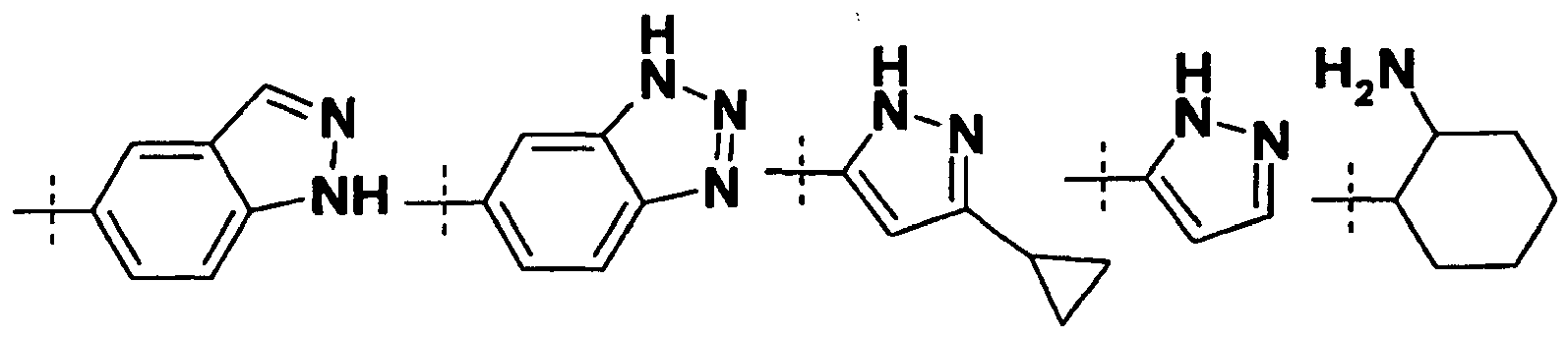


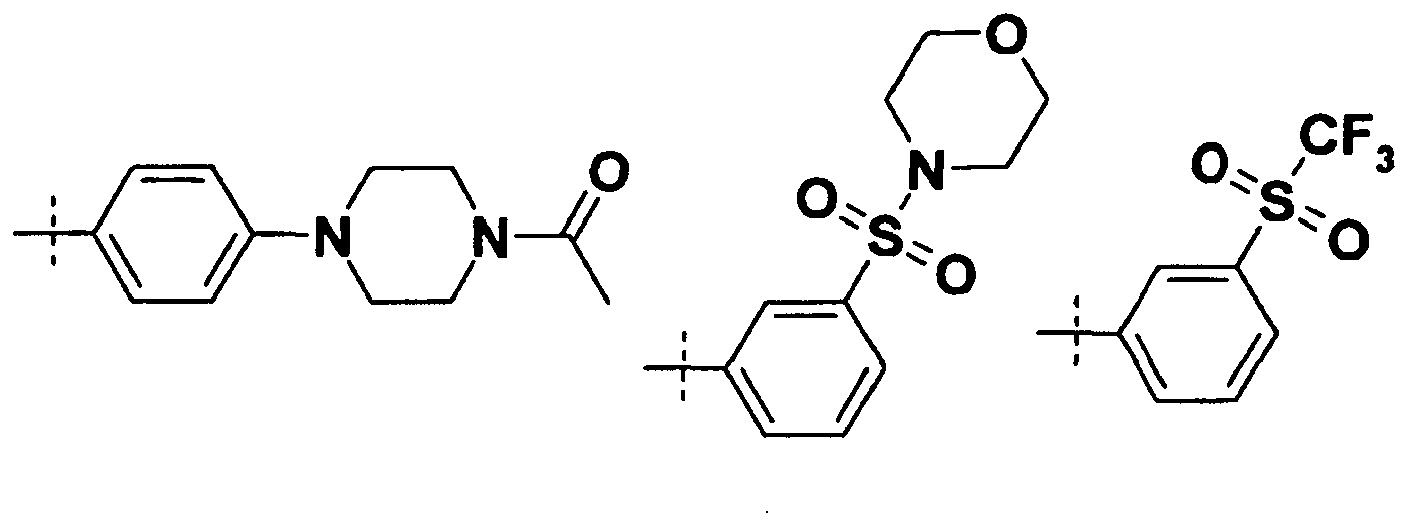


- A compound according to any one of the preceding claims, wherein R2 is an optionally substituted aryl, heteroaryl, cycloalkyl, heterocycloalkyl, alkylcycloalkyl, heteroalkylcycloalkyl, aralkyl or heteroaralkyl group.
- A compound according to any one of the preceding claims, wherein R2 is an optionally substituted phenyl or naphthyl group or an optionally substituted heteroaryl group having one or two rings containing 5, 6, 7, 8, 9 or 10 ring atoms, or an optionally substituted arylheterocycloalkyl or heteroarylheterocycloalkyl group containing two or three rings and 9 to 20 ring atoms.
- A compound according to any one of the preceding claims, wherein R2 is a group of formula X2-L3-Y2 or a group of formula X2-L3-Y2-L4-Z2 wherein
X2 is an optionally substituted phenyl group or an optionally substituted heteroaryl group containing 5 or 6 ring atoms and 1, 2, 3 or 4 heteroatoms selected from O, S and N;
L3 is a bond or a group of formula -CH2-, -C(=O)-, -SO-, - SO2-, -NH-C(=O)-, -C(=O)-NH-; -C(=O)-O-, -O-C(=O)-, -NH-C(=O)-O-, -O-C(=O)-NH-, -NH-SO2-NH-, -CH2-NH-CH2-, -NH-SO2-, -SO2-NH- or -NH-C(=O)-NH-;
Y2 is an optionally substituted phenyl group, an optionally substituted heteroaryl group containing 5 or 6 ring atoms and 1, 2, 3 or 4 heteroatoms selected from O, S and N, an optionally substituted C3-C7 cycloalkyl group or an optionally substituted heterocycloalkyl group containing 3, 4, 5, 6 or 7 ring atoms and 1, 2, 3 or 4 heteroatoms selected from O, S and N;
L4 is a bond or a group of formula -CH2-, -C(=O)-, -SO-, - SO2-, -NH-C(=O)-, -C(=O)-NH-; -C(=O)-O-, -O-C(=O)-, -NH-C(=O)-O-, -O-C(=O)-NH-, -NH-SO2-NH-, -CH2-NH-CH2-, -NH-SO2-, -SO2-NH or -NH-C(=O)-NH-; and
Z2 is an optionally substituted phenyl group, an optionally substituted heteroaryl group containing 5 or 6 ring atoms and 1, 2, 3 or 4 heteroatoms selected from O, S and N, an optionally substituted C3-C7 cycloalkyl group or an optionally substituted heterocycloalkyl group containing 3, 4, 5, 6 or 7 ring atoms and 1, 2, 3 or 4 heteroatoms selected from O, S and N. - A compound according to any one of the preceding claims 1 to 7, wherein R2 is selected from the following groups:




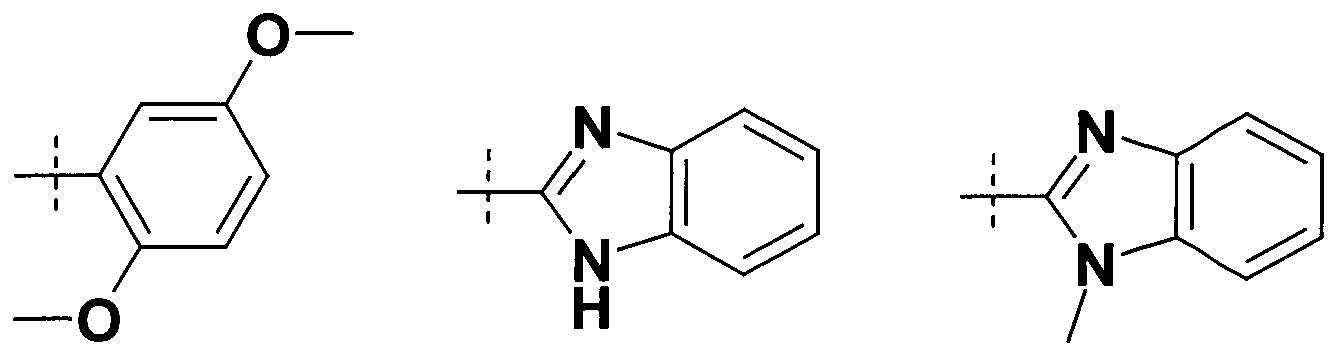


- A compound according to claim 1 exemplified as follows:N-(1H-indazol-5-yl)-5-phenyl-1H-pyrazolo[4,3-d]pyrimidin-7-amine; N-(1H-benzo[d][1,2,3]triazol-5-yl)-5-phenyl-1H-pyrazolo[4,3-d]pyrimidin-7-amine; 5-phenyl-N-(4-(piperidin-1-yl)phenyl)-1H-pyrazolo[4,3-d]pyrimidin-7-amine; N1,N1-dimethyl-N4-(5-phenyl-1H-pyrazolo[4,3-d]pyrimidin-7-yl)benzene-1,4-diamine; 3-((5-phenyl-1H-pyrazolo[4,3-d]pyrimidin-7-yl)amino)benzamide; N-(3,4-dimethoxyphenyl)-5-phenyl-1H-pyrazolo[4,3-d]pyrimidin-7-amine; N-(4-morpholinophenyl)-5-phenyl-1H-pyrazolo[4,3-d]pyrimidin-7-amine; N-(3-methoxyphenyl)-5-phenyl-1H-pyrazolo[4,3-d]pyrimidin-7-amine; N-(2-methyl-1H-benzo[d]imidazol-5-yl)-5-phenyl-1H-pyrazolo[4,3-d]pyrimidin-7-amine; 4-((5-phenyl-1H-pyrazolo[4,3-d]pyrimidin-7-yl)amino)benzoic acid; 4-((5-phenyl-1H-pyrazolo[4,3-d]pyrimidin-7-yl)amino)benzamide; 4-((5-phenyl-1H-pyrazolo[4,3-d]pyrimidin-7-yl)amino)benzonitrile; N-(1H-indazol-5-yl)-5-(pyridin-4-yl)-1H-pyrazolo[4,3-d]pyrimidin-7-amine; N-(1H-indazol-5-yl)-5-(6-(pyrrolidin-1-yl)pyridin-3-yl)-1H-pyrazolo[4,3-d]pyrimidin-7-amine; 2-((5-(3,4-dimethoxyphenyl)-1H-pyrazolo[4,3-d]pyrimidin-7-yl)amino)benzamide; N-(1H-indazol-6-yl)-5-(pyridin-4-yl)-1H-pyrazolo[4,3-d]pyrimidin-7-amine; N1,N1-dimethyl-N4-(5-(pyridin-4-yl)-1H-pyrazolo[4,3-d]pyrimidin-7-yl)benzene-1,4-diamine; N-(3,4-dimethoxyphenyl)-5-(pyridin-4-yl)-1H-pyrazolo(4,3-d]pyrimidin-7-amine; N-(4-morpholinophenyl)-5-(pyridin-4-yl)-1H-pyrazolo[4,3-d]pyrimidin-7-amine; N-(4-(4-methylpiperazin-1-yl)phenyl)-5-(pyridin-4-yl)-1H-pyrazolo[4,3-d]pyrimidin-7-amine; 6-((5-(pyridin-4-yl)-1H-pyrazolo[4,3-d]pyrimidin-7-yl)amino)-2H-benzo[b][1,4]oxazin-3(4H)-one; 5-(3,4-dimethoxyphenyl)-N-(1H-indazol-6-yl)-1H-pyrazolo[4,3-d]pyrimidin-7-amine; N1-(5-(3,4-dimethoxyphenyl)-1H-pyrazolo[4,3-d]pyrimidin-7-yl)-N4,N4-dimethylbenzene-1,4-diamine; N,5-bis(3,4-dimethoxyphenyl)-1H-pyrazolo[4,3-d]pyrimidin-7-amine; 5-(3,4-dimethoxyphenyl)-N-(4-morpholinophenyl)-1H-pyrazolo[4,3-d]pyrimidin-7-amine; 6-((S-(3,4-dimethoxyphenyl)-1H-pyrazolo[4,3-d]pyrimidin-7-yl)amino)-2H-benzo[b][1,4]oxazin-3(4H)-one; N-(1H-indazol-6-yl)-5-(1-methylpiperidin-4-yl)-1H-pyrazolo[4,3-d]pyrimidin-7-amine; N1,N1-dimethyl-N4-(5-(1-methylpiperidin-4-yl)-1H-pyrazolo[4,3-d]pyrimidin-7-yl)benzene-1,4-diamine; N-(4-chlorophenyl)-5-(1-methylpiperidin-4-yl)-1H-pyrazolo[4,3-d]pyrimidin-7-amine; N-(1H-indazol-6-yl)-5-(6-(pyrrolidin-1-yl)pyridin-3-yl)-1H-pyrazolo[4,3-d]pyrimidin-7-amine; N1,N1-dimethyl-N4-(5-(6-(pyrrolidin-1-yl)pyridin-3-yl)-1H-pyrazolo[4,3-d]pyrimidin-7-yl)benzene-1,4-diamine; N-(3,4-dimethoxyphenyl)-5-(6-(pyrrolidin-1-yl)pyridin-3-yl)-1H-pyrazolo[4,3-d]pyrimidin-7-amine; N-(4-morpholinophenyl)-5-(6-(pyrrolidin-1-yl)pyridin-3-yl)-1H-pyrazolo[4,3-d]pyrimidin-7-amine; 5-(3,4-dimethoxyphenyl)-N-(4-(4-methylpiperazin-1-yl)phenyl)-1H-pyrazolo[4,3-d]pyrimidin-7-amine; N-(4-(4-methylpiperazin-1-yl)phenyl)-5-phenyl-1H-pyrazolo[4,3-d]pyrimidin-7-amine; N-(1H-indazol-6-yl)-5-phenyl-1H-pyrazolo[4,3-d]pyrimidin-7-amine; 6-((5-phenyl-1H-pyrazolo[4,3-d]pyrimidin-7-yl)amino)-2H-benzo[b][1,4]oxazin-3(4H)-one; 5-phenyl-N-(1H-pyrazol-3-yl)-1H-pyrazolo[4,3-d]pyrimidin-7-amine; 5-phenyl-N-(4-(pyrrolidin-1-yl)phenyl)-1H-pyrazolo[4,3-d]pyrimidin-7-amine; 5-(3,4-dimethoxyphenyl)-N-(1H-indazol-5-yl)-1H-pyrazolo[4,3-d]pyrimidin-7-amine; 5-(3,4-dimethoxyphenyl)-N-(1H-pyrazol-3-yl)-1H-pyrazolo[4,3-d]pyrimidin-7-amine; 5-(3,4-dimethoxyphenyl)-N-(4-(pyrrolidin-1-yl)phenyl)-1H-pyrazolo[4,3-d]pyrimidin-7-amine; N-(1H-pyrazol-3-yl)-5-(pyridin-4-yl)-1H-pyrazolo[4,3-d]pyrimidin-7-amine; 5-(pyridin-4-yl)-N-(4-(pyrrolidin-1-yl)phenyl)-1H-pyrazolo[4,3-d]pyrimidin-7-amine; N,5-di(1H-pyrazol-3-yl)-1H-pyrazolo[4,3-d]pyrimidin-7-amine; N-(4-(4-methylpiperazin-1-yl)phenyl)-5-(6-(pyrrolidin-1-yl)pyridin-3-yl)-1H-pyrazolo[4,3-d]pyrimidin-7-amine; 6-((5-(6-(pyrrolidin-1-yl)pyridin-3-yl)-1H-pyrazolo[4,3-d]pyrimidin-7-yl)amino)-2H-benzo[b][1,4]oxazin-3(4H)-one; N-(1H-pyrazol-3-yl)-5-(6-(pyrrolidin-1-yl)pyridin-3-yl)-1H-pyrazolo[4,3-d]pyrimidin-7-amine; N-(4-(pyrrolidin-1-yl)phenyl)-5-(6-(pyrrolidin-l-yl)pyridin-3-yl)-1H-pyrazolo[4,3-d]pyrimidin-7-amine; N-(1H-indazol-5-yl)-5-(1-methylpiperidin-4-yl)-1H-pyrazolo[4,3-d]pyrimidin-7-amine; N-(3,4-dimethoxyphenyl)-5-(1-methylpiperidin-4-yl)-1H-pyrazolo[4,3-d]pyrimidin-7-amine; 5-(1-methylpiperidin-4-yl)-N-(4-morpholinophenyl)-1H-pyrazolo[4,3-d]pyrimidin-7-amine; N-(4-(4-methylpiperazin-1-yl)phenyl)-5-(1-methylpiperidin-4-yl)-1H-pyrazolo[4,3-d]pyrimidin-7-amine; 6-((5-(1-methylpiperidin-4-yl)-1H-pyrazolo[4,3-d]pyrimidin-7-yl)amino)-2H-benzo[b][1,4]oxazin-3(4H)-one; 5-(1-methylpiperidin-4-yl)-N-(1H-pyrazol-3-yl)-1H-pyrazolo[4,3-d]pyrimidin-7-amine; 5-(1-methylpiperidin-4-yl)-N-(4-(pyrrolidin-1-yl)phenyl)-1H-pyrazolo[4,3-d]pyrimidin-7-amine; N-(5-cyclopropyl-1H-pyrazol-3-yl)-5-phenyl-1H-pyrazolo[4,3-d]pyrimidin-7-amine; N-(3,4-dimethoxyphenyl)-5-(4-methoxyphenyl)-1H-pyrazolo[4,3-d]pyrimidin-7-amine; 5-(4-methoxyphenyl)-N-(4-morpholinophenyl)-1H-pyrazolo[4,3-d]pyrimidin-7-amine; N-(3,4-dimethoxyphenyl)-5-(3-methoxyphenyl)-1H-pyrazolo[4,3-d]pyrimidin-7-amine; 5-(3-methoxyphenyl)-N-(4-morpholinophenyl)-1H-pyrazolo[4,3-d]pyrimidin-7-amine; 5-(3-methoxyphenyl)-N-(4-(4-methylpiperazin-l-yl)phenyl)-1H-pyrazolo[4,3-d]pyrimidin-7-amine; N1-(5-(3-methoxyphenyl)-1H-pyrazolo[4,3-d]pyrimidin-7-yl)-N4,N4-dimethylbenzene-1,4-diamine; N-(5-phenyl-1H-pyrazolo[4,3-d]pyrimidin-7-yl)-3,4-dihydro-2H-benzo[b][1,4]oxazin-6-amine; 3-((5-phenyl-1H-pyrazolo[4,3-d]pyrimidin-7-yl)amino)phenol; 5-(4-methoxyphenyl)-N-(4-(4-methylpiperazin-1-yl)phenyl)-1H-pyrazolo[4,3-d]pyrimidin-7-amine; N-(1H-indazol-6-yl)-5-(3-methoxyphenyl)-1H-pyrazolo[4,3-d]pyrimidin-7-amine; N-(3,4-dimethoxyphenyl)-5-(thiophen-2-yl)-1H-pyrazolo[4,3-d]pyrimidin-7-amine; N-(4-morpholinophenyl)-5-(thiophen-2-yl)-1H-pyrazolo[4,3-d]pyrimidin-7-amine; N-(4-(4-methylpiperazin-1-yl)phenyl)-5-(thiophen-2-yl)-1H-pyrazolo[4,3-d]pyrimidin-7-amine; N1,N1-dimethyl-N4-(5-(thiophen-2-yl)-1H-pyrazolo[4,3-d]pyrimidin-7-yl)benzene-1,4-diamine; N-(3,4-dimethoxyphenyl)-5-(thiophen-3-yl)-1H-pyrazolo[4,3-d]pyrimidin-7-amine; N-(4-morpholinophenyl)-5-(thiophen-3-yl)-1H-pyrazolo[4,3-d]pyrimidin-7-amine; N-(4-(4-methylpiperazin-1-yl)phenyl)-5-(thiophen-3-yl)-1H-pyrazolo[4,3-d]pyrimidin-7-amine; N1,N1-dimethyl-N4-(5-(thiophen-3-yl)-1H-pyrazolo[4,3-d]pyrimidin-7-yl)benzene-1,4-diamine; N-(1H-indazol-6-yl)-5-(thiophen-3-yl)-1H-pyrazolo[4,3-d]pyrimidin-7-amine; N-(5-cyclopropyl-1H-pyrazol-3-yl)-5-(thiophen-3-yl)-1H-pyrazolo[4,3-d]pyrimidin-7-amine; N1-(5-(4-methoxyphenyl)-1H-pyrazolo[4,3-d]pyrimidin-7-yl)-N4,N4-dimethylbenzene-1,4-diamine; N-(1H-indazol-6-yl)-5-(4-methoxyphenyl)-1H-pyrazolo[4,3-d]pyrimidin-7-amine; 3-((5-(4-methoxyphenyl)-1H-pyrazolo[4,3-d]pyrimidin-7-yl)amino)phenol; 3-((5-(3-methoxyphenyl)-1H-pyrazolo[4,3-d]pyrimidin-7-yl)amino)phenol; N-(1H-indazol-6-yl)-5-(thiophen-2-yl)-1H-pyrazolo[4,3-d]pyrimidin-7-amine; 3-((5-(thiophen-2-yl)-1H-pyrazolo[4,3-d]pyrimidin-7-yl)amino)phenol; N-(5-(thiophen-3-yl)-1H-pyrazolo[4,3-d]pyrimidin-7-yl)-3,4-dihydro-2H-benzo[b][1,4]oxazin-6-amine; 3-((5-(thiophen-3-yl)-1H-pyrazolo[4,3-d]pyrimidin-7-yl)amino)phenol; N-(5-cyclopropyl-1H-pyrazol-3-yl)-5-(4-methoxyphenyl)-1H-pyrazolo[4,3-d]pyrimidin-7-amine; N-(5-(4-methoxyphenyl)-1H-pyrazolo[4,3-d]pyrimidin-7-yl)-3,4-dihydro-2H-benzo[b][1,4]oxazin-6-amine; N-(5-cyclopropyl-1H-pyrazol-3-yl)-5-(3-methoxyphenyl)-1H-pyrazolo[4,3-d]pyrimidin-7-amine; N-(5-(3-methoxyphenyl)-1H-pyrazolo[4,3-d]pyrimidin-7-yl)-3,4-dihydro-2H-benzo[b][1,4]oxazin-6-amine; N-(5-cyclopropyl-1H-pyrazol-3-yl)-5-(thiophen-2-yl)-1H-pyrazolo[4,3-d]pyrimidin-7-amine; N-(5-(thiophen-2-yl)-1H-pyrazolo[4,3-d]pyrimidin-7-yl)-3,4-dihydro-2H-benzo[b][1,4]oxazin-6-amine; N-(5-cyclopropyl-1H-pyrazol-3-yl)-5-(1-methylpiperidin-4-yl)-1H-pyrazolo[4,3-d]pyrimidin-7-amine; N-(5-(1-methylpiperidin-4-yl)-1H-pyrazolo[4,3-d]pyrimidin-7-yl)-3,4-dihydro-2H-benzo[b][1,4]oxazin-6-amine; 3-((5-(1-methylpiperidin-4-yl)-1H-pyrazolo[4,3-d]pyrimidin-7-yl)amino)phenol; 5-(benzo[d]thiazol-2-yl)-N-(4-(4-methylpiperazin-1-yl)phenyl)-1H-pyrazolo[4,3-d]pyrimidin-7-amine; 5-(benzo[d]thiazol-2-yl)-N-(3,4-dimethoxyphenyl)-1H-pyrazolo[4,3-d]pyrimidin-7-amine; N-(5-(benzo[d]thiazol-2-yl)-1H-pyrazolo[4,3-d]pyrimidin-7-yl)-3,4-dihydro-2H-benzo[b][1,4]oxazin-6-amine; 5-(benzo[d]thiazol-2-yl)-N-(1H-indazol-6-yl)-1H-pyrazolo[4,3-d]pyrimidin-7-amine; N-(4-(4-methylpiperazin-1-yl)phenyl)-5-(3-(pyridin-3-yl)phenyl)-1H-pyrazolo[4,3-d]pyrimidin-7-amine; N-(5-cyclopropyl-1H-pyrazol-3-yl)-5-(3-(pyridin-3-yl)phenyl)-1H-pyrazolo[4,3-d]pyrimidin-7-amine; N-(3,4-dimethoxyphenyl)-5-(3-(pyridin-3-yl)phenyl)-1H-pyrazolo[4,3-d]pyrimidin-7-amine; N-(4-morpholinophenyl)-5-(3-(pyridin-3-yl)phenyl)-1H-pyrazolo[4,3-d]pyrimidin-7-amine; N-(5-(3-(pyridin-3-yl)phenyl)-1H-pyrazolo[4,3-d]pyrimidin-7-yl)-3,4-dihydro-2H-benzo[b][1,4]oxazin-6-amine; N-(1H-indazol-6-yl)-5-(3-(pyridin-3-yl)phenyl)-1H-pyrazolo[4,3-d]pyrimidin-7-amine; 2-(7-((4-(4-methylpiperazin-1-yl)phenyl)amino)-1H-pyrazolo[4,3-d]pyrimidin-5-yl)phenol; N-(4-(4-methylpiperazin-1-yl)phenyl)-5-(3-morpholinophenyl)-1H-pyrazolo[4,3-d]pyrimidin-7-amine; N-(3,4-dimethoxyphenyl)-5-(3-morpholinophenyl)-1H-pyrazolo[4,3-d]pyrimidin-7-amine; 5-(2-methoxyphenyl)-N-(4-(4-methylpiperazin-1-yl)phenyl)-1H-pyrazolo[4,3-d]pyrimidin-7-amine; N-(3,4-dimethoxyphenyl)-5-(2-methoxyphenyl)-1H-pyrazolo[4,3-d]pyrimidin-7-amine; N-(5-(2-methoxyphenyl)-1H-pyrazolo[4,3-d]pyrimidin-7-yl)-3,4-dihydro-2H-benzo[b][1,4]oxazin-6-amine; N-(1H-indazol-6-yl)-5-(2-methoxyphenyl)-1H-pyrazolo[4,3-d]pyrimidin-7-amine; 5-(2-methoxyphenyl)-N-(4-morpholinophenyl)-1H-pyrazolo[4,3-d]pyrimidin-7-amine; N-(5-cyclopropyl-1H-pyrazol-3-yl)-5-(2-methoxyphenyl)-1H-pyrazolo[4,3-d]pyrimidin-7-amine; N1,N1-dimethyl-N3-(5-(thiophen-3-yl)-1H-pyrazolo[4,3-d]pyrimidin-7-yl)benzene-1,3-diamine; N1-(5-(thiophen-3-yl)-1H-pyrazolo[4,3-d]pyrimidin-7-yl)cyclohexane-1,2-diamine; N1-(5-(thiophen-3-yl)-1H-pyrazolo[4,3-d]pyrimidin-7-yl)benzene-1,3-diamine; N-(6-(4-methylpiperazin-1-yl)pyridin-3-yl)-5-(thiophen-3-yl)-1H-pyrazolo[4,3-d]pyrimidin-7-amine; N-(4-(4-ethylpiperazin-1-yl)phenyl)-5-phenyl-1H-pyrazolo[4,3-d]pyrimidin-7-amine; N-(4-((dimethylamino)methyl)phenyl)-5-phenyl-1H-pyrazolo[4,3-d]pyrimidin-7-amine; 5-(2,5-dimethoxyphenyl)-N-(3,4-dimethoxyphenyl)-1H-pyrazolo[4,3-d]pyrimidin-7-amine; 5-(2,5-dimethoxyphenyl)-N-(4-(4-ethylpiperazin-1-yl)phenyl)-1H-pyrazolo[4,3-d]pyrimidin-7-amine; N-(4-(4-cyclopropylpiperazin-1-yl)phenyl)-5-(2,5-dimethoxyphenyl)-1H-pyrazolo[4,3-d]pyrimidin-7-amine; N-(2-aminoethyl)-3-(7-((4-morpholinophenyl)amino)-1H-pyrazolo[4,3-d]pyrimidin-5-yl)benzamide; N-(3,4-dimethoxyphenyl)-5-(imidazo[1,2-a]pyridin-2-yl)-1H-pyrazolo[4,3-d]pyrimidin-7-amine; N-(4-(4-ethylpiperazin-1-yl)phenyl)-5-(imidazo[1,2-a]pyridin-2-yl)-1H-pyrazolo[4,3-d]pyrimidin-7-amine; 5-(imidazo[1,2-a]pyridin-2-yl)-N-(1H-indazol-5-yl)-1H-pyrazolo[4,3-d]pyrimidin-7-amine; 5-(imidazo[1,2-a]pyridin-2-yl)-N-(1H-indazol-6-yl)-1H-pyrazolo[4,3-d]pyrimidin-7-amine; 4-((5-(imidazo[1,2-a]pyridin-2-yl)-1H-pyrazolo[4,3-d]pyrimidin-7-yl)amino)benzoic acid; 5-(1H-benzo[d]imidazol-2-yl)-N-(3,4-dimethoxyphenyl)-1H-pyrazolo[4,3-d]pyrimidin-7-amine; N-(3,4-dimethoxyphenyl)-5-(1-methyl-1H-benzo[d]imidazol-2-yl)-1H-pyrazolo[4,3-d]pyrimidin-7-amine; 5-(3-methoxyphenyl)-N-(4-((4-methylpiperazin-1-yl)methyl)phenyl)-1H-pyrazolo[4,3-d]pyrimidin-7-amine; 5-(3-methoxyphenyl)-N-(4-(pyrrolidin-1-ylmethyl)phenyl)-1H-pyrazolo[4,3-d]pyrimidin-7-amine; 1-(4-((5-(thiophen-3-yl)-1H-pyrazolo[4,3-d]pyrimidin-7-yl)amino)phenyl)-3-(m-tolyl)urea; (4-methylpiperazin-1-yl)(4-((5-(thiophen-2-yl)-1H-pyrazolo[4,3-d]pyrimidin-7-yl)amino)phenyl)methanone; pyrrolidin-1-yl(4-((5-(thiophen-2-yl)-1H-pyrazolo[4,3-d]pyrimidin-7-yl)amino)phenyl)methanone; N-(4-thiomorpholinophenyl)-5-(thiophen-2-yl)-1H-pyrazolo[4,3-d]pyrimidin-7-amine; 4-(4-((5-(thiophen-2-yl)-1H-pyrazolo[4,3-d]pyrimidin-7-yl)amino)phenyl)thiomorpholine 1,1-dioxide; 1-(4-(4-((5-(thiophen-2-yl)-1H-pyrazolo[4,3-d]pyrimidin-7-yl)amino)phenyl)piperazin-1-yl)ethan-1-one; (3-methoxy-4-((5-(thiophen-2-yl)-1H-pyrazolo[4,3-d]pyrimidin-7-yl)amino)phenyl)(4-(4-methylpiperazin-1-yl)piperidin-1-yl)methanone; 5-(1H-imidazol-5-yl)-N-(4-(4-methylpiperazin-1-yl)phenyl)-1H-pyrazolo[4,3-d]pyrimidin-7-amine; 5-(1H-imidazol-2-yl)-N-(4-(4-methylpiperazin-1-yl)phenyl)-1H-pyrazolo[4,3-d]pyrimidin-7-amine; pyrrolidin-1-yl(4-((5-(thiophen-3-yl)-1H-pyrazolo[4,3-d]pyrimidin-7-yl)amino)phenyl)methanone; 4-(4-((5-(thiophen-3-yl)-1H-pyrazolo[4,3-d]pyrimidin-7-yl)amino)phenyl)thiomorpholine 1,1-dioxide; 1-(4-(4-((5-(thiophen-3-yl)-1H-pyrazolo[4,3-d]pyrimidin-7-yl)amino)phenyl)piperazin-1-yl)ethan-1-one; N-(4-thiomorpholinophenyl)-5-(thiophen-3-yl)-1H-pyrazolo[4,3-d]pyrimidin-7-amine; 6-((5-(thiophen-3-yl)-1H-pyrazolo[4,3-d]pyrimidin-7-yl)amino)-2H-benzo[b][1,4]oxazin-3(4H)-one; (4-methylpiperazin-1-yl) (4-((5-(thiophen-3-yl)-1H-pyrazolo[4,3-d]pyrimidin-7-yl)amino)phenyl)methanone; 2,2-dimethyl-N-(5-(thiophen-3-yl)-1H-pyrazolo[4,3-d]pyrimidin-7-yl)-3,4-dihydro-2H-benzo[b][1,4]thiazin-6-amine; 5-(3-(2H-tetrazol-5-yl)phenyl)-N-(4-(4-methylpiperazin-1-yl)phenyl)-1H-pyrazolo[4,3-d]pyrimidin-7-amine; (7-((2-(dimethylamino)ethyl)amino)-1H-pyrazolo[4,3-d]pyrimidin-5-yl)(phenyl)methanone; (7-(((1-methylpiperidin-4-yl)methyl)amino)-1H-pyrazolo[4,3-d]pyrimidin-5-yl)(phenyl)methanone; (7-((4-(4-methylpiperazin-1-yl)phenyl)amino)-1H-pyrazolo[4,3-d]pyrimidin-5-yl)(phenyl)methanone; (7-((3,4-dimethoxyphenyl)amino)-1H-pyrazolo[4,3-d]pyrimidin-5-yl)(phenyl)methanone; (4-((5-benzoyl-1H-pyrazolo[4,3-d]pyrimidin-7-yl)amino)phenyl)(pyrrolidin-1-yl)methanone; 7-((5-benzoyl-1H-pyrazolo[4,3-d]pyrimidin-7-yl)amino)-3,4-dihydroquinolin-2(1H)-one; 3-(7-((4-morpholinophenyl)amino)-1H-pyrazolo[4,3-d]pyrimidin-5-yl)benzoic acid; morpholino(4-((5-(thiophen-3-yl)-1H-pyrazolo[4,3-d]pyrimidin-7-yl)amino)phenyl)methanone; 6-((5-(thiophen-3-yl)-1H-pyrazolo[4,3-d]pyrimidin-7-yl)amino)-2H-benzo[b][1,4]thiazin-3(4H)-one; 7-((5-(4-methoxyphenyl)-1H-pyrazolo[4,3-d]pyrimidin-7-yl)amino)-3,4-dihydroquinolin-2(1H)-one; (4-((5-(4-methoxyphenyl)-1H-pyrazolo[4,3-d]pyrimidin-7-yl)amino)phenyl)(pyrrolidin-1-yl)methanone; N-(4-(4-(tert-butyl)piperazin-1-yl)phenyl)-5-(thiophen-3-yl)-1H-pyrazolo(4,3-d]pyrimidin-7-amine; 6-((5-(thiophen-2-yl)-1H-pyrazolo[4,3-d]pyrimidin-7-yl)amino)-2H-benzo[b][1,4]oxazin-3(4H)-one; N-(4-(4-(tert-butyl)piperazin-1-yl)phenyl)-5-(thiophen-2-yl)-1H-pyrazolo[4,3-d]pyrimidin-7-amine; 8-((5-(4-methoxyphenyl)-1H-pyrazolo[4,3-d]pyrimidin-7-yl)amino)-4,5-dihydro-1H-benzo[b]azepin-2(3H)-one; 6-((5-(thiophen-2-yl)-1H-pyrazolo[4,3-d]pyrimidin-7-yl)amino)-2H-benzo[b][1,4]thiazin-3(4H)-one; 1-methyl-N-(5-(thiophen-2-yl)-1H-pyrazolo[4,3-d]pyrimidin-7-yl)-1,2,3,4-tetrahydroquinolin-7-amine; 2-methyl-2-(4-((5-(thiophen-2-yl)-1H-pyrazolo[4,3-d]pyrimidin-7-yl)amino)phenyl)propanenitrile; 5-(4-methoxyphenyl)-N-(4-thiomorpholinophenyl)-1H-pyrazolo[4,3-d]pyrimidin-7-amine; 4-(4-((5-(4-methoxyphenyl)-1H-pyrazolo[4,3-d]pyrimidin-7-yl)amino)phenyl)thiomorpholine 1,1-dioxide; 1-(4-(4-((5-(4-methoxyphenyl)-1H-pyrazolo[4,3-d]pyrimidin-7-yl)amino)phenyl)piperazin-1-yl)ethan-1-one; 6-((5-(4-methoxyphenyl)-1H-pyrazolo[4,3-d]pyrimidin-7-yl)amino)-2H-benzo[b][1,4]oxazin-3(4H)-one; N-(4-(4-(tert-butyl)piperazin-1-yl)phenyl)-5-(4-methoxyphenyl)-1H-pyrazolo[4,3-d]pyrimidin-7-amine; 2,2-dimethyl-N-(5-(thiophen-2-yl)-1H-pyrazolo[4,3-d]pyrimidin-7-yl)-3,4-dihydro-2H-benzo[b][1,4]thiazin-6-amine; 2-(3-(7-((4-(4-methylpiperazin-1-yl)phenyl)amino)-1H-pyrazolo[4,3-d]pyrimidin-5-yl)phenoxy)acetic acid; 5-(7-((4-(4-methylpiperazin-1-yl)phenyl)amino)-1H-pyrazolo[4,3-d]pyrimidin-5-yl)thiophene-3-carboxylic acid; 2-(3-(7-((4-(4-methylpiperazin-1-yl)phenyl)amino)-1H-pyrazolo[4,3-d]pyrimidin-5-yl)phenyl)acetic acid; 6-(7-((4-(4-methylpiperazin-1-yl)phenyl)amino)-1H-pyrazolo[4,3-d]pyrimidin-5-yl)picolinic acid; N-(4-(pentafluorosulfanyl)phenyl)-5-(thiophen-3-yl)-1H-pyrazolo[4,3-d]pyrimidin-7-amine; N-(4-(4-methylpiperazin-1-yl)phenyl)-5-(thiazol-2-yl)-1H-pyrazolo[4,3-d]pyrimidin-7-amine; 5-(3-(((4-methylbenzyl)amino)methyl)phenyl)-N-(4-(4-methylpiperazin-1-yl)phenyl)-1H-pyrazolo[4,3-d]pyrimidin-7-amine; 5-(3-(3-(dimethylamino)propoxy)phenyl)-N-(4-(4-methylpiperazin-1-yl)phenyl)-1H-pyrazolo[4,3-d]pyrimidin-7-amine; 3-(7-((4-(4-methylpiperazin-1-yl)phenyl)amino)-1H-pyrazolo[4,3-d]pyrimidin-5-yl)benzenesulfonamide; 3-(7-((3,4-dimethoxyphenyl)amino)-1H-pyrazolo[4,3-d]pyrimidin-5-yl)benzenesulfonamide; 1-(4-(4-((5-(thiazol-2-yl)-1H-pyrazolo[4,3-d]pyrimidin-7-yl)amino)phenyl)piperazin-1-yl)ethan-1-one; N-(3,4-dimethoxyphenyl)-5-(thiazol-2-yl)-1H-pyrazolo[4,3-d]pyrimidin-7-amine; 7-((5- (thiazol-2-yl)-1H-pyrazolo[4,3-d]pyrimidin-7-yl)amino)-3,4-dihydroquinolin-2(1H)-one; N-(3-(7-((4-(4-methylpiperazin-1-yl)phenyl)amino)-1H-pyrazolo[4,3-d]pyrimidin-5-yl)phenyl)methanesulfonamide; N-(3-(7-((4-(piperazin-1-yl)phenyl)amino)-1H-pyrazolo[4,3-d]pyrimidin-5-yl)phenyl)methanesulfonamide; N-(3-(7-((3,4-dimethoxyphenyl)amino)-1H-pyrazolo[4,3-d]pyrimidin-5-yl)phenyl)methanesulfonamide; N-(3-(7-((2-oxo-1,2,3,4-tetrahydroquinolin-7-yl)amino)-1H-pyrazolo[4,3-d]pyrimidin-5-yl)phenyl)methanesulfonamide; N-(3-(7-((4-(4-acetylpiperazin-1-yl)phenyl)amino)-1H-pyrazolo[4,3-d]pyrimidin-5-yl)phenyl)methanesulfonamide; 1-(4-(4-((5-(3-(2H-tetrazol-5-yl)phenyl)-1H-pyrazolo[4,3-d]pyrimidin-7-yl)amino)phenyl)piperazin-1-yl)ethan-1-one; 5-(3-(2H-tetrazol-5-yl)phenyl)-N-(3,4-dimethoxyphenyl)-1H-pyrazolo[4,3-d]pyrimidin-7-amine; 3-(7-((3,4-dimethoxyphenyl)amino)-1H-pyrazolo[4,3-d]pyrimidin-5-yl)benzoic acid; 3-(7-((2-oxo-1,2,3,4-tetrahydroquinolin-7-yl)amino)-1H-pyrazolo[4,3-d]pyrimidin-5-yl)benzoic acid; 7-((5-(3-(2H-tetrazol-5-yl)phenyl)-1H-pyrazolo[4,3-d]pyrimidin-7-yl)amino)-3,4-dihydroquinolin-2(1H)-one; N-(4-(4-methylpiperazin-1-yl)phenyl)-5-(thiazol-4-yl)-1H-pyrazolo[4,3-d]pyrimidin-7-amine; 1-(4-(4-((5-(thiazol-4-yl)-1H-pyrazolo[4,3-d]pyrimidin-7-yl)amino)phenyl)piperazin-1-yl)ethan-1-one; N-(3,4-dimethoxyphenyl)-5-(thiazol-4-yl)-1H-pyrazolo[4,3-d]pyrimidin-7-amine; N-(4-(4-methylpiperazin-1-yl)phenyl)-5-(oxazol-4-yl)-1H-pyrazolo[4,3-d]pyrimidin-7-amine; 1-(4-(4-((5-(oxazol-4-yl)-1H-pyrazolo[4,3-d]pyrimidin-7-yl)amino)phenyl)piperazin-1-yl)ethan-1-one; N-(3,4-dimethoxyphenyl)-5-(oxazol-4-yl)-1H-pyrazolo[4,3-d]pyrimidin-7-amine; N-(4-(4-methylpiperazin-1-yl)phenyl)-5-(oxazol-2-yl)-1H-pyrazolo[4,3-d]pyrimidin-7-amine; 1-(4-(4-((5-(oxazol-2-yl)-1H-pyrazolo[4,3-d]pyrimidin-7-yl)amino)phenyl)piperazin-1-yl)ethan-1-one; N-(3,4-dimethoxyphenyl)-5-(oxazol-2-yl)-1H-pyrazolo[4,3-d]pyrimidin-7-amine; 7-((5-(thiazol-4-yl)-1H-pyrazolo[4,3-d]pyrimidin-7-yl)amino)-3,4-dihydroquinolin-2(1H)-one; 7-((5-(oxazol-4-yl)-1H-pyrazolo[4,3-d]pyrimidin-7-yl)amino)-3,4-dihydroquinolin-2(1H)-one; 7-((5-(oxazol-2-yl)-1H-pyrazolo[4,3-d]pyrimidin-7-yl)amino)-3,4-dihydroquinolin-2(1H)-one; N-(4-(1-methylpiperidin-4-yl)phenyl)-5-(thiophen-2-yl)-1H-pyrazolo[4,3-d]pyrimidin-7-amine; methyl 3-(7-((2-oxo-1,2,3,4-tetrahydroquinolin-7-yl)amino)-1H-pyrazolo[4,3-d]pyrimidin-5-yl)benzoate; methyl 3-(7-((3-oxo-3,4-dihydro-2H-benzo[b][1,4]oxazin-6-yl)amino)-1H-pyrazolo[4,3-d]pyrimidin-5-yl)benzoate; 3-(7-((3-oxo-3,4-dihydro-2H-benzo[b][1,4]oxazin-6-yl)amino)-1H-pyrazolo[4,3-d]pyrimidin-5-yl)benzoic acid; methyl 4-(7-((4-(4-methylpiperazin-1-yl)phenyl)amino)-1H-pyrazolo[4,3-d]pyrimidin-5-yl)benzoate; methyl 4-(7-((3,4-dimethoxyphenyl)amino)-1H-pyrazolo[4,3-d]pyrimidin-5-yl)benzoate; methyl 4-(7-((2-oxo-1,2,3,4-tetrahydroquinolin-7-yl)amino)-1H-pyrazolo[4,3-d]pyrimidin-5-yl)benzoate; methyl 3-(7-((3-oxo-3,4-dihydro-2H-benzo[b][1,4]thiazin-6-yl)amino)-1H-pyrazolo[4,3-d]pyrimidin-5-yl)benzoate; methyl 3-(7-((2-oxo-2,3,4,5-tetrahydro-1H-benzo[b]azepin-8-yl)amino)-1H-pyrazolo[4,3-d]pyrimidin-5-yl)benzoate; 3-(7-((2-oxo-2,3,4,5-tetrahydro-1H-benzo[b]azepin-8-yl)amino)-1H-pyrazolo[4,3-d]pyrimidin-5-yl)benzoic acid; N-(3,4-dimethoxyphenyl)-5-(3-(pentafluorosulfanyl)phenyl)-1H-pyrazolo[4,3-d]pyrimidin-7-amine; 5-(3-(pentafluorosulfanyl)phenyl)-N-(4-morpholinophenyl)-1H-pyrazolo[4,3-d]pyrimidin-7-amine; N-(4-(4-methylpiperazin-1-yl)phenyl)-5-(3-(pentafluorosulfanyl)phenyl)-1H-pyrazolo[4,3-d]pyrimidin-7-amine; 7-((5-(3-(pentafluorosulfanyl)phenyl)-1H-pyrazolo[4,3-d]pyrimidin-7-yl)amino)-3,4-dihydroquinolin-2(1H)-one; N-(3,4-dimethoxyphenyl)-5-(3-(methylthio)phenyl)-1H-pyrazolo[4,3-d]pyrimidin-7-amine; 5-(3-(methylthio)phenyl)-N-(4-morpholinophenyl)-1H-pyrazolo[4,3-d]pyrimidin-7-amine; N-(4-(4-methylpiperazin-1-yl)phenyl)-5-(3-(methylthio)phenyl)-1H-pyrazolo[4,3-d]pyrimidin-7-amine; N-(3,4-dimethoxyphenyl)-5-(3-(trifluoromethoxy)phenyl)-1H-pyrazolo[4,3-dlpyrimidin-7-amine; N-(4-morpholinophenyl)-5-(3-(trifluoromethoxy)phenyl)-1H-pyrazolo[4,3-dlpyrimidin-7-amine; N-(3,4-dimethoxyphenyl)-5-(3-(trifluoromethyl)phenyl)-1H-pyrazolo[4,3-d]pyrimidin-7-amine; N-(4-morpholinophenyl)-5-(3-(trifluoromethyl)phenyl)-1H-pyrazolo[4,3-d]pyrimidin-7-amine; 5-(3-chlorophenyl)-N-(3,4-dimethoxyphenyl)-1H-pyrazolo[4,3-d]pyrimidin-7-amine; 5-(3-chlorophenyl)-N-(4-morpholinophenyl)-1H-pyrazolo[4,3-d]pyrimidin-7-amine; N-(3,4-dimethoxyphenyl)-5-(2-fluorophenyl)-1H-pyrazolo[4,3-d]pyrimidin-7-amine; 5-(2-fluorophenyl)-N-(4-morpholinophenyl)-1H-pyrazolo[4,3-d]pyrimidin-7-amine; N-(3,4-dimethoxyphenyl)-5-(3-fluorophenyl)-1H-pyrazolo[4,3-d]pyrimidin-7-amine; 5-(3-fluorophenyl)-N-(4-morpholinophenyl)-1H-pyrazolo[4,3-d]pyrimidin-7-amine; 7-((5-(3-(methylthio)phenyl)-1H-pyrazolo[4,3-d]pyrimidin-7-yl)amino)-3,4-dihydroquinolin-2(1H)-one; 3-(7-((4-(4-acetylpiperazin-1-yl)phenyl)amino)-1H-pyrazolo[4,3-d]pyrimidin-5-yl)benzenesulfonamide; 3-(7-((2-oxo-1,2,3,4-tetrahydroquinolin-7-yl)amino)-1H-pyrazolo[4,3-d]pyrimidin-5-yl)benzenesulfonamide; 3-(7-((4-morpholinophenyl)amino)-1H-pyrazolo[4,3-d]pyrimidin-5-yl)benzenesulfonamide; 3-(7-((3-methoxy-4-morpholinophenyl)amino)-1H-pyrazolo[4,3-d]pyrimidin-5-yl)benzenesulfonamide; 4-(7-((4-(4-methylpiperazin-1-yl)phenyl)amino)-1H-pyrazolo[4,3-d]pyrimidin-5-yl)benzoic acid; methyl 4-(7-((4-morpholinophenyl)amino)-1H-pyrazolo[4,3-d]pyrimidin-5-yl)benzoate; 4-(7-((4-morpholinophenyl)amino)-1H-pyrazolo[4,3-d]pyrimidin-5-yl)benzoic acid; 4-(7-((3,4-dimethoxyphenyl)amino)-1H-pyrazolo[4,3-d]pyrimidin-5-yl)benzoic acid; N-(2-methyl-1H-benzo[d]imidazol-5-yl)-5-(thiophen-2-yl)-1H-pyrazolo[4,3-d]pyrimidin-7-amine; 1-(4-(4-((5-(3-(methylsulfonyl)phenyl)-1H-pyrazolo[4,3-d]pyrimidin-7-yl)amino)phenyl)piperazin-1-yl)ethan-1-one; 5-(1H-indazol-6-yl)-N-(4-morpholinophenyl)-1H-pyrazolo[4,3-d]pyrimidin-7-amine; 5-(1H-indazol-6-yl)-N-(4-(4-methylpiperazin-1-yl)phenyl)-1H-pyrazolo[4,3-d]pyrimidin-7-amine; N-(3,4-dimethoxyphenyl)-5-(3-(methylsulfonyl)phenyl)-1H-pyrazolo[4,3-d]pyrimidin-7-amine; 7-((5-(3-(methylsulfonyl)phenyl)-1H-pyrazolo[4,3-d]pyrimidin-7-yl)amino)-3,4-dihydroquinolin-2(1H)-one; 5-(3-(methylsulfonyl)phenyl)-N-(4-morpholinophenyl)-1H-pyrazolo[4,3-d]pyrimidin-7-amine; N-(2-methyl-1H-benzo[d]imidazol-5-yl)-5-(3-(methylsulfonyl)phenyl)-1H-pyrazolo[4,3-d]pyrimidin-7-amine; N,5-bis(3-(methylsulfonyl)phenyl)-1H-pyrazolo[4,3-d]pyrimidin-7-amine; N-(3-(methylsulfonyl)phenyl)-5-(thiophen-2-yl)-1H-pyrazolo[4,3-d]pyrimidin-7-amine; 2-((3-((5-(thiophen-2-yl)-1H-pyrazolo[4,3-d]pyrimidin-7-yl)amino)phenyl)sulfonyl)ethan-1-ol; 1-(4-(4-((5-(1H-pyrrolo[3,2-b]pyridin-6-yl)-1H-pyrazolo[4,3-d]pyrimidin-7-yl)amino)phenyl)piperazin-1-yl)ethan-1-one; 7-((5-(1H-pyrrolo[3,2-b]pyridin-6-yl)-1H-pyrazolo[4,3-d]pyrimidin-7-yl)amino)-3,4-dihydroquinolin-2(1H)-one; N-(4-morpholinophenyl)-5-(1H-pyrrolo[3,2-b]pyridin-6-yl)-1H-pyrazolo[4,3-d]pyrimidin-7-amine; N-(2-methyl-1H-benzo[d]imidazol-5-yl)-5-(1H-pyrrolo[3,2-b]pyridin-6-yl)-1H-pyrazolo[4,3-d]pyrimidin-7-amine; N,N-dimethyl-4-((5-(thiophen-2-yl)-1H-pyrazolo[4,3-d]pyrimidin-7-yl)amino)benzenesulfonamide; N-cyclopropyl-3-((5-(thiophen-2-yl)-1H-pyrazolo[4,3-d]pyrimidin-7-yl)amino)benzenesulfonamide; N-(3-(2H-1,2,3-triazol-2-yl)phenyl)-5-(thiophen-2-yl)-1H-pyrazolo[4,3-d]pyrimidin-7-amine; N-(4-(2H-1,2,3-triazol-2-yl)phenyl)-5-(thiophen-2-yl)-1H-pyrazolo[4,3-d]pyrimidin-7-amine; N,N-dimethyl-3-((5-(thiophen-2-yl)-1H-pyrazolo[4,3-d]pyrimidin-7-yl)amino)benzenesulfonamide; N-methyl-3-((5-(thiophen-2-yl)-1H-pyrazolo[4,3-d]pyrimidin-7-yl)amino)benzenesulfonamide; N-(3-(morpholinosulfonyl)phenyl)-5-(thiophen-2-yl)-1H-pyrazolo[4,3-d]pyrimidin-7-amine; 5-(thiophen-2-yl)-N-(3-((trifluoromethyl)sulfonyl)phenyl)-1H-pyrazolo[4,3-d]pyrimidin-7-amine; N-(3-(methylsulfinyl)phenyl)-5-(thiophen-2-yl)-1H-pyrazolo[4,3-d]pyrimidin-7-amine; 7-((5-(1H-indazol-6-yl)-1H-pyrazolo[4,3-d]pyrimidin-7-yl)amino)-3,4-dihydroquinolin-2(1H)-one; N-(3,4-dimethoxyphenyl)-5-(4-fluorophenyl)-1H-pyrazolo[4,3-djpyrimidin-7-amine; 5-(4-fluorophenyl)-N-(4-morpholinophenyl)-1H-pyrazolo[4,3-d]pyrimidin-7-amine; 5-(3,4-difluorophenyl)-N-(3,4-dimethoxyphenyl)-1H-pyrazolo[4,3-d]pyrimidin-7-amine; 5-(3,4-difluorophenyl)-N-(4-morpholinophenyl)-1H-pyrazolo[4,3-d]pyrimidin-7-amine; 5-(3,5-difluorophenyl)-N-(3,4-dimethoxyphenyl)-1H-pyrazolo[4,3-d]pyrimidin-7-amine; 5-(2-fluorophenyl)-N-(4-(4-methylpiperazin-1-yl)phenyl)-1H-pyrazolo[4,3-d]pyrimidin-7-amine; 5-(2-fluorophenyl)-N-(3-(methylsulfonyl)phenyl)-1H-pyrazolo[4,3-d]pyrimidin-7-amine; 5-(2-fluorophenyl)-N-(2-(methylsulfonyl)phenyl)-1H-pyrazolo[4,3-d]pyrimidin-7-amine; 5-(2-fluorophenyl)-N-(4-(4-(4-methylpiperazin-1-yl)piperidin-1-yl)phenyl)-1H-pyrazolo[4,3-d]pyrimidin-7-amine; N-(4-(4-cyclopropylpiperazin-1-yl)phenyl)-5-(2-fluorophenyl)-1H-pyrazolo[4,3-d]pyrimidin-7-amine; N-(3,4-dimethoxyphenyl)-5-(1H-indazol-6-yl)-1H-pyrazolo[4,3-d]pyrimidin-7-amine; 5-(2,6-difluorophenyl)-N-(3,4-dimethoxyphenyl)-1H-pyrazolo[4,3-d]pyrimidin-7-amine; 5-(2,6-difluorophenyl)-N-(4-morpholinophenyl)-1H-pyrazolo[4,3-d]pyrimidin-7-amine; N-(4-(4-cyclopropylpiperazin-1-yl)phenyl)-5-(2,6-difluorophenyl)-1H-pyrazolo[4,3-d]pyrimidin-7-amine; 5-(2,6-difluorophenyl)-N-(4-(4-(4-methylpiperazin-1-yl)piperidin-1-yl)phenyl)-1H-pyrazolo[4,3-d]pyrimidin-7-amine; 5-(2,4-difluorophenyl)-N-(3,4-dimethoxyphenyl)-1H-pyrazolo[4,3-d]pyrimidin-7-amine; 5-(2,4-difluorophenyl)-N-(4-morpholinophenyl)-1H-pyrazolo[4,3-d]pyrimidin-7-amine; 6-(7-((2-oxo-1,2,3,4-tetrahydroquinolin-7-yl)amino)-1H-pyrazolo[4,3-d]pyrimidin-5-yl)-2H-benzo[b][1,4]oxazin-3(4H)-one; 6-(7-((4-morpholinophenyl)amino)-1H-pyrazolo[4,3-d]pyrimidin-5-yl)-2H-benzo[b][1,4]oxazin-3(4H)-one; 6-(7-((2-methyl-1H-benzo[d]imidazol-5-yl)amino)-1H-pyrazolo[4,3-d]pyrimidin-5-yl)-2H-benzo[b][1,4]oxazin-3(4H)-one; N-(4-(4-(4-methylpiperazin-1-yl)piperidin-1-yl)phenyl)-5-(thiophen-2-yl)-1H-pyrazolo[4,3-d]pyrimidin-7-amine; N-(2-(methylsulfonyl)phenyl)-5-(thiophen-2-yl)-1H-pyrazolo[4,3-d]pyrimidin-7-amine; N-(3-((dimethylamino)methyl)phenyl)-5-(thiophen-2-yl)-1H-pyrazolo[4,3-d]pyrimidin-7-amine; N-(4-(4-cyclopropylpiperazin-1-yl)phenyl)-5-(thiophen-2-yl)-1H-pyrazolo[4,3-d]pyrimidin-7-amine; morpholino(4-((5-(thiophen-2-yl)-1H-pyrazolo[4,3-d]pyrimidin-7-yl)amino)phenyl)methanone; N-(4-(morpholinomethyl)phenyl)-5-(thiophen-2-yl)-1H-pyrazolo[4,3-d]pyrimidin-7-amine; N-(3-fluoro-4-morpholinophenyl)-5-(thiophen-2-yl)-1H-pyrazolo[4,3-d]pyrimidin-7-amine; (4-(4-methylpiperazin-1-yl)piperidin-1-yl)(4-((5-(thiophen-2-yl)-1H-pyrazolo[4,3-d]pyrimidin-7-yl)amino)phenyl)methanone; 6-(7-((4-(4-acetylpiperazin-1-yl)phenyl)amino)-1H-pyrazolo[4,3-d]pyrimidin-5-yl)-2H-benzo[b][1,4]oxazin-3(4H)-one; 6- (7-((3,4-dimethoxyphenyl)amino)-1H-pyrazolo[4,3-d]pyrimidin-5-yl)-2H-benzo[b][1,4]oxazin-3(4H)-one; 5-(3,4-dihydro-2H-benzo[b][1,4]oxazin-6-yl)-N-(3,4-dimethoxyphenyl)-1H-pyrazolo[4,3-d]pyrimidin-7-amine; 5-(3,4-dihydro-2H-benzo[b][1,4]oxazin-6-yl)-N-(4-morpholinophenyl)-1H-pyrazolo[4,3-d]pyrimidin-7-amine; 5-(3,4-dihydro-2H-benzo[b][1,4]oxazin-6-yl)-N-(2-methyl-1H-benzo[d]imidazol-5-yl)-1H-pyrazolo[4,3-d]pyrimidin-7-amine; N-(2-methylisoindolin-5-yl)-5-(thiophen-2-yl)-1H-pyrazolo[4,3-d]pyrimidin-7-amine; N-(1,3-dihydroisobenzofuran-5-yl)-5-(thiophen-2-yl)-1H-pyrazolo[4,3-d]pyrimidin-7-amine; N-(3-(tert-butyl)phenyl)-5-(thiophen-2-yl)-1H-pyrazolo[4,3-d]pyrimidin-7-amine; methyl 3-(7-((4-(4-acetylpiperazin-1-yl)phenyl)amino)-1H-pyrazolo[4,3-d]pyrimidin-5-yl)benzoate; methyl 3-(7-((1H-indazol-6-yl)amino)-1H-pyrazolo[4,3-d]pyrimidin-5-yl)benzoate; methyl 3-(7-((4-morpholinophenyl)amino)-1H-pyrazolo[4,3-d]pyrimidin-5-yl)benzoate; 5-(3-aminophenyl)-N-(4-((dimethylamino)methyl)phenyl)-1H-pyrazolo[4,3-d]pyrimidin-7-amine; 5-(2-fluorophenyl)-N-(2-methylisoindolin-5-yl)-1H-pyrazolo[4,3-d]pyrimidin-7-amine; N-(4-((dimethylamino)methyl)phenyl)-5-(2-fluorophenyl)-1H-pyrazolo[4,3-d]pyrimidin-7-amine; N-(3-((dimethylamino)methyl)phenyl)-5-(2-fluorophenyl)-1H-pyrazolo[4,3-d]pyrimidin-7-amine.
- A pharmaceutical composition comprising a compound according to anyone of the preceding claims or a pharmaceutically acceptable ester, prodrug, hydrate, solvate or salt thereof, optionally in combination with a pharmaceutically acceptable carrier.
- A compound or a pharmaceutical composition according to anyone of claims 1 to 12 for use in the treatment of respiratory tract/obstructive airways diseases and disorders, systemic anaphylaxis or hypersensitivity responses, drug allergies, bone and joint related diseases and disorders, skin and eye related diseases and disorders, gastrointestinal tract and abdominal related diseases and disorders, hematological disorders, metabolic disorders, cerebellar dysfunction, disturbances of brain metabolism, transplant rejection related conditions, genitourinary related conditions, CNS related diseases and disorders like parkinson's disease, inflammatory or immunological diseases or disorders, cardiovascular diseases and disorders, oncological diseases and disorders.
- A compound of formula (II), (IIIa) or (IIIb) wherein R 2 is an alkenyl, alkynyl, heteroalkyl, aryl, heteroaryl, cycloalkyl, alkylcycloalkyl, heteroalkyl-cycloalkyl, heterocycloalkyl, aralkyl or heteroaralkyl group, wherein R 2 is bound to the pyrimidine ring of formula (II), (IIIa) or (IIIb) via a carbon-carbon bond; and
R 3 is H, F, Cl, CH 3 , CF 3 , NO 2 , cyclopropyl, CN, N 3 , OH, SH, OMe, SMe, NHMe, NMe 2 or NH 2 ; and
PG is a 4-methoxy benzyl group or a carboxybenzyl group:


- A compound according to claim 14 which is selected from the following compounds:7-chloro-5-phenyl-2H-pyrazolo[4,3-d]pyrimidine; 7-chloro-5-(pyridin-4-yl)-2H-pyrazolo[4,3-d]pyrimidine; 7-chloro-5-(6-(pyrrolidin-1-yl)pyridin-3-yl)-2H-pyrazolo[4,3-d]pyrimidine; 7-chloro-5-(3,4-dimethoxyphenyl)-2H-pyrazolo[4,3-d]pyrimidine; 7-chloro-5-(1-methylpiperidin-4-yl)-2H-pyrazolo[4,3-d]pyrimidine; 7-chloro-5-(1H-pyrazol-3-yl)-2H-pyrazolo[4,3-d]pyrimidine; 7-chloro-5-(4-methoxyphenyl)-2H-pyrazolo[4,3-d]pyrimidine; 7-chloro-5-(3-methoxyphenyl)-2H-pyrazolo[4,3-d]pyrimidine; 7-chloro-5-(thiophen-2-yl)-2H-pyrazolo[4,3-d]pyrimidine; 7-chloro-5-(thiophen-3-yl)-2H-pyrazolo[4,3-d]pyrimidine; 2-(7-chloro-2H-pyrazolo[4,3-d]pyrimidin-5-yl)benzo[d]thiazole; 7-chloro-5-(3-(pyridin-3-yl)phenyl)-2H-pyrazolo[4,3-d]pyrimidine; 2-(7-chloro-2H-pyrazolo[4,3-d]pyrimidin-5-yl)phenol; 4-(3-(7-chloro-2H-pyrazolo[4,3-d]pyrimidin-5-yl)phenyl)morpholine; 7-chloro-5-(2-methoxyphenyl)-2H-pyrazolo[4,3-d]pyrimidine; 7-chloro-5-(2,5-dimethoxyphenyl)-2H-pyrazolo[4,3-d]pyrimidine; N-(2-aminoethyl)-3-(7-chloro-2H-pyrazolo[4,3-d]pyrimidin-5-yl)benzamide; 7-chloro-5-(imidazo[1,2-a]pyridin-2-yl)-2H-pyrazolo[4,3-d]pyrimidine; 5-(1H-benzo[d]imidazol-2-yl)-7-chloro-2H-pyrazolo[4,3-d]pyrimidine; 7-chloro-5-(1-methyl-1H-benzo[d]imidazol-2-yl)-2H-pyrazolo[4,3-d]pyrimidine; 7-chloro-5-(1H-imidazol-5-yl)-2H-pyrazolo[4,3-d]pyrimidine; 7-chloro-5-(1H-imidazol-2-yl)-2H-pyrazolo[4,3-d]pyrimidine; 5-(3-(2H-tetrazol-5-yl)phenyl)-7-chloro-2H-pyrazolo[4,3-d]pyrimidine; (7-chloro-2H-pyrazolo[4,3-d]pyrimidin-5-yl)(phenyl)methanone; 3-(7-chloro-2H-pyrazolo[4,3-d]pyrimidin-5-yl)benzoic acid methyl ester; 2-(3-(7-chloro-2H-pyrazolo[4,3-d]pyrimidin-5-yl)phenoxy)acetic acid methyl ester; 5-(7-chloro-2H-pyrazolo[4,3-d]pyrimidin-5-yl)thiophene-3-carboxylic acid methyl ester; 2-(3-(7-chloro-2H-pyrazolo[4,3-d]pyrimidin-5-yl)phenyl)acetic acid methyl ester; 6-(7-chloro-2H-pyrazolo[4,3-d]pyrimidin-5-yl)picolinic acid methyl ester; 2-(7-chloro-2H-pyrazolo[4,3-d]pyrimidin-5-yl)thiazole; N-(3-(7-chloro-2H-pyrazolo[4,3-d]pyrimidin-5-yl)benzyl)-1-(p-tolyl)methanamine; 3-(3-(7-chloro-2H-pyrazolo[4,3-d]pyrimidin-5-yl)phenoxy)-N,N-dimethylpropan-1-amine; 3-(7-chloro-2H-pyrazolo[4,3-d]pyrimidin-5-yl)benzenesulfonamide; N-(3-(7-chloro-2H-pyrazolo[4,3-d]pyrimidin-5-yl)phenyl)methanesulfonamide; 4-(7-chloro-2H-pyrazolo[4,3-d]pyrimidin-5-yl)thiazole; 4-(7-chloro-2H-pyrazolo[4,3-d]pyrimidin-5-yl)oxazole; 2-(7-chloro-2H-pyrazolo[4,3-d]pyrimidin-5-yl)oxazole; methyl 3-(7-chloro-2H-pyrazolo[4,3-d]pyrimidin-5-yl)benzoate; methyl 4-(7-chloro-2H-pyrazolo[4,3-d]pyrimidin-5-yl)benzoate; 7-chloro-5-(3-(pentafluorosulfanyl)phenyl)-2H-pyrazolo[4,3-d]pyrimidine; 7-chloro-5-(3-(methylthio)phenyl)-2H-pyrazolo[4,3-d]pyrimidine; 7-chloro-5-(3-(trifluoromethoxy)phenyl)-2H-pyrazolo[4,3-d]pyrimidine; 7-chloro-5-(3-(trifluoromethyl)phenyl)-2H-pyrazolo[4,3-d]pyrimidine; 7-chloro-5-(3-chlorophenyl)-2H-pyrazolo[4,3-d]pyrimidine; 7-chloro-5-(2-fluorophenyl)-2H-pyrazolo[4,3-d]pyrimidine; 7-chloro-5-(3-fluorophenyl)-2H-pyrazolo[4,3-d]pyrimidine; 4-(7-chloro-2H-pyrazolo[4,3-d]pyrimidin-5-yl)benzoic acid methyl ester; 7-chloro-5-(3-(methylsulfonyl)phenyl)-2H-pyrazolo[4,3-d]pyrimidine; 7-chloro-5-(1H-indazol-6-yl)-2H-pyrazolo[4,3-d]pyrimidine; 7-chloro-5-(1H-pyrrolo[3,2-b]pyridin-6-yl)-2H-pyrazolo[4,3-d]pyrimidine; 7-chloro-5-(4-fluorophenyl)-2H-pyrazolo[4,3-d]pyrimidine; 7-chloro-5-(3,4-difluorophenyl)-2H-pyrazolo[4,3-d]pyrimidine; 7-chloro-5-(3,5-difluorophenyl)-2H-pyrazolo[4,3-d]pyrimidine; 7-chloro-5-(2,6-difluorophenyl)-2H-pyrazolo[4,3-d]pyrimidine; 7-chloro-5-(2,4-difluorophenyl)-2H-pyrazolo[4,3-d]pyrimidine; 7-Chloro-5-(3-nitro-phenyl)-2H-pyrazolo[4,3-d]pyrimidine; 6-(7-chloro-2H-pyrazolo[4,3-d]pyrimidin-5-yl)-2H-benzo[b][1,4]oxazin-3(4H)-one; 7-chloro-2-(4-methoxybenzyl)-5-phenyl-2H-pyrazolo[4,3-d]pyrimidine; 7-chloro-2-(4-methoxybenzyl)-5-(pyridin-4-yl)-2H-pyrazolo[4,3-d]pyrimidine; 7-chloro-2-(4-methoxybenzyl)-5-(6-(pyrrolidin-1-yl)pyridin-3-yl)-2H-pyrazolo[4,3-d]pyrimidine; 7-chloro-5-(3,4-dimethoxyphenyl)-2-(4-methoxybenzyl)-2H-pyrazolo[4,3-d]pyrimidine; 7-chloro-2-(4-methoxybenzyl)-5-(1-methylpiperidin-4-yl)-2H-pyrazolo[4,3-d]pyrimidine; 7-chloro-2-(4-methoxybenzyl)-5-(1H-pyrazol-3-yl)-2H-pyrazolo[4,3-d]pyrimidine; 7-chloro-2-(4-methoxybenzyl)-5-(4-methoxyphenyl)-2H-pyrazolo[4,3-d]pyrimidine; 7-chloro-2-(4-methoxybenzyl)-5-(3-methoxyphenyl)-2H-pyrazolo[4,3-d]pyrimidine; 7-chloro-2-(4-methoxybenzyl)-5-(thiophen-2-yl)-2H-pyrazolo[4,3-d]pyrimidine; 7-chloro-2-(4-methoxybenzyl)-5-(thiophen-3-yl)-2H-pyrazolo[4,3-d]pyrimidine; 2-(7-chloro-2-(4-methoxybenzyl)-2H-pyrazolo[4,3-d]pyrimidin-5-yl)benzo[d]thiazole; 7-chloro-2-(4-methoxybenzyl)-5-(3-(pyridin-3-yl)phenyl)-2H-pyrazolo[4,3-d]pyrimidine; 2-(7-chloro-2-(4-methoxybenzyl)-2H-pyrazolo[4,3-d]pyrimidin-5-yl)phenol; 4-(3-(7-chloro-2-(4-methoxybenzyl)-2H-pyrazolo[4,3-d]pyrimidin-5-yl)phenyl)morpholine; 7-chloro-2-(4-methoxybenzyl)-5-(2-methoxyphenyl)-2H-pyrazolo[4,3-d]pyrimidine; 7-chloro-5-(2,5-dimethoxyphenyl)-2-(4-methoxybenzyl)-2H-pyrazolo[4,3-d]pyrimidine; N-(2-aminoethyl)-3-(7-chloro-2-(4-methoxybenzyl)-2H-pyrazolo[4,3-d]pyrimidin-5-yl)benzamide; 7-chloro-5-(imidazo[1,2-a]pyridin-2-yl)-2-(4-methoxybenzyl)-2H-pyrazolo[4,3-d]pyrimidine; 5-(1H-benzo[d]imidazol-2-yl)-7-chloro-2-(4-methoxybenzyl)-2H-pyrazolo[4,3-d]pyrimidine; 7-chloro-2-(4-methoxybenzyl)-5-(1-methyl-1H-benzo[d]imidazol-2-yl)-2H-pyrazolo[4,3-d]pyrimidine; 7-chloro-5-(1H-imidazol-5-yl)-2-(4-methoxybenzyl)-2H-pyrazolo[4,3-d]pyrimidine; 7-chloro-5-(1H-imidazol-2-yl)-2-(4-methoxybenzyl)-2H-pyrazolo[4,3-d]pyrimidine; 5-(3-(2H-tetrazol-5-yl)phenyl)-7-chloro-2-(4-methoxybenzyl)-2H-pyrazolo[4,3-d]pyrimidine; (7-chloro-2-(4-methoxybenzyl)-2H-pyrazolo[4,3-dlpyrimidin-5-yl) (phenyl)methanone; 3-(7-chloro-2-(4-methoxybenzyl)-2H-pyrazolo[4,3-d]pyrimidin-5-yl)benzoic acid methyl ester; 2-(3-(7-chloro-2-(4-methoxybenzyl)-2H-pyrazolo[4,3-d]pyrimidin-5-yl)phenoxy)acetic acid methyl ester; 5-(7-chloro-2-(4-methoxybenzyl)-2H-pyrazolo[4,3-d]pyrimidin-5-yl)thiophene-3-carboxylic acid methyl ester; 2-(3-(7-chloro-2-(4-methoxybenzyl)-2H-pyrazolo[4,3-d]pyrimidin-5-yl)phenyl)acetic acid methyl ester; 6-(7-chloro-2-(4-methoxybenzyl)-2H-pyrazolo[4,3-d]pyrimidin-5-yl)picolinic acid methyl ester; 2-(7-chloro-2-(4-methoxybenzyl)-2H-pyrazolo[4,3-d]pyrimidin-5-yl)thiazole; N-(3-(7-chloro-2-(4-methoxybenzyl)-2H-pyrazolo[4,3-d]pyrimidin-5-yl)benzyl)-1-(p-tolyl)methanamine; 3-(3-(7-chloro-2-(4-methoxybenzyl)-2H-pyrazolo[4,3-d]pyrimidin-5-yl)phenoxy)-N,N-dimethylpropan-1-amine; 3-(7-chloro-2-(4-methoxybenzyl)-2H-pyrazolo[4,3-d]pyrimidin-5-yl)benzenesulfonamide; N-(3-(7-chloro-2-(4-methoxybenzyl)-2H-pyrazolo[4,3-d]pyrimidin-5-yl)phenyl)methanesulfonamide; 4-(7-chloro-2-(4-methoxybenzyl)-2H-pyrazolo[4,3-d]pyrimidin-5-yl)thiazole; 4-(7-chloro-2-(4-methoxybenzyl)-2H-pyrazolo[4,3-d]pyrimidin-5-yl)oxazole; 2-(7-chloro-2-(4-methoxybenzyl)-2H-pyrazolo[4,3-d]pyrimidin-5-yl)oxazole; methyl 3-(7-chloro-2-(4-methoxybenzyl)-2H-pyrazolo[4,3-d]pyrimidin-5-yl)benzoate; methyl 4-(7-chloro-2-(4-methoxybenzyl)-2H-pyrazolo[4,3-d]pyrimidin-5-yl)benzoate; 7-chloro-5-(3-(pentafluorosulfanyl)phenyl)-2-(4-methoxybenzyl)-2H-pyrazolo[4,3-d]pyrimidine; 7-chloro-2-(4-methoxybenzyl)-5-(3-(methylthio)phenyl)-2H-pyrazolo[4,3-d]pyrimidine; 7-chloro-2-(4-methoxybenzyl)-5-(3-(trifluoromethoxy)phenyl)-2H-pyrazolo[4,3-d]pyrimidine; 7-chloro-2-(4-methoxybenzyl)-5-(3-(trifluoromethyl)phenyl)-2H-pyrazolo[4,3-d]pyrimidine; 7-chloro-5-(3-chlorophenyl)-2-(4-methoxybenzyl)-2H-pyrazolo[4,3-d]pyrimidine; 7-chloro-5-(2-fluorophenyl)-2-(4-methoxybenzyl)-2H-pyrazolo[4,3-d]pyrimidine; 7-chloro-5-(3-fluorophenyl)-2-(4-methoxybenzyl)-2H-pyrazolo[4,3-d]pyrimidine; 4-(7-chloro-2-(4-methoxybenzyl)-2H-pyrazolo[4,3-d]pyrimidin-5-yl)benzoic acid methyl ester; 7-chloro-2-(4-methoxybenzyl)-5-(3-(methylsulfonyl)phenyl)-2H-pyrazolo[4,3-d]pyrimidine; 7-chloro-5-(1H-indazol-6-yl)-2-(4-methoxybenzyl)-2H-pyrazolo[4,3-d]pyrimidine; 7-chloro-2-(4-methoxybenzyl)-5-(1H-pyrrolo[3,2-b]pyridin-6-yl)-2H-pyrazolo[4,3-d]pyrimidine; 7-chloro-5-(4-fluorophenyl)-2-(4-methoxybenzyl)-2H-pyrazolo[4,3-d]pyrimidine; 7-chloro-5-(3,4-difluorophenyl)-2-(4-methoxybenzyl)-2H-pyrazolo[4,3-d]pyrimidine; 7-chloro-5-(3,5-difluorophenyl)-2-(4-methoxybenzyl)-2H-pyrazolo[4,3-d]pyrimidine; 7-chloro-5-(2,6-difluorophenyl)-2-(4-methoxybenzyl)-2H-pyrazolo[4,3-d]pyrimidine; 7-Chloro-2-(4-methoxy-benzyl)-5-(3-nitro-phenyl)-2H-pyrazolo[4,3-d]pyrimidin; 7-chloro-5-(2,4-difluorophenyl)-2-(4-methoxybenzyl)-2H-pyrazolo[4,3-d]pyrimidine; 6-(7-chloro-2-(4-methoxybenzyl)-2H-pyrazolo[4,3-d]pyrimidin-5-yl)-2H-benzo[b][1,4]oxazin-3(4H)-one.
Applications Claiming Priority (2)
| Application Number | Priority Date | Filing Date | Title |
|---|---|---|---|
| US201161517582P | 2011-04-21 | 2011-04-21 | |
| PCT/EP2012/001737 WO2012143144A1 (en) | 2011-04-21 | 2012-04-23 | Pyrazolo [4, 3-d] pyrimidines useful as kinase inhibitors |
Publications (2)
| Publication Number | Publication Date |
|---|---|
| EP2699579A1 EP2699579A1 (en) | 2014-02-26 |
| EP2699579B1 true EP2699579B1 (en) | 2015-10-07 |
Family
ID=46017783
Family Applications (1)
| Application Number | Title | Priority Date | Filing Date |
|---|---|---|---|
| EP12717198.1A Active EP2699579B1 (en) | 2011-04-21 | 2012-04-23 | Pyrazolo[4,3-d]pyrimidines useful as kinase inhibitors |
Country Status (26)
| Country | Link |
|---|---|
| US (1) | US9802937B2 (en) |
| EP (1) | EP2699579B1 (en) |
| JP (1) | JP6222776B2 (en) |
| KR (1) | KR101649611B1 (en) |
| CN (1) | CN103492389B (en) |
| AP (1) | AP2013007253A0 (en) |
| AU (1) | AU2012244550C1 (en) |
| BR (1) | BR112013026521A2 (en) |
| CA (1) | CA2831634C (en) |
| CL (1) | CL2013003051A1 (en) |
| CO (1) | CO6831982A2 (en) |
| CR (1) | CR20130536A (en) |
| CU (1) | CU20130143A7 (en) |
| EA (1) | EA029040B1 (en) |
| EC (1) | ECSP13012982A (en) |
| GT (1) | GT201300255A (en) |
| IL (1) | IL228968A (en) |
| MA (1) | MA35124B1 (en) |
| MX (1) | MX363696B (en) |
| PE (1) | PE20140928A1 (en) |
| PH (1) | PH12013502185A1 (en) |
| SG (1) | SG194549A1 (en) |
| TN (1) | TN2013000419A1 (en) |
| TW (1) | TWI606049B (en) |
| WO (1) | WO2012143144A1 (en) |
| ZA (1) | ZA201307839B (en) |
Families Citing this family (62)
| Publication number | Priority date | Publication date | Assignee | Title |
|---|---|---|---|---|
| MX342310B (en) * | 2011-03-28 | 2016-09-26 | Hoffmann La Roche | Thiazolopyrimidine compounds. |
| UA111841C2 (en) | 2011-04-21 | 2016-06-24 | Гіліад Сайєнсіз, Інк. | BENZOTHIAZOL COMPOUNDS AND THEIR PHARMACEUTICAL APPLICATION |
| AU2012244550C1 (en) | 2011-04-21 | 2017-06-22 | Origenis Gmbh | Pyrazolo [4, 3-d] pyrimidines useful as kinase inhibitors |
| WO2013103738A1 (en) | 2012-01-04 | 2013-07-11 | Gilead Sciences, Inc. | Napthalene acetic acid derivatives against hiv infection |
| US9376392B2 (en) | 2012-01-04 | 2016-06-28 | Gilead Sciences, Inc. | 2-(tert-butoxy)-2-(7-methylquinolin-6-yl) acetic acid derivatives for treating AIDS |
| AR090650A1 (en) | 2012-04-12 | 2014-11-26 | Alcon Res Ltd | TREATMENT FOR INFLAMMATORY RESPONSES INDUCED BY EYE MICROBES |
| US20120323214A1 (en) * | 2012-05-16 | 2012-12-20 | Totada R Shantha | Alzheimer's disease treatment with multiple therapeutic agents delivered to the olfactory region through a special delivery catheter and iontophoresis |
| MD20140130A2 (en) | 2012-06-29 | 2015-04-30 | Pfizer Inc. | Novel 4-(substituted-amino)-7H-pyrrolo[2,3-d]pyrimidines as LRRK2 inhibitors |
| US9637491B2 (en) * | 2012-10-19 | 2017-05-02 | Origenis Gmbh | Pyrazolo[4,3-D]pyrimidines as kinase inhibitors |
| WO2014134776A1 (en) | 2013-03-04 | 2014-09-12 | Merck Sharp & Dohme Corp. | Compounds inhibiting leucine-rich repeat kinase enzyme activity |
| WO2014134772A1 (en) * | 2013-03-04 | 2014-09-12 | Merck Sharp & Dohme Corp. | Compounds inhibiting leucine-rich repeat kinase enzyme activity |
| US9440952B2 (en) | 2013-03-04 | 2016-09-13 | Merck Sharp & Dohme Corp. | Compounds inhibiting leucine-rich repeat kinase enzyme activity |
| WO2014134774A1 (en) | 2013-03-04 | 2014-09-12 | Merck Sharp & Dohme Corp. | Compounds inhibiting leucine-rich repeat kinase enzyme activity |
| AR096654A1 (en) * | 2013-06-20 | 2016-01-27 | Ab Science | DERIVATIVES OF BENZIMIDAZOL AS SELECTIVE INHIBITORS OF PROTEIN QUINASA |
| US9718818B2 (en) | 2013-08-22 | 2017-08-01 | Merck Sharp & Dohme Corp. | Compounds inhibiting leucine-rich repeat kinase enzyme activity |
| ES2739435T3 (en) | 2013-10-18 | 2020-01-31 | Univ Indiana Res & Tech Corp | Hepatitis B viral assembly effectors |
| WO2015092592A1 (en) | 2013-12-17 | 2015-06-25 | Pfizer Inc. | Novel 3,4-disubstituted-1h-pyrrolo[2,3-b]pyridines and 4,5-disubstituted-7h-pyrrolo[2,3-c]pyridazines as lrrk2 inhibitors |
| US9815841B2 (en) | 2014-01-29 | 2017-11-14 | Glaxosmithkline Intellectual Property Development Limited | Compounds |
| KR20160106622A (en) | 2014-01-29 | 2016-09-12 | 글락소스미스클라인 인털렉츄얼 프로퍼티 디벨로프먼트 리미티드 | Compounds |
| WO2015162515A1 (en) | 2014-04-25 | 2015-10-29 | Pfizer Inc. | Heteroaromatic compounds and their use as dopamine d1 ligands |
| US10004751B2 (en) | 2014-07-10 | 2018-06-26 | The J. David Gladstone Institutes | Compositions and methods for treating Dengue virus infection |
| EP3778605A3 (en) * | 2015-02-13 | 2021-03-10 | Dana Farber Cancer Institute, Inc. | Lrrk2 inhibitors and methods of making and using the same |
| US10273228B2 (en) | 2015-04-17 | 2019-04-30 | Indiana University Research And Technology Corporation | Hepatitis B viral assembly effectors |
| US10273248B2 (en) | 2015-06-26 | 2019-04-30 | Kadmon Corportion, LLC | Glucose uptake inhibitors |
| US10729691B2 (en) | 2015-06-26 | 2020-08-04 | Kadmon Corporation, Llc | Treatment of infectious diseases with glucose uptake inhibitors |
| CN108137586B (en) | 2015-09-14 | 2021-04-13 | 辉瑞大药厂 | Novel imidazo[4,5-c]quinoline and imidazo[4,5-c][1,5]naphthyridine derivatives as LRRK2 inhibitors |
| US9762007B2 (en) | 2016-02-10 | 2017-09-12 | Dish Network L.L.C. | Push on connector |
| IL292977A (en) | 2016-09-09 | 2022-07-01 | Incyte Corp | Pyrazolopyridine derivatives as hpk1 modulators and uses thereof for the treatment of cancer |
| US10280164B2 (en) | 2016-09-09 | 2019-05-07 | Incyte Corporation | Pyrazolopyridone compounds and uses thereof |
| US20180072718A1 (en) | 2016-09-09 | 2018-03-15 | Incyte Corporation | Pyrazolopyridine compounds and uses thereof |
| AR109595A1 (en) | 2016-09-09 | 2018-12-26 | Incyte Corp | PIRAZOLOPIRIMIDINE COMPOUNDS AND USES OF THESE AS HPK1 INHIBITORS |
| US10174039B2 (en) * | 2016-09-30 | 2019-01-08 | Asana Biosciences, Llc | P2X3 and/or P2X2/3 compounds and methods |
| CN106667990A (en) * | 2016-11-17 | 2017-05-17 | 郑州郑先医药科技有限公司 | Medicine for treating rheumatism |
| CN106620315A (en) * | 2016-11-17 | 2017-05-10 | 郑州郑先医药科技有限公司 | Medicinal composition for treating rheumatism |
| US20180153922A1 (en) | 2016-12-06 | 2018-06-07 | New York Society For The Ruptured And Crippled Maintaining The Hospital For Special Surgery | Inhibition of expansion and function of pathogenic age-associated b cells and use for the prevention and treatment of autoimmune disease |
| CN106580974A (en) * | 2016-12-06 | 2017-04-26 | 郑州郑先医药科技有限公司 | Western medicine composition for treating spinal cord injury, and application of composition |
| US12539297B2 (en) | 2017-02-07 | 2026-02-03 | Oncocross Co., Ltd. | Composition for inhibiting cancer metastasis and treating cancer |
| WO2018147612A1 (en) * | 2017-02-07 | 2018-08-16 | 주식회사 온코크로스 | Composition for inhibiting cancer metastasis and treating cancer |
| WO2018152220A1 (en) | 2017-02-15 | 2018-08-23 | Incyte Corporation | Pyrazolopyridine compounds and uses thereof |
| FI3612030T3 (en) * | 2017-04-21 | 2026-03-20 | Pahr Therapeutics Inc | AHR INDOLES AND THEIR USES |
| US10722495B2 (en) | 2017-09-08 | 2020-07-28 | Incyte Corporation | Cyanoindazole compounds and uses thereof |
| CN108178760B (en) * | 2017-12-27 | 2020-02-18 | 安徽医科大学 | A kind of pyrimidopyrazole heterocyclic compound, preparation method and use |
| US10745388B2 (en) | 2018-02-20 | 2020-08-18 | Incyte Corporation | Indazole compounds and uses thereof |
| JP7526673B2 (en) | 2018-02-20 | 2024-08-01 | インサイト・コーポレイション | N-(phenyl)-2-(phenyl)pyrimidine-4-carboxamide derivatives and related compounds as HPK1 inhibitors for treating cancer - Patents.com |
| US10752635B2 (en) | 2018-02-20 | 2020-08-25 | Incyte Corporation | Indazole compounds and uses thereof |
| WO2019162964A1 (en) * | 2018-02-23 | 2019-08-29 | Indian Institute Of Science | Anti-tubercular composition, and combinatorial implementations thereof |
| US10689386B2 (en) | 2018-03-07 | 2020-06-23 | Duquesne University Of The Holy Spirit | Pyrazolo[4,3-d]pyrimidines as antitumor agents |
| US11299473B2 (en) | 2018-04-13 | 2022-04-12 | Incyte Corporation | Benzimidazole and indole compounds and uses thereof |
| US10899755B2 (en) | 2018-08-08 | 2021-01-26 | Incyte Corporation | Benzothiazole compounds and uses thereof |
| ES2973117T3 (en) | 2018-09-25 | 2024-06-18 | Incyte Corp | Pyrazolo[4,3-d]pyrimidine compounds as modulators of ALK2 and/or FGFR |
| CN109867800B (en) * | 2019-04-01 | 2021-04-09 | 江西理工大学 | Cadmium-based metal-organic framework and preparation method thereof |
| BR112021023282A2 (en) * | 2019-05-21 | 2022-01-04 | Voronoi Inc | Compound, method of preparing a compound of chemical formula 1, and pharmaceutical composition |
| WO2020247756A1 (en) * | 2019-06-05 | 2020-12-10 | Forcyte Biotechnologies, Inc. | Small molecules to relax uterine smooth muscle contractions |
| EP3993764A4 (en) | 2019-07-05 | 2023-08-23 | Icahn School of Medicine at Mount Sinai | Method for preventing hair loss |
| KR20220059480A (en) | 2019-08-06 | 2022-05-10 | 인사이트 코포레이션 | HPK1 inhibitor in solid form |
| CN110876752B (en) * | 2019-11-18 | 2021-04-30 | 暨南大学 | Application of long non-coding RNA NRON functional motif in the preparation of drugs for inhibiting bone resorption and preventing and treating osteoporosis |
| MX2022006308A (en) | 2019-11-26 | 2022-06-22 | Ikena Oncology Inc | Polymorphic carbazole derivatives and uses thereof. |
| WO2021252951A1 (en) | 2020-06-12 | 2021-12-16 | Vanderbilt University | Methods of treatment for gastrointestinal motility disorders |
| CN116940353A (en) * | 2020-10-26 | 2023-10-24 | 神经元23公司 | Methods for the treatment and diagnosis of parkinson's disease associated with wild-type LRRK2 |
| EP4397663A4 (en) * | 2021-08-31 | 2025-08-13 | Japan Tobacco Inc | 6-AMINOPYRAZOLOPYRIMIDINE COMPOUND AND PHARMACEUTICAL USE THEREOF |
| WO2023076404A1 (en) | 2021-10-27 | 2023-05-04 | Aria Pharmaceuticals, Inc. | Methods for treating systemic lupus erythematosus |
| JP2025539787A (en) * | 2022-11-16 | 2025-12-09 | ヴァーンウィ セラピューティクス,インコーポレイテッド | TYK2 inhibitor |
Family Cites Families (23)
| Publication number | Priority date | Publication date | Assignee | Title |
|---|---|---|---|---|
| US4469868A (en) * | 1982-05-24 | 1984-09-04 | Warner-Lambert Company | Alkylimidazo[1,2-c]pyrazolo[3,4-e]pyrimidines |
| GB8306481D0 (en) * | 1983-03-09 | 1983-04-13 | Beecham Group Plc | Compounds |
| US5360720A (en) | 1993-10-08 | 1994-11-01 | Alcon Laboratories, Inc. | Method of preparing human conjunctival mast cells for mast cell stabilization assays |
| US5723608A (en) * | 1996-12-31 | 1998-03-03 | Neurogen Corporation | 3-aryl substituted pyrazolo 4,3-d!pyrimidine derivatives; corticotropin-releasing factor receptor (CRF1) specific ligands |
| US6531475B1 (en) * | 1998-11-12 | 2003-03-11 | Neurocrine Biosciences, Inc. | CRF receptor antagonists and methods relating thereto |
| DE19942474A1 (en) * | 1999-09-06 | 2001-03-15 | Merck Patent Gmbh | Pyrazolo [4,3-d] pyrimidines |
| GB0106661D0 (en) * | 2001-03-16 | 2001-05-09 | Pfizer Ltd | Pharmaceutically active compounds |
| DE10113710A1 (en) | 2001-03-16 | 2002-09-26 | Joerg Rademann | Oxo-ammonium salts with a sterically-hindered oxo-ammonium group attached to an insoluble support material, used as oxidizing agents, especially for the oxidation of alcohol to ketone or aldehyde |
| ATE478872T1 (en) | 2002-03-28 | 2010-09-15 | Ustav Ex Botan Av Cr V V I I O | PYRAZOLOA4,3-DÜPYRIMIDINES, METHOD FOR THE PRODUCTION THEREOF AND THERAPEUTIC USE |
| US20030139427A1 (en) * | 2002-08-23 | 2003-07-24 | Osi Pharmaceuticals Inc. | Bicyclic pyrimidinyl derivatives and methods of use thereof |
| ATE425160T1 (en) | 2002-12-18 | 2009-03-15 | Vertex Pharma | BENZISOXAZOLE DERIVATIVES THAT ARE PROTEIN KINASE INHIBITORS |
| WO2005118588A1 (en) * | 2004-06-02 | 2005-12-15 | Takeda Pharmaceutical Company Limited | Fused heterocyclic compound |
| CA2608018C (en) | 2005-05-12 | 2010-07-13 | Pfizer Inc. | Anhydrous crystalline forms of n-[1-(2-ethoxyethyl)-5-(n-ethyl-n-methylamino)-7-(4-methylpyridin-2-yl-amino)-1h-pyrazolo[4,3-d]pyrimidine-3-carbonyl]methanesulfonamide |
| JPWO2006126718A1 (en) | 2005-05-27 | 2008-12-25 | 田辺三菱製薬株式会社 | Pyrazolopyrimidine derivatives |
| JP2007055940A (en) | 2005-08-24 | 2007-03-08 | Astellas Pharma Inc | Pyrazolopyrimidine derivatives |
| NL2000291C2 (en) | 2005-11-10 | 2009-02-17 | Pfizer Prod Inc | 1- (1- (2-ethoxyethyl) -3-ethyl-7- (4-methylpyridin-2-ylamino) -1 H -pyrazole (4,3-d) pyrimidin-5-yl) piperidine-4-carboxylic acid and salts thereof. |
| CA2673965A1 (en) * | 2006-12-28 | 2008-07-10 | Taisho Pharmaceutical Co., Ltd. | Pyrazolopyrimidine compound |
| NZ587039A (en) | 2008-02-13 | 2013-01-25 | Gilead Connecticut Inc | 6-aryl-imidazo[1, 2-a]pyrazine derivatives, method of making, and method of use thereof |
| KR101743784B1 (en) | 2008-12-08 | 2017-06-05 | 질레드 코네티컷 인코포레이티드 | Imidazopyrazine syk inhibitors |
| WO2010118367A2 (en) | 2009-04-10 | 2010-10-14 | Progenics Pharmaceuticals, Inc. | Antiviral pyrimidines |
| JP5918693B2 (en) | 2009-05-05 | 2016-05-18 | ダナ ファーバー キャンサー インスティテュート インコーポレイテッド | EGFR inhibitor and disease treatment method |
| AU2012244550C1 (en) | 2011-04-21 | 2017-06-22 | Origenis Gmbh | Pyrazolo [4, 3-d] pyrimidines useful as kinase inhibitors |
| AR090650A1 (en) | 2012-04-12 | 2014-11-26 | Alcon Res Ltd | TREATMENT FOR INFLAMMATORY RESPONSES INDUCED BY EYE MICROBES |
-
2012
- 2012-04-23 AU AU2012244550A patent/AU2012244550C1/en active Active
- 2012-04-23 PE PE2013002376A patent/PE20140928A1/en active IP Right Grant
- 2012-04-23 AP AP2013007253A patent/AP2013007253A0/en unknown
- 2012-04-23 PH PH1/2013/502185A patent/PH12013502185A1/en unknown
- 2012-04-23 US US13/506,510 patent/US9802937B2/en active Active
- 2012-04-23 KR KR1020137030320A patent/KR101649611B1/en active Active
- 2012-04-23 EA EA201301184A patent/EA029040B1/en unknown
- 2012-04-23 CA CA2831634A patent/CA2831634C/en active Active
- 2012-04-23 EP EP12717198.1A patent/EP2699579B1/en active Active
- 2012-04-23 MX MX2013012294A patent/MX363696B/en unknown
- 2012-04-23 CN CN201280019429.4A patent/CN103492389B/en active Active
- 2012-04-23 WO PCT/EP2012/001737 patent/WO2012143144A1/en not_active Ceased
- 2012-04-23 TW TW101114348A patent/TWI606049B/en active
- 2012-04-23 BR BR112013026521A patent/BR112013026521A2/en not_active Application Discontinuation
- 2012-04-23 SG SG2013077920A patent/SG194549A1/en unknown
- 2012-04-23 JP JP2014505544A patent/JP6222776B2/en active Active
-
2013
- 2013-10-14 TN TNP2013000419A patent/TN2013000419A1/en unknown
- 2013-10-18 GT GT201300255A patent/GT201300255A/en unknown
- 2013-10-20 IL IL228968A patent/IL228968A/en active IP Right Grant
- 2013-10-21 CL CL2013003051A patent/CL2013003051A1/en unknown
- 2013-10-21 ZA ZA2013/07839A patent/ZA201307839B/en unknown
- 2013-10-21 EC ECSP13012982 patent/ECSP13012982A/en unknown
- 2013-10-21 CR CR20130536A patent/CR20130536A/en unknown
- 2013-10-21 CO CO13249372A patent/CO6831982A2/en unknown
- 2013-10-21 CU CU2013000143A patent/CU20130143A7/en unknown
- 2013-11-14 MA MA36430A patent/MA35124B1/en unknown
Also Published As
Similar Documents
| Publication | Publication Date | Title |
|---|---|---|
| EP2699572B1 (en) | Heterocyclic compounds as kinase inhibitors | |
| US9802937B2 (en) | Substituted pyrazolo{4,3-D}pyrimidines as kinase inhibitors | |
| EP1832588A1 (en) | Condensed imidazole compound and use thereof | |
| MX2015004327A (en) | Pyrrolotriazinone derivatives as pi3k inhibitors. | |
| CN112898269A (en) | Crystalline forms of the compound | |
| JP6339564B2 (en) | Pyrimidinone derivatives as antimalarial agents | |
| CN111417394A (en) | Benzimidazole derivatives and uses thereof | |
| HK1192248B (en) | Pyrazolo[4,3-d]pyrimidines useful as kinase inhibitors | |
| HK1192247B (en) | Heterocyclic compounds as kinase inhibitors | |
| HK40045075A (en) | Crystalline forms of a compound |
Legal Events
| Date | Code | Title | Description |
|---|---|---|---|
| PUAI | Public reference made under article 153(3) epc to a published international application that has entered the european phase |
Free format text: ORIGINAL CODE: 0009012 |
|
| 17P | Request for examination filed |
Effective date: 20131017 |
|
| AK | Designated contracting states |
Kind code of ref document: A1 Designated state(s): AL AT BE BG CH CY CZ DE DK EE ES FI FR GB GR HR HU IE IS IT LI LT LU LV MC MK MT NL NO PL PT RO RS SE SI SK SM TR |
|
| DAX | Request for extension of the european patent (deleted) | ||
| REG | Reference to a national code |
Ref country code: HK Ref legal event code: DE Ref document number: 1192248 Country of ref document: HK |
|
| 17Q | First examination report despatched |
Effective date: 20140825 |
|
| GRAP | Despatch of communication of intention to grant a patent |
Free format text: ORIGINAL CODE: EPIDOSNIGR1 |
|
| INTG | Intention to grant announced |
Effective date: 20150421 |
|
| GRAS | Grant fee paid |
Free format text: ORIGINAL CODE: EPIDOSNIGR3 |
|
| GRAA | (expected) grant |
Free format text: ORIGINAL CODE: 0009210 |
|
| AK | Designated contracting states |
Kind code of ref document: B1 Designated state(s): AL AT BE BG CH CY CZ DE DK EE ES FI FR GB GR HR HU IE IS IT LI LT LU LV MC MK MT NL NO PL PT RO RS SE SI SK SM TR |
|
| REG | Reference to a national code |
Ref country code: GB Ref legal event code: FG4D |
|
| REG | Reference to a national code |
Ref country code: AT Ref legal event code: REF Ref document number: 753696 Country of ref document: AT Kind code of ref document: T Effective date: 20151015 Ref country code: CH Ref legal event code: EP |
|
| REG | Reference to a national code |
Ref country code: IE Ref legal event code: FG4D |
|
| REG | Reference to a national code |
Ref country code: DE Ref legal event code: R096 Ref document number: 602012011322 Country of ref document: DE |
|
| REG | Reference to a national code |
Ref country code: CH Ref legal event code: NV Representative=s name: E. BLUM AND CO. AG PATENT- UND MARKENANWAELTE , CH |
|
| REG | Reference to a national code |
Ref country code: NL Ref legal event code: MP Effective date: 20151007 |
|
| REG | Reference to a national code |
Ref country code: AT Ref legal event code: MK05 Ref document number: 753696 Country of ref document: AT Kind code of ref document: T Effective date: 20151007 |
|
| REG | Reference to a national code |
Ref country code: LT Ref legal event code: MG4D |
|
| REG | Reference to a national code |
Ref country code: HK Ref legal event code: GR Ref document number: 1192248 Country of ref document: HK |
|
| REG | Reference to a national code |
Ref country code: FR Ref legal event code: PLFP Year of fee payment: 5 |
|
| PG25 | Lapsed in a contracting state [announced via postgrant information from national office to epo] |
Ref country code: NO Free format text: LAPSE BECAUSE OF FAILURE TO SUBMIT A TRANSLATION OF THE DESCRIPTION OR TO PAY THE FEE WITHIN THE PRESCRIBED TIME-LIMIT Effective date: 20160107 Ref country code: ES Free format text: LAPSE BECAUSE OF FAILURE TO SUBMIT A TRANSLATION OF THE DESCRIPTION OR TO PAY THE FEE WITHIN THE PRESCRIBED TIME-LIMIT Effective date: 20151007 Ref country code: LT Free format text: LAPSE BECAUSE OF FAILURE TO SUBMIT A TRANSLATION OF THE DESCRIPTION OR TO PAY THE FEE WITHIN THE PRESCRIBED TIME-LIMIT Effective date: 20151007 Ref country code: IS Free format text: LAPSE BECAUSE OF FAILURE TO SUBMIT A TRANSLATION OF THE DESCRIPTION OR TO PAY THE FEE WITHIN THE PRESCRIBED TIME-LIMIT Effective date: 20160207 Ref country code: NL Free format text: LAPSE BECAUSE OF FAILURE TO SUBMIT A TRANSLATION OF THE DESCRIPTION OR TO PAY THE FEE WITHIN THE PRESCRIBED TIME-LIMIT Effective date: 20151007 Ref country code: IT Free format text: LAPSE BECAUSE OF FAILURE TO SUBMIT A TRANSLATION OF THE DESCRIPTION OR TO PAY THE FEE WITHIN THE PRESCRIBED TIME-LIMIT Effective date: 20151007 Ref country code: HR Free format text: LAPSE BECAUSE OF FAILURE TO SUBMIT A TRANSLATION OF THE DESCRIPTION OR TO PAY THE FEE WITHIN THE PRESCRIBED TIME-LIMIT Effective date: 20151007 |
|
| PG25 | Lapsed in a contracting state [announced via postgrant information from national office to epo] |
Ref country code: AT Free format text: LAPSE BECAUSE OF FAILURE TO SUBMIT A TRANSLATION OF THE DESCRIPTION OR TO PAY THE FEE WITHIN THE PRESCRIBED TIME-LIMIT Effective date: 20151007 Ref country code: PT Free format text: LAPSE BECAUSE OF FAILURE TO SUBMIT A TRANSLATION OF THE DESCRIPTION OR TO PAY THE FEE WITHIN THE PRESCRIBED TIME-LIMIT Effective date: 20160208 Ref country code: SE Free format text: LAPSE BECAUSE OF FAILURE TO SUBMIT A TRANSLATION OF THE DESCRIPTION OR TO PAY THE FEE WITHIN THE PRESCRIBED TIME-LIMIT Effective date: 20151007 Ref country code: RS Free format text: LAPSE BECAUSE OF FAILURE TO SUBMIT A TRANSLATION OF THE DESCRIPTION OR TO PAY THE FEE WITHIN THE PRESCRIBED TIME-LIMIT Effective date: 20151007 Ref country code: GR Free format text: LAPSE BECAUSE OF FAILURE TO SUBMIT A TRANSLATION OF THE DESCRIPTION OR TO PAY THE FEE WITHIN THE PRESCRIBED TIME-LIMIT Effective date: 20160108 Ref country code: FI Free format text: LAPSE BECAUSE OF FAILURE TO SUBMIT A TRANSLATION OF THE DESCRIPTION OR TO PAY THE FEE WITHIN THE PRESCRIBED TIME-LIMIT Effective date: 20151007 Ref country code: PL Free format text: LAPSE BECAUSE OF FAILURE TO SUBMIT A TRANSLATION OF THE DESCRIPTION OR TO PAY THE FEE WITHIN THE PRESCRIBED TIME-LIMIT Effective date: 20151007 Ref country code: LV Free format text: LAPSE BECAUSE OF FAILURE TO SUBMIT A TRANSLATION OF THE DESCRIPTION OR TO PAY THE FEE WITHIN THE PRESCRIBED TIME-LIMIT Effective date: 20151007 |
|
| REG | Reference to a national code |
Ref country code: DE Ref legal event code: R097 Ref document number: 602012011322 Country of ref document: DE |
|
| PG25 | Lapsed in a contracting state [announced via postgrant information from national office to epo] |
Ref country code: CZ Free format text: LAPSE BECAUSE OF FAILURE TO SUBMIT A TRANSLATION OF THE DESCRIPTION OR TO PAY THE FEE WITHIN THE PRESCRIBED TIME-LIMIT Effective date: 20151007 |
|
| PLBE | No opposition filed within time limit |
Free format text: ORIGINAL CODE: 0009261 |
|
| STAA | Information on the status of an ep patent application or granted ep patent |
Free format text: STATUS: NO OPPOSITION FILED WITHIN TIME LIMIT |
|
| PG25 | Lapsed in a contracting state [announced via postgrant information from national office to epo] |
Ref country code: EE Free format text: LAPSE BECAUSE OF FAILURE TO SUBMIT A TRANSLATION OF THE DESCRIPTION OR TO PAY THE FEE WITHIN THE PRESCRIBED TIME-LIMIT Effective date: 20151007 Ref country code: DK Free format text: LAPSE BECAUSE OF FAILURE TO SUBMIT A TRANSLATION OF THE DESCRIPTION OR TO PAY THE FEE WITHIN THE PRESCRIBED TIME-LIMIT Effective date: 20151007 Ref country code: BE Free format text: LAPSE BECAUSE OF NON-PAYMENT OF DUE FEES Effective date: 20160430 Ref country code: SM Free format text: LAPSE BECAUSE OF FAILURE TO SUBMIT A TRANSLATION OF THE DESCRIPTION OR TO PAY THE FEE WITHIN THE PRESCRIBED TIME-LIMIT Effective date: 20151007 Ref country code: SK Free format text: LAPSE BECAUSE OF FAILURE TO SUBMIT A TRANSLATION OF THE DESCRIPTION OR TO PAY THE FEE WITHIN THE PRESCRIBED TIME-LIMIT Effective date: 20151007 Ref country code: RO Free format text: LAPSE BECAUSE OF FAILURE TO SUBMIT A TRANSLATION OF THE DESCRIPTION OR TO PAY THE FEE WITHIN THE PRESCRIBED TIME-LIMIT Effective date: 20151007 |
|
| 26N | No opposition filed |
Effective date: 20160708 |
|
| PG25 | Lapsed in a contracting state [announced via postgrant information from national office to epo] |
Ref country code: SI Free format text: LAPSE BECAUSE OF FAILURE TO SUBMIT A TRANSLATION OF THE DESCRIPTION OR TO PAY THE FEE WITHIN THE PRESCRIBED TIME-LIMIT Effective date: 20151007 |
|
| PG25 | Lapsed in a contracting state [announced via postgrant information from national office to epo] |
Ref country code: BE Free format text: LAPSE BECAUSE OF FAILURE TO SUBMIT A TRANSLATION OF THE DESCRIPTION OR TO PAY THE FEE WITHIN THE PRESCRIBED TIME-LIMIT Effective date: 20151007 Ref country code: LU Free format text: LAPSE BECAUSE OF FAILURE TO SUBMIT A TRANSLATION OF THE DESCRIPTION OR TO PAY THE FEE WITHIN THE PRESCRIBED TIME-LIMIT Effective date: 20160423 |
|
| REG | Reference to a national code |
Ref country code: IE Ref legal event code: MM4A |
|
| REG | Reference to a national code |
Ref country code: FR Ref legal event code: PLFP Year of fee payment: 6 |
|
| PG25 | Lapsed in a contracting state [announced via postgrant information from national office to epo] |
Ref country code: IE Free format text: LAPSE BECAUSE OF NON-PAYMENT OF DUE FEES Effective date: 20160423 |
|
| REG | Reference to a national code |
Ref country code: FR Ref legal event code: PLFP Year of fee payment: 7 |
|
| PG25 | Lapsed in a contracting state [announced via postgrant information from national office to epo] |
Ref country code: HU Free format text: LAPSE BECAUSE OF FAILURE TO SUBMIT A TRANSLATION OF THE DESCRIPTION OR TO PAY THE FEE WITHIN THE PRESCRIBED TIME-LIMIT; INVALID AB INITIO Effective date: 20120423 Ref country code: CY Free format text: LAPSE BECAUSE OF FAILURE TO SUBMIT A TRANSLATION OF THE DESCRIPTION OR TO PAY THE FEE WITHIN THE PRESCRIBED TIME-LIMIT Effective date: 20151007 |
|
| PG25 | Lapsed in a contracting state [announced via postgrant information from national office to epo] |
Ref country code: TR Free format text: LAPSE BECAUSE OF FAILURE TO SUBMIT A TRANSLATION OF THE DESCRIPTION OR TO PAY THE FEE WITHIN THE PRESCRIBED TIME-LIMIT Effective date: 20151007 Ref country code: MK Free format text: LAPSE BECAUSE OF FAILURE TO SUBMIT A TRANSLATION OF THE DESCRIPTION OR TO PAY THE FEE WITHIN THE PRESCRIBED TIME-LIMIT Effective date: 20151007 Ref country code: MT Free format text: LAPSE BECAUSE OF NON-PAYMENT OF DUE FEES Effective date: 20160430 Ref country code: MC Free format text: LAPSE BECAUSE OF FAILURE TO SUBMIT A TRANSLATION OF THE DESCRIPTION OR TO PAY THE FEE WITHIN THE PRESCRIBED TIME-LIMIT Effective date: 20151007 |
|
| PG25 | Lapsed in a contracting state [announced via postgrant information from national office to epo] |
Ref country code: BG Free format text: LAPSE BECAUSE OF FAILURE TO SUBMIT A TRANSLATION OF THE DESCRIPTION OR TO PAY THE FEE WITHIN THE PRESCRIBED TIME-LIMIT Effective date: 20151007 |
|
| PG25 | Lapsed in a contracting state [announced via postgrant information from national office to epo] |
Ref country code: AL Free format text: LAPSE BECAUSE OF FAILURE TO SUBMIT A TRANSLATION OF THE DESCRIPTION OR TO PAY THE FEE WITHIN THE PRESCRIBED TIME-LIMIT Effective date: 20151007 |
|
| REG | Reference to a national code |
Ref country code: FR Ref legal event code: PLFP Year of fee payment: 12 |
|
| P01 | Opt-out of the competence of the unified patent court (upc) registered |
Effective date: 20230601 |
|
| PGFP | Annual fee paid to national office [announced via postgrant information from national office to epo] |
Ref country code: DE Payment date: 20250422 Year of fee payment: 14 |
|
| PGFP | Annual fee paid to national office [announced via postgrant information from national office to epo] |
Ref country code: GB Payment date: 20250423 Year of fee payment: 14 |
|
| PGFP | Annual fee paid to national office [announced via postgrant information from national office to epo] |
Ref country code: FR Payment date: 20250422 Year of fee payment: 14 |
|
| PGFP | Annual fee paid to national office [announced via postgrant information from national office to epo] |
Ref country code: CH Payment date: 20250501 Year of fee payment: 14 |
|
| REG | Reference to a national code |
Ref country code: CH Ref legal event code: U11 Free format text: ST27 STATUS EVENT CODE: U-0-0-U10-U11 (AS PROVIDED BY THE NATIONAL OFFICE) Effective date: 20260501 |