EP2693874B1 - Desinfektionsmittel zur reinigung von bildschirmoberflächen elektronischer geräte - Google Patents
Desinfektionsmittel zur reinigung von bildschirmoberflächen elektronischer geräte Download PDFInfo
- Publication number
- EP2693874B1 EP2693874B1 EP12715329.4A EP12715329A EP2693874B1 EP 2693874 B1 EP2693874 B1 EP 2693874B1 EP 12715329 A EP12715329 A EP 12715329A EP 2693874 B1 EP2693874 B1 EP 2693874B1
- Authority
- EP
- European Patent Office
- Prior art keywords
- disinfectant
- use according
- propanol
- test
- esc
- Prior art date
- Legal status (The legal status is an assumption and is not a legal conclusion. Google has not performed a legal analysis and makes no representation as to the accuracy of the status listed.)
- Active
Links
Images
Classifications
-
- A—HUMAN NECESSITIES
- A01—AGRICULTURE; FORESTRY; ANIMAL HUSBANDRY; HUNTING; TRAPPING; FISHING
- A01N—PRESERVATION OF BODIES OF HUMANS OR ANIMALS OR PLANTS OR PARTS THEREOF; BIOCIDES, e.g. AS DISINFECTANTS, AS PESTICIDES OR AS HERBICIDES; PEST REPELLANTS OR ATTRACTANTS; PLANT GROWTH REGULATORS
- A01N31/00—Biocides, pest repellants or attractants, or plant growth regulators containing organic oxygen or sulfur compounds
- A01N31/02—Acyclic compounds
-
- A—HUMAN NECESSITIES
- A01—AGRICULTURE; FORESTRY; ANIMAL HUSBANDRY; HUNTING; TRAPPING; FISHING
- A01N—PRESERVATION OF BODIES OF HUMANS OR ANIMALS OR PLANTS OR PARTS THEREOF; BIOCIDES, e.g. AS DISINFECTANTS, AS PESTICIDES OR AS HERBICIDES; PEST REPELLANTS OR ATTRACTANTS; PLANT GROWTH REGULATORS
- A01N37/00—Biocides, pest repellants or attractants, or plant growth regulators containing organic compounds containing a carbon atom having three bonds to hetero atoms with at the most two bonds to halogen, e.g. carboxylic acids
- A01N37/44—Biocides, pest repellants or attractants, or plant growth regulators containing organic compounds containing a carbon atom having three bonds to hetero atoms with at the most two bonds to halogen, e.g. carboxylic acids containing at least one carboxylic group or a thio analogue, or a derivative thereof, and a nitrogen atom attached to the same carbon skeleton by a single or double bond, this nitrogen atom not being a member of a derivative or of a thio analogue of a carboxylic group, e.g. amino-carboxylic acids
-
- A—HUMAN NECESSITIES
- A61—MEDICAL OR VETERINARY SCIENCE; HYGIENE
- A61L—METHODS OR APPARATUS FOR STERILISING MATERIALS OR OBJECTS IN GENERAL; DISINFECTION, STERILISATION OR DEODORISATION OF AIR; CHEMICAL ASPECTS OF BANDAGES, DRESSINGS, ABSORBENT PADS OR SURGICAL ARTICLES; MATERIALS FOR BANDAGES, DRESSINGS, ABSORBENT PADS OR SURGICAL ARTICLES
- A61L2/00—Disinfection or sterilisation of materials or objects, in general; Accessories therefor
- A61L2/16—Disinfection or sterilisation of materials or objects, in general; Accessories therefor using chemical substances
- A61L2/18—Liquid substances
-
- A—HUMAN NECESSITIES
- A61—MEDICAL OR VETERINARY SCIENCE; HYGIENE
- A61L—METHODS OR APPARATUS FOR STERILISING MATERIALS OR OBJECTS IN GENERAL; DISINFECTION, STERILISATION OR DEODORISATION OF AIR; CHEMICAL ASPECTS OF BANDAGES, DRESSINGS, ABSORBENT PADS OR SURGICAL ARTICLES; MATERIALS FOR BANDAGES, DRESSINGS, ABSORBENT PADS OR SURGICAL ARTICLES
- A61L2103/00—Materials or objects being the target of disinfection or sterilisation
Definitions
- the invention relates to the use of a disinfectant consisting of a mixture of ethanol, 1-propanol and 2-propanol, an antimicrobial amphoteric surfactant and water for disinfecting screen surfaces of electronic devices.
- Hygiene is an aspect of modern patient care that is becoming increasingly important.
- the focus of many hygiene measures is the disinfection of both hands and inanimate surfaces.
- those surfaces that come into contact with the hands i. E. Hand contact surfaces.
- Near-patient surfaces are usually treated with alcoholic disinfectants.
- These surfaces and sheet-like objects, such as tables, trays, chairs, doors, door handles, shelves, etc. are usually made of alcohol-resistant materials. These are predominantly "fixed" items subjected to routine cleaning and disinfection.
- Corresponding devices are used not only in medical and nursing facilities, but increasingly also in the operating theater area and in intensive care units. Especially in these sensitive hygiene areas, effective disinfection of all surfaces is necessary in order to prevent germ transmission and consequent infections.
- Mobile communication devices often have surfaces of plastic or glass, possibly also composite materials with a thin multilayer structure.
- alcoholic disinfectants are used. So is out of the EP 1 020 115 A1 a disinfectant for rapid disinfection, which contains 68-80 wt .-% of a mixture of monoalcohols. This disinfectant shows also due to the high alcohol content, a good activity against viruses, fungi and bacteria.
- plastic surfaces are dissolved by organic solvents such as alcohol or acetone.
- plastics contain plasticizers that are soluble in organic solvents, and thus washed out during disinfection. By repeated treatment with a disinfectant, the material would thus lose its elasticity. In the case of transparent plastics, this effect can be recognized by haze and cracking.
- Mobile communication devices are characterized by multifunctional features.
- the so-called “smartphones” are easy to operate via a touch display.
- the input surface is technically comparable to a transparent membrane keypad made of polyester film, which has a display, e.g. a LED or liquid crystal display is placed.
- the displays of mobile communication devices are provided with a screen protector to protect them from scratches and other external influences protect.
- These protective films are very scratch and impact resistant and have a crystal clear appearance and pleasant feel with unrestricted usability of the devices.
- These protective films are usually multilayer laminates that combine the properties of the individual components. They usually consist of acrylic acid polymers, polycarbonate or other known materials.
- Disinfectants are known for disinfecting inanimate surfaces, which show good material compatibility for certain surfaces of conventional objects and devices.
- the EP 1 468 699 A1 discloses the use of a disinfectant based on an aliphatic monoalcohol and an amphoteric surfactant in aqueous solution to kill mycobacteria. This disinfectant shows over Plexiglas good material compatibility.
- the DE 198 01 821 A1 discloses a tuberculocidal disinfectant with an N, N'-substituted glycine. The agent shows a good tuberculocidal activity.
- alcoholic disinfectants with low alcohol contents are known to have no extensive microbiocidal and in particular no fungicidal activity.
- the EP 1 967 066 A2 discloses an agent for disinfecting inanimate surfaces with 35-70% by weight of monohydric alcohols in combination with amphoteric surfactants.
- the disinfectant shows good activity against bacteria, fungi and viruses. Due to the high alcohol content, however, it does not have sufficient material compatibility for sensitive plastic surfaces, such as Plexiglas.
- the object of the invention is therefore to provide a disinfectant which exhibits good material compatibility with plastic surfaces of electronic devices, in particular mobile devices, which are predominantly used in the medical field and require a professional disinfection, in particular their screen surfaces such as touch screens, and at the same time a good microbiological activity, in particular a fungicidal activity has.
- the disinfectant should be used universally and independently of the material components and material properties due to the good material compatibility with various materials, since it can be assumed that not only the transparent display surface, but the entire housing of the corresponding equipment comes into contact with the disinfectant and different components of a electronic device made of different plastics.
- the object is achieved by the use of a disinfectant containing 25-32% by weight a mixture of ethanol, 1-propanol and 2-propanol, wherein at least 5.0% by weight and at most 15% by weight of each individual alcohol component are contained, 0.1-2.0% by weight an antimicrobial, amphoteric surfactant; wherein the amphoteric surfactant is N-alkylaminopropylglycine, with alkyl being C10 to C16, and Water, for disinfecting screen surfaces of electronic devices, wherein the disinfected surfaces at least partially made of temperature-resistant or transparent or highly reflective plastics or plastic coatings.
- the disinfectant used in the invention consists of 25-32% by weight a mixture of ethanol, 1-propanol and 2-propanol, wherein at least 5.0% by weight and at most 15% by weight of each individual alcohol component are contained, 0.1-2.0% by weight an antimicrobial, amphoteric surfactant and Water, wherein the components add up to 100 wt .-%.
- the disinfectant used in the invention preferably contains 28-32 wt .-% of the mixture of ethanol, 1-propanol and 2-propanol. Furthermore, the disinfectant preferably contains 0.1 to 1.0 wt .-% surfactant.
- the antimicrobial, amphoteric surfactant used is N-alkylaminopropylglycine, wherein the alkyl radical has 10 to 16 carbon atoms.
- Such a surfactant is available as a 30% aqueous solution under the trade name Rewocid WK 30 from Evonik.
- screen surfaces of electronic devices are in particular the screen surfaces of touch screens, mobile phones, smartphones, flat screens, laptop screens, tablet PCs and PDAs, in particular the displays or touch screens or the protective films applied to these devices are disinfected.
- the disinfected surfaces consist at least partially of temperature-resistant or transparent or highly reflective plastics or plastic coatings, preferably of polycarbonate or polysulfone.
- a known polycarbonate Makrolon ®, for example, and a known polysulfone example TECASON ® S is.
- the use according to the invention of the disinfectant leads to the killing of yeasts, in particular of Candida albicans and / or the killing of fungi, in particular of Aspergillus brasiliensis (former name Aspergillus niger ) .
- the use of the disinfectant according to the invention preferably achieves at least one log-2 reduction within 5 minutes compared to Apergillus brasiliensis and / or at least one log-3 reduction to Aspergillus brasiliensis within 10 minutes and / or within 15 minutes Log-4 reduction compared to Aspergillus brasiliensis according to "Standard methods of DGHM for testing chemical disinfection methods" (as of 1 September 2001).
- the disinfectant used according to the invention is preferably applied in the form of a foam, a spray disinfectant, a liquid or in the form of a cloth, sponge or other application aid impregnated with the disinfectant.
- the liquid composition may be applied to a cloth and used in the form of a wipe disinfectant. But it can also be sprayed, wherein the composition is sprayed either as a liquid or preferably by means of a dispenser with foam applicator as a foam.
- the foam can be applied directly to the surface to be cleaned or applied by means of a cloth, a sponge or another application aid.
- the composition has no further ingredients, in particular no further components for stabilizing the foam are needed.
- the disinfectant used in the invention allows unenivarteter, despite the low alcohol content, a complete kill of yeasts and fungi and thus shows a very good microbiological and especially fungicidal activity.
- the microbiological activity especially against problem germs such as yeasts and fungi is significantly higher than that of the individual components and due to a synergistic effect of the alcohol mixture in admixture with the amphoteric surfactant.
- Equally surprising is the good activity against fungi, such as Aspergillus brasiliensis. Again, due to the efficacy of the individual ingredients, it was not expected that at such a low alcohol concentration a good germ reduction is achieved.
- the disinfectant used according to the invention also shows a good activity against hard-to-inactivating unencumbered viruses, such as adenoviruses.
- the disinfectant good material compatibility is given, so that the disinfectant on the sensitive screen surfaces of electronic devices such.
- screen surfaces of electronic devices are in particular the screen surfaces of touchscreens (for example, on operator terminals), mobile phones, smartphones, for example iPhone®, Blackberry®, flat screens, laptop screens, tablet PCs, pagers and PDAs, in particular the displays or Touchscreens or the protective films applied to these devices are disinfected.
- the use according to the invention relates to all surfaces of such devices which have contact with the hands and / or other skin surfaces of doctors, nurses, carers and patients, in particular hand contact surfaces.
- the devices are preferably in the area of clinical and nursing facilities, such as treatment rooms, wards, patient rooms, examination rooms, operating rooms, delivery rooms, outpatient clinics, intensive care units in nursing homes, hospitals and medical practices, as well as mobile nursing service.
- the disinfectant used according to the invention is used in particular in medical and nursing facilities, preferably in the surgical area and in intensive care, hospital and nursing stations.
- a professional disinfection of all surfaces is necessary to prevent germ transmission and consequent infections.
- the disinfection takes place on surfaces that consist at least partially of plastics.
- plastic materials below the yield point mechanical stretched or stretched, it may come after a certain period of stress cracks in the material.
- the simultaneous stress in the presence of a changed chemical environment can lead to a significant shortening of this period. This phenomenon is referred to as environmental stress cracking (ESC).
- ESC environmental stress cracking
- the disinfectant used in the invention is characterized by its good material compatibility.
- the material compatibility of the disinfectant is preferably measured as ESC potential ⁇ ESC according to alternating ESC test ⁇ 1, preferably ⁇ 0.8 over a test period of 25 minutes at 25 ° C.
- stress cracking ⁇ ESC is also preferably below 5, preferably below 4, more preferably below 3 according to ESC testing at a surface temperature of 20 ° C. to 45 ° C.
- the disinfectant used in the invention is a leave-on product that does not need to be removed after disinfection. When used, no disturbing residues may remain on the surface, which would impair the operational readiness of the electronic device. In addition, the product must not be irritating, since the skin surface comes into contact with the screen surface or keyboards when using the devices and possible residues of the disinfectant used according to the invention could thus be transferred to the skin. It has been shown that the residues remaining on the surface of the disinfectant used according to the invention are not irritating to the skin, since the alcohols evaporate after use and only small amounts of the amphoteric surfactant remain and preferably no further ingredients are contained.
- the disinfectant used in the invention is therefore also characterized by the fact that the composition preferably no further alcohols, no contains further active ingredients, no quaternary ammonium compounds (QAC) and no nonionic, anionic or cationic surfactants.
- QAC quaternary ammonium compounds
- the use according to the invention for the disinfection of screen surfaces can be used not only in the medical and clinical field, but also in other areas.
- a disinfectant was prepared from the ingredients given in Table 1. ⁇ b> Table 1 ⁇ / b> example 1 Aqua purificata 69.50% ethanol 14.00% 2-propanol 10.00% 1-propanol 6.00% N-alkylaminopropylglycine (alkyl equal to C10 to C16) 0.50%
- the composition has a pH of 8.
- the disinfectant according to Table 1 was tested for its effectiveness against yeasts and fungi in comparison to solutions of the individual components according to Table 2.
- the following comparison solutions were used: ⁇ b> Table 2 ⁇ / b> aqueous solution alcohols aqueous solution of surfactant Aqua purificata 70.00% 99.50% ethanol 14.00% --- isopropanol 10.00% --- n-propanol 6.00% --- N-alkylaminopropylglycine (alkyl equal to C10 to C16) --- 0.50%
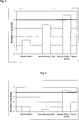
- FIG. 1 shows the microbiological effectiveness of an aqueous alcohol mixture, a pure aqueous surfactant solution according to Table 2 and the disinfectant mixture according to Table 1 against Candida albicans. It can be seen that only the disinfectant used according to the invention achieves the required reduction by 4 log steps. The pure alcohol mixture does not achieve a sufficient reduction of the yeasts due to the low alcohol content.
- the determination of the fungicidal activity in the quantitative suspension test according to the "Standard Methods of the DGHM for Testing of Chemical Disinfection Procedures" (as of September 1, 2001) describes a test method and the minimum requirements for the fungicidal action of chemical disinfectants and antiseptic products to determine whether an antiseptic is included the field of activity and field described in the field of application has a fungicidal effect or not.
- the products can only be tested in a concentration of 80% or less, since the addition of the test germs and the loading substance always causes a certain dilution.
- test organisms for instrument disinfection and surface disinfection are for fungicidal activity Candida albicans (ATCC 10231) and Aspergillus brasiliensis (ATCC 16404). Aspergillus brasiliensis is still referred to as Aspergillus niger in the method "Standard methods of the DGHM for testing chemical disinfection methods" (as of September 1, 2001).
- the test temperature is 20 ° C, plus an additional 30 ° C for a surface disinfecting agent or a maximum of 60 ° C for an instrument disinfectant.
- the exposure time is 60 minutes, for an agent for surface disinfection, an additional 5 minutes are tested. In addition, exposure times are checked according to the manufacturer's instructions.
- Product test solutions must be prepared in at least three different concentrations in water of standardized hardness, with one concentration in the effective range and one concentration in the non-effective range.
- the product as supplied may be used as one of the product test solutions; in this case the highest tested concentration is 80%.
- the number of cells in the test suspension is adjusted with the diluent to 1.5 * 10 8 cfu per ml to 5.0 * 10 8 cfu per ml.
- the load substance must be selected according to the conditions of use specified for the product. It must be sterile and manufactured at a concentration ten times higher than required for the test.
- bovine serum albumin solution is used in low concentration (0.3 g / L).
- a mixture of bovine serum albumin solution in high concentration (3 g / L) with washed sheep erythrocytes (3mL / L) is used.
- a validation suspension is used in which the test suspension is diluted with the diluent to give 3.0 * 10 2 CFU per ml to 1.6 * 10 3 CFU per ml.
- the solution was mixed again.
- a 1 ml sample of the test mixture was transferred to a tube containing 8.0 ml of neutralization medium and 1 ml of water. It was mixed and placed in a set at 20 ° C water bath. After a neutralization time of 5 min +/- 10 s was mixed and immediately taken a sample of 1 ml of the neutralized test mixture (containing neutralization medium, product test solution, loading substance and test suspension) as a double determination and inoculated in the surface process.
- the plates were incubated for 20 h to 24 h and counted to determine the number of colony forming units (cfu).
- the assessment of the virus-inactivating effect of the disinfectant to be tested was carried out by calculating the titer waste compared to the control titrations carried out in parallel without disinfectant. The difference was given as a reduction factor with a confidence interval of 95%.
- the guideline uses the terms "limited virucidal” (effective against enveloped viruses) and "virucidal” (effective against non-enveloped viruses); used in the definition of the opinion of the working group Virucidia at the RKI.
- the anti-enveloped virus activity includes anti-enveloped virus activity.
- test viruses for the range of action are "limited virucidal" vaccinia virus, strain Elstree3 and Bovine Viral Diarrhea Virus (BVDV) strain NADL.
- the viruses of virucidal activity are vaccinia virus, Elstree3 strain, Type I poliovirus vaccine strain, LSc-2ab strain, Adenovirus type 5 strain, Adenoid 75 strain and Polyomavirus4 (SV40) strain strain 777.
- the viruses are to be propagated in cell cultures or other suitable systems.
- the methods used to prepare the virus suspension may differ depending on the test virus.
- the content of the suspensions to viruses should not be less than 108 TCID50 / ml.
- the test is carried out as a result of the necessary addition of virus suspension and FKS load (fetal calf serum) at a concentration of 90 or 80% of the product in the test solution ,
- the disinfectant according to Example 1 showed a good virus activity within a maximum of 5 minutes with a reduction of at least 4 log levels in the viruses vaccinia virus, bovine viral diarrhea virus, polyoma virus and rota virus.
- Vaccinia virus and Bovine viral diarrhea virus under organic load (10% FCS) a reduction of the virus titer by more than log 4 levels within 30 seconds was achieved.
- the composition according to Example 1 with respect to the test materials Plexiglas ® XT (PMMA, polymethyl methacrylate, Evonik), Makrolon ® 281 (PC, polycarbonate, Bayer) and TECASON ® S was (PSU, polysulfone, Ensinger) tested.
- Plexiglas ® XT PMMA, polymethyl methacrylate, Evonik
- Makrolon ® 281 PC, polycarbonate, Bayer
- TECASON ® S was (PSU, polysulfone, Ensinger) tested.
- the specimens are produced in accordance with ISO 2818.
- the dimensions of the specimens are 120 mm ⁇ 35 mm ⁇ 3.0 mm (length 1 ⁇ width b ⁇ thickness d).
- the specimens were conditioned for at least 24 hours at (23 ⁇ 2) ° C and (50 ⁇ 5)% relative humidity before testing.
- the test temperature was 25 ° C.
- the test was carried out with an alternating test sequence of 5 times 5 min contact with the disinfectant and 5 min rest period without contact with the disinfectant.
- the test period was 5, 10, 15, 20 and 25 minutes.
- the bending template had a radius of 450 mm.
- Flexural Elongation is the nominal value of elongation in the tensile load surface of a flat specimen of thickness h, which is bent over a circular segment of radius r.
- the elongation value is a value of a series of elongation values imposed on successive specimens during the load.
- the ESC potential ⁇ ESC is the ratio of the value of the elongation at break determined in the test medium to the elongation at break determined for the same load duration in the reference medium (usually air). With a value of> 1, there is a tendency for stress crack formation under given test conditions.
- the plastic material polysulfone produced test voltages of 9.13 MPa.
- test specimen was kept moist with the product.
- test piece dried.
- the specimens were thoroughly cleaned with a neutral cleaner, rinsed with water and then air dried. The specimens were then individually placed in the ready-disinfectant solution in screw-top jars at room temperature. The assessment of the materials was carried out optically according to: 1st day, 1st week, 2nd week, 3rd week, 4th week.
- the disinfectant solution used according to the invention is not corrosive and does not damage the material and can therefore be regarded as compatible with the abovementioned materials.
- a sufficient amount of the disinfectant was applied to a clean disposable cloth.
- the foam applied to the cloth was applied to the surface to be disinfected and spread so that the surface was completely wetted with a uniform liquid film. On uneven surfaces such. As keyboards, the application was suitable as a foam in particular dimensions, since this avoids that too much liquid got into the spaces. The surface was kept moist throughout the exposure time.
Landscapes
- Life Sciences & Earth Sciences (AREA)
- Health & Medical Sciences (AREA)
- General Health & Medical Sciences (AREA)
- Dentistry (AREA)
- Plant Pathology (AREA)
- Engineering & Computer Science (AREA)
- Pest Control & Pesticides (AREA)
- Agronomy & Crop Science (AREA)
- Wood Science & Technology (AREA)
- Zoology (AREA)
- Environmental Sciences (AREA)
- Agricultural Chemicals And Associated Chemicals (AREA)
- Apparatus For Disinfection Or Sterilisation (AREA)
- Toxicology (AREA)
- Medicines Containing Material From Animals Or Micro-Organisms (AREA)
Description
- Gegenstand der Erfindung ist die Verwendung eines Desinfektionsmittels, bestehend aus einer Mischung aus Ethanol, 1-Propanol und 2-Propanol, einem antimikrobiellen amphoteren Tensid und Wasser zur Desinfektion von Bildschirmoberflächen elektronischer Geräte.
- Hygiene ist in der modernen Patientenversorgung ein Aspekt, der zunehmend an Wichtigkeit gewinnt. Im Fokus vieler Hygienemaßnahmen steht dabei die Desinfektion sowohl von Händen als auch von unbelebten Oberflächen. Dabei müssen insbesondere solche Oberflächen desinfiziert werden, die mit den Händen in Kontakt kommen, d.h. Handkontaktflächen. Patientennahe Oberflächen werden üblicherweise mit alkoholischen Desinfektionsmitteln behandelt. Diese Flächen und flächigen Gegenstände, wie beispielsweise Tische, Tabletts, Stühle, Türen, Türgriffe, Ablagen usw., sind dabei meist aus alkoholbeständigen Materialien hergestellt. Es handelt sich dabei um überwiegend "ortsfeste" Gegenstände, die einer routinemäßigen Reinigung und Desinfektion unterzogen werden.
- Schwieriger ist die Desinfektion von Gegenständen, die nicht an einen Ort gebunden sind. Bei der Patientenversorgung werden beispielsweise zunehmend elektronische Geräte genutzt. Diese modernen Medien machen es möglich, dass Diagnosen, Laborergebnisse, digitale Darstellungen wie Röntgenbilder und dergleichen erfasst, gespeichert und übertragen werden. Dieses bedeutet mehr Sicherheit in der Behandlung, da es zu weniger Übertragungsfehlern kommt und die relevanten Informationen schnell abrufbar sind.
- Nachteilig ist, dass diese Geräte von einem Patientenzimmer in das nächste gelangen können, ohne zwischendurch desinfiziert zu werden. Daher birgt die Nutzung dieser mobilen Kommunikationsgeräte ein erhöhtes Risiko bei der Übertragung von pathogenen Keimen. Die veröffentlichten Hygieneregeln besagen, dass vor und nach jedem Patientenkontakt die Hände desinfiziert werden müssen. Gelangen aber während der Behandlung Keime auf mobile Kommunikationsgeräte, werden diese nicht üblicherweise einer routinemäßigen Desinfektion unterzogen, da sie aus praktischen Gesichtspunkten meist in die Kitteltasche gesteckt werden, und somit zunächst nicht sichtbar sind. Es besteht daher die Gefahr, dass elektronische Geräte, insbesondere mobile Kommunikationsgeräte, bei der Desinfektion übersehen werden.
- Entsprechende Geräte finden ihren Einsatz nicht nur in medizinischen und pflegerischen Einrichtungen, sondern verstärkt auch im OP-Bereich und auf Intensivstationen. Gerade in diesen sensiblen Hygienebereichen ist eine effektive Desinfektion aller Oberflächen notwendig, um eine Keimübertragung und daraus folgende Infektionen zu vermeiden.
- Mobile Kommunikationsgeräte weisen häufig Oberflächen aus Kunststoff oder Glas, ggf. auch Komposit-Materialien mit einem dünnen mehrschichtigen Aufbau auf. Bei der Desinfektion unbelebter Oberflächen werden üblicherweise alkoholische Desinfektionsmittel eingesetzt. So ist aus der
EP 1 020 115 A1 ein Desinfektionsmittel zur Schnelldesinfektion bekannt, das 68 -80 Gew.-% einer Mischung aus Monoalkoholen enthält. Dieses Desinfektionsmittel zeigt auch auf Grund des hohen Alkoholgehalts eine gute Wirksamkeit gegen Viren, Pilze und Bakterien. - Insbesondere Kunststoffoberflächen werden von organischen Lösungsmitteln wie Alkohol oder Aceton angelöst. Zudem enthalten viele Kunststoffe Weichmacher, die in organischen Lösungsmitteln löslich sind, und somit bei der Desinfektion ausgewaschen werden. Durch mehrfache Behandlung mit einem Desinfektionsmittel würde dem Material somit die Elastizität verloren gehen. Bei transparenten Kunststoffen ist dieser Effekt durch Trübung und Rissbildung zu erkennen.
- Mobile Kommunikationsgeräte zeichnen sich durch multifunktionale Eigenschaften aus. Die sogenannten "Smartphones" sind über ein Touch-Display einfach zu bedienen. Die Eingabefläche ist technisch vergleichbar mit einer transparenten Folientastatur aus Polyesterfolie, die über ein Display, z.B. ein LED oder Flüssigkristalldisplay, gelegt wird.
- Häufig werden die Displays mobiler Kommunikationsgeräte mit einer Display-Schutzfolie versehen, um diese vor Kratzern und anderen äußeren Einflüssen zu schützen. Diese Schutzfolien sind sehr kratz- und schlagfest und weisen dabei eine kristallklare Optik und angenehme Haptik bei uneingeschränkter Bedienbarkeit der Geräte auf. Diese Schutzfolien sind zumeist mehrschichtige Laminate, die die Eigenschaften der einzelnen Komponenten vereinen. Sie bestehen zumeist aus Acrylsäurepolymeren, Polycarbonat oder anderen bekannten Werkstoffen.
- Bisher sind keine alkoholischen Desinfektionsmittel im Markt erhältlich, die zur Desinfektion von mobilen Kommunikationsgeräten, insbesondere zur Desinfektion der Bildschirme und Touch screens geeignet sind.
- Bekannt sind Desinfektionsmittel zur Desinfektion unbelebter Oberflächen, die für bestimmte Oberflächen herkömmlicher Objekte und Geräte eine gute Materialverträglichkeit zeigen. Die
EP 1 468 699 A1 offenbart die Verwendung eines Desinfektionsmittels auf Basis eines aliphatischen Monoalkohols und eines amphoteren Tensides in wässriger Lösung zur Abtötung von Mykobakterien. Dieses Desinfektionsmittel zeigt gegenüber Plexiglas eine gute Materialverträglichkeit. DieDE 198 01 821 A1 offenbart ein tuberkulozides Desinfektionsmittel mit einem N,N'-substituierten Glycin. Das Mittel zeigt eine gute tuberkulozide Wirksamkeit. - Alkoholische Desinfektionsmittel mit niedrigen Alkoholgehalten sind hingegen dafür bekannt, dass sie keine umfassende mikrobiozide und insbesondere keine fungizide Wirksamkeit aufweisen.
- Zudem sind verschiedene alkoholhaltige Mittel zur Desinfektion von Oberflächen bekannt. Die
EP 1 967 066 A2 offenbart ein Mittel zur Desinfektion unbelebter Oberflächen mit 35-70 Gew.-% einwertiger Alkohole in Kombination mit amphoteren Tensiden. Das Desinfektionsmittel zeigt eine gute Wirksamkeit gegen Bakterien, Pilze und Viren. Auf Grund des hohen Alkoholgehalts weist es jedoch keine ausreichende Materialverträglichkeit für empfindliche Kunststoffoberflächen, wie Plexiglas, auf. - Aufgabe der Erfindung ist es daher, ein Desinfektionsmittel bereitzustellen, das eine gute Materialverträglichkeit bei Kunststoffoberflächen elektronischer Geräte zeigt, insbesondere mobiler Geräte, die vorwiegend im medizinischen Bereich angewendet werden und einer professionellen Desinfektion bedürfen, insbesondere deren Bildschirmoberflächen wie Touch screens, und gleichzeitig eine gute mikrobiologische Wirksamkeit, insbesondere auch eine fungizide Wirksamkeit, aufweist. Das Desinfektionsmittel soll aufgrund der guten Materialverträglichkeit mit verschiedensten Werkstoffen universell und unabhängig von den Materialkomponenten und Materialeigenschaften einsetzbar sein, da davon auszugehen ist, dass nicht nur die transparente Displayfläche, sondern das gesamte Gehäuse der entsprechenden Geräte mit dem Desinfektionsmittel in Kontakt kommt und unterschiedliche Bauteile eines elektronischen Gerätes aus unterschiedlichen Kunststoffen bestehen.
- Die Aufgabe wird erfindungsgemäß gelöst durch die Verwendung eines Desinfektionsmittels, enthaltend
25-32 Gew.-% einer Mischung aus Ethanol, 1-Propanol und 2-Propanol, wobei mindestens 5,0 Gew.-% und höchstens 15 Gew.-% jeder einzelnen Alkoholkomponente enthalten sind, 0,1-2,0 Gew.-% eines antimikrobiellen, amphoteren Tensids; wobei das amphotere Tensid N-Alkylaminopropylglycin, mit Alkyl gleich C10 bis C16, ist und Wasser, - Weitere Ausführungsformen sind Gegenstand der Unteransprüche oder nachfolgend beschrieben.
- Bevorzugt besteht das erfindungsgemäß verwendete Desinfektionsmittel aus
25-32 Gew.-% einer Mischung aus Ethanol, 1-Propanol und 2-Propanol, wobei mindestens 5,0 Gew.-% und höchstens 15 Gew.-% jeder einzelnen Alkoholkomponente enthalten sind, 0,1-2,0 Gew.-% eines antimikrobiellen, amphoteren Tensids und - Das erfindungsgemäß verwendete Desinfektionsmittel enthält bevorzugt 28 - 32 Gew.-% der Mischung aus Ethanol, 1-Propanol und 2-Propanol. Weiterhin enthält das Desinfektionsmittel bevorzugt 0,1 - 1,0 Gew.-% Tensid.
- Das erfindungsgemäß verwendete Desinfektionsmittel enthält weiter bevorzugt
- 13 bis 15 Gew.-% Ethanol,
- 9 bis 10,5 Gew.-% 2-Propanol,
- 5 bis 6,5 Gew.-% 1-Propanol,
- 0,1 bis 2,0 Gew.-%, bevorzugt, 0,1 bis 1,0 Gew.-%, des antimikrobiellen amphoteren Tensids und
- Wasser, bevorzugt als Rest Wasser.
- Dabei ist das verwendete antimikrobielle, amphotere Tensid N-Alkylaminopropylglycin, wobei der Alkylrest 10 bis 16 Kohlenstoffatome aufweist. Ein solches Tensid ist als 30-%ige wässrige Lösung unter dem Handelsnamen Rewocid WK 30 der Firma Evonik erhältlich.
- Die entsprechend der erfindungsgemäßen Verwendung desinfizierten Bildschirmoberflächen elektronischer Geräte sind insbesondere die Bildschirmoberflächen von Touch screens, Mobiltelefonen, Smartphones, Flachbildschirmen, Laptopbildschirme, Tablet-PCs und PDAs, wobei insbesondere die Displays bzw. Touch screens oder die darauf applizierten Schutzfolien dieser Geräte desinfiziert werden. Die desinfizierten Oberflächen bestehen dabei zumindest teilweise aus temperaturbeständigen oder transparenten oder hochspiegelnden Kunststoffen oder Kunststoffbeschichtungen, vorzugsweise aus Polycarbonat oder Polysulfon. Ein bekanntes Polycarbonat ist beispielsweise Makrolon® sowie ein bekanntes Polysulfon beispielsweise Tecason®S ist.
- Die erfindungsgemäße Verwendung des Desinfektionsmittels führt zur Abtötung von Hefen, insbesondere von Candida albicans und/oder zur Abtötung von Pilzen, insbesondere von Aspergillus brasiliensis (frühere Bezeichnung Aspergillus niger). Dabei erfolgt bei der erfindungsgemäßen Verwendung des Desinfektionsmittels bevorzugt eine Log-4-Reduktion innerhalb von 0,5 Minuten gegenüber Candida albicans und/oder eine Log-4-Reduktion innerhalb von 1 Minute gegenüber Candida albicans gemäß "Standardmethoden der DGHM zur Prüfung chemischer Desinfektionsverfahren" (Stand 1. September 2001). Weiterhin wird durch die erfindungsgemäße Verwendung des Desinfektionsmittels bevorzugt mindestens eine Log-2-Reduktion innerhalb von 5 Minuten gegenüber Apergillus brasiliensis erreicht und/oder innerhalb von 10 Minuten mindestens eine Log-3-Reduktion gegenüber Aspergillus brasiliensis erreicht und/oder innerhalb von 15 Minuten eine Log-4-Reduktion gegenüber Aspergillus brasiliensis gemäß "Standardmethoden der DGHM zur Prüfung chemischer Desinfektionsverfahren" (Stand 1. September 2001) erreicht.
- Das Verfahren "Standardmethoden der DGHM zur Prüfung chemischer Desinfektionsverfahren" (Stand 1. September 2001) ist dabei in der Durchführung und Auswertung äquivalent zu der internationalen EN 13727 ("Chemische Desinfektionsmittel und Antiseptika - Quantitativer Suspensionsversuch zur Prüfung der bakteriziden Wirkung chemischer Desinfektionsmittel für Instrumente im humanmedizinischen Bereich - Prüfverfahren und Anforderungen (Phase 2, Stufe 1); Deutsche Fassung EN 13727:2003). Der Prüfkeim Aspergillus brasiliensis ATCC 16404 entspricht dem Keim Aspergillus nigerATCC 16404 (frühere Bezeichnung) und ist diesem genetisch identisch.
- Das erfindungsgemäß verwendete Desinfektionsmittel wird bevorzugt in Form eines Schaums, eines Sprühdesinfektionsmittels, einer Flüssigkeit oder in Form eines mit dem Desinfektionsmittel imprägnierten Tuchs, Schwamms oder anderer Applikationshilfe appliziert.
- Die flüssige Zusammensetzung kann auf ein Tuch aufgebracht werden und in Form einer Wischdesinfektion verwendet werden. Sie kann aber auch versprüht werden, wobei die Zusammensetzung entweder als Flüssigkeit oder vorzugsweise mittels eines Dispensers mit Schaumapplikator als Schaum versprüht wird. Der Schaum kann direkt auf die zu reinigende Oberfläche appliziert oder mittels eines Tuches, eines Schwammes oder einer anderen Applikationshilfe aufgebracht werden. Die Zusammensetzung weist keine weiteren Inhaltsstoffe auf, insbesondere werden keine weiteren Komponenten zur Stabilisierung des Schaums benötigt.
- Das erfindungsgemäß verwendete Desinfektionsmittel erlaubt unenivarteter weise trotz des niedrigen Alkoholgehaltes eine umfassende Abtötung von Hefen und Pilzen und zeigt somit eine sehr gute mikrobiologische und insbesondere fungizide Wirksamkeit. Die mikrobiologische Wirksamkeit insbesondere gegen Problemkeime wie Hefen und Pilze ist dabei deutlich höher als die der Einzelkomponenten und auf einen synergistischen Effekt der Alkoholmischung in Mischung mit dem amphoteren Tensid zurückzuführen. Ebenso überraschend ist die gute Wirksamkeit gegenüber Pilzen, wie Aspergillus brasiliensis. Auch hier war aufgrund der Wirksamkeiten der einzelnen Inhaltsstoffe nicht zu erwarten, dass bei einer so niedrigen Alkoholkonzentration eine gute Keimreduktion erreicht wird. Trotz des geringen Alkoholgehalts zeigt das erfindungsgemäß verwendete Desinfektionsmittel auch eine gute Wirksamkeit gegenüber schwer zu inaktivierenden unbehüllten Viren, wie z.B. Adeno-Viren.
- Zudem ist bei erfindungsgemäßer Verwendung des Desinfektionsmittels eine gute Materialverträglichkeit gegeben, so dass das Desinfektionsmittel auch auf den empfindlichen Bildschirmoberflächen elektronischer Geräte wie z.B. Flachbildschirmen, Touch screens, PDAs, Mobiltelefonen, Tastaturen und insbesondere Kunststoffoberflächen mit Polysulfon oder auf den darauf applizierten Schutzfolien angewandt werden kann.
- Die entsprechend der erfindungsgemäßen Verwendung desinfizierten Bildschirmoberflächen elektronischer Geräte sind insbesondere die Bildschirmoberflächen von Touchscreens (beispielsweise an Bedienterminals), Mobiltelefonen, Smartphones, zum Beispiel iPhone®, Blackberry®, Flachbildschirmen, Laptopbildschirmen, Tablet-PCs, Piepern und PDAs, wobei insbesondere die Displays bzw. Touchscreens oder die darauf applizierten Schutzfolien dieser Geräte desinfiziert werden. Die erfindungsgemäße Verwendung betrifft alle Flächen derartiger Geräte, die Kontakt mit den Händen und/oder anderen Hautoberflächen von Ärzten, Krankenschwestern, Pflegekräften und Patienten haben, insbesondere Handkontaktflächen.
- Die Geräte befinden sich bevorzugt im Bereich klinischer und pflegerischer Einrichtungen, wie Behandlungsräumen, Stationen, Patientenzimmern, Untersuchungszimmern, Operationssälen, Kreißsälen, Ambulanzen, Intensivstationen in Pflegeeinrichtungen, Krankenhäusern und Arztpraxen, sowie beim mobilen Pflegedienst. Das erfindungsgemäß verwendete Desinfektionsmittel wird insbesondere in medizinischen und pflegerischen Einrichtungen, vorzugsweise im OP-Bereich und auf Intensiv-, Kranken- und Pflegestationen eingesetzt. Hier ist eine professionelle Desinfektion aller Oberflächen notwendig, um eine Keimübertragung und daraus folgende Infektionen zu vermeiden.
- Die Desinfektion erfolgt dabei auf Oberflächen, die zumindest teilweise aus Kunststoffen bestehen. Wenn Kunststoffmaterialien unterhalb der Streckgrenze mechanisch gedehnt oder gespannt werden, kann es nach einem bestimmten Zeitraum zu Spannungsrissen im Material kommen. Die gleichzeitige Beanspruchung in Gegenwart einer veränderten chemischen Umgebung kann zu einer signifikanten Verkürzung dieses Zeitraumes führen. Dieses Phänomen wird als umgebungsbedingte Spannungsrissbildung (environmental stress cracking, ESC) bezeichnet.
- Das erfindungsgemäß verwendete Desinfektionsmittel zeichnet sich besonders durch seine gute Materialverträglichkeit aus. Bevorzugt ist bei erfindungsgemäßer Verwendung des Desinfektionsmittels auf Polysulfon-Oberflächen die Materialverträglichkeit des Desinfektionsmittels gemessen als ESC-Potential ΩESC gemäß alternierender ESC-Prüfung < 1, vorzugsweise < 0,8 über eine Prüfdauer von 25 Minuten bei 25 °C. Bei erfindungsgemäßer Verwendung des Desinfektionsmittels auf Polysulfon-Oberflächen ist zudem bevorzugt die Spannungsrissbildung ΔΩESC unter 5, vorzugsweise unter 4, weiter bevorzugt unter 3 gemäß ESC-Prüfung bei einer Oberflächentemperatur von 20°C bis 45°C.
- Ein weiterer Aspekt, der bei der Desinfektion von Oberflächen eine Rolle spielt, sind mögliche durch das Präparat entstehende Rückstände. Das erfindungsgemäß verwendete Desinfektionsmittel ist ein Leave-on-Produkt, das nach der Desinfektion nicht entfernt werden braucht. Bei der Verwendung dürfen somit keine störenden Rückstände auf der Oberfläche verbleiben, die die Einsatzbereitschaft des elektronischen Gerätes beeinträchtigen würden. Zudem darf das Produkt nicht reizend sein, da die Hautoberfläche bei der Verwendung der Geräte mit der Bildschirmoberfläche bzw. Tastaturen in Berührung kommt und mögliche Rückstände des erfindungsgemäß verwendeten Desinfektionsmittels somit auf die Haut übertragen werden könnten. Es hat sich gezeigt, dass die auf der Oberfläche verbleibenden Rückstände des erfindungsgemäß verwendeten Desinfektionsmittels nicht reizend auf die Haut wirken, da die Alkohole nach der Anwendung verdunsten und nur geringe Mengen des amphoteren Tensids zurückbleiben und bevorzugt keine weiteren Inhaltsstoffe enthalten sind.
- Das erfindungsgemäß verwendete Desinfektionsmittel zeichnet sich somit auch dadurch aus, dass die Zusammensetzung bevorzugt keine weiteren Alkohole, keine weiteren Wirkstoffe, keine quaternären Ammoniumverbindungen (QAV) und keine nichtionischen, anionischen oder kationischen Tenside enthält. Die erfindungsgemäße Verwendung zur Desinfektion von Bildschirmoberflächen kann selbstverständlich nicht nur im medizinischen und klinischen Bereich eingesetzt werden, sondern auch in anderen Bereichen. So ist die Desinfektion in öffentlichen Einrichtungen, insbesondere bei Automaten mit Touch screens, in der Lebensmittelindustrie, in Hotels, an Fahrkarten- oder Geldautomaten, öffentlichen Informationsterminals und vielen anderen Bereichen denkbar.
- Es wurde ein Desinfektionsmittel aus den in Tabelle 1 angegebenen Inhaltsstoffen hergestellt.
Tabelle 1 Beispiel 1 Aqua purificata 69,50% Ethanol 14,00% 2-Propanol 10,00% 1-Propanol 6,00% N-Alkylaminopropylglycin (Alkyl gleich C10 bis C16) 0,50% - Die Zusammensetzung weist einen pH-Wert von 8 auf.
- Das Desinfektionsmittel gemäß Tabelle 1 wurde auf seine Wirksamkeit gegen Hefen und Pilze im Vergleich zu Lösungen der Einzelkomponenten gemäß Tabelle 2 getestet. Hierzu wurden folgende Vergleichslösungen angesetzt:
Tabelle 2 wässrige Lösung Alkohole wässrige Lösung Tensid Aqua purificata 70,00% 99,50% Ethanol 14,00% --- Isopropanol 10,00% --- n-Propanol 6,00% --- N-Alkylaminopropylglycin (Alkyl gleich C10 bis C16) --- 0,50% - Es zeigen
-
Figur 1 die mikrobiologischen Wirksamkeiten gegen Candida albicans (0,5 Minuten) und -
Figur 2 die mikrobiologischen Wirksamkeiten gegen Aspergillus brasiliensis (15 Minuten). -
Figur 1 zeigt die mikrobiologischen Wirksamkeit einer wässrigen Alkoholmischung, einer reinen wässrigen Tensidlösung gemäß Tabelle 2 und der Desinfektionsmittelmischung gemäß Tabelle 1 gegenüber Candida albicans. Es ist zu erkennen, dass nur das erfindungsgemäß verwendete Desinfektionsmittel die geforderte Reduktion um 4 Log-Stufen erreicht. Die reine Alkoholmischung erzielt aufgrund des geringen Alkoholgehaltes keine ausreichende Reduktion der Hefen. - Wie in
Figur 2 zu erkennen ist, addieren sich bei der Wirksamkeit gegenüber Pilzen nicht die Effekte der einzelnen Inhaltsstoffe, sondern es kommt zu einer synergistischen Wirksamkeit, durch die erst die geforderte Reduktion um 4 Log-Stufen erreicht wird. - Die Bestimmung der fungiziden Wirkung im quantiativen Suspensionsversuch gemäß den "Standardmethoden der DGHM zur Prüfung chemischer Desinfektionsverfahren" (Stand 1. September 2001) beschreibt ein Prüfverfahren und die Mindestanforderungen an die fungizide Wirkung von chemischen Desinfektionsmitteln und antiseptischen Produkten zur Feststellung, ob ein Antiseptikum im Rahmen des im Anwendungsbereich beschriebenen Arbeitsgebiets und Feldes eine fungizide Wirkung aufweist oder nicht.
- Die Produkte können nur in einer Konzentration von 80% oder darunter geprüft werden, da durch Zugabe der Prüfkeime und der Belastungssubstanz immer eine gewisse Verdünnung bewirkt wird.
- Die Prüfkeime für eine Instrumentendesinfektion und Oberflächendesinfektion sind bei derfungiziden Wirksamkeit Candida albicans (ATCC 10231) und Aspergillus brasiliensis (ATCC 16404). Aspergillus brasiliensis wird in der Methode "Standardmethoden der DGHM zur Prüfung chemischer Desinfektionsverfahren" (Stand 1. September 2001) noch als Aspergillus niger bezeichnet.
- Die Prüftemperatur beträgt 20°C, und zusätzlich 30°C bei einem Mittel zur Oberflächendesinfektion bzw. maximal 60°C bei einem Mittel zur Instrumentendesinfektion. Die Einwirkzeit beträgt 60 Minuten, für ein Mittel zur Oberflächendesinfektion werden zusätzlich 5 Minuten geprüft. Darüber hinaus werden Einwirkzeiten nach Herstellerangaben geprüft.
- Produktprüflösungen sind in mindestens drei unterschiedlichen Konzentrationen in Wasser standardisierter Härte herzustellen, wobei eine Konzentration im wirksamen Bereich und eine Konzentration im nicht wirksamen Bereich liegen muss. Das Produkt im Lieferzustand darf als eine der Produktprüflösungen verwendet werden; in diesem Fall beträgt die höchste geprüfte Konzentration 80%.
- Die Anzahl der Zellen in der Prüfsuspension wird mit dem Verdünnungsmittel auf 1,5*108 KBE je ml bis 5,0*108 KBE je ml eingestellt.
- Die Belastungssubstanz muss nach den für das Produkt festgelegten Anwendungsbedingungen ausgewählt werden. Sie muss steril sein und mit einer zehnfach höheren Konzentration, als für die Prüfung benötigt wird, hergestellt werden. Bei geringer Belastung (clean condition) wird Rinderserumalbuminlösung in niedriger Konzentration (0,3 g/L) verwendet. Bei hoher Belastung (dirty condition) wird ein Gemisch von Rinderserumalbuminlösung in hoher Konzentration (3 g/L) mit gewaschenen Schaf-Erythrozyten (3mL/L) verwendet.
- Zur Kontrolle wird statt einer Prüfsuspension eine Validierungssuspension verwendet, bei der die Prüfsuspension mit dem Verdünnungsmittel so verdünnt wird, dass sich 3,0*102 KBE je ml bis 1,6*103 KBE je ml ergeben.
- Es wurden 1 ml Belastungssubstanz und 1 ml Prüfsuspension in ein Reagenzglas pipettiert. Die Stoppuhr wurde sofort in Gang gesetzt, es wurde durchmischt und das Reagenzglas für 2 min +/- 10 s in ein auf 20°C eingestelltes Wasserbad gestellt. Nach Ablauf dieser Zeit wurden 8 ml einer der Produktprüflösungen zugegeben. Die Stoppuhr wurde bei Beginn der Zugabe wieder in Gang gesetzt, es wurde durchmischt und das Reagenzglas für die gewählte Einwirkzeit t in ein auf 20°C eingestelltes Wasserbad gestellt.
- Unmittelbar vor dem Ende von t wurde die Lösung erneut durchmischt. Nach Ablauf von t wurde eine 1-ml-Probe des Prüfgemischs in ein Röhrchen mit 8,0 ml Neutralisationsmedium und 1 ml Wasser überführt. Es wurde durchmischt und in ein auf 20°C eingestelltes Wasserbad gestellt. Nach einer Neutralisationszeit von 5 min +/- 10 s wurde durchmischt und sofort eine Probe von 1 ml des neutralisierten Prüfgemischs (enthaltend Neutralisationsmedium, Produktprüflösung, Belastungssubstanz und Prüfsuspension) als Doppelbestimmung entnommen und im Oberflächenverfahren beimpft.
- Zusätzlich wurden 0,5 ml dieses Gemischs in ein Röhrchen überführt, das 4,5 ml des Neutralisationsmediums enthielt, um das neutralisierte Prüfgemisch in einer Verdünnung von 10-1 zu erhalten. Von jedem Verdünnungsröhrchen wurden Proben von 1 ml als Doppelbestimmung entnommen und im Oberflächenverfahren beimpft.
- Bei der Verwendung des Oberflächenverfahrens wurde jede 1-ml-Probe, die in Anteile etwa gleicher Größe aufgeteilt ist, auf eine geeignete Anzahl (mindestens zwei) von auf der Oberfläche getrockneten Platten mit TSA ausgestrichen.
- Die Platten wurden 20 h bis 24 h bebrütet und zur Bestimmung der Anzahl der koloniebildenden Einheiten (KBE) ausgezählt.
- Das Ergebnis des quantiativen Suspensionsversuch unter hoher organischer Belastung bei Aspergillus brasiliensis ist in Tabelle 3 dargestellt.
Tabelle 3 Prüfzeiten Rezeptur gemäß Beispiel 1 Rezeptur gemäß Vergleichsbeispiel 1 Reduktionsfaktor Reduktionsfaktor 5 min 2,56 0,63 10 min 3,58 0,80 15 min 4,4 0,89 - Für die Prüfung der Inaktivierung von Viren wurden (entsprechend der Leitlinie der DVV und des RKI) acht Volumenteile des Desinfektionsmittels mit einem Volumenanteil Virussuspension und einem Volumenanteil Aqua bidest. vermischt. Bei den Versuchen mit FKS-Belastung wurde anstelle von Aqua bidest. ein Volumenanteil FKS-Belastungssubstanz zugegeben. Des weiteren wurden neun Volumenanteile mit 0,1 Volumenanteil Virussuspension und 0,9 Volumenanteilen Aqua bidest. vermischt. Bei den Versuchen mit Belastung wurde an Stelle von Aqua bidest FKS-Belastungssubstanz zugegeben.
- Alle Versuchsansätze wurden in geschlossenen Plastikröhrchen in einem Wasserbad bei 20 °C +/- 0,5 °C durchgeführt. Nach Ablauf der Einwirkzeiten wurden Teilmengen aus den Plastikröhrchen entnommen und die Restinfektiosität bestimmt. Die Bestimmung der Infektiosität erfolgte mit Hilfe einer Endpunkttitration im Mikrotiter-Verfahren. Dafür wurden die Proben nach ihrer Entnahme zunächst in ein eiskaltes Medium mit dem Faktor 10 verdünnt und jeweils 100 µL der Verdünnung in acht Kavitäten einer sterilen 96 well Mikrotiterplatte mit vorab vorgelegten CV-1-Zellen überführt (je 10 - 15 x 103 Zellen) und bei 37 °C im CO2-Brutschrank (5% CO2-Gehalt) inkubiert. Nach 21 Tagen erfolgte die Auswertung der Ansätze über die Beurteilung mit einem inversen Mikroskop.
- Die Beurteilung der virusinaktivierenden Wirkung des zu prüfenden Desinfektionsmittels erfolgte durch Berechnung des Titerabfalls gegenüber den jeweils parallel durchgeführten Kontrolltitrationen ohne Desinfektionsmittel. Die Differenz wurde als Reduktionsfaktor mit einem Konfidenzintervall von 95 % angegeben.
- In der Leitlinie werden die Begriffe "begrenzt viruzid" (wirksam gegen behüllte Viren) und "viruzid" (wirksam gegen unbehüllte Viren); im Sinne der Definition der Stellungnahme des Arbeitskreises Viruzidie am RKI verwendet. Die Wirksamkeit gegen unbehüllte Viren schließt eine Wirksamkeit gegen behüllte Viren ein.
- Dabei sind die Prüfviren für den Wirkungsbereich "begrenzt viruzid" Vacciniavirus, Stamm Elstree3 und Bovine Viral Diarrhea Virus (BVDV), Stamm NADL. Die Prüfviren für den Wirkungsbereich "viruzid" sind Vacciniavirus, Stamm Elstree3, Poliovirus-Impfstamm Typ I, Stamm LSc-2ab, Adenovirus Typ 5, Stamm Adenoid 75 und Polyomavirus4 (SV 40), Stamm 777.
- Die Viren sind in Zellkulturen oder anderen geeigneten Systemen zu vermehren. Die Methoden, die zur Herstellung der Virussuspension eingesetzt werden, können in Abhängigkeit vom Testvirus differieren. Der Gehalt der Suspensionen an Viren sollte nicht weniger als 108 TCID50/ml betragen.
- Da das zu prüfende Desinfektionsmittel unverdünnt angewendet werden bzw. in gebrauchsfertiger Form in den Handel kommen soll, erfolgt die Prüfung infolge des notwendigen Zusatzes an Virussuspension und FKS-Belastung (fetales Kälberserum) bei einer Konzentration von 90 bzw. 80 % des Produktes in der Prüflösung.
- Das Desinfektionsmittel gemäß Beispiel 1 zeigte eine gute Viruswirksamkeit innerhalb von maximal 5 Minuten mit einer Reduktion um mindestens 4 log-Stufen bei den Viren Vaccinia Virus, Bovine Viral Diarrhea Virus, Polyoma Virus und Rota Virus. So wurde für Vaccinia Virus und Bovine Viral Diarrhea Virus unter organischer Belastung (10% FKS) eine Reduktion des Virustiters um größer log 4 Stufen innerhalb von 30 Sekunden erreicht.
- Es wurde zudem die Materialverträglichkeit einer gemäß Beispiel 1 hergestellten Rezeptur geprüft.
- Zur Prüfung und Beurteilung des Spannungsrissverhaltens (Environmental Stress Cracking, ESC) im Biegestreifenverfahren, wurde die Zusammensetzung gemäß Beispiel 1 gegenüber den Prüfmaterialien Plexiglas® XT (PMMA, Polymethylmethacrylat, Evonik), Makrolon® 281 (PC, Polycarbonat, Bayer) und Tecason® S (PSU, Polysulfon, Ensinger) getestet.
- Die Prüfungen wurden in Anlehnung an die DIN EN ISO 22088 Teil 1 und 3 (ehemalige DIN 53449 Teil 3 "Beurteilung des Spannungsrissverhaltens - Biegestreifenverfahren") im Klimaschrank mit Vliesbenetzung durchgeführt (DIN EN ISO 22088-1 Kunststoffe - Bestimmung der Beständigkeit gegen umgebungsbedingte Spannungsrissbildung (ESC) - Teil 1: Allgemeine Anleitung (ISO 22088-1:2006) und Teil 3: Biegestreifenverfahren (ISO 22088-3:2006)). Um eine zu rasch verlaufende Verdunstung des flüssigen Prüfproduktes zu verhindern, wurde ein inertes Vlies (Tecnojet A-650/1, Ahlstrom Milano) als Oberflächenauflage eingesetzt, welches gleichzeitig eine komplette Benetzung der Prüfkörperoberfläche gewährleistet. Als Hilfsmittel zur Auswertung erhaltener Prüfdaten kann das ESC-Potential ΩESC genutzt werden.
- Für die Prüfung in Anlehnung an die DIN EN ISO 22088-1 wurden Kunststoffstreifen unter konstanter Biegezugspannung angeordnet und für eine zuvor festgelegte Zeitdauer einem Spannungsrisse bewirkenden Medium ausgesetzt. Mit einer Reihe von Schablonen mit abnehmenden Radien wurde in der äußeren Oberfläche eine zunehmend höhere Dehnung erzeugt. Nach festgelegter Beanspruchung durch das Spannungsrisse bewirkende Medium wurden die Probekörper entnommen, einer Sichtprüfung unterzogen und hinsichtlich der indikativen Eigenschaft, wie z. B. Zugfestigkeit, geprüft.
- Die Herstellung der Probekörper erfolgt in Anlehnung an ISO 2818. Die Abmessungen der Probekörper sind 120 mm x 35 mm x 3,0 mm (Länge l x Breite b x Dicke d). Die Probekörper wurden vor dem Prüfen mindestens 24 h bei (23 ± 2) °C und (50 ± 5) % relativer Feuchte konditioniert. Die Prüftemperatur betrug 25 °C. Die Prüfung erfolgte mit einer alternierenden Prüffolge von 5 mal 5 min Kontakt zum Desinfektionsmittel und 5 min Ruhepause ohne Kontakt zum Desinfektionsmittel. Der Prüfzeitraum betrug 5, 10, 15, 20 und 25 Minuten. Die Biegeschablone wies einen Radius von 450 mm auf.
- Die Biegezugdehnung ist der Nennwert der Dehnung in der auf Zug belasteten Oberfläche eines flachen Probekörpers der Dicke h, der über ein Kreissegment mit dem Radius r gebogen wird. Der Dehnungswert ist ein Wert aus einer Reihe von Dehnungswerten, die aufeinander folgenden Probekörpern während der Belastung auferlegt werden. Das ESC-Potential ΩESC ist das Verhältnis des Wertes der im Prüfmedium bestimmten Bruchdehnung zu der bei gleicher Belastungsdauer im Referenzmedium (üblicherweise Luft) bestimmten Bruchdehnung. Bei einem Wert von > 1 liegt bei gegebenen Prüfbedingungen eine Tendenz zur Spannungsrissbildung vor.
- Bei den durchgeführten Spannungsrissprüfungen wurden mit dem Kunststoffmaterial Polysulfon Prüfspannungen von 9,13 MPa realisiert.
- Bei dem Vergleich der Einzelprüfungen gegenüber den alternierenden Prüffolgen ist bei der 450 mm Ringschablone zu erkennen, dass die alternierende Prüffolge gegenüber den Einzelprüfungen intensivere Beeinflussungen aufzeigen. Die alternierende Prüffolge wurde in einem vergleichenden Versuch bei unterschiedlicher chemischer Umgebung eingesetzt. Es wurden dabei die Rezeptur gemäß Beispiel 1, sowie ein Flächendesinfektionsmittel gemäß Vergleichsbeispiel 1. Das Ergebnis dieser Untersuchung ergab für die Rezeptur gemäß Beispiel 1 die geringste Tendenz zur Bildung von Spannungsrissen, die bei den erweiterten Prüfungen bis 25 Minuten immer noch deutlich unterhalb des Grenzwertes von 1 lagen.
- Das Ergebnis der Prüfung bei 25 °C mit dem Kunststoffmaterial Polysulfon in einer alternierenden Prüfung (5 min Einwirkzeit, 5 min Erholungsphase, 5 min Einwirkzeit, 5 min Erholungsphase, usw.) ist in Tabelle 4 dargestellt.
Tabelle 4 Einwirkzeit Rezeptur gemäß Beispiel 1 Rezeptur gemäß Vergleichsbeispiel 1 ESC-Potential ΩESC ESC-Potential ΩESC 5 min 0,28 0 10 min 0,31 0,31 15 min 0,31 0,56 20 min 0,47 0,81 25 min 0,56 1,13 - Während der Einwirkzeit von 5 Minuten wurde der Prüfkörper mit dem Produkt feucht gehalten. In der Ruhephase von 5 Minuten trocknete der Prüfkörper.
- Bei einem ESC-Potential ΩESC > 1 liegt unter diesen Prüfbedingungen eine Tendenz zur Spannungsrissbildung vor. Hier wird deutlich, dass mit der Rezeptur gemäß Vergleichsbeispiel 1 behandelte Prüfkörper die Neigung zum Schadensaufbau haben, indem bei diesem Muster nach kurzer Zeit das ESC-Potential ΩESC den Wert 1 überschreitet.
- Tabelle 5 zeigt das Ergebnis der Prüfung bei 25 °C bis 45 °C mit dem Kunststoffmaterial Polysulfon unter Betrachtung der Differenzen der ESC-Potentiale ΔΩESC bei den jeweiligen Temperaturen, so können mit Δt = konstant (10 Minuten, Anstieg von ΩESC über die Zeit von 5 bis 15 Minuten) folgende Abhängigkeit aufgezeigt werden.
Tabelle 5 Temperatur Rezeptur gemäß Beispiel 1 Rezeptur gemäß Vergleichsbeispiel 1 ΔΩESC ΔΩESC 25 °C 0,4 0,4 35 °C 0,8 1,6 45 °C 2,3 5,7 - Die ausgeprägteste Temperaturabhängigkeit zeigt die Probe der Vergleichsbeispiel 1, bei der knapp unterhalb von 35°C Wechselwirkungsreaktionen einsetzen, die gegenüber der Rezeptur gemäß Beispiel 1 nicht vorhanden sind, oder noch nicht eingesetzt haben.
- Zudem wurde eine Reihe von Untersuchungen zur Verträglichkeit verschiedener Materialien mit dem Desinfektionsmittel durchgeführt. Zu diesem Zweck wurden Prüfkörper aus verschiedenen Materialien über einen Zeitraum von 4 Wochen in das gebrauchsfertige Desinfektionsmittel eingelegt und in regelmäßigen Abständen optisch begutachtet.
- Zur Bestimmung der Materialverträglichkeit wurden standardisierte Prüfkörper aus verschiedenen Materialien verwendet (6 x 2 cm bei einer Schichtdicke je nach Material von 1 bis 3 mm):
- Metalle: Edelstahl, Aluminium, Kupfer, Messing
- Kunststoffe: Gummi (Kautschuk), Polysulfon, Latex, PVC, Polymethylmethacrylat (Plexiglas®), Silikon, Polystyrol, Polytetrafluorethylen (Teflon®), Polycarbonat (Makrolon®), Vinylidenfluorid-Hexafluorpropylen-Copolymerisat (Viton®), Polyethylen, Polypropylen, Weichgummi (Butadien - Kautschuk)
- Zur Vorbereitung wurden die Prüfkörper mit einem Neutralreiniger gründlich gesäubert, mit Wasser gespült und dann luftgetrocknet. Die Prüfkörper wurden dann einzeln in die gebrauchsfertige Desinfektionslösung in Schraubdeckelgläsern bei Raumtemperatur eingelegt. Die Begutachtung der Materialien erfolgte optisch nach: 1. Tag, 1. Woche, 2. Woche, 3. Woche, 4. Woche.
- Bei allen getesteten Metallen trat über den kompletten Zeitraum von 4 Wochen keine Korrosion auf. Bei allen getesteten Kunststoffen trat keine Materialschädigung ein. Unter den durchgeführten Testbedingungen ist die erfindungsgemäß verwendete Desinfektionslösung nicht korrosiv und nicht materialschädigend und kann daher als verträglich mit den oben genannten Materialien angesehen werden.
- In einem praxisnahen Anwendungstest wurden zudem unterschiedliche Gegenstände aus verschiedenen Materialien über einen längeren Zeitraum regelmäßig mit der Desinfektionslösung behandelt. Die Gegenstände waren Flachbildschirme/ Monitore/ Touchscreens, Tastaturen, Laptops, Mobiltelefone und schnurlose Haustelefone. Dabei wurde jeder Gegenstand mindestens zehn mal mit dem Desinfektionsmittel behandelt.
- Für die praxisnahe Durchführung wurde auf ein sauberes Einmaltuch eine ausreichende Menge des Desinfektionsmittels gegeben. Der auf das Tuch applizierte Schaum wurde auf die zu desinfizierende Fläche aufgetragen und verteilt, so dass die Oberfläche vollständig mit einem gleichmäßigen Flüssigkeitsfilm benetzt war. Bei unebenen Oberflächen wie z. B. Tastaturen eignete sich die Anwendung als Schaum im besonderen Maße, da hierdurch vermieden wird, dass zuviel Flüssigkeit in die Zwischenräume gelangte. Die Oberfläche wurde während der gesamten Einwirkzeit feucht gehalten.
- Bei keinem der Gegenstände wurde eine optische oder funktionelle Veränderung der Materialien festgestellt. Es kam weder zu Trübungen oder Rissbildungen, noch zu Ablösungen von (Tastatur-)Beschriftungen oder anderen Effekten, die auf die Verwendung des Desinfektionsmittels zurückzuführen sind. Auch nach mehrmaliger Anwendung konnte keine Filmbildung durch Inhaltsstoffe der Desinfektionslösung auf den Testoberflächen festgestellt werden.
Claims (12)
- Verwendung eines Desinfektionsmittels, enthaltend25-32 Gew.-% einer Mischung aus Ethanol, 1-Propanol und 2-Propanol, wobei mindestens 5,0 Gew.-% und höchstens 15 Gew.-% jeder einzelnen Alkoholkomponente enthalten sind,0,1-2,0 Gew.-% eines antimikrobiellen, amphoteren Tensids, wobei das amphotere Tensid N-Alkylaminopropylglycin, mit Alkyl gleich C10 bis C16, ist undzur Desinfektion von Bildschirmoberflächen elektronischer Geräte, wobei die desinfizierten Oberflächen zumindest teilweise aus temperaturbeständigen oder transparenten oder hochspiegelnden Kunststoffen oder Kunststoffbeschichtungen bestehen.
Wasser - Verwendung nach Anspruch 1, dadurch gekennzeichnet, dass das Desinfektionsmittel besteht aus
25-32 Gew.-% der Mischung aus Ethanol, 1-Propanol und 2-Propanol, wobei mindestens 5,0 Gew.-% und höchstens 15 Gew.-% jeder einzelnen Alkoholkomponente enthalten sind, 0,1-2,0 Gew.-% des antimikrobiellen, amphoteren Tensids und 66 - 71,9 Gew.-% Wasser, - Verwendung nach Anspruch 1 oder 2, dadurch gekennzeichnet, dass das Desinfektionsmittel als Mischung aus Ethanol, 1-Propanol und 2-Propanol,13-15 Gew.-% Ethanol,9-10,5 Gew.-% 2-Propanol,5-6,5 Gew.-% 1-Propanol,enthält.
- Verwendung gemäß einem der vorherigen Ansprüche, dadurch gekennzeichnet, dass die elektronischen Geräte Flachbildschirme, Laptopbildschirme, Touch screens, Displays, Displays von Mobiltelefonen, Smart Phones, Tablet PCs oder PDAs sind, insbesondere Geräte in medizinischen und pflegerischen Einrichtungen, vorzugsweise im OP-Bereich und auf Intensiv-, Kranken- und Pflegestationen.
- Verwendung gemäß einem der vorherigen Ansprüche, dadurch gekennzeichnet, dass die desinfizierten Oberflächen aus Polycarbonat und/oder Polyacrylat und/oder Polysulfon bestehen.
- Verwendung gemäß einem der vorherigen Ansprüche, dadurch gekennzeichnet, dass auf Polysulfon-Oberflächen die Materialverträglichkeit des Desinfektionsmittels gemessen als ESC-Potential ΩESC gemäß alternierender ESC-Prüfung kleiner 1, vorzugsweise kleiner 0,8 ist über eine Prüfdauer von 25 Minuten bei 25 °C.
- Verwendung gemäß einem der vorherigen Ansprüche, dadurch gekennzeichnet, dass auf Polysulfon-Oberflächen bei einer Oberflächentemperatur von 20 °C bis 45 °C die Spannungsrissbildungsneigung ΔΩESC unter 5 vorzugsweise unter 4, weiter bevorzugt unter 3 liegt gemäß ESC-Prüfung.
- Verwendung gemäß einem der vorherigen Ansprüche, dadurch gekennzeichnet, dass die Desinfektion eine Abtötung von Hefen, insbesondere von Candida albicans, und/oder eine Abtötung von Pilzen, insbesondere von Aspergillus brasiliensis, umfasst.
- Verwendung gemäß einem der vorherigen Ansprüche, dadurch gekennzeichnet, dass das Desinfektionsmittel innerhalb von 0,5 Minuten eine log 4 Reduktion gegenüber Candida albicans gemäß den "Standardmethoden der DGHM zur Prüfung chemischer Desinfektionsverfahren" (Stand 1. September 2001) im quantitativen Suspensionsversuch bewirkt.
- Verwendung gemäß einem der vorherigen Ansprüche, dadurch gekennzeichnet, dass das Desinfektionsmittel innerhalb von 15 Minuten eine log 4 Reduktion gegenüber Aspergillus brasiliensis gemäß den "Standardmethoden der DGHM zur Prüfung chemischer Desinfektionsverfahren" (Stand 1. September 2001) im quantitativen Suspensionsversuch bewirkt.
- Verwendung gemäß einem der vorherigen Ansprüche, dadurch gekennzeichnet, dass das Desinfektionsmittel in Form eines Schaums, eines Sprühdesinfektionsmittels, einer Flüssigkeit oder eines mit dem Desinfektionsmittel imprägnierten Tuchs, Schwamms oder einer mit dem Desinfektionsmittel imprägnierten anderen Applikationshilfe appliziert wird.
- Verwendung gemäß einem der vorherigen Ansprüche, dadurch gekennzeichnet, dass das Desinfektionsmittel in Form eines Leave-on-Produktes appliziert wird.
Priority Applications (1)
| Application Number | Priority Date | Filing Date | Title |
|---|---|---|---|
| PL12715329T PL2693874T3 (pl) | 2011-04-08 | 2012-04-05 | Środek dezynfekujący do czyszczenia powierzchni ekranu urządzeń elektronicznych |
Applications Claiming Priority (2)
| Application Number | Priority Date | Filing Date | Title |
|---|---|---|---|
| DE102011016452A DE102011016452A1 (de) | 2011-04-08 | 2011-04-08 | Desinfektionsmittel für Bildschirmoberflächen elektronischer Geräte |
| PCT/EP2012/001519 WO2012136372A1 (de) | 2011-04-08 | 2012-04-05 | Desinfektionsmittel für bildschirmoberflächen elektronischer geräte |
Publications (2)
| Publication Number | Publication Date |
|---|---|
| EP2693874A1 EP2693874A1 (de) | 2014-02-12 |
| EP2693874B1 true EP2693874B1 (de) | 2015-12-16 |
Family
ID=45976898
Family Applications (1)
| Application Number | Title | Priority Date | Filing Date |
|---|---|---|---|
| EP12715329.4A Active EP2693874B1 (de) | 2011-04-08 | 2012-04-05 | Desinfektionsmittel zur reinigung von bildschirmoberflächen elektronischer geräte |
Country Status (10)
| Country | Link |
|---|---|
| US (1) | US9185908B2 (de) |
| EP (1) | EP2693874B1 (de) |
| AU (1) | AU2012239063B2 (de) |
| CA (1) | CA2830643C (de) |
| DE (1) | DE102011016452A1 (de) |
| ES (1) | ES2563812T3 (de) |
| PL (1) | PL2693874T3 (de) |
| PT (1) | PT2693874E (de) |
| RU (1) | RU2593006C2 (de) |
| WO (1) | WO2012136372A1 (de) |
Families Citing this family (6)
| Publication number | Priority date | Publication date | Assignee | Title |
|---|---|---|---|---|
| US9546933B2 (en) * | 2014-07-30 | 2017-01-17 | The Boeing Company | Determining aerosol material compatibility |
| DE102015113641A1 (de) | 2015-08-18 | 2017-02-23 | Bode Chemie Gmbh | Desinfektionsmittel mit organischen Säuren |
| DE102016112163A1 (de) | 2016-07-04 | 2018-01-04 | Schülke & Mayr GmbH | Getränktes textiles Flächengebilde mit effektiver Abgabe einer alkoholischen Tränkzubereitung |
| US10433545B2 (en) | 2016-07-11 | 2019-10-08 | Ecolab Usa Inc. | Non-streaking durable composition for cleaning and disinfecting hard surfaces |
| CN111802409B (zh) * | 2020-06-23 | 2021-10-29 | 武汉理工大学 | 一种广谱抗病毒抗菌消毒剂及其制备方法和应用 |
| EP4623688A1 (de) * | 2024-03-26 | 2025-10-01 | Bode Chemie GmbH | Wischtuch mit lyocell-fasern und einem niedrigalkoholischen desinfektionsmittel |
Family Cites Families (8)
| Publication number | Priority date | Publication date | Assignee | Title |
|---|---|---|---|---|
| AU3473093A (en) * | 1992-01-23 | 1993-09-01 | Procter & Gamble Company, The | Liquid hard surface detergent compositions containing zwitterionic and cationic detergent surfactants and monoethanolamine and/or beta-aminoalkanol |
| DE19722757C5 (de) | 1997-05-31 | 2010-01-21 | Bode Chemie Gmbh | Aldehydfreie Desinfektionsmittel für Flächen und Instrumente |
| DE19801821B4 (de) | 1998-01-15 | 2006-06-22 | Schülke & Mayr GmbH | Tuberkulozides Desinfektionsmittel |
| EP1020115B1 (de) | 1999-01-16 | 2003-06-11 | Bode Chemie GmbH & Co. | Desinfektionsmittel und Antiseptikum auf der Basis von Alkoholen |
| DE10221982A1 (de) | 2002-05-17 | 2003-11-27 | Goldschmidt Ag Th | Wässrige Desinfektionsmittel auf Basis von Alkylaminverbindungen und Aminopolycarbonsäuren |
| DE10228656A1 (de) | 2002-06-27 | 2004-01-22 | Ecolab Gmbh & Co. Ohg | Schaumdesinfektionsmittel |
| EP1468699A1 (de) | 2003-04-15 | 2004-10-20 | Ecolab Inc. | Mycobakterizides Desinfektionsmittel |
| DE102007010939A1 (de) * | 2007-03-07 | 2008-09-11 | Merz Pharma Gmbh & Co. Kgaa | Alkoholhaltiges Mittel und Verfahren zur mikrobiologischen Schnell- Desinfektion unbelebter Oberflächen im Sekundenbereich |
-
2011
- 2011-04-08 DE DE102011016452A patent/DE102011016452A1/de not_active Withdrawn
-
2012
- 2012-04-05 ES ES12715329.4T patent/ES2563812T3/es active Active
- 2012-04-05 PT PT127153294T patent/PT2693874E/pt unknown
- 2012-04-05 US US14/110,259 patent/US9185908B2/en not_active Expired - Fee Related
- 2012-04-05 AU AU2012239063A patent/AU2012239063B2/en not_active Ceased
- 2012-04-05 WO PCT/EP2012/001519 patent/WO2012136372A1/de not_active Ceased
- 2012-04-05 EP EP12715329.4A patent/EP2693874B1/de active Active
- 2012-04-05 RU RU2013148925/15A patent/RU2593006C2/ru active
- 2012-04-05 PL PL12715329T patent/PL2693874T3/pl unknown
- 2012-04-05 CA CA2830643A patent/CA2830643C/en active Active
Non-Patent Citations (4)
| Title |
|---|
| "Bacillol 25 Safety Data Sheet", 9 December 2008 (2008-12-09), pages 1 - 5, XP055029916, Retrieved from the Internet <URL:http://web.archive.org/web/20090106025033/http://www.bode-chemie.com/sida/EN_R10055.PDF> [retrieved on 20120614] * |
| "Bacillol 25", 1 January 2008 (2008-01-01), pages 1 - 2, XP055162615, Retrieved from the Internet <URL:http://www.ramanweil.com/pdf/Bacillol_25.pdf> [retrieved on 20150116] * |
| "Bacillol 25", 1 July 2005 (2005-07-01), HAMBURG, GERMANY, pages 1 - 2, XP055162690, Retrieved from the Internet <URL:http://www.reinigungsberater.de/dokumente/desinfektionsspray_bode_bacillol_25_5_l,p-65923830,dl-produktblatt.pdf> [retrieved on 20150116] * |
| "Bacillol AF", 29 September 2009 (2009-09-29), HAMBURG, GERMANY, pages 1 - 6, XP055162618, Retrieved from the Internet <URL:http://www.bexamed.de/downloads/bacillolaf.pdf> [retrieved on 20150116] * |
Also Published As
| Publication number | Publication date |
|---|---|
| PT2693874E (pt) | 2016-03-31 |
| ES2563812T3 (es) | 2016-03-16 |
| RU2593006C2 (ru) | 2016-07-27 |
| CA2830643C (en) | 2019-08-13 |
| WO2012136372A1 (de) | 2012-10-11 |
| US20140030305A1 (en) | 2014-01-30 |
| DE102011016452A1 (de) | 2012-10-11 |
| RU2013148925A (ru) | 2015-05-20 |
| AU2012239063A1 (en) | 2013-09-26 |
| US9185908B2 (en) | 2015-11-17 |
| AU2012239063B2 (en) | 2015-09-10 |
| PL2693874T3 (pl) | 2016-06-30 |
| EP2693874A1 (de) | 2014-02-12 |
| CA2830643A1 (en) | 2012-10-11 |
Similar Documents
| Publication | Publication Date | Title |
|---|---|---|
| Jing et al. | Hand sanitizers: a review on formulation aspects, adverse effects, and regulations | |
| Boyce | Modern technologies for improving cleaning and disinfection of environmental surfaces in hospitals | |
| Rutala et al. | New disinfection and sterilization methods | |
| WO2012136372A1 (de) | Desinfektionsmittel für bildschirmoberflächen elektronischer geräte | |
| Tyski et al. | Application of normative documents for determination of biocidal activity of disinfectants and antiseptics dedicated to the medical area: A narrative review | |
| Sagripanti et al. | Cytotoxicity of liquid disinfectants | |
| Tomasino | Development and assessment of disinfectant efficacy test methods for regulatory purposes | |
| Rutala et al. | Surface disinfection: treatment time (wipes and sprays) versus contact time (liquids) | |
| Verwilghen et al. | Surgical hand antisepsis in veterinary practice: evaluation of soap scrubs and alcohol based rub techniques | |
| Cooke et al. | An evaluation of Cidex OPA (0.55% ortho-phthalaldehyde) as an alternative to 2% glutaraldehyde for high-level disinfection of endoscopes | |
| Challenge | WHO guidelines on hand hygiene in health care | |
| DE102016113210A1 (de) | Alkoholisches desinfektionsmittel mit guter hautpflegewirkung und hoher wirksamkeit | |
| Loukili et al. | Effect of different stabilized preparations of peracetic acid on biofilm | |
| Jennings et al. | Chemical resistance testing of plastics: material compatibility of detergent and disinfectant products | |
| EP1269843A1 (de) | Antimikrobielle Polymerschäume mit Aminoalkoholen | |
| EP3984365B1 (de) | Mopps und tücher getränkt mit einer wässrigen desinfektionsmittelzusammensetzung enthaltend peressigsäure | |
| DE102015113641A1 (de) | Desinfektionsmittel mit organischen Säuren | |
| DE102011077432A1 (de) | Verwendung von Bispyridiniumalkanen zur Abtötung von Sporen | |
| Chojecka et al. | Neutralization efficiency of alcohol based products used for rapid hand disinfection | |
| Simplício et al. | Ozone use in surface disinfection: an integrative review | |
| EP1138203B1 (de) | Desinfektionssysteme mit mikrobakterizider Wirksamkeit | |
| Akıncı et al. | Evaluation of the effect of ethyl alcohol solutions in different concentrations on bacteria | |
| EP3190884B1 (de) | Tuberkulozides desinfektionsmittel | |
| Tischendorf et al. | Hand disinfection in inpatient geriatric care: Superiority study in a parallel group design of cold plasma aerosol versus alcohol-based disinfection methods | |
| Kishore et al. | DETERMINATION OF THE MICROBIAL CONTAMINATION OF DISINFECTANT AND ANTISEPTIC PRODUCED IN LUTH |
Legal Events
| Date | Code | Title | Description |
|---|---|---|---|
| PUAI | Public reference made under article 153(3) epc to a published international application that has entered the european phase |
Free format text: ORIGINAL CODE: 0009012 |
|
| 17P | Request for examination filed |
Effective date: 20131108 |
|
| AK | Designated contracting states |
Kind code of ref document: A1 Designated state(s): AL AT BE BG CH CY CZ DE DK EE ES FI FR GB GR HR HU IE IS IT LI LT LU LV MC MK MT NL NO PL PT RO RS SE SI SK SM TR |
|
| DAX | Request for extension of the european patent (deleted) | ||
| 17Q | First examination report despatched |
Effective date: 20150126 |
|
| GRAP | Despatch of communication of intention to grant a patent |
Free format text: ORIGINAL CODE: EPIDOSNIGR1 |
|
| RIC1 | Information provided on ipc code assigned before grant |
Ipc: A01N 25/30 20060101AFI20150724BHEP Ipc: A01N 37/44 20060101ALI20150724BHEP Ipc: C11D 1/10 20060101ALI20150724BHEP Ipc: A01P 1/00 20060101ALI20150724BHEP Ipc: A61L 2/18 20060101ALI20150724BHEP Ipc: A01N 31/02 20060101ALI20150724BHEP |
|
| INTG | Intention to grant announced |
Effective date: 20150819 |
|
| GRAS | Grant fee paid |
Free format text: ORIGINAL CODE: EPIDOSNIGR3 |
|
| GRAA | (expected) grant |
Free format text: ORIGINAL CODE: 0009210 |
|
| AK | Designated contracting states |
Kind code of ref document: B1 Designated state(s): AL AT BE BG CH CY CZ DE DK EE ES FI FR GB GR HR HU IE IS IT LI LT LU LV MC MK MT NL NO PL PT RO RS SE SI SK SM TR |
|
| REG | Reference to a national code |
Ref country code: GB Ref legal event code: FG4D Free format text: NOT ENGLISH |
|
| REG | Reference to a national code |
Ref country code: CH Ref legal event code: EP |
|
| REG | Reference to a national code |
Ref country code: IE Ref legal event code: FG4D Free format text: LANGUAGE OF EP DOCUMENT: GERMAN |
|
| REG | Reference to a national code |
Ref country code: AT Ref legal event code: REF Ref document number: 765065 Country of ref document: AT Kind code of ref document: T Effective date: 20160115 |
|
| REG | Reference to a national code |
Ref country code: DE Ref legal event code: R096 Ref document number: 502012005493 Country of ref document: DE |
|
| REG | Reference to a national code |
Ref country code: ES Ref legal event code: FG2A Ref document number: 2563812 Country of ref document: ES Kind code of ref document: T3 Effective date: 20160316 |
|
| REG | Reference to a national code |
Ref country code: PT Ref legal event code: SC4A Free format text: AVAILABILITY OF NATIONAL TRANSLATION Effective date: 20160315 |
|
| REG | Reference to a national code |
Ref country code: NL Ref legal event code: FP |
|
| REG | Reference to a national code |
Ref country code: LT Ref legal event code: MG4D |
|
| PG25 | Lapsed in a contracting state [announced via postgrant information from national office to epo] |
Ref country code: LT Free format text: LAPSE BECAUSE OF FAILURE TO SUBMIT A TRANSLATION OF THE DESCRIPTION OR TO PAY THE FEE WITHIN THE PRESCRIBED TIME-LIMIT Effective date: 20151216 Ref country code: HR Free format text: LAPSE BECAUSE OF FAILURE TO SUBMIT A TRANSLATION OF THE DESCRIPTION OR TO PAY THE FEE WITHIN THE PRESCRIBED TIME-LIMIT Effective date: 20151216 Ref country code: NO Free format text: LAPSE BECAUSE OF FAILURE TO SUBMIT A TRANSLATION OF THE DESCRIPTION OR TO PAY THE FEE WITHIN THE PRESCRIBED TIME-LIMIT Effective date: 20160316 |
|
| PG25 | Lapsed in a contracting state [announced via postgrant information from national office to epo] |
Ref country code: LV Free format text: LAPSE BECAUSE OF FAILURE TO SUBMIT A TRANSLATION OF THE DESCRIPTION OR TO PAY THE FEE WITHIN THE PRESCRIBED TIME-LIMIT Effective date: 20151216 Ref country code: GR Free format text: LAPSE BECAUSE OF FAILURE TO SUBMIT A TRANSLATION OF THE DESCRIPTION OR TO PAY THE FEE WITHIN THE PRESCRIBED TIME-LIMIT Effective date: 20160317 Ref country code: RS Free format text: LAPSE BECAUSE OF FAILURE TO SUBMIT A TRANSLATION OF THE DESCRIPTION OR TO PAY THE FEE WITHIN THE PRESCRIBED TIME-LIMIT Effective date: 20151216 Ref country code: SE Free format text: LAPSE BECAUSE OF FAILURE TO SUBMIT A TRANSLATION OF THE DESCRIPTION OR TO PAY THE FEE WITHIN THE PRESCRIBED TIME-LIMIT Effective date: 20151216 Ref country code: FI Free format text: LAPSE BECAUSE OF FAILURE TO SUBMIT A TRANSLATION OF THE DESCRIPTION OR TO PAY THE FEE WITHIN THE PRESCRIBED TIME-LIMIT Effective date: 20151216 |
|
| PG25 | Lapsed in a contracting state [announced via postgrant information from national office to epo] |
Ref country code: IT Free format text: LAPSE BECAUSE OF FAILURE TO SUBMIT A TRANSLATION OF THE DESCRIPTION OR TO PAY THE FEE WITHIN THE PRESCRIBED TIME-LIMIT Effective date: 20151216 |
|
| PG25 | Lapsed in a contracting state [announced via postgrant information from national office to epo] |
Ref country code: EE Free format text: LAPSE BECAUSE OF FAILURE TO SUBMIT A TRANSLATION OF THE DESCRIPTION OR TO PAY THE FEE WITHIN THE PRESCRIBED TIME-LIMIT Effective date: 20151216 Ref country code: IS Free format text: LAPSE BECAUSE OF FAILURE TO SUBMIT A TRANSLATION OF THE DESCRIPTION OR TO PAY THE FEE WITHIN THE PRESCRIBED TIME-LIMIT Effective date: 20160416 Ref country code: BE Free format text: LAPSE BECAUSE OF NON-PAYMENT OF DUE FEES Effective date: 20160430 Ref country code: SK Free format text: LAPSE BECAUSE OF FAILURE TO SUBMIT A TRANSLATION OF THE DESCRIPTION OR TO PAY THE FEE WITHIN THE PRESCRIBED TIME-LIMIT Effective date: 20151216 Ref country code: RO Free format text: LAPSE BECAUSE OF FAILURE TO SUBMIT A TRANSLATION OF THE DESCRIPTION OR TO PAY THE FEE WITHIN THE PRESCRIBED TIME-LIMIT Effective date: 20151216 Ref country code: SM Free format text: LAPSE BECAUSE OF FAILURE TO SUBMIT A TRANSLATION OF THE DESCRIPTION OR TO PAY THE FEE WITHIN THE PRESCRIBED TIME-LIMIT Effective date: 20151216 |
|
| REG | Reference to a national code |
Ref country code: DE Ref legal event code: R097 Ref document number: 502012005493 Country of ref document: DE |
|
| PLBE | No opposition filed within time limit |
Free format text: ORIGINAL CODE: 0009261 |
|
| STAA | Information on the status of an ep patent application or granted ep patent |
Free format text: STATUS: NO OPPOSITION FILED WITHIN TIME LIMIT |
|
| PG25 | Lapsed in a contracting state [announced via postgrant information from national office to epo] |
Ref country code: DK Free format text: LAPSE BECAUSE OF FAILURE TO SUBMIT A TRANSLATION OF THE DESCRIPTION OR TO PAY THE FEE WITHIN THE PRESCRIBED TIME-LIMIT Effective date: 20151216 |
|
| 26N | No opposition filed |
Effective date: 20160919 |
|
| PG25 | Lapsed in a contracting state [announced via postgrant information from national office to epo] |
Ref country code: LU Free format text: LAPSE BECAUSE OF FAILURE TO SUBMIT A TRANSLATION OF THE DESCRIPTION OR TO PAY THE FEE WITHIN THE PRESCRIBED TIME-LIMIT Effective date: 20160405 |
|
| REG | Reference to a national code |
Ref country code: IE Ref legal event code: MM4A |
|
| REG | Reference to a national code |
Ref country code: FR Ref legal event code: ST Effective date: 20161230 |
|
| PG25 | Lapsed in a contracting state [announced via postgrant information from national office to epo] |
Ref country code: FR Free format text: LAPSE BECAUSE OF NON-PAYMENT OF DUE FEES Effective date: 20160502 |
|
| PG25 | Lapsed in a contracting state [announced via postgrant information from national office to epo] |
Ref country code: SI Free format text: LAPSE BECAUSE OF FAILURE TO SUBMIT A TRANSLATION OF THE DESCRIPTION OR TO PAY THE FEE WITHIN THE PRESCRIBED TIME-LIMIT Effective date: 20151216 |
|
| PG25 | Lapsed in a contracting state [announced via postgrant information from national office to epo] |
Ref country code: IE Free format text: LAPSE BECAUSE OF NON-PAYMENT OF DUE FEES Effective date: 20160405 |
|
| PG25 | Lapsed in a contracting state [announced via postgrant information from national office to epo] |
Ref country code: CY Free format text: LAPSE BECAUSE OF FAILURE TO SUBMIT A TRANSLATION OF THE DESCRIPTION OR TO PAY THE FEE WITHIN THE PRESCRIBED TIME-LIMIT Effective date: 20151216 Ref country code: HU Free format text: LAPSE BECAUSE OF FAILURE TO SUBMIT A TRANSLATION OF THE DESCRIPTION OR TO PAY THE FEE WITHIN THE PRESCRIBED TIME-LIMIT; INVALID AB INITIO Effective date: 20120405 |
|
| PG25 | Lapsed in a contracting state [announced via postgrant information from national office to epo] |
Ref country code: MC Free format text: LAPSE BECAUSE OF FAILURE TO SUBMIT A TRANSLATION OF THE DESCRIPTION OR TO PAY THE FEE WITHIN THE PRESCRIBED TIME-LIMIT Effective date: 20151216 Ref country code: TR Free format text: LAPSE BECAUSE OF FAILURE TO SUBMIT A TRANSLATION OF THE DESCRIPTION OR TO PAY THE FEE WITHIN THE PRESCRIBED TIME-LIMIT Effective date: 20151216 Ref country code: MK Free format text: LAPSE BECAUSE OF FAILURE TO SUBMIT A TRANSLATION OF THE DESCRIPTION OR TO PAY THE FEE WITHIN THE PRESCRIBED TIME-LIMIT Effective date: 20151216 Ref country code: MT Free format text: LAPSE BECAUSE OF FAILURE TO SUBMIT A TRANSLATION OF THE DESCRIPTION OR TO PAY THE FEE WITHIN THE PRESCRIBED TIME-LIMIT Effective date: 20151216 |
|
| PG25 | Lapsed in a contracting state [announced via postgrant information from national office to epo] |
Ref country code: BG Free format text: LAPSE BECAUSE OF FAILURE TO SUBMIT A TRANSLATION OF THE DESCRIPTION OR TO PAY THE FEE WITHIN THE PRESCRIBED TIME-LIMIT Effective date: 20151216 |
|
| PG25 | Lapsed in a contracting state [announced via postgrant information from national office to epo] |
Ref country code: AL Free format text: LAPSE BECAUSE OF FAILURE TO SUBMIT A TRANSLATION OF THE DESCRIPTION OR TO PAY THE FEE WITHIN THE PRESCRIBED TIME-LIMIT Effective date: 20151216 |
|
| PGFP | Annual fee paid to national office [announced via postgrant information from national office to epo] |
Ref country code: NL Payment date: 20220419 Year of fee payment: 11 |
|
| PGFP | Annual fee paid to national office [announced via postgrant information from national office to epo] |
Ref country code: GB Payment date: 20220425 Year of fee payment: 11 Ref country code: ES Payment date: 20220518 Year of fee payment: 11 |
|
| PGFP | Annual fee paid to national office [announced via postgrant information from national office to epo] |
Ref country code: CH Payment date: 20220421 Year of fee payment: 11 Ref country code: AT Payment date: 20220414 Year of fee payment: 11 |
|
| PGFP | Annual fee paid to national office [announced via postgrant information from national office to epo] |
Ref country code: CZ Payment date: 20230327 Year of fee payment: 12 |
|
| PGFP | Annual fee paid to national office [announced via postgrant information from national office to epo] |
Ref country code: PT Payment date: 20230328 Year of fee payment: 12 Ref country code: PL Payment date: 20230324 Year of fee payment: 12 |
|
| P01 | Opt-out of the competence of the unified patent court (upc) registered |
Effective date: 20230518 |
|
| REG | Reference to a national code |
Ref country code: CH Ref legal event code: PL |
|
| REG | Reference to a national code |
Ref country code: NL Ref legal event code: MM Effective date: 20230501 |
|
| REG | Reference to a national code |
Ref country code: AT Ref legal event code: MM01 Ref document number: 765065 Country of ref document: AT Kind code of ref document: T Effective date: 20230405 |
|
| GBPC | Gb: european patent ceased through non-payment of renewal fee |
Effective date: 20230405 |
|
| PG25 | Lapsed in a contracting state [announced via postgrant information from national office to epo] |
Ref country code: GB Free format text: LAPSE BECAUSE OF NON-PAYMENT OF DUE FEES Effective date: 20230405 |
|
| PG25 | Lapsed in a contracting state [announced via postgrant information from national office to epo] |
Ref country code: NL Free format text: LAPSE BECAUSE OF NON-PAYMENT OF DUE FEES Effective date: 20230501 Ref country code: LI Free format text: LAPSE BECAUSE OF NON-PAYMENT OF DUE FEES Effective date: 20230430 Ref country code: GB Free format text: LAPSE BECAUSE OF NON-PAYMENT OF DUE FEES Effective date: 20230405 Ref country code: CH Free format text: LAPSE BECAUSE OF NON-PAYMENT OF DUE FEES Effective date: 20230430 Ref country code: AT Free format text: LAPSE BECAUSE OF NON-PAYMENT OF DUE FEES Effective date: 20230405 |
|
| REG | Reference to a national code |
Ref country code: ES Ref legal event code: FD2A Effective date: 20240529 |
|
| PG25 | Lapsed in a contracting state [announced via postgrant information from national office to epo] |
Ref country code: ES Free format text: LAPSE BECAUSE OF NON-PAYMENT OF DUE FEES Effective date: 20230406 |
|
| PG25 | Lapsed in a contracting state [announced via postgrant information from national office to epo] |
Ref country code: ES Free format text: LAPSE BECAUSE OF NON-PAYMENT OF DUE FEES Effective date: 20230406 |
|
| PG25 | Lapsed in a contracting state [announced via postgrant information from national office to epo] |
Ref country code: PT Free format text: LAPSE BECAUSE OF NON-PAYMENT OF DUE FEES Effective date: 20241007 |
|
| PG25 | Lapsed in a contracting state [announced via postgrant information from national office to epo] |
Ref country code: PT Free format text: LAPSE BECAUSE OF NON-PAYMENT OF DUE FEES Effective date: 20241007 |
|
| PG25 | Lapsed in a contracting state [announced via postgrant information from national office to epo] |
Ref country code: CZ Free format text: LAPSE BECAUSE OF NON-PAYMENT OF DUE FEES Effective date: 20240405 |
|
| PG25 | Lapsed in a contracting state [announced via postgrant information from national office to epo] |
Ref country code: CZ Free format text: LAPSE BECAUSE OF NON-PAYMENT OF DUE FEES Effective date: 20240405 |
|
| PG25 | Lapsed in a contracting state [announced via postgrant information from national office to epo] |
Ref country code: PL Free format text: LAPSE BECAUSE OF NON-PAYMENT OF DUE FEES Effective date: 20240405 |
|
| PGFP | Annual fee paid to national office [announced via postgrant information from national office to epo] |
Ref country code: DE Payment date: 20250417 Year of fee payment: 14 |