EP2690578A1 - Electronic storage device and data protection method thereof - Google Patents
Electronic storage device and data protection method thereof Download PDFInfo
- Publication number
- EP2690578A1 EP2690578A1 EP13173802.3A EP13173802A EP2690578A1 EP 2690578 A1 EP2690578 A1 EP 2690578A1 EP 13173802 A EP13173802 A EP 13173802A EP 2690578 A1 EP2690578 A1 EP 2690578A1
- Authority
- EP
- European Patent Office
- Prior art keywords
- storage device
- login
- electronic storage
- data
- time
- Prior art date
- Legal status (The legal status is an assumption and is not a legal conclusion. Google has not performed a legal analysis and makes no representation as to the accuracy of the status listed.)
- Withdrawn
Links
Images



Classifications
-
- G—PHYSICS
- G06—COMPUTING OR CALCULATING; COUNTING
- G06F—ELECTRIC DIGITAL DATA PROCESSING
- G06F21/00—Security arrangements for protecting computers, components thereof, programs or data against unauthorised activity
- G06F21/60—Protecting data
-
- G—PHYSICS
- G06—COMPUTING OR CALCULATING; COUNTING
- G06F—ELECTRIC DIGITAL DATA PROCESSING
- G06F21/00—Security arrangements for protecting computers, components thereof, programs or data against unauthorised activity
- G06F21/50—Monitoring users, programs or devices to maintain the integrity of platforms, e.g. of processors, firmware or operating systems
- G06F21/55—Detecting local intrusion or implementing counter-measures
- G06F21/554—Detecting local intrusion or implementing counter-measures involving event detection and direct action
-
- G—PHYSICS
- G06—COMPUTING OR CALCULATING; COUNTING
- G06F—ELECTRIC DIGITAL DATA PROCESSING
- G06F21/00—Security arrangements for protecting computers, components thereof, programs or data against unauthorised activity
- G06F21/70—Protecting specific internal or peripheral components, in which the protection of a component leads to protection of the entire computer
- G06F21/78—Protecting specific internal or peripheral components, in which the protection of a component leads to protection of the entire computer to assure secure storage of data
-
- G—PHYSICS
- G06—COMPUTING OR CALCULATING; COUNTING
- G06F—ELECTRIC DIGITAL DATA PROCESSING
- G06F21/00—Security arrangements for protecting computers, components thereof, programs or data against unauthorised activity
- G06F21/70—Protecting specific internal or peripheral components, in which the protection of a component leads to protection of the entire computer
- G06F21/81—Protecting specific internal or peripheral components, in which the protection of a component leads to protection of the entire computer by operating on the power supply, e.g. enabling or disabling power-on, sleep or resume operations
-
- G—PHYSICS
- G06—COMPUTING OR CALCULATING; COUNTING
- G06F—ELECTRIC DIGITAL DATA PROCESSING
- G06F2221/00—Indexing scheme relating to security arrangements for protecting computers, components thereof, programs or data against unauthorised activity
- G06F2221/21—Indexing scheme relating to G06F21/00 and subgroups addressing additional information or applications relating to security arrangements for protecting computers, components thereof, programs or data against unauthorised activity
- G06F2221/2143—Clearing memory, e.g. to prevent the data from being stolen
Definitions
- the present invention relates to an electronic data storage technique. Particularly, the present invention relates to an electronic storage device and a data protection method thereof.
- the data stored in the storage device may be important and classified, for example the classified data of military units or government units.
- the storage device should be designed to prevent unauthorized person from illegally invading, spoiling or stealing data.
- the other protection mechanism has to be configured with the storage device to prevent data from being stolen.
- the present invention is directed to an electronic storage device and a data protection method thereof, by which the problem mentioned in the related art is resolved.
- the present invention provides a data protection method, which is adapted to an electronic storage device.
- the electronic storage device is electrically connected to a host, and stores data of the host.
- the data protection method includes the following steps.
- a backup battery is provided, where the backup battery is configured inside the electronic storage device to provide electric power for an operation of the electronic storage device when the host does not provide electricity to the electronic storage device.
- a time setting value is set.
- a login event is transmitted to the electronic storage device.
- the electronic storage device determines whether to protect stored data in the electronic storage device according to the time setting value and the login event. If a determination result is affirmative, the electronic storage device protects the stored data.
- the present invention provides a data protection method, which is adapted to an electronic storage device.
- the electronic storage device is electrically connected to a host, and stores data of the host.
- the data protection method includes the following steps.
- a backup battery is provided, where the backup battery is configured inside the electronic storage device to provide electric power for an operation of the electronic storage device when the host does not provide electricity to the electronic storage device.
- a login failure threshold is set.
- a login event is transmitted to the electronic storage device.
- the electronic storage device determines whether to protect stored data in the electronic storage device according to the login failure threshold and the login event. If a determination result is affirmative, the electronic storage device protects the stored data.
- the present invention provides an electronic storage device, which is electrically connected to a host to store data of the host.
- the electronic storage device includes a controller, a storage unit and a backup battery.
- the storage unit is coupled to the controller.
- the backup battery is coupled to the controller. When the host does not provide electricity to the electronic storage device, the backup battery provides electric power for an operation of the electronic storage device.
- the controller determines whether to protect data in the storage unit according to a time setting value and a login event. If a determination result is affirmative, the controller protects the data in the storage unit.
- the present invention provides an electronic storage device, which is electrically connected to a host to store data of the host.
- the electronic storage device includes a controller, a storage unit and a backup battery.
- the storage unit is coupled to the controller.
- the backup battery is coupled to the controller. When the host does not provide electricity to the electronic storage device, the backup battery provides electric power for an operation of the electronic storage device.
- the controller determines whether to protect data in the storage unit according to a login failure threshold and a login event. If a determination result is affirmative, the controller protects the data in the storage unit.
- the electronic storage device has a backup battery.
- the backup battery provides electric power for the operation of the electronic storage device, and the electric power of the backup battery can be used to preserve the login failure threshold and the login information.
- a protection mechanism of the electronic storage device can determine according to the time setting value and the login event, or according to whether the login event reaches the login failure threshold, so as to protect the stored data of the electronic storage device to prevent the other from stealing the data.
- FIG. 1 is a schematic diagram of an electronic storage device according to an embodiment of the present invention.
- FIG. 2 is a schematic diagram of the electronic storage device according to another embodiment of the present invention.
- FIG. 3 is a flowchart illustrating a data protection method of an electronic storage device according to an embodiment of the present invention.
- FIG. 4 a flowchart illustrating a data protection method of an electronic storage device according to another embodiment of the present invention.
- FIG. 5 is a flowchart illustrating a data protection method of an electronic storage device according to still another embodiment of the present invention.
- FIG. 6 is a flowchart illustrating a data protection method related to a time setting value according to an embodiment of the present invention.
- FIG. 7 is a flowchart illustrating a data protection method related to a login failure threshold according to an embodiment of the present invention.
- FIG. 1 is a schematic diagram of an electronic storage device 10 according to an embodiment of the present invention.
- the electronic storage device 10 is electrically connected to the host 120, and the electronic storage device 10 stores data DA transmitted by the host 120.
- the electronic storage device 10 includes controller 12, a storage unit 14 (for example, a flash memory) and a backup battery 16.
- the controller 12 includes a control unit SATA_CTRL and a microprocessor MICRO_P.
- the storage unit 14 and the backup battery 16 are coupled to the controller 12.
- the electronic storage device 10 can be implemented as a solid state drive (SSD).
- the storage unit 14 can be further used to store and operating system, for example, the Microsoft Windows or the Macintosh operating system.
- the storage unit 14 can receive a login event LE through the control unit SATA_CTRL and record it, when the login event LE is generated in the login procedure of the host 120.
- the ways of identification of the login through the host 120 includes face recognition, fingerprint recognition, password identification or smart card identification, though the present invention is not limited thereto.
- the microprocessor MICRO_P learns whether a new event occurs according to the login event LE, and calculates the number of the login event LE, or records a generation time point of the login event LE.
- the login event LE may also include a login failure event and/or a login success event.
- the controller 12 determines whether to protect data in the storage unit 14 according to a time setting value and the login event LE, and if a determination result is affirmative, the controller 12 protects the data in the storage unit 14.
- the time setting value can be a specific date and time or a time limit.
- the time setting value is not limited to be set by the host 120 and transmitted to the electronic storage device 10, it can also be a predetermined value in the microprocessor MICRO_P.
- the login event LE is stored in other storage device in the host 120, though the microprocessor MICRO_P still learns whether the new event occurs according to the login event LE.
- the host 120 When the host 120 is electrically connected to the electronic storage device 10, the host 120 supplies electric power to the electronic storage device 10.
- the backup battery 16 is configured in the electronic storage device 10, which is capable of being repeatedly charged and discharged. When the host 120 does not supply the electric power to the electronic storage device 10, the backup battery 16 can provide the electric power for the operation of the electronic storage device 10. For example, when the electronic storage device 10 is not electrically connected to the host 120, the electronic storage device 10 stores the time setting value and the login information by using the electricity of the backup battery 16.
- the electronic storage device 10 has a protection mechanism.
- a purpose of the "protection” is to prevent the others from stealing the data of the electronic storage device 10.
- the microprocessor MICRO_P generates the login information according to the login event LE.
- the microprocessor MICRO_P of the controller 12 determines whether to protect the data in the electronic storage device 10 according to the time setting value and the login information. If a determination result of the microprocessor MICRO_P fulfils a trigger condition of protecting the electronic storage device 10, the controller 12 protects the data in the electronic storage device 10.
- the trigger condition is described in detail below.
- the time setting value can be the specific date and time or the time limit
- the login event LE may include the login failure event and/or the login success event.
- the microprocessor MICRO_P generates the login information according to the login event LE. In detail, when the microprocessor MICRO_P determines that the determination result fulfils one of the following trigger conditions according to the login information, the controller 12 protects the stored data in the electronic storage device 10.
- the login information includes a cumulative number of failed login attempts, and when the cumulative number of failed login attempts reaches a predetermined value within the time limit, the stored data in the electronic storage device 10 is protected.
- the cumulative number of failed login attempts refers to the number of accumulated times of login failure when the host 120 is booted and requires the user to log in, i.e. the host 120 generates a login failure event, and the controller 12 (the microprocessor MICRO_P) calculates the number of the login failure events.
- the host 120 can count the failed login attempts by itself, and notify the controller 12 of the failed login attempts.
- the electronic storage device 10 starts to count a counting time at a last successful login time, and if the host 120 has not yet successfully logged in as the counting time exceeds the time limit, the electronic storage device 10 protects the stored data in the electronic storage device 10.
- the login information includes the last successful login time, and the last successful login time is the moment when the last login success event generates.
- a number of continuous login failed attempts is obtained by counting the number of continuous login failure events, and if the number of continuous login failed attempts reaches a predetermined value within a time limit, the electronic storage device 10 protects the stored data in the electronic storage device 10.
- the host 120 generates a login failure event, and the controller 12 counts the number of the login failure events to obtain the number of continuous login failed attempts.
- the login information includes the number of continuous login failed attempts.
- the host 120 can count the number of the continuous login failure attempts by itself, and notify the controller 12 of the number of the continuous login failure attempts.
- the electronic storage device 10 protects the stored data in the electronic storage device 10.
- the backup battery 16 can provide electric power for the operation of the electronic storage device 10. And therefore the electronic storage device 10 can determine the aforementioned trigger conditions, and preserves the time setting value and the login information by using the electricity of the backup battery 16.
- the electronic storage device 10 can execute any of the following procedures to protect the stored data.
- an advanced encryption standard (AES) key destruction procedure for example, a data destruction procedure, a flash memory destruction procedure or a stored data temporary locking procedure are provided.
- AES advanced encryption standard
- an AES key can be tampered or completely destructed. Since the AES key has been tampered or completely destructed, if the electronic storage device 10 is lack of the correct AES key, the host 120 cannot access the stored data in the storage unit 14.
- the same data can be repeatedly written into the storage unit 14, the stored data of the storage unit 14 is destructed (for example, the data is converted into garbled data), erased, maliciously tampered or destructed, or the storage unit 14 is set to reject any access instruction, though the present invention is not limited to the above several methods.
- the data in the storage unit 14 cannot be accessed again until an administrator releases a lock state.
- the controller 12 can also convert the electricity provided by the backup batter 16 or the host 120 into a working voltage, and supplies the working voltage to the storage unit 14 and the controller 12.
- the manner of converting the electricity into the working voltage may be a voltage boost manner (the working voltage is increased to +12V) or providing a reverse voltage (for example, the working voltage is decreased to -5V), so as to cause a physical destruction of the storage unit 14 and the controller 12.
- a DC withstand voltage of the storage unit 14 (for example, a flash memory) and the controller 12 is about 5V.
- the storage unit 14 and the controller 12 may be an integrated circuit.
- a DC voltage of 12V is applied and the DC voltage is far more than a maximum tolerable voltage (for example, (5V ⁇ (100%+5%)) of the storage unit 14 and the controller 12, the storage unit 14 and the controller 12 can be physically damaged.
- a maximum tolerable voltage for example, (5V ⁇ (100%+5%)
- the storage unit 14 and the controller 12 can be physically damaged.
- the DC voltage of -5V is applied and the reverse DC voltage is far less than a minimum tolerable voltage (for example, 0V) of the storage unit 14 and the controller 12, the storage unit 14 and the controller 12 can be physically damaged.
- the login event LE can be generated in the login procedure of the host 120.
- the electronic storage device 10 determines whether to protect the stored data in the electronic storage device 10 according to whether the login event LE reaches a login failure threshold. If a determination result thereof is affirmative, the electronic storage device 10 protects the stored data.
- the login failure threshold can be an upper limit of the number of continuous login failed attempts or the accumulated login failed attempts.
- the protection mechanism of the present embodiment is as follows.
- the electronic storage device 10 generates login information according to the login event LE.
- the login information may include the number of continuous login failed attempts or the number of accumulated login failed attempts.
- the microprocessor MICRO_P of the controller 12 determines whether to protect the stored data in the electronic storage device 10 according to whether the login event LE reaches the login failure threshold. If the determination result of the microprocessor MICRO_P represents that the number of continuous login failed attempts or the number of accumulated login failed attempts reaches the login failure threshold, the controller 12 protects the stored data in the electronic storage device 10.
- the electronic storage device 10 uses the electricity of the backup battery 16 to implement data protection and preserve the login failure threshold and the login information.
- the controller 12 can determine whether to protect the stored data in the electronic storage device 10 according to the time setting value and the login event LE, or according to whether the login event LE reaches the login failure threshold.
- FIG. 2 is a schematic diagram of the electronic storage device 110 according to another embodiment of the present invention.
- a structure of the electronic storage device 110 is similar to that of the electronic storage device 10 of FIG. 1 , and the same or similar parts thereof are not repeated.
- the difference between FIG. 1 and FIG. 2 is that the electronic storage device 110 in FIG. 2 further includes a heating circuit 18, a conductive paste 20 and flow channels 22A and 22B, wherein the flow channels 22A and 22B can be omitted according to an actual implementation.
- the heating circuit 18 is controlled by the controller 12.
- the flow channels 22A and 22B are located between the conductive paste 20 and pins of an integrated circuit or components in the electronic storage device 110.
- the data protection method can be as follows.
- the controller 12 controls the heating circuit 18 to heat the conductive paste 20, such that the conductive paste 20 is melted and flows along the flow channels 22A and 22B to short-circuit the pins of the integrated circuit or the components in the electronic storage device 110.
- the flow channels 22A and 22B may have a plurality of pore structures.
- a working voltage of the heating circuit 18 can be 19V.
- the heating circuit 18 heats the conductive paste 20 to a temperature of 80-90°C, the conductive paste 20 melts.
- the melted conductive paste 20 flows along the port structures to the pins of the controller 12 and/or the pins of the storage unit 14 (for example, the flash memory).
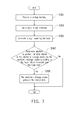
- FIG. 3 is a flowchart illustrating a data protection method of an electronic storage device according to an embodiment of the present invention.
- step S301 the user logs in through a host. If the login process is successful, a step S303 is executed, otherwise, a step S305 is executed.
- the electronic storage device records a login event generated when the host successfully logs in.
- the login event can also be stored in other storage devices.
- the electronic storage device records a failed login event.
- the electronic storage device determines the relationship between a predetermined value N and the value X. If the value X is smaller than a predetermined value N, the flow ends. If the value X is greater than or equal to the predetermined value N, a step S311 is executed.
- the electronic storage device protects the stored data from being stolen or accessed by others.
- FIG. 4 a flowchart illustrating a data protection method of an electronic storage device according to another embodiment of the present invention.
- step S401 the electronic storage device determines whether a time reaches a specific date and time (for example, a certain date or a certain time), and if not, the flow returns to the step S401, and if yes, a step S403 is executed.
- a specific date and time for example, a certain date or a certain time
- the electronic storage device determines whether there is a successful login after a last successful login, and if not, a step S405 is executed. This represents that the host has not yet successfully logged in, so that the electronic storage device protects the stored data. If the determination result of the step S403 is affirmative, the flow ends.
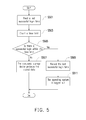
- FIG. 5 is a flowchart illustrating a data protection method of an electronic storage device according to another embodiment of the present invention.
- the login information includes a last successful login time.
- step S501 the electronic storage device reads the last successful login time.
- step S503 a time limit is counted.
- step S505 the electronic storage device determines whether there is a successful login within the time limit, and if not, a step S507 is executed. If the counting time exceeds the time limit, the electronic storage device protects the stored data from being stolen by others (step S507).
- step S509 the electronic storage device records the last successful login time. Then, in step S511, the operating system is logged out.
- FIG. 6 is a flowchart illustrating a data protection method according to an embodiment of the present invention.
- the data protection method of the present embodiment may include following steps.
- a backup battery is provided, and the backup battery is configured to be inside the electronic storage device to provide electric power for an operation of the electronic storage device when the host does not provide electricity to the electronic storage device (step S601). Moreover, the backup battery is capable of being repeatedly charged and discharged.
- a time setting value is set (step S603), where the time setting value can be a specific date and time or a time limit.
- the host When the host logs in an operating system, the host generates a login event (step S605).
- the login event is recorded in a flash memory of the electronic storage device, though the login event can also be stored in other storage devices.
- the electronic storage device determines whether to protect stored data in the electronic storage device according to the time setting value and the login event (step S607). If a determination result is affirmative, the electronic storage device protects the stored data (step S609). If the determination result is negative, the flow ends.
- the data protection method of the present embodiment may include following steps.
- a backup battery is provided, where the backup battery is configured to be inside the electronic storage device to provide electric power for an operation of the electronic storage device when the host does not provide electricity to the electronic storage device (step S701).
- a login failure threshold is set (step S703).
- the login failure threshold can be an upper limit of a number of continuous login failed attempts or a number of accumulated login failed attempts.
- the host When the host logs in an operating system, the host generates a login event (step S705).
- the login event is recorded in a flash memory of the electronic storage device, or recorded in an additional storage device.
- the electronic storage device determines whether to protect stored data in the electronic storage device according to whether the login event reaches the login failure threshold (step S707). If a determination result is affirmative, the electronic storage device protects the stored data (step S709). If the determination result is negative, the flow ends.
- the electronic storage device has a backup battery.
- the backup battery provides electric power for the operation of the electronic storage device, and the electric power of the backup battery can be used to preserve the login failure threshold and the login information.
- the protection mechanism of the electronic storage device can determine according to the time setting value and the login event, or according to whether the login event reaches the login failure threshold, so that the electronic storage device can protect the stored data of the electronic storage device to prevent the other from stealing the data.
Landscapes
- Engineering & Computer Science (AREA)
- Theoretical Computer Science (AREA)
- Computer Security & Cryptography (AREA)
- Computer Hardware Design (AREA)
- Software Systems (AREA)
- Physics & Mathematics (AREA)
- General Engineering & Computer Science (AREA)
- General Physics & Mathematics (AREA)
- Health & Medical Sciences (AREA)
- Bioethics (AREA)
- General Health & Medical Sciences (AREA)
- Storage Device Security (AREA)
Abstract
Description
- The present invention relates to an electronic data storage technique. Particularly, the present invention relates to an electronic storage device and a data protection method thereof.
- With the rapid development of electronic data storage technique, storage devices are widely used, and the data stored in the storage device may be important and classified, for example the classified data of military units or government units. The storage device should be designed to prevent unauthorized person from illegally invading, spoiling or stealing data. There are several encryption specifications or different levels of encryption specifications which can achieve the efficacy. But in practice, it is still insufficient to protect electronic data only by these specifications. In order to strengthen data security, the other protection mechanism has to be configured with the storage device to prevent data from being stolen.
- Accordingly, the present invention is directed to an electronic storage device and a data protection method thereof, by which the problem mentioned in the related art is resolved.
- The present invention provides a data protection method, which is adapted to an electronic storage device. The electronic storage device is electrically connected to a host, and stores data of the host. The data protection method includes the following steps. A backup battery is provided, where the backup battery is configured inside the electronic storage device to provide electric power for an operation of the electronic storage device when the host does not provide electricity to the electronic storage device. A time setting value is set. A login event is transmitted to the electronic storage device. The electronic storage device determines whether to protect stored data in the electronic storage device according to the time setting value and the login event. If a determination result is affirmative, the electronic storage device protects the stored data.
- The present invention provides a data protection method, which is adapted to an electronic storage device. The electronic storage device is electrically connected to a host, and stores data of the host. The data protection method includes the following steps. A backup battery is provided, where the backup battery is configured inside the electronic storage device to provide electric power for an operation of the electronic storage device when the host does not provide electricity to the electronic storage device. A login failure threshold is set. A login event is transmitted to the electronic storage device. The electronic storage device determines whether to protect stored data in the electronic storage device according to the login failure threshold and the login event. If a determination result is affirmative, the electronic storage device protects the stored data.
- The present invention provides an electronic storage device, which is electrically connected to a host to store data of the host. The electronic storage device includes a controller, a storage unit and a backup battery. The storage unit is coupled to the controller. The backup battery is coupled to the controller. When the host does not provide electricity to the electronic storage device, the backup battery provides electric power for an operation of the electronic storage device. The controller determines whether to protect data in the storage unit according to a time setting value and a login event. If a determination result is affirmative, the controller protects the data in the storage unit.
- The present invention provides an electronic storage device, which is electrically connected to a host to store data of the host. The electronic storage device includes a controller, a storage unit and a backup battery. The storage unit is coupled to the controller. The backup battery is coupled to the controller. When the host does not provide electricity to the electronic storage device, the backup battery provides electric power for an operation of the electronic storage device. The controller determines whether to protect data in the storage unit according to a login failure threshold and a login event. If a determination result is affirmative, the controller protects the data in the storage unit.
- According to the above descriptions, the electronic storage device has a backup battery. When the host does not provide electricity to the electronic storage device, the backup battery provides electric power for the operation of the electronic storage device, and the electric power of the backup battery can be used to preserve the login failure threshold and the login information. A protection mechanism of the electronic storage device can determine according to the time setting value and the login event, or according to whether the login event reaches the login failure threshold, so as to protect the stored data of the electronic storage device to prevent the other from stealing the data.
- In order to make the aforementioned and other features and advantages of the present invention comprehensible, several exemplary embodiments accompanied with figures are described in detail below.
- The accompanying drawings are included to provide a further understanding of the present invention, and are incorporated in and constitute a part of this specification. The drawings illustrate embodiments of the present invention and, together with the description, serve to explain the principles of the present invention.
-
FIG. 1 is a schematic diagram of an electronic storage device according to an embodiment of the present invention. -
FIG. 2 is a schematic diagram of the electronic storage device according to another embodiment of the present invention. -
FIG. 3 is a flowchart illustrating a data protection method of an electronic storage device according to an embodiment of the present invention. -
FIG. 4 a flowchart illustrating a data protection method of an electronic storage device according to another embodiment of the present invention. -
FIG. 5 is a flowchart illustrating a data protection method of an electronic storage device according to still another embodiment of the present invention. -
FIG. 6 is a flowchart illustrating a data protection method related to a time setting value according to an embodiment of the present invention. -
FIG. 7 is a flowchart illustrating a data protection method related to a login failure threshold according to an embodiment of the present invention. -
FIG. 1 is a schematic diagram of anelectronic storage device 10 according to an embodiment of the present invention. Referring toFIG. 1 , theelectronic storage device 10 is electrically connected to thehost 120, and theelectronic storage device 10 stores data DA transmitted by thehost 120. Theelectronic storage device 10 includescontroller 12, a storage unit 14 (for example, a flash memory) and abackup battery 16. Thecontroller 12 includes a control unit SATA_CTRL and a microprocessor MICRO_P. Thestorage unit 14 and thebackup battery 16 are coupled to thecontroller 12. Theelectronic storage device 10 can be implemented as a solid state drive (SSD). Moreover, thestorage unit 14 can be further used to store and operating system, for example, the Microsoft Windows or the Macintosh operating system. - When the
electronic storage device 10 is electrically connected to thehost 120, a user can log in through thehost 120 to execute the operating system. Thestorage unit 14 can receive a login event LE through the control unit SATA_CTRL and record it, when the login event LE is generated in the login procedure of thehost 120. The ways of identification of the login through thehost 120 includes face recognition, fingerprint recognition, password identification or smart card identification, though the present invention is not limited thereto. The microprocessor MICRO_P learns whether a new event occurs according to the login event LE, and calculates the number of the login event LE, or records a generation time point of the login event LE. The login event LE may also include a login failure event and/or a login success event. Moreover, thecontroller 12 determines whether to protect data in thestorage unit 14 according to a time setting value and the login event LE, and if a determination result is affirmative, thecontroller 12 protects the data in thestorage unit 14. The time setting value can be a specific date and time or a time limit. The time setting value is not limited to be set by thehost 120 and transmitted to theelectronic storage device 10, it can also be a predetermined value in the microprocessor MICRO_P. In a varied embodiment, the login event LE is stored in other storage device in thehost 120, though the microprocessor MICRO_P still learns whether the new event occurs according to the login event LE. - When the
host 120 is electrically connected to theelectronic storage device 10, thehost 120 supplies electric power to theelectronic storage device 10. Thebackup battery 16 is configured in theelectronic storage device 10, which is capable of being repeatedly charged and discharged. When thehost 120 does not supply the electric power to theelectronic storage device 10, thebackup battery 16 can provide the electric power for the operation of theelectronic storage device 10. For example, when theelectronic storage device 10 is not electrically connected to thehost 120, theelectronic storage device 10 stores the time setting value and the login information by using the electricity of thebackup battery 16. - The
electronic storage device 10 has a protection mechanism. A purpose of the "protection" is to prevent the others from stealing the data of theelectronic storage device 10. The microprocessor MICRO_P generates the login information according to the login event LE. The microprocessor MICRO_P of thecontroller 12 determines whether to protect the data in theelectronic storage device 10 according to the time setting value and the login information. If a determination result of the microprocessor MICRO_P fulfils a trigger condition of protecting theelectronic storage device 10, thecontroller 12 protects the data in theelectronic storage device 10. The trigger condition is described in detail below. - As described above, the time setting value can be the specific date and time or the time limit, and the login event LE may include the login failure event and/or the login success event. The microprocessor MICRO_P generates the login information according to the login event LE. In detail, when the microprocessor MICRO_P determines that the determination result fulfils one of the following trigger conditions according to the login information, the
controller 12 protects the stored data in theelectronic storage device 10. - Regarding the first trigger condition, the login information includes a cumulative number of failed login attempts, and when the cumulative number of failed login attempts reaches a predetermined value within the time limit, the stored data in the
electronic storage device 10 is protected. In detail, the cumulative number of failed login attempts refers to the number of accumulated times of login failure when thehost 120 is booted and requires the user to log in, i.e. thehost 120 generates a login failure event, and the controller 12 (the microprocessor MICRO_P) calculates the number of the login failure events. In a varied embodiment, thehost 120 can count the failed login attempts by itself, and notify thecontroller 12 of the failed login attempts. - Regarding the second trigger condition, the
electronic storage device 10 starts to count a counting time at a last successful login time, and if thehost 120 has not yet successfully logged in as the counting time exceeds the time limit, theelectronic storage device 10 protects the stored data in theelectronic storage device 10. The login information includes the last successful login time, and the last successful login time is the moment when the last login success event generates. - Regarding the third trigger condition, a number of continuous login failed attempts is obtained by counting the number of continuous login failure events, and if the number of continuous login failed attempts reaches a predetermined value within a time limit, the
electronic storage device 10 protects the stored data in theelectronic storage device 10. In detail, thehost 120 generates a login failure event, and thecontroller 12 counts the number of the login failure events to obtain the number of continuous login failed attempts. The login information includes the number of continuous login failed attempts. In a varied embodiment, thehost 120 can count the number of the continuous login failure attempts by itself, and notify thecontroller 12 of the number of the continuous login failure attempts. - Regarding the fourth trigger condition, if the microprocessor MICRO_P determines that the
host 120 has not yet successfully logged in as the time reaches a specific date and time, theelectronic storage device 10 protects the stored data in theelectronic storage device 10. - In the aforementioned first to the fourth trigger conditions, if the
electronic storage device 10 is not electrically connected to thehost 120 and thehost 120 cannot provide electric power to theelectronic storage device 10, thebackup battery 16 can provide electric power for the operation of theelectronic storage device 10. And therefore theelectronic storage device 10 can determine the aforementioned trigger conditions, and preserves the time setting value and the login information by using the electricity of thebackup battery 16. - Moreover, the
electronic storage device 10 can execute any of the following procedures to protect the stored data. For example, an advanced encryption standard (AES) key destruction procedure, a data destruction procedure, a flash memory destruction procedure or a stored data temporary locking procedure are provided. - For example, when the AES key destruction procedure is executed, an AES key can be tampered or completely destructed. Since the AES key has been tampered or completely destructed, if the
electronic storage device 10 is lack of the correct AES key, thehost 120 cannot access the stored data in thestorage unit 14. - For example, when the data destruction procedure is executed, none particular means is specified. As long as the stored data in the
storage unit 14 is destructed or erased, or thestorage unit 14 is physically destructed or malfunctioned, it is considered to be within the scope of the present invention. - For example, when the flash memory destruction procedure is executed, the same data can be repeatedly written into the
storage unit 14, the stored data of thestorage unit 14 is destructed (for example, the data is converted into garbled data), erased, maliciously tampered or destructed, or thestorage unit 14 is set to reject any access instruction, though the present invention is not limited to the above several methods. - For example, when the locking procedure of the stored data is temporarily executed, the data in the
storage unit 14 cannot be accessed again until an administrator releases a lock state. - Moreover, the
controller 12 can also convert the electricity provided by thebackup batter 16 or thehost 120 into a working voltage, and supplies the working voltage to thestorage unit 14 and thecontroller 12. The manner of converting the electricity into the working voltage may be a voltage boost manner (the working voltage is increased to +12V) or providing a reverse voltage (for example, the working voltage is decreased to -5V), so as to cause a physical destruction of thestorage unit 14 and thecontroller 12. Generally, a DC withstand voltage of the storage unit 14 (for example, a flash memory) and thecontroller 12 is about 5V. Thestorage unit 14 and thecontroller 12 may be an integrated circuit. If a DC voltage of 12V is applied and the DC voltage is far more than a maximum tolerable voltage (for example, (5V×(100%+5%)) of thestorage unit 14 and thecontroller 12, thestorage unit 14 and thecontroller 12 can be physically damaged. Similarly, if the DC voltage of -5V is applied and the reverse DC voltage is far less than a minimum tolerable voltage (for example, 0V) of thestorage unit 14 and thecontroller 12, thestorage unit 14 and thecontroller 12 can be physically damaged. - Referring to
FIG. 1 , in another varied embodiment, the login event LE can be generated in the login procedure of thehost 120. Theelectronic storage device 10 determines whether to protect the stored data in theelectronic storage device 10 according to whether the login event LE reaches a login failure threshold. If a determination result thereof is affirmative, theelectronic storage device 10 protects the stored data. The login failure threshold can be an upper limit of the number of continuous login failed attempts or the accumulated login failed attempts. - The protection mechanism of the present embodiment is as follows. The
electronic storage device 10 generates login information according to the login event LE. The login information may include the number of continuous login failed attempts or the number of accumulated login failed attempts. The microprocessor MICRO_P of thecontroller 12 determines whether to protect the stored data in theelectronic storage device 10 according to whether the login event LE reaches the login failure threshold. If the determination result of the microprocessor MICRO_P represents that the number of continuous login failed attempts or the number of accumulated login failed attempts reaches the login failure threshold, thecontroller 12 protects the stored data in theelectronic storage device 10. - Moreover, when the
electronic storage device 10 is not electrically connected to thehost 120, theelectronic storage device 10 uses the electricity of thebackup battery 16 to implement data protection and preserve the login failure threshold and the login information. - According to the above descriptions, in another varied embodiment, the aforementioned two embodiments can be combined. For example, the
controller 12 can determine whether to protect the stored data in theelectronic storage device 10 according to the time setting value and the login event LE, or according to whether the login event LE reaches the login failure threshold. -
FIG. 2 is a schematic diagram of theelectronic storage device 110 according to another embodiment of the present invention. Referring toFIG. 2 , a structure of theelectronic storage device 110 is similar to that of theelectronic storage device 10 ofFIG. 1 , and the same or similar parts thereof are not repeated. The difference betweenFIG. 1 and FIG. 2 is that theelectronic storage device 110 inFIG. 2 further includes aheating circuit 18, aconductive paste 20 andflow channels flow channels heating circuit 18 is controlled by thecontroller 12. Theflow channels conductive paste 20 and pins of an integrated circuit or components in theelectronic storage device 110. - According to the aforementioned data destruction procedure or the flash memory destruction procedure, the data protection method can be as follows. The
controller 12 controls theheating circuit 18 to heat theconductive paste 20, such that theconductive paste 20 is melted and flows along theflow channels electronic storage device 110. - In detail, the
flow channels heating circuit 18 heats theconductive paste 20, a working voltage of theheating circuit 18 can be 19V. When theheating circuit 18 heats theconductive paste 20 to a temperature of 80-90°C, theconductive paste 20 melts. The meltedconductive paste 20 flows along the port structures to the pins of thecontroller 12 and/or the pins of the storage unit 14 (for example, the flash memory). -
FIG. 3 is a flowchart illustrating a data protection method of an electronic storage device according to an embodiment of the present invention. - Referring to
FIG. 3 , in step S301, the user logs in through a host. If the login process is successful, a step S303 is executed, otherwise, a step S305 is executed. - In the step S303, the electronic storage device records a login event generated when the host successfully logs in. In another embodiment, the login event can also be stored in other storage devices.
- In the step S305, the electronic storage device records a failed login event. Then, in step S307, the electronic storage device (for example, a controller therein) counts "failure times"+1=X, where X can be one of the number of the accumulated login failed attempts within a time limit or the number of continuous login failed attempts. Then, in step S309, the electronic storage device determines the relationship between a predetermined value N and the value X. If the value X is smaller than a predetermined value N, the flow ends. If the value X is greater than or equal to the predetermined value N, a step S311 is executed.
- In the step S311, the electronic storage device protects the stored data from being stolen or accessed by others.
-
FIG. 4 a flowchart illustrating a data protection method of an electronic storage device according to another embodiment of the present invention. - Referring to
FIG. 4 , in step S401, the electronic storage device determines whether a time reaches a specific date and time (for example, a certain date or a certain time), and if not, the flow returns to the step S401, and if yes, a step S403 is executed. - In the step S403, the electronic storage device determines whether there is a successful login after a last successful login, and if not, a step S405 is executed. This represents that the host has not yet successfully logged in, so that the electronic storage device protects the stored data. If the determination result of the step S403 is affirmative, the flow ends.
-
FIG. 5 is a flowchart illustrating a data protection method of an electronic storage device according to another embodiment of the present invention. Referring toFIG. 5 , the login information includes a last successful login time. - In step S501, the electronic storage device reads the last successful login time. In step S503, a time limit is counted. Then, in step S505, the electronic storage device determines whether there is a successful login within the time limit, and if not, a step S507 is executed. If the counting time exceeds the time limit, the electronic storage device protects the stored data from being stolen by others (step S507).
- If the determination result of the step S505 is affirmative, a step S509 is executed. In the step S509, the electronic storage device records the last successful login time. Then, in step S511, the operating system is logged out.
- According to the disclosed content of the aforementioned embodiments, a data protection method related to a time setting value is deduced. In detail,
FIG. 6 is a flowchart illustrating a data protection method according to an embodiment of the present invention. Referring toFIG. 6 , the data protection method of the present embodiment may include following steps. - A backup battery is provided, and the backup battery is configured to be inside the electronic storage device to provide electric power for an operation of the electronic storage device when the host does not provide electricity to the electronic storage device (step S601). Moreover, the backup battery is capable of being repeatedly charged and discharged.
- A time setting value is set (step S603), where the time setting value can be a specific date and time or a time limit.
- When the host logs in an operating system, the host generates a login event (step S605). For example, the login event is recorded in a flash memory of the electronic storage device, though the login event can also be stored in other storage devices.
- The electronic storage device determines whether to protect stored data in the electronic storage device according to the time setting value and the login event (step S607). If a determination result is affirmative, the electronic storage device protects the stored data (step S609). If the determination result is negative, the flow ends.
- According to the disclosed content of the aforementioned embodiment, a data protection method related to a login failure threshold is deduced. Referring to
FIG. 7 , the data protection method of the present embodiment may include following steps. - A backup battery is provided, where the backup battery is configured to be inside the electronic storage device to provide electric power for an operation of the electronic storage device when the host does not provide electricity to the electronic storage device (step S701).
- A login failure threshold is set (step S703). The login failure threshold can be an upper limit of a number of continuous login failed attempts or a number of accumulated login failed attempts.
- When the host logs in an operating system, the host generates a login event (step S705). For example, the login event is recorded in a flash memory of the electronic storage device, or recorded in an additional storage device.
- The electronic storage device determines whether to protect stored data in the electronic storage device according to whether the login event reaches the login failure threshold (step S707). If a determination result is affirmative, the electronic storage device protects the stored data (step S709). If the determination result is negative, the flow ends.
- In summary, the electronic storage device has a backup battery. When the host does not provide electricity to the electronic storage device, the backup battery provides electric power for the operation of the electronic storage device, and the electric power of the backup battery can be used to preserve the login failure threshold and the login information. The protection mechanism of the electronic storage device can determine according to the time setting value and the login event, or according to whether the login event reaches the login failure threshold, so that the electronic storage device can protect the stored data of the electronic storage device to prevent the other from stealing the data.
- It will be apparent to those skilled in the art that various modifications and variations can be made to the structure of the invention without departing from the scope or spirit of the invention. In view of the foregoing, it is intended that the invention cover modifications and variations of this invention provided they fall within the scope of the following claims and their equivalents.
Claims (15)
- A data protection method, adapted to an electronic storage device (10, 110), wherein the electronic storage device (10, 110) is electrically connected to a host (120), and stores data of the host(120), the data protection method comprising:providing a backup battery (16) (S601), wherein the backup battery (16) is configured to be inside the electronic storage device (10, 110) and provide electric power for an operation of the electronic storage device (10, 110) when the host (120) does not provide electricity to the electronic storage device (10, 110);setting a time setting value (S603);transmitting a login event (LE) (S605)to the electronic storage device; anddetermining whether to protect stored data in the electronic storage device (10, 110) by the electronic storage device (10, 110) according to the time setting value and the login event (S607), wherein when a determination result is affirmative, the electronic storage device (10, 110) protects the stored data (S609).
- The data protection method as claimed in claim 1, wherein the electronic storage device (10, 110) generates a login information according to the login event (LE), and the time setting value is a specific date time or a time limit.
- The data protection method as claimed in claim 2, wherein the login event (LE) is a login failure event, and the login information comprises the number of the accumulated login failed attempts (S307), the number of accumulated login failed attempts is obtained according to the number of the login failure event, and when the cumulative number of failed login attempts reaches a predetermined value within the time limit, the electronic storage device (10, 110) protects the stored data.
- The data protection method as claimed in claim 2, wherein the login event (LE) is a login failure event, and the login information comprises a last successful login time (S501), the electronic storage device (10, 110) starts to count a counting time at the last successful login time (S503), and when the host (120) has not yet successfully logged in as the counting time exceeds the time limit, the electronic storage device (10, 110) protects the stored data.
- The data protection method as claimed in claim 2, wherein the login event (LE) is a login failure event, and the login information comprises a number of continuous login failed attempts (S307), the number of continuous login failed attempts is obtained according to the number of the login failure events, and when the number of continuous login failed attempts reaches a predetermined value within the time limit, the electronic storage device (10, 110) protects the stored data.
- The data protection method as claimed in claim 2, wherein when the host (120) has not yet successfully logged in as time reaches the specific date and time (S401), the electronic storage device (10, 110) protects the stored data.
- The data protection method as claimed in claim 2, wherein when the electronic storage device (10, 110) is not electrically connected to the host (120), the electronic storage device (10, 110) preserves the time setting value and the login information by using electric power of the backup battery (16).
- The data protection method as claimed in claim 1, wherein the step of protecting the stored data by the electronic storage device (10, 110) further comprises supplying electric power to the electronic storage device (10, 110) in a voltage boost manner or a reverse voltage.
- An electronic storage device, electrically connected to a host to store data of the host, the electronic storage device comprising:a controller;a storage unit, coupled to the controller; anda backup battery, coupled to the controller, wherein when the host does not provide electricity to the electronic storage device, the backup battery provides electric power for an operation of the electronic storage device,wherein the controller determines whether to protect data in the storage unit according to a time setting value and a login event, and when a determination result is affirmative, the controller protects the data in the storage unit.
- The electronic storage device (10, 110) as claimed in claim 9, wherein the controller (12) generates login information according to the login event, and the time setting value is a specific date time or a time limit.
- The electronic storage device (10, 110) as claimed in claim 10, wherein the login event (LE) is a login failure event, and the login information comprises an cumulative number of failed login attempts, the controller (12) obtains the cumulative number of failed login attempts according to the number of times of the login failure event, and when the cumulative number of failed login attempts reaches a predetermined value within the time limit (S707) (S709), the controller (12) protects the data in the storage unit (14).
- The electronic storage device (10, 110) as claimed in claim 10, wherein the login event (LE) is a login failure event, and the login information comprises a last successful login time, the controller starts to count a counting time at the last successful login time, and when the host (120) has not yet successfully logged in as the counting time exceeds the time limit, the controller protects the data in the storage unit (14).
- The electronic storage device (10, 110) as claimed in claim 10, wherein the login event (LE) is a login failure event, and the login information comprises a number of continuous login failed attempts (S307), the controller (12) obtains the number of continuous login failed attempts according to the number of the login failure event, and when the number of continuous login failed attempts reaches a predetermined value within the time limit (S309) (S311), the controller protects the data in the storage unit (14)
- The electronic storage device (10, 110) as claimed in claim 10, wherein when the host (120) has not yet successfully logged in as time reaches the specific date and time, the electronic storage device (10, 110) protects the data in the storage unit (14).
- The electronic storage device (10, 110) as claimed in claim 9, wherein when the electronic storage device (10, 110) is not electrically connected to the host (120), the controller preserves the time setting value and the login information by using electric power of the backup battery (16).
Applications Claiming Priority (2)
| Application Number | Priority Date | Filing Date | Title |
|---|---|---|---|
| US201261674785P | 2012-07-23 | 2012-07-23 | |
| CN201210548945.8A CN103870766A (en) | 2012-12-18 | 2012-12-18 | Electronic storage device and data protection method thereof |
Publications (1)
| Publication Number | Publication Date |
|---|---|
| EP2690578A1 true EP2690578A1 (en) | 2014-01-29 |
Family
ID=49773113
Family Applications (2)
| Application Number | Title | Priority Date | Filing Date |
|---|---|---|---|
| EP13173782.7A Ceased EP2690577A1 (en) | 2012-07-23 | 2013-06-26 | Electronic storage device and data protection method thereof |
| EP13173802.3A Withdrawn EP2690578A1 (en) | 2012-07-23 | 2013-06-26 | Electronic storage device and data protection method thereof |
Family Applications Before (1)
| Application Number | Title | Priority Date | Filing Date |
|---|---|---|---|
| EP13173782.7A Ceased EP2690577A1 (en) | 2012-07-23 | 2013-06-26 | Electronic storage device and data protection method thereof |
Country Status (3)
| Country | Link |
|---|---|
| US (1) | US20140026225A1 (en) |
| EP (2) | EP2690577A1 (en) |
| CN (1) | CN103870766A (en) |
Families Citing this family (1)
| Publication number | Priority date | Publication date | Assignee | Title |
|---|---|---|---|---|
| CN106601296A (en) * | 2016-12-14 | 2017-04-26 | 联想(北京)有限公司 | Electronic equipment, power supply method and storage equipment |
Citations (5)
| Publication number | Priority date | Publication date | Assignee | Title |
|---|---|---|---|---|
| US20030131255A1 (en) * | 2002-01-10 | 2003-07-10 | Youngtack Shim | Secure data storage systems |
| US20080091605A1 (en) * | 2006-09-29 | 2008-04-17 | Sun Microsystems, Inc. | Method and apparatus for secure information distribution |
| US20080140967A1 (en) * | 2006-12-07 | 2008-06-12 | International Business Machines Corporation | Method and system for programmable memory device security |
| US20100132047A1 (en) * | 2008-11-24 | 2010-05-27 | Honeywell International Inc. | Systems and methods for tamper resistant memory devices |
| US20100250968A1 (en) * | 2009-03-25 | 2010-09-30 | Lsi Corporation | Device for data security using user selectable one-time pad |
Family Cites Families (11)
| Publication number | Priority date | Publication date | Assignee | Title |
|---|---|---|---|---|
| GB2182467B (en) * | 1985-10-30 | 1989-10-18 | Ncr Co | Security device for stored sensitive data |
| WO2000043855A1 (en) * | 1999-01-07 | 2000-07-27 | Remedan Aps. | A control device for a computer, use of a control device, a computer comprising a control device, and a method of connecting and disconnecting units in a computer |
| US20020002685A1 (en) * | 2000-01-10 | 2002-01-03 | Youngtack Shim | Secure computer |
| AUPQ866000A0 (en) * | 2000-07-07 | 2000-08-03 | Activesky, Inc. | A secure data storage device |
| US20080219122A1 (en) * | 2003-03-18 | 2008-09-11 | Roger Detzler | Dead on demand technology |
| US9036414B2 (en) * | 2007-01-05 | 2015-05-19 | Proton World International N.V. | Temporary locking of an electronic circuit to protect data contained in the electronic circuit |
| US7930755B1 (en) * | 2007-11-02 | 2011-04-19 | Miller Timothy T | System and method for ensuring security of data stored on electronic computing devices |
| CN101408916B (en) * | 2008-08-27 | 2011-06-22 | 上海第二工业大学 | A method for protecting privacy of Internet software online |
| US20100142584A1 (en) * | 2008-12-09 | 2010-06-10 | Harrington Brian P | Digital linear heat detector with thermal activation confirmation |
| GB2481043A (en) * | 2010-06-09 | 2011-12-14 | Pangaea Media Ltd | Storage device adapted to physically destroy itself in response to an unauthorised access attempt |
| US8650639B2 (en) * | 2010-09-29 | 2014-02-11 | Blackberry Limited | System and method for hindering a cold boot attack |
-
2012
- 2012-12-18 CN CN201210548945.8A patent/CN103870766A/en active Pending
-
2013
- 2013-05-31 US US13/907,785 patent/US20140026225A1/en not_active Abandoned
- 2013-06-26 EP EP13173782.7A patent/EP2690577A1/en not_active Ceased
- 2013-06-26 EP EP13173802.3A patent/EP2690578A1/en not_active Withdrawn
Patent Citations (5)
| Publication number | Priority date | Publication date | Assignee | Title |
|---|---|---|---|---|
| US20030131255A1 (en) * | 2002-01-10 | 2003-07-10 | Youngtack Shim | Secure data storage systems |
| US20080091605A1 (en) * | 2006-09-29 | 2008-04-17 | Sun Microsystems, Inc. | Method and apparatus for secure information distribution |
| US20080140967A1 (en) * | 2006-12-07 | 2008-06-12 | International Business Machines Corporation | Method and system for programmable memory device security |
| US20100132047A1 (en) * | 2008-11-24 | 2010-05-27 | Honeywell International Inc. | Systems and methods for tamper resistant memory devices |
| US20100250968A1 (en) * | 2009-03-25 | 2010-09-30 | Lsi Corporation | Device for data security using user selectable one-time pad |
Also Published As
| Publication number | Publication date |
|---|---|
| CN103870766A (en) | 2014-06-18 |
| EP2690577A1 (en) | 2014-01-29 |
| US20140026225A1 (en) | 2014-01-23 |
Similar Documents
| Publication | Publication Date | Title |
|---|---|---|
| KR101052128B1 (en) | Authentication method, device and system of external storage device | |
| DE112007001635T5 (en) | Authentication of components in computer systems | |
| EP2367135A2 (en) | Adapter for portable storage medium and method of disabling data access | |
| CN201707677U (en) | High-confidentiality solid hard disk product based on double destroy technology | |
| CN205681457U (en) | A kind of data safety network gateway equipment with inherently safe defense function | |
| CN103559435A (en) | Method and device for controlling debugging ports of terminal equipment | |
| US20190266361A1 (en) | Solid state storage data destruction | |
| CN201397508Y (en) | Stand-alone terminal secure login and monitoring device | |
| EP3341888B1 (en) | Methods and a system for secure data storage | |
| CN110210260A (en) | Data destruct system and method | |
| JP3633346B2 (en) | Password control device | |
| CN105122225A (en) | Disabling counterfeit cartridges | |
| EP2690577A1 (en) | Electronic storage device and data protection method thereof | |
| US8683088B2 (en) | Peripheral device data integrity | |
| US9781104B2 (en) | Working method of dynamic token | |
| CN102592341A (en) | Filing cabinet control-based data processing method, equipment, server and system | |
| BRPI1105431A2 (en) | Method and system for controlling the execution of a function protected by authentication, memory module, and electronic entity | |
| US11947656B2 (en) | Proofing against tampering with a computer | |
| US10382201B1 (en) | Removable circuit for unlocking self-encrypting data storage devices | |
| SE526732C2 (en) | Security arrangement for ensuring access to device such as portable computer, has key unit with input and communication units to identify user before key unit accepts locking-unlocking | |
| CN103294141A (en) | Safety protection computer case | |
| US20180032761A1 (en) | System and method for preventing thin/zero client from unauthorized physical access | |
| CN202009397U (en) | Remote fingerprint USB (Universal Serial Bus) flash disk erasion system | |
| CN105701412A (en) | Verification method and device for external authentication key | |
| WO2020024509A1 (en) | Smart door lock, and method and device for supplying power to smart door lock |
Legal Events
| Date | Code | Title | Description |
|---|---|---|---|
| PUAI | Public reference made under article 153(3) epc to a published international application that has entered the european phase |
Free format text: ORIGINAL CODE: 0009012 |
|
| AK | Designated contracting states |
Kind code of ref document: A1 Designated state(s): AL AT BE BG CH CY CZ DE DK EE ES FI FR GB GR HR HU IE IS IT LI LT LU LV MC MK MT NL NO PL PT RO RS SE SI SK SM TR |
|
| AX | Request for extension of the european patent |
Extension state: BA ME |
|
| 17P | Request for examination filed |
Effective date: 20140226 |
|
| RBV | Designated contracting states (corrected) |
Designated state(s): AL AT BE BG CH CY CZ DE DK EE ES FI FR GB GR HR HU IE IS IT LI LT LU LV MC MK MT NL NO PL PT RO RS SE SI SK SM TR |
|
| 17Q | First examination report despatched |
Effective date: 20160127 |
|
| STAA | Information on the status of an ep patent application or granted ep patent |
Free format text: STATUS: THE APPLICATION IS DEEMED TO BE WITHDRAWN |
|
| 18D | Application deemed to be withdrawn |
Effective date: 20200103 |