EP2688035A1 - Apparatus for a plurality of clients to access a plant asset manager - Google Patents
Apparatus for a plurality of clients to access a plant asset manager Download PDFInfo
- Publication number
- EP2688035A1 EP2688035A1 EP13168499.5A EP13168499A EP2688035A1 EP 2688035 A1 EP2688035 A1 EP 2688035A1 EP 13168499 A EP13168499 A EP 13168499A EP 2688035 A1 EP2688035 A1 EP 2688035A1
- Authority
- EP
- European Patent Office
- Prior art keywords
- server
- clients
- client
- plant asset
- gateway
- Prior art date
- Legal status (The legal status is an assumption and is not a legal conclusion. Google has not performed a legal analysis and makes no representation as to the accuracy of the status listed.)
- Withdrawn
Links
Images
Classifications
-
- G—PHYSICS
- G06—COMPUTING OR CALCULATING; COUNTING
- G06Q—INFORMATION AND COMMUNICATION TECHNOLOGY [ICT] SPECIALLY ADAPTED FOR ADMINISTRATIVE, COMMERCIAL, FINANCIAL, MANAGERIAL OR SUPERVISORY PURPOSES; SYSTEMS OR METHODS SPECIALLY ADAPTED FOR ADMINISTRATIVE, COMMERCIAL, FINANCIAL, MANAGERIAL OR SUPERVISORY PURPOSES, NOT OTHERWISE PROVIDED FOR
- G06Q10/00—Administration; Management
- G06Q10/06—Resources, workflows, human or project management; Enterprise or organisation planning; Enterprise or organisation modelling
-
- G—PHYSICS
- G06—COMPUTING OR CALCULATING; COUNTING
- G06Q—INFORMATION AND COMMUNICATION TECHNOLOGY [ICT] SPECIALLY ADAPTED FOR ADMINISTRATIVE, COMMERCIAL, FINANCIAL, MANAGERIAL OR SUPERVISORY PURPOSES; SYSTEMS OR METHODS SPECIALLY ADAPTED FOR ADMINISTRATIVE, COMMERCIAL, FINANCIAL, MANAGERIAL OR SUPERVISORY PURPOSES, NOT OTHERWISE PROVIDED FOR
- G06Q50/00—Information and communication technology [ICT] specially adapted for implementation of business processes of specific business sectors, e.g. utilities or tourism
- G06Q50/04—Manufacturing
-
- H—ELECTRICITY
- H04—ELECTRIC COMMUNICATION TECHNIQUE
- H04L—TRANSMISSION OF DIGITAL INFORMATION, e.g. TELEGRAPHIC COMMUNICATION
- H04L67/00—Network arrangements or protocols for supporting network services or applications
- H04L67/01—Protocols
- H04L67/02—Protocols based on web technology, e.g. hypertext transfer protocol [HTTP]
- H04L67/025—Protocols based on web technology, e.g. hypertext transfer protocol [HTTP] for remote control or remote monitoring of applications
-
- H—ELECTRICITY
- H04—ELECTRIC COMMUNICATION TECHNIQUE
- H04L—TRANSMISSION OF DIGITAL INFORMATION, e.g. TELEGRAPHIC COMMUNICATION
- H04L67/00—Network arrangements or protocols for supporting network services or applications
- H04L67/01—Protocols
- H04L67/10—Protocols in which an application is distributed across nodes in the network
- H04L67/1001—Protocols in which an application is distributed across nodes in the network for accessing one among a plurality of replicated servers
- H04L67/1004—Server selection for load balancing
- H04L67/1017—Server selection for load balancing based on a round robin mechanism
-
- Y—GENERAL TAGGING OF NEW TECHNOLOGICAL DEVELOPMENTS; GENERAL TAGGING OF CROSS-SECTIONAL TECHNOLOGIES SPANNING OVER SEVERAL SECTIONS OF THE IPC; TECHNICAL SUBJECTS COVERED BY FORMER USPC CROSS-REFERENCE ART COLLECTIONS [XRACs] AND DIGESTS
- Y02—TECHNOLOGIES OR APPLICATIONS FOR MITIGATION OR ADAPTATION AGAINST CLIMATE CHANGE
- Y02P—CLIMATE CHANGE MITIGATION TECHNOLOGIES IN THE PRODUCTION OR PROCESSING OF GOODS
- Y02P90/00—Enabling technologies with a potential contribution to greenhouse gas [GHG] emissions mitigation
- Y02P90/02—Total factory control, e.g. smart factories, flexible manufacturing systems [FMS] or integrated manufacturing systems [IMS]
-
- Y—GENERAL TAGGING OF NEW TECHNOLOGICAL DEVELOPMENTS; GENERAL TAGGING OF CROSS-SECTIONAL TECHNOLOGIES SPANNING OVER SEVERAL SECTIONS OF THE IPC; TECHNICAL SUBJECTS COVERED BY FORMER USPC CROSS-REFERENCE ART COLLECTIONS [XRACs] AND DIGESTS
- Y02—TECHNOLOGIES OR APPLICATIONS FOR MITIGATION OR ADAPTATION AGAINST CLIMATE CHANGE
- Y02P—CLIMATE CHANGE MITIGATION TECHNOLOGIES IN THE PRODUCTION OR PROCESSING OF GOODS
- Y02P90/00—Enabling technologies with a potential contribution to greenhouse gas [GHG] emissions mitigation
- Y02P90/30—Computing systems specially adapted for manufacturing
Definitions
- the invention relates to an apparatus for a plurality of clients to access a plant asset manager of an industrial plant and particularly, though not exclusively, relates to an apparatus for remote access to the plant asset manager.
- the purpose of a plant asset management (PAM) system is to allow operations and maintenance staff of an industrial plant to monitor assets of the plant, so as to safely increase total production output and reduce cost where possible.
- the PAM typically comprises a plant asset manager having a PAM server that interfaces with the plant assets such as devices and pieces of equipment through a fieldbus communication server.
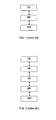
- a PAM client 120 In current systems, as shown in FIG. 1 (prior art), a PAM client 120 must be connected to a PAM server 100 first before it can be connected to a 200 fieldbus communication (FBCOMM) server 200.
- the FBCOMM server 200 serves as an interface between the PAM server 100 and actual devices in the industrial plant 1000.
- the PAM client 120 may be desktop-based, such as a stationary computer, having application programming interfaces (API) provided therein for interacting with the PAM server 100.
- APIs provided on a desk-top based PAM client 120 are not available on mobile devices which thus cannot interact with PAM servers 100.
- the PAM server 100 may be accessed via a web-based PAM client 130 through a web server 140 configured to translate HTTP messages from the web-based PAM client 130 into API calls to the PAM server 100.
- web-based PAM clients 130 cannot handle high load requirements due to a lack of scaling mechanisms, and are also unable to push notifications from the PAM server 100 to the web-based PAM client 130.
- an apparatus for a plurality of clients to access a plant asset manager comprising a gateway server configured to communicate directly with a plant asset management server of the plant asset manager; and at least one client server configured to communicate directly with the gateway server and to communicate directly with at least one of the plurality of clients; such that there is no direct communication between the plurality of clients and the plant asset management server.
- Each client server may be configured to manage individual client sessions.
- Communications between the at least one client server and the at least one of the plurality of clients may comprise messages having a format of a predetermined protocol that are transmitted via a bidirectional transport protocol.
- the gateway server may comprise a number of workers, each worker comprising a server application.
- the number of workers may be selected based on processing needs depending on the number of the plurality of clients to be supported.
- the gateway server may further comprise a load balancer for distributing workload to the number of workers.
- the gateway server may be configured to interpret and execute commands received from the at least one client server.
- the gateway server may be further configured to compose replies of results obtained from the plant asset management server in response to execution of the commands and to communicate the replies to the at least one client server.
- the apparatus may further comprise a web server configured to transmit communications between web-based clients and a client server.
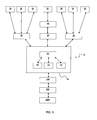
- An exemplary apparatus 10 for a plurality of clients 30 to access a plant asset manager of an industrial plant 1000 will be described with reference to FIG. 3 below.
- the apparatus 10 comprises at least one client server 20 and a gateway server 40.
- Each client server 20 is configured to be connected with various PAM clients 30.
- Each client 30 may be in the form of a device such as a smartphone, tablet, desktop computer, or a web client 32.
- Each client server 20 manages individual client sessions and relays messages between a client 30 and a gateway server 40.
- Transport of messages between a client 30 and a client server 20 is preferably via bidirectional transport protocol such as TCP, which may be wi-fi, 3G, 4G and so on.
- the messages exchanged may have a format of any predetermined protocol that allows the client 30 to send commands to the client server 20, and also allows the client server 20 to send results and push alarms or notifications to the client 30.
- the predetermined protocol may be in the form of XML streams.
- the gateway server 40 is configured to interpret commands received from the client server 20 as transmitted from the clients 30 to the client server 20 as client requests, and to execute the commands.
- the gateway server 40 interfaces with a PAM server 100 of a plant asset manager, so that the PAM server 100 never directly interfaces with any clients 30, 32.
- the PAM server 100 continues to communicate with a fieldbus communication server 200 that serves as an interface between the PAM server 100 and plant assets in the industrial plant 1000.
- the gateway server 40 is configured to compose replies to be returned to the appropriate client 30 via the client server 20.
- the reply should have a format based on the predetermined protocol mentioned above for message transmission between the client 30 and the client server 20.
- the gateway server 40 is preferably configured to be scalable. This may be achieved by configuring the gateway server 40 to have a distributed computing architecture, the gateway server 40 being provided with a number of workers 42 to perform the processing. Each worker 42 is configured as a server application that can be provided in a single machine or across multiple machines. The number of workers 42 provided in the gateway server 40 can thus be selected to be based on processing needs depending on the number of clients 30 to be supported. In this way, high load requirements faced when supporting a multitude of clients 30 can be readily met by adding more workers 42 to the scalable gateway server 40.
- a load balancer 44 is preferably also included in the gateway server 40 to distribute workload to the number of workers 42.
- the workload may be distributed in various ways, for example, in a round-robin manner for even distribution.
- the apparatus 10 may further comprise a web server 50 to allow the PAM server 100 to handle web-based clients 32, by transmitting communications between web-based clients 32 and a client server 20 which in turns communicates with the gateway server 40.
- the web server 50 is configured to translate HTTP commands from a web-based client 32 into the predetermined protocol as described above and to transmit the translated commands to the client server 20. This is because web-based clients 32 such as a web browser can only issue and process HTTP commands such as POST and GET.
- the predetermined protocol may be configured to be HTTP-based instead of the preferred XML streams mentioned above. Accordingly, all clients 30, 32 and client servers 20 will communicate via HTTP, thus rendering the web server 50 unnecessary since the client servers 20 will be able to accept HTTP commands and thus communicate directly with web-based clients 32 that can only issue HTTP commands.
- clients 30, 32 of a plurality of types can access the plant PAM server 100.
- Clients 30, 32 comprising handheld mobile devices such as smartphones and tablets, desk-top computers, web-based clients and so on can thus all be supported, thereby allowing the plant 1000 to be monitored remotely, and also by many users at once since more client servers 20 and more workers 42 in the gateway server 40 can be added where needed.
Landscapes
- Engineering & Computer Science (AREA)
- Business, Economics & Management (AREA)
- Economics (AREA)
- Human Resources & Organizations (AREA)
- Strategic Management (AREA)
- Signal Processing (AREA)
- Tourism & Hospitality (AREA)
- Theoretical Computer Science (AREA)
- Computer Networks & Wireless Communication (AREA)
- Entrepreneurship & Innovation (AREA)
- General Physics & Mathematics (AREA)
- Marketing (AREA)
- General Business, Economics & Management (AREA)
- Physics & Mathematics (AREA)
- Educational Administration (AREA)
- Quality & Reliability (AREA)
- Operations Research (AREA)
- Game Theory and Decision Science (AREA)
- Development Economics (AREA)
- Manufacturing & Machinery (AREA)
- Health & Medical Sciences (AREA)
- General Health & Medical Sciences (AREA)
- Primary Health Care (AREA)
- Computer And Data Communications (AREA)
- Testing And Monitoring For Control Systems (AREA)
Abstract
An apparatus for a plurality of clients to access a plant asset manager, the apparatus comprising a gateway server configured to communicate directly with a plant asset management server of the plant asset manager; and at least one client server configured to communicate directly with the gateway server and to communicate directly with at least one of the plurality of clients; such that there is no direct communication between the plurality of clients and the plant asset management server.
Description
- The invention relates to an apparatus for a plurality of clients to access a plant asset manager of an industrial plant and particularly, though not exclusively, relates to an apparatus for remote access to the plant asset manager.
- The purpose of a plant asset management (PAM) system is to allow operations and maintenance staff of an industrial plant to monitor assets of the plant, so as to safely increase total production output and reduce cost where possible. The PAM typically comprises a plant asset manager having a PAM server that interfaces with the plant assets such as devices and pieces of equipment through a fieldbus communication server.
- In current systems, as shown in
FIG. 1 (prior art), aPAM client 120 must be connected to aPAM server 100 first before it can be connected to a 200 fieldbus communication (FBCOMM)server 200. The FBCOMMserver 200 serves as an interface between thePAM server 100 and actual devices in theindustrial plant 1000. ThePAM client 120 may be desktop-based, such as a stationary computer, having application programming interfaces (API) provided therein for interacting with thePAM server 100. However, APIs provided on a desk-top basedPAM client 120 are not available on mobile devices which thus cannot interact withPAM servers 100. - Alternatively, as shown in
FIG. 2 (prior art), thePAM server 100 may be accessed via a web-basedPAM client 130 through aweb server 140 configured to translate HTTP messages from the web-basedPAM client 130 into API calls to thePAM server 100. However, web-basedPAM clients 130 cannot handle high load requirements due to a lack of scaling mechanisms, and are also unable to push notifications from thePAM server 100 to the web-basedPAM client 130. - According to a first exemplary aspect, there is provided an apparatus for a plurality of clients to access a plant asset manager, the apparatus comprising a gateway server configured to communicate directly with a plant asset management server of the plant asset manager; and at least one client server configured to communicate directly with the gateway server and to communicate directly with at least one of the plurality of clients; such that there is no direct communication between the plurality of clients and the plant asset management server.
- Each client server may be configured to manage individual client sessions.
- Communications between the at least one client server and the at least one of the plurality of clients may comprise messages having a format of a predetermined protocol that are transmitted via a bidirectional transport protocol.
- The gateway server may comprise a number of workers, each worker comprising a server application.
- The number of workers may be selected based on processing needs depending on the number of the plurality of clients to be supported.
- The gateway server may further comprise a load balancer for distributing workload to the number of workers.
- The gateway server may be configured to interpret and execute commands received from the at least one client server.
- The gateway server may be further configured to compose replies of results obtained from the plant asset management server in response to execution of the commands and to communicate the replies to the at least one client server.
- The apparatus may further comprise a web server configured to transmit communications between web-based clients and a client server.
- In order that the invention may be fully understood and readily put into practical effect there shall now be described by way of non-limitative example only exemplary embodiments of the present invention, the description being with reference to the accompanying illustrative drawings.
- In the drawings:
-
FIG. 1 (prior art) is an architectural diagram of a desk-top based PAM system; -
FIG. 2 (prior art) is an architectural diagram of a web-based PAM system; and -
FIG. 3 is an architectural diagram of the present invention in a PAM system. - An
exemplary apparatus 10 for a plurality ofclients 30 to access a plant asset manager of anindustrial plant 1000 will be described with reference toFIG. 3 below. - As shown in the architectural diagram of
FIG. 3 , theapparatus 10 comprises at least oneclient server 20 and agateway server 40. Eachclient server 20 is configured to be connected withvarious PAM clients 30. Eachclient 30 may be in the form of a device such as a smartphone, tablet, desktop computer, or aweb client 32. Eachclient server 20 manages individual client sessions and relays messages between aclient 30 and agateway server 40. - Transport of messages between a
client 30 and aclient server 20 is preferably via bidirectional transport protocol such as TCP, which may be wi-fi, 3G, 4G and so on. The messages exchanged may have a format of any predetermined protocol that allows theclient 30 to send commands to theclient server 20, and also allows theclient server 20 to send results and push alarms or notifications to theclient 30. In a preferred embodiment, the predetermined protocol may be in the form of XML streams. - The
gateway server 40 is configured to interpret commands received from theclient server 20 as transmitted from theclients 30 to theclient server 20 as client requests, and to execute the commands. Thegateway server 40 interfaces with aPAM server 100 of a plant asset manager, so that thePAM server 100 never directly interfaces with anyclients PAM server 100 continues to communicate with afieldbus communication server 200 that serves as an interface between thePAM server 100 and plant assets in theindustrial plant 1000. - When results are obtained from the
PAM server 100 after client requests have been executed, thegateway server 40 is configured to compose replies to be returned to theappropriate client 30 via theclient server 20. The reply should have a format based on the predetermined protocol mentioned above for message transmission between theclient 30 and theclient server 20. - As execution of client requests may require heavy processing, the
gateway server 40 is preferably configured to be scalable. This may be achieved by configuring thegateway server 40 to have a distributed computing architecture, thegateway server 40 being provided with a number ofworkers 42 to perform the processing. Eachworker 42 is configured as a server application that can be provided in a single machine or across multiple machines. The number ofworkers 42 provided in thegateway server 40 can thus be selected to be based on processing needs depending on the number ofclients 30 to be supported. In this way, high load requirements faced when supporting a multitude ofclients 30 can be readily met by addingmore workers 42 to thescalable gateway server 40. - A
load balancer 44 is preferably also included in thegateway server 40 to distribute workload to the number ofworkers 42. The workload may be distributed in various ways, for example, in a round-robin manner for even distribution. - The
apparatus 10 may further comprise aweb server 50 to allow thePAM server 100 to handle web-basedclients 32, by transmitting communications between web-basedclients 32 and aclient server 20 which in turns communicates with thegateway server 40. Theweb server 50 is configured to translate HTTP commands from a web-basedclient 32 into the predetermined protocol as described above and to transmit the translated commands to theclient server 20. This is because web-basedclients 32 such as a web browser can only issue and process HTTP commands such as POST and GET. - Alternatively, the predetermined protocol may be configured to be HTTP-based instead of the preferred XML streams mentioned above. Accordingly, all
clients client servers 20 will communicate via HTTP, thus rendering theweb server 50 unnecessary since theclient servers 20 will be able to accept HTTP commands and thus communicate directly with web-basedclients 32 that can only issue HTTP commands. - With the
apparatus 10,multiple clients plant PAM server 100.Clients plant 1000 to be monitored remotely, and also by many users at once sincemore client servers 20 andmore workers 42 in thegateway server 40 can be added where needed. - Whilst there has been described in the foregoing description exemplary embodiments of the present invention, it will be understood by those skilled in the technology concerned that many variations in details of design, construction and/or operation may be made without departing from the present invention.
Claims (9)
- An apparatus for a plurality of clients to access a plant asset manager, the apparatus comprising:a gateway server configured to communicate directly with a plant asset management server of the plant asset manager; andat least one client server configured to communicate directly with the gateway server and to communicate directly with at least one of the plurality of clients;such that there is no direct communication between the plurality of clients and the plant asset management server.
- The apparatus of claim 1, wherein each client server is configured to manage individual client sessions.
- The apparatus of claim 1, wherein communications between the at least one client server and the at least one of the plurality of clients comprise messages having a format of a predetermined protocol that are transmitted via a bidirectional transport protocol.
- The apparatus of claim 1, wherein the gateway server comprises a number of workers, each worker comprising a server application.
- The apparatus of claim 4, wherein the number of workers is selected based on processing needs depending on the number of the plurality of clients to be supported.
- The apparatus of claim 4, wherein the gateway server further comprises a load balancer for distributing workload to the number of workers.
- The apparatus of claim 1, wherein the gateway server is configured to interpret and execute commands received from the at least one client server.
- The apparatus of claim 5, wherein the gateway server is further configured to compose replies of results obtained from the plant asset management server in response to execution of the commands and to communicate the replies to the at least one client server.
- The apparatus of claim 1, further comprising a web server configured to transmit communications between web-based clients and a client server.
Applications Claiming Priority (1)
| Application Number | Priority Date | Filing Date | Title |
|---|---|---|---|
| US13/553,867 US20140025722A1 (en) | 2012-07-20 | 2012-07-20 | Apparatus for a plurality of clients to access a plant asset manager |
Publications (1)
| Publication Number | Publication Date |
|---|---|
| EP2688035A1 true EP2688035A1 (en) | 2014-01-22 |
Family
ID=48569934
Family Applications (1)
| Application Number | Title | Priority Date | Filing Date |
|---|---|---|---|
| EP13168499.5A Withdrawn EP2688035A1 (en) | 2012-07-20 | 2013-05-21 | Apparatus for a plurality of clients to access a plant asset manager |
Country Status (4)
| Country | Link |
|---|---|
| US (1) | US20140025722A1 (en) |
| EP (1) | EP2688035A1 (en) |
| JP (1) | JP2014021991A (en) |
| CN (1) | CN103581284A (en) |
Citations (4)
| Publication number | Priority date | Publication date | Assignee | Title |
|---|---|---|---|---|
| WO2001065322A1 (en) * | 2000-02-29 | 2001-09-07 | Bently Nevada Corporation | An industrial plant asset management system |
| US20090204467A1 (en) * | 2008-02-11 | 2009-08-13 | Oracle International Corporation | System and Method for Accessing Business Process Instances Through Mobile Devices |
| US20100082129A1 (en) * | 2008-09-30 | 2010-04-01 | Rockwell Automation Technologies, Inc. | Industrial automation interfaces integrated with enterprise manufacturing intelligence (emi) systems |
| US20120054599A1 (en) * | 2010-08-31 | 2012-03-01 | Mark Nixon | Methods and apparatus to display localized process control objects |
Family Cites Families (4)
| Publication number | Priority date | Publication date | Assignee | Title |
|---|---|---|---|---|
| JPH11146466A (en) * | 1997-11-11 | 1999-05-28 | Toshiba Corp | Plant monitoring and control system |
| US6880156B1 (en) * | 2000-07-27 | 2005-04-12 | Hewlett-Packard Development Company. L.P. | Demand responsive method and apparatus to automatically activate spare servers |
| DE602005005954T2 (en) * | 2005-04-18 | 2009-05-28 | Research In Motion Ltd., Waterloo | Method and system for remote server administration |
| JP4023508B2 (en) * | 2006-03-28 | 2007-12-19 | 松下電工株式会社 | Network system |
-
2012
- 2012-07-20 US US13/553,867 patent/US20140025722A1/en not_active Abandoned
-
2013
- 2013-05-21 EP EP13168499.5A patent/EP2688035A1/en not_active Withdrawn
- 2013-07-18 CN CN201310303713.0A patent/CN103581284A/en active Pending
- 2013-07-19 JP JP2013150302A patent/JP2014021991A/en active Pending
Patent Citations (4)
| Publication number | Priority date | Publication date | Assignee | Title |
|---|---|---|---|---|
| WO2001065322A1 (en) * | 2000-02-29 | 2001-09-07 | Bently Nevada Corporation | An industrial plant asset management system |
| US20090204467A1 (en) * | 2008-02-11 | 2009-08-13 | Oracle International Corporation | System and Method for Accessing Business Process Instances Through Mobile Devices |
| US20100082129A1 (en) * | 2008-09-30 | 2010-04-01 | Rockwell Automation Technologies, Inc. | Industrial automation interfaces integrated with enterprise manufacturing intelligence (emi) systems |
| US20120054599A1 (en) * | 2010-08-31 | 2012-03-01 | Mark Nixon | Methods and apparatus to display localized process control objects |
Also Published As
| Publication number | Publication date |
|---|---|
| CN103581284A (en) | 2014-02-12 |
| JP2014021991A (en) | 2014-02-03 |
| US20140025722A1 (en) | 2014-01-23 |
Similar Documents
| Publication | Publication Date | Title |
|---|---|---|
| US11323519B2 (en) | Internet of things pub-sub data publisher | |
| CN105320440B (en) | Information processing method, device and system | |
| JP5976210B2 (en) | Monitoring system, facility management apparatus, monitoring method and program | |
| Raju et al. | Real-time remote monitoring and operation of industrial devices using IoT and cloud | |
| EP3267649B1 (en) | Method and industrial computing apparatus for performing a secure communication | |
| US9948529B2 (en) | Mobile manufacturing management and optimization platform | |
| US12107835B2 (en) | Secure remote access to historical data | |
| KR102593008B1 (en) | Method and apparatus for distributed smart factory operation using opc ua | |
| US20250093834A1 (en) | User-defined event-based visualization content delivery system using thin clients | |
| KR101740236B1 (en) | A remote management system for apparatus having mqtt and dds client module | |
| US20140025722A1 (en) | Apparatus for a plurality of clients to access a plant asset manager | |
| US12561377B2 (en) | Selectively distributing visualizations using thin clients | |
| Salodkar et al. | Application of PLC using MQTT protocol and AWS Services | |
| TW201804272A (en) | Mobile manufacturing management and optimization platform | |
| Mitra et al. | Comparative study of IoT protocols | |
| KR102110922B1 (en) | Remote controlling system using mobile device | |
| JP2008234122A (en) | Cooperation method of screen display information and cooperation method | |
| US20250093836A1 (en) | Implementing container-based hosted visualization using thin clients | |
| US20250093844A1 (en) | Control code correction and pinpointing system using thin clients | |
| KR20180137827A (en) | OPC-UA based facility status monitoring system | |
| JP2015032259A (en) | Plant management apparatus and plant management method | |
| KR101087132B1 (en) | Communication device between control systems | |
| Ruztort et al. | Remote Control and Monitoring of VLBI Experiments by Smartphones | |
| JP2022106014A (en) | Connection method between terminals via the room site of the signaling server, cloud server and program | |
| HK1194212A (en) | Distributed monitoring system application server |
Legal Events
| Date | Code | Title | Description |
|---|---|---|---|
| PUAI | Public reference made under article 153(3) epc to a published international application that has entered the european phase |
Free format text: ORIGINAL CODE: 0009012 |
|
| AK | Designated contracting states |
Kind code of ref document: A1 Designated state(s): AL AT BE BG CH CY CZ DE DK EE ES FI FR GB GR HR HU IE IS IT LI LT LU LV MC MK MT NL NO PL PT RO RS SE SI SK SM TR |
|
| AX | Request for extension of the european patent |
Extension state: BA ME |
|
| STAA | Information on the status of an ep patent application or granted ep patent |
Free format text: STATUS: THE APPLICATION IS DEEMED TO BE WITHDRAWN |
|
| 18D | Application deemed to be withdrawn |
Effective date: 20140723 |