EP2680445B1 - Kodeverarbeitungstechnik - Google Patents
Kodeverarbeitungstechnik Download PDFInfo
- Publication number
- EP2680445B1 EP2680445B1 EP13171211.9A EP13171211A EP2680445B1 EP 2680445 B1 EP2680445 B1 EP 2680445B1 EP 13171211 A EP13171211 A EP 13171211A EP 2680445 B1 EP2680445 B1 EP 2680445B1
- Authority
- EP
- European Patent Office
- Prior art keywords
- character
- code
- node
- character string
- processing
- Prior art date
- Legal status (The legal status is an assumption and is not a legal conclusion. Google has not performed a legal analysis and makes no representation as to the accuracy of the status listed.)
- Active
Links
Images


























Classifications
-
- G—PHYSICS
- G06—COMPUTING OR CALCULATING; COUNTING
- G06F—ELECTRIC DIGITAL DATA PROCESSING
- G06F16/00—Information retrieval; Database structures therefor; File system structures therefor
- G06F16/20—Information retrieval; Database structures therefor; File system structures therefor of structured data, e.g. relational data
- G06F16/21—Design, administration or maintenance of databases
- G06F16/211—Schema design and management
-
- H—ELECTRICITY
- H03—ELECTRONIC CIRCUITRY
- H03M—CODING; DECODING; CODE CONVERSION IN GENERAL
- H03M7/00—Conversion of a code where information is represented by a given sequence or number of digits to a code where the same, similar or subset of information is represented by a different sequence or number of digits
- H03M7/30—Compression; Expansion; Suppression of unnecessary data, e.g. redundancy reduction
- H03M7/40—Conversion to or from variable length codes, e.g. Shannon-Fano code, Huffman code, Morse code
- H03M7/4031—Fixed length to variable length coding
Definitions
- This technique relates to an encoding technique.
- Document US 5 254 990 A discloses a data compression and decompression apparatus having improved efficiency and enhanced compression ratio whereby character sequence of received data is coded and decoded by referring to a dictionary relating to the last character of the immediately preceding character sequence.
- a phrase tree is generated in order to compress an input character string.
- Each node in a phrase tree includes a code to be replaced with a character or character string, characters to be compressed, data representing the hierarchy level, a pointer to a parent node, pointers that point to each of child nodes, which corresponds to each character that may be used, and a counter that counts the number of times that a character corresponding to each of the child nodes appears .
- a phrase tree such as illustrated in FIG. 1 is generated.
- the threshold value for the number of appearances in order to generate a new node is "2" .
- a root node is provided as the 0-th level node, and nodes for characters "0x00" to "0xFF" are provided as 1st level nodes.
- nodes for characters "0x42" and "0x41" are provided as child nodes of character "0x41”
- a node for character "0x43” is provided as a child node of character "0x42”
- a node for character "0x42” is provided as a child node of character "Ox43” .
- a node for character "0x43” is provided as a child node of character “0x42”
- nodes for characters "0x43", "0x41” and "0x42” are provided as child nodes of character "Ox42”
- a code (A) For each node, a code (A), a character (B), the numbers of appearances (C) for characters of child nodes, and pointers (D) that point to child nodes are illustrated schematically.
- the phrase tree can compress various data, when the number of types of codes (in other words, the number of nodes) used for replacing the character strings becomes greater. However, when the types of codes increase in this way, the number of nodes also increases, and thus the overall size of the phrase tree becomes large.
- an object of this technique is to provide a technique for reducing a capacity of memory used for data structure representing the phase tree.
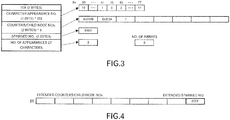
- FIG. 3 illustrates a data structure for one node in a phrase tree relating to this embodiment.
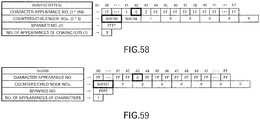
- a data block of one node includes an area for a code (IDX), an area for an array for character appearance numbers, an area for an array for counters/child node numbers, an area for spanned numbers, and an area for the number of appearances of characters. Moreover, separate from this, there is an area for counting the number of arrays for extended counters/child node numbers.
- IDX code
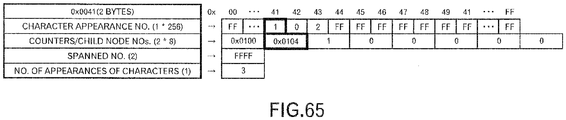
- the area for the character appearance numbers is an array that holds the appearance sequential number (ranking) of each character (each character from 0x00 to 0xFF) that appears next to the character or character string corresponding to the code of this node.
- "FF" represents an unused state except for when the number of appearances of the characters is 256.
- Each of other values represents an array index in the array for the counters/child node numbers.
- the number of appearances (counter value) or the child node number (the number with "0x” given) is stored according to the appearance sequential number (ranking) .
- the child node number (code) "0x0100" for character “0x42” is stored in the 0-th array area
- the child number (code) "0x0104" for character “0x41” is stored in the 1st array area
- the number of appearances "1" for character "0x043” is stored in the 2nd array area.
- the array number of the extended counters/child node numbers is set in the area for the spanned number.
- the initial value of the spanned number is "0xFFFF".
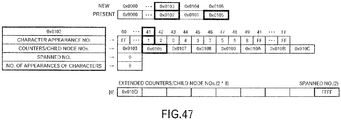
- the array for the extended counters/child node numbers is provided in a common area that can be referenced from any node. As illustrated in FIG. 4 , this array includes eight array areas for the number of appearances or child node numbers, and an array area is finally provided for the array number of the extended counters/child node numbers (extended spanned number), which is to be referenced, when even this array becomes insufficient.
- FIG. 5 illustrates a functional block diagram of an information processing apparatus 100 relating to this embodiment.
- the information processing apparatus 100 has a phrase tree generator 110, a compression map generator 120, a data storage unit 130, a compression processing unit 140, a decompression processing unit 150 and an input and output unit 160.
- the phrase tree generator 110 performs a processing for an input character string to be used for the generation of the phrase tree, which was inputted, for example, from the input and output unit 160, to generate data of the phrase tree relating to this embodiment.
- the compression map generator 120 generates a compression map from the data of the phrase tree, which was generated by the phrase tree generator 110, and stores the generated compression map in the data storage unit 130.
- the compression processing unit 140 uses the compression map that is stored in the data storage unit 130, to perform a compression processing for the input character string to be compressed, which was inputted, for example, from the input and output unit 160, and then stores the compression result in the data storage unit 130.
- the decompression processing unit 150 uses the compression map that is stored in the data storage unit 130, to perform a decompression processing for the compression result that is stored, for example, in the data storage unit 130, and stores the decompression result in the data storage unit 130.
- the input and output unit 160 may output the decompression result to an output apparatus such as a display apparatus, or to another computer or the like.
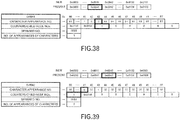
- FIG. 6 to FIG. 66 will be used to explain processing contents by the information processing apparatus 100.
- the phrase tree generator 110 performs a processing for generating a phrase tree for an input character string ( FIG. 6 : step S1). This processing for generating a phrase tree will be explained in detail using FIG. 7 to FIG. 27 .
- the compression map generator 120 then performs a processing for generating a compression map from the phrase tree that was generated by the phrase tree generator 110, and stores the compression map in the data storage unit 130 (step S3).
- the processing for generating a compression map will be explained in detail using FIG. 28 to FIG. 52 .
- the compression processing unit 140 performs a compression processing using the compression map, and stores the compression result in the data storage unit 130 (step S5) .
- the compression processing will be explained in detail using FIG. 53 to FIG. 55 .
- the decompression processing unit 150 uses the compression map to perform a decompression processing for the compression result stored, for example, in the data storage unit 130, and stores the processing result in the data storage unit 130 (step S7).
- the decompression processing will be explained in detail using FIG. 56 and FIG. 57 .
- the phrase tree generator 110 generates data for the nodes having codes 0x0000 to 0x00FF (step S11).
- the first-layer nodes that are always provided are generated as the initial setting.
- the phrase tree generator 110 then reads a 1-byte input character from the input character string, and sets the node corresponding to the read character as the current node (step S13) . Furthermore, the phrase tree generator 110 reads the next 1-byte input character from the input character string (step S15). Then, the phrase tree generator 110 determines whether the next input character is the end of the input character string (step S17). When the next input character is the end of the input character string, the processing returns to the processing of the calling source.
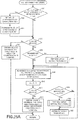
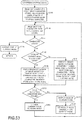
- the phrase tree generator 110 uses the code of the input character as an array index to obtain a value A that is stored in the array for the character appearance numbers for the current node (step S18). Then, the phrase tree generator 110 performs a number obtaining processing (step S19). This number obtaining processing will be explained using FIG. 26A and FIG. 26B .
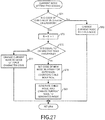
- the phrase tree generator 110 performs a processing for setting a current node (step S21) .
- the processing for setting the current node will be explained using FIG. 27 . After that, the processing returns to the step S15.
- the nodes for the codes 0x0001 to 0x00FF are generated as the 1st-layer nodes.
- the nodes of the code "0x0041”, “0x0042” and “0x0043” and the child nodes of these nodes are the targets of the processing, so only this portion is illustrated.
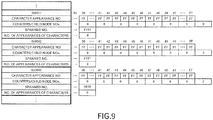
- data blocks of a data structure such as illustrated in FIG. 9 are generated. In this way, the data block illustrated in FIG. 3 for the code "0x0041" that corresponds to character "0x41”, the data block illustrated in FIG. 3 for the code "0x0042” that corresponds to character "0x42”, and the data block illustrated in FIG. 3 for the code "0x0043” that corresponds to character “0x43” are generated.
- the values set are initial values.
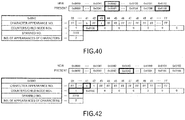
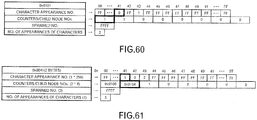
- the appearance sequential number "0”, which is equal to the number of appearances of characters, is set as the character appearance number for "0x42". Moreover, the number of appearances of characters is updated from “0" to "1". Furthermore, in the array for counters/child node numbers, the value of the 0-th counter, which corresponds to the appearance sequential number, is less than "0x0100", so the number of appearances "0” is incremented by 1, then "1" is set as the value of the 0-th counter. The number of appearances (i.e. the value of the counter) has not reached the threshold value "2", so the current node is updated to the node of code "0x0042" that corresponds to the character "0x42". The new current node is represented by the black triangle, and the old current node is represented by the white triangle in the drawing.
- the value of the 0-th counter which corresponds to the appearance sequential number, is less than "0x0100", so the number of appearances "0” is incremented by 1, then "1" is set as the value of the 0-th counter.
- the number of appearances has not reached the threshold value "2”, so the current node is updated to the node of code "0x0041" that corresponds to the character "0x41".
- a new child node for code "0x0100” is generated, and the code “0x0100” of the new child node is set as the 0-th value in the array for counters/child node numbers.
- the code "0x0100” is the code corresponding to "AB”.
- the child node of the code "0x0100” is then set as the current node.
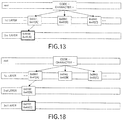
- the phrase tree changes from the state illustrated in FIG. 8 to the state illustrated in FIG. 13 .
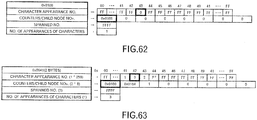
- the "C” is then read from the input character string "ABAB'C'ABCABCCBCBCBCAAACBACBACBBCCBBCBECBECBDCBDCBGCBGCBHCBHCBFCBFCBICBI". Then, as illustrated in FIG. 14 , when referencing the value of index "0x43 (C)" in the array for character appearance numbers for the current node, the value is "0xFF". Therefore, the appearance sequential number "0”, which is equal to the number of appearances of characters, is set as the character appearance number for "0x43". Moreover, the number of appearances of characters is updated from “0" to "1".
- the value of the 0-th counter which corresponds to the appearance sequential number, is less than "0x0100", so the number of appearances "0” is incremented by 1, and "1" is set as the value of the 0-th counter. Because the number of appearances has not reached the threshold value "2", the current node is updated to the node of code "0x0043" that corresponds to the character "0x43".
- the value of the 0-th counter which corresponds to the appearance sequential number, is less than "0x0100", so the number of appearances "0” is incremented by 1, then "1" is set as the value of the 0-th counter.
- the number of appearances i.e. the value of the counter
- has not reached the threshold value "2” so the current node is updated to the node of code "0x0041" that corresponds to the character "0x41".
- a new child node for code "0x0101” is generated, and the code “0x0101” of the new child node is set as the 0-th value in the array for counters/child node numbers.
- the code "0x0101” is the code corresponding to "ABC”.
- the child node of the code "0x0101” is set as the current node.
- the phrase tree changes from the state illustrated in FIG. 13 to the state illustrated in FIG. 18 .
- the "A" in the input character string "ABABCABC'A'BCCBCBCBCAAACBACBACBBCCBBCBECBECBDCBDCBGCBGCBHCBHCBFCBFCBICBI” is read.
- the value is "0xFF”. Therefore, the appearance sequential number "0”, which is equal to the number of appearances of characters, is set as the character appearance number for "0x41".
- the number of appearances of characters is updated from "0" to "1".
- the stage is reached in which the "I" in the input character string "ABABCABCABCCBCBCBCAAACBACBACBBCCBBCBECBECBDCBDCBGCBGCBHCBHCBFCBFCB'I'CBI” is read.
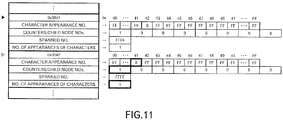
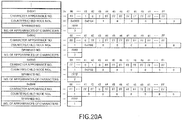
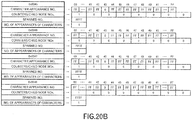
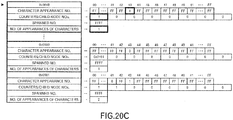
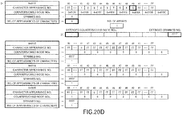
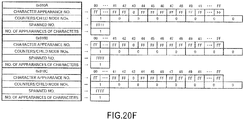
- the current node is the node of code "0x0102", and as illustrated in FIG. 20A to FIG. 20F , when referencing the value of index "0x49 (I)" in the array for character appearance numbers for the current node, the value is "0xFF”. Therefore, the appearance sequential number "8”, which is the number of appearances of characters, is set as the character appearance number for "0x49". Moreover, the number of appearances of characters is updated from "8" to "9".
- the 8-th value which corresponds to the appearance sequential number, is not included in the default array. Therefore, the array for the extended counters/child node numbers is referenced.
- the current node is changed to the child node of the code "0x010D".
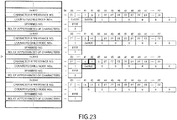
- the phrase tree is changed from a state such as in FIG. 23 to the state illustrated in FIG. 25 .
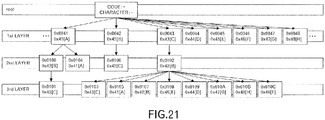
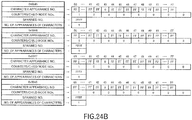
- a phrase tree is generated in which there are four nodes in the second layer, and ten nodes in the third layer, however, child nodes are generated according to the appearance order, so in the second layer and third layer, the code is not arranged in order of codes of corresponding characters.
- the phrase tree generator 110 determines whether or not a condition that a value A is 0xFF and the number of appearances of characters is not 256 is satisfied (step S31) . When this condition is satisfied, a character that has not appeared up to this point has appeared, so the phrase tree generator 110 sets the number of appearances of characters for the current node as the value A (step S33), and then increments the number of appearances of characters by 1 (step S35).
- the phrase tree generator 110 determines whether or not the value A is 8 or greater (step S37). When the value A is less than 8, the phrase tree generator 110 acquires the value B that is stored in the A-th array area in the array for counters/child node numbers (step S51). The processing then returns to the calling source processing.
- the phrase tree generator 110 determines whether the spanned number is 0xFFFF (step S39) .
- the spanned number is 0xFFFF
- the array for extended counters/child node numbers has not been acquired. Therefore, when the spanned number is 0xFFFF, the phrase tree generator 110 performs anarray setting processing (stepS41) . The processing then moves to step S43.
- the array setting processing will be explained using FIG. 26B .
- the phrase tree generator 110 sets the current number of arrays as the spanned number for the current node, or as the extended spanned number in the array for the extended counters/child node numbers, which is currently referenced (step S68) . Then, the phrase tree generator 110 increments the number of arrays by 1 (step S69). The processing then returns to the processing of the calling source.
- the phrase tree generator 110 determines whether the extended spanned number in the array for extended counters/child node numbers, which is currently referenced, is 0xFFFF (step S53) . When the extended spanned number is not 0xFFFF, the processing moves to step S57. On the other hand, when the extended spanned number is 0xFFFF, a new array for the extended counters/child node numbers will be set, so the phrase tree generator 110 performs the array setting processing ( FIG. 26B ) (step S55). The processing then moves to step S57.
- the phrase tree generator 110 then acquires the extended spanned number in the referenced array for extended counters/child node numbers, or in the array for extended counters/child node numbers, which is set in the array setting processing (step S57). The processing then returns to the step S43.
- the phrase tree generator 110 acquires the value B that is stored in the A-th array area in the referenced array for extended counters/child node numbers (step S49) . Then, the processing returns to the processing of the calling source.
- the phrase tree generator 110 determines whether the value B that is stored in the A-th array area in the array for counters/child node numbers (or extended counters/child node numbers) is a child node number (in other words, code of 0x0100 or greater) (step S71) .
- the phrase tree generator 110 positions the current node at the child node (step S83). The processing then returns to the processing of the calling source.
- the phrase tree generator 110 increments the value B by 1 (step S73). Then, the phrase tree generator 110 determines whether or not the value B is equal to or greater than a threshold value (step S75) . When the value B is less than the threshold value, the phrase tree generator 110 positions the current node at the node of the code that corresponds to the input character (in other words, the node of the input character code) (step S77). The processing then moves to the processing of the calling source.
- the phrase tree generator 110 sets a code for a new child node in the A-th array area in the array for counters/child node numbers (or extended counters/child node numbers) (step S79).
- the greatest code in the data block + 1 is set as the code of the new child node.
- the phrase tree generator 110 generates a data block of the new child node having the set code, and positions the current node at the generated node (step S81).
- the codes in the first layer are given in order of the character code, and are sorted in ascending order of the code, however, in the second layer and subsequent layers, the codes are given in order of the appearance. Therefore, the codes are given independent of the layer or character code.
- the nodes for the code "0x0100”, "0x0104", "0x0106", and "0x0102" are given in the second layer, and the codes are not sequential.
- the character code that is expressed by the childnode “0x01 00" of the code "0x0041" corresponding to the character code "0x41” is "0x42”
- the character code that is expressed by the child node "0x0104" is "0x41”. Therefore, at this viewpoint as well, the code is not arranged in the order of the character code.
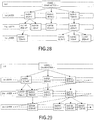
- the code when generating the compression map, the code is rearranged from the given state of the codes illustrated in FIG. 28 to the state illustrated in FIG. 29 so that the codes are sorted in order of layer and in order of a code of a corresponding character for each parent node (last character in a character string corresponding to the code).
- the node of the character "0x41” is correlated with the code "0x0100”
- the node of character "0x42” is correlated with the code "0x0101”
- the node of character "0x43” is correlated with the code "0x0102”
- the node of character "0x42” is correlated with the code "0x0103".
- the node of character "0x43” is correlated with the code "0x0104"
- the node of character "0x41” is correlated with the code "0x0105”
- the node of character "0x42” is correlated with the code "0x0106”
- the node of character "0x43” is correlated with the code "0x0107”.
- the compression map is data in which correlation data that correlates the code of a parent node with the character code of its own node (a character corresponding to the code of its own node, or the last character of a character string corresponding to the code of its own node) is arranged in order of the code.
- this compression map includes correlation data that correlates the code of the current node with the array index in an array for character appearance numbers, for which it is confirmed that any code is stored in the array for counters/child node numbers for the current node instead of the counter value.
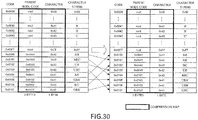
- a compression map such as illustrated on the left side of FIG. 30 is generated.
- the codes are given in order of the appearance, so the code in the column of a parent node code is not sorted, and as a result, the character string itself that is expressed by the code is not sorted in the order of the character code.
- the codes and character strings are illustrated, however, such data is not included in the compression map, and is supplementary information.
- a compression map is generated from the phrase tree, as illustrated on the right side of FIG. 30 , by sorting and reassigning the codes such as described above, and arranging correlation data that correlates the code of a parent node with the character code of its own node in order of the newly reassigned codes.
- the codes of the parent nodes are sorted in ascending order of the code. As a result, it is possible to carry out the binary searching of the compression map.
- a sorting area is adopted as illustrated in FIG. 31 .
- the code that is identified in the following processing is stored in order that the code is identified in the following processing.
- the array indexes in the sorting area are the codes after sorting.
- the code "0x0104" before sorting is firstly stored in the position of the array index "0x0100" as the code of the node in the second layer.
- the node of the code "0x0104" before sorting is handled as the code "0x0100" after sorting.
- the code of the parent node is "0x0041"
- the character code represented by this node is "0x41".
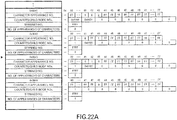
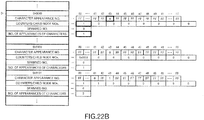
- step-by-step as an example of a case where data of the phrase tree such as illustrated in FIG. 24A to FIG. 24F is obtained.
- nodes of the codes "0x0000” to "0x00FF” are registered in the compression map as they are.
- data such as illustrated in FIG. 32 is registered in the compression map.
- the parent node is a root node, so the data "root” is registered as the code of the parent node, and the respective corresponding characters "0x00" to "0xFF" are also registered.
- the nodes "0x0000" to "0x00FF” are registered in the sorting area in ascending order of the codes.
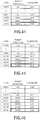
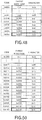
- correlation data is not registered in the compression map, so an explanation of the processing up to the code "0x0040" is omitted as illustrated in the phrase tree illustrated in FIG. 25 .
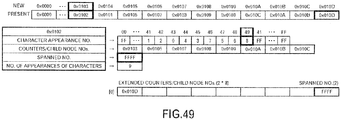
- the data block of the code "0x0041” is referenced, to search for the position where any value other than "0xFF" is stored in sequence from the array index "0x00" of that array for character appearance numbers.
- correlation data that correlates the code after sorting of the parent node "0x0041" with the character code that corresponds to the array index "0x42" in the array for character appearance numbers is registered in "0x101"-th array area, which corresponds to the code after sorting.
- the appearance sequential number "2" is registered in "0x43"-th array area in the array for character appearance numbers in the data block of the code "0x0041", so the "2nd” array area in the array for counters/child node numbers is referenced.
- a value "1" that is less than "0x100” is registered, so the correlation data is not registered in the compression map.
- Correlation data is not registered in the compression map even though the processing is performed for the subsequent array indexes in the array for character appearance numbers.
- the data block of the code “0x0042” is referenced to search for the position where any value other than "0xFF" is registered in sequence from the array index "0x00" in the array for character appearance numbers .
- the appearance sequential number "0” is registered in the "0x41"-th array area, so the "0"-th array area is referenced in the array for counters/child node numbers.
- a value "1" that is less than "0x100" is registered, so correlation data is not registered in the compression map.
- correlation data that correlates the code after sorting of the parent node "0x0042" with the character code that corresponds to the array index "0x43" in the array for character appearance numbers is registered in "0x102"-th array area, which corresponds to the code after sorting. Even though the processing is performed for the subsequent array indexes in the array for character appearance numbers, correlation data will not be registered in the compression map.
- the data block of the code “0x0043” is referenced to search for the position where any value other than "0xFF" is registered in sequence from the array index "0x00" in the array for character appearance numbers .
- the appearance sequential number "0” is registered in the "0x41"-th array area, so the "0"-th array area is referenced in the array for counters/child node numbers.
- a value "1" that is less than "0x100" is registered, so correlation data is not registered in the compression map.
- correlation data that correlates the code after sorting of the parent node "0x0043" with the character code that corresponds to the array index "0x42" in the array for character appearance numbers is registered in "0x103"-th array area, which corresponds to the code after sorting. Even though the processing is performed for the subsequent array indexes in the array for character appearance numbers, correlation data will not be registered in the compression map.
- the data block of the code "0x0100” is referenced to search for the position where any value other than "0xFF" is stored in sequence from the array index "0x00" in the array for character appearance numbers.
- the appearance sequential number "0” is registered in the "0x43"-th array area, so "0" -th array area in the array for counters/child node numbers is referenced.
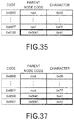
- the code "0x0101”, which is equal to or greater than "0x100” is registered, so "0x0101" is registered in the last end "0x0104" in the sorting area.
- the compression map as illustrated in FIG.
- correlation data that correlates the code after sorting of the parent node "0x0100" with the character code that corresponds to the array index "0x43" in the array for character appearance numbers is registered in "0x104"-th array area, which corresponds to the code after sorting. Even though the processing may be performed for the subsequent array indexes in the array for character appearance numbers, correlation data will not be registered in the compression map.
- the data block of code "0x0102" is referenced to search for the position where any value other than "0xFF" is registered in sequence from the array index "0x00" in that array for character appearance numbers.
- the appearance sequential number "1” is registered in the "0x41"-th array area, so the “1st” array area in the array for counters/childnode numbers is referenced.
- the code "0x0105”, which is equal to or greater than "0x100” is registered, so "0x0105” is registered in the last end "0x0105” in the sorting area.
- the compression map as illustrated in FIG.
- correlation data that correlates the code after sorting of the parent node "0x0103" with the character code that corresponds to the array index "0x41" in the array for character appearance numbers is registered in the "0x105"-th array area, which corresponds to the code after sorting.
- correlation data is added in smooth to the compression map.
- correlation data that correlates the code after sorting of the parent node "0x0103" with the character code that corresponds to the array index "0x49" in the array for character appearance numbers is registered in the "0x10D"-th array area, which corresponds to the code after sorting. Even though the processing may be performed for the subsequent array indexes, correlation data will not be registered in the compression map. In the following processing, data is not registered in the compression map, so an explanation is omitted.
- the compression map generator 120 adds correlation data that correlates the data "root”, which expresses a root node, with the character code, which corresponds to the code of the node, as data for the nodes "0x0000" to "0x00FF” in the first layer to the compression map in sequence ( FIG. 51 , stepS91) . Moreover, the compression map generator 120 adds the codes of the nodes "0x0000" to "0x00FF” in the first layer to the sorting area in sequence (step S93) . Then, the compression map generator 120 reads one unprocessed code in ascending order of the code after sorting from the sorting area (step S95) . Here, when it is not possible to read any unprocessed code (step S97: NO route), the processing returns to the processing of the calling source.
- step S97 when it is possible to read any unprocessed code (step S97: YES route), the compression map generator 120 references the data block of the node of the read code in the phrase tree (step S99) .
- the compression map generator 120 then performs an entry addition processing (step S101) . This entry addition processing will be explained using FIG. 52 . After the entry addition processing has completed, the processing returns to the step S95.
- the compression map generator 120 reads the value A in the array area of the unprocessed index in the array for character appearance numbers in the data block for the node of the read code in ascending order of the index ( FIG. 52 : step Sill) .
- the compression map generator 120 determines whether the processing has already been performed to the end of the array for character appearance numbers (step S113) . When the processing has already been performed to the end of the array for character appearance numbers, the processing returns to the processing of the calling source.
- the compression map generator 120 determines whether a condition that the obtained value A is 0xFF and the number of appearances of characters is not 256 is satisfied (step S115) . When this condition is satisfied, the code is not registered in the array for counters/child node numbers, so the processing returns to the step S111.
- the compression map generator 120 determines whether the value A is 8 or greater (step S117). When the value A is 8 or greater, the array for extended counters/child node numbers is used, so the compression map generator 120 reads the value of the spanned number, and references the array for extended counters/child node numbers for the spanned number (this may also be the extended spanned number) (step S119). Moreover, the compression map generator 120 subtracts 8 from the value A (step S121). The compression map generator 120 then determines whether the value A is greater than 8 (step S123). When the value A is still greater than 8, the compression map generator 120 obtains the value C of the extended spanned number that is stored at the tail end of the array for extended counters/child node numbers (step S125) . The processing then returns to the step S119.
- the compression map generator 120 reads the value B that is stored in the A-th array area in the referenced array for extended counters/child node numbers (step S127). The processing then moves to step S13Q.
- the compression map generator 120 reads the value B that is stored in the A-th array area in the array for counters/child node numbers (step S129).
- the compression map generator 120 determines whether the obtained value B is equal to or greater than "0x0100" (step S130). When the obtained value B is less than "0x0100", data will not be added to the compression map, so the processing returns to the step S111. However, when the obtained value B is equal to or greater than "0x0100", the compression map generator 120 adds the code B to the tail end of the sorting area (step S131) . In addition, the compression map generator 120 adds correlation data that correlates the array index in the sorting area, which is the target of the processing, with the array index, which is the target of the processing, in the array for character appearance numbers to the compression map (step S133) . The processing then returns to the step S111.
- the processing explained by using the aforementioned specific example above is performed.
- the compression map can be stored on a disk unit as it is, and can be used in the compression processing or decompression processing.
- the compression processing unit 140 acquires one character from the input character string that is the target of the compression, and moves the current node at the code that corresponds to that character in the compression map ( FIG. 53 : step S141). The compression processing unit 140 also obtains the next one character from the input character string (step S143). Here, the compression processing unit 140 determines whether a character was able to be obtained at the step S143 (step S144) . When a character can be obtained, the compression processing unit 140 determines whether the code of the current node is less than "0x0100" (step S147).
- the compression processing unit 140 determines whether the node satisfying the aforementioned condition was found in the binary search (step S153) . When the node satisfying the aforementioned condition was not found, the compression processing unit 140 outputs the code of the current node as the compression result (step S157), and sets the node of the character obtained at the step S143 as the current node (step S159). The processing then returns to the step S143. On the other hand, when the node satisfying the condition was found, the compression processing unit 140 changes the current node to that node (step S155) . The processing then returns to the step S143.
- the compression processing unit 140 When any character could not be obtainedat the step S143, the compression processing unit 140 out puts the code of the current node as the compression result (step S145) . The processing then returns to the processing of the calling source.
- the compression of a character string is performed by performing the aforementioned processing.
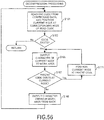
- the decompression processing unit 150 reads one unprocessed code from compressed data, and sets the corresponding node in the compression map as the current node ( FIG. 56 : step S161) .
- the processing returns to the processing of the calling source (step S163: NO route).
- the decompression processing unit 150 outputs the character of the current node to a work area (step S165) .
- the decompression processing unit 150 determines whether the code of the parent node is included in the current node (step S167) .
- the decompression processing unit 150 When the code of the parent node is a root, it is determined that the code of the parent node does not exist. When there is no code of the parent node, the decompression processing unit 150 outputs the character string in the work area starting from the back as the decompression result (step S169). The processing then returns to the step S161. On the other hand, when there is a code of the parent node, the decompression processing unit 150 positions the code of the parent node at the current node (step S171). The processing then returns to the step S165.
- the node of the code "0x0104" is set as the current node, and the character “C” at the current node is outputted to the work area.
- the code of the parent node is "0x0101", so as the current node, the node of the code "0x0101” is set ("1” in FIG. 57 ).
- the character “B” in the code "0x0101” of the current node is then outputted to the work area.
- the code of the parent node is "0x0041", so as the current node, the node of the code "0x0041" is set ("2" in FIG. 57 ).
- this node is set as the current node, and the character "A” at the node of that code is outputted to the work area.
- the code of the parent node is "0x0041”, so as the current node, the node of the code "0x0041” is set ("4" in FIG. 57 ).
- the character "A” at the current node is outputted to the work area.
- there is no code of the parent node at the current node so the character string in the work area is outputted in reverse order, and "AA” is further obtained.
- the decompression processing is then complete ("5" in FIG. 57 ).
- the data structure of the phrase tree is changed in this way, so it is possible to reduce the memory capacity that is used during the processing.
- the node that includes the code "0x0101" in the array for counters/child node numbers is searched for.
- the appearance sequential number "0" in the node of the code "0x0100” is identified.
- the array index whose array area registers "0" in the array for character appearance numbers is searched for, and the code "0x43” is obtained. This character code "0x43" is outputted to the work area.
- the node that includes the code "0x0104" in the array for counters/child node numbers is searched for.
- the appearance sequential number "1" in the node of the code "0x0041” is identified.
- the array index whose array area stores “1” in the array for character appearance numbers is searched for, and the code "0x41” is obtained. This character code "0x41" is outputted to the work area.
- the code "0x0041" is searched for, however, as described above, the code is less than the code "0x0100", so the character “0x41" that corresponds to the code "0x0041" is outputted to the work area.
- the data structure of the compression map is changed.
- the maximum node number of the child nodes (i.e. the maximum code of the child nodes) is held for each node.
- a node that has the current node as the parent node is searched for.
- child nodes of the current node are searched for.
- the search range at the step S149 is from "0x0100" to the last node, and at the step S151, the search range is from (the code of the current node + 1) to the last node.
- the search range of the child nodes is actually the nodes of "0x0105" to "0x0107", however, in the first embodiment, the node of "0x0104" was also the target of the search. In this example, only one node is extra, however, actually, there is a bad influence when there are plural child nodes for "0x0100", "0x0101" and "0x0102". Moreover, when “0x0101" is the current node, only "0x0104" is a child node, however, in the first embodiment, the search range is from "0x0102" to "0x0107".
- the maximum child node code for each node it becomes possible to narrow down the search range to be from the node of ⁇ the maximum child node code + 1 ⁇ of the node immediately before the current node to the maximum child node of the current node.
- the maximum child node code of the node corresponding to ⁇ the code of that node - 1 ⁇ is copied.
- the compression map is changed to a form that correlates the code of the parent node, the character code and the maximum code of child nodes.
- the compression map generation processing relating to this embodiment will be explained.
- the entry addition processing in the compression map generation processing is changed as illustrated in FIG. 69 .
- the changed part is only the part where step S135 is added.
- the compression map generator 120 sets the array index of the code finally added to the sorting area as the maximum code of the child nodes. For the node being processed, when the codes of the child nodes are not added to the sorting area, in other words, when there is no child node, the code that is the same as that of a node immediately before the node being processed is set as the maximum code of the child nodes.
- the processing flow of the compression processing relating to this embodiment is as illustrated in FIG. 70 .
- the part that differs from the processing flow illustrated in FIG. 53 is just the part from step S147 to step S151.
- the compression processing unit 140 determines whether or not the code of the current node is "0x0000" (step S147b) . This is because, as for only the node of "0x0000", the maximum code of the child nodes for the node immediately before the current node cannot be acquired.
- the search range is narrowed more than that of the step S149.
- the processing then moves to the step S153.
- the search range is narrowed more than that of the step S151.
- the processing speed of the decompression processing is improved.
- nodes are traced back to the root node (i.e. root in figure), so node searches are performed many times. Therefore, in this embodiment, together with changing the data structure of the compression map, hierarchy level information (or layer information) and decompression map are newly generated, and stored. Even when additional data is stored in this way, the additional storage capacity is only about 800 K bytes, so the increased load is not so large.
- the compression map is about 446 KB.
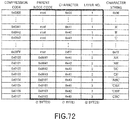
- FIG. 72 illustrates an example of a compression map of this embodiment.
- the basic structure is the same as that in the first embodiment, however, the parent node code, the character code of its own node, and the layer number or layer identifier of a layer to which its own node belongs are correlated and stored.
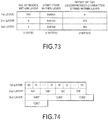
- FIG. 73 depicts layer information, and in this layer information, the number of nodes within the layer, the start code within the layer, and the offset value of the top decompressed character string in the layer from the beginning of the decompression map are correlated for each layer starting from the first layer.
- the offset value of the top decompressed character string in the layer represents how far the character or character string of the start code in the identified layer is separated from the top of the decompression map, when the layer is identified.
- FIG. 74 illustrates an example of a decompression map relating to this embodiment.
- the decompression map relating to this embodiment is an associative array in which characters that correspond to the codes of the nodes belonging to each layer are stored in order of the code.
- "AA" is registered in the 0-th area
- "AB” is registered in the "1st” area
- "BC” is registered in the "2nd” area
- "CB” is registered in the "3rd” area.
- ABSC is registered in the "0"-th area
- CBA is registered in the “1st” area
- CBB is registered in the “2nd” area
- CBC is registered in the "3rd” area.
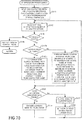
- the compression map generator 120 adds correlation data that correlates data "root” that represents the root node, character codes that correspond to codes of the nodes "0x0000” to "0x00FF” and a layer number "1" to the compression map in sequence, as the data of the nodes "0x0000” to "0x00FF” in the first layer ( FIG. 75 : step S181).
- the compression map generator 120 sets information about the first layer in the layer information (step S183). In other words, there are 256 nodes in the first layer, so “256” is set as the number of nodes in the layer, “0x0000” is set as the code for the start code within the layer, and “0” is set as the offset value of the top decompressed character string. These are fixed values.
- the compression map generator 120 sets information of the first layer in the decompression map (step S185) . Because the first layer includes one character code for each character, the character codes "0x00" to "0xFF" are set. There are fixed values.
- the compression map generator 120 then adds the codes of the nodes "0x0000” to "0x00FF” in the first layer to the sorting area in sequence (step S187) . Moreover, the compression map generator 120 sets "0x0100" as the start code within the next layer (step S189) . The start code within the next layer is a variable that is used in the following. Furthermore, the compression map generator 120 initializes a layer counter (step S190).
- the compression map generator 120 reads one unprocessed code from the sorting area in ascending order of the code after sorting (step S191).
- the compression map generator 120 sets the value of a node counter that will be explained below as the number of nodes in the final layer in the layer information (step S195). The processing then returns to the processing of the calling source.
- the compression map generator 120 reads one unprocessed code from the sorting area in ascending order of the code after sorting (step S191).
- the compression map generator 120 sets the value of a node counter that will be explained below as the number of nodes in the final layer in the layer information (step S195) .
- the processing then returns to the processing of the calling source.
- step S193 when it is possible to read any unprocessed code (step S193: YES route), the compression map generator 120 references a data block for a node of the read code in the phrase tree (step S197) .
- the compression map generator 120 then performs a third entry addition processing relating to this embodiment (step S199). This third entry addition processing will be explained using FIG. 76 .
- the compression map generator 120 performs a setting processing (step S201) .
- the setting processing will be explained using FIG. 77 .
- the processing then returns to step S191.
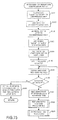
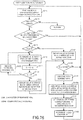
- FIG. 76 is nearly the same as FIG. 52 , however, step S133 has been changed to step S133b, and steps S137 and S139 have been added.
- the compression map generator 120 adds correlation data that correlates an array index (i.e. the parent node code) to be processed in the sorting area, an array index to be processed (i. e. character code of the child node) in the array for character appearance numbers, and a value of the layer counter (i.e. layer) to the compression map (step S133b).
- an array index i.e. the parent node code
- an array index to be processed i. e. character code of the child node
- a value of the layer counter i.e. layer
- the compression map generator 120 sets the character string of the parent node and the array index in the array for character appearance numbers (i.e. character code of the child node) as the character string corresponding to the child node in the layer corresponding to the value of the layer counter in the decompression map (step S137).
- the character string of the parent node i.e. character string of the code being processed
- the character string of the parent node can be obtained by identifying the layer number of the layer to which the current node belongs in the compression map, and referencing the position obtained by ("the offset value of the top decompressed character string" in the layer to which the current node belongs in the layer information + (code of the current node - start code within the layer) * layer number) in the decompression map.
- the compression map generator 120 increments the value of the node counter by "1" (step S139). The processing then returns to the step Sill.
- the compression map, layer information and part of the decompression map can be generated.
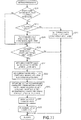
- the compression map generator 120 determines whether the start code within the next layer, which has been set up to this point, is the code of the current node (step S211) .
- the initial value of the start code within the next layer is "0x0100".
- the compression map generator 120 determines whether a child node was identified in the third entry addition processing (step S213).
- the compression map generator 120 sets (the code of the current node + 1) as the start code within the next layer (step S217) . The processing then returns to the processing of the calling source.
- the compression map generator 120 sets the least child node code among codes of child nodes that were identified in the third entry addition processing as the start code within the next layer (step S215). The processing then moves to step S219.
- the compression map generator 120 determines whether (the code of the current node + 1) is the start code within the next layer (step S219). In other words, the compression map generator 120 determines whether the node being processed is the last node within the current layer. When (the code of the current node +1) is the start code of the next layer, the compression map generator 120 sets the value of the node counter as the number of nodes within the layer in the layer information (step S221). The compression map generator 120 then sets (the code of the current node + 1) as the start code within the layer for the next layer in the layer information (step S223) .
- the compression map generator 120 sets (the offset value of the top decompressed character string within the current layer + the node counter value * layer number (value of the layer counter)) as the offset value of the top decompressed character string for the next layer in the layer information (step S225).
- the compression map generator 120 then initializes the node counter to "0" (step S227), and increments the value of the layer counter by "1" (step S229). The processing then returns to the processing of the calling source.
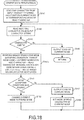
- the third compression processing relating to this embodiment is nearly the same as the compression processing relating to the first embodiment, and differs in that step S151c is executed instead of the steps S147 to S151.
- the search range is narrowed compared to that in the compression processing relating to the first embodiment.
- ABSCAA which is a character string to be compressed
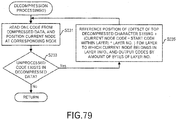
- the decompression processing unit 150 obtains one code from the compression data, and positions the current node at the corresponding node in the compression map (step S231) .
- the processing returns to the processing of the calling source.
- the decompression processing unit 150 references a position of ("the offset value of the top decompressed character-string" + (the current node code - start code within the layer) * layer number) for the layer to which the current node belongs in the layer information, in the decompression map, and outputs codes by the amount of bytes of the layer number (step S235) .
- the processing then returns to the step S231.
- the offset value of the top decompressed character string and the start code within the layer are obtained by reading from the layer information.
- the layer is identified from the compression map as being the third layer, so the offset value of the top decompressed character string within the third layer "264" + (the code of the current node “0x0104" - the start code within the layer "0x0104") * 3 becomes "264", so 3 bytes are read from the 264 bytes from the top of the decompression map.
- "ABC” is outputted ("1" in FIG. 80 ).
- the layer is identified from the compression map as being the second layer, so the offset value of the top decompressed character string within the second layer "256" + (the current node code “0x0100” - the start code within the layer "0x0100") * 2 becomes "256", so 2 bytes are read from the 256 bytes from the top of the decompression map.
- "AA” is further outputted ("2" in FIG. 80 ).
- decompression is performed by two steps, so the processing becomes faster.
- This embodiment combines the second and third embodiments. Moreover, in the decompression map and layer information, the amount of memory used is decreased by omitting information that is fixed and that is obtained from the data of the compression map.
- FIG. 81 illustrates an example of the compression map relating to this embodiment.
- the character code of its own node, the maximum child node code, and the layer number of the layer to which its own node belongs are correlated in order of the code after sorting.
- the parent node code when there is layer information and a decompression map, that code is not used, so is omitted.
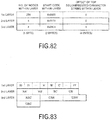
- FIG. 82 illustrates layer information relating to this embodiment.
- the layer information relating to this embodiment differs from the third embodiment in that the data of the first layer is omitted.
- the number of nodes within the layer, the start code within the layer, and the offset value of the top decompressed character string are registered.
- the data for the first layer is omitted, so the offset value of the top decompressed character string is changed.
- FIG. 83 illustrates a decompression map relating to this embodiment.
- the decompression map relating to this embodiment differs from that in the third embodiment in that the data of the first layer is omitted.
- the decompression map is an associative array in which corresponding character strings are stored in ascending order of the code in the second layer and the subsequent layers.
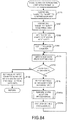
- FIG. 84 illustrates the processing flow of the third compression map generation processing relating to this embodiment.
- This processing differs from the second compression map generation processing relating to the third embodiment in that there are no steps S183 and S185, instead of the step S199 for the third entry addition processing, step S199b for a fourth entry addition processing is performed, and instead of the step S201 for the setting processing, step S201b for a second setting processing is performed.
- FIG. 85 illustrates the processing flow of the fourth entry addition processing.
- This processing differs from the third entry addition processing relating to the third embodiment in that step S135 that is executed at the end of the array (the processing explained in the second entry addition processing) is additionally performed, and instead of the step S133b, step S133c is performed.
- the compression map generator 120 adds correlation data that correlates the array index being processed in the array for character appearance numbers (i.e. character code of the child node) with the value of the layer counter (i.e. layer number) (step S133c). This differs in that the array index being processed in the sorting area (i.e. the code of the parent node) is not registered.
- the second setting processing that is included in the third compression map generation processing differs from that in FIG. 77 , and the processing flow thereof is as illustrated in FIG. 86 .
- the difference with that illustrated in FIG. 77 is that steps S220 and S222 are added, and instead of steps S223 and S225, steps S223b and S225b are performed.
- step S219 when it is determined at the step S219 that (the code of the current node + 1) is the start code within the next layer, in other words, in case of the last node within the layer, the compression map generator 120 determines whether the current value of the layer counter is "1" (step S220). When the current value of the layer counter is "1", data will not be added to the layer information, so the compression map generator 120 sets the offset value of the top decompressed character string within the next layer in the layer information to "0" (step S222). The processing then moves to step S225b.
- the compression map generator 120 sets the value of the node counter as the number of nodes within the layer in the layer information (step S221).
- the compression map generator 120 also sets ⁇ the offset value of the top decompressed character string within the current layer + the node counter * the number of layers (i.e. value of the layer counter) ⁇ as the offset value of the top decompressed character string within the next layer in the layer information (step S223b).
- This processing is the same as the step S225.
- the compression map generator 120 sets (the code of the current node + 1) as the start code within the layer for the next layer in the layer information (step S225b) .
- This step is the same as the step S223.
- the processing after this is the same as that illustrated in FIG. 77 .
- FIG. 87 illustrates the processing flow of the fourth compression processing relating to this embodiment.
- This processing differs from the second compression processing relating to the second embodiment in that the step S149b and step S151b are changed to step S149d and step S151d.
- the compression processing unit 140 determines whether or not the code of the current node is "0x0000" (step S147b). This is because only the node of "0x0000" is not able to obtain the maximum child node code of the node immediately before the current node.
- the processing then moves to the step S153.
- the decompression processing unit 150 determines whether the value of the layer to which the current node belongs in the compression map is "1" (step S237). When the value of the layer is "1", the decompression processing unit 150 outputs the character code at the current node in the compression map (step S239), and then the processing moves to the step S231. On the other hand, when the value of the layer is "2" or greater, the processing moves to the step S235 . By performing such a processing, the decompression processing is speeded up even though the amount of layer information and data of the decompression map are reduced.
- the aforementioned functional block diagrams do not correspond to program module configurations. Moreover, as long as the processing result does not change, in the processing flows, the order of steps may be changed or plural steps may be executed in parallel.
- the aforementioned processing may be executed by plural computers, though an example in which one computer executes the processing was explained.
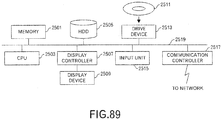
- the aforementioned information processing apparatus 100 is computer device as illustrated in FIG. 89 . That is, a memory 2501 (storage device), aCPU2503 (processor), a hard disk drive (HDD) 2505, a display controller 2507 connected to a display device 2509, a drive device 2513 for a removable disk 2511, an input device 2515 , and a communication controller 2517 for connection with a network are connected through a bus 2519 as illustrated in FIG.89 .
- An operating system (OS) and an application program for carrying out the foregoing processing in the embodiment, are stored in the HDD 2505, and when executed by the CPU 2503, they are read out from the HDD 2505 to the memory 2501.
- OS operating system
- an application program for carrying out the foregoing processing in the embodiment are stored in the HDD 2505, and when executed by the CPU 2503, they are read out from the HDD 2505 to the memory 2501.
- the CPU 2503 controls the display controller 2507, the communication controller 2517, and the drive device 2513, and causes them to perform predetermined operations. Moreover, intermediate processing data is stored in the memory 2501, and if necessary, it is stored in the HDD 2505.
- the application program to realize the aforementioned functions is stored in the computer-readable, non-transitory removable disk 2511 and distributed, and then it is installed into the HDD 2505 from the drive device 2513. It may be installed into the HDD 2505 via the network such as the Internet and the communication controller 2517.
- the hardware such as the CPU 2503 and the memory 2501, the OS and the application programs systematically cooperate with each other, so that various functions as described above in details are realized.
- a data structure generation method includes: (A) first generating, for each character that will be used, a data block including a first area for holding a code for a character or a character string, a second area for holding, for each character that will be used, an appearance sequential number of a second character that appears next to the character or the character string, and a third area for holding, according to the appearance sequential number, the number of appearances or a code corresponding to a character string including the character or the character string and the second character when the number of appearances exceeds a threshold; (B) upon detecting that, in a second area of a data block for a character or a character string being processed among plural characters included in an input character string, an appearance sequential number for a next character of the character or the character string being processed in the input character string is held, that, in a third area of the data block, a number of appearances is held as data in the appearance sequential number, and that the number of appearances after increment exceeds the threshold,
- the aforementioned data structure generation method may further include: (D) upon detecting that, in the second area of the data block for the character or the character string being processed, the appearance sequential number for the next character of the character or the character string being processed in the input character string is held, that, in the third area of the data block, the number of appearances is held as data in the appearance sequential number, and that the number of appearances after the increment does not exceeds the threshold even, setting the next character as a character being processed.
- the aforementioned data structure generation method may further include: (E) upon detecting that, in the second area of the data block for the character being processed, the appearance sequential number for the next character of the character or the character string being processed in the input character string is held, that, in the third area of the data block, the code corresponding to the second character string is held as the data in the appearance sequential number, setting the second character string as a character string being processed.
- the number of third areas maybe limited to a predetermined number
- the data block may further include a fourth area for holding data representing an extended area for the third area.
- the aforementioned data structure generation method may further include: (F) generating, from plural data blocks generated for the input character string, correlation data to correlate, for each data block of data blocks in a second layer and subsequent layers of a tree structure represented by the plural data blocks in a specific state, a code for a parent data block of the data block with a character code corresponding to an added character for the data block, wherein the specific state is a state where first codes held in the first area and the third area of the plural data blocks are reassigned to second codes based on order of characters or character strings that correspond to the first codes.
- a data structure that can be stored in a disk unit and is favorable for a compression processing and decompression processing e.g. compression map in the embodiments
- a greatest code among codes of child data blocks of the data block may further be correlated. For example, it is possible to enhance the speed of the search processing included in the compression processing.
- the aforementioned data structure generation method may further include: (G) setting, as a processing target, each of the first data blocks for the characters that will be used among the plural data blocks generated for the inputted character string in ascending order of the code of the first data blocks; (H) reading an appearance sequential number in the second area of the first data block of the processing target in order of the code of the character, and when a code is held, as data of the appearance sequential number, in the third area of the first data block of the processing target, adding a data block for a code held as data of the appearance sequential number to second data blocks to be processed after the first data blocks, and first storing correlation data to correlate a second code corresponding to a processing ranking of the first data block of the processing target with the code of the character in sequence; (I) setting each of second data blocks to be processed after the first data block in order of addition of the data blocks; (J) reading the appearance sequential number in the second area of a second data block of a processing target in order of the code of the character, and when a code is held as
- the aforementioned data structure generation method may further include (K) storing, for each of the first data blocks for the characters that will be used among plural data blocks generated for the inputted character string, correlation data to correlate data representing a highest-level data block and a code of a character for the first data block in order of the code of the character.
- a second code when finally storing the aforementioned correlation data may be stored so as to correlate a code of a character for the first data block of the processing target or a code of a final character in the character string for the second data block of the processing target.
- a data structure generation method relating to a second aspect of the embodiments includes: (A) first generating a data block including a first area for holding a code for a character or a character string, a second area for holding, for each character that will be used, an appearance sequential number of a second character that appears next to the character or the character string, and a third area for holding, according to the appearance sequential number, a number of appearances or a code corresponding to a character string including the character or the character string and the second character when the number of appearances exceeds a threshold, for each character that will be used, and each character that appears a predetermined number of times or more next to a character or a character string in an input character string, for which the data block has already been generated; (B) second generating, from plural data blocks generated for the input character string, first correlation data to correlate data representing a root in a tree structure represented by the plural data blocks in a specific state or a greatest code among codes of child data blocks for each data block of data blocks in a first layer in
- a data structure of a phrase tree which relates to a third aspect of the embodiments, includes, as data of each node in the phrase tree, a data block including a first area for holding a code for a character or a character string, a second area for holding, for each character that will be used, an appearance sequential number of a second character that appears next to the character or the character string, and a third area for holding, according to the appearance sequential number, a number of appearances or a code corresponding to a character string including the character or the character string and the second character when the number of appearances exceeds a threshold.
- a data block including a first area for holding a code for a character or a character string, a second area for holding, for each character that will be used, an appearance sequential number of a second character that appears next to the character or the character string, and a third area for holding, according to the appearance sequential number, a number of appearances or a code corresponding to a character string including the character or the character string and the second character when the
- a data structure corresponding to a phrase tree which relates to a fourth aspect of the embodiments, includes, for each node of the phrase tree, correlation data to correlate a code for a parent node of the node with a code for a character, which is represented by the node, wherein the correlation data is arranged in ascending order of a code assigned to the node.
- the aforementioned correlation data may further correlate a greatest code among codes of child nodes of the node.
- a data structure relating to the fifth aspect of the embodiments includes: first data corresponding to a phrase tree; second data for a character or a character string, which corresponds to each node in the phrase tree; and third data for layers of the phrase tree.
- the first data includes, for each node of the phrase tree, correlation data to correlate a code for a parent node of the node or a greatest code among codes of child nodes of the node with a code for a character, which is represented by the node, and a layer identifier of a layer to which the node belongs, wherein the correlation data is arranged in order of a code assigned to the node.
- the second data includes, for each node in each layer of a second layer and subsequent layers in the phrase tree, a code for a character or a character string, which corresponds to the node, in order of the code assigned to the node.
- the third data includes, for each layer of the second layer and the subsequent layers in the phrase tree, a number of nodes belonging to the layer, a least code among codes of nodes belonging to the layer, and an offset value of a position of a character or a character string corresponding to the least code in the second data from a beginning of the second data.
- a compression method relating to a sixth aspect of the embodiments includes: (A) first referencing, in a data structure corresponding to a phrase tree, which includes, for each node in the phrase tree, correlation data to correlate a code for a parent node of the node with a code for a character, which is represented by the node, in order of a code assigned to the node, correlation data of a node corresponding to a code for a first character included in an input character string; (B) searching the data structure for correlation data whose code for a parent node is a code assigned to a node corresponding to the referenced correlation data and whose code for a character is a code for a second character that appears next in the input character string; (C) upon detecting that the correlation data is found in the searching, second referencing the found correlation data; (D) upon detecting that the correlation data is not found in the searching, outputting a code for a node of the referenced correlation data, and third referencing correlation data of a node
- the aforementioned searching in the sixth aspect of the embodiments may include: searching correlation data for nodes in a second layer and subsequent layers in the phase tree, upon detecting that the correlation data for any node in a first layer is referenced; and searching correlation data for codes after the code for the node of the referenced correlation data, upon detecting that correlation data for any node in the second layer and subsequent layers is referenced.
- the correlation data may further correlate a greatest code among codes for child nodes of the node.
- the aforementioned searching may include: upon detecting that correlation data for any node in a first layer in the phrase tree is referenced, searching a range from correlation data for a first node belonging to a second layer to correlation data for the greatest code in the referenced correlation data; and upon detecting that correlation data for any node in the second layer and subsequent layers is referenced, searching a range from correlation data immediately after correlation data for a greatest code in correlation data immediately before the referenced correlation data to correlation data for a greatest code in the referenced correlation data. Because the search range is narrowed, the speed-up of the compression processing is enabled.
- the correlation data may further correlate a layer number of a layer to which the node belongs.
- the searching may include: searching correlation data whose layer number is a layer number next to a layer number in the referenced correlation data. Even when the aforementioned configuration is adopted, the search range is narrowed, so it is possible to enhance the speed of the compression processing.
- a compression method relating to a seventh aspect of the embodiments includes: (A) first referencing, in first data included in a data structure having the first data corresponding to a phrase tree and second data concerning layers in the phrase tree, correlation data of a node corresponding to a code for a first character included in an input character string, wherein the first data includes, for each node in the phrase tree, correlation data to correlate a code for a parent node of the node with a code for a character, which is represented by the node, and a layer identifier of a layer to which the node belongs, in order of a code assigned to the node, and the second data includes, for each layer of the phrase tree, correlation data to correlate a number of nodes belonging to the layer with a least code among code for nodes belonging to the layer; (B) searching a range in the first data for correlation data whose code for a parent node is a code assigned to a node corresponding to the referenced correlation data and whose code for a character is a code
- a decompression method relating to an eighth aspect of the embodiment includes (A) identifying, in a data structure corresponding to a phrase tree, which includes, for each node in the phrase tree, correlation data to correlate a code for a parent node of the node with a code for a character, which is represented by the node, in order of a code assigned to the node, correlation data ranked by a first code in inputted codes; (B) storing a code for a character, which is included in the identified correlation data, into a memory; (C) upon detecting that a code for a parent node in the identified correlation data represents a code for a node other than a root node in the phrase tree, referencing correlation data for the code for the parent node; (D) upon detecting that a code for a parent node in the identified correlation data represents a root node in the phrase tree, outputting a code or codes for a character or characters, which are stored in the memory, in reverse order; and (E) performing the a
- a compression method relating to a ninth aspect of the embodiments includes: (A) first referencing, in a data structure corresponding to a phrase tree, which includes, for each node in the phrase tree, correlation data to correlate a greatest code among codes for child nodes of the node with a code for a character, which is represented by the node, in order of a code assigned to the node, correlation data of a node corresponding to a code for a first character included in an input character string; (B) searching the data structure for correlation data whose code for a character, which is represented by a node, is a code for a second character that appears next in the input character string; (C) upon detecting that the correlation data is found in the searching, second referencing the found correlation data; (D) upon detecting that the correlation data is not found in the searching, outputting a code for a node of the referenced correlation data, and third referencing correlation data of a node corresponding to the code for the second character; (E) performing the searching, the second
- the aforementioned searching includes: upon detecting that correlation data for any node in a first layer in the phrase tree is referenced, searching a range from correlation data for a first node belonging to a second layer to correlation data for the greatest code in the referenced correlation data; and upon detecting that correlation data for any node in the second layer and subsequent layers is referenced, searching a range from correlation data immediately after correlation data for a greatest code in correlation data immediately before the referenced correlation data to correlation data for a greatest code in the referenced correlation data.
- the search range is narrowed, it is possible to compress a character string at high-speed.
- a decompression method relating to a tenth aspect of the embodiments includes: (A) first identifying, in first data included in a data structure including the first data corresponding to a phrase tree, second data for a character or a character string, which corresponds to each node in the phrase tree, and third data concerning layers of the phrase tree, an entry ranked by a first code in inputted codes, wherein an entry for each node in the phrase tree is arranged in order of a code for each node, the entry includes a layer number of a layer to which the node belongs, the second data includes, for each node in each layer in the phrase tree, a character or a character string, which corresponds to the node, in order of the code for the node, and the third data includes, for each layer in the phrase tree, a least code among codes of nodes belonging to the layer, and a offset value of a position of a character or a character string, which corresponds to the least code, in the second data from a beginning of the second data
- a decompression method relating to a eleventh aspect of the embodiments includes (A) first identifying, in first data included in a data structure including the first data corresponding to a phrase tree, second data for a character or a character string, which corresponds to each node in the phrase tree, and third data concerning layers of the phrase tree, an entry ranked by a first code in inputted codes, wherein an entry for each node in the phrase tree is arranged in order of a code for each node, the entry includes a layer number of a layer to which the node belongs, the second data includes, for each node in each layer of a second layer and subsequent layers in the phrase tree, a character string, which corresponds to the node, in order of the code for the node, and the third data includes, for each layer of the second layer and subsequent layers in the phrase tree, a least code among codes of nodes belonging to the layer, and a offset value of a position of a character or a character string, which corresponds to the least code, in the second
Landscapes
- Engineering & Computer Science (AREA)
- Theoretical Computer Science (AREA)
- Databases & Information Systems (AREA)
- Data Mining & Analysis (AREA)
- Physics & Mathematics (AREA)
- General Engineering & Computer Science (AREA)
- General Physics & Mathematics (AREA)
- Compression, Expansion, Code Conversion, And Decoders (AREA)
- Machine Translation (AREA)
- Information Retrieval, Db Structures And Fs Structures Therefor (AREA)
Claims (8)
- Verfahren zum Generieren einer Datenstruktur korrespondierend zu einem Phasenbaum, umfassend:erstes Generieren, für jede Art von Zeichen, eines Datenblocks, enthaltend:einen ersten Speicherbereich zum Halten eines Codes für ein spezifisches Zeichen oder eine spezifische Zeichenfolge;einen zweiten Speicherbereich zum Halten, für jede Art der Zeichen, einer Erscheinungssequenzzahl eines zweiten Zeichens, das in einer Eingangszeichenfolge neben dem spezifischen Zeichen oder der spezifischen Zeichenfolge erscheint; undeinen dritten Speicherbereich zum Halten, in einer Reihenfolge der Erscheinungssequenzzahl für das zweite Zeichen, der Zahl von Erscheinungen des zweiten Zeichens, wenn die Zahl von Erscheinungen einen spezifischen Schwellenwert oder einen Code, der für eine bestimmte Zeichenfolge generiert wird, die das spezifische Zeichen oder die spezifische Zeichenfolge umfasst, nicht überschreitet, und des zweiten Zeichens, wenn die Zahl von Erscheinungen den spezifischen Schwellenwert überschreitet;beim Erfassen, (a) dass in einem zweiten Speicherbereich eines Datenblocks für ein Zeichen oder eine Zeichenfolge in Verarbeitung aus einer Vielzahl von Zeichen, die in der Eingangszeichenfolge enthalten sind, eine Erscheinungssequenzzahl für ein nächstes Zeichen des Zeichens oder der Zeichenfolge in Verarbeitung in der Eingangszeichenfolge gehalten wird, (b) dass in einem dritten Speicherbereich des Datenblocks für das Zeichen oder die Zeichenfolge in Verarbeitung die Anzahl von Erscheinungen gehalten wird, und (c) dass die Anzahl von Erscheinungen nach Erhöhung in Antwort auf ein Erfassen eines Erscheinens des nächsten Zeichens den spezifischen Schwellenwert überschreitet, Speichern eines Codes, der für eine zweite Zeichenfolge generiert wird, umfassend das Zeichen oder die Zeichenfolge in Verarbeitung und das nächste Zeichen im dritten Speicherbereich des Datenblocks, für das Zeichen oder die Zeichenfolge in Verarbeitung; undGenerieren eines Datenblocks für die zweite Zeichenfolge, der eine selbe Struktur wie der Datenblock aufweist, der beim ersten Generieren generiert wurde.
- Verfahren nach Anspruch 1, weiter umfassend:
beim Erfassen, (a) dass im zweiten Speicherbereich des Datenblocks für das Zeichen oder die Zeichenfolge in Verarbeitung die Erscheinungssequenzzahl für das nächste Zeichen des Zeichens oder der Zeichenfolge in Verarbeitung in der Eingangszeichenfolge gehalten wird, (b) dass im dritten Speicherbereich des Datenblocks für das Zeichen oder die Zeichenfolge in Verarbeitung die Anzahl von Erscheinungen gehalten wird, und (c) dass die Anzahl von Erscheinungen nach Erhöhung in Antwort auf ein Erfassen eines Erscheinens des nächsten Zeichens den spezifischen Schwellenwert nicht überschreitet, Einstellen des nächsten Zeichens als ein Zeichen in Verarbeitung. - Verfahren nach Anspruch 2, weiter umfassend:
beim Erfassen, (a) dass im zweiten Speicherbereich des Datenblocks für das Zeichen oder die Zeichenfolge in Verarbeitung die Erscheinungssequenzzahl für das nächste Zeichen des Zeichens oder der Zeichenfolge in Verarbeitung in der Eingangszeichenfolge gehalten wird, und (b) dass im dritten Speicherbereich des Datenblocks für das Zeichen oder die Zeichenfolge in Verarbeitung der Code, der für die zweite Zeichenfolge generiert wird, gehalten wird, Einstellen der zweiten Zeichenfolge als eine Zeichenfolge in Verarbeitung - Verfahren nach Anspruch 1, wobei eine Anzahl von Speicherbereichen im dritten Speicherbereich auf eine vorbestimmte Anzahl begrenzt ist und der Datenblock weiter einen vierten Bereich zum Halten von Daten enthält, der einen erweiterten Bereich für den dritten Speicherbereich darstellt.
- Verfahren nach Anspruch 1, weiter umfassend:
Generieren, aus einer Vielzahl von Datenblöcken, die für die Eingangszeichenfolge generiert werden, von Korrelationsdaten zum Korrelieren, für jeden Datenblock von Datenblöcken in einer zweiten Schicht und nachfolgenden Schichten einer Baumstruktur, die durch die Vielzahl von Datenblöcken in einem spezifischen Zustand dargestellt ist, eines zweiten Codes für einen Eltern-Datenblock des Datenblocks mit einem Zeichencode korrespondierend zu einem hinzugefügten Zeichen für den Datenblock, wobei der spezifische Zustand ein Zustand ist, in dem erste Codes, die im ersten Speicherbereich und dritten Speicherbereich der Vielzahl von Datenblöcken gehalten werden, zweiten Codes neu zugewiesen werden, die auf Basis einer Reihenfolge von Zeichen oder Zeichenketten bestimmt werden, die für die ersten Codes generiert werden. - Verfahren nach Anspruch 5, wobei in den Korrelationsdaten ein größter Code unter Codes von Kind-Datenblöcken des Datenblocks weiter korreliert wird.
- Vorrichtung zum Generieren einer Datenstruktur korrespondierend zu einem Phasenbaum, umfassend:einen Speicher; undeinen Prozessor, der konfiguriert ist, den Speicher zu verwenden und einen Prozess auszuführen, der Prozess umfassend:erstes Generieren, für jede Art von Zeichen, eines Datenblocks, enthaltend:einen ersten Speicherbereich zum Halten eines Codes für ein spezifisches Zeichen oder eine spezifische Zeichenfolge;einen zweiten Speicherbereich zum Halten, für jede Art der Zeichen, einer Erscheinungssequenzzahl eines zweiten Zeichens, das in einer Eingangszeichenfolge neben dem spezifischen Zeichen oder der spezifischen Zeichenfolge erscheint; undeinen dritten Speicherbereich zum Halten, in einer Reihenfolge der Erscheinungssequenzzahl für das zweite Zeichen, der Zahl von Erscheinungen des zweiten Zeichens, wenn die Zahl von Erscheinungen einen spezifischen Schwellenwert oder einen Code, der für eine bestimmte Zeichenfolge generiert wird, die das spezifische Zeichen oder die spezifische Zeichenfolge umfasst, nicht überschreitet, und des zweiten Zeichens, wenn die Zahl von Erscheinungen den spezifischen Schwellenwert überschreitet;beim Erfassen, (a) dass in einem zweiten Speicherbereich eines Datenblocks für ein Zeichen oder eine Zeichenfolge in Verarbeitung aus einer Vielzahl von Zeichen, die in der Eingangszeichenfolge enthalten sind, eine Erscheinungssequenzzahl für ein nächstes Zeichen des Zeichens oder der Zeichenfolge in Verarbeitung in der Eingangszeichenfolge gehalten wird, (b) dass in einem dritten Speicherbereich des Datenblocks für das Zeichen oder die Zeichenfolge in Verarbeitung die Anzahl von Erscheinungen gehalten wird, und (c) dass die Anzahl von Erscheinungen nach Erhöhung in Antwort auf ein Erfassen eines Erscheinens des nächsten Zeichens den spezifischen Schwellenwert überschreitet, Speichern eines Codes, der für eine zweite Zeichenfolge generiert wird, umfassend das Zeichen oder die Zeichenfolge in Verarbeitung und das nächste Zeichen im dritten Speicherbereich des Datenblocks, für das Zeichen oder die Zeichenfolge in Verarbeitung; undGenerieren eines Datenblocks für die zweite Zeichenfolge, der eine selbe Struktur wie der Datenblock aufweist, der beim ersten Generieren generiert wurde.
- Programm zum Veranlassen eines Computers, ein Informationsverarbeitungsverfahren nach einem der Ansprüche 1 bis 6 auszuführen.
Priority Applications (1)
| Application Number | Priority Date | Filing Date | Title |
|---|---|---|---|
| EP15174629.4A EP2947778B1 (de) | 2012-06-28 | 2013-06-10 | Codeverarbeitungstechnik |
Applications Claiming Priority (1)
| Application Number | Priority Date | Filing Date | Title |
|---|---|---|---|
| JP2012145224A JP5966673B2 (ja) | 2012-06-28 | 2012-06-28 | 符号処理のためのプログラム及びデータ構造 |
Related Child Applications (2)
| Application Number | Title | Priority Date | Filing Date |
|---|---|---|---|
| EP15174629.4A Division EP2947778B1 (de) | 2012-06-28 | 2013-06-10 | Codeverarbeitungstechnik |
| EP15174629.4A Division-Into EP2947778B1 (de) | 2012-06-28 | 2013-06-10 | Codeverarbeitungstechnik |
Publications (3)
| Publication Number | Publication Date |
|---|---|
| EP2680445A2 EP2680445A2 (de) | 2014-01-01 |
| EP2680445A3 EP2680445A3 (de) | 2015-01-07 |
| EP2680445B1 true EP2680445B1 (de) | 2018-12-26 |
Family
ID=48703132
Family Applications (2)
| Application Number | Title | Priority Date | Filing Date |
|---|---|---|---|
| EP15174629.4A Active EP2947778B1 (de) | 2012-06-28 | 2013-06-10 | Codeverarbeitungstechnik |
| EP13171211.9A Active EP2680445B1 (de) | 2012-06-28 | 2013-06-10 | Kodeverarbeitungstechnik |
Family Applications Before (1)
| Application Number | Title | Priority Date | Filing Date |
|---|---|---|---|
| EP15174629.4A Active EP2947778B1 (de) | 2012-06-28 | 2013-06-10 | Codeverarbeitungstechnik |
Country Status (4)
| Country | Link |
|---|---|
| US (1) | US9223809B2 (de) |
| EP (2) | EP2947778B1 (de) |
| JP (1) | JP5966673B2 (de) |
| CN (1) | CN103532565B (de) |
Cited By (1)
| Publication number | Priority date | Publication date | Assignee | Title |
|---|---|---|---|---|
| CN110263043A (zh) * | 2019-06-24 | 2019-09-20 | 苏州睿威博科技有限公司 | 数据存储方法、数据查询方法、装置及存储介质 |
Families Citing this family (10)
| Publication number | Priority date | Publication date | Assignee | Title |
|---|---|---|---|---|
| US9667741B1 (en) | 2011-03-08 | 2017-05-30 | Ciphercloud, Inc. | System and method to anonymize data transmitted to a destination computing device |
| US9300637B1 (en) * | 2011-03-08 | 2016-03-29 | Ciphercloud, Inc. | System and method to anonymize data transmitted to a destination computing device |
| US9432342B1 (en) | 2011-03-08 | 2016-08-30 | Ciphercloud, Inc. | System and method to anonymize data transmitted to a destination computing device |
| US9338220B1 (en) | 2011-03-08 | 2016-05-10 | Ciphercloud, Inc. | System and method to anonymize data transmitted to a destination computing device |
| US9413526B1 (en) | 2011-03-08 | 2016-08-09 | Ciphercloud, Inc. | System and method to anonymize data transmitted to a destination computing device |
| US11228566B1 (en) | 2011-03-08 | 2022-01-18 | Ciphercloud, Inc. | System and method to anonymize data transmitted to a destination computing device |
| US9852311B1 (en) | 2011-03-08 | 2017-12-26 | Ciphercloud, Inc. | System and method to anonymize data transmitted to a destination computing device |
| US11575987B2 (en) * | 2017-05-30 | 2023-02-07 | Northeastern University | Underwater ultrasonic communication system and method |
| CN110502611B (zh) * | 2019-08-01 | 2022-04-12 | 武汉虹信科技发展有限责任公司 | 字符串检索方法和装置 |
| CN111431537A (zh) * | 2020-03-06 | 2020-07-17 | 平安科技(深圳)有限公司 | 数据压缩方法、装置及计算机可读存储介质 |
Family Cites Families (8)
| Publication number | Priority date | Publication date | Assignee | Title |
|---|---|---|---|---|
| US5748953A (en) * | 1989-06-14 | 1998-05-05 | Hitachi, Ltd. | Document search method wherein stored documents and search queries comprise segmented text data of spaced, nonconsecutive text elements and words segmented by predetermined symbols |
| JP2590287B2 (ja) * | 1990-03-13 | 1997-03-12 | 富士通株式会社 | データ圧縮方法およびデータ圧縮装置 |
| US5254990A (en) * | 1990-02-26 | 1993-10-19 | Fujitsu Limited | Method and apparatus for compression and decompression of data |
| JP2000151419A (ja) * | 1998-11-05 | 2000-05-30 | Asahi Chem Ind Co Ltd | データ圧縮方法およびデータ圧縮装置 |
| DE10337825A1 (de) * | 2002-11-15 | 2004-06-03 | Siemens Ag | Verfahren zur Erzeugung eines Bitstroms aus einem Indizierungsbaum |
| JP4456554B2 (ja) * | 2005-10-31 | 2010-04-28 | 富士通株式会社 | データ圧縮方法及び圧縮データ送信方法 |
| JP5523144B2 (ja) * | 2010-02-25 | 2014-06-18 | キヤノン株式会社 | 情報処理装置及びその制御方法及びプログラム及び記憶媒体 |
| JP5544998B2 (ja) * | 2010-04-12 | 2014-07-09 | 富士通株式会社 | テキスト処理装置、テキスト処理方法、およびテキスト処理プログラム |
-
2012
- 2012-06-28 JP JP2012145224A patent/JP5966673B2/ja active Active
-
2013
- 2013-05-22 US US13/899,878 patent/US9223809B2/en active Active
- 2013-06-10 EP EP15174629.4A patent/EP2947778B1/de active Active
- 2013-06-10 EP EP13171211.9A patent/EP2680445B1/de active Active
- 2013-06-28 CN CN201310269060.9A patent/CN103532565B/zh active Active
Non-Patent Citations (1)
| Title |
|---|
| None * |
Cited By (1)
| Publication number | Priority date | Publication date | Assignee | Title |
|---|---|---|---|---|
| CN110263043A (zh) * | 2019-06-24 | 2019-09-20 | 苏州睿威博科技有限公司 | 数据存储方法、数据查询方法、装置及存储介质 |
Also Published As
| Publication number | Publication date |
|---|---|
| EP2947778B1 (de) | 2017-06-07 |
| CN103532565B (zh) | 2016-12-28 |
| US9223809B2 (en) | 2015-12-29 |
| EP2680445A2 (de) | 2014-01-01 |
| CN103532565A (zh) | 2014-01-22 |
| JP5966673B2 (ja) | 2016-08-10 |
| JP2014011538A (ja) | 2014-01-20 |
| EP2680445A3 (de) | 2015-01-07 |
| EP2947778A1 (de) | 2015-11-25 |
| US20140006457A1 (en) | 2014-01-02 |
Similar Documents
| Publication | Publication Date | Title |
|---|---|---|
| EP2680445B1 (de) | Kodeverarbeitungstechnik | |
| Sadakane et al. | Squeezing succinct data structures into entropy bounds | |
| JP4805315B2 (ja) | データ構造によるコンピュータ表現及びそれに関連する符号化/復号化方法 | |
| KR101049699B1 (ko) | 데이터의 압축방법 | |
| CN111460311A (zh) | 基于字典树的搜索处理方法、装置、设备和存储介质 | |
| US20160321282A1 (en) | Extracting method, information processing method, computer product, extracting apparatus, and information processing apparatus | |
| US20130226885A1 (en) | Path-decomposed trie data structures | |
| US9916314B2 (en) | File extraction method, computer product, file extracting apparatus, and file extracting system | |
| Klein et al. | Parallel lempel ziv coding | |
| CN101727499B (zh) | 一种存储单词库、及搜索单词的方法及系统 | |
| US8947272B2 (en) | Decoding encoded data | |
| Ferragina et al. | On the bit-complexity of Lempel--Ziv compression | |
| US9397696B2 (en) | Compression method, compression device, and computer-readable recording medium | |
| US7872596B2 (en) | Dictionary-based compression | |
| Bannai et al. | Converting SLP to LZ78 in almost Linear Time | |
| JP6296044B2 (ja) | 符号処理のためのプログラム及びデータ構造 | |
| Bille et al. | Finger search in grammar-compressed strings | |
| CN108092670B (zh) | 编码方法和装置 | |
| CN117254820A (zh) | 数据压缩方法、装置、设备及存储介质 | |
| CN120729323A (zh) | 数据压缩方法、数据解压方法、计算设备、存储介质及程序产品 | |
| CN108829930A (zh) | 三维数字化工艺设计mbd模型的轻量化方法 | |
| Pushpa et al. | Design of canonical Huffman encoder in VLSI for data compression | |
| Klein et al. | Parallel Lempel Ziv Coding | |
| CN107094022B (zh) | 一种用于VLSI设计的Huffman编码系统的实现方法 | |
| KR100745292B1 (ko) | 전자사전 검색 시스템 |
Legal Events
| Date | Code | Title | Description |
|---|---|---|---|
| PUAI | Public reference made under article 153(3) epc to a published international application that has entered the european phase |
Free format text: ORIGINAL CODE: 0009012 |
|
| AK | Designated contracting states |
Kind code of ref document: A2 Designated state(s): AL AT BE BG CH CY CZ DE DK EE ES FI FR GB GR HR HU IE IS IT LI LT LU LV MC MK MT NL NO PL PT RO RS SE SI SK SM TR |
|
| AX | Request for extension of the european patent |
Extension state: BA ME |
|
| PUAL | Search report despatched |
Free format text: ORIGINAL CODE: 0009013 |
|
| AK | Designated contracting states |
Kind code of ref document: A3 Designated state(s): AL AT BE BG CH CY CZ DE DK EE ES FI FR GB GR HR HU IE IS IT LI LT LU LV MC MK MT NL NO PL PT RO RS SE SI SK SM TR |
|
| AX | Request for extension of the european patent |
Extension state: BA ME |
|
| RIC1 | Information provided on ipc code assigned before grant |
Ipc: H03M 7/40 20060101AFI20141128BHEP |
|
| 17P | Request for examination filed |
Effective date: 20150626 |
|
| RBV | Designated contracting states (corrected) |
Designated state(s): AL AT BE BG CH CY CZ DE DK EE ES FI FR GB GR HR HU IE IS IT LI LT LU LV MC MK MT NL NO PL PT RO RS SE SI SK SM TR |
|
| 17Q | First examination report despatched |
Effective date: 20151027 |
|
| REG | Reference to a national code |
Ref country code: DE Ref legal event code: R079 Ref document number: 602013048668 Country of ref document: DE Free format text: PREVIOUS MAIN CLASS: H03M0007400000 Ipc: G06F0017300000 |
|
| GRAJ | Information related to disapproval of communication of intention to grant by the applicant or resumption of examination proceedings by the epo deleted |
Free format text: ORIGINAL CODE: EPIDOSDIGR1 |
|
| STAA | Information on the status of an ep patent application or granted ep patent |
Free format text: STATUS: GRANT OF PATENT IS INTENDED |
|
| GRAP | Despatch of communication of intention to grant a patent |
Free format text: ORIGINAL CODE: EPIDOSNIGR1 |
|
| RIC1 | Information provided on ipc code assigned before grant |
Ipc: H03M 7/40 20060101ALI20180726BHEP Ipc: G06F 17/30 20060101AFI20180726BHEP |
|
| INTG | Intention to grant announced |
Effective date: 20180814 |
|
| GRAS | Grant fee paid |
Free format text: ORIGINAL CODE: EPIDOSNIGR3 |
|
| GRAA | (expected) grant |
Free format text: ORIGINAL CODE: 0009210 |
|
| STAA | Information on the status of an ep patent application or granted ep patent |
Free format text: STATUS: THE PATENT HAS BEEN GRANTED |
|
| AK | Designated contracting states |
Kind code of ref document: B1 Designated state(s): AL AT BE BG CH CY CZ DE DK EE ES FI FR GB GR HR HU IE IS IT LI LT LU LV MC MK MT NL NO PL PT RO RS SE SI SK SM TR |
|
| REG | Reference to a national code |
Ref country code: GB Ref legal event code: FG4D |
|
| REG | Reference to a national code |
Ref country code: CH Ref legal event code: EP |
|
| REG | Reference to a national code |
Ref country code: DE Ref legal event code: R096 Ref document number: 602013048668 Country of ref document: DE |
|
| REG | Reference to a national code |
Ref country code: AT Ref legal event code: REF Ref document number: 1082391 Country of ref document: AT Kind code of ref document: T Effective date: 20190115 |
|
| REG | Reference to a national code |
Ref country code: IE Ref legal event code: FG4D |
|
| PG25 | Lapsed in a contracting state [announced via postgrant information from national office to epo] |
Ref country code: HR Free format text: LAPSE BECAUSE OF FAILURE TO SUBMIT A TRANSLATION OF THE DESCRIPTION OR TO PAY THE FEE WITHIN THE PRESCRIBED TIME-LIMIT Effective date: 20181226 Ref country code: LV Free format text: LAPSE BECAUSE OF FAILURE TO SUBMIT A TRANSLATION OF THE DESCRIPTION OR TO PAY THE FEE WITHIN THE PRESCRIBED TIME-LIMIT Effective date: 20181226 Ref country code: FI Free format text: LAPSE BECAUSE OF FAILURE TO SUBMIT A TRANSLATION OF THE DESCRIPTION OR TO PAY THE FEE WITHIN THE PRESCRIBED TIME-LIMIT Effective date: 20181226 Ref country code: LT Free format text: LAPSE BECAUSE OF FAILURE TO SUBMIT A TRANSLATION OF THE DESCRIPTION OR TO PAY THE FEE WITHIN THE PRESCRIBED TIME-LIMIT Effective date: 20181226 Ref country code: BG Free format text: LAPSE BECAUSE OF FAILURE TO SUBMIT A TRANSLATION OF THE DESCRIPTION OR TO PAY THE FEE WITHIN THE PRESCRIBED TIME-LIMIT Effective date: 20190326 Ref country code: NO Free format text: LAPSE BECAUSE OF FAILURE TO SUBMIT A TRANSLATION OF THE DESCRIPTION OR TO PAY THE FEE WITHIN THE PRESCRIBED TIME-LIMIT Effective date: 20190326 |
|
| REG | Reference to a national code |
Ref country code: NL Ref legal event code: MP Effective date: 20181226 |
|
| REG | Reference to a national code |
Ref country code: LT Ref legal event code: MG4D |
|
| PG25 | Lapsed in a contracting state [announced via postgrant information from national office to epo] |
Ref country code: RS Free format text: LAPSE BECAUSE OF FAILURE TO SUBMIT A TRANSLATION OF THE DESCRIPTION OR TO PAY THE FEE WITHIN THE PRESCRIBED TIME-LIMIT Effective date: 20181226 Ref country code: GR Free format text: LAPSE BECAUSE OF FAILURE TO SUBMIT A TRANSLATION OF THE DESCRIPTION OR TO PAY THE FEE WITHIN THE PRESCRIBED TIME-LIMIT Effective date: 20190327 Ref country code: AL Free format text: LAPSE BECAUSE OF FAILURE TO SUBMIT A TRANSLATION OF THE DESCRIPTION OR TO PAY THE FEE WITHIN THE PRESCRIBED TIME-LIMIT Effective date: 20181226 Ref country code: SE Free format text: LAPSE BECAUSE OF FAILURE TO SUBMIT A TRANSLATION OF THE DESCRIPTION OR TO PAY THE FEE WITHIN THE PRESCRIBED TIME-LIMIT Effective date: 20181226 |
|
| REG | Reference to a national code |
Ref country code: AT Ref legal event code: MK05 Ref document number: 1082391 Country of ref document: AT Kind code of ref document: T Effective date: 20181226 |
|
| PG25 | Lapsed in a contracting state [announced via postgrant information from national office to epo] |
Ref country code: NL Free format text: LAPSE BECAUSE OF FAILURE TO SUBMIT A TRANSLATION OF THE DESCRIPTION OR TO PAY THE FEE WITHIN THE PRESCRIBED TIME-LIMIT Effective date: 20181226 |
|
| PG25 | Lapsed in a contracting state [announced via postgrant information from national office to epo] |
Ref country code: ES Free format text: LAPSE BECAUSE OF FAILURE TO SUBMIT A TRANSLATION OF THE DESCRIPTION OR TO PAY THE FEE WITHIN THE PRESCRIBED TIME-LIMIT Effective date: 20181226 Ref country code: CZ Free format text: LAPSE BECAUSE OF FAILURE TO SUBMIT A TRANSLATION OF THE DESCRIPTION OR TO PAY THE FEE WITHIN THE PRESCRIBED TIME-LIMIT Effective date: 20181226 Ref country code: PT Free format text: LAPSE BECAUSE OF FAILURE TO SUBMIT A TRANSLATION OF THE DESCRIPTION OR TO PAY THE FEE WITHIN THE PRESCRIBED TIME-LIMIT Effective date: 20190426 Ref country code: IT Free format text: LAPSE BECAUSE OF FAILURE TO SUBMIT A TRANSLATION OF THE DESCRIPTION OR TO PAY THE FEE WITHIN THE PRESCRIBED TIME-LIMIT Effective date: 20181226 Ref country code: PL Free format text: LAPSE BECAUSE OF FAILURE TO SUBMIT A TRANSLATION OF THE DESCRIPTION OR TO PAY THE FEE WITHIN THE PRESCRIBED TIME-LIMIT Effective date: 20181226 |
|
| PG25 | Lapsed in a contracting state [announced via postgrant information from national office to epo] |
Ref country code: SK Free format text: LAPSE BECAUSE OF FAILURE TO SUBMIT A TRANSLATION OF THE DESCRIPTION OR TO PAY THE FEE WITHIN THE PRESCRIBED TIME-LIMIT Effective date: 20181226 Ref country code: EE Free format text: LAPSE BECAUSE OF FAILURE TO SUBMIT A TRANSLATION OF THE DESCRIPTION OR TO PAY THE FEE WITHIN THE PRESCRIBED TIME-LIMIT Effective date: 20181226 Ref country code: SM Free format text: LAPSE BECAUSE OF FAILURE TO SUBMIT A TRANSLATION OF THE DESCRIPTION OR TO PAY THE FEE WITHIN THE PRESCRIBED TIME-LIMIT Effective date: 20181226 Ref country code: RO Free format text: LAPSE BECAUSE OF FAILURE TO SUBMIT A TRANSLATION OF THE DESCRIPTION OR TO PAY THE FEE WITHIN THE PRESCRIBED TIME-LIMIT Effective date: 20181226 Ref country code: IS Free format text: LAPSE BECAUSE OF FAILURE TO SUBMIT A TRANSLATION OF THE DESCRIPTION OR TO PAY THE FEE WITHIN THE PRESCRIBED TIME-LIMIT Effective date: 20190426 |
|
| REG | Reference to a national code |
Ref country code: DE Ref legal event code: R097 Ref document number: 602013048668 Country of ref document: DE |
|
| PG25 | Lapsed in a contracting state [announced via postgrant information from national office to epo] |
Ref country code: AT Free format text: LAPSE BECAUSE OF FAILURE TO SUBMIT A TRANSLATION OF THE DESCRIPTION OR TO PAY THE FEE WITHIN THE PRESCRIBED TIME-LIMIT Effective date: 20181226 Ref country code: DK Free format text: LAPSE BECAUSE OF FAILURE TO SUBMIT A TRANSLATION OF THE DESCRIPTION OR TO PAY THE FEE WITHIN THE PRESCRIBED TIME-LIMIT Effective date: 20181226 |
|
| PLBE | No opposition filed within time limit |
Free format text: ORIGINAL CODE: 0009261 |
|
| STAA | Information on the status of an ep patent application or granted ep patent |
Free format text: STATUS: NO OPPOSITION FILED WITHIN TIME LIMIT |
|
| 26N | No opposition filed |
Effective date: 20190927 |
|
| PG25 | Lapsed in a contracting state [announced via postgrant information from national office to epo] |
Ref country code: MC Free format text: LAPSE BECAUSE OF FAILURE TO SUBMIT A TRANSLATION OF THE DESCRIPTION OR TO PAY THE FEE WITHIN THE PRESCRIBED TIME-LIMIT Effective date: 20181226 |
|
| REG | Reference to a national code |
Ref country code: CH Ref legal event code: PL |
|
| PG25 | Lapsed in a contracting state [announced via postgrant information from national office to epo] |
Ref country code: SI Free format text: LAPSE BECAUSE OF FAILURE TO SUBMIT A TRANSLATION OF THE DESCRIPTION OR TO PAY THE FEE WITHIN THE PRESCRIBED TIME-LIMIT Effective date: 20181226 |
|
| REG | Reference to a national code |
Ref country code: BE Ref legal event code: MM Effective date: 20190630 |
|
| PG25 | Lapsed in a contracting state [announced via postgrant information from national office to epo] |
Ref country code: TR Free format text: LAPSE BECAUSE OF FAILURE TO SUBMIT A TRANSLATION OF THE DESCRIPTION OR TO PAY THE FEE WITHIN THE PRESCRIBED TIME-LIMIT Effective date: 20181226 |
|
| PG25 | Lapsed in a contracting state [announced via postgrant information from national office to epo] |
Ref country code: IE Free format text: LAPSE BECAUSE OF NON-PAYMENT OF DUE FEES Effective date: 20190610 |
|
| PG25 | Lapsed in a contracting state [announced via postgrant information from national office to epo] |
Ref country code: CH Free format text: LAPSE BECAUSE OF NON-PAYMENT OF DUE FEES Effective date: 20190630 Ref country code: LI Free format text: LAPSE BECAUSE OF NON-PAYMENT OF DUE FEES Effective date: 20190630 Ref country code: BE Free format text: LAPSE BECAUSE OF NON-PAYMENT OF DUE FEES Effective date: 20190630 Ref country code: LU Free format text: LAPSE BECAUSE OF NON-PAYMENT OF DUE FEES Effective date: 20190610 |
|
| PG25 | Lapsed in a contracting state [announced via postgrant information from national office to epo] |
Ref country code: CY Free format text: LAPSE BECAUSE OF FAILURE TO SUBMIT A TRANSLATION OF THE DESCRIPTION OR TO PAY THE FEE WITHIN THE PRESCRIBED TIME-LIMIT Effective date: 20181226 |
|
| PG25 | Lapsed in a contracting state [announced via postgrant information from national office to epo] |
Ref country code: HU Free format text: LAPSE BECAUSE OF FAILURE TO SUBMIT A TRANSLATION OF THE DESCRIPTION OR TO PAY THE FEE WITHIN THE PRESCRIBED TIME-LIMIT; INVALID AB INITIO Effective date: 20130610 Ref country code: MT Free format text: LAPSE BECAUSE OF FAILURE TO SUBMIT A TRANSLATION OF THE DESCRIPTION OR TO PAY THE FEE WITHIN THE PRESCRIBED TIME-LIMIT Effective date: 20181226 |
|
| PG25 | Lapsed in a contracting state [announced via postgrant information from national office to epo] |
Ref country code: MK Free format text: LAPSE BECAUSE OF FAILURE TO SUBMIT A TRANSLATION OF THE DESCRIPTION OR TO PAY THE FEE WITHIN THE PRESCRIBED TIME-LIMIT Effective date: 20181226 |
|
| PGFP | Annual fee paid to national office [announced via postgrant information from national office to epo] |
Ref country code: DE Payment date: 20250520 Year of fee payment: 13 |
|
| PGFP | Annual fee paid to national office [announced via postgrant information from national office to epo] |
Ref country code: GB Payment date: 20250520 Year of fee payment: 13 |
|
| PGFP | Annual fee paid to national office [announced via postgrant information from national office to epo] |
Ref country code: FR Payment date: 20250520 Year of fee payment: 13 |