EP2679590A1 - Processes for the Preparation of Sitagliptin and Pharmaceutically acceptable Salts thereof - Google Patents
Processes for the Preparation of Sitagliptin and Pharmaceutically acceptable Salts thereof Download PDFInfo
- Publication number
- EP2679590A1 EP2679590A1 EP13177450.7A EP13177450A EP2679590A1 EP 2679590 A1 EP2679590 A1 EP 2679590A1 EP 13177450 A EP13177450 A EP 13177450A EP 2679590 A1 EP2679590 A1 EP 2679590A1
- Authority
- EP
- European Patent Office
- Prior art keywords
- sitagliptin
- formula
- acid
- compound
- crystalline
- Prior art date
- Legal status (The legal status is an assumption and is not a legal conclusion. Google has not performed a legal analysis and makes no representation as to the accuracy of the status listed.)
- Withdrawn
Links
- 229960004034 sitagliptin Drugs 0.000 title claims abstract description 223
- MFFMDFFZMYYVKS-SECBINFHSA-N sitagliptin Chemical compound C([C@H](CC(=O)N1CC=2N(C(=NN=2)C(F)(F)F)CC1)N)C1=CC(F)=C(F)C=C1F MFFMDFFZMYYVKS-SECBINFHSA-N 0.000 title claims abstract description 222
- 150000003839 salts Chemical class 0.000 title claims abstract description 72
- 238000000034 method Methods 0.000 title claims abstract description 62
- 238000002360 preparation method Methods 0.000 title claims abstract description 55
- 150000001875 compounds Chemical class 0.000 claims description 78
- 238000006243 chemical reaction Methods 0.000 claims description 39
- 239000002253 acid Substances 0.000 claims description 31
- 239000003054 catalyst Substances 0.000 claims description 10
- 125000004178 (C1-C4) alkyl group Chemical group 0.000 claims description 8
- RQEUFEKYXDPUSK-SSDOTTSWSA-N (1R)-1-phenylethanamine Chemical compound C[C@@H](N)C1=CC=CC=C1 RQEUFEKYXDPUSK-SSDOTTSWSA-N 0.000 claims description 3
- 238000010511 deprotection reaction Methods 0.000 claims description 3
- 238000009903 catalytic hydrogenation reaction Methods 0.000 claims 1
- -1 Form I and Form III Chemical compound 0.000 description 78
- KFZMGEQAYNKOFK-UHFFFAOYSA-N Isopropanol Chemical compound CC(C)O KFZMGEQAYNKOFK-UHFFFAOYSA-N 0.000 description 78
- XEKOWRVHYACXOJ-UHFFFAOYSA-N Ethyl acetate Chemical compound CCOC(C)=O XEKOWRVHYACXOJ-UHFFFAOYSA-N 0.000 description 63
- 239000000203 mixture Substances 0.000 description 54
- 239000002904 solvent Substances 0.000 description 50
- OKKJLVBELUTLKV-UHFFFAOYSA-N Methanol Chemical compound OC OKKJLVBELUTLKV-UHFFFAOYSA-N 0.000 description 48
- LFQSCWFLJHTTHZ-UHFFFAOYSA-N Ethanol Chemical compound CCO LFQSCWFLJHTTHZ-UHFFFAOYSA-N 0.000 description 47
- QTBSBXVTEAMEQO-UHFFFAOYSA-N Acetic acid Chemical compound CC(O)=O QTBSBXVTEAMEQO-UHFFFAOYSA-N 0.000 description 45
- ZWEHNKRNPOVVGH-UHFFFAOYSA-N 2-Butanone Chemical compound CCC(C)=O ZWEHNKRNPOVVGH-UHFFFAOYSA-N 0.000 description 40
- ZMXDDKWLCZADIW-UHFFFAOYSA-N N,N-Dimethylformamide Chemical compound CN(C)C=O ZMXDDKWLCZADIW-UHFFFAOYSA-N 0.000 description 40
- IMNFDUFMRHMDMM-UHFFFAOYSA-N N-Heptane Chemical compound CCCCCCC IMNFDUFMRHMDMM-UHFFFAOYSA-N 0.000 description 39
- NBIIXXVUZAFLBC-UHFFFAOYSA-N Phosphoric acid Chemical class OP(O)(O)=O NBIIXXVUZAFLBC-UHFFFAOYSA-N 0.000 description 39
- 239000000243 solution Substances 0.000 description 33
- IAZDPXIOMUYVGZ-UHFFFAOYSA-N Dimethylsulphoxide Chemical compound CS(C)=O IAZDPXIOMUYVGZ-UHFFFAOYSA-N 0.000 description 32
- YMWUJEATGCHHMB-UHFFFAOYSA-N Dichloromethane Chemical compound ClCCl YMWUJEATGCHHMB-UHFFFAOYSA-N 0.000 description 30
- YXFVVABEGXRONW-UHFFFAOYSA-N Toluene Chemical compound CC1=CC=CC=C1 YXFVVABEGXRONW-UHFFFAOYSA-N 0.000 description 30
- 239000012458 free base Substances 0.000 description 29
- MUBZPKHOEPUJKR-UHFFFAOYSA-N Oxalic acid Chemical compound OC(=O)C(O)=O MUBZPKHOEPUJKR-UHFFFAOYSA-N 0.000 description 28
- CSCPPACGZOOCGX-UHFFFAOYSA-N Acetone Chemical compound CC(C)=O CSCPPACGZOOCGX-UHFFFAOYSA-N 0.000 description 27
- 239000007787 solid Substances 0.000 description 27
- WYURNTSHIVDZCO-UHFFFAOYSA-N Tetrahydrofuran Chemical compound C1CCOC1 WYURNTSHIVDZCO-UHFFFAOYSA-N 0.000 description 26
- XLYOFNOQVPJJNP-UHFFFAOYSA-N water Substances O XLYOFNOQVPJJNP-UHFFFAOYSA-N 0.000 description 26
- 239000011541 reaction mixture Substances 0.000 description 24
- 229940093499 ethyl acetate Drugs 0.000 description 21
- 235000019439 ethyl acetate Nutrition 0.000 description 21
- 238000001757 thermogravimetry curve Methods 0.000 description 21
- HEDRZPFGACZZDS-UHFFFAOYSA-N Chloroform Chemical compound ClC(Cl)Cl HEDRZPFGACZZDS-UHFFFAOYSA-N 0.000 description 20
- 238000004128 high performance liquid chromatography Methods 0.000 description 20
- 238000001144 powder X-ray diffraction data Methods 0.000 description 20
- YKYONYBAUNKHLG-UHFFFAOYSA-N propyl acetate Chemical compound CCCOC(C)=O YKYONYBAUNKHLG-UHFFFAOYSA-N 0.000 description 20
- 238000002411 thermogravimetry Methods 0.000 description 20
- 238000001938 differential scanning calorimetry curve Methods 0.000 description 19
- AFVFQIVMOAPDHO-UHFFFAOYSA-N Methanesulfonic acid Chemical compound CS(O)(=O)=O AFVFQIVMOAPDHO-UHFFFAOYSA-N 0.000 description 18
- LRHPLDYGYMQRHN-UHFFFAOYSA-N N-Butanol Chemical compound CCCCO LRHPLDYGYMQRHN-UHFFFAOYSA-N 0.000 description 18
- HEMHJVSKTPXQMS-UHFFFAOYSA-M Sodium hydroxide Chemical compound [OH-].[Na+] HEMHJVSKTPXQMS-UHFFFAOYSA-M 0.000 description 18
- WPYMKLBDIGXBTP-UHFFFAOYSA-N benzoic acid Chemical compound OC(=O)C1=CC=CC=C1 WPYMKLBDIGXBTP-UHFFFAOYSA-N 0.000 description 18
- 238000000113 differential scanning calorimetry Methods 0.000 description 18
- 238000001035 drying Methods 0.000 description 18
- VLKZOEOYAKHREP-UHFFFAOYSA-N n-Hexane Chemical compound CCCCCC VLKZOEOYAKHREP-UHFFFAOYSA-N 0.000 description 18
- VEXZGXHMUGYJMC-UHFFFAOYSA-N Hydrochloric acid Chemical compound Cl VEXZGXHMUGYJMC-UHFFFAOYSA-N 0.000 description 17
- VZCYOOQTPOCHFL-OWOJBTEDSA-N Fumaric acid Chemical compound OC(=O)\C=C\C(O)=O VZCYOOQTPOCHFL-OWOJBTEDSA-N 0.000 description 16
- FXHOOIRPVKKKFG-UHFFFAOYSA-N N,N-Dimethylacetamide Chemical compound CN(C)C(C)=O FXHOOIRPVKKKFG-UHFFFAOYSA-N 0.000 description 16
- 229910000147 aluminium phosphate Inorganic materials 0.000 description 16
- XBDQKXXYIPTUBI-UHFFFAOYSA-N dimethylselenoniopropionate Natural products CCC(O)=O XBDQKXXYIPTUBI-UHFFFAOYSA-N 0.000 description 16
- BDAGIHXWWSANSR-UHFFFAOYSA-N methanoic acid Natural products OC=O BDAGIHXWWSANSR-UHFFFAOYSA-N 0.000 description 16
- WEVYAHXRMPXWCK-UHFFFAOYSA-N Acetonitrile Chemical compound CC#N WEVYAHXRMPXWCK-UHFFFAOYSA-N 0.000 description 15
- 235000011054 acetic acid Nutrition 0.000 description 15
- 239000003153 chemical reaction reagent Substances 0.000 description 15
- JMMWKPVZQRWMSS-UHFFFAOYSA-N isopropanol acetate Natural products CC(C)OC(C)=O JMMWKPVZQRWMSS-UHFFFAOYSA-N 0.000 description 15
- 229940011051 isopropyl acetate Drugs 0.000 description 15
- GWYFCOCPABKNJV-UHFFFAOYSA-N isovaleric acid Chemical compound CC(C)CC(O)=O GWYFCOCPABKNJV-UHFFFAOYSA-N 0.000 description 15
- 238000000634 powder X-ray diffraction Methods 0.000 description 15
- YLQBMQCUIZJEEH-UHFFFAOYSA-N tetrahydrofuran Natural products C=1C=COC=1 YLQBMQCUIZJEEH-UHFFFAOYSA-N 0.000 description 13
- VZCYOOQTPOCHFL-UHFFFAOYSA-N trans-butenedioic acid Natural products OC(=O)C=CC(O)=O VZCYOOQTPOCHFL-UHFFFAOYSA-N 0.000 description 13
- JGFZNNIVVJXRND-UHFFFAOYSA-N N,N-Diisopropylethylamine (DIPEA) Chemical compound CCN(C(C)C)C(C)C JGFZNNIVVJXRND-UHFFFAOYSA-N 0.000 description 12
- 238000004090 dissolution Methods 0.000 description 12
- 230000004580 weight loss Effects 0.000 description 12
- WSJSNSFEWVZILC-SBSPUUFOSA-N (3r)-3-amino-1-[3-(trifluoromethyl)-6,8-dihydro-5h-[1,2,4]triazolo[4,3-a]pyrazin-7-yl]-4-(2,4,5-trifluorophenyl)butan-1-one;sulfuric acid Chemical compound OS(O)(=O)=O.C([C@H](CC(=O)N1CC=2N(C(=NN=2)C(F)(F)F)CC1)N)C1=CC(F)=C(F)C=C1F WSJSNSFEWVZILC-SBSPUUFOSA-N 0.000 description 10
- WSLDOOZREJYCGB-UHFFFAOYSA-N 1,2-Dichloroethane Chemical compound ClCCCl WSLDOOZREJYCGB-UHFFFAOYSA-N 0.000 description 10
- RYHBNJHYFVUHQT-UHFFFAOYSA-N 1,4-Dioxane Chemical compound C1COCCO1 RYHBNJHYFVUHQT-UHFFFAOYSA-N 0.000 description 10
- QTBSBXVTEAMEQO-UHFFFAOYSA-M Acetate Chemical compound CC([O-])=O QTBSBXVTEAMEQO-UHFFFAOYSA-M 0.000 description 10
- QGZKDVFQNNGYKY-UHFFFAOYSA-N Ammonia Chemical compound N QGZKDVFQNNGYKY-UHFFFAOYSA-N 0.000 description 10
- 239000004215 Carbon black (E152) Substances 0.000 description 10
- XDTMQSROBMDMFD-UHFFFAOYSA-N Cyclohexane Chemical compound C1CCCCC1 XDTMQSROBMDMFD-UHFFFAOYSA-N 0.000 description 10
- ZHNUHDYFZUAESO-UHFFFAOYSA-N Formamide Chemical compound NC=O ZHNUHDYFZUAESO-UHFFFAOYSA-N 0.000 description 10
- CPELXLSAUQHCOX-UHFFFAOYSA-N Hydrogen bromide Chemical compound Br CPELXLSAUQHCOX-UHFFFAOYSA-N 0.000 description 10
- JVTAAEKCZFNVCJ-UHFFFAOYSA-M Lactate Chemical compound CC(O)C([O-])=O JVTAAEKCZFNVCJ-UHFFFAOYSA-M 0.000 description 10
- NTIZESTWPVYFNL-UHFFFAOYSA-N Methyl isobutyl ketone Chemical compound CC(C)CC(C)=O NTIZESTWPVYFNL-UHFFFAOYSA-N 0.000 description 10
- UIHCLUNTQKBZGK-UHFFFAOYSA-N Methyl isobutyl ketone Natural products CCC(C)C(C)=O UIHCLUNTQKBZGK-UHFFFAOYSA-N 0.000 description 10
- CTQNGGLPUBDAKN-UHFFFAOYSA-N O-Xylene Chemical compound CC1=CC=CC=C1C CTQNGGLPUBDAKN-UHFFFAOYSA-N 0.000 description 10
- 150000001298 alcohols Chemical class 0.000 description 10
- 150000002148 esters Chemical class 0.000 description 10
- 150000002170 ethers Chemical class 0.000 description 10
- 229930195733 hydrocarbon Natural products 0.000 description 10
- 150000002430 hydrocarbons Chemical class 0.000 description 10
- 150000002576 ketones Chemical class 0.000 description 10
- 239000010410 layer Substances 0.000 description 10
- 239000012044 organic layer Substances 0.000 description 10
- KDYFGRWQOYBRFD-UHFFFAOYSA-L succinate(2-) Chemical compound [O-]C(=O)CCC([O-])=O KDYFGRWQOYBRFD-UHFFFAOYSA-L 0.000 description 10
- 239000008096 xylene Substances 0.000 description 10
- QAOWNCQODCNURD-UHFFFAOYSA-N Sulfuric acid Chemical compound OS(O)(=O)=O QAOWNCQODCNURD-UHFFFAOYSA-N 0.000 description 9
- OSWFIVFLDKOXQC-UHFFFAOYSA-N 4-(3-methoxyphenyl)aniline Chemical compound COC1=CC=CC(C=2C=CC(N)=CC=2)=C1 OSWFIVFLDKOXQC-UHFFFAOYSA-N 0.000 description 8
- KYQCOXFCLRTKLS-UHFFFAOYSA-N Pyrazine Chemical compound C1=CN=CC=N1 KYQCOXFCLRTKLS-UHFFFAOYSA-N 0.000 description 8
- 239000002585 base Substances 0.000 description 8
- 235000019253 formic acid Nutrition 0.000 description 8
- 150000007524 organic acids Chemical class 0.000 description 8
- 235000005985 organic acids Nutrition 0.000 description 8
- 239000002798 polar solvent Substances 0.000 description 8
- 235000019260 propionic acid Nutrition 0.000 description 8
- IUVKMZGDUIUOCP-BTNSXGMBSA-N quinbolone Chemical compound O([C@H]1CC[C@H]2[C@H]3[C@@H]([C@]4(C=CC(=O)C=C4CC3)C)CC[C@@]21C)C1=CCCC1 IUVKMZGDUIUOCP-BTNSXGMBSA-N 0.000 description 8
- QAEDTLFWHIEVPK-UHFFFAOYSA-N 1-[3-(trifluoromethyl)-6,8-dihydro-5h-[1,2,4]triazolo[4,3-a]pyrazin-7-yl]-4-(2,4,5-trifluorophenyl)butane-1,3-dione Chemical compound C1=C(F)C(F)=CC(F)=C1CC(=O)CC(=O)N1CC2=NN=C(C(F)(F)F)N2CC1 QAEDTLFWHIEVPK-UHFFFAOYSA-N 0.000 description 7
- IWYDHOAUDWTVEP-UHFFFAOYSA-M mandelate Chemical compound [O-]C(=O)C(O)C1=CC=CC=C1 IWYDHOAUDWTVEP-UHFFFAOYSA-M 0.000 description 7
- 238000001556 precipitation Methods 0.000 description 7
- BMYNFMYTOJXKLE-UHFFFAOYSA-N 3-azaniumyl-2-hydroxypropanoate Chemical compound NCC(O)C(O)=O BMYNFMYTOJXKLE-UHFFFAOYSA-N 0.000 description 6
- SJRJJKPEHAURKC-UHFFFAOYSA-N N-Methylmorpholine Chemical compound CN1CCOCC1 SJRJJKPEHAURKC-UHFFFAOYSA-N 0.000 description 6
- FAPWRFPIFSIZLT-UHFFFAOYSA-M Sodium chloride Chemical compound [Na+].[Cl-] FAPWRFPIFSIZLT-UHFFFAOYSA-M 0.000 description 6
- ZMANZCXQSJIPKH-UHFFFAOYSA-N Triethylamine Chemical compound CCN(CC)CC ZMANZCXQSJIPKH-UHFFFAOYSA-N 0.000 description 6
- KRKNYBCHXYNGOX-UHFFFAOYSA-N citric acid Chemical compound OC(=O)CC(O)(C(O)=O)CC(O)=O KRKNYBCHXYNGOX-UHFFFAOYSA-N 0.000 description 6
- UAOMVDZJSHZZME-UHFFFAOYSA-N diisopropylamine Chemical compound CC(C)NC(C)C UAOMVDZJSHZZME-UHFFFAOYSA-N 0.000 description 6
- 239000012535 impurity Substances 0.000 description 6
- GXHFUVWIGNLZSC-UHFFFAOYSA-N meldrum's acid Chemical compound CC1(C)OC(=O)CC(=O)O1 GXHFUVWIGNLZSC-UHFFFAOYSA-N 0.000 description 6
- 235000006408 oxalic acid Nutrition 0.000 description 6
- 239000002002 slurry Substances 0.000 description 6
- RLSFDUAUKXKPCZ-UHFFFAOYSA-N 3-amino-1-[3-(trifluoromethyl)-6,8-dihydro-5h-[1,2,4]triazolo[4,3-a]pyrazin-7-yl]-4-(2,4,5-trifluorophenyl)but-2-en-1-one Chemical compound C1CN(C(=NN=2)C(F)(F)F)C=2CN1C(=O)C=C(N)CC1=CC(F)=C(F)C=C1F RLSFDUAUKXKPCZ-UHFFFAOYSA-N 0.000 description 5
- MFFMDFFZMYYVKS-UHFFFAOYSA-N 3-amino-1-[3-(trifluoromethyl)-6,8-dihydro-5h-[1,2,4]triazolo[4,3-a]pyrazin-7-yl]-4-(2,4,5-trifluorophenyl)butan-1-one Chemical compound C1CN(C(=NN=2)C(F)(F)F)C=2CN1C(=O)CC(N)CC1=CC(F)=C(F)C=C1F MFFMDFFZMYYVKS-UHFFFAOYSA-N 0.000 description 5
- IWYDHOAUDWTVEP-UHFFFAOYSA-N R-2-phenyl-2-hydroxyacetic acid Natural products OC(=O)C(O)C1=CC=CC=C1 IWYDHOAUDWTVEP-UHFFFAOYSA-N 0.000 description 5
- KDYFGRWQOYBRFD-UHFFFAOYSA-N Succinic acid Natural products OC(=O)CCC(O)=O KDYFGRWQOYBRFD-UHFFFAOYSA-N 0.000 description 5
- VZTDIZULWFCMLS-UHFFFAOYSA-N ammonium formate Chemical compound [NH4+].[O-]C=O VZTDIZULWFCMLS-UHFFFAOYSA-N 0.000 description 5
- 238000002425 crystallisation Methods 0.000 description 5
- 230000008025 crystallization Effects 0.000 description 5
- 239000008194 pharmaceutical composition Substances 0.000 description 5
- 239000000546 pharmaceutical excipient Substances 0.000 description 5
- QBYIENPQHBMVBV-HFEGYEGKSA-N (2R)-2-hydroxy-2-phenylacetic acid Chemical compound O[C@@H](C(O)=O)c1ccccc1.O[C@@H](C(O)=O)c1ccccc1 QBYIENPQHBMVBV-HFEGYEGKSA-N 0.000 description 4
- AQCSCRYRCRORET-UHFFFAOYSA-N 3-(trifluoromethyl)-5,6,7,8-tetrahydro-[1,2,4]triazolo[4,3-a]pyrazine;hydrochloride Chemical compound Cl.C1NCCN2C(C(F)(F)F)=NN=C21 AQCSCRYRCRORET-UHFFFAOYSA-N 0.000 description 4
- VHUUQVKOLVNVRT-UHFFFAOYSA-N Ammonium hydroxide Chemical compound [NH4+].[OH-] VHUUQVKOLVNVRT-UHFFFAOYSA-N 0.000 description 4
- 239000005711 Benzoic acid Substances 0.000 description 4
- 0 CCCOC(C)(C(C)C(CO)(C(*)C(C)O)N=O)[N+](C)[O-] Chemical compound CCCOC(C)(C(C)C(CO)(C(*)C(C)O)N=O)[N+](C)[O-] 0.000 description 4
- BZLVMXJERCGZMT-UHFFFAOYSA-N Methyl tert-butyl ether Chemical compound COC(C)(C)C BZLVMXJERCGZMT-UHFFFAOYSA-N 0.000 description 4
- PCNDJXKNXGMECE-UHFFFAOYSA-N Phenazine Natural products C1=CC=CC2=NC3=CC=CC=C3N=C21 PCNDJXKNXGMECE-UHFFFAOYSA-N 0.000 description 4
- JUJWROOIHBZHMG-UHFFFAOYSA-N Pyridine Chemical compound C1=CC=NC=C1 JUJWROOIHBZHMG-UHFFFAOYSA-N 0.000 description 4
- CDBYLPFSWZWCQE-UHFFFAOYSA-L Sodium Carbonate Chemical compound [Na+].[Na+].[O-]C([O-])=O CDBYLPFSWZWCQE-UHFFFAOYSA-L 0.000 description 4
- WQDUMFSSJAZKTM-UHFFFAOYSA-N Sodium methoxide Chemical compound [Na+].[O-]C WQDUMFSSJAZKTM-UHFFFAOYSA-N 0.000 description 4
- 239000012296 anti-solvent Substances 0.000 description 4
- 235000010233 benzoic acid Nutrition 0.000 description 4
- 239000013078 crystal Substances 0.000 description 4
- JVTAAEKCZFNVCJ-UHFFFAOYSA-N lactic acid Chemical class CC(O)C(O)=O JVTAAEKCZFNVCJ-UHFFFAOYSA-N 0.000 description 4
- 229960002510 mandelic acid Drugs 0.000 description 4
- 229940098779 methanesulfonic acid Drugs 0.000 description 4
- BWHMMNNQKKPAPP-UHFFFAOYSA-L potassium carbonate Chemical compound [K+].[K+].[O-]C([O-])=O BWHMMNNQKKPAPP-UHFFFAOYSA-L 0.000 description 4
- 239000000047 product Substances 0.000 description 4
- 238000003756 stirring Methods 0.000 description 4
- 239000000725 suspension Substances 0.000 description 4
- BJEPYKJPYRNKOW-REOHCLBHSA-N (S)-malic acid Chemical compound OC(=O)[C@@H](O)CC(O)=O BJEPYKJPYRNKOW-REOHCLBHSA-N 0.000 description 3
- YSQLGGQUQDTBSL-UHFFFAOYSA-N 2-(2,4,5-trifluorophenyl)acetic acid Chemical compound OC(=O)CC1=CC(F)=C(F)C=C1F YSQLGGQUQDTBSL-UHFFFAOYSA-N 0.000 description 3
- COUGIGFQGFTRPG-UHFFFAOYSA-N 5-[1-hydroxy-2-(2,4,5-trifluorophenyl)ethylidene]-2,2-dimethyl-1,3-dioxane-4,6-dione Chemical compound O=C1OC(C)(C)OC(=O)C1=C(O)CC1=CC(F)=C(F)C=C1F COUGIGFQGFTRPG-UHFFFAOYSA-N 0.000 description 3
- USFZMSVCRYTOJT-UHFFFAOYSA-N Ammonium acetate Chemical compound N.CC(O)=O USFZMSVCRYTOJT-UHFFFAOYSA-N 0.000 description 3
- 239000005695 Ammonium acetate Substances 0.000 description 3
- 108010067722 Dipeptidyl Peptidase 4 Proteins 0.000 description 3
- 102100025012 Dipeptidyl peptidase 4 Human genes 0.000 description 3
- 229920000881 Modified starch Polymers 0.000 description 3
- KWYUFKZDYYNOTN-UHFFFAOYSA-M Potassium hydroxide Chemical compound [OH-].[K+] KWYUFKZDYYNOTN-UHFFFAOYSA-M 0.000 description 3
- 238000002441 X-ray diffraction Methods 0.000 description 3
- 150000007513 acids Chemical class 0.000 description 3
- 229910021529 ammonia Inorganic materials 0.000 description 3
- 229940043376 ammonium acetate Drugs 0.000 description 3
- 235000019257 ammonium acetate Nutrition 0.000 description 3
- KDYFGRWQOYBRFD-NUQCWPJISA-N butanedioic acid Chemical compound O[14C](=O)CC[14C](O)=O KDYFGRWQOYBRFD-NUQCWPJISA-N 0.000 description 3
- PFKFTWBEEFSNDU-UHFFFAOYSA-N carbonyldiimidazole Chemical compound C1=CN=CN1C(=O)N1C=CN=C1 PFKFTWBEEFSNDU-UHFFFAOYSA-N 0.000 description 3
- 238000005119 centrifugation Methods 0.000 description 3
- 239000012069 chiral reagent Substances 0.000 description 3
- 238000007796 conventional method Methods 0.000 description 3
- 238000001816 cooling Methods 0.000 description 3
- NBIIXXVUZAFLBC-UHFFFAOYSA-M dihydrogenphosphate Chemical compound OP(O)([O-])=O NBIIXXVUZAFLBC-UHFFFAOYSA-M 0.000 description 3
- 238000001704 evaporation Methods 0.000 description 3
- 230000008020 evaporation Effects 0.000 description 3
- 238000001914 filtration Methods 0.000 description 3
- 239000001530 fumaric acid Substances 0.000 description 3
- 230000005484 gravity Effects 0.000 description 3
- RAXXELZNTBOGNW-UHFFFAOYSA-N imidazole Natural products C1=CNC=N1 RAXXELZNTBOGNW-UHFFFAOYSA-N 0.000 description 3
- 238000002955 isolation Methods 0.000 description 3
- 239000000463 material Substances 0.000 description 3
- 150000002825 nitriles Chemical class 0.000 description 3
- 230000003287 optical effect Effects 0.000 description 3
- 239000000843 powder Substances 0.000 description 3
- FVSKHRXBFJPNKK-UHFFFAOYSA-N propionitrile Chemical compound CCC#N FVSKHRXBFJPNKK-UHFFFAOYSA-N 0.000 description 3
- 239000011780 sodium chloride Substances 0.000 description 3
- BEOOHQFXGBMRKU-UHFFFAOYSA-N sodium cyanoborohydride Chemical compound [Na+].[B-]C#N BEOOHQFXGBMRKU-UHFFFAOYSA-N 0.000 description 3
- MIOPJNTWMNEORI-GMSGAONNSA-N (S)-camphorsulfonic acid Chemical compound C1C[C@@]2(CS(O)(=O)=O)C(=O)C[C@@H]1C2(C)C MIOPJNTWMNEORI-GMSGAONNSA-N 0.000 description 2
- ARABQUBUKONQTQ-RQNDZEIBSA-N (z)-3-[[(1r)-1-phenylethyl]amino]-1-[3-(trifluoromethyl)-6,8-dihydro-5h-[1,2,4]triazolo[4,3-a]pyrazin-7-yl]-4-(2,4,5-trifluorophenyl)but-2-en-1-one Chemical compound N([C@H](C)C=1C=CC=CC=1)\C(=C/C(=O)N1CC=2N(C(=NN=2)C(F)(F)F)CC1)CC1=CC(F)=C(F)C=C1F ARABQUBUKONQTQ-RQNDZEIBSA-N 0.000 description 2
- RKIDLJBEMIARHI-UHFFFAOYSA-N 2,2,2-trifluoro-n-(1,2,3,6-tetrahydropyrazin-1-ium-5-yl)ethanehydrazonate Chemical compound FC(F)(F)C(=O)N\N=C1\CNCCN1 RKIDLJBEMIARHI-UHFFFAOYSA-N 0.000 description 2
- GPXSXZGMVOSWMN-UHFFFAOYSA-N 2-(chloromethyl)-5-(trifluoromethyl)-1,3,4-oxadiazole Chemical compound FC(F)(F)C1=NN=C(CCl)O1 GPXSXZGMVOSWMN-UHFFFAOYSA-N 0.000 description 2
- ODHCTXKNWHHXJC-VKHMYHEASA-N 5-oxo-L-proline Chemical compound OC(=O)[C@@H]1CCC(=O)N1 ODHCTXKNWHHXJC-VKHMYHEASA-N 0.000 description 2
- NLXLAEXVIDQMFP-UHFFFAOYSA-N Ammonia chloride Chemical compound [NH4+].[Cl-] NLXLAEXVIDQMFP-UHFFFAOYSA-N 0.000 description 2
- XKRFYHLGVUSROY-UHFFFAOYSA-N Argon Chemical compound [Ar] XKRFYHLGVUSROY-UHFFFAOYSA-N 0.000 description 2
- IJGRMHOSHXDMSA-UHFFFAOYSA-N Atomic nitrogen Chemical compound N#N IJGRMHOSHXDMSA-UHFFFAOYSA-N 0.000 description 2
- FERIUCNNQQJTOY-UHFFFAOYSA-N Butyric acid Chemical compound CCCC(O)=O FERIUCNNQQJTOY-UHFFFAOYSA-N 0.000 description 2
- 229920002153 Hydroxypropyl cellulose Polymers 0.000 description 2
- JVTAAEKCZFNVCJ-REOHCLBHSA-N L-lactic acid Chemical compound C[C@H](O)C(O)=O JVTAAEKCZFNVCJ-REOHCLBHSA-N 0.000 description 2
- KDLHZDBZIXYQEI-UHFFFAOYSA-N Palladium Chemical compound [Pd] KDLHZDBZIXYQEI-UHFFFAOYSA-N 0.000 description 2
- VYPSYNLAJGMNEJ-UHFFFAOYSA-N Silicium dioxide Chemical compound O=[Si]=O VYPSYNLAJGMNEJ-UHFFFAOYSA-N 0.000 description 2
- PMZURENOXWZQFD-UHFFFAOYSA-L Sodium Sulfate Chemical compound [Na+].[Na+].[O-]S([O-])(=O)=O PMZURENOXWZQFD-UHFFFAOYSA-L 0.000 description 2
- UIIMBOGNXHQVGW-UHFFFAOYSA-M Sodium bicarbonate Chemical compound [Na+].OC([O-])=O UIIMBOGNXHQVGW-UHFFFAOYSA-M 0.000 description 2
- UIIMBOGNXHQVGW-DEQYMQKBSA-M Sodium bicarbonate-14C Chemical compound [Na+].O[14C]([O-])=O UIIMBOGNXHQVGW-DEQYMQKBSA-M 0.000 description 2
- 229920002472 Starch Polymers 0.000 description 2
- FEWJPZIEWOKRBE-UHFFFAOYSA-N Tartaric acid Natural products [H+].[H+].[O-]C(=O)C(O)C(O)C([O-])=O FEWJPZIEWOKRBE-UHFFFAOYSA-N 0.000 description 2
- YKIOKAURTKXMSB-UHFFFAOYSA-N adams's catalyst Chemical compound O=[Pt]=O YKIOKAURTKXMSB-UHFFFAOYSA-N 0.000 description 2
- BJEPYKJPYRNKOW-UHFFFAOYSA-N alpha-hydroxysuccinic acid Natural products OC(=O)C(O)CC(O)=O BJEPYKJPYRNKOW-UHFFFAOYSA-N 0.000 description 2
- CBHOOMGKXCMKIR-UHFFFAOYSA-N azane;methanol Chemical compound N.OC CBHOOMGKXCMKIR-UHFFFAOYSA-N 0.000 description 2
- KQQCTWHSWXCZHB-UHFFFAOYSA-N azane;propan-2-ol Chemical compound N.CC(C)O KQQCTWHSWXCZHB-UHFFFAOYSA-N 0.000 description 2
- 239000001506 calcium phosphate Substances 0.000 description 2
- 239000003795 chemical substances by application Substances 0.000 description 2
- 229940075614 colloidal silicon dioxide Drugs 0.000 description 2
- 230000001010 compromised effect Effects 0.000 description 2
- 238000010908 decantation Methods 0.000 description 2
- 229940043279 diisopropylamine Drugs 0.000 description 2
- VURFVHCLMJOLKN-UHFFFAOYSA-N diphosphane Chemical compound PP VURFVHCLMJOLKN-UHFFFAOYSA-N 0.000 description 2
- 239000006185 dispersion Substances 0.000 description 2
- 238000004821 distillation Methods 0.000 description 2
- 239000003623 enhancer Substances 0.000 description 2
- IXCSERBJSXMMFS-UHFFFAOYSA-N hydrogen chloride Substances Cl.Cl IXCSERBJSXMMFS-UHFFFAOYSA-N 0.000 description 2
- 229910000041 hydrogen chloride Inorganic materials 0.000 description 2
- 239000001863 hydroxypropyl cellulose Substances 0.000 description 2
- 235000010977 hydroxypropyl cellulose Nutrition 0.000 description 2
- 239000001866 hydroxypropyl methyl cellulose Substances 0.000 description 2
- 235000010979 hydroxypropyl methyl cellulose Nutrition 0.000 description 2
- 229920003088 hydroxypropyl methyl cellulose Polymers 0.000 description 2
- UFVKGYZPFZQRLF-UHFFFAOYSA-N hydroxypropyl methyl cellulose Chemical compound OC1C(O)C(OC)OC(CO)C1OC1C(O)C(O)C(OC2C(C(O)C(OC3C(C(O)C(O)C(CO)O3)O)C(CO)O2)O)C(CO)O1 UFVKGYZPFZQRLF-UHFFFAOYSA-N 0.000 description 2
- 239000012729 immediate-release (IR) formulation Substances 0.000 description 2
- 150000007529 inorganic bases Chemical class 0.000 description 2
- HQKMJHAJHXVSDF-UHFFFAOYSA-L magnesium stearate Chemical compound [Mg+2].CCCCCCCCCCCCCCCCCC([O-])=O.CCCCCCCCCCCCCCCCCC([O-])=O HQKMJHAJHXVSDF-UHFFFAOYSA-L 0.000 description 2
- 235000011090 malic acid Nutrition 0.000 description 2
- 239000012452 mother liquor Substances 0.000 description 2
- DYKIVKLXFDNBMY-UHFFFAOYSA-N n'-(2-chloroacetyl)-2,2,2-trifluoroacetohydrazide Chemical compound FC(F)(F)C(=O)NNC(=O)CCl DYKIVKLXFDNBMY-UHFFFAOYSA-N 0.000 description 2
- 239000006186 oral dosage form Substances 0.000 description 2
- 150000007530 organic bases Chemical class 0.000 description 2
- 239000003960 organic solvent Substances 0.000 description 2
- MUMZUERVLWJKNR-UHFFFAOYSA-N oxoplatinum Chemical compound [Pt]=O MUMZUERVLWJKNR-UHFFFAOYSA-N 0.000 description 2
- NXJCBFBQEVOTOW-UHFFFAOYSA-L palladium(2+);dihydroxide Chemical compound O[Pd]O NXJCBFBQEVOTOW-UHFFFAOYSA-L 0.000 description 2
- XHXFXVLFKHQFAL-UHFFFAOYSA-N phosphoryl trichloride Chemical compound ClP(Cl)(Cl)=O XHXFXVLFKHQFAL-UHFFFAOYSA-N 0.000 description 2
- 229910003446 platinum oxide Inorganic materials 0.000 description 2
- 239000011736 potassium bicarbonate Substances 0.000 description 2
- 235000015497 potassium bicarbonate Nutrition 0.000 description 2
- 229910000028 potassium bicarbonate Inorganic materials 0.000 description 2
- 229910000027 potassium carbonate Inorganic materials 0.000 description 2
- 235000011181 potassium carbonates Nutrition 0.000 description 2
- TYJJADVDDVDEDZ-UHFFFAOYSA-M potassium hydrogencarbonate Chemical compound [K+].OC([O-])=O TYJJADVDDVDEDZ-UHFFFAOYSA-M 0.000 description 2
- UMJSCPRVCHMLSP-UHFFFAOYSA-N pyridine Natural products COC1=CC=CN=C1 UMJSCPRVCHMLSP-UHFFFAOYSA-N 0.000 description 2
- 230000005855 radiation Effects 0.000 description 2
- 238000011084 recovery Methods 0.000 description 2
- 239000011347 resin Substances 0.000 description 2
- 229920005989 resin Polymers 0.000 description 2
- 229910052703 rhodium Inorganic materials 0.000 description 2
- 239000010948 rhodium Substances 0.000 description 2
- MHOVAHRLVXNVSD-UHFFFAOYSA-N rhodium atom Chemical compound [Rh] MHOVAHRLVXNVSD-UHFFFAOYSA-N 0.000 description 2
- 229960004115 sitagliptin phosphate Drugs 0.000 description 2
- 229910000029 sodium carbonate Inorganic materials 0.000 description 2
- 235000017550 sodium carbonate Nutrition 0.000 description 2
- 229910052938 sodium sulfate Inorganic materials 0.000 description 2
- 235000011152 sodium sulphate Nutrition 0.000 description 2
- 239000012453 solvate Substances 0.000 description 2
- 238000001228 spectrum Methods 0.000 description 2
- 239000008107 starch Substances 0.000 description 2
- 235000019698 starch Nutrition 0.000 description 2
- 229940032147 starch Drugs 0.000 description 2
- 238000000967 suction filtration Methods 0.000 description 2
- 235000000346 sugar Nutrition 0.000 description 2
- RTZRUVMEWWPNRR-UHFFFAOYSA-N tert-butyl n-(3-iodo-1h-pyrrolo[2,3-b]pyridin-5-yl)carbamate Chemical compound CC(C)(C)OC(=O)NC1=CN=C2NC=C(I)C2=C1 RTZRUVMEWWPNRR-UHFFFAOYSA-N 0.000 description 2
- JOXIMZWYDAKGHI-UHFFFAOYSA-N toluene-4-sulfonic acid Chemical compound CC1=CC=C(S(O)(=O)=O)C=C1 JOXIMZWYDAKGHI-UHFFFAOYSA-N 0.000 description 2
- 229940086542 triethylamine Drugs 0.000 description 2
- 208000001072 type 2 diabetes mellitus Diseases 0.000 description 2
- CMWTZPSULFXXJA-SECBINFHSA-N (2R)-2-(6-methoxy-2-naphthalenyl)propanoic acid Chemical compound C1=C([C@@H](C)C(O)=O)C=CC2=CC(OC)=CC=C21 CMWTZPSULFXXJA-SECBINFHSA-N 0.000 description 1
- YONLFQNRGZXBBF-ZIAGYGMSSA-N (2r,3r)-2,3-dibenzoyloxybutanedioic acid Chemical compound O([C@@H](C(=O)O)[C@@H](OC(=O)C=1C=CC=CC=1)C(O)=O)C(=O)C1=CC=CC=C1 YONLFQNRGZXBBF-ZIAGYGMSSA-N 0.000 description 1
- NSFIAKFOCAEBER-ROUUACIJSA-N (2r,3r)-2,3-dihydroxy-2,3-bis(4-methylphenyl)butanedioic acid Chemical compound C1=CC(C)=CC=C1[C@](O)(C(O)=O)[C@@](O)(C(O)=O)C1=CC=C(C)C=C1 NSFIAKFOCAEBER-ROUUACIJSA-N 0.000 description 1
- LNAZSHAWQACDHT-XIYTZBAFSA-N (2r,3r,4s,5r,6s)-4,5-dimethoxy-2-(methoxymethyl)-3-[(2s,3r,4s,5r,6r)-3,4,5-trimethoxy-6-(methoxymethyl)oxan-2-yl]oxy-6-[(2r,3r,4s,5r,6r)-4,5,6-trimethoxy-2-(methoxymethyl)oxan-3-yl]oxyoxane Chemical compound CO[C@@H]1[C@@H](OC)[C@H](OC)[C@@H](COC)O[C@H]1O[C@H]1[C@H](OC)[C@@H](OC)[C@H](O[C@H]2[C@@H]([C@@H](OC)[C@H](OC)O[C@@H]2COC)OC)O[C@@H]1COC LNAZSHAWQACDHT-XIYTZBAFSA-N 0.000 description 1
- NWZSZGALRFJKBT-KNIFDHDWSA-N (2s)-2,6-diaminohexanoic acid;(2s)-2-hydroxybutanedioic acid Chemical compound OC(=O)[C@@H](O)CC(O)=O.NCCCC[C@H](N)C(O)=O NWZSZGALRFJKBT-KNIFDHDWSA-N 0.000 description 1
- YONLFQNRGZXBBF-KBPBESRZSA-N (2s,3s)-2,3-dibenzoyloxybutanedioic acid Chemical compound O([C@H](C(=O)O)[C@H](OC(=O)C=1C=CC=CC=1)C(O)=O)C(=O)C1=CC=CC=C1 YONLFQNRGZXBBF-KBPBESRZSA-N 0.000 description 1
- NSFIAKFOCAEBER-QZTJIDSGSA-N (2s,3s)-2,3-dihydroxy-2,3-bis(4-methylphenyl)butanedioic acid Chemical compound C1=CC(C)=CC=C1[C@@](O)(C(O)=O)[C@](O)(C(O)=O)C1=CC=C(C)C=C1 NSFIAKFOCAEBER-QZTJIDSGSA-N 0.000 description 1
- MIOPJNTWMNEORI-XVKPBYJWSA-N (R)-camphorsulfonic acid Chemical compound C1C[C@]2(CS(O)(=O)=O)C(=O)C[C@H]1C2(C)C MIOPJNTWMNEORI-XVKPBYJWSA-N 0.000 description 1
- BJEPYKJPYRNKOW-UWTATZPHSA-N (R)-malic acid Chemical compound OC(=O)[C@H](O)CC(O)=O BJEPYKJPYRNKOW-UWTATZPHSA-N 0.000 description 1
- IWYDHOAUDWTVEP-SSDOTTSWSA-N (R)-mandelic acid Chemical compound OC(=O)[C@H](O)C1=CC=CC=C1 IWYDHOAUDWTVEP-SSDOTTSWSA-N 0.000 description 1
- IWYDHOAUDWTVEP-ZETCQYMHSA-N (S)-mandelic acid Chemical compound OC(=O)[C@@H](O)C1=CC=CC=C1 IWYDHOAUDWTVEP-ZETCQYMHSA-N 0.000 description 1
- GLUCVWFGSMGWDI-TYYBGVCCSA-N (e)-but-2-enedioic acid;2-hydroxypropanoic acid Chemical compound CC(O)C(O)=O.OC(=O)\C=C\C(O)=O GLUCVWFGSMGWDI-TYYBGVCCSA-N 0.000 description 1
- MLCNOCRGSBCAGH-UHFFFAOYSA-N 2,3-dichloropyrazine Chemical compound ClC1=NC=CN=C1Cl MLCNOCRGSBCAGH-UHFFFAOYSA-N 0.000 description 1
- XZXYQEHISUMZAT-UHFFFAOYSA-N 2-[(2-hydroxy-5-methylphenyl)methyl]-4-methylphenol Chemical compound CC1=CC=C(O)C(CC=2C(=CC=C(C)C=2)O)=C1 XZXYQEHISUMZAT-UHFFFAOYSA-N 0.000 description 1
- GELVZYOEQVJIRR-UHFFFAOYSA-N 2-chloropyrazine Chemical compound ClC1=CN=CC=N1 GELVZYOEQVJIRR-UHFFFAOYSA-N 0.000 description 1
- MTJGVAJYTOXFJH-UHFFFAOYSA-N 3-aminonaphthalene-1,5-disulfonic acid Chemical compound C1=CC=C(S(O)(=O)=O)C2=CC(N)=CC(S(O)(=O)=O)=C21 MTJGVAJYTOXFJH-UHFFFAOYSA-N 0.000 description 1
- HBAQYPYDRFILMT-UHFFFAOYSA-N 8-[3-(1-cyclopropylpyrazol-4-yl)-1H-pyrazolo[4,3-d]pyrimidin-5-yl]-3-methyl-3,8-diazabicyclo[3.2.1]octan-2-one Chemical class C1(CC1)N1N=CC(=C1)C1=NNC2=C1N=C(N=C2)N1C2C(N(CC1CC2)C)=O HBAQYPYDRFILMT-UHFFFAOYSA-N 0.000 description 1
- GUBGYTABKSRVRQ-XLOQQCSPSA-N Alpha-Lactose Chemical compound O[C@@H]1[C@@H](O)[C@@H](O)[C@@H](CO)O[C@H]1O[C@@H]1[C@@H](CO)O[C@H](O)[C@H](O)[C@H]1O GUBGYTABKSRVRQ-XLOQQCSPSA-N 0.000 description 1
- ATRRKUHOCOJYRX-UHFFFAOYSA-N Ammonium bicarbonate Chemical compound [NH4+].OC([O-])=O ATRRKUHOCOJYRX-UHFFFAOYSA-N 0.000 description 1
- 241000416162 Astragalus gummifer Species 0.000 description 1
- VGCXGMAHQTYDJK-UHFFFAOYSA-N Chloroacetyl chloride Chemical compound ClCC(Cl)=O VGCXGMAHQTYDJK-UHFFFAOYSA-N 0.000 description 1
- 229920002785 Croscarmellose sodium Polymers 0.000 description 1
- 229910002483 Cu Ka Inorganic materials 0.000 description 1
- 229920000858 Cyclodextrin Polymers 0.000 description 1
- FBPFZTCFMRRESA-FSIIMWSLSA-N D-Glucitol Natural products OC[C@H](O)[C@H](O)[C@@H](O)[C@H](O)CO FBPFZTCFMRRESA-FSIIMWSLSA-N 0.000 description 1
- 229930182843 D-Lactic acid Natural products 0.000 description 1
- FBPFZTCFMRRESA-KVTDHHQDSA-N D-Mannitol Chemical compound OC[C@@H](O)[C@@H](O)[C@H](O)[C@H](O)CO FBPFZTCFMRRESA-KVTDHHQDSA-N 0.000 description 1
- FBPFZTCFMRRESA-JGWLITMVSA-N D-glucitol Chemical compound OC[C@H](O)[C@@H](O)[C@H](O)[C@H](O)CO FBPFZTCFMRRESA-JGWLITMVSA-N 0.000 description 1
- JVTAAEKCZFNVCJ-UWTATZPHSA-N D-lactic acid Chemical compound C[C@@H](O)C(O)=O JVTAAEKCZFNVCJ-UWTATZPHSA-N 0.000 description 1
- KDXKERNSBIXSRK-RXMQYKEDSA-N D-lysine Chemical compound NCCCC[C@@H](N)C(O)=O KDXKERNSBIXSRK-RXMQYKEDSA-N 0.000 description 1
- FEWJPZIEWOKRBE-JCYAYHJZSA-N Dextrotartaric acid Chemical compound OC(=O)[C@H](O)[C@@H](O)C(O)=O FEWJPZIEWOKRBE-JCYAYHJZSA-N 0.000 description 1
- 235000019739 Dicalciumphosphate Nutrition 0.000 description 1
- 239000001856 Ethyl cellulose Substances 0.000 description 1
- ZZSNKZQZMQGXPY-UHFFFAOYSA-N Ethyl cellulose Chemical compound CCOCC1OC(OC)C(OCC)C(OCC)C1OC1C(O)C(O)C(OC)C(CO)O1 ZZSNKZQZMQGXPY-UHFFFAOYSA-N 0.000 description 1
- PIICEJLVQHRZGT-UHFFFAOYSA-N Ethylenediamine Chemical compound NCCN PIICEJLVQHRZGT-UHFFFAOYSA-N 0.000 description 1
- 108010010803 Gelatin Proteins 0.000 description 1
- 229920002907 Guar gum Polymers 0.000 description 1
- UFHFLCQGNIYNRP-UHFFFAOYSA-N Hydrogen Chemical compound [H][H] UFHFLCQGNIYNRP-UHFFFAOYSA-N 0.000 description 1
- HEFNNWSXXWATRW-UHFFFAOYSA-N Ibuprofen Chemical compound CC(C)CC1=CC=C(C(C)C(O)=O)C=C1 HEFNNWSXXWATRW-UHFFFAOYSA-N 0.000 description 1
- DGAQECJNVWCQMB-PUAWFVPOSA-M Ilexoside XXIX Chemical compound C[C@@H]1CC[C@@]2(CC[C@@]3(C(=CC[C@H]4[C@]3(CC[C@@H]5[C@@]4(CC[C@@H](C5(C)C)OS(=O)(=O)[O-])C)C)[C@@H]2[C@]1(C)O)C)C(=O)O[C@H]6[C@@H]([C@H]([C@@H]([C@H](O6)CO)O)O)O.[Na+] DGAQECJNVWCQMB-PUAWFVPOSA-M 0.000 description 1
- 239000001358 L(+)-tartaric acid Substances 0.000 description 1
- 235000011002 L(+)-tartaric acid Nutrition 0.000 description 1
- FEWJPZIEWOKRBE-LWMBPPNESA-N L-(+)-Tartaric acid Natural products OC(=O)[C@@H](O)[C@H](O)C(O)=O FEWJPZIEWOKRBE-LWMBPPNESA-N 0.000 description 1
- GUBGYTABKSRVRQ-QKKXKWKRSA-N Lactose Natural products OC[C@H]1O[C@@H](O[C@H]2[C@H](O)[C@@H](O)C(O)O[C@@H]2CO)[C@H](O)[C@@H](O)[C@H]1O GUBGYTABKSRVRQ-QKKXKWKRSA-N 0.000 description 1
- 240000007472 Leucaena leucocephala Species 0.000 description 1
- 235000010643 Leucaena leucocephala Nutrition 0.000 description 1
- 229930195725 Mannitol Natural products 0.000 description 1
- VVQNEPGJFQJSBK-UHFFFAOYSA-N Methyl methacrylate Chemical class COC(=O)C(C)=C VVQNEPGJFQJSBK-UHFFFAOYSA-N 0.000 description 1
- 229920000168 Microcrystalline cellulose Polymers 0.000 description 1
- WHNWPMSKXPGLAX-UHFFFAOYSA-N N-Vinyl-2-pyrrolidone Chemical compound C=CN1CCCC1=O WHNWPMSKXPGLAX-UHFFFAOYSA-N 0.000 description 1
- GRYLNZFGIOXLOG-UHFFFAOYSA-N Nitric acid Chemical compound O[N+]([O-])=O GRYLNZFGIOXLOG-UHFFFAOYSA-N 0.000 description 1
- 229940080774 Peroxisome proliferator-activated receptor gamma agonist Drugs 0.000 description 1
- ZLMJMSJWJFRBEC-UHFFFAOYSA-N Potassium Chemical compound [K] ZLMJMSJWJFRBEC-UHFFFAOYSA-N 0.000 description 1
- 239000007868 Raney catalyst Substances 0.000 description 1
- NPXOKRUENSOPAO-UHFFFAOYSA-N Raney nickel Chemical compound [Al].[Ni] NPXOKRUENSOPAO-UHFFFAOYSA-N 0.000 description 1
- 229910000564 Raney nickel Inorganic materials 0.000 description 1
- 235000021355 Stearic acid Nutrition 0.000 description 1
- STSCVKRWJPWALQ-UHFFFAOYSA-N TRIFLUOROACETIC ACID ETHYL ESTER Chemical compound CCOC(=O)C(F)(F)F STSCVKRWJPWALQ-UHFFFAOYSA-N 0.000 description 1
- 229940123464 Thiazolidinedione Drugs 0.000 description 1
- 229920001615 Tragacanth Polymers 0.000 description 1
- XUJHKPSBHDQIOD-QIMWKCOFSA-N [(4r)-2-bromo-7,7-dimethyl-3-oxo-4-bicyclo[2.2.1]heptanyl]methanesulfonic acid Chemical compound C1C[C@]2(CS(O)(=O)=O)C(=O)C(Br)C1C2(C)C XUJHKPSBHDQIOD-QIMWKCOFSA-N 0.000 description 1
- XUJHKPSBHDQIOD-HNQUHTCLSA-N [(4s)-2-bromo-7,7-dimethyl-3-oxo-4-bicyclo[2.2.1]heptanyl]methanesulfonic acid Chemical compound C1C[C@@]2(CS(O)(=O)=O)C(=O)C(Br)C1C2(C)C XUJHKPSBHDQIOD-HNQUHTCLSA-N 0.000 description 1
- DPXJVFZANSGRMM-UHFFFAOYSA-N acetic acid;2,3,4,5,6-pentahydroxyhexanal;sodium Chemical compound [Na].CC(O)=O.OCC(O)C(O)C(O)C(O)C=O DPXJVFZANSGRMM-UHFFFAOYSA-N 0.000 description 1
- 239000004480 active ingredient Substances 0.000 description 1
- 238000013019 agitation Methods 0.000 description 1
- SWLVFNYSXGMGBS-UHFFFAOYSA-N ammonium bromide Chemical compound [NH4+].[Br-] SWLVFNYSXGMGBS-UHFFFAOYSA-N 0.000 description 1
- 239000001099 ammonium carbonate Substances 0.000 description 1
- 235000012501 ammonium carbonate Nutrition 0.000 description 1
- 235000019270 ammonium chloride Nutrition 0.000 description 1
- 229940107816 ammonium iodide Drugs 0.000 description 1
- 125000000129 anionic group Chemical group 0.000 description 1
- 239000003963 antioxidant agent Substances 0.000 description 1
- 239000007864 aqueous solution Substances 0.000 description 1
- 229910052786 argon Inorganic materials 0.000 description 1
- 239000012298 atmosphere Substances 0.000 description 1
- SRSXLGNVWSONIS-UHFFFAOYSA-N benzenesulfonic acid Chemical compound OS(=O)(=O)C1=CC=CC=C1 SRSXLGNVWSONIS-UHFFFAOYSA-N 0.000 description 1
- 229940092714 benzenesulfonic acid Drugs 0.000 description 1
- 239000011230 binding agent Substances 0.000 description 1
- 230000015572 biosynthetic process Effects 0.000 description 1
- 239000006227 byproduct Substances 0.000 description 1
- 239000002775 capsule Substances 0.000 description 1
- 229910052799 carbon Inorganic materials 0.000 description 1
- 125000002091 cationic group Chemical group 0.000 description 1
- 239000001913 cellulose Substances 0.000 description 1
- 238000004296 chiral HPLC Methods 0.000 description 1
- 239000003086 colorant Substances 0.000 description 1
- 238000009833 condensation Methods 0.000 description 1
- 230000005494 condensation Effects 0.000 description 1
- 229960001681 croscarmellose sodium Drugs 0.000 description 1
- 229960000913 crospovidone Drugs 0.000 description 1
- 235000010947 crosslinked sodium carboxy methyl cellulose Nutrition 0.000 description 1
- 229940097362 cyclodextrins Drugs 0.000 description 1
- 238000013480 data collection Methods 0.000 description 1
- 230000003111 delayed effect Effects 0.000 description 1
- NEFBYIFKOOEVPA-UHFFFAOYSA-K dicalcium phosphate Chemical compound [Ca+2].[Ca+2].[O-]P([O-])([O-])=O NEFBYIFKOOEVPA-UHFFFAOYSA-K 0.000 description 1
- 229910000390 dicalcium phosphate Inorganic materials 0.000 description 1
- 229940038472 dicalcium phosphate Drugs 0.000 description 1
- 235000005911 diet Nutrition 0.000 description 1
- 230000037213 diet Effects 0.000 description 1
- 239000003085 diluting agent Substances 0.000 description 1
- 239000007884 disintegrant Substances 0.000 description 1
- MOTZDAYCYVMXPC-UHFFFAOYSA-N dodecyl hydrogen sulfate Chemical class CCCCCCCCCCCCOS(O)(=O)=O MOTZDAYCYVMXPC-UHFFFAOYSA-N 0.000 description 1
- 238000007908 dry granulation Methods 0.000 description 1
- 239000000839 emulsion Substances 0.000 description 1
- 150000002081 enamines Chemical class 0.000 description 1
- 229940125532 enzyme inhibitor Drugs 0.000 description 1
- 239000002532 enzyme inhibitor Substances 0.000 description 1
- WJPYOCIWVYDFDT-UHFFFAOYSA-N ethyl 3-oxo-4-(2,4,5-trifluorophenyl)butanoate Chemical compound CCOC(=O)CC(=O)CC1=CC(F)=C(F)C=C1F WJPYOCIWVYDFDT-UHFFFAOYSA-N 0.000 description 1
- 235000019325 ethyl cellulose Nutrition 0.000 description 1
- 229920001249 ethyl cellulose Polymers 0.000 description 1
- 238000000605 extraction Methods 0.000 description 1
- 238000001125 extrusion Methods 0.000 description 1
- 239000000706 filtrate Substances 0.000 description 1
- 239000000796 flavoring agent Substances 0.000 description 1
- 235000013355 food flavoring agent Nutrition 0.000 description 1
- 235000003599 food sweetener Nutrition 0.000 description 1
- 238000009472 formulation Methods 0.000 description 1
- 239000007789 gas Substances 0.000 description 1
- 229920000159 gelatin Polymers 0.000 description 1
- 239000008273 gelatin Substances 0.000 description 1
- 229940014259 gelatin Drugs 0.000 description 1
- 235000019322 gelatine Nutrition 0.000 description 1
- 235000011852 gelatine desserts Nutrition 0.000 description 1
- 230000002641 glycemic effect Effects 0.000 description 1
- 239000008187 granular material Substances 0.000 description 1
- 239000000665 guar gum Substances 0.000 description 1
- 235000010417 guar gum Nutrition 0.000 description 1
- 229960002154 guar gum Drugs 0.000 description 1
- 231100001261 hazardous Toxicity 0.000 description 1
- 239000001307 helium Substances 0.000 description 1
- 229910052734 helium Inorganic materials 0.000 description 1
- SWQJXJOGLNCZEY-UHFFFAOYSA-N helium atom Chemical compound [He] SWQJXJOGLNCZEY-UHFFFAOYSA-N 0.000 description 1
- 229940088597 hormone Drugs 0.000 description 1
- 239000005556 hormone Substances 0.000 description 1
- 150000004677 hydrates Chemical class 0.000 description 1
- IKDUDTNKRLTJSI-UHFFFAOYSA-N hydrazine monohydrate Substances O.NN IKDUDTNKRLTJSI-UHFFFAOYSA-N 0.000 description 1
- 238000005984 hydrogenation reaction Methods 0.000 description 1
- 230000002209 hydrophobic effect Effects 0.000 description 1
- 229920003063 hydroxymethyl cellulose Polymers 0.000 description 1
- 229940031574 hydroxymethyl cellulose Drugs 0.000 description 1
- AUONNNVJUCSETH-UHFFFAOYSA-N icosanoyl icosanoate Chemical compound CCCCCCCCCCCCCCCCCCCC(=O)OC(=O)CCCCCCCCCCCCCCCCCCC AUONNNVJUCSETH-UHFFFAOYSA-N 0.000 description 1
- 238000011065 in-situ storage Methods 0.000 description 1
- 230000002779 inactivation Effects 0.000 description 1
- MGXWVYUBJRZYPE-YUGYIWNOSA-N incretin Chemical class C([C@@H](C(=O)N[C@@H](CO)C(=O)N[C@@H]([C@@H](C)CC)C(=O)N[C@@H](C)C(=O)N[C@@H](CCSC)C(=O)N[C@@H](CC(O)=O)C(=O)N[C@@H](CCCCN)C(=O)N[C@@H]([C@@H](C)CC)C(=O)N[C@@H](CC=1NC=NC=1)C(=O)N[C@@H](CCC(N)=O)C(=O)N[C@@H](CCC(N)=O)C(=O)N[C@@H](CC(O)=O)C(=O)N[C@@H](CC=1C=CC=CC=1)C(=O)N[C@@H](C(C)C)C(=O)N[C@@H](CC(N)=O)C(=O)N[C@@H](CC=1C2=CC=CC=C2NC=1)C(=O)N[C@@H](CC(C)C)C(=O)N[C@@H](CC(C)C)C(=O)N[C@@H](C)C(=O)N[C@@H](CCC(N)=O)C(=O)N[C@@H](CCCCN)C(=O)NCC(=O)N[C@@H](CCCCN)C(=O)N[C@@H](CCCCN)C(=O)N[C@@H](CC(N)=O)C(=O)N[C@@H](CC(O)=O)C(=O)N[C@@H](CC=1C2=CC=CC=C2NC=1)C(=O)N[C@@H](CCCCN)C(=O)N[C@@H](CC=1NC=NC=1)C(=O)N[C@@H](CC(N)=O)C(=O)N[C@@H]([C@@H](C)CC)C(=O)N[C@@H]([C@@H](C)O)C(=O)N[C@@H](CCC(N)=O)C(O)=O)NC(=O)[C@H](CC(O)=O)NC(=O)[C@H](CO)NC(=O)[C@@H](NC(=O)[C@H](CC=1C=CC=CC=1)NC(=O)[C@@H](NC(=O)CNC(=O)[C@H](CCC(O)=O)NC(=O)[C@H](C)NC(=O)[C@@H](N)CC=1C=CC(O)=CC=1)[C@@H](C)O)[C@@H](C)CC)C1=CC=C(O)C=C1 MGXWVYUBJRZYPE-YUGYIWNOSA-N 0.000 description 1
- 239000000859 incretin Substances 0.000 description 1
- 239000004615 ingredient Substances 0.000 description 1
- 239000003112 inhibitor Substances 0.000 description 1
- 239000003456 ion exchange resin Substances 0.000 description 1
- 229920003303 ion-exchange polymer Polymers 0.000 description 1
- 229940116298 l- malic acid Drugs 0.000 description 1
- 239000004310 lactic acid Substances 0.000 description 1
- 235000014655 lactic acid Nutrition 0.000 description 1
- 239000008101 lactose Substances 0.000 description 1
- HEFNNWSXXWATRW-SNVBAGLBSA-N levibuprofen Chemical compound CC(C)CC1=CC=C([C@@H](C)C(O)=O)C=C1 HEFNNWSXXWATRW-SNVBAGLBSA-N 0.000 description 1
- 239000007788 liquid Substances 0.000 description 1
- 239000012280 lithium aluminium hydride Substances 0.000 description 1
- 239000000314 lubricant Substances 0.000 description 1
- 235000019359 magnesium stearate Nutrition 0.000 description 1
- 239000011976 maleic acid Substances 0.000 description 1
- 239000000594 mannitol Substances 0.000 description 1
- 235000010355 mannitol Nutrition 0.000 description 1
- 229960001855 mannitol Drugs 0.000 description 1
- 238000004519 manufacturing process Methods 0.000 description 1
- 239000011159 matrix material Substances 0.000 description 1
- 238000005259 measurement Methods 0.000 description 1
- 229910052751 metal Inorganic materials 0.000 description 1
- 239000002184 metal Substances 0.000 description 1
- XZWYZXLIPXDOLR-UHFFFAOYSA-N metformin Chemical compound CN(C)C(=N)NC(N)=N XZWYZXLIPXDOLR-UHFFFAOYSA-N 0.000 description 1
- 229960003105 metformin Drugs 0.000 description 1
- YFKIWUQBRSMPMZ-UHFFFAOYSA-N methane;nickel Chemical compound C.[Ni] YFKIWUQBRSMPMZ-UHFFFAOYSA-N 0.000 description 1
- UKVIEHSSVKSQBA-UHFFFAOYSA-N methane;palladium Chemical compound C.[Pd] UKVIEHSSVKSQBA-UHFFFAOYSA-N 0.000 description 1
- 229920000609 methyl cellulose Polymers 0.000 description 1
- 239000001923 methylcellulose Substances 0.000 description 1
- 235000010981 methylcellulose Nutrition 0.000 description 1
- 239000008108 microcrystalline cellulose Substances 0.000 description 1
- 229940016286 microcrystalline cellulose Drugs 0.000 description 1
- 235000019813 microcrystalline cellulose Nutrition 0.000 description 1
- 150000007522 mineralic acids Chemical class 0.000 description 1
- 238000002156 mixing Methods 0.000 description 1
- CMWTZPSULFXXJA-VIFPVBQESA-N naproxen Chemical compound C1=C([C@H](C)C(O)=O)C=CC2=CC(OC)=CC=C21 CMWTZPSULFXXJA-VIFPVBQESA-N 0.000 description 1
- 229910052754 neon Inorganic materials 0.000 description 1
- GKAOGPIIYCISHV-UHFFFAOYSA-N neon atom Chemical compound [Ne] GKAOGPIIYCISHV-UHFFFAOYSA-N 0.000 description 1
- 230000007935 neutral effect Effects 0.000 description 1
- 229910017604 nitric acid Inorganic materials 0.000 description 1
- 229910052757 nitrogen Inorganic materials 0.000 description 1
- 238000010899 nucleation Methods 0.000 description 1
- QIQXTHQIDYTFRH-UHFFFAOYSA-N octadecanoic acid Chemical compound CCCCCCCCCCCCCCCCCC(O)=O QIQXTHQIDYTFRH-UHFFFAOYSA-N 0.000 description 1
- OQCDKBAXFALNLD-UHFFFAOYSA-N octadecanoic acid Natural products CCCCCCCC(C)CCCCCCCCC(O)=O OQCDKBAXFALNLD-UHFFFAOYSA-N 0.000 description 1
- 238000012856 packing Methods 0.000 description 1
- 239000002245 particle Substances 0.000 description 1
- 239000008188 pellet Substances 0.000 description 1
- 239000004014 plasticizer Substances 0.000 description 1
- 229920000523 polyvinylpolypyrrolidone Polymers 0.000 description 1
- 235000013809 polyvinylpolypyrrolidone Nutrition 0.000 description 1
- 239000001267 polyvinylpyrrolidone Substances 0.000 description 1
- 235000013855 polyvinylpyrrolidone Nutrition 0.000 description 1
- 229920000036 polyvinylpyrrolidone Polymers 0.000 description 1
- 239000011591 potassium Substances 0.000 description 1
- 229910052700 potassium Inorganic materials 0.000 description 1
- 230000003389 potentiating effect Effects 0.000 description 1
- 229920003124 powdered cellulose Polymers 0.000 description 1
- 235000019814 powdered cellulose Nutrition 0.000 description 1
- 239000003755 preservative agent Substances 0.000 description 1
- 150000003216 pyrazines Chemical class 0.000 description 1
- 239000012066 reaction slurry Substances 0.000 description 1
- 239000013557 residual solvent Substances 0.000 description 1
- 238000009097 single-agent therapy Methods 0.000 description 1
- 229910052708 sodium Inorganic materials 0.000 description 1
- 239000011734 sodium Substances 0.000 description 1
- 229910000030 sodium bicarbonate Inorganic materials 0.000 description 1
- 235000017557 sodium bicarbonate Nutrition 0.000 description 1
- 239000012279 sodium borohydride Substances 0.000 description 1
- 229910000033 sodium borohydride Inorganic materials 0.000 description 1
- 229920003109 sodium starch glycolate Polymers 0.000 description 1
- 229940079832 sodium starch glycolate Drugs 0.000 description 1
- 239000008109 sodium starch glycolate Substances 0.000 description 1
- 239000000600 sorbitol Substances 0.000 description 1
- 229960002920 sorbitol Drugs 0.000 description 1
- 235000010356 sorbitol Nutrition 0.000 description 1
- 238000005563 spheronization Methods 0.000 description 1
- 239000007858 starting material Substances 0.000 description 1
- 239000008117 stearic acid Substances 0.000 description 1
- 230000000707 stereoselective effect Effects 0.000 description 1
- 239000000126 substance Substances 0.000 description 1
- WPLOVIFNBMNBPD-ATHMIXSHSA-N subtilin Chemical compound CC1SCC(NC2=O)C(=O)NC(CC(N)=O)C(=O)NC(C(=O)NC(CCCCN)C(=O)NC(C(C)CC)C(=O)NC(=C)C(=O)NC(CCCCN)C(O)=O)CSC(C)C2NC(=O)C(CC(C)C)NC(=O)C1NC(=O)C(CCC(N)=O)NC(=O)C(CC(C)C)NC(=O)C(NC(=O)C1NC(=O)C(=C/C)/NC(=O)C(CCC(N)=O)NC(=O)C(CC(C)C)NC(=O)C(C)NC(=O)CNC(=O)C(NC(=O)C(NC(=O)C2NC(=O)CNC(=O)C3CCCN3C(=O)C(NC(=O)C3NC(=O)C(CC(C)C)NC(=O)C(=C)NC(=O)C(CCC(O)=O)NC(=O)C(NC(=O)C(CCCCN)NC(=O)C(N)CC=4C5=CC=CC=C5NC=4)CSC3)C(C)SC2)C(C)C)C(C)SC1)CC1=CC=CC=C1 WPLOVIFNBMNBPD-ATHMIXSHSA-N 0.000 description 1
- 239000001384 succinic acid Substances 0.000 description 1
- 239000001117 sulphuric acid Substances 0.000 description 1
- 235000011149 sulphuric acid Nutrition 0.000 description 1
- 239000004094 surface-active agent Substances 0.000 description 1
- 239000003765 sweetening agent Substances 0.000 description 1
- 239000006188 syrup Substances 0.000 description 1
- 235000020357 syrup Nutrition 0.000 description 1
- 239000003826 tablet Substances 0.000 description 1
- 150000003892 tartrate salts Chemical class 0.000 description 1
- 150000001467 thiazolidinediones Chemical class 0.000 description 1
- 235000010487 tragacanth Nutrition 0.000 description 1
- 239000000196 tragacanth Substances 0.000 description 1
- 229940116362 tragacanth Drugs 0.000 description 1
- QORWJWZARLRLPR-UHFFFAOYSA-H tricalcium bis(phosphate) Chemical compound [Ca+2].[Ca+2].[Ca+2].[O-]P([O-])([O-])=O.[O-]P([O-])([O-])=O QORWJWZARLRLPR-UHFFFAOYSA-H 0.000 description 1
- 229940078499 tricalcium phosphate Drugs 0.000 description 1
- 229910000391 tricalcium phosphate Inorganic materials 0.000 description 1
- 235000019731 tricalcium phosphate Nutrition 0.000 description 1
- 238000005406 washing Methods 0.000 description 1
- 239000001993 wax Substances 0.000 description 1
- 238000005550 wet granulation Methods 0.000 description 1
- 238000009736 wetting Methods 0.000 description 1
- XOOUIPVCVHRTMJ-UHFFFAOYSA-L zinc stearate Chemical compound [Zn+2].CCCCCCCCCCCCCCCCCC([O-])=O.CCCCCCCCCCCCCCCCCC([O-])=O XOOUIPVCVHRTMJ-UHFFFAOYSA-L 0.000 description 1
Images













Classifications
-
- C—CHEMISTRY; METALLURGY
- C07—ORGANIC CHEMISTRY
- C07D—HETEROCYCLIC COMPOUNDS
- C07D487/00—Heterocyclic compounds containing nitrogen atoms as the only ring hetero atoms in the condensed system, not provided for by groups C07D451/00 - C07D477/00
- C07D487/02—Heterocyclic compounds containing nitrogen atoms as the only ring hetero atoms in the condensed system, not provided for by groups C07D451/00 - C07D477/00 in which the condensed system contains two hetero rings
- C07D487/04—Ortho-condensed systems
-
- A—HUMAN NECESSITIES
- A61—MEDICAL OR VETERINARY SCIENCE; HYGIENE
- A61P—SPECIFIC THERAPEUTIC ACTIVITY OF CHEMICAL COMPOUNDS OR MEDICINAL PREPARATIONS
- A61P3/00—Drugs for disorders of the metabolism
- A61P3/08—Drugs for disorders of the metabolism for glucose homeostasis
- A61P3/10—Drugs for disorders of the metabolism for glucose homeostasis for hyperglycaemia, e.g. antidiabetics
Definitions
- the present application relates to sitagliptin, its salts, and its polymorphs, and processes for the preparation of sitagliptin, its salts, and its polymorphs.
- Sitagliptin is ( R )-7-(1-oxo-3((R)-amino)-4-(2,4,5-trifluorophenyl)-butyl)-3-(trifluoromethyl)-5,6,7,8-tetrahydro-1,2,4-triazolo[4,3-a]pyrazine represented by the structural Formula II.
- Sitagliptin is an orally-active dipeptidyl peptidase-4 (DPP-IV) enzyme inhibitor that improves glycemic control in patients with Type 2 diabetes mellitus by slowing the inactivation of incretin hormones.
- Sitagliptin may be used as a monotherapy, as an adjunct to diet and exercise, or in combination with metformin or a PPAR ⁇ agonist (e.g., thiazolidinediones).
- U.S. Patent No. 6,699,871 describes a class of beta-amino-tetrahydrotriazolo[4,3-a]pyrazines that are potent inhibitors of DPP-IV and therefore useful for the treatment of Type 2 diabetes.
- Specifically disclosed in US Patent No. 6,699,871 is sitagliptin.
- Pharmaceutically acceptable salts of this compound are generically encompassed within the scope of US Patent No. 6,699,871 . It also discloses a process for the preparation of sitagliptin and related compounds.
- US Patent No. 7,326,708 discloses the dihydrogen phosphate salt of sitagliptin and processes for the preparation thereof.
- Crystalline salts of sitagliptin are known.
- International Application Publication No. WO 2005/072530 describes various crystalline salts of sitagliptin
- International Application Publication No. WO 2006/033848 describes amorphous form of the dihydrogen phosphate salt of sitagliptin.
- International Application Publication No. WO 2005/020920 disclosee two crystalline anhydrous forms of the dihydrogen phosphate salt of sitagliptin namely Form I and Form III, and a crystalline desolvated anhydrate Form II.
- International Application Publication No. WO 2005/030127 discloses a crystalline anhydrate Form IV of the dihydrogen phosphate salt of sitagliptin.
- WO 2005/072530 discloses crystalline hydrochloric acid, benzenesulfonic acid, p-toluenesulfonic acid, 10-camphorsulfonic acid, and tartaric acid salts of sitagliptin.
- International Application Publication No.. WO 2007/035198 discloses dodecylsulfate salt of sitagliptin.
- the present invention includes processes for the preparation of sitagliptin, which processes comprise at least one of the steps of:
- the present invention includes processes for the preparation of sitagliptin, which processes comprise at least one of the steps of:
- the present invention includes anhydrous crystalline sitagliptin dihydrogen phosphate of Formula I' (also referred to hereinafter as Form A).
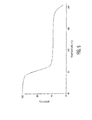
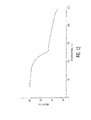
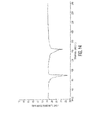
- Form A may be characterized by differential scanning calorimetry (DSC) thermogram with onset at about 201°C and endotherm peak at about 205.5°C.
- DSC differential scanning calorimetry
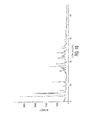
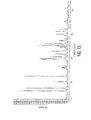
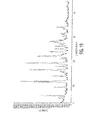
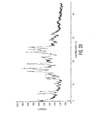
- Form A may also be characterized by its X-ray diffraction pattern with characteristic peaks at diffraction angles 2-theta of about 4.58, 9.23, 12.24, 13.88, 18.23, 23.63, 24.24, and 26.68 ⁇ 0.2 degrees.
- Form A may also be characterized by X-ray diffraction pattern substantially as shown in Fig.1 .
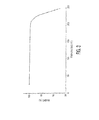
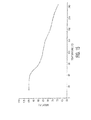
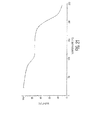
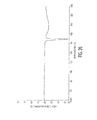
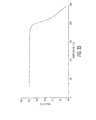
- Form A may be characterized by thermo gravimetric analysis (TGA) curve corresponding to a weight loss of about 0.038% (0.01082 mg) up to a temperature of about 100°C (as shown in Fig. 3 ).
- TGA thermo gravimetric analysis
- the present invention includes processes for the preparation of Form A, which processes comprise the step of treating sitagliptin freebase with phosphoric acid in aqueous isopropanol having a water content of less than about 6%.
- the present invention includes the sulfuric acid, hydrobromic acid, methanesulfonic acid, acetic acid, benzoic acid, oxalic acid, succinic acid, mandelic acid, fumaric acid, and lactic acid salts of sitagliptin.
- the present invention includes processes for the preparation of salts of sitagliptin, which processes comprise at least one of the steps of:
- compositions comprising sitagliptin according to the present invention together with at least one pharmaceutically acceptable excipient.
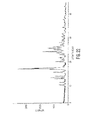
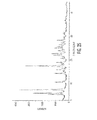
- This document may refer to a material, such as in this instance, salts of sitagliptin, and its crystalline forms, solvates, or optical isomers by reference to patterns, spectra, or other graphical data, "substantially” as shown in a Figure, or by one or more data points.
- patterns, spectra, and other graphical data can be shifted in their positions, relative intensities, and/or values due to a number of factors known to those of skill in the art.
- such shifts in peak positions or the relative intensities of one or more peaks can occur because of, without limitation: the equipment used, the sample preparation protocol, preferred packing and orientations, the radiation source, operator error, method and length of data collection, and the like.
- those of ordinary skill in the art should be able to compare the figures herein with a pattern generated of an unknown form of, in this case, salts of sitagliptin, and confirm its identity as one of the forms disclosed and claimed herein. The same holds true for other techniques which may be reported herein.
- pure When a molecule or other material is identified herein as “pure”, it generally means, unless specified otherwise, that the material is 99% pure or more, as determined by methods conventional in art such as high performance liquid chromatography (HPLC) or optical methods. In general, this refers to purity with regard to unwanted residual solvents, reaction byproducts, impurities and unreacted starting materials. In the case of stereoisomers, “pure” also means 99% of one enantiomer or diastereomer, as appropriate. “Substantially pure” refers to the same as “pure except that the lower limit is about 98% pure or more and likewise, “essentially pure” means the same as “pure” except that the lower limit is about 95% pure.
- salt(s) of sitagliptin encompass crystalline and amorphous forms, solvates, hydrates, stereoisomers, both individual and in mixtures thereof, racemates, enantiomers, and the like
- the present invention includes processes for the preparation of sitagliptin, which processes comprise at least one of the steps of:
- Step (i) involves reacting the compound of Formula VI with a reagent, optionally in a solvent, to afford the compound of the formula (V)
- Suitable reagents include and are not limited to ammonia sources, such as, for example, ammonium chloride, ammonium bromide, ammonium iodide, ammonium carbonate, ammonium formate, ammonium acetate, formamide, ammonium formate in combination with methanolic ammonia or ethanolic ammonia, ammonium formate in combination with isopropanol ammonia, ammonium formate in combination with aqueous ammonia, ammonium formate in combination with formic acid, formamide in combination with formic acid, formamide in combination with formic acid and isopropanol ammonia, formamide in combination with formic acid and methanolic ammonia, formamide in combination with formic acid and aqueous ammonia, or a mixture thereof.
- the ammonia source may be ammonium acetate in combination with aqueous ammonia.
- Suitable solvents include and are not limited to, alcohols, such as, for example methanol, ethanol, isopropanol, n-butanol, and the like; nitriles like acetonitrile, propionitrile, and the like; ketones, such as, for example, acetone, methyl isobutyl ketone, methyl ethyl ketone, n-butanone, and the like; halogenated solvents, such as, for example, dichloromethane, ethylene dichloride, chloroform, and the like; esters, such as, for example ethyl acetate, n-propyl acetate, isopropyl acetate, and the like; hydrocarbon solvents, such as, for example, toluene, xylene, n-hexane, n-heptane, cyclohexane, and the like; ethers, such as, for example, 1,4-di
- a suitable temperature for the reaction of Step (i) may be less than about 150°C, or less than about 120°C, or less than about 80°C, or less than about 60°C, or any other suitable temperatures.
- Step (ii) involves conversion of the compound of the Formula V to a compound of Formula IV.
- Suitable reagents that may be used for the conversion include and are not limited to sodium borohydride, lithium aluminium hydride, vitride, sodium cyano borohydride, palladium-carbon, RANEY nickel, and platinium oxide, or any other suitable reagent.
- the reagent may be sodium cyano borohydride.
- Suitable solvents include and are not limited to, alcohols, such as, for example methanol, ethanol, isopropanol, n-butanol, and the like; nitriles like acetonitrile, propionitrile, and the like; ketones, such as, for example, acetone, methyl isobutyl ketone, methyl ethyl ketone, n-butanone, and the like; halogenated solvents, such as, for example, dichloromethane, ethylene dichloride, chloroform, and the like; esters, such as, for example ethyl acetate, n-propyl acetate, isopropyl acetate, and the like; hydrocarbon solvents, such as, for example, toluene, xylene, n-hexane, n-heptane, cyclohexane, and the like; ethers, such as, for example, 1,4-di
- a suitable temperature for the reaction of Step (ii) may be less than about 250°C, or less than about 200°C, or less than about 150°C, or less than about 100°C, or less than about 80°C, or less than about 60°C, or any other suitable temperature.
- the reaction may be carried out for any desired time period ranging from about 30 minutes to about 10 hours or longer.
- Step (iii) involves treating the compound of Formula IV with a reagent to afford a diasteromeric salt of sitagliptin of Formula III
- Suitable reagents include and are not limited to: S-(+)-mandelic acid, R-(-)-mandelic acid, (1S)-(+)-camphor-10-sulfonic acid, (1R)-(-)-camphor-10-sulfonic acid, L-malic acid, D-malic acid, L-maleic acid, D-maleic acid, (-)-naproxen, (+)-naproxen, (-)-ibuprofen, (+)-ibuprofen, (1R)-(+)-3-bromocamphor-10-sulfonic acid, (1S)-(-)-3-bromocamphor-10-sulfonic acid, L-(+)-tartaric acid, D-(-)-tartaric acid, (+)-dibenzoyl-D-tartaric acid, (-)-dibenzoyl-L-tartaric acid, (+)-dipara-tolyl-D-tartaric acid, (
- Suitable solvents include and are not limited to, alcohols, such as, for example methanol, ethanol, isopropanol, n-butanol, and the like; nitriles like acetonitrile, propionitrile, and the like; ketones, such as, for example, acetone, methyl isobutyl ketone, methyl ethyl ketone, n-butanone, and the like; halogenated solvents, such as, for example, dichloromethane, ethylene dichloride, chloroform, and the like; esters, such as, for example ethyl acetate, n-propyl acetate, isopropyl acetate, and the like; hydrocarbon solvents, such as, for example, toluene, xylene, n-hexane, n-heptane, cyclohexane, and the like; ethers, such as, for example, 1,4-di
- a suitable temperature for the reaction of Step (iii) may be less than about 150°C, or less than about 120°C, or less than about 80°C, or less than about 60°C, or any other suitable temperatures.
- the reaction may be carried out for any desired time periods ranging from about 30 minutes to about 30 hours or longer.
- Step (iv) involves isolating the diasteromeric salt of sitagliptin of Formula III
- the diastereomeric salt formed in Step (iii) may be recovered by conventional methods including decantation, centrifugation, gravity filtration, suction filtration, or other techniques known in the art for the recovery of solids.
- the recovered solid may be further dried. Drying may be suitably carried out using a tray dryer, vacuum oven, air oven, fluidized bed drier, spin flash dryer, flash dryer, and the like at atmospheric pressure or under reduced pressure.
- Drying may be carried out at a temperature of less than about 150°C, or less than 120°C, or less than 100°C, or less than about 60°C, or less than about 40°C, or any other suitable temperature, at atmospheric pressure or under reduced pressure, and in the presence or absence of an inert atmosphere such as nitrogen, argon, neon, or helium.
- the drying may be carried out for any desired time period to achieve the desired quality of the product, such as, for example, about 1 to about 15 hours or longer.
- the diasteromeric salt of Formula III may be purified by processes known in the art.
- the diasteromeric salt of Formula III may be purified by precipitation or making a slurry in a suitable solvent. Precipitation may be achieved by methods such as crystallization, adding an anti-solvent to a concentrated solution of the said diastereomeric salt, or any other suitable method known in the art.
- Step (v) involves treating the diasteromeric salt of Formula III with an acid or a base to afford sitagliptin freebase of Formula II.
- Suitable bases that may be used for treating the diasteromeric salt of Formula II include and are not limited to: inorganic bases, such as, for example, sodium hydroxide, potassium hydroxide, sodium methoxide, potassium teritarybutoxide, sodium teritarybutoxide, sodium carbonate, potassium carbonate, sodium bicarbonate, potassium bicarbonate, and the like, either alone or as their aqueous solutions; organic bases, such as, for example, triethylamine, pyridine, N-methyl Morpholine, diisopropyl amine, diisopropyl ethylamine, and the like; resins, such as, for example, ion exchange resins; and mixtures thereof.
- inorganic bases such as, for example, sodium hydroxide, potassium hydroxide, sodium methoxide, potassium teritarybutoxide, sodium teritarybutoxide, sodium carbonate, potassium carbonate, sodium bicarbonate, potassium bicarbonate, and the like, either alone or as their aque
- Suitable acids that may be used for treating the diasteromeric salt of Formula II include and are not limited to: inorganic acids, such as, for example, hydrochloric acid, nitric acid, sulphuric acid, phosphoric acid, and the like; organic acids, such as, for example, acetic acid, propionic acid, butyric acid, and the like; and mixtures thereof.
- Suitable solvents that may be used in Step (v) include and are not limited to: alcohols, such as, for example, ketones, such as, for example, methyl isobutyl ketone, methyl ethyl ketone, n-butanone, and the like; halogenated solvents, such as, for example, dichloromethane, ethylene dichloride, chloroform, and the like; esters, such as, for example, ethyl acetate, n-propyl acetate, isopropyl acetate, and the like; hydrocarbon solvents, such as, for example, toluene, xylene, cyclohexane, and the like; ethers, such as, for example, 1,4-dioxane, tetrahydrofuran, and the like; and mixtures thereof.
- alcohols such as, for example, ketones, such as, for example, methyl isobutyl ketone, methyl ethyl
- a suitable temperature for Step (v) may be less than about 150°C, or less than about 120°C, or less than about 80°C, or less than about 60°C, or any other suitable temperatures.
- a suitable time for the reaction of Step (v) may be from about 30 minutes to about 20 hours or longer to achieve the desired yield and quality.
- Step (vi) involves optionally treating sitagliptin freebase with an acid to afford an acid addition salt of sitagliptin of Formula I
- Suitable acids for Step (vi) include and are not limited to phosphoric acid, hydrochloric acid, oxalic acid, hydrobromic acid, acetic acid, formic acid, citric acid, and the like.
- sitagliptin free base may be treated with phosphoric acid to afford sitagliptin phosphate of Formula (I').
- the molar equivalents of phosphoric acid that may be used may range from about 0.5 to about 2.0 molar equivalents with respect to sitagliptin free base.
- the acid addition salt of sitagliptin of Formula I obtained in Step (vi) may be dried. Drying may be carried out in a tray dryer, vacuum oven, air oven, fluidized bed drier, spin flash dryer, flash dryer and the like, at atmospheric pressure or under reduced pressure. The drying may be carried out at temperatures of less than about 100°C, or less than about 90°C, or less than about 60°C, or less than about 50°C, or any other suitable temperature at atmospheric pressure or under reduced pressure. The drying may be carried out for any desired time ranging from about 1 to 20 hours or longer.
- the salt of sitagliptin may be purified by processes known in the art.
- the salt of sitagliptin may be purified by precipitation or making a slurry in a suitable solvent.
- the precipitation may be achieved by crystallization, by adding an anti-solvent, or any other suitable method known in the art.
- the present invention includes stereoselective processes for the preparation of sitagliptin, which processes comprise at least one of the steps of:
- Step (i) involves reacting the compound of the formula VI with a chiral compound of Formula VII to produce a chiral enamine of Formula VIII.
- the chiral reagent may be ( R )-1-phenylethylamine.
- the molar equivalents of the chiral compound of Formula VII may range from about 1.0 to about 2.0 molar equivalents with respect to the compound of Formula VI.
- solvents that may be used include and not limited to: alcohols, such as, for example, methanol, ethanol, isopropanol, and n-butanol; organic acids, such as, for example, acetic acid and propionic acid; ketones, such as, for example, acetone, methyl isobutyl ketone, methyl ethyl ketone, and n-butanone; halogenated solvents, such as, for example, dichloromethane, ethylene dichloride, and chloroform; esters, such as, for example, ethyl acetate, n-propyl acetate, and isopropyl acetate; hydrocarbon solvents, such as, for example, toluene, xylene, n-hexane, n-heptane, and cyclohexane; ethers, such as, for example, 1,4-dioxan
- a suitable temperature for the reaction of Step (i) may be less than about 150°C, or less than about 120°C, or less than about 80°C, or less than about 60°C, or any other suitable temperatures.
- a suitable time for the reaction of Step (i) may be from about 30 minutes to about 10 hours or longer.
- Step (ii) involves converting the compound of Formula VIII to a compound of Formula IX.
- the conversion may be achieved by methods including and not limited to reduction.
- a reduction may be carried out in the presence of a catalyst, such as, for example, platinum oxide (PtO 2 ).
- the molar equivalents of reduction catalyst may range from about 0.05 to about 1.0 molar equivalent with respect to the compound of Formula VIII.
- Solvents that may be used as in Step (ii) include and are not limited to alcohols, such as, for example, methanol, ethanol, isopropanol, and n-butanol; organic acids, such as, for example, acetic acid and propionic acid; ketones, such as, for example, acetone, methyl isobutyl ketone, methyl ethyl ketone, and n-butanone; halogenated solvents, such as, for example, dichloromethane, ethylene dichloride, and chloroform; esters, such as, for example, ethyl acetate, n-propyl acetate, and isopropyl acetate; hydrocarbon solvents, such as, for example, toluene, xylene, n-hexane, n-heptane, and cyclohexane; ethers, such as, for example, 1,4-dioxane and tetrahydr
- a suitable temperature for the reaction of Step (ii) may be less than about 200°C, or less than about 150°C, or less than about 100°C, or less than about 60°C, or any other suitable temperatures.
- a suitable time for the reaction of Step (ii) may be from about 30 minutes to about 10 hours or longer.
- Step (iii) involves converting the compound of Formula IX using an acid or base or a catalyst to afford sitagliptin freebase of Formula II.
- Step (iii) may be achieved by techniques known in the art.
- the conversion of Step (iii) may be achieved by hydrogenation in the presence of a catalyst, such as, for example, palladium on carbon, nickel on carbon, and palladium hydroxide on carbon.
- Solvents that may be used as in Step (iii) include and are not limited to alcohols, such as, for example, methanol, ethanol, isopropanol, and n-butanol; organic acids, such as, for example, acetic acid and propionic acid; ketones, such as, for example, acetone, methyl isobutyl ketone, methyl ethyl ketone, and n-butanone; halogenated solvents, such as, for example, dichloromethane, ethylene dichloride, and chloroform; esters, such as, for example, ethyl acetate, n-propyl acetate, and isopropyl acetate; hydrocarbon solvents, such as, for example, toluene, xylene, n-hexane, n-heptane, and cyclohexane; ethers, such as, for example, 1,4-dioxane and tetra
- a suitable temperature for the reaction of Step (ii) may be less than about 200°C, or less than about 150°C, or less than about 100°C, or less than about 60°C, or any other suitable temperatures.
- a suitable time for the reaction of Step (ii) may be from about 30 minutes to about 10 hours or longer.
- Step (iv) involves optionally treating the sitagliptin freebase of Formula II with an acid to afford an acid addition salt of sitagliptin of Formula I.
- Suitable acids for Step (iv) include and are not limited to phosphoric acid, hydrochloric acid, oxalic acid, hydrobromic acid, acetic acid, formic acid, citric acid, and the like.
- sitagliptin free base may be treated with phosphoric acid to afford sitagliptin phosphate of Formula I'.
- the molar equivalents of phosphoric acid that may be used may range from about 0.5 to about 2.0 molar equivalents with respect to sitagliptin free base.
- the acid addition salt of sitagliptin of Formula I obtained in Step (vi) may be dried. Drying may be carried out in a tray dryer, vacuum oven, air oven, fluidized bed drier, spin flash dryer, flash dryer and the like, at atmospheric pressure or under reduced pressure. The drying may be carried out at temperatures of less than about 100°C, or less than about 90°C, or less than about 60°C, or less than about 50°C, or any other suitable temperature at atmospheric pressure or under reduced pressure. The drying may be carried out for any desired time ranging from about 1 to 20 hours or longer.
- the salt of sitagliptin may be purified by processes known in the art.
- the salt of sitagliptin may be purified by precipitation or making a slurry in a suitable solvent.
- the precipitation may be achieved by crystallization, by adding an anti-solvent, or any other suitable method known in the art.
- Sitagliptin freebase and the pharmaceutically acceptable salts thereof prepared in accordance with the processes described in the present application are substantially free of process or structure related impurities, menaing the sitagliptin freebase or pharmaceutically acceptable salt thereof comprises less than about 0.5%, or less than about 0.3%, or less than about 0.2%, or less than about 0.1%, or less than about 0.05% by weight of its corresponding process or structural related impurities.
- the present invention includes processes for the preparation of a compound of Formula VI, which processes comprise at least one of the steps of:
- Step (i) involves condensation of 2,4,5-trifluorophenylacetic acid of Formula XIII with 2,2-dimethyl-1,3-dioxane-4,6-dione (meldrums acid) of Formula XII.
- the molar equivalents of meldrums acid that may be used in Step (i) may be less than about 2.0, or less than about 3.0, or less than about 5.0 molar equivalents with respect to the compound of Formula XIII.
- Bases that may be used in Step (i) include and are not limited to: organic bases, such as, for example, triethyl amine, diisopropyl ethylamine, pyridine, imidazole, N-methyl morpholine, sodium methoxide, diisopropyl amine, 1,1-carbonyl diimidazole, and the like, inorganic bases, such as, for example, sodium carbonate, potassium carbonate, sodium bicarbonate, and potassium bicarbonate; or mixtures thereof.
- organic bases such as, for example, triethyl amine, diisopropyl ethylamine, pyridine, imidazole, N-methyl morpholine, sodium methoxide, diisopropyl amine, 1,1-carbonyl diimidazole, and the like
- inorganic bases such as, for example, sodium carbonate, potassium carbonate, sodium bicarbonate, and potassium bicarbonate; or mixtures thereof.
- Organic solvents that may be used in Step (i) include and are not limited to: alcohols, such as, for example, methanol, ethanol, isopropanol, n-butanol, and the like; organic acids, such as, for example, acetic acid, propionic acid, and the like; ketones, such as, for example, acetone, methyl isobutyl ketone, methyl ethyl ketone, n-butanone, and the like; halogenated solvents, such as, for example, dichloromethane, ethylene dichloride, chloroform, and the like; esters, such as, for example, ethyl acetate, n-propyl acetate, isopropyl acetate, and the like; hydrocarbon solvents, such as, for example, toluene, xylene, n-hexane, n-heptane, cyclohexane, and the like; ethers, such as,
- a suitable temperature for the reaction of Step (ii) may be less than about 120°C, or less than about 100°C, or less than about 60°C, or any other suitable temperatures.
- a suitable time for the reaction of Step (ii) may be from about 30 minutes to about 10 hours or longer.
- Step (ii) involves preparation of the compound of Formula VI by reacting compound of Formula XI with 3-trifluoromethyl-5,6,7,8-tetrahydro-1,2,4-triazole[4,3- a ]pyrazine hydrochloride of Formula X in the presence of diisopropylethylamine in an organic solvent to afford compound of Formula VI.
- 3-trifluoromethyl-5,6,7,8-tetrahydro-1,2,4-triazole[4,3- a ]pyrazine hydrochloride of Formula X may be prepared, e.g ., by the process of Reference Example 1 herein or as disclosed in US Patent No. 7,326,708 , which patent is incorporated herein by reference in its entirty.
- the molar equivalents of 3-trifluoromethyl-5,6,7,8-tetrahydro-1,2,4-triazole [4,3-a]pyrazine hydrochloride of Formula X may be less than about 3.0, or less than about 2.0, or less than about 1.0 molar equivalents with respect to the compound of Formula XI.
- the molar equivalents of diisopropylethylamine may be less than about 3.0, or less than about 2.0, or less than about 1.0 molar equivalents with respect to the compound of Formula XI.
- Solvents that may be used as in Step (iii) include and are not limited to alcohols, such as, for example, methanol, ethanol, isopropanol, and n-butanol; organic acids, such as, for example, acetic acid and propionic acid; ketones, such as, for example, acetone, methyl isobutyl ketone, methyl ethyl ketone, and n-butanone; halogenated solvents, such as, for example, dichloromethane, ethylene dichloride, and chloroform; esters, such as, for example, ethyl acetate, n-propyl acetate, and isopropyl acetate; hydrocarbon solvents, such as, for example, toluene, xylene, n-hexane, n-heptane, and cyclohexane; ethers, such as, for example, 1,4-dioxane and tetra
- a suitable temperature for the reaction of Step (ii) may be less than about 120°C, or less than about 80°C, or less than about 60°C, or any other suitable temperatures.
- a suitable time for the reaction of Step (ii) may be from about 30 minutes to about 10 hours or longer.
- the processes of the present invention may be used to make anhydrous crystalline sitagliptin dihydrogen phosphate of Formula I' (also referred to hereinafter as Form A).
- Form A may be characterized by differential scanning calorimetry (DSC) thermogram with onset at about 201°C and endotherm peak at about 205.5°C.
- DSC differential scanning calorimetry
- Form A may also be characterized by its XPRD characteristic peaks at diffraction angles 2-theta of about 4.58, 9.23, 12.24, 13.88, 18.23, 23.63, 24.24, and 26.68 ⁇ 0.2 degrees.
- Form A may also be characterized by the X-ray diffraction pattern substantially as shown in Fig.1 .
- Form A may be characterized by thermo gravimetric analysis (TGA) curve corresponding to a weight loss of about 0.038% (0.01082 mg) up to a temperature of about 100°C (as shown in Fig. 3 ).
- TGA thermo gravimetric analysis
- the present invention also includes processes for the preparation of Form A, which processes comprise the step of treating sitagliptin freebase with phosphoric acid in a solvent having a water content of less than about 6%.
- the molar equivalents of phosphoric acid may be less than about 2.0, or less than about 1.0, or less than about 0.5 molar equivalents with respect to sitagliptin free base.
- the solvent may be aqueous isopropanol with a concentration of water within the solvent of less than about 6%.
- Sitagliptin freebase may be taken in a suitable solvent, to which phosphoric acid may be added.
- the contents may be stirred at a higher temperature, such as about 70°C.
- the contents may be cooled to about 30°C.
- the separated solid may be isolated by conventional techniques, such as decantation, centrifugation, gravity filtration, suction filtration, or other techniques known in the art for the recovery of solids.
- the resulting product may be optionally dried. Drying may be carried out in a tray dryer, vacuum oven, air oven, fluidized bed drier, spin flash dryer, flash dryer, and the like.
- the drying may be carried out at a temperature of less than about 100°C, or less than about 90°C, or less than about 60°C, or any other suitable temperature at atmospheric pressure or under reduced pressure.
- the drying can be carried out for any desired time ranging from about 1 to 20 hours or longer.
- the present invention includes the sulfuric acid, hydrobromic acid, methanesulfonic acid, acetic acid, benzoic acid, oxalic acid, succinic acid, mandelic acid, fumaric acid, and lactic acid salts of sitagliptin, which salts may be in crystalline form, and which may be made by the processes of the present invention.
- crystalline sitagliptin sulfate having PXRD characteristic peaks at approximately 4.63, 14.06, 14.20, 15.30, 17.98, 18.23, 18.79, 19.23, 21.95, 23.23, 26.29 and 26.73 ⁇ 0.2 degrees 2 theta.
- the crystalline sitagliptin sulfate may be characterized by an PXRD pattern substantially as shown in Figure 4 .
- Crystalline sitagliptin sulfate may also be characterized by a DSC endotherm peak at about 192°C.
- the crystalline sitagliptin sulfate may be characterized by a DSC thermogram substantially as shown in Figure 5 .
- the crystalline sitagliptin sulfate may also be characterized by a TGA weight loss of about 0.0029%.
- the crystalline sitagliptin sulfate may be characterized by a TGA curve substantially as shown in Figure 6 .
- crystalline sitagliptin hydrobromide having PXRD characteristic peaks at approximately 5.92, 6.81, 13.45, 17.53, 21.88, 22.67, 24.39, 25.03 and 26.41 ⁇ 0.2 degrees 2 theta.
- the crystalline sitagliptin hydrobromide may be characterized by an PXRD pattern substantially as shown in Figure 7 .
- Crystalline sitagliptin hydrobromide may also be characterized by a DSC endotherm peak at about 137°C.
- the crystalline sitagliptin hydrobromide may be characterized by a DSC thermogram substantially as shown in Figure 8 .
- the crystalline sitagliptin hydrobromide may also be characterized by a TGA weight loss of about 4.178%.
- the crystalline sitagliptin hydrobromide may be characterized by a TGA curve substantially as shown by Figure 9 .
- crystalline sitagliptin methane sulfonate having PXRD characteristic peaks at approximately 5.25, 6.32, 6.62, 11.42, 18.01, 19.14 and 23.91 ⁇ 0.2 degrees 2 theta.
- the crystalline sitagliptin methane sulfonate may be characterized by an PXRD pattern substantially as shown in Figure 10 .
- Crystalline sitagliptin methane sulfonate may also be characterized by a DSC endotherm peak at about 131°C.
- the crystalline sitagliptin methane sulfonate may be characterized by a DSC thermogram substantially as shown in Figure 11 .
- the crystalline sitagliptin methane sulfonate may also be characterized by a TGA weight loss of about 3.386%.
- the crystalline sitagliptin methane sulfonate may be characterized by a TGA curve substantially as shown by Figure 12 .
- crystalline sitagliptin acetate having PXRD characteristic peaks at approximately 6.42, 7.61, 10.25, 12.58, 19.51, 19.80, 20.54, 22.89, 25.26 and 25.98 ⁇ 0.2 degrees 2 theta.
- the crystalline sitagliptin acetate may be characterized by an PXRD pattern substantially as shown in Figure 13 .
- Crystalline sitagliptin acetate may also be characterized by a DSC endotherm peak at about 144°C.
- the crystalline sitagliptin acetate may be characterized by a DSC thermogram substantially as shown in Figure 14 .
- the crystalline sitagliptin acetate may also be characterized by a TGA weight loss of about 14.16%.
- the crystalline sitagliptin acetate may be characterized by a TGA curve substantially as shown by Figure 15 .
- crystalline sitagliptin benzoate having PXRD characteristic peaks at approximately 7.19, 7.45, 18.11, 18.38, 19.35, 20.42, 21.81, 22.61, 24.11, 24.63 and 27.51 ⁇ 0.2 degrees 2 theta.
- the crystalline sitagliptin benzoate may be characterized by an PXRD pattern substantially as shown in Figure 16 .
- Crystalline sitagliptin benzoate may also be characterized by a DSC endotherm peak at about 155°C.
- the crystalline sitagliptin benzoate may be characterized by a DSC thermogram substantially as shown in Figure 17 .
- the crystalline sitagliptin benzoate may also be characterized by a TGA weight loss of about 0.1163%.
- the crystalline sitagliptin benzoate may be characterized by a TGA curve substantially as shown by Figure 18 .
- crystalline sitagliptin oxalate having PXRD characteristic peaks at approximately 5.92, 11.54, 11.92, 14.00, 16.39, 16.64, 19.40, 22.21, 24.00, 28.11 and 28.26 ⁇ 0.2 degrees 2 theta.
- the crystalline sitagliptin oxalate may be characterized by an PXRD pattern substantially as shown in Figure 19 .
- Crystalline sitagliptin oxalate may also be characterized by a DSC endotherm peak at about 98°C.
- the crystalline sitagliptin oxalate may be characterized by a DSC thermogram substantially as shown in Figure 20 .
- the crystalline sitagliptin oxalate may also be characterized by a TGA weight loss of about 6.245%.
- the crystalline sitagliptin oxalate may be characterized by a TGA curve substantially as shown by Figure 21 .
- crystalline sitagliptin succinate having PXRD characteristic peaks at approximately 13.06, 13.50, 15.73, 17.04, 17.35, 17.57, 20.15, 24.35, 25.15, 25.76 and 26.35 ⁇ 0.2 degrees 2 theta.
- the crystalline sitagliptin succinate may be characterized by an PXRD pattern substantially as shown in Figure 19 .
- Crystalline sitagliptin succinate may also be characterized by a DSC endotherm peak at about 120°C.
- the crystalline sitagliptin succinate may be characterized by a DSC thermogram substantially as shown in Figure 20 .
- the crystalline sitagliptin succinate may also be characterized by a TGA weight loss of about 0.8623%.
- the crystalline sitagliptin succinate may be characterized by a TGA curve substantially as shown by Figure 21 .
- crystalline sitagliptin mandelate having PXRD characteristic peaks at approximately 5.45, 6.02, 7.47, 10.60, 14.33, 15.88, 17.35, 17.60, 19.02, 21.98, 22.63 and 25.04 ⁇ 0.2 degrees 2 theta.
- the crystalline sitagliptin mandelate may be characterized by an PXRD pattern substantially as shown in Figure 22 .
- Crystalline sitagliptin mandelate may also be characterized by a DSC endotherm peak at about 169°C.
- the crystalline sitagliptin mandelate may be characterized by a DSC thermogram substantially as shown in Figure 23 .
- the crystalline sitagliptin mandelate may also be characterized by a TGA weight loss of about 0.149%.
- the crystalline sitagliptin mandelate may be characterized by a TGA curve substantially as shown by Figure 24 .
- crystalline sitagliptin fumarate having PXRD characteristic peaks at approximately 6.19, 7.09, 15.93, 16.87, 17.12, 19.09, 21.87, 24.15, 25.26, 26.00 and 26.19 ⁇ 0.2 degrees 2 theta.
- the crystalline sitagliptin fumarate may be characterized by an PXRD pattern substantially as shown in Figure 25 .
- Crystalline sitagliptin fumarate may also be characterized by a DSC endotherm peak at about 187°C.
- the crystalline sitagliptin fumarate may be characterized by a DSC thermogram substantially as shown in Figure 26 .
- the crystalline sitagliptin fumarate may also be characterized by a TGA weight loss of about 0.238%.
- the crystalline sitagliptin fumarate may be characterized by a TGA curve substantially as shown by Figure 27 .
- crystalline sitagliptin lactate having PXRD characteristic peaks at approximately 7.91, 10.52, 17.66, 17.92, 20.34, 21.59, 23.87, 24.62 and 25.75 ⁇ 0.2 degrees 2 theta.
- the crystalline sitagliptin lactate may be characterized by an PXRD pattern substantially as shown in Figure 28 .
- Crystalline sitagliptin lactate may also be characterized by a DSC endotherm peak at about 151°C.
- the crystalline sitagliptin lactate may be characterized by a DSC thermogram substantially as shown in Figure 29 .
- the crystalline sitagliptin lactate may also be characterized by a TGA weight loss of about 0.06007%.
- the crystalline sitagliptin lactate may be characterized by a TGA curve substantially as shown by Figure 30 .
- the present invention includes processes for the preparation of salts of sitagliptin, which processes comprise at least one of the steps of:
- the solution of a salt of sitagliptin may be obtained, for example, by dissolving a salt of sitagliptin of any form in a solvent. It may also be obtained by treating a reaction mixture comprising sitagliptin free base with an acid in a solvent, wherein the acid is sulfuric acid, hydrobromic acid, methanesulfonic acid, acetic acid, benzoic acid, oxalic acid, succinic acid, mandelic acid, fumaric acid lactic acid, or a combination thereof.
- Solvents that may be used as in Step (a) include and are not limited to alcohols, such as, for example, methanol, ethanol, isopropanol, and n-butanol; organic acids, such as, for example, acetic acid and propionic acid; ketones, such as, for example, acetone, methyl isobutyl ketone, methyl ethyl ketone, and n-butanone; halogenated solvents, such as, for example, dichloromethane, ethylene dichloride, and chloroform; esters, such as, for example, ethyl acetate, n-propyl acetate, and isopropyl acetate; hydrocarbon solvents, such as, for example, toluene, xylene, n-hexane, n-heptane, and cyclohexane; ethers, such as, for example, 1,4-dioxane and tetrahydro
- Step (a) involves dissolution of a salt of sitagliptin
- the dissolution temperature may be less than about 100°C, or less than about 90°C, or less than about 80°C, or less than about 60°C, or less than about 50°C, or any other temperature, as long as the stability of the compound is not compromised and a clear solution is obtained.
- suitable reaction mass temperature for addition of acid may be less than about 100°C, or less than about 90°C, or less than about 80°C, or less than about 60°C, or less than about 50°C, or any other temperature, as long as the stability of the compound is not compromised and a clear solution is obtained.
- Step (b) involves isolating the salt of sitagliptin from the solution of Step (a).
- the salt of sitagliptin may be isolated from the solution of the salt of sitagliptin by processes known in the art.
- Various isolation techniques that may be used for recovering the salt of sitagliptin include and not limited to precipitation by cooling, concentration, seeding, and adding anti-solvent; distillation; and evaporation.
- the solution may be concentrated by conventional methods such as evaporation, distillation before cooling the solution.
- the exact cooling temperature and time required for complete crystallization may be readily determined by a person skilled in the art and will also depend on parameters, such as concentration and temperature of the solution or slurry. Stirring or othermethods, such as shaking, agitation, and the like, that mix the contents thoroughly may be employed for crystallization to occur.
- the suspension may be maintained for a time sufficient to achieve the complete isolation of the product with desired yield and quality. Such a time may vary from about 1 to about 48 hours or longer.
- Step (c) involves recovering the crystalline salt of sitagliptin and optionally drying it
- the crystalline solid may then be recovered from the suspension by using any of techniques, such as filtration by gravity or by suction, centrifugation, slow evaporation, or any other suitable technique.
- the crystals so isolated may carry a small proportion of occluded mother liquor containing a higher percentage of impurities. If desired, the crystals may be washed with a solvent to wash out the mother liquor and/or impurities, and the resulting wet crystals may optionally be suction dried.
- the wet cake obtained in Step (c) may be optionally dried. Drying may be carried out in a tray dryer, vacuum oven, air oven, fluidized bed drier, spin flash dryer, flash dryer, and the like. The drying may be carried out at temperature of less than about 200°C, between about 20°C to about 80°C, between about 30°C to about 60°C, or any other suitable temperature, at atmospheric pressure or under reduced pressure. The drying may be carried out for any desired time until the desired quality of product is achieved.
- the present invention includes pharmaceutical compositions containing a therapeutically effective amount of sitagliptin or a pharmaceutically acceptable salt thereof, containing less than about 0.1% of any individual impurity, together with one or more pharmaceutically acceptable excipients.
- compositions according to the present invention may be formulated as: solid oral dosage forms including powders, granules, pellets, tablets, and capsules; liquid oral dosage forms including syrups, suspensions, dispersions, and emulsions; and injectable preparations including solutions, dispersions, and freeze dried compositions.
- Formulations may be adapted for immediate release, delayed release, or modified release of the active ingredient.
- Immediate release compositions may be conventional, dispersible, chewable, mouth dissolving, or flash melt preparations.
- Modified release compositions may comprise hydrophilic and/or hydrophobic, release rate controlling substances to form matrix and/or reservoir systems.
- the pharmaceutical compositions may be prepared by direct blending, dry granulation, wet granulation, extrusion, and/or spheronization.
- the pharmaceutical compositions may be presented as uncoated, film coated, sugar coated, powder coated, enteric coated, or modified release coated.
- compositions of the present invention comprise one or more pharmaceutically acceptable excipients.
- Pharmaceutically acceptable excipients that find use in the present invention include and are not limited to: diluents, such as, for example, starch, pregelatinized starch, lactose, powdered cellulose, microcrystalline cellulose, dicalcium phosphate, tricalcium phosphate, mannitol, sorbitol, sugar, and the like; binders, such as, for example, acacia, guar gum, tragacanth, gelatin, polyvinylpyrrolidone, hydroxypropyl cellulose, hydroxypropyl methylcellulose, pregelatinized starch, and the like; disintegrants, such as, for example, starch, sodium starch glycolate, pregelatinized starch, crospovidone, croscarmellose sodium, colloidal silicon dioxide, and the like; lubricants, such as, for example, stearic acid, magnesium stearate, zinc ste
- PXRD data reported herein was obtained using Cu Ka radiation, having the wavelength 1.5418 A and were obtained using a Bruker AXS D8 Advance Powder X-ray Diffractometer.
- DSC analysis was carried out in a DSC Q1000 instrument from TA Instruments with a ramp of 10°C/ minute with a modulation time of 60 seconds and a modulation temperature of ⁇ 1°C.
- the starting temperature was 0°C and ending temperature was 200°C.
- TGA analysis was carried out in a TGA Q500 instrument with a ramp 10°C/minute up to 250°C.
- Hydrazine hydrate (15 g, 35 wt%) is mixed acetonitrile (22.5 mL) and cooled to about 10°C.
- Ethyl trifluoroacetate (23.3 g) is added over 1 hour.
- the resulting solution is warmed to 20°C and stirred for about 1 hour.
- the solution is cooled to 0-2°C.
- 50 wt % aqueous NaOH (7.88 g) and chloroacetyl chloride (22.2 g) are added to the reaction solution simultaneously over 2 hours.
- the reaction mixture is warmed to 15-18°C and stirred for about 5 hours.
- Solvent is distilled off under vacuum at about 30°C.
- N'-(2-chloroacetyl)-trifluoroacetohydrazide (60 g) and acetonitrile (120 mL) are charged into a round-bottom flask and cooled to about 0°C.
- Phosphorus oxychloride (27.1 g) is added to the solution for about 15 minutes.
- the reaction mixture is heated to about 80°C and stirred for about 28 hours.
- isopropyl acetate (180 mL) and water (180 mL) are mixed and cooled to 0°C. The reaction slurry is added to this solution slowly.
- Step D Preparation of 3-trifluoromethyl-5,6,7,8-tetrahydro-1,2,4-triazolo[4,3-a]pyrazine hydrochloride (Formula X)
- Example 1 Preparation of 5-(1-hydroxy-2-(2,4,5-trifluorophenyl)-ethylidene)-2,2-dimethyl-1,3-dioxane-4,6-dione (Formula XI).
- n-heptane (140 mL) and isopropyl acetate (70 mL) are charged at about 30°C and stirred at about 0°C for about 90 minutes.
- the separated solid is filtered and washed with a mixture of n-heptane (20 mL) and isopropyl acetate (10 mL).
- the wet cake is dried at about 50°C for about 4 hours to afford the title compound. (Yield: 60.1%; purity by HPLC: 98.0%)
- Example 2 Preparation of 7-(1,3-dioxo-4-(2,4,5-trifluorophenyl)-butyl)-3-trifluoromethyl-5,6,7,8-tetrahydro-1,2,4-triazolo[4,3-a]pyrazine (Formula VI).
- Example 3 Preparation of 7-(1-oxo-3-amino-4-(2,4,5-trifluorophenyl)-but-2-enyl)-3-trifluoromethyl-5,6,7,8-tetrahydro-1,2,4-triazolo[4,3- a ]pyrazine (Formula V).
- Example 4 Preparation of 7-(1-oxo-3-amino-4-(2,4,5-trifluorophenyl)-butyl)-3-(trifluoromethyl)-5,6,7,8-tetrahydro-1,2,4-triazolo[4,3- a ]pyrazine (Formula IV).
- sitagliptin freebase is dissolved in a mixture of isopopyl alcohol (5 mL) and water (0.2 mL), to which 85% phosphoric acid (0.056 g) is added.
- the contents are heated to about 70°C for about 30 minutes, then cooled to about 30°C, and stirred for about 15 hours.
- Example 7 Preparation of ( Z )-7-(1-oxo-3(( R )-1-phenylethylamino)-4-(2,4,5-trifluorophenyl)-but-2-enyl)-3-trifluoromethyl-5,6,7,8-tetrahydro-1,2,4-triazolo[4,3- a ]pyrazine (Formula VIII).
- Example 8 Preparation of 7-(1-oxo-3(( R )-(( R )-1-phenylethylamino))-4-(2,4,5-trifluorophenyl)-butyl)-3-trifluoromethyl-5,6,7,8-tetrahydro-1,2,4-triazolo[4,3- a ]pyrazine (Formula IX).
- sitagliptin freebase is dissolved in a mixture of isopropanol (80 mL) and water (4.0 mL). 85% phosphoric acid (1.13 g) is added. The contents are heated to about 70°C for about 30 minutes, then cooled to about 30°C, and stirred for about 15 hours. The separated solid is filtered, washed with isopropanol (1 mL), and dried at about 50°C for about 3 hours to afford the title compound. (Yield: 85.6%; purity by HPLC: 99.96%)
Landscapes
- Chemical & Material Sciences (AREA)
- Organic Chemistry (AREA)
- Health & Medical Sciences (AREA)
- Diabetes (AREA)
- General Chemical & Material Sciences (AREA)
- Emergency Medicine (AREA)
- Hematology (AREA)
- Obesity (AREA)
- Engineering & Computer Science (AREA)
- Chemical Kinetics & Catalysis (AREA)
- Endocrinology (AREA)
- Medicinal Chemistry (AREA)
- Nuclear Medicine, Radiotherapy & Molecular Imaging (AREA)
- Bioinformatics & Cheminformatics (AREA)
- Pharmacology & Pharmacy (AREA)
- Life Sciences & Earth Sciences (AREA)
- Animal Behavior & Ethology (AREA)
- General Health & Medical Sciences (AREA)
- Public Health (AREA)
- Veterinary Medicine (AREA)
- Pharmaceuticals Containing Other Organic And Inorganic Compounds (AREA)
- Nitrogen Condensed Heterocyclic Rings (AREA)
Abstract

Description
- The present application relates to sitagliptin, its salts, and its polymorphs, and processes for the preparation of sitagliptin, its salts, and its polymorphs.
- Sitagliptin is (R)-7-(1-oxo-3((R)-amino)-4-(2,4,5-trifluorophenyl)-butyl)-3-(trifluoromethyl)-5,6,7,8-tetrahydro-1,2,4-triazolo[4,3-a]pyrazine represented by the structural Formula II.

- Sitagliptin is an orally-active dipeptidyl peptidase-4 (DPP-IV) enzyme inhibitor that improves glycemic control in patients with
Type 2 diabetes mellitus by slowing the inactivation of incretin hormones. Sitagliptin may be used as a monotherapy, as an adjunct to diet and exercise, or in combination with metformin or a PPARγ agonist (e.g., thiazolidinediones). -
U.S. Patent No. 6,699,871 describes a class of beta-amino-tetrahydrotriazolo[4,3-a]pyrazines that are potent inhibitors of DPP-IV and therefore useful for the treatment ofType 2 diabetes. Specifically disclosed inUS Patent No. 6,699,871 is sitagliptin. Pharmaceutically acceptable salts of this compound are generically encompassed within the scope ofUS Patent No. 6,699,871 . It also discloses a process for the preparation of sitagliptin and related compounds. - International Application Publication No.
WO 2004/085661 discloses a process for the preparation of sitagiiptin in which S-phenyl glycine amide is used as a chiral auxilary to form an intermediate that subsequently provides the required enantiomer (i.e., sitagliptin). - International Application Publication No.
WO 2004/087650 discloses another process in which N-protected 3-((R)-amino)-4-(2,4,5-trifluorophenyl)-butyric acid is synthesized enantio-selectively, condensed with a pyrazine intermediate, and deprotected to provide sitagliptin. -
US Patent No. 7,326,708 discloses the dihydrogen phosphate salt of sitagliptin and processes for the preparation thereof. - International Application Publication No.
WO 2004/085378 discloses a process for the preparation of sitagliptin, wherein the reduction of the sitagliptin intermediate is carried out by using rhodium metal and a chiral ferrocenyl diphosphine. - Although several processes have been reported in the prior art for the preparation of sitagliptin, they suffer from one or more drawbacks such as involving the use of hazardous regents, like platinum oxide, rhodium catalyst, etc., costly reagents, such as chloro pyrazine, dichloropyrazine, etc., and extensive protection and deprotection steps. Hence, there is an ongoing need for simple, cost effective, and industrially viable processes for the production of sitagliptin and its pharmaceutically acceptable salts.
- Crystalline salts of sitagliptin are known. International Application Publication No.
WO 2005/072530 describes various crystalline salts of sitagliptin, International Application Publication No.WO 2006/033848 describes amorphous form of the dihydrogen phosphate salt of sitagliptin. International Application Publication No.WO 2005/020920 disclosee two crystalline anhydrous forms of the dihydrogen phosphate salt of sitagliptin namely Form I and Form III, and a crystalline desolvated anhydrate Form II. International Application Publication No.WO 2005/030127 discloses a crystalline anhydrate Form IV of the dihydrogen phosphate salt of sitagliptin. International Application Publication No.WO 2005/072530 discloses crystalline hydrochloric acid, benzenesulfonic acid, p-toluenesulfonic acid, 10-camphorsulfonic acid, and tartaric acid salts of sitagliptin. International Application Publication No..WO 2007/035198 discloses dodecylsulfate salt of sitagliptin. - There remains a need for further improvement in properties of solid sitagliptin, such as stability, purity, flowability, vapor impermeability, solubility, and bioavailability.
- The present invention includes processes for the preparation of sitagliptin, which processes comprise at least one of the steps of:
- (i) reacting 7-(1,3-dioxo-4-(2,4,5-trifluorophenyl)-butyl)-3-trifluoromethyl-5,6,7,8-tetrahydro-1,2,4-triazolo[4,3-a]pyrazine with a first reagent to afford 7-(1-oxo-3-amino-4-(2,4,5-trifluorophenyl)-but-2-enyl)-3-trifluoromethyl-5,6,7,8-tetrahydro-1,2,4-triazolo[4,3-a]pyrazine;
- (ii) converting the 7-(1-oxo-3-amino-4-(2,4,5-trifluorophenyl)-but-2-enyl)-3-trifluoromethyl-5,6,7,8-tetrahydro-1,2,4-triazolo[4,3-a]pyrazine with a second reagent to 7-(1-oxo-3-amino-4-(2,4,5-trifluorophenyl)-butyl)-3-(trifluoromethyl)-5,6,7,8-tetrahydro-1,2,4-triazolo[4,3-a]pyrazine;
- (iii) treating the 7-(1-oxo-3-amino-4-(2,4,5-trifluorophenyl)-butyl)-3-(trifluoromethyl)-5,6,7,8-tetrahydro-1,2,4-triazolo[4,3-a]pyrazine with a third reagent to afford a diastereomeric salt of 7-(1-oxo-3((R)-amino)-4-(2,4,5-trifluorophenyl)-butyl)-3-(trifluoromethyl)-5,6,7,8-tetrahydro-1,2,4-triazolo[4,3-a]pyrazine;
- (iv) isolating the diastereomeric salt;
- (v) treating the diastereomeric salt with an acid or a base to afford sitagliptin freebase; and
- (vi) optionally treating the sitagliptin freebase with an acid to afford an acid addition salt of sitagliptin.
- The present invention includes processes for the preparation of sitagliptin, which processes comprise at least one of the steps of:
- (i) reacting 7-(1,3-dioxo-4-(2,4,5-trifluorophenyl)-butyl)-3-trifluoromethyl-5,6,7,8-tetrahydro-1,2,4-triazolo[4,3-a]pyrazine with a chiral reagent to produce the compound of the Formula VIII, wherein R is an C1-C4 alkyl;
- (ii) converting the compound of Formula VIII to the compound of Formula IX, wherein wherein R is as defined above;
- (iii) converting the compound of Formula VIII using an acid or base or a catalyst to afford sitagliptin freebase
- (iv) optionally treating the sitagliptin freebase with an acid to afford an acid addition salt of sitagliptin.
- The present invention includes anhydrous crystalline sitagliptin dihydrogen phosphate of Formula I' (also referred to hereinafter as Form A).
- Form A may be characterized by differential scanning calorimetry (DSC) thermogram with onset at about 201°C and endotherm peak at about 205.5°C.
- Form A may also be characterized by its X-ray diffraction pattern with characteristic peaks at diffraction angles 2-theta of about 4.58, 9.23, 12.24, 13.88, 18.23, 23.63, 24.24, and 26.68 ± 0.2 degrees.
- Form A may also be characterized by X-ray diffraction pattern substantially as shown in
Fig.1 . - Also, Form A may be characterized by thermo gravimetric analysis (TGA) curve corresponding to a weight loss of about 0.038% (0.01082 mg) up to a temperature of about 100°C (as shown in
Fig. 3 ). - The present invention includes processes for the preparation of Form A, which processes comprise the step of treating sitagliptin freebase with phosphoric acid in aqueous isopropanol having a water content of less than about 6%.
- In addition to Form A, the present invention includes the sulfuric acid, hydrobromic acid, methanesulfonic acid, acetic acid, benzoic acid, oxalic acid, succinic acid, mandelic acid, fumaric acid, and lactic acid salts of sitagliptin.
- The present invention includes processes for the preparation of salts of sitagliptin, which processes comprise at least one of the steps of:
- (a) providing a solution of a salt of sitagliptin in a solvent;
- (b) isolating the salt of sitagliptin from the solution of Step (a); and
- (c) recovering the crystalline salt of sitagliptin and optionally drying it.
- There present invention includes pharmaceutical compositions comprising sitagliptin according to the present invention together with at least one pharmaceutically acceptable excipient.
-
-
Fig. 1 is an illustration of X-ray powder diffraction (XRPD) pattern of crystalline anhydrate Form A of the dihydrogen phosphate salt of sitagliptin. -
Fig. 2 is an illustration of differential scanning calorimetry ("DSC") curve of crystalline anhydrate Form A of the dihydrogen phosphate salt of sitagliptin. -
Fig. 3 is an illustration of thermogravimetric analysis (TGA) curve of crystalline anhydrate Form A of the dihydrogen phosphate salt of sitagliptin. -
FIG. 4 is an illustration of powder X-ray diffraction ("PXRD") pattern of crystalline sitagliptin sulfate prepared according to example 14. -
FIG. 5 is an illustration of differential scanning calorimetry ("DSC") curve of crystalline sitagliptin sulfate prepared according to example 14. -
FIG. 6 is an illustration of thermogravimetric analysis ("TGA") curve of crystalline sitagliptin sulfate prepared according to example 14. -
FIG. 7 is an illustration of PXRD pattern of crystalline sitagliptin hydrobromide prepared according to example 15. -
FIG. 8 is an illustration of DSC curve of crystalline sitagliptin hydrobromide prepared according to example 15. -
FIG. 9 is an illustration of TGA curve of crystalline sitagliptin hydrobromide prepared according to example 15. -
FIG. 10 is an illustration of PXRD pattern of crystalline sitagliptin methane sulfonate prepared according to example 16. -
FIG. 11 is an illustration of DSC curve of crystalline sitagliptin methane sulfonate prepared according to example 16. -
FIG. 12 is an illustration of TGA curve of crystalline sitagliptin methane sulfonate prepared according to example 16. -
FIG. 13 is an illustration of PXRD pattern of crystalline sitagliptin acetate prepared according to example 17. -
FIG. 14 is an illustration of DSC curve of crystalline sitagliptin acetate prepared according to example 17. -
FIG. 15 is an illustration of TGA curve of crystalline sitagliptin acetate prepared according to example 17. -
FIG. 16 is an illustration of PXRD pattern of crystalline sitagliptin benzoate prepared according to example 18. -
FIG. 17 is an illustration of DSC curve of crystalline sitagliptin benzoate prepared according to example 18. -
FIG. 18 is an illustration of TGA curve of crystalline sitagliptin benzoate prepared according to example 18. -
FIG. 19 is an illustration of PXRD pattern of crystalline sitagliptin oxalate prepared according to example 19. -
FIG. 20 is an illustration of DSC curve of crystalline sitagliptin oxalate prepared according to example 19. -
FIG. 21 is an illustration of TGA curve of crystalline sitagliptin oxalate prepared according to example 19. -
FIG. 22 is an illustration of PXRD pattern of crystalline sitagliptin succinate prepared according to example 20. -
FIG. 23 is an illustration of DSC curve of crystalline sitagliptin succinate prepared according to example 20. -
FIG. 24 is an illustration of TGA curve of crystalline sitagliptin succinate prepared according to example 20. -
FIG. 25 is an illustration of PXRD pattern of crystalline sitagliptin mendelate prepared according to example 21. -
FIG. 26 is an illustration of DSC curve of crystalline sitagliptin mendelate prepared according to example 21. -
FIG. 27 is an illustration of TGA curve of crystalline sitagliptin mendelate prepared according to example 21. -
FIG. 28 is an illustration of PXRD pattern of crystalline sitagliptin fumarate prepared according to example 22. -
FIG. 29 is an illustration of DSC curve of crystalline sitagliptin fumarate prepared according to example 22. -
FIG. 30 is an illustration of TGA curve of crystalline sitagliptin fumarate prepared according to example 22. -
FIG. 31 is an illustration of PXRD pattern of crystalline sitagliptin lactate prepared according to example 23. -
FIG. 32 is an illustration of DSC curve of crystalline sitagliptin lactate prepared according to example 23. -
FIG. 33 is an illustration of TGA curve of crystalline sitagliptin lactate prepared according to example 23. - All percentages and ratios used herein are by weight of the total composition and all measurements made are at 25°C and normal pressure unless otherwise designated. All temperatures are in Degrees Celsius unless specified otherwise. The present invention can comprise (open ended) of the components of the present invention as well as other ingredients or elements described herein.
- As used herein, "comprising" means the elements recited, or their equivalent in structure or function, plus any other element or elements which are not recited. The terms "having" and "including" are also to be construed as open ended unless the context suggests otherwise.
- All ranges recited herein include the endpoints, including those that recite a range "between" two values.
- Terms such as "about," "generally," "substantially," and the like are to be construed as modifying a term or value such that it is not an absolute, but does not read on the prior art. Such terms will be defined by the circumstances and the terms that they modify as those terms are understood by those of skill in the art. This includes, at very least, the degree of expected experimental error, technique error and instrument error for a given technique used to measure a value.
- This document may refer to a material, such as in this instance, salts of sitagliptin, and its crystalline forms, solvates, or optical isomers by reference to patterns, spectra, or other graphical data, "substantially" as shown in a Figure, or by one or more data points. By "substantially" used in such a context, it will be appreciated that patterns, spectra, and other graphical data can be shifted in their positions, relative intensities, and/or values due to a number of factors known to those of skill in the art. For example, in the crystallographic and powder X-ray diffraction arts, such shifts in peak positions or the relative intensities of one or more peaks can occur because of, without limitation: the equipment used, the sample preparation protocol, preferred packing and orientations, the radiation source, operator error, method and length of data collection, and the like. However, those of ordinary skill in the art should be able to compare the figures herein with a pattern generated of an unknown form of, in this case, salts of sitagliptin, and confirm its identity as one of the forms disclosed and claimed herein. The same holds true for other techniques which may be reported herein.
- In addition, where a reference is made to a figure, it is permissible to, and this document includes and contemplates, the selection of any number of data points illustrated in the figure that uniquely define that crystalline form, salt, or optical isomer.
- When a molecule or other material is identified herein as "pure", it generally means, unless specified otherwise, that the material is 99% pure or more, as determined by methods conventional in art such as high performance liquid chromatography (HPLC) or optical methods. In general, this refers to purity with regard to unwanted residual solvents, reaction byproducts, impurities and unreacted starting materials. In the case of stereoisomers, "pure" also means 99% of one enantiomer or diastereomer, as appropriate. "Substantially pure" refers to the same as "pure except that the lower limit is about 98% pure or more and likewise, "essentially pure" means the same as "pure" except that the lower limit is about 95% pure.
- As used herein, the terms "salt(s) of sitagliptin," "sitagliptin salt(s)" and other similar phrases encompass crystalline and amorphous forms, solvates, hydrates, stereoisomers, both individual and in mixtures thereof, racemates, enantiomers, and the like
- The present invention includes processes for the preparation of sitagliptin, which processes comprise at least one of the steps of:
- (i) reacting 7-(1,3-dioxo-4-(2,4,5-trifluorophenyl)-butyl)-3-trifluoromethyl-5,6,7,8-tetrahydro-1,2,4-triazolo[4,3-a]pyrazine of Formula VI


- (ii) converting the compound of Formula V to 7-(1-oxo-3-amino-4-(2,4,5-trifluorophenyl)-butyl)-3-(trifluoromethyl)-5,6,7,8-tetrahydro-1,2,4-triazolo[4,3-a]pyrazine of Formula IV;

- (iii) treating the compound of Formula IV with a reagent to afford a diasteromeric salt
of sitagliptin of Formula III;
- (iv) isolating the diasteromeric salt of sitagliptin;
- (v) treating the diasteromeric salt of sitagliptin with an acid or a base to afford sitagliptin freebase of Formula II;

- (vi) optionally treating the sitagliptin freebase with an acid to afford an acid addition
salt of sitagliptin of Formula I
- Step (i) involves reacting the compound of Formula VI with a reagent, optionally in a solvent, to afford the compound of the formula (V)
- Suitable reagents include and are not limited to ammonia sources, such as, for example, ammonium chloride, ammonium bromide, ammonium iodide, ammonium carbonate, ammonium formate, ammonium acetate, formamide, ammonium formate in combination with methanolic ammonia or ethanolic ammonia, ammonium formate in combination with isopropanol ammonia, ammonium formate in combination with aqueous ammonia, ammonium formate in combination with formic acid, formamide in combination with formic acid, formamide in combination with formic acid and isopropanol ammonia, formamide in combination with formic acid and methanolic ammonia, formamide in combination with formic acid and aqueous ammonia, or a mixture thereof. For example, the ammonia source may be ammonium acetate in combination with aqueous ammonia.
- Suitable solvents that may be used include and are not limited to, alcohols, such as, for example methanol, ethanol, isopropanol, n-butanol, and the like; nitriles like acetonitrile, propionitrile, and the like; ketones, such as, for example, acetone, methyl isobutyl ketone, methyl ethyl ketone, n-butanone, and the like; halogenated solvents, such as, for example, dichloromethane, ethylene dichloride, chloroform, and the like; esters, such as, for example ethyl acetate, n-propyl acetate, isopropyl acetate, and the like; hydrocarbon solvents, such as, for example, toluene, xylene, n-hexane, n-heptane, cyclohexane, and the like; ethers, such as, for example, 1,4-dioxane, tetrahydrofuran, and the like; aprotic polar solvents, such as, for example, N,N-dimethylformamide (DMF), dimethylsulfoxide (DMSO), dimethylacetamide (DMA); water; or mixtures thereof.
- A suitable temperature for the reaction of Step (i) may be less than about 150°C, or less than about 120°C, or less than about 80°C, or less than about 60°C, or any other suitable temperatures.
- Step (ii) involves conversion of the compound of the Formula V to a compound of Formula IV.
- Suitable reagents that may be used for the conversion include and are not limited to sodium borohydride, lithium aluminium hydride, vitride, sodium cyano borohydride, palladium-carbon, RANEY nickel, and platinium oxide, or any other suitable reagent. For example, the reagent may be sodium cyano borohydride.
- Suitable solvents that may be used include and are not limited to, alcohols, such as, for example methanol, ethanol, isopropanol, n-butanol, and the like; nitriles like acetonitrile, propionitrile, and the like; ketones, such as, for example, acetone, methyl isobutyl ketone, methyl ethyl ketone, n-butanone, and the like; halogenated solvents, such as, for example, dichloromethane, ethylene dichloride, chloroform, and the like; esters, such as, for example ethyl acetate, n-propyl acetate, isopropyl acetate, and the like; hydrocarbon solvents, such as, for example, toluene, xylene, n-hexane, n-heptane, cyclohexane, and the like; ethers, such as, for example, 1,4-dioxane, tetrahydrofuran, and the like; aprotic polar solvents, such as, for example, N,N-dimethylformamide (DMF), dimethylsulfoxide (DMSO), dimethylacetamide (DMA); water; or mixtures thereof.
- A suitable temperature for the reaction of Step (ii) may be less than about 250°C, or less than about 200°C, or less than about 150°C, or less than about 100°C, or less than about 80°C, or less than about 60°C, or any other suitable temperature.
- The reaction may be carried out for any desired time period ranging from about 30 minutes to about 10 hours or longer.
- Step (iii) involves treating the compound of Formula IV with a reagent to afford a diasteromeric salt of sitagliptin of Formula III
- Suitable reagents that may be used include and are not limited to: S-(+)-mandelic acid, R-(-)-mandelic acid, (1S)-(+)-camphor-10-sulfonic acid, (1R)-(-)-camphor-10-sulfonic acid, L-malic acid, D-malic acid, L-maleic acid, D-maleic acid, (-)-naproxen, (+)-naproxen, (-)-ibuprofen, (+)-ibuprofen, (1R)-(+)-3-bromocamphor-10-sulfonic acid, (1S)-(-)-3-bromocamphor-10-sulfonic acid, L-(+)-tartaric acid, D-(-)-tartaric acid, (+)-dibenzoyl-D-tartaric acid, (-)-dibenzoyl-L-tartaric acid, (+)-dipara-tolyl-D-tartaric acid, (-)-dipara-tolyl-L-tartaric acid, L-(-)-pyroglutamic acid, L-(+)-pyroglutamic acid, (-)-lactic acid, L(+)-lactic acid, L-lysine, D-lysine, and mixtures of thereof. For example, the reagent may be (-)-di-paratolyl-L-tartaric acid
- Suitable solvents that may be used include and are not limited to, alcohols, such as, for example methanol, ethanol, isopropanol, n-butanol, and the like; nitriles like acetonitrile, propionitrile, and the like; ketones, such as, for example, acetone, methyl isobutyl ketone, methyl ethyl ketone, n-butanone, and the like; halogenated solvents, such as, for example, dichloromethane, ethylene dichloride, chloroform, and the like; esters, such as, for example ethyl acetate, n-propyl acetate, isopropyl acetate, and the like; hydrocarbon solvents, such as, for example, toluene, xylene, n-hexane, n-heptane, cyclohexane, and the like; ethers, such as, for example, 1,4-dioxane, tetrahydrofuran, and the like; aprotic polar solvents, such as, for example, N,N-dimethylformamide (DMF), dimethylsulfoxide (DMSO), dimethylacetamide (DMA); water; or mixtures thereof.
- A suitable temperature for the reaction of Step (iii) may be less than about 150°C, or less than about 120°C, or less than about 80°C, or less than about 60°C, or any other suitable temperatures.
- The reaction may be carried out for any desired time periods ranging from about 30 minutes to about 30 hours or longer.
- Step (iv) involves isolating the diasteromeric salt of sitagliptin of Formula III
- The diastereomeric salt formed in Step (iii) may be recovered by conventional methods including decantation, centrifugation, gravity filtration, suction filtration, or other techniques known in the art for the recovery of solids. The recovered solid may be further dried. Drying may be suitably carried out using a tray dryer, vacuum oven, air oven, fluidized bed drier, spin flash dryer, flash dryer, and the like at atmospheric pressure or under reduced pressure. Drying may be carried out at a temperature of less than about 150°C, or less than 120°C, or less than 100°C, or less than about 60°C, or less than about 40°C, or any other suitable temperature, at atmospheric pressure or under reduced pressure, and in the presence or absence of an inert atmosphere such as nitrogen, argon, neon, or helium. The drying may be carried out for any desired time period to achieve the desired quality of the product, such as, for example, about 1 to about 15 hours or longer.
- The diasteromeric salt of Formula III may be purified by processes known in the art. For example, the diasteromeric salt of Formula III may be purified by precipitation or making a slurry in a suitable solvent. Precipitation may be achieved by methods such as crystallization, adding an anti-solvent to a concentrated solution of the said diastereomeric salt, or any other suitable method known in the art.
- Step (v) involves treating the diasteromeric salt of Formula III with an acid or a base to afford sitagliptin freebase of Formula II.
- Suitable bases that may be used for treating the diasteromeric salt of Formula II include and are not limited to: inorganic bases, such as, for example, sodium hydroxide, potassium hydroxide, sodium methoxide, potassium teritarybutoxide, sodium teritarybutoxide, sodium carbonate, potassium carbonate, sodium bicarbonate, potassium bicarbonate, and the like, either alone or as their aqueous solutions; organic bases, such as, for example, triethylamine, pyridine, N-methyl Morpholine, diisopropyl amine, diisopropyl ethylamine, and the like; resins, such as, for example, ion exchange resins; and mixtures thereof.
- Suitable acids that may be used for treating the diasteromeric salt of Formula II include and are not limited to: inorganic acids, such as, for example, hydrochloric acid, nitric acid, sulphuric acid, phosphoric acid, and the like; organic acids, such as, for example, acetic acid, propionic acid, butyric acid, and the like; and mixtures thereof.
- Suitable solvents that may be used in Step (v) include and are not limited to: alcohols, such as, for example, ketones, such as, for example, methyl isobutyl ketone, methyl ethyl ketone, n-butanone, and the like; halogenated solvents, such as, for example, dichloromethane, ethylene dichloride, chloroform, and the like; esters, such as, for example, ethyl acetate, n-propyl acetate, isopropyl acetate, and the like; hydrocarbon solvents, such as, for example, toluene, xylene, cyclohexane, and the like; ethers, such as, for example, 1,4-dioxane, tetrahydrofuran, and the like; and mixtures thereof.
- A suitable temperature for Step (v) may be less than about 150°C, or less than about 120°C, or less than about 80°C, or less than about 60°C, or any other suitable temperatures.
- A suitable time for the reaction of Step (v) may be from about 30 minutes to about 20 hours or longer to achieve the desired yield and quality.
- Step (vi) involves optionally treating sitagliptin freebase with an acid to afford an acid addition salt of sitagliptin of Formula I
- Suitable acids for Step (vi) include and are not limited to phosphoric acid, hydrochloric acid, oxalic acid, hydrobromic acid, acetic acid, formic acid, citric acid, and the like.
- Conversion of the acid addition salt of sitagliptin of Formula I into sitagliptin freebase is also contemplated.
- For example, sitagliptin free base may be treated with phosphoric acid to afford sitagliptin phosphate of Formula (I'). For the reaction, the molar equivalents of phosphoric acid that may be used may range from about 0.5 to about 2.0 molar equivalents with respect to sitagliptin free base.
- The acid addition salt of sitagliptin of Formula I obtained in Step (vi) may be dried. Drying may be carried out in a tray dryer, vacuum oven, air oven, fluidized bed drier, spin flash dryer, flash dryer and the like, at atmospheric pressure or under reduced pressure. The drying may be carried out at temperatures of less than about 100°C, or less than about 90°C, or less than about 60°C, or less than about 50°C, or any other suitable temperature at atmospheric pressure or under reduced pressure. The drying may be carried out for any desired time ranging from about 1 to 20 hours or longer.
- Optionally, the salt of sitagliptin may be purified by processes known in the art. For example, the salt of sitagliptin may be purified by precipitation or making a slurry in a suitable solvent. The precipitation may be achieved by crystallization, by adding an anti-solvent, or any other suitable method known in the art.
- The present invention includes stereoselective processes for the preparation of sitagliptin, which processes comprise at least one of the steps of:
- (i) reacting 7-(1,3-dioxo-4-(2,4,5-trifluorophenyl)-butyl)-3-trifluoromethyl-5,6,7,8-tetrahydro-1,2,4-triazolo[4,3-a]pyrazine of Formula VI:


- (ii) converting the compound of Formula VIII to the compound of Formula IX

- (iii) converting the compound of Formula VIII using an acid or base or a catalyst to
afford sitagliptin freebase of Formula II; and
- (iv) optionally treating the sitagliptin freebase with an acid to afford an acid addition
salt of sitagliptin of Formula I
- Step (i) involves reacting the compound of the formula VI with a chiral compound of Formula VII to produce a chiral enamine of Formula VIII.
- For example, the chiral reagent may be (R)-1-phenylethylamine.
- For the reaction of Step (i), the molar equivalents of the chiral compound of Formula VII may range from about 1.0 to about 2.0 molar equivalents with respect to the compound of Formula VI.
- The reaction of Step (i) may be conducted in a solvent. Solvents that may be used include and not limited to: alcohols, such as, for example, methanol, ethanol, isopropanol, and n-butanol; organic acids, such as, for example, acetic acid and propionic acid; ketones, such as, for example, acetone, methyl isobutyl ketone, methyl ethyl ketone, and n-butanone; halogenated solvents, such as, for example, dichloromethane, ethylene dichloride, and chloroform; esters, such as, for example, ethyl acetate, n-propyl acetate, and isopropyl acetate; hydrocarbon solvents, such as, for example, toluene, xylene, n-hexane, n-heptane, and cyclohexane; ethers, such as, for example, 1,4-dioxane, and tetrahydrofuran; organic acids, such as, for example, acetic acid, propionic acid, and the like; and mixtures thereof.
- A suitable temperature for the reaction of Step (i) may be less than about 150°C, or less than about 120°C, or less than about 80°C, or less than about 60°C, or any other suitable temperatures.
- A suitable time for the reaction of Step (i) may be from about 30 minutes to about 10 hours or longer.
- Step (ii) involves converting the compound of Formula VIII to a compound of Formula IX.
- The conversion may be achieved by methods including and not limited to reduction. A reduction may be carried out in the presence of a catalyst, such as, for example, platinum oxide (PtO2). The molar equivalents of reduction catalyst may range from about 0.05 to about 1.0 molar equivalent with respect to the compound of Formula VIII.
- Solvents that may be used as in Step (ii) include and are not limited to alcohols, such as, for example, methanol, ethanol, isopropanol, and n-butanol; organic acids, such as, for example, acetic acid and propionic acid; ketones, such as, for example, acetone, methyl isobutyl ketone, methyl ethyl ketone, and n-butanone; halogenated solvents, such as, for example, dichloromethane, ethylene dichloride, and chloroform; esters, such as, for example, ethyl acetate, n-propyl acetate, and isopropyl acetate; hydrocarbon solvents, such as, for example, toluene, xylene, n-hexane, n-heptane, and cyclohexane; ethers, such as, for example, 1,4-dioxane and tetrahydrofuran; aprotic polar solvents, such as, for example, N,N-dimethylformamide (DMF), dimethylsulfoxide (DMSO), and dimethylacetamide (DMA); or mixtures thereof.
- A suitable temperature for the reaction of Step (ii) may be less than about 200°C, or less than about 150°C, or less than about 100°C, or less than about 60°C, or any other suitable temperatures.
- A suitable time for the reaction of Step (ii) may be from about 30 minutes to about 10 hours or longer.
- Step (iii) involves converting the compound of Formula IX using an acid or base or a catalyst to afford sitagliptin freebase of Formula II.
- The conversion of Step (iii) may be achieved by techniques known in the art. For example, the conversion of Step (iii) may be achieved by hydrogenation in the presence of a catalyst, such as, for example, palladium on carbon, nickel on carbon, and palladium hydroxide on carbon.
- Solvents that may be used as in Step (iii) include and are not limited to alcohols, such as, for example, methanol, ethanol, isopropanol, and n-butanol; organic acids, such as, for example, acetic acid and propionic acid; ketones, such as, for example, acetone, methyl isobutyl ketone, methyl ethyl ketone, and n-butanone; halogenated solvents, such as, for example, dichloromethane, ethylene dichloride, and chloroform; esters, such as, for example, ethyl acetate, n-propyl acetate, and isopropyl acetate; hydrocarbon solvents, such as, for example, toluene, xylene, n-hexane, n-heptane, and cyclohexane; ethers, such as, for example, 1,4-dioxane and tetrahydrofuran; aprotic polar solvents, such as, for example, N,N-dimethylformamide (DMF), dimethylsulfoxide (DMSO), and dimethylacetamide (DMA); or mixtures thereof.
- A suitable temperature for the reaction of Step (ii) may be less than about 200°C, or less than about 150°C, or less than about 100°C, or less than about 60°C, or any other suitable temperatures.
- A suitable time for the reaction of Step (ii) may be from about 30 minutes to about 10 hours or longer.
- Step (iv) involves optionally treating the sitagliptin freebase of Formula II with an acid to afford an acid addition salt of sitagliptin of Formula I.
- Suitable acids for Step (iv) include and are not limited to phosphoric acid, hydrochloric acid, oxalic acid, hydrobromic acid, acetic acid, formic acid, citric acid, and the like.
- Conversion of the acid addition salt of sitagliptin of Formula I into sitagliptin freebase is also contemplated.
- For example, sitagliptin free base may be treated with phosphoric acid to afford sitagliptin phosphate of Formula I'. For the reaction, the molar equivalents of phosphoric acid that may be used may range from about 0.5 to about 2.0 molar equivalents with respect to sitagliptin free base.
- The acid addition salt of sitagliptin of Formula I obtained in Step (vi) may be dried. Drying may be carried out in a tray dryer, vacuum oven, air oven, fluidized bed drier, spin flash dryer, flash dryer and the like, at atmospheric pressure or under reduced pressure. The drying may be carried out at temperatures of less than about 100°C, or less than about 90°C, or less than about 60°C, or less than about 50°C, or any other suitable temperature at atmospheric pressure or under reduced pressure. The drying may be carried out for any desired time ranging from about 1 to 20 hours or longer.
- Optionally, the salt of sitagliptin may be purified by processes known in the art. For example, the salt of sitagliptin may be purified by precipitation or making a slurry in a suitable solvent. The precipitation may be achieved by crystallization, by adding an anti-solvent, or any other suitable method known in the art.
- Sitagliptin freebase and the pharmaceutically acceptable salts thereof prepared in accordance with the processes described in the present application are substantially free of process or structure related impurities, menaing the sitagliptin freebase or pharmaceutically acceptable salt thereof comprises less than about 0.5%, or less than about 0.3%, or less than about 0.2%, or less than about 0.1%, or less than about 0.05% by weight of its corresponding process or structural related impurities.
- The present invention includes processes for the preparation of a compound of Formula VI, which processes comprise at least one of the steps of:
- (i) reacting 2,4,5-trifluorophenylacetic acid of Formula XIII with 2,2-dimethyl-1,3-dioxane-4,6-dione (meldrums acid) of Formula XII

and
- (ii) reacting the compound of Formula XI with 3-trifluoromethyl-5,6,7,8-tetrahydro-1,2,4-triazolo[4,3-a]pyrazine hydrochloride of Formula X

- Step (i) involves condensation of 2,4,5-trifluorophenylacetic acid of Formula XIII with 2,2-dimethyl-1,3-dioxane-4,6-dione (meldrums acid) of Formula XII.
- The molar equivalents of meldrums acid that may be used in Step (i) may be less than about 2.0, or less than about 3.0, or less than about 5.0 molar equivalents with respect to the compound of Formula XIII.
- Bases that may be used in Step (i) include and are not limited to: organic bases, such as, for example, triethyl amine, diisopropyl ethylamine, pyridine, imidazole, N-methyl morpholine, sodium methoxide, diisopropyl amine, 1,1-carbonyl diimidazole, and the like, inorganic bases, such as, for example, sodium carbonate, potassium carbonate, sodium bicarbonate, and potassium bicarbonate; or mixtures thereof.
- Organic solvents that may be used in Step (i) include and are not limited to: alcohols, such as, for example, methanol, ethanol, isopropanol, n-butanol, and the like; organic acids, such as, for example, acetic acid, propionic acid, and the like; ketones, such as, for example, acetone, methyl isobutyl ketone, methyl ethyl ketone, n-butanone, and the like; halogenated solvents, such as, for example, dichloromethane, ethylene dichloride, chloroform, and the like; esters, such as, for example, ethyl acetate, n-propyl acetate, isopropyl acetate, and the like; hydrocarbon solvents, such as, for example, toluene, xylene, n-hexane, n-heptane, cyclohexane, and the like; ethers, such as, for example, 1,4-dioxane, tetrahydrofuran, and the like; aprotic polar solvents, such as, for example, N,N-dimethylformamide (DMF), dimethylsulfoxide (DMSO), and dimethylacetamide (DMA); water; and mixtures thereof.
- A suitable temperature for the reaction of Step (ii) may be less than about 120°C, or less than about 100°C, or less than about 60°C, or any other suitable temperatures.
- A suitable time for the reaction of Step (ii) may be from about 30 minutes to about 10 hours or longer.
- Step (ii) involves preparation of the compound of Formula VI by reacting compound of Formula XI with 3-trifluoromethyl-5,6,7,8-tetrahydro-1,2,4-triazole[4,3-a]pyrazine hydrochloride of Formula X in the presence of diisopropylethylamine in an organic solvent to afford compound of Formula VI.
- 3-trifluoromethyl-5,6,7,8-tetrahydro-1,2,4-triazole[4,3-a]pyrazine hydrochloride of Formula X may be prepared, e.g., by the process of Reference Example 1 herein or as disclosed in
US Patent No. 7,326,708 , which patent is incorporated herein by reference in its entirty. - The molar equivalents of 3-trifluoromethyl-5,6,7,8-tetrahydro-1,2,4-triazole [4,3-a]pyrazine hydrochloride of Formula X may be less than about 3.0, or less than about 2.0, or less than about 1.0 molar equivalents with respect to the compound of Formula XI.
- The molar equivalents of diisopropylethylamine may be less than about 3.0, or less than about 2.0, or less than about 1.0 molar equivalents with respect to the compound of Formula XI.
- Solvents that may be used as in Step (iii) include and are not limited to alcohols, such as, for example, methanol, ethanol, isopropanol, and n-butanol; organic acids, such as, for example, acetic acid and propionic acid; ketones, such as, for example, acetone, methyl isobutyl ketone, methyl ethyl ketone, and n-butanone; halogenated solvents, such as, for example, dichloromethane, ethylene dichloride, and chloroform; esters, such as, for example, ethyl acetate, n-propyl acetate, and isopropyl acetate; hydrocarbon solvents, such as, for example, toluene, xylene, n-hexane, n-heptane, and cyclohexane; ethers, such as, for example, 1,4-dioxane and tetrahydrofuran; aprotic polar solvents, such as, for example, N,N-dimethylformamide (DMF), dimethylsulfoxide (DMSO), and dimethylacetamide (DMA); or mixtures thereof.
- A suitable temperature for the reaction of Step (ii) may be less than about 120°C, or less than about 80°C, or less than about 60°C, or any other suitable temperatures.
- A suitable time for the reaction of Step (ii) may be from about 30 minutes to about 10 hours or longer.
- The processes of the present invention may be used to make anhydrous crystalline sitagliptin dihydrogen phosphate of Formula I' (also referred to hereinafter as Form A).

- Form A may be characterized by differential scanning calorimetry (DSC) thermogram with onset at about 201°C and endotherm peak at about 205.5°C.
- Form A may also be characterized by its XPRD characteristic peaks at diffraction angles 2-theta of about 4.58, 9.23, 12.24, 13.88, 18.23, 23.63, 24.24, and 26.68 ± 0.2 degrees.
- Form A may also be characterized by the X-ray diffraction pattern substantially as shown in
Fig.1 . - Also, Form A may be characterized by thermo gravimetric analysis (TGA) curve corresponding to a weight loss of about 0.038% (0.01082 mg) up to a temperature of about 100°C (as shown in
Fig. 3 ). - The present invention also includes processes for the preparation of Form A, which processes comprise the step of treating sitagliptin freebase with phosphoric acid in a solvent having a water content of less than about 6%.
- The molar equivalents of phosphoric acid may be less than about 2.0, or less than about 1.0, or less than about 0.5 molar equivalents with respect to sitagliptin free base. The solvent may be aqueous isopropanol with a concentration of water within the solvent of less than about 6%.
- Sitagliptin freebase may be taken in a suitable solvent, to which phosphoric acid may be added. The contents may be stirred at a higher temperature, such as about 70°C. The contents may be cooled to about 30°C. The separated solid may be isolated by conventional techniques, such as decantation, centrifugation, gravity filtration, suction filtration, or other techniques known in the art for the recovery of solids. The resulting product may be optionally dried. Drying may be carried out in a tray dryer, vacuum oven, air oven, fluidized bed drier, spin flash dryer, flash dryer, and the like. The drying may be carried out at a temperature of less than about 100°C, or less than about 90°C, or less than about 60°C, or any other suitable temperature at atmospheric pressure or under reduced pressure. The drying can be carried out for any desired time ranging from about 1 to 20 hours or longer.
- In addition to Form A, the present invention includes the sulfuric acid, hydrobromic acid, methanesulfonic acid, acetic acid, benzoic acid, oxalic acid, succinic acid, mandelic acid, fumaric acid, and lactic acid salts of sitagliptin, which salts may be in crystalline form, and which may be made by the processes of the present invention.
- For example, there is provided crystalline sitagliptin sulfate having PXRD characteristic peaks at approximately 4.63, 14.06, 14.20, 15.30, 17.98, 18.23, 18.79, 19.23, 21.95, 23.23, 26.29 and 26.73 ± 0.2
degrees 2 theta. The crystalline sitagliptin sulfate may be characterized by an PXRD pattern substantially as shown inFigure 4 . Crystalline sitagliptin sulfate may also be characterized by a DSC endotherm peak at about 192°C. The crystalline sitagliptin sulfate may be characterized by a DSC thermogram substantially as shown inFigure 5 . The crystalline sitagliptin sulfate may also be characterized by a TGA weight loss of about 0.0029%. The crystalline sitagliptin sulfate may be characterized by a TGA curve substantially as shown inFigure 6 . - For example, there is provided crystalline sitagliptin hydrobromide having PXRD characteristic peaks at approximately 5.92, 6.81, 13.45, 17.53, 21.88, 22.67, 24.39, 25.03 and 26.41 ± 0.2
degrees 2 theta. The crystalline sitagliptin hydrobromide may be characterized by an PXRD pattern substantially as shown inFigure 7 . Crystalline sitagliptin hydrobromide may also be characterized by a DSC endotherm peak at about 137°C. The crystalline sitagliptin hydrobromide may be characterized by a DSC thermogram substantially as shown inFigure 8 . The crystalline sitagliptin hydrobromide may also be characterized by a TGA weight loss of about 4.178%. The crystalline sitagliptin hydrobromide may be characterized by a TGA curve substantially as shown byFigure 9 . - For example, there is provided crystalline sitagliptin methane sulfonate having PXRD characteristic peaks at approximately 5.25, 6.32, 6.62, 11.42, 18.01, 19.14 and 23.91 ± 0.2
degrees 2 theta. The crystalline sitagliptin methane sulfonate may be characterized by an PXRD pattern substantially as shown inFigure 10 . Crystalline sitagliptin methane sulfonate may also be characterized by a DSC endotherm peak at about 131°C. The crystalline sitagliptin methane sulfonate may be characterized by a DSC thermogram substantially as shown inFigure 11 . The crystalline sitagliptin methane sulfonate may also be characterized by a TGA weight loss of about 3.386%. The crystalline sitagliptin methane sulfonate may be characterized by a TGA curve substantially as shown byFigure 12 . - For example, there is provided crystalline sitagliptin acetate having PXRD characteristic peaks at approximately 6.42, 7.61, 10.25, 12.58, 19.51, 19.80, 20.54, 22.89, 25.26 and 25.98 ± 0.2
degrees 2 theta. The crystalline sitagliptin acetate may be characterized by an PXRD pattern substantially as shown inFigure 13 . Crystalline sitagliptin acetate may also be characterized by a DSC endotherm peak at about 144°C. The crystalline sitagliptin acetate may be characterized by a DSC thermogram substantially as shown inFigure 14 . The crystalline sitagliptin acetate may also be characterized by a TGA weight loss of about 14.16%. The crystalline sitagliptin acetate may be characterized by a TGA curve substantially as shown byFigure 15 . - For example, there is provided crystalline sitagliptin benzoate having PXRD characteristic peaks at approximately 7.19, 7.45, 18.11, 18.38, 19.35, 20.42, 21.81, 22.61, 24.11, 24.63 and 27.51 ± 0.2
degrees 2 theta. The crystalline sitagliptin benzoate may be characterized by an PXRD pattern substantially as shown inFigure 16 . Crystalline sitagliptin benzoate may also be characterized by a DSC endotherm peak at about 155°C. The crystalline sitagliptin benzoate may be characterized by a DSC thermogram substantially as shown inFigure 17 . The crystalline sitagliptin benzoate may also be characterized by a TGA weight loss of about 0.1163%. The crystalline sitagliptin benzoate may be characterized by a TGA curve substantially as shown byFigure 18 . - For example, there is provided crystalline sitagliptin oxalate having PXRD characteristic peaks at approximately 5.92, 11.54, 11.92, 14.00, 16.39, 16.64, 19.40, 22.21, 24.00, 28.11 and 28.26 ± 0.2
degrees 2 theta. The crystalline sitagliptin oxalate may be characterized by an PXRD pattern substantially as shown inFigure 19 . Crystalline sitagliptin oxalate may also be characterized by a DSC endotherm peak at about 98°C. The crystalline sitagliptin oxalate may be characterized by a DSC thermogram substantially as shown inFigure 20 . The crystalline sitagliptin oxalate may also be characterized by a TGA weight loss of about 6.245%. The crystalline sitagliptin oxalate may be characterized by a TGA curve substantially as shown byFigure 21 . - For example, there is provided crystalline sitagliptin succinate having PXRD characteristic peaks at approximately 13.06, 13.50, 15.73, 17.04, 17.35, 17.57, 20.15, 24.35, 25.15, 25.76 and 26.35 ± 0.2
degrees 2 theta. The crystalline sitagliptin succinate may be characterized by an PXRD pattern substantially as shown inFigure 19 . Crystalline sitagliptin succinate may also be characterized by a DSC endotherm peak at about 120°C. The crystalline sitagliptin succinate may be characterized by a DSC thermogram substantially as shown inFigure 20 . The crystalline sitagliptin succinate may also be characterized by a TGA weight loss of about 0.8623%. The crystalline sitagliptin succinate may be characterized by a TGA curve substantially as shown byFigure 21 . - For example, there is provided crystalline sitagliptin mandelate having PXRD characteristic peaks at approximately 5.45, 6.02, 7.47, 10.60, 14.33, 15.88, 17.35, 17.60, 19.02, 21.98, 22.63 and 25.04 ± 0.2
degrees 2 theta. The crystalline sitagliptin mandelate may be characterized by an PXRD pattern substantially as shown inFigure 22 . Crystalline sitagliptin mandelate may also be characterized by a DSC endotherm peak at about 169°C. The crystalline sitagliptin mandelate may be characterized by a DSC thermogram substantially as shown inFigure 23 . The crystalline sitagliptin mandelate may also be characterized by a TGA weight loss of about 0.149%. The crystalline sitagliptin mandelate may be characterized by a TGA curve substantially as shown byFigure 24 . - For example, there is provided crystalline sitagliptin fumarate having PXRD characteristic peaks at approximately 6.19, 7.09, 15.93, 16.87, 17.12, 19.09, 21.87, 24.15, 25.26, 26.00 and 26.19 ± 0.2
degrees 2 theta. The crystalline sitagliptin fumarate may be characterized by an PXRD pattern substantially as shown inFigure 25 . Crystalline sitagliptin fumarate may also be characterized by a DSC endotherm peak at about 187°C. The crystalline sitagliptin fumarate may be characterized by a DSC thermogram substantially as shown inFigure 26 . The crystalline sitagliptin fumarate may also be characterized by a TGA weight loss of about 0.238%. The crystalline sitagliptin fumarate may be characterized by a TGA curve substantially as shown byFigure 27 . - For example, there is provided crystalline sitagliptin lactate having PXRD characteristic peaks at approximately 7.91, 10.52, 17.66, 17.92, 20.34, 21.59, 23.87, 24.62 and 25.75 ± 0.2
degrees 2 theta. The crystalline sitagliptin lactate may be characterized by an PXRD pattern substantially as shown inFigure 28 . Crystalline sitagliptin lactate may also be characterized by a DSC endotherm peak at about 151°C. The crystalline sitagliptin lactate may be characterized by a DSC thermogram substantially as shown inFigure 29 . The crystalline sitagliptin lactate may also be characterized by a TGA weight loss of about 0.06007%. The crystalline sitagliptin lactate may be characterized by a TGA curve substantially as shown byFigure 30 . - The present invention includes processes for the preparation of salts of sitagliptin, which processes comprise at least one of the steps of:
- (a) providing a solution of a salt of sitagliptin in a solvent;
- (b) isolating the salt of sitagliptin from the solution of Step (a); and
- (c) recovering the crystalline salt of sitagliptin and optionally drying it.
Step (a) involves providing a solution of a salt of sitagliptin in a solvent - The solution of a salt of sitagliptin may be obtained, for example, by dissolving a salt of sitagliptin of any form in a solvent. It may also be obtained by treating a reaction mixture comprising sitagliptin free base with an acid in a solvent, wherein the acid is sulfuric acid, hydrobromic acid, methanesulfonic acid, acetic acid, benzoic acid, oxalic acid, succinic acid, mandelic acid, fumaric acid lactic acid, or a combination thereof.
- Solvents that may be used as in Step (a) include and are not limited to alcohols, such as, for example, methanol, ethanol, isopropanol, and n-butanol; organic acids, such as, for example, acetic acid and propionic acid; ketones, such as, for example, acetone, methyl isobutyl ketone, methyl ethyl ketone, and n-butanone; halogenated solvents, such as, for example, dichloromethane, ethylene dichloride, and chloroform; esters, such as, for example, ethyl acetate, n-propyl acetate, and isopropyl acetate; hydrocarbon solvents, such as, for example, toluene, xylene, n-hexane, n-heptane, and cyclohexane; ethers, such as, for example, 1,4-dioxane and tetrahydrofuran; aprotic polar solvents, such as, for example, N,N-dimethylformamide (DMF), dimethylsulfoxide (DMSO), and dimethylacetamide (DMA); or mixtures thereof.
- If Step (a) involves dissolution of a salt of sitagliptin, the dissolution temperature may be less than about 100°C, or less than about 90°C, or less than about 80°C, or less than about 60°C, or less than about 50°C, or any other temperature, as long as the stability of the compound is not compromised and a clear solution is obtained.
- In the case of salt formation in situ, suitable reaction mass temperature for addition of acid may be less than about 100°C, or less than about 90°C, or less than about 80°C, or less than about 60°C, or less than about 50°C, or any other temperature, as long as the stability of the compound is not compromised and a clear solution is obtained.
- The salt of sitagliptin may be isolated from the solution of the salt of sitagliptin by processes known in the art. Various isolation techniques that may be used for recovering the salt of sitagliptin include and not limited to precipitation by cooling, concentration, seeding, and adding anti-solvent; distillation; and evaporation. If desired, the solution may be concentrated by conventional methods such as evaporation, distillation before cooling the solution. The exact cooling temperature and time required for complete crystallization may be readily determined by a person skilled in the art and will also depend on parameters, such as concentration and temperature of the solution or slurry. Stirring or othermethods, such as shaking, agitation, and the like, that mix the contents thoroughly may be employed for crystallization to occur.
- During isolation of the crystals, the suspension may be maintained for a time sufficient to achieve the complete isolation of the product with desired yield and quality. Such a time may vary from about 1 to about 48 hours or longer.
- The crystalline solid may then be recovered from the suspension by using any of techniques, such as filtration by gravity or by suction, centrifugation, slow evaporation, or any other suitable technique. The crystals so isolated may carry a small proportion of occluded mother liquor containing a higher percentage of impurities. If desired, the crystals may be washed with a solvent to wash out the mother liquor and/or impurities, and the resulting wet crystals may optionally be suction dried.
- The wet cake obtained in Step (c) may be optionally dried. Drying may be carried out in a tray dryer, vacuum oven, air oven, fluidized bed drier, spin flash dryer, flash dryer, and the like. The drying may be carried out at temperature of less than about 200°C, between about 20°C to about 80°C, between about 30°C to about 60°C, or any other suitable temperature, at atmospheric pressure or under reduced pressure. The drying may be carried out for any desired time until the desired quality of product is achieved.
- The present invention includes pharmaceutical compositions containing a therapeutically effective amount of sitagliptin or a pharmaceutically acceptable salt thereof, containing less than about 0.1% of any individual impurity, together with one or more pharmaceutically acceptable excipients.
- Pharmaceutical compositions according to the present invention may be formulated as: solid oral dosage forms including powders, granules, pellets, tablets, and capsules; liquid oral dosage forms including syrups, suspensions, dispersions, and emulsions; and injectable preparations including solutions, dispersions, and freeze dried compositions. Formulations may be adapted for immediate release, delayed release, or modified release of the active ingredient. Immediate release compositions may be conventional, dispersible, chewable, mouth dissolving, or flash melt preparations. Modified release compositions may comprise hydrophilic and/or hydrophobic, release rate controlling substances to form matrix and/or reservoir systems. The pharmaceutical compositions may be prepared by direct blending, dry granulation, wet granulation, extrusion, and/or spheronization. The pharmaceutical compositions may be presented as uncoated, film coated, sugar coated, powder coated, enteric coated, or modified release coated.
- Compositions of the present invention comprise one or more pharmaceutically acceptable excipients. Pharmaceutically acceptable excipients that find use in the present invention include and are not limited to: diluents, such as, for example, starch, pregelatinized starch, lactose, powdered cellulose, microcrystalline cellulose, dicalcium phosphate, tricalcium phosphate, mannitol, sorbitol, sugar, and the like; binders, such as, for example, acacia, guar gum, tragacanth, gelatin, polyvinylpyrrolidone, hydroxypropyl cellulose, hydroxypropyl methylcellulose, pregelatinized starch, and the like; disintegrants, such as, for example, starch, sodium starch glycolate, pregelatinized starch, crospovidone, croscarmellose sodium, colloidal silicon dioxide, and the like; lubricants, such as, for example, stearic acid, magnesium stearate, zinc stearate, and the like; glidants, such as, for example, colloidal silicon dioxide and the like; solubility or wetting enhancers, such as, for example, anionic, cationic, or neutral surfactants; complex forming agents, such as, for example, various grades of cyclodextrins and resins; release rate controlling agents, such as, for example, hydroxypropyl cellulose, hydroxymethyl cellulose, hydroxypropyl methylcellulose, ethyl cellulose, methylcellulose, various grades of methyl methacrylates, waxes, and the like. Other pharmaceutically acceptable excipients that are of use include but are not limited to film formers, plasticizers, colorants, flavoring agents, sweeteners, viscosity enhancers, preservatives, antioxidants, and the like.
- Certain specific aspects and embodiments of the present application will be explained in greater detail with reference to the following examples, which are provided by way of illustration only and should not be construed as limiting the scope of the application in any manner.
- PXRD data reported herein was obtained using Cu Ka radiation, having the wavelength 1.5418 A and were obtained using a Bruker AXS D8 Advance Powder X-ray Diffractometer.
- DSC analysis was carried out in a DSC Q1000 instrument from TA Instruments with a ramp of 10°C/ minute with a modulation time of 60 seconds and a modulation temperature of ± 1°C. The starting temperature was 0°C and ending temperature was 200°C.
- TGA analysis was carried out in a TGA Q500 instrument with a
ramp 10°C/minute up to 250°C. - Reference example: Preparation of 3-trifluoromethyl-5,6,7,8-tetrahydro-1,2,4-triazolo[4,3-a]pyrazine hydrochloride of Formula X.
- Hydrazine hydrate (15 g, 35 wt%) is mixed acetonitrile (22.5 mL) and cooled to about 10°C. Ethyl trifluoroacetate (23.3 g) is added over 1 hour. The resulting solution is warmed to 20°C and stirred for about 1 hour. The solution is cooled to 0-2°C. 50 wt % aqueous NaOH (7.88 g) and chloroacetyl chloride (22.2 g) are added to the reaction solution simultaneously over 2 hours. The reaction mixture is warmed to 15-18°C and stirred for about 5 hours. Solvent is distilled off under vacuum at about 30°C. Water (50 mL) and ethyl acetate (100 mL) are added to the obtained crude. The organic and aqueous layers are separated and aqueous layer is washed with ethyl acetate (2×50 mL). The organic layers are combined and washed with water (2×50 mL) followed by washing with 15% sodium chloride solution (2×50 mL). The combined organic layer is dried over sodium sulfate. The solvent is completely distilled off under vacuum to afford the title compound. (Yield: 98.3%)
- N'-(2-chloroacetyl)-trifluoroacetohydrazide (60 g) and acetonitrile (120 mL) are charged into a round-bottom flask and cooled to about 0°C. Phosphorus oxychloride (27.1 g) is added to the solution for about 15 minutes. The reaction mixture is heated to about 80°C and stirred for about 28 hours. In a separate vessel, isopropyl acetate (180 mL) and water (180 mL) are mixed and cooled to 0°C. The reaction slurry is added to this solution slowly. The organic layer is separated and washed with 5% sodium bicarbonate solution (180 mL) and finally with 20% sodium chloride solution (180 mL). The organic layer is dried over sodium sulfate. The solvent is completely distilled off under vacuum to afford the title compound. (Yield: 82.2%)
- The solution of ethylene diamine (89 g) in methanol (305 mL) is stirred and cooled to -20°C over about 45 minutes. 5-(trifluoromethyl)-2-(chloromethyl)-1,3,4-oxadiazole (79 g) is added slowly to the solution over 90 minutes at -20°C. The resulting slurry is stirred for about 90 minutes at -20°C. Ethanol (482 mL) is added and the slurry is warmed to -5°C. After stirring for about 2 hours at -5°C, the solid is filtered, washed with ethanol (79 mL) and dried at about 55°C to afford the title compound. (Yield: 46.8%)
- A suspension of N'-((Z)-piperazin-2-ylidene)-trifluoroacetohydrazide (41 g) in methanol (170 mL) is stirred and heated to about 55°C. Hydrogen chloride (21 mL) is added to the reaction mixture and stirred for about 2 hours. The solution is cooled to 20°C and methyl tert-butyl ether (423 mL) is added to it. The solution is further cooled to 0°C and stirred for about 1 hour. The solid is filtered, washed with mixture of ethanol and methyl tert-butyl ether (82 mL) and dried at about 45°C to afford the title compound. (Yield: 90.7%)
- 2,4,5-trifluorophenylacetic acid (30 g), tetrahydrofuran (360 mL), 1,1-carbonyl diimidazole (25.5 g) at about 50°C, and meldrums acid (22.7 g) are combined. The mixture is stirred for about five hours at the same temperature. The reaction mass is then cooled to about 30°C. Isopropyl acetate (180 mL) and water (180 mL) are added and stirred for about 30 minutes. The reaction mass is cooled to about 0°C and pH is adjusted to about 2.4 using 36% aqueous hydrochloric acid. The organic layer is separated, washed with 0.1 N aqueous hydrochloric acid and distilled off completely. To the residue obtained, n-heptane (140 mL) and isopropyl acetate (70 mL) are charged at about 30°C and stirred at about 0°C for about 90 minutes. The separated solid is filtered and washed with a mixture of n-heptane (20 mL) and isopropyl acetate (10 mL). The wet cake is dried at about 50°C for about 4 hours to afford the title compound. (Yield: 60.1%; purity by HPLC: 98.0%)
- A mixture of 5-(1-hydroxy-2-(2,4,5-trifluorophenyl)-ethylidene)-2,2-dimethyl-1,3-dioxane-4,6-dione (10 g), 3-trifluoromethyl-5,6,7,8-tetrahydro-1,2,4-triazolo[4,3-a]pyrazine hydrochloride (7.2 g), diisopropyl ethylamine (4.5 g), and isopropyl acetate (100 mL) are heated to about 85 °C and stirred for about 4 hours. The reaction mass is then cooled to about 30°C and quenched with water (90 mL). The organic layer is separated, washed with 5% sodium chloride solution (3x50 mL) and distilled off completely under vacuum to afford 12 g of the title compound. (Yield: 93.3%; purity by HPLC: 95.7%)
- A mixture of 7-(1,3-dioxo-4-(2,4,5-trifluorophenyl)-butyl)-3-trifluoromethyl-5,6,7,8-tetrahydro-1,2,4-triazolo[4,3-a]pyrazine (22.1 g), ammonium acetate (25 g), methanol (220 mL), and aqueous ammonia (22 mL) are heated to about 55°C and stirred for about 6 hours. The reaction mass is then cooled to 30°C and the undissloved particles are filtered off. The filterate is distilled off completely under vaccum. To the residue, ethanol (25 mL) is charged and the mixture is stirred at about 30°C for about 30 minutes. The solid is filtered, washed with ethanol (5 mL), and dried to afford the title compound. (Yield: 75%; purity by HPLC: 96.7%)
- A mixture of methanol (135ml), 7-(1-oxo-3-amino-4-(2,4,5-trifluorophenyl)-but-2-enyl)-3-trifluoromethyl-5,6,7,8-tetrahydro-1,2,4-triazolo[4,3-a]pyrazine (13.5gm), sodium cyano borohydride (2.5 g), and methanolic hydrogen chloride (35 mL) at about 4.5 pH is stirred for about 5 hours at about 30°C. The solvent is distilled off completely and water (50 mL) is added to the residue. The extraction is carried out with ethylacetate (150 mL). The obtained organic layer is distilled off completely to afford the title compound. (Yield: 99.9%; purity by HPLC: 92.25%)
- A mixture of methanol (390 mL), water (80 mL), 7-(1-oxo-3-amino-4-(2,4,5-trifluorophenyl)-butyl)-3-trifluoromethyl-5,6,7,8-tetrahydro-1,2,4-triazolo[4,3-a]pyrazine (13 g), and di-p-tolyl-L-tartaric acid (13 g) is stirred for about 24 hours. The separated solid is filtered off, washed with ethanol (15 mL) and dried at about 45°C to afford the title compound. (Yield: 66.3%; purity by HPLC: 99.93%)
- 10% sodium hydroxide solution (1 mL) is added to a mixture of ethylacetate (10 mL), water (5 mL), sitagliptin di-p-tolyl-L-tartarate (0.4 g) under stirring at about 5°C. The mixture is stirred for about 30 minutes. The layers are seperated and the aqueous layer is extracted with ethyl acetate (10 mL). The combined organic layer is distilled off completely to afford 0.2 gm of sitagliptin freebase.
- The sitagliptin freebase is dissolved in a mixture of isopopyl alcohol (5 mL) and water (0.2 mL), to which 85% phosphoric acid (0.056 g) is added. The contents are heated to about 70°C for about 30 minutes, then cooled to about 30°C, and stirred for about 15 hours. The seperated solid is filtered, washed with isopopyl alcohol (1 mL), and dried at about 50°C for about 3 hours to afford the title compound. (Yield: 68%; purity by HPLC: 99.87%; SOR: -20.7°C (c=1% in water))
- A mixture of isopropanol (10 mL), 7-(1,3-dioxo-4-(2,4,5-trifluorophenyl)-butyl)-3-trifluoromethyl-5,6,7,8-tetrahydro-1,2,4-triazolo[4,3-a]pyrazine (2 g), and R-1-phenylethanamine are heated to about 40°C. Acetic acid (0.15 mL) is added and stirred for about 5 hours. The solvent is distilled off completely to afford the title compound. (Yield: 99.7%; m/z : 510 (m+1))
- Tetrahydrofuran (80ml), methanol (20ml), (Z)-7-(1-oxo-3((R)-1-phenylethylamino)-4-(2,4,5-trifluorophenyl)-but-2-enyl)-3-trifluoromethyl-5,6,7,8-tetrahydro-1,2,4-triazolo[4,3-a]pyrazine (8 g), and platinum oxide (1.0 g) are charged in an autoclave vessel and the contents are heated to about 40°C. H2 gas pressure of about 12-14kg/cm2 is applied and maintained for about 10 hours at the same temperature. The reaction mass is then cooled to about 30°C and then the catalyst is filtered off. The filterate is distilled off completely under vaccum to afford 8.2 gm of the title compound.
- Tetrahydrofuran (10 mL), methanol (10 mL), 7-(1-oxo-3((R)-((R)-1-phenylethylamino))-4-(2,4,5-trifluorophenyl)-butyl)-3-trifluoromethyl-5,6,7,8-tetrahydro-1,2,4-triazolo[4,3-a]pyrazine (2 g), formic acid (2 mL), 20% palladium hydroxide carbon (0.5 g), and water (2 mL) are charged in a round-bottom flask and the contents are heated to about 60°C for about 6 hours. The reaction mass is then cooled to about 30°C and the catalyst is filtered. The filtrate is distilled off completely under vacuum. Water (10 mL) and ethyl acetate (20 mL) are charged to the residue and it is cooled to about 0°C. Phosphoric acid (0.4 g) is added to the reaction mass and the layers are separated. Aqueous layer is cooled to about 0°C and 5% sodium hydroxide is added till pH of the mass is attained to about 12.0. The mass is then extracted with ethyl acetate (20 mL) and the ethyl acetate layer is distilled off completely to afford the title compound. (Yield: 79.4%)
- 7-[(3R)-3-Amino-1-oxo-4-(2,4,5- trifluorophenyl)butyl]-5,6,7,8-tetrahydro-3-(trifluoromethyl)-1,2,4-triazolo[4,3-a]pyrazine of Formula II (0.4 g), isopropanol (5 mL), water (0.4 mL), and phosphoric acid (0.11 g) are charged and heated to about 70°C for about 3 hours. The reaction mass is then cooled to about 30°C and stirred for about 10 hours. The separated solid is filtered and dried at about 45°C under vacuum for about 4 hours to afford the title compound. (Yield: 68%; purity by HPLC: 96.67%; purity by chiral HPLC: 99.19%; m/z: 408(m+1); SOR: -21°C (c=1% in water))
- 10% sodium hydroxide solution (10 mL) is added to a mixture of 7-(1-oxo-3-((R)-amino)-4-(2,4,5-trifluorophenyl)-butyl)-3-trifluoromethyl-5,6,7,8-tetrahydro-1,2,4-triazolo[4,3-a]pyrazine di-p-tolyl-L-tartarate salt (8.5 g), and ethyl acetate (30 mL) at about 10°C. The mixture is stirred at the same temperature until clear. The layers are then seperated and the organic layer is distilled completely. Isopropanol (5 mL) is charged and stirred until the solution is clear. To the solution, n-heptane (25 mL) is charged and stirred for about 9 hours. The solid is filtered, washed with n-heptane (5 mL), and dried under reduced pressure to afford the title compound. (Yield: 99.5%)
- A mixture of 7-(1-oxo-3-((R)-amino)-4-(2,4,5-trifluorophenyl)-butyl)-3-trifluoromethyl-5,6,7,8-tetrahydro-1,2,4-triazolo[4,3-a]pyrazine (2 gm), water (2 mL), isopropanol (4 mL), and 85% phosphoric acid (0.567 g) is heated to about 75°C and stirred until the mixture is clear. The mixture is then cooled to about 68°C and stirred for about 2 hours. It is further cooled to about 4°C and stirred overnight. Isopropanol (14 mL) is charged and stirred for about one hour. The solid is filtered and washed with mixture of isopropanol (4.5 mL) and water (0.5 mL) to afford the title compound. (Yield: 93.38%; purity by HPLC: 99.96%)
- 10% sodium hydroxide solution (15 mL) is added to a mixture of ethyl acetate (25 mL), water (20 mL), and sitagliptin di-p-tolyl-tartarate salt (8.0 g) under stirring at about 5°C. The mixture is stirred for about 30 minutes. The layers are separated and the aqueous layer is extracted with ethyl acetate (50 mL). The combined organic layer is distilled off completely to afford 4.1 g of sitagliptin freebase.
- The sitagliptin freebase is dissolved in a mixture of isopropanol (80 mL) and water (4.0 mL). 85% phosphoric acid (1.13 g) is added. The contents are heated to about 70°C for about 30 minutes, then cooled to about 30°C, and stirred for about 15 hours. The separated solid is filtered, washed with isopropanol (1 mL), and dried at about 50°C for about 3 hours to afford the title compound. (Yield: 85.6%; purity by HPLC: 99.96%)
- Sitagliptin (5 g) and isopropanol (75 mL) are charged into a round-bottom flask and the mixture is heated to about 80°C for about 15 minutes to obtain a clear dissolution. Sulfuric acid (1.2 g) is added and the reaction mixture is refluxed for about 1 hour. The reaction mixture is cooled to about 30°C and stirred for about 22 hours. The separated solid is filtered, washed with isopropanol (5 mL), and dried under reduced pressure at about 40°C for about 1.5 hours to afford the title compound. (Yield: 6.0 g; MC: 0.84 %w/w; HPLC purity: 99.98%)
- Sitagliptin (5 g) and isopropanol (75 mL) are charged into a round-bottom flask and the mixture is heated to about 80°C for about 30 minutes to obtain a clear dissolution. Hydrobromic acid (2.1 g) is added and the reaction mixture is refluxed for about 1.5 hours. The reaction mixture is cooled to about 30°C and stirred for about 22 hours. The separated solid is filtered, washed with isopropanol (5 mL), and dried under reduced pressure at about 35°C for about 1.25 hours to afford the title compound. (Yield: 4.0 g; MC: 2.40 %w/w; HPLC purity: 99.70%)
- Sitagliptin (5 g) and isopropanol (50 mL) are charged into a round-bottom flask and the mixture is heated to about 80°C for about 20 minutes to obtain a clear dissolution. Methane sulfonic acid (1.11 g) is added and the reaction mixture is refluxed for about 1.5 hours. The reaction mixture is cooled to about 30°C and stirred for about 16 hours. The separated solid is filtered, washed with isopropanol (5 mL), and dried under reduced pressure at about 45°C for about 2.5 hours to afford the title compound. (Yield: 6.0 g; MC: 0.97 %w/w; HPLC purity: 99.92%)
- Sitagliptin (5 g) and isopropanol (75 mL) are charged into a round-bottom flask and the mixture is heated to about 80°C for about 20 minutes to obtain a clear dissolution. Acetic acid (0.73 g) is added and the reaction mixture is refluxed for about 1.5 hours. The reaction mixture is cooled to about 30°C and stirred for about 8.5 hours. The separated solid is filtered, washed with isopropanol (5 mL), and dried under reduced pressure at about 30°C for about 3.5 hours to afford the title compound. (Yield: 5.6 g; MC: 0.79 %w/w; HPLC purity: 99.81%)
- Sitagliptin (5 g) and isopropanol (75 mL) are charged into a round-bottom flask and the mixture is heated to about 80°C for about 20 minutes to obtain a clear dissolution. Benzoic acid (1.49 g) is added and the reaction mixture is refluxed for about 1.5 hours. The reaction mixture is cooled to about 30°C and stirred for about 21.5 hours. The separated solid is filtered, washed with isopropanol (5 mL), and dried under reduced pressure at about 40°C for about 1.5 hours to afford the title compound. (Yield: 5.9 g; MC: 0.80 %w/w; HPLC purity: 99.82%)
- Sitagliptin (5 g) and isopropanol (75 mL) are charged into a round-bottom flask and the mixture is heated to about 80°C for about 30 minutes to obtain a clear dissolution. Oxalic acid (1.54 g) dissolved in water (5 mL) is added and the reaction mixture is refluxed for about 1 hour. The reaction mixture is cooled to about 30°C and stirred for about 22 hours. The separated solid is filtered, washed with isopropanol (5 mL), and dried under reduced pressure at about 40°C for about 2.5 hours to afford the title compound. (Yield: 5.8 g; MC: 6.54 %w/w; HPLC purity: 99.95%)
- Sitagliptin (5 g) and isopropanol (50 mL) are charged into a round-bottom flask and the mixture is heated to about 80°C for about 30 minutes to obtain a clear dissolution. Succinic acid (1.44 g) is added and the reaction mixture is refluxed for about 1.5 hours. The reaction mixture is cooled to about 30°C and stirred for about 23 hours. The separated solid is filtered, washed with isopropanol (5 mL), and dried under reduced pressure at about 50°C for about 3 hours to afford the title compound. (Yield: 4.0 g; MC: 1.79 %w/w; HPLC purity: 99.72%)
- Sitagliptin (4 g) and isopropanol (60 mL) are charged into a round-bottom flask and the mixture is heated to about 80°C for about 30 minutes to obtain a clear dissolution. Mandelic acid (1.49 g) is added and the reaction mixture is refluxed for about 1.5 hours. The reaction mixture is cooled to about 30°C and stirred for about 21.5 hours. The separated solid is filtered, washed with isopropanol (4 mL), and dried under reduced pressure at about 45°C for about 2 hours to afford the title compound. (Yield: 4.4 g; MC: 0.51 %w/w; HPLC purity: 99.56%)
- Sitagliptin (4 g) and isopropanol (60 mL) are charged into a round-bottom flask and the mixture is heated to about 80°C for about 30 minutes to obtain a clear dissolution. Fumaric acid (1.14 g) is added and the reaction mixture is refluxed for about 2 hours. The reaction mixture is cooled to about 30°C and stirred for about 21 hours. The separated solid is filtered, washed with isopropanol (4 mL), and dried under reduced pressure at about 45°C for about 2 hours to afford the title compound. (Yield: 4.0 g; MC: 1.05 %w/w; HPLC purity: 99.47%)
- Sitagliptin (5 g) and isopropanol (75 mL) are charged into a round-bottom flask and the mixture is heated to about 80°C for about 20 minutes to obtain a clear dissolution. Lactic acid (1.10 g) is added and the reaction mixture is refluxed for about 1.5 hours. The reaction mixture is cooled to about 30°C and stirred for about 8.5 hours. The separated solid is filtered, washed with isopropanol (5 mL), and dried under reduced pressure at about 45°C for about 2 hours to afford the title compound. (Yield: 4.0 g; MC: 0.62 %w/w; HPLC purity: 99.75%)
Claims (11)
- A process for the preparation of sitagliptin of the formula II
 (i) reacting a compound of the Formula VI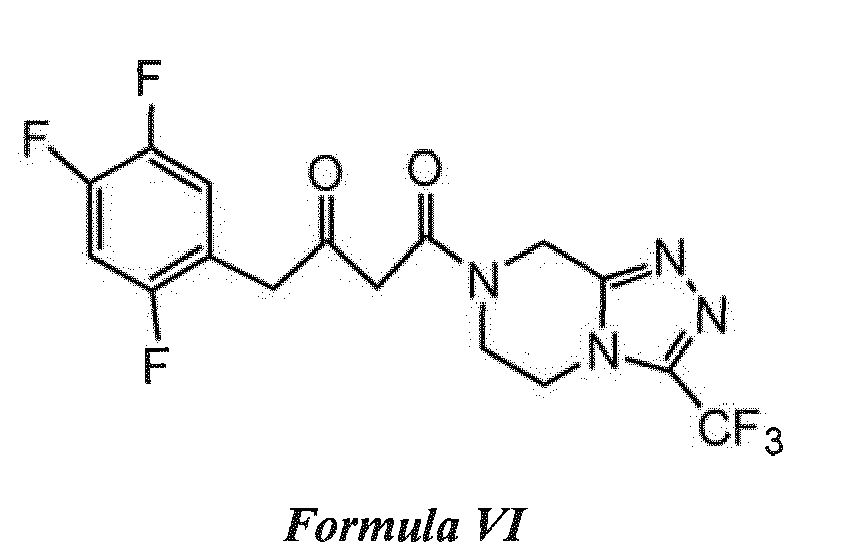

to produce a compound of the Formula VIII (ii) reducing the compound of Formula VIII to a compound of Formula IX
 (iii) deprotecting the compound of Formula IX to sitagliptin of the Formula II; and(iv) optionally, converting sitagliptin of the Formula II to a pharmaceutically acceptable acid addition salt of sitagliptin.
 - The process of claim 1, wherein the compound of Formula VII is (R)-1-phenylethylamine.
- A process for the preparation of sitagliptin of the formula II


- The process of claim 3, wherein reduction of Formula VIII involves catalytic hydrogenation.
- A process for the preparation of sitagliptin of the formula II


- The process of claim 5, wherein deprotection of compound of Formula IX is done in presence of a catalyst.
- The process according to claim 5, further comprising the conversion of sitagliptin of Formula II to its pharmaceutically acceptable salt.
- A compound of Formula IX,

- A compound according to claim 8 which is,

- Use of a compound of Formula IX for the preparation of sitagliptin of Formula II or a pharmaceutically acceptable salt thereof.
- Use of a compound of claim 9 for the preparation of sitagliptin of Formula II or a pharmaceutically acceptable salt thereof.
Applications Claiming Priority (8)
| Application Number | Priority Date | Filing Date | Title |
|---|---|---|---|
| IN3076CH2007 | 2007-12-20 | ||
| IN159CH2008 | 2008-01-18 | ||
| IN1188CH2008 | 2008-05-14 | ||
| US5876408P | 2008-06-04 | 2008-06-04 | |
| US5897508P | 2008-06-05 | 2008-06-05 | |
| US9791008P | 2008-09-18 | 2008-09-18 | |
| EP12193141.4A EP2599781A1 (en) | 2007-12-20 | 2008-12-18 | Processes for the preparation of sitagliptin and pharmaceutically acceptable salts thereof |
| EP08866527A EP2220093A4 (en) | 2007-12-20 | 2008-12-18 | Processes for the preparation of sitagliptin and pharmaceutically acceptable salts thereof |
Related Parent Applications (2)
| Application Number | Title | Priority Date | Filing Date |
|---|---|---|---|
| EP08866527.8 Division | 2008-12-18 | ||
| EP12193141.4 Division | 2012-11-19 |
Publications (1)
| Publication Number | Publication Date |
|---|---|
| EP2679590A1 true EP2679590A1 (en) | 2014-01-01 |
Family
ID=40825019
Family Applications (3)
| Application Number | Title | Priority Date | Filing Date |
|---|---|---|---|
| EP12193141.4A Withdrawn EP2599781A1 (en) | 2007-12-20 | 2008-12-18 | Processes for the preparation of sitagliptin and pharmaceutically acceptable salts thereof |
| EP08866527A Withdrawn EP2220093A4 (en) | 2007-12-20 | 2008-12-18 | Processes for the preparation of sitagliptin and pharmaceutically acceptable salts thereof |
| EP13177450.7A Withdrawn EP2679590A1 (en) | 2007-12-20 | 2008-12-18 | Processes for the Preparation of Sitagliptin and Pharmaceutically acceptable Salts thereof |
Family Applications Before (2)
| Application Number | Title | Priority Date | Filing Date |
|---|---|---|---|
| EP12193141.4A Withdrawn EP2599781A1 (en) | 2007-12-20 | 2008-12-18 | Processes for the preparation of sitagliptin and pharmaceutically acceptable salts thereof |
| EP08866527A Withdrawn EP2220093A4 (en) | 2007-12-20 | 2008-12-18 | Processes for the preparation of sitagliptin and pharmaceutically acceptable salts thereof |
Country Status (8)
| Country | Link |
|---|---|
| US (3) | US8309724B2 (en) |
| EP (3) | EP2599781A1 (en) |
| JP (1) | JP2011507890A (en) |
| KR (1) | KR20100101073A (en) |
| CN (1) | CN101903390A (en) |
| CA (1) | CA2707790C (en) |
| IL (1) | IL206500A (en) |
| WO (1) | WO2009085990A2 (en) |
Families Citing this family (65)
| Publication number | Priority date | Publication date | Assignee | Title |
|---|---|---|---|---|
| PL2586782T5 (en) * | 2008-07-03 | 2018-05-30 | Ratiopharm Gmbh | Crystalline salts of sitagliptin |
| US20100069637A1 (en) * | 2008-07-29 | 2010-03-18 | Medichem S.A. | CRYSTALLINE SALT FORMS OF A 5,6,7,8-TETRAHYDRO-1,2,4-TRIAZOLO[4,3-a]PYRAZINE DERIVATIVE |
| US8476437B2 (en) * | 2008-08-27 | 2013-07-02 | Cadila Healthcare Limited | Process for preparation of (2R)-4-oxo-4-[3-(trifluoromethyl)-5,6-dihydro [1,2,4]-triazolo[4,3-a]pyrazin-7(8H)-yl]-l-(2,4,5-trifluorophenyl)butan-2-amine and new impurities in preparation thereof |
| EP2218721A1 (en) * | 2009-02-11 | 2010-08-18 | LEK Pharmaceuticals d.d. | Novel salts of sitagliptin |
| EP2398803A2 (en) | 2009-03-30 | 2011-12-28 | Teva Pharmaceutical Industries Ltd. | Solid state forms of sitagliptin salts |
| CA2759077C (en) | 2009-05-11 | 2016-02-16 | Generics [Uk] Limited | Sitagliptin synthesis |
| WO2011018494A1 (en) * | 2009-08-13 | 2011-02-17 | Sandoz Ag | Crystalline compound of 7-[(3r)-3-amino-1-oxo-4-(2, 4, 5-trifluorphenyl)butyl]-5, 6, 7, 8-tetrahydro-3-(tri fluormethyl)-1, 2, 4 -triazolo[4,3-a]pyrazine |
| WO2011025932A2 (en) * | 2009-08-28 | 2011-03-03 | Dr. Reddy's Laboratories Ltd. | Preparation of sitagliptin and salts thereof |
| KR101222679B1 (en) | 2009-10-21 | 2013-01-16 | 한미사이언스 주식회사 | Method of preparing sitagliptin and intermediates used therein |
| WO2011060213A2 (en) * | 2009-11-12 | 2011-05-19 | Dr. Reddy's Laboratories Ltd. | Preparation of sitagliptin and salts thereof |
| CN101824037B (en) * | 2010-03-18 | 2012-02-22 | 苏州市立德化学有限公司 | Preparation method of Januvia free base |
| KR20120139764A (en) | 2010-03-31 | 2012-12-27 | 테바 파마슈티컬 인더스트리즈 리미티드 | Solid form of cytagliptin salts |
| ES2629624T3 (en) * | 2010-04-28 | 2017-08-11 | Sun Pharmaceutical Industries Limited | Process for the preparation of chiral derivatives of beta amino carboxamide |
| EP2407469A1 (en) | 2010-07-13 | 2012-01-18 | Chemo Ibérica, S.A. | Salt of sitagliptin |
| WO2012025944A2 (en) | 2010-08-27 | 2012-03-01 | Usv Limited | Sitagliptin, salts and polymorphs thereof |
| WO2012076973A2 (en) | 2010-12-09 | 2012-06-14 | Aurobindo Pharma Limited | Novel salts of dipeptidyl peptidase iv inhibitor |
| WO2012088647A1 (en) * | 2010-12-31 | 2012-07-05 | Kang Yanlong | Deuterated acid addition salt of sitaliptin |
| ES2610362T3 (en) | 2011-01-25 | 2017-04-27 | Viviabiotech, S.L. | 1,2,4-Oxadiazole derivatives as receptor modulating drugs for the glp-1 peptide |
| MX2013010027A (en) | 2011-03-03 | 2014-02-11 | Cadila Healthcare Ltd | Novel salts of dpp-iv inhibitor. |
| WO2012131005A1 (en) | 2011-03-29 | 2012-10-04 | Krka, Tovarna Zdravil, D.D., Novo Mesto | Pharmaceutical composition of sitagliptin |
| US20140336196A1 (en) * | 2011-05-27 | 2014-11-13 | Merck Sharp & Dohme Corp. | Phosphoric acid salts of sitagliptin |
| CN102838603B (en) * | 2011-06-24 | 2015-05-13 | 上海医药工业研究院 | Preparation method of intermediate compound of sitagliptin |
| CA2840814A1 (en) | 2011-06-29 | 2013-01-03 | Ranbaxy Laboratories Limited | Solid dispersions of sitagliptin and processes for their preparation |
| CA2840806A1 (en) | 2011-06-30 | 2013-01-03 | Ranbaxy Laboratories Limited | Novel salts of sitagliptin |
| EP2736909B1 (en) | 2011-07-27 | 2017-03-29 | Farma GRS, d.o.o. | Process for the preparation of sitagliptin and its pharmaceutically acceptable salts |
| CN103649090A (en) | 2011-10-14 | 2014-03-19 | 劳乐斯实验室私营有限公司 | New sitagliptin salt, its preparation method and its pharmaceutical composition |
| WO2013065066A1 (en) | 2011-11-02 | 2013-05-10 | Cadila Healthcare Limited | Processes for preparing 4-oxo-4-[3-(trifluoromethyl)-5,6- dihydro [l,2,41-triazolo[43-a]pyrazin-7(8h)-yl]-l-(2,4,5- trifluorophenyl)butan-2-amine |
| US20140350023A1 (en) * | 2011-12-08 | 2014-11-27 | Ranbaxy Laboratories Limited | Amorphous form of sitagliptin salts |
| ES2421956B1 (en) | 2012-03-02 | 2014-09-29 | Moehs Ibérica S.L. | NEW CRYSTAL FORM OF SITAGLIPTINA SULFATE |
| CN103421011B (en) * | 2012-05-25 | 2017-08-08 | 浙江海翔药业股份有限公司 | A kind of method for preparing sitagliptin phosphate anhydrous crystal forms I |
| EP2674432A1 (en) | 2012-06-14 | 2013-12-18 | LEK Pharmaceuticals d.d. | New synthetic route for the preparation of ß aminobutyryl substituted 5,6,7,8-tetrahydro[1,4]diazolo[4,3-alpha]pyrazin-7-yl compounds |
| CN102898387B (en) * | 2012-09-26 | 2015-01-07 | 浙江工业大学 | Channelized method for continuously producing N-[(2Z)-piperazine-2-subunit]-2, 2, 2-trifluoroacetyl hydrazine |
| CN103319487B (en) * | 2013-01-10 | 2015-04-01 | 药源药物化学(上海)有限公司 | Preparation method of sitagliptin and intermediate of sitagliptin |
| EP2769712A1 (en) | 2013-02-21 | 2014-08-27 | Siegfried International AG | Pharmaceutical formulation comprising DPP-IV inhibitor agglomerates and DPP-IV inhibitor particles |
| IN2013MU00916A (en) * | 2013-03-20 | 2015-06-26 | Cadila Healthcare Ltd | |
| WO2015001568A2 (en) * | 2013-07-01 | 2015-01-08 | Laurus Labs Private Limited | Sitagliptin lipoate salt, process for the preparation and pharmaceutical composition thereof |
| CN103387577A (en) * | 2013-07-29 | 2013-11-13 | 迪沙药业集团山东迪沙药业有限公司 | Asymmetric synthesis method of sitagliptin base |
| CN104418861B (en) * | 2013-09-10 | 2017-11-10 | 浙江医药股份有限公司新昌制药厂 | A kind of preparation method of Xi Gelieting midbody compound |
| CN104447753B (en) * | 2013-09-17 | 2017-03-29 | 深圳翰宇药业股份有限公司 | A kind of preparation method of sitagliptin and its intermediate |
| CZ2013842A3 (en) | 2013-11-01 | 2015-05-13 | Zentiva, K.S. | Stable polymorph of (2R)-4-oxo-4-[3-(trifluoromethyl)-5,6-dihydro[1,2,4]triazolo[4,3-α]pyrazin-7(8H)-yl]-1-(2,4,5-trifluorophenyl)butan-2-amine with L-tartaric acid |
| ES2704501T3 (en) | 2013-12-17 | 2019-03-18 | Sun Pharmaceutical Ind Ltd | Procedure for the preparation of crystalline sitagliptin fumarate |
| IN2014MU00651A (en) | 2014-02-25 | 2015-10-23 | Cadila Healthcare Ltd | |
| JP2018507178A (en) * | 2015-01-08 | 2018-03-15 | リー ファーマ リミテッドLee Pharma Limited | A novel process for the preparation of dipeptidyl peptidase-4 (DPP-4) enzyme inhibitors |
| CZ27930U1 (en) | 2015-01-13 | 2015-03-10 | Zentiva, K.S. | Crystalline modification of 3 L-tartrate (3R)-3-amino-1-[3-(trifluoromethyl)-6,8-dihydro-5H-[1,2,4]triazolo[4,3-a]pyrazin-7-yl]-4-(2,4,5-trifluorophenyl)butan-1-one |
| CZ27898U1 (en) | 2015-01-13 | 2015-03-02 | Zentiva, K.S. | Crystalline modification of 2 L-tartrate (3R)-3-amino-1-[3-(trifluoromethyl)-6,8-dihydro-5H-[1,2,4,]triazolo[4,3-a]pyrazin-7-yl]-4-(2,4,5-trifluorphenyl)butan-1-one |
| CN105175422B (en) * | 2015-09-18 | 2018-04-20 | 深圳市海滨制药有限公司 | A kind of phosphoric acid Xi Gelieting crystal and its preparation method and application |
| KR20170036288A (en) | 2015-09-24 | 2017-04-03 | 주식회사 종근당 | Novel Salts of Sitagliptin and Preparation Method thereof |
| ES2638266T3 (en) * | 2015-10-22 | 2017-10-19 | F.I.S.- Fabbrica Italiana Sintetici S.P.A. | Improved procedure for the preparation of triazole and one of its salts |
| US11114591B2 (en) * | 2016-08-17 | 2021-09-07 | Current Lighting Solutions, Llc | Core-shell materials with red-emitting phosphors |
| MX2016016260A (en) | 2016-12-08 | 2018-06-07 | Alparis Sa De Cv | New solid forms of sitagliptin. |
| US10047094B1 (en) | 2017-02-10 | 2018-08-14 | F.I.S.—Fabbrica Italiana Sintetici S.p.A. | Process for the preparation of triazole and salt thereof |
| CN109651373A (en) * | 2017-10-11 | 2019-04-19 | 江苏瑞科医药科技有限公司 | A kind of preparation method of Xi Gelieting phosphate monohydrate crystal form |
| CN109096133B (en) * | 2018-07-19 | 2022-06-07 | 宁波职业技术学院 | 3-amino-4- (2,4, 5-trifluorophenyl) menthyl butyrate hydrochloride and preparation method and application thereof |
| CN110857303A (en) * | 2018-08-24 | 2020-03-03 | 江苏瑞科医药科技有限公司 | Preparation method of sitagliptin free base monomer |
| WO2020089828A1 (en) * | 2018-11-01 | 2020-05-07 | Stereokem Pvt. Ltd. | An improved process for the preparation of sitagliptin and its intermediates |
| DE112019007641T5 (en) | 2019-08-20 | 2022-05-05 | Gs Yuasa International Ltd. | POSITIVE ACTIVE MATERIAL, POSITIVE ELECTRODE, NON-AQUEOUS ELECTROLYTE ENERGY STORAGE DEVICE, METHOD OF MAKING A POSITIVE ACTIVE MATERIAL, METHOD OF MAKING A POSITIVE ELECTRODE, AND METHOD OF MAKING A NON-AQUEOUS ELECTROLYTE ENERGY STORAGE DEVICE |
| CN110577542A (en) * | 2019-09-23 | 2019-12-17 | 南京奇可药业有限公司 | Preparation method of sitagliptin |
| EP4164620A4 (en) * | 2020-06-12 | 2025-10-08 | Aarti Industries Ltd | IMPROVED PROCESS FOR THE MANUFACTURE OF SITAGLIPTIN |
| CN114262331A (en) * | 2020-09-16 | 2022-04-01 | 江苏万邦生化医药集团有限责任公司 | Preparation method of sitagliptin phosphate monohydrate |
| CN112358484B (en) * | 2020-11-10 | 2022-04-19 | 江苏八巨药业有限公司 | Preparation method of sitagliptin intermediate |
| CN112521334B (en) * | 2020-12-28 | 2022-02-25 | 北京金城泰尔制药有限公司沧州分公司 | Method for preparing 8-hydroxy-2-methylquinoline based on chloroquinate waste residue |
| CN116082342A (en) * | 2022-12-07 | 2023-05-09 | 台州达辰药业有限公司 | Preparation method of sitagliptin intermediate pyrazine hydrochloride |
| WO2024121301A1 (en) | 2022-12-09 | 2024-06-13 | Krka, D.D., Novo Mesto | Process for the preparation of sitagliptin |
| AR131605A1 (en) * | 2023-01-13 | 2025-04-09 | Shenzhen Newdel Biotech Co Ltd | SALTS AND CRYSTALLINE FORMS OF COMPOUND A, METHODS OF PREPARATION AND THEIR USES |
| CN116082346A (en) * | 2023-04-12 | 2023-05-09 | 宙晟智维生命科学(上海)有限公司 | High-fluidity sitagliptin phosphate monohydrate crystal and preparation method thereof |
Citations (10)
| Publication number | Priority date | Publication date | Assignee | Title |
|---|---|---|---|---|
| US6699871B2 (en) | 2001-07-06 | 2004-03-02 | Merck & Co., Inc. | Beta-amino heterocyclic dipeptidyl peptidase inhibitors for the treatment or prevention of diabetes |
| WO2004085378A1 (en) | 2003-03-19 | 2004-10-07 | Merck & Co. Inc. | Process for the preparation of chiral beta amino acid derivatives by asymmetric hydrogenation |
| WO2004085661A2 (en) | 2003-03-24 | 2004-10-07 | Merck & Co., Inc | Process to chiral beta-amino acid derivatives |
| WO2004087650A2 (en) | 2003-03-27 | 2004-10-14 | Merck & Co. Inc. | Process and intermediates for the preparation of beta-amino acid amide dipeptidyl peptidase-iv inhibitors |
| WO2005020920A2 (en) | 2003-09-02 | 2005-03-10 | Merck & Co., Inc. | Novel crystalline forms of a phosphoric acid salt of a dipeptidyl peptidase-iv inhibitor |
| WO2005030127A2 (en) | 2003-09-23 | 2005-04-07 | Merck & Co., Inc. | Novel crystalline form of a phosphoric acid salt of a dipeptidyl peptidase-iv inhibitor |
| WO2005072530A1 (en) | 2004-01-16 | 2005-08-11 | Merck & Co., Inc. | Novel crystalline salts of a dipeptidyl peptidase-iv inhibitor |
| WO2006033848A1 (en) | 2004-09-15 | 2006-03-30 | Merck & Co., Inc. | Amorphous form of a phosphoric acid salt of a dipeptidyl peptidase-iv inhibitor |
| WO2007035198A2 (en) | 2005-07-25 | 2007-03-29 | Merck & Co., Inc. | Dodecylsulfate salt of a dipeptidyl peptidase-iv inhibitor |
| US7326708B2 (en) | 2003-06-24 | 2008-02-05 | Merck & Co., Inc. | Phosphoric acid salt of a dipeptidyl peptidase-IV inhibitor |
Family Cites Families (6)
| Publication number | Priority date | Publication date | Assignee | Title |
|---|---|---|---|---|
| FR2496653A1 (en) * | 1980-12-22 | 1982-06-25 | Delalande Sa | Aminoalkyl di:hydro-naphthalene, isoquinoline and benzoxazepine cpds. - useful as analgesics and antidepressants |
| DE19838998A1 (en) * | 1998-08-27 | 2000-03-09 | Bayer Ag | New natural product derivatives |
| FR2847897B1 (en) * | 2002-12-02 | 2006-02-24 | Centre Nat Rech Scient | PROCESS FOR THE PREPARATION OF DIASTEROISOMERS AND ENANTIOMERS OF 4-HYDROXYISOLEUCINE AND ITS DERIVATIVES |
| CA2512546A1 (en) * | 2003-01-17 | 2004-08-05 | Merck & Co., Inc. | 3-amino-4-phenylbutanoic acid derivatives as dipeptidyl peptidase inhibitors for the treatment or prevention of diabetes |
| US20090247532A1 (en) * | 2008-03-28 | 2009-10-01 | Mae De Ltd. | Crystalline polymorph of sitagliptin phosphate and its preparation |
| US20100069637A1 (en) | 2008-07-29 | 2010-03-18 | Medichem S.A. | CRYSTALLINE SALT FORMS OF A 5,6,7,8-TETRAHYDRO-1,2,4-TRIAZOLO[4,3-a]PYRAZINE DERIVATIVE |
-
2008
- 2008-12-18 EP EP12193141.4A patent/EP2599781A1/en not_active Withdrawn
- 2008-12-18 US US12/809,200 patent/US8309724B2/en not_active Expired - Fee Related
- 2008-12-18 CN CN2008801213953A patent/CN101903390A/en active Pending
- 2008-12-18 EP EP08866527A patent/EP2220093A4/en not_active Withdrawn
- 2008-12-18 KR KR1020107009663A patent/KR20100101073A/en not_active Withdrawn
- 2008-12-18 WO PCT/US2008/087491 patent/WO2009085990A2/en not_active Ceased
- 2008-12-18 EP EP13177450.7A patent/EP2679590A1/en not_active Withdrawn
- 2008-12-18 JP JP2010539819A patent/JP2011507890A/en active Pending
- 2008-12-18 CA CA2707790A patent/CA2707790C/en not_active Expired - Fee Related
-
2010
- 2010-06-20 IL IL206500A patent/IL206500A/en active IP Right Grant
-
2012
- 2012-10-09 US US13/648,026 patent/US20130035486A1/en not_active Abandoned
-
2013
- 2013-12-05 US US14/097,988 patent/US8969558B2/en not_active Expired - Fee Related
Patent Citations (10)
| Publication number | Priority date | Publication date | Assignee | Title |
|---|---|---|---|---|
| US6699871B2 (en) | 2001-07-06 | 2004-03-02 | Merck & Co., Inc. | Beta-amino heterocyclic dipeptidyl peptidase inhibitors for the treatment or prevention of diabetes |
| WO2004085378A1 (en) | 2003-03-19 | 2004-10-07 | Merck & Co. Inc. | Process for the preparation of chiral beta amino acid derivatives by asymmetric hydrogenation |
| WO2004085661A2 (en) | 2003-03-24 | 2004-10-07 | Merck & Co., Inc | Process to chiral beta-amino acid derivatives |
| WO2004087650A2 (en) | 2003-03-27 | 2004-10-14 | Merck & Co. Inc. | Process and intermediates for the preparation of beta-amino acid amide dipeptidyl peptidase-iv inhibitors |
| US7326708B2 (en) | 2003-06-24 | 2008-02-05 | Merck & Co., Inc. | Phosphoric acid salt of a dipeptidyl peptidase-IV inhibitor |
| WO2005020920A2 (en) | 2003-09-02 | 2005-03-10 | Merck & Co., Inc. | Novel crystalline forms of a phosphoric acid salt of a dipeptidyl peptidase-iv inhibitor |
| WO2005030127A2 (en) | 2003-09-23 | 2005-04-07 | Merck & Co., Inc. | Novel crystalline form of a phosphoric acid salt of a dipeptidyl peptidase-iv inhibitor |
| WO2005072530A1 (en) | 2004-01-16 | 2005-08-11 | Merck & Co., Inc. | Novel crystalline salts of a dipeptidyl peptidase-iv inhibitor |
| WO2006033848A1 (en) | 2004-09-15 | 2006-03-30 | Merck & Co., Inc. | Amorphous form of a phosphoric acid salt of a dipeptidyl peptidase-iv inhibitor |
| WO2007035198A2 (en) | 2005-07-25 | 2007-03-29 | Merck & Co., Inc. | Dodecylsulfate salt of a dipeptidyl peptidase-iv inhibitor |
Non-Patent Citations (1)
| Title |
|---|
| NORIHIRO IKEMOTO ET AL: "Highly Diastereoselective Heterogeneously Catalyzed Hydrogenation of Enamines for the Synthesis of Chiral [beta]-Amino Acid Derivatives", JOURNAL OF THE AMERICAN CHEMICAL SOCIETY, vol. 126, no. 10, 1 March 2004 (2004-03-01), US, pages 3048 - 3049, XP055275936, ISSN: 0002-7863, DOI: 10.1021/ja038812t * |
Also Published As
| Publication number | Publication date |
|---|---|
| KR20100101073A (en) | 2010-09-16 |
| CA2707790C (en) | 2015-04-21 |
| WO2009085990A2 (en) | 2009-07-09 |
| US8309724B2 (en) | 2012-11-13 |
| IL206500A0 (en) | 2010-12-30 |
| EP2599781A1 (en) | 2013-06-05 |
| EP2220093A2 (en) | 2010-08-25 |
| US20140128607A1 (en) | 2014-05-08 |
| WO2009085990A3 (en) | 2009-09-03 |
| EP2220093A4 (en) | 2011-06-22 |
| US20100274017A1 (en) | 2010-10-28 |
| US20130035486A1 (en) | 2013-02-07 |
| US8969558B2 (en) | 2015-03-03 |
| JP2011507890A (en) | 2011-03-10 |
| IL206500A (en) | 2015-10-29 |
| CN101903390A (en) | 2010-12-01 |
| CA2707790A1 (en) | 2009-07-09 |
Similar Documents
| Publication | Publication Date | Title |
|---|---|---|
| US8309724B2 (en) | Processes for the preparation of sitagliptin and pharmaceutically acceptable salts thereof | |
| US8334385B2 (en) | Process for the preparation of R-sitagliptin and its pharmaceutically acceptable salts thereof | |
| US8058438B2 (en) | Eszopiclone process | |
| WO2011060213A2 (en) | Preparation of sitagliptin and salts thereof | |
| US20140357863A1 (en) | Process for preparation of pure linagliptin | |
| WO2011025932A2 (en) | Preparation of sitagliptin and salts thereof | |
| EP2712865B1 (en) | Improved process for the preparation of ambrisentan | |
| KR20110135397A (en) | Solid State Forms of Cytagliptin Salts | |
| WO2017221189A1 (en) | An improved process for the preparation of tenofovir alafenamide or pharmaceutically acceptable salts thereof | |
| EP4525877A1 (en) | Process for preparation of ruxolitinib | |
| US6180789B1 (en) | Method for obtaining pure enantiomers of a pyridazinone derivative | |
| US11040974B2 (en) | Crystalline linagliptin intermediate and process for preparation of linagliptin | |
| US20070197535A1 (en) | Polymorphic forms of vardenafil | |
| NZ585833A (en) | Stable crystalline salt of (r)-3-fluorophenyl-3,4,5-trifluorobenzylcarbamic acid 1-azabicyclo [2.2.2]oct-yl ester | |
| AU2012277403A1 (en) | Novel salts of sitagliptin | |
| WO2015104602A2 (en) | A process for the preparation of anagliptin and its intermediates thereof | |
| EP3242879B1 (en) | Novel process for the preparation of dipeptidyl peptidase-4 (dpp-4) enzyme inhibitor | |
| WO2024075131A1 (en) | Co-crystal of upadacitinib and diacetyl-d-tartaric acid and process for the preparation thereof | |
| WO2024121301A1 (en) | Process for the preparation of sitagliptin | |
| EP1899293A2 (en) | Process for preparing 3,3-diarylpropylamines | |
| HK1192880B (en) | Improved process for the preparation of ambrisentan |
Legal Events
| Date | Code | Title | Description |
|---|---|---|---|
| PUAI | Public reference made under article 153(3) epc to a published international application that has entered the european phase |
Free format text: ORIGINAL CODE: 0009012 |
|
| AC | Divisional application: reference to earlier application |
Ref document number: 2599781 Country of ref document: EP Kind code of ref document: P Ref document number: 2220093 Country of ref document: EP Kind code of ref document: P |
|
| AK | Designated contracting states |
Kind code of ref document: A1 Designated state(s): AT BE BG CH CY CZ DE DK EE ES FI FR GB GR HR HU IE IS IT LI LT LU LV MC MT NL NO PL PT RO SE SI SK TR |
|
| 17P | Request for examination filed |
Effective date: 20140701 |
|
| RBV | Designated contracting states (corrected) |
Designated state(s): AT BE BG CH CY CZ DE DK EE ES FI FR GB GR HR HU IE IS IT LI LT LU LV MC MT NL NO PL PT RO SE SI SK TR |
|
| 17Q | First examination report despatched |
Effective date: 20170328 |
|
| STAA | Information on the status of an ep patent application or granted ep patent |
Free format text: STATUS: THE APPLICATION IS DEEMED TO BE WITHDRAWN |
|
| 18D | Application deemed to be withdrawn |
Effective date: 20170808 |