EP2677836B1 - Multi-card multi-standby terminal, synchronization method and device thereof - Google Patents
Multi-card multi-standby terminal, synchronization method and device thereof Download PDFInfo
- Publication number
- EP2677836B1 EP2677836B1 EP11858782.3A EP11858782A EP2677836B1 EP 2677836 B1 EP2677836 B1 EP 2677836B1 EP 11858782 A EP11858782 A EP 11858782A EP 2677836 B1 EP2677836 B1 EP 2677836B1
- Authority
- EP
- European Patent Office
- Prior art keywords
- card
- cell
- communication terminal
- camp
- camping
- Prior art date
- Legal status (The legal status is an assumption and is not a legal conclusion. Google has not performed a legal analysis and makes no representation as to the accuracy of the status listed.)
- Active
Links
Images


Classifications
-
- H—ELECTRICITY
- H04—ELECTRIC COMMUNICATION TECHNIQUE
- H04W—WIRELESS COMMUNICATION NETWORKS
- H04W56/00—Synchronisation arrangements
-
- H—ELECTRICITY
- H04—ELECTRIC COMMUNICATION TECHNIQUE
- H04W—WIRELESS COMMUNICATION NETWORKS
- H04W48/00—Access restriction; Network selection; Access point selection
- H04W48/18—Selecting a network or a communication service
-
- H—ELECTRICITY
- H04—ELECTRIC COMMUNICATION TECHNIQUE
- H04W—WIRELESS COMMUNICATION NETWORKS
- H04W52/00—Power management, e.g. Transmission Power Control [TPC] or power classes
- H04W52/02—Power saving arrangements
- H04W52/0209—Power saving arrangements in terminal devices
- H04W52/0225—Power saving arrangements in terminal devices using monitoring of external events, e.g. the presence of a signal
- H04W52/0229—Power saving arrangements in terminal devices using monitoring of external events, e.g. the presence of a signal where the received signal is a wanted signal
-
- H—ELECTRICITY
- H04—ELECTRIC COMMUNICATION TECHNIQUE
- H04W—WIRELESS COMMUNICATION NETWORKS
- H04W48/00—Access restriction; Network selection; Access point selection
- H04W48/20—Selecting an access point
-
- H—ELECTRICITY
- H04—ELECTRIC COMMUNICATION TECHNIQUE
- H04W—WIRELESS COMMUNICATION NETWORKS
- H04W88/00—Devices specially adapted for wireless communication networks, e.g. terminals, base stations or access point devices
- H04W88/02—Terminal devices
- H04W88/06—Terminal devices adapted for operation in multiple networks or having at least two operational modes, e.g. multi-mode terminals
-
- Y—GENERAL TAGGING OF NEW TECHNOLOGICAL DEVELOPMENTS; GENERAL TAGGING OF CROSS-SECTIONAL TECHNOLOGIES SPANNING OVER SEVERAL SECTIONS OF THE IPC; TECHNICAL SUBJECTS COVERED BY FORMER USPC CROSS-REFERENCE ART COLLECTIONS [XRACs] AND DIGESTS
- Y02—TECHNOLOGIES OR APPLICATIONS FOR MITIGATION OR ADAPTATION AGAINST CLIMATE CHANGE
- Y02D—CLIMATE CHANGE MITIGATION TECHNOLOGIES IN INFORMATION AND COMMUNICATION TECHNOLOGIES [ICT], I.E. INFORMATION AND COMMUNICATION TECHNOLOGIES AIMING AT THE REDUCTION OF THEIR OWN ENERGY USE
- Y02D30/00—Reducing energy consumption in communication networks
- Y02D30/70—Reducing energy consumption in communication networks in wireless communication networks
Definitions
- the present disclosure generally relates to mobile communication field, and more particularly, to a multi-SIM multi-standby communication terminal, and a synchronization device and a synchronization method thereof.
- a single mobile communication terminal such as a mobile phone or a vehicle-mounted mobile terminal may not meet the needs of people, especially those engaged in marketing or management, who may have to carry two or more mobile terminals to meet the communication requirements, which brings inconvenience.
- multi-SIM communication terminals are emerging, which makes a user only need to carry one communication device with more than one card, such as Subscriber Identity Module (SIM) cards or Universal Subscriber Identity Module (USIM) cards. It is far more convenient than the conventional way to carry several mobile terminals.
- a multi-SIM single-standby communication terminal may be used.
- this communication terminal there is more than one card simultaneously, however, only one card can be used (be set in a standby state) at the same time, and switching among the multiple cards is executed by hardware circuits, which is generally selected when the device is powered on. Due to the effect of a protocol stack, the switching among the multiple cards can not be executed dynamically when the communication device is in operation. For this matter, the mobile phone system needs to be rebooted
- a multi-SIM multi-standby communication device may be used to overcome the disadvantages in the multi-SIM single-standby communication device, in which multiple cards can be standby simultaneously and in-coming calls of the multiple cards can be received simultaneously, just like carrying multiple mobile terminals with a single card, thereby improving practical application greatly.
- An early multi-SIM multi-standby communication terminal actually possesses multiple sets of systems, generally two, each of which has a radio frequency (RF) transceiver module, a baseband processing module, and a protocol stack respectively.
- the communication device having multiple systems can realize multiple SIM cards respectively in standby or communicating state, which is also referred to as a multi-SIM multi-standby multi-communicating communication device.
- this kind of communication terminal with multiple systems utilized, suffers an additional cost and power consumption, and a larger size, which causes inconvenience.
- one radio frequency (RF) module is generally configured at the top of a mobile phone, and the other one is configured at the end of the mobile terminal, so as to reduce interferences.
- the distance between the two antennae is greater than 100 mm.
- Later multi-SIM multi-standby mobile terminal is a kind of multi-SIM multi-standby single-communicating communication device, which uses only one set of communication module, compared to the early multiple systems. Because the upper protocol stacks needs to cooperate, the protocol stacks which operate independently in the early multi-SIM multi-standby multi-communicating communication device needs a close integration. Although the practical operation becomes more complicated, the multi-SIM multi-standby function may be achieved.
- the multiple cards upon being powered on, search for a network and camp on a cell independently. Therefore, multiple cards may camp on multiple different cells at the same time.
- paging information reception and neighbouring cells measurement can only be time-division switched in turn for each cell.
- the efficiency of paging information reception is inverse proportional to the number of cards in standby states.
- the chance of neighbouring cells measurement is reduced with the increase of the number of cards in standby states.
- the problem to be solved in the present disclosure is that the conventional multi-SIM multi-standby communication terminal has lower efficiency for paging information reception and neighbouring cells measurement, and higher power consumption.
- the synchronization method includes: after a first card camps on a cell, a second card is controlled to camp on the cell with the first card, and the second card is suitable for camping on a same cell as the first card.
- the method further includes:
- the method further includes:
- the first card receives and stores system information when the first card camps on a cell; and controlling the second card to camp on the cell with the first card comprises controlling the second card to access the stored system information.
- inventions of the present disclosure further provide a synchronization device in a multi-SIM multi-standby communication terminal.
- the synchronization device includes:
- control unit includes a reselection control unit, after the first card reselects and camps on a second cell, and if the determination result of the determining unit is YES, adapted to control the second card to reselect the second cell.
- control unit includes a power-on control unit, after the first card searches for a network and camps on a first cell, and if the determination result of the determining unit is YES, adapted to control the second card to camp on the first cell.
- the synchronization device further includes a storage unit, adapted to store system information that is received by the first card when the first card camps on a cell; and the control unit is further adapted to control the second card to access the stored system information when the second card camps on the cell with the first card.
- control unit is further adapted to control the second card to camp on another cell if the determination result of the determining unit is NO.
- Embodiments of the present disclosure further provide a multi-SIM multi-standby communication terminal which includes the synchronization device according to the above described embodiments of the present disclosure.
- the communication terminal further includes a baseband processing chip and a radio frequency chip, and the synchronization device is embedded in the baseband processing chip.
- the multi-SIM multi-standby communication terminal is a dual-SIM dual-standby communication terminal.
- embodiments of this disclosure have the following advantages:
- the paging information of the multiple cards which camp on a same cell can be received simultaneously, which is respectively informed each of the multiple cards.
- the efficiency of paging information reception is increased, loss of the paging information is avoided.
- the idle time of the communication terminal is increased, which causes lower power consumption correspondingly.
- the information of neighbouring cells measurement can be shared by the multiple cards which camp on a same cell. By measureing the neighbouring cell of the same cell uniformly by the physical layer, the measurement result may be reported to a first card merely. Compared with the prior art that the neighbouring cells measurement is time-division switched in turn for each cell, the efficiency of measurement is increased. In addition, because there is no need for neighbouring cells measurement in time-division mode at different cells, the idle time of the communication terminal is increased, which causes lower power consumption correspondingly.
- the first card can receive and store system information during camping on a cell.
- the other cards which camp on the same cell as the first card can access the stored system information directly, without need for receiving the system information again, which thereby reduces the time for camping on the cell remarkably.
- multiple cards in the communication terminal can be synchronized and forced to camp on a same cell, which enables the multiple cards to share the cell information, such as system information, results of neighbouring cells measurement and the like, and to receive paging information simultaneously.
- a synchronization method used in a multi-SIM multi-standby communication terminal includes: after a first card camps on a cell, a second card is controlled to camp on the cell with the first card.
- the second card is a card which is suitable for camping on a same cell as the first card.
- a synchronization device used in a multi-SIM multi-standby communication terminal includes a determining unit and a control unit.
- the determining unit is adapted to identify a first card, and to determine if there is a second card within the remaining cards which is suitable for camping on a same cell as the first card.
- the control unit is adapted, after the first card camps on a cell and if the determination result of the determining unit is YES, to control the second card to camp on the cell with the first card.
- the first card is the one which firstly searches for a network and camps on a cell successfully after the communication terminal is powered on. Specifically, when the communication terminal is powered on, all the cards installed in the communication terminal begin to search for a network and try to camp on a cell respectively, and the one which camps on a cell successfully earliest is identified to be the first card. If the cell that the first card camps on is not suitable for the other cards to camp on, the card which camps on a cell subsequently may be identified to be the first card.
- the first card may be a preassigned card. Specifically, when the communication terminal is powered on, one card of the multiple cards installed in the communication terminal is preassigned to search for a network and camp on a cell.
- the first card may be referred to as a main card. If there are other cards which camp on the same cell as the main card subsequently, the main card receives and stores the cell's system information, and the other cards may access the stored system information directly. In addition, results of neighbouring cells measurement may only be reported to the main card, and the other cards may share the measurement results with the main card. Further, if the multiple cards are synchronized in the same cell after the communication terminal is powered on, cell reselection of the multiple cards may be synchronized. That is, when the main card reselects a cell, the other cards may reselect and camp on the same cell as the main card.
- the synchronization device and method provided in the embodiments of the present disclosure may be applicable to various communication modes, such as a Time Division Synchronous Code Division Multiple Access (TD-SCDMA) network, a Wideband Code Division Multiple Access (WCDMA) network, a Code Division Multiple Access (CDMA) network, a Global System for Mobile Communication (GSM) network, a Long Term Evolution (LTE) network, and the like.
- TD-SCDMA Time Division Synchronous Code Division Multiple Access
- WCDMA Wideband Code Division Multiple Access
- CDMA Code Division Multiple Access
- GSM Global System for Mobile Communication
- LTE Long Term Evolution
- the second card which is suitable for camping on a same cell as the first card should comply with any one of the following six conditions.
- PLMN a celluar mobile communication network with a certain communication mode provided by an operator
- PLMN is established and operated by the goverment or an authorized operator, which is provided for the public with land mobile communication service.
- the PLMN can be connected and communicated with other communication networks, such as a Public Switched Telephone Network (PSTN), which thereby forms an area-sized or country-sized communication network.
- PSTN Public Switched Telephone Network
- GSM/GPRS/EDGE Global System for Mobile Communication/General Packet Radio Service/Enhanced Data Rate for GSM Evolution
- GSM/GPRS/EDGE Global System for Mobile Communication/General Packet Radio Service/Enhanced Data Rate for GSM Evolution
- CDMA-1X Code Division Multiple Access 1X
- PLMN can be used to distinguish various operators or networks having different modes which belong to a same operator, for example, to distinguish China Mobile from China Unicom, to distinguish TD-SCDMA network from GSM network of China Mobile, and to distinguish WCDMA network from GSM network of China Unicom.
- the icon "2G” or "3G” may be showed on the display of the mobile phone by identifying PLMN.
- the second Generation network (2G) mainly includes GSM, and CDMA-1X network
- the third Generation network mainly includes TD-SCDMA, and WCDMA network.
- the LTE system is developed based on the evolution of TD-SCDMA or WCDMA network.
- PLMN may be divided into: HPLMN, EHPLMN, EPLMN, and RPLMN.
- PLMN of TD-SCDMA is equivalent to EPLMN of GSM.
- a mobile phone camping on GSM is equivalent to camping on TD-SCDMA of China Mobile, that is, the billing policies of calls, short messages, or permitted services in GSM are identical with those in TD-SCDMA of China Mobile.
- GSM of China Mobile is its HPLMN
- TD-SCDMA is its EHPLMN.
- RPLMN is the last registered PLMN.
- a dual-SIM dual-standby mobile phone is taken as an example, which includes two cards: a card 1 and a card 2.
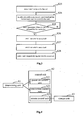
- Fig. 1 is a schematic flow chart of a synchronization method in a multi-SIM multi-standby communication terminal according to a first embodiment of the present disclosure.
- the synchronization method includes steps of S1, S2, S3 and S4.
- step S1 the first card searches for a network and camps on a first cell after the communication terminal is powered on.
- step S2 the second card is controlled to camp on the first cell.
- step S3 the first card determines if there is a second cell qualified for reselection based on the result of neighbouring cells measurement, and if the determination result is YES, the first card reselects the second cell;
- step S4 the second card is controlled to reselect the second cell after the first card camps on the second cell.
- the steps S1 and S2 are performed to achieve synchronization of the two cards in a same cell in the process of power on. And the steps S3 and S4 are performed to achieve synchronization of the two cards in a reselection cell in the process of reselection.
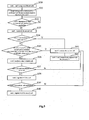
- Fig. 2 is a schematic flow chart illustrating a power-on process of a synchronization method in a multi-SIM multi-standby communication terminal according to the first embodiment of the present disclosure, which takes the two cards in a dual-SIM dual-standby mobile phone as an example.
- step S11 the mobile phone is powered on and the card 1 searches for a network.
- the card 1 is preassigned to search for a network first when the mobile phone is powered on.
- the search process includes:
- step S12 the card 1 succeeds in camping on a first cell, then the process proceeds to step S 13.
- the card 1 is assigned to search for a network first when the communication terminal is powered on. If the card 1 succeeds in camping on a cell, the card 1 is identified to be the first card, and the cell that the card 1 camps on is identified to be the first cell. Alternatively, if the card 1 fails to search for a network and camp on a cell, the card 2 is controlled to search for a network. If the card 2 succeeds in camping on a cell, the card 2 is identified to be the first card, and the cell that the card 2 camps on is identified to be the first cell. In an optional embodiment, the card 2 may be assigned to search for a network firstly. In another optional embodiment, the card 1 and card 2 may begin to search for a network simultaneously, the one which succeeds in camping on a cell first is identified to be the first card, and the cell is identified to be the first cell correspondingly.
- step S13 if the card 2 belongs to a same operator as the card 1 is determined. If the determination result is YES, the process proceeds to step S21, and if NO, the process proceeds to step S 14. Specifically, by reading International Mobile Subscriber Identity (IMSI) of the card 1 and card 2, it can be determined if the two cards belong to a same operator. If the two cards belong to a same operator, the card 2 is controlled to camp on the same cell as the card 1, that is, the card 2 camps on the first cell. If the two cards belong to different operators, the process continues to determine if the card 2 conforms to the other conditions that the card 2 may camp on the same cell as the card 1.
- IMSI International Mobile Subscriber Identity
- step S 14 if the network number of the first cell is contained in the EHPLMN or EPLMN list of the card 2, or if the network number of the first cell is RPLMN of the card 2 is determined. If the determination result is YES, the process proceeds to step S21, and if NO, the process proceeds to step S15. If the two cards belong to different operators, the process continues to determine if the card 2 conforms to other conditions that the card 2 may be controlled to camp on the same cell as the card 1, such as if the network number of the first cell is contained in the EHPLMN or EPLMN list of the card 2, or if the network number of the first cell is RPLMN of the card 2.
- the network number of the first cell may be obtained by reading the system information that the card 1 receives on the BCCH.
- the EHPLMN list of the card 2 may be obtained by reading the card 2, which may be obtained by reading the non-volatile RAM (which is abbreviated as NV, and is used to retain the information to be required by the mobile phone after being powered on next time) in the mobile phone.
- the RPLMN of the card 2 is the last registered network, which may be obtained by reading the card 2. If the network number of the first cell is contained in the EHPLMN or EPLMN list of the card 2, or if the network number of the first cell is the RPLMN of the card 2, the card 2 is controlled to camp on the same cell as the card 1, that is, the card 2 camps on the first cell. If the network number of the first cell is not contained in the EHPLMN and EPLMN list of the card 2, and if the network number of the first cell is not the RPLMN of the card 2, the card 2 is controlled to camp on other available cell.
- step S 15 the card 2 searches for a network and camps on other available cell, then the process proceeds to step S16.
- the process that the card 2 searches for a network and camps on a cell may refer to the step S 11.
- step S16 if the card 2 succeeds in camping on another cell is determined. If the determination result is YES, the process proceeds to step S17, and if NO, the process proceeds to step S21. Specifically, if the card 2 succeeds in camping on a cell other than the first cell, the card 2 registers with the cell (which is the cell other than the first cell). If the card 2 fails to camp on a cell, that is, the card 2 can not camp on any other cell normally, a restricted camp-on service is provided. By doing this, the card 2 is forced to camp on the first cell, and the card 2 can only initiate some restricted services (e.g., emergency call).
- some restricted services e.g., emergency call
- step S17 the card 2 registers with the cell, then the process proceeds to step S18.
- step S 18 if the card 2 succeeds in registering with the cell is determined. If the determination result is YES, the process proceeds to step S19, and if NO, the process proceeds to step S21. If the card 2 finishes the registration, the card 2 is turned into standby state in the cell's network. If the registration is rejected by the cell's network (e.g., payment of the card 2 is in arrears), a restricted camp-on service is provided. By doing this, the card 2 is forced to camp on the first cell, and the card 2 can only initiate some restricted services (e.g., emergency call).
- some restricted services e.g., emergency call
- step S19 the card 1 registers with the first cell. After the registration of the card 2, the card 1 registers with the first cell. After the registration of the card 1, the cards 1 and 2 respectively camp on different cells. The card 1 is turned into the standby state or conducts a service in the first cell's network, while the card 2 is turned into the standby state or conducts a service in another cell's network.
- step S21 the card 2 camps on the first cell, then the process proceeds to step S22. If the card 2 belongs to a same operator as the card 1, or if the network number of the first cell is contained in the EHPLMN or EPLMN list of the card 2, or if the network number of the first cell is RPLMN of the card 2, or if the card 2 fails to camp on another cell, or if the registration of the card 2 is rejected by the other cell's network, the card 2 is forced to camp on the same cell as the card 1, namely, the first cell.
- the card 1 searches for a network and camps on the first cell, all the system information of the first cell is received and stored by the card 1.
- the card 2 may access the system information of the first cell from the card 1 directly, which greatly reduces the time period for the card 2 camping on the first cell.
- step S22 the cards 1 and 2 respectively register with the first cell. If the cards 1 and 2 are able to camp on a same cell is determined, both the two cards are forced to camp on the same cell. After the cards 1 and 2 finish registration in turn, the cards 1 and 2 are standby in the first cell's network.
- the mobile phone monitors the Paging Channel (PCH) and may receive the paging information of the two cards simultaneously which are respectively informed to each of the two cards, which thereby increases the efficiency of paging information reception, and avoids missing the paging information.
- PCH Paging Channel
- Fig. 3 is a schematic flow chart illustrating a reselection process of a synchronization method in a multi-SIM multi-standby communication terminal according to the first embodiment of the present disclosure, which takes a dual-SIM dual-standby mobile phone as an example.
- the cards 1 and 2 camp on the first cell after the mobile phone is powered on, both the two cards may share the measurement information of neighbouring cells, which thereby increases the efficiency of measurement.
- the card 1 performs cell reselection
- the card 2 may synchronously reselect the same cell that the card 1 reselects and camps on successfully. That is, upon the mobile phone being powered on, if the cards 1 and 2 are able to camp on a same cell is determined, both the two cards 1 and 2 may be kept camping on the same cell synchronously.
- step S23 the cards 1 and 2 camp on the first cell. After the cards 1 and 2 finish registration with the first cell in turn, the cards 1 and 2 are standby or conduct a service in the first cell's network.
- step S24 neighbouring cells measurement is performed and the measurement result is reported to the card 1 (the main card).
- the physical layer performs neighbouring cells measurement by measuring received signal strengths of the first cell's neighbouring cells, then the measurement result is reported to the card 1. Because the cards 1 and 2 camp on the same cell, the measurement result just needs to be reported to one card, namely, the main card, which is responsible for reselection assessment.
- the result of neighbouring cells measurement may be the result after the received signal strengths of the neighbouring cells is ranked.
- the physical layer may measure the received signal strengths of the neighbouring cells of the current cell, and the measurement result is reported to the card 1.
- step S25 the card 1 determines if there is a second cell qualified for reselection, if the determination result is YES, the process proceeds to step S26, and if NO, the process continues with the step S25.
- the signal strength of the current cell that the card camps on may be weakened due to the variation of the wireless environment with the movement of the mobile phone. And there may be one neighbouring cell of which the signal strength is increased gradually. Therefore, the card needs to reselect a cell which is much more suitable for camping on than the current cell.
- the card 1 performs reselection assessment based on the result of neighbouring cells measurement that the physical layer has reported, that is, determines if there is a neighbouring cell of the first cell which is qualified for reselection.
- the cell qualified for reselection means that the received signal strength of the neighbouring cell is greater than a predetermined threshold (e.g., the minimum access threshold that is required by the network) and lasts for a predetermined time (e.g., 5s). If there is a cell qualified for reselection, the cell is identified to be the second cell, and the process proceeds to step S26. If there is no cell qualified for reselection, the card 1 continues with reselection assessment based on the result of neighbouring cells measurement that the physical layer has reported.
- a predetermined threshold e.g., the minimum access threshold that is required by the network
- step S26 the card 1 reselects the second cell. Specifically, if it is determined that there is a second cell (namely, the cell qualified for cell reselection) based on the result of neighbouring cells measurement, the card 1 reselects the second cell, that is, the card 1 attempts to receive system information of the second cell.
- the card 1 receives all the system information of the second cell, and the following conditions can be conformed to based on the system information: the received signal strength of the second cell conforms to the minimum access threshold that is required by the network, the location of the second cell is not prohibited, the cell is not barred, and the network number of the second cell belongs to the same operator's network as the card 1, then the card 1 succeeds in camping on the second cell, that is, the card 1 succeeds in reselecting the second cell. When the card 1 reselects the second cell, the card 1 may store the received system information of the second cell.
- step S27 the card 2 reselects the second cell. Specifically, in the power-on process of the cell synchronization method of two cards described above, it is determined that the card 2 is able to camp on the same cell as the card 1. Accordingly, after the card 1 reselects the second cell, the card 2 is forced to camp on the cell that the card 1 camps on, namely, the second cell. Because the card 1 may have stored the received system information of the second cell after the card 1 reselects the second cell, the card 2 may access the system information of the second cell from the card 1 directly, which thereby greatly reduces the time period for the card 2 camping on the second cell.
- step S28 the cards 1 and 2 respectively register with the second cell. After the cards 1 and 2 finish registration with the second cell in turn, the cards 1 and 2 are standby in the second cell's network.
- the mobile phone monitors the Paging Channel (PCH) and receives the paging information of the two cards simultaneously which is respectively informed to each of the two cards, which thereby increase the efficiency of paging information reception, and avoids missing the paging information.
- PCH Paging Channel
- both neighbouring cells measurement and cell reselection are kept synchronous.
- a synchronization device in a multi-SIM multi-standby communication terminal is also provided in one embodiment of the present disclosure.
- the synchronization device includes: a determining unit A1 and a control unit A2.
- the determining unit A1 is adapted to identify a first card, and to determine if there is a second card within the remaining cards which is suitable for camping on a same cell as the first card.
- the control unit A2 is adapted, after the first card camps on a cell and if the determination result of the determining unit Alis YES, to control the second card to camp on the cell with the first card. Further, the control unit A2 is adapted to control the second card to camp on other cell if the determination result is NO.
- the basis for determination that the determining unit A1 determine if there is a second card that, includes:
- the control unit A2 includes a power-on control unit A21, and a reselection control unit A22.
- the power-on control unit A21 is adapted, after the first card searches for a network and camps on a first cell and if the determination result is YES, to control the second card to camp on the first cell.
- the reselection control unit A22 is adapted, after the first card reselects and camps on a second cell and if the determination result is YES, to control the second card to reselect the second cell.
- the synchronization device further includes a storage unit A3, which is adapted to store system information that is received by the first card when the first card camps on a cell.
- the control unit A2 further includes an access control unit A23, which is adapted to control the second card to access the system information stored in the storage unit A3 during the second card camps on the cell with the first card.
- the synchronization device may include no storage unit. During the first card camps on a cell, the first card receives and stores the system information.
- the access control unit is adapted to control the second card to access the system information stored in the first card during the second card camps on the same cell with the first card.
- the operation of the determining unit A1, the control unit A2 (including the power-on control unit A21, the reselection control unit A22, and the access control unit A23), and the storage unit A3 may refer to the synchronization method described above, which is not described in detail herein.
- the synchronization method in a multi-SIM multi-standby communication terminal includes:
- Step S3A Determining, by a first card, if there is a second cell qualified for reselection based on the result of neighbouring cells measurement, and if the determination result is YES, the first card reselecting the second cell; and
- Step S4A Controlling a second card to reselect the second cell after the first card camps on the second cell.
- Fig. 5 is a schematic flow chart of a synchronization method in a multi-SIM multi-standby communication terminal according to the second embodiment of the present disclosure.
- the synchronization method is performed to achieve the cell synchronization of dual-SIM dual-standby mobile phone in the process of reselection, but not performed in the power-on process.
- This embodiment has the following advantages: the efficiency of paging information reception and neighbouring cells measurement is increased, power consumption is reduced, the time period for camping on the cell is reduced remarkably, and the implementation of the physical layer and reselection is simplified.
- step S30 the cards 1 and 2 camp on different cells.
- the cards 1 and 2 respectively search for a network and camp on a cell. Because the two cards search for a network respectively, the two cards may camp on different cells.
- the card which firstly searches for a network and succeeds in camping on a cell is identified to be the first card (the main card), such as the card 1.
- step S31 neighbouring cells measurement is performed and the measurement result is reported to the card 1.
- the physical layer performs neighbouring cells measurement by measuring received signal strengths of the neighbouring cells from the cell on which the card 1 camps currently, then the measurement result is reported to the card 1.
- the main card may be preassigned to measure the neighbouring cell, and the measurement result is reported to the main card for reselection assessment.
- the measurement result of neighbouring cells may be the result after the received signal strengths of the neighbouring cell is ranked.
- the physical layer may measure received signal strengths of the neighbouring cell from the current cell, and the measurement result is reported to the card 1.
- step S32 the card 1 determines if there is a second cell qualified for reselection, if the determination result is YES, the process proceeds to step S33, and if NO, the process continues with the step S32.
- step S33 the card 1 reselects the second cell.
- the steps S32 and S33 may refer to the corresponding steps S25 and S26 of the first embodiment.
- step S34 it is determined if the card 2 belongs to a same operator as the card 1, if the determination result is YES, the process proceeds to step S41, and if NO, the process proceeds to step S35.
- the card 1 reselects the second cell (namely, succeeds in camping on the second cell)
- IMSI International Mobile Subscriber Identity
- the card 2 is controlled to camp on the same cell as the card 1, that is, the card 2 camps on the second cell. If the two cards belong to different operators, it is continued to determine if the card 2 conforms to the other conditions that the card 2 may camp on the same cell as the card 1.
- step S35 it is determined if the network number of the second cell is contained in the EHPLMN or EPLMN list of the card 2, or if the network number of the second cell is RPLMN of the card 2, if the determination result is YES, the process proceeds to step S41, and if NO, the process proceeds to step S36. If the two cards belong to different operators, it is continued to determine if the card 2 conforms to other conditions that the card 2 may be controlled to camp on the same cell as the card 1, such as if the network number of the second cell is contained in the EHPLMN or EPLMN list of the card 2, or if the network number of the second cell is RPLMN of the card 2.
- the network number of the second cell may be obtained by reading the system information that the card 1 receives on the BCCH.
- the EHPLMN list of the card 2 may be obtained by reading the card 2, which may be obtained by reading non-volatile RAM (which is abbreviated as NV, and is used to retain the information to be required by the mobile phone after being powered on next time) in the mobile phone.
- the RPLMN of the card 2 is the last registered network, which may be obtained by reading the card 2. If the network number of the second cell is contained in the EHPLMN or EPLMN list of the card 2, or if the network number of the second cell is the RPLMN of the card 2, the card 2 is controlled to camp on the same cell as the card 1, that is, the card 2 camps on the second cell. If the network number of the second cell is not contained in the EHPLMN and EPLMN list of the card 2, and if the network number of the second cell is not the RPLMN of the card 2, the process proceeds to step S36.
- step S36 the card 2 reselects other available cell
- the process proceeds to S37.
- the process continues with the reselection of the card 2.
- the reselection of the card 2 includes: by measuring received signal strengths of the neighbouring cells from the cell on which the card 2 camps currently, the physical layer performs neighbouring cells measurement, then the measurement result is reported to the card 2; the card 2 determine if there is a cell qualified for reselection (which is a cell other than the second cell), if the determination result is YES, the card 2 reselects the available cell (which is much more suitable for camping on), then the process proceeds to step S37; and if NO, the card 2 continues to camp on the current cell, the reselection is finished.
- step S37 if the card 2 succeeds in camping on the other cell is determined. If the determination result is YES, the process proceeds to step S38, and if NO, the process proceeds to step S41. Specifically, if the card 2 succeeds in camping on a cell other than the second cell, the card 2 registers with the cell (which is the cell other than the second cell). If the card 2 fails to camp on the cell, that is, the card 2 can not camp on any other cell normally, a restricted camp-on service is provided. By doing this, the card 2 is forced to camp on the second cell, and the card 2 can only initiate some restricted services (e.g., emergency call).
- some restricted services e.g., emergency call
- step S38 the card 2 registers with the cell, then the process proceeds to step S39.
- step S39 if the card 2 succeeds in registering with the cell is determined. If the determination result is YES, the process proceeds to step S40, and if NO, the process proceeds to step S41. If the card 2 finishes the registration, the card 2 is standby in the cell's network. If the registration is rejected by the cell's network (e.g., payment of the card 2 is in arrears), a restricted camp-on service is provided. By doing this, the card 2 is forced to camp on the second cell, and the card 2 can only initiate a restricted service (e.g., emergency call).
- a restricted camp-on service e.g., emergency call.
- step S40 the card 1 registers with the second cell. After the registration of the card 2, the card 1 registers with the second cell. After the registration of the card 1, the cards 1 and 2 respectively camp on different cells.
- the card 1 is standby or conducts a service in the second cell's network, while the card 2 is standby or conducts a service in another cell's network.
- step S41 the card 2 reselects the second cell, then the process proceeds to step S42. If the card 2 belongs to a same operator as the card 1, or if the network number of the second cell is contained in the EHPLMN or EPLMN list of the card 2, or if the network number of the second cell is RPLMN of the card 2, or if the card 2 fails to camp on other cell, or if the registration of the card 2 is rejected by the other cell's network, the card 2 is forced to camp on the same cell as the card 1, namely, the second cell.
- the card 1 searches for a network and camps on the second cell, the card 1 has stored all the system information received from the second cell. As a result, the card 2 may access the system information of the second cell from the card 1 directly, which thereby greatly reduces the time period for the card 2 camping on the second cell.
- step S42 the cards 1 and 2 respectively register with the second cell. If it is determined that the cards 1 and 2 are able to camp on a same cell, the two cards are forced to camp on the same cell. After the cards 1 and 2 finish registration in turn, the cards 1 and 2 are standby in the second cell's network.
- the mobile phone monitors the Paging Channel (PCH) and receives the paging information of the two cards simultaneously which is respectively informed to each of the two cards, which thereby increase the efficiency of paging information reception, and avoids missing the paging information.
- PCH Paging Channel
- both the cards may share the information of neighbouring cells measurement, which thereby increases the efficiency of measurement.
- the card 1 performs cell reselection
- the card 2 may reselect the same cell synchronously as the card 1 reselects and camps on successfully. That is, upon the mobile phone being powered on, if it is determined that the cards 1 and 2 are able to camp on a same cell, both the cards 1 and 2 are kept camping on the same cell synchronously.
- steps S34 and S35 may be performed prior to the step S31, that is, the steps S34 and S35 may be performed when the mobile phone is powered on, and the determination result is recorded.
- a new step may be added subsequent to the step S33.
- the new step includes: obtaining the determination result of the steps S34 and S35, if the determination result is YES, the process proceeds to the step S41, and if NO, the process proceeds to the step S36.
- a synchronization device in a multi-SIM multi-standby communication terminal is also provided.
- the synchronization device includes: a determining unit and a control unit.
- the determining unit is adapted to identify a first card, and to determine if there is a second card within the remaining cards which is suitable for camping on a same cell as the first card.
- the control unit is adapted, after the first card camps on a cell and if the determination result of the determining unit is YES, to control the second card to camp on the cell with the first card. Further, the control unit is adapted to control the second card to camp on other cell if the determination result is NO.
- the control unit includes a reselection control unit which is adapted, after the first card reselects and camps on a second cell and if the determination result is YES, to control the second card to reselect the second cell.
- the synchronization device further includes a storage unit, which is adapted to store system information that is received by the first card when the first card camps on a cell.
- the control unit further includes an access control unit, which is adapted to control the second card to access the system information stored in the storage unit during the second card camps on the cell with the first card.
- the synchronization device may include no storage unit. During the first card camps on a cell, the first card receives and stores the system information.
- the access control unit is adapted to control the second card to access the system information stored in the first card during the second card camps on the same cell with the first card.
- the operation of the determining unit, the control unit, and the storage unit may refer to the synchronization method described above, which is not described in detail herein.
- the synchronization method in a multi-SIM multi-standby communication terminal includes:
- Step S1A Searching, by the first card, for a network and camping on a first cell after the communication terminal being powered on;
- Step S2A Controlling the second card to camp on the first cell, the second card suitable for camping on a same cell as the first card.
- the dual-SIM dual-standby mobile phone keeps cell synchronization in the power-on process, which may refer to the cell synchronization method in the power-on process described in the first embodiment shown in Fig.1 .
- a synchronization device in a multi-SIM multi-standby communication terminal is also provided.
- the synchronization device includes: a determining unit and a control unit.
- the determining unit is adapted to identify a first card, and to determine if there is a second card within the remaining cards which is suitable for camping on a same cell as the first card.
- the control unit is adapted, after the first card camps on a cell and if the determination result of the determining unit is YES, to control the second card to camp on the same cell as the first card. Further, the control unit is adapted to control the second card to camp on other cell if the determination result is NO.
- the control unit includes a power-on control unit which is adapted, after the first card searches for a network and camps on a first cell, and if the determination result is YES, to control the second card to camp on the first cell.
- the synchronization device further includes a storage unit, which is adapted to store system information that is received by the first card when the first card camps on a cell.
- the control unit further includes an access control unit, which is adapted to control the second card to access the system information stored in the storage unit during the second card camps on the same cell with the first card.
- the synchronization device may include no storage unit. During the first card camps on a cell, the first card receives and stores the system information.
- the access control unit is adapted to control the second card to access the system information stored in the first card during the second card camps on the same cell with the first card.
- the operation of the determining unit, the control unit, and the storage unit may refer to the synchronization method described above, which is not described in detail herein.
- a dual-SIM dual-standby communication terminal is employed to describe the synchronization method and device in the aforementioned embodiments of the present disclosure.
- the synchronization method and device in the aforementioned embodiments may be applicable to the multi-SIM multi-standby communication terminal. If the first card (main card) succeeds in camping on a cell, as long as the cell is suitable for other cards (one or more cards which are referred to as a second card) to camp on, the one or more cards may be forced to camp on the same cell as the first card, then the multiple cards camping on the same cell register with the cell in turn.
- embodiments of the present disclosure provide a multi-SIM multi-standby communication terminal including the synchronization device described above.
- the synchronization device may be embedded in the baseband processing chip in the multi-SIM multi-standby communication terminal, which cooperates with the RF chip to achieve the synchronization method described in the above embodiments.
- embodiments of this disclosure have the following advantages: the efficiency of paging information reception and neighbouring cells measurement is increased, power consumption is reduced, the time period for camping on the cell is reduced remarkably, and the implementation of the physical layer and reselection is simplified.
Landscapes
- Engineering & Computer Science (AREA)
- Computer Networks & Wireless Communication (AREA)
- Signal Processing (AREA)
- Computer Security & Cryptography (AREA)
- Mobile Radio Communication Systems (AREA)
Applications Claiming Priority (1)
| Application Number | Priority Date | Filing Date | Title |
|---|---|---|---|
| PCT/CN2011/075427 WO2012109830A1 (zh) | 2011-06-08 | 2011-06-08 | 多卡多待终端及其同步方法和装置 |
Publications (3)
| Publication Number | Publication Date |
|---|---|
| EP2677836A1 EP2677836A1 (en) | 2013-12-25 |
| EP2677836A4 EP2677836A4 (en) | 2014-04-02 |
| EP2677836B1 true EP2677836B1 (en) | 2015-07-29 |
Family
ID=46671934
Family Applications (1)
| Application Number | Title | Priority Date | Filing Date |
|---|---|---|---|
| EP11858782.3A Active EP2677836B1 (en) | 2011-06-08 | 2011-06-08 | Multi-card multi-standby terminal, synchronization method and device thereof |
Country Status (6)
| Country | Link |
|---|---|
| US (1) | US8805444B2 (enExample) |
| EP (1) | EP2677836B1 (enExample) |
| CN (1) | CN102934513B (enExample) |
| DE (1) | DE112011100486B4 (enExample) |
| IN (1) | IN2012DN06625A (enExample) |
| WO (1) | WO2012109830A1 (enExample) |
Families Citing this family (50)
| Publication number | Priority date | Publication date | Assignee | Title |
|---|---|---|---|---|
| CN103004282B (zh) * | 2011-07-21 | 2014-07-09 | 展讯通信(上海)有限公司 | 多卡移动终端服务运营商判断方法及驻留方法 |
| WO2013113733A1 (en) * | 2012-01-30 | 2013-08-08 | Nokia Siemens Networks Oy | Mobility improvement using increased number of mobility measurements for a time period |
| KR102008842B1 (ko) * | 2012-11-22 | 2019-08-08 | 삼성전자주식회사 | 통신 시스템에서 네트워크 선택 장치 및 방법 |
| CN103906154A (zh) * | 2012-12-05 | 2014-07-02 | 马维尔国际有限公司 | 用于移动终端的小区重选方法、装置以及用户设备 |
| US9332489B2 (en) * | 2013-08-29 | 2016-05-03 | Samsung Electronics Co., Ltd. | Method and system for optimizing power consumption in multi-SIM mobile device |
| US9497705B2 (en) * | 2013-10-07 | 2016-11-15 | Qualcomm Incorporated | System and methods for using wireless network correlations to acquire service on a multi-SIM device |
| US9107117B2 (en) | 2013-11-18 | 2015-08-11 | Qualcomm Incorporated | Collision elimination through forced reselection of cells in multi-SIM mobile devices |
| US9307394B2 (en) | 2013-11-21 | 2016-04-05 | Qualcomm Incorporated | Devices and methods for preventing out-of-service periods in multi-subscription scenarios |
| CN104796963A (zh) * | 2014-01-17 | 2015-07-22 | 马维尔国际有限公司 | 用于移动终端的小区驻留方法、装置以及移动终端 |
| WO2015139216A1 (en) | 2014-03-18 | 2015-09-24 | Telefonaktiebolaget L M Ericsson (Publ) | Method and wireless communication device for idle mode mobility management |
| US9264887B2 (en) * | 2014-06-20 | 2016-02-16 | Qualcomm Incorporated | Systems and methods for enhanced system information decoding |
| US9271214B1 (en) * | 2014-08-22 | 2016-02-23 | Qualcomm Incorporated | Cell change order and cell reselection by a wireless device |
| WO2016045740A1 (en) | 2014-09-25 | 2016-03-31 | Telefonaktiebolaget L M Ericsson (Publ) | Improved network searching |
| US9813989B2 (en) | 2015-02-06 | 2017-11-07 | Apple Inc. | Power reduction techniques for dual-SIM devices |
| US20160242102A1 (en) * | 2015-02-12 | 2016-08-18 | Qualcomm Incorporated | Efficient method to perform cell search in a multi-subscriber identity module device |
| US9408130B1 (en) | 2015-03-11 | 2016-08-02 | Qualcomm Incorporated | Method for managing cell reselection in multi-subscriber identity module devices |
| US9853777B2 (en) * | 2015-04-06 | 2017-12-26 | Samsung Electronics Co., Ltd | Method for optimizing cell selection in a dual SIM dual standby device |
| US9386626B1 (en) | 2015-05-26 | 2016-07-05 | Qualcomm Incorporated | Idle mode operations in multi-subscriber identity module (SIM) mobile communication devices during a voice call |
| US9402274B1 (en) | 2015-05-26 | 2016-07-26 | Qualcomm Incorporated | Idle mode operations in multi-subscriber identity module (SIM) mobile communication devices during data communications |
| US20160366621A1 (en) * | 2015-06-11 | 2016-12-15 | Qualcomm Incorporated | Handling mobility events in a multi subscriber identity module multi standby mobile communication device |
| US9930504B2 (en) | 2015-07-28 | 2018-03-27 | Qualcomm Incorporated | Reducing call failure rate in multi-subscriber identity module capable devices |
| US20170064598A1 (en) * | 2015-08-26 | 2017-03-02 | Qualcomm Incorporated | Managing Cell Selection In A Dual-Receive Multi-Subscription Multi-Standby Communication Device |
| WO2017054159A1 (zh) * | 2015-09-30 | 2017-04-06 | 富士通株式会社 | 资源重叠的检测和处理方法、装置和系统 |
| CN108271145B (zh) * | 2016-12-30 | 2022-08-02 | 西安中兴通讯终端科技有限公司 | 一种基于多卡注册网络的方法及设备 |
| WO2018141081A1 (en) * | 2017-02-02 | 2018-08-09 | Qualcomm Incorporated | Network assisted multi-subscription physical layer sharing |
| US10070370B1 (en) * | 2017-06-02 | 2018-09-04 | Apple Inc. | Apparatus, systems and methods for initiating a cell selection |
| CN109429302B (zh) * | 2017-07-12 | 2021-11-02 | 中兴通讯股份有限公司 | 一种多卡终端脱网后的恢复方法及装置 |
| CN109309912B (zh) * | 2017-07-28 | 2021-08-03 | 展讯通信(上海)有限公司 | 多卡移动终端及其网络漫游方法、存储介质 |
| US10805869B2 (en) * | 2017-08-25 | 2020-10-13 | Qualcomm Incorporated | Techniques and apparatuses for search, measurement, and icon display in new radio non-standalone mode |
| CN109996315B (zh) * | 2018-01-02 | 2021-07-23 | 北京小米松果电子有限公司 | 多卡多待终端的搜网方法、装置、存储介质和电子设备 |
| CN109195197B (zh) * | 2018-09-30 | 2021-01-01 | Oppo广东移动通信有限公司 | 双卡双待终端网络选择方法、装置、终端设备及存储介质 |
| CN109068404A (zh) * | 2018-09-30 | 2018-12-21 | Oppo广东移动通信有限公司 | 双卡双待终端网络选择方法、装置、终端设备及存储介质 |
| CN109195198B (zh) * | 2018-10-08 | 2021-03-12 | Oppo广东移动通信有限公司 | 双卡双待终端网络选择方法、装置、终端设备及存储介质 |
| US10904803B2 (en) * | 2019-05-24 | 2021-01-26 | GM Global Technology Operations LLC | Method to select automatically primary and secondary networks to support emergency calls and remote commands in vehicles |
| US12096352B2 (en) | 2019-06-11 | 2024-09-17 | Beijing Xiaomi Mobile Software Co., Ltd. | Cell selection method and apparatus, communication device, and storage medium |
| WO2020248120A1 (zh) * | 2019-06-11 | 2020-12-17 | 北京小米移动软件有限公司 | 小区重选方法及装置 |
| WO2021003612A1 (zh) * | 2019-07-05 | 2021-01-14 | Oppo广东移动通信有限公司 | 一种移动性管理方法及装置、终端 |
| WO2021003698A1 (zh) | 2019-07-10 | 2021-01-14 | 北京小米移动软件有限公司 | 小区重选方法、装置、移动终端及存储介质 |
| CN110521236B (zh) | 2019-07-16 | 2022-02-15 | 北京小米移动软件有限公司 | 信息处理方法、装置及计算机存储介质 |
| CN110622612A (zh) * | 2019-08-15 | 2019-12-27 | 北京小米移动软件有限公司 | 信息上报方法及装置、配置方法及装置、多卡终端和基站 |
| WO2021042227A1 (zh) * | 2019-09-02 | 2021-03-11 | 北京小米移动软件有限公司 | 系统消息处理方法和装置 |
| WO2021042387A1 (zh) * | 2019-09-06 | 2021-03-11 | 华为技术有限公司 | 一种通信方法、装置及设备 |
| JP2021048570A (ja) * | 2019-09-20 | 2021-03-25 | ソニー株式会社 | 無線通信装置、基地局および通信制御方法 |
| CN112788588B (zh) * | 2019-11-08 | 2022-06-28 | 华为技术有限公司 | 一种小区切换方法、终端装置与基站 |
| US11825406B2 (en) * | 2020-02-07 | 2023-11-21 | Celona, Inc. | Enhancements to EHPLMN scans in cellular networks |
| CN113271583B (zh) * | 2020-02-14 | 2022-09-23 | 华为技术有限公司 | 一种多卡终端设备的通信参数测量方法、终端设备和接入网设备 |
| CN111314995A (zh) * | 2020-02-19 | 2020-06-19 | 中国联合网络通信集团有限公司 | 小区搜索方法及终端 |
| WO2021258238A1 (en) * | 2020-06-22 | 2021-12-30 | Qualcomm Incorporated | Network search procedures for dual subscription user equipment |
| CN112714434B (zh) * | 2020-12-25 | 2022-10-11 | 北京小米移动软件有限公司 | 标识显示方法及装置、电子设备、计算机可读存储介质 |
| CN115767687B (zh) * | 2022-11-29 | 2025-08-12 | 努比亚技术有限公司 | 一种双卡搜网加速方法、设备及计算机可读存储介质 |
Family Cites Families (14)
| Publication number | Priority date | Publication date | Assignee | Title |
|---|---|---|---|---|
| DE19925254A1 (de) * | 1999-06-01 | 2000-12-07 | Nokia Mobile Phones Ltd | Verfahren zum Betrieb einer Kommunikationsanordnung |
| TW549000B (en) * | 2001-12-27 | 2003-08-21 | Quanta Comp Inc | System and method for a mobile station to avoid paging loss in multiple mobile networks |
| GB2439370A (en) * | 2006-06-26 | 2007-12-27 | Symbian Software Ltd | Telecommunications device contains multiple subscriber identities for simultaneous use on a wireless network |
| US20080020765A1 (en) * | 2006-07-21 | 2008-01-24 | Motorola, Inc. | Wireless communication device and method for selecting between multiple sets of stored subscriber identity information |
| CN100459765C (zh) * | 2006-12-07 | 2009-02-04 | 杭州电子科技大学 | 时分同步码分多址系统终端的单模双卡双待机方法 |
| KR20090036279A (ko) * | 2007-10-09 | 2009-04-14 | 삼성전자주식회사 | 통신 시스템에서 채널 측정 장치 및 방법 |
| CN101217739A (zh) * | 2008-01-11 | 2008-07-09 | 展讯通信(上海)有限公司 | 单基带单射频双卡双待通讯终端及其通讯方法 |
| CN101217743B (zh) * | 2008-01-11 | 2011-04-06 | 展讯通信(上海)有限公司 | 一种双卡移动电话找网优化方法 |
| US8204516B2 (en) * | 2008-02-27 | 2012-06-19 | Mediatek Inc. | Methods for scheduling collided paging occasions of multiple wireless networks and communication apparatuses utilizing the same |
| KR101124482B1 (ko) * | 2008-06-17 | 2012-03-15 | 삼성전자주식회사 | 듀얼 모드를 지원하는 이동통신 단말기의 동작 방법 및 장치 |
| US8195234B2 (en) * | 2008-09-22 | 2012-06-05 | Mediatek Inc. | Methods for sharing mobility status between subscriber identity cards and systems utilizing the same |
| US8274938B2 (en) * | 2009-05-28 | 2012-09-25 | Mediatek Inc. | Method and system for coordinating protocol stack entities to share single radio resource |
| KR101585467B1 (ko) * | 2009-06-05 | 2016-01-15 | 엘지전자 주식회사 | 싱글 베이스 칩셋을 이용한 듀얼 심 이동 단말기 및 그의 운용방법 |
| CN101951287B (zh) | 2010-09-07 | 2015-06-17 | 展讯通信(上海)有限公司 | 用于多卡多待通信终端的接收冲突解决方法 |
-
2011
- 2011-06-08 IN IN6625DEN2012 patent/IN2012DN06625A/en unknown
- 2011-06-08 US US13/575,560 patent/US8805444B2/en active Active
- 2011-06-08 EP EP11858782.3A patent/EP2677836B1/en active Active
- 2011-06-08 WO PCT/CN2011/075427 patent/WO2012109830A1/zh not_active Ceased
- 2011-06-08 CN CN201180004112.9A patent/CN102934513B/zh active Active
- 2011-06-08 DE DE112011100486.9T patent/DE112011100486B4/de active Active
Also Published As
| Publication number | Publication date |
|---|---|
| EP2677836A4 (en) | 2014-04-02 |
| US20130157662A1 (en) | 2013-06-20 |
| CN102934513A (zh) | 2013-02-13 |
| WO2012109830A1 (zh) | 2012-08-23 |
| IN2012DN06625A (enExample) | 2015-10-23 |
| CN102934513B (zh) | 2015-07-08 |
| DE112011100486B4 (de) | 2014-08-28 |
| EP2677836A1 (en) | 2013-12-25 |
| US8805444B2 (en) | 2014-08-12 |
| DE112011100486T5 (de) | 2013-01-24 |
Similar Documents
| Publication | Publication Date | Title |
|---|---|---|
| EP2677836B1 (en) | Multi-card multi-standby terminal, synchronization method and device thereof | |
| CN102421088B (zh) | 多卡多待终端及其同步方法和装置 | |
| EP3039912B1 (en) | Method and system for optimizing power consumption in multi-sim mobile device | |
| US9319863B2 (en) | System and methods for increasing efficiency of a public land mobile network search in service acquisition on a multi-SIM wireless device | |
| US9451614B2 (en) | System and methods for improving performance of a multi-SIM wireless device operating in single-SIM or multi-SIM standby mode | |
| CN100442898C (zh) | 双卡双待手机的开机找网方法 | |
| CN108886830B (zh) | 信息处理方法及相关设备和计算机程序 | |
| CN102421130B (zh) | 多卡多模终端及其异系统小区重选方法和装置 | |
| CN102118839B (zh) | 一种多模终端plmn选网方法 | |
| US20090131054A1 (en) | Method and system for enabling dual standby state in a wireless communications system | |
| US20170048855A1 (en) | Managing Service Acquisition on a Wireless Communication Device | |
| WO2016191000A1 (en) | Improved idle mode operations in multi-subscriber identity module (sim) mobile communication devices | |
| US20160212660A1 (en) | Cell search method of terminal and related device and system | |
| CN103874167B (zh) | 一种lte多模移动终端的模式选择方法 | |
| WO2016190951A1 (en) | Idle mode operations in multi-subscriber identity module (sim) mobile communication devices during data communications | |
| WO2013104164A1 (zh) | 一种双模双待终端快速小区重选方法及该终端 | |
| WO2016190952A1 (en) | Idle mode operations in multi-subscriber identity module (sim) mobile communication devices during a voice call | |
| US12507167B2 (en) | Standalone mode PLMN selection | |
| US6418313B1 (en) | Systems and methods for tracking of a private communication system subject to retuning | |
| WO2024147954A1 (en) | Optimizing cellular wireless network searching by a multiple sim/esim wireless device | |
| HK1169544B (en) | Multi-card multi-standby terminal and synchronization method and device thereof | |
| KR20090048109A (ko) | 멀티 모드 지원 이동통신단말기의 전력 절감 방법 | |
| HK1169546B (en) | Multi-card multi-mode terminal as well as hetero-system cell reselection method and device thereof |
Legal Events
| Date | Code | Title | Description |
|---|---|---|---|
| PUAI | Public reference made under article 153(3) epc to a published international application that has entered the european phase |
Free format text: ORIGINAL CODE: 0009012 |
|
| 17P | Request for examination filed |
Effective date: 20130919 |
|
| AK | Designated contracting states |
Kind code of ref document: A1 Designated state(s): AL AT BE BG CH CY CZ DE DK EE ES FI FR GB GR HR HU IE IS IT LI LT LU LV MC MK MT NL NO PL PT RO RS SE SI SK SM TR |
|
| A4 | Supplementary search report drawn up and despatched |
Effective date: 20140303 |
|
| RIC1 | Information provided on ipc code assigned before grant |
Ipc: H04W 88/06 20090101AFI20140225BHEP |
|
| DAX | Request for extension of the european patent (deleted) | ||
| REG | Reference to a national code |
Ref country code: DE Ref legal event code: R079 Ref document number: 602011018367 Country of ref document: DE Free format text: PREVIOUS MAIN CLASS: H04W0088060000 Ipc: H04W0048180000 |
|
| GRAP | Despatch of communication of intention to grant a patent |
Free format text: ORIGINAL CODE: EPIDOSNIGR1 |
|
| RIC1 | Information provided on ipc code assigned before grant |
Ipc: H04W 56/00 20090101ALI20150202BHEP Ipc: H04W 88/06 20090101ALI20150202BHEP Ipc: H04W 52/02 20090101ALI20150202BHEP Ipc: H04W 48/20 20090101ALI20150202BHEP Ipc: H04W 48/18 20090101AFI20150202BHEP |
|
| INTG | Intention to grant announced |
Effective date: 20150219 |
|
| GRAS | Grant fee paid |
Free format text: ORIGINAL CODE: EPIDOSNIGR3 |
|
| GRAA | (expected) grant |
Free format text: ORIGINAL CODE: 0009210 |
|
| AK | Designated contracting states |
Kind code of ref document: B1 Designated state(s): AL AT BE BG CH CY CZ DE DK EE ES FI FR GB GR HR HU IE IS IT LI LT LU LV MC MK MT NL NO PL PT RO RS SE SI SK SM TR |
|
| REG | Reference to a national code |
Ref country code: GB Ref legal event code: FG4D |
|
| REG | Reference to a national code |
Ref country code: CH Ref legal event code: EP |
|
| REG | Reference to a national code |
Ref country code: AT Ref legal event code: REF Ref document number: 740079 Country of ref document: AT Kind code of ref document: T Effective date: 20150815 |
|
| REG | Reference to a national code |
Ref country code: IE Ref legal event code: FG4D |
|
| REG | Reference to a national code |
Ref country code: DE Ref legal event code: R096 Ref document number: 602011018367 Country of ref document: DE |
|
| REG | Reference to a national code |
Ref country code: AT Ref legal event code: MK05 Ref document number: 740079 Country of ref document: AT Kind code of ref document: T Effective date: 20150729 |
|
| REG | Reference to a national code |
Ref country code: LT Ref legal event code: MG4D |
|
| REG | Reference to a national code |
Ref country code: NL Ref legal event code: MP Effective date: 20150729 |
|
| PG25 | Lapsed in a contracting state [announced via postgrant information from national office to epo] |
Ref country code: LT Free format text: LAPSE BECAUSE OF FAILURE TO SUBMIT A TRANSLATION OF THE DESCRIPTION OR TO PAY THE FEE WITHIN THE PRESCRIBED TIME-LIMIT Effective date: 20150729 Ref country code: LV Free format text: LAPSE BECAUSE OF FAILURE TO SUBMIT A TRANSLATION OF THE DESCRIPTION OR TO PAY THE FEE WITHIN THE PRESCRIBED TIME-LIMIT Effective date: 20150729 Ref country code: FI Free format text: LAPSE BECAUSE OF FAILURE TO SUBMIT A TRANSLATION OF THE DESCRIPTION OR TO PAY THE FEE WITHIN THE PRESCRIBED TIME-LIMIT Effective date: 20150729 Ref country code: NO Free format text: LAPSE BECAUSE OF FAILURE TO SUBMIT A TRANSLATION OF THE DESCRIPTION OR TO PAY THE FEE WITHIN THE PRESCRIBED TIME-LIMIT Effective date: 20151029 Ref country code: GR Free format text: LAPSE BECAUSE OF FAILURE TO SUBMIT A TRANSLATION OF THE DESCRIPTION OR TO PAY THE FEE WITHIN THE PRESCRIBED TIME-LIMIT Effective date: 20151030 |
|
| PG25 | Lapsed in a contracting state [announced via postgrant information from national office to epo] |
Ref country code: PL Free format text: LAPSE BECAUSE OF FAILURE TO SUBMIT A TRANSLATION OF THE DESCRIPTION OR TO PAY THE FEE WITHIN THE PRESCRIBED TIME-LIMIT Effective date: 20150729 Ref country code: PT Free format text: LAPSE BECAUSE OF FAILURE TO SUBMIT A TRANSLATION OF THE DESCRIPTION OR TO PAY THE FEE WITHIN THE PRESCRIBED TIME-LIMIT Effective date: 20151130 Ref country code: IS Free format text: LAPSE BECAUSE OF FAILURE TO SUBMIT A TRANSLATION OF THE DESCRIPTION OR TO PAY THE FEE WITHIN THE PRESCRIBED TIME-LIMIT Effective date: 20151129 Ref country code: RS Free format text: LAPSE BECAUSE OF FAILURE TO SUBMIT A TRANSLATION OF THE DESCRIPTION OR TO PAY THE FEE WITHIN THE PRESCRIBED TIME-LIMIT Effective date: 20150729 Ref country code: ES Free format text: LAPSE BECAUSE OF FAILURE TO SUBMIT A TRANSLATION OF THE DESCRIPTION OR TO PAY THE FEE WITHIN THE PRESCRIBED TIME-LIMIT Effective date: 20150729 Ref country code: AT Free format text: LAPSE BECAUSE OF FAILURE TO SUBMIT A TRANSLATION OF THE DESCRIPTION OR TO PAY THE FEE WITHIN THE PRESCRIBED TIME-LIMIT Effective date: 20150729 Ref country code: HR Free format text: LAPSE BECAUSE OF FAILURE TO SUBMIT A TRANSLATION OF THE DESCRIPTION OR TO PAY THE FEE WITHIN THE PRESCRIBED TIME-LIMIT Effective date: 20150729 Ref country code: SE Free format text: LAPSE BECAUSE OF FAILURE TO SUBMIT A TRANSLATION OF THE DESCRIPTION OR TO PAY THE FEE WITHIN THE PRESCRIBED TIME-LIMIT Effective date: 20150729 |
|
| PG25 | Lapsed in a contracting state [announced via postgrant information from national office to epo] |
Ref country code: NL Free format text: LAPSE BECAUSE OF FAILURE TO SUBMIT A TRANSLATION OF THE DESCRIPTION OR TO PAY THE FEE WITHIN THE PRESCRIBED TIME-LIMIT Effective date: 20150729 |
|
| PG25 | Lapsed in a contracting state [announced via postgrant information from national office to epo] |
Ref country code: EE Free format text: LAPSE BECAUSE OF FAILURE TO SUBMIT A TRANSLATION OF THE DESCRIPTION OR TO PAY THE FEE WITHIN THE PRESCRIBED TIME-LIMIT Effective date: 20150729 Ref country code: DK Free format text: LAPSE BECAUSE OF FAILURE TO SUBMIT A TRANSLATION OF THE DESCRIPTION OR TO PAY THE FEE WITHIN THE PRESCRIBED TIME-LIMIT Effective date: 20150729 Ref country code: SK Free format text: LAPSE BECAUSE OF FAILURE TO SUBMIT A TRANSLATION OF THE DESCRIPTION OR TO PAY THE FEE WITHIN THE PRESCRIBED TIME-LIMIT Effective date: 20150729 Ref country code: CZ Free format text: LAPSE BECAUSE OF FAILURE TO SUBMIT A TRANSLATION OF THE DESCRIPTION OR TO PAY THE FEE WITHIN THE PRESCRIBED TIME-LIMIT Effective date: 20150729 Ref country code: IT Free format text: LAPSE BECAUSE OF FAILURE TO SUBMIT A TRANSLATION OF THE DESCRIPTION OR TO PAY THE FEE WITHIN THE PRESCRIBED TIME-LIMIT Effective date: 20150729 |
|
| REG | Reference to a national code |
Ref country code: DE Ref legal event code: R097 Ref document number: 602011018367 Country of ref document: DE |
|
| PG25 | Lapsed in a contracting state [announced via postgrant information from national office to epo] |
Ref country code: RO Free format text: LAPSE BECAUSE OF FAILURE TO SUBMIT A TRANSLATION OF THE DESCRIPTION OR TO PAY THE FEE WITHIN THE PRESCRIBED TIME-LIMIT Effective date: 20150729 |
|
| PLBE | No opposition filed within time limit |
Free format text: ORIGINAL CODE: 0009261 |
|
| STAA | Information on the status of an ep patent application or granted ep patent |
Free format text: STATUS: NO OPPOSITION FILED WITHIN TIME LIMIT |
|
| 26N | No opposition filed |
Effective date: 20160502 |
|
| PG25 | Lapsed in a contracting state [announced via postgrant information from national office to epo] |
Ref country code: SI Free format text: LAPSE BECAUSE OF FAILURE TO SUBMIT A TRANSLATION OF THE DESCRIPTION OR TO PAY THE FEE WITHIN THE PRESCRIBED TIME-LIMIT Effective date: 20150729 |
|
| PG25 | Lapsed in a contracting state [announced via postgrant information from national office to epo] |
Ref country code: BE Free format text: LAPSE BECAUSE OF FAILURE TO SUBMIT A TRANSLATION OF THE DESCRIPTION OR TO PAY THE FEE WITHIN THE PRESCRIBED TIME-LIMIT Effective date: 20150729 |
|
| REG | Reference to a national code |
Ref country code: DE Ref legal event code: R119 Ref document number: 602011018367 Country of ref document: DE |
|
| PG25 | Lapsed in a contracting state [announced via postgrant information from national office to epo] |
Ref country code: MC Free format text: LAPSE BECAUSE OF FAILURE TO SUBMIT A TRANSLATION OF THE DESCRIPTION OR TO PAY THE FEE WITHIN THE PRESCRIBED TIME-LIMIT Effective date: 20150729 |
|
| REG | Reference to a national code |
Ref country code: CH Ref legal event code: PL |
|
| REG | Reference to a national code |
Ref country code: IE Ref legal event code: MM4A |
|
| REG | Reference to a national code |
Ref country code: FR Ref legal event code: ST Effective date: 20170228 |
|
| PG25 | Lapsed in a contracting state [announced via postgrant information from national office to epo] |
Ref country code: FR Free format text: LAPSE BECAUSE OF NON-PAYMENT OF DUE FEES Effective date: 20160630 Ref country code: DE Free format text: LAPSE BECAUSE OF NON-PAYMENT OF DUE FEES Effective date: 20170103 Ref country code: LI Free format text: LAPSE BECAUSE OF NON-PAYMENT OF DUE FEES Effective date: 20160630 Ref country code: CH Free format text: LAPSE BECAUSE OF NON-PAYMENT OF DUE FEES Effective date: 20160630 |
|
| PG25 | Lapsed in a contracting state [announced via postgrant information from national office to epo] |
Ref country code: IE Free format text: LAPSE BECAUSE OF NON-PAYMENT OF DUE FEES Effective date: 20160608 |
|
| PG25 | Lapsed in a contracting state [announced via postgrant information from national office to epo] |
Ref country code: HU Free format text: LAPSE BECAUSE OF FAILURE TO SUBMIT A TRANSLATION OF THE DESCRIPTION OR TO PAY THE FEE WITHIN THE PRESCRIBED TIME-LIMIT; INVALID AB INITIO Effective date: 20110608 Ref country code: CY Free format text: LAPSE BECAUSE OF FAILURE TO SUBMIT A TRANSLATION OF THE DESCRIPTION OR TO PAY THE FEE WITHIN THE PRESCRIBED TIME-LIMIT Effective date: 20150729 Ref country code: SM Free format text: LAPSE BECAUSE OF FAILURE TO SUBMIT A TRANSLATION OF THE DESCRIPTION OR TO PAY THE FEE WITHIN THE PRESCRIBED TIME-LIMIT Effective date: 20150729 |
|
| PG25 | Lapsed in a contracting state [announced via postgrant information from national office to epo] |
Ref country code: MT Free format text: LAPSE BECAUSE OF NON-PAYMENT OF DUE FEES Effective date: 20160630 Ref country code: LU Free format text: LAPSE BECAUSE OF NON-PAYMENT OF DUE FEES Effective date: 20160608 Ref country code: MK Free format text: LAPSE BECAUSE OF FAILURE TO SUBMIT A TRANSLATION OF THE DESCRIPTION OR TO PAY THE FEE WITHIN THE PRESCRIBED TIME-LIMIT Effective date: 20150729 Ref country code: TR Free format text: LAPSE BECAUSE OF FAILURE TO SUBMIT A TRANSLATION OF THE DESCRIPTION OR TO PAY THE FEE WITHIN THE PRESCRIBED TIME-LIMIT Effective date: 20150729 |
|
| PG25 | Lapsed in a contracting state [announced via postgrant information from national office to epo] |
Ref country code: BG Free format text: LAPSE BECAUSE OF FAILURE TO SUBMIT A TRANSLATION OF THE DESCRIPTION OR TO PAY THE FEE WITHIN THE PRESCRIBED TIME-LIMIT Effective date: 20150729 |
|
| PG25 | Lapsed in a contracting state [announced via postgrant information from national office to epo] |
Ref country code: AL Free format text: LAPSE BECAUSE OF FAILURE TO SUBMIT A TRANSLATION OF THE DESCRIPTION OR TO PAY THE FEE WITHIN THE PRESCRIBED TIME-LIMIT Effective date: 20150729 |
|
| PGFP | Annual fee paid to national office [announced via postgrant information from national office to epo] |
Ref country code: GB Payment date: 20250618 Year of fee payment: 15 |