EP2672087A2 - Condensation water drain control mechanism - Google Patents
Condensation water drain control mechanism Download PDFInfo
- Publication number
- EP2672087A2 EP2672087A2 EP13170680.6A EP13170680A EP2672087A2 EP 2672087 A2 EP2672087 A2 EP 2672087A2 EP 13170680 A EP13170680 A EP 13170680A EP 2672087 A2 EP2672087 A2 EP 2672087A2
- Authority
- EP
- European Patent Office
- Prior art keywords
- pressure
- condensation water
- control section
- bypass valve
- pipe passage
- Prior art date
- Legal status (The legal status is an assumption and is not a legal conclusion. Google has not performed a legal analysis and makes no representation as to the accuracy of the status listed.)
- Granted
Links
Images



Classifications
-
- F—MECHANICAL ENGINEERING; LIGHTING; HEATING; WEAPONS; BLASTING
- F02—COMBUSTION ENGINES; HOT-GAS OR COMBUSTION-PRODUCT ENGINE PLANTS
- F02B—INTERNAL-COMBUSTION PISTON ENGINES; COMBUSTION ENGINES IN GENERAL
- F02B29/00—Engines characterised by provision for charging or scavenging not provided for in groups F02B25/00, F02B27/00 or F02B33/00 - F02B39/00; Details thereof
- F02B29/04—Cooling of air intake supply
- F02B29/0406—Layout of the intake air cooling or coolant circuit
- F02B29/0437—Liquid cooled heat exchangers
-
- F—MECHANICAL ENGINEERING; LIGHTING; HEATING; WEAPONS; BLASTING
- F02—COMBUSTION ENGINES; HOT-GAS OR COMBUSTION-PRODUCT ENGINE PLANTS
- F02B—INTERNAL-COMBUSTION PISTON ENGINES; COMBUSTION ENGINES IN GENERAL
- F02B29/00—Engines characterised by provision for charging or scavenging not provided for in groups F02B25/00, F02B27/00 or F02B33/00 - F02B39/00; Details thereof
- F02B29/04—Cooling of air intake supply
- F02B29/045—Constructional details of the heat exchangers, e.g. pipes, plates, ribs, insulation, materials, or manufacturing and assembly
- F02B29/0468—Water separation or drainage means
-
- F—MECHANICAL ENGINEERING; LIGHTING; HEATING; WEAPONS; BLASTING
- F02—COMBUSTION ENGINES; HOT-GAS OR COMBUSTION-PRODUCT ENGINE PLANTS
- F02M—SUPPLYING COMBUSTION ENGINES IN GENERAL WITH COMBUSTIBLE MIXTURES OR CONSTITUENTS THEREOF
- F02M26/00—Engine-pertinent apparatus for adding exhaust gases to combustion-air, main fuel or fuel-air mixture, e.g. by exhaust gas recirculation [EGR] systems
- F02M26/02—EGR systems specially adapted for supercharged engines
- F02M26/04—EGR systems specially adapted for supercharged engines with a single turbocharger
- F02M26/05—High pressure loops, i.e. wherein recirculated exhaust gas is taken out from the exhaust system upstream of the turbine and reintroduced into the intake system downstream of the compressor
-
- F—MECHANICAL ENGINEERING; LIGHTING; HEATING; WEAPONS; BLASTING
- F02—COMBUSTION ENGINES; HOT-GAS OR COMBUSTION-PRODUCT ENGINE PLANTS
- F02M—SUPPLYING COMBUSTION ENGINES IN GENERAL WITH COMBUSTIBLE MIXTURES OR CONSTITUENTS THEREOF
- F02M26/00—Engine-pertinent apparatus for adding exhaust gases to combustion-air, main fuel or fuel-air mixture, e.g. by exhaust gas recirculation [EGR] systems
- F02M26/02—EGR systems specially adapted for supercharged engines
- F02M26/04—EGR systems specially adapted for supercharged engines with a single turbocharger
- F02M26/06—Low pressure loops, i.e. wherein recirculated exhaust gas is taken out from the exhaust downstream of the turbocharger turbine and reintroduced into the intake system upstream of the compressor
-
- Y—GENERAL TAGGING OF NEW TECHNOLOGICAL DEVELOPMENTS; GENERAL TAGGING OF CROSS-SECTIONAL TECHNOLOGIES SPANNING OVER SEVERAL SECTIONS OF THE IPC; TECHNICAL SUBJECTS COVERED BY FORMER USPC CROSS-REFERENCE ART COLLECTIONS [XRACs] AND DIGESTS
- Y02—TECHNOLOGIES OR APPLICATIONS FOR MITIGATION OR ADAPTATION AGAINST CLIMATE CHANGE
- Y02T—CLIMATE CHANGE MITIGATION TECHNOLOGIES RELATED TO TRANSPORTATION
- Y02T10/00—Road transport of goods or passengers
- Y02T10/10—Internal combustion engine [ICE] based vehicles
- Y02T10/12—Improving ICE efficiencies
Definitions
- the present invention relates to a condensation water drain control mechanism which drains water which is condensed in an intake pipe passage of an internal combustion engine including a supercharger and an intercooler.
- the internal combustion engine including a supercharger and an intercooler in order to improve the output.
- the internal combustion engine may further have Exhaust Gas Recirculation (EGR) device in order to reduce NOx in exhaust gas.
- EGR Exhaust Gas Recirculation
- An apparatus in the technique disclosed in Patent Document 1 includes a high-pressure EGR which makes exhaust gas between an exhaust port of an engine and a turbine of a supercharger flow back to an intake system between the intercooler and an intake port of the engine.
- the apparatus includes an intake amount sensor and an intake pressure sensor and estimates a supercharging state, based on a driving state of the engine such as the number of revolutions of the engine or an accelerator position.
- An internal combustion engine of a technique disclosed in Patent Document 2 includes a high-pressure EGR and a low-pressure EGR together.
- the low-pressure EGR makes some of exhaust gas in an exhaust pipe passage on a downstream side of a turbine of a supercharger to flow back to an intake pipe passage on an upstream side of a compressor of the supercharger.
- the internal combustion engine includes various sensors such as a pressure sensor, a crank position sensor and an accelerator position sensor, and a high-pressure EGR valve, a low-pressure EGR valve, a first throttle valve and a second throttle valve.
- the first throttle valve is provided in the intake pipe passage on an upstream side of a portion to which the low-pressure EGR flow passage is connected and the second throttle valve is provided in the intake pipe passage on an upstream side of a portion to which the high-pressure EGR flow passage is connected. Then, it is detected whether or not air leakage occurs in the intake pipe passage.
- An internal combustion engine of a technique disclosed in Patent Document 3 includes a supercharger, an after-cooler (the same as the intercooler in Patent Document 1 and Patent Document 2) and a condensation water drain apparatus.
- the condensation water drain apparatus drains condensation water which is condensed in the after-cooler.
- the condensation water drain apparatus includes a drain valve which is closed along with increase of a supercharging pressure in order not to discharge some of the intake air with the condensation water.
- An internal combustion engine having a supercharger disclosed in Patent Document 4 includes a supercharger, an intercooler and a low-pressure EGR. Condensation water condensed in the intercooler is drained to an exhaust pipe passage on a downstream side of a portion to which the low-pressure EGR is connected and is drained as water vapor which is vaporized by exhaust heat.
- the internal combustion engine having the supercharger is provided with a valve in a drain passage which drains the condensation water.
- the exhaust gas is prevented from flowing back from the exhaust pipe passage by closing the valve when the pressure in the intercooler is in a driving state of an extremely low output area which is lower than the pressure in an exhaust passage.
- the intake air is prevented from passing through the exhaust pipe passage by closing the valve when the pressure in the intercooler is in a driving state of a high output area.
- the flowed back exhaust gas also passes through the intercooler. Accordingly, water vapor included in the exhaust gas is condensed in the intercooler and more condensation water is generated.
- driving condition using the low-pressure EGR such as traveling on a highway is continued over a long period of time, there is a concern that the condensation water is stored and the intake pipe passage is closed. Thus, the condensation water must be drained periodically so as not to be stored more than or equal to a certain amount.
- the low-pressure EGR makes some of the exhaust gas from a position on the upstream side of the catalyst of the exhaust pipe passage flow back to the intake pipe passage.
- the drain passage is constantly open to allow the condensation water to be drained continuously, not only some of the exhaust gas circulated by the low-pressure EGR is drained through the drain passage but also the pressure pressurized in the supercharger is released from the drain passage and the output of the engine is decreased. If the output of the engine is decreased while the accelerator pedal is depressed, a driver may experience discomfort.
- a condensation water drain control mechanism comprising:
- the condensation water drain control mechanism may be configured such that: the control section sets a first pressure in the intake pipe passage in a case where the condensation water is drained through the bypass passage, the control section maintains the bypass valve in the open state while the pressure detected in the pressure sensor is maintained in the first pressure, and the control section makes the bypass valve to be in a closed state in a case where the pressure detected in the pressure sensor is lower than the first pressure.
- the condensation water drain control mechanism may be configured such that: the control section sets a steady pressure in the intake pipe passage, which is determined according to a driving state of the internal combustion engine, and the control section makes the bypass valve to be in a closed state in a case where the pressure detected in the pressure sensor exceeds the steady pressure while the bypass valve is in the open state.
- the condensation water drain control mechanism may be configured such that: the control section increases the pressure in the intake pipe passage on the downstream side of the intercooler while the bypass valve is in the open state.
- the condensation water drain control mechanism may be configured such that: the internal combustion engine includes a throttle provided in the intake pipe passage and connected to the control section, an accelerator configured to adjust an opening degree of the throttle, and an accelerator switch connected to the control section and configured to detect an on state in which the accelerator is operated and an off state in which the accelerator is not operated, and the control section makes the bypass valve to be in the open state while the accelerator switch is in the off state.
- the condensation water drain control mechanism may be configured such that: the internal combustion engine includes storage amount detection means configured to detect a storage amount of the reservoir, and the control section makes the bypass valve to be in the open state when the control section determines that the storage amount of the reservoir is detected by the storage amount detection means exceeds a predetermined value while the accelerator switch is in the on state.
- the condensation water drain control mechanism may be configured such that: the internal combustion engine includes a fuel injector which is connected to the control section and is configured to adjust a supply amount of the fuel according to the operation of the accelerator, and the control section makes the bypass valve to be in the open state and supplies the fuel greater than the supply amount of the fuel according to the operation of the accelerator by the fuel injector.
- the condensation water drain control mechanism may be configured such that: the internal combustion engine has an exhaust pipe passage in which an after-treatment device is provided, and the bypass passage communicates with the exhaust pipe passage on the downstream side of the after-treatment device.
- the condensation water drain control mechanism may be configured such that: the internal combustion engine includes an exhaust gas recirculation passage configured so that some of exhaust gas flows back from the exhaust pipe passage on the downstream side of the supercharger to the intake pipe passage on the upstream side of the intercooler.
- the drainage state of the condensation water in the reservoir is determined based on the change in the pressure in the intake pipe passage on the downstream side of the intercooler at the time when the bypass valve is set to the open state.
- a water level sensor for detecting amount of the condensation water and logic for estimating a generation amount of the condensation water from driving situation are not required. Accordingly, the condensation water drain control mechanism for determining the presence and absence of the condensation water can be provided at relatively low cost.
- the condensation water drain control mechanism of the invention in which the first pressure is set as the pressure in the intake pipe passage while the condensation water is drained and in a case where the bypass valve is open, the bypass valve is maintained in the open state when the first pressure is maintained, and the bypass valve is in the closed state when the pressure is lower than the first pressure, the presence and absence of the condensation water in the reservoir can be easily determined, based on the pressure detected in the pressure sensor after the bypass valve is open.
- the first pressure is maintained after the bypass valve is open, it means that the condensation water is present in the reservoir and if the pressure is lower than the first pressure, it means that the condensation water is absent in the reservoir.
- the condensation water drain control mechanism of the invention in which the steady pressure in the intake pipe passage is set and if the pressure detected by the pressure sensor when the bypass valve is in the open state exceeds the steady pressure, the bypass valve is in the closed state, the intake air is prevented from flowing back via the bypass passage.
- condensation water drain control mechanism of the invention in which the pressure in the intake pipe passage on the downstream side of the intercooler is increased while the bypass valve is open, it is possible to suppress that the output of the internal combustion engine is decreased by compensating the supercharging pressure which is decreased while the condensation water is drained.
- the accelerator switch is in the off state, in other words, the accelerator is not in the operation state even though the pressure in the intake pipe passage is decreased by making the bypass valve to be in the open state. Accordingly, the driver does not recognize a status that response with respect to the operation of the accelerator by the driver, in other words, the output of the internal combustion engine is in a state lower than an expected value.
- the condensation water drain control mechanism of the invention in which the internal combustion engine includes the storage amount detection means for detecting the storage amount of the reservoir and the bypass valve is in the open state, when the control section determines that the storage amount of the reservoir exceeds a predetermined value by the storage amount detection means, even when the accelerator switch is in the on state, the condensation water can be reliably drained, even though consecutive driving continues for a long time.
- the internal combustion engine includes the fuel injector which is connected to the control section and adjusts the supply amount of the fuel depending on the operation of the accelerator, and the control section makes the bypass valve to be in the open state and supplies the fuel greater than the supply amount of the fuel to the fuel injector depending on the operation of the accelerator, decrease in the output of the internal combustion engine in association with the open state of the bypass valve can be compensated.
- the condensation water drain control mechanism of the invention in which the internal combustion engine includes the exhaust pipe passage in which the after-treatment device is provided and the bypass passage communicates with the exhaust pipe passage on the downstream side of the after-treatment device, the condensation water does not take the heat required for the after-treatment device. In other words, the performance of the after-treatment device is not degraded.
- the condensation water drain control mechanism of the invention in which the internal combustion engine further includes the exhaust gas recirculation passage which makes some of the exhaust gas flow back from the exhaust pipe passage on the downstream side of the supercharger to the intake pipe passage on the upstream side of the intercooler, the condensation water can be reliably drained even though moisture in the flowed back exhaust gas is condensed in the intercooler. Accordingly, it is possible to exert the effects of the flow-back of the exhaust gas.
- FIG. 1 illustrates a conceptual view of an internal combustion engine 1 including the condensation water drain control mechanism.
- the internal combustion engine 1 illustrated in Fig. 1 includes an intake pipe passage 12 leading to an engine 1 and an exhaust pipe passage 13 extending from the engine 11, and a supercharger 14 is disposed between the intake pipe passage 12 and the exhaust pipe passage 13.
- the intake pipe passage 12 has an intercooler 121, a reservoir 122 and a pressure sensor 123 on the downstream side of the supercharger 14, and has a flow rate sensor 124 upstream the supercharger 14.
- the exhaust pipe passage 13 has after-treatment devices 131 and 132 on the downstream side of the supercharger 14.
- the supercharger 14 is a so-called turbocharger and has a turbine disposed in the exhaust pipe passage 13 and a compressor disposed in the intake pipe passage 12.
- the reservoir 122 is positioned on the downstream side of the intercooler 121.
- the reservoir 122 is formed in a lowered position in the intake pipe passage 12 between the downstream side of the intercooler 121 and an intake port 111 of the engine 11, preferably in an initially lowered position on the downstream side of the intercooler 121, and stores condensation water W which is condensed in the intercooler 121.
- the pressure sensor 123 is disposed in the intake pipe passage 12 on the downstream side of the intercooler 121 and detects a pressure in the intake pipe passage 12. Accordingly, the pressure sensor 123 also detects a pressure applied to the reservoir 122.
- the flow rate sensor 124 detects a flow rate of fresh air taken in the intake pipe passage 12.
- the internal combustion engine 1 illustrated in Fig. 1 includes a bypass passage 15 communicating with a portion near a bottom of the reservoir 122.
- the bypass passage 15 includes a pipe stand 151 mounted on the outside of the reservoir 122, a nozzle 152 connected to the pipe stand 151 by a flared pipe joint, a drainage pipe 153 attached to the nozzle 152 and a bypass valve 154 disposed in the middle of the drainage pipe 153.
- downstream end of the bypass passage 15 is connected to the exhaust pipe passage 13 on the downstream side of the after-treatment devices 131 and 132.
- the bypass valve 154 is controlled so as to be operated in an open state and in a closed state, and to discharge the condensation water W in any timing.
- the internal combustion engine 1 is provided with a so-called dual loop EGR (Exhaust Gas Recirculation) system and has a high-pressure EGR pipe passage 161 and a low-pressure EGR pipe passage 162 which are an example of an exhaust gas recirculation passage.
- the high-pressure EGR pipe passage 161 communicates the exhaust pipe passage 13 between an exhaust port 112 of the engine 11 and the supercharger 14 with the intake pipe passage 12 between the intercooler 121 and the intake port 111.
- the low-pressure EGR pipe passage 162 makes the exhaust pipe passage 13 on the downstream side of the supercharger 14 communicate with the intake pipe passage 12 on the upstream side of the supercharger 14.
- the high-pressure EGR pipe passage 161 includes a high-pressure EGR valve 163 in an end portion of the intake pipe passage 12 side and the low-pressure EGR pipe passage 162 includes a low-pressure EGR valve 164 in an end portion of the intake pipe passage 12 side.
- the high-pressure EGR valve 163 and the low-pressure EGR valve 164 are open, some of the exhaust gas is flowed back by the high-pressure EGR pipe passage 161 and the low-pressure EGR pipe passage 162, respectively.
- the internal combustion engine 1 includes a throttle 17 disposed in the intake pipe passage 12, an accelerator 17A adjusting an opening degree of the throttle 17 and an accelerator switch 170 detecting an on-state in which the accelerator 17A is operated and an off-state in which the accelerator 17A is not operated.
- the throttle 17 includes a high-pressure throttle 171 and a low-pressure throttle 172.
- the high-pressure throttle 171 is disposed in the intake pipe passage 12 between the reservoir 122 and the high-pressure EGR valve 163.
- the low-pressure throttle 172 is disposed in the intake pipe passage 12 on the upstream side of the low-pressure EGR valve 164.
- the pressure sensor 123, the flow rate sensor 124, the bypass valve 154, the high-pressure EGR valve 163, the low-pressure EGR valve 164, the high-pressure throttle 171, the low-pressure throttle 172, the accelerator 17A and the accelerator switch 170 are connected to a control section 18, respectively.
- the control section 18 may be provided in a part of an engine control unit (ECU) which controls the internal combustion engine 1 and may be provided independently from the ECU.
- the condensation water drain control mechanism includes at least the supercharger 14, the intercooler 121, the pressure sensor 123, the reservoir 122, the bypass passage 15, the bypass valve 154 and the control section 18. Then, the control section 18 determines a drainage state of the condensation water W in the reservoir 122, based on the change in the pressure inside the intake pipe passage 12, which is detected in the pressure sensor 123 when the bypass valve 154 is in an open state.
- a method for determining the drainage state of the condensation water W by the control section 18 is described with reference to Figs. 4 to 7 .
- Fig. 4 is a flowchart in which the control section 18 determines whether or not the condensation water W is stored in the reservoir 122. According to the flowchart, first, the bypass valve 154 is closed (S1). Next, in order to confirm whether or not the low-pressure EGR is operated, it is determined (S2) whether the low-pressure EGR valve 164 is closed.
- the control section 18 makes the bypass valve 154 to be in the open state (S5) in any timing and determines whether or not the condensation water W is stored in the reservoir 122, based on the change in the pressure which is detected by the pressure sensor 123.
- the control section 18 sets a first pressure P 1 as a pressure in the intake pipe passage when the condensation water W is drained via the bypass passage 15 with respect to a steady pressure P 0 such as a supercharging pressure when operating the supercharger 14 or an intake pressure when performing a steady driving.
- the first pressure P 1 is a value which is obtained from data previous experiment or the like.
- the first pressure P 1 is lower than the steady pressure P 0 .
- the first pressure P 1 is higher than a second pressure P2 when the condensation water W is not stored in the reservoir 122 and the intake air is directly drained through the bypass passage 15 by an amount of flow resistance due to viscosity of the condensation water W with respect to the bypass passage 15.
- the control section 18 determines whether or not the condensation water W is drained, based on the pressure P detected in the pressure sensor 123, in other words, determines whether or not the condensation water W is stored (S6). As illustrated in Fig.
- the control section 18 makes the bypass valve 154 to be in the closed state (S7).
- the process returns to S2 which determines whether the low-pressure EGR valve 164 is closed and repeats from S2 to S7.
- the internal combustion engine 1 of the embodiment since the internal combustion engine 1 of the embodiment includes the accelerator switch 170, it is also possible to determine whether or not the condensation water W is drained with the accelerator switch 170 as a trigger.
- the pressure P of the intake pipe passage 12 is lowered by opening the bypass valve 154, the output of the engine 11 is also lowered. Accordingly, when the bypass valve 154 is open while the accelerator 17A is depressed, the output corresponding to a depressing amount of the accelerator 17A cannot be obtained.
- the low-pressure EGR valve 164 is in the open state in S2
- the bypass valve 154 is in the open state (S5).
- the accelerator switch 170 is turned on in S8, in other words, when the accelerator 17A is depressed, it is determined (S9) whether the bypass valve 154 is in the closed state.
- the bypass valve 154 is set to the closed state (S10) and the process moves to determination A (S11).
- the bypass valve 154 is in the closed state in S9, the process directly moves to the determination A (S11).
- the determination A (S11) is prepared on the assumption a case where the accelerator 17A is in a state of being depressed for a long time, for example, a case where a period until the accelerator switch 170 is turned off is long such as traveling on a highway, and a case where there is a possibility that the condensation water W is stored in the reservoir 122 beyond an allowable capacity of the volume of the reservoir 122.
- the internal combustion engine 1 of the embodiment includes a cylinder pressure sensor measuring a pressure in the cylinder of the engine 11 in addition to the pressure sensor 123 and the flow rate sensor 124.
- the control section 18 sets two conditions in the determination A (S11) for determining based on a detection value in each sensor.
- a flow rate V detected by the flow rate sensor 124 is lower than a steady flow rate V 0 corresponding to the output of the engine 11. If the condensation water W is stored in the intake pipe passage 12 beyond an allowable volume of the reservoir 122, it is expected that a cross-section of the flow passage is narrowed and then the flow rate V is decreased. Accordingly, as illustrated in Fig. 7 , when the flow rate V is lowered from the steady flow rate V 0 and then is decreased lower than a threshold value V 1 , the control section 18 makes the bypass valve 154 to be in the open state by the threshold value V 1 as the trigger (S5).
- the threshold value V 1 in the embodiment is set as a lower limit of the flow rate to maintain the operation of the engine 11.
- a value of the cylinder pressure sensor during a compression stroke of the engine 11 is abnormally increased with respect to a set pressure value.
- the control section 18 makes the bypass valve 154 to be in the open state by the value as the trigger (S5).
- Both the first condition and the second condition in the determination A mean the case where the condensation water is stored which is greater than or equal to the allowable volume beyond the volume of the reservoir 122. Accordingly, the determination A performs as storage amount detection means for detecting a storage amount of the reservoir 122.
- the storage amount detection means are configured of the pressure sensor 123, the flow rate sensor 124, the cylinder pressure sensor and the control section 18 which are contributed to the detection and the determination. Then, the storage amount detection means does not complicate the internal combustion engine in that a specialized device such as a water level sensor does not require.
- the control section 18 makes the bypass valve 154 to be in the open state (SS) by the determination A (S11) regardless of the accelerator switch 170 being turned on and the condensation water W is forcedly drained.
- the determination A (S11) when the flow rate V is the steady flow rate V 0 and the value of the cylinder pressure sensor is the set pressure value, the control section 18 determines that the condensation water W does not exceed the allowable volume of the reservoir 122 and the process repeats from S8 to S11 until the accelerator switch 170 is turned off. Then, when the accelerator switch 170 is turned off, the bypass valve 154 is set to the open state by the switch as the trigger (S5).
- the control section 18 determines (S6), based on the detected value of the pressure sensor 123.
- the pressure P is lower than or equal to the steady pressure P 0 and greater than or equal to the first pressure P 1 , in the determination A (S12), it is determined again whether the first condition or the second condition is satisfied. Any one of the first condition and the second condition being satisfied indicates that the condensation water W is not drained. Accordingly, the process returns to S6 and the detected value of the pressure sensor 123 is determined.
- the control section 18 returns to S8 and it is confirmed whether the accelerator switch 170 is turned on.
- the accelerator switch 170 is turned on, it is confirmed whether the bypass valve 154 is closed (S9). Since the output of the engine 11 is decreased when the bypass valve 154 is open, in order to prevent this, the bypass valve 154 is in the closed state (S10).
- the accelerator switch 170 is turned off in S8, the bypass valve 154 is in the open state (S5).
- first option P01 may be provided to effectively drain the condensation water W.
- first option OP1 as illustrated in Fig. 4 .
- the brake device includes at least an engine brake and a foot brake.
- the control section 18 is connected to a brake sensor 190 which is disposed in the brake pedal and detects a depressed amount to detect that the foot brake is operated.
- Signal of the brake sensor 190 may be obtained via Engine Control Unit (ECU). That the engine brake is operated may not be obtained from the ECU and may be calculated from an attenuation rate of the number of revolutions of the engine 11.
- ECU Engine Control Unit
- the control section 18 detects (S13) the operation of the engine brake or the operation of the foot brake, the high-pressure throttle 171 is throttled (S14) and the pressure in the intake pipe passage 12 on the downstream side of the intercooler 121 is increased according to the increase of the operation amount of the brake.
- the bypass valve 154 In a state where the high-pressure throttle 171 is throttled, the bypass valve 154 is in the open state (S5) so that the pressure in the intake pipe passage 12 on the downstream side of the intercooler 121, in other words, the pressure in the reservoir 122 is increased and the drainage of the condensation water W is promoted.
- the control section 18 throttles (S14) the variable vane 141 more than the position corresponding to the driving state of the engine 11 with the increase of the operation amount of the brake, similar to the above description.
- the variable vane 141 is throttled, the number of the revolutions of the turbine of the supercharger 14 is increased.
- the first option OP1 includes S13 and S14.
- the control section 18 confirms that the pressure P, detected by the pressure sensor 123, is lower than the first pressure P 1 , so that the condensation water W is drained in S6.
- the control section 18 makes the bypass valve 154 to be in the closed state in S7 and the operation of S14 is released (S15), in other words, the throttled high-pressure throttle 171 or the variable vane 141 is returned to an original state which is a position state corresponding to the output of the engine 11.
- the condensation water W is not only drained from the inside of the intake pipe passage 12 but also from the reservoir 122 by passing through S6 even though it is determined that the first condition or the second condition in the determination A is satisfied in S11 and S12. If the condensation water W is drained from the reservoir 122, the intake pipe passage 12 is not clogged with the condensation water W for a while. Accordingly, the control section 18 releases (S16) the determination of the determination A and returns to S2.
- bypass valve 154 When the accelerator switch 170 is turned on in S8 and the first condition or the second condition of the determination A is satisfied in S11, the bypass valve 154 is in the open state in S5 and then the pressure P in the intake pipe passage 12 is decreased. Accordingly, the output of the engine 11 is slightly reduced. Then, in this case, second option OP2 may be added as the control to complement the reduction of the output of the engine 11.
- the second option OP2 is provided while the pressure P is maintained between the steady pressure P 0 and the first pressure P 1 after the start of the drainage of the condensation water W in S5, in other words, while S6 and S12 are repeated until the condensation water W is discharged and then the flow rate V of the intake pipe passage 12 is recovered to the steady flow rate V 0 .
- the pressure P is increased by injecting the fuel greater than the supply amount of the fuel corresponding to the operation of the accelerator 17A from a fuel injector 20 or by throttling (S19) the variable vane 141 of the supercharger 14 in the second option OP2 so that the output of the engine 11 does not decrease.
- the control section 18 confirms (S20) whether the pressure P is increased and when the pressure P is increased more than before, the process returns to S18 and it is confirmed whether the pressure P is the steady pressure P 0 .
- the process returns to S6.
- the second option OP2 includes S18 to S20.
- the control section 18 In a case where the process passes through S19 in which a fuel injection amount is increased or the variable vane 141 is throttled, the control section 18 also releases S19 when releasing S14 in S15, after the condensation water W is drained and the bypass valve 154 is in the closed state in S7. In a case where the process passes through S19, since the determination A of S11 or S12 is also carried out, the determination of the determination A is further cleared in S16 and the process returns to S2.
- the bypass valve 154 disposed in the bypass passage 15 to drain the condensation water W is in the open state and the condensation water W can be reliably drained, based on the change in the pressure P detected by the pressure sensor 123 disposed in the intake pipe passage 12.
- the bypass valve 154 is in the closed state so that it is possible to prevent that the intake air in the intake pipe passage 12 is drained after the condensation water W is completely drained.
- the bypass passage 15 when the downstream end of the bypass passage 15 is connected to the exhaust pipe passage 13, the bypass passage 15 communicates with the downstream side of the position in which the after-treatment devices 131 and 132 are provided.
- the after-treatment devices 131 and 132 have a built-in catalyst which treats chemical substances such as NOx, SOx and HC in the exhaust gas.
- the catalyst can perform catalytic reaction by being heated to an activation temperature by the heat of the exhaust gas.
- the bypass passage 15 communicates with the upstream side of the after-treatment devices 131 and 132 and the condensation water W is drained to the upstream side of the catalyst, the heat of the exhaust gas is consumed to vaporize the condensation water W and the temperature of the catalyst is decreased.
- the activation temperature of the catalyst is decreased, the catalytic reaction is suppressed and original functions cannot be performed.
- the catalyst is made of ceramics, it may be broken by quenching with the condensation water W.
- the condensation water drain control mechanism of the invention since the bypass passage 15 communicates with the downstream side of the after-treatment device 132, the catalytic reaction is not inhibited.
- the pressure sensor 123 detects that the pressure P is lower than or equal to the first pressure P 1 and makes the bypass valve 154 to be in the closed state immediately so that there is no concern that some of the exhaust gas, which is flowed back to the intake pipe passage 12 using the low-pressure EGR pipe passage 162, is drained through the bypass passage 15.
- the control is performed whether or not the condensation water W is drained in a case where the low-pressure EGR valve 164 is not closed, in other words, where the low-pressure EGR is operated.
- the invention also includes a configuration in which S2 in flowchart illustrated in Fig. 4 is omitted and the bypass valve 154 is in the open state and then presence or absence of the condensation water W is confirmed regardless of whether or not the low-pressure EGR being operated. In this case, in S2 of the flowchart illustrated in Fig. 4 , it is determined whether or not the drainage of the condensation water is necessary.
- the process may go to S3 and when it is necessary, the process may go to S5, respectively. It may be determined whether or not the drainage of the condensation water is necessary, based on the elapsed time from staring of the internal combustion engine 1 or the time when the accelerator is continuously depressed.
Landscapes
- Engineering & Computer Science (AREA)
- Physics & Mathematics (AREA)
- Thermal Sciences (AREA)
- Chemical & Material Sciences (AREA)
- Combustion & Propulsion (AREA)
- Mechanical Engineering (AREA)
- General Engineering & Computer Science (AREA)
- Output Control And Ontrol Of Special Type Engine (AREA)
- Supercharger (AREA)
- Exhaust-Gas Circulating Devices (AREA)
Abstract
Description
- The present invention relates to a condensation water drain control mechanism which drains water which is condensed in an intake pipe passage of an internal combustion engine including a supercharger and an intercooler.
- There is an internal combustion engine including a supercharger and an intercooler in order to improve the output. The internal combustion engine may further have Exhaust Gas Recirculation (EGR) device in order to reduce NOx in exhaust gas. EGR makes some of the exhaust gas to flow back to an intake side and burns it again with fresh air.
- An apparatus in the technique disclosed in
Patent Document 1 includes a high-pressure EGR which makes exhaust gas between an exhaust port of an engine and a turbine of a supercharger flow back to an intake system between the intercooler and an intake port of the engine. In order to detect abnormality of a supercharging system, the apparatus includes an intake amount sensor and an intake pressure sensor and estimates a supercharging state, based on a driving state of the engine such as the number of revolutions of the engine or an accelerator position. - An internal combustion engine of a technique disclosed in
Patent Document 2 includes a high-pressure EGR and a low-pressure EGR together. The low-pressure EGR makes some of exhaust gas in an exhaust pipe passage on a downstream side of a turbine of a supercharger to flow back to an intake pipe passage on an upstream side of a compressor of the supercharger. The internal combustion engine includes various sensors such as a pressure sensor, a crank position sensor and an accelerator position sensor, and a high-pressure EGR valve, a low-pressure EGR valve, a first throttle valve and a second throttle valve. The first throttle valve is provided in the intake pipe passage on an upstream side of a portion to which the low-pressure EGR flow passage is connected and the second throttle valve is provided in the intake pipe passage on an upstream side of a portion to which the high-pressure EGR flow passage is connected. Then, it is detected whether or not air leakage occurs in the intake pipe passage. - An internal combustion engine of a technique disclosed in
Patent Document 3 includes a supercharger, an after-cooler (the same as the intercooler inPatent Document 1 and Patent Document 2) and a condensation water drain apparatus. The condensation water drain apparatus drains condensation water which is condensed in the after-cooler. The condensation water drain apparatus includes a drain valve which is closed along with increase of a supercharging pressure in order not to discharge some of the intake air with the condensation water. - An internal combustion engine having a supercharger disclosed in Patent Document 4 includes a supercharger, an intercooler and a low-pressure EGR. Condensation water condensed in the intercooler is drained to an exhaust pipe passage on a downstream side of a portion to which the low-pressure EGR is connected and is drained as water vapor which is vaporized by exhaust heat. The internal combustion engine having the supercharger is provided with a valve in a drain passage which drains the condensation water. The exhaust gas is prevented from flowing back from the exhaust pipe passage by closing the valve when the pressure in the intercooler is in a driving state of an extremely low output area which is lower than the pressure in an exhaust passage. In addition, the intake air is prevented from passing through the exhaust pipe passage by closing the valve when the pressure in the intercooler is in a driving state of a high output area.
-
- [Patent Document 1]
JP-A-2010-096050 - [Patent Document 2]
JP-A-2010-242640 - [Patent Document 3]
JP-A-2000-130172 - [Patent Document 4]
JP-A-2002-303146 - In a case of the internal combustion engine including the low-pressure EGR, the flowed back exhaust gas also passes through the intercooler. Accordingly, water vapor included in the exhaust gas is condensed in the intercooler and more condensation water is generated. When driving condition using the low-pressure EGR such as traveling on a highway is continued over a long period of time, there is a concern that the condensation water is stored and the intake pipe passage is closed. Thus, the condensation water must be drained periodically so as not to be stored more than or equal to a certain amount.
- In addition, the low-pressure EGR makes some of the exhaust gas from a position on the upstream side of the catalyst of the exhaust pipe passage flow back to the intake pipe passage. Thus, if the drain passage is constantly open to allow the condensation water to be drained continuously, not only some of the exhaust gas circulated by the low-pressure EGR is drained through the drain passage but also the pressure pressurized in the supercharger is released from the drain passage and the output of the engine is decreased. If the output of the engine is decreased while the accelerator pedal is depressed, a driver may experience discomfort.
- It is therefore one advantageous aspect of the present invention to provide a condensation water drain control mechanism in which intake gas is not discharged from a drain passage while condensation water is drained in a moderate period in an internal combustion engine including a supercharger and an intercooler.
- According to one advantage of the invention, there is provided a condensation water drain control mechanism comprising:
- a supercharger provided in an intake pipe passage of an internal combustion engine;
- an intercooler disposed on a downstream side of the supercharger;
- a pressure sensor configured so as to detect a pressure in the intake pipe passage on a downstream side of the intercooler;
- a reservoir provided in the intake pipe passage on the downstream side of the intercooler and configured so as to store condensation water which is condensed in the intercooler;
- a bypass passage communicating with the reservoir and configured so as to drain the condensation water;
- a bypass valve provided in the bypass passage; and
- a control section which is connected to the bypass valve and the pressure sensor, and configured so as to determine a drainage state of the condensation water in the reservoir, based on change in the pressure in the intake pipe passage, which is detected by the pressure sensor in a case where the bypass valve is in an open state.
- The condensation water drain control mechanism may be configured such that: the control section sets a first pressure in the intake pipe passage in a case where the condensation water is drained through the bypass passage, the control section maintains the bypass valve in the open state while the pressure detected in the pressure sensor is maintained in the first pressure, and the control section makes the bypass valve to be in a closed state in a case where the pressure detected in the pressure sensor is lower than the first pressure.
- The condensation water drain control mechanism may be configured such that: the control section sets a steady pressure in the intake pipe passage, which is determined according to a driving state of the internal combustion engine, and the control section makes the bypass valve to be in a closed state in a case where the pressure detected in the pressure sensor exceeds the steady pressure while the bypass valve is in the open state.
- The condensation water drain control mechanism may be configured such that: the control section increases the pressure in the intake pipe passage on the downstream side of the intercooler while the bypass valve is in the open state.
- The condensation water drain control mechanism may be configured such that: the internal combustion engine includes a throttle provided in the intake pipe passage and connected to the control section, an accelerator configured to adjust an opening degree of the throttle, and an accelerator switch connected to the control section and configured to detect an on state in which the accelerator is operated and an off state in which the accelerator is not operated, and the control section makes the bypass valve to be in the open state while the accelerator switch is in the off state.
- The condensation water drain control mechanism may be configured such that: the internal combustion engine includes storage amount detection means configured to detect a storage amount of the reservoir, and the control section makes the bypass valve to be in the open state when the control section determines that the storage amount of the reservoir is detected by the storage amount detection means exceeds a predetermined value while the accelerator switch is in the on state.
- The condensation water drain control mechanism may be configured such that: the internal combustion engine includes a fuel injector which is connected to the control section and is configured to adjust a supply amount of the fuel according to the operation of the accelerator, and the control section makes the bypass valve to be in the open state and supplies the fuel greater than the supply amount of the fuel according to the operation of the accelerator by the fuel injector.
- The condensation water drain control mechanism may be configured such that: the internal combustion engine has an exhaust pipe passage in which an after-treatment device is provided, and the bypass passage communicates with the exhaust pipe passage on the downstream side of the after-treatment device.
- The condensation water drain control mechanism may be configured such that: the internal combustion engine includes an exhaust gas recirculation passage configured so that some of exhaust gas flows back from the exhaust pipe passage on the downstream side of the supercharger to the intake pipe passage on the upstream side of the intercooler.
- According to the condensation water drain control mechanism of the invention, the drainage state of the condensation water in the reservoir is determined based on the change in the pressure in the intake pipe passage on the downstream side of the intercooler at the time when the bypass valve is set to the open state. In order to determine whether or not the condensation water is stored, a water level sensor for detecting amount of the condensation water and logic for estimating a generation amount of the condensation water from driving situation are not required. Accordingly, the condensation water drain control mechanism for determining the presence and absence of the condensation water can be provided at relatively low cost.
- In addition, according to the condensation water drain control mechanism of the invention in which the first pressure is set as the pressure in the intake pipe passage while the condensation water is drained and in a case where the bypass valve is open, the bypass valve is maintained in the open state when the first pressure is maintained, and the bypass valve is in the closed state when the pressure is lower than the first pressure, the presence and absence of the condensation water in the reservoir can be easily determined, based on the pressure detected in the pressure sensor after the bypass valve is open. In other words, if the first pressure is maintained after the bypass valve is open, it means that the condensation water is present in the reservoir and if the pressure is lower than the first pressure, it means that the condensation water is absent in the reservoir. Then, all the condensation water is drained by maintaining the bypass valve in the open state while the first pressure is detected and the intake air is prevented from draining via the bypass passage by directly making the bypass valve in the closed state if the pressure is lower than the first pressure. Accordingly, the stored condensation water can be reliably drained and a so-called boost omission can be prevented by not leaking the intake air.
- In addition, according to the condensation water drain control mechanism of the invention in which the steady pressure in the intake pipe passage is set and if the pressure detected by the pressure sensor when the bypass valve is in the open state exceeds the steady pressure, the bypass valve is in the closed state, the intake air is prevented from flowing back via the bypass passage.
- According to the condensation water drain control mechanism of the invention in which the pressure in the intake pipe passage on the downstream side of the intercooler is increased while the bypass valve is open, it is possible to suppress that the output of the internal combustion engine is decreased by compensating the supercharging pressure which is decreased while the condensation water is drained.
- According to the condensation water drain control mechanism of the invention in which the internal combustion engine includes the throttle, the accelerator and the accelerator switch and the bypass valve is in the open state while the accelerator switch is in the off state, the accelerator switch is in the off state, in other words, the accelerator is not in the operation state even though the pressure in the intake pipe passage is decreased by making the bypass valve to be in the open state. Accordingly, the driver does not recognize a status that response with respect to the operation of the accelerator by the driver, in other words, the output of the internal combustion engine is in a state lower than an expected value.
- According to the condensation water drain control mechanism of the invention, in which the internal combustion engine includes the storage amount detection means for detecting the storage amount of the reservoir and the bypass valve is in the open state, when the control section determines that the storage amount of the reservoir exceeds a predetermined value by the storage amount detection means, even when the accelerator switch is in the on state, the condensation water can be reliably drained, even though consecutive driving continues for a long time. Furthermore, according to the condensation water drain control mechanism of the invention in which the internal combustion engine includes the fuel injector which is connected to the control section and adjusts the supply amount of the fuel depending on the operation of the accelerator, and the control section makes the bypass valve to be in the open state and supplies the fuel greater than the supply amount of the fuel to the fuel injector depending on the operation of the accelerator, decrease in the output of the internal combustion engine in association with the open state of the bypass valve can be compensated.
- According to the condensation water drain control mechanism of the invention in which the internal combustion engine includes the exhaust pipe passage in which the after-treatment device is provided and the bypass passage communicates with the exhaust pipe passage on the downstream side of the after-treatment device, the condensation water does not take the heat required for the after-treatment device. In other words, the performance of the after-treatment device is not degraded.
- According to the condensation water drain control mechanism of the invention in which the internal combustion engine further includes the exhaust gas recirculation passage which makes some of the exhaust gas flow back from the exhaust pipe passage on the downstream side of the supercharger to the intake pipe passage on the upstream side of the intercooler, the condensation water can be reliably drained even though moisture in the flowed back exhaust gas is condensed in the intercooler. Accordingly, it is possible to exert the effects of the flow-back of the exhaust gas.
-
-
Fig. 1 is a view illustrating an internal combustion engine including a condensation water drain control mechanism of an embodiment according to the invention. -
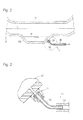
Fig. 2 is an enlarged cross-sectional view of a reservoir of the internal combustion engine inFig. 1 . -
Fig. 3 is an enlarged cross-sectional view of the reservoir inFig. 2 and a connection section of a bypass passage. -
Fig. 4 is a flowchart of condensation water drain control which is carried out in the internal combustion engine inFig. 1 . -
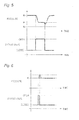
Fig. 5 is a view illustrating change in a state of a bypass valve and a detection value of a pressure sensor of the internal combustion engine with an elapsed time in steps from S5 to S7 in the flowchart inFig. 4 . -
Fig. 6 is a view illustrating change in the state of the bypass valve and the detection value of the pressure sensor of the internal combustion engine with an elapsed time in steps from S5 to S7 in the flowchart inFig. 4 . -
Fig. 7 is a view illustrating change in the state the bypass valve and a detection value of a flow rate sensor of the internal combustion engine with an elapsed time when passing through S11 and S12 in the flowchart inFig. 4 . - A condensation water drain control mechanism of an embodiment according to the invention will be described with reference to
Figs. 1 to 7 .Fig. 1 illustrates a conceptual view of aninternal combustion engine 1 including the condensation water drain control mechanism. Theinternal combustion engine 1 illustrated inFig. 1 includes anintake pipe passage 12 leading to anengine 1 and anexhaust pipe passage 13 extending from theengine 11, and asupercharger 14 is disposed between theintake pipe passage 12 and theexhaust pipe passage 13. Theintake pipe passage 12 has anintercooler 121, areservoir 122 and apressure sensor 123 on the downstream side of thesupercharger 14, and has aflow rate sensor 124 upstream thesupercharger 14. Theexhaust pipe passage 13 has after-treatment devices 131 and 132 on the downstream side of thesupercharger 14. Thesupercharger 14 is a so-called turbocharger and has a turbine disposed in theexhaust pipe passage 13 and a compressor disposed in theintake pipe passage 12. - As illustrated in
Fig. 1 , thereservoir 122 is positioned on the downstream side of theintercooler 121. As illustrated inFig. 2 , thereservoir 122 is formed in a lowered position in theintake pipe passage 12 between the downstream side of theintercooler 121 and an intake port 111 of theengine 11, preferably in an initially lowered position on the downstream side of theintercooler 121, and stores condensation water W which is condensed in theintercooler 121. - The
pressure sensor 123 is disposed in theintake pipe passage 12 on the downstream side of theintercooler 121 and detects a pressure in theintake pipe passage 12. Accordingly, thepressure sensor 123 also detects a pressure applied to thereservoir 122. Theflow rate sensor 124 detects a flow rate of fresh air taken in theintake pipe passage 12. - As illustrated in
Fig. 2 , theinternal combustion engine 1 illustrated inFig. 1 includes abypass passage 15 communicating with a portion near a bottom of thereservoir 122. Thebypass passage 15 includes apipe stand 151 mounted on the outside of thereservoir 122, anozzle 152 connected to the pipe stand 151 by a flared pipe joint, adrainage pipe 153 attached to thenozzle 152 and abypass valve 154 disposed in the middle of thedrainage pipe 153. As illustrated inFig. 1 , downstream end of thebypass passage 15 is connected to theexhaust pipe passage 13 on the downstream side of the after-treatment devices 131 and 132. Thebypass valve 154 is controlled so as to be operated in an open state and in a closed state, and to discharge the condensation water W in any timing. - Furthermore, as illustrated in
Fig. 1 , theinternal combustion engine 1 is provided with a so-called dual loop EGR (Exhaust Gas Recirculation) system and has a high-pressureEGR pipe passage 161 and a low-pressureEGR pipe passage 162 which are an example of an exhaust gas recirculation passage. The high-pressureEGR pipe passage 161 communicates theexhaust pipe passage 13 between an exhaust port 112 of theengine 11 and thesupercharger 14 with theintake pipe passage 12 between theintercooler 121 and the intake port 111. The low-pressureEGR pipe passage 162 makes theexhaust pipe passage 13 on the downstream side of thesupercharger 14 communicate with theintake pipe passage 12 on the upstream side of thesupercharger 14. The high-pressureEGR pipe passage 161 includes a high-pressure EGR valve 163 in an end portion of theintake pipe passage 12 side and the low-pressureEGR pipe passage 162 includes a low-pressure EGR valve 164 in an end portion of theintake pipe passage 12 side. When the high-pressure EGR valve 163 and the low-pressure EGR valve 164 are open, some of the exhaust gas is flowed back by the high-pressureEGR pipe passage 161 and the low-pressureEGR pipe passage 162, respectively. - The
internal combustion engine 1 includes athrottle 17 disposed in theintake pipe passage 12, anaccelerator 17A adjusting an opening degree of thethrottle 17 and anaccelerator switch 170 detecting an on-state in which theaccelerator 17A is operated and an off-state in which theaccelerator 17A is not operated. Thethrottle 17 includes a high-pressure throttle 171 and a low-pressure throttle 172. The high-pressure throttle 171 is disposed in theintake pipe passage 12 between thereservoir 122 and the high-pressure EGR valve 163. The low-pressure throttle 172 is disposed in theintake pipe passage 12 on the upstream side of the low-pressure EGR valve 164. - The
pressure sensor 123, theflow rate sensor 124, thebypass valve 154, the high-pressure EGR valve 163, the low-pressure EGR valve 164, the high-pressure throttle 171, the low-pressure throttle 172, theaccelerator 17A and theaccelerator switch 170 are connected to acontrol section 18, respectively. Thecontrol section 18 may be provided in a part of an engine control unit (ECU) which controls theinternal combustion engine 1 and may be provided independently from the ECU. The condensation water drain control mechanism according to the embodiment of the invention includes at least thesupercharger 14, theintercooler 121, thepressure sensor 123, thereservoir 122, thebypass passage 15, thebypass valve 154 and thecontrol section 18. Then, thecontrol section 18 determines a drainage state of the condensation water W in thereservoir 122, based on the change in the pressure inside theintake pipe passage 12, which is detected in thepressure sensor 123 when thebypass valve 154 is in an open state. - A method for determining the drainage state of the condensation water W by the
control section 18 is described with reference toFigs. 4 to 7 . -
Fig. 4 is a flowchart in which thecontrol section 18 determines whether or not the condensation water W is stored in thereservoir 122. According to the flowchart, first, thebypass valve 154 is closed (S1). Next, in order to confirm whether or not the low-pressure EGR is operated, it is determined (S2) whether the low-pressure EGR valve 164 is closed. When the low-pressure EGR valve 164 is closed, in other words, the low-pressure EGR is not operated, it is determined (S3) whether a key of theengine 11 is turned off and when the key is turned off, the flow is ended (S4) and when the key is turned on, it is determined (S2) again whether the low-pressure EGR valve 164 is closed, and the process repeats from S2 to S3 until the low-pressure EGR valve 164 is in the open state or the key is turned off. - When the low-
pressure EGR valve 164 is in the open state, in other words, the low-pressure EGR is operated, thecontrol section 18 makes thebypass valve 154 to be in the open state (S5) in any timing and determines whether or not the condensation water W is stored in thereservoir 122, based on the change in the pressure which is detected by thepressure sensor 123. In particular, as illustrated inFig. 5 , thecontrol section 18 sets a first pressure P1 as a pressure in the intake pipe passage when the condensation water W is drained via thebypass passage 15 with respect to a steady pressure P0 such as a supercharging pressure when operating thesupercharger 14 or an intake pressure when performing a steady driving. - The first pressure P1 is a value which is obtained from data previous experiment or the like. The first pressure P1 is lower than the steady pressure P0. However, the first pressure P1 is higher than a second pressure P2 when the condensation water W is not stored in the
reservoir 122 and the intake air is directly drained through thebypass passage 15 by an amount of flow resistance due to viscosity of the condensation water W with respect to thebypass passage 15. Thus, thecontrol section 18 determines whether or not the condensation water W is drained, based on the pressure P detected in thepressure sensor 123, in other words, determines whether or not the condensation water W is stored (S6). As illustrated inFig. 5 , after thebypass valve 154 is in the open state, when the pressure detected in thepressure sensor 123 is maintained in a state that is greater than or equal to the first pressure P1 and less than or equal to the steady pressure P0 (P0≥P≥P1), thecontrol section 18 maintains thebypass valve 154 in the open state. - When the detected pressure P is lower than the first pressure P1 (P1>P), it means that the condensation water W is drained from the
reservoir 122 and the intake air is discharged from thebypass passage 15. In addition, as illustrated inFig. 6 , when thebypass valve 154 is in the open state and then the detected pressure P is greater than the steady pressure P0 (P>P0), it means that the intake air is flowed back in thebypass passage 15. In both cases where the pressure P is lower than the first pressure P1 (P1>P) and where the pressure P is greater than the steady pressure P0 (P>P0), since the condensation water W cannot be drained, thecontrol section 18 makes thebypass valve 154 to be in the closed state (S7). When thebypass valve 154 is in the closed state, the process returns to S2 which determines whether the low-pressure EGR valve 164 is closed and repeats from S2 to S7. - In addition, since the
internal combustion engine 1 of the embodiment includes theaccelerator switch 170, it is also possible to determine whether or not the condensation water W is drained with theaccelerator switch 170 as a trigger. When the pressure P of theintake pipe passage 12 is lowered by opening thebypass valve 154, the output of theengine 11 is also lowered. Accordingly, when thebypass valve 154 is open while theaccelerator 17A is depressed, the output corresponding to a depressing amount of theaccelerator 17A cannot be obtained. Thus, when it is determined that the low-pressure EGR valve 164 is in the open state in S2, it is determined (S8) whether or not theaccelerator switch 170 is turned on, in other words, whether or not theaccelerator 17A is depressed by a driver. - In particular, when the
accelerator switch 170 is turned off in S8, in other words, theaccelerator 17A is not depressed, thebypass valve 154 is in the open state (S5). When theaccelerator switch 170 is turned on in S8, in other words, when theaccelerator 17A is depressed, it is determined (S9) whether thebypass valve 154 is in the closed state. When thebypass valve 154 is in the open state, thebypass valve 154 is set to the closed state (S10) and the process moves to determination A (S11). In addition, when thebypass valve 154 is in the closed state in S9, the process directly moves to the determination A (S11). - The determination A (S11) is prepared on the assumption a case where the
accelerator 17A is in a state of being depressed for a long time, for example, a case where a period until theaccelerator switch 170 is turned off is long such as traveling on a highway, and a case where there is a possibility that the condensation water W is stored in thereservoir 122 beyond an allowable capacity of the volume of thereservoir 122. Theinternal combustion engine 1 of the embodiment includes a cylinder pressure sensor measuring a pressure in the cylinder of theengine 11 in addition to thepressure sensor 123 and theflow rate sensor 124. Thecontrol section 18 sets two conditions in the determination A (S11) for determining based on a detection value in each sensor. - In a first condition, it is detected that the pressure P detected by the
pressure sensor 123 is the steady pressure P0 but a flow rate V detected by theflow rate sensor 124 is lower than a steady flow rate V0 corresponding to the output of theengine 11. If the condensation water W is stored in theintake pipe passage 12 beyond an allowable volume of thereservoir 122, it is expected that a cross-section of the flow passage is narrowed and then the flow rate V is decreased. Accordingly, as illustrated inFig. 7 , when the flow rate V is lowered from the steady flow rate V0 and then is decreased lower than a threshold value V1, thecontrol section 18 makes thebypass valve 154 to be in the open state by the threshold value V1 as the trigger (S5). The threshold value V1 in the embodiment is set as a lower limit of the flow rate to maintain the operation of theengine 11. - In addition, in a second condition, it is detected that a value of the cylinder pressure sensor during a compression stroke of the
engine 11 is abnormally increased with respect to a set pressure value. As a result that the condensation water is stored in the intake pipe passage beyond the allowable volume of thereservoir 122, it is believed that some of the condensation water enters into the cylinder and then the value of the cylinder pressure sensor is abnormally increased with respect to the set pressure value. Accordingly, when the value of the cylinder pressure sensor is abnormally increased, thecontrol section 18 makes thebypass valve 154 to be in the open state by the value as the trigger (S5). - Both the first condition and the second condition in the determination A mean the case where the condensation water is stored which is greater than or equal to the allowable volume beyond the volume of the
reservoir 122. Accordingly, the determination A performs as storage amount detection means for detecting a storage amount of thereservoir 122. The storage amount detection means are configured of thepressure sensor 123, theflow rate sensor 124, the cylinder pressure sensor and thecontrol section 18 which are contributed to the detection and the determination. Then, the storage amount detection means does not complicate the internal combustion engine in that a specialized device such as a water level sensor does not require. - As described above, the
control section 18 makes thebypass valve 154 to be in the open state (SS) by the determination A (S11) regardless of theaccelerator switch 170 being turned on and the condensation water W is forcedly drained. In the determination A (S11), when the flow rate V is the steady flow rate V0 and the value of the cylinder pressure sensor is the set pressure value, thecontrol section 18 determines that the condensation water W does not exceed the allowable volume of thereservoir 122 and the process repeats from S8 to S11 until theaccelerator switch 170 is turned off. Then, when theaccelerator switch 170 is turned off, thebypass valve 154 is set to the open state by the switch as the trigger (S5). - When the
bypass valve 154 is in the open state (S5) via the determination A (S11), thecontrol section 18 determines (S6), based on the detected value of thepressure sensor 123. When the pressure P is lower than or equal to the steady pressure P0 and greater than or equal to the first pressure P1, in the determination A (S12), it is determined again whether the first condition or the second condition is satisfied. Any one of the first condition and the second condition being satisfied indicates that the condensation water W is not drained. Accordingly, the process returns to S6 and the detected value of thepressure sensor 123 is determined. - When the drainage of the condensation water W is progressed and, the first condition and the second condition of the determination A are not satisfied in S12, it means that the condensation water W is not stored up to an extent of reducing the output of the
engine 11. Then, thecontrol section 18 returns to S8 and it is confirmed whether theaccelerator switch 170 is turned on. When theaccelerator switch 170 is turned on, it is confirmed whether thebypass valve 154 is closed (S9). Since the output of theengine 11 is decreased when thebypass valve 154 is open, in order to prevent this, thebypass valve 154 is in the closed state (S10). When theaccelerator switch 170 is turned off in S8, thebypass valve 154 is in the open state (S5). - Furthermore, in the case of the embodiment, when the
accelerator switch 170 is turned off in S8, first option P01 may be provided to effectively drain the condensation water W. In the first option OP1, as illustrated inFig. 4 , it is confirmed (S13) whether a brake device is operated. The brake device includes at least an engine brake and a foot brake. Thecontrol section 18 is connected to abrake sensor 190 which is disposed in the brake pedal and detects a depressed amount to detect that the foot brake is operated. Signal of thebrake sensor 190 may be obtained via Engine Control Unit (ECU). That the engine brake is operated may not be obtained from the ECU and may be calculated from an attenuation rate of the number of revolutions of theengine 11. - In the first option OP1, when the
control section 18 detects (S13) the operation of the engine brake or the operation of the foot brake, the high-pressure throttle 171 is throttled (S14) and the pressure in theintake pipe passage 12 on the downstream side of theintercooler 121 is increased according to the increase of the operation amount of the brake. - In a state where the high-
pressure throttle 171 is throttled, thebypass valve 154 is in the open state (S5) so that the pressure in theintake pipe passage 12 on the downstream side of theintercooler 121, in other words, the pressure in thereservoir 122 is increased and the drainage of the condensation water W is promoted. Otherwise, when thesupercharger 14 is the turbocharger which includes avariable vane 141 in a turbine side, thecontrol section 18 throttles (S14) thevariable vane 141 more than the position corresponding to the driving state of theengine 11 with the increase of the operation amount of the brake, similar to the above description. When thevariable vane 141 is throttled, the number of the revolutions of the turbine of thesupercharger 14 is increased. As a result, since the pressure in the intake side is increased using the compressor which is driven with the turbine, the pressure in theintake pipe passage 12 downstream theintercooler 121, in other words, the pressure in thereservoir 122 is increased and the drainage of the condensation water W is promoted, similar to the case where the high-pressure throttle 171 is throttled. When the brake device is used, even though the output of theengine 11 is reduced by pump loss or the like, driving performance (drivability) is not affected. As described above, when the pressure on the upstream side of thebypass passage 15 is increased by throttling the high-pressure throttle 171 or thevariable vane 141, efficiency of the drainage of the condensation water W is increased. The first option OP1 includes S13 and S14. - The
control section 18 confirms that the pressure P, detected by thepressure sensor 123, is lower than the first pressure P1, so that the condensation water W is drained in S6. When it is detected that the pressure P is lower than the first pressure P1, thecontrol section 18 makes thebypass valve 154 to be in the closed state in S7 and the operation of S14 is released (S15), in other words, the throttled high-pressure throttle 171 or thevariable vane 141 is returned to an original state which is a position state corresponding to the output of theengine 11. - In addition, in S6, when it is not any one of the first condition and the second condition by the determination A of S12 while the pressure P is greater than or equal to the first pressure P1 and less than or equal to the steady pressure P0, in other words, while the condensation water W is drained, the operation of S14 is released (S17) if the
bypass valve 154 is in the closed state via S9 and S10 even though it is determined thataccelerator switch 170 is turned on in S8. - When passing through the control flow in which the
accelerator switch 170 is turned off and then thebypass valve 154 is in the open state in S5, the condensation water W is not only drained from the inside of theintake pipe passage 12 but also from thereservoir 122 by passing through S6 even though it is determined that the first condition or the second condition in the determination A is satisfied in S11 and S12. If the condensation water W is drained from thereservoir 122, theintake pipe passage 12 is not clogged with the condensation water W for a while. Accordingly, thecontrol section 18 releases (S16) the determination of the determination A and returns to S2. - When the
accelerator switch 170 is turned on in S8 and the first condition or the second condition of the determination A is satisfied in S11, thebypass valve 154 is in the open state in S5 and then the pressure P in theintake pipe passage 12 is decreased. Accordingly, the output of theengine 11 is slightly reduced. Then, in this case, second option OP2 may be added as the control to complement the reduction of the output of theengine 11. - In the embodiment, the second option OP2 is provided while the pressure P is maintained between the steady pressure P0 and the first pressure P1 after the start of the drainage of the condensation water W in S5, in other words, while S6 and S12 are repeated until the condensation water W is discharged and then the flow rate V of the
intake pipe passage 12 is recovered to the steady flow rate V0. As illustrated inFig. 4 , it is determined (S18) that whether the pressure P which is detected by thepressure sensor 123 is the steady pressure P0 in the second option OP2. Since it means that the output of theengine 11 is maintained when the steady pressure P0 can be maintained, the process returns to S6. When the pressure P is lower than the steady pressure P0, the pressure P is increased by injecting the fuel greater than the supply amount of the fuel corresponding to the operation of theaccelerator 17A from afuel injector 20 or by throttling (S19) thevariable vane 141 of thesupercharger 14 in the second option OP2 so that the output of theengine 11 does not decrease. As a result of S19, thecontrol section 18 confirms (S20) whether the pressure P is increased and when the pressure P is increased more than before, the process returns to S18 and it is confirmed whether the pressure P is the steady pressure P0. When the pressure P is not increased, the process returns to S6. The second option OP2 includes S18 to S20. - In a case where the process passes through S19 in which a fuel injection amount is increased or the
variable vane 141 is throttled, thecontrol section 18 also releases S19 when releasing S14 in S15, after the condensation water W is drained and thebypass valve 154 is in the closed state in S7. In a case where the process passes through S19, since the determination A of S11 or S12 is also carried out, the determination of the determination A is further cleared in S16 and the process returns to S2. - According to the condensation water drain control mechanism of the invention configured as described above, when the low-pressure EGR is operated, the
bypass valve 154 disposed in thebypass passage 15 to drain the condensation water W is in the open state and the condensation water W can be reliably drained, based on the change in the pressure P detected by thepressure sensor 123 disposed in theintake pipe passage 12. At this time, when the pressure P is lower than the first pressure P1 indicating that the condensation water W is discharged, thebypass valve 154 is in the closed state so that it is possible to prevent that the intake air in theintake pipe passage 12 is drained after the condensation water W is completely drained. - In addition, according to the condensation water drain control mechanism of the invention, when the downstream end of the
bypass passage 15 is connected to theexhaust pipe passage 13, thebypass passage 15 communicates with the downstream side of the position in which the after-treatment devices 131 and 132 are provided. The after-treatment devices 131 and 132 have a built-in catalyst which treats chemical substances such as NOx, SOx and HC in the exhaust gas. The catalyst can perform catalytic reaction by being heated to an activation temperature by the heat of the exhaust gas. - Accordingly, if the
bypass passage 15 communicates with the upstream side of the after-treatment devices 131 and 132 and the condensation water W is drained to the upstream side of the catalyst, the heat of the exhaust gas is consumed to vaporize the condensation water W and the temperature of the catalyst is decreased. When the activation temperature of the catalyst is decreased, the catalytic reaction is suppressed and original functions cannot be performed. In addition, when the catalyst is made of ceramics, it may be broken by quenching with the condensation water W. - According to the condensation water drain control mechanism of the invention, since the
bypass passage 15 communicates with the downstream side of the after-treatment device 132, the catalytic reaction is not inhibited. In addition, thepressure sensor 123 detects that the pressure P is lower than or equal to the first pressure P1 and makes thebypass valve 154 to be in the closed state immediately so that there is no concern that some of the exhaust gas, which is flowed back to theintake pipe passage 12 using the low-pressureEGR pipe passage 162, is drained through thebypass passage 15. - In addition, in the flowchart illustrated in
Fig. 4 , the control is performed whether or not the condensation water W is drained in a case where the low-pressure EGR valve 164 is not closed, in other words, where the low-pressure EGR is operated. This is because of considering that the condensation water W is increased when the low-pressure EGR is operated. Accordingly, the invention also includes a configuration in which S2 in flowchart illustrated inFig. 4 is omitted and thebypass valve 154 is in the open state and then presence or absence of the condensation water W is confirmed regardless of whether or not the low-pressure EGR being operated. In this case, in S2 of the flowchart illustrated inFig. 4 , it is determined whether or not the drainage of the condensation water is necessary. When it is not necessary, the process may go to S3 and when it is necessary, the process may go to S5, respectively. It may be determined whether or not the drainage of the condensation water is necessary, based on the elapsed time from staring of theinternal combustion engine 1 or the time when the accelerator is continuously depressed.
Claims (9)
- A condensation water drain control mechanism comprising:a supercharger provided in an intake pipe passage of an internal combustion engine;an intercooler disposed on a downstream side of the supercharger;a pressure sensor configured so as to detect a pressure in the intake pipe passage on a downstream side of the intercooler;a reservoir provided in the intake pipe passage on the downstream side of the intercooler and configured so as to store condensation water which is condensed in the intercooler;a bypass passage communicating with the reservoir and configured so as to drain the condensation water;a bypass valve provided in the bypass passage; anda control section which is connected to the bypass valve and the pressure sensor, and configured so as to determine a drainage state of the condensation water in the reservoir, based on change in the pressure in the intake pipe passage, which is detected by the pressure sensor in a case where the bypass valve is in an open state.
- The condensation water drain control mechanism according to claim 1,
wherein the control section sets a first pressure in the intake pipe passage in a case where the condensation water is drained through the bypass passage,
wherein the control section maintains the bypass valve in the open state while the pressure detected in the pressure sensor is maintained in the first pressure, and
wherein the control section makes the bypass valve to be in a closed state in a case where the pressure detected in the pressure sensor is lower than the first pressure. - The condensation water drain control mechanism according to claim 1 or 2,
wherein the control section sets a steady pressure in the intake pipe passage, which is determined according to a driving state of the internal combustion engine, and
wherein the control section makes the bypass valve to be in a closed state in a case where the pressure detected in the pressure sensor exceeds the steady pressure while the bypass valve is in the open state. - The condensation water drain control mechanism according to any one of claims 1 to3,
wherein the control section increases the pressure in the intake pipe passage on the downstream side of the intercooler while the bypass valve is in the open state. - The condensation water drain control mechanism according to any one of claims 1 to 4,
wherein the internal combustion engine includes a throttle provided in the intake pipe passage and connected to the control section, an accelerator configured to adjust an opening degree of the throttle, and an accelerator switch connected to the control section and configured to detect an on state in which the accelerator is operated and an off state in which the accelerator is not operated, and
wherein the control section makes the bypass valve to be in the open state while the accelerator switch is in the off state. - The condensation water drain control mechanism according to claim 5,
wherein the internal combustion engine includes storage amount detection means configured to detect a storage amount of the reservoir, and
wherein the control section makes the bypass valve to be in the open state when the control section determines that the storage amount of the reservoir is detected by the storage amount detection means exceeds a predetermined value while the accelerator switch is in the on state. - The condensation water drain controi mechanism according to claim 6,
wherein the internal combustion engine includes a fuel injector which is connected to the control section and is configured to adjust a supply amount of the fuel according to the operation of the accelerator, and
wherein the control section makes the bypass valve to be in the open state and supplies the fuel greater than the supply amount of the fuel according to the operation of the accelerator by the fuel injector. - The condensation water drain control mechanism according to any one of claims 1 to 7,
wherein the internal combustion engine has an exhaust pipe passage in which an after-treatment device is provided, and
wherein the bypass passage communicates with the exhaust pipe passage on the downstream side of the after-treatment device. - The condensation water drain control mechanism according to any one of claims 1 to 8,
wherein the internal combustion engine includes an exhaust gas recirculation passage configured so that some of exhaust gas flows back from the exhaust pipe passage on the downstream side of the supercharger to the intake pipe passage on the upstream side of the intercooler.
Applications Claiming Priority (1)
| Application Number | Priority Date | Filing Date | Title |
|---|---|---|---|
| JP2012129996A JP5962233B2 (en) | 2012-06-07 | 2012-06-07 | Condensate discharge control mechanism |
Publications (3)
| Publication Number | Publication Date |
|---|---|
| EP2672087A2 true EP2672087A2 (en) | 2013-12-11 |
| EP2672087A3 EP2672087A3 (en) | 2015-04-22 |
| EP2672087B1 EP2672087B1 (en) | 2017-03-01 |
Family
ID=48625767
Family Applications (1)
| Application Number | Title | Priority Date | Filing Date |
|---|---|---|---|
| EP13170680.6A Not-in-force EP2672087B1 (en) | 2012-06-07 | 2013-06-05 | Condensation water drain control mechanism |
Country Status (3)
| Country | Link |
|---|---|
| EP (1) | EP2672087B1 (en) |
| JP (1) | JP5962233B2 (en) |
| CN (1) | CN103485943B (en) |
Cited By (5)
| Publication number | Priority date | Publication date | Assignee | Title |
|---|---|---|---|---|
| DE102015001663A1 (en) * | 2015-02-10 | 2016-08-11 | Man Diesel & Turbo Se | Internal combustion engine and method for operating the same |
| DE102015112185B4 (en) | 2014-08-06 | 2019-12-24 | Denso Corporation | valve device |
| US10774793B2 (en) | 2017-08-25 | 2020-09-15 | Mazda Motor Corporation | Intake and exhaust device for automotive engine |
| CN116838504A (en) * | 2023-06-30 | 2023-10-03 | 潍柴动力股份有限公司 | Electromagnetic valve control method, system, device, equipment and storage medium |
| CN119122713A (en) * | 2024-09-09 | 2024-12-13 | 中国第一汽车股份有限公司 | Engine intake and exhaust system and control method thereof |
Families Citing this family (7)
| Publication number | Priority date | Publication date | Assignee | Title |
|---|---|---|---|---|
| JP6455581B1 (en) * | 2017-11-17 | 2019-01-23 | マツダ株式会社 | ENGINE CONTROL DEVICE AND ENGINE CONTROL METHOD |
| KR101953098B1 (en) * | 2018-05-15 | 2019-02-28 | 구진호 | Intercooler condensed water discharge apparatus for internal combustion engine |
| CN108757240A (en) * | 2018-06-05 | 2018-11-06 | 潍柴动力股份有限公司 | A kind of diesel engine gas handling system and thermal management algorithm, device |
| CN112051755A (en) * | 2020-09-14 | 2020-12-08 | 潍柴动力股份有限公司 | Control method and control device for electric control water drain valve |
| CN112709854B (en) * | 2021-01-04 | 2023-01-06 | 潍柴动力股份有限公司 | Electric control water drain valve control method and device, electronic equipment and storage medium |
| CN114738079B (en) * | 2022-03-16 | 2023-10-20 | 潍柴动力股份有限公司 | An engine gas circulation system and its control method and vehicle |
| CN115420505B (en) * | 2022-08-24 | 2024-08-23 | 东风汽车集团股份有限公司 | A test method and a test device for an exhaust gas recirculation system of an engine |
Citations (4)
| Publication number | Priority date | Publication date | Assignee | Title |
|---|---|---|---|---|
| JP2000130172A (en) | 1998-10-29 | 2000-05-09 | Nissan Diesel Motor Co Ltd | Dew condensation water discharging device for after cooler |
| JP2002303146A (en) | 2001-04-06 | 2002-10-18 | Mitsubishi Motors Corp | Internal combustion engine with supercharger |
| JP2010096050A (en) | 2008-10-15 | 2010-04-30 | Denso Corp | Abnormality detection device for supercharging system |
| JP2010242640A (en) | 2009-04-07 | 2010-10-28 | Toyota Motor Corp | Intake leak detection system for internal combustion engine |
Family Cites Families (11)
| Publication number | Priority date | Publication date | Assignee | Title |
|---|---|---|---|---|
| CH582827A5 (en) * | 1974-09-24 | 1976-12-15 | Sulzer Ag | |
| JP4661618B2 (en) * | 2006-02-08 | 2011-03-30 | トヨタ自動車株式会社 | Intake air cooling system for an internal combustion engine with a supercharger |
| JP2009215904A (en) * | 2008-03-07 | 2009-09-24 | Toyota Motor Corp | Intercooler condensed water discharge device for internal combustion engine |
| FR2940366B1 (en) * | 2008-12-22 | 2011-02-18 | Renault Sas | DEVICE FOR TREATING A GAS MIXTURE FOR AN INTERNAL COMBUSTION ENGINE |
| US8191366B2 (en) * | 2009-03-13 | 2012-06-05 | Denso International America, Inc. | Charge air cooler condensate separation and dispersion system |
| FR2957980A1 (en) * | 2010-03-24 | 2011-09-30 | Renault Sas | Intake circuit for diesel engine of e.g. four-cylinder motor, has cooler comprising product storage zone that is connected to circuit in cylinder by purging pipe emerging downstream from regulation valves |
| FR2959779A1 (en) * | 2010-05-07 | 2011-11-11 | Peugeot Citroen Automobiles Sa | Charge air cooler for condensates managing system of thermal engine, has storage units for storing condensates in bottom part of cooler, and heating units arranged in storage units to heat condensates collected directly in storage units |
| JP2011241797A (en) * | 2010-05-21 | 2011-12-01 | Hino Motors Ltd | Engine intake air cooling device |
| US8371119B2 (en) * | 2010-09-08 | 2013-02-12 | Caterpillar Inc. | Drain valve for an air intake system of a machine |
| KR101628095B1 (en) * | 2010-10-18 | 2016-06-08 | 현대자동차 주식회사 | Apparatus and method for control low pressure exhaust gas recirculation system |
| JP2012087718A (en) * | 2010-10-21 | 2012-05-10 | Mitsubishi Heavy Ind Ltd | Engine air supply cooling device and engine equipped with the same |
-
2012
- 2012-06-07 JP JP2012129996A patent/JP5962233B2/en not_active Expired - Fee Related
-
2013
- 2013-06-05 EP EP13170680.6A patent/EP2672087B1/en not_active Not-in-force
- 2013-06-06 CN CN201310224744.7A patent/CN103485943B/en not_active Expired - Fee Related
Patent Citations (4)
| Publication number | Priority date | Publication date | Assignee | Title |
|---|---|---|---|---|
| JP2000130172A (en) | 1998-10-29 | 2000-05-09 | Nissan Diesel Motor Co Ltd | Dew condensation water discharging device for after cooler |
| JP2002303146A (en) | 2001-04-06 | 2002-10-18 | Mitsubishi Motors Corp | Internal combustion engine with supercharger |
| JP2010096050A (en) | 2008-10-15 | 2010-04-30 | Denso Corp | Abnormality detection device for supercharging system |
| JP2010242640A (en) | 2009-04-07 | 2010-10-28 | Toyota Motor Corp | Intake leak detection system for internal combustion engine |
Cited By (5)
| Publication number | Priority date | Publication date | Assignee | Title |
|---|---|---|---|---|
| DE102015112185B4 (en) | 2014-08-06 | 2019-12-24 | Denso Corporation | valve device |
| DE102015001663A1 (en) * | 2015-02-10 | 2016-08-11 | Man Diesel & Turbo Se | Internal combustion engine and method for operating the same |
| US10774793B2 (en) | 2017-08-25 | 2020-09-15 | Mazda Motor Corporation | Intake and exhaust device for automotive engine |
| CN116838504A (en) * | 2023-06-30 | 2023-10-03 | 潍柴动力股份有限公司 | Electromagnetic valve control method, system, device, equipment and storage medium |
| CN119122713A (en) * | 2024-09-09 | 2024-12-13 | 中国第一汽车股份有限公司 | Engine intake and exhaust system and control method thereof |
Also Published As
| Publication number | Publication date |
|---|---|
| EP2672087B1 (en) | 2017-03-01 |
| JP2013253561A (en) | 2013-12-19 |
| JP5962233B2 (en) | 2016-08-03 |
| EP2672087A3 (en) | 2015-04-22 |
| CN103485943B (en) | 2016-02-03 |
| CN103485943A (en) | 2014-01-01 |
Similar Documents
| Publication | Publication Date | Title |
|---|---|---|
| EP2672087B1 (en) | Condensation water drain control mechanism | |
| US7801669B2 (en) | Exhaust gas control system for internal combustion engine | |
| US8307629B2 (en) | Control method of exhaust emission purification system and exhaust emission purification system | |
| RU2620889C2 (en) | Engine operation method and engine system | |
| US9464586B2 (en) | Exhaust gas recirculation system of engine | |
| EP3025033B1 (en) | Exhaust emission control system for internal combustion engine, and control method for exhaust emission control system | |
| US20070131207A1 (en) | Exhaust gas recirculation in diesel engine | |
| EP1975396A1 (en) | Control apparatus and control method for diesel vehicle | |
| US20100204905A1 (en) | Control unit of diesel engine | |
| EP3018332B1 (en) | Condensed water processing device of internal combustion engine | |
| WO2009107175A1 (en) | Control device for common-rail system in abnormal condition | |
| EP3093465B1 (en) | Control device for internal combustion engine | |
| US11530631B2 (en) | Engine oil state control device | |
| US20090044517A1 (en) | Exhaust gas purification system for an internal combustion engine | |
| EP2202400A2 (en) | Vehicle engine output controller | |
| JP2005264821A (en) | Exhaust gas recirculation system for internal combustion engine | |
| JP2009121362A (en) | Filter regeneration control device for internal combustion engine | |
| EP3524786B1 (en) | Regeneration control device for exhaust purification device | |
| JP6551677B2 (en) | Condensed water discharge device for internal combustion engine | |
| JP2017075554A (en) | Condensate drainage device for internal combustion engine | |
| JP5370307B2 (en) | Hydraulic control device | |
| JP2017075553A (en) | Control device for internal combustion engine | |
| JP7420044B2 (en) | Internal combustion engine cooling system | |
| JP6237158B2 (en) | Drainage control device for internal combustion engine | |
| JP2005320940A (en) | Exhaust gas recirculation system for internal combustion engine |
Legal Events
| Date | Code | Title | Description |
|---|---|---|---|
| PUAI | Public reference made under article 153(3) epc to a published international application that has entered the european phase |
Free format text: ORIGINAL CODE: 0009012 |
|
| 17P | Request for examination filed |
Effective date: 20130704 |
|
| AK | Designated contracting states |
Kind code of ref document: A2 Designated state(s): AL AT BE BG CH CY CZ DE DK EE ES FI FR GB GR HR HU IE IS IT LI LT LU LV MC MK MT NL NO PL PT RO RS SE SI SK SM TR |
|
| AX | Request for extension of the european patent |
Extension state: BA ME |
|
| PUAL | Search report despatched |
Free format text: ORIGINAL CODE: 0009013 |
|
| AK | Designated contracting states |
Kind code of ref document: A3 Designated state(s): AL AT BE BG CH CY CZ DE DK EE ES FI FR GB GR HR HU IE IS IT LI LT LU LV MC MK MT NL NO PL PT RO RS SE SI SK SM TR |
|
| AX | Request for extension of the european patent |
Extension state: BA ME |
|
| RIC1 | Information provided on ipc code assigned before grant |
Ipc: F02B 29/04 20060101AFI20150318BHEP Ipc: F02M 25/07 20060101ALI20150318BHEP Ipc: F28F 17/00 20060101ALI20150318BHEP |
|
| RIC1 | Information provided on ipc code assigned before grant |
Ipc: F02M 26/05 20160101ALI20160217BHEP Ipc: F02B 29/04 20060101AFI20160217BHEP Ipc: F28F 17/00 20060101ALI20160217BHEP Ipc: F02M 26/06 20160101ALI20160217BHEP |
|
| GRAP | Despatch of communication of intention to grant a patent |
Free format text: ORIGINAL CODE: EPIDOSNIGR1 |
|
| INTG | Intention to grant announced |
Effective date: 20160401 |
|
| GRAJ | Information related to disapproval of communication of intention to grant by the applicant or resumption of examination proceedings by the epo deleted |
Free format text: ORIGINAL CODE: EPIDOSDIGR1 |
|
| GRAL | Information related to payment of fee for publishing/printing deleted |
Free format text: ORIGINAL CODE: EPIDOSDIGR3 |
|
| GRAS | Grant fee paid |
Free format text: ORIGINAL CODE: EPIDOSNIGR3 |
|
| GRAJ | Information related to disapproval of communication of intention to grant by the applicant or resumption of examination proceedings by the epo deleted |
Free format text: ORIGINAL CODE: EPIDOSDIGR1 |
|
| GRAP | Despatch of communication of intention to grant a patent |
Free format text: ORIGINAL CODE: EPIDOSNIGR1 |
|
| INTC | Intention to grant announced (deleted) | ||
| GRAP | Despatch of communication of intention to grant a patent |
Free format text: ORIGINAL CODE: EPIDOSNIGR1 |
|
| INTG | Intention to grant announced |
Effective date: 20160922 |
|
| INTG | Intention to grant announced |
Effective date: 20160930 |
|
| GRAA | (expected) grant |
Free format text: ORIGINAL CODE: 0009210 |
|
| AK | Designated contracting states |
Kind code of ref document: B1 Designated state(s): AL AT BE BG CH CY CZ DE DK EE ES FI FR GB GR HR HU IE IS IT LI LT LU LV MC MK MT NL NO PL PT RO RS SE SI SK SM TR |
|
| REG | Reference to a national code |
Ref country code: GB Ref legal event code: FG4D |
|
| REG | Reference to a national code |
Ref country code: CH Ref legal event code: EP Ref country code: AT Ref legal event code: REF Ref document number: 871654 Country of ref document: AT Kind code of ref document: T Effective date: 20170315 |
|
| REG | Reference to a national code |
Ref country code: IE Ref legal event code: FG4D |
|
| REG | Reference to a national code |
Ref country code: DE Ref legal event code: R096 Ref document number: 602013017868 Country of ref document: DE |
|
| REG | Reference to a national code |
Ref country code: FR Ref legal event code: PLFP Year of fee payment: 5 |
|
| REG | Reference to a national code |
Ref country code: NL Ref legal event code: MP Effective date: 20170301 |
|
| REG | Reference to a national code |
Ref country code: LT Ref legal event code: MG4D |
|
| REG | Reference to a national code |
Ref country code: AT Ref legal event code: MK05 Ref document number: 871654 Country of ref document: AT Kind code of ref document: T Effective date: 20170301 |
|
| PG25 | Lapsed in a contracting state [announced via postgrant information from national office to epo] |
Ref country code: NO Free format text: LAPSE BECAUSE OF FAILURE TO SUBMIT A TRANSLATION OF THE DESCRIPTION OR TO PAY THE FEE WITHIN THE PRESCRIBED TIME-LIMIT Effective date: 20170601 Ref country code: GR Free format text: LAPSE BECAUSE OF FAILURE TO SUBMIT A TRANSLATION OF THE DESCRIPTION OR TO PAY THE FEE WITHIN THE PRESCRIBED TIME-LIMIT Effective date: 20170602 Ref country code: FI Free format text: LAPSE BECAUSE OF FAILURE TO SUBMIT A TRANSLATION OF THE DESCRIPTION OR TO PAY THE FEE WITHIN THE PRESCRIBED TIME-LIMIT Effective date: 20170301 Ref country code: LT Free format text: LAPSE BECAUSE OF FAILURE TO SUBMIT A TRANSLATION OF THE DESCRIPTION OR TO PAY THE FEE WITHIN THE PRESCRIBED TIME-LIMIT Effective date: 20170301 Ref country code: HR Free format text: LAPSE BECAUSE OF FAILURE TO SUBMIT A TRANSLATION OF THE DESCRIPTION OR TO PAY THE FEE WITHIN THE PRESCRIBED TIME-LIMIT Effective date: 20170301 |
|
| PG25 | Lapsed in a contracting state [announced via postgrant information from national office to epo] |
Ref country code: BG Free format text: LAPSE BECAUSE OF FAILURE TO SUBMIT A TRANSLATION OF THE DESCRIPTION OR TO PAY THE FEE WITHIN THE PRESCRIBED TIME-LIMIT Effective date: 20170601 Ref country code: LV Free format text: LAPSE BECAUSE OF FAILURE TO SUBMIT A TRANSLATION OF THE DESCRIPTION OR TO PAY THE FEE WITHIN THE PRESCRIBED TIME-LIMIT Effective date: 20170301 Ref country code: SE Free format text: LAPSE BECAUSE OF FAILURE TO SUBMIT A TRANSLATION OF THE DESCRIPTION OR TO PAY THE FEE WITHIN THE PRESCRIBED TIME-LIMIT Effective date: 20170301 Ref country code: RS Free format text: LAPSE BECAUSE OF FAILURE TO SUBMIT A TRANSLATION OF THE DESCRIPTION OR TO PAY THE FEE WITHIN THE PRESCRIBED TIME-LIMIT Effective date: 20170301 Ref country code: AT Free format text: LAPSE BECAUSE OF FAILURE TO SUBMIT A TRANSLATION OF THE DESCRIPTION OR TO PAY THE FEE WITHIN THE PRESCRIBED TIME-LIMIT Effective date: 20170301 Ref country code: ES Free format text: LAPSE BECAUSE OF FAILURE TO SUBMIT A TRANSLATION OF THE DESCRIPTION OR TO PAY THE FEE WITHIN THE PRESCRIBED TIME-LIMIT Effective date: 20170301 |
|
| PG25 | Lapsed in a contracting state [announced via postgrant information from national office to epo] |
Ref country code: NL Free format text: LAPSE BECAUSE OF FAILURE TO SUBMIT A TRANSLATION OF THE DESCRIPTION OR TO PAY THE FEE WITHIN THE PRESCRIBED TIME-LIMIT Effective date: 20170301 |
|
| PG25 | Lapsed in a contracting state [announced via postgrant information from national office to epo] |
Ref country code: SK Free format text: LAPSE BECAUSE OF FAILURE TO SUBMIT A TRANSLATION OF THE DESCRIPTION OR TO PAY THE FEE WITHIN THE PRESCRIBED TIME-LIMIT Effective date: 20170301 Ref country code: RO Free format text: LAPSE BECAUSE OF FAILURE TO SUBMIT A TRANSLATION OF THE DESCRIPTION OR TO PAY THE FEE WITHIN THE PRESCRIBED TIME-LIMIT Effective date: 20170301 Ref country code: IT Free format text: LAPSE BECAUSE OF FAILURE TO SUBMIT A TRANSLATION OF THE DESCRIPTION OR TO PAY THE FEE WITHIN THE PRESCRIBED TIME-LIMIT Effective date: 20170301 Ref country code: EE Free format text: LAPSE BECAUSE OF FAILURE TO SUBMIT A TRANSLATION OF THE DESCRIPTION OR TO PAY THE FEE WITHIN THE PRESCRIBED TIME-LIMIT Effective date: 20170301 Ref country code: CZ Free format text: LAPSE BECAUSE OF FAILURE TO SUBMIT A TRANSLATION OF THE DESCRIPTION OR TO PAY THE FEE WITHIN THE PRESCRIBED TIME-LIMIT Effective date: 20170301 |
|
| PG25 | Lapsed in a contracting state [announced via postgrant information from national office to epo] |
Ref country code: PL Free format text: LAPSE BECAUSE OF FAILURE TO SUBMIT A TRANSLATION OF THE DESCRIPTION OR TO PAY THE FEE WITHIN THE PRESCRIBED TIME-LIMIT Effective date: 20170301 Ref country code: PT Free format text: LAPSE BECAUSE OF FAILURE TO SUBMIT A TRANSLATION OF THE DESCRIPTION OR TO PAY THE FEE WITHIN THE PRESCRIBED TIME-LIMIT Effective date: 20170703 Ref country code: SM Free format text: LAPSE BECAUSE OF FAILURE TO SUBMIT A TRANSLATION OF THE DESCRIPTION OR TO PAY THE FEE WITHIN THE PRESCRIBED TIME-LIMIT Effective date: 20170301 Ref country code: IS Free format text: LAPSE BECAUSE OF FAILURE TO SUBMIT A TRANSLATION OF THE DESCRIPTION OR TO PAY THE FEE WITHIN THE PRESCRIBED TIME-LIMIT Effective date: 20170701 |
|
| REG | Reference to a national code |
Ref country code: DE Ref legal event code: R097 Ref document number: 602013017868 Country of ref document: DE |
|
| PLBE | No opposition filed within time limit |
Free format text: ORIGINAL CODE: 0009261 |
|
| STAA | Information on the status of an ep patent application or granted ep patent |
Free format text: STATUS: NO OPPOSITION FILED WITHIN TIME LIMIT |
|
| PG25 | Lapsed in a contracting state [announced via postgrant information from national office to epo] |
Ref country code: DK Free format text: LAPSE BECAUSE OF FAILURE TO SUBMIT A TRANSLATION OF THE DESCRIPTION OR TO PAY THE FEE WITHIN THE PRESCRIBED TIME-LIMIT Effective date: 20170301 Ref country code: MC Free format text: LAPSE BECAUSE OF FAILURE TO SUBMIT A TRANSLATION OF THE DESCRIPTION OR TO PAY THE FEE WITHIN THE PRESCRIBED TIME-LIMIT Effective date: 20170301 |
|
| REG | Reference to a national code |
Ref country code: CH Ref legal event code: PL |
|
| 26N | No opposition filed |
Effective date: 20171204 |
|
| GBPC | Gb: european patent ceased through non-payment of renewal fee |
Effective date: 20170605 |
|
| PG25 | Lapsed in a contracting state [announced via postgrant information from national office to epo] |
Ref country code: SI Free format text: LAPSE BECAUSE OF FAILURE TO SUBMIT A TRANSLATION OF THE DESCRIPTION OR TO PAY THE FEE WITHIN THE PRESCRIBED TIME-LIMIT Effective date: 20170301 |
|
| REG | Reference to a national code |
Ref country code: IE Ref legal event code: MM4A |
|
| PG25 | Lapsed in a contracting state [announced via postgrant information from national office to epo] |
Ref country code: LI Free format text: LAPSE BECAUSE OF NON-PAYMENT OF DUE FEES Effective date: 20170630 Ref country code: GB Free format text: LAPSE BECAUSE OF NON-PAYMENT OF DUE FEES Effective date: 20170605 Ref country code: CH Free format text: LAPSE BECAUSE OF NON-PAYMENT OF DUE FEES Effective date: 20170630 Ref country code: LU Free format text: LAPSE BECAUSE OF NON-PAYMENT OF DUE FEES Effective date: 20170605 Ref country code: IE Free format text: LAPSE BECAUSE OF NON-PAYMENT OF DUE FEES Effective date: 20170605 |
|
| REG | Reference to a national code |
Ref country code: FR Ref legal event code: PLFP Year of fee payment: 6 |
|
| REG | Reference to a national code |
Ref country code: BE Ref legal event code: MM Effective date: 20170630 |
|
| PG25 | Lapsed in a contracting state [announced via postgrant information from national office to epo] |
Ref country code: BE Free format text: LAPSE BECAUSE OF NON-PAYMENT OF DUE FEES Effective date: 20170630 |
|
| PG25 | Lapsed in a contracting state [announced via postgrant information from national office to epo] |
Ref country code: MT Free format text: LAPSE BECAUSE OF NON-PAYMENT OF DUE FEES Effective date: 20170605 |
|
| PG25 | Lapsed in a contracting state [announced via postgrant information from national office to epo] |
Ref country code: HU Free format text: LAPSE BECAUSE OF FAILURE TO SUBMIT A TRANSLATION OF THE DESCRIPTION OR TO PAY THE FEE WITHIN THE PRESCRIBED TIME-LIMIT; INVALID AB INITIO Effective date: 20130605 |
|
| PG25 | Lapsed in a contracting state [announced via postgrant information from national office to epo] |
Ref country code: CY Free format text: LAPSE BECAUSE OF NON-PAYMENT OF DUE FEES Effective date: 20170301 |
|
| PG25 | Lapsed in a contracting state [announced via postgrant information from national office to epo] |
Ref country code: MK Free format text: LAPSE BECAUSE OF FAILURE TO SUBMIT A TRANSLATION OF THE DESCRIPTION OR TO PAY THE FEE WITHIN THE PRESCRIBED TIME-LIMIT Effective date: 20170301 |
|
| PG25 | Lapsed in a contracting state [announced via postgrant information from national office to epo] |
Ref country code: TR Free format text: LAPSE BECAUSE OF FAILURE TO SUBMIT A TRANSLATION OF THE DESCRIPTION OR TO PAY THE FEE WITHIN THE PRESCRIBED TIME-LIMIT Effective date: 20170301 |
|
| PG25 | Lapsed in a contracting state [announced via postgrant information from national office to epo] |
Ref country code: AL Free format text: LAPSE BECAUSE OF FAILURE TO SUBMIT A TRANSLATION OF THE DESCRIPTION OR TO PAY THE FEE WITHIN THE PRESCRIBED TIME-LIMIT Effective date: 20170301 |
|
| PGFP | Annual fee paid to national office [announced via postgrant information from national office to epo] |
Ref country code: FR Payment date: 20200512 Year of fee payment: 8 Ref country code: DE Payment date: 20200527 Year of fee payment: 8 |
|
| REG | Reference to a national code |
Ref country code: DE Ref legal event code: R119 Ref document number: 602013017868 Country of ref document: DE |
|
| PG25 | Lapsed in a contracting state [announced via postgrant information from national office to epo] |
Ref country code: DE Free format text: LAPSE BECAUSE OF NON-PAYMENT OF DUE FEES Effective date: 20220101 |
|
| PG25 | Lapsed in a contracting state [announced via postgrant information from national office to epo] |
Ref country code: FR Free format text: LAPSE BECAUSE OF NON-PAYMENT OF DUE FEES Effective date: 20210630 |