EP2671075B1 - Systems and methods for determining alumina properties - Google Patents
Systems and methods for determining alumina properties Download PDFInfo
- Publication number
- EP2671075B1 EP2671075B1 EP12742047.9A EP12742047A EP2671075B1 EP 2671075 B1 EP2671075 B1 EP 2671075B1 EP 12742047 A EP12742047 A EP 12742047A EP 2671075 B1 EP2671075 B1 EP 2671075B1
- Authority
- EP
- European Patent Office
- Prior art keywords
- alumina
- supply member
- feedstock
- data
- property
- Prior art date
- Legal status (The legal status is an assumption and is not a legal conclusion. Google has not performed a legal analysis and makes no representation as to the accuracy of the status listed.)
- Active
Links
Images




Classifications
-
- C—CHEMISTRY; METALLURGY
- C25—ELECTROLYTIC OR ELECTROPHORETIC PROCESSES; APPARATUS THEREFOR
- C25C—PROCESSES FOR THE ELECTROLYTIC PRODUCTION, RECOVERY OR REFINING OF METALS; APPARATUS THEREFOR
- C25C3/00—Electrolytic production, recovery or refining of metals by electrolysis of melts
- C25C3/06—Electrolytic production, recovery or refining of metals by electrolysis of melts of aluminium
- C25C3/20—Automatic control or regulation of cells
-
- C—CHEMISTRY; METALLURGY
- C25—ELECTROLYTIC OR ELECTROPHORETIC PROCESSES; APPARATUS THEREFOR
- C25C—PROCESSES FOR THE ELECTROLYTIC PRODUCTION, RECOVERY OR REFINING OF METALS; APPARATUS THEREFOR
- C25C3/00—Electrolytic production, recovery or refining of metals by electrolysis of melts
- C25C3/06—Electrolytic production, recovery or refining of metals by electrolysis of melts of aluminium
- C25C3/14—Devices for feeding or crust breaking
Definitions
- the document US 2009/0107840 A1 relates to systems and methods for determining compositions of cover materials for electrolysis cells.
- the system includes an aluminum electrolysis cell adapted to contain an electrolytic bath, a hopper configured to provide a cover material to the aluminum electrolysis cell, where the cover material includes alumina and electrolytic bath particulate, an imaging device configured to capture images of the cover material, an image processor configured to analyze the images and output imaging data relating to the cover material, and a data analyzer configured to analyze the imaging data and output a determining cover material composition form of cover material information.
- the document US 5 476,574 A relates to a continuous feeder for feeding alumina to an aluminum reduction cell, that feeder being positioned over a discharge outlet of an alumina hopper.
- the feeder includes flow control valve member which is connected to a positioning means by a rod.
- Alumina is used as a feedstock in the production of aluminum metal in aluminum electrolysis cells.
- Alumina quality may vary, sometimes significantly, depending on supplier and/or grade, among other factors. This variance in alumina quality may impact operation of the aluminum electrolysis cells.
- One parameter that may vary is alumina flowability.
- FIG. 1 illustrates the variability in alumina flowability for a single electrolysis cell over a one-year period. The flowability ranges from about 65 seconds to about 160 seconds. Flowability may also be highly variable from pot to pot. For example, as illustrated in Table 1, below, five different pots in the same smelter realized an average flowability of from 59 seconds to 152 seconds, even though the measurements were all conducted at about the same time.
- Table 1 Electrolysis Cell Flowability (flow funnel time) A 109 B 152 C 118 D 87 E 59
- the present application relates to systems and methods for determining one or more properties of an alumina feedstock. Those properties may be used to change the operating parameters of one or more aluminum electrolysis cells (e.g., in an effort to improve the performance of one or more aluminum electrolysis cells).
- the present invention relates to a system for determining alumina properties as defined by independent claim 1, and to a method for determining alumina properties as defined by independent claim 7, wherein further developments of the inventive system and method are provided in the dependent claims respectively.
- the measurement device is a thermocouple.
- the thermocouple may be located proximal to, within and/or or adjacent the passageway of the alumina supply member. As alumina feedstock of the alumina supply flows through the passageway, the thermocouple may obtain temperature readings, which may be converted to temperature data via the processor.
- a data analyzer may receive the temperature data and correlate such data to a predicted alumina property (e.g., alumina flowability, alumina particle size distribution, including the average particle size, alumina feed rate and/or amount) using one or more models.
- the data analyzer may output the predicted alumina property, for example, to a display, a control device and/or other apparatus and/or systems. In turn, alumina flow parameters may be adjusted.
- a plurality of alumina storage units, alumina supply members, measurement devices, processors, and/or data analyzers may be used, as appropriate.
- an alumina flow control device e.g., a valve
- the alumina flow control device may be in communication with a controller (e.g., a computer; a PLC).
- the controller may adjust the alumina flow control device, based at least in part, on the predicted alumina property.
- an alumina supply member is configured to achieve a predetermined residence time of the alumina feedstock so as to facilitate measurement of the supply member property.
- the predetermined residence time corresponds to a time interval adequate to obtain reliable temperature measurements.
- a thermocouple may require at least one second of contact with the alumina feedstock to obtain reliable temperature measurements.
- the predetermined residence time is at least about 2 seconds. In other embodiments, the predetermined residence time is at least about 2.5 seconds, or at least about 3 seconds, or at least about 3.5 seconds, about 4 seconds, or at least about 4.5 seconds, or more.
- the predetermined residence time may also/alternatively be related to a time interval that is non-intrusive to alumina feed operations.
- an aluminum electrolysis cell may require an alumina feed cycle (sometimes called a drop, shot, or dump) every 5 to 60 seconds.
- the predetermined residence time may be not greater than about 30 seconds.
- the predetermined residence time may be not greater than about 25 seconds, or not greater than about 20 seconds, or not greater than about 15 seconds, or not greater than about 10 seconds, or not greater than about 9 seconds, or, not greater than about 8 seconds, or not greater than about 7 seconds, or not greater than about 6 seconds, or not greater than about 5 seconds, or less.
- the predetermined residence time is in the range of from about 1 second to about 30 seconds. In another embodiment, the predetermined residence time is in the range of from about 2 seconds to about 20 seconds. In one embodiment, the predetermined residence time is in the range of from about 2.5 seconds to about 10 seconds. In one embodiment, the predetermined residence time is in the range of from about 3 seconds to about 5 seconds. Other combinations of the above-described minimum and maximum predetermined residence time values may be employed, depending on alumina supply member and/or aluminum electrolysis cell requirements.
- the passageway of the alumina supply member may include a narrowing portion.
- the middle portion may have a first diameter (or other length, if non-circular / non-oval), and the distal end portion may have a second diameter.
- the first diameter is smaller than the second diameter.
- the first diameter is sized to achieve the predetermined residence time range.
- the measurement device may be in communication with any suitable narrower portion of the passageway, such as the middle portion and/or proximal end portion of the alumina supply member. This may facilitate measurement of the supply member property.
- the first diameter is at least about 5 mm. In other embodiments, the first diameter is at least about 10 mm, or at least about 12 mm, or at least about 14 mm, or at least about 16 mm, or at least about 18 mm, or at least about 20 mm, or more.
- the first diameter is not greater than about 50 mm. In other embodiments, the first diameter is not greater than about 45 mm, or not greater than about 40 mm, or not greater than about 38 mm, or not greater than about 36 mm, or not greater than about 34 mm, or not greater than about 32 mm, or not greater than about 30 mm, or less.
- the first diameter has a size in the range of from about 5 mm to about 50 mm. In another embodiment, the first diameter has a size in the range of from about 10 mm to about 40 mm. In yet another embodiment, the first diameter has a size in the range of from about 15 mm to about 30 mm. Other combinations of the above-described minimum and maximum diameters may be employed, depending on alumina supply member and/or aluminum electrolysis cell requirements.
- a method may include the steps of electrolytically producing aluminum metal in an aluminum electrolysis cell, flowing alumina feedstock through an alumina supply member that is in communication with the aluminum electrolysis cell, measuring (e.g., concomitant to the flowing step) at least one supply member property, producing supply member data based on the supply member property, and analyzing the supply member data, thereby determining characteristics of the alumina feedstock.
- the characteristic of the alumina feedstock includes alumina flowability.
- a measurement device may measure a plurality of temperature measurements associated with the alumina supply member (e.g., the alumina feedstock temperature), such as during or concomitant to the flowing alumina feedstock step.
- temperature data is produced from the temperature measurements, and such temperature data are correlated to a predicted alumina flowability (e.g., during the analyzing step).
- the temperature data is compared to historical operational data, and a predicted alumina flowability may be output (e.g., using a model). The predicted alumina flowability may be compared to a target alumina flowability, after which it may be determined whether to complete a control response.
- a method includes the step of adjusting one or more operation parameters associated with the flow of the alumina feedstock (e.g., in response to the comparing step; based on the determined characteristics of the alumina feedstock).
- the analyzing step includes developing an alumina prediction model based, at least in part, on the supply member data. The analyzing step may include outputting at least one predicted alumina property utilizing the alumina prediction model.
- an alumina distribution system 1 comprising an alumina storage unit 10 comprising an alumina feedstock 12 and an alumina supply member 20.
- One or more aluminum electrolysis cells 30 may be in communication with the alumina distribution system 1.
- Particulate alumina feedstock 12 from the alumina storage unit 10 is provided to the aluminum electrolysis cell 30 via the alumina supply member 20.
- An alumina storage unit 10 is a container for storing and supplying alumina feedstock to an alumina supply member.
- An alumina feedstock 12 is a feedstock comprising particulate Al 2 O 3 .
- the alumina feedstock 12 (sometimes called alumina) may comprise gamma or alpha alumina, among others.
- the alumina feedstock 12 is in particulate form and has an average particle size (D50) in the range of from about 40 ⁇ m to about 80 ⁇ m, such as in the range of from about 50 ⁇ m to about 70 ⁇ m.
- Alumina properties are properties of the alumina feedstock. Examples of alumina properties that may be useful in accordance with the presently described technology include particle-size distribution, feed rate and/or feed amount, among others.
- An alumina supply member 20 is a member comprising at least one passageway for supplying alumina feedstock to an aluminum electrolysis cell (e.g., a pipe, spout, conduit or otherwise).
- an alumina supply member 12 may receive alumina from an alumina storage unit 10, and the alumina may flow through a passageway of the supply member 20 and into an electrolysis cell 30.
- the passageway of the aluminum supply member 20 may be tortuous or non-tortuous.
- An aluminum electrolysis cell is a container containing an electrolyte (e.g., cryolite) through which an externally complementary electric current is passed via a system of electrodes (e.g., an anode and a cathode) in order to change the composition of a material.
- an aluminum compound e.g., Al 2 O 3
- Al pure aluminum metal
- an alumina control system 40 is provided for analyzing the alumina feedstock 12.
- the alumina control system 40 is operable to measure one or more supply member properties via the alumina supply member 20 (or other portion of the alumina supply system) and output supply member data based thereon.
- a measurement device e.g., a timing device, a temperature measurement device
- supply member data may be output based on the measured property/ies.
- the alumina control system 40 may be further operable to analyze the supply member data to evaluate the alumina feedstock 12.
- a supply member property is a property associated with the alumina supply member.
- a supply member property may be at least one of flow rate, temperature, particle size, vibration, acoustic emission, and electromagnetic radiation (e.g., infrared), to name a few.
- Supply member data is data relating to one or more supply member properties.
- supply member data may include flow rate data (amount and/or rate), temperature data, particle size data, vibration data, acoustic emission data, and electromagnetic radiation data (e.g., infrared data), to name a few.
- the alumina control system 40 is operable to adjust an operation parameter associated with the system 1 to adjust the flow of the alumina feedstock 12 to the one or more aluminum electrolysis cells 30.
- the alumina control system 40 may be electrically interconnected to control components of the alumina storage unit 10 and/or the alumina supply member 20 (e.g., valve 25) via a wireless or wired electrical connection 14.
- the alumina control system 40 may adjust the feed rate of the alumina feedstock 12 via the electrical connection 14 based on the analyzed supply member data.
- the alumina control system 40 may measure one or more properties via connection 16 to evaluate the alumina feedstock 12. For example, the alumina control system 40 may obtain a plurality of temperature measurement associated with the alumina supply member 20 as alumina flows through the supply member 20 to facilitate evaluation of the alumina feedstock 12. In one embodiment, one or more thermocouples are located proximal or in the alumina supply member 20 to measure the temperature of the supply member 20 as alumina passes through the supply member.
- the alumina feedstock 12 is generally supplied to the alumina supply member 20 on a periodic basis (i.e., non-continuous). The alumina feedstock 12 generally has a different temperature than that of the alumina supply member 20.
- the alumina control system 40 may be able to predict the properties of the alumina feedstock (e.g., its flowability) and/or the status of the alumina supply member (e.g., status normal; status non-normal such as plugged or continuously open).
- the alumina system 40 includes a measurement device 42, a processor 44, and a data analyzer 46.
- the alumina control system 40 may optionally include a controller 48 and/or a display 50.
- the measurement device 42 is operable to measure a property of the alumina supply member 20, and, in the illustrated embodiment, the measurement device 42 is interconnected to the data processor 44.
- the interconnection for these items, and other items, may include hard wired and/or wireless interconnections.
- the processor 44 is operable to process the measured properties and output supply member data.
- the data analyzer 46 is electrically interconnectable with the processor 44 and is operable to receive and analyze the supply member data.
- the alumina control system 40 is operable to obtain one or more measurements associated with the alumina supply member 20 and analyze those measurements to determine an appropriate control response (e.g., adjust a feed rate, maintain current operation parameters).
- the control response may be an automated response.
- the control response may be a manual response.
- the measurement device 42 is a device capable of measuring a property (e.g., an attribute, characteristic) of the alumina supply member.
- a measurement device may measure temperature (e.g., of the alumina as it flows through the alumina supply member 20).
- the measurement device 42 may also / alternatively be a device capable of measuring time, temperature, pressure, volume, area, light amount(s), and/or light wavelength(s), among others.
- the measurement device 42 may be one or more of an electromagnetic sensor (e.g., a laser, a light beam, a radar, a capacitance sensor), an audio sensor (e.g., an acoustic sensor), an image capture device (e.g., a camera), a vibration sensor (e.g., a piezoelectric sensor) and a temperature sensor (e.g., a thermocouple, a thermometer), to name a few.
- the measurement device 42 may be located proximal the alumina supply member 20. In one embodiment, the measurement device 42 may be coupled to the alumina supply member.
- the measurement device 42 may be bonded to the alumina supply member 20 (e.g., melted, welded, adhesively connected). In one embodiment, the measurement device 42 may be in direct communication with a passageway of the alumina supply member 20 (e.g., via a hole). In other embodiments, the measurement device 42 may be located remote of the alumina supply member 20. For example, the measurement device 42 may measure a property (e.g., electromagnetic, acoustic) remote of the alumina supply member 20, such as by electromagnetic radiation 34.
- a property e.g., electromagnetic, acoustic
- the processor 44 is a computerized device capable of processing signals (e.g., carry out operations on and/or measurements on) for outputting supply member data.
- the processor 44 is operable to process the measurements of the measurement device 42 and output supply member data based thereon (e.g., binary data).
- the processor 44 may be a device separate from the measurement device 42, or the processor 44 may be included with the measurement device 42.
- a processor 44 of a general purpose computer may receive and process a signal from the measurement device 42, and may output supply member data.
- the processor 44 is a programmable logic controller (PLC). Other arrangements may be used.
- PLC programmable logic controller
- the data analyzer 46 is operable to analyze supply member data and provide an output relating to alumina properties of the alumina feedstock 12, the alumina storage unit 10 and/or the alumina supply member 20 (e.g., a predicted property of the alumina and/or a status of the alumina supply member).
- the data analyzer 46 is electrically interconnectable to the processor 44 and is operable to analyze the supply member data to facilitate approximation of alumina feedstock properties and/or determination of an appropriate control response.
- a digital interface such as a IEEE-1394 compliant digital interface may be used to electrically interconnect the data analyzer 46 to the processor 44 and/or the measurement device 42.
- the data analyzer 46 may be, for example, a computerized device, such as a general purpose computer comprising hardware and software that enables the computerized device to receive the supply member data and perform calculations based thereon.
- the data analyzer 46 may analyze supply member data to facilitate evaluation of the alumina feedstock 12 (e.g., approximation of the properties of the alumina feedstock) and/or determination of the appropriate control response.
- the data analyzer 46 may analyze supply member data for a plurality of alumina feedstock feeding periods to facilitate evaluation of the alumina feedstock 12 and/or determination of the appropriate control response.
- the data analyzer 46 may analyze the supply member data to facilitate evaluation of the alumina feedstock 12 and/or the status of the alumina supply member.
- various one(s) of the supply member data are correlated to form one or more alumina prediction model(s) and/or to output one or more predicted alumina parameter(s).
- the alumina prediction model may be a model that employs supply member data to evaluate the alumina feedstock.
- the alumina prediction model uses supply member data to output one or more predicted alumina parameter(s).
- supply member data are correlated to form the alumina prediction model and/or output the predicted alumina parameter(s).
- the data analyzer 46 may thus utilize supply member data to evaluate the alumina feedstock and output a predicted alumina parameter (e.g., a physical characteristic of the alumina; the status of the alumina supply member).
- a predicted alumina parameter e.g., a physical characteristic of the alumina; the status of the alumina supply member.
- the predicted alumina parameter is a predicted flowability of the alumina feedstock.
- the predicated alumina parameter is one or more of alumina particle size distribution ((D10, D50, D99, etc.) alumina feed rate and/or alumina feed amount, among others.
- the predicted alumina parameter(s) may be evaluated to determine whether a processing parameter (e.g., alumina flow rate) should be modified, for example, by comparing the predicted physical properties of the alumina feedstock, as obtained from the alumina prediction model, to standard (e.g., average) physical properties of an alumina feedstock.
- a processing parameter e.g., alumina flow rate
- An alumina prediction model is a model that uses supply member data and outputs one or more predicted alumina parameters.
- the alumina prediction model may utilize current and/or historical supply member data and/or other data to develop a model that may utilize current or future supply member data to evaluate an alumina feedstock (e.g., to predict one or more physical properties of the alumina feedstock).
- the alumina prediction model is developed using one or more of partitioning, ordinary or stepwise regression, partial least squares regression, neural networks non-linear regression, and response-surface modeling statistical analysis techniques, among others.
- the alumina prediction model utilizes a plurality of the supply member data and other data to develop and/or maintain the model.
- the supply member data may be used to develop and/or maintain the model and the other data may be used to develop, maintain and/or verify the model.
- supply member data may be correlated to develop a prediction tool for predicting a physical property of the alumina.
- the other data may be used to verify whether the prediction tool is sufficiently accurate.
- the other data is data associated with the alumina feedstock.
- physical measurements of the alumina feedstock may be utilized as the other data in the alumina prediction model.
- the alumina prediction model utilizes at least some supply member data to provide a model that facilitates evaluation of the alumina feedstock.
- the data analyzer 46 may utilize supply member data to output one or more predicted alumina parameter.
- the predicted alumina parameters may be properties relating to the alumina feedstock, such as properties relating to alumina flowability and/or alumina particle size distribution, among others.
- the alumina properties may be alumina flowability.
- the alumina properties may be related to the alumina particle size distribution.
- the alumina properties may be an alumina feed rate and/or feed amount.
- Predicted alumina parameters may alternatively or additionally relate to the properties or status of the alumina supply member.
- a predicted alumina parameter may be that the status of the alumina supply member is normal.
- a predicted alumina parameter may be that the status of the alumina supply member is non-normal, such as plugged or continuously open, among others.
- the data analyzer 46 may receive supply member data and may utilize this supply member data in conjunction with the alumina prediction model to output one or more predicted alumina parameters, such as alumina flowability, alumina particle size distribution, or other suitable alumina properties. In a particular embodiment, the data analyzer calculates an alumina flowability based on supply member data utilizing an alumina prediction model.
- an alumina prediction model may be formed by utilizing the following formula: a 0 + a 1 * f 1 + a 2 * f 2 + ... a n * f n
- the statistical summary includes, in no particular order, at least one of the following statistics for at least one of the supply member data:
- the alumina prediction model may be utilized with new or additional supply member data to evaluate one or more alumina feedstocks.
- the data analyzer 46 uses the supply member data with the alumina prediction model to predict alumina flowability.
- the data analyzer 46 may compare the predicted alumina flowability to a desired alumina flowability.
- an aluminum electrolysis cell may require an alumina flow rate of at least about 1.5 g/sec (e.g., at least about 50, 100, 150, 200, or 250 g/sec). If the predicted alumina flowability obtained from the supply member data and alumina prediction model is at or above the target flow rate, no changes may be needed with respect to the supply of alumina feedstock to the aluminum electrolysis cells. If the predicted alumina flowability is outside of the target flow rate, an operation parameter may be adjusted.
- the alumina prediction model may be static or may be dynamically adjusted based on received supply member data and/or other data.
- the output predicted alumina property/ies may be utilized in a variety of ways.
- the predicted alumina property/ies may be provided to the controller 48 for use in controlling the supply of alumina feedstock to one or more aluminum electrolysis cells.
- the controller 48 may be interconnectable with at least the data analyzer 46 and operable to output control parameters to control the supply of alumina feedstock.
- the controller 48 may send signals (e.g., via connection 54) to the alumina storage unit 10 and/or the alumina supply member 20, or components associated therewith (e.g., valve(s), such as valve 25) to facilitate an appropriate adjustment of the feed rate of those sources based on received alumina prediction parameters.
- the controller 48 may be, for example, a computerized device operable to send signals to one or more of the alumina supply unit 10, the alumina supply member 20, and/or a measurement device 42.
- the controller 48 and data analyzer 46 may be integrated in a single computerized device, or may be separate units.
- the alumina control system 40 may be related to a single aluminum electrolysis cell or a plurality of aluminum electrolysis cells.
- the alumina control system 40 is associated with a control room, where the operation parameters of one or more aluminum electrolysis cells may be adjusted based on the predicted alumina parameter(s). For example, variance in high alumina flowability indicates that alumina dissolution rates may also vary.
- the type and/or amount of alumina feedstock supplied may be adjusted accordingly so as to facilitate increased performance of such aluminum electrolysis cells. In turn, less emissions and/or higher aluminum metal production rates may be realized.
- the predicted alumina property/ies, supply member data and/or a suggested control response may be displayed via a display 50, which may be electrically interconnected to the data analyzer 46.
- a sensory indication e.g., a visual, audible, and/or olfactory indication
- an audible alarm, a light, or other indicator may be triggered if the predicted alumina parameter(s) and/or supply member data indicates that the physical properties of the alumina feedstock and/or the alumina feedrate to the aluminum electrolysis cells may be outside of tolerable production limits / ranges.
- an operator may view one or more of the predicted alumina property/ies, supply member data and/or a suggested control response via the display 50 and then take appropriate action. For example, if an alumina storage unit 10 and/or alumina supply member 20 has a flow rate that is too high (a supply valve is broken), or too low (e.g., clogged), the operator may take appropriate action.
- the data analyzer and/or a model may not be required since an alarm may be triggered simply by the supply member data itself being outside of a predetermined target. For example, when the alumina supply member has a flow rate that is too high due to a broken valve, the temperature may be measured to be continuously low. When the alumina supply member has a flow rate that is too low due to clogging, the temperature may be measured to be continuously high.
- an alumina supply member 20 is used to provide alumina feedstock 12 from the alumina storage unit 10 to the one or more aluminum electrolysis cells 30.
- the alumina supply member 20 may be in any suitable arrangement that facilitates conveyance of the alumina feedstock 12 while also enabling capture of supply member data.
- the alumina supply member 20 is configured to achieve a predetermined residence time of the alumina feedstock relative to the alumina supply member 20.
- a predetermined residence time is at least about 1 or 2 seconds.
- the predetermined residence time is not greater than about 30 seconds.
- the predetermined residence time is not greater than about 25, 20, 15, 10, or 5 seconds.
- the predetermined residence time is in the range of from about 2 or 2.5 seconds to about 4, 1.5, or 5 seconds.
- a predetermined residence time By achieving a predetermined residence time, measurement of supply member properties and/or determination of predicted alumina parameter(s) may be facilitated. For example, when an alumina feedstock flows through the alumina supply member 20, a temperature decrease may be realized. With sufficient residence time, an adequate amount of temperature measurements may be achieved, and thus an adequate amount of supply member data may be output. In turn, the data analyzer may be able to more accurately and/or precisely determine predicted alumina parameter(s). Furthermore, by limiting residence time, impact or alumina flow rate and/or aluminum production conditions may be restricted and/or minimized.
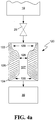
- the alumina supply member 120 includes a distal end portion 122, a proximal end portion 124, and a middle portion 126 disposed between the distal end portion 122 and the proximal end portion 124.
- the supply member 120 includes a passageway 127 having a first diameter 128 and a second diameter 129, and a third diameter 130, each associated with its respective portion of the alumina supply member 120.
- the distal end of the passageway 127 is in communication with the alumina storage unit 10 (e.g., via valve 25) and the proximal end of the passageway is in communication with at least one aluminum electrolysis cell 30 (e.g., a bath of an aluminum electrolysis cell 30).
- the first diameter 128 is smaller than the second diameter 129 so as to facilitate achievement of the predetermined residence time. That is, the first diameter 128 is appropriately sized so as to achieve the predetermined residence time range.
- the size of the first diameter 128 is generally dependent on the type of alumina used, but is generally less than the second diameter 129.
- the second diameter 129 has a diameter that is coincidental to the outlet diameter (not shown) of the alumina storage unit 10.
- the second diameter 129 is about 52 mm.
- the first diameter 128 is generally less than about 50 mm.
- the first diameter 128 is at least about 5 mm.
- the first diameter 128 is at least about 8 mm, or at least about 10 mm, or at least about 12 mm, or at least about 14 mm, or at least about 16 mm, or at least about 18 mm, or at least about 20 mm.
- the first diameter 128 is not greater than about 48 mm. In other embodiments, the first diameter 128 is not greater than about 46 mm, or not greater than about 44 mm, or not greater than about 42 mm, or not greater than about 40 mm, or not greater than about 38 mm, or not greater than about 36 mm, or not greater than about 34 mm, or not greater than about 32 mm, or not greater than about 30 mm. In one embodiment, the first diameter 128 is in the range of from about 5 mm to about 50 mm. In other embodiments, the first diameter 128 is in the range of from about 10 mm to about 40 mm, or about 15 mm to about 35 mm, or about 20 mm to about 30 mm.
- the third diameter 130 may be coincidental in size or larger than the first diameter 128. In other embodiments (not illustrated), the first diameter 128 is larger than one or more of the second diameter 129 or the third diameter 130.
- Other manners of tailoring residence time may be employed. For example, a plug or other flow restricting devices, apparatus or systems may be utilized relative to the alumina supply member to achieve suitable alumina feedstock residence times.
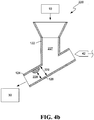
- FIG. 4b illustrates another embodiment of an alumina supply member 220.
- a passageway 227 of the alumina supply member 220 is tortuous.
- the middle portion 126 of the passageway 227 of the alumina supply member 220 includes the first diameter 228 and the second diameter 229.
- a measurement device 42 in this case a timing device (e.g., a laser), measures the amount of time it takes for the alumina feedstock to flow through the middle portion 126 for each alumina supply period.
- This supply member data (flow time) may be supplied to the data analyzer 46, which may output predicted alumina parameters (e.g., anticipated alumina dissolution rate) based on the flow time.
- an aluminum electrolysis cell 300 includes a plurality of alumina storage units 400, in this case bins 411-414, alumina supply members 500, in this case feeder pipes 511-514, and measurement devices 600, in this case thermocouples 601-604.
- the bins 411-414 may be mounted within the cell superstructure (not illustrated).
- the bins 411-414 contain alumina feedstock 12 for feeding to a molten bath 320 of the alumina electrolysis cell 300.
- the proximal end portions of the feeder pipes 511-514 are located above the surface of the molten bath 320.
- alumina feedstock 12 of the bins 411-414 may be supplied to the bath 320 via the corresponding feeder pipes 511-514 (e.g., 1-2 kilograms per supply period).
- a valve associated with bin 411 may be opened (e.g., via an alumina control system - not illustrated), and alumina feedstock of bin 411 may flow through corresponding feeder pipe 511 and into the molten bath 320.
- measurement device 601 may measure a supply member property (e.g., temperature of the alumina feedstock).
- a processor may convert the measured properties into supply member data, and a data analyzer may analyze the supply member data and output a predicted alumina property for the alumina feedstock 12 associated with bin 411. Similar methodologies may be employed with bins 412-414 and their corresponding feeder pipes 512-514 and measurement devices 612-614.
- the alumina storage units and/or alumina supply members may distribute alumina at the same time, or the alumina storage units and/or alumina supply members may distribute alumina at a different time periods.
- each alumina storage unit and/or alumina supply member of an aluminum electrolysis cell may be separately controlled via an alumina control system.
- one or more alumina storage units and/or one or more corresponding and/or alumina supply members may be jointly controlled via an alumina control system.
- tailored supply rates and/or amounts and/or types of alumina within various portions of the aluminum electrolysis cell 300 may be realized/achieved.
- the method 300 includes the step of flowing an alumina feedstock through an alumina supply member (302).
- the alumina supply member may be in communication with an aluminum electrolysis cell.
- the method may further include the steps of measuring at least one supply member property (304), such as concomitant to the flowing step (302), producing supply member data based on the supply member property (306), and analyzing the supply member property (308), thereby determining one or more predicted alumina parameters.
- the method may include adjusting an operation parameter associated with the flow of the alumina feedstock (310).
- the measure supply member property step (304) measures the property of a supply member (e.g., the temperature of alumina feedstock flowing therethrough). Various measurements can be completed, as described above.
- the producing supply member data step 306 may be accomplished via, for example, processor that outputs supply member data (e.g., temperature data) based on the measured property/ies.
- the data may be in a binary data format (e.g., when a processor is integrated with a measurement device), and the binary data may be supplied (e.g., via electrical communication) to a data analyzer.
- the analyzing supply member data step 308 may be accomplished via any suitable technology, such as a computerized device (e.g., a general purpose computer).
- the supply member data may be analyzed to evaluate the alumina feedstock 12 and/or assess whether an operation parameter associated with the aluminum production should be adjusted.
- at least some of the supply member data may be correlated 350 to facilitate determination of whether the alumina feedstock 12 is suitable for current aluminum production conditions 352.
- an alumina prediction model may be developed 370 based, at least in part, on supply member data, whether historical or current.
- other data such as physical properties data associated with the alumina feed materials, may be utilized to assist in developing, maintaining and/or verifying the alumina prediction model.
- supply member data may be input into the alumina prediction model, and one or more alumina prediction parameter(s) may be output 372.
- the predicted alumina parameter(s) may be compared to suitable alumina parameter(s) to evaluate the alumina feedstock and/or determine whether the alumina is suitable 374.
- alumina flowability may be output as the predicted alumina parameter and this alumina flowability may be compared to a known suitable alumina flowability.
- the alumina feedstock, alumina flow rate, and/or electrolysis cell operation parameters may be determined to be suitable. Likewise, if the predicted alumina flowability does not meet one or more predetermined criteria, one or more of such items may be determined to be unsuitable.
- Other alumina prediction parameters may also/alternatively be employed. In one embodiment, a plurality of predicted alumina parameters are utilized, and a hierarchical/weighing methodology is employed to accord various prediction parameters differing degrees of importance when evaluating the alumina feedstock.
- the analysis step 308 suggests that the alumina feedstock is suitable (e.g., suitable for maintaining or improving the efficiency of the aluminum electrolysis cell), current aluminum production conditions may be maintained 360. If the analysis step 308 suggests that the alumina feedstock and/or flow rate, among others, is unsuitable or may soon become unsuitable, one or more operation parameters associated with the production of the aluminum metal production may be adjusted 310. For example, the amount or type of alumina fed to the aluminum electrolysis cell may be adjusted 312. The measure supply member property 304, produce supply member data 306 and analyze supply member data 308 steps may be repeated, as necessary, to facilitate evaluation of alumina feedstock and production of aluminum metal in the aluminum electrolysis cells.
- An alumina feedstock is flowed through an alumina supply member having a first diameter and a second diameter.
- the first diameter is varied using a series of plugs having diameters in the range of from about 12.8 to about 50.8 mm (i.e., no plug).
- the second diameter is 50.8 mm.
- Thermocouples are used to measure the temperature profile of the alumina feedstock as the alumina feedstock flows through the alumina supply member at the various first diameters.
- the average time it takes for the alumina feedstock to flow through the alumina supply member (the alumina flow funnel time) is also measured manually via a timer.
- an alumina prediction model is developed using partial least squares regression, correlating the temperature profile of the alumina supply member to the flow funnel time.
- a regression analysis indicates that the model is accurate.
- the explained variance between actual flow funnel time and predicted flow funnel time is between about 0.74 and about 0.98, indicating that using temperature measurements associated with the alumina feedstock flowing through an alumina supply member is a reliable method for approximating one or more properties of an alumina feedstock.
- First diameters in the range of 20 to 30 mm prove accurate in predicting alumina properties based on temperature measurements.
Landscapes
- Chemical & Material Sciences (AREA)
- Engineering & Computer Science (AREA)
- Chemical Kinetics & Catalysis (AREA)
- Electrochemistry (AREA)
- Materials Engineering (AREA)
- Metallurgy (AREA)
- Organic Chemistry (AREA)
- Electrolytic Production Of Metals (AREA)
- Electrolytic Production Of Non-Metals, Compounds, Apparatuses Therefor (AREA)
Description
- This patent application claims priority to
U.S. Patent Application No. 13/107,557 - The document
US 2009/0107840 A1 relates to systems and methods for determining compositions of cover materials for electrolysis cells. The system includes an aluminum electrolysis cell adapted to contain an electrolytic bath, a hopper configured to provide a cover material to the aluminum electrolysis cell, where the cover material includes alumina and electrolytic bath particulate, an imaging device configured to capture images of the cover material, an image processor configured to analyze the images and output imaging data relating to the cover material, and a data analyzer configured to analyze the imaging data and output a determining cover material composition form of cover material information. - The document
US 5 476,574 A relates to a continuous feeder for feeding alumina to an aluminum reduction cell, that feeder being positioned over a discharge outlet of an alumina hopper. The feeder includes flow control valve member which is connected to a positioning means by a rod. - Alumina is used as a feedstock in the production of aluminum metal in aluminum electrolysis cells. Alumina quality may vary, sometimes significantly, depending on supplier and/or grade, among other factors. This variance in alumina quality may impact operation of the aluminum electrolysis cells. One parameter that may vary is alumina flowability. For example,
FIG. 1 illustrates the variability in alumina flowability for a single electrolysis cell over a one-year period. The flowability ranges from about 65 seconds to about 160 seconds. Flowability may also be highly variable from pot to pot. For example, as illustrated in Table 1, below, five different pots in the same smelter realized an average flowability of from 59 seconds to 152 seconds, even though the measurements were all conducted at about the same time.Table 1 Electrolysis Cell Flowability (flow funnel time) A 109 B 152 C 118 D 87 E 59 - Broadly, the present application relates to systems and methods for determining one or more properties of an alumina feedstock. Those properties may be used to change the operating parameters of one or more aluminum electrolysis cells (e.g., in an effort to improve the performance of one or more aluminum electrolysis cells).
- In particular, the present invention relates to a system for determining alumina properties as defined by
independent claim 1, and to a method for determining alumina properties as defined by independent claim 7, wherein further developments of the inventive system and method are provided in the dependent claims respectively. - In one embodiment, the measurement device is a thermocouple. The thermocouple may be located proximal to, within and/or or adjacent the passageway of the alumina supply member. As alumina feedstock of the alumina supply flows through the passageway, the thermocouple may obtain temperature readings, which may be converted to temperature data via the processor. A data analyzer may receive the temperature data and correlate such data to a predicted alumina property (e.g., alumina flowability, alumina particle size distribution, including the average particle size, alumina feed rate and/or amount) using one or more models. The data analyzer may output the predicted alumina property, for example, to a display, a control device and/or other apparatus and/or systems. In turn, alumina flow parameters may be adjusted. A plurality of alumina storage units, alumina supply members, measurement devices, processors, and/or data analyzers may be used, as appropriate.
- In one approach, an alumina flow control device (e.g., a valve) is in communication with the alumina storage unit and/or the alumina supply member. The alumina flow control device may be in communication with a controller (e.g., a computer; a PLC). The controller may adjust the alumina flow control device, based at least in part, on the predicted alumina property.
- In one approach, an alumina supply member is configured to achieve a predetermined residence time of the alumina feedstock so as to facilitate measurement of the supply member property. In one embodiment, the predetermined residence time corresponds to a time interval adequate to obtain reliable temperature measurements. For example, a thermocouple may require at least one second of contact with the alumina feedstock to obtain reliable temperature measurements. In one embodiment, the predetermined residence time is at least about 2 seconds. In other embodiments, the predetermined residence time is at least about 2.5 seconds, or at least about 3 seconds, or at least about 3.5 seconds, about 4 seconds, or at least about 4.5 seconds, or more.
- The predetermined residence time may also/alternatively be related to a time interval that is non-intrusive to alumina feed operations. For example, an aluminum electrolysis cell may require an alumina feed cycle (sometimes called a drop, shot, or dump) every 5 to 60 seconds. In this regard, in one embodiment, the predetermined residence time may be not greater than about 30 seconds. In other embodiments, the predetermined residence time may be not greater than about 25 seconds, or not greater than about 20 seconds, or not greater than about 15 seconds, or not greater than about 10 seconds, or not greater than about 9 seconds, or, not greater than about 8 seconds, or not greater than about 7 seconds, or not greater than about 6 seconds, or not greater than about 5 seconds, or less.
- In one embodiment, the predetermined residence time is in the range of from about 1 second to about 30 seconds. In another embodiment, the predetermined residence time is in the range of from about 2 seconds to about 20 seconds. In one embodiment, the predetermined residence time is in the range of from about 2.5 seconds to about 10 seconds. In one embodiment, the predetermined residence time is in the range of from about 3 seconds to about 5 seconds. Other combinations of the above-described minimum and maximum predetermined residence time values may be employed, depending on alumina supply member and/or aluminum electrolysis cell requirements.
- Relative to the predetermined residence time, the passageway of the alumina supply member may include a narrowing portion. For example, the middle portion may have a first diameter (or other length, if non-circular / non-oval), and the distal end portion may have a second diameter. In one embodiment, the first diameter is smaller than the second diameter. In one embodiment, the first diameter is sized to achieve the predetermined residence time range. The measurement device may be in communication with any suitable narrower portion of the passageway, such as the middle portion and/or proximal end portion of the alumina supply member. This may facilitate measurement of the supply member property.
- In one embodiment, the first diameter is at least about 5 mm. In other embodiments, the first diameter is at least about 10 mm, or at least about 12 mm, or at least about 14 mm, or at least about 16 mm, or at least about 18 mm, or at least about 20 mm, or more.
- In one embodiment, the first diameter is not greater than about 50 mm. In other embodiments, the first diameter is not greater than about 45 mm, or not greater than about 40 mm, or not greater than about 38 mm, or not greater than about 36 mm, or not greater than about 34 mm, or not greater than about 32 mm, or not greater than about 30 mm, or less.
- In one embodiment, the first diameter has a size in the range of from about 5 mm to about 50 mm. In another embodiment, the first diameter has a size in the range of from about 10 mm to about 40 mm. In yet another embodiment, the first diameter has a size in the range of from about 15 mm to about 30 mm. Other combinations of the above-described minimum and maximum diameters may be employed, depending on alumina supply member and/or aluminum electrolysis cell requirements.
- Methods of supplying alumina feedstock to an aluminum electrolysis cell are also disclosed. In one aspect, a method may include the steps of electrolytically producing aluminum metal in an aluminum electrolysis cell, flowing alumina feedstock through an alumina supply member that is in communication with the aluminum electrolysis cell, measuring (e.g., concomitant to the flowing step) at least one supply member property, producing supply member data based on the supply member property, and analyzing the supply member data, thereby determining characteristics of the alumina feedstock.
- According to the invention, the characteristic of the alumina feedstock includes alumina flowability. A measurement device may measure a plurality of temperature measurements associated with the alumina supply member (e.g., the alumina feedstock temperature), such as during or concomitant to the flowing alumina feedstock step. In such embodiments, temperature data is produced from the temperature measurements, and such temperature data are correlated to a predicted alumina flowability (e.g., during the analyzing step). In one embodiment, the temperature data is compared to historical operational data, and a predicted alumina flowability may be output (e.g., using a model). The predicted alumina flowability may be compared to a target alumina flowability, after which it may be determined whether to complete a control response. In one embodiment, a method includes the step of adjusting one or more operation parameters associated with the flow of the alumina feedstock (e.g., in response to the comparing step; based on the determined characteristics of the alumina feedstock). In one embodiment, the analyzing step includes developing an alumina prediction model based, at least in part, on the supply member data. The analyzing step may include outputting at least one predicted alumina property utilizing the alumina prediction model.
- These and other aspects, advantages, and novel features of the described technology are set forth in part in the description that follows and will become apparent to those skilled in the art upon examination of the following description and figures, or may be learned by practicing the described technology. Other variations, embodiments and features of the present disclosure will become evident from the following detailed description, drawings and claims.
-
-
FIG. 1 is a graph illustrating the variability in alumina flowability for a single aluminum electrolysis cell over a one-year period. -
FIG. 2 is a schematic view of one embodiment of an alumina feedstock evaluation system. -
FIG. 3 is a schematic view of one embodiment of an alumina control system. -
FIG. 4a is schematic view of one embodiment of an alumina supply member of an aluminum feedstock evaluation system. -
FIG. 4b is schematic view of another embodiment of an alumina supply member of an aluminum feedstock evaluation system. -
FIG. 5 is a schematic view of another embodiment of an alumina feedstock evaluation system. -
FIG. 6 is a flow chart illustrating one embodiment of a method of evaluating an alumina feedstock. -
FIG. 7 is a flow chart illustrating one embodiment of the analyzing step ofFIG. 6 . - Reference will now be made in detail to the accompanying drawings, which at least assist in illustrating various pertinent embodiments of the present invention.
- Referring now to
FIG. 2 , one embodiment of analumina distribution system 1 is provided, thesystem 1 comprising analumina storage unit 10 comprising analumina feedstock 12 and analumina supply member 20. One or morealuminum electrolysis cells 30 may be in communication with thealumina distribution system 1.Particulate alumina feedstock 12 from thealumina storage unit 10 is provided to thealuminum electrolysis cell 30 via thealumina supply member 20. Analumina storage unit 10 is a container for storing and supplying alumina feedstock to an alumina supply member. Analumina feedstock 12 is a feedstock comprising particulate Al2O3. The alumina feedstock 12 (sometimes called alumina) may comprise gamma or alpha alumina, among others. In one embodiment, thealumina feedstock 12 is in particulate form and has an average particle size (D50) in the range of from about 40 µm to about 80 µm, such as in the range of from about 50 µm to about 70 µm. Alumina properties are properties of the alumina feedstock. Examples of alumina properties that may be useful in accordance with the presently described technology include particle-size distribution, feed rate and/or feed amount, among others. Analumina supply member 20 is a member comprising at least one passageway for supplying alumina feedstock to an aluminum electrolysis cell (e.g., a pipe, spout, conduit or otherwise). For example, analumina supply member 12 may receive alumina from analumina storage unit 10, and the alumina may flow through a passageway of thesupply member 20 and into anelectrolysis cell 30. The passageway of thealuminum supply member 20 may be tortuous or non-tortuous. An aluminum electrolysis cell is a container containing an electrolyte (e.g., cryolite) through which an externally complementary electric current is passed via a system of electrodes (e.g., an anode and a cathode) in order to change the composition of a material. For example, an aluminum compound (e.g., Al2O3) may be decomposed (reduced) into pure aluminum metal (Al) via current flow in an aluminum electrolysis cell. - As shown in
FIG. 2 , analumina control system 40 is provided for analyzing thealumina feedstock 12. As discussed in further detail below, thealumina control system 40 is operable to measure one or more supply member properties via the alumina supply member 20 (or other portion of the alumina supply system) and output supply member data based thereon. For example, a measurement device (e.g., a timing device, a temperature measurement device) may be utilized to obtain supply member data associated with the flow ofalumina feedstock 12 through thealumina supply member 20 viaconnection 16. Thereafter, supply member data may be output based on the measured property/ies. Thealumina control system 40 may be further operable to analyze the supply member data to evaluate thealumina feedstock 12. A supply member property is a property associated with the alumina supply member. For example, a supply member property may be at least one of flow rate, temperature, particle size, vibration, acoustic emission, and electromagnetic radiation (e.g., infrared), to name a few. Supply member data is data relating to one or more supply member properties. For example, supply member data may include flow rate data (amount and/or rate), temperature data, particle size data, vibration data, acoustic emission data, and electromagnetic radiation data (e.g., infrared data), to name a few. - In one embodiment, the
alumina control system 40 is operable to adjust an operation parameter associated with thesystem 1 to adjust the flow of thealumina feedstock 12 to the one or morealuminum electrolysis cells 30. For example, thealumina control system 40 may be electrically interconnected to control components of thealumina storage unit 10 and/or the alumina supply member 20 (e.g., valve 25) via a wireless or wiredelectrical connection 14. In turn, thealumina control system 40 may adjust the feed rate of thealumina feedstock 12 via theelectrical connection 14 based on the analyzed supply member data. - The
alumina control system 40 may measure one or more properties viaconnection 16 to evaluate thealumina feedstock 12. For example, thealumina control system 40 may obtain a plurality of temperature measurement associated with thealumina supply member 20 as alumina flows through thesupply member 20 to facilitate evaluation of thealumina feedstock 12. In one embodiment, one or more thermocouples are located proximal or in thealumina supply member 20 to measure the temperature of thesupply member 20 as alumina passes through the supply member. Thealumina feedstock 12 is generally supplied to thealumina supply member 20 on a periodic basis (i.e., non-continuous). Thealumina feedstock 12 generally has a different temperature than that of thealumina supply member 20. By measuring the temperature profile of thealumina feedstock 12 during alumina feed periods, thealumina control system 40 may be able to predict the properties of the alumina feedstock (e.g., its flowability) and/or the status of the alumina supply member (e.g., status normal; status non-normal such as plugged or continuously open). - One embodiment of an
alumina control system 40 is illustrated inFIG. 3 . Thealumina system 40 includes ameasurement device 42, aprocessor 44, and adata analyzer 46. Thealumina control system 40 may optionally include acontroller 48 and/or adisplay 50. Themeasurement device 42 is operable to measure a property of thealumina supply member 20, and, in the illustrated embodiment, themeasurement device 42 is interconnected to thedata processor 44. The interconnection for these items, and other items, may include hard wired and/or wireless interconnections. Theprocessor 44 is operable to process the measured properties and output supply member data. The data analyzer 46 is electrically interconnectable with theprocessor 44 and is operable to receive and analyze the supply member data. Thus, thealumina control system 40 is operable to obtain one or more measurements associated with thealumina supply member 20 and analyze those measurements to determine an appropriate control response (e.g., adjust a feed rate, maintain current operation parameters). In one aspect, the control response may be an automated response. In another aspect, the control response may be a manual response. - The
measurement device 42 is a device capable of measuring a property (e.g., an attribute, characteristic) of the alumina supply member. For example, a measurement device may measure temperature (e.g., of the alumina as it flows through the alumina supply member 20). Themeasurement device 42 may also / alternatively be a device capable of measuring time, temperature, pressure, volume, area, light amount(s), and/or light wavelength(s), among others. In this regard, themeasurement device 42 may be one or more of an electromagnetic sensor (e.g., a laser, a light beam, a radar, a capacitance sensor), an audio sensor (e.g., an acoustic sensor), an image capture device (e.g., a camera), a vibration sensor (e.g., a piezoelectric sensor) and a temperature sensor (e.g., a thermocouple, a thermometer), to name a few. Themeasurement device 42 may be located proximal thealumina supply member 20. In one embodiment, themeasurement device 42 may be coupled to the alumina supply member. For example, themeasurement device 42 may be bonded to the alumina supply member 20 (e.g., melted, welded, adhesively connected). In one embodiment, themeasurement device 42 may be in direct communication with a passageway of the alumina supply member 20 (e.g., via a hole). In other embodiments, themeasurement device 42 may be located remote of thealumina supply member 20. For example, themeasurement device 42 may measure a property (e.g., electromagnetic, acoustic) remote of thealumina supply member 20, such as byelectromagnetic radiation 34. - The
processor 44 is a computerized device capable of processing signals (e.g., carry out operations on and/or measurements on) for outputting supply member data. Theprocessor 44 is operable to process the measurements of themeasurement device 42 and output supply member data based thereon (e.g., binary data). Theprocessor 44 may be a device separate from themeasurement device 42, or theprocessor 44 may be included with themeasurement device 42. For example, aprocessor 44 of a general purpose computer may receive and process a signal from themeasurement device 42, and may output supply member data. In other embodiments, theprocessor 44 is a programmable logic controller (PLC). Other arrangements may be used. - The data analyzer 46 is operable to analyze supply member data and provide an output relating to alumina properties of the
alumina feedstock 12, thealumina storage unit 10 and/or the alumina supply member 20 (e.g., a predicted property of the alumina and/or a status of the alumina supply member). The data analyzer 46 is electrically interconnectable to theprocessor 44 and is operable to analyze the supply member data to facilitate approximation of alumina feedstock properties and/or determination of an appropriate control response. For example a digital interface, such as a IEEE-1394 compliant digital interface may be used to electrically interconnect thedata analyzer 46 to theprocessor 44 and/or themeasurement device 42. The data analyzer 46 may be, for example, a computerized device, such as a general purpose computer comprising hardware and software that enables the computerized device to receive the supply member data and perform calculations based thereon. Upon receipt of the supply member data, thedata analyzer 46 may analyze supply member data to facilitate evaluation of the alumina feedstock 12 (e.g., approximation of the properties of the alumina feedstock) and/or determination of the appropriate control response. In one embodiment, thedata analyzer 46 may analyze supply member data for a plurality of alumina feedstock feeding periods to facilitate evaluation of thealumina feedstock 12 and/or determination of the appropriate control response. - The data analyzer 46 may analyze the supply member data to facilitate evaluation of the
alumina feedstock 12 and/or the status of the alumina supply member. In one embodiment, various one(s) of the supply member data are correlated to form one or more alumina prediction model(s) and/or to output one or more predicted alumina parameter(s). The alumina prediction model may be a model that employs supply member data to evaluate the alumina feedstock. In one embodiment, the alumina prediction model uses supply member data to output one or more predicted alumina parameter(s). In one embodiment, supply member data are correlated to form the alumina prediction model and/or output the predicted alumina parameter(s). The data analyzer 46 may thus utilize supply member data to evaluate the alumina feedstock and output a predicted alumina parameter (e.g., a physical characteristic of the alumina; the status of the alumina supply member). In one embodiment, the predicted alumina parameter is a predicted flowability of the alumina feedstock. In other embodiments, the predicated alumina parameter is one or more of alumina particle size distribution ((D10, D50, D99, etc.) alumina feed rate and/or alumina feed amount, among others. In turn, the predicted alumina parameter(s) may be evaluated to determine whether a processing parameter (e.g., alumina flow rate) should be modified, for example, by comparing the predicted physical properties of the alumina feedstock, as obtained from the alumina prediction model, to standard (e.g., average) physical properties of an alumina feedstock. - An alumina prediction model is a model that uses supply member data and outputs one or more predicted alumina parameters. The alumina prediction model may utilize current and/or historical supply member data and/or other data to develop a model that may utilize current or future supply member data to evaluate an alumina feedstock (e.g., to predict one or more physical properties of the alumina feedstock). In one embodiment, the alumina prediction model is developed using one or more of partitioning, ordinary or stepwise regression, partial least squares regression, neural networks non-linear regression, and response-surface modeling statistical analysis techniques, among others. In one embodiment, the alumina prediction model utilizes a plurality of the supply member data and other data to develop and/or maintain the model. The supply member data may be used to develop and/or maintain the model and the other data may be used to develop, maintain and/or verify the model. For example, supply member data may be correlated to develop a prediction tool for predicting a physical property of the alumina. The other data may be used to verify whether the prediction tool is sufficiently accurate. In one embodiment, the other data is data associated with the alumina feedstock. For example, physical measurements of the alumina feedstock may be utilized as the other data in the alumina prediction model. Hence, the alumina prediction model utilizes at least some supply member data to provide a model that facilitates evaluation of the alumina feedstock.
- Utilizing the alumina prediction model, the
data analyzer 46 may utilize supply member data to output one or more predicted alumina parameter. The predicted alumina parameters may be properties relating to the alumina feedstock, such as properties relating to alumina flowability and/or alumina particle size distribution, among others. For example, the alumina properties may be alumina flowability. In another instance, the alumina properties may be related to the alumina particle size distribution. In yet another instance, the alumina properties may be an alumina feed rate and/or feed amount. Predicted alumina parameters may alternatively or additionally relate to the properties or status of the alumina supply member. For example, a predicted alumina parameter may be that the status of the alumina supply member is normal. A predicted alumina parameter may be that the status of the alumina supply member is non-normal, such as plugged or continuously open, among others. - In one embodiment, the
data analyzer 46 may receive supply member data and may utilize this supply member data in conjunction with the alumina prediction model to output one or more predicted alumina parameters, such as alumina flowability, alumina particle size distribution, or other suitable alumina properties. In a particular embodiment, the data analyzer calculates an alumina flowability based on supply member data utilizing an alumina prediction model. In this embodiment, an alumina prediction model may be formed by utilizing the following formula:
- Mean
- Median
- Standard deviation
- Range
- Coefficient of variation (standard deviation / mean)
- 1st quartile (i.e., 25% quantile, the value that exceeds 25% of all values)
- 3rd quartile (i.e., 75% quantile)
- 1 st derivative of the measured data
- 2nd derivative of the measured data
- Coefficients from a polynomial fit of the measured data
- Once developed, the alumina prediction model may be utilized with new or additional supply member data to evaluate one or more alumina feedstocks. In one embodiment, the
data analyzer 46 uses the supply member data with the alumina prediction model to predict alumina flowability. The data analyzer 46 may compare the predicted alumina flowability to a desired alumina flowability. For example, an aluminum electrolysis cell may require an alumina flow rate of at least about 1.5 g/sec (e.g., at least about 50, 100, 150, 200, or 250 g/sec). If the predicted alumina flowability obtained from the supply member data and alumina prediction model is at or above the target flow rate, no changes may be needed with respect to the supply of alumina feedstock to the aluminum electrolysis cells. If the predicted alumina flowability is outside of the target flow rate, an operation parameter may be adjusted. The alumina prediction model may be static or may be dynamically adjusted based on received supply member data and/or other data. - The output predicted alumina property/ies may be utilized in a variety of ways. For example, the predicted alumina property/ies may be provided to the
controller 48 for use in controlling the supply of alumina feedstock to one or more aluminum electrolysis cells. Thecontroller 48 may be interconnectable with at least thedata analyzer 46 and operable to output control parameters to control the supply of alumina feedstock. For example, thecontroller 48 may send signals (e.g., via connection 54) to thealumina storage unit 10 and/or thealumina supply member 20, or components associated therewith (e.g., valve(s), such as valve 25) to facilitate an appropriate adjustment of the feed rate of those sources based on received alumina prediction parameters. Thecontroller 48 may be, for example, a computerized device operable to send signals to one or more of thealumina supply unit 10, thealumina supply member 20, and/or ameasurement device 42. Thecontroller 48 and data analyzer 46 may be integrated in a single computerized device, or may be separate units. - The
alumina control system 40 may be related to a single aluminum electrolysis cell or a plurality of aluminum electrolysis cells. In one embodiment, thealumina control system 40 is associated with a control room, where the operation parameters of one or more aluminum electrolysis cells may be adjusted based on the predicted alumina parameter(s). For example, variance in high alumina flowability indicates that alumina dissolution rates may also vary. The type and/or amount of alumina feedstock supplied may be adjusted accordingly so as to facilitate increased performance of such aluminum electrolysis cells. In turn, less emissions and/or higher aluminum metal production rates may be realized. - In another approach, the predicted alumina property/ies, supply member data and/or a suggested control response may be displayed via a
display 50, which may be electrically interconnected to thedata analyzer 46. In one embodiment, a sensory indication (e.g., a visual, audible, and/or olfactory indication) may be provided by analumina control system 40 to alert an operator with respect to the operating conditions of an alumina supply system. For example, an audible alarm, a light, or other indicator may be triggered if the predicted alumina parameter(s) and/or supply member data indicates that the physical properties of the alumina feedstock and/or the alumina feedrate to the aluminum electrolysis cells may be outside of tolerable production limits / ranges. In one embodiment, an operator may view one or more of the predicted alumina property/ies, supply member data and/or a suggested control response via thedisplay 50 and then take appropriate action. For example, if analumina storage unit 10 and/oralumina supply member 20 has a flow rate that is too high (a supply valve is broken), or too low (e.g., clogged), the operator may take appropriate action. In these embodiments, the data analyzer and/or a model may not be required since an alarm may be triggered simply by the supply member data itself being outside of a predetermined target. For example, when the alumina supply member has a flow rate that is too high due to a broken valve, the temperature may be measured to be continuously low. When the alumina supply member has a flow rate that is too low due to clogging, the temperature may be measured to be continuously high. - As shown in
FIG. 2 , analumina supply member 20 is used to providealumina feedstock 12 from thealumina storage unit 10 to the one or morealuminum electrolysis cells 30. Thealumina supply member 20 may be in any suitable arrangement that facilitates conveyance of thealumina feedstock 12 while also enabling capture of supply member data. In one embodiment, thealumina supply member 20 is configured to achieve a predetermined residence time of the alumina feedstock relative to thealumina supply member 20. In one embodiment, a predetermined residence time is at least about 1 or 2 seconds. In other embodiments, the predetermined residence time is not greater than about 30 seconds. In other embodiments, the predetermined residence time is not greater than about 25, 20, 15, 10, or 5 seconds. In other embodiments, the predetermined residence time is in the range of from about 2 or 2.5 seconds to about 4, 1.5, or 5 seconds. By achieving a predetermined residence time, measurement of supply member properties and/or determination of predicted alumina parameter(s) may be facilitated. For example, when an alumina feedstock flows through thealumina supply member 20, a temperature decrease may be realized. With sufficient residence time, an adequate amount of temperature measurements may be achieved, and thus an adequate amount of supply member data may be output. In turn, the data analyzer may be able to more accurately and/or precisely determine predicted alumina parameter(s). Furthermore, by limiting residence time, impact or alumina flow rate and/or aluminum production conditions may be restricted and/or minimized. - One embodiment of an aluminum supply member is illustrated in
FIG. 4a . In the illustrated embodiment, thealumina supply member 120 includes adistal end portion 122, aproximal end portion 124, and amiddle portion 126 disposed between thedistal end portion 122 and theproximal end portion 124. Thesupply member 120 includes apassageway 127 having afirst diameter 128 and asecond diameter 129, and athird diameter 130, each associated with its respective portion of thealumina supply member 120. In the illustrated embodiment, the distal end of thepassageway 127 is in communication with the alumina storage unit 10 (e.g., via valve 25) and the proximal end of the passageway is in communication with at least one aluminum electrolysis cell 30 (e.g., a bath of an aluminum electrolysis cell 30). In the illustrated embodiment, thefirst diameter 128 is smaller than thesecond diameter 129 so as to facilitate achievement of the predetermined residence time. That is, thefirst diameter 128 is appropriately sized so as to achieve the predetermined residence time range. - The size of the
first diameter 128 is generally dependent on the type of alumina used, but is generally less than thesecond diameter 129. In one embodiment, thesecond diameter 129 has a diameter that is coincidental to the outlet diameter (not shown) of thealumina storage unit 10. In one embodiment, thesecond diameter 129 is about 52 mm. In these embodiments, thefirst diameter 128 is generally less than about 50 mm. In one embodiment, thefirst diameter 128 is at least about 5 mm. In other embodiments, thefirst diameter 128 is at least about 8 mm, or at least about 10 mm, or at least about 12 mm, or at least about 14 mm, or at least about 16 mm, or at least about 18 mm, or at least about 20 mm. In one embodiment, thefirst diameter 128 is not greater than about 48 mm. In other embodiments, thefirst diameter 128 is not greater than about 46 mm, or not greater than about 44 mm, or not greater than about 42 mm, or not greater than about 40 mm, or not greater than about 38 mm, or not greater than about 36 mm, or not greater than about 34 mm, or not greater than about 32 mm, or not greater than about 30 mm. In one embodiment, thefirst diameter 128 is in the range of from about 5 mm to about 50 mm. In other embodiments, thefirst diameter 128 is in the range of from about 10 mm to about 40 mm, or about 15 mm to about 35 mm, or about 20 mm to about 30 mm. - The
third diameter 130 may be coincidental in size or larger than thefirst diameter 128. In other embodiments (not illustrated), thefirst diameter 128 is larger than one or more of thesecond diameter 129 or thethird diameter 130. Other manners of tailoring residence time may be employed. For example, a plug or other flow restricting devices, apparatus or systems may be utilized relative to the alumina supply member to achieve suitable alumina feedstock residence times. -
FIG. 4b illustrates another embodiment of analumina supply member 220. In this embodiment, apassageway 227 of thealumina supply member 220 is tortuous. Themiddle portion 126 of thepassageway 227 of thealumina supply member 220 includes thefirst diameter 228 and thesecond diameter 229. Ameasurement device 42, in this case a timing device (e.g., a laser), measures the amount of time it takes for the alumina feedstock to flow through themiddle portion 126 for each alumina supply period. This supply member data (flow time) may be supplied to thedata analyzer 46, which may output predicted alumina parameters (e.g., anticipated alumina dissolution rate) based on the flow time. - Referring back to
FIG. 2 , the illustrated embodiments ofFIG. 2 show thealumina supply unit 10 and thealumina supply member 20 to be remote of the aluminum electrolysis cells. In other embodiments, one or morealumina supply units 10 and/or one or more thealumina supply members 20 may be located proximal or even contained within analuminum electrolysis cell 30. For example, and as illustrated inFIG. 5 , analuminum electrolysis cell 300 includes a plurality ofalumina storage units 400, in this case bins 411-414,alumina supply members 500, in this case feeder pipes 511-514, andmeasurement devices 600, in this case thermocouples 601-604. The bins 411-414 may be mounted within the cell superstructure (not illustrated). The bins 411-414 containalumina feedstock 12 for feeding to amolten bath 320 of thealumina electrolysis cell 300. The proximal end portions of the feeder pipes 511-514 are located above the surface of themolten bath 320. Periodically,alumina feedstock 12 of the bins 411-414 may be supplied to thebath 320 via the corresponding feeder pipes 511-514 (e.g., 1-2 kilograms per supply period). For instance, a valve associated withbin 411 may be opened (e.g., via an alumina control system - not illustrated), and alumina feedstock ofbin 411 may flow throughcorresponding feeder pipe 511 and into themolten bath 320. Concomitantly,measurement device 601 may measure a supply member property (e.g., temperature of the alumina feedstock). As described above, a processor may convert the measured properties into supply member data, and a data analyzer may analyze the supply member data and output a predicted alumina property for thealumina feedstock 12 associated withbin 411. Similar methodologies may be employed with bins 412-414 and their corresponding feeder pipes 512-514 and measurement devices 612-614. - The alumina storage units and/or alumina supply members may distribute alumina at the same time, or the alumina storage units and/or alumina supply members may distribute alumina at a different time periods. In any event, each alumina storage unit and/or alumina supply member of an aluminum electrolysis cell may be separately controlled via an alumina control system. Likewise, or one or more alumina storage units and/or one or more corresponding and/or alumina supply members may be jointly controlled via an alumina control system. Thus, tailored supply rates and/or amounts and/or types of alumina within various portions of the
aluminum electrolysis cell 300 may be realized/achieved. - Methods of supplying alumina feedstock to an aluminum electrolysis cell are also provided, one embodiment of which is illustrated in
FIG. 6 . In the illustrated embodiment, themethod 300 includes the step of flowing an alumina feedstock through an alumina supply member (302). The alumina supply member may be in communication with an aluminum electrolysis cell. The method may further include the steps of measuring at least one supply member property (304), such as concomitant to the flowing step (302), producing supply member data based on the supply member property (306), and analyzing the supply member property (308), thereby determining one or more predicted alumina parameters. In response, the method may include adjusting an operation parameter associated with the flow of the alumina feedstock (310). - The measure supply member property step (304) measures the property of a supply member (e.g., the temperature of alumina feedstock flowing therethrough). Various measurements can be completed, as described above. The producing supply member data step 306 may be accomplished via, for example, processor that outputs supply member data (e.g., temperature data) based on the measured property/ies. In one embodiment, the data may be in a binary data format (e.g., when a processor is integrated with a measurement device), and the binary data may be supplied (e.g., via electrical communication) to a data analyzer.
- Referring now to
FIGS. 6 and7 , the analyzing supply member data step 308 may be accomplished via any suitable technology, such as a computerized device (e.g., a general purpose computer). The supply member data may be analyzed to evaluate thealumina feedstock 12 and/or assess whether an operation parameter associated with the aluminum production should be adjusted. For example, at least some of the supply member data may be correlated 350 to facilitate determination of whether thealumina feedstock 12 is suitable for current aluminum production conditions 352. In a particular embodiment, an alumina prediction model may be developed 370 based, at least in part, on supply member data, whether historical or current. In one embodiment, other data, such as physical properties data associated with the alumina feed materials, may be utilized to assist in developing, maintaining and/or verifying the alumina prediction model. To evaluate the alumina feedstock, supply member data may be input into the alumina prediction model, and one or more alumina prediction parameter(s) may beoutput 372. In turn, the predicted alumina parameter(s) may be compared to suitable alumina parameter(s) to evaluate the alumina feedstock and/or determine whether the alumina is suitable 374. For example, alumina flowability may be output as the predicted alumina parameter and this alumina flowability may be compared to a known suitable alumina flowability. If the predicted alumina flowability meets one or more predetermined criteria, the alumina feedstock, alumina flow rate, and/or electrolysis cell operation parameters, among others, may be determined to be suitable. Likewise, if the predicted alumina flowability does not meet one or more predetermined criteria, one or more of such items may be determined to be unsuitable. Other alumina prediction parameters may also/alternatively be employed. In one embodiment, a plurality of predicted alumina parameters are utilized, and a hierarchical/weighing methodology is employed to accord various prediction parameters differing degrees of importance when evaluating the alumina feedstock. - If the
analysis step 308 suggests that the alumina feedstock is suitable (e.g., suitable for maintaining or improving the efficiency of the aluminum electrolysis cell), current aluminum production conditions may be maintained 360. If theanalysis step 308 suggests that the alumina feedstock and/or flow rate, among others, is unsuitable or may soon become unsuitable, one or more operation parameters associated with the production of the aluminum metal production may be adjusted 310. For example, the amount or type of alumina fed to the aluminum electrolysis cell may be adjusted 312. The measuresupply member property 304, producesupply member data 306 and analyzesupply member data 308 steps may be repeated, as necessary, to facilitate evaluation of alumina feedstock and production of aluminum metal in the aluminum electrolysis cells. - An alumina feedstock is flowed through an alumina supply member having a first diameter and a second diameter. The first diameter is varied using a series of plugs having diameters in the range of from about 12.8 to about 50.8 mm (i.e., no plug). The second diameter is 50.8 mm. Thermocouples are used to measure the temperature profile of the alumina feedstock as the alumina feedstock flows through the alumina supply member at the various first diameters. The average time it takes for the alumina feedstock to flow through the alumina supply member (the alumina flow funnel time) is also measured manually via a timer. Based on these measurements, an alumina prediction model is developed using partial least squares regression, correlating the temperature profile of the alumina supply member to the flow funnel time. A regression analysis indicates that the model is accurate. The explained variance between actual flow funnel time and predicted flow funnel time is between about 0.74 and about 0.98, indicating that using temperature measurements associated with the alumina feedstock flowing through an alumina supply member is a reliable method for approximating one or more properties of an alumina feedstock. First diameters in the range of 20 to 30 mm prove accurate in predicting alumina properties based on temperature measurements.
- While the present technology has generally been described in relation to evaluation of a an alumina feedstock in an aluminum electrolysis cell environment, the teachings provided herein may also be applied to other alumina feed systems. Moreover, while various embodiments of the present technology have been described in detail, it is apparent that modifications and adaptations of those embodiments will occur to those skilled in the art.
Claims (12)
- A system comprising:(a) an alumina storage unit (10) comprising an alumina feedstock (12);(b) an alumina supply member (20, 220) in communication with the alumina storage unit (10) and an aluminum electrolysis cell (30) containing an electrolyte, wherein the alumina feedstock (12) of the alumina storage unit (10) is configured to periodically flow through the alumina supply member (20, 220) and to the aluminum electrolysis cell (30);(c) a measurement device (42) in communication with the alumina supply member (20, 220), wherein the measurement device (42) is configured to measure a supply member property indicative of a property of the alumina feedstock (12) passing through the supply member (20, 220) and to transmit a first signal to a processor (44), wherein the processor (44) is configured to receive the first signal and to output supply member property data based, at least in part, on the first signal; and(d) a data analyzer (46) configured to analyze the supply member property data and to output a predicted alumina property based on the supply member property data,wherein the alumina supply member (20, 220) comprises a passageway (127, 227) having a distal end portion (122), a proximal end portion (124) and a middle portion (126), wherein the distal end portion (122) is disposed in direction of and in communication with the alumina storage unit (10), wherein the proximal end portion (124) is disposed in direction of and in communication with the aluminum electrolysis cell (30), and wherein the middle portion (126) is disposed between the distal end portion (122) and the proximal end portion (124),
wherein the middle portion (126) comprises a first diameter (128, 228), and wherein the distal end portion (122) comprises a second diameter (129, 229), the first diameter (128, 228) being smaller than the second diameter (129, 229), and
wherein the predicted alumina property comprises an alumina flowability. - The system of claim 1,
wherein the predicted alumina property further comprises an alumina particle size distribution. - The system of claim 1 or 2, further comprising:- an alumina flow control device (25) in communication with at least one of the alumina storage unit (10) and the alumina supply member (20, 220);- a controller (48) in communication with the alumina flow control device; wherein the controller (48) is configured to adjust the alumina flow control device, based at least in part, on the predicted alumina property.
- The system of one of claims 1 to 3,
wherein the measurement device (42) is in communication with the passageway (127, 227) of the alumina supply member (20, 220). - The system of one of claims 1 to 4,
wherein the first diameter (128, 228) is sized relative to the second diameter (129, 229) to achieve a predetermined residence time range of the alumina feedstock (12),
wherein the predetermined residence time range is from 1 to 30 seconds. - The system of one of the claims 1 to 5,
wherein the first diameter (128, 228) has a size in the range of from about 5 mm to about 50 mm. - A method for determining alumina property with the system according to claim 1,
wherein the method comprises:(a) flowing alumina feedstock (12) through an alumina supply member (20, 220), wherein the alumina supply member (20, 220) is in communication with an aluminum electrolysis cell (30);(b) concomitant to the flowing step, measuring at least one supply member property;(c) producing supply member data based on the supply member property; and(d1) analyzing the supply member property, thereby determining characteristics of the alumina feedstock (12); or(d2) determining whether an alumina flow rate is too high or too low,wherein the characteristic of the alumina feedstock (12) is alumina flowability. - The method of claim 7, further comprising:
adjusting an operation parameter associated with the flow of the alumina feedstock (12). - The method of claim 7 or 8,
wherein the measuring comprises taking a plurality of temperature measurements associated with the alumina supply member (20, 220). - The method of any of claims 7 to 9,
wherein the analyzing step comprises comparing the supply member data to historical operational data. - The method of claim 10, further comprising:
adjusting an operation parameter associated with the flow of the alumina feedstock (12) in response to the comparing step. - The method of any of claims 7 to 11,
wherein the analyzing step comprises:developing an alumina prediction model based at least in part on the supply member data; andoutputting at least one predicted alumina property utilizing the alumina prediction model.
Applications Claiming Priority (2)
| Application Number | Priority Date | Filing Date | Title |
|---|---|---|---|
| US13/017,557 US9121104B2 (en) | 2011-01-31 | 2011-01-31 | Systems and methods for determining alumina properties |
| PCT/US2012/023241 WO2012106291A2 (en) | 2011-01-31 | 2012-01-31 | Systems and methods for determining alumina properties |
Publications (3)
| Publication Number | Publication Date |
|---|---|
| EP2671075A2 EP2671075A2 (en) | 2013-12-11 |
| EP2671075A4 EP2671075A4 (en) | 2016-05-04 |
| EP2671075B1 true EP2671075B1 (en) | 2019-06-05 |
Family
ID=46578047
Family Applications (1)
| Application Number | Title | Priority Date | Filing Date |
|---|---|---|---|
| EP12742047.9A Active EP2671075B1 (en) | 2011-01-31 | 2012-01-31 | Systems and methods for determining alumina properties |
Country Status (8)
| Country | Link |
|---|---|
| US (1) | US9121104B2 (en) |
| EP (1) | EP2671075B1 (en) |
| CN (1) | CN103339504B (en) |
| AU (1) | AU2012212436B2 (en) |
| BR (1) | BR112013019399B1 (en) |
| CA (1) | CA2824361C (en) |
| RU (1) | RU2600774C2 (en) |
| WO (1) | WO2012106291A2 (en) |
Families Citing this family (6)
| Publication number | Priority date | Publication date | Assignee | Title |
|---|---|---|---|---|
| GB201602613D0 (en) * | 2016-02-15 | 2016-03-30 | Dubai Aluminium Pjsc And Newsouth Innovations Pty Ltd | Method for estimating dynamic state variables in an electrolytic cell suitable for the Hall-Héroult electrolysis process |
| RU2651931C2 (en) * | 2016-06-08 | 2018-04-24 | Общество с ограниченной ответственностью "Объединенная Компания РУСАЛ Инженерно-технологический центр" | Device and method for determination of electrolyte composition |
| FR3065014B1 (en) * | 2017-04-10 | 2019-06-28 | Fives Ecl | METHOD FOR ESTABLISHING ANODE COVERAGE IN AN ELECTROLYSIS CELL, SERVICE MACHINE SUITABLE FOR CARRYING OUT SAID METHOD, AND COMPUTER PROGRAM PRODUCT FOR IMPLEMENTING SUCH A METHOD |
| US12274631B2 (en) | 2018-02-02 | 2025-04-15 | Exactech, Inc. | Soft tissue balancing in robotic knee surgery |
| CN110363355B (en) * | 2019-07-16 | 2022-11-29 | 东北大学 | Cloud-edge collaborative forecasting system and method for alumina production index |
| CN116147697B (en) * | 2022-12-30 | 2023-12-15 | 中铝智能科技发展有限公司 | Unattended monitoring method and system for aluminum hydroxide |
Family Cites Families (19)
| Publication number | Priority date | Publication date | Assignee | Title |
|---|---|---|---|---|
| IL83959A (en) * | 1986-10-15 | 1991-06-30 | Stemcor Corp | Continuous production of high-purity,ultra-fine aluminum nitride powder by the carbo-nitridization of alumina |
| US5154907A (en) * | 1986-10-15 | 1992-10-13 | The Carborundum Company | Process for the continuous production of high purity, ultra-fine, aluminum nitride powder by the carbo-nitridization of alumina |
| EP0552152A4 (en) | 1990-10-05 | 1993-10-27 | Portland Smelter Services Pty. Ltd | Apparatus for controlled supply of alumina |
| WO1993014247A1 (en) | 1992-01-10 | 1993-07-22 | Comalco Aluminium Limited | Continuous alumina feeder |
| IS3963A (en) * | 1992-01-10 | 1993-07-11 | Comalco Aluminium Limited | Alumina dispenser for slow flow, or syrup dispenser |
| CA2230882C (en) * | 1997-03-14 | 2004-08-17 | Dubai Aluminium Company Limited | Intelligent control of aluminium reduction cells using predictive and pattern recognition techniques |
| ATE250154T1 (en) | 1999-01-08 | 2003-10-15 | Moltech Invent Sa | ELECTROLYTIC CELL WITH IMPROVED ALUMINUM SUPPLY |
| US7112269B2 (en) | 2003-08-21 | 2006-09-26 | Alcoa, Inc. | Measuring duct offgas temperatures to improve electrolytic cell energy efficiency |
| US6942381B2 (en) | 2003-09-25 | 2005-09-13 | Alcoa Inc. | Molten cryolitic bath probe |
| FR2867487B1 (en) | 2004-03-11 | 2006-04-07 | Ecl | DEVICE FOR FIXING A CHUTE TO A PULVERULENT PRODUCT SUPPLY HOPPER OF AN ELECTROLYSIS CELL |
| RU2009102517A (en) * | 2006-06-27 | 2010-08-10 | Алкоа Инк. (Us) | SYSTEMS AND METHODS USEFUL WHEN MANAGING THE OPERATION OF ELECTROLYZERS FOR THE PRODUCTION OF METAL |
| US20080050298A1 (en) * | 2006-08-24 | 2008-02-28 | Meyden Hendrik J Van Der | Method For Improving the HF Capture Efficiency of Dry Scrubbers |
| RU2343229C1 (en) * | 2007-03-15 | 2009-01-10 | Общество с ограниченной ответственностью "Русская инжиниринговая компания" | Facility for bulk materials feeding into electrolyser |
| US20090107840A1 (en) | 2007-10-25 | 2009-04-30 | Alcoa Inc. | Methods, systems and apparatus for determining composition of feed material of metal electrolysis cells |
| NO328080B1 (en) | 2007-11-19 | 2009-11-30 | Norsk Hydro As | Method and apparatus for controlling an electrolysis cell |
| CN101275249B (en) | 2007-12-20 | 2010-06-02 | 中国铝业股份有限公司 | A method for real-time prediction of alumina concentration in aluminum electrolytic cell |
| US8409409B2 (en) | 2009-03-26 | 2013-04-02 | Alcoa Inc. | System, method and apparatus for measuring electrolysis cell operating conditions and communicating the same |
| US8088269B1 (en) * | 2009-07-21 | 2012-01-03 | Alcoa Inc. | System and method for measuring alumina qualities and communicating the same |
| CN201634783U (en) * | 2009-12-17 | 2010-11-17 | 沈阳铝镁设计研究院 | Zone control system for aluminum electrolysis cell |
-
2011
- 2011-01-31 US US13/017,557 patent/US9121104B2/en active Active
-
2012
- 2012-01-31 RU RU2013140406/02A patent/RU2600774C2/en active
- 2012-01-31 WO PCT/US2012/023241 patent/WO2012106291A2/en not_active Ceased
- 2012-01-31 EP EP12742047.9A patent/EP2671075B1/en active Active
- 2012-01-31 CA CA2824361A patent/CA2824361C/en active Active
- 2012-01-31 AU AU2012212436A patent/AU2012212436B2/en active Active
- 2012-01-31 BR BR112013019399-9A patent/BR112013019399B1/en active IP Right Grant
- 2012-01-31 CN CN201280007079.XA patent/CN103339504B/en active Active
Non-Patent Citations (1)
| Title |
|---|
| None * |
Also Published As
| Publication number | Publication date |
|---|---|
| CA2824361C (en) | 2019-04-23 |
| US9121104B2 (en) | 2015-09-01 |
| CA2824361A1 (en) | 2012-08-09 |
| EP2671075A4 (en) | 2016-05-04 |
| CN103339504A (en) | 2013-10-02 |
| RU2600774C2 (en) | 2016-10-27 |
| AU2012212436A1 (en) | 2013-08-01 |
| BR112013019399B1 (en) | 2021-02-02 |
| BR112013019399A2 (en) | 2019-10-01 |
| AU2012212436B2 (en) | 2014-12-11 |
| EP2671075A2 (en) | 2013-12-11 |
| RU2013140406A (en) | 2015-03-10 |
| WO2012106291A3 (en) | 2012-11-01 |
| CN103339504B (en) | 2016-08-24 |
| US20120197542A1 (en) | 2012-08-02 |
| WO2012106291A2 (en) | 2012-08-09 |
Similar Documents
| Publication | Publication Date | Title |
|---|---|---|
| CA2824361C (en) | Systems and methods for determining alumina properties | |
| CN102117731B (en) | Method and device for monitoring measurement data in process production flow of semiconductor | |
| JP5771527B2 (en) | Method for reducing corrosion and corrosion byproduct deposits in crude equipment | |
| CN115358726B (en) | Engineering construction progress monitoring system and method based on Internet of things | |
| EP3459714A1 (en) | Method and apparatus for monitoring a quality of an object of a 3d-print-job series of identical objects | |
| CN119023037B (en) | Extrusion flow data processing method and system based on dynamic calibration | |
| CN111394533B (en) | Blast furnace burden distribution condition evaluation method and evaluation system | |
| JP4922908B2 (en) | Moisture content measuring apparatus and moisture content measuring method | |
| CN110146312A (en) | Method, system, device and medium for predictive maintenance of equipment | |
| Chen et al. | Prediction method of cigarette draw resistance based on correlation analysis | |
| CN111511880B (en) | Attached mineral measuring device of coke bin | |
| US11994488B2 (en) | Method of predictive monitoring of a variable of a medium and of a measurement accuracy of a measurement device measuring this variable | |
| CN105023060A (en) | Production qualified rate prediction method by fusing degradation information of manufacturing equipment | |
| CN117172553B (en) | Control system in production of barite powder based on ARIMA model | |
| CN104755161B (en) | The fluidization quality in fluidized-bed reactor is determined using wavelet decomposition | |
| CN108693072B (en) | Material type identification method and device | |
| RU2375659C1 (en) | Automated control system of agglomerate quality | |
| Zeaiter et al. | Multivariate regression modeling for monitoring quality of injection moulding components using cavity sensor technology: Application to the manufacturing of pharmaceutical device components | |
| JP2005134301A (en) | Calibration method for particle size distribution measurement | |
| CN119794293B (en) | Borax adding method and device in TP2 copper alloy continuous casting process | |
| CN115711154B (en) | Fine pre-evaluation method for extraction effect of gas pre-extraction working face | |
| Hwang et al. | AI-Assisted Optimization of Warm Forging Using Real-Time MES Sensor Data | |
| CN119469358A (en) | A belt scale mutual verification system and control method for sintering feeding process based on time series | |
| CN121430465A (en) | An online oil film detection system for automotive aluminum sheet and strip and its working method | |
| CN117987607A (en) | Automatic control method and system for coal flow regulating valve |
Legal Events
| Date | Code | Title | Description |
|---|---|---|---|
| PUAI | Public reference made under article 153(3) epc to a published international application that has entered the european phase |
Free format text: ORIGINAL CODE: 0009012 |
|
| 17P | Request for examination filed |
Effective date: 20130729 |
|
| AK | Designated contracting states |
Kind code of ref document: A2 Designated state(s): AL AT BE BG CH CY CZ DE DK EE ES FI FR GB GR HR HU IE IS IT LI LT LU LV MC MK MT NL NO PL PT RO RS SE SI SK SM TR |
|
| DAX | Request for extension of the european patent (deleted) | ||
| RIN1 | Information on inventor provided before grant (corrected) |
Inventor name: LINDSAY, STEPHEN J. Inventor name: TARCY, GARY P. Inventor name: TESSIER, JAYSON Inventor name: WANG, XIANGWEN Inventor name: BATISTA, ELIEZER |
|
| A4 | Supplementary search report drawn up and despatched |
Effective date: 20160405 |
|
| RIC1 | Information provided on ipc code assigned before grant |
Ipc: G01N 33/20 20060101AFI20160330BHEP Ipc: C25C 3/14 20060101ALI20160330BHEP Ipc: G01N 27/411 20060101ALI20160330BHEP Ipc: C25C 3/20 20060101ALI20160330BHEP |
|
| STAA | Information on the status of an ep patent application or granted ep patent |
Free format text: STATUS: EXAMINATION IS IN PROGRESS |
|
| 17Q | First examination report despatched |
Effective date: 20180509 |
|
| RAP1 | Party data changed (applicant data changed or rights of an application transferred) |
Owner name: ALCOA USA CORP. |
|
| REG | Reference to a national code |
Ref country code: DE Ref legal event code: R079 Ref document number: 602012060710 Country of ref document: DE Free format text: PREVIOUS MAIN CLASS: G01N0033200000 Ipc: C25C0003140000 |
|
| RIC1 | Information provided on ipc code assigned before grant |
Ipc: C25C 3/20 20060101ALI20181017BHEP Ipc: C25C 3/14 20060101AFI20181017BHEP |
|
| GRAP | Despatch of communication of intention to grant a patent |
Free format text: ORIGINAL CODE: EPIDOSNIGR1 |
|
| STAA | Information on the status of an ep patent application or granted ep patent |
Free format text: STATUS: GRANT OF PATENT IS INTENDED |
|
| INTG | Intention to grant announced |
Effective date: 20190109 |
|
| GRAS | Grant fee paid |
Free format text: ORIGINAL CODE: EPIDOSNIGR3 |
|
| GRAA | (expected) grant |
Free format text: ORIGINAL CODE: 0009210 |
|
| STAA | Information on the status of an ep patent application or granted ep patent |
Free format text: STATUS: THE PATENT HAS BEEN GRANTED |
|
| AK | Designated contracting states |
Kind code of ref document: B1 Designated state(s): AL AT BE BG CH CY CZ DE DK EE ES FI FR GB GR HR HU IE IS IT LI LT LU LV MC MK MT NL NO PL PT RO RS SE SI SK SM TR |
|
| REG | Reference to a national code |
Ref country code: GB Ref legal event code: FG4D |
|
| REG | Reference to a national code |
Ref country code: CH Ref legal event code: EP |
|
| REG | Reference to a national code |
Ref country code: AT Ref legal event code: REF Ref document number: 1140056 Country of ref document: AT Kind code of ref document: T Effective date: 20190615 |
|
| REG | Reference to a national code |
Ref country code: DE Ref legal event code: R096 Ref document number: 602012060710 Country of ref document: DE |
|
| REG | Reference to a national code |
Ref country code: IE Ref legal event code: FG4D |
|
| REG | Reference to a national code |
Ref country code: NO Ref legal event code: T2 Effective date: 20190605 |
|
| REG | Reference to a national code |
Ref country code: NL Ref legal event code: MP Effective date: 20190605 |
|
| REG | Reference to a national code |
Ref country code: LT Ref legal event code: MG4D |
|
| PG25 | Lapsed in a contracting state [announced via postgrant information from national office to epo] |
Ref country code: FI Free format text: LAPSE BECAUSE OF FAILURE TO SUBMIT A TRANSLATION OF THE DESCRIPTION OR TO PAY THE FEE WITHIN THE PRESCRIBED TIME-LIMIT Effective date: 20190605 Ref country code: ES Free format text: LAPSE BECAUSE OF FAILURE TO SUBMIT A TRANSLATION OF THE DESCRIPTION OR TO PAY THE FEE WITHIN THE PRESCRIBED TIME-LIMIT Effective date: 20190605 Ref country code: AL Free format text: LAPSE BECAUSE OF FAILURE TO SUBMIT A TRANSLATION OF THE DESCRIPTION OR TO PAY THE FEE WITHIN THE PRESCRIBED TIME-LIMIT Effective date: 20190605 Ref country code: SE Free format text: LAPSE BECAUSE OF FAILURE TO SUBMIT A TRANSLATION OF THE DESCRIPTION OR TO PAY THE FEE WITHIN THE PRESCRIBED TIME-LIMIT Effective date: 20190605 Ref country code: LT Free format text: LAPSE BECAUSE OF FAILURE TO SUBMIT A TRANSLATION OF THE DESCRIPTION OR TO PAY THE FEE WITHIN THE PRESCRIBED TIME-LIMIT Effective date: 20190605 Ref country code: HR Free format text: LAPSE BECAUSE OF FAILURE TO SUBMIT A TRANSLATION OF THE DESCRIPTION OR TO PAY THE FEE WITHIN THE PRESCRIBED TIME-LIMIT Effective date: 20190605 |
|
| PG25 | Lapsed in a contracting state [announced via postgrant information from national office to epo] |
Ref country code: RS Free format text: LAPSE BECAUSE OF FAILURE TO SUBMIT A TRANSLATION OF THE DESCRIPTION OR TO PAY THE FEE WITHIN THE PRESCRIBED TIME-LIMIT Effective date: 20190605 Ref country code: GR Free format text: LAPSE BECAUSE OF FAILURE TO SUBMIT A TRANSLATION OF THE DESCRIPTION OR TO PAY THE FEE WITHIN THE PRESCRIBED TIME-LIMIT Effective date: 20190906 Ref country code: LV Free format text: LAPSE BECAUSE OF FAILURE TO SUBMIT A TRANSLATION OF THE DESCRIPTION OR TO PAY THE FEE WITHIN THE PRESCRIBED TIME-LIMIT Effective date: 20190605 Ref country code: BG Free format text: LAPSE BECAUSE OF FAILURE TO SUBMIT A TRANSLATION OF THE DESCRIPTION OR TO PAY THE FEE WITHIN THE PRESCRIBED TIME-LIMIT Effective date: 20190905 |
|
| REG | Reference to a national code |
Ref country code: AT Ref legal event code: MK05 Ref document number: 1140056 Country of ref document: AT Kind code of ref document: T Effective date: 20190605 |
|
| PG25 | Lapsed in a contracting state [announced via postgrant information from national office to epo] |
Ref country code: RO Free format text: LAPSE BECAUSE OF FAILURE TO SUBMIT A TRANSLATION OF THE DESCRIPTION OR TO PAY THE FEE WITHIN THE PRESCRIBED TIME-LIMIT Effective date: 20190605 Ref country code: CZ Free format text: LAPSE BECAUSE OF FAILURE TO SUBMIT A TRANSLATION OF THE DESCRIPTION OR TO PAY THE FEE WITHIN THE PRESCRIBED TIME-LIMIT Effective date: 20190605 Ref country code: EE Free format text: LAPSE BECAUSE OF FAILURE TO SUBMIT A TRANSLATION OF THE DESCRIPTION OR TO PAY THE FEE WITHIN THE PRESCRIBED TIME-LIMIT Effective date: 20190605 Ref country code: NL Free format text: LAPSE BECAUSE OF FAILURE TO SUBMIT A TRANSLATION OF THE DESCRIPTION OR TO PAY THE FEE WITHIN THE PRESCRIBED TIME-LIMIT Effective date: 20190605 Ref country code: AT Free format text: LAPSE BECAUSE OF FAILURE TO SUBMIT A TRANSLATION OF THE DESCRIPTION OR TO PAY THE FEE WITHIN THE PRESCRIBED TIME-LIMIT Effective date: 20190605 Ref country code: PT Free format text: LAPSE BECAUSE OF FAILURE TO SUBMIT A TRANSLATION OF THE DESCRIPTION OR TO PAY THE FEE WITHIN THE PRESCRIBED TIME-LIMIT Effective date: 20191007 Ref country code: SK Free format text: LAPSE BECAUSE OF FAILURE TO SUBMIT A TRANSLATION OF THE DESCRIPTION OR TO PAY THE FEE WITHIN THE PRESCRIBED TIME-LIMIT Effective date: 20190605 |
|
| PG25 | Lapsed in a contracting state [announced via postgrant information from national office to epo] |
Ref country code: SM Free format text: LAPSE BECAUSE OF FAILURE TO SUBMIT A TRANSLATION OF THE DESCRIPTION OR TO PAY THE FEE WITHIN THE PRESCRIBED TIME-LIMIT Effective date: 20190605 Ref country code: IT Free format text: LAPSE BECAUSE OF FAILURE TO SUBMIT A TRANSLATION OF THE DESCRIPTION OR TO PAY THE FEE WITHIN THE PRESCRIBED TIME-LIMIT Effective date: 20190605 |
|
| REG | Reference to a national code |
Ref country code: DE Ref legal event code: R097 Ref document number: 602012060710 Country of ref document: DE |
|
| PG25 | Lapsed in a contracting state [announced via postgrant information from national office to epo] |
Ref country code: TR Free format text: LAPSE BECAUSE OF FAILURE TO SUBMIT A TRANSLATION OF THE DESCRIPTION OR TO PAY THE FEE WITHIN THE PRESCRIBED TIME-LIMIT Effective date: 20190605 |
|
| PLBE | No opposition filed within time limit |
Free format text: ORIGINAL CODE: 0009261 |
|
| STAA | Information on the status of an ep patent application or granted ep patent |
Free format text: STATUS: NO OPPOSITION FILED WITHIN TIME LIMIT |
|
| PG25 | Lapsed in a contracting state [announced via postgrant information from national office to epo] |
Ref country code: DK Free format text: LAPSE BECAUSE OF FAILURE TO SUBMIT A TRANSLATION OF THE DESCRIPTION OR TO PAY THE FEE WITHIN THE PRESCRIBED TIME-LIMIT Effective date: 20190605 Ref country code: PL Free format text: LAPSE BECAUSE OF FAILURE TO SUBMIT A TRANSLATION OF THE DESCRIPTION OR TO PAY THE FEE WITHIN THE PRESCRIBED TIME-LIMIT Effective date: 20190605 |
|
| 26N | No opposition filed |
Effective date: 20200306 |
|
| PG25 | Lapsed in a contracting state [announced via postgrant information from national office to epo] |
Ref country code: SI Free format text: LAPSE BECAUSE OF FAILURE TO SUBMIT A TRANSLATION OF THE DESCRIPTION OR TO PAY THE FEE WITHIN THE PRESCRIBED TIME-LIMIT Effective date: 20190605 |
|
| PG25 | Lapsed in a contracting state [announced via postgrant information from national office to epo] |
Ref country code: MC Free format text: LAPSE BECAUSE OF FAILURE TO SUBMIT A TRANSLATION OF THE DESCRIPTION OR TO PAY THE FEE WITHIN THE PRESCRIBED TIME-LIMIT Effective date: 20190605 |
|
| REG | Reference to a national code |
Ref country code: CH Ref legal event code: PL |
|
| GBPC | Gb: european patent ceased through non-payment of renewal fee |
Effective date: 20200131 |
|
| REG | Reference to a national code |
Ref country code: BE Ref legal event code: MM Effective date: 20200131 |
|
| PG25 | Lapsed in a contracting state [announced via postgrant information from national office to epo] |
Ref country code: LU Free format text: LAPSE BECAUSE OF NON-PAYMENT OF DUE FEES Effective date: 20200131 Ref country code: GB Free format text: LAPSE BECAUSE OF NON-PAYMENT OF DUE FEES Effective date: 20200131 |
|
| PG25 | Lapsed in a contracting state [announced via postgrant information from national office to epo] |
Ref country code: BE Free format text: LAPSE BECAUSE OF NON-PAYMENT OF DUE FEES Effective date: 20200131 Ref country code: LI Free format text: LAPSE BECAUSE OF NON-PAYMENT OF DUE FEES Effective date: 20200131 Ref country code: CH Free format text: LAPSE BECAUSE OF NON-PAYMENT OF DUE FEES Effective date: 20200131 |
|
| PG25 | Lapsed in a contracting state [announced via postgrant information from national office to epo] |
Ref country code: IE Free format text: LAPSE BECAUSE OF NON-PAYMENT OF DUE FEES Effective date: 20200131 |
|
| PG25 | Lapsed in a contracting state [announced via postgrant information from national office to epo] |
Ref country code: MT Free format text: LAPSE BECAUSE OF FAILURE TO SUBMIT A TRANSLATION OF THE DESCRIPTION OR TO PAY THE FEE WITHIN THE PRESCRIBED TIME-LIMIT Effective date: 20190605 Ref country code: CY Free format text: LAPSE BECAUSE OF FAILURE TO SUBMIT A TRANSLATION OF THE DESCRIPTION OR TO PAY THE FEE WITHIN THE PRESCRIBED TIME-LIMIT Effective date: 20190605 |
|
| PG25 | Lapsed in a contracting state [announced via postgrant information from national office to epo] |
Ref country code: MK Free format text: LAPSE BECAUSE OF FAILURE TO SUBMIT A TRANSLATION OF THE DESCRIPTION OR TO PAY THE FEE WITHIN THE PRESCRIBED TIME-LIMIT Effective date: 20190605 |
|
| P01 | Opt-out of the competence of the unified patent court (upc) registered |
Effective date: 20230602 |
|
| PGFP | Annual fee paid to national office [announced via postgrant information from national office to epo] |
Ref country code: NO Payment date: 20251218 Year of fee payment: 15 |
|
| PGFP | Annual fee paid to national office [announced via postgrant information from national office to epo] |
Ref country code: FR Payment date: 20251217 Year of fee payment: 15 |
|
| PGFP | Annual fee paid to national office [announced via postgrant information from national office to epo] |
Ref country code: DE Payment date: 20251217 Year of fee payment: 15 |
|
| PGFP | Annual fee paid to national office [announced via postgrant information from national office to epo] |
Ref country code: IS Payment date: 20260112 Year of fee payment: 15 |