EP2670486B1 - Treatment for lipodystrophy - Google Patents
Treatment for lipodystrophy Download PDFInfo
- Publication number
- EP2670486B1 EP2670486B1 EP12710562.5A EP12710562A EP2670486B1 EP 2670486 B1 EP2670486 B1 EP 2670486B1 EP 12710562 A EP12710562 A EP 12710562A EP 2670486 B1 EP2670486 B1 EP 2670486B1
- Authority
- EP
- European Patent Office
- Prior art keywords
- compound
- lipodystrophy
- formula
- treatment
- agent
- Prior art date
- Legal status (The legal status is an assumption and is not a legal conclusion. Google has not performed a legal analysis and makes no representation as to the accuracy of the status listed.)
- Active
Links
- 0 CCO[C@@](Cc(cc1)ccc1OCC[n]1c(-c2ccc(*)cc2)ccc1C)C(O)=O Chemical compound CCO[C@@](Cc(cc1)ccc1OCC[n]1c(-c2ccc(*)cc2)ccc1C)C(O)=O 0.000 description 1
Classifications
-
- C—CHEMISTRY; METALLURGY
- C07—ORGANIC CHEMISTRY
- C07D—HETEROCYCLIC COMPOUNDS
- C07D207/00—Heterocyclic compounds containing five-membered rings not condensed with other rings, with one nitrogen atom as the only ring hetero atom
- C07D207/02—Heterocyclic compounds containing five-membered rings not condensed with other rings, with one nitrogen atom as the only ring hetero atom with only hydrogen or carbon atoms directly attached to the ring nitrogen atom
- C07D207/30—Heterocyclic compounds containing five-membered rings not condensed with other rings, with one nitrogen atom as the only ring hetero atom with only hydrogen or carbon atoms directly attached to the ring nitrogen atom having two double bonds between ring members or between ring members and non-ring members
- C07D207/32—Heterocyclic compounds containing five-membered rings not condensed with other rings, with one nitrogen atom as the only ring hetero atom with only hydrogen or carbon atoms directly attached to the ring nitrogen atom having two double bonds between ring members or between ring members and non-ring members with only hydrogen atoms, hydrocarbon or substituted hydrocarbon radicals, directly attached to ring carbon atoms
- C07D207/33—Heterocyclic compounds containing five-membered rings not condensed with other rings, with one nitrogen atom as the only ring hetero atom with only hydrogen or carbon atoms directly attached to the ring nitrogen atom having two double bonds between ring members or between ring members and non-ring members with only hydrogen atoms, hydrocarbon or substituted hydrocarbon radicals, directly attached to ring carbon atoms with substituted hydrocarbon radicals, directly attached to ring carbon atoms
- C07D207/333—Radicals substituted by oxygen or sulfur atoms
-
- A—HUMAN NECESSITIES
- A61—MEDICAL OR VETERINARY SCIENCE; HYGIENE
- A61K—PREPARATIONS FOR MEDICAL, DENTAL OR TOILETRY PURPOSES
- A61K31/00—Medicinal preparations containing organic active ingredients
- A61K31/33—Heterocyclic compounds
- A61K31/395—Heterocyclic compounds having nitrogen as a ring hetero atom, e.g. guanethidine or rifamycins
- A61K31/40—Heterocyclic compounds having nitrogen as a ring hetero atom, e.g. guanethidine or rifamycins having five-membered rings with one nitrogen as the only ring hetero atom, e.g. sulpiride, succinimide, tolmetin, buflomedil
-
- A—HUMAN NECESSITIES
- A61—MEDICAL OR VETERINARY SCIENCE; HYGIENE
- A61K—PREPARATIONS FOR MEDICAL, DENTAL OR TOILETRY PURPOSES
- A61K45/00—Medicinal preparations containing active ingredients not provided for in groups A61K31/00 - A61K41/00
- A61K45/06—Mixtures of active ingredients without chemical characterisation, e.g. antiphlogistics and cardiaca
-
- A—HUMAN NECESSITIES
- A61—MEDICAL OR VETERINARY SCIENCE; HYGIENE
- A61P—SPECIFIC THERAPEUTIC ACTIVITY OF CHEMICAL COMPOUNDS OR MEDICINAL PREPARATIONS
- A61P3/00—Drugs for disorders of the metabolism
-
- A—HUMAN NECESSITIES
- A61—MEDICAL OR VETERINARY SCIENCE; HYGIENE
- A61P—SPECIFIC THERAPEUTIC ACTIVITY OF CHEMICAL COMPOUNDS OR MEDICINAL PREPARATIONS
- A61P3/00—Drugs for disorders of the metabolism
- A61P3/04—Anorexiants; Antiobesity agents
-
- A—HUMAN NECESSITIES
- A61—MEDICAL OR VETERINARY SCIENCE; HYGIENE
- A61P—SPECIFIC THERAPEUTIC ACTIVITY OF CHEMICAL COMPOUNDS OR MEDICINAL PREPARATIONS
- A61P3/00—Drugs for disorders of the metabolism
- A61P3/06—Antihyperlipidemics
-
- A—HUMAN NECESSITIES
- A61—MEDICAL OR VETERINARY SCIENCE; HYGIENE
- A61P—SPECIFIC THERAPEUTIC ACTIVITY OF CHEMICAL COMPOUNDS OR MEDICINAL PREPARATIONS
- A61P31/00—Antiinfectives, i.e. antibiotics, antiseptics, chemotherapeutics
- A61P31/12—Antivirals
- A61P31/14—Antivirals for RNA viruses
- A61P31/18—Antivirals for RNA viruses for HIV
-
- A—HUMAN NECESSITIES
- A61—MEDICAL OR VETERINARY SCIENCE; HYGIENE
- A61P—SPECIFIC THERAPEUTIC ACTIVITY OF CHEMICAL COMPOUNDS OR MEDICINAL PREPARATIONS
- A61P43/00—Drugs for specific purposes, not provided for in groups A61P1/00-A61P41/00
-
- C—CHEMISTRY; METALLURGY
- C07—ORGANIC CHEMISTRY
- C07D—HETEROCYCLIC COMPOUNDS
- C07D207/00—Heterocyclic compounds containing five-membered rings not condensed with other rings, with one nitrogen atom as the only ring hetero atom
- C07D207/02—Heterocyclic compounds containing five-membered rings not condensed with other rings, with one nitrogen atom as the only ring hetero atom with only hydrogen or carbon atoms directly attached to the ring nitrogen atom
- C07D207/30—Heterocyclic compounds containing five-membered rings not condensed with other rings, with one nitrogen atom as the only ring hetero atom with only hydrogen or carbon atoms directly attached to the ring nitrogen atom having two double bonds between ring members or between ring members and non-ring members
- C07D207/32—Heterocyclic compounds containing five-membered rings not condensed with other rings, with one nitrogen atom as the only ring hetero atom with only hydrogen or carbon atoms directly attached to the ring nitrogen atom having two double bonds between ring members or between ring members and non-ring members with only hydrogen atoms, hydrocarbon or substituted hydrocarbon radicals, directly attached to ring carbon atoms
- C07D207/33—Heterocyclic compounds containing five-membered rings not condensed with other rings, with one nitrogen atom as the only ring hetero atom with only hydrogen or carbon atoms directly attached to the ring nitrogen atom having two double bonds between ring members or between ring members and non-ring members with only hydrogen atoms, hydrocarbon or substituted hydrocarbon radicals, directly attached to ring carbon atoms with substituted hydrocarbon radicals, directly attached to ring carbon atoms
-
- A—HUMAN NECESSITIES
- A61—MEDICAL OR VETERINARY SCIENCE; HYGIENE
- A61K—PREPARATIONS FOR MEDICAL, DENTAL OR TOILETRY PURPOSES
- A61K9/00—Medicinal preparations characterised by special physical form
- A61K9/20—Pills, tablets, discs, rods
- A61K9/2004—Excipients; Inactive ingredients
- A61K9/2009—Inorganic compounds
-
- A—HUMAN NECESSITIES
- A61—MEDICAL OR VETERINARY SCIENCE; HYGIENE
- A61K—PREPARATIONS FOR MEDICAL, DENTAL OR TOILETRY PURPOSES
- A61K9/00—Medicinal preparations characterised by special physical form
- A61K9/20—Pills, tablets, discs, rods
- A61K9/2004—Excipients; Inactive ingredients
- A61K9/2013—Organic compounds, e.g. phospholipids, fats
Definitions
- the present invention is related to the development of therapeutic compound for prevention and treatment of lipodystrophy.
- the invention relates to the development of therapeutic compound for prevention and treatment of lipodystrophy in HIV -infected patients (LDHIV).
- the present invention further provides a suitable composition useful in the treatment or prevention or alleviation of the symptoms of lipodystrophy in HIV infected patients (LDHIV)
- Lipodystrophy is a very dreadful disease and has become a major global health problem. It is a disorder of fat metabolism which causes lipohypertrophy, Lipoatrophy and Metabolic abnormalities. Moreover, lipohypertrophy includes the enlargement of dorsocervical fat pad (commonly called "buffalo hump"), expansion of the circumference of the neck by 5-10 cm, hypertrophy occuring in breast, central truncal adiposity resulting from abdominal visceral fat accumulation, symmetric and asymmetric lipomatoses. A rare pattern of lipoaccumulation involves formation of band like lipomatosis tissue symmetrically from the breasts, laterally to the axillae, Suprapubic fat pads (pubic lipomas) and the development of multiple angiolipomas.
- pubic lipomas Suprapubic fat pads
- Lipoatrophy includes a temporal wasting and loss of subcutaneous fat from the cheeks (buccal fat pad) which produces an emaciated appearance with prominent nasolabial creases. Further subcutaneous tissue is depleted from the arms, shoulders, thighs, and buttocks (peripheral wasting), with prominence of the superficial veins in these sites.
- Metabolic abnormalities include augmentation in cholesterol and triglyceride levels and reduced high-density lipoprotein (HDL) cholesterol levels, Insulin resistance, type 2 diabetes mellitus, and lactic academia.
- HDL high-density lipoprotein
- Lipodystrophy is very commonly associated with the HIV patients who are being treated anti-retroviral medicines.
- Such medicines can include HIV-1 protease inhibitors (PIs), Nucleoside reverse transcriptase inhibitors (NRTIs), Non-nucleoside Reverse Transcriptase Inhibitors (NNRTIs), Fusion Inhibitors, Entry Inhibitors - CCR5 co-receptor antagonist, HIV integrase strand transfer inhibitors etc.
- PIs HIV-1 protease inhibitors
- NRTIs Nucleoside reverse transcriptase inhibitors
- NRTIs Non-nucleoside Reverse Transcriptase Inhibitors
- Fusion Inhibitors Entry Inhibitors - CCR5 co-receptor antagonist
- HIV-1 protease inhibitors appear to be the strongest link to lipodystrophy in HIV -infected patients LDHIV as it inhibits maturation of sterol response element binding proteins (SREBP), which affect intracellular fatty acid and glucose metabolism and adipocyte differentiation ( Mallon et al, J Infect Dis, 2005 ). Furthermore, the Pls also down-regulate peroxisome proliferator-activated receptor gamma (PPAR ⁇ ), an important nuclear transcription factor that is affected by SREBPs and is necessary for adipocyte differentiation and function and fatty acid metabolism.
- SREBP sterol response element binding proteins
- PPAR ⁇ peroxisome proliferator-activated receptor gamma
- LDHIV length of HIV infection, age, and gender
- Other factors such as duration of HIV infection, age, and gender, may also contribute to the risk of development of LDHIV.
- the molecular basis of LDHIV is still remains unknown and no specific therapy is available for LDHIV.
- nRTIs Reverse transcriptase inhibitors like stavudine, didanosine and zidovudine may cause mitochondrial toxicity by inhibiting mitochondrial DNA polymerase-yin fat and other tissues and thus interfering with respiratory chain complexes. The result is impaired fatty acid oxidation and intracellular accumulation of triglycerides and lactate
- lipodystrophy is also observed in acute HIV infection, lending support to a direct viral role as well.
- Potential host risk factors include age, sex, and race or ethnicity. Lipodystrophy is more common in older patients; fat accumulation is more common in women and lipoatrophy in men; and non-Hispanic black patients appear to be at lower risk of lipoatrophy.
- a genetic component is indicated by a recent analysis in AIDS Clinical Trials Group (ACTG) study 5005s, suggesting either predisposition or protection associated with mitochondrial DNA polymorphisms.
- ACTG AIDS Clinical Trials Group
- Testosterone replacement to physiologic levels reduces visceral adipose tissue (VAT), total fat, and abdominal fat and improves insulin sensitivity and lipid profile in older, non-HIV-infected men with upper body obesity and low testosterone levels.
- VAT visceral adipose tissue
- 88 HIV-infected men with central obesity (waist circumference >100 cm) and low testosterone levels ( ⁇ 400 ng/dL) underwent randomization to testosterone as a transdermal gel at a dose of 10 g daily or placebo for-24 weeks ( Bhasin et al, J Clin Endocrinol Metab, 2007 ).
- the testosterone group had statistically significant reductions in abdominal fat (-1.5% vs +4.3%), abdominal subcutaneous adipose tissue (SAT) (-7.2% vs +8.1%), trunk fat (-9.9% vs +4.6%)? and limb fat (-10.1% vs +3.1 %); the latter finding is of potential concern in a population predisposed to lipoatrophy. No statistically significant difference in change in VAT (+0.9% vs +2.3%) was observed, and no statistically significant differences were observed in changes in lipid levels, fasting blood glucose levels, insulin levels, or insulin resistance.
- SAT abdominal subcutaneous adipose tissue
- GH growth hormone
- GHRH GH releasing hormone
- somatostatin tone which suppresses GH.
- a number of recent studies have assessed GH treatment in HIV patients with fat accumulation. In 1 study, 325 HIV patients with increased waist: hip ratios and increased VAT measurements received.
- GH and GHRH GH releasing hormone
- WO 91/19702 WO 94/01420 , WO 94/13650 , WO 95/03038 , WO 95/17394 , WO 96/04260 , WO 96/04261 , WO 96/33998 , WO 97/25042 , WO 97/36579 , WO 98/28534 , WO 99/08501 , WO 99/16758 , WO 99/19313 , WO99/20614 , WO 00/23417 , WO 00/23445 , WO 00/23451 , WO 01/53257 .
- WO 03009841 discloses compounds of the following general formula
- the present invention provides a compound of formula (I) suitable for the treatment and prevention of lipodystrophy.
- the conditions associated with lipodystrophy includes the symptoms of lipohypertrophy, lipoatrophy and other metabolic abnormalities.
- the present invention provides a compound of formula (I) for the treatment and prevention or alleviation of symptoms of lipohypertrophy, lipoatrophy and metabolic abnormalities in HIV patient.
- the present invention provides the administration of compound of formula (I) and their pharmaceutically acceptable salts alone or in combination with other suitable agents as therapeutic agent for the treatment and prevention alleviation of symptoms of lipodystrophy.
- the present invention provides a suitable composition comprising the compound of formula (1) or their suitable pharmaceutical compositions suitable for the treatment and prevention alleviation of symptoms of lipodystrophy.
- the present invention provides for certain pharmaceutical salts of compound of formula (I).
- the present invention provides a compound of formula (1) and their pharmaceutically acceptable salts for the prevention and treatment or alleviation of symptoms of lipodystrophy.
- the present invention provides a compound of formula (I) and their pharmaceutically acceptable salts for the prevention and treatment or alleviation of symptoms of lipodystrophy caused either because of HIV infection or due to treatment with anti-retrovirals.
- anti-retrovirals can include HIV-1 protease inhibitors (PIs), Nucleoside reverse transcriptase inhibitors (NRTIs), Non-nucleoside Reverse Transcriptase Inhibitors (NNRTIs), Fusion Inhibitors, Entry Inhibitors - CCR5 co-receptor antagonist, HIV integrase strand transfer inhibitors etc.
- the compound of formula (I) neutralizes lipohypertrophy, lipoatrophy and metabolic abnormalities in HIV patient.
- the present invention also provides a suitable composition comprising compound of formula (I) useful in the treatment or prevention or alleviation of the symptoms of lipodystrophy in HIV infected patients (LDHIV).
- the present invention describes compound of formula (I) which is suitable for the treatment of lipodystrophy or HIV associated lipodystrophy.
- 'R' is selected from hydroxy, hydroxyalkyl, acyl, alkoxy, alkylthio, thioalkyl, aryloxy, arylthio and M + represents suitable metal cations such as Na + , K + , Ca +2 , Mg +2 , and the like.
- 'R' represents thioalkyl, alkoxy or hydroxyalkyl group; In a still preferred embodiment, 'R' represents -SCH 3 or -OCH 3 group.
- suitable pharmaceutical composition for the treatment of lipodystrophy or HIV associated lipodystrophy comprising the compound of formula (I).
- the pharmaceutical composition of the present invention comprises compound of formula (I) along with suitable excipients as defined hereinafter for the treatment of lipodystrophy or HIV associated lipodystrophy.
- the present invention provides a method of treating a subject suffering from lipodystrophy or HIV associated lipodystrophy which comprises treatment of a patient in need of such therapy, with compound of formula (1) or suitable pharmaceutical compositions containing them.
- the present invention provides use of the compound of formula (I) or their suitable pharmaceutical compositions for the treatment of lipodystrophy or HIV associated lipodystrophy.
- the present invention provides certain new salts of compound of formula (Ia) wherein 'R' is selected from hydroxy, hydroxyalkyl, acyl, alkoxy, alkylthio, thioalkyl, aryloxy, arylthio and M + represents suitable metal cations selected from K + , Mg +2 .
- 'R' represents thioalkyl and alkoxy or hydroxyalkyl group; In a still preferred embodiment, 'R' represents -SCH 3 or -OCH 3 group. In another preferred embodiment, M + represents Mg +2 .
- the effective amount of the said compound of formula (I) is selected from 1 mg to 500 mg preferably 1 mg to 250 mg and more preferably 4 mg to 50 mg.
- the compound of formula (I) or its suitable salts is administrated orally, intravenously, parentally in the subject who is in need of treatment.
- the compound of formula (I) is useful for the treatment or prevention or alleviation of the symptoms of lipodystrophy.
- the compound of formula (I) is useful in the treatment or prevention or alleviation of the symptoms of HIV associated lipodystrophy.
- the Lipodystrophy is a disorder of fat metabolism which causes lipohypertrophy lipoatrophy and metabolic abnormalities.
- the compound of formula (1) cure or prevent or alleviate at least one symptoms of lipodystrophy including, but not limited to, acting as an agent for lowering &/or control blood glucose levels, an agent used to control lipid levels, e.g., as an agent used to lower control cholesterol, an antioxidant, an appetite suppressing agent, an anti-obesity agent, a probiotic or an anti-inflammatory agent.
- the compound of formula (1) cure or prevent or alleviate at least one symptoms of lipodystrophy including, but not limited to triglyceride level, VLDL level and Apo B level in serum.
- the compound of formula (1) cure or prevent of lipodystrophy by improving at least one of the condition selected from HDL level, Apo A1 level, HOMA of beta cell function derived from c-peptide.
- the present invention also provides a suitable pharmaceutical composition of compounds of formula (I) or their derivative.
- the pharmaceutical composition of the present invention essentially comprises of:
- the suitable stabilizers used in pharmaceutical composition are selected from Polacrilin potassium, Potassium chloride, Sodium stearyl fumarate and preferably selected from Sodium stearyl fumarate.
- the suitable buffering agent are selected from sodium acetate, ammonia solution, ammonium carbonate, sodium borate, adipic Acid, glycine, monosodium glutamate and preferably selected from ammonia solution.
- the pharmaceutically acceptable excipients are selected at least one from carriers, binders, antioxidant agents, disintegrating agents, wetting agents, lubricating agents, chelating agents, surface active agents, and the like.
- Diluents include, but are not limited to lactose monohydrate, lactose, polymethacrylates selected from Eudragit, potassium chloride, sulfobutylether b-cyclodextrin, sodium chloride, spray dried lactose, and preferably sulfobutyl ether b-cyclodextrin.
- Carriers include, but are not limited to lactose, white sugar, sodium chloride, glucose, urea, starch, calcium carbonate and kaolin, crystalline cellulose, and silicic acid.
- Binders include, but are not limited to carbomers selected from carbopol, gellan, gum Arabic, hydrogenated vegetable oil, polymethacrylates selected from Eudragit, xanthan, lactose and Zein.
- Antioxidant agents include, but are not limited to, Hypophosphorous acid, Sodium formaldehyde, sodium formaldehylde sulfoxylate, sulfur dioxide, tartaric acid, thymol and methionine.
- Disintegrating agents include, but are not limited to, bicarbonate salt, chitin, gellan gum, polacrillin potassium and Docusate Sodium.
- Wetting agents include, but are not limited to, Glycerin, lactose, Docusate Sodium and Glycine
- Lubricating agents used include, but are not limited to, Glycerin behenate, hydrogenated vegetable oil, sodium stearyl fumarate and Myristic Acid.
- Chelating agents include, but are not limited to, Maltol and Pentetic Acid.
- Nonionic surfactant selected from alkyl polyglucosides, cocamide DEA, cocamide MBA, cocamide TEA, decyl maltoside and octyl glucoside;
- Anionic surfactant selected from arachidic acid and arachidonic acid;
- Cationic surfactant selected from cetyl trimethylammonium bromide and cetylpyridinium chloride.
- the formulation is useful for the treatment or prevention or alleviation of the symptoms of lipodystrophy.
- the said formulation is useful in the treatment or prevention or alleviation of the symptoms of HIV associated lipodystrophy.
- Lipodystrophy is a disorder of fat metabolism which causes lipohypertrophy, lipoatrophy and metabolic abnormalities.
- lipohypertrophy includes the enlargement of dorsocervical fat pad (commonly called "buffalo hump"), expansion of the circumference of the neck by 5-10 cm, hypertrophy occurs in breast, Central truncal adiposity results from abdominal visceral fat accumulation, symmetric and asymmetric lipomatoses.
- a rare pattern of lipoaccumulation involving bandlike lipomatosis tissue symmetrically from the breasts, laterally to the axillae, suprapubic fat pads (pubic lipomas) and the development of multiple angiolipomas.
- Lipoatrophy includes a temporal wasting and loss of subcutaneous fat from the cheeks (buccal fat pad) produces an emaciated appearance with prominent nasolabial creases, subcutaneous tissue is depleted from the arms, shoulders, thighs, and buttocks (peripheral wasting), with prominence of the superficial veins in these sites.
- Metabolic abnormalities include augmentation in cholesterol and triglyceride levels and reduced high-density lipoprotein (HDL) cholesterol levels. Insulin resistance, type 2 diabetes mellitus, and lactic academia.
- HDL high-density lipoprotein
- the compounds of the present invention due to their beneficial effect on lipodystrophy, will have beneficial effect on Body fat redistribution ( Lioatrophy or Hypertrophy or abnormal distribution), Dyslipidemia, Glucose homeostatis, Pro-inflammatory conditions, impact on morbidity and mortality, impact on quality of life, impact on patient's reported outcomes like self perception etc
- HIV-1 HIV type 1
- PIs HIV type 1 protease inhibitors
- NRTIs nucleoside reverse transcriptase inhibitors
- the compound of formula (I) or pharmaceutical composition containing the compound of formula (1) cure or prevent or alleviate at least one symptoms of lipodystrophy including, but not limited to, acting as an agent for lowering &/or an agent used to control blood glucose levels, an agent used to control lipid levels, e.g., as an agent used to lower control cholesterol, an antioxidant, an appetite suppressing agent, an anti-obesity agent, an antibiotic/ probiotic or an anti-inflammatory agent..
- the pharmaceutical composition cure or prevent or alleviate at least one symptoms of lipodystrophy including, but not limited to triglyceride level, VLDL level and Apo B level in serum.
- the pharmaceutical composition cure or prevent of lipodystrophy by improving at least one of the condition selected from HDL level, Apo A1 level, HOMA of beta cell function derived from c-peptide.
- the compounds according to Formula (I) can be used alone or in combination e.g., as an adjunct therapy, with at least one other therapeutic agent.
- Compound according to formula (I) can be co-administered with a therapeutic agent used to reduce one or more of the symptoms of lipodystrophy including, but not limited to, an agent used to control blood glucose levels, an agent used to control lipid levels, e.g., an agent used to lower control cholesterol, an antioxidant, an appetite suppressing agent, an anti-obesity agent an antibiotic/probiotic or an anti-inflammatory agent.
- a therapeutic agent used to reduce one or more of the symptoms of lipodystrophy including, but not limited to, an agent used to control blood glucose levels, an agent used to control lipid levels, e.g., an agent used to lower control cholesterol, an antioxidant, an appetite suppressing agent, an anti-obesity agent an antibiotic/probiotic or an anti-inflammatory agent.
- Such combination treatment may be adjunct to anti-retroviral therapy.
- the compound of the present invention when M+ represents K, Mg can be prepared by the processes disclosed herein below along with suitable modifications known to a skilled person.
- reaction mixture was stirred under heating, using Dean-stark apparatus, to remove water azeotropically.
- the reaction mixture was cooled to 50 °C.
- 319 g anhydrous potassium carbonate was added and stirred at 90-92 °C for 1 hr. Cooled to 65 °C and added 500 g 2-(2-methyl-5-(4-(methylthio)phenyl)-1H-pyrrol-1-yl)ethyl methanesulfonate and 22 g tetra butyl ammonium bromide.
- Reaction mixture was heated to 87-92 °C and stirred for 46 hrs.
- Example 3 10 g 5.02 g 61.21 % 98.22 % 98.58 % 2
- Example 4 10 g 4.97 g 60.68 % 97.91 % - 3
- Example 5 15 g 7.34 g 61.94 % 98.20 % - 4
- Example 6 15 g 8.38 g 67.50 % 99.05 % Similar reaction carried out using Magnesium chloride 5
- Example 7 10g 6.5 g 79.25 % 98.53 % 99.32 % Similar reaction carried out using Magnesium sulfate 6
- Example 8 10g 6.8 g 82.91 % 98.5 %
- the present invention further discloses use of said compound of formula (I) or their suitable pharmaceutical compositions for the treatment of lipohypertrophy, lipoatrophy and metabolic abnormalities in HIV patient.
- the primary efficacy endpoint was to assess the percent change in TG levels from baseline to Week 6 and Week 12.
- the secondary efficacy endpoint was the assessment of LDL, VLDL, HDL, Non HDL cholesterol, Total cholesterol, Apo A1, Apo B, and C-peptide and fasting insulin for HOMA beta and HOMA IR.
- Haematological examination included haemoglobin, haematocrit, red blood cell (RBC) count, white blood cell (WBC) count with differential (neutrophils, lymphocytes, monocytes, eosinophils and basophils) and platelet count.
- treatment effect was evaluated using an analysis of variance (ANOVA) model with factors for baseline and treatment.
- Treatment effects were estimated using the least-square means (LSM) and 95% confidence intervals (CIs) from the ANOVA model.
- LSM least-square means
- CIs 95% confidence intervals
- Adverse events were coded using the Medical Dictionary for Regulatory Activities (MedDRA) (Version 14). Adverse events and SAEs were summarized overall, by system organ class (SOC) and by MedDRA preferred term for treatment emergent adverse events (TEAEs). All AEs, including those arising before or after treatment was included in the listings. Separate listings were provided for SAEs and AEs leading to discontinuation from the study.
- MedDRA Medical Dictionary for Regulatory Activities
- Compound of formula (I) is divalent magnesium salt of carboxylic acid in the form of white, amorphous powder, which is freely soluble in dimethyl sulfoxide, dichloromethane, slightly soluble in methanol and insoluble in water.
- the drug was supplied as uncoated tablets of 4 mg of the active ingredient.
- the primary efficacy endpoint was to determine the percent change in TG levels from baseline to Week 6 and Week 12.
- the secondary efficacy endpoint was to determine the percent change in LDL, VLDL, HDL, total cholesterol, non-HDL Cholesterol (measured value), Apo A1, and Apo B, C-peptide and fasting insulin for HOMA beta and HOMA IR levels from baseline to Week 6 and Week 12.
- the demographic and baseline characteristics were summarized for compound of formula (I) 4 mg treatment arm.
- the mean, median, standard deviation (SD) and range were tabulated.
- the frequencies were computed.
- the primary efficacy variable was the reduction in TG at Week 6 and Week 12 of the treatment period compared with baseline.
- the change from baseline was determined as the difference between the means for the treatment period (Weeks 6 / Weeks 12) and the baseline.
- treatment effect was evaluated using an analysis of variance (ANOVA) model with factors for baseline and treatment.
- Treatment effects were estimated using the least-square means (LSM) and 95% confidence intervals (CIs) from the ANOVA model.
- LSM least-square means
- CIs 95% confidence intervals
- ITT Intent-to-treat
- PP Per Protocol
- EHT004 One subject identified as EHT004 in the study, a 35-year-old male, was reported with abnormally low levels of HDL (3.95 mg/L) and LDL (6.25 mg/L) at Visit 1. Though this subject completed the study and was assessable for efficacy, it was decided to exclude this subject from the efficacy analyses. Therefore a total of 49 subjects were analyzed for efficacy.
- Beta-cell function derived from Insulin There was an increase in HOMA of Beta-cell function derived from Insulin after treatment with compound of formula (1).
- the percent change in the HOMA of 5 Beta-cell function derived from Insulin from baseline at Week 6 and Week 12 was statistically significant (52.50 ⁇ 14.94 and 45.64 ⁇ 6.22, respectively [p-value: 0.0010 and ⁇ 0.0001, respectively])(Table 5).
- the compound of the present invention including pharmaceutical compositions containing the same was found to be useful for the treatment of lipohypertrophy, lipoatrophy and Metabolic abnormalities in HIV patients.
Landscapes
- Health & Medical Sciences (AREA)
- Chemical & Material Sciences (AREA)
- Organic Chemistry (AREA)
- Life Sciences & Earth Sciences (AREA)
- Veterinary Medicine (AREA)
- Public Health (AREA)
- General Health & Medical Sciences (AREA)
- Medicinal Chemistry (AREA)
- Animal Behavior & Ethology (AREA)
- Pharmacology & Pharmacy (AREA)
- General Chemical & Material Sciences (AREA)
- Nuclear Medicine, Radiotherapy & Molecular Imaging (AREA)
- Chemical Kinetics & Catalysis (AREA)
- Epidemiology (AREA)
- Bioinformatics & Cheminformatics (AREA)
- Engineering & Computer Science (AREA)
- Diabetes (AREA)
- Hematology (AREA)
- Obesity (AREA)
- Virology (AREA)
- Molecular Biology (AREA)
- AIDS & HIV (AREA)
- Communicable Diseases (AREA)
- Oncology (AREA)
- Child & Adolescent Psychology (AREA)
- Tropical Medicine & Parasitology (AREA)
- Pharmaceuticals Containing Other Organic And Inorganic Compounds (AREA)
- Medicines That Contain Protein Lipid Enzymes And Other Medicines (AREA)
- Medicinal Preparation (AREA)
- Pyrrole Compounds (AREA)
- Biophysics (AREA)
- Inorganic Chemistry (AREA)
- Saccharide Compounds (AREA)
- Crystals, And After-Treatments Of Crystals (AREA)
- Ceramic Products (AREA)
- Inorganic Compounds Of Heavy Metals (AREA)
- Organic Low-Molecular-Weight Compounds And Preparation Thereof (AREA)
Description
- The present invention is related to the development of therapeutic compound for prevention and treatment of lipodystrophy. In particular the invention relates to the development of therapeutic compound for prevention and treatment of lipodystrophy in HIV -infected patients (LDHIV). Specifically, the present invention further provides a suitable composition useful in the treatment or prevention or alleviation of the symptoms of lipodystrophy in HIV infected patients (LDHIV)
- Lipodystrophy is a very dreadful disease and has become a major global health problem. It is a disorder of fat metabolism which causes lipohypertrophy, Lipoatrophy and Metabolic abnormalities. Moreover, lipohypertrophy includes the enlargement of dorsocervical fat pad (commonly called "buffalo hump"), expansion of the circumference of the neck by 5-10 cm, hypertrophy occuring in breast, central truncal adiposity resulting from abdominal visceral fat accumulation, symmetric and asymmetric lipomatoses. A rare pattern of lipoaccumulation involves formation of band like lipomatosis tissue symmetrically from the breasts, laterally to the axillae, Suprapubic fat pads (pubic lipomas) and the development of multiple angiolipomas.
- Lipoatrophy includes a temporal wasting and loss of subcutaneous fat from the cheeks (buccal fat pad) which produces an emaciated appearance with prominent nasolabial creases. Further subcutaneous tissue is depleted from the arms, shoulders, thighs, and buttocks (peripheral wasting), with prominence of the superficial veins in these sites.
- Metabolic abnormalities include augmentation in cholesterol and triglyceride levels and reduced high-density lipoprotein (HDL) cholesterol levels, Insulin resistance, type 2 diabetes mellitus, and lactic academia.
- Lipodystrophy is very commonly associated with the HIV patients who are being treated anti-retroviral medicines. Such medicines can include HIV-1 protease inhibitors (PIs), Nucleoside reverse transcriptase inhibitors (NRTIs), Non-nucleoside Reverse Transcriptase Inhibitors (NNRTIs), Fusion Inhibitors, Entry Inhibitors - CCR5 co-receptor antagonist, HIV integrase strand transfer inhibitors etc. These medicines improve the survival of the patient but also produce lipohypertrophy, Lipoatrophy and other Metabolic abnormalities.
- HIV-1 protease inhibitors (PIs) appear to be the strongest link to lipodystrophy in HIV -infected patients LDHIV as it inhibits maturation of sterol response element binding proteins (SREBP), which affect intracellular fatty acid and glucose metabolism and adipocyte differentiation (Mallon et al, J Infect Dis, 2005). Furthermore, the Pls also down-regulate peroxisome proliferator-activated receptor gamma (PPAR γ), an important nuclear transcription factor that is affected by SREBPs and is necessary for adipocyte differentiation and function and fatty acid metabolism.
- Other factors, such as duration of HIV infection, age, and gender, may also contribute to the risk of development of LDHIV. The molecular basis of LDHIV is still remains unknown and no specific therapy is available for LDHIV.
- Reverse transcriptase inhibitors (nRTIs) like stavudine, didanosine and zidovudine may cause mitochondrial toxicity by inhibiting mitochondrial DNA polymerase-yin fat and other tissues and thus interfering with respiratory chain complexes. The result is impaired fatty acid oxidation and intracellular accumulation of triglycerides and lactate
- In addition, lipodystrophy is also observed in acute HIV infection, lending support to a direct viral role as well. Potential host risk factors include age, sex, and race or ethnicity. Lipodystrophy is more common in older patients; fat accumulation is more common in women and lipoatrophy in men; and non-Hispanic black patients appear to be at lower risk of lipoatrophy. A genetic component is indicated by a recent analysis in AIDS Clinical Trials Group (ACTG) study 5005s, suggesting either predisposition or protection associated with mitochondrial DNA polymorphisms. Hulgan et al, J Infect Dis, 2008 describes that patients homozygous for C/C at the HFE187 locus (n = 71) had a 0.6-kg and 12.5% loss of limb fat at weeks 48 to 64, with 37 (52%) of the 71 patients diagnosed with clinical lipoatrophy. By comparison, heterozygous patients with HFE187C/G had a 0.2-kg and 6.1% increase in limb fat, with 6 (26%) of 23 patients having clinical lipoatrophy (P < .05 for all comparisons).
- A number of strategies for reducing central obesity have been investigated such as stopping PI treatment but it is not effective. Changes in diet and exercise have produced improvements, but adherence to a regimen of lifestyle change is difficult for most patients. Liposuction may be applied particularly with dorsocervical fat accumulation, i.e., "buffalo hump".
- It is evident from the several studies that thiazolidinediones show no change in VAT (Pathogenesis and treatment of lipodystrophy, vol.16, issue 4, Oct/November,2004)
- Testosterone replacement to physiologic levels reduces visceral adipose tissue (VAT), total fat, and abdominal fat and improves insulin sensitivity and lipid profile in older, non-HIV-infected men with upper body obesity and low testosterone levels. In a recent study, 88 HIV-infected men with central obesity (waist circumference >100 cm) and low testosterone levels (< 400 ng/dL) underwent randomization to testosterone as a transdermal gel at a dose of 10 g daily or placebo for-24 weeks (Bhasin et al, J Clin Endocrinol Metab, 2007). The testosterone group had statistically significant reductions in abdominal fat (-1.5% vs +4.3%), abdominal subcutaneous adipose tissue (SAT) (-7.2% vs +8.1%), trunk fat (-9.9% vs +4.6%)? and limb fat (-10.1% vs +3.1 %); the latter finding is of potential concern in a population predisposed to lipoatrophy. No statistically significant difference in change in VAT (+0.9% vs +2.3%) was observed, and no statistically significant differences were observed in changes in lipid levels, fasting blood glucose levels, insulin levels, or insulin resistance.
- Like testosterone, growth hormone (GH) has fat-oxidizing and lipolytic properties. A substantial proportion of HIV patients with central obesity (approximately 30%-40%) have impaired GH biology, including reduced GH mass secretion, reduced response to GH releasing hormone (GHRH) and free fatty acids, and increased somatostatin tone, which suppresses GH. A number of recent studies have assessed GH treatment in HIV patients with fat accumulation. In 1 study, 325 HIV patients with increased waist: hip ratios and increased VAT measurements received.
- Although, the growth hormone (GH) and GH releasing hormone (GHRH) therapies show some promising result as they have fat-oxidizing and lipolytic properties however, there are limitations to their use. They are parenteral therapies and either expensive (rhGH) or not FDA-approved (tesamorelin). Thus far, there is evidence of waning durability of the reduction in VAT after their discontinuation, short-term increases in insulin resistance with rhGH, and small short-term reductions.
- Recent research publications have shown the use of two lipid-lowering classes of drugs, statins and fibrates, antiretroviral switching strategies and use of insulin-sensitising drugs as having some beneficial effect on lipodystrophy. However, no single therapy is able to reach desirable clinical end point for HIV associated lipodystrophy.
- Hence it is desirable to develop a compound which can overcome the above discussed drawback associated with prior art and develop a therapy for HIV associated lipodystrophy.
- Hypolipidemic agents which are PPAR modulators have been disclosed in
WO 91/19702 WO 94/01420 WO 94/13650 WO 95/03038 WO 95/17394 WO 96/04260 WO 96/04261 WO 96/33998 WO 97/25042 WO 97/36579 WO 98/28534 WO 99/08501 WO 99/16758 WO 99/19313 WO99/20614 WO 00/23417 WO 00/23445 WO 00/23451 WO 01/53257
WO 03009841 
- These compounds are reported to be hypolipidaemic agents. This document also discloses sodium and calcium salts of some of the compounds disclosed therein. However, the sodium salts of the compounds of the present invention was difficult to isolate due to rapid degradation while the Calcium salt was poorly absorbed limiting its efficacy and possibility of further development. Further, the calcium salt was also found to degrade on long term storage. It has surprisingly now been found that certain compounds and their selected salts are effective in the treatment of lipohypertrophy, lipoatrophy and metabolic abnormalities in HIV patients.
- In an embodiment the present invention provides a compound of formula (I) suitable for the treatment and prevention of lipodystrophy.
- In an embodiment, the conditions associated with lipodystrophy includes the symptoms of lipohypertrophy, lipoatrophy and other metabolic abnormalities.
- In another embodiment, the present invention provides a compound of formula (I) for the treatment and prevention or alleviation of symptoms of lipohypertrophy, lipoatrophy and metabolic abnormalities in HIV patient.
- In yet another embodiment the present invention provides the administration of compound of formula (I) and their pharmaceutically acceptable salts alone or in combination with other suitable agents as therapeutic agent for the treatment and prevention alleviation of symptoms of lipodystrophy.
- In yet another embodiment the present invention provides a suitable composition comprising the compound of formula (1) or their suitable pharmaceutical compositions suitable for the treatment and prevention alleviation of symptoms of lipodystrophy.
- In another embodiment, the present invention provides for certain pharmaceutical salts of compound of formula (I).
- The present invention provides a compound of formula (1) and their pharmaceutically acceptable salts for the prevention and treatment or alleviation of symptoms of lipodystrophy. The present invention provides a compound of formula (I) and their pharmaceutically acceptable salts for the prevention and treatment or alleviation of symptoms of lipodystrophy caused either because of HIV infection or due to treatment with anti-retrovirals. Such anti-retrovirals can include HIV-1 protease inhibitors (PIs), Nucleoside reverse transcriptase inhibitors (NRTIs), Non-nucleoside Reverse Transcriptase Inhibitors (NNRTIs), Fusion Inhibitors, Entry Inhibitors - CCR5 co-receptor antagonist, HIV integrase strand transfer inhibitors etc. or combination therapy involving one or more anti-retrovirals. The compound of formula (I) neutralizes lipohypertrophy, lipoatrophy and metabolic abnormalities in HIV patient. Moreover, the present invention also provides a suitable composition comprising compound of formula (I) useful in the treatment or prevention or alleviation of the symptoms of lipodystrophy in HIV infected patients (LDHIV).
- In a further embodiment are disclosed certain new salts corresponding to the compound of formula (I) wherein M represents K or Mg.
- The present invention describes compound of formula (I) which is suitable for the treatment of lipodystrophy or HIV associated lipodystrophy.
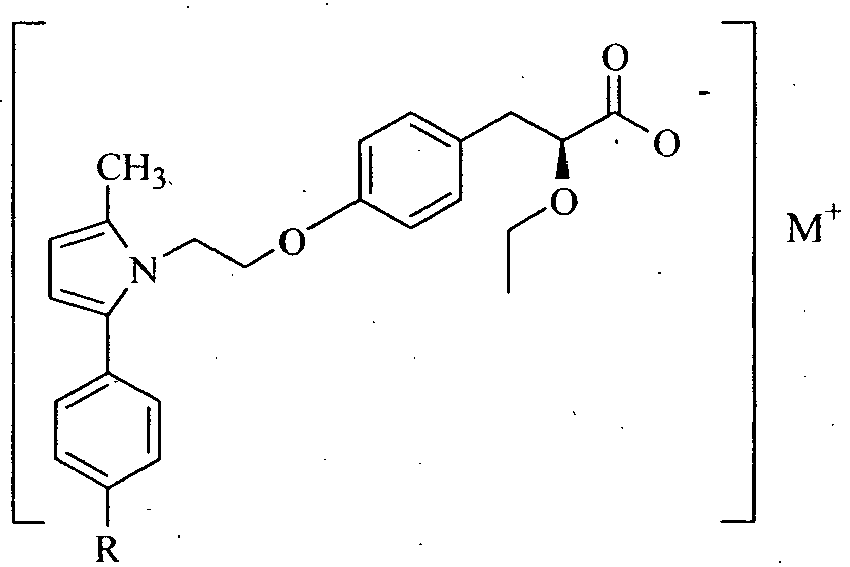

- In a preferred embodiment, 'R' represents thioalkyl, alkoxy or hydroxyalkyl group; In a still preferred embodiment, 'R' represents -SCH3 or -OCH3 group.
- In an embodiment is provided suitable pharmaceutical composition for the treatment of lipodystrophy or HIV associated lipodystrophy comprising the compound of formula (I). The pharmaceutical composition of the present invention comprises compound of formula (I) along with suitable excipients as defined hereinafter for the treatment of lipodystrophy or HIV associated lipodystrophy.
- In another embodiment, the present invention provides a method of treating a subject suffering from lipodystrophy or HIV associated lipodystrophy which comprises treatment of a patient in need of such therapy, with compound of formula (1) or suitable pharmaceutical compositions containing them.
- In a further embodiment the present invention provides use of the compound of formula (I) or their suitable pharmaceutical compositions for the treatment of lipodystrophy or HIV associated lipodystrophy.
- In an embodiment the present invention provides certain new salts of compound of formula (Ia)

- In a preferred embodiment, 'R' represents thioalkyl and alkoxy or hydroxyalkyl group; In a still preferred embodiment, 'R' represents -SCH3 or -OCH3 group.
In another preferred embodiment, M+ represents Mg+2. - The effective amount of the said compound of formula (I) is selected from 1 mg to 500 mg preferably 1 mg to 250 mg and more preferably 4 mg to 50 mg. The compound of formula (I) or its suitable salts is administrated orally, intravenously, parentally in the subject who is in need of treatment.
- In an embodiment the compound of formula (I) is useful for the treatment or prevention or alleviation of the symptoms of lipodystrophy. In a preferred embodiment the compound of formula (I) is useful in the treatment or prevention or alleviation of the symptoms of HIV associated lipodystrophy. In such embodiment the Lipodystrophy is a disorder of fat metabolism which causes lipohypertrophy lipoatrophy and metabolic abnormalities.
- In an embodiment the compound of formula (1) cure or prevent or alleviate at least one symptoms of lipodystrophy including, but not limited to, acting as an agent for lowering &/or control blood glucose levels, an agent used to control lipid levels, e.g., as an agent used to lower control cholesterol, an antioxidant, an appetite suppressing agent, an anti-obesity agent, a probiotic or an anti-inflammatory agent. In another embodiment the the compound of formula (1) cure or prevent or alleviate at least one symptoms of lipodystrophy including, but not limited to triglyceride level, VLDL level and Apo B level in serum. In another embodiment the compound of formula (1) cure or prevent of lipodystrophy by improving at least one of the condition selected from HDL level, Apo A1 level, HOMA of beta cell function derived from c-peptide.
- In an embodiment the present invention also provides a suitable pharmaceutical composition of compounds of formula (I) or their derivative. The pharmaceutical composition of the present invention essentially comprises of:
- the pharmaceutically active substance;
- a suitable buffering agent;
- a suitable stabilizer;
- optionally with one or more pharmaceutically acceptable excipients.
- The suitable stabilizers used in pharmaceutical composition are selected from Polacrilin potassium, Potassium chloride, Sodium stearyl fumarate and preferably selected from Sodium stearyl fumarate. The suitable buffering agent are selected from sodium acetate, ammonia solution, ammonium carbonate, sodium borate, adipic Acid, glycine, monosodium glutamate and preferably selected from ammonia solution.
- The pharmaceutically acceptable excipients are selected at least one from carriers, binders, antioxidant agents, disintegrating agents, wetting agents, lubricating agents, chelating agents, surface active agents, and the like.
- Diluents include, but are not limited to lactose monohydrate, lactose, polymethacrylates selected from Eudragit, potassium chloride, sulfobutylether b-cyclodextrin, sodium chloride, spray dried lactose, and preferably sulfobutyl ether b-cyclodextrin. Carriers include, but are not limited to lactose, white sugar, sodium chloride, glucose, urea, starch, calcium carbonate and kaolin, crystalline cellulose, and silicic acid. Binders include, but are not limited to carbomers selected from carbopol, gellan, gum Arabic, hydrogenated vegetable oil, polymethacrylates selected from Eudragit, xanthan, lactose and Zein. Antioxidant agents include, but are not limited to, Hypophosphorous acid, Sodium formaldehyde, sodium formaldehylde sulfoxylate, sulfur dioxide, tartaric acid, thymol and methionine. Disintegrating agents include, but are not limited to, bicarbonate salt, chitin, gellan gum, polacrillin potassium and Docusate Sodium. Wetting agents include, but are not limited to, Glycerin, lactose, Docusate Sodium and Glycine, Lubricating agents used include, but are not limited to, Glycerin behenate, hydrogenated vegetable oil, sodium stearyl fumarate and Myristic Acid. Chelating agents include, but are not limited to, Maltol and Pentetic Acid. Surface active agents include but are not limited to, Nonionic surfactant selected from alkyl polyglucosides, cocamide DEA, cocamide MBA, cocamide TEA, decyl maltoside and octyl glucoside; Anionic surfactant selected from arachidic acid and arachidonic acid; Cationic surfactant selected from cetyl trimethylammonium bromide and cetylpyridinium chloride.
- In an embodiment the formulation is useful for the treatment or prevention or alleviation of the symptoms of lipodystrophy. In a preferred embodiment the said formulation is useful in the treatment or prevention or alleviation of the symptoms of HIV associated lipodystrophy.
Lipodystrophy is a disorder of fat metabolism which causes lipohypertrophy, lipoatrophy and metabolic abnormalities. Moreover, lipohypertrophy includes the enlargement of dorsocervical fat pad (commonly called "buffalo hump"), expansion of the circumference of the neck by 5-10 cm, hypertrophy occurs in breast, Central truncal adiposity results from abdominal visceral fat accumulation, symmetric and asymmetric lipomatoses. A rare pattern of lipoaccumulation involving bandlike lipomatosis tissue symmetrically from the breasts, laterally to the axillae, suprapubic fat pads (pubic lipomas) and the development of multiple angiolipomas. - Lipoatrophy includes a temporal wasting and loss of subcutaneous fat from the cheeks (buccal fat pad) produces an emaciated appearance with prominent nasolabial creases, subcutaneous tissue is depleted from the arms, shoulders, thighs, and buttocks (peripheral wasting), with prominence of the superficial veins in these sites.
- Metabolic abnormalities include augmentation in cholesterol and triglyceride levels and reduced high-density lipoprotein (HDL) cholesterol levels. Insulin resistance, type 2 diabetes mellitus, and lactic academia.
- The compounds of the present invention due to their beneficial effect on lipodystrophy, will have beneficial effect on Body fat redistribution ( Lioatrophy or Hypertrophy or abnormal distribution), Dyslipidemia, Glucose homeostatis, Pro-inflammatory conditions, impact on morbidity and mortality, impact on quality of life, impact on patient's reported outcomes like self perception etc
- Moreover, the precise mechanisms underlying this syndrome are not well understood, several hypotheses based on in vitro and human studies may explain the pathogenesis of the changes. Some experts presently believe that HIV type 1 (HIV-1) protease inhibitors (PIs) and nucleoside reverse transcriptase inhibitors (NRTIs), especially stavudine and zidovudine, are implicated as follows:
- (i) decreased production of retinoic acid and triglyceride uptake: PIs have a high affinity for the catalytic site of HIV-1 protease, which shares a 60% sequence homology with 2 proteins involved in lipid metabolism, cytoplasmic retinoic acid-binding protein type 1 (CRABP-1) and low-density lipoprotein receptor-related protein (LDLR-RP). Inhibition of CRABP-1 impairs the production of retinoic acid, leading to decreased fat storage and adipocyte apoptosis with the subsequent release of lipids into the circulation. Inhibition of LDLR-RP results in hyperlipidemia secondary to the failure of hepatic and endothelial removal of chylomicrons and triglycerides from the circulation.
- (ii) inhibition of mitochondrial DNA (mtDNA) polymerase gamma: NRTIs inhibit mtDNA polymerase gamma, leading to mtDNA depletion, respiratory chain dysfunction, and reduced energy production, which, in turn, causes insulin resistance and secondary dyslipidemia. Interestingly, mtDNA is depleted only at normal oxygen levels-hypoxic adipocytes do not take up triglycerides and are resistant to mtDNA-induced damage, except after treatment with NRTIs.
- (iii) inhibition of lipid metabolism: Some PIs, particularly ritonavir, inhibit cytochrome P450 3A, a key enzyme in lipid metabolism.
- (iv) prevention of the development of adipocytes: Saquinavir, ritonavir, and nelfinavir (all PIs) directly inhibit the development of adipocytes from stem cells and increase the metabolic destruction of fat in existing adipocytes.
- In an embodiment the compound of formula (I) or pharmaceutical composition containing the compound of formula (1) cure or prevent or alleviate at least one symptoms of lipodystrophy including, but not limited to, acting as an agent for lowering &/or an agent used to control blood glucose levels, an agent used to control lipid levels, e.g., as an agent used to lower control cholesterol, an antioxidant, an appetite suppressing agent, an anti-obesity agent, an antibiotic/ probiotic or an anti-inflammatory agent.. In another embodiment the pharmaceutical composition cure or prevent or alleviate at least one symptoms of lipodystrophy including, but not limited to triglyceride level, VLDL level and Apo B level in serum. In another embodiment the pharmaceutical composition cure or prevent of lipodystrophy by improving at least one of the condition selected from HDL level, Apo A1 level, HOMA of beta cell function derived from c-peptide.
- In another embodiment the compounds according to Formula (I) can be used alone or in combination e.g., as an adjunct therapy, with at least one other therapeutic agent. Compound according to formula (I) can be co-administered with a therapeutic agent used to reduce one or more of the symptoms of lipodystrophy including, but not limited to, an agent used to control blood glucose levels, an agent used to control lipid levels, e.g., an agent used to lower control cholesterol, an antioxidant, an appetite suppressing agent, an anti-obesity agent an antibiotic/probiotic or an anti-inflammatory agent. Such combination treatment may be adjunct to anti-retroviral therapy. In a preferred embodiment the compound of formula (I) administrated alone or in combination for the treatment of lipohypertrophy, lipoatrophy and Metabolic abnormalities in HIV patient.
- The compound of the present invention when M+ represents K, Mg can be prepared by the processes disclosed herein below along with suitable modifications known to a skilled person.
- In a dry, 5 L round bottom flask 2.1 L toluene was taken under nitrogen. To this 366.1 g ethyl (S)- α-2-ethoxy-3-(4-hydroxyphenyl)propionate was added at room temperature.
- The reaction mixture was stirred under heating, using Dean-stark apparatus, to remove water azeotropically. The reaction mixture was cooled to 50 °C. To this was added 319 g anhydrous potassium carbonate and stirred at 90-92 °C for 1 hr. Cooled to 65 °C and added 500 g 2-(2-methyl-5-(4-(methylthio)phenyl)-1H-pyrrol-1-yl)ethyl methanesulfonate and 22 g tetra butyl ammonium bromide. Reaction mixture was heated to 87-92 °C and stirred for 46 hrs. Cooled to 70-75 °C, added 1.5 L toluene, charcoalised using 75 g charcoal and cooled to room temperature. Filtrate washed with alkaline solution, washed with water, dried over sodium sulfate and concentrated under vacuum to obtain (S)-α-Ethoxy-4-[2-[-methyl-5-[4-(methylthio)phenyl]-1H-pyrrol-1-yl]ethoxy]benzene-propanoic acid ethyl ester.
Yield: 650 g, HPLC purity: 84.10 %; % Yield 76.0 %. - In a dry, 250 mL round bottom flask 80 mL methanol was taken. To this 20 g (S)-α-ethoxy-4-[2-[-methyl-5-[4-(methylthio)phenyl]-1H-pyrrol-1-yl]ethoxy]benzenepropanoic acid ethyl ester was added at room temperature, under nitrogen. To this 1.89 g sodium hydroxide dissolved in 20 mL water was added and stirred at room temperature for 3 hours to complete hydrolysis. Solvent was removed under reduced pressure. 150 mL water was added to concentrate the material. Impurity was removed by solvent washing. To aqueous layer was added 5 g magnesium acetate tetra hydrate (dissolved in 20 mL water) and stirred with for 15 min. Sticky material was extracted with dichloromethane and subsequently add n-heptane to precipitate (S)-α-ethoxy-4-[2-[-methyl-5-[4-(methylthio)phenyl]-1Hpyrrol-1-yl]ethoxy]benzenepropanoic acid magnesium salt. Solid was filtered, and dried.
Yield: 10.3 g; HPLC Purity: 98.32 %; Chiral purity: 97.64 %. - Following the process similar to those described in Examples 1 & 2 the following batches of )-α-Ethoxy-4-[2-[-methyl-5-[4-(methylthio)phenyl]-1H-pyrrol-1-yl]ethoxy] benzenepropanoic acid magnesium salt were prepared.
No. Batch no. Input Output % Yield HPLC purity Chiral purity 1 Example 3 10 g 5.02 g 61.21 % 98.22 % 98.58 % 2 Example 4 10 g 4.97 g 60.68 % 97.91 % - 3 Example 5 15 g 7.34 g 61.94 % 98.20 % - 4 Example 6 15 g 8.38 g 67.50 % 99.05 % Similar reaction carried out using Magnesium chloride 5 Example 7 10g 6.5 g 79.25 % 98.53 % 99.32 % Similar reaction carried out using Magnesium sulfate 6 Example 8 10g 6.8 g 82.91 % 98.5 % - The present invention further discloses use of said compound of formula (I) or their suitable pharmaceutical compositions for the treatment of lipohypertrophy, lipoatrophy and metabolic abnormalities in HIV patient.
- In a dry, 250 mL round bottom flask 72 mL ethyl acetate was taken. To this 10 g (S)-(-)α-1-phenylethylamine salt of (S)-α-ethoxy-4-[2-[-methyl-5-[4-(methylthio) phenyl]-1H-pyrrol-1-yl]ethoxy]benzene -propanoic acid was added at room temperature and subsequently 50 mL water and 4.8 mL dilute hydrochloric acid (water 1: 1:35% HCl) was added and stirred at room temperature till solid was dissolved. Layer was separated and organic layer was washed with water, dried over sodium sulfate and solvent removed. 9.2 g oily mass obtained. To this was added 50 mL methanol and stirred under nitrogen. To this was added 1.81 g potassium t-butoxide and was stirred at room temperature for 15 min. Solvent removed and added n-Hexane. Again n-hexane was removed and added methanol. Solvent removed under vacuum. Hygroscopic material obtained. Dried it under vacuum to get (S)-α-ethoxy-4-[2-[-methyl-5-[4-(methylthio)phenyl]-1H-pyrrol-1-yl]ethoxy]benzenepropanoic acid potassium salt.
Yield- 7.6 g, (92.77 %), HPLC Purity 98.60 %, Chiral purity 99.56 % - Objectives: The objective of this study was to evaluate the safety and efficacy of 4 mg of compound of formula (I) in hypertriglyceridemia in HIV associated lipodystrophy.
- Methodology: This was a prospective, multi-centric, open-label, single arm study to evaluate the safety and efficacy of 4 mg of compound of formula (I) in hypertriglyceridemia in HIV associated lipodystrophy.
After obtaining informed written consent, subjects with hypertriglyceridemia in HIV associated lipodystrophy, on treatment with HAART for at least 18 months and satisfying the inclusion and exclusion criteria were enrolled in the study. The subjects received 4 mg of compound of formula (I) tablet orally, once daily for a period of 12 weeks. During this 12-week program, safety parameters were assessed at weeks 2, 6, and 12 and the efficacy was evaluated at week 6 and 12.
Number of patients: Planned: 50, Analyzed: 50
Test product: Compound of formula (I)
Dose 4 mg
Duration of treatment: 12 weeks
Mode of administration: Oral
Batch number: EMK328
Criteria for evaluation: Efficacy: - The primary efficacy endpoint was to assess the percent change in TG levels from baseline to Week 6 and Week 12. The secondary efficacy endpoint was the assessment of LDL, VLDL, HDL, Non HDL cholesterol, Total cholesterol, Apo A1, Apo B, and C-peptide and fasting insulin for HOMA beta and HOMA IR.
- Clinical examination and recording of adverse events (AEs) was done on all visits. Electrocardiogram was recorded at screening visit and at Week 12. Urine pregnancy test was conducted at screening visit
- Haematological examination included haemoglobin, haematocrit, red blood cell (RBC) count, white blood cell (WBC) count with differential (neutrophils, lymphocytes, monocytes, eosinophils and basophils) and platelet count.
- Biochemistry tests included AST, ALT, ALP, total bilirubin, serum proteins, total albumin and globulin, γ- GTT, BUN, Serum creatinine, serum uric acid, CPK, and urine R/Ms (including microalbuminuria and ketonuria).
All laboratory parameters were evaluated at enrolment visit (Week 0) and at Weeks 2, 6, and 12. - For the efficacy endpoints, treatment effect was evaluated using an analysis of variance (ANOVA) model with factors for baseline and treatment. Treatment effects were estimated using the least-square means (LSM) and 95% confidence intervals (CIs) from the ANOVA model. Statistical significance was defined as a two-sided p-value <0.05. All other secondary endpoints were analyzed using appropriate statistical methods.
- For safety analysis the frequency tabulations of abnormal physical examination and abnormal clinical laboratory parameters were presented for each visit. Summary statistics for clinical laboratory parameters and vital signs were presented for each visit. A list of concomitant medications taken during the study period was summarised.
- Adverse events were coded using the Medical Dictionary for Regulatory Activities (MedDRA) (Version 14). Adverse events and SAEs were summarized overall, by system organ class (SOC) and by MedDRA preferred term for treatment emergent adverse events (TEAEs). All AEs, including those arising before or after treatment was included in the listings. Separate listings were provided for SAEs and AEs leading to discontinuation from the study.
- This was a safety and efficacy study to evaluate 4 mg of compound of formula (I) in hypertriglyceridemia in HIV associated lipodystrophy. This was exploratory proof of concept study designed to assess the proof of safety and efficacy in intended population. The results of compound of formula (1) from phase II studies in Dyslipidemia subjects demonstrated that compound of formula (I) 4 mg is well tolerated and effective at once daily dosing. Phase I study demonstrated food significantly affects absorption of compound of formula (I), so drug was recommended to be consumed preferably in fasting condition. Based upon these observations 4 mg once daily in fasted condition was selected for present study
- Subjects who satisfied all of the following criteria were eligible for enrolment in the study:
- 1.
- Males and females aged 18- 65 years.
- 2.
- Confirmed diagnosis of HIV1 and on HAART for at least 18 months.
- 3.
- On stable ART regimen for at least 8 weeks prior to inclusion in the study and ART regimen not expected to change in next 3 months.
- 4.
- Subjects clinically diagnosed as HIV lipodystrophy (at least 1 moderate or severe lipodystrophy feature identified by doctor and patient, except isolated abdominal obesity)
- 5.
- Triglycerides >200 to 500 mg %.
- 6.
- CD4 count of >50/mm3
- 7.
- Subject who had given informed consent for participation in this trial.
- The study had a single arm. Subjects received 4 mg of compound of formula (I) orally once daily in the morning before breakfast, for a period of 12 weeks.
- Compound of formula (I) is divalent magnesium salt of carboxylic acid in the form of white, amorphous powder, which is freely soluble in dimethyl sulfoxide, dichloromethane, slightly soluble in methanol and insoluble in water. The drug was supplied as uncoated tablets of 4 mg of the active ingredient.
- Supply from batch no EMK328 was used during the study. The study drug was manufactured and packaged in cGMP facility.
- The primary efficacy endpoint was to determine the percent change in TG levels from baseline to Week 6 and Week 12.
- The secondary efficacy endpoint was to determine the percent change in LDL, VLDL, HDL, total cholesterol, non-HDL Cholesterol (measured value), Apo A1, and Apo B, C-peptide and fasting insulin for HOMA beta and HOMA IR levels from baseline to Week 6 and Week 12.
- The demographic and baseline characteristics were summarized for compound of formula (I) 4 mg treatment arm. For continuous measurements such as age, the mean, median, standard deviation (SD) and range were tabulated. For categorical measurements such as gender, the frequencies were computed.
- The primary efficacy variable was the reduction in TG at Week 6 and Week 12 of the treatment period compared with baseline. The change from baseline was determined as the difference between the means for the treatment period (Weeks 6 / Weeks 12) and the baseline.
- For the efficacy endpoints, treatment effect was evaluated using an analysis of variance (ANOVA) model with factors for baseline and treatment. Treatment effects were estimated using the least-square means (LSM) and 95% confidence intervals (CIs) from the ANOVA model. Statistical significance was defined as a two-sided p-value <0.05. All other secondary endpoints were analyzed using appropriate statistical methods.
- Intent-to-treat (ITT) and/or Per Protocol (PP) analysis were carried out for the study. The PP analysis was considered definitive while the ITT analysis was considered supportive during the trial analysis.
- One subject identified as EHT004 in the study, a 35-year-old male, was reported with abnormally low levels of HDL (3.95 mg/L) and LDL (6.25 mg/L) at Visit 1. Though this subject completed the study and was assessable for efficacy, it was decided to exclude this subject from the efficacy analyses. Therefore a total of 49 subjects were analyzed for efficacy.
- The percent change from baseline in serum TG levels at Week 6 and Week 12 following compound of formula (I) 4 mg was statistically significant (-40.98±4.89 and - 45.11±3.60, respectively [p-value: <0.0001, each]) (Table 1).
Table 1 :-Analysis of change in Triglyceride (mg/dL) from baseline by visit Laboratory Test (Unit) Visit COMPOUND OF FORMULA (I) 4 mg (N=49) TG (mg/dL) Visit 1 n 49 Mean ± SD 301.68 ± 86.99 Median 275.45 Minimum 200.10 Maximum 481.42 Visit 3(Week 6) n 49 Mean ± SD 172.81 ± 106.30 Median 147.68 Minimum 42.61 Maximum 631.08 Change from Visit 1 (LS Mean ± SE) -128.87±14.96 p-values <0.0001 % Change from Visit 1 (LS Mean ± SE) -40.98±4.89 p-values <0.0001 Visit 4(Week 12) n 49 Mean ± SD 166.97 ± 89.17 Median 145.91 Minimum 46.88 Maximum 387.69 Change from Visit 1 (LS Mean ± SE) -134.71±10.78 p-values <0.0001 % Change from Visit 1 (LS Mean ± SE) -45.11±3.60 p-values <0.0001 Key to abbreviations: LSM = least square means; N = number of subjects in the treatment group; n = number of subjects having non-missing baseline and post-baseline values; SD = standard deviation; SE = standard error; TG = triglycerides. Note: p-values <0.05 indicates significant and from ANOVA model - There was an increase in the HDL cholesterol levels following administration of compound of formula (I) 4 mg. The percent change from baseline in HDL cholesterol following compound of formula (1) 4 mg at Week 6 and Week 12 was statistically significant (29.92±5.73 and 34.56±6.13, respectively [p-value: <0.0001 each]) (Table 2).
Table 2: Analysis of change in HDL Cholesterol (mg/dL) from baseline by visit Laboratory Test (Unit) Visit COMPOUND OF FORMULA(I) 4 mg (N=49) HDL Cholesterol (mg/dL) Visit 1 n 49 Mean ± SD 35.27 ± 7.85 Median 34.52 Minimum 22.23 Maximum 49.90 Visit 3(Week 6) n 49 Mean ± SD 44.44 ± 14.04 Median 43.36 Minimum 20.13 Maximum 73.50 Change from Visit 1 (LS Mean ± SE) 9.17±1.99 p-values <0.0001 % Change from Visit 1 (LS Mean ± SE) 29.92±5.73 p-values <0.0001 Visit 4(Week 12) n 49 Mean ± SD 46.14 ± 14.84 Median 47.70 Minimum 17.61 Maximum 82.89 Change from Visit 1 (LS Mean ± SE) 10.87±2.08 p-values <0.0001 % Change from Visit 1 (LS Mean ± SE) 34.56±6.13 p-values <0.0001 Key to abbreviations: LSM = least square means; N = number of subjects in the treatment group; n = number of subjects having non-missing baseline and post-baseline values; SD = standard deviation; SE = standard error; HDL = high density lipoprotein. Note: p-values <0.05 indicates significant and from ANOVA model - There was an increase in insulin resistance after treatment with compound of formula (I). The percent change in HOMA IR from baseline following administration of compound of formula (I) 4 mg at Week 6 and Week 12 was statistically significant (27.87±4.22 and 58.29±5.74 respectively[p-value: <0.0001 each]) (Table 3).
Table 3: Analyses of change in HOMA of insulin resistance for C-Peptide from baseline by visit Laboratory Test (Unit) Visit COMPOUND OF FORMULA(I) 4 mg (N=49) Homa of Insulin Resistance for C-Peptide Visit 1 n 49 Mean ± SD 1.59 ± 0.82 Median 1.40 Minimum 0.50 Maximum 3.80 Visit 3(Week 6) n 49 Mean ± SD 1.86 ± 0.77 Median 1.70 Minimum 0.90 Maximum 3.60 Change from Visit 1 (LS Mean ± SE) 0.27±0.05 p-values <0.0001 % Change from Visit 1 (LS Mean ± SE) 27.87±4.22 p-values <0.0001 Visit 4(Week 12) n 49 Mean ± SD 2.15±0.62 Median 2.10 Minimum 1.10 Maximum 3.60 Change from Visit 1 (LS Mean ± SE) 0.56±0.05 p-values <0.0001 % Change from Visit 1 (LS Mean ± SE) 58.29±5.74 p-values <0.0001 Key to abbreviations: HOMA: homeostasis model assessment, IR: insulin resistance, LSM = least square means; N = number of subjects in the treatment group; n = number of subjects having non-missing baseline and post-baseline values; SD = standard deviation; SE = standard error Note: p-values <0.05 indicates significant and from ANOVA model - There was an increase in insulin resistance after treatment with compound of formula (I). The percent change in Insulin from baseline following administration of compound of formula (I) 4 mg at Week 6 and Week 12 was statistically significant (23.71±3.55 and 47.10±4.21 respectively [p-value: <0.0001 each]) (Table 4).
Table 4: Analyses of change in Insulin (fasting) from baseline by visit Laboratory Test (Unit) Visit COMPOUND OF FORMULA (I) 4 mg (N=49) Insulin (fasting) µu/mL Visit 1 n 49 Mean ± SD 9.21 ± 6.26 Median 7.40 Minimum 2.65 Maximum 28.06 Visit 3(Week 6) n 49 Mean ± SD 10.42 ± 5.74 Median 8.35 Minimum 2.14 Maximum 26.82 Change from Visit 1 (LS Mean ± SE) 1.21±0.22 p-values <0.0001 % Change from Visit 1 (LS Mean ± SE) 23.71±3.55 p-values <0.0001 Visit 4(Week 12) n 49 Mean±SD 11.40 ± 4.45 Median 10.18 Minimum 5.93 Maximum 24.29 Change from Visit 1 (LS Mean ± SE) 2.20±0.21 p-values <0.0001 % Change from Visit 1 (LS Mean ± SE) 47.10±4.21 p-values <0.0001 Key to abbreviations: LSM = least square means; N = number of subjects in the treatment group; n = number of subjects having non-missing baseline and post-baseline values; SD = standard deviation; SE = standard error Note: p-values <0.05 indicates significant and from ANOVA model - There was an increase in HOMA of Beta-cell function derived from Insulin after treatment with compound of formula (1). The percent change in the HOMA of 5 Beta-cell function derived from Insulin from baseline at Week 6 and Week 12 was statistically significant (52.50±14.94 and 45.64±6.22, respectively [p-value: 0.0010 and <0.0001, respectively])(Table 5).
Table 5: Analyses of change in HOMA of Beta Cell Function for Insulin from baseline by visit Laboratory Test (Unit) Visit COMPOUND OF FORMULA(I) 4 mg (N=49) HOMA of Beta Cell Function for Insulin Visit 1 n 48 Mean ± SD 107.82 ± 52.85 Median 97.25 Minimum 10.20 Maximum 234.50 Visit 3(Week 6) n 49 Mean ± SD 136.41 ± 76.00 Median 116.50 Minimum 34.90 Maximum 348.00 Change from Visit 1 (LS Mean ± SE) 29.55±8.76 p-values 0.0015 % Change % Change from Visit 1 (LS Mean ± SE) 52.50±14.94 p-values 0.0010 Visit 4(Week 12) n 49 Mean ± SD 137.56 ± 46.11 Median 125.60 Minimum 9.80 Maximum 273.30 Change from Visit 1 (LS Mean ± SE) 30.78±4.25 p-values <0.0001 % Change from Visit 1 (LS Mean ± SE) 45.64±6.22 p-values <0.0001 Key to abbreviations: HOMA: homeostasis model assessment, LSM = least square means; N = number of subjects in the treatment group; n = number of subjects having non-missing baseline and post-baseline values; SD = standard deviation; SE = standard error Note: p-values <0.05 indicates significant and from ANOVA model -
- There was a statistically significant reduction from baseline in serum TG levels at Week 6 and Week 12 following compound of formula (I) 4 mg (percent change of -40.98±4.89 and -45.11±3.60, respectively [p value: <0.0001, each])
-
- There was no statistically significant change in the non-HDL cholesterol levels from baseline following administration of compound of formula (I) 4 mg at Week 6 and Week 12 (p-values: 0.3963 and 0.4646, respectively)
- There was a statistically significant increase in the HDL cholesterol levels from baseline following administration of compound of formula (I) 4 mg at Week 6 and Week 12 (percent change: 29.92±5.73 and 34.56±6.13, respectively [p-value: <0.0001 each]).
- There was a statistically significant increase in the HOMA of Beta-cell function derived from C-peptide from baseline following administration of compound of formula (I) 4 mg at Week 6 and Week 12 (68.25±25.58 and 71.67±16.20, respectively [p-value: 0.0104 and <0.0001, respectively]).
- There was a statistically significant increase in the HOMA of insulin resistance derived from insulin from baseline after treatment with compound of formula (I) at Week 6 and Week 12 (percent change: 29.10±3.94 and 42.65±3.79, respectively [p-value: <0.0001 each]).
- Therefore, the compound of the present invention including pharmaceutical compositions containing the same was found to be useful for the treatment of lipohypertrophy, lipoatrophy and Metabolic abnormalities in HIV patients.
Claims (15)
- A compound of formula (I)

- The compound for use as claimed in claim 1, wherein 'R' represents thioalkyl, alkoxy or hydroxyalkyl group, preferably a -SCH3 or -OCH3 group.
- The compound as claimed in claim 1 wherein the lipodystophy is HIV associated lipodystrophy, preferably wherein the HIV associated lipodystrophy causes lipohypertrophy or lipoatrophy or metabolic abnormality.
- The compound for use as claimed in any one of the preceding claims wherein the compound is administrated in a daily dosage range selected from 1 mg to 500 mg given singly or in multiple divided dosage, preferably in the range of 4 mg to 250 mg given singly or in multiple divided dosage, especially in the range of 4 mg to 50 mg.
- The compound as claimed in preceding claims which is administrated in combination with another suitable therapeutic agent.
- The compound as claimed in any one of the preceding claims which reduces the concentration of triglyceride, Very low density lipoprotein, Apo B level and/or increases high density lipoprotein, Apo A1 level.
- A pharmaceutical composition for the treatment of lipodystrophy, lipohypertrophy, lipoatrophy or metabolic abnormalities associated with lipodystrophy comprisinga) The compound of formula (I) or its salt thereof as claimed in claim 1;b) a suitable stabilizer;c) a suitable buffering agent;d) optionally, with one or more pharmaceutically acceptable excipients.
- The pharmaceutical composition for use as claimed in claim 7 wherein the suitable stabilizer is selected from Polacrilin potassium, Potassium chloride and Sodium stearyl fumarate, preferably Sodium stearyl fumarate.
- The pharmaceutical composition for use as claimed in claim 7 wherein the suitable buffering agents are selected from Sodium acetate, Ammonia solution, Ammonium carbonate, Sodium borate, Adipic Acid, Glycine, monosodium glutamate, preferably Ammonia solution.
- The pharmaceutical composition as claimed in claim 7 for treating HIV associated lipodystrophy in a patient in need of such treatment.
- The pharmaceutical composition as claimed in claim 10 wherein the HIV associated lipodystrophy causes lipohypertrophy or lipoatrophy or metabolic abnormality.
- The pharmaceutical composition for use as claimed in claims 7 to 11 in combination with another suitable agent selected from an agent used to control blood glucose levels, an agent used to control lipid levels, an agent used to lower or control cholesterol, an antioxidant, an appetite suppressing agent, an anti-obesity agent a probiotic or an anti-inflammatory agent.
- The compound of formula (Ia)

- The compound as claimed in claim 13, wherein 'R' represents thioalkyl, alkoxy or hydroxyalkyl group, preferably an -SCH3 or -OCH3 group.
- Pharmaceutical composition comprising a compound as claimed in claim 13 or 14.
Priority Applications (7)
| Application Number | Priority Date | Filing Date | Title |
|---|---|---|---|
| MEP-2016-73A ME02392B (en) | 2011-01-31 | 2012-01-30 | TREATMENT OF LIPODYSTROPHY |
| EP15197741.0A EP3009136A1 (en) | 2011-01-31 | 2012-01-30 | Treatment for lipodystrophy |
| RS20160295A RS54735B1 (en) | 2011-01-31 | 2012-01-30 | LIPODYSTROPHY TREATMENT |
| HRP20160403TT HRP20160403T1 (en) | 2011-01-31 | 2012-01-30 | Treatment for lipodystrophy |
| SI201230540A SI2670486T1 (en) | 2011-01-31 | 2012-01-30 | Treatment for lipodystrophy |
| PL12710562T PL2670486T3 (en) | 2011-01-31 | 2012-01-30 | Treatment for lipodystrophy |
| CY20161100384T CY1117564T1 (en) | 2011-01-31 | 2016-05-09 | Lipodystrophy Therapy |
Applications Claiming Priority (2)
| Application Number | Priority Date | Filing Date | Title |
|---|---|---|---|
| IN257MU2011 | 2011-01-31 | ||
| PCT/IN2012/000069 WO2012104869A1 (en) | 2011-01-31 | 2012-01-30 | Treatment for lipodystrophy |
Related Child Applications (2)
| Application Number | Title | Priority Date | Filing Date |
|---|---|---|---|
| EP15197741.0A Division-Into EP3009136A1 (en) | 2011-01-31 | 2012-01-30 | Treatment for lipodystrophy |
| EP15197741.0A Division EP3009136A1 (en) | 2011-01-31 | 2012-01-30 | Treatment for lipodystrophy |
Publications (2)
| Publication Number | Publication Date |
|---|---|
| EP2670486A1 EP2670486A1 (en) | 2013-12-11 |
| EP2670486B1 true EP2670486B1 (en) | 2016-04-06 |
Family
ID=54192841
Family Applications (2)
| Application Number | Title | Priority Date | Filing Date |
|---|---|---|---|
| EP12710562.5A Active EP2670486B1 (en) | 2011-01-31 | 2012-01-30 | Treatment for lipodystrophy |
| EP15197741.0A Withdrawn EP3009136A1 (en) | 2011-01-31 | 2012-01-30 | Treatment for lipodystrophy |
Family Applications After (1)
| Application Number | Title | Priority Date | Filing Date |
|---|---|---|---|
| EP15197741.0A Withdrawn EP3009136A1 (en) | 2011-01-31 | 2012-01-30 | Treatment for lipodystrophy |
Country Status (29)
| Country | Link |
|---|---|
| US (3) | US10017470B2 (en) |
| EP (2) | EP2670486B1 (en) |
| JP (2) | JP2014504610A (en) |
| KR (3) | KR101733414B1 (en) |
| CN (2) | CN103354757A (en) |
| AP (1) | AP3920A (en) |
| AU (2) | AU2012212992B2 (en) |
| BR (1) | BR112013019352A2 (en) |
| CA (1) | CA2825456C (en) |
| CL (1) | CL2013002166A1 (en) |
| CO (1) | CO6781497A2 (en) |
| CY (1) | CY1117564T1 (en) |
| DK (1) | DK2670486T3 (en) |
| EA (1) | EA025421B1 (en) |
| ES (1) | ES2569248T3 (en) |
| HR (1) | HRP20160403T1 (en) |
| HU (1) | HUE027512T2 (en) |
| IL (2) | IL227266B (en) |
| ME (1) | ME02392B (en) |
| MX (1) | MX350611B (en) |
| MY (1) | MY191100A (en) |
| PH (1) | PH12013501533A1 (en) |
| PL (1) | PL2670486T3 (en) |
| RS (1) | RS54735B1 (en) |
| SG (1) | SG191772A1 (en) |
| SI (1) | SI2670486T1 (en) |
| SM (1) | SMT201600129B (en) |
| UA (1) | UA110813C2 (en) |
| WO (1) | WO2012104869A1 (en) |
Families Citing this family (23)
| Publication number | Priority date | Publication date | Assignee | Title |
|---|---|---|---|---|
| EP2670486B1 (en) | 2011-01-31 | 2016-04-06 | Cadila Healthcare Limited | Treatment for lipodystrophy |
| US9897565B1 (en) | 2012-09-11 | 2018-02-20 | Aseko, Inc. | System and method for optimizing insulin dosages for diabetic subjects |
| US9171343B1 (en) | 2012-09-11 | 2015-10-27 | Aseko, Inc. | Means and method for improved glycemic control for diabetic patients |
| MY180160A (en) * | 2013-04-22 | 2020-11-23 | Cadila Healthcare Ltd | A novel composition for nonalcoholic fatty liver disease (nafld) |
| EP3004053B1 (en) | 2013-05-30 | 2021-03-24 | Cadila Healthcare Limited | A process for preparation of pyrroles having hypolipidemic hypocholesteremic activities |
| TW201513857A (en) * | 2013-07-05 | 2015-04-16 | Cadila Healthcare Ltd | Synergistic compositions |
| IN2013MU02470A (en) | 2013-07-25 | 2015-06-26 | Cadila Healthcare Ltd | |
| US9951009B2 (en) * | 2013-08-29 | 2018-04-24 | Cadila Healthcare Limited | Polymorphic form of pyrrole derivative and intermediate thereof |
| IN2013MU02905A (en) | 2013-09-06 | 2015-07-03 | Cadila Healthcare Ltd | |
| US9486580B2 (en) | 2014-01-31 | 2016-11-08 | Aseko, Inc. | Insulin management |
| US9233204B2 (en) | 2014-01-31 | 2016-01-12 | Aseko, Inc. | Insulin management |
| JP6989262B2 (en) | 2014-10-27 | 2022-01-05 | アセコー インコーポレイテッド | Subcutaneous outpatient management |
| US11081226B2 (en) | 2014-10-27 | 2021-08-03 | Aseko, Inc. | Method and controller for administering recommended insulin dosages to a patient |
| RU2737719C2 (en) * | 2015-02-27 | 2020-12-02 | Ионис Фармасьютикалз, Инк. | Modulation of the expression of apolipoprotein c-iii (aposiii) in the patients with lipodystrophy |
| CA2993275C (en) | 2015-08-20 | 2022-06-21 | Aseko, Inc. | Diabetes management therapy advisor |
| WO2017064635A2 (en) | 2015-10-14 | 2017-04-20 | Cadila Healthcare Limited | Pyrrole compound, compositions and process for preparation thereof |
| WO2017089980A1 (en) | 2015-11-26 | 2017-06-01 | Cadila Healthcare Limited | Dual ppar modulators for the treatment of diabetic retinopathy and diabetic eye diseases |
| WO2017089979A1 (en) | 2015-11-26 | 2017-06-01 | Cadila Healthcare Limited | Dual ppar modulators for the treatment of diabetic nephropathy and related diseases |
| US20180243263A1 (en) | 2016-12-09 | 2018-08-30 | Cadila Healthcare Ltd. | Treatment for primary biliary cholangitis |
| US12201609B2 (en) | 2018-12-18 | 2025-01-21 | Zydus Lifesciences Limited | Saroglitazar for the treatment of hepatocellular carcinoma |
| US12201611B2 (en) | 2020-07-24 | 2025-01-21 | Zydus Lifesciences Limited | Composition comprising high purity pyrrole derivative and method for preparation thereof |
| WO2025115040A1 (en) * | 2023-12-01 | 2025-06-05 | Zydus Lifesciences Limited | Novel co-crystals of saroglitazar and saroglitazar mg salt |
| WO2025238663A1 (en) * | 2024-05-16 | 2025-11-20 | Zydus Lifesciences Limited | Saroglitazar for the treatment of alcoholic liver diseases |
Family Cites Families (41)
| Publication number | Priority date | Publication date | Assignee | Title |
|---|---|---|---|---|
| US4231938A (en) | 1979-06-15 | 1980-11-04 | Merck & Co., Inc. | Hypocholesteremic fermentation products and process of preparation |
| US4444784A (en) | 1980-08-05 | 1984-04-24 | Merck & Co., Inc. | Antihypercholesterolemic compounds |
| MX7065E (en) | 1980-06-06 | 1987-04-10 | Sankyo Co | A MICROBIOLOGICAL PROCEDURE FOR PREPARING DERIVATIVES OF ML-236B |
| US5354772A (en) | 1982-11-22 | 1994-10-11 | Sandoz Pharm. Corp. | Indole analogs of mevalonolactone and derivatives thereof |
| FI94339C (en) | 1989-07-21 | 1995-08-25 | Warner Lambert Co | Process for the preparation of pharmaceutically acceptable [R- (R *, R *)] - 2- (4-fluorophenyl) -, - dihydroxy-5- (1-methylethyl) -3-phenyl-4 - [(phenylamino) carbonyl] -1H- for the preparation of pyrrole-1-heptanoic acid and its pharmaceutically acceptable salts |
| US5089514A (en) | 1990-06-14 | 1992-02-18 | Pfizer Inc. | 3-coxazolyl [phenyl, chromanyl or benzofuranyl]-2-hydroxypropionic acid derivatives and analogs as hypoglycemic agents |
| NZ253742A (en) | 1992-07-03 | 1997-06-24 | Smithkline Beecham Plc | Heterocyclylaminoalkoxy substituted phenyl derivatives and pharmaceutical compositions |
| GB9225386D0 (en) | 1992-12-04 | 1993-01-27 | Smithkline Beecham Plc | Novel compounds |
| US5387613A (en) | 1993-07-23 | 1995-02-07 | Ribogene, Inc. | Treatment of tachyarrhythmias of supraventricular origin |
| GB9326171D0 (en) | 1993-12-22 | 1994-02-23 | Smithkline Beecham Plc | Novel compounds |
| BR9508468A (en) | 1994-07-29 | 1997-11-25 | Smithkline Beecham Plc | Compound process for the preparation of the same pharmaceutical composition processes for the treatment and / or prophylaxis of hyperglycemia in a human or non-human mammal and for the treatment of hyperlipidemia hypertension cardiovascular disease some eating disorders the treatment and / or prophylaxis of kidney disease prevention revers o stabilization or retardation of microalbuminuria progression in a human or non-human mammal use of the compound and intermediate compound |
| KR100380875B1 (en) | 1995-04-28 | 2003-10-10 | 다이이찌 세이야꾸 가부시기가이샤 | Pentacyclic compound |
| GB9600464D0 (en) | 1996-01-09 | 1996-03-13 | Smithkline Beecham Plc | Novel method |
| GB9606805D0 (en) | 1996-03-30 | 1996-06-05 | Glaxo Wellcome Inc | Medicaments |
| WO1998028534A1 (en) | 1996-12-24 | 1998-07-02 | Daewoo Motor Co., Ltd. | An apparatus of exhaust gas recirculation valve for an internal combustion engine |
| WO1999016758A1 (en) | 1997-10-27 | 1999-04-08 | Dr. Reddy's Research Foundation | Novel heterocyclic compounds and their use in medicine, process for their preparation and pharmaceutical compositions containing them |
| WO1999019313A1 (en) | 1997-10-27 | 1999-04-22 | Dr. Reddy's Research Foundation | Novel tricyclic compounds and their use in medicine; process for their preparation and pharmaceutical compositions containing them |
| WO1999008501A2 (en) | 1998-04-23 | 1999-02-25 | Dr. Reddy's Research Foundation | New heterocyclic compounds and their use in medicine, process for their preparation and pharmaceutical compositions containing them |
| JP2002507543A (en) | 1998-05-27 | 2002-03-12 | ドクター・レディーズ・リサーチ・ファウンデーション | Bicyclic compound, method for producing the same, and pharmaceutical composition containing them |
| EP1123269A1 (en) | 1998-10-21 | 2001-08-16 | Novo Nordisk A/S | New compounds, their preparation and use |
| AU6325799A (en) | 1998-10-21 | 2000-05-08 | Dr. Reddy's Research Foundation | New compounds, their preparation and use |
| AU6325599A (en) | 1998-10-21 | 2000-05-08 | Dr. Reddy's Research Foundation | New compounds, their preparation and use |
| CO5150173A1 (en) | 1998-12-10 | 2002-04-29 | Novartis Ag | COMPOUNDS N- (REPLACED GLYCLE) -2-DIPEPTIDYL-IV PEPTIDASE INHIBITING CYANOPIRROLIDINS (DPP-IV) WHICH ARE EFFECTIVE IN THE TREATMENT OF CONDITIONS MEDIATED BY DPP-IV INHIBITION |
| CZ304346B6 (en) | 2000-01-19 | 2014-03-19 | Cadila Healthcare Ltd. | Substituted pyrrole derivative exhibiting hypolipidemic and hypocholesteremic activity , process for its preparation and pharmaceutical composition containing thereof |
| US6395767B2 (en) | 2000-03-10 | 2002-05-28 | Bristol-Myers Squibb Company | Cyclopropyl-fused pyrrolidine-based inhibitors of dipeptidyl peptidase IV and method |
| AU2001286163A1 (en) | 2000-09-22 | 2002-04-02 | Dr. Reddy's Research Foundation | An improved process for the preparation of 3-aryl-2-hydroxy propanoic acid derivatives |
| UA74912C2 (en) | 2001-07-06 | 2006-02-15 | Merck & Co Inc | Beta-aminotetrahydroimidazo-(1,2-a)-pyrazines and tetratriazolo-(4,3-a)-pyrazines as inhibitors of dipeptylpeptidase for the treatment or prevention of diabetes |
| US6987123B2 (en) * | 2001-07-26 | 2006-01-17 | Cadila Healthcare Limited | Heterocyclic compounds, their preparation, pharmaceutical compositions containing them and their use in medicine |
| US7407955B2 (en) | 2002-08-21 | 2008-08-05 | Boehringer Ingelheim Pharma Gmbh & Co., Kg | 8-[3-amino-piperidin-1-yl]-xanthines, the preparation thereof and their use as pharmaceutical compositions |
| JP4261546B2 (en) | 2003-09-26 | 2009-04-30 | 三菱レイヨン株式会社 | Electrophoresis apparatus and electrophoresis method |
| EA013427B1 (en) | 2004-03-15 | 2010-04-30 | Такеда Фармасьютикал Компани Лимитед | DIPEPTIDYLPEPTIDASE INHIBITORS |
| US20090196923A1 (en) * | 2006-04-26 | 2009-08-06 | Jayanta Kumar Mandal | Controlled release formulation comprising anti-epileptic drugs |
| AU2010323066B2 (en) | 2009-11-26 | 2014-12-11 | Genfit | Use of 1,3-diphenylprop-2-en-1-one derivatives for treating liver disorders |
| BR112013008985A2 (en) | 2010-10-12 | 2016-07-05 | Cerecor Inc | antitussive compositions comprising memantine |
| EP2670486B1 (en) | 2011-01-31 | 2016-04-06 | Cadila Healthcare Limited | Treatment for lipodystrophy |
| MY180160A (en) | 2013-04-22 | 2020-11-23 | Cadila Healthcare Ltd | A novel composition for nonalcoholic fatty liver disease (nafld) |
| EP3004053B1 (en) | 2013-05-30 | 2021-03-24 | Cadila Healthcare Limited | A process for preparation of pyrroles having hypolipidemic hypocholesteremic activities |
| TW201513857A (en) | 2013-07-05 | 2015-04-16 | Cadila Healthcare Ltd | Synergistic compositions |
| IN2013MU02470A (en) | 2013-07-25 | 2015-06-26 | Cadila Healthcare Ltd | |
| US9951009B2 (en) | 2013-08-29 | 2018-04-24 | Cadila Healthcare Limited | Polymorphic form of pyrrole derivative and intermediate thereof |
| IN2013MU02905A (en) | 2013-09-06 | 2015-07-03 | Cadila Healthcare Ltd |
-
2012
- 2012-01-30 EP EP12710562.5A patent/EP2670486B1/en active Active
- 2012-01-30 CN CN2012800067602A patent/CN103354757A/en active Pending
- 2012-01-30 BR BR112013019352-2A patent/BR112013019352A2/en not_active Application Discontinuation
- 2012-01-30 UA UAA201309497A patent/UA110813C2/en unknown
- 2012-01-30 HU HUE12710562A patent/HUE027512T2/en unknown
- 2012-01-30 CA CA2825456A patent/CA2825456C/en active Active
- 2012-01-30 PL PL12710562T patent/PL2670486T3/en unknown
- 2012-01-30 EP EP15197741.0A patent/EP3009136A1/en not_active Withdrawn
- 2012-01-30 HR HRP20160403TT patent/HRP20160403T1/en unknown
- 2012-01-30 KR KR1020167007592A patent/KR101733414B1/en active Active
- 2012-01-30 AU AU2012212992A patent/AU2012212992B2/en active Active
- 2012-01-30 EA EA201391108A patent/EA025421B1/en unknown
- 2012-01-30 SI SI201230540A patent/SI2670486T1/en unknown
- 2012-01-30 US US13/978,791 patent/US10017470B2/en active Active
- 2012-01-30 RS RS20160295A patent/RS54735B1/en unknown
- 2012-01-30 MY MYPI2013701165A patent/MY191100A/en unknown
- 2012-01-30 JP JP2013551015A patent/JP2014504610A/en active Pending
- 2012-01-30 AP AP2013006988A patent/AP3920A/en active
- 2012-01-30 ES ES12710562.5T patent/ES2569248T3/en active Active
- 2012-01-30 KR KR1020157022081A patent/KR101633720B1/en active Active
- 2012-01-30 DK DK12710562.5T patent/DK2670486T3/en active
- 2012-01-30 PH PH1/2013/501533A patent/PH12013501533A1/en unknown
- 2012-01-30 ME MEP-2016-73A patent/ME02392B/en unknown
- 2012-01-30 MX MX2013008012A patent/MX350611B/en active IP Right Grant
- 2012-01-30 KR KR1020137021703A patent/KR20130128451A/en not_active Ceased
- 2012-01-30 CN CN201610875009.6A patent/CN107056671A/en active Pending
- 2012-01-30 WO PCT/IN2012/000069 patent/WO2012104869A1/en not_active Ceased
- 2012-01-30 SG SG2013050430A patent/SG191772A1/en unknown
-
2013
- 2013-06-30 IL IL22726613A patent/IL227266B/en active IP Right Grant
- 2013-07-26 CO CO13177319A patent/CO6781497A2/en not_active Application Discontinuation
- 2013-07-29 CL CL2013002166A patent/CL2013002166A1/en unknown
-
2015
- 2015-09-08 JP JP2015176597A patent/JP5956664B2/en active Active
- 2015-10-28 AU AU2015249076A patent/AU2015249076A1/en not_active Abandoned
-
2016
- 2016-05-04 SM SM201600129T patent/SMT201600129B/en unknown
- 2016-05-09 CY CY20161100384T patent/CY1117564T1/en unknown
- 2016-11-07 US US15/345,035 patent/US9783495B2/en active Active
-
2018
- 2018-05-30 US US15/992,957 patent/US20190100492A1/en not_active Abandoned
- 2018-10-25 IL IL262611A patent/IL262611A/en unknown
Also Published As
Similar Documents
| Publication | Publication Date | Title |
|---|---|---|
| US9783495B2 (en) | Treatment for lipodystrophy | |
| US11459311B2 (en) | Pharmaceutical composition containing indirubin derivative as active ingredient | |
| US20250152614A1 (en) | Compositions And Methods For Inducing Apoptosis In Anaerobic Cells And Related Clinical Methods For Treating Cancer And Pathogenic Infections | |
| CN111246859B (en) | Pharmaceutical composition for preventing or treating diabetes containing zinc salt, cyclic dipeptide-histidine proline and antidiabetic drug as active ingredients | |
| AU2013335678B9 (en) | Therapeutic agent for amyotrophic lateral sclerosis | |
| US20180333399A1 (en) | Method of improving liver function | |
| AU2015268725B2 (en) | Treatment for lipodystrophy | |
| NZ612804B2 (en) | Treatment for lipodystrophy | |
| HK1243065A (en) | Treatment for lipodystrophy | |
| HK1243065A1 (en) | Treatment for lipodystrophy | |
| HK1188964A (en) | Treatment for lipodystrophy | |
| HK40058710A (en) | Dosing regimens for the treatment of pompe disease | |
| KR20180048534A (en) | Fetal reprogramming of PPARδ agonists |
Legal Events
| Date | Code | Title | Description |
|---|---|---|---|
| PUAI | Public reference made under article 153(3) epc to a published international application that has entered the european phase |
Free format text: ORIGINAL CODE: 0009012 |
|
| 17P | Request for examination filed |
Effective date: 20130715 |
|
| AK | Designated contracting states |
Kind code of ref document: A1 Designated state(s): AL AT BE BG CH CY CZ DE DK EE ES FI FR GB GR HR HU IE IS IT LI LT LU LV MC MK MT NL NO PL PT RO RS SE SI SK SM TR |
|
| AX | Request for extension of the european patent |
Extension state: BA ME |
|
| 17Q | First examination report despatched |
Effective date: 20140725 |
|
| GRAP | Despatch of communication of intention to grant a patent |
Free format text: ORIGINAL CODE: EPIDOSNIGR1 |
|
| INTG | Intention to grant announced |
Effective date: 20151007 |
|
| GRAS | Grant fee paid |
Free format text: ORIGINAL CODE: EPIDOSNIGR3 |
|
| GRAA | (expected) grant |
Free format text: ORIGINAL CODE: 0009210 |
|
| AK | Designated contracting states |
Kind code of ref document: B1 Designated state(s): AL AT BE BG CH CY CZ DE DK EE ES FI FR GB GR HR HU IE IS IT LI LT LU LV MC MK MT NL NO PL PT RO RS SE SI SK SM TR |
|
| AX | Request for extension of the european patent |
Extension state: BA ME |
|
| REG | Reference to a national code |
Ref country code: GB Ref legal event code: FG4D |
|
| REG | Reference to a national code |
Ref country code: AT Ref legal event code: REF Ref document number: 787077 Country of ref document: AT Kind code of ref document: T Effective date: 20160415 Ref country code: CH Ref legal event code: EP |
|
| REG | Reference to a national code |
Ref country code: HR Ref legal event code: TUEP Ref document number: P20160403 Country of ref document: HR |
|
| REG | Reference to a national code |
Ref country code: IE Ref legal event code: FG4D |
|
| REG | Reference to a national code |
Ref country code: ES Ref legal event code: FG2A Ref document number: 2569248 Country of ref document: ES Kind code of ref document: T3 Effective date: 20160509 Ref country code: RO Ref legal event code: EPE |
|
| REG | Reference to a national code |
Ref country code: PT Ref legal event code: SC4A Free format text: AVAILABILITY OF NATIONAL TRANSLATION Effective date: 20160509 |
|
| REG | Reference to a national code |
Ref country code: DK Ref legal event code: T3 Effective date: 20160512 |
|
| REG | Reference to a national code |
Ref country code: DE Ref legal event code: R096 Ref document number: 602012016595 Country of ref document: DE |
|
| REG | Reference to a national code |
Ref country code: NL Ref legal event code: FP |
|
| REG | Reference to a national code |
Ref country code: SE Ref legal event code: TRGR |
|
| REG | Reference to a national code |
Ref country code: HR Ref legal event code: T1PR Ref document number: P20160403 Country of ref document: HR |
|
| REG | Reference to a national code |
Ref country code: NO Ref legal event code: T2 Effective date: 20160406 |
|
| REG | Reference to a national code |
Ref country code: EE Ref legal event code: FG4A Ref document number: E011897 Country of ref document: EE Effective date: 20160505 |
|
| REG | Reference to a national code |
Ref country code: SK Ref legal event code: T3 Ref document number: E 21198 Country of ref document: SK Ref country code: GR Ref legal event code: EP Ref document number: 20160400818 Country of ref document: GR Effective date: 20160601 |
|
| REG | Reference to a national code |
Ref country code: HU Ref legal event code: AG4A Ref document number: E027512 Country of ref document: HU |
|
| REG | Reference to a national code |
Ref country code: DE Ref legal event code: R097 Ref document number: 602012016595 Country of ref document: DE |
|
| REG | Reference to a national code |
Ref country code: FR Ref legal event code: PLFP Year of fee payment: 6 |
|
| PLBE | No opposition filed within time limit |
Free format text: ORIGINAL CODE: 0009261 |
|
| STAA | Information on the status of an ep patent application or granted ep patent |
Free format text: STATUS: NO OPPOSITION FILED WITHIN TIME LIMIT |
|
| 26N | No opposition filed |
Effective date: 20170110 |
|
| REG | Reference to a national code |
Ref country code: FR Ref legal event code: PLFP Year of fee payment: 7 |
|
| REG | Reference to a national code |
Ref country code: AT Ref legal event code: UEP Ref document number: 787077 Country of ref document: AT Kind code of ref document: T Effective date: 20160406 |
|
| REG | Reference to a national code |
Ref country code: HR Ref legal event code: ODRP Ref document number: P20160403 Country of ref document: HR Payment date: 20190118 Year of fee payment: 8 |
|
| REG | Reference to a national code |
Ref country code: HR Ref legal event code: ODRP Ref document number: P20160403 Country of ref document: HR Payment date: 20200113 Year of fee payment: 9 |
|
| REG | Reference to a national code |
Ref country code: HR Ref legal event code: ODRP Ref document number: P20160403 Country of ref document: HR Payment date: 20210121 Year of fee payment: 10 |
|
| REG | Reference to a national code |
Ref country code: DE Ref legal event code: R082 Ref document number: 602012016595 Country of ref document: DE |
|
| REG | Reference to a national code |
Ref country code: HR Ref legal event code: ODRP Ref document number: P20160403 Country of ref document: HR Payment date: 20220127 Year of fee payment: 11 |
|
| REG | Reference to a national code |
Ref country code: HR Ref legal event code: ODRP Ref document number: P20160403 Country of ref document: HR Payment date: 20230124 Year of fee payment: 12 |
|
| REG | Reference to a national code |
Ref country code: DE Ref legal event code: R081 Ref document number: 602012016595 Country of ref document: DE Owner name: ZYDUS LIFESCIENCES LIMITED, AHMEDABAD, IN Free format text: FORMER OWNER: CADILA HEALTHCARE LIMITED, AHMEDABAD, GUJARAT, IN |
|
| P01 | Opt-out of the competence of the unified patent court (upc) registered |
Effective date: 20230522 |
|
| REG | Reference to a national code |
Ref country code: NL Ref legal event code: HC Owner name: ZYDUS LIFESCIENCES LIMITED; IN Free format text: DETAILS ASSIGNMENT: CHANGE OF OWNER(S), CHANGE OF OWNER(S) NAME; FORMER OWNER NAME: CADILA HEALTHCARE LIMITED Effective date: 20231027 |
|
| REG | Reference to a national code |
Ref country code: HR Ref legal event code: ODRP Ref document number: P20160403 Country of ref document: HR Payment date: 20240118 Year of fee payment: 13 |
|
| REG | Reference to a national code |
Ref country code: ES Ref legal event code: PC2A Owner name: ZYDUS LIFESCIENCES LIMITED Effective date: 20240611 |
|
| REG | Reference to a national code |
Ref country code: HR Ref legal event code: ODRP Ref document number: P20160403 Country of ref document: HR Payment date: 20250116 Year of fee payment: 14 |
|
| PGFP | Annual fee paid to national office [announced via postgrant information from national office to epo] |
Ref country code: AL Payment date: 20250118 Year of fee payment: 14 |
|
| PG25 | Lapsed in a contracting state [announced via postgrant information from national office to epo] |
Ref country code: CY Free format text: LAPSE BECAUSE OF NON-PAYMENT OF DUE FEES Effective date: 20250130 |
|
| PGFP | Annual fee paid to national office [announced via postgrant information from national office to epo] |
Ref country code: LT Payment date: 20251229 Year of fee payment: 15 |
|
| PGFP | Annual fee paid to national office [announced via postgrant information from national office to epo] |
Ref country code: SM Payment date: 20251230 Year of fee payment: 15 |
|
| PGFP | Annual fee paid to national office [announced via postgrant information from national office to epo] |
Ref country code: MT Payment date: 20251230 Year of fee payment: 15 |
|
| REG | Reference to a national code |
Ref country code: CH Ref legal event code: U11 Free format text: ST27 STATUS EVENT CODE: U-0-0-U10-U11 (AS PROVIDED BY THE NATIONAL OFFICE) Effective date: 20260201 |
|
| REG | Reference to a national code |
Ref country code: HR Ref legal event code: ODRP Ref document number: P20160403 Country of ref document: HR Payment date: 20260122 Year of fee payment: 15 |
|
| PGFP | Annual fee paid to national office [announced via postgrant information from national office to epo] |
Ref country code: LU Payment date: 20260121 Year of fee payment: 15 Ref country code: NL Payment date: 20260121 Year of fee payment: 15 |
|
| PGFP | Annual fee paid to national office [announced via postgrant information from national office to epo] |
Ref country code: HU Payment date: 20260123 Year of fee payment: 15 |
|
| PGFP | Annual fee paid to national office [announced via postgrant information from national office to epo] |
Ref country code: SE Payment date: 20260121 Year of fee payment: 15 |
|
| PGFP | Annual fee paid to national office [announced via postgrant information from national office to epo] |
Ref country code: GB Payment date: 20260123 Year of fee payment: 15 |
|
| PGFP | Annual fee paid to national office [announced via postgrant information from national office to epo] |
Ref country code: MC Payment date: 20260116 Year of fee payment: 15 Ref country code: ES Payment date: 20260227 Year of fee payment: 15 |
|
| PGFP | Annual fee paid to national office [announced via postgrant information from national office to epo] |
Ref country code: DK Payment date: 20260126 Year of fee payment: 15 Ref country code: IE Payment date: 20260122 Year of fee payment: 15 Ref country code: DE Payment date: 20260121 Year of fee payment: 15 Ref country code: NO Payment date: 20260123 Year of fee payment: 15 |
|
| PGFP | Annual fee paid to national office [announced via postgrant information from national office to epo] |
Ref country code: AT Payment date: 20260122 Year of fee payment: 15 Ref country code: HR Payment date: 20260122 Year of fee payment: 15 |
|
| PGFP | Annual fee paid to national office [announced via postgrant information from national office to epo] |
Ref country code: RO Payment date: 20260127 Year of fee payment: 15 Ref country code: FI Payment date: 20260129 Year of fee payment: 15 Ref country code: BE Payment date: 20260121 Year of fee payment: 15 Ref country code: IT Payment date: 20260126 Year of fee payment: 15 |
|
| PGFP | Annual fee paid to national office [announced via postgrant information from national office to epo] |
Ref country code: RS Payment date: 20260123 Year of fee payment: 15 |
|
| PGFP | Annual fee paid to national office [announced via postgrant information from national office to epo] |
Ref country code: IS Payment date: 20260112 Year of fee payment: 15 Ref country code: FR Payment date: 20260123 Year of fee payment: 15 |
|
| PGFP | Annual fee paid to national office [announced via postgrant information from national office to epo] |
Ref country code: TR Payment date: 20260126 Year of fee payment: 15 |
|
| PGFP | Annual fee paid to national office [announced via postgrant information from national office to epo] |
Ref country code: CZ Payment date: 20260127 Year of fee payment: 15 Ref country code: CH Payment date: 20260201 Year of fee payment: 15 Ref country code: PT Payment date: 20260122 Year of fee payment: 15 |
|
| PGFP | Annual fee paid to national office [announced via postgrant information from national office to epo] |
Ref country code: GR Payment date: 20260122 Year of fee payment: 15 Ref country code: PL Payment date: 20260123 Year of fee payment: 15 Ref country code: CY Payment date: 20251219 Year of fee payment: 15 |
|
| PGFP | Annual fee paid to national office [announced via postgrant information from national office to epo] |
Ref country code: EE Payment date: 20260119 Year of fee payment: 15 Ref country code: LV Payment date: 20260115 Year of fee payment: 15 Ref country code: SK Payment date: 20260126 Year of fee payment: 15 |
|
| PGFP | Annual fee paid to national office [announced via postgrant information from national office to epo] |
Ref country code: SI Payment date: 20260122 Year of fee payment: 15 |
|
| PGFP | Annual fee paid to national office [announced via postgrant information from national office to epo] |
Ref country code: BG Payment date: 20260123 Year of fee payment: 15 |
|
| PGFP | Annual fee paid to national office [announced via postgrant information from national office to epo] |
Ref country code: MK Payment date: 20260108 Year of fee payment: 15 |