EP2670104B1 - Verfahren und Vorrichtung zur Übertragung von Daten über mehr als eine Kommunikationsschnittstelle - Google Patents
Verfahren und Vorrichtung zur Übertragung von Daten über mehr als eine Kommunikationsschnittstelle Download PDFInfo
- Publication number
- EP2670104B1 EP2670104B1 EP12167567.2A EP12167567A EP2670104B1 EP 2670104 B1 EP2670104 B1 EP 2670104B1 EP 12167567 A EP12167567 A EP 12167567A EP 2670104 B1 EP2670104 B1 EP 2670104B1
- Authority
- EP
- European Patent Office
- Prior art keywords
- communications interface
- interface
- data file
- transfer
- communications
- Prior art date
- Legal status (The legal status is an assumption and is not a legal conclusion. Google has not performed a legal analysis and makes no representation as to the accuracy of the status listed.)
- Active
Links
Images



Classifications
-
- H—ELECTRICITY
- H04—ELECTRIC COMMUNICATION TECHNIQUE
- H04L—TRANSMISSION OF DIGITAL INFORMATION, e.g. TELEGRAPHIC COMMUNICATION
- H04L45/00—Routing or path finding of packets in data switching networks
- H04L45/30—Routing of multiclass traffic
-
- H—ELECTRICITY
- H04—ELECTRIC COMMUNICATION TECHNIQUE
- H04L—TRANSMISSION OF DIGITAL INFORMATION, e.g. TELEGRAPHIC COMMUNICATION
- H04L12/00—Data switching networks
- H04L12/54—Store-and-forward switching systems
- H04L12/56—Packet switching systems
- H04L12/5691—Access to open networks; Ingress point selection, e.g. ISP selection
- H04L12/5692—Selection among different networks
-
- H—ELECTRICITY
- H04—ELECTRIC COMMUNICATION TECHNIQUE
- H04L—TRANSMISSION OF DIGITAL INFORMATION, e.g. TELEGRAPHIC COMMUNICATION
- H04L45/00—Routing or path finding of packets in data switching networks
- H04L45/24—Multipath
-
- H—ELECTRICITY
- H04—ELECTRIC COMMUNICATION TECHNIQUE
- H04L—TRANSMISSION OF DIGITAL INFORMATION, e.g. TELEGRAPHIC COMMUNICATION
- H04L67/00—Network arrangements or protocols for supporting network services or applications
- H04L67/01—Protocols
- H04L67/06—Protocols specially adapted for file transfer, e.g. file transfer protocol [FTP]
-
- H—ELECTRICITY
- H04—ELECTRIC COMMUNICATION TECHNIQUE
- H04L—TRANSMISSION OF DIGITAL INFORMATION, e.g. TELEGRAPHIC COMMUNICATION
- H04L69/00—Network arrangements, protocols or services independent of the application payload and not provided for in the other groups of this subclass
- H04L69/14—Multichannel or multilink protocols
-
- H—ELECTRICITY
- H04—ELECTRIC COMMUNICATION TECHNIQUE
- H04L—TRANSMISSION OF DIGITAL INFORMATION, e.g. TELEGRAPHIC COMMUNICATION
- H04L69/00—Network arrangements, protocols or services independent of the application payload and not provided for in the other groups of this subclass
- H04L69/18—Multiprotocol handlers, e.g. single devices capable of handling multiple protocols
-
- H—ELECTRICITY
- H04—ELECTRIC COMMUNICATION TECHNIQUE
- H04L—TRANSMISSION OF DIGITAL INFORMATION, e.g. TELEGRAPHIC COMMUNICATION
- H04L69/00—Network arrangements, protocols or services independent of the application payload and not provided for in the other groups of this subclass
- H04L69/24—Negotiation of communication capabilities
-
- H—ELECTRICITY
- H04—ELECTRIC COMMUNICATION TECHNIQUE
- H04W—WIRELESS COMMUNICATION NETWORKS
- H04W48/00—Access restriction; Network selection; Access point selection
- H04W48/18—Selecting a network or a communication service
-
- H—ELECTRICITY
- H04—ELECTRIC COMMUNICATION TECHNIQUE
- H04M—TELEPHONIC COMMUNICATION
- H04M1/00—Substation equipment, e.g. for use by subscribers
- H04M1/72—Mobile telephones; Cordless telephones, i.e. devices for establishing wireless links to base stations without route selection
- H04M1/724—User interfaces specially adapted for cordless or mobile telephones
- H04M1/72403—User interfaces specially adapted for cordless or mobile telephones with means for local support of applications that increase the functionality
-
- H—ELECTRICITY
- H04—ELECTRIC COMMUNICATION TECHNIQUE
- H04W—WIRELESS COMMUNICATION NETWORKS
- H04W88/00—Devices specially adapted for wireless communication networks, e.g. terminals, base stations or access point devices
- H04W88/02—Terminal devices
- H04W88/06—Terminal devices adapted for operation in multiple networks or having at least two operational modes, e.g. multi-mode terminals
Definitions
- the specification relates generally to mobile electronic devices, and specifically to a method, system and apparatus for transferring data via more than one communications interface.
- US 2007/097877 A1 discloses a method for distributing information over parallel network interfaces.
- EP 2378734 A1 discloses a network communication device having multiple communication modules and a coordination module.
- Systems, methods, and computer program products for providing wireless network access are described in US 2005/090283 A1 .
- Document US 2007/255797 A1 relates to a method for selecting an air interface using an access list on a multi-mode wireless device.
- WO 2005/062652 A1 pertains to a system and a method for multi-access.
- An aspect of the specification provides a device in accordance with claim 1 as enclosed in the present disclosure.
- the processor can be further enabled to manage the transfer of the data file on the first communications interface and the second communications interface at an application layer of the device.
- the processor can be further enabled to process an application for managing the transfer of the data file on the first communications interface and the second communications interface,
- the processor can be further enabled to transfer the data file on the first communications interface and the second communications interface by transferring respective chunks of the data file via the first communications interface and the second communications interface.
- the transfer of the data file can comprise an upload of the data file to a target device via the communications network and the processor can be further enabled to break the data file into the respective chunks.
- the transfer of the data file can comprise a download of the data file from at least one remote device via the communications network and the processor can be further enabled to: assemble the respective chunks from the first communications interface and the second communications interface into the data file.
- the processor is enabled to: first transfer the data file on one of the first communications interface and the second communications interface until a respective threshold transfer rate is reached; and, then transfer the data file on the first communications interface and the second communications interface.
- the processor can be further enabled to determine which of the first communications interface and the second interface to first transfer the data file based on one or more of: a priority list of communications interfaces stored at a memory of the device; respective quality of service (QOS) metrics associated with each of the first communications interface and the second communications interface; respective speeds of transfer associated with each of the first communications interface and the second communications interface; and, respective costs of transfer associated with each of the first communications interface and the second communications interface.
- QOS quality of service
- the device can further comprise at least one further communications interface, and the processor can be further enabled to transfer the data file on two or more of the first communications interface, the second communications interface, and the at least one further communications interface.
- Each of the first communications interface, and the second communications interface can comprise a respective radio.
- the transfer of the data file can comprise a torrent protocol.
- a further aspect of the specification provides a method in accordance with the independent method claim as enclosed in the present disclosure.
- the method can further comprise managing, at the processor, the transfer of the data file on the first communications interface and the second communications interface at an application layer of the device.
- the method can further comprise processing, at the processor, an application for managing the transfer of the data file on the first communications interface and the second communications interface.
- the method can further comprise transferring, via the processor, the data file on the first communications interface and the second communications interface by transferring respective chunks of the data file via the first communications interface and the second communications interface.
- the transfer of the data file can comprise an upload of the data file to a target device via the communications network and the method can further comprise breaking the data file into the respective chunks.
- the transfer of the data file can comprise a download of the data file from at least one remote device via the communications network and the method can further comprise assembling the respective chunks from the first communications interface and the second communications interface into the data file.
- the method comprises: first transferring, via the processor, the data file on one of the first communications interface and the second communications interface until a respective threshold transfer rate is reached; and, then transferring, via the processor, the data file on the first communications interface and the second communications interface.
- the method can further comprise determining, at the processor, which of the first communications interface and the second interface to first transfer the data file based on one or more of: a priority list of communications interfaces stored at a memory of the device; respective quality of service (QOS) metrics associated with each of the first communications interface and the second communications interface; respective speeds of transfer associated with each of the first communications interface and the second communications interface; and, respective costs of transfer associated with each of the first communications interface and the second communications interface
- QOS quality of service
- the method can further comprise transferring, via the processor, the data file on two or more of the first communications interface, the second communications interface, and at least one further communications interface of the device.
- the method can further comprise transferring, via the processor, the data file on two or more of the first communications interface, the second communications interface, and at least one further communications interface of the device.
- the transfer of the data file can comprise a torrent protocol.
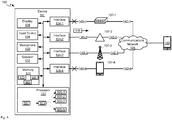
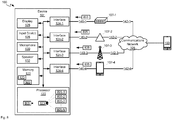
- Fig. 1 depicts a system 100 comprising a first device 101 in communication with a second device 103 via at least one communications network 105 and a plurality of access points 107-1, 107-2, 107-3, 107-4 to the at least one communications network 105, according to non-limiting implementations.
- First device 101 will be interchangeably referred to hereafter as device 101 and second device will be interchangeably referred to hereafter as device 103.
- the at least one communications network 105 will be interchangeably referred to hereafter as network 105.
- Access points 107-1, 107-2, 107-3, 107-4 will be referred to hereafter generically as an access point 107, and collectively as access points 107. This convention will be used elsewhere in the present disclosure. Further, it is appreciated that while four access points 107 are depicted, any suitable number of access points 107 is within the scope of present implementations, including two or more access points 107.
- Device 101 comprises a processor 120 interconnected with a memory 122, communications interfaces 124-1, 124-2, 124-3, 124-4, a display 126 and an input device 128, and optionally a microphone 130 and speaker 132.
- Communications interfaces 124-1, 124-2, 124-3, 124-4 will be interchangeably referred to hereafter respectively as interface 124-1, interface 124-2, interface 124-3, and interface 124-4.
- communications interfaces 124-1, 124-2, 124-3, 124-4 will be interchangeably referred to generically as an interface 124, and collectively as interfaces 124.
- each interface 124-1, 124-2, 124-3, 124-4 can be used by device 101 to access network 105 via a respective link 140-1, 140-2, 140-3, 140-4 to a respective access point 107-1, 107-2, 107-3, 107-4.
- each access point 107-1, 107-2, 107-3, 107-4 is in communication with network 105 via a respective link 142-1, 142-2, 142-3, 142-4.
- Links 140-1, 140-2, 140-3, 140-4 will collectively be referred to hereafter as links 140 and generically as a link 140.
- links 142-1, 142-2, 142-3, 142-4 will collectively be referred to hereafter as links 142 and generically as a link 142.
- device 101 is enabled to: transfer a data file via at least one communications network on at least a first communications interface 124 and second communications interface 124.
- transfer of a data file can be one or more of an upload of a data file from device 101 to device 103, and download of a data file from at least one device 103 to device 101. Transfer of a data file using more than one interface 124 will be described in further detail hereafter.
- Device 101 can be any type of electronic device that can be used in a self-contained manner to transfer data files via network 105.
- Device 101 includes, but is not limited to, any suitable combination of electronic devices, communications devices, computing devices, personal computers, laptop computers, portable electronic devices, mobile computing devices, portable computing devices, tablet computing devices, laptop computing devices, desktop phones, telephones, PDAs (personal digital assistants), cellphones, smartphones, e-readers, internet-enabled appliances and the like. Other suitable devices are within the scope of present implementations.
- device 103 can be any type of electronic device that can be used in a self-contained manner to transfer data files via network 105, for example a transfer of data files between device 101 and device 103.
- Device 103 includes, but is not limited to, any suitable combination of electronic devices, communications devices, computing devices, personal computers, laptop computers, portable electronic devices, mobile computing devices, portable computing devices, tablet computing devices, laptop computing devices, desktop phones, telephones, PDAs (personal digital assistants), cellphones, smartphones, e-readers, internet-enabled appliances and the like. Other suitable devices are within the scope of present implementations.
- Each access point 107 can comprise any suitable access point to network 105, including but not limited to any suitable combination of wired and/or wireless access points, wireless devices, cell-phone access points, cellular network access points (including but not limited to 2G, 2,5G, 3G, 4G+, and the like), WiFi access points, WiMax access points, packet based access points, Internet access points, modems, analog network access points, PSTN (public switched telephone network) access points, and the like.
- access point 107-1 comprises a wired modem, hence access point 107-1 comprises a wired access point; access point 107-2 comprises a WiFi access point; access point 107-3 comprises a cellular network access point; and access point 107-4 comprises a device in communication with device 101 via a BluetoothTM protocol and hence access point 107-4 comprises a near field communication (NFC) access point.
- NFC near field communication
- each access point 107 is in communication with device 101 via respective suitable links 140.
- Each link 140 comprises any suitable link for enabling device 101 to communicate with a respective access point 107.
- Each link 140 can hence include any suitable combination of wired and/or wireless links, wired and/or wireless devices and/or wired and/or wireless networks, including but not limited to any suitable combination of USB (universal serial bus) cables, serial cables, wireless links, cell-phone links, cellular network links (including but not limited to 2G, 2,5G, 3G, 4G+, and the like) wireless data, Bluetooth links, NFC (near field communication) links, WiFi links, WiMax links, packet based links, the Internet, analog networks, the PSTN (public switched telephone network), access points, and the like, and/or a combination.
- USB universal serial bus
- serial cables serial cables
- wireless links cell-phone links
- cellular network links including but not limited to 2G, 2,5G, 3G, 4G+, and the like
- Bluetooth links including but not limited to 2G,
- link 140-1 comprises a cable connecting device 101 with access point 107-1;
- link 140-2 comprises a wireless WiFi link;
- link 140-3 comprises a wireless cellular network link;
- link 140-4 comprises a wireless NFC link (e.g. a BluetoothTM link).
- each access point 107 is in communication with network 105 via a suitable corresponding link 142, each of which can comprise any suitable respective combination of wired and/or wireless links, wired and/or wireless devices and/or wired and/or wireless networks, including but not limited to any suitable combination of cables, cell-phone links, cellular network links (including but not limited to 2G, 2,5G, 3G, 4G+, and the like) wireless data, Bluetooth links, NFC (near field communication) links, WiFi links, WiMax links, packet based links, the Internet, analog networks, the PSTN (public switched telephone network), access points, and the like, and/or a combination.
- cellular network links including but not limited to 2G, 2,5G, 3G, 4G+, and the like
- wireless data including but not limited to 2G, 2,5G, 3G, 4G+, and the like
- Bluetooth links including but not limited to 2G, 2,5G, 3G, 4G+, and the like
- NFC near field communication links
- WiFi links wireless wide area
- each link 142-1, 142-2, 142-4 comprises any suitable respective links between access point 107-1, 107-2, 107-4 and network 105, including wired and/or wireless link as desired, and any suitable communications networks there between; and link 142-3 comprises a cellular network backhaul to network 105.
- links 140 need be active at the same time.
- device 101 can be in communication with network 105 via two or more of access points 107 and corresponding links 140.
- Fig. 1 further depicts a schematic diagram of device 101 according to non-limiting implementations. It should be emphasized that the structure of device 101 in Fig. 1 is purely an example, and contemplates a device that can be used for both wireless voice (e.g. telephony) and wireless data communications (e.g. email, web browsing, text, and the like). However, while Fig. 1 contemplates a device that can be used for telephony, in other implementations, device 101 can comprise a device enabled for implementing any suitable specialized functions, including but not limited to one or more of telephony, computing, appliance, and/or entertainment related functions.
- wireless voice e.g. telephony
- wireless data communications e.g. email, web browsing, text, and the like
- Fig. 1 contemplates a device that can be used for telephony
- device 101 can comprise a device enabled for implementing any suitable specialized functions, including but not limited to one or more of telephony, computing, appliance, and/or entertainment
- Device 101 comprises at least one input device 128 generally enabled to receive input data, and can comprise any suitable combination of input devices, including but not limited to a keyboard, a keypad, a pointing device, a mouse, a track wheel, a trackball, a touchpad, a touch screen and the like. Other suitable input devices are within the scope of present implementations.
- processor 120 which can be implemented as a plurality of processors, including but not limited to one or more central processors (CPUs)).
- Processor 120 is configured to communicate with a memory 122 comprising a non-volatile storage unit (e.g. Erasable Electronic Programmable Read Only Memory (“EEPROM”), Flash Memory) and a volatile storage unit (e.g. random access memory (“RAM”).
- EEPROM Erasable Electronic Programmable Read Only Memory
- RAM random access memory
- Programming instructions that implement the functional teachings of device 101 as described herein are typically maintained, persistently, in memory 122 and used by processor 120 which makes appropriate utilization of volatile storage during the execution of such programming instructions.
- memory 122 is an example of computer readable media that can store programming instructions executable on processor 120.
- memory 122 is also an example of a memory unit and/or memory module.
- memory 122 stores an application 123 that, when processed by processor 120 enables processor 120 to: transfer a data file via at least one communications network 105 on a first communications interface 124 and a second communications interface 124.
- application 123 can comprise an application that is processed at an application layer at device 101.
- application 123 can be implemented at the application layer of the OSI (Open Systems Interconnection) model, which generally comprises: a physical layer, a data link layer, a network layer, a transport layer, a session layer, a presentation layer and the application layer.
- OSI Open Systems Interconnection
- application 123 can be implemented at the application layer of the TCP/IP (transmissions control protocol/Internet protocol) model, which generally comprises: a link layer, an Internet layer, a transport layer, and the application layer.
- TCP/IP transmissions control protocol/Internet protocol
- model used for defining the application layer as presently described is generally appreciated to be non-limiting; rather it is appreciated that application 123 can be used to manage transfer of a data file using more than one of interfaces 124.
- application 123 generally enables network adapter bonding at an application layer (e.g. taking two network adapters, such as interfaces 124, and combining them into a single network interface).
- Processor 120 in turn can also be configured to communicate with a display 126, and optionally a microphone 130 and a speaker 132.
- Display 126 comprises any suitable one of or combination of CRT (cathode ray tube) and/or flat panel displays (e.g. LCD (liquid crystal display), plasma, OLED (organic light emitting diode), capacitive or resistive touchscreens, and the like).
- Microphone 130 when present, comprises any suitable microphone for receiving sound data.
- Speaker 132 when present, comprises any suitable speaker for providing sound data, audible alerts, audible communications from remote communication devices, and the like, at device 101.
- input device 128 and display 126 are external to device 101, with processor 120 in communication with each of input device 128 and display 126 via a suitable connection and/or link.
- Processor 120 also connects to interfaces 124, each of which can be implemented as one or more radios and/or connectors and/or network adaptors, configured to communicate with respective access points 107.
- interfaces 124 each of which can be implemented as one or more radios and/or connectors and/or network adaptors, configured to communicate with respective access points 107.
- each interface 124 is configured to correspond with the network architecture that is used to implement a respective access point 107.
- each of interfaces 124-2, 124-3, 124-4 can comprise a wireless interface enabled to communicate with respective access points 107-2, 107-3, 107-4 including but not limited to any suitable combination of wireless devices, wireless access interfaces, cell-phone interfaces, cellular network interfaces (including but not limited to 2G, 2,5G, 3G, 4G+ interfaces, and the like), WiFi interfaces, WiMax interfaces, packet based interfaces, Internet interfaces, analog network interfaces, PSTN (public switched telephone network) interfaces, and the like.
- interface 124-1 can comprise a wired interface enabled to communicate with access point 124-1, including but not limited to any suitable combination of cable interfaces, packet based interfaces, Internet interfaces, analog network interfaces, PSTN (public switched telephone network) interfaces, and the like.
- each interface 124 is different from each other interface 124.
- interface 124-1 comprises a suitable connector and interface for accepting a cable to connect with wired access point 107-1
- interface 124-2 comprises a WiFi radio
- interface 124-3 comprises a cell-phone radio
- interface 124-4 comprises an NFC radio (including, but not limited to a, BluetoothTM radio).
- FIG. 2 depicts a flowchart of a method 200 for transferring data via more than one communications interface, according to non-limiting implementations.
- method 200 is performed using system 100.
- system 100 and/or method 200 can be varied, and need not work exactly as discussed herein in conjunction with each other, and that such variations are within the scope of present implementations.
- method 200 is implemented in system 100 by processor 120 of device 101. Indeed, method 200 is one way in which device 101 can be configured. It is to be emphasized, however, that method 200 need not be performed in the exact sequence as shown, unless otherwise indicated; and likewise various blocks may be performed in parallel rather than in sequence; hence the elements of method 200 are referred to herein as "blocks" rather than “steps”. It is also to be understood, however, that method 200 can be implemented on variations of system 100 as well.
- GUIs graphic user interfaces
- Figs. 5 to 8 each of which are substantially similar to Fig. 1 with like elements having like numbers. It is further appreciated that the following discussion of method 200 will occur with respect to transferring data via two of interfaces 124, for example interfaces 124-2, 124-3, but that any suitable combination of interfaces 124 are within the scope of present implementations.
- processor 120 connects with network 105 via a first communications interface 124, for example interface 124-2.
- processor 120 connects with network 105 via a second communications interface, for example interface 124-3.
- device 101 is in wireless communication with network 105 via a WiFi connection (e.g. via link 140-2 and access point 142-2) and a cellular connection (e.g. via link 140-3 and access point 142-3).
- each of blocks 201, 203 can include, but is not limited to, turning a respective interface 124 on (i.e. when a given interface 124 is not already on).
- processor 120 processes application 123 to commence transfer of data.
- application 123 is for managing the transfer of a data file on at least a first communications interface 124 and a second communications interface 124.
- processor 120 is enabled to manage the transfer of a data file on at least a first communications interface 124 and a second communications interface 124 at an application layer of device 101.
- transfer of data files occurs according to a torrent protocol, such as a bit torrent protocol and the like, and hence application 123 can comprise a torrent client.
- transfer of data files can occur according to a packet protocol, and hence application 123 can comprise a client for transmitting packets. It is appreciated that a combination of torrent protocols, packet protocols, and the like, are within the scope of present implementations.
- a data file to be transferred is identified. It is appreciated that method 200 can be implemented at system 100 according to at least two modes: uploading of a data file to network 105, and ultimately, for example, to device 103; and downloading of a data file from network 105, for example from at least one remote device, such as device 103.
- the mode of operation and selection of a data file can occur via processing of application 123.
- the mode of operation of system 100 can also be determined.
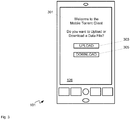
- FIG. 3 depicts a perspective view of device 101 and a rendering 301 of application 123 at display 126, which provides selectable options to upload or download a data file via respective virtual buttons 303, 305.
- Each of virtual buttons can be selected via receipt of input device 128, the input data indicative of selection of one or more of virtual buttons 303, 305.
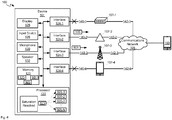
- Fig. 4 depicts a perspective view of device 101 and a further rendering 401 of application 123 at display 126, which provides an interface 403 for selecting a data file.
- rendering 401 provides interactive interface 403 for browsing memory 122 to select a data file, for example a data file 501 stored at memory 122, as depicted in Fig. 5 (substantially similar to Fig. 1 , with like elements having like numbers).
- interface 403 can comprise any suitable combination of pull down menus, virtual buttons and the like for selecting a data file.
- a download mode is alternatively selected (e.g. virtual button 305 is selected at rendering 301 of Fig. 3 )
- a further rendering of an interface of application 123 which enables a network search for data files to be downloaded; indeed, when application 123 comprises a torrent client, such an interface enables a search for torrent files on network 105, including but not limited to available data files stored at device 103.
- application 123 can include a message client, including, but not limited to, an email client, an SMS (short message service client) and the like.
- selection of a data file for transfer can occur via the message client, and data file 501 comprises a message to be transferred (e.g. transmitted/ or received) and/or associated attachments.
- method 200 can be implemented at a message client (and/or as an add-on thereto) to manage transfer of messages, and/or associated attachments, using more than one of interfaces 124.
- processor 120 can be enabled to determine which interface 124 to first transfer the data file based on one or more of: a priority list 503 of communications interfaces 124, priority list 503 stored at memory 122, as depicted in Fig. 5 ; respective quality of service (QOS) metrics associated with each interface 124; respective speeds of transfer associated with each interface 124; and respective costs of transfer associated with each interface 124.
- QOS quality of service
- list 503 can be based on one or more of respective speeds of transfer associated with each interface 124 and respective costs of transfer associated with each interface 124.
- List 503 can be generated by processor 120 based on QOS metrics received from access points 107 and/or network providers, including but not limited to cost, speed, numbers of dropped packets, and the like. In some implementations, list 503 can be provisioned at memory 122 at a factory and/or by a service provider.
- list 503 can be dynamic and maintained by processor 120 as different access points 107 and/or connections to network 105 are added and/or removed from system 100, and/or as updated QOS metrics are received from network elements (not depicted) in network 105, such as a QOS server, and the like, associated with a service provider.
- list 503 can be specific to each interface 124 associated with respective access points 107: for example, a user can have an unlimited mobile cellular data plan with relatively fast data transfer rates, and hence interface 124-1 can be given priority at list 503.
- list 503 can be generic, and based on specific assumptions: for example that wired interfaces provide the cheapest and fastest data transfers, while cellular interfaces provide the slowest and most expensive data transfers. In either case, as updated QOS metrics are received at device 101, list 503 can be updated.
- list 503 can comprise a list of identifiers of each interface 124 in a given order indicative of priority, for example: "Interface 124-1, interface 124-2, interface 124-3, interface 124-4".
- a wired interface 124-1 is assigned highest priority
- a WiFi interface 124-2 is assigned second highest priority
- a cellular interface 124-3 is assigned third highest priority
- an NFC interface 124-4 is assigned lowest priority.
- the NFC interface 124-4 is assigned lowest priority, this non-limiting example, based on the following assumptions: transfer over interface 124-4 will occur via QOS metrics, data transfer rates and costs associated with access point 107-4, which in turn can have a wired, WiFi, and/or cellular link 142-4 with network 105; as the QOS metrics, costs and data transfer rates associated with link 142-4 can be unknown to device 101 (and indeed, a user of device 101 may not be charged for any high cost transfers), it is assumed in these implementations, that costs can be high and/or unknown, and hence interface 124-4 is given low priority.
- interfaces 124 are not to be considered particularly limiting, and any interface 124 can be assigned a suitable priority.
- interfaces 124 can be assigned priority in any suitable manner; for example while present implementations assume an order of interfaces 124 at list 503 is reflective of priority, in other implementations, interfaces 124 can be provided in any suitable order and priority indicated in any suitable manner.
- a priority of interfaces 124 need not be maintained using a list; rather any suitable maintenance of priority of interfaces 124 is within the scope of present implementations, including a database and the like.
- links 124-1, 124-4 are not available (e.g. device 101 comprises a mobile device presently not wirelessly connected to access point 107-1, and presently not in NFC communication with access point 107-4). Indeed, in some of these implementations, interfaces 124-1, 124-4 can be off.
- processor 120 processes list 503, or the like, and determines that as the highest priority interface 124-1 is not available to transfer data, transfer of data file 501 is to first occur using next highest priority interface 124-2.
- processor 120 can one or more of: determine whether interface 124-1 is on; if not, processor 120 can determine that interface 124-1 is not available or turn interfaces 124-1 on; when interface 124-1 is on, processor 120 can attempt to contact access point 107-1 and determine that access point 107-1 is not available, for example when no response is received there from when interface 124-1 attempts to establish link 140-1. In some implementations, a similar process can occur for each interface 124.
- processor 120 determines at block 209 that interface 124-2 is to be used to first transfer data file 501
- data transfer of data file 501 commences.
- processor 120 breaks data file 501 into chunks 505-1, 505-2, 505-3...505-N, for example as occurs in a torrent client and/or with a packet based client.
- Chunks 505-1, 505-2, 505-3...505-N will interchangeably be referred to hereafter generically as a chunk 505 and collectively as chunks 505.
- chunks 505 can be of any suitable size and format, as determined via application 123: for example a size and format compatible with one or more of a torrent protocol and a packet protocol.
- chunks 505 are transmitted to device 103: for example, a network identifier associated with device 103 can be received at application 123 via one or more of input device 128, a network identifier database accessible to device 101, and the like. Hence, in the data transfer, chunks 505 can be transmitted with the network identifier associated with device 103. It is appreciated in these implementations that device 103 receiving chunks 505 is enabled to assemble chunks 505 into a copy of data file 501.
- chunks 505 are transmitted simultaneously, but in series according to any suitable order, for example as determined via processor 120 processing application 123, for example in packets and/or according to a torrent protocol.
- processor 120 first transfers data file 501 by transmitting chunks 505 on interface 124-2 until a respective threshold is reached, including but not limited to a threshold data transfer rate.
- a threshold data transfer rate e.g. the maximum amount of data per second that can be transferred via a given interface 124 and/or a respective access point 107 and/or respective links 140, 142).
- the threshold can hence comprise the saturation data transfer rate or a given percentage thereof.
- processor 120 transfers data file 501 by transmitting chunks 505 on both interface 124-2 and interface 124-3 (i.e. the next available interface 124 with the next highest priority at list 503).
- Data transfer of chunks 505 can occur simultaneously on interfaces 124-2, 124-3, in parallel on interfaces 124-2, 124-3, and/or in a series on interfaces 124-2, 124-3 as determined by processor 120.
- processor 120 can alternate between transmitting chunks 505 on a first interface 124-2 and a second interface 124-3.
- processor 120 transfers data file 501 on the first communications interface 124-2 and the second communications interface 124-3 by transferring respective chunks 505 of data file 501 via the first communications interface 124-2 and the second communications interface 124-3.
- processor 120 determines that the threshold at interface 124-2 has been reached (such as saturation or a percentage thereof) and transfers data file 501 on interface 124-2 and interface 124-3, for example by transmitting chunks 505 on interfaces 124-2, 124-3.
- processor 120 can turn interface 124-3 on at block 215 (e.g. block 203 does not occur until block 215 occurs).
- chunks 505 are transmitted at once, but according to any suitable order, for example in packets and/or according to a torrent protocol.
- the order can be determined via processor 120 processing application 123. It is furthermore appreciated that chunks 505 already transmitted are not retransmitted, hence only remaining chunks 505 are transmitted, unless application 123 allows for redundancy and/or requests for missing chunks from device 103.
- processor 120 can further determine when other interfaces 124 become available. For example, during the data transfer, one or more of interfaces 124-1, 124-4 could become available. In these implementations, processor 120 can transfer data file 503 on each available interface 124. Indeed, presuming a higher priority interface 124 becomes available (e.g. link 140-1 is established between interface 124-1 and access point 107-1 while one or more of blocks 211-215 are occurring), data transfer on a lower priority interface 124 (e.g. interface 1240-3) can stop and a data transfer on the higher priority interface 124-1 can occur. Alternatively, data transfer at both interfaces 124-2, 124-3 can stop until data transfer at interface 124-1 reaches a threshold. In yet further implementations, data transfer can occur on all three of interfaces 124-1, 124-2, 124-3.
- a higher priority interface 124 e.g. link 140-1 is established between interface 124-1 and access point 107-1 while one or more of blocks 211-215 are occurring
- data transfer can occur on a first interface 124-1 until a first threshold (associated with the first interface 124-1) is reached, and then occur on a first interface 124-1 and a second interface 124-2 until a second threshold (associated with the second interface 124-2) is reached, and then occur on a first interface 124-2, a second interface 124-2, and a third interface 124-3.
- a fourth interface 124-4 is available, and a third threshold (associated with the third interface 124-3) is reached, data transfer can occur on a first interface 124-1, a second interface 124-2, a third interface 124-3, and a fourth interface 124-4.
- blocks 209-213 can be optional. In other words, rather than begin data transfer on a first interface 124 until a threshold is reached, data transfer initially occurs at both a first interface 124 and a second interface 124, under control of application 123 at an application layer.
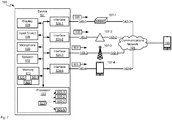
- interfaces 124 when all of interfaces 124 are available, data transfer can occur on all of interfaces 124, as depicted at Fig. 7 , where data file 501 is transferred by transmitting chunks 505 via all of interfaces 124, as described above. Such a data transfer can occur without regard to priorities of interfaces 124; indeed, in these implementations, and indeed any implementations where blocks 209 to 213 do not occur, list 503 and the like is appreciated to be optional.
- blocks 201, 203 can occur before, after or during any suitable block of method 200.
- blocks 201, 203 can occur at block 211 and/or at block 215: in other words, a given interface 124 is not turned on, and/or an associated link 140 is not established, until data transfer is to commence.
- FIG. 8 depicts system 100 in a downloading mode. It is assumed in Fig. 8 that downloading is to occur (e.g. virtual button 305 of Fig. 3 has been selected) and that a data file 801 for downloading has been identified, for example via a network search as described above and/or via identification of a message and/or an associated attachment for downloading. It is further appreciated that blocks 201 to 213 have been implemented and all four interfaces 124 are available for a data transfer. Hence, Fig.
- chunks 805-1, 805-2, 805-3...805-N (interchangeably hereafter referred to generically as a chunk 805 and collectively as chunks 805) of data file 801 are being transferred from one or more devices, including device 103, to device 101.
- copies of data file 801 can persist on more than one device in communication with network 105 and processor 120 can be enabled to receive chunks 805 from more than one of these devices.
- processor 120 is enabled to transfer data file 801 on at least two of interfaces 124 by transferring respective chunks 805 of data file 805 via respective interfaces 124, and further assemble the respective chunks 805 respective interfaces 124 into data file 801.
- a mechanism for causing download of chunks 805 via two or more interfaces 124 has been implemented at system 100.
- device 101 can transmit a plurality of requests on each available interface 124 to device 103 (and any other similar devices), the plurality of requests for requesting that and device 103 and the like transmit respective chunks 805 on respective interfaces 124.
- device 101 can transmit a single request to device 103, and the like, informing device 103, and the like, that a plurality of interfaces 124 are available to receive chunks 805 of data file 801; device 103, and the like (and/or a subset thereof) can be enabled to process the request and transmit chunks 805 accordingly via respective pathways that include each of interfaces 124.
- a network element such as a server, can mediate the download, by receiving chunks 805 from device 103, and the like, and transmit chunks 805 to device 101 on available interfaces 124.
- the data file can be broken into chunks, transferred separately and reassembled at a target device. Breaking a data file into chunks further enables use of multiple transport connections and protocols to transfer the data file. Hence, multiple chunks of the data file can be transferred over as many connections as can be established. Further, interfaces/connections can be prioritized and a least cost interface/connection (and/or a connection prioritized based on QOS metrics) can be used first until saturated and then a next interface/connection.
- implementation of data transfer using more than one interface at an application layer enables network adapter bonding at the application layer (e.g. taking two network adapters and combining them into a single network interface).
- torrent protocols such as a bit torrent protocol
- QOS quality of service
- use of multiple interfaces, connections and/or pathways also reduces data transfer failures. For example, when a data transfer via interface fails, data transfer can continue via the alternate interface.
- the functionality of devices 101 can be implemented using pre-programmed hardware or firmware elements (e.g., application specific integrated circuits (ASICs), electrically erasable programmable read-only memories (EEPROMs), etc.), or other related components.
- the functionality of 101 can be achieved using a computing apparatus that has access to a code memory (not shown) which stores computer-readable program code for operation of the computing apparatus.
- the computer-readable program code could be stored on a computer readable storage medium which is fixed, tangible and readable directly by these components, (e.g., removable diskette, CD-ROM, ROM, fixed disk, USB drive).
- the computer-readable program can be stored as a computer program product comprising a computer usable medium.
- a persistent storage device can comprise the computer readable program code.
- the computer-readable program code and/or computer usable medium can comprise a non-transitory computer-readable program code and/or non-transitory computer usable medium.
- the computer-readable program code could be stored remotely but transmittable to these components via a modem or other interface device connected to a network (including, without limitation, the Internet) over a transmission medium.
- the transmission medium can be either a non-mobile medium (e.g., optical and/or digital and/or analog communications lines) or a mobile medium (e.g., microwave, infrared, free-space optical or other transmission schemes) or a combination thereof.
Landscapes
- Engineering & Computer Science (AREA)
- Computer Networks & Wireless Communication (AREA)
- Signal Processing (AREA)
- Computer Security & Cryptography (AREA)
- Computer And Data Communications (AREA)
- Information Transfer Between Computers (AREA)
Claims (13)
- Vorrichtung (101), umfassend:
einen Prozessor (120), mehrere Kommunikationsschnittstellen (124-2, 124-3, 124-4), wobei sich jede Kommunikationsschnittstelle von jeder anderen Kommunikationsschnittstelle (124) unterscheidet, wobei die mehreren Kommunikationsschnittstellen (124-2, 124-3, 124-4) eine drahtloses lokales Netzwerk, "WLAN", Funkkommunikationsschnittstelle (124-2), eine Mobiltelefonfunkschnittstelle (124-3) und eine Nahfeldkommunikationsschnittstelle (124-4) umfassen, wobei der Prozessor (120) befähigt ist zum:Übertragen einer Datendatei über mindestens ein Kommunikationsnetzwerk über eine erste Kommunikationsschnittstelle der mehreren Kommunikationsschnittstellen und eine zweite Kommunikationsschnittstelle der mehreren Kommunikationsschnittstellen (124);zunächst Übertragen (211) der Datendatei über die erste Kommunikationsschnittstelle (124) oder die zweiten Kommunikationsschnittstelle (124), bis eine jeweilige Schwellenübertragungsrate erreicht ist, wobei die Schwellenübertragungsrate eines oder mehreres von einer Sättigungsdatenübertragungsrate oder einem gegebenen prozentualen Anteil der Sättigungsdatenübertragungsrate umfasst; wobei die Sättigungsdatenübertragungsrate eine maximale Datenmenge pro Sekunde umfasst, die über eine gegebene Schnittstelle (124), einen jeweiligen Zugangspunkt (107) und/oder jeweilige Verbindungen (140, 142) übertragen werden kann; und dann Übertragen (215) der Datendatei über die erste Kommunikationsschnittstelle (124) und die zweite Kommunikationsschnittstelle (124) . - Vorrichtung (101) nach Anspruch 1, wobei der Prozessor (120) ferner befähigt ist, die Übertragung der Datendatei über die erste Kommunikationsschnittstelle (124) und die zweite Kommunikationsschnittstelle (124) auf einer Anwendungsschicht der Vorrichtung (101) zu verwalten.
- Vorrichtung (101) nach einem der Ansprüche 1 bis 2, wobei der Prozessor (120) ferner befähigt ist, die Datendatei über die erste Kommunikationsschnittstelle (124) und die zweite Kommunikationsschnittstelle (124) durch Übertragen entsprechender Datenblöcke der Datendatei über die erste Kommunikationsschnittstelle (124) und die zweite Kommunikationsschnittstelle (124) zu übertragen.
- Vorrichtung (101) nach Anspruch 3, wobei die Übertragung der Datendatei eines oder mehreres des Folgenden umfasst:ein Hochladen der Datendatei auf ein Zielgerät (103) über das Kommunikationsnetzwerk, und der Prozessor (120) ist ferner befähigt, die Datendatei in die jeweiligen Datenblöcke zu teilen; und,ein Herunterladen der Datendatei von mindestens einem entfernten Gerät (103) über das Kommunikationsnetzwerk, und der Prozessor (120) ist ferner befähigt zum: Zusammensetzen der jeweiligen Datenblöcke von der ersten Kommunikationsschnittstelle (124) und der zweiten Kommunikationsschnittstelle (124) zu der Datendatei.
- Vorrichtung (101) nach Anspruch 4, wobei der Prozessor (120) ferner befähigt ist, zu bestimmen (209), welche von der ersten Kommunikationsschnittstelle (124) und der zweiten Schnittstelle die Datendatei zuerst übertragen soll, basierend auf einem oder mehreren des Folgenden:eine Prioritätsliste von Kommunikationsschnittstellen, die in einem Speicher (122) der Vorrichtung (101) gespeichert ist;jeweilige Dienstgüte-, "QOS", Metriken, die jeder der ersten Kommunikationsschnittstelle (124) und der zweiten Kommunikationsschnittstelle (124) zugeordnet sind;jeweilige Übertragungsgeschwindigkeiten, die jeder der ersten Kommunikationsschnittstelle (124) und der zweiten Kommunikationsschnittstelle (124) zugeordnet sind; und,jeweilige Übertragungskosten, die jeder der ersten Kommunikationsschnittstelle (124) und der zweiten Kommunikationsschnittstelle (124) zugeordnet sind.
- Vorrichtung (101) nach einem der Ansprüche 1 bis 5, ferner umfassend mindestens eine weitere Kommunikationsschnittstelle (124, 124), und der Prozessor (120) ist ferner befähigt, die Datendatei über zwei oder mehr der ersten Kommunikationsschnittstelle (124), der zweite Kommunikationsschnittstelle (124) und der mindestens einen weiteren Kommunikationsschnittstelle (124, 124) zu übertragen.
- Vorrichtung (101) nach einem der Ansprüche 1 bis 6, wobei die Übertragung der Datendatei ein Torrent-Protokoll umfasst.
- Verfahren zur Übertragung, auf einem Prozessor (120) einer Vorrichtung (101), einer Datei über mindestens ein Kommunikationsnetzwerk über eine erste Kommunikationsschnittstelle (124) von mehreren Kommunikationsschnittstellen (124-2, 124-3, 124-4) der Vorrichtung (101) und eine zweite Kommunikationsschnittstelle (124) der mehreren Kommunikationsschnittstellen (124-2, 124-3, 124-4) der Vorrichtung (101), wobei jede Kommunikationsschnittstelle (124) sich von jeder anderen Kommunikationsschnittstelle (124) unterscheidet, wobei die mehreren Kommunikationsschnittstellen (124-2, 124-3, 124-4) ein drahtloses lokales Netzwerk, "WLAN", eine Funkkommunikationsschnittstelle (124-2), eine Mobiltelefonfunkschnittstelle (124-3) und eine Nahfeldkommunikationsschnittstelle (124-4) umfassen; das Verfahren umfassend:
zunächst Übertragen (209) der Datendatei, über den Prozessor (120), über die erste Kommunikationsschnittstelle (124) oder die zweite Kommunikationsschnittstelle (124), bis eine jeweilige Schwellenübertragungsrate erreicht ist, wobei die Schwellenübertragungsrate eines oder mehreres von einer Sättigungsdatenübertragungsrate oder einem gegebenen prozentualen Anteil der Sättigungsdatenübertragungsrate umfasst; wobei die Sättigungsdatenübertragungsrate eine maximale Datenmenge pro Sekunde umfasst, die über eine gegebene Schnittstelle (124), einen jeweiligen Zugangspunkt (107) und/oder jeweilige Verbindungen (140, 142) übertragen werden kann; und dann Übertragen (215) der Datendatei über den Prozessor (120) über die erste Kommunikationsschnittstelle (124) und die zweite Kommunikationsschnittstelle (124). - Verfahren nach Anspruch 8, ferner umfassend Verwalten, auf dem Prozessor (120), der Übertragung der Datendatei über die erste Kommunikationsschnittstelle (124) und die zweite Kommunikationsschnittstelle (124) auf einer Anwendungsschicht der Vorrichtung (101).
- Verfahren nach einem der Ansprüche 8 bis 9, ferner umfassend Übertragen der Datendatei, über den Prozessor (120), über die erste Kommunikationsschnittstelle (124) und die zweiten Kommunikationsschnittstelle (124) durch Übertragen jeweiliger Datenblöcke der Datendatei über die erste Kommunikationsschnittstelle (124) und die zweite Kommunikationsschnittstelle (124).
- Verfahren nach einem der Ansprüche 8 bis 10, wobei die Übertragung der Datendatei eines oder mehreres des Folgenden umfasst:ein Hochladen der Datendatei über das Kommunikationsnetzwerk an ein Zielgerät (101), wobei das Verfahren ferner Teilen der Datendatei in die jeweiligen Datenblöcke umfasst; und,ein Herunterladen der Datendatei von mindestens einem entfernten Gerät (101) über das Kommunikationsnetzwerk, wobei das Verfahren ferner Zusammensetzen der jeweiligen Datenblöcke von der ersten Kommunikationsschnittstelle (124) und der zweiten Kommunikationsschnittstelle (124) zu der Datendatei umfasst.
- Verfahren nach Anspruch 8, ferner umfassend Bestimmen (209), auf dem Prozessor (120), welche der ersten Kommunikationsschnittstelle (124) und der zweiten Kommunikationsschnittstelle (124) zuerst die Datendatei übertragen soll, basierend auf einem oder mehreren des Folgenden:eine Prioritätsliste von Kommunikationsschnittstellen, die in einem Speicher (122) der Vorrichtung (101) gespeichert ist;jeweilige Dienstgüte-, "QOS", Metriken, die jeder der ersten Kommunikationsschnittstelle (124) und der zweiten Kommunikationsschnittstelle (124) zugeordnet sind;jeweilige Übertragungsgeschwindigkeiten, die jeder der ersten Kommunikationsschnittstelle (124) und der zweiten Kommunikationsschnittstelle (124) zugeordnet sind; und,jeweilige Übertragungskosten, die jeder der ersten Kommunikationsschnittstelle (124) und der zweiten Kommunikationsschnittstelle (124) zugeordnet sind.
- Verfahren nach einem der Ansprüche 8 bis 12, ferner umfassend Übertragen der Datendatei, über den Prozessor (120), über zwei oder mehr der ersten Kommunikationsschnittstelle (124), der zweiten Kommunikationsschnittstelle (124) und mindestens einer weiteren Kommunikationsschnittstelle (124, 124) der Vorrichtung (101).
Priority Applications (2)
| Application Number | Priority Date | Filing Date | Title |
|---|---|---|---|
| EP12167567.2A EP2670104B1 (de) | 2012-05-10 | 2012-05-10 | Verfahren und Vorrichtung zur Übertragung von Daten über mehr als eine Kommunikationsschnittstelle |
| CA2814570A CA2814570C (en) | 2012-05-10 | 2013-05-02 | Method, system and apparatus for transferring data via more than one communications interface |
Applications Claiming Priority (1)
| Application Number | Priority Date | Filing Date | Title |
|---|---|---|---|
| EP12167567.2A EP2670104B1 (de) | 2012-05-10 | 2012-05-10 | Verfahren und Vorrichtung zur Übertragung von Daten über mehr als eine Kommunikationsschnittstelle |
Publications (2)
| Publication Number | Publication Date |
|---|---|
| EP2670104A1 EP2670104A1 (de) | 2013-12-04 |
| EP2670104B1 true EP2670104B1 (de) | 2018-08-22 |
Family
ID=46197001
Family Applications (1)
| Application Number | Title | Priority Date | Filing Date |
|---|---|---|---|
| EP12167567.2A Active EP2670104B1 (de) | 2012-05-10 | 2012-05-10 | Verfahren und Vorrichtung zur Übertragung von Daten über mehr als eine Kommunikationsschnittstelle |
Country Status (2)
| Country | Link |
|---|---|
| EP (1) | EP2670104B1 (de) |
| CA (1) | CA2814570C (de) |
Families Citing this family (3)
| Publication number | Priority date | Publication date | Assignee | Title |
|---|---|---|---|---|
| JP6550868B2 (ja) * | 2015-04-01 | 2019-07-31 | 富士通コネクテッドテクノロジーズ株式会社 | 無線通信方法、プログラム及び無線通信装置 |
| CN106961454B (zh) * | 2016-01-08 | 2021-01-05 | 阿里巴巴(中国)有限公司 | 文件下载方法、装置及终端设备 |
| CN113411352B (zh) * | 2021-08-03 | 2021-12-14 | 广州市威士丹利智能科技有限公司 | 一种信号抗干扰传输方法及系统 |
Citations (1)
| Publication number | Priority date | Publication date | Assignee | Title |
|---|---|---|---|---|
| US20050090283A1 (en) * | 2003-10-28 | 2005-04-28 | Rodriquez Pablo R. | Wireless network access |
Family Cites Families (4)
| Publication number | Priority date | Publication date | Assignee | Title |
|---|---|---|---|---|
| ATE470330T1 (de) * | 2003-12-22 | 2010-06-15 | Ericsson Telefon Ab L M | Technologie-unabhängige zugangsauswahl basiert auf anwendungsanforderungen und netzwerkzustand |
| US20070097877A1 (en) * | 2005-11-02 | 2007-05-03 | Hoekstra G J | Distributing information over parallel network interfaces |
| US20070255797A1 (en) * | 2006-04-28 | 2007-11-01 | Dunn Douglas L | Method for selecting an air interface using an access list on a multi-mode wireless device |
| EP2378734A1 (de) * | 2010-04-19 | 2011-10-19 | Giga-Byte Technology Co., Ltd. | Netzwerk Kommunikationsgeräten und Methoden der Datenübertragung |
-
2012
- 2012-05-10 EP EP12167567.2A patent/EP2670104B1/de active Active
-
2013
- 2013-05-02 CA CA2814570A patent/CA2814570C/en active Active
Patent Citations (1)
| Publication number | Priority date | Publication date | Assignee | Title |
|---|---|---|---|---|
| US20050090283A1 (en) * | 2003-10-28 | 2005-04-28 | Rodriquez Pablo R. | Wireless network access |
Also Published As
| Publication number | Publication date |
|---|---|
| CA2814570C (en) | 2016-10-25 |
| EP2670104A1 (de) | 2013-12-04 |
| CA2814570A1 (en) | 2013-11-10 |
Similar Documents
| Publication | Publication Date | Title |
|---|---|---|
| US9009260B2 (en) | Method, system and apparatus for transferring data via more than one communications interface | |
| EP3720019A1 (de) | Verfahren, vorrichtung und system zur datenübertragung im internet der dinge | |
| CN105847168B (zh) | 一种数据传输的方法、网络服务器、用户终端及系统 | |
| EP3197094B1 (de) | Verfahren und vorrichtung zum aktualisieren von software | |
| CN101953091A (zh) | 在近场通信网络中共享数据的方法和装置 | |
| CN104303491A (zh) | 用于促进无线对接系统中的直接配对的设备和方法 | |
| EP4304219B1 (de) | Datenübertragungsverfahren und -system, elektronische vorrichtung und speichermedium | |
| CN103327645A (zh) | 一种连接网络的方法及装置 | |
| CN105144784A (zh) | 用于支持ieee 802.11快速会话转移的多协议驱动器 | |
| JP5112532B2 (ja) | 情報処理装置 | |
| CN104581999A (zh) | 一种连接策略选择方法及其终端 | |
| US9270656B2 (en) | Communication device, communication method, computer program, and communication system | |
| EP2670104B1 (de) | Verfahren und Vorrichtung zur Übertragung von Daten über mehr als eine Kommunikationsschnittstelle | |
| US9838313B2 (en) | Method, system, control device and node device for data transmission | |
| EP2157813A1 (de) | Fernbedienungssystem, geräteseitige steuerung, gerätesteuerprogramm und gerätesteuerverfahren | |
| CN101674330A (zh) | 业务交互方法及装置 | |
| WO2018053894A1 (zh) | 物联网基于传输速率的接入点切换方法及装置 | |
| CN105850162A (zh) | 用于共享数据配额的方法和设备 | |
| US20160100021A1 (en) | Information processing device, destination information updating method, and record medium | |
| US20120201210A1 (en) | Terminal and method for data communication using multiple wireless communication methods | |
| CN116009807A (zh) | 投屏方法、装置、设备以及存储介质 | |
| JP6916529B2 (ja) | デバイスサーバ及びデバイスサーバの制御方法 | |
| US8995260B2 (en) | Method and apparatus for managing load in a communication network | |
| KR102059372B1 (ko) | 무선 네트워크에서 가상 도킹을 가능하게 하기 위한 방법 및 장치 | |
| JP2011061282A (ja) | 端末装置、無線通信システムおよび方法 |
Legal Events
| Date | Code | Title | Description |
|---|---|---|---|
| PUAI | Public reference made under article 153(3) epc to a published international application that has entered the european phase |
Free format text: ORIGINAL CODE: 0009012 |
|
| 17P | Request for examination filed |
Effective date: 20120510 |
|
| AK | Designated contracting states |
Kind code of ref document: A1 Designated state(s): AL AT BE BG CH CY CZ DE DK EE ES FI FR GB GR HR HU IE IS IT LI LT LU LV MC MK MT NL NO PL PT RO RS SE SI SK SM TR |
|
| AX | Request for extension of the european patent |
Extension state: BA ME |
|
| STAA | Information on the status of an ep patent application or granted ep patent |
Free format text: STATUS: EXAMINATION IS IN PROGRESS |
|
| 17Q | First examination report despatched |
Effective date: 20170206 |
|
| REG | Reference to a national code |
Ref country code: DE Ref legal event code: R079 Ref document number: 602012049996 Country of ref document: DE Free format text: PREVIOUS MAIN CLASS: H04L0029060000 Ipc: H04L0029080000 |
|
| GRAP | Despatch of communication of intention to grant a patent |
Free format text: ORIGINAL CODE: EPIDOSNIGR1 |
|
| STAA | Information on the status of an ep patent application or granted ep patent |
Free format text: STATUS: GRANT OF PATENT IS INTENDED |
|
| RIC1 | Information provided on ipc code assigned before grant |
Ipc: H04L 12/707 20130101ALI20180228BHEP Ipc: H04L 12/725 20130101ALI20180228BHEP Ipc: H04M 1/725 20060101ALI20180228BHEP Ipc: H04L 29/06 20060101ALI20180228BHEP Ipc: H04W 88/06 20090101ALI20180228BHEP Ipc: H04W 48/18 20090101ALI20180228BHEP Ipc: H04L 29/08 20060101AFI20180228BHEP Ipc: H04L 12/54 20130101ALI20180228BHEP |
|
| INTG | Intention to grant announced |
Effective date: 20180316 |
|
| GRAS | Grant fee paid |
Free format text: ORIGINAL CODE: EPIDOSNIGR3 |
|
| GRAA | (expected) grant |
Free format text: ORIGINAL CODE: 0009210 |
|
| STAA | Information on the status of an ep patent application or granted ep patent |
Free format text: STATUS: THE PATENT HAS BEEN GRANTED |
|
| AK | Designated contracting states |
Kind code of ref document: B1 Designated state(s): AL AT BE BG CH CY CZ DE DK EE ES FI FR GB GR HR HU IE IS IT LI LT LU LV MC MK MT NL NO PL PT RO RS SE SI SK SM TR |
|
| REG | Reference to a national code |
Ref country code: GB Ref legal event code: FG4D |
|
| REG | Reference to a national code |
Ref country code: CH Ref legal event code: EP |
|
| REG | Reference to a national code |
Ref country code: DE Ref legal event code: R096 Ref document number: 602012049996 Country of ref document: DE |
|
| REG | Reference to a national code |
Ref country code: AT Ref legal event code: REF Ref document number: 1033810 Country of ref document: AT Kind code of ref document: T Effective date: 20180915 |
|
| REG | Reference to a national code |
Ref country code: IE Ref legal event code: FG4D |
|
| REG | Reference to a national code |
Ref country code: NL Ref legal event code: FP |
|
| REG | Reference to a national code |
Ref country code: LT Ref legal event code: MG4D |
|
| PG25 | Lapsed in a contracting state [announced via postgrant information from national office to epo] |
Ref country code: BG Free format text: LAPSE BECAUSE OF FAILURE TO SUBMIT A TRANSLATION OF THE DESCRIPTION OR TO PAY THE FEE WITHIN THE PRESCRIBED TIME-LIMIT Effective date: 20181122 Ref country code: LT Free format text: LAPSE BECAUSE OF FAILURE TO SUBMIT A TRANSLATION OF THE DESCRIPTION OR TO PAY THE FEE WITHIN THE PRESCRIBED TIME-LIMIT Effective date: 20180822 Ref country code: NO Free format text: LAPSE BECAUSE OF FAILURE TO SUBMIT A TRANSLATION OF THE DESCRIPTION OR TO PAY THE FEE WITHIN THE PRESCRIBED TIME-LIMIT Effective date: 20181122 Ref country code: IS Free format text: LAPSE BECAUSE OF FAILURE TO SUBMIT A TRANSLATION OF THE DESCRIPTION OR TO PAY THE FEE WITHIN THE PRESCRIBED TIME-LIMIT Effective date: 20181222 Ref country code: RS Free format text: LAPSE BECAUSE OF FAILURE TO SUBMIT A TRANSLATION OF THE DESCRIPTION OR TO PAY THE FEE WITHIN THE PRESCRIBED TIME-LIMIT Effective date: 20180822 Ref country code: SE Free format text: LAPSE BECAUSE OF FAILURE TO SUBMIT A TRANSLATION OF THE DESCRIPTION OR TO PAY THE FEE WITHIN THE PRESCRIBED TIME-LIMIT Effective date: 20180822 Ref country code: GR Free format text: LAPSE BECAUSE OF FAILURE TO SUBMIT A TRANSLATION OF THE DESCRIPTION OR TO PAY THE FEE WITHIN THE PRESCRIBED TIME-LIMIT Effective date: 20181123 Ref country code: FI Free format text: LAPSE BECAUSE OF FAILURE TO SUBMIT A TRANSLATION OF THE DESCRIPTION OR TO PAY THE FEE WITHIN THE PRESCRIBED TIME-LIMIT Effective date: 20180822 |
|
| REG | Reference to a national code |
Ref country code: AT Ref legal event code: MK05 Ref document number: 1033810 Country of ref document: AT Kind code of ref document: T Effective date: 20180822 |
|
| PG25 | Lapsed in a contracting state [announced via postgrant information from national office to epo] |
Ref country code: AL Free format text: LAPSE BECAUSE OF FAILURE TO SUBMIT A TRANSLATION OF THE DESCRIPTION OR TO PAY THE FEE WITHIN THE PRESCRIBED TIME-LIMIT Effective date: 20180822 Ref country code: HR Free format text: LAPSE BECAUSE OF FAILURE TO SUBMIT A TRANSLATION OF THE DESCRIPTION OR TO PAY THE FEE WITHIN THE PRESCRIBED TIME-LIMIT Effective date: 20180822 Ref country code: LV Free format text: LAPSE BECAUSE OF FAILURE TO SUBMIT A TRANSLATION OF THE DESCRIPTION OR TO PAY THE FEE WITHIN THE PRESCRIBED TIME-LIMIT Effective date: 20180822 |
|
| PG25 | Lapsed in a contracting state [announced via postgrant information from national office to epo] |
Ref country code: CZ Free format text: LAPSE BECAUSE OF FAILURE TO SUBMIT A TRANSLATION OF THE DESCRIPTION OR TO PAY THE FEE WITHIN THE PRESCRIBED TIME-LIMIT Effective date: 20180822 Ref country code: IT Free format text: LAPSE BECAUSE OF FAILURE TO SUBMIT A TRANSLATION OF THE DESCRIPTION OR TO PAY THE FEE WITHIN THE PRESCRIBED TIME-LIMIT Effective date: 20180822 Ref country code: AT Free format text: LAPSE BECAUSE OF FAILURE TO SUBMIT A TRANSLATION OF THE DESCRIPTION OR TO PAY THE FEE WITHIN THE PRESCRIBED TIME-LIMIT Effective date: 20180822 Ref country code: EE Free format text: LAPSE BECAUSE OF FAILURE TO SUBMIT A TRANSLATION OF THE DESCRIPTION OR TO PAY THE FEE WITHIN THE PRESCRIBED TIME-LIMIT Effective date: 20180822 Ref country code: PL Free format text: LAPSE BECAUSE OF FAILURE TO SUBMIT A TRANSLATION OF THE DESCRIPTION OR TO PAY THE FEE WITHIN THE PRESCRIBED TIME-LIMIT Effective date: 20180822 Ref country code: RO Free format text: LAPSE BECAUSE OF FAILURE TO SUBMIT A TRANSLATION OF THE DESCRIPTION OR TO PAY THE FEE WITHIN THE PRESCRIBED TIME-LIMIT Effective date: 20180822 Ref country code: ES Free format text: LAPSE BECAUSE OF FAILURE TO SUBMIT A TRANSLATION OF THE DESCRIPTION OR TO PAY THE FEE WITHIN THE PRESCRIBED TIME-LIMIT Effective date: 20180822 |
|
| REG | Reference to a national code |
Ref country code: DE Ref legal event code: R097 Ref document number: 602012049996 Country of ref document: DE |
|
| PG25 | Lapsed in a contracting state [announced via postgrant information from national office to epo] |
Ref country code: SK Free format text: LAPSE BECAUSE OF FAILURE TO SUBMIT A TRANSLATION OF THE DESCRIPTION OR TO PAY THE FEE WITHIN THE PRESCRIBED TIME-LIMIT Effective date: 20180822 Ref country code: SM Free format text: LAPSE BECAUSE OF FAILURE TO SUBMIT A TRANSLATION OF THE DESCRIPTION OR TO PAY THE FEE WITHIN THE PRESCRIBED TIME-LIMIT Effective date: 20180822 Ref country code: DK Free format text: LAPSE BECAUSE OF FAILURE TO SUBMIT A TRANSLATION OF THE DESCRIPTION OR TO PAY THE FEE WITHIN THE PRESCRIBED TIME-LIMIT Effective date: 20180822 |
|
| PLBE | No opposition filed within time limit |
Free format text: ORIGINAL CODE: 0009261 |
|
| STAA | Information on the status of an ep patent application or granted ep patent |
Free format text: STATUS: NO OPPOSITION FILED WITHIN TIME LIMIT |
|
| 26N | No opposition filed |
Effective date: 20190523 |
|
| PG25 | Lapsed in a contracting state [announced via postgrant information from national office to epo] |
Ref country code: SI Free format text: LAPSE BECAUSE OF FAILURE TO SUBMIT A TRANSLATION OF THE DESCRIPTION OR TO PAY THE FEE WITHIN THE PRESCRIBED TIME-LIMIT Effective date: 20180822 |
|
| REG | Reference to a national code |
Ref country code: CH Ref legal event code: PL |
|
| PG25 | Lapsed in a contracting state [announced via postgrant information from national office to epo] |
Ref country code: CH Free format text: LAPSE BECAUSE OF NON-PAYMENT OF DUE FEES Effective date: 20190531 Ref country code: MC Free format text: LAPSE BECAUSE OF FAILURE TO SUBMIT A TRANSLATION OF THE DESCRIPTION OR TO PAY THE FEE WITHIN THE PRESCRIBED TIME-LIMIT Effective date: 20180822 Ref country code: LI Free format text: LAPSE BECAUSE OF NON-PAYMENT OF DUE FEES Effective date: 20190531 |
|
| REG | Reference to a national code |
Ref country code: BE Ref legal event code: MM Effective date: 20190531 |
|
| PG25 | Lapsed in a contracting state [announced via postgrant information from national office to epo] |
Ref country code: LU Free format text: LAPSE BECAUSE OF NON-PAYMENT OF DUE FEES Effective date: 20190510 |
|
| PG25 | Lapsed in a contracting state [announced via postgrant information from national office to epo] |
Ref country code: TR Free format text: LAPSE BECAUSE OF FAILURE TO SUBMIT A TRANSLATION OF THE DESCRIPTION OR TO PAY THE FEE WITHIN THE PRESCRIBED TIME-LIMIT Effective date: 20180822 |
|
| PG25 | Lapsed in a contracting state [announced via postgrant information from national office to epo] |
Ref country code: IE Free format text: LAPSE BECAUSE OF NON-PAYMENT OF DUE FEES Effective date: 20190510 |
|
| PG25 | Lapsed in a contracting state [announced via postgrant information from national office to epo] |
Ref country code: BE Free format text: LAPSE BECAUSE OF NON-PAYMENT OF DUE FEES Effective date: 20190531 |
|
| PG25 | Lapsed in a contracting state [announced via postgrant information from national office to epo] |
Ref country code: PT Free format text: LAPSE BECAUSE OF FAILURE TO SUBMIT A TRANSLATION OF THE DESCRIPTION OR TO PAY THE FEE WITHIN THE PRESCRIBED TIME-LIMIT Effective date: 20181222 |
|
| PG25 | Lapsed in a contracting state [announced via postgrant information from national office to epo] |
Ref country code: CY Free format text: LAPSE BECAUSE OF FAILURE TO SUBMIT A TRANSLATION OF THE DESCRIPTION OR TO PAY THE FEE WITHIN THE PRESCRIBED TIME-LIMIT Effective date: 20180822 |
|
| PG25 | Lapsed in a contracting state [announced via postgrant information from national office to epo] |
Ref country code: MT Free format text: LAPSE BECAUSE OF FAILURE TO SUBMIT A TRANSLATION OF THE DESCRIPTION OR TO PAY THE FEE WITHIN THE PRESCRIBED TIME-LIMIT Effective date: 20180822 Ref country code: HU Free format text: LAPSE BECAUSE OF FAILURE TO SUBMIT A TRANSLATION OF THE DESCRIPTION OR TO PAY THE FEE WITHIN THE PRESCRIBED TIME-LIMIT; INVALID AB INITIO Effective date: 20120510 |
|
| REG | Reference to a national code |
Ref country code: DE Ref legal event code: R079 Ref document number: 602012049996 Country of ref document: DE Free format text: PREVIOUS MAIN CLASS: H04L0029080000 Ipc: H04L0065000000 |
|
| PG25 | Lapsed in a contracting state [announced via postgrant information from national office to epo] |
Ref country code: MK Free format text: LAPSE BECAUSE OF FAILURE TO SUBMIT A TRANSLATION OF THE DESCRIPTION OR TO PAY THE FEE WITHIN THE PRESCRIBED TIME-LIMIT Effective date: 20180822 |
|
| REG | Reference to a national code |
Ref country code: DE Ref legal event code: R082 Ref document number: 602012049996 Country of ref document: DE Ref country code: DE Ref legal event code: R081 Ref document number: 602012049996 Country of ref document: DE Owner name: MALIKIE INNOVATIONS LTD., IE Free format text: FORMER OWNER: BLACKBERRY LIMITED, WATERLOO, ONTARIO, CA |
|
| REG | Reference to a national code |
Ref country code: GB Ref legal event code: 732E Free format text: REGISTERED BETWEEN 20240530 AND 20240605 |
|
| PGFP | Annual fee paid to national office [announced via postgrant information from national office to epo] |
Ref country code: NL Payment date: 20250526 Year of fee payment: 14 |
|
| PGFP | Annual fee paid to national office [announced via postgrant information from national office to epo] |
Ref country code: DE Payment date: 20250528 Year of fee payment: 14 |
|
| PGFP | Annual fee paid to national office [announced via postgrant information from national office to epo] |
Ref country code: GB Payment date: 20250520 Year of fee payment: 14 |
|
| PGFP | Annual fee paid to national office [announced via postgrant information from national office to epo] |
Ref country code: FR Payment date: 20250526 Year of fee payment: 14 |