EP2667940B1 - System and method for estimating battery capacity - Google Patents
System and method for estimating battery capacity Download PDFInfo
- Publication number
- EP2667940B1 EP2667940B1 EP11797064.0A EP11797064A EP2667940B1 EP 2667940 B1 EP2667940 B1 EP 2667940B1 EP 11797064 A EP11797064 A EP 11797064A EP 2667940 B1 EP2667940 B1 EP 2667940B1
- Authority
- EP
- European Patent Office
- Prior art keywords
- battery
- resistance
- voltage
- characteristic curve
- curve
- Prior art date
- Legal status (The legal status is an assumption and is not a legal conclusion. Google has not performed a legal analysis and makes no representation as to the accuracy of the status listed.)
- Not-in-force
Links
- 238000000034 method Methods 0.000 title claims description 39
- 238000004891 communication Methods 0.000 claims description 13
- 230000006870 function Effects 0.000 claims description 13
- 230000007383 nerve stimulation Effects 0.000 claims description 9
- 210000001186 vagus nerve Anatomy 0.000 claims description 9
- 230000007246 mechanism Effects 0.000 claims description 6
- 238000003860 storage Methods 0.000 claims description 5
- 238000004590 computer program Methods 0.000 claims description 3
- 230000008859 change Effects 0.000 description 6
- 238000010586 diagram Methods 0.000 description 5
- 241001465754 Metazoa Species 0.000 description 4
- 238000004422 calculation algorithm Methods 0.000 description 4
- 239000013078 crystal Substances 0.000 description 4
- 238000005259 measurement Methods 0.000 description 4
- 230000003044 adaptive effect Effects 0.000 description 3
- 238000004458 analytical method Methods 0.000 description 3
- 238000012377 drug delivery Methods 0.000 description 3
- 230000000638 stimulation Effects 0.000 description 3
- 238000012935 Averaging Methods 0.000 description 2
- 238000004364 calculation method Methods 0.000 description 2
- 230000000747 cardiac effect Effects 0.000 description 2
- 230000001413 cellular effect Effects 0.000 description 2
- 230000000694 effects Effects 0.000 description 2
- 230000036541 health Effects 0.000 description 2
- 238000002513 implantation Methods 0.000 description 2
- 230000004048 modification Effects 0.000 description 2
- 238000012986 modification Methods 0.000 description 2
- 230000000737 periodic effect Effects 0.000 description 2
- 230000008569 process Effects 0.000 description 2
- 238000001356 surgical procedure Methods 0.000 description 2
- KFSCACFJXLWXJY-UHFFFAOYSA-N CCNC(C)C1CC1 Chemical compound CCNC(C)C1CC1 KFSCACFJXLWXJY-UHFFFAOYSA-N 0.000 description 1
- 206010010904 Convulsion Diseases 0.000 description 1
- 235000014676 Phragmites communis Nutrition 0.000 description 1
- 230000004913 activation Effects 0.000 description 1
- 238000011360 adjunctive therapy Methods 0.000 description 1
- 230000003556 anti-epileptic effect Effects 0.000 description 1
- 230000008901 benefit Effects 0.000 description 1
- 230000008827 biological function Effects 0.000 description 1
- 230000005540 biological transmission Effects 0.000 description 1
- 230000002051 biphasic effect Effects 0.000 description 1
- 238000012512 characterization method Methods 0.000 description 1
- 238000010276 construction Methods 0.000 description 1
- 238000009826 distribution Methods 0.000 description 1
- 206010015037 epilepsy Diseases 0.000 description 1
- 238000004880 explosion Methods 0.000 description 1
- 238000009499 grossing Methods 0.000 description 1
- 239000007943 implant Substances 0.000 description 1
- 230000001939 inductive effect Effects 0.000 description 1
- 238000004519 manufacturing process Methods 0.000 description 1
- 239000000463 material Substances 0.000 description 1
- 238000012544 monitoring process Methods 0.000 description 1
- 230000035790 physiological processes and functions Effects 0.000 description 1
- 238000007920 subcutaneous administration Methods 0.000 description 1
- 238000012360 testing method Methods 0.000 description 1
Images




Classifications
-
- A—HUMAN NECESSITIES
- A61—MEDICAL OR VETERINARY SCIENCE; HYGIENE
- A61N—ELECTROTHERAPY; MAGNETOTHERAPY; RADIATION THERAPY; ULTRASOUND THERAPY
- A61N1/00—Electrotherapy; Circuits therefor
- A61N1/18—Applying electric currents by contact electrodes
- A61N1/32—Applying electric currents by contact electrodes alternating or intermittent currents
- A61N1/36—Applying electric currents by contact electrodes alternating or intermittent currents for stimulation
- A61N1/372—Arrangements in connection with the implantation of stimulators
- A61N1/378—Electrical supply
-
- G—PHYSICS
- G01—MEASURING; TESTING
- G01R—MEASURING ELECTRIC VARIABLES; MEASURING MAGNETIC VARIABLES
- G01R31/00—Arrangements for testing electric properties; Arrangements for locating electric faults; Arrangements for electrical testing characterised by what is being tested not provided for elsewhere
- G01R31/36—Arrangements for testing, measuring or monitoring the electrical condition of accumulators or electric batteries, e.g. capacity or state of charge [SoC]
- G01R31/389—Measuring internal impedance, internal conductance or related variables
-
- G—PHYSICS
- G01—MEASURING; TESTING
- G01R—MEASURING ELECTRIC VARIABLES; MEASURING MAGNETIC VARIABLES
- G01R31/00—Arrangements for testing electric properties; Arrangements for locating electric faults; Arrangements for electrical testing characterised by what is being tested not provided for elsewhere
- G01R31/36—Arrangements for testing, measuring or monitoring the electrical condition of accumulators or electric batteries, e.g. capacity or state of charge [SoC]
- G01R31/367—Software therefor, e.g. for battery testing using modelling or look-up tables
Definitions
- the present disclosure generally relates to rechargeable battery systems. More particularly, the present disclosure relates to a method for estimating remaining battery capacity using an algorithm based on voltage and battery resistance.
- Such devices include communication and entertainment devices, such as cell phones, PDA's, portable music and video players and the like, as well as electronic devices that are implantable into a human or animal body, such as pacemakers, implantable drug delivery systems and nerve stimulation devices.
- communication and entertainment devices such as cell phones, PDA's, portable music and video players and the like
- electronic devices that are implantable into a human or animal body such as pacemakers, implantable drug delivery systems and nerve stimulation devices.
- These and other types of portable electronic devices generally rely upon electrochemical storage batteries as a power source. Many of these devices use rechargeable batteries, while others use conventional single-use batteries. In either case, however, it can be desirable to have an accurate estimate of remaining battery capacity or battery life in order to know when to recharge or replace the batteries. This is particularly true in the case of implantable electronic devices, where the health of the user may depend upon proper functioning of the device, and the device is not easily accessible, since replacing a battery requires a surgical procedure.
- US 2007/0150019 , US 2008/0097544 , US 2007/0216366 , US 2010/0121591 , EP 1321773 and US 5703469 disclose different methods for estimating capacity of a battery in an implantable medical device.
- the present disclosure provides a method for estimating capacity of a battery in an implantable medical device.
- the method includes obtaining a characteristic curve of voltage versus resistance for the battery, periodically determining voltage and resistance of the battery, and comparing the resistance with a third derivative function of the characteristic curve, the third derivative function having roots representing near depletion of the battery and end of service of the battery, respectively.
- remaining time of service of the battery can also be determined by comparing the resistance value with a curve of battery capacity versus resistance for the battery.
- the present disclosure provides an implantable system, including an implantable device, having a battery, and a battery circuit capable of measuring voltage and calculating a resistance of the battery; and a computer program product, stored in a tangible storage medium.
- the program produce includes machine-readable instructions for measuring a reference voltage and calculating a resistance value of the battery, comparing the voltage and resistance values with a characteristic curve of resistance versus voltage for the battery, and estimating future performance characteristics of the battery based upon a third derivative of the characteristic curve and a position of the voltage and resistance values thereon.
- the implantable system further includes an output mechanism, adapted to provide an indication to a user of the future performance characteristics.
- the present disclosure provides a method for managing a battery of an implantable device.
- the method is carried out by a computer, associated with the implantable device, having a microprocessor and digital memory containing machine-readable program instructions for causing the computer to perform the steps of periodically determining a reference voltage and resistance of the battery in the implantable device, comparing the voltage and resistance with a characteristic curve of voltage versus resistance for the battery, creating a modified characteristic curve based upon the voltage and resistance, comparing the voltage and resistance with a third derivative of the modified characteristic curve, the third derivative curve indicating a relative condition of the battery, comparing the resistance with a battery capacity curve, the battery capacity curve indicating remaining power of the battery, and providing an output to a user indicating at least one of the condition of the battery and the remaining power of the battery.
- implantable means a device that can be completely implanted into a human or animal body, with no portions of the apparatus extending outside the body after implantation.
- implantable device and “implantable medical device” or “IMD” mean any type of electrical device that is implantable into a human or animal body, and is configured to monitor or affect a function of the body.
- implantable medical devices include cardiac pacemakers, nerve stimulation devices, and implantable drug delivery devices.
- VNS vagus nerve stimulation
- the implant procedure is very similar to the implantation of a pacemaker.
- the generator is implanted subcutaneously, typically in the upper left pectoral region.
- An electric lead is connected between the pulse generator and one or more electrodes that are attached to the vagus nerve. While the following description presents a system and method for estimating battery life in the context of an implantable vagus nerve stimulation system, this application is only exemplary. It is to be understood that the system and method disclosed herein can be applied to a wide variety of battery-powered electronic devices, and is not limited to the particular exemplary application in which it is shown and described.
- FIG. 1 Shown in Figure 1 is a schematic diagram of one embodiment of an implantable vagus nerve stimulation system, indicated generally at 10, implanted into a patient 12.
- the system includes a pulse generator 14, and a tether or lead 16 that has one or more electrodes 18 at its distal end.
- the tether and electrodes are collectively referred to as the lead, and the lead provides an interface between the pulse generator 14 and the electrodes 18.
- the electrodes 18 are attachable to the vagus nerve 20.
- An implantable VNS system of this type and having these basic features is known to those of skill in the art, and is commercially available, such as from Cyberonics, Inc. of Houston, Texas.
- the pulse generator 14 can be a multi-programmable device, which allows a physician to set various parameters of operation of the device.
- the programmable parameters can include signal amplitude (e.g., 0-3.5 mA), frequency (e.g., 1-30 Hz), pulse width (e.g., 130-1000 ⁇ s), signal ON time (e.g., 7-60 sec) and signal OFF time (e.g., 0.2-180 min). It is to be appreciated that these pulse parameters are only exemplary, and that other parameters can also be used.
- the pulses can be delivered at the specified amplitude and frequency over the course of the ON time, and then during the OFF time, no stimulation takes place.
- pulse settings can be 2 mA, at 15 Hz frequency, 250 ⁇ s pulse width, with a 30 sec ON time, and 5 min OFF time.
- the variability in parameters allows the physician to adjust for greater efficacy or less severe side effects, depending on the patient.
- the pulse generator 14 can include within its housing a variety of components, including battery 22, an antenna 24, a GPS transceiver 26, and a microprocessor 28 with digital memory.
- the battery 22 can be a rechargeable battery, and can be configured for periodic inductive recharging, though the components of a recharging system are not shown herein.
- the antenna 24 is a common element for an implantable device, and can be provided to send and/or receive data and programming and control instructions from an external communications device, as discussed below. This allows the implanted device 14 to receive programming and control instructions from an external communications device, and to transmit data regarding operation of the pulse generation device. Communications and control with implanted devices is well known and widely used. Devices such as pacemakers and the like are routinely programmed and/or controlled via wireless communication methods, such as the Medical Information Communication System protocol (MICS), which uses radio waves to transmit information to and from implanted devices.
- MICS Medical Information Communication System protocol
- FIG. 3 A more specific schematic diagram of the internal components of an embodiment of an implantable pulse generator device, indicated generally at 300, is shown in Figure 3 .
- the pulse generator device includes a logic and control unit 302, a voltage regulator unit 304, an output unit 306 and a crystal oscillator 308.
- the logic and control unit 302 contains circuitry and programming for control and operation of the pulse generator device 300, along with digital memory for storing programming instructions.
- the logic and control unit 302 is operatively coupled to an antenna 310, which allows programming and operational data to be transmitted and received by the pulse generator device 300.
- the antenna 310 is driven by the output unit 306, which also directly provides nerve stimulation signals via the lead electrodes 312.
- the pulse generator device 300 can also include a reed switch 316 that allows selective connection of the logic and control unit 302 or output unit 306 to ground. This allows the pulse generator device 300 to operate in a secondary magnet mode, delivering a pre-programmed burst of stimulation when activated by an external magnet. While the elements shown in Figure 3 are illustrated as hardware elements, it is to be recognized and understood that many portions of the pulse generator device 300 can be implemented as firmware, software or the like, and that many combinations are possible.
- GPS Global Positioning System
- a GPS transceiver can be incorporated as a specific hardware element in the implanted pulse generation device, one of skill in the art will recognize that GPS functions can be programmed into the logic and control unit 302. As another alternative, a GPS transceiver and/or corresponding programming can be placed in other locations associated with a patient's body. For example, referring back to Figure 2 , a GPS transceiver 50 can be associated with an external PDA or smart phone-type device 52, or a wristwatch or wristwatch-like device 54, or some other external computing device.
- GPS transceiver 50 can be associated with an external PDA or smart phone-type device 52, or a wristwatch or wristwatch-like device 54, or some other external computing device.
- the wristwatch-like device 54 can be considered as one example of a special purpose portable computing device.
- the external device can functions as an activation or input/output device for the implanted device. As such, it can incorporate an output mechanism for providing indications to the user of aspects of operation of the implanted device (e.g. operational parameters, errors, battery condition, etc.).
- the output mechanism can provide indications such as indicator lights, alphanumeric indications, icons, audible alerts, etc.
- the implanted device itself can also include an output mechanism in the form of an audible alert which can be heard outside the body. Such an alert can be useful for noting error conditions, battery depletion, etc.
- the smart phone 52 and wristwatch device 54 are shown in Figure 2 with antennas, which are intended to represent the wireless communications capability of the devices, rather than the shape or position of an actual antenna structure.
- the antenna allows the external device to receive signals from a cellular or other mobile telephone system, represented by the cellular tower 46, or from satellites 48, or other communications system.
- the external device can be configured to transmit data to the pulse generation device 14 using Bluetooth or some other wireless transmission protocol, for example.
- Performing various computational operations and/or having various hardware components included within a device other than the pulse generation device 14 can be desirable for power conservation. For example, power-hungry microprocessing tasks and analysis can be transferred to the external device, rather than being performed by the microprocessor 28 of the pulse generation device, with the results of those microprocessing tasks transmitted back to the implanted device. This can conserve power for the implanted device. Similarly, having an external GPS transceiver and associated microprocessor can also reduce power demands on the implanted pulse generator. A GPS transceiver that is in substantially constant communication with a GPS satellite system and a microprocessor that analyzes the positional information can use significant power, which is at a premium with implanted devices.
- One microprocessing task that can be performed by an external device in communication with a battery powered device is computation of battery life.
- This is of particular interest for implanted devices since the health of the user may depend upon the device, and direct access to the battery generally requires a surgical procedure.
- the microprocessor associated with a smart phone 52 or wristwatch device 54 or some other external device can be programmed to receive battery data measurements (e.g. open circuit voltage), transmitted from the pulse generator 14, and perform the analysis to estimate remaining battery life.
- the external device can then transmit battery information, operational commands or other information to the pulse generation device 14 or some other device.
- FIG. 4 is a schematic diagram of a theoretical battery circuit 400 for a pulse generator or other battery powered device, for measuring open circuit voltage and battery resistance.
- the battery circuit shown in Figure 4 includes a load element 402, which represents the total electrical load imposed upon the battery by the device.
- the battery circuit 400 also includes a crystal oscillator 404, which provides a time signal.
- Vref is the reference voltage for the battery
- Vcal is the load voltage
- Ical is the load current.
- the reference voltage Vref can be one of several voltages, including open circuit voltage Voc (as labeled in FIG. 4 ), a low power mode voltage, or a voltage measured at a predefined operating mode, for example. Based on direct measurement of the reference voltage and load voltage and current, using this equation the internal resistance or impedance of a battery can be determined.
- a graph of voltage versus resistance or impedance can be plotted.
- a graph showing multiple experimentally-obtained curves 500a-f of impedance versus reference voltage for a particular battery is provided in Figure 5 .
- These curves are exemplary of curves obtained through extensive bench testing of many batteries, with a polynomial fit applied to the results. That is, a group of batteries of a given type were successively placed in a particular device, and their voltage and impedance were plotted over the entire life of the battery.
- each battery can be expected to produce a slightly different curve because of variations in materials, manufacturing tolerances, etc.
- a characteristic curve of impedance versus open circuit voltage can be determined for that battery type and size.
- a characteristic curve 600 is provided in Figure 6 .
- the characteristic curve 600 can be obtained by averaging (or combining through some other statistical measure of central tendency) the ordinate values of all of the voltage-resistance curves 500 that were experimentally obtained in Figure 5 .
- the curve in Figure 6 is an exemplary characteristic graph of impedance versus voltage for a given battery type based upon multiple experimentally obtained curves of impedance versus voltage for that type of battery.
- the characteristic curve can be extracted from data provided by the battery manufacturer. Based on numerical analysis, it has been found that this characteristic curve is a 5th order polynomial.
- the characteristic curve is created, it is stored in memory, such as in the pulse generator (14 in Figure 1 ) or in an external device (52 in Figure 2 ).
- the device e.g. the pulse generator device 14 in Figure 1
- the battery is initially presumed to function according to the characteristic curve 600.
- each battery is slightly different. Consequently, under the method disclosed herein, the electronic device periodically measures the voltage, calculates the resistance, and replaces the characteristic points on the graph 600 with measured data for that specific battery. The system can then recalculate or extrapolate the 5th order polynomial curve to provide an estimate of the future voltage-resistance relationship.
- the system can recalculate the curve and recognize a new, adapted or modified curve 604. Because of its slightly different characteristics, this new curve will indicate slightly different indicator points A1 and B1. From this point forward, the new, adapted curve 604 will be used for battery capacity estimation, rather than the original presumed characteristic curve 600. Later, when another new data point 606 is determined, the curve recalculation can be performed again to predict a new curve 608, which will suggest revised indicator points A2 and B2, in the same manner. This process can repeat over and over throughout the life of the battery.
- the characteristic curve 600 is repeatedly modified to create an adapted curve, which better reflects the performance of the actual battery within the device, instead of the averaged, characteristic data. Consequently, the voltage-resistance relationship estimate will become more accurate over time.
- the indicator points A and B on the resistance/voltage curve are of particular interest. These are the points at which the curvature changes. Point A may serve as a warning that the battery is near depletion (e.g., declaring an elective replacement indicator (ERI) flag). Point B can represent end of service (EOS) of the battery. The locations of these changes in curvature can be found by taking the 3rd derivative of the characteristic curve, and finding the points where the 3rd derivative changes from positive to negative (for the first curvature change) and from negative to positive (for the second curvature change).
- a graph of the third derivative curve 700 of the baseline curve of Figure 6 showing the roots or zero points A and B of the function which correspond to key points A and B in the baseline curve 600, is provided in Figure 7 .
- Figure 8 is a flowchart outlining one embodiment of a method for estimating battery capacity in accordance with the present disclosure.
- a characteristic curve of resistance vs. voltage is obtained and stored within the device (800). This is a curve like that shown in Figure 6 .
- the characteristic curve can be established in at least a couple of ways. It can be obtained from the battery manufacturer, or it can be derived by experimentally plotting and averaging multiple curves of resistance versus voltage for a representative sample of batteries. A polynomial curve is numerically fit to the experimental data, and the resulting characteristic curve is then stored in memory.
- the characteristic curve has been established and the battery installed in the electronic device, periodic determinations of voltage and resistance are made on the device (802) and these values are used to update the characteristic curve (804) with new data points. That is, with each measurement, a new data point representing the newly determined voltage and resistance is plotted and compared to the prior curve. The difference between the new value and the value predicted by the curve allows the numerical estimation of a new trend for the curve, allowing the curve to be modified in view of the new trend. Once again, the computations for this curve modification can be carried out by the external device. Adapting the curve in this manner with actual values allows the estimate to become continuously more accurate over time. The adjusted characteristic curve is also stored in memory, and is used for further estimation.
- the indicator points of the adaptive algorithm are determined by the location of the changes in curvature of the characteristic curve.
- the third derivative of the adapted characteristic curve is taken (806).
- These change points can be determined by finding the roots of the third derivative (808) of the polynomial curve. That is, the curvature change at "A” in Figure 6 corresponds to the root point “A” of the third derivative curve in Figure 7 .
- the curvature change at "B” in Figure 6 corresponds to the root point "B” of the third derivative curve in Figure 7 .
- Reaching point A signifies that the battery is approaching depletion
- "B" signifies end of service (EOS) of the battery.
- the next step is to determine where on that curve the battery's current condition lies (810). This involves using the resistance information from 802 to find the corresponding point on the third derivative curve.
- the position of a point along the third derivative curve allows one to identify whether the battery is before ERI (the near depletion point A), between ERI (point A) and EOS (point B), or has passed EOS.
- the relative position along this curve thus gives a general or rough indication of the battery condition (812) - that is, whether the battery has not yet reached a near depletion state, has passed the near depletion point but not yet reached end of service, or whether the battery has passed the end of service position.
- This battery condition indication by itself can be provided to a user through some output device, such as an indicator light, an alphanumeric display, an iconic display, etc. (814).
- Comparing the battery's voltage and resistance to the third derivative curve only allows for a determination of whether the battery is close to being depleted (ERI) or EOS has been reached.
- a second curve of resistance vs. capacity is compared to the resistance value obtained from the updated characteristic resistance vs. voltage curve.
- the system can proceed to 811, which allows one to estimate the remaining battery life by comparing the calculated battery resistance with a battery capacity versus battery resistance curve determined by empirical data from samples of the given battery.
- Figure 9 illustrates an example of a plot of battery capacity (measured in milliamp-hours) versus the internal battery cell resistance (Ohms). This is a curve that can be obtained from a battery manufacturer, and can provide a battery characterization having a total distribution variation of +/- 3-Sigma.
- Empirical battery capacity curve 900 is created by measuring the battery capacity versus battery resistance for numerous batteries with the same chemistry and construction, and providing a large number of data points 904. Directly connected together, these data points produce a measured battery capacity curve 902 that is somewhat jagged. However, smoothing of the data allows the creation of the single line battery capacity curve 900, which provides a close approximation of the measured curve.
- the value of the battery resistance calculated in 802 can then be found along the horizontal axis of the graph of FIG. 9 , and used to find the corresponding point on the curve 900, which will indicate a remaining battery capacity value indicated on the vertical axis in milliamp-hours (mA-hr).
- the curve 900 provides two battery capacity values for a range of resistance values (as can be seen from the upper and lower portions of the curve 900). This is because internal resistance tends to drop during the early life of a battery, then increase during the later part of the battery's life. However, the relative proximity to the ERI and EOS points (determined in 810) can provide an indication of which portion of the curve to use.
- the corresponding point on the battery capacity curve will indicate a remaining capacity of about 200 mA-hr (rather than approximately 1000 mA-hr).
- Other rough measures of relative battery usage such as a coulomb counter or time counter, can also be used to determine the portion of the curve 900 that applies in any given circumstance.
- a suitable output indicating the remaining battery capacity can be provided to a user (814).
- This output can be via a digital screen, indicator lights, icons, or other types of indicia. Further, this output can indicate the amount of battery life consumed or remaining using time estimates, percentage estimates, or icons depicting the condition of the battery.
- the output provided in 814 can include the rough battery condition determined in 812, or the actual remaining capacity of the battery determined in 811, or both. For example, if the battery's condition has not yet reached point A, the battery will not yet be at the near depletion point, and a suitable icon can be displayed showing just the rough battery condition determined in 812.
- an indication of remaining milliamp hours or percent of total capacity can be displayed using an iconic display or alphanumeric display, for example.
- the battery's condition has passed point A but not yet reached point B, as determined at 812, the battery is past the near depletion (ERI) point, but not yet at end of service, and a suitable icon can be displayed, along with an indication of remaining milliamp hours (or percent of capacity) remaining, as determined in 811.
- the battery is depleted, and may have only enough power to provide the battery indication itself, and perhaps maintain memory, without providing any power for operation of the device. At this point a dead battery icon can be displayed.
- an estimate of the general condition of the battery (812) and/or and estimate of time remaining before end of service (EOS) can be made (811), and these estimates can be provided to a user, such as via a digital screen, etc.
- the time estimate can be in terms of remaining milliamp hours or in terms of days or hours of service, for example.
- This battery capacity estimation method while initially based on characteristic battery data, is adjusted over time to better represent the individual battery in the device.
- the remaining battery capacity and time to estimated depletion can be determined more accurately.
- the adjusted characteristic curve becomes more accurate over time, providing a better estimate of remaining capacity when most important, near the end of service.
- the only functions performed on the device can be the measurement of actual voltage and the calculation of battery resistance and storage of the determined data points.
- the external device e.g. a handheld computer
- the handheld computer can store the baseline curve ( FIG. 5 ), which is common to all batteries of a given type.
- the handheld computer can perform the update to the baseline curve ( FIG. 5 ) and store the modified curve ( FIG. 6 ), derivative calculation ( FIG. 7 ), and estimated time to battery depletion computations.
- the handheld device can also store the resistance vs. battery capacity characteristic curve ( FIG. 9 ), which has been extracted from manufacturer's provided data, and can be used as a common reference for all batteries.
Landscapes
- Health & Medical Sciences (AREA)
- Radiology & Medical Imaging (AREA)
- General Physics & Mathematics (AREA)
- Engineering & Computer Science (AREA)
- Biomedical Technology (AREA)
- Nuclear Medicine, Radiotherapy & Molecular Imaging (AREA)
- Physics & Mathematics (AREA)
- Life Sciences & Earth Sciences (AREA)
- Animal Behavior & Ethology (AREA)
- General Health & Medical Sciences (AREA)
- Public Health (AREA)
- Veterinary Medicine (AREA)
- Secondary Cells (AREA)
Description
- The present disclosure generally relates to rechargeable battery systems. More particularly, the present disclosure relates to a method for estimating remaining battery capacity using an algorithm based on voltage and battery resistance.
- In recent years there has been an explosion in the popularity and types of portable electronic devices. Such devices include communication and entertainment devices, such as cell phones, PDA's, portable music and video players and the like, as well as electronic devices that are implantable into a human or animal body, such as pacemakers, implantable drug delivery systems and nerve stimulation devices. These and other types of portable electronic devices generally rely upon electrochemical storage batteries as a power source. Many of these devices use rechargeable batteries, while others use conventional single-use batteries. In either case, however, it can be desirable to have an accurate estimate of remaining battery capacity or battery life in order to know when to recharge or replace the batteries. This is particularly true in the case of implantable electronic devices, where the health of the user may depend upon proper functioning of the device, and the device is not easily accessible, since replacing a battery requires a surgical procedure.
- There are various known methods for estimating remaining battery life in electronic devices that are currently used. For example, methods that have been adopted to predict or estimate remaining battery life include the remaining capacity (mA-hr) method, direct energy computation (J), and the coulomb counter (Amps/s) method. Unfortunately, many of these methods rely upon some significant and sometimes inaccurate assumptions, can be moderately to highly complex to implement, and vary widely in accuracy. Ironically, some battery life estimation methods that are currently used are computationally intensive and impose a substantial strain on battery life in the course of computing battery life.
- The present disclosure is directed to overcoming, or at least reducing the effects, of one or more of the issues set forth above.
US 2007/0150019 ,US 2008/0097544 ,US 2007/0216366 ,US 2010/0121591 ,EP 1321773 andUS 5703469 disclose different methods for estimating capacity of a battery in an implantable medical device. - It has been recognized that it would be advantageous to develop a simple and robust method for estimating remaining battery capacity in an electronic device.
- It has also been recognized that it would be advantageous to develop a method for estimating remaining battery capacity in an electronic device that uses only minimal power from the electronic device.
- In accordance with one aspect thereof, the present disclosure provides a method for estimating capacity of a battery in an implantable medical device. The method includes obtaining a characteristic curve of voltage versus resistance for the battery, periodically determining voltage and resistance of the battery, and comparing the resistance with a third derivative function of the characteristic curve, the third derivative function having roots representing near depletion of the battery and end of service of the battery, respectively.
- In one embodiment, remaining time of service of the battery can also be determined by comparing the resistance value with a curve of battery capacity versus resistance for the battery.
- In accordance with another aspect thereof, the present disclosure provides an implantable system, including an implantable device, having a battery, and a battery circuit capable of measuring voltage and calculating a resistance of the battery; and a computer program product, stored in a tangible storage medium. The program produce includes machine-readable instructions for measuring a reference voltage and calculating a resistance value of the battery, comparing the voltage and resistance values with a characteristic curve of resistance versus voltage for the battery, and estimating future performance characteristics of the battery based upon a third derivative of the characteristic curve and a position of the voltage and resistance values thereon. The implantable system further includes an output mechanism, adapted to provide an indication to a user of the future performance characteristics.
- In accordance with yet another aspect thereof, the present disclosure provides a method for managing a battery of an implantable device. The method is carried out by a computer, associated with the implantable device, having a microprocessor and digital memory containing machine-readable program instructions for causing the computer to perform the steps of periodically determining a reference voltage and resistance of the battery in the implantable device, comparing the voltage and resistance with a characteristic curve of voltage versus resistance for the battery, creating a modified characteristic curve based upon the voltage and resistance, comparing the voltage and resistance with a third derivative of the modified characteristic curve, the third derivative curve indicating a relative condition of the battery, comparing the resistance with a battery capacity curve, the battery capacity curve indicating remaining power of the battery, and providing an output to a user indicating at least one of the condition of the battery and the remaining power of the battery.
- These and other embodiments of the present application will be discussed more fully in the description. The invention is set out in the appended claims. The embodiments, aspects, and examples of the present disclosure that do not fall within the scope of said claims are provided for illustrative purposes only and do not form part of the present invention.
-
-
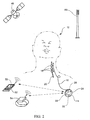
Figure 1 is a schematic representation of a human subject showing a subcutaneous vagus nerve stimulation system, having a lead extending from a battery-powered pulse generator device to electrodes attached at the left vagus nerve. -
Figure 2 is a schematic representation of a portion of a battery-powered implantable pulse generator device and a remote handheld computer device in wireless communication with the pulse generator device and configured to compute an estimate of remaining battery capacity in the pulse generator device. -
Figure 3 is a schematic diagram of the internal components of an embodiment of an implantable pulse generator for a VNS system. -
Figure 4 is a schematic diagram of a battery circuit associated with the pulse generator ofFigure 3 , which can be used to detect open circuit voltage of the battery. -
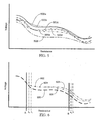
Figure 5 is a graph showing multiple experimentally obtained curves of impedance versus open circuit voltage for a particular battery. -
Figure 6 is an exemplary characteristic graph of impedance versus open circuit voltage for a given battery type based upon multiple experimentally obtained curves of impedance versus open circuit voltage for that type of battery. -
Figure 7 is a graph of the third derivative of the baseline curve ofFigure 3 , showing the roots of the function which correspond to key points in the baseline curve. -
Figure 8 is a flowchart outlining the steps in one embodiment of a method for estimating battery capacity in accordance with the present disclosure. -
Figure 9 is a graph of remaining battery capacity versus dynamic internal battery-cell resistance for a given battery. - Further aspects and advantages of the various embodiments will become apparent from consideration of the following description and drawings. These embodiments are described in sufficient detail to enable those skilled in the art to practice the invention, and it is to be understood that modifications to the various disclosed embodiments may be made, and other embodiments may be utilized, without departing from the scope of the present invention as defined in the appended claims.
- As used herein, the term "implantable" means a device that can be completely implanted into a human or animal body, with no portions of the apparatus extending outside the body after implantation.
- As used herein, the terms "implantable device" and "implantable medical device" or "IMD" mean any type of electrical device that is implantable into a human or animal body, and is configured to monitor or affect a function of the body. Examples of implantable medical devices include cardiac pacemakers, nerve stimulation devices, and implantable drug delivery devices.
- As noted above, there are a variety of battery powered devices in which it is desirable to have an accurate estimate of remaining battery power. In addition to communication and entertainment devices, this includes implantable devices that can be used for monitoring and affecting physiological or biological function of a human or animal body. Such devices include cardiac pacemakers, implantable drug delivery systems and nerve stimulation devices. Among the latter are implantable devices for vagus nerve stimulation (VNS). VNS was approved by the FDA in 1998 as an adjunctive therapy for epilepsy with partial onset seizures. VNS is achieved through an implanted pulse generator that delivers a bipolar, biphasic pulse to the vagus nerve. The implant procedure is very similar to the implantation of a pacemaker. The generator is implanted subcutaneously, typically in the upper left pectoral region. An electric lead is connected between the pulse generator and one or more electrodes that are attached to the vagus nerve. While the following description presents a system and method for estimating battery life in the context of an implantable vagus nerve stimulation system, this application is only exemplary. It is to be understood that the system and method disclosed herein can be applied to a wide variety of battery-powered electronic devices, and is not limited to the particular exemplary application in which it is shown and described.
- Shown in
Figure 1 is a schematic diagram of one embodiment of an implantable vagus nerve stimulation system, indicated generally at 10, implanted into apatient 12. The system includes apulse generator 14, and a tether orlead 16 that has one ormore electrodes 18 at its distal end. The tether and electrodes are collectively referred to as the lead, and the lead provides an interface between thepulse generator 14 and theelectrodes 18. Theelectrodes 18 are attachable to thevagus nerve 20. An implantable VNS system of this type and having these basic features is known to those of skill in the art, and is commercially available, such as from Cyberonics, Inc. of Houston, Texas. - The
pulse generator 14 can be a multi-programmable device, which allows a physician to set various parameters of operation of the device. The programmable parameters can include signal amplitude (e.g., 0-3.5 mA), frequency (e.g., 1-30 Hz), pulse width (e.g., 130-1000 µs), signal ON time (e.g., 7-60 sec) and signal OFF time (e.g., 0.2-180 min). It is to be appreciated that these pulse parameters are only exemplary, and that other parameters can also be used. The pulses can be delivered at the specified amplitude and frequency over the course of the ON time, and then during the OFF time, no stimulation takes place. This type of device typically does not stimulate continuously because it has been found that the antiepileptic effect tends to last much longer than the actual time of stimulation. In one embodiment, pulse settings can be 2 mA, at 15 Hz frequency, 250 µs pulse width, with a 30 sec ON time, and 5 min OFF time. The variability in parameters allows the physician to adjust for greater efficacy or less severe side effects, depending on the patient. - As shown in
Figure 2 , thepulse generator 14 can include within its housing a variety of components, includingbattery 22, anantenna 24, aGPS transceiver 26, and amicroprocessor 28 with digital memory. Thebattery 22 can be a rechargeable battery, and can be configured for periodic inductive recharging, though the components of a recharging system are not shown herein. Theantenna 24 is a common element for an implantable device, and can be provided to send and/or receive data and programming and control instructions from an external communications device, as discussed below. This allows the implanteddevice 14 to receive programming and control instructions from an external communications device, and to transmit data regarding operation of the pulse generation device. Communications and control with implanted devices is well known and widely used. Devices such as pacemakers and the like are routinely programmed and/or controlled via wireless communication methods, such as the Medical Information Communication System protocol (MICS), which uses radio waves to transmit information to and from implanted devices. - A more specific schematic diagram of the internal components of an embodiment of an implantable pulse generator device, indicated generally at 300, is shown in
Figure 3 . In this embodiment the pulse generator device includes a logic andcontrol unit 302, avoltage regulator unit 304, anoutput unit 306 and acrystal oscillator 308. The logic andcontrol unit 302 contains circuitry and programming for control and operation of thepulse generator device 300, along with digital memory for storing programming instructions. The logic andcontrol unit 302 is operatively coupled to anantenna 310, which allows programming and operational data to be transmitted and received by thepulse generator device 300. Theantenna 310 is driven by theoutput unit 306, which also directly provides nerve stimulation signals via thelead electrodes 312. - Also operatively connected to the logic and
control unit 302 are thecrystal oscillator 308 and thevoltage regulator 304. Thecrystal oscillator 308 provides an accurate time signal for the logic andcontrol unit 302. Thevoltage regulator 304 controls power input from thebattery 314 to the logic andcontrol unit 302. Thepulse generator device 300 can also include areed switch 316 that allows selective connection of the logic andcontrol unit 302 oroutput unit 306 to ground. This allows thepulse generator device 300 to operate in a secondary magnet mode, delivering a pre-programmed burst of stimulation when activated by an external magnet. While the elements shown inFigure 3 are illustrated as hardware elements, it is to be recognized and understood that many portions of thepulse generator device 300 can be implemented as firmware, software or the like, and that many combinations are possible. - While a Global Positioning System (GPS) transceiver (26 in
Figure 2 ) can be incorporated as a specific hardware element in the implanted pulse generation device, one of skill in the art will recognize that GPS functions can be programmed into the logic andcontrol unit 302. As another alternative, a GPS transceiver and/or corresponding programming can be placed in other locations associated with a patient's body. For example, referring back toFigure 2 , aGPS transceiver 50 can be associated with an external PDA or smart phone-type device 52, or a wristwatch or wristwatch-like device 54, or some other external computing device. Other types of wearable or external computing devices can also be used, such as a POCKET PCTM, iPhone®, a laptop computer, a special purpose portable computing device, etc. The wristwatch-like device 54 can be considered as one example of a special purpose portable computing device. The external device can functions as an activation or input/output device for the implanted device. As such, it can incorporate an output mechanism for providing indications to the user of aspects of operation of the implanted device (e.g. operational parameters, errors, battery condition, etc.). The output mechanism can provide indications such as indicator lights, alphanumeric indications, icons, audible alerts, etc. The implanted device itself can also include an output mechanism in the form of an audible alert which can be heard outside the body. Such an alert can be useful for noting error conditions, battery depletion, etc. - The
smart phone 52 andwristwatch device 54 are shown inFigure 2 with antennas, which are intended to represent the wireless communications capability of the devices, rather than the shape or position of an actual antenna structure. The antenna allows the external device to receive signals from a cellular or other mobile telephone system, represented by thecellular tower 46, or fromsatellites 48, or other communications system. The external device can be configured to transmit data to thepulse generation device 14 using Bluetooth or some other wireless transmission protocol, for example. - Performing various computational operations and/or having various hardware components included within a device other than the
pulse generation device 14 can be desirable for power conservation. For example, power-hungry microprocessing tasks and analysis can be transferred to the external device, rather than being performed by themicroprocessor 28 of the pulse generation device, with the results of those microprocessing tasks transmitted back to the implanted device. This can conserve power for the implanted device. Similarly, having an external GPS transceiver and associated microprocessor can also reduce power demands on the implanted pulse generator. A GPS transceiver that is in substantially constant communication with a GPS satellite system and a microprocessor that analyzes the positional information can use significant power, which is at a premium with implanted devices. - One microprocessing task that can be performed by an external device in communication with a battery powered device is computation of battery life. As noted above, it is desirable to have an accurate estimate of remaining battery power and battery life for a battery-powered electronic device. This is of particular interest for implanted devices, since the health of the user may depend upon the device, and direct access to the battery generally requires a surgical procedure. Thus, for example, the microprocessor associated with a
smart phone 52 orwristwatch device 54 or some other external device can be programmed to receive battery data measurements (e.g. open circuit voltage), transmitted from thepulse generator 14, and perform the analysis to estimate remaining battery life. The external device can then transmit battery information, operational commands or other information to thepulse generation device 14 or some other device. - Advantageously, a method has been developed for more accurately estimating battery capacity in an electronic device, such as an implanted pulse generator device like that shown in
Figures 1-2 . The method disclosed herein provides an adaptive algorithm to estimate time to battery depletion based on battery terminal voltage and battery resistance. Shown inFigure 4 is a schematic diagram of atheoretical battery circuit 400 for a pulse generator or other battery powered device, for measuring open circuit voltage and battery resistance. As an electronic storage battery becomes depleted, its internal resistance will increase. The battery circuit shown inFigure 4 includes aload element 402, which represents the total electrical load imposed upon the battery by the device. Thebattery circuit 400 also includes acrystal oscillator 404, which provides a time signal. The internal resistance Rbat of thebattery 406 is represented by aresistor 408. This battery circuit can be used to determine the resistance Rbat of the battery based upon the following equation:
- In this equation, Vref is the reference voltage for the battery, Vcal is the load voltage, and Ical is the load current. The reference voltage Vref can be one of several voltages, including open circuit voltage Voc (as labeled in
FIG. 4 ), a low power mode voltage, or a voltage measured at a predefined operating mode, for example. Based on direct measurement of the reference voltage and load voltage and current, using this equation the internal resistance or impedance of a battery can be determined. - By measuring the reference voltage and calculating the battery resistance of a given battery over its useful life in a given device having a given load and load current, a graph of voltage versus resistance or impedance can be plotted. A graph showing multiple experimentally-obtained
curves 500a-f of impedance versus reference voltage for a particular battery is provided inFigure 5 . These curves are exemplary of curves obtained through extensive bench testing of many batteries, with a polynomial fit applied to the results. That is, a group of batteries of a given type were successively placed in a particular device, and their voltage and impedance were plotted over the entire life of the battery. As can be seen in the graph ofFigure 5 , each battery can be expected to produce a slightly different curve because of variations in materials, manufacturing tolerances, etc. - Based upon the multiple experimentally-obtained curves 500 shown in
Figure 5 , a characteristic curve of impedance versus open circuit voltage can be determined for that battery type and size. Such acharacteristic curve 600 is provided inFigure 6 . Thecharacteristic curve 600 can be obtained by averaging (or combining through some other statistical measure of central tendency) the ordinate values of all of the voltage-resistance curves 500 that were experimentally obtained inFigure 5 . The curve inFigure 6 is an exemplary characteristic graph of impedance versus voltage for a given battery type based upon multiple experimentally obtained curves of impedance versus voltage for that type of battery. In actual practice, the characteristic curve can be extracted from data provided by the battery manufacturer. Based on numerical analysis, it has been found that this characteristic curve is a 5th order polynomial. - Once the characteristic curve is created, it is stored in memory, such as in the pulse generator (14 in
Figure 1 ) or in an external device (52 inFigure 2 ). When the device (e.g. thepulse generator device 14 inFigure 1 ) first begins using a particular battery, the battery is initially presumed to function according to thecharacteristic curve 600. However, as shown inFigure 5 , each battery is slightly different. Consequently, under the method disclosed herein, the electronic device periodically measures the voltage, calculates the resistance, and replaces the characteristic points on thegraph 600 with measured data for that specific battery. The system can then recalculate or extrapolate the 5th order polynomial curve to provide an estimate of the future voltage-resistance relationship. For example, as shown inFigure 6 , if after the initialcharacteristic curve 600 is plotted anew data point 602 representing directly determined voltage and resistance of the battery is obtained, the system can recalculate the curve and recognize a new, adapted or modifiedcurve 604. Because of its slightly different characteristics, this new curve will indicate slightly different indicator points A1 and B1. From this point forward, the new, adaptedcurve 604 will be used for battery capacity estimation, rather than the original presumedcharacteristic curve 600. Later, when anothernew data point 606 is determined, the curve recalculation can be performed again to predict anew curve 608, which will suggest revised indicator points A2 and B2, in the same manner. This process can repeat over and over throughout the life of the battery. - As a result of this process, the
characteristic curve 600 is repeatedly modified to create an adapted curve, which better reflects the performance of the actual battery within the device, instead of the averaged, characteristic data. Consequently, the voltage-resistance relationship estimate will become more accurate over time. - The indicator points A and B on the resistance/voltage curve are of particular interest. These are the points at which the curvature changes. Point A may serve as a warning that the battery is near depletion (e.g., declaring an elective replacement indicator (ERI) flag). Point B can represent end of service (EOS) of the battery. The locations of these changes in curvature can be found by taking the 3rd derivative of the characteristic curve, and finding the points where the 3rd derivative changes from positive to negative (for the first curvature change) and from negative to positive (for the second curvature change). A graph of the third
derivative curve 700 of the baseline curve ofFigure 6 , showing the roots or zero points A and B of the function which correspond to key points A and B in thebaseline curve 600, is provided inFigure 7 . -
Figure 8 is a flowchart outlining one embodiment of a method for estimating battery capacity in accordance with the present disclosure. First, a characteristic curve of resistance vs. voltage is obtained and stored within the device (800). This is a curve like that shown inFigure 6 . The characteristic curve can be established in at least a couple of ways. It can be obtained from the battery manufacturer, or it can be derived by experimentally plotting and averaging multiple curves of resistance versus voltage for a representative sample of batteries. A polynomial curve is numerically fit to the experimental data, and the resulting characteristic curve is then stored in memory. - Once the characteristic curve has been established and the battery installed in the electronic device, periodic determinations of voltage and resistance are made on the device (802) and these values are used to update the characteristic curve (804) with new data points. That is, with each measurement, a new data point representing the newly determined voltage and resistance is plotted and compared to the prior curve. The difference between the new value and the value predicted by the curve allows the numerical estimation of a new trend for the curve, allowing the curve to be modified in view of the new trend. Once again, the computations for this curve modification can be carried out by the external device. Adapting the curve in this manner with actual values allows the estimate to become continuously more accurate over time. The adjusted characteristic curve is also stored in memory, and is used for further estimation.
- The indicator points of the adaptive algorithm are determined by the location of the changes in curvature of the characteristic curve. In order to find these change points, the third derivative of the adapted characteristic curve is taken (806). These change points can be determined by finding the roots of the third derivative (808) of the polynomial curve. That is, the curvature change at "A" in
Figure 6 corresponds to the root point "A" of the third derivative curve inFigure 7 . Similarly, the curvature change at "B" inFigure 6 corresponds to the root point "B" of the third derivative curve inFigure 7 . Reaching point A signifies that the battery is approaching depletion, and "B" signifies end of service (EOS) of the battery. - Once the roots of the third derivative curve have been determined, the next step is to determine where on that curve the battery's current condition lies (810). This involves using the resistance information from 802 to find the corresponding point on the third derivative curve. The position of a point along the third derivative curve allows one to identify whether the battery is before ERI (the near depletion point A), between ERI (point A) and EOS (point B), or has passed EOS. The relative position along this curve thus gives a general or rough indication of the battery condition (812) - that is, whether the battery has not yet reached a near depletion state, has passed the near depletion point but not yet reached end of service, or whether the battery has passed the end of service position. This battery condition indication by itself can be provided to a user through some output device, such as an indicator light, an alphanumeric display, an iconic display, etc. (814).
- Comparing the battery's voltage and resistance to the third derivative curve only allows for a determination of whether the battery is close to being depleted (ERI) or EOS has been reached. In order to determine battery capacity, a second curve of resistance vs. capacity is compared to the resistance value obtained from the updated characteristic resistance vs. voltage curve. As indicated by the arrows in
FIG. 8 , in addition to or instead of providing the rough determination of battery condition that the third derivative curve provides alone (812), the system can proceed to 811, which allows one to estimate the remaining battery life by comparing the calculated battery resistance with a battery capacity versus battery resistance curve determined by empirical data from samples of the given battery.Figure 9 illustrates an example of a plot of battery capacity (measured in milliamp-hours) versus the internal battery cell resistance (Ohms). This is a curve that can be obtained from a battery manufacturer, and can provide a battery characterization having a total distribution variation of +/- 3-Sigma. Empiricalbattery capacity curve 900 is created by measuring the battery capacity versus battery resistance for numerous batteries with the same chemistry and construction, and providing a large number of data points 904. Directly connected together, these data points produce a measuredbattery capacity curve 902 that is somewhat jagged. However, smoothing of the data allows the creation of the single linebattery capacity curve 900, which provides a close approximation of the measured curve. - The value of the battery resistance calculated in 802 can then be found along the horizontal axis of the graph of
FIG. 9 , and used to find the corresponding point on thecurve 900, which will indicate a remaining battery capacity value indicated on the vertical axis in milliamp-hours (mA-hr). Thecurve 900 provides two battery capacity values for a range of resistance values (as can be seen from the upper and lower portions of the curve 900). This is because internal resistance tends to drop during the early life of a battery, then increase during the later part of the battery's life. However, the relative proximity to the ERI and EOS points (determined in 810) can provide an indication of which portion of the curve to use. For example, if the calculated resistance is 8 Ohms and the system has determined in 812 that the battery has passed the near depletion or ERI point, the corresponding point on the battery capacity curve will indicate a remaining capacity of about 200 mA-hr (rather than approximately 1000 mA-hr). Other rough measures of relative battery usage, such as a coulomb counter or time counter, can also be used to determine the portion of thecurve 900 that applies in any given circumstance. - Once the battery capacity has been determined in 811, a suitable output indicating the remaining battery capacity can be provided to a user (814). This output can be via a digital screen, indicator lights, icons, or other types of indicia. Further, this output can indicate the amount of battery life consumed or remaining using time estimates, percentage estimates, or icons depicting the condition of the battery. The output provided in 814 can include the rough battery condition determined in 812, or the actual remaining capacity of the battery determined in 811, or both. For example, if the battery's condition has not yet reached point A, the battery will not yet be at the near depletion point, and a suitable icon can be displayed showing just the rough battery condition determined in 812. On the other hand, at any point during the battery's life, an indication of remaining milliamp hours or percent of total capacity, as determined in 811, can be displayed using an iconic display or alphanumeric display, for example. As another example, if the battery's condition has passed point A but not yet reached point B, as determined at 812, the battery is past the near depletion (ERI) point, but not yet at end of service, and a suitable icon can be displayed, along with an indication of remaining milliamp hours (or percent of capacity) remaining, as determined in 811. Once reaching point B, the battery is depleted, and may have only enough power to provide the battery indication itself, and perhaps maintain memory, without providing any power for operation of the device. At this point a dead battery icon can be displayed. At any time during the life of the battery, an estimate of the general condition of the battery (812) and/or and estimate of time remaining before end of service (EOS) can be made (811), and these estimates can be provided to a user, such as via a digital screen, etc. The time estimate can be in terms of remaining milliamp hours or in terms of days or hours of service, for example.
- This battery capacity estimation method, while initially based on characteristic battery data, is adjusted over time to better represent the individual battery in the device. By using an adaptive algorithm, the remaining battery capacity and time to estimated depletion can be determined more accurately. Also, the adjusted characteristic curve becomes more accurate over time, providing a better estimate of remaining capacity when most important, near the end of service.
- Advantageously, in an implantable device, the only functions performed on the device can be the measurement of actual voltage and the calculation of battery resistance and storage of the determined data points. The external device (e.g. a handheld computer) can store the baseline curve (
FIG. 5 ), which is common to all batteries of a given type. As the new data points (voltage and resistance) are transmitted, the handheld computer can perform the update to the baseline curve (FIG. 5 ) and store the modified curve (FIG. 6 ), derivative calculation (FIG. 7 ), and estimated time to battery depletion computations. The handheld device can also store the resistance vs. battery capacity characteristic curve (FIG. 9 ), which has been extracted from manufacturer's provided data, and can be used as a common reference for all batteries. - The invention is as set out in the appended claims.
Claims (15)
- A method for estimating capacity of a battery in an implantable medical device, comprising the following steps:step a: obtaining a characteristic curve of voltage versus resistance for the battery;step b: periodically determining voltage and resistance of the battery; andstep c: comparing the resistance with a third derivative function of the characteristic curve, the third derivative function having roots representing near depletion of the battery and end of service of the battery, respectively.
- A method in accordance with claim 1, further comprising wirelessly transmitting the voltage and resistance of the battery to an external computing device, the external computing device having the characteristic curve stored in memory therein, and comparing the resistance with the third derivative function.
- A method in accordance with claim 2, wherein the external computing device includes at least one of a PDA, a smartphone, a laptop computer, and a special purpose portable computing device.
- A method in accordance with claim 2, further comprising wirelessly transmitting data from the external computing device via a wireless communications network.
- A method in accordance with claim 1, further comprising the following steps:step d: comparing the resistance with the characteristic curve; andstep e: recalculating the characteristic curve to create an adapted characteristic curve intended to match actual varying resistance in the battery; and
wherein comparing the resistance with the third derivative function comprises comparing the resistance with a third derivative of the adapted characteristic curve. - A method in accordance with claim 5, further comprising repeating steps (b) through (e) as defined in claims 1 and 5 throughout the life of the battery in the implantable medical device.
- A method in accordance with claim 1, further comprising providing an indication to a user of the implantable medical device of a position of the measured value relative to at least one of the near depletion and end of service points, respectively, in particular, further comprising comparing the resistance with a battery capacity curve, and determining an estimate of time to end of service of the battery, or further comprising comparing the resistance with a battery capacity curve, and determining an estimate to time to end of service of the battery.
- A method in accordance with claim 1, wherein obtaining the characteristic curve comprises:measuring voltage and resistance of a plurality of batteries of a same type as the battery;plotting an individual battery characteristic curve of voltage versus resistance for each of the plurality of batteries; andcalculating a statistical measure of central tendency of the individual battery characteristic curves to obtain the characteristic curve.
- A method in accordance with claim 1 further comprising
measuring a reference voltage and calculating a resistance value of the battery;
comparing the voltage and resistance values with a characteristic curve of resistance versus voltage for the battery; and estimating future performance characteristics of the battery based upon a third derivative of the characteristic curve and a position of the voltage and resistance values thereon; and
providing an indication to a user of the future performance characteristics of the battery. - A method in accordance with claim 9, wherein the reference voltage includes at least one of an open circuit voltage, a low power mode voltage, and a voltage measured at a pre-defined operating mode.
- A method in accordance with claim 9, further comprising creating a modified characteristic curve based upon the voltage and resistance values, and estimating future performance characteristics of the battery based upon a third derivative of the modified characteristic curve; or comparing the resistance value to a curve of battery capacity, and estimating a time to end of service of the battery as future performance characteristics.
- A method in accordance with claim 9, wherein the future performance characteristics of the battery include time to depletion of the battery and time to end of service of the battery.
- An implantable system, comprising an implantable device having a battery and a battery circuit capable of measuring voltage and calculating a resistance of the battery; an output mechanism adapted to provide an indication to a user of future performance characteristics of the battery; and a computer readable storage medium comprising a computer program product for performing the steps of claims 1-12.
- A system in accordance with claim 13, wherein the output mechanism comprises an external computing device having a microprocessor and digital memory for storing at least a part of the computer program product, wherein comparing the voltage and resistance values with the characteristic curve and estimating future performance characteristics of the battery are performed by the external computing device, and wherein the external computing device includes at least one of a PDA, a smartphone, a laptop computer, and a special purpose portable computing device.
- A system in accordance with claim 13, wherein the implantable device comprises a pulse generator of a vagus nerve stimulation system.
Applications Claiming Priority (2)
| Application Number | Priority Date | Filing Date | Title |
|---|---|---|---|
| US13/016,510 US8577459B2 (en) | 2011-01-28 | 2011-01-28 | System and method for estimating battery capacity |
| PCT/US2011/061609 WO2012102780A1 (en) | 2011-01-28 | 2011-11-21 | System and method for estimating battery capacity |
Publications (2)
| Publication Number | Publication Date |
|---|---|
| EP2667940A1 EP2667940A1 (en) | 2013-12-04 |
| EP2667940B1 true EP2667940B1 (en) | 2015-01-07 |
Family
ID=45349560
Family Applications (1)
| Application Number | Title | Priority Date | Filing Date |
|---|---|---|---|
| EP11797064.0A Not-in-force EP2667940B1 (en) | 2011-01-28 | 2011-11-21 | System and method for estimating battery capacity |
Country Status (3)
| Country | Link |
|---|---|
| US (1) | US8577459B2 (en) |
| EP (1) | EP2667940B1 (en) |
| WO (1) | WO2012102780A1 (en) |
Cited By (1)
| Publication number | Priority date | Publication date | Assignee | Title |
|---|---|---|---|---|
| DE202015106539U1 (en) | 2015-12-01 | 2017-03-06 | Rp-Technik Gmbh | Condition indicator and communication system for controlling accumulators |
Families Citing this family (15)
| Publication number | Priority date | Publication date | Assignee | Title |
|---|---|---|---|---|
| US8761885B2 (en) * | 2011-04-29 | 2014-06-24 | Cyberonics, Inc. | Battery life estimation based on voltage depletion rate |
| US9007030B2 (en) * | 2011-12-23 | 2015-04-14 | Automotive Research & Testing Center | Method of estimating battery remaining power in electric vehicle |
| US9166434B2 (en) | 2012-06-29 | 2015-10-20 | Intel Corporation | Universal charger |
| US9411398B2 (en) * | 2012-09-28 | 2016-08-09 | Intel Corporation | Electronic device and method to extend battery life |
| US9287702B2 (en) | 2012-12-27 | 2016-03-15 | Intel Corporation | Universal power interface |
| US9281699B2 (en) | 2012-12-27 | 2016-03-08 | Intel Corporation | Electronic device to be powered by alternative power source |
| US9446244B2 (en) * | 2014-01-16 | 2016-09-20 | Boston Scientific Neuromodulation Corporation | Determining and forecasting end of life for an implantable medical device having a rechargeable battery |
| US9612643B2 (en) | 2014-03-29 | 2017-04-04 | Intel Corporation | Controlling the CPU slew rates based on the battery state of charge |
| US9601938B2 (en) | 2014-05-15 | 2017-03-21 | Intel Corporation | Battery charger for different power sources |
| US10338153B2 (en) * | 2015-03-03 | 2019-07-02 | Samsung Electronics Co., Ltd. | Method and apparatus for automatically estimating remaining useful life (RUL) of battery in real time |
| US9864041B1 (en) * | 2015-07-14 | 2018-01-09 | Google Llc | Systems and methods for beacon device fleet management |
| CN110659605B (en) * | 2019-09-21 | 2021-06-08 | 哈尔滨理工大学 | A Lithium Battery Classification Method Based on Feature Point Extraction of Battery Characteristic Curve |
| CN111556556B (en) * | 2020-05-09 | 2023-03-14 | 上海锐伟电子科技有限公司 | A control method for displaying battery capacity of a mobile terminal |
| CN115715216A (en) * | 2020-06-16 | 2023-02-24 | 科利耳有限公司 | Auditory prosthesis battery autonomy configuration |
| CN114325400B (en) * | 2021-11-24 | 2024-03-19 | 北京百度网讯科技有限公司 | Method, device, electronic equipment and storage medium for determining remaining battery life |
Family Cites Families (102)
| Publication number | Priority date | Publication date | Assignee | Title |
|---|---|---|---|---|
| US3796221A (en) | 1971-07-07 | 1974-03-12 | N Hagfors | Apparatus for delivering electrical stimulation energy to body-implanted apparatus with signal-receiving means |
| US4324251A (en) | 1980-06-10 | 1982-04-13 | Pacesetter Systems, Inc. | Battery monitoring means and method for an implantable tissue stimulator |
| US4850356A (en) | 1980-08-08 | 1989-07-25 | Darox Corporation | Defibrillator electrode system |
| US4556061A (en) | 1982-08-18 | 1985-12-03 | Cordis Corporation | Cardiac pacer with battery consumption monitor circuit |
| US4488555A (en) | 1982-12-13 | 1984-12-18 | Mieczyslaw Mirowski | Battery condition warning system for medical implant |
| US4867164A (en) | 1983-09-14 | 1989-09-19 | Jacob Zabara | Neurocybernetic prosthesis |
| US5025807A (en) | 1983-09-14 | 1991-06-25 | Jacob Zabara | Neurocybernetic prosthesis |
| US4702254A (en) | 1983-09-14 | 1987-10-27 | Jacob Zabara | Neurocybernetic prosthesis |
| DE3535181A1 (en) | 1985-10-02 | 1987-04-09 | Siemens Ag | HEART PACEMAKER |
| DE3535202A1 (en) | 1985-10-02 | 1987-04-02 | Siemens Ag | CIRCUIT ARRANGEMENT FOR DETERMINING THE CHARGE STATE OF THE BATTERY OF A HEART PACEMAKER |
| US4899750A (en) | 1988-04-19 | 1990-02-13 | Siemens-Pacesetter, Inc. | Lead impedance scanning system for pacemakers |
| US4964407A (en) | 1988-08-29 | 1990-10-23 | Intermedics, Inc. | Method and apparatus for assuring pacer programming is compatible with the lead |
| JP2823688B2 (en) | 1989-02-14 | 1998-11-11 | ペースセッター アクチボラゲット | Electromedical device implantable in vivo |
| US5876425A (en) | 1989-09-22 | 1999-03-02 | Advanced Bionics Corporation | Power control loop for implantable tissue stimulator |
| US5522865A (en) | 1989-09-22 | 1996-06-04 | Alfred E. Mann Foundation For Scientific Research | Voltage/current control system for a human tissue stimulator |
| US5154172A (en) | 1989-11-13 | 1992-10-13 | Cyberonics, Inc. | Constant current sources with programmable voltage source |
| US5179950A (en) | 1989-11-13 | 1993-01-19 | Cyberonics, Inc. | Implanted apparatus having micro processor controlled current and voltage sources with reduced voltage levels when not providing stimulation |
| JPH0659320B2 (en) | 1989-11-20 | 1994-08-10 | 三洋電機株式会社 | Wireless low frequency therapy device |
| US5127404A (en) | 1990-01-22 | 1992-07-07 | Medtronic, Inc. | Telemetry format for implanted medical device |
| US5137020A (en) | 1990-11-29 | 1992-08-11 | Medtronic, Inc. | Battery impedance measurement apparatus |
| US5137021A (en) | 1990-11-29 | 1992-08-11 | Medtronic, Inc. | Lead current measurement circuit |
| US5188104A (en) | 1991-02-01 | 1993-02-23 | Cyberonics, Inc. | Treatment of eating disorders by nerve stimulation |
| US5263480A (en) | 1991-02-01 | 1993-11-23 | Cyberonics, Inc. | Treatment of eating disorders by nerve stimulation |
| US5269303A (en) | 1991-02-22 | 1993-12-14 | Cyberonics, Inc. | Treatment of dementia by nerve stimulation |
| US5215086A (en) | 1991-05-03 | 1993-06-01 | Cyberonics, Inc. | Therapeutic treatment of migraine symptoms by stimulation |
| US5299569A (en) | 1991-05-03 | 1994-04-05 | Cyberonics, Inc. | Treatment of neuropsychiatric disorders by nerve stimulation |
| US5335657A (en) | 1991-05-03 | 1994-08-09 | Cyberonics, Inc. | Therapeutic treatment of sleep disorder by nerve stimulation |
| US5222494A (en) | 1991-07-31 | 1993-06-29 | Cyberonics, Inc. | Implantable tissue stimulator output stabilization system |
| US5231988A (en) | 1991-08-09 | 1993-08-03 | Cyberonics, Inc. | Treatment of endocrine disorders by nerve stimulation |
| US5201865A (en) | 1991-10-28 | 1993-04-13 | Medtronic, Inc. | Medical lead impedance measurement system |
| US5201808A (en) | 1992-02-10 | 1993-04-13 | Telectronics Pacing Systems, Inc. | Minute volume rate-responsive pacemaker employing impedance sensing on a unipolar lead |
| US5352968A (en) | 1992-05-28 | 1994-10-04 | Apple Computer, Inc. | Battery charge state determination |
| US5330515A (en) | 1992-06-17 | 1994-07-19 | Cyberonics, Inc. | Treatment of pain by vagal afferent stimulation |
| US5391193A (en) | 1993-02-05 | 1995-02-21 | Medtronic, Inc. | Method and apparatus for battery depletion monitoring |
| US5352962A (en) | 1993-04-19 | 1994-10-04 | Sug Lithography Systems, Inc. | Brushless polyphase reduced force variation motor |
| US5372607A (en) | 1993-06-23 | 1994-12-13 | Medtronic, Inc. | Method and apparatus for monitoring pacemaker intervals |
| US5431692A (en) | 1993-08-02 | 1995-07-11 | Telectronics Pacing Systems, Inc. | Method and apparatus for testing compatibility of lead polarity and polarity programming of a cardiac stimulator |
| US5496353A (en) | 1993-09-23 | 1996-03-05 | Grandjean; Pierre A. | End-of-life indication system for implantable pulse generator |
| US5458624A (en) | 1993-10-06 | 1995-10-17 | Vitatron Medical, B.V. | Cardiac pacing system with improved end-of-life detector |
| US5507786A (en) | 1994-04-14 | 1996-04-16 | Pacesetter, Inc. | System and method for measuring and storing parametric data pertaining to operating characteristics of an implantable medical device |
| US5540734A (en) | 1994-09-28 | 1996-07-30 | Zabara; Jacob | Cranial nerve stimulation treatments using neurocybernetic prosthesis |
| US5534018A (en) | 1994-11-30 | 1996-07-09 | Medtronic, Inc. | Automatic lead recognition for implantable medical device |
| US5549646A (en) | 1994-12-06 | 1996-08-27 | Pacesetter, Inc. | Periodic electrical lead intergrity testing system and method for implantable cardiac stimulating devices |
| US5571150A (en) | 1994-12-19 | 1996-11-05 | Cyberonics, Inc. | Treatment of patients in coma by nerve stimulation |
| US5620474A (en) | 1995-04-24 | 1997-04-15 | Vitatron Medical, B.V. | System and method for determining indicated pacemaker replacement time based upon battery impedance measurement |
| JP3540437B2 (en) | 1995-06-05 | 2004-07-07 | 本田技研工業株式会社 | Battery status determination device |
| US5540730A (en) | 1995-06-06 | 1996-07-30 | Cyberonics, Inc. | Treatment of motility disorders by nerve stimulation |
| US5707400A (en) | 1995-09-19 | 1998-01-13 | Cyberonics, Inc. | Treating refractory hypertension by nerve stimulation |
| EP0777286B1 (en) | 1995-11-08 | 1998-03-04 | LITRONIK Batterietechnologie GmbH & Co. | Implantable battery powered apparatus |
| US6108579A (en) | 1996-04-15 | 2000-08-22 | Pacesetter, Inc. | Battery monitoring apparatus and method for programmers of cardiac stimulating devices |
| US5741311A (en) | 1996-06-27 | 1998-04-21 | Medtronic, Inc. | Implantable medical device system with method for determining lead condition |
| US5769873A (en) | 1996-10-15 | 1998-06-23 | Pacesetter, Inc. | Meter for measuring battery charge delivered in an implantable device |
| US5755742A (en) | 1996-11-05 | 1998-05-26 | Medtronic, Inc. | Cardioversion/defibrillation lead impedance measurement system |
| US5741307A (en) | 1997-01-21 | 1998-04-21 | Pacesetter, Inc. | Method for determining an ICD replacement time |
| US5814088A (en) | 1997-03-26 | 1998-09-29 | Sulzer Intermedics Inc. | Cardiac stimulator with lead failure detector and warning system |
| US6631293B2 (en) | 1997-09-15 | 2003-10-07 | Cardiac Pacemakers, Inc. | Method for monitoring end of life for battery |
| US6167309A (en) | 1997-09-15 | 2000-12-26 | Cardiac Pacemakers, Inc. | Method for monitoring end of life for battery |
| US5897577A (en) | 1997-11-07 | 1999-04-27 | Medtronic, Inc. | Pacing lead impedance monitoring circuit and method |
| US5891179A (en) | 1997-11-20 | 1999-04-06 | Paceseter, Inc. | Method and apparatus for monitoring and displaying lead impedance in real-time for an implantable medical device |
| US5928272A (en) | 1998-05-02 | 1999-07-27 | Cyberonics, Inc. | Automatic activation of a neurostimulator device using a detection algorithm based on cardiac activity |
| AU4959799A (en) | 1998-06-26 | 2000-01-17 | Advanced Bionics Corporation | Programmable current output stimulus stage for implantable device |
| US6185461B1 (en) | 1998-07-01 | 2001-02-06 | Pacesetter, Inc. | System and method for verification of recommended replacement time indication in an implantable cardiac stimulation device |
| US6148235A (en) | 1998-07-17 | 2000-11-14 | Vitatron Medical, B.V. | Implantable stimulator with battery status measurement |
| US6212431B1 (en) | 1998-09-08 | 2001-04-03 | Advanced Bionics Corporation | Power transfer circuit for implanted devices |
| US6016448A (en) | 1998-10-27 | 2000-01-18 | Medtronic, Inc. | Multilevel ERI for implantable medical devices |
| US6073050A (en) | 1998-11-10 | 2000-06-06 | Advanced Bionics Corporation | Efficient integrated RF telemetry transmitter for use with implantable device |
| US6721600B2 (en) | 2000-01-19 | 2004-04-13 | Medtronic, Inc. | Implantable lead functional status monitor and method |
| US6317633B1 (en) | 1999-01-19 | 2001-11-13 | Medtronic, Inc. | Implantable lead functional status monitor and method |
| US6341236B1 (en) | 1999-04-30 | 2002-01-22 | Ivan Osorio | Vagal nerve stimulation techniques for treatment of epileptic seizures |
| US6587719B1 (en) | 1999-07-01 | 2003-07-01 | Cyberonics, Inc. | Treatment of obesity by bilateral vagus nerve stimulation |
| SE9902734D0 (en) | 1999-07-19 | 1999-07-19 | Pacesetter Ab | Battery status detection |
| US6553263B1 (en) | 1999-07-30 | 2003-04-22 | Advanced Bionics Corporation | Implantable pulse generators using rechargeable zero-volt technology lithium-ion batteries |
| US6820019B1 (en) | 1999-07-31 | 2004-11-16 | Medtronic, Inc. | Device and method for determining and communicating the remaining life of a battery in an implantable neurological tissue stimulating device |
| US6445951B1 (en) | 1999-10-12 | 2002-09-03 | Pacesetter, Inc. | Implantable cardiac stimulating device incorporating high frequency low amplitude lead impedance measurement |
| US6473644B1 (en) | 1999-10-13 | 2002-10-29 | Cyberonics, Inc. | Method to enhance cardiac capillary growth in heart failure patients |
| US6400988B1 (en) | 2000-02-18 | 2002-06-04 | Pacesetter, Inc. | Implantable cardiac device having precision RRT indication |
| US6490486B1 (en) | 2000-04-27 | 2002-12-03 | Pacesetter, Inc. | Implantable cardiac stimulation device and method that monitors displacement of an implanted lead |
| US6453198B1 (en) | 2000-04-28 | 2002-09-17 | Medtronic, Inc. | Power management for an implantable medical device |
| US6620186B2 (en) | 2000-05-25 | 2003-09-16 | International Business Machines Corporation | Method and system for medical lead impedance test |
| US6687538B1 (en) | 2000-06-19 | 2004-02-03 | Medtronic, Inc. | Trial neuro stimulator with lead diagnostics |
| US6662053B2 (en) | 2000-08-17 | 2003-12-09 | William N. Borkan | Multichannel stimulator electronics and methods |
| JP4759795B2 (en) | 2000-09-28 | 2011-08-31 | 株式会社Gsユアサ | Rechargeable battery remaining capacity detection method |
| US6745077B1 (en) | 2000-10-11 | 2004-06-01 | Advanced Bionics Corporation | Electronic impedance transformer for inductively-coupled load stabilization |
| US6609025B2 (en) | 2001-01-02 | 2003-08-19 | Cyberonics, Inc. | Treatment of obesity by bilateral sub-diaphragmatic nerve stimulation |
| US6490484B2 (en) | 2001-01-24 | 2002-12-03 | Cardiac Pacemakers, Inc. | Apparatus and method for estimating battery condition in implantable cardioverter/defibrillators |
| US6622047B2 (en) | 2001-07-28 | 2003-09-16 | Cyberonics, Inc. | Treatment of neuropsychiatric disorders by near-diaphragmatic nerve stimulation |
| US6622038B2 (en) | 2001-07-28 | 2003-09-16 | Cyberonics, Inc. | Treatment of movement disorders by near-diaphragmatic nerve stimulation |
| US6648823B2 (en) | 2001-07-31 | 2003-11-18 | Medtronic, Inc. | Method and system of follow-up support for a medical device |
| US6622041B2 (en) | 2001-08-21 | 2003-09-16 | Cyberonics, Inc. | Treatment of congestive heart failure and autonomic cardiovascular drive disorders |
| US6658294B1 (en) | 2001-08-29 | 2003-12-02 | Pacesetter, Inc. | Implantable cardiac device having an impedance monitoring circuit and method |
| US6671552B2 (en) | 2001-10-02 | 2003-12-30 | Medtronic, Inc. | System and method for determining remaining battery life for an implantable medical device |
| US6804557B1 (en) | 2001-10-11 | 2004-10-12 | Pacesetter, Inc. | Battery monitoring system for an implantable medical device |
| CA2926344C (en) | 2001-10-17 | 2018-06-19 | Compex Technologies, Inc. | Electrical nerve stimulation stimulator |
| US7904161B2 (en) | 2001-10-22 | 2011-03-08 | Oscor Inc. | Lead adaptor having low resistance conductors and/or encapsulated housing |
| US6760624B2 (en) | 2001-12-03 | 2004-07-06 | Cardiac Pacemakers, Inc. | Method and apparatus for measuring lead impedance in an implantable cardiac rhythm management device |
| EP1601413B1 (en) | 2003-02-21 | 2006-09-20 | Medtronic, Inc. | Implantable neurostimulator programming with battery longevity indication |
| US6901293B2 (en) | 2003-04-07 | 2005-05-31 | Medtronic, Inc. | System and method for monitoring power source longevity of an implantable medical device |
| US6940255B2 (en) | 2003-10-23 | 2005-09-06 | Cardiac Pacemakers, Inc. | Battery charge indicator such as for an implantable medical device |
| US7813801B2 (en) | 2005-12-15 | 2010-10-12 | Cardiac Pacemakers, Inc. | Implantable medical device powered by rechargeable battery |
| JP2007280935A (en) | 2006-03-15 | 2007-10-25 | Sanyo Electric Co Ltd | Primary battery life judgment method |
| US8055343B2 (en) | 2006-10-20 | 2011-11-08 | Cardiac Pacemakers, Inc. | Dynamic battery management in an implantable device |
| US8374807B2 (en) * | 2008-11-13 | 2013-02-12 | Lockheed Martin Corporation | Method and apparatus that detects state of charge (SOC) of a battery |
-
2011
- 2011-01-28 US US13/016,510 patent/US8577459B2/en not_active Expired - Fee Related
- 2011-11-21 WO PCT/US2011/061609 patent/WO2012102780A1/en not_active Ceased
- 2011-11-21 EP EP11797064.0A patent/EP2667940B1/en not_active Not-in-force
Cited By (2)
| Publication number | Priority date | Publication date | Assignee | Title |
|---|---|---|---|---|
| DE202015106539U1 (en) | 2015-12-01 | 2017-03-06 | Rp-Technik Gmbh | Condition indicator and communication system for controlling accumulators |
| EP3179261A1 (en) | 2015-12-01 | 2017-06-14 | RP-Technik GmbH | Status indicator and communication system for controlling batteries and associated monitoring and communication method |
Also Published As
| Publication number | Publication date |
|---|---|
| US8577459B2 (en) | 2013-11-05 |
| US20120197341A1 (en) | 2012-08-02 |
| EP2667940A1 (en) | 2013-12-04 |
| WO2012102780A1 (en) | 2012-08-02 |
Similar Documents
| Publication | Publication Date | Title |
|---|---|---|
| EP2667940B1 (en) | System and method for estimating battery capacity | |
| EP2701799B1 (en) | Battery life estimation based on voltage depletion rate | |
| EP1784239B1 (en) | Power supply monitoring for an implantable device | |
| US8055343B2 (en) | Dynamic battery management in an implantable device | |
| US7769455B2 (en) | Power supply monitoring for an implantable device | |
| US6671552B2 (en) | System and method for determining remaining battery life for an implantable medical device | |
| US7450991B2 (en) | Systems and methods used to reserve a constant battery capacity | |
| EP3417908B1 (en) | Method and system for detecting early battery depletion condition | |
| US9220826B2 (en) | Method and apparatus for accurately tracking available charge in a transcutaneous energy transfer system | |
| US20150349385A1 (en) | Method and System for Predicting Useful Life of a Rechargeable Battery | |
| EP2250513A1 (en) | Estimating remaining battery service life in an implantable medical device | |
| US8868187B2 (en) | Battery depth of discharge in an implantable device | |
| US20140278168A1 (en) | Elective replacement indication generation | |
| EP1784240A2 (en) | Impedance measurement for an implantable device |
Legal Events
| Date | Code | Title | Description |
|---|---|---|---|
| PUAI | Public reference made under article 153(3) epc to a published international application that has entered the european phase |
Free format text: ORIGINAL CODE: 0009012 |
|
| 17P | Request for examination filed |
Effective date: 20130726 |
|
| AK | Designated contracting states |
Kind code of ref document: A1 Designated state(s): AL AT BE BG CH CY CZ DE DK EE ES FI FR GB GR HR HU IE IS IT LI LT LU LV MC MK MT NL NO PL PT RO RS SE SI SK SM TR |
|
| DAX | Request for extension of the european patent (deleted) | ||
| GRAP | Despatch of communication of intention to grant a patent |
Free format text: ORIGINAL CODE: EPIDOSNIGR1 |
|
| INTG | Intention to grant announced |
Effective date: 20140616 |
|
| GRAS | Grant fee paid |
Free format text: ORIGINAL CODE: EPIDOSNIGR3 |
|
| GRAA | (expected) grant |
Free format text: ORIGINAL CODE: 0009210 |
|
| AK | Designated contracting states |
Kind code of ref document: B1 Designated state(s): AL AT BE BG CH CY CZ DE DK EE ES FI FR GB GR HR HU IE IS IT LI LT LU LV MC MK MT NL NO PL PT RO RS SE SI SK SM TR |
|
| REG | Reference to a national code |
Ref country code: GB Ref legal event code: FG4D |
|
| REG | Reference to a national code |
Ref country code: CH Ref legal event code: EP |
|
| REG | Reference to a national code |
Ref country code: IE Ref legal event code: FG4D |
|
| REG | Reference to a national code |
Ref country code: AT Ref legal event code: REF Ref document number: 705275 Country of ref document: AT Kind code of ref document: T Effective date: 20150215 |
|
| REG | Reference to a national code |
Ref country code: DE Ref legal event code: R096 Ref document number: 602011013027 Country of ref document: DE Effective date: 20150226 |
|
| REG | Reference to a national code |
Ref country code: NL Ref legal event code: VDEP Effective date: 20150107 |
|
| REG | Reference to a national code |
Ref country code: AT Ref legal event code: MK05 Ref document number: 705275 Country of ref document: AT Kind code of ref document: T Effective date: 20150107 |
|
| REG | Reference to a national code |
Ref country code: LT Ref legal event code: MG4D |
|
| PG25 | Lapsed in a contracting state [announced via postgrant information from national office to epo] |
Ref country code: SE Free format text: LAPSE BECAUSE OF FAILURE TO SUBMIT A TRANSLATION OF THE DESCRIPTION OR TO PAY THE FEE WITHIN THE PRESCRIBED TIME-LIMIT Effective date: 20150107 Ref country code: LT Free format text: LAPSE BECAUSE OF FAILURE TO SUBMIT A TRANSLATION OF THE DESCRIPTION OR TO PAY THE FEE WITHIN THE PRESCRIBED TIME-LIMIT Effective date: 20150107 Ref country code: BG Free format text: LAPSE BECAUSE OF FAILURE TO SUBMIT A TRANSLATION OF THE DESCRIPTION OR TO PAY THE FEE WITHIN THE PRESCRIBED TIME-LIMIT Effective date: 20150407 Ref country code: NO Free format text: LAPSE BECAUSE OF FAILURE TO SUBMIT A TRANSLATION OF THE DESCRIPTION OR TO PAY THE FEE WITHIN THE PRESCRIBED TIME-LIMIT Effective date: 20150407 Ref country code: HR Free format text: LAPSE BECAUSE OF FAILURE TO SUBMIT A TRANSLATION OF THE DESCRIPTION OR TO PAY THE FEE WITHIN THE PRESCRIBED TIME-LIMIT Effective date: 20150107 Ref country code: FI Free format text: LAPSE BECAUSE OF FAILURE TO SUBMIT A TRANSLATION OF THE DESCRIPTION OR TO PAY THE FEE WITHIN THE PRESCRIBED TIME-LIMIT Effective date: 20150107 Ref country code: ES Free format text: LAPSE BECAUSE OF FAILURE TO SUBMIT A TRANSLATION OF THE DESCRIPTION OR TO PAY THE FEE WITHIN THE PRESCRIBED TIME-LIMIT Effective date: 20150107 |
|
| PG25 | Lapsed in a contracting state [announced via postgrant information from national office to epo] |
Ref country code: NL Free format text: LAPSE BECAUSE OF FAILURE TO SUBMIT A TRANSLATION OF THE DESCRIPTION OR TO PAY THE FEE WITHIN THE PRESCRIBED TIME-LIMIT Effective date: 20150107 Ref country code: RS Free format text: LAPSE BECAUSE OF FAILURE TO SUBMIT A TRANSLATION OF THE DESCRIPTION OR TO PAY THE FEE WITHIN THE PRESCRIBED TIME-LIMIT Effective date: 20150107 Ref country code: GR Free format text: LAPSE BECAUSE OF FAILURE TO SUBMIT A TRANSLATION OF THE DESCRIPTION OR TO PAY THE FEE WITHIN THE PRESCRIBED TIME-LIMIT Effective date: 20150408 Ref country code: IS Free format text: LAPSE BECAUSE OF FAILURE TO SUBMIT A TRANSLATION OF THE DESCRIPTION OR TO PAY THE FEE WITHIN THE PRESCRIBED TIME-LIMIT Effective date: 20150507 Ref country code: LV Free format text: LAPSE BECAUSE OF FAILURE TO SUBMIT A TRANSLATION OF THE DESCRIPTION OR TO PAY THE FEE WITHIN THE PRESCRIBED TIME-LIMIT Effective date: 20150107 Ref country code: AT Free format text: LAPSE BECAUSE OF FAILURE TO SUBMIT A TRANSLATION OF THE DESCRIPTION OR TO PAY THE FEE WITHIN THE PRESCRIBED TIME-LIMIT Effective date: 20150107 Ref country code: PL Free format text: LAPSE BECAUSE OF FAILURE TO SUBMIT A TRANSLATION OF THE DESCRIPTION OR TO PAY THE FEE WITHIN THE PRESCRIBED TIME-LIMIT Effective date: 20150107 |
|
| REG | Reference to a national code |
Ref country code: DE Ref legal event code: R097 Ref document number: 602011013027 Country of ref document: DE |
|
| PG25 | Lapsed in a contracting state [announced via postgrant information from national office to epo] |
Ref country code: CZ Free format text: LAPSE BECAUSE OF FAILURE TO SUBMIT A TRANSLATION OF THE DESCRIPTION OR TO PAY THE FEE WITHIN THE PRESCRIBED TIME-LIMIT Effective date: 20150107 Ref country code: RO Free format text: LAPSE BECAUSE OF FAILURE TO SUBMIT A TRANSLATION OF THE DESCRIPTION OR TO PAY THE FEE WITHIN THE PRESCRIBED TIME-LIMIT Effective date: 20150107 Ref country code: DK Free format text: LAPSE BECAUSE OF FAILURE TO SUBMIT A TRANSLATION OF THE DESCRIPTION OR TO PAY THE FEE WITHIN THE PRESCRIBED TIME-LIMIT Effective date: 20150107 Ref country code: EE Free format text: LAPSE BECAUSE OF FAILURE TO SUBMIT A TRANSLATION OF THE DESCRIPTION OR TO PAY THE FEE WITHIN THE PRESCRIBED TIME-LIMIT Effective date: 20150107 Ref country code: SK Free format text: LAPSE BECAUSE OF FAILURE TO SUBMIT A TRANSLATION OF THE DESCRIPTION OR TO PAY THE FEE WITHIN THE PRESCRIBED TIME-LIMIT Effective date: 20150107 |
|
| PLBE | No opposition filed within time limit |
Free format text: ORIGINAL CODE: 0009261 |
|
| STAA | Information on the status of an ep patent application or granted ep patent |
Free format text: STATUS: NO OPPOSITION FILED WITHIN TIME LIMIT |
|
| REG | Reference to a national code |
Ref country code: FR Ref legal event code: PLFP Year of fee payment: 5 |
|
| 26N | No opposition filed |
Effective date: 20151008 |
|
| PG25 | Lapsed in a contracting state [announced via postgrant information from national office to epo] |
Ref country code: IT Free format text: LAPSE BECAUSE OF FAILURE TO SUBMIT A TRANSLATION OF THE DESCRIPTION OR TO PAY THE FEE WITHIN THE PRESCRIBED TIME-LIMIT Effective date: 20150107 |
|
| PG25 | Lapsed in a contracting state [announced via postgrant information from national office to epo] |
Ref country code: SI Free format text: LAPSE BECAUSE OF FAILURE TO SUBMIT A TRANSLATION OF THE DESCRIPTION OR TO PAY THE FEE WITHIN THE PRESCRIBED TIME-LIMIT Effective date: 20150107 |
|
| PG25 | Lapsed in a contracting state [announced via postgrant information from national office to epo] |
Ref country code: BE Free format text: LAPSE BECAUSE OF FAILURE TO SUBMIT A TRANSLATION OF THE DESCRIPTION OR TO PAY THE FEE WITHIN THE PRESCRIBED TIME-LIMIT Effective date: 20150107 |
|
| PG25 | Lapsed in a contracting state [announced via postgrant information from national office to epo] |
Ref country code: MC Free format text: LAPSE BECAUSE OF FAILURE TO SUBMIT A TRANSLATION OF THE DESCRIPTION OR TO PAY THE FEE WITHIN THE PRESCRIBED TIME-LIMIT Effective date: 20150107 Ref country code: LU Free format text: LAPSE BECAUSE OF FAILURE TO SUBMIT A TRANSLATION OF THE DESCRIPTION OR TO PAY THE FEE WITHIN THE PRESCRIBED TIME-LIMIT Effective date: 20151121 |
|
| REG | Reference to a national code |
Ref country code: CH Ref legal event code: PL |
|
| PG25 | Lapsed in a contracting state [announced via postgrant information from national office to epo] |
Ref country code: LI Free format text: LAPSE BECAUSE OF NON-PAYMENT OF DUE FEES Effective date: 20151130 Ref country code: CH Free format text: LAPSE BECAUSE OF NON-PAYMENT OF DUE FEES Effective date: 20151130 |
|
| REG | Reference to a national code |
Ref country code: IE Ref legal event code: MM4A |
|
| REG | Reference to a national code |
Ref country code: FR Ref legal event code: PLFP Year of fee payment: 6 |
|
| PG25 | Lapsed in a contracting state [announced via postgrant information from national office to epo] |
Ref country code: IE Free format text: LAPSE BECAUSE OF NON-PAYMENT OF DUE FEES Effective date: 20151121 |
|
| PGFP | Annual fee paid to national office [announced via postgrant information from national office to epo] |
Ref country code: FR Payment date: 20161014 Year of fee payment: 6 Ref country code: DE Payment date: 20161116 Year of fee payment: 6 Ref country code: GB Payment date: 20161116 Year of fee payment: 6 |
|
| PG25 | Lapsed in a contracting state [announced via postgrant information from national office to epo] |
Ref country code: SM Free format text: LAPSE BECAUSE OF FAILURE TO SUBMIT A TRANSLATION OF THE DESCRIPTION OR TO PAY THE FEE WITHIN THE PRESCRIBED TIME-LIMIT Effective date: 20150107 Ref country code: HU Free format text: LAPSE BECAUSE OF FAILURE TO SUBMIT A TRANSLATION OF THE DESCRIPTION OR TO PAY THE FEE WITHIN THE PRESCRIBED TIME-LIMIT; INVALID AB INITIO Effective date: 20111121 |
|
| PG25 | Lapsed in a contracting state [announced via postgrant information from national office to epo] |
Ref country code: CY Free format text: LAPSE BECAUSE OF FAILURE TO SUBMIT A TRANSLATION OF THE DESCRIPTION OR TO PAY THE FEE WITHIN THE PRESCRIBED TIME-LIMIT Effective date: 20150107 |
|
| PG25 | Lapsed in a contracting state [announced via postgrant information from national office to epo] |
Ref country code: MT Free format text: LAPSE BECAUSE OF FAILURE TO SUBMIT A TRANSLATION OF THE DESCRIPTION OR TO PAY THE FEE WITHIN THE PRESCRIBED TIME-LIMIT Effective date: 20150107 |
|
| REG | Reference to a national code |
Ref country code: DE Ref legal event code: R119 Ref document number: 602011013027 Country of ref document: DE |
|
| PG25 | Lapsed in a contracting state [announced via postgrant information from national office to epo] |
Ref country code: MK Free format text: LAPSE BECAUSE OF FAILURE TO SUBMIT A TRANSLATION OF THE DESCRIPTION OR TO PAY THE FEE WITHIN THE PRESCRIBED TIME-LIMIT Effective date: 20150107 Ref country code: PT Free format text: LAPSE BECAUSE OF FAILURE TO SUBMIT A TRANSLATION OF THE DESCRIPTION OR TO PAY THE FEE WITHIN THE PRESCRIBED TIME-LIMIT Effective date: 20150107 |
|
| GBPC | Gb: european patent ceased through non-payment of renewal fee |
Effective date: 20171121 |
|
| REG | Reference to a national code |
Ref country code: FR Ref legal event code: ST Effective date: 20180731 |
|
| PG25 | Lapsed in a contracting state [announced via postgrant information from national office to epo] |
Ref country code: DE Free format text: LAPSE BECAUSE OF NON-PAYMENT OF DUE FEES Effective date: 20180602 Ref country code: TR Free format text: LAPSE BECAUSE OF FAILURE TO SUBMIT A TRANSLATION OF THE DESCRIPTION OR TO PAY THE FEE WITHIN THE PRESCRIBED TIME-LIMIT Effective date: 20150107 Ref country code: AL Free format text: LAPSE BECAUSE OF FAILURE TO SUBMIT A TRANSLATION OF THE DESCRIPTION OR TO PAY THE FEE WITHIN THE PRESCRIBED TIME-LIMIT Effective date: 20150107 Ref country code: FR Free format text: LAPSE BECAUSE OF NON-PAYMENT OF DUE FEES Effective date: 20171130 |
|
| PG25 | Lapsed in a contracting state [announced via postgrant information from national office to epo] |
Ref country code: GB Free format text: LAPSE BECAUSE OF NON-PAYMENT OF DUE FEES Effective date: 20171121 |