EP2661083B1 - Video encoding system, method and computer readable medium thereof - Google Patents
Video encoding system, method and computer readable medium thereof Download PDFInfo
- Publication number
- EP2661083B1 EP2661083B1 EP13164888.3A EP13164888A EP2661083B1 EP 2661083 B1 EP2661083 B1 EP 2661083B1 EP 13164888 A EP13164888 A EP 13164888A EP 2661083 B1 EP2661083 B1 EP 2661083B1
- Authority
- EP
- European Patent Office
- Prior art keywords
- screen frame
- rate
- encoding
- capture
- capture rate
- Prior art date
- Legal status (The legal status is an assumption and is not a legal conclusion. Google has not performed a legal analysis and makes no representation as to the accuracy of the status listed.)
- Not-in-force
Links
Images



Classifications
-
- H—ELECTRICITY
- H04—ELECTRIC COMMUNICATION TECHNIQUE
- H04N—PICTORIAL COMMUNICATION, e.g. TELEVISION
- H04N19/00—Methods or arrangements for coding, decoding, compressing or decompressing digital video signals
- H04N19/10—Methods or arrangements for coding, decoding, compressing or decompressing digital video signals using adaptive coding
- H04N19/169—Methods or arrangements for coding, decoding, compressing or decompressing digital video signals using adaptive coding characterised by the coding unit, i.e. the structural portion or semantic portion of the video signal being the object or the subject of the adaptive coding
- H04N19/17—Methods or arrangements for coding, decoding, compressing or decompressing digital video signals using adaptive coding characterised by the coding unit, i.e. the structural portion or semantic portion of the video signal being the object or the subject of the adaptive coding the unit being an image region, e.g. an object
- H04N19/172—Methods or arrangements for coding, decoding, compressing or decompressing digital video signals using adaptive coding characterised by the coding unit, i.e. the structural portion or semantic portion of the video signal being the object or the subject of the adaptive coding the unit being an image region, e.g. an object the region being a picture, frame or field
-
- G—PHYSICS
- G06—COMPUTING OR CALCULATING; COUNTING
- G06F—ELECTRIC DIGITAL DATA PROCESSING
- G06F3/00—Input arrangements for transferring data to be processed into a form capable of being handled by the computer; Output arrangements for transferring data from processing unit to output unit, e.g. interface arrangements
- G06F3/14—Digital output to display device ; Cooperation and interconnection of the display device with other functional units
- G06F3/1454—Digital output to display device ; Cooperation and interconnection of the display device with other functional units involving copying of the display data of a local workstation or window to a remote workstation or window so that an actual copy of the data is displayed simultaneously on two or more displays, e.g. teledisplay
-
- H—ELECTRICITY
- H04—ELECTRIC COMMUNICATION TECHNIQUE
- H04N—PICTORIAL COMMUNICATION, e.g. TELEVISION
- H04N19/00—Methods or arrangements for coding, decoding, compressing or decompressing digital video signals
- H04N19/10—Methods or arrangements for coding, decoding, compressing or decompressing digital video signals using adaptive coding
- H04N19/102—Methods or arrangements for coding, decoding, compressing or decompressing digital video signals using adaptive coding characterised by the element, parameter or selection affected or controlled by the adaptive coding
- H04N19/132—Sampling, masking or truncation of coding units, e.g. adaptive resampling, frame skipping, frame interpolation or high-frequency transform coefficient masking
-
- H—ELECTRICITY
- H04—ELECTRIC COMMUNICATION TECHNIQUE
- H04N—PICTORIAL COMMUNICATION, e.g. TELEVISION
- H04N19/00—Methods or arrangements for coding, decoding, compressing or decompressing digital video signals
- H04N19/10—Methods or arrangements for coding, decoding, compressing or decompressing digital video signals using adaptive coding
- H04N19/134—Methods or arrangements for coding, decoding, compressing or decompressing digital video signals using adaptive coding characterised by the element, parameter or criterion affecting or controlling the adaptive coding
- H04N19/136—Incoming video signal characteristics or properties
- H04N19/137—Motion inside a coding unit, e.g. average field, frame or block difference
-
- G—PHYSICS
- G09—EDUCATION; CRYPTOGRAPHY; DISPLAY; ADVERTISING; SEALS
- G09G—ARRANGEMENTS OR CIRCUITS FOR CONTROL OF INDICATING DEVICES USING STATIC MEANS TO PRESENT VARIABLE INFORMATION
- G09G2340/00—Aspects of display data processing
- G09G2340/04—Changes in size, position or resolution of an image
- G09G2340/0407—Resolution change, inclusive of the use of different resolutions for different screen areas
- G09G2340/0435—Change or adaptation of the frame rate of the video stream
-
- H—ELECTRICITY
- H04—ELECTRIC COMMUNICATION TECHNIQUE
- H04N—PICTORIAL COMMUNICATION, e.g. TELEVISION
- H04N19/00—Methods or arrangements for coding, decoding, compressing or decompressing digital video signals
- H04N19/10—Methods or arrangements for coding, decoding, compressing or decompressing digital video signals using adaptive coding
- H04N19/134—Methods or arrangements for coding, decoding, compressing or decompressing digital video signals using adaptive coding characterised by the element, parameter or criterion affecting or controlling the adaptive coding
- H04N19/162—User input
Definitions
- the present invention relates to a video encoding system, method and a computer readable medium, and more particularly to a video encoding system, method and a computer readable medium applied to a remote desktop system.
- Screen sharing is one important application for information technology, for example, using remote desktop to perform remote control or connecting a computer to a projector for briefing by wireless means.
- screen frames are obtained by the operation system through software programs and there is no distortion.
- screen frames must be encoded to reduce data size for transmission.
- transmit end of the remote desktop captures and encodes screen frames at a rate of 24fps (frame per second) to 30fps to let remote users have better experience in real-time control.
- more system resources are occupied when the transmit end continually captures and encodes screen frames at the same rate. It also causes more energy-consumption.
- US 7 667 707 B1 (MARGULIS NEAL D [US]), published 23 February 2010, discloses a remote desktop system, wherein encoding is skipped for unchanged frames detected by a frame comparer. Additionally, a tracking is performed to detect indicators of frame updates (such as e.g. Graphic Device Interface calls or video playback related functions), which may be used to reduce the need to send unchanged frames to the frame comparer.
- indicators of frame updates such as e.g. Graphic Device Interface calls or video playback related functions
- VNC Virtual Network Computing
- the present invention is directed to a video encoding system, method and a computer readable medium. It determines whether the screen frames change or not and thereby adjusting encoding rate and/or capture rate. As a result, system resources usage and energy consumption are dramatically reduced when no changes occur in screen frames.
- a video encoding system applied to a remote desktop system comprises a capture module, an encoding module, an estimating module, and a detection module.
- the capture module is configured for capturing a plurality of screen frames from an electronic device at a capture rate.
- the encoding module is configured for encoding the screen frames captured by the capture module at an encoding rate.
- the estimating module is configured for determining whether the current screen frame changes or not by comparing each pixel of the current screen frame with the corresponding pixel of the previous screen frame by an exclusive OR operation and then adjusting the capture rate of the capture module according to an estimating result.
- the capture rate is decreased when the current screen frame does not change, the capture rate is increased when the current screen frame changes and the encoding rate is equal to or less than the capture rate.
- the detection module is configured for detecting an input signal of a human interface device to determine whether the electronic device is operated, wherein the capture module is restored to capture the screen frame when the electronic device is operated and the capture rate has been decreased to 0 fps.
- a video encoding method applied to a remote desktop system comprises: capturing a plurality of screen frames of an electronic device at a capture rate; encoding the screen frame at an encoding rate; determining whether the current screen frame changes or not by comparing each pixel of the current screen frame with the corresponding pixel of the previous screen frame by an exclusive OR operation and then adjusting the capture rate according to an estimating result, wherein the capture rate is decreased when the current screen frame does not change, the capture rate is increased when the current screen frame changes and the encoding rate is equal to or less than the capture rate; and detecting an input signal of a human interface device to determine whether the electronic device is operated, wherein capturing the screen frame is restored when the electronic device is operated and the capture rate has been decreased to 0 fps.
- a computer readable medium is configured for storing a computer program and the computer program is used to be loaded by an electronic device to execute a video encoding method applied to the remote desktop system.
- the video encoding method comprises: capturing a plurality of screen frames of the electronic device at a capture rate; encoding the screen frame at an encoding rate; determining whether the current screen frame changes or not by comparing each pixel of the current screen frame with the corresponding pixel of the previous screen frame by an exclusive OR operation and then adjusting the capture rate according to an estimating result, wherein the capture rate is decreased when the current screen frame does not change, the capture rate is increased when the current screen frame changes and the encoding rate is equal to or less than the capture rate; and detecting an input signal of a human interface device to determine whether the electronic device is operated, wherein capturing the screen frame is restored when the electronic device is operated and the capture rate has been decreased to 0 fps.
- a video encoding system 10 comprises a capture module 11, an encoding module 13, and an estimating module 12.
- the capture module 11 is configured for capturing a plurality of screen frames SF from an electronic device at a capture rate.
- electronic devices can be desktop computers or mobile internet devices (MID) such as a notebook, a smart phone and a tablet computer.
- the encoding module 13 is configured for encoding the screen frames SF captured by the capture module 11 at an encoding rate to export an encoded screen frame ESF.
- the remote desktop system can transmit the encoded screen frames ESF to a remote electronic device to be displayed via internet network or other means of communication.
- the estimating module 12 is configured for determining whether the current screen frame SF changes or not and then adjusting the encoding rate of the encoding module 13 according to an estimating result.
- the estimating module 12 compares each pixel of the current screen frame SF to the corresponding pixel of the previous screen frame to determine whether the current screen frame changes or not. For example, each pixel of the current screen frame SF can be compared with the corresponding pixel of the previous screen frame by an exclusive OR (XOR) operation to ensure whether the current screen frame changes or not.
- XOR exclusive OR
- the estimating module 12 decreases the encoding rate of the encoding module 13. For example, initially, the encoding module 13 encodes the screen frame SF at an encoding rate of 24 ⁇ 30fps. When the estimating module 12 determines that the current screen frame SF does not change, the encoding rate of the encoding module 13 can decrease gradually to 20, 10, 1 or 0fps. It could be understood that when the estimating module 12 determines the current screen frame SF does not change, the encoding rate of the encoding module 13 can decrease directly from 24 ⁇ 30fps, to 1 ⁇ 0fps.
- the estimating module 12 increases the encoding rate of the encoding module 13.
- the encoding rate of the encoding module 13 can gradually increase from 0fps or 1fps, to 10, 20, 24 ⁇ 30fops. It could be understood that in order to let remote users have better experience in real time control, when the estimating module 12 determines the current screen frame changes, the encoding rate of the encoding module 13 can directly increase from 0 or 1fps, to 24 ⁇ 30fps. In one embodiment, the encoding rate can be adjusted between 0 and 100fps.
- the estimating module 12 also can adjust the capture rate of the capture module 11 according to the estimating result. For example, when the current screen frame SF does not change, the capture rate of the capture module 11 can decrease such like gradually decrease from 24 ⁇ 30fps to 20, 10, 1 or 0fps. When the current screen frame SF changes, the capture rate of the capture module 11 can increase, for example, increase from 1 or 0fps to 10, 20, 24 ⁇ 30fps. In one embodiment, the capture rate can be adjusted between 0 and 100fps. In one embodiment, the encoding rate is equal to or less than the capture rate.
- the video encoding system 10 of the present invention can adjust encoding rate and/or capture rate depending on whether the current screen frame changes. Accordingly, system resources usage and energy consumption can be reduced.
- a video encoding system 10a further comprises a detection module 14 to detect an input signal of a human interface device (Human Interface Device, HID) 20 such like a keyboard, a mouse and other input devices to determine whether the electronic device is operated normally.
- a human interface device Human Interface Device, HID
- the detection module 14 can provides proper control signals to increase the capture rate of the capture module 11 and/or the encoding rate of the encoding module 13.
- the detection module 14 can adjust the capture rate or/and the encoding rate via the estimating module 12, but not limited to this.
- the detection module 14 also can directly adjust the capture rate of the capture module 11 and/or the encoding rate of the encoding module 13, referring to the dashes as shown in Fig. 2 . Based on the description above, when the capture rate decreases to 0fps, the capture module 11 can be restored to capture the screen frame SF according to the detection result of the detection module 14.
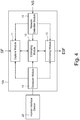
- the video encoding system 10b further comprises a network detection module 15 configured for detecting network status NS to determine whether the network is congested.
- the network detection module 15 provides proper control signals to decrease the capture rate of the capture module 11 and/or the encoding rate of the encoding module 13.
- the network detection module 15 can adjust the capture rate and/or the encoding rate via the estimating module 12, as shown by solid lines in Fig. 4 ; or the network detection module 15 can directly adjust the capture rate and/or the encoding rate, as shown by dashed lines in Fig. 4 .
- the capture rate and/or the encoding rate should be increased if the screen frame changes.
- the encoded screen frame ESF cannot be transmitted to the receiving end.
- the capture rate and/or the encoding rate can be decreased to reduce system resource usage and energy consumption.
- a video encoding method applied to a remote desktop system comprises: capturing a plurality of screen frames of an electronic device at a capture rate (S31); encoding the screen frame at an encoding rate (S32); and determining whether the current screen frame changes or not and then adjusting the capture rate and/or the encoding rate according to an estimating result (S33). For instance, when the current screen frame does not change, decrease the capture rate and/or the encoding rate (S34) and reset the capture rate in the step S31 and/or the encoding rate in the step 32. In contrast, when the current screen frame changes, increase the capture rate and/or the encoding rate (S35) and reset the capture rate in the step S31 and/or the encoding rate in the step S32.
- a video encoding method further comprises detecting an input signal of a human interface device (HID) to determine whether the electronic device is operated; if an HID event is detected (S36), the capture rate and/or the encoding rate are increased.
- the step S33 further determines whether the network is congested so as to correspondingly adjust the capture rate and/or the encoding rate.
- the step S33 immediately determines whether the screen frame changes so as to correspondingly adjust the encoding rate.
- the encoding module decreases the encoding rate in response.
- the encoding rate increases in response.
- the encoding rate can be correspondingly adjusted by adjusting the capture rate.
- a computer readable medium is also disclosed here.
- a computer readable medium is configured for storing a computer program and the computer program is used to be loaded by an electronic device to execute a video encoding method as shown in Fig. 3 or Fig. 5 .
- the video encoding method of the present invention is described in detail before and will not be elaborated here.
- the video encoding system and method of the present invention can adjust encoding rate and/or capture rate depending on whether the current screen frame changes or not. Accordingly, system resources usage and energy consumption can be reduced dramatically when the screen frame does not change. Besides, the video encoding system and method of the present invention also can detect HID event or network status to dynamically adjust the encoding rate and/or capture rate.
Landscapes
- Engineering & Computer Science (AREA)
- Multimedia (AREA)
- Signal Processing (AREA)
- Theoretical Computer Science (AREA)
- Human Computer Interaction (AREA)
- Physics & Mathematics (AREA)
- General Engineering & Computer Science (AREA)
- General Physics & Mathematics (AREA)
- Compression Or Coding Systems Of Tv Signals (AREA)
- Two-Way Televisions, Distribution Of Moving Picture Or The Like (AREA)
Description
- The present invention relates to a video encoding system, method and a computer readable medium, and more particularly to a video encoding system, method and a computer readable medium applied to a remote desktop system.
- Screen sharing is one important application for information technology, for example, using remote desktop to perform remote control or connecting a computer to a projector for briefing by wireless means. In this technical field, screen frames are obtained by the operation system through software programs and there is no distortion. However, because of bandwidth limitation, screen frames must be encoded to reduce data size for transmission.
- Conventionally, transmit end of the remote desktop captures and encodes screen frames at a rate of 24fps (frame per second) to 30fps to let remote users have better experience in real-time control. However, more system resources are occupied when the transmit end continually captures and encodes screen frames at the same rate. It also causes more energy-consumption.
- Hence, it is necessary to develop a method to reduce system resources used by the transmit end of the remote desktop system when encoding and to reduce energy consumption.
-
US 2010/226441 A1 (TUNG JACKSON [US] ET AL), published 9 September 2010, discloses a remote desktop system, wherein the frame capture rate may be reduced if the system determines that the network is congested. Further, a frame differencing module detects if a current frame exhibits no changes with respect to the previous frame and in that case skips encoding and transmission of the current frame in order to reduce processing requirements. - Likewise,
US 7 667 707 B1 (MARGULIS NEAL D [US]), published 23 February 2010, discloses a remote desktop system, wherein encoding is skipped for unchanged frames detected by a frame comparer. Additionally, a tracking is performed to detect indicators of frame updates (such as e.g. Graphic Device Interface calls or video playback related functions), which may be used to reduce the need to send unchanged frames to the frame comparer. - RICHARDSON T ET AL: "Virtual Network Computing", IEEE INTERNET COMPUTING, IEEE SERVICE CENTER, US, vol. 2, no. 1, published in January 1998, pages 33-38, DOI: 10.1109/4236.656066, reviews features of the Virtual Network Computing (VNC) protocol useable for remote desktop systems. Said protocol foresees that Human Interface Device events (such as pressed keys or moved pointing devices) are sent from the client to the server to trigger an update comprising all screen changes since the previous update request.
-
US 2011/103465 A1 (CHANG KUO-LUNG [TW] ET AL), published 5 May 2011, discloses the detection of frame changes via a pixel-wise exclusive OR operation between consecutive screen frames to be applied in remote desktop systems. - The present invention is directed to a video encoding system, method and a computer readable medium. It determines whether the screen frames change or not and thereby adjusting encoding rate and/or capture rate. As a result, system resources usage and energy consumption are dramatically reduced when no changes occur in screen frames.
- According to one embodiment of the present invention, a video encoding system applied to a remote desktop system comprises a capture module, an encoding module, an estimating module, and a detection module. The capture module is configured for capturing a plurality of screen frames from an electronic device at a capture rate. The encoding module is configured for encoding the screen frames captured by the capture module at an encoding rate. The estimating module is configured for determining whether the current screen frame changes or not by comparing each pixel of the current screen frame with the corresponding pixel of the previous screen frame by an exclusive OR operation and then adjusting the capture rate of the capture module according to an estimating result. In this case, the capture rate is decreased when the current screen frame does not change, the capture rate is increased when the current screen frame changes and the encoding rate is equal to or less than the capture rate. The detection module is configured for detecting an input signal of a human interface device to determine whether the electronic device is operated, wherein the capture module is restored to capture the screen frame when the electronic device is operated and the capture rate has been decreased to 0 fps.
- According to another embodiment of the present invention, a video encoding method applied to a remote desktop system comprises: capturing a plurality of screen frames of an electronic device at a capture rate; encoding the screen frame at an encoding rate; determining whether the current screen frame changes or not by comparing each pixel of the current screen frame with the corresponding pixel of the previous screen frame by an exclusive OR operation and then adjusting the capture rate according to an estimating result, wherein the capture rate is decreased when the current screen frame does not change, the capture rate is increased when the current screen frame changes and the encoding rate is equal to or less than the capture rate; and detecting an input signal of a human interface device to determine whether the electronic device is operated, wherein capturing the screen frame is restored when the electronic device is operated and the capture rate has been decreased to 0 fps.
- According to another embodiment of the present invention, a computer readable medium is configured for storing a computer program and the computer program is used to be loaded by an electronic device to execute a video encoding method applied to the remote desktop system. The video encoding method comprises: capturing a plurality of screen frames of the electronic device at a capture rate; encoding the screen frame at an encoding rate; determining whether the current screen frame changes or not by comparing each pixel of the current screen frame with the corresponding pixel of the previous screen frame by an exclusive OR operation and then adjusting the capture rate according to an estimating result, wherein the capture rate is decreased when the current screen frame does not change, the capture rate is increased when the current screen frame changes and the encoding rate is equal to or less than the capture rate; and detecting an input signal of a human interface device to determine whether the electronic device is operated, wherein capturing the screen frame is restored when the electronic device is operated and the capture rate has been decreased to 0 fps.
- The objective, technologies, features and advantages of the present invention will become apparent from the following description in conjunction with the accompanying drawings wherein certain embodiments of the present invention are set forth by way of illustration and example.
- The foregoing conceptions and their accompanying advantages of this invention will become more readily appreciated after being better understood by referring to the following detailed description, in conjunction with the accompanying drawings, wherein:
-
Fig. 1 is a block diagram schematically illustrating a video encoding system according one embodiment of the present invention; -
Fig. 2 is a block diagram schematically illustrating a video encoding system according another embodiment of the present invention; -
Fig. 3 is a flowchart schematically illustrating a video encoding method according one embodiment of the present invention; -
Fig. 4 is a block diagram schematically illustrating a video encoding system according another embodiment of the present invention; and -
Fig. 5 is a block diagram schematically illustrating a video encoding method according another embodiment of the present invention. - The detailed explanation of the present invention is described as follows. The described preferred embodiments are presented for purposes of illustrations and description, and they are not intended to limit the scope of the present invention.
- The video encoding system of the present invention is applied to a remote desktop system. Referring to
Fig. 1 , according to one embodiment of the present invention, avideo encoding system 10 comprises acapture module 11, anencoding module 13, and anestimating module 12. Thecapture module 11 is configured for capturing a plurality of screen frames SF from an electronic device at a capture rate. For example, electronic devices can be desktop computers or mobile internet devices (MID) such as a notebook, a smart phone and a tablet computer. Theencoding module 13 is configured for encoding the screen frames SF captured by thecapture module 11 at an encoding rate to export an encoded screen frame ESF. The remote desktop system can transmit the encoded screen frames ESF to a remote electronic device to be displayed via internet network or other means of communication. - The
estimating module 12 is configured for determining whether the current screen frame SF changes or not and then adjusting the encoding rate of theencoding module 13 according to an estimating result. In one embodiment, theestimating module 12 compares each pixel of the current screen frame SF to the corresponding pixel of the previous screen frame to determine whether the current screen frame changes or not. For example, each pixel of the current screen frame SF can be compared with the corresponding pixel of the previous screen frame by an exclusive OR (XOR) operation to ensure whether the current screen frame changes or not. - In one embodiment of the present invention, when the current screen frame SF does not change, the
estimating module 12 decreases the encoding rate of theencoding module 13. For example, initially, theencoding module 13 encodes the screen frame SF at an encoding rate of 24∼30fps. When theestimating module 12 determines that the current screen frame SF does not change, the encoding rate of theencoding module 13 can decrease gradually to 20, 10, 1 or 0fps. It could be understood that when theestimating module 12 determines the current screen frame SF does not change, the encoding rate of theencoding module 13 can decrease directly from 24∼30fps, to 1∼0fps. - In contrast, when the current screen frame SF changes, the
estimating module 12 increases the encoding rate of theencoding module 13. For example, when theestimating module 12 determines the current screen frame SF changes, the encoding rate of theencoding module 13 can gradually increase from 0fps or 1fps, to 10, 20, 24∼30fops. It could be understood that in order to let remote users have better experience in real time control, when the estimatingmodule 12 determines the current screen frame changes, the encoding rate of theencoding module 13 can directly increase from 0 or 1fps, to 24∼30fps. In one embodiment, the encoding rate can be adjusted between 0 and 100fps. - It should be noticed that the estimating
module 12 also can adjust the capture rate of thecapture module 11 according to the estimating result. For example, when the current screen frame SF does not change, the capture rate of thecapture module 11 can decrease such like gradually decrease from 24∼30fps to 20, 10, 1 or 0fps. When the current screen frame SF changes, the capture rate of thecapture module 11 can increase, for example, increase from 1 or 0fps to 10, 20, 24∼30fps. In one embodiment, the capture rate can be adjusted between 0 and 100fps. In one embodiment, the encoding rate is equal to or less than the capture rate. - Based on the description above, the
video encoding system 10 of the present invention can adjust encoding rate and/or capture rate depending on whether the current screen frame changes. Accordingly, system resources usage and energy consumption can be reduced. - Referring to
Fig. 2 , according to another embodiment of the present invention, avideo encoding system 10a further comprises adetection module 14 to detect an input signal of a human interface device (Human Interface Device, HID) 20 such like a keyboard, a mouse and other input devices to determine whether the electronic device is operated normally. When the electronic device is operated, thedetection module 14 can provides proper control signals to increase the capture rate of thecapture module 11 and/or the encoding rate of theencoding module 13. For example, thedetection module 14 can adjust the capture rate or/and the encoding rate via theestimating module 12, but not limited to this. Thedetection module 14 also can directly adjust the capture rate of thecapture module 11 and/or the encoding rate of theencoding module 13, referring to the dashes as shown inFig. 2 . Based on the description above, when the capture rate decreases to 0fps, thecapture module 11 can be restored to capture the screen frame SF according to the detection result of thedetection module 14. - Referring to
Fig. 4 , thevideo encoding system 10b further comprises anetwork detection module 15 configured for detecting network status NS to determine whether the network is congested. When the network is congested, thenetwork detection module 15 provides proper control signals to decrease the capture rate of thecapture module 11 and/or the encoding rate of theencoding module 13. Similarly, thenetwork detection module 15 can adjust the capture rate and/or the encoding rate via theestimating module 12, as shown by solid lines inFig. 4 ; or thenetwork detection module 15 can directly adjust the capture rate and/or the encoding rate, as shown by dashed lines inFig. 4 . For example, when the network is in the normal condition, the capture rate and/or the encoding rate should be increased if the screen frame changes. However, when the network is congested, the encoded screen frame ESF cannot be transmitted to the receiving end. To solve this problem, the capture rate and/or the encoding rate can be decreased to reduce system resource usage and energy consumption. - A video encoding method applied to a remote desktop system is also disclosed here. Referring to
Fig. 3 , according to an embodiment of the present invention, a video encoding method applied to a remote desktop system comprises: capturing a plurality of screen frames of an electronic device at a capture rate (S31); encoding the screen frame at an encoding rate (S32); and determining whether the current screen frame changes or not and then adjusting the capture rate and/or the encoding rate according to an estimating result (S33). For instance, when the current screen frame does not change, decrease the capture rate and/or the encoding rate (S34) and reset the capture rate in the step S31 and/or the encoding rate in the step 32. In contrast, when the current screen frame changes, increase the capture rate and/or the encoding rate (S35) and reset the capture rate in the step S31 and/or the encoding rate in the step S32. Technical details are described before and will not be elaborated here. - In one embodiment, referring to
Fig. 5 , a video encoding method further comprises detecting an input signal of a human interface device (HID) to determine whether the electronic device is operated; if an HID event is detected (S36), the capture rate and/or the encoding rate are increased. Besides, the step S33 further determines whether the network is congested so as to correspondingly adjust the capture rate and/or the encoding rate. Technical details are described before and will not be elaborated hereinafter. It should be noticed that after the step S31 of capturing the screen frame according to the embodiment shown inFig. 5 , the step S33 immediately determines whether the screen frame changes so as to correspondingly adjust the encoding rate. For example, when the capture rate increases, the encoding module decreases the encoding rate in response. In contrast, when the capture rate increases, the encoding rate increases in response. In other words, the encoding rate can be correspondingly adjusted by adjusting the capture rate. - A computer readable medium is also disclosed here. According to an embodiment of the present invention, a computer readable medium is configured for storing a computer program and the computer program is used to be loaded by an electronic device to execute a video encoding method as shown in
Fig. 3 orFig. 5 . The video encoding method of the present invention is described in detail before and will not be elaborated here. - In conclusion, the video encoding system and method of the present invention can adjust encoding rate and/or capture rate depending on whether the current screen frame changes or not. Accordingly, system resources usage and energy consumption can be reduced dramatically when the screen frame does not change. Besides, the video encoding system and method of the present invention also can detect HID event or network status to dynamically adjust the encoding rate and/or capture rate.
- While the invention is susceptible to various modifications and alternative forms, a specific example thereof has been shown in the drawings and is herein described in detail. It should be understood, however, that the invention is not to be limited to the particular form disclosed, but to the contrary, the invention is to cover all modifications, equivalents, and alternatives falling within the scope of the appended claims.
Claims (9)
- A video encoding system (10a) applied to a remote desktop system, comprising:a capture module (11) configured for capturing a plurality of screen frames (SF) of an electronic device at a capture rate;an encoding module (13) configured for encoding the screen frames captured by the capture module (11) at an encoding rate;an estimating module (12) configured for determining whether the current screen frame changes or not by comparing each pixel of the current screen frame with the corresponding pixel of the previous screen frame by an exclusive OR operation and then adjusting the capture rate of the capture module (11) according to an estimating result, wherein the capture rate is decreased when the current screen frame does not change, the capture rate is increased when the current screen frame changes and the encoding rate is equal to or less than the capture rate; anda detection module (14) configured for detecting an input signal of a human interface device (20) to determine whether the electronic device is operated, wherein the capture module (11) is restored to capture the screen frame when the electronic device is operated and the capture rate has been decreased to 0 fps.
- The video encoding system (10a) according to claim 1, wherein the encoding rate is decreased when the current screen frame does not change or the encoding rate is increased when the current screen frame changes.
- The video encoding system (10a) according to claim 1 further comprising:a network detection module used for detecting a network status to determine whether the network is congested, wherein the estimating result is ignored and the capture rate is decreased when the network is congested.
- A video encoding method applied to a remote desktop system, comprising:capturing a plurality of screen frames of an electronic device at a capture rate;encoding the screen frames at an encoding rate;determining whether the current screen frame changes or not by comparing each pixel of the current screen frame with the corresponding pixel of the previous screen frame by an exclusive OR operation and then adjusting the capture rate according to an estimating result, wherein the capture rate is decreased when the current screen frame does not change, the capture rate is increased when the current screen frame changes and the encoding rate is equal to or less than the capture rate; anddetecting an input signal of a human interface device (20) to determine whether the electronic device is operated, wherein capturing the screen frame is restored when the electronic device is operated and the capture rate has been decreased to 0 fps.
- The video encoding method according to claim 4, wherein the encoding rate is decreased when the current screen frame does not change or the encoding rate is increased when the current screen frame changes.
- The video encoding method according to claim 4 further comprising:detecting a network status to determine whether the network is congested, wherein the estimating result is ignored and the capture rate is decreased when the network is congested.
- A computer readable medium storing a computer program, the computer program is used to be loaded by an electronic device to execute a video encoding method applied to the remote desktop system, wherein the method comprises:capturing a plurality of screen frames of the electronic device at a capture rate;encoding the screen frame at an encoding rate;determining whether the current screen frame changes or not by comparing each pixel of the current screen frame with the corresponding pixel of the previous screen frame by an exclusive OR operation and then adjusting the capture rate according to an estimating result, wherein the capture rate is decreased when the current screen frame does not change, the capture rate is increased when the current screen frame changes and the encoding rate is equal to or less than the capture rate; anddetecting an input signal of a human interface device (20) to determine whether the electronic device is operated, wherein capturing the screen frame is restored when the electronic device is operated and the capture rate has been decreased to 0 fps.
- The computer readable medium according to claim 7, wherein the encoding rate is decreased when the current screen frame does not change or the encoding rate is increased when the current screen frame changes.
- The computer readable medium according to claim 7 further comprising :detecting a network status to determine whether the network is congested, wherein the estimating result is ignored and the capture rate is decreased when the network is congested.
Applications Claiming Priority (1)
| Application Number | Priority Date | Filing Date | Title |
|---|---|---|---|
| TW101115966A TWI536824B (en) | 2012-05-04 | 2012-05-04 | Video encoding system, method and computer readable medium thereof |
Publications (3)
| Publication Number | Publication Date |
|---|---|
| EP2661083A2 EP2661083A2 (en) | 2013-11-06 |
| EP2661083A3 EP2661083A3 (en) | 2014-03-26 |
| EP2661083B1 true EP2661083B1 (en) | 2017-03-15 |
Family
ID=48184082
Family Applications (1)
| Application Number | Title | Priority Date | Filing Date |
|---|---|---|---|
| EP13164888.3A Not-in-force EP2661083B1 (en) | 2012-05-04 | 2013-04-23 | Video encoding system, method and computer readable medium thereof |
Country Status (5)
| Country | Link |
|---|---|
| US (1) | US20130294498A1 (en) |
| EP (1) | EP2661083B1 (en) |
| JP (1) | JP2013236377A (en) |
| CN (1) | CN103384328A (en) |
| TW (1) | TWI536824B (en) |
Families Citing this family (6)
| Publication number | Priority date | Publication date | Assignee | Title |
|---|---|---|---|---|
| MY173871A (en) * | 2013-11-27 | 2020-02-25 | Mimos Berhad | System and method for screen capturing based on computing and communication resources |
| CN105468322A (en) * | 2015-11-20 | 2016-04-06 | 中电海康集团有限公司 | Method for viewing remote desktop in real time on basis of segmented video playing |
| CN105704511A (en) * | 2016-01-29 | 2016-06-22 | 明基电通有限公司 | A method for dynamically adjusting wireless video coding |
| CN105959796B (en) * | 2016-04-29 | 2019-06-04 | 海尔优家智能科技(北京)有限公司 | A kind of communication means and device based on image increment information |
| CN106375842A (en) * | 2016-09-29 | 2017-02-01 | 努比亚技术有限公司 | Image sharing device and method |
| JP7785302B2 (en) * | 2024-02-07 | 2025-12-15 | 株式会社Brain Magic | Information processing system, information processing device and program |
Family Cites Families (18)
| Publication number | Priority date | Publication date | Assignee | Title |
|---|---|---|---|---|
| US5768537A (en) * | 1996-02-22 | 1998-06-16 | International Business Machines Corporation | Scalable MPEG2 compliant video encoder |
| BR9804811A (en) * | 1997-04-07 | 1999-08-17 | Koninkl Philips Electronics Nv | Voice encoding transmitter transmission system and voice encoding process |
| US6909745B1 (en) * | 2001-06-05 | 2005-06-21 | At&T Corp. | Content adaptive video encoder |
| US7016547B1 (en) * | 2002-06-28 | 2006-03-21 | Microsoft Corporation | Adaptive entropy encoding/decoding for screen capture content |
| US7667707B1 (en) * | 2005-05-05 | 2010-02-23 | Digital Display Innovations, Llc | Computer system for supporting multiple remote displays |
| JP4807218B2 (en) * | 2006-10-19 | 2011-11-02 | カシオ計算機株式会社 | Imaging apparatus and program |
| GB0706424D0 (en) * | 2007-04-02 | 2007-05-09 | British Telecomm | Video streaming |
| US8687702B2 (en) * | 2008-10-27 | 2014-04-01 | Advanced Micro Devices, Inc. | Remote transmission and display of video data using standard H.264-based video codecs |
| US20100226441A1 (en) * | 2009-03-06 | 2010-09-09 | Microsoft Corporation | Frame Capture, Encoding, and Transmission Management |
| US8179466B2 (en) * | 2009-03-11 | 2012-05-15 | Eastman Kodak Company | Capture of video with motion-speed determination and variable capture rate |
| US8065807B2 (en) * | 2009-03-20 | 2011-11-29 | Jerry Rucinski | Electronic weapon site |
| TWI401968B (en) * | 2009-10-30 | 2013-07-11 | Awind Inc | Encoding method of screen frame and electronic apparatus applied therewith |
| CN101820416A (en) * | 2010-02-24 | 2010-09-01 | 上海引跑信息科技有限公司 | Processing method of high-speed shared desktop in netmeeting system |
| JP2011192229A (en) * | 2010-03-17 | 2011-09-29 | Hitachi Consumer Electronics Co Ltd | Server device and information processing method |
| ES2390298B1 (en) * | 2010-04-16 | 2013-11-11 | Telefónica, S.A. | VISUAL CONTENT TRANSMISSION PROCEDURE. |
| JP5488694B2 (en) * | 2010-05-10 | 2014-05-14 | 日本電気株式会社 | Remote mobile communication system, server device, and remote mobile communication system control method |
| US9235313B2 (en) * | 2012-01-11 | 2016-01-12 | Google Inc. | Efficient motion estimation for remote desktop sharing |
| US9118293B1 (en) * | 2013-09-18 | 2015-08-25 | Parallels IP Holdings GmbH | Method for processing on mobile device audio signals of remotely executed applications |
-
2012
- 2012-05-04 TW TW101115966A patent/TWI536824B/en not_active IP Right Cessation
-
2013
- 2013-04-23 US US13/868,931 patent/US20130294498A1/en not_active Abandoned
- 2013-04-23 EP EP13164888.3A patent/EP2661083B1/en not_active Not-in-force
- 2013-05-03 CN CN2013101624370A patent/CN103384328A/en active Pending
- 2013-05-07 JP JP2013097749A patent/JP2013236377A/en active Pending
Non-Patent Citations (1)
| Title |
|---|
| None * |
Also Published As
| Publication number | Publication date |
|---|---|
| EP2661083A2 (en) | 2013-11-06 |
| EP2661083A3 (en) | 2014-03-26 |
| TW201347541A (en) | 2013-11-16 |
| CN103384328A (en) | 2013-11-06 |
| US20130294498A1 (en) | 2013-11-07 |
| JP2013236377A (en) | 2013-11-21 |
| TWI536824B (en) | 2016-06-01 |
Similar Documents
| Publication | Publication Date | Title |
|---|---|---|
| KR101413126B1 (en) | Transport architecture of video content in response to remote interaction | |
| US11930232B2 (en) | Video playing control method, terminal device, server, and storage medium | |
| KR101367718B1 (en) | Method and apparatus for providing mobile device interoperability | |
| US8375304B2 (en) | Maintaining state of a web page | |
| CN111552450A (en) | Screen projection method and device | |
| CN109168013B (en) | Method, device and equipment for extracting frame and computer readable storage medium | |
| US20190051147A1 (en) | Remote control method, apparatus, terminal device, and computer readable storage medium | |
| EP2661083A2 (en) | Video encoding system, method and computer readable medium thereof | |
| US20150186095A1 (en) | Inter-terminal image sharing method, terminal device, and communications system | |
| WO2013113191A1 (en) | Method and system for rapid video image transmission | |
| WO2021169236A1 (en) | Rendering method and apparatus | |
| CN106649735A (en) | Log data recording method and apparatus | |
| CN104935955A (en) | Live video stream transmission method, device and system | |
| JP2018531564A (en) | Method, apparatus and system for obtaining video data and computer-readable storage medium | |
| CN117768728B (en) | Multimedia playback method, device, medium and equipment | |
| CN112347067A (en) | Log information management and control method and device and computer readable storage medium | |
| TWI427531B (en) | Remote management system and the method thereof | |
| CN115061590B (en) | KVM (keyboard video mouse) seat system control method based on video identification and KVM seat system | |
| CN115390779B (en) | Content control method and device, storage medium and electronic equipment | |
| CN117896652A (en) | Audio processing method, device, system, electronic device and readable storage medium | |
| CN111372127B (en) | Data transmission method and related device | |
| CN113038251B (en) | Control method and control device | |
| CN202473244U (en) | Multi-media audio video entertainment control system | |
| CN117750108B (en) | Video page switching method, device, medium and equipment | |
| US11848978B2 (en) | System and method for remote support service |
Legal Events
| Date | Code | Title | Description |
|---|---|---|---|
| PUAI | Public reference made under article 153(3) epc to a published international application that has entered the european phase |
Free format text: ORIGINAL CODE: 0009012 |
|
| AK | Designated contracting states |
Kind code of ref document: A2 Designated state(s): AL AT BE BG CH CY CZ DE DK EE ES FI FR GB GR HR HU IE IS IT LI LT LU LV MC MK MT NL NO PL PT RO RS SE SI SK SM TR |
|
| AX | Request for extension of the european patent |
Extension state: BA ME |
|
| REG | Reference to a national code |
Ref country code: DE Ref legal event code: R079 Ref document number: 602013018483 Country of ref document: DE Free format text: PREVIOUS MAIN CLASS: H04N0007260000 Ipc: H04N0019132000 |
|
| PUAL | Search report despatched |
Free format text: ORIGINAL CODE: 0009013 |
|
| AK | Designated contracting states |
Kind code of ref document: A3 Designated state(s): AL AT BE BG CH CY CZ DE DK EE ES FI FR GB GR HR HU IE IS IT LI LT LU LV MC MK MT NL NO PL PT RO RS SE SI SK SM TR |
|
| AX | Request for extension of the european patent |
Extension state: BA ME |
|
| RIC1 | Information provided on ipc code assigned before grant |
Ipc: H04N 19/132 20140101AFI20140219BHEP Ipc: G06F 3/14 20060101ALI20140219BHEP Ipc: H04N 19/162 20140101ALN20140219BHEP Ipc: H04N 19/172 20140101ALI20140219BHEP Ipc: H04N 19/137 20140101ALI20140219BHEP |
|
| 17P | Request for examination filed |
Effective date: 20140926 |
|
| RBV | Designated contracting states (corrected) |
Designated state(s): AL AT BE BG CH CY CZ DE DK EE ES FI FR GB GR HR HU IE IS IT LI LT LU LV MC MK MT NL NO PL PT RO RS SE SI SK SM TR |
|
| GRAP | Despatch of communication of intention to grant a patent |
Free format text: ORIGINAL CODE: EPIDOSNIGR1 |
|
| INTG | Intention to grant announced |
Effective date: 20161011 |
|
| GRAS | Grant fee paid |
Free format text: ORIGINAL CODE: EPIDOSNIGR3 |
|
| GRAA | (expected) grant |
Free format text: ORIGINAL CODE: 0009210 |
|
| AK | Designated contracting states |
Kind code of ref document: B1 Designated state(s): AL AT BE BG CH CY CZ DE DK EE ES FI FR GB GR HR HU IE IS IT LI LT LU LV MC MK MT NL NO PL PT RO RS SE SI SK SM TR |
|
| REG | Reference to a national code |
Ref country code: CH Ref legal event code: EP Ref country code: GB Ref legal event code: FG4D |
|
| REG | Reference to a national code |
Ref country code: IE Ref legal event code: FG4D |
|
| REG | Reference to a national code |
Ref country code: AT Ref legal event code: REF Ref document number: 876653 Country of ref document: AT Kind code of ref document: T Effective date: 20170415 |
|
| REG | Reference to a national code |
Ref country code: NL Ref legal event code: FP |
|
| REG | Reference to a national code |
Ref country code: DE Ref legal event code: R096 Ref document number: 602013018483 Country of ref document: DE Ref country code: FR Ref legal event code: PLFP Year of fee payment: 5 |
|
| REG | Reference to a national code |
Ref country code: LT Ref legal event code: MG4D |
|
| PG25 | Lapsed in a contracting state [announced via postgrant information from national office to epo] |
Ref country code: GR Free format text: LAPSE BECAUSE OF FAILURE TO SUBMIT A TRANSLATION OF THE DESCRIPTION OR TO PAY THE FEE WITHIN THE PRESCRIBED TIME-LIMIT Effective date: 20170616 Ref country code: FI Free format text: LAPSE BECAUSE OF FAILURE TO SUBMIT A TRANSLATION OF THE DESCRIPTION OR TO PAY THE FEE WITHIN THE PRESCRIBED TIME-LIMIT Effective date: 20170315 Ref country code: HR Free format text: LAPSE BECAUSE OF FAILURE TO SUBMIT A TRANSLATION OF THE DESCRIPTION OR TO PAY THE FEE WITHIN THE PRESCRIBED TIME-LIMIT Effective date: 20170315 Ref country code: NO Free format text: LAPSE BECAUSE OF FAILURE TO SUBMIT A TRANSLATION OF THE DESCRIPTION OR TO PAY THE FEE WITHIN THE PRESCRIBED TIME-LIMIT Effective date: 20170615 Ref country code: LT Free format text: LAPSE BECAUSE OF FAILURE TO SUBMIT A TRANSLATION OF THE DESCRIPTION OR TO PAY THE FEE WITHIN THE PRESCRIBED TIME-LIMIT Effective date: 20170315 |
|
| REG | Reference to a national code |
Ref country code: AT Ref legal event code: MK05 Ref document number: 876653 Country of ref document: AT Kind code of ref document: T Effective date: 20170315 |
|
| PG25 | Lapsed in a contracting state [announced via postgrant information from national office to epo] |
Ref country code: RS Free format text: LAPSE BECAUSE OF FAILURE TO SUBMIT A TRANSLATION OF THE DESCRIPTION OR TO PAY THE FEE WITHIN THE PRESCRIBED TIME-LIMIT Effective date: 20170315 Ref country code: BG Free format text: LAPSE BECAUSE OF FAILURE TO SUBMIT A TRANSLATION OF THE DESCRIPTION OR TO PAY THE FEE WITHIN THE PRESCRIBED TIME-LIMIT Effective date: 20170615 Ref country code: LV Free format text: LAPSE BECAUSE OF FAILURE TO SUBMIT A TRANSLATION OF THE DESCRIPTION OR TO PAY THE FEE WITHIN THE PRESCRIBED TIME-LIMIT Effective date: 20170315 Ref country code: SE Free format text: LAPSE BECAUSE OF FAILURE TO SUBMIT A TRANSLATION OF THE DESCRIPTION OR TO PAY THE FEE WITHIN THE PRESCRIBED TIME-LIMIT Effective date: 20170315 |
|
| PG25 | Lapsed in a contracting state [announced via postgrant information from national office to epo] |
Ref country code: ES Free format text: LAPSE BECAUSE OF FAILURE TO SUBMIT A TRANSLATION OF THE DESCRIPTION OR TO PAY THE FEE WITHIN THE PRESCRIBED TIME-LIMIT Effective date: 20170315 Ref country code: CZ Free format text: LAPSE BECAUSE OF FAILURE TO SUBMIT A TRANSLATION OF THE DESCRIPTION OR TO PAY THE FEE WITHIN THE PRESCRIBED TIME-LIMIT Effective date: 20170315 Ref country code: RO Free format text: LAPSE BECAUSE OF FAILURE TO SUBMIT A TRANSLATION OF THE DESCRIPTION OR TO PAY THE FEE WITHIN THE PRESCRIBED TIME-LIMIT Effective date: 20170315 Ref country code: SK Free format text: LAPSE BECAUSE OF FAILURE TO SUBMIT A TRANSLATION OF THE DESCRIPTION OR TO PAY THE FEE WITHIN THE PRESCRIBED TIME-LIMIT Effective date: 20170315 Ref country code: IT Free format text: LAPSE BECAUSE OF FAILURE TO SUBMIT A TRANSLATION OF THE DESCRIPTION OR TO PAY THE FEE WITHIN THE PRESCRIBED TIME-LIMIT Effective date: 20170315 Ref country code: AT Free format text: LAPSE BECAUSE OF FAILURE TO SUBMIT A TRANSLATION OF THE DESCRIPTION OR TO PAY THE FEE WITHIN THE PRESCRIBED TIME-LIMIT Effective date: 20170315 Ref country code: EE Free format text: LAPSE BECAUSE OF FAILURE TO SUBMIT A TRANSLATION OF THE DESCRIPTION OR TO PAY THE FEE WITHIN THE PRESCRIBED TIME-LIMIT Effective date: 20170315 |
|
| PG25 | Lapsed in a contracting state [announced via postgrant information from national office to epo] |
Ref country code: SM Free format text: LAPSE BECAUSE OF FAILURE TO SUBMIT A TRANSLATION OF THE DESCRIPTION OR TO PAY THE FEE WITHIN THE PRESCRIBED TIME-LIMIT Effective date: 20170315 Ref country code: PL Free format text: LAPSE BECAUSE OF FAILURE TO SUBMIT A TRANSLATION OF THE DESCRIPTION OR TO PAY THE FEE WITHIN THE PRESCRIBED TIME-LIMIT Effective date: 20170315 Ref country code: IS Free format text: LAPSE BECAUSE OF FAILURE TO SUBMIT A TRANSLATION OF THE DESCRIPTION OR TO PAY THE FEE WITHIN THE PRESCRIBED TIME-LIMIT Effective date: 20170715 Ref country code: PT Free format text: LAPSE BECAUSE OF FAILURE TO SUBMIT A TRANSLATION OF THE DESCRIPTION OR TO PAY THE FEE WITHIN THE PRESCRIBED TIME-LIMIT Effective date: 20170717 |
|
| REG | Reference to a national code |
Ref country code: CH Ref legal event code: PL |
|
| REG | Reference to a national code |
Ref country code: DE Ref legal event code: R097 Ref document number: 602013018483 Country of ref document: DE |
|
| REG | Reference to a national code |
Ref country code: DE Ref legal event code: R082 Ref document number: 602013018483 Country of ref document: DE Representative=s name: 2K PATENTANWAELTE BLASBERG KEWITZ & REICHEL PA, DE Ref country code: DE Ref legal event code: R082 Ref document number: 602013018483 Country of ref document: DE Representative=s name: VIERING, JENTSCHURA & PARTNER MBB PATENT- UND , DE Ref country code: DE Ref legal event code: R081 Ref document number: 602013018483 Country of ref document: DE Owner name: BARCO LTD., TW Free format text: FORMER OWNER: AWIND INC., NEW TAIPEI CITY, TW |
|
| RAP2 | Party data changed (patent owner data changed or rights of a patent transferred) |
Owner name: BARCO LTD. |
|
| PLBE | No opposition filed within time limit |
Free format text: ORIGINAL CODE: 0009261 |
|
| STAA | Information on the status of an ep patent application or granted ep patent |
Free format text: STATUS: NO OPPOSITION FILED WITHIN TIME LIMIT |
|
| REG | Reference to a national code |
Ref country code: IE Ref legal event code: MM4A |
|
| PG25 | Lapsed in a contracting state [announced via postgrant information from national office to epo] |
Ref country code: DK Free format text: LAPSE BECAUSE OF FAILURE TO SUBMIT A TRANSLATION OF THE DESCRIPTION OR TO PAY THE FEE WITHIN THE PRESCRIBED TIME-LIMIT Effective date: 20170315 Ref country code: MC Free format text: LAPSE BECAUSE OF FAILURE TO SUBMIT A TRANSLATION OF THE DESCRIPTION OR TO PAY THE FEE WITHIN THE PRESCRIBED TIME-LIMIT Effective date: 20170315 |
|
| 26N | No opposition filed |
Effective date: 20171218 |
|
| REG | Reference to a national code |
Ref country code: NL Ref legal event code: HC Owner name: BARCO LTD.; TW Free format text: DETAILS ASSIGNMENT: CHANGE OF OWNER(S), CHANGE OF OWNER(S) NAME; FORMER OWNER NAME: AWIND INC. Effective date: 20171221 |
|
| PG25 | Lapsed in a contracting state [announced via postgrant information from national office to epo] |
Ref country code: LI Free format text: LAPSE BECAUSE OF NON-PAYMENT OF DUE FEES Effective date: 20170430 Ref country code: SI Free format text: LAPSE BECAUSE OF FAILURE TO SUBMIT A TRANSLATION OF THE DESCRIPTION OR TO PAY THE FEE WITHIN THE PRESCRIBED TIME-LIMIT Effective date: 20170315 Ref country code: LU Free format text: LAPSE BECAUSE OF NON-PAYMENT OF DUE FEES Effective date: 20170423 Ref country code: CH Free format text: LAPSE BECAUSE OF NON-PAYMENT OF DUE FEES Effective date: 20170430 |
|
| REG | Reference to a national code |
Ref country code: BE Ref legal event code: HC Owner name: BARCO LTD.; TW Free format text: DETAILS ASSIGNMENT: CHANGE OF OWNER(S), CHANGEMENT DE NOM DU PROPRIETAIRE, NOM/ADRESSE; FORMER OWNER NAME: AWIND INC. Effective date: 20171218 |
|
| REG | Reference to a national code |
Ref country code: FR Ref legal event code: PLFP Year of fee payment: 6 |
|
| PG25 | Lapsed in a contracting state [announced via postgrant information from national office to epo] |
Ref country code: IE Free format text: LAPSE BECAUSE OF NON-PAYMENT OF DUE FEES Effective date: 20170423 |
|
| PG25 | Lapsed in a contracting state [announced via postgrant information from national office to epo] |
Ref country code: MT Free format text: LAPSE BECAUSE OF NON-PAYMENT OF DUE FEES Effective date: 20170423 |
|
| PG25 | Lapsed in a contracting state [announced via postgrant information from national office to epo] |
Ref country code: HU Free format text: LAPSE BECAUSE OF FAILURE TO SUBMIT A TRANSLATION OF THE DESCRIPTION OR TO PAY THE FEE WITHIN THE PRESCRIBED TIME-LIMIT; INVALID AB INITIO Effective date: 20130423 |
|
| PGFP | Annual fee paid to national office [announced via postgrant information from national office to epo] |
Ref country code: DE Payment date: 20190430 Year of fee payment: 7 |
|
| PGFP | Annual fee paid to national office [announced via postgrant information from national office to epo] |
Ref country code: BE Payment date: 20190424 Year of fee payment: 7 Ref country code: FR Payment date: 20190426 Year of fee payment: 7 |
|
| PG25 | Lapsed in a contracting state [announced via postgrant information from national office to epo] |
Ref country code: CY Free format text: LAPSE BECAUSE OF NON-PAYMENT OF DUE FEES Effective date: 20170315 |
|
| PGFP | Annual fee paid to national office [announced via postgrant information from national office to epo] |
Ref country code: GB Payment date: 20190423 Year of fee payment: 7 |
|
| PG25 | Lapsed in a contracting state [announced via postgrant information from national office to epo] |
Ref country code: MK Free format text: LAPSE BECAUSE OF FAILURE TO SUBMIT A TRANSLATION OF THE DESCRIPTION OR TO PAY THE FEE WITHIN THE PRESCRIBED TIME-LIMIT Effective date: 20170315 |
|
| REG | Reference to a national code |
Ref country code: DE Ref legal event code: R082 Ref document number: 602013018483 Country of ref document: DE Representative=s name: 2K PATENTANWAELTE BLASBERG KEWITZ & REICHEL PA, DE |
|
| PG25 | Lapsed in a contracting state [announced via postgrant information from national office to epo] |
Ref country code: TR Free format text: LAPSE BECAUSE OF FAILURE TO SUBMIT A TRANSLATION OF THE DESCRIPTION OR TO PAY THE FEE WITHIN THE PRESCRIBED TIME-LIMIT Effective date: 20170315 |
|
| PG25 | Lapsed in a contracting state [announced via postgrant information from national office to epo] |
Ref country code: AL Free format text: LAPSE BECAUSE OF FAILURE TO SUBMIT A TRANSLATION OF THE DESCRIPTION OR TO PAY THE FEE WITHIN THE PRESCRIBED TIME-LIMIT Effective date: 20170315 |
|
| REG | Reference to a national code |
Ref country code: DE Ref legal event code: R119 Ref document number: 602013018483 Country of ref document: DE |
|
| PG25 | Lapsed in a contracting state [announced via postgrant information from national office to epo] |
Ref country code: DE Free format text: LAPSE BECAUSE OF NON-PAYMENT OF DUE FEES Effective date: 20201103 Ref country code: FR Free format text: LAPSE BECAUSE OF NON-PAYMENT OF DUE FEES Effective date: 20200430 |
|
| REG | Reference to a national code |
Ref country code: BE Ref legal event code: MM Effective date: 20200430 |
|
| PG25 | Lapsed in a contracting state [announced via postgrant information from national office to epo] |
Ref country code: BE Free format text: LAPSE BECAUSE OF NON-PAYMENT OF DUE FEES Effective date: 20200430 |
|
| GBPC | Gb: european patent ceased through non-payment of renewal fee |
Effective date: 20200423 |
|
| PG25 | Lapsed in a contracting state [announced via postgrant information from national office to epo] |
Ref country code: GB Free format text: LAPSE BECAUSE OF NON-PAYMENT OF DUE FEES Effective date: 20200423 |
|
| PGFP | Annual fee paid to national office [announced via postgrant information from national office to epo] |
Ref country code: NL Payment date: 20210324 Year of fee payment: 9 |
|
| REG | Reference to a national code |
Ref country code: NL Ref legal event code: MM Effective date: 20220501 |
|
| PG25 | Lapsed in a contracting state [announced via postgrant information from national office to epo] |
Ref country code: NL Free format text: LAPSE BECAUSE OF NON-PAYMENT OF DUE FEES Effective date: 20220501 |