EP2659967A1 - Pt-ru nano-alloy/graphene catalyst, preparation method and use thereof - Google Patents
Pt-ru nano-alloy/graphene catalyst, preparation method and use thereof Download PDFInfo
- Publication number
- EP2659967A1 EP2659967A1 EP10861327.4A EP10861327A EP2659967A1 EP 2659967 A1 EP2659967 A1 EP 2659967A1 EP 10861327 A EP10861327 A EP 10861327A EP 2659967 A1 EP2659967 A1 EP 2659967A1
- Authority
- EP
- European Patent Office
- Prior art keywords
- graphene
- alloy
- nano
- preparation
- catalyst
- Prior art date
- Legal status (The legal status is an assumption and is not a legal conclusion. Google has not performed a legal analysis and makes no representation as to the accuracy of the status listed.)
- Granted
Links
Images
Classifications
-
- H—ELECTRICITY
- H01—ELECTRIC ELEMENTS
- H01M—PROCESSES OR MEANS, e.g. BATTERIES, FOR THE DIRECT CONVERSION OF CHEMICAL ENERGY INTO ELECTRICAL ENERGY
- H01M4/00—Electrodes
- H01M4/86—Inert electrodes with catalytic activity, e.g. for fuel cells
- H01M4/8647—Inert electrodes with catalytic activity, e.g. for fuel cells consisting of more than one material, e.g. consisting of composites
- H01M4/8657—Inert electrodes with catalytic activity, e.g. for fuel cells consisting of more than one material, e.g. consisting of composites layered
-
- H—ELECTRICITY
- H01—ELECTRIC ELEMENTS
- H01M—PROCESSES OR MEANS, e.g. BATTERIES, FOR THE DIRECT CONVERSION OF CHEMICAL ENERGY INTO ELECTRICAL ENERGY
- H01M4/00—Electrodes
- H01M4/86—Inert electrodes with catalytic activity, e.g. for fuel cells
- H01M4/88—Processes of manufacture
-
- H—ELECTRICITY
- H01—ELECTRIC ELEMENTS
- H01M—PROCESSES OR MEANS, e.g. BATTERIES, FOR THE DIRECT CONVERSION OF CHEMICAL ENERGY INTO ELECTRICAL ENERGY
- H01M4/00—Electrodes
- H01M4/86—Inert electrodes with catalytic activity, e.g. for fuel cells
- H01M4/90—Selection of catalytic material
- H01M4/92—Metals of platinum group
- H01M4/921—Alloys or mixtures with metallic elements
-
- H—ELECTRICITY
- H01—ELECTRIC ELEMENTS
- H01M—PROCESSES OR MEANS, e.g. BATTERIES, FOR THE DIRECT CONVERSION OF CHEMICAL ENERGY INTO ELECTRICAL ENERGY
- H01M4/00—Electrodes
- H01M4/86—Inert electrodes with catalytic activity, e.g. for fuel cells
- H01M4/90—Selection of catalytic material
- H01M4/92—Metals of platinum group
- H01M4/925—Metals of platinum group supported on carriers, e.g. powder carriers
- H01M4/926—Metals of platinum group supported on carriers, e.g. powder carriers on carbon or graphite
-
- H—ELECTRICITY
- H01—ELECTRIC ELEMENTS
- H01M—PROCESSES OR MEANS, e.g. BATTERIES, FOR THE DIRECT CONVERSION OF CHEMICAL ENERGY INTO ELECTRICAL ENERGY
- H01M8/00—Fuel cells; Manufacture thereof
- H01M8/10—Fuel cells with solid electrolytes
- H01M8/1016—Fuel cells with solid electrolytes characterised by the electrolyte material
- H01M8/1018—Polymeric electrolyte materials
-
- H—ELECTRICITY
- H01—ELECTRIC ELEMENTS
- H01M—PROCESSES OR MEANS, e.g. BATTERIES, FOR THE DIRECT CONVERSION OF CHEMICAL ENERGY INTO ELECTRICAL ENERGY
- H01M8/00—Fuel cells; Manufacture thereof
- H01M8/10—Fuel cells with solid electrolytes
- H01M2008/1095—Fuel cells with polymeric electrolytes
-
- Y—GENERAL TAGGING OF NEW TECHNOLOGICAL DEVELOPMENTS; GENERAL TAGGING OF CROSS-SECTIONAL TECHNOLOGIES SPANNING OVER SEVERAL SECTIONS OF THE IPC; TECHNICAL SUBJECTS COVERED BY FORMER USPC CROSS-REFERENCE ART COLLECTIONS [XRACs] AND DIGESTS
- Y02—TECHNOLOGIES OR APPLICATIONS FOR MITIGATION OR ADAPTATION AGAINST CLIMATE CHANGE
- Y02E—REDUCTION OF GREENHOUSE GAS [GHG] EMISSIONS, RELATED TO ENERGY GENERATION, TRANSMISSION OR DISTRIBUTION
- Y02E60/00—Enabling technologies; Technologies with a potential or indirect contribution to GHG emissions mitigation
- Y02E60/10—Energy storage using batteries
-
- Y—GENERAL TAGGING OF NEW TECHNOLOGICAL DEVELOPMENTS; GENERAL TAGGING OF CROSS-SECTIONAL TECHNOLOGIES SPANNING OVER SEVERAL SECTIONS OF THE IPC; TECHNICAL SUBJECTS COVERED BY FORMER USPC CROSS-REFERENCE ART COLLECTIONS [XRACs] AND DIGESTS
- Y02—TECHNOLOGIES OR APPLICATIONS FOR MITIGATION OR ADAPTATION AGAINST CLIMATE CHANGE
- Y02E—REDUCTION OF GREENHOUSE GAS [GHG] EMISSIONS, RELATED TO ENERGY GENERATION, TRANSMISSION OR DISTRIBUTION
- Y02E60/00—Enabling technologies; Technologies with a potential or indirect contribution to GHG emissions mitigation
- Y02E60/30—Hydrogen technology
- Y02E60/50—Fuel cells
Definitions
- the present invention relates to a field of electrochemical energy, and more particularly relates to a Pt-Ru nano-alloy/graphene catalyst used in proton exchange membrane fuel cell.
- the present invention also relates to a preparation method and a use of the Pt-Ru nano-alloy/graphene catalyst.
- PEMFC Proton exchange membrane fuel cell
- Electro-catalyst of PEMFC is one of the key factors to restrict its commercialization, thus, electro-catalyst researches has become the main contents of the researches of PEMFC.
- the biggest regret of chemistry in the 20th century was the failure to develop the excellent fuel cell catalysts. Lippard pointed out in the comments to the development of chemistry in the 20th century, who was a chairman of the chemistry department of the Massachusetts Institute of Technology.
- the preparation methods of catalyst have a great influence on the size and the crystalline state of Pt particle in catalysts
- the preparation methods for Pt/C catalyst of the mainly reports are inorganic colloid method, impregnation method, sol-gel method and precipitation method etc..
- These catalysts prepared by the conventional preparation methods have problems of poor dispersibility in particle, the uneven diameter of particle and harsh reaction conditions. Because the preparation process of catalyst determines the composition and structure of catalyst and thereby affects its catalytic performance, it is very important to study the preparation methods and processes of the catalyst.
- one object of the present invention is to provide a preparation method of a Pt-Ru nano-alloy/graphene catalyst, which includes the following steps:
- a graphite oxide is prepared by using graphite powder according to a modified Hummers method
- a mixed system containing a surfactant anionic surfactant or cationic surfactant, such as sodium benzenesulfonate, sodium dodecylbenzenesulfonate, aliphatic sulfate and aliphatic quaternary ammonium salt, etc.
- a cosurfactant e.g., n-octanol, n-nonyl alcohol, n-heptanol and n-hexyl alcohol
- an oil phase e.g., cyclohexane
- a chloroplatinic acid H 2 PtCl 6 , with a molar concentration of 0.04 mol/L
- ruthenium chloride RuCl 3 , with a molar concentration of 0.04mol/L
- the excess reducing agent such as hydrazine hydrate or sodium borohydride, and a molar amount of the reducing agent is 3 to 10 times of a molar amount of the chloroplatinic acid
- the chloroplatinic acid, the ruthenium chloride, and the graphene oxide were reduced to Pt, Ru and graphene respectively, and a Pt-Ru nano-alloy is obtained while Pt and Ru are coprecipitated, and an emulsion containing Pt-Ru nano-alloy and graphene is perpared
- H 2 PtCl 6 , RuCl 3 for examples, KBH 4 is a reducing agent, the reaction equation is shown as follows: H 2 PtCl 6 +KBH 4 ⁇ Pt+H 2 ⁇ +2HCl+KCl+BCl 3 4RuCl 3 +3KBH 4 ⁇ 4Ru+6H
- demulsification a demulsifier (e.g., acetone or anhydrous ethanol, and volume of the demulsifier is 20 to 50% of a volume of cyclohexane) is added to the emulsion in the condition of ultrasonic vibration, and the Pt-Ru nano-alloy is loaded on the carrier of graphene, and a mixed system is prepared;
- a demulsifier e.g., acetone or anhydrous ethanol, and volume of the demulsifier is 20 to 50% of a volume of cyclohexane
- the Pt-Ru nano-alloy/graphene catalyst prepared by the method above contains graphene as a carrier, and a Pt-Ru nano-alloy is loaded on the graphene.
- the Pt-Ru nano-alloy/graphene catalyst prepared according to the present invention can be used in the field of the proton exchange membrane fuel cell.
- the Pt-Ru nano-alloy/graphene catalyst of the present invention uses graphene as a carrier and takes advantage of the ion effect and tow-dimensional ductility of graphene to increase the stability of the catalyst.
- the reverse micelles system provides a micro-environment (i.e. water-in-oil microemulsion), which is an ideal place for synthesis of metal nanoparticles, such that the particle size of the nano-alloy particles by this preparation method can be regulated easily and more uniformly distributed.
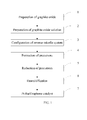
- FIG. 1 is a flowchart of a preparation method of a Pt-Ru nano/graphene catalyst according to the present invention
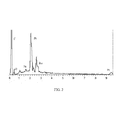
- FIG. 2 is an EDS testing spectrum of the Pt-Ru alloy/graphene catalyst of the Example 1.
- a preparation method of a Pt-Ru nano/graphene catalyst used in the proton exchange membrane fuel cell is provided in the present invention, a loadage of platinum is 5w% to 80w%, a graphene is used as a carrier in this kind of catalyst, the catalyst takes the advantages of the ion effect and tow-dimensional ductility of graphene to increase the stability of the catalyst.
- the preparation of the Pt/graphene catalyst includes the steps of:
- a graphite oxide is prepared by using graphite powder according to a modified Hummers method
- a mixed system containing a surfactant anionic surfactant or cationic surfactant, such as sodium benzenesulfonate, sodium dodecylbenzenesulfonate, aliphatic sulfate and aliphatic quaternary ammonium salt, etc.
- a cosurfactant e.g., n-octanol, n-nonyl alcohol, n-heptanol and n-hexyl alcohol
- an oil phase e.g., cyclohexane
- a chloroplatinic acid H 2 PtCl 6 , with a molar concentration of 0.04 mol/L
- ruthenium chloride RuCl 3 , with a molar concentration of 0.04mol/L
- the excess reducing agent such as hydrazine hydrate or sodium borohydride, and a molar amount of the reducing agent is 3 to 10 times of a molar amount of the chloroplatinic acid
- the chloroplatinic acid, the ruthenium chloride, and the graphene oxide were reduced to Pt, Ru and graphene respectively, and a Pt-Ru nano-alloy is obtained while Pt and Ru are coprecipitated, so an emulsion containing Pt-Ru nano-alloy and graphene is prepared; now taking H 2 PtCl 6 , RuCl 3 for examples, KBH 4 is a reducing agent, the reaction is as follows: H 2 PtCl 6 +KBH 4 ⁇ Pt+H 2 ⁇ +2HCl+KCl+BCl 3 4RuCl 3 +3KBH 4 ⁇ 4Ru+6H 2 ⁇ + 3
- demulsification a demulsifier (e.g., acetone or anhydrous ethanol, and volume of the demulsifier is 20 to 50% of a volume of cyclohexane) is added to the emulsion in the condition of ultrasonic vibration, and the Pt-Ru nano-alloy is loaded on the carrier of graphene, and a mixed system is prepared;
- a demulsifier e.g., acetone or anhydrous ethanol, and volume of the demulsifier is 20 to 50% of a volume of cyclohexane
- step of preparing the graphite oxide including the following steps:
- the dried sample is added to 200mL to 250mL of concentrated sulfuric acid at a temperature of 0°C, and then a potassium permanganate is added, the mixture is heat preserved for 5 to 60 minutes at a temperature from 0°C to 20°C, then maintained for 1 to 2 hours in an oil bath at a temperature 35°C, and slowly added to a deionized water containing a hydrogen peroxide, a mixed solution is obtained; and
- the mixed solution is hot filtered while the color of the mixed solution becomes bright yellow, then washed with hydrochloric acid, filtered, vacuum dried for 48 hours at a temperature of 60°C to obtain the graphite oxide.
- the Pt-Ru nano-alloy/graphene catalyst prepared by the method above contains graphene as a carrier, and a Pt-Ru nano-alloy is loaded on the graphene.
- the Pt-Ru nano-alloy/graphene catalyst prepared according to the present invention can be used in the field of the proton exchange membrane fuel cell.
- the Pt-Ru nano-alloy/graphene catalyst of the present invention uses graphene as a carrier and takes advantage of the ion effect and tow-dimensional ductility of graphene to increases the stability of the catalyst.
- the catalyst is prepared by a reverse micelles system method which provides a micro-environment (i.e. water-in-oil microemulsion), which is an ideal place for synthesis of metal nanoparticles, such that the particle size of the nano-alloy particles by this preparation method can be regulated easily and more uniformly distributed.
- the graphite oxide was prepared according to the modified Hummers method. The specific steps were: 20g 50 mesh of graphite powder, 10g of potassium persulfate and 10g of phosphorus pentoxide were added to concentrated sulfuric acid at a temperature of 80°C, and the mixture was stirred uniformly, cooled for more than 6 hours, washed to neutral and dried to obtain a sample. The dried sample was added to 230mL of concentrated sulfuric acid at a temperature of 0°C, then 60g of potassium permanganate was added, the mixture was maintained below 20°C for 30 minutes, and then maintained in the oil bath at a temperature of 35°C for 2 hours, 920mL of deionized water was slowly added.
- Demulsification 30mL of demulsifier (acetone) was added to the reverse micelle system in the condition of ultrasonic vibration, then the system was stood until the system was stratified
- FIG. 2 was an EDS testing spectrum of the Pt-Ru alloy/graphene catalyst of the Example 1.
- the obtained catalyst mainly contained four elements of platinum (Pt), ruthenium (Ru), carbon (C) and oxygen (O).
- the graphite oxide was prepared according to the modified Hummers method. The specific steps were: 20g 50 mesh of graphite powder, 10g of potassium persulfate and 10g of phosphorus pentoxide were added to concentrated sulfuric acid at a temperature of 80°C, and the mixture was stirred uniformly, cooled for more than 6 hours, washed to neutral and dried to obtain a sample. The dried sample was added to 200mL of concentrated sulfuric acid at a temperature of 0°C, then 60g of potassium permanganate was added, the temperature of the mixture was maintained below 20°C for 5 minutes, and then maintained in the oil bath at a temperature of 35°C for 1 hour, 920mL of deionized water was slowly added.
- Demulsification 20mL of demulsifier (acetone) was added to the reverse micelle system in the condition of ultrasonic vibration, then the system was stood until the system was stratified.
- the graphite oxide was prepared according to the modified Hummers method. The specific steps were: 20g 50 mesh of graphite powder, 10g of potassium persulfate and 10g of phosphorus pentoxide were added to concentrated sulfuric acid at a temperature of 80°C, and the mixture was stirred uniformly, cooled for more than 6 hours, washed to neutral and dried to obtain a sample. The dried sample was added to 250mL of concentrated sulfuric acid at a temperature of 0°C, then 60g of potassium permanganate was added, the temperature of the mixture was maintained below 20°C, and then maintained in the oil bath at a temperature of 35°C for 2 hours, 920mL of deionized water was slowly added.
- Demulsification 50mL of demulsifier (anhydrous ethanol) was added to the system emulsion above in the condition of ultrasonic vibration, then the system was stood until the system was stratified.
- demulsifier anhydrous ethanol
- the graphite oxide was prepared according to the modified Hummers method. The specific steps were: 20g 50 mesh of graphite powder, 10g of potassium persulfate and 10g of phosphorus pentoxide were added to concentrated sulfuric acid at a temperature of 80°C, and the mixture was stirred uniformly, cooled for more than 6 hours, washed to neutral and dried to obtain a sample. The dried sample was added to 240mL of concentrated sulfuric acid at a temperature of 0°C, then 60g of potassium permanganate was added, the temperature of the mixture was maintained below 20°C, and then maintained in the oil bath at a temperature of 35°C for 2 hours, 920mL of deionized water was slowly added.
- Demulsification 30mL of demulsifier (acetone) was added to the reverse micelle system in the condition of ultrasonic vibration, then the system was stood until the system was stratified.
Landscapes
- Chemical & Material Sciences (AREA)
- General Chemical & Material Sciences (AREA)
- Chemical Kinetics & Catalysis (AREA)
- Electrochemistry (AREA)
- Engineering & Computer Science (AREA)
- Materials Engineering (AREA)
- Manufacturing & Machinery (AREA)
- Life Sciences & Earth Sciences (AREA)
- Sustainable Development (AREA)
- Sustainable Energy (AREA)
- Composite Materials (AREA)
- Catalysts (AREA)
- Inert Electrodes (AREA)
- Carbon And Carbon Compounds (AREA)
Abstract
Description
- The present invention relates to a field of electrochemical energy, and more particularly relates to a Pt-Ru nano-alloy/graphene catalyst used in proton exchange membrane fuel cell. The present invention also relates to a preparation method and a use of the Pt-Ru nano-alloy/graphene catalyst.
- Proton exchange membrane fuel cell (PEMFC) is a new generation of power generation device using hydrogen as fuel, besides the general advantages of fuel cell (such as high energy conversion efficiency and environment-friendly, etc.), it has the outstanding advantages of high specific power and specific energy, low working temperature, quick start at room temperature, long life and so on, therefore it could be the most promising fuel cell.
- Electro-catalyst of PEMFC is one of the key factors to restrict its commercialization, thus, electro-catalyst researches has become the main contents of the researches of PEMFC. "The biggest regret of chemistry in the 20th century was the failure to develop the excellent fuel cell catalysts." Lippard pointed out in the comments to the development of chemistry in the 20th century, who was a chairman of the chemistry department of the Massachusetts Institute of Technology.
- The preparation methods of catalyst have a great influence on the size and the crystalline state of Pt particle in catalysts, the preparation methods for Pt/C catalyst of the mainly reports are inorganic colloid method, impregnation method, sol-gel method and precipitation method etc.. These catalysts prepared by the conventional preparation methods have problems of poor dispersibility in particle, the uneven diameter of particle and harsh reaction conditions. Because the preparation process of catalyst determines the composition and structure of catalyst and thereby affects its catalytic performance, it is very important to study the preparation methods and processes of the catalyst.
- The theories of graphene, which have been studied for more than 60 years, has been widely used to study the performance of the different structure of the carbonaceous material. In Science, 2009, vol 324: p1530, Geim pointed out that graphene is a carbon material having less than 10 layers of the layered structure of graphite molecules, and it has a higher specific surface area (the theoretical specific surface area of graphene can reach to 2620m2/g), which could provide more metal load position. Meanwhile, the graphene exhibits a strong quantum effect and has a good electronic conductivity. It is calculated according to the first principle that, platinum group elements can be stably loaded on the graphene, and the adsorption of carbon monoxide or hydrogen on the metal platinum particles will be reduced because of the presence of graphene, which facilitates the reaction in the fuel cell. Therefore, the graphene can be used as a good carbon carrier.
- According to the above problems, one object of the present invention is to provide a preparation method of a Pt-Ru nano-alloy/graphene catalyst, which includes the following steps:
- 1. preparation of graphite oxide: a graphite oxide is prepared by using graphite powder according to a modified Hummers method;
- 2. preparation of graphite oxide solution: the prepared graphite oxide is added to water and dispersed by ultrasonic dispersion, a graphene oxide solution with uniform dispersion of monolithic layer is formed;
- 3. preparation of reverse micelle system: a mixed system containing a surfactant (anionic surfactant or cationic surfactant, such as sodium benzenesulfonate, sodium dodecylbenzenesulfonate, aliphatic sulfate and aliphatic quaternary ammonium salt, etc.), a cosurfactant (e.g., n-octanol, n-nonyl alcohol, n-heptanol and n-hexyl alcohol), an oil phase (e.g., cyclohexane) and a chloroplatinic acid (H2PtCl6, with a molar concentration of 0.04 mol/L) and a ruthenium chloride (RuCl3, with a molar concentration of 0.04mol/L) aqueous solution is prepared at room temperature, a uniform and stable reverse micelle system is formed under the effect of ultrasonic; and a mass ratio of the surfactant, the cosurfactant and the oil phase is 10:7:1;
- 4. formation of precursors: the prepared graphene oxide solution is slowly added to the reverse micelle system dropwise;
- 5. reduction of precursors: the excess reducing agent (such as hydrazine hydrate or sodium borohydride, and a molar amount of the reducing agent is 3 to 10 times of a molar amount of the chloroplatinic acid) is added to the reverse micelle system in a water bath at a temperature of 80°C, such that the chloroplatinic acid, the ruthenium chloride, and the graphene oxide were reduced to Pt, Ru and graphene respectively, and a Pt-Ru nano-alloy is obtained while Pt and Ru are coprecipitated, and an emulsion containing Pt-Ru nano-alloy and graphene is perpared; taking H2PtCl6, RuCl3 for examples, KBH4 is a reducing agent, the reaction equation is shown as follows:
H2PtCl6+KBH4→Pt+H2↑+2HCl+KCl+BCl3
4RuCl3+3KBH4→4Ru+6H2↑+3KCl+3BCl3
- 6. demulsification: a demulsifier (e.g., acetone or anhydrous ethanol, and volume of the demulsifier is 20 to 50% of a volume of cyclohexane) is added to the emulsion in the condition of ultrasonic vibration, and the Pt-Ru nano-alloy is loaded on the carrier of graphene, and a mixed system is prepared;
- 7. filtering, washing and drying: the mixed system is vacuum filtered, and washed by ethanol and deionized water for several times, filtrated to obtain a graphene loaded with Pt-Ru nano-alloy, then dried to obtain a Pt-Ru nano-alloy/graphene catalyst.
- The Pt-Ru nano-alloy/graphene catalyst prepared by the method above contains graphene as a carrier, and a Pt-Ru nano-alloy is loaded on the graphene.
- The Pt-Ru nano-alloy/graphene catalyst prepared according to the present invention can be used in the field of the proton exchange membrane fuel cell.
- The Pt-Ru nano-alloy/graphene catalyst of the present invention uses graphene as a carrier and takes advantage of the ion effect and tow-dimensional ductility of graphene to increase the stability of the catalyst. The reverse micelles system provides a micro-environment (i.e. water-in-oil microemulsion), which is an ideal place for synthesis of metal nanoparticles, such that the particle size of the nano-alloy particles by this preparation method can be regulated easily and more uniformly distributed.
-
FIG. 1 is a flowchart of a preparation method of a Pt-Ru nano/graphene catalyst according to the present invention; -
FIG. 2 is an EDS testing spectrum of the Pt-Ru alloy/graphene catalyst of the Example 1. - A preparation method of a Pt-Ru nano/graphene catalyst used in the proton exchange membrane fuel cell is provided in the present invention, a loadage of platinum is 5w% to 80w%, a graphene is used as a carrier in this kind of catalyst, the catalyst takes the advantages of the ion effect and tow-dimensional ductility of graphene to increase the stability of the catalyst.
- Referring to
FIG. 1 , the preparation of the Pt/graphene catalyst includes the steps of: - 1. preparation of graphite oxide: a graphite oxide is prepared by using graphite powder according to a modified Hummers method;
- 2. preparation of graphite oxide solution: the prepared graphite oxide is added to water and dispersed by ultrasonic dispersion, a graphene oxide solution with uniform dispersion of monolithic layer is formed;
- 3. preparation of reverse micelle system: a mixed system containing a surfactant (anionic surfactant or cationic surfactant, such as sodium benzenesulfonate, sodium dodecylbenzenesulfonate, aliphatic sulfate and aliphatic quaternary ammonium salt, etc.), a cosurfactant (e.g., n-octanol, n-nonyl alcohol, n-heptanol and n-hexyl alcohol), an oil phase (e.g., cyclohexane) and a chloroplatinic acid (H2PtCl6, with a molar concentration of 0.04 mol/L) and a ruthenium chloride (RuCl3, with a molar concentration of 0.04mol/L) aqueous solution is prepared at room temperature , a uniform and stable reverse micelle system is formed under the effect of ultrasonic; and a mass ratio of the surfactant, the cosurfactant and the oil phase is 10:7:1;
- 4. formation of precursors: the prepared graphene oxide solution is slowly added to the reverse micelle system dropwise;
- 5. reduction of precursors: the excess reducing agent (such as hydrazine hydrate or sodium borohydride, and a molar amount of the reducing agent is 3 to 10 times of a molar amount of the chloroplatinic acid) is added to the reverse micelle system in the water bath at a temperature of 80°C, so that the chloroplatinic acid, the ruthenium chloride, and the graphene oxide were reduced to Pt, Ru and graphene respectively, and a Pt-Ru nano-alloy is obtained while Pt and Ru are coprecipitated, so an emulsion containing Pt-Ru nano-alloy and graphene is prepared; now taking H2PtCl6, RuCl3 for examples, KBH4 is a reducing agent, the reaction is as follows:
H2PtCl6+KBH4→Pt+H2↑+2HCl+KCl+BCl3
4RuCl3+3KBH4→4Ru+6H2↑+3KCl+3BCl3
- 6. demulsification: a demulsifier (e.g., acetone or anhydrous ethanol, and volume of the demulsifier is 20 to 50% of a volume of cyclohexane) is added to the emulsion in the condition of ultrasonic vibration, and the Pt-Ru nano-alloy is loaded on the carrier of graphene, and a mixed system is prepared;
- 7. filtering , washing and drying: the mixed system is vacuum filtered, and washed by ethanol and deionized water for several times, filtrated to obtain a graphene loaded with Pt-Ru nano-alloy, then dried to obtain a Pt-Ru nano-alloy/graphene catalyst.
- In the step of preparing the graphite oxide, including the following steps:
- 1. the graphite powder, a potassium persulfate and a phosphorus pentoxide are added to a concentrated sulfuric acid at a temperature of 80°C, and the mixture is stirred uniformly, then cooled for more than 6 hours, washed to neutral, and dried to obtain a sample;
- 2. The dried sample is added to 200mL to 250mL of concentrated sulfuric acid at a temperature of 0°C, and then a potassium permanganate is added, the mixture is heat preserved for 5 to 60 minutes at a temperature from 0°C to 20°C, then maintained for 1 to 2 hours in an oil bath at a temperature 35°C, and slowly added to a deionized water containing a hydrogen peroxide, a mixed solution is obtained; and
- 3. The mixed solution is hot filtered while the color of the mixed solution becomes bright yellow, then washed with hydrochloric acid, filtered, vacuum dried for 48 hours at a temperature of 60°C to obtain the graphite oxide.
- The Pt-Ru nano-alloy/graphene catalyst prepared by the method above contains graphene as a carrier, and a Pt-Ru nano-alloy is loaded on the graphene.
- The Pt-Ru nano-alloy/graphene catalyst prepared according to the present invention can be used in the field of the proton exchange membrane fuel cell.
- The Pt-Ru nano-alloy/graphene catalyst of the present invention uses graphene as a carrier and takes advantage of the ion effect and tow-dimensional ductility of graphene to increases the stability of the catalyst. The catalyst is prepared by a reverse micelles system method which provides a micro-environment (i.e. water-in-oil microemulsion), which is an ideal place for synthesis of metal nanoparticles, such that the particle size of the nano-alloy particles by this preparation method can be regulated easily and more uniformly distributed.
- The following preferred examples and drawings are provided to further illustrate the technical solutions of the present invention.
- Example 1
- 1. Preparation of graphite oxide: the graphite oxide was prepared according to the modified Hummers method. The specific steps were: 20g 50 mesh of graphite powder, 10g of potassium persulfate and 10g of phosphorus pentoxide were added to concentrated sulfuric acid at a temperature of 80°C, and the mixture was stirred uniformly, cooled for more than 6 hours, washed to neutral and dried to obtain a sample. The dried sample was added to 230mL of concentrated sulfuric acid at a temperature of 0°C, then 60g of potassium permanganate was added, the mixture was maintained below 20°C for 30 minutes, and then maintained in the oil bath at a temperature of 35°C for 2 hours, 920mL of deionized water was slowly added. 15 minutes later, 2.8L of deionized water (containing 50mL of hydrogen peroxide with a concentration of 30%) was then added, the mixture was hot filtrated while the color of the mixture became bright yellow, and then washed with 5L of hydrochloric acid with a concentration of 10%, filtrated, and vacuum dried for 48 hours at a temperature of 60°C to obtain the graphite oxide.
- 2. Preparation of graphite oxide solution: 0.5g of obtained graphite oxide was added to 200mL of water and dispersed by ultrasonic dispersion, a graphene oxide solution with uniform dispersion of monolithic layer was formed.
- 3. Preparation of reverse micelle system: aliphatic sulfate, n-hexanol and cyclohexane were mixed together with a mass ratio of 100:70:10, and water was added according to a molar ratio of the aliphatic sulfate and the water of 1:7 to obtain a mixed solution, the mixed solution was ultrasonic vibrated for 30 minutes, finally, chloroplatinic acid solution with a concentration of 0.04mol/L and ruthenium chloride solution with a concentration of 0.04mol/L of were slowly added to the mixed solution dropwise, and ultrasonic vibrated for 30 minutes to form a transparent reverse micelle system.
- 4. Formation of precursors: the prepared graphene oxide solution was slowly added to the reverse micelle system dropwise, ultrasonic vibrated for 30 minutes. A mass ratio of the platinum-ruthenium alloy and the graphene was 1:10.
- 5. Reduction of precursors: excess sodium borohydride was added to the reverse micelle system in a water bath at a temperature of 80°C, and then ultrasonic vibrated for 2 hours, such that the graphene oxide, the chloroplatinic acid and the ruthenium chloride were reduced respectively.
- 6. Demulsification: 30mL of demulsifier (acetone) was added to the reverse micelle system in the condition of ultrasonic vibration, then the system was stood until the system was stratified
- 7. Filtering, washing and drying: the solution was filtered, and then filter cake was washed with ethanol solution and deionized water for several times, and the obtained catalyst was vacuum dried for 2 hours at a temperature of 70°C, then a Pt-Ru nano-alloy/graphene catalyst was obtain.
-
FIG. 2 was an EDS testing spectrum of the Pt-Ru alloy/graphene catalyst of the Example 1. As can be seen from theFIG. 2 , the obtained catalyst mainly contained four elements of platinum (Pt), ruthenium (Ru), carbon (C) and oxygen (O). The area corresponding to the peak represented the percentage content of each element. It showed that the percentage content of carbon was much higher than the other elements, a mass ratio in the material was C:O:Pt:Ru=65:4:22:9 according to the calculation results of the peak area. - Example 2
- 1. Preparation of graphite oxide: the graphite oxide was prepared according to the modified Hummers method. The specific steps were: 20g 50 mesh of graphite powder, 10g of potassium persulfate and 10g of phosphorus pentoxide were added to concentrated sulfuric acid at a temperature of 80°C, and the mixture was stirred uniformly, cooled for more than 6 hours, washed to neutral and dried to obtain a sample. The dried sample was added to 200mL of concentrated sulfuric acid at a temperature of 0°C, then 60g of potassium permanganate was added, the temperature of the mixture was maintained below 20°C for 5 minutes, and then maintained in the oil bath at a temperature of 35°C for 1 hour, 920mL of deionized water was slowly added. 15 minutes later, 2.8L of deionized water (containing 50mL of hydrogen peroxide with a concentration of 30%) was then added, the mixture was hot filtrated while the color of the mixture became bright yellow, and then washed with 5L of hydrochloric acid with a concentration of 10%, filtrated, and vacuum dried for 48 hours at a temperature of 60°C to obtain the graphite oxide.
- 2. Preparation of graphite oxide solution: 0.5g of obtained graphite oxide was added to 200mL of water and dispersed by ultrasonic dispersion, a graphene oxide solution with uniform dispersion of monolithic layer was formed.
- 3. Preparation of reverse micelle system: sodium benzenesulfonate, n-heptanol and cyclohexane were mixed together with a mass ratio of 100:70:10, and water was added according to a molar ratio of the sodium benzenesulfonate and the water of 1:7 to obtain a mixed solution, the mixed solution was ultrasonic vibrated for 30 minutes, and finally chloroplatinic acid solution with a concentration of 0.04mol/L and ruthenium chloride solution with a concentration of 0.04mol/L were slowly added to the mixed solution dropwise, and ultrasonic vibrated for 30 minutes to form a transparent reverse micelle system.
- 4. Formation of precursors: 10% to 60%, the prepared graphene oxide solution was slowly added to the reverse micelle system dropwise, ultrasonic vibrated for 30 minutes. A mass ratio of the platinum-ruthenium alloy and the graphene was 1:10.
- 5. Reduction of precursors: excess sodium borohydride was added to the reverse micelle system in a water bath at a temperature of 80°C, and then ultrasonic vibrated for 2 hours, such that the graphene oxide, the chloroplatinic acid and the ruthenium chloride were reduced respectively.
- 6. Demulsification: 20mL of demulsifier (acetone) was added to the reverse micelle system in the condition of ultrasonic vibration, then the system was stood until the system was stratified.
- 7. Filtering, washing and drying: the solution was filtered, and then filter cake was washed with ethanol solution and deionized water for several times, and the obtained catalyst was vacuum dried for 2 hours at a temperature of 70°C, then a Pt-Ru nano-alloy/graphene catalyst was obtain .
- Example 3
- 1. Preparation of graphite oxide: the graphite oxide was prepared according to the modified Hummers method. The specific steps were: 20g 50 mesh of graphite powder, 10g of potassium persulfate and 10g of phosphorus pentoxide were added to concentrated sulfuric acid at a temperature of 80°C, and the mixture was stirred uniformly, cooled for more than 6 hours, washed to neutral and dried to obtain a sample. The dried sample was added to 250mL of concentrated sulfuric acid at a temperature of 0°C, then 60g of potassium permanganate was added, the temperature of the mixture was maintained below 20°C, and then maintained in the oil bath at a temperature of 35°C for 2 hours, 920mL of deionized water was slowly added. 15 minutes later, 2.8L of deionized water (containing 50mL of hydrogen peroxide with a concentration of 30%) was then added, the mixture was hot filtrated while the color of the mixture became bright yellow, and then washed with 5L of hydrochloric acid with a concentration of 10%, filtrated, and vacuum dried for 48 hours at a temperature of 60°C to obtain the graphite oxide.
- 2. Preparation of graphite oxide solution: 0.5g of obtained graphite oxide was added to 200mL of water and dispersed by ultrasonic dispersion, a graphene oxide solution with uniform dispersion of monolithic layer was formed.
- 3. Preparation of reverse micelle system: dodecyl benzenesulfonic acid sodium salt, n-nonyl alcohol and cyclohexane were mixed together with a mass ratio of 100:70:10, and water was added according to a molar ratio of the dodecyl benzenesulfonic acid sodium salt and the water of 1:7 to obtain a mixed solution, the mixed solution was ultrasonic vibrated for 30 minutes, finally, chloroplatinic acid solution with a concentration of 0.04mol/L and ruthenium chloride solution with a concentration of 0.04mol/L were slowly added to the mixed solution dropwise, and ultrasonic vibrated for 30 minutes to form a transparent reverse micelle system.
- 4. Formation of precursors: 10% to 60%, the prepared graphene oxide solution was slowly added to the reverse micelle system dropwise, ultrasonic vibrated for 30 minutes. A mass ratio of the platinum-ruthenium alloy and the graphene was 1:10.
- 5. Reduction of precursors: excess hydrazine hydrate was added to the reverse micelle system in a water bath at a temperature of 80°C, and then ultrasonic vibrated for 2 hours, such that the graphene oxide, the chloroplatinic acid and the ruthenium chloride were reduced respectively.
- 6. Demulsification: 50mL of demulsifier (anhydrous ethanol) was added to the system emulsion above in the condition of ultrasonic vibration, then the system was stood until the system was stratified.
- 7. Filtering, washing and drying: the solution was filtered, and then filter cake was washed with ethanol solution and deionized water for several times, and the obtained catalyst was vacuum dried for 2 hours at a temperature of 70°C, then a Pt-Ru nano-alloy /graphene catalyst was obtain.
- EXAMPLE 4
- 1. Preparation of graphite oxide: the graphite oxide was prepared according to the modified Hummers method. The specific steps were: 20g 50 mesh of graphite powder, 10g of potassium persulfate and 10g of phosphorus pentoxide were added to concentrated sulfuric acid at a temperature of 80°C, and the mixture was stirred uniformly, cooled for more than 6 hours, washed to neutral and dried to obtain a sample. The dried sample was added to 240mL of concentrated sulfuric acid at a temperature of 0°C, then 60g of potassium permanganate was added, the temperature of the mixture was maintained below 20°C, and then maintained in the oil bath at a temperature of 35°C for 2 hours, 920mL of deionized water was slowly added. 15 minutes later, 2.8L of deionized water (containing 50mL of hydrogen peroxide with a concentration of 30%) was then added , the mixture was hot filtrated immediately while the color of the mixture became bright yellow, and then washed with 5L of hydrochloric acid with a concentration of 10%, filtrated, and vacuum dried for 48 hours at a temperature of 60°C to obtain the graphite oxide.
- 2. Preparation of graphite oxide solution: 0.5g of obtained graphite oxide was added to 200mL of water and dispersed by ultrasonic dispersion, a graphene oxide solution with uniform dispersion of monolithic layer was formed.
- 3. Preparation of reverse micelle system: quaternary ammonium salts, n-octanol and cyclohexane were mixed together with a mass ratio of 100:80:10, and water was added according to a molar ratio of the aliphatic quaternary ammonium salts and the water of 1:8 to obtain a mixed solution, the mixed solution was ultrasonic vibrated for 30 minutes, finally, chloroplatinic acid solution with a concentration of 0.04mol/L and ruthenium chloride solution with a concentration of 0.04mol/L were slowly added dropwise to the mixed solution, and ultrasonic vibrated for 30 minutes to form a transparent reverse micelle system.
- 4. Formation of precursors: 10% to 60%, the prepared graphene oxide solution was slowly added dropwise to the reverse micelle system, ultrasonic vibrated for 30 minutes. A mass ratio of the platinum-ruthenium alloy and the graphene was 1:10.
- 5. Reduction of precursors: excess sodium borohydride was added to the reverse micelle system in a water bath at a temperature of 80°C, and then ultrasonic vibrated for 2 hours, such that the graphene oxide, the chloroplatinic acid and the ruthenium chloride were reduced respectively.
- 6. Demulsification: 30mL of demulsifier (acetone) was added to the reverse micelle system in the condition of ultrasonic vibration, then the system was stood until the system was stratified.
- 7. Filtering, washing and drying: the solution was filtered, and then filter cake was washed with ethanol solution and deionized water for several times, and the obtained catalyst was vacuum dried for 2 hours at a temperature of 70°C, then a nano-alloy Pt-Ru/graphene catalyst was obtain.
- It should be understood that the descriptions of the examples are specific and detailed, but those descriptions can't be used to limit the present disclosure. Therefore, the scope of protection of the invention patent should be subject to the appended claims.
Claims (10)
- A preparation method of a Pt-Ru nano-alloy/graphene catalyst, comprising the following steps:oxidizing graphite powder to obtain a graphite oxide according to a Hummers method;adding the graphite oxide to water, forming a graphene oxide solution with uniform dispersion of monolithic layer after ultrasonic dispersion;preparing a reverse micellar system containing a surfactant, a cosurfactant, an oil phase, a chloroplatinic acid, and a ruthenium chloride aqueous solution at room temperature;adding the graphene oxide solution to the reverse micelle system dropwise, and adding a reducing agent dropwise in a water bath, performing a reduction reaction to obtain an emulsion containing Pt-Ru nano-alloy and graphene;adding a demulsifier to the emulsion dropwise, and loading the Pt-Ru nano-alloy on a carrier of the graphene; andfiltering, washing, drying the graphene loaded with Pt-Ru nano-alloy to obtain the Pt-Ru nano-alloy/graphene catalyst.
- The preparation method according to claim 1, wherein in the step of preparing the graphite oxide, comprising the following steps:adding the graphite powder, a potassium persulfate and a phosphorus pentoxide to a concentrated sulfuric acid at a temperature of 80°C, and stirring uniformly, cooling, washing to neutral, anddrying to obtain a sample;adding the dried sample to 200mL to 250mL of concentrated sulfuric acid at a temperature of 0°C,and then adding a potassium permanganate, and heat preserving for 5 to 60 minutes at a temperature from 0°C to 20°C, then maintaining for 1 to 2 hours in an oil bath at a temperature of 35°C, then slowly adding to deionized water containing a hydrogen peroxide to obtain a mixed solution; andhot filtering the mixed solution when the color of the mixed solution becomes bright yellow,washing with hydrochloric acid, filtering, drying to obtain the graphite oxide.
- The preparation method according to claim 2, wherein a mass ratio of the graphite powder, the potassium persulfate and the phosphorus pentoxide is 2:1:1.
- The preparation method according to claim 2, wherein a mass of the potassium permanganate is 3 times of a mass of the graphite powder; a mass percentage concentration of the hydrogen peroxide is 30%.
- The preparation method according to claim 1, wherein the surfactant is selected from the group consisting of sodium benzenesulfonate, sodium dodecyl benzenesulfonate, aliphatic sulfate and aliphatic quaternary ammonium salt; the cosurfactant is selected from the group consisting n-octanol, n-nonyl alcohol, n-heptanol and n-hexyl alcohol; the oil phase is cyclohexane; a molar concentration of the chloroplatinic acid is 0.04 mol/L, a molar concentration of the ruthenium chloride aqueous solution is 0.04 mol/L; a mass ratio of the surfactant, the cosurfactant and the oil phase is 10:7:1.
- The preparation method according to claim 1, wherein a mass ratio of the Pt-Ru nano-alloy and the graphene in the emulsion containing Pt-Ru nano-alloy and graphene is 1:10.
- The preparation method according to claim 1, wherein the reducing agent is hydrazine hydrate or sodium borohydride, a molar amount of the reducing agent is 3 to 10 times of a molar amount of the chloroplatinic acid.
- The preparation method according to claim 1, wherein the demulsifier is acetone or anhydrous ethanol.
- A Pt-Ru nano-alloy/graphene catalyst, prepared according to the preparation method of any one of claims 1 to 8, wherein the graphene is a carrier, the Pt-Ru nano-alloy is loaded on the graphene.
- A use of the Pt-Ru nano-alloy/graphene catalyst according to claim 9 in the field of the proton exchange membrane fuel cell.
Applications Claiming Priority (1)
| Application Number | Priority Date | Filing Date | Title |
|---|---|---|---|
| PCT/CN2010/080449 WO2012088678A1 (en) | 2010-12-29 | 2010-12-29 | Pt-ru nano-alloy/graphene catalyst, preparation method and use thereof |
Publications (3)
| Publication Number | Publication Date |
|---|---|
| EP2659967A1 true EP2659967A1 (en) | 2013-11-06 |
| EP2659967A4 EP2659967A4 (en) | 2014-08-27 |
| EP2659967B1 EP2659967B1 (en) | 2018-10-31 |
Family
ID=46382195
Family Applications (1)
| Application Number | Title | Priority Date | Filing Date |
|---|---|---|---|
| EP10861327.4A Active EP2659967B1 (en) | 2010-12-29 | 2010-12-29 | Pt-ru nano-alloy/graphene catalyst, preparation method and use thereof |
Country Status (5)
| Country | Link |
|---|---|
| US (1) | US20130252135A1 (en) |
| EP (1) | EP2659967B1 (en) |
| JP (1) | JP5715264B2 (en) |
| CN (1) | CN103153457A (en) |
| WO (1) | WO2012088678A1 (en) |
Cited By (1)
| Publication number | Priority date | Publication date | Assignee | Title |
|---|---|---|---|---|
| CN105435780A (en) * | 2015-12-29 | 2016-03-30 | 南京大学(苏州)高新技术研究院 | Nano platinum-ruthenium alloy supporting nitrogen-doped graphene catalyst |
Families Citing this family (22)
| Publication number | Priority date | Publication date | Assignee | Title |
|---|---|---|---|---|
| CN102895979A (en) * | 2012-10-15 | 2013-01-30 | 深圳大学 | A kind of Cu2O-Bi2O3/graphene oxide composite powder and its preparation method |
| CN102895966A (en) * | 2012-10-19 | 2013-01-30 | 深圳大学 | PbO/graphene oxide compound powder and preparation method thereof |
| CN103816894B (en) * | 2014-02-17 | 2016-03-02 | 武汉科技大学 | Doping type graphene-supported PtRu alloy nano eelctro-catalyst and preparation method thereof |
| CN104815650B (en) * | 2015-04-17 | 2017-03-22 | 郑州大学 | Preparation method and application of graphene loaded Ru catalyst |
| CN106872063B (en) * | 2017-01-17 | 2019-03-26 | 中国电子科技集团公司第四十九研究所 | A kind of preparation method and application of tubulose tungsten oxide-graphene composite material |
| CN108295843B (en) * | 2018-01-19 | 2020-05-26 | 常州大学 | Three-dimensional graphene loaded nano Pd catalyst prepared by soft template method and application of catalyst in nitrobenzene hydrogenation |
| KR102141396B1 (en) * | 2018-08-24 | 2020-08-05 | 한국과학기술연구원 | Preparation method of carbon-supported platinum-transition metal alloy nanoparticle catalyst |
| CN110624552B (en) * | 2019-10-24 | 2022-11-08 | 南京苏展智能科技有限公司 | Preparation method of graphene nano metal composite material |
| CN111569953B (en) * | 2020-05-01 | 2023-03-28 | 湖南立泰环境工程有限公司 | Preparation method of denitration catalyst |
| CN111957330B (en) * | 2020-08-24 | 2023-03-31 | 中北大学 | Heteropoly acid/C with JANUS amphoteric characteristic 3 N 4 Catalyst preparation method and application thereof |
| CN112007636B (en) * | 2020-08-26 | 2023-01-24 | 郑州大学 | Method for preparing graphene quantum dot doped noble metal nanotube array by constant current codeposition |
| CN113025413A (en) * | 2021-02-04 | 2021-06-25 | 苏州润纳斯纳米科技有限公司 | Lubricating oil with modified additive and preparation method thereof |
| CN113070059A (en) * | 2021-03-25 | 2021-07-06 | 湘潭银河新能源有限公司 | Preparation method of platinum-based composite nano electrode catalyst |
| CN113130923B (en) * | 2021-04-15 | 2022-10-11 | 北京师范大学 | Preparation method and application of two-dimensional porous carbon supported catalyst |
| CN115679373B (en) * | 2021-07-30 | 2025-08-12 | 齐鲁工业大学(山东省科学院) | Electrocatalytic reduction of CO2Cu-based monoatomic alloy catalyst and preparation method thereof |
| CN114068957B (en) * | 2021-11-11 | 2023-08-25 | 南阳师范学院 | A kind of preparation method of PtCu nano dendrite catalyst supported by graphene |
| CN114420952A (en) * | 2021-12-17 | 2022-04-29 | 湘潭大学 | A kind of preparation method of PtRu nanowires for improving methanol electrocatalytic oxidation performance |
| CN114695908A (en) * | 2022-04-21 | 2022-07-01 | 浙江理工大学 | Preparation and application of platinum-nickel nanoparticles supported by composite hollow graphene balls |
| CN114870874A (en) * | 2022-05-10 | 2022-08-09 | 桂林电子科技大学 | Nitrogen-doped porous carbon-coated ruthenium-embedded cobalt phosphide composite material based on graphene oxide |
| CN115254157A (en) * | 2022-07-29 | 2022-11-01 | 桂林电子科技大学 | Graphene oxide loaded RuO 2 -CoP 4 And preparation method and application thereof |
| CN115282725A (en) * | 2022-08-31 | 2022-11-04 | 滨州学院 | Composite nano material for air purification and preparation method thereof |
| CN116805695B (en) * | 2023-06-25 | 2025-01-21 | 珞氢新材料科技(广东)有限公司 | A method for preparing carbon-supported Pt-Au bimetallic nanocatalyst |
Family Cites Families (12)
| Publication number | Priority date | Publication date | Assignee | Title |
|---|---|---|---|---|
| JP4590937B2 (en) * | 2003-07-02 | 2010-12-01 | 日産自動車株式会社 | Electrode catalyst and method for producing the same |
| JP2006021141A (en) * | 2004-07-08 | 2006-01-26 | Nissan Motor Co Ltd | Exhaust gas purification catalyst and preparation method thereof |
| JP2006054165A (en) * | 2004-07-15 | 2006-02-23 | Honda Motor Co Ltd | Polymer electrolyte fuel cell and method for producing polymer electrolyte fuel cell |
| US20070161501A1 (en) * | 2006-01-10 | 2007-07-12 | Atomic Energy Council - Institute Of Nuclear Energy Research | Method for making carbon nanotube-supported platinum alloy electrocatalysts |
| JP5294235B2 (en) * | 2006-05-25 | 2013-09-18 | 日産自動車株式会社 | Electrode material |
| CN100588459C (en) * | 2007-12-26 | 2010-02-10 | 天津大学 | A Reverse Micellar Method for the Preparation of Platinum Ru/Carbon Catalysts |
| JP5470509B2 (en) * | 2008-11-27 | 2014-04-16 | 独立行政法人産業技術総合研究所 | Platinum cluster for electrodes and manufacturing method thereof |
| CN101745384A (en) * | 2009-12-14 | 2010-06-23 | 浙江大学 | Platinum/graphene nano electro-catalyst and preparation method thereof |
| CN101740786B (en) * | 2009-12-14 | 2012-05-09 | 浙江大学 | PtRu/graphene nano electro-catalyst and preparation method thereof |
| CN103025654B (en) * | 2009-12-29 | 2015-10-14 | 济宁利特纳米技术有限公司 | The preparation method and application of the Graphene that coordinating group is modified |
| CN101814607A (en) * | 2010-04-17 | 2010-08-25 | 上海交通大学 | Preparation method of platinum/graphen catalyst for proton exchange membrane fuel cell |
| WO2012083534A1 (en) * | 2010-12-22 | 2012-06-28 | 海洋王照明科技股份有限公司 | Fluorinated graphene oxide and preparation method thereof |
-
2010
- 2010-12-29 JP JP2013546550A patent/JP5715264B2/en active Active
- 2010-12-29 WO PCT/CN2010/080449 patent/WO2012088678A1/en not_active Ceased
- 2010-12-29 CN CN2010800696709A patent/CN103153457A/en active Pending
- 2010-12-29 EP EP10861327.4A patent/EP2659967B1/en active Active
- 2010-12-29 US US13/990,129 patent/US20130252135A1/en not_active Abandoned
Cited By (1)
| Publication number | Priority date | Publication date | Assignee | Title |
|---|---|---|---|---|
| CN105435780A (en) * | 2015-12-29 | 2016-03-30 | 南京大学(苏州)高新技术研究院 | Nano platinum-ruthenium alloy supporting nitrogen-doped graphene catalyst |
Also Published As
| Publication number | Publication date |
|---|---|
| EP2659967A4 (en) | 2014-08-27 |
| EP2659967B1 (en) | 2018-10-31 |
| CN103153457A (en) | 2013-06-12 |
| JP2014511255A (en) | 2014-05-15 |
| WO2012088678A1 (en) | 2012-07-05 |
| US20130252135A1 (en) | 2013-09-26 |
| JP5715264B2 (en) | 2015-05-07 |
Similar Documents
| Publication | Publication Date | Title |
|---|---|---|
| EP2659967A1 (en) | Pt-ru nano-alloy/graphene catalyst, preparation method and use thereof | |
| EP2659966B1 (en) | Pt/graphene catalyst, preparation method and use thereof | |
| Hu et al. | Review and perspectives of carbon-supported platinum-based catalysts for proton exchange membrane fuel cells | |
| Wang et al. | Three-dimensionally porous graphene–carbon nanotube composite-supported PtRu catalysts with an ultrahigh electrocatalytic activity for methanol oxidation | |
| CN110038634B (en) | A kind of oxygen evolution reaction catalyst based on the composite structure of MXene and metal organic framework compound and its synthesis method | |
| Barakat et al. | CoxNiy-decorated graphene as novel, stable and super effective non-precious electro-catalyst for methanol oxidation | |
| Cai et al. | Green synthesis of Pt-on-Pd bimetallic nanodendrites on graphene via in situ reduction, and their enhanced electrocatalytic activity for methanol oxidation | |
| JP2014511255A5 (en) | Platinum-ruthenium nanoalloy / graphene catalyst and method for producing the same | |
| Sun et al. | CeO2 nanoparticle-decorated reduced graphene oxide as an efficient bifunctional electrocatalyst for oxygen reduction and evolution reactions | |
| CN102723504B (en) | Multi-wall carbon nano-tube carried core-shell silver-platinum cathode catalyst and preparation method | |
| Ojani et al. | Hydrogen evolution assisted electrodeposition of bimetallic 3D nano/micro-porous PtPd films and their electrocatalytic performance | |
| Zhang et al. | One-step synthesis in deep eutectic solvents of PtV alloy nanonetworks on carbon nanotubes with enhanced methanol electrooxidation performance | |
| Si et al. | Heavily nitrogen-doped acetylene black as a high-performance catalyst for oxygen reduction reaction | |
| Celorrio et al. | Fuel cell performance of Pt electrocatalysts supported on carbon nanocoils | |
| Bai et al. | Three-dimensional flower-like Co-based metal organic frameworks as efficient multifunctional catalysts towards oxygen reduction, oxygen evolution and hydrogen evolution reactions | |
| CN105655607A (en) | High-platinum base-loaded carbon nano tube nanocatalyst and preparation method thereof | |
| Tahmasebi et al. | How stable are spherical platinum nanoparticles applied to fuel cells? | |
| Jia et al. | Poly (triazine imide)(PTI) and graphene hybrids supported PtSn catalysts for enhanced electrocatalytic oxidation of ethanol | |
| Yuan et al. | Engineering nickel/palladium heterojunctions for dehydrogenation of ammonia borane: improving the catalytic performance with 3D mesoporous structures and external nitrogen-doped carbon layers | |
| Salarizadeh et al. | Comparison of methanol oxidation reaction process for NiCo2O4/X (X= rGO, MWCNTs, HCNs) nanocatalyst | |
| CN109802148A (en) | A kind of preparation method of on-vehicle fuel load type platinum rare earth metal cathod catalyst | |
| CN104525189A (en) | Polyhedral Pd-Pt alloy nano catalyst and preparation method and application of nano catalyst | |
| Liu et al. | Boosting alkaline hydrogen oxidation by coupling of Ru nanoparticles with carbon dots | |
| Gan et al. | Regulating interfacial microenvironment via anion adsorption to boost oxygen evolution reaction | |
| CN108336375A (en) | A kind of serrated metal nano wire-carbon-based fuel cell catalyst and preparation method |
Legal Events
| Date | Code | Title | Description |
|---|---|---|---|
| PUAI | Public reference made under article 153(3) epc to a published international application that has entered the european phase |
Free format text: ORIGINAL CODE: 0009012 |
|
| 17P | Request for examination filed |
Effective date: 20130711 |
|
| AK | Designated contracting states |
Kind code of ref document: A1 Designated state(s): AL AT BE BG CH CY CZ DE DK EE ES FI FR GB GR HR HU IE IS IT LI LT LU LV MC MK MT NL NO PL PT RO RS SE SI SK SM TR |
|
| DAX | Request for extension of the european patent (deleted) | ||
| A4 | Supplementary search report drawn up and despatched |
Effective date: 20140730 |
|
| RIC1 | Information provided on ipc code assigned before grant |
Ipc: B01J 37/16 20060101ALI20140724BHEP Ipc: B01J 37/34 20060101ALI20140724BHEP Ipc: H01M 4/92 20060101ALI20140724BHEP Ipc: B01J 21/18 20060101AFI20140724BHEP Ipc: H01M 8/10 20060101ALN20140724BHEP |
|
| STAA | Information on the status of an ep patent application or granted ep patent |
Free format text: STATUS: EXAMINATION IS IN PROGRESS |
|
| 17Q | First examination report despatched |
Effective date: 20170420 |
|
| REG | Reference to a national code |
Ref country code: DE Ref legal event code: R079 Ref document number: 602010054854 Country of ref document: DE Free format text: PREVIOUS MAIN CLASS: B01J0023460000 Ipc: H01M0004920000 |
|
| RIC1 | Information provided on ipc code assigned before grant |
Ipc: B01J 21/18 20060101AFI20180326BHEP Ipc: B01J 37/34 20060101ALI20180326BHEP Ipc: B01J 37/16 20060101ALI20180326BHEP Ipc: H01M 4/92 20060101ALI20180326BHEP Ipc: H01M 8/1018 20160101ALN20180326BHEP |
|
| GRAJ | Information related to disapproval of communication of intention to grant by the applicant or resumption of examination proceedings by the epo deleted |
Free format text: ORIGINAL CODE: EPIDOSDIGR1 |
|
| STAA | Information on the status of an ep patent application or granted ep patent |
Free format text: STATUS: GRANT OF PATENT IS INTENDED |
|
| RIC1 | Information provided on ipc code assigned before grant |
Ipc: H01M 8/1018 20160101ALN20180406BHEP Ipc: H01M 4/92 20060101AFI20180406BHEP |
|
| GRAP | Despatch of communication of intention to grant a patent |
Free format text: ORIGINAL CODE: EPIDOSNIGR1 |
|
| INTG | Intention to grant announced |
Effective date: 20180518 |
|
| RAP1 | Party data changed (applicant data changed or rights of an application transferred) |
Owner name: OCEAN'S KING LIGHTING SCIENCE&TECHNOLOGY CO., LTD. |
|
| RIN1 | Information on inventor provided before grant (corrected) |
Inventor name: ZHOU, MINGJIE Inventor name: WANG, YAOBING Inventor name: ZHONG, LINGLONG |
|
| GRAS | Grant fee paid |
Free format text: ORIGINAL CODE: EPIDOSNIGR3 |
|
| GRAA | (expected) grant |
Free format text: ORIGINAL CODE: 0009210 |
|
| STAA | Information on the status of an ep patent application or granted ep patent |
Free format text: STATUS: THE PATENT HAS BEEN GRANTED |
|
| AK | Designated contracting states |
Kind code of ref document: B1 Designated state(s): AL AT BE BG CH CY CZ DE DK EE ES FI FR GB GR HR HU IE IS IT LI LT LU LV MC MK MT NL NO PL PT RO RS SE SI SK SM TR |
|
| REG | Reference to a national code |
Ref country code: CH Ref legal event code: EP Ref country code: GB Ref legal event code: FG4D |
|
| REG | Reference to a national code |
Ref country code: AT Ref legal event code: REF Ref document number: 1060488 Country of ref document: AT Kind code of ref document: T Effective date: 20181115 |
|
| REG | Reference to a national code |
Ref country code: DE Ref legal event code: R096 Ref document number: 602010054854 Country of ref document: DE |
|
| REG | Reference to a national code |
Ref country code: IE Ref legal event code: FG4D |
|
| REG | Reference to a national code |
Ref country code: NL Ref legal event code: FP |
|
| REG | Reference to a national code |
Ref country code: LT Ref legal event code: MG4D |
|
| REG | Reference to a national code |
Ref country code: AT Ref legal event code: MK05 Ref document number: 1060488 Country of ref document: AT Kind code of ref document: T Effective date: 20181031 |
|
| PG25 | Lapsed in a contracting state [announced via postgrant information from national office to epo] |
Ref country code: HR Free format text: LAPSE BECAUSE OF FAILURE TO SUBMIT A TRANSLATION OF THE DESCRIPTION OR TO PAY THE FEE WITHIN THE PRESCRIBED TIME-LIMIT Effective date: 20181031 Ref country code: PL Free format text: LAPSE BECAUSE OF FAILURE TO SUBMIT A TRANSLATION OF THE DESCRIPTION OR TO PAY THE FEE WITHIN THE PRESCRIBED TIME-LIMIT Effective date: 20181031 Ref country code: NO Free format text: LAPSE BECAUSE OF FAILURE TO SUBMIT A TRANSLATION OF THE DESCRIPTION OR TO PAY THE FEE WITHIN THE PRESCRIBED TIME-LIMIT Effective date: 20190131 Ref country code: LV Free format text: LAPSE BECAUSE OF FAILURE TO SUBMIT A TRANSLATION OF THE DESCRIPTION OR TO PAY THE FEE WITHIN THE PRESCRIBED TIME-LIMIT Effective date: 20181031 Ref country code: IS Free format text: LAPSE BECAUSE OF FAILURE TO SUBMIT A TRANSLATION OF THE DESCRIPTION OR TO PAY THE FEE WITHIN THE PRESCRIBED TIME-LIMIT Effective date: 20190228 Ref country code: AT Free format text: LAPSE BECAUSE OF FAILURE TO SUBMIT A TRANSLATION OF THE DESCRIPTION OR TO PAY THE FEE WITHIN THE PRESCRIBED TIME-LIMIT Effective date: 20181031 Ref country code: ES Free format text: LAPSE BECAUSE OF FAILURE TO SUBMIT A TRANSLATION OF THE DESCRIPTION OR TO PAY THE FEE WITHIN THE PRESCRIBED TIME-LIMIT Effective date: 20181031 Ref country code: BG Free format text: LAPSE BECAUSE OF FAILURE TO SUBMIT A TRANSLATION OF THE DESCRIPTION OR TO PAY THE FEE WITHIN THE PRESCRIBED TIME-LIMIT Effective date: 20190131 Ref country code: LT Free format text: LAPSE BECAUSE OF FAILURE TO SUBMIT A TRANSLATION OF THE DESCRIPTION OR TO PAY THE FEE WITHIN THE PRESCRIBED TIME-LIMIT Effective date: 20181031 Ref country code: FI Free format text: LAPSE BECAUSE OF FAILURE TO SUBMIT A TRANSLATION OF THE DESCRIPTION OR TO PAY THE FEE WITHIN THE PRESCRIBED TIME-LIMIT Effective date: 20181031 |
|
| PG25 | Lapsed in a contracting state [announced via postgrant information from national office to epo] |
Ref country code: PT Free format text: LAPSE BECAUSE OF FAILURE TO SUBMIT A TRANSLATION OF THE DESCRIPTION OR TO PAY THE FEE WITHIN THE PRESCRIBED TIME-LIMIT Effective date: 20190301 Ref country code: RS Free format text: LAPSE BECAUSE OF FAILURE TO SUBMIT A TRANSLATION OF THE DESCRIPTION OR TO PAY THE FEE WITHIN THE PRESCRIBED TIME-LIMIT Effective date: 20181031 Ref country code: GR Free format text: LAPSE BECAUSE OF FAILURE TO SUBMIT A TRANSLATION OF THE DESCRIPTION OR TO PAY THE FEE WITHIN THE PRESCRIBED TIME-LIMIT Effective date: 20190201 Ref country code: SE Free format text: LAPSE BECAUSE OF FAILURE TO SUBMIT A TRANSLATION OF THE DESCRIPTION OR TO PAY THE FEE WITHIN THE PRESCRIBED TIME-LIMIT Effective date: 20181031 Ref country code: AL Free format text: LAPSE BECAUSE OF FAILURE TO SUBMIT A TRANSLATION OF THE DESCRIPTION OR TO PAY THE FEE WITHIN THE PRESCRIBED TIME-LIMIT Effective date: 20181031 |
|
| PG25 | Lapsed in a contracting state [announced via postgrant information from national office to epo] |
Ref country code: DK Free format text: LAPSE BECAUSE OF FAILURE TO SUBMIT A TRANSLATION OF THE DESCRIPTION OR TO PAY THE FEE WITHIN THE PRESCRIBED TIME-LIMIT Effective date: 20181031 Ref country code: IT Free format text: LAPSE BECAUSE OF FAILURE TO SUBMIT A TRANSLATION OF THE DESCRIPTION OR TO PAY THE FEE WITHIN THE PRESCRIBED TIME-LIMIT Effective date: 20181031 Ref country code: CZ Free format text: LAPSE BECAUSE OF FAILURE TO SUBMIT A TRANSLATION OF THE DESCRIPTION OR TO PAY THE FEE WITHIN THE PRESCRIBED TIME-LIMIT Effective date: 20181031 |
|
| REG | Reference to a national code |
Ref country code: CH Ref legal event code: PL |
|
| REG | Reference to a national code |
Ref country code: DE Ref legal event code: R097 Ref document number: 602010054854 Country of ref document: DE |
|
| PG25 | Lapsed in a contracting state [announced via postgrant information from national office to epo] |
Ref country code: MC Free format text: LAPSE BECAUSE OF FAILURE TO SUBMIT A TRANSLATION OF THE DESCRIPTION OR TO PAY THE FEE WITHIN THE PRESCRIBED TIME-LIMIT Effective date: 20181031 Ref country code: RO Free format text: LAPSE BECAUSE OF FAILURE TO SUBMIT A TRANSLATION OF THE DESCRIPTION OR TO PAY THE FEE WITHIN THE PRESCRIBED TIME-LIMIT Effective date: 20181031 Ref country code: SM Free format text: LAPSE BECAUSE OF FAILURE TO SUBMIT A TRANSLATION OF THE DESCRIPTION OR TO PAY THE FEE WITHIN THE PRESCRIBED TIME-LIMIT Effective date: 20181031 Ref country code: EE Free format text: LAPSE BECAUSE OF FAILURE TO SUBMIT A TRANSLATION OF THE DESCRIPTION OR TO PAY THE FEE WITHIN THE PRESCRIBED TIME-LIMIT Effective date: 20181031 Ref country code: LU Free format text: LAPSE BECAUSE OF NON-PAYMENT OF DUE FEES Effective date: 20181229 Ref country code: SK Free format text: LAPSE BECAUSE OF FAILURE TO SUBMIT A TRANSLATION OF THE DESCRIPTION OR TO PAY THE FEE WITHIN THE PRESCRIBED TIME-LIMIT Effective date: 20181031 |
|
| PLBE | No opposition filed within time limit |
Free format text: ORIGINAL CODE: 0009261 |
|
| STAA | Information on the status of an ep patent application or granted ep patent |
Free format text: STATUS: NO OPPOSITION FILED WITHIN TIME LIMIT |
|
| GBPC | Gb: european patent ceased through non-payment of renewal fee |
Effective date: 20190131 |
|
| REG | Reference to a national code |
Ref country code: IE Ref legal event code: MM4A |
|
| 26N | No opposition filed |
Effective date: 20190801 |
|
| REG | Reference to a national code |
Ref country code: BE Ref legal event code: MM Effective date: 20181231 |
|
| PG25 | Lapsed in a contracting state [announced via postgrant information from national office to epo] |
Ref country code: SI Free format text: LAPSE BECAUSE OF FAILURE TO SUBMIT A TRANSLATION OF THE DESCRIPTION OR TO PAY THE FEE WITHIN THE PRESCRIBED TIME-LIMIT Effective date: 20181031 Ref country code: FR Free format text: LAPSE BECAUSE OF NON-PAYMENT OF DUE FEES Effective date: 20181231 Ref country code: IE Free format text: LAPSE BECAUSE OF NON-PAYMENT OF DUE FEES Effective date: 20181229 |
|
| PG25 | Lapsed in a contracting state [announced via postgrant information from national office to epo] |
Ref country code: BE Free format text: LAPSE BECAUSE OF NON-PAYMENT OF DUE FEES Effective date: 20181231 |
|
| PG25 | Lapsed in a contracting state [announced via postgrant information from national office to epo] |
Ref country code: GB Free format text: LAPSE BECAUSE OF NON-PAYMENT OF DUE FEES Effective date: 20190131 Ref country code: LI Free format text: LAPSE BECAUSE OF NON-PAYMENT OF DUE FEES Effective date: 20181231 Ref country code: CH Free format text: LAPSE BECAUSE OF NON-PAYMENT OF DUE FEES Effective date: 20181231 |
|
| PG25 | Lapsed in a contracting state [announced via postgrant information from national office to epo] |
Ref country code: MT Free format text: LAPSE BECAUSE OF NON-PAYMENT OF DUE FEES Effective date: 20181229 |
|
| PG25 | Lapsed in a contracting state [announced via postgrant information from national office to epo] |
Ref country code: TR Free format text: LAPSE BECAUSE OF FAILURE TO SUBMIT A TRANSLATION OF THE DESCRIPTION OR TO PAY THE FEE WITHIN THE PRESCRIBED TIME-LIMIT Effective date: 20181031 |
|
| PG25 | Lapsed in a contracting state [announced via postgrant information from national office to epo] |
Ref country code: HU Free format text: LAPSE BECAUSE OF FAILURE TO SUBMIT A TRANSLATION OF THE DESCRIPTION OR TO PAY THE FEE WITHIN THE PRESCRIBED TIME-LIMIT; INVALID AB INITIO Effective date: 20101229 Ref country code: CY Free format text: LAPSE BECAUSE OF FAILURE TO SUBMIT A TRANSLATION OF THE DESCRIPTION OR TO PAY THE FEE WITHIN THE PRESCRIBED TIME-LIMIT Effective date: 20181031 Ref country code: MK Free format text: LAPSE BECAUSE OF NON-PAYMENT OF DUE FEES Effective date: 20181031 |
|
| PGFP | Annual fee paid to national office [announced via postgrant information from national office to epo] |
Ref country code: NL Payment date: 20251127 Year of fee payment: 16 |
|
| PGFP | Annual fee paid to national office [announced via postgrant information from national office to epo] |
Ref country code: DE Payment date: 20251231 Year of fee payment: 16 |