EP2659882A1 - Decay-type nuclear particle for pharmaceutical formulation - Google Patents
Decay-type nuclear particle for pharmaceutical formulation Download PDFInfo
- Publication number
- EP2659882A1 EP2659882A1 EP11854059.0A EP11854059A EP2659882A1 EP 2659882 A1 EP2659882 A1 EP 2659882A1 EP 11854059 A EP11854059 A EP 11854059A EP 2659882 A1 EP2659882 A1 EP 2659882A1
- Authority
- EP
- European Patent Office
- Prior art keywords
- core particle
- particle
- particles
- pharmaceutical preparation
- inorganic material
- Prior art date
- Legal status (The legal status is an assumption and is not a legal conclusion. Google has not performed a legal analysis and makes no representation as to the accuracy of the status listed.)
- Withdrawn
Links
Images



Classifications
-
- A—HUMAN NECESSITIES
- A61—MEDICAL OR VETERINARY SCIENCE; HYGIENE
- A61K—PREPARATIONS FOR MEDICAL, DENTAL OR TOILETRY PURPOSES
- A61K9/00—Medicinal preparations characterised by special physical form
- A61K9/48—Preparations in capsules, e.g. of gelatin, of chocolate
- A61K9/50—Microcapsules having a gas, liquid or semi-solid filling; Solid microparticles or pellets surrounded by a distinct coating layer, e.g. coated microspheres, coated drug crystals
-
- A—HUMAN NECESSITIES
- A61—MEDICAL OR VETERINARY SCIENCE; HYGIENE
- A61K—PREPARATIONS FOR MEDICAL, DENTAL OR TOILETRY PURPOSES
- A61K9/00—Medicinal preparations characterised by special physical form
- A61K9/14—Particulate form, e.g. powders, Processes for size reducing of pure drugs or the resulting products, Pure drug nanoparticles
- A61K9/16—Agglomerates; Granulates; Microbeadlets ; Microspheres; Pellets; Solid products obtained by spray drying, spray freeze drying, spray congealing,(multiple) emulsion solvent evaporation or extraction
- A61K9/1605—Excipients; Inactive ingredients
- A61K9/1611—Inorganic compounds
-
- A—HUMAN NECESSITIES
- A61—MEDICAL OR VETERINARY SCIENCE; HYGIENE
- A61K—PREPARATIONS FOR MEDICAL, DENTAL OR TOILETRY PURPOSES
- A61K31/00—Medicinal preparations containing organic active ingredients
- A61K31/185—Acids; Anhydrides, halides or salts thereof, e.g. sulfur acids, imidic, hydrazonic or hydroximic acids
- A61K31/19—Carboxylic acids, e.g. valproic acid
- A61K31/192—Carboxylic acids, e.g. valproic acid having aromatic groups, e.g. sulindac, 2-aryl-propionic acids, ethacrynic acid
-
- A—HUMAN NECESSITIES
- A61—MEDICAL OR VETERINARY SCIENCE; HYGIENE
- A61K—PREPARATIONS FOR MEDICAL, DENTAL OR TOILETRY PURPOSES
- A61K31/00—Medicinal preparations containing organic active ingredients
- A61K31/33—Heterocyclic compounds
- A61K31/395—Heterocyclic compounds having nitrogen as a ring hetero atom, e.g. guanethidine or rifamycins
- A61K31/435—Heterocyclic compounds having nitrogen as a ring hetero atom, e.g. guanethidine or rifamycins having six-membered rings with one nitrogen as the only ring hetero atom
- A61K31/44—Non condensed pyridines; Hydrogenated derivatives thereof
- A61K31/4427—Non condensed pyridines; Hydrogenated derivatives thereof containing further heterocyclic ring systems
- A61K31/4439—Non condensed pyridines; Hydrogenated derivatives thereof containing further heterocyclic ring systems containing a five-membered ring with nitrogen as a ring hetero atom, e.g. omeprazole
-
- A—HUMAN NECESSITIES
- A61—MEDICAL OR VETERINARY SCIENCE; HYGIENE
- A61K—PREPARATIONS FOR MEDICAL, DENTAL OR TOILETRY PURPOSES
- A61K9/00—Medicinal preparations characterised by special physical form
- A61K9/14—Particulate form, e.g. powders, Processes for size reducing of pure drugs or the resulting products, Pure drug nanoparticles
- A61K9/16—Agglomerates; Granulates; Microbeadlets ; Microspheres; Pellets; Solid products obtained by spray drying, spray freeze drying, spray congealing,(multiple) emulsion solvent evaporation or extraction
- A61K9/1605—Excipients; Inactive ingredients
- A61K9/1629—Organic macromolecular compounds
- A61K9/1635—Organic macromolecular compounds obtained by reactions only involving carbon-to-carbon unsaturated bonds, e.g. polyvinyl pyrrolidone, poly(meth)acrylates
-
- A—HUMAN NECESSITIES
- A61—MEDICAL OR VETERINARY SCIENCE; HYGIENE
- A61K—PREPARATIONS FOR MEDICAL, DENTAL OR TOILETRY PURPOSES
- A61K9/00—Medicinal preparations characterised by special physical form
- A61K9/14—Particulate form, e.g. powders, Processes for size reducing of pure drugs or the resulting products, Pure drug nanoparticles
- A61K9/16—Agglomerates; Granulates; Microbeadlets ; Microspheres; Pellets; Solid products obtained by spray drying, spray freeze drying, spray congealing,(multiple) emulsion solvent evaporation or extraction
- A61K9/1605—Excipients; Inactive ingredients
- A61K9/1629—Organic macromolecular compounds
- A61K9/1652—Polysaccharides, e.g. alginate, cellulose derivatives; Cyclodextrin
-
- A—HUMAN NECESSITIES
- A61—MEDICAL OR VETERINARY SCIENCE; HYGIENE
- A61K—PREPARATIONS FOR MEDICAL, DENTAL OR TOILETRY PURPOSES
- A61K9/00—Medicinal preparations characterised by special physical form
- A61K9/14—Particulate form, e.g. powders, Processes for size reducing of pure drugs or the resulting products, Pure drug nanoparticles
- A61K9/16—Agglomerates; Granulates; Microbeadlets ; Microspheres; Pellets; Solid products obtained by spray drying, spray freeze drying, spray congealing,(multiple) emulsion solvent evaporation or extraction
- A61K9/167—Agglomerates; Granulates; Microbeadlets ; Microspheres; Pellets; Solid products obtained by spray drying, spray freeze drying, spray congealing,(multiple) emulsion solvent evaporation or extraction with an outer layer or coating comprising drug; with chemically bound drugs or non-active substances on their surface
- A61K9/1676—Agglomerates; Granulates; Microbeadlets ; Microspheres; Pellets; Solid products obtained by spray drying, spray freeze drying, spray congealing,(multiple) emulsion solvent evaporation or extraction with an outer layer or coating comprising drug; with chemically bound drugs or non-active substances on their surface having a drug-free core with discrete complete coating layer containing drug
Definitions
- the present invention relates to a core particle for a pharmaceutical preparation, which core particle itself disintegrates at a predetermined timing.
- One known approach for manufacturing pharmaceutical preparations entails rendering core particles into a fluidized state and pouring therein either a drug (active ingredient) by itself or a mixture of the drug with a filler so as to coat the drug or mixture onto the surface of the core particles.
- a drug active ingredient
- a filler so as to coat the drug or mixture onto the surface of the core particles.
- it is required of the core particles that (1) the core particles generally are spherical and of uniform particle size, and (2) the core particles do not break up (have a certain degree of physical strength) in the coating step.
- core particles have been made using primarily organic materials.
- examples include core particles composed solely of crystalline cellulose (Patent Document 1), core particles composed solely of sugar (Patent Document 2), core particles composed of sugar and crystalline cellulose (Patent Document 3), core particles composed of sugar and starch (Patent Document 4), and core particles which use one selected from the group consisting of sugar alcohols, vitamin C and sodium chloride (Patent Document 5).
- Patent Document 1 core particles composed solely of crystalline cellulose
- Patent Document 3 core particles composed of sugar and crystalline cellulose
- Patent Document 4 core particles composed of sugar and starch
- core particles which use one selected from the group consisting of sugar alcohols, vitamin C and sodium chloride Patent Document 5
- a main object of this invention is to provide a core particle for a pharmaceutical preparation, which core particle makes it possible to deliver a relatively large amount of a drug active ingredient, in particular, at a predetermined timing.
- the invention provides the following disintegratable core particle for a pharmaceutical preparation.
- the disintegratable core particle for a pharmaceutical preparation of the present invention includes an inorganic material and a disintegration promoting agent, the core particle itself disintegrates in vivo within a fixed period of time following administration, thus enabling the drug active ingredient included in the film on the surface thereof to be delivered in a relatively large amount. Also, by controlling parameters such as the time until such disintegration, the drug active ingredient can be effectively introduced into a given organ, tissue or the like, enabling, for example, a higher therapeutic effect to be achieved.
- the disintegratable core particle of the present invention is disintegratable core particle for a pharmaceutical preparation, the core particle being used for forming a film containing a drug active ingredient on a surface of the core particle, wherein
- a pharmaceutically (pharmacologically) acceptable, poorly water-soluble inorganic material is used as the inorganic material included in the disintegratable core particle for pharmaceutical preparation of the invention (inventive core particle).
- Preferred use can be made of, in particular, an inorganic material having a solubility in water at 20°C of 1 g/30 mL or less, and especially 1 g/100 mL or less.
- shape retention property sometimes decreases with the infiltration of water.
- this invention by using an inorganic material which is poorly soluble in water, a stable shape retention property can be achieved.
- inorganic material is not subject to any particular limitation, so long as it is poorly soluble in water.
- a known or commercially available inorganic material used for pharmaceutical preparations can be employed as the inorganic material.
- Exemplary inorganic materials include, for example, at least one type of poorly water-soluble inorganic material from among anhydrides and hydrates of phosphates, silicates, oxides and hydroxides. Of these, preferred use can be made of at least one from among the following: magnesium oxide, magnesium hydroxide, magnesium carbonate, dibasic calcium phosphate, silicon dioxide, aluminum hydroxide, calcium silicate and aluminum silicate.
- the content of inorganic material in the core particle of the present invention is not particularly limited, although it is desirable that it be generally at least 50 wt%, especially at least 70 wt%, and particularly from 80 to 95 wt%.
- the particle is able to exhibit excellent shape retention property while yet including a disintegration promoting agent.
- the disintegration promoting agent is not limited as long as it functions to give rise to dissolution, swelling or the like in the presence of water and causes the core particle to disintegrate.
- a known or commercially available disintegrant may be used for this purpose.
- Use may be made of at least one from among the following: crospovidone, methylcellulose, low-substituted hydroxypropylcellulose (L-HPC), hydroxypropylcellulose (HPC), hydroxypropylmethylcellulose (HPMC), carboxymethylcellulose calcium, carboxymethylcellulose sodium, starch, guar gum, gum arabic and polyvinyl alcohol.
- the content of the disintegration promoting agent in the inventive core particle of the present invention may be adjusted in such a way as to disintegrate at the desired site and time in the period following administration and up to elimination from the body, and may be suitably set in accordance with the type of disintegration promoting agent and the type of inorganic material used. It is desirable to set the content in the range of generally from about 5 to about 50 wt%, and preferably from 5 to 20 wt%.
- pharmaceutical excipients which are not a drug active ingredient may be optionally included in the core particle of the present invention. That is, pharmaceutical excipients other than those used as the above inorganic material and the above disintegration promoting agent may be contained.
- vehicles e.g., lactose
- binders e.g., ethyl cellulose
- lubricants e.g., magnesium stearate, calcium stearate
- pH adjustors e.g., citric acid, acetic acid, sulfuric acid, hydrochloric acid, lactic acid, sodium hydroxide, potassium hydroxide
- the content of pharmaceutical excipients is not subject to any particular limitation so long as it is in a range that does not detract from the advantageous effects of the invention, although it is desirable to set the content within a range of 20 wt% or less.
- the shape of the inventive core particle is not particularly limited and may be, for example, spherical, cylindrical, flake or of non-uniform shape, although from the standpoint of flow properties and the like, a spherical shape is generally desirable.
- the core particle of the present invention has a bulk density which is set to generally at least 0.6 g/mL. This makes it possible for an excellent core particle performance (e.g., excellent coatability) to be obtained. From this standpoint, in the present invention, it is especially preferable to set the bulk density of the core particle to from 0.7 to 1.0 g/mL.
- the core particle of the present invention has a hardness which, although not particularly limited, is preferably at least 200 g/mm 2 . By setting the particle hardness in this range, it is possible to more effectively prevent breakage and pulverization of the core particle in the coating step used to form a drug active ingredient-containing film on the surface of the core particle of the present invention.
- the upper limit value for hardness although not subject to any particular limitation, may generally be set to about 3,000 g/mm 2 .
- the core particles of the present invention have an average particle size which, in general, can be suitably set in the range of at least 50 ⁇ m, preferably from 50 to 500 ⁇ m, and more preferably from 50 to 350 ⁇ m.
- the particle size distribution is desirable for the particle size distribution to be one in which 5 wt% or less of the particles have a particle diameter below 45 ⁇ m, at least 90 wt% of the particles have a particle diameter of 45 ⁇ m or more but less than 500 ⁇ m, and 5 wt% or less of the particles have a particle diameter of 500 ⁇ m or more.
- core particles having particle size distributions such as those in (A) to (C) below:
- the core particles of (A) and (B) above have relatively small particle sizes and, when used as tablets, a powder or the like, are able to provide a medicine which is smooth on the tongue and easy to swallow. Because it is difficult or impossible to form such fine core particles by using organic core particles, this is a distinguishing feature of the present invention which is dependent on the use of an inorganic material.
- the core particles of (C) above have a relatively large particle size and can be advantageously used as core particles in a medicine to be filled into capsules.
- angle of repose in the core particle of the present invention is preferred from the standpoint of, for example, uniformly pouring the core particles into and discharging them from equipment, and also from the standpoint of forming a uniform coating layer on the core particles.
- the core particles of the present invention are preferably obtained by granulating a composition (starting powder as a starting material) containing the above-described inorganic material and disintegration promoting agent.
- a composition starting powder as a starting material
- the starting powder may also contain the above-described pharmaceutical excipients.
- the method of granulation used is preferably one of the methods mentioned subsequently in Section 2.
- the inventive core particles can be used by forming on the surfaces thereof a drug active ingredient-containing film.
- specific drug-containing particles pharmaceutical product
- drug active ingredients include, but are not limited to, antihyperlipidemic drugs, antiulcerogenic drugs, antihypertensive drugs, antidepressant drugs, antiasthmatic drugs, antiepileptic drugs, antiallergy drugs, antibacterials, anticancer drugs, analgesics, anti-inflammatory drugs, diabetes drugs, antimetabolic drugs, osteoporosis drugs, antiplatelet drugs, antiemetic drugs, hormone drugs and anesthetics.
- compositions may contain known or commercially available pharmaceutical excipients other than the above-described disintegration promoting agent.
- pharmaceutical excipients for example, vehicles, binders, lubricants, and pH adjustors can be used.
- the content of these pharmaceutical excipients may be suitably set according to, for example, the types of pharmaceutical additives and the content of the drug active ingredient.
- a drug active ingredient-containing composition For example, use may be made of known granulating methods such as mixing granulation, fluidized-bed granulation and tumbling granulation. Such granulation may be carried out using a known or commercially available granulator.
- the thickness of the drug active ingredient-containing film may be adjusted within the range of generally about from 1 to 100 ⁇ m.
- the inventive core particles can be obtained by, for example, granulating a composition (starting powder) containing the above-described inorganic material and disintegration promoting agent.
- a pharmaceutically acceptable inorganic material which is poorly soluble in water may be used as the starting powder. That is, a fine powder of any of the inorganic materials mentioned above may be used.
- the average particle diameter of the starting powder can be suitably set according to, for example, the desired particle diameter of the core particles of the present invention, and may be set to generally from 0.1 to 40 ⁇ m, and especially from 0.1 to 20 ⁇ m.
- Methods that may be used include, for example, tumbling granulation, mixing granulation, fluidized-bed granulation, compaction forming (compression granulation), film-forming treatment, magnetic property-based treatment, surface modification, sintering, vibration compacting, pressure swing granulation, vacuum forming and spray drying, as well as freeze drying and co-precipitation.
- Granulation may be carried out using a known or commercially available granulator. Of these methods of granulation, mixing granulation is especially suitable in the present invention.
- Granulation may be carried out by either a wet method or a dry method, although granulation by a wet method is especially suitable in the present invention.
- granulation is carried out by a wet method, no limitation is imposed on the type of solvent, although preferred use can be made of water or an aqueous solvent.
- Aqueous solvents that can be advantageously used include mixed solvents of ethanol and water (in a volumetric ratio of ethanol to water of about 1 : 0 to 1 : 5).
- the amount of solvent used may be set to generally about from 30 to 300 parts by weight per 100 parts by weight of the starting powder.
- granulation is carried out with a high-speed stirring-type mixing granulator by pouring the starting powder into the granulator and mixing the powder by the stirrers in the granulator while spraying it with a solvent to fluidize the powder.
- a high-speed type mixing granulator when an agitator and a chopper are used as the stirrers, although the speed settings will depend also on other conditions, granulation can be advantageously carried out by setting the agitator speed to about from 500 to 1,000 rpm and the chopper speed to about from 1,000 to 1,500 rpm.
- the wet granulated material that has formed may be dried within the granulator (hopper), or the wet granulated material may be removed from the granulator (hopper) and dried.
- the core particles of the present invention can be obtained by subsequently carrying out classification to the target particle size distribution.
- Core particles were produced by charging the inorganic materials and pharmaceutical excipients (disintegrants, etc.) shown in Table 1 as the starting materials into a high-speed type mixing granulator ("LFS-GS-2J", from Fukae Powtec Co., Ltd.) so as to give the compositions shown in Table 2, adding water and wet granulating, then drying at 80°C for 24 hours.
- LFS-GS-2J high-speed type mixing granulator
- the granulation conditions in the respective Examples (EX) and Comparative examples (CE) are as shown in Table 2.
- the particles were examined with a scanning electron microscope.
- TMP-7-P tapped density powder tester
- a hopper was placed at a position 100 mm above a 50 mm diameter dish and the sample was dropped, a small amount at a time, from the hopper onto the dish, creating a conical mound of the sample.
- the sample was ultrasonically agitated (frequency, 400 Hz), then dispersed in acetone, and measurement was carried out by laser diffractometry in an acetone solvent.
- the instrument used for measurement was the "MICROTRAC HRA Model No. 9320-X100", from Honeywell.
- the disintegratability of the core particles obtained in Examples of the invention and Comparative examples were examined.
- the test method was as follows. First, 1 g of core particles was placed in a 200 mL Erlenmeyer flask, and water was added up to the 50 mL line. The flask was then shaken on a shaker for 10 minutes at 37°C and 100 rpm. The average particle diameters (D50) after 1 minute, 3 minutes, 5 minutes and 10 minutes of shaking were measured, and the change over time in the degree of particle disintegration was thereby determined. Those results are shown in Table 3.
- the particle diameter remained substantially unchanged in Comparative examples, whereas the average particle diameter (D50) fell to one-half of the initial value after 3 minutes in Example 1, after 10 minutes in Example 2, after 1 minute in Example 3, within 1 minute in Example 4, within 1 minute in Example 5, after 3 minutes in Example 6, within 1 minute in Example 7, within 3 minutes in Example 8, within 1 minute in Example 9, and within 1 minute in Example 10. It is thus apparent that, in this invention, not only can the core particles be disintegrated, the time until disintegration can also be controlled.
- compositions composed of two types of drug-containing particles were produced by using the core particles obtained in Example 7 and carrying out coating treatment on the surfaces of the core particles.
- the ingredients shown in Table 4 were used in the indicated amounts per 200 g of the core particles. Table 4 also shows the coating treatment conditions.
- Example 12 Apparatus used MP-01SFP (Powrex) Unit used SPC (Wurster) Spray liquid rate 2.5 g/min 5 g/min Inlet temperature 50°C 60°C Outlet temperature 40°C 50°C Flow rate 45 m 3 /h 45 m 3 /h Spray air pressure 0.3 MPa 0.3 MPa Spray air flow rate 30 L/min 30 L/min
- Example 7 200 g 200 g Ibuprofen 20 g -- Rabeprazole Na -- 20 g HPMC (TC-5) 10 g 10 g Ultrapure water 10 g 10 g Ethanol (99.5) 190 g 190 g g g
- the particle appearance (shape), particle hardness, angle of repose and particle size distribution for the pharmaceutical preparations composed of the drug-containing particles obtained in Examples 11 and 12 were investigated by the same methods as in Test Example 1. The results are shown in Table 5. In addition, FIG. 13 shows the results of observations on the particle appearance (shape).
- Example 11 Angle of repose 54.2° 52.8° Particle hardness 151 g/mm 2 636 g/mm 2 Particle size distribution 22M on (710 ⁇ m) 0.4% 0.8% 30M on (500 ⁇ m) 5.0% 2.7% 42M on (355 ⁇ m) 22.6% 15.7% 60M on (250 ⁇ m) 29.3% 29.8% 83M on (180 ⁇ m) 18.40% 21.0% 100M on (150 ⁇ m) 10.9% 11.3% 140M on (106 ⁇ m) 11.7% 15.9% 200M on (75 ⁇ m) 1.4% 1.3% 200M pass 0.3% 1.5%
- the following method is used to measure the ibuprofen content.
- 115 mg of the core particles is precisely weighed out and placed in a graduated cylinder containing about 80 mL of the second fluid specified in the Japanese Pharmacopoeia (JP second fluid), then the volume is brought up to 100 mL with the JP second fluid.
- JP second fluid Japanese Pharmacopoeia
- at least 20 mL of the resulting solution is collected and filtered with a membrane filter having a pore size of 0.45 ⁇ m or less.
- the first 10 mL of filtrate is discarded, and the remaining filtrate is used as the sample solution.
- 25 mg of ibuprofen (reference) is precisely weighed out, then dissolved in acetonitrile and brought up to exactly 50 mL.
- the liquid sampled in the dissolution test is used directly as the sample solution. Analysis according to "2.01 Liquid Chromatography" is carried out on this sample solution. Testing of the ibuprofen content in the sample solution is carried out under the conditions indicated in (1) above. In a separate operation, 25 mg of ibuprofen reference is precisely weighed out and dissolved in acetonitrile while bringing the volume up to exactly 50 mL. Next, 5 mL of this solution is precisely measured out and JP second fluid is added so as to bring the volume up to exactly 25 mL, thereby giving a reference solution (about 100 ppm).
- the following method is used to measure the rabeprazole content.
- 20 mg of the core particles is precisely weighed out and dissolved by adding 30 mL of an aqueous NaOH solution (0.5 M), 45 mL of methanol is added, then the volume is brought up to exactly 100 mL with a water-methanol solution (2 : 3).
- Two mL of this solution is precisely measured out and brought up to exactly 20 mL with a water-methanol solution (2 : 3), thereby giving a reference solution.
- Liquid chromatography is carried out on this reference solution, and the peak area (Qs) of rabeprazole is determined (Note: The linearity verification range is 4 ppm.).
- rabeprazole sodium is precisely weighed out and dissolved by adding 30 mL of an aqueous NaOH solution (0.5 M), after which 45 mL of methanol is added, then the volume is brought up to exactly 100 mL with a water-methanol solution (2 : 3). Two mL of this solution is precisely measured out and brought up to exactly 100 mL with a water-methanol solution (2 : 3), thereby giving a 4 ppm reference solution. In a separate procedure, 2 mL of the same solution is precisely measured out and brought up to a volume of exactly 200 mL with a water-methanol solution (2 : 3), thereby giving a 2 ppm reference solution.
- Liquid chromatography is carried on these reference solutions, and the slopes (a) and intercepts (t) of the straight lines obtained by plotting the peak areas and concentrations of rabeprazole are determined.
- One milliliter of an aqueous NaOH solution (0.5 M) is added to 5 mL of the sample solution at each sampling time, and the resulting solution is thoroughly mixed. Next, 4 mL of this solution is precisely measured out, then 2 mL of an aqueous NaOH solution (0.5 M) and 8 mL of methanol are added, following which the volume is brought up to exactly 20 mL with a water-methanol solution (2 : 3).
- Example 11 Example 12 Amount of drug active ingredient charged 115 mg/vessel 230 mg/vessel Apparatus SR8-PLUS-8S (Hanson Research, USA) SR8-PLUS-8S (Hanson Research, USA) Method paddle method paddle method Amount of test solution 900 mL 900 mL Temperature of test solution 37°C ⁇ 0.5°C 37°C ⁇ 0.5°C Rotational speed 75 rpm 50 rpm Number of vessels 3 3
- Test solution JP second fluid (pH 6.8) tris(hydroxymethyl)am inomethane buffer (pH 8.0) Sampling times 5 min, 10 min, 15 min, 30 min, 60 min 5 min, 10 min, 15 min, 30 min, 60 min
Landscapes
- Health & Medical Sciences (AREA)
- Engineering & Computer Science (AREA)
- Bioinformatics & Cheminformatics (AREA)
- Chemical & Material Sciences (AREA)
- Life Sciences & Earth Sciences (AREA)
- Medicinal Chemistry (AREA)
- Pharmacology & Pharmacy (AREA)
- Epidemiology (AREA)
- Animal Behavior & Ethology (AREA)
- General Health & Medical Sciences (AREA)
- Public Health (AREA)
- Veterinary Medicine (AREA)
- Inorganic Chemistry (AREA)
- Medicinal Preparation (AREA)
- Pharmaceuticals Containing Other Organic And Inorganic Compounds (AREA)
- Acyclic And Carbocyclic Compounds In Medicinal Compositions (AREA)
Abstract
Description
- The present invention relates to a core particle for a pharmaceutical preparation, which core particle itself disintegrates at a predetermined timing.
- One known approach for manufacturing pharmaceutical preparations entails rendering core particles into a fluidized state and pouring therein either a drug (active ingredient) by itself or a mixture of the drug with a filler so as to coat the drug or mixture onto the surface of the core particles. In such a case, it is required of the core particles that (1) the core particles generally are spherical and of uniform particle size, and (2) the core particles do not break up (have a certain degree of physical strength) in the coating step.
- To date, conventional core particles have been made using primarily organic materials. Examples include core particles composed solely of crystalline cellulose (Patent Document 1), core particles composed solely of sugar (Patent Document 2), core particles composed of sugar and crystalline cellulose (Patent Document 3), core particles composed of sugar and starch (Patent Document 4), and core particles which use one selected from the group consisting of sugar alcohols, vitamin C and sodium chloride (Patent Document 5). However, as already mentioned, it is a given that these core particles do not break up.
-
- Patent Document 1: Japanese Patent Application Publication No.
H7-173050 - Patent Document 2: Japanese Patent Application Publication No.
H6-205959 - Patent Document 3: Japanese Patent No.
3219787 - Patent Document 4: Japanese Patent Application Publication No.
H9-175999 - Patent Document 5: Japanese Patent No.
3447042 - At the same time, with the recent advances being made in drug delivery systems technology, there exists a desire for pharmaceutical preparations which are capable of delivering a drug active ingredient at a desired rate and timing. Yet, core particles for pharmaceutical preparations are manufactured with the understanding that the particles themselves are not to break up, and so the notion of deliberately having core particles disintegrate has hitherto been unknown.
- Therefore, a main object of this invention is to provide a core particle for a pharmaceutical preparation, which core particle makes it possible to deliver a relatively large amount of a drug active ingredient, in particular, at a predetermined timing.
- In light of the problems with the existing art, the inventors have conducted extensive investigations. As a result, the inventors have discovered that the above object can be achieved by using core particles constituted in a certain way, and completed this invention.
- Accordingly, the invention provides the following disintegratable core particle for a pharmaceutical preparation.
- 1. A disintegratable core particle for a pharmaceutical preparation, which core particle is adapted for formation, on a surface thereof, of a drug active ingredient-containing film, wherein
- (1) the core particle includes a pharmaceutically acceptable inorganic material and a disintegration promoting ingredient,
- (2) the inorganic material is poorly soluble in water,
- (3) the inorganic material has a content of from 50 to 95 wt%, and
- (4) the core particle has a bulk density of at least 0.6 g/mL.
- 2. The disintegratable core particle for a pharmaceutical preparation according to 1. above, wherein the core particle has a particle hardness of at least 200 g/mm2.
- 3. The disintegratable core particle for a pharmaceutical preparation according to 1. above, wherein the core particle has a particle size distribution in which 5 wt% or less of the particles have a particle size below 45 µm, at least 90 wt% of the particles have a particle size of 45 µm or more but less than 500 µm, and 5 wt% or less of the particles have a particle size of 500 µm or more.
- 4. The disintegratable core particle for a pharmaceutical preparation according to 1. above, wherein the core particle has a particle size distribution in which 5 wt% or less of the particles have a particle size below 45 µm, at least 90 wt% of the particles have a particle size of 45 µm or more but less than 150 µm, and 5 wt% or less of the particles have a particle size of 150 µm or more.
- 5. The disintegratable core particle for a pharmaceutical preparation according to 1. above, wherein the inorganic material has a solubility in water at 20°C of 1 g/30 mL or less.
- 6. The disintegratable core particle for a pharmaceutical preparation according to 1. above, wherein the inorganic material is at least one from among magnesium oxide, magnesium hydroxide, magnesium carbonate, dibasic calcium phosphate, silicon dioxide, aluminum hydroxide, calcium silicate and aluminum silicate.
- 7. The disintegratable core particle for a pharmaceutical preparation according to 1. above, wherein the disintegration promoting agent is at least one from among crospovidone, methylcellulose, low-substituted hydroxypropylcellulose (L-HPC), hydroxypropylcellulose (HPC), hydroxypropylmethylcellulose (HPMC), carboxymethylcellulose calcium, carboxymethylcellulose sodium, starch, guar gum, gum arabic and polyvinyl alcohol.
- 8. The disintegratable core particle for a pharmaceutical preparation according to 1. above, wherein the core particles have an average particle size of at least 50 µm.
- 9. The disintegratable core particle for a pharmaceutical preparation according to 1. above, wherein the core particle is obtained by granulating a mixture comprising the inorganic material and the disintegration promoting ingredient.
- 10. A drug-containing particle including a drug active ingredient-containing film formed on the surface of the core particle for a drug preparation according to 1. above.
- 11. The drug-containing particle according to 10. above, wherein the film contains a drug active ingredient and a filler.
- Because the disintegratable core particle for a pharmaceutical preparation of the present invention includes an inorganic material and a disintegration promoting agent, the core particle itself disintegrates in vivo within a fixed period of time following administration, thus enabling the drug active ingredient included in the film on the surface thereof to be delivered in a relatively large amount. Also, by controlling parameters such as the time until such disintegration, the drug active ingredient can be effectively introduced into a given organ, tissue or the like, enabling, for example, a higher therapeutic effect to be achieved.
-
-
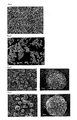
FIG. 1 shows the results of scanning electron microscopic observation (400X) of a starting powder (magnesium carbonate powder) used in an example of the invention. -
FIG. 2 shows the results of scanning electron microscopic observation (2,000X) of a starting powder (anhydrous dibasic calcium phosphate powder) used in an example of the invention. -
FIG. 3 shows the results of scanning electron microscopic observation (2,000X) of a starting powder (magnesium oxide powder) used in an example of the invention. -
FIG. 4 shows the results of scanning electron microscopic observation (500X) of a starting powder (L-HPC powder) used in an example of the invention. -
FIG. 5 shows the results of scanning electron microscopic observation (1,000X) of a starting powder (crospovidone) used in an example of the invention. -
FIG. 6 shows the results of scanning electron microscopic observation (130X and 800X) of the core particles obtained in Example 1. -
FIG. 7 shows the results of scanning electron microscopic observation (150X and 850X) of the core particles obtained in Example 2. -
FIG. 8 shows the results of scanning electron microscopic observation (350X and 1,100X) of the core particles obtained in Example 3. -
FIG. 9 shows the results of scanning electron microscopic observation (350X and 950X) of the core particles obtained in Example 4. -
FIG. 10 shows the results of scanning electron microscopic observation (150X and 750X) of the core particles obtained in Example 5. -
FIG. 11 shows the results of scanning electron microscopic observation (50X and 500X) of the core particles obtained in Example 6. -
FIG. 12 shows the results of scanning electron microscopic observation (50X and 600X) of the core particles obtained in Examples 7 to 10. -
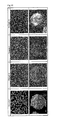
FIG. 13 shows the results of scanning electron microscopic observation (50X and 450X) of the core particles obtained in Examples 11 and 12. -
FIG. 14 is a graph showing the results of a dissolution test on the pharmaceutical preparation obtained in Example 11. -
FIG. 15 is a graph showing the results of a dissolution test on the pharmaceutical preparation obtained in Example 12. - The disintegratable core particle of the present invention is disintegratable core particle for a pharmaceutical preparation, the core particle being used for forming a film containing a drug active ingredient on a surface of the core particle, wherein
- (1) the core particle comprises a pharmaceutically acceptable inorganic material and a disintegration promoting agent,
- (2) the inorganic material is poorly soluble in water,
- (3) the inorganic material has a content of from 50 to 95 wt%, and
- (4) the core particle has a bulk density of 0.6 g/mL or more.
- A pharmaceutically (pharmacologically) acceptable, poorly water-soluble inorganic material is used as the inorganic material included in the disintegratable core particle for pharmaceutical preparation of the invention (inventive core particle). Preferred use can be made of, in particular, an inorganic material having a solubility in water at 20°C of 1 g/30 mL or less, and especially 1 g/100 mL or less. In materials that are capable of dissolving in water, shape retention property sometimes decreases with the infiltration of water. By contrast, in this invention, by using an inorganic material which is poorly soluble in water, a stable shape retention property can be achieved.
- The type of inorganic material is not subject to any particular limitation, so long as it is poorly soluble in water. A known or commercially available inorganic material used for pharmaceutical preparations can be employed as the inorganic material. Exemplary inorganic materials include, for example, at least one type of poorly water-soluble inorganic material from among anhydrides and hydrates of phosphates, silicates, oxides and hydroxides. Of these, preferred use can be made of at least one from among the following: magnesium oxide, magnesium hydroxide, magnesium carbonate, dibasic calcium phosphate, silicon dioxide, aluminum hydroxide, calcium silicate and aluminum silicate. By using these inorganic materials, core particles capable of maintaining a desired shape retention property and desired particle hardness until disintegration can be advantageously formed.
- The content of inorganic material in the core particle of the present invention is not particularly limited, although it is desirable that it be generally at least 50 wt%, especially at least 70 wt%, and particularly from 80 to 95 wt%. By setting the amount of inorganic material within the above range, the particle is able to exhibit excellent shape retention property while yet including a disintegration promoting agent.
- The disintegration promoting agent is not limited as long as it functions to give rise to dissolution, swelling or the like in the presence of water and causes the core particle to disintegrate. For example, a known or commercially available disintegrant may be used for this purpose. Use may be made of at least one from among the following: crospovidone, methylcellulose, low-substituted hydroxypropylcellulose (L-HPC), hydroxypropylcellulose (HPC), hydroxypropylmethylcellulose (HPMC), carboxymethylcellulose calcium, carboxymethylcellulose sodium, starch, guar gum, gum arabic and polyvinyl alcohol.
- The content of the disintegration promoting agent in the inventive core particle of the present invention may be adjusted in such a way as to disintegrate at the desired site and time in the period following administration and up to elimination from the body, and may be suitably set in accordance with the type of disintegration promoting agent and the type of inorganic material used. It is desirable to set the content in the range of generally from about 5 to about 50 wt%, and preferably from 5 to 20 wt%.
- In addition to the inorganic material and the disintegration promoting agent described above, known or commercially available pharmaceutical excipients which are not a drug active ingredient may be optionally included in the core particle of the present invention. That is, pharmaceutical excipients other than those used as the above inorganic material and the above disintegration promoting agent may be contained. For example, vehicles (e.g., lactose), binders (e.g., ethyl cellulose), lubricants (e.g., magnesium stearate, calcium stearate), and pH adjustors (e.g., citric acid, acetic acid, sulfuric acid, hydrochloric acid, lactic acid, sodium hydroxide, potassium hydroxide) may be used as such pharmaceutical excipients. The content of pharmaceutical excipients is not subject to any particular limitation so long as it is in a range that does not detract from the advantageous effects of the invention, although it is desirable to set the content within a range of 20 wt% or less.
- The shape of the inventive core particle is not particularly limited and may be, for example, spherical, cylindrical, flake or of non-uniform shape, although from the standpoint of flow properties and the like, a spherical shape is generally desirable.
- The core particle of the present invention has a bulk density which is set to generally at least 0.6 g/mL. This makes it possible for an excellent core particle performance (e.g., excellent coatability) to be obtained. From this standpoint, in the present invention, it is especially preferable to set the bulk density of the core particle to from 0.7 to 1.0 g/mL.
- The core particle of the present invention has a hardness which, although not particularly limited, is preferably at least 200 g/mm2. By setting the particle hardness in this range, it is possible to more effectively prevent breakage and pulverization of the core particle in the coating step used to form a drug active ingredient-containing film on the surface of the core particle of the present invention. The upper limit value for hardness, although not subject to any particular limitation, may generally be set to about 3,000 g/mm2.
- The core particles of the present invention have an average particle size which, in general, can be suitably set in the range of at least 50 µm, preferably from 50 to 500 µm, and more preferably from 50 to 350 µm.
- Also, it is desirable for the particle size distribution to be one in which 5 wt% or less of the particles have a particle diameter below 45 µm, at least 90 wt% of the particles have a particle diameter of 45 µm or more but less than 500 µm, and 5 wt% or less of the particles have a particle diameter of 500 µm or more.
- Accordingly, in this invention, preferred use can be made of core particles having particle size distributions such as those in (A) to (C) below:
- (A) core particles in which 5 wt% or less (preferably 2 wt% or less) of the particles have a particle diameter less than 45 µm, at least 90 wt% (preferably at least 96 wt%) of the particles have a particle diameter of 45 µm or more but less than 350 µm, and 5 wt% or less (preferably 2 wt% or less) of the particles have a particle diameter of 350 µm or more;
- (B) core particles in which 5 wt% or less (preferably 2 wt% or less) of the particles have a particle diameter less than 45 µm, at least 90 wt% (preferably at least 96 wt%) of the particles have a particle diameter of 45 µm or more but less than 150 µm, and 5 wt% or less (preferably 2 wt% or less) of the particles have a particle diameter of 150 µm or more; and
- (C) core particles in which 5 wt% or less (preferably 2 wt% or less) of the particles have a particle diameter less than 350 µm, at least 90 wt% (preferably at least 96 wt%) of the particles have a particle diameter of 350 µm or more but less than 500 µm, and 5 wt% or less (preferably 2 wt% or less) of the particles have a particle diameter of 500 µm or more.
- The core particles of (A) and (B) above have relatively small particle sizes and, when used as tablets, a powder or the like, are able to provide a medicine which is smooth on the tongue and easy to swallow. Because it is difficult or impossible to form such fine core particles by using organic core particles, this is a distinguishing feature of the present invention which is dependent on the use of an inorganic material. The core particles of (C) above have a relatively large particle size and can be advantageously used as core particles in a medicine to be filled into capsules.
- Setting the angle of repose in the core particle of the present invention to generally 40° or less, preferably 37° or less, and more preferably 35° or less, is preferred from the standpoint of, for example, uniformly pouring the core particles into and discharging them from equipment, and also from the standpoint of forming a uniform coating layer on the core particles.
- The core particles of the present invention are preferably obtained by granulating a composition (starting powder as a starting material) containing the above-described inorganic material and disintegration promoting agent. In addition to the inorganic material and the disintegration promoting agent, where necessary, the starting powder may also contain the above-described pharmaceutical excipients. The method of granulation used is preferably one of the methods mentioned subsequently in Section 2.
- The inventive core particles can be used by forming on the surfaces thereof a drug active ingredient-containing film. For example, specific drug-containing particles (pharmaceutical product) can be manufactured by coating the surfaces of the inventive core particles with a drug active ingredient-containing composition.
- Examples of drug active ingredients include, but are not limited to, antihyperlipidemic drugs, antiulcerogenic drugs, antihypertensive drugs, antidepressant drugs, antiasthmatic drugs, antiepileptic drugs, antiallergy drugs, antibacterials, anticancer drugs, analgesics, anti-inflammatory drugs, diabetes drugs, antimetabolic drugs, osteoporosis drugs, antiplatelet drugs, antiemetic drugs, hormone drugs and anesthetics.
- Moreover, where necessary, known or commercially available pharmaceutical excipients other than the above-described disintegration promoting agent may be contained in these compositions. As the pharmaceutical excipients, for example, vehicles, binders, lubricants, and pH adjustors can be used. The content of these pharmaceutical excipients may be suitably set according to, for example, the types of pharmaceutical additives and the content of the drug active ingredient.
- No limitation is imposed on the method of coating the surfaces of the inventive core particles with a drug active ingredient-containing composition. For example, use may be made of known granulating methods such as mixing granulation, fluidized-bed granulation and tumbling granulation. Such granulation may be carried out using a known or commercially available granulator. The thickness of the drug active ingredient-containing film may be adjusted within the range of generally about from 1 to 100 µm.
- The inventive core particles can be obtained by, for example, granulating a composition (starting powder) containing the above-described inorganic material and disintegration promoting agent.
- A pharmaceutically acceptable inorganic material which is poorly soluble in water may be used as the starting powder. That is, a fine powder of any of the inorganic materials mentioned above may be used.
- The average particle diameter of the starting powder can be suitably set according to, for example, the desired particle diameter of the core particles of the present invention, and may be set to generally from 0.1 to 40 µm, and especially from 0.1 to 20 µm.
- No particular limitation is imposed on the method of granulation. Methods that may be used include, for example, tumbling granulation, mixing granulation, fluidized-bed granulation, compaction forming (compression granulation), film-forming treatment, magnetic property-based treatment, surface modification, sintering, vibration compacting, pressure swing granulation, vacuum forming and spray drying, as well as freeze drying and co-precipitation. Granulation may be carried out using a known or commercially available granulator. Of these methods of granulation, mixing granulation is especially suitable in the present invention.
- Granulation may be carried out by either a wet method or a dry method, although granulation by a wet method is especially suitable in the present invention. When granulation is carried out by a wet method, no limitation is imposed on the type of solvent, although preferred use can be made of water or an aqueous solvent. Aqueous solvents that can be advantageously used include mixed solvents of ethanol and water (in a volumetric ratio of ethanol to water of about 1 : 0 to 1 : 5). The amount of solvent used may be set to generally about from 30 to 300 parts by weight per 100 parts by weight of the starting powder.
- In one preferred method, granulation is carried out with a high-speed stirring-type mixing granulator by pouring the starting powder into the granulator and mixing the powder by the stirrers in the granulator while spraying it with a solvent to fluidize the powder. In such a high-speed type mixing granulator, when an agitator and a chopper are used as the stirrers, although the speed settings will depend also on other conditions, granulation can be advantageously carried out by setting the agitator speed to about from 500 to 1,000 rpm and the chopper speed to about from 1,000 to 1,500 rpm. The wet granulated material that has formed may be dried within the granulator (hopper), or the wet granulated material may be removed from the granulator (hopper) and dried. The core particles of the present invention can be obtained by subsequently carrying out classification to the target particle size distribution.
- The features of the invention are explained more fully below by way of the following Examples and Comparative examples, although these examples do not limit the scope of the invention.
- Core particles were produced by charging the inorganic materials and pharmaceutical excipients (disintegrants, etc.) shown in Table 1 as the starting materials into a high-speed type mixing granulator ("LFS-GS-2J", from Fukae Powtec Co., Ltd.) so as to give the compositions shown in Table 2, adding water and wet granulating, then drying at 80°C for 24 hours. The granulation conditions in the respective Examples (EX) and Comparative examples (CE) are as shown in Table 2.
-
Table 1 Characteristics Appearance Average particle size (µm) Bulk density (g/mL) Angle of repose Inorganic materials Magnesium oxide powder (Tomita Pharmaceutic al Co., Ltd.) white powder 4.1 0.38 39° Anhydrous dibasic calcium phosphate powder (Tomita Pharmaceutic al Co., Ltd.) white powder 3.3 0.32 56° Magnesium carbonate powder (Tomita Pharmaceutic al Co., Ltd.) white powder 19.5 0.56 52° Pharmaceutical excipients HPMC (disintegrant) white powder 88.7 0.42 54° L-HPC (disintegrant) white powder 18.2 0.30 59° Crospovidone (disintegrant, wicking agent) white powder 5.9 0.19 63° Lactose (vehicle, wicking agent) white powder 46.5 0.63 51° D-Mannitol (vehicle, wicking agent) white powder 38.1 0.63 42° -

- The appearance (shape), hardness, bulk density, angle of repose and particle size distribution of the core particles obtained in the respective Examples of the invention and Comparative examples were measured. The results are shown in Table 2. The following methods were used to measure these properties.
- The particles were examined with a scanning electron microscope.
- Using a particle hardness tester ("Grano", from Okada Seiko Co., Ltd.), the peak value (g) in the crushing strength of a single particle was measured, and the average value for 20 particles was determined.
- Twenty grams of sample was placed in a 50 mL graduated cylinder, following which the cylinder was set in a tapped density powder tester ("TMP-7-P", available from Tsutsui Rikagaku Kikai Co., Ltd.), and testing was carried out under the following measurement conditions: number of taps:100, tapping height:4 cm, and tapping speed:36 taps/min. After testing, the volume F (mL) was visually measured. The bulk density (g/mL) was then calculated as 20/F.
- A hopper was placed at a position 100 mm above a 50 mm diameter dish and the sample was dropped, a small amount at a time, from the hopper onto the dish, creating a conical mound of the sample. The height (h) of this mound when the sample stopped sliding and came to rest was measured, and the angle that forms between the dish and the slope of the mound (angle of repose α = tan-1(h/25 mm)) was calculated.
- The sample was ultrasonically agitated (frequency, 400 Hz), then dispersed in acetone, and measurement was carried out by laser diffractometry in an acetone solvent. The instrument used for measurement was the "MICROTRAC HRA Model No. 9320-X100", from Honeywell.
- The starting powders used in Examples and Comparative examples were examined with a scanning electron microscope. The results are shown in
FIGS. 1 to 5 . In addition, the inventive core particles obtained in Examples 1 to 10 using these starting powders were examined with a scanning electron microscope. These latter results are shown inFIGS. 6 to 12 . As is apparent from these results, substantially spherical particles can be produced using starting materials composed of particles having uneven shape. - The disintegratability of the core particles obtained in Examples of the invention and Comparative examples were examined. The test method was as follows. First, 1 g of core particles was placed in a 200 mL Erlenmeyer flask, and water was added up to the 50 mL line. The flask was then shaken on a shaker for 10 minutes at 37°C and 100 rpm. The average particle diameters (D50) after 1 minute, 3 minutes, 5 minutes and 10 minutes of shaking were measured, and the change over time in the degree of particle disintegration was thereby determined. Those results are shown in Table 3.
-
Table 3 Shaking time Average particle diameter (D = 50) EX 1 EX 2 EX 3EX 4 EX 5 EX 6 EX 7EX 8EX 9EX 10CE 1 CE 2 CE 30 min 106 µm 111 µm 101 µm 104 µm 103 µm 108 µm 120 µm 118 µm 111 µm 105 µm 113 µm 92 µm 105 µm 1 min 87 µm 98 µm 52 µm 32 µm 37 µm 7 6 µm 42 µm 57 µm 27 µm 2 3 µm 114 µm 84 µm 103 µm 3 min 52 µm 82 µm 11 µm 7 µm 9 µm 52 µm 34 µm 54 µm 28 µm 19 µm 109 µm 87 µm 107 µm 5 min 42 µm 63 µm 7 µm 7 µm 6 µm 45 µm 31 µm 56 µm 2 6 µm 20 µm 110 µm 81 µm 100 µm 10 min 37 µm 51 µm 6 µm 6 µm 6 µm 41 µm 3 2 µm 51 µm 2 6 µm 2 0 µm 111 µm 83 µm 103 µm - As shown in Table 3, the particle diameter remained substantially unchanged in Comparative examples, whereas the average particle diameter (D50) fell to one-half of the initial value after 3 minutes in Example 1, after 10 minutes in Example 2, after 1 minute in Example 3, within 1 minute in Example 4, within 1 minute in Example 5, after 3 minutes in Example 6, within 1 minute in Example 7, within 3 minutes in Example 8, within 1 minute in Example 9, and within 1 minute in Example 10. It is thus apparent that, in this invention, not only can the core particles be disintegrated, the time until disintegration can also be controlled.
- Pharmaceutical preparations composed of two types of drug-containing particles were produced by using the core particles obtained in Example 7 and carrying out coating treatment on the surfaces of the core particles. The ingredients shown in Table 4 were used in the indicated amounts per 200 g of the core particles. Table 4 also shows the coating treatment conditions.
-
Table 4 Example 11 Example 12 Apparatus used MP-01SFP (Powrex) Unit used SPC (Wurster) Spray liquid rate 2.5 g/min 5 g/ min Inlet temperature 50° C 60° C Outlet temperature 40° C 50°C Flow rate 45 m3/h 45 m3/h Spray air pressure 0.3 MPa 0.3 MPa Spray air flow rate 30 L/min 30 L/min Example 7 200 g 200 g Ibuprofen 20 g -- Rabeprazole Na -- 20 g HPMC (TC-5) 10 g 10 g Ultrapure water 10 g 10 g Ethanol (99.5) 190 g 190 g - The particle appearance (shape), particle hardness, angle of repose and particle size distribution for the pharmaceutical preparations composed of the drug-containing particles obtained in Examples 11 and 12 were investigated by the same methods as in Test Example 1. The results are shown in Table 5. In addition,
FIG. 13 shows the results of observations on the particle appearance (shape). -
Table 5 Example 11 Example 12 Angle of repose 54.2° 52.8° Particle hardness 151 g/mm2 636 g/mm2 Particle size distribution 22M on (710 µm) 0.4% 0.8% 30M on (500 µm) 5.0% 2.7% 42M on (355 µm) 22.6% 15.7% 60M on (250 µm) 29.3% 29.8% 83M on (180 µm) 18.40% 21.0% 100M on (150 µm) 10.9% 11.3% 140M on (106 µm) 11.7% 15.9% 200M on (75 µm) 1.4% 1.3% 200M pass 0.3% 1.5% - Dissolution tests were carried out, according to the procedures shown in Tables 6 to 8 and described below, on pharmaceutical preparations composed of the drug-containing particles obtained in Examples 11 and 12. The results are shown in Tables 9 and 10 and in
FIGS. 14 and 15 . - The following method is used to measure the ibuprofen content. First, 115 mg of the core particles is precisely weighed out and placed in a graduated cylinder containing about 80 mL of the second fluid specified in the Japanese Pharmacopoeia (JP second fluid), then the volume is brought up to 100 mL with the JP second fluid. Next, at least 20 mL of the resulting solution is collected and filtered with a membrane filter having a pore size of 0.45 µm or less. The first 10 mL of filtrate is discarded, and the remaining filtrate is used as the sample solution. In a separate procedure, 25 mg of ibuprofen (reference) is precisely weighed out, then dissolved in acetonitrile and brought up to exactly 50 mL. Five mL of this solution is then precisely measured out and brought up to exactly 25 mL by adding JP second fluid, thereby giving a reference solution (about 100 ppm). Next, 50 µL each of the sample solution and the reference solution are precisely measured out, the ibuprofen peak areas AT and As of the respective solutions are measured in accordance with "2.01 Liquid Chromatography" under "General Tests" in the Japanese Pharmacopoeia (JP), and the ibuprofen content is calculated from the following formula:

where - WS:
- amount of ibuprofen reference weighed out (mg); and
- C:
- amount of ibuprofen weighted out (g).
-
Table 6 Detector Ultraviolet absorptiometer (measurement wavelength, 246 nm) Column Stainless steel tube (inside diameter, 4.6 mm; length, 15 cm) packed with octadecylsilylated silica gel (average particle size, 5 µm) for liquid chromatography (ODS-3) Column temperature Fixed temperature near 40°C (40°C) Mobile phase Acetonitrile/0.05 mol/L Monobasic sodium phosphate test solution (pH 2.6) mixture (volume ratio, 3 : 2) The monobasic sodium phosphate test solution is prepared by dissolving 6 g of monobasic sodium phosphate in about 800 mL of ultrapure water, adjusting the pH to 2.6 with dilute hydrochloric acid, and adding water to exactly 1,000 mL. Flow rate Adjusted so that the ibuprofen retention time is about 6 minutes. - The liquid sampled in the dissolution test is used directly as the sample solution. Analysis according to "2.01 Liquid Chromatography" is carried out on this sample solution. Testing of the ibuprofen content in the sample solution is carried out under the conditions indicated in (1) above.
In a separate operation, 25 mg of ibuprofen reference is precisely weighed out and dissolved in acetonitrile while bringing the volume up to exactly 50 mL. Next, 5 mL of this solution is precisely measured out and JP second fluid is added so as to bring the volume up to exactly 25 mL, thereby giving a reference solution (about 100 ppm). In a separate operation, 5 mL of this solution is precisely measured out and JP second fluid is added so as to bring the volume up to 50 mL, thereby giving a 50 ppm reference solution. Next, 10 mL of this solution is precisely measured out and JP second fluid is added so as to bring the volume up to exactly 25 mL, thereby giving a 200 ppm reference solution. Liquid chromatography is carried out on these reference solutions, and the slopes (a) and intercepts (t) of the straight lines obtained by plotting the peak areas and concentrations of the ibuprofen references are determined. The dissolution rate is determined by entering the content B in the sample solution into the following formula:
where - Qt:
- peak area of sample solution;
- C:
- amount of ibuprofen measured out (mg); and
- B:
- ibuprofen content of coated product (%).
- The following method is used to measure the rabeprazole content. First, 20 mg of the core particles is precisely weighed out and dissolved by adding 30 mL of an aqueous NaOH solution (0.5 M), 45 mL of methanol is added, then the volume is brought up to exactly 100 mL with a water-methanol solution (2 : 3). Two mL of this solution is precisely measured out and brought up to exactly 20 mL with a water-methanol solution (2 : 3), thereby giving a reference solution. Liquid chromatography is carried out on this reference solution, and the peak area (Qs) of rabeprazole is determined (Note: The linearity verification range is 4 ppm.). In a separate procedure, 230 mg of sample is precisely weighed out and dissolved by adding 30 mL of an aqueous NaOH solution (0.5 M), 45 mL of methanol is added, then the volume is brought up to exactly 100 mL with a water-methanol solution (2 : 3). This solution is centrifuged for 10 minutes at 3,000 rpm, then 2 mL of the supernatant is precisely measured out and a water-methanol solution (2 : 3) is added to a volume of exactly 20 mL, thereby giving a sample solution. The peak area (Qt) of rabeprazole is determined for the test solution by carrying out liquid chromatography.

The test conditions in the above-mentioned liquid chromatography are as shown in Table 7. -
Table 7 <Assay Conditions> n = 3 Calibration Curve Method Detector Ultraviolet absorptiometer (measurement wavelength, 290 nm) Column ODS (from GL Science): inside diameter, 4.6 mm; length, 15 cm Column temperature room temperature Flow rate 1.5 mL/min Measurement time 6 min Mobile phase methanol/50 mM phosphate buffer (pH 7.0) = 3 : 2 Equipment Shimadzu liquid chromatography Analysis parameters Atten = 5; slope = 500; Min. area = 200 - First, 20 mg of rabeprazole sodium is precisely weighed out and dissolved by adding 30 mL of an aqueous NaOH solution (0.5 M), after which 45 mL of methanol is added, then the volume is brought up to exactly 100 mL with a water-methanol solution (2 : 3). Two mL of this solution is precisely measured out and brought up to exactly 100 mL with a water-methanol solution (2 : 3), thereby giving a 4 ppm reference solution. In a separate procedure, 2 mL of the same solution is precisely measured out and brought up to a volume of exactly 200 mL with a water-methanol solution (2 : 3), thereby giving a 2 ppm reference solution. Liquid chromatography is carried on these reference solutions, and the slopes (a) and intercepts (t) of the straight lines obtained by plotting the peak areas and concentrations of rabeprazole are determined.
One milliliter of an aqueous NaOH solution (0.5 M) is added to 5 mL of the sample solution at each sampling time, and the resulting solution is thoroughly mixed. Next, 4 mL of this solution is precisely measured out, then 2 mL of an aqueous NaOH solution (0.5 M) and 8 mL of methanol are added, following which the volume is brought up to exactly 20 mL with a water-methanol solution (2 : 3). Liquid chromatography is then carried out under the conditions described above, and the peak area (Qt) for rabeprazole is determined. Both the reference solutions and the sample solution are used as injection solutions after filtration with a membrane filter having a pore size of 0.2 µm.
Dissolution rate (%) = (Qt - t)/a x 5 x 6/5 x 900/1,000/amount of rabeprazole Na collected (mg) x 100 -
Table 8 Example 11 Example 12 Amount of drug active ingredient charged 115 mg/vessel 230 mg/vessel Apparatus SR8-PLUS-8S (Hanson Research, USA) SR8-PLUS-8S (Hanson Research, USA) Method paddle method paddle method Amount of test solution 900 mL 900 mL Temperature of test solution 37°C ± 0.5°C 37°C ± 0.5°C Rotational speed 75 rpm 50 rpm Number of vessels 3 3 Test solution JP second fluid (pH 6.8) tris(hydroxymethyl)am inomethane buffer (pH 8.0) Sampling times 5 min, 10 min, 15 min, 30 min, 60 min 5 min, 10 min, 15 min, 30 min, 60 min -
Table 9 Dissolution time (min) Dissolution rate (%) Example 11 IBP - Ref. 5 93.9 49.5 10 97.9 77.3 15 98.2 83.4 20 98.2 86.0 30 99.1 89.6 60 99.7 95.0 -
Table 10 Dissolution time (min) Dissolution rate (%) Example 12 RBP - Ref. 5 83.3 78.6 10 87.3 86.0 15 93.2 87.1 20 91.8 87.5 30 87.7 85.5 60 79.9 78.4 - As is apparent also from the results in Tables 9 and 10 and in
FIGS. 14 and 15 , dissolution of the drug active ingredients is more rapid in the case of the pharmaceutical preparations in Examples 11 and 12 than for the drug active ingredients alone.
Claims (11)
- A disintegratable core particle for a pharmaceutical preparation, the core particle being used for forming a film containing a drug active ingredient on a surface of the core particle, wherein(1) the core particle comprises a pharmaceutically acceptable inorganic material and a disintegration promoting agent,(2) the inorganic material is poorly soluble in water,(3) the inorganic material has a content of from 50 to 95 wt%, and(4) the core particle has a bulk density of 0.6 g/mL or more.
- The disintegratable core particle for a pharmaceutical preparation according to claim 1, wherein the core particle has a particle hardness of 200 g/mm2 or more.
- The disintegratable core particle for a pharmaceutical preparation according to claim 1, having a particle size distribution of no more than 5 wt% of the particles having a diameter less than 45 µm, at least 90 wt% of the particles having a diameter at least 45 µm but less than 500 µm, and no more than 5 wt% of the particles having a diameter at least 500 µm.
- The disintegratable core particle for a pharmaceutical preparation according to claim 1, having a particle size distribution of no more than 5 wt% of the particles having a diameter less than 45 µm, at least 90 wt% of the particles having a diameter at least 45 µm but less than 150 µm, and no more than 5 wt% of the particles having a diameter at least 150 µm.
- The disintegratable core particle for a pharmaceutical preparation according to claim 1, wherein the inorganic material has a solubility in water at 20°C of 1 g/30 mL or less.
- The disintegratable core particle for a pharmaceutical preparation according to claim 1, wherein the inorganic material is at least one from among magnesium oxide, magnesium hydroxide, magnesium carbonate, dibasic calcium phosphate, silicon dioxide, aluminum hydroxide, calcium silicate and aluminum silicate.
- The disintegratable core particle for a pharmaceutical preparation according to claim 1, wherein the disintegration promoting agent is at least one from among crospovidone, methylcellulose, low-substituted hydroxypropylcellulose (L-HPC), hydroxypropylcellulose (HPC), hydroxypropylmethylcellulose (HPMC), carboxymethylcellulose calcium, carboxymethylcellulose sodium, starch, guar gum, gum arabic and polyvinyl alcohol.
- The disintegratable core particle for a pharmaceutical preparation according to claim 1, wherein the particles have an average particle diameter of 50 µm or more.
- The disintegratable core particle for a pharmaceutical preparation according to claim 1, wherein the core particle is obtained by granulating a composition containing the inorganic material and the disintegration promoting agent.
- A drug-containing particle comprising a drug active ingredient-containing film formed on the surface of the core particle for a drug preparation according to claim 1.
- The drug-containing particle according to claim 10, wherein the film contains a drug active ingredient and a vehicle.
Applications Claiming Priority (2)
| Application Number | Priority Date | Filing Date | Title |
|---|---|---|---|
| JP2010290831 | 2010-12-27 | ||
| PCT/JP2011/080276 WO2012091040A1 (en) | 2010-12-27 | 2011-12-27 | Decay-type nuclear particle for pharmaceutical formulation |
Publications (2)
| Publication Number | Publication Date |
|---|---|
| EP2659882A1 true EP2659882A1 (en) | 2013-11-06 |
| EP2659882A4 EP2659882A4 (en) | 2014-11-12 |
Family
ID=46383131
Family Applications (1)
| Application Number | Title | Priority Date | Filing Date |
|---|---|---|---|
| EP11854059.0A Withdrawn EP2659882A4 (en) | 2010-12-27 | 2011-12-27 | DISAGGREGATION TYPE NUCLEAR PARTICLE FOR PHARMACEUTICAL FORMULATION |
Country Status (5)
| Country | Link |
|---|---|
| US (1) | US20140030346A1 (en) |
| EP (1) | EP2659882A4 (en) |
| JP (2) | JP5578534B2 (en) |
| CN (1) | CN103313703A (en) |
| WO (1) | WO2012091040A1 (en) |
Cited By (2)
| Publication number | Priority date | Publication date | Assignee | Title |
|---|---|---|---|---|
| WO2020069987A1 (en) | 2018-10-04 | 2020-04-09 | Chemische Fabrik Budenheim Kg | Spherical beads for use in producing pharmaceutically active pellets |
| EP3892262A1 (en) | 2020-04-06 | 2021-10-13 | Chemische Fabrik Budenheim KG | Beads comprising a buffer system |
Families Citing this family (3)
| Publication number | Priority date | Publication date | Assignee | Title |
|---|---|---|---|---|
| JP6251946B2 (en) * | 2012-10-14 | 2017-12-27 | 富田製薬株式会社 | Composite core particle and pharmaceutical composition containing the same |
| JP6498607B2 (en) * | 2012-12-21 | 2019-04-10 | メルク パテント ゲゼルシャフト ミット ベシュレンクテル ハフツングMerck Patent Gesellschaft mit beschraenkter Haftung | Magnesium carbonate hydroxide as an excipient in pharmaceutical preparations with improved release of active ingredients |
| NZ759443A (en) * | 2017-05-10 | 2020-06-26 | Thankapan VADAKEKUTTU | Agricultural compositions |
Family Cites Families (25)
| Publication number | Priority date | Publication date | Assignee | Title |
|---|---|---|---|---|
| GB8414221D0 (en) * | 1984-06-04 | 1984-07-11 | Sterwin Ag | Unit dosage form |
| JP2542122B2 (en) | 1990-04-18 | 1996-10-09 | 旭化成工業株式会社 | Spherical nucleus, spherical granule and method for producing the same |
| JP2820829B2 (en) * | 1991-03-07 | 1998-11-05 | 武田薬品工業株式会社 | Nucleated powder and production method thereof |
| JP3219787B2 (en) | 1991-05-28 | 2001-10-15 | フロイント産業株式会社 | Method for producing spherical particles |
| JP3349535B2 (en) | 1993-01-12 | 2002-11-25 | フロイント産業株式会社 | Method for producing spherical granules |
| WO1995034291A1 (en) * | 1994-06-15 | 1995-12-21 | Dumex-Alpharma A/S | Pellets |
| JPH08217801A (en) * | 1995-02-10 | 1996-08-27 | Kanegafuchi Chem Ind Co Ltd | Water-swellable spherical cores and spherical granules for spherical granules, and methods for producing the same |
| JPH09175999A (en) | 1995-12-22 | 1997-07-08 | Freunt Ind Co Ltd | Spherical granule and method for producing the same |
| DE19637082A1 (en) * | 1996-09-12 | 1998-03-19 | Boehringer Mannheim Gmbh | Rapidly disintegrating pellets |
| TW486370B (en) * | 1996-12-25 | 2002-05-11 | Yamanouchi Pharma Co Ltd | Rapidly disintegrable pharmaceutical composition |
| JP3447042B2 (en) | 1997-07-23 | 2003-09-16 | フロイント産業株式会社 | Method for producing single substance spherical particles |
| AU4778500A (en) * | 1999-05-20 | 2000-12-12 | Takeda Chemical Industries Ltd. | Composition containing ascorbic acid salt |
| KR100381834B1 (en) * | 2000-05-20 | 2003-04-26 | 이상득 | Solid dispersion system of pranlukast with improved dissolution, and the method thereof |
| US20030096018A1 (en) * | 2000-12-15 | 2003-05-22 | Schloss Caroline Maxine | Multi-vitamin and hormone replacement supplement |
| US20050226923A1 (en) * | 2004-04-07 | 2005-10-13 | Gassert Chad M | Venlafaxine compositions in the form of microtablets |
| JP2006016329A (en) * | 2004-06-30 | 2006-01-19 | Lion Corp | Granular medicine |
| EP2783688A1 (en) * | 2005-03-17 | 2014-10-01 | Synhton B.V. | Pharmaceutical tablets of crystalline type ii aripiprazole |
| JP2007015982A (en) * | 2005-07-07 | 2007-01-25 | Tendou Seiyaku Kk | Laxative agent |
| JP4168157B1 (en) * | 2007-03-12 | 2008-10-22 | 富田製薬株式会社 | Spherical core particles for pharmaceuticals |
| US9149434B2 (en) * | 2007-12-03 | 2015-10-06 | Tomita Pharmaceutical Co., Ltd. | Core particle for pharmaceutical preparation |
| JPWO2009157214A1 (en) * | 2008-06-27 | 2011-12-08 | 富士化学工業株式会社 | Spherical amorphous magnesium aluminate silicate |
| JP5359061B2 (en) * | 2008-06-28 | 2013-12-04 | 富田製薬株式会社 | Pharmaceutical core particles |
| CN101507718B (en) * | 2009-03-03 | 2011-05-04 | 张登科 | Sodium rabeprazole enteric-coated orally disintegrating tablets and preparation method thereof |
| JP2011026307A (en) * | 2009-06-28 | 2011-02-10 | Tomita Pharmaceutical Co Ltd | Core particle for pharmaceutical preparation |
| JP2011157348A (en) * | 2010-01-05 | 2011-08-18 | Fuji Chem Ind Co Ltd | Disintegrable high-strength spherical particle composition |
-
2011
- 2011-12-27 WO PCT/JP2011/080276 patent/WO2012091040A1/en not_active Ceased
- 2011-12-27 CN CN2011800628320A patent/CN103313703A/en active Pending
- 2011-12-27 JP JP2012550997A patent/JP5578534B2/en not_active Expired - Fee Related
- 2011-12-27 EP EP11854059.0A patent/EP2659882A4/en not_active Withdrawn
- 2011-12-27 US US13/996,412 patent/US20140030346A1/en not_active Abandoned
-
2014
- 2014-05-19 JP JP2014103666A patent/JP5910949B2/en active Active
Cited By (4)
| Publication number | Priority date | Publication date | Assignee | Title |
|---|---|---|---|---|
| WO2020069987A1 (en) | 2018-10-04 | 2020-04-09 | Chemische Fabrik Budenheim Kg | Spherical beads for use in producing pharmaceutically active pellets |
| US12115259B2 (en) | 2018-10-04 | 2024-10-15 | Chemische Fabrik Budenheim Kg | Spherical beads for use in producing pharmaceutically active pellets |
| EP3892262A1 (en) | 2020-04-06 | 2021-10-13 | Chemische Fabrik Budenheim KG | Beads comprising a buffer system |
| WO2021204572A1 (en) | 2020-04-06 | 2021-10-14 | Chemische Fabrik Budenheim Kg | Beads comprising a buffer system |
Also Published As
| Publication number | Publication date |
|---|---|
| JP2014169318A (en) | 2014-09-18 |
| US20140030346A1 (en) | 2014-01-30 |
| JP5910949B2 (en) | 2016-04-27 |
| WO2012091040A1 (en) | 2012-07-05 |
| JPWO2012091040A1 (en) | 2014-06-05 |
| JP5578534B2 (en) | 2014-08-27 |
| EP2659882A4 (en) | 2014-11-12 |
| CN103313703A (en) | 2013-09-18 |
Similar Documents
| Publication | Publication Date | Title |
|---|---|---|
| US9655851B2 (en) | Granular material for dosage forms | |
| JP6196676B2 (en) | Rapidly disintegrating solid dosage formulation containing functionalized calcium carbonate and method for producing the same | |
| CN101600419B (en) | Solid dispersion containing revaprazan and preparation method thereof | |
| US7338668B2 (en) | Drug carrier pellet production process | |
| US9713594B2 (en) | Methods for making pharmaceutical solid dosage forms of spray-dried dispersions | |
| EA022168B1 (en) | Method for production of compacted intermediate dimaleate bibw 2992 and solid tablets prepared from such intermediate | |
| US20140030346A1 (en) | Disintegrable core particle for pharmaceutical preparation | |
| JPWO2009072334A1 (en) | Pharmaceutical core particles | |
| Sun et al. | A microcrystalline cellulose based drug-composite formulation strategy for developing low dose drug tablets | |
| MXPA03009805A (en) | Compaction process for manufacture of sodium phenytoin dosage form. | |
| CN114681406B (en) | Carilazine long-acting slow-release microsphere and preparation method thereof | |
| Asai et al. | Design of xerogel pill with good swallowing performance through wet milling and drop freeze-drying processes | |
| JP4754485B2 (en) | Coprecipitation active substance-containing particles | |
| JP5585920B2 (en) | Particulate preparation | |
| JP2011207851A (en) | Swelling spherical core | |
| PM et al. | PREPARATION AND IN-VITRO EVALUATION OF SODIUM ALGINATE MICROSPHERES LOADED WITH SAXAGLIPTIN | |
| Aly et al. | Research paper preparation and evaluation of glipizide tablets containing both enhanced and sustained release solid dispersions | |
| Pandey et al. | Evaluation of the effect of hydrophilic polymer blend to extend the release of clarithromycin from prepared microcapsules | |
| EP2471513B1 (en) | Process for producing an active pharmaceutical ingredient (API) preparation in the form of beads | |
| Kumar et al. | Formulation design of Aceclofenac microcapsules by inotropic gelation technique, characterization studies and release kinetics | |
| CN111407744A (en) | A kind of preparation method of tofacitinib citrate long-acting sustained-release microspheres | |
| JP2011026307A (en) | Core particle for pharmaceutical preparation | |
| HK1210438B (en) | Sublingual abuse-resistant tablets comprising buprenorphine and naloxone | |
| HK1193568A1 (en) | New abuse-resistant pharmaceutical composition for the treatment of opioid dependence | |
| HK1193568B (en) | New abuse-resistant pharmaceutical composition for the treatment of opioid dependence |
Legal Events
| Date | Code | Title | Description |
|---|---|---|---|
| PUAI | Public reference made under article 153(3) epc to a published international application that has entered the european phase |
Free format text: ORIGINAL CODE: 0009012 |
|
| 17P | Request for examination filed |
Effective date: 20130725 |
|
| AK | Designated contracting states |
Kind code of ref document: A1 Designated state(s): AL AT BE BG CH CY CZ DE DK EE ES FI FR GB GR HR HU IE IS IT LI LT LU LV MC MK MT NL NO PL PT RO RS SE SI SK SM TR |
|
| DAX | Request for extension of the european patent (deleted) | ||
| A4 | Supplementary search report drawn up and despatched |
Effective date: 20141013 |
|
| RIC1 | Information provided on ipc code assigned before grant |
Ipc: A61K 47/04 20060101ALI20141007BHEP Ipc: A61K 47/36 20060101ALI20141007BHEP Ipc: A61K 47/26 20060101ALI20141007BHEP Ipc: A61K 47/38 20060101ALI20141007BHEP Ipc: A61K 9/16 20060101ALI20141007BHEP Ipc: A61K 47/02 20060101ALI20141007BHEP Ipc: A61K 9/14 20060101AFI20141007BHEP Ipc: A61K 47/32 20060101ALI20141007BHEP |
|
| 17Q | First examination report despatched |
Effective date: 20160412 |
|
| STAA | Information on the status of an ep patent application or granted ep patent |
Free format text: STATUS: THE APPLICATION IS DEEMED TO BE WITHDRAWN |
|
| 18D | Application deemed to be withdrawn |
Effective date: 20160823 |