EP2650429B1 - Moisturizing fabric material, use thereof in moisturizing bras, and method of manufacture - Google Patents
Moisturizing fabric material, use thereof in moisturizing bras, and method of manufacture Download PDFInfo
- Publication number
- EP2650429B1 EP2650429B1 EP13160317.7A EP13160317A EP2650429B1 EP 2650429 B1 EP2650429 B1 EP 2650429B1 EP 13160317 A EP13160317 A EP 13160317A EP 2650429 B1 EP2650429 B1 EP 2650429B1
- Authority
- EP
- European Patent Office
- Prior art keywords
- moisturizing
- fabric
- moisturizer
- fabric material
- bonding agent
- Prior art date
- Legal status (The legal status is an assumption and is not a legal conclusion. Google has not performed a legal analysis and makes no representation as to the accuracy of the status listed.)
- Active
Links
Images

Classifications
-
- A—HUMAN NECESSITIES
- A41—WEARING APPAREL
- A41C—CORSETS; BRASSIERES
- A41C3/00—Brassieres
- A41C3/0042—Brassieres diffusing perfume or the like
-
- A—HUMAN NECESSITIES
- A61—MEDICAL OR VETERINARY SCIENCE; HYGIENE
- A61K—PREPARATIONS FOR MEDICAL, DENTAL OR TOILETRY PURPOSES
- A61K8/00—Cosmetics or similar toiletry preparations
- A61K8/02—Cosmetics or similar toiletry preparations characterised by special physical form
- A61K8/0208—Tissues; Wipes; Patches
-
- A—HUMAN NECESSITIES
- A61—MEDICAL OR VETERINARY SCIENCE; HYGIENE
- A61K—PREPARATIONS FOR MEDICAL, DENTAL OR TOILETRY PURPOSES
- A61K8/00—Cosmetics or similar toiletry preparations
- A61K8/18—Cosmetics or similar toiletry preparations characterised by the composition
- A61K8/72—Cosmetics or similar toiletry preparations characterised by the composition containing organic macromolecular compounds
- A61K8/73—Polysaccharides
- A61K8/738—Cyclodextrins
-
- A—HUMAN NECESSITIES
- A61—MEDICAL OR VETERINARY SCIENCE; HYGIENE
- A61K—PREPARATIONS FOR MEDICAL, DENTAL OR TOILETRY PURPOSES
- A61K8/00—Cosmetics or similar toiletry preparations
- A61K8/18—Cosmetics or similar toiletry preparations characterised by the composition
- A61K8/92—Oils, fats or waxes; Derivatives thereof, e.g. hydrogenation products thereof
- A61K8/922—Oils, fats or waxes; Derivatives thereof, e.g. hydrogenation products thereof of vegetable origin
-
- A—HUMAN NECESSITIES
- A61—MEDICAL OR VETERINARY SCIENCE; HYGIENE
- A61K—PREPARATIONS FOR MEDICAL, DENTAL OR TOILETRY PURPOSES
- A61K8/00—Cosmetics or similar toiletry preparations
- A61K8/18—Cosmetics or similar toiletry preparations characterised by the composition
- A61K8/96—Cosmetics or similar toiletry preparations characterised by the composition containing materials, or derivatives thereof of undetermined constitution
- A61K8/97—Cosmetics or similar toiletry preparations characterised by the composition containing materials, or derivatives thereof of undetermined constitution from algae, fungi, lichens or plants; from derivatives thereof
- A61K8/9783—Angiosperms [Magnoliophyta]
- A61K8/9789—Magnoliopsida [dicotyledons]
-
- A—HUMAN NECESSITIES
- A61—MEDICAL OR VETERINARY SCIENCE; HYGIENE
- A61K—PREPARATIONS FOR MEDICAL, DENTAL OR TOILETRY PURPOSES
- A61K8/00—Cosmetics or similar toiletry preparations
- A61K8/18—Cosmetics or similar toiletry preparations characterised by the composition
- A61K8/96—Cosmetics or similar toiletry preparations characterised by the composition containing materials, or derivatives thereof of undetermined constitution
- A61K8/97—Cosmetics or similar toiletry preparations characterised by the composition containing materials, or derivatives thereof of undetermined constitution from algae, fungi, lichens or plants; from derivatives thereof
- A61K8/9783—Angiosperms [Magnoliophyta]
- A61K8/9794—Liliopsida [monocotyledons]
-
- A—HUMAN NECESSITIES
- A61—MEDICAL OR VETERINARY SCIENCE; HYGIENE
- A61P—SPECIFIC THERAPEUTIC ACTIVITY OF CHEMICAL COMPOUNDS OR MEDICINAL PREPARATIONS
- A61P19/00—Drugs for skeletal disorders
-
- A—HUMAN NECESSITIES
- A61—MEDICAL OR VETERINARY SCIENCE; HYGIENE
- A61Q—SPECIFIC USE OF COSMETICS OR SIMILAR TOILETRY PREPARATIONS
- A61Q19/00—Preparations for care of the skin
-
- D—TEXTILES; PAPER
- D06—TREATMENT OF TEXTILES OR THE LIKE; LAUNDERING; FLEXIBLE MATERIALS NOT OTHERWISE PROVIDED FOR
- D06M—TREATMENT, NOT PROVIDED FOR ELSEWHERE IN CLASS D06, OF FIBRES, THREADS, YARNS, FABRICS, FEATHERS OR FIBROUS GOODS MADE FROM SUCH MATERIALS
- D06M13/00—Treating fibres, threads, yarns, fabrics or fibrous goods made from such materials, with non-macromolecular organic compounds; Such treatment combined with mechanical treatment
- D06M13/02—Treating fibres, threads, yarns, fabrics or fibrous goods made from such materials, with non-macromolecular organic compounds; Such treatment combined with mechanical treatment with hydrocarbons
-
- D—TEXTILES; PAPER
- D06—TREATMENT OF TEXTILES OR THE LIKE; LAUNDERING; FLEXIBLE MATERIALS NOT OTHERWISE PROVIDED FOR
- D06M—TREATMENT, NOT PROVIDED FOR ELSEWHERE IN CLASS D06, OF FIBRES, THREADS, YARNS, FABRICS, FEATHERS OR FIBROUS GOODS MADE FROM SUCH MATERIALS
- D06M13/00—Treating fibres, threads, yarns, fabrics or fibrous goods made from such materials, with non-macromolecular organic compounds; Such treatment combined with mechanical treatment
- D06M13/10—Treating fibres, threads, yarns, fabrics or fibrous goods made from such materials, with non-macromolecular organic compounds; Such treatment combined with mechanical treatment with compounds containing oxygen
- D06M13/224—Esters of carboxylic acids; Esters of carbonic acid
-
- D—TEXTILES; PAPER
- D06—TREATMENT OF TEXTILES OR THE LIKE; LAUNDERING; FLEXIBLE MATERIALS NOT OTHERWISE PROVIDED FOR
- D06M—TREATMENT, NOT PROVIDED FOR ELSEWHERE IN CLASS D06, OF FIBRES, THREADS, YARNS, FABRICS, FEATHERS OR FIBROUS GOODS MADE FROM SUCH MATERIALS
- D06M13/00—Treating fibres, threads, yarns, fabrics or fibrous goods made from such materials, with non-macromolecular organic compounds; Such treatment combined with mechanical treatment
- D06M13/10—Treating fibres, threads, yarns, fabrics or fibrous goods made from such materials, with non-macromolecular organic compounds; Such treatment combined with mechanical treatment with compounds containing oxygen
- D06M13/224—Esters of carboxylic acids; Esters of carbonic acid
- D06M13/2243—Mono-, di-, or triglycerides
-
- D—TEXTILES; PAPER
- D06—TREATMENT OF TEXTILES OR THE LIKE; LAUNDERING; FLEXIBLE MATERIALS NOT OTHERWISE PROVIDED FOR
- D06M—TREATMENT, NOT PROVIDED FOR ELSEWHERE IN CLASS D06, OF FIBRES, THREADS, YARNS, FABRICS, FEATHERS OR FIBROUS GOODS MADE FROM SUCH MATERIALS
- D06M15/00—Treating fibres, threads, yarns, fabrics, or fibrous goods made from such materials, with macromolecular compounds; Such treatment combined with mechanical treatment
- D06M15/01—Treating fibres, threads, yarns, fabrics, or fibrous goods made from such materials, with macromolecular compounds; Such treatment combined with mechanical treatment with natural macromolecular compounds or derivatives thereof
- D06M15/03—Polysaccharides or derivatives thereof
-
- D—TEXTILES; PAPER
- D06—TREATMENT OF TEXTILES OR THE LIKE; LAUNDERING; FLEXIBLE MATERIALS NOT OTHERWISE PROVIDED FOR
- D06M—TREATMENT, NOT PROVIDED FOR ELSEWHERE IN CLASS D06, OF FIBRES, THREADS, YARNS, FABRICS, FEATHERS OR FIBROUS GOODS MADE FROM SUCH MATERIALS
- D06M16/00—Biochemical treatment of fibres, threads, yarns, fabrics, or fibrous goods made from such materials, e.g. enzymatic
Definitions
- the present disclosure relates to the field of women's lingerie, namely bras. Specifically, the present disclosure relates to bras that moisturize a user's skin.
- moisturizer When fixing a moisturizer to a fabric, several factors need to be taken into account. If the moisturizer is not fixed to the fabric chemically, the moisturizer may wash out of the clothing with one or more washings. The moisturizer and the chemical used to bond the moisturizer to the fabric may cause the fabric to turn yellow, resulting in unpleasing aesthetics. Further, specifically when molding a bra, it is important to control the temperature of the fabric to ensure proper bonding between the chemical, moisturizer, and fabric.
- US 2004/115233 A1 discloses a composition for improving skin environment and clothes thereof.
- JP H09 232166 A discloses a processing method of a treatment agent for fibres and textile materials.
- WO 2008/035826 A1 discloses a woman's brassiere for alleviating menstrual pains and premenstrual syndrome.
- US 2007/190896 A1 discloses a structure of a bra made by means of hot-press shaping and a method for hot-pressing to shape a bra.
- the present disclosure relates to moisturizers, moisturizing fabric material and use of the moisturizing fabric material in articles of wear such as bras.
- the present disclosure also relates to methods of manufacturing the disclosed moisturizing fabric material and articles of use containing the moisturizing fabric material such as bras.
- the disclosed moisturizing fabric material includes a moisturizer which typically includes: 5-5-% by weight plant oil, 0.2-10% by weight plant extract, and 0.1-20% by weight emulsifier.
- the moisturizer may be formulated as a moisturizing formula that includes the moisturizer and a bonding agent wherein the polymeric fabric material is treated with the moisturizing formula and subjected to a temperature above 180 °C, and the bonding agent bonds the moisturizer to the polymeric fabric material.
- the disclosed moisturizing fabric material may be utilized in a moisturizing bra cup comprising a cupped inner half having a first fabric lining and cupped outer half having a second fabric lining.
- the moisturizing formula may be applied to the first fabric lining of the cupped inner half of the moisturizing bra cup.
- the bonding agent of the moisturizing formula bonds the moisturizer to the fabric of the first lining.
- the first lining typically is positioned for contact with the user's skin to thereby release moisturizer to the user's skin. Moisturizer that isnot released to the user's skin is retained on the fabric of the first lining by the bonding agent for subsequent washing and wear.
- a method for forming a moisturizing bra cup comprises treating a first fabric liner with a moisturizing formula comprising a moisturizer and a bonding agent.
- the method also includes molding a first layer of foam between a first sealing film and the treated first fabric liner to create an inner cupped half of the bra cup.
- the method further includes molding a second layer of foam between a second sealing film and the second fabric liner to create an outer cupped half of the bra cup.
- the inner cupped half and outer cupped half are then molded together. Molding of the inner cupped half fixes the bonding agent to the fabric of the first liner.
- a moisturizer should be interpreted to mean “one or more moisturizers.”
- a bonding agent should be interpreted to mean “one or more bonding agents.”
- moisturizer As used herein, the terms “include” and “including” have the same meaning as the terms “comprise” and “comprising.” For example, a “moisturizing formula that includes a moisturizer” should be interpreted to mean “a moisturizing formula that comprises a moisturizer.”
- the presently disclosed moisturizers include a plant oil or a plant extract.
- Suitable plant oils for the disclosed moisturizers may include, but are not limited to, vegetable oils, nut oils, grain oils, or mixtures thereof.
- Suitable plant oils may include, but are not limited to, olive oil, corn oil, almond oil, apricot oil, coconut oil, avocado oil, hazelnut oil, mongongo nut oil, wheat germ oil, and jojoba oil.
- Suitable plant oils may include vegetable butters which may include, but are not limited to, cocoa butter and shea butter.
- the presently disclosed moisturizers also may include a plant extract, and preferably a plant extract that moisturizes the upper layers of the epidermis.
- the plant extract may be prepared by extracting plant material with a solvent such as an alcohol (e.g ., methanol, ethanol, or propanol) or an ester (e.g., ethyl acetate).
- the plant extracts may include phytosterols, trigylcerides (e.g ., caprylic/capric triglyceride), hydrocarbons and branched esters, ceramides and other phytosphingolipids.
- the plant extract comprises about 40% hydrocarbons and branched esters, about 30% triglycerides, about 20% phytosterols, and about 10% ceramides and other phytosphingolipids.
- Suitable plant extracts may be prepared from plant material obtained from one or more plants, including, but not limited to vegetable plants, grain plants, nut plants, and herb plants.
- Suitable plant material for preparing plant extracts may be obtained from plants including, but not limited to, barley (e.g ., where the plant extract comprises hordenine and N,N-dimethyltyramine / 4-(2-dimethylamineoethyl)phenol)), tomato (e.g., where the plant extract comprises lycopene), Salicornia herbacea ( e.g., where the plant extract comprises tungtungmadic acid (3-caffeoyl-4-dihydrocaffeoyl quinic acid), a chlorogenic acid derivative); quercetin 3-O-glucoside/ quercetin 3-O- ⁇ -D-glucopyranoside; and isorhamnetin 3-O-glucoside / isorhamnetin 3-O- ⁇ -D-glucopyranoside), olive, burdock, licorice, mallow, marsh horsetail, avocado, wheat, soy bean, oat, corn, cotton, millet, coconut, chamomile, aloe
- Suitable plant extracts may include plant extracts sold under the brand names BMXTM Complex and SALIPORINE-8TM (Barnet Products Corp., Englewood Cliffs, N.J.).
- the disclosed moisturizers typically include an emulsifier.
- Suitable emulsifiers may include, but are not limited to, surfactants including non-ionic surfactants such as silicon-based softeners.
- Suitable surfactants may include polyethylene glycol compounds such as haloalkyl alcohol substituted polyethylene glycol.
- Suitable surfactants may include halosurfactants, such as mixtures of haloalkyl alcohol substituted polyethylene glycol with water and a glycol or a glycol ether ( e.g ., dipropylene glycol methyl ether).
- Suitable surfactants include fluorosurfactants, such as those sold under the trademarks ZONYL FSNTM, ZONYL FSN-100TM, ZONYL FSOTM, and ZONYL FSO-100TM (Dupont Corp.).
- Suitable emulsifiers also may include emulsifying waxes (e.g ., waxes comprising one or more of the following components: cetearyl alcohol, polysorbates, PEG-150 stearate, and steareth-20), stearyl alcohol, polysorbate 20, polysorbate-40, polysorbate-60, polysorbate 80, lecithin (e.g., soy lecithin), acacia gum, glyceryl stearate, glycol stearate, olive oil PEG 7 esters, sodium stearoyl lactylate, sorbitan oleate, and sorbitan stearate.
- waxes e.g ., waxes comprising one or more of the following components: cetearyl alcohol, polysorbates, PEG-150 stearate, and steareth-20
- stearyl alcohol polysorbate 20
- polysorbate-40 polysorbate-60
- polysorbate 80 polysorbate 80
- Suitable bonding agents may include cyclodextrin compounds.
- the use of cyclodextrin compounds as bonding agents for polymeric materials and the synthesis of cyclodextrin compounds are known in the art, e.g., U.S. Patent Nos. 4,357,468 ; 4535,152 ; 4,774,329 ; 5,608,015 ; 5,776,842 ; 5,855,655 ; 5,882,565 ; 6,391,946 ; 6,677,256 ; and 6,851,462 ; the entire contents of which are incorporated herein by reference in their entireties.
- the cyclodextrin compound may be substituted at one or more hydroxyl positions.
- Suitable cyclodextrin compounds may include, but are not limited to, acylated cyclodextrin, alkylated cyclodextrin, cyclodextrin esters, hydrocarbyl-amino cyclodextrin, alkyl phosphono cyclodextrin, alkyl phosphato cyclodextrin, imidazolyl substituted cyclodextrin, pyridine substituted cyclodextrin, hydrocarbyl sulfur containing functional groups cyclodextrin, silica-containing functional group substituted cyclodextrin, carbonate substituted cyclodextrin, carboxylic acid substituted cyclodextrin, triazine substituted cyclodextrin, and mixtures thereof.
- Suitable substituted cyclodextrin compounds may include monochlorotriazinyl-cyclodextrin (e.g ., CAS-No. 187820-08-2 sold under the trademark BIOROYAL-1TM (Fukusen Co., Ltd., Wakayama, Japan)).
- monochlorotriazinyl-cyclodextrin e.g ., CAS-No. 187820-08-2 sold under the trademark BIOROYAL-1TM (Fukusen Co., Ltd., Wakayama, Japan)
- the disclosed moisturizers may be bonded to a fabric material to provide a moisturizing fabric material.
- Suitable fabric material may include, but is not limited to, polymeric fabric material having hydroxyl groups (e.g ., cellulose material such as cotton), and polymeric fabric material having amino groups or amide groups (e.g ., polyamide material such as nylon).
- the disclosed moisturizing fabric material may be utilized in articles of wear such as bras as disclosed herein.
- the disclosed moisturizing fabric material also may be utilized in other articles of use.
- Articles of use comprising moisturizers are disclosed in U.S. Patent Nos. 6,287,581 ; 6,440,437 ; 6,475,197 ; 6,485,756 ; 6,534,074 ; 6,616,923 ; 6,777,240 ; 6,891,079 ; 7,154,018 ; 7,408,057 ; 7,455,863 ; 7,485,110 ; 7,585,526 ; and 7,776,368 ; the entire contents of which are incorporated herein by reference in their entireties.
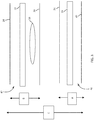
- Fig. 1 depicts a schematic of the chemical bonding of a moisturizer to a fabric 10 and the release of such moisturizer to a user's skin 12.
- a bonding agent 14 creates chemical bonds 16 with the fabric 10.
- the chemical bonds 16 are sufficient to withstand numerous washings of the fabric 10, as described further herein below. This is due to cross linking between the bonding agent 14 and the fabric 10.
- the fabric 10 comprises a material having hydroxyl groups including cellulose fabrics (such as for example, cotton) or amino or amide groups including polyamide materials (such as for example, nylon).
- the fabric may include nylon 6.
- the bonding agent 14 surrounds a moisturizer.
- the moisturizer contains both oil-based 18 and water-based 20 ingredients.
- the oil-based 18 ingredients can include, for example, olive oil, SALIPORINE-8TM (Caprylic/Capric Triglyceride and Salicornia herbacea Extract, sold by Barnet Products Corp.), and BMXTM Complex (a blend of Hordeum Vulgare Extract and Solanium Lycopersicum Extract, sold by Barnet Products Corp.).
- the moisturizer may also contain a surfactant for emulsification.
- the oil-based ingredients 18 are released from the bonding agent 14 to the user's skin 12 as shown by the arrows 22 in Fig. 1 .
- the water-based ingredients 20 are released from the bonding agent 14 to the user's skin 12 as shown by the arrows 24. Moisturizer not released to the user's skin 12 is retained on the fabric 10 by the bonding agent 14.
- the moisturizer is firmly held by the bonding agent 14 due to a strong attachment between the bonding agent 14 and oil even when the fabric 10 is washed or subjected to high temperatures.
- oils from the user's skin 12 contact the fabric as shown by arrows 17 and pull the moisturizer from the bonding agent 14 to thereby deliver moisturizer to the skin 12.
- the bonding agent 14 is attached to the fabric 10 by molecular bonds 16, it does not wash off despite repeated washes. This is due to the chemical bonds 16 created between the bonding agent 14 and the nylon or cellulose fabric 10 when treated with water and heat.
- the oil-based ingredient 18 is adjacent the bonding agent 14 as shown schematically in Fig. 1 , such that the strong bond created between the bonding agent 14 and the oil-based ingredient 18 holds the moisturizer within the bonding agent until it is released to a user's skin 12.
- the moisturizer held within the bonding agent 14 preferably comprises olive oil, BMXTM Complex, SALIPORINE-8TM, and an emulsifier.
- the moisturizer may comprise 5% to 50% by weight olive oil, 0.1% to 10% BMXTM complex, 0.1% to 10% SALIPORINE-8TM, and 0.1% to 20% emulsifier. The remainder is water.
- the moisturizer comprises 18.8% by weight olive oil, 0.6% BMXTM complex, 0.6% SALIPORINE-8TM, and 7% emulsifier, the remainder of which is water.
- the bonding agent 14 and moisturizer are mixed together with water and a surfactant, such as a silicone-based softener.
- a surfactant such as a silicone-based softener.
- the silicone-based softener is a fluorosurfactant (e.g ., the ZONYLTM-type fluorosurfactants sold by Dupont Corp.).
- the bonding agent, moisturizer comprising oil-based ingredients 18 and water-based ingredients 20
- surfactant and water create a moisturizing formula into which the fabric 10 is dipped.
- the moisturizing formula can comprise 0.1% to 10% by weight moisturizer, 0.005% to 1% bonding agent, and 0.1% to 10% fluorosurfactant.
- the moisturizing formula comprises 3% by weight moisturizer, 0.01% bonding agent, and 3% surfactant (as an emulsifier).
- Olive oil, BMXTM Complex brand plant extract, and SALIPORINE-8TM-type plant extract are mixed together according to the above-described ratios to create the moisturizer (18.8% by weight olive oil, 0.6% BMXTM Complex, 0.6% SALIPORINE-8TM, and 7% emulsifier).
- the moisturizer is added to surfactant, bonding agent, and water such that the moisturizer comprises 3% by weight of the mixture, the surfactant comprises 3% of the mixture, and the bonding agent comprises 0.01% of the mixture.
- the bonding agent may need to be mixed in warm water prior to being mixed with the other ingredients so that it dissolves adequately.
- Each of the ingredients should be mixed with water prior to mixing the three ingredients together to create the moisturizing formula.
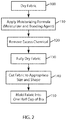
- the fabric 10 is first fully dried after dying, as shown at 100.
- the fabric is then soaked in the moisturizing formula, comprising the moisturizer, bonding agent and softener, as shown at 110. This process is known as "padding.”
- the fabric goes through a process at 120 called “mangling", where excess chemical is removed from the fabric by passing it between two squeeze rollers. After mangling, the fabric should preferably weigh at least 1.8 times its original dry weight.
- the fabric is dried, as shown at 130.
- the fabric may be dried by a stenter set at a temperature between 80°C - 120°C.
- the fabric should be fully dried before moving on to the next step.
- the fabric is cut to an appropriate size and shape for the bra cup.
- the fabric is then molded into one half-cup of the bra at 150, as will be described further herein below with reference to Fig. 3 .
- the moisturizing bra cup comprises a first lining 26, a second lining 28, a first layer of foam 30, a second layer of foam 32, a first sealing film 34, a second sealing film 36, and a layer of shaved foam 38.
- the first lining 26, first layer of foam 30, and first sealing film 34 comprise an inner cupped half 40 of the moisturizing bra cup.
- the second lining 28, second layer of foam 32, layer of shaved foam 38, and second sealing film 36 comprise an outer cupped half 42 of the moisturizing bra cup.
- the inner cupped half 40 is positioned on a user such that the first lining 26 contacts the user's skin.
- the first lining 26 is treated with the moisturizing formula as described herein above.
- the lining 26 is nylon 6.
- the molding process is what is known as a "two-step process". This means that each cupped half 40, 42 only undergoes the molding process twice. This ensures that the bonding agent 14 is fixed to the first fabric liner 26, but does not encounter any undesirable side effects such as yellowing or non-adherence of the bonding agent 14 to the fabric 26 after repeated washing.
- each cupped half 40, 42 undergoes molding is outlined as follows: To mold the inner cupped half 40 of the moisturizing bra cup, the first lining 26, first layer of foam 30, and first sealing film 34 are molded at a temperature of between 180°C - 195°C for between 150 to 170 seconds as shown at A. Preferably, the inner cupped half 40 is molded at 190°C for 160 seconds. This ensures that the bonding agent 14 is fixed to the fabric 10 via chemical bonds 16 (see Fig. 1 ), because in order for adequate bonding to take place, the fabric 10 must be subjected to temperatures above 180°C.
- the second lining 28, second layer of foam 32, layer of shaved foam 38, and second sealing film 36 are molded together as shown at B. Preferably, this takes place at 190°C for 150 seconds.
- step C The second time that each of the cupped halves 40, 42 undergo molding is at C.
- step C the inner cupped half 40 and outer cupped half 42 are molded to one another along their respective first sealing film 34 and second sealing film 36.
- first sealing film 34 and the second sealing film 36 are positioned adjacent one another when the inner 40 and outer 42 cupped halves are assembled together. This ensures that the inner 40 and outer 42 cupped halves are molded together such that the first liner 26 is exposed for contact with a user's skin.
- step C takes place at 100°C for 4 seconds.
- the moisturizing bra cup is then assembled into a moisturizing bra according to methods known to those of skill in the art.
- the treated fabric underwent several tests regarding natural weathering, exposure to sunlight, and exposure to air.
- the formulations described above produced an acceptable level of yellowing in each of the trials.
- the fabric was subjected to repeated washings. After 30 washes, sufficient oil remained on the fabric for subsequent moisturization of a user's skin.
- the oil washed off after only 5 washes. In contrast, fabric that had undergone the molding process retained a substantial amount of oil.
Landscapes
- Health & Medical Sciences (AREA)
- Life Sciences & Earth Sciences (AREA)
- Engineering & Computer Science (AREA)
- Animal Behavior & Ethology (AREA)
- General Health & Medical Sciences (AREA)
- Veterinary Medicine (AREA)
- Public Health (AREA)
- Textile Engineering (AREA)
- Epidemiology (AREA)
- Birds (AREA)
- Microbiology (AREA)
- Chemical & Material Sciences (AREA)
- Mycology (AREA)
- Botany (AREA)
- Biotechnology (AREA)
- General Chemical & Material Sciences (AREA)
- Chemical Kinetics & Catalysis (AREA)
- Dermatology (AREA)
- Biochemistry (AREA)
- Biomedical Technology (AREA)
- Oil, Petroleum & Natural Gas (AREA)
- Pharmacology & Pharmacy (AREA)
- Organic Chemistry (AREA)
- Nuclear Medicine, Radiotherapy & Molecular Imaging (AREA)
- Medicinal Chemistry (AREA)
- Physical Education & Sports Medicine (AREA)
- Bioinformatics & Cheminformatics (AREA)
- Cosmetics (AREA)
- Treatments For Attaching Organic Compounds To Fibrous Goods (AREA)
Description
- The present disclosure relates to the field of women's lingerie, namely bras. Specifically, the present disclosure relates to bras that moisturize a user's skin.
- When fixing a moisturizer to a fabric, several factors need to be taken into account. If the moisturizer is not fixed to the fabric chemically, the moisturizer may wash out of the clothing with one or more washings. The moisturizer and the chemical used to bond the moisturizer to the fabric may cause the fabric to turn yellow, resulting in unpleasing aesthetics. Further, specifically when molding a bra, it is important to control the temperature of the fabric to ensure proper bonding between the chemical, moisturizer, and fabric.
US 2004/115233 A1 discloses a composition for improving skin environment and clothes thereof.JP H09 232166 A WO 2008/035826 A1 discloses a woman's brassiere for alleviating menstrual pains and premenstrual syndrome.US 2007/190896 A1 discloses a structure of a bra made by means of hot-press shaping and a method for hot-pressing to shape a bra. - The present disclosure relates to moisturizers, moisturizing fabric material and use of the moisturizing fabric material in articles of wear such as bras. The present disclosure also relates to methods of manufacturing the disclosed moisturizing fabric material and articles of use containing the moisturizing fabric material such as bras.
- The disclosed moisturizing fabric material includes a moisturizer which typically includes: 5-5-% by weight plant oil, 0.2-10% by weight plant extract, and 0.1-20% by weight emulsifier. The moisturizer may be formulated as a moisturizing formula that includes the moisturizer and a bonding agent wherein the polymeric fabric material is treated with the moisturizing formula and subjected to a temperature above 180 °C, and the bonding agent bonds the moisturizer to the polymeric fabric material.
- The disclosed moisturizing fabric material may be utilized in a moisturizing bra cup comprising a cupped inner half having a first fabric lining and cupped outer half having a second fabric lining. The moisturizing formula may be applied to the first fabric lining of the cupped inner half of the moisturizing bra cup. The bonding agent of the moisturizing formula bonds the moisturizer to the fabric of the first lining. The first lining typically is positioned for contact with the user's skin to thereby release moisturizer to the user's skin. Moisturizer that isnot released to the user's skin is retained on the fabric of the first lining by the bonding agent for subsequent washing and wear.
- A method for forming a moisturizing bra cup is also disclosed. The method comprises treating a first fabric liner with a moisturizing formula comprising a moisturizer and a bonding agent. The method also includes molding a first layer of foam between a first sealing film and the treated first fabric liner to create an inner cupped half of the bra cup. The method further includes molding a second layer of foam between a second sealing film and the second fabric liner to create an outer cupped half of the bra cup. The inner cupped half and outer cupped half are then molded together. Molding of the inner cupped half fixes the bonding agent to the fabric of the first liner.
-
-
Fig. 1 is a schematic of the bonding agent and moisturizer of the present disclosure; -
Fig. 2 is a flowchart describing the process used to manufacture the moisturizing bra of the present disclosure; and -
Fig. 3 is a schematic disclosing the structure and method for forming the bra cup halves of the present disclosure. - The present invention is described herein using several definitions, as set forth below and throughout the application.
- Unless otherwise specified or indicated by context, the terms "a", "an", and "the" mean "one or more." For example, "a moisturizer" should be interpreted to mean "one or more moisturizers." Similarly, "a bonding agent" should be interpreted to mean "one or more bonding agents."
- As used herein, "about," "approximately," "substantially," and "significantly" will be understood by persons of ordinary skill in the art and will vary to some extent on the context in which they are used. If there are uses of these terms which are not clear to persons of ordinary skill in the art given the context in which they are used, "about" and "approximately" will mean plus or minus ≤10% of the particular term and "substantially" and "significantly" will mean plus or minus >10% of the particular term.
- As used herein, the terms "include" and "including" have the same meaning as the terms "comprise" and "comprising." For example, a "moisturizing formula that includes a moisturizer" should be interpreted to mean "a moisturizing formula that comprises a moisturizer."
- The presently disclosed moisturizers include a plant oil or a plant extract. Suitable plant oils for the disclosed moisturizers may include, but are not limited to, vegetable oils, nut oils, grain oils, or mixtures thereof. Suitable plant oils may include, but are not limited to, olive oil, corn oil, almond oil, apricot oil, coconut oil, avocado oil, hazelnut oil, mongongo nut oil, wheat germ oil, and jojoba oil. Suitable plant oils may include vegetable butters which may include, but are not limited to, cocoa butter and shea butter.
- The presently disclosed moisturizers also may include a plant extract, and preferably a plant extract that moisturizes the upper layers of the epidermis. The plant extract may be prepared by extracting plant material with a solvent such as an alcohol (e.g., methanol, ethanol, or propanol) or an ester (e.g., ethyl acetate). The plant extracts may include phytosterols, trigylcerides (e.g., caprylic/capric triglyceride), hydrocarbons and branched esters, ceramides and other phytosphingolipids. In some embodiments, the plant extract comprises about 40% hydrocarbons and branched esters, about 30% triglycerides, about 20% phytosterols, and about 10% ceramides and other phytosphingolipids. Suitable plant extracts may be prepared from plant material obtained from one or more plants, including, but not limited to vegetable plants, grain plants, nut plants, and herb plants. Suitable plant material for preparing plant extracts may be obtained from plants including, but not limited to, barley (e.g., where the plant extract comprises hordenine and N,N-dimethyltyramine / 4-(2-dimethylamineoethyl)phenol)), tomato (e.g., where the plant extract comprises lycopene), Salicornia herbacea (e.g., where the plant extract comprises tungtungmadic acid (3-caffeoyl-4-dihydrocaffeoyl quinic acid), a chlorogenic acid derivative); quercetin 3-O-glucoside/ quercetin 3-O-β-D-glucopyranoside; and isorhamnetin 3-O-glucoside / isorhamnetin 3-O-β-D-glucopyranoside), olive, burdock, licorice, mallow, marsh horsetail, avocado, wheat, soy bean, oat, corn, cotton, millet, coconut, chamomile, aloe, jojoba, thyme, rosemary, spirulina, ginseng, algae, cucumber, hibiscus, pea, almond, shea nut, cocoa (e.g., cocoa nut), grape (e.g., grape seed), and mixtures thereof. Moisturizers comprising plant extracts are disclosed in
U.S. Patent No. 5,800,818 , the content of which is incorporated herein by reference in its entirety. Suitable plant extracts may include plant extracts sold under the brand names BMX™ Complex and SALIPORINE-8™ (Barnet Products Corp., Englewood Cliffs, N.J.). - The disclosed moisturizers typically include an emulsifier. Suitable emulsifiers may include, but are not limited to, surfactants including non-ionic surfactants such as silicon-based softeners. Suitable surfactants may include polyethylene glycol compounds such as haloalkyl alcohol substituted polyethylene glycol. Suitable surfactants may include halosurfactants, such as mixtures of haloalkyl alcohol substituted polyethylene glycol with water and a glycol or a glycol ether (e.g., dipropylene glycol methyl ether). Suitable surfactants include fluorosurfactants, such as those sold under the trademarks ZONYL FSN™, ZONYL FSN-100™, ZONYL FSO™, and ZONYL FSO-100™ (Dupont Corp.). Suitable emulsifiers also may include emulsifying waxes (e.g., waxes comprising one or more of the following components: cetearyl alcohol, polysorbates, PEG-150 stearate, and steareth-20), stearyl alcohol, polysorbate 20, polysorbate-40, polysorbate-60, polysorbate 80, lecithin (e.g., soy lecithin), acacia gum, glyceryl stearate, glycol stearate, olive oil PEG 7 esters, sodium stearoyl lactylate, sorbitan oleate, and sorbitan stearate.
- The disclosed moisturizers are bonded to a fabric material via a bonding agent. Suitable bonding agents may include cyclodextrin compounds. The use of cyclodextrin compounds as bonding agents for polymeric materials and the synthesis of cyclodextrin compounds are known in the art, e.g.,
U.S. Patent Nos. 4,357,468 ;4535,152 ;4,774,329 ;5,608,015 ;5,776,842 ;5,855,655 ;5,882,565 ;6,391,946 ;6,677,256 ; and6,851,462 ; the entire contents of which are incorporated herein by reference in their entireties. The cyclodextrin compound may be substituted at one or more hydroxyl positions. Suitable cyclodextrin compounds may include, but are not limited to, acylated cyclodextrin, alkylated cyclodextrin, cyclodextrin esters, hydrocarbyl-amino cyclodextrin, alkyl phosphono cyclodextrin, alkyl phosphato cyclodextrin, imidazolyl substituted cyclodextrin, pyridine substituted cyclodextrin, hydrocarbyl sulfur containing functional groups cyclodextrin, silica-containing functional group substituted cyclodextrin, carbonate substituted cyclodextrin, carboxylic acid substituted cyclodextrin, triazine substituted cyclodextrin, and mixtures thereof. Suitable substituted cyclodextrin compounds may include monochlorotriazinyl-cyclodextrin (e.g., CAS-No. 187820-08-2 sold under the trademark BIOROYAL-1™ (Fukusen Co., Ltd., Wakayama, Japan)). - The disclosed moisturizers may be bonded to a fabric material to provide a moisturizing fabric material. Suitable fabric material may include, but is not limited to, polymeric fabric material having hydroxyl groups (e.g., cellulose material such as cotton), and polymeric fabric material having amino groups or amide groups (e.g., polyamide material such as nylon).
- The disclosed moisturizing fabric material may be utilized in articles of wear such as bras as disclosed herein. The disclosed moisturizing fabric material also may be utilized in other articles of use. Articles of use comprising moisturizers are disclosed in
U.S. Patent Nos. 6,287,581 ;6,440,437 ;6,475,197 ;6,485,756 ;6,534,074 ;6,616,923 ;6,777,240 ;6,891,079 ;7,154,018 ;7,408,057 ;7,455,863 ;7,485,110 ;7,585,526 ; and7,776,368 ; the entire contents of which are incorporated herein by reference in their entireties. -
Fig. 1 depicts a schematic of the chemical bonding of a moisturizer to afabric 10 and the release of such moisturizer to a user's skin 12. Abonding agent 14 createschemical bonds 16 with thefabric 10. Thechemical bonds 16 are sufficient to withstand numerous washings of thefabric 10, as described further herein below. This is due to cross linking between thebonding agent 14 and thefabric 10. Preferably, thefabric 10 comprises a material having hydroxyl groups including cellulose fabrics (such as for example, cotton) or amino or amide groups including polyamide materials (such as for example, nylon). For example, the fabric may include nylon 6. - The
bonding agent 14 surrounds a moisturizer. The moisturizer contains both oil-based 18 and water-based 20 ingredients. The oil-based 18 ingredients can include, for example, olive oil, SALIPORINE-8™ (Caprylic/Capric Triglyceride and Salicornia herbacea Extract, sold by Barnet Products Corp.), and BMX™ Complex (a blend of Hordeum Vulgare Extract and Solanium Lycopersicum Extract, sold by Barnet Products Corp.). The moisturizer may also contain a surfactant for emulsification. The oil-basedingredients 18 are released from thebonding agent 14 to the user's skin 12 as shown by the arrows 22 inFig. 1 . The water-based ingredients 20 are released from thebonding agent 14 to the user's skin 12 as shown by thearrows 24. Moisturizer not released to the user's skin 12 is retained on thefabric 10 by thebonding agent 14. - The moisturizer is firmly held by the
bonding agent 14 due to a strong attachment between thebonding agent 14 and oil even when thefabric 10 is washed or subjected to high temperatures. However, when thefabric 10 comes into contact with a user's skin 12, oils from the user's skin 12 contact the fabric as shown by arrows 17 and pull the moisturizer from thebonding agent 14 to thereby deliver moisturizer to the skin 12. Because thebonding agent 14 is attached to thefabric 10 bymolecular bonds 16, it does not wash off despite repeated washes. This is due to thechemical bonds 16 created between thebonding agent 14 and the nylon orcellulose fabric 10 when treated with water and heat. Preferably, the oil-basedingredient 18 is adjacent thebonding agent 14 as shown schematically inFig. 1 , such that the strong bond created between thebonding agent 14 and the oil-basedingredient 18 holds the moisturizer within the bonding agent until it is released to a user's skin 12. - The moisturizer held within the
bonding agent 14 preferably comprises olive oil, BMX™ Complex, SALIPORINE-8™, and an emulsifier. The moisturizer may comprise 5% to 50% by weight olive oil, 0.1% to 10% BMX™ complex, 0.1% to 10% SALIPORINE-8™, and 0.1% to 20% emulsifier. The remainder is water. Preferably, the moisturizer comprises 18.8% by weight olive oil, 0.6% BMX™ complex, 0.6% SALIPORINE-8™, and 7% emulsifier, the remainder of which is water. - To treat
fabric 10 with thebonding agent 14 and moisturizer, thebonding agent 14 and moisturizer are mixed together with water and a surfactant, such as a silicone-based softener. Preferably, the silicone-based softener is a fluorosurfactant (e.g., the ZONYL™-type fluorosurfactants sold by Dupont Corp.). Together, the bonding agent, moisturizer (comprising oil-basedingredients 18 and water-based ingredients 20), surfactant, and water create a moisturizing formula into which thefabric 10 is dipped. The moisturizing formula can comprise 0.1% to 10% by weight moisturizer, 0.005% to 1% bonding agent, and 0.1% to 10% fluorosurfactant. Preferably, the moisturizing formula comprises 3% by weight moisturizer, 0.01% bonding agent, and 3% surfactant (as an emulsifier). - The following is an example of a preferred method for creating the moisturizing formula of the present disclosure. Olive oil, BMX™ Complex brand plant extract, and SALIPORINE-8™-type plant extract are mixed together according to the above-described ratios to create the moisturizer (18.8% by weight olive oil, 0.6% BMX™ Complex, 0.6% SALIPORINE-8™, and 7% emulsifier). The moisturizer is added to surfactant, bonding agent, and water such that the moisturizer comprises 3% by weight of the mixture, the surfactant comprises 3% of the mixture, and the bonding agent comprises 0.01% of the mixture. The bonding agent may need to be mixed in warm water prior to being mixed with the other ingredients so that it dissolves adequately. Each of the ingredients (moisturizer, surfactant, and bonding agent) should be mixed with water prior to mixing the three ingredients together to create the moisturizing formula.
- Now with reference to
Fig. 2 , a process for treating fabric to be used in a moisturizing bra cup will be described. Thefabric 10 is first fully dried after dying, as shown at 100. The fabric is then soaked in the moisturizing formula, comprising the moisturizer, bonding agent and softener, as shown at 110. This process is known as "padding." After padding, the fabric goes through a process at 120 called "mangling", where excess chemical is removed from the fabric by passing it between two squeeze rollers. After mangling, the fabric should preferably weigh at least 1.8 times its original dry weight. Next, the fabric is dried, as shown at 130. The fabric may be dried by a stenter set at a temperature between 80°C - 120°C. The fabric should be fully dried before moving on to the next step. Next, as shown at 140, the fabric is cut to an appropriate size and shape for the bra cup. The fabric is then molded into one half-cup of the bra at 150, as will be described further herein below with reference toFig. 3 . - Now with reference to
Fig. 3 , a moisturizing bra cup and its method of manufacture will be described. Generally, the moisturizing bra cup comprises afirst lining 26, asecond lining 28, a first layer offoam 30, a second layer offoam 32, afirst sealing film 34, asecond sealing film 36, and a layer of shavedfoam 38. Together, thefirst lining 26, first layer offoam 30, and first sealingfilm 34 comprise an innercupped half 40 of the moisturizing bra cup. Together, thesecond lining 28, second layer offoam 32, layer of shavedfoam 38, and second sealingfilm 36 comprise an outercupped half 42 of the moisturizing bra cup. Preferably, the innercupped half 40 is positioned on a user such that thefirst lining 26 contacts the user's skin. Thefirst lining 26 is treated with the moisturizing formula as described herein above. Preferably, the lining 26 is nylon 6. - The molding process is what is known as a "two-step process". This means that each
cupped half bonding agent 14 is fixed to thefirst fabric liner 26, but does not encounter any undesirable side effects such as yellowing or non-adherence of thebonding agent 14 to thefabric 26 after repeated washing. - The first time each
cupped half cupped half 40 of the moisturizing bra cup, thefirst lining 26, first layer offoam 30, and first sealingfilm 34 are molded at a temperature of between 180°C - 195°C for between 150 to 170 seconds as shown at A. Preferably, the innercupped half 40 is molded at 190°C for 160 seconds. This ensures that thebonding agent 14 is fixed to thefabric 10 via chemical bonds 16 (seeFig. 1 ), because in order for adequate bonding to take place, thefabric 10 must be subjected to temperatures above 180°C. To mold the outercupped half 42 of the moisturizing bra cup, thesecond lining 28, second layer offoam 32, layer of shavedfoam 38, and second sealingfilm 36 are molded together as shown at B. Preferably, this takes place at 190°C for 150 seconds. - The second time that each of the
cupped halves cupped half 40 and outercupped half 42 are molded to one another along their respectivefirst sealing film 34 and second sealingfilm 36. Thus, thefirst sealing film 34 and thesecond sealing film 36 are positioned adjacent one another when the inner 40 and outer 42 cupped halves are assembled together. This ensures that the inner 40 and outer 42 cupped halves are molded together such that thefirst liner 26 is exposed for contact with a user's skin. Preferably, step C takes place at 100°C for 4 seconds. - The moisturizing bra cup is then assembled into a moisturizing bra according to methods known to those of skill in the art.
- The following are test results regarding yellowing of the material, adherence of the moisturizer to fabric after repeated washings, and actual moisturization of a user's skin.
- The treated fabric underwent several tests regarding natural weathering, exposure to sunlight, and exposure to air. The formulations described above produced an acceptable level of yellowing in each of the trials.
- A fabric treated with 2% olive oil, 0.01% bonding agent, and 5% surfactant, which is similar to the preferred embodiment above, was tested for retention of olive oil on the fabric. The fabric was subjected to repeated washings. After 30 washes, sufficient oil remained on the fabric for subsequent moisturization of a user's skin. When fabric that did not undergo the molding process (i.e., did not achieve temperatures above 180°C needed for bonding of the
bonding agent 14 to the fabric 10) the oil washed off after only 5 washes. In contrast, fabric that had undergone the molding process retained a substantial amount of oil. - Finally, although a clinical trial did not show statistically significant moisturizing effects to a user's skin, a focus study did report favorable results for the moisturizing bra. One user reported a tingling sensation, but this was not seen to be a detriment to the beneficial effect of the moisturizing bra.
- In the present description, certain terms have been used for brevity, clearness, and understanding. No unnecessary limitations are to be inferred therefrom beyond the requirement of the prior art because such terms are used for descriptive purposes only and are intended to be broadly construed. The different compositions, manufactures, and methods described herein may be used alone or in combination with other compositions, manufactures, or methods. Various equivalents, alternatives, and modifications are possible within the scope of the appended claims. Each limitation in the appended claims is intended to invoke interpretation under 35 U.S.C. § 112, sixth paragraph, only if the terms "means for" or "step for" are explicitly recited in the respective limitation.
Claims (10)
- A moisturizing fabric material comprising a moisturizing formula bonded to a polymeric fabric material, the moisturizing formula comprising a moisturizer and a bonding agent, the moisturizer comprising: 5-50% by weight plant oil, 0.2-10% by weight plant extract, and 0.1-20% by weight emulsifier, wherein the polymeric fabric material is treated with the moisturizing formula and subjected to a temperature above 180 °C, and the bonding agent bonds the moisturizer to the polymeric fabric material.
- The moisturizing fabric material of claim 1, wherein the one or more plant oils comprise olive oil.
- The moisturizing fabric material of any of the preceding claims, wherein the one or more plant extracts are prepared from grain material or from vegetable material.
- The moisturizing fabric material of any of the preceding claims, wherein the one or more emulsifiers include a non-ionic surfactant, preferably a silicon-based softener, more preferably a fluorosurfactant.
- The moisturizing fabric material of any of the preceding claims, wherein the one or more bonding agents comprise a cyclodextrin compound, preferably a triazinyl substituted cyclodextrin compound, more preferably monochlorotriazinyl-cyclodextrin.
- The moisturizing fabric material of any of the preceding claims, wherein the polymeric fabric material is cellulose material or polyamide material.
- A moisturizing bra cup comprising the moisturizing fabric material of any of the preceding claims.
- A method for forming a moisturizing bra cup, the method comprising:(a) treating a first fabric liner with a moisturizing formula, the moisturizing formula comprising a moisturizer and a bonding agent, the moisturizer comprising 5-50% by weight plant oil, 0.2-10% by weight plant extract, and 0.1-20% by weight emulsifier;(b) molding a first layer of foam between a first sealing film and the treated first fabric liner to create an inner cupped half of the bra cup at a temperature above 180 °C;(c) molding a second layer of foam between a second sealing film and a second fabric liner to create an outer cupped half of the bra cup; and(d) molding the inner cupped half and the outer cupped half together;wherein molding the inner cupped half fixes the bonding agent to the fabric of the first liner.
- The method of claim 8, wherein the moisturizer comprises: (i) one or more plant oils; (ii) one or more plant extracts; (iii) and one or more emulsifiers.
- The method of claim 8, wherein the treating of the first fabric liner with moisturizing formula comprises soaking the first fabric liner in the moisturizing formula and subsequently passing the first fabric liner through squeeze rollers.
Applications Claiming Priority (1)
| Application Number | Priority Date | Filing Date | Title |
|---|---|---|---|
| US13/428,563 US9408419B2 (en) | 2012-03-23 | 2012-03-23 | Moisturizing fabric material, use thereof in moisturizing bras, and method of manufacture |
Publications (3)
| Publication Number | Publication Date |
|---|---|
| EP2650429A2 EP2650429A2 (en) | 2013-10-16 |
| EP2650429A3 EP2650429A3 (en) | 2013-11-27 |
| EP2650429B1 true EP2650429B1 (en) | 2017-06-21 |
Family
ID=48142614
Family Applications (1)
| Application Number | Title | Priority Date | Filing Date |
|---|---|---|---|
| EP13160317.7A Active EP2650429B1 (en) | 2012-03-23 | 2013-03-21 | Moisturizing fabric material, use thereof in moisturizing bras, and method of manufacture |
Country Status (4)
| Country | Link |
|---|---|
| US (1) | US9408419B2 (en) |
| EP (1) | EP2650429B1 (en) |
| CA (1) | CA2794775C (en) |
| ES (1) | ES2638905T3 (en) |
Families Citing this family (3)
| Publication number | Priority date | Publication date | Assignee | Title |
|---|---|---|---|---|
| CN110074475B (en) * | 2019-04-24 | 2021-04-27 | 佛山市南海真之玉内衣有限公司 | Preparation process of mold cup |
| US11992639B2 (en) | 2020-01-29 | 2024-05-28 | Katya Warner | Device for targeted dispensing of nourishing microcapsules to skin during sleep |
| US10905265B1 (en) | 2020-01-29 | 2021-02-02 | Katya Warner | Device for targeted dispensing of nourishing microcapsules to skin during sleep |
Family Cites Families (59)
| Publication number | Priority date | Publication date | Assignee | Title |
|---|---|---|---|---|
| US4201822A (en) | 1979-06-13 | 1980-05-06 | The United States Of America As Represented By The Secretary Of The Army | Novel fabric containing microcapsules of chemical decontaminants encapsulated within semipermeable polymers |
| US4361617A (en) | 1979-07-26 | 1982-11-30 | Teijin Limited | Hollow water-absorbing polyester filaments and a process for producing the same |
| HU181733B (en) | 1980-08-07 | 1983-11-28 | Chinoin Gyogyszer Es Vegyeszet | Process for preparing sorbents containing cyclodextrin on cellulose base |
| HU191101B (en) | 1983-02-14 | 1987-01-28 | Chinoin Gyogyszer Es Vegyeszeti Termekek Gyara Rt,Hu | Process for preparing water-soluble cyclodextrin polymers substituted with ionic groups |
| SE462265B (en) | 1985-05-20 | 1990-05-28 | Agneta Danielsson | PROCESSING DEVICE AND SETTING TO TAKE IT IN A SPINDLE |
| US4774329A (en) | 1987-08-04 | 1988-09-27 | American Maize-Products Company | Controlled release agent for cetylpyridinium chloride |
| ES2084698T5 (en) | 1989-05-04 | 2005-03-01 | Southern Research Institute | ENCAPSULATION PROCEDURE. |
| US5232769A (en) * | 1989-08-01 | 1993-08-03 | Kanebo, Ltd. | Microcapsule, treating liquids containing the same, and textile structure having microcapsules adhering thereto |
| KR927003647A (en) | 1990-11-30 | 1992-12-18 | 돕빵 인사쯔 가부시끼가이샤 | Method for preparing cyclodextrin derivatives and cyclodextrin immobilized polymer |
| JPH06322670A (en) * | 1993-05-07 | 1994-11-22 | Gunze Ltd | Fiber processing method |
| US5776842A (en) | 1994-06-23 | 1998-07-07 | Cellresin Technologies, Llc | Cellulosic web with a contaminant barrier or trap |
| US5492947A (en) | 1994-06-23 | 1996-02-20 | Aspen Research Corporation | Barrier material comprising a thermoplastic and a compatible cyclodextrin derivative |
| JP3398504B2 (en) * | 1995-02-23 | 2003-04-21 | 日華化学株式会社 | Fiber treatment agent and fiber material treatment method |
| FR2732218B1 (en) | 1995-03-28 | 1997-08-01 | Flamel Tech Sa | PARTICLES BASED ON POLYAMINOACID (S) AND LIKELY TO BE USED AS VECTORS OF ACTIVE INGREDIENT (S) AND PROCESSES FOR THEIR PREPARATION |
| US6143211A (en) | 1995-07-21 | 2000-11-07 | Brown University Foundation | Process for preparing microparticles through phase inversion phenomena |
| US5855655A (en) | 1996-03-29 | 1999-01-05 | Kimberly-Clark Worldwide, Inc. | Colorant stabilizers |
| US5882565A (en) | 1995-12-11 | 1999-03-16 | Cellresin Technologies, Llc | Barrier material comprising a thermoplastic and a compatible cyclodextrin derivative |
| FR2742049B1 (en) | 1995-12-12 | 1998-02-27 | Rocher Yves Biolog Vegetale | MIXTURE COMPRISING PLANT EXTRACTS FOR THE HYDRATION OF THE UPPER LAYERS OF THE EPIDERMIS |
| SE512663C2 (en) | 1997-10-23 | 2000-04-17 | Biogram Ab | Active substance encapsulation process in a biodegradable polymer |
| US6153207A (en) | 1998-03-05 | 2000-11-28 | Pugliese; Peter T. | Anti-cellulite pantyhose |
| US6190699B1 (en) | 1998-05-08 | 2001-02-20 | Nzl Corporation | Method of incorporating proteins or peptides into a matrix and administration thereof through mucosa |
| US6428814B1 (en) | 1999-10-08 | 2002-08-06 | Elan Pharma International Ltd. | Bioadhesive nanoparticulate compositions having cationic surface stabilizers |
| US6485756B1 (en) | 1999-04-06 | 2002-11-26 | Collaborative Technologies, Inc. | Stable, homogeneous natural product extracts containing polar and apolar fractions |
| US6475197B1 (en) | 1999-08-24 | 2002-11-05 | Kimberly-Clark Worldwide, Inc. | Absorbent articles having skin health benefits |
| US6440437B1 (en) | 2000-01-24 | 2002-08-27 | Kimberly-Clark Worldwide, Inc. | Wet wipes having skin health benefits |
| US6287581B1 (en) | 1999-04-23 | 2001-09-11 | Kimberly-Clark Worldwide, Inc. | Absorbent articles providing skin health benefits |
| DE19923575C1 (en) | 1999-05-21 | 2001-03-22 | Deotexis Inc | Flat textile material |
| WO2001001964A2 (en) | 1999-06-23 | 2001-01-11 | Sedum Laboratories, Inc. | Ionically formulated biomolecule microcarriers |
| AU7136000A (en) | 1999-07-19 | 2001-02-05 | Avantgarb, Llc | Nanoparticle-based permanent treatments for textiles |
| US6475800B1 (en) | 1999-07-22 | 2002-11-05 | Instrumentation Metrics, Inc. | Intra-serum and intra-gel for modeling human skin tissue |
| US6534074B2 (en) | 1999-08-24 | 2003-03-18 | Kimberly-Clark Worldwide, Inc. | Absorbent articles providing skin health benefits |
| US6677256B1 (en) | 1999-12-28 | 2004-01-13 | Kimberly-Clark Worldwide, Inc. | Fibrous materials containing activating agents for making superabsorbent polymers |
| US7408057B2 (en) | 2000-07-03 | 2008-08-05 | Marine Bioproducts Intenational | Clarified hydrocolloids of undiminished properties and method of producing same |
| US6599627B2 (en) | 2000-12-13 | 2003-07-29 | Purdue Research Foundation | Microencapsulation of drugs by solvent exchange |
| US6897168B2 (en) | 2001-03-22 | 2005-05-24 | Kimberly-Clark Worldwide, Inc. | Water-dispersible, cationic polymers, a method of making same and items using same |
| JPWO2002083121A1 (en) * | 2001-04-12 | 2005-01-27 | 勝守 福本 | Skin environment improving composition and clothes thereof |
| US6849271B2 (en) | 2001-04-27 | 2005-02-01 | Verion, Inc. | Microcapsule matrix microspheres, absorption-enhancing pharmaceutical compositions and methods |
| US6620777B2 (en) | 2001-06-27 | 2003-09-16 | Colgate-Palmolive Co. | Fabric care composition comprising fabric or skin beneficiating ingredient |
| JP2004537401A (en) | 2001-08-08 | 2004-12-16 | ブラウン ユニバーシティ リサーチ ファウンデーション | Fine grinding method of hydrophobic drug |
| US6851462B2 (en) | 2001-10-30 | 2005-02-08 | The Goodyear Tire & Rubber Company | Rubber compositions containing a cyclodextrin compound |
| DE10160888C1 (en) * | 2001-12-12 | 2003-07-31 | Beiersdorf Ag | Underwear containing the active substance and the process for producing and / or regenerating the same |
| US7154018B2 (en) | 2001-12-20 | 2006-12-26 | Kimberly-Clark Worldwide, Inc. | Absorbent article |
| US7485110B2 (en) | 2001-12-20 | 2009-02-03 | Kimberly Clark Worldwide, Inc. | Wipe comprising a pathogen selective antimicrobial |
| US6891079B2 (en) | 2001-12-20 | 2005-05-10 | Kimberly-Clark Worldwide, Inc. | Wipe |
| US6953483B2 (en) | 2002-03-05 | 2005-10-11 | Litke Kenneth S | Aloe vera processed leather and leather gloves, garments, shoes and sandals made from aloe vera processed leather and a process for making aloe vera processed leather |
| US6851461B2 (en) | 2002-07-12 | 2005-02-08 | Carmanah Design And Manufacturing | Apparatus for debarking logs with reversible rotation for varying the rate of debarking |
| US6616923B1 (en) | 2002-07-26 | 2003-09-09 | Chiou Consulting, Inc. | Aqueous compositions for facial cosmetics |
| US7455863B2 (en) | 2002-11-07 | 2008-11-25 | Smarthealth, Inc. | Flexible elastomer articles and methods of manufacturing |
| US7585526B2 (en) | 2002-11-07 | 2009-09-08 | Smarthealth, Inc. | Flexible elastomer articles and methods of manufacturing |
| FR2854897B1 (en) | 2003-05-12 | 2007-05-04 | Sederma Sa | COSMETIC OR DERMOPHARMACEUTICAL COMPOSITIONS FOR REDUCING THE SIGNS OF SKIN AGING. |
| US7776368B2 (en) | 2003-08-13 | 2010-08-17 | Smarthealth, Inc. | Gloves containing dry powdered aloe and method of manufacturing |
| DE602004026534D1 (en) | 2004-02-10 | 2010-05-27 | Minera Catalano Aragonesa Sa | Process of composition of synthetic fibers and polymers by encapsulation of the additives in nanopores |
| US7934507B2 (en) | 2005-10-04 | 2011-05-03 | Catherine Brooks | Post-cesarean section scar management undergarment |
| US7458877B2 (en) * | 2006-02-14 | 2008-12-02 | Li-Man Yu | Structure of bra made by means of hot-press shaping and method for hot-pressing to shape a bra |
| WO2008035826A1 (en) * | 2006-09-20 | 2008-03-27 | Tae Sung Lee | Woman's brassiere for alleviating menstrual pains and premenstrual syndrome |
| EP1923423B1 (en) | 2006-11-14 | 2013-07-03 | Sociedad Anónima Minera Catalano-Aragonesa | Process for the additivation of synthetic fibres, artificial fibres and polymers with special properties |
| EP2208817A1 (en) | 2009-01-20 | 2010-07-21 | Juan Manuel Aloy Font | Elastic fabric |
| CN102041678A (en) | 2009-10-21 | 2011-05-04 | 山东魏桥创业集团有限公司 | Method for preparing aloe fabric with skin-care function |
| CN103451824A (en) | 2013-09-22 | 2013-12-18 | 吴江市锦邦纺织品有限公司 | Multifunctional whitening and health-protecting fabric |
-
2012
- 2012-03-23 US US13/428,563 patent/US9408419B2/en active Active
- 2012-11-08 CA CA2794775A patent/CA2794775C/en active Active
-
2013
- 2013-03-21 ES ES13160317.7T patent/ES2638905T3/en active Active
- 2013-03-21 EP EP13160317.7A patent/EP2650429B1/en active Active
Non-Patent Citations (1)
| Title |
|---|
| None * |
Also Published As
| Publication number | Publication date |
|---|---|
| CA2794775C (en) | 2016-05-03 |
| EP2650429A2 (en) | 2013-10-16 |
| ES2638905T3 (en) | 2017-10-24 |
| US9408419B2 (en) | 2016-08-09 |
| CA2794775A1 (en) | 2013-09-23 |
| US20130252511A1 (en) | 2013-09-26 |
| EP2650429A3 (en) | 2013-11-27 |
Similar Documents
| Publication | Publication Date | Title |
|---|---|---|
| JP6959283B2 (en) | Lanolin alternatives, how to get them and their uses | |
| CN109925983B (en) | Shea butter-based double-layer microcapsule and method for finishing same into textile fabric | |
| US9408419B2 (en) | Moisturizing fabric material, use thereof in moisturizing bras, and method of manufacture | |
| CN106256339A (en) | Multi-functional face cleaning towel containing vegetalitas collagen protein and manufacture method thereof | |
| CN106344490A (en) | Soft skin-friendly superfine essence facial mask | |
| EP1684872A1 (en) | Substrate containing lipids | |
| CN102575416A (en) | Rechargeable finishes for textiles and formulations for charging such finishes | |
| KR102247569B1 (en) | Cosmetic containing softened natural plants and preparing method for the cosmetic | |
| MX2013014215A (en) | Wipe for application of at least one active principle on the skin. | |
| CN105793485B (en) | Purposes of the surface activator composition for hydrophilic finish textile fiber and the textile fabrics being made from it | |
| CN104434705A (en) | Wash-free whitening mask cream for pregnant woman and preparation method of wash-free whitening mask cream | |
| EP1496853A1 (en) | Cosmetic tissues containing starch | |
| CN104479940A (en) | Wash and care type laundry detergent for infants | |
| CN105256587A (en) | Novel formaldehyde-free low-damage crease-resistant finishing agent and finishing method thereof | |
| CN105030573A (en) | Lanolin oil moisturizing cream and preparation method thereof | |
| EP1521881B1 (en) | Fiber treatment agent composition | |
| KR20210020261A (en) | Fiber softening composition with environmentalaffinity | |
| US20100189755A1 (en) | Dryer Sheets and a Method for Treating Skin | |
| CN104514154A (en) | Nymphaea-tetragona plant textile antibacterial health-care finishing agent | |
| US20080276383A1 (en) | Textile Finishing | |
| JPH08232166A (en) | Treating agent for fiber and method for treating fiber material | |
| KR102641043B1 (en) | Composition for hair and hair treatment method | |
| KR20260035511A (en) | Solid wash bar comprising infused oil of lotus and petal vineagar fermentation | |
| Anton-Katzenbach | FEELING WELL THROUGH WELLNESS FABRICS. | |
| CN104479907A (en) | Wash and care two-in-one laundry detergent for infants |
Legal Events
| Date | Code | Title | Description |
|---|---|---|---|
| PUAI | Public reference made under article 153(3) epc to a published international application that has entered the european phase |
Free format text: ORIGINAL CODE: 0009012 |
|
| AK | Designated contracting states |
Kind code of ref document: A2 Designated state(s): AL AT BE BG CH CY CZ DE DK EE ES FI FR GB GR HR HU IE IS IT LI LT LU LV MC MK MT NL NO PL PT RO RS SE SI SK SM TR |
|
| AX | Request for extension of the european patent |
Extension state: BA ME |
|
| PUAL | Search report despatched |
Free format text: ORIGINAL CODE: 0009013 |
|
| RIC1 | Information provided on ipc code assigned before grant |
Ipc: D06M 13/02 20060101ALI20131017BHEP Ipc: D06M 15/03 20060101ALI20131017BHEP Ipc: A61K 8/73 20060101ALI20131017BHEP Ipc: A41C 3/00 20060101ALI20131017BHEP Ipc: D06M 16/00 20060101ALI20131017BHEP Ipc: D06M 13/224 20060101AFI20131017BHEP Ipc: D06M 13/00 20060101ALI20131017BHEP |
|
| AK | Designated contracting states |
Kind code of ref document: A3 Designated state(s): AL AT BE BG CH CY CZ DE DK EE ES FI FR GB GR HR HU IE IS IT LI LT LU LV MC MK MT NL NO PL PT RO RS SE SI SK SM TR |
|
| AX | Request for extension of the european patent |
Extension state: BA ME |
|
| 17P | Request for examination filed |
Effective date: 20140523 |
|
| RBV | Designated contracting states (corrected) |
Designated state(s): AL AT BE BG CH CY CZ DE DK EE ES FI FR GB GR HR HU IE IS IT LI LT LU LV MC MK MT NL NO PL PT RO RS SE SI SK SM TR |
|
| 17Q | First examination report despatched |
Effective date: 20160307 |
|
| GRAP | Despatch of communication of intention to grant a patent |
Free format text: ORIGINAL CODE: EPIDOSNIGR1 |
|
| INTG | Intention to grant announced |
Effective date: 20170119 |
|
| RIN1 | Information on inventor provided before grant (corrected) |
Inventor name: KNITOWSKI, MARK Inventor name: ALMARIO, DULCE Inventor name: MARTINET, NATHALIE Inventor name: VANSIA, MAYUR Inventor name: YIP, JASMINE Inventor name: SMITH, ROBERT J. |
|
| GRAS | Grant fee paid |
Free format text: ORIGINAL CODE: EPIDOSNIGR3 |
|
| GRAJ | Information related to disapproval of communication of intention to grant by the applicant or resumption of examination proceedings by the epo deleted |
Free format text: ORIGINAL CODE: EPIDOSDIGR1 |
|
| GRAL | Information related to payment of fee for publishing/printing deleted |
Free format text: ORIGINAL CODE: EPIDOSDIGR3 |
|
| GRAR | Information related to intention to grant a patent recorded |
Free format text: ORIGINAL CODE: EPIDOSNIGR71 |
|
| GRAA | (expected) grant |
Free format text: ORIGINAL CODE: 0009210 |
|
| INTC | Intention to grant announced (deleted) | ||
| AK | Designated contracting states |
Kind code of ref document: B1 Designated state(s): AL AT BE BG CH CY CZ DE DK EE ES FI FR GB GR HR HU IE IS IT LI LT LU LV MC MK MT NL NO PL PT RO RS SE SI SK SM TR |
|
| INTG | Intention to grant announced |
Effective date: 20170512 |
|
| REG | Reference to a national code |
Ref country code: GB Ref legal event code: FG4D |
|
| REG | Reference to a national code |
Ref country code: CH Ref legal event code: EP |
|
| REG | Reference to a national code |
Ref country code: IE Ref legal event code: FG4D |
|
| REG | Reference to a national code |
Ref country code: AT Ref legal event code: REF Ref document number: 903046 Country of ref document: AT Kind code of ref document: T Effective date: 20170715 |
|
| REG | Reference to a national code |
Ref country code: DE Ref legal event code: R096 Ref document number: 602013022462 Country of ref document: DE |
|
| REG | Reference to a national code |
Ref country code: NL Ref legal event code: FP |
|
| REG | Reference to a national code |
Ref country code: ES Ref legal event code: FG2A Ref document number: 2638905 Country of ref document: ES Kind code of ref document: T3 Effective date: 20171024 |
|
| PG25 | Lapsed in a contracting state [announced via postgrant information from national office to epo] |
Ref country code: NO Free format text: LAPSE BECAUSE OF FAILURE TO SUBMIT A TRANSLATION OF THE DESCRIPTION OR TO PAY THE FEE WITHIN THE PRESCRIBED TIME-LIMIT Effective date: 20170921 Ref country code: LT Free format text: LAPSE BECAUSE OF FAILURE TO SUBMIT A TRANSLATION OF THE DESCRIPTION OR TO PAY THE FEE WITHIN THE PRESCRIBED TIME-LIMIT Effective date: 20170621 Ref country code: HR Free format text: LAPSE BECAUSE OF FAILURE TO SUBMIT A TRANSLATION OF THE DESCRIPTION OR TO PAY THE FEE WITHIN THE PRESCRIBED TIME-LIMIT Effective date: 20170621 Ref country code: FI Free format text: LAPSE BECAUSE OF FAILURE TO SUBMIT A TRANSLATION OF THE DESCRIPTION OR TO PAY THE FEE WITHIN THE PRESCRIBED TIME-LIMIT Effective date: 20170621 Ref country code: GR Free format text: LAPSE BECAUSE OF FAILURE TO SUBMIT A TRANSLATION OF THE DESCRIPTION OR TO PAY THE FEE WITHIN THE PRESCRIBED TIME-LIMIT Effective date: 20170922 |
|
| REG | Reference to a national code |
Ref country code: LT Ref legal event code: MG4D |
|
| REG | Reference to a national code |
Ref country code: AT Ref legal event code: MK05 Ref document number: 903046 Country of ref document: AT Kind code of ref document: T Effective date: 20170621 |
|
| PG25 | Lapsed in a contracting state [announced via postgrant information from national office to epo] |
Ref country code: BG Free format text: LAPSE BECAUSE OF FAILURE TO SUBMIT A TRANSLATION OF THE DESCRIPTION OR TO PAY THE FEE WITHIN THE PRESCRIBED TIME-LIMIT Effective date: 20170921 Ref country code: RS Free format text: LAPSE BECAUSE OF FAILURE TO SUBMIT A TRANSLATION OF THE DESCRIPTION OR TO PAY THE FEE WITHIN THE PRESCRIBED TIME-LIMIT Effective date: 20170621 Ref country code: LV Free format text: LAPSE BECAUSE OF FAILURE TO SUBMIT A TRANSLATION OF THE DESCRIPTION OR TO PAY THE FEE WITHIN THE PRESCRIBED TIME-LIMIT Effective date: 20170621 Ref country code: SE Free format text: LAPSE BECAUSE OF FAILURE TO SUBMIT A TRANSLATION OF THE DESCRIPTION OR TO PAY THE FEE WITHIN THE PRESCRIBED TIME-LIMIT Effective date: 20170621 |
|
| PG25 | Lapsed in a contracting state [announced via postgrant information from national office to epo] |
Ref country code: CZ Free format text: LAPSE BECAUSE OF FAILURE TO SUBMIT A TRANSLATION OF THE DESCRIPTION OR TO PAY THE FEE WITHIN THE PRESCRIBED TIME-LIMIT Effective date: 20170621 Ref country code: AT Free format text: LAPSE BECAUSE OF FAILURE TO SUBMIT A TRANSLATION OF THE DESCRIPTION OR TO PAY THE FEE WITHIN THE PRESCRIBED TIME-LIMIT Effective date: 20170621 Ref country code: SK Free format text: LAPSE BECAUSE OF FAILURE TO SUBMIT A TRANSLATION OF THE DESCRIPTION OR TO PAY THE FEE WITHIN THE PRESCRIBED TIME-LIMIT Effective date: 20170621 Ref country code: RO Free format text: LAPSE BECAUSE OF FAILURE TO SUBMIT A TRANSLATION OF THE DESCRIPTION OR TO PAY THE FEE WITHIN THE PRESCRIBED TIME-LIMIT Effective date: 20170621 Ref country code: EE Free format text: LAPSE BECAUSE OF FAILURE TO SUBMIT A TRANSLATION OF THE DESCRIPTION OR TO PAY THE FEE WITHIN THE PRESCRIBED TIME-LIMIT Effective date: 20170621 |
|
| REG | Reference to a national code |
Ref country code: FR Ref legal event code: PLFP Year of fee payment: 6 |
|
| PG25 | Lapsed in a contracting state [announced via postgrant information from national office to epo] |
Ref country code: IS Free format text: LAPSE BECAUSE OF FAILURE TO SUBMIT A TRANSLATION OF THE DESCRIPTION OR TO PAY THE FEE WITHIN THE PRESCRIBED TIME-LIMIT Effective date: 20171021 Ref country code: PL Free format text: LAPSE BECAUSE OF FAILURE TO SUBMIT A TRANSLATION OF THE DESCRIPTION OR TO PAY THE FEE WITHIN THE PRESCRIBED TIME-LIMIT Effective date: 20170621 Ref country code: SM Free format text: LAPSE BECAUSE OF FAILURE TO SUBMIT A TRANSLATION OF THE DESCRIPTION OR TO PAY THE FEE WITHIN THE PRESCRIBED TIME-LIMIT Effective date: 20170621 |
|
| REG | Reference to a national code |
Ref country code: DE Ref legal event code: R097 Ref document number: 602013022462 Country of ref document: DE |
|
| PLBE | No opposition filed within time limit |
Free format text: ORIGINAL CODE: 0009261 |
|
| STAA | Information on the status of an ep patent application or granted ep patent |
Free format text: STATUS: NO OPPOSITION FILED WITHIN TIME LIMIT |
|
| PG25 | Lapsed in a contracting state [announced via postgrant information from national office to epo] |
Ref country code: DK Free format text: LAPSE BECAUSE OF FAILURE TO SUBMIT A TRANSLATION OF THE DESCRIPTION OR TO PAY THE FEE WITHIN THE PRESCRIBED TIME-LIMIT Effective date: 20170621 |
|
| 26N | No opposition filed |
Effective date: 20180322 |
|
| PG25 | Lapsed in a contracting state [announced via postgrant information from national office to epo] |
Ref country code: SI Free format text: LAPSE BECAUSE OF FAILURE TO SUBMIT A TRANSLATION OF THE DESCRIPTION OR TO PAY THE FEE WITHIN THE PRESCRIBED TIME-LIMIT Effective date: 20170621 |
|
| REG | Reference to a national code |
Ref country code: CH Ref legal event code: PL |
|
| PG25 | Lapsed in a contracting state [announced via postgrant information from national office to epo] |
Ref country code: MC Free format text: LAPSE BECAUSE OF FAILURE TO SUBMIT A TRANSLATION OF THE DESCRIPTION OR TO PAY THE FEE WITHIN THE PRESCRIBED TIME-LIMIT Effective date: 20170621 |
|
| REG | Reference to a national code |
Ref country code: IE Ref legal event code: MM4A |
|
| PG25 | Lapsed in a contracting state [announced via postgrant information from national office to epo] |
Ref country code: LU Free format text: LAPSE BECAUSE OF NON-PAYMENT OF DUE FEES Effective date: 20180321 |
|
| PG25 | Lapsed in a contracting state [announced via postgrant information from national office to epo] |
Ref country code: IE Free format text: LAPSE BECAUSE OF NON-PAYMENT OF DUE FEES Effective date: 20180321 |
|
| PG25 | Lapsed in a contracting state [announced via postgrant information from national office to epo] |
Ref country code: CH Free format text: LAPSE BECAUSE OF NON-PAYMENT OF DUE FEES Effective date: 20180331 Ref country code: LI Free format text: LAPSE BECAUSE OF NON-PAYMENT OF DUE FEES Effective date: 20180331 |
|
| PG25 | Lapsed in a contracting state [announced via postgrant information from national office to epo] |
Ref country code: MT Free format text: LAPSE BECAUSE OF NON-PAYMENT OF DUE FEES Effective date: 20180321 |
|
| PG25 | Lapsed in a contracting state [announced via postgrant information from national office to epo] |
Ref country code: TR Free format text: LAPSE BECAUSE OF FAILURE TO SUBMIT A TRANSLATION OF THE DESCRIPTION OR TO PAY THE FEE WITHIN THE PRESCRIBED TIME-LIMIT Effective date: 20170621 |
|
| PG25 | Lapsed in a contracting state [announced via postgrant information from national office to epo] |
Ref country code: HU Free format text: LAPSE BECAUSE OF FAILURE TO SUBMIT A TRANSLATION OF THE DESCRIPTION OR TO PAY THE FEE WITHIN THE PRESCRIBED TIME-LIMIT; INVALID AB INITIO Effective date: 20130321 Ref country code: PT Free format text: LAPSE BECAUSE OF FAILURE TO SUBMIT A TRANSLATION OF THE DESCRIPTION OR TO PAY THE FEE WITHIN THE PRESCRIBED TIME-LIMIT Effective date: 20170621 |
|
| PG25 | Lapsed in a contracting state [announced via postgrant information from national office to epo] |
Ref country code: CY Free format text: LAPSE BECAUSE OF FAILURE TO SUBMIT A TRANSLATION OF THE DESCRIPTION OR TO PAY THE FEE WITHIN THE PRESCRIBED TIME-LIMIT Effective date: 20170621 Ref country code: MK Free format text: LAPSE BECAUSE OF NON-PAYMENT OF DUE FEES Effective date: 20170621 |
|
| REG | Reference to a national code |
Ref country code: GB Ref legal event code: 732E Free format text: REGISTERED BETWEEN 20200625 AND 20200701 |
|
| REG | Reference to a national code |
Ref country code: DE Ref legal event code: R081 Ref document number: 602013022462 Country of ref document: DE Owner name: MAST INDUSTRIES (FAR EAST) LIMITED, HK Free format text: FORMER OWNER: MAST INDUSTRIES (FAR EAST) LTD., KOWLOON, HONGKONG, HK |
|
| REG | Reference to a national code |
Ref country code: DE Ref legal event code: R082 Ref document number: 602013022462 Country of ref document: DE Representative=s name: VON ROHR PATENTANWAELTE PARTNERSCHAFT MBB, DE Ref country code: DE Ref legal event code: R081 Ref document number: 602013022462 Country of ref document: DE Owner name: MAST INDUSTRIES (FAR EAST) LIMITED, HK Free format text: FORMER OWNER: LB INTERNATIONAL HK LTD., KOWLOON, HK |
|
| PG25 | Lapsed in a contracting state [announced via postgrant information from national office to epo] |
Ref country code: AL Free format text: LAPSE BECAUSE OF FAILURE TO SUBMIT A TRANSLATION OF THE DESCRIPTION OR TO PAY THE FEE WITHIN THE PRESCRIBED TIME-LIMIT Effective date: 20170621 |
|
| REG | Reference to a national code |
Ref country code: ES Ref legal event code: PC2A Owner name: MAST INDUSTRIES (FAR EAST) LIMITED Effective date: 20200803 |
|
| REG | Reference to a national code |
Ref country code: NL Ref legal event code: HC Owner name: MAST INDUSTRIES (FAR EAST) LIMITED; HK Free format text: DETAILS ASSIGNMENT: CHANGE OF OWNER(S), CHANGE OF OWNER(S) NAME; FORMER OWNER NAME: LB INTERNATIONAL HK LIMITED Effective date: 20200720 Ref country code: NL Ref legal event code: PD Owner name: LB INTERNATIONAL HK LIMITED; HK Free format text: DETAILS ASSIGNMENT: CHANGE OF OWNER(S), ASSIGNMENT; FORMER OWNER NAME: MAST INDUSTRIES (FAR EAST) LIMITED Effective date: 20200720 |
|
| REG | Reference to a national code |
Ref country code: BE Ref legal event code: HC Owner name: MAST INDUSTRIES (FAR EAST) LIMITED; HK Free format text: DETAILS ASSIGNMENT: CHANGE OF OWNER(S), CHANGEMENT DE NOM DU PROPRIETAIRE; FORMER OWNER NAME: LB INTERNATIONAL HK LIMITED Effective date: 20200716 Ref country code: BE Ref legal event code: PD Owner name: LB INTERNATIONAL HK LIMITED; HK Free format text: DETAILS ASSIGNMENT: CHANGE OF OWNER(S), CESSION; FORMER OWNER NAME: MAST INDUSTRIES (FAR EAST) LIMITED Effective date: 20200716 |
|
| P01 | Opt-out of the competence of the unified patent court (upc) registered |
Effective date: 20230516 |
|
| PGFP | Annual fee paid to national office [announced via postgrant information from national office to epo] |
Ref country code: ES Payment date: 20250414 Year of fee payment: 13 |
|
| PGFP | Annual fee paid to national office [announced via postgrant information from national office to epo] |
Ref country code: FR Payment date: 20251231 Year of fee payment: 14 |
|
| PGFP | Annual fee paid to national office [announced via postgrant information from national office to epo] |
Ref country code: NL Payment date: 20260106 Year of fee payment: 14 |
|
| PGFP | Annual fee paid to national office [announced via postgrant information from national office to epo] |
Ref country code: GB Payment date: 20260106 Year of fee payment: 14 |
|
| PGFP | Annual fee paid to national office [announced via postgrant information from national office to epo] |
Ref country code: DE Payment date: 20260102 Year of fee payment: 14 |
|
| PGFP | Annual fee paid to national office [announced via postgrant information from national office to epo] |
Ref country code: BE Payment date: 20260105 Year of fee payment: 14 Ref country code: IT Payment date: 20260220 Year of fee payment: 14 |