EP2647491A1 - Process of fabricating a cast foam product, a cast foam product, and an intermediate foam product - Google Patents
Process of fabricating a cast foam product, a cast foam product, and an intermediate foam product Download PDFInfo
- Publication number
- EP2647491A1 EP2647491A1 EP13161746.6A EP13161746A EP2647491A1 EP 2647491 A1 EP2647491 A1 EP 2647491A1 EP 13161746 A EP13161746 A EP 13161746A EP 2647491 A1 EP2647491 A1 EP 2647491A1
- Authority
- EP
- European Patent Office
- Prior art keywords
- foam product
- expandable component
- alloying particles
- cast
- polystyrene
- Prior art date
- Legal status (The legal status is an assumption and is not a legal conclusion. Google has not performed a legal analysis and makes no representation as to the accuracy of the status listed.)
- Withdrawn
Links
- 239000006260 foam Substances 0.000 title claims abstract description 42
- 238000000034 method Methods 0.000 title claims abstract description 26
- 238000005275 alloying Methods 0.000 claims abstract description 32
- 239000002245 particle Substances 0.000 claims abstract description 31
- 239000004793 Polystyrene Substances 0.000 claims abstract description 16
- 229920003229 poly(methyl methacrylate) Polymers 0.000 claims abstract description 16
- 239000004926 polymethyl methacrylate Substances 0.000 claims abstract description 16
- 229920005553 polystyrene-acrylate Polymers 0.000 claims abstract description 9
- 238000009826 distribution Methods 0.000 claims abstract description 6
- 229920002223 polystyrene Polymers 0.000 claims description 7
- 238000005204 segregation Methods 0.000 claims description 6
- 239000002667 nucleating agent Substances 0.000 claims description 3
- 239000011324 bead Substances 0.000 claims description 2
- 239000000047 product Substances 0.000 description 28
- 238000005266 casting Methods 0.000 description 7
- 238000004519 manufacturing process Methods 0.000 description 4
- 239000013067 intermediate product Substances 0.000 description 3
- 229910001018 Cast iron Inorganic materials 0.000 description 2
- 239000002054 inoculum Substances 0.000 description 2
- 230000000704 physical effect Effects 0.000 description 2
- OKTJSMMVPCPJKN-UHFFFAOYSA-N Carbon Chemical group [C] OKTJSMMVPCPJKN-UHFFFAOYSA-N 0.000 description 1
- 229910045601 alloy Inorganic materials 0.000 description 1
- 239000000956 alloy Substances 0.000 description 1
- 239000011248 coating agent Substances 0.000 description 1
- 238000000576 coating method Methods 0.000 description 1
- 238000010586 diagram Methods 0.000 description 1
- 238000003754 machining Methods 0.000 description 1
- 239000000463 material Substances 0.000 description 1
- 238000012986 modification Methods 0.000 description 1
- 230000004048 modification Effects 0.000 description 1
- 238000000465 moulding Methods 0.000 description 1
Images


Classifications
-
- B—PERFORMING OPERATIONS; TRANSPORTING
- B29—WORKING OF PLASTICS; WORKING OF SUBSTANCES IN A PLASTIC STATE IN GENERAL
- B29C—SHAPING OR JOINING OF PLASTICS; SHAPING OF MATERIAL IN A PLASTIC STATE, NOT OTHERWISE PROVIDED FOR; AFTER-TREATMENT OF THE SHAPED PRODUCTS, e.g. REPAIRING
- B29C44/00—Shaping by internal pressure generated in the material, e.g. swelling or foaming ; Producing porous or cellular expanded plastics articles
- B29C44/34—Auxiliary operations
- B29C44/3415—Heating or cooling
- B29C44/3426—Heating by introducing steam in the mould
-
- B—PERFORMING OPERATIONS; TRANSPORTING
- B29—WORKING OF PLASTICS; WORKING OF SUBSTANCES IN A PLASTIC STATE IN GENERAL
- B29C—SHAPING OR JOINING OF PLASTICS; SHAPING OF MATERIAL IN A PLASTIC STATE, NOT OTHERWISE PROVIDED FOR; AFTER-TREATMENT OF THE SHAPED PRODUCTS, e.g. REPAIRING
- B29C35/00—Heating, cooling or curing, e.g. crosslinking or vulcanising; Apparatus therefor
- B29C35/02—Heating or curing, e.g. crosslinking or vulcanizing during moulding, e.g. in a mould
- B29C35/04—Heating or curing, e.g. crosslinking or vulcanizing during moulding, e.g. in a mould using liquids, gas or steam
- B29C35/049—Heating or curing, e.g. crosslinking or vulcanizing during moulding, e.g. in a mould using liquids, gas or steam using steam or damp
-
- B—PERFORMING OPERATIONS; TRANSPORTING
- B29—WORKING OF PLASTICS; WORKING OF SUBSTANCES IN A PLASTIC STATE IN GENERAL
- B29C—SHAPING OR JOINING OF PLASTICS; SHAPING OF MATERIAL IN A PLASTIC STATE, NOT OTHERWISE PROVIDED FOR; AFTER-TREATMENT OF THE SHAPED PRODUCTS, e.g. REPAIRING
- B29C44/00—Shaping by internal pressure generated in the material, e.g. swelling or foaming ; Producing porous or cellular expanded plastics articles
- B29C44/34—Auxiliary operations
- B29C44/36—Feeding the material to be shaped
- B29C44/38—Feeding the material to be shaped into a closed space, i.e. to make articles of definite length
- B29C44/44—Feeding the material to be shaped into a closed space, i.e. to make articles of definite length in solid form
- B29C44/445—Feeding the material to be shaped into a closed space, i.e. to make articles of definite length in solid form in the form of expandable granules, particles or beads
-
- C—CHEMISTRY; METALLURGY
- C08—ORGANIC MACROMOLECULAR COMPOUNDS; THEIR PREPARATION OR CHEMICAL WORKING-UP; COMPOSITIONS BASED THEREON
- C08J—WORKING-UP; GENERAL PROCESSES OF COMPOUNDING; AFTER-TREATMENT NOT COVERED BY SUBCLASSES C08B, C08C, C08F, C08G or C08H
- C08J9/00—Working-up of macromolecular substances to porous or cellular articles or materials; After-treatment thereof
- C08J9/22—After-treatment of expandable particles; Forming foamed products
- C08J9/228—Forming foamed products
- C08J9/232—Forming foamed products by sintering expandable particles
-
- B—PERFORMING OPERATIONS; TRANSPORTING
- B29—WORKING OF PLASTICS; WORKING OF SUBSTANCES IN A PLASTIC STATE IN GENERAL
- B29K—INDEXING SCHEME ASSOCIATED WITH SUBCLASSES B29B, B29C OR B29D, RELATING TO MOULDING MATERIALS OR TO MATERIALS FOR MOULDS, REINFORCEMENTS, FILLERS OR PREFORMED PARTS, e.g. INSERTS
- B29K2025/00—Use of polymers of vinyl-aromatic compounds or derivatives thereof as moulding material
- B29K2025/04—Polymers of styrene
- B29K2025/06—PS, i.e. polystyrene
-
- B—PERFORMING OPERATIONS; TRANSPORTING
- B29—WORKING OF PLASTICS; WORKING OF SUBSTANCES IN A PLASTIC STATE IN GENERAL
- B29K—INDEXING SCHEME ASSOCIATED WITH SUBCLASSES B29B, B29C OR B29D, RELATING TO MOULDING MATERIALS OR TO MATERIALS FOR MOULDS, REINFORCEMENTS, FILLERS OR PREFORMED PARTS, e.g. INSERTS
- B29K2033/00—Use of polymers of unsaturated acids or derivatives thereof as moulding material
- B29K2033/04—Polymers of esters
- B29K2033/12—Polymers of methacrylic acid esters, e.g. PMMA, i.e. polymethylmethacrylate
-
- B—PERFORMING OPERATIONS; TRANSPORTING
- B29—WORKING OF PLASTICS; WORKING OF SUBSTANCES IN A PLASTIC STATE IN GENERAL
- B29K—INDEXING SCHEME ASSOCIATED WITH SUBCLASSES B29B, B29C OR B29D, RELATING TO MOULDING MATERIALS OR TO MATERIALS FOR MOULDS, REINFORCEMENTS, FILLERS OR PREFORMED PARTS, e.g. INSERTS
- B29K2105/00—Condition, form or state of moulded material or of the material to be shaped
- B29K2105/06—Condition, form or state of moulded material or of the material to be shaped containing reinforcements, fillers or inserts
- B29K2105/16—Fillers
-
- B—PERFORMING OPERATIONS; TRANSPORTING
- B29—WORKING OF PLASTICS; WORKING OF SUBSTANCES IN A PLASTIC STATE IN GENERAL
- B29K—INDEXING SCHEME ASSOCIATED WITH SUBCLASSES B29B, B29C OR B29D, RELATING TO MOULDING MATERIALS OR TO MATERIALS FOR MOULDS, REINFORCEMENTS, FILLERS OR PREFORMED PARTS, e.g. INSERTS
- B29K2625/00—Use of polymers of vinyl-aromatic compounds or derivatives thereof for preformed parts, e.g. for inserts
- B29K2625/04—Polymers of styrene
- B29K2625/06—PS, i.e. polystyrene
-
- B—PERFORMING OPERATIONS; TRANSPORTING
- B29—WORKING OF PLASTICS; WORKING OF SUBSTANCES IN A PLASTIC STATE IN GENERAL
- B29K—INDEXING SCHEME ASSOCIATED WITH SUBCLASSES B29B, B29C OR B29D, RELATING TO MOULDING MATERIALS OR TO MATERIALS FOR MOULDS, REINFORCEMENTS, FILLERS OR PREFORMED PARTS, e.g. INSERTS
- B29K2633/00—Use of polymers of unsaturated acids or derivatives thereof for preformed parts, e.g. for inserts
- B29K2633/04—Polymers of esters
- B29K2633/12—Polymers of methacrylic acid esters, e.g. PMMA, i.e. polymethylmethacrylate
-
- C—CHEMISTRY; METALLURGY
- C08—ORGANIC MACROMOLECULAR COMPOUNDS; THEIR PREPARATION OR CHEMICAL WORKING-UP; COMPOSITIONS BASED THEREON
- C08J—WORKING-UP; GENERAL PROCESSES OF COMPOUNDING; AFTER-TREATMENT NOT COVERED BY SUBCLASSES C08B, C08C, C08F, C08G or C08H
- C08J2325/00—Characterised by the use of homopolymers or copolymers of compounds having one or more unsaturated aliphatic radicals, each having only one carbon-to-carbon double bond, and at least one being terminated by an aromatic carbocyclic ring; Derivatives of such polymers
- C08J2325/02—Homopolymers or copolymers of hydrocarbons
- C08J2325/04—Homopolymers or copolymers of styrene
- C08J2325/06—Polystyrene
-
- C—CHEMISTRY; METALLURGY
- C08—ORGANIC MACROMOLECULAR COMPOUNDS; THEIR PREPARATION OR CHEMICAL WORKING-UP; COMPOSITIONS BASED THEREON
- C08J—WORKING-UP; GENERAL PROCESSES OF COMPOUNDING; AFTER-TREATMENT NOT COVERED BY SUBCLASSES C08B, C08C, C08F, C08G or C08H
- C08J2333/00—Characterised by the use of homopolymers or copolymers of compounds having one or more unsaturated aliphatic radicals, each having only one carbon-to-carbon double bond, and only one being terminated by only one carboxyl radical, or of salts, anhydrides, esters, amides, imides, or nitriles thereof; Derivatives of such polymers
- C08J2333/04—Characterised by the use of homopolymers or copolymers of compounds having one or more unsaturated aliphatic radicals, each having only one carbon-to-carbon double bond, and only one being terminated by only one carboxyl radical, or of salts, anhydrides, esters, amides, imides, or nitriles thereof; Derivatives of such polymers esters
- C08J2333/06—Characterised by the use of homopolymers or copolymers of compounds having one or more unsaturated aliphatic radicals, each having only one carbon-to-carbon double bond, and only one being terminated by only one carboxyl radical, or of salts, anhydrides, esters, amides, imides, or nitriles thereof; Derivatives of such polymers esters of esters containing only carbon, hydrogen, and oxygen, the oxygen atom being present only as part of the carboxyl radical
- C08J2333/10—Homopolymers or copolymers of methacrylic acid esters
- C08J2333/12—Homopolymers or copolymers of methyl methacrylate
-
- C—CHEMISTRY; METALLURGY
- C08—ORGANIC MACROMOLECULAR COMPOUNDS; THEIR PREPARATION OR CHEMICAL WORKING-UP; COMPOSITIONS BASED THEREON
- C08J—WORKING-UP; GENERAL PROCESSES OF COMPOUNDING; AFTER-TREATMENT NOT COVERED BY SUBCLASSES C08B, C08C, C08F, C08G or C08H
- C08J9/00—Working-up of macromolecular substances to porous or cellular articles or materials; After-treatment thereof
- C08J9/0061—Working-up of macromolecular substances to porous or cellular articles or materials; After-treatment thereof characterized by the use of several polymeric components
Definitions
- the present invention is directed to fabrication processes, fabricating products, and intermediate fabrication products. More specifically, the present invention is directed to casting processes, casting products, and intermediate foam products.
Landscapes
- Chemical & Material Sciences (AREA)
- Health & Medical Sciences (AREA)
- Engineering & Computer Science (AREA)
- Chemical Kinetics & Catalysis (AREA)
- Polymers & Plastics (AREA)
- Thermal Sciences (AREA)
- Physics & Mathematics (AREA)
- Materials Engineering (AREA)
- Mechanical Engineering (AREA)
- Medicinal Chemistry (AREA)
- Oral & Maxillofacial Surgery (AREA)
- Organic Chemistry (AREA)
- Manufacture Of Porous Articles, And Recovery And Treatment Of Waste Products (AREA)
- Casting Or Compression Moulding Of Plastics Or The Like (AREA)
- Molding Of Porous Articles (AREA)
- Molds, Cores, And Manufacturing Methods Thereof (AREA)
- Refinement Of Pig-Iron, Manufacture Of Cast Iron, And Steel Manufacture Other Than In Revolving Furnaces (AREA)
Abstract
Description
- The present invention is directed to fabrication processes, fabricating products, and intermediate fabrication products. More specifically, the present invention is directed to casting processes, casting products, and intermediate foam products.
- In the fabrication of cast iron components, conventional post inoculants are ineffective in nucleating nodules in portions of the components that are filled toward the end of the fabrication process. This is especially difficult for cast iron components having a weight greater than 3 U.S. tons. This ineffectiveness of conventional post inoculants results in undesirable graphite structures being formed and low cycle fatigue resistance being substantially reduced (for example, by ten times).
- Known casting processes can also generate segregation within components. The segregation within components results in non-uniform and/or heterogeneous structures. Alloys and other portions of the components can, thus, have different concentrations within the components. The different concentrations result in inconsistent physical properties throughout different regions of the components, which can be undesirable.
- A casting process, a casting product, and an intermediate foam product that do not suffer from the above drawbacks would be desirable in the art.
- In an exemplary embodiment, a process of fabricating a cast foam product includes positioning an expandable component and alloying particles within a die and injecting steam into the die and expanding the expandable component to form an expanded component. The expandable component includes one or more of polystyrene and polymethylmethacrylate.
- In another exemplary embodiment, an intermediate foam product includes alloying particles, an expandable component including one or more of polystyrene and polymethylmethacrylate, and steam.
- In another exemplary embodiment, a cast foam product includes a distribution of alloying particles and an expanded component including one or more of polystyrene and polymethylmethacrylate. The alloying particles are physically bound by the expanded component.
- Other features and advantages of the present invention will be apparent from the following more detailed description of the preferred embodiment, taken in conjunction with the accompanying drawings which illustrate, by way of example, the principles of the invention.
-
FIG. 1 shows a flow diagram of an exemplary process of fabricating a cast foam product according to the disclosure. -
FIG. 2 shows a perspective view of a die having an expandable component and alloying particles positioned in the die according to the disclosure. -
FIG. 3 shows a perspective view of an exemplary intermediate product with alloying particles, an expandable component, and steam during expansion according to the disclosure. -
FIG. 4 shows a perspective view of a die having alloying particles and an expanded component according to the disclosure. -
FIG. 5 shows a perspective view of a die including an exemplary cast foam product according to the disclosure. -
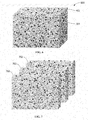
FIG. 6 shows a perspective view of an exemplary cast foam product according to the disclosure. -
FIG. 7 shows a perspective view of an exemplary cast foam product processed according to the disclosure. - Wherever possible, the same reference numbers will be used throughout the drawings to represent the same parts.
- Provided is an exemplary process of fabricating a cast foam product, an intermediate foam product, and a cast foam product. Embodiments of the present disclosure improve low cycle fatigue, reduce or eliminate segregation within components, increase uniformity and/or homogeneity, increase physical properties, reduce shrinkage, permit introduction of alloying/nucleating agents later in a casting, or combinations thereof.
-
FIG. 1 shows an embodiment of a process 100 of fabricating acast foam product 600, for example, as shown inFIG. 6 . The process 100 includes positioning (step 102) anexpandable component 202 andalloying particles 204 with adie 206, for example, as shown inFIG. 2 . The die 206 is shown as being transparent for illustration purposes. However, as would be appreciated by those skilled in the art, the die is any suitable casting die and is opaque. - The
expandable component 202 includes polystyrene and/or polymethylmethacrylate, for example, at any suitable ratio. Suitable ratios, by weight, include about 50% polystyrene and/or polymethylmethacrylate, about 70% to about 75% polystyrene, or about 70% to about 75% polymethylmethacrylate. In one embodiment, theexpandable component 202 includes a greater amount of the polymethylmethacrylate than the polystyrene, for example, to provide a smoother surface finish, as is capable of being compared by any suitable test. In one embodiment, theexpandable component 202 is in the form of beads during the positioning (step 102). - The process 100 further includes injecting (step 104) steam, for example, through
steam intakes 208, into the die 206. Upon injecting (step 104) the steam into thesteam intakes 208, anintermediate foam product 304 is formed, for example, as shown inFIG. 3 . Theintermediate foam product 304 includes thealloying particles 204, theexpandable component 202, and the steam. At a predetermined temperature, pressure, and/or duration, theexpandable component 202 within theintermediate product 304 expands (step 106), for example, as shown inFIGS. 3-4 , with theexpandable component 202 becoming an expandedcomponent 402. In one embodiment, adjusting the rate of the injecting (step 104) of the steam through thesteam intakes 208 and/or the rate of the expanding (step 106) of theexpandable component 202 adjusts density in thecast foam product 600. In one embodiment, the density is about 1.1 pounds per cubic foot (pcf) to about 1.4 pcf, for example, from a polystyrene-polymethylmethacrylate copolymer, or about 1.3 pcf to about 1.6 pcf, for example, from polystyrene. - In one embodiment, the expanding (step 106) of the
expandable component 202 distributes thealloying particles 204 within the die 206. In one embodiment, the distribution of thealloying particles 204 is substantially homogenous. For example, in one embodiment, theexpandable component 206 expands (step 106) simultaneously with thealloying particles 204 being distributed. In one embodiment, the expanding (step 106) of theexpandable component 202 fuses thealloying particles 204 to theexpandable component 202. In one embodiment, thealloying particles 204 are nucleating agents. In one embodiment, adjusting the size of thealloying particles 204 adjusts grain size in thecast foam product 600 and/or segregation levels. - Referring to
FIG. 5 , the steam is substantially exhausted from the die 206 throughsteam exhausts 502. In one embodiment, thecast foam product 600 is then formed (step 108). In one embodiment, emissions of the process 100 are limited to the steam exhausted from the die 206 through thesteam exhausts 502. - Referring to
FIGS. 5-6 , in one embodiment, thecast foam product 600 is then removed (step 110) from the die 206. Thecast foam product 600 includes a distribution of thealloying particles 204 and the expandedcomponent 402, with thealloying particles 204 being physically bound by the expandedcomponent 402. In one embodiment, thecast foam product 600 is resistant to shrinkage, for example, shrinking about 0.2% to about 0.5% at about 23°C over a period of one month for polystyrene, or less than about 0.1% at about 23°C over a period of one month for polystyrene-polymethylmethacrylate copolymers. In one embodiment, theintermediate product 304 and/or thecast foam product 600 are devoid of segregation of thealloying particles 204. In one embodiment, thecast foam product 600 is net-shaped upon being removed (step 110). - Referring to
FIGS 6-7 , in one embodiment, thecast foam product 600 is then processed (step 110). Processing (step 112) includes slicing, assembling, adhesively securing slicedportions 702 together, machining, coating, molding, pouring, or combinations thereof. - While the invention has been described with reference to a preferred embodiment, it will be understood by those skilled in the art that various changes may be made and equivalents may be substituted for elements thereof without departing from the scope of the invention. In addition, many modifications may be made to adapt a particular situation or material to the teachings of the invention without departing from the essential scope thereof. Therefore, it is intended that the invention not be limited to the particular embodiment disclosed as the best mode contemplated for carrying out this invention, but that the invention will include all embodiments falling within the scope of the appended claims.
Claims (15)
- A process of fabricating a cast foam product, the process comprising:positioning an expandable component and alloying particles within a die; andinjecting steam into the die and expanding the expandable component to form an expanded component;wherein the expandable component includes one or more of polystyrene and polymethylmethacrylate.
- The process of claim 1, wherein the expanding of the expandable component fuses the alloying particles to the expanded component.
- The process of claim 1 or claim 2, wherein the expanding of the expandable component distributes the alloying particles within the die.
- The process of claim 3, wherein the distribution of the alloying particles is substantially homogenous.
- The process of any preceding claim, wherein the expandable component includes polystyrene and the polymethylmethacrylate and wherein the expandable component includes a greater amount of the polymethylmethacrylate than the polystyrene.
- The process of any preceding claim, wherein the expandable component includes beads of one or more of the polystyrene and the polymethylmethacrylate.
- The process of any preceding claim, further comprising removing the foam product from the die.
- The process of any preceding claim, further comprising processing the foam product.
- The process of any preceding claim, further comprising dividing the cast foam product into slices and adhesively securing the sliced portions together.
- The process of any preceding claim, wherein the alloying particles are nucleating agents.
- The process of any preceding claim, wherein adjusting the rate of the expanding of the expandable component adjusts density of the cast foam product.
- The process of any preceding claim, wherein adjusting the rate of the injecting of the steam adjusts density in the cast foam product.
- The process of any preceding claim, wherein adjusting the size of the alloying particles adjusts grain size in the cast foam product, segregations levels within the cast foam product, or a combination thereof.
- An intermediate foam product, comprising:alloying particles;an expandable component including one or more of polystyrene and polymethylmethacrylate; andsteam.
- A cast foam product, comprising:a distribution of alloying particles; andan expanded component including one or more of polystyrene and polymethylmethacrylate;wherein the alloying particles are physically bound by the expanded component.
Applications Claiming Priority (1)
| Application Number | Priority Date | Filing Date | Title |
|---|---|---|---|
| US13/441,223 US20130267617A1 (en) | 2012-04-06 | 2012-04-06 | Process of fabricating a cast foam product, a cast foam product and an intermediate foam product |
Publications (1)
| Publication Number | Publication Date |
|---|---|
| EP2647491A1 true EP2647491A1 (en) | 2013-10-09 |
Family
ID=47997256
Family Applications (1)
| Application Number | Title | Priority Date | Filing Date |
|---|---|---|---|
| EP13161746.6A Withdrawn EP2647491A1 (en) | 2012-04-06 | 2013-03-28 | Process of fabricating a cast foam product, a cast foam product, and an intermediate foam product |
Country Status (4)
| Country | Link |
|---|---|
| US (1) | US20130267617A1 (en) |
| EP (1) | EP2647491A1 (en) |
| JP (1) | JP2013215806A (en) |
| RU (1) | RU2013115101A (en) |
Families Citing this family (1)
| Publication number | Priority date | Publication date | Assignee | Title |
|---|---|---|---|---|
| CN115380064B (en) * | 2020-03-30 | 2024-12-13 | 株式会社钟化 | Foamable methyl methacrylate resin particles, methyl methacrylate foamed particles, methyl methacrylate foamed molded body, and lost foam |
Citations (4)
| Publication number | Priority date | Publication date | Assignee | Title |
|---|---|---|---|---|
| US3188295A (en) * | 1962-06-27 | 1965-06-08 | Dow Chemical Co | Method of foaming a thermoplastic organic polymer containing a nucleating agent and an organic bromide |
| EP0564781A1 (en) * | 1992-04-09 | 1993-10-13 | Hüls Aktiengesellschaft | Process for the continuous production of foam beads |
| US20070148385A1 (en) * | 2005-12-22 | 2007-06-28 | Nova Chemicals Inc. | Methods for improving the resistance of fumigant sorption in a produce container and a related produce containers |
| US20100119813A1 (en) * | 2007-05-30 | 2010-05-13 | Ineos Nova International Sa | Fire retardant polystyrene |
Family Cites Families (4)
| Publication number | Priority date | Publication date | Assignee | Title |
|---|---|---|---|---|
| DE10358801A1 (en) * | 2003-12-12 | 2005-07-14 | Basf Ag | Particle foam moldings of expandable styrene polymers and blends with thermoplastic polymers |
| DE102004058586A1 (en) * | 2004-12-03 | 2006-06-14 | Basf Ag | Halogen-free, flame-retardant, expandable styrene polymers |
| US20120056346A1 (en) * | 2009-05-22 | 2012-03-08 | Maurer Myron J | Improved method for extracting shaped foam articles from a forming mold cavity |
| RU2012150891A (en) * | 2010-04-28 | 2014-06-10 | ДАУ ГЛОБАЛ ТЕКНОЛОДЖИЗ ЭлЭлСи | MULTILAYERED FOAM MATERIALS WITH CONJUGATED PROJECTS AND grooves |
-
2012
- 2012-04-06 US US13/441,223 patent/US20130267617A1/en not_active Abandoned
-
2013
- 2013-03-28 EP EP13161746.6A patent/EP2647491A1/en not_active Withdrawn
- 2013-04-05 RU RU2013115101/02A patent/RU2013115101A/en not_active Application Discontinuation
- 2013-04-05 JP JP2013079047A patent/JP2013215806A/en active Pending
Patent Citations (4)
| Publication number | Priority date | Publication date | Assignee | Title |
|---|---|---|---|---|
| US3188295A (en) * | 1962-06-27 | 1965-06-08 | Dow Chemical Co | Method of foaming a thermoplastic organic polymer containing a nucleating agent and an organic bromide |
| EP0564781A1 (en) * | 1992-04-09 | 1993-10-13 | Hüls Aktiengesellschaft | Process for the continuous production of foam beads |
| US20070148385A1 (en) * | 2005-12-22 | 2007-06-28 | Nova Chemicals Inc. | Methods for improving the resistance of fumigant sorption in a produce container and a related produce containers |
| US20100119813A1 (en) * | 2007-05-30 | 2010-05-13 | Ineos Nova International Sa | Fire retardant polystyrene |
Also Published As
| Publication number | Publication date |
|---|---|
| JP2013215806A (en) | 2013-10-24 |
| RU2013115101A (en) | 2014-10-10 |
| US20130267617A1 (en) | 2013-10-10 |
Similar Documents
| Publication | Publication Date | Title |
|---|---|---|
| JP6965353B2 (en) | Cluster models and shells for obtaining accessories for independent handling of molded parts and related methods | |
| CN104661775B (en) | Shell mold with heat shield | |
| US20110253878A1 (en) | Supporting pillar for an aircraft's structural component manufactured by a selective laser melting process | |
| WO2008135817A3 (en) | Timepiece component and method for making same | |
| CA2440488C (en) | Process and device for manufacturing free-flowing metal foam | |
| EP2223755A1 (en) | Casting method | |
| WO2018108674A3 (en) | Disposable mold core, method for producing a component and the component itself | |
| JP5243157B2 (en) | Manufacturing method of casting for tire mold | |
| EP2647491A1 (en) | Process of fabricating a cast foam product, a cast foam product, and an intermediate foam product | |
| JP2015522717A (en) | Method for producing aluminum alloy foam by casting | |
| JP2009525400A (en) | Iron-nickel-cobalt alloy | |
| WO2014016665A3 (en) | Method for manufacturing steel casts and steel casts thus manufactured | |
| JPWO2017164382A1 (en) | Spheroidal graphite cast iron, cast article comprising the same and automotive structural component, and method for producing a cast article comprising spheroidal graphite cast iron | |
| KR101327411B1 (en) | Extraction method using a material with asymmetric structure. | |
| WO2013144881A2 (en) | Light-weight metallic structure and respective production method | |
| CZ304437B6 (en) | Process for producing a lightweight molded body and molded body made of metal foam | |
| CN103747896A (en) | Method for casting single crystal metal parts | |
| JP2006159213A (en) | Method for producing hollow-shaped forging steel, and method for producing cylindrical forged product | |
| US20130240168A1 (en) | Process for producing a cast wheel and casting mould | |
| JPH1133674A (en) | Method for producing porous casting having three-dimensional network structure | |
| US7174946B2 (en) | Chill casting process and foam casting process as well as a pressure tight closable casting mold for manufacture of form parts | |
| TWI312722B (en) | Core material with runner system and fabricating method thereof | |
| JP7339510B2 (en) | Styrene resin foam block | |
| JPH03297534A (en) | Lost foam pattern and casting method using same | |
| Li et al. | Microstructure and mechanical properties of lost foam casting AZ91D alloy produced with mechanical vibration |
Legal Events
| Date | Code | Title | Description |
|---|---|---|---|
| PUAI | Public reference made under article 153(3) epc to a published international application that has entered the european phase |
Free format text: ORIGINAL CODE: 0009012 |
|
| AK | Designated contracting states |
Kind code of ref document: A1 Designated state(s): AL AT BE BG CH CY CZ DE DK EE ES FI FR GB GR HR HU IE IS IT LI LT LU LV MC MK MT NL NO PL PT RO RS SE SI SK SM TR |
|
| AX | Request for extension of the european patent |
Extension state: BA ME |
|
| 17P | Request for examination filed |
Effective date: 20140409 |
|
| RBV | Designated contracting states (corrected) |
Designated state(s): AL AT BE BG CH CY CZ DE DK EE ES FI FR GB GR HR HU IE IS IT LI LT LU LV MC MK MT NL NO PL PT RO RS SE SI SK SM TR |
|
| STAA | Information on the status of an ep patent application or granted ep patent |
Free format text: STATUS: THE APPLICATION IS DEEMED TO BE WITHDRAWN |
|
| 18D | Application deemed to be withdrawn |
Effective date: 20151001 |