EP2644868A2 - Gas turbine and gas turbine power facilities - Google Patents
Gas turbine and gas turbine power facilities Download PDFInfo
- Publication number
- EP2644868A2 EP2644868A2 EP13155724.1A EP13155724A EP2644868A2 EP 2644868 A2 EP2644868 A2 EP 2644868A2 EP 13155724 A EP13155724 A EP 13155724A EP 2644868 A2 EP2644868 A2 EP 2644868A2
- Authority
- EP
- European Patent Office
- Prior art keywords
- turbine
- support member
- compressor
- gas turbine
- casing
- Prior art date
- Legal status (The legal status is an assumption and is not a legal conclusion. Google has not performed a legal analysis and makes no representation as to the accuracy of the status listed.)
- Granted
Links
Images


Classifications
-
- F—MECHANICAL ENGINEERING; LIGHTING; HEATING; WEAPONS; BLASTING
- F01—MACHINES OR ENGINES IN GENERAL; ENGINE PLANTS IN GENERAL; STEAM ENGINES
- F01D—NON-POSITIVE DISPLACEMENT MACHINES OR ENGINES, e.g. STEAM TURBINES
- F01D25/00—Component parts, details, or accessories, not provided for in, or of interest apart from, other groups
-
- F—MECHANICAL ENGINEERING; LIGHTING; HEATING; WEAPONS; BLASTING
- F01—MACHINES OR ENGINES IN GENERAL; ENGINE PLANTS IN GENERAL; STEAM ENGINES
- F01D—NON-POSITIVE DISPLACEMENT MACHINES OR ENGINES, e.g. STEAM TURBINES
- F01D25/00—Component parts, details, or accessories, not provided for in, or of interest apart from, other groups
- F01D25/28—Supporting or mounting arrangements, e.g. for turbine casing
-
- F—MECHANICAL ENGINEERING; LIGHTING; HEATING; WEAPONS; BLASTING
- F02—COMBUSTION ENGINES; HOT-GAS OR COMBUSTION-PRODUCT ENGINE PLANTS
- F02C—GAS-TURBINE PLANTS; AIR INTAKES FOR JET-PROPULSION PLANTS; CONTROLLING FUEL SUPPLY IN AIR-BREATHING JET-PROPULSION PLANTS
- F02C7/00—Features, components parts, details or accessories, not provided for in, or of interest apart form groups F02C1/00 - F02C6/00; Air intakes for jet-propulsion plants
- F02C7/36—Power transmission arrangements between the different shafts of the gas turbine plant, or between the gas-turbine plant and the power user
-
- Y—GENERAL TAGGING OF NEW TECHNOLOGICAL DEVELOPMENTS; GENERAL TAGGING OF CROSS-SECTIONAL TECHNOLOGIES SPANNING OVER SEVERAL SECTIONS OF THE IPC; TECHNICAL SUBJECTS COVERED BY FORMER USPC CROSS-REFERENCE ART COLLECTIONS [XRACs] AND DIGESTS
- Y02—TECHNOLOGIES OR APPLICATIONS FOR MITIGATION OR ADAPTATION AGAINST CLIMATE CHANGE
- Y02E—REDUCTION OF GREENHOUSE GAS [GHG] EMISSIONS, RELATED TO ENERGY GENERATION, TRANSMISSION OR DISTRIBUTION
- Y02E20/00—Combustion technologies with mitigation potential
- Y02E20/16—Combined cycle power plant [CCPP], or combined cycle gas turbine [CCGT]
Definitions
- the gas turbine power facility shown in Fig. 1 includes a gas turbine 100 and a power generator 200 connected to the gas turbine 100.
- an exhaust casing of an axial exhaust flow structure or an exhaust casing of a radial exhaust flow structure is selectively fitted at one end into the casing 4. More specifically, for the connection of the rotary devices to the compressor output shaft 22, since this connection creates a space at an exhaust side of the turbine, the exhaust casing 5 having the axial exhaust flow structure formed so that emissions from the turbine 2 are discharged in a centrally axial direction of the turbine can be connected to the turbine 2 side of the casing 4.
- the rigid structure support member 6 to be selected alternatively to the flexible structure support member 11 and mounted to the flange 4a, or the compressor end mounting section, includes a support body 6a that supports the casing 4, and a rib 6b that strengthens the body 6a for improved rigidity.
- the body 6a is a plate-shaped member disposed along a surface orthogonal to the central axis of the turbine, and has a plate thickness sufficient to support at least a weight of a compressor-side section of the gas turbine 100.
- the bolt holes 19 (see Fig. 11 ) in the turbine end mounting section 4b are not used to mount the flexible structure support member 7.
- the base 7b is pivotably coupled to the lower portion of the body 7a via a pin 10b.
- the pin 10b extends in the direction orthogonal to the body 7a.
- the base 7b is fixed to the foundation (not shown) via a plurality of bolts 26. Since the body 7a of the flexible structure support member 7 has the surface oriented in parallel to the turbine central axis, the body 7a itself resists deflection in the direction of the turbine central axis.
- the rigid structure support member 12 to be selected alternatively to the flexible structure support member 7 and mounted to the turbine end mounting section 4b includes a support body 12a that supports the casing 4, and a base 12b fitted at a lower portion of the body 12a.
- the body 12a a vertically extending member of a flat bar shape with its surface lying in parallel to the central axis of the turbine, is wide in the direction of the turbine central axis as compared with the body 7a of the flexible structure support member 7, and has a plate thickness sufficient to support at least the weight of the turbine-side section of the gas turbine 100.
- the second embodiment differs from the first embodiment in that whereas the simple cycle power facility using the gas turbine 100 to drive the generator 200 and other rotary devices is described in the first embodiment, a combined cycle power facility is described in the second embodiment.
- a gas turbine facility of the present embodiment includes a gas turbine 100, rotary devices connected to the gas turbine 100 such as a power generator 200, and a steam turbine 300 connected to the gas turbine 100 via the rotary devices.
- a steam generator e.g., boiler
- Emissions from the gas turbine 100 may be used as a heat source for the steam generator.
- Fig. 15 shows an example in which a start-up device 400 is connected to the compressor output shaft 22 separately from the generator 200 and the like, the start-up device 400 can naturally be installed at the exhaust side along with the generator 200 and the like. All other structural/configurational aspects are substantially the same as those of the first embodiment.
- the embodiments described above are only typical configurational/structural examples of the gas turbine power facility according to the present invention, and the invention can be embodied in various modes without departing from the technical philosophy thereof.
- the configuration with the casing 4 supported at both of the compressor end mounting section (flange 4a) and the turbine end mounting section 4b has been described as an example, but the casing 4 may be supported at three places or more.
- the mounting section closest to the generator 200 will be rigidly supported by a rigid structure support member, and all other elements to be supported will be flexibly supported by flexible structure support members.
Landscapes
- Engineering & Computer Science (AREA)
- Mechanical Engineering (AREA)
- General Engineering & Computer Science (AREA)
- Chemical & Material Sciences (AREA)
- Combustion & Propulsion (AREA)
- Structures Of Non-Positive Displacement Pumps (AREA)
- Connection Of Motors, Electrical Generators, Mechanical Devices, And The Like (AREA)
- Engine Equipment That Uses Special Cycles (AREA)
Abstract
Description
- The present invention relates to a gas turbine and gas turbine power facilities.
- In gas turbine power facilities used at electric power plants and the like, power generators may be arranged at a compressor side of gas turbines to allow for the optimization of layout and the improvement of efficiency. For the same reasons, in combined cycle facilities used at electric power plants, power generators and steam turbines may also be arranged at a compressor side of gas turbines.
JP-2003-0138911-A - Whether a power generator, a steam turbine, and the like are to be connected to the compressor side of a gas turbine or the turbine side thereof is commonly predetermined by the type of gas turbine.
- The layout of power generator plant devices, however, is restricted by dimensions of their installation locations, and part of these devices may therefore require installation at non-planned locations in gas turbine power facilities of an axial exhaust flow structure, for example. The user's demand about the layout may also be subject to sudden change. Attempting the sequential design and manufacture of the gas turbine in response to the change in the layout of the power plant devices will significantly increase the number of parts required for the gas turbine, and the time required for its design and manufacture.
- The present invention has been made with the above circumstances in mind, and an object of the invention is to provide a gas turbine and a gas turbine power facility which flexibly accommodate changes in layout of devices and in user's needs.
- In order to attain the above object, an aspect of the present invention includes: a compressor output shaft for coupling rotary devices including a power generator, the compressor output shaft protruding from the turbine casing towards the compressor; and a turbine output shaft for coupling the rotary devices, the turbine output shaft protruding from the turbine casing towards the turbine.
- In accordance with the present invention, changes in layout of devices and in user's needs are flexibly accommodated.
-
-
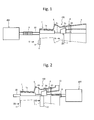
Fig. 1 is a schematic representing partly in section an overall structure of a gas turbine power facility according to a first embodiment of the present invention, and shows a configuration with a power generator and the like coupled to a compressor side of a gas turbine; -
Fig. 2 is another schematic representing partly in section the overall structure of the gas turbine power facility according to the first embodiment of the present invention, and shows a configuration with a power generator and the like coupled to a turbine side of a gas turbine; -
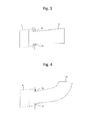
Fig. 3 is a schematic that represents installation construction of an exhaust casing of an axial exhaust flow structure with respect to the gas turbine according to the first embodiment of the present invention; -
Fig. 4 is a schematic that represents installation construction of an exhaust casing of a radial exhaust flow structure with respect to the gas turbine according to the first embodiment of the present invention; -
Fig. 5 is an external view representing installation construction of a rigid structure support member with respect to a compressor end mounting section in the gas turbine according to the first embodiment of the present invention, and shows the support member and periphery as viewed from a direction of arrow V inFig. 1 ; -
Fig. 6 is a cross-sectional view of the support member and periphery, taken along line VI-VI inFig. 5 ; -
Fig. 7 is an external view representing installation construction of a flexible structure support member with respect to the compressor end mounting section in the gas turbine according to the first embodiment of the present invention, and shows the support member and periphery as viewed from a direction of arrow VII inFig. 2 ; -
Fig. 8 is a cross-sectional view of the support member and periphery, taken along line VIII-VIII inFig. 7 ; -
Fig. 9 is an external view representing the installation construction of the flexible structure support member with respect to a turbine end mounting section in the gas turbine according to the first embodiment of the present invention, and is a partly cross-sectional view of the support member and periphery when seen from a direction of arrow IX inFig. 1 ; -
Fig. 10 is an external view of the support member and periphery as viewed from a direction of arrow X inFig. 9 ; -
Fig. 11 is a partial, external view of the turbine end mounting section as imaginarily extracted from the external view ofFig. 10 ; -
Fig. 12 is an external view representing the installation construction of the rigid structure support member with respect to the turbine end mounting section in the gas turbine according to the first embodiment of the present invention, and is a partly cross-sectional view of the support member and periphery when seen from a direction of arrow XII inFig. 2 ; -
Fig. 13 is an external view of the support member and periphery as viewed from a direction of arrow XIII inFig. 12 ; -
Fig. 14 is a schematic representing partly in section an overall structure of a gas turbine power facility according to a second embodiment of the present invention, and shows a configuration with a power generator and the like coupled to a compressor side of a gas turbine; and -
Fig. 15 is another schematic representing partly in section the overall structure of the gas turbine power facility according to the second embodiment of the present invention, and shows a configuration with a power generator and the like coupled to a turbine side of a gas turbine. - Hereunder, embodiments of the present invention will be described with reference to the accompanying drawings.
-
Fig. 1 is a schematic representing partly in section an overall structure of a gas turbine power facility according to a first embodiment of the present invention, and shows a configuration with a power generator and the like coupled to a compressor side of a gas turbine. - The gas turbine power facility shown in
Fig. 1 includes agas turbine 100 and apower generator 200 connected to thegas turbine 100. - The
gas turbine 100 includes a compressor 1 that compresses air, and aturbine 2 that drives the compressor 1. The compressor 1 and theturbine 2 share acasing 4. Thecasing 4 is a tubular member, accommodating acompressor rotor 1a of the compressor 1 and aturbine rotor 2a of theturbine 2. Thecompressor rotor 1a and theturbine rotor 2a are coaxially coupled via anintermediate shaft 21. Although not shown, a plurality of combustors arranged annularly on an outer periphery of thecasing 4 of the compressor 1 are equipped in thegas turbine 100. The combustors each burn a fuel with the air that has been compressed by the compressor 1, and generate combustion gases. The combustion gases from the combustors drive theturbine 2 to rotate. - The
compressor rotor 1a is equipped with acompressor output shaft 22 to couple rotary devices including thegenerator 200. Thecompressor output shaft 22 is coaxial with theintermediate shaft 21, and protrudes from thecasing 4 towards the compressor 1, that is, towards a side opposite to theturbine 2. Theturbine rotor 2a is equipped with aturbine output shaft 23 to couple the rotary devices. Theturbine output shaft 23 is coaxial with theintermediate shaft 21 and thecompressor output shaft 22, and protrudes from thecasing 4, towards theturbine 2, that is, towards a side opposite to the compressor 1. The rotary devices are selectively coupled to one of thecompressor output shaft 22 and theturbine output shaft 23. A configuration with the generator and the like coupled to the turbine side of thegas turbine 100 is shown inFig. 2 . - In addition to the
generator 200 and other driven machines, the rotary devices herein may include a speed reducer, a turning device, a start-up device, and other rotary devices (such as a steam turbine in a combined cycle), none of these machines and devices not being herein shown.Figs. 1 and 2 show exemplary configurations with an input shaft of thegenerator 200 directly coupled to thecompressor output shaft 22 or theturbine output shaft 23 via acoupling generator 200 is coupled to thecompressor output shaft 22 or theturbine output shaft 23 via the speed reducer. A turning device and a start-up device are usually coupled to the speed reducer via a gear (not shown) and may be built into the speed reducer. Thecouplings compressor output shaft 22 and theturbine output shaft 23. The rotary devices are also supported from a foundation by a support member, neither the foundation nor the support member being shown. - In addition, depending upon whether the rotary devices are to be connected to the
compressor output shaft 22 or theturbine output shaft 23, either an exhaust casing of an axial exhaust flow structure or an exhaust casing of a radial exhaust flow structure is selectively fitted at one end into thecasing 4. More specifically, for the connection of the rotary devices to thecompressor output shaft 22, since this connection creates a space at an exhaust side of the turbine, theexhaust casing 5 having the axial exhaust flow structure formed so that emissions from theturbine 2 are discharged in a centrally axial direction of the turbine can be connected to theturbine 2 side of thecasing 4. Conversely for the connection of the rotary devices to theturbine output shaft 23, since this connection makes it necessary for emissions to be discharged in a direction that the rotary devices are absent, theexhaust casing 13 having the radial exhaust flow structure formed so that the emissions from theturbine 2 are discharged in a radial direction of theturbine 2 can be connected to the turbine side of thecasing 4. Theexhaust casings -
Fig. 3 is a schematic that represents installation construction of theexhaust casing 5 having the axial exhaust flow structure, andFig. 4 is a schematic that represents installation construction of theexhaust casing 13 having the radial exhaust flow structure. Both figures show a vertical section including the central axis of theturbine 2, in an upper-half side of theturbine 2. - As shown in these figures, the
exhaust casings casing 4, and each casing is fastened to an exhaust section of thecasing 4 by means ofbolts 15 provided in two rows, one row on an inner periphery and the other row on an outer periphery. Thus, irrespective of whether theexhaust casing 5 or theexhaust casing 13 is to be installed, the exhaust casing can be connected to theturbine casing 4 in the same manner. The installation construction of theexhaust casing 5 having the axial exhaust flow structure is only shown as an example inFig. 3 , and likewise the installation construction of theexhaust casing 13 having the radial exhaust flow structure is only shown as an example inFig. 4 . Any other configuration can therefore be adopted, only if the configuration permits either the exhaust casing of the axial exhaust flow structure or the exhaust casing of the radial exhaust flow structure to be selectively connected to thecasing 4. - The
casing 4 is equipped with a compressor end mounting section on a section close to the compressor 1, and a turbine end mounting section on a section close to theturbine 2, the former mounting section being equivalent to aflange 4a shown inFig. 6 , and the latter mounting section being equivalent to a turbine end mounting section shown inFig. 10 . As shown inFigs. 1 and 2 , depending upon whether the rotary devices are to be connected to thecompressor output shaft 22 or theturbine output shaft 23, thesupport member 6 of the rigid structure inFig. 1 or thesupport member 11 of the flexible structure inFig. 2 is mounted at the compressor end mounting section. That is to say, thesupport member 6 of the rigid structure and thesupport member 11 of the flexible structure are provided as a pair so that either can be selected and then mounted at the compressor end mounting section. Similarly, as shown inFigs. 1 and 2 , depending upon whether the rotary devices are to be connected to thecompressor output shaft 22 or theturbine output shaft 23, thesupport member 7 of the flexible structure inFig. 1 or thesupport member 12 of the rigid structure inFig. 2 is mounted at the turbine end mounting section. That is to say, thesupport member 7 of the flexible structure and thesupport member 12 of the rigid structure are provided as a pair so that either can be selected and then mounted at the turbine end mounting section. - The rigid
structure support members structure support members compressor output shaft 22, the rigidstructure support member 6 is mounted at the compressor end mounting section and the flexiblestructure support member 7 is mounted at the turbine end mounting section. Conversely if the rotary devices are connected to theturbine output shaft 23, the flexiblestructure support member 11 is mounted at the compressor end mounting section and the rigidstructure support member 12 is mounted at the turbine end mounting section. To make an additional remark, the rigidstructure support member 6 and the flexiblestructure support member 7 are used in a pair to connect the rotary devices to thecompressor output shaft 22. Conversely the flexiblestructure support member 11 and the rigidstructure support member 12 are used in a pair to connect the rotary devices to theturbine output shaft 23. -
Fig. 5 is an external view representing the installation construction of the rigid structure support member with respect to the compressor end mounting section, and shows the support member and periphery as viewed from a direction of arrow V inFig. 1 .Fig. 6 is a cross-sectional view of the support member and periphery, taken along line VI-VI inFig. 5 . InFigs. 5 and 6 , the members that have already been described in the other accompanying drawings are each assigned the same reference number or symbol as in the other accompanying drawings, and description of these members is omitted hereunder. Only a left half of the rigid structure support member as viewed from a direction of thegenerator 200 inFig. 1 is shown inFig. 5 , and a right half of the rigidstructure support member 6 is not shown since the support member is of left-right symmetrical construction with respect to the construction shown inFig. 5 . - As shown in
Figs. 5 and 6 , at the compressor side of thecasing 4, theflange 4a is provided near a lower half of thecasing 4. Theflange 4a is equivalent to the compressor end mounting section described above. The rigidstructure support member 6 to be selected alternatively to the flexiblestructure support member 11 and mounted to theflange 4a, or the compressor end mounting section, includes asupport body 6a that supports thecasing 4, and arib 6b that strengthens thebody 6a for improved rigidity. Thebody 6a is a plate-shaped member disposed along a surface orthogonal to the central axis of the turbine, and has a plate thickness sufficient to support at least a weight of a compressor-side section of thegas turbine 100. Thebody 6a has an upper edge serving as aflange 6a recessed in a circular arc form with respect to theflange 4a when seen from the centrally axial direction of the turbine. Fastening theflange 6a to theflange 4a at theturbine casing 4 side using a plurality ofbolts 24 couples the rigidstructure support member 6 to a lower section of thecasing 4. In addition, at a lower end of thebody 6a, ahorizontal base 6d formed using a plate-shaped member is secured by welding or the like, and fastening thebase 6d to a foundation (not shown) with a plurality ofbolts 25 fixes the rigidstructure support member 6 to the foundation. Therib 6b is a plate-like strengthening member standing upright on thebase 6d, with its surface parallel to the central axis of the turbine, and is secured to both a surface of thebody 6a that is located at a side opposite to theturbine 2, and an upper surface of thebase 6d, by welding or the like. Since thebody 6a having a sufficient plate thickness is strengthened in this form by therib 6b, the rigidstructure support member 6 is constructed to resist deflection in the direction of the turbine central axis, in defiance of thermal expansion of thecasing 4. Thesupport member 6 is also constructed to easily constrain a movement of thecasing 4 in the direction of the turbine central axis as compared with the flexiblestructure support member 7 used in a pair. - The construction of the rigid
structure support member 6, shown inFigs. 5 and 6 , is only an example, and this construction may be replaced by any other construction if thesupport member 6 is sufficiently rigid to constrain the movement of thecasing 4 in the direction of the turbine central axis as compared with the flexiblestructure support member 7 used in a pair. -
Fig. 7 is an external view representing the installation construction of the flexible structure support member with respect to the compressor end mounting section, and shows the support member and periphery as viewed from a direction of arrow VII inFig. 2 .Fig. 8 is a cross-sectional view of the support member and periphery, taken along line VIII-VIII inFig. 7 . InFigs. 7 and 8 , the members that have already been described in the other accompanying drawings are each assigned the same reference number or symbol as in the other accompanying drawings, and description of these members is omitted hereunder. Only a left half of the flexiblestructure support member 11 as viewed from a direction opposite to thegenerator 200 inFig. 2 is shown inFig. 7 , and a right half of the flexiblestructure support member 11 is not shown since the support member is of left-right symmetrical construction with respect to the construction shown inFig. 7 . - As shown in
Figs. 7 and 8 , the flexiblestructure support member 11 to be selected alternatively to the rigidstructure support member 6 and mounted to theflange 4a, or the compressor end mounting section, includes asupport body 11a that supports thecasing 4, and abase 11d provided at a lower end of thebody 11a. Thebody 11a is a member thinner than thebody 6a of the rigidstructure support member 6, but has sufficient strength to support at least the weight of the compressor-side section of thegas turbine 100. The installation construction of the flexiblestructure support member 11 with respect to thecasing 4 is the same as that of the rigidstructure support member 6, and fastening aflange 11c of a circular arc shape, formed at an upper edge of thebody 11a, to theflange 4a at the turbine casing side by means of the plurality ofbolts 24, couples the flexiblestructure support member 11 to another lower section of thecasing 4. Thebase 11d is substantially of the same construction as that of thebase 6d of the rigidstructure support member 6, and is secured to thebody 11a by welding or the like. Fastening thebase 11d to the foundation (not shown) with a plurality ofbolts 25 fixes the flexiblestructure support member 11 to the foundation. Thebody 11a of the flexiblestructure support member 11 is thin as compared with thebody 6a of the rigidstructure support member 6, and thesupport member 11 is not provided with a rib. The flexiblestructure support member 11 is therefore constructed to easily deflect in the direction of the turbine central axis, and also to easily follow and absorb the thermal expansion of thecasing 4 as compared with the rigidstructure support member 12 used in a pair. - The construction of the flexible
structure support member 11, shown inFigs. 7 and 8 , is only an example, and this construction may be replaced by any other construction if thesupport member 11 is strong enough to support thegas turbine 100 and constructed to easily follow and absorb the thermal expansion of thecasing 4 as compared with the rigidstructure support member 12 used in a pair. -
Fig. 9 is an external view representing the installation construction of the flexible structure support member with respect to the turbine end mounting section, and is a partly cross-sectional view of the support member and periphery when seen from a direction of arrow IX inFig. 1 .Fig. 10 is an external view of the support member and periphery as viewed from a direction of arrow X inFig. 9 . InFigs. 9 and 10 , the members that have already been described in the other accompanying drawings are each assigned the same reference number or symbol as in the other accompanying drawings, and description of these members is omitted hereunder. Only the right half of the flexiblestructure support member 7 as viewed from the direction opposite to thegenerator 200 inFig. 1 is shown inFig. 9 , and the left half of the flexiblestructure support member 7 is not shown since the support member is of left-right symmetrical construction with respect to the construction shown inFig. 9 . - As shown in
Figs. 9 and 10 , at the turbine side of thecasing 4, the turbineend mounting section 4b is provided near a lateral portion of an outer periphery of thecasing 4. Although not shown in detail, thecasing 4 is of upper/lower-half separated construction, with the upper half and lower half of the casing being coupled by a flange at a section which crosses a horizontal surface extending through the central axis of the turbine. An example of providing the turbineend mounting section 4b on a side of theflange 4c for thecasing 4 is shown in the present embodiment. -
Fig. 11 is a partial, external view of the turbineend mounting section 4b as imaginarily extracted from the external view ofFig. 10 . InFig. 11 , the members that have already been described in the other accompanying drawings are each assigned the same reference number or symbol as in the other accompanying drawings, and description of these members is omitted hereunder. - As shown in
Fig. 11 , apin hole 18 and bolt holes 19 are provided in the turbineend mounting section 4b. The plurality of (in the present example, four) bolt holes 19 are arranged around thepin hole 18. Thepin hole 18 and the bolt holes 19 all extend in a direction orthogonal to a vertical surface including the central axis of the turbine. Compared with thebolt hole 18, thepin hole 19 has a large diameter. - The flexible
structure support member 7 to be selected alternatively to the rigidstructure support member 12 and mounted at the turbineend mounting section 4b includes asupport body 7a that supports thecasing 4 and abase 7b fitted at a lower portion of thebody 7a as can be seen fromFigs. 9 to 11 . Thebody 7a is a vertically extending member of a flat bar shape with its surface lying in parallel to the central axis of the turbine, and has a plate thickness sufficient to support at least the weight of a turbine-side section of thegas turbine 100. Thebody 7a has an upper portion pivotably coupled to thecasing 4 via apin 10a. Thepin 10a extends in a direction orthogonal to thebody 7a, and is inserted in thepin hole 18 of the turbineend mounting section 4b. The bolt holes 19 (seeFig. 11 ) in the turbineend mounting section 4b are not used to mount the flexiblestructure support member 7. Thebase 7b is pivotably coupled to the lower portion of thebody 7a via apin 10b. Thepin 10b extends in the direction orthogonal to thebody 7a. Thebase 7b is fixed to the foundation (not shown) via a plurality ofbolts 26. Since thebody 7a of the flexiblestructure support member 7 has the surface oriented in parallel to the turbine central axis, thebody 7a itself resists deflection in the direction of the turbine central axis. However, since thebody 7a is coupled at its upper and lower portions to thecasing 4 and thebase 7b via thepins body 7a has enough strength to support thegas turbine 100. At the same time, when thecasing 4 thermally expands in the direction of the turbine central axis, thebody 7a inclines with thepin casing 4 as compared with thebody 6a of the rigidstructure support member 6 used in a pair. - The construction of the flexible
structure support member 7 shown inFigs. 10 and11 is only an example, and this construction may be replaced by any other construction if thesupport member 7 is strong enough to support thegas turbine 100 and constructed to easily follow and absorb the thermal expansion of thecasing 4 as compared with the rigidstructure support member 6 used in a pair. -
Fig. 12 is an external view representing the installation construction of the rigid structure support member with respect to the turbine end mounting section, and is a partly cross-sectional view of the support member and periphery when seen from a direction of arrow XII inFig. 2 .Fig. 13 is an external view of the support member and periphery as viewed from a direction of arrow XIII inFig. 12 . InFigs. 12 and 13 , the members that have already been described in the other accompanying drawings are each assigned the same reference number or symbol as in the other accompanying drawings, and description of these members is omitted hereunder. Only the right half of the rigidstructure support member 12 as viewed from the direction opposite to thegenerator 200 inFig. 2 is shown inFig. 12 , and the left half of the rigidstructure support member 12 is not shown since the support member is of left-right symmetrical construction with respect to the construction shown inFig. 13 . - As shown in
Figs. 12 and 13 , the rigidstructure support member 12 to be selected alternatively to the flexiblestructure support member 7 and mounted to the turbineend mounting section 4b includes asupport body 12a that supports thecasing 4, and abase 12b fitted at a lower portion of thebody 12a. Thebody 12a, a vertically extending member of a flat bar shape with its surface lying in parallel to the central axis of the turbine, is wide in the direction of the turbine central axis as compared with thebody 7a of the flexiblestructure support member 7, and has a plate thickness sufficient to support at least the weight of the turbine-side section of thegas turbine 100. Thebody 12a, as with thebody 7a of the flexiblestructure support member 7, has an upper portion pivotably coupled to the turbineend mounting section 4b of thecasing 4 via apin 10a. In addition, thebody 12a is fastened to the turbineend mounting section 4b by means of a plurality of (in the present example, four)bolts 17. Thebolts 17 are each threaded down into the bolt holes (seeFig. 11 ) of the turbineend mounting section 4b. Furthermore, thebase 12b is secured to a lower end of thebody 12a by welding or the like, and thebase 12b is fastened onto the foundation (not shown) via a plurality ofbolts 27 to fix thebody 12a to the foundation. Thebody 12a of the rigidstructure support member 12 has a wide surface relative to thebody 7a of the flexiblestructure support member 7, resists deflection more significantly than thebody 7a, and obviously has enough strength to support thegas turbine 100. Additionally, the upper portion of thebody 12a is not merely coupled to the turbineend mounting section 4b, but also rotationally locked against thecasing 4 by thebolts 17, and thebody 12a is welded at its lower portion onto thebase 12b. For these reasons, even when thecasing 4 thermally expands in the direction of the turbine central axis, the rigidstructure support member 12 refuses to incline, as with the flexiblestructure support member 7, and is also constructed to easily constrain the axial movement of thecasing 4 as compared with the flexiblestructure support member 11 used in a pair. - The construction of the rigid
structure support member 12 shown inFigs. 12 and 13 is only an example, and this construction may be replaced by any other construction if thesupport member 12 is strong enough to support thegas turbine 100 and constructed to easily constrain the movement of thecasing 4 in the direction of the turbine central axis as compared with the flexiblestructure support member 11 used in a pair. - In the gas turbine power facility of the above configuration, the
generator 200 is driven by thegas turbine 100, thereby generating electricity. After the compressor 1 has compressed air, thegas turbine 100 uses combustors (not shown) to burn the air along with a fuel, and then uses resulting combustion gases to drive theturbine 2. Thegas turbine 100, when exposed to a high temperature by the high-temperature high-pressure combustion gases that are a working fluid, suffers a significant change in temperature and hence a certain level of thermal expansion in the direction of the turbine central axis. To suppress impacts of the thermal expansion of thegas turbine 100 upon thegenerator 200, thegas turbine 100 needs to be supported rigidly at the side to which thegenerator 200 is connected, and flexibly at the opposite side. Adopting this support construction makes thegas turbine 100 expand from the supporting position at the side closer to thegenerator 200, towards the side opposite to thegenerator 200, and thus suppresses the impacts of the thermal expansion of thegas turbine 100 upon thegenerator 200. - Prior to construction of a gas turbine power facility, if it is predetermined at an early phase whether a generator and other rotary devices (driven elements) are to be connected to a compressor side or a turbine side, a user of the power facility will be able to closely study the layout of the devices, including the support construction described above, and move fabrication/assembly forward. If the above is not predetermined, the user will not be able to put these operations forward. In addition, for example, the user's demand about the layout may be subject to sudden change after the fabrication/assembly operations have been started. If sequential design and manufacture of the gas turbine in response to the change in the layout of the power facility are attempted, this will significantly increase the number of parts required for the gas turbine, and the time required for its design and manufacture.
- In contrast to this, in the gas turbine power facility of the present embodiment, the
output shaft generator 200 and other rotary devices are to be connected are equipped at both of the compressor side and the turbine side, this arrangement enabling selective connection of the rotary devices to either side. In other words, irrespective of whether thegenerator 200 and other rotary devices are to be connected to thecompressor output shaft 22 or theturbine output shaft 23, changes in layout of the devices can be flexibly accommodated later, so before it becomes clear to which of the above two sides thegenerator 200 and other rotary devices are to be connected, fabrication/assembly of thegas turbine 100 can be advanced. Changes in user's needs, including those of the layout of the devices after a start of fabrication/assembly, can also be flexibly met. Additionally, flexible and relatively speedy response to changes in specifications is achievable. - The
generator 200 cannot only be selectively connected to either thecompressor output shaft 22 or theturbine output shaft 23. Gas turbine support construction and the exhaust casing can also be flexibly geared to the disposition of thegenerator 200. More specifically, first, either of the rigidstructure support member 6 and the flexiblestructure support member 11 can be mounted to theflange 4a that is the compressor end mounting section in the same manner. Either of the rigidstructure support member 7 and the flexiblestructure support member 12 can also be selectively mounted to the turbineend mounting section 4b. Theexhaust casings casing 4 in the same manner. The gas turbine power facility as a whole, therefore, is flexibly responsive to changes in the layout of the devices, for example, and allows not only response to changes in specifications but also the fabrication/assembly of the gas turbine to be advanced within a short period of time. -
Figs. 14 and 15 are schematics representing partly in section an overall structure of a gas turbine power facility according to a second embodiment of the present invention.Fig. 14 shows a configuration with a power generator and the like coupled to a compressor side of a gas turbine, andFig. 15 shows a configuration with a power generator and the like coupled to a turbine side of a gas turbine. InFigs. 14 and 15 , the members that have already been described in the other accompanying drawings are each assigned the same reference number or symbol as in the other accompanying drawings, and description of these members is omitted hereunder. - The second embodiment differs from the first embodiment in that whereas the simple cycle power facility using the
gas turbine 100 to drive thegenerator 200 and other rotary devices is described in the first embodiment, a combined cycle power facility is described in the second embodiment. More specifically, a gas turbine facility of the present embodiment includes agas turbine 100, rotary devices connected to thegas turbine 100 such as apower generator 200, and asteam turbine 300 connected to thegas turbine 100 via the rotary devices. - In the present embodiment, for connection of the
generator 200 and the like to acompressor output shaft 22, as shown inFig. 14 , thesteam turbine 300 is disposed, along with thegenerator 200, at an air intake side and connected coaxially with thegas turbine 100 and thegenerator 200. In this case, an installation form of a rigidstructure support member 6, a flexiblestructure support member 7, and anexhaust casing 5, with respect to aturbine casing 4, is substantially the same as in the example ofFig. 1 . For connection of thegenerator 200 and the like to aturbine output shaft 23, as shown inFig. 15 , thesteam turbine 300 is disposed, along with thegenerator 200, at an exhaust side and connected coaxially with thegas turbine 100 and thegenerator 200. In this case, an installation form of the rigidstructure support member 6, the flexiblestructure support member 7, and theexhaust casing 5, with respect to theturbine casing 4, is substantially the same as in the example ofFig. 1 . - It goes without saying that although not shown, a steam generator (e.g., boiler) that drives the
steam turbine 300 is provided. Emissions from thegas turbine 100 may be used as a heat source for the steam generator. In addition, whileFig. 15 shows an example in which a start-updevice 400 is connected to thecompressor output shaft 22 separately from thegenerator 200 and the like, the start-updevice 400 can naturally be installed at the exhaust side along with thegenerator 200 and the like. All other structural/configurational aspects are substantially the same as those of the first embodiment. - The present invention can also be applied to a combined cycle power facility as in the present embodiment, and substantially the same advantageous effects as those of the first embodiment can also be obtained in that case.
- The embodiments described above are only typical configurational/structural examples of the gas turbine power facility according to the present invention, and the invention can be embodied in various modes without departing from the technical philosophy thereof. For instance, the configuration with the
casing 4 supported at both of the compressor end mounting section (flange 4a) and the turbineend mounting section 4b has been described as an example, but thecasing 4 may be supported at three places or more. When the number of elements to be supported is increased, the mounting section closest to thegenerator 200 will be rigidly supported by a rigid structure support member, and all other elements to be supported will be flexibly supported by flexible structure support members.
Claims (7)
- A gas turbine comprising:an air compressor (1);a turbine (2) coaxially coupled to the compressor (1);a turbine casing (4) accommodating the compressor (1) and the turbine (2);a compressor output shaft (22) for coupling rotary devices including a power generator (200), the compressor output shaft (22) protruding from the turbine casing (4) towards the compressor (1); anda turbine output shaft (23) for coupling the rotary devices, the turbine output shaft (23) protruding from the turbine casing (4) towards the turbine (2).
- The gas turbine according to claim 1, further comprising:a compressor end mounting section provided at a section of the turbine casing (4) that is near the compressor (1);a turbine end mounting section provided at a section of the turbine casing (4) that is near the turbine (2);a rigid structure support member (12) mounted to the compressor end mounting section or the turbine end mounting section, whichever is the closer to the rotary devices; anda flexible structure support member (7) mounted to the compressor end mounting section or the turbine end mounting section, whichever is the more distant from the rotary devices.
- The gas turbine according to claim 2, wherein:the rigid structure support member (12) is more rigid than the flexible structure support member (7) that is selected alternatively to the rigid structure support member (12) and mounted to the same mounting section.
- The gas turbine according to claim 2 or 3, wherein:whereas the rigid structure support member (12) is fixedly mounted to one of the compressor end mounting section and the turbine end mounting section, the flexible structure support member (7) selected alternatively to the rigid structure support member (12) and mounted to the relevant mounting section is pivotably mounted to the relevant mounting section.
- The gas turbine according to at least one of claims 1 or 4, further comprising:a first exhaust casing (5) of an axial exhaust flow structure, the first exhaust casing (5) being fitted at the turbine casing (4) when the rotary devices are connected to the compressor output shaft (22); anda second exhaust casing (13) of a radial exhaust flow structure, the second exhaust casing (13) being fitted at the turbine casing (4) when the rotary devices are connected to the turbine output shaft (23).
- A gas turbine power facility comprising:the gas turbine (100) of at least one of claims 1 to 5; andthe rotary devices each connected to the gas turbine (100).
- A gas turbine power facility comprising:the gas turbine (100) of at least one of claims 1 to 5;the rotary devices each connected to the gas turbine (100); anda steam turbine connected to the gas turbine (100) via the rotary devices.
Applications Claiming Priority (1)
| Application Number | Priority Date | Filing Date | Title |
|---|---|---|---|
| JP2012077688A JP5667115B2 (en) | 2012-03-29 | 2012-03-29 | Gas turbine and gas turbine power generation facility |
Publications (3)
| Publication Number | Publication Date |
|---|---|
| EP2644868A2 true EP2644868A2 (en) | 2013-10-02 |
| EP2644868A3 EP2644868A3 (en) | 2017-12-20 |
| EP2644868B1 EP2644868B1 (en) | 2020-04-08 |
Family
ID=47722140
Family Applications (1)
| Application Number | Title | Priority Date | Filing Date |
|---|---|---|---|
| EP13155724.1A Active EP2644868B1 (en) | 2012-03-29 | 2013-02-19 | Gas turbine and gas turbine power facilities |
Country Status (4)
| Country | Link |
|---|---|
| US (1) | US9810093B2 (en) |
| EP (1) | EP2644868B1 (en) |
| JP (1) | JP5667115B2 (en) |
| CN (1) | CN103362647B (en) |
Families Citing this family (2)
| Publication number | Priority date | Publication date | Assignee | Title |
|---|---|---|---|---|
| JP2015175246A (en) * | 2014-03-13 | 2015-10-05 | 三菱日立パワーシステムズ株式会社 | Casing support structure, casing and turbine |
| DE102018217823A1 (en) * | 2018-10-18 | 2020-04-23 | Siemens Aktiengesellschaft | Method and adapter construction for assembling a compressor and a gas turbine |
Citations (1)
| Publication number | Priority date | Publication date | Assignee | Title |
|---|---|---|---|---|
| JP2003138911A (en) | 2001-10-30 | 2003-05-14 | Toshiba Corp | Gas turbine output control device for combined cycle power plant |
Family Cites Families (15)
| Publication number | Priority date | Publication date | Assignee | Title |
|---|---|---|---|---|
| FR545684A (en) * | 1922-01-07 | 1922-10-18 | ||
| EP0064936A1 (en) * | 1981-05-04 | 1982-11-17 | Swiss Metalworks Selve Ltd. | High output gas turbine and closely coupled shaft drive load |
| EP0302508B1 (en) * | 1987-08-06 | 1990-10-24 | Mtu Motoren- Und Turbinen-Union MàNchen Gmbh | Energy-delivering installation |
| JPH04129807U (en) * | 1991-05-23 | 1992-11-27 | 三菱重工業株式会社 | Steam turbine starting device for combined cycle power generation equipment |
| HUT66008A (en) * | 1992-10-19 | 1994-08-29 | Elin Energieversorgung | Method and configuration of blade for preventing deposit from arising in gas-turbine |
| US5271217A (en) * | 1992-12-09 | 1993-12-21 | General Electric Company | Mounting arrangement for a single shaft combined cycle system |
| JP2954456B2 (en) * | 1993-07-14 | 1999-09-27 | 株式会社日立製作所 | Exhaust recirculation combined plant |
| US5810558A (en) * | 1996-01-16 | 1998-09-22 | Dresser-Rand Company | Bearing case support arrangement |
| JP2003120214A (en) * | 2001-10-05 | 2003-04-23 | Kawasaki Heavy Ind Ltd | Gas turbine equipment |
| US7281308B2 (en) * | 2004-01-08 | 2007-10-16 | General Electric Company | Methods of generator rotor removal in a combined-cycle stag application |
| JP4859688B2 (en) * | 2007-01-30 | 2012-01-25 | 三菱重工業株式会社 | gas turbine |
| US8049353B1 (en) * | 2008-06-13 | 2011-11-01 | Florida Turbine Technologies, Inc. | Stackable generator arrangement |
| US8001790B2 (en) * | 2008-08-11 | 2011-08-23 | Mitsubishi Heavy Industries, Ltd. | Gas turbine |
| US9115648B2 (en) * | 2009-04-10 | 2015-08-25 | General Electric Company | Corrected megawatt backup curve methodology |
| JP5075900B2 (en) * | 2009-09-30 | 2012-11-21 | 株式会社日立製作所 | Hydrogen-containing fuel compatible combustor and its low NOx operation method |
-
2012
- 2012-03-29 JP JP2012077688A patent/JP5667115B2/en active Active
-
2013
- 2013-02-15 US US13/768,579 patent/US9810093B2/en active Active
- 2013-02-19 EP EP13155724.1A patent/EP2644868B1/en active Active
- 2013-02-20 CN CN201310054237.3A patent/CN103362647B/en active Active
Patent Citations (1)
| Publication number | Priority date | Publication date | Assignee | Title |
|---|---|---|---|---|
| JP2003138911A (en) | 2001-10-30 | 2003-05-14 | Toshiba Corp | Gas turbine output control device for combined cycle power plant |
Also Published As
| Publication number | Publication date |
|---|---|
| CN103362647B (en) | 2016-03-23 |
| EP2644868B1 (en) | 2020-04-08 |
| US20130259656A1 (en) | 2013-10-03 |
| CN103362647A (en) | 2013-10-23 |
| EP2644868A3 (en) | 2017-12-20 |
| US9810093B2 (en) | 2017-11-07 |
| JP5667115B2 (en) | 2015-02-12 |
| JP2013204577A (en) | 2013-10-07 |
Similar Documents
| Publication | Publication Date | Title |
|---|---|---|
| JP4607195B2 (en) | Gas turbine with stationary blades | |
| US9322556B2 (en) | Flow sleeve assembly for a combustion module of a gas turbine combustor | |
| US10436445B2 (en) | Assembly for controlling clearance between a liner and stationary nozzle within a gas turbine | |
| CN103557035A (en) | Connection structure of exhaust chamber, support structure of turbine, and gas turbine | |
| JP2008175207A6 (en) | Gas turbine with stationary blades | |
| EP2912284B1 (en) | Exhaust gas collector and gas turbine | |
| JP2010236547A (en) | Fuel nozzle spring support | |
| US20120260669A1 (en) | Front centerbody support for a gas turbine engine | |
| US9212567B2 (en) | Gas duct for a gas turbine and gas turbine having such a gas duct | |
| US20140186168A1 (en) | Component retention with probe | |
| WO2014105617A1 (en) | Installation mounts for a turbine exhaust case | |
| KR101860982B1 (en) | Combustor supporting device of gas turbine | |
| EP4060164B1 (en) | Gas turbine engine and mount assembly therefor | |
| US9810093B2 (en) | Gas turbine and gas turbine power facilities | |
| US10087843B2 (en) | Mount with deflectable tabs | |
| JP2015086873A (en) | Bucket assembly for use in a turbine engine | |
| EP3234468B1 (en) | Combustor with flexible liner support and method of assembling the same | |
| JP2008519580A (en) | Electromechanical equipment | |
| EP2574730A2 (en) | Turbine Shroud Impingement System With Bellows | |
| US20130186103A1 (en) | Near flow path seal for a turbomachine | |
| JP6736301B2 (en) | Combustor rear mounting assembly | |
| EP2514928A2 (en) | Compressor inlet casing with integral bearing housing | |
| JP6952485B2 (en) | Radial discharge diffuser | |
| JP2004353484A (en) | gas turbine | |
| KR20140003639U (en) | Fixing structure of ship,s stack |
Legal Events
| Date | Code | Title | Description |
|---|---|---|---|
| PUAI | Public reference made under article 153(3) epc to a published international application that has entered the european phase |
Free format text: ORIGINAL CODE: 0009012 |
|
| 17P | Request for examination filed |
Effective date: 20130412 |
|
| AK | Designated contracting states |
Kind code of ref document: A2 Designated state(s): AL AT BE BG CH CY CZ DE DK EE ES FI FR GB GR HR HU IE IS IT LI LT LU LV MC MK MT NL NO PL PT RO RS SE SI SK SM TR |
|
| AX | Request for extension of the european patent |
Extension state: BA ME |
|
| RAP1 | Party data changed (applicant data changed or rights of an application transferred) |
Owner name: MITSUBISHI HITACHI POWER SYSTEMS, LTD. |
|
| RAP1 | Party data changed (applicant data changed or rights of an application transferred) |
Owner name: MITSUBISHI HITACHI POWER SYSTEMS, LTD. |
|
| PUAL | Search report despatched |
Free format text: ORIGINAL CODE: 0009013 |
|
| AK | Designated contracting states |
Kind code of ref document: A3 Designated state(s): AL AT BE BG CH CY CZ DE DK EE ES FI FR GB GR HR HU IE IS IT LI LT LU LV MC MK MT NL NO PL PT RO RS SE SI SK SM TR |
|
| AX | Request for extension of the european patent |
Extension state: BA ME |
|
| RIC1 | Information provided on ipc code assigned before grant |
Ipc: F01D 25/00 20060101ALI20171113BHEP Ipc: F02C 7/36 20060101AFI20171113BHEP Ipc: F01D 25/28 20060101ALI20171113BHEP |
|
| STAA | Information on the status of an ep patent application or granted ep patent |
Free format text: STATUS: EXAMINATION IS IN PROGRESS |
|
| 17Q | First examination report despatched |
Effective date: 20181008 |
|
| GRAP | Despatch of communication of intention to grant a patent |
Free format text: ORIGINAL CODE: EPIDOSNIGR1 |
|
| STAA | Information on the status of an ep patent application or granted ep patent |
Free format text: STATUS: GRANT OF PATENT IS INTENDED |
|
| INTG | Intention to grant announced |
Effective date: 20190920 |
|
| RIN1 | Information on inventor provided before grant (corrected) |
Inventor name: TSUKIDATE, HIRONORI Inventor name: KUROKI, HIDETOSHI Inventor name: SANO, ATSUSHI |
|
| GRAS | Grant fee paid |
Free format text: ORIGINAL CODE: EPIDOSNIGR3 |
|
| GRAA | (expected) grant |
Free format text: ORIGINAL CODE: 0009210 |
|
| STAA | Information on the status of an ep patent application or granted ep patent |
Free format text: STATUS: THE PATENT HAS BEEN GRANTED |
|
| AK | Designated contracting states |
Kind code of ref document: B1 Designated state(s): AL AT BE BG CH CY CZ DE DK EE ES FI FR GB GR HR HU IE IS IT LI LT LU LV MC MK MT NL NO PL PT RO RS SE SI SK SM TR |
|
| REG | Reference to a national code |
Ref country code: AT Ref legal event code: REF Ref document number: 1254694 Country of ref document: AT Kind code of ref document: T Effective date: 20200415 Ref country code: CH Ref legal event code: EP |
|
| REG | Reference to a national code |
Ref country code: DE Ref legal event code: R096 Ref document number: 602013067605 Country of ref document: DE |
|
| REG | Reference to a national code |
Ref country code: IE Ref legal event code: FG4D |
|
| REG | Reference to a national code |
Ref country code: NL Ref legal event code: MP Effective date: 20200408 |
|
| REG | Reference to a national code |
Ref country code: LT Ref legal event code: MG4D |
|
| PG25 | Lapsed in a contracting state [announced via postgrant information from national office to epo] |
Ref country code: PT Free format text: LAPSE BECAUSE OF FAILURE TO SUBMIT A TRANSLATION OF THE DESCRIPTION OR TO PAY THE FEE WITHIN THE PRESCRIBED TIME-LIMIT Effective date: 20200817 Ref country code: IS Free format text: LAPSE BECAUSE OF FAILURE TO SUBMIT A TRANSLATION OF THE DESCRIPTION OR TO PAY THE FEE WITHIN THE PRESCRIBED TIME-LIMIT Effective date: 20200808 Ref country code: SE Free format text: LAPSE BECAUSE OF FAILURE TO SUBMIT A TRANSLATION OF THE DESCRIPTION OR TO PAY THE FEE WITHIN THE PRESCRIBED TIME-LIMIT Effective date: 20200408 Ref country code: NL Free format text: LAPSE BECAUSE OF FAILURE TO SUBMIT A TRANSLATION OF THE DESCRIPTION OR TO PAY THE FEE WITHIN THE PRESCRIBED TIME-LIMIT Effective date: 20200408 Ref country code: FI Free format text: LAPSE BECAUSE OF FAILURE TO SUBMIT A TRANSLATION OF THE DESCRIPTION OR TO PAY THE FEE WITHIN THE PRESCRIBED TIME-LIMIT Effective date: 20200408 Ref country code: LT Free format text: LAPSE BECAUSE OF FAILURE TO SUBMIT A TRANSLATION OF THE DESCRIPTION OR TO PAY THE FEE WITHIN THE PRESCRIBED TIME-LIMIT Effective date: 20200408 Ref country code: NO Free format text: LAPSE BECAUSE OF FAILURE TO SUBMIT A TRANSLATION OF THE DESCRIPTION OR TO PAY THE FEE WITHIN THE PRESCRIBED TIME-LIMIT Effective date: 20200708 Ref country code: GR Free format text: LAPSE BECAUSE OF FAILURE TO SUBMIT A TRANSLATION OF THE DESCRIPTION OR TO PAY THE FEE WITHIN THE PRESCRIBED TIME-LIMIT Effective date: 20200709 |
|
| REG | Reference to a national code |
Ref country code: AT Ref legal event code: MK05 Ref document number: 1254694 Country of ref document: AT Kind code of ref document: T Effective date: 20200408 |
|
| PG25 | Lapsed in a contracting state [announced via postgrant information from national office to epo] |
Ref country code: BG Free format text: LAPSE BECAUSE OF FAILURE TO SUBMIT A TRANSLATION OF THE DESCRIPTION OR TO PAY THE FEE WITHIN THE PRESCRIBED TIME-LIMIT Effective date: 20200708 Ref country code: HR Free format text: LAPSE BECAUSE OF FAILURE TO SUBMIT A TRANSLATION OF THE DESCRIPTION OR TO PAY THE FEE WITHIN THE PRESCRIBED TIME-LIMIT Effective date: 20200408 Ref country code: LV Free format text: LAPSE BECAUSE OF FAILURE TO SUBMIT A TRANSLATION OF THE DESCRIPTION OR TO PAY THE FEE WITHIN THE PRESCRIBED TIME-LIMIT Effective date: 20200408 Ref country code: RS Free format text: LAPSE BECAUSE OF FAILURE TO SUBMIT A TRANSLATION OF THE DESCRIPTION OR TO PAY THE FEE WITHIN THE PRESCRIBED TIME-LIMIT Effective date: 20200408 |
|
| REG | Reference to a national code |
Ref country code: DE Ref legal event code: R082 Ref document number: 602013067605 Country of ref document: DE Representative=s name: MERH-IP MATIAS ERNY REICHL HOFFMANN PATENTANWA, DE Ref country code: DE Ref legal event code: R081 Ref document number: 602013067605 Country of ref document: DE Owner name: MITSUBISHI POWER, LTD., JP Free format text: FORMER OWNER: MITSUBISHI HITACHI POWER SYSTEMS, LTD., YOKOHAMA, JP |
|
| PG25 | Lapsed in a contracting state [announced via postgrant information from national office to epo] |
Ref country code: AL Free format text: LAPSE BECAUSE OF FAILURE TO SUBMIT A TRANSLATION OF THE DESCRIPTION OR TO PAY THE FEE WITHIN THE PRESCRIBED TIME-LIMIT Effective date: 20200408 |
|
| REG | Reference to a national code |
Ref country code: DE Ref legal event code: R097 Ref document number: 602013067605 Country of ref document: DE |
|
| PG25 | Lapsed in a contracting state [announced via postgrant information from national office to epo] |
Ref country code: EE Free format text: LAPSE BECAUSE OF FAILURE TO SUBMIT A TRANSLATION OF THE DESCRIPTION OR TO PAY THE FEE WITHIN THE PRESCRIBED TIME-LIMIT Effective date: 20200408 Ref country code: RO Free format text: LAPSE BECAUSE OF FAILURE TO SUBMIT A TRANSLATION OF THE DESCRIPTION OR TO PAY THE FEE WITHIN THE PRESCRIBED TIME-LIMIT Effective date: 20200408 Ref country code: IT Free format text: LAPSE BECAUSE OF FAILURE TO SUBMIT A TRANSLATION OF THE DESCRIPTION OR TO PAY THE FEE WITHIN THE PRESCRIBED TIME-LIMIT Effective date: 20200408 Ref country code: CZ Free format text: LAPSE BECAUSE OF FAILURE TO SUBMIT A TRANSLATION OF THE DESCRIPTION OR TO PAY THE FEE WITHIN THE PRESCRIBED TIME-LIMIT Effective date: 20200408 Ref country code: AT Free format text: LAPSE BECAUSE OF FAILURE TO SUBMIT A TRANSLATION OF THE DESCRIPTION OR TO PAY THE FEE WITHIN THE PRESCRIBED TIME-LIMIT Effective date: 20200408 Ref country code: DK Free format text: LAPSE BECAUSE OF FAILURE TO SUBMIT A TRANSLATION OF THE DESCRIPTION OR TO PAY THE FEE WITHIN THE PRESCRIBED TIME-LIMIT Effective date: 20200408 Ref country code: SM Free format text: LAPSE BECAUSE OF FAILURE TO SUBMIT A TRANSLATION OF THE DESCRIPTION OR TO PAY THE FEE WITHIN THE PRESCRIBED TIME-LIMIT Effective date: 20200408 Ref country code: ES Free format text: LAPSE BECAUSE OF FAILURE TO SUBMIT A TRANSLATION OF THE DESCRIPTION OR TO PAY THE FEE WITHIN THE PRESCRIBED TIME-LIMIT Effective date: 20200408 |
|
| PLBE | No opposition filed within time limit |
Free format text: ORIGINAL CODE: 0009261 |
|
| STAA | Information on the status of an ep patent application or granted ep patent |
Free format text: STATUS: NO OPPOSITION FILED WITHIN TIME LIMIT |
|
| PG25 | Lapsed in a contracting state [announced via postgrant information from national office to epo] |
Ref country code: SK Free format text: LAPSE BECAUSE OF FAILURE TO SUBMIT A TRANSLATION OF THE DESCRIPTION OR TO PAY THE FEE WITHIN THE PRESCRIBED TIME-LIMIT Effective date: 20200408 Ref country code: PL Free format text: LAPSE BECAUSE OF FAILURE TO SUBMIT A TRANSLATION OF THE DESCRIPTION OR TO PAY THE FEE WITHIN THE PRESCRIBED TIME-LIMIT Effective date: 20200408 |
|
| 26N | No opposition filed |
Effective date: 20210112 |
|
| PG25 | Lapsed in a contracting state [announced via postgrant information from national office to epo] |
Ref country code: SI Free format text: LAPSE BECAUSE OF FAILURE TO SUBMIT A TRANSLATION OF THE DESCRIPTION OR TO PAY THE FEE WITHIN THE PRESCRIBED TIME-LIMIT Effective date: 20200408 |
|
| PG25 | Lapsed in a contracting state [announced via postgrant information from national office to epo] |
Ref country code: MC Free format text: LAPSE BECAUSE OF FAILURE TO SUBMIT A TRANSLATION OF THE DESCRIPTION OR TO PAY THE FEE WITHIN THE PRESCRIBED TIME-LIMIT Effective date: 20200408 |
|
| REG | Reference to a national code |
Ref country code: BE Ref legal event code: MM Effective date: 20210228 |
|
| PG25 | Lapsed in a contracting state [announced via postgrant information from national office to epo] |
Ref country code: CH Free format text: LAPSE BECAUSE OF NON-PAYMENT OF DUE FEES Effective date: 20210228 Ref country code: LI Free format text: LAPSE BECAUSE OF NON-PAYMENT OF DUE FEES Effective date: 20210228 Ref country code: LU Free format text: LAPSE BECAUSE OF NON-PAYMENT OF DUE FEES Effective date: 20210219 |
|
| PG25 | Lapsed in a contracting state [announced via postgrant information from national office to epo] |
Ref country code: IE Free format text: LAPSE BECAUSE OF NON-PAYMENT OF DUE FEES Effective date: 20210219 |
|
| PG25 | Lapsed in a contracting state [announced via postgrant information from national office to epo] |
Ref country code: BE Free format text: LAPSE BECAUSE OF NON-PAYMENT OF DUE FEES Effective date: 20210228 |
|
| PG25 | Lapsed in a contracting state [announced via postgrant information from national office to epo] |
Ref country code: HU Free format text: LAPSE BECAUSE OF FAILURE TO SUBMIT A TRANSLATION OF THE DESCRIPTION OR TO PAY THE FEE WITHIN THE PRESCRIBED TIME-LIMIT; INVALID AB INITIO Effective date: 20130219 |
|
| PG25 | Lapsed in a contracting state [announced via postgrant information from national office to epo] |
Ref country code: CY Free format text: LAPSE BECAUSE OF FAILURE TO SUBMIT A TRANSLATION OF THE DESCRIPTION OR TO PAY THE FEE WITHIN THE PRESCRIBED TIME-LIMIT Effective date: 20200408 |
|
| PG25 | Lapsed in a contracting state [announced via postgrant information from national office to epo] |
Ref country code: MK Free format text: LAPSE BECAUSE OF FAILURE TO SUBMIT A TRANSLATION OF THE DESCRIPTION OR TO PAY THE FEE WITHIN THE PRESCRIBED TIME-LIMIT Effective date: 20200408 |
|
| PG25 | Lapsed in a contracting state [announced via postgrant information from national office to epo] |
Ref country code: MT Free format text: LAPSE BECAUSE OF FAILURE TO SUBMIT A TRANSLATION OF THE DESCRIPTION OR TO PAY THE FEE WITHIN THE PRESCRIBED TIME-LIMIT Effective date: 20200408 |
|
| PG25 | Lapsed in a contracting state [announced via postgrant information from national office to epo] |
Ref country code: TR Free format text: LAPSE BECAUSE OF FAILURE TO SUBMIT A TRANSLATION OF THE DESCRIPTION OR TO PAY THE FEE WITHIN THE PRESCRIBED TIME-LIMIT Effective date: 20200408 |
|
| PGFP | Annual fee paid to national office [announced via postgrant information from national office to epo] |
Ref country code: FR Payment date: 20251231 Year of fee payment: 14 |
|
| PGFP | Annual fee paid to national office [announced via postgrant information from national office to epo] |
Ref country code: GB Payment date: 20260106 Year of fee payment: 14 |
|
| PGFP | Annual fee paid to national office [announced via postgrant information from national office to epo] |
Ref country code: DE Payment date: 20251230 Year of fee payment: 14 |