EP2644511B1 - Auflösbares Brennstoffzufuhrsystem - Google Patents
Auflösbares Brennstoffzufuhrsystem Download PDFInfo
- Publication number
- EP2644511B1 EP2644511B1 EP13154308.4A EP13154308A EP2644511B1 EP 2644511 B1 EP2644511 B1 EP 2644511B1 EP 13154308 A EP13154308 A EP 13154308A EP 2644511 B1 EP2644511 B1 EP 2644511B1
- Authority
- EP
- European Patent Office
- Prior art keywords
- storage tank
- titanium
- supply system
- fuel supply
- based coating
- Prior art date
- Legal status (The legal status is an assumption and is not a legal conclusion. Google has not performed a legal analysis and makes no representation as to the accuracy of the status listed.)
- Active
Links
Images

Classifications
-
- B—PERFORMING OPERATIONS; TRANSPORTING
- B64—AIRCRAFT; AVIATION; COSMONAUTICS
- B64G—COSMONAUTICS; VEHICLES OR EQUIPMENT THEREFOR
- B64G1/00—Cosmonautic vehicles
- B64G1/22—Parts of, or equipment specially adapted for fitting in or to, cosmonautic vehicles
- B64G1/40—Arrangements or adaptations of propulsion systems
- B64G1/402—Propellant tanks; Feeding propellants
-
- B—PERFORMING OPERATIONS; TRANSPORTING
- B64—AIRCRAFT; AVIATION; COSMONAUTICS
- B64G—COSMONAUTICS; VEHICLES OR EQUIPMENT THEREFOR
- B64G1/00—Cosmonautic vehicles
- B64G1/22—Parts of, or equipment specially adapted for fitting in or to, cosmonautic vehicles
- B64G1/40—Arrangements or adaptations of propulsion systems
- B64G1/402—Propellant tanks; Feeding propellants
- B64G1/4021—Tank construction; Details thereof
-
- F—MECHANICAL ENGINEERING; LIGHTING; HEATING; WEAPONS; BLASTING
- F02—COMBUSTION ENGINES; HOT-GAS OR COMBUSTION-PRODUCT ENGINE PLANTS
- F02K—JET-PROPULSION PLANTS
- F02K9/00—Rocket-engine plants, i.e. plants carrying both fuel and oxidant therefor; Control thereof
- F02K9/42—Rocket-engine plants, i.e. plants carrying both fuel and oxidant therefor; Control thereof using liquid or gaseous propellants
- F02K9/60—Constructional parts; Details not otherwise provided for
- F02K9/605—Reservoirs
-
- F—MECHANICAL ENGINEERING; LIGHTING; HEATING; WEAPONS; BLASTING
- F05—INDEXING SCHEMES RELATING TO ENGINES OR PUMPS IN VARIOUS SUBCLASSES OF CLASSES F01-F04
- F05D—INDEXING SCHEME FOR ASPECTS RELATING TO NON-POSITIVE-DISPLACEMENT MACHINES OR ENGINES, GAS-TURBINES OR JET-PROPULSION PLANTS
- F05D2300/00—Materials; Properties thereof
- F05D2300/60—Properties or characteristics given to material by treatment or manufacturing
- F05D2300/611—Coating
-
- F—MECHANICAL ENGINEERING; LIGHTING; HEATING; WEAPONS; BLASTING
- F17—STORING OR DISTRIBUTING GASES OR LIQUIDS
- F17C—VESSELS FOR CONTAINING OR STORING COMPRESSED, LIQUEFIED OR SOLIDIFIED GASES; FIXED-CAPACITY GAS-HOLDERS; FILLING VESSELS WITH, OR DISCHARGING FROM VESSELS, COMPRESSED, LIQUEFIED, OR SOLIDIFIED GASES
- F17C2201/00—Vessel construction, in particular geometry, arrangement or size
- F17C2201/01—Shape
- F17C2201/0128—Shape spherical or elliptical
-
- F—MECHANICAL ENGINEERING; LIGHTING; HEATING; WEAPONS; BLASTING
- F17—STORING OR DISTRIBUTING GASES OR LIQUIDS
- F17C—VESSELS FOR CONTAINING OR STORING COMPRESSED, LIQUEFIED OR SOLIDIFIED GASES; FIXED-CAPACITY GAS-HOLDERS; FILLING VESSELS WITH, OR DISCHARGING FROM VESSELS, COMPRESSED, LIQUEFIED, OR SOLIDIFIED GASES
- F17C2201/00—Vessel construction, in particular geometry, arrangement or size
- F17C2201/05—Size
- F17C2201/056—Small (<1 m3)
-
- F—MECHANICAL ENGINEERING; LIGHTING; HEATING; WEAPONS; BLASTING
- F17—STORING OR DISTRIBUTING GASES OR LIQUIDS
- F17C—VESSELS FOR CONTAINING OR STORING COMPRESSED, LIQUEFIED OR SOLIDIFIED GASES; FIXED-CAPACITY GAS-HOLDERS; FILLING VESSELS WITH, OR DISCHARGING FROM VESSELS, COMPRESSED, LIQUEFIED, OR SOLIDIFIED GASES
- F17C2203/00—Vessel construction, in particular walls or details thereof
- F17C2203/06—Materials for walls or layers thereof; Properties or structures of walls or their materials
- F17C2203/0602—Wall structures; Special features thereof
- F17C2203/0607—Coatings
-
- F—MECHANICAL ENGINEERING; LIGHTING; HEATING; WEAPONS; BLASTING
- F17—STORING OR DISTRIBUTING GASES OR LIQUIDS
- F17C—VESSELS FOR CONTAINING OR STORING COMPRESSED, LIQUEFIED OR SOLIDIFIED GASES; FIXED-CAPACITY GAS-HOLDERS; FILLING VESSELS WITH, OR DISCHARGING FROM VESSELS, COMPRESSED, LIQUEFIED, OR SOLIDIFIED GASES
- F17C2203/00—Vessel construction, in particular walls or details thereof
- F17C2203/06—Materials for walls or layers thereof; Properties or structures of walls or their materials
- F17C2203/0602—Wall structures; Special features thereof
- F17C2203/0612—Wall structures
- F17C2203/0614—Single wall
- F17C2203/0617—Single wall with one layer
-
- F—MECHANICAL ENGINEERING; LIGHTING; HEATING; WEAPONS; BLASTING
- F17—STORING OR DISTRIBUTING GASES OR LIQUIDS
- F17C—VESSELS FOR CONTAINING OR STORING COMPRESSED, LIQUEFIED OR SOLIDIFIED GASES; FIXED-CAPACITY GAS-HOLDERS; FILLING VESSELS WITH, OR DISCHARGING FROM VESSELS, COMPRESSED, LIQUEFIED, OR SOLIDIFIED GASES
- F17C2203/00—Vessel construction, in particular walls or details thereof
- F17C2203/06—Materials for walls or layers thereof; Properties or structures of walls or their materials
- F17C2203/0602—Wall structures; Special features thereof
- F17C2203/0612—Wall structures
- F17C2203/0614—Single wall
- F17C2203/0619—Single wall with two layers
-
- F—MECHANICAL ENGINEERING; LIGHTING; HEATING; WEAPONS; BLASTING
- F17—STORING OR DISTRIBUTING GASES OR LIQUIDS
- F17C—VESSELS FOR CONTAINING OR STORING COMPRESSED, LIQUEFIED OR SOLIDIFIED GASES; FIXED-CAPACITY GAS-HOLDERS; FILLING VESSELS WITH, OR DISCHARGING FROM VESSELS, COMPRESSED, LIQUEFIED, OR SOLIDIFIED GASES
- F17C2203/00—Vessel construction, in particular walls or details thereof
- F17C2203/06—Materials for walls or layers thereof; Properties or structures of walls or their materials
- F17C2203/0634—Materials for walls or layers thereof
- F17C2203/0636—Metals
- F17C2203/0646—Aluminium
-
- F—MECHANICAL ENGINEERING; LIGHTING; HEATING; WEAPONS; BLASTING
- F17—STORING OR DISTRIBUTING GASES OR LIQUIDS
- F17C—VESSELS FOR CONTAINING OR STORING COMPRESSED, LIQUEFIED OR SOLIDIFIED GASES; FIXED-CAPACITY GAS-HOLDERS; FILLING VESSELS WITH, OR DISCHARGING FROM VESSELS, COMPRESSED, LIQUEFIED, OR SOLIDIFIED GASES
- F17C2203/00—Vessel construction, in particular walls or details thereof
- F17C2203/06—Materials for walls or layers thereof; Properties or structures of walls or their materials
- F17C2203/0634—Materials for walls or layers thereof
- F17C2203/0636—Metals
- F17C2203/0648—Alloys or compositions of metals
-
- F—MECHANICAL ENGINEERING; LIGHTING; HEATING; WEAPONS; BLASTING
- F17—STORING OR DISTRIBUTING GASES OR LIQUIDS
- F17C—VESSELS FOR CONTAINING OR STORING COMPRESSED, LIQUEFIED OR SOLIDIFIED GASES; FIXED-CAPACITY GAS-HOLDERS; FILLING VESSELS WITH, OR DISCHARGING FROM VESSELS, COMPRESSED, LIQUEFIED, OR SOLIDIFIED GASES
- F17C2209/00—Vessel construction, in particular methods of manufacturing
- F17C2209/22—Assembling processes
- F17C2209/225—Spraying
-
- F—MECHANICAL ENGINEERING; LIGHTING; HEATING; WEAPONS; BLASTING
- F17—STORING OR DISTRIBUTING GASES OR LIQUIDS
- F17C—VESSELS FOR CONTAINING OR STORING COMPRESSED, LIQUEFIED OR SOLIDIFIED GASES; FIXED-CAPACITY GAS-HOLDERS; FILLING VESSELS WITH, OR DISCHARGING FROM VESSELS, COMPRESSED, LIQUEFIED, OR SOLIDIFIED GASES
- F17C2221/00—Handled fluid, in particular type of fluid
- F17C2221/08—Ergols, e.g. hydrazine
-
- F—MECHANICAL ENGINEERING; LIGHTING; HEATING; WEAPONS; BLASTING
- F17—STORING OR DISTRIBUTING GASES OR LIQUIDS
- F17C—VESSELS FOR CONTAINING OR STORING COMPRESSED, LIQUEFIED OR SOLIDIFIED GASES; FIXED-CAPACITY GAS-HOLDERS; FILLING VESSELS WITH, OR DISCHARGING FROM VESSELS, COMPRESSED, LIQUEFIED, OR SOLIDIFIED GASES
- F17C2260/00—Purposes of gas storage and gas handling
- F17C2260/05—Improving chemical properties
- F17C2260/053—Reducing corrosion
-
- F—MECHANICAL ENGINEERING; LIGHTING; HEATING; WEAPONS; BLASTING
- F17—STORING OR DISTRIBUTING GASES OR LIQUIDS
- F17C—VESSELS FOR CONTAINING OR STORING COMPRESSED, LIQUEFIED OR SOLIDIFIED GASES; FIXED-CAPACITY GAS-HOLDERS; FILLING VESSELS WITH, OR DISCHARGING FROM VESSELS, COMPRESSED, LIQUEFIED, OR SOLIDIFIED GASES
- F17C2270/00—Applications
- F17C2270/01—Applications for fluid transport or storage
- F17C2270/0186—Applications for fluid transport or storage in the air or in space
- F17C2270/0194—Applications for fluid transport or storage in the air or in space for use under microgravity conditions, e.g. space
Definitions
- Satellite fuel tanks are complex devices that use various means to deliver fuel to propulsion systems of the space craft. In a zero or low gravity environment, separating the liquids from pressurizing gases in order to deliver them in sufficient quantities to support mission requirements is difficult. Often, this process is performed with a propellant management device (PMD) that utilizes surface tension and capillary action to transport the liquid fuel. It is imperative that the tank and PMD materials are compatible and wettable with the liquid fuel chemicals such as hydrazine. It is known in the art that materials such as titanium and titanium alloys are used for this purpose because of their high chemical compatibility and wettability with hydrazine and other propellants and oxidizers used to fuel satellites.
- PMD propellant management device
- LEO low earth orbiting
- a demisable fuel supply system has a liquid storage tank and propellant management devices.
- the liquid storage tank and propellant management devices are fabricated from aluminum alloys. Selected areas of the inside surface of the liquid storage tank and surfaces of the propellant management devices are coated with a titanium based coating to guarantee high wettability of and corrosion protection against the propellant.
- a method of manufacturing a demisable fuel supply system comprises first fabricating aluminum based components of the fuel supply system. The components are then partially assembled and joined, such as by welding or mechanical fastening. Selected areas of the tank and component inside surfaces are then coated with a titanium based coating before final assembly of the tank by welding.
- the storage tank sections and PMD components are made from an aluminum alloy.
- NEO near earth orbit
- Controlled re-entry whereby the space craft is put into a trajectory with a predetermined landing site, such as an ocean, has been the accepted practice in order to minimize personal or property damage.
- Uncontrolled re-entry requires that the space craft completely burn up (demise) before impact.
- a demisable satellite mission can be extended for up to a number of years because of the fuel saved by not having to position the spacecraft in an orientation for a proper trajectory during controlled re-entry.
- a fuel supply system for the GPM satellite comprises a pressurized composite over-wrapped pressure vessel (COPV), an aluminum tank liner and aluminum propellant management devices (PMD).
- COV pressurized composite over-wrapped pressure vessel
- PMD aluminum propellant management devices
- fuel transport in PMD systems is by capillary action and wettability of the tank and PMD components by the propellant is an absolute necessity for the fuel systems to operate.
- An embodiment of this invention is to coat the tank interior and all internal PMD structures with a thin layer of a titanium based coating before final assembly, thereby guaranteeing acceptable wettability and corrosion resistance of the propellant delivery system.
- Another embodiment is to coat only the PMD and all its fluid communication components and not the entire tank liner.
- FIG. 1 A schematic sketch of propellant delivery system 10 is shown in FIG. 1 .
- Propellant delivery system 10 is a monopropellant delivery system where a single fuel such as hydrazine is used. Bipropellant propulsion systems using a fuel and an oxidizer are also in common use.
- Delivery system 10 includes tank 12, inlet gas flow line 14, outlet liquid flow line 16, propellant 18, vanes 20, and sponge 22. Vanes 20 deliver propellant 18 to sponge 22 where collected and stored propellant 18 in sponge 22 is drawn from liquid flow line 16 when required by the propulsion system.
- Demisable propellant delivery system 10 is fabricated from an aluminum alloy.
- Aluminum alloys suitable for this purpose include, but are not limited to, 6061, 2219, and 2014 alloys.
- propellant management devices In zero gravity environments, surface tension forces and capillary action are necessary driving forces to deliver propellant in spacecraft such as satellites.
- a primary function of propellant management devices is to deliver fuel without gas bubbles to a propulsion system. Gas entrained in a fuel line may result in engine malfunction.
- Normal filters for this purpose are titanium alloy screens where liquid passes through the screens by capillary action and gas bubbles are left behind.
- Vanes 20 may be simple thin metallic ribs aligned perpendicular to tank shell 12 as shown in FIG. 1 .
- the propellant collects at the intersection of vane 20 and tank shell 12 and is held in place by surface tension and meniscus forces.
- Collecting sponge 22 may be a radial assembly of vertical panels.
- FIGS 1A and 1B are top and side view, respectively, of sponge 22.
- propellant is held in place by surface tension and meniscus forces and fills area inside dotted circle 24 along the entire length of sponge 22.
- Other collection reservoirs are traps and troughs. Vanes, sponges, traps and troughs are described by D. E. Jaekle, Jr. in American Institute of Aeronautics and Astronautics Papers AIAA-91-2172, AIAA-93-1970, and AIAA-95-2531, respectively, for instance.
- an embodiment of the present invention is to coat all surfaces of the fuel supply system that are in contact with propellant with a titanium based coating in order to guarantee wettability and corrosion resistance throughout the life of a mission.
- a titanium based coating are, but are not limited to, pure titanium and titanium-based alloys, such as Ti-6Al-4V and Ti-15V-3Cr-3Sn-3Al alloys.
- the thin titanium based coating becomes an inconsequential component of the structure as the aluminum components burn up.
- another embodiment is to coat only PMD components and fluid communication surfaces with the titanium based coating to ensure acceptable fuel supply during the mission.
- Two tank configurations are preferred for satellite fuel systems.
- One embodiment is a simple aluminum pressurized tank containing propellant management devices (PMD).
- the other embodiment is an aluminum pressurized tank surrounded by an overwrap of a composite containment shell called a composite overwrap pressure vessel or COPV.
- COPV composite overwrap pressure vessel
- the aluminum tank is called a liner in the art.
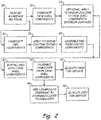
- Fig. 2 A method of fabricating demisable fuel systems with pressurized aluminum propellant tanks and with COPV tanks is shown in Fig. 2 .
- the process starts with the procurement of aluminum alloy material, preferably sheet stock. (Step 30).
- Liquid propellant tank shell sections are then fabricated from the sheet stock, preferably by spinning and other methods known in the art (Step 32).
- a preferred thickness of the tank sections is between about 0.9 millimeters and 7 millimeters.
- Aluminum alloys suitable for the tank include, but are not limited to, 6061, 2219, and 2014 alloys.
- the interior surface or portions of the interior surface of the tank shell sections are then coated with a titanium based coating.
- titanium based coatings for the tank shell interior sections include, but are not limited to, pure titanium and titanium-based alloys, such as Ti-6Al-4V and Ti-15V-3Cr-3Sn-3Al alloys.
- the thickness of the titanium based coating is between about 1 micron and about 10 microns.
- Aluminum PMD components such as vanes, sponges, traps, troughs, and others are then fabricated or acquired from qualified vendors. (Step 36).
- Aluminum alloys suitable for the PMD components include, but are not limited to, 6061, 2219, and 2014 alloys.
- a titanium based coating is then applied to the PMD components (Step 38).
- Suitable coatings include, but are not limited to, pure titanium and titanium-based alloys, such as Ti-6Al-4V and Ti-15V-3Cr-3Sn-3Al alloys (Step 38).
- the PMD components are then assembled into PMD fixtures by processes known in the art (Step 40) and then installed into the tank shell components (Step 42).
- the PMD components are installed into the tank shell components by attaching the components to the tank shell by welding, brazing, mechanical fasteners, or other methods known in the art (Step 42).
- the tank shell components containing installed PMD devices are then assembled and joined into finished tanks and liners (Step 44). Assembling and joining comprise gas tungsten arc welding, electron beam welding, laser beam welding and other methods known in the art. If the finished product is a tank, the tank is then qualified for service (Step 46). If the finished product is a COPV, the assembled liner containing installed PMD devices is then overwrapped with composite fibers to form a COPV (Step 48). The COPV is then qualified for service (Step 50).
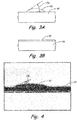
- Wettability of hydrazine on a titanium or titanium alloy coated aluminum alloy surface can be conveniently measured by the wetting or contact angle between a fuel droplet and the substrate surface as shown schematically in Figures 3A and 3B .
- the wettability of hydrazine droplet 52 on aluminum alloy substrate 54 is indicated by contact angle 56.
- aluminum alloy substrate 54 is partially wet by hydrazine droplet 52 as indicated by wetting or contact angle 56 being positive. Wettability increases as the contact angle decreases. Complete wettability, as shown in Fig. 3B , occurs when the contact angle is zero.
- Fig. 4 is a photograph showing the profile of hydrazine droplet 52 on aluminum alloy substrate 54 wherein contact angle 56 is indicated by a line tangent to the droplet at the point of intersection of the droplet with the substrate surface.
- contact angle 56 is about 20 degrees, indicating acceptable contact but incomplete wetting.
- This feature was a general result of titanium or titanium alloy films deposited on aluminum alloys by vapor phase processes such as physical vapor deposition. Complete wetting (i.e. zero contact angle) was achieved in all cases by treating the surface with an aqueous solution of 30 wt. % nitric acid and 3 wt. % hydrofluoric acid. A vacuum solution heat treat at 529°C followed by an argon quench and a 177°C aging treatment restored the T6 properties and subsequent usefulness of the 6061 aluminum alloy PMD component substrate.
- intermediate surface treatments to enhance wettability and heat treatments to restore mechanical properties are unnecessary.
- the titanium and titanium alloy coating deposition process of the present invention produces coatings that exhibit complete wetting against hydrazine fuel with no additional treatment or chemical processing.
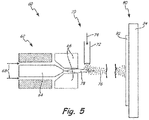
- the titanium and titanium alloy coatings of the present invention are produced on aluminum alloy components for PMD application by plasma powder spray.
- Plasma spray process 60 comprises plasma torch 62, powder source 70, and target 80.
- Plasma torch 62 comprises cathode 64, anode 66, and a plasma gas source, not shown, but indicated by arrows 68.
- a DC or AC, typically RF, potential between cathode 64 and anode 66 ignites plasma plume 78 directed at target 80.
- Powder source 70 provides feedstock for plasma coating 82 on substrate 84.
- Powder source 70 comprises tube 72 carrying a powder feedstock in a gas stream indicated schematically by arrow 74. Powders injected in plasma plume 78 are accelerated towards target 70 in arrays of partially and/or completely molten particles 76 where they impact target 80 to form coating 82.
- particle feedstock 74 may be pure titanium or titanium alloy powder.
- Plasma powder spraying may be carried out in vacuum or inert atmospheres.
- Plasma powder sprayed titanium or titanium alloy thicknesses may range from about 30 microns (1.2 mil) to about 200 microns (7.8 mil). Alternatively, from about 50 microns (2 mil) to about 130 microns (5.1 mil).
- plasma spray titanium and titanium alloy coatings exhibited complete wetting when contacted with hydrazine fuel. Furthermore, the coatings may be deposited at room temperature. Post coating acid etching and solution quench and age heat treatments are not necessary. Since plasma spray is a line of sight coating process, the process is suitable for larger robust and structural PMD components. Vapor phase coating is still recommended for smaller, delicate aluminum PMD components.
Landscapes
- Engineering & Computer Science (AREA)
- Chemical & Material Sciences (AREA)
- Combustion & Propulsion (AREA)
- Remote Sensing (AREA)
- Aviation & Aerospace Engineering (AREA)
- Mechanical Engineering (AREA)
- General Engineering & Computer Science (AREA)
- Coating By Spraying Or Casting (AREA)
- Filling Or Discharging Of Gas Storage Vessels (AREA)
Claims (14)
- Auflösbares Kraftstoffzuführsystem, dadurch gekennzeichnet, dass es Folgendes umfasst:einen Flüssigkeitslagertank (12) aus einer Aluminiumlegierung zum Lagern eines Flüssigtreibstoffs;Treibstoffverwaltungsvorrichtungen aus einer Aluminiumlegierung; undeine durch Plasmapulverspritzen aufgetragene hochbenetzbare und korrosionsbeständige Beschichtung auf Titanbasis, die ausgewählte Innenflächen des Flüssigkeitslagertanks und der Treibstoffverwaltungsvorrichtungen bedeckt.
- Auflösbares Kraftstoffzuführsystem nach Anspruch 1, wobei die Beschichtung auf Titanbasis aus der Gruppe bestehend aus reinem Titan und Legierungen auf Titanbasis ausgewählt ist.
- Auflösbares Kraftstoffzuführsystem nach Anspruch 2, wobei die Beschichtung auf Titanbasis entweder eine Ti-6Al-4V-Legierung oder eine Ti-15V-3Cr-3Sn-3Al-Legierung ist.
- Auflösbares Kraftstoffzuführsystem nach Anspruch 3, wobei die Beschichtung auf Titanbasis eine Dicke von etwa 30 Mikrometern bis etwa 200 Mikrometern aufweist.
- Auflösbares Kraftstoffzuführsystem nach Anspruch 1, wobei die Beschichtung auf Titanbasis eine Dicke von etwa 50 Mikrometern bis etwa 130 Mikrometern aufweist oder wobei der Flüssigkeitslagertank (12) eine Dicke von etwa 0,9 Millimetern bis etwa 7 Millimetern aufweist.
- Auflösbares Kraftstoffzuführsystem nach Anspruch 1, wobei die Aluminiumlegierung aus der Gruppe bestehend aus einer 6061-, einer 2219- und einer 2014-Legierung ausgewählt ist.
- Auflösbares Kraftstoffzuführsystem nach Anspruch 6, wobei die Aluminiumlegierung eine 6061-Legierung ist.
- Auflösbares Kraftstoffzuführsystem nach Anspruch 1, wobei der Flüssigtreibstoff Kraftstoffe mit einem oder zwei Treibstoffen umfasst und wobei vorzugsweise der Kraftstoff mit einem Treibstoff Hydrazin umfasst.
- Verfahren zum Herstellen eines auflösbaren Kraftstoffzuführsystems, umfassend:Fertigen von Flüssigkeitslagertankabschnitten;Fertigen von Komponenten einer Treibstoffverwaltungsvorrichtung (propellant management device - PMD);Befestigen der PMD-Komponenten an den Innenflächen der Flüssigkeitslagertankabschnitte;Beschichten ausgewählter Lagertankabschnittsinnenräume und der PMD-Komponenten mit einer hochbenetzbaren und korrosionsbeständigen Beschichtung auf Titanbasis durch Plasmapulverspritzen;Zusammenbauen der befüllten Lagertankabschnitte zum Bilden eines fertigen Flüssigkeitslagertanks (12), wobei die Lagertankabschnitte und die PMD-Komponenten aus einer Aluminiumlegierung hergestellt sind.
- Verfahren nach Anspruch 9, wobei die Aluminiumlegierung aus einer Gruppe bestehend aus einer 6061-, einer 2215- und einer 2014-Legierung ausgewählt ist.
- Verfahren nach Anspruch 10, wobei die Aluminiumlegierung eine 6061-Legierung ist.
- Verfahren nach Anspruch 9, wobei die PMD-Komponenten durch Schweißen, Löten oder mithilfe mechanischer Befestigungsvorrichtungen an den Lagertankabschnitten befestigt werden oder wobei die Flüssigkeitslagertankabschnitte durch mindestens eines von Wolfram-Gas-Lichtbogenschweißen, Elektronenstrahlschweißen und Laserstrahlschweißen zusammengebaut werden oder wobei der Flüssigkeitslagertank eine Dicke von etwa 0,9 Millimetern bis etwa 7 Millimetern aufweist.
- Verfahren nach Anspruch 9, wobei die Beschichtung auf Titanbasis aus einer Gruppe bestehend aus reinem Titan und Legierungen auf Titanbasis ausgewählt ist.
- Verfahren nach Anspruch 13, wobei die Beschichtung auf Titanbasis entweder eine Ti-6Al-4V- oder eine Ti-15V-3Cr-3Sn-3Al-Legierung ist oder wobei die Beschichtung auf Titanbasis eine Dicke von etwa 30 Mikrometern bis etwa 200 Mikrometern aufweist.
Applications Claiming Priority (1)
| Application Number | Priority Date | Filing Date | Title |
|---|---|---|---|
| US13/432,618 US8534489B2 (en) | 2011-03-21 | 2012-03-28 | Demisable fuel supply system |
Publications (3)
| Publication Number | Publication Date |
|---|---|
| EP2644511A2 EP2644511A2 (de) | 2013-10-02 |
| EP2644511A3 EP2644511A3 (de) | 2017-02-22 |
| EP2644511B1 true EP2644511B1 (de) | 2018-09-19 |
Family
ID=47666014
Family Applications (1)
| Application Number | Title | Priority Date | Filing Date |
|---|---|---|---|
| EP13154308.4A Active EP2644511B1 (de) | 2012-03-28 | 2013-02-07 | Auflösbares Brennstoffzufuhrsystem |
Country Status (1)
| Country | Link |
|---|---|
| EP (1) | EP2644511B1 (de) |
Families Citing this family (1)
| Publication number | Priority date | Publication date | Assignee | Title |
|---|---|---|---|---|
| US20260021909A1 (en) * | 2024-07-19 | 2026-01-22 | Steamjet Space Systems, Ltd. | Spacecraft propellant tank and its application method |
Family Cites Families (3)
| Publication number | Priority date | Publication date | Assignee | Title |
|---|---|---|---|---|
| US4235943A (en) * | 1979-02-22 | 1980-11-25 | United Technologies Corporation | Thermal spray apparatus and method |
| GB2270089A (en) * | 1992-08-24 | 1994-03-02 | Gen Electric | Producing metal coated propulsion tanks for aerospace applications |
| US8511504B2 (en) * | 2011-03-21 | 2013-08-20 | Hamilton Sundstrand Corporation | Demisable fuel supply system |
-
2013
- 2013-02-07 EP EP13154308.4A patent/EP2644511B1/de active Active
Non-Patent Citations (1)
| Title |
|---|
| None * |
Also Published As
| Publication number | Publication date |
|---|---|
| EP2644511A3 (de) | 2017-02-22 |
| EP2644511A2 (de) | 2013-10-02 |
Similar Documents
| Publication | Publication Date | Title |
|---|---|---|
| US8534489B2 (en) | Demisable fuel supply system | |
| US8511504B2 (en) | Demisable fuel supply system | |
| US7824783B2 (en) | Coating for components requiring hydrogen peroxide compatibility | |
| Widener et al. | Application of high-pressure cold spray for an internal bore repair of a navy valve actuator | |
| Champagne | The repair of magnesium rotorcraft components by cold spray | |
| Finckenor | Materials for spacecraft | |
| Barradas et al. | Laser shock flier impact simulation of particle-substrate interactions in cold spray | |
| Henson et al. | Materials for launch vehicle structures | |
| Naden et al. | A review of welding in space and related technologies | |
| EP2644511A2 (de) | Übertragbares Brennstoffzufuhrsystem | |
| Sowards | Welding in Space: Past, Present, and Future | |
| Johnson et al. | Investigation into cryogenic tank insulation systems for the Mars surface environment | |
| McKechnie et al. | High temperature combustion chambers produced by electroforming | |
| Schneider | Low thrust chemical rocket technology | |
| Liou et al. | NASA in-space advanced chemical propulsion development in recent years | |
| Höll et al. | In-Field Repair for Maritime Hardware Using High-Pressure Cold Spray | |
| Dunn | Spacecraft manufacturing—failure prevention and the application of material analysis and metallography | |
| Schulz et al. | Fabrication of TBC-armored rocket combustion chambers by EB-PVD methods and TLP assembling | |
| Debreceni et al. | Design and development of a communications satellite propellant tank | |
| Dunn | Requirements for Spacecraft Materials | |
| Mccomb Jr et al. | Structures and materials technology for hypersonic aerospacecraft | |
| Nordmark | Fatigue of aluminum with alclad or sprayed coatings | |
| Brizes | Materials Joining Automation in Low Earth Orbit | |
| Soares et al. | Protection from induced space environments effects on the International Space Station | |
| Dunn | Metallography applied to spacecraft test failures |
Legal Events
| Date | Code | Title | Description |
|---|---|---|---|
| PUAI | Public reference made under article 153(3) epc to a published international application that has entered the european phase |
Free format text: ORIGINAL CODE: 0009012 |
|
| AK | Designated contracting states |
Kind code of ref document: A2 Designated state(s): AL AT BE BG CH CY CZ DE DK EE ES FI FR GB GR HR HU IE IS IT LI LT LU LV MC MK MT NL NO PL PT RO RS SE SI SK SM TR |
|
| AX | Request for extension of the european patent |
Extension state: BA ME |
|
| PUAL | Search report despatched |
Free format text: ORIGINAL CODE: 0009013 |
|
| AK | Designated contracting states |
Kind code of ref document: A3 Designated state(s): AL AT BE BG CH CY CZ DE DK EE ES FI FR GB GR HR HU IE IS IT LI LT LU LV MC MK MT NL NO PL PT RO RS SE SI SK SM TR |
|
| AX | Request for extension of the european patent |
Extension state: BA ME |
|
| RIC1 | Information provided on ipc code assigned before grant |
Ipc: B64G 1/40 20060101AFI20170118BHEP Ipc: F17C 13/00 20060101ALI20170118BHEP Ipc: F02K 9/60 20060101ALI20170118BHEP |
|
| STAA | Information on the status of an ep patent application or granted ep patent |
Free format text: STATUS: REQUEST FOR EXAMINATION WAS MADE |
|
| 17P | Request for examination filed |
Effective date: 20170816 |
|
| RBV | Designated contracting states (corrected) |
Designated state(s): AL AT BE BG CH CY CZ DE DK EE ES FI FR GB GR HR HU IE IS IT LI LT LU LV MC MK MT NL NO PL PT RO RS SE SI SK SM TR |
|
| GRAP | Despatch of communication of intention to grant a patent |
Free format text: ORIGINAL CODE: EPIDOSNIGR1 |
|
| STAA | Information on the status of an ep patent application or granted ep patent |
Free format text: STATUS: GRANT OF PATENT IS INTENDED |
|
| INTG | Intention to grant announced |
Effective date: 20180410 |
|
| GRAS | Grant fee paid |
Free format text: ORIGINAL CODE: EPIDOSNIGR3 |
|
| GRAA | (expected) grant |
Free format text: ORIGINAL CODE: 0009210 |
|
| STAA | Information on the status of an ep patent application or granted ep patent |
Free format text: STATUS: THE PATENT HAS BEEN GRANTED |
|
| AK | Designated contracting states |
Kind code of ref document: B1 Designated state(s): AL AT BE BG CH CY CZ DE DK EE ES FI FR GB GR HR HU IE IS IT LI LT LU LV MC MK MT NL NO PL PT RO RS SE SI SK SM TR |
|
| REG | Reference to a national code |
Ref country code: GB Ref legal event code: FG4D |
|
| REG | Reference to a national code |
Ref country code: CH Ref legal event code: EP |
|
| REG | Reference to a national code |
Ref country code: AT Ref legal event code: REF Ref document number: 1042960 Country of ref document: AT Kind code of ref document: T Effective date: 20181015 |
|
| REG | Reference to a national code |
Ref country code: IE Ref legal event code: FG4D |
|
| REG | Reference to a national code |
Ref country code: DE Ref legal event code: R096 Ref document number: 602013043763 Country of ref document: DE |
|
| REG | Reference to a national code |
Ref country code: NL Ref legal event code: MP Effective date: 20180919 |
|
| PG25 | Lapsed in a contracting state [announced via postgrant information from national office to epo] |
Ref country code: LT Free format text: LAPSE BECAUSE OF FAILURE TO SUBMIT A TRANSLATION OF THE DESCRIPTION OR TO PAY THE FEE WITHIN THE PRESCRIBED TIME-LIMIT Effective date: 20180919 Ref country code: RS Free format text: LAPSE BECAUSE OF FAILURE TO SUBMIT A TRANSLATION OF THE DESCRIPTION OR TO PAY THE FEE WITHIN THE PRESCRIBED TIME-LIMIT Effective date: 20180919 Ref country code: NO Free format text: LAPSE BECAUSE OF FAILURE TO SUBMIT A TRANSLATION OF THE DESCRIPTION OR TO PAY THE FEE WITHIN THE PRESCRIBED TIME-LIMIT Effective date: 20181219 Ref country code: SE Free format text: LAPSE BECAUSE OF FAILURE TO SUBMIT A TRANSLATION OF THE DESCRIPTION OR TO PAY THE FEE WITHIN THE PRESCRIBED TIME-LIMIT Effective date: 20180919 Ref country code: FI Free format text: LAPSE BECAUSE OF FAILURE TO SUBMIT A TRANSLATION OF THE DESCRIPTION OR TO PAY THE FEE WITHIN THE PRESCRIBED TIME-LIMIT Effective date: 20180919 Ref country code: GR Free format text: LAPSE BECAUSE OF FAILURE TO SUBMIT A TRANSLATION OF THE DESCRIPTION OR TO PAY THE FEE WITHIN THE PRESCRIBED TIME-LIMIT Effective date: 20181220 Ref country code: BG Free format text: LAPSE BECAUSE OF FAILURE TO SUBMIT A TRANSLATION OF THE DESCRIPTION OR TO PAY THE FEE WITHIN THE PRESCRIBED TIME-LIMIT Effective date: 20181219 |
|
| REG | Reference to a national code |
Ref country code: LT Ref legal event code: MG4D |
|
| PG25 | Lapsed in a contracting state [announced via postgrant information from national office to epo] |
Ref country code: HR Free format text: LAPSE BECAUSE OF FAILURE TO SUBMIT A TRANSLATION OF THE DESCRIPTION OR TO PAY THE FEE WITHIN THE PRESCRIBED TIME-LIMIT Effective date: 20180919 Ref country code: LV Free format text: LAPSE BECAUSE OF FAILURE TO SUBMIT A TRANSLATION OF THE DESCRIPTION OR TO PAY THE FEE WITHIN THE PRESCRIBED TIME-LIMIT Effective date: 20180919 Ref country code: AL Free format text: LAPSE BECAUSE OF FAILURE TO SUBMIT A TRANSLATION OF THE DESCRIPTION OR TO PAY THE FEE WITHIN THE PRESCRIBED TIME-LIMIT Effective date: 20180919 |
|
| REG | Reference to a national code |
Ref country code: AT Ref legal event code: MK05 Ref document number: 1042960 Country of ref document: AT Kind code of ref document: T Effective date: 20180919 |
|
| PG25 | Lapsed in a contracting state [announced via postgrant information from national office to epo] |
Ref country code: CZ Free format text: LAPSE BECAUSE OF FAILURE TO SUBMIT A TRANSLATION OF THE DESCRIPTION OR TO PAY THE FEE WITHIN THE PRESCRIBED TIME-LIMIT Effective date: 20180919 Ref country code: RO Free format text: LAPSE BECAUSE OF FAILURE TO SUBMIT A TRANSLATION OF THE DESCRIPTION OR TO PAY THE FEE WITHIN THE PRESCRIBED TIME-LIMIT Effective date: 20180919 Ref country code: ES Free format text: LAPSE BECAUSE OF FAILURE TO SUBMIT A TRANSLATION OF THE DESCRIPTION OR TO PAY THE FEE WITHIN THE PRESCRIBED TIME-LIMIT Effective date: 20180919 Ref country code: NL Free format text: LAPSE BECAUSE OF FAILURE TO SUBMIT A TRANSLATION OF THE DESCRIPTION OR TO PAY THE FEE WITHIN THE PRESCRIBED TIME-LIMIT Effective date: 20180919 Ref country code: EE Free format text: LAPSE BECAUSE OF FAILURE TO SUBMIT A TRANSLATION OF THE DESCRIPTION OR TO PAY THE FEE WITHIN THE PRESCRIBED TIME-LIMIT Effective date: 20180919 Ref country code: PL Free format text: LAPSE BECAUSE OF FAILURE TO SUBMIT A TRANSLATION OF THE DESCRIPTION OR TO PAY THE FEE WITHIN THE PRESCRIBED TIME-LIMIT Effective date: 20180919 Ref country code: IS Free format text: LAPSE BECAUSE OF FAILURE TO SUBMIT A TRANSLATION OF THE DESCRIPTION OR TO PAY THE FEE WITHIN THE PRESCRIBED TIME-LIMIT Effective date: 20190119 Ref country code: AT Free format text: LAPSE BECAUSE OF FAILURE TO SUBMIT A TRANSLATION OF THE DESCRIPTION OR TO PAY THE FEE WITHIN THE PRESCRIBED TIME-LIMIT Effective date: 20180919 |
|
| PG25 | Lapsed in a contracting state [announced via postgrant information from national office to epo] |
Ref country code: SK Free format text: LAPSE BECAUSE OF FAILURE TO SUBMIT A TRANSLATION OF THE DESCRIPTION OR TO PAY THE FEE WITHIN THE PRESCRIBED TIME-LIMIT Effective date: 20180919 Ref country code: PT Free format text: LAPSE BECAUSE OF FAILURE TO SUBMIT A TRANSLATION OF THE DESCRIPTION OR TO PAY THE FEE WITHIN THE PRESCRIBED TIME-LIMIT Effective date: 20190119 Ref country code: SM Free format text: LAPSE BECAUSE OF FAILURE TO SUBMIT A TRANSLATION OF THE DESCRIPTION OR TO PAY THE FEE WITHIN THE PRESCRIBED TIME-LIMIT Effective date: 20180919 |
|
| REG | Reference to a national code |
Ref country code: DE Ref legal event code: R097 Ref document number: 602013043763 Country of ref document: DE |
|
| PLBE | No opposition filed within time limit |
Free format text: ORIGINAL CODE: 0009261 |
|
| STAA | Information on the status of an ep patent application or granted ep patent |
Free format text: STATUS: NO OPPOSITION FILED WITHIN TIME LIMIT |
|
| PG25 | Lapsed in a contracting state [announced via postgrant information from national office to epo] |
Ref country code: DK Free format text: LAPSE BECAUSE OF FAILURE TO SUBMIT A TRANSLATION OF THE DESCRIPTION OR TO PAY THE FEE WITHIN THE PRESCRIBED TIME-LIMIT Effective date: 20180919 |
|
| 26N | No opposition filed |
Effective date: 20190620 |
|
| REG | Reference to a national code |
Ref country code: CH Ref legal event code: PL |
|
| GBPC | Gb: european patent ceased through non-payment of renewal fee |
Effective date: 20190207 |
|
| PG25 | Lapsed in a contracting state [announced via postgrant information from national office to epo] |
Ref country code: MC Free format text: LAPSE BECAUSE OF FAILURE TO SUBMIT A TRANSLATION OF THE DESCRIPTION OR TO PAY THE FEE WITHIN THE PRESCRIBED TIME-LIMIT Effective date: 20180919 Ref country code: SI Free format text: LAPSE BECAUSE OF FAILURE TO SUBMIT A TRANSLATION OF THE DESCRIPTION OR TO PAY THE FEE WITHIN THE PRESCRIBED TIME-LIMIT Effective date: 20180919 Ref country code: LU Free format text: LAPSE BECAUSE OF NON-PAYMENT OF DUE FEES Effective date: 20190207 |
|
| REG | Reference to a national code |
Ref country code: BE Ref legal event code: MM Effective date: 20190228 |
|
| REG | Reference to a national code |
Ref country code: IE Ref legal event code: MM4A |
|
| PG25 | Lapsed in a contracting state [announced via postgrant information from national office to epo] |
Ref country code: LI Free format text: LAPSE BECAUSE OF NON-PAYMENT OF DUE FEES Effective date: 20190228 Ref country code: CH Free format text: LAPSE BECAUSE OF NON-PAYMENT OF DUE FEES Effective date: 20190228 |
|
| PG25 | Lapsed in a contracting state [announced via postgrant information from national office to epo] |
Ref country code: IE Free format text: LAPSE BECAUSE OF NON-PAYMENT OF DUE FEES Effective date: 20190207 Ref country code: GB Free format text: LAPSE BECAUSE OF NON-PAYMENT OF DUE FEES Effective date: 20190207 |
|
| PG25 | Lapsed in a contracting state [announced via postgrant information from national office to epo] |
Ref country code: BE Free format text: LAPSE BECAUSE OF NON-PAYMENT OF DUE FEES Effective date: 20190228 |
|
| PG25 | Lapsed in a contracting state [announced via postgrant information from national office to epo] |
Ref country code: TR Free format text: LAPSE BECAUSE OF FAILURE TO SUBMIT A TRANSLATION OF THE DESCRIPTION OR TO PAY THE FEE WITHIN THE PRESCRIBED TIME-LIMIT Effective date: 20180919 |
|
| PG25 | Lapsed in a contracting state [announced via postgrant information from national office to epo] |
Ref country code: MT Free format text: LAPSE BECAUSE OF NON-PAYMENT OF DUE FEES Effective date: 20190207 |
|
| PG25 | Lapsed in a contracting state [announced via postgrant information from national office to epo] |
Ref country code: CY Free format text: LAPSE BECAUSE OF FAILURE TO SUBMIT A TRANSLATION OF THE DESCRIPTION OR TO PAY THE FEE WITHIN THE PRESCRIBED TIME-LIMIT Effective date: 20180919 |
|
| PG25 | Lapsed in a contracting state [announced via postgrant information from national office to epo] |
Ref country code: HU Free format text: LAPSE BECAUSE OF FAILURE TO SUBMIT A TRANSLATION OF THE DESCRIPTION OR TO PAY THE FEE WITHIN THE PRESCRIBED TIME-LIMIT; INVALID AB INITIO Effective date: 20130207 |
|
| PG25 | Lapsed in a contracting state [announced via postgrant information from national office to epo] |
Ref country code: MK Free format text: LAPSE BECAUSE OF FAILURE TO SUBMIT A TRANSLATION OF THE DESCRIPTION OR TO PAY THE FEE WITHIN THE PRESCRIBED TIME-LIMIT Effective date: 20180919 |
|
| PGFP | Annual fee paid to national office [announced via postgrant information from national office to epo] |
Ref country code: DE Payment date: 20250901 Year of fee payment: 13 |
|
| PGFP | Annual fee paid to national office [announced via postgrant information from national office to epo] |
Ref country code: IT Payment date: 20250901 Year of fee payment: 13 |
|
| PGFP | Annual fee paid to national office [announced via postgrant information from national office to epo] |
Ref country code: FR Payment date: 20250901 Year of fee payment: 13 |