EP2642190A2 - Mounting structure of vehicle component - Google Patents
Mounting structure of vehicle component Download PDFInfo
- Publication number
- EP2642190A2 EP2642190A2 EP13160274.0A EP13160274A EP2642190A2 EP 2642190 A2 EP2642190 A2 EP 2642190A2 EP 13160274 A EP13160274 A EP 13160274A EP 2642190 A2 EP2642190 A2 EP 2642190A2
- Authority
- EP
- European Patent Office
- Prior art keywords
- upside
- downside
- rotary shaft
- pinion
- movable reflector
- Prior art date
- Legal status (The legal status is an assumption and is not a legal conclusion. Google has not performed a legal analysis and makes no representation as to the accuracy of the status listed.)
- Withdrawn
Links
- 230000004048 modification Effects 0.000 description 10
- 238000012986 modification Methods 0.000 description 10
- 239000000470 constituent Substances 0.000 description 8
- 230000005540 biological transmission Effects 0.000 description 7
- 230000000694 effects Effects 0.000 description 5
- 230000033001 locomotion Effects 0.000 description 2
- 230000003287 optical effect Effects 0.000 description 2
- QNRATNLHPGXHMA-XZHTYLCXSA-N (r)-(6-ethoxyquinolin-4-yl)-[(2s,4s,5r)-5-ethyl-1-azabicyclo[2.2.2]octan-2-yl]methanol;hydrochloride Chemical compound Cl.C([C@H]([C@H](C1)CC)C2)CN1[C@@H]2[C@H](O)C1=CC=NC2=CC=C(OCC)C=C21 QNRATNLHPGXHMA-XZHTYLCXSA-N 0.000 description 1
- 239000002184 metal Substances 0.000 description 1
Images



Classifications
-
- F—MECHANICAL ENGINEERING; LIGHTING; HEATING; WEAPONS; BLASTING
- F21—LIGHTING
- F21S—NON-PORTABLE LIGHTING DEVICES; SYSTEMS THEREOF; VEHICLE LIGHTING DEVICES SPECIALLY ADAPTED FOR VEHICLE EXTERIORS
- F21S41/00—Illuminating devices specially adapted for vehicle exteriors, e.g. headlamps
- F21S41/10—Illuminating devices specially adapted for vehicle exteriors, e.g. headlamps characterised by the light source
- F21S41/14—Illuminating devices specially adapted for vehicle exteriors, e.g. headlamps characterised by the light source characterised by the type of light source
- F21S41/141—Light emitting diodes [LED]
-
- B—PERFORMING OPERATIONS; TRANSPORTING
- B60—VEHICLES IN GENERAL
- B60Q—ARRANGEMENT OF SIGNALLING OR LIGHTING DEVICES, THE MOUNTING OR SUPPORTING THEREOF OR CIRCUITS THEREFOR, FOR VEHICLES IN GENERAL
- B60Q1/00—Arrangement of optical signalling or lighting devices, the mounting or supporting thereof or circuits therefor
- B60Q1/02—Arrangement of optical signalling or lighting devices, the mounting or supporting thereof or circuits therefor the devices being primarily intended to illuminate the way ahead or to illuminate other areas of way or environments
- B60Q1/04—Arrangement of optical signalling or lighting devices, the mounting or supporting thereof or circuits therefor the devices being primarily intended to illuminate the way ahead or to illuminate other areas of way or environments the devices being headlights
- B60Q1/06—Arrangement of optical signalling or lighting devices, the mounting or supporting thereof or circuits therefor the devices being primarily intended to illuminate the way ahead or to illuminate other areas of way or environments the devices being headlights adjustable, e.g. remotely-controlled from inside vehicle
- B60Q1/076—Arrangement of optical signalling or lighting devices, the mounting or supporting thereof or circuits therefor the devices being primarily intended to illuminate the way ahead or to illuminate other areas of way or environments the devices being headlights adjustable, e.g. remotely-controlled from inside vehicle by electrical means including means to transmit the movements, e.g. shafts or joints
-
- F—MECHANICAL ENGINEERING; LIGHTING; HEATING; WEAPONS; BLASTING
- F16—ENGINEERING ELEMENTS AND UNITS; GENERAL MEASURES FOR PRODUCING AND MAINTAINING EFFECTIVE FUNCTIONING OF MACHINES OR INSTALLATIONS; THERMAL INSULATION IN GENERAL
- F16D—COUPLINGS FOR TRANSMITTING ROTATION; CLUTCHES; BRAKES
- F16D1/00—Couplings for rigidly connecting two coaxial shafts or other movable machine elements
- F16D1/02—Couplings for rigidly connecting two coaxial shafts or other movable machine elements for connecting two abutting shafts or the like
-
- F—MECHANICAL ENGINEERING; LIGHTING; HEATING; WEAPONS; BLASTING
- F16—ENGINEERING ELEMENTS AND UNITS; GENERAL MEASURES FOR PRODUCING AND MAINTAINING EFFECTIVE FUNCTIONING OF MACHINES OR INSTALLATIONS; THERMAL INSULATION IN GENERAL
- F16D—COUPLINGS FOR TRANSMITTING ROTATION; CLUTCHES; BRAKES
- F16D1/00—Couplings for rigidly connecting two coaxial shafts or other movable machine elements
- F16D1/10—Quick-acting couplings in which the parts are connected by simply bringing them together axially
- F16D1/108—Quick-acting couplings in which the parts are connected by simply bringing them together axially having retaining means rotating with the coupling and acting by interengaging parts, i.e. positive coupling
- F16D1/112—Quick-acting couplings in which the parts are connected by simply bringing them together axially having retaining means rotating with the coupling and acting by interengaging parts, i.e. positive coupling the interengaging parts comprising torque-transmitting surfaces, e.g. bayonet joints
-
- F—MECHANICAL ENGINEERING; LIGHTING; HEATING; WEAPONS; BLASTING
- F21—LIGHTING
- F21S—NON-PORTABLE LIGHTING DEVICES; SYSTEMS THEREOF; VEHICLE LIGHTING DEVICES SPECIALLY ADAPTED FOR VEHICLE EXTERIORS
- F21S41/00—Illuminating devices specially adapted for vehicle exteriors, e.g. headlamps
- F21S41/30—Illuminating devices specially adapted for vehicle exteriors, e.g. headlamps characterised by reflectors
- F21S41/32—Optical layout thereof
- F21S41/321—Optical layout thereof the reflector being a surface of revolution or a planar surface, e.g. truncated
-
- F—MECHANICAL ENGINEERING; LIGHTING; HEATING; WEAPONS; BLASTING
- F21—LIGHTING
- F21S—NON-PORTABLE LIGHTING DEVICES; SYSTEMS THEREOF; VEHICLE LIGHTING DEVICES SPECIALLY ADAPTED FOR VEHICLE EXTERIORS
- F21S41/00—Illuminating devices specially adapted for vehicle exteriors, e.g. headlamps
- F21S41/30—Illuminating devices specially adapted for vehicle exteriors, e.g. headlamps characterised by reflectors
- F21S41/32—Optical layout thereof
- F21S41/33—Multi-surface reflectors, e.g. reflectors with facets or reflectors with portions of different curvature
- F21S41/334—Multi-surface reflectors, e.g. reflectors with facets or reflectors with portions of different curvature the reflector consisting of patch like sectors
- F21S41/336—Multi-surface reflectors, e.g. reflectors with facets or reflectors with portions of different curvature the reflector consisting of patch like sectors with discontinuity at the junction between adjacent areas
-
- F—MECHANICAL ENGINEERING; LIGHTING; HEATING; WEAPONS; BLASTING
- F21—LIGHTING
- F21S—NON-PORTABLE LIGHTING DEVICES; SYSTEMS THEREOF; VEHICLE LIGHTING DEVICES SPECIALLY ADAPTED FOR VEHICLE EXTERIORS
- F21S41/00—Illuminating devices specially adapted for vehicle exteriors, e.g. headlamps
- F21S41/30—Illuminating devices specially adapted for vehicle exteriors, e.g. headlamps characterised by reflectors
- F21S41/32—Optical layout thereof
- F21S41/33—Multi-surface reflectors, e.g. reflectors with facets or reflectors with portions of different curvature
- F21S41/337—Multi-surface reflectors, e.g. reflectors with facets or reflectors with portions of different curvature the reflector having a structured surface, e.g. with facets or corrugations
-
- F—MECHANICAL ENGINEERING; LIGHTING; HEATING; WEAPONS; BLASTING
- F21—LIGHTING
- F21S—NON-PORTABLE LIGHTING DEVICES; SYSTEMS THEREOF; VEHICLE LIGHTING DEVICES SPECIALLY ADAPTED FOR VEHICLE EXTERIORS
- F21S41/00—Illuminating devices specially adapted for vehicle exteriors, e.g. headlamps
- F21S41/40—Illuminating devices specially adapted for vehicle exteriors, e.g. headlamps characterised by screens, non-reflecting members, light-shielding members or fixed shades
- F21S41/47—Attachment thereof
-
- F—MECHANICAL ENGINEERING; LIGHTING; HEATING; WEAPONS; BLASTING
- F21—LIGHTING
- F21S—NON-PORTABLE LIGHTING DEVICES; SYSTEMS THEREOF; VEHICLE LIGHTING DEVICES SPECIALLY ADAPTED FOR VEHICLE EXTERIORS
- F21S41/00—Illuminating devices specially adapted for vehicle exteriors, e.g. headlamps
- F21S41/60—Illuminating devices specially adapted for vehicle exteriors, e.g. headlamps characterised by a variable light distribution
- F21S41/67—Illuminating devices specially adapted for vehicle exteriors, e.g. headlamps characterised by a variable light distribution by acting on reflectors
- F21S41/675—Illuminating devices specially adapted for vehicle exteriors, e.g. headlamps characterised by a variable light distribution by acting on reflectors by moving reflectors
-
- F—MECHANICAL ENGINEERING; LIGHTING; HEATING; WEAPONS; BLASTING
- F21—LIGHTING
- F21S—NON-PORTABLE LIGHTING DEVICES; SYSTEMS THEREOF; VEHICLE LIGHTING DEVICES SPECIALLY ADAPTED FOR VEHICLE EXTERIORS
- F21S41/00—Illuminating devices specially adapted for vehicle exteriors, e.g. headlamps
- F21S41/60—Illuminating devices specially adapted for vehicle exteriors, e.g. headlamps characterised by a variable light distribution
- F21S41/68—Illuminating devices specially adapted for vehicle exteriors, e.g. headlamps characterised by a variable light distribution by acting on screens
- F21S41/683—Illuminating devices specially adapted for vehicle exteriors, e.g. headlamps characterised by a variable light distribution by acting on screens by moving screens
- F21S41/692—Shields, i.e. screens not creating an image meant to be projected
-
- F—MECHANICAL ENGINEERING; LIGHTING; HEATING; WEAPONS; BLASTING
- F21—LIGHTING
- F21S—NON-PORTABLE LIGHTING DEVICES; SYSTEMS THEREOF; VEHICLE LIGHTING DEVICES SPECIALLY ADAPTED FOR VEHICLE EXTERIORS
- F21S41/00—Illuminating devices specially adapted for vehicle exteriors, e.g. headlamps
- F21S41/60—Illuminating devices specially adapted for vehicle exteriors, e.g. headlamps characterised by a variable light distribution
- F21S41/68—Illuminating devices specially adapted for vehicle exteriors, e.g. headlamps characterised by a variable light distribution by acting on screens
- F21S41/683—Illuminating devices specially adapted for vehicle exteriors, e.g. headlamps characterised by a variable light distribution by acting on screens by moving screens
- F21S41/698—Shaft-shaped screens rotating along its longitudinal axis
-
- F—MECHANICAL ENGINEERING; LIGHTING; HEATING; WEAPONS; BLASTING
- F21—LIGHTING
- F21S—NON-PORTABLE LIGHTING DEVICES; SYSTEMS THEREOF; VEHICLE LIGHTING DEVICES SPECIALLY ADAPTED FOR VEHICLE EXTERIORS
- F21S41/00—Illuminating devices specially adapted for vehicle exteriors, e.g. headlamps
- F21S41/30—Illuminating devices specially adapted for vehicle exteriors, e.g. headlamps characterised by reflectors
- F21S41/39—Attachment thereof
Definitions
- the present invention relates to a mounting structure for mounting a driving member and a driving target member of vehicle component.
- the present invention aims to provide a mounting structure of vehicle component, which is capable of mounting a driving member and a driving target member to each other in such a manner as to be free of a backlash.
- a mounting structure for mounting a driving member and a driving target member of vehicle component to each other, the mounting structure comprising:
- the mounting structure of vehicle component according to a second aspect of the present invention, wherein in the first aspect, a plate portion engaging with the slit is provided on the rotary shaft portion.
- FIG. 1 to FIG. 5 each show mounting structure of a vehicle component according to a first embodiment of the present invention.
- reference numeral 1 designates a vehicle headlamp (an automotive headlamp) in the first embodiment.
- the vehicle headlamp 1 is adapted to switch a light distribution pattern for low beam (a light distribution pattern for passing) LP shown in FIG. 8 and a light distribution pattern for high beam (a light distribution pattern for cruising) shown in FIG. 9 from each other to emit light forward of a vehicle.
- the vehicle headlamp 1 is made of: an upside semiconductor-type light source (not shown) and a lower semiconductor-type light source (not shown); a fixed reflector 3; an upside movable reflector 4U and a downside movable reflector 4D; a solenoid 5 serving as a driving source; a driving force transmission mechanism 6; a light source mount member (an LED base) 7; a mount bracket 8; a heat sink member 9; and a lamp housing and a lamp lens (such as a transparent outer lens, for example), although not shown.
- the lamp room in addition to the constituent elements 3, 4U, 4D, 5, 6, 7, 8, and 9 of the lamp unit, there may be disposed another lamp such as a fog lamp, a cornering lamp, a clearance lamp, or a turning signal lamp.
- the light source mount member 7 and the mount bracket 8 are fixed in a state in which these members are respectively positioned in their predetermined locations in the heat sink member 9.
- the heat sink member 9 is mounted on the lamp housing via the optical axis adjustment mechanism.
- the semiconductor-type light sources are self-light semiconductor-type light source such as an LED or an EL (an organic EL), for example, in other words, are semiconductor-type light sources.
- an LED is used.
- the upside semiconductor-type light source and the downside semiconductor-type light source are respectively mounted on top and bottom mount surfaces of the light source mount member 7.
- the fixed reflector 3 is fixed to the heat sink 9.
- the fixed reflector 3 has an upside reflection surface 10U and a downside reflection surface 10D, a respective one of which is made of a parabolic free curved surface (a NURBS-curved surface).
- the upside reflection surface 10U serves to reflect light from the upside semiconductor-type light source.
- the downside reflection surface 10D serves to reflect light from the downside semiconductor-type light source.
- an upper rotary shaft 11U and a lower rotary shaft 11D are respectively integrally provided transversely and horizontally.
- the rotary shafts 11U and 11D are rotatably mounted on the mount bracket 8.
- the upside movable reflector 4U and the downside movable reflector 4D are rotatably mounted on the mount bracket 8 between a first location (the location shown in FIG. 1 ) and a second location.
- a spring (not shown) adapted to automatically restore the upside movable reflector 4U and the downside movable reflector 4D from the second location to the first location.
- the upside movable reflector 4U and the downside movable reflector 4D have an upper reflection surface 12U and a downside reflection surface 12D, a respective one of which is made of a parabolic free curved surface (a NURBS-curved surface).
- the upside reflection surface 12U serves to reflect light from the upside semiconductor-type light source.
- the downside reflection surface 12D serves to reflect light from the downside semiconductor-type light source.
- the solenoid 5 is fixed to the heat sink member 9.
- the solenoid 5 has a plunger (an advancing/retracting rod) 13.
- the plunger 13 is positioned in a first location (a retracting location shown in FIG. 1 ) when no power is supplied to the solenoid 5, and is positioned in a second location when power is supplied to the solenoid 5.
- a spring (not shown) adapted to automatically restore the plunger 13 from the second location to the first location is provided.
- the driving force transmission mechanism 6 is provided between: a respective one of the rotary shafts 11U and 11D of the upside movable reflector 4U and the downside movable reflector 4D; and the plunger 13 of the solenoid 5.
- the driving force transmission mechanism 6 serves to transmit a driving force of the solenoid 5 to the upside movable reflector 4U and the downside movable reflector 4D, thereby transferring the upside movable reflector 4U and the downside movable reflector 4D between the first location and the second location.
- the driving force transmission mechanism 6 is made of a rack 14, [11]an upside pinion 15U and a downside pinion 15D to be engaged with the rack 14 from the top and the bottom.
- the rack 14 is fixed to one end (a tip end) of the plunger 13.
- the upside pinion 15U and the downside pinion 15D are respectively fixed to one ends of the upside reflection surface 10U and the downside reflection surface 10D.
- the driving force transmission mechanism 6 is a mechanism adapted to convert a linear motion of the rack 14 to rotational motions of the upside pinion 15U and the downside pinion 15D.
- the upside pinion 15U and the downside pinion 15D configure a driving member of vehicle component in the first embodiment.
- the upside movable reflector 4U and the downside movable reflector 4D configure a driving target member of vehicle component in the first embodiment.
- a mounting structure of the upside pinion 15U and the downside movable reflector 4U will be described. It is to be noted that the mounting structure of the downside pinion 15D and the downside movable reflector 4D is formed so as to be a structure that is substantially identical to the mounting structure of the upside pinion 15U and the upside movable reflector 4U; and therefore, its related description is omitted.
- the upside rotary shaft 11U serving as a rotary shaft portion is provided on either one of the driving member and the driving target member, in the first embodiment, on the upside movable reflector 4U.
- a cylinder portion 12 having an insert hole into which the upside rotary shaft 11U is to be inserted is provided on either one of the driving member and the driving target member, in the first embodiment, on the upside pinion 15U.
- a recessed portion 19 with which the protrusion portion 16 is configured to engage is provided in the direction P2 that is orthogonal to the shaft line 02 of the cylinder portion 12.
- the recessed portion 19 is formed in a small circular shape with its smaller diameter than that of the protrusion portion 16.
- the upside rotary shaft 11U of the upside movable reflector 4U is inserted into the cylinder portion 12 for the upside pinion 15U via the shaft lines O1 and 02.
- the protrusion portion 16 of the upside rotary shaft 11U is configured to engage into the slit 18 of the cylinder portion 12 via the shaft lines O1 and 02.
- the width of the protrusion 16 is larger than the width of the slit 18; and therefore, the slit 18 opens, and concurrently, the cylinder portion 12 is elastically deformed in such a manner as to be larger in width to the outside.
- the cylinder portion 12 that is elastically deformed is elastically restored in such a manner as to be smaller in width to the inside.
- the recessed portion 19 is smaller than the protrusion portion 16; and therefore, the slit 18 is not completely restored to its original width.
- the cylinder portion 12 is established in a state in which the cylinder portion is elastically deformed in a state in which the width of the slit 18 is widened.
- the protrusion portion 16 and an edge of the recessed portion 19 are established in a state in which they come into intimate contact with each other at a predetermined force, in other words, in a state in which they elastically engage with each other.
- the upside pinion 15U and the upside movable reflector 4U are mounted to each other in such a manner as to be free of a backlash around the shaft lines O1 and 02.
- the shaft line O1 of the upside rotary shaft 11U and the shaft line 02 of the cylinder portion 12 are aligned with each other with its appropriate precision in comparison with the conventional mounting structure of vehicle component. It is to be noted that when the cylinder portion 12 is widened to the outside, elastic engagement of the protrusion portion 16 and the recessed portion can be released; and therefore, the upside pinion 15U and the upside movable reflector 4U can demounted from each other.
- a vehicle headlamp 1 in the first embodiment is made of the constituent elements as described above, and hereinafter, its related functions will be described.
- the vehicle headlamp 1 in the first embodiment is provided in such a manner that an edge of the recessed portion 19 of the cylinder portion 12 for the upside pinion 15U and the downside pinion 15D and the protrusion portion 16 for the upside rotary shaft 11U and the downside rotary shaft 11D are configured to elastically engage with each other; and therefore, between the cylinder portion 12 for the upside pinion 15U and the downside pinion 15D and a respective one of the upside rotary shaft 11U and the downside rotary shaft 11D, rotation around the shaft line 02 of the cylinder portion 12 and the shaft line O1 for the upside rotary shaft 11U and the downside rotary shaft 11D is braked.
- the vehicle headlamp 1 in the first embodiment is provided in such a manner that an edge of the recessed portion 19 of the cylinder portion 12 for the upside pinion 15U and the downside pinion 15D and the protrusion portion 16 for the upside rotary shaft 11U and the downside rotary shaft 11D are configured to elastically engage with each other; and therefore, a respective one of the upside pinion 15U and the downside pinion 15D and a respective one of the upside rotary shaft 11U and the downside rotary shaft 11D can be mounted in such a manner as to be free of a backlash in the shaft lines O1 and 02. In this manner, a rotation force of the upside pinion 15U and the downside pinion 15D can be reliably transmitted to the upside rotary shaft 11U and the downside rotary shaft 11D.
- the vehicle headlamp 1 in the first embodiment is provided in such a manner that an edge of the recessed portion 19 of the cylinder portion 12 for the upside pinion 15U and the downside pinion 15D and the protrusion portion 16 for the upside rotary shaft 11U and the downside rotary shaft 11D are configured to elastically engage with each other; and therefore, an angular shift around a center of the protrusion portion 16 and the recessed portion 19 between a respective one of the upside pinion 15U and the downside pinion 15D and the protrusion portion 16 for the upside rotary shaft 11U and the downside rotary shaft 11D (in the directions P1 and P2 that are orthogonal to the shaft lines O1 and 02) can be absorbed.
- FIG. 6 and FIG. 7 show a second embodiment of a mounting structure of vehicle component, according to the present invention.
- the mounting structure of vehicle component in the second embodiment will be described.
- like constituent elements of FIG. 1 to FIG. 5 are designated by like reference numerals.
- a plate portion 20 that is configured to engage with a slit 18 is provided along an shaft line O1.
- the plate portion 20 is configured to engage with the slit 18, thereby making it possible to prevent a backlash around the center of the protrusion portion 16 and the recessed portion 19 between a respective one of the upside pinion 15U and the downside pinion 15D and the protrusion portion 16 for the upside rotary shaft 11U and the downside rotary shaft 11D (in the directions P1 and P2 that are orthogonal to the shaft lines O1 and 02).
- an outer circumference surface of a protrusion portion 163 and an inner circumferential surface of a recessed portion 193 are formed in a tapered (conical) shape such that their related outer diameter and inner diameter are smaller as they depart from the axial cores O1 and 02.
- the shaft line O1 of the upside rotary shaft 11U and the shaft line 02 of the cylinder portion 12 can be alighted with each other with its further appropriate precision.
- a protrusion portion 16 is formed in a small columnar shape, and a recessed portion 190 is formed in a rhombic shape.
- the modification example of FIG. 8 (A) is capable of achieving functions and advantageous effects that are substantially identical to those of the first and second embodiments described previously.
- a protrusion portion 161 is formed in a small pyramid shape, and a recessed portion 191 is formed in a triangular shape.
- a protrusion portion 162 is formed in a small semicircular column shape, and a recessed portion 192 is formed in a semicircular shape.
- a driving member there may be a member other than the upside pinion 15U or the downside pinion 15D, for example, a driving shaft (a rotary shaft) or the like that is mounted to a motor or a solenoid, or alternatively, as a driving target member, there may be a member other than an upside movable reflector 4U or a downside movable reflector 4D, for example, a shade or the like configured to switch a light distribution pattern.
Landscapes
- Engineering & Computer Science (AREA)
- General Engineering & Computer Science (AREA)
- Mechanical Engineering (AREA)
- Physics & Mathematics (AREA)
- Microelectronics & Electronic Packaging (AREA)
- Optics & Photonics (AREA)
- Non-Portable Lighting Devices Or Systems Thereof (AREA)
- Gears, Cams (AREA)
Abstract
Description
- This application claims priority of Japanese Patent Application No.
2012-067764 filed on March 23, 2012 - The present invention relates to a mounting structure for mounting a driving member and a driving target member of vehicle component.
- A mounting structure of vehicle component of such type is conventionally known (for example, Japanese Unexamined Patent Application Publication No.
10-258676 - In such a mounting structure of vehicle component, it is important to mount the driving member and the driving target member to each other in such a manner as to be free of a backlash in a rotational direction.
- The present invention aims to provide a mounting structure of vehicle component, which is capable of mounting a driving member and a driving target member to each other in such a manner as to be free of a backlash.
- In a first aspect of the present invention, a mounting structure for mounting a driving member and a driving target member of vehicle component to each other, the mounting structure comprising:
- a rotary shaft portion that is provided on either one of the driving member and the driving target member; and
- a cylinder portion that is provided on the other one of the driving member and the driving target member, the cylinder portion having an insert hole into which the rotary shaft portion is to be inserted,
- wherein a protrusion portion that is orthogonal to an shaft line of the rotary shaft portion is provided on the rotary shaft portion,
- wherein a slit of which a width is smaller than a width of the protrusion portion is provided in the cylinder portion, and
- wherein a recessed portion with which the protrusion is configured to engage is provided in an edge of the slit.
- The mounting structure of vehicle component, according to a second aspect of the present invention, wherein in the first aspect, a plate portion engaging with the slit is provided on the rotary shaft portion.
- According to the mounting structure to vehicle component, of the present invention, a driving member and a driving target member can be mounted to each other in such a manner as to be free of a backlash.
-
-
FIG. 1 is a perspective view of a lamp unit showing a first embodiment of a mounting structure of vehicle component, according to the present invention; -
FIG. 2 is a perspective view showing a state in which a pinion serving as driving member and a movable reflector serving as a driving target member are mounted; -
FIG. 3 is a partial perspective view showing a state before mounting the pinion as the driving member and the movable reflector serving as the driving target member (a demounted state); -
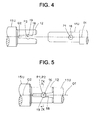
FIG. 4 is a partial front view showing a state before mounting the pinion serving as the driving member and the movable reflector serving as the driving target member (a demounted state); -
FIG. 5 is a front view showing a state in which the pinion serving as the driving member and the movable reflector serving as the driving target member are mounted to each other; -
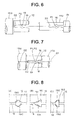
FIG. 6 shows a second embodiment of a mounting structure of vehicle component, according to the present invention, and is a partial front view of a state before the pinion serving as the driving member and the movable reflector serving as the driving target member are mounted to each other (a demounted state); -
FIG. 7 is a front view showing a state in which the pinion serving as the driving member and the movable reflector serving as the driving target member are mounted to each other; -
FIG. 8 is an explanatory view showing a modification example of a protrusion portion and a recessed portion; and -
FIG. 9 is a sectional view showing a third embodiment of a mounting structure of vehicle component, according to the present invention (a sectional view taken along the line IX-IX inFIG. 5 ). - Hereinafter, three examples of the embodiments (exemplary embodiments) of a mounting structure of vehicle component, according to the present invention, will be described in detail with reference to the drawings. It is to be noted that the present invention is not limited by these embodiments.
-
FIG. 1 to FIG. 5 each show mounting structure of a vehicle component according to a first embodiment of the present invention. Hereinafter, a configuration of the mounting structure of the vehicle component in the first embodiment will be described. In the figures,reference numeral 1 designates a vehicle headlamp (an automotive headlamp) in the first embodiment. Thevehicle headlamp 1 is adapted to switch a light distribution pattern for low beam (a light distribution pattern for passing) LP shown inFIG. 8 and a light distribution pattern for high beam (a light distribution pattern for cruising) shown inFIG. 9 from each other to emit light forward of a vehicle. - The
vehicle headlamp 1 is made of: an upside semiconductor-type light source (not shown) and a lower semiconductor-type light source (not shown); afixed reflector 3; an upsidemovable reflector 4U and a downsidemovable reflector 4D; asolenoid 5 serving as a driving source; a drivingforce transmission mechanism 6; a light source mount member (an LED base) 7; amount bracket 8; aheat sink member 9; and a lamp housing and a lamp lens (such as a transparent outer lens, for example), although not shown. - A lamp unit is configured with the upside semiconductor-type light source and the lower semiconductor-type light source; the
fixed reflector 3; the upsidemovable reflector 4U and the downsidemovable reflector 4D; thesolenoid 5; the drivingforce transmission mechanism 6; the lightsource mount member 7; themount bracket 8; and theheat sink member 9. Theconstituent elements constituent elements - The light
source mount member 7 and themount bracket 8 are fixed in a state in which these members are respectively positioned in their predetermined locations in theheat sink member 9. Theheat sink member 9 is mounted on the lamp housing via the optical axis adjustment mechanism. - The semiconductor-type light sources are self-light semiconductor-type light source such as an LED or an EL (an organic EL), for example, in other words, are semiconductor-type light sources. In the first embodiment, an LED is used. The upside semiconductor-type light source and the downside semiconductor-type light source are respectively mounted on top and bottom mount surfaces of the light
source mount member 7. - The
fixed reflector 3 is fixed to theheat sink 9. Thefixed reflector 3 has anupside reflection surface 10U and adownside reflection surface 10D, a respective one of which is made of a parabolic free curved surface (a NURBS-curved surface). Theupside reflection surface 10U serves to reflect light from the upside semiconductor-type light source. Thedownside reflection surface 10D serves to reflect light from the downside semiconductor-type light source. - On both of the left and right sides of the upside
movable reflector 4U and the downsidemovable reflector 4D, an upperrotary shaft 11U and a lowerrotary shaft 11D are respectively integrally provided transversely and horizontally. Therotary shafts mount bracket 8. As a result, the upsidemovable reflector 4U and the downsidemovable reflector 4D are rotatably mounted on themount bracket 8 between a first location (the location shown inFIG. 1 ) and a second location. It is to be noted that at the upsidemovable reflector 4U and the downsidemovable reflector 4D, there may be provided a spring (not shown) adapted to automatically restore the upsidemovable reflector 4U and the downsidemovable reflector 4D from the second location to the first location. - The upside
movable reflector 4U and the downsidemovable reflector 4D have an upper reflection surface 12U and a downside reflection surface 12D, a respective one of which is made of a parabolic free curved surface (a NURBS-curved surface). The upside reflection surface 12U serves to reflect light from the upside semiconductor-type light source. The downside reflection surface 12D serves to reflect light from the downside semiconductor-type light source. - The
solenoid 5 is fixed to theheat sink member 9. Thesolenoid 5 has a plunger (an advancing/retracting rod) 13. Theplunger 13 is positioned in a first location (a retracting location shown inFIG. 1 ) when no power is supplied to thesolenoid 5, and is positioned in a second location when power is supplied to thesolenoid 5. At thesolenoid 5, a spring (not shown) adapted to automatically restore theplunger 13 from the second location to the first location is provided. - The driving
force transmission mechanism 6 is provided between: a respective one of therotary shafts movable reflector 4U and the downsidemovable reflector 4D; and theplunger 13 of thesolenoid 5. The drivingforce transmission mechanism 6 serves to transmit a driving force of thesolenoid 5 to the upsidemovable reflector 4U and the downsidemovable reflector 4D, thereby transferring the upsidemovable reflector 4U and the downsidemovable reflector 4D between the first location and the second location. - The driving
force transmission mechanism 6 is made of arack 14, [11]anupside pinion 15U and adownside pinion 15D to be engaged with therack 14 from the top and the bottom. Therack 14 is fixed to one end (a tip end) of theplunger 13. Theupside pinion 15U and thedownside pinion 15D are respectively fixed to one ends of theupside reflection surface 10U and thedownside reflection surface 10D. The drivingforce transmission mechanism 6 is a mechanism adapted to convert a linear motion of therack 14 to rotational motions of theupside pinion 15U and thedownside pinion 15D. - The
rack 14 is made of a metal member in this example. On the top and bottom of therack 14, anupside gear portion 17U and adownside gear portion 17D are respectively provided, and a flat chamfer is provided on a respective one of the left and right sides. Theupside gear portion 17U and thedownside gear portion 17D are formed in the shape of an arc that is a part of a circle around a center around which a center shaft (not shown) of theplunger 13. It is to be noted that theupside gear portion 17U and thedownside gear portion 17D may be formed in a flat shape. Theupside pinion 15U and thedownside pinion 15D are respectively engaged with theupside gear portion 17U and thedownside gear portion 17D of therack 14. - At the driving
force transmission mechanism 6, a stopper adapted to position the upsidemovable reflector 4U and the downsidemovable reflector 4D in the first location and a stopper adapted to position the upsidemovable reflector 4U and the downsidemovable reflector 4D in the second location are respectively provided. - The
upside pinion 15U and thedownside pinion 15D configure a driving member of vehicle component in the first embodiment. On the other hand, the upsidemovable reflector 4U and the downsidemovable reflector 4D configure a driving target member of vehicle component in the first embodiment. Hereinafter, a mounting structure of theupside pinion 15U and the downsidemovable reflector 4U will be described. It is to be noted that the mounting structure of thedownside pinion 15D and the downsidemovable reflector 4D is formed so as to be a structure that is substantially identical to the mounting structure of theupside pinion 15U and the upsidemovable reflector 4U; and therefore, its related description is omitted. - The upside
rotary shaft 11U serving as a rotary shaft portion is provided on either one of the driving member and the driving target member, in the first embodiment, on the upsidemovable reflector 4U. Acylinder portion 12 having an insert hole into which the upsiderotary shaft 11U is to be inserted is provided on either one of the driving member and the driving target member, in the first embodiment, on theupside pinion 15U. - On the upside
rotary shaft 11U, aprotrusion portion 16 is provided in a direction P1 that is orthogonal to an shaft line (a center shaft line) O1 of the upsiderotary shaft 11U. Theprotrusion portion 16 is formed in a small columnar shape. On thecylinder portion 12, aslit 18 of which a width is smaller than a width (a diameter) of theprotrusion portion 16 is provided in adirection 02 of the shaft line (the center axis line) of thecylinder portion 12. The width of theslit 18 is smaller as the slit goes from an opening end to a depth thereof. In other words, an opposite edge of theprotrusion portion 16 is formed in a tapered shape. At an edge of an intermediate portion of theslit 18, a recessedportion 19 with which theprotrusion portion 16 is configured to engage is provided in the direction P2 that is orthogonal to theshaft line 02 of thecylinder portion 12. The recessedportion 19 is formed in a small circular shape with its smaller diameter than that of theprotrusion portion 16. - The upside
rotary shaft 11U of the upsidemovable reflector 4U is inserted into thecylinder portion 12 for theupside pinion 15U via the shaft lines O1 and 02. In addition, theprotrusion portion 16 of the upsiderotary shaft 11U is configured to engage into theslit 18 of thecylinder portion 12 via the shaft lines O1 and 02. At this time, the width of theprotrusion 16 is larger than the width of theslit 18; and therefore, theslit 18 opens, and concurrently, thecylinder portion 12 is elastically deformed in such a manner as to be larger in width to the outside. - When the
protrusion portion 16 is positioned in the recessedportion 19 of theslit 18, thecylinder portion 12 that is elastically deformed is elastically restored in such a manner as to be smaller in width to the inside. At this time, the recessedportion 19 is smaller than theprotrusion portion 16; and therefore, theslit 18 is not completely restored to its original width. Thus, thecylinder portion 12 is established in a state in which the cylinder portion is elastically deformed in a state in which the width of theslit 18 is widened. In this manner, theprotrusion portion 16 and an edge of the recessedportion 19 are established in a state in which they come into intimate contact with each other at a predetermined force, in other words, in a state in which they elastically engage with each other. As a result, theupside pinion 15U and the upsidemovable reflector 4U are mounted to each other in such a manner as to be free of a backlash around the shaft lines O1 and 02. At this time, the shaft line O1 of the upsiderotary shaft 11U and theshaft line 02 of thecylinder portion 12 are aligned with each other with its appropriate precision in comparison with the conventional mounting structure of vehicle component. It is to be noted that when thecylinder portion 12 is widened to the outside, elastic engagement of theprotrusion portion 16 and the recessed portion can be released; and therefore, theupside pinion 15U and the upsidemovable reflector 4U can demounted from each other. - A
vehicle headlamp 1 in the first embodiment is made of the constituent elements as described above, and hereinafter, its related functions will be described. - Power is supplied to a
solenoid 5 and then thesolenoid 5 is driven. Afterwards, arack 14 moves forward or backward via aplunger 13. Concurrently, anupside pinion 15U and adownside pinion 15D are configured to rotate in the clockwise direction or in the counterclockwise direction. A potation force of theupside pinion 15U and thedownside pinion 15D is transmitted to upsiderotary shaft 11U and adownside rotary shaft 11D via a recessedportion 19 of thecylinder portion 12 and theprotrusion portion 16 for an upsiderotary shaft 11U and adownside rotary shaft 11D. At this time, an edge of a recessedportion 19 of acylinder portion 12 for theupside pinion 15U and thedownside pinion 15D and the recessedportion 16 of the upsiderotary shaft 15U and thedownside rotary shaft 11D are configured to elastically engage with each other. Thus, thecylinder portion 12 for theupside pinion 15U and thedownside pinion 15D and a respective one of the upsiderotary shaft 11U and thedownside rotary shaft 11D is braked in rotation around theshaft line 02 of thecylinder portion 12 and the shaft line O1 for the upsiderotary shaft 11U and thedownside rotary shaft 11D. - In addition, the upside
movable reflector 4U and the downsidemovable reflector 4D are configured to rotate in synchronism with a position shift from a first location to a second location or a position shift from the second location to the first location, and are positioned in the second location or in the first location. Afterwards, a light distribution pattern for low beam or a light distribution pattern for high beam are illuminatingly emitted forward of a vehicle. - The
vehicle headlamp 1 in the first embodiment is made of the constituent elements and functions as described above, and hereinafter, its related advantageous effects will be described. - The
vehicle headlamp 1 in the first embodiment is provided in such a manner that an edge of the recessedportion 19 of thecylinder portion 12 for theupside pinion 15U and thedownside pinion 15D and theprotrusion portion 16 for the upsiderotary shaft 11U and thedownside rotary shaft 11D are configured to elastically engage with each other; and therefore, between thecylinder portion 12 for theupside pinion 15U and thedownside pinion 15D and a respective one of the upsiderotary shaft 11U and thedownside rotary shaft 11D, rotation around theshaft line 02 of thecylinder portion 12 and the shaft line O1 for the upsiderotary shaft 11U and thedownside rotary shaft 11D is braked. As a result, thevehicle headlamp 1 in the first embodiment is capable of mounting thecylinder portion 12 for theupside pinion 15U and thedownside pinion 15D and a respective one of the upsiderotary shaft 11U and thedownside rotary shaft 11D to each other in such a manner as to be free of a backlash around the rotational direction, in other words, around the shaft lines O1 and 02. - The
vehicle headlamp 1 in the first embodiment is provided in such a manner that an edge of the recessedportion 19 of thecylinder portion 12 for theupside pinion 15U and thedownside pinion 15D and theprotrusion portion 16 for the upsiderotary shaft 11U and thedownside rotary shaft 11D are configured to elastically engage with each other; and therefore, a respective one of theupside pinion 15U and thedownside pinion 15D and a respective one of the upsiderotary shaft 11U and thedownside rotary shaft 11D can be mounted in such a manner as to be free of a backlash in the shaft lines O1 and 02. In this manner, a rotation force of theupside pinion 15U and thedownside pinion 15D can be reliably transmitted to the upsiderotary shaft 11U and thedownside rotary shaft 11D. - The
vehicle headlamp 1 in the first embodiment is provided in such a manner that an edge of the recessedportion 19 of thecylinder portion 12 for theupside pinion 15U and thedownside pinion 15D and theprotrusion portion 16 for the upsiderotary shaft 11U and thedownside rotary shaft 11D are configured to elastically engage with each other; and therefore, an angular shift around a center of theprotrusion portion 16 and the recessedportion 19 between a respective one of theupside pinion 15U and thedownside pinion 15D and theprotrusion portion 16 for the upsiderotary shaft 11U and thedownside rotary shaft 11D (in the directions P1 and P2 that are orthogonal to the shaft lines O1 and 02) can be absorbed. -
FIG. 6 and FIG. 7 show a second embodiment of a mounting structure of vehicle component, according to the present invention. Hereinafter, the mounting structure of vehicle component in the second embodiment will be described. In the figures, like constituent elements ofFIG. 1 to FIG. 5 are designated by like reference numerals. - In the second embodiment, on an upside
rotary shaft 11U and adownside rotary shaft 11D, each of which serves as a rotary shaft portion, aplate portion 20 that is configured to engage with aslit 18 is provided along an shaft line O1. Theplate portion 20 is configured to engage with theslit 18, thereby making it possible to prevent a backlash around the center of theprotrusion portion 16 and the recessedportion 19 between a respective one of theupside pinion 15U and thedownside pinion 15D and theprotrusion portion 16 for the upsiderotary shaft 11U and thedownside rotary shaft 11D (in the directions P1 and P2 that are orthogonal to the shaft lines O1 and 02). In the second embodiment, there can be attained functions and advantageous effects that are substantially identical to those of the first embodiment described previously. -
FIG. 9 shows a third embodiment of a mounting structure of vehicle component, according to the present invention. Hereinafter, the mounting structure of vehicle component in the third embodiment will be described. In the figure, like constituent elements ofFIG. 1 to FIG. 8 are designated by like reference numerals. - In the third embodiment, an outer circumference surface of a
protrusion portion 163 and an inner circumferential surface of a recessedportion 193 are formed in a tapered (conical) shape such that their related outer diameter and inner diameter are smaller as they depart from the axial cores O1 and 02. In this manner, the shaft line O1 of the upsiderotary shaft 11U and theshaft line 02 of thecylinder portion 12 can be alighted with each other with its further appropriate precision. -
FIG. 8 shows modification examples of a mounting structure of vehicle component, according to the present invention. Hereinafter, its related modification examples will be described. In the figure, like constituent elements ofFIG. 1 to FIG. 7 are designated by like reference numerals. - In a modification example of
FIG. 8 (A) , aprotrusion portion 16 is formed in a small columnar shape, and a recessedportion 190 is formed in a rhombic shape. The modification example ofFIG. 8 (A) is capable of achieving functions and advantageous effects that are substantially identical to those of the first and second embodiments described previously. In a modification example ofFIG. 8 (B) , aprotrusion portion 161 is formed in a small pyramid shape, and a recessedportion 191 is formed in a triangular shape. In a modification example ofFIG. 8 (C) , aprotrusion portion 162 is formed in a small semicircular column shape, and a recessedportion 192 is formed in a semicircular shape. The modification example ofFIG. 8 (B) and the modification example ofFIG. 8 (C) are configured in such a manner as to disable demounting, and a slip-off structure is provided. Other constituent elements are capable of achieving functions and advantageous effects that are substantially identical to those of the first and second embodiments described previously. - It is to be noted that in the first, second, and third embodiments described previously, the
upside pinion 15U and thedownside pinion 15D configure a driving member of vehicle component, whereas the upsidemovable reflector 4U and the downsidemovable reflector 4D configure a driving target member of vehicle component. However, in the present invention, as a driving member, there may be a member other than theupside pinion 15U or thedownside pinion 15D, for example, a driving shaft (a rotary shaft) or the like that is mounted to a motor or a solenoid, or alternatively, as a driving target member, there may be a member other than an upsidemovable reflector 4U or a downsidemovable reflector 4D, for example, a shade or the like configured to switch a light distribution pattern.
Claims (2)
- A mounting structure for vehicle component, for mounting a driving member and a driving target member of vehicle component to each other, the mounting structure comprising:a rotary shaft portion that is provided on either one of the driving member and the driving target member; anda cylinder portion that is provided on the other one of the driving member and the driving target member, the cylinder portion having an insert hole into which the rotary shaft portion is to be inserted,wherein a protrusion portion that is orthogonal to an shaft line of the rotary shaft portion is provided on the rotary shaft portion,wherein a slit of which a width is smaller than a width of the protrusion portion is provided in the cylinder portion, andwherein a recessed portion with which the protrusion is configured to engage is provided in an edge of the slit.
- The mounting structure of vehicle component, according to claim 1, wherein a plate portion engaging with the slit is provided on the rotary shaft portion.
Applications Claiming Priority (1)
| Application Number | Priority Date | Filing Date | Title |
|---|---|---|---|
| JP2012067764A JP5938978B2 (en) | 2012-03-23 | 2012-03-23 | Mounting structure for vehicle parts |
Publications (2)
| Publication Number | Publication Date |
|---|---|
| EP2642190A2 true EP2642190A2 (en) | 2013-09-25 |
| EP2642190A3 EP2642190A3 (en) | 2017-10-25 |
Family
ID=47913170
Family Applications (1)
| Application Number | Title | Priority Date | Filing Date |
|---|---|---|---|
| EP13160274.0A Withdrawn EP2642190A3 (en) | 2012-03-23 | 2013-03-21 | Mounting structure of vehicle component |
Country Status (3)
| Country | Link |
|---|---|
| US (1) | US20130251450A1 (en) |
| EP (1) | EP2642190A3 (en) |
| JP (1) | JP5938978B2 (en) |
Families Citing this family (1)
| Publication number | Priority date | Publication date | Assignee | Title |
|---|---|---|---|---|
| KR102453340B1 (en) * | 2015-11-19 | 2022-10-11 | 현대모비스 주식회사 | Lighting apparatus for an automobile |
Citations (1)
| Publication number | Priority date | Publication date | Assignee | Title |
|---|---|---|---|---|
| JPH10258676A (en) | 1997-03-21 | 1998-09-29 | Ichikoh Ind Ltd | Optical axis adjustment device for headlight |
Family Cites Families (24)
| Publication number | Priority date | Publication date | Assignee | Title |
|---|---|---|---|---|
| FR551841A (en) * | 1922-05-22 | 1923-04-14 | Concentric assembly system, by keying, of a shaft with another shaft or with a part such as cam, gear, etc. | |
| US2833576A (en) * | 1955-11-15 | 1958-05-06 | Cirone Joseph | Connecting means for a mixer and a disposable mixing blade |
| US3182345A (en) * | 1963-05-17 | 1965-05-11 | Westinghouse Electric Corp | Means for attaching appliance handles to a power drive shank |
| US3243165A (en) * | 1964-08-17 | 1966-03-29 | Ace Glass Inc | Stir-rod and agitator unit |
| US3369265A (en) * | 1966-07-07 | 1968-02-20 | Vistron Corp | Universal toothbrush head |
| US3400417A (en) * | 1966-11-01 | 1968-09-10 | Aesup Ets | Toothbrush attachment for an electric toothbrush |
| US3476421A (en) * | 1968-07-18 | 1969-11-04 | Noel M Torres | Structural joint assembly |
| US3719378A (en) * | 1971-08-03 | 1973-03-06 | Warwick Electronics Inc | Pull-proof control knob |
| JPS54169696U (en) * | 1978-05-19 | 1979-11-30 | ||
| US4490138A (en) * | 1982-09-13 | 1984-12-25 | Steven Lipsky | Pharyngeal suction device |
| DE133576T1 (en) * | 1983-08-16 | 1985-06-05 | Ichikoh Industries Ltd., Tokyo | DEVICE FOR ADJUSTING THE OPTICAL AXLE OF A CAR HEADLIGHT. |
| US4607974A (en) * | 1984-02-27 | 1986-08-26 | Cooper Industries, Inc. | Wand and wand extension |
| JPS6113028A (en) * | 1984-06-29 | 1986-01-21 | Canon Inc | Platen coupling device in recording device |
| JPS6159021A (en) * | 1984-08-30 | 1986-03-26 | Ricoh Co Ltd | Method for coupling shafts |
| US4689725A (en) * | 1984-10-31 | 1987-08-25 | Koito Manufacturing Co., Ltd. | Aiming device for automobile head lamp |
| JPS62140223U (en) * | 1986-02-28 | 1987-09-04 | ||
| JPH0637154B2 (en) * | 1989-06-12 | 1994-05-18 | 株式会社小糸製作所 | Vehicle headlight device |
| DE9016226U1 (en) * | 1990-11-29 | 1991-02-14 | Rowenta-Werke Gmbh, 6050 Offenbach | Tool for the electric drive of a toothbrush |
| JP2787420B2 (en) * | 1993-11-04 | 1998-08-20 | 株式会社小糸製作所 | Headlight irradiation axis adjustment device |
| US5464301A (en) * | 1994-06-21 | 1995-11-07 | The United States Of America As Represented By The Administrator Of The National Aeronautics And Space Administration | Rotary latch |
| US5794995A (en) * | 1995-07-26 | 1998-08-18 | Ford Global Technologies, Inc. | Pivotable and rotatable door lock button assembly |
| JP3104845B2 (en) * | 1995-09-04 | 2000-10-30 | 株式会社小糸製作所 | Vehicle lighting |
| DE69826812T2 (en) * | 1997-11-28 | 2005-10-06 | Koninklijke Philips Electronics N.V. | Plug connection system for plastic trays |
| ITPN20090008A1 (en) * | 2009-01-28 | 2010-07-29 | Nice Spa | "GEAR MOTOR FOR ROLLER SHUTTERS AND ITS FIXING DEVICE FOR A PULLEY" |
-
2012
- 2012-03-23 JP JP2012067764A patent/JP5938978B2/en active Active
-
2013
- 2013-03-18 US US13/845,777 patent/US20130251450A1/en not_active Abandoned
- 2013-03-21 EP EP13160274.0A patent/EP2642190A3/en not_active Withdrawn
Patent Citations (1)
| Publication number | Priority date | Publication date | Assignee | Title |
|---|---|---|---|---|
| JPH10258676A (en) | 1997-03-21 | 1998-09-29 | Ichikoh Ind Ltd | Optical axis adjustment device for headlight |
Also Published As
| Publication number | Publication date |
|---|---|
| JP2013199965A (en) | 2013-10-03 |
| EP2642190A3 (en) | 2017-10-25 |
| US20130251450A1 (en) | 2013-09-26 |
| JP5938978B2 (en) | 2016-06-22 |
Similar Documents
| Publication | Publication Date | Title |
|---|---|---|
| US9739438B2 (en) | Vehicle lamp | |
| US9022624B2 (en) | Vehicle headlamp | |
| EP2988060B1 (en) | Vehicle lamp | |
| JP4711983B2 (en) | Vehicle lamp | |
| US8430540B2 (en) | Vehicle lamp having a concealing portion | |
| CN112303585B (en) | Lighting device for vehicle | |
| CN109556078B (en) | Vehicle lamps | |
| WO2014185510A1 (en) | Vehicle headlamp | |
| KR930007618Y1 (en) | Headlights for cars | |
| CN107448854B (en) | Rotary lamp module | |
| EP2642190A2 (en) | Mounting structure of vehicle component | |
| EP2163427B1 (en) | Vehicle headlamp | |
| CN103373272B (en) | The illumination of adjusting apparatus including optimization and/or recoil simulator | |
| JP2014229354A (en) | Vehicle headlamp | |
| JP2016152129A (en) | Vehicular lighting fixture | |
| US7572042B2 (en) | Leveling device for vehicular headlamp | |
| WO2016088390A1 (en) | Illumination device and vehicular illumination device | |
| KR102917146B1 (en) | Headlamp Device | |
| JP6209857B2 (en) | Vehicle headlamp | |
| US20150184820A1 (en) | Head lamp for vehicle | |
| US12234963B2 (en) | Lamp for vehicle | |
| TWI866111B (en) | Illumination device for vehicle | |
| KR20240081975A (en) | Lamp unit and aiming apparatus for lamp | |
| US9523474B2 (en) | Headlamp for vehicle | |
| JP2013206769A (en) | Optical unit |
Legal Events
| Date | Code | Title | Description |
|---|---|---|---|
| PUAI | Public reference made under article 153(3) epc to a published international application that has entered the european phase |
Free format text: ORIGINAL CODE: 0009012 |
|
| AK | Designated contracting states |
Kind code of ref document: A2 Designated state(s): AL AT BE BG CH CY CZ DE DK EE ES FI FR GB GR HR HU IE IS IT LI LT LU LV MC MK MT NL NO PL PT RO RS SE SI SK SM TR |
|
| AX | Request for extension of the european patent |
Extension state: BA ME |
|
| PUAL | Search report despatched |
Free format text: ORIGINAL CODE: 0009013 |
|
| AK | Designated contracting states |
Kind code of ref document: A3 Designated state(s): AL AT BE BG CH CY CZ DE DK EE ES FI FR GB GR HR HU IE IS IT LI LT LU LV MC MK MT NL NO PL PT RO RS SE SI SK SM TR |
|
| AX | Request for extension of the european patent |
Extension state: BA ME |
|
| RIC1 | Information provided on ipc code assigned before grant |
Ipc: F21V 7/00 20060101ALI20170921BHEP Ipc: F21S 8/10 20060101AFI20170921BHEP Ipc: B60Q 1/076 20060101ALI20170921BHEP Ipc: F16D 1/112 20060101ALI20170921BHEP |
|
| STAA | Information on the status of an ep patent application or granted ep patent |
Free format text: STATUS: THE APPLICATION IS DEEMED TO BE WITHDRAWN |
|
| 18D | Application deemed to be withdrawn |
Effective date: 20180426 |