EP2640808B1 - Procede d'hydrodesoxygenation et procede de valorisation d'huile de pyrolyse issue de la biomasse susceptibles de fonctionner en continu - Google Patents
Procede d'hydrodesoxygenation et procede de valorisation d'huile de pyrolyse issue de la biomasse susceptibles de fonctionner en continu Download PDFInfo
- Publication number
- EP2640808B1 EP2640808B1 EP11802489.2A EP11802489A EP2640808B1 EP 2640808 B1 EP2640808 B1 EP 2640808B1 EP 11802489 A EP11802489 A EP 11802489A EP 2640808 B1 EP2640808 B1 EP 2640808B1
- Authority
- EP
- European Patent Office
- Prior art keywords
- hdo
- pyrolysis oil
- temperature
- organic phase
- bed
- Prior art date
- Legal status (The legal status is an assumption and is not a legal conclusion. Google has not performed a legal analysis and makes no representation as to the accuracy of the status listed.)
- Active
Links
Images

Classifications
-
- C—CHEMISTRY; METALLURGY
- C10—PETROLEUM, GAS OR COKE INDUSTRIES; TECHNICAL GASES CONTAINING CARBON MONOXIDE; FUELS; LUBRICANTS; PEAT
- C10G—CRACKING HYDROCARBON OILS; PRODUCTION OF LIQUID HYDROCARBON MIXTURES, e.g. BY DESTRUCTIVE HYDROGENATION, OLIGOMERISATION, POLYMERISATION; RECOVERY OF HYDROCARBON OILS FROM OIL-SHALE, OIL-SAND, OR GASES; REFINING MIXTURES MAINLY CONSISTING OF HYDROCARBONS; REFORMING OF NAPHTHA; MINERAL WAXES
- C10G3/00—Production of liquid hydrocarbon mixtures from oxygen-containing organic materials, e.g. fatty oils, fatty acids
- C10G3/50—Production of liquid hydrocarbon mixtures from oxygen-containing organic materials, e.g. fatty oils, fatty acids in the presence of hydrogen, hydrogen donors or hydrogen generating compounds
-
- B—PERFORMING OPERATIONS; TRANSPORTING
- B01—PHYSICAL OR CHEMICAL PROCESSES OR APPARATUS IN GENERAL
- B01J—CHEMICAL OR PHYSICAL PROCESSES, e.g. CATALYSIS OR COLLOID CHEMISTRY; THEIR RELEVANT APPARATUS
- B01J8/00—Chemical or physical processes in general, conducted in the presence of fluids and solid particles; Apparatus for such processes
- B01J8/02—Chemical or physical processes in general, conducted in the presence of fluids and solid particles; Apparatus for such processes with stationary particles, e.g. in fixed beds
- B01J8/04—Chemical or physical processes in general, conducted in the presence of fluids and solid particles; Apparatus for such processes with stationary particles, e.g. in fixed beds the fluid passing successively through two or more beds
- B01J8/0446—Chemical or physical processes in general, conducted in the presence of fluids and solid particles; Apparatus for such processes with stationary particles, e.g. in fixed beds the fluid passing successively through two or more beds the flow within the beds being predominantly vertical
- B01J8/0449—Chemical or physical processes in general, conducted in the presence of fluids and solid particles; Apparatus for such processes with stationary particles, e.g. in fixed beds the fluid passing successively through two or more beds the flow within the beds being predominantly vertical in two or more cylindrical beds
- B01J8/0453—Chemical or physical processes in general, conducted in the presence of fluids and solid particles; Apparatus for such processes with stationary particles, e.g. in fixed beds the fluid passing successively through two or more beds the flow within the beds being predominantly vertical in two or more cylindrical beds the beds being superimposed one above the other
-
- B—PERFORMING OPERATIONS; TRANSPORTING
- B01—PHYSICAL OR CHEMICAL PROCESSES OR APPARATUS IN GENERAL
- B01J—CHEMICAL OR PHYSICAL PROCESSES, e.g. CATALYSIS OR COLLOID CHEMISTRY; THEIR RELEVANT APPARATUS
- B01J8/00—Chemical or physical processes in general, conducted in the presence of fluids and solid particles; Apparatus for such processes
- B01J8/02—Chemical or physical processes in general, conducted in the presence of fluids and solid particles; Apparatus for such processes with stationary particles, e.g. in fixed beds
- B01J8/04—Chemical or physical processes in general, conducted in the presence of fluids and solid particles; Apparatus for such processes with stationary particles, e.g. in fixed beds the fluid passing successively through two or more beds
- B01J8/0446—Chemical or physical processes in general, conducted in the presence of fluids and solid particles; Apparatus for such processes with stationary particles, e.g. in fixed beds the fluid passing successively through two or more beds the flow within the beds being predominantly vertical
- B01J8/0449—Chemical or physical processes in general, conducted in the presence of fluids and solid particles; Apparatus for such processes with stationary particles, e.g. in fixed beds the fluid passing successively through two or more beds the flow within the beds being predominantly vertical in two or more cylindrical beds
- B01J8/0457—Chemical or physical processes in general, conducted in the presence of fluids and solid particles; Apparatus for such processes with stationary particles, e.g. in fixed beds the fluid passing successively through two or more beds the flow within the beds being predominantly vertical in two or more cylindrical beds the beds being placed in separate reactors
-
- B—PERFORMING OPERATIONS; TRANSPORTING
- B01—PHYSICAL OR CHEMICAL PROCESSES OR APPARATUS IN GENERAL
- B01J—CHEMICAL OR PHYSICAL PROCESSES, e.g. CATALYSIS OR COLLOID CHEMISTRY; THEIR RELEVANT APPARATUS
- B01J8/00—Chemical or physical processes in general, conducted in the presence of fluids and solid particles; Apparatus for such processes
- B01J8/02—Chemical or physical processes in general, conducted in the presence of fluids and solid particles; Apparatus for such processes with stationary particles, e.g. in fixed beds
- B01J8/04—Chemical or physical processes in general, conducted in the presence of fluids and solid particles; Apparatus for such processes with stationary particles, e.g. in fixed beds the fluid passing successively through two or more beds
- B01J8/0496—Heating or cooling the reactor
-
- C—CHEMISTRY; METALLURGY
- C10—PETROLEUM, GAS OR COKE INDUSTRIES; TECHNICAL GASES CONTAINING CARBON MONOXIDE; FUELS; LUBRICANTS; PEAT
- C10G—CRACKING HYDROCARBON OILS; PRODUCTION OF LIQUID HYDROCARBON MIXTURES, e.g. BY DESTRUCTIVE HYDROGENATION, OLIGOMERISATION, POLYMERISATION; RECOVERY OF HYDROCARBON OILS FROM OIL-SHALE, OIL-SAND, OR GASES; REFINING MIXTURES MAINLY CONSISTING OF HYDROCARBONS; REFORMING OF NAPHTHA; MINERAL WAXES
- C10G1/00—Production of liquid hydrocarbon mixtures from oil-shale, oil-sand, or non-melting solid carbonaceous or similar materials, e.g. wood, coal
- C10G1/02—Production of liquid hydrocarbon mixtures from oil-shale, oil-sand, or non-melting solid carbonaceous or similar materials, e.g. wood, coal by distillation
-
- C—CHEMISTRY; METALLURGY
- C10—PETROLEUM, GAS OR COKE INDUSTRIES; TECHNICAL GASES CONTAINING CARBON MONOXIDE; FUELS; LUBRICANTS; PEAT
- C10G—CRACKING HYDROCARBON OILS; PRODUCTION OF LIQUID HYDROCARBON MIXTURES, e.g. BY DESTRUCTIVE HYDROGENATION, OLIGOMERISATION, POLYMERISATION; RECOVERY OF HYDROCARBON OILS FROM OIL-SHALE, OIL-SAND, OR GASES; REFINING MIXTURES MAINLY CONSISTING OF HYDROCARBONS; REFORMING OF NAPHTHA; MINERAL WAXES
- C10G3/00—Production of liquid hydrocarbon mixtures from oxygen-containing organic materials, e.g. fatty oils, fatty acids
- C10G3/42—Catalytic treatment
-
- C—CHEMISTRY; METALLURGY
- C10—PETROLEUM, GAS OR COKE INDUSTRIES; TECHNICAL GASES CONTAINING CARBON MONOXIDE; FUELS; LUBRICANTS; PEAT
- C10G—CRACKING HYDROCARBON OILS; PRODUCTION OF LIQUID HYDROCARBON MIXTURES, e.g. BY DESTRUCTIVE HYDROGENATION, OLIGOMERISATION, POLYMERISATION; RECOVERY OF HYDROCARBON OILS FROM OIL-SHALE, OIL-SAND, OR GASES; REFINING MIXTURES MAINLY CONSISTING OF HYDROCARBONS; REFORMING OF NAPHTHA; MINERAL WAXES
- C10G3/00—Production of liquid hydrocarbon mixtures from oxygen-containing organic materials, e.g. fatty oils, fatty acids
- C10G3/42—Catalytic treatment
- C10G3/44—Catalytic treatment characterised by the catalyst used
- C10G3/45—Catalytic treatment characterised by the catalyst used containing iron group metals or compounds thereof
-
- C—CHEMISTRY; METALLURGY
- C10—PETROLEUM, GAS OR COKE INDUSTRIES; TECHNICAL GASES CONTAINING CARBON MONOXIDE; FUELS; LUBRICANTS; PEAT
- C10G—CRACKING HYDROCARBON OILS; PRODUCTION OF LIQUID HYDROCARBON MIXTURES, e.g. BY DESTRUCTIVE HYDROGENATION, OLIGOMERISATION, POLYMERISATION; RECOVERY OF HYDROCARBON OILS FROM OIL-SHALE, OIL-SAND, OR GASES; REFINING MIXTURES MAINLY CONSISTING OF HYDROCARBONS; REFORMING OF NAPHTHA; MINERAL WAXES
- C10G3/00—Production of liquid hydrocarbon mixtures from oxygen-containing organic materials, e.g. fatty oils, fatty acids
- C10G3/42—Catalytic treatment
- C10G3/44—Catalytic treatment characterised by the catalyst used
- C10G3/45—Catalytic treatment characterised by the catalyst used containing iron group metals or compounds thereof
- C10G3/46—Catalytic treatment characterised by the catalyst used containing iron group metals or compounds thereof in combination with chromium, molybdenum, tungsten metals or compounds thereof
-
- C—CHEMISTRY; METALLURGY
- C10—PETROLEUM, GAS OR COKE INDUSTRIES; TECHNICAL GASES CONTAINING CARBON MONOXIDE; FUELS; LUBRICANTS; PEAT
- C10G—CRACKING HYDROCARBON OILS; PRODUCTION OF LIQUID HYDROCARBON MIXTURES, e.g. BY DESTRUCTIVE HYDROGENATION, OLIGOMERISATION, POLYMERISATION; RECOVERY OF HYDROCARBON OILS FROM OIL-SHALE, OIL-SAND, OR GASES; REFINING MIXTURES MAINLY CONSISTING OF HYDROCARBONS; REFORMING OF NAPHTHA; MINERAL WAXES
- C10G3/00—Production of liquid hydrocarbon mixtures from oxygen-containing organic materials, e.g. fatty oils, fatty acids
- C10G3/42—Catalytic treatment
- C10G3/44—Catalytic treatment characterised by the catalyst used
- C10G3/47—Catalytic treatment characterised by the catalyst used containing platinum group metals or compounds thereof
-
- C—CHEMISTRY; METALLURGY
- C10—PETROLEUM, GAS OR COKE INDUSTRIES; TECHNICAL GASES CONTAINING CARBON MONOXIDE; FUELS; LUBRICANTS; PEAT
- C10G—CRACKING HYDROCARBON OILS; PRODUCTION OF LIQUID HYDROCARBON MIXTURES, e.g. BY DESTRUCTIVE HYDROGENATION, OLIGOMERISATION, POLYMERISATION; RECOVERY OF HYDROCARBON OILS FROM OIL-SHALE, OIL-SAND, OR GASES; REFINING MIXTURES MAINLY CONSISTING OF HYDROCARBONS; REFORMING OF NAPHTHA; MINERAL WAXES
- C10G3/00—Production of liquid hydrocarbon mixtures from oxygen-containing organic materials, e.g. fatty oils, fatty acids
- C10G3/42—Catalytic treatment
- C10G3/44—Catalytic treatment characterised by the catalyst used
- C10G3/48—Catalytic treatment characterised by the catalyst used further characterised by the catalyst support
-
- C—CHEMISTRY; METALLURGY
- C10—PETROLEUM, GAS OR COKE INDUSTRIES; TECHNICAL GASES CONTAINING CARBON MONOXIDE; FUELS; LUBRICANTS; PEAT
- C10G—CRACKING HYDROCARBON OILS; PRODUCTION OF LIQUID HYDROCARBON MIXTURES, e.g. BY DESTRUCTIVE HYDROGENATION, OLIGOMERISATION, POLYMERISATION; RECOVERY OF HYDROCARBON OILS FROM OIL-SHALE, OIL-SAND, OR GASES; REFINING MIXTURES MAINLY CONSISTING OF HYDROCARBONS; REFORMING OF NAPHTHA; MINERAL WAXES
- C10G3/00—Production of liquid hydrocarbon mixtures from oxygen-containing organic materials, e.g. fatty oils, fatty acids
- C10G3/42—Catalytic treatment
- C10G3/44—Catalytic treatment characterised by the catalyst used
- C10G3/48—Catalytic treatment characterised by the catalyst used further characterised by the catalyst support
- C10G3/49—Catalytic treatment characterised by the catalyst used further characterised by the catalyst support containing crystalline aluminosilicates, e.g. molecular sieves
-
- C—CHEMISTRY; METALLURGY
- C10—PETROLEUM, GAS OR COKE INDUSTRIES; TECHNICAL GASES CONTAINING CARBON MONOXIDE; FUELS; LUBRICANTS; PEAT
- C10G—CRACKING HYDROCARBON OILS; PRODUCTION OF LIQUID HYDROCARBON MIXTURES, e.g. BY DESTRUCTIVE HYDROGENATION, OLIGOMERISATION, POLYMERISATION; RECOVERY OF HYDROCARBON OILS FROM OIL-SHALE, OIL-SAND, OR GASES; REFINING MIXTURES MAINLY CONSISTING OF HYDROCARBONS; REFORMING OF NAPHTHA; MINERAL WAXES
- C10G3/00—Production of liquid hydrocarbon mixtures from oxygen-containing organic materials, e.g. fatty oils, fatty acids
- C10G3/60—Controlling or regulating the processes
-
- C—CHEMISTRY; METALLURGY
- C10—PETROLEUM, GAS OR COKE INDUSTRIES; TECHNICAL GASES CONTAINING CARBON MONOXIDE; FUELS; LUBRICANTS; PEAT
- C10G—CRACKING HYDROCARBON OILS; PRODUCTION OF LIQUID HYDROCARBON MIXTURES, e.g. BY DESTRUCTIVE HYDROGENATION, OLIGOMERISATION, POLYMERISATION; RECOVERY OF HYDROCARBON OILS FROM OIL-SHALE, OIL-SAND, OR GASES; REFINING MIXTURES MAINLY CONSISTING OF HYDROCARBONS; REFORMING OF NAPHTHA; MINERAL WAXES
- C10G45/00—Refining of hydrocarbon oils using hydrogen or hydrogen-generating compounds
- C10G45/72—Controlling or regulating
-
- C—CHEMISTRY; METALLURGY
- C10—PETROLEUM, GAS OR COKE INDUSTRIES; TECHNICAL GASES CONTAINING CARBON MONOXIDE; FUELS; LUBRICANTS; PEAT
- C10L—FUELS NOT OTHERWISE PROVIDED FOR; NATURAL GAS; SYNTHETIC NATURAL GAS OBTAINED BY PROCESSES NOT COVERED BY SUBCLASSES C10G OR C10K; LIQUIFIED PETROLEUM GAS; USE OF ADDITIVES TO FUELS OR FIRES; FIRE-LIGHTERS
- C10L1/00—Liquid carbonaceous fuels
-
- B—PERFORMING OPERATIONS; TRANSPORTING
- B01—PHYSICAL OR CHEMICAL PROCESSES OR APPARATUS IN GENERAL
- B01J—CHEMICAL OR PHYSICAL PROCESSES, e.g. CATALYSIS OR COLLOID CHEMISTRY; THEIR RELEVANT APPARATUS
- B01J2208/00—Processes carried out in the presence of solid particles; Reactors therefor
- B01J2208/00008—Controlling the process
- B01J2208/00017—Controlling the temperature
- B01J2208/00026—Controlling or regulating the heat exchange system
- B01J2208/00035—Controlling or regulating the heat exchange system involving measured parameters
- B01J2208/00044—Temperature measurement
- B01J2208/00061—Temperature measurement of the reactants
-
- B—PERFORMING OPERATIONS; TRANSPORTING
- B01—PHYSICAL OR CHEMICAL PROCESSES OR APPARATUS IN GENERAL
- B01J—CHEMICAL OR PHYSICAL PROCESSES, e.g. CATALYSIS OR COLLOID CHEMISTRY; THEIR RELEVANT APPARATUS
- B01J2208/00—Processes carried out in the presence of solid particles; Reactors therefor
- B01J2208/00008—Controlling the process
- B01J2208/00548—Flow
-
- B—PERFORMING OPERATIONS; TRANSPORTING
- B01—PHYSICAL OR CHEMICAL PROCESSES OR APPARATUS IN GENERAL
- B01J—CHEMICAL OR PHYSICAL PROCESSES, e.g. CATALYSIS OR COLLOID CHEMISTRY; THEIR RELEVANT APPARATUS
- B01J2208/00—Processes carried out in the presence of solid particles; Reactors therefor
- B01J2208/02—Processes carried out in the presence of solid particles; Reactors therefor with stationary particles
- B01J2208/023—Details
- B01J2208/024—Particulate material
- B01J2208/025—Two or more types of catalyst
-
- C—CHEMISTRY; METALLURGY
- C10—PETROLEUM, GAS OR COKE INDUSTRIES; TECHNICAL GASES CONTAINING CARBON MONOXIDE; FUELS; LUBRICANTS; PEAT
- C10G—CRACKING HYDROCARBON OILS; PRODUCTION OF LIQUID HYDROCARBON MIXTURES, e.g. BY DESTRUCTIVE HYDROGENATION, OLIGOMERISATION, POLYMERISATION; RECOVERY OF HYDROCARBON OILS FROM OIL-SHALE, OIL-SAND, OR GASES; REFINING MIXTURES MAINLY CONSISTING OF HYDROCARBONS; REFORMING OF NAPHTHA; MINERAL WAXES
- C10G2300/00—Aspects relating to hydrocarbon processing covered by groups C10G1/00 - C10G99/00
- C10G2300/10—Feedstock materials
- C10G2300/1011—Biomass
- C10G2300/1014—Biomass of vegetal origin
-
- C—CHEMISTRY; METALLURGY
- C10—PETROLEUM, GAS OR COKE INDUSTRIES; TECHNICAL GASES CONTAINING CARBON MONOXIDE; FUELS; LUBRICANTS; PEAT
- C10G—CRACKING HYDROCARBON OILS; PRODUCTION OF LIQUID HYDROCARBON MIXTURES, e.g. BY DESTRUCTIVE HYDROGENATION, OLIGOMERISATION, POLYMERISATION; RECOVERY OF HYDROCARBON OILS FROM OIL-SHALE, OIL-SAND, OR GASES; REFINING MIXTURES MAINLY CONSISTING OF HYDROCARBONS; REFORMING OF NAPHTHA; MINERAL WAXES
- C10G2300/00—Aspects relating to hydrocarbon processing covered by groups C10G1/00 - C10G99/00
- C10G2300/40—Characteristics of the process deviating from typical ways of processing
- C10G2300/4006—Temperature
-
- C—CHEMISTRY; METALLURGY
- C10—PETROLEUM, GAS OR COKE INDUSTRIES; TECHNICAL GASES CONTAINING CARBON MONOXIDE; FUELS; LUBRICANTS; PEAT
- C10G—CRACKING HYDROCARBON OILS; PRODUCTION OF LIQUID HYDROCARBON MIXTURES, e.g. BY DESTRUCTIVE HYDROGENATION, OLIGOMERISATION, POLYMERISATION; RECOVERY OF HYDROCARBON OILS FROM OIL-SHALE, OIL-SAND, OR GASES; REFINING MIXTURES MAINLY CONSISTING OF HYDROCARBONS; REFORMING OF NAPHTHA; MINERAL WAXES
- C10G2300/00—Aspects relating to hydrocarbon processing covered by groups C10G1/00 - C10G99/00
- C10G2300/40—Characteristics of the process deviating from typical ways of processing
- C10G2300/4081—Recycling aspects
-
- C—CHEMISTRY; METALLURGY
- C10—PETROLEUM, GAS OR COKE INDUSTRIES; TECHNICAL GASES CONTAINING CARBON MONOXIDE; FUELS; LUBRICANTS; PEAT
- C10G—CRACKING HYDROCARBON OILS; PRODUCTION OF LIQUID HYDROCARBON MIXTURES, e.g. BY DESTRUCTIVE HYDROGENATION, OLIGOMERISATION, POLYMERISATION; RECOVERY OF HYDROCARBON OILS FROM OIL-SHALE, OIL-SAND, OR GASES; REFINING MIXTURES MAINLY CONSISTING OF HYDROCARBONS; REFORMING OF NAPHTHA; MINERAL WAXES
- C10G2300/00—Aspects relating to hydrocarbon processing covered by groups C10G1/00 - C10G99/00
- C10G2300/40—Characteristics of the process deviating from typical ways of processing
- C10G2300/42—Hydrogen of special source or of special composition
-
- C—CHEMISTRY; METALLURGY
- C10—PETROLEUM, GAS OR COKE INDUSTRIES; TECHNICAL GASES CONTAINING CARBON MONOXIDE; FUELS; LUBRICANTS; PEAT
- C10G—CRACKING HYDROCARBON OILS; PRODUCTION OF LIQUID HYDROCARBON MIXTURES, e.g. BY DESTRUCTIVE HYDROGENATION, OLIGOMERISATION, POLYMERISATION; RECOVERY OF HYDROCARBON OILS FROM OIL-SHALE, OIL-SAND, OR GASES; REFINING MIXTURES MAINLY CONSISTING OF HYDROCARBONS; REFORMING OF NAPHTHA; MINERAL WAXES
- C10G2400/00—Products obtained by processes covered by groups C10G9/00 - C10G69/14
- C10G2400/02—Gasoline
-
- C—CHEMISTRY; METALLURGY
- C10—PETROLEUM, GAS OR COKE INDUSTRIES; TECHNICAL GASES CONTAINING CARBON MONOXIDE; FUELS; LUBRICANTS; PEAT
- C10G—CRACKING HYDROCARBON OILS; PRODUCTION OF LIQUID HYDROCARBON MIXTURES, e.g. BY DESTRUCTIVE HYDROGENATION, OLIGOMERISATION, POLYMERISATION; RECOVERY OF HYDROCARBON OILS FROM OIL-SHALE, OIL-SAND, OR GASES; REFINING MIXTURES MAINLY CONSISTING OF HYDROCARBONS; REFORMING OF NAPHTHA; MINERAL WAXES
- C10G2400/00—Products obtained by processes covered by groups C10G9/00 - C10G69/14
- C10G2400/04—Diesel oil
-
- C—CHEMISTRY; METALLURGY
- C10—PETROLEUM, GAS OR COKE INDUSTRIES; TECHNICAL GASES CONTAINING CARBON MONOXIDE; FUELS; LUBRICANTS; PEAT
- C10G—CRACKING HYDROCARBON OILS; PRODUCTION OF LIQUID HYDROCARBON MIXTURES, e.g. BY DESTRUCTIVE HYDROGENATION, OLIGOMERISATION, POLYMERISATION; RECOVERY OF HYDROCARBON OILS FROM OIL-SHALE, OIL-SAND, OR GASES; REFINING MIXTURES MAINLY CONSISTING OF HYDROCARBONS; REFORMING OF NAPHTHA; MINERAL WAXES
- C10G2400/00—Products obtained by processes covered by groups C10G9/00 - C10G69/14
- C10G2400/08—Jet fuel
-
- Y—GENERAL TAGGING OF NEW TECHNOLOGICAL DEVELOPMENTS; GENERAL TAGGING OF CROSS-SECTIONAL TECHNOLOGIES SPANNING OVER SEVERAL SECTIONS OF THE IPC; TECHNICAL SUBJECTS COVERED BY FORMER USPC CROSS-REFERENCE ART COLLECTIONS [XRACs] AND DIGESTS
- Y02—TECHNOLOGIES OR APPLICATIONS FOR MITIGATION OR ADAPTATION AGAINST CLIMATE CHANGE
- Y02P—CLIMATE CHANGE MITIGATION TECHNOLOGIES IN THE PRODUCTION OR PROCESSING OF GOODS
- Y02P30/00—Technologies relating to oil refining and petrochemical industry
- Y02P30/20—Technologies relating to oil refining and petrochemical industry using bio-feedstock
Definitions
- the invention relates to a method hydrodeoxygenation (HDO) of biomass pyrolysis oil capable of continuous operation and a method for recovery of biomass pyrolysis oil comprises in a 1st step, said process HDO .
- HDO hydrodeoxygenation
- Biomass pyrolysis oils, or bio-oils are derived from pyroliquefaction, also called rapid pyrolysis at low temperature, of wood-type biomass (hardwood, softwood), straw, energy crops (short-rotation coppice (TCR) ), short-rotation coppice (TTCR), miscanthus, switchgrass, sorghum ...) and forest or agricultural biomass residues such as bark, chips, sawdust, bagasse ...
- These pyrolysis oils are therefore derived from lignocellulosic biomass.
- holocellulose cellulose, hemicellulose
- lignin lignin
- biomass pyrolysis oils are produced by depolymerization and fragmentation of the biomass components (holocellulose (cellulose, hemicellulose), lignin) under the effect of a rapid increase ( ⁇ 2 seconds) of the 450 ° temperature. C-550 ° C and rapid quenching of intermediate degradation products.
- liquid continuous phase is an aqueous solution of the decomposition products of cellulose and hemicellulose and small lignin molecules.
- the continuous liquid phase stabilizes the organic discontinuous phase consisting essentially of macromolecules of the pyrolytic lignin.
- pyrolysis oils consist of water and a complex mixture of oxygenates. Their elemental composition is close to the composition of the starting biomass with in particular a high oxygen content.
- the analysable average organic molecular composition of the pyrolysis oils can generally be described by the families shown in Table 1.
- Table 1 Content (% m / m) Pyrolytic lignin 15-25 Organic acids 5-15 Aldehydes and hydroxy-aldehydes 5-20 Ketones and hydroxy-ketones 0-15 phenols 15-35 Methanol, Ethanol 1-5
- Table 2 below lists the main characteristics of pyrolysis oils. Table 2 properties Pyrolysis oils pH 2.0 to 3.7 Water content (% m / m) 15-35 Density at 15 ° C (kg / m 3 ) 1110-1300 Viscosity at 20 ° C (mm 2 / s) 50-130 Viscosity at 40 ° C (mm 2 / s) 12-35 Elemental analysis (% m / m) VS 30-50 H 6-9 O 40-60 Solid matter (% m / m) 0.01-2 Ash (% m / m) 0.01 to 0.20 Higher Heating Value PCS (MJ / kg) 13-19 Metals (K + Na) (mg / kg) 10-300
- Pyrolysis oils are characterized by high density and variable viscosity depending on, among other things, the starting biomass. As they are acidic and therefore corrosive, their use requires the use of specific materials, resistant to corrosion, such as stainless steel, high density polyethylene, propylene ...
- the pyrolysis oils are chemically and thermally unstable.
- the chemical instability of the pyrolysis oils results in the evolution over time of their physicochemical properties (viscosity, water content, solids content, ...) that can lead to a separation into two phases.
- the thermal instability of pyrolysis oils results in a very rapid change in their properties when heated to temperatures above 80 ° C. Because of this instability, these products can not be recovered in the refinery in their raw form, except in a combustion application with some modifications of the current installations. For any other application in the refinery, it seems necessary to stabilize the pyrolysis oils before use, for example by elimination or transformation of the most reactive species.
- the pyrolysis oils generally have an average water content of the order of 25% w / w, an oxygen content of the organic fraction of the order of 35-40% w / w and a molecular structure of great complexity. Their water content may further lead to partial phase separation affecting their other physical properties. Finally, their ash and alkaline contents can lead to the formation of deposits and the fouling of facilities.
- biomass pyrolysis oils To be used in refineries for the production of renewable or partially renewable fuels or liquid fuels if blended with fossil fuels, biomass pyrolysis oils must be pre-treated to to stabilize them. Such pretreatment may be a hydrodeoxygenation step.
- This hydrodeoxygenation (HDO) can in particular be carried out according to the simplified reaction: C 6 H 8 O 4 + 4 H 2 ⁇ C 6 H 8 + 4 H 2 O
- the hydrodeoxygenation of the pyrolysis oil is partial (for example 50 ⁇ 40%)
- the products obtained at the end of the HDO can not be incorporated as such in a fuel pool. Nevertheless, these products can be introduced into existing combustion units (boiler) and conversion units, known per se (hydrotreatment, FCC, visbreaking, coker) or be used as chemical intermediates (acetic acid, phenols, etc.).
- the HDO of the pyrolysis oil is generally carried out by hydrotreatment (HDT), generally carried out at a temperature ranging from 150 to 350 ° C. and a pressure of 10 to 20 MPa in the presence of a catalyst.
- HDT hydrotreatment
- the use of high pressures favors the reaction of HDO and makes it possible to reduce the speed of the polymerization reactions of the pyrolysis oil with respect to the HDO reactions.
- the hydrodeoxygenation reaction is highly exothermic and difficult to control: there are sometimes catalyst coking phenomena up to the blockage of the reactor. It is then necessary to stop the reactor to clean it. See for example Liquid fuels by low-severity hydrotreating of biocrude, DC Elliott & GG Neuenschwander, Developments in Thermochemical Biomass Conversion, vol. 1, pp. 611-621 , AV Bridgwater and DGB Boocock, eds, Blackie Academic & Professional, London: 1996. See also Hydrogen from biomass-production by steam reforming biomass pyrolysis oil, S Czernik et al, CATTOD-5270; page 3 .
- the HDO reaction can be carried out in two reactors in series, each operating in an adiabatic and isothermal or quasi-isothermal manner.
- the reactor 1 can be operated at low temperature, typically at a temperature ranging from 120 to 180 ° C
- 2 nd can operate at a higher temperature of 300 to 400 ° C, preferably at 350 ° C. see for example DC Elliott et al, Pacific Northwest National Laboratory, Richland, Whashington, USA, Hydrogenation of bio-oil for chemical and fuel production, pp 1536-1576 .
- the pyrolysis oil HDO reactors of the prior art are isothermal reactors containing one or more catalytic beds, fixed or not.
- the present invention provides a pyrolysis oil HDO process capable of continuous operation without the disadvantages of the methods known hitherto: risks of coking catalysts, plugging and obligation to stop the reaction of HDO to clean the reactor .
- H 2 injection temperature is meant the local temperature inside the reactor at the corresponding injection of H 2 . Injections of H 2 are generally made between the catalytic beds of the reactor.
- the temperature difference ⁇ Tmax thus corresponds to the temperature variation of the catalytic bed located between two successive injections of H 2 .
- the temperature variations within the reactor stem from the exothermicity of the reaction between H 2 and the pyrolysis oil, the present invention makes it possible to control the exothermicity by controlling the temperature of the injected H 2 flux and / or the flow rate of this flow of H 2 .
- the temperature variation ⁇ Tmax between two catalytic beds is obtained by controlling the flow and / or temperature conditions of the H 2 streams injected between said catalytic beds.
- the temperature of the flow of H 2 injected is most often the ambient temperature, but it can be higher or lower than the ambient temperature.
- the temperature difference ⁇ Tmax (injection temperature of H 2 of rank (n + 1) - injection temperature of H 2 of rank (n)) may be zero, or even negative, if the injection temperature d H 2 at rank n + 1 is lower than the injection temperature of H 2 at rank n.
- the target ⁇ T between two injections of H 2 corresponds to a temperature variation satisfying the conditions defined above for ⁇ Tmax.
- the quantity of hydrogen injected into a bed (corresponding to the quantity of hydrogen injected upstream of this bed) is preferably equal to the stoichiometric quantity necessary to reach a target ⁇ T in this bed; heat input can come from the exothermicity of HDO reactions.
- the amount of hydrogen injected into the head of the bed 1 does not exceed a maximum value such that the partial pressure of water at the reaction temperature is too low to maintain the water in liquid state (as water of the pyrolysis oil does not vaporise).
- the pressure in the hydrodeoxygenation reactor (s) is generally between 5 and 20 MPa, preferably between 10 and 15 MPa.
- the high pressures generally allow for greater hydrogen injection between each bed and lead to a reactor design containing fewer catalyst beds with higher exothermicities.
- the inlet temperature of the catalyst bed 1 (where a portion of the hydrogen and the pyrolysis oil are brought into contact is between 120 and 180 ° C, preferably between 140 and 160 ° C.
- This inlet temperature of the catalyst bed 1 can be controlled by temperature and / or flow rate of the injection head H2 in 1 catalyst bed.
- the outlet temperature of the last catalytic bed is between 320 and 380 ° C. when a high (conversion> 90%) or total (100%) HDO is desired.
- This temperature at the outlet of the last catalytic bed is controlled by the temperature and / or the flow rate of the various injections of H2.
- the outlet temperature of the last catalytic bed is between 180 and 320 ° C when a partial HDO is desired (between 10 and 90% conversion).
- the method according to the invention comprises 2 hydrogen injection
- the rest of the hydrogen will be injected between 2 beds at a point where the temperature inside the reactor does not exceed 180 ° C (130 + 50), and advantageously where the temperature does not exceed 150/160 ° C ((130 + 20) / (130+ 30))
- the method according to the invention comprises three hydrogen injection
- the 1 st injection of H 2 is carried out at a temperature of 150 ° C
- the 2 nd hydrogen injection is shall make between 2 beds at a point where the temperature inside the reactor does not exceed 200 ° C (150 + 50), and advantageously does not exceed 170/180 ° C ((150 + 20) / (150 + 30) ); and the 3rd injection will be between 2 beds at a temperature inside the reactor which does not exceed by more than 50 ° C (preferably not more than 20 at 30 ° C) the temperature inside the reactor
- the quantity of total hydrogen injected into the reactor (s) required in the HDO process according to the invention is generally greater than the stoichiometric requirements of the HDO reactions (generally from 2 to 7% by mass by mass of pyrolysis oil).
- the quantity of hydrogen injected into a catalytic bed is adjusted as a function of the target ⁇ T of this bed, and therefore of the progress of the HDO.
- the catalysts that can be used in the process of the present invention may be chosen from the catalysts usually used in the hydrogenation and hydrotreatment units of petroleum hydrocarbons.
- catalysts comprising at least one of Group VI, VII or VIII metals (Ni, Cr, Mo, W, Co, Rh, Ir, Ru, Pt, Pd, Re, ...); the metal or metals are preferably deposited and / or dispersed on supports such as alumina, silica-alumina, cerium, zirconium, carbon, titanium, zeolite (zeolite beta, zeolite Y, MFI-type zeolites, mordenite, silicalite , SM3 and / or faujasite, see for example the catalysts described in WO2009 / 126508 , page 12, [0028].
- Group VI, VII or VIII metals Na, Cr, Mo, W, Co, Rh, Ir, Ru, Pt, Pd, Re, ...
- the metal or metals are preferably deposited and / or dispersed on supports such as alumina, silica-alumina, cerium, zirconium, carbon, titanium, zeolite (zeolite
- the metals may be in the form of oxides or not; the catalytic support is preferably chosen from porous supports having a high specific surface, for example gamma-alumina, activated carbon, zeolite.
- the catalysts may be new, regenerated or rejuvenated catalysts.
- the catalyst beds may comprise one or more different catalysts that are mixed.
- the catalytic beds may be fluidized beds, or advantageously fixed beds.
- the HDO process according to the invention can be carried out in one or more catalytic reactors associated in series: the catalytic beds are thus distributed in several catalytic reactors; the injection of H 2 at the top of the 2 nd reactor corresponds to an injection between 2 beds since it is between the last bed of the 1st reactor and the 1st bed of the 2 nd reactor.
- This device applies mutatis mutandis for the injections at the head of the following reactors.
- composition of the catalyst beds may be identical or different.
- the organic phase resulting from the HDO process according to the invention as defined above, when it contains between 0 and 10% w / w of oxygen of the total amount of oxygen contained in the starting pyrolysis oil may advantageously be used, ie incorporated into a fuel pool or refinery for the production of fuels or liquid fuels, such as gasoline, jet, kerosene, diesel, heating oil and / or naphtha if a treatment finishing is necessary.
- the organic phase resulting from the HDO according to the invention is miscible with hydrocarbons: it can therefore, if necessary, be advantageously treated in co-processing with a fossil or fossil mineral filler according to a conventional conversion process (hydrotreatment, FCC, visbreaking, coker), known per se.
- the organic phase resulting from the HDO of the biomass pyrolysis oil can represent from 2 up to 30% by weight of the charge of one unit of the refining scheme.
- the co-treatment ie hydrotreatment
- the charge of mineral origin will be carried out after a fractionation of the organic effluent at the outlet of the HDO unit of the pyrolysis oil in several sections having intervals Distillate distillates, especially gasoil, kerosene, jet, gasoline, domestic fuel oil and / or naphtha.
- the diesel fuel type fraction resulting from the fractionation of the organic phase resulting from HDO can for example be hydrotreated with a mineral filler of the type gas oil which may be derived from the atmospheric distillation of crude oil (Gasoil straight run), a vacuum distillation of the atmospheric residue (vacuum gas oil) and / or a diesel type feedstock resulting from a conversion process.
- a mineral filler of the type gas oil which may be derived from the atmospheric distillation of crude oil (Gasoil straight run), a vacuum distillation of the atmospheric residue (vacuum gas oil) and / or a diesel type feedstock resulting from a conversion process.
- the kerosene type cut and the gasoline type cut from the HDO of the pyrolysis oil can, if necessary, be co-processed in a conventional hydrotreating unit with a kerosene type feedstock. and a gasoline type charge respectively.
- the heavy organic phase from the HDO process of the invention may require other hydrotreating (e.g., a hydrodeoxygenation conventional method known per se) to produce fuel or combustible bases if its oxygen concentration represents more than 10% m / m of the quantity.
- other hydrotreating e.g., a hydrodeoxygenation conventional method known per se
- the organic phase resulting from the HDO process according to the invention as defined above contains between 10% and 90% w / w of the initial quantity of oxygen contained in the pyrolysis oil can be used as such in a refinery in production of fuels or liquid fuels by a treatment in a conversion unit defined above.
- This organic phase can also be used as a source of oxygenated chemical intermediates, which are compounds having for example one or more functional groups such as aldehyde, and / or ketone, and / or acid, and / or alcohols. .
- the aqueous phase obtained after the HDO process is called "light" because it has a lower density than the starting pyrolysis oil. It contains less heavy products and sulfur than the aqueous phase resulting from the physical separation of the pyrolysis oil additive water.
- the "light" aqueous phase obtained after the HDO process according to the invention contains hydrocarbon products generally having no more than 6 or 7 carbon atoms, which are soluble in water. These hydrocarbon products can be converted almost completely or completely into methane and CO 2 during a pre-reforming step conducted at temperatures (very) lower than those used for the subsequent methane steam reforming (SMR). This process combining pre-reforming and steam reforming has the advantage of avoiding the formation of coke.
- less heavy products and sulfur known as poison vapor reforming catalysts and eliminated in the form of H 2 S during the HDO
- the pre-reforming of the aqueous phase makes it possible in particular to convert the C 2+ compounds to CH 4 , CO 2 , CO 2 and H 2 in the presence of a conventional pre-reforming catalyst, in particular a conventional pre-reformer catalyst.
- a conventional pre-reforming catalyst in particular a conventional pre-reformer catalyst.
- LPG / naphtha for example Ni or NiO type. This reaction is generally carried out in a conventional fixed bed.
- the effluent exiting the pre-reformer is then sent to a conventional SMR unit (acronym for "Steam Methane Reforming” which means “reforming methane by steam”) by adding steam to produce H 2 .
- SMR unit for "Steam Methane Reforming" which means “reforming methane by steam”
- This reaction is generally carried out in many tubes filled with catalyst arranged in an oven.
- the pre-reforming can be carried out at a temperature of 225 to 450 ° C., under a pressure of 0.1 to 3 MPa (the use of high pressures is generally not favorable from a thermodynamic point of view but allows reduce the volume of reactors and thus limit investment costs).
- the temperature range considered makes it possible to place oneself in a favorable thermodynamic field and to avoid the reactions that lead to the formation of coke.
- the reactor under consideration may be of the fluidized bed or fixed bed type, preferably of the fixed bed type.
- the pre-reforming is preferably carried out with a high water / HC load molar ratio of 10 to 15. This ratio is higher than required for the thermodynamics of the reaction (about 3 to 4). Thus, it allows both to shift the balance of the reaction to the production of methane and hydrogen and also to limit the formation of coke.
- water will be added in order to obtain a water / oxygen compound ratio which will preferably be close to 13.
- the steam reforming can be carried out at a temperature of 600-900 ° C., under a pressure of 0.1 to 3 MPa (the use of high pressures is generally not favorable from a thermodynamic point of view but makes it possible to reduce the volume of the reactors and thus to limit the investment costs).
- the steam reforming will preferably be carried out with a molar ratio water / HC load of 3 to 4.
- the steam reforming is carried out in many small tubes (several hundred) filled with catalysts.
- This displacement is favored at low temperature and with a high water / C ratio.
- the purification of hydrogen can for example be carried out by the PSA (Pressure Swing Adsorption) method based on the adsorption of impurities on molecular sieves.
- PSA Pressure Swing Adsorption
- the hydrogen produced from the SMR of the light aqueous fraction may be used for the hydrodeoxygenation of the pyrolysis oil and / or for the hydrotreatment of the heavy organic fraction.
- the amount of H 2 produced is sufficient to cover the H 2 requirements of the HDO of the pyrolysis oil.
- An external contribution of H 2 is then necessary only at the start of the installation, before the beginning of production of H 2 .
- the effluent from the hydrotreating of the heavy organic fraction can also be separated into a light aqueous fraction and a heavy organic fraction when the amount of aqueous fraction is large enough to be separated, this light aqueous fraction is then sent to the meadow.
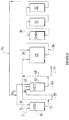
- the Figure 1 represents a simplified flow diagram of the process according to the invention using an HDO reactor (3) comprising a plurality of catalytic beds (4 beds shown) able to operate according to the method of claim 1; the temperature control means are not indicated in this diagram.
- the pyrolysis oil (1) is introduced at the top of the reactor; hydrogen is introduced portionwise (2a, 2b, 2c, 2d): the head of the reactor and upstream of the catalytic bed 1 (2a) and between the catalytic beds (2b, 2c, 2d).
- the effluent (4) obtained from the reactor comprises an aqueous phase (6) and an organic phase (7) which are separated by passing through a separator (5); a part of the organic phase (7) can be recycled to the reactor with the pyrolysis oil (1) as indicated on the Figure 1 .
- the Figure 2 is a schematic diagram of a preferred embodiment of the method of claim 11.
- the installation comprises a HDO reactor (10) operating according to the HDO process of the invention, fed by the pyrolysis oil (12) and hydrogen (14) (only one hydrogen injection is indicated era).
- the effluent (16) leaving the HDO reactor 10 is separated into a light aqueous fraction (18) and a heavy organic fraction (20).
- the light aqueous fraction (18) is then fed to a pre-reformer (22) which is supplied with steam (24).
- the effluent (26) exiting the pre-reformer (22) is then sent to an SMR unit (28) to produce hydrogen.
- the residual CO contained in the hydrogen can be converted into a "water gas shift" unit (30) and hydrogen, purified in a PSA unit (32), to obtain purified hydrogen (34).
- the heavy organic fraction (20) is, for example, fed to a hydrotreatment unit (HDT) (40) if the HDO reaction is thorough or complete.
- This heavy organic fraction (20) can be fractionated before being sent to the HDT unit 40, one of the cuts obtained, for example the diesel fraction, being returned to the HDT.
- This HDT unit (40) is supplied with H 2 (42) and optionally with the diesel fuel type feedstock from the HDO of the pyrolysis oil (44).
- the effluent (46) obtained at the outlet of the HDT (40) can serve as fuel bases of the LPG (liquefied petroleum gas), gasoline, kerosene, diesel, vacuum gas oil, etc.) type.
- the effluent (46) may also be in the form of two phases including a light aqueous fraction (48) and a heavy organic fraction (50).
- the light aqueous fraction (48) can then be fed to the pre-reformer (22) as needed.
- the heavy organic fraction (50) can advantageously be used as fuel or be incorporated into a fuel pool, mixed with bases of fossil or mineral origin (refinery oil bases, .).
- the resulting hydrogen (34) can then be used in a refinery, but can preferably be used to supply the HDO unit (10) and / or the HDT unit (40).
Landscapes
- Chemical & Material Sciences (AREA)
- Oil, Petroleum & Natural Gas (AREA)
- Chemical Kinetics & Catalysis (AREA)
- Organic Chemistry (AREA)
- Engineering & Computer Science (AREA)
- General Chemical & Material Sciences (AREA)
- Life Sciences & Earth Sciences (AREA)
- Wood Science & Technology (AREA)
- Crystallography & Structural Chemistry (AREA)
- Production Of Liquid Hydrocarbon Mixture For Refining Petroleum (AREA)
Description
- L'invention concerne un procédé d'hydrodésoxygénation (HDO) d'huile de pyrolyse de biomasse susceptible de fonctionner en continu ainsi qu'un procédé de valorisation d'huile de pyrolyse de biomasse comprenant dans une 1ère étape, ledit procédé d'HDO.
- Les huiles de pyrolyse de biomasse, ou bio-huiles, sont issues de la pyroliquéfaction, également appelée pyrolyse rapide à basse température, de biomasse de type bois (feuillus, résineux), de paille, de cultures énergétiques (taillis à courte rotation (TCR), taillis à très courte rotation (TTCR), miscanthus, switchgrass, sorgho...) et résidus de biomasse forestière ou agricole tels que écorces, copeaux, sciures, bagasses... Ces huiles de pyrolyse sont donc issues de biomasse lignocellulosique constituée de holocelluloses (cellulose, hémicellulose) et lignine.
- Ces huiles de pyrolyse issues de la biomasse sont produites par dépolymérisation et fragmentation des éléments constitutifs de la biomasse (holocelluloses (cellulose, hémicellulose), lignine) sous l'action d'une augmentation rapide (<2 secondes) de la température à 450°C-550°C et d'une trempe rapide des produits intermédiaires de dégradation.
- Elles peuvent être considérées comme des microémulsions dans lesquelles la phase continue liquide est une solution aqueuse des produits de décomposition de la cellulose et de l'hémicellulose et de petites molécules de lignine. La phase liquide continue stabilise la phase discontinue organique constituée essentiellement de macromolécules de la lignine pyrolytique. Ces huiles de pyrolyse sont constituées d'eau et d'un mélange complexe de composés oxygénés. Leur composition élémentaire est proche de la composition de la biomasse de départ avec en particulier une teneur importante en oxygène.
- La composition moléculaire organique moyenne analysable des huiles de pyrolyse peut en général être décrite par les familles présentées dans le tableau 1.
Tableau 1 Teneur (%m/m) Lignine pyrolytique 15-25 Acides organiques 5-15 Aldéhydes et hydroxy-aldéhydes 5-20 Cétones et hydroxy-cétones 0-15 Phénols 15-35 Méthanol, Ethanol 1-5 - Le tableau 2 suivant regroupe les principales caractéristiques des huiles de pyrolyse.
Tableau 2 Propriétés Huiles de pyrolyse pH 2,0-3,7 Teneur en eau (% m/m) 15-35 Masse volumique à 15°C (kg/m3) 1110-1300 Viscosité à 20°C (mm2/s) 50-130 Viscosité à 40°C (mm2/s) 12-35 Analyse élémentaire (%m/m) C 30-50 H 6-9 O 40-60 Matières solides (%m/m) 0,01-2 Cendres (%m/m) 0,01-0,20 Pouvoir Calorifique Supérieur PCS (MJ/kg) 13-19 Métaux (K+Na) (mg/kg) 10-300 - Les huiles de pyrolyse se caractérisent par une masse volumique élevée et une viscosité variable en fonction, entre autres, de la biomasse de départ. Comme elles sont acides et donc corrosives, leur utilisation nécessite l'emploi de matériels spécifiques, résistants à la corrosion, tels que l'acier inoxydable, le polyéthylène haute densité, le propylène...
- Par ailleurs, les huiles de pyrolyse sont instables chimiquement et thermiquement. L'instabilité chimique des huiles de pyrolyse se traduit par l'évolution dans le temps de leurs propriétés physico-chimiques (viscosité, teneur en eau, teneur en solides,...) pouvant aboutir à une séparation en deux phases. L'instabilité thermique des huiles de pyrolyse se traduit par une évolution très rapide de leurs propriétés lorsqu'elles sont chauffées à des températures supérieures à 80°C. Du fait de cette instabilité, ces produits ne peuvent être valorisés en raffinerie sous leur forme brute, excepté dans un applicatif de combustion moyennant quelques modifications des installations actuelles. Pour toute autre application en raffinerie, il semble nécessaire de stabiliser les huiles de pyrolyse avant utilisation, par exemple par élimination ou transformation des espèces les plus réactives.
- Les huiles de pyrolyse présentent en général une teneur en eau moyenne de l'ordre de 25% m/m, une teneur en oxygène de la fraction organique de l'ordre de 35-40% m/m et une structure moléculaire d'une grande complexité. Leur teneur en eau peut en outre conduire à une séparation partielle de phase ayant une incidence sur leurs autres propriétés physiques. Enfin, leurs teneurs en cendres et alcalins peuvent conduire à la formation de dépôts et à l'encrassement des installations.
- De plus, en raison de leur nature hydrophile et de leur polarité, les huiles de pyrolyse rapide ne sont pas miscibles avec les hydrocarbures. Ainsi, les huiles de pyrolyse ne peuvent pas être valorisées en tant que telles en raffinerie en mélange avec des coupes hydrocarbonées d'origine fossile.
- En raison de leurs propriétés particulières énoncées ci-dessus, l'utilisation des huiles de pyrolyse de biomasse soulève de nombreux problèmes.
- Actuellement les principales voies de valorisation étudiées sont la combustion de l'huile de pyrolyse de biomasse dans des chaudières ou des turbines à gaz pour produire de la chaleur et/ou de l'électricité, ou la production de bases pour la chimie.
- Pour pouvoir être utilisées dans des raffineries en vue de la production de carburants ou de combustibles liquides renouvelables (ou partiellement renouvelables s'ils sont mélangés avec des carburants ou combustibles d'origine fossile), les huiles de pyrolyse de biomasse doivent subir un prétraitement visant à les stabiliser. Un tel prétraitement peut être une étape d'hydrodésoxygénation. Cette hydrodésoxygénation (HDO) peut notamment être réalisée suivant la réaction simplifiée :
C6H8O4 + 4 H2 → C6H8 + 4 H2O
- L'HDO de l'huile de pyrolyse peut être poussée (conversion > 90%) ou totale (conversion = 100%), pour transformer les bio-huiles en bases carburant ou pour les rendre miscibles avec les coupes hydrocarbonées d'origine pétrolière et ainsi l'introduire dans le schéma de raffinage.
- Lorsque l'hydrodésoxygénation de l'huile de pyrolyse est partielle (par exemple 50±40 %), les produits obtenus à l'issue de l'HDO ne peuvent pas être incorporés tels quels dans un pool carburant. Néanmoins, ces produits peuvent être introduits dans des unités de combustion (chaudière) et de conversion existantes, connues en soi (hydrotraitement, FCC, viscoréduction, coker) ou être utilisés comme intermédiaires chimiques (acide acétique, phénols,...)
- L'HDO de l'huile de pyrolyse est en général effectuée par hydrotraitement (HDT), en général réalisé à une température allant de 150 à 350°C et une pression de 10 à 20 MPa en présence d'un catalyseur. L'utilisation de pressions élevées favorise la réaction d'HDO et permet de diminuer la vitesse des réactions de polymérisation de l'huile de pyrolyse par rapport aux réactions d'HDO.
- En général, dans l'étape d'HDO, on mélange l'hydrogène avec la charge en amont du réacteur d'hydrotraitement et on fait passer ce mélange à travers un 1er lit catalytique en écoulement à co-courant ou à contre-courant.
- La réaction d'hydrodésoxygénation est fortement exothermique et difficile à contrôler : on constate parfois des phénomènes de cokage du catalyseur allant jusqu'au bouchage du réacteur. Il est alors nécessaire de stopper le réacteur pour procéder à son nettoyage. Voir par exemple Liquid fuels by low-severity hydrotreating of biocrude, D.C. Elliott & G.G Neuenschwander, Developments in Thermochemical Biomass Conversion, vol. 1, pp. 611-621 , A.V. Bridgwater and D.G. B. Boocock, eds, Blackie Academic & Professional, London : 1996. Voir aussi Hydrogen from biomass-production by steam reforming of biomass pyrolysis oil, S Czernik et al, CATTOD-5270; page 3 .
- Lorsqu'on souhaite une HDO poussée ou totale de l'huile de pyrolyse, la réaction d'HDO peut être réalisée dans 2 réacteurs en série, chacun fonctionnant de manière adiabatique et isotherme ou quasi-isotherme. Dans ce cas, le 1er réacteur peut fonctionner à basse température, typiquement à une température allant de 120 à 180°C, le 2nd peut fonctionner à une température plus élevée de 300 à 400°C, préférentiellement à 350°C. voir par exemple D.C. Elliott et al, Pacific Northwest National Laboratory, Richland, Whashington, USA, Hydrogenation of bio-oil for chemical and fuel production, pp 1536-1576 .
- Mais là encore, on constate des phénomènes de cokage du ou des catalyseurs ne permettant pas un fonctionnement en continu de l'HDO de l'huile de pyrolyse.
- Les réacteurs d'HDO d'huile de pyrolyse de l'art antérieur sont des réacteurs isothermes contenant un ou plusieurs lits catalytiques, fixes ou non.
- La présente invention propose un procédé d'HDO d'huile de pyrolyse susceptible de fonctionner en continu sans présenter les inconvénients des procédés connus jusqu'ici : risques de cokage des catalyseurs, bouchages et obligation de stopper la réaction d'HDO pour nettoyer le réacteur.
- Le procédé d'HDO, objet de l'invention, consiste à opérer avec un système catalytique comprenant une pluralité de lits catalytiques disposés en série, répartis dans un ou plusieurs réacteurs, équipé de moyens de contrôle de la température et caractérisé par
- l'injection de l'huile de pyrolyse en tête du 1er lit catalytique,
- l'injection de manière fractionnée de l'hydrogène :
- la 1ère injection d'hydrogène est effectuée en tête du 1er lit catalytique,
- la ou les autres injections d'H2 étant effectuée(s) entre 2 lits catalytiques et choisies telles que la différence entre les températures d'injections successives d'H2 ne dépasse pas 50 °C (ΔTmax (température d'injection d'H2 de rang (n+1) - température d'injection d'H2 de rang (n) ≤ 50 °C), de préférence ΔTmax ≤ 20 à 30 °C.
- Par « température d'injection d'H2», on entend la température locale à l'intérieur du réacteur au niveau de l'injection correspondante d'H2. Les injections d'H2 sont généralement effectuées entre les lits catalytiques du réacteur.
- La différence de température ΔTmax correspond ainsi à la variation de température du lit catalytique situé entre deux injections successives d'H2.
- Les variations de température au sein du réacteur proviennent de l'exothermicité de la réaction entre H2 et l'huile de pyrolyse, la présente invention permet de contrôler l'exothermicité en contrôlant la température du flux d'H2 injecté et/ou le débit de ce flux d'H2.
- Avantageusement, la variation de température ΔTmax entre deux lits catalytiques est obtenue par contrôle des conditions de débit et/ou de température des flux d'H2 injectés entre lesdits lits catalytiques.
- La température du flux d'H2 injecté est le plus souvent la température ambiante, mais elle peut être supérieure ou inférieure à la température ambiante.
- La différence de température ΔTmax (température d'injection d'H2 de rang (n+1) - température d'injection d'H2 de rang (n)) pourra être nulle, voire négative, si la température d'injection d'H2 au rang n+1 est plus faible que la température d'injection d'H2 au rang n.
- Le ΔT cible entre deux injections d'H2 correspond à une variation de température répondant aux conditions définies ci-dessus pour ΔTmax.
- La quantité d'hydrogène injectée dans un lit (correspondant à la quantité d'hydrogène injectée en amont de ce lit) est de préférence égale à la quantité stoechiométrique nécessaire pour atteindre un ΔT cible dans ce lit ; l'apport de chaleur peut provenir de l'exothermicité des réactions d'HDO.
De préférence, la quantité d'hydrogène injectée en tête du 1er lit ne dépasse pas une valeur maximum telle que la pression partielle de l'eau à la température réactionnelle est trop faible pour maintenir l'eau à l'état liquide (que l'eau de l'huile de pyrolyse ne se vaporise pas). - On ne sortirait pas du cadre de l'invention en remplaçant tout ou partie de l'huile de pyrolyse de biomasse par la phase organique ligneuse issue de la séparation d'huile de pyrolyse de biomasse additivée d'eau, cette séparation conduisant à 2 phases : une phase aqueuse légère (d'une densité inférieure à celle de l'huile de pyrolyse) et une phase organique ligneuse ou riche en lignine pyrolytique.
- La pression au sein du ou des réacteurs d'hydrodésoxygénation est en général comprise entre 5 à 20 MPa, de préférence entre 10 et 15 MPa. Les pressions élevées permettent en général une injection d'hydrogène plus importante entre chaque lit et conduisent à un design de réacteur contenant moins de lits catalytiques avec des exothermicités plus élevées.
- L'utilisation de pressions élevées permet en général de favoriser la réaction d'HDO et d'éviter au maximum la formation de coke sur les catalyseurs d'hydrotraitement ainsi que de diminuer la vitesse des réactions de polymérisation de l'huile de pyrolyse par rapport aux réactions d'HDO.
- En général, la température d'entrée du 1er lit catalytique (où une partie de l'hydrogène et l'huile de pyrolyse sont mis en contact est comprise entre 120 et 180 °C, de préférence entre 140 et 160 °C. Cette température d'entrée du 1er lit catalytique peut être contrôlée par la température et/ou le débit de l'injection d'H2 en tête du 1er lit catalytique.
- En général, la température en sortie du dernier lit catalytique est comprise entre 320 et 380°C lorsque qu'une HDO poussée (conversion > 90%) ou totale (100%) est souhaitée. Cette température en sortie du dernier lit catalytique est contrôlée par la température et/ou le débit des différentes injections d'H2.
- En général, la température en sortie du dernier lit catalytique est comprise entre 180 et 320°C lorsqu'une HDO partielle est souhaitée (entre 10 et 90% de conversion).
- A titre d'exemple, dans le cas où le procédé selon l'invention comprend 2 injections d'hydrogène, si la 1ère injection d'H2 est effectuée à une température de 130 °C, le reste de l'hydrogène sera injecté entre 2 lits en un point où la température à l'intérieur du réacteur ne dépasse pas 180°C (130 + 50), et avantageusement où la température ne dépasse pas 150/160 °C ((130+20)/(130+30))
A titre d'exemple, dans le cas où le procédé selon l'invention comprend 3 injections d'hydrogène, si la 1ère injection d'H2 est effectuée à une température de 150 °C, la 2nde injection d'hydrogène se fera entre 2 lits en un point où la température à l'intérieur du réacteur ne dépasse pas 200°C (150 + 50), et avantageusement ne dépasse pas 170/180 °C ((150+20)/(150+30)) ; et la 3ème injection se fera entre 2 lits à une température à l'intérieur du réacteur qui ne dépasse pas de plus de 50 °C (de préférence pas plus de 20 à 30 °C) la température à l'intérieur du réacteur de la 2nde injection d'H2. - Pour une HDO poussée ou totale, la quantité d'hydrogène totale injectée dans le ou les réacteurs nécessaire dans le procédé HDO selon l'invention est en général supérieure aux besoins stoechiométriques des réactions d'HDO (en général de 2 à 7 % en masse par masse d'huile de pyrolyse). La quantité d'hydrogène injectée dans un lit catalytique est ajustée en fonction du ΔT cible de ce lit, donc de l'avancement de l'HDO. Les catalyseurs utilisables dans le procédé de la présente invention peuvent être choisis parmi les catalyseurs utilisés usuellement dans les unités d'hydrogénation et d'hydrotraitement d'hydrocarbures pétroliers. A titre d'exemple de catalyseurs d'HDO, on peut citer les catalyseurs comprenant au moins un des métaux du groupe VI, VII ou VIII (Ni, Cr, Mo, W, Co, Rh, Ir, Ru, Pt, Pd, Re,...) ; le ou les métaux sont de préférence déposés et/ou dispersés sur des supports tels que l'alumine, la silice-alumine, cérium, zirconium, carbone, titane, zéolite (zéolite beta, zéolite Y, zéolites de type MFI, mordénite, silicalite, SM3 et/ou faujasite ; voir par exemple les catalyseurs décrits dans
WO2009/126508 , page 12, [0028]. Les métaux peuvent être à l'état d'oxydes ou non ; le support catalytique est de préférence choisi parmi les supports poreux ayant une surface spécifique élevée, par exemple gamma-alumine, charbon actif, zéolite. Les catalyseurs peuvent être des catalyseurs neufs, régénérés ou réjuvénés. - Les lits catalytiques peuvent comprendre un ou plusieurs catalyseurs différents qui sont mélangés.
- Les lits catalytiques peuvent être des lits fluidisés, ou de manière avantageuse, des lits fixes.
- Le procédé d'HDO selon l'invention peut être mis en oeuvre dans un ou plusieurs réacteurs catalytiques associés en série : les lits catalytiques sont ainsi répartis dans plusieurs réacteurs catalytiques ; l'injection d'H2 effectuée en tête du 2nd réacteur correspond à une injection entre 2 lits puisqu'elle se situe entre le dernier lit du 1er réacteur et le 1er lit du 2nd réacteur. Ce dispositif s'applique mutatis mutandis pour les injections en tête des réacteurs suivants.
- Au sein de chaque réacteur d'HDO, la composition des lits catalytiques peut être identique ou non.
- En sortie du dernier lit catalytique du dernier réacteur d'HDO, on obtient une phase liquide aqueuse et une phase organique contenant des composés hydrocarbonés.
- Les réactions d'HDO peuvent être totales ou partielles. Au sens de la présente invention,
- la réaction d'HDO est dite « totale », lorsque la phase organique en sortie du dernier lit catalytique ne contient plus d'oxygène ;
- la réaction d'HDO est dite « poussée » quand la phase organique liquide issue du dernier lit catalytique d'HDO contient moins de 10 % m/m de la quantité initiale d'oxygène contenue dans l'huile de pyrolyse mise en oeuvre ;
- la réaction d'HDO est dite « partielle » quand la phase organique liquide issue du dernier lit catalytique d'HDO contient entre 10 % et 90 % m/m de la quantité initiale d'oxygène contenue dans l'huile de pyrolyse mise en oeuvre.
- Les inventeurs ont constaté que dans leurs exemples de réalisation du procédé selon l'invention, pour que la réaction d'HDO soit « poussée », voire « totale », il est nécessaire d'avoir au moins 4 injections séparées ou distinctes d'H2 selon les conditions opératoires détaillées précédemment, de préférence au moins 5, et avantageusement au moins 6.
- La phase organique issue du procédé HDO selon l'invention tel que défini plus haut, lorsqu'elle contient entre 0 et 10 % m/m d'oxygène de la quantité d'oxygène total contenu dans l'huile de pyrolyse de départ peut avantageusement être utilisée, c'est-à-dire incorporée dans un pool carburant ou dans une raffinerie en vue de la production de carburants ou de combustibles liquides, de type essence, jet, kérosène, diesel, fioul domestique et/ou naphta si un traitement de finition s'avère nécessaire.
- A la différence de la phase organique obtenue par séparation de phases de l'huile de pyrolyse additivée d'eau, la phase organique issue de l'HDO selon l'invention est miscible avec des hydrocarbures : elle peut donc, si nécessaire, être avantageusement traitée en co-processing avec une charge minérale fossile ou fossile suivant un procédé de conversion classique (hydrotraitement, FCC, viscoréduction, coker), connus en soi.
- De manière avantageuse, la phase organique issue de l'HDO de l'huile de pyrolyse de biomasse peut représenter de 2 jusqu'à 30 % en masse de la charge d'une unité du schéma de raffinage.
- De manière avantageuse, le co-traitement (i-e hydrotraitement) avec la charge d'origine minérale se fera après un fractionnement de l'effluent organique en sortie de l'unité d'HDO de l'huile de pyrolyse en plusieurs coupes ayant des intervalles de distillation séparés, notamment coupes gazole, kérosène, jet, essence, fioul domestique et/ou naphta.
- La coupe de type gazole issue du fractionnement de la phase organique issue de l'HDO peut par exemple être hydrotraitée avec une charge minérale de type gazole qui peut être issue de la distillation atmosphérique du pétrole brut (Gasoil straight run), d'une distillation sous vide du résidu atmosphérique (vacuum gas oil) et/ou une charge de type gazole issue d'un procédé de conversion. Le fait de pouvoir utiliser une unité existante pour l'étape d'hydrotraitement permet de réduire considérablement les coûts.
- De même, après fractionnement, la coupe de type kérosène et la coupe de type essence issues de l'HDO de l'huile de pyrolyse peuvent être, si nécessaire, co-traitées dans une unité d'hydrotraitement conventionnelle avec une charge de type kérosène et une charge de type essence respectivement.
- La phase organique lourde issue du procédé d'HDO selon l'invention (1ère étape) peut nécessiter un autre hydrotraitement (par exemple un procédé d'hydrodésoxygénation classique connu en soi) afin de produire des bases carburant ou combustibles si sa concentration en oxygène représente plus de 10 % m/m de la quantité.
- Lorsque la phase organique issue du procédé HDO selon l'invention tel que défini plus haut contient entre 10 % et 90 % m/m de la quantité initiale d'oxygène contenue dans l'huile de pyrolyse peut être utilisée telle quelle dans une raffinerie en vue de la production de carburants ou de combustibles liquides par un traitement dans une unité de conversion définie précédemment. Cette phase organique peut également être utilisée comme source d'intermédiaires chimiques oxygénés, qui sont des composés ayant par exemple un ou plusieurs groupements fonctionnels tels qu'aldéhyde, et/ou cétone, et/ou acide, et/ou alcools.....
- La phase aqueuse obtenue après le procédé d'HDO est dite « légère » car elle a une densité inférieure à celle de l'huile de pyrolyse de départ. Elle contient moins de produits lourds et de soufre que la phase aqueuse issue de la séparation physique de l'huile de pyrolyse additivée d'eau.
- L'invention concerne également un procédé de valorisation d'huile de pyrolyse et/ou de la phase organique ligneuse issue de la séparation de phases d"huile de pyrolyse de biomasse additivée d'eau en carburants et combustibles liquides, susceptible de fonctionner en continu comprenant les étapes suivantes :
- HDO poussée ou totale d'huile de pyrolyse et/ou de la phase organique ligneuse issue de la séparation de phases d"huile de pyrolyse de biomasse additivée d'eau selon le procédé d'HDO tel que défini précédemment (1ère étape) puis séparation de l'effluent liquide obtenu en une fraction aqueuse légère et une fraction organique lourde ;
- pré-réformage de la fraction aqueuse « légère » et traitement de la fraction aqueuse « légère » dans une unité SMR afin de produire de l'hydrogène ;
- hydrotraitement de ladite fraction organique « lourde » issue de l'HDO, éventuellement en association avec des bases carburants ou combustibles de raffinerie conventionnelles.
- La phase aqueuse « légère » obtenue après le procédé d'HDO selon l'invention contient des produits hydrocarbonés n'ayant en général pas plus de 6 ou 7 atomes de carbone, solubles dans l'eau. Ces produits hydrocarbonés peuvent être transformés de manière quasi-totale voire totale en méthane et CO2 lors d'une étape de pré-réformage menée à des températures (très) inférieures à celles pratiquées pour le vaporéformage de méthane (SMR) ultérieur. Ce procédé associant pré-réformage et vaporéformage présente l'avantage d'éviter la formation de coke.
- La phase aqueuse obtenue à l'issue du procédé d'HDO selon l'invention contenant moins de produits lourds et de soufre (connu comme poison des catalyseurs de vapo-réformage et éliminé sous forme d'H2S lors de l'HDO) que la fraction aqueuse obtenue par une simple séparation de phases après ajout d'eau à de l'huile de pyrolyse, elle peut être envoyée vers le pré-réformeur sans étape de purification supplémentaire.
- Le pré-réformage de la phase aqueuse permet notamment de transformer les composés en C2+ en CH4, CO, CO2 et H2 en présence d'un catalyseur conventionnel de pré-réformage, en particulier un catalyseur conventionnel de pré-réformeur de GPL/ naphta, par exemple de type Ni ou NiO. Cette réaction est en général réalisée dans un lit fixe conventionnel.
- L'effluent sortant du pré-réformeur est alors envoyé dans une unité SMR conventionnelle (acronyme de « Steam Methane Reforming » qui signifie « réformage du méthane à la vapeur ») en ajoutant de la vapeur d'eau pour produire H2. Cette réaction est en général réalisée au sein de nombreux tubes remplis de catalyseur disposés dans un four.
- Les réactions simplifiées se produisant dans le pré-réformeur peuvent être schématisées par les équations chimiques suivantes :
CxHyOz + (x-z) H2O ↔ (x+y/2-z) H2 + xCO (1)
CO + 3H2 ↔ CH4 + H2O (2)
CO + H2O ↔ CO2 + H2 (3)
Bilan :
CxHyOz + (x-y/4-z/2) H2O ↔ (x/2+y/8-z/4) CH4 + (x/2-y/8+z/4) CO2 (4)
- Le pré-réformage peut être réalisé à une température de 225 à 450 °C, sous une pression de 0,1 à 3 MPa (l'utilisation de pressions élevées n'est en général pas favorable d'un point de vue thermodynamique mais permet de diminuer le volume des réacteurs et ainsi de limiter les coûts d'investissement). La gamme de température considérée permet de se placer dans un domaine thermodynamique favorable et d'éviter les réactions qui conduisent à la formation de coke. Le réacteur considéré peut être du type lit fluidisé ou lit fixe, préférentiellement de type lit fixe.
- Le pré-réformage est de préférence réalisé avec un rapport molaire eau/charge HC élevé, de 10 à 15. Ce rapport est plus élevé que ce qu'exige la thermodynamique de la réaction (environ 3 à 4). Ainsi, il permet à la fois de déplacer l'équilibre de la réaction vers la production de méthane et d'hydrogène et également de limiter la formation de coke. En fonction du ratio eau/organiques de la fraction aqueuse légère arrivant en charge du pré-réformeur, de l'eau sera ajoutée afin d'obtenir un ratio eau/composé oxygéné qui sera préférentiellement voisin de 13.
- La réaction se produisant au niveau du SMR est la suivante :
CH4 + H2O ↔ CO + 3H2.
- Le vaporéformage peut être réalisé à une température de 600-900°C, sous une pression de 0,1 à 3 MPa (l'utilisation de pressions élevées n'est en général pas favorable d'un point de vue thermodynamique mais permet de diminuer le volume des réacteurs et ainsi de limiter les coûts d'investissement). Le vaporéformage sera de préférence réalisé avec un rapport molaire eau/charge HC de 3 à 4. Typiquement, le vaporéformage est réalisé dans de nombreux petits tubes (plusieurs centaines) remplis de catalyseurs.
- On peut également prévoir une étape de conversion catalytique du CO résiduel, éventuellement suivie d'une étape de purification de l'hydrogène, après l'étape de traitement de l'effluent dans l'unité SMR.
- L'étape de conversion catalytique du CO résiduel est obtenue par déplacement (Water Gas Shift) de l'équilibre suivant en faveur de la formation de CO2 :
CO + H2O = CO2 + H2.
- Ce déplacement est favorisé à basse température et avec un ratio eau/C élevé.
- La purification de l'hydrogène peut par exemple réalisée par le procédé PSA (de l'Anglais « Pressure Swing Adsorption » qui signifie Adsorption Modulée en Pression) basé sur l'adsorption des impuretés sur tamis moléculaires.
- Avantageusement, l'hydrogène produit à partir du SMR de la fraction aqueuse légère peut être utilisé pour l'hydrodésoxygénation de l'huile de pyrolyse et/ou pour l'hydrotraitement de la fraction organique lourde.
- L'apport extérieur d'hydrogène nécessaire aux réactions d'hydrodésoxygénation (HDO) et/ou d'hydrotraitement (HDT) est ainsi considérablement réduit, et peut éventuellement être supprimé en cours de fonctionnement de l'installation selon la composition et la quantité de fraction aqueuse.
- Par exemple, avec une fraction aqueuse légère contenant 50 % d'eau et 50 % de composés organiques, la quantité de H2 produit suffit pour couvrir les besoins en H2 de l'HDO de l'huile de pyrolyse. Un apport extérieur de H2 n'est alors nécessaire qu'au démarrage de l'installation, avant le début de production de H2.
- L'effluent issu de l'hydrotraitement de la fraction organique lourde peut également être séparé en une fraction aqueuse légère et une fraction organique lourde lorsque la quantité de fraction aqueuse est suffisamment importante pour pouvoir être séparée, cette fraction aqueuse légère étant alors envoyée au pré-réformage avec la fraction aqueuse légère issue de l'hydrodésoxygénation de l'huile de pyrolyse : la production d'hydrogène peut alors être augmentée.
- Avec le procédé de valorisation de l'huile de pyrolyse selon l'invention, la totalité de l'huile de pyrolyse est valorisée, permettant notamment la production d'hydrogène et de bases carburants du type GPL (Gaz de pétrole liquéfié), essence, kérosène, gazole, gazole sous-vide...
- La
Figure 1 représente un schéma simplifié de fonctionnement du procédé selon l'invention utilisant un réacteur d'HDO (3) comprenant une pluralité de lits catalytiques (4 lits représentés) pouvant fonctionner selon le procédé de la revendication 1 ; les moyens de contrôle de la température ne sont pas indiqués sur ce schéma. - L'huile de pyrolyse (1) est introduite en tête du réacteur ; l'hydrogène est introduit de manière fractionnée (2a, 2b, 2c, 2d) : en tête du réacteur et en amont du 1er lit catalytique (2a) puis entre les lits catalytiques (2b, 2c, 2d).
- L'effluent (4) obtenu sortie de réacteur comprend une phase aqueuse (6) et une phase organique (7) qui sont séparés par passage dans un séparateur (5) ; une partie de la phase organique (7) peut être recyclée dans le réacteur avec l'huile de pyrolyse (1) comme indiqué sur la
Figure 1 . - La
Figure 2 représente un schéma simplifié d'un mode de réalisation préféré du procédé de la revendication 11. - L'installation comprend un réacteur HDO (10) fonctionnant selon le procédé HDO de l'invention, alimentée par de l'huile de pyrolyse (12) et de l'hydrogène (14) (seule la 1ère injection d'hydrogène est indiquée dans le schéma. L'effluent (16) sortant du réacteur HDO 10 est séparé en une fraction aqueuse légère (18) et une fraction organique lourde (20).
- La fraction aqueuse légère (18) est ensuite amenée en charge d'un pré-réformeur (22) lequel est alimenté en vapeur d'eau (24). L'effluent (26) sortant du pré-réformeur (22) est ensuite envoyé dans une unité SMR (28) afin de produire de l'hydrogène. Le CO résiduel contenu dans l'hydrogène peut être converti dans une unité « water gas shift » (30) puis l'hydrogène, purifié dans une unité PSA (32), afin d'obtenir de l'hydrogène purifié (34).
- La fraction organique lourde (20) est par exemple envoyée en charge d'une unité d'hydrotraitement (HDT) (40) si la réaction d'HDO est poussée ou totale. On peut prévoir de fractionner cette fraction organique lourde (20) avant son envoi à l'unité HDT 40, l'une des coupes obtenues, par exemple la coupe gazole, étant renvoyée à l'HDT.
- Cette unité HDT (40) est alimentée en H2 (42) et éventuellement avec la charge de type gazole issue de l'HDO de l'huile de pyrolyse (44). L'effluent (46) obtenu en sortie de l'HDT (40) peut servir de bases carburants du type GPL (gaz de pétrole liquéfié), essence, kérosène, gazole, gazole sous-vide,...)
- L'effluent (46) peut également se présenter sous la forme de 2 phases dont une fraction aqueuse légère (48) et une fraction organique lourde (50). La fraction aqueuse légère (48) peut alors être envoyée en charge du pré-réformeur (22) selon les besoins. La fraction organique lourde (50) peut avantageusement servir de carburant ou être incorporé à un pool carburant , en mélange avec des bases d'origine fossile ou minérale (bases pétrolères de raffinerie, ....) .
- L'hydrogène obtenu (34) peut alors être utilisé en raffinerie, mais peut de préférence être utilisé pour alimenter l'unité HDO (10) et/ou l'unité HDT (40).
Claims (11)
- Procédé d'hydrodésoxygénation catalytique (HDO) d'huile de pyrolyse de biomasse et/ou de la phase organique ligneuse issue de la séparation de phases d'huile de pyrolyse de biomasse additivée d'eau, comprenant une pluralité de lits catalytiques disposés en série, répartis dans un ou plusieurs réacteurs, équipé(s) de moyens de contrôle de la température, et caractérisé par :• la pression dans le ou les réacteurs d'HDO est comprise entre 5 et 20 MPa,• l'injection de l'huile de pyrolyse en tête du 1er lit catalytique,• l'injection de manière fractionnée de l'hydrogène :• la 1ère injection d'hydrogène est effectuée en tête du 1er lit catalytique, en contrôlant la température d'entrée du 1er lit catalytique entre 120 et 180 °C par le débit et/ou la température d'injection d'H2,• la ou les autres injections d'H2 étant effectuée(s) entre 2 lits catalytiques et choisie(s) telle(s) que la différence de température ΔTmax correspondant ainsi à la variation de température du lit catalytique situé entre deux injections successives d'H2 ne dépasse par 50 °C, ΔTmax ≤ 50 °C, et dans laquelle on contrôle par la température et/ou le débit des différentes injections d'H2 la température en sortie du dernier lit catalytique :o entre 320 et 380°C, le procédé comprenant au moins 4 injections d'H2, lorsque que l'HDO est poussée, la phase organique liquide issue du dernier lit catalytique d'HDO contenant moins de 10 % m/m de la quantité initiale d'oxygène contenue dans l'huile de pyrolyse mise en oeuvre ou lorsque que l'HDO est totale la phase organique en sortie du dernier lit catalytique ne contenant plus d'oxygène,o entre 180 et 320°C lorsque l'HDO est partielle, la phase organique liquide issue du dernier lit catalytique d'HDO contenant entre 10 % et 90 % m/m de la quantité initiale d'oxygène contenue dans l'huile de pyrolyse mise en oeuvre,• la séparation des effluents liquides en sortie du dernier lit catalytique en une phase liquide aqueuse et une phase organique, une partie de la phase organique pouvant éventuellement être recyclée dans le réacteur, par exemple être ré-injectée avec l'huile de pyrolyse,ledit procédé fonctionnant en continu.
- Procédé selon la revendication 1, caractérisé en ce que la pression dans le ou les réacteurs d'HDO est comprise entre 10 et 15 MPa.
- Procédé selon la revendication 1 ou 2, caractérisé en ce que la température d'entrée du 1er lit catalytique est comprise entre 140 et 160 °C.
- Procédé selon l'une quelconque des revendications 1 à 3, caractérisé en ce que le ou les catalyseurs d'HDO des lits catalytiques, identiques ou différents, sont choisis parmi les catalyseurs comprenant au moins un des métaux du groupe VI, VII ou VIII (Ni, Cr, Mo, W, Co, Rh, Ir, Ru, Pt, Pd, Re,...).
- Procédé d'HDO selon l'une quelconque des revendications 1 à 4, avec un ΔTmax ≤ 20 à 30 °C entre chaque injection d'H2.
- Procédé d'HDO selon l'une quelconque des revendications 1 à 5, dans lequel la quantité d'hydrogène injectée dans un lit est égale à la quantité stoechiométrique nécessaire pour atteindre le ΔTmax dans ce lit.
- Procédé d'HDO selon l'une quelconque des revendications 1 à 6, caractérisé en ce que la quantité d'hydrogène injectée en tête du 1er lit ne dépasse pas une valeur maximum telle que la pression partielle de l'eau à la température réactionnelle est trop faible pour maintenir l'eau de l'huile de pyrolyse à l'état liquide.
- Procédé d'HDO selon l'une quelconque des revendications 1 à 7, caractérisé en ce qu'il comprend au moins 5 injections d'H2 lorsque l'HDO est poussée ou totale.
- Procédé de préparation de carburants et/ou de combustibles liquides d'origine renouvelable ou partiellement renouvelable, de type essence, jet, kérosène, diesel, fioul domestique et/ou naphta, à base d'huile de pyrolyse de biomasse et/ou de la phase organique issue de la séparation de phase d"huile de pyrolyse de biomasse additivée d'eau, ayant subi un traitement HDO poussé ou total selon l'une quelconque des revendications 1 à 8, et éventuellement de base(s) fossiles ou minérales telles que base(s) pétrolière(s) de raffinerie.
- Procédé de préparation d'intermédiaires chimiques à base d'huile de pyrolyse ayant subi un traitement d'HDO partielle selon l'une quelconque des revendications 1 à 7.
- Procédé de valorisation d'huile de pyrolyse et/ou de la phase organique ligneuse issue de la séparation de phases d'huile de pyrolyse de biomasse additivée d'eau en carburants et/ou combustibles liquides, comprenant les étapes suivantes :- une étape d'HDO poussée ou totale d'huile de pyrolyse et/ou de la phase organique ligneuse issue de la séparation de phases d"huile de pyrolyse de biomasse additivée d'eau selon l'une quelconque des revendications 1 à 8,- puis séparation de l'effluent liquide obtenu en une fraction aqueuse légère et une fraction organique lourde ;- pré-réformage de la fraction aqueuse « légère » et traitement de la fraction aqueuse « légère » dans une unité SMR afin de produire de l'hydrogène ;- hydrotraitement de ladite fraction organique « lourde » issue de l'HDO, éventuellement en association avec des bases carburants ou combustibles de raffinerie conventionnelles.
Applications Claiming Priority (2)
| Application Number | Priority Date | Filing Date | Title |
|---|---|---|---|
| FR1059530A FR2967687B1 (fr) | 2010-11-19 | 2010-11-19 | Procede d' hydrodesoxygenation et procede de valorisation d'huile de pyrolyse issue de la biomasse susceptibles de fonctionner en continu |
| PCT/FR2011/052714 WO2012066263A2 (fr) | 2010-11-19 | 2011-11-21 | Procede d'hydrodesoxygenation et procede de valorisation d'huile de pyrolyse issue de la biomasse susceptibles de fonctionner en continu |
Publications (2)
| Publication Number | Publication Date |
|---|---|
| EP2640808A2 EP2640808A2 (fr) | 2013-09-25 |
| EP2640808B1 true EP2640808B1 (fr) | 2018-07-18 |
Family
ID=43859664
Family Applications (1)
| Application Number | Title | Priority Date | Filing Date |
|---|---|---|---|
| EP11802489.2A Active EP2640808B1 (fr) | 2010-11-19 | 2011-11-21 | Procede d'hydrodesoxygenation et procede de valorisation d'huile de pyrolyse issue de la biomasse susceptibles de fonctionner en continu |
Country Status (5)
| Country | Link |
|---|---|
| US (1) | US9193919B2 (fr) |
| EP (1) | EP2640808B1 (fr) |
| CA (1) | CA2812614C (fr) |
| FR (1) | FR2967687B1 (fr) |
| WO (1) | WO2012066263A2 (fr) |
Families Citing this family (15)
| Publication number | Priority date | Publication date | Assignee | Title |
|---|---|---|---|---|
| FR2992326B1 (fr) | 2012-06-21 | 2014-06-20 | IFP Energies Nouvelles | Procede de production de tensio-actifs a partir de matieres renouvelables comprenant une etape d'hydrotraitement et une etape de transformation de paraffines en tensio-actifs |
| US20140230316A1 (en) * | 2013-02-21 | 2014-08-21 | Chevron U.S.A. Inc. | In-Situ Upgrading of Biomass Pyrolysis Vapor |
| US20150057475A1 (en) * | 2013-08-23 | 2015-02-26 | Battelle Memorial Institute | Bi-functional catalyst and processes for conversion of biomass to fuel-range hydrocarbons |
| ES3057333T3 (en) * | 2014-07-01 | 2026-02-27 | Anellotech Inc | Processes for converting biomass to btx with low sulfur, nitrogen and olefin content via a catalytic fast pyrolysis process |
| US9108894B1 (en) | 2014-07-22 | 2015-08-18 | Iogen Corporation | Process for using biogenic carbon dioxide derived from non-fossil organic material |
| US10619173B2 (en) | 2014-07-22 | 2020-04-14 | Iogen Corporation | Process for using biogenic carbon dioxide derived from non-fossil organic material |
| CA2953162C (fr) | 2014-07-22 | 2023-01-31 | Iogen Corporation | Procede d'utilisation de dioxyde de carbone biogenique derive d'une matiere organique non fossile |
| US9758441B2 (en) * | 2014-11-24 | 2017-09-12 | Uop Llc | Methods and apparatuses for deoxygenating pyrolysis oil |
| US11434509B2 (en) | 2014-12-08 | 2022-09-06 | Iogen Corporation | Process for using biogenic carbon dioxide derived from non-fossil organic material |
| CN105597806B (zh) * | 2016-01-27 | 2019-04-05 | 中国科学技术大学 | 一种加氢脱氧的钴催化剂及其制备方法 |
| US20190233743A1 (en) * | 2016-10-19 | 2019-08-01 | Washington State University | Hydrodeoxygenation of lignin to hydrocarbons using bimetallic catalysts |
| WO2019038481A1 (fr) * | 2017-08-25 | 2019-02-28 | Neste Oyj | Fioul renouvelable |
| US12540280B2 (en) | 2019-08-29 | 2026-02-03 | Haldor Topsøe A/S | Process for monitoring the operation of hydrodeoxygenation of a feedstock |
| KR20240095212A (ko) * | 2021-11-03 | 2024-06-25 | 토프쉐 에이/에스 | 반응성 액체 공급원료의 안정화 과정 |
| CN119588405B (zh) * | 2024-12-06 | 2025-10-17 | 安徽理工大学 | 一种钴-镍/凹凸棒石基丝光沸石催化剂及其制备方法和应用 |
Family Cites Families (13)
| Publication number | Priority date | Publication date | Assignee | Title |
|---|---|---|---|---|
| US4707245A (en) | 1985-12-20 | 1987-11-17 | Lummus Crest, Inc. | Temperature control for hydrogenation reactions |
| US5000924A (en) | 1987-06-02 | 1991-03-19 | Elsagainternational B.V. | Autoacceleration control for exothermic reactors |
| US5959167A (en) * | 1997-08-25 | 1999-09-28 | The University Of Utah Research Foundation | Process for conversion of lignin to reformulated hydrocarbon gasoline |
| US8022258B2 (en) * | 2005-07-05 | 2011-09-20 | Neste Oil Oyj | Process for the manufacture of diesel range hydrocarbons |
| BRPI0601460B1 (pt) * | 2006-04-26 | 2015-11-10 | Petroleo Brasileiro Sa | processo para hidroconversão de mistura de óleos orgânicos de diferentes origens |
| US7578927B2 (en) * | 2006-08-31 | 2009-08-25 | Uop Llc | Gasoline and diesel production from pyrolytic lignin produced from pyrolysis of cellulosic waste |
| WO2009126508A2 (fr) * | 2008-04-06 | 2009-10-15 | Uop Llc | Combustible et composants de mélange de combustibles provenant d'huile de pyrolyse issue de la biomasse |
| US8304592B2 (en) * | 2008-06-24 | 2012-11-06 | Uop Llc | Production of paraffinic fuel from renewable feedstocks |
| US8008534B2 (en) * | 2008-06-30 | 2011-08-30 | Uop Llc | Liquid phase hydroprocessing with temperature management |
| CN102216427B (zh) * | 2008-11-06 | 2015-03-18 | 埃克森美孚研究工程公司 | 对于生物柴油机燃料和掺和物的加氢处理 |
| US8471079B2 (en) * | 2008-12-16 | 2013-06-25 | Uop Llc | Production of fuel from co-processing multiple renewable feedstocks |
| EP2226375B1 (fr) * | 2009-03-04 | 2012-05-16 | IFP Energies nouvelles | Procédé pour l'hydrogénation continu de triglycéride contenant des matériaux bruts |
| FR2949233B1 (fr) * | 2009-08-21 | 2011-10-14 | Total Raffinage Marketing | Procede de valorisation d'huile de pyrolyse en raffinerie |
-
2010
- 2010-11-19 FR FR1059530A patent/FR2967687B1/fr not_active Expired - Fee Related
-
2011
- 2011-11-21 CA CA2812614A patent/CA2812614C/fr active Active
- 2011-11-21 WO PCT/FR2011/052714 patent/WO2012066263A2/fr not_active Ceased
- 2011-11-21 EP EP11802489.2A patent/EP2640808B1/fr active Active
- 2011-11-21 US US13/878,661 patent/US9193919B2/en not_active Expired - Fee Related
Non-Patent Citations (1)
| Title |
|---|
| None * |
Also Published As
| Publication number | Publication date |
|---|---|
| WO2012066263A3 (fr) | 2012-10-26 |
| EP2640808A2 (fr) | 2013-09-25 |
| US9193919B2 (en) | 2015-11-24 |
| FR2967687A1 (fr) | 2012-05-25 |
| US20130255138A1 (en) | 2013-10-03 |
| WO2012066263A2 (fr) | 2012-05-24 |
| CA2812614A1 (fr) | 2012-05-24 |
| CA2812614C (fr) | 2018-10-09 |
| FR2967687B1 (fr) | 2013-02-08 |
Similar Documents
| Publication | Publication Date | Title |
|---|---|---|
| CA2812614C (fr) | Procede d'hydrodesoxygenation et procede de valorisation d'huile de pyrolyse issue de la biomasse susceptibles de fonctionner en continu | |
| EP2467452B1 (fr) | Procédé de valorisation d'huile de pyrolyse, notamment en raffinerie | |
| Zheng et al. | Gasification of bio-oil: Effects of equivalence ratio and gasifying agents on product distribution and gasification efficiency | |
| EP2825617B1 (fr) | Procede de valorisation de bio-huiles en carburants hydrocarbones | |
| Boateng et al. | Guayule (Parthenium argentatum) pyrolysis biorefining: Production of hydrocarbon compatible bio-oils from guayule bagasse via tail-gas reactive pyrolysis | |
| FR2991335A1 (fr) | Procede optimise pour la valorisation de bio-huiles en bases aromatiques | |
| EP4334410B1 (fr) | Procede de traitement simultane d'huiles de pyrolyse de plastiques et d'une charge issue de sources renouvelables | |
| EP3380584A1 (fr) | Conversion de biomasse solide en un matériau hydrocarbure liquide | |
| WO2017108295A1 (fr) | Procede de conversion d'une charge pour la production d'hydrocarbures par voie de synthese fischer-tropsch | |
| FR3012467A1 (fr) | Procede optimise de conversion de la biomasse pour la fabrication de bases petrochimiques | |
| US9193926B2 (en) | Fuel compositions and methods based on biomass pyrolysis | |
| EP3476917B1 (fr) | Procede de demarrage d'un procede de production de kerosene et de gazole a partir de composes hydrocarbones produits par synthese fischer-tropsch | |
| FR2935982A1 (fr) | Procede de pretraitement de fcc par hydrocraquage doux incluant une dilution de la charge par une charge d'origine biologique | |
| FR3041359A1 (fr) | Procede optimise pour la valorisation de bio-huiles en bases aromatiques et olefiniques | |
| FR3034099A1 (fr) | Procede optimise de conversion de bio-huile avec stabilisation de la charge | |
| WO2024245770A1 (fr) | Procede de production de distillats moyens et de naphta d'une charge comportant une fraction d'huile de pyrolyse aromatique | |
| WO2024260728A1 (fr) | Procede de production de distillats moyens par co-processing de charge minerale avec optimisation des points de coupe pour maximiser le carbone biogenique dans le kerosene | |
| EP4720223A1 (fr) | Procede de production de distillats moyens et de naphta d'une charge comportant une fraction d'huile de pyrolyse paraffinique et olefiniques | |
| Venderbosch et al. | PROCESS-PRODUCT STUDIES ON THE CATALYTIC HYDROTREATMENT OF FAST PYROLYSIS OILS | |
| FR3024156A1 (fr) | Procede optimise pour la valorisation de bio-huiles en carburants hydrocarbones |
Legal Events
| Date | Code | Title | Description |
|---|---|---|---|
| PUAI | Public reference made under article 153(3) epc to a published international application that has entered the european phase |
Free format text: ORIGINAL CODE: 0009012 |
|
| 17P | Request for examination filed |
Effective date: 20130606 |
|
| AK | Designated contracting states |
Kind code of ref document: A2 Designated state(s): AL AT BE BG CH CY CZ DE DK EE ES FI FR GB GR HR HU IE IS IT LI LT LU LV MC MK MT NL NO PL PT RO RS SE SI SK SM TR |
|
| DAX | Request for extension of the european patent (deleted) | ||
| RAP1 | Party data changed (applicant data changed or rights of an application transferred) |
Owner name: TOTAL RAFFINAGE FRANCE |
|
| STAA | Information on the status of an ep patent application or granted ep patent |
Free format text: STATUS: EXAMINATION IS IN PROGRESS |
|
| 17Q | First examination report despatched |
Effective date: 20170120 |
|
| RIC1 | Information provided on ipc code assigned before grant |
Ipc: B01J 8/04 20060101ALN20171122BHEP Ipc: C10G 1/02 20060101AFI20171122BHEP Ipc: C10G 3/00 20060101ALN20171122BHEP Ipc: C10G 45/72 20060101ALI20171122BHEP Ipc: C10L 1/00 20060101ALN20171122BHEP |
|
| GRAP | Despatch of communication of intention to grant a patent |
Free format text: ORIGINAL CODE: EPIDOSNIGR1 |
|
| STAA | Information on the status of an ep patent application or granted ep patent |
Free format text: STATUS: GRANT OF PATENT IS INTENDED |
|
| INTG | Intention to grant announced |
Effective date: 20180124 |
|
| GRAJ | Information related to disapproval of communication of intention to grant by the applicant or resumption of examination proceedings by the epo deleted |
Free format text: ORIGINAL CODE: EPIDOSDIGR1 |
|
| STAA | Information on the status of an ep patent application or granted ep patent |
Free format text: STATUS: EXAMINATION IS IN PROGRESS |
|
| INTC | Intention to grant announced (deleted) | ||
| REG | Reference to a national code |
Ref country code: DE Ref legal event code: R079 Ref document number: 602011050206 Country of ref document: DE Free format text: PREVIOUS MAIN CLASS: C10G0003000000 Ipc: C10G0001020000 |
|
| GRAR | Information related to intention to grant a patent recorded |
Free format text: ORIGINAL CODE: EPIDOSNIGR71 |
|
| GRAS | Grant fee paid |
Free format text: ORIGINAL CODE: EPIDOSNIGR3 |
|
| STAA | Information on the status of an ep patent application or granted ep patent |
Free format text: STATUS: GRANT OF PATENT IS INTENDED |
|
| GRAA | (expected) grant |
Free format text: ORIGINAL CODE: 0009210 |
|
| STAA | Information on the status of an ep patent application or granted ep patent |
Free format text: STATUS: THE PATENT HAS BEEN GRANTED |
|
| INTG | Intention to grant announced |
Effective date: 20180607 |
|
| RIC1 | Information provided on ipc code assigned before grant |
Ipc: C10L 1/00 20060101ALN20180601BHEP Ipc: C10G 1/02 20060101AFI20180601BHEP Ipc: C10G 45/72 20060101ALI20180601BHEP Ipc: C10G 3/00 20060101ALN20180601BHEP Ipc: B01J 8/04 20060101ALN20180601BHEP |
|
| AK | Designated contracting states |
Kind code of ref document: B1 Designated state(s): AL AT BE BG CH CY CZ DE DK EE ES FI FR GB GR HR HU IE IS IT LI LT LU LV MC MK MT NL NO PL PT RO RS SE SI SK SM TR |
|
| REG | Reference to a national code |
Ref country code: GB Ref legal event code: FG4D Free format text: NOT ENGLISH |
|
| REG | Reference to a national code |
Ref country code: CH Ref legal event code: EP |
|
| REG | Reference to a national code |
Ref country code: IE Ref legal event code: FG4D Free format text: LANGUAGE OF EP DOCUMENT: FRENCH |
|
| REG | Reference to a national code |
Ref country code: AT Ref legal event code: REF Ref document number: 1019346 Country of ref document: AT Kind code of ref document: T Effective date: 20180815 |
|
| REG | Reference to a national code |
Ref country code: DE Ref legal event code: R096 Ref document number: 602011050206 Country of ref document: DE |
|
| REG | Reference to a national code |
Ref country code: FR Ref legal event code: PLFP Year of fee payment: 8 |
|
| REG | Reference to a national code |
Ref country code: NL Ref legal event code: MP Effective date: 20180718 |
|
| REG | Reference to a national code |
Ref country code: LT Ref legal event code: MG4D |
|
| REG | Reference to a national code |
Ref country code: AT Ref legal event code: MK05 Ref document number: 1019346 Country of ref document: AT Kind code of ref document: T Effective date: 20180718 |
|
| PG25 | Lapsed in a contracting state [announced via postgrant information from national office to epo] |
Ref country code: NL Free format text: LAPSE BECAUSE OF FAILURE TO SUBMIT A TRANSLATION OF THE DESCRIPTION OR TO PAY THE FEE WITHIN THE PRESCRIBED TIME-LIMIT Effective date: 20180718 |
|
| PG25 | Lapsed in a contracting state [announced via postgrant information from national office to epo] |
Ref country code: LT Free format text: LAPSE BECAUSE OF FAILURE TO SUBMIT A TRANSLATION OF THE DESCRIPTION OR TO PAY THE FEE WITHIN THE PRESCRIBED TIME-LIMIT Effective date: 20180718 Ref country code: SE Free format text: LAPSE BECAUSE OF FAILURE TO SUBMIT A TRANSLATION OF THE DESCRIPTION OR TO PAY THE FEE WITHIN THE PRESCRIBED TIME-LIMIT Effective date: 20180718 Ref country code: BG Free format text: LAPSE BECAUSE OF FAILURE TO SUBMIT A TRANSLATION OF THE DESCRIPTION OR TO PAY THE FEE WITHIN THE PRESCRIBED TIME-LIMIT Effective date: 20181018 Ref country code: PL Free format text: LAPSE BECAUSE OF FAILURE TO SUBMIT A TRANSLATION OF THE DESCRIPTION OR TO PAY THE FEE WITHIN THE PRESCRIBED TIME-LIMIT Effective date: 20180718 Ref country code: GR Free format text: LAPSE BECAUSE OF FAILURE TO SUBMIT A TRANSLATION OF THE DESCRIPTION OR TO PAY THE FEE WITHIN THE PRESCRIBED TIME-LIMIT Effective date: 20181019 Ref country code: AT Free format text: LAPSE BECAUSE OF FAILURE TO SUBMIT A TRANSLATION OF THE DESCRIPTION OR TO PAY THE FEE WITHIN THE PRESCRIBED TIME-LIMIT Effective date: 20180718 Ref country code: FI Free format text: LAPSE BECAUSE OF FAILURE TO SUBMIT A TRANSLATION OF THE DESCRIPTION OR TO PAY THE FEE WITHIN THE PRESCRIBED TIME-LIMIT Effective date: 20180718 Ref country code: IS Free format text: LAPSE BECAUSE OF FAILURE TO SUBMIT A TRANSLATION OF THE DESCRIPTION OR TO PAY THE FEE WITHIN THE PRESCRIBED TIME-LIMIT Effective date: 20181118 Ref country code: RS Free format text: LAPSE BECAUSE OF FAILURE TO SUBMIT A TRANSLATION OF THE DESCRIPTION OR TO PAY THE FEE WITHIN THE PRESCRIBED TIME-LIMIT Effective date: 20180718 Ref country code: NO Free format text: LAPSE BECAUSE OF FAILURE TO SUBMIT A TRANSLATION OF THE DESCRIPTION OR TO PAY THE FEE WITHIN THE PRESCRIBED TIME-LIMIT Effective date: 20181018 |
|
| PG25 | Lapsed in a contracting state [announced via postgrant information from national office to epo] |
Ref country code: HR Free format text: LAPSE BECAUSE OF FAILURE TO SUBMIT A TRANSLATION OF THE DESCRIPTION OR TO PAY THE FEE WITHIN THE PRESCRIBED TIME-LIMIT Effective date: 20180718 Ref country code: LV Free format text: LAPSE BECAUSE OF FAILURE TO SUBMIT A TRANSLATION OF THE DESCRIPTION OR TO PAY THE FEE WITHIN THE PRESCRIBED TIME-LIMIT Effective date: 20180718 Ref country code: AL Free format text: LAPSE BECAUSE OF FAILURE TO SUBMIT A TRANSLATION OF THE DESCRIPTION OR TO PAY THE FEE WITHIN THE PRESCRIBED TIME-LIMIT Effective date: 20180718 |
|
| REG | Reference to a national code |
Ref country code: DE Ref legal event code: R097 Ref document number: 602011050206 Country of ref document: DE |
|
| PG25 | Lapsed in a contracting state [announced via postgrant information from national office to epo] |
Ref country code: RO Free format text: LAPSE BECAUSE OF FAILURE TO SUBMIT A TRANSLATION OF THE DESCRIPTION OR TO PAY THE FEE WITHIN THE PRESCRIBED TIME-LIMIT Effective date: 20180718 Ref country code: CZ Free format text: LAPSE BECAUSE OF FAILURE TO SUBMIT A TRANSLATION OF THE DESCRIPTION OR TO PAY THE FEE WITHIN THE PRESCRIBED TIME-LIMIT Effective date: 20180718 Ref country code: EE Free format text: LAPSE BECAUSE OF FAILURE TO SUBMIT A TRANSLATION OF THE DESCRIPTION OR TO PAY THE FEE WITHIN THE PRESCRIBED TIME-LIMIT Effective date: 20180718 Ref country code: ES Free format text: LAPSE BECAUSE OF FAILURE TO SUBMIT A TRANSLATION OF THE DESCRIPTION OR TO PAY THE FEE WITHIN THE PRESCRIBED TIME-LIMIT Effective date: 20180718 |
|
| PLBE | No opposition filed within time limit |
Free format text: ORIGINAL CODE: 0009261 |
|
| STAA | Information on the status of an ep patent application or granted ep patent |
Free format text: STATUS: NO OPPOSITION FILED WITHIN TIME LIMIT |
|
| PG25 | Lapsed in a contracting state [announced via postgrant information from national office to epo] |
Ref country code: SK Free format text: LAPSE BECAUSE OF FAILURE TO SUBMIT A TRANSLATION OF THE DESCRIPTION OR TO PAY THE FEE WITHIN THE PRESCRIBED TIME-LIMIT Effective date: 20180718 Ref country code: DK Free format text: LAPSE BECAUSE OF FAILURE TO SUBMIT A TRANSLATION OF THE DESCRIPTION OR TO PAY THE FEE WITHIN THE PRESCRIBED TIME-LIMIT Effective date: 20180718 Ref country code: SM Free format text: LAPSE BECAUSE OF FAILURE TO SUBMIT A TRANSLATION OF THE DESCRIPTION OR TO PAY THE FEE WITHIN THE PRESCRIBED TIME-LIMIT Effective date: 20180718 |
|
| 26N | No opposition filed |
Effective date: 20190423 |
|
| REG | Reference to a national code |
Ref country code: CH Ref legal event code: PL |
|
| PG25 | Lapsed in a contracting state [announced via postgrant information from national office to epo] |
Ref country code: LU Free format text: LAPSE BECAUSE OF NON-PAYMENT OF DUE FEES Effective date: 20181121 Ref country code: MC Free format text: LAPSE BECAUSE OF FAILURE TO SUBMIT A TRANSLATION OF THE DESCRIPTION OR TO PAY THE FEE WITHIN THE PRESCRIBED TIME-LIMIT Effective date: 20180718 |
|
| REG | Reference to a national code |
Ref country code: IE Ref legal event code: MM4A |
|
| PG25 | Lapsed in a contracting state [announced via postgrant information from national office to epo] |
Ref country code: LI Free format text: LAPSE BECAUSE OF NON-PAYMENT OF DUE FEES Effective date: 20181130 Ref country code: CH Free format text: LAPSE BECAUSE OF NON-PAYMENT OF DUE FEES Effective date: 20181130 Ref country code: SI Free format text: LAPSE BECAUSE OF FAILURE TO SUBMIT A TRANSLATION OF THE DESCRIPTION OR TO PAY THE FEE WITHIN THE PRESCRIBED TIME-LIMIT Effective date: 20180718 |
|
| PG25 | Lapsed in a contracting state [announced via postgrant information from national office to epo] |
Ref country code: IE Free format text: LAPSE BECAUSE OF NON-PAYMENT OF DUE FEES Effective date: 20181121 |
|
| PG25 | Lapsed in a contracting state [announced via postgrant information from national office to epo] |
Ref country code: MT Free format text: LAPSE BECAUSE OF FAILURE TO SUBMIT A TRANSLATION OF THE DESCRIPTION OR TO PAY THE FEE WITHIN THE PRESCRIBED TIME-LIMIT Effective date: 20180718 |
|
| PG25 | Lapsed in a contracting state [announced via postgrant information from national office to epo] |
Ref country code: TR Free format text: LAPSE BECAUSE OF FAILURE TO SUBMIT A TRANSLATION OF THE DESCRIPTION OR TO PAY THE FEE WITHIN THE PRESCRIBED TIME-LIMIT Effective date: 20180718 |
|
| PG25 | Lapsed in a contracting state [announced via postgrant information from national office to epo] |
Ref country code: PT Free format text: LAPSE BECAUSE OF FAILURE TO SUBMIT A TRANSLATION OF THE DESCRIPTION OR TO PAY THE FEE WITHIN THE PRESCRIBED TIME-LIMIT Effective date: 20180718 |
|
| PG25 | Lapsed in a contracting state [announced via postgrant information from national office to epo] |
Ref country code: MK Free format text: LAPSE BECAUSE OF NON-PAYMENT OF DUE FEES Effective date: 20180718 Ref country code: HU Free format text: LAPSE BECAUSE OF FAILURE TO SUBMIT A TRANSLATION OF THE DESCRIPTION OR TO PAY THE FEE WITHIN THE PRESCRIBED TIME-LIMIT; INVALID AB INITIO Effective date: 20111121 Ref country code: CY Free format text: LAPSE BECAUSE OF FAILURE TO SUBMIT A TRANSLATION OF THE DESCRIPTION OR TO PAY THE FEE WITHIN THE PRESCRIBED TIME-LIMIT Effective date: 20180718 |
|
| P01 | Opt-out of the competence of the unified patent court (upc) registered |
Effective date: 20230525 |
|
| PGFP | Annual fee paid to national office [announced via postgrant information from national office to epo] |
Ref country code: DE Payment date: 20241121 Year of fee payment: 14 |
|
| PGFP | Annual fee paid to national office [announced via postgrant information from national office to epo] |
Ref country code: BE Payment date: 20241120 Year of fee payment: 14 |
|
| PGFP | Annual fee paid to national office [announced via postgrant information from national office to epo] |
Ref country code: GB Payment date: 20241120 Year of fee payment: 14 |
|
| PGFP | Annual fee paid to national office [announced via postgrant information from national office to epo] |
Ref country code: FR Payment date: 20241128 Year of fee payment: 14 |
|
| PGFP | Annual fee paid to national office [announced via postgrant information from national office to epo] |
Ref country code: IT Payment date: 20241126 Year of fee payment: 14 |