EP2639749B1 - Methods, apparatus and products for semantic processing of text - Google Patents
Methods, apparatus and products for semantic processing of text Download PDFInfo
- Publication number
- EP2639749B1 EP2639749B1 EP12159672.0A EP12159672A EP2639749B1 EP 2639749 B1 EP2639749 B1 EP 2639749B1 EP 12159672 A EP12159672 A EP 12159672A EP 2639749 B1 EP2639749 B1 EP 2639749B1
- Authority
- EP
- European Patent Office
- Prior art keywords
- neural network
- pattern
- keywords
- text
- documents
- Prior art date
- Legal status (The legal status is an assumption and is not a legal conclusion. Google has not performed a legal analysis and makes no representation as to the accuracy of the status listed.)
- Active
Links
Images




Classifications
-
- G—PHYSICS
- G06—COMPUTING OR CALCULATING; COUNTING
- G06N—COMPUTING ARRANGEMENTS BASED ON SPECIFIC COMPUTATIONAL MODELS
- G06N3/00—Computing arrangements based on biological models
- G06N3/02—Neural networks
- G06N3/08—Learning methods
- G06N3/088—Non-supervised learning, e.g. competitive learning
-
- G—PHYSICS
- G06—COMPUTING OR CALCULATING; COUNTING
- G06F—ELECTRIC DIGITAL DATA PROCESSING
- G06F40/00—Handling natural language data
- G06F40/30—Semantic analysis
-
- G—PHYSICS
- G06—COMPUTING OR CALCULATING; COUNTING
- G06F—ELECTRIC DIGITAL DATA PROCESSING
- G06F40/00—Handling natural language data
- G06F40/40—Processing or translation of natural language
- G06F40/55—Rule-based translation
-
- G—PHYSICS
- G06—COMPUTING OR CALCULATING; COUNTING
- G06N—COMPUTING ARRANGEMENTS BASED ON SPECIFIC COMPUTATIONAL MODELS
- G06N3/00—Computing arrangements based on biological models
- G06N3/02—Neural networks
- G06N3/04—Architecture, e.g. interconnection topology
- G06N3/045—Combinations of networks
-
- G—PHYSICS
- G06—COMPUTING OR CALCULATING; COUNTING
- G06N—COMPUTING ARRANGEMENTS BASED ON SPECIFIC COMPUTATIONAL MODELS
- G06N3/00—Computing arrangements based on biological models
- G06N3/02—Neural networks
- G06N3/08—Learning methods
- G06N3/09—Supervised learning
Definitions
- the present invention relates to a method of training a neural network, in particular for semantic processing, classification and prediction of text.
- the invention further relates to computer-readable media and classification, prediction and translation machines based on neural networks.
- neural network designates a computer-implemented, artificial neural network.
- An overview of the theory, types and implementation details of neural networks is given e.g. in Bishop C. M., "Neural Networks for Pattern Recognition", Oxford University Press, New York, 1995/2010 ; or Rey, G. D., Wender K. F., "Neurale Netze”, 2nd edition, Hans Huber, Hofgrefe AG, Bern, 2011 .
- the present invention particularly deals with the semantic processing of text by neural networks, i.e. analysing the meaning of a text by focusing on the relation between its words and what they stand for in the real world and in their context.
- words tokens
- words of a text comprise both words in the usual terminology of language as well as any units of a language which can be combined to form a text, such as symbols and signs. From these words, we disregard a set of all-too-ubiquituous words such as "the”, “he”, “at” et cet. which have little semantic relevance to leave what we call "keywords" of a text.
- semantic text processing is widespread and encompass e.g. classification of text under certain keywords for relevance sorting, archiving, data mining and information retrieval purposes. Understanding the meaning of keywords in a text and predicting "meaningful" further keywords to occur in the text is for example useful for semantic query expansion in search engines.
- Last but not least semantic text processing enhances the quality of machine translations by resolving ambiguities of a source text when considering its words in a larger semantic context.
- neural networks are primarily used for recognising patterns in complex and diverse data, such as object recognition in images or signal recognition in speech, music or measurement data. Neural networks have to be correctly "trained” with massive amounts of training data in order to be able to fulfil their recognition task when fed with "live” samples to be analysed. Training a neural network is equivalent with configuring its internal connections and weights between its network nodes (“neurons"). The result of the training is a specific configuration of usually weighted connections within the neural network.
- Training a neural network is a complex task on its own and involves setting a multitude of parameters with e.g. iterative or adaptive algorithms. Training algorithms for neural networks can therefore be considered as a technical means for building a neural network for a specific application.
- neural networks are currently in widespread use for pattern recognition in large amounts of numerical data, their application to text processing is at present limited by the form in which a text can be presented to a neural network in a machine-readable form.
- a computer-implemented method of training a neural network comprising:
- the second neural network trained with the innovative method is configured for and ready to be used in a variety of applications, including the following applications:
- the invention provides for a method of generating a computer-readable dictionary for translating text into a neural network-readable form, comprising:
- the invention also provides for a computer readable dictionary of this kind which is embodied on a computer readable medium.
- the invention combines three different technologies in an entirely novel way, i.e. self-organizing maps (SOMs), the reverse-indexing of keywords in a SOM, and a target neural network exposed to text translated into a stream of patterns.
- SOMs self-organizing maps
- keywords in a SOM the reverse-indexing of keywords in a SOM
- target neural network exposed to text translated into a stream of patterns.
- One of the principles of the invention is the generation of a novel type of a "keyword vs. pattern” dictionary (short: the “pattern dictionary”) containing an association between a keyword and a two- (or more-) dimensional pattern.
- This pattern represents the semantics of the keyword within the context of the first document set.
- the patterns are generated by a SOM neural network, in particular a "Kohonen self organizing map" ("Kohonen feature map”).
- Kohonen feature map For details of SOMs see e.g. Kohonen, T., “The Self-Organizing Map", Proceedings of the IEEE, 78(9), 1464-1480, 1990 ; Kohonen, T., Somervuo, P., “Self-Organizing Maps of Symbol Strings", Neurocomputing, 21(1-3), 19-30, 1998 ; Kaski, S., Honkela, T., Lagus, K., Kohonen, T., “Websom-Self-Organizing Maps of Document Collections", Neurocomputing, 21(1-3), 101-117, 1998 ; Merkl, D., "Text Classification with Self-Organizing Maps: Some Lessons Learned", Neurocomputing, 21(1-3), 61-77, 1998 ; Vesanto, J., Alhoniem
- the SOM-generated patterns are subsequently used to translate keyword sequences from a second (training) set of text documents into pattern sequences to be fed into the second (target) neural network for pattern recognition.
- Pattern recognition is one of the core competences of neural networks. Since each pattern represents an intrinsic meaning of a keyword, and a sequence of patterns represents a contextual meaning of keywords, the semantics of the keywords in the second document set is analysed by the target neural network under reference to, and before the background of, the intrinsic meaning of the keywords in the context of the first document set. As a result, the target neural network can efficiently and meaningfully analyse the semantics of a text.
- the methods and apparatus of the invention are suited for training all sorts of target neural networks.
- a preferred application is the training of neural networks which are hierarchical and - at least partly - recurrent, in particular neural networks of the memory prediction framework (MPF) or hierarchical temporal memory (HTM) type.
- MPF memory prediction framework
- HTM hierarchical temporal memory
- For theory and implementation details of MPFs and HTMs see e.g. Hawkins, J., George, D., Niemasik, J., "Sequence Memory for Prediction, Inference and Behaviour", Philosophical Transactions of the Royal Society of London, Series B, Biological Sciences, 364(1521), 1203-9, 2009 ; Starzyk, J.
- MPF and HTM neural networks store hierarchical and time-sequenced representations of input pattern streams and are particularly suited to grasp time-spanning and hierarchical semantics of text.
- Their nodes (neurons) on different hierarchical layers represent per se hierarchical abstractions (classes) of keywords; classification (abstraction) is an intrinsic working principle of such networks when input is fed from bottom to top of the hierarchy, and prediction (detailing) is an intrinsic working principle when input is fed from top to bottom of the hierarchy.
- nodes representing entire classes (abstractions, categories) of keywords is utilised to build a translation machine as a prediction machine mapped to node outputs of a classification machine.
- several second documents can be used and translated into training pattern streams to train the second neural network on a specific set of second documents.
- the second documents are sorted by ascending complexity and, when training the second neural network, the separate sequences of patterns are fed into the second neural network in the sorting order of the second documents from which they have each been formed and translated. This leads to a faster training of the second neural network.
- the complexity of a second document is ascertained on the basis of one or more of: the number of different keywords in that second document, the average length of a sentence in that second document, and the frequency of one or more keywords of the first set in that second document.
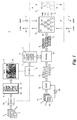
- Fig. 1 shows a semantic text processing method and system 1 which uses a first set 2 of first text documents 3 to train a first neural network 4.
- the first neural network 4 is of the self organizing map (SOM) type and creates a self organizing map (SOM) 5. From SOM 5 patterns 6 representative of keywords 7 occurring in the first document set 2 are created by reverse-indexing stage 8 and put into a pattern dictionary 9.
- the pattern dictionary 9 is used in a translation stage 10 to translate keyword sequences 11 extracted from a second set 12 of second documents 13 into pattern sequences 14. With the pattern sequences 14 a second neural network 15 is trained.
- the second neural network 15 is preferably (although not necessarily) of the memory prediction framework (MPF) or hierarchical temporal memory (HTM) type.
- the trained second neural network 15 can then be used either to semantically classify text translated with pattern dictionary 9, see path 16, or to semantically predict text translated with pattern dictionary 9, see path 17.
- a further optional application of the trained second neural network 15 is a hierarchical mapping, see paths 18, to an optional third neural network 19 which is similar in construction to the second neural network 15 but has been trained in a different language than the second neural network 15; node mappings 18 then represent semantic coincidences between semantic nodes 15' of first language network 15 and semantic nodes 19' of second language network 19.
- Fig. 2 shows a preprocessing and vectorisation step 20 to index and vectorise the first set 2 of first documents 3.
- step 20 from first set 2 a sequence of input vectors 21 is produced, one vector 21 for each first document 3, as an input training vector set or matrix (table) 22 applied to the input layer 23 of the first neural network (SOM) 4.
- SOM neural network 4 usually comprises only two layers, an input layer 23 and an output layer 24 of neurons (nodes), interconnected by connections 25 the weights of which can be represented by a weighting matrix.
- SOM neural networks can be trained with unsupervised learning algorithms wherein the weights of the weighting matrix are self-adapting to the input vectors, to specifically map nodes of the input layer 23 to nodes of the output layer 24 while taking into account the spatial relation of the nodes of the output layer 24 in a two- (or more-) dimensional map 5. This leads to maps 5 which cluster input vectors 21 with regard to their similarity, yielding regions 26 in the map 5 with highly similar input vectors 21.
- the weights of the weighting matrix are self-adapting to the input vectors, to specifically map nodes of the input layer 23 to nodes of the output layer 24 while taking into account the spatial relation of the nodes of the output layer 24 in a two- (or more-) dimensional map 5.
- the first set 2 and the first documents 3 therein are chosen in such a number and granularity, e.g. length of the individual documents 3, that each of the documents 3 contains a number of e.g. 1 to 10, 1 to 20, 1 to 100, 1 to 1000 or more, preferably about 250 to 500, keywords 7 in a semantic context.
- a first document 3 may contain - in addition to the keywords 7 - words of little semantic relevance (such as articles "a", "the” et cet.) which are usually called stop words, here non-keywords.
- the number of documents 3 in the set 2 is chosen to obtain a representative corpus of semantic contexts for the keywords 7, e.g. thousands or millions of documents 3.
- about 1.000.000 documents 3, each comprising about 250 to 500 keywords 7, are used as first document set 2.
- the length (keyword count) of the documents 3 should be fairly consistent over the entire set 2, keywords 7 should be evenly and sparsely distributed over the documents 3 in the set 2, and each document 3 should contain a good diversity of keywords 7.
- Keywords 7 can also be roots (lemma) of words, so that e.g. for singular and plural forms (cat/cats) or different verb forms (go/going) only one keyword 7 is taken into account. Keywords 7 can thus be both, specific word forms and/or roots of words. After stripping-off words incapable of building significant keywords, such as stop words, each document 3 can be considered a "bag of words" of keywords 7.
- a suitable first set 2 can e.g. be generated from articles from an encyclopaedia, such as Wikipedia ® articles obtained under the "Creative Commons Attribution Licence” or the “GNU Free Documentation Licence” of the Wikipedia ® project.
- Such encyclopaedic articles, or entries, respectively, can be parsed according to chapters, paragraphs et cet. into documents 3 of fairly uniform length, so that each document 3 contains keywords 7 in a semantic, i.e. meaningful context.
- an index of all keywords 7 occurring in the entire set 2 is generated and spread horizontally as column heading 27 of the matrix (table) 22.
- document identifications (“id") of all documents 3 in the entire set 2 are spread vertically as row heading 28 in matrix 22.
- a flag or binary "1” is put into the respective cell of the matrix 22.
- matrix 22 one horizontal row represents a normalized "keyword-occurrence" vector 21 for one document 3, wherein a binary "1" at a specific keyword position (column position) indicates that this keyword 7 is contained in the "bag of words” of this document 3; and a binary "0" indicates the absence of this keyword 7 in this document 3.
- each column in matrix 22 shows for a specific keyword 7 all those documents 3 marked with a binary "1" which contain that keyword 7.
- the input vectors 21, i.e. rows of the matrix 22 representing the documents 3 and their keyword contents, are then supplied successively to the input layer 23 of SOM neural nework 4 to train it. This means that if a first set 2 of e.g. 1.000.000 first documents 3 is used, a training run of 1.000.000 vector inputs is supplied to the first neural network 4.
- the output layer 24 of SOM neural network 4 has produced map 5 in which documents 3 (vectors 21) have been mapped to individual points ("pixels") X i /Y j of the map 5, clustered by similarity.
- Fig. 3 shows an example of a map 5.
- Documents 3 are identified in map 5 e.g. by their document id from row heading 28.
- SOM clustering process different documents 3 which contain very similar keywords 7, e.g. which coincide in 80% or 90% of their keywords, are mapped in close spatial relationship to one another, thus forming semantic "regions" 26 a , 26 b , 26 c , 26 d , et cet. in map 5.
- map points X i /Y j referencing that specific document id are determined from map 5.
- This set ⁇ X i /Y j ⁇ of map points represents the pattern 6.
- the pattern 6 is representative of the semantic contexts in which that given keyword 7 occurred in the first set 2:
- the spatial (i.e. two-or more-dimensional) distribution of the points X i /Y j in the pattern 6 reflects those specific semantic regions 26 a , 26 b ,... in the context of which the keyword 7 occurred in the first set 2.
- Pattern 6 can be coded as a binary map 31, see Fig. 4 , and also regarded as a binary "fingerprint” or "footprint” of the semantic meaning of a keyword 7 in a document collection such as the first set 2. If the first set 2 covers a vast variety of meaningful texts in a specific language, the pattern 6 is of high semantic significance of the keyword 7.
- the spatial resolution of the pattern 6 can be equal to or lower than the spatial resolution of the SOM neural network 4 and/or the map 5.
- the spatial resolution of the latter can be chosen according to the required analysis performance:
- map 5 can be composed of millions of map points X i /Y j , e.g. 1000 x 1000 points, and pattern 6 can have the same resolution for high precision, or a coarser resolution for lower memory requirements.
- Fig. 5 shows an example of two different patterns 6 (depicted as black dots) overlying map 5 for ease of comprehension.
- regions 26 a , 26 b , 26 c , 26 d have been manually labeled with semantic classes such as "predator”, “felines”, “my pet” and “canis". This is only for exemplary purposes; it should be noted that such a labeling is not necessary for the correct functioning of the present methods, processes and algorithms which only require the spatial SOM distribution of the map points X i /Y j .
- Pattern dictionary 9 constitutes a first, intermediate product of the method and system 1 of Fig. 1 .
- Pattern dictionary 9 can be stored ("embodied") on a computer-readable medium, e.g. a data carrier such as a hard disk, CD-Rom, DVD, memory chip, internet server, a cloud storage in the Internet et cet.
- pattern dictionary 9 may involve the use of massive processing power for training the first neural network 4 and reverse-indexing the map 5. Therefore, pattern dictionary 9 is preferably precomputed once and can then be used repeatedly in the further stages and modules of the processes and machines of Fig 1 .
- different pattern dictionaries 9 can be precomputed and distributed on computer-readable media to those entities which perform the subsequent stages and implement the subsequent modules of the processes and machines which will now be described in detail.
- the second (target) neural network 15 is trained for semantic text processing on the basis of the second set 12 of second documents 13.
- the second set 12 could be identical with the first set 2, in practice the second set 12 may comprise a subset of the first set 2 or indeed quite different application-specific second documents 13.
- the first set 2 comprises a vast number of general ("encyclopaedic") documents 3
- the second set 12 can be an application-specific user data set of user documents 13 which e.g. need to be searched by semantic query (keyword) expansion, classified or sorted by semantic classification, or translated by semantic translation.
- Pattern dictionary 9 then reflects background semantic knowledge about general semantic meanings of keywords 7, while second neural network 15 performs an in-depth analysis of a user data set 12 of user documents 13.
- User documents 13 can e.g. be records from product databases, web-pages, patent documents, medical records or all sorts of data collections which shall be analysed by the second neural network 15.
- One prerequisite for the second set 12 is that it has been written in the same language as the first set 2 since otherwise the pattern dictionary 9 could not be applied meaningfully to the second set 12.
- keywords 7 occurring in the second documents 13 of the second set 12 are comprised within the entire set, i.e. index 27, of keywords 7 in the first set 2 so that keywords 7 of the second set 12 are listed and can be looked-up in the pattern dictionary 9.
- stop words or non-keywords can either be disregarded or incorporated as predetermined or preconfigured symbolic patterns such as those shown in Fig. 6 .
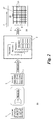
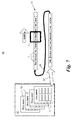
- Figs. 1 , 7 and 8 show this extraction stage in detail. Basically it would be sufficient if only one or a few second document(s) 13 is/are sequentially read, word by word, line by line, paragraph by paragraph, chapter by chapter, document by document, in a normal reading sequence 33. Stop words or non-keywords could be skipped (or dealt with separately as described in Fig. 6 ), and the result is one sequence 11 of keywords 7.
- the second set 12 is split into a multitude of second documents 13, and one sequence 11 of keywords 7 is generated for one document 13. The sequences 11 are then used - e.g. in the order of the documents 13, they originate from - as training input for the second neural network 15.
- Training of the second neural network 15 can be accelerated if an optional sorting of the documents 13 and/or sequences 11 is performed in extraction stage 32.
- a "complexity factor" CompF is calculated in a process 34 for each document 13 of the second set 12.
- the complexity factor CompF can be calculated on the basis of one or more of the following parameters of a document 13:
- the documents 13 can then be sorted (ranked) according to ascending complexity factor CompF, see Fig. 8 .
- the second neural network 15 is fed with sequences 11 of increasing complexity, e.g. primitive or simple sequences 11 or sequences 11 with a modest diversity of keywords 7 are used first, and sequences 11 with complicated semantic and linguistic structures are used last for training the second neural network 15.
- each keyword 7 in a sequence 11 is looked-up in pattern dictionary 9, the associated pattern 6 is retrieved, and the results are sequences 14 of patterns 6, one pattern sequence 14 for each document 13.
- Each pattern sequence 14 can be considered as a time-series or "movie clip" of patterns 6 representing the semantic context of keywords 7 in a document 13 within the global semantic context of the first document set 2.
- each pattern sequence 14 representing a time-lined training vector (matrix) for the second neural network 15.
- Fig. 9 shows an example of the translation stage 10 translating a keyword sequence 11 into a pattern sequence 14.
- the second neural network 15 is fed successively with pattern sequences 14 to learn the patterns 6 and their sequences over time.
- all types of neural networks adapted for time-series processing of patterns can be used, e.g. feed-forward pattern processing neural networks with sliding windows.
- recurrent or at least partly recurrent neural networks, with or without delay loops can be used to learn and remember temporal sequences, e.g. self- or auto-associative neural networks.
- the second neural network 15 is also hierarchical in that upper layers of the hierarchy comprise fewer nodes (neurons) than lower layers of the hierarchy.
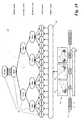
- Fig. 10 shows an example of such a hierarchical network, in particular a memory prediction framework (MPF) which also contains lateral (intra-layer, see Fig. 1 ) and vertical (cross-layer) feedback connections for learning temporal sequences.
- MPF memory prediction framework
- a preferred form of such a MPF architecture are neural networks of the hierarchical temporal memory (HTM) type. Theory and implementation details of MPF and HTM neural networks are described in the above cited papers.
- MPF and HTM networks develop - in trained configuration - neurons (nodes) within the hierarchy which stand for abstractions (classifications) of firing patterns of neurons (nodes) in lower layers of the hierarchy.
- MPF and HTM networks can learn, remember and classify streams of patterns and both recognise pattern sequences as well as predict possible future pattern sequences from past pattern sequences.
- new patterns 6 or new pattern sequences 14 can be applied as new inputs to a "classification" input at lower hierarchy levels of the network 15, to obtain semantic classifications/abstractions as patterns from the outputs of nodes at higher hierarchy levels, see route 16; or, new patterns 6 or new pattern sequences 14 can be fed into "prediction” inputs at higher hierarchy levels and predicted patterns (semantical predictions) can be obtained from lower levels in the hierarchy, see route 17.
- pattern dictionary 9 is used on both routes 16, 17 to translate any new "query" sequence of keywords 7 into a “query” sequence 14, and to retranslate the output patterns of the neural network 15 into "resulting" classification or prediction keywords 7.
- Classification route 16 can thus be used to classify a query text by the trained neural network 15 using the pattern dictionary 9 on the input and output interfaces of the network 15; and prediction route 17 can be used to predict keywords from a query text, e.g. to "expand” a query keyword phrase to further (predicted) keywords 7 which semantically match the query phrase, using pattern dictionary 9 at both input and output interfaces of the neural network 15.
- a further application of the trained neural network 15 is shown in dotted lines in Fig. 1 .
- a third neural network 19 trained with sets 2, 12 of documents 3, 13 in a different language than that in which the neural network 15 had been trained is nodewise mapped - if corresponding classification nodes 15', 19' within the networks 15 and 19 can be identified - to the second network 15.
- On the inputs and outputs 38, 39 of the third neural network 19 a further pattern dictionary 9, generated from a document set 2 in the language of the third network 19, is used. In this way, semantic translations between two languages can be obtained by semantic mapping of two trained MPF or HTM networks 15, 19.
- first neural network 4 could also generate three- or more-dimensional maps 5, thus leading to three- or more-dimensional patterns 6 in pattern dictionary 9, subsequently to three- or more-dimensional pattern sequences 14 and second and third neural networks 15, 19 working in three or more dimensions.
Landscapes
- Engineering & Computer Science (AREA)
- Theoretical Computer Science (AREA)
- Physics & Mathematics (AREA)
- General Health & Medical Sciences (AREA)
- Health & Medical Sciences (AREA)
- Artificial Intelligence (AREA)
- General Physics & Mathematics (AREA)
- Computational Linguistics (AREA)
- General Engineering & Computer Science (AREA)
- Biomedical Technology (AREA)
- Evolutionary Computation (AREA)
- Molecular Biology (AREA)
- Computing Systems (AREA)
- Data Mining & Analysis (AREA)
- Biophysics (AREA)
- Mathematical Physics (AREA)
- Software Systems (AREA)
- Life Sciences & Earth Sciences (AREA)
- Audiology, Speech & Language Pathology (AREA)
- Machine Translation (AREA)
- Information Retrieval, Db Structures And Fs Structures Therefor (AREA)
Priority Applications (14)
| Application Number | Priority Date | Filing Date | Title |
|---|---|---|---|
| EP12159672.0A EP2639749B1 (en) | 2012-03-15 | 2012-03-15 | Methods, apparatus and products for semantic processing of text |
| ES12159672.0T ES2611177T3 (es) | 2012-03-15 | 2012-03-15 | Procedimientos, aparatos y productos para el procesamiento semántico de texto |
| DK12159672.0T DK2639749T3 (en) | 2012-03-15 | 2012-03-15 | Methods, apparatus and products for semantic processing of text |
| PL12159672T PL2639749T3 (pl) | 2012-03-15 | 2012-03-15 | Sposoby, urządzenia i produkty do przetwarzania semantycznego tekstu |
| PT121596720T PT2639749T (pt) | 2012-03-15 | 2012-03-15 | Métodos, aparelhos e produtos para processamento semântico de texto |
| HUE12159672A HUE030528T2 (en) | 2012-03-15 | 2012-03-15 | Process, equipment and product for semantic processing of texts |
| US13/441,138 US8886579B2 (en) | 2012-03-15 | 2012-04-06 | Methods, apparatus and products for semantic processing of text |
| HK14112709.1A HK1199319B (en) | 2012-03-15 | 2013-02-22 | Methods, apparatus and products for semantic processing of text |
| JP2014561350A JP6265921B2 (ja) | 2012-03-15 | 2013-02-22 | テキストの意味的処理のための方法、装置および製品 |
| CN201380013771.8A CN104169948B (zh) | 2012-03-15 | 2013-02-22 | 用于文本语义处理的方法、装置及产品 |
| KR1020147023545A KR102055656B1 (ko) | 2012-03-15 | 2013-02-22 | 텍스트의 의미 처리를 위한 방법, 장치 및 제품 |
| PCT/EP2013/053546 WO2013135474A1 (en) | 2012-03-15 | 2013-02-22 | Methods, apparatus and products for semantic processing of text |
| CA2864946A CA2864946C (en) | 2012-03-15 | 2013-02-22 | Methods, apparatus and products for semantic processing of text |
| AU2013231564A AU2013231564B2 (en) | 2012-03-15 | 2013-02-22 | Methods, apparatus and products for semantic processing of text |
Applications Claiming Priority (1)
| Application Number | Priority Date | Filing Date | Title |
|---|---|---|---|
| EP12159672.0A EP2639749B1 (en) | 2012-03-15 | 2012-03-15 | Methods, apparatus and products for semantic processing of text |
Publications (2)
| Publication Number | Publication Date |
|---|---|
| EP2639749A1 EP2639749A1 (en) | 2013-09-18 |
| EP2639749B1 true EP2639749B1 (en) | 2016-11-16 |
Family
ID=47747635
Family Applications (1)
| Application Number | Title | Priority Date | Filing Date |
|---|---|---|---|
| EP12159672.0A Active EP2639749B1 (en) | 2012-03-15 | 2012-03-15 | Methods, apparatus and products for semantic processing of text |
Country Status (13)
| Country | Link |
|---|---|
| US (1) | US8886579B2 (pl) |
| EP (1) | EP2639749B1 (pl) |
| JP (1) | JP6265921B2 (pl) |
| KR (1) | KR102055656B1 (pl) |
| CN (1) | CN104169948B (pl) |
| AU (1) | AU2013231564B2 (pl) |
| CA (1) | CA2864946C (pl) |
| DK (1) | DK2639749T3 (pl) |
| ES (1) | ES2611177T3 (pl) |
| HU (1) | HUE030528T2 (pl) |
| PL (1) | PL2639749T3 (pl) |
| PT (1) | PT2639749T (pl) |
| WO (1) | WO2013135474A1 (pl) |
Cited By (3)
| Publication number | Priority date | Publication date | Assignee | Title |
|---|---|---|---|---|
| US10572221B2 (en) | 2016-10-20 | 2020-02-25 | Cortical.Io Ag | Methods and systems for identifying a level of similarity between a plurality of data representations |
| US11734332B2 (en) | 2020-11-19 | 2023-08-22 | Cortical.Io Ag | Methods and systems for reuse of data item fingerprints in generation of semantic maps |
| US12147459B2 (en) | 2014-08-07 | 2024-11-19 | Cortical.Io Ag | Methods and systems for mapping data items to sparse distributed representations |
Families Citing this family (84)
| Publication number | Priority date | Publication date | Assignee | Title |
|---|---|---|---|---|
| US20140297269A1 (en) * | 2011-11-14 | 2014-10-02 | Koninklijke Philips N.V. | Associating parts of a document based on semantic similarity |
| US9594831B2 (en) | 2012-06-22 | 2017-03-14 | Microsoft Technology Licensing, Llc | Targeted disambiguation of named entities |
| US9959340B2 (en) * | 2012-06-29 | 2018-05-01 | Microsoft Technology Licensing, Llc | Semantic lexicon-based input method editor |
| US9202464B1 (en) * | 2012-10-18 | 2015-12-01 | Google Inc. | Curriculum learning for speech recognition |
| US9639521B2 (en) | 2013-08-09 | 2017-05-02 | Omni Ai, Inc. | Cognitive neuro-linguistic behavior recognition system for multi-sensor data fusion |
| CN105378699B (zh) * | 2013-11-27 | 2018-12-18 | Ntt都科摩公司 | 基于机器学习的自动任务分类 |
| CN104731811B (zh) * | 2013-12-20 | 2018-10-09 | 北京师范大学珠海分校 | 一种面向大规模动态短文本的聚类信息演化分析方法 |
| GB201403505D0 (en) * | 2014-02-27 | 2014-04-16 | Aistemos Ltd | Database update and analytics system |
| US10885089B2 (en) * | 2015-08-21 | 2021-01-05 | Cortical.Io Ag | Methods and systems for identifying a level of similarity between a filtering criterion and a data item within a set of streamed documents |
| US10394851B2 (en) | 2014-08-07 | 2019-08-27 | Cortical.Io Ag | Methods and systems for mapping data items to sparse distributed representations |
| CN105404632B (zh) * | 2014-09-15 | 2020-07-31 | 深港产学研基地 | 基于深度神经网络对生物医学文本序列化标注的系统和方法 |
| US10417525B2 (en) | 2014-09-22 | 2019-09-17 | Samsung Electronics Co., Ltd. | Object recognition with reduced neural network weight precision |
| US10833954B2 (en) * | 2014-11-19 | 2020-11-10 | Battelle Memorial Institute | Extracting dependencies between network assets using deep learning |
| US10331782B2 (en) * | 2014-11-19 | 2019-06-25 | Lexisnexis, A Division Of Reed Elsevier Inc. | Systems and methods for automatic identification of potential material facts in documents |
| CN104375989A (zh) * | 2014-12-01 | 2015-02-25 | 国家电网公司 | 自然语言文本关键词关联网络构建系统 |
| US10409909B2 (en) * | 2014-12-12 | 2019-09-10 | Omni Ai, Inc. | Lexical analyzer for a neuro-linguistic behavior recognition system |
| US10409910B2 (en) | 2014-12-12 | 2019-09-10 | Omni Ai, Inc. | Perceptual associative memory for a neuro-linguistic behavior recognition system |
| US10418762B2 (en) * | 2015-03-09 | 2019-09-17 | ZPE Systems, Inc. | High serial port count infrastructure management device |
| US9703394B2 (en) * | 2015-03-24 | 2017-07-11 | Google Inc. | Unlearning techniques for adaptive language models in text entry |
| US10019477B2 (en) * | 2015-04-06 | 2018-07-10 | International Business Machines Corporation | Anticipatory query completion by pattern detection |
| US9678664B2 (en) | 2015-04-10 | 2017-06-13 | Google Inc. | Neural network for keyboard input decoding |
| US11544570B2 (en) | 2015-06-30 | 2023-01-03 | Arizona Board Of Regents On Behalf Of Arizona State University | Method and apparatus for large scale machine learning |
| US10268684B1 (en) * | 2015-09-28 | 2019-04-23 | Amazon Technologies, Inc. | Optimized statistical machine translation system with rapid adaptation capability |
| US9959271B1 (en) | 2015-09-28 | 2018-05-01 | Amazon Technologies, Inc. | Optimized statistical machine translation system with rapid adaptation capability |
| US10185713B1 (en) * | 2015-09-28 | 2019-01-22 | Amazon Technologies, Inc. | Optimized statistical machine translation system with rapid adaptation capability |
| CN108135520B (zh) * | 2015-10-23 | 2021-06-04 | 美国西门子医疗解决公司 | 从功能性大脑图像生成心理内容的自然语言表示 |
| KR102449614B1 (ko) | 2015-11-06 | 2022-09-29 | 삼성전자주식회사 | 자동 번역의 품질 평가 장치 및 방법, 자동 번역 장치, 분산 표현 모델 구축 장치 |
| KR102195627B1 (ko) * | 2015-11-17 | 2020-12-28 | 삼성전자주식회사 | 통역 모델 생성 장치 및 방법과, 자동 통역 장치 및 방법 |
| US10878043B2 (en) | 2016-01-22 | 2020-12-29 | Ebay Inc. | Context identification for content generation |
| US10073834B2 (en) * | 2016-02-09 | 2018-09-11 | International Business Machines Corporation | Systems and methods for language feature generation over multi-layered word representation |
| GB201611380D0 (en) * | 2016-06-30 | 2016-08-17 | Microsoft Technology Licensing Llc | Artificial neural network with side input for language modelling and prediction |
| WO2018023356A1 (en) * | 2016-08-01 | 2018-02-08 | Microsoft Technology Licensing, Llc | Machine translation method and apparatus |
| CN108073563A (zh) * | 2016-11-08 | 2018-05-25 | 北京国双科技有限公司 | 数据的生成方法及装置 |
| WO2018093935A1 (en) | 2016-11-15 | 2018-05-24 | Google Llc | Training neural networks using a clustering loss |
| GB201620235D0 (en) * | 2016-11-29 | 2017-01-11 | Microsoft Technology Licensing Llc | Neural network data entry system |
| US10691998B2 (en) * | 2016-12-20 | 2020-06-23 | Google Llc | Generating templated documents using machine learning techniques |
| KR20180077689A (ko) * | 2016-12-29 | 2018-07-09 | 주식회사 엔씨소프트 | 자연어 생성 장치 및 방법 |
| KR102399535B1 (ko) | 2017-03-23 | 2022-05-19 | 삼성전자주식회사 | 음성 인식을 위한 학습 방법 및 장치 |
| KR102342066B1 (ko) * | 2017-06-21 | 2021-12-22 | 삼성전자주식회사 | 뉴럴 네트워크 모델을 이용한 기계 번역 방법, 장치 및 그 장치를 학습시키기 위한 방법 |
| US11238339B2 (en) * | 2017-08-02 | 2022-02-01 | International Business Machines Corporation | Predictive neural network with sentiment data |
| KR102410825B1 (ko) | 2017-08-14 | 2022-06-20 | 삼성전자주식회사 | 문장의 도메인 판단 방법 및 장치 |
| CN109522913B (zh) * | 2017-09-18 | 2022-07-19 | 同方威视技术股份有限公司 | 检查方法和检查设备以及计算机可读介质 |
| US10616253B2 (en) * | 2017-11-13 | 2020-04-07 | International Business Machines Corporation | Anomaly detection using cognitive computing |
| KR102535411B1 (ko) * | 2017-11-16 | 2023-05-23 | 삼성전자주식회사 | 메트릭 학습 기반의 데이터 분류와 관련된 장치 및 그 방법 |
| RU2678716C1 (ru) * | 2017-12-11 | 2019-01-31 | Общество с ограниченной ответственностью "Аби Продакшн" | Использование автоэнкодеров для обучения классификаторов текстов на естественном языке |
| US10395169B1 (en) * | 2018-07-06 | 2019-08-27 | Global Elmeast Inc. | Self learning neural knowledge artifactory for autonomous decision making |
| US11474978B2 (en) * | 2018-07-06 | 2022-10-18 | Capital One Services, Llc | Systems and methods for a data search engine based on data profiles |
| US11610107B2 (en) | 2018-07-06 | 2023-03-21 | Global Elmeast Inc. | Methodology to automatically incorporate feedback to enable self learning in neural learning artifactories |
| US10311058B1 (en) | 2018-07-06 | 2019-06-04 | Global Elmeast Inc. | Techniques for processing neural queries |
| CN108984539B (zh) * | 2018-07-17 | 2022-05-17 | 苏州大学 | 基于模拟未来时刻的翻译信息的神经机器翻译方法 |
| US11238233B2 (en) | 2018-07-18 | 2022-02-01 | The Dun And Bradstreet Corporation | Artificial intelligence engine for generating semantic directions for websites for automated entity targeting to mapped identities |
| US11138392B2 (en) * | 2018-07-26 | 2021-10-05 | Google Llc | Machine translation using neural network models |
| US10803182B2 (en) | 2018-12-03 | 2020-10-13 | Bank Of America Corporation | Threat intelligence forest for distributed software libraries |
| CN109858017B (zh) * | 2018-12-24 | 2023-07-07 | 北京天融信网络安全技术有限公司 | 一种数据处理方法及电子设备 |
| WO2020240996A1 (ja) * | 2019-05-27 | 2020-12-03 | ソニー株式会社 | 情報処理装置、情報処理方法、および、プログラム |
| CN110287300A (zh) * | 2019-06-27 | 2019-09-27 | 谷晓佳 | 中英文相关词汇获取方法及装置 |
| KR102824645B1 (ko) | 2019-07-31 | 2025-06-24 | 삼성전자주식회사 | 음성 인식을 위한 인공신경망에서의 디코딩 방법 및 장치 |
| RU2723293C1 (ru) * | 2019-08-29 | 2020-06-09 | Общество с ограниченной ответственностью "Аби Продакшн" | Идентификация полей и таблиц в документах с помощью нейронных сетей с использованием глобального контекста документа |
| RU2721189C1 (ru) | 2019-08-29 | 2020-05-18 | Общество с ограниченной ответственностью "Аби Продакшн" | Детектирование разделов таблиц в документах нейронными сетями с использованием глобального контекста документа |
| US20210334461A1 (en) * | 2019-08-30 | 2021-10-28 | Lg Electronics Inc. | Artificial intelligence apparatus and method for generating named entity table |
| KR102865616B1 (ko) * | 2019-09-16 | 2025-09-30 | 도큐가미, 인크. | 문서 간 지능형 저작 및 처리 보조기 |
| KR20210044559A (ko) | 2019-10-15 | 2021-04-23 | 삼성전자주식회사 | 출력 토큰 결정 방법 및 장치 |
| RU2737720C1 (ru) * | 2019-11-20 | 2020-12-02 | Общество с ограниченной ответственностью "Аби Продакшн" | Извлечение полей с помощью нейронных сетей без использования шаблонов |
| CN111144127B (zh) * | 2019-12-25 | 2023-07-25 | 科大讯飞股份有限公司 | 文本语义识别方法及其模型的获取方法及相关装置 |
| WO2021178750A1 (en) * | 2020-03-05 | 2021-09-10 | Belmont Technology Inc. | Recursive evidence extraction method |
| CH717260A2 (fr) | 2020-03-26 | 2021-09-30 | Neoinstinct Sa Artificial Common Sense | Méthode mise en oeuvre par ordinateur pour la recherche analogique de documents. |
| CN111524208A (zh) * | 2020-04-24 | 2020-08-11 | 广东博智林机器人有限公司 | 海报排布模型的训练方法、海报生成方法及装置 |
| KR20210141115A (ko) | 2020-05-15 | 2021-11-23 | 삼성전자주식회사 | 발화 시간 추정 방법 및 장치 |
| CN111797893B (zh) * | 2020-05-26 | 2021-09-14 | 华为技术有限公司 | 一种神经网络的训练方法、图像分类系统及相关设备 |
| EP4200717A2 (en) | 2020-08-24 | 2023-06-28 | Unlikely Artificial Intelligence Limited | A computer implemented method for the automated analysis or use of data |
| RU2768209C1 (ru) | 2020-11-13 | 2022-03-23 | Общество с ограниченной ответственностью «Аби Продакшн» | Кластеризация документов |
| CN112417322B (zh) * | 2020-12-10 | 2024-03-22 | 长春理工大学 | 一种面向兴趣点名称文本的类型判别方法及系统 |
| RU2760471C1 (ru) | 2020-12-17 | 2021-11-25 | АБИ Девелопмент Инк. | Способы и системы идентификации полей в документе |
| CN112528655B (zh) * | 2020-12-18 | 2023-12-29 | 北京百度网讯科技有限公司 | 关键词生成方法、装置、设备及存储介质 |
| US12141841B2 (en) * | 2021-04-30 | 2024-11-12 | Zeta Global Corp. | Generating accompanying text creative |
| US11977854B2 (en) | 2021-08-24 | 2024-05-07 | Unlikely Artificial Intelligence Limited | Computer implemented methods for the automated analysis or use of data, including use of a large language model |
| US11989507B2 (en) | 2021-08-24 | 2024-05-21 | Unlikely Artificial Intelligence Limited | Computer implemented methods for the automated analysis or use of data, including use of a large language model |
| US12067362B2 (en) | 2021-08-24 | 2024-08-20 | Unlikely Artificial Intelligence Limited | Computer implemented methods for the automated analysis or use of data, including use of a large language model |
| US11989527B2 (en) | 2021-08-24 | 2024-05-21 | Unlikely Artificial Intelligence Limited | Computer implemented methods for the automated analysis or use of data, including use of a large language model |
| US12073180B2 (en) | 2021-08-24 | 2024-08-27 | Unlikely Artificial Intelligence Limited | Computer implemented methods for the automated analysis or use of data, including use of a large language model |
| CN114997160B (zh) * | 2022-04-18 | 2024-11-26 | 中国科学院空天信息创新研究院 | 自然语言处理方法、装置、设备、介质及程序产品 |
| CN116363686B (zh) * | 2023-06-02 | 2023-08-11 | 深圳大学 | 一种在线社交网络视频平台来源检测方法及其相关设备 |
| CN116595271B (zh) * | 2023-07-17 | 2023-09-12 | 湖南谛图科技有限公司 | 基于深度学习的空间地图信息推荐方法 |
| CN120823938B (zh) * | 2025-09-16 | 2025-11-28 | 西安几何数字信息技术有限公司 | 一种基于ai的病历智能解析与预填报系统 |
Family Cites Families (13)
| Publication number | Priority date | Publication date | Assignee | Title |
|---|---|---|---|---|
| JPH1185773A (ja) * | 1997-09-01 | 1999-03-30 | N T T Data:Kk | 情報検索方法及び装置、情報検索システム、記録媒体 |
| KR100426382B1 (ko) * | 2000-08-23 | 2004-04-08 | 학교법인 김포대학 | 엔트로피 정보와 베이지안 에스오엠을 이용한 문서군집기반의 순위조정 방법 |
| JP2003006190A (ja) * | 2001-06-27 | 2003-01-10 | Nri & Ncc Co Ltd | 辞書作成装置、自動翻訳装置、辞書作成方法、自動翻訳方法、辞書作成プログラム、自動翻訳プログラム、辞書作成プログラムを記録したコンピュータ読み取り可能な記録媒体、自動翻訳プログラムを記録したコンピュータ読み取り可能な記録媒体及び翻訳文の製造方法 |
| GB2393271A (en) * | 2002-09-19 | 2004-03-24 | Sony Uk Ltd | Information storage and retrieval |
| CN1489086A (zh) * | 2002-10-10 | 2004-04-14 | 莎 刘 | 一种语义约定全文翻译系统和方法 |
| GB2395805A (en) * | 2002-11-27 | 2004-06-02 | Sony Uk Ltd | Information retrieval |
| US7739208B2 (en) | 2005-06-06 | 2010-06-15 | Numenta, Inc. | Trainable hierarchical memory system and method |
| US20070192267A1 (en) | 2006-02-10 | 2007-08-16 | Numenta, Inc. | Architecture of a hierarchical temporal memory based system |
| EP2087437A4 (en) | 2006-11-28 | 2010-10-27 | Numenta Inc | TIME-BASED COMMON-BASED PACKAGE |
| WO2008106615A1 (en) | 2007-02-28 | 2008-09-04 | Numenta, Inc. | Spatio-temporal learning algorithms in hierarchical temporal networks |
| CN101251862B (zh) * | 2008-03-25 | 2010-06-09 | 北京百问百答网络技术有限公司 | 一种基于内容的问题自动分类方法及其系统 |
| DE112010004087T5 (de) * | 2009-12-09 | 2012-10-18 | International Business Machines Corporation | Verfahren, Computersystem und Computerprogramm zum Durchsuchen von Dokumentdaten unter Verwendung eines Suchbegriffs |
| US9189745B2 (en) | 2010-03-15 | 2015-11-17 | Numenta, Inc. | Temporal memory using sparse distributed representation |
-
2012
- 2012-03-15 HU HUE12159672A patent/HUE030528T2/en unknown
- 2012-03-15 EP EP12159672.0A patent/EP2639749B1/en active Active
- 2012-03-15 ES ES12159672.0T patent/ES2611177T3/es active Active
- 2012-03-15 PL PL12159672T patent/PL2639749T3/pl unknown
- 2012-03-15 DK DK12159672.0T patent/DK2639749T3/en active
- 2012-03-15 PT PT121596720T patent/PT2639749T/pt unknown
- 2012-04-06 US US13/441,138 patent/US8886579B2/en active Active
-
2013
- 2013-02-22 JP JP2014561350A patent/JP6265921B2/ja active Active
- 2013-02-22 KR KR1020147023545A patent/KR102055656B1/ko active Active
- 2013-02-22 CN CN201380013771.8A patent/CN104169948B/zh active Active
- 2013-02-22 WO PCT/EP2013/053546 patent/WO2013135474A1/en not_active Ceased
- 2013-02-22 AU AU2013231564A patent/AU2013231564B2/en active Active
- 2013-02-22 CA CA2864946A patent/CA2864946C/en active Active
Non-Patent Citations (1)
| Title |
|---|
| NIKOLAOS AMPAZIS ET AL: "LSISOM - A Latent Semantic Indexing Approach to Self-Organizing Maps of Document Collections", NEURAL PROCESSING LETTERS, KLUWER ACADEMIC PUBLISHERS, BO, vol. 19, no. 2, 1 April 2004 (2004-04-01), pages 157 - 173, XP019260954, ISSN: 1573-773X * |
Cited By (7)
| Publication number | Priority date | Publication date | Assignee | Title |
|---|---|---|---|---|
| US12147459B2 (en) | 2014-08-07 | 2024-11-19 | Cortical.Io Ag | Methods and systems for mapping data items to sparse distributed representations |
| US10572221B2 (en) | 2016-10-20 | 2020-02-25 | Cortical.Io Ag | Methods and systems for identifying a level of similarity between a plurality of data representations |
| US11216248B2 (en) | 2016-10-20 | 2022-01-04 | Cortical.Io Ag | Methods and systems for identifying a level of similarity between a plurality of data representations |
| US11714602B2 (en) | 2016-10-20 | 2023-08-01 | Cortical.Io Ag | Methods and systems for identifying a level of similarity between a plurality of data representations |
| US12141543B2 (en) | 2016-10-20 | 2024-11-12 | Cortical.Io Ag | Methods and systems for identifying a level of similarity between a plurality of data representations |
| US11734332B2 (en) | 2020-11-19 | 2023-08-22 | Cortical.Io Ag | Methods and systems for reuse of data item fingerprints in generation of semantic maps |
| US12197485B2 (en) | 2020-11-19 | 2025-01-14 | Cortical.Io Ag | Methods and systems for reuse of data item fingerprints in generation of semantic maps |
Also Published As
| Publication number | Publication date |
|---|---|
| AU2013231564A1 (en) | 2014-10-02 |
| WO2013135474A1 (en) | 2013-09-19 |
| PT2639749T (pt) | 2017-01-18 |
| HUE030528T2 (en) | 2017-05-29 |
| CA2864946C (en) | 2019-05-14 |
| CN104169948B (zh) | 2017-08-15 |
| PL2639749T3 (pl) | 2017-05-31 |
| ES2611177T3 (es) | 2017-05-05 |
| KR102055656B1 (ko) | 2020-01-22 |
| US8886579B2 (en) | 2014-11-11 |
| KR20140138648A (ko) | 2014-12-04 |
| JP6265921B2 (ja) | 2018-01-24 |
| EP2639749A1 (en) | 2013-09-18 |
| CN104169948A (zh) | 2014-11-26 |
| US20130246322A1 (en) | 2013-09-19 |
| DK2639749T3 (en) | 2017-02-27 |
| JP2015515674A (ja) | 2015-05-28 |
| AU2013231564B2 (en) | 2017-11-23 |
| HK1199319A1 (en) | 2015-06-26 |
| CA2864946A1 (en) | 2013-09-19 |
Similar Documents
| Publication | Publication Date | Title |
|---|---|---|
| AU2013231564B2 (en) | Methods, apparatus and products for semantic processing of text | |
| Lu et al. | CNN-BiLSTM-Attention: A multi-label neural classifier for short texts with a small set of labels | |
| Terechshenko et al. | A comparison of methods in political science text classification: Transfer learning language models for politics | |
| CN111914097A (zh) | 基于注意力机制和多层级特征融合的实体抽取方法与装置 | |
| Thakur et al. | A review on text based emotion recognition system | |
| Wijanto et al. | Topic Modeling for Scientific Articles: Exploring Optimal Hyperparameter Tuning in BERT. | |
| Köksal et al. | Improving automated Turkish text classification with learning‐based algorithms | |
| Shahade et al. | Deep learning approach-based hybrid fine-tuned Smith algorithm with Adam optimiser for multilingual opinion mining | |
| Hamzaoui et al. | A comprehensive survey on arabic text classification: progress, challenges, and techniques Um estudo abrangente sobre classificação de texto em árabe: progresso, desafios e tecnicas Un estudio exhaustivo sobre la clasificación de texto en árabe: progresos | |
| Mouratidis et al. | Comparative study of recurrent and dense neural networks for classifying maritime terms | |
| Sethi et al. | Summarization of legal texts by using deep learning approaches | |
| Nouhaila et al. | Arabic sentiment analysis based on 1-D convolutional neural network | |
| Rana et al. | NewsNet: A comprehensive neural network hybrid model for efficient Bangla news categorization | |
| Siam et al. | Bangla news classification employing deep learning | |
| Souri et al. | Neural network dealing with Arabic language | |
| Mogadala et al. | Knowledge guided attention and inference for describing images containing unseen objects | |
| Lata et al. | Text clustering and classification techniques using data mining | |
| Atasoglu et al. | Embedding-Based Machine Learning Approach for Automatic Classification of Turkish News Articles | |
| Elfaik et al. | Sentiment analysis in social networks using convolutional neural networks | |
| Gupta et al. | Classifier Approach for Word Sense Disambiguation System with a Focus to Improve the Translation Accuracy | |
| Sengottaiyan et al. | Implementing Automated Reasoning in Natural Language Processing | |
| Nemakhavhani | Exploring cross-lingual learning techniques for advancing Tshivenda NLP coverage | |
| Gurkan et al. | Open-Domain Question Answering with Topic Clustering | |
| Roy | Studies on bengali text classification using machine learning and deep learning | |
| Pareek et al. | Optimized Sentiment Classification in Low-Resource Language Processing using Element-Wise Attention Gated Recurrent Unit with Bayesian Optimization |
Legal Events
| Date | Code | Title | Description |
|---|---|---|---|
| PUAI | Public reference made under article 153(3) epc to a published international application that has entered the european phase |
Free format text: ORIGINAL CODE: 0009012 |
|
| 17P | Request for examination filed |
Effective date: 20130124 |
|
| AK | Designated contracting states |
Kind code of ref document: A1 Designated state(s): AL AT BE BG CH CY CZ DE DK EE ES FI FR GB GR HR HU IE IS IT LI LT LU LV MC MK MT NL NO PL PT RO RS SE SI SK SM TR |
|
| AX | Request for extension of the european patent |
Extension state: BA ME |
|
| RAP1 | Party data changed (applicant data changed or rights of an application transferred) |
Owner name: CORTICAL . IO GMBH |
|
| GRAP | Despatch of communication of intention to grant a patent |
Free format text: ORIGINAL CODE: EPIDOSNIGR1 |
|
| RIC1 | Information provided on ipc code assigned before grant |
Ipc: G06N 3/08 20060101AFI20160614BHEP Ipc: G06N 3/04 20060101ALI20160614BHEP Ipc: G06F 17/28 20060101ALN20160614BHEP |
|
| INTG | Intention to grant announced |
Effective date: 20160720 |
|
| GRAS | Grant fee paid |
Free format text: ORIGINAL CODE: EPIDOSNIGR3 |
|
| GRAA | (expected) grant |
Free format text: ORIGINAL CODE: 0009210 |
|
| AK | Designated contracting states |
Kind code of ref document: B1 Designated state(s): AL AT BE BG CH CY CZ DE DK EE ES FI FR GB GR HR HU IE IS IT LI LT LU LV MC MK MT NL NO PL PT RO RS SE SI SK SM TR |
|
| REG | Reference to a national code |
Ref country code: GB Ref legal event code: FG4D |
|
| REG | Reference to a national code |
Ref country code: CH Ref legal event code: EP |
|
| REG | Reference to a national code |
Ref country code: IE Ref legal event code: FG4D |
|
| REG | Reference to a national code |
Ref country code: AT Ref legal event code: REF Ref document number: 846550 Country of ref document: AT Kind code of ref document: T Effective date: 20161215 |
|
| REG | Reference to a national code |
Ref country code: DE Ref legal event code: R096 Ref document number: 602012025340 Country of ref document: DE |
|
| REG | Reference to a national code |
Ref country code: DE Ref legal event code: R096 Ref document number: 602012025340 Country of ref document: DE |
|
| REG | Reference to a national code |
Ref country code: CH Ref legal event code: NV Representative=s name: PATWIL AG, CH |
|
| REG | Reference to a national code |
Ref country code: PT Ref legal event code: SC4A Ref document number: 2639749 Country of ref document: PT Date of ref document: 20170118 Kind code of ref document: T Free format text: AVAILABILITY OF NATIONAL TRANSLATION Effective date: 20170109 |
|
| REG | Reference to a national code |
Ref country code: NL Ref legal event code: FP |
|
| REG | Reference to a national code |
Ref country code: DK Ref legal event code: T3 Effective date: 20170220 |
|
| PG25 | Lapsed in a contracting state [announced via postgrant information from national office to epo] |
Ref country code: LV Free format text: LAPSE BECAUSE OF FAILURE TO SUBMIT A TRANSLATION OF THE DESCRIPTION OR TO PAY THE FEE WITHIN THE PRESCRIBED TIME-LIMIT Effective date: 20161116 |
|
| REG | Reference to a national code |
Ref country code: SE Ref legal event code: TRGR |
|
| REG | Reference to a national code |
Ref country code: FR Ref legal event code: PLFP Year of fee payment: 6 |
|
| REG | Reference to a national code |
Ref country code: LT Ref legal event code: MG4D |
|
| REG | Reference to a national code |
Ref country code: NO Ref legal event code: T2 Effective date: 20161116 |
|
| PG25 | Lapsed in a contracting state [announced via postgrant information from national office to epo] |
Ref country code: LT Free format text: LAPSE BECAUSE OF FAILURE TO SUBMIT A TRANSLATION OF THE DESCRIPTION OR TO PAY THE FEE WITHIN THE PRESCRIBED TIME-LIMIT Effective date: 20161116 Ref country code: GR Free format text: LAPSE BECAUSE OF FAILURE TO SUBMIT A TRANSLATION OF THE DESCRIPTION OR TO PAY THE FEE WITHIN THE PRESCRIBED TIME-LIMIT Effective date: 20170217 |
|
| REG | Reference to a national code |
Ref country code: ES Ref legal event code: FG2A Ref document number: 2611177 Country of ref document: ES Kind code of ref document: T3 Effective date: 20170505 |
|
| REG | Reference to a national code |
Ref country code: HU Ref legal event code: AG4A Ref document number: E030528 Country of ref document: HU |
|
| PG25 | Lapsed in a contracting state [announced via postgrant information from national office to epo] |
Ref country code: HR Free format text: LAPSE BECAUSE OF FAILURE TO SUBMIT A TRANSLATION OF THE DESCRIPTION OR TO PAY THE FEE WITHIN THE PRESCRIBED TIME-LIMIT Effective date: 20161116 Ref country code: RS Free format text: LAPSE BECAUSE OF FAILURE TO SUBMIT A TRANSLATION OF THE DESCRIPTION OR TO PAY THE FEE WITHIN THE PRESCRIBED TIME-LIMIT Effective date: 20161116 |
|
| PG25 | Lapsed in a contracting state [announced via postgrant information from national office to epo] |
Ref country code: EE Free format text: LAPSE BECAUSE OF FAILURE TO SUBMIT A TRANSLATION OF THE DESCRIPTION OR TO PAY THE FEE WITHIN THE PRESCRIBED TIME-LIMIT Effective date: 20161116 Ref country code: RO Free format text: LAPSE BECAUSE OF FAILURE TO SUBMIT A TRANSLATION OF THE DESCRIPTION OR TO PAY THE FEE WITHIN THE PRESCRIBED TIME-LIMIT Effective date: 20161116 Ref country code: SK Free format text: LAPSE BECAUSE OF FAILURE TO SUBMIT A TRANSLATION OF THE DESCRIPTION OR TO PAY THE FEE WITHIN THE PRESCRIBED TIME-LIMIT Effective date: 20161116 |
|
| REG | Reference to a national code |
Ref country code: DE Ref legal event code: R097 Ref document number: 602012025340 Country of ref document: DE |
|
| PG25 | Lapsed in a contracting state [announced via postgrant information from national office to epo] |
Ref country code: BG Free format text: LAPSE BECAUSE OF FAILURE TO SUBMIT A TRANSLATION OF THE DESCRIPTION OR TO PAY THE FEE WITHIN THE PRESCRIBED TIME-LIMIT Effective date: 20170216 Ref country code: SM Free format text: LAPSE BECAUSE OF FAILURE TO SUBMIT A TRANSLATION OF THE DESCRIPTION OR TO PAY THE FEE WITHIN THE PRESCRIBED TIME-LIMIT Effective date: 20161116 |
|
| PLBE | No opposition filed within time limit |
Free format text: ORIGINAL CODE: 0009261 |
|
| STAA | Information on the status of an ep patent application or granted ep patent |
Free format text: STATUS: NO OPPOSITION FILED WITHIN TIME LIMIT |
|
| 26N | No opposition filed |
Effective date: 20170817 |
|
| PG25 | Lapsed in a contracting state [announced via postgrant information from national office to epo] |
Ref country code: MC Free format text: LAPSE BECAUSE OF FAILURE TO SUBMIT A TRANSLATION OF THE DESCRIPTION OR TO PAY THE FEE WITHIN THE PRESCRIBED TIME-LIMIT Effective date: 20161116 Ref country code: SI Free format text: LAPSE BECAUSE OF FAILURE TO SUBMIT A TRANSLATION OF THE DESCRIPTION OR TO PAY THE FEE WITHIN THE PRESCRIBED TIME-LIMIT Effective date: 20161116 |
|
| PG25 | Lapsed in a contracting state [announced via postgrant information from national office to epo] |
Ref country code: LU Free format text: LAPSE BECAUSE OF NON-PAYMENT OF DUE FEES Effective date: 20170315 |
|
| REG | Reference to a national code |
Ref country code: FR Ref legal event code: PLFP Year of fee payment: 7 |
|
| REG | Reference to a national code |
Ref country code: CH Ref legal event code: NV Representative=s name: KAMINSKI HARMANN PATENTANWAELTE AG, CH |
|
| PG25 | Lapsed in a contracting state [announced via postgrant information from national office to epo] |
Ref country code: MT Free format text: LAPSE BECAUSE OF NON-PAYMENT OF DUE FEES Effective date: 20170315 |
|
| REG | Reference to a national code |
Ref country code: AT Ref legal event code: UEP Ref document number: 846550 Country of ref document: AT Kind code of ref document: T Effective date: 20161116 |
|
| PG25 | Lapsed in a contracting state [announced via postgrant information from national office to epo] |
Ref country code: CY Free format text: LAPSE BECAUSE OF NON-PAYMENT OF DUE FEES Effective date: 20161116 |
|
| PG25 | Lapsed in a contracting state [announced via postgrant information from national office to epo] |
Ref country code: MK Free format text: LAPSE BECAUSE OF FAILURE TO SUBMIT A TRANSLATION OF THE DESCRIPTION OR TO PAY THE FEE WITHIN THE PRESCRIBED TIME-LIMIT Effective date: 20161116 |
|
| PG25 | Lapsed in a contracting state [announced via postgrant information from national office to epo] |
Ref country code: TR Free format text: LAPSE BECAUSE OF FAILURE TO SUBMIT A TRANSLATION OF THE DESCRIPTION OR TO PAY THE FEE WITHIN THE PRESCRIBED TIME-LIMIT Effective date: 20161116 |
|
| PG25 | Lapsed in a contracting state [announced via postgrant information from national office to epo] |
Ref country code: AL Free format text: LAPSE BECAUSE OF FAILURE TO SUBMIT A TRANSLATION OF THE DESCRIPTION OR TO PAY THE FEE WITHIN THE PRESCRIBED TIME-LIMIT Effective date: 20161116 Ref country code: IS Free format text: LAPSE BECAUSE OF FAILURE TO SUBMIT A TRANSLATION OF THE DESCRIPTION OR TO PAY THE FEE WITHIN THE PRESCRIBED TIME-LIMIT Effective date: 20170316 |
|
| P01 | Opt-out of the competence of the unified patent court (upc) registered |
Effective date: 20230427 |
|
| PGFP | Annual fee paid to national office [announced via postgrant information from national office to epo] |
Ref country code: NL Payment date: 20240320 Year of fee payment: 13 |
|
| PGFP | Annual fee paid to national office [announced via postgrant information from national office to epo] |
Ref country code: HU Payment date: 20240318 Year of fee payment: 13 Ref country code: FI Payment date: 20240319 Year of fee payment: 13 Ref country code: CZ Payment date: 20240301 Year of fee payment: 13 Ref country code: PT Payment date: 20240305 Year of fee payment: 13 |
|
| PGFP | Annual fee paid to national office [announced via postgrant information from national office to epo] |
Ref country code: SE Payment date: 20240321 Year of fee payment: 13 Ref country code: PL Payment date: 20240311 Year of fee payment: 13 Ref country code: NO Payment date: 20240227 Year of fee payment: 13 Ref country code: IT Payment date: 20240329 Year of fee payment: 13 Ref country code: DK Payment date: 20240321 Year of fee payment: 13 Ref country code: BE Payment date: 20240320 Year of fee payment: 13 |
|
| PGFP | Annual fee paid to national office [announced via postgrant information from national office to epo] |
Ref country code: CH Payment date: 20240401 Year of fee payment: 13 |
|
| PGFP | Annual fee paid to national office [announced via postgrant information from national office to epo] |
Ref country code: ES Payment date: 20240417 Year of fee payment: 13 |
|
| PGFP | Annual fee paid to national office [announced via postgrant information from national office to epo] |
Ref country code: DE Payment date: 20250319 Year of fee payment: 14 |
|
| PGFP | Annual fee paid to national office [announced via postgrant information from national office to epo] |
Ref country code: IE Payment date: 20250319 Year of fee payment: 14 |
|
| PGFP | Annual fee paid to national office [announced via postgrant information from national office to epo] |
Ref country code: AT Payment date: 20250227 Year of fee payment: 14 |
|
| PGFP | Annual fee paid to national office [announced via postgrant information from national office to epo] |
Ref country code: FR Payment date: 20250324 Year of fee payment: 14 |
|
| PGFP | Annual fee paid to national office [announced via postgrant information from national office to epo] |
Ref country code: GB Payment date: 20250324 Year of fee payment: 14 |
|
| PG25 | Lapsed in a contracting state [announced via postgrant information from national office to epo] |
Ref country code: PT Free format text: LAPSE BECAUSE OF NON-PAYMENT OF DUE FEES Effective date: 20250915 |
|
| PG25 | Lapsed in a contracting state [announced via postgrant information from national office to epo] |
Ref country code: FI Free format text: LAPSE BECAUSE OF NON-PAYMENT OF DUE FEES Effective date: 20250315 |
|
| PG25 | Lapsed in a contracting state [announced via postgrant information from national office to epo] |
Ref country code: CZ Free format text: LAPSE BECAUSE OF NON-PAYMENT OF DUE FEES Effective date: 20250315 |
|
| REG | Reference to a national code |
Ref country code: CH Ref legal event code: H13 Free format text: ST27 STATUS EVENT CODE: U-0-0-H10-H13 (AS PROVIDED BY THE NATIONAL OFFICE) Effective date: 20251023 |
|
| REG | Reference to a national code |
Ref country code: DK Ref legal event code: EBP Effective date: 20250331 |
|
| REG | Reference to a national code |
Ref country code: SE Ref legal event code: EUG |
|
| REG | Reference to a national code |
Ref country code: NL Ref legal event code: MM Effective date: 20250401 |
|
| PG25 | Lapsed in a contracting state [announced via postgrant information from national office to epo] |
Ref country code: HU Free format text: LAPSE BECAUSE OF NON-PAYMENT OF DUE FEES Effective date: 20250316 |
|
| REG | Reference to a national code |
Ref country code: BE Ref legal event code: MM Effective date: 20250331 |
|
| PG25 | Lapsed in a contracting state [announced via postgrant information from national office to epo] |
Ref country code: NL Free format text: LAPSE BECAUSE OF NON-PAYMENT OF DUE FEES Effective date: 20250401 |
|
| PG25 | Lapsed in a contracting state [announced via postgrant information from national office to epo] |
Ref country code: NO Free format text: LAPSE BECAUSE OF NON-PAYMENT OF DUE FEES Effective date: 20250331 |
|
| PG25 | Lapsed in a contracting state [announced via postgrant information from national office to epo] |
Ref country code: IT Free format text: LAPSE BECAUSE OF NON-PAYMENT OF DUE FEES Effective date: 20250315 |
|
| PG25 | Lapsed in a contracting state [announced via postgrant information from national office to epo] |
Ref country code: BE Free format text: LAPSE BECAUSE OF NON-PAYMENT OF DUE FEES Effective date: 20250331 |
|
| PG25 | Lapsed in a contracting state [announced via postgrant information from national office to epo] |
Ref country code: CH Free format text: LAPSE BECAUSE OF NON-PAYMENT OF DUE FEES Effective date: 20250331 |
|
| PG25 | Lapsed in a contracting state [announced via postgrant information from national office to epo] |
Ref country code: SE Free format text: LAPSE BECAUSE OF NON-PAYMENT OF DUE FEES Effective date: 20250316 |
|
| PG25 | Lapsed in a contracting state [announced via postgrant information from national office to epo] |
Ref country code: DK Free format text: LAPSE BECAUSE OF NON-PAYMENT OF DUE FEES Effective date: 20250331 |
|
| REG | Reference to a national code |
Ref country code: ES Ref legal event code: FD2A Effective date: 20260504 |