EP2635307B1 - Pharmaceutical compositions - Google Patents
Pharmaceutical compositions Download PDFInfo
- Publication number
- EP2635307B1 EP2635307B1 EP11838664.8A EP11838664A EP2635307B1 EP 2635307 B1 EP2635307 B1 EP 2635307B1 EP 11838664 A EP11838664 A EP 11838664A EP 2635307 B1 EP2635307 B1 EP 2635307B1
- Authority
- EP
- European Patent Office
- Prior art keywords
- methyl
- group
- amino
- dissolution
- pharmaceutical composition
- Prior art date
- Legal status (The legal status is an assumption and is not a legal conclusion. Google has not performed a legal analysis and makes no representation as to the accuracy of the status listed.)
- Active
Links
- IUMIRZXMJNHBAE-BPARTEKVSA-N CC(NC(C1)[C@]1(CN1c2cc(F)c(CC(CC3)=CCN3C(COC)=O)cc2)OC1=O)=O Chemical compound CC(NC(C1)[C@]1(CN1c2cc(F)c(CC(CC3)=CCN3C(COC)=O)cc2)OC1=O)=O IUMIRZXMJNHBAE-BPARTEKVSA-N 0.000 description 1
- 0 C[C@@]1NC=C(CNCc(cc2)ccc2-c(ccc(N(CC(C*C(C)=O)O2)C2=O)c2)c2F)C1 Chemical compound C[C@@]1NC=C(CNCc(cc2)ccc2-c(ccc(N(CC(C*C(C)=O)O2)C2=O)c2)c2F)C1 0.000 description 1
Images


Classifications
-
- C—CHEMISTRY; METALLURGY
- C07—ORGANIC CHEMISTRY
- C07D—HETEROCYCLIC COMPOUNDS
- C07D413/00—Heterocyclic compounds containing two or more hetero rings, at least one ring having nitrogen and oxygen atoms as the only ring hetero atoms
- C07D413/02—Heterocyclic compounds containing two or more hetero rings, at least one ring having nitrogen and oxygen atoms as the only ring hetero atoms containing two hetero rings
- C07D413/12—Heterocyclic compounds containing two or more hetero rings, at least one ring having nitrogen and oxygen atoms as the only ring hetero atoms containing two hetero rings linked by a chain containing hetero atoms as chain links
-
- A—HUMAN NECESSITIES
- A61—MEDICAL OR VETERINARY SCIENCE; HYGIENE
- A61K—PREPARATIONS FOR MEDICAL, DENTAL OR TOILETRY PURPOSES
- A61K47/00—Medicinal preparations characterised by the non-active ingredients used, e.g. carriers or inert additives; Targeting or modifying agents chemically bound to the active ingredient
- A61K47/30—Macromolecular organic or inorganic compounds, e.g. inorganic polyphosphates
-
- A—HUMAN NECESSITIES
- A61—MEDICAL OR VETERINARY SCIENCE; HYGIENE
- A61K—PREPARATIONS FOR MEDICAL, DENTAL OR TOILETRY PURPOSES
- A61K31/00—Medicinal preparations containing organic active ingredients
- A61K31/33—Heterocyclic compounds
- A61K31/395—Heterocyclic compounds having nitrogen as a ring hetero atom, e.g. guanethidine or rifamycins
- A61K31/41—Heterocyclic compounds having nitrogen as a ring hetero atom, e.g. guanethidine or rifamycins having five-membered rings with two or more ring hetero atoms, at least one of which being nitrogen, e.g. tetrazole
- A61K31/4192—1,2,3-Triazoles
-
- A—HUMAN NECESSITIES
- A61—MEDICAL OR VETERINARY SCIENCE; HYGIENE
- A61K—PREPARATIONS FOR MEDICAL, DENTAL OR TOILETRY PURPOSES
- A61K31/00—Medicinal preparations containing organic active ingredients
- A61K31/33—Heterocyclic compounds
- A61K31/395—Heterocyclic compounds having nitrogen as a ring hetero atom, e.g. guanethidine or rifamycins
- A61K31/41—Heterocyclic compounds having nitrogen as a ring hetero atom, e.g. guanethidine or rifamycins having five-membered rings with two or more ring hetero atoms, at least one of which being nitrogen, e.g. tetrazole
- A61K31/42—Oxazoles
- A61K31/421—1,3-Oxazoles, e.g. pemoline, trimethadione
-
- A—HUMAN NECESSITIES
- A61—MEDICAL OR VETERINARY SCIENCE; HYGIENE
- A61K—PREPARATIONS FOR MEDICAL, DENTAL OR TOILETRY PURPOSES
- A61K31/00—Medicinal preparations containing organic active ingredients
- A61K31/33—Heterocyclic compounds
- A61K31/395—Heterocyclic compounds having nitrogen as a ring hetero atom, e.g. guanethidine or rifamycins
- A61K31/535—Heterocyclic compounds having nitrogen as a ring hetero atom, e.g. guanethidine or rifamycins having six-membered rings with at least one nitrogen and one oxygen as the ring hetero atoms, e.g. 1,2-oxazines
- A61K31/5375—1,4-Oxazines, e.g. morpholine
-
- A—HUMAN NECESSITIES
- A61—MEDICAL OR VETERINARY SCIENCE; HYGIENE
- A61K—PREPARATIONS FOR MEDICAL, DENTAL OR TOILETRY PURPOSES
- A61K47/00—Medicinal preparations characterised by the non-active ingredients used, e.g. carriers or inert additives; Targeting or modifying agents chemically bound to the active ingredient
- A61K47/06—Organic compounds, e.g. natural or synthetic hydrocarbons, polyolefins, mineral oil, petrolatum or ozokerite
- A61K47/08—Organic compounds, e.g. natural or synthetic hydrocarbons, polyolefins, mineral oil, petrolatum or ozokerite containing oxygen, e.g. ethers, acetals, ketones, quinones, aldehydes, peroxides
- A61K47/14—Esters of carboxylic acids, e.g. fatty acid monoglycerides, medium-chain triglycerides, parabens or PEG fatty acid esters
-
- A—HUMAN NECESSITIES
- A61—MEDICAL OR VETERINARY SCIENCE; HYGIENE
- A61K—PREPARATIONS FOR MEDICAL, DENTAL OR TOILETRY PURPOSES
- A61K47/00—Medicinal preparations characterised by the non-active ingredients used, e.g. carriers or inert additives; Targeting or modifying agents chemically bound to the active ingredient
- A61K47/06—Organic compounds, e.g. natural or synthetic hydrocarbons, polyolefins, mineral oil, petrolatum or ozokerite
- A61K47/22—Heterocyclic compounds, e.g. ascorbic acid, tocopherol or pyrrolidones
-
- A—HUMAN NECESSITIES
- A61—MEDICAL OR VETERINARY SCIENCE; HYGIENE
- A61K—PREPARATIONS FOR MEDICAL, DENTAL OR TOILETRY PURPOSES
- A61K9/00—Medicinal preparations characterised by special physical form
- A61K9/20—Pills, tablets, discs, rods
- A61K9/2004—Excipients; Inactive ingredients
- A61K9/2013—Organic compounds, e.g. phospholipids, fats
- A61K9/2018—Sugars, or sugar alcohols, e.g. lactose, mannitol; Derivatives thereof, e.g. polysorbates
-
- A—HUMAN NECESSITIES
- A61—MEDICAL OR VETERINARY SCIENCE; HYGIENE
- A61K—PREPARATIONS FOR MEDICAL, DENTAL OR TOILETRY PURPOSES
- A61K9/00—Medicinal preparations characterised by special physical form
- A61K9/20—Pills, tablets, discs, rods
- A61K9/2004—Excipients; Inactive ingredients
- A61K9/2022—Organic macromolecular compounds
- A61K9/205—Polysaccharides, e.g. alginate, gums; Cyclodextrin
-
- A—HUMAN NECESSITIES
- A61—MEDICAL OR VETERINARY SCIENCE; HYGIENE
- A61K—PREPARATIONS FOR MEDICAL, DENTAL OR TOILETRY PURPOSES
- A61K9/00—Medicinal preparations characterised by special physical form
- A61K9/20—Pills, tablets, discs, rods
- A61K9/2004—Excipients; Inactive ingredients
- A61K9/2022—Organic macromolecular compounds
- A61K9/205—Polysaccharides, e.g. alginate, gums; Cyclodextrin
- A61K9/2054—Cellulose; Cellulose derivatives, e.g. hydroxypropyl methylcellulose
-
- A—HUMAN NECESSITIES
- A61—MEDICAL OR VETERINARY SCIENCE; HYGIENE
- A61K—PREPARATIONS FOR MEDICAL, DENTAL OR TOILETRY PURPOSES
- A61K9/00—Medicinal preparations characterised by special physical form
- A61K9/20—Pills, tablets, discs, rods
- A61K9/2004—Excipients; Inactive ingredients
- A61K9/2022—Organic macromolecular compounds
- A61K9/205—Polysaccharides, e.g. alginate, gums; Cyclodextrin
- A61K9/2059—Starch, including chemically or physically modified derivatives; Amylose; Amylopectin; Dextrin
-
- A—HUMAN NECESSITIES
- A61—MEDICAL OR VETERINARY SCIENCE; HYGIENE
- A61K—PREPARATIONS FOR MEDICAL, DENTAL OR TOILETRY PURPOSES
- A61K9/00—Medicinal preparations characterised by special physical form
- A61K9/48—Preparations in capsules, e.g. of gelatin, of chocolate
- A61K9/4841—Filling excipients; Inactive ingredients
- A61K9/4858—Organic compounds
-
- A—HUMAN NECESSITIES
- A61—MEDICAL OR VETERINARY SCIENCE; HYGIENE
- A61K—PREPARATIONS FOR MEDICAL, DENTAL OR TOILETRY PURPOSES
- A61K9/00—Medicinal preparations characterised by special physical form
- A61K9/48—Preparations in capsules, e.g. of gelatin, of chocolate
- A61K9/4841—Filling excipients; Inactive ingredients
- A61K9/4866—Organic macromolecular compounds
-
- A—HUMAN NECESSITIES
- A61—MEDICAL OR VETERINARY SCIENCE; HYGIENE
- A61P—SPECIFIC THERAPEUTIC ACTIVITY OF CHEMICAL COMPOUNDS OR MEDICINAL PREPARATIONS
- A61P31/00—Antiinfectives, i.e. antibiotics, antiseptics, chemotherapeutics
-
- A—HUMAN NECESSITIES
- A61—MEDICAL OR VETERINARY SCIENCE; HYGIENE
- A61P—SPECIFIC THERAPEUTIC ACTIVITY OF CHEMICAL COMPOUNDS OR MEDICINAL PREPARATIONS
- A61P31/00—Antiinfectives, i.e. antibiotics, antiseptics, chemotherapeutics
- A61P31/04—Antibacterial agents
-
- C—CHEMISTRY; METALLURGY
- C07—ORGANIC CHEMISTRY
- C07D—HETEROCYCLIC COMPOUNDS
- C07D263/00—Heterocyclic compounds containing 1,3-oxazole or hydrogenated 1,3-oxazole rings
- C07D263/02—Heterocyclic compounds containing 1,3-oxazole or hydrogenated 1,3-oxazole rings not condensed with other rings
- C07D263/08—Heterocyclic compounds containing 1,3-oxazole or hydrogenated 1,3-oxazole rings not condensed with other rings having one double bond between ring members or between a ring member and a non-ring member
- C07D263/16—Heterocyclic compounds containing 1,3-oxazole or hydrogenated 1,3-oxazole rings not condensed with other rings having one double bond between ring members or between a ring member and a non-ring member with hetero atoms or with carbon atoms having three bonds to hetero atoms with at the most one bond to halogen, e.g. ester or nitrile radicals, directly attached to ring carbon atoms
- C07D263/18—Oxygen atoms
- C07D263/20—Oxygen atoms attached in position 2
- C07D263/22—Oxygen atoms attached in position 2 with only hydrogen atoms or radicals containing only hydrogen and carbon atoms, directly attached to other ring carbon atoms
-
- C—CHEMISTRY; METALLURGY
- C07—ORGANIC CHEMISTRY
- C07D—HETEROCYCLIC COMPOUNDS
- C07D413/00—Heterocyclic compounds containing two or more hetero rings, at least one ring having nitrogen and oxygen atoms as the only ring hetero atoms
- C07D413/14—Heterocyclic compounds containing two or more hetero rings, at least one ring having nitrogen and oxygen atoms as the only ring hetero atoms containing three or more hetero rings
Definitions
- the present invention relates to carrier systems useful for pharmaceutical compositions. These carriers comprise an emulsifier. In further embodiments, these carriers also comprise a polymeric dissolution aid. These carriers are useful for delivering pharmaceutical actives such as antimicrobial agents.
- the present invention also relates to pharmaceutical compositions comprising an antimicrobial agent, methods for making pharmaceutical compositions, and to methods for treating, preventing, or reducing the risk of microbial infections.
- An appropriate pharmaceutical carrier system is generally a requirement for the safe and effective delivery of a pharmaceutical active.
- the entire pharmaceutical composition i.e. the pharmaceutical drug active formulated in a pharmaceutical carrier, can affect the bioavailability and also the pharmacokinetics and pharmacodynamics of the active. It is therefore important that a pharmaceutical composition be carefully developed and manufactured to deliver the desired pharmaceutical active in a safe and effective manner.
- antimicrobial agents for treating microbial infections can present special challenges.
- the antimicrobial agent be administered to the patient to achieve systemic concentrations in the bloodstream or target organs above a minimum inhibitory concentration (i.e. the MIC) and for a sufficient time against the particular microbial organism or organisms being targeted. Consequently, an antimicrobial agent that otherwise exhibits an effective antimicrobial profile in vitro can be ineffective, or even harmful, unless properly formulated for in vivo administration.
- US 2009/061009 discloses injectable drug-deliver systems comprising nanoparticles of a biodegradable polymer with incorporated antibacterial drug.
- WO 03/004001 discloses the preparation of pharmaceutical compositions containing a therapeutically and/or prophylactically active substance.
- US 2003/077297 discloses pharmaceutical formulations and systems for delivery of active agents.
- US 2007/208069 discloses pharmaceutical formulations of an anhydrous crystal form of an estrogen receptor modulator.
- the present invention relates to a pharmaceutical composition
- a pharmaceutical composition comprising an antimicrobial agent and a pharmaceutical carrier which comprises an emulsifier and a polymeric dissolution aid, wherein said antimicrobial agent is selected from the group consisting of: (S)-N-((3-(2-fluoro-4'-(((3-fluoropropyl)amino)methyl)-[1,1'-biphenyl]-4-yl)-2-oxooxazolidin-5-yl)methyl)acetamide, (S)-N-((3-(2-fluoro-4'-(((3-fluoropropyl)(hydroxy)amino)methyl)-[1,1'-biphenyl]-4-yl)-2-oxooxazolidin-5-yl)methyl)acetamide, (S)-N-((3-(4'-(((((1H-1,2,3-triazol-5-yl)methyl)amino)methyl)
- the present invention provides a pharmaceutical composition of the present invention for use in method of treating a microbial infection in a patient comprising administering a pharmaceutically effective amount of a pharmaceutical composition of the present invention.
- the present invention provides a pharmaceutical composition of the present invention for use in method of preventing a microbial infection in a patient comprising administering a prophylactically effective amount of a pharmaceutical composition of the present invention.
- the present invention provides a pharmaceutical composition of the present invention for use in method of reducing the risk of a microbial infection in a patient comprising administering a prophylactically effective amount of a pharmaceutical composition of the present invention.
- the present invention provides compositions useful for treating, preventing, or reducing the risk of a microbial infection in a patient.
- the present invention provides a composition for use wherein the composition, compared to a control composition, provides at least a 5% improvement in dissolution in a two step dissolution testing system.
- the present invention provides a composition for use wherein the composition, compared to a control composition, provides at least a 5% improvement in dissolution in a two step dissolution testing testing, wherein the two step dissolution system comprises measuring the dissolution in a first step in a simulated gastric environment of about pH 4 for up to 30 minutes followed by measuring the dissolution in a second step in a simulated gastric environment of about pH 5.4 to about 6.5 for up to about 60 minutes.
- the present disclosure relates to carrier systems useful for pharmaceutical compositions.
- the present disclosure relates to a carrier system for a pharmaceutical composition comprising an emulsifier, and in further embodiments also comprising a polymeric dissolution aid.
- carrier or “carrier system” means one or more compatible substances that are suitable for delivering, containing, or “carrying” a pharmaceutical active ingredient for administration to a patient or subject.
- patient or “subject”, as used herein, means a human or animal (in the case of an animal, more typically a mammal such as domesticated mammal, or animals such as poultry animals and fish and other seafood or freshwater food creatures) that would be considered to be in need of the pharmaceutical compositions of the present invention or of the methods of treating, preventing, or reducing the risk of a microbial infection.
- an effective amount refers to an amount of a pharmaceutical active compound, or a combination of compounds, for example an antimicrobial agent or agents, when administered alone or in combination, to treat, prevent, or reduce the risk of a disease state or condition, for example a microbial infection.
- the term also refers to an amount of a pharmaceutical composition containing an active compound or combination of compounds.
- an effective amount refers to an amount of the compound present in a formulation given to a recipient patient or subject sufficient to elicit biological activity, for example, anti-infective activity, such as e.g., anti-microbial activity or anti-bacterial activity.
- the phrase "pharmaceutically acceptable” refers to those active compounds, materials, compositions, carriers, and/or dosage forms which are, within the scope of sound medical judgment, suitable for use in contact with the tissues of human beings and animals without excessive toxicity, irritation, allergic response, or other problems or complications, commensurate with a reasonable benefit/risk ratio.
- the term "pharmaceutically effective amount” refers to an amount of a pharmaceutical active compound, or a combination of compounds, for example an antimicrobial agent or agents, when administered alone or in combination, to treat, prevent, or reduce the risk of a disease state or condition, for example a microbial infection.
- the term also refers to an amount of a pharmaceutical composition containing an active compound or combination of compounds.
- a pharmaceutically effective amount refers to an amount of the pharmaceutical active present in a pharmaceutical composition or formulation of the present invention or on a medical device containing a composition or formulation of the present invention given to a recipient patient or subject sufficient to elicit biological activity, for example, activity against a microbial infection.
- prophylactically effective amount means an effective amount of a pharmaceutical active compound, or a combination of compounds, for example an antimicrobial agent or agents, when administered alone or in combination, to prevent, or reduce the risk of a disease state or condition, for example a microbial infection -- in other words, an amount to give a preventative or prophylactic effect.
- the term also refers to an amount of a pharmaceutical composition containing an active compound or combination of compounds.
- treating means to cure an already present disease state or condition, e.g. a microbial infection in a patient or subject. Treating can also include inhibiting, i.e. arresting the development of a disease state or condition, e.g. a microbial infection, and relieving or ameliorating, i.e. causing regression of the disease state or condition, e.g. a microbial infection.
- preventing means, to completely or almost completely stop a disease state or condition, e.g. a microbial infection, from occurring in a patient or subject, especially when the patient or subject is predisposed to such or at risk of contracting a disease state or condition, e.g., a microbial infection.
- Preventing can also include inhibiting, i.e. arresting the development, of a disease state or condition, e.g., a microbial infection, and relieving or ameliorating, i.e. causing regression of the disease state or condition, e.g., a microbial infection, for example when the disease state or condition, e.g., a microbial infection, may already be present.
- reducing the risk of means to lower the likelihood or probability of a disease state or condition, e.g., a microbial infection, from occurring in a patient or subject, especially when the patient or subject is predisposed to such or at risk of contracting a disease state or condition, e.g., a microbial infection.
- tablette is intended to encompass compressed pharmaceutical dosages formulations of all shapes and sizes whether coated or uncoated.
- capsule is intended to encompass pharmaceutical dosages forms enclosed in a shell, e.g. a gelatin shell such as a soft gelatin or hard gelatin capsule.
- the chemical compounds described herein can have asymmetric centers.
- pharmaceutically acceptable salts refer to derivatives of the pharmaceutical active compounds wherein the parent compound is modified by making acid or base salts thereof.
- pharmaceutically acceptable salts include, but are not limited to, mineral or organic acid salts of basic residues such as amines, alkali or organic salts of acidic residues such as carboxylic acids, and the like.
- the pharmaceutically acceptable salts include the conventional non-toxic salts or the quaternary ammonium salts of the parent compound formed, for example, from non-toxic inorganic or organic acids.
- such conventional non-toxic salts include, but are not limited to, those derived from inorganic and organic acids selected from 2-acetoxybenzoic, 2-hydroxyethane sulfonic, acetic, ascorbic, benzene sulfonic, benzoic, bicarbonic, carbonic, citric, edetic, ethane disulfonic, ethane sulfonic, fumaric, glucoheptonic, gluconic, glutamic, glycolic, glycollyarsanilic, hexylresorcinic, hydrabamic, hydrobromic, hydrochloric, hydroiodic, hydroxymaleic, hydroxynaphthoic, isethionic, lactic, lactobionic, lauryl sulfonic, maleic, malic, mandelic, methane sulfonic, napsylic, nitric, oxalic, pamoic, pantothenic, phenylacetic, phosphoric
- the pharmaceutically acceptable salts of the present invention can be synthesized from a parent compound that contains a basic or acidic moiety by conventional chemical methods.
- such salts can be prepared by reacting the free acid or base forms of these compounds with a stoichiometric amount of the appropriate base or acid in water or in an organic solvent, or in a mixture of the two; generally, non-aqueous media like ether, ethyl acetate, ethanol, isopropanol, or acetonitrile are preferred. Lists of suitable salts are found in Remington's Pharmaceutical Sciences, 18th ed.
- salts can include, but are not limited to, the hydrochloride and acetate salts of the aliphatic amine-containing, hydroxyl amine-containing, and imine-containing compounds of the present invention.
- the compounds of the present invention can exist in either hydrated or unhydrated (the anhydrous) form or as solvates with other solvent molecules.
- hydrates include monohydrates, dihydrates, etc.
- solvates include ethanol solvates, acetone solvates, etc.
- the compounds of the present invention can also be prepared as esters, for example pharmaceutically acceptable esters.
- a carboxylic acid function group in a compound can be converted to its corresponding ester, e.g., a methyl, ethyl, or other ester.
- an alcohol group in a compound can be converted to its corresponding ester, e.g., an acetate, propionate, or other ester.
- the compounds of the present invention can also be prepared as prodrugs, for example pharmaceutically acceptable prodrugs. Since prodrugs are known to enhance numerous desirable qualities of pharmaceuticals (e.g., solubility, bioavailability, manufacturing, etc.) the compounds of the present invention can be delivered in prodrug form. Thus, the present invention is intended to cover prodrugs of the presently claimed compounds, methods of delivering the same and compositions containing the same. "Prodrugs" are intended to include any covalently bonded carriers that release an active parent drug of the present invention in vivo when such prodrug is administered to a mammalian subject.
- Prodrugs the present invention are prepared by modifying functional groups present in the compound in such a way that the modifications are cleaved, either in routine manipulation or in vivo, to the parent compound.
- Prodrugs include compounds of the present invention wherein a hydroxy, amino, or sulfhydryl group is bonded to any group that, when the prodrug of the present invention is administered to a mammalian subject, cleaves to form a free hydroxyl, free amino, or free sulfhydryl group, respectively.
- Examples of prodrugs include, but are not limited to, acetate, formate, and benzoate derivatives of alcohol and amine functional groups in the compounds of the present invention.
- Solid compound and “stable structure” are meant to indicate a compound that is sufficiently robust to survive isolation, and as appropriate, purification from a reaction mixture, and formulation into an efficacious therapeutic agent.
- compositions are described as having, including, or comprising specific components, it is contemplated that compositions also consist essentially of, or consist of, the recited components.
- methods or processes are described as having, including, or comprising specific process steps, the processes also consist essentially of, or consist of, the recited processing steps.
- steps or order for performing certain actions is immaterial so long as the invention remains operable.
- two or more steps or actions can be conducted simultaneously.
- compositions of the present invention are provided.
- compositions of the present invention comprise the following essential and optional components.
- compositions of the present invention also comprise a pharmaceutical active, which is described further below.
- Suitable carrier components are described in e.g., Eds. R. C. Rowe, et al, Handbook of Pharmaceutical Excipients, Fifth Edition, Pharmaceutical Press (2006 ); Remington's Pharmaceutical Sciences, 18th ed. (Mack Publishing Company, 1990 ); and Remington: The Science and Practice of Pharmacy, 20th Edition, Baltimore, MD: Lippincott Williams & Wilkins, 2000 . Even though a functional category can be provided for many of these carrier components, such a functional category is not intended to limit the function or scope of the component, as one of ordinary skill in the art will recognize that a component can belong to more than one functional category and that the level of a specific component and the presence of other components can effect the functional properties of a component.
- compositions of the present invention in further embodiments further comprise an emulsifier.
- Useful emulsifier include polyglycolized glycerides (also known as polyglycolysed glycerides). These materials are generally surface active and depending on their exact composition have a range of melting points and hydrophilic/lipophilic balance ranges (HLBs). These materials are often further combined with a polyhydric alcohol, such as glycerol.
- the polyglycolized glycerides are mixtures of glycerides of fatty acids and of esters of polyoxyethylene with fatty acids. In these mixtures, the fatty acids are generally saturated or unsaturated C 8 -C 22 , for example C 8 -C 12 or C 16 -C 20 .
- the glycerides are generally monoglycerides, diglycerides, or triglycerides or mixtures thereof in any proportions.
- Polyglycolysed glycerides are marketed e.g., by Gattefosse under the trade names Labrafil, Labrosol, and Gelucire.
- the Gelucire polyglycolized glycerides are often designated with the melting point and HLB.
- Gelucire 53/10 refers to a material having a melting point of 53 °C and an HLB of 10.
- Gelucire materials useful herein include Gelucire 44/14 and Gelucire 50/13.
- Other emulsfiers useful herein include vitamin E TPGS, poloxamers, and lecithin. Vitamin E TPGC is also known as d- ⁇ -tocopheryl polyethylene glycol 1000 succinate.
- Ploxamers are known by the trade name Pluronics, and are nonionic triblock copolymers composed of a central hydrophobic chain of polyoxypropylene (poly(propylene oxide)) flanked by two hydrophilic chains of polyoxyethylene (poly(ethylene oxide)).
- the emulsifier can comprise from about 0.1 % to about 99.9% of the compositions of the present invention. In other embodiments, the emulsifier can comprise from about 1% to about 20%, from about 1 % to about 15%, and from about 1 % to about 10% of the compositions of the present invention.
- compositions of the present invention comprise a polymeric dissolution aid.
- polymeric dissolution aids include polymers of 1-ethenyl-2-pyrrolidinone; polyamine N-oxide polymers; copolymers of N-vinylpyrrolidone and N-vinylimidazole; polyvinyloxazolidones and polyvinylimidazoles or mixtures thereof.
- Particularly useful are polymers of 1-ethenyl-2-pyrrolidinone, especially the homopolymer.
- this homopolymer has a molecular weight range of about 2500 to 3,000,000.
- This homopolymer is known as polyvinylpyrollidone, PVP, or povidone and in other instances can function as a dissolution aid, disintegrant, suspending agent, or binder.
- the polymeric dissolution aid can comprise from about 0.1% to about 99.9% of the compositions of the present invention. In other embodiments, the polymeric dissolution aid can comprise from about 1 % to about 10%, from about 1% to about 5%, and from about 1% to about 2.5% of the compositions of the present invention.
- compositions of the present invention can further comprise a binder or binding agent.
- binders are cellulose; microcrystalline cellulose; low viscosity water soluble cellulose derivatives such as microcrystalline cellulose, hydroxypropyl cellulose, hydroxypropylmethyl cellulose (HPMC), hydroxyethyl cellulose, ethyl cellulose, methyl cellulose, and sodium carboxy-methyl cellulose; alginic acid derivatives; polyvinylpyrrolidone; magnesium aluminum silicate; starches such as corn starch and potato starch; gelatin; and tragacanth.
- a preferred binder is HPMC.
- the binding agent comprises from about 1 to about 10%.
- the binder comprises from about 1 to
- compositions of the present invention can further comprise a pH modifier.
- pH modifiers are generally acidic or basic materials that can be used to modify or adjust the pH of the formulation or its environment.
- Nonlimiting examples of pH modifiers useful herein include aspartic acid, citric acid, ethanesulfonic acid, fumaric acid, lactic acid, methanesulfonic acid, tartaric acid, and mixtures thereof.
- compositions of the present invention can further comprise a filler.
- fillers are microcrystalline cellulose; glucose; lactose; dextrose; mannitol; sorbitol; sucrose; starches; fumed silica; salts such as sodium carbonate and calcium carbonate; and polyols such as propylene glycol.
- fillers are present in an amount of from 0% to about 50% by weight of the composition, either alone or in combination. More preferably they are present from about 5% to about 20% of the weight of the composition.
- compositions of the present invention can further comprise a dispersing or wetting agent.
- dispersing or wetting agents are polymers such as polyethylene-polypropylene, and surfactants such as sodium lauryl sulfate.
- the dispersing or wetting agent is present in an amount of from 0% to about 50% by weight, either alone or in combination. More preferably they are present from about 5% to about 20% of the weight of the composition.
- compositions of the present invention can further comprise a disintegrant.
- disintegrants are modified starches or modified cellulose polymers, e.g. sodium starch glycolate.
- Other disintegrants include agar; alginic acid and the sodium salt thereof; effervescent mixtures (e.g., the combination of an acid such as tartaric acid or citric acid and a basic salt such as sodium or potassium bicarbonate, which upon contact with an aqueous environment react to produce carbon dioxide bubbles which help to break up or disintegrate the composition); croscarmelose; crospovidone; sodium carboxymethyl starch; sodium starch glycolate; clays; and ion exchange resins.
- the disintegrant is present in an amount of from 0% to about 50% by weight of the composition, either alone or in combination. More preferably the disintegrant is present from about 5% to about 20% by weight of the composition.
- compositions of the present invention can further comprise a lubricant.
- the lubricant is selected from a long chain fatty acid or a salt of a long chain fatty acid.
- Suitable lubricants are exemplified by solid lubricants including silica; talc; stearic acid and its magnesium salts and calcium salts; calcium sulfate; and liquid lubricants such as polyethylene glycol; and vegetable oils such as peanut oil, cottonseed oil, sesame oil, olive oil, corn oil and oil of theobroma.
- the lubricant is present in an amount of from 0% to about 50% by weight of the composition, either alone or in combination. More preferably it is present from about 5% to about 20% of the weight of the composition.
- compositions of the present invention can further comprise one or more additional components selected from a wide variety of excipients known in the pharmaceutical formulation art.
- additional components selected from a wide variety of excipients known in the pharmaceutical formulation art.
- any number of ingredients can be selected, alone or in combination, based upon their known uses in preparing the compositions of the present invention.
- Such ingredients include, but are not limited to, water; nonaqueous solvents (e.g.
- ethanol e.g., ethanol
- coatings e.g., capsule shells; colorants; waxes, gelatin; flavorings; preservatives (e.g., methyl paraben, sodium benzoate, and potassium benzoate); antioxidants [e.g., butylated hydroxyanisole (“BHA”), butylated hydroxytoluene (“BHT”), and vitamin E and vitamin E esters such as tocopherol acetate]; flavor enhancers; sweeteners (e.g., aspartame and saccharin); compression aids; surfactants, etc.
- BHA butylated hydroxyanisole
- BHT butylated hydroxytoluene
- vitamin E and vitamin E esters such as tocopherol acetate
- sweeteners e.g., aspartame and saccharin
- compression aids e.g., surfactants, etc.
- compositions of the present invention comprise a pharmaceutical carrier and one or more pharmaceutical actives.
- a wide range of pharmaceutical actives can be used depending on the desired therapeutic class and disease or condition to be treated, prevented, or of which one desires to reduce the risk of.
- Pharmaceutically acceptable salts, esters, and prodrug thereof of these pharmaceutical actives are contemplated as within the scope of the invention.
- the pharmaceutical active is an antimicrobial agent or compound.
- antimicrobial agents can be used in the methods, compositions, and uses of the present invention. These antimicrobial agents can provide their therapeutic effect by a variety of biochemical or biophysical mechanisms.
- agents useful in the present invention can include those which bind to or modulate ribosomal RNA, for example bacterial ribosomal RNA.
- agents also useful in the present invention can include those which bind to or modulate the large ribosomal subunit, for example the large ribosomal subunit of a bacterial organism.
- agents also useful in the present invention can include those which bind to or modulate DNA topoisomerases, for example bacterial DNA topoisomerases.
- agents also useful in the present invention can include those which bind to or modulate bacterial DNA gyrase, for example bacterial DNA gyrase, i.e. gyrase being an example of a topoisomerase.
- agents also useful in the present invention can include those which bind to or modulate bacterial topoisomerase IV.
- Useful antimicrobial agents include antibacterial agents, antifungal agents, anti-viral agents, and anti-parasitic agents.
- Useful chemical classes of compounds include those selected from oxazolidinones (e.g., linezolid, eperezolid, N-[3-(2-fluoro-4'- ⁇ [(3H-[1,2,3]triazol-4-ylmethyl)-amino]-methyl ⁇ -biphenyl-4-yl)-2-oxo-oxazolidin-5-(S)-ylmethyl]-acetamide, and other oxazolidinones), macrolides, ketolides, streptogramin As, streptogramin Bs, chloramphenicol and chloramphenicol derivatives, fluorfenicol and fluorfenicol derivatives, glycopeptides, pleuromutilins, aminoglycosides, beta-lactams and carbapenems (including carbapenems with a 7-acy
- the compounds useful in the present invention can include the pharmaceutically acceptable salts, esters, or prodrugs thereof.
- the invention further provides methods for synthesizing any one of the compounds of the present invention.
- the invention also provides pharmaceutical compositions comprising an effective amount of one or more of the compounds of the present invention and a pharmaceutically acceptable carrier.
- the present invention further provides methods for making these compounds, carriers, and pharmaceutical compositions.
- Oxazolidinones and their pharmaceutically acceptable salts, esters, and prodrugs thereof, can be used in the methods, compositions, and uses of the present invention.
- Linezolid i.e. (N-[[(5S)-3-[3-fluoro-4-(4-morpholinyl) phenyl]-2-oxo-5-oxazolidinyl]methyl]acetamide), which is sold under the trade name or proprietary name Zyvox, is a commercially marketed oxazolidinone. See U.S. Patent No. 6,559,305 B1, to Bergren, issued May 6, 2003 ; U.S. Patent No. 5,688,792, to Barbachyn et al., issued November 18, 1997 ; and M.R.
- Nonlimiting examples of oxazolidiones include those selected from the group consisting of the following compounds A (5S)N-(3- ⁇ 2-Fluoro-4'-[(3-fluoro-propylamino)-methyl]-biphenyl-4-yl ⁇ -2-oxo-oxazolidin-5-imethyl)-acetamide B (5S)-N-[3-(2-Fluoro-4'- ⁇ [(3-fluoro-propyl)-hydroxy-amino]-methyl ⁇ -biphenyl-4-yl)2-oxo-oxazolidin-5-ylmethyl]-acetamide C N-[3-(2-Fluoro-4'- ⁇ [(3H-[1,2,3]triazol-4-ylmethyl)-amino]-methyl ⁇ -biphenyl-4-yl)-2-oxo-oxazolidin-5-(S)-ylmethyl]-acetamide D 3-(2-Fluoro-4
- the triazole ring is a 5-membered heteroaromatic ring and that the location of the two double bonds drawn in most representations is an arbitrary depiction of one of the multiple structures that can be drawn, and is used for convenience and not intended as a limitation.
- five different structures sometimes called tautomeric structures, can be drawn to depict a 1,2,3-triazole.
- tautomeric structures can be indicated with double-headed arrows between each structure, indicating that the molecules so represented are in equilibrium with each other. For example, for Compound C, the following tautomeric structures can be drawn:
- oxazolidinones useful herein and compounds such as oxazolidinones C and D are found in U.S. Patent No. 6,969,726 B2, to Lou et al., issued November 29, 2005 , cited above.
- Compound C is also known by the chemical name: Acetamide, N-[[(5S)-3-(2-Fluoro-4'-[[(1H-1,2,3-triazole-4-ylmethyl)-amino]methyl] [1,1'-biphenyl]-4-yl]-2-oxo-5-oxazolidinyl]-methyl]-, and has the CAS registry number 869884-78-6 .
- the monohydrochloride salt of compound C is also known by the chemical name: Acetamide, N-[[(5S)-3-(2-Fluoro-4'-[[(1H-1,2,3-triazole-4-ylmethyl)-amino]methyl] [1,1'-biphenyl]-4-yl]-2-oxo-5-oxazolidinyl]-methyl]-, monohydrochloride, and has the CAS registry number 869884-77-5 .
- oxazolidinones relate to a compound having the formula: or a pharmaceutically acceptable salt, ester or prodrug thereof, wherein:
- Particular embodiments described herein include compounds having the formula: or a pharmaceutically acceptable salt, ester or prodrug thereof, wherein A, B, L, M, R 1 , R 2 , R3, m, and n are defined above.
- inventions include compounds having the formula: or a pharmaceutically acceptable salt, ester or prodrug thereof, wherein A, B, L, M, R 1 , R 2 , R 3 , m, and n are defined as described above.
- Particular compounds include those where A is selected from the group consisting of phenyl and pyridyl; B is selected from the group consisting of phenyl and pyridyl; m is 0, 1, or 2; and n is 0, 1, or 2.
- A-B is: wherein A, R 2 , and n are defined as described above. In particular embodiments, A-B is: wherein A is defined as described above.
- A-B is: wherein B is defined as described in above.
- R 3 is -NHC(O)R 4 .
- Particular compounds according to these embodiments include those where R 4 is -CH 3 .
- R 3 is:
- Particular embodiments described herein include compounds having the formula: or a pharmaceutically acceptable salt, ester or prodrug thereof, wherein A, B, L, M, R 1 , R 2 , m, and n are defined as described above.
- Still other embodiments described herein include compounds having the formula: or a pharmaceutically acceptable salt, ester or prodrug thereof, wherein A, L, M, R 1 , and m are defined as described above.
- Some embodiments described herein include compounds having the formula: or a pharmaceutically acceptable salt, ester or prodrug thereof, wherein L, M, and R 3 are defined as described above. Particular compounds according to these embodiments include those wherein R 3 is -NHC(0)CH 3 .
- Still other embodiments described herein include compounds having the formula: or a pharmaceutically acceptable salt, ester or prodrug thereof, wherein A, L, M, R 1 , and m are defined as described above.
- Some embodiments described herein include compounds having the formula: or a pharmaceutically acceptable salt, ester or prodrug thereof, wherein L, M, and R 3 are defined as described above. Particular compounds according to these embodiments include those wherein R 3 is -NHC(O)CH 3 -
- M-L is M-L 1
- L 1 is C 1-6 alkyl.
- M-L 1 is M-CH 2 -.
- M-L is M-L 1 -X-L 2
- X is -NR 4 -.
- X is -NH-, -N(O)-, or -N(OR 4 )-, where R 4 is H or C 1-6 alkyl.
- Other compounds include those where X is
- L 1 is C 1-6 alkyl
- L 2 is C 1-6 alkyl
- L 1 is -CH 2 -
- L 2 is -CH 2 -
- Particular examples of compounds according to these embodiments include those where M-L is M-CH 2 -NH-CH 2 - or
- M-L is M-S-L 1 -NR 4 - L 2 , wherein L 1 is C 1-6 alkyl, and L 2 is C 1-6 alkyl.
- M-L is M-S-CH 2 CH 2 -NH-CH 2 -.
- M is selected from the group consisting of: a) phenyl, b) pyridyl, c) pyrazinyl, d) pyrimidinyl, e) pyridazinyl, f) oxiranyl, g) aziridinyl, h) furanyl, i) thiophenyl, j) pyrrolyl, k) oxazolyl, 1) isoxazolyl, m) imidazolyl, n) pyrazolyl, o) isothiazolyl, p) thiazolyl, q) triazolyl, r) tetrazolyl, s) indolyl, t) purinyl, u) benzofuranyl, v) benzoxazolyl, w) benzisoxazolyl, x) quinolinyl, y) isoquinolinyl, z) qui
- M is 4-isoxazolyl, [1,2,3]triazol-1-yl, 3H-[1,2,3]triazol-4-yl, 1H-tetrazol-5-yl, piperidin-1 -yl, or pyrolidin-1-yl.
- A is phenyl, substituted phenyl, pyridyl, or substituted pyridyl.
- M-L is not (imidazol-1-yl)methyl or (morpholin-4-yl)methyl.
- B is phenyl or substituted phenyl. More preferably, B is substituted phenyl. Preferred substituents include halogens, and in particular, fluorine.
- M-L is selected from the group consisting of M-X, M-L 1 -X, M-L 1 -X-L 2 , M-X-L 1 -X-L 2 , M-X-X-, M-L 1 -X-X- , M-X-X-L 2 , and M-L 1 -X-X-L 2 .
- M-L is selected from the group consisting of M-X, M-L 1 -X, M-L 1 -X-L 2 , M-L 1 -X-L 2 -X, M-X-X-, M-X-X-L 2 , and M-L 1 -X-X-L 2 .
- Pyridonecarboxylic acid derivatives of the methods, compositions, and uses described herein include compounds corresponding to the following structure (Pyridonecarboxylic Acid Derivative 1)
- R 1 represents a hydrogen atom or a carboxyl protective group
- R 2 represents a hydroxyl group, a lower alkoxy group, or a substituted or unsubstituted amino group
- R 3 represents a hydrogen atom or a halogen atom
- R 4 represents a hydrogen atom or a halogen atom
- R 5 represents a halogen atom or an optionally substituted saturated cyclic amino group
- R 6 represents a hydrogen atom, a halogen atom, a nitro group, or an optionally protected amino group
- X, Y and Z may be the same or different and respectively represent a nitrogen atom, CH or CR 7 (wherein R 7 represents a lower alkyl group, a halogen atom, or a cyano group), with the proviso that at least one of X, Y and Z represent a nitrogen atom, and W represents a nitrogen atom or CR 8 (wherein R 8 represents a hydrogen atom, a halogen
- R 1 when R 1 is a carboxyl protective group, it may be any carboxylate ester residue which cleaves relatively easily to generate the corresponding free carboxyl group.
- exemplary carboxyl protective groups include those which may be eliminated by hydrolysis, catalytic reduction, and other treatments under mild conditions such as lower alkyl groups such as methyl group, ethyl group, n-propyl group, i-propyl group, n-butyl group, i-butyl group, t-butyl group, pentyl group, hexyl group, and heptyl group; lower alkenyl groups such as vinyl group, allyl group, 1-propenyl group, butenyl group, pentenyl group, hexenyl group, and heptenyl group; aralkyl groups such as benzyl group; and aryl groups such as phenyl group and napthyl group; and those which may be readily eliminated in the body such as lower
- substituents R 1 , R 2 , R 3 , R 4 , R 5 , R 6 , R 7 , R 8 , R 9 , A, J 1 , J 2 , J 3 , W, X, Y, Z, e, f, and g are defined herein for convenience with respect to the chemical structure for the pyridonecarboxylic acid derivatives, e.g., Pyridonecarboxylic Acid Derivative 1, and do not refer to other substituents for other compounds of the described herein .
- the present invention relates to a method, composition, or use for a pyridonecarboxylic acid derivative of structure Pyridonecarboxylic Acid Derivative 1, wherein R 1 is a hydrogen atom; R 2 is an amino group, lower alkylamino group, or a di-lower alkylamino group; R 3 is a halogen atom; R 4 is a halogen atom; R 6 is hydrogen atom; X is a nitrogen atom; Y and Z are CH or CR 7 (wherein R 7 is a lower alkyl group or a halogen atom); and W is CR 8 (wherein R 8 is a halogen atom or a lower alkyl group).
- a pyridonecarboxylic acid derivative of structure Pyridonecarboxylic Acid Derivative 1 wherein R 2 is amino group; R 3 is fluorine atom; R 4 is a fluorine atom; Y is CF; Z is CH; W is CR 8 (wherein R 8 is a chlorine atom, bromine atom or a methyl group), and e in formula (a) is 3.
- pyridonecarboxylic acid corresponds to the following structure: or a pharmaceutically acceptable salt, ester, or prodrug thereof.
- This foregoing pyridonecarboxylic acid is also known by the publicly disclosed code names ABT-492 and WQ 3034 and also by the chemical name 1-(6-amino-3,5-difluoro-2-pyridinyl)-8-chloro-6-fluoro-1,4-dihydro-7-(3-hydroxy-l-azetidinyl)-4-oxo-3-quinolinecarboxylic acid or 1-(6-amino-3,5-difluoro-2-pyridinyl)-8-chloro-6-fluoro-1,4-dihydro-7-(3-hydroxyazetidin-l-yl)-4-oxo-3-quinolinecarboxylic acid.
- This carboxylic acid form of the compound corresponds to the CAS registry number 189279-58-1 .
- WO 2006/042034 discloses the D-glucitol salt of this compound [D-glucitol 1-(6-amino-3,5-difluoro-2-pyridinyl)-8-chloro-6-fluoro-1,4-dihydro-7-(3-hydroxy-1-azetidinyl)-4-oxo-3-quinolinecarboxylate (salt)]and the trihydrate of the D-glucitol salt of this compound [D-glucitol 1-(6-amino-3,5-difluoro-2-pyridinyl)-8-chloro-6-fluoro-1,4-dihydro-7-(3-hydroxy-1-azetidinyl)-4-oxo-3-quinolinecarboxylate trihydrate (salt)].
- the D-glucitol salt and the D-glucitol salt trihydrate correspond to the CAS registry numbers 352458-37-8 and 883105-02-0 , respectively.
- D-glucitol corresponds to the CAS registry number 6284-40-8 .
- WO 2006/042034 also discloses a crystalline form of the D-glucitol salt characterized when measured at about 25 °C with Cu-Ka radiation, by the powder diffraction pattern shown in FIGURE 1 of WO 2006/042034 and a crystalline form of the D-glucitol salt trihydrate when measured at about 25 °C with Cu-Ka radiation, by the powder diffraction pattern shown in FIGURE 2 of WO 2006/042034 .
- These D-glucitol salts are useful in the present invention. Also, see A.R. Haight et al., "Synthesis of the Quinolone ABT-492: Crystallizations for Optimal Processing", Organic Process Research & Development (2006), 10(4), 751-756
- quinolone compounds useful herein include fluoroquinolones such as garenoxacin, gatifloxacin, gemilfoxacin, levofloxacin, and moxifloxacin.
- Garenoxacin and its pharmaceutically acceptable salts, esters, and prodrugs thereof can be used in the methods, compositions, and uses described herein.
- Garenoxacin is also known as 1-cyclopropyl -8-(difluoromethoxy)-7-(1R)-(1-methyl-2,3-dihydro-1 H -5-isoinodyl)-4-oxo-1,4-dihydro-3-quinolinecarboxylic acid methanesulfonate monohydrate and by the publicly disclosed code names T-3811 and BM 284756. See M.
- Gatifloxacin and its pharmaceutically acceptable salts, esters, and prodrugs thereof can be used in the methods, compositions, and uses described herein.
- Gatifloxacin is sold under the trade name or proprietary Tequin. See U.S. Patent No. 6,589,955 B2, to Raghavan et al., issued July 8, 2003 ; U.S. Patent No. 5,880,283, to Matsumoto et al., issued March 9, 1999 ; and U.S. Patent No. 4,980,470, to Masuzawa et al., issued December 25, 1990 and its certificate of correction of August 11, 1992.
- Gemifloxacin and its pharmaceutically acceptable salts, esters, and prodrugs thereof can be used in the methods, compositions, and uses described herein.
- Gemifloxacin is sold under the trade name or proprietary Factive. See U.S. Patent No. 6,803,376 B1, to Appelbaum et al., issued October 12, 2004 ; U.S. Patent No. 6,723,734 B2, to Kim et al., issued April 20, 2004 ; U.S. Patent No. 6,455,540 B1, to Citron et al., issued September 24, 2002 ; U.S. Patent No. 6,340,689 B1, to Dubois et al., issued January, 22, 2002 and its certificate of correction of June 18, 2002; U.S. Patent No.
- Levofloxacin and its pharmaceutically acceptable salts, esters, and prodrugs thereof can be used in the methods, compositions, and uses described herein.
- Levofloxacin is sold under the trade name or proprietary Levaquin. See U.S. Patent No. 5,053,407, to Hayakawa et al., issued October 1, 1991 and its certificate of correction of September 27, 1994.
- Moxifloxacin and its pharmaceutically acceptable salts, esters, and prodrugs thereof can be used in the methods, compositions, and uses of the present invention.
- Moxifloxacin is sold under the trade name or proprietary Avelox. See U.S. Patent No. 5,849,752, to Grunenberg et al., issued December 15, 1998 ; U.S. Patent No. 5,607,942, to Petersen et al., issued March 4, 1997 ; and U.S. Patent No. 4,990,517, to Petersen et al., issued February 5, 1991 and its certificate of correction of April 25, 1995 .
- Benzoheterocyclic compounds of the methods, compositions, and uses described herein include compounds corresponding to the following structure (Benzoheterocyclic Compound I)
- R 1 represents a hydrogen atom or a lower alkyl group
- R 2 represents a hydrogen atom or a halogen atom
- R 3 represents a 1-pyrrolidinyl group which may be substituted with a hydroxymethyl group, a 1,2,5,6-tetrahydro-1-pyridyl group, or a group of the formula where R 4 represents a hydrogen atom, a lower alkyl group, a lower alkoxy group, a hydroxy group, a phenyl-lower alkyl group, a lower alkanoyloxy group, an amino group which may be substituted with a lower alkyl group or a lower alkanoyl group, an oxo group, or a carbamoyl group; Z represents an oxygen atom, a sulfur atom or a methylene group; and m is 1 or 2; and n is an integer of 1 or 2; or a pharmaceutically acceptable salt ester or prodrug thereof.
- substituents R 1 , R 2 , R 3 , R 4 , Z, m, and n are defined herein for convenience with respect to the chemical structure for the benzoheterocyclic compounds, e.g., benzoheterocyclic compound (I) and do not refer to other substituents for other compounds of the present invention.
- Benzoheterocyclic Compound I is also described herein. Also described herein is a method, composition, or use for a benzoheterocyclic of structure Benzoheterocyclic Compound I, wherein n is 1.
- R 3 represents a group of the formula where R 4 represents a hydrogen atom, a lower alkyl group, a lower alkoxy group, a hydroxy group, a phenyl-lower alkyl group, a lower alkanoyloxy group, an amino group which may be substituted with a lower alkyl group or a lower alkanoyl group, an oxo group, or a carbamoyl group;
- Z represents an oxygen atom, a sulfur atom or a methylene group; and m is 1 or 2; and n is 1.
- Benzoheterocyclic Compound I wherein R 3 represents a 1-pyrrolidinyl group which may be substituted with a hydroxymethyl group or a 1,2,5,6-tetrahydro-1-pyridyl group.
- R 4 represents a hydrogen atom, a hydroxy group or a lower alkanoyloxy group and the position at which the group of the formula where R 4 represents a hydrogen atom, a lower alkyl group, a lower alkoxy group, a hydroxy group, a phenyl-lower alkyl group, a lower alkanoyloxy group, an amino group which may be substituted with a lower alkyl group or a lower alkanoyl group, an oxo group, or a carbamoyl group; Z represents an oxygen atom, a sulfur atom or a methylene group; and m is 1 or 2; and n is 1, is attached is the 8-position.
- R 4 represents a lower alkyl group, a lower alkoxy group, a phenyl-lower alkyl group, an amino group which may be substituted with a lower alkyl group or a lower alkanoyl group, an oxo group, a carbamoyl group, and the position at which the group of the formula where R 4 represents a hydrogen atom, a lower alkyl group, a lower alkoxy group, a hydroxy group, a phenyl-lower alkyl group, a lower alkanoyloxy group, an amino group which may be substituted with a lower alkyl group or a lower alkanoyl group, an oxo group, or a carbamoyl group;
- Z represents an oxygen atom, a sulfur atom or a methylene group; and m is 1 or 2;
- Benzoheterocyclic Compound I wherein R 2 represents a fluorine atom and the position at which the fluorine atom is attached is the 9-position.
- Benzoheterocyclic Compound I wherein R 2 represents a chlorine atom and the position at which the fluorine atom is attached is the 9-position.
- Benzoheterocyclic Compound I wherein R 2 represents a fluorine atom attached to the 9-position and R 1 represents a methyl group.
- Benzoheterocyclic Compound I wherein R 1 represents a methyl group, R 2 represents a fluorine atom attached to the 9-position and the position at which the group represented by R 3 is attached is the 8-position.
- Benzoheterocyclic Compound I wherein R 1 represents a methyl group, R 2 represents a fluorine atom attached to the 8-position.
- Benzoheterocyclic Compound I wherein R 1 represents a methyl group, R 2 represents a chlorine atom attached to the 8-position.
- benzoheterocyclic compound is 9-fluoro-8-(4-hydroxy-1-piperidyl)-5-methyl-6,7-dihydro-1-oxo-1H,5H-benzo[i,j]quinolizine-2-carboxylic acid or a pharmaceutically acceptable salt, ester, or prodrug thereof.
- benzoheterocyclic compound is S-(-)-9-fluoro-6,7-dihydro-8-(4-hydroxypiperidin-1-yl)-5-methyl-1-oxo-1H,5H-benzo[i,j]quinolizine-2-carboxylic acid or a pharmaceutically acceptable salt, ester, or prodrug thereof.
- the foregoing compound is also known by the chemical name nadifloxacin.
- benzoheterocyclic compound is S-(-)-9-fluoro-6,7-dihydro-8-(4-hydroxypiperidin-1-yl)-5-methyl-1-oxo-1 H,5H-benzo[i,j]quinolizine-2-carboxylic acid arginine salt.
- benzoheterocyclic compound is a specific polymorph or crystalline form of S-(-)-9-fluoro-6,7-dihydro-8-(4-hydroxypiperidin-1-yl)-5-methyl-1-oxo-1H,5H-benzo[i,j]quinolizine-2-carboxylic acid arginine salt.
- benzoheterocyclic compound is S-(-)-9-fluoro-6,7-dihydro-8-(4-hydroxypiperidin-1-yl)-5-methyl-1-oxo-1H,5H-benzo[i,j]quinolizine-2-carboxylic acid arginine salt having the following X-ray diffraction data: (2 ⁇ ): 10.16, 11.78, 12,52, 16.00, 18.94, 19.66, 20.36, 21.28, 21.92, 22.52, 24.74, 25.28, 30.74.
- benzoheterocyclic compound is S-(-)-9-fluoro-6,7-dihydro-8-(4-hydroxypiperidin-1-yl)-5-methyl-1-oxo-1H,5H-benzo[i,j]quinolizine-2-carboxylic acid arginine salt having the following X-ray diffraction data: (2 ⁇ ): 18.28, 18.8, 19.8, 20.12, 20.62, 21.10, 21.44, 21.88, 22.6, 23.02.
- benzoheterocyclic compound is S-(-)-9-fluoro-6,7-dihydro-8-(4-hydroxypiperidin-1-yl)-5-methyl-1-oxo-1H,5H-benzo[i,j]quinolizine-2-carboxylic acid arginine salt having the following X-ray diffraction data: (2 ⁇ ): 14.02+0.2, 14.82+0.2, 19.28 ⁇ 0.2, 22.12 ⁇ 0.2, 22.96 ⁇ 0.2, 23.46 ⁇ 0.2, 28.36 ⁇ 0.2.
- Beta-lactams for example carbapenems, examples of which are carbapenems with a 7-acylated imidazo[5-1, b ]thiazole-2-yl group directly attached to the carbapenem moiety of the C-2 position, useful herein are described, including their synthesis, formulation, and use, in M. Kurazano et al., "In Vitro Activities of ME1036 (CP5609), a Novel Parenteral Carbapenem, against Methicillin-Resistant Staphylococci", Antimicrobial Agents and Chemotherapy, vol. 48, no. 8, pp. 2831-2837 (August 2004 ); U.S. Patent Application Publication No.
- Beta-lactam compounds of the methods, compositions, and uses described herein include compounds corresponding to the following structure (Beta-Lactam I)
- R 1 represents a hydrogen atom or methyl
- R 2 and R 3 which may be the same or different, each represent a hydrogen atom; a halogen atom; lower alkyl optionally substituted by a halogen atom, cyano, hydroxyl, carbamoyl, amino, formylamino, lower alkylcarbonylamino, aminosulfonylamino, lower alkylthio, lower alkoxy, lower cycloalkyl, N,N-di-lower alkylamino, or N-carbamoyl lower alkyl-N,N-di-lower alkylammonino; lower cycloalkyl; lower alkylcarbonyl wherein the alkyl portion of lower alkylcarbonyl is optionally substituted by a halogen atom, cyano, hydroxyl, carbamoyl, amino, formylamino, lower alkylcarbonylamino, aminosulfonylamino
- substituents R 1 , R 2 , R 3 , Hy, and n are defined herein for convenience with respect to the chemical structure for the beta-lactams or carbapenems, e.g., Beta-Lactam I and Beta-Lactam II, and do not refer to other substituents for other compounds
- Beta-Lactam I a beta-lactam of structure Beta-Lactam I, wherein R 1 represents a hydrogen atom or methyl, R 2 and R 3 , which may be the same or different, each represent a hydrogen atom; a halogen atom; lower alkyl optionally substituted by a halogen atom, cyano, hydroxyl, carbamoyl, amino, formylamino, lower alkylcarbonylamino, aminosulfonylamino, or lower alkylthio; lower alkylcarbonyl wherein the alkyl portion of lower alkylcarbonyl is optionally substituted by a halogen atom, cyano, hydroxyl, carbamoyl, amino, formylamino, lower alkylcarbonylamino, aminosulfonylamino, or lower alkylthio; carbamoyl; aryl; or lower alkylthio wherein the alkyl portion of lower al
- Beta-Lactam I wherein R 1 represents a hydrogen atom or methyl, R 2 and R 3 , which may be the same or different, each represent a hydrogen atom, a halogen atom, optionally substituted lower alkyl, lower cycloalkyl, lower alkylcarbonyl, carbamoyl, optionally substituted aryl, optionally substituted lower alkylthio, morpholinyl, lower alkylsulfonyl, or formyl, n is an integer of 0 to 2, and Hy represents a group selected from optionally substituted pyridinyl, optionally substituted pyridinium-yl, optionally substituted tetrahydropyridinyl, optionally substituted thiazolyl, optionally substituted pyrimidinyl, optionally substituted thienyl, optionally substituted quinolinyl, optionally substituted quinolinium-y
- Beta-Lactam I wherein R 1 represents a hydrogen atom or methyl, R 2 and R 3 , which may be the same or different, each represent a hydrogen atom, a halogen atom, optionally substituted lower alkyl, optionally substituted lower alkylcarbonyl, carbamoyl, aryl, or optionally substituted lower alkylthio, n is an integer of 0 to 4, and Hy represents a group selected from optionally substituted pyridinyl, optionally substituted pyridinium-yl, optionally substituted tetrahydropyridinyl, optionally substituted thiazolyl, optionally substituted pyrimidinyl, optionally substituted thienyl, optionally substituted quinolinyl, optionally substituted quinolinium-yl, and optionally substituted pyrrolidinyl.
- Beta-lactam compounds of the methods, compositions, and uses of the present invention include compounds corresponding to the following structure (Beta-Lactam II)
- R 1 represents a hydrogen atom or methyl
- R 2 and R 3 which may be the same or different, each represent a hydrogen atom; a halogen atom; lower alkyl optionally substituted by a halogen atom, cyano, hydroxyl, carbamoyl, amino, formylamino, lower alkylcarbonylamino, aminosulfonylamino, lower alkylthio, lower alkoxy, lower cycloalkyl, N,N-di-lower alkylamino, or N-carbamoyl lower alkyl-N,N-di-lower alkylammonino; lower cycloalkyl; lower alkylcarbonyl wherein the alkyl portion of lower alkylcarbonyl is optionally substituted by a halogen atom, cyano, hydroxyl, carbamoyl, amino, formylamino, lower alkylcarbonylamino, aminosulfonylamino
- R 1 represents a hydrogen atom or methyl
- R 2 and R 3 which may be the same or different, each represent a hydrogen atom, a halogen atom, lower alkyl optionally substituted by a halogen atom, cyano, hydroxyl, carbamoyl, amino, formylamino, lower alkylcarbonylamino, aminosulfonylamino, or lower alkylthio; lower alkylcarbonyl wherein the alkyl portion of lower alkylcarbonyl is optionally substituted by a halogen atom, cyano, hydroxyl, carbamoyl, amino, formylamino, lower alkylcarbonylamino, aminosulfonylamino, or lower alkylthio; carbamoyl; aryl; or lower alkylthio wherein the alkyl portion of lower al
- Beta-lactam of structure Beta-Lactam I or Beta-Lactam II wherein the substituent on the lower alkyl and lower alkylcarbonyl groups optionally represented by R 2 and R 3 is hydroxyl, lower alkoxy, N,N-di-lower alkylamino, or N-carbamoyl lower alkyl-N,N-di-lower alkylammonino, the substituent on the aryl group optionally represented by R 2 and R 3 is N,N-di-lower alkylamino, the substituent on the lower alkylthio group optionally represented by R 2 and R 3 is amino, hydroxyl, or azide, and the substituent on the saturated or unsaturated heterocyclic ring represented by Hy is lower alkyl optionally substituted by carboxylmethyl-substituted carbamoyl, carbamoyl, phenyl, aminophenyl, N,N-di
- Beta-lactam of structure Beta-Lactam I or Beta-Lactam II wherein R 1 represents a hydrogen atom or methyl, R 2 and R 3 represent a hydrogen atom, n is 0 (zero), and Hy represents pyridinium-yl having carbamoylmethyl at its 1 -position.
- Beta-lactam of structure Beta-Lactam I or Beta-Lactam II wherein n is 0 (zero).
- Beta-lactam of structure Beta-Lactam I or Beta-Lactam II wherein R 1 represents methyl, and R 2 and R 3 represent a hydrogen atom.
- Beta-lactam of structure Beta-Lactam I or Beta-Lactam II wherein R 1 represents methyl, R 2 and R 3 represent a hydrogen atom, n is 0 (zero), and Hy represents pyridinium-yl which optionally has carbamoyl lower alkyl, carboxyl lower alkyl, or aminosulfonylamino lower alkyl at its 1-position and amino lower alkylthio at other position than the 1-position.
- Beta-lactam of structure Beta-Lactam I or Beta-Lactam II wherein R 1 represents methyl, R 2 and R 3 represent a hydrogen atom, n is 0 (zero), and Hy represents pyridin-3-yl.
- Beta-lactam of structure Beta-Lactam I or Beta-Lactam II wherein R 1 represents methyl, R 2 and R 3 represent a hydrogen atom, n is 0 (zero), and Hy represents 1-carbamoylmethylpyridinium-3-yl.
- Beta-lactam of structure Beta-Lactam I or Beta-Lactam II wherein R 1 , R 2 and R 3 represent a hydrogen atom, n is 0 (zero), and Hy represents 1-carbamoylmethylpyridinium-3-yl.
- Beta-lactam I or Beta-Lactam II also described herein is a method, composition, or use of a beta-lactam of structure Beta-Lactam I or Beta-Lactam II, wherein R 1 represents methyl, R 2 and R 3 represent a hydrogen atom, n is 0 (zero), and Hy represents 1-carbamoylmethyl-5-phenylpyridinium-3-yl.
- Beta-lactam of structure Beta-Lactam I or Beta-Lactam II wherein R 1 represents methyl, R 2 and R 3 represent a hydrogen atom, n is 0 (zero), and Hy represents (2S)-pyrrolidin-2-yl.
- the present invention relates to a method, composition, or use of a beta-lactam of structure Beta-Lactam I or Beta-Lactam II, wherein R 1 represents methyl, R 2 and R 3 represent a hydrogen atom, n is 0 (zero), and Hy represents 1-carboxymethylpyridinium-3-yl.
- Beta-lactam I or Beta-Lactam II also described herein is a method, composition, or use of a beta-lactam of structure Beta-Lactam I or Beta-Lactam II, wherein R 1 represents methyl, R 2 and R 3 represent a hydrogen atom, n is 0 (zero), and Hy represents 1-(2-aminosulfonylaminoethyl)pyridinium-3-yl.
- beta-lactam or carbapenem corresponds to the following structure: or a pharmaceutically acceptable salt, ester, or prodrug thereof.
- This foregoing beta-lactam or carbapenem is also known by the publicly disclosed code names ME1036 and CP5609.
- Aminomethylcycline compounds such as 7-methylamino-9-(2,2-dimethylpropyl)aminomethylcycline and their pharmaceutically acceptable salts, esters, and prodrugs thereof, can be used in the methods, compositions, and uses described herein.
- the compound, 7-methylamino-9-(2,2-dimethyl-propyl)aminomethylcycline is also known by the publicly disclosed code names PTK 0796 and BAY 73-6944. See U.S. Patent No. 6,846,939 B2, to Nelson et al., issued January 25, 2005 ; U.S. Patent Application No. US 2005/0070510 A1, to Draper et al., published March 31, 2005 ; U.S. Patent Application No.
- WO 2004/038001 to Paratek Pharmaceuticals, Inc., published May 6, 2004; PCT Application No. WO 2004/038000 , to Paratek Pharmaceuticals, Inc., published May 6, 2004; PCT Application No. WO 03/075857 , to Paratek Pharmaceuticals, Inc., published September 18, 2003; PCT Application No. WO 03/005971 , to Paratek Pharmaceuticals, Inc., published January 23, 2003; PCT Application No. WO 02/072031 , to Paratek Pharmaceuticals, Inc., published September 19, 2002; and PCT Application No. WO 02/04406 , to Trustees of Tufts College and Paratek Pharmaceuticals, Inc., published January 17, 2002.
- Dalbavancin and its pharmaceutically acceptable salts, esters, and prodrugs thereof can be used in the methods, compositions, and uses described herein.
- Dalbavancin which is a semisynthetic glycopeptide is also known by the publicly disclosed code names VER-001 and BI397. See G. Candiani et al., "In-Vitro and In-Vivo Antibacterial Activity of BI 397, a New Semi-Synthetic Glycopeptide Antibiotic", J. Antimicrob. Chemotherapy, 44, pp. 179-192 (1999 ); U.S. Patent Application No. US 2005/0090433 A1, to Colombo et al., published April 28, 2005 ; U.S. Patent Application No.
- Daptomycin and its pharmaceutically acceptable salts, esters, and prodrugs thereof can be used in the methods, compositions, and uses described herein.
- Daptomycin is sold under the trade name or proprietary Cubicin. See U.S. Patent No. 6,852,689 B2, to Oleson, Jr. et al., issued February 8, 2005 ; U.S. Patent No. 6,468,967 B1, to Oleson, Jr. et al., issued October 22, 2002 ; and U.S. Patent No. 5,912,226, to Baker et al., issued June 15, 1999 ; and PCT Application No. WO 00/18419 , to Cubist Pharmaceuticals, Inc., published April 6, 2000.
- Oritavancin and its pharmaceutically acceptable salts, esters, and prodrugs thereof can be used in the methods, compositions, and uses described herein.
- Oritavancin which is a glycopeptide
- LY333328 is also known by the publicly disclosed code name LY333328. See R.C. Mercier et al., "Pharmacodynamic Evaluation of a New Glycopeptide, LY333328, and In Vitro Activity against Staphylococcus aureus and Enterococcus faecium", Antimicrobial Agents and Chemotherapy, vol. 41, no. 6, pp. 1307-1312 (June 1997 ); U.S. Patent No.
- Televancin and its pharmaceutically acceptable salts, esters, and prodrugs thereof can be used in the methods, compositions, and uses described herein.
- Televancin which is a peptidoglycan, can be prepared by the sequential reduction amination of vancomycin and reaction with aminomehtylphosphonic acid.
- Televancin can also be prepared by the reductive alkylation of vancomycin with N-decyl-N-fluoroenyl-methyloxycarbonyl-2-aminoacetaldehyde via sodium cyano-borohydride and trifluoroacetic acid, and modification of the resorcinol position via Mannich aminomethylation.
- Televancin can also be prepared from vancomycin or its analogues by the sequential reaction with a protected amino-aldehyde, an amine and then an aminoalkylphosphonic acid in the presence of formaldehyde.
- U.S. Patent No. 6,887,976 B2 to Leadbetter et al., issued May 3, 2005 ;
- U.S. Patent No. 6,872,804 B2 to Mu, issued March 29, 2005 ;
- U.S. Patent No. 6,872,701 B2 to Leadbetter et al., issued March 29, 2005 ;
- DK-507k and its pharmaceutically acceptable salts, esters, and prodrugs thereof, can be used in the methods, compositions, and uses described herein.
- DK-507k can be described as a fluoroquinolone.
- DK-507k is also known by the chemical name (-)-7-[(7S)-7-amino-5-azaspiro[2.4]heptan-5-yl]-6-fluoro-1-[(1R, 2S)-2-fluoro-1-cyclopropyl]-1,4-dihydro-8-methoxy-4-oxo-3-quinolinecarboxylic acid monohydrochloride monohydrate.
- DK-507k can be represented by the following formula
- the compound can also be obtained as crystals exhibiting characteristic peaks in the vicinity of angles of diffraction (2 ⁇ ) of 6.9, 10.5, 14.4, 23.1, 26.9, and 27.8(°) when subjected to powder X-ray diffractometry.
- anhydrous free acid of the above compound as well as other salts, esters, and prodrugs, and also hydrates of the compounds can be prepared and used herein. Also other crystal forms of the foregoing can be prepared and used herein.
- the dose of the pharmaceutical active and mode of administration of the pharmaceutical composition will depend upon the intended patient or subject and the targeted microorganism, e.g., the target bacterial organism.
- Useful particle size ranges for the pharmaceutical active are generally from about 0.25 microns to about 100 microns, preferably from about 0.5 microns to about 50 microns, and even more preferably from about 1 micron to about 10 microns.
- Useful carriers and compositions for oral administration can be prepared by any of the methods well known in the pharmaceutical art, described, for example, in Eds. R. C. Rowe, et al., Handbook of Pharmaceutical Excipients, Fifth Edition, Pharmaceutical Press (2006 ), Remington's Pharmaceutical Sciences, 18th ed. (Mack Publishing Company, 1990 ), Remington: The Science and Practice of Pharmacy, 20th Edition, Baltimore, MD: Lippincott Williams & Wilkins, 2000 , and L. Lachman, H.A. Lieberman, J.L. Kanig (1986). The Theory and Practice of Industrial Pharmacy (3rd Ed.). Lea & Febiger, Philadelphia .
- Formulations of the present invention suitable for oral administration can be in the form of: discrete units such as tablets, capsules, capsules (e.g., soft and hard and gelatin capsules and hard starch capsules), sachets, troches, lozenges, or other forms each containing a predetermined amount of the drug.
- discrete units such as tablets, capsules, capsules (e.g., soft and hard and gelatin capsules and hard starch capsules), sachets, troches, lozenges, or other forms each containing a predetermined amount of the drug.
- Oral compositions can be formulated in dosage unit form for ease of administration and uniformity of dosage.
- Dosage unit form refers to physically discrete units suited as unitary dosages for the subject to be treated; each unit containing a predetermined quantity of pharmaceutical active compound calculated to produce the desired therapeutic effect in association with the required pharmaceutical carrier.
- the specification for the dosage unit forms of the invention are dictated by and directly dependent on the unique characteristics of the active compound and the therapeutic effect to be achieved, and the limitations inherent in the art of compounding such an active compound for the treatment of individuals.
- the tablets herein are made using any of the standard mixing and manufacturing techniques.
- the tablets can be made via either wet granulation or direct dry compression.
- the tablets have an intragranular component comprising the pharmaceutical active, wherein these granules are further combined with additional excipients, i.e. extragranular components to form the finished tablets.
- the tablets can be further coated.
- compositions of the present invention can also be encapsulated in a soft gelatin shell.
- the soft gelatin shell is essentially transparent so as to enhance the aesthetic qualities of the capsule.
- the soft gelatin shells comprise the following essential, as well as optional, components.
- Gelatin is an essential component of the soft gelatin shells of the instant invention.
- the starting gelatin material used in the manufacture of soft capsules is obtained by the partial hydrolysis of collagenous material, such as the skin, white connective tissues, or bones of animals.
- Gelatin material can be classified as Type A gelatin, which is obtained from the acid-processing of porcine skins and exhibits an isoelectric point between pH 7 and pH 9; and Type B gelatin, which is obtained from the alkaline-processing of bone and animal (bovine) skins and exhibits an isoelectric point between pH 4.7 and pH 5.2.
- Blends of Type A and Type B gelatins can be used to obtain a gelatin with the requisite viscosity and bloom strength characteristics for capsule manufacture.
- Gelatin suitable for capsule manufacture is commercially available from the Sigma Chemical Company, St. Louis, Mo.
- the soft gelatin shell of the capsules of the instant invention comprises from about 20% to about 60% gelatin, more preferably from about 25% to about 50% gelatin, and most preferably from about 40% to about 50% gelatin.
- the gelatin can be of Type A, Type B, or a mixture thereof with bloom numbers ranging from about 60 to about 300.
- a plasticizer is another essential component of the soft gelatin shells of the instant invention.
- One or more plasticizers is incorporated to produce a soft gelatin shell.
- the soft gelatin thus obtained has the required flexibility characteristics for use as an encapsulation agent.
- Useful plasticizers of the present invention include glycerin, sorbitan, sorbitol, or similar low molecular weight polyols, and mixtures thereof.
- the shell of the present invention comprises from about 10% to about 35% plasticizer, preferably from about 10% to about 25% plasticizer, and most preferably from about 10% to about 20% plasticizer.
- a preferred plasticizer useful in the present invention is glycerin.
- the soft gelatin shells of the instant invention also comprise water as an essential component. Without being limited by theory, the water is believed to aid in the rapid dissolution or rupture of the soft gelatin shell upon contact with the gastrointestinal fluids encountered in the body.
- the shell of the present invention as initially prepared, comprises from about 15% to about 50% water, more preferably from about 25% to about 40% water, and most preferably from about 30% to about 40% water.
- soft gelatin shells include colorings, flavorings, preservatives, anti-oxidants, essences, and other aesthetically pleasing components.
- the solubilized pharmaceutical compositions of the present invention can be encapsulated within any conventional soft gelatin shell that is capable of substantially containing the composition for a reasonable period of time.
- the soft gelatin shells of the instant invention can be prepared by combining appropriate amounts of gelatin, water, plasticizer, and any optional components in a suitable vessel and agitating and/or stirring while heating to about 65 ° C until a uniform solution is obtained.
- This soft gelatin shell preparation can then be used for encapsulating the desired quantity of the solubilized fill composition employing standard encapsulation methodology to produce one-piece, hermetically-sealed, soft gelatin capsules.
- the gelatin capsules are formed into the desired shape and size so that they can be readily swallowed.
- the soft gelatin capsules of the instant invention are of a suitable size for easy swallowing and typically contain from about 100 mg to about 2000 mg of the Pharmaceutical active composition.
- Soft gelatin capsules and encapsulation methods are described in P. K. Wilkinson et al., "Softgels: Manufacturing Considerations", Drugs and the Pharmaceutical Sciences, 41 (Specialized Drug Delivery Systems), P. Tyle, Ed. (Marcel Dekker, Inc., New York, 1990) pp. 409-449 ; F. S. Horn et al., "Capsules, Soft” Encyclopedia of Pharmaceutical Technology, vol. 2, J. Swarbrick and J. C. Boylan, eds. (Marcel Dekker, Inc., New York, 1990) pp.
- the resulting soft gelatin capsule is soluble in water and in gastrointestinal fluids. Upon swallowing the capsule, the gelatin shell rapidly dissolves or ruptures in the gastrointestinal tract thereby introducing the pharmaceutical actives into the physiological system.
- the unit dosage form is a hard capsule (i.e. a starch or gelatin hard capsule), for example a starch capsule such as Capill, from Capsulgel (Greenwood, S.C.)
- a hard capsule i.e. a starch or gelatin hard capsule
- a starch capsule such as Capill, from Capsulgel (Greenwood, S.C.)
- the capsule can be filled with the pharmaceutical compositions of the present invention.
- the present invention also provides a pharmaceutical composition or formulation of the present invention for use in a method of treating, preventing, or reducing the risk of a microbial infection in a patient or subject.
- These methods comprise administering a pharmaceutically or prophylactically effective amount of the pharmacetuical actives of the present invention as a pharmaceutical composition or formulation from the carriers of the present invention to a patient or subject at an appropriate dosage.
- the blood and or tissue level in the patient or subject of the compound be of an appropriate level for a sufficient time interval.
- the antimicrobial agent be administered to the patient to achieve systemic concentrations in the bloodstream or target organs above a minimum inhibitory concentration (i.e. the MIC) and for a sufficient time against the particular microbial organism or organisms being targeted.
- compositions of the present invention are useful for treating, preventing, or reducing the risk of a disorder such as a microbial infection in a patient or subject, e.g., a human, or a nonhuman mammal or other animal. This comprises the step or steps of administering a pharmaceutically effective or prophylactically effective amount of a composition of the present invention.
- Microbial infections or treatments include, inter alia, those selected from the group consisting of a skin infection, pneumonia (both nosocomial and community acquired pneumonia), post-viral pneumonia, an abdominal infection, a urinary tract infection, bacteremia, septicemia, endocarditis, an atrio-ventricular shunt infection, a vascular access infection, meningitis, surgical prophylaxis, a peritoneal infection, a bone infection, a joint infection, a methicillin-resistant Staphylococcus aureus infection, a vancomycin-resistant Enterococci infection, a linezolid-resistant organism infection, and tuberculosis.
- pharmacogenomics i.e., the study of the relationship between an individual's genotype and that individual's response to a foreign compound or drug
- Differences in metabolism of therapeutics can lead to severe toxicity or therapeutic failure by altering the relation between dose and blood concentration of the pharmacologically active drug.
- a physician or clinician can consider applying knowledge obtained in relevant pharmacogenomics studies in determining whether to administer a drug as well as tailoring the dosage and/or therapeutic regimen of treatment with the drug.
- an effective amount of dosage of the pharmaceutical active will be in the range of from about 0.1 to about 100 mg/kg of body weight/day, more preferably from about 1.0 to about 50 mg/kg of body weight/day.
- the amount administered will also likely depend on such variables as the disease or condition that one is intending to treat, prevent, or reduce the risk of, the overall health status of the patient, the relative biological efficacy of the parent compound delivered from the hydrogen sulfate salt, the formulation, the presence and types of excipients in the formulation, and the route of administration.
- the initial dosage administered can be increased beyond the above upper level in order to rapidly achieve the desired blood-level or tissue level, or the initial dosage can be smaller than the optimum.
- Tablets compositions are made using standard mixing techniques. Both wet and dry granulation methods can be used.
- the tablets useful herein can have both intragranular as well as extragranular components, and some of the same components can be used both in the intragranular and extragranular portions of the table.
- the tablets can be further coated with waxes, gelatins, shellacs, and other suitable materials, and can be imprinted or polished. All components in the following tables are on a weight basis of mg, unless otherwise indicated.
- Tablets are useful for administering to a patient or subject to treat, prevent, or reduce the risk of a microbial infection.
- Table 2 Tablet Examples 6-10 Tablet 6 Tablet 7 Tablet 8 Tablet 9 Tablet 10
- Drug active 1 541.6 541.6 541.6 541.6 541.6 Emulsifier 70.00 2 70.00 3 80.00 2 65.00 3 110.00 3 Hydroxypropylmethylcellulose 35.00 35.00 -- 45.00 -- Sodium starch glycolate 35.00 35.00 35.00 45.00 50.00 Mannitol 54.40 54.40 54.40 54.40 Microcrystalline cellulose 32.00 32.00 32.00 32.00 32.00 32.00 32.00 Fumed silica 8.00 8.00 8.00 8.00 8.00 8.00 8.00 Magnesium stearate 4.00 4.00 4.00 4.00 1 N-[3-(2-fluoro-4'- ⁇ [(3H-[1,2,3]triazol-4-ylmethyl)-amino]-methyl ⁇ -biphenyl-4-yl)-2-oxo-oxazolidin-5-(S)-yl
- Tablets are useful for administering to a patient or subject to treat, prevent, or reduce the risk of a microbial infection.
- Table 4 Tablet Examples 16-20 Tablet 16 Tablet 17 Tablet 18 Tablet 19 Tablet 20
- Drug active 1 541.6 541.6 541.1 541.6 541.1 Emulsifier 60.00 2 60.00 3 75.00 2 75.00 3 120.00 3 Hydroxypropylmethylcellulose 40.00 40.00 -- 40.00 -- Sodium starch glycolate 40.00 40.00 40.00 40.00 Mannitol 54.40 54.40 54.40 54.40 54.40 Microcrystalline cellulose 32.00 32.00 32.00 32.00 32.00 32.00 32.00 Fumed silica 8.00 8.00 8.00 8.00 8.00 8.00 8.00 Magnesium stearate 4.00 4.00 4.00 4.00 1 N-[3-(2-fluoro-4'- ⁇ [(3H-[1,2,3]triazol-4-ylmethyl)-amino]-methyl ⁇ -biphenyl-4-yl)-2-oxo-oxazolidin-5-(S)-y
- the foregoing tablets are useful for administering to a patient or subject to treat, prevent, or reduce the risk of a microbial infection.
- the capsule compositions are made using standard mixing techniques. Both wet and dry granulation methods can be used to make the granulation component which is then loaded into a gelatin capsule, such as a soft gelatin capsule or a hard two piece gelatin or starch capsule. All components are on a weight basis of mg per capsule.
- capsules are useful for administering to a patient or subject to treat, prevent, or reduce the risk of a microbial infection.
- capsules are useful for administering to a patient or subject to treat, prevent, or reduce the risk of a microbial infection.
- capsules are useful for administering to a patient or subject to treat, prevent, or reduce the risk of a microbial infection.
- Table 8 Capsule Examples 16-20 Capsule 16 Capsule 17 Capsule 18 Capsule 19 Capsule 20 Drug active 1 324.93 324.93 324.93 324.93 324.93 Emulsifier 60.00 2 60.00 3 120.00 3 60.00 3 60.00 3 Povidone 30.00 -- -- 30.00 15.00 Hydroxypropylmethylcellulose -- 36.00 -- -- 15.00 Sodium starch glycolate 30.00 30.00 30.00 30.00 30.00 30.00 30.00 Microcrystalline cellulose 64.57 58.57 46.57 64.57 64.57 Fumed silica 8.00 8.00 8.00 8.00 8.00 8.00 Magnesium stearate 4.50 4.50 4.50 4.50 4.50 4.50 1 N-[3-(2-fluoro-4'- ⁇ [(3H-[1,2,3]triazol-4-ylmethyl)-amin
- the foregoing capsules are useful for administering to a patient or subject to treat, prevent, or reduce the risk of a microbial infection.
- a soft gelatin mixture is first prepared from the following ingredients. Ingredient Weight % Gelatin 47.00 Glycerin 15.00 Water QS 100
- the above ingredients are combined in a suitable vessel and heated with mixing at about 65.degrees C. to form a uniform solution.
- the resulting solution is used to prepare soft gelatin capsules containing approximately 600 mg of the compositions of Capsules 1 to 20, above.
- the resulting soft gelatin capsules are suitable for oral administration.
- Hard gelatin capsules are purchased from any commercially available source. The capsules are filled manually or by capsule filling machine with approximately 600 mg of the compositions of Capsule 1 to 20 above. The resulting hard gelatin capsules are suitable for oral administration.
- compositions are suitable for oral administration.
- the common ion effect was studied using dissolution and microscopic methods.
- the microscopic method was conducted with drug suspended in water, pH 1.2, pH 4 and pH 6.5 buffers with and without sodium chloride.
- the dissolution of the drug and its granulations were studied using three different 2-step dissolution methods which entails the following: Method #1: simple 2-step buffers at pH 4 from 0-30 minutes and at pH 6.5 from 30-90 minutes.
- Method #2 simple 2-step buffers with the presence of chloride ion in both steps.
- Method #3 simple buffer at pH 4 with presence of chloride ion from 0-30 minutes; and buffer with bile salts and surfactants at pH 6.5 from 30-90 minutes.
- the two steps represent fed stomach and intestinal conditions, respectively.
- 2-Step dissolution using simple buffer with sodium chloride present is an easy-to-use surrogate for the conventional 2-step dissolution system with bile-salts and surfactants.
- the dissolution in such medium enables the study of super-saturation and common ion effects for formulations of high dose hydrochloride salt drugs with sub-microgram water solubility.
- Drug compound was granulated with various mixtures of excipients.
- the drug substances and the granulations were studied using 2-step dissolution methods at pH 4 from 0 to 30 minutes and at pH 6.5 from 30 to 90 minutes in the presence and absence of sodium chloride.
- the dissolution data conducted in gastrointestinal representative system, indicated that the pH modifier with a relative lower solubility improved dissolution to a greater extend than a pH modifier with a higher solubility.
- the data also indicated that certain surfactants and polymers selected for the formulation further enhanced supersaturation and reduced the common ion effect from chloride.
- Usage of common water soluble excipients in the formulation facilitated the dissolution in addition to manufacturability.
- the alnernative non-chloride salt has significantly increased solubility at acidic medium, the dissolution of neat non-chloride salt is similar to that of chloride salt.
- the microscopy showed that the non-chloride salt formed aggregates in the presence of chloride ion.
- the advantage of non-chloride salt is shown in dissolution.
- Dissolution and bioavailability of a basic drug with poor solubility can be enhanced by using selected pH modifying agents, surfactants, and polymers.
- the alternative salts when formulated with the optimized excipients, can also increase dissolution. Selecting a dissolution method which addresses both gastrointestinal system and the common ion effect is critical to select formulations for maximum exposure.
- the goal is to develop a easy to use 2-step dissolution method, which simulates gastrointestinal pH values and the common ion effect without using bile salt and surfactant.
- hydrocholoride salt of a water insoluble compound presents common ion effect.
- sodium chloride was added in the dissolution buffer to simulate common ion effect.
- a hydrochloride salt of a water insoluble drug was selected as a model compound, which has following biopharmaceutical properties:
- Bulk drug powders were wet granulated with and without excipients. Granules were dried and sized through a #18 mesh screen.
- Method 3 2-step dissolution test of Method 2, but buffers in both the steps comprise chloride ion.
- Method 4 2-step dissolution test of Method 2, but here the first dissolution step involves a buffer at pH 4.0 with chloride ion for 0-30 minutes; and second dissolution step involves a buffer at pH 6.5 with chloride ion, bile salts and surfactants for 30-90 mins.
- the two steps represent fed stomach and intestinal conditions respectively.
- Intestine pH (literature) indicates published conditions in Dressman, Pharmaceutical Research, 23(1):165-176 (2006 ) (as shown in Table 10). These four methods are listed below in Table 11.
- Table 11 The Four 2-Step Dissolution Methods Tested (results shown in Figures 3-7).
- Figure 3 depicts the results of the 2-step dissolution test performed following Method 1 described in Table 11 ( see above). Dissolution of RX-Drug was tested in a buffer at pH 4.0 for 0-30 minutes and then after transferring to a buffer at pH 5.4 for 30-90 minutes. The two conditions did not distinguish the formulations (A-C) except for drug substance (not shown).
- Figure 4 depicts the results of the 2-step dissolution test performed following Method 2 described in Table 11 (see above). Dissolution of RX-Drug was tested in a buffer at pH 4.0 for 0-30 minutes and then after transferring to a buffer at pH 6.5 for 30-90 minutes. The percent dissolved from the formulations A and B with acidifier reached 6-8 time higher than the control. But the dissolution did not address the common ion effect, and it did not distinguish acidified formulation with and without polymer dispersant.
- Figure 5 depicts the results of the 2-step dissolution test performed following Method 3 described in Table 11 ( see above).
- Dissolution of RX-Drug was tested in a buffer at pH 4.0 for 0-30 minutes and then after transferring to a buffer at pH 6.5 for 30-90 minutes. Both buffers had of 0.9% NaCl.
- the two-step dissolution with 0.9% NaCl was used to simulate common ion effect.
- Method 3 is more discriminating and slowed the release of formulation A by 50% due to common ion effect.
- the dissolution of formulation C with Gelucire and crystallization retardant on the other hand, increased significantly, but still less than formulation A, which contains acidifier in addition to gelucire and binder.
- Figure 6 depicts the results of the 2-step dissolution test performed following Method 4 described in Table 11 ( see above). Dissolution of RX-Drug was tested in a buffer at pH 4 containing NaCl for 0-30 minutes, and then transferred to a buffer at pH 6.5 containing bile salt, surfactant and KCl for 30-90 minutes. Method 4 resulted in similar rank order as was observed under Method 3 ( Fig. 5 ; without bile salts and surfactants).
- Formula A provided higher exposure than formulation C, which is in agreement with dissolution method C (described in the specification).
- the Table lists the C max , T max , T 1/2 , and AUC values.
- the 2-Step dissolution using simple buffer with sodium chloride presents an easy-to-use surrogate for the conventional 2-step dissolution system with bile-salts and surfactants.
- the dissolution in such medium enables the study of super-saturation and common ion effects for formulations of high dose hydrochloride salt drugs with microgram water solubility.
- the exposure in dog of the model compound is in agreement with the result of dissolution.
- the simple buffer system without chloride ion did not discriminate the formulations of a drug with a low chloride Ksp.
- the dissolution with bile salt and surfactant did not provide enough discriminating to rank order the formulations.
- the microscopic method was conducted with drug suspended in water, pH 1.2, pH 4.0, and pH 6.5 buffers with or without sodium chloride. Photographs were taken at approximately 30 minutes after preparation. The microscopy indicated that the drug formed aggregates in the presence of chloride ion (left panel).
- Figure 2 depicts microscopic images of drug aggregates in the presence of chloride ion.
Landscapes
- Health & Medical Sciences (AREA)
- Chemical & Material Sciences (AREA)
- Life Sciences & Earth Sciences (AREA)
- Medicinal Chemistry (AREA)
- Pharmacology & Pharmacy (AREA)
- Animal Behavior & Ethology (AREA)
- General Health & Medical Sciences (AREA)
- Public Health (AREA)
- Veterinary Medicine (AREA)
- Epidemiology (AREA)
- Organic Chemistry (AREA)
- Chemical Kinetics & Catalysis (AREA)
- General Chemical & Material Sciences (AREA)
- Engineering & Computer Science (AREA)
- Oil, Petroleum & Natural Gas (AREA)
- Biophysics (AREA)
- Molecular Biology (AREA)
- Communicable Diseases (AREA)
- Oncology (AREA)
- Nuclear Medicine, Radiotherapy & Molecular Imaging (AREA)
- Inorganic Chemistry (AREA)
- Pharmaceuticals Containing Other Organic And Inorganic Compounds (AREA)
- Medicinal Preparation (AREA)
- Medicines That Contain Protein Lipid Enzymes And Other Medicines (AREA)
Description
- The present invention relates to carrier systems useful for pharmaceutical compositions. These carriers comprise an emulsifier. In further embodiments, these carriers also comprise a polymeric dissolution aid. These carriers are useful for delivering pharmaceutical actives such as antimicrobial agents. The present invention also relates to pharmaceutical compositions comprising an antimicrobial agent, methods for making pharmaceutical compositions, and to methods for treating, preventing, or reducing the risk of microbial infections.
- An appropriate pharmaceutical carrier system is generally a requirement for the safe and effective delivery of a pharmaceutical active. The entire pharmaceutical composition, i.e. the pharmaceutical drug active formulated in a pharmaceutical carrier, can affect the bioavailability and also the pharmacokinetics and pharmacodynamics of the active. It is therefore important that a pharmaceutical composition be carefully developed and manufactured to deliver the desired pharmaceutical active in a safe and effective manner.
- The delivery of antimicrobial agents for treating microbial infections can present special challenges. To provide therapeutic efficacy, it is generally desired that the antimicrobial agent be administered to the patient to achieve systemic concentrations in the bloodstream or target organs above a minimum inhibitory concentration (i.e. the MIC) and for a sufficient time against the particular microbial organism or organisms being targeted. Consequently, an antimicrobial agent that otherwise exhibits an effective antimicrobial profile in vitro can be ineffective, or even harmful, unless properly formulated for in vivo administration.
- Therefore, the development and manufacture of suitable pharmaceutical carrier systems and pharmaceutical compositions for the safe and effective delivery of pharmaceutical drug actives, in particular of antimicrobial agents, are important and ongoing needs. The present invention will be seen to meet these and other needs.
-
US 2009/061009 discloses injectable drug-deliver systems comprising nanoparticles of a biodegradable polymer with incorporated antibacterial drug.WO 03/004001 US 2003/077297 discloses pharmaceutical formulations and systems for delivery of active agents.US 2007/208069 discloses pharmaceutical formulations of an anhydrous crystal form of an estrogen receptor modulator. - The present invention relates to a pharmaceutical composition comprising an antimicrobial agent and a pharmaceutical carrier which comprises an emulsifier and a polymeric dissolution aid, wherein said antimicrobial agent is selected from the group consisting of:


or a pharmaceutically acceptable salt or tautomer thereof;
wherein the emulsifier is a polyglycolized glyceride; and
wherein the polymeric dissolution aid is selected from the group consisting of polymers of 1-ethenyl-2-pyrrolidinone, polyamine N-oxide polymers, copolymers of N-vinylpyrrolidone and N-vinylimidazole, polyvinyloxazolidones, polyvinylimidazoles, and mixtures thereof. The present invention also relates to methods for making pharmaceutical carriers and compositions. - The present invention provides a pharmaceutical composition of the present invention for use in method of treating a microbial infection in a patient comprising administering a pharmaceutically effective amount of a pharmaceutical composition of the present invention. The present invention provides a pharmaceutical composition of the present invention for use in method of preventing a microbial infection in a patient comprising administering a prophylactically effective amount of a pharmaceutical composition of the present invention. The present invention provides a pharmaceutical composition of the present invention for use in method of reducing the risk of a microbial infection in a patient comprising administering a prophylactically effective amount of a pharmaceutical composition of the present invention.
- The present invention provides compositions useful for treating, preventing, or reducing the risk of a microbial infection in a patient.
- The present invention provides a composition for use wherein the composition, compared to a control composition, provides at least a 5% improvement in dissolution in a two step dissolution testing system.
- The present invention provides a composition for use wherein the composition, compared to a control composition, provides at least a 5% improvement in dissolution in a two step dissolution testing testing, wherein the two step dissolution system comprises measuring the dissolution in a first step in a simulated gastric environment of about
pH 4 for up to 30 minutes followed by measuring the dissolution in a second step in a simulated gastric environment of about pH 5.4 to about 6.5 for up to about 60 minutes. The foregoing and other aspects and embodiments of the present invention can be more fully understood by reference to the following detailed description and claims. -
-
Fig. 1. Figure 1 depicts a schematic of the two-step dissolution testing of a drug in a simulated gastrointestinal system as described in Section C of the Example Dissolution Testing in a Simulated Gastrointestinal System. -
Fig. 2. Figure 2 depicts microscopic images of drug aggregates in the presence of chloride ion related to an in-vivo dog study. -
Fig. 3. Figure 3 depicts the results of the 2-step dissolution test performed following Method 1. Dissolution of RX-Drug was tested in a buffer at pH 4.0 for 0-30 minutes and then after transferring to a buffer at pH 5.4 for 30-90 minutes. -
Fig. 4. Figure 4 depicts the results of the 2-step dissolution test performed followingMethod 2. Dissolution of RX-Drug was tested in a buffer at pH 4.0 for 0-30 minutes and then after transferring to a buffer at pH 6.5 for 30-90 minutes. -
Fig. 5. Figure 5 depicts the results of the 2-step dissolution test performed followingMethod 3. Dissolution of RX-Drug was tested in a buffer at pH 4.0 for 0-30 minutes and then after transferring to a buffer at pH 6.5 for 30-90 minutes. Both buffers had of 0.9% NaCl. The two-step dissolution with 0.9% NaCl was used to simulate common ion effect. -
Fig. 6. Figure 6 depicts the results of the 2-step dissolution test performed followingMethod 4. Dissolution of RX-Drug was tested in a buffer atpH 4 containing NaCl for 0-30 minutes, and then transferred to a buffer at pH 6.5 containing bile salt, surfactant and KCl for 30-90 minutes. -
Fig. 7. Figure 7 depicts the PK Profile of RX-drug formulations in beagel dogs (n=3). - The present disclosure relates to carrier systems useful for pharmaceutical compositions. The present disclosure relates to a carrier system for a pharmaceutical composition comprising an emulsifier, and in further embodiments also comprising a polymeric dissolution aid.
- The terms "carrier" or "carrier system" means one or more compatible substances that are suitable for delivering, containing, or "carrying" a pharmaceutical active ingredient for administration to a patient or subject.
- The terms "patient" or "subject", as used herein, means a human or animal (in the case of an animal, more typically a mammal such as domesticated mammal, or animals such as poultry animals and fish and other seafood or freshwater food creatures) that would be considered to be in need of the pharmaceutical compositions of the present invention or of the methods of treating, preventing, or reducing the risk of a microbial infection.
- As used herein, the term "effective amount" refers to an amount of a pharmaceutical active compound, or a combination of compounds, for example an antimicrobial agent or agents, when administered alone or in combination, to treat, prevent, or reduce the risk of a disease state or condition, for example a microbial infection. The term also refers to an amount of a pharmaceutical composition containing an active compound or combination of compounds. For example, an effective amount refers to an amount of the compound present in a formulation given to a recipient patient or subject sufficient to elicit biological activity, for example, anti-infective activity, such as e.g., anti-microbial activity or anti-bacterial activity.
- As used herein, the phrase "pharmaceutically acceptable" refers to those active compounds, materials, compositions, carriers, and/or dosage forms which are, within the scope of sound medical judgment, suitable for use in contact with the tissues of human beings and animals without excessive toxicity, irritation, allergic response, or other problems or complications, commensurate with a reasonable benefit/risk ratio.
- As used herein, the term "pharmaceutically effective amount" refers to an amount of a pharmaceutical active compound, or a combination of compounds, for example an antimicrobial agent or agents, when administered alone or in combination, to treat, prevent, or reduce the risk of a disease state or condition, for example a microbial infection. The term also refers to an amount of a pharmaceutical composition containing an active compound or combination of compounds. For example, a pharmaceutically effective amount refers to an amount of the pharmaceutical active present in a pharmaceutical composition or formulation of the present invention or on a medical device containing a composition or formulation of the present invention given to a recipient patient or subject sufficient to elicit biological activity, for example, activity against a microbial infection.
- The term "prophylactically effective amount" means an effective amount of a pharmaceutical active compound, or a combination of compounds, for example an antimicrobial agent or agents, when administered alone or in combination, to prevent, or reduce the risk of a disease state or condition, for example a microbial infection -- in other words, an amount to give a preventative or prophylactic effect. The term also refers to an amount of a pharmaceutical composition containing an active compound or combination of compounds.
- The term "treating", as used herein, means to cure an already present disease state or condition, e.g. a microbial infection in a patient or subject. Treating can also include inhibiting, i.e. arresting the development of a disease state or condition, e.g. a microbial infection, and relieving or ameliorating, i.e. causing regression of the disease state or condition, e.g. a microbial infection.
- The term "preventing", as used herein means, to completely or almost completely stop a disease state or condition, e.g. a microbial infection, from occurring in a patient or subject, especially when the patient or subject is predisposed to such or at risk of contracting a disease state or condition, e.g., a microbial infection. Preventing can also include inhibiting, i.e. arresting the development, of a disease state or condition, e.g., a microbial infection, and relieving or ameliorating, i.e. causing regression of the disease state or condition, e.g., a microbial infection, for example when the disease state or condition, e.g., a microbial infection, may already be present.
- The term "reducing the risk of", as used herein, means to lower the likelihood or probability of a disease state or condition, e.g., a microbial infection, from occurring in a patient or subject, especially when the patient or subject is predisposed to such or at risk of contracting a disease state or condition, e.g., a microbial infection.
- One or ordinary skill in the art will appreciate that there is some overlap in the definitions of "treating", "preventing", and "reducing the risk of".
- As used herein, the term "tablet" is intended to encompass compressed pharmaceutical dosages formulations of all shapes and sizes whether coated or uncoated.
- As used herein, the term "capsule" is intended to encompass pharmaceutical dosages forms enclosed in a shell, e.g. a gelatin shell such as a soft gelatin or hard gelatin capsule.
- The chemical compounds described herein can have asymmetric centers. Compounds of the present invention containing an asymmetrically substituted atom can be isolated in optically active or racemic forms. It is well known in the art how to prepare optically active forms, such as by resolution of racemic forms or by synthesis from optically active starting materials. Many geometric isomers of olefins, C=N double bonds, and the like can also be present in the compounds described herein, and all such stable isomers are contemplated in the present invention. Cis and trans geometric isomers of the compounds of the present invention are described and can be isolated as a mixture of isomers or as separated isomeric forms. All chiral, diastereomeric, racemic, and geometric isomeric forms of a structure are intended, unless the specific stereochemistry or isomeric form is specifically indicated. All processes used to prepare compounds of the present invention and intermediates made therein are, where appropriate, considered to be part of the present invention. All tautomers of shown or described compounds are also, where appropriate, considered to be part of the present invention.
- When a bond to a substituent is shown to cross a bond connecting two atoms in a ring, then such substituent can be bonded to any atom in the ring. When a substituent is listed without indicating the atom via which such substituent is bonded to the rest of the compound of a given formula, then such substituent can be bonded via any atom in such substituent. Combinations of substituents and/or variables are permissible, but only if such combinations . result in stable compounds.
- As used herein, "pharmaceutically acceptable salts" refer to derivatives of the pharmaceutical active compounds wherein the parent compound is modified by making acid or base salts thereof. Examples of pharmaceutically acceptable salts include, but are not limited to, mineral or organic acid salts of basic residues such as amines, alkali or organic salts of acidic residues such as carboxylic acids, and the like. The pharmaceutically acceptable salts include the conventional non-toxic salts or the quaternary ammonium salts of the parent compound formed, for example, from non-toxic inorganic or organic acids. For example, such conventional non-toxic salts include, but are not limited to, those derived from inorganic and organic acids selected from 2-acetoxybenzoic, 2-hydroxyethane sulfonic, acetic, ascorbic, benzene sulfonic, benzoic, bicarbonic, carbonic, citric, edetic, ethane disulfonic, ethane sulfonic, fumaric, glucoheptonic, gluconic, glutamic, glycolic, glycollyarsanilic, hexylresorcinic, hydrabamic, hydrobromic, hydrochloric, hydroiodic, hydroxymaleic, hydroxynaphthoic, isethionic, lactic, lactobionic, lauryl sulfonic, maleic, malic, mandelic, methane sulfonic, napsylic, nitric, oxalic, pamoic, pantothenic, phenylacetic, phosphoric, polygalacturonic, propionic, salicylic, stearic, subacetic, succinic, sulfamic, sulfanilic, sulfuric, tannic, tartaric, toluene sulfonic, and the commonly occurring amine acids, e.g., glycine, alanine, phenylalanine, arginine, etc.
- The pharmaceutically acceptable salts of the present invention can be synthesized from a parent compound that contains a basic or acidic moiety by conventional chemical methods. Generally, such salts can be prepared by reacting the free acid or base forms of these compounds with a stoichiometric amount of the appropriate base or acid in water or in an organic solvent, or in a mixture of the two; generally, non-aqueous media like ether, ethyl acetate, ethanol, isopropanol, or acetonitrile are preferred. Lists of suitable salts are found in Remington's Pharmaceutical Sciences, 18th ed. (Mack Publishing Company, 1990) and Remington: The Science and Practice of Pharmacy, 20th Edition, Baltimore, MD: Lippincott Williams & Wilkins, 2000, which are incorporated by reference herein in their entirety. For example, salts can include, but are not limited to, the hydrochloride and acetate salts of the aliphatic amine-containing, hydroxyl amine-containing, and imine-containing compounds of the present invention.
- Additionally, the compounds of the present invention, for example, the salts of the compounds, can exist in either hydrated or unhydrated (the anhydrous) form or as solvates with other solvent molecules. Nonlimiting examples of hydrates include monohydrates, dihydrates, etc. Nonlimiting examples of solvates include ethanol solvates, acetone solvates, etc.
- The compounds of the present invention can also be prepared as esters, for example pharmaceutically acceptable esters. For example a carboxylic acid function group in a compound can be converted to its corresponding ester, e.g., a methyl, ethyl, or other ester. Also, an alcohol group in a compound can be converted to its corresponding ester, e.g., an acetate, propionate, or other ester.
- The compounds of the present invention can also be prepared as prodrugs, for example pharmaceutically acceptable prodrugs. Since prodrugs are known to enhance numerous desirable qualities of pharmaceuticals (e.g., solubility, bioavailability, manufacturing, etc.) the compounds of the present invention can be delivered in prodrug form. Thus, the present invention is intended to cover prodrugs of the presently claimed compounds, methods of delivering the same and compositions containing the same. "Prodrugs" are intended to include any covalently bonded carriers that release an active parent drug of the present invention in vivo when such prodrug is administered to a mammalian subject. Prodrugs the present invention are prepared by modifying functional groups present in the compound in such a way that the modifications are cleaved, either in routine manipulation or in vivo, to the parent compound. Prodrugs include compounds of the present invention wherein a hydroxy, amino, or sulfhydryl group is bonded to any group that, when the prodrug of the present invention is administered to a mammalian subject, cleaves to form a free hydroxyl, free amino, or free sulfhydryl group, respectively. Examples of prodrugs include, but are not limited to, acetate, formate, and benzoate derivatives of alcohol and amine functional groups in the compounds of the present invention.
- "Stable compound" and "stable structure" are meant to indicate a compound that is sufficiently robust to survive isolation, and as appropriate, purification from a reaction mixture, and formulation into an efficacious therapeutic agent.
- In the specification, the singular forms also include the plural, unless the context clearly dictates otherwise. Unless defined otherwise, all technical and scientific terms used herein have the same meaning as commonly understood by one of ordinary skill in the art to which this invention belongs. In the case of conflict, the present specification will control.
- All percentages and ratios used herein, unless otherwise indicated, are by weight.
- Throughout the description, where compositions are described as having, including, or comprising specific components, it is contemplated that compositions also consist essentially of, or consist of, the recited components. Similarly, where methods or processes are described as having, including, or comprising specific process steps, the processes also consist essentially of, or consist of, the recited processing steps. Further, it should be understood that the order of steps or order for performing certain actions is immaterial so long as the invention remains operable. Moreover, two or more steps or actions can be conducted simultaneously.
- The carriers of the compositions of the present invention comprise the following essential and optional components. The compositions of the present invention also comprise a pharmaceutical active, which is described further below.
- Suitable carrier components are described in e.g., Eds. R. C. Rowe, et al, Handbook of Pharmaceutical Excipients, Fifth Edition, Pharmaceutical Press (2006); Remington's Pharmaceutical Sciences, 18th ed. (Mack Publishing Company, 1990); and Remington: The Science and Practice of Pharmacy, 20th Edition, Baltimore, MD: Lippincott Williams & Wilkins, 2000. Even though a functional category can be provided for many of these carrier components, such a functional category is not intended to limit the function or scope of the component, as one of ordinary skill in the art will recognize that a component can belong to more than one functional category and that the level of a specific component and the presence of other components can effect the functional properties of a component.
- The compositions of the present invention in further embodiments further comprise an emulsifier. Useful emulsifier include polyglycolized glycerides (also known as polyglycolysed glycerides). These materials are generally surface active and depending on their exact composition have a range of melting points and hydrophilic/lipophilic balance ranges (HLBs). These materials are often further combined with a polyhydric alcohol, such as glycerol. The polyglycolized glycerides are mixtures of glycerides of fatty acids and of esters of polyoxyethylene with fatty acids. In these mixtures, the fatty acids are generally saturated or unsaturated C8-C22, for example C8-C12 or C16-C20. The glycerides are generally monoglycerides, diglycerides, or triglycerides or mixtures thereof in any proportions. Polyglycolysed glycerides are marketed e.g., by Gattefosse under the trade names Labrafil, Labrosol, and Gelucire. The Gelucire polyglycolized glycerides are often designated with the melting point and HLB. For example, Gelucire 53/10 refers to a material having a melting point of 53 °C and an HLB of 10. Gelucire materials useful herein include Gelucire 44/14 and
Gelucire 50/13. Other emulsfiers useful herein include vitamin E TPGS, poloxamers, and lecithin. Vitamin E TPGC is also known as d-α-tocopheryl polyethylene glycol 1000 succinate. - Ploxamers are known by the trade name Pluronics, and are nonionic triblock copolymers composed of a central hydrophobic chain of polyoxypropylene (poly(propylene oxide)) flanked by two hydrophilic chains of polyoxyethylene (poly(ethylene oxide)).
- The emulsifier can comprise from about 0.1 % to about 99.9% of the compositions of the present invention. In other embodiments, the emulsifier can comprise from about 1% to about 20%, from about 1 % to about 15%, and from about 1 % to about 10% of the compositions of the present invention.
- The compositions of the present invention comprise a polymeric dissolution aid. Such polymeric dissolution aids include polymers of 1-ethenyl-2-pyrrolidinone; polyamine N-oxide polymers; copolymers of N-vinylpyrrolidone and N-vinylimidazole; polyvinyloxazolidones and polyvinylimidazoles or mixtures thereof. Particularly useful are polymers of 1-ethenyl-2-pyrrolidinone, especially the homopolymer. Generally this homopolymer has a molecular weight range of about 2500 to 3,000,000. This homopolymer is known as polyvinylpyrollidone, PVP, or povidone and in other instances can function as a dissolution aid, disintegrant, suspending agent, or binder.
- The polymeric dissolution aid can comprise from about 0.1% to about 99.9% of the compositions of the present invention. In other embodiments, the polymeric dissolution aid can comprise from about 1 % to about 10%, from about 1% to about 5%, and from about 1% to about 2.5% of the compositions of the present invention.
- The compositions of the present invention can further comprise a binder or binding agent. Examples of binders are cellulose; microcrystalline cellulose; low viscosity water soluble cellulose derivatives such as microcrystalline cellulose, hydroxypropyl cellulose, hydroxypropylmethyl cellulose (HPMC), hydroxyethyl cellulose, ethyl cellulose, methyl cellulose, and sodium carboxy-methyl cellulose; alginic acid derivatives; polyvinylpyrrolidone; magnesium aluminum silicate; starches such as corn starch and potato starch; gelatin; and tragacanth. A preferred binder is HPMC. Preferably the binding agent comprises from about 1 to about 10%. Preferably, the binder comprises from about 1 to
- The compositions of the present invention can further comprise a pH modifier. Examples of pH modifiers are generally acidic or basic materials that can be used to modify or adjust the pH of the formulation or its environment. Nonlimiting examples of pH modifiers useful herein include aspartic acid, citric acid, ethanesulfonic acid, fumaric acid, lactic acid, methanesulfonic acid, tartaric acid, and mixtures thereof.
- The compositions of the present invention can further comprise a filler. Examples of fillers are microcrystalline cellulose; glucose; lactose; dextrose; mannitol; sorbitol; sucrose; starches; fumed silica; salts such as sodium carbonate and calcium carbonate; and polyols such as propylene glycol. Preferably, fillers are present in an amount of from 0% to about 50% by weight of the composition, either alone or in combination. More preferably they are present from about 5% to about 20% of the weight of the composition.
- The compositions of the present invention can further comprise a dispersing or wetting agent. Examples of dispersing or wetting agents are polymers such as polyethylene-polypropylene, and surfactants such as sodium lauryl sulfate. Preferably the dispersing or wetting agent is present in an amount of from 0% to about 50% by weight, either alone or in combination. More preferably they are present from about 5% to about 20% of the weight of the composition.
- The compositions of the present invention can further comprise a disintegrant. Examples of disintegrants are modified starches or modified cellulose polymers, e.g. sodium starch glycolate. Other disintegrants include agar; alginic acid and the sodium salt thereof; effervescent mixtures (e.g., the combination of an acid such as tartaric acid or citric acid and a basic salt such as sodium or potassium bicarbonate, which upon contact with an aqueous environment react to produce carbon dioxide bubbles which help to break up or disintegrate the composition); croscarmelose; crospovidone; sodium carboxymethyl starch; sodium starch glycolate; clays; and ion exchange resins. Preferably the disintegrant is present in an amount of from 0% to about 50% by weight of the composition, either alone or in combination. More preferably the disintegrant is present from about 5% to about 20% by weight of the composition.
- The compositions of the present invention can further comprise a lubricant. Generally, the lubricant is selected from a long chain fatty acid or a salt of a long chain fatty acid. Suitable lubricants are exemplified by solid lubricants including silica; talc; stearic acid and its magnesium salts and calcium salts; calcium sulfate; and liquid lubricants such as polyethylene glycol; and vegetable oils such as peanut oil, cottonseed oil, sesame oil, olive oil, corn oil and oil of theobroma. Preferably the lubricant is present in an amount of from 0% to about 50% by weight of the composition, either alone or in combination. More preferably it is present from about 5% to about 20% of the weight of the composition.
- The compositions of the present invention can further comprise one or more additional components selected from a wide variety of excipients known in the pharmaceutical formulation art. According to the desired properties of the tablet or capsule, any number of ingredients can be selected, alone or in combination, based upon their known uses in preparing the compositions of the present invention. Such ingredients include, but are not limited to, water; nonaqueous solvents (e.g. ethanol); coatings; capsule shells; colorants; waxes, gelatin; flavorings; preservatives (e.g., methyl paraben, sodium benzoate, and potassium benzoate); antioxidants [e.g., butylated hydroxyanisole ("BHA"), butylated hydroxytoluene ("BHT"), and vitamin E and vitamin E esters such as tocopherol acetate]; flavor enhancers; sweeteners (e.g., aspartame and saccharin); compression aids; surfactants, etc.
- The pharmaceutical compositions of the present invention comprise a pharmaceutical carrier and one or more pharmaceutical actives. A wide range of pharmaceutical actives can be used depending on the desired therapeutic class and disease or condition to be treated, prevented, or of which one desires to reduce the risk of. Pharmaceutically acceptable salts, esters, and prodrug thereof of these pharmaceutical actives are contemplated as within the scope of the invention.
- In one embodiment of the present invention, the pharmaceutical active is an antimicrobial agent or compound. A wide range of antimicrobial agents can be used in the methods, compositions, and uses of the present invention. These antimicrobial agents can provide their therapeutic effect by a variety of biochemical or biophysical mechanisms. Such agents useful in the present invention can include those which bind to or modulate ribosomal RNA, for example bacterial ribosomal RNA. Such agents also useful in the present invention can include those which bind to or modulate the large ribosomal subunit, for example the large ribosomal subunit of a bacterial organism. Such agents also useful in the present invention can include those which bind to or modulate DNA topoisomerases, for example bacterial DNA topoisomerases. Such agents also useful in the present invention can include those which bind to or modulate bacterial DNA gyrase, for example bacterial DNA gyrase, i.e. gyrase being an example of a topoisomerase. Such agents also useful in the present invention can include those which bind to or modulate bacterial topoisomerase IV.
- Useful antimicrobial agents include antibacterial agents, antifungal agents, anti-viral agents, and anti-parasitic agents. Useful chemical classes of compounds include those selected from oxazolidinones (e.g., linezolid, eperezolid, N-[3-(2-fluoro-4'-{[(3H-[1,2,3]triazol-4-ylmethyl)-amino]-methyl}-biphenyl-4-yl)-2-oxo-oxazolidin-5-(S)-ylmethyl]-acetamide, and other oxazolidinones), macrolides, ketolides, streptogramin As, streptogramin Bs, chloramphenicol and chloramphenicol derivatives, fluorfenicol and fluorfenicol derivatives, glycopeptides, pleuromutilins, aminoglycosides, beta-lactams and carbapenems (including carbapenems with a 7-acylated imidazo[5-1,&]thiazole-2-yl group directly attached to the carbapenem moiety of the C-2 position), cephalosporins, lincosamides, quinolones and fluoroquinolones (e.g., pyridonecarboxylic acid derivatives, garenoxacin, gatifloxacin, gemifloxacin, levofloxacin, moxifloxacin, etc.), benzoheterocyclic compounds, aminomethylcycline compounds, dalbavancin, daptomycin, oritavancin, televancin, and mixtures thereof. It should be noted that compounds useful herein can in some instances be classified in more than one way. The description or classification of a compound or compounds is not intended to limit that compound or compounds, but is being done for the sake of convenience.
- The compounds useful in the present invention can include the pharmaceutically acceptable salts, esters, or prodrugs thereof. The invention further provides methods for synthesizing any one of the compounds of the present invention. The invention also provides pharmaceutical compositions comprising an effective amount of one or more of the compounds of the present invention and a pharmaceutically acceptable carrier. The present invention further provides methods for making these compounds, carriers, and pharmaceutical compositions.
- Oxazolidinones and their pharmaceutically acceptable salts, esters, and prodrugs thereof, can be used in the methods, compositions, and uses of the present invention. Linezolid, i.e. (N-[[(5S)-3-[3-fluoro-4-(4-morpholinyl) phenyl]-2-oxo-5-oxazolidinyl]methyl]acetamide), which is sold under the trade name or proprietary name Zyvox, is a commercially marketed oxazolidinone. See
U.S. Patent No. 6,559,305 B1, to Bergren, issued May 6, 2003 ;U.S. Patent No. 5,688,792, to Barbachyn et al., issued November 18, 1997 ; and M.R. Barbychan et al., "Development of Linezolid: Oxazolidinone Structure- Activity Relationships Leading to Linezolid", Angew. Chem. Int. Ed., 42, pp. 2010- 2023 (2003). Other oxazolidinones and other compounds useful in the methods, compositions, and uses of the present invention are described inU.S. Patent No. 6,969,726 B2, to Lou et al., issued November 29, 2005 ;PCT Application No. WO 2006/022794 , to Rib-X Pharmaceuticals, Inc., published March 2, 2006;PCT Application No. WO 2005/070904 , to Rib-X Pharmaceuticals, Inc., published August 4, 2005;PCT Application No. WO 2005/061468 , to Rib-X Pharmaceuticals, Inc., published July 7, 2005;PCT Application No. WO 2005/01921 1 , to Rib-X Pharmaceuticals, Inc., published March 3, 2005;PCT Application No. WO 2005/012271 , to Rib-X Pharmaceuticals, Inc., published February 10, 2005;PCT Application No. WO 2005/012270 , to Rib-X Pharmaceuticals, Inc., published February 10, 2005; U.S. Patent Application Publication No.US 2005/0043317 A1, to Zhou et al., published February 24, 2005 ; U.S. Patent Application Publication No.US 2005/0153971 A1, to Chen et al., published July 14, 2005 ;U.S. Patent No. 5,654,435 to Barbachyn et al, issued August 5, 1997 and,PCT Application No. WO 2001/094342 , to Dong A Pharm. Co., Ltd., published December 13, 2001 , andPCT Application No., WO 01/081350 - Nonlimiting examples of oxazolidiones include those selected from the group consisting of the following compounds
A 
(5S)N-(3-{2-Fluoro-4'-[(3-fluoro-propylamino)-methyl]-biphenyl-4-yl}-2-oxo-oxazolidin-5-imethyl)-acetamide B 
(5S)-N-[3-(2-Fluoro-4'-{[(3-fluoro-propyl)-hydroxy-amino]-methyl}-biphenyl-4-yl)2-oxo-oxazolidin-5-ylmethyl]-acetamide C 
N-[3-(2-Fluoro-4'-{[(3H-[1,2,3]triazol-4-ylmethyl)-amino]-methyl}-biphenyl-4-yl)-2-oxo-oxazolidin-5-(S)-ylmethyl]-acetamide D 
3-(2-Fluoro-4'-{[(3H-[1,2,3]triazol-4-ylmethyl)-amino]-methyl}-biphenyl-4-yl)-5-(R)-[1,2,3]triazol-1-ylmethyl-oxazolidin-2-one E 
Linezolid or (S)-N-[[3-[3-Fluoro-4-(4-morpholinyl)phenyl]-2-oxo-5-oxazolidinyl] methyl]-acetamide - For compound C, above, the following numbering convention can be used in which the triazole ring is attached at the "4" position to the remainder of the compound, and where the remaining carbon atom at position "5" of the triazole ring is unsubstituted, i.e. where it has a hydrogen, is as follows:

- It should be recognized that the triazole ring is a 5-membered heteroaromatic ring and that the location of the two double bonds drawn in most representations is an arbitrary depiction of one of the multiple structures that can be drawn, and is used for convenience and not intended as a limitation. In fact, five different structures, sometimes called tautomeric structures, can be drawn to depict a 1,2,3-triazole. These tautomeric structures can be indicated with double-headed arrows between each structure, indicating that the molecules so represented are in equilibrium with each other. For example, for Compound C, the following tautomeric structures can be drawn:

- Further disclosure on oxazolidinones useful herein and compounds such as oxazolidinones C and D are found in
U.S. Patent No. 6,969,726 B2, to Lou et al., issued November 29, 2005 , cited above. Compound C, is also known by the chemical name: Acetamide, N-[[(5S)-3-(2-Fluoro-4'-[[(1H-1,2,3-triazole-4-ylmethyl)-amino]methyl] [1,1'-biphenyl]-4-yl]-2-oxo-5-oxazolidinyl]-methyl]-, and has the CAS registry number 869884-78-6. The monohydrochloride salt of compound C is also known by the chemical name: Acetamide, N-[[(5S)-3-(2-Fluoro-4'-[[(1H-1,2,3-triazole-4-ylmethyl)-amino]methyl] [1,1'-biphenyl]-4-yl]-2-oxo-5-oxazolidinyl]-methyl]-, monohydrochloride, and has the CAS registry number 869884-77-5. - These and other oxazolidinones relate to a compound having the formula:

- A is selected from the group consisting of:
phenyl, pyridyl, pyrazinyl, pyrimidinyl, and pyridazinyl; - B is selected from the group consisting of:
phenyl, pyridyl, pyrazinyl, pyrimidinyl, and pyridazinyl; - Het-CH2-R3 is selected from the group consisting of:

- M is selected from the group consisting of:
- a) saturated, unsaturated, or aromatic C3-14 carbocycle, and b) saturated, unsaturated, or aromatic 3-14 membered heterocycle containing one or more heteroatoms selected from the group consisting of nitrogen, oxygen, and sulfur,
wherein a) or b) optionally is substituted with one or more R5 groups;
- a) saturated, unsaturated, or aromatic C3-14 carbocycle, and b) saturated, unsaturated, or aromatic 3-14 membered heterocycle containing one or more heteroatoms selected from the group consisting of nitrogen, oxygen, and sulfur,
- M-L is selected from the group consisting of:
- a) M-X, b) M-L1, c) M-L1-X, d) M-X-L2, e) M-L1-X-L2, f) M-X-L1-X-L2, g) M-L1-X-L2-X, h) M-X-X-, i) M-L1-X-X-, j) M-X-X-L2, and k) M-L1-X-X-L2, wherein
- X, at each occurrence, independently is selected from the group consisting of:
a) -O-, b) -NR4-, c) -N(O)-, d) -N(OR4)-, e) -S(O)p-, f) -SO2NR4-, g) -NR4SO2-, h) -NR4-N=, i) =N-NR4-, j) -O-N=, k) =N-O-, 1) -N=, m) =N-, n) -NR4-NR4-, o) -NR4C(O)O-, p) -OC(O)NR4-, q) -NR4C(O)NR4- r) -NR4C(NR4)NR4-, and s)
- L1 is selected from the group consisting of:
- a) C1-6 alkyl, b) C2-6 alkenyl, and c) C2-6 alkynyl, wherein any of a)-c) optionally is substituted with one or more R5 groups; and
- L1 is selected from the group consisting of:
- L2 is selected from the group consisting of:
- a) C1-6 alkyl, b) C2-6 alkenyl, and c) C2-6 alkynyl, wherein any of a)-c) optionally is substituted with one or more R5 groups;
- R1, at each occurrence, independently is selected from the group consisting of:
a) F,b)Cl,c)Br,d)I,e)-CF3,f)-OR4,g)-CN,h)-NO2,i)-NR4R4,j)-C(O)R4, k) -C(O)OR4,l)-OC(O)R4,m)-C(O)NR4R4,n)-NR4C(O)R4,o)-OC(O)NR4R4, p) -NR4C(O)OR4,q)-NR4C(O)NR4R4,r)-C(S)R4,s)-C(S)OR4,t)-OC(S)R4, u) -C(S)NR4R4,v)-NR4C(S)R4,w)-OC(S)NR4R4,x)-NR4C(S)OR4, y) -NR4C(S)NR4R4,z)-NR4C(NR4)NR4R4,aa)-S(O)pR4,bb)-SO2NRR4, and cc)R4; - R2 at each occurrence, independently is selected from the group consisting of:
a) F,b)Cl,c)Br,d)I,e)-CF3,f)-OR4,g)-CN,h)-NO2,i)-NR4R4,j)-C(O)R4, k) -C(O)OR4,1)-OC(O)R4,m)-C(O)NR4R4,n)-NR4C(O)R4,o)-OC(O)NR4R4, p) -NR4C(O)OR4,q)-NR4C(O)NR4R4,r)-C(S)R4,s) -C(S)OR4,t) -OC(S)R4, u) -C(S)NR4R4,v) -NR4C(S)R4,w) -OC(S)NR4R4,x) -NR4C(S)OR4, y) -NR4C(S)NR4R4,z) -NR4C(NR4)NR4R4,aa)-S(O)pR4,bb)-SO2NR4R4, and cc)R4; - R3 is selected from the group consisting of:
a) -OR4,b) -NR4R4,c)-C(O)R4,d)-C(O)OR4,e)-OC(O)R4,f)-CO)NR4R4, g) -NR4C(O)R4,h)-OC(O)NR4R4, i)-NR4C(O)OR4,j)-NR4C(O)NR4R4, k) -C(S)R4,l)-C(S)OR4,m)-OC(S)R4, n)-C(S)NR4R4,o)-NR4C(S)R4, p) -OC(S)NR4R4,q)-NR4C(S)OR4, r)-NR4C(S)NR4R4,s)-NR4C(NR4)NR4R4, t) -S(O)pR4,u)-SO2NR4R4, and v) R4; - R4, at each occurrence, independently is selected from the group consisting of:
a) H, b) C1-6 alkyl, c) C2-6 alkenyl, d) C2-6 alkynyl, e) C3-14 saturated, unsaturated, or aromatic carbocycle, f) 3-14 membered saturated, unsaturated, or aromatic heterocycle comprising one or more heteroatoms selected from the group consisting of nitrogen, oxygen, and sulfur, g) -C(O)-C1-6 alkyl, h) -C(O)-C2-6 alkenyl,i) -C(O)-C2-6 alkynyl,j)-C(O)-C3-14 saturated, unsaturated, or aromatic carbocycle, k) -C(O)-3-14 membered saturated, unsaturated, or aromatic heterocycle comprising one or more heteroatoms selected from the group consisting of nitrogen, oxygen, and sulfur, 1) -C(O)O-C1-6 alkyl, m) -C(O)O-C2-6 alkenyl, n) -C(O)O-C2-6 alkynyl, o) -C(O)O-C3-14 saturated, unsaturated, or aromatic carbocycle, and p) -C(O)O-3-14 membered saturated, unsaturated, or aromatic heterocycle comprising one or more heteroatoms selected from the group consisting of nitrogen, oxygen, and sulfur,
wherein any of b)-p) optionally is substituted with one or more R5 groups; - R5, at each occurrence, is independently selected from the group consisting of:
a)F,b)Cl,c)Br,d)I,e)=O,f)=S,g)=NR6,h)=NOR6,i)=N-NR6R6,j)-CF3, k)-OR6,l)-CN,m)-NO2,n)-NR6R6,o)-C(O)R6,p)-C(O)OR6,q)-OC(O)R6, r)-C(O)NR6R6,s)-NR6C(O)R6,t)-OC(O)NR6R6,u)-NR6C(O)OR6, v)-NR6C(O)NR6R6,w)-C(S)R6,x)-C(S)OR6,y)-OC(S)R6,z)-C(S)NR6R6, aa)-NR6C(S)R6,bb)-OC(S)NR6R6,cc)-NR6C(S)OR6,dd)-NR6C(S)NR6R6, ee)-NR6C(NR6)NR6R6,ff)-S(O)pR6,gg)-SO2NR6R6, and hh)R6; - R6, at each occurrence, independently is selected from the group consisting of:
a) H, b) C1-6 alkyl, c) C2-6 alkenyl, d) C2-6 alkynyl, e) C3-14 saturated, unsaturated, or aromatic carbocycle, f) 3-14 membered saturated, unsaturated, or aromatic heterocycle comprising one or more heteroatoms selected from the group consisting of nitrogen, oxygen, and sulfur, g) -C(O)-C1-6 alkyl, h) -C(O)-C2-6 alkenyl, i) -C(O)-C2-6 alkynyl,j)-C(O)-C3-4 saturated, unsaturated, or aromatic carbocycle, k) -C(O)-3-14 membered saturated, unsaturated, or aromatic heterocycle comprising one or more heteroatoms selected from the group consisting of nitrogen, oxygen, and sulfur, 1) -C(O)O-C1-6 alkyl, m) -C(O)O-C2-6 alkenyl, n) -C(O)O-C2-6 alkynyl, o) -C(O)O-C3-14 saturated, unsaturated, or aromatic carbocycle, and p) -C(O)O-3-14 membered saturated, unsaturated, or aromatic heterocycle comprising one or more heteroatoms selected from the group consisting of nitrogen, oxygen, and sulfur,
wherein any of b)-p) optionally is substituted with one or more R7 groups; - R7, at each occurrence, independently is selected from the group consisting of:
a)F,b)Cl,c)Br,d)I,e)=O,f)=S,g)=NR8,h)=NOR8,i)=N-NR8R8,j)-CF3, k)-OR8,l)-CN,m)-NO2,n)-NR8R8,o)-C(O)R8,p)-C(O)OR8,q)-OC(O)R8, r)-C(O)NR8R8,s)-NR8C(O)R8,t)-OC(O)NR8R8,u)-NR8C(O)OR8, v)-NR8C(O)NR8R8,w)-C(S)R8,x)-C(S)OR8,y)-OC(S)R8,z)-C(S)NR8R8, aa)-NR8C(S)R8,bb)-OC(S)NR8R8,cc)-NR8C(S)OR8,dd)-NR8C(S)NR8R8, ee)-NR8C(NR8)NR8R8,ff)-S(O)pR8,gg)-SO2NR8R8,hh)C1-6 alkyl, ii) C2-6 alkenyl, jj) C2-6 alkynyl, kk) C3-14 saturated, unsaturated, or aromatic carbocycle, and 11) 3-14 membered saturated, unsaturated, or aromatic , heterocycle comprising one or more heteroatoms selected from the group consisting of nitrogen, oxygen, and sulfur,
wherein any of hh) -ll) optionally is substituted with one or more moieties selected from the group consisting of R8, F, Cl,Br, I, -CF3,-OR8, -SR8, -CN, -NO2, -NR8R8, -C(O)R8, -C(O)OR8, -OC(O)R8, -C(O)NR8R8, -NR8C(O)R8, -OC(O)NR8R8, -NR8C(O)OR8, -NR8C(O)NR8R8, -C(S)R8, -C(S)OR8, -OC(S)R8, -C(S)NR8R8, -NR8C(S)R8, -OC(S)NR8R8, -NR8C(S)OR8, -NR8C(S)NR8R8, -NR8C(NR8)NR8R8, -SO2NR8R8, and-S(O)pR8; - R8, at each occurrence, independently is selected from the group consisting of:
a) H, b) C1-6 alkyl, c) C2-6 alkenyl, d) C2-6 alkynyl, e) C3-14 saturated, unsaturated, or aromatic carbocycle, f) 3-14 membered saturated, unsaturated, or aromatic heterocycle comprising one or more heteroatoms selected from the group consisting of nitrogen, oxygen, and sulfur, g) -C(O)-C1-6 alkyl, h) -C(O)-C2-6 alkenyl, i) -C(O)-C2-6 alkynyl, j) -C(O)-C3-14 saturated, unsaturated, or aromatic carbocycle, k) -C(O)-3-14 membered saturated, unsaturated, or aromatic heterocycle comprising one or more heteroatoms selected from the group consisting of nitrogen, oxygen, and sulfur, 1) -C(O)O-C1-6 alkyl, m) -C(O)O-C2-6 alkenyl, n) -C(O)O-C2-6 alkynyl, o) -C(O)O-C3-14 saturated, unsaturated, or aromatic carbocycle, and p) -C(O)O-3-14 membered saturated, unsaturated, or aromatic heterocycle comprising one or more heteroatoms selected from the group consisting of nitrogen, oxygen, and sulfur,
wherein any of b) - p) optionally is substituted with one or more moieties selected from the group consisting of F, Cl,Br, I, -CF3,-OH, - OCH3, -SH, -SCH3, -CN, -NO2,-NH2, -NHCH3, -N(CH3)2, -C(O)CH3, -C(O)OCH3, -C(O)NH2, -NHC(O)CH3, -SO2NH2, -SO2NHCH3, -SO2N(CH3)2, and-S(O)pCH3; - m, at each occurrence, independently is 0, 1, 2, 3, or 4;
- n, at each occurrence, independently is 0, 1, 2, 3, or 4; and
- p, at each occurrence, independently is 0, 1, or 2.
- Particular embodiments described herein include compounds having the formula:

- Other embodiments include compounds having the formula:

- Particular compounds include those where A is selected from the group consisting of phenyl and pyridyl; B is selected from the group consisting of phenyl and pyridyl; m is 0, 1, or 2; and n is 0, 1, or 2.
- In some embodiments, A-B is:
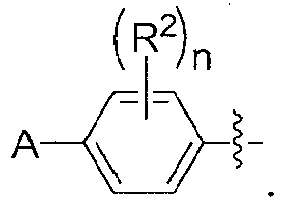

- In various embodiments, A-B is:

- In some embodiments, R3 is -NHC(O)R4. Particular compounds according to these embodiments include those where R4 is -CH3. In other embodiments, R3 is:

- Particular embodiments described herein include compounds having the formula:

- Other embodiments described herein include compounds having the formula:
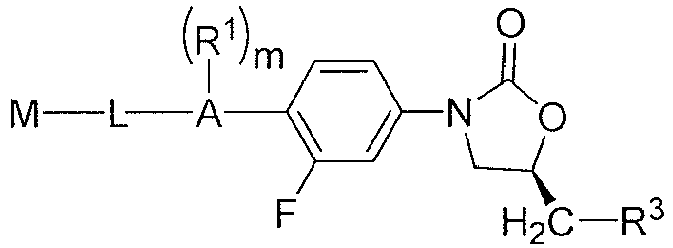
- Still other embodiments described herein include compounds having the formula:

- Some embodiments described herein include compounds having the formula:

- Other embodiments described herein include compounds having the formula:

- Still other embodiments described herein include compounds having the formula:

- Some embodiments described herein include compounds having the formula:

- In some embodiments, M-L is M-L1, and L1 is C1-6 alkyl. In particular embodiments, M-L1 is M-CH2-.
- In other embodiments, M-L is M-L1-X-L2, and X is -NR4-. In particular compounds according to these embodiments, X is -NH-, -N(O)-, or -N(OR4)-, where R4 is H or C1-6 alkyl. Other compounds include those where X is

- In certain compounds according to these embodiments, L1 is C1-6 alkyl, and L2 is C1-6 alkyl. In some embodiments, L1 is -CH2- and L2 is -CH2-. Particular examples of compounds according to these embodiments include those where M-L is M-CH2-NH-CH2- or

- In still other embodiments, M-L is M-S-L1-NR4- L2, wherein L1 is C1-6 alkyl, and L2 is C1-6 alkyl. In particular compounds according to these embodiments, M-L is M-S-CH2CH2-NH-CH2-.
- In particular embodiments, M is selected from the group consisting of:
a) phenyl, b) pyridyl, c) pyrazinyl, d) pyrimidinyl, e) pyridazinyl, f) oxiranyl, g) aziridinyl, h) furanyl, i) thiophenyl, j) pyrrolyl, k) oxazolyl, 1) isoxazolyl, m) imidazolyl, n) pyrazolyl, o) isothiazolyl, p) thiazolyl, q) triazolyl, r) tetrazolyl, s) indolyl, t) purinyl, u) benzofuranyl, v) benzoxazolyl, w) benzisoxazolyl, x) quinolinyl, y) isoquinolinyl, z) quinoxalinyl, aa) quinazolinyl. bb) cinnolinyl, cc) cyclopropyl, dd) cyclobutyl, ee) cyclopentyl, ff) cyclohexyl, gg) cycloheptyl, hh) oxetanyl, ii) tetrahydrofuranyl, jj) tetrahydropyranyl, kk) azetidinyl, ll) pyrrolidinyl, mm) piperidinyl, nn) thietanyl, oo) tetrahydrothiophenyl, pp) tetrahydrothiopyranyl, qq) piperazinyl, rr) quinuclidinyl, ss) 1-azabicyclo[2.2.1]hyeptanyl, tt) morpholinyl, uu) thiomorpholinyl, vv) thiooxomorpholinyl, ww) thiodioxomorpholinyl, and xx) benzothiophenyl
wherein any of a) - xx) optionally is substituted with one or more R5 groups. In particular embodiments, M is 4-isoxazolyl, [1,2,3]triazol-1-yl, 3H-[1,2,3]triazol-4-yl, 1H-tetrazol-5-yl, piperidin-1 -yl, or pyrolidin-1-yl. - In preferred embodiments, A is phenyl, substituted phenyl, pyridyl, or substituted pyridyl. Under certain circumstances, when A is pyridin-4-yl substituted with M-L at the 2 position, M-L is not (imidazol-1-yl)methyl or (morpholin-4-yl)methyl.
- In preferred embodiments, B is phenyl or substituted phenyl. More preferably, B is substituted phenyl. Preferred substituents include halogens, and in particular, fluorine. Under certain circumstances, when B is unsubstituted phenyl, M-L is selected from the group consisting of M-X, M-L1-X, M-L1-X-L2, M-X-L1-X-L2, M-X-X-, M-L1-X-X- , M-X-X-L2, and M-L1-X-X-L2. Under certain circumstances, when B is pyridin-2-yl substituted with A at the 5 position, M-L is selected from the group consisting of M-X, M-L1-X, M-L1-X-L2, M-L1-X-L2-X, M-X-X-, M-X-X-L2, and M-L1-X-X-L2.
- Quinolone derivatives, such as pyridonecarboyxlic acid derivatives, useful herein are described, including their synthesis, formulation, and use, in
U.S. Patent No. 6,156,903, to Yazaki et al., issued December 5, 2000 and its certificate of correction of December 11, 2001;U.S. Patent No. 6,133, 284, to Yazaki et al., issued October 17, 2000 ;U.S. Patent No. 5,998, 436, to Yazaki et al., issued December 7, 1999 and its certificate of corrections of January 23, 2001 and December 17, 2002;PCT Application No. WO 2006/042034 , to Abbott Laboratories, published April 20, 2006,PCT Application No. WO 2006/015194 , to Abbott Laboratories, published February 9, 2006;PCT Application No. WO 01/34595 PCT Application No. WO 97/11068 - Pyridonecarboxylic acid derivatives of the methods, compositions, and uses described herein include compounds corresponding to the following structure (Pyridonecarboxylic Acid Derivative 1)
-

or a pharmaceutically acceptable salt, ester, or prodrug thereof. - As described in the foregoing paragraph, when R1 is a carboxyl protective group, it may be any carboxylate ester residue which cleaves relatively easily to generate the corresponding free carboxyl group. Exemplary carboxyl protective groups include those which may be eliminated by hydrolysis, catalytic reduction, and other treatments under mild conditions such as lower alkyl groups such as methyl group, ethyl group, n-propyl group, i-propyl group, n-butyl group, i-butyl group, t-butyl group, pentyl group, hexyl group, and heptyl group; lower alkenyl groups such as vinyl group, allyl group, 1-propenyl group, butenyl group, pentenyl group, hexenyl group, and heptenyl group; aralkyl groups such as benzyl group; and aryl groups such as phenyl group and napthyl group; and those which may be readily eliminated in the body such as lower alkanoyloxy lower alkyl groups such as acetoxymethyl group and pivaloyloxymethyl group; lower alkoxycarbonyloxy lower alkyl group such as methoxycarbonyloxymethyl group and 1-ethoxycarbonyloxyethyl group; lower alkoxymethyl group such as methoxymethyl group; lactonyl group such as phthalidyl; di-lower alkylamino lower alkyl group such as 1-dimethylaminoethyl group; and (5-methyl-2-oxo-1,3-dioxole-4-yl)methyl group.
- It is noted that the substituents R1, R2, R3, R4, R5, R6, R7, R8, R9, A, J1, J2, J3, W, X, Y, Z, e, f, and g are defined herein for convenience with respect to the chemical structure for the pyridonecarboxylic acid derivatives, e.g., Pyridonecarboxylic Acid Derivative 1, and do not refer to other substituents for other compounds of the described herein .
- Also described herein is a method, composition or use for a pyridonecarboxylic acid derivative of structure Pyridonecarboxylic Acid Derivative 1, wherein W is CR8, wherein R8 represents a hydrogen atom, a halogen atom, or a lower alkyl group.
- Also described herein is a method, composition, or use for a pyridonecarboxylic acid derivative of structure Pyridonecarboxylic Acid Derivative 1, wherein R5 is a group represented by the following formula (a) or (b):
- (a)

- (b)

- Also described herein is a method, composition, or use for a pyridonecarboxylic acid derivative of structure Pyridonecarboxylic Acid Derivative 1, wherein R5 is a group represented by formula (a).
- (a)

- Also described herein is a method, composition, or use for a pyridonecarboxylic acid derivative of structure Pyridonecarboxylic Acid Derivative 1, wherein e in the formula (a) is 3 or 4.
- (a)

- In other embodiments, the present invention relates to a method, composition, or use for a pyridonecarboxylic acid derivative of structure Pyridonecarboxylic Acid Derivative 1, wherein R1 is a hydrogen atom; R2 is an amino group, lower alkylamino group, or a di-lower alkylamino group; R3 is a halogen atom; R4 is a halogen atom; R6 is hydrogen atom; X is a nitrogen atom; Y and Z are CH or CR7 (wherein R7 is a lower alkyl group or a halogen atom); and W is CR8 (wherein R8 is a halogen atom or a lower alkyl group).
- Also described herein is a method, composition, or use for a pyridonecarboxylic acid derivative of structure Pyridonecarboxylic Acid Derivative 1, wherein R2 is amino group; R3 is fluorine atom; R4 is a fluorine atom; Y is CF; Z is CH; W is CR8 (wherein R8 is a chlorine atom, bromine atom or a methyl group), and e in formula (a) is 3.
- (a)

- Also described herein is a method, composition, or use wherein said pyridonecarboxylic acid corresponds to the following structure:

WO 2006/042034 , cited above discloses the D-glucitol salt of this compound [D-glucitol 1-(6-amino-3,5-difluoro-2-pyridinyl)-8-chloro-6-fluoro-1,4-dihydro-7-(3-hydroxy-1-azetidinyl)-4-oxo-3-quinolinecarboxylate (salt)]and the trihydrate of the D-glucitol salt of this compound [D-glucitol 1-(6-amino-3,5-difluoro-2-pyridinyl)-8-chloro-6-fluoro-1,4-dihydro-7-(3-hydroxy-1-azetidinyl)-4-oxo-3-quinolinecarboxylate trihydrate (salt)]. The D-glucitol salt and the D-glucitol salt trihydrate correspond to the CAS registry numbers 352458-37-8 and 883105-02-0, respectively. D-glucitol corresponds to the CAS registry number 6284-40-8.WO 2006/042034 also discloses a crystalline form of the D-glucitol salt characterized when measured at about 25 °C with Cu-Ka radiation, by the powder diffraction pattern shown inFIGURE 1 ofWO 2006/042034 and a crystalline form of the D-glucitol salt trihydrate when measured at about 25 °C with Cu-Ka radiation, by the powder diffraction pattern shown inFIGURE 2 ofWO 2006/042034 . These D-glucitol salts are useful in the present invention. Also, see A.R. Haight et al., "Synthesis of the Quinolone ABT-492: Crystallizations for Optimal Processing", Organic Process Research & Development (2006), 10(4), 751-756. - Other quinolone compounds useful herein, include fluoroquinolones such as garenoxacin, gatifloxacin, gemilfoxacin, levofloxacin, and moxifloxacin.
- Garenoxacin and its pharmaceutically acceptable salts, esters, and prodrugs thereof, can be used in the methods, compositions, and uses described herein. Garenoxacin is also known as 1-cyclopropyl -8-(difluoromethoxy)-7-(1R)-(1-methyl-2,3-dihydro-1H-5-isoinodyl)-4-oxo-1,4-dihydro-3-quinolinecarboxylic acid methanesulfonate monohydrate and by the publicly disclosed code names T-3811 and BM 284756. See M. Takahata et al., "In Vitro and In Vivo Antimicrobial Activities of T-3811ME, a Novel Des-F(6)-Quinolone", Antimicrobial Agents and Chemotherapy, vol. 43, no. 5, pp. 1077-1084 (1999);
U.S. Patent No. 6,025,370, to Todo et al, issued February 15, 2000 ; andU.S. Patent 5,935,952, to Todo et al., issued August 10, 1999 and its certificate of correction of December 5, 2000. - Gatifloxacin and its pharmaceutically acceptable salts, esters, and prodrugs thereof, can be used in the methods, compositions, and uses described herein. Gatifloxacin is sold under the trade name or proprietary Tequin. See
U.S. Patent No. 6,589,955 B2, to Raghavan et al., issued July 8, 2003 ;U.S. Patent No. 5,880,283, to Matsumoto et al., issued March 9, 1999 ; andU.S. Patent No. 4,980,470, to Masuzawa et al., issued December 25, 1990 and its certificate of correction of August 11, 1992. - Gemifloxacin and its pharmaceutically acceptable salts, esters, and prodrugs thereof, can be used in the methods, compositions, and uses described herein. Gemifloxacin is sold under the trade name or proprietary Factive. See
U.S. Patent No. 6,803,376 B1, to Appelbaum et al., issued October 12, 2004 ;U.S. Patent No. 6,723,734 B2, to Kim et al., issued April 20, 2004 ;U.S. Patent No. 6,455,540 B1, to Citron et al., issued September 24, 2002 ;U.S. Patent No. 6,340,689 B1, to Dubois et al., issued January, 22, 2002 and its certificate of correction of June 18, 2002;U.S. Patent No. 6,331,550 B1, to Citron et al., issued December 18, 2001 ;U.S. Patent No. 6,262,071 B1, to Crabb et al., issued July 17, 2001 ;U.S. Patent No. 5,962,468, to Hong et al., issued October 5, 1999 and its certificate of correction of May 9, 2000;U.S. Patent No. 5,776,944, to Hong et al., issued July 7, 1998 ; andU.S. Patent No. 5,633,262, to Hong et al., issued May 27, 1997 . - Levofloxacin and its pharmaceutically acceptable salts, esters, and prodrugs thereof, can be used in the methods, compositions, and uses described herein. Levofloxacin is sold under the trade name or proprietary Levaquin. See
U.S. Patent No. 5,053,407, to Hayakawa et al., issued October 1, 1991 and its certificate of correction of September 27, 1994. - Moxifloxacin and its pharmaceutically acceptable salts, esters, and prodrugs thereof, can be used in the methods, compositions, and uses of the present invention. Moxifloxacin is sold under the trade name or proprietary Avelox. See
U.S. Patent No. 5,849,752, to Grunenberg et al., issued December 15, 1998 ;U.S. Patent No. 5,607,942, to Petersen et al., issued March 4, 1997 ; andU.S. Patent No. 4,990,517, to Petersen et al., issued February 5, 1991 and its certificate of correction of April 25, 1995 . - Benzoheterocyclic compounds useful herein are described, including their synthesis, formulation, and use, in
U.S. Patent No. 6,753,333 B2, to De Souza et al., issued June 22, 2004 ;U.S. Patent No. 6,750,224 B1, to Patel et al, issued June 15, 2004 and its certificate of correction of November 2, 2004;U.S. Patent No. 6,664,267 B1, to de Souza et al., issued December 16, 2003 ;U.S. Patent No. 6,608,078 B2, to De Souza et al., issued August 19, 2003 ;U.S. Patent No. 6,514,986 B2 to De Souza et al., issued February 4, 2003 ;U.S. Patent No. 4,552,879 to Ishikawa et al., issued November 12, 1985 ; andU.S. Patent No. 4,399,134 to Ishikawa et al., issued August 16, 1983 . - Benzoheterocyclic compounds of the methods, compositions, and uses described herein include compounds corresponding to the following structure (Benzoheterocyclic Compound I)
-


- It is noted that the substituents R1, R2, R3, R4, Z, m, and n are defined herein for convenience with respect to the chemical structure for the benzoheterocyclic compounds, e.g., benzoheterocyclic compound (I) and do not refer to other substituents for other compounds of the present invention.
- Also described herein is a method, composition, or use for a benzoheterocyclic of structure Benzoheterocyclic Compound I, wherein n is 2.
- Also described herein is a method, composition, or use for a benzoheterocyclic of structure Benzoheterocyclic Compound I, wherein n is 1.
- Also described herein is a method, composition, or use for a benzoheterocyclic of structure Benzoheterocyclic Compound I, wherein R3 represents a group of the formula

- Also described herein is a method, composition, or use for a benzoheterocyclic of structure Benzoheterocyclic Compound I, wherein R3 represents a 1-pyrrolidinyl group which may be substituted with a hydroxymethyl group or a 1,2,5,6-tetrahydro-1-pyridyl group.
- Also described herein is a method, composition, or use for a benzoheterocyclic of structure Benzoheterocyclic Compound I, wherein R4 represents a hydrogen atom, a hydroxy group or a lower alkanoyloxy group and the position at which the group of the formula

- Also described herein is a method, composition, or use for a benzoheterocyclic of structure Benzoheterocyclic Compound I, wherein R4 represents a lower alkyl group, a lower alkoxy group, a phenyl-lower alkyl group, an amino group which may be substituted with a lower alkyl group or a lower alkanoyl group, an oxo group, a carbamoyl group, and the position at which the group of the formula

- Also described herein is a method, composition, or use for a benzoheterocyclic of structure Benzoheterocyclic Compound I, wherein R2 represents a halogen atom.
- Also described herein is a method, composition, or use for a benzoheterocyclic of structure Benzoheterocyclic Compound I, wherein R2 represents a hydrogen atom.
- Also described herein is a method, composition, or use for a benzoheterocyclic of structure Benzoheterocyclic Compound I, wherein R2 represents a fluorine atom and the position at which the fluorine atom is attached is the 9-position.
- Also described herein is a method, composition, or use for a benzoheterocyclic of structure Benzoheterocyclic Compound I, wherein R2 represents a chlorine atom and the position at which the fluorine atom is attached is the 9-position.
- Also described herein is a method, composition, or use for a benzoheterocyclic of structure Benzoheterocyclic Compound I, wherein R1 represents a lower alkyl group.
- Also described herein is a method, composition, or use for a benzoheterocyclic of structure Benzoheterocyclic Compound I, wherein R1 represents a methyl group.
- Also described herein is a method, composition, or use for a benzoheterocyclic of structure Benzoheterocyclic Compound I, wherein R2 represents a fluorine atom attached to the 9-position and R1 represents a methyl group.
- Also described herein is a method, composition, or use for a benzoheterocyclic of structure Benzoheterocyclic Compound I, wherein R1 represents a methyl group, R2 represents a fluorine atom attached to the 9-position and the position at which the group represented by R3 is attached is the 8-position.
- Also described herein is a method, composition, or use for a benzoheterocyclic of structure Benzoheterocyclic Compound I, wherein the position at which R3 is attached is the 9-position.
- Also described herein is a method, composition, or use for a benzoheterocyclic of structure Benzoheterocyclic Compound I, wherein R1 represents a methyl group, R2 represents a fluorine atom attached to the 8-position.
- Also described herein is a method, composition, or use for a benzoheterocyclic of structure Benzoheterocyclic Compound I, wherein R1 represents a methyl group, R2 represents a chlorine atom attached to the 8-position.
- Also described herein is a method, composition, or use wherein said benzoheterocyclic compound is 9-fluoro-8-(4-hydroxy-1-piperidyl)-5-methyl-6,7-dihydro-1-oxo-1H,5H-benzo[i,j]quinolizine-2-carboxylic acid or a pharmaceutically acceptable salt, ester, or prodrug thereof.
- Also described herein is a method, composition, or use wherein said benzoheterocyclic compound is S-(-)-9-fluoro-6,7-dihydro-8-(4-hydroxypiperidin-1-yl)-5-methyl-1-oxo-1H,5H-benzo[i,j]quinolizine-2-carboxylic acid or a pharmaceutically acceptable salt, ester, or prodrug thereof. The foregoing compound is also known by the chemical name nadifloxacin.
- Also described herein is a method, composition, or use wherein said benzoheterocyclic compound is S-(-)-9-fluoro-6,7-dihydro-8-(4-hydroxypiperidin-1-yl)-5-methyl-1-oxo-1 H,5H-benzo[i,j]quinolizine-2-carboxylic acid arginine salt.
- Also described herein is a method, composition, or use wherein said benzoheterocyclic compound is a specific polymorph or crystalline form of S-(-)-9-fluoro-6,7-dihydro-8-(4-hydroxypiperidin-1-yl)-5-methyl-1-oxo-1H,5H-benzo[i,j]quinolizine-2-carboxylic acid arginine salt.
- Also described herein is a method, composition, or use wherein said benzoheterocyclic compound is S-(-)-9-fluoro-6,7-dihydro-8-(4-hydroxypiperidin-1-yl)-5-methyl-1-oxo-1H,5H-benzo[i,j]quinolizine-2-carboxylic acid arginine salt having the following X-ray diffraction data: (2θ): 10.16, 11.78, 12,52, 16.00, 18.94, 19.66, 20.36, 21.28, 21.92, 22.52, 24.74, 25.28, 30.74.
- Also described herein is a method, composition, or use wherein said benzoheterocyclic compound is S-(-)-9-fluoro-6,7-dihydro-8-(4-hydroxypiperidin-1-yl)-5-methyl-1-oxo-1H,5H-benzo[i,j]quinolizine-2-carboxylic acid arginine salt having the following X-ray diffraction data: (2θ): 18.28, 18.8, 19.8, 20.12, 20.62, 21.10, 21.44, 21.88, 22.6, 23.02.
- Also described herein is a method, composition, or use wherein said benzoheterocyclic compound is S-(-)-9-fluoro-6,7-dihydro-8-(4-hydroxypiperidin-1-yl)-5-methyl-1-oxo-1H,5H-benzo[i,j]quinolizine-2-carboxylic acid arginine salt having the following X-ray diffraction data: (2θ): 14.02+0.2, 14.82+0.2, 19.28±0.2, 22.12±0.2, 22.96±0.2, 23.46±0.2, 28.36±0.2.
- With respect to specific polymorph or crystalline forms of the benzoheterocyclic compounds, examples being the arginine salts, a publicly disclosed code name for such a compound is WCK 771.
- Beta-lactams, for example carbapenems, examples of which are carbapenems with a 7-acylated imidazo[5-1,b]thiazole-2-yl group directly attached to the carbapenem moiety of the C-2 position, useful herein are described, including their synthesis, formulation, and use, in M. Kurazano et al., "In Vitro Activities of ME1036 (CP5609), a Novel Parenteral Carbapenem, Against Methicillin-Resistant Staphylococci", Antimicrobial Agents and Chemotherapy, vol. 48, no. 8, pp. 2831-2837 (August 2004); U.S. Patent Application Publication No.
US 2004/0038967 A1, to Kano et al., published February 26, 2004 ;PCT Application No. WO 2004/055027 , to Meiji Seika Kaisha, Ltd., published July 1, 2004; andPCT Application No. WO 02/042312 - Beta-lactam compounds of the methods, compositions, and uses described herein include compounds corresponding to the following structure (Beta-Lactam I)
-

- It is noted that the substituents R1, R2, R3, Hy, and n are defined herein for convenience with respect to the chemical structure for the beta-lactams or carbapenems, e.g., Beta-Lactam I and Beta-Lactam II, and do not refer to other substituents for other compounds
- Also described herein is a method, composition, or use for a beta-lactam of structure Beta-Lactam I, wherein R1 represents a hydrogen atom or methyl, R2 and R3, which may be the same or different, each represent a hydrogen atom; a halogen atom; lower alkyl optionally substituted by a halogen atom, cyano, hydroxyl, carbamoyl, amino, formylamino, lower alkylcarbonylamino, aminosulfonylamino, or lower alkylthio; lower alkylcarbonyl wherein the alkyl portion of lower alkylcarbonyl is optionally substituted by a halogen atom, cyano, hydroxyl, carbamoyl, amino, formylamino, lower alkylcarbonylamino, aminosulfonylamino, or lower alkylthio; carbamoyl; aryl; or lower alkylthio wherein the alkyl portion of lower alkylthio is optionally substituted by a halogen atom, cyano, hydroxyl, carbamoyl, amino, formylamino, lower alkylcarbonylamino, aminosulfonylamino, or lower alkylthio, n is an integer of 0 to 4, and Hy represents a four- to seven-membered monocyclic or nine- or ten-membered bicyclic saturated or unsaturated heterocyclic group containing one to four hetero-atoms selected from nitrogen, oxygen, and sulfur atoms, the saturated or unsaturated heterocyclic group represented by Hy is optionally substituted by a halogen atom; cyano; lower alkyl wherein one or more hydrogen atoms on the lower alkyl group are optionally substituted by groups selected from a halogen atom, hydroxyl, carbamoyl, amino, aryl, and a monocyclic or bicyclic heterocyclic group containing one or more hetero-atoms selected from nitrogen, oxygen, and sulfur atoms; lower alkylthio wherein one or more hydrogen atoms on the alkyl group are optionally substituted by groups selected from a halogen atom, hydroxyl, carbamoyl, amino, and aryl; lower alkylsulfonyl wherein one or more hydrogen atoms on the alkyl group are optionally substituted by groups selected from a halogen atom, hydroxyl, carbamoyl, amino, and aryl; hydroxyl; lower alkoxy; formyl; lower alkylcarbonyl; arylcarbonyl; carboxyl; lower alkoxycarbonyl; carbamoyl; N-lower alkylcarbamoyl; N,N-di-lower alkylaminocarbonyl; amino; N-lower alkylamino; N,N-di-lower alkylamino; formylamino; lower alkylcarbonylamino; aminosulfonylamino; (N-lower alkylamino)sulfonylamino; (N,N-di-lower alkylamino)sulfonylamino; aryl; or a monocyclic or bicyclic heterocyclic group containing one or more hetero-atoms selected from nitrogen, oxygen, and sulfur atoms.
- Also described herein is a method, composition, or use of a beta-lactam of structure Beta-Lactam I wherein R1 represents a hydrogen atom or methyl, R2 and R3, which may be the same or different, each represent a hydrogen atom, a halogen atom, optionally substituted lower alkyl, lower cycloalkyl, lower alkylcarbonyl, carbamoyl, optionally substituted aryl, optionally substituted lower alkylthio, morpholinyl, lower alkylsulfonyl, or formyl, n is an integer of 0 to 2, and Hy represents a group selected from optionally substituted pyridinyl, optionally substituted pyridinium-yl, optionally substituted tetrahydropyridinyl, optionally substituted thiazolyl, optionally substituted pyrimidinyl, optionally substituted thienyl, optionally substituted quinolinyl, optionally substituted quinolinium-yl, optionally substituted isoquinolinyl, optionally substituted dihydroisoquinolinyl, optionally substituted piperazinyl, optionally substituted piperidinyl, optionally substituted indolyl, optionally substituted thiomorpholinyl, optionally substituted imidazolyl, and optionally substituted pyrrolidinyl.
- Also described herein is a method, composition, or use of a beta-lactam of structure Beta-Lactam I wherein R1 represents a hydrogen atom or methyl, R2 and R3, which may be the same or different, each represent a hydrogen atom, a halogen atom, optionally substituted lower alkyl, optionally substituted lower alkylcarbonyl, carbamoyl, aryl, or optionally substituted lower alkylthio, n is an integer of 0 to 4, and Hy represents a group selected from optionally substituted pyridinyl, optionally substituted pyridinium-yl, optionally substituted tetrahydropyridinyl, optionally substituted thiazolyl, optionally substituted pyrimidinyl, optionally substituted thienyl, optionally substituted quinolinyl, optionally substituted quinolinium-yl, and optionally substituted pyrrolidinyl.
- Also described herein are Beta-lactam compounds of the methods, compositions, and uses of the present invention include compounds corresponding to the following structure (Beta-Lactam II)
-

- Also described herein is a method, composition, or use of a beta-lactam of structure Beta-Lactam II, wherein R1 represents a hydrogen atom or methyl, R2 and R3, which may be the same or different, each represent a hydrogen atom, a halogen atom, lower alkyl optionally substituted by a halogen atom, cyano, hydroxyl, carbamoyl, amino, formylamino, lower alkylcarbonylamino, aminosulfonylamino, or lower alkylthio; lower alkylcarbonyl wherein the alkyl portion of lower alkylcarbonyl is optionally substituted by a halogen atom, cyano, hydroxyl, carbamoyl, amino, formylamino, lower alkylcarbonylamino, aminosulfonylamino, or lower alkylthio; carbamoyl; aryl; or lower alkylthio wherein the alkyl portion of lower alkylthio is optionally substituted by a halogen atom, cyano, hydroxyl, carbamoyl, amino, formylamino, lower alkylcarbonylamino, aminosulfonylamino, or lower alkylthio, n is an integer of 0 to 4, and Hy represents a four- to seven-membered monocyclic or nine- or ten-membered bicyclic saturated or unsaturated heterocyclic group containing one to four hetero-atoms selected from nitrogen, oxygen, and sulfur atoms, the saturated or unsaturated heterocyclic group represented by Hy is optionally substituted by a halogen atom; cyano; lower alkyl wherein one or more hydrogen atoms on the lower alkyl group are optionally substituted by groups selected from a halogen atom, hydroxyl, carbamoyl, amino, aryl, and a monocyclic or bicyclic heterocyclic group containing one or more hetero-atoms selected from nitrogen, oxygen, and sulfur atoms; lower alkylthio wherein one or more hydrogen atoms on the alkyl group are optionally substituted by groups selected from a halogen atom, hydroxyl, carbamoyl, amino, and aryl; lower alkylsulfonyl wherein one or more hydrogen atoms on the alkyl group are optionally substituted by groups selected from a halogen atom, hydroxyl, carbamoyl, amino, and aryl; hydroxyl; lower alkoxy; formyl; lower alkylcarbonyl; arylcarbonyl; carboxyl; lower alkoxycarbonyl; carbamoyl; N-lower alkylcarbamoyl; N,N-di-lower alkylaminocarbonyl; amino; N-lower alkylamino; N,N-di-lower alkylamino; formylamino; lower alkylcarbonylamino; aminosulfonylamino; (N-lower alkylamino)sulfonylamino; (N,N-di-lower alkylamino)sulfonylamino; aryl; or a monocyclic or bicyclic heterocyclic group containing one or more hetero-atoms selected from nitrogen, oxygen, and sulfur atoms.
- Also described herein is a method, composition, or use of a beta-lactam of structure Beta-Lactam I or Beta-Lactam II, wherein the substituent on the lower alkyl and lower alkylcarbonyl groups optionally represented by R2 and R3 is hydroxyl, lower alkoxy, N,N-di-lower alkylamino, or N-carbamoyl lower alkyl-N,N-di-lower alkylammonino, the substituent on the aryl group optionally represented by R2 and R3 is N,N-di-lower alkylamino, the substituent on the lower alkylthio group optionally represented by R2 and R3 is amino, hydroxyl, or azide, and the substituent on the saturated or unsaturated heterocyclic ring represented by Hy is lower alkyl optionally substituted by carboxylmethyl-substituted carbamoyl, carbamoyl, phenyl, aminophenyl, N,N-di-lower alkylamino, amino, hydroxyl, morpholinyl, pyrrolidinyl, carboxyl, imino, amino lower alkylthio, lower alkoxycarbonyl, lower alkylcarbonyl, aminosulfonylamino, piperidinyl, lower alkylsulfonyl, (N,N-di-lower alkylamino)sulfonylamino, N'-(N,N-di-lower alkylamino)sulfonyl-N'-lower alkylamino, halogenated lower alkylcarbonyl, N-aminosulfonylpiperidinyl, or cyano; carbamoyl; pyridinyl; N-aminosulfonylpyrrolidinyl; 2-carboxypyrrolidinyl; phenyl; hydroxyl; lower alkoxy; hydroxyaminophenyl-substituted lower alkoxy; halogenated lower alkoxy; aminophenyl-substituted lower alkoxy; amino; carboxyl; lower alkylthio optionally substituted by amino; amino lower alkylthio; amino lower alkylsulfonyl; or 1-iminoethylamino lower alkylsulfonyl.
- Also described herein is a method, composition, or use of a beta-lactam of structure Beta-Lactam I or Beta-Lactam II, wherein R1 represents a hydrogen atom or methyl, R2 and R3 represent a hydrogen atom, n is 0 (zero), and Hy represents pyridinium-yl having carbamoylmethyl at its 1 -position.
- Also described herein is a method, composition, or use of a beta-lactam of structure Beta-Lactam I or Beta-Lactam II, wherein n is 0 (zero).
- Also described herein is a method, composition, or use of a beta-lactam of structure Beta-Lactam I or Beta-Lactam II, wherein R1 represents methyl, and R2 and R3 represent a hydrogen atom.
- Also described herein is a method, composition, or use of a beta-lactam of structure Beta-Lactam I or Beta-Lactam II, wherein R1 represents methyl, R2 and R3 represent a hydrogen atom, n is 0 (zero), and Hy represents pyridinium-yl which optionally has carbamoyl lower alkyl, carboxyl lower alkyl, or aminosulfonylamino lower alkyl at its 1-position and amino lower alkylthio at other position than the 1-position.
- Also described herein is a method, composition, or use of a beta-lactam of structure Beta-Lactam I or Beta-Lactam II, wherein R1 represents methyl, R2 and R3 represent a hydrogen atom, n is 0 (zero), and Hy represents pyridin-3-yl.
- Also described herein is a method, composition, or use of a beta-lactam of structure Beta-Lactam I or Beta-Lactam II, wherein R1 represents methyl, R2 and R3 represent a hydrogen atom, n is 0 (zero), and Hy represents 1-carbamoylmethylpyridinium-3-yl.
- Also described herein is a method, composition, or use of a beta-lactam of structure Beta-Lactam I or Beta-Lactam II, wherein R1, R2 and R3 represent a hydrogen atom, n is 0 (zero), and Hy represents 1-carbamoylmethylpyridinium-3-yl.
- Also described herein is a method, composition, or use of a beta-lactam of structure Beta-Lactam I or Beta-Lactam II, wherein R1 represents methyl, R2 and R3 represent a hydrogen atom, n is 0 (zero), and Hy represents 1-carbamoylmethyl-5-phenylpyridinium-3-yl.
- Also described herein is a method, composition, or use of a beta-lactam of structure Beta-Lactam I or Beta-Lactam II, wherein R1 represents methyl, R2 and R3 represent a hydrogen atom, n is 0 (zero), and Hy represents (2S)-pyrrolidin-2-yl.
- In other embodiments, the present invention relates to a method, composition, or use of a beta-lactam of structure Beta-Lactam I or Beta-Lactam II, wherein R1 represents methyl, R2 and R3 represent a hydrogen atom, n is 0 (zero), and Hy represents 1-carboxymethylpyridinium-3-yl.
- Also described herein is a method, composition, or use of a beta-lactam of structure Beta-Lactam I or Beta-Lactam II, wherein R1 represents methyl, R2 and R3 represent a hydrogen atom, n is 0 (zero), and Hy represents 1-(2-aminosulfonylaminoethyl)pyridinium-3-yl.
- Also described herein is a method, composition, or use wherein said beta-lactam or carbapenem corresponds to the following structure:

- Aminomethylcycline compounds such as 7-methylamino-9-(2,2-dimethylpropyl)aminomethylcycline and their pharmaceutically acceptable salts, esters, and prodrugs thereof, can be used in the methods, compositions, and uses described herein. The compound, 7-methylamino-9-(2,2-dimethyl-propyl)aminomethylcycline, is also known by the publicly disclosed code names PTK 0796 and BAY 73-6944. See
U.S. Patent No. 6,846,939 B2, to Nelson et al., issued January 25, 2005 ; U.S. Patent Application No.US 2005/0070510 A1, to Draper et al., published March 31, 2005 ; U.S. Patent Application No.US 2005/0026876 A1, to Nelson et al., published February 3, 2005 ; U.S. Patent Application No.US 2005/0026875 A1, to Nelson et al., published February 3, 2005 ; U.S. Patent Application No.US 2004/0242548 A1, to Draper et al., published December 2, 2004 ; U.S. Patent Application No.US 2004/0214801 A1, to Nelson et al, published October 28, 2004 ; U.S. Patent Application No.US 2004/0214800 A1, to Levy et al., published October 28, 2004 ; U.S. Patent Application No.US 2004/0092490 A1, to Draper et al., published May 13, 2004 ; U.S. Patent Application No.US 2004/0063674 A1, to Levy et al., published April 1, 2004 ; U.S. Patent Application No.US 2003/0166585 A1, to Draper et al., published September 4, 2003 ; U.S. Patent Application No.US 2003/0125348 A1, to Nelson et al, published July 3, 2003 ;PCT Application No. WO 2005/009944 , to Paratek Pharmaceuticals, Inc., published February 3, 2005;PCT Application No. WO 2004/091513 , to Paratek Pharmaceuticals, Inc., published October 28, 2004;PCT Application No. WO 2004/064728 , to Paratek Pharmaceuticals, Inc., published August 5, 2004;PCT Application No. WO 2004/038001 , to Paratek Pharmaceuticals, Inc., published May 6, 2004;PCT Application No. WO 2004/038000 , to Paratek Pharmaceuticals, Inc., published May 6, 2004;PCT Application No. WO 03/075857 PCT Application No. WO 03/005971 PCT Application No. WO 02/072031 PCT Application No. WO 02/04406 - Dalbavancin and its pharmaceutically acceptable salts, esters, and prodrugs thereof, can be used in the methods, compositions, and uses described herein. Dalbavancin, which is a semisynthetic glycopeptide is also known by the publicly disclosed code names VER-001 and BI397. See G. Candiani et al., "In-Vitro and In-Vivo Antibacterial Activity of BI 397, a New Semi-Synthetic Glycopeptide Antibiotic", J. Antimicrob. Chemotherapy, 44, pp. 179-192 (1999); U.S. Patent Application No.
US 2005/0090433 A1, to Colombo et al., published April 28, 2005 ; U.S. Patent Application No.US 2005/0004050 A1, to Stogniew, published January 6, 2005 ; U.S. Patent Application No.US 2004/0224908 A1, to Cavaleri et al., published November 11, 2004 ; U.S. Patent Application No.US 2004/0220122 A1, to Cavaleri et al., published November 4, 2004 ; U.S. Patent Application No.US 2004/0198715 A1, to Cavaleri et al., published October 7, 2004 . - Daptomycin and its pharmaceutically acceptable salts, esters, and prodrugs thereof, can be used in the methods, compositions, and uses described herein. Daptomycin is sold under the trade name or proprietary Cubicin. See
U.S. Patent No. 6,852,689 B2, to Oleson, Jr. et al., issued February 8, 2005 ;U.S. Patent No. 6,468,967 B1, to Oleson, Jr. et al., issued October 22, 2002 ; andU.S. Patent No. 5,912,226, to Baker et al., issued June 15, 1999 ; andPCT Application No. WO 00/18419 - Oritavancin and its pharmaceutically acceptable salts, esters, and prodrugs thereof, can be used in the methods, compositions, and uses described herein. Oritavancin, which is a glycopeptide, is also known by the publicly disclosed code name LY333328. See R.C. Mercier et al., "Pharmacodynamic Evaluation of a New Glycopeptide, LY333328, and In Vitro Activity against Staphylococcus aureus and Enterococcus faecium", Antimicrobial Agents and Chemotherapy, vol. 41, no. 6, pp. 1307-1312 (June 1997);
U.S. Patent No. 5,998,581, to Berglund et al., issued December 7, 1999 and its certificate of correction of November 14, 2000;U.S. Patent No. 5,994,297, to Nicas et al., issued November 30, 1999 ;U.S. Patent No. 5,977,062, to Cooper et al., issued November 2, 1999 ;U.S. Patent No. 5,952,466, to Berglund et al, issued September 14, 1999 ;U.S. Patent No. 5,939,382, to Berglund et al., issued August 17, 1999 ;U.S. Patent No. 5,843,889, to Cooper et al., issued December 1, 1998 and its certificate of correction of March 28, 2000;U.S. Patent No. 5,840,684, to Cooper et al., issued November 24, 1998 ;PCT Application No. WO 00/66144 PCT Application No. WO 99/10006 PCT Application No. WO 98/22121 PCT Application No. WO 98/21952 PCT Application No. WO 96/30401 - Televancin and its pharmaceutically acceptable salts, esters, and prodrugs thereof, can be used in the methods, compositions, and uses described herein. Televancin, which is a peptidoglycan, can be prepared by the sequential reduction amination of vancomycin and reaction with aminomehtylphosphonic acid. Televancin can also be prepared by the reductive alkylation of vancomycin with N-decyl-N-fluoroenyl-methyloxycarbonyl-2-aminoacetaldehyde via sodium cyano-borohydride and trifluoroacetic acid, and modification of the resorcinol position via Mannich aminomethylation. Televancin can also be prepared from vancomycin or its analogues by the sequential reaction with a protected amino-aldehyde, an amine and then an aminoalkylphosphonic acid in the presence of formaldehyde. See
U.S. Patent No. 6,887,976 B2, to Leadbetter et al., issued May 3, 2005 ;U.S. Patent No. 6,878,686 B2, to Marquess et al., issued April 12, 2005 ;U.S. Patent No. 6,872,804 B2, to Mu, issued March 29, 2005 ;U.S. Patent No. 6,872,701 B2, to Leadbetter et al., issued March 29, 2005 ;U.S. Patent No. 6,858,584 B2, to Judice et al., issued February 22, 2005 ;U.S. Patent No. 6,831,150 B2, to Linsell, issued December 14, 2004 ;U.S. Patent No. 6,828,299 B2, to Yang et al., issued December 7, 2004 ;U.S. Patent 6,770,621 B2, to Linsell et al., issued August 3, 2004 ;U.S. Patent No. 6,635,618 B2, to Leadbetter et al., issued October 21, 2003 ;U.S. Patent No. 6,620,781 B2, to Linsell et al., issued September 16, 2003 ;U.S. Patent No. 6,518,242 B1, to Chen et al. issued February 11, 2003 ; andU.S. Patent No. 6,455,669 B1, to Judice et al., issued September 24, 2002 ; andPCT Application No. WO 03/029270 - The compound DK-507k and its pharmaceutically acceptable salts, esters, and prodrugs thereof, can be used in the methods, compositions, and uses described herein. DK-507k can be described as a fluoroquinolone. DK-507k is also known by the chemical name (-)-7-[(7S)-7-amino-5-azaspiro[2.4]heptan-5-yl]-6-fluoro-1-[(1R, 2S)-2-fluoro-1-cyclopropyl]-1,4-dihydro-8-methoxy-4-oxo-3-quinolinecarboxylic acid monohydrochloride monohydrate. See Otani et al., In Vitro and In Vivo antibacterial Activities of DK-507k, a Novel Fluoroquinolone, Antimicrobial Agents and Chemotherapy, Vol. 47, no. 12, pages 3750-3759 (2003); Japanese Patent No.
JP 2004244380 A2 PCT Application No. WO 2004/058261 , to Daiichi Pharmaceutical Co., Ltd., Japan, published July 15, 2004;PCT Patent Application No., WO 2003/076248 , to Daiichi PHarmaceuitcal Co., Ltd., Japan, published September 18, 2003; Japanese Patent No.JP 2003096075 A2 JP 2002255962 A2 JP 2002201191 A2 PCT Application No. WO 2001/072738 , to Daiichi Pharmaceutical Co., Ltd., Japan, published October 4, 2001;U.S. Patent No. 6,900,225 B2, to Takemura et al., issued May 31, 2005 ;U.S. Patent Application No. 2004/142957 A1, to Takemura et al., published July 22, 2004 ;U.S. Patent Application No. 2003/187008 A1, to Takemura et al., published October 2, 2003 ;PCT Application No. WO 2001/058876 , to Daiichi Pharmaceutical Co., Ltd., Japan, published August 16, 2001; andU.S. Patent Application No. 2003/119848 A1, to Takemura et al., published June 26, 2003 . - DK-507k can be represented by the following formula;

- The compound can also be obtained as crystals exhibiting characteristic peaks in the vicinity of angles of diffraction (2θ) of 6.9, 10.5, 14.4, 23.1, 26.9, and 27.8(°) when subjected to powder X-ray diffractometry.
- The anhydrous free acid of the above compound, as well as other salts, esters, and prodrugs, and also hydrates of the compounds can be prepared and used herein. Also other crystal forms of the foregoing can be prepared and used herein.
- The dose of the pharmaceutical active and mode of administration of the pharmaceutical composition will depend upon the intended patient or subject and the targeted microorganism, e.g., the target bacterial organism.
- As further described below, it is often advantageous to mill the pharmaceutical active to a small and uniform particle size, usually in the micron range, i.e. micronization. Milling can be performed using standard techniques well known to one of ordinary skill in the art. Useful particle size ranges for the pharmaceutical active are generally from about 0.25 microns to about 100 microns, preferably from about 0.5 microns to about 50 microns, and even more preferably from about 1 micron to about 10 microns.
- Useful carriers and compositions for oral administration can be prepared by any of the methods well known in the pharmaceutical art, described, for example, in Eds. R. C. Rowe, et al., Handbook of Pharmaceutical Excipients, Fifth Edition, Pharmaceutical Press (2006), Remington's Pharmaceutical Sciences, 18th ed. (Mack Publishing Company, 1990), Remington: The Science and Practice of Pharmacy, 20th Edition, Baltimore, MD: Lippincott Williams & Wilkins, 2000, and L. Lachman, H.A. Lieberman, J.L. Kanig (1986). The Theory and Practice of Industrial Pharmacy (3rd Ed.). Lea & Febiger, Philadelphia .
- Formulations of the present invention suitable for oral administration can be in the form of: discrete units such as tablets, capsules, capsules (e.g., soft and hard and gelatin capsules and hard starch capsules), sachets, troches, lozenges, or other forms each containing a predetermined amount of the drug.
- Oral compositions can be formulated in dosage unit form for ease of administration and uniformity of dosage. Dosage unit form refers to physically discrete units suited as unitary dosages for the subject to be treated; each unit containing a predetermined quantity of pharmaceutical active compound calculated to produce the desired therapeutic effect in association with the required pharmaceutical carrier. The specification for the dosage unit forms of the invention are dictated by and directly dependent on the unique characteristics of the active compound and the therapeutic effect to be achieved, and the limitations inherent in the art of compounding such an active compound for the treatment of individuals.
- The tablets herein are made using any of the standard mixing and manufacturing techniques. The tablets can be made via either wet granulation or direct dry compression. Generally, the tablets have an intragranular component comprising the pharmaceutical active, wherein these granules are further combined with additional excipients, i.e. extragranular components to form the finished tablets. The tablets can be further coated.
- The pharmaceutical compositions of the present invention can also be encapsulated in a soft gelatin shell. Optionally, the soft gelatin shell is essentially transparent so as to enhance the aesthetic qualities of the capsule. The soft gelatin shells comprise the following essential, as well as optional, components.
- Gelatin is an essential component of the soft gelatin shells of the instant invention. The starting gelatin material used in the manufacture of soft capsules is obtained by the partial hydrolysis of collagenous material, such as the skin, white connective tissues, or bones of animals. Gelatin material can be classified as Type A gelatin, which is obtained from the acid-processing of porcine skins and exhibits an isoelectric point between pH 7 and pH 9; and Type B gelatin, which is obtained from the alkaline-processing of bone and animal (bovine) skins and exhibits an isoelectric point between pH 4.7 and pH 5.2. Blends of Type A and Type B gelatins can be used to obtain a gelatin with the requisite viscosity and bloom strength characteristics for capsule manufacture. Gelatin suitable for capsule manufacture is commercially available from the Sigma Chemical Company, St. Louis, Mo. For a general description of gelatin and gelatin-based capsules, see Remingtons's Pharmaceutical Sciences, 16th ed., Mack Publishing Company, Easton, Pa. (1980), page 1245 and pages 1576-1582; and
U.S. Pat. No. 4,935,243, to Borkan et al., issued Jun. 19, 1990 ; these two references being incorporated herein by reference in their entirety. - The soft gelatin shell of the capsules of the instant invention, as initially prepared, comprises from about 20% to about 60% gelatin, more preferably from about 25% to about 50% gelatin, and most preferably from about 40% to about 50% gelatin. The gelatin can be of Type A, Type B, or a mixture thereof with bloom numbers ranging from about 60 to about 300.
- A plasticizer is another essential component of the soft gelatin shells of the instant invention. One or more plasticizers is incorporated to produce a soft gelatin shell. The soft gelatin thus obtained has the required flexibility characteristics for use as an encapsulation agent. Useful plasticizers of the present invention include glycerin, sorbitan, sorbitol, or similar low molecular weight polyols, and mixtures thereof.
- The shell of the present invention, as initially prepared, comprises from about 10% to about 35% plasticizer, preferably from about 10% to about 25% plasticizer, and most preferably from about 10% to about 20% plasticizer. A preferred plasticizer useful in the present invention is glycerin.
- The soft gelatin shells of the instant invention also comprise water as an essential component. Without being limited by theory, the water is believed to aid in the rapid dissolution or rupture of the soft gelatin shell upon contact with the gastrointestinal fluids encountered in the body.
- The shell of the present invention, as initially prepared, comprises from about 15% to about 50% water, more preferably from about 25% to about 40% water, and most preferably from about 30% to about 40% water.
- Other optional components which can be incorporated into the soft gelatin shells include colorings, flavorings, preservatives, anti-oxidants, essences, and other aesthetically pleasing components.
- The solubilized pharmaceutical compositions of the present invention can be encapsulated within any conventional soft gelatin shell that is capable of substantially containing the composition for a reasonable period of time. The soft gelatin shells of the instant invention can be prepared by combining appropriate amounts of gelatin, water, plasticizer, and any optional components in a suitable vessel and agitating and/or stirring while heating to about 65 ° C until a uniform solution is obtained. This soft gelatin shell preparation can then be used for encapsulating the desired quantity of the solubilized fill composition employing standard encapsulation methodology to produce one-piece, hermetically-sealed, soft gelatin capsules. The gelatin capsules are formed into the desired shape and size so that they can be readily swallowed. The soft gelatin capsules of the instant invention are of a suitable size for easy swallowing and typically contain from about 100 mg to about 2000 mg of the Pharmaceutical active composition. Soft gelatin capsules and encapsulation methods are described in P. K. Wilkinson et al., "Softgels: Manufacturing Considerations", Drugs and the Pharmaceutical Sciences, 41 (Specialized Drug Delivery Systems), P. Tyle, Ed. (Marcel Dekker, Inc., New York, 1990) pp. 409-449; F. S. Horn et al., "Capsules, Soft" Encyclopedia of Pharmaceutical Technology, vol. 2, J. Swarbrick and J. C. Boylan, eds. (Marcel Dekker, Inc., New York, 1990) pp. 269-284; M. S. Patel et al., "Advances in Softgel Formulation Technology", Manufacturing Chemist, vol. 60, no. 7, pp. 26-28 (July 1989); M. S. Patel et al., "Softgel Technology", Manufacturing Chemist, vol. 60, no. 8, pp. 47-49 (August 1989); R. F. Jimerson, "Softgel (Soft Gelatin Capsule) Update", Drug Development and Industrial Pharmacy (Interphex '86 Conference), vol. 12, no. 8 & 9, pp. 1133-1144 (1986); and W. R. Ebert, "Soft Elastic Gelatin Capsules: A Unique Dosage Form", Pharmaceutical Technology, vol. 1, no. 5, pp.44-50 (1977). The resulting soft gelatin capsule is soluble in water and in gastrointestinal fluids. Upon swallowing the capsule, the gelatin shell rapidly dissolves or ruptures in the gastrointestinal tract thereby introducing the pharmaceutical actives into the physiological system.
- In still another embodiment the unit dosage form is a hard capsule (i.e. a starch or gelatin hard capsule), for example a starch capsule such as Capill, from Capsulgel (Greenwood, S.C.) The capsule can be filled with the pharmaceutical compositions of the present invention.
- The present invention also provides a pharmaceutical composition or formulation of the present invention for use in a method of treating, preventing, or reducing the risk of a microbial infection in a patient or subject. These methods comprise administering a pharmaceutically or prophylactically effective amount of the pharmacetuical actives of the present invention as a pharmaceutical composition or formulation from the carriers of the present invention to a patient or subject at an appropriate dosage.
- One of ordinary skill in the art can select an appropriate dosage of the pharmaceutical active. In practicing the methods of the present invention, it is desired that the blood and or tissue level in the patient or subject of the compound be of an appropriate level for a sufficient time interval. As mentioned above, to provide therapeutic efficacy, it is generally desired that the antimicrobial agent be administered to the patient to achieve systemic concentrations in the bloodstream or target organs above a minimum inhibitory concentration (i.e. the MIC) and for a sufficient time against the particular microbial organism or organisms being targeted.
- The pharmaceutical compositions of the present invention are useful for treating, preventing, or reducing the risk of a disorder such as a microbial infection in a patient or subject, e.g., a human, or a nonhuman mammal or other animal. This comprises the step or steps of administering a pharmaceutically effective or prophylactically effective amount of a composition of the present invention. Microbial infections or treatments include, inter alia, those selected from the group consisting of a skin infection, pneumonia (both nosocomial and community acquired pneumonia), post-viral pneumonia, an abdominal infection, a urinary tract infection, bacteremia, septicemia, endocarditis, an atrio-ventricular shunt infection, a vascular access infection, meningitis, surgical prophylaxis, a peritoneal infection, a bone infection, a joint infection, a methicillin-resistant Staphylococcus aureus infection, a vancomycin-resistant Enterococci infection, a linezolid-resistant organism infection, and tuberculosis.
- In conjunction with the methods of the present invention, pharmacogenomics (i.e., the study of the relationship between an individual's genotype and that individual's response to a foreign compound or drug) can be considered. Differences in metabolism of therapeutics can lead to severe toxicity or therapeutic failure by altering the relation between dose and blood concentration of the pharmacologically active drug. Thus, a physician or clinician can consider applying knowledge obtained in relevant pharmacogenomics studies in determining whether to administer a drug as well as tailoring the dosage and/or therapeutic regimen of treatment with the drug.
- Generally, an effective amount of dosage of the pharmaceutical active will be in the range of from about 0.1 to about 100 mg/kg of body weight/day, more preferably from about 1.0 to about 50 mg/kg of body weight/day. The amount administered will also likely depend on such variables as the disease or condition that one is intending to treat, prevent, or reduce the risk of, the overall health status of the patient, the relative biological efficacy of the parent compound delivered from the hydrogen sulfate salt, the formulation, the presence and types of excipients in the formulation, and the route of administration. Also, it is to be understood that the initial dosage administered can be increased beyond the above upper level in order to rapidly achieve the desired blood-level or tissue level, or the initial dosage can be smaller than the optimum.
- Tablets compositions are made using standard mixing techniques. Both wet and dry granulation methods can be used. The tablets useful herein can have both intragranular as well as extragranular components, and some of the same components can be used both in the intragranular and extragranular portions of the table. The tablets can be further coated with waxes, gelatins, shellacs, and other suitable materials, and can be imprinted or polished. All components in the following tables are on a weight basis of mg, unless otherwise indicated.
Table 1, Tablet Examples 1-5 Tablet 1 Tablet 2Tablet 3Tablet 4Tablet 5Drug active1 541.6 541.6 541.6 541.6 541.6 Emulsifier 70.002 70.003 115.002 75.003 85.002 Hydroxypropylmethylcellulose 45.00 45.00 -- 45.00 -- Sodium starch glycolate 45.00 45.00 45.00 45.00 45.00 Mannitol 54.40 54.40 54.40 54.40 54.40 Microcrystalline cellulose 32.00 32.00 32.00 32.00 32.00 Fumed silica 8.00 8.00 8.00 8.00 8.00 Magnesium stearate 4.00 4.00 4.00 4.00 4.00 1 N-[3-(2-fluoro-4'-{[(3H-[1,2,3]triazol-4-ylmethyl)-amino]-methyl}-biphenyl-4-yl)-2-oxo-oxazolidin-5-(S)-ylmethyl]-acetamide monohydrochloride salt
2Gelucire 50/13
3 Gelucire 44/14 - The foregoing tablets are useful for administering to a patient or subject to treat, prevent, or reduce the risk of a microbial infection.
Table 2, Tablet Examples 6-10 Tablet 6 Tablet 7 Tablet 8Tablet 9 Tablet 10Drug active1 541.6 541.6 541.6 541.6 541.6 Emulsifier 70.002 70.003 80.002 65.003 110.003 Hydroxypropylmethylcellulose 35.00 35.00 -- 45.00 -- Sodium starch glycolate 35.00 35.00 35.00 45.00 50.00 Mannitol 54.40 54.40 54.40 54.40 54.40 Microcrystalline cellulose 32.00 32.00 32.00 32.00 32.00 Fumed silica 8.00 8.00 8.00 8.00 8.00 Magnesium stearate 4.00 4.00 4.00 4.00 4.00 1 N-[3-(2-fluoro-4'-{[(3H-[1,2,3]triazol-4-ylmethyl)-amino]-methyl}-biphenyl-4-yl)-2-oxo-oxazolidin-5-(S)-ylmethyl]-acetamide monohydrochloride salt
2Gelucire 50/13
3 Gelucire 44/14 - The foregoing tablets are useful for administering to a patient or subject to treat, prevent, or reduce the risk of a microbial infection.
Table 3, Tablet Examples 11-15 Tablet 11 Tablet 12 Tablet 13 Tablet 14 Tablet 15Drug active1 541.6 541.6 541.1 541.6 541.1 Emulsifier 80.002 80.003 120.002 85.003 90.002 Hydroxypropylmethylcellulose 40.00 40.00 -- 40.00 -- Sodium starch glycolate 40.00 40.00 40.00 40.00 40.00 Mannitol 54.40 54.40 54.40 54.40 54.40 Microcrystalline cellulose 32.00 32.00 32.00 32.00 32.00 Fumed silica 8.00 8.00 8.00 8.00 8.00 Magnesium stearate 4.00 4.00 4.00 4.00 4.00 1 N-[3-(2-fluoro-4'-{[(3H-[1,2,3]triazol-4-ylmethyl)-amino]-methyl}-biphenyl-4-yl)-2-oxo-oxazolidin-5-(S)-ylmethyl]-acetamide monohydrochloride salt
2Gelucire 50/13
3 Gelucire 44/14 - The foregoing tablets are useful for administering to a patient or subject to treat, prevent, or reduce the risk of a microbial infection.
Table 4, Tablet Examples 16-20 Tablet 16 Tablet 17 Tablet 18 Tablet 19 Tablet 20Drug active1 541.6 541.6 541.1 541.6 541.1 Emulsifier 60.002 60.003 75.002 75.003 120.003 Hydroxypropylmethylcellulose 40.00 40.00 -- 40.00 -- Sodium starch glycolate 40.00 40.00 40.00 40.00 40.00 Mannitol 54.40 54.40 54.40 54.40 54.40 Microcrystalline cellulose 32.00 32.00 32.00 32.00 32.00 Fumed silica 8.00 8.00 8.00 8.00 8.00 Magnesium stearate 4.00 4.00 4.00 4.00 4.00 1N-[3-(2-fluoro-4'-{[(3H-[1,2,3]triazol-4-ylmethyl)-amino]-methyl}-biphenyl-4-yl)-2-oxo-oxazolidin-5-(S)-ylmethyl]-acetamide monohydrochloride salt
2Gelucire 50/13
3 Gelucire 44/14 - The foregoing tablets are useful for administering to a patient or subject to treat, prevent, or reduce the risk of a microbial infection.
- The capsule compositions are made using standard mixing techniques. Both wet and dry granulation methods can be used to make the granulation component which is then loaded into a gelatin capsule, such as a soft gelatin capsule or a hard two piece gelatin or starch capsule. All components are on a weight basis of mg per capsule.
Table 5, Capsule Examples 1-5 Capsule 1 Capsule 2Capsule 3Capsule 4Capsule 5Drug active1 324.93 324.93 324.93 324.93 324.93 Emulsifier 65.002 125.002 65.002 65.002 65.002 Povidone -- -- 25.00 20.00 55.00 Hydroxypropylmethylcellulose 31.00 -- -- 15.00 -- Sodium starch glycolate 30.00 25.00 30.00 30.00 30.00 Mannitol 78.00 66.00 78.00 78.00 63.00 Microcrystalline cellulose 58.57 46.57 64.57 64.57 49.57 Fumed silica 8.00 8.00 8.00 8.00 8.00 Magnesium stearate 4.50 4.50 4.50 4.50 4.50 1N-[3-(2-fluoro-4'-{[(3H-[1,2,3]triazol-4-ylmethyl)-amino]-methyl}-biphenyl-4-yl)-2-oxo-oxazolidin-5-(S)-ylmethyl]-acetamide monohydrochloride salt
2 Gelucire 44/14 - The foregoing capsules are useful for administering to a patient or subject to treat, prevent, or reduce the risk of a microbial infection.
Table 6, Capsule Examples 6-10 Capsule 6 Capsule 7 Capsule 8Capsule 9 Capsule 10Drug active1 324.93 324.93 324.93 324.93 324.93 Emulsifier 55.002 55.003 115.005 55.003 55.003 Povidone 30.00 -- -- 35.00 15.00 Hydroxypropylmethylcellulose -- 36.00 -- -- 20.00 Sodium starch glycolate 35.00 35.00 35.00 30.00 30.00 Mannitol 78.00 78.00 66.00 78.00 78.00 Microcrystalline cellulose 64.57 58.57 46.57 64.57 64.57 Fumed silica 8.00 8.00 8.00 8.00 8.00 Magnesium stearate 4.50 4.50 4.50 4.50 4.50 1 N- [3 -(2-fluoro-4'- {[(3H-[1,2,3]triazol-4-ylmethyl)-amino]-methyl}-biphenyl-4-yl)-2-oxo-oxazolidin-5-(S)-ylmethyl]-acetamide monohydrochloride salt
2 Gelucire 44/14
3Gelucire 50/13 - The foregoing capsules are useful for administering to a patient or subject to treat, prevent, or reduce the risk of a microbial infection.
Table 7, Capsule Examples 11-15 Capsule 11 Capsule 12 Capsule 13 Capsule 14 Capsule 15Drug active1 324.93 324.93 324.93 324.93 324.93 Emulsifier 60.002 120.002 60.002 60.002 60.002 Povidone -- -- 30.00 15.00 60.00 Hydroxypropylmethylcellulose 36.00 -- -- 15.00 -- Sodium starch glycolate 30.00 30.00 30.00 30.00 30.00 Mannitol 78.00 66.00 78.00 78.00 63.00 Microcrystalline cellulose 58.57 46.57 64.57 64.57 49.57 Fumed silica 8.00 8.00 8.00 8.00 8.00 Magnesium stearate 4.50 4.50 4.50 4.50 4.50 1 N-[3-(2-fluoro-4'-{[(3H-[1,2,3]triazol-4-ylmethyl)-amino]-methyl}-biphenyl-4-yl)-2-oxo-oxazolidin-5-(S)-ylmethyl]-acetamide monohydrochloride salt
2 Gelucire 44/14 - The foregoing capsules are useful for administering to a patient or subject to treat, prevent, or reduce the risk of a microbial infection.
Table 8, Capsule Examples 16-20 Capsule 16 Capsule 17 Capsule 18 Capsule 19 Capsule 20Drug active 1 324.93 324.93 324.93 324.93 324.93 Emulsifier 60.002 60.003 120.003 60.003 60.003 Povidone 30.00 -- -- 30.00 15.00 Hydroxypropylmethylcellulose -- 36.00 -- -- 15.00 Sodium starch glycolate 30.00 30.00 30.00 30.00 30.00 Mannitol 78.00 78.00 66.00 78.00 78.00 Microcrystalline cellulose 64.57 58.57 46.57 64.57 64.57 Fumed silica 8.00 8.00 8.00 8.00 8.00 Magnesium stearate 4.50 4.50 4.50 4.50 4.50 1 N-[3-(2-fluoro-4'-{[(3H-[1,2,3]triazol-4-ylmethyl)-amino]-methyl}-biphenyl-4-yl)-2-oxo-oxazolidin-5-(S)-ylmethyl]-acetamide monohydrochloride salt
2 Gelucire 44/14
3Gelucire 50/13 - The foregoing capsules are useful for administering to a patient or subject to treat, prevent, or reduce the risk of a microbial infection.
- A soft gelatin mixture is first prepared from the following ingredients.
Ingredient Weight % Gelatin 47.00 Glycerin 15.00 Water QS 100 - The above ingredients are combined in a suitable vessel and heated with mixing at about 65.degrees C. to form a uniform solution. Using standard encapsulation methodology, the resulting solution is used to prepare soft gelatin capsules containing approximately 600 mg of the compositions of Capsules 1 to 20, above. The resulting soft gelatin capsules are suitable for oral administration.
- Hard gelatin capsules are purchased from any commercially available source. The capsules are filled manually or by capsule filling machine with approximately 600 mg of the compositions of Capsule 1 to 20 above. The resulting hard gelatin capsules are suitable for oral administration.
Table 9, Solid Oral Formulation Composition Example 1 Solid Oral Formulation Drug active1 162.51 Fumaric acid 75.00 Tartaric acid 75.00 Sodium Starch Glycolate 0 - 25.00 Polydextrose 25.00 Gelucire 44/14 25 - 50.00 Cyclodextrin (cavitron hydroxypropyl-β-cyclodextrin) 0 - 125.00 Mannitol 50 - 100 Purified water2 Colloidal silicon dioxide 4.00 Magnesium stearate 3.50 Enteric film coating 0 - 100 1 N-[3-(2-fluoro-4'-{[(3H-[1,2,3]triazol-4-ylmethyl)-amino]-methyl}-biphenyl-4-yl)-2-oxo-oxazolidin-5-(S)-ylmethyl]-acetamide monohydrochloride salt. Note that 162.5 mg is equivalent to 150 mg of the free base.
2 Purified water is used as a granulating agent and is removed during the drying process. - The above ingredients are combined using standard wet granulation procedures to form tablets, which are then optionally enteric coated. The resulting compositions are suitable for oral administration.
- The common ion effect was studied using dissolution and microscopic methods. The microscopic method was conducted with drug suspended in water, pH 1.2,
pH 4 and pH 6.5 buffers with and without sodium chloride. The dissolution of the drug and its granulations were studied using three different 2-step dissolution methods which entails the following: Method #1: simple 2-step buffers atpH 4 from 0-30 minutes and at pH 6.5 from 30-90 minutes. Method #2: simple 2-step buffers with the presence of chloride ion in both steps. Method #3: simple buffer atpH 4 with presence of chloride ion from 0-30 minutes; and buffer with bile salts and surfactants at pH 6.5 from 30-90 minutes. The two steps represent fed stomach and intestinal conditions, respectively. - The microscopy indicated that the drug formed aggregates in the presence of chloride ion. Unexpectedly, the alternative non-chloride salt (neat drug) flocculated into larger aggregates. Thus dissolution methods addressing both common ion effects and gastrointestinal conditions were studied. The results indicated that the simple buffer in the presence of chloride ion was the most discriminating dissolution medium. For the same formulations, the dissolution rates were in the following order: 2-step simple buffer without sodium chloride > 2-step with bile-salts and surfactants > simple buffer with sodium chloride. Using the simple buffer system with sodium chloride enabled screen formulations to achieve the most super-saturation with a reduced common ion effect. The simple buffer system without chloride ion, on the other hand, did not provide enough power to discriminate the formulations of a drug with a low chloride Ksp.
- 2-Step dissolution using simple buffer with sodium chloride present is an easy-to-use surrogate for the conventional 2-step dissolution system with bile-salts and surfactants. The dissolution in such medium enables the study of super-saturation and common ion effects for formulations of high dose hydrochloride salt drugs with sub-microgram water solubility.
- Investigate formulation approaches to overcome poor water solubility, common ion effect, and obtain super-saturation for a drug with sub-microgram solubility.
- Drug compound was granulated with various mixtures of excipients. The drug substances and the granulations were studied using 2-step dissolution methods at
pH 4 from 0 to 30 minutes and at pH 6.5 from 30 to 90 minutes in the presence and absence of sodium chloride. - The dissolution data, conducted in gastrointestinal representative system, indicated that the pH modifier with a relative lower solubility improved dissolution to a greater extend than a pH modifier with a higher solubility. The data also indicated that certain surfactants and polymers selected for the formulation further enhanced supersaturation and reduced the common ion effect from chloride. Usage of common water soluble excipients in the formulation facilitated the dissolution in addition to manufacturability. Even though the alnernative non-chloride salt has significantly increased solubility at acidic medium, the dissolution of neat non-chloride salt is similar to that of chloride salt. The microscopy showed that the non-chloride salt formed aggregates in the presence of chloride ion. However, once formulated with selected excipients, the advantage of non-chloride salt is shown in dissolution.
- Dissolution and bioavailability of a basic drug with poor solubility can be enhanced by using selected pH modifying agents, surfactants, and polymers. The alternative salts, when formulated with the optimized excipients, can also increase dissolution. Selecting a dissolution method which addresses both gastrointestinal system and the common ion effect is critical to select formulations for maximum exposure.
- To develop a simple 2-step dissolution method to screen formulations aimed to provide supersaturation
- To examine the effects of sodium chloride on dissolution of a hydrochloride salt of a water insoluble drug
- To discriminate formulations under fed GI pH conditions
- To study in-vivo in-vitro correlation of the dissolution system.
- Traditional 2-step dissolution systems use bile salts and surfactant that is time consuming to use and sometimes not discriminating enough for formulation screening
- The goal is to develop a easy to use 2-step dissolution method, which simulates gastrointestinal pH values and the common ion effect without using bile salt and surfactant.
- It is well known that hydrocholoride salt of a water insoluble compound presents common ion effect. Thus, sodium chloride was added in the dissolution buffer to simulate common ion effect.
- A hydrochloride salt of a water insoluble drug was selected as a model compound, which has following biopharmaceutical properties:
- pKa = 6.8 and 9.4;
- log P = 0.7;
- Intrinsic solubility = 0.01 mg/ml at pH 6.8;
- Solubility of salt in water:
2.6, 0.2, and 0.06 mg/ml atpH 4, 5.4 and 6.5, resp. - Caco-2 permeability= 0.5 x 10⁻⁶cm/s;
- Monkey oral bioavailability = 15% at 20 mg/kg dose
- Positive food effect (4X).
- Bulk drug powders were wet granulated with and without excipients. Granules were dried and sized through a #18 mesh screen.
- Microscopic test was conducted with drug suspended in water, pH 1.2, 4, and 6.5 buffers with and without sodium chloride.
- Four dissolution media were tested. Results of these tests are shown in line-graph formats in
Figures 3-7 . Bulk drug powders were wet granulated with and without excipients. Granules were dried and sized through a No. 18 mesh screen. Dissolution of the drug and its granulations were studied using four different 2-step dissolution methods. Method 1: 2-step dissolution test with the first dissolution step involves a buffer at pH 4.0 for 0-30 minutes, and the second dissolution step involves a buffer at pH 5.4 for 30-90 minutes (bottom right hand panel). Method 2: 2-step dissolution test with the first dissolution step involves a buffer at pH 4.0 for 0-30 minutes, and the second dissolution step involves a buffer at pH 6.5 for 30-90 minutes (upper right panel). Method 3: 2-step dissolution test ofMethod 2, but buffers in both the steps comprise chloride ion. Method 4: 2-step dissolution test ofMethod 2, but here the first dissolution step involves a buffer at pH 4.0 with chloride ion for 0-30 minutes; and second dissolution step involves a buffer at pH 6.5 with chloride ion, bile salts and surfactants for 30-90 mins. The two steps represent fed stomach and intestinal conditions respectively. Intestine pH (literature) indicates published conditions in Dressman, Pharmaceutical Research, 23(1):165-176 (2006) (as shown in Table 10). These four methods are listed below in Table 11.Table 11: The Four 2-Step Dissolution Methods Tested (results shown in Figures 3-7). # 0-30 minutes 30-90 minutes 1 pH 4 acetate buffer (100 mM)pH 5.4 (add pH 6.4 phosphate buffer, 50 mM) 2 pH 4 acetate buffer (100 mM)pH 6.5 (add pH 7.0 phosphate buffer, 50 mM) 3 pH 4 acetate buffer (100 mM) + 0.9% NaClpH 6.5 + 0.9% NaCl (add pH 7.0 phosphate buffer (50 mM) 4 pH 4 acetate buffer (100 mM) + 0.9% NaClpH 6.5 + KCl + Taurocholate, and lecithin (add phosphate buffer, 50 mM with potassium chloride, taurocholate, and lecithin) - The results of the study are shown in
Figures 3-7 .Figure 3 depicts the results of the 2-step dissolution test performed following Method 1 described in Table 11 (see above). Dissolution of RX-Drug was tested in a buffer at pH 4.0 for 0-30 minutes and then after transferring to a buffer at pH 5.4 for 30-90 minutes. The two conditions did not distinguish the formulations (A-C) except for drug substance (not shown). -
Figure 4 depicts the results of the 2-step dissolution test performed followingMethod 2 described in Table 11 (see above). Dissolution of RX-Drug was tested in a buffer at pH 4.0 for 0-30 minutes and then after transferring to a buffer at pH 6.5 for 30-90 minutes. The percent dissolved from the formulations A and B with acidifier reached 6-8 time higher than the control. But the dissolution did not address the common ion effect, and it did not distinguish acidified formulation with and without polymer dispersant. -
Figure 5 depicts the results of the 2-step dissolution test performed followingMethod 3 described in Table 11 (see above). Dissolution of RX-Drug was tested in a buffer at pH 4.0 for 0-30 minutes and then after transferring to a buffer at pH 6.5 for 30-90 minutes. Both buffers had of 0.9% NaCl. The two-step dissolution with 0.9% NaCl was used to simulate common ion effect.Method 3 is more discriminating and slowed the release of formulation A by 50% due to common ion effect. The dissolution of formulation C with Gelucire and crystallization retardant, on the other hand, increased significantly, but still less than formulation A, which contains acidifier in addition to gelucire and binder. -
Figure 6 depicts the results of the 2-step dissolution test performed followingMethod 4 described in Table 11 (see above). Dissolution of RX-Drug was tested in a buffer atpH 4 containing NaCl for 0-30 minutes, and then transferred to a buffer at pH 6.5 containing bile salt, surfactant and KCl for 30-90 minutes.Method 4 resulted in similar rank order as was observed under Method 3 (Fig. 5 ; without bile salts and surfactants). -
Figure 7 depicts the PK Profile of RX-drug formulations in beagel dogs (n=3). Formula A provided higher exposure than formulation C, which is in agreement with dissolution method C (described in the specification). The Table lists the Cmax, Tmax, T1/2, and AUC values. - The 2-Step dissolution using simple buffer with sodium chloride presents an easy-to-use surrogate for the conventional 2-step dissolution system with bile-salts and surfactants. The dissolution in such medium enables the study of super-saturation and common ion effects for formulations of high dose hydrochloride salt drugs with microgram water solubility. The exposure in dog of the model compound is in agreement with the result of dissolution. On the other hand: The simple buffer system without chloride ion did not discriminate the formulations of a drug with a low chloride Ksp. The dissolution with bile salt and surfactant did not provide enough discriminating to rank order the formulations.
- The results of study also indicated that: Inclusion of the polymer and surfactant in the formulations effectively improves dissolution and degree of super-saturation of the model compound, a basic salt, in dual pH media. Inclusion of pH modifier in addition to polymer and surfactant improved dissolution / super-saturation and in-vivo exposure of the compound further.
- An in-vivo dog study was conducted with beagle dogs (wt=12 kg, n=3). The dogs were dosed orally at 150 mg under fasting conditions. Serial of plasma samples were collected, extracted, and analyzed by LC/MS/MS. Cmax and AUC were estimated to evaluate the overall exposure from different formulations. Polarized light microscopy of RX-drug (N-[3-(2-fluoro-4'-{[(3H-[1,2,3]triazol-4-ylmethyl)-amino]-methyl}-biphenyl-4-yl)-2-oxo-oxazolidin-5-(S)-ylmethyl]-acetamide) in water and 0.1 N HCl was conducted. The microscopic method was conducted with drug suspended in water, pH 1.2, pH 4.0, and pH 6.5 buffers with or without sodium chloride. Photographs were taken at approximately 30 minutes after preparation. The microscopy indicated that the drug formed aggregates in the presence of chloride ion (left panel).
Figure 2 depicts microscopic images of drug aggregates in the presence of chloride ion.
| Stomach pH | Intestine pH | |
| Fast | pH 1.7 | pH 6.2 |
| BC: 7-18 mM/pH | BC: 5.6 mM/pH | |
| Fed | pH 4 (ave): 6.4 (im.) to 2.7 (3.5 hrs) | pH 5.4 for 4 hrs |
| BC: 14-28 mM/pH | BC: 18-30 mM/pH |
| Source: Dressman: Pharmaceutical Research, p 165-176, vol 23, No. 1, Jan. 2006 BC = buffer capacity |
Claims (15)
- A pharmaceutical composition comprising an antimicrobial agent and a pharmaceutical carrier which comprises an emulsifier and a polymeric dissolution aid, wherein said antimicrobial agent is selected from the group consisting of:
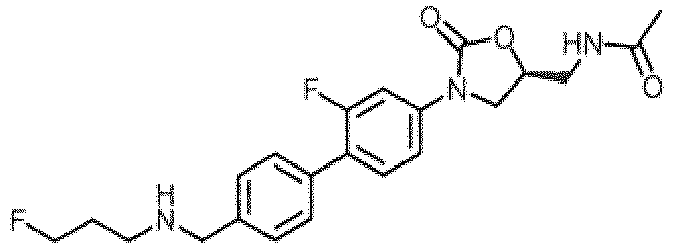


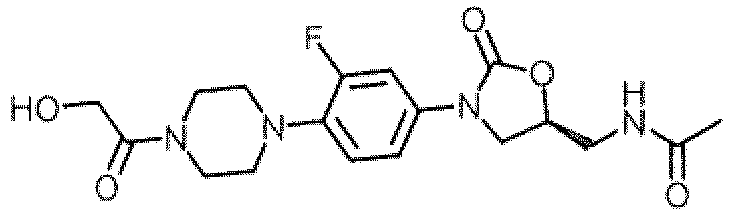
or a pharmaceutically acceptable salt or tautomer thereof;
wherein the emulsifier is a polyglycolized glyceride; and
wherein the polymeric dissolution aid is selected from the group consisting of polymers of 1-ethenyl-2-pyrrolidinone, polyamine N-oxide polymers, copolymers of N-vinylpyrrolidone and N-vinylimidazole, polyvinyloxazolidones, polyvinylimidazoles, and mixtures thereof. - A pharmaceutical composition according to claim 1, wherein the polyglycolized glyceride is selected from the group consisting of Labrafil, Labrosol, and Gelucire.
- A pharmaceutical composition according to claim 1, wherein the polyglycolized glyceride is selected from the group consisting of Gelucire 50/13, Gelucire 44/14, and mixtures thereof.
- A pharmaceutical composition according to any one of claims 1-3, wherein said polymeric dissolution aid is a polymer of 1-ethenyl-2-pyrrolidinone.
- A pharmaceutical composition according to any one of claims 1-4, wherein the polymeric dissolution aid is polyvinylpyrrolidone.
- A pharmaceutical composition according to any one of claims 1-5, further comprising one or more of a binder, a filler, a dispersant or wetting agent, a disintegrant, or a lubricant.
- A pharmaceutical composition according to any one of claims 1-6, further comprising one or more components selected from the group consisting of water, a nonaqueous solvent, a coating, a capsule shell, a colorant, a flavoring, a preservative, an antioxidant, a flavor enhancer, a compression aid, and a surfactant.
- A pharmaceutical composition according to any one of claims 1-7, in the form of a tablet or capsule.
- A pharmaceutical composition according to any one of claims 1-8, wherein said antimicrobial agent is an oxazolidinone selected from the group consisting of:


or a pharmaceutically acceptable salt or tautomer thereof. - A pharmaceutical composition according to any one of claims 1-9, wherein said antimicrobial agent is

or a pharmaceutically acceptable salt or tautomer thereof. - A pharmaceutical composition according to any one of claims 1-10, for use in a method of treating, preventing, or reducing the risk of a microbial infection in a patient.
- A pharmaceutical composition for use according to claim 11, wherein the microbial infection is selected from a skin infection, pneumonia, post-viral pneumonia, an abdominal infection, a urinary tract infection, bacteremia, septicemia, endocarditis, an atrio-ventricular shunt infection, a vascular access infection, meningitis, surgical prophylaxis, a peritoneal infection, a bone infection, a joint infection, a methicillin-resistant Staphylococcus aureus infection, a vancomycin-resistant Enterococci infection, a linezolid-resistant organism infection, and tuberculosis.
- A pharmaceutical composition for use according to claim 11 or 12, wherein said patient is a mammal or a domestic animal, preferably a human.
- A pharmaceutical composition for use according to any one of claims 11 to 13, wherein the composition, compared to a control composition, provides at least a 5% improvement in dissolution in a two step dissolution testing system.
- A pharmaceutical composition for use according to claim 14, wherein the two step dissolution system comprises measuring the dissolution in a first step in a simulated gastric environment of about pH 4 for up to 30 minutes followed by measuring the dissolution in a second step in a simulated gastric environment of about pH 5.4 to about 6.5 for up to about 60 minutes.
Applications Claiming Priority (2)
| Application Number | Priority Date | Filing Date | Title |
|---|---|---|---|
| US40883010P | 2010-11-01 | 2010-11-01 | |
| PCT/US2011/058743 WO2012061360A2 (en) | 2010-11-01 | 2011-11-01 | Pharmaceutical compositions |
Publications (3)
| Publication Number | Publication Date |
|---|---|
| EP2635307A2 EP2635307A2 (en) | 2013-09-11 |
| EP2635307A4 EP2635307A4 (en) | 2014-11-05 |
| EP2635307B1 true EP2635307B1 (en) | 2020-07-29 |
Family
ID=46025057
Family Applications (1)
| Application Number | Title | Priority Date | Filing Date |
|---|---|---|---|
| EP11838664.8A Active EP2635307B1 (en) | 2010-11-01 | 2011-11-01 | Pharmaceutical compositions |
Country Status (20)
| Country | Link |
|---|---|
| US (1) | US9409896B2 (en) |
| EP (1) | EP2635307B1 (en) |
| JP (1) | JP5902188B2 (en) |
| KR (1) | KR20140022773A (en) |
| CN (1) | CN103379917B (en) |
| AU (1) | AU2011323594C1 (en) |
| BR (1) | BR112013010714A2 (en) |
| CA (1) | CA2816077C (en) |
| EA (1) | EA028054B1 (en) |
| ES (1) | ES2824898T3 (en) |
| HU (1) | HUE051133T2 (en) |
| IL (1) | IL225952A0 (en) |
| MX (1) | MX359366B (en) |
| NZ (1) | NZ609964A (en) |
| PH (1) | PH12013500882A1 (en) |
| PT (1) | PT2635307T (en) |
| SG (2) | SG10201508982TA (en) |
| UA (1) | UA114469C2 (en) |
| WO (1) | WO2012061360A2 (en) |
| ZA (1) | ZA201303177B (en) |
Families Citing this family (5)
| Publication number | Priority date | Publication date | Assignee | Title |
|---|---|---|---|---|
| CA2781666C (en) | 2009-11-23 | 2017-02-21 | Cubist Pharmaceuticals, Inc. | Lipopeptide compositions and related methods |
| EA027791B1 (en) * | 2010-11-24 | 2017-09-29 | Мелинта Терапьютикс, Инк. | Pharmaceutical compositions |
| WO2013182070A1 (en) * | 2012-06-08 | 2013-12-12 | 四川贝力克生物技术有限责任公司 | Drug for preventing or treating mycobacterial diseases |
| SG11201605580RA (en) | 2014-01-10 | 2016-10-28 | Anaptysbio Inc | Antibodies directed against interleukin-33 (il-33) |
| WO2021133279A1 (en) * | 2019-12-26 | 2021-07-01 | Santa Farma İlaç Sanayi̇ A.Ş. | A solid oral pharmaceutical gemifloxacin mesylate composition with improved release pattern and disintegration mechanism |
Family Cites Families (25)
| Publication number | Priority date | Publication date | Assignee | Title |
|---|---|---|---|---|
| ID16956A (en) | 1996-05-24 | 1997-11-27 | Schering Corp | ANTIJAMUR COMPOSITION WITH IMPROVED BIODIVERSITY |
| CN1207895A (en) | 1997-08-12 | 1999-02-17 | 陕西省西安制药厂 | Clarithromycin capsule |
| DK0996429T3 (en) * | 1997-10-27 | 2003-05-26 | Merck Patent Gmbh | Solid solutions and solid dispersions in water heavily soluble drugs |
| GB2331458B (en) | 1997-11-21 | 2002-07-31 | Gursharan Singh Moonga | Solubilising systems for difficult pharmaceutical actives for preparing concentrated stable solutions for encapsulation into soft gelatine |
| KR19990080453A (en) * | 1998-04-17 | 1999-11-05 | 성재갑 | Pharmaceutical Compositions Containing Irreversible HIV Protease Inhibitors |
| US7374779B2 (en) * | 1999-02-26 | 2008-05-20 | Lipocine, Inc. | Pharmaceutical formulations and systems for improved absorption and multistage release of active agents |
| US20030180352A1 (en) * | 1999-11-23 | 2003-09-25 | Patel Mahesh V. | Solid carriers for improved delivery of active ingredients in pharmaceutical compositions |
| US7527807B2 (en) * | 2000-06-21 | 2009-05-05 | Cubist Pharmaceuticals, Inc. | Compositions and methods for increasing the oral absorption of antimicrobials |
| US6696426B2 (en) * | 2000-08-22 | 2004-02-24 | Pharmacia Corporation | Preservative free ophthalmic oxazolidinone antibiotic drug delivery systems |
| US20020119196A1 (en) | 2000-12-21 | 2002-08-29 | Narendra Parikh | Texture masked particles containing an active ingredient |
| ES2739852T3 (en) | 2001-07-06 | 2020-02-04 | Veloxis Pharmaceuticals As | Controlled agglomeration |
| US7842791B2 (en) * | 2002-12-19 | 2010-11-30 | Nancy Jean Britten | Dispersible pharmaceutical compositions |
| TWI378092B (en) | 2003-06-03 | 2012-12-01 | Rib X Pharmaceuticals Inc | Biaryl heterocyclic compounds and methods of making and using the same |
| US20060270680A1 (en) | 2003-06-03 | 2006-11-30 | Goldberg Joel A | Sulfonamide compounds and methods of making and using the same |
| KR20060085686A (en) * | 2003-10-10 | 2006-07-27 | 라이프사이클 파마 에이/에스 | Solid Formulations Containing Fibrate |
| KR100854211B1 (en) | 2003-12-18 | 2008-08-26 | 동아제약주식회사 | Novel oxazolidinone derivatives, preparation method thereof and pharmaceutical composition for antibiotics having the same as an active ingredient |
| KR20050104152A (en) * | 2004-04-28 | 2005-11-02 | 최승호 | Enhancing systems for poorly absorptive drugs |
| NZ580951A (en) * | 2005-04-29 | 2011-06-30 | Cubist Pharm Inc | Therapeutic compositions |
| EP1904489B1 (en) * | 2005-06-08 | 2011-01-26 | Rib-X Pharmaceuticals, Inc. | Process for the synthesis of triazoles |
| EP1998788A4 (en) * | 2006-03-01 | 2011-08-03 | Ruey J Yu | Composition and method for topical treatment of tar-responsive dermatological disorders |
| TW200800179A (en) * | 2006-03-06 | 2008-01-01 | Wyeth Corp | Pharmaceutical formulations of an anhydrous crystal form of 2-(3-fluoro-4-hydroxyphenyl)-7-vinyl-1,3-benzoxazol-5-ol |
| US20100234288A1 (en) * | 2006-03-27 | 2010-09-16 | Panacea Biotec Ltd | SUSTAINED RELEASE PHARMACEUTICAL COMPOSITION ON THE BASIS OF RELEASE SYSTEM COMPRISING AN ACID-SOLUBLE POLYMER AND A pH-DEPENDENT POLYMER |
| WO2008085913A1 (en) * | 2007-01-04 | 2008-07-17 | Rib-X Pharmaceuticals, Inc. | Methods for treating, preventing, or reducing the risk of opthalmic, otic, and nasal infections |
| US20090061009A1 (en) * | 2007-08-29 | 2009-03-05 | Joseph Schwarz | Composition and Method of Treatment of Bacterial Infections |
| WO2010046933A2 (en) * | 2008-10-22 | 2010-04-29 | Rubicon Research Private Limited | Pharmaceutical compositions of taste-masked linezolid |
-
2011
- 2011-11-01 WO PCT/US2011/058743 patent/WO2012061360A2/en not_active Ceased
- 2011-11-01 ES ES11838664T patent/ES2824898T3/en active Active
- 2011-11-01 SG SG10201508982TA patent/SG10201508982TA/en unknown
- 2011-11-01 EP EP11838664.8A patent/EP2635307B1/en active Active
- 2011-11-01 MX MX2013004711A patent/MX359366B/en active IP Right Grant
- 2011-11-01 UA UAA201306779A patent/UA114469C2/en unknown
- 2011-11-01 PT PT118386648T patent/PT2635307T/en unknown
- 2011-11-01 CN CN201180063510.8A patent/CN103379917B/en not_active Expired - Fee Related
- 2011-11-01 US US13/882,698 patent/US9409896B2/en active Active
- 2011-11-01 JP JP2013536921A patent/JP5902188B2/en not_active Expired - Fee Related
- 2011-11-01 KR KR1020137013955A patent/KR20140022773A/en not_active Abandoned
- 2011-11-01 NZ NZ609964A patent/NZ609964A/en not_active IP Right Cessation
- 2011-11-01 PH PH1/2013/500882A patent/PH12013500882A1/en unknown
- 2011-11-01 CA CA2816077A patent/CA2816077C/en active Active
- 2011-11-01 EA EA201390646A patent/EA028054B1/en not_active IP Right Cessation
- 2011-11-01 AU AU2011323594A patent/AU2011323594C1/en not_active Ceased
- 2011-11-01 BR BR112013010714A patent/BR112013010714A2/en not_active IP Right Cessation
- 2011-11-01 SG SG2013033865A patent/SG190117A1/en unknown
- 2011-11-01 HU HUE11838664A patent/HUE051133T2/en unknown
-
2013
- 2013-04-25 IL IL225952A patent/IL225952A0/en unknown
- 2013-04-30 ZA ZA2013/03177A patent/ZA201303177B/en unknown
Non-Patent Citations (1)
| Title |
|---|
| None * |
Also Published As
| Publication number | Publication date |
|---|---|
| WO2012061360A2 (en) | 2012-05-10 |
| UA114469C2 (en) | 2017-06-26 |
| EP2635307A2 (en) | 2013-09-11 |
| SG10201508982TA (en) | 2015-12-30 |
| NZ609964A (en) | 2015-08-28 |
| AU2011323594A1 (en) | 2013-05-23 |
| PH12013500882A1 (en) | 2020-10-19 |
| US9409896B2 (en) | 2016-08-09 |
| IL225952A0 (en) | 2013-07-31 |
| AU2011323594B2 (en) | 2016-12-22 |
| CA2816077C (en) | 2021-08-10 |
| EA028054B1 (en) | 2017-10-31 |
| EP2635307A4 (en) | 2014-11-05 |
| ZA201303177B (en) | 2018-12-19 |
| EA201390646A1 (en) | 2014-01-30 |
| CA2816077A1 (en) | 2012-05-10 |
| JP5902188B2 (en) | 2016-04-13 |
| HUE051133T2 (en) | 2021-03-01 |
| US20140094463A1 (en) | 2014-04-03 |
| JP2013542226A (en) | 2013-11-21 |
| BR112013010714A2 (en) | 2024-01-16 |
| SG190117A1 (en) | 2013-06-28 |
| WO2012061360A3 (en) | 2012-07-12 |
| CN103379917B (en) | 2016-10-12 |
| PT2635307T (en) | 2020-11-03 |
| MX2013004711A (en) | 2013-08-29 |
| CN103379917A (en) | 2013-10-30 |
| AU2011323594C1 (en) | 2017-06-01 |
| ES2824898T3 (en) | 2021-05-13 |
| KR20140022773A (en) | 2014-02-25 |
| MX359366B (en) | 2018-09-26 |
Similar Documents
| Publication | Publication Date | Title |
|---|---|---|
| US12558349B2 (en) | Methods of treating infections in overweight and obese patients using antibiotics | |
| US9409896B2 (en) | Sustained release pharmaceutical compositions comprising an antibacterial agent | |
| JP2013542226A5 (en) | ||
| AU2016234893A1 (en) | Pharmaceutical Compositions | |
| ES2836809T3 (en) | Pharmaceutical compositions | |
| HK1230972A1 (en) | Pharmaceutical compositions comprising radezolid | |
| HK1230972A (en) | Pharmaceutical compositions comprising radezolid |
Legal Events
| Date | Code | Title | Description |
|---|---|---|---|
| PUAI | Public reference made under article 153(3) epc to a published international application that has entered the european phase |
Free format text: ORIGINAL CODE: 0009012 |
|
| 17P | Request for examination filed |
Effective date: 20130524 |
|
| AK | Designated contracting states |
Kind code of ref document: A2 Designated state(s): AL AT BE BG CH CY CZ DE DK EE ES FI FR GB GR HR HU IE IS IT LI LT LU LV MC MK MT NL NO PL PT RO RS SE SI SK SM TR |
|
| DAX | Request for extension of the european patent (deleted) | ||
| A4 | Supplementary search report drawn up and despatched |
Effective date: 20141008 |
|
| RIC1 | Information provided on ipc code assigned before grant |
Ipc: A61K 47/30 20060101AFI20141001BHEP Ipc: A61K 31/421 20060101ALI20141001BHEP Ipc: A61K 9/48 20060101ALI20141001BHEP Ipc: A61K 9/20 20060101ALI20141001BHEP Ipc: A61K 31/4192 20060101ALI20141001BHEP Ipc: A61K 31/5375 20060101ALI20141001BHEP |
|
| RAP1 | Party data changed (applicant data changed or rights of an application transferred) |
Owner name: MELINTA THERAPEUTICS, INC. |
|
| STAA | Information on the status of an ep patent application or granted ep patent |
Free format text: STATUS: EXAMINATION IS IN PROGRESS |
|
| 17Q | First examination report despatched |
Effective date: 20161122 |
|
| RAP1 | Party data changed (applicant data changed or rights of an application transferred) |
Owner name: MELINTA SUBSIDIARY CORP. |
|
| GRAP | Despatch of communication of intention to grant a patent |
Free format text: ORIGINAL CODE: EPIDOSNIGR1 |
|
| STAA | Information on the status of an ep patent application or granted ep patent |
Free format text: STATUS: GRANT OF PATENT IS INTENDED |
|
| INTG | Intention to grant announced |
Effective date: 20200218 |
|
| GRAS | Grant fee paid |
Free format text: ORIGINAL CODE: EPIDOSNIGR3 |
|
| GRAA | (expected) grant |
Free format text: ORIGINAL CODE: 0009210 |
|
| STAA | Information on the status of an ep patent application or granted ep patent |
Free format text: STATUS: THE PATENT HAS BEEN GRANTED |
|
| RAP1 | Party data changed (applicant data changed or rights of an application transferred) |
Owner name: MELINTA SUBSIDIARY CORP. |
|
| AK | Designated contracting states |
Kind code of ref document: B1 Designated state(s): AL AT BE BG CH CY CZ DE DK EE ES FI FR GB GR HR HU IE IS IT LI LT LU LV MC MK MT NL NO PL PT RO RS SE SI SK SM TR |
|
| REG | Reference to a national code |
Ref country code: GB Ref legal event code: FG4D |
|
| REG | Reference to a national code |
Ref country code: CH Ref legal event code: EP |
|
| REG | Reference to a national code |
Ref country code: DE Ref legal event code: R096 Ref document number: 602011068011 Country of ref document: DE |
|
| REG | Reference to a national code |
Ref country code: AT Ref legal event code: REF Ref document number: 1295029 Country of ref document: AT Kind code of ref document: T Effective date: 20200815 |
|
| REG | Reference to a national code |
Ref country code: IE Ref legal event code: FG4D |
|
| REG | Reference to a national code |
Ref country code: SE Ref legal event code: TRGR Ref country code: PT Ref legal event code: SC4A Ref document number: 2635307 Country of ref document: PT Date of ref document: 20201103 Kind code of ref document: T Free format text: AVAILABILITY OF NATIONAL TRANSLATION Effective date: 20201027 |
|
| REG | Reference to a national code |
Ref country code: LT Ref legal event code: MG4D |
|
| REG | Reference to a national code |
Ref country code: NL Ref legal event code: MP Effective date: 20200729 |
|
| REG | Reference to a national code |
Ref country code: GR Ref legal event code: EP Ref document number: 20200402983 Country of ref document: GR Effective date: 20201215 |
|
| PG25 | Lapsed in a contracting state [announced via postgrant information from national office to epo] |
Ref country code: FI Free format text: LAPSE BECAUSE OF FAILURE TO SUBMIT A TRANSLATION OF THE DESCRIPTION OR TO PAY THE FEE WITHIN THE PRESCRIBED TIME-LIMIT Effective date: 20200729 Ref country code: NO Free format text: LAPSE BECAUSE OF FAILURE TO SUBMIT A TRANSLATION OF THE DESCRIPTION OR TO PAY THE FEE WITHIN THE PRESCRIBED TIME-LIMIT Effective date: 20201029 Ref country code: LT Free format text: LAPSE BECAUSE OF FAILURE TO SUBMIT A TRANSLATION OF THE DESCRIPTION OR TO PAY THE FEE WITHIN THE PRESCRIBED TIME-LIMIT Effective date: 20200729 Ref country code: HR Free format text: LAPSE BECAUSE OF FAILURE TO SUBMIT A TRANSLATION OF THE DESCRIPTION OR TO PAY THE FEE WITHIN THE PRESCRIBED TIME-LIMIT Effective date: 20200729 Ref country code: BG Free format text: LAPSE BECAUSE OF FAILURE TO SUBMIT A TRANSLATION OF THE DESCRIPTION OR TO PAY THE FEE WITHIN THE PRESCRIBED TIME-LIMIT Effective date: 20201029 |
|
| PG25 | Lapsed in a contracting state [announced via postgrant information from national office to epo] |
Ref country code: PL Free format text: LAPSE BECAUSE OF FAILURE TO SUBMIT A TRANSLATION OF THE DESCRIPTION OR TO PAY THE FEE WITHIN THE PRESCRIBED TIME-LIMIT Effective date: 20200729 Ref country code: LV Free format text: LAPSE BECAUSE OF FAILURE TO SUBMIT A TRANSLATION OF THE DESCRIPTION OR TO PAY THE FEE WITHIN THE PRESCRIBED TIME-LIMIT Effective date: 20200729 Ref country code: RS Free format text: LAPSE BECAUSE OF FAILURE TO SUBMIT A TRANSLATION OF THE DESCRIPTION OR TO PAY THE FEE WITHIN THE PRESCRIBED TIME-LIMIT Effective date: 20200729 Ref country code: IS Free format text: LAPSE BECAUSE OF FAILURE TO SUBMIT A TRANSLATION OF THE DESCRIPTION OR TO PAY THE FEE WITHIN THE PRESCRIBED TIME-LIMIT Effective date: 20201129 |
|
| REG | Reference to a national code |
Ref country code: HU Ref legal event code: AG4A Ref document number: E051133 Country of ref document: HU |
|
| PG25 | Lapsed in a contracting state [announced via postgrant information from national office to epo] |
Ref country code: NL Free format text: LAPSE BECAUSE OF FAILURE TO SUBMIT A TRANSLATION OF THE DESCRIPTION OR TO PAY THE FEE WITHIN THE PRESCRIBED TIME-LIMIT Effective date: 20200729 |
|
| REG | Reference to a national code |
Ref country code: AT Ref legal event code: UEP Ref document number: 1295029 Country of ref document: AT Kind code of ref document: T Effective date: 20200729 |
|
| PG25 | Lapsed in a contracting state [announced via postgrant information from national office to epo] |
Ref country code: CZ Free format text: LAPSE BECAUSE OF FAILURE TO SUBMIT A TRANSLATION OF THE DESCRIPTION OR TO PAY THE FEE WITHIN THE PRESCRIBED TIME-LIMIT Effective date: 20200729 Ref country code: DK Free format text: LAPSE BECAUSE OF FAILURE TO SUBMIT A TRANSLATION OF THE DESCRIPTION OR TO PAY THE FEE WITHIN THE PRESCRIBED TIME-LIMIT Effective date: 20200729 Ref country code: EE Free format text: LAPSE BECAUSE OF FAILURE TO SUBMIT A TRANSLATION OF THE DESCRIPTION OR TO PAY THE FEE WITHIN THE PRESCRIBED TIME-LIMIT Effective date: 20200729 Ref country code: RO Free format text: LAPSE BECAUSE OF FAILURE TO SUBMIT A TRANSLATION OF THE DESCRIPTION OR TO PAY THE FEE WITHIN THE PRESCRIBED TIME-LIMIT Effective date: 20200729 Ref country code: SM Free format text: LAPSE BECAUSE OF FAILURE TO SUBMIT A TRANSLATION OF THE DESCRIPTION OR TO PAY THE FEE WITHIN THE PRESCRIBED TIME-LIMIT Effective date: 20200729 |
|
| REG | Reference to a national code |
Ref country code: DE Ref legal event code: R097 Ref document number: 602011068011 Country of ref document: DE |
|
| REG | Reference to a national code |
Ref country code: ES Ref legal event code: FG2A Ref document number: 2824898 Country of ref document: ES Kind code of ref document: T3 Effective date: 20210513 |
|
| PG25 | Lapsed in a contracting state [announced via postgrant information from national office to epo] |
Ref country code: AL Free format text: LAPSE BECAUSE OF FAILURE TO SUBMIT A TRANSLATION OF THE DESCRIPTION OR TO PAY THE FEE WITHIN THE PRESCRIBED TIME-LIMIT Effective date: 20200729 |
|
| PLBE | No opposition filed within time limit |
Free format text: ORIGINAL CODE: 0009261 |
|
| STAA | Information on the status of an ep patent application or granted ep patent |
Free format text: STATUS: NO OPPOSITION FILED WITHIN TIME LIMIT |
|
| PG25 | Lapsed in a contracting state [announced via postgrant information from national office to epo] |
Ref country code: SK Free format text: LAPSE BECAUSE OF FAILURE TO SUBMIT A TRANSLATION OF THE DESCRIPTION OR TO PAY THE FEE WITHIN THE PRESCRIBED TIME-LIMIT Effective date: 20200729 Ref country code: MC Free format text: LAPSE BECAUSE OF FAILURE TO SUBMIT A TRANSLATION OF THE DESCRIPTION OR TO PAY THE FEE WITHIN THE PRESCRIBED TIME-LIMIT Effective date: 20200729 |
|
| 26N | No opposition filed |
Effective date: 20210430 |
|
| PG25 | Lapsed in a contracting state [announced via postgrant information from national office to epo] |
Ref country code: LU Free format text: LAPSE BECAUSE OF NON-PAYMENT OF DUE FEES Effective date: 20201101 |
|
| PG25 | Lapsed in a contracting state [announced via postgrant information from national office to epo] |
Ref country code: SI Free format text: LAPSE BECAUSE OF FAILURE TO SUBMIT A TRANSLATION OF THE DESCRIPTION OR TO PAY THE FEE WITHIN THE PRESCRIBED TIME-LIMIT Effective date: 20200729 |
|
| PG25 | Lapsed in a contracting state [announced via postgrant information from national office to epo] |
Ref country code: TR Free format text: LAPSE BECAUSE OF FAILURE TO SUBMIT A TRANSLATION OF THE DESCRIPTION OR TO PAY THE FEE WITHIN THE PRESCRIBED TIME-LIMIT Effective date: 20200729 Ref country code: MT Free format text: LAPSE BECAUSE OF FAILURE TO SUBMIT A TRANSLATION OF THE DESCRIPTION OR TO PAY THE FEE WITHIN THE PRESCRIBED TIME-LIMIT Effective date: 20200729 Ref country code: CY Free format text: LAPSE BECAUSE OF FAILURE TO SUBMIT A TRANSLATION OF THE DESCRIPTION OR TO PAY THE FEE WITHIN THE PRESCRIBED TIME-LIMIT Effective date: 20200729 |
|
| PG25 | Lapsed in a contracting state [announced via postgrant information from national office to epo] |
Ref country code: MK Free format text: LAPSE BECAUSE OF FAILURE TO SUBMIT A TRANSLATION OF THE DESCRIPTION OR TO PAY THE FEE WITHIN THE PRESCRIBED TIME-LIMIT Effective date: 20200729 |
|
| P01 | Opt-out of the competence of the unified patent court (upc) registered |
Effective date: 20230528 |
|
| REG | Reference to a national code |
Ref country code: CH Ref legal event code: U11 Free format text: ST27 STATUS EVENT CODE: U-0-0-U10-U11 (AS PROVIDED BY THE NATIONAL OFFICE) Effective date: 20251201 |
|
| PGFP | Annual fee paid to national office [announced via postgrant information from national office to epo] |
Ref country code: PT Payment date: 20251021 Year of fee payment: 15 |
|
| PGFP | Annual fee paid to national office [announced via postgrant information from national office to epo] |
Ref country code: HU Payment date: 20251029 Year of fee payment: 15 |
|
| PGFP | Annual fee paid to national office [announced via postgrant information from national office to epo] |
Ref country code: DE Payment date: 20251128 Year of fee payment: 15 |
|
| PGFP | Annual fee paid to national office [announced via postgrant information from national office to epo] |
Ref country code: GB Payment date: 20251127 Year of fee payment: 15 |
|
| PGFP | Annual fee paid to national office [announced via postgrant information from national office to epo] |
Ref country code: AT Payment date: 20251128 Year of fee payment: 15 |
|
| PGFP | Annual fee paid to national office [announced via postgrant information from national office to epo] |
Ref country code: IT Payment date: 20251119 Year of fee payment: 15 |
|
| PGFP | Annual fee paid to national office [announced via postgrant information from national office to epo] |
Ref country code: FR Payment date: 20251125 Year of fee payment: 15 |
|
| PGFP | Annual fee paid to national office [announced via postgrant information from national office to epo] |
Ref country code: GR Payment date: 20251126 Year of fee payment: 15 Ref country code: BE Payment date: 20251127 Year of fee payment: 15 |
|
| PGFP | Annual fee paid to national office [announced via postgrant information from national office to epo] |
Ref country code: CH Payment date: 20251201 Year of fee payment: 15 Ref country code: SE Payment date: 20251127 Year of fee payment: 15 |
|
| PGFP | Annual fee paid to national office [announced via postgrant information from national office to epo] |
Ref country code: IE Payment date: 20251127 Year of fee payment: 15 |
|
| PGFP | Annual fee paid to national office [announced via postgrant information from national office to epo] |
Ref country code: ES Payment date: 20251201 Year of fee payment: 15 |