EP2634833A1 - Battery pack lock structure and electronic apparatus - Google Patents
Battery pack lock structure and electronic apparatus Download PDFInfo
- Publication number
- EP2634833A1 EP2634833A1 EP11836371.2A EP11836371A EP2634833A1 EP 2634833 A1 EP2634833 A1 EP 2634833A1 EP 11836371 A EP11836371 A EP 11836371A EP 2634833 A1 EP2634833 A1 EP 2634833A1
- Authority
- EP
- European Patent Office
- Prior art keywords
- battery
- battery pack
- lock member
- lid
- lock
- Prior art date
- Legal status (The legal status is an assumption and is not a legal conclusion. Google has not performed a legal analysis and makes no representation as to the accuracy of the status listed.)
- Withdrawn
Links
Images








Classifications
-
- H—ELECTRICITY
- H04—ELECTRIC COMMUNICATION TECHNIQUE
- H04M—TELEPHONIC COMMUNICATION
- H04M1/00—Substation equipment, e.g. for use by subscribers
- H04M1/02—Constructional features of telephone sets
- H04M1/0202—Portable telephone sets, e.g. cordless phones, mobile phones or bar type handsets
- H04M1/026—Details of the structure or mounting of specific components
- H04M1/0262—Details of the structure or mounting of specific components for a battery compartment
-
- H—ELECTRICITY
- H01—ELECTRIC ELEMENTS
- H01M—PROCESSES OR MEANS, e.g. BATTERIES, FOR THE DIRECT CONVERSION OF CHEMICAL ENERGY INTO ELECTRICAL ENERGY
- H01M2220/00—Batteries for particular applications
- H01M2220/30—Batteries in portable systems, e.g. mobile phone, laptop
-
- Y—GENERAL TAGGING OF NEW TECHNOLOGICAL DEVELOPMENTS; GENERAL TAGGING OF CROSS-SECTIONAL TECHNOLOGIES SPANNING OVER SEVERAL SECTIONS OF THE IPC; TECHNICAL SUBJECTS COVERED BY FORMER USPC CROSS-REFERENCE ART COLLECTIONS [XRACs] AND DIGESTS
- Y02—TECHNOLOGIES OR APPLICATIONS FOR MITIGATION OR ADAPTATION AGAINST CLIMATE CHANGE
- Y02E—REDUCTION OF GREENHOUSE GAS [GHG] EMISSIONS, RELATED TO ENERGY GENERATION, TRANSMISSION OR DISTRIBUTION
- Y02E60/00—Enabling technologies; Technologies with a potential or indirect contribution to GHG emissions mitigation
- Y02E60/10—Energy storage using batteries
Definitions
- the present invention relates to a battery pack lock structure, and an electronic apparatus.
- a battery pack housing is provided with a battery lock member for locking a battery pack in a fixed position.
- This configuration permits the battery pack to be securely locked in a fixed position by the battery lock member.
- Patent Literature 1 Unexamined Japanese Patent Application Kokai Publication No. 2009-32595
- the invention has been made in light of the foregoing situations, and it is an object of the invention to provide a battery pack lock structure that simply and securely locks a battery pack to an electronic apparatus body, and an electronic apparatus.
- a battery pack lock structure includes a battery pack housing provided on an electronic apparatus body for housing a battery pack; a battery lid detachably attached to the electronic apparatus body to close an opening of the battery pack housing; and a battery lock member for locking the battery pack, the battery lock member having a first inclined surface that permits sliding of the battery lock member in such a way that an operation of housing the battery pack causes a first portion of the battery pack to slide in contact with the first inclined surface, thereby releasing the locking, and a second inclined surface that permits sliding of the battery lock member in such a way that an operation of attaching the battery lid causes a second portion of the battery lid to slide in contact with the second inclined surface, thereby achieving the locking.
- An electronic apparatus has the battery pack lock structure according to the first aspect of the invention.
- the invention can simply and securely lock a battery pack to an electronic apparatus body.
- a cell phone 10 includes a battery lid 11, a battery pack 12, a cell-phone lower case 13, a board 14, a touch panel 15 equipped with an LCD (Liquid Crystal Display), and a cell-phone upper case 16.
- the cell phone 10 has a rectangular flat shape
- each of the battery lid 11, the battery pack 12, the board 14 and the touch panel 15 has a rectangular flat shape similar to the shape of the cell phone 10, and both of the cell-phone lower case 13 and the cell-phone upper case 16 have rectangular frame shapes.
- the cell-phone lower case 13 and the cell-phone upper case 16 of the cell phone 10 form a box-shaped casing, and the structure excluding the battery pack 12 forms a cell-phone body.
- the touch panel 15 includes the LCD, and an electronic touch sensor panel covering the LCD.
- the touch sensor panel detects a position where a capacitance is changed by a touch pen or a user's finger touching the position.
- the LCD displays an arbitrary image such as an icon for allowing the user to touch the touch panel 15 to input an operation instruction.
- the touch panel 15 accepts an input made by touching of the touch pen or the like thereon.
- various functions assigned to this icon are achieved by a CPU (Central Processing Unit) 24 and a transmitter/receiver (not shown) and the like mounted on the board 14 of the cell phone 10.
- CPU Central Processing Unit
- transmitter/receiver not shown
- the touch panel 15 is accommodated in the cell-phone upper case 16 with its touch sensor panel exposed on the surface.
- the touch panel 15 is accommodated, together with the board 14, in the housing space of the casing, formed by securing the cell-phone upper case 16 to the cell-phone lower case 13 with four bolts 16a, in such a state as to overlap the board 14.
- a battery pack housing 33 having a rectangular opening 33a which penetrates the cell-phone lower case 13 in a thicknesswise direction is provided in the center portion of the cell-phone lower case 13 to house the battery pack 12.
- the battery pack 12 is housed in the battery pack housing 33 through the rectangular opening 33a of the battery pack housing 33 with the bottom side of the battery pack 12 being in contact with the bottom cover (not shown) of the board 14. Because the battery pack 12 is housed in the battery pack housing 33 in such a state, members that are present in the thicknesswise direction of the cell phone 10 are limited to the necessary components such as the battery pack 12, the board 14 and the touch panel 15, thereby contributing to flattening the cell phone 10.
- a lock mechanism (not shown) that locks the battery lid 11 on a -Y side (front side) when being slid leftward/rightward, and an operation lever 41 for setting the lock mechanism in a locked state and a free state are provided on the cell-phone lower case 13 on the -Y side (front side) of a battery lid holder 43.
- the operation lever 41 moves leftward/rightward (to the free side/lock side) in a cutaway 41a provided on the -Y side (front side) of the battery lid 11.
- the lock mechanism is configured to be mechanically locked when the operation lever 41 is manually moved to the lock side (-X side), and be unlocked when the operation lever 41 is manually moved to the free side (+X side).
- the battery lid holder 43 recessed in a rectangular frame shape from the top surface of the cell-phone lower case 13 is formed in the peripheral region of the rectangular opening of the battery pack housing 33 to hold the battery lid 11.
- a connection terminal 22 is provided on the -Y-side (front side) side face of the battery pack 12 to be connected to an unillustrated connection terminal provided on the cell phone body (cell-phone lower case 13).
- the cell phone 10 further includes a battery lock member 50 for fixing the +Y side (rear side) of the battery pack 12 to lock the battery pack 12 in a fixed position in the battery pack housing 33.
- An elongated pressing portion (not shown) for locking the front peripheral portion of the battery pack 12 from above is protrusively formed on the -Y side (front side) of the battery pack housing 33 in such a way as to extend a leftward/rightward direction.
- the front peripheral portion of the battery pack 12 is slipped into the space under the pressing portion.
- This structure and the battery lock member 50 cause the battery pack 12 to be locked at the front and rear portions thereof, so that the battery pack 12 is stably housed in the battery pack housing 33.
- two inward engagement claws 21a are protrusively formed at a predetermined interval therebetween in the vicinity of each of both ⁇ X direction (leftward/rightward) sides of the battery lid 11 in a -Z direction (downward), and a single inward engagement claw 2 1 b is protrusively formed between the two outward engagement claws 21a in the -Z direction (downward).
- the outward engagement claw 21a has an engagement protrusion protruding outward
- the inward engagement claw 21b has an engagement protrusion protruding inward.
- FIG. 1 As shown in FIG. 1 , four engagement portions 23a with which the four outward engagement claws 21 of the battery lid 11 are engaged, and two engagement holes 23b with which the two inward engagement claws 21b of the battery lid 11 are engaged are formed at corresponding positions of the battery lid holder 43.
- the battery lid 11 When the battery lid 11 is attached to the battery lid holder 43, the battery lid 11 is held on the battery lid holder 43 and closes the opening of the battery pack housing 33 with the outward engagement claws 21a and the inward engagement claws 21b of the battery lid 11 being respectively engaged with the engagement portions 23a and the engagement holes 23b of the battery lid holder 43.
- This engagement structure permits the battery lid 11 to be stably held on the battery lid holder 43.
- the bottom surface of the battery lid 11 substantially contacts the top surface of the battery pack 12 (see FIG. 8 ).
- a depression protrusion 31 with a quadratic prism shape is protrusively formed in the -Z direction (downward) on the bottom side of the battery lid 11 in a predetermined position.
- the depression protrusion 31 of the battery lid 11 is disposed in a position where the depression protrusion 31 abuts on a second inclined surface 56 or a left side face 57 of a lock portion 52 of the battery lock member 50 to be described later with the battery lid 11 being held on the battery lid holder 43(see FIGS. 4 and 8 ).
- an engagement protrusion 32 with a trapezoidal cross section is protrusively formed at a center portion of the +Y-side (front side) side face of the battery pack 12.
- the engagement protrusion 32 has a front face 32a parallel to the frontward side face of the battery pack 12, a bottom face 32b flush with the bottom face of the battery pack 12, a back face 32c inclined with respect to the bottom face 32b so that the +X side (left side) becomes lower, and a pair of a first side face 32d and a second side face 32e connected to the front face 32a, the bottom face 32b and the back face 32c and opposing each other horizontally.
- the first side face 32d is lower than the second side face 32e.
- the battery lock member 50 includes a substantially rectangular cylindrical slide 51 having a guided groove 51a extending in the ⁇ X direction (leftward/rightward) and opening to the +Z side (upper side) like a slit, and the lock portion 52 formed integral with the slide 51 and protruding from the -Y-side (front side) side face of the slide 51.
- a pair of projections 51 b extending in the Z direction (upward/downward) and projecting inward are formed near the left and right end portions of the +Y-side side face of the guided groove 51a.
- a pressing protrusion 51c protruding inward is formed on an upper central portion of the -Y-side side face of the slit opening of the guided groove 51 a.
- a pair of elongated slide assisting ribs 51d extending in the X direction are formed on the bottom face of the battery lock member 50 to protrude downward therefrom.
- the slide assisting ribs 51d are provided to reduce the slide friction by changing slide region of the battery lock member 50 from a planar region to a linear region when it sides on the surface of the bottom cover of the board 14.
- an engagement recess 53 recessed in a trapezoidal cross section is formed in a right side portion of the lock portion 52 in such a way that when the battery pack 12 is housed in the battery pack housing 33 and locked, the engagement protrusion 32 of the battery pack 12 engages with the engagement recess 53.
- first inclined surface 54 inclined so that the -X side (right side) becomes lower
- an upper surface 55 continual to the first inclined surface 54 and substantially parallel to the top face of the slide 51
- the second inclined surface 56 continual to the upper surface 55 and inclined so that the +X side (left side) becomes lower.
- the top face of the engagement recess 53 of the lock portion 52 serves as a third inclined surface 53a that faces the back face 32c of the engagement protrusion 32 (see FIG. 3B ) in parallel thereto when the engagement recess 53 engages with the engagement protrusion 32 of the battery pack 12.
- the left side face 57 is formed at the lock portion 52 to be continual to the second inclined surface 56.
- first inclined surface 54 and the second inclined surface 56 of the battery lock member 50 face each other so as to form a first angular portion therebetween along the moving direction ( ⁇ X direction) of the battery lock member 50 (see FIG. 5 ), and the first inclined surface 54 and the third inclined surface 53a of the battery lock member 50 face each other so as to form a second angular portion therebetween along the moving direction of the battery lock member 50.
- the above structure permits the lock portion 52 of the battery lock member 50 to be formed compact.
- a recessed space 70 is formed in the -Y side (rear side) of the battery lid holder 43.
- the battery lock member 50 is configured to be accommodated in the recessed space 70 and slide in the ⁇ X direction along a guide rail 13b provided in the recessed space 70.
- the guide rail 13b is formed to protrude downward from a part 13a of the cell-phone lower case 13. Accordingly, the battery lock member 50 is reasonably accommodated in the cell phone body while saving the layout space for the battery lock member 50. Specifically, referring to FIG.
- the battery lock member 50 is configured in such a way that the guided groove 51a of the slide 51 is slidably fitted over the guide rail 13b and that a projection 13c formed at the lower portion of the guide rail 13b so as to extend in the leftward/rightward direction and protrude toward the -Y side is hooked on the pressing protrusion 51c of the guided groove 51 a, thereby preventing the battery lock member 50 from coming off the guide rail 13b.
- contact of the pair of projections 51b of the guided groove 51a with the guide rail 13b in a linear region reduces the slide friction between the guide rail 13b and the guided groove 51a.
- the slide 51 of the battery lock member 50 is formed of a hard resin such as polyacetal, and the aforementioned structure prevents the battery lock member 50 from coming off the guide rail 13b. Further, this structure suppresses the force of causing the battery pack 11 at the time of drop impact of the cell phone 10.
- the cell phone 10 is configured as described above, and the following describes an operation of housing the battery pack 12 in the battery pack housing 33 of the cell phone body (cell-phone lower case 13) and sealing the battery pack 12 therein with the battery lid 11.
- the downward movement of the engagement protrusion 32 presses the battery lock member 50 (lock portion 52) in the +X side direction (leftward), so that the battery lock member 50 slides toward the side of unlocking the battery pack 12 (toward a left side face 71 of the recessed space 70) as shown in FIG. 9B .
- the battery lock member 50 slides on the surface of the bottom cover of the board 14 via the pair of slide assisting ribs 51d.
- the battery pack 12 is housed in the battery pack housing 33.
- the engagement recess 53 of the lock portion 52 engages with the engagement protrusion 32 of the battery pack 12, causing the battery pack 12 to be locked in the battery pack housing 33 with the battery lock member 50 (see FIG. 6A ).
- the third inclined surface 53a of the engagement recess 53 of the lock portion 52 and the back face 32c of the engagement protrusion 32 of the battery pack 12 faces each other in parallel.
- the depression protrusion 31 of the battery lid 11 is accommodated in the space formed between the left side face 57 of the lock portion 52 of the battery lock member 50 and the left side face 71 of the recessed space 70.
- the depression protrusion 31 of the battery lid 11 abuts on the left side face 57 of the lock portion 52 of the battery lock member 50, so that the locked state becomes stable.
- the battery lid 11 is held on the battery lid holder 43 with the outward engagement claws 21a and the inward engagement claws 21 b of the battery lid 11 (see FIG. 2A ) being engaged with the engagement portions 23a and the engagement holes 23b of the battery lid holder 43.
- the operation lever 41 is manipulated to the lock side to lock the battery lid 11 to the cell-phone lower case 13.
- the following describes an operation of detaching the battery lid 11 from the cell-phone lower case 13 (battery lid holder 43) of the cell phone 10 according to the embodiment, and further removing the battery pack 12 from the battery pack housing 33.
- the battery lid 11 With the battery lid 11 held on the battery lid holder 43 and the battery pack 12 sealed inside the battery pack housing 33 as shown in FIG. 10A , the battery lid 11 is detached from the battery lid holder 43 while manipulating the operation lever 41 to the free side to disengage the outward engagement claws 21a and the inward engagement claws 21b of the battery lid 11 from the engagement portions 23a and the engagement holes 23b of the battery lid holder 43.
- the depression protrusion 31 of the battery lid 11 is separated from the space formed between the left side face 57 of the lock portion 52 of the battery lock member 50 and the left side face 71 of the recessed space 70.
- the battery lock member 50 is released from the restriction by the depression protrusion 31 of the battery lid 11, so that the battery lock member 50 is freely slidable along the guide rail 13b (see FIG. 5 ).
- the third inclined surface 53a of the engagement recess 53 of the lock portion 52 and the back face 32c of the engagement protrusion 32 of the battery pack 12 faces each other in parallel.
- the operation of housing the battery pack 12 into the battery pack housing 33 causes the bottom face 32b of the engagement protrusion 32 of the battery pack 12 to slide in contact with the first inclined surface 54 of the lock portion 52 of the battery lock member 50 located in the position of locking the battery pack 12. Then, the downward movement of the engagement protrusion 32 presses the battery lock member 50 leftward, so that the battery lock member 50 slides in the direction of unlocking the battery pack 12. Then, the locking of the battery pack 12 is released.
- the operation of attaching the battery lid 11 to the battery lid holder 43 causes the depression protrusion 31 of the battery lid 11 to slide in contact with the second inclined surface 56 of the lock portion 52 of the battery lock member 50 located in the position of unlocking the battery pack 12. Then, the downward movement of the depression protrusion 31 presses the battery lock member 50 rightward, so that the battery lock member 50 slides in the direction of locking the battery pack 12. Then, the battery pack 12 is locked.
- the battery lock member 50 when the battery pack 12 housed in the battery pack housing 33 is pulled upward with the battery lock member 50 being in the locked state, the back face 32c of the engagement protrusion 32 of the battery pack 12 slides in contact with the third inclined surface 53a of the engagement recess 53 of the lock portion 52. Then, the battery lock member 50 moves toward the +X side (left side). This automatically releases the locking of the battery pack 12 in the battery pack housing 33 with the battery lock member 50. As a result, removable of the battery pack 12 from the cell phone 10 is carried out easily.
- the depression protrusion 31 of the battery lid 11 abuts on the left side face 57 of the lock portion 52 of the battery lock member 50. This stabilizes the locked state of the battery pack 12 with the battery lock member 50. As a result, electrical connection of the connection terminal 22 provided on the battery pack 12 to the connection terminal (not shown) provided on the cell-phone lower case 13 is maintained in a stable state.
- the battery lock member 50 is automatically set in the unlocked state, thus preventing the battery pack 12 and the cell phone body from being damaged.
- the battery lock member 50 is automatically set in the unlocked state, thus preventing the battery pack 12 and the cell phone body from being damaged.
- the invention is not limited to a cell phone illustrated in the foregoing description of the embodiment, and may be adapted to portable communication terminals such as a PDA (Personal Digital Assistant), a PHS (Personal Handy-phone System), a mobile PC (Personal Computer) and a tablet terminal, and other electronic apparatuses.
- portable communication terminals such as a PDA (Personal Digital Assistant), a PHS (Personal Handy-phone System), a mobile PC (Personal Computer) and a tablet terminal, and other electronic apparatuses.
- the battery lock member 50 is provided only on one side of the battery pack 12 in the lengthwise direction. That is, the recessed space 70 is provided in the -Y side (rear side) region of the battery lid holder 43, the battery lock member 50 is accommodated in the recessed space 70, and the battery lock member 50 sides in the ⁇ X direction along the guide rail 13b formed in the recessed space 70.
- the battery lock member 50 is not limited to this type, and may be provided on both lengthwise sides of the battery pack 12.
- the recessed space 70 may be formed in each of the ⁇ Y side (front and rear) regions of the battery lid holder 43, and a single battery lock member 50 is accommodated in each recessed space 70, and may slide in ⁇ X direction along the guide rail 13b formed in each recessed space 70.
- the provision of the battery lock member 50 on both lengthwise sides of the battery pack 12 this way further stabilizes the locked state of the battery pack 12 in the battery pack housing 33.
- electrical connection of the connection terminal 22 provided on the battery pack 12 to the connection terminal (not shown) provided on the cell-phone lower case 13 is maintained in a more stable state.
- the cell phone 10 includes the touch panel 15 that serves both the LCD equipped display and the key operator.
- the cell phone 10 is not limited to this type, and may be configured to have the LCD equipped display and the key operator separately.
- the guide portion to slide the battery lock member 50 is the rail-like guide rail 13b, and the guided portion is the recessed guided groove 51a that is slidably fitted on the guide rail 13b.
- the guide portion for sliding the battery lock member 50 may be a recessed guide groove
- the guided portion may be a rail-like guided rail that is slidably fitted into the guide groove.
- the first portion of the battery pack 12 is the engagement protrusion 32 with a trapezoidal cross section, which is formed to protrude from the center portion of the +Y-side (front side) side face of the battery pack 12, and is used for locking the battery pack 12.
- the first portion of the battery pack 12 may be formed to protrude from another portion such as the bottom face of the battery pack 12, or may not be used to lock the battery pack 12, as long as the effects of the invention are demonstrated.
- the first portion of the battery pack 12 may have a shape other than the trapezoidal cross-sectional shape.
- the second portion of the battery lid 11 is the depression protrusion 31 with a quadratic prism shape formed to protrude from the bottom face of the battery lid 11.
- the second portion of the battery lid 11 is not limited to this type, and may be formed to protrude from another portion such as a side portion of the battery lid 11, or may have a shape other than the quadratic prism shape, as long as the effects of the invention are demonstrated.
- the cell phone 10 and its components have rectangular shapes, which are not restrictive, and may be elliptical shapes or may have structures with curved surfaces from the viewpoint of design.
- the joint portion of the battery lid 11 and the battery lid holder 43 may be made liquid tight by a rubber packing.
- a battery pack lock structure comprising:
- the battery pack lock structure according to Note 1 or 2, wherein the battery lock member locks the battery pack with the first portion of the battery pack.
- the battery pack lock structure according to any one of Notes 1 to 4, wherein a guide portion that permits slide movement of the battery lock member is provided in the electronic apparatus body.
- the battery pack lock structure according to Note 5 or 6, wherein a battery lid holder for holding the battery lid is provided at a peripheral region of the opening of the battery pack housing, and the guide portion is provided in a recessed space formed in the battery lid holder.
- the battery pack lock structure according to Note 5 wherein the battery lock member is provided with a guided portion that is slidably fitted on the guide portion.
Landscapes
- Engineering & Computer Science (AREA)
- Signal Processing (AREA)
- Battery Mounting, Suspending (AREA)
Abstract
Description
- The present invention relates to a battery pack lock structure, and an electronic apparatus.
- There are some electronic apparatuses, such as a cell phone, that adopt a configuration having a battery pack housing provided on an electronic apparatus body for housing a battery pack, and a battery lid which engages with the electronic apparatus body to close the battery pack housing (see, for example, Patent Literature 1).
- In such a configuration, positioning of the battery pack to the electronic apparatus body is achieved only by the battery lid, the battery pack is loose within the battery pack housing so that there may be a situation where the electric connection between the electronic apparatus body and the battery pack is insufficient.
- There may be a configuration, different from the foregoing configuration, in which a battery pack housing is provided with a battery lock member for locking a battery pack in a fixed position. This configuration permits the battery pack to be securely locked in a fixed position by the battery lock member.
- Patent Literature 1: Unexamined Japanese Patent Application Kokai Publication No.
2009-32595 - According to such electronic apparatuses, however, with the battery lock member being in the locked state, housing and removable of the battery pack cannot be achieved unless the battery lock member is set in an unlocked state (free state). This makes it necessary to manually unlock the battery lock member. In this case, enforced housing of the battery pack may damage the battery pack or the electronic apparatus body.
- Further, there is another problem such that when the battery pack housing is closed with the battery lid with the battery lock member left unlocked, the unlocked state is maintained so that the battery pack is not locked in the fixed position of the battery pack housing. That is, to securely lock the battery pack, the battery lock member should be manually set in a locked state.
- The invention has been made in light of the foregoing situations, and it is an object of the invention to provide a battery pack lock structure that simply and securely locks a battery pack to an electronic apparatus body, and an electronic apparatus.
- To achieve the object, a battery pack lock structure according to a first aspect of the invention includes a battery pack housing provided on an electronic apparatus body for housing a battery pack;
a battery lid detachably attached to the electronic apparatus body to close an opening of the battery pack housing; and
a battery lock member for locking the battery pack,
the battery lock member having a first inclined surface that permits sliding of the battery lock member in such a way that an operation of housing the battery pack causes a first portion of the battery pack to slide in contact with the first inclined surface, thereby releasing the locking, and a second inclined surface that permits sliding of the battery lock member in such a way that an operation of attaching the battery lid causes a second portion of the battery lid to slide in contact with the second inclined surface, thereby achieving the locking. - An electronic apparatus according to a second aspect of the invention has the battery pack lock structure according to the first aspect of the invention.
- The invention can simply and securely lock a battery pack to an electronic apparatus body.
-
-
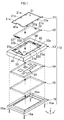
FIG. 1 is an exploded perspective view showing the general configuration of a cell phone according to an embodiment of the invention; -
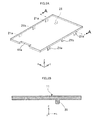
FIG. 2A is a perspective view of a battery lid; -
FIG 2B is a cross-sectional view as seen from the arrows of line A-A inFIG. 2A ; -
FIG. 3A is a perspective view of a battery pack; -
FIG. 3B is a side view ofFIG. 3A as seen from frontward, with an encircled region P being an enlarged view of an engagement protrusion of the battery pack; -
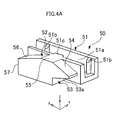
FIG. 4A is a perspective view showing the general configuration of a battery lock member; -
FIG. 4B is a front view ofFIG. 4A as seen from rightward; -
FIG. 4C is a side view ofFIG. 4A as seen from frontward; -
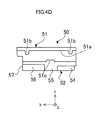
FIG. 4D is a side view ofFIG. 4A as seen from above; -
FIG. 4E is a side view ofFIG. 4A as seen from below; -
FIG. 5 is a perspective view showing a position and a structure of attaching the battery lock member to the cell phone, with an encircled region Q being an enlarged view of the battery lock member and a structure therearound; -
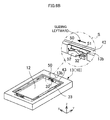
FIG. 6A is a perspective view showing a locked state in which the battery pack is locked by the battery lock member, with an encircled region R being an enlarged view of the battery lock member and the structure therearound; -
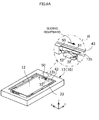
FIG. 6B is a perspective view showing an unlocked state in which the battery pack is not locked by the battery lock member, with an encircled region S being an enlarged view of the battery lock member and the structure therearound; -
FIG. 7A is a perspective view of the cell phone; -
FIG. 7B is a diagram showing essential portions in a cross section as seen from the arrows of line B-B inFIG. 7A ; -
FIG. 8 is a cross-sectional view as seen from the arrows of line C-C inFIG. 7A ; -
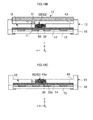
FIG. 9A is a cross-sectional view of the cell phone showing the battery pack housed in a battery pack housing with the battery lock member being in a locking position; -
FIG. 9B is a cross-sectional view showing the battery pack housed in a battery pack housing with the battery lock member being in an unlocking position; -
FIG. 9C is a cross-sectional view showing the battery lid attached to a battery lid holder with the battery lock member being in an unlocked state; -
FIG. 9D is a cross-sectional view showing the battery pack sealed in the battery pack housing with the battery lid; -
FIG. 10A is a cross-sectional view of the cell phone showing the battery pack sealed in the battery pack housing with the battery lid; -
FIG. 10B is a cross-sectional view showing a state where the battery lid is being detached from the battery lid holder; -
FIG. 10C is a cross-sectional view showing a state where the battery pack is being removed from the battery pack housing in the locked state of the battery lock member; and -
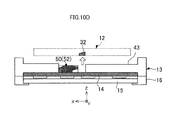
FIG. 10D is a cross-sectional view showing a state after the battery pack is removed from the battery pack housing. - A cell phone according to an embodiment of the invention is described hereinbelow referring to the accompanying drawings.
- As shown in
FIG. 1 , acell phone 10 according to the embodiment includes abattery lid 11, abattery pack 12, a cell-phonelower case 13, aboard 14, atouch panel 15 equipped with an LCD (Liquid Crystal Display), and a cell-phoneupper case 16. Thecell phone 10 has a rectangular flat shape, each of thebattery lid 11, thebattery pack 12, theboard 14 and thetouch panel 15 has a rectangular flat shape similar to the shape of thecell phone 10, and both of the cell-phonelower case 13 and the cell-phoneupper case 16 have rectangular frame shapes. The cell-phonelower case 13 and the cell-phoneupper case 16 of thecell phone 10 form a box-shaped casing, and the structure excluding thebattery pack 12 forms a cell-phone body. - The
touch panel 15 includes the LCD, and an electronic touch sensor panel covering the LCD. The touch sensor panel detects a position where a capacitance is changed by a touch pen or a user's finger touching the position. The LCD displays an arbitrary image such as an icon for allowing the user to touch thetouch panel 15 to input an operation instruction. - The
touch panel 15 accepts an input made by touching of the touch pen or the like thereon. When there is an icon at the touched position, various functions assigned to this icon are achieved by a CPU (Central Processing Unit) 24 and a transmitter/receiver (not shown) and the like mounted on theboard 14 of thecell phone 10. - The
touch panel 15 is accommodated in the cell-phoneupper case 16 with its touch sensor panel exposed on the surface. Thetouch panel 15 is accommodated, together with theboard 14, in the housing space of the casing, formed by securing the cell-phoneupper case 16 to the cell-phonelower case 13 with fourbolts 16a, in such a state as to overlap theboard 14. - A
battery pack housing 33 having arectangular opening 33a which penetrates the cell-phonelower case 13 in a thicknesswise direction is provided in the center portion of the cell-phonelower case 13 to house thebattery pack 12. Thebattery pack 12 is housed in thebattery pack housing 33 through therectangular opening 33a of thebattery pack housing 33 with the bottom side of thebattery pack 12 being in contact with the bottom cover (not shown) of theboard 14. Because thebattery pack 12 is housed in thebattery pack housing 33 in such a state, members that are present in the thicknesswise direction of thecell phone 10 are limited to the necessary components such as thebattery pack 12, theboard 14 and thetouch panel 15, thereby contributing to flattening thecell phone 10. - A lock mechanism (not shown) that locks the
battery lid 11 on a -Y side (front side) when being slid leftward/rightward, and anoperation lever 41 for setting the lock mechanism in a locked state and a free state are provided on the cell-phonelower case 13 on the -Y side (front side) of abattery lid holder 43. Theoperation lever 41 moves leftward/rightward (to the free side/lock side) in acutaway 41a provided on the -Y side (front side) of thebattery lid 11. The lock mechanism is configured to be mechanically locked when theoperation lever 41 is manually moved to the lock side (-X side), and be unlocked when theoperation lever 41 is manually moved to the free side (+X side). - The
battery lid holder 43 recessed in a rectangular frame shape from the top surface of the cell-phonelower case 13 is formed in the peripheral region of the rectangular opening of thebattery pack housing 33 to hold thebattery lid 11. Aconnection terminal 22 is provided on the -Y-side (front side) side face of thebattery pack 12 to be connected to an unillustrated connection terminal provided on the cell phone body (cell-phone lower case 13). - As shown in
FIG. 1 , thecell phone 10 further includes abattery lock member 50 for fixing the +Y side (rear side) of thebattery pack 12 to lock thebattery pack 12 in a fixed position in thebattery pack housing 33. An elongated pressing portion (not shown) for locking the front peripheral portion of thebattery pack 12 from above is protrusively formed on the -Y side (front side) of thebattery pack housing 33 in such a way as to extend a leftward/rightward direction. At the time of housing thebattery pack 12 in thebattery pack housing 33, the front peripheral portion of thebattery pack 12 is slipped into the space under the pressing portion. This structure and thebattery lock member 50 cause thebattery pack 12 to be locked at the front and rear portions thereof, so that thebattery pack 12 is stably housed in thebattery pack housing 33. - As shown in
FIGS. 1 ,2A and 2B , twoinward engagement claws 21a are protrusively formed at a predetermined interval therebetween in the vicinity of each of both ±X direction (leftward/rightward) sides of thebattery lid 11 in a -Z direction (downward), and a single inward engagement claw 2 1 b is protrusively formed between the twooutward engagement claws 21a in the -Z direction (downward). Theoutward engagement claw 21a has an engagement protrusion protruding outward, and theinward engagement claw 21b has an engagement protrusion protruding inward. - As shown in
FIG. 1 , fourengagement portions 23a with which the four outward engagement claws 21 of thebattery lid 11 are engaged, and twoengagement holes 23b with which the twoinward engagement claws 21b of thebattery lid 11 are engaged are formed at corresponding positions of thebattery lid holder 43. When thebattery lid 11 is attached to thebattery lid holder 43, thebattery lid 11 is held on thebattery lid holder 43 and closes the opening of thebattery pack housing 33 with theoutward engagement claws 21a and theinward engagement claws 21b of thebattery lid 11 being respectively engaged with theengagement portions 23a and the engagement holes 23b of thebattery lid holder 43. This engagement structure permits thebattery lid 11 to be stably held on thebattery lid holder 43. - Note that in the
cell phone 10 according to the embodiment, when thebattery lid 11 is attached to thebattery lid holder 43, the bottom surface of thebattery lid 11 substantially contacts the top surface of the battery pack 12 (seeFIG. 8 ). - As shown in
FIGS. 1 ,2A and 2B , adepression protrusion 31 with a quadratic prism shape is protrusively formed in the -Z direction (downward) on the bottom side of thebattery lid 11 in a predetermined position. Thedepression protrusion 31 of thebattery lid 11 is disposed in a position where thedepression protrusion 31 abuts on a secondinclined surface 56 or aleft side face 57 of alock portion 52 of thebattery lock member 50 to be described later with thebattery lid 11 being held on the battery lid holder 43(seeFIGS. 4 and8 ). - As shown in
FIGS. 1 ,3A and3B , anengagement protrusion 32 with a trapezoidal cross section is protrusively formed at a center portion of the +Y-side (front side) side face of thebattery pack 12.
As illustrated in enlargement in a region P inFIG. 3B , theengagement protrusion 32 has a front face 32a parallel to the frontward side face of thebattery pack 12, abottom face 32b flush with the bottom face of thebattery pack 12, aback face 32c inclined with respect to thebottom face 32b so that the +X side (left side) becomes lower, and a pair of afirst side face 32d and asecond side face 32e connected to the front face 32a, thebottom face 32b and theback face 32c and opposing each other horizontally. Thefirst side face 32d is lower than thesecond side face 32e. - As shown in
FIGS. 4A to 4D , thebattery lock member 50 includes a substantially rectangularcylindrical slide 51 having a guidedgroove 51a extending in the ±X direction (leftward/rightward) and opening to the +Z side (upper side) like a slit, and thelock portion 52 formed integral with theslide 51 and protruding from the -Y-side (front side) side face of theslide 51. A pair ofprojections 51 b extending in the Z direction (upward/downward) and projecting inward are formed near the left and right end portions of the +Y-side side face of the guidedgroove 51a. Apressing protrusion 51c protruding inward is formed on an upper central portion of the -Y-side side face of the slit opening of the guidedgroove 51 a. - As shown in
FIGS. 4B ,4C and4E , a pair of elongatedslide assisting ribs 51d extending in the X direction are formed on the bottom face of thebattery lock member 50 to protrude downward therefrom. Theslide assisting ribs 51d are provided to reduce the slide friction by changing slide region of thebattery lock member 50 from a planar region to a linear region when it sides on the surface of the bottom cover of theboard 14. - As shown in
FIGS. 4A and4C , anengagement recess 53 recessed in a trapezoidal cross section is formed in a right side portion of thelock portion 52 in such a way that when thebattery pack 12 is housed in thebattery pack housing 33 and locked, theengagement protrusion 32 of thebattery pack 12 engages with theengagement recess 53. - Formed on the top face of the
lock portion 52 are a firstinclined surface 54 inclined so that the -X side (right side) becomes lower, anupper surface 55 continual to the firstinclined surface 54 and substantially parallel to the top face of theslide 51, and the secondinclined surface 56 continual to theupper surface 55 and inclined so that the +X side (left side) becomes lower. The top face of theengagement recess 53 of thelock portion 52 serves as a thirdinclined surface 53a that faces theback face 32c of the engagement protrusion 32 (seeFIG. 3B ) in parallel thereto when theengagement recess 53 engages with theengagement protrusion 32 of thebattery pack 12. Further, theleft side face 57 is formed at thelock portion 52 to be continual to the secondinclined surface 56. In this way, the firstinclined surface 54 and the secondinclined surface 56 of thebattery lock member 50 face each other so as to form a first angular portion therebetween along the moving direction (±X direction) of the battery lock member 50 (seeFIG. 5 ), and the firstinclined surface 54 and the thirdinclined surface 53a of thebattery lock member 50 face each other so as to form a second angular portion therebetween along the moving direction of thebattery lock member 50. The above structure permits thelock portion 52 of thebattery lock member 50 to be formed compact. - As illustrated in enlargement in a region Q in
FIG. 5 ,a recessedspace 70 is formed in the -Y side (rear side) of thebattery lid holder 43. Thebattery lock member 50 is configured to be accommodated in the recessedspace 70 and slide in the ±X direction along aguide rail 13b provided in the recessedspace 70. Theguide rail 13b is formed to protrude downward from apart 13a of the cell-phonelower case 13. Accordingly, thebattery lock member 50 is reasonably accommodated in the cell phone body while saving the layout space for thebattery lock member 50. Specifically, referring toFIG. 7B , thebattery lock member 50 is configured in such a way that the guidedgroove 51a of theslide 51 is slidably fitted over theguide rail 13b and that aprojection 13c formed at the lower portion of theguide rail 13b so as to extend in the leftward/rightward direction and protrude toward the -Y side is hooked on thepressing protrusion 51c of the guidedgroove 51 a, thereby preventing thebattery lock member 50 from coming off theguide rail 13b. In addition, contact of the pair ofprojections 51b of the guidedgroove 51a with theguide rail 13b in a linear region reduces the slide friction between theguide rail 13b and the guidedgroove 51a. Theslide 51 of thebattery lock member 50 is formed of a hard resin such as polyacetal, and the aforementioned structure prevents thebattery lock member 50 from coming off theguide rail 13b. Further, this structure suppresses the force of causing thebattery pack 11 at the time of drop impact of thecell phone 10. - As illustrated in enlargement in a region R in
FIG. 6A , when thebattery lock member 50 slides toward the -X side (rightward) along theguide rail 13b, theengagement recess 53 of thelock portion 52 engages with theengagement protrusion 32 of thebattery pack 12. As a result, thebattery pack 12 is locked in a fixed position in thebattery pack housing 33. - As illustrated in enlargement in a region S in
FIG. 6B , on the other hand, when thebattery lock member 50 slides toward the +X side (leftward) along theguide rail 13b, the engagement of theengagement recess 53 of thelock portion 52 with theengagement protrusion 32 of thebattery pack 12 is released. In this state, thebattery pack 12 can be removed from thebattery pack housing 33. - As shown in
FIGS.7A, 7B and8 , when thebattery lid 11 is attached to thebattery lid holder 43 with thebattery pack 12 housed in thebattery pack housing 33, thebattery pack 12 is sealed inside thebattery pack housing 33. In this state, thedepression protrusion 31 of thebattery lid 11 abuts on theleft side face 57 of the lock portion 52 (seeFIG. 8 ), and thebattery lock member 50 engages with theengagement protrusion 32, thus locking thebattery pack 12 in the fixed position in thebattery pack housing 33. In this state, theconnection terminal 22 provided on thebattery pack 12 is electrically connected to the connection terminal (not shown) provided on the cell-phonelower case 13. Then, necessary drive power is supplied to theboard 14 and thetouch panel 15, setting thecell phone 10 in an operable state. As apparent from the above, abutment of thedepression protrusion 31 of thebattery lid 11 on theleft side face 57 of thelock portion 52 of thebattery lock member 50 stabilizes the locking of thebattery pack 12 with thebattery lock member 50. - The
cell phone 10 according to the embodiment is configured as described above, and the following describes an operation of housing thebattery pack 12 in thebattery pack housing 33 of the cell phone body (cell-phone lower case 13) and sealing thebattery pack 12 therein with thebattery lid 11. - To begin with, as shown in
FIG. 9A , when thebattery pack 12 is housed into thebattery pack housing 33 with thebattery lock member 50 being located in the position of locking thebattery pack 12, thebottom face 32b of theengagement protrusion 32 of the battery pack 12 (seeFIG. 3B ) slides in contact with the firstinclined surface 54 of thelock portion 52 of the battery lock member 50 (seeFIG. 4A ). - Then, the downward movement of the
engagement protrusion 32 presses the battery lock member 50 (lock portion 52) in the +X side direction (leftward), so that thebattery lock member 50 slides toward the side of unlocking the battery pack 12 (toward aleft side face 71 of the recessed space 70) as shown inFIG. 9B . At this time, thebattery lock member 50 slides on the surface of the bottom cover of theboard 14 via the pair ofslide assisting ribs 51d. Then, thebattery pack 12 is housed in thebattery pack housing 33. - Further, when the
battery lid 11 is attached to thebattery lid holder 43 with thebattery lock member 50 being in the unlocked state shown inFIG. 9B , as shown inFIG. 9C , thedepression protrusion 31 of thebattery lid 11 slides in contact with the secondinclined surface 56 of thelock portion 52 of thebattery lock member 50. Then, the downward movement of thedepression protrusion 31 of thebattery lid 11 presses thebattery lock member 50 in the -X side direction (rightward), so that thebattery lock member 50 slides so as to lock thebattery pack 12. - Then, as shown in
FIG. 9D , theengagement recess 53 of thelock portion 52 engages with theengagement protrusion 32 of thebattery pack 12, causing thebattery pack 12 to be locked in thebattery pack housing 33 with the battery lock member 50 (seeFIG. 6A ). In this state, the thirdinclined surface 53a of theengagement recess 53 of thelock portion 52 and theback face 32c of theengagement protrusion 32 of thebattery pack 12 faces each other in parallel. Thedepression protrusion 31 of thebattery lid 11 is accommodated in the space formed between theleft side face 57 of thelock portion 52 of thebattery lock member 50 and theleft side face 71 of the recessedspace 70. In this state, thedepression protrusion 31 of thebattery lid 11 abuts on theleft side face 57 of thelock portion 52 of thebattery lock member 50, so that the locked state becomes stable. After completion of the attachment of thebattery lid 11, thebattery lid 11 is held on thebattery lid holder 43 with theoutward engagement claws 21a and theinward engagement claws 21 b of the battery lid 11 (seeFIG. 2A ) being engaged with theengagement portions 23a and the engagement holes 23b of thebattery lid holder 43. Thereafter, theoperation lever 41 is manipulated to the lock side to lock thebattery lid 11 to the cell-phonelower case 13. - The following describes an operation of detaching the
battery lid 11 from the cell-phone lower case 13 (battery lid holder 43) of thecell phone 10 according to the embodiment, and further removing thebattery pack 12 from thebattery pack housing 33. - With the
battery lid 11 held on thebattery lid holder 43 and thebattery pack 12 sealed inside thebattery pack housing 33 as shown inFIG. 10A , thebattery lid 11 is detached from thebattery lid holder 43 while manipulating theoperation lever 41 to the free side to disengage theoutward engagement claws 21a and theinward engagement claws 21b of thebattery lid 11 from theengagement portions 23a and the engagement holes 23b of thebattery lid holder 43. - Through this operation, as the
battery lid 11 is separated from thebattery lid holder 43, as shown inFIG. 10B , thedepression protrusion 31 of thebattery lid 11 is separated from the space formed between theleft side face 57 of thelock portion 52 of thebattery lock member 50 and theleft side face 71 of the recessedspace 70. - As a result, as shown in
FIG. 10C , thebattery lock member 50 is released from the restriction by thedepression protrusion 31 of thebattery lid 11, so that thebattery lock member 50 is freely slidable along theguide rail 13b (seeFIG. 5 ). In this state, the thirdinclined surface 53a of theengagement recess 53 of thelock portion 52 and theback face 32c of theengagement protrusion 32 of thebattery pack 12 faces each other in parallel. - When the
battery pack 12 is pulled upward and removed with thebattery lock member 50 in the locked state shown inFIG. 10C , theback face 32c of theengagement protrusion 32 of thebattery pack 12 slides in contact with the thirdinclined surface 53a of theengagement recess 53 of thelock portion 52. Then, the upward movement of thebattery pack 12 causes thebattery lock member 50 to move toward the +X side (left side). At this time, thebattery lock member 50 slides on the surface of the bottom cover of theboard 14 via the pair ofslide assisting ribs 51d. This releases the locking of thebattery pack 12 in thebattery pack housing 33 by thebattery lock member 50. - Then, the
engagement recess 53 of thelock portion 52 is not present on theengagement protrusion 32 of thebattery pack 12 as shown inFIG. 10D , so that thebattery pack 12 can be removed from thebattery pack housing 33. - According to the embodiment, as described above, the operation of housing the
battery pack 12 into thebattery pack housing 33 causes thebottom face 32b of theengagement protrusion 32 of thebattery pack 12 to slide in contact with the firstinclined surface 54 of thelock portion 52 of thebattery lock member 50 located in the position of locking thebattery pack 12. Then, the downward movement of theengagement protrusion 32 presses thebattery lock member 50 leftward, so that thebattery lock member 50 slides in the direction of unlocking thebattery pack 12. Then, the locking of thebattery pack 12 is released. Even with thebattery lock member 50 being located in the position of locking thebattery pack 12, merely housing thebattery pack 12 into thebattery pack housing 33 causes thebattery lock member 50 to automatically slide in the direction of releasing the locking to unlock thebattery pack 12 as described above, so that thebattery pack 12 is easily housed in thebattery pack housing 33. - According to the embodiment, the operation of attaching the
battery lid 11 to thebattery lid holder 43 causes thedepression protrusion 31 of thebattery lid 11 to slide in contact with the secondinclined surface 56 of thelock portion 52 of thebattery lock member 50 located in the position of unlocking thebattery pack 12. Then, the downward movement of thedepression protrusion 31 presses thebattery lock member 50 rightward, so that thebattery lock member 50 slides in the direction of locking thebattery pack 12. Then, thebattery pack 12 is locked. Even with thebattery lock member 50 being located in the position of unlocking thebattery pack 12, merely attaching thebattery lid 11 to thebattery lid holder 43 causes thebattery lock member 50 to automatically slide in the direction of locking thebattery pack 12 to lock thebattery pack 12 as described above, so that thebattery pack 12 is easily locked in thebattery pack housing 33. - According to the embodiment, when the
battery pack 12 housed in thebattery pack housing 33 is pulled upward with thebattery lock member 50 being in the locked state, theback face 32c of theengagement protrusion 32 of thebattery pack 12 slides in contact with the thirdinclined surface 53a of theengagement recess 53 of thelock portion 52. Then, thebattery lock member 50 moves toward the +X side (left side). This automatically releases the locking of thebattery pack 12 in thebattery pack housing 33 with thebattery lock member 50. As a result, removable of thebattery pack 12 from thecell phone 10 is carried out easily. - According to the embodiment, with the
battery lid 11 attached to thebattery lid holder 43 and thebattery pack 12 sealed inside thebattery pack housing 33, thedepression protrusion 31 of thebattery lid 11 abuts on theleft side face 57 of thelock portion 52 of thebattery lock member 50. This stabilizes the locked state of thebattery pack 12 with thebattery lock member 50. As a result, electrical connection of theconnection terminal 22 provided on thebattery pack 12 to the connection terminal (not shown) provided on the cell-phonelower case 13 is maintained in a stable state. - According to the embodiment, even when the
battery pack 12 is forcibly housed into thebattery pack housing 33 with thebattery lock member 50 being located in the position of locking thebattery pack 12, thebattery lock member 50 is automatically set in the unlocked state, thus preventing thebattery pack 12 and the cell phone body from being damaged. In addition, even when thebattery pack 12 is forcibly removed from inside thebattery pack housing 33 with thebattery lock member 50 being located in the position of locking thebattery pack 12, thebattery lock member 50 is automatically set in the unlocked state, thus preventing thebattery pack 12 and the cell phone body from being damaged. - The invention is not limited to the foregoing embodiment, may be modified in various ways without departing from the subject matter of the invention.
- For example, the invention is not limited to a cell phone illustrated in the foregoing description of the embodiment, and may be adapted to portable communication terminals such as a PDA (Personal Digital Assistant), a PHS (Personal Handy-phone System), a mobile PC (Personal Computer) and a tablet terminal, and other electronic apparatuses.
- According to the embodiment, the
battery lock member 50 is provided only on one side of thebattery pack 12 in the lengthwise direction. That is, the recessedspace 70 is provided in the -Y side (rear side) region of thebattery lid holder 43, thebattery lock member 50 is accommodated in the recessedspace 70, and thebattery lock member 50 sides in the ±X direction along theguide rail 13b formed in the recessedspace 70. Thebattery lock member 50 is not limited to this type, and may be provided on both lengthwise sides of thebattery pack 12. That is, the recessedspace 70 may be formed in each of the ±Y side (front and rear) regions of thebattery lid holder 43, and a singlebattery lock member 50 is accommodated in each recessedspace 70, and may slide in ±X direction along theguide rail 13b formed in each recessedspace 70. The provision of thebattery lock member 50 on both lengthwise sides of thebattery pack 12 this way further stabilizes the locked state of thebattery pack 12 in thebattery pack housing 33. As a result, electrical connection of theconnection terminal 22 provided on thebattery pack 12 to the connection terminal (not shown) provided on the cell-phonelower case 13 is maintained in a more stable state. - According to the embodiment, the
cell phone 10 includes thetouch panel 15 that serves both the LCD equipped display and the key operator. Thecell phone 10 is not limited to this type, and may be configured to have the LCD equipped display and the key operator separately. - According to the embodiment, the guide portion to slide the
battery lock member 50 is the rail-like guide rail 13b, and the guided portion is the recessed guidedgroove 51a that is slidably fitted on theguide rail 13b. They are not limited to those types; the guide portion for sliding thebattery lock member 50 may be a recessed guide groove, and the guided portion may be a rail-like guided rail that is slidably fitted into the guide groove. - According to the embodiment, the first portion of the
battery pack 12 is theengagement protrusion 32 with a trapezoidal cross section, which is formed to protrude from the center portion of the +Y-side (front side) side face of thebattery pack 12, and is used for locking thebattery pack 12. This is not restrictive, and the first portion of thebattery pack 12 may be formed to protrude from another portion such as the bottom face of thebattery pack 12, or may not be used to lock thebattery pack 12, as long as the effects of the invention are demonstrated. Further, the first portion of thebattery pack 12 may have a shape other than the trapezoidal cross-sectional shape. - According to the embodiment, the second portion of the
battery lid 11 is thedepression protrusion 31 with a quadratic prism shape formed to protrude from the bottom face of thebattery lid 11. The second portion of thebattery lid 11 is not limited to this type, and may be formed to protrude from another portion such as a side portion of thebattery lid 11, or may have a shape other than the quadratic prism shape, as long as the effects of the invention are demonstrated. - According to the embodiment, the
cell phone 10 and its components have rectangular shapes, which are not restrictive, and may be elliptical shapes or may have structures with curved surfaces from the viewpoint of design. - Although the water-proof structure of the
cell phone 10 has not been mentioned in the description of the embodiment, it is needless to say that the joint portion of thebattery lid 11 and thebattery lid holder 43 may be made liquid tight by a rubber packing. - Moreover, the invention may be worked out in various embodiments and modifications without departing from the spirit and scope of the invention in the broad sense. The foregoing embodiment is intended only for describing the invention, and shall not limit the scope of the invention.
- Some or all of the embodiments and modifications are described in the following notes, which are not restrictive.
- A battery pack lock structure comprising:
- a battery pack housing provided on an electronic apparatus body for housing a battery pack;
- a battery lid detachably attached to the electronic apparatus body to close an opening of the battery pack housing; and
- a battery lock member for locking the battery pack,
- the battery lock member having a first inclined surface that permits sliding of the battery lock member in such a way that an operation of housing the battery pack causes a first portion of the battery pack to slide in contact with the first inclined surface, thereby releasing the locking, and a second inclined surface that permits sliding of the battery lock member in such a way that an operation of attaching the battery lid causes a second portion of the battery lid to slide in contact with the second inclined surface, thereby achieving the locking.
- The battery pack lock structure according to Note 1, wherein the battery lock member further has a third inclined surface that permits sliding of the battery lock member in such a way that an operation of detaching the battery pack causes the first portion of the battery pack to slide in contact with the third inclined surface, thereby releasing the locking.
- The battery pack lock structure according to Note 1 or 2, wherein the battery lock member locks the battery pack with the first portion of the battery pack.
- The battery pack lock structure according to any one of Notes 1 to 3, wherein as the second portion of the battery lid abuts on the battery lock member with the battery lid covering the opening of the battery pack housing, a locked state of the battery pack is maintained.
- The battery pack lock structure according to any one of Notes 1 to 4, wherein a guide portion that permits slide movement of the battery lock member is provided in the electronic apparatus body.
- The battery pack lock structure according to Note 5, wherein the battery lock member is engaged with the guide portion in a non-disengageable manner.
- The battery pack lock structure according to Note 5 or 6, wherein a battery lid holder for holding the battery lid is provided at a peripheral region of the opening of the battery pack housing, and
the guide portion is provided in a recessed space formed in the battery lid holder. - The battery pack lock structure according to Note 5, wherein the battery lock member is provided with a guided portion that is slidably fitted on the guide portion.
- The battery pack lock structure according to Note 8, wherein the guide portion is a rail-like guide rail, and the guided portion is a recessed guided groove that is slidably fitted on the guide rail.
- An electronic apparatus having the battery pack lock structure according to any one of Notes 1 to 9.
- The invention may be worked out in various embodiments and modifications without departing from the spirit and scope of the invention in the broad sense. The above-described embodiment is intended only for describing the invention, and shall not limit the scope of the invention.
- This application is based on Japanese Patent Application
2410-243525, filed October 29, 2010 -
- 10
- Cell phone
- 11
- battery lid
- 12
- battery pack
- 13
- cell-phone lower case
- 13a
- Part of cell-phone lower case
- 13b
- Guide rail
- 13c
- Projection of guide rail
- 14
- Board
- 15
- Touch panel
- 16
- Cell-phone upper case
- 16a
- Bolt
- 21a
- Outward engagement claw of battery lid
- 21b
- Inward engagement claw of battery lid
- 22
- Connection terminal
- 23
- Engagement hole of cell-phone lower case
- 31
- Depression protrusion (of battery lid) (second portion of battery lid)
- 32
- Engagement protrusion of battery pack (first portion of battery pack)
- 32a
- Front face of engagement protrusion
- 32b
- Bottom face of engagement protrusion
- 32c
- Back face of engagement protrusion
- 33
- Battery pack housing
- 33a
- Opening of battery pack housing
- 41
- Operation lever of lock mechanism
- 43
- Battery lid holder
- 50
- Battery lock member
- 51
- Slide of battery lock member
- 51a
- Guided groove of slide
- 51b
- Projection of slide
- 51c
- Pressing protrusion of slide
- 52
- Lock portion of battery lock member
- 53
- Engagement recess of lock portion
- 54
- First inclined surface of lock portion
- 55
- Upper surface of lock portion
- 56
- Second inclined surface of lock portion
- 57
- Left side face of lock portion
- 70
- Recessed space
- 71
- Left side face of recessed space
Claims (10)
- A battery pack lock structure comprising:a battery pack housing provided on an electronic apparatus body for housing a battery pack;a battery lid detachably attached to the electronic apparatus body to close an opening of the battery pack housing; anda battery lock member for locking the battery pack,the battery lock member having a first inclined surface that permits sliding of the battery lock member in such a way that an operation of housing the battery pack causes a first portion of the battery pack to slide in contact with the first inclined surface, thereby releasing the locking, and a second inclined surface that permits sliding of the battery lock member in such a way that an operation of attaching the battery lid causes a second portion of the battery lid to slide in contact with the second inclined surface, thereby achieving the locking.
- The battery pack lock structure according to Claim 1, wherein the battery lock member further has a third inclined surface that permits sliding of the battery lock member in such a way that an operation of detaching the battery pack causes the first portion of the battery pack to slide in contact with the third inclined surface, thereby releasing the locking.
- The battery pack lock structure according to Claim 1 or 2, wherein the battery lock member locks the battery pack with the first portion of the battery pack.
- The battery pack lock structure according to any one of Claims 1 to 3, wherein as the second portion of the battery lid abuts on the battery lock member with the battery lid covering the opening of the battery pack housing, a locked state of the battery pack is maintained.
- The battery pack lock structure according to any one of Claims 1 to 4, wherein a guide portion that permits slide movement of the battery lock member is provided in the electronic apparatus body.
- The battery pack lock structure according to Claim 5, wherein the battery lock member is engaged with the guide portion in a non-disengageable manner.
- The battery pack lock structure according to Claim 5 or 6, wherein a battery lid holder for holding the battery lid is provided at a peripheral region of the opening of the battery pack housing, and
the guide portion is provided in a recessed space formed in the battery lid holder. - The battery pack lock structure according to Claim 5, wherein the battery lock member is provided with a guided portion that is slidably fitted on the guide portion.
- The battery pack lock structure according to Claim 8, wherein the guide portion is a rail-like guide rail, and the guided portion is a recessed guided groove that is slidably fitted on the guide rail.
- An electronic apparatus having the battery pack lock structure according to any one of Claims 1 to 9.
Applications Claiming Priority (2)
| Application Number | Priority Date | Filing Date | Title |
|---|---|---|---|
| JP2010243525 | 2010-10-29 | ||
| PCT/JP2011/074733 WO2012057238A1 (en) | 2010-10-29 | 2011-10-26 | Battery pack lock structure and electronic apparatus |
Publications (2)
| Publication Number | Publication Date |
|---|---|
| EP2634833A1 true EP2634833A1 (en) | 2013-09-04 |
| EP2634833A4 EP2634833A4 (en) | 2017-01-04 |
Family
ID=45993943
Family Applications (1)
| Application Number | Title | Priority Date | Filing Date |
|---|---|---|---|
| EP11836371.2A Withdrawn EP2634833A4 (en) | 2010-10-29 | 2011-10-26 | Battery pack lock structure and electronic apparatus |
Country Status (5)
| Country | Link |
|---|---|
| US (1) | US9735400B2 (en) |
| EP (1) | EP2634833A4 (en) |
| JP (1) | JP5861643B2 (en) |
| CN (1) | CN103201874B (en) |
| WO (1) | WO2012057238A1 (en) |
Families Citing this family (21)
| Publication number | Priority date | Publication date | Assignee | Title |
|---|---|---|---|---|
| WO2013047421A1 (en) * | 2011-09-26 | 2013-04-04 | Necカシオモバイルコミュニケーションズ株式会社 | Electronic device |
| JP2014102913A (en) * | 2012-11-16 | 2014-06-05 | Nintendo Co Ltd | Hand-held electronic device using battery and battery unit |
| JP6032482B2 (en) * | 2012-12-26 | 2016-11-30 | パナソニックIpマネジメント株式会社 | Electronics |
| US9269935B2 (en) * | 2013-01-29 | 2016-02-23 | Varian Medical Systems, Inc. | Battery pack with integral seal member and electronic device including the same |
| WO2015097939A1 (en) * | 2013-12-25 | 2015-07-02 | パナソニックIpマネジメント株式会社 | Housing for electronic apparatus, and electronic apparatus |
| JP6335691B2 (en) | 2014-03-03 | 2018-05-30 | キヤノン株式会社 | Electronics |
| US9904320B2 (en) * | 2014-05-30 | 2018-02-27 | Microsoft Technology Licensing, Llc | Battery compartments for wearable electronic device |
| JP6025228B1 (en) * | 2015-05-15 | 2016-11-16 | Necプラットフォームズ株式会社 | Display device |
| JP6152404B2 (en) * | 2015-07-28 | 2017-06-21 | 京セラ株式会社 | Electronics |
| JP6361623B2 (en) * | 2015-10-05 | 2018-07-25 | 株式会社デンソー | Fixing device |
| JP6080235B1 (en) * | 2015-12-01 | 2017-02-15 | Necプラットフォームズ株式会社 | Battery pack housing structure and electronic device |
| JP6116039B1 (en) * | 2017-01-11 | 2017-04-19 | Necプラットフォームズ株式会社 | Battery pack housing structure and electronic device |
| JP6734803B2 (en) * | 2017-03-23 | 2020-08-05 | 京セラ株式会社 | Electronics |
| KR102675963B1 (en) * | 2018-07-11 | 2024-06-14 | 삼성에스디아이 주식회사 | Secondary battery and battery module |
| EP3648558A1 (en) | 2018-11-05 | 2020-05-06 | Koninklijke Philips N.V. | Housing with internal locking arrangement |
| USD912487S1 (en) | 2019-06-12 | 2021-03-09 | Techtronic Cordless Gp | Interface of a power tool |
| US11145929B2 (en) | 2019-08-09 | 2021-10-12 | Techtronic Cordless Gp | Battery pack |
| US11382221B2 (en) * | 2019-11-19 | 2022-07-05 | Ricoh Company, Ltd. | Information display device |
| US11848454B2 (en) * | 2020-04-09 | 2023-12-19 | Apple Inc. | Battery enclosures with structural enhancements |
| EP4254622A4 (en) * | 2021-10-15 | 2024-03-06 | Contemporary Amperex Technology Co., Limited | BATTERY, ELECTRICAL DEVICE, AS WELL AS BATTERY PREPARATION METHOD AND DEVICE |
| US20260016857A1 (en) * | 2024-07-11 | 2026-01-15 | Remarkable As | Locking mechanism for thin bezel and repairable device |
Family Cites Families (8)
| Publication number | Priority date | Publication date | Assignee | Title |
|---|---|---|---|---|
| JP3060291B2 (en) | 1996-10-09 | 2000-07-10 | 松下電器産業株式会社 | Battery pack holding device |
| JPH1154099A (en) | 1997-08-08 | 1999-02-26 | Saitama Nippon Denki Kk | Battery pack mounting structure and portable electronic terminal |
| JP2001176475A (en) | 1999-12-17 | 2001-06-29 | Hitachi Kokusai Electric Inc | Mobile phone battery holding structure |
| EP3300181A1 (en) | 2001-07-25 | 2018-03-28 | Sony Corporation | Structures of terminals and component-to-be-loaded |
| KR100531852B1 (en) | 2003-03-25 | 2005-11-30 | 엘지전자 주식회사 | Battery cover locking apparatus |
| JP2009032595A (en) | 2007-07-27 | 2009-02-12 | Nec Saitama Ltd | Battery pack housing structure of portable electronic device case |
| CN101540384B (en) * | 2008-03-18 | 2013-04-24 | 深圳富泰宏精密工业有限公司 | Cell cover and electronic device provided with same |
| CN101887952B (en) * | 2009-05-15 | 2013-01-09 | 深圳富泰宏精密工业有限公司 | Battery cover latching structure and portable electronic device |
-
2011
- 2011-10-26 CN CN201180051629.3A patent/CN103201874B/en not_active Expired - Fee Related
- 2011-10-26 EP EP11836371.2A patent/EP2634833A4/en not_active Withdrawn
- 2011-10-26 US US13/881,988 patent/US9735400B2/en not_active Expired - Fee Related
- 2011-10-26 JP JP2012540921A patent/JP5861643B2/en not_active Expired - Fee Related
- 2011-10-26 WO PCT/JP2011/074733 patent/WO2012057238A1/en not_active Ceased
Non-Patent Citations (1)
| Title |
|---|
| See references of WO2012057238A1 * |
Also Published As
| Publication number | Publication date |
|---|---|
| EP2634833A4 (en) | 2017-01-04 |
| US20130209866A1 (en) | 2013-08-15 |
| CN103201874A (en) | 2013-07-10 |
| JP5861643B2 (en) | 2016-02-16 |
| US9735400B2 (en) | 2017-08-15 |
| JPWO2012057238A1 (en) | 2014-05-12 |
| CN103201874B (en) | 2016-02-17 |
| WO2012057238A1 (en) | 2012-05-03 |
Similar Documents
| Publication | Publication Date | Title |
|---|---|---|
| US9735400B2 (en) | Battery pack lock structure and electronic apparatus | |
| CN103228115B (en) | Electronic equipment | |
| US8248812B2 (en) | Cover latching assembly for electronic device | |
| JP2012033489A (en) | Battery lid locking mechanism and electronic apparatus using the same | |
| US9052872B2 (en) | Electronic device | |
| US20080100262A1 (en) | Mobile terminal device | |
| EP1858233B1 (en) | Battery cover locking device and mobile terminal having the same | |
| JP5181844B2 (en) | Keyboard, electronic device, method for manufacturing keyboard, method for manufacturing electronic device, and keyboard component | |
| CN101233796B (en) | Electronic device and frame for the electronic device | |
| US8257852B2 (en) | Battery cover mechanism | |
| US8165650B2 (en) | Portable electronic device | |
| JP2013153095A (en) | Drip-proof structure for battery housing part and electronic device | |
| TW201022897A (en) | Battery cover lock structure | |
| CN111031728A (en) | Electronic device, assembling method and disassembling method | |
| JP2014086980A (en) | Portable electronic apparatus | |
| TWI407020B (en) | Battery cover lock structure | |
| JP4752277B2 (en) | Battery lock structure in electronic equipment | |
| JP4697064B2 (en) | Foldable electronics | |
| JP6048708B1 (en) | Electronics | |
| TWI418283B (en) | Portable electronic device with sliding mechanism | |
| JP2009246454A (en) | Connection device | |
| JPH10333774A (en) | Electronics | |
| JP4920917B2 (en) | Portable electronic devices | |
| TWI431457B (en) | Battery cover latching structure | |
| JP2017118195A (en) | Electronic apparatus |
Legal Events
| Date | Code | Title | Description |
|---|---|---|---|
| PUAI | Public reference made under article 153(3) epc to a published international application that has entered the european phase |
Free format text: ORIGINAL CODE: 0009012 |
|
| 17P | Request for examination filed |
Effective date: 20130522 |
|
| AK | Designated contracting states |
Kind code of ref document: A1 Designated state(s): AL AT BE BG CH CY CZ DE DK EE ES FI FR GB GR HR HU IE IS IT LI LT LU LV MC MK MT NL NO PL PT RO RS SE SI SK SM TR |
|
| DAX | Request for extension of the european patent (deleted) | ||
| RAP1 | Party data changed (applicant data changed or rights of an application transferred) |
Owner name: NEC CORPORATION |
|
| RA4 | Supplementary search report drawn up and despatched (corrected) |
Effective date: 20161205 |
|
| RIC1 | Information provided on ipc code assigned before grant |
Ipc: H04M 1/02 20060101ALI20161129BHEP Ipc: H01M 2/10 20060101AFI20161129BHEP |
|
| STAA | Information on the status of an ep patent application or granted ep patent |
Free format text: STATUS: THE APPLICATION HAS BEEN WITHDRAWN |
|
| 18W | Application withdrawn |
Effective date: 20171114 |