EP2634534A2 - Systems and methods to incorporate master navigation system resets during transfer alignment - Google Patents
Systems and methods to incorporate master navigation system resets during transfer alignment Download PDFInfo
- Publication number
- EP2634534A2 EP2634534A2 EP13156439.5A EP13156439A EP2634534A2 EP 2634534 A2 EP2634534 A2 EP 2634534A2 EP 13156439 A EP13156439 A EP 13156439A EP 2634534 A2 EP2634534 A2 EP 2634534A2
- Authority
- EP
- European Patent Office
- Prior art keywords
- navigation
- local
- kalman filter
- measurement
- bias correction
- Prior art date
- Legal status (The legal status is an assumption and is not a legal conclusion. Google has not performed a legal analysis and makes no representation as to the accuracy of the status listed.)
- Granted
Links
Images

Classifications
-
- G—PHYSICS
- G01—MEASURING; TESTING
- G01C—MEASURING DISTANCES, LEVELS OR BEARINGS; SURVEYING; NAVIGATION; GYROSCOPIC INSTRUMENTS; PHOTOGRAMMETRY OR VIDEOGRAMMETRY
- G01C21/00—Navigation; Navigational instruments not provided for in groups G01C1/00 - G01C19/00
- G01C21/10—Navigation; Navigational instruments not provided for in groups G01C1/00 - G01C19/00 by using measurements of speed or acceleration
- G01C21/12—Navigation; Navigational instruments not provided for in groups G01C1/00 - G01C19/00 by using measurements of speed or acceleration executed aboard the object being navigated; Dead reckoning
- G01C21/16—Navigation; Navigational instruments not provided for in groups G01C1/00 - G01C19/00 by using measurements of speed or acceleration executed aboard the object being navigated; Dead reckoning by integrating acceleration or speed, i.e. inertial navigation
- G01C21/183—Compensation of inertial measurements, e.g. for temperature effects
- G01C21/188—Compensation of inertial measurements, e.g. for temperature effects for accumulated errors, e.g. by coupling inertial systems with absolute positioning systems
-
- F—MECHANICAL ENGINEERING; LIGHTING; HEATING; WEAPONS; BLASTING
- F41—WEAPONS
- F41G—WEAPON SIGHTS; AIMING
- F41G7/00—Direction control systems for self-propelled missiles
- F41G7/007—Preparatory measures taken before the launching of the guided missiles
-
- G—PHYSICS
- G01—MEASURING; TESTING
- G01C—MEASURING DISTANCES, LEVELS OR BEARINGS; SURVEYING; NAVIGATION; GYROSCOPIC INSTRUMENTS; PHOTOGRAMMETRY OR VIDEOGRAMMETRY
- G01C25/00—Manufacturing, calibrating, cleaning, or repairing instruments or devices referred to in the other groups of this subclass
-
- F—MECHANICAL ENGINEERING; LIGHTING; HEATING; WEAPONS; BLASTING
- F41—WEAPONS
- F41G—WEAPON SIGHTS; AIMING
- F41G7/00—Direction control systems for self-propelled missiles
- F41G7/34—Direction control systems for self-propelled missiles based on predetermined target position data
- F41G7/36—Direction control systems for self-propelled missiles based on predetermined target position data using inertial references
Definitions
- Transfer alignment is the process of transmitting navigation information from an onboard navigation system of an aircraft to the onboard navigation system of a payload that is deployed from the aircraft while in flight.
- the navigation information typically takes the form of periodic messages that convey position, velocity and attitude as measured by the aircraft navigation system.
- the navigation system on the payload receives these periodic messages from the aircraft as measurement updates used to derive error statistics for calibrating its own navigation solution.
- a problem occurs from the fact that the onboard navigation system of the aircraft periodically needs to adjust its own navigation solution to correct for accumulated drift error. This adjustment will appear as a step change in the measurement updates received by the navigation system on the payload. If the step change is too large, the navigation system on the payload may reject the measurement update. Even if the navigation system on the payload accepts the step change measurement update, it faces the conundrum of how to account for the step change and allocate what it must interpret as a measurement error generated by one or more of its own sensors.
- Embodiments of the present invention provide methods and systems that address the master navigation system resets during transfer alignment and will be understood by reading and studying the following specification.
- a navigation system for performing a transfer alignment comprises: a set of local inertial sensors; a local strap-down navigation processor coupled to the set of local inertial sensors, the local strap-down navigation processor receiving inertial navigation data from the set of local inertial sensors and converting the inertial navigation data into a navigation solution; a local Kalman filter coupled to the local strap-down navigation processor, the local Kalman filter receiving the navigation solution produced by the local strap-down navigation processor, the local Kalman filter further coupled to a master Kalman filter; wherein the local Kalman filter receives a first message from the master Kalman filter comprising a Precision Transfer Alignment Message (PTAM) that includes at least one navigation aid measurement; wherein the local Kalman filter inputs the navigation aid measurement into a measurement formation algorithm and calculates a measurement residual based on the navigation aid measurement; wherein the local Kalman filter receives a second message from the master Kalman filter comprising a Reset Transfer Alignment Message (RTAM) that includes a bias correction applied by the master Kal
- Figure 3 is a flow chart illustrating a method of one embodiment of the present invention.
- Embodiments of the present description address the needs to address bias corrections in transfer alignment configurations through a modified Kalman filter algorithm implemented in the local navigation system of the payload.
- the local Kalman filter also receives a bias correction via a specific messages generated by the master Kalman filter when the master Kalman filter performs a navigation reset.
- the local Kalman filter utilizes the bias correction to adjust the values of its own navigation states so that when the local Kalman filter calculates a measurement residual, deviations in the navigation aid measurements due to the reset at the master Kalman filter are offset by the adjustments made to the local navigation states. As a result, no additional residual at the local Kalman filter is produced as a result of the bias correction reset performed at the master Kalman filter.
- FIG. 1 is a block diagram of a transfer alignment system 100 of one embodiment of the present invention.
- System 100 comprises a host aircraft navigation system 102 located onboard an aircraft (such as an airplane or helicopter, for example) and a payload navigation system 104 located onboard a payload mounted to the aircraft which is subsequently launched from the aircraft.
- a host aircraft navigation system 102 located onboard an aircraft (such as an airplane or helicopter, for example)
- a payload navigation system 104 located onboard a payload mounted to the aircraft which is subsequently launched from the aircraft.
- Aircraft navigation system 102 comprises aircraft inertial sensors 110, an Aircraft Strap-Down Navigation Algorithm 112, a navigation aid 114 and a master Kalman filter.
- the aircraft inertial sensors 110 provide 3-axis gyroscope and 3-axis accelerometer measurements of the aircraft frame to Strap-Down Navigation Algorithm 112. From these measurements, Strap-Down Navigation Algorithm 112 produces a navigation solution for the aircraft, including the aircrafts position, velocity and attitude in 3 dimensions.
- Navigation aid 114 provides a secondary source for one or more parameters of a navigation solution for the aircrafts position, velocity and attitude.
- Navigation aid 114 comprises a navigation receiver for a Global Navigation Satellite System such as, for example, a Global Positioning System (GPS) receiver.
- GPS Global Positioning System
- Master Kalman filter 120 computes and applies a reset (which comprises a step change correction to the strapdown navigation solution) to adjust the Strap-Down Navigation Algorithm 112 output to accommodate for the drift. Resets are generally performed on a periodic basis, but in some embodiments may be held until an accumulated error to reaches a threshold.
- update to the navigation solution from the Strap-Down Navigation Algorithm 112 are provided at relatively high rate as compared to updates from Master Kalman filter 120.
- Strap-Down Navigation Algorithm 112 provides updates to its navigation solution output at a rate of 100Hz (100 times/sec) while the Master Kalman filter 120 generates reset at a rate of 1Hz (once/sec).
- each time the Master Kalman filter 120 estimates an error in applies a reset to the Strap-Down Navigation Algorithm 112.
- Local Kalman filter 140 uses measurements from the master Kalman filter 120 as the navigation aid for calculating error in the navigation solution provided by Strap-Down Navigation Algorithm 132. That is, it uses messages from master Kalman filter 120 form a measurement from which it will estimate its own error in its own strap-down navigation system and performing a reset based on that estimate of error.
- local Kalman filter 140 comprises an extended Kalman filter algorithm executed by a processing element 142.
- processing element 142 executes a series of algorithms components, shown at 150-160 in Figure 1 and using the corresponding respective reference numbers in the following table: Ref. No. Algorithm Component Equation Implemented by Algorithm Component 150 State propagation (including addition of RTAM) 152 Measurement Formation 154 Covariance Propagation 156 Gain computation 158 Measurement update 160 Compute Resets to Plant and states Where the variable notation in the equations follow standard Kalman filter nomenclature except as indicated herein.
- the values held the states of the navigation state vector, x k can be either in absolute navigation terms (e.g., a position or velocity value), or alternate values such as values based on a linear function of a navigation measurement value.
- Local Kalman filter 140 receives two different types of messages from master Kalman filter 120, which communicate two different measurements.
- the first message type is a Precision Transfer Alignment Message (PTAM).
- PTAM conveys conventional position, velocity and attitude navigation solution measurements (or a subset thereof) that the local Kalman filter 140 uses as navigation aid measurements.
- a PTAM provides absolute measurements.
- the PTAM may provide the navigation solution measurements in other ways.
- the values provided by PTAM are entered into the Measurement Formation algorithm component 152 as shown in the table above and in Figure 1 .
- the values provided by RTAM are entered into the State propagation algorithm component 150 as shown and Figure 1 and as represented by the variable Tk as shown in the table above.
- Tk the value of Tk used to calculate State propagation algorithm component 150 is simply zero for that iteration.
- the Measurement Formation algorithm component 152 determines y k , which represents the difference between the most recent measurement (e.g. PTAM n ) and its prediction (represented by h ⁇ x k + ) of what the next measurement (e.g. PTAM n+1 ) will be.
- Measurement Formation algorithm component 152 does not directly include the value of incoming RTAM messages, Tk, in its computation, but does include the values from PTAM messages.
- Tk incoming RTAM messages
- the Measurement Formation algorithm component 152's prediction h ⁇ x k + of the next PTAM measurement will be off by Tk because of the step change of Tk that will appear in the next PTAM message.
- the master Kalman Filter 120 outputs a PTAM message with the position value p 1 , and subsequently outputs an RTAM message with a position step change correction of ⁇ p.
- the PTAM message next received from the master Kalman Filter 120 will have a position value p 2 that reflects both any actual change in position since p 1 plus the position step change correction of ⁇ p.
- the Measurement Formation algorithm component 152's prediction h ⁇ x k + of p 2 will reflect the change in position, but will be off by the ⁇ p position step change correction ⁇ p.
- the value of Tk is added with the navigation solution, ⁇ k ⁇ ⁇ ⁇ x k - 1 + , calculate from payload's the strap-down sensors and propagated forward in time as part of the navigation state vector ⁇ ⁇ x k - by the State propagation algorithm component 150.
- any step change introduced through the value of PTAM caused by a reset of the master Kalman filter 120 will cause an error in the prediction of that PTAM resulting in a change to the residual, v, by + H k T k .
- This error will be canceled out by the effect of adding the RTAM value Tk to the navigation state vector, resulting in a change to the residual, v, by - H k T k .
- + H k T k and - H k T k sum to have a net zero effect on the value of the residual.
- the residual will not indicate the presence of any non-anticipated error caused by the master Kalman filter 120 reset.
- the effects of receiving such an RTAM will not trigger local Kalman filter 140 to reject subsequent incoming PTAM messages.
- the master Kalman filter 120 when the master Kalman filter 120 generates a bias correction reset and RTAM message, the effect of that reset also appear in subsequent PTAM messages.
- the value of y(n) will increase by a corresponding value of H k T k .
- the value Tk of the corresponding RTAM message is added to the navigation state x(n) and then propagated. This increase the value of H(n)x(n) by H k T k .
- the difference between y(n) and H(n)x(n) is determined, the two instances of H k T k are canceled out.
- Kalman Gain matrix K(n) then produces a weighted vector that determines how much to compensate due to the errors represented by the measurement residual v(n).
- the output of K(n) is added to x(n) (which includes an uncanceled H k T k to implement the necessary reset) to produce navigation error states X(n').
- the navigation solution output of the local Kalman filter 140 is thus a function of the strapdown navigation data as adjusted by the navigation error states X(n').
- the navigation error states xX(n') provide the necessary drift compensation determined by the master Kalman filter 120, without causing any corresponding net increase in the measurement residual v(n).
- Figure 3 is a flow chart illustrating a method for performing a transfer alignment from a host navigation system to a payload navigation system.
- the method is implemented using the host aircraft navigation system 102 located onboard an aircraft and payload navigation system 104 located onboard a payload mounted to the aircraft as described above with respect to Figure 1 .
- the method begins at 310 with receiving a navigation solution from a local strap down navigation processor.
- the local strap down navigation processor is coupled to a set of local inertial sensors aboard the payload that comprises at least a triad of orthogonal accelerometers and a triad of orthogonal gyroscopes.
- the method proceeds to 320 with receiving a Precision Transfer Alignment Message (PTAM) at a local Kalman filter, the PTAM comprising at least one navigation aid measurement generated by a master Kalman filter.
- PTAM Precision Transfer Alignment Message
- the bias correction provided by the RTAM may include a position correction, a velocity correction, an attitude correction, or a combination thereof.
- the bias correction comprises a nine-dimensional vector comprising a 3-dimentional position bias correction, a 3-dimentional velocity correction, and a 3-dimentional attitude correction.
- the PTAM communicates the at least one navigation aid measurement as absolute navigation solution values while the RTAM communications the bias correction as a change in navigation solution values.
- the method proceeds to 340 with propagating a navigation state at the local Kalman filter using the navigation solution from a local strap down navigation processor, wherein the local Kalman filter adds the bias correction to the navigation state.
- the method proceeds to 350 with computing a measurement update at the local Kalman filter as a function of the at least one navigation aid measurement and the bias correction, wherein the navigation solution from a local strap down navigation processor is compensated for the bias correction by the measurement update.
- the local Kalman filter implements the algorithm components 150-160 illustrated in the table above and in Figure 1 .
- the local Kalman filter utilizes the bias correction to adjust the values of its own navigation states so that when the local Kalman filter calculates a measurement residual, deviations in the navigation aid measurements due to the reset at the master Kalman filter are offset by the adjustments made to the local navigation states. As a result, no additional residual at the local Kalman filter is produced as a result of the bias correction reset performed at the master Kalman filter.
- Example 1 includes a navigation system for performing a transfer alignment, the navigation system comprising: a set of local inertial sensors; a local strap-down navigation processor coupled to the set of local inertial sensors, the local strap-down navigation processor receiving inertial navigation data from the set of local inertial sensors and converting the inertial navigation data into a navigation solution; a local Kalman filter coupled to the local strap-down navigation processor, the local Kalman filter receiving the navigation solution produced by the local strap-down navigation processor, the local Kalman filter further coupled to a master Kalman filter; wherein the local Kalman filter receives a first message from the master Kalman filter comprising a Precision Transfer Alignment Message (PTAM) that includes at least one navigation aid measurement; wherein the local Kalman filter inputs the navigation aid measurement into a measurement formation algorithm and calculates a measurement residual based on the navigation aid measurement; wherein the local Kalman filter receives a second message from the master Kalman filter comprising a Reset Transfer Alignment Message (RTAM) that includes a bias correction
- Example 3 includes navigation system of Example 1 or 2, wherein the bias correction comprises a nine-dimensional vector comprising a 3-dimentional position bias correction, a 3-dimentional velocity correction, and a 3-dimentional attitude correction.
- Example 4 includes the navigation system of Example 1, 2 or 3, wherein the PTAM communicates the at least one navigation aid measurement as absolute navigation solution values; and wherein the RTAM communications the bias correction as a change in navigation solution values.
- Example 5 includes the navigation system of any of Examples 1-4, wherein the set of local inertial sensors comprises at least a triad of orthogonal accelerometers and a triad of orthogonal gyroscopes.
- Example 6 includes the navigation system of any of Examples 1-5, wherein the local Kalman filter is implemented using an Extended Kalman Filter algorithm.
- Example 7 includes the navigation system of any of Examples 1-6, further comprising a processing element; wherein the local Kalman filter is implemented as an algorithm executed by the processing element.
- Example 8 includes the navigation system of any of Examples 1-7, wherein the local strap-down navigation processor and the local Kalman filter are both implemented using the same processor.
- Example 11 includes a method for performing a transfer alignment from a host navigation system to a payload navigation system, the method comprising: receiving a navigation solution from a local strap down navigation processor; receiving a Precision Transfer Alignment Message (PTAM) at a local Kalman filter, the PTAM comprising at least one navigation aid measurement generated by a master Kalman filter; receiving a Reset Transfer Alignment Message (RTAM) at a local Kalman filter, the RTAM comprising a bias correction applied by the master Kalman filter as a navigation reset; propagating a navigation state at the local Kalman filter using the navigation solution from a local strap down navigation processor, wherein the local Kalman filter adds the bias correction to the navigation state; computing a measurement update at the local Kalman filter as a function of the at least one navigation aid measurement and the bias correction, wherein the navigation solution from a local strap down navigation processor is compensated for the bias correction by the measurement update.
- PTAM Precision Transfer Alignment Message
- RTAM Reset Transfer Alignment Message
- Example 12 includes the method of Example 11, wherein the bias correction provided by the RTAM includes one of a position correction, a velocity correction, an attitude correction, or a combination thereof.
- Example 13 includes the method of Examples 11 or 12, wherein the bias correction comprises a nine-dimensional vector comprising a 3-dimentional position bias correction, a 3-dimentional velocity correction, and a 3-dimentional attitude correction.
- Example 14 includes the method of any of Examples 11-13, wherein the PTAM communicates the at least one navigation aid measurement as absolute navigation solution values; and wherein the RTAM communications the bias correction as a change in navigation solution values.
- Example 15 includes the method of any of Examples 11-14, wherein the local strap down navigation processor is coupled to a set of local inertial sensors that comprises at least a triad of orthogonal accelerometers and a triad of orthogonal gyroscopes.
- Example 16 includes the method of any of Examples 11-15, wherein the local Kalman filter is implemented using an Extended Kalman Filter algorithm.
- Computer readable storage media include any form of physical computer data storage hardware, including but not limited to punch cards, magnetic disk or tape, any optical data storage system, flash read only memory (ROM), non-volatile ROM, programmable ROM (PROM), erasable-programmable ROM (E-PROM), random access memory (RAM), or any other form of permanent, semi-permanent, or temporary memory storage system or device.
- Program instructions and code include, but are not limited to computer-executable instructions executed by computer system processors and hardware description languages such as Very High Speed Integrated Circuit (VHSIC) Hardware Description Language (VHDL).
- VHSIC Very High Speed Integrated Circuit
- VHDL Hardware Description Language
Landscapes
- Engineering & Computer Science (AREA)
- Radar, Positioning & Navigation (AREA)
- Remote Sensing (AREA)
- Physics & Mathematics (AREA)
- General Physics & Mathematics (AREA)
- Automation & Control Theory (AREA)
- Chemical & Material Sciences (AREA)
- Combustion & Propulsion (AREA)
- General Engineering & Computer Science (AREA)
- Manufacturing & Machinery (AREA)
- Navigation (AREA)
Abstract
Description
- Transfer alignment is the process of transmitting navigation information from an onboard navigation system of an aircraft to the onboard navigation system of a payload that is deployed from the aircraft while in flight. The navigation information typically takes the form of periodic messages that convey position, velocity and attitude as measured by the aircraft navigation system. The navigation system on the payload receives these periodic messages from the aircraft as measurement updates used to derive error statistics for calibrating its own navigation solution. A problem occurs from the fact that the onboard navigation system of the aircraft periodically needs to adjust its own navigation solution to correct for accumulated drift error. This adjustment will appear as a step change in the measurement updates received by the navigation system on the payload. If the step change is too large, the navigation system on the payload may reject the measurement update. Even if the navigation system on the payload accepts the step change measurement update, it faces the conundrum of how to account for the step change and allocate what it must interpret as a measurement error generated by one or more of its own sensors.
- For the reasons stated above and for other reasons stated below which will become apparent to those skilled in the art upon reading and understanding the specification, there is a need in the art for systems and methods to incorporate master navigation system resets during transfer alignment.
- The Embodiments of the present invention provide methods and systems that address the master navigation system resets during transfer alignment and will be understood by reading and studying the following specification.
- In one embodiment, a navigation system for performing a transfer alignment comprises: a set of local inertial sensors; a local strap-down navigation processor coupled to the set of local inertial sensors, the local strap-down navigation processor receiving inertial navigation data from the set of local inertial sensors and converting the inertial navigation data into a navigation solution; a local Kalman filter coupled to the local strap-down navigation processor, the local Kalman filter receiving the navigation solution produced by the local strap-down navigation processor, the local Kalman filter further coupled to a master Kalman filter; wherein the local Kalman filter receives a first message from the master Kalman filter comprising a Precision Transfer Alignment Message (PTAM) that includes at least one navigation aid measurement; wherein the local Kalman filter inputs the navigation aid measurement into a measurement formation algorithm and calculates a measurement residual based on the navigation aid measurement; wherein the local Kalman filter receives a second message from the master Kalman filter comprising a Reset Transfer Alignment Message (RTAM) that includes a bias correction applied by the master Kalman filter as a navigation reset; wherein the local Kalman filter inputs the bias correction into a state propagation algorithm where the bias correction provided by the bias correction is added to a navigation state of the local Kalman filter and propagated.
- Embodiments of the present invention can be more easily understood and further advantages and uses thereof more readily apparent, when considered in view of the description of the preferred embodiments and the following figures in which:
-
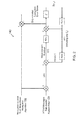
Figure 1 is a diagram illustrating a navigation system of one embodiment of the present invention; -
Figure 2 is a diagram illustrating a local Kalman filter of one embodiment of the present invention; and -
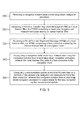
Figure 3 is a flow chart illustrating a method of one embodiment of the present invention. - In accordance with common practice, the various described features are not drawn to scale but are drawn to emphasize features relevant to the present invention. Reference characters denote like elements throughout figures and text.
- In the following detailed description, reference is made to the accompanying drawings that form a part hereof, and in which is shown by way of specific illustrative embodiments in which the invention may be practiced. These embodiments are described in sufficient detail to enable those skilled in the art to practice the invention, and it is to be understood that other embodiments may be utilized and that logical, mechanical and electrical changes may be made without departing from the scope of the present invention. The following detailed description is, therefore, not to be taken in a limiting sense.
- Embodiments of the present description address the needs to address bias corrections in transfer alignment configurations through a modified Kalman filter algorithm implemented in the local navigation system of the payload. In addition to having utilizing navigation information from a master Kalman filter as a navigation aid, with embodiments of the present invention, the local Kalman filter also receives a bias correction via a specific messages generated by the master Kalman filter when the master Kalman filter performs a navigation reset. The local Kalman filter utilizes the bias correction to adjust the values of its own navigation states so that when the local Kalman filter calculates a measurement residual, deviations in the navigation aid measurements due to the reset at the master Kalman filter are offset by the adjustments made to the local navigation states. As a result, no additional residual at the local Kalman filter is produced as a result of the bias correction reset performed at the master Kalman filter.
-
Figure 1 is a block diagram of a transfer alignment system 100 of one embodiment of the present invention. System 100 comprises a hostaircraft navigation system 102 located onboard an aircraft (such as an airplane or helicopter, for example) and apayload navigation system 104 located onboard a payload mounted to the aircraft which is subsequently launched from the aircraft. -
Aircraft navigation system 102 comprises aircraftinertial sensors 110, an Aircraft Strap-Down Navigation Algorithm 112, anavigation aid 114 and a master Kalman filter. The aircraftinertial sensors 110 provide 3-axis gyroscope and 3-axis accelerometer measurements of the aircraft frame to Strap-Down NavigationAlgorithm 112. From these measurements, Strap-Down Navigation Algorithm 112 produces a navigation solution for the aircraft, including the aircrafts position, velocity and attitude in 3 dimensions.Navigation aid 114 provides a secondary source for one or more parameters of a navigation solution for the aircrafts position, velocity and attitude. In one embodiment,Navigation aid 114 comprises a navigation receiver for a Global Navigation Satellite System such as, for example, a Global Positioning System (GPS) receiver. - The Strap-Down
Navigation Algorithm 112 is a basic navigation algorithm that takes the output from accelerometers and gyros in the aircraftinertial sensors 110 and integrates them up to produce position, velocity and attitude data. This data is referred to as a navigation solution. The values provided in the navigation solution will drift over time. For example, a small error in acceleration or rotation will compound over time if no correction is performed. Therefore,Aircraft navigation system 102 needs to periodically correct for these drift error using a measurement fromnavigation aid 114. Master Kalmanfilter 120 receives the navigation data from Strap-DownNavigation Algorithm 112 andnavigation aid 114 and using this information estimates the error in the strapdown navigation solution given a particular measurement from thenavigation aid 114. Once an error is estimated, Master Kalman filter 120 computes and applies a reset (which comprises a step change correction to the strapdown navigation solution) to adjust the Strap-Down Navigation Algorithm 112 output to accommodate for the drift. Resets are generally performed on a periodic basis, but in some embodiments may be held until an accumulated error to reaches a threshold. In one embodiment, update to the navigation solution from the Strap-DownNavigation Algorithm 112 are provided at relatively high rate as compared to updates from Master Kalmanfilter 120. For example, in one embodiment, Strap-Down Navigation Algorithm 112 provides updates to its navigation solution output at a rate of 100Hz (100 times/sec) while the Master Kalmanfilter 120 generates reset at a rate of 1Hz (once/sec). In one embodiment, each time the Master Kalmanfilter 120 estimates an error, in applies a reset to the Strap-Down Navigation Algorithm 112. -
Payload navigation system 104 operates in a very similar way toaircraft navigation system 102, which the notable exception that Master Kalman filter 120 functions as the source of Navigation aid data forPayload navigation system 104. As shown inFigure 1 ,Payload navigation system 104 comprisesinertial sensors 130, a Local Strap-Down Navigation Algorithm 132, and a Kalman filter (referred to herein as the local Kalman filter 140). The localinertial sensors 130 provide 3-axis gyroscope and 3-axis accelerometer measurements of the payload body to Strap-Down Navigation Algorithm 132. From these measurements, Strap-Down Navigation Algorithm 132 produces a navigation solution for the payload, including the payload's position, velocity and attitude in 3 dimensions. Local Kalmanfilter 140 uses measurements from the master Kalmanfilter 120 as the navigation aid for calculating error in the navigation solution provided by Strap-Down NavigationAlgorithm 132. That is, it uses messages from master Kalmanfilter 120 form a measurement from which it will estimate its own error in its own strap-down navigation system and performing a reset based on that estimate of error. - In one embodiment, local Kalman
filter 140 comprises an extended Kalman filter algorithm executed by aprocessing element 142. In one embodiment, in order to implement Kalmanfilter 140,processing element 142 executes a series of algorithms components, shown at 150-160 inFigure 1 and using the corresponding respective reference numbers in the following table:Ref. No. Algorithm Component Equation Implemented by Algorithm Component 150 State propagation (including addition of RTAM) 
152 Measurement Formation 
154 Covariance Propagation 
156 Gain computation 
158 Measurement update 
160 Compute Resets to Plant and states 
- Local Kalman
filter 140 receives two different types of messages from master Kalmanfilter 120, which communicate two different measurements. The first message type is a Precision Transfer Alignment Message (PTAM). A PTAM conveys conventional position, velocity and attitude navigation solution measurements (or a subset thereof) that the local Kalmanfilter 140 uses as navigation aid measurements. In one embodiment, a PTAM provides absolute measurements. However, in other embodiments, the PTAM may provide the navigation solution measurements in other ways. In Local Kalmanfilter 140, the values provided by PTAM are entered into the MeasurementFormation algorithm component 152 as shown in the table above and inFigure 1 . - The second type of message from master Kalman
filter 120 is generated each time the master Kalmanfilter 120 generates a reset to its own Strap-Down Navigation Algorithm 112. For this reason, the second type message is referred to as a Reset Transfer Alignment Message (RTAM). In essence, one purpose of the RTAM is to provide notice to the local Kalmanfilter 140 that the measurements provided by the next PTAM message may include a significant step change in one or more measurements from those provided in the previously received PTAM. More than that, however, with embodiments of the present invention, thelocal Kalman filter 140 is constructed to utilize a received RTAM within its Kalman algorithms so that its calculated residual will not increase due to a unexpected measurement error caused by a reset in themaster Kalman filter 120. Inlocal Kalman filter 140, the values provided by RTAM are entered into the Statepropagation algorithm component 150 as shown andFigure 1 and as represented by the variable Tk as shown in the table above. For iterations oflocal Kalman filter 140 where no RTAM has been received, the value of Tk used to calculate Statepropagation algorithm component 150 is simply zero for that iteration. - In
local Kalman filter 140, the MeasurementFormation algorithm component 152 determines yk, which represents the difference between the most recent measurement (e.g. PTAMn) and its prediction (represented by
Formation algorithm component 152 does not directly include the value of incoming RTAM messages, Tk, in its computation, but does include the values from PTAM messages. When an RTAM message is generated bymaster Kalman Filter 120, the MeasurementFormation algorithm component 152's prediction
master Kalman Filter 120 outputs a PTAM message with the position value p1, and subsequently outputs an RTAM message with a position step change correction of Δp. The PTAM message next received from themaster Kalman Filter 120 will have a position value p2 that reflects both any actual change in position since p1 plus the position step change correction of Δp. Without properly addressing the effects of themaster Kalman Filter 120 reset that caused the RTAM message, the MeasurementFormation algorithm component 152's prediction
local Kalman filter 140 as an unexpected occurrence of error. That is, the value of the residual, v, (shown inFigure 1 at 162 ) calculated as part of the MeasurementUpdate algorithm component 158 and represented by the expression:
will be off by a factor that is a function of the step change value Tk, which can be illustrated by the expression:
- To offset the effect of the
master Kalman Filter 120 reset and subsequent step change in the next PTAM message, when an RTAM message is received, the value of Tk, is added with the navigation solution,

propagation algorithm component 150. When the Measurementupdate algorithm component 158 is subsequently executed, the residual calculation will end up with two instances of HkTk that cancel each other out as shown be the expression:
- As shown in this expression, any step change introduced through the value of PTAM caused by a reset of the
master Kalman filter 120 will cause an error in the prediction of that PTAM resulting in a change to the residual, v, by +HkTk. This error will be canceled out by the effect of adding the RTAM value Tk to the navigation state vector, resulting in a change to the residual, v, by -HkTk. These values of +HkTk and -HkTk sum to have a net zero effect on the value of the residual. In other words, the residual will not indicate the presence of any non-anticipated error caused by themaster Kalman filter 120 reset. Further, in this embodiment, because receiving an RTAM message has no net effect on the calculation of the residual, the effects of receiving such an RTAM will not triggerlocal Kalman filter 140 to reject subsequent incoming PTAM messages. -
Figure 2 is a diagram providing an alternate illustration oflocal Kalman filter 140. The filter measurement y(n) is the difference between the data from the payload's strap-downnavigation algorithm 132 the measurement values from PTAM messages provided by themaster Kalman filter 120. The output of the H(h) block is H(n)x(n) which represents the local Kalman filter 140 's prediction of what the next value of y(n) will be. The difference between the two is the measurement residual v(n), which as mentioned above, represents an amount of error in the strapdown navigation data not anticipated by thelocal Kalman filter 140. - As explained above, when the
master Kalman filter 120 generates a bias correction reset and RTAM message, the effect of that reset also appear in subsequent PTAM messages. Thus, the value of y(n) will increase by a corresponding value of HkTk. To accommodate this increase in PTAM message values without affecting the measurement residual v(n), the value Tk of the corresponding RTAM message is added to the navigation state x(n) and then propagated. This increase the value of H(n)x(n) by HkTk. When the difference between y(n) and H(n)x(n) is determined, the two instances of HkTk are canceled out. Kalman Gain matrix K(n) then produces a weighted vector that determines how much to compensate due to the errors represented by the measurement residual v(n). The output of K(n) is added to x(n) (which includes an uncanceled HkTk to implement the necessary reset) to produce navigation error states X(n'). The navigation solution output of thelocal Kalman filter 140 is thus a function of the strapdown navigation data as adjusted by the navigation error states X(n'). As indicated by the diagram, the navigation error states xX(n') provide the necessary drift compensation determined by themaster Kalman filter 120, without causing any corresponding net increase in the measurement residual v(n). -
Figure 3 is a flow chart illustrating a method for performing a transfer alignment from a host navigation system to a payload navigation system. In one embodiment, the method is implemented using the hostaircraft navigation system 102 located onboard an aircraft andpayload navigation system 104 located onboard a payload mounted to the aircraft as described above with respect toFigure 1 . The method begins at 310 with receiving a navigation solution from a local strap down navigation processor. In one embodiment, the local strap down navigation processor is coupled to a set of local inertial sensors aboard the payload that comprises at least a triad of orthogonal accelerometers and a triad of orthogonal gyroscopes. - The method proceeds to 320 with receiving a Precision Transfer Alignment Message (PTAM) at a local Kalman filter, the PTAM comprising at least one navigation aid measurement generated by a master Kalman filter. As explained above, the bias correction provided by the RTAM may include a position correction, a velocity correction, an attitude correction, or a combination thereof. In one embodiment, the bias correction comprises a nine-dimensional vector comprising a 3-dimentional position bias correction, a 3-dimentional velocity correction, and a 3-dimentional attitude correction.
- The method proceeds to 330 with receiving a Reset Transfer Alignment Message (RTAM) at a local Kalman filter, the RTAM comprising a bias correction applied by the master Kalman filter as a navigation reset. In one embodiment, the master Kalman filter receives navigation data from the aircraft's Strap-Down Navigation Algorithm and navigation aid and using this information estimates the error in its strapdown navigation solution given a particular measurement from the navigation aid. When a drift error is estimated, the master Kalman filter computes and applies a reset to adjust the aircraft's Strap-Down Navigation Algorithm output to accommodate for the drift. Resets are generally performed on a periodic basis, but in some embodiments may be held until an accumulated error to reaches a threshold.
- In one embodiment, the PTAM communicates the at least one navigation aid measurement as absolute navigation solution values while the RTAM communications the bias correction as a change in navigation solution values.
- The method proceeds to 340 with propagating a navigation state at the local Kalman filter using the navigation solution from a local strap down navigation processor, wherein the local Kalman filter adds the bias correction to the navigation state. The method proceeds to 350 with computing a measurement update at the local Kalman filter as a function of the at least one navigation aid measurement and the bias correction, wherein the navigation solution from a local strap down navigation processor is compensated for the bias correction by the measurement update.
- In one embodiment, the local Kalman filter implements the algorithm components 150-160 illustrated in the table above and in
Figure 1 . As such, in one embodiment, propagating the navigation state at the local Kalman filter is calculated using an equation equivalent to:


- Example Embodiments
- Example 1 includes a navigation system for performing a transfer alignment, the navigation system comprising: a set of local inertial sensors; a local strap-down navigation processor coupled to the set of local inertial sensors, the local strap-down navigation processor receiving inertial navigation data from the set of local inertial sensors and converting the inertial navigation data into a navigation solution; a local Kalman filter coupled to the local strap-down navigation processor, the local Kalman filter receiving the navigation solution produced by the local strap-down navigation processor, the local Kalman filter further coupled to a master Kalman filter; wherein the local Kalman filter receives a first message from the master Kalman filter comprising a Precision Transfer Alignment Message (PTAM) that includes at least one navigation aid measurement; wherein the local Kalman filter inputs the navigation aid measurement into a measurement formation algorithm and calculates a measurement residual based on the navigation aid measurement; wherein the local Kalman filter receives a second message from the master Kalman filter comprising a Reset Transfer Alignment Message (RTAM) that includes a bias correction applied by the master Kalman filter as a navigation reset; wherein the local Kalman filter inputs the bias correction into a state propagation algorithm where the bias correction provided by the bias correction is added to a navigation state of the local Kalman filter and propagated.
- Example 2 includes the navigation system of Example 1, wherein the bias correction provided by the RTAM includes one of a position correction, a velocity correction, an attitude correction, or a combination thereof.
- Example 3 includes navigation system of Example 1 or 2, wherein the bias correction comprises a nine-dimensional vector comprising a 3-dimentional position bias correction, a 3-dimentional velocity correction, and a 3-dimentional attitude correction.
- Example 4 includes the navigation system of Example 1, 2 or 3, wherein the PTAM communicates the at least one navigation aid measurement as absolute navigation solution values; and wherein the RTAM communications the bias correction as a change in navigation solution values.
- Example 5 includes the navigation system of any of Examples 1-4, wherein the set of local inertial sensors comprises at least a triad of orthogonal accelerometers and a triad of orthogonal gyroscopes.
- Example 6 includes the navigation system of any of Examples 1-5, wherein the local Kalman filter is implemented using an Extended Kalman Filter algorithm.
- Example 7 includes the navigation system of any of Examples 1-6, further comprising a processing element; wherein the local Kalman filter is implemented as an algorithm executed by the processing element.
- Example 8 includes the navigation system of any of Examples 1-7, wherein the local strap-down navigation processor and the local Kalman filter are both implemented using the same processor.
- Example 9 includes the navigation system of any of Examples 1-8, wherein the measurement formation algorithm is calculated using an equation equivalent to:

- Example 10 includes the navigation system of any of Examples 1-9, wherein the state propagation algorithm is calculated using an equation equivalent to:

- Example 11 includes a method for performing a transfer alignment from a host navigation system to a payload navigation system, the method comprising: receiving a navigation solution from a local strap down navigation processor; receiving a Precision Transfer Alignment Message (PTAM) at a local Kalman filter, the PTAM comprising at least one navigation aid measurement generated by a master Kalman filter; receiving a Reset Transfer Alignment Message (RTAM) at a local Kalman filter, the RTAM comprising a bias correction applied by the master Kalman filter as a navigation reset; propagating a navigation state at the local Kalman filter using the navigation solution from a local strap down navigation processor, wherein the local Kalman filter adds the bias correction to the navigation state; computing a measurement update at the local Kalman filter as a function of the at least one navigation aid measurement and the bias correction, wherein the navigation solution from a local strap down navigation processor is compensated for the bias correction by the measurement update.
- Example 12 includes the method of Example 11, wherein the bias correction provided by the RTAM includes one of a position correction, a velocity correction, an attitude correction, or a combination thereof.
- Example 13 includes the method of Examples 11 or 12, wherein the bias correction comprises a nine-dimensional vector comprising a 3-dimentional position bias correction, a 3-dimentional velocity correction, and a 3-dimentional attitude correction.
- Example 14 includes the method of any of Examples 11-13, wherein the PTAM communicates the at least one navigation aid measurement as absolute navigation solution values; and wherein the RTAM communications the bias correction as a change in navigation solution values.
- Example 15 includes the method of any of Examples 11-14, wherein the local strap down navigation processor is coupled to a set of local inertial sensors that comprises at least a triad of orthogonal accelerometers and a triad of orthogonal gyroscopes.
- Example 16 includes the method of any of Examples 11-15, wherein the local Kalman filter is implemented using an Extended Kalman Filter algorithm.
- Example 17 includes the method of any of Examples 11-16, wherein propagating the navigation state at the local Kalman filter is calculated using an equation equivalent to:

- Example 18 includes the method of any of Examples 11-17, wherein computing a measurement update at the local Kalman filter is calculated using an equation equivalent to:


- Example 19 includes a system comprising: an aircraft having a aircraft navigation system comprising a master Kalman filter; a payload loaded onto the aircraft, the payload having a payload navigation system comprising: a set of local inertial sensors; a local strap-down navigation processor coupled to the set of local inertial sensors, the strap-down navigation processor, the local strap-down navigation processor receiving inertial navigation data from the set of local inertial sensors and converting the inertial navigation data into a navigation solution; a local Kalman filter coupled to the local strap-down navigation processor, the local Kalman filter receiving the navigation solution produced by the local strap-down navigation processor, the local Kalman filter further coupled to the master Kalman filter; wherein the local Kalman filter receives a first message from the master Kalman filter comprising a Precision Transfer Alignment Message (PTAM) that includes at least one navigation aid measurement; wherein the local Kalman filter inputs the navigation aid measurement into a measurement formation algorithm and calculates a measurement residual based on the navigation aid measurement; wherein the local Kalman filter receives a second message from the master Kalman filter comprising a Reset Transfer Alignment Message (RTAM) that includes a bias correction applied by the master Kalman filter as a navigation reset; wherein the local Kalman filter inputs the bias correction into a state propagation algorithm where the bias correction provided by the bias correction is added to a navigation state of the local Kalman filter and propagated.
- Example 20 includes the system of Example 19 wherein the measurement formation algorithm is calculated using an equation equivalent to:


- Several means of hardware are available to implement the systems and methods of the current invention as discussed in this specification. These means of hardware include, but are not limited to, digital computer systems, microprocessors, general purpose computers, programmable controllers and field programmable gate arrays. Therefore additional embodiments of the present invention include program instructions resident on computer readable storage media which when implemented by such devices, enable them to implement embodiments of the present invention. Computer readable storage media include any form of physical computer data storage hardware, including but not limited to punch cards, magnetic disk or tape, any optical data storage system, flash read only memory (ROM), non-volatile ROM, programmable ROM (PROM), erasable-programmable ROM (E-PROM), random access memory (RAM), or any other form of permanent, semi-permanent, or temporary memory storage system or device. Program instructions and code include, but are not limited to computer-executable instructions executed by computer system processors and hardware description languages such as Very High Speed Integrated Circuit (VHSIC) Hardware Description Language (VHDL).
- Although specific embodiments have been illustrated and described herein, it will be appreciated by those of ordinary skill in the art that any arrangement, which is calculated to achieve the same purpose, may be substituted for the specific embodiment shown. This application is intended to cover any adaptations or variations of the present invention. Therefore, it is manifestly intended that this invention be limited only by the claims and the equivalents thereof.
Claims (10)
- A navigation system (100) for performing a transfer alignment, the navigation system comprising:a set of local inertial sensors (130);a local strap-down navigation processor (132) coupled to the set of local inertial sensors, the local strap-down navigation processor receiving inertial navigation data from the set of local inertial sensors and converting the inertial navigation data into a navigation solution;a local Kalman filter (140) coupled to the local strap-down navigation processor, the local Kalman filter receiving the navigation solution produced by the local strap-down navigation processor, the local Kalman filter further coupled to a master Kalman filter (120);wherein the local Kalman filter receives a first message from the master Kalman filter comprising a Precision Transfer Alignment Message (PTAM) that includes at least one navigation aid measurement;wherein the local Kalman filter inputs the navigation aid measurement into a measurement formation algorithm (152) and calculates a measurement residual based on the navigation aid measurement;wherein the local Kalman filter receives a second message from the master Kalman filter comprising a Reset Transfer Alignment Message (RTAM) that includes a bias correction applied by the master Kalman filter as a navigation reset;wherein the local Kalman filter inputs the bias correction into a state propagation algorithm (150) where the bias correction provided by the bias correction is added to a navigation state of the local Kalman filter and propagated.
- The navigation system of claim 1, wherein the bias correction comprises a nine-dimensional vector comprising a 3-dimentional position bias correction, a 3-dimentional velocity correction, and a 3-dimentional attitude correction.
- The navigation system of claim 1, wherein the PTAM communicates the at least one navigation aid measurement as absolute navigation solution values; and
wherein the RTAM communications the bias correction as a change in navigation solution values. - The navigation system of claim 1, further comprising a processing element;
wherein the local Kalman filter is implemented as an algorithm executed by the processing element. - The navigation system of claim 1, wherein the local strap-down navigation processor and the local Kalman filter are both implemented using the same processor.
- The navigation system of claim 1, wherein the measurement formation algorithm is calculated using an equation equivalent to:

- The navigation system of claim 1, wherein the state propagation algorithm is calculated using an equation equivalent to:

where Tk is the bias correction provided by the RTAM. - A method for performing a transfer alignment from a host navigation system to a payload navigation system, the method comprising:receiving a navigation solution from a local strap down navigation processor (310);receiving a Precision Transfer Alignment Message (PTAM) at a local Kalman filter, the PTAM comprising at least one navigation aid measurement generated by a master Kalman filter (320);receiving a Reset Transfer Alignment Message (RTAM) at a local Kalman filter, the RTAM comprising a bias correction applied by the master Kalman filter as a navigation reset (330);propagating a navigation state at the local Kalman filter using the navigation solution from a local strap down navigation processor, wherein the local Kalman filter adds the bias correction to the navigation state (340);computing a measurement update at the local Kalman filter as a function of the at least one navigation aid measurement and the bias correction, wherein the navigation solution from a local strap down navigation processor is compensated for the bias correction by the measurement update (350).
- The method of claim 8, wherein the bias correction comprises a nine-dimensional vector comprising a 3-dimentional position bias correction, a 3-dimentional velocity correction, and a 3-dimentional attitude correction.
- The method of claim 8, wherein the local strap down navigation processor is coupled to a set of local inertial sensors that comprises at least a triad of orthogonal accelerometers and a triad of orthogonal gyroscopes.
Applications Claiming Priority (1)
| Application Number | Priority Date | Filing Date | Title |
|---|---|---|---|
| US13/409,707 US8515672B1 (en) | 2012-03-01 | 2012-03-01 | Systems and methods to incorporate master navigation system resets during transfer alignment |
Publications (3)
| Publication Number | Publication Date |
|---|---|
| EP2634534A2 true EP2634534A2 (en) | 2013-09-04 |
| EP2634534A3 EP2634534A3 (en) | 2014-03-26 |
| EP2634534B1 EP2634534B1 (en) | 2016-01-20 |
Family
ID=47748515
Family Applications (1)
| Application Number | Title | Priority Date | Filing Date |
|---|---|---|---|
| EP13156439.5A Active EP2634534B1 (en) | 2012-03-01 | 2013-02-22 | Systems and methods to incorporate master navigation system resets during transfer alignment |
Country Status (3)
| Country | Link |
|---|---|
| US (1) | US8515672B1 (en) |
| EP (1) | EP2634534B1 (en) |
| JP (1) | JP2013181985A (en) |
Cited By (4)
| Publication number | Priority date | Publication date | Assignee | Title |
|---|---|---|---|---|
| CN104567930A (en) * | 2014-12-30 | 2015-04-29 | 南京理工大学 | Transfer alignment method capable of estimating and compensating wing deflection deformation |
| CN105066990A (en) * | 2015-07-07 | 2015-11-18 | 哈尔滨工程大学 | A High Precision Digital Filter Applicable to Strapdown Inertial Navigation |
| WO2020233290A1 (en) * | 2019-05-17 | 2020-11-26 | 东南大学 | Dual-filter-based transfer alignment method under dynamic deformation |
| CN112179378A (en) * | 2020-09-21 | 2021-01-05 | 湖北三江航天红峰控制有限公司 | A Polarized Light Navigation Aided Transfer Alignment System |
Families Citing this family (11)
| Publication number | Priority date | Publication date | Assignee | Title |
|---|---|---|---|---|
| CN103983280B (en) * | 2014-05-27 | 2017-02-15 | 上海新跃仪表厂 | Space-based inertial reference delivery method by use of speed difference information |
| FR3034514B1 (en) * | 2015-04-01 | 2017-04-21 | Sagem Defense Securite | NAVIGATION TRACKING METHOD OF A MOBILE CARRIER WITH AN EXTENDED KALMAN FILTER |
| US10048070B2 (en) * | 2015-04-17 | 2018-08-14 | Honeywell International Inc. | Transitioning from stationary alignment mode to in-motion alignment mode |
| CN105783943A (en) * | 2016-04-26 | 2016-07-20 | 哈尔滨工程大学 | Method for performing transfer alignment on large azimuth misalignment angle of ship in polar region environment based on unscented Kalman filtering |
| CN105973268B (en) * | 2016-05-06 | 2019-09-27 | 哈尔滨工程大学 | A kind of Transfer Alignment precision quantitative evaluating method based on the installation of cobasis seat |
| CN110044385B (en) * | 2019-05-09 | 2020-12-08 | 北京壹氢科技有限公司 | Rapid transfer alignment method under condition of large misalignment angle |
| CN111220182B (en) * | 2020-03-23 | 2022-02-11 | 北京中科宇航技术有限公司 | Rocket transfer alignment method and system |
| US11790793B2 (en) * | 2021-01-08 | 2023-10-17 | Honeywell International Inc. | Systems and methods for model based vehicle navigation |
| CN113029127B (en) * | 2021-03-10 | 2023-05-09 | 中国人民解放军海军航空大学 | Autonomous Attitude Estimation Method of Aircraft Based on Distributed Loop Structure |
| CN115371670B (en) * | 2022-10-21 | 2023-03-24 | 北京李龚导航科技有限公司 | Navigation method, navigation device, electronic equipment and storage medium |
| CN119984340B (en) * | 2025-03-06 | 2025-10-28 | 湖北航天技术研究院总体设计所 | SINS/GNSS air alignment method for large overload section of aircraft |
Family Cites Families (5)
| Publication number | Priority date | Publication date | Assignee | Title |
|---|---|---|---|---|
| US5672872A (en) | 1996-03-19 | 1997-09-30 | Hughes Electronics | FLIR boresight alignment |
| IL136566A (en) * | 2000-06-05 | 2007-07-24 | Rafael Advanced Defense Sys | Method for transfer alignment of an inertial measurement unit in the presence of unknown aircraft measurements delays |
| US8239162B2 (en) * | 2006-04-13 | 2012-08-07 | Tanenhaus & Associates, Inc. | Miniaturized inertial measurement unit and associated methods |
| US8725327B2 (en) * | 2008-04-22 | 2014-05-13 | Exelis Inc. | Navigation system and method of obtaining accurate navigational information in signal challenging environments |
| US9057606B2 (en) * | 2009-09-10 | 2015-06-16 | Nextnav, Llc | Wide area positioning system |
-
2012
- 2012-03-01 US US13/409,707 patent/US8515672B1/en active Active
-
2013
- 2013-02-22 EP EP13156439.5A patent/EP2634534B1/en active Active
- 2013-02-28 JP JP2013038688A patent/JP2013181985A/en active Pending
Non-Patent Citations (1)
| Title |
|---|
| None |
Cited By (6)
| Publication number | Priority date | Publication date | Assignee | Title |
|---|---|---|---|---|
| CN104567930A (en) * | 2014-12-30 | 2015-04-29 | 南京理工大学 | Transfer alignment method capable of estimating and compensating wing deflection deformation |
| CN105066990A (en) * | 2015-07-07 | 2015-11-18 | 哈尔滨工程大学 | A High Precision Digital Filter Applicable to Strapdown Inertial Navigation |
| WO2020233290A1 (en) * | 2019-05-17 | 2020-11-26 | 东南大学 | Dual-filter-based transfer alignment method under dynamic deformation |
| US11912433B2 (en) | 2019-05-17 | 2024-02-27 | Southeast University | Dual-filter-based transfer alignment method under dynamic deformation |
| CN112179378A (en) * | 2020-09-21 | 2021-01-05 | 湖北三江航天红峰控制有限公司 | A Polarized Light Navigation Aided Transfer Alignment System |
| CN112179378B (en) * | 2020-09-21 | 2022-03-08 | 湖北三江航天红峰控制有限公司 | Polarized light navigation-assisted transfer alignment system |
Also Published As
| Publication number | Publication date |
|---|---|
| EP2634534B1 (en) | 2016-01-20 |
| US20130231860A1 (en) | 2013-09-05 |
| JP2013181985A (en) | 2013-09-12 |
| EP2634534A3 (en) | 2014-03-26 |
| US8515672B1 (en) | 2013-08-20 |
Similar Documents
| Publication | Publication Date | Title |
|---|---|---|
| EP2634534B1 (en) | Systems and methods to incorporate master navigation system resets during transfer alignment | |
| EP3043148B1 (en) | Heading for a hybrid navigation solution based on magnetically calibrated measurements | |
| US11099582B2 (en) | Navigation aids for unmanned aerial systems in a GPS-denied environment | |
| KR102432116B1 (en) | A navigation system | |
| AU2009200190B2 (en) | Methods and systems for underwater navigation | |
| US8600660B2 (en) | Multipath modeling for deep integration | |
| EP2837911B1 (en) | Method to improve leveling performance in navigation systems | |
| US20040036650A1 (en) | Remote velocity sensor slaved to an integrated GPS/INS | |
| GB2444814A (en) | Estimating inertial acceleration bias errors | |
| US11268813B2 (en) | Integrated inertial gravitational anomaly navigation system | |
| EP3120166B1 (en) | Precise positioning method | |
| EP2549230B1 (en) | Method and navigation system for initialization with inertial data compensation | |
| US10088319B2 (en) | Method for determining states of a system using an estimation filter | |
| US20250389537A1 (en) | Computer-implemented methods for attitude determination of an aircraft for navigation | |
| US20240200948A1 (en) | Terrain referenced navigation system | |
| Wang et al. | Enhanced Redundant Measurement and Innovation-Based Adaptive Extended Kalman Filter for INS/GNSS Integrated Navigation | |
| Kurniawan et al. | Improving Orientation Estimation Accuracy Using Dynamic Data Fusion of Multiple Sensors | |
| RU2539846C1 (en) | Inertial radio navigation system | |
| JP5914316B2 (en) | Direction measuring device | |
| Vahitov et al. | An NSI-2000MTG integrated navigation system |
Legal Events
| Date | Code | Title | Description |
|---|---|---|---|
| PUAI | Public reference made under article 153(3) epc to a published international application that has entered the european phase |
Free format text: ORIGINAL CODE: 0009012 |
|
| 17P | Request for examination filed |
Effective date: 20130222 |
|
| AK | Designated contracting states |
Kind code of ref document: A2 Designated state(s): AL AT BE BG CH CY CZ DE DK EE ES FI FR GB GR HR HU IE IS IT LI LT LU LV MC MK MT NL NO PL PT RO RS SE SI SK SM TR |
|
| AX | Request for extension of the european patent |
Extension state: BA ME |
|
| RIN1 | Information on inventor provided before grant (corrected) |
Inventor name: SNYDER, SCOTT Inventor name: MOHR, BENJAMIN |
|
| PUAL | Search report despatched |
Free format text: ORIGINAL CODE: 0009013 |
|
| AK | Designated contracting states |
Kind code of ref document: A3 Designated state(s): AL AT BE BG CH CY CZ DE DK EE ES FI FR GB GR HR HU IE IS IT LI LT LU LV MC MK MT NL NO PL PT RO RS SE SI SK SM TR |
|
| AX | Request for extension of the european patent |
Extension state: BA ME |
|
| RIC1 | Information provided on ipc code assigned before grant |
Ipc: G01C 25/00 20060101ALI20140218BHEP Ipc: F41G 7/00 20060101ALI20140218BHEP Ipc: G01C 21/16 20060101ALI20140218BHEP Ipc: G01C 21/00 20060101AFI20140218BHEP |
|
| 17Q | First examination report despatched |
Effective date: 20140428 |
|
| GRAP | Despatch of communication of intention to grant a patent |
Free format text: ORIGINAL CODE: EPIDOSNIGR1 |
|
| INTG | Intention to grant announced |
Effective date: 20150930 |
|
| GRAS | Grant fee paid |
Free format text: ORIGINAL CODE: EPIDOSNIGR3 |
|
| RAP1 | Party data changed (applicant data changed or rights of an application transferred) |
Owner name: HONEYWELL INTERNATIONAL INC. |
|
| GRAA | (expected) grant |
Free format text: ORIGINAL CODE: 0009210 |
|
| AK | Designated contracting states |
Kind code of ref document: B1 Designated state(s): AL AT BE BG CH CY CZ DE DK EE ES FI FR GB GR HR HU IE IS IT LI LT LU LV MC MK MT NL NO PL PT RO RS SE SI SK SM TR |
|
| REG | Reference to a national code |
Ref country code: GB Ref legal event code: FG4D |
|
| REG | Reference to a national code |
Ref country code: CH Ref legal event code: EP |
|
| REG | Reference to a national code |
Ref country code: IE Ref legal event code: FG4D |
|
| REG | Reference to a national code |
Ref country code: AT Ref legal event code: REF Ref document number: 771934 Country of ref document: AT Kind code of ref document: T Effective date: 20160215 |
|
| REG | Reference to a national code |
Ref country code: DE Ref legal event code: R096 Ref document number: 602013004679 Country of ref document: DE |
|
| REG | Reference to a national code |
Ref country code: FR Ref legal event code: PLFP Year of fee payment: 4 |
|
| REG | Reference to a national code |
Ref country code: LT Ref legal event code: MG4D Ref country code: NL Ref legal event code: MP Effective date: 20160120 |
|
| PG25 | Lapsed in a contracting state [announced via postgrant information from national office to epo] |
Ref country code: BE Free format text: LAPSE BECAUSE OF NON-PAYMENT OF DUE FEES Effective date: 20160229 |
|
| REG | Reference to a national code |
Ref country code: AT Ref legal event code: MK05 Ref document number: 771934 Country of ref document: AT Kind code of ref document: T Effective date: 20160120 |
|
| PG25 | Lapsed in a contracting state [announced via postgrant information from national office to epo] |
Ref country code: NL Free format text: LAPSE BECAUSE OF FAILURE TO SUBMIT A TRANSLATION OF THE DESCRIPTION OR TO PAY THE FEE WITHIN THE PRESCRIBED TIME-LIMIT Effective date: 20160120 |
|
| PG25 | Lapsed in a contracting state [announced via postgrant information from national office to epo] |
Ref country code: ES Free format text: LAPSE BECAUSE OF FAILURE TO SUBMIT A TRANSLATION OF THE DESCRIPTION OR TO PAY THE FEE WITHIN THE PRESCRIBED TIME-LIMIT Effective date: 20160120 Ref country code: GR Free format text: LAPSE BECAUSE OF FAILURE TO SUBMIT A TRANSLATION OF THE DESCRIPTION OR TO PAY THE FEE WITHIN THE PRESCRIBED TIME-LIMIT Effective date: 20160421 Ref country code: HR Free format text: LAPSE BECAUSE OF FAILURE TO SUBMIT A TRANSLATION OF THE DESCRIPTION OR TO PAY THE FEE WITHIN THE PRESCRIBED TIME-LIMIT Effective date: 20160120 Ref country code: IT Free format text: LAPSE BECAUSE OF FAILURE TO SUBMIT A TRANSLATION OF THE DESCRIPTION OR TO PAY THE FEE WITHIN THE PRESCRIBED TIME-LIMIT Effective date: 20160120 Ref country code: FI Free format text: LAPSE BECAUSE OF FAILURE TO SUBMIT A TRANSLATION OF THE DESCRIPTION OR TO PAY THE FEE WITHIN THE PRESCRIBED TIME-LIMIT Effective date: 20160120 Ref country code: NO Free format text: LAPSE BECAUSE OF FAILURE TO SUBMIT A TRANSLATION OF THE DESCRIPTION OR TO PAY THE FEE WITHIN THE PRESCRIBED TIME-LIMIT Effective date: 20160420 |
|
| PG25 | Lapsed in a contracting state [announced via postgrant information from national office to epo] |
Ref country code: PL Free format text: LAPSE BECAUSE OF FAILURE TO SUBMIT A TRANSLATION OF THE DESCRIPTION OR TO PAY THE FEE WITHIN THE PRESCRIBED TIME-LIMIT Effective date: 20160120 Ref country code: LV Free format text: LAPSE BECAUSE OF FAILURE TO SUBMIT A TRANSLATION OF THE DESCRIPTION OR TO PAY THE FEE WITHIN THE PRESCRIBED TIME-LIMIT Effective date: 20160120 Ref country code: LT Free format text: LAPSE BECAUSE OF FAILURE TO SUBMIT A TRANSLATION OF THE DESCRIPTION OR TO PAY THE FEE WITHIN THE PRESCRIBED TIME-LIMIT Effective date: 20160120 Ref country code: AT Free format text: LAPSE BECAUSE OF FAILURE TO SUBMIT A TRANSLATION OF THE DESCRIPTION OR TO PAY THE FEE WITHIN THE PRESCRIBED TIME-LIMIT Effective date: 20160120 Ref country code: RS Free format text: LAPSE BECAUSE OF FAILURE TO SUBMIT A TRANSLATION OF THE DESCRIPTION OR TO PAY THE FEE WITHIN THE PRESCRIBED TIME-LIMIT Effective date: 20160120 Ref country code: PT Free format text: LAPSE BECAUSE OF FAILURE TO SUBMIT A TRANSLATION OF THE DESCRIPTION OR TO PAY THE FEE WITHIN THE PRESCRIBED TIME-LIMIT Effective date: 20160520 Ref country code: IS Free format text: LAPSE BECAUSE OF FAILURE TO SUBMIT A TRANSLATION OF THE DESCRIPTION OR TO PAY THE FEE WITHIN THE PRESCRIBED TIME-LIMIT Effective date: 20160520 Ref country code: SE Free format text: LAPSE BECAUSE OF FAILURE TO SUBMIT A TRANSLATION OF THE DESCRIPTION OR TO PAY THE FEE WITHIN THE PRESCRIBED TIME-LIMIT Effective date: 20160120 |
|
| REG | Reference to a national code |
Ref country code: CH Ref legal event code: PL |
|
| REG | Reference to a national code |
Ref country code: DE Ref legal event code: R097 Ref document number: 602013004679 Country of ref document: DE |
|
| PG25 | Lapsed in a contracting state [announced via postgrant information from national office to epo] |
Ref country code: MC Free format text: LAPSE BECAUSE OF FAILURE TO SUBMIT A TRANSLATION OF THE DESCRIPTION OR TO PAY THE FEE WITHIN THE PRESCRIBED TIME-LIMIT Effective date: 20160120 Ref country code: DK Free format text: LAPSE BECAUSE OF FAILURE TO SUBMIT A TRANSLATION OF THE DESCRIPTION OR TO PAY THE FEE WITHIN THE PRESCRIBED TIME-LIMIT Effective date: 20160120 Ref country code: CH Free format text: LAPSE BECAUSE OF NON-PAYMENT OF DUE FEES Effective date: 20160229 Ref country code: LI Free format text: LAPSE BECAUSE OF NON-PAYMENT OF DUE FEES Effective date: 20160229 Ref country code: EE Free format text: LAPSE BECAUSE OF FAILURE TO SUBMIT A TRANSLATION OF THE DESCRIPTION OR TO PAY THE FEE WITHIN THE PRESCRIBED TIME-LIMIT Effective date: 20160120 |
|
| PLBE | No opposition filed within time limit |
Free format text: ORIGINAL CODE: 0009261 |
|
| STAA | Information on the status of an ep patent application or granted ep patent |
Free format text: STATUS: NO OPPOSITION FILED WITHIN TIME LIMIT |
|
| PG25 | Lapsed in a contracting state [announced via postgrant information from national office to epo] |
Ref country code: CZ Free format text: LAPSE BECAUSE OF FAILURE TO SUBMIT A TRANSLATION OF THE DESCRIPTION OR TO PAY THE FEE WITHIN THE PRESCRIBED TIME-LIMIT Effective date: 20160120 Ref country code: SM Free format text: LAPSE BECAUSE OF FAILURE TO SUBMIT A TRANSLATION OF THE DESCRIPTION OR TO PAY THE FEE WITHIN THE PRESCRIBED TIME-LIMIT Effective date: 20160120 Ref country code: RO Free format text: LAPSE BECAUSE OF FAILURE TO SUBMIT A TRANSLATION OF THE DESCRIPTION OR TO PAY THE FEE WITHIN THE PRESCRIBED TIME-LIMIT Effective date: 20160120 Ref country code: SK Free format text: LAPSE BECAUSE OF FAILURE TO SUBMIT A TRANSLATION OF THE DESCRIPTION OR TO PAY THE FEE WITHIN THE PRESCRIBED TIME-LIMIT Effective date: 20160120 |
|
| REG | Reference to a national code |
Ref country code: IE Ref legal event code: MM4A |
|
| 26N | No opposition filed |
Effective date: 20161021 |
|
| PG25 | Lapsed in a contracting state [announced via postgrant information from national office to epo] |
Ref country code: BE Free format text: LAPSE BECAUSE OF FAILURE TO SUBMIT A TRANSLATION OF THE DESCRIPTION OR TO PAY THE FEE WITHIN THE PRESCRIBED TIME-LIMIT Effective date: 20160120 |
|
| REG | Reference to a national code |
Ref country code: FR Ref legal event code: PLFP Year of fee payment: 5 |
|
| PG25 | Lapsed in a contracting state [announced via postgrant information from national office to epo] |
Ref country code: IE Free format text: LAPSE BECAUSE OF NON-PAYMENT OF DUE FEES Effective date: 20160222 |
|
| PG25 | Lapsed in a contracting state [announced via postgrant information from national office to epo] |
Ref country code: BG Free format text: LAPSE BECAUSE OF FAILURE TO SUBMIT A TRANSLATION OF THE DESCRIPTION OR TO PAY THE FEE WITHIN THE PRESCRIBED TIME-LIMIT Effective date: 20160420 Ref country code: SI Free format text: LAPSE BECAUSE OF FAILURE TO SUBMIT A TRANSLATION OF THE DESCRIPTION OR TO PAY THE FEE WITHIN THE PRESCRIBED TIME-LIMIT Effective date: 20160120 |
|
| PGFP | Annual fee paid to national office [announced via postgrant information from national office to epo] |
Ref country code: DE Payment date: 20170227 Year of fee payment: 5 |
|
| PGFP | Annual fee paid to national office [announced via postgrant information from national office to epo] |
Ref country code: GB Payment date: 20170126 Year of fee payment: 5 |
|
| PG25 | Lapsed in a contracting state [announced via postgrant information from national office to epo] |
Ref country code: MT Free format text: LAPSE BECAUSE OF FAILURE TO SUBMIT A TRANSLATION OF THE DESCRIPTION OR TO PAY THE FEE WITHIN THE PRESCRIBED TIME-LIMIT Effective date: 20160120 |
|
| REG | Reference to a national code |
Ref country code: FR Ref legal event code: PLFP Year of fee payment: 6 |
|
| PG25 | Lapsed in a contracting state [announced via postgrant information from national office to epo] |
Ref country code: CY Free format text: LAPSE BECAUSE OF FAILURE TO SUBMIT A TRANSLATION OF THE DESCRIPTION OR TO PAY THE FEE WITHIN THE PRESCRIBED TIME-LIMIT Effective date: 20160120 Ref country code: HU Free format text: LAPSE BECAUSE OF FAILURE TO SUBMIT A TRANSLATION OF THE DESCRIPTION OR TO PAY THE FEE WITHIN THE PRESCRIBED TIME-LIMIT; INVALID AB INITIO Effective date: 20130222 |
|
| PG25 | Lapsed in a contracting state [announced via postgrant information from national office to epo] |
Ref country code: TR Free format text: LAPSE BECAUSE OF FAILURE TO SUBMIT A TRANSLATION OF THE DESCRIPTION OR TO PAY THE FEE WITHIN THE PRESCRIBED TIME-LIMIT Effective date: 20160120 Ref country code: MK Free format text: LAPSE BECAUSE OF FAILURE TO SUBMIT A TRANSLATION OF THE DESCRIPTION OR TO PAY THE FEE WITHIN THE PRESCRIBED TIME-LIMIT Effective date: 20160120 Ref country code: MT Free format text: LAPSE BECAUSE OF FAILURE TO SUBMIT A TRANSLATION OF THE DESCRIPTION OR TO PAY THE FEE WITHIN THE PRESCRIBED TIME-LIMIT Effective date: 20160229 Ref country code: LU Free format text: LAPSE BECAUSE OF NON-PAYMENT OF DUE FEES Effective date: 20160222 |
|
| REG | Reference to a national code |
Ref country code: DE Ref legal event code: R119 Ref document number: 602013004679 Country of ref document: DE |
|
| GBPC | Gb: european patent ceased through non-payment of renewal fee |
Effective date: 20180222 |
|
| PG25 | Lapsed in a contracting state [announced via postgrant information from national office to epo] |
Ref country code: AL Free format text: LAPSE BECAUSE OF FAILURE TO SUBMIT A TRANSLATION OF THE DESCRIPTION OR TO PAY THE FEE WITHIN THE PRESCRIBED TIME-LIMIT Effective date: 20160120 |
|
| PG25 | Lapsed in a contracting state [announced via postgrant information from national office to epo] |
Ref country code: DE Free format text: LAPSE BECAUSE OF NON-PAYMENT OF DUE FEES Effective date: 20180901 |
|
| PG25 | Lapsed in a contracting state [announced via postgrant information from national office to epo] |
Ref country code: GB Free format text: LAPSE BECAUSE OF NON-PAYMENT OF DUE FEES Effective date: 20180222 |
|
| P01 | Opt-out of the competence of the unified patent court (upc) registered |
Effective date: 20230525 |
|
| PGFP | Annual fee paid to national office [announced via postgrant information from national office to epo] |
Ref country code: FR Payment date: 20260224 Year of fee payment: 14 |