EP2632445B1 - Neues arzneimitteltarget innerhalb gp120 von hiv - Google Patents
Neues arzneimitteltarget innerhalb gp120 von hiv Download PDFInfo
- Publication number
- EP2632445B1 EP2632445B1 EP11776776.4A EP11776776A EP2632445B1 EP 2632445 B1 EP2632445 B1 EP 2632445B1 EP 11776776 A EP11776776 A EP 11776776A EP 2632445 B1 EP2632445 B1 EP 2632445B1
- Authority
- EP
- European Patent Office
- Prior art keywords
- note
- motif
- amino acid
- hiv
- variant
- Prior art date
- Legal status (The legal status is an assumption and is not a legal conclusion. Google has not performed a legal analysis and makes no representation as to the accuracy of the status listed.)
- Active
Links
Images

















Classifications
-
- G—PHYSICS
- G16—INFORMATION AND COMMUNICATION TECHNOLOGY [ICT] SPECIALLY ADAPTED FOR SPECIFIC APPLICATION FIELDS
- G16C—COMPUTATIONAL CHEMISTRY; CHEMOINFORMATICS; COMPUTATIONAL MATERIALS SCIENCE
- G16C20/00—Chemoinformatics, i.e. ICT specially adapted for the handling of physicochemical or structural data of chemical particles, elements, compounds or mixtures
- G16C20/60—In silico combinatorial chemistry
- G16C20/64—Screening of libraries
-
- G—PHYSICS
- G01—MEASURING; TESTING
- G01N—INVESTIGATING OR ANALYSING MATERIALS BY DETERMINING THEIR CHEMICAL OR PHYSICAL PROPERTIES
- G01N33/00—Investigating or analysing materials by specific methods not covered by groups G01N1/00 - G01N31/00
- G01N33/48—Biological material, e.g. blood, urine; Haemocytometers
- G01N33/50—Chemical analysis of biological material, e.g. blood, urine; Testing involving biospecific ligand binding methods; Immunological testing
- G01N33/53—Immunoassay; Biospecific binding assay; Materials therefor
- G01N33/566—Immunoassay; Biospecific binding assay; Materials therefor using specific carrier or receptor proteins as ligand binding reagents where possible specific carrier or receptor proteins are classified with their target compounds
-
- A—HUMAN NECESSITIES
- A61—MEDICAL OR VETERINARY SCIENCE; HYGIENE
- A61K—PREPARATIONS FOR MEDICAL, DENTAL OR TOILETRY PURPOSES
- A61K31/00—Medicinal preparations containing organic active ingredients
-
- C—CHEMISTRY; METALLURGY
- C07—ORGANIC CHEMISTRY
- C07C—ACYCLIC OR CARBOCYCLIC COMPOUNDS
- C07C231/00—Preparation of carboxylic acid amides
- C07C231/12—Preparation of carboxylic acid amides by reactions not involving the formation of carboxamide groups
-
- C—CHEMISTRY; METALLURGY
- C07—ORGANIC CHEMISTRY
- C07C—ACYCLIC OR CARBOCYCLIC COMPOUNDS
- C07C237/00—Carboxylic acid amides, the carbon skeleton of the acid part being further substituted by amino groups
- C07C237/28—Carboxylic acid amides, the carbon skeleton of the acid part being further substituted by amino groups having the carbon atom of at least one of the carboxamide groups bound to a carbon atom of a non-condensed six-membered aromatic ring of the carbon skeleton
- C07C237/40—Carboxylic acid amides, the carbon skeleton of the acid part being further substituted by amino groups having the carbon atom of at least one of the carboxamide groups bound to a carbon atom of a non-condensed six-membered aromatic ring of the carbon skeleton having the nitrogen atom of the carboxamide group bound to a carbon atom of a six-membered aromatic ring
-
- C—CHEMISTRY; METALLURGY
- C07—ORGANIC CHEMISTRY
- C07C—ACYCLIC OR CARBOCYCLIC COMPOUNDS
- C07C237/00—Carboxylic acid amides, the carbon skeleton of the acid part being further substituted by amino groups
- C07C237/28—Carboxylic acid amides, the carbon skeleton of the acid part being further substituted by amino groups having the carbon atom of at least one of the carboxamide groups bound to a carbon atom of a non-condensed six-membered aromatic ring of the carbon skeleton
- C07C237/42—Carboxylic acid amides, the carbon skeleton of the acid part being further substituted by amino groups having the carbon atom of at least one of the carboxamide groups bound to a carbon atom of a non-condensed six-membered aromatic ring of the carbon skeleton having nitrogen atoms of amino groups bound to the carbon skeleton of the acid part, further acylated
-
- C—CHEMISTRY; METALLURGY
- C07—ORGANIC CHEMISTRY
- C07K—PEPTIDES
- C07K14/00—Peptides having more than 20 amino acids; Gastrins; Somatostatins; Melanotropins; Derivatives thereof
- C07K14/005—Peptides having more than 20 amino acids; Gastrins; Somatostatins; Melanotropins; Derivatives thereof from viruses
-
- C—CHEMISTRY; METALLURGY
- C12—BIOCHEMISTRY; BEER; SPIRITS; WINE; VINEGAR; MICROBIOLOGY; ENZYMOLOGY; MUTATION OR GENETIC ENGINEERING
- C12N—MICROORGANISMS OR ENZYMES; COMPOSITIONS THEREOF; PROPAGATING, PRESERVING, OR MAINTAINING MICROORGANISMS; MUTATION OR GENETIC ENGINEERING; CULTURE MEDIA
- C12N7/00—Viruses; Bacteriophages; Compositions thereof; Preparation or purification thereof
-
- C—CHEMISTRY; METALLURGY
- C12—BIOCHEMISTRY; BEER; SPIRITS; WINE; VINEGAR; MICROBIOLOGY; ENZYMOLOGY; MUTATION OR GENETIC ENGINEERING
- C12Q—MEASURING OR TESTING PROCESSES INVOLVING ENZYMES, NUCLEIC ACIDS OR MICROORGANISMS; COMPOSITIONS OR TEST PAPERS THEREFOR; PROCESSES OF PREPARING SUCH COMPOSITIONS; CONDITION-RESPONSIVE CONTROL IN MICROBIOLOGICAL OR ENZYMOLOGICAL PROCESSES
- C12Q1/00—Measuring or testing processes involving enzymes, nucleic acids or microorganisms; Compositions therefor; Processes of preparing such compositions
- C12Q1/70—Measuring or testing processes involving enzymes, nucleic acids or microorganisms; Compositions therefor; Processes of preparing such compositions involving virus or bacteriophage
- C12Q1/701—Specific hybridization probes
- C12Q1/702—Specific hybridization probes for retroviruses
- C12Q1/703—Viruses associated with AIDS
-
- G—PHYSICS
- G01—MEASURING; TESTING
- G01N—INVESTIGATING OR ANALYSING MATERIALS BY DETERMINING THEIR CHEMICAL OR PHYSICAL PROPERTIES
- G01N33/00—Investigating or analysing materials by specific methods not covered by groups G01N1/00 - G01N31/00
- G01N33/48—Biological material, e.g. blood, urine; Haemocytometers
- G01N33/50—Chemical analysis of biological material, e.g. blood, urine; Testing involving biospecific ligand binding methods; Immunological testing
-
- G—PHYSICS
- G16—INFORMATION AND COMMUNICATION TECHNOLOGY [ICT] SPECIALLY ADAPTED FOR SPECIFIC APPLICATION FIELDS
- G16B—BIOINFORMATICS, i.e. INFORMATION AND COMMUNICATION TECHNOLOGY [ICT] SPECIALLY ADAPTED FOR GENETIC OR PROTEIN-RELATED DATA PROCESSING IN COMPUTATIONAL MOLECULAR BIOLOGY
- G16B15/00—ICT specially adapted for analysing two-dimensional [2D] or three-dimensional [3D] molecular structures, e.g. structural or functional relations or structure alignment
-
- G—PHYSICS
- G16—INFORMATION AND COMMUNICATION TECHNOLOGY [ICT] SPECIALLY ADAPTED FOR SPECIFIC APPLICATION FIELDS
- G16B—BIOINFORMATICS, i.e. INFORMATION AND COMMUNICATION TECHNOLOGY [ICT] SPECIALLY ADAPTED FOR GENETIC OR PROTEIN-RELATED DATA PROCESSING IN COMPUTATIONAL MOLECULAR BIOLOGY
- G16B15/00—ICT specially adapted for analysing two-dimensional [2D] or three-dimensional [3D] molecular structures, e.g. structural or functional relations or structure alignment
- G16B15/30—Drug targeting using structural data; Docking or binding prediction
-
- G—PHYSICS
- G16—INFORMATION AND COMMUNICATION TECHNOLOGY [ICT] SPECIALLY ADAPTED FOR SPECIFIC APPLICATION FIELDS
- G16B—BIOINFORMATICS, i.e. INFORMATION AND COMMUNICATION TECHNOLOGY [ICT] SPECIALLY ADAPTED FOR GENETIC OR PROTEIN-RELATED DATA PROCESSING IN COMPUTATIONAL MOLECULAR BIOLOGY
- G16B35/00—ICT specially adapted for in silico combinatorial libraries of nucleic acids, proteins or peptides
-
- G—PHYSICS
- G16—INFORMATION AND COMMUNICATION TECHNOLOGY [ICT] SPECIALLY ADAPTED FOR SPECIFIC APPLICATION FIELDS
- G16C—COMPUTATIONAL CHEMISTRY; CHEMOINFORMATICS; COMPUTATIONAL MATERIALS SCIENCE
- G16C20/00—Chemoinformatics, i.e. ICT specially adapted for the handling of physicochemical or structural data of chemical particles, elements, compounds or mixtures
- G16C20/50—Molecular design, e.g. of drugs
-
- G—PHYSICS
- G16—INFORMATION AND COMMUNICATION TECHNOLOGY [ICT] SPECIALLY ADAPTED FOR SPECIFIC APPLICATION FIELDS
- G16C—COMPUTATIONAL CHEMISTRY; CHEMOINFORMATICS; COMPUTATIONAL MATERIALS SCIENCE
- G16C20/00—Chemoinformatics, i.e. ICT specially adapted for the handling of physicochemical or structural data of chemical particles, elements, compounds or mixtures
- G16C20/60—In silico combinatorial chemistry
-
- C—CHEMISTRY; METALLURGY
- C07—ORGANIC CHEMISTRY
- C07C—ACYCLIC OR CARBOCYCLIC COMPOUNDS
- C07C2601/00—Systems containing only non-condensed rings
- C07C2601/12—Systems containing only non-condensed rings with a six-membered ring
- C07C2601/14—The ring being saturated
-
- C—CHEMISTRY; METALLURGY
- C07—ORGANIC CHEMISTRY
- C07K—PEPTIDES
- C07K16/00—Immunoglobulins [IG], e.g. monoclonal or polyclonal antibodies
- C07K16/08—Immunoglobulins [IG], e.g. monoclonal or polyclonal antibodies against material from viruses
- C07K16/10—RNA viruses
- C07K16/112—Retroviridae (F), e.g. leukemia viruses
- C07K16/114—Lentivirus (G), e.g. human immunodeficiency virus [HIV], feline immunodeficiency virus [FIV] or simian immunodeficiency virus [SIV]
- C07K16/1145—Env proteins, e.g. gp41, gp110/120, gp160, V3, principal neutralising domain [PND] or CD4-binding site
-
- C—CHEMISTRY; METALLURGY
- C07—ORGANIC CHEMISTRY
- C07K—PEPTIDES
- C07K2317/00—Immunoglobulins specific features
- C07K2317/10—Immunoglobulins specific features characterized by their source of isolation or production
- C07K2317/14—Specific host cells or culture conditions, e.g. components, pH or temperature
-
- G—PHYSICS
- G01—MEASURING; TESTING
- G01N—INVESTIGATING OR ANALYSING MATERIALS BY DETERMINING THEIR CHEMICAL OR PHYSICAL PROPERTIES
- G01N2333/00—Assays involving biological materials from specific organisms or of a specific nature
- G01N2333/005—Assays involving biological materials from specific organisms or of a specific nature from viruses
- G01N2333/08—RNA viruses
- G01N2333/15—Retroviridae, e.g. bovine leukaemia virus, feline leukaemia virus, feline leukaemia virus, human T-cell leukaemia-lymphoma virus
- G01N2333/155—Lentiviridae, e.g. visna-maedi virus, equine infectious virus, FIV, SIV
- G01N2333/16—HIV-1, HIV-2
- G01N2333/162—HIV-1, HIV-2 env, e.g. gp160, gp110/120, gp41, V3, peptid T, DC4-Binding site
-
- G—PHYSICS
- G01—MEASURING; TESTING
- G01N—INVESTIGATING OR ANALYSING MATERIALS BY DETERMINING THEIR CHEMICAL OR PHYSICAL PROPERTIES
- G01N2333/00—Assays involving biological materials from specific organisms or of a specific nature
- G01N2333/435—Assays involving biological materials from specific organisms or of a specific nature from animals; from humans
- G01N2333/705—Assays involving receptors, cell surface antigens or cell surface determinants
- G01N2333/70503—Immunoglobulin superfamily, e.g. VCAMs, PECAM, LFA-3
- G01N2333/70514—CD4
-
- G—PHYSICS
- G01—MEASURING; TESTING
- G01N—INVESTIGATING OR ANALYSING MATERIALS BY DETERMINING THEIR CHEMICAL OR PHYSICAL PROPERTIES
- G01N2500/00—Screening for compounds of potential therapeutic value
-
- G—PHYSICS
- G01—MEASURING; TESTING
- G01N—INVESTIGATING OR ANALYSING MATERIALS BY DETERMINING THEIR CHEMICAL OR PHYSICAL PROPERTIES
- G01N2500/00—Screening for compounds of potential therapeutic value
- G01N2500/02—Screening involving studying the effect of compounds C on the interaction between interacting molecules A and B (e.g. A = enzyme and B = substrate for A, or A = receptor and B = ligand for the receptor)
Definitions
- the present invention relates to the embodiment as characterized in the claim.
- the specification describes a method of designing an inhibitor of the binding of HIV (human immunodeficiency virus) glycoprotein (gp)120 to a CD4-receptor or to the integrin alpha4 beta7 (a4b7), the method comprising the molecular modelling of a compound such that the modelled compound interacts in silico with at least two amino acid residues comprised in six motifs within the 3-dimensional structure of said gp120 of HIV or within a peptidomimetic reflecting the 3-dimensional structure of said gp120 of HIV, wherein said interaction between said at least two amino acid residues and said compound is characterized by an interatomic distance of less than 8 Angströms, wherein a first motif of said six motifs comprises the amino acid sequence DIISLWDQSLKPCVKLT or a variant thereof; wherein a second motif of said six motifs comprises the amino acid sequence NVSTVQCTHGIRPWSTQLLLNGSLAE or a variant thereof; where
- the invention relates to a method of identifying an inhibitor of the binding of HIV gp120 to CD4 or the integrin a4b7, compounds that inhibit the binding of HIV gp120 to CD4 or the integrin a4b7, a method of decreasing thermal motion of a tunnel within HIV gp120, compounds for use in preventing or treating a HIV-infection and/or a disease associated with a HIV-infection as defined in the claim and a pharmaceutical composition comprising any of the above compounds or inhibitors.
- the invention also relates to a tunnel within gp120.
- HIV Human immunodeficiency virus
- AIDS acquired immunodeficiency syndrome
- the infection with HIV occurs by, e.g., transfer of blood, semen, vaginal fluid and also breast milk. Due to the presence of unbound infectious virus particles in body fluids the rate of infection is high. In particular, sexual intercourse and transmission from infected mothers to their babies as well as feeding with breast milk account for a majority of new HIV cases.
- combination therapies such as, e.g., highly active antiretroviral therapy (HAART), that may be expensive, cause serious drug-related side effects and may give rise to resistant HIV strains after prolonged progression of the therapy.
- Conventional combination therapies comprise nucleoside-analogue reverse transcriptase inhibitors (NARTIs or NRTIs), non nucleoside-analogue reverse transcriptase inhibitors (NNRTIs) and/or protease inhibitors.
- NARTIs or NRTIs nucleoside-analogue reverse transcriptase inhibitors
- NRTIs non nucleoside-analogue reverse transcriptase inhibitors
- protease inhibitors In addition to reverse transcriptase and protease inhibitors, therapeutic drugs for the treatment or prevention of HIV-related diseases have been and continue to be developed which interfere with the process of binding and entry of HIV into its target cells.
- HI-viral entry into a target cells represents the first step in the viral infection circle. It is characterized by a complex series of events that are initiated through the binding of the viral surface glycoproteins to specific receptor molecules on the cell's outer membrane. This interaction is thought to trigger a conformational change in the viral glycoprotein, which then mediates fusion of the lipid bilayers of the cell and viral membranes and allows the genetic material of the virus to be introduced into the host-cell cytoplasm.
- CD4 is the primary receptor for HIV which is a 60 kD molecule on the surface of certain immune cells such as, e.g., T lymphocytes, cells of the monocyte/macrophage lineage, or dendritic, antigen-presenting cells ( Weiss, R.A. (1993), The Retroviridae, 2nd edition (ed. J.A. Levy), pp. 1-108. Plenum Press, New York ), and is endogenously involved in T-cell activation ( Sweet et al. (1991), Curr. Opin. Biotechnol. 2: 622-633 ).
- T lymphocytes cells of the monocyte/macrophage lineage
- dendritic antigen-presenting cells
- the virus enters CD4 + cells and after successful amplification and budding of progeny virus particles lyses the infected CD4 + cells.
- AIDS acquired immunodeficiency syndrome
- the binding of HIV to CD4 + cells involves the formation of a stable complex between CD4 and gp120, the glycoprotein exposed on the envelope of HIV that mediates binding and subsequent entry into the host cell.
- CD4 has shown to be necessary and sufficient for efficient HIV attachment to target cells. Nevertheless, its presence alone is not sufficient for viral entry and the importance of secondary/fusion receptors could subsequently be established that mediate the fusion of the virus particle and the target cell.
- HIV enters macrophages and CD4 + T cells by the adsorption of glycoproteins on the target cell followed by fusion of the viral envelope with the cell membrane and the release of the HIV capsid into the cell ( Chan D et Kim P, Cell 93 (5): 681-4 (1998 ); Wyatt R et Sodroski J, Science 280 (5371): 1884-8 (1998 ).
- the first step in fusion involves the high-affinity attachment of the CD4 binding domains of gp120 to CD4.
- the envelope complex undergoes a profound conformational change, exposing the chemokine binding domains of gp120 and allowing them to interact with the target chemokine receptor (generally either CCR5 or CXCR4, but others are known to interact). This results in a more stable two-pronged attachment, which allows the N-terminal fusion peptide gp41 to penetrate the cell membrane.
- the gp120/CD4 interaction in connection with the subsequent interaction with the above-identified coreceptors CXCR4 and CCR5 provides a potential target for intervention in HIV infections.
- a number of antibodies and small molecules have been developed as blockers or inhibitors of the gp120/CD4 binding by interacting with either gp120 or CD4 (Vermeire et al. (2006), Curr. Med. Chem., 13, 731).
- Common blockers or inhibitors include but are not limited to antisense molecules, antibodies, antagonists, traps, and their derivatives.
- antisense molecules include but are not limited to antisense molecules, antibodies, antagonists, traps, and their derivatives.
- Importantly none of these approaches is designed to target the conformational change undergone by gp120 after binding to CD4.
- the technical problem underlying the present invention was to identify alternative and/or improved means and methods for the prevention or treatment of an HIV infection and/or diseases associated with an HIV infection.
- the solution to this technical problem is achieved by providing the embodiment characterized in the claim.
- the present specification relates in a first aspect to a method of designing an inhibitor of the binding of HIV (human immunodeficiency virus) glycoprotein (gp)120 to a CD4-receptor or to the integrin alpha4 beta7 (a4b7), the method comprising the molecular modelling of a compound such that the modelled compound interacts, preferably in silico, with at least two amino acid residues comprised in six motifs within the 3-dimensional structure of said gp120 of HIV or within a peptidomimetic reflecting the 3-dimensional structure of said gp120 of HIV, wherein said interaction between said at least two amino acid residues and said compound is characterized by an interatomic distance of less than 8 Angströms, wherein a first motif of said six motifs comprises the amino acid sequence DIISLWDQSLKPCVKLT or a variant thereof; wherein a second motif of said six motifs comprises the amino acid sequence NVSTVQCTHGIRPVVSTQLLLNGSLAE or a variant thereof; wherein a third
- the six motifs form a tunnel within the 3-dimensional structure of gp120.
- tunnel is used according to its well-known meaning and in accordance with the specification refers to an elongate hollow or water-filled space with an opening on either side within the 3-dimensional structure of gp120.
- the tunnel's shape is dictated by the position of said six motifs in relation to each other within said 3-dimensional structure of gp120.
- the six motifs form the (inner) walls of the tunnel.
- any modelled compound or test compound or inhibitor according to the invention interacts with the amino acid residues comprised in the six motifs making up the walls of the tunnel as contact/interaction sites.
- the motifs may vary in sequence and length which does, however, not affect their capability of forming said tunnel.
- the above is applicable for all aspects and embodiments described herein.
- the tunnel may also be fragmented to describe shorter versions of said tunnel.
- a shorter version of the tunnel is made up only of the amino acid residues IISLWDQSLK of the first motif; IRPVVSTQLLLN of the second motif; VMHSFNCGGEFFYC of the third motif; CPKISFEP of the fourth motif; GGDMR of the fifth motif; and CSS of the sixth motif. It is understood in accordance with the specification that the definition of a shorter version of the tunnel can replace the definition of the tunnel with six motifs throughout the application.
- the tunnel extends through gp120 from the site where gp120 makes contact with CD4 (specifically CD4's Phe43 residue, i.e. the binding site of CD4), i.e. a depression formed by the interface of the outer domain with the inner domain and the bridging sheet of gp120, towards a site that is on the back of said CD4 binding site, where two glycosylated asparagin residues at position 120 and 300 in SEQ ID NO: 2 are found, wherein the latter sites are each on the surface of gp120. Also, said tunnel opens and partially closes as a consequence of thermal motion.
- CD4 specifically CD4's Phe43 residue, i.e. the binding site of CD4
- the specification decribes a method of designing an inhibitor of the binding of HIV (human immunodeficiency virus) glycoprotein (gp)120 to a CD4-receptor or to the integrin alpha4 beta7 (a4b7), the method comprising the molecular modelling of a compound such that the modelled compound interacts, preferably in silico, with at least two amino acid residues comprised in six motifs forming a tunnel within the 3-dimensional structure of said gp120 of HIV or within a peptidomimetic reflecting the 3-dimensional structure of said gp120 of HIV, wherein said interaction between said at least two amino acid residues and said compound is characterized by an interatomic distance of less than 8 Angströms, wherein a first motif of said six motifs comprises the amino acid sequence DIISLWDQSLKPCVKLT or a variant thereof; wherein a second motif of said six motifs comprises the amino acid sequence NVSTVQCTHGIRPVVSTQLLLNGSLAE or a variant thereof;
- An interaction with at least two amino acid residues comprised in six motifs within the 3-dimensional structure of said gp120 of HIV or within a peptidomimetic reflecting the 3-dimensional structure of said gp120 of HIV is indicative that an inhibitor of the binding of HIV (human immunodeficiency virus) glycoprotein (gp)120 to a CD4-receptor and/or to the integrin alpha4 beta7 (a4b7) has been designed.
- HIV human immunodeficiency virus glycoprotein
- a compound modeled in accordance with the method of the invention functions as an inhibitor of said binding of gp120 to CD4 and/or integrin a4b7.
- the method of the invention may comprise the further step (after modeling is completed) of providing the modeled compound; bringing it into contact with a gp120 (isolated or as part of a HI virus) and determining whether binding occurs.
- Corresponding experimental setups are well-known in the art and can be easily devised by a person skilled in the art. Exemplary methods are shown in the example section (Examples 2 and 3).
- the term "designing" refers to devising an inhibitor, preferably by in silico methods, i.e. computer-implemented methods.
- molecular modeling As regards the in silico methods for designing inhibitors, these are commonly referred to as molecular modeling. Particularly envisaged for the present invention are molecular modeling tools which are also referred to as ligand construction tools. Such methods for rational drug design typically take into account properties including shape, charge distribution, the distribution of hydrophobic groups, ionic groups and groups capable of forming hydrogen bonds at a site of interest of the protein molecule under consideration. Using this information, that can be derived from the high resolution structure of proteins and protein-ligand complexes, these methods either suggest improvements to existing molecules, construct new molecules on their own that are expected to have good binding affinity, screen through virtual compound libraries for such molecules or fragments thereof, or otherwise support interactive design of new drug compounds in silico.
- ligand construction makes use of dedicated software and involves interactive sessions in front of a computer display of the three-dimensional structure of the target molecule, i.e., gp120, and of candidate molecules or fragments thereof.
- Suitable software packages are known in the art and include Chemoffice (CambridgeSoft Corporation), CNS ( Acta Cryst. D54, 905-921 ), CCP4 ( Acta Cryst. D50, 760-763 ), ADF ( Computational Chemistry, David Young, Wiley-Interscience, 2001 . Appendix A. A.2.1 p. 332) and Gold ( G. Jones, P. Willett and R. C. Glen, J. Mol. Biol., 245, 43-53, 1995 ; G. Jones, P.
- the coordinates of a target molecule may be experimentally determined, e.g., by NMR spectroscopy and/or X-ray crystallography, or may be obtained by molecular modeling, preferably homology modeling using the high resolution structure of a first target molecule, said high resolution structure being determined by experimental means, to estimate and calculate the structure of a second target molecule which is different but related to the first target molecule and for which an experimentally determined high resolution structure is not yet available.
- Suitable software is known in the art and includes, e.g., the GAMESS (US) Quantum Chemistry package.
- gp120 The atomic coordinates of gp120 are accessible for the person skilled in the art and can, e.g., be obtained from databases such as, e.g. the Brookhaven Protein Databank (PDB; www.pdb.org ; e.g., accession code 2B4C).
- databases such as, e.g. the Brookhaven Protein Databank (PDB; www.pdb.org ; e.g., accession code 2B4C).
- inhibitor refers to compounds lowering or abolishing the activity of gp120, said activity being defined herein below in detail.
- the activity of gp120 in the context of the present invention means the capability of gp120 to bind to its receptor, i.e. the CD4-receptor or alpha4 beta7, on the surface of the target cell and thereby initiate viral entry. Methods to determine said activity of gp120 are well-known in the art and described herein below.
- Inhibition effected by an inhibitor in accordance with the invention may refer to a reduction in activity of at least (for each value) 10, 20, 30, preferred at least 40, 50, 60, 70, 80, 90, 95, 98 and more preferred at least 99%.
- an inhibitor reduces the activity to less than 10 -2 , less than 10 -3 , less than 10 -4 or less than 10 -5 times as compared to the activity in the absence of the inhibitor.
- An inhibitor in accordance with the specification is capable of interacting with a novel drug target site, i.e. said tunnel within gp120 that has been surprisingly identified in the course of the invention.
- HIV human immunodeficiency virus glycoprotein (gp)120
- gp120 is a glycoprotein exposed on the surface of the HIV envelope.
- the designation "120” stems from its molecular weight of 120 kilodaltons.
- gp120 is organized with an outer domain, an inner domain with respect to its termini and a bridging sheet.
- the gp120 gene is around 1.5 kb long and codes for around 500 amino acids (cf. SEQ ID NOs: 2 for HIV-1).
- gp120 three copies of gp120 form into a trimer that caps the end of gp41, another HIV surface glycoprotein that becomes exposed upon conformational change of gp120 as a result of its interaction with the CD4-receptor (cf. Zhu P. et al., Plos Pathogens, 4(11):e1000203 (2008 )).
- HIV-1 and HIV-2 gp120 represent the gp120 molecules of the two different HIV species of HIV. Both species are well-known and characterized in the art.
- gp120 this is meant to refer to the gp120 molecule of both HIV species, i.e. HIV-1 gp120 and HIV-2 gp120; unless it is evident from the context that it is intended to refer to the gp120 of one given HIV species only.
- CD4-receptor is also well-known in the art and has the same meaning in accordance with the specification. Briefly, CD4 (cluster of differentiation 4) is a glycoprotein expressed on the surface of T helper cells, regulatory T cells, monocytes, macrophages and dendritic cells (cf., e.g., C. Janeway, Immunobiology, Garland Science; 6th edition; Part III, Chapter 6; ISBN-10: 0815341016; ISBN-13: 987-0815341017 ). It is a co-receptor that assists the T cell receptor (TCR) in activating its T cell following an interaction with an antigen presenting cell. CD4 can interact directly with MHC class II molecules on the surface of the antigen presenting cell using its extracellular domain.
- TCR T cell receptor
- CD4 is a member of the immunoglobulin superfamily. It has four immunoglobulin domains (D1 to D4) that are exposed on the extracellular surface of the CD4 + cell. D1 and D3 resemble immunoglobulin variable (IgV) domains, D2 and D4 resemble immunoglobulin constant (IgC) domains. As previously described and well-known in the art, CD4 is a primary receptor used by HIV to gain entry into host cells (cf., e.g., Bour S. et al., Microbiol Rev., 59(1):63-93 (1995 )) working in concert with co-receptors as described above.
- Integrin alpha4 beta7 is also termed integrin a4b7 (also known as lymphocyte Peyer patch adhesion molecule (LPAM)) is well-known in the art and has the same meaning in accordance with the specification. Integrin a4b7 is a heteromer receptor (being composed of a4 and b7 receptor subunits) and is expressed on lymphoctyes and is thought to be responsible for T-cell homing into gut-associated lymphoid tissues.
- LPAM lymphocyte Peyer patch adhesion molecule
- an interaction refers to a relation between at least two molecular entities. This relation may inter alia be described in terms of intermolecular distances and/or free energies of interaction.
- an interaction may be defined by at least one intermolecular distance, preferably by more than one such as two, three, four, five or more intermolecular distances. If an interaction according to the invention is to be described in terms of intermolecular distances only, it is envisaged to use at least three such distances.
- intermolecular distances are determined as distances between the centers of atoms of the respective interacting molecular entities. In this case, intermolecular distances according to the invention are referred to as interatomic distances.
- a such determined interatomic distance is equal or less than 8, 7, 6, 5, or 4 Angströms, more preferably in the range from 3.6 and 2.8 Angströms. Preferred values include 3.4, 3.2 and 3.0 Angströms.
- an interaction may be defined in terms of free energy.
- the free energy may be a total free energy determining the strength of an intermolecular interaction in its entirety or a partial free energy, said partial free energy resulting from, for example, one atom-atom interaction within a plurality of atom-atom interactions within the intermolecular interaction under consideration.
- the total free energy of an interaction according to the invention is at least 100 kJ/mol. More preferred are total free energies of an interaction of at least 100, at least 150 or at least 200 kJ/mol.
- the IC 50 concentration may be used to characterize the strength of an intermolecular interaction between inhibitor and gp120.
- the IC 50 concentration is the concentration of an inhibitor that is required to inhibit 50% of the target's activity, in the present case the activity of gp120.
- the modeled inhibitor interacts with said at least two motifs such that the IC 50 concentration is in the two-digit micromolar range, i.e. below 100 ⁇ M. More preferred are IC 50 concentrations below 50 ⁇ M, below 10 ⁇ M or below 1 ⁇ M. Yet more preferred are nanomolar or even picomolar concentrations, e.g.
- inhibitors with an IC 50 concentration below 100 nM, below 10 nM, below 1 nM or below 100 pM More generally speaking, and applicable to any inhibitor referred to in this specification, the concentration that is required to achieve an inhibition of 50% of the target's activity may be used. Preferred values of IC 50 concentrations as recited above apply also to these concentrations.
- An intermolecular interaction may comprise one or more types of interactions. Types of interactions include charge-charge, charge-dipole, and dipole-dipole interactions and furthermore hydrogen bonds and hydrophobic interactions. Dipoles may be permanent, induced or fluctuating. Interactions involving permanent dipoles and hydrogen bonds may be of particular relevance, since they are capable of specifically positioning and orienting a ligand or modulator in a binding pocket or tunnel. Interactions such as, e.g., described above may also be grouped into and referred to as covalent or non-covalent interactions or bonds. A "covalent" interaction is a form of chemical bonding that is characterized by the sharing of pairs of electrons between atoms, or between atoms and other covalent bonds.
- Covalent bonding includes many kinds of interaction well-known in the art such as, e.g., ⁇ -bonding, ⁇ -bonding, metal to non-metal bonding, agostic interactions and three-center two-electron bonds.
- a "non-covalent” bond is a chemical bond that does not involve the sharing of pairs of electrons.
- Non-covalent bonds are critical in maintaining the three-dimensional structure of large molecules, such as proteins and nucleic acids, and are involved in many biological processes in which molecules bind specifically but transiently to one another.
- Non-covalent interactions often involve several different types of non-covalent bonds working in concert, e.g., to keep a ligand in position on a target binding site.
- An interaction may occur with a group such as a charge or a dipole, which may be present many times at the surface of the target molecule.
- an interaction is specific, i.e., it occurs at a defined site of the target molecule, i.e. gp120, and goes along with the formation of a network of several distinct and specific interactions.
- a specific interaction may occur with hardly any change of the conformation of the molecules involved (“key-in-lock”), in accordance with the present specification it involves conformational changes of one or both of the binding partners (“hand-in-glove” paradigm).
- binding for example as used herein below with regard to the binding of CD4 or integrin a4b7 to gp120, is meant to refer to such a specific interaction, i.e. "binding" is a specific form of interaction.
- Interaction of the modeled compound with the tunnel of gp120 in accordance with the specification may include one or more types of interaction described above (provided that said one or more types of interaction involve interatomic distances of less than 8 Angström) and results in the positioning of the modeled compound partially or fully in the tunnel within gp120 so that it leads to the inhibition of the binding of gp120 to CD4 or integrin a4b7.
- Said inhibition is due to the inability of gp120 - once said modeled/synthesized compound is correspondingly positioned - to undergo a conformational change necessary for binding to CD4 or integrin a4b7. While not wishing to be bound to a specific theory, it is understood in accordance with the present specification that a compound interacting with at least two amino acid residues comprised in the six motifs in a gp120 molecule will be able to inhibit binding to CD4 and at the same time to integrin a4b7. This is because the flexibility of the tunnel within gp120 is considered to be key with regard to the adoption of any conformation of gp120.
- motifs and some combinations of interactions sites in said motifs may prove more potent, i.e. inhibit binding to a higher degree, when in interaction with a suitable modeled/synthesized compound with regard to a either CD4 or integrin a4b7, but are nevertheless expected to have an inhibitory effect on both.
- Interaction of the modelled compound according to the specification is to occur with an at least two interaction sites comprised in the six motifs or variants thereof defining the 3-dimensional structure of a tunnel within gp120.
- This includes interaction with at least two interaction sites in one motif or in any combination of motifs, e.g., with interaction sites in the first and second motif; with interaction sites in the first and third motif; with interaction sites in the first and fourth motif; with interaction sites in the first and fifth motif; with interaction sites in the first and sixth motif; with interaction sites in the second and third motif; with interaction sites in the second and fourth motif; with interaction sites in the second and fifth motif; with interaction sites in the second and sixth motif; with interaction sites in the third and fourth motif; with interaction sites in the third and fifth motif; with interaction sites in the third and sixth motif; with interaction sites in the fourth and fifth motif; with interaction sites in the fourth and sixth motif; or with interaction sites in the fifth and sixth motif.
- modelled/synthesized compound preferably interacts with an interaction site in a motif, wherein said interaction site minimally comprises one amino acid residue, but may also comprises at least (for each value) 30%, 40%, 50%, 60%, 70%, 80% or at least 90% or all amino acid residues of a motif.
- an interaction with at least two interaction sites refers to an interaction with at least two amino acid residues comprised within the motifs making up the tunnel. If said at least two amino acid residues that said compound is to interact with are positioned on one motif, in particular if adjacent, they may, however, be considered to represent one interaction site. Said amino acid residues making up an interaction site - when less than 100% - may be a consecutive stretch of amino acid residues or may be an arrangement of amino acid residues dispersed throughout a respective motif or combinations thereof, i.e. an interaction site comprises single amino acid residues and consecutive amino acid residues of a respective motif.
- the number of amino acid residues interacted with in an interaction site in a motif by the modelled inhibitor may vary for each motif and explicitly comprises any combination of the aforementioned percent values, and may also comprise, e.g., one, at least (for each value) two, three, four, five, six, seven, eight, nine, ten, 11, 12 or 13 amino acid residues as a continuous stretch or separated by amino acid residues that are not interacted with.
- the interaction site of the first motif is located in the amino acid residue stretch made up of or at least partially involves amino acids IISLWDQSLKPCVKL of the first motif or variants thereof;
- the interaction site for the second motif is located in the amino acid residue stretch made up of or at least partially involves amino acids VVSTQ of the second motif or variants thereof;
- the interaction site for the third motif is located in the amino acid residue stretch made up of or at least partially involves amino acids DPEIVMHSFNCGGEFFYC of the third motif or variants thereof;
- the interaction site for the fourth motif is located in the amino acid residue stretch made up of or at least partially involves amino acids CPKISFEPof the fourth motif or variants thereof;
- the interaction site for the fifth motif is located in the amino acid residue stretch made up of or at least partially involves amino acids GGGDMRDN of the fifth motif or variants thereof; or
- the interaction site for the sixth motif is located in the amino acid residue stretch made up of or at least partially involves amino acids CSS of the sixth motif or variants thereof.
- an interaction site in a motif may exclusively involve amino acids from said preferred amino acid stretch, a combination of amino acids from said preferred amino acid stretch and amino acids chosen from the remaining amino acid residues making up a given motif or only said remaining amino acid residues, i.e. those not defined as belonging to said preferred amino acid stretch in a given motif.
- the interaction site comprises or consists of only those amino acid residues that have been shown to be most conserved for HIV-1 and HIV-2.
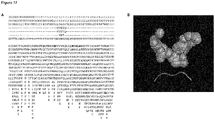
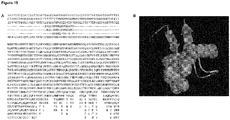
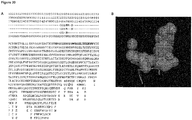
- the underlined amino acid residues in motifs of gp120 of HIV-1 have been identified to be conserved throughout various gp120 HIV-1 variants to a degree of at least 70%, at least 80 or at least 90% (cf. Figures 16 to 20 ).
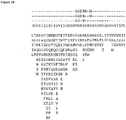
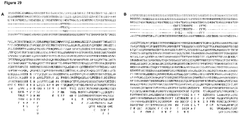
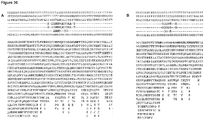
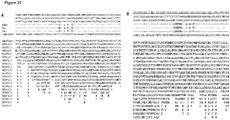
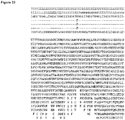
- the underlined amino acid residues in motifs of a gp120 of HIV-2 have been identified to be conserved throughout various HIV-2 variants to a degree of at least 70%, at least 80 or at least 90% (cf. Figures 24 to 26 ). Accordingly, the underlined amino acid residues show a high degree of cross-species conservation.
- an interaction site of a given motif consists of or comprises the above-defined amino acid residues or a preferred stretch in a motif that belong to the above-defined most conserved amino acids within the respective motif. While not wishing to be bound to a specific scientific theory, it is understood that an inhibitor that interacts with interaction sites involving partially or completely identical amino acid residues for each HIV species is an inhibitor that is expected to act as potent cross species inhibitor.
- an inhibitor interacting with an interaction site involving completely or partially different amino acid residues for each HIV species is also expected to act as a potent cross species inhibitor based on the reasoning that it is likely that variant amino acids may have characteristics as the amino acid they replace such as, e.g., their overall or partial electric charge, and hence can substitute each other. Since the replacing amino acids are also capable of forming a tunnel in concert with the other motifs, it can be expected that an inhibitor will not necessarily be affected by the exchange.
- the amino acid sequence of the first to sixth motif forming the 3-dimensional structure of a tunnel within gp120 of HIV-1 has been determined with regard to a specific sequence of a specific HIV-1 strain (SEQ ID NO: 2; Protein data bank accession number 2B4C_G). It could be demonstrated by cross population analysis of about 80,000 amino acid sequences of gp120 of HIV-1 variants (taken from the National Institutes of Health databank) that various single or continuous stretches of amino acids in the sequence of the motifs are to a high degree, i.e. at least 90% (corresponding to a conservation index of 9 as will be explained below) of variant motifs, carry the identical amino acid as in the sequence of the motifs mentioned herein above, conserved throughout the analysed population (cf.
- variants of each of the five motifs may vary to different extents, i.e. form "variants thereof" that have retained the capability of forming said interaction sites within the 3-dimensional structure of said tunnel within said gp120.
- said variants are natural variants, i.e. motifs that are part of the gp120 sequence of naturally occurring HIV variants.
- sequence of said variants can be determined by aligning sequences, wherein methods for sequence alignment are well-known in the art and described herein below.
- the amino acid sequence of a gp120 of a given strain is obtained, e.g., by protein sequencing (e.g., by mass spectrometry or Edman degradation).
- identity of the sequence is compared by aligning the sequence to a gp120 amino acid sequence comprising the motifs as specified herein above, e.g. in SEQ ID NO:2.
- sequence of the variant strain is determined at a position corresponding the position of the motif within the sequence of SEQ ID NO:2. The determination of said corresponding position may be effected by comparing the aligned sequence next to the motif in SEQ ID NO:2 for the presence of identical sequences.
- the position of the first motif with regard to SEQ ID NO: 2 is from the amino acid residue at position 29 to 45; of the second motif with regard to SEQ ID NO: 2 is from the amino acid residue at position 99 to 125; of the third motif with regard to SEQ ID NO: 2 is from the amino acid residue at position 222 to 242; of the fourth motif with regard to SEQ ID NO: 2 is from the amino acid residue at position 63 to 70; of the fifth motif with regard to SEQ ID NO: 2 is from the amino acid residue at position 320 to 341; of the sixth motif with regard to SEQ ID NO: 2 is from the amino acid residue at position 297 to 299. Having identified said corresponding position, the identity with regard to amino acid residue and length of the motif can be determined.
- a sequence variant can be up to (for each value) 3, 2 or up to 1 amino acid residue shorter or longer than the corresponding motif.
- a motif variant may in addition to having a sequence variation or alternatively thereto comprise up to (for each value) 1%, 2%, 4%, 6%, 8%, 10%, 15% or up to 20% less amino acid residues as compared to the motifs defined herein above or comprise up to (for each value) 1%, 2%, 4%, 6%, 8%, 10%, 15% or up to 20% more amino acid residues as compared to the motifs defined herein above.
- variants of motifs as defined herein above may comprise a sequence of a given motif that is only at least (for each value) 20%, 30%, 40%, 50%, 55%, 60%, 65%, 70%, 75%, 80%, 85%, 90%, 95% or 99% identical compared to the sequence of the corresponding motif as defined herein above. While differing with regard to the identity of amino acid residues, it is understood that a given variant motif nevertheless comprises amino acids that are related, preferably, in terms of their structure and charge, to the amino acid residues they replace (in comparison to the herein above defined amino acids) and therefore do not compromise the 3-dimensional integrity of the tunnel within a gp120 molecule.
- Such amino acids may be, e.g., those capable of establishing non-covalent interactions with other parts of a given motif and/or the remaining gp120 molecule so as to maintain the 3-dimensional structure of at least the tunnel.
- the skilled person is well-aware of amino acids that may be grouped according to their relevant characteristics, such as e.g., their overall or partial charge.
- the skilled person is in the position to identify suitable amino acid residues in silico that do not influence the 3-dimensional integrity of said tunnel within gp120 of HIV.
- Variants of the first motif for gp120 of HIV-1 can have the amino acid residue E, T, A, Q, N, V, K, S, G or L at the first position of said motif; the amino acid residue Y, V, L, H, S, T, N, K, A, M or D at the second position of said motif; the amino acid residue A, V, T, K, L, S, N, Q, R, Y or E at the third position of said motif; the amino acid residue L, P, T, A, Q, N, F, I, E, G, R, K or D at the fourth position of said motif; the amino acid residue F, I, V, M, S, G, R, T, C, P, K, Y or D at the fifth position of said motif; the amino acid residue Y, D, T, K, E, N, R, Q, G, H, S, M, F or L at the sixth position of said motif; the amino acid residue K, N, E, S, R, G, T, A, Q, F or
- Variants of the second motif for gp120 of HIV-1 can have the amino acid residue K, D, S, P, E, R, T, Q, H, G, I, M, F, Y or V at the first position of said motif; the amino acid residue I, A, G, S, F, T, L, C, K, Y, Q or E at the second position of said motif; the amino acid residue T, G, N, R, C, A, V, I, L, F or K at the third position of said motif; the amino acid residue S, V, I, A, P, H, Q, L, G, M, K or R at the fourth position of said motif; the amino acid residue I, A, L, G, Y, E, R, S, T or F at the fifth position of said motif; the amino acid residue T, L, H, R, P, A, V, I, K, S, N or E at the sixth position of said motif; the amino acid residue R, Y, W, G, F, S, M, A, V, I,
- Variants of the third motif for gp120 of HIV-1 can have the amino acid residue A, T, P, V, L, I, Q, R, K, N, G, E, H, Y, F, M, W, D or C at the first position of said motif; the amino acid residue E, R, D, S, P, A, K, L, Q, N, V, W, I, H or T at the second position of said motif; the amino acid residue E, R, K, S, W, V, L, A, N, T, I, F, D or Q at the third position of said motif; the amino acid residue G, T, N, A, E, H, V, I, S, R, Y, P, F, Q, L, K or M at the fourth position of said motif; the amino acid residue L, I, V, S, Q, A, M, T, R; E; D, F, H, Y, K, W, N, C or G at the fifth position of said motif; the amino acid residue K, Q, G, D,
- Variants of the fifth motif for gp120 of HIV-1 can have the amino acid residue L, V, I, S, T, Y, C, M, A, P, N, W, H, R or D at the first position of said motif; the amino acid residue G, K, T, S, I, Y, Q, L, E, P, V, C, W, D, M, F or N at the second position of said motif; the amino acid residue L, S, A; D, R, H, T, Q, N, G or E at the third position of said motif; the amino acid residue A, E, I, V, T, Q, L, R, S, W, M, P, K or N at the fourth position of said motif; the amino acid residue R, E, S, A, L, K, C, P, N or Q at the fifth position of said motif; the amino acid residue E, R, K, S, A, D, C or N at the sixth position of said motif; the amino acid residue N, E, G, Y, S, I, H, R
- Variants of the first motif for gp120 of HIV-2 can have the amino acid residue R, S or T at the first position of said motif; the amino acid residue Y, V or W at the second position of said motif; the amino acid residue N, W or Y at the third position of said motif; the amino acid residue E or N at the fourth position of said motif; the amino acid residue T or K at the fifth position of said motif; the amino acid residue F at the sixth position of said motif; the amino acid residue Y or E at the seventh position of said motif; the amino acid residue S, T or V at the eighth position of said motif; the amino acid residue V or T at the ninth position of said motif; the amino acid residue D, I or C at the 10 th position of said motif; the amino acid residue V or E at the 11 th position of said motif; the amino acid residue V or T at the 12 th position of said motif; the amino acid residue T at the 13 th position of said motif; the amino acid residue D, E or R at the 14 th position of said motif; the amino acid residue N or E
- Variants of the second motif for gp120 of HIV-2 can have the amino acid residue K, R or S at the first position of said motif; the amino acid residue I or K at the second position of said motif; the amino acid residue V, I or F at the third position of said motif; the amino acid residue A, V or S at the fourth position of said motif; the amino acid residue A, S, T or G at the fifth position of said motif; the amino acid residue T, S or A at the sixth position of said motif; the amino acid residue R or L at the seventh position of said motif; the amino acid residue A or Y at the eighth position of said motif; the amino acid residue R or G at the ninth position of said motif; the amino acid residue M, V, E, L, I or Q at the 10 th position of said motif; the amino acid residue M, R; K or T at the 11 th position of said motif; the amino acid residue E, K or G at the 12 th position of said motif; the amino acid residue T, S, A or M at the 13 th position of said motif; the amino acid residue
- Variants of the third motif for gp120 of HIV-2 can have the amino acid residue A, K, R, E, G, T, Q, V, D, P or N at the first position of said motif; the amino acid residue P, S, D; N or K at the second position of said motif; the amino acid residue S, A, P or R at the third position of said motif; the amino acid residue N, G, or S at the fourth position of said motif; the amino acid residue A, G or S at the fifth position of said motif; the amino acid residue D, P, K or Q at the sixth position of said motif; the amino acid residue V, A, T or E at the seventh position of said motif; the amino acid residue A, T, R, E, M, K or S at the eighth position of said motif; the amino acid residue Y, F or H at the ninth position of said motif; the amino acid residue M, L or T at the 10 th position of said motif; the amino acid residue W or R at the 11 th position of said motif; the amino acid residue T, S or I at the 12
- Variants of the fifth motif for gp120 of HIV-2 can have the amino acid residue N, S, I, Y, V, R or D at the first position of said motif; the amino acid residue I, S, M or T at the second position of said motif; the amino acid residue T, A, L or S at the third position of said motif; the amino acid residue F, M, V, E, P or S at the fourth position of said motif; the amino acid residue S, V, A, L, I or N at the fifth position of said motif; the amino acid residue A at the sixth position of said motif; the amino acid residue E at the seventh position of said motif; the amino acid residue V, L, Y or E at the eighth position of said motif; the amino acid residue A, S, G or K at the ninth position of said motif; the amino acid residue E, K or N at the 10 th position of said motif; the amino acid residue L, M or K at the 11 th position of said motif; the amino acid residue Y, F or N at the 12 th position of said motif; the amino acid residue K
- the amino acid residues are arranged in the order of likelihood.
- the first mentioned amino acid residue for a given position within a given motif is the amino acid residue most likely to replace the amino acid at the corresponding position of said given motif in a variant motif based on a population analysis as described herein above. While the above covers sequence variants, the additional information of the likelihood of a given amino acid variation occurring will be appreciated by the person skilled in the art since it will be possible to thereby design inhibitors which will interact with the most frequently occurring and/or rarely occurring HIV strains. Any of the above described sequence variants is understood to be capable of forming a tunnel within said 3-dimensional structure of said gp120.
- binding refers to the specific interaction of CD4 or integrin a4b7 to gp120 when brought into contact. Said specific interaction is characterized by a substantial conformational change of the core and periphery of gp120 accompanying said interaction. Furthermore, due to the structural adaptation of gp120 the kinetics of the interaction are slow (cf. Myszka D. et al., Proc Natl Acad Sci U.S.A., 97(16):9026-9031 (2000 ); regarding CD4).
- peptidomimetic refers to a compound that mimics the biological action of a natural (poly)peptide, i.e. gp120.
- Said compound may be a protein-like chain containing non-peptidic elements designed to mimic a (poly)peptide.
- a peptidomimetic may be a compound that mimics the three-dimensional structure of a gp120 as defined herein, and also mimicks its function.
- peptidomimetics that at least structurally and functionally mimic the part of gp120 that makes up the novel tunnel binding site as described herein.
- peptide as used herein describes a group of molecules consisting of up to 30 amino acids, whereas “proteins” consist of more than 30 amino acids. Peptides and proteins may further form dimers, trimers and higher oligomers, i.e. consisting of more than one molecule which may be identical or non-identical. The corresponding higher order structures are, consequently, termed homo- or heterodimers, homo- or heterotrimers etc.
- peptide and “polypeptide” (wherein “polypeptide” is interchangeably used with “protein”) also refer to naturally modified peptides/proteins wherein the modification is effected e.g. by glycosylation, acetylation, phosphorylation and the like. Such modifications are well-known in the art.
- the amino acid residues of the motifs of the main embodiment provide a structural description of a novel drug target site of gp120.
- Said novel drug target site takes the form of a tunnel that is formed by said six sequence motifs within gp120 that was identified by the inventors.
- a "tunnel" in accordance with the invention consists of said six motifs or variants thereof.
- the motifs have a sequence that has the same length as the specific sequence of the motifs recited herein above. It is understood that the presence of all of the motifs or variants thereof is sufficient to form said tunnel within the 3-dimensional structure of gp120. In other words, the tunnel is an inherent feature of the HIV strains analyzed.
- pharmacophore is known in the art and refers to the molecular framework responsible for the biological or pharmacological activity of a compound ( Güner (2000), Pharmacophore Perception, Development, and use in Drug Design, ISBN 0-9636817-6-1 ; Langer and Hoffmann (2006), Pharmacophores and Pharmacophore Searches, ISBN 3-527-31250-1 ).
- Typical pharmacophore features include hydrogen bond donors, hydrogen bond acceptors, dipoles, charges, ions and hydrophobic moieties.
- the pharmacophore furthermore includes information on the spatial arrangement of one or more of such moieties.
- the amino acid sequence of the motifs or variants thereof of the main embodiment constitute the structural elements that form the three-dimensional structure of a tunnel within gp120 which has surprisingly not been identified prior to this invention despite extensive research in the HIV research field. As shown in the enclosed figures, these structural elements form a previously unknown interaction area, i.e. said tunnel, of gp120. More surprisingly, this tunnel was found by the present inventors to be an allosteric interaction area.
- the term "allosteric" is known in the art and refers to an alteration of conformation in response to ligand interaction. Ligand interaction occurs at a site which is not the active site or one of the active sites of the target (here gp120), but exerts a modulating effect on the active site(s).
- This modulation involves structural changes which in turn frequently entail functional changes.
- interaction of ligands with this tunnel reduces the ability of gp120 to undergo conformational changes required for its physiological action: it locks a conformation of gp120 that cannot mediate viral entry.
- the locked conformation is an inactive conformation of gp120.
- Sequence identity levels as recited above may be determined by methods well known in the art.
- Two nucleotide or protein sequences can be aligned electronically using suitable computer programs known in the art.
- Such programs comprise BLAST ( Altschul et al. (1990), J. Mol. Biol. 215, 403-410 ), variants thereof such as WU-BLAST ( Altschul & Gish (1996), Methods Enzymol. 266, 460-480 ), FASTA ( Pearson & Lipman (1988), Proc. Natl. Acad. Sci. USA 85, 2444-2448 ), CLUSTALW ( Higgins et al. (1994), Nucleic Acids Res.
- sequence identity at the amino acid sequence level of gp120 is at least (for each value) 85%, 90%, more preferred at least 95%, 96%, 97%, 98% and most preferred at least 99%.
- Preferred sequence identities at the nucleic acid sequence level are at least (for each value) 85%, 90%, 92%, 94%, more preferred at least 95%, 96%, 97%, 98% and most preferred at least 99%.
- sequence identities (for protein and DNA sequences) of less than 80% such as e.g., at least (for each value) 75%, 70%, 65%, 60%, 55%, 50%, 45%, or at least 40% are envisaged.
- the inventors have been able to identify a novel target site on gp120 that provides the means to inhibit the binding of gp120 to CD4 or integrin a4b7 resulting in the prevention of viral entry.
- the finding is particularly surprising since gp120 has been the subject of intense studies by research groups throughout the world for many years and is generally considered to be a structurally well defined molecule. In this regard, many crystallization structures have been generated of gp120 over the years and used in various studies to identify potential drug targets on gp120. However, none of the prior art studies was able to identify the tunnel as defined herein above constituting a novel drug target site on gp120.
- binding site I Guo Q. et al., Journal of Virology, 77(19):10582-10536 (2003 )
- Another group of inhibitors was found to prevent certain minimal conformational changes in gp120 upon gp120/CD4 binding ( Si Z. et al. Proceedings of the National Academy of Sciences, 101(14):5036 (2004 )). It was suggested that in this case an inhibitor binds to another binding site on the surface of gp120 termed herein binding site II.
- binding sites have been studied extensively, the novel tunnel was not identified in any of the prior art studies regarding the structure of gp120 and compounds binding thereto. Without whishing to be bound by any specific theory, one reason for this may be that this tunnel opens and closes thermodynamically and therefore may only be visualized using, e.g., computerised models which allow the protein to thermodynamically flex.
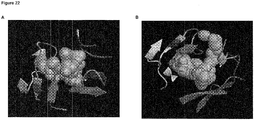
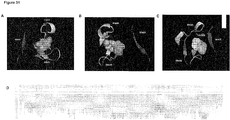
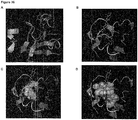
- the residues of binding site I are located in a large cavity which is penetrated by the phenyl residue of CD4 and hence is responsible for gp120-CD4 interaction (cf. Fig. 2 ).
- Figure 3 A three-dimensional structure of gp120 interacting with CD4 is presented in Figure 3 (1 G 9 N from the Protein Data Bank ( Wang R. et al., J. Med. Chem., 48(12):4111-4119(2005 ); Westbrook J. et al., Nucleic Acids Res., 31(1):489-491 (2003 )).
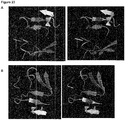
- Figure 3 shows the Phe43 residue of CD4 entering deep into a hydrophobic pocket within the gp120 structure around binding site I. Said pocket is naturally responsible for specific recognition of the Phe43 residue of CD4. While employing molecular dynamics simulations to study various gp120 conformations the inventors identified a water filled tunnel connecting the hydrophobic pocket of binding site I with the hydrophobic pocket of binding site II.
- the tunnel has not been identified previously and is hence not present in any of the X-ray structures available in the Protein Data Bank.
- Figures 4 and 5 show that the binding sites I and II are closely placed within the gp120 three-dimensional structure.
- the inventors could show that said compounds reduce the flexibility of gp120 to the extent that a conformational change necessary for binding to CD4 and to integrin a4b7 does not occur.
- the initiation of viral entry into the target cells is inhibited (see Examples 2 and 3).
- the tunnel structure is to a significant degree conserved within the various HIV species and subspecies.
- the identification of the above-described novel drug target on gp120 enables the development of novel compounds and their use as drugs in the treatment of HIV infections and HIV-associated diseases as will be described below.
- Corresponding compounds could overcome the problem of development of resistant strains that is due to the known hypervariability of existing drug target sites and would further affect gp120 without mechanism-related impacts on the immune system which are implicit in the treatments targeting, e.g., CXCR4 and CCR5 co-receptors.
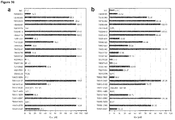
- the inventors have conducted tests of antiviral activity of compounds interacting with the tunnel as described herein on different HIV strains (see example 4) that demonstrated that the tested compounds exhibit antiviral activity in different viral strains. This corroborates the above hypothesis that the tunnel structure is a highly conserved feature and as such a valuable cross-species and -strain pharmaceutical target.
- the method further comprises synthetically producing said designed inhibitor.
- the specification also describes a method of producing an inhibitor of the binding of HIV (human immunodeficiency virus) glycoprotein (gp)120 to a CD4-receptor or to the integrin alpha4 beta7 (a4b7), the method comprising (a) the molecular modelling of a compound such that the modelled compound interacts in silico with at least two amino acid residues comprised in six motifs within the 3-dimensional structure of said gp120 of HIV or within a peptidomimetic reflecting the 3-dimensional structure of said gp120 of HIV, wherein said interaction between said at least two amino acid residues and said compound is characterized by an interatomic distance of less than 8 Angströms, wherein a first motif of said six motifs comprises the amino acid sequence DIISLWDQSLKPCVKLT or a variant thereof; wherein a second motif of said six motifs comprises the amino acid sequence NVSTVQCTHGIRPVVSTQLLLNGSLAE or a variant thereof; wherein a third motif of said six motifs
- the inhibitor is a small organic molecule, a peptide or polypeptide.
- Means and methods for synthesizing peptides or polypeptides are well known in the art and may involve organic synthesis and/or the recombinant production using the methods of molecular biology and protein biochemistry.
- the produced protein is harvested from the culture medium, lysates of the cultured organisms or from isolated (biological) membranes by established techniques.
- the host may be a cell which is part of or derived from a part of the organism, for example said host cell may be the harvestable part of a plant.
- a preferred method involves the recombinant production of protein in hosts as indicated above. For example, nucleic acid sequences comprising a (poly)nucleotide can be synthesized by PCR, and inserted into an expression vector. Subsequently a suitable host may be transformed with the expression vector.
- Suitable cell-free expression systems for use in accordance with the present invention include rabbit reticulocyte lysate, wheat germ extract, canine pancreatic microsomal membranes, E . coli S30 extract, and coupled transcription/translation systems such as the TNT-system (Promega). These systems allow the expression of recombinant peptides or polypeptides upon the addition of cloning vectors, DNA fragments, or RNA sequences containing coding regions and appropriate promoter elements.
- the peptide or polypeptide may be produced synthetically, e.g. by direct peptide synthesis using solid-phase techniques (cf Stewart et al. (1969) Solid Phase Peptide Synthesis; Freeman Co, San Francisco ; Merrifield, J. Am. Chem. Soc. 85 (1963), 2149-2154 ). Synthetic peptide or polypeptide synthesis may be performed using manual techniques or by automation. Automated synthesis may be achieved, for example, using the Applied Biosystems 431A Peptide Synthesizer (Perkin Elmer, Foster City CA) in accordance with the instructions provided by the manufacturer. Various fragments may be chemically synthesized separately and combined using chemical methods to produce the full length molecule.
- (poly)peptides may be produced semi-synthetically, for example by a combination of recombinant and synthetic production.
- Peptide or polypeptide isolation and purification can be achieved by any one of several known techniques; for example and without limitation, ion exchange chromatography, gel filtration chromatography and affinity chromatography, high pressure liquid chromatography (HPLC), reversed phase HPLC, and preparative disc gel electrophoresis.
- (Poly)peptide isolation/purification techniques may require modification of the proteins of the present invention using conventional methods. For example, a histidine tag can be added to the protein to allow purification on a nickel column. Other modifications may cause higher or lower activity, permit higher levels of protein production, or simplify purification of the protein.
- Said molecular modelling may comprise (a) measuring at least one intermolecular distance; (b) calculating at least one free energy of interaction; and/or determining the accessibility to the tunnel.
- Accessibility of the tunnel limits the size of the allosteric effector, i.e. the inhibitor, and thereby the maximal intermolecular interaction energy.
- Tools for molecular modeling as described above typically provide the option of measuring one or more intermolecular distances. Preferably, the intermolecular distances are determined as distances between the centers of atoms.
- Tools for molecular modeling also generally provide the option of calculating free energies of interaction.
- Another aspect of the specification describes a method of identifying an inhibitor of the binding of HIV (human immunodeficiency virus) glycoprotein (gp)120 to a CD4-receptor or to the integrin alpha4 beta7 (a4b7), the method comprising (a) bringing into contact a HIV gp120 or a peptidomimetic reflecting the three-dimensional structure of said gp120 and a test compound; (b) determining whether said test compound interacts with at least two amino acid residues comprised in six motifs within the 3-dimensional structure of said gp120 or within a peptidomimetic reflecting the 3-dimensional structure of said gp120, wherein said interaction between said at least two amino acid residues and said compound is characterized by an interatomic distance of less than 8 Angströms, wherein a first motif of said six motifs comprises the amino acid sequence DIISLWDQSLKPCVKLT or a variant thereof; wherein a second motif of said six motifs comprises the amino acid sequence NVSTVQCTHGIRPV
- An interaction with at least two amino acid residues comprised in six motifs within the 3-dimensional structure of said gp120 of HIV or within a peptidomimetic reflecting the 3-dimensional structure of said gp120 of HIV is indicative that an inhibitor of the binding of HIV (human immunodeficiency virus) glycoprotein (gp)120 to a CD4-receptor or to the integrin alpha4 beta7 (a4b7) has been identified.
- HIV human immunodeficiency virus glycoprotein
- the specification also describes a method of identifying an inhibitor of the binding of HIV (human immunodeficiency virus) glycoprotein (gp)120 to a CD4-receptor or to the integrin alpha4 beta7 (a4b7), the method comprising (a) bringing into contact a HIV gp120 or a peptidomimetic reflecting the three-dimensional structure of said gp120 and a test compound; (b) determining whether said test compound interacts with at least two amino acid residues comprised in six motifs forming a tunnel within the 3-dimensional structure of said gp120 or within a peptidomimetic reflecting the 3-dimensional structure of said gp120, wherein said interaction between said at least two amino acid residues and said compound is characterized by an interatomic distance of less than 8 Angströms, wherein a first motif of said six motifs comprises the amino acid sequence DIISLWDQSLKPCVKLT or a variant thereof; wherein a second motif of said six motifs comprises the amino acid sequence NVSTVQCTH
- a screen for the identification of HIV gp120 inhibitors which in turn are suitable as medicaments or lead compounds for the development of a medicament.
- the screen may be implemented in various ways such as a biochemical screen or a cellular screen.
- said "bringing into contact a HIV gp120 or a peptidomimetic reflecting the three-dimensional structure of said gp120 and a test compound” may be effected, e.g., by bringing into contact an HIV or a cell producing said virus or said peptidomimetic with a test compound.
- also isolated (recombinantly produced) gp120 molecules may be brought into contact with the test compound.
- the bringing into contact is performed under conditions which allow interaction of the test compound to gp120, in case the test compound is in principle capable of binding as required.
- Suitable conditions include conditions in liquid phase such as aqueous solutions, preferably buffered solutions.
- ionic strength may be adjusted, e.g., by the addition of sodium chloride.
- the concentration of sodium chloride may be between 0 and 2 M, preferably between 100 and 200 mM.
- sodium chloride is absent from the assay.
- the presence of one or more further substances, including other salts than sodium chloride, trace elements, anti-oxidants, amino acids, vitamins, growth factors, ubiquitous co-factors such as ATP or GTP is required.
- Said further substances may either be added individually or provided in complex mixtures such as, e.g., serum.
- complex mixtures such as, e.g., serum.
- Said further accessory substances are well known in the art as are concentrations suitable for biological assays. The skilled person is aware of suitable conditions in dependency of the particular assay format to be used in the method of screening according to the invention.
- the screen may be implemented as a virtual screen, i.e., the screen may be performed in silico.
- Virtual screens may be implemented by computer-based docking of one test compound at a time into the allosteric interaction site, preferably binding site, i.e. the tunnel defined above, wherein both the test compound and the interaction site are represented in silico. Thereby, the interaction position and conformation is calculated.
- the interaction site may, for example, be comprised in a representation of the entire gp120 molecule or, alternatively, of those parts only which make up the tunnel as defined herein above.
- the interaction affinity involving determining interatomic distances (or equivalently the free energy of interaction as defined herein above) is determined based on the parameters of the computer representation of the involved molecules.
- a threshold may be chosen such as to select those test compounds which are candidate high affinity binders.
- Suitable software packages are known in the art and include Chemoffice, CNS, CCP4, ADF and Gold (see above).
- Said determining in step (b) may be effected by X-ray crystallography and/or NMR spectroscopy.
- the occurrence of an interaction involving one or more residues of gp120 can be determined by assessing structural parameters using NMR spectroscopy or X-ray crystallography. These structural parameters may comprise the coordinates of the complex between said test compound and gp120. Alternatively, structural parameters may be determined only to the extent necessary to determine whether interaction/binding according to the invention, in particular interaction with one or more residues of gp120 occurs. Examples of the latter, more selective methods include NMR spectroscopic methods exploiting the nuclear Overhauser effect or saturation transfer difference (STD). Suitable methods include the recording of NOESY and/or ROESY spectra.
- the required NMR spectra can be obtained in medium to high throughput manner, wherein throughput may be further increased by assessing a mixture of ligands, for example 10, 20 or 100 ligands at a time and further analyzing only those mixtures which are found to comprise one or more binding molecules. Also, means and methods for high throughput crystallization are available; see, for example, Stevens (Current Opinion in Structural Biology 2000, 10: 558-564 ) and Kuhn et al. (Current Opinion in Chemical Biology 2002, 6: 704-710 ).
- X-ray crystallography may comprise (a) generating a crystal of a complex formed by said test compound bound to gp120; (b) generating and recording x-ray diffraction data; (c) digitising the data; (d) calculating an electron density map; (e) determining the three-dimensional structure of the crystal components; and (f) storing the crystal coordinates generated on a data carrier.
- X-ray diffraction may be performed on a beamline such as the ID29 beamline of ESRF, Grenoble or using in-house devices such as a Bruker X8PROTEUM.
- Data may be further processed with XDS ( W. Kabsch, J. Appl. Cryst. 21, 67 (1988 )) and refined with CNS ( A. T. Brünger et al. Acta Cryst. D 54, 905 (1998 )).
- the PROTEUM2 software (Bruker) may be used. Structure can further be solved with, for example, AmoRe ( J. Navaza, Acta Crystallogr. A 50, 157 (1994 )) and analysed with Xfit ( D. E. McRee, J.
- the method may further comprise the step of (a') (i) determining whether said test compound forms a complex with said gp120; and/or (ii) determining whether said test compound modulates the activity and/or conformation of said gp120; and/or (iii) determining the cytotoxicity of said test compound; wherein step (a') is to be effected after step (a) and prior to step (b), and wherein said determining in step (b) is performed with test compounds determined to bind, to modulate, and/or to be non-cytotoxic in step (a').
- This strategy provides for filtering a subset of test compounds testing positive in one or more of the assays of (a') (i) to (iii).
- the advantage of such filtering is that the subsequent determining whether the test compound interacts with one or more residues of gp120 has to be done only with said test compounds testing positive.
- Assaying for test compounds that form complexes with HIV gp120 filter may be advantageous when large libraries of compounds are screened for potential inhibitors. Applying the step of filtering out only those test compounds that form a complex with HIV gp120, limits interaction studies only to those compounds instead of the entire library.
- Means and methods for identifying complexes formed by interaction partners are well known in the art and include assays based on fluorescence such as fluorescence resonance energy transfer (FRET) assays and fluorescence polarization (FP) assays, immunological assays such as ELISA, surface plasmon resonance, isothermal titration calorimetry and Fourier Transformed Infrared Spectroscopy (FTIR).
- FRET fluorescence resonance energy transfer
- FP fluorescence polarization
- immunological assays such as ELISA, surface plasmon resonance, isothermal titration calorimetry and Fourier Transformed Infrared Spectroscopy (FTIR).
- gp120 activity of gp120 is meant to refer to the capability of gp120 to bind to CD4 and/or integrin a4b7 which results in the initiation of viral entry. Also encompassed is the binding to co-receptors such as, e.g., CXCR5 and CCR5. Assays for assessing gp120 activity are discussed further below.
- an additional or alternative filtering step involves the determining whether the test compound modulates or changes the conformation of said gp120.
- a change in conformation may be determined by using methods known in the art including the determination of electrophoretic or chromatographic mobility and fluorescence-based methods. In the latter case, changes in intramolecular distances between fluorophors arising from a change of conformation may be determined.
- Cytotoxicity may, e.g., be assayed in a cellular assay by determining the cellular uptake of neutral red. Only living cells are capable of neutral red uptake via an active transport mechanism. Hence when applying a target compound to cells preferably in varying concentrations the cytotoxicity of said target compound may be assessed.
- Said activity can be the capability of said gp120 to initiate viral entry of HIV into mammalian cells.
- the mammalian cell is a human cell.
- activity of gp120 is defined to be its capability to bind to CD4 and the relevant co-receptors as well as integrin a4b7 and initiate viral entry. Said binding results in a conformational change of each of the three gp120 molecules making up the gp120 trimer shielding gp41. Thereby subsequently an interaction of gp41 with the membrane of the target cell is allowed.
- the interplay of gp120 and CD4 or integrin a4b7 resulting in the initiation of viral entry is referred to as activity of gp120.
- Methods to determine said activity are well-known in the art and comprise, e.g., the assays described in Example 2 (cell-cell and virus-cell infection assay) determining whether cells have been infected or not.
- the modelled compound may additionally interact with or the test compound may be determined to additionally interact with a further motif of HIV gp120 or corresponding motifs in a peptidomimetic reflecting the three-dimensional structure of said gp120 molecule.
- the modelled compound or the test compound interacts additionally with parts, i.e motifs, of gp120 which are not part of the tunnel.
- said parts are in the direct vicinity of the tunnel such as, e.g. the binding site I of HIV gp120 that has been described herein previously.
- a compound interacting with the tunnel of gp120 described herein may be (i) one entity that interacts exclusively with the tunnel or interacts with the tunnel and a part of gp120 other than the tunnel.
- a preferred exemplary motif that can be interacted with by a modelled compound or a test compound in addition to said at least two amino acid residues comprised in said six motifs is a motif (external motif) comprising the amino acid sequence CRIKQIINMWQEVGKAMYAPPI of SEQ ID NO: 2 or a variant thereof.
- Said external motif is located at an end of the tunnel and as such interaction of a compound with said external alone does not result in an inhibition of gp120's ability to change its conformation and as a result inhibit binding to CD4 and/or a4b7.
- interaction sites also apply to the interaction of a modelled compound or a test compound with said external motif and to said external motif itself.
- the interaction site for the external motif is located in the amino acid residue stretch made up of or at least partially involves amino acids IKQIINMWQEVGKAMY of the external motif or variants thereof.
- the interaction site of the external motif comprises or consists of only those amino acid residues that have been shown to be most conserved for HIV-1 and HIV-2, such as the underlined amino acid residues of the external motif CRIKQIINMWQ E VGKAMYAPPI for a gp120 of HIV-1 and C R IKQIIN M W QE V GKAM Y A PP I for a gp120 of HIV-2.
- Variants of the external motif for gp120 of HIV-1 can have the amino acid residue R, S, Y, M, F, G, A, L, I, V, W, P, T, H or N at the first position of said motif; the amino acid residue K, G, S, N, Q, I, T, E, P, H, M, W, L, C, Y, V or D at the second position of said motif; the amino acid residue L, M, V; T, N, R, K, Y, C, S, P, F, H, D or E at the third position of said motif; the amino acid residue R, N, E; I, T, Q, S, G, P, M, Y, L, H, A or D at the fourth position of said motif; the amino acid residue L, H, R, P, K, A, N, E, G, T, M, V or S at the fifth position of said motif; the amino acid residue F, V, L, M, T, Y, N, S, K, A, P, R or
- Variants of the external motif for gp120 of HIV-2 can have the amino acid residue R or Y at the first position of said motif; the amino acid residue H or Q at the second position of said motif; the amino acid residue at the third position of said motif is not variant; the amino acid residue R, P or E at the fourth position of said motif; the amino acid residue at the fifth position of said motif is not variant; the amino acid residue V or K at the sixth position of said motif; the amino acid residue V at the seventh position of said motif; the amino acid residue S at the eighth position of said motif; the amino acid residue T, A or I at the ninth position of said motif; the amino acid residue R at the 10 th position of said motif; the amino acid residue H or R at the 11 th position of said motif; the amino acid residue K, R or N at the 12 th position of said motif; the amino acid residue A, I or S at the 13 th position of said motif; the amino acid residue W, R, E at the 14 th position of said motif; the amino acid residue Q, R, I, V, N
- a modeled/synthesized compound or a test compound once designed/synthesized or identified in accordance with the method described herein to a known gp120 binding compound not interacting with the tunnel or alternatively to a modelled compound or a test compound that interacts with gp120 other than to the tunnel.
- such compounds interacting with the tunnel of gp120 may be composed of two entities linked to each other, wherein one entity interacts with the tunnel and the other entity interacts with said other motif or part of gp120.
- a corresponding compound may be a bipartite compound or one of the two entities can correspond to a discrete compound that is linked to another compound, i.e. the second entity.
- the combination of interaction with the tunnel and other parts of gp120 in contrast to exclusively interacting with the tunnel provides the advantage of more flexibility as regards designing modelled compounds or identifying test compounds in view of increasing binding affinities and likelihood of said compounds at least partially entering the tunnel.
- Molecular modeling may start from a compound selected from a compound of the formula (1) and (2) or a salt or solvate thereof, or the test compound to be screened in accordance with the method described herein is selected from a compound of the formula (1) and (2) or a salt or solvate thereof:
- the above compounds of formula (1) and (2) have been shown to be capable of inhibiting the binding of CD4 or integrin a4b7 to gp120 through interaction with the novel targeting site, i.e. the tunnel. Accordingly, molecular modeling may be based on the structural information of the compounds of formula (1) and (2). Such molecular modeling starting from said compounds may lead to improved compounds as described below.
- the compound of formula (1) corresponds to the compound termed "T5379534" in example 2 and 3 (and figure 36 and 38 ) while the compound of formula (2) corresponds to the compound termed "T0520-5895" in example 2 and 3 (and figure 35 and figure 38 ).
- the compound of formula (1) interacts with sequence motifs 1, 2, 3, 5 within the 3-dimensional structure of the gp120 used for experimentation and with the external motif described herein above. Specifically, said compound has been demonstrated to interact with the second "I”, “W” and “KLT” of said first motif at 12 Angström, with the second "I” and “W” of said first motif at 8 Angström; with "VVSTQ” of the second motif at 12 Angström, with “VST” of the second motif at 8 Angström and “T” of said interaction site "VVSTQ” of the second motif at 5 Angström; with "GGDPEIVMHSFN” and the first “F” and the “Y” within the sequence "GGEFFYCN” of the third motif at 12 Angström; with "GDPEIVMHSFN” and the first “F” and the “Y” within the sequence "GGEFFYCN” of the third motif at 8 Angström; with "D”, “EI” and “SFN” within the sequence of "GGDPEIVMHS
- the compound of formula (2) interacts with the same sequence motifs as the above compound within the 3-dimensional structure of the gp120 used for experimentation. Specifically, said compound has been demonstrated to interact with the second "I” and “W” of said first motif at 12 Angström, with the second "I” and “W” of said first motif at 8 Angström; with the "W” of said first motif at 5 Angström; with "VVSTQ” of the second motif at 12 Angström, with "VST” of the second motif at 8 Angström, "V” and “T” of said interaction site “VVSTQ” of the second motif at 5 Angström; with "GGDPEIVMHSFN” and the first “F” and the "Y” within the sequence "GGEFFYCN” of the third motif at 12 Angström; with "GDPEIVMHSFN” and the first “F” and the “Y” within the sequence "GGEFFYCN” of the third motif at 8 Angström; with "D”, "EI” and “SFN” within the sequence
- said compounds of formula (1) and (2) may interact with less than motifs 1, 2, 3, 5 and the external motif and/or with different amino acid residues within said motifs and still be considered an inhibitor in accordance with the invention, provided that the inhibitor binds to at least two amino acid residues comprised in said motifs forming the tunnel.
- a further aspect described herein relates to a compound according to formula (1) or (2) as defined herein above.
- the compound according to formula (1) or (2) is used as a medicament and/or as a lead compound to further improve the pharmaceutical characteristics of the compound.
- a medicament may be made of such as, e.g., the formulations as described herein below.
- the specification describes a method of decreasing thermal motion of a tunnel within gp120 comprising contacting said gp120 with a compound that interacts with at least two amino acid residues comprised in six motifs within the 3-dimensional structure of said gp120 of HIV or within a peptidomimetic reflecting the 3-dimensional structure of said gp120 of HIV, wherein said interaction between said at least two amino acid residues and said compound is characterized by an interatomic distance of less than 8 Angströms, wherein a first motif of said six motifs comprises the amino acid sequence DIISLWDQSLKPCVKLT or a variant thereof; wherein a second motif of said six motifs comprises the amino acid sequence NVSTVQCTHGIRPVVSTQLLLNGSLAE or a variant thereof; wherein a third motif of said six motifs comprises the amino acid sequence SGGDPEIVMHSFNCGGEFFYCN or a variant thereof; wherein a fourth motif of said six motifs comprises the amino acid sequence CPKISFEP or a variant thereof;
- An interaction with at least two amino acid residues comprised in six motifs within the 3-dimensional structure of said gp120 of HIV or within a peptidomimetic reflecting the 3-dimensional structure of said gp120 of HIV is indicative that a decrease of the thermal motion of said tunnel within gp120 has been achieved.
- the specification describes a method of decreasing thermal motion of a tunnel within gp120 comprising contacting said gp120 with a compound that interacts with at least two amino acid residues comprised in six motifs forming a tunnel within the 3-dimensional structure of said gp120 of HIV or within a peptidomimetic reflecting the 3-dimensional structure of said gp120 of HIV, wherein said interaction between said at least two amino acid residues and said compound is characterized by an interatomic distance of less than 8 Angströms, wherein a first motif of said six motifs comprises the amino acid sequence DIISLWDQSLKPCVKLT or a variant thereof; wherein a second motif of said six motifs comprises the amino acid sequence NVSTVQCTHGIRPVVSTQLLLNGSLAE or a variant thereof; wherein a third motif of said six motifs comprises the amino acid sequence SGGDPEIVMHSFNCGGEFFYCN or a variant thereof; wherein a fourth motif of said six motifs comprises the amino acid sequence CPKISFEP or a
- thermal motion is well-known in the art and has the same meaning in accordance with the specification. Briefly, thermal motion relates to the random motion of molecules that results from their being in thermal equilibrium at a particular temperature. In general, thermal motions are faster at higher temperatures and for lower mass particles. In accordance with the present invention, decreasing thermal motion of the tunnel will inhibit the flexibility of gp120 which results in the incapability of changing the conformation of gp120 required for binding to CD4 or to the integrin a4b7. In other words, the capability of gp120 to undergo a conformational change is dependent on the degree of thermal motion of said tunnel within gp120 as defined herein.
- the term "decreasing" means in accordance with the present invention lowering or completely abolishing said thermal motion.
- a decrease can refer to a reduction in thermal motion of at least (for each value) 10, 20, 30, 40, more preferred at least 50, 60, 70, 80, 90, 95, 98 and most preferred at least 99% as well as a reduction of 100%, i.e. completely abolishing thermal motion.
- thermal motion drops to less than 10 -2 , less than 10 -3 , less than 10 -4 or less than 10 -5 times the activity compared to the activity in the absence of the compound.
- the specification describes a compound capable of interacting with at least two amino acid residues comprised in six motifs within the 3-dimensional structure of said gp120 of HIV or within a peptidomimetic reflecting the 3-dimensional structure of said gp120 of HIV, wherein said interaction between said at least two amino acid residues and said compound is characterized by an interatomic distance of less than 8 Angströms, wherein a first motif of said six motifs comprises the amino acid sequence DIISLWDQSLKPCVKLT or a variant thereof; wherein a second motif of said six motifs comprises the amino acid sequence NVSTVQCTHGIRPVVSTQLLLNGSLAE or a variant thereof; wherein a third motif of said six motifs comprises the amino acid sequence SGGDPEIVMHSFNCGGEFFYCN or a variant thereof; wherein a fourth motif of said six motifs comprises the amino acid sequence CPKISFEP or a variant thereof; wherein a fifth motif of said five motifs comprises the amino acid sequence FRPGGGDMRDNWRSEL
- the skilled person is in the position to identify compounds that can interact with said at least two amino acid residues comprised insix sequence motifs within the three-dimensional structure of said gp120 of HIV, for example in accordance with methods described herein above, i.e. in silico methods such as used in molecular modeling.
- the tertiary structure of a compound is determined by methods well-known in the art or obtained otherwise, e.g. from a database comprising data of the tertiary structure of compounds, and then used in an in silico method as described above that enable the analysis whether the compound to be analysed can interact with said at least two amino acid residue comprised in six motifs within the 3-dimensional structure of gp120 of HIV.
- a compound as defined herein above can be used as an inhibitor of the binding of CD4-receptor or integrin a4b7 to gp120 of HIV. Therefore, it is understood that a compound as defined herein can be used for the prevention and/or treatment of a HIV-infection and/or a disease associated with a HIV-infection as detailed below.
- the specification describes a method of inhibiting the binding of HIV (human immunodeficiency virus) glycoprotein (gp)120 to the integrin alpha4 beta7 (a4b7), the method comprising the step of inhibiting a conformational change of said gp120 taking place upon binding to said integrin a4b7, wherein inhibition of said conformational change inhibits the binding of HIV-1 or HIV-2 gp120 to said integrin.
- HIV human immunodeficiency virus glycoprotein
- the inhibition may be effected by decreasing the thermal motion of a tunnel within said gp120, and wherein the 3-dimensional structure of said tunnel within the 3-dimensional structure of said gp120 is formed by six motifs, wherein a first motif of said six motifs comprises the amino acid sequence DIISLWDQSLKPCVKLT or a variant thereof; wherein a second motif of said six motifs comprises the amino acid sequence NVSTVQCTHGIRPVVSTQLLLNGSLAE or a variant thereof; wherein a third motif of said six motifs comprises the amino acid sequence SGGDPEIVMHSFNCGGEFFYCN or a variant thereof; wherein a fourth motif of said six motifs comprises the amino acid sequence CPKISFEP or a variant thereof; and wherein a fifth motif of said six motifs comprises the amino acid sequence FRPGGGDMRDNWRSELYKYKVV or a variant thereof; and wherein a sixth motif of said six motifs comprises the amino acid sequence CSS or a variant thereof, said gp120 of HIV comprising
- the decrease in thermal motion may be effected according to the method of decreasing thermal motion of a tunnel within gp120 of HIV defined herein above.
- the method may further effect the inhibition of the binding of HIV gp120 to a CD4-receptor.
- the capability of gp120 to bind to CD4 depends on the structural flexibility of gp120 which in turn depends on the flexibility of the tunnel. Said flexibility of the tunnel is dependent from the thermal motion of the tunnel. Hence, decreasing the thermal motion of said tunnel within gp120 of HIV will lead to the inhibition of the conformational change necessary for gp120 to bind to CD4.
- the specification describes the use of a compound selected from compounds of the formula (1) or (2) as defined herein above or a salt or solvate thereof as a lead compound in the development of an inhibitor of the binding of a HIV gp120 to a CD4-receptor or integrin alpha4 beta7 (a4b7).
- lead compound refers to a compound providing a starting point for developing a pharmaceutically active agent.
- said pharmaceutically active agent is different from, preferably optimized as compared to the lead compound.
- the development of a lead compound preferably involves the optimization of the pharmacological properties of said lead compound.
- the term “lead compound” therefore refers also to a compound that is analyzed only with regard to the parts of the compound that are capable of interacting with at least two amino acid residues comprised in said six motifs within the 3-dimensional structure of gp120.
- lead compounds may not or may only partially be structurally related to the lead compound but that are functionally related, i.e.
- a functionally related compound is a compound that interacts with at least two amino acid residues comprised in said six motifs or variants thereof within the 3-dimensional structure of gp120. It is understood that said functional relationship includes the capability of inhibiting the binding of gp120 to CD4 and/or integrin a4b7.
- lead compounds Methods for the optimization of the pharmacological properties of compounds identified in screens, generally referred to as lead compounds, are known in the art and comprise a method of modifying a compound identified as a lead compound to achieve: (i) modified site of action, spectrum of activity, organ specificity, and/or (ii) improved potency, and/or (iii) decreased toxicity (improved therapeutic index), and/or (iv) decreased side effects, and/or (v) modified onset of therapeutic action, duration of effect, and/or (vi) modified pharmacokinetic parameters (resorption, distribution, metabolism and excretion), and/or (vii) modified physico-chemical parameters (solubility, hygroscopicity, color, taste, odor, stability, state), and/or (viii) improved general specificity, organ/tissue specificity, and/or (ix) optimized application form and route by (i) esterification of carboxyl groups, or (ii) esterification of hydroxyl groups with carboxylic acids, or (i
- the specification further describes a pharmaceutical composition
- a pharmaceutical composition comprising one or more of the compounds selected from the formula (1) or (2) as defined herein above or salts or solvates or functional derivatives thereof or a compound as defined herein above.
- said compounds of formula (1) or (2) may be used as a lead compound, which includes as mentioned previously optimizing the compound (e.g., to increase its bioavailability)
- said compounds have shown such effectiveness against HIV infection in tests that they can be formulated into a pharmaceutical composition to be used in a treatment regimen of, e.g., an HIV-infection and/or a disease associated with an HIV-infection, optionally with further active ingredients to this end.
- composition comprising one or more of the inhibitors or salts or solvates or functional derivatives thereof designed or identified according to the methods described herein above.
- the pharmaceutical composition may further comprise pharmaceutically excipients.
- Pharmaceutically acceptable excipients that may be used in the formulation of the pharmaceutical compositions may comprise carriers, vehicles, diluents, solvents such as monohydric alcohols such as ethanol, isopropanol and polyhydric alcohols such as glycols and edible oils such as soybean oil, coconut oil, olive oil, safflower oil cottonseed oil, oily esters such as ethyl oleate, isopropyl myristate; binders, adjuvants, solubilizers, thickening agents, stabilizers, disintegrants, glidants, lubricating agents, buffering agents, emulsifiers, wetting agents, suspending agents, sweetening agents, colourants, flavours, coating agents, preservatives, antioxidants, processing agents, drug delivery modifiers and enhancers such as calcium phosphate, magnesium state, talc, monosaccharides, disaccharides, starch, gelatine, cellulose
- compositions comprising such carriers can be formulated by well known conventional methods. These pharmaceutical compositions can be administered to the subject at a suitable dose. Administration of the suitable compositions may be effected by different ways, e.g., by intravenous, intraperitoneal, subcutaneous, intramuscular, topical, intradermal, intranasal or intrabronchial administration. It is particularly preferred that said administration is carried out by injection and/or delivery, e.g., to a site in the pancreas or into a brain artery or directly into brain tissue.
- compositions may also be administered directly to the target site, e.g., by biolistic delivery to an external or internal target site, like the pancreas or brain.
- the dosage regimen will be determined by the attending physician and clinical factors. As is well known in the medical arts, dosages for any one patient depends upon many factors, including the patient's size, body surface area, age, the particular compound to be administered, sex, time and route of administration, general health, individual response of the patient to be treated, severity of the disease to be treated, the activity and bioavailability of the particular compound applied and other drugs being administered concurrently. Pharmaceutically active matter may be present in amounts between 1 ng and 10 mg/kg body weight per dose; however, doses below or above this exemplary range are envisioned, especially considering the aforementioned factors. If the regimen is a continuous infusion, it is preferably in the range of 1 ⁇ g to 10 mg units per kilogram of body weight per minute.
- compositions described herein can be produced in a manner known per se to the skilled person or as described, for example, in Remington's Pharmaceutical Sciences, 15th Ed., Mack Publishing Co., New Jersey (1991 ).
- the invention relates to a compound selected from the formula (1) or (2) as defined herein above or salts or solvates or functional derivatives thereof or a compound as defined herein above for use in preventing or treating a HIV-infection and/or a disease associated with a HIV-infection.
- HIV-infection generally encompasses infection of a host, particularly a human host, by the human immunodeficiency virus (HIV) family of retroviruses including, but not limited to, HIV-1, HIV-2 (previously also known as HTLV-III/LAV/ARV, LAV-1, LAV-2).
- HIV can be used herein to refer to any strains, forms, subtypes, classes and variations in the HIV family.
- treatment of a HIV-infection and/or a disease associated with a HIV-infection will encompass the treatment of a person who is a carrier of any of the HIV family of retroviruses or a person who is diagnosed of active AIDS, as well as the treatment or prophylaxis of AIDS-related conditions in such persons.
- AIDS is also an example of a disease associated with an HIV-infection.
- the skilled person is well-aware of the pathology of AIDS including initiation, progression and clinical outcomes.
- a carrier of HIV may be identified by any method known in the art.
- a person can be identified as an HIV carrier on the basis that the person is anti-HIV antibody positive, or is HIV-positive, or has symptoms of AIDS.
- treating HIV-infection should be understood as treating a patient who is at any one of the several stages of HIV infection progression, which, for example, include acute primary infection syndrome (which can be asymptomatic or associated with an influenza-like illness with fevers, malaise, diarrhea and neurologic symptoms such as headache), asymptomatic infection (which is the long latent period with a gradual decline in the number of circulating CD4 positive T cells), and AIDS (which is defined by more serious AIDS-defining illnesses and/or a decline in the circulating CD4 cell count to below a level that is compatible with effective immune function).
- acute primary infection syndrome which can be asymptomatic or associated with an influenza-like illness with fevers, malaise, diarrhea and neurologic symptoms such as headache
- asymptomatic infection which is the long latent period with a gradual decline in the number of circulating CD4 positive T cells
- AIDS which is defined by more serious AIDS-defining illnesses and/or a decline in the circulating CD4 cell count to below a level that is compatible with effective immune function).
- preventing or treating of a disease associated with an HIV-infection will also encompass treating suspected infection by HIV after suspected past exposure to HIV by e.g., contact with HIV-contaminated blood, as a result of blood transfusion, exchange of body fluids, "unsafe” sex with an infected person, accidental needle stick, receiving a tattoo or acupuncture with contaminated instruments, or transmission of the virus from a mother to a baby during pregnancy, delivery or shortly thereafter.
- the term "preventing” also encompasses treating a person who has not been diagnosed as having a HIV infection but is believed to be at risk of infection by HIV.
- Diseases associated with an HIV-infection can generally be treated by eradicating the primary cause thereof, optionally in conjunction with medicaments known in the art that are registered for the treatment of such secondary causes.
- Example 2 demonstrates the potent effect of compounds that act as inhibitors of the binding of gp120 to CD4 in accordance with the invention. Equally envisaged is an inhibitor or salts or solvates or functional derivatives thereof designed or identified according to the methods described herein above for use in preventing or treating a HIV-infection and/or a disease associated with a HIV-infection.
- Examples 2 and 3 provide proof of the in vitro activity of said exemplary compounds of formula (1) and (2) as defined herein above of the invention in the inhibition of viral entry and thereby of HIV replication. As shown in figures 35 and 36 , said compounds interact with motifs in the tunnel.
- the specification also describes a method of preventing or treating a HIV-infection and/or a disease associated with a HIV-infection by administering an effective dose of a compound selected from the formula (1) and/or (2) or inhibitors designed or identified according to the methods described herein above or salts or solvates or functional derivatives thereof to a patient in need thereof.
- Example 1 Binding site of gp120. Model validation and pharmacophore hypothesis.
- FIG. 3 A 3D structure of gp120 protein interacting with CD4 is presented in Fig. 3 (1G9N from the Protein Data Bank ( Wang et al., J. Med. Chem. 48(12):4111, 4119 (2005 ))).
- Phe43 of CD4 enters into hydrophobic pocket within gp120 structure.
- the pocket is naturally responsible for specific recognition of the Phe43 residue of CD4.
- the small size of the binding pocket is a significant obstacle for successful docking of potential ligands. Since the protein structure in the PDB Data Bank is only a single snapshot of the actual protein conformational space, docking of any reasonably large or flexible molecule may fail and the correct orientation of ligand in the binding site may not be found. In what follows we outline a docking strategy designed to overcome this difficulty.
- a closer look at the structural transition reveals the opening of a water filled "tunnel" connecting the two pockets in the binding areas of Sites 1 and 2.
- the opening volume is fairly large and can accommodate a narrow and long ligand molecules, as shown in Figures 4 and 5 .
- the tunnel is not present in any of the ray structures available in the PDB Data Bank.
- the Figures show that apparently unrelated binding areas I and II are indeed closely placed within the protein 3D structure. The overlap extends deeply inside the discovered tunnel, which means that the suggested theory of the gp120 binding site provides a novel unified concept bridging together different pieces of biological knowledge.
- Example 2 Profiling of anti-HIV activity
- Two compounds were evaluated for their activity as inhibitor of HIV replication on three different lab strains using the deCIPhR cellular format. The two compounds were also tested for inhibition of replication of the lab strain pNL4-3 in a virus-to-cell infection format.
- IC 50 values concentration of compounds inhibiting 50% of viral replication.
- IC50 (nM) Infection Type Virus Strain Tropism T5379534 T0520-5895 T20 EFV Cell to Cell pNL-Bal R5 1538 15088* 10 5 pNL-AD87 R5 766 250** 63 1 pNL43 X4 3199 >30000 76 9 Virus to Cell pNL43 X4 767 inactive 48 2 * extrapolated values ** plateau of activity at -70%
- T5379534 and T0520-5895 do show activity on reference strains of HIV and variants resistant to T20.
- Table 1 Characteristics of viruses selected for the study Virus pNL4-3 pNL-Bal pNL-AD87 Origin USA USA USA USA Subtype B B B Co-receptor Tropism CXCR4 CCR5 CCR5
- the proviral DNA pNL4-3 was obtained from the AIDS reagent center (Genbank accession number #AF324493). After transfection, pNL4-3 produces a full-length infectious virus often used as reference for a B-Subtype, CXCR4-tropic strain (Adachi et al., 1986).
- the DNA sequence coding for Vpu, Tat, Rev, Env, and Nef from the CCR5-tropic clone BAL2 was introduced by PCR-cloning into the reference proviral strain pNL4-3 (Genbank accession number #AF324493), where it replaced the corresponding region. Presence of insert was ascertained by restriction digest analysis and double sequencing on ABI 310 prism sequencer. After transfection, pNL-BaL produces a full-length infectious virus often used as reference for a B-Subtype, CCR5-tropic strain (Donaldson et al., 1994).
- the DNA sequence coding for Vpu, Tat, Rev, Env, and Nef from the CCR5-tropic clone AD87 was introduced by PCR-cloning into the reference proviral strain pNL4-3 (Genbank accession number #AF324493), where it replaced the corresponding region. Presence of insert was ascertained by restriction digest analysis and double sequencing on ABI 310 prism sequencer. After transfection, pNL-AD87 produces a full-length infectious virus often used as reference for a B-Subtype, CCR5-tropic strain (Theodore et al., 1996).
- the two compounds were evaluated for possible cross-resistance to fusion inhibitors by testing activity on engineered proviruses carrying mutations described to lead to decreased susceptibility to T-20.
- the three amino-acids motif G36-I37-V38 (GIV) is part of a highly conserved region within the Env gene (HR1) and was found to be mutated in patients failing T-20 treatment during Phase III clinical trials (Wei, X. et al., Antimicrobial Agents and Chemotherapy, 46, 1896 (2002)).
- the two mutants included in the present study were generated using an overlapping-PCR strategy as schematically depicted in Figure 6 .
- a first PCR step was performed using purified proviral DNA of pNL-Bal as template along with either the primer pair E1_F/ mut1_R or the primer pair mut_1F /E2_R.
- Oligonucleotidic primers were as follows:
- PCR-products generated by this first step were gel-purified, quantified using a nanodrop densitometer and combined at a 1:1 ratio. An elongation step was then performed through 5 cycles in the absence of primers; primers E1_F and E2_R were then added, and a second step PCR reaction was performed.
- 1.1 Kb PCR products were gel-purified through electrophoresis on a 0.8% agarose gel / Tris-Borate EDTA. Fragments were excised and eluted using ion exchange columns (Macherey-Nagel). Purified DNA fragments were subsequently digested with restriction enzymes E1 and E2 and ligated into a cloning cassette previously prepared by digestion with restriction endonucleases E1 and E2. Ligated recombinant proviral DNA was transformed into E. coli bacteria (HB110/ ⁇ ) and grown on LB-Agar containing 200 ⁇ g/mL ampicillin as resistance marker. Single colonies were picked and grown overnight in LB medium containing 200 ⁇ g/mL ampicillin. Amplified plasmid was prepared using a miniprep extraction kit (Macherey-Nagel) and sequenced using a dideoxy sequencing kit (Applied Biosystems).
- deCIPhR test is a proprietary assay system developed by InPheno AG ( Figure 7 ):
- Each mutated proviral DNA is transfected into a human epitheloid cell line using lipofectant agent (lipofectamine 2000, Invitrogen) following the manufacturer's instructions.
- lipofectant agent lipofectamine 2000, Invitrogen
- Cell to cell spread and replication of recombinant viruses is allowed for but also restricted to a period of four days in the absence or presence of specific drugs by co-culture with a second cell line expressing both chemokine receptors CXCR4 and CCR5.
- culture supernatants are transferred to a third reporter cell line also expressing both kinds of co-receptors.
- the infection is incubated for another 48 hours period, after which cells are fixed (formaldehyde/glutaraldehyde) prior to incubation with a chromogenic substrate for beta-galactosidase, typically ortho-nitrophenyl-galactopyranoside.
- a chromogenic substrate for beta-galactosidase typically ortho-nitrophenyl-galactopyranoside.
- Fully infectious HIV-1 is produced from proviral reference DNA reflecting a reference wild-type HIV-1 virus (pNL4-3, Genbank #AF003888).
- the unique test format allows direct viral infection and replication and permits a dynamic parallel read-out of viral fitness and resistance to the respective drugs under investigation.
- the assay was performed in 6 well tissue culture plates and included 50'000 HIV-producing cells (HeLa) in a final volume of 2 mL DMEM medium (Gibco, Parsley, UK). After 2 days of incubation, 4 ⁇ L of viral supernatant was added to 5'000 pre-incubated HIV-reporter cells (HeLaCCR5) in a final volume of 200 ⁇ L of RPMI medium (Gibco, Parsley, UK) including 10 ⁇ L of substances to be tested.
- HeLa HIV-producing cells
- RPMI medium Gibco, Parsley, UK
- This algorithm used integral calculations to model inhibition curves for each compound, taking into account values of the triplicates and the observed standard deviations and allows to directly extract IC 50 and IC 90 values.
- the cellular system deCIPhR allows the rapid evaluation of drug activity on any variant/mutant of HIV-1.
- Viruses produced from a proviral DNA are allowed to replicate through 3 to 5 cycles in the cell system thereby allowing to observe dynamics of the viral replication.
- the enzymatic reporter read-out has been demonstrated to be strictly proportional to the production of viral particles as measured by quantitative RT-PCR of viral RNA, Reverse-transcriptase activity, and the concentration of p24 antigen in the culture supernatant.
- Mutated viruses engineered in the present study differ by mutations in Env gene (HR1). The remaining part of the proviral genomic DNA outside this region stems from the clonal reference provirus NL-Bal thus providing an isogenic background.
- RTIs Reverse transcriptase inhibitors
- the two compounds under investigation were tested along with reference compounds T20 and EFV on three wild-type viruses (pNL4-3, green curves; pNL-Bal, blue curves and pNL-AD87, orange curves) using the deCIPhR cellular system (see paragraph 4.1).
- the results of the inhibition of HIV-replication by the four compounds are reported in figure 9 as inhibition curves where the percentage of inhibition of HIV-replication is plotted as a function of compound concentration (described in paragraph 4).
- Tables below the graphs report the inhibition observed at each concentration as well as derived parameters for compounds under investigation and also for reference compounds. Of note is that no signs of cytotoxicity was microscopically observed for the all compounds at tested concentrations.
- Graphs in figure 10 show the inhibition curves as percent of virus inhibition as a function of increasing concentrations of each compound.
- the table in figure 10 reports the calculated parameters of HIV inhibition (IC50, IC90 and Hill's coefficient). Of note is that signs of cytotoxicity were microscopically observed for the highest concentration of compounds T5379534 and T0520-5895.
- Resistance factor x , m IC 50 x , m IC 50 x , wt
- Resistance factors were calculated for all compounds and reported as "IC50-fold increase" in table II: Table II. Resistance factor values calculated for each compound on each mutant. Resistance factor (IC 50 mut / IC 50 wt ) IC 50 fold increase Cpds mutant T5379534 T0520-5895 T20 EFV "G-I-A" 1 0.5 13 0.3 "D-I-A” 1 >40 227 0.5
- a goat HIV1 anti-gp120 polyclonal antibody (ab21179) was obtained from Abcam.
- Mouse anti-gp120 monoclonal antibodies (mAbs) were obtained from Abcam [HIV1 gp120] (ab13411) and Prospec [HIV-1 gp120] (ANT-151).
- Mouse mAbs were used in the ELISA assay and the goat polyclonal antibody was used for protein production.
- a rat mAb against integrin ⁇ 4 ⁇ 7 [DATK32] (ab25329) was obtained from Abcam Inc.
- mouse antibodies against the human integrin ⁇ 4 [44H6] (ab220) and human integrin ⁇ 7 [8G2] (mca5238Z) were obtained from Abcam Inc. and AbD Serotec Inc., respectively, and used for protein purification.
- the integrin ⁇ 4 ⁇ 7 mAb was also labeled with biotin using EZ-Link Sulfo-NHS biotinylation kit (21425) from ThermoScientific using the procedures described in the manufacturers protocol.
- HIV-1 gp120 plasmid was also obtained containing the gp120 gene from an M cell-tropic HIV-1 ADA strain.
- the recombinant envelope gp120 glycoprotein was also previously produced in the Baculovirus Expression System (Invitrogen) on a hollow-fiber filter cell device (Filter Cell Systems Inc) in Sf9 cells (Orbigen Inc.). Crude recombinant envelope gp120 glycoprotein was purified by prep-fast protein liquid chromatography (FPLC). This method was used to prepare the gp120 protein for prior studies. Reapplication of the method delivered 4.2 mg of gp120 protein with a purity of over 95% purity by SDS PAGE analysis using a SilverQuest kit (Invitrogen) for detection.
- FPLC prep-fast protein liquid chromatography
- Alpha4 beta7 ( ⁇ 4 ⁇ 7) or LPAM-1 protein Recombinant human ⁇ 4 ⁇ 7 integrin was purchased from R&D Systems (Catalog Number: 5397-A3). Larger quantities of the ⁇ 4 ⁇ 7 integrin were by in house. Recombinant expression of both subunits ⁇ 4 and ⁇ 7 was accomplished by preparation plasmids containing the ⁇ 4 (protein accession # P13612) and ⁇ 7 (protein accession # P26010) both containing a C-terminal 6xHis tag.
- Both proteins were expressed in CHO cells using conventional methods and were purified to ⁇ 98% purity (SDS PAGE analysis) by sequential His-tag purification on NTA-agarose followed by repetitive size exclusion purification using a Sephadex G-200 column.
- the 6xHis tags were removed prior to size exclusion purification.
- the purity of each subunit was evaluated by SDS-PAGE analysis and both subunits were purified to over 98% purity using a SilverQuest kit (Invitrogen) for detection.
- the ⁇ 4 ⁇ 7 integrin was reconstituted was prepared by incubation of a 1:1 mixture of the ⁇ 4 and ⁇ 7 subunits followed by size exclusion purification by three passes on a Sephadex G-200 column.
- An anti- ⁇ 4 ⁇ 7 mAb was used to identify the fractions containing the ⁇ 4 ⁇ 7 integrin. This method was used to provide 12.5 mg of the ⁇ 4 ⁇ 7 integrin with greater than 96% purity.
- the activity of the ⁇ 4 ⁇ 7 integrin was determined by using the methods established by R&D Systems Inc., as given by measuring the ability of the immobilized ⁇ 4 ⁇ 7 integrin to support the adhesion of VCAM- 1 transfected Chinese hamster ovary (CHO) cells. When 5 x 10 4 cells per well are added to rhlntegrin ⁇ 4 ⁇ 7 coated plates (10 ⁇ g/mL, 100 ⁇ L/well), between 60 - 80% will adhered in 1 h at 37 °C. This procedure is described in the product catalog for the ⁇ 4 ⁇ 7 integrin (R&D Systems Inc.). All assays were conducted with protein produced in our laboratories and was checked once in triplicate against the commercial protein.
- HRP-NeutrAvidin (21124) from ThermoScientific and QuantaBlu Fluorogenic Peroxidase Substrate (15169) from ThermoScientific were used to develop the ELISA assays. All compounds were provided and stocked at 10 mg/mL in DMSO and stored at -80 °C until used. Buffers were all prepared as sterile media and were stored for less than 24 h. All other reagents, plates, or devices are noted as used.
- a 200 ⁇ L aliquot of each stock solutions was then loaded across a 96 welled plate and treated either with 20 ⁇ L of PBS pH 7.2 (control) or 20 ⁇ L of a 100 ⁇ M stock solution of repandusinic acid in PBS pH 7.2 containing 1% DMSO. Three repetitions were run for both the control and positive or repandusinic acid treated experiments. The final concentration of repandusinic acid in each positive well was 10 ⁇ M. The plate was incubated for 4 h at 4 °C on a plate mixer at a speed that created a vortex in each well.
- repandusinic binds to blocks the formation of the ⁇ 4 ⁇ 7•gp120 complex (step 2, Figure 37 ).
- This process provided a plate containing the antigens, or so called antigen plate.
- the anti-mouse IgG plate was washed 3 times with 200 ⁇ L of wash buffer (PBS pH 7.2. containing 0.05% Tween 20) and treated with 100 ⁇ L of a 0.5 ⁇ g/mL stock of the mouse anti-gp120 mAb in PBS pH 7.2. Two mAbs were tested (see Materials Section above). Data was reported using a combination from three repetitions from each mAb, affording an average over six experiments, as indicated by step 3 ( Figure 37 ). This process delivered the binding plate.
- wash buffer PBS pH 7.2. containing 0.05% Tween 20
- each well After incubating the plate for 1 h at 23 °C on a plate mixer at a speed that created a vortex in each well, each well drained by aspiration and washed three times with 200 ⁇ L of wash buffer. The contents of the antigen plate (above) were transferred to the complementary well son the binding plate. The binding plate was shaken for 1 h at 23 °C on a plate mixer at a speed that created a vortex in each well, as indicated by step 4 ( Figure 37 ). Each well of the binding plate was aspirated and rinsed three times with 200 ⁇ L of wash buffer.
- the wells were charged with 100 ⁇ L of a 0.1 ⁇ g/mL of the rat anti ⁇ 4 ⁇ 7 mAb and the plate was shaken for 1 h at 37 °C (step 5, Figure 1 ). This process was then repeated using 100 ⁇ L of 0.2 ⁇ g/mL solution of the HRP-conjugated strepavidin (step 6, Figure 37 ).
- the HRP activity was developed using QuantaBlu fluorogenic peroxidise substrate (ThermoScientific) and evaluated on a HTS7000 plate reader (Perkin Elmer). Using this method it was determined that the ideal concentration of gp120 and ⁇ 4 ⁇ 7 was 0.5-1.0 ⁇ M. C.2. Optimization.
- Repandusinic acid A inhibited the binding of gp120 to ⁇ 4 ⁇ 7 with an activity of 1.2 ⁇ 0.1 ⁇ M using the described an ELISA assay. This proved better than that obtained from use of the cell extracts 9.08 ⁇ M as determined in previous studies.
- the inhibition of the binding of gp120 and ⁇ 4 ⁇ 7 can be serialized and conducted in a 96 welled plate format.
- the ELISA assay was applied to screen the panel of compounds to further characterize their activity against the binding of HIV associated glycoprotein gp120 and the integrin ⁇ 4 ⁇ 7.
- Example 4 Profiling of compounds interacting with the tunnel in three HIV strains
- the fusion inhibitor T20 (Fuzeon, Roche & Trimeris), was used as positive control.
- the proviral DNA pNL4-3 was obtained from the AIDS reagent centre (Genbank accession number #AF324493). After transfection, pNL4-3 produces a full-length infectious virus, NL4-3, often used as reference for CXCR4-tropic B-Subtype strain (Adachi et al., 1986).
- the proviral DNA p896 was obtained from the AIDS reagent centre (Genbank accession number #U39362). After transfection of the proviral plasmid, a full-length infectious B-Subtype virus is produced (Collman et al., 1992).
- the proviral DNA p94UG114 was obtained from the AIDS reagent centre (Genbank accession number #U88824). After transfection of the proviral plasmid p94UG114, a full-length infectious D-Subtype virus is produced (Gao et al., 1998).
- Antiviral activity was determined according to the deCIPhR TM test described herein above (cf. Fig. 7 ).
- each plate included control wells for 100% readout (diluent only, mock treated) and 0% readout i.e., wells containing 300 nM of Efavirenz, a reference inhibitor, which reflects a concentration known to completely inhibit viral replication in vitro.
- This algorithm uses integral calculations to model inhibition curves for each compound, taking into account values of the triplicates and the observed standard deviations and allows to directly extract EC 50 and EC 90 values.
Landscapes
- Chemical & Material Sciences (AREA)
- Health & Medical Sciences (AREA)
- Life Sciences & Earth Sciences (AREA)
- Engineering & Computer Science (AREA)
- Organic Chemistry (AREA)
- General Health & Medical Sciences (AREA)
- Bioinformatics & Cheminformatics (AREA)
- Physics & Mathematics (AREA)
- Medicinal Chemistry (AREA)
- Immunology (AREA)
- Biotechnology (AREA)
- Molecular Biology (AREA)
- Spectroscopy & Molecular Physics (AREA)
- Bioinformatics & Computational Biology (AREA)
- Theoretical Computer Science (AREA)
- Biochemistry (AREA)
- Crystallography & Structural Chemistry (AREA)
- Biophysics (AREA)
- Virology (AREA)
- Biomedical Technology (AREA)
- Wood Science & Technology (AREA)
- Zoology (AREA)
- Microbiology (AREA)
- Hematology (AREA)
- Urology & Nephrology (AREA)
- Pharmacology & Pharmacy (AREA)
- Genetics & Genomics (AREA)
- Computing Systems (AREA)
- Evolutionary Biology (AREA)
- Medical Informatics (AREA)
- Proteomics, Peptides & Aminoacids (AREA)
- Analytical Chemistry (AREA)
- Library & Information Science (AREA)
- General Engineering & Computer Science (AREA)
- General Physics & Mathematics (AREA)
- Pathology (AREA)
- Cell Biology (AREA)
- Food Science & Technology (AREA)
- Epidemiology (AREA)
- Animal Behavior & Ethology (AREA)
Claims (1)
- Stoff nach Formel (1) oder (2)

Priority Applications (1)
| Application Number | Priority Date | Filing Date | Title |
|---|---|---|---|
| EP11776776.4A EP2632445B1 (de) | 2010-10-27 | 2011-10-27 | Neues arzneimitteltarget innerhalb gp120 von hiv |
Applications Claiming Priority (3)
| Application Number | Priority Date | Filing Date | Title |
|---|---|---|---|
| EP10014037 | 2010-10-27 | ||
| EP11776776.4A EP2632445B1 (de) | 2010-10-27 | 2011-10-27 | Neues arzneimitteltarget innerhalb gp120 von hiv |
| PCT/EP2011/068924 WO2012055987A1 (en) | 2010-10-27 | 2011-10-27 | Novel drug target site within gp120 of hiv |
Related Child Applications (1)
| Application Number | Title | Priority Date | Filing Date |
|---|---|---|---|
| EP16165850 Division-Into | 2016-04-18 |
Publications (2)
| Publication Number | Publication Date |
|---|---|
| EP2632445A1 EP2632445A1 (de) | 2013-09-04 |
| EP2632445B1 true EP2632445B1 (de) | 2017-04-19 |
Family
ID=43568049
Family Applications (1)
| Application Number | Title | Priority Date | Filing Date |
|---|---|---|---|
| EP11776776.4A Active EP2632445B1 (de) | 2010-10-27 | 2011-10-27 | Neues arzneimitteltarget innerhalb gp120 von hiv |
Country Status (5)
| Country | Link |
|---|---|
| US (2) | US9422527B2 (de) |
| EP (1) | EP2632445B1 (de) |
| AP (1) | AP2013006894A0 (de) |
| EA (1) | EA201300508A1 (de) |
| WO (1) | WO2012055987A1 (de) |
Families Citing this family (5)
| Publication number | Priority date | Publication date | Assignee | Title |
|---|---|---|---|---|
| EP2632445B1 (de) * | 2010-10-27 | 2017-04-19 | KFLP Biotech, LLC A Delaware Limited Liability Company | Neues arzneimitteltarget innerhalb gp120 von hiv |
| AP2015008338A0 (en) * | 2012-09-26 | 2015-04-30 | Kflp Biotech Llc | Compounds for the treatment and prevention of retroviral infections |
| US20150193575A1 (en) * | 2013-12-13 | 2015-07-09 | The Governors Of The University Of Alberta | Systems and methods of selecting compounds with reduced risk of cardiotoxicity |
| EP4276106A3 (de) * | 2015-05-13 | 2024-01-24 | The United States of America as represented by the Secretary of the Department of Health and Human Services | Methoden und zusammensetzungen beruhend auf konstruktenenthaltend konservierte elemente zur induktion einer immunantwort |
| US12384830B2 (en) | 2017-06-02 | 2025-08-12 | Regents Of The University Of Minnesota | Compositions and methods for improving immunotherapy |
Family Cites Families (1)
| Publication number | Priority date | Publication date | Assignee | Title |
|---|---|---|---|---|
| EP2632445B1 (de) * | 2010-10-27 | 2017-04-19 | KFLP Biotech, LLC A Delaware Limited Liability Company | Neues arzneimitteltarget innerhalb gp120 von hiv |
-
2011
- 2011-10-27 EP EP11776776.4A patent/EP2632445B1/de active Active
- 2011-10-27 US US13/881,835 patent/US9422527B2/en not_active Expired - Fee Related
- 2011-10-27 EA EA201300508A patent/EA201300508A1/ru unknown
- 2011-10-27 WO PCT/EP2011/068924 patent/WO2012055987A1/en not_active Ceased
- 2011-10-27 AP AP2013006894A patent/AP2013006894A0/xx unknown
-
2016
- 2016-07-12 US US15/208,358 patent/US10094827B2/en not_active Expired - Fee Related
Non-Patent Citations (1)
| Title |
|---|
| None * |
Also Published As
| Publication number | Publication date |
|---|---|
| US10094827B2 (en) | 2018-10-09 |
| US9422527B2 (en) | 2016-08-23 |
| EA201300508A1 (ru) | 2014-04-30 |
| WO2012055987A1 (en) | 2012-05-03 |
| US20140038168A1 (en) | 2014-02-06 |
| US20160313325A1 (en) | 2016-10-27 |
| AP2013006894A0 (en) | 2013-05-31 |
| EP2632445A1 (de) | 2013-09-04 |
Similar Documents
| Publication | Publication Date | Title |
|---|---|---|
| Price et al. | Host cofactors and pharmacologic ligands share an essential interface in HIV-1 capsid that is lost upon disassembly | |
| Kožíšek et al. | Thermodynamic and structural analysis of HIV protease resistance to darunavir–analysis of heavily mutated patient‐derived HIV‐1 proteases | |
| US10094827B2 (en) | Drug target site within GP120 of HIV | |
| Caffrey | Model for the structure of the HIV gp41 ectodomain: insight into the intermolecular interactions of the gp41 loop | |
| Tie et al. | Critical differences in HIV‐1 and HIV‐2 protease specificity for clinical inhibitors | |
| WO2014016358A1 (en) | Inhibition of hiv-1 infection by inhibition of binding of cpsf to viral capsid | |
| Menéndez-Arias et al. | Antiviral agents: structural basis of action and rational design | |
| Whitley et al. | B urkholderia oklahomensis agglutinin is a canonical two‐domain OAA‐family lectin: structures, carbohydrate binding and anti‐HIV activity | |
| US20050221285A1 (en) | Method for identifying or screening anti-viral agents | |
| Venken et al. | An optimized MM/PBSA virtual screening approach applied to an HIV‐1 gp41 fusion peptide inhibitor | |
| Matúz et al. | Inhibition of XMRV and HIV‐1 proteases by pepstatin A and acetyl‐pepstatin | |
| Kovalevsky et al. | Effects of SARS-CoV-2 main protease mutations at positions L50, E166, and L167 rendering resistance to covalent and noncovalent inhibitors | |
| Barrientos et al. | Solution structure of a circular-permuted variant of the potent HIV-inactivating protein cyanovirin-N: structural basis for protein stability and oligosaccharide interaction | |
| Khan et al. | Probing structural changes among analogous inhibitor-bound forms of HIV-1 protease and a drug-resistant mutant in solution by nuclear magnetic resonance | |
| Rashad et al. | Bifunctional Chimera That Coordinately Targets Human Immunodeficiency Virus 1 Envelope gp120 and the Host-Cell CCR5 Coreceptor at the Virus–Cell Interface | |
| Matoba et al. | Lectins engineered to favor a glycan-binding conformation have enhanced antiviral activity | |
| Long et al. | Identification of a potential inhibitor of the FIV p24 capsid protein and characterization of its binding site | |
| Mori et al. | Targeting protein-protein and protein-nucleic acid interactions for anti-HIV therapy | |
| Lusso et al. | Molecular engineering of RANTES peptide mimetics with potent anti-HIV-1 activity | |
| Gaffney et al. | HIV-1 env-dependent cell killing by bifunctional small-molecule/peptide conjugates | |
| Miller Jenkins et al. | Inhibition of HIV maturation via selective unfolding and cross-linking of Gag polyprotein by a mercaptobenzamide acetylator | |
| El Khoury et al. | Reconciling NMR structures of the HIV-1 nucleocapsid protein NCp7 using extensive polarizable force field free-energy simulations | |
| OA19537A (en) | Novel Drug Target Site Within GP120 Of HIV. | |
| Ibrahim et al. | Why is the Omicron main protease of SARS-CoV-2 less stable than its wild-type counterpart? A crystallographic, biophysical, and theoretical study of the free enzyme and its complex with inhibitor 13b-K | |
| Prashar et al. | Structural basis of why nelfinavir‐resistant D30N mutant of HIV‐1 protease remains susceptible to saquinavir |
Legal Events
| Date | Code | Title | Description |
|---|---|---|---|
| PUAI | Public reference made under article 153(3) epc to a published international application that has entered the european phase |
Free format text: ORIGINAL CODE: 0009012 |
|
| 17P | Request for examination filed |
Effective date: 20130527 |
|
| AK | Designated contracting states |
Kind code of ref document: A1 Designated state(s): AL AT BE BG CH CY CZ DE DK EE ES FI FR GB GR HR HU IE IS IT LI LT LU LV MC MK MT NL NO PL PT RO RS SE SI SK SM TR |
|
| AX | Request for extension of the european patent |
Extension state: BA ME |
|
| 17Q | First examination report despatched |
Effective date: 20140709 |
|
| GRAP | Despatch of communication of intention to grant a patent |
Free format text: ORIGINAL CODE: EPIDOSNIGR1 |
|
| INTG | Intention to grant announced |
Effective date: 20161025 |
|
| GRAS | Grant fee paid |
Free format text: ORIGINAL CODE: EPIDOSNIGR3 |
|
| GRAA | (expected) grant |
Free format text: ORIGINAL CODE: 0009210 |
|
| AK | Designated contracting states |
Kind code of ref document: B1 Designated state(s): AL AT BE BG CH CY CZ DE DK EE ES FI FR GB GR HR HU IE IS IT LI LT LU LV MC MK MT NL NO PL PT RO RS SE SI SK SM TR |
|
| AX | Request for extension of the european patent |
Extension state: BA ME |
|
| REG | Reference to a national code |
Ref country code: GB Ref legal event code: FG4D |
|
| REG | Reference to a national code |
Ref country code: CH Ref legal event code: EP |
|
| REG | Reference to a national code |
Ref country code: AT Ref legal event code: REF Ref document number: 885271 Country of ref document: AT Kind code of ref document: T Effective date: 20170515 |
|
| REG | Reference to a national code |
Ref country code: IE Ref legal event code: FG4D |
|
| REG | Reference to a national code |
Ref country code: DE Ref legal event code: R096 Ref document number: 602011037160 Country of ref document: DE |
|
| REG | Reference to a national code |
Ref country code: NL Ref legal event code: MP Effective date: 20170419 |
|
| REG | Reference to a national code |
Ref country code: LT Ref legal event code: MG4D |
|
| REG | Reference to a national code |
Ref country code: AT Ref legal event code: MK05 Ref document number: 885271 Country of ref document: AT Kind code of ref document: T Effective date: 20170419 |
|
| PG25 | Lapsed in a contracting state [announced via postgrant information from national office to epo] |
Ref country code: NL Free format text: LAPSE BECAUSE OF FAILURE TO SUBMIT A TRANSLATION OF THE DESCRIPTION OR TO PAY THE FEE WITHIN THE PRESCRIBED TIME-LIMIT Effective date: 20170419 |
|
| REG | Reference to a national code |
Ref country code: FR Ref legal event code: PLFP Year of fee payment: 7 |
|
| PG25 | Lapsed in a contracting state [announced via postgrant information from national office to epo] |
Ref country code: NO Free format text: LAPSE BECAUSE OF FAILURE TO SUBMIT A TRANSLATION OF THE DESCRIPTION OR TO PAY THE FEE WITHIN THE PRESCRIBED TIME-LIMIT Effective date: 20170719 Ref country code: ES Free format text: LAPSE BECAUSE OF FAILURE TO SUBMIT A TRANSLATION OF THE DESCRIPTION OR TO PAY THE FEE WITHIN THE PRESCRIBED TIME-LIMIT Effective date: 20170419 Ref country code: GR Free format text: LAPSE BECAUSE OF FAILURE TO SUBMIT A TRANSLATION OF THE DESCRIPTION OR TO PAY THE FEE WITHIN THE PRESCRIBED TIME-LIMIT Effective date: 20170720 Ref country code: HR Free format text: LAPSE BECAUSE OF FAILURE TO SUBMIT A TRANSLATION OF THE DESCRIPTION OR TO PAY THE FEE WITHIN THE PRESCRIBED TIME-LIMIT Effective date: 20170419 Ref country code: FI Free format text: LAPSE BECAUSE OF FAILURE TO SUBMIT A TRANSLATION OF THE DESCRIPTION OR TO PAY THE FEE WITHIN THE PRESCRIBED TIME-LIMIT Effective date: 20170419 Ref country code: AT Free format text: LAPSE BECAUSE OF FAILURE TO SUBMIT A TRANSLATION OF THE DESCRIPTION OR TO PAY THE FEE WITHIN THE PRESCRIBED TIME-LIMIT Effective date: 20170419 Ref country code: LT Free format text: LAPSE BECAUSE OF FAILURE TO SUBMIT A TRANSLATION OF THE DESCRIPTION OR TO PAY THE FEE WITHIN THE PRESCRIBED TIME-LIMIT Effective date: 20170419 |
|
| PG25 | Lapsed in a contracting state [announced via postgrant information from national office to epo] |
Ref country code: BG Free format text: LAPSE BECAUSE OF FAILURE TO SUBMIT A TRANSLATION OF THE DESCRIPTION OR TO PAY THE FEE WITHIN THE PRESCRIBED TIME-LIMIT Effective date: 20170719 Ref country code: RS Free format text: LAPSE BECAUSE OF FAILURE TO SUBMIT A TRANSLATION OF THE DESCRIPTION OR TO PAY THE FEE WITHIN THE PRESCRIBED TIME-LIMIT Effective date: 20170419 Ref country code: SE Free format text: LAPSE BECAUSE OF FAILURE TO SUBMIT A TRANSLATION OF THE DESCRIPTION OR TO PAY THE FEE WITHIN THE PRESCRIBED TIME-LIMIT Effective date: 20170419 Ref country code: PL Free format text: LAPSE BECAUSE OF FAILURE TO SUBMIT A TRANSLATION OF THE DESCRIPTION OR TO PAY THE FEE WITHIN THE PRESCRIBED TIME-LIMIT Effective date: 20170419 Ref country code: LV Free format text: LAPSE BECAUSE OF FAILURE TO SUBMIT A TRANSLATION OF THE DESCRIPTION OR TO PAY THE FEE WITHIN THE PRESCRIBED TIME-LIMIT Effective date: 20170419 Ref country code: IS Free format text: LAPSE BECAUSE OF FAILURE TO SUBMIT A TRANSLATION OF THE DESCRIPTION OR TO PAY THE FEE WITHIN THE PRESCRIBED TIME-LIMIT Effective date: 20170819 |
|
| REG | Reference to a national code |
Ref country code: DE Ref legal event code: R097 Ref document number: 602011037160 Country of ref document: DE |
|
| PG25 | Lapsed in a contracting state [announced via postgrant information from national office to epo] |
Ref country code: DK Free format text: LAPSE BECAUSE OF FAILURE TO SUBMIT A TRANSLATION OF THE DESCRIPTION OR TO PAY THE FEE WITHIN THE PRESCRIBED TIME-LIMIT Effective date: 20170419 Ref country code: RO Free format text: LAPSE BECAUSE OF FAILURE TO SUBMIT A TRANSLATION OF THE DESCRIPTION OR TO PAY THE FEE WITHIN THE PRESCRIBED TIME-LIMIT Effective date: 20170419 Ref country code: EE Free format text: LAPSE BECAUSE OF FAILURE TO SUBMIT A TRANSLATION OF THE DESCRIPTION OR TO PAY THE FEE WITHIN THE PRESCRIBED TIME-LIMIT Effective date: 20170419 Ref country code: SK Free format text: LAPSE BECAUSE OF FAILURE TO SUBMIT A TRANSLATION OF THE DESCRIPTION OR TO PAY THE FEE WITHIN THE PRESCRIBED TIME-LIMIT Effective date: 20170419 Ref country code: CZ Free format text: LAPSE BECAUSE OF FAILURE TO SUBMIT A TRANSLATION OF THE DESCRIPTION OR TO PAY THE FEE WITHIN THE PRESCRIBED TIME-LIMIT Effective date: 20170419 |
|
| PLBE | No opposition filed within time limit |
Free format text: ORIGINAL CODE: 0009261 |
|
| STAA | Information on the status of an ep patent application or granted ep patent |
Free format text: STATUS: NO OPPOSITION FILED WITHIN TIME LIMIT |
|
| PG25 | Lapsed in a contracting state [announced via postgrant information from national office to epo] |
Ref country code: SM Free format text: LAPSE BECAUSE OF FAILURE TO SUBMIT A TRANSLATION OF THE DESCRIPTION OR TO PAY THE FEE WITHIN THE PRESCRIBED TIME-LIMIT Effective date: 20170419 Ref country code: IT Free format text: LAPSE BECAUSE OF FAILURE TO SUBMIT A TRANSLATION OF THE DESCRIPTION OR TO PAY THE FEE WITHIN THE PRESCRIBED TIME-LIMIT Effective date: 20170419 |
|
| 26N | No opposition filed |
Effective date: 20180122 |
|
| PG25 | Lapsed in a contracting state [announced via postgrant information from national office to epo] |
Ref country code: SI Free format text: LAPSE BECAUSE OF FAILURE TO SUBMIT A TRANSLATION OF THE DESCRIPTION OR TO PAY THE FEE WITHIN THE PRESCRIBED TIME-LIMIT Effective date: 20170419 Ref country code: MC Free format text: LAPSE BECAUSE OF FAILURE TO SUBMIT A TRANSLATION OF THE DESCRIPTION OR TO PAY THE FEE WITHIN THE PRESCRIBED TIME-LIMIT Effective date: 20170419 |
|
| REG | Reference to a national code |
Ref country code: CH Ref legal event code: PL |
|
| REG | Reference to a national code |
Ref country code: IE Ref legal event code: MM4A |
|
| PG25 | Lapsed in a contracting state [announced via postgrant information from national office to epo] |
Ref country code: LI Free format text: LAPSE BECAUSE OF NON-PAYMENT OF DUE FEES Effective date: 20171031 Ref country code: LU Free format text: LAPSE BECAUSE OF NON-PAYMENT OF DUE FEES Effective date: 20171027 Ref country code: CH Free format text: LAPSE BECAUSE OF NON-PAYMENT OF DUE FEES Effective date: 20171031 |
|
| REG | Reference to a national code |
Ref country code: BE Ref legal event code: MM Effective date: 20171031 |
|
| PG25 | Lapsed in a contracting state [announced via postgrant information from national office to epo] |
Ref country code: BE Free format text: LAPSE BECAUSE OF NON-PAYMENT OF DUE FEES Effective date: 20171031 |
|
| PG25 | Lapsed in a contracting state [announced via postgrant information from national office to epo] |
Ref country code: MT Free format text: LAPSE BECAUSE OF NON-PAYMENT OF DUE FEES Effective date: 20171027 |
|
| REG | Reference to a national code |
Ref country code: FR Ref legal event code: PLFP Year of fee payment: 8 |
|
| PG25 | Lapsed in a contracting state [announced via postgrant information from national office to epo] |
Ref country code: IE Free format text: LAPSE BECAUSE OF NON-PAYMENT OF DUE FEES Effective date: 20171027 |
|
| PGFP | Annual fee paid to national office [announced via postgrant information from national office to epo] |
Ref country code: DE Payment date: 20181029 Year of fee payment: 8 |
|
| PGFP | Annual fee paid to national office [announced via postgrant information from national office to epo] |
Ref country code: FR Payment date: 20181025 Year of fee payment: 8 Ref country code: GB Payment date: 20181029 Year of fee payment: 8 |
|
| PG25 | Lapsed in a contracting state [announced via postgrant information from national office to epo] |
Ref country code: HU Free format text: LAPSE BECAUSE OF FAILURE TO SUBMIT A TRANSLATION OF THE DESCRIPTION OR TO PAY THE FEE WITHIN THE PRESCRIBED TIME-LIMIT; INVALID AB INITIO Effective date: 20111027 |
|
| PG25 | Lapsed in a contracting state [announced via postgrant information from national office to epo] |
Ref country code: CY Free format text: LAPSE BECAUSE OF NON-PAYMENT OF DUE FEES Effective date: 20170419 |
|
| PG25 | Lapsed in a contracting state [announced via postgrant information from national office to epo] |
Ref country code: MK Free format text: LAPSE BECAUSE OF FAILURE TO SUBMIT A TRANSLATION OF THE DESCRIPTION OR TO PAY THE FEE WITHIN THE PRESCRIBED TIME-LIMIT Effective date: 20170419 |
|
| PG25 | Lapsed in a contracting state [announced via postgrant information from national office to epo] |
Ref country code: TR Free format text: LAPSE BECAUSE OF FAILURE TO SUBMIT A TRANSLATION OF THE DESCRIPTION OR TO PAY THE FEE WITHIN THE PRESCRIBED TIME-LIMIT Effective date: 20170419 |
|
| REG | Reference to a national code |
Ref country code: DE Ref legal event code: R119 Ref document number: 602011037160 Country of ref document: DE |
|
| PG25 | Lapsed in a contracting state [announced via postgrant information from national office to epo] |
Ref country code: PT Free format text: LAPSE BECAUSE OF FAILURE TO SUBMIT A TRANSLATION OF THE DESCRIPTION OR TO PAY THE FEE WITHIN THE PRESCRIBED TIME-LIMIT Effective date: 20170419 |
|
| PG25 | Lapsed in a contracting state [announced via postgrant information from national office to epo] |
Ref country code: DE Free format text: LAPSE BECAUSE OF NON-PAYMENT OF DUE FEES Effective date: 20200501 Ref country code: AL Free format text: LAPSE BECAUSE OF FAILURE TO SUBMIT A TRANSLATION OF THE DESCRIPTION OR TO PAY THE FEE WITHIN THE PRESCRIBED TIME-LIMIT Effective date: 20170419 |
|
| GBPC | Gb: european patent ceased through non-payment of renewal fee |
Effective date: 20191027 |
|
| PG25 | Lapsed in a contracting state [announced via postgrant information from national office to epo] |
Ref country code: GB Free format text: LAPSE BECAUSE OF NON-PAYMENT OF DUE FEES Effective date: 20191027 Ref country code: FR Free format text: LAPSE BECAUSE OF NON-PAYMENT OF DUE FEES Effective date: 20191031 |