EP2620832A2 - Coupling device for at least one motor vehicle pedal - Google Patents
Coupling device for at least one motor vehicle pedal Download PDFInfo
- Publication number
- EP2620832A2 EP2620832A2 EP12382424.5A EP12382424A EP2620832A2 EP 2620832 A2 EP2620832 A2 EP 2620832A2 EP 12382424 A EP12382424 A EP 12382424A EP 2620832 A2 EP2620832 A2 EP 2620832A2
- Authority
- EP
- European Patent Office
- Prior art keywords
- support piece
- coupling device
- pedal
- tube
- head
- Prior art date
- Legal status (The legal status is an assumption and is not a legal conclusion. Google has not performed a legal analysis and makes no representation as to the accuracy of the status listed.)
- Granted
Links
Images


Classifications
-
- G—PHYSICS
- G05—CONTROLLING; REGULATING
- G05G—CONTROL DEVICES OR SYSTEMS INSOFAR AS CHARACTERISED BY MECHANICAL FEATURES ONLY
- G05G1/00—Controlling members, e.g. knobs or handles; Assemblies or arrangements thereof; Indicating position of controlling members
- G05G1/30—Controlling members actuated by foot
- G05G1/44—Controlling members actuated by foot pivoting
-
- F—MECHANICAL ENGINEERING; LIGHTING; HEATING; WEAPONS; BLASTING
- F16—ENGINEERING ELEMENTS AND UNITS; GENERAL MEASURES FOR PRODUCING AND MAINTAINING EFFECTIVE FUNCTIONING OF MACHINES OR INSTALLATIONS; THERMAL INSULATION IN GENERAL
- F16B—DEVICES FOR FASTENING OR SECURING CONSTRUCTIONAL ELEMENTS OR MACHINE PARTS TOGETHER, e.g. NAILS, BOLTS, CIRCLIPS, CLAMPS, CLIPS OR WEDGES; JOINTS OR JOINTING
- F16B21/00—Means for preventing relative axial movement of a pin, spigot, shaft or the like and a member surrounding it; Stud-and-socket releasable fastenings
- F16B21/02—Releasable fastening devices locking by rotation
-
- G—PHYSICS
- G05—CONTROLLING; REGULATING
- G05G—CONTROL DEVICES OR SYSTEMS INSOFAR AS CHARACTERISED BY MECHANICAL FEATURES ONLY
- G05G1/00—Controlling members, e.g. knobs or handles; Assemblies or arrangements thereof; Indicating position of controlling members
- G05G1/30—Controlling members actuated by foot
- G05G1/50—Manufacturing of pedals; Pedals characterised by the material used
- G05G1/506—Controlling members for foot-actuation
-
- Y—GENERAL TAGGING OF NEW TECHNOLOGICAL DEVELOPMENTS; GENERAL TAGGING OF CROSS-SECTIONAL TECHNOLOGIES SPANNING OVER SEVERAL SECTIONS OF THE IPC; TECHNICAL SUBJECTS COVERED BY FORMER USPC CROSS-REFERENCE ART COLLECTIONS [XRACs] AND DIGESTS
- Y10—TECHNICAL SUBJECTS COVERED BY FORMER USPC
- Y10T—TECHNICAL SUBJECTS COVERED BY FORMER US CLASSIFICATION
- Y10T74/00—Machine element or mechanism
- Y10T74/20—Control lever and linkage systems
- Y10T74/20576—Elements
- Y10T74/20888—Pedals
Definitions
- This invention relates to a coupling device for at least one motor vehicle pedal, by means of which the pedal is coupled to a support piece that is itself fixed to the motor vehicle.
- US4819500 describes a pedal that is fixed to the support piece between two substantially parallel walls of said support piece by means of an axis that passes through the pedal.
- the axis is fixed to the support piece by means of a screwed connection, by a threaded bolt that passes longitudinally through said axis.
- ES2273244T3 describes a shaft made of a plastic material, which is inserted axially in the support, passing through the support and the pedal. Once inserted it is rotated in relation to the support to a locking position.
- the shaft comprises a headstock that includes elastic clips that are locked with the support.
- the shaft made of a plastic material, is fixed to the support by rapid coupling means.
- the rapid coupling means comprise projections on the outer wall of the support and stoppers on a head of the axis, said stoppers collaborating with the projections respectively to fix and lock the axis in relation to the support.
- the object of the invention is to provide a coupling device for at least one pedal of a motor vehicle, as defined in the claims.
- the coupling device of the pedal comprises a shaft that passes through the pedal and the support piece, fixing the pedal to the support piece.
- the shaft comprises a plastic body and a metal tube, arranged substantially coaxially to the body on the exterior of said body.
- the pedal is arranged supported on the metal tube and the metal tube is itself arranged supported on the support piece.
- the metal tube supports most of the mechanical stresses to which the coupling device is subjected while the pedal is operating.
- the metal tube supports the shearing and flexion stresses that are caused.
- the plastic body may be made of a plastic material whose mechanical requirements, in particular against rigidity and/or cutting, are fewer than those it would need if the axis were made solely of plastic, thereby cutting the cost of material.
- the body does not present the hygroscopicity problems known in the prior art for shafts made solely of plastic, which must meet the mechanical requirements demanded of motor vehicle pedals.
- the metal tube is combined with the plastic body to provide a coupling device that weighs less than it would if made entirely of a metal material, and is cheaper. Additionally, hygroscopicity problems may be avoided if a non-hygroscopic plastic is chosen. In addition, a coupling device with high resistance to overloads is obtained, which is not possible with the plastic shafts known in the prior art.
- the metal tube thus maintains a simple shape, while the body may adopt a complex shape given the fact that, as it is made of plastic, manufacturing the body with said shape is much simpler and cheaper than doing so with metal.
- Reduced tolerances of the coupling device are obtained due to the reduced tolerances that may be obtained in the metal tube, as opposed to in a shaft made exclusively of plastic, in which the tolerances are greater, depending on the injection process. In this way, proper transmission of the rotary movement of the pedal in relation to the shaft is obtained, as well as effective transmission of the loads of the pedal to the support piece through the metal tube, with the plastic body suffering in a minimal manner.
- Figure 1 shows a pedal unit 1 that comprises a pedal 3 for motor vehicles that is arranged coupled to a support piece 2 by a coupling device.
- the pedal 3 comprises holes 3a that are passed through by a bushing member 3b, the bushing member 3b being arranged fixed to the pedal 3.
- the support piece 2 comprises walls 2a,2b arranged substantially parallel to each other, which define a housing 2c in which is arranged housed the pedal 3.
- Each wall 2a,2b comprises a hole 2d, the holes 2d of the walls 2a,2b being arranged substantially coaxially.
- the coupling device comprises a shaft 4 that passes through the bushing member 3b of the pedal 3 and the walls 2a,2b of the support piece 2 through the holes 2d, fixing the pedal 3 to the support piece 2.
- the shaft 4 comprises a plastic body 6 and a metal tube 5 that surrounds the body 6 externally.
- the body 6 and the tube 5 are connected.
- the pedal 3 is arranged coupled to the tube 5, supported on said tube 5, said pedal 3 being capable of rotating in relation to the tube 5.
- the tube 5 is supported on the walls 2a,2b, it being supported on delimiting surfaces of the respective holes 2d. As a result, the load/tensions of the pedal 3 are transmitted to the tube 5, which itself transmits them to the support piece 2.
- the body 6 positions the shaft 4 in relation to the support piece 2, participating minimally in the transmission of forces.
- the tube 5 shown in the embodiments is made of steel. In other embodiments not shown in the figures, the tube 5 may be made of any other metal.
- the body 6 is made of a non-hygroscopic plastic, for example polyethylene, polyoxymethylene or polypropylene, with or without fibre.
- a non-hygroscopic plastic for example polyethylene, polyoxymethylene or polypropylene, with or without fibre.
- the body 6 comprises a central part 6c that extends longitudinally along the tube 5, it being arranged in contact with the tube 5, a head 6a that extends continuous to the central part 6c, and an end 6b that extends continuous to the central part 6c in a direction opposite to the head 6.
- the head 6a and the end 6b project out in relation to the tube 5.
- the body 6 is substantially cylindrical and hollow.
- the shaft 4 comprises fixing means arranged on the body 6 to prevent the axial movements of the shaft 4 in relation to the support piece 2.
- the fixing means 10 comprise at least one projection 11 that projects out radially from an external surface of the end 6b and the head 6a.
- the fixing means comprise two projections 11 arranged diametrically to each other.
- the end 6b of the body 6 passes through the walls 2a,2b of the support piece 2 through the corresponding holes 2d, each wall 2a,2b including recesses not shown in the figures, which extend continuous to each hole 2c, radially towards the exterior, to allow the passage of the projections 11 of the body 6.
- Each projection 11 comprises a substantially flat surface 11a, substantially orthogonal to the body 6 and arranged facing the head 6a.
- the head 6a greater in size than the holes 2d of the support piece 2
- the projections 11 are arranged externally to the support piece 2, with the result that the surface 11a of the respective projection 11 comes up against one of the walls 2a of the support piece 2 and the head 6a against the other wall 2b of the support piece 2.
- the coupling device comprises locking means that cooperate with the support piece 2 to lock the rotation of the axis 4 in relation to the support piece 2, preventing its release.
- the locking means 12 comprise housings 14 in the body 6, each one of each which collaborates with a respective tab 13 to lock the shaft 4 in the support piece 2.
- the body 6 comprises two housings 14, shown in Figures 3 to 6 , arranged diametrically opposing on the perimeter of the headstock 6a.
- the housings 14 pass longitudinally through the head 6a.
- each housing 14 is delimited by a limiting surface 15 that projects out radially in relation to the rest of the delimiting surfaces of the housing 14.
- the limiting surfaces 15 are substantially flat.
- the support piece 2 comprises two tabs 13 arranged facing each other, diametrically opposing on the perimeter of the hole 2d of the wall 2b.
- the housings 14 are arranged in such a way that when the shaft 4 is inserted in the support piece 2 through the holes 2d, the shaft 4 is rotated until the limiting surface 15 of the corresponding housing 14 comes up against the tab 13 of the corresponding support piece 2, the tabs 13 being housed in said position at least partly in the respective housings 14 of the body 6, locking the shaft 4. To release the shaft 4 said shaft 4 merely has to be rotated in an opposite direction.
- the body 6 is arranged over-injected inside the tube 5.
- the over-injection is performed by means known in the prior art, and a description is not considered necessary therefore.
- the central part 6c projects out in relation to the tube 5 in both directions.
- a second embodiment of the coupling device is shown in Figures 4 and 5 .
- the members of the coupling device common to both embodiments have been numbered using the same numerical reference.
- the body 6 is formed in plastic injected separately to the tube 5.
- the tube 5 is then inserted tightly to the body 6.
- the tube 5 is arranged coaxially and externally to the body 6.
- the body 6, as in the preceding embodiment, is cylindrical and hollow.
- the body 6 comprises the central part 6c, the head 6a that extends continuous to the central part 6c, and the end 6b that extends continuous and opposite the head 6a.
- Both the means of fixing and the means of locking the shaft 4 to the support piece 2 are similar to the fixing and locking means described for the first embodiment, and will not therefore be described again.
- the body 6 also comprises in the central part 6c gaps 8 that extend longitudinally along the central part 6c, substantially parallel to each other, along the contour of the central part 6c.
- the gaps 8 allow the body 6 to be injected in a simpler way than in the first embodiment, in which the fact that the metal tube 5 has to be over-injected internally conditions the process.
- the body 6 comprises a retention member 16 arranged on one end of the central part 6c.
- the retention member 16 extends radially, towards the exterior of the body 6.
- the retention member 16 comprises a substantially flat surface 16a that is arranged facing a base 6d of the headstock 6a, with the result that when it is inserted the tube 5 is arranged supported and retained between the base 6d and the surface 16a of the retention member 16.
- the retention member 16 is flexible, comprises a recess 16b on a face opposite the support surface 16a of the tube 5, the recess 16b being arranged in the area of connection of the retention member 16 to the end 6b of the body 6, as a result of which the retention member 16 may bend in relation to said recess 16b to allow the insertion of the tube 5.
- the end 6b comprises cavities 16c that pass through the body 6, arranged continuous to the retention member 16, which allows the retention member 16 to be flexible and to bend.
- the end 6b comprises two cavities 16c, substantially parallel to each other and oriented axially, the retention member 16 being arranged between both cavities 16c.
- the pedal unit 1 comprises a pedal 3
- the pedal unit 1 may comprise more pedals, for example, the brake, accelerator and clutch, with the coupling device including a continuous axis, with the characteristics described throughout the document, and with different dimensions adapted to the needs of each pedal.
Landscapes
- Engineering & Computer Science (AREA)
- Physics & Mathematics (AREA)
- General Physics & Mathematics (AREA)
- Automation & Control Theory (AREA)
- Manufacturing & Machinery (AREA)
- General Engineering & Computer Science (AREA)
- Mechanical Engineering (AREA)
- Mechanical Control Devices (AREA)
- Auxiliary Drives, Propulsion Controls, And Safety Devices (AREA)
Abstract
Description
- This invention relates to a coupling device for at least one motor vehicle pedal, by means of which the pedal is coupled to a support piece that is itself fixed to the motor vehicle.
- There are various known devices for fixing the pedal to a support piece of said pedal.
US4819500 describes a pedal that is fixed to the support piece between two substantially parallel walls of said support piece by means of an axis that passes through the pedal. The axis is fixed to the support piece by means of a screwed connection, by a threaded bolt that passes longitudinally through said axis. - For the purpose of obtaining an inexpensive and rapid fitting system, minimising the assembly and detachment operations,
ES2273244T3 - In
FR2796012A1 - In the prior art there are known shafts of rotation made solely of plastic, in particular of polyamide or similar plastics, which are very rigid and resistant to cutting. One problem associated with hygroscopic plastics such as polyamide is the changes caused to their shape as a result of the temperature and/or moisture levels to which said materials are subjected. When they reach high temperatures and/or moisture levels axes made of polyamide or similar plastics absorb moisture and become enlarged. As a result, the members that collaborate with the axis are designed with lots of play, which negatively affects the accuracy of the rotary movement of the pedal in relation to the axis, and the effective transmission of stresses towards the support piece.
- The object of the invention is to provide a coupling device for at least one pedal of a motor vehicle, as defined in the claims.
- The coupling device of the pedal comprises a shaft that passes through the pedal and the support piece, fixing the pedal to the support piece. The shaft comprises a plastic body and a metal tube, arranged substantially coaxially to the body on the exterior of said body. The pedal is arranged supported on the metal tube and the metal tube is itself arranged supported on the support piece.
- The metal tube supports most of the mechanical stresses to which the coupling device is subjected while the pedal is operating. In particular, the metal tube supports the shearing and flexion stresses that are caused. As a result, the plastic body may be made of a plastic material whose mechanical requirements, in particular against rigidity and/or cutting, are fewer than those it would need if the axis were made solely of plastic, thereby cutting the cost of material. In addition, the body does not present the hygroscopicity problems known in the prior art for shafts made solely of plastic, which must meet the mechanical requirements demanded of motor vehicle pedals.
- The metal tube is combined with the plastic body to provide a coupling device that weighs less than it would if made entirely of a metal material, and is cheaper. Additionally, hygroscopicity problems may be avoided if a non-hygroscopic plastic is chosen. In addition, a coupling device with high resistance to overloads is obtained, which is not possible with the plastic shafts known in the prior art.
- Furthermore, the metal tube thus maintains a simple shape, while the body may adopt a complex shape given the fact that, as it is made of plastic, manufacturing the body with said shape is much simpler and cheaper than doing so with metal. Reduced tolerances of the coupling device are obtained due to the reduced tolerances that may be obtained in the metal tube, as opposed to in a shaft made exclusively of plastic, in which the tolerances are greater, depending on the injection process. In this way, proper transmission of the rotary movement of the pedal in relation to the shaft is obtained, as well as effective transmission of the loads of the pedal to the support piece through the metal tube, with the plastic body suffering in a minimal manner.
- These and other advantages and characteristics of the invention will be made evident in the light of the drawings and the detailed description thereof.
-
-
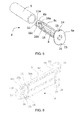
Figure 1 shows a view in perspective of a pedal unit that comprises a pedal coupled to a support piece by a coupling device according to the invention. -
Figure 2 shows a sectional view of the pedal coupled to the support piece and of a first embodiment of the coupling device shown inFigure 1 . -
Figure 3 shows a side view of the first embodiment of the coupling device shown inFigure 2 . -
Figure 4 shows a longitudinal section of the coupling device shown inFigure 3 . -
Figure 5 shows a side view of a second embodiment of the coupling device shown inFigure 1 . -
Figure 6 shows a longitudinal section of the coupling device shown inFigure 5 . -
Figure 1 shows apedal unit 1 that comprises apedal 3 for motor vehicles that is arranged coupled to asupport piece 2 by a coupling device. - The
pedal 3 comprisesholes 3a that are passed through by abushing member 3b, thebushing member 3b being arranged fixed to thepedal 3. Thesupport piece 2 compriseswalls housing 2c in which is arranged housed thepedal 3. Eachwall hole 2d, theholes 2d of thewalls - The coupling device comprises a
shaft 4 that passes through thebushing member 3b of thepedal 3 and thewalls support piece 2 through theholes 2d, fixing thepedal 3 to thesupport piece 2. - The
shaft 4 comprises aplastic body 6 and ametal tube 5 that surrounds thebody 6 externally. Thebody 6 and thetube 5 are connected. Thepedal 3 is arranged coupled to thetube 5, supported on saidtube 5, saidpedal 3 being capable of rotating in relation to thetube 5. Thetube 5 is supported on thewalls respective holes 2d. As a result, the load/tensions of thepedal 3 are transmitted to thetube 5, which itself transmits them to thesupport piece 2. Thebody 6 positions theshaft 4 in relation to thesupport piece 2, participating minimally in the transmission of forces. - The
tube 5 shown in the embodiments is made of steel. In other embodiments not shown in the figures, thetube 5 may be made of any other metal. - In the embodiments shown the
body 6 is made of a non-hygroscopic plastic, for example polyethylene, polyoxymethylene or polypropylene, with or without fibre. As a result, the additional advantage is achieved of using plastics that are not deformed perceptibly if high temperatures or moisture levels are reached. - The
body 6 comprises acentral part 6c that extends longitudinally along thetube 5, it being arranged in contact with thetube 5, ahead 6a that extends continuous to thecentral part 6c, and anend 6b that extends continuous to thecentral part 6c in a direction opposite to thehead 6. Thehead 6a and theend 6b project out in relation to thetube 5. Thebody 6 is substantially cylindrical and hollow. - Furthermore, the
shaft 4 comprises fixing means arranged on thebody 6 to prevent the axial movements of theshaft 4 in relation to thesupport piece 2. The fixing means 10 comprise at least oneprojection 11 that projects out radially from an external surface of theend 6b and thehead 6a. - In the embodiments shown in the figures, the fixing means comprise two
projections 11 arranged diametrically to each other. Theend 6b of thebody 6 passes through thewalls support piece 2 through thecorresponding holes 2d, eachwall hole 2c, radially towards the exterior, to allow the passage of theprojections 11 of thebody 6. Eachprojection 11 comprises a substantiallyflat surface 11a, substantially orthogonal to thebody 6 and arranged facing thehead 6a. Once theshafts 4 as has been fitted in thesupport piece 2, thehead 6a, greater in size than theholes 2d of thesupport piece 2, and theprojections 11 are arranged externally to thesupport piece 2, with the result that thesurface 11a of therespective projection 11 comes up against one of thewalls 2a of thesupport piece 2 and thehead 6a against theother wall 2b of thesupport piece 2. - Additionally, the coupling device comprises locking means that cooperate with the
support piece 2 to lock the rotation of theaxis 4 in relation to thesupport piece 2, preventing its release. The locking means 12 comprisehousings 14 in thebody 6, each one of each which collaborates with a respective tab 13 to lock theshaft 4 in thesupport piece 2. - In the first embodiment of the coupling device, shown in
Figures 1 and 2 , thebody 6 comprises twohousings 14, shown inFigures 3 to 6 , arranged diametrically opposing on the perimeter of theheadstock 6a. Thehousings 14 pass longitudinally through thehead 6a. In addition, eachhousing 14 is delimited by a limitingsurface 15 that projects out radially in relation to the rest of the delimiting surfaces of thehousing 14. The limiting surfaces 15 are substantially flat. For their part, thesupport piece 2 comprises two tabs 13 arranged facing each other, diametrically opposing on the perimeter of thehole 2d of thewall 2b. - The
housings 14 are arranged in such a way that when theshaft 4 is inserted in thesupport piece 2 through theholes 2d, theshaft 4 is rotated until the limitingsurface 15 of thecorresponding housing 14 comes up against the tab 13 of thecorresponding support piece 2, the tabs 13 being housed in said position at least partly in therespective housings 14 of thebody 6, locking theshaft 4. To release theshaft 4 saidshaft 4 merely has to be rotated in an opposite direction. - In a first embodiment of the coupling device, shown in
Figures 1 to 4 , thebody 6 is arranged over-injected inside thetube 5. The over-injection is performed by means known in the prior art, and a description is not considered necessary therefore. Thecentral part 6c projects out in relation to thetube 5 in both directions. - A second embodiment of the coupling device is shown in
Figures 4 and5 . The members of the coupling device common to both embodiments have been numbered using the same numerical reference. In the second embodiment, thebody 6 is formed in plastic injected separately to thetube 5. Thetube 5 is then inserted tightly to thebody 6. Thetube 5 is arranged coaxially and externally to thebody 6. - In this second embodiment, the
body 6, as in the preceding embodiment, is cylindrical and hollow. Thebody 6 comprises thecentral part 6c, thehead 6a that extends continuous to thecentral part 6c, and theend 6b that extends continuous and opposite thehead 6a. - Both the means of fixing and the means of locking the
shaft 4 to thesupport piece 2 are similar to the fixing and locking means described for the first embodiment, and will not therefore be described again. - The
body 6 also comprises in thecentral part 6cgaps 8 that extend longitudinally along thecentral part 6c, substantially parallel to each other, along the contour of thecentral part 6c. Thegaps 8 allow thebody 6 to be injected in a simpler way than in the first embodiment, in which the fact that themetal tube 5 has to be over-injected internally conditions the process. - Additionally, in order to fix the
tube 5 in relation to thebody 6, thebody 6 comprises aretention member 16 arranged on one end of thecentral part 6c. Theretention member 16 extends radially, towards the exterior of thebody 6. Theretention member 16 comprises a substantiallyflat surface 16a that is arranged facing abase 6d of theheadstock 6a, with the result that when it is inserted thetube 5 is arranged supported and retained between thebase 6d and thesurface 16a of theretention member 16. - The
retention member 16 is flexible, comprises arecess 16b on a face opposite thesupport surface 16a of thetube 5, therecess 16b being arranged in the area of connection of theretention member 16 to theend 6b of thebody 6, as a result of which theretention member 16 may bend in relation to saidrecess 16b to allow the insertion of thetube 5. In addition, theend 6b comprisescavities 16c that pass through thebody 6, arranged continuous to theretention member 16, which allows theretention member 16 to be flexible and to bend. In the embodiment shown inFigures 5 and 6 , theend 6b comprises twocavities 16c, substantially parallel to each other and oriented axially, theretention member 16 being arranged between bothcavities 16c. - Finally, although in the embodiments shown the
pedal unit 1 comprises apedal 3, in other embodiments not shown in the figures thepedal unit 1 may comprise more pedals, for example, the brake, accelerator and clutch, with the coupling device including a continuous axis, with the characteristics described throughout the document, and with different dimensions adapted to the needs of each pedal.
Claims (12)
- Coupling device for coupling a pedal (3) of a motor vehicle to a support piece (2), the device comprising a rotation shaft (4) that passes through the pedal (3) and the support piece (2), coupling the pedal (3) to the support piece (2), characterised in that the rotation shaft (4) comprises a plastic body (6) and a metal tube (5), arranged substantially coaxial to the body (6) on the exterior of said body (6), the pedal (3) being arranged supported on the tube (5) and the tube (5) supported on the support piece (2).
- Coupling device according to the preceding claim, wherein the support piece (2) comprises walls (2a,2b), each one of which comprises a hole (2d) that is passed through by the coupling device, the tube (5) being arranged supported on both holes (2d).
- Coupling device according to any of the preceding claims, wherein the body (6) and the tube (5) are connected.
- Coupling device according to any of the preceding claims, wherein the body (6) is substantially cylindrical and comprises a central part (6c) in contact with the tube (5), a head (6a) that extends continuous from the central part (6c), it being arranged at least partly external to the support piece (2), and an end (6b) that extends continuous, opposite to the head (6a), it being arranged at least partly external to the support piece (2).
- Coupling device according to the preceding claim, wherein it comprises fixing means (10) in the body (6), which cooperate with the support piece (2), preventing an axial displacement of the shaft (4) in relation to the support piece (2).
- Coupling device according to the preceding claim, wherein the fixing means (10) comprise at least one projection (11) that extends radially from the end (6b) of the body (6) and the head (6a), with the result that the projection (11) and the head (6a) come up against the corresponding wall (2a,2b) of the support piece (2).
- Coupling device according to any of claims 4 to 6, wherein it comprises locking means (12) in the head (6a) of the body (6), which cooperate with the support piece (2), locking the rotation of the shaft (4).
- Coupling device according to the preceding claim, wherein the locking means (12) comprise at least one housing (14) in the head (6a), delimited by a limiting surface (15) that projects out radially, cooperating with a tab (13) arranged on the corresponding wall (2a,2b) of the support piece (2) to lock the rotation, the tab (13) being arranged at least partly housed in the housing (14).
- Coupling device according to the preceding claim, wherein the locking means (12) comprise two housings (14) arranged opposite to each other, each one of which cooperates with the corresponding tab (13) comprise in the support piece (2).
- Coupling device according to any of the preceding claims, wherein the body (6) is over-injected internally to the tube (5).
- Coupling device according to any of claims 1 to 9, wherein the tube (5) is arranged inserted tightly externally to the body (6).
- Pedal unit characterised in that it comprises a support piece (2), a pedal (3) and a device for coupling the pedal (3) to the support piece (2) according to any of the preceding claims.
Applications Claiming Priority (1)
| Application Number | Priority Date | Filing Date | Title |
|---|---|---|---|
| ES201131942A ES2405939B1 (en) | 2011-11-30 | 2011-11-30 | Coupling device for at least one motor vehicle pedal |
Publications (3)
| Publication Number | Publication Date |
|---|---|
| EP2620832A2 true EP2620832A2 (en) | 2013-07-31 |
| EP2620832A3 EP2620832A3 (en) | 2018-05-09 |
| EP2620832B1 EP2620832B1 (en) | 2022-05-18 |
Family
ID=47227735
Family Applications (1)
| Application Number | Title | Priority Date | Filing Date |
|---|---|---|---|
| EP12382424.5A Active EP2620832B1 (en) | 2011-11-30 | 2012-10-31 | Coupling device for at least one motor vehicle pedal |
Country Status (5)
| Country | Link |
|---|---|
| US (1) | US9389633B2 (en) |
| EP (1) | EP2620832B1 (en) |
| CN (1) | CN103135657B (en) |
| BR (1) | BR102012030146A2 (en) |
| ES (1) | ES2405939B1 (en) |
Cited By (1)
| Publication number | Priority date | Publication date | Assignee | Title |
|---|---|---|---|---|
| EP3855281A1 (en) * | 2019-12-17 | 2021-07-28 | CJ Automotive AB | Mounting assembly for a control pedal of a vehicle |
Families Citing this family (10)
| Publication number | Priority date | Publication date | Assignee | Title |
|---|---|---|---|---|
| FR3008665B1 (en) * | 2013-07-19 | 2015-07-31 | Renault Sa | DEVICE FOR MOUNTING A PEDAL IN A MOTOR VEHICLE |
| FR3014570B1 (en) * | 2013-12-06 | 2018-11-16 | Renault S.A.S. | DEVICE FOR MOUNTING A PEDAL OF A MOTOR VEHICLE |
| US9684331B2 (en) * | 2014-10-13 | 2017-06-20 | Cts Corporation | Vehicle pedal assembly with plastic pedal shaft structure |
| CN108351665B (en) * | 2015-06-24 | 2020-09-11 | Cj汽车制造公司 | Mounting assembly for a control pedal of a vehicle |
| WO2016209154A1 (en) * | 2015-06-24 | 2016-12-29 | Cj Automotive Ab | Mounting assembly for a control pedal of a vehicle |
| US10296037B2 (en) | 2015-09-18 | 2019-05-21 | Kongsberg Power Products Systems I, Inc. | Pedal assembly with identical first and second housing components |
| US10551866B2 (en) * | 2015-09-18 | 2020-02-04 | Kongsberg Power Products Systems I, Inc. | Pedal assembly with debris filtering mechanism |
| DE102019004216B4 (en) * | 2019-06-17 | 2022-11-03 | Ford Global Technologies, Llc | Attachment for a brake pedal |
| US11353911B2 (en) * | 2020-01-23 | 2022-06-07 | Ventra Group Co. | Pedal assembly |
| EP3885202B1 (en) * | 2020-03-23 | 2021-12-29 | Batz, S.Coop. | Vehicle pedal arrangement |
Citations (3)
| Publication number | Priority date | Publication date | Assignee | Title |
|---|---|---|---|---|
| US4819500A (en) | 1986-03-04 | 1989-04-11 | Honda Giken Kogyo Kabushiki Kaisha | Pedal bracket assembly and method of installing same on structural body |
| FR2796012A1 (en) | 1999-07-05 | 2001-01-12 | Meyr | Fixing of vehicle pedal assembly shaft in clevis which comprises two coaxial holes in webs for engagement of pedal pivoting shaft |
| ES2273244T3 (en) | 2003-04-03 | 2007-05-01 | Fico Cables, S.A. | AUTOBLOCK AXLE |
Family Cites Families (16)
| Publication number | Priority date | Publication date | Assignee | Title |
|---|---|---|---|---|
| US793754A (en) * | 1903-02-10 | 1905-07-04 | Weber Railway Joint Mfg Company | Insulation. |
| US983451A (en) * | 1910-01-27 | 1911-02-07 | Joseph Kennedy | Bolt-anchor. |
| JPS606653Y2 (en) * | 1976-08-27 | 1985-03-04 | 富士重工業株式会社 | Connector |
| US4824314A (en) * | 1985-02-19 | 1989-04-25 | Northrop Corporation | Composite fastener system and manufacturing method thereof |
| US4718801A (en) * | 1986-07-24 | 1988-01-12 | Microdot Inc. | Composite core fastener |
| JPH0648213A (en) * | 1992-07-28 | 1994-02-22 | Toyota Autom Loom Works Ltd | Accelerator pedal device |
| JPH0649733U (en) * | 1992-12-18 | 1994-07-08 | 株式会社エフテック | Automotive pedal mounting structure |
| DE19531733C1 (en) * | 1995-08-29 | 1997-02-13 | Daimler Benz Ag | Accelerator pedal unit for vehicles |
| JP3454014B2 (en) * | 1995-08-31 | 2003-10-06 | トヨタ自動車株式会社 | Vehicle pedal support structure |
| DE19615487C1 (en) * | 1996-04-19 | 1997-05-22 | Porsche Ag | Self-securing lock bolt for articulated connection of clutch pedal with transmission cylinder |
| DE10336799B4 (en) * | 2003-08-11 | 2015-05-07 | Volkswagen Ag | Foot pedal with plastic studs |
| JP5279509B2 (en) * | 2006-12-27 | 2013-09-04 | ヒルタ工業株式会社 | Pedal device |
| DE102007016983A1 (en) * | 2007-04-10 | 2007-12-06 | Daimlerchrysler Ag | Connection for connecting part of braking unit to part of brake pedal of motor vehicle, has spring units arranged in axial direction between openings, and bearing opening penetrated by bearing bush for retaining pivoting bolt |
| ITTO20080359A1 (en) * | 2008-05-14 | 2009-11-15 | Itw Construction Products Ital | EXPANSION ANCHOR |
| JP5352374B2 (en) * | 2009-08-04 | 2013-11-27 | 株式会社オートテクニカ | Operation pedal support structure |
| KR101231341B1 (en) * | 2010-12-06 | 2013-02-07 | 현대자동차주식회사 | Brake pedal device |
-
2011
- 2011-11-30 ES ES201131942A patent/ES2405939B1/en not_active Expired - Fee Related
-
2012
- 2012-10-31 EP EP12382424.5A patent/EP2620832B1/en active Active
- 2012-11-17 US US13/680,035 patent/US9389633B2/en active Active
- 2012-11-27 BR BRBR102012030146-6A patent/BR102012030146A2/en not_active IP Right Cessation
- 2012-11-29 CN CN201210500257.4A patent/CN103135657B/en active Active
Patent Citations (3)
| Publication number | Priority date | Publication date | Assignee | Title |
|---|---|---|---|---|
| US4819500A (en) | 1986-03-04 | 1989-04-11 | Honda Giken Kogyo Kabushiki Kaisha | Pedal bracket assembly and method of installing same on structural body |
| FR2796012A1 (en) | 1999-07-05 | 2001-01-12 | Meyr | Fixing of vehicle pedal assembly shaft in clevis which comprises two coaxial holes in webs for engagement of pedal pivoting shaft |
| ES2273244T3 (en) | 2003-04-03 | 2007-05-01 | Fico Cables, S.A. | AUTOBLOCK AXLE |
Cited By (1)
| Publication number | Priority date | Publication date | Assignee | Title |
|---|---|---|---|---|
| EP3855281A1 (en) * | 2019-12-17 | 2021-07-28 | CJ Automotive AB | Mounting assembly for a control pedal of a vehicle |
Also Published As
| Publication number | Publication date |
|---|---|
| EP2620832A3 (en) | 2018-05-09 |
| ES2405939R1 (en) | 2013-10-15 |
| ES2405939B1 (en) | 2014-08-05 |
| EP2620832B1 (en) | 2022-05-18 |
| CN103135657B (en) | 2015-08-26 |
| ES2405939A2 (en) | 2013-06-04 |
| CN103135657A (en) | 2013-06-05 |
| US9389633B2 (en) | 2016-07-12 |
| BR102012030146A2 (en) | 2014-05-13 |
| US20130133472A1 (en) | 2013-05-30 |
Similar Documents
| Publication | Publication Date | Title |
|---|---|---|
| EP2620832B1 (en) | Coupling device for at least one motor vehicle pedal | |
| EP2733048B1 (en) | Steering System | |
| US9346484B2 (en) | Apparatus for releasing a securing screw for a unit in a housing | |
| US9039041B2 (en) | Steering column anti-rotation pin | |
| US20140126976A1 (en) | Device for the positional securing of a unit | |
| US9937949B2 (en) | Electric power steering system | |
| CN115126755B (en) | Tolerance-compensating fastening device with extended tolerance compensation and simpler and faster fastening | |
| EP1840398B1 (en) | Universal joint | |
| US11165303B2 (en) | Guide ring for connection to a housing of an electric machine | |
| US11485412B2 (en) | Drag link guide assembly, steering actuator and method for producing a drag link guide assembly | |
| EP3018385B1 (en) | Ball screw | |
| US20180208232A1 (en) | Steering column | |
| CN104395127A (en) | Shift lever device | |
| US8388295B2 (en) | Mounting structure | |
| CN113490804A (en) | Ball return tube for ball nut assembly | |
| EP2657105A1 (en) | Electric power steering device | |
| EP1553309B1 (en) | Device for fixing a component on jacket tubes with different diameters | |
| EP2906840B1 (en) | Terminal for motion transmitting remote control assembly | |
| CN110799406B (en) | Steering shaft for a motor vehicle and method for producing the same | |
| KR101922406B1 (en) | Electronic power steering type flexible damper apparatus | |
| KR20090121916A (en) | Rack Bar Support | |
| US11668377B2 (en) | Threaded nut for a ball screw drive | |
| JP2007071381A (en) | Bearing device | |
| WO2026069773A1 (en) | Ball screw device and electric power steering device | |
| US12391301B2 (en) | Rack bar support device of vehicle steering device |
Legal Events
| Date | Code | Title | Description |
|---|---|---|---|
| PUAI | Public reference made under article 153(3) epc to a published international application that has entered the european phase |
Free format text: ORIGINAL CODE: 0009012 |
|
| AK | Designated contracting states |
Kind code of ref document: A2 Designated state(s): AL AT BE BG CH CY CZ DE DK EE ES FI FR GB GR HR HU IE IS IT LI LT LU LV MC MK MT NL NO PL PT RO RS SE SI SK SM TR |
|
| AX | Request for extension of the european patent |
Extension state: BA ME |
|
| PUAL | Search report despatched |
Free format text: ORIGINAL CODE: 0009013 |
|
| AK | Designated contracting states |
Kind code of ref document: A3 Designated state(s): AL AT BE BG CH CY CZ DE DK EE ES FI FR GB GR HR HU IE IS IT LI LT LU LV MC MK MT NL NO PL PT RO RS SE SI SK SM TR |
|
| AX | Request for extension of the european patent |
Extension state: BA ME |
|
| RIC1 | Information provided on ipc code assigned before grant |
Ipc: F16B 21/02 20060101ALI20180405BHEP Ipc: G05G 1/50 20080401ALI20180405BHEP Ipc: G05G 1/44 20080401AFI20180405BHEP |
|
| STAA | Information on the status of an ep patent application or granted ep patent |
Free format text: STATUS: REQUEST FOR EXAMINATION WAS MADE |
|
| 17P | Request for examination filed |
Effective date: 20181109 |
|
| RBV | Designated contracting states (corrected) |
Designated state(s): AL AT BE BG CH CY CZ DE DK EE ES FI FR GB GR HR HU IE IS IT LI LT LU LV MC MK MT NL NO PL PT RO RS SE SI SK SM TR |
|
| RIC1 | Information provided on ipc code assigned before grant |
Ipc: G05G 1/50 20080401ALI20180405BHEP Ipc: F16B 21/02 20060101ALI20180405BHEP Ipc: G05G 1/44 20080401AFI20180405BHEP |
|
| GRAP | Despatch of communication of intention to grant a patent |
Free format text: ORIGINAL CODE: EPIDOSNIGR1 |
|
| STAA | Information on the status of an ep patent application or granted ep patent |
Free format text: STATUS: GRANT OF PATENT IS INTENDED |
|
| GRAJ | Information related to disapproval of communication of intention to grant by the applicant or resumption of examination proceedings by the epo deleted |
Free format text: ORIGINAL CODE: EPIDOSDIGR1 |
|
| STAA | Information on the status of an ep patent application or granted ep patent |
Free format text: STATUS: REQUEST FOR EXAMINATION WAS MADE |
|
| INTG | Intention to grant announced |
Effective date: 20220105 |
|
| INTC | Intention to grant announced (deleted) | ||
| RIN1 | Information on inventor provided before grant (corrected) |
Inventor name: MENIQUE EZQUERRA, JON Inventor name: ARRILLAGA ELCORO, PERU Inventor name: ANZOLA ARTABE, EGOITZ Inventor name: SALVADOR DELGADO, JAVIER Inventor name: LLONA FURUNDARENA, LANDER Inventor name: BURGUERA ALBIZURI, FERNANDO |
|
| GRAP | Despatch of communication of intention to grant a patent |
Free format text: ORIGINAL CODE: EPIDOSNIGR1 |
|
| STAA | Information on the status of an ep patent application or granted ep patent |
Free format text: STATUS: GRANT OF PATENT IS INTENDED |
|
| GRAS | Grant fee paid |
Free format text: ORIGINAL CODE: EPIDOSNIGR3 |
|
| GRAA | (expected) grant |
Free format text: ORIGINAL CODE: 0009210 |
|
| STAA | Information on the status of an ep patent application or granted ep patent |
Free format text: STATUS: THE PATENT HAS BEEN GRANTED |
|
| INTG | Intention to grant announced |
Effective date: 20220329 |
|
| AK | Designated contracting states |
Kind code of ref document: B1 Designated state(s): AL AT BE BG CH CY CZ DE DK EE ES FI FR GB GR HR HU IE IS IT LI LT LU LV MC MK MT NL NO PL PT RO RS SE SI SK SM TR |
|
| REG | Reference to a national code |
Ref country code: GB Ref legal event code: FG4D |
|
| REG | Reference to a national code |
Ref country code: CH Ref legal event code: EP |
|
| REG | Reference to a national code |
Ref country code: DE Ref legal event code: R096 Ref document number: 602012078242 Country of ref document: DE |
|
| REG | Reference to a national code |
Ref country code: IE Ref legal event code: FG4D |
|
| REG | Reference to a national code |
Ref country code: AT Ref legal event code: REF Ref document number: 1493539 Country of ref document: AT Kind code of ref document: T Effective date: 20220615 |
|
| REG | Reference to a national code |
Ref country code: LT Ref legal event code: MG9D |
|
| REG | Reference to a national code |
Ref country code: NL Ref legal event code: MP Effective date: 20220518 |
|
| REG | Reference to a national code |
Ref country code: AT Ref legal event code: MK05 Ref document number: 1493539 Country of ref document: AT Kind code of ref document: T Effective date: 20220518 |
|
| PG25 | Lapsed in a contracting state [announced via postgrant information from national office to epo] |
Ref country code: SE Free format text: LAPSE BECAUSE OF FAILURE TO SUBMIT A TRANSLATION OF THE DESCRIPTION OR TO PAY THE FEE WITHIN THE PRESCRIBED TIME-LIMIT Effective date: 20220518 Ref country code: PT Free format text: LAPSE BECAUSE OF FAILURE TO SUBMIT A TRANSLATION OF THE DESCRIPTION OR TO PAY THE FEE WITHIN THE PRESCRIBED TIME-LIMIT Effective date: 20220919 Ref country code: NO Free format text: LAPSE BECAUSE OF FAILURE TO SUBMIT A TRANSLATION OF THE DESCRIPTION OR TO PAY THE FEE WITHIN THE PRESCRIBED TIME-LIMIT Effective date: 20220818 Ref country code: NL Free format text: LAPSE BECAUSE OF FAILURE TO SUBMIT A TRANSLATION OF THE DESCRIPTION OR TO PAY THE FEE WITHIN THE PRESCRIBED TIME-LIMIT Effective date: 20220518 Ref country code: LT Free format text: LAPSE BECAUSE OF FAILURE TO SUBMIT A TRANSLATION OF THE DESCRIPTION OR TO PAY THE FEE WITHIN THE PRESCRIBED TIME-LIMIT Effective date: 20220518 Ref country code: HR Free format text: LAPSE BECAUSE OF FAILURE TO SUBMIT A TRANSLATION OF THE DESCRIPTION OR TO PAY THE FEE WITHIN THE PRESCRIBED TIME-LIMIT Effective date: 20220518 Ref country code: GR Free format text: LAPSE BECAUSE OF FAILURE TO SUBMIT A TRANSLATION OF THE DESCRIPTION OR TO PAY THE FEE WITHIN THE PRESCRIBED TIME-LIMIT Effective date: 20220819 Ref country code: FI Free format text: LAPSE BECAUSE OF FAILURE TO SUBMIT A TRANSLATION OF THE DESCRIPTION OR TO PAY THE FEE WITHIN THE PRESCRIBED TIME-LIMIT Effective date: 20220518 Ref country code: ES Free format text: LAPSE BECAUSE OF FAILURE TO SUBMIT A TRANSLATION OF THE DESCRIPTION OR TO PAY THE FEE WITHIN THE PRESCRIBED TIME-LIMIT Effective date: 20220518 Ref country code: BG Free format text: LAPSE BECAUSE OF FAILURE TO SUBMIT A TRANSLATION OF THE DESCRIPTION OR TO PAY THE FEE WITHIN THE PRESCRIBED TIME-LIMIT Effective date: 20220818 Ref country code: AT Free format text: LAPSE BECAUSE OF FAILURE TO SUBMIT A TRANSLATION OF THE DESCRIPTION OR TO PAY THE FEE WITHIN THE PRESCRIBED TIME-LIMIT Effective date: 20220518 |
|
| PG25 | Lapsed in a contracting state [announced via postgrant information from national office to epo] |
Ref country code: RS Free format text: LAPSE BECAUSE OF FAILURE TO SUBMIT A TRANSLATION OF THE DESCRIPTION OR TO PAY THE FEE WITHIN THE PRESCRIBED TIME-LIMIT Effective date: 20220518 Ref country code: PL Free format text: LAPSE BECAUSE OF FAILURE TO SUBMIT A TRANSLATION OF THE DESCRIPTION OR TO PAY THE FEE WITHIN THE PRESCRIBED TIME-LIMIT Effective date: 20220518 Ref country code: LV Free format text: LAPSE BECAUSE OF FAILURE TO SUBMIT A TRANSLATION OF THE DESCRIPTION OR TO PAY THE FEE WITHIN THE PRESCRIBED TIME-LIMIT Effective date: 20220518 Ref country code: IS Free format text: LAPSE BECAUSE OF FAILURE TO SUBMIT A TRANSLATION OF THE DESCRIPTION OR TO PAY THE FEE WITHIN THE PRESCRIBED TIME-LIMIT Effective date: 20220918 |
|
| PG25 | Lapsed in a contracting state [announced via postgrant information from national office to epo] |
Ref country code: SM Free format text: LAPSE BECAUSE OF FAILURE TO SUBMIT A TRANSLATION OF THE DESCRIPTION OR TO PAY THE FEE WITHIN THE PRESCRIBED TIME-LIMIT Effective date: 20220518 Ref country code: SK Free format text: LAPSE BECAUSE OF FAILURE TO SUBMIT A TRANSLATION OF THE DESCRIPTION OR TO PAY THE FEE WITHIN THE PRESCRIBED TIME-LIMIT Effective date: 20220518 Ref country code: RO Free format text: LAPSE BECAUSE OF FAILURE TO SUBMIT A TRANSLATION OF THE DESCRIPTION OR TO PAY THE FEE WITHIN THE PRESCRIBED TIME-LIMIT Effective date: 20220518 Ref country code: EE Free format text: LAPSE BECAUSE OF FAILURE TO SUBMIT A TRANSLATION OF THE DESCRIPTION OR TO PAY THE FEE WITHIN THE PRESCRIBED TIME-LIMIT Effective date: 20220518 Ref country code: DK Free format text: LAPSE BECAUSE OF FAILURE TO SUBMIT A TRANSLATION OF THE DESCRIPTION OR TO PAY THE FEE WITHIN THE PRESCRIBED TIME-LIMIT Effective date: 20220518 Ref country code: CZ Free format text: LAPSE BECAUSE OF FAILURE TO SUBMIT A TRANSLATION OF THE DESCRIPTION OR TO PAY THE FEE WITHIN THE PRESCRIBED TIME-LIMIT Effective date: 20220518 |
|
| REG | Reference to a national code |
Ref country code: DE Ref legal event code: R097 Ref document number: 602012078242 Country of ref document: DE |
|
| PLBE | No opposition filed within time limit |
Free format text: ORIGINAL CODE: 0009261 |
|
| STAA | Information on the status of an ep patent application or granted ep patent |
Free format text: STATUS: NO OPPOSITION FILED WITHIN TIME LIMIT |
|
| PG25 | Lapsed in a contracting state [announced via postgrant information from national office to epo] |
Ref country code: AL Free format text: LAPSE BECAUSE OF FAILURE TO SUBMIT A TRANSLATION OF THE DESCRIPTION OR TO PAY THE FEE WITHIN THE PRESCRIBED TIME-LIMIT Effective date: 20220518 |
|
| 26N | No opposition filed |
Effective date: 20230221 |
|
| PG25 | Lapsed in a contracting state [announced via postgrant information from national office to epo] |
Ref country code: SI Free format text: LAPSE BECAUSE OF FAILURE TO SUBMIT A TRANSLATION OF THE DESCRIPTION OR TO PAY THE FEE WITHIN THE PRESCRIBED TIME-LIMIT Effective date: 20220518 Ref country code: MC Free format text: LAPSE BECAUSE OF FAILURE TO SUBMIT A TRANSLATION OF THE DESCRIPTION OR TO PAY THE FEE WITHIN THE PRESCRIBED TIME-LIMIT Effective date: 20220518 |
|
| REG | Reference to a national code |
Ref country code: CH Ref legal event code: PL |
|
| REG | Reference to a national code |
Ref country code: BE Ref legal event code: MM Effective date: 20221031 |
|
| GBPC | Gb: european patent ceased through non-payment of renewal fee |
Effective date: 20221031 |
|
| PG25 | Lapsed in a contracting state [announced via postgrant information from national office to epo] |
Ref country code: LU Free format text: LAPSE BECAUSE OF NON-PAYMENT OF DUE FEES Effective date: 20221031 |
|
| PG25 | Lapsed in a contracting state [announced via postgrant information from national office to epo] |
Ref country code: LI Free format text: LAPSE BECAUSE OF NON-PAYMENT OF DUE FEES Effective date: 20221031 Ref country code: FR Free format text: LAPSE BECAUSE OF NON-PAYMENT OF DUE FEES Effective date: 20221031 Ref country code: CH Free format text: LAPSE BECAUSE OF NON-PAYMENT OF DUE FEES Effective date: 20221031 |
|
| PG25 | Lapsed in a contracting state [announced via postgrant information from national office to epo] |
Ref country code: BE Free format text: LAPSE BECAUSE OF NON-PAYMENT OF DUE FEES Effective date: 20221031 |
|
| PG25 | Lapsed in a contracting state [announced via postgrant information from national office to epo] |
Ref country code: IE Free format text: LAPSE BECAUSE OF NON-PAYMENT OF DUE FEES Effective date: 20221031 Ref country code: GB Free format text: LAPSE BECAUSE OF NON-PAYMENT OF DUE FEES Effective date: 20221031 |
|
| PG25 | Lapsed in a contracting state [announced via postgrant information from national office to epo] |
Ref country code: IT Free format text: LAPSE BECAUSE OF FAILURE TO SUBMIT A TRANSLATION OF THE DESCRIPTION OR TO PAY THE FEE WITHIN THE PRESCRIBED TIME-LIMIT Effective date: 20220518 |
|
| PG25 | Lapsed in a contracting state [announced via postgrant information from national office to epo] |
Ref country code: HU Free format text: LAPSE BECAUSE OF FAILURE TO SUBMIT A TRANSLATION OF THE DESCRIPTION OR TO PAY THE FEE WITHIN THE PRESCRIBED TIME-LIMIT; INVALID AB INITIO Effective date: 20121031 |
|
| PG25 | Lapsed in a contracting state [announced via postgrant information from national office to epo] |
Ref country code: CY Free format text: LAPSE BECAUSE OF FAILURE TO SUBMIT A TRANSLATION OF THE DESCRIPTION OR TO PAY THE FEE WITHIN THE PRESCRIBED TIME-LIMIT Effective date: 20220511 |
|
| PG25 | Lapsed in a contracting state [announced via postgrant information from national office to epo] |
Ref country code: MK Free format text: LAPSE BECAUSE OF FAILURE TO SUBMIT A TRANSLATION OF THE DESCRIPTION OR TO PAY THE FEE WITHIN THE PRESCRIBED TIME-LIMIT Effective date: 20220511 |
|
| PG25 | Lapsed in a contracting state [announced via postgrant information from national office to epo] |
Ref country code: TR Free format text: LAPSE BECAUSE OF FAILURE TO SUBMIT A TRANSLATION OF THE DESCRIPTION OR TO PAY THE FEE WITHIN THE PRESCRIBED TIME-LIMIT Effective date: 20220511 |
|
| PG25 | Lapsed in a contracting state [announced via postgrant information from national office to epo] |
Ref country code: MT Free format text: LAPSE BECAUSE OF FAILURE TO SUBMIT A TRANSLATION OF THE DESCRIPTION OR TO PAY THE FEE WITHIN THE PRESCRIBED TIME-LIMIT Effective date: 20220511 |
|
| PG25 | Lapsed in a contracting state [announced via postgrant information from national office to epo] |
Ref country code: BG Free format text: LAPSE BECAUSE OF FAILURE TO SUBMIT A TRANSLATION OF THE DESCRIPTION OR TO PAY THE FEE WITHIN THE PRESCRIBED TIME-LIMIT Effective date: 20220518 |
|
| PG25 | Lapsed in a contracting state [announced via postgrant information from national office to epo] |
Ref country code: BG Free format text: LAPSE BECAUSE OF FAILURE TO SUBMIT A TRANSLATION OF THE DESCRIPTION OR TO PAY THE FEE WITHIN THE PRESCRIBED TIME-LIMIT Effective date: 20220518 |
|
| PGFP | Annual fee paid to national office [announced via postgrant information from national office to epo] |
Ref country code: DE Payment date: 20251029 Year of fee payment: 14 |