EP2619339B1 - Method for removing mercury contamination from solid surfaces - Google Patents
Method for removing mercury contamination from solid surfaces Download PDFInfo
- Publication number
- EP2619339B1 EP2619339B1 EP11760621.0A EP11760621A EP2619339B1 EP 2619339 B1 EP2619339 B1 EP 2619339B1 EP 11760621 A EP11760621 A EP 11760621A EP 2619339 B1 EP2619339 B1 EP 2619339B1
- Authority
- EP
- European Patent Office
- Prior art keywords
- mercury
- cleaning solution
- mixtures
- per million
- parts per
- Prior art date
- Legal status (The legal status is an assumption and is not a legal conclusion. Google has not performed a legal analysis and makes no representation as to the accuracy of the status listed.)
- Active
Links
Images


Classifications
-
- C—CHEMISTRY; METALLURGY
- C22—METALLURGY; FERROUS OR NON-FERROUS ALLOYS; TREATMENT OF ALLOYS OR NON-FERROUS METALS
- C22B—PRODUCTION AND REFINING OF METALS; PRETREATMENT OF RAW MATERIALS
- C22B43/00—Obtaining mercury
-
- C—CHEMISTRY; METALLURGY
- C22—METALLURGY; FERROUS OR NON-FERROUS ALLOYS; TREATMENT OF ALLOYS OR NON-FERROUS METALS
- C22B—PRODUCTION AND REFINING OF METALS; PRETREATMENT OF RAW MATERIALS
- C22B7/00—Working up raw materials other than ores, e.g. scrap, to produce non-ferrous metals and compounds thereof; Methods of a general interest or applied to the winning of more than two metals
- C22B7/006—Wet processes
-
- C—CHEMISTRY; METALLURGY
- C23—COATING METALLIC MATERIAL; COATING MATERIAL WITH METALLIC MATERIAL; CHEMICAL SURFACE TREATMENT; DIFFUSION TREATMENT OF METALLIC MATERIAL; COATING BY VACUUM EVAPORATION, BY SPUTTERING, BY ION IMPLANTATION OR BY CHEMICAL VAPOUR DEPOSITION, IN GENERAL; INHIBITING CORROSION OF METALLIC MATERIAL OR INCRUSTATION IN GENERAL
- C23G—CLEANING OR DE-GREASING OF METALLIC MATERIAL BY CHEMICAL METHODS OTHER THAN ELECTROLYSIS
- C23G5/00—Cleaning or de-greasing metallic material by other methods; Apparatus for cleaning or de-greasing metallic material with organic solvents
- C23G5/02—Cleaning or de-greasing metallic material by other methods; Apparatus for cleaning or de-greasing metallic material with organic solvents using organic solvents
- C23G5/028—Cleaning or de-greasing metallic material by other methods; Apparatus for cleaning or de-greasing metallic material with organic solvents using organic solvents containing halogenated hydrocarbons
- C23G5/02854—Cleaning or de-greasing metallic material by other methods; Apparatus for cleaning or de-greasing metallic material with organic solvents using organic solvents containing halogenated hydrocarbons characterised by the stabilising or corrosion inhibiting additives
- C23G5/02893—Sulfur-containing compounds
-
- Y—GENERAL TAGGING OF NEW TECHNOLOGICAL DEVELOPMENTS; GENERAL TAGGING OF CROSS-SECTIONAL TECHNOLOGIES SPANNING OVER SEVERAL SECTIONS OF THE IPC; TECHNICAL SUBJECTS COVERED BY FORMER USPC CROSS-REFERENCE ART COLLECTIONS [XRACs] AND DIGESTS
- Y02—TECHNOLOGIES OR APPLICATIONS FOR MITIGATION OR ADAPTATION AGAINST CLIMATE CHANGE
- Y02P—CLIMATE CHANGE MITIGATION TECHNOLOGIES IN THE PRODUCTION OR PROCESSING OF GOODS
- Y02P10/00—Technologies related to metal processing
- Y02P10/20—Recycling
Definitions
- a cleaning method for removing mercury contamination from solid surfaces is provided.
- Mercury is often present in natural gas, petrochemical and some refinery feed steams. Petroleum reservoirs in some regions of world (e.g., North Sea, Asia) contain elevated concentrations of mercury. Further, many deeper, hotter reservoir zones that contain elevated mercury concentrations are being produced as shallower, cooler zones are depleted.
- JP56133431 describes a method of removing mercury contamination from surfaces using a mixture of ferric chloride and hydrochloric acid.
- RU2276197 discloses a process for removing mercury contamination from objects comprising treating the object with a mixture comprising sodium thiosulfate, potassium permanganate and nitric acid.
- WO00/69991 A1 describes removal of mercury from surfaces by contacting the hydrocarbon feed stream with a sulfur compound and then contacting the feed stream and sulfur compound with an adsorbent.
- US6268543B1 describes a method of removing mercury from a liquid hydrocarbon by contacting it with a substance able to ionize the mercury, and a sulfur compound.
- US 4 764 219 discloses a method of cleaning a mercury-contaminated solid surface by using a combination of a hydrocarbon oil and a sulfur compound.
- a method of cleaning a mercury contaminated solid surface comprises selecting a mercury-contaminated solid surface; and contacting a cleaning solution over the mercury-contaminated solid surface to remove the mercury contamination and producing a used cleaning solution; characterised by: prior to contacting the cleaning solution over the surface, heating the cleaning solution to a temperature of 50 to 100°C, wherein the cleaning solution comprises: (A) a hydrocarbon oil; and (B) one or more organic sulfur compounds wherein the cleaning solution has a total sulfur content of between 100 parts per million and 10,000 parts per million; after producing the used cleaning solution, heating the used cleaning solution to a temperature greater than 100°C and purging the used cleaning solution with a gas to regenerate the used cleaning solution; and reusing the regenerated used cleaning solution as cleaning solution.
- solid surfaces that are contaminated with mercury may be extractively cleaned using heated, hydrocarbon oils that contain one or more organic sulfur compounds.
- the contaminated solid surfaces may be continuous (e.g., pipes, valves, vessels) or granular (e.g., soils, catalyst particles, separator solids) or.
- the solid surfaces may be continuous, granular or combinations thereof.
- Elemental mercury and mercury compounds may be extracted from the contaminated solid surfaces into the oil phase.
- Mercuric sulfide (HgS) which is extremely difficult to dissolve in a water-based solution, is significantly more soluble in hydrocarbon solutions. Accordingly, the mercury contaminate may be elemental mercury, ionic mercury (i.e., Hg +2 ) or mixtures thereof.
- the rate of extraction increases with temperature, however, the temperature should not exceed 100 °C for efficient cleaning.
- elemental mercury spontaneously oxidizes to ionic mercury (i.e., Hg +2 ) in a hydrocarbon oil.
- ionization reaction reverses and ionic mercury is reduced to elemental mercury, which is not the desired form for the cleaning process for solid surfaces.
- the cleaning solution comprises a hydrocarbon oil and one or more organic sulfur compounds.
- the hydrocarbon oil may be selected from the group consisting of crude oils, fuel oils, mineral oils, kerosene, naphtha, diesel, gasoline and mixtures thereof.
- the hydrocarbon oil may be a crude oil. Many natural crude oils contain enough active organic sulfur compounds to function as a mercury cleaning solution.
- the hydrocarbon oil may be a mineral oil.
- Mineral oils e.g., branched synthetic alkanes are a suitable solvent to ensure thermal stability of the hydrocarbon oil and to minimize the vapor pressure of the hydrocarbons.
- FIG. 1 A chart showing the effect of temperature on the oxidation rate of elemental mercury to ionic mercury in an exemplary cleaning solution is illustrated in FIG. 1 .
- the cleaning solution comprised crude oil with a total sulfur concentration of 2,500 parts per million (as sulfur).
- the cleaning solution was heated to 4 °C, 23 °C, 50 °C and 80 °C to determine the rate of elemental mercury extraction into the solution at various temperatures.
- the data is shown in Table 1.
- Table 1 Data for Oxidation of Elemental Mercury to Ionic Mercury in Cleaning Solution at 4 °C 23 °C 50 °C and 80 °C.
- the rate of elemental mercury extraction into the cleaning solution increases with temperature, however, the temperature should not exceed 100 °C, as discussed above.
- the solution is heated to a temperature between about 50 °C and about 100 °C. In a preferred embodiment, the solution may be heated to a temperature between about 80 °C and about 100 °C.
- the cleaning solution should have a sufficient concentration of organic sulfur compounds to provide at least some cleaning power.
- the hydrocarbon oil has a total sulfur content of at least 100 parts per million (as sulfur). In another embodiment, the hydrocarbon oil has a total sulfur content of between about 100 parts per million (as sulfur) and about 10,000 parts per million (as sulfur). In a preferred embodiment, the hydrocarbon oil has a total sulfur content of between about 500 parts per million (as sulfur) and about 5,000 parts per million (as sulfur).
- organic sulfur compounds may be added to the hydrocarbon oil as desired.
- the organic sulfur compound may be selected from the group consisting of sulfides, disulfides, polysulfides, thiols (aka mercaptans), thiophenes and mixtures thereof. These compounds are quite soluble in hydrocarbon oils, and may be added to produce a wide range of concentrations.
- Organic sulfides, disulfides, polysulfides and thiols are quite effective in the cleaning process and provide a high degree of mercury extraction from solid surfaces.
- Other organic sulfur compound types e.g., thiophenes
- thiophenes are less effective in the process, but nevertheless provide some degree of mercury extraction.
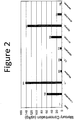
- FIG. 2 A chart showing the complexing effect of organic sulfur compounds in exemplary cleaning solutions at 25 °C is illustrated in FIG. 2 .
- the cleaning solutions comprised isoctane and organic sulfur compounds as shown in Table 2.
- the data is shown in Table 3. Table2. Concentration of Organic Sulfur Compounds in Cleaning Solution.
- the organic sulfur compounds significantly increase the solubility of mercuric sulfide (HgS) in the cleaning solution.
- HgS mercuric sulfide
- the organic sulfur compounds in the hydrocarbon oil complex the ionic mercury and keep it solubilized in the oil phase.
- the organic sulfur compounds accelerate the oxidation rate of the elemental mercury to ionic mercury by removing the ions from the solid surface, which is beneficial to the cleaning process.
- the cleaning solution may be continuously recirculated across the contaminated surface until the desired level of cleaning is achieved.
- hydrocarbon solutions that are contaminated with mercury may be cleaned by heating the hydrocarbon solution to at least 100 °C and passing a purge gas through the heated solution.
- the mercury contaminate may be elemental mercury, ionic mercury (i.e., Hg +2 ) or mixtures thereof.
- the purge gases may be selected from the group consisting of nitrogen, carbon dioxide, methane, ethane, propane, butane, natural gas, flue gas and mixtures thereof.
- the rate of purge increases with temperature, however, the temperature should not exceed the decomposition temperature for the hydrocarbon oil.
- the ionic mercury is spontaneously reduced to elemental mercury, which may be purged from the solution as mercury vapor.
- the temperature should not drop below 100 °C because, at temperatures below 100 °C, the reduction reaction reverses and elemental mercury spontaneously oxides to ionic mercury (i.e., Hg +2 ) in a hydrocarbon matrix, which is not the desired form for the cleaning process for hydrocarbon solutions.
- the hydrocarbon solution comprises a hydrocarbon oil and on or more organic sulfur compounds.
- the hydrocarbon oil may be selected from the group consisting of crude oils, fuel oils, mineral oils, kerosene, naphtha, diesel, gasoline and mixtures thereof.
- the hydrocarbon oil may be a crude oil. Many natural crude oils contain enough active organic sulfur compounds to function as a mercury cleaning solution.
- the hydrocarbon oil may be a mineral oil.
- Mineral oils e.g., branched synthetic alkanes are a suitable solvent to ensure thermal stability of the hydrocarbon oil and to minimize the vapor pressure of the hydrocarbons.
- the hydrocarbon oil should have a sufficient concentration of organic sulfur compounds to provide at least some cleaning power.
- the hydrocarbon oil has a total sulfur content of between about 100 parts per million (as sulfur) and about 10,000 parts per million (as sulfur). In a preferred embodiment, the hydrocarbon oil has a total sulfur content of between about 500 parts per million (as sulfur) and about 5,000 parts per million (as sulfur).
- organic sulfur compounds may be added to the hydrocarbon oil as desired.
- the organic sulfur compounds may be selected from the group consisting of sulfides, disulfides, polysulfides, thiols (aka mercaptans), thiophenes and mixtures thereof. These compounds are quite soluble in hydrocarbon oils, and may be added to produce a wide range of concentrations.
- sulfur compounds that can be added to the hydrocarbon oil to clean a mercury-contaminated solid surface can be selected from the group consisting of thiols (aka mercaptans), sulfides, disulfides, oil soluble dithiocarbamates and mixtures thereof.
- Suitable mercury compounds include thiols (aka mercaptan) compounds with the general formula RSH in which R is an alkyl group containing from 4 to 30 carbon atoms, more preferably having from 8 to 20 carbon atoms.
- thiol compounds examples include octanethiol, nonanethiol, decanethiol, undecanethiol, dodecanethiol, tridecanethiol, tetradecanethiol, pentadecanethiol, hexadecanethiol, heptadecanethiol, octadecanethiol, nonadecanethiol, and eicosanethiol and isomers and mixtures thereof.
- R could also be an aromatic group containing 6 or more carbon atoms. Examples of such aromatic thiol compounds include benzenethiol, toluenethiol, and xylenethiol and isomers and mixtures thereof.
- Suitable sulfur compounds include sulfide compounds with the general formula R'SR" in which R' and R" are the same or different alkyl groups containing from 1 to 30 carbon atoms, and more preferably, having a total (R' + R") of 8 to 24 carbon atoms.
- sulfide compounds include di-n-butyl sulfide, n-heptyl methyl sulfide, methyl n-octyl sulfide, di-n-pentyl sulfide, ethyl n-octyl sulfide, di-n-hexyl sulfide, n-dodecyl methyl sulfide, di-n-heptyl sulfide, di-n-octyl sulfide, di-n-nonyl sulfide, di-n-decyl sulfide, di-n-undecyl sulfide, and di-n-dodecyl sulfide and isomers and mixtures thereof.
- R' and R" could also be the same or different aromatic groups containing 6 or more carbon atoms.
- aromatic sulfide compounds include diphenyl sulfide and alkyl substituted diphenyl sulfides and mixtures thereof.
- Additional suitable sulfur compounds include disulfide compounds with the general formula R'SSR" in which R' and R" are the same or different alkyl groups containing from 1 to 30 carbon atoms, more preferably having a total (R' + R") of 6 to 24 carbon atoms.
- disulfide compounds include di-n-propyl disulfide, di-n-butyl disulfide, di-sec-butyl disulfide, di-tert-butyl disulfide, di-n-pentyl disulfide, di-n-hexyl disulfide, di-n-heptyl disulfide, di-n-octyl disulfide, di-n-nonyl disulfide, di-n-decyl disulfide, di-n-undecyl disulfide, di-tert-dodecyl disulfide and isomers and mixtures thereof.
- R' and R" could also be the same or different aromatic groups containing 6 or more carbon atoms.
- aromatic disulfide compounds include diphenyl disulfide and alkyl substituted diphenyl disulfides and mixtures thereof.
- a purge gas is passed through the heated, hydrocarbon solution to purge the mercury vapor from the solution into the gas phase.
- the purge gas may be selected from the group consisting of nitrogen, carbon dioxide, methane, ethane, propane, butane, natural gas, flue gas and mixtures thereof.
- the mercury vapor may recondensed or trapped using a mercury scavenging medium.
- the mercury condenser has a temperature of no more than about 30 °C. In another embodiment, the mercury condenser has a temperature of between about 5 °C and about 30 °C. In a preferred embodiment, the condenser has a temperature of between about 5 °C and about 20 °C.
- the purge gas may be recirculated through the hydrocarbon oil until the desired level of cleaning is achieved.
- FIG. 3 A chart showing the reduction of ionic mercury to elemental mercury in an exemplary hydrocarbon solution at various temperatures is illustrated in FIG. 3 .
- the cleaning solution comprised mineral oil with a total sulfur concentration of ⁇ 1 part per million.
- the hydrocarbon solution was heated to 100 °C, 125 °C and 150 °C to determine the rate of reduction of ionic mercury to elemental mercury at various temperatures.
- the data is shown in Table 4.
- Table 4. Data of Reduction of Ionic Mercury to Elemental Mercury in Hydrocarbon Solution at Various Temperatures.
- the rate of ionic mercury reduction to elemental mercury increases with temperature, however, the temperature should not exceed the decomposition temperature of the hydrocarbon oil, as discussed above.
- the hydrocarbon solution is heated to a temperature of at least about 100 °C. In another embodiment, the solution is heated to a temperature between about 100 °C and the decomposition temperature of the hydrocarbon oil. In a preferred embodiment, the solution is heated to a temperature between about 125 °C and about 150 °C.
- the term "and/or,” when used in a list of two or more items, means that any one of the listed items can be employed by itself, or any combination of two or more of the listed items can be employed.
- the composition can contain A alone; B alone; C alone: A and B in combination; A and C in combination; B and C in combination; or A, B, and C in combination.
- the terms “comprising,” “comprises,” and “comprise” are open-ended transition terms used to transition from a subject recited before the term to one or elements recited after the term, where the element or elements listed after the transition term are not necessarily the only elements that make up of the subject.
- the term "simultaneously” means occurring at the same time or about the same time, including concurrently.
Landscapes
- Chemical & Material Sciences (AREA)
- Engineering & Computer Science (AREA)
- Metallurgy (AREA)
- Materials Engineering (AREA)
- Mechanical Engineering (AREA)
- Organic Chemistry (AREA)
- Manufacturing & Machinery (AREA)
- General Chemical & Material Sciences (AREA)
- Chemical Kinetics & Catalysis (AREA)
- Life Sciences & Earth Sciences (AREA)
- Environmental & Geological Engineering (AREA)
- General Life Sciences & Earth Sciences (AREA)
- Geology (AREA)
- Production Of Liquid Hydrocarbon Mixture For Refining Petroleum (AREA)
- Cleaning And De-Greasing Of Metallic Materials By Chemical Methods (AREA)
Description
- A cleaning method for removing mercury contamination from solid surfaces.
- Mercury is often present in natural gas, petrochemical and some refinery feed steams. Petroleum reservoirs in some regions of world (e.g., North Sea, Asia) contain elevated concentrations of mercury. Further, many deeper, hotter reservoir zones that contain elevated mercury concentrations are being produced as shallower, cooler zones are depleted.
- This mercury contamination is becoming a significant problem for upstream and downstream operations in the petroleum industry. The petroleum-wetted surfaces of equipment (e.g., pipes, valves, vessels) and processing materials (e.g., catalyst particles, separator solids) in refineries and gas plants that process mercury-containing feed stocks become contaminated with such mercury compounds. These contaminated surfaces must be cleaned periodically to remove the mercury compounds from the equipment and processing materials.
- Traditionally, steam cleaning has been used to clean water-soluble forms of mercury. However, steam cleaning fails to remove insoluble forms of mercury (e.g., HgS). Further, the elevated temperature of steam vaporizes elemental mercury into the air, which creates a significant health hazard for any employees in the vicinity of the cleaning operation.
- Other cleaning procedures utilize water-based mixtures of oxidizing agents and complexing agents to solubilize the mercury. These corrosive solutions cannot be used on most plant equipment (e.g., pipes, valves, vessels) without seriously damaging the metal surfaces.
-
JP56133431 -
RU2276197 -
WO00/69991 A1 -
US6268543B1 describes a method of removing mercury from a liquid hydrocarbon by contacting it with a substance able to ionize the mercury, and a sulfur compound.US 4 764 219 discloses a method of cleaning a mercury-contaminated solid surface by using a combination of a hydrocarbon oil and a sulfur compound. - Accordingly, a safe, noncorrosive cleaning process is needed to remove mercury contamination from solid surfaces.
- A method of cleaning a mercury contaminated solid surface, the method comprises selecting a mercury-contaminated solid surface; and contacting a cleaning solution over the mercury-contaminated solid surface to remove the mercury contamination and producing a used cleaning solution; characterised by: prior to contacting the cleaning solution over the surface, heating the cleaning solution to a temperature of 50 to 100°C, wherein the cleaning solution comprises: (A) a hydrocarbon oil; and (B) one or more organic sulfur compounds wherein the cleaning solution has a total sulfur content of between 100 parts per million and 10,000 parts per million; after producing the used cleaning solution, heating the used cleaning solution to a temperature greater than 100°C and purging the used cleaning solution with a gas to regenerate the used cleaning solution; and reusing the regenerated used cleaning solution as cleaning solution.
- These and other objects, features, and advantages will become apparent as reference is made to the following detailed description, preferred embodiments, and examples, given for the purpose of disclosure, and taken in conjunction with the accompanying drawings and appended claims.
- For a further understanding of the nature and objects of the present inventions, reference should be made to the following detailed disclosure, taken in conjunction with the accompanying drawings, in which like parts are given like reference numerals, and wherein:
-
FIG. 1 is a chart showing oxidation of elemental mercury to ionic mercury in a cleaning solution at various temperatures; -
FIG. 2 is a chart showing solubility of mercuric sulfide in cleaning solutions at 25 °C; and -
FIG. 3 is a chart showing reduction of ionic mercury to elemental mercury in a hydrocarbon solution at various temperatures. - The following detailed description of various embodiments of the present invention references the accompanying drawings, which illustrate specific embodiments in which the invention can be practiced. While the illustrative embodiments of the invention have been described with particularity, it will be understood that various other modifications will be apparent to and can be readily made by those skilled in the art without departing from the scope of the invention. Therefore, the scope of the present invention is defined only by the appended claims, along with the full scope of equivalents to which such claims are entitled.
- In an embodiment, solid surfaces that are contaminated with mercury may be extractively cleaned using heated, hydrocarbon oils that contain one or more organic sulfur compounds. The contaminated solid surfaces may be continuous (e.g., pipes, valves, vessels) or granular (e.g., soils, catalyst particles, separator solids) or. The solid surfaces may be continuous, granular or combinations thereof.
- Elemental mercury and mercury compounds (e.g., HgS, HgO) may be extracted from the contaminated solid surfaces into the oil phase. Mercuric sulfide (HgS), which is extremely difficult to dissolve in a water-based solution, is significantly more soluble in hydrocarbon solutions. Accordingly, the mercury contaminate may be elemental mercury, ionic mercury (i.e., Hg+2) or mixtures thereof.
- The rate of extraction increases with temperature, however, the temperature should not exceed 100 °C for efficient cleaning. At temperatures below about 100 °C, elemental mercury spontaneously oxidizes to ionic mercury (i.e., Hg+2) in a hydrocarbon oil. At temperatures above about 100 °C, ionization reaction reverses and ionic mercury is reduced to elemental mercury, which is not the desired form for the cleaning process for solid surfaces.
- The cleaning solution comprises a hydrocarbon oil and one or more organic sulfur compounds. The hydrocarbon oil may be selected from the group consisting of crude oils, fuel oils, mineral oils, kerosene, naphtha, diesel, gasoline and mixtures thereof. In an embodiment, the hydrocarbon oil may be a crude oil. Many natural crude oils contain enough active organic sulfur compounds to function as a mercury cleaning solution.
- In another embodiment, the hydrocarbon oil may be a mineral oil. Mineral oils (e.g., branched synthetic alkanes) are a suitable solvent to ensure thermal stability of the hydrocarbon oil and to minimize the vapor pressure of the hydrocarbons.
- A chart showing the effect of temperature on the oxidation rate of elemental mercury to ionic mercury in an exemplary cleaning solution is illustrated in
FIG. 1 . In these examples, the cleaning solution comprised crude oil with a total sulfur concentration of 2,500 parts per million (as sulfur). The cleaning solution was heated to 4 °C, 23 °C, 50 °C and 80 °C to determine the rate of elemental mercury extraction into the solution at various temperatures. The data is shown in Table 1.Table 1. Data for Oxidation of Elemental Mercury to Ionic Mercury in Cleaning Solution at 4 °C 23 °C 50 °C and 80 °C. Temperature of Cleaning Solution (°C) Time (hours) Concentration of Elemental Mercury in Nitrogen (µg/kg) Concentration of Elemental Mercury in Air (µg/kg) 4 0.0 29.52 29.52 4 17.0 22.89 29.27 4 46.0 27.21 28.70 4 287.5 23.51 26.78 4 365.5 30.17 23.68 4 483.5 23.43 24.89 4 647.5 24.01 27.41 4 790.0 22.86 21.42 4 983.5 21.31 19.72 4 1127.5 19.31 15.87 4 1318.5 21.70 21.05 4 1462.5 19.03 16.67 4 1680.5 15.50 18.15 4 1825.5 14.48 17.21 4 2042.5 11.79 15.58 4 2544.0 4.53 12.21 4 2710.0 4.66 9.00 23 0.0 29.52 29.52 23 17.0 23.56 30.60 23 19.0 27.50 23 45.0 25.72 23 46.0 24.22 24.29 23 115.5 20.63 23 139.0 20.51 23 287.5 19.88 21.38 23 365.5 18.04 17.26 23 483.5 11.46 16.06 23 647.5 9.83 9.64 23 790.0 5.76 5.65 23 983.5 5.58 5.21 23 1127.5 5.49 2.41 23 1318.5 3.72 0.40 23 1462.5 1.72 0.90 23 1680.5 1.65 0.87 23 1825.5 0.52 1.00 23 2042.5 1.00 0.74 23 2544.0 23 2710.0 50 0.0 29.52 29.52 50 17.0 22.23 21.71 50 19.0 26.11 50 45.0 21.58 50 46.0 17.16 18.13 50 115.5 5.53 50 139.0 3.83 50 287.5 1.65 0.76 50 365.5 0.57 0.89 50 483.5 0.11 0.40 50 647.5 0.29 0.26 50 790.0 0.27 0.59 50 983.5 0.18 0.30 50 1127.5 0.13 0.51 50 1318.5 0.63 0.34 50 1462.5 0.06 0.15 50 1680.5 0.12 0.54 50 1825.5 50 2042.5 50 2544.0 50 2710.0 80 0.0 29.52 80 17.0 80 19.0 19.45 80 45.0 6.82 80 46.0 80 115.5 0.64 80 139.0 0.52 80 287.5 80 365.5 80 483.5 80 647.5 80 790.0 80 983.5 80 1127.5 80 1318.5 80 1462.5 80 1680.5 80 1825.5 80 2042.5 80 2544.0 80 2710.0 - As shown in
FIG. 1 , the rate of elemental mercury extraction into the cleaning solution increases with temperature, however, the temperature should not exceed 100 °C, as discussed above. The solution is heated to a temperature between about 50 °C and about 100 °C. In a preferred embodiment, the solution may be heated to a temperature between about 80 °C and about 100 °C. - The cleaning solution should have a sufficient concentration of organic sulfur compounds to provide at least some cleaning power. In an embodiment, the hydrocarbon oil has a total sulfur content of at least 100 parts per million (as sulfur). In another embodiment, the hydrocarbon oil has a total sulfur content of between about 100 parts per million (as sulfur) and about 10,000 parts per million (as sulfur). In a preferred embodiment, the hydrocarbon oil has a total sulfur content of between about 500 parts per million (as sulfur) and about 5,000 parts per million (as sulfur).
- If the hydrocarbon oil does not contain a sufficient concentration of organic sulfur compounds or if more cleaning power is required, then one or more organic sulfur compounds may be added to the hydrocarbon oil as desired. The organic sulfur compound may be selected from the group consisting of sulfides, disulfides, polysulfides, thiols (aka mercaptans), thiophenes and mixtures thereof. These compounds are quite soluble in hydrocarbon oils, and may be added to produce a wide range of concentrations.
- Organic sulfides, disulfides, polysulfides and thiols (aka mercaptans) are quite effective in the cleaning process and provide a high degree of mercury extraction from solid surfaces. Other organic sulfur compound types (e.g., thiophenes) are less effective in the process, but nevertheless provide some degree of mercury extraction.
- A chart showing the complexing effect of organic sulfur compounds in exemplary cleaning solutions at 25 °C is illustrated in
FIG. 2 . In these examples, the cleaning solutions comprised isoctane and organic sulfur compounds as shown in Table 2. The data is shown in Table 3.Table2. Concentration of Organic Sulfur Compounds in Cleaning Solution. Compound Concentration in Cleaning Solution (parts per million) blank < 1 1- octanethiol 540 1- dodecanethiol 510 thiophene 560 2,5- dimethyl thiophene 340 tetrahydrothiophene 510 di-n- octyl sulfide 580 diphenyl sulfide 540 di-sec- butyl disulfide 530 elemental sulfur 690 Table 3. Data for Mercuric Sulfide Solubility in Cleaning Solution With Various Organic Sulfur Compounds. Temperature of Hydrocarbon Solution (°C) Compound Concentration of Mercuric Sulfide (HgS) in Cleaning Solution (µg/kg) 25 blank 1.0 25 1-octanethiol 59.7 25 1-dodecanethiol 143.3 25 thiophene 4.7 25 2,5-dimethyl thiophene 5.3 25 tetrahydrothiophene 7.3 25 di-n-octyl sulfide 41.7 25 diphenyl sulfide 134.3 25 di-sec-butyl disulfide 15.7 25 elemental sulfur 1.3 - As shown in
FIG. 2 , the organic sulfur compounds significantly increase the solubility of mercuric sulfide (HgS) in the cleaning solution. The organic sulfur compounds in the hydrocarbon oil complex the ionic mercury and keep it solubilized in the oil phase. In addition to solubilizing the ionic mercury, the organic sulfur compounds accelerate the oxidation rate of the elemental mercury to ionic mercury by removing the ions from the solid surface, which is beneficial to the cleaning process. - The cleaning solution may be continuously recirculated across the contaminated surface until the desired level of cleaning is achieved.
- In another embodiment, hydrocarbon solutions that are contaminated with mercury (including the cleaning solution discussed above) may be cleaned by heating the hydrocarbon solution to at least 100 °C and passing a purge gas through the heated solution. The mercury contaminate may be elemental mercury, ionic mercury (i.e., Hg+2) or mixtures thereof. The purge gases may be selected from the group consisting of nitrogen, carbon dioxide, methane, ethane, propane, butane, natural gas, flue gas and mixtures thereof.
- The rate of purge increases with temperature, however, the temperature should not exceed the decomposition temperature for the hydrocarbon oil. At temperatures above 100 °C, the ionic mercury is spontaneously reduced to elemental mercury, which may be purged from the solution as mercury vapor. Further, the temperature should not drop below 100 °C because, at temperatures below 100 °C, the reduction reaction reverses and elemental mercury spontaneously oxides to ionic mercury (i.e., Hg+2) in a hydrocarbon matrix, which is not the desired form for the cleaning process for hydrocarbon solutions.
- The hydrocarbon solution comprises a hydrocarbon oil and on or more organic sulfur compounds. The hydrocarbon oil may be selected from the group consisting of crude oils, fuel oils, mineral oils, kerosene, naphtha, diesel, gasoline and mixtures thereof. In an embodiment, the hydrocarbon oil may be a crude oil. Many natural crude oils contain enough active organic sulfur compounds to function as a mercury cleaning solution.
- In another embodiment, the hydrocarbon oil may be a mineral oil. Mineral oils (e.g., branched synthetic alkanes) are a suitable solvent to ensure thermal stability of the hydrocarbon oil and to minimize the vapor pressure of the hydrocarbons.
- The hydrocarbon oil should have a sufficient concentration of organic sulfur compounds to provide at least some cleaning power. The hydrocarbon oil has a total sulfur content of between about 100 parts per million (as sulfur) and about 10,000 parts per million (as sulfur). In a preferred embodiment, the hydrocarbon oil has a total sulfur content of between about 500 parts per million (as sulfur) and about 5,000 parts per million (as sulfur).
- If the hydrocarbon oil does not contain a sufficient concentration of organic sulfur compounds or if more cleaning power is required, then one or more organic sulfur compounds may be added to the hydrocarbon oil as desired. The organic sulfur compounds may be selected from the group consisting of sulfides, disulfides, polysulfides, thiols (aka mercaptans), thiophenes and mixtures thereof. These compounds are quite soluble in hydrocarbon oils, and may be added to produce a wide range of concentrations.
- In an embodiment sulfur compounds that can be added to the hydrocarbon oil to clean a mercury-contaminated solid surface can be selected from the group consisting of thiols (aka mercaptans), sulfides, disulfides, oil soluble dithiocarbamates and mixtures thereof. Suitable mercury compounds include thiols (aka mercaptan) compounds with the general formula RSH in which R is an alkyl group containing from 4 to 30 carbon atoms, more preferably having from 8 to 20 carbon atoms. Examples of such thiol compounds include octanethiol, nonanethiol, decanethiol, undecanethiol, dodecanethiol, tridecanethiol, tetradecanethiol, pentadecanethiol, hexadecanethiol, heptadecanethiol, octadecanethiol, nonadecanethiol, and eicosanethiol and isomers and mixtures thereof. R could also be an aromatic group containing 6 or more carbon atoms. Examples of such aromatic thiol compounds include benzenethiol, toluenethiol, and xylenethiol and isomers and mixtures thereof.
- Other suitable sulfur compounds include sulfide compounds with the general formula R'SR" in which R' and R" are the same or different alkyl groups containing from 1 to 30 carbon atoms, and more preferably, having a total (R' + R") of 8 to 24 carbon atoms. Examples of such sulfide compounds include di-n-butyl sulfide, n-heptyl methyl sulfide, methyl n-octyl sulfide, di-n-pentyl sulfide, ethyl n-octyl sulfide, di-n-hexyl sulfide, n-dodecyl methyl sulfide, di-n-heptyl sulfide, di-n-octyl sulfide, di-n-nonyl sulfide, di-n-decyl sulfide, di-n-undecyl sulfide, and di-n-dodecyl sulfide and isomers and mixtures thereof. In another embodiment, R' and R" could also be the same or different aromatic groups containing 6 or more carbon atoms. Examples of such aromatic sulfide compounds include diphenyl sulfide and alkyl substituted diphenyl sulfides and mixtures thereof.
- Additional suitable sulfur compounds include disulfide compounds with the general formula R'SSR" in which R' and R" are the same or different alkyl groups containing from 1 to 30 carbon atoms, more preferably having a total (R' + R") of 6 to 24 carbon atoms. Examples of such disulfide compounds include di-n-propyl disulfide, di-n-butyl disulfide, di-sec-butyl disulfide, di-tert-butyl disulfide, di-n-pentyl disulfide, di-n-hexyl disulfide, di-n-heptyl disulfide, di-n-octyl disulfide, di-n-nonyl disulfide, di-n-decyl disulfide, di-n-undecyl disulfide, di-tert-dodecyl disulfide and isomers and mixtures thereof. R' and R" could also be the same or different aromatic groups containing 6 or more carbon atoms. Examples of such aromatic disulfide compounds include diphenyl disulfide and alkyl substituted diphenyl disulfides and mixtures thereof.
- A purge gas is passed through the heated, hydrocarbon solution to purge the mercury vapor from the solution into the gas phase. The purge gas may be selected from the group consisting of nitrogen, carbon dioxide, methane, ethane, propane, butane, natural gas, flue gas and mixtures thereof.
- After being purged from the hydrocarbon oil, the mercury vapor may recondensed or trapped using a mercury scavenging medium. In an embodiment, the mercury condenser has a temperature of no more than about 30 °C. In another embodiment, the mercury condenser has a temperature of between about 5 °C and about 30 °C. In a preferred embodiment, the condenser has a temperature of between about 5 °C and about 20 °C.
- After recondensing or trapping the mercury, the purge gas may be recirculated through the hydrocarbon oil until the desired level of cleaning is achieved.
- A chart showing the reduction of ionic mercury to elemental mercury in an exemplary hydrocarbon solution at various temperatures is illustrated in
FIG. 3 . In these examples, the cleaning solution comprised mineral oil with a total sulfur concentration of < 1 part per million. The hydrocarbon solution was heated to 100 °C, 125 °C and 150 °C to determine the rate of reduction of ionic mercury to elemental mercury at various temperatures. The data is shown in Table 4.Table 4. Data of Reduction of Ionic Mercury to Elemental Mercury in Hydrocarbon Solution at Various Temperatures. Temperature of Hydrocarbon Solution (°C) Time (minutes) Concentration of Elemental Mercury (µg/kg) 100 0 0 100 60 5.18 100 240 11.32 100 480 8.20 100 960 48.07 125 0 0 125 60 7.46 125 240 45.61 125 480 67.92 125 960 150 0 0 150 60 57.97 150 240 108.81 150 480 125.39 150 960 125.69 - As shown in
FIG. 3 , the rate of ionic mercury reduction to elemental mercury increases with temperature, however, the temperature should not exceed the decomposition temperature of the hydrocarbon oil, as discussed above. The hydrocarbon solution is heated to a temperature of at least about 100 °C. In another embodiment, the solution is heated to a temperature between about 100 °C and the decomposition temperature of the hydrocarbon oil. In a preferred embodiment, the solution is heated to a temperature between about 125 °C and about 150 °C. - As used herein, the terms "a," "an," "the," and "said" means one or more.
- As used herein, the term "and/or," when used in a list of two or more items, means that any one of the listed items can be employed by itself, or any combination of two or more of the listed items can be employed. For example, if a composition is described as containing components A, B, and/or C, the composition can contain A alone; B alone; C alone: A and B in combination; A and C in combination; B and C in combination; or A, B, and C in combination.
- As used herein, the terms "comprising," "comprises," and "comprise" are open-ended transition terms used to transition from a subject recited before the term to one or elements recited after the term, where the element or elements listed after the transition term are not necessarily the only elements that make up of the subject.
- As used herein, the terms "containing," "contains," and "contain" have the same open-ended meaning as "comprising," "comprises," and "comprise," provided above.
- As used herein, the terms "having," "has," and "have" have the same open-ended meaning as "comprising," "comprises," and "comprise," provided above.
- As used herein, the terms "including," "includes," and "include" have the same open-ended meaning as "comprising," "comprises," and "comprise," provided above.
- As used herein, the term "simultaneously" means occurring at the same time or about the same time, including concurrently.
Claims (12)
- A method of cleaning a mercury contaminated solid surface, the method comprising:a) selecting a mercury-contaminated solid surface; andb) contacting a cleaning solution over the mercury-contaminated solid surface to remove the mercury contamination and producing a used cleaning solution; characterised by:c) prior to contacting the cleaning solution over the surface, heating the cleaning solution to a temperature of 50 to 100°C, wherein the cleaning solution comprises:i. a hydrocarbon oil; andii. one or more organic sulfur compounds wherein the cleaning solution has a total sulfur content of between 100 parts per million and 10,000 parts per million;d) after producing the used cleaning solution, heating the used cleaning solution to a temperature greater than 100°C and purging the used cleaning solution with a gas to regenerate the used cleaning solution; ande) reusing the regenerated used cleaning solution as cleaning solution.
- The method of claim 1, further comprising the step of:
adding one or more organic sulfur compound to the cleaning solution. - The method of claim 1, further comprising the step of:
recirculating the cleaning solution over the mercury-contaminated solid surface. - The method of claim 1, wherein the mercury-contaminate is elemental mercury, ionic mercury or mixtures thereof.
- The method of claim 1, wherein the hydrocarbon oil may be selected from the group consisting of crude oils, fuel oils, mineral oils, kerosene, naphtha, diesel, gasoline and mixtures thereof.
- The method of claim 1, wherein the organic sulfur compound may be selected from the group consisting of sulfides, disulfides, polysulfides, thiols, thiophenes and mixtures thereof.
- The method of claim 1, wherein the cleaning solution has a total sulfur content of between 500 parts per million and 5,000 parts per million.
- The method of claim 1, wherein the purge gas is selected from the group consisting of nitrogen, carbon dioxide, methane, ethane, propane, butane, natural gas, flue gas and mixtures thereof.
- The method of claim 1, wherein the regeneration of the cleaning solution produces mercury vapor.
- The method of claim 9, wherein the mercury vapor is recondensed with a condenser.
- The method of claim 10, wherein the condenser has a temperature between about 5 °C and 20 °C.
- The method of claim 9, wherein the mercury vapor is trapped with a scavenging medium.
Applications Claiming Priority (2)
| Application Number | Priority Date | Filing Date | Title |
|---|---|---|---|
| US38585510P | 2010-09-23 | 2010-09-23 | |
| PCT/US2011/050797 WO2012039944A1 (en) | 2010-09-23 | 2011-09-08 | Method for removing mercury contamination from solid surfaces |
Publications (3)
| Publication Number | Publication Date |
|---|---|
| EP2619339A1 EP2619339A1 (en) | 2013-07-31 |
| EP2619339B1 true EP2619339B1 (en) | 2019-02-13 |
| EP2619339B8 EP2619339B8 (en) | 2019-06-05 |
Family
ID=44674884
Family Applications (1)
| Application Number | Title | Priority Date | Filing Date |
|---|---|---|---|
| EP11760621.0A Active EP2619339B8 (en) | 2010-09-23 | 2011-09-08 | Method for removing mercury contamination from solid surfaces |
Country Status (6)
| Country | Link |
|---|---|
| US (1) | US8936686B2 (en) |
| EP (1) | EP2619339B8 (en) |
| AU (1) | AU2011305844B2 (en) |
| CA (1) | CA2807837C (en) |
| MY (1) | MY157204A (en) |
| WO (1) | WO2012039944A1 (en) |
Families Citing this family (12)
| Publication number | Priority date | Publication date | Assignee | Title |
|---|---|---|---|---|
| RU2484160C1 (en) * | 2012-05-16 | 2013-06-10 | Общество с ограниченной ответственностью "Научно-производственное предприятие "ЭКОТРОМ" | Demercurisation composition |
| MY183645A (en) * | 2013-03-14 | 2021-03-04 | Conocophillips Co | Removing mercury from crude oil |
| US20140275665A1 (en) * | 2013-03-14 | 2014-09-18 | Dennis John O'Rear | Process, Method, and System for Removing Heavy Metals from Oily Solids |
| US9169445B2 (en) * | 2013-03-14 | 2015-10-27 | Chevron U.S.A. Inc. | Process, method, and system for removing heavy metals from oily solids |
| US9234141B2 (en) * | 2013-03-14 | 2016-01-12 | Chevron U.S.A. Inc. | Process, method, and system for removing heavy metals from oily solids |
| SG11201506737XA (en) * | 2013-03-14 | 2015-09-29 | Chevron Usa Inc | Process, method, and system for removing heavy metals from oily solids |
| US9574140B2 (en) | 2013-03-14 | 2017-02-21 | Conocophillips Company | Removing mercury from crude oil |
| AU2019262648B2 (en) | 2018-05-04 | 2024-09-19 | Albemarle Corporation | Processes for reducing environmental availability of environmental pollutants |
| RU2746508C1 (en) * | 2020-07-02 | 2021-04-14 | Федеральное государственное бюджетное образовательное учреждение высшего образования "Грозненский государственный нефтяной технический университет имени академика М.Д. Миллионщикова" | Composition for demercurizing objects affected with mercury |
| CN113072154A (en) * | 2021-03-24 | 2021-07-06 | 矿冶科技集团有限公司 | Treatment method and application of coalescence demercuration of mercury-containing wastewater |
| WO2025174905A1 (en) * | 2024-02-12 | 2025-08-21 | Chevron U.S.A. Inc. | Process for removing mercury from tools and equipment |
| WO2025245261A1 (en) * | 2024-05-22 | 2025-11-27 | Chevron U.S.A. Inc. | Additive compositions for mercury removal from liquid hydrocarbons |
Citations (1)
| Publication number | Priority date | Publication date | Assignee | Title |
|---|---|---|---|---|
| US4764219A (en) * | 1986-10-27 | 1988-08-16 | Mobil Oil Corporation | Clean up and passivation of mercury in gas liquefaction plants |
Family Cites Families (12)
| Publication number | Priority date | Publication date | Assignee | Title |
|---|---|---|---|---|
| JPS6053750B2 (en) * | 1980-03-24 | 1985-11-27 | 旭電化工業株式会社 | How to dispose of iron materials contaminated with heavy metals |
| US4880527A (en) * | 1987-10-15 | 1989-11-14 | Mobil Oil Corporation | Process for removing residual mercury from liquid hydrocarbons with aqueous polysulfide solutions |
| CA1323321C (en) | 1988-07-25 | 1993-10-19 | Kunio Sato | Process for removal of mercury from a liquid hydrocarbon |
| US4962276A (en) | 1989-01-17 | 1990-10-09 | Mobil Oil Corporation | Process for removing mercury from water or hydrocarbon condensate |
| DE19529998C2 (en) * | 1995-08-16 | 1999-08-05 | Geesthacht Gkss Forschung | Process for the decontamination of suspensions containing silt, pollutants and water |
| US6268543B1 (en) * | 1998-11-16 | 2001-07-31 | Idemitsu Petrochemical Co., Ltd. | Method of removing mercury in liquid hydrocarbon |
| US6350372B1 (en) * | 1999-05-17 | 2002-02-26 | Mobil Oil Corporation | Mercury removal in petroleum crude using H2S/C |
| US6537443B1 (en) | 2000-02-24 | 2003-03-25 | Union Oil Company Of California | Process for removing mercury from liquid hydrocarbons |
| JP3924142B2 (en) * | 2001-09-18 | 2007-06-06 | 三菱重工業株式会社 | Purification apparatus and method for contaminated soil |
| GB0204404D0 (en) | 2002-02-26 | 2002-04-10 | Wcp Internat Ltd | Purification of hydrocarbons |
| RU2276197C2 (en) * | 2003-02-28 | 2006-05-10 | Комплексный НИИ Российской Академии Наук (КНИИ РАН) | Composition for demercurization of objects infested with mercury |
| GB2429500A (en) | 2005-08-23 | 2007-02-28 | Rolls Royce Plc | Motor/generator having a gear arrangement with two parallel overrunning clutches |
-
2011
- 2011-09-08 CA CA2807837A patent/CA2807837C/en active Active
- 2011-09-08 MY MYPI2013000321A patent/MY157204A/en unknown
- 2011-09-08 AU AU2011305844A patent/AU2011305844B2/en active Active
- 2011-09-08 EP EP11760621.0A patent/EP2619339B8/en active Active
- 2011-09-08 WO PCT/US2011/050797 patent/WO2012039944A1/en not_active Ceased
- 2011-09-08 US US13/227,800 patent/US8936686B2/en active Active
Patent Citations (1)
| Publication number | Priority date | Publication date | Assignee | Title |
|---|---|---|---|---|
| US4764219A (en) * | 1986-10-27 | 1988-08-16 | Mobil Oil Corporation | Clean up and passivation of mercury in gas liquefaction plants |
Also Published As
| Publication number | Publication date |
|---|---|
| WO2012039944A1 (en) | 2012-03-29 |
| CA2807837A1 (en) | 2012-03-29 |
| EP2619339A1 (en) | 2013-07-31 |
| AU2011305844B2 (en) | 2015-01-29 |
| EP2619339B8 (en) | 2019-06-05 |
| US20120073601A1 (en) | 2012-03-29 |
| MY157204A (en) | 2016-05-13 |
| CA2807837C (en) | 2016-02-09 |
| AU2011305844A1 (en) | 2013-02-21 |
| US8936686B2 (en) | 2015-01-20 |
Similar Documents
| Publication | Publication Date | Title |
|---|---|---|
| US8936686B2 (en) | Method for removing mercury contamination from solid surfaces | |
| AU771608B2 (en) | Mercury removal in petroleum crude using sulfur compounds and adsorption | |
| CA2896975C (en) | Synergistic h2s scavenger combination of transition metal salts with water-soluble aldehydes and aldehyde precursors | |
| HK1048490A1 (en) | Process for removing mercury from hydrocarbons | |
| Gallup et al. | The behavior of mercury in water, alcohols, monoethylene glycol and triethylene glycol | |
| US20050161370A1 (en) | Sulphided ion exchange resins | |
| CA2818492A1 (en) | Additive composition and method for scavenging hydrogen sulfide in hydrocarbon streams | |
| CA2120046C (en) | Separately removing mercaptans and hydrogen sulfide from gas streams | |
| RU2571413C2 (en) | Device and methods for elemental sulphur removal from carbon fluid | |
| US20180030359A1 (en) | Combined solid adsorption-hydrotreating process for whole crude oil desulfurization | |
| KR101613903B1 (en) | Removing unstable sulfur compounds from crude oil | |
| WO2005097300A1 (en) | Removal of mercaptans and related compounds form hydrocarbons | |
| AU2006344366B2 (en) | Method for reducing the amount of high molecular weight organic sulfur picked up by hydrocarbon streams transported through a pipeline | |
| TWI634203B (en) | Method for removing sulfide from fuel oil | |
| US9522861B2 (en) | Methods and apparatuses for producing low sulfur propane and butane | |
| JPH0428040B2 (en) | ||
| RU2669360C2 (en) | Devices and methods for removing elementary sulfur from hydrocarbon fluid media | |
| JP3824460B2 (en) | How to remove mercury | |
| JPH0524194B2 (en) | ||
| US20060011518A1 (en) | Process for reducing the level of elemental sulfur in hydrocarbon streams | |
| WO2024252359A1 (en) | Mercury removal from hydrocarbon fluids | |
| CA2512063C (en) | Process for reducing the level of elemental sulfur in hydrocarbon streams | |
| CA2249696C (en) | Sulfur removal from hydrocarbon fluids by mixing with organo mercaptan and contacting with hydrotalcite-like materials, alumina, bayerite or brucite | |
| ALMASI et al. | MERCURY MANAGEMENT SOLUTIONS FOR THE OIL AND GAS PROCESSING INDUSTRY | |
| JP2025501528A (en) | Method for regenerating trapping mass for trapping heavy metals |
Legal Events
| Date | Code | Title | Description |
|---|---|---|---|
| PUAI | Public reference made under article 153(3) epc to a published international application that has entered the european phase |
Free format text: ORIGINAL CODE: 0009012 |
|
| 17P | Request for examination filed |
Effective date: 20130423 |
|
| AK | Designated contracting states |
Kind code of ref document: A1 Designated state(s): AL AT BE BG CH CY CZ DE DK EE ES FI FR GB GR HR HU IE IS IT LI LT LU LV MC MK MT NL NO PL PT RO RS SE SI SK SM TR |
|
| DAX | Request for extension of the european patent (deleted) | ||
| STAA | Information on the status of an ep patent application or granted ep patent |
Free format text: STATUS: EXAMINATION IS IN PROGRESS |
|
| 17Q | First examination report despatched |
Effective date: 20180102 |
|
| GRAP | Despatch of communication of intention to grant a patent |
Free format text: ORIGINAL CODE: EPIDOSNIGR1 |
|
| STAA | Information on the status of an ep patent application or granted ep patent |
Free format text: STATUS: GRANT OF PATENT IS INTENDED |
|
| RIC1 | Information provided on ipc code assigned before grant |
Ipc: C22B 43/00 20060101ALI20180830BHEP Ipc: C22B 7/00 20060101AFI20180830BHEP Ipc: C10G 21/22 20060101ALI20180830BHEP Ipc: C23G 5/028 20060101ALI20180830BHEP Ipc: C23G 5/024 20060101ALI20180830BHEP |
|
| INTG | Intention to grant announced |
Effective date: 20180919 |
|
| GRAS | Grant fee paid |
Free format text: ORIGINAL CODE: EPIDOSNIGR3 |
|
| GRAA | (expected) grant |
Free format text: ORIGINAL CODE: 0009210 |
|
| STAA | Information on the status of an ep patent application or granted ep patent |
Free format text: STATUS: THE PATENT HAS BEEN GRANTED |
|
| AK | Designated contracting states |
Kind code of ref document: B1 Designated state(s): AL AT BE BG CH CY CZ DE DK EE ES FI FR GB GR HR HU IE IS IT LI LT LU LV MC MK MT NL NO PL PT RO RS SE SI SK SM TR |
|
| REG | Reference to a national code |
Ref country code: GB Ref legal event code: FG4D |
|
| REG | Reference to a national code |
Ref country code: CH Ref legal event code: EP Ref country code: AT Ref legal event code: REF Ref document number: 1096272 Country of ref document: AT Kind code of ref document: T Effective date: 20190215 |
|
| REG | Reference to a national code |
Ref country code: IE Ref legal event code: FG4D |
|
| REG | Reference to a national code |
Ref country code: DE Ref legal event code: R096 Ref document number: 602011056219 Country of ref document: DE |
|
| RAP2 | Party data changed (patent owner data changed or rights of a patent transferred) |
Owner name: CONOCOPHILLIPS COMPANY |
|
| REG | Reference to a national code |
Ref country code: CH Ref legal event code: PK Free format text: BERICHTIGUNG B8 |
|
| REG | Reference to a national code |
Ref country code: LT Ref legal event code: MG4D |
|
| REG | Reference to a national code |
Ref country code: NL Ref legal event code: MP Effective date: 20190213 |
|
| RAP2 | Party data changed (patent owner data changed or rights of a patent transferred) |
Owner name: CONOCOPHILLIPS COMPANY |
|
| REG | Reference to a national code |
Ref country code: NO Ref legal event code: T2 Effective date: 20190213 |
|
| PG25 | Lapsed in a contracting state [announced via postgrant information from national office to epo] |
Ref country code: FI Free format text: LAPSE BECAUSE OF FAILURE TO SUBMIT A TRANSLATION OF THE DESCRIPTION OR TO PAY THE FEE WITHIN THE PRESCRIBED TIME-LIMIT Effective date: 20190213 Ref country code: LT Free format text: LAPSE BECAUSE OF FAILURE TO SUBMIT A TRANSLATION OF THE DESCRIPTION OR TO PAY THE FEE WITHIN THE PRESCRIBED TIME-LIMIT Effective date: 20190213 Ref country code: NL Free format text: LAPSE BECAUSE OF FAILURE TO SUBMIT A TRANSLATION OF THE DESCRIPTION OR TO PAY THE FEE WITHIN THE PRESCRIBED TIME-LIMIT Effective date: 20190213 Ref country code: PT Free format text: LAPSE BECAUSE OF FAILURE TO SUBMIT A TRANSLATION OF THE DESCRIPTION OR TO PAY THE FEE WITHIN THE PRESCRIBED TIME-LIMIT Effective date: 20190613 Ref country code: SE Free format text: LAPSE BECAUSE OF FAILURE TO SUBMIT A TRANSLATION OF THE DESCRIPTION OR TO PAY THE FEE WITHIN THE PRESCRIBED TIME-LIMIT Effective date: 20190213 |
|
| PG25 | Lapsed in a contracting state [announced via postgrant information from national office to epo] |
Ref country code: LV Free format text: LAPSE BECAUSE OF FAILURE TO SUBMIT A TRANSLATION OF THE DESCRIPTION OR TO PAY THE FEE WITHIN THE PRESCRIBED TIME-LIMIT Effective date: 20190213 Ref country code: RS Free format text: LAPSE BECAUSE OF FAILURE TO SUBMIT A TRANSLATION OF THE DESCRIPTION OR TO PAY THE FEE WITHIN THE PRESCRIBED TIME-LIMIT Effective date: 20190213 Ref country code: BG Free format text: LAPSE BECAUSE OF FAILURE TO SUBMIT A TRANSLATION OF THE DESCRIPTION OR TO PAY THE FEE WITHIN THE PRESCRIBED TIME-LIMIT Effective date: 20190513 Ref country code: GR Free format text: LAPSE BECAUSE OF FAILURE TO SUBMIT A TRANSLATION OF THE DESCRIPTION OR TO PAY THE FEE WITHIN THE PRESCRIBED TIME-LIMIT Effective date: 20190514 Ref country code: IS Free format text: LAPSE BECAUSE OF FAILURE TO SUBMIT A TRANSLATION OF THE DESCRIPTION OR TO PAY THE FEE WITHIN THE PRESCRIBED TIME-LIMIT Effective date: 20190613 Ref country code: HR Free format text: LAPSE BECAUSE OF FAILURE TO SUBMIT A TRANSLATION OF THE DESCRIPTION OR TO PAY THE FEE WITHIN THE PRESCRIBED TIME-LIMIT Effective date: 20190213 |
|
| REG | Reference to a national code |
Ref country code: AT Ref legal event code: MK05 Ref document number: 1096272 Country of ref document: AT Kind code of ref document: T Effective date: 20190213 |
|
| PG25 | Lapsed in a contracting state [announced via postgrant information from national office to epo] |
Ref country code: DK Free format text: LAPSE BECAUSE OF FAILURE TO SUBMIT A TRANSLATION OF THE DESCRIPTION OR TO PAY THE FEE WITHIN THE PRESCRIBED TIME-LIMIT Effective date: 20190213 Ref country code: AL Free format text: LAPSE BECAUSE OF FAILURE TO SUBMIT A TRANSLATION OF THE DESCRIPTION OR TO PAY THE FEE WITHIN THE PRESCRIBED TIME-LIMIT Effective date: 20190213 Ref country code: SK Free format text: LAPSE BECAUSE OF FAILURE TO SUBMIT A TRANSLATION OF THE DESCRIPTION OR TO PAY THE FEE WITHIN THE PRESCRIBED TIME-LIMIT Effective date: 20190213 Ref country code: IT Free format text: LAPSE BECAUSE OF FAILURE TO SUBMIT A TRANSLATION OF THE DESCRIPTION OR TO PAY THE FEE WITHIN THE PRESCRIBED TIME-LIMIT Effective date: 20190213 Ref country code: RO Free format text: LAPSE BECAUSE OF FAILURE TO SUBMIT A TRANSLATION OF THE DESCRIPTION OR TO PAY THE FEE WITHIN THE PRESCRIBED TIME-LIMIT Effective date: 20190213 Ref country code: CZ Free format text: LAPSE BECAUSE OF FAILURE TO SUBMIT A TRANSLATION OF THE DESCRIPTION OR TO PAY THE FEE WITHIN THE PRESCRIBED TIME-LIMIT Effective date: 20190213 Ref country code: ES Free format text: LAPSE BECAUSE OF FAILURE TO SUBMIT A TRANSLATION OF THE DESCRIPTION OR TO PAY THE FEE WITHIN THE PRESCRIBED TIME-LIMIT Effective date: 20190213 Ref country code: EE Free format text: LAPSE BECAUSE OF FAILURE TO SUBMIT A TRANSLATION OF THE DESCRIPTION OR TO PAY THE FEE WITHIN THE PRESCRIBED TIME-LIMIT Effective date: 20190213 |
|
| REG | Reference to a national code |
Ref country code: DE Ref legal event code: R097 Ref document number: 602011056219 Country of ref document: DE |
|
| PG25 | Lapsed in a contracting state [announced via postgrant information from national office to epo] |
Ref country code: SM Free format text: LAPSE BECAUSE OF FAILURE TO SUBMIT A TRANSLATION OF THE DESCRIPTION OR TO PAY THE FEE WITHIN THE PRESCRIBED TIME-LIMIT Effective date: 20190213 Ref country code: PL Free format text: LAPSE BECAUSE OF FAILURE TO SUBMIT A TRANSLATION OF THE DESCRIPTION OR TO PAY THE FEE WITHIN THE PRESCRIBED TIME-LIMIT Effective date: 20190213 |
|
| PLBE | No opposition filed within time limit |
Free format text: ORIGINAL CODE: 0009261 |
|
| STAA | Information on the status of an ep patent application or granted ep patent |
Free format text: STATUS: NO OPPOSITION FILED WITHIN TIME LIMIT |
|
| PG25 | Lapsed in a contracting state [announced via postgrant information from national office to epo] |
Ref country code: AT Free format text: LAPSE BECAUSE OF FAILURE TO SUBMIT A TRANSLATION OF THE DESCRIPTION OR TO PAY THE FEE WITHIN THE PRESCRIBED TIME-LIMIT Effective date: 20190213 |
|
| 26N | No opposition filed |
Effective date: 20191114 |
|
| PG25 | Lapsed in a contracting state [announced via postgrant information from national office to epo] |
Ref country code: SI Free format text: LAPSE BECAUSE OF FAILURE TO SUBMIT A TRANSLATION OF THE DESCRIPTION OR TO PAY THE FEE WITHIN THE PRESCRIBED TIME-LIMIT Effective date: 20190213 |
|
| PG25 | Lapsed in a contracting state [announced via postgrant information from national office to epo] |
Ref country code: TR Free format text: LAPSE BECAUSE OF FAILURE TO SUBMIT A TRANSLATION OF THE DESCRIPTION OR TO PAY THE FEE WITHIN THE PRESCRIBED TIME-LIMIT Effective date: 20190213 |
|
| REG | Reference to a national code |
Ref country code: DE Ref legal event code: R119 Ref document number: 602011056219 Country of ref document: DE |
|
| PG25 | Lapsed in a contracting state [announced via postgrant information from national office to epo] |
Ref country code: MC Free format text: LAPSE BECAUSE OF FAILURE TO SUBMIT A TRANSLATION OF THE DESCRIPTION OR TO PAY THE FEE WITHIN THE PRESCRIBED TIME-LIMIT Effective date: 20190213 |
|
| REG | Reference to a national code |
Ref country code: CH Ref legal event code: PL |
|
| PG25 | Lapsed in a contracting state [announced via postgrant information from national office to epo] |
Ref country code: DE Free format text: LAPSE BECAUSE OF NON-PAYMENT OF DUE FEES Effective date: 20200401 Ref country code: IE Free format text: LAPSE BECAUSE OF NON-PAYMENT OF DUE FEES Effective date: 20190908 Ref country code: LU Free format text: LAPSE BECAUSE OF NON-PAYMENT OF DUE FEES Effective date: 20190908 Ref country code: LI Free format text: LAPSE BECAUSE OF NON-PAYMENT OF DUE FEES Effective date: 20190930 Ref country code: CH Free format text: LAPSE BECAUSE OF NON-PAYMENT OF DUE FEES Effective date: 20190930 |
|
| REG | Reference to a national code |
Ref country code: BE Ref legal event code: MM Effective date: 20190930 |
|
| PG25 | Lapsed in a contracting state [announced via postgrant information from national office to epo] |
Ref country code: BE Free format text: LAPSE BECAUSE OF NON-PAYMENT OF DUE FEES Effective date: 20190930 |
|
| PG25 | Lapsed in a contracting state [announced via postgrant information from national office to epo] |
Ref country code: FR Free format text: LAPSE BECAUSE OF NON-PAYMENT OF DUE FEES Effective date: 20190930 |
|
| PG25 | Lapsed in a contracting state [announced via postgrant information from national office to epo] |
Ref country code: CY Free format text: LAPSE BECAUSE OF FAILURE TO SUBMIT A TRANSLATION OF THE DESCRIPTION OR TO PAY THE FEE WITHIN THE PRESCRIBED TIME-LIMIT Effective date: 20190213 |
|
| PG25 | Lapsed in a contracting state [announced via postgrant information from national office to epo] |
Ref country code: HU Free format text: LAPSE BECAUSE OF FAILURE TO SUBMIT A TRANSLATION OF THE DESCRIPTION OR TO PAY THE FEE WITHIN THE PRESCRIBED TIME-LIMIT; INVALID AB INITIO Effective date: 20110908 Ref country code: MT Free format text: LAPSE BECAUSE OF FAILURE TO SUBMIT A TRANSLATION OF THE DESCRIPTION OR TO PAY THE FEE WITHIN THE PRESCRIBED TIME-LIMIT Effective date: 20190213 |
|
| PG25 | Lapsed in a contracting state [announced via postgrant information from national office to epo] |
Ref country code: MK Free format text: LAPSE BECAUSE OF FAILURE TO SUBMIT A TRANSLATION OF THE DESCRIPTION OR TO PAY THE FEE WITHIN THE PRESCRIBED TIME-LIMIT Effective date: 20190213 |
|
| P01 | Opt-out of the competence of the unified patent court (upc) registered |
Effective date: 20231207 |
|
| PGFP | Annual fee paid to national office [announced via postgrant information from national office to epo] |
Ref country code: NO Payment date: 20250825 Year of fee payment: 15 |
|
| PGFP | Annual fee paid to national office [announced via postgrant information from national office to epo] |
Ref country code: GB Payment date: 20250822 Year of fee payment: 15 |