EP2617832A1 - Production method for chemicals by continuous fermentation - Google Patents
Production method for chemicals by continuous fermentation Download PDFInfo
- Publication number
- EP2617832A1 EP2617832A1 EP11825009.1A EP11825009A EP2617832A1 EP 2617832 A1 EP2617832 A1 EP 2617832A1 EP 11825009 A EP11825009 A EP 11825009A EP 2617832 A1 EP2617832 A1 EP 2617832A1
- Authority
- EP
- European Patent Office
- Prior art keywords
- membrane
- fermentation
- microbe
- temperature
- culture medium
- Prior art date
- Legal status (The legal status is an assumption and is not a legal conclusion. Google has not performed a legal analysis and makes no representation as to the accuracy of the status listed.)
- Granted
Links
- 238000000855 fermentation Methods 0.000 title claims abstract description 129
- 230000004151 fermentation Effects 0.000 title claims abstract description 129
- 239000000126 substance Substances 0.000 title claims abstract description 54
- 238000004519 manufacturing process Methods 0.000 title claims abstract description 29
- 239000012528 membrane Substances 0.000 claims abstract description 145
- XLYOFNOQVPJJNP-UHFFFAOYSA-N water Substances O XLYOFNOQVPJJNP-UHFFFAOYSA-N 0.000 claims abstract description 96
- 238000000926 separation method Methods 0.000 claims abstract description 60
- 238000005406 washing Methods 0.000 claims abstract description 57
- 239000001963 growth medium Substances 0.000 claims abstract description 46
- 238000001914 filtration Methods 0.000 claims abstract description 41
- 239000007788 liquid Substances 0.000 claims abstract description 40
- 239000012466 permeate Substances 0.000 claims abstract description 19
- 210000004748 cultured cell Anatomy 0.000 claims abstract description 15
- 239000000706 filtrate Substances 0.000 claims abstract description 10
- 238000010992 reflux Methods 0.000 claims abstract description 3
- 238000000034 method Methods 0.000 claims description 36
- 239000007800 oxidant agent Substances 0.000 claims description 8
- MHAJPDPJQMAIIY-UHFFFAOYSA-N Hydrogen peroxide Chemical compound OO MHAJPDPJQMAIIY-UHFFFAOYSA-N 0.000 claims description 6
- OSVXSBDYLRYLIG-UHFFFAOYSA-N dioxidochlorine(.) Chemical compound O=Cl=O OSVXSBDYLRYLIG-UHFFFAOYSA-N 0.000 claims description 6
- WQYVRQLZKVEZGA-UHFFFAOYSA-N hypochlorite Chemical compound Cl[O-] WQYVRQLZKVEZGA-UHFFFAOYSA-N 0.000 claims description 4
- 239000003002 pH adjusting agent Substances 0.000 claims description 4
- 239000004155 Chlorine dioxide Substances 0.000 claims description 3
- CBENFWSGALASAD-UHFFFAOYSA-N Ozone Chemical compound [O-][O+]=O CBENFWSGALASAD-UHFFFAOYSA-N 0.000 claims description 3
- 235000019398 chlorine dioxide Nutrition 0.000 claims description 3
- 239000000047 product Substances 0.000 abstract description 28
- 238000012258 culturing Methods 0.000 abstract description 8
- 239000000203 mixture Substances 0.000 abstract description 4
- 238000011001 backwashing Methods 0.000 description 41
- LCTONWCANYUPML-UHFFFAOYSA-N Pyruvic acid Chemical compound CC(=O)C(O)=O LCTONWCANYUPML-UHFFFAOYSA-N 0.000 description 32
- 239000002609 medium Substances 0.000 description 23
- JVTAAEKCZFNVCJ-UHFFFAOYSA-N lactic acid Chemical compound CC(O)C(O)=O JVTAAEKCZFNVCJ-UHFFFAOYSA-N 0.000 description 20
- 230000000694 effects Effects 0.000 description 17
- 229940107700 pyruvic acid Drugs 0.000 description 16
- HEMHJVSKTPXQMS-UHFFFAOYSA-M Sodium hydroxide Chemical compound [OH-].[Na+] HEMHJVSKTPXQMS-UHFFFAOYSA-M 0.000 description 15
- 238000012360 testing method Methods 0.000 description 13
- 239000004310 lactic acid Substances 0.000 description 10
- 235000014655 lactic acid Nutrition 0.000 description 10
- 229930182843 D-Lactic acid Natural products 0.000 description 9
- JVTAAEKCZFNVCJ-UWTATZPHSA-N D-lactic acid Chemical compound C[C@@H](O)C(O)=O JVTAAEKCZFNVCJ-UWTATZPHSA-N 0.000 description 9
- 239000007789 gas Substances 0.000 description 9
- 239000012510 hollow fiber Substances 0.000 description 9
- IJGRMHOSHXDMSA-UHFFFAOYSA-N Atomic nitrogen Chemical compound N#N IJGRMHOSHXDMSA-UHFFFAOYSA-N 0.000 description 8
- 239000003795 chemical substances by application Substances 0.000 description 8
- 229940022769 d- lactic acid Drugs 0.000 description 8
- JOXIMZWYDAKGHI-UHFFFAOYSA-N toluene-4-sulfonic acid Chemical compound CC1=CC=C(S(O)(=O)=O)C=C1 JOXIMZWYDAKGHI-UHFFFAOYSA-N 0.000 description 8
- LFQSCWFLJHTTHZ-UHFFFAOYSA-N Ethanol Chemical compound CCO LFQSCWFLJHTTHZ-UHFFFAOYSA-N 0.000 description 7
- 230000000052 comparative effect Effects 0.000 description 7
- 238000005374 membrane filtration Methods 0.000 description 7
- 239000011148 porous material Substances 0.000 description 7
- QTBSBXVTEAMEQO-UHFFFAOYSA-N Acetic acid Chemical compound CC(O)=O QTBSBXVTEAMEQO-UHFFFAOYSA-N 0.000 description 6
- WQZGKKKJIJFFOK-GASJEMHNSA-N Glucose Natural products OC[C@H]1OC(O)[C@H](O)[C@@H](O)[C@@H]1O WQZGKKKJIJFFOK-GASJEMHNSA-N 0.000 description 6
- 238000005273 aeration Methods 0.000 description 6
- 235000001014 amino acid Nutrition 0.000 description 6
- 150000001413 amino acids Chemical class 0.000 description 6
- 235000019441 ethanol Nutrition 0.000 description 6
- 238000002474 experimental method Methods 0.000 description 6
- 235000013305 food Nutrition 0.000 description 6
- 239000008103 glucose Substances 0.000 description 6
- 239000000463 material Substances 0.000 description 6
- 238000005259 measurement Methods 0.000 description 6
- 230000003287 optical effect Effects 0.000 description 6
- 230000035755 proliferation Effects 0.000 description 6
- 235000000346 sugar Nutrition 0.000 description 6
- 239000006188 syrup Substances 0.000 description 6
- 235000020357 syrup Nutrition 0.000 description 6
- 241000219310 Beta vulgaris subsp. vulgaris Species 0.000 description 5
- PEDCQBHIVMGVHV-UHFFFAOYSA-N Glycerine Chemical compound OCC(O)CO PEDCQBHIVMGVHV-UHFFFAOYSA-N 0.000 description 5
- 239000002033 PVDF binder Substances 0.000 description 5
- 235000021536 Sugar beet Nutrition 0.000 description 5
- 210000004027 cell Anatomy 0.000 description 5
- 238000010586 diagram Methods 0.000 description 5
- 235000011389 fruit/vegetable juice Nutrition 0.000 description 5
- 150000007524 organic acids Chemical class 0.000 description 5
- 229920002981 polyvinylidene fluoride Polymers 0.000 description 5
- 150000008163 sugars Chemical class 0.000 description 5
- 239000002699 waste material Substances 0.000 description 5
- JVTAAEKCZFNVCJ-REOHCLBHSA-N L-lactic acid Chemical compound C[C@H](O)C(O)=O JVTAAEKCZFNVCJ-REOHCLBHSA-N 0.000 description 4
- 240000004808 Saccharomyces cerevisiae Species 0.000 description 4
- XSQUKJJJFZCRTK-UHFFFAOYSA-N Urea Chemical compound NC(N)=O XSQUKJJJFZCRTK-UHFFFAOYSA-N 0.000 description 4
- QVGXLLKOCUKJST-UHFFFAOYSA-N atomic oxygen Chemical compound [O] QVGXLLKOCUKJST-UHFFFAOYSA-N 0.000 description 4
- AXCZMVOFGPJBDE-UHFFFAOYSA-L calcium dihydroxide Chemical compound [OH-].[OH-].[Ca+2] AXCZMVOFGPJBDE-UHFFFAOYSA-L 0.000 description 4
- 239000000920 calcium hydroxide Substances 0.000 description 4
- 229910001861 calcium hydroxide Inorganic materials 0.000 description 4
- 239000012533 medium component Substances 0.000 description 4
- 229910052757 nitrogen Inorganic materials 0.000 description 4
- 235000005985 organic acids Nutrition 0.000 description 4
- 239000001301 oxygen Substances 0.000 description 4
- 229910052760 oxygen Inorganic materials 0.000 description 4
- 239000002504 physiological saline solution Substances 0.000 description 4
- -1 polytetrafluoroethylene Polymers 0.000 description 4
- 235000018102 proteins Nutrition 0.000 description 4
- 108090000623 proteins and genes Proteins 0.000 description 4
- 102000004169 proteins and genes Human genes 0.000 description 4
- VEXZGXHMUGYJMC-UHFFFAOYSA-N Hydrochloric acid Chemical compound Cl VEXZGXHMUGYJMC-UHFFFAOYSA-N 0.000 description 3
- 239000005708 Sodium hypochlorite Substances 0.000 description 3
- 238000013019 agitation Methods 0.000 description 3
- 150000001298 alcohols Chemical class 0.000 description 3
- 150000001720 carbohydrates Chemical class 0.000 description 3
- 235000014633 carbohydrates Nutrition 0.000 description 3
- KRKNYBCHXYNGOX-UHFFFAOYSA-N citric acid Chemical compound OC(=O)CC(O)(C(O)=O)CC(O)=O KRKNYBCHXYNGOX-UHFFFAOYSA-N 0.000 description 3
- 238000004140 cleaning Methods 0.000 description 3
- 235000013365 dairy product Nutrition 0.000 description 3
- 238000001514 detection method Methods 0.000 description 3
- 238000010790 dilution Methods 0.000 description 3
- 239000012895 dilution Substances 0.000 description 3
- 150000007523 nucleic acids Chemical class 0.000 description 3
- 102000039446 nucleic acids Human genes 0.000 description 3
- 108020004707 nucleic acids Proteins 0.000 description 3
- SUKJFIGYRHOWBL-UHFFFAOYSA-N sodium hypochlorite Chemical compound [Na+].Cl[O-] SUKJFIGYRHOWBL-UHFFFAOYSA-N 0.000 description 3
- 238000004065 wastewater treatment Methods 0.000 description 3
- YBJHBAHKTGYVGT-ZKWXMUAHSA-N (+)-Biotin Chemical compound N1C(=O)N[C@@H]2[C@H](CCCCC(=O)O)SC[C@@H]21 YBJHBAHKTGYVGT-ZKWXMUAHSA-N 0.000 description 2
- PUPZLCDOIYMWBV-UHFFFAOYSA-N (+/-)-1,3-Butanediol Chemical compound CC(O)CCO PUPZLCDOIYMWBV-UHFFFAOYSA-N 0.000 description 2
- ALYNCZNDIQEVRV-UHFFFAOYSA-N 4-aminobenzoic acid Chemical compound NC1=CC=C(C(O)=O)C=C1 ALYNCZNDIQEVRV-UHFFFAOYSA-N 0.000 description 2
- QGZKDVFQNNGYKY-UHFFFAOYSA-N Ammonia Chemical compound N QGZKDVFQNNGYKY-UHFFFAOYSA-N 0.000 description 2
- XKRFYHLGVUSROY-UHFFFAOYSA-N Argon Chemical compound [Ar] XKRFYHLGVUSROY-UHFFFAOYSA-N 0.000 description 2
- 241000894006 Bacteria Species 0.000 description 2
- VTYYLEPIZMXCLO-UHFFFAOYSA-L Calcium carbonate Chemical compound [Ca+2].[O-]C([O-])=O VTYYLEPIZMXCLO-UHFFFAOYSA-L 0.000 description 2
- OKTJSMMVPCPJKN-UHFFFAOYSA-N Carbon Chemical compound [C] OKTJSMMVPCPJKN-UHFFFAOYSA-N 0.000 description 2
- CURLTUGMZLYLDI-UHFFFAOYSA-N Carbon dioxide Chemical compound O=C=O CURLTUGMZLYLDI-UHFFFAOYSA-N 0.000 description 2
- KCXVZYZYPLLWCC-UHFFFAOYSA-N EDTA Chemical compound OC(=O)CN(CC(O)=O)CCN(CC(O)=O)CC(O)=O KCXVZYZYPLLWCC-UHFFFAOYSA-N 0.000 description 2
- 108090000790 Enzymes Proteins 0.000 description 2
- 102000004190 Enzymes Human genes 0.000 description 2
- VZCYOOQTPOCHFL-OWOJBTEDSA-N Fumaric acid Chemical compound OC(=O)\C=C\C(O)=O VZCYOOQTPOCHFL-OWOJBTEDSA-N 0.000 description 2
- 241000233866 Fungi Species 0.000 description 2
- NYHBQMYGNKIUIF-UUOKFMHZSA-N Guanosine Chemical compound C1=NC=2C(=O)NC(N)=NC=2N1[C@@H]1O[C@H](CO)[C@@H](O)[C@H]1O NYHBQMYGNKIUIF-UUOKFMHZSA-N 0.000 description 2
- ROHFNLRQFUQHCH-YFKPBYRVSA-N L-leucine Chemical compound CC(C)C[C@H](N)C(O)=O ROHFNLRQFUQHCH-YFKPBYRVSA-N 0.000 description 2
- ROHFNLRQFUQHCH-UHFFFAOYSA-N Leucine Natural products CC(C)CC(N)C(O)=O ROHFNLRQFUQHCH-UHFFFAOYSA-N 0.000 description 2
- PVNIIMVLHYAWGP-UHFFFAOYSA-N Niacin Chemical compound OC(=O)C1=CC=CN=C1 PVNIIMVLHYAWGP-UHFFFAOYSA-N 0.000 description 2
- 102000007056 Recombinant Fusion Proteins Human genes 0.000 description 2
- 108010008281 Recombinant Fusion Proteins Proteins 0.000 description 2
- 229920002472 Starch Polymers 0.000 description 2
- QAOWNCQODCNURD-UHFFFAOYSA-N Sulfuric acid Chemical compound OS(O)(=O)=O QAOWNCQODCNURD-UHFFFAOYSA-N 0.000 description 2
- ISAKRJDGNUQOIC-UHFFFAOYSA-N Uracil Chemical compound O=C1C=CNC(=O)N1 ISAKRJDGNUQOIC-UHFFFAOYSA-N 0.000 description 2
- 238000002835 absorbance Methods 0.000 description 2
- 230000002411 adverse Effects 0.000 description 2
- 125000003172 aldehyde group Chemical group 0.000 description 2
- 239000003242 anti bacterial agent Substances 0.000 description 2
- 229940088710 antibiotic agent Drugs 0.000 description 2
- OWMVSZAMULFTJU-UHFFFAOYSA-N bis-tris Chemical compound OCCN(CCO)C(CO)(CO)CO OWMVSZAMULFTJU-UHFFFAOYSA-N 0.000 description 2
- WERYXYBDKMZEQL-UHFFFAOYSA-N butane-1,4-diol Chemical compound OCCCCO WERYXYBDKMZEQL-UHFFFAOYSA-N 0.000 description 2
- 239000004202 carbamide Substances 0.000 description 2
- 229910052799 carbon Inorganic materials 0.000 description 2
- 239000012153 distilled water Substances 0.000 description 2
- 239000003651 drinking water Substances 0.000 description 2
- 235000020188 drinking water Nutrition 0.000 description 2
- 229940079593 drug Drugs 0.000 description 2
- 239000003814 drug Substances 0.000 description 2
- 229940126534 drug product Drugs 0.000 description 2
- 239000000284 extract Substances 0.000 description 2
- 239000000835 fiber Substances 0.000 description 2
- 230000004907 flux Effects 0.000 description 2
- 235000011187 glycerol Nutrition 0.000 description 2
- 238000004128 high performance liquid chromatography Methods 0.000 description 2
- 238000009434 installation Methods 0.000 description 2
- 125000000468 ketone group Chemical group 0.000 description 2
- 230000014759 maintenance of location Effects 0.000 description 2
- 238000012544 monitoring process Methods 0.000 description 2
- 230000003647 oxidation Effects 0.000 description 2
- 238000007254 oxidation reaction Methods 0.000 description 2
- 239000000825 pharmaceutical preparation Substances 0.000 description 2
- 238000012545 processing Methods 0.000 description 2
- 238000000746 purification Methods 0.000 description 2
- LXNHXLLTXMVWPM-UHFFFAOYSA-N pyridoxine Chemical compound CC1=NC=C(CO)C(CO)=C1O LXNHXLLTXMVWPM-UHFFFAOYSA-N 0.000 description 2
- 150000003839 salts Chemical class 0.000 description 2
- 239000007787 solid Substances 0.000 description 2
- 235000019698 starch Nutrition 0.000 description 2
- 230000001954 sterilising effect Effects 0.000 description 2
- 238000004659 sterilization and disinfection Methods 0.000 description 2
- 229940088594 vitamin Drugs 0.000 description 2
- 235000013343 vitamin Nutrition 0.000 description 2
- 239000011782 vitamin Substances 0.000 description 2
- 229930003231 vitamin Natural products 0.000 description 2
- 239000002351 wastewater Substances 0.000 description 2
- BJEPYKJPYRNKOW-REOHCLBHSA-N (S)-malic acid Chemical compound OC(=O)[C@@H](O)CC(O)=O BJEPYKJPYRNKOW-REOHCLBHSA-N 0.000 description 1
- UHDGCWIWMRVCDJ-UHFFFAOYSA-N 1-beta-D-Xylofuranosyl-NH-Cytosine Natural products O=C1N=C(N)C=CN1C1C(O)C(O)C(CO)O1 UHDGCWIWMRVCDJ-UHFFFAOYSA-N 0.000 description 1
- JAHNSTQSQJOJLO-UHFFFAOYSA-N 2-(3-fluorophenyl)-1h-imidazole Chemical compound FC1=CC=CC(C=2NC=CN=2)=C1 JAHNSTQSQJOJLO-UHFFFAOYSA-N 0.000 description 1
- 229930024421 Adenine Natural products 0.000 description 1
- GFFGJBXGBJISGV-UHFFFAOYSA-N Adenine Chemical compound NC1=NC=NC2=C1N=CN2 GFFGJBXGBJISGV-UHFFFAOYSA-N 0.000 description 1
- GUBGYTABKSRVRQ-XLOQQCSPSA-N Alpha-Lactose Chemical compound O[C@@H]1[C@@H](O)[C@@H](O)[C@@H](CO)O[C@H]1O[C@@H]1[C@@H](CO)O[C@H](O)[C@H](O)[C@H]1O GUBGYTABKSRVRQ-XLOQQCSPSA-N 0.000 description 1
- 102000011632 Caseins Human genes 0.000 description 1
- 108010076119 Caseins Proteins 0.000 description 1
- ZAMOUSCENKQFHK-UHFFFAOYSA-N Chlorine atom Chemical compound [Cl] ZAMOUSCENKQFHK-UHFFFAOYSA-N 0.000 description 1
- 241000186031 Corynebacteriaceae Species 0.000 description 1
- MIKUYHXYGGJMLM-GIMIYPNGSA-N Crotonoside Natural products C1=NC2=C(N)NC(=O)N=C2N1[C@H]1O[C@@H](CO)[C@H](O)[C@@H]1O MIKUYHXYGGJMLM-GIMIYPNGSA-N 0.000 description 1
- UHDGCWIWMRVCDJ-PSQAKQOGSA-N Cytidine Natural products O=C1N=C(N)C=CN1[C@@H]1[C@@H](O)[C@@H](O)[C@H](CO)O1 UHDGCWIWMRVCDJ-PSQAKQOGSA-N 0.000 description 1
- NYHBQMYGNKIUIF-UHFFFAOYSA-N D-guanosine Natural products C1=2NC(N)=NC(=O)C=2N=CN1C1OC(CO)C(O)C1O NYHBQMYGNKIUIF-UHFFFAOYSA-N 0.000 description 1
- 241000588724 Escherichia coli Species 0.000 description 1
- 229930091371 Fructose Natural products 0.000 description 1
- 239000005715 Fructose Substances 0.000 description 1
- RFSUNEUAIZKAJO-ARQDHWQXSA-N Fructose Chemical compound OC[C@H]1O[C@](O)(CO)[C@@H](O)[C@@H]1O RFSUNEUAIZKAJO-ARQDHWQXSA-N 0.000 description 1
- 244000068988 Glycine max Species 0.000 description 1
- 235000010469 Glycine max Nutrition 0.000 description 1
- 241000238631 Hexapoda Species 0.000 description 1
- UGQMRVRMYYASKQ-KQYNXXCUSA-N Inosine Chemical compound O[C@@H]1[C@H](O)[C@@H](CO)O[C@H]1N1C2=NC=NC(O)=C2N=C1 UGQMRVRMYYASKQ-KQYNXXCUSA-N 0.000 description 1
- 229930010555 Inosine Natural products 0.000 description 1
- 244000017020 Ipomoea batatas Species 0.000 description 1
- 235000002678 Ipomoea batatas Nutrition 0.000 description 1
- 208000007976 Ketosis Diseases 0.000 description 1
- GUBGYTABKSRVRQ-QKKXKWKRSA-N Lactose Natural products OC[C@H]1O[C@@H](O[C@H]2[C@H](O)[C@@H](O)C(O)O[C@@H]2CO)[C@H](O)[C@@H](O)[C@H]1O GUBGYTABKSRVRQ-QKKXKWKRSA-N 0.000 description 1
- 229910019142 PO4 Inorganic materials 0.000 description 1
- 239000001888 Peptone Substances 0.000 description 1
- 108010080698 Peptones Proteins 0.000 description 1
- 239000004695 Polyether sulfone Substances 0.000 description 1
- 239000004698 Polyethylene Substances 0.000 description 1
- 239000004743 Polypropylene Substances 0.000 description 1
- 108010009736 Protein Hydrolysates Proteins 0.000 description 1
- KDYFGRWQOYBRFD-UHFFFAOYSA-N Succinic acid Natural products OC(=O)CCC(O)=O KDYFGRWQOYBRFD-UHFFFAOYSA-N 0.000 description 1
- CZMRCDWAGMRECN-UGDNZRGBSA-N Sucrose Chemical compound O[C@H]1[C@H](O)[C@@H](CO)O[C@@]1(CO)O[C@@H]1[C@H](O)[C@@H](O)[C@H](O)[C@@H](CO)O1 CZMRCDWAGMRECN-UGDNZRGBSA-N 0.000 description 1
- 229930006000 Sucrose Natural products 0.000 description 1
- 240000008042 Zea mays Species 0.000 description 1
- 235000005824 Zea mays ssp. parviglumis Nutrition 0.000 description 1
- 235000002017 Zea mays subsp mays Nutrition 0.000 description 1
- 241000222126 [Candida] glabrata Species 0.000 description 1
- 229960000643 adenine Drugs 0.000 description 1
- 150000001323 aldoses Chemical class 0.000 description 1
- 239000003513 alkali Substances 0.000 description 1
- WQZGKKKJIJFFOK-PHYPRBDBSA-N alpha-D-galactose Chemical compound OC[C@H]1O[C@H](O)[C@H](O)[C@@H](O)[C@H]1O WQZGKKKJIJFFOK-PHYPRBDBSA-N 0.000 description 1
- BJEPYKJPYRNKOW-UHFFFAOYSA-N alpha-hydroxysuccinic acid Natural products OC(=O)C(O)CC(O)=O BJEPYKJPYRNKOW-UHFFFAOYSA-N 0.000 description 1
- 229960004050 aminobenzoic acid Drugs 0.000 description 1
- 229910021529 ammonia Inorganic materials 0.000 description 1
- 150000003863 ammonium salts Chemical class 0.000 description 1
- BFNBIHQBYMNNAN-UHFFFAOYSA-N ammonium sulfate Chemical compound N.N.OS(O)(=O)=O BFNBIHQBYMNNAN-UHFFFAOYSA-N 0.000 description 1
- 229910052921 ammonium sulfate Inorganic materials 0.000 description 1
- 235000011130 ammonium sulphate Nutrition 0.000 description 1
- 210000004102 animal cell Anatomy 0.000 description 1
- 239000007864 aqueous solution Substances 0.000 description 1
- 229910052786 argon Inorganic materials 0.000 description 1
- 239000002585 base Substances 0.000 description 1
- 235000013405 beer Nutrition 0.000 description 1
- WQZGKKKJIJFFOK-VFUOTHLCSA-N beta-D-glucose Chemical compound OC[C@H]1O[C@@H](O)[C@H](O)[C@@H](O)[C@@H]1O WQZGKKKJIJFFOK-VFUOTHLCSA-N 0.000 description 1
- 229960002685 biotin Drugs 0.000 description 1
- 235000020958 biotin Nutrition 0.000 description 1
- 239000011616 biotin Substances 0.000 description 1
- KDYFGRWQOYBRFD-NUQCWPJISA-N butanedioic acid Chemical compound O[14C](=O)CC[14C](O)=O KDYFGRWQOYBRFD-NUQCWPJISA-N 0.000 description 1
- 229910000019 calcium carbonate Inorganic materials 0.000 description 1
- 159000000007 calcium salts Chemical class 0.000 description 1
- 239000001569 carbon dioxide Substances 0.000 description 1
- 229910002092 carbon dioxide Inorganic materials 0.000 description 1
- BECPQYXYKAMYBN-UHFFFAOYSA-N casein, tech. Chemical compound NCCCCC(C(O)=O)N=C(O)C(CC(O)=O)N=C(O)C(CCC(O)=N)N=C(O)C(CC(C)C)N=C(O)C(CCC(O)=O)N=C(O)C(CC(O)=O)N=C(O)C(CCC(O)=O)N=C(O)C(C(C)O)N=C(O)C(CCC(O)=N)N=C(O)C(CCC(O)=N)N=C(O)C(CCC(O)=N)N=C(O)C(CCC(O)=O)N=C(O)C(CCC(O)=O)N=C(O)C(COP(O)(O)=O)N=C(O)C(CCC(O)=N)N=C(O)C(N)CC1=CC=CC=C1 BECPQYXYKAMYBN-UHFFFAOYSA-N 0.000 description 1
- 229940021722 caseins Drugs 0.000 description 1
- 235000021240 caseins Nutrition 0.000 description 1
- 239000000919 ceramic Substances 0.000 description 1
- 238000012824 chemical production Methods 0.000 description 1
- 238000006243 chemical reaction Methods 0.000 description 1
- 239000012295 chemical reaction liquid Substances 0.000 description 1
- 239000000460 chlorine Substances 0.000 description 1
- 229910052801 chlorine Inorganic materials 0.000 description 1
- 238000005345 coagulation Methods 0.000 description 1
- 230000015271 coagulation Effects 0.000 description 1
- 239000000306 component Substances 0.000 description 1
- 235000008504 concentrate Nutrition 0.000 description 1
- 239000012141 concentrate Substances 0.000 description 1
- 238000011109 contamination Methods 0.000 description 1
- 238000010924 continuous production Methods 0.000 description 1
- 238000007796 conventional method Methods 0.000 description 1
- 229910000365 copper sulfate Inorganic materials 0.000 description 1
- ARUVKPQLZAKDPS-UHFFFAOYSA-L copper(II) sulfate Chemical compound [Cu+2].[O-][S+2]([O-])([O-])[O-] ARUVKPQLZAKDPS-UHFFFAOYSA-L 0.000 description 1
- 235000005822 corn Nutrition 0.000 description 1
- 238000005520 cutting process Methods 0.000 description 1
- UHDGCWIWMRVCDJ-ZAKLUEHWSA-N cytidine Chemical compound O=C1N=C(N)C=CN1[C@H]1[C@H](O)[C@@H](O)[C@H](CO)O1 UHDGCWIWMRVCDJ-ZAKLUEHWSA-N 0.000 description 1
- 230000003247 decreasing effect Effects 0.000 description 1
- 230000001419 dependent effect Effects 0.000 description 1
- 238000011161 development Methods 0.000 description 1
- 210000003527 eukaryotic cell Anatomy 0.000 description 1
- 239000001530 fumaric acid Substances 0.000 description 1
- 229930182830 galactose Natural products 0.000 description 1
- 229940029575 guanosine Drugs 0.000 description 1
- 239000000413 hydrolysate Substances 0.000 description 1
- 239000012535 impurity Substances 0.000 description 1
- 229960003786 inosine Drugs 0.000 description 1
- 229940063974 inositol 152 mg Drugs 0.000 description 1
- 159000000014 iron salts Chemical class 0.000 description 1
- 230000001788 irregular Effects 0.000 description 1
- 150000002584 ketoses Chemical class 0.000 description 1
- 230000002147 killing effect Effects 0.000 description 1
- 239000008101 lactose Substances 0.000 description 1
- 150000002632 lipids Chemical class 0.000 description 1
- 239000012263 liquid product Substances 0.000 description 1
- 235000020121 low-fat milk Nutrition 0.000 description 1
- 159000000003 magnesium salts Chemical class 0.000 description 1
- WRUGWIBCXHJTDG-UHFFFAOYSA-L magnesium sulfate heptahydrate Chemical compound O.O.O.O.O.O.O.[Mg+2].[O-]S([O-])(=O)=O WRUGWIBCXHJTDG-UHFFFAOYSA-L 0.000 description 1
- 229940061634 magnesium sulfate heptahydrate Drugs 0.000 description 1
- 239000001630 malic acid Substances 0.000 description 1
- 235000011090 malic acid Nutrition 0.000 description 1
- 150000002696 manganese Chemical class 0.000 description 1
- 235000012054 meals Nutrition 0.000 description 1
- 235000013372 meat Nutrition 0.000 description 1
- 238000009285 membrane fouling Methods 0.000 description 1
- LVHBHZANLOWSRM-UHFFFAOYSA-N methylenebutanedioic acid Natural products OC(=O)CC(=C)C(O)=O LVHBHZANLOWSRM-UHFFFAOYSA-N 0.000 description 1
- 150000007522 mineralic acids Chemical class 0.000 description 1
- 235000013379 molasses Nutrition 0.000 description 1
- 229910000402 monopotassium phosphate Inorganic materials 0.000 description 1
- 235000019796 monopotassium phosphate Nutrition 0.000 description 1
- 230000035772 mutation Effects 0.000 description 1
- 229960003512 nicotinic acid Drugs 0.000 description 1
- 235000001968 nicotinic acid Nutrition 0.000 description 1
- 239000011664 nicotinic acid Substances 0.000 description 1
- 150000002823 nitrates Chemical class 0.000 description 1
- 235000015097 nutrients Nutrition 0.000 description 1
- 125000001477 organic nitrogen group Chemical group 0.000 description 1
- 235000019319 peptone Nutrition 0.000 description 1
- 235000021317 phosphate Nutrition 0.000 description 1
- 150000003013 phosphoric acid derivatives Chemical class 0.000 description 1
- PJNZPQUBCPKICU-UHFFFAOYSA-N phosphoric acid;potassium Chemical compound [K].OP(O)(O)=O PJNZPQUBCPKICU-UHFFFAOYSA-N 0.000 description 1
- 229920002492 poly(sulfone) Polymers 0.000 description 1
- 229920005668 polycarbonate resin Polymers 0.000 description 1
- 239000004431 polycarbonate resin Substances 0.000 description 1
- 229920006393 polyether sulfone Polymers 0.000 description 1
- 229920000573 polyethylene Polymers 0.000 description 1
- 229920001155 polypropylene Polymers 0.000 description 1
- 229920001343 polytetrafluoroethylene Polymers 0.000 description 1
- 239000004810 polytetrafluoroethylene Substances 0.000 description 1
- 238000003825 pressing Methods 0.000 description 1
- 102000004196 processed proteins & peptides Human genes 0.000 description 1
- 108090000765 processed proteins & peptides Proteins 0.000 description 1
- 210000001236 prokaryotic cell Anatomy 0.000 description 1
- 235000008160 pyridoxine Nutrition 0.000 description 1
- 239000011677 pyridoxine Substances 0.000 description 1
- 230000006798 recombination Effects 0.000 description 1
- 230000000717 retained effect Effects 0.000 description 1
- 230000002441 reversible effect Effects 0.000 description 1
- 238000009287 sand filtration Methods 0.000 description 1
- 238000004062 sedimentation Methods 0.000 description 1
- 239000010865 sewage Substances 0.000 description 1
- 235000020083 shōchū Nutrition 0.000 description 1
- 239000000243 solution Substances 0.000 description 1
- 241000894007 species Species 0.000 description 1
- 239000008107 starch Substances 0.000 description 1
- 239000005720 sucrose Substances 0.000 description 1
- 150000005846 sugar alcohols Polymers 0.000 description 1
- 239000013589 supplement Substances 0.000 description 1
- DPJRMOMPQZCRJU-UHFFFAOYSA-M thiamine hydrochloride Chemical compound Cl.[Cl-].CC1=C(CCO)SC=[N+]1CC1=CN=C(C)N=C1N DPJRMOMPQZCRJU-UHFFFAOYSA-M 0.000 description 1
- 229960000344 thiamine hydrochloride Drugs 0.000 description 1
- 235000019190 thiamine hydrochloride Nutrition 0.000 description 1
- 239000011747 thiamine hydrochloride Substances 0.000 description 1
- VZCYOOQTPOCHFL-UHFFFAOYSA-N trans-butenedioic acid Natural products OC(=O)C=CC(O)=O VZCYOOQTPOCHFL-UHFFFAOYSA-N 0.000 description 1
- 241001446247 uncultured actinomycete Species 0.000 description 1
- 229940035893 uracil Drugs 0.000 description 1
- 229940011671 vitamin b6 Drugs 0.000 description 1
- 239000012138 yeast extract Substances 0.000 description 1
Images




Classifications
-
- C—CHEMISTRY; METALLURGY
- C12—BIOCHEMISTRY; BEER; SPIRITS; WINE; VINEGAR; MICROBIOLOGY; ENZYMOLOGY; MUTATION OR GENETIC ENGINEERING
- C12P—FERMENTATION OR ENZYME-USING PROCESSES TO SYNTHESISE A DESIRED CHEMICAL COMPOUND OR COMPOSITION OR TO SEPARATE OPTICAL ISOMERS FROM A RACEMIC MIXTURE
- C12P7/00—Preparation of oxygen-containing organic compounds
- C12P7/40—Preparation of oxygen-containing organic compounds containing a carboxyl group including Peroxycarboxylic acids
- C12P7/56—Lactic acid
-
- B—PERFORMING OPERATIONS; TRANSPORTING
- B01—PHYSICAL OR CHEMICAL PROCESSES OR APPARATUS IN GENERAL
- B01D—SEPARATION
- B01D61/00—Processes of separation using semi-permeable membranes, e.g. dialysis, osmosis or ultrafiltration; Apparatus, accessories or auxiliary operations specially adapted therefor
- B01D61/14—Ultrafiltration; Microfiltration
- B01D61/18—Apparatus therefor
-
- B—PERFORMING OPERATIONS; TRANSPORTING
- B01—PHYSICAL OR CHEMICAL PROCESSES OR APPARATUS IN GENERAL
- B01D—SEPARATION
- B01D63/00—Apparatus in general for separation processes using semi-permeable membranes
- B01D63/02—Hollow fibre modules
- B01D63/031—Two or more types of hollow fibres within one bundle or within one potting or tube-sheet
-
- B—PERFORMING OPERATIONS; TRANSPORTING
- B01—PHYSICAL OR CHEMICAL PROCESSES OR APPARATUS IN GENERAL
- B01D—SEPARATION
- B01D65/00—Accessories or auxiliary operations, in general, for separation processes or apparatus using semi-permeable membranes
- B01D65/02—Membrane cleaning or sterilisation ; Membrane regeneration
-
- B—PERFORMING OPERATIONS; TRANSPORTING
- B01—PHYSICAL OR CHEMICAL PROCESSES OR APPARATUS IN GENERAL
- B01D—SEPARATION
- B01D71/00—Semi-permeable membranes for separation processes or apparatus characterised by the material; Manufacturing processes specially adapted therefor
- B01D71/06—Organic material
- B01D71/30—Polyalkenyl halides
- B01D71/32—Polyalkenyl halides containing fluorine atoms
- B01D71/34—Polyvinylidene fluoride
-
- C—CHEMISTRY; METALLURGY
- C12—BIOCHEMISTRY; BEER; SPIRITS; WINE; VINEGAR; MICROBIOLOGY; ENZYMOLOGY; MUTATION OR GENETIC ENGINEERING
- C12M—APPARATUS FOR ENZYMOLOGY OR MICROBIOLOGY; APPARATUS FOR CULTURING MICROORGANISMS FOR PRODUCING BIOMASS, FOR GROWING CELLS OR FOR OBTAINING FERMENTATION OR METABOLIC PRODUCTS, i.e. BIOREACTORS OR FERMENTERS
- C12M33/00—Means for introduction, transport, positioning, extraction, harvesting, peeling or sampling of biological material in or from the apparatus
- C12M33/14—Means for introduction, transport, positioning, extraction, harvesting, peeling or sampling of biological material in or from the apparatus with filters, sieves or membranes
-
- C—CHEMISTRY; METALLURGY
- C12—BIOCHEMISTRY; BEER; SPIRITS; WINE; VINEGAR; MICROBIOLOGY; ENZYMOLOGY; MUTATION OR GENETIC ENGINEERING
- C12M—APPARATUS FOR ENZYMOLOGY OR MICROBIOLOGY; APPARATUS FOR CULTURING MICROORGANISMS FOR PRODUCING BIOMASS, FOR GROWING CELLS OR FOR OBTAINING FERMENTATION OR METABOLIC PRODUCTS, i.e. BIOREACTORS OR FERMENTERS
- C12M39/00—Means for cleaning the apparatus or avoiding unwanted deposits of microorganisms
-
- C—CHEMISTRY; METALLURGY
- C12—BIOCHEMISTRY; BEER; SPIRITS; WINE; VINEGAR; MICROBIOLOGY; ENZYMOLOGY; MUTATION OR GENETIC ENGINEERING
- C12P—FERMENTATION OR ENZYME-USING PROCESSES TO SYNTHESISE A DESIRED CHEMICAL COMPOUND OR COMPOSITION OR TO SEPARATE OPTICAL ISOMERS FROM A RACEMIC MIXTURE
- C12P1/00—Preparation of compounds or compositions, not provided for in groups C12P3/00 - C12P39/00, by using microorganisms or enzymes
-
- C—CHEMISTRY; METALLURGY
- C12—BIOCHEMISTRY; BEER; SPIRITS; WINE; VINEGAR; MICROBIOLOGY; ENZYMOLOGY; MUTATION OR GENETIC ENGINEERING
- C12P—FERMENTATION OR ENZYME-USING PROCESSES TO SYNTHESISE A DESIRED CHEMICAL COMPOUND OR COMPOSITION OR TO SEPARATE OPTICAL ISOMERS FROM A RACEMIC MIXTURE
- C12P7/00—Preparation of oxygen-containing organic compounds
- C12P7/40—Preparation of oxygen-containing organic compounds containing a carboxyl group including Peroxycarboxylic acids
-
- B—PERFORMING OPERATIONS; TRANSPORTING
- B01—PHYSICAL OR CHEMICAL PROCESSES OR APPARATUS IN GENERAL
- B01D—SEPARATION
- B01D2311/00—Details relating to membrane separation process operations and control
- B01D2311/10—Temperature control
-
- B—PERFORMING OPERATIONS; TRANSPORTING
- B01—PHYSICAL OR CHEMICAL PROCESSES OR APPARATUS IN GENERAL
- B01D—SEPARATION
- B01D2321/00—Details relating to membrane cleaning, regeneration, sterilization or to the prevention of fouling
- B01D2321/04—Backflushing
-
- B—PERFORMING OPERATIONS; TRANSPORTING
- B01—PHYSICAL OR CHEMICAL PROCESSES OR APPARATUS IN GENERAL
- B01D—SEPARATION
- B01D2321/00—Details relating to membrane cleaning, regeneration, sterilization or to the prevention of fouling
- B01D2321/08—Use of hot water or water vapor
-
- B—PERFORMING OPERATIONS; TRANSPORTING
- B01—PHYSICAL OR CHEMICAL PROCESSES OR APPARATUS IN GENERAL
- B01D—SEPARATION
- B01D2321/00—Details relating to membrane cleaning, regeneration, sterilization or to the prevention of fouling
- B01D2321/16—Use of chemical agents
- B01D2321/168—Use of other chemical agents
Definitions
- the present invention relates to a method for producing chemicals through continuous fermentation using a separation membrane.
- Separation membranes have been used in a wide range of fields, including the field of water treatment such as drinking water production, water purification, and waste water treatment, the field of drug production, and the food industry, and also have application in the field of fermentation.
- the field of water treatment such as drinking water production, water purification, and waste water treatment
- separation membranes are used for the removal of water impurities as an alternative means of the conventional sand filtration and coagulation sedimentation.
- the waste water treatment and the food industry widely employ the separation membrane technique in which large quantities of high-concentration waste water or feedstock are charged into a processing vessel and treated while maintaining the microbes at high concentration, because the technique offers a high removal ratio and produces a high-purity liquid.
- Patent Document 1 proposes increasing productivity by improving microbe or cell concentrations in a culture medium and maintaining high concentrations in a continuous fermentation performed with a separation membrane.
- the treatment of a biological liquid to be treated such as a culture medium through membrane separation involves serious fouling of the membrane by the microbes, sugar, protein, lipid, or the like contained in the liquid to be treated. This is problematic because it quickly deteriorates the membrane permeation flux.
- Another problem of the separation membrane technique for microbe culture and microbes separation is the control of microbe proliferation.
- the membrane separation using the membrane filter can maintain high microbe or cell concentrations, and can thus produce products at high production rates with large numbers of microbes.
- increasing the fermentation time to take advantage of the continuous fermentation allows the microbes to continuously proliferate, and excessively increases the microbe concentration, thereby increasing the transmembrane pressure.
- One possible solution is to draw out some of the microbes during the operation and control the microbe concentration. However, this may cause a problem in the treatment of the withdrawn microbes, or may increase the possibility of contamination with the other microbes in the fermentor during or after the microbes are drawn out.
- Patent Document 2 proposes washing a membrane by the scheduled reverse permeation of permeate from the permeate side to maintain the filter performance.
- Patent Document 3 proposes performing filtration while washing a membrane surface with air supplied from below a filtration unit.
- Patent Document 4 proposes a method for chemical cleaning of a filtration unit to enable washing of a membrane surface that cannot be washed by the methods disclosed in Patent Documents 2 and 3.
- these treatment methods are for the washing of a membrane surface, and cannot control microbe concentrations.
- the chemical cleaning is particularly problematic, because it has adverse effects on the fermentation product, deteriorates the membrane and shortens the membrane lifetime, and requires a treatment of the waste liquid produced by the chemical cleaning.
- Patent Document 5 a technique that increases the washing effect by using high-temperature water as the backwashing water when conducting the backwashing using permeate
- Patent Document 6 a separation membrane washing operation technique that involves a concentration step, a membrane separation step, and a warm-water washing step
- Patent Document 7 a separation membrane washing method that uses hot water and a hydrolase
- the conventional techniques do not address problems such as the complicated washing step, treatment of the waste liquid generated by the washing, and retention of filter performance and the control of the excessive microbe concentrations for the high-concentration culturing of microbes. Accordingly, there is a need for the development of a membrane filter operation method for retaining filter performance, and a method for controlling microbe concentrations.
- the present invention can solve the foregoing problems with the following configurations (1) to (5).
- a method for producing chemicals through continuous fermentation including washing a membrane with a washing liquid supplied from a permeate side of a membrane unit in a continuous fermentation that includes: filtering a culture medium containing a fermentation feedstock, a chemical and a microbe or a cultured cell through a separation membrane; collecting the chemical from a filtrate; retaining or refluxing unfiltered remains in the culture medium; and adding a fermentation feedstock to the culture medium, in which the washing liquid is high-temperature water having a temperature higher than a temperature of the culture medium and of 150°C or less, and a concentration of the microbe in a fermenter is controlled by supplying the washing liquid.
- the present invention has advantages in the continuous fermentation operation performed to filter a fermentation culture medium with a separation membrane and to remove the chemical-containing permeate while continuously retaining the unfiltered remains in a fermentor. Specifically, the invention effectively enables washing of membrane foulants resulting from membrane filtration, and control of microbe concentrations in a fermentor.
- the invention can also greatly improve the fermentation production efficiency both stably and inexpensively, and can prevent generation of a waste washing liquid and a withdrawn culture medium, making it possible to reduce costs through reduction of the treatment cost.
- the invention can thus stably produce fermentation products at low cost in a wide range of fermentation industries.
- the present invention is a method for operating a continuous fermentation device in a continuous fermentation that uses a membrane module for filtration and in which the chemical-containing permeate is drawn out while continuously retaining the unfiltered remains in a fermentor.
- the method includes washing the membrane with high-temperature water supplied from the permeate side of the membrane module, and controlling the high-temperature water supply conditions according to the microbe concentration in the fermentor.
- the separation membrane used for the membrane module of the present invention may be an organic membrane or an inorganic membrane, provided that it has chemical resistance.
- examples thereof include polyvinylidene fluoride, polysulfone, polyethersulfone, polytetrafluoroethylene, polyethylene, polypropylene, and ceramic membranes.
- the separation membrane used in the present invention is preferably a porous membrane having an average pore size of 0.01 ⁇ m or more and less than 1 ⁇ m.
- the separation membrane may have any shape, and may be, for example, a flat membrane, or a hollow fiber membrane.
- the surface average pore size of the separation membrane is determined from the number average obtained by the measurement of randomly selected 20 pore diameters in a photograph of a membrane surface taken at 60,000x magnification with a scanning electron microscope.
- the surface average pore size is determined by using a method in which the diameter of a circle (equivalent circle) having the same area as the pore, determined with a device such as an image processing device is used as the pore diameter.
- the separation membrane may be used to perform filtration over a transmembrane pressure of 0.1 to 20 kPa.
- the membrane module of the present invention is not particularly limited, as long as it is made from materials having excellent heat resistance, and is shaped to allow high-temperature water to be injected toward the feed side from the permeate side of the module.
- the feedstock for the fermentation of microbes and cultured cells used in the present invention is not particularly limited, as long as it can promote growth of the microbes to be fermentation-cultured or cultured cells to be fermentation-cultured, and can desirably produce chemicals as the intended products of the fermentation.
- Preferred examples of the fermentation feedstock include common liquid media that appropriately contain a carbon source, a nitrogen source, inorganic salts, and, as necessary, trace amounts of organic nutrients such as amino acids and vitamins.
- wastewater or sewage either directly or with the fermentation feedstock, provided that it is a liquid that partly contains materials that can promote growth of the microbes to be fermentation-cultured or cultured cells to be fermentation-cultured, and can desirably produce chemicals as the intended products of the fermentation.
- Examples of the carbon source include sugars such as glucose, sucrose, fructose, galactose, and lactose; starches and starch hydrolysates containing such sugars; sweet potato syrup; sugar beet syrup; cane juice; extracts or concentrates of sugar beet syrup or cane juice; filtrates of sugar beet syrup or cane juice; raw sugars purified or crystallized from a syrup (high-test molasses), a sugar beet syrup, or a cane juice; white sugars purified or crystallized from a sugar beet or a cane juice; organic acids such as acetic acid and fumaric acid; alcohols such as ethanol; and glycerine.
- sugars such as glucose, sucrose, fructose, galactose, and lactose
- starches and starch hydrolysates containing such sugars sweet potato syrup
- sugar beet syrup cane juice
- sugars refer to the first polyalcohol oxidation products, and carbohydrates having one aldehyde group or one ketone group, classified as aldose in the case of the aldehyde group, or ketose in the case of the ketone group.
- nitrogen source examples include ammonium salts, urea, nitrates, and other organic nitrogen sources used as supplements.
- Other examples include oil meals, soybean hydrolysates, decomposed caseins, other amino acids, vitamins, corn steep liquor, yeasts or yeast extracts, meat extracts, peptides such as peptone, and various fermentative microbes and hydrolysates thereof.
- Materials such as phosphates, magnesium salts, calcium salts, iron salts, and manganese salts may be appropriately used as the inorganic salts.
- the microbe fermentation culture is brought to an appropriate pH and temperature according to the microbe species and the product productivity.
- the microbe fermentation culture is set to a pH of 4 to 8, and a temperature of 15 to 65°C.
- the pH of the fermentation culture medium is adjusted to a preset value of the foregoing range with materials such as inorganic acid or organic acid, alkaline substance, urea, calcium hydroxide, calcium carbonate, and ammonia.
- the oxygen supply rate for the culture needs to be increased, this may be achieved by using various methods, including, for example, increasing the aeration amount, increasing the oxygen concentration by addition of oxygen to air, applying pressure to the fermentation culture medium, and increasing the agitation rate.
- increasing the aeration amount increasing the oxygen concentration by addition of oxygen to air
- applying pressure to the fermentation culture medium increasing the agitation rate.
- oxygen supply rate needs to be lowered, this may be achieved by decreasing the aeration amount, or by supplying gases such as carbon dioxide gas, and oxygen-free gases such as nitrogen and argon with air.
- the fermentation culture medium containing microbes or cultured cells is preferably drawn out in an amount appropriately adjusted according to the OD600 or MLSS (Mixed Liquor Suspended Solid) of the fermentation culture medium, so that the concentration of the microbes or cultured cells does not decrease and lower the productivity of the fermentation product.
- OD600 or MLSS Mated Liquor Suspended Solid
- the continuous culture procedure involving proliferation of fresh microbes capable of producing fermentation products is performed preferably in a single fermentor for the purpose of culture control.
- the number of fermentors is not limited, as long as the continuous fermentation culturing method that generates products through microbe proliferation is used. More than one fermentor may be used for reasons such as a small fermentor volume. In this case, high fermentation productivity can be obtained by performing continuous culturing with a plurality of fermentors connected to one another in parallel or in series.
- Eukaryotic cells or prokaryotic cells are used as the microbes and cultured cells used in the present invention.
- those commonly used in the fermentation industry are used, including, for example, fungi such as yeasts and filamentous fungi, microbes such as Escherichia coli, lactic acid bacteria, coryneform bacteria, and actinomycete, and animal cells and insect cells.
- the bacteria and cells may be those isolated from natural environment, or those with partially modified properties through mutation or genetic recombination.
- the chemicals obtained by the production method of the present invention are substances produced by the microbes or cultured cells in the fermentation culture medium.
- the chemicals include substances mass produced in the fermentation industry, including, for example, alcohols, organic acids, amino acids, and nucleic acids.
- the present invention is also applicable to production of substances such as enzymes, antibiotics, and recombinant proteins.
- the alcohols include ethanol, 1,3-butanediol, 1,4-butanediol, and glycerol.
- the organic acids include acetic acid, lactic acid, pyruvic acid, succinic acid, malic acid, itaconic acid, and citric acid.
- the nucleic acids include inosine, guanosine, and cytidine.
- the chemicals obtained by the production method of the present invention are preferably liquid products that contain at least one selected from chemical products, dairy products, drug products, and food or brewed products.
- the chemical products include substances, such organic acids, amino acids, and nucleic acids, that are applicable to chemical production through steps following the filtration by membrane separation.
- the dairy products include substances, such as low-fat milk, applicable to dairy production through steps following the filtration by membrane separation.
- the drug products include substances, such as enzymes, antibiotics, and recombinant proteins, applicable to drug production through steps following the filtration by membrane separation.
- the food include substances, such as lactic acid drinks, applicable to food production through steps following the filtration by membrane separation.
- the brewed products include substances, such as beer and shochu (distilled spirit), applicable to alcohol-containing drink production through steps following the filtration by membrane separation.
- the transmembrane pressure for the filtration of the fermentation culture medium of microbes and cultured cells with the separation membrane of the membrane module is not limited, as long as the filtration proceeds under the conditions that do not easily allow the microbes, the cultured cells, and the medium components to clog the membrane. It is, however, important that the filtration is performed at a transmembrane pressure of 0.1 kPa to 20 kPa.
- the transmembrane pressure is preferably 0.1 kPa to 10 kPa, more preferably 0.1 kPa to 5 kPa. A transmembrane pressure outside these ranges may cause troubles in the continuous fermentation operation since the microbes and medium components easily clog the membrane, and lower the amounts of permeate.
- the driving force of filtration may be provided by a liquid level difference (water head difference), or by the transmembrane pressure generated across the separation membrane with a cross-flow circulation pump.
- a suction pump may be installed on the permeate side of the separation membrane to provide a driving force of filtration.
- the transmembrane pressure may be controlled with suction pressure.
- the transmembrane pressure also may be controlled by the pressure of the gas or the liquid that introduces pressure for the fermentation culture medium side.
- the pressure difference between the pressure on the fermentation culture medium side and the pressure on the separation membrane permeate side may be used as the transmembrane pressure for the control of transmembrane pressure.
- the present invention uses high-temperature water that has a membrane washing effect, and that can reduce the microbe concentration.
- the high-temperature water is set to a temperature higher than the culture medium temperature and of 150°C or less.
- the high-temperature water has a temperature 5°C or more higher than the culture medium temperature and less than 100°C, more preferably a temperature at least 10°C higher than the culture temperature and less than 100°C.
- Temperatures below the culture medium temperature make it difficult to control microbe concentrations in the continuous fermentation.
- the temperature exceeds 150°C a very high pressure needs to be applied to maintain the high-temperature water in the liquid state. Temperatures in these ranges are therefore not practical.
- the backwashing using the high-temperature water may use water having a higher temperature than in the foregoing conditions.
- it raises the possibility of rapidly killing large numbers of microbes in a manner that depends on the microbes characteristics it is desirable to measure the temperature-dependent kill rate of the microbes in advance.
- backwashing refers to a method in which liquid is sent from the permeate side to the feed side of the separation membrane, thereby removing the foulants from the membrane surface.
- the high-temperature water used as the backwashing liquid is not particularly limited, as long as it is not contaminated by microbes, and does not contain substances that have the risk of membrane fouling.
- the high-temperature water may be supplied using a constant-temperature unit, or using a heater provided for a water supply pipe. It is preferable to check the temperature of the high-temperature water with a thermometer, and to control the temperature within ⁇ 1°C of the preset temperature.
- the supply rate of the high-temperature water is desirably 1 to 3 times the permeation flux of the membrane, or may be set to a more appropriate rate taking into account such factors as the microbe concentration, and the membrane washing effect.
- the high-temperature water of the present invention may contain washing agents, specifically, oxidizing agents such as sodium hypochlorite, chlorine dioxide, ozone and hydrogen peroxide, and pH adjusters such as sodium hydroxide, calcium hydroxide, hydrochloric acid and sulfuric acid, provided that such addition does not inhibit the effects of the present invention. Further, high-temperature water containing a fermentation feedstock may be used in order to prevent the concentration of the fermentation feedstock in the culture medium from being lowered.
- a liquid is sent from the permeate side to the feed side of the membrane module while maintaining the temperature of the backwashing liquid high, thereby washing the membrane and controlling the microbe concentration.
- the high-temperature backwashing liquid is water
- the high-temperature water makes it easier to detach the adhered materials from the separation membrane, and the proliferation of the microbes is halted by contacting with the high-temperature water.
- the high-temperature water helps detachment of the adhered substances from the separation membrane, and, when the substance adhered to the membrane is a carbohydrate-derived substance, the high-temperature water creates an environment where the adhered substance can easily be dissolved. The substance adhered to the membrane can thus dissolve into the high-temperature water.
- the high-temperature water denatures the protein and changes the characteristics of the membrane adhesion, making it easier to detach the substance from the membrane.
- the high-temperature water is one that contains the washing agent
- detachment from the membrane can be promoted by the components derived from the substances adhered to the membrane.
- sodium hypochlorite as an example of the washing agent is a strong oxidizing agent, and, when it is used as a high-temperature oxidizing agent for the backwashing, the oxidation effect of the carbohydrate-derived substances adhered to the membrane is promoted, thereby obtaining a higher membrane washing effect than that provided by the high-temperature water alone.
- sodium hydroxide and calcium hydroxide as examples of the washing agent are strong alkaline agents, and, when they are used as a high-temperature alkali for the backwashing, the denature effect of the protein-derived substance adhered to the membrane is promoted, thereby obtaining a higher membrane washing effect than that provided by the high-temperature water alone.
- these strong oxidizing agents and the strong alkaline agents used at high temperatures allow for the control of microbe proliferation, the addition of the high-temperature water may pose the risk of deactivating the microbes or rapidly increasing the kill rate of the microbes when the concentration exceeds a certain range. It is therefore important that the washing agent be used in a concentration range that allows for the membrane washing and the control of microbe concentrations.
- using the washing agent in the range that does not inhibit the effects of the present invention means using preferably, for example, a washing liquid having an effective chlorine concentration of 1 to 5,000 ppm in the case of sodium hypochlorite, and preferably, for example, a washing liquid having a pH of 10 to 13 in the case of sodium hydroxide and calcium hydroxide. Concentrations above this range have possible damage to the separation membrane or possible adverse effects on the microbes. Concentrations below this range raise concerns over the lowering of the membrane washing effect.
- the backwashing cycle of the high-temperature water used as the backwashing liquid may be determined from the transmembrane pressure and from changes in transmembrane pressure.
- the backwashing cycle is in a range from 0.1 to 12 cycles/hour, more preferably 3 to 6 cycles/hour.
- a backwashing cycle above these ranges has the possible risk of deactivating the microbes upon adding the high-temperature water or rapidly increasing the microbe kill rate. Below these ranges, the washing effect and the microbe control effect may not be obtained sufficiently.
- the backwashing time for the high-temperature water used as the backwashing liquid may be determined from the backwashing cycle, the transmembrane pressure, and changes in the transmembrane pressure.
- the backwashing time is in a range from 5 to 300 seconds/cycle, more preferably 30 to 180 seconds/cycle. A backwashing time above these ranges has the possible risk of deactivating the microbes upon adding the high-temperature water or rapidly increasing the microbe kill rate. Below these ranges, the washing effect and the microbe control effect may not be obtained sufficiently.
- the pipes and valves used for a constant-temperature tank, a high-temperature water backwash pump, and between a constant-temperature tank and the module may be selected from those having excellent heat resistance.
- the high-temperature water may be injected either manually, or, more desirably, automatically by controlling a filter pump and a filter valve, and a high-temperature water backwash pump and a high-temperature water backwash valve by using a filtration and backwash control unit, using a timer or the like.
- the present invention requires monitoring microbe concentrations for the control of the microbe concentration in the fermentor.
- Microbe concentrations may be measured by collecting a sample.
- a microbe concentration sensor for example, such as an MLSS measurement device, installed in the fermentor.
- Fig. 1 is a schematic side view explaining an example of a continuous fermentation device used in the method of supplying high-temperature water of the present invention.
- the continuous fermentation device depicted in Fig. 1 is a representative example in which the separation membrane module is installed outside of the fermentor.
- the continuous fermentation device is basically configured from a fermentor 1, a separation membrane module 2, and a high-temperature water supply unit. Large numbers of hollow fiber membranes are incorporated in the separation membrane module 2.
- a normal-temperature water supply unit is configured from a normal-temperature water backwash pump 13 and a normal-temperature water backwash valve 16.
- the high-temperature water supply unit is configured from a high-temperature water backwash pump 12 and a high-temperature water backwash valve 15.
- a filter unit is configured from a filter pump 11 and a filter valve 14. The separation membrane module and the high-temperature water supply unit will be described later in detail.
- the separation membrane module 2 is connected to the fermentor 1 via a circulation pump 8.
- a level sensor-control unit 6 and a medium supply pump 9 can charge a medium into the fermentor 1 to control the liquid level in the fermentor, and, as required, an agitator 4 can agitate the culture medium in the fermentor 1.
- the gas supply unit 17 can supply the necessary gas, as required.
- the supplied gas may be resupplied by the gas supply unit 17 after being collected and recycled.
- a pH sensor-control unit 5 and a pH adjuster supply pump 10 can adjust the pH of the fermentation culture medium to produce fermentation products at high productivity.
- the circulation pump 8 circulates the fermentation culture medium between the fermentor 1 and the separation membrane module 2.
- the fermentation culture medium containing the fermentation product can be drawn out from the device after being filtered and separated into the microbes and the fermentation product with the separation membrane module 2.
- the separated microbes remain in the device, and can thus be maintained at high concentrations therein, making it possible to produce fermentation products at high productivity.
- the filtration and separation by the separation membrane module 2 may be performed by using the pressure of the circulation pump 8, without requiring a special power.
- a filter pump 11 may be optionally provided, and a differential pressure sensor-control unit 7 may be used to appropriately adjust the filtrate amount.
- a temperature control unit 3 may be used to maintain the temperature of the fermentor 1 constant, and maintain high microbe concentrations.
- the high-temperature water supply unit used in the method of supplying high-temperature water in the present invention is configured from the high-temperature water backwash pump 12 and the high-temperature water backwash valve 15.
- the high-temperature water may be introduced while monitoring microbe concentrations.
- the control in the operation method of the present invention is performed according to the procedure represented in Fig. 2 .
- the procedure starts with the membrane filtration of the culture medium, and changes in microbe concentration and transmembrane pressure are monitored.
- the microbe concentration is checked when the transmembrane pressure increased as a result of membrane foulants in the membrane filtration, and backwashing is performed with the high-temperature water when the concentration exceeds the expected microbe concentration.
- microbe concentration is checked upon an increase of the transmembrane pressure, and, when the concentration is below the expected microbe concentration, backwashing is performed with the normal-temperature water having a temperature no greater than the culture temperature.
- the transmembrane pressure is checked, and the washing effect is confirmed.
- the microbe concentration is checked again.
- the backwashing may be stopped when the transmembrane pressure is below the expected reference transmembrane pressure.
- the expected reference transmembrane pressure may be determined by the properties of the separation membrane, and the properties of the separation membrane module.
- the backwashing performed with the high-temperature water in the manner described above makes it possible to wash foulants on the separation membrane without generating a waste liquid, and to control the concentration of the microbes proliferated in excess.
- the high-temperature water supply method that enables the retention of the filter performance and the control of microbe concentrations can be performed to improve the filter performance of the membrane module and to enable a stable filtration operation over extended time periods in the filtration of a microbe culture medium.
- the hollow fiber membrane used for the fabrication of the membrane module was prepared by disassembling the Toray pressure polyvinylidene fluoride hollow fiber membrane module HFS 1020, and cutting out only the portion of the polyvinylidene fluoride hollow fiber membrane not attached and fixed to the module.
- a molded product of polycarbonate resin was used as a separation membrane module member.
- the membrane module had a volume of 0.06 L, and an effective filter area of 200 cm 2 .
- the porous hollow fiber membrane and the membrane module so fabricated were used to perform a continuous fermentation.
- the operation conditions used in Example 1 are as follows, unless otherwise stated.
- Sprolactobacillus laevolacticus JCM2513 (SL strain) was used as microbes, and the lactic acid fermentation medium of the composition presented in Table 1 was used as the medium.
- the concentration of the product lactic acid was evaluated under the following conditions, using the HPLC below.
- Lactic acid fermentation medium Components Concentration Glucose 100 g/L Yeast Nitrogen base w/o amino acid (Difco) 6.7 g/L Standard 19 amino acids excluding leucine 152 mg/L Leucine 760 mg/L Inositol 152 mg/L p-Aminobenzoic acid 16 mg/L Adenine 40 mg/L Uracil 152 mg/L
- Optical purity % 100 ⁇ L - D / D + L
- the optical purity of the D-lactic acid is calculated according to the following equation (ii).
- Optical purity % 100 ⁇ L - D / D + L
- L represents the concentration of the L-lactic acid
- D represents the concentration of the D-lactic acid
- the SL strain was shaken and cultured overnight in a test tube containing a 5-mL lactic acid fermentation medium (first preculture).
- the resulting culture medium was inoculated into a fresh lactic acid fermentation medium (100 mL), and shaken and cultured for 24 hours at 37°C in a 500 mL-volume Sakaguchi flask (second preculture).
- the second preculture medium was inoculated into a medium in a 1.5-L fermentor of the continuous fermentation device shown in Fig. 1 , and agitated with the agitator 4. After adjusting the aeration amount through the fermentor 1, and the temperature and pH, the culture was grown for 50 hours without operating the circulation pump 8 (final preculture).
- the circulation pump 8 was operated, and the lactic acid fermentation medium was continuously supplied under the final-preculture operating conditions while additionally controlling the amount of the permeate through the membrane so that the amount of the culture medium in the membrane separation continuous fermentation device becomes 1.5 L.
- the continuous culture produced D-lactic acid through continuous fermentation.
- the amount of the permeate through the membrane was controlled by measuring the amount of the filtrate leaving the filter pump 11, and by varying the filtrate amount through the membrane under controlled conditions.
- the product D-lactic acid in the membrane-filtered culture medium was appropriately measured for concentration and optical purity.
- the continuous fermentation filtration operation was performed for 250 hours.
- the membrane filtration operation was performed with the filter pump 11.
- the filtration flow amount was zero from hour 0 to hour 50, 100 mL/h from hour 50 to hour 200, and 135 mL/h from hour 200 to hour 250.
- the filtration was performed for 9 minutes in a repeated cycle, each time followed by a 1-min pause.
- the backwashing was continued from hour 50 to hour 250 of the filtration, and then for 1 min at a flow amount of 600 mL/h after 9 minutes of filtration.
- the high-temperature water used for the backwashing was prepared by charging distilled water in the constant-temperature unit and maintaining the water temperature constant.
- the high-temperature water used for the backwashing was maintained at 90°C according to the temperature setting of the constant-temperature unit, and was used for the continuous fermentation from hour 200 to hour 250. Normal temperature water was used for the backwashing in other times when the high-temperature water was not used. Since the microbe concentration in the fermentor tends to lower the filter performance when increased, the operation was performed at a microbe concentration expected to appropriately maintain the filtration rate and productivity.
- the transmembrane pressure was measured once a day with a differential pressure meter, whereas the microbe concentration was measured once a day by taking an OD600. For the OD600 measurement, a sample was first collected from the fermentor, and diluted with a physiological saline to make the sample OD600 1 or less.
- the absorbance at 600-nm wavelength was then measured with a spectrophotometer (UV-2450; Shimadzu Corporation). The measured value was multiplied by the factor used for the dilution with the physiological saline, and the product of the calculation was obtained as the sample OD600.
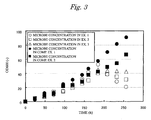
- the results of the experiments are presented in Figs. 3 and 4 . As a result, it was possible to lower the microbe concentration to an OD600 of about 20, and stably maintain the transmembrane pressure. In other words, effective membrane washing was possible under controlled microbe concentrations.
- a continuous fermentation test for D-lactic acid was conducted in the same manner as in Example 1, except that the high-temperature water for backwashing was used for the continuous fermentation from hour 200 to hour 250 after being maintained at 60°C according to the temperature setting of the constant-temperature unit.
- the results are presented in Figs. 3 and 4 .
- a continuous fermentation test for D-lactic acid was conducted in the same manner as in Example 1, except that the high-temperature water for backwashing was used for the continuous fermentation from hour 200 to hour 250 after being maintained at 45°C according to the temperature setting of the constant-temperature unit.
- the results are presented in Figs. 3 and 4 .
- a continuous fermentation was performed for microbes that produce pyruvic acid, using the same membrane module used in Example 1. Specifically, the P120-5a strain (FERM P-16745) of the yeast Torulopsis glabrata was used as the pyruvic acid-producing microbes.
- a continuous fermentation test was conducted with the continuous fermentation device of Fig. 1 .
- the pyruvic acid fermentation medium of the composition presented in Table 2 was used as the fermentation medium.
- the pyruvic acid fermentation medium was used after being sterilized under high-pressure steam for 20 min at 121°C. The operation was performed under the following conditions, unless otherwise stated.
- the pyruvic acid concentration was evaluated by HPLC measurement performed under the following conditions.
- the P120-5a strain was shaken and cultured overnight in a test tube containing a 5-mL pyruvic acid fermentation medium (first preculture).
- the resulting culture medium was inoculated into a fresh pyruvic acid fermentation medium (100 mL), and shaken and cultured for 24 hours at 30°C in a 500 mL-volume Sakaguchi flask (second preculture).
- the second preculture medium was inoculated into a 1.5-L pyruvic acid fermentation medium in the continuous fermentation device shown in Fig. 1 , and the fermentor 1 was agitated with the agitator 4.
- the culture was grown for 24 hours without operating the circulation pump 8 (final preculture).
- the circulation pump 8 was operated, and the pyruvic acid fermentation medium was continuously supplied under the final-preculture operating conditions while additionally controlling the amount of the permeate through the membrane so that the amount of the culture medium in the continuous fermentation device becomes 1.5 L.
- the continuous culture produced pyruvic acid through continuous fermentation.
- the amount of the permeate through the membrane was controlled by measuring the amount of the filtrate leaving the filter pump 11, and by varying the filtrate amount through the membrane under controlled conditions. The concentrations of the product pyruvic acid and the residual glucose in the membrane-filtered culture medium were appropriately measured.
- the continuous fermentation filtration operation was performed for 250 hours.
- the membrane filtration operation was performed with the filter pump 11.
- the filtration flow amount was zero from hour 0 to hour 50, 100 mL/h from hour 50 to hour 200, and 135 mL/h from hour 200 to hour 250.
- the filtration was performed for 9 minutes in a repeated cycle, each time followed by a 1-min pause.
- the backwashing was continued from hour 50 to hour 250 of the filtration, and then for 1 min at a flow amount of 600 mL/h after 9 minutes of filtration.
- the high-temperature water used for the backwashing was prepared by charging distilled water in the constant-temperature unit and maintaining the water temperature constant.
- the high-temperature water used for the backwashing was maintained at 50°C according to the temperature setting of the constant-temperature unit, and was used for the continuous fermentation from hour 200 to hour 250. Normal temperature water was used for the backwashing in other times when the high-temperature water was not used. Since the microbe concentration in the fermentor tends to lower the filter performance when increased, the operation was performed at a microbe concentration expected to appropriately maintain the filtration rate and productivity.
- the transmembrane pressure was measured once a day with a differential pressure meter, whereas the microbe concentration was measured once a day by taking an OD600. For the OD600 measurement, a sample was first collected from the fermentor, and diluted with a physiological saline to make the sample OD600 1 or less.
- the absorbance at 600-nm wavelength was then measured with a spectrophotometer (UV-2450; Shimadzu Corporation). The measured value was multiplied by the factor used for the dilution with the physiological saline, and the product of the calculation was obtained as the sample OD600.
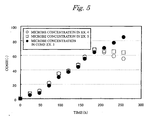
- the results of the experiments are presented in Figs. 5 and 6 . As a result, it was possible to lower the microbe concentration to an OD600 of about 55, and stably maintain the transmembrane pressure. In other words, effective membrane washing was possible under controlled microbe concentrations.
- a continuous fermentation test for pyruvic acid was conducted in the same manner as in Example 4, except that the high-temperature water for backwashing was used for the continuous fermentation from hour 200 to hour 250 after being maintained at 40°C according to the temperature setting of the constant-temperature unit.
- the results are presented in Figs. 5 and 6 .
- a continuous fermentation test for D-lactic acid was conducted in the same manner as in Example 1, without the backwashing with the high-temperature water.
- water was introduced through a medium inlet in the same amount as that used in Example 1 for the high-temperature water in the backwashing.
- the results are presented in Figs. 3 and 4 .
- the OD600 increased to about 90 after 250 hours of continuous fermentation, and it was not possible to control the microbe concentration. Further, the transmembrane pressure increased, and a stable continuous fermentation filtration operation was not possible.
- a continuous fermentation test for D-lactic acid was conducted in the same manner as in Example 1, using the high-temperature water for the backwashing after setting the backwashing water temperature to 35°C. The results are presented in Figs. 3 and 4 .
- the OD600 increased to about 70 after 250 hours of continuous fermentation, and it was not possible to control the microbe concentration. Further, the transmembrane pressure increased, and a stable continuous fermentation filtration operation was not possible.
- a continuous fermentation test for pyruvic acid was conducted in the same manner as in Example 4, except that the continuous fermentation was performed from hour 200 to hour 250 with the high-temperature water for the backwashing after setting the water temperature to 25°C according to the temperature setting of the constant-temperature unit.
- the results are presented in Figs. 5 and 6 .
- the OD600 increased to about 85 after 250 hours of continuous fermentation, and it was not possible to control the microbe concentration. Further, the transmembrane pressure increased, and a stable continuous fermentation filtration operation was not possible.
- the present invention provides a simple operation method that effectively enables washing of membrane foulants resulting from membrane filtration, and controlling microbe concentrations in a fermentor.
- the invention can also greatly improve the fermentation production efficiency both stably and inexpensively, and can reduce costs through reduction of the treatment costs resulting from a waste washing liquid and a withdrawn culture medium.
- the invention can thus stably produce fermentation products at low cost in a wide range of fermentation industries.
Landscapes
- Chemical & Material Sciences (AREA)
- Organic Chemistry (AREA)
- Life Sciences & Earth Sciences (AREA)
- Engineering & Computer Science (AREA)
- Zoology (AREA)
- Wood Science & Technology (AREA)
- Health & Medical Sciences (AREA)
- Bioinformatics & Cheminformatics (AREA)
- Chemical Kinetics & Catalysis (AREA)
- General Engineering & Computer Science (AREA)
- Biochemistry (AREA)
- Microbiology (AREA)
- General Health & Medical Sciences (AREA)
- Genetics & Genomics (AREA)
- Biotechnology (AREA)
- General Chemical & Material Sciences (AREA)
- Biomedical Technology (AREA)
- Sustainable Development (AREA)
- Water Supply & Treatment (AREA)
- Mycology (AREA)
- Molecular Biology (AREA)
- Apparatus Associated With Microorganisms And Enzymes (AREA)
- Preparation Of Compounds By Using Micro-Organisms (AREA)
- Separation Using Semi-Permeable Membranes (AREA)
- Micro-Organisms Or Cultivation Processes Thereof (AREA)
Abstract
Description
- The present invention relates to a method for producing chemicals through continuous fermentation using a separation membrane.
- Separation membranes have been used in a wide range of fields, including the field of water treatment such as drinking water production, water purification, and waste water treatment, the field of drug production, and the food industry, and also have application in the field of fermentation. In the field of water treatment such as drinking water production, water purification, and waste water treatment, separation membranes are used for the removal of water impurities as an alternative means of the conventional sand filtration and coagulation sedimentation. The waste water treatment and the food industry widely employ the separation membrane technique in which large quantities of high-concentration waste water or feedstock are charged into a processing vessel and treated while maintaining the microbes at high concentration, because the technique offers a high removal ratio and produces a high-purity liquid.
- In such fields including the field of water treatment and the food industry using separation membranes, there is a need to improve the permeation performance for cost reduction. To this end, for example, there have been attempts to reduce the membrane area with the use of a separation membrane that excels in permeation performance, and to downsize the device, thereby reducing the facility cost, the membrane replacement cost, and the installation area. For cost considerations, a hollow fiber membrane having a wide filter area per installation area has attracted interest.
- In recent years, continuous production methods that involve culturing of microbes and cultured cells have been actively proposed. In this technique, microbes or cultured cells are filtered through a separation membrane, and the separated microbes or cultured cells are retained or refluxed in the culture medium simultaneously when collecting the product from the filtrate. In this way, the technique can maintain high microbe or cell concentrations in the culture medium. For example,
Patent Document 1 proposes increasing productivity by improving microbe or cell concentrations in a culture medium and maintaining high concentrations in a continuous fermentation performed with a separation membrane. - Despite the active studies of the separation membrane technique for microbe culture and microbes separation, the treatment of a biological liquid to be treated such as a culture medium through membrane separation involves serious fouling of the membrane by the microbes, sugar, protein, lipid, or the like contained in the liquid to be treated. This is problematic because it quickly deteriorates the membrane permeation flux.
- Another problem of the separation membrane technique for microbe culture and microbes separation is the control of microbe proliferation. The membrane separation using the membrane filter can maintain high microbe or cell concentrations, and can thus produce products at high production rates with large numbers of microbes. However, increasing the fermentation time to take advantage of the continuous fermentation allows the microbes to continuously proliferate, and excessively increases the microbe concentration, thereby increasing the transmembrane pressure. One possible solution is to draw out some of the microbes during the operation and control the microbe concentration. However, this may cause a problem in the treatment of the withdrawn microbes, or may increase the possibility of contamination with the other microbes in the fermentor during or after the microbes are drawn out.
- In common membrane separation processes, a membrane surface is washed on a regular or irregular basis to remove the materials adhered or adsorbed to the membrane surface (for example, SS (Suspended Solid) adhered to the membrane surface) and retain the filter performance. For example,
Patent Document 2 proposes washing a membrane by the scheduled reverse permeation of permeate from the permeate side to maintain the filter performance.Patent Document 3 proposes performing filtration while washing a membrane surface with air supplied from below a filtration unit.Patent Document 4 proposes a method for chemical cleaning of a filtration unit to enable washing of a membrane surface that cannot be washed by the methods disclosed inPatent Documents - Among the other techniques considered possible include: a technique that increases the washing effect by using high-temperature water as the backwashing water when conducting the backwashing using permeate (Patent Document 5); a separation membrane washing operation technique that involves a concentration step, a membrane separation step, and a warm-water washing step (Patent Document 6); and a separation membrane washing method that uses hot water and a hydrolase (Patent Document 7). However, it is difficult with these methods to control microbe proliferation, and the hydrolase is expensive and directly adds cost.
-
- Patent Document 1:
WO2007/097260 - Patent Document 2:
JP-A-8-141375 - Patent Document 3:
JP-A-2001-38177 - Patent Document 4:
JP-A-2002-126470 - Patent Document 5:
JP-A-2008-289959 - Patent Document 6: Japanese Patent No.
3577992 - Patent Document 7:
JP-A-2006-314883 - As described above, the conventional techniques do not address problems such as the complicated washing step, treatment of the waste liquid generated by the washing, and retention of filter performance and the control of the excessive microbe concentrations for the high-concentration culturing of microbes. Accordingly, there is a need for the development of a membrane filter operation method for retaining filter performance, and a method for controlling microbe concentrations.
- It is an object of the present invention to provide a backwashing method capable of retaining filter performance for the high-concentration culturing of a microbe mixture, and at the same time controlling microbe concentrations in the production and collection of a product through fermentation using a separation membrane.
- The present invention can solve the foregoing problems with the following configurations (1) to (5).
- (1) A method for producing chemicals through continuous fermentation, the method including washing a membrane with a washing liquid supplied from a permeate side of a membrane unit in a continuous fermentation that includes: filtering a culture medium containing a fermentation feedstock, a chemical and a microbe or a cultured cell through a separation membrane; collecting the chemical from a filtrate; retaining or refluxing unfiltered remains in the culture medium; and adding a fermentation feedstock to the culture medium,
in which the washing liquid is high-temperature water having a temperature higher than a temperature of the culture medium and of 150°C or less, and a concentration of the microbe in a fermenter is controlled by supplying the washing liquid. - (2) The method for producing chemicals through continuous fermentation according to (1), in which the washing liquid contains an oxidizing agent.
- (3) The method for producing chemicals through continuous fermentation according to (2), in which the oxidizing agent contains at least one selected from the group consisting of hypochlorite, chlorine dioxide, ozone, and hydrogen peroxide.
- (4) The method for producing chemicals through continuous fermentation according to (1), in which the washing liquid contains a pH adjuster.
- (5) The method for producing chemicals through continuous fermentation according to (1), in which the washing liquid contains the fermentation feedstock.
- The present invention has advantages in the continuous fermentation operation performed to filter a fermentation culture medium with a separation membrane and to remove the chemical-containing permeate while continuously retaining the unfiltered remains in a fermentor. Specifically, the invention effectively enables washing of membrane foulants resulting from membrane filtration, and control of microbe concentrations in a fermentor. The invention can also greatly improve the fermentation production efficiency both stably and inexpensively, and can prevent generation of a waste washing liquid and a withdrawn culture medium, making it possible to reduce costs through reduction of the treatment cost. The invention can thus stably produce fermentation products at low cost in a wide range of fermentation industries.
-
- [
Fig. 1] Fig. 1 is a schematic side view explaining an example of a membrane separation continuous fermentation device used in the present invention. - [
Fig. 2] Fig. 2 is a diagram representing the method and the procedure of the backwashing performed with a membrane module in the present invention. - [
Fig. 3] Fig. 3 is a diagram representing changes in microbe concentration over time in continuous fermentation filtration experiments according to Examples 1 to 3 and Comparative Examples 1 and 2. - [
Fig. 4] Fig. 4 is a diagram representing changes in transmembrane pressure over time in continuous fermentation filtration experiments according to Examples 1 to 3 and Comparative Examples 1 and 2. - [
Fig. 5] Fig. 5 is a diagram representing changes in microbe concentration over time in continuous fermentation filtration experiments according to Examples 4 and 5 and Comparative Example 3. - [
Fig. 6] Fig. 6 is a diagram representing changes in transmembrane pressure over time in continuous fermentation filtration experiments according to Examples 4 and 5 and Comparative Example 3. - The present invention is a method for operating a continuous fermentation device in a continuous fermentation that uses a membrane module for filtration and in which the chemical-containing permeate is drawn out while continuously retaining the unfiltered remains in a fermentor. The method includes washing the membrane with high-temperature water supplied from the permeate side of the membrane module, and controlling the high-temperature water supply conditions according to the microbe concentration in the fermentor.
- The separation membrane used for the membrane module of the present invention may be an organic membrane or an inorganic membrane, provided that it has chemical resistance. Examples thereof include polyvinylidene fluoride, polysulfone, polyethersulfone, polytetrafluoroethylene, polyethylene, polypropylene, and ceramic membranes.
- The separation membrane used in the present invention is preferably a porous membrane having an average pore size of 0.01 µm or more and less than 1 µm. The separation membrane may have any shape, and may be, for example, a flat membrane, or a hollow fiber membrane.
- The surface average pore size of the separation membrane is determined from the number average obtained by the measurement of randomly selected 20 pore diameters in a photograph of a membrane surface taken at 60,000x magnification with a scanning electron microscope. When the pores are not circular, the surface average pore size is determined by using a method in which the diameter of a circle (equivalent circle) having the same area as the pore, determined with a device such as an image processing device is used as the pore diameter.
- In a preferred embodiment of the present invention, the separation membrane may be used to perform filtration over a transmembrane pressure of 0.1 to 20 kPa.
- The membrane module of the present invention is not particularly limited, as long as it is made from materials having excellent heat resistance, and is shaped to allow high-temperature water to be injected toward the feed side from the permeate side of the module.
- The feedstock for the fermentation of microbes and cultured cells used in the present invention is not particularly limited, as long as it can promote growth of the microbes to be fermentation-cultured or cultured cells to be fermentation-cultured, and can desirably produce chemicals as the intended products of the fermentation. Preferred examples of the fermentation feedstock include common liquid media that appropriately contain a carbon source, a nitrogen source, inorganic salts, and, as necessary, trace amounts of organic nutrients such as amino acids and vitamins. It is also possible to use, for example, wastewater or sewage, either directly or with the fermentation feedstock, provided that it is a liquid that partly contains materials that can promote growth of the microbes to be fermentation-cultured or cultured cells to be fermentation-cultured, and can desirably produce chemicals as the intended products of the fermentation.
- Examples of the carbon source include sugars such as glucose, sucrose, fructose, galactose, and lactose; starches and starch hydrolysates containing such sugars; sweet potato syrup; sugar beet syrup; cane juice; extracts or concentrates of sugar beet syrup or cane juice; filtrates of sugar beet syrup or cane juice; raw sugars purified or crystallized from a syrup (high-test molasses), a sugar beet syrup, or a cane juice; white sugars purified or crystallized from a sugar beet or a cane juice; organic acids such as acetic acid and fumaric acid; alcohols such as ethanol; and glycerine. As used herein, sugars refer to the first polyalcohol oxidation products, and carbohydrates having one aldehyde group or one ketone group, classified as aldose in the case of the aldehyde group, or ketose in the case of the ketone group.
- Examples of the nitrogen source include ammonium salts, urea, nitrates, and other organic nitrogen sources used as supplements. Other examples include oil meals, soybean hydrolysates, decomposed caseins, other amino acids, vitamins, corn steep liquor, yeasts or yeast extracts, meat extracts, peptides such as peptone, and various fermentative microbes and hydrolysates thereof.
- Materials, for example, such as phosphates, magnesium salts, calcium salts, iron salts, and manganese salts may be appropriately used as the inorganic salts.
- In the present invention, the microbe fermentation culture is brought to an appropriate pH and temperature according to the microbe species and the product productivity. Typically, the microbe fermentation culture is set to a pH of 4 to 8, and a temperature of 15 to 65°C. The pH of the fermentation culture medium is adjusted to a preset value of the foregoing range with materials such as inorganic acid or organic acid, alkaline substance, urea, calcium hydroxide, calcium carbonate, and ammonia.
- The oxygen supply rate for the culture needs to be increased, this may be achieved by using various methods, including, for example, increasing the aeration amount, increasing the oxygen concentration by addition of oxygen to air, applying pressure to the fermentation culture medium, and increasing the agitation rate. On the other hand, if the oxygen supply rate needs to be lowered, this may be achieved by decreasing the aeration amount, or by supplying gases such as carbon dioxide gas, and oxygen-free gases such as nitrogen and argon with air.
- In the present invention, the fermentation culture medium containing microbes or cultured cells is preferably drawn out in an amount appropriately adjusted according to the OD600 or MLSS (Mixed Liquor Suspended Solid) of the fermentation culture medium, so that the concentration of the microbes or cultured cells does not decrease and lower the productivity of the fermentation product.
- Typically, the continuous culture procedure involving proliferation of fresh microbes capable of producing fermentation products is performed preferably in a single fermentor for the purpose of culture control. However, the number of fermentors is not limited, as long as the continuous fermentation culturing method that generates products through microbe proliferation is used. More than one fermentor may be used for reasons such as a small fermentor volume. In this case, high fermentation productivity can be obtained by performing continuous culturing with a plurality of fermentors connected to one another in parallel or in series.
- Eukaryotic cells or prokaryotic cells are used as the microbes and cultured cells used in the present invention. Specifically, those commonly used in the fermentation industry are used, including, for example, fungi such as yeasts and filamentous fungi, microbes such as Escherichia coli, lactic acid bacteria, coryneform bacteria, and actinomycete, and animal cells and insect cells. The bacteria and cells may be those isolated from natural environment, or those with partially modified properties through mutation or genetic recombination.
- The chemicals obtained by the production method of the present invention are substances produced by the microbes or cultured cells in the fermentation culture medium. Examples of the chemicals include substances mass produced in the fermentation industry, including, for example, alcohols, organic acids, amino acids, and nucleic acids. The present invention is also applicable to production of substances such as enzymes, antibiotics, and recombinant proteins. Examples of the alcohols include ethanol, 1,3-butanediol, 1,4-butanediol, and glycerol. Examples of the organic acids include acetic acid, lactic acid, pyruvic acid, succinic acid, malic acid, itaconic acid, and citric acid. Examples of the nucleic acids include inosine, guanosine, and cytidine.
- The chemicals obtained by the production method of the present invention are preferably liquid products that contain at least one selected from chemical products, dairy products, drug products, and food or brewed products. Examples of the chemical products include substances, such organic acids, amino acids, and nucleic acids, that are applicable to chemical production through steps following the filtration by membrane separation. Examples of the dairy products include substances, such as low-fat milk, applicable to dairy production through steps following the filtration by membrane separation. Examples of the drug products include substances, such as enzymes, antibiotics, and recombinant proteins, applicable to drug production through steps following the filtration by membrane separation. Examples of the food include substances, such as lactic acid drinks, applicable to food production through steps following the filtration by membrane separation. Examples of the brewed products include substances, such as beer and shochu (distilled spirit), applicable to alcohol-containing drink production through steps following the filtration by membrane separation.
- In the present invention, the transmembrane pressure for the filtration of the fermentation culture medium of microbes and cultured cells with the separation membrane of the membrane module is not limited, as long as the filtration proceeds under the conditions that do not easily allow the microbes, the cultured cells, and the medium components to clog the membrane. It is, however, important that the filtration is performed at a transmembrane pressure of 0.1 kPa to 20 kPa. The transmembrane pressure is preferably 0.1 kPa to 10 kPa, more preferably 0.1 kPa to 5 kPa. A transmembrane pressure outside these ranges may cause troubles in the continuous fermentation operation since the microbes and medium components easily clog the membrane, and lower the amounts of permeate.
- The driving force of filtration may be provided by a liquid level difference (water head difference), or by the transmembrane pressure generated across the separation membrane with a cross-flow circulation pump. Alternatively, a suction pump may be installed on the permeate side of the separation membrane to provide a driving force of filtration. When a cross-flow circulation pump is used, the transmembrane pressure may be controlled with suction pressure. The transmembrane pressure also may be controlled by the pressure of the gas or the liquid that introduces pressure for the fermentation culture medium side. For the pressure control, the pressure difference between the pressure on the fermentation culture medium side and the pressure on the separation membrane permeate side may be used as the transmembrane pressure for the control of transmembrane pressure.
- The present invention uses high-temperature water that has a membrane washing effect, and that can reduce the microbe concentration. The high-temperature water is set to a temperature higher than the culture medium temperature and of 150°C or less. Preferably, the high-temperature water has a
temperature 5°C or more higher than the culture medium temperature and less than 100°C, more preferably a temperature at least 10°C higher than the culture temperature and less than 100°C. Temperatures below the culture medium temperature make it difficult to control microbe concentrations in the continuous fermentation. On the other hand, if the temperature exceeds 150°C, a very high pressure needs to be applied to maintain the high-temperature water in the liquid state. Temperatures in these ranges are therefore not practical. The backwashing using the high-temperature water may use water having a higher temperature than in the foregoing conditions. However, since it raises the possibility of rapidly killing large numbers of microbes in a manner that depends on the microbes characteristics, it is desirable to measure the temperature-dependent kill rate of the microbes in advance. - As used herein, backwashing refers to a method in which liquid is sent from the permeate side to the feed side of the separation membrane, thereby removing the foulants from the membrane surface.
- The high-temperature water used as the backwashing liquid is not particularly limited, as long as it is not contaminated by microbes, and does not contain substances that have the risk of membrane fouling.
- The high-temperature water may be supplied using a constant-temperature unit, or using a heater provided for a water supply pipe. It is preferable to check the temperature of the high-temperature water with a thermometer, and to control the temperature within ± 1°C of the preset temperature.
- The supply rate of the high-temperature water is desirably 1 to 3 times the permeation flux of the membrane, or may be set to a more appropriate rate taking into account such factors as the microbe concentration, and the membrane washing effect.
- The high-temperature water of the present invention may contain washing agents, specifically, oxidizing agents such as sodium hypochlorite, chlorine dioxide, ozone and hydrogen peroxide, and pH adjusters such as sodium hydroxide, calcium hydroxide, hydrochloric acid and sulfuric acid, provided that such addition does not inhibit the effects of the present invention. Further, high-temperature water containing a fermentation feedstock may be used in order to prevent the concentration of the fermentation feedstock in the culture medium from being lowered.
- In the present invention, a liquid is sent from the permeate side to the feed side of the membrane module while maintaining the temperature of the backwashing liquid high, thereby washing the membrane and controlling the microbe concentration. When the high-temperature backwashing liquid is water, the high-temperature water makes it easier to detach the adhered materials from the separation membrane, and the proliferation of the microbes is halted by contacting with the high-temperature water.
- It is considered that the high-temperature water helps detachment of the adhered substances from the separation membrane, and, when the substance adhered to the membrane is a carbohydrate-derived substance, the high-temperature water creates an environment where the adhered substance can easily be dissolved. The substance adhered to the membrane can thus dissolve into the high-temperature water. On the other hand, when the substance adhered to the membrane is a protein-derived substance, the high-temperature water denatures the protein and changes the characteristics of the membrane adhesion, making it easier to detach the substance from the membrane.
- When the high-temperature water is one that contains the washing agent, detachment from the membrane can be promoted by the components derived from the substances adhered to the membrane. For example, sodium hypochlorite as an example of the washing agent is a strong oxidizing agent, and, when it is used as a high-temperature oxidizing agent for the backwashing, the oxidation effect of the carbohydrate-derived substances adhered to the membrane is promoted, thereby obtaining a higher membrane washing effect than that provided by the high-temperature water alone. On the other hand, sodium hydroxide and calcium hydroxide as examples of the washing agent are strong alkaline agents, and, when they are used as a high-temperature alkali for the backwashing, the denature effect of the protein-derived substance adhered to the membrane is promoted, thereby obtaining a higher membrane washing effect than that provided by the high-temperature water alone. Note that, although these strong oxidizing agents and the strong alkaline agents used at high temperatures allow for the control of microbe proliferation, the addition of the high-temperature water may pose the risk of deactivating the microbes or rapidly increasing the kill rate of the microbes when the concentration exceeds a certain range. It is therefore important that the washing agent be used in a concentration range that allows for the membrane washing and the control of microbe concentrations.
- In present invention, using the washing agent in the range that does not inhibit the effects of the present invention means using preferably, for example, a washing liquid having an effective chlorine concentration of 1 to 5,000 ppm in the case of sodium hypochlorite, and preferably, for example, a washing liquid having a pH of 10 to 13 in the case of sodium hydroxide and calcium hydroxide. Concentrations above this range have possible damage to the separation membrane or possible adverse effects on the microbes. Concentrations below this range raise concerns over the lowering of the membrane washing effect.
- The backwashing cycle of the high-temperature water used as the backwashing liquid may be determined from the transmembrane pressure and from changes in transmembrane pressure. The backwashing cycle is in a range from 0.1 to 12 cycles/hour, more preferably 3 to 6 cycles/hour. A backwashing cycle above these ranges has the possible risk of deactivating the microbes upon adding the high-temperature water or rapidly increasing the microbe kill rate. Below these ranges, the washing effect and the microbe control effect may not be obtained sufficiently.
- The backwashing time for the high-temperature water used as the backwashing liquid may be determined from the backwashing cycle, the transmembrane pressure, and changes in the transmembrane pressure. The backwashing time is in a range from 5 to 300 seconds/cycle, more preferably 30 to 180 seconds/cycle. A backwashing time above these ranges has the possible risk of deactivating the microbes upon adding the high-temperature water or rapidly increasing the microbe kill rate. Below these ranges, the washing effect and the microbe control effect may not be obtained sufficiently.
- The pipes and valves used for a constant-temperature tank, a high-temperature water backwash pump, and between a constant-temperature tank and the module may be selected from those having excellent heat resistance. The high-temperature water may be injected either manually, or, more desirably, automatically by controlling a filter pump and a filter valve, and a high-temperature water backwash pump and a high-temperature water backwash valve by using a filtration and backwash control unit, using a timer or the like.
- The present invention requires monitoring microbe concentrations for the control of the microbe concentration in the fermentor. Microbe concentrations may be measured by collecting a sample. However, it is more desirable to continuously monitor the changes in microbe concentration by using a microbe concentration sensor, for example, such as an MLSS measurement device, installed in the fermentor.
- The continuous fermentation device used in the present invention is described below with reference to the accompanying drawings.
-
Fig. 1 is a schematic side view explaining an example of a continuous fermentation device used in the method of supplying high-temperature water of the present invention. The continuous fermentation device depicted inFig. 1 is a representative example in which the separation membrane module is installed outside of the fermentor. InFig. 1 , the continuous fermentation device is basically configured from afermentor 1, aseparation membrane module 2, and a high-temperature water supply unit. Large numbers of hollow fiber membranes are incorporated in theseparation membrane module 2. A normal-temperature water supply unit is configured from a normal-temperaturewater backwash pump 13 and a normal-temperaturewater backwash valve 16. The high-temperature water supply unit is configured from a high-temperaturewater backwash pump 12 and a high-temperaturewater backwash valve 15. A filter unit is configured from afilter pump 11 and afilter valve 14. The separation membrane module and the high-temperature water supply unit will be described later in detail. Theseparation membrane module 2 is connected to thefermentor 1 via acirculation pump 8. - In
Fig. 1 , a level sensor-control unit 6 and amedium supply pump 9 can charge a medium into thefermentor 1 to control the liquid level in the fermentor, and, as required, anagitator 4 can agitate the culture medium in thefermentor 1. Thegas supply unit 17 can supply the necessary gas, as required. Here, the supplied gas may be resupplied by thegas supply unit 17 after being collected and recycled. Further, as required, a pH sensor-control unit 5 and a pHadjuster supply pump 10 can adjust the pH of the fermentation culture medium to produce fermentation products at high productivity. - In the device, the
circulation pump 8 circulates the fermentation culture medium between thefermentor 1 and theseparation membrane module 2. The fermentation culture medium containing the fermentation product can be drawn out from the device after being filtered and separated into the microbes and the fermentation product with theseparation membrane module 2. The separated microbes remain in the device, and can thus be maintained at high concentrations therein, making it possible to produce fermentation products at high productivity. The filtration and separation by theseparation membrane module 2 may be performed by using the pressure of thecirculation pump 8, without requiring a special power. However, afilter pump 11 may be optionally provided, and a differential pressure sensor-control unit 7 may be used to appropriately adjust the filtrate amount. As required, atemperature control unit 3 may be used to maintain the temperature of thefermentor 1 constant, and maintain high microbe concentrations. - The high-temperature water supply unit used in the method of supplying high-temperature water in the present invention is configured from the high-temperature
water backwash pump 12 and the high-temperaturewater backwash valve 15. The high-temperature water may be introduced while monitoring microbe concentrations. - The control in the operation method of the present invention is performed according to the procedure represented in
Fig. 2 . - The procedure starts with the membrane filtration of the culture medium, and changes in microbe concentration and transmembrane pressure are monitored. The microbe concentration is checked when the transmembrane pressure increased as a result of membrane foulants in the membrane filtration, and backwashing is performed with the high-temperature water when the concentration exceeds the expected microbe concentration.
- The microbe concentration is checked upon an increase of the transmembrane pressure, and, when the concentration is below the expected microbe concentration, backwashing is performed with the normal-temperature water having a temperature no greater than the culture temperature.
- Following the membrane washing with the high-temperature water or with the normal-temperature water of a temperature no greater than the culture temperature, the transmembrane pressure is checked, and the washing effect is confirmed. When the transmembrane pressure exceeds the expected reference transmembrane pressure, the microbe concentration is checked again. The backwashing may be stopped when the transmembrane pressure is below the expected reference transmembrane pressure. The expected reference transmembrane pressure may be determined by the properties of the separation membrane, and the properties of the separation membrane module.
- The backwashing performed with the high-temperature water in the manner described above makes it possible to wash foulants on the separation membrane without generating a waste liquid, and to control the concentration of the microbes proliferated in excess. The high-temperature water supply method that enables the retention of the filter performance and the control of microbe concentrations can be performed to improve the filter performance of the membrane module and to enable a stable filtration operation over extended time periods in the filtration of a microbe culture medium.
- First, the membrane module was fabricated. The hollow fiber membrane used for the fabrication of the membrane module was prepared by disassembling the Toray pressure polyvinylidene fluoride hollow fiber membrane module HFS 1020, and cutting out only the portion of the polyvinylidene fluoride hollow fiber membrane not attached and fixed to the module. A molded product of polycarbonate resin was used as a separation membrane module member. The membrane module had a volume of 0.06 L, and an effective filter area of 200 cm2. The porous hollow fiber membrane and the membrane module so fabricated were used to perform a continuous fermentation. The operation conditions used in Example 1 are as follows, unless otherwise stated.
-
- Fermentor volume: 2.0 L
- Fermentor effective volume: 1.5 L
- Separation membrane used: Polyvinylidene fluoride hollow fiber membrane (60 fibers)
- Adjusted temperature: 37°C
- Aeration amount through fermentor: 0.2 L/min
- Fermentor agitation rate: 600 rpm
- Adjusted pH: pH 6 with 3N NaOH
- Lactic acid fermentation medium supply rate: Variably controlled in a 15 to 300 mL/hr range
- Liquid circulation amount by culture medium circulator: 3.5 L/min
- Control of membrane filter flow amount: Flow amount was controlled with a suction pump
- Sterilization: Fermentor and medium, including membrane module were all sterilized under high-temperature steam with an autoclave for 20 minutes at 121 °C.
- Sprolactobacillus laevolacticus JCM2513 (SL strain) was used as microbes, and the lactic acid fermentation medium of the composition presented in Table 1 was used as the medium. The concentration of the product lactic acid was evaluated under the following conditions, using the HPLC below.
-
Table 1 Lactic acid fermentation medium Components Concentration Glucose 100 g/L Yeast Nitrogen base w/o amino acid (Difco) 6.7 g/L Standard 19 amino acids excluding leucine 152 mg/L Leucine 760 mg/L Inositol 152 mg/L p- Aminobenzoic acid 16 mg/ L Adenine 40 mg/L Uracil 152 mg/L -
- Column: Shim-Pack SPR-H (Shimadzu)
- Mobile phase: 5 mM p-toluene sulfonic acid (0.8 mL/min)
- Reaction phase: 5 mM p-toluene sulfonic acid, 20 mM bistris, 0.1 mM EDTA·2Na (0.8 mL/min)
- Detection method: Electrical conductivity
- Column temperature: 45°C
- Column: TSK-gel Enantio L1 (Tosoh)
- Mobile phase: 1 mM copper sulfate aqueous solution
- Flow amount: 1.0 mL/min
- Detection method: UV 254 nm
- Temperature: 30°C
-

The optical purity of the D-lactic acid is calculated according to the following equation (ii). -

- For culturing, the SL strain was shaken and cultured overnight in a test tube containing a 5-mL lactic acid fermentation medium (first preculture). The resulting culture medium was inoculated into a fresh lactic acid fermentation medium (100 mL), and shaken and cultured for 24 hours at 37°C in a 500 mL-volume Sakaguchi flask (second preculture). The second preculture medium was inoculated into a medium in a 1.5-L fermentor of the continuous fermentation device shown in
Fig. 1 , and agitated with theagitator 4. After adjusting the aeration amount through thefermentor 1, and the temperature and pH, the culture was grown for 50 hours without operating the circulation pump 8 (final preculture). Immediately after the final preculture, thecirculation pump 8 was operated, and the lactic acid fermentation medium was continuously supplied under the final-preculture operating conditions while additionally controlling the amount of the permeate through the membrane so that the amount of the culture medium in the membrane separation continuous fermentation device becomes 1.5 L. The continuous culture produced D-lactic acid through continuous fermentation. In the continuous fermentation test, the amount of the permeate through the membrane was controlled by measuring the amount of the filtrate leaving thefilter pump 11, and by varying the filtrate amount through the membrane under controlled conditions. The product D-lactic acid in the membrane-filtered culture medium was appropriately measured for concentration and optical purity. - The continuous fermentation filtration operation was performed for 250 hours. The membrane filtration operation was performed with the
filter pump 11. The filtration flow amount was zero fromhour 0 tohour hour 50 tohour 200, and 135 mL/h fromhour 200 tohour 250. The filtration was performed for 9 minutes in a repeated cycle, each time followed by a 1-min pause. The backwashing was continued fromhour 50 tohour 250 of the filtration, and then for 1 min at a flow amount of 600 mL/h after 9 minutes of filtration. The high-temperature water used for the backwashing was prepared by charging distilled water in the constant-temperature unit and maintaining the water temperature constant. The high-temperature water used for the backwashing was maintained at 90°C according to the temperature setting of the constant-temperature unit, and was used for the continuous fermentation fromhour 200 tohour 250. Normal temperature water was used for the backwashing in other times when the high-temperature water was not used. Since the microbe concentration in the fermentor tends to lower the filter performance when increased, the operation was performed at a microbe concentration expected to appropriately maintain the filtration rate and productivity. The transmembrane pressure was measured once a day with a differential pressure meter, whereas the microbe concentration was measured once a day by taking an OD600. For the OD600 measurement, a sample was first collected from the fermentor, and diluted with a physiological saline to make thesample OD600 1 or less. The absorbance at 600-nm wavelength was then measured with a spectrophotometer (UV-2450; Shimadzu Corporation). The measured value was multiplied by the factor used for the dilution with the physiological saline, and the product of the calculation was obtained as the sample OD600. The results of the experiments are presented inFigs. 3 and4 . As a result, it was possible to lower the microbe concentration to an OD600 of about 20, and stably maintain the transmembrane pressure. In other words, effective membrane washing was possible under controlled microbe concentrations. - A continuous fermentation test for D-lactic acid was conducted in the same manner as in Example 1, except that the high-temperature water for backwashing was used for the continuous fermentation from
hour 200 tohour 250 after being maintained at 60°C according to the temperature setting of the constant-temperature unit. The results are presented inFigs. 3 and4 . As a result, it was possible to lower the microbe concentration to an OD600 of about 30, and stably maintain the transmembrane pressure. In other words, effective membrane washing was possible under controlled microbe concentrations. - A continuous fermentation test for D-lactic acid was conducted in the same manner as in Example 1, except that the high-temperature water for backwashing was used for the continuous fermentation from
hour 200 tohour 250 after being maintained at 45°C according to the temperature setting of the constant-temperature unit. The results are presented inFigs. 3 and4 . As a result, it was possible to lower the microbe concentration to an OD600 of about 40, and stably maintain the transmembrane pressure. In other words, effective membrane washing was possible under controlled microbe concentrations. - A continuous fermentation was performed for microbes that produce pyruvic acid, using the same membrane module used in Example 1. Specifically, the P120-5a strain (FERM P-16745) of the yeast Torulopsis glabrata was used as the pyruvic acid-producing microbes.
- A continuous fermentation test was conducted with the continuous fermentation device of
Fig. 1 . The pyruvic acid fermentation medium of the composition presented in Table 2 was used as the fermentation medium. The pyruvic acid fermentation medium was used after being sterilized under high-pressure steam for 20 min at 121°C. The operation was performed under the following conditions, unless otherwise stated. -
Table 2 Pyruvic acid fermentation medium Components Concentration Glucose 100 g/L Ammonium sulfate 5 g/L Potassium dihydrogenphosphate 1 g/L Magnesium sulfate heptahydrate 0.5 g/L Soy hydrolysate 2 g/ L Nicotinic acid 8 mg/L Pyridoxine· hydrochloride 1 mg/L Biotin 0.05 mg/L Thiamine-hydrochloride 0.05 mg/L * pH = 5.5 -
- Fermentor volume: 2.0 L
- Fermentor effective volume: 1.5 L
- Separation membrane: Polyvinylidene fluoride hollow fiber membrane (60 fibers)
- Adjusted temperature: 30°C
- Aeration amount through fermentor: 1.5 L/min
- Fermentor agitation rate: 800 rpm
- Adjusted pH: pH 5.5 with 4N NaOH
- Pyruvic acid fermentation medium supply rate: Variably controlled in a 15 to 300 mL/hr range
- Liquid circulation amount with culture medium circulator: 3.5 L/min
- Control of membrane filtration flow amount: Flow amount was controlled with a suction pump
- Sterilization: Fermentor and medium, including membrane module were all sterilized under high-temperature steam with an autoclave for 20 minutes at 121°C.
- The pyruvic acid concentration was evaluated by HPLC measurement performed under the following conditions.
- Column: Shim-Pack SPR-H (Shimadzu)
- Mobile phase: 5 mM p-toluene sulfonic acid (flow amount 0.8 mL/min)
- Reaction liquid: 5 mM p-toluene sulfonic acid, 20 mM bistris, 0.1 mM EDTA·2Na (flow amount 0.8 mL/min)
- Detection method: Electrical conductivity
- Temperature: 45°C
- For culturing, the P120-5a strain was shaken and cultured overnight in a test tube containing a 5-mL pyruvic acid fermentation medium (first preculture). The resulting culture medium was inoculated into a fresh pyruvic acid fermentation medium (100 mL), and shaken and cultured for 24 hours at 30°C in a 500 mL-volume Sakaguchi flask (second preculture). The second preculture medium was inoculated into a 1.5-L pyruvic acid fermentation medium in the continuous fermentation device shown in
Fig. 1 , and thefermentor 1 was agitated with theagitator 4. After adjusting the aeration amount through thefermentor 1, and the temperature and pH, the culture was grown for 24 hours without operating the circulation pump 8 (final preculture). Immediately after the final preculture, thecirculation pump 8 was operated, and the pyruvic acid fermentation medium was continuously supplied under the final-preculture operating conditions while additionally controlling the amount of the permeate through the membrane so that the amount of the culture medium in the continuous fermentation device becomes 1.5 L. The continuous culture produced pyruvic acid through continuous fermentation. In the continuous fermentation test, the amount of the permeate through the membrane was controlled by measuring the amount of the filtrate leaving thefilter pump 11, and by varying the filtrate amount through the membrane under controlled conditions. The concentrations of the product pyruvic acid and the residual glucose in the membrane-filtered culture medium were appropriately measured. - The continuous fermentation filtration operation was performed for 250 hours. The membrane filtration operation was performed with the
filter pump 11. The filtration flow amount was zero fromhour 0 tohour hour 50 tohour 200, and 135 mL/h fromhour 200 tohour 250. The filtration was performed for 9 minutes in a repeated cycle, each time followed by a 1-min pause. The backwashing was continued fromhour 50 tohour 250 of the filtration, and then for 1 min at a flow amount of 600 mL/h after 9 minutes of filtration. The high-temperature water used for the backwashing was prepared by charging distilled water in the constant-temperature unit and maintaining the water temperature constant. The high-temperature water used for the backwashing was maintained at 50°C according to the temperature setting of the constant-temperature unit, and was used for the continuous fermentation fromhour 200 tohour 250. Normal temperature water was used for the backwashing in other times when the high-temperature water was not used. Since the microbe concentration in the fermentor tends to lower the filter performance when increased, the operation was performed at a microbe concentration expected to appropriately maintain the filtration rate and productivity. The transmembrane pressure was measured once a day with a differential pressure meter, whereas the microbe concentration was measured once a day by taking an OD600. For the OD600 measurement, a sample was first collected from the fermentor, and diluted with a physiological saline to make thesample OD600 1 or less. The absorbance at 600-nm wavelength was then measured with a spectrophotometer (UV-2450; Shimadzu Corporation). The measured value was multiplied by the factor used for the dilution with the physiological saline, and the product of the calculation was obtained as the sample OD600. The results of the experiments are presented inFigs. 5 and6 . As a result, it was possible to lower the microbe concentration to an OD600 of about 55, and stably maintain the transmembrane pressure. In other words, effective membrane washing was possible under controlled microbe concentrations. - A continuous fermentation test for pyruvic acid was conducted in the same manner as in Example 4, except that the high-temperature water for backwashing was used for the continuous fermentation from
hour 200 tohour 250 after being maintained at 40°C according to the temperature setting of the constant-temperature unit. The results are presented inFigs. 5 and6 . As a result, it was possible to lower the microbe concentration to an OD600 of about 65, and stably maintain the transmembrane pressure. In other words, effective membrane washing was possible under controlled microbe concentrations. - A continuous fermentation test for D-lactic acid was conducted in the same manner as in Example 1, without the backwashing with the high-temperature water. However, in order to take into consideration the possible dilution of the culture medium with the high-temperature water used for the backwashing, water was introduced through a medium inlet in the same amount as that used in Example 1 for the high-temperature water in the backwashing. The results are presented in
Figs. 3 and4 . The OD600 increased to about 90 after 250 hours of continuous fermentation, and it was not possible to control the microbe concentration. Further, the transmembrane pressure increased, and a stable continuous fermentation filtration operation was not possible. - A continuous fermentation test for D-lactic acid was conducted in the same manner as in Example 1, using the high-temperature water for the backwashing after setting the backwashing water temperature to 35°C. The results are presented in
Figs. 3 and4 . The OD600 increased to about 70 after 250 hours of continuous fermentation, and it was not possible to control the microbe concentration. Further, the transmembrane pressure increased, and a stable continuous fermentation filtration operation was not possible. - A continuous fermentation test for pyruvic acid was conducted in the same manner as in Example 4, except that the continuous fermentation was performed from
hour 200 tohour 250 with the high-temperature water for the backwashing after setting the water temperature to 25°C according to the temperature setting of the constant-temperature unit. The results are presented inFigs. 5 and6 . The OD600 increased to about 85 after 250 hours of continuous fermentation, and it was not possible to control the microbe concentration. Further, the transmembrane pressure increased, and a stable continuous fermentation filtration operation was not possible. - The present invention provides a simple operation method that effectively enables washing of membrane foulants resulting from membrane filtration, and controlling microbe concentrations in a fermentor. The invention can also greatly improve the fermentation production efficiency both stably and inexpensively, and can reduce costs through reduction of the treatment costs resulting from a waste washing liquid and a withdrawn culture medium. The invention can thus stably produce fermentation products at low cost in a wide range of fermentation industries.
-
DESCRIPTION OF REFERENCE NUMERALS AND SIGNS 1 Fermentor 2 Separation membrane module 3 Temperature control unit 4 Agitator 5 pH Sensor-control unit 6 Level sensor-control unit 7 Differential pressure sensor- control unit 8 Circulation pump 9 Medium supply pump 10 pH Adjuster supply pump 11 Filter pump 12 High-temperature water backwash pump 13 Normal-temperature water backwash pump 14 Filter valve 15 High-temperature water backwash valve 16 Normal-temperature water backwash valve 17 Gas supply unit
Claims (5)
- A method for producing chemicals through continuous fermentation, the method comprising washing a membrane with a washing liquid supplied from a permeate side of a membrane unit in a continuous fermentation that includes: filtering a culture medium containing a fermentation feedstock, a chemical and a microbe or a cultured cell through a separation membrane; collecting the chemical from a filtrate; retaining or refluxing unfiltered remains in the culture medium; and adding a fermentation feedstock to the culture medium,
wherein the washing liquid is high-temperature water having a temperature higher than a temperature of the culture medium and of 150°C or less, and a concentration of the microbe in a fermenter is controlled by supplying the washing liquid. - The method for producing chemicals through continuous fermentation according to claim 1, wherein the washing liquid contains an oxidizing agent.
- The method for producing chemicals through continuous fermentation according to claim 2, wherein the oxidizing agent contains at least one selected from the group consisting of hypochlorite, chlorine dioxide, ozone, and hydrogen peroxide.
- The method for producing chemicals through continuous fermentation according to claim 1, wherein the washing liquid contains a pH adjuster.
- The method for producing chemicals through continuous fermentation according to claim 1, wherein the washing liquid contains the fermentation feedstock.
Applications Claiming Priority (2)
| Application Number | Priority Date | Filing Date | Title |
|---|---|---|---|
| JP2010205239 | 2010-09-14 | ||
| PCT/JP2011/070109 WO2012036003A1 (en) | 2010-09-14 | 2011-09-05 | Production method for chemicals by continuous fermentation |
Publications (3)
| Publication Number | Publication Date |
|---|---|
| EP2617832A1 true EP2617832A1 (en) | 2013-07-24 |
| EP2617832A4 EP2617832A4 (en) | 2015-12-23 |
| EP2617832B1 EP2617832B1 (en) | 2020-05-13 |
Family
ID=45831470
Family Applications (1)
| Application Number | Title | Priority Date | Filing Date |
|---|---|---|---|
| EP11825009.1A Active EP2617832B1 (en) | 2010-09-14 | 2011-09-05 | Production method for chemicals by continuous fermentation |
Country Status (11)
| Country | Link |
|---|---|
| US (1) | US20130323805A1 (en) |
| EP (1) | EP2617832B1 (en) |
| JP (1) | JP5803673B2 (en) |
| CN (1) | CN103168102B (en) |
| AU (1) | AU2011304167B2 (en) |
| BR (1) | BR112013006074A2 (en) |
| CA (1) | CA2811319C (en) |
| ES (1) | ES2795837T3 (en) |
| PH (1) | PH12013500478A1 (en) |
| TW (1) | TW201217519A (en) |
| WO (1) | WO2012036003A1 (en) |
Families Citing this family (4)
| Publication number | Priority date | Publication date | Assignee | Title |
|---|---|---|---|---|
| CA2783847C (en) | 2012-07-24 | 2014-09-30 | Luc Hobson | Reduced calorie beverage or food product and process and apparatus for making same |
| JP7070416B2 (en) * | 2017-06-30 | 2022-05-18 | 東レ株式会社 | Manufacturing method and equipment for chemical products by continuous fermentation |
| JP7105654B2 (en) * | 2017-09-07 | 2022-07-25 | 旭化成株式会社 | Method for filtration of culture broth using porous membrane |
| EP4511159A1 (en) * | 2022-04-20 | 2025-02-26 | Grundfos Holding A/S | Adaptive cleaning-in-place method for a membrane filtration system |
Family Cites Families (13)
| Publication number | Priority date | Publication date | Assignee | Title |
|---|---|---|---|---|
| JP3194679B2 (en) | 1994-11-22 | 2001-07-30 | ダイセル化学工業株式会社 | Cleaning method for filtration membrane module |
| JP3577992B2 (en) * | 1999-05-07 | 2004-10-20 | 栗田工業株式会社 | Membrane separation method |
| JP2001038177A (en) | 1999-07-29 | 2001-02-13 | Daicel Chem Ind Ltd | Solid-liquid separation method and separation membrane module |
| JP2002126470A (en) * | 2000-10-27 | 2002-05-08 | Daicen Membrane Systems Ltd | Method for cleaning filter membrane with liquid chemical |
| JP2006314883A (en) | 2005-05-11 | 2006-11-24 | Hitachi Plant Technologies Ltd | Separation membrane cleaning method |
| AU2007218753B2 (en) * | 2006-02-24 | 2012-08-16 | Toray Industries, Inc. | Method of producing chemical product and continuous fermentation apparatus |
| CN101553572A (en) * | 2006-02-24 | 2009-10-07 | 东丽株式会社 | Method of producing chemical product and continuous fermentation apparatus |
| JP2008099667A (en) * | 2006-09-21 | 2008-05-01 | Toray Ind Inc | Alcohol production method and production apparatus |
| JP2008199948A (en) * | 2007-02-20 | 2008-09-04 | Toray Ind Inc | Manufacturing method of continuous fermentation product |
| JP2008289959A (en) * | 2007-05-22 | 2008-12-04 | Toshiba Corp | Membrane filtration system |
| JP5287029B2 (en) * | 2007-08-22 | 2013-09-11 | 東レ株式会社 | Process for producing chemicals by continuous fermentation |
| JP5223520B2 (en) * | 2007-08-22 | 2013-06-26 | 東レ株式会社 | Process for producing chemicals by continuous fermentation |
| JP2011188791A (en) * | 2010-03-15 | 2011-09-29 | Toray Ind Inc | Method for operating continuous fermentation apparatus |
-
2011
- 2011-09-05 CN CN201180044138.6A patent/CN103168102B/en not_active Expired - Fee Related
- 2011-09-05 JP JP2011544521A patent/JP5803673B2/en not_active Expired - Fee Related
- 2011-09-05 ES ES11825009T patent/ES2795837T3/en active Active
- 2011-09-05 PH PH1/2013/500478A patent/PH12013500478A1/en unknown
- 2011-09-05 WO PCT/JP2011/070109 patent/WO2012036003A1/en not_active Ceased
- 2011-09-05 BR BR112013006074-3A patent/BR112013006074A2/en not_active Application Discontinuation
- 2011-09-05 CA CA2811319A patent/CA2811319C/en not_active Expired - Fee Related
- 2011-09-05 AU AU2011304167A patent/AU2011304167B2/en not_active Ceased
- 2011-09-05 EP EP11825009.1A patent/EP2617832B1/en active Active
- 2011-09-05 US US13/823,433 patent/US20130323805A1/en not_active Abandoned
- 2011-09-13 TW TW100132832A patent/TW201217519A/en unknown
Also Published As
| Publication number | Publication date |
|---|---|
| AU2011304167B2 (en) | 2015-05-21 |
| CN103168102A (en) | 2013-06-19 |
| JPWO2012036003A1 (en) | 2014-02-03 |
| WO2012036003A1 (en) | 2012-03-22 |
| PH12013500478A1 (en) | 2019-06-14 |
| CA2811319C (en) | 2019-01-22 |
| EP2617832B1 (en) | 2020-05-13 |
| BR112013006074A2 (en) | 2021-07-20 |
| US20130323805A1 (en) | 2013-12-05 |
| ES2795837T3 (en) | 2020-11-24 |
| EP2617832A4 (en) | 2015-12-23 |
| TW201217519A (en) | 2012-05-01 |
| CA2811319A1 (en) | 2012-03-22 |
| JP5803673B2 (en) | 2015-11-04 |
| AU2011304167A1 (en) | 2013-04-04 |
| CN103168102B (en) | 2015-07-08 |
Similar Documents
| Publication | Publication Date | Title |
|---|---|---|
| EP2330209B1 (en) | Method and apparatus for producing a chemical and continuous culture system | |
| JP2012115783A (en) | Method for washing separation membrane module for continuous fermentation and device for separating membrane for continuous fermentation | |
| US20130330792A1 (en) | Method for producing chemicals by continuous fermentation | |
| EP2657343B1 (en) | Method for producing chemical by continuous fermentation | |
| Taleghani et al. | Thin film composite nanofiltration membrane for lactic acid production in membrane bioreactor | |
| EP2617832B1 (en) | Production method for chemicals by continuous fermentation | |
| JP2011188791A (en) | Method for operating continuous fermentation apparatus | |
| JP5458479B2 (en) | Method for producing cadaverine by continuous fermentation | |
| JP2009065970A (en) | Process for producing chemicals by continuous fermentation | |
| JP2013226486A (en) | Sterilization method for separation membrane module, manufacturing method for chemical and membrane separation type continuous fermentation apparatus | |
| JP5262004B2 (en) | Process for producing lactic acid by continuous fermentation | |
| JP2011193787A (en) | Method for operating continuous fermentation apparatus | |
| JP5130826B2 (en) | Process for producing lactic acid by continuous fermentation | |
| JP2013128470A (en) | Method for sterilizing separation membrane module, method for producing chemicals, device for sterilizing separation membrane module, and membrane separation type continuous fermentation device | |
| JP2012179019A (en) | Method for producing chemical by continuous fermentation | |
| JP2013188149A (en) | Method of steam sterilization of separation membrane module, method for producing chemical by continuous fermentation and membrane separation type continuous fermentation apparatus | |
| Obondo | An investigation into process limitations in membrane bioreactor (MBR) systems used for lactic acid production | |
| JP2009171879A (en) | Method for producing lactic acid | |
| JP2012135249A (en) | Method for producing chemical by continuous fermentation | |
| JP2013188150A (en) | Method of steam sterilization of separation membrane module, method for producing chemical by continuous fermentation, apparatus for sterilization of separation membrane module and membrane separation type continuous fermentation apparatus | |
| JP2008278885A (en) | Manufacturing method of chemical products | |
| JP2010221136A (en) | Membrane separation method | |
| JP2010057389A (en) | Method for producing lactic acid | |
| JP2012210184A (en) | Method for production of chemical by continuous fermentation | |
| JP2008278884A (en) | Manufacturing method of chemical products |
Legal Events
| Date | Code | Title | Description |
|---|---|---|---|
| PUAI | Public reference made under article 153(3) epc to a published international application that has entered the european phase |
Free format text: ORIGINAL CODE: 0009012 |
|
| 17P | Request for examination filed |
Effective date: 20130314 |
|
| AK | Designated contracting states |
Kind code of ref document: A1 Designated state(s): AL AT BE BG CH CY CZ DE DK EE ES FI FR GB GR HR HU IE IS IT LI LT LU LV MC MK MT NL NO PL PT RO RS SE SI SK SM TR |
|
| DAX | Request for extension of the european patent (deleted) | ||
| RA4 | Supplementary search report drawn up and despatched (corrected) |
Effective date: 20151119 |
|
| RIC1 | Information provided on ipc code assigned before grant |
Ipc: C12P 7/56 20060101ALI20151113BHEP Ipc: B01D 65/06 20060101ALI20151113BHEP Ipc: B01D 65/02 20060101ALI20151113BHEP Ipc: C12P 1/00 20060101AFI20151113BHEP Ipc: C12P 7/40 20060101ALI20151113BHEP |
|
| STAA | Information on the status of an ep patent application or granted ep patent |
Free format text: STATUS: EXAMINATION IS IN PROGRESS |
|
| 17Q | First examination report despatched |
Effective date: 20170821 |
|
| GRAP | Despatch of communication of intention to grant a patent |
Free format text: ORIGINAL CODE: EPIDOSNIGR1 |
|
| STAA | Information on the status of an ep patent application or granted ep patent |
Free format text: STATUS: GRANT OF PATENT IS INTENDED |
|
| RIC1 | Information provided on ipc code assigned before grant |
Ipc: B01D 65/06 20060101ALI20200110BHEP Ipc: B01D 61/18 20060101ALI20200110BHEP Ipc: B01D 71/34 20060101ALI20200110BHEP Ipc: B01D 65/02 20060101ALI20200110BHEP Ipc: C12P 7/56 20060101ALI20200110BHEP Ipc: C12P 7/40 20060101ALI20200110BHEP Ipc: C12M 1/00 20060101ALI20200110BHEP Ipc: B01D 63/02 20060101ALI20200110BHEP Ipc: C12M 1/26 20060101ALI20200110BHEP Ipc: C12P 1/00 20060101AFI20200110BHEP |
|
| INTG | Intention to grant announced |
Effective date: 20200127 |
|
| RIN1 | Information on inventor provided before grant (corrected) |
Inventor name: NISHIDA, MAKOTO Inventor name: MINEGISHI, SHIN-ICHI Inventor name: CHEON, JIHOON Inventor name: TANAKA, YUJI Inventor name: KOBAYASHI, ATSUSHI Inventor name: TAKEUCHI, NORIHIRO |
|
| GRAS | Grant fee paid |
Free format text: ORIGINAL CODE: EPIDOSNIGR3 |
|
| GRAA | (expected) grant |
Free format text: ORIGINAL CODE: 0009210 |
|
| STAA | Information on the status of an ep patent application or granted ep patent |
Free format text: STATUS: THE PATENT HAS BEEN GRANTED |
|
| AK | Designated contracting states |
Kind code of ref document: B1 Designated state(s): AL AT BE BG CH CY CZ DE DK EE ES FI FR GB GR HR HU IE IS IT LI LT LU LV MC MK MT NL NO PL PT RO RS SE SI SK SM TR |
|
| REG | Reference to a national code |
Ref country code: GB Ref legal event code: FG4D |
|
| REG | Reference to a national code |
Ref country code: CH Ref legal event code: EP |
|
| REG | Reference to a national code |
Ref country code: DE Ref legal event code: R096 Ref document number: 602011066873 Country of ref document: DE |
|
| REG | Reference to a national code |
Ref country code: AT Ref legal event code: REF Ref document number: 1270328 Country of ref document: AT Kind code of ref document: T Effective date: 20200615 |
|
| REG | Reference to a national code |
Ref country code: NL Ref legal event code: FP |
|
| REG | Reference to a national code |
Ref country code: LT Ref legal event code: MG4D |
|
| PG25 | Lapsed in a contracting state [announced via postgrant information from national office to epo] |
Ref country code: LT Free format text: LAPSE BECAUSE OF FAILURE TO SUBMIT A TRANSLATION OF THE DESCRIPTION OR TO PAY THE FEE WITHIN THE PRESCRIBED TIME-LIMIT Effective date: 20200513 Ref country code: SE Free format text: LAPSE BECAUSE OF FAILURE TO SUBMIT A TRANSLATION OF THE DESCRIPTION OR TO PAY THE FEE WITHIN THE PRESCRIBED TIME-LIMIT Effective date: 20200513 Ref country code: GR Free format text: LAPSE BECAUSE OF FAILURE TO SUBMIT A TRANSLATION OF THE DESCRIPTION OR TO PAY THE FEE WITHIN THE PRESCRIBED TIME-LIMIT Effective date: 20200814 Ref country code: NO Free format text: LAPSE BECAUSE OF FAILURE TO SUBMIT A TRANSLATION OF THE DESCRIPTION OR TO PAY THE FEE WITHIN THE PRESCRIBED TIME-LIMIT Effective date: 20200813 Ref country code: IS Free format text: LAPSE BECAUSE OF FAILURE TO SUBMIT A TRANSLATION OF THE DESCRIPTION OR TO PAY THE FEE WITHIN THE PRESCRIBED TIME-LIMIT Effective date: 20200913 Ref country code: FI Free format text: LAPSE BECAUSE OF FAILURE TO SUBMIT A TRANSLATION OF THE DESCRIPTION OR TO PAY THE FEE WITHIN THE PRESCRIBED TIME-LIMIT Effective date: 20200513 Ref country code: PT Free format text: LAPSE BECAUSE OF FAILURE TO SUBMIT A TRANSLATION OF THE DESCRIPTION OR TO PAY THE FEE WITHIN THE PRESCRIBED TIME-LIMIT Effective date: 20200914 |
|
| REG | Reference to a national code |
Ref country code: ES Ref legal event code: FG2A Ref document number: 2795837 Country of ref document: ES Kind code of ref document: T3 Effective date: 20201124 |
|
| PG25 | Lapsed in a contracting state [announced via postgrant information from national office to epo] |
Ref country code: LV Free format text: LAPSE BECAUSE OF FAILURE TO SUBMIT A TRANSLATION OF THE DESCRIPTION OR TO PAY THE FEE WITHIN THE PRESCRIBED TIME-LIMIT Effective date: 20200513 Ref country code: HR Free format text: LAPSE BECAUSE OF FAILURE TO SUBMIT A TRANSLATION OF THE DESCRIPTION OR TO PAY THE FEE WITHIN THE PRESCRIBED TIME-LIMIT Effective date: 20200513 Ref country code: RS Free format text: LAPSE BECAUSE OF FAILURE TO SUBMIT A TRANSLATION OF THE DESCRIPTION OR TO PAY THE FEE WITHIN THE PRESCRIBED TIME-LIMIT Effective date: 20200513 Ref country code: BG Free format text: LAPSE BECAUSE OF FAILURE TO SUBMIT A TRANSLATION OF THE DESCRIPTION OR TO PAY THE FEE WITHIN THE PRESCRIBED TIME-LIMIT Effective date: 20200813 |
|
| REG | Reference to a national code |
Ref country code: AT Ref legal event code: MK05 Ref document number: 1270328 Country of ref document: AT Kind code of ref document: T Effective date: 20200513 |
|
| PG25 | Lapsed in a contracting state [announced via postgrant information from national office to epo] |
Ref country code: AL Free format text: LAPSE BECAUSE OF FAILURE TO SUBMIT A TRANSLATION OF THE DESCRIPTION OR TO PAY THE FEE WITHIN THE PRESCRIBED TIME-LIMIT Effective date: 20200513 |
|
| PG25 | Lapsed in a contracting state [announced via postgrant information from national office to epo] |
Ref country code: RO Free format text: LAPSE BECAUSE OF FAILURE TO SUBMIT A TRANSLATION OF THE DESCRIPTION OR TO PAY THE FEE WITHIN THE PRESCRIBED TIME-LIMIT Effective date: 20200513 Ref country code: CZ Free format text: LAPSE BECAUSE OF FAILURE TO SUBMIT A TRANSLATION OF THE DESCRIPTION OR TO PAY THE FEE WITHIN THE PRESCRIBED TIME-LIMIT Effective date: 20200513 Ref country code: SM Free format text: LAPSE BECAUSE OF FAILURE TO SUBMIT A TRANSLATION OF THE DESCRIPTION OR TO PAY THE FEE WITHIN THE PRESCRIBED TIME-LIMIT Effective date: 20200513 Ref country code: EE Free format text: LAPSE BECAUSE OF FAILURE TO SUBMIT A TRANSLATION OF THE DESCRIPTION OR TO PAY THE FEE WITHIN THE PRESCRIBED TIME-LIMIT Effective date: 20200513 Ref country code: IT Free format text: LAPSE BECAUSE OF FAILURE TO SUBMIT A TRANSLATION OF THE DESCRIPTION OR TO PAY THE FEE WITHIN THE PRESCRIBED TIME-LIMIT Effective date: 20200513 Ref country code: DK Free format text: LAPSE BECAUSE OF FAILURE TO SUBMIT A TRANSLATION OF THE DESCRIPTION OR TO PAY THE FEE WITHIN THE PRESCRIBED TIME-LIMIT Effective date: 20200513 Ref country code: AT Free format text: LAPSE BECAUSE OF FAILURE TO SUBMIT A TRANSLATION OF THE DESCRIPTION OR TO PAY THE FEE WITHIN THE PRESCRIBED TIME-LIMIT Effective date: 20200513 |
|
| REG | Reference to a national code |
Ref country code: DE Ref legal event code: R097 Ref document number: 602011066873 Country of ref document: DE |
|
| PG25 | Lapsed in a contracting state [announced via postgrant information from national office to epo] |
Ref country code: PL Free format text: LAPSE BECAUSE OF FAILURE TO SUBMIT A TRANSLATION OF THE DESCRIPTION OR TO PAY THE FEE WITHIN THE PRESCRIBED TIME-LIMIT Effective date: 20200513 Ref country code: SK Free format text: LAPSE BECAUSE OF FAILURE TO SUBMIT A TRANSLATION OF THE DESCRIPTION OR TO PAY THE FEE WITHIN THE PRESCRIBED TIME-LIMIT Effective date: 20200513 |
|
| PLBE | No opposition filed within time limit |
Free format text: ORIGINAL CODE: 0009261 |
|
| STAA | Information on the status of an ep patent application or granted ep patent |
Free format text: STATUS: NO OPPOSITION FILED WITHIN TIME LIMIT |
|
| 26N | No opposition filed |
Effective date: 20210216 |
|
| PG25 | Lapsed in a contracting state [announced via postgrant information from national office to epo] |
Ref country code: MC Free format text: LAPSE BECAUSE OF FAILURE TO SUBMIT A TRANSLATION OF THE DESCRIPTION OR TO PAY THE FEE WITHIN THE PRESCRIBED TIME-LIMIT Effective date: 20200513 |
|
| REG | Reference to a national code |
Ref country code: CH Ref legal event code: PL |
|
| PG25 | Lapsed in a contracting state [announced via postgrant information from national office to epo] |
Ref country code: SI Free format text: LAPSE BECAUSE OF FAILURE TO SUBMIT A TRANSLATION OF THE DESCRIPTION OR TO PAY THE FEE WITHIN THE PRESCRIBED TIME-LIMIT Effective date: 20200513 |
|
| REG | Reference to a national code |
Ref country code: BE Ref legal event code: MM Effective date: 20200930 |
|
| PG25 | Lapsed in a contracting state [announced via postgrant information from national office to epo] |
Ref country code: LU Free format text: LAPSE BECAUSE OF NON-PAYMENT OF DUE FEES Effective date: 20200905 |
|
| PG25 | Lapsed in a contracting state [announced via postgrant information from national office to epo] |
Ref country code: IE Free format text: LAPSE BECAUSE OF NON-PAYMENT OF DUE FEES Effective date: 20200905 Ref country code: LI Free format text: LAPSE BECAUSE OF NON-PAYMENT OF DUE FEES Effective date: 20200930 Ref country code: CH Free format text: LAPSE BECAUSE OF NON-PAYMENT OF DUE FEES Effective date: 20200930 Ref country code: BE Free format text: LAPSE BECAUSE OF NON-PAYMENT OF DUE FEES Effective date: 20200930 |
|
| PGFP | Annual fee paid to national office [announced via postgrant information from national office to epo] |
Ref country code: NL Payment date: 20210813 Year of fee payment: 11 |
|
| PGFP | Annual fee paid to national office [announced via postgrant information from national office to epo] |
Ref country code: FR Payment date: 20210812 Year of fee payment: 11 |
|
| PGFP | Annual fee paid to national office [announced via postgrant information from national office to epo] |
Ref country code: GB Payment date: 20210728 Year of fee payment: 11 Ref country code: DE Payment date: 20210727 Year of fee payment: 11 |
|
| PGFP | Annual fee paid to national office [announced via postgrant information from national office to epo] |
Ref country code: ES Payment date: 20211001 Year of fee payment: 11 |
|
| PG25 | Lapsed in a contracting state [announced via postgrant information from national office to epo] |
Ref country code: TR Free format text: LAPSE BECAUSE OF FAILURE TO SUBMIT A TRANSLATION OF THE DESCRIPTION OR TO PAY THE FEE WITHIN THE PRESCRIBED TIME-LIMIT Effective date: 20200513 Ref country code: MT Free format text: LAPSE BECAUSE OF FAILURE TO SUBMIT A TRANSLATION OF THE DESCRIPTION OR TO PAY THE FEE WITHIN THE PRESCRIBED TIME-LIMIT Effective date: 20200513 Ref country code: CY Free format text: LAPSE BECAUSE OF FAILURE TO SUBMIT A TRANSLATION OF THE DESCRIPTION OR TO PAY THE FEE WITHIN THE PRESCRIBED TIME-LIMIT Effective date: 20200513 |
|
| PG25 | Lapsed in a contracting state [announced via postgrant information from national office to epo] |
Ref country code: MK Free format text: LAPSE BECAUSE OF FAILURE TO SUBMIT A TRANSLATION OF THE DESCRIPTION OR TO PAY THE FEE WITHIN THE PRESCRIBED TIME-LIMIT Effective date: 20200513 |
|
| REG | Reference to a national code |
Ref country code: DE Ref legal event code: R119 Ref document number: 602011066873 Country of ref document: DE |
|
| REG | Reference to a national code |
Ref country code: NL Ref legal event code: MM Effective date: 20221001 |
|
| GBPC | Gb: european patent ceased through non-payment of renewal fee |
Effective date: 20220905 |
|
| PG25 | Lapsed in a contracting state [announced via postgrant information from national office to epo] |
Ref country code: NL Free format text: LAPSE BECAUSE OF NON-PAYMENT OF DUE FEES Effective date: 20221001 |
|
| PG25 | Lapsed in a contracting state [announced via postgrant information from national office to epo] |
Ref country code: FR Free format text: LAPSE BECAUSE OF NON-PAYMENT OF DUE FEES Effective date: 20220930 Ref country code: DE Free format text: LAPSE BECAUSE OF NON-PAYMENT OF DUE FEES Effective date: 20230401 |
|
| REG | Reference to a national code |
Ref country code: ES Ref legal event code: FD2A Effective date: 20231026 |
|
| PG25 | Lapsed in a contracting state [announced via postgrant information from national office to epo] |
Ref country code: GB Free format text: LAPSE BECAUSE OF NON-PAYMENT OF DUE FEES Effective date: 20220905 |
|
| PG25 | Lapsed in a contracting state [announced via postgrant information from national office to epo] |
Ref country code: ES Free format text: LAPSE BECAUSE OF NON-PAYMENT OF DUE FEES Effective date: 20220906 |
|
| PG25 | Lapsed in a contracting state [announced via postgrant information from national office to epo] |
Ref country code: ES Free format text: LAPSE BECAUSE OF NON-PAYMENT OF DUE FEES Effective date: 20220906 |