EP2615155A1 - Method for producing lubricating base oil with low cloud point and high viscosity index - Google Patents
Method for producing lubricating base oil with low cloud point and high viscosity index Download PDFInfo
- Publication number
- EP2615155A1 EP2615155A1 EP11822972.3A EP11822972A EP2615155A1 EP 2615155 A1 EP2615155 A1 EP 2615155A1 EP 11822972 A EP11822972 A EP 11822972A EP 2615155 A1 EP2615155 A1 EP 2615155A1
- Authority
- EP
- European Patent Office
- Prior art keywords
- oil
- base oil
- asymmetrical
- cracking
- isomerization
- Prior art date
- Legal status (The legal status is an assumption and is not a legal conclusion. Google has not performed a legal analysis and makes no representation as to the accuracy of the status listed.)
- Withdrawn
Links
Images


Classifications
-
- B—PERFORMING OPERATIONS; TRANSPORTING
- B01—PHYSICAL OR CHEMICAL PROCESSES OR APPARATUS IN GENERAL
- B01J—CHEMICAL OR PHYSICAL PROCESSES, e.g. CATALYSIS OR COLLOID CHEMISTRY; THEIR RELEVANT APPARATUS
- B01J23/00—Catalysts comprising metals or metal oxides or hydroxides, not provided for in group B01J21/00
- B01J23/38—Catalysts comprising metals or metal oxides or hydroxides, not provided for in group B01J21/00 of noble metals
- B01J23/40—Catalysts comprising metals or metal oxides or hydroxides, not provided for in group B01J21/00 of noble metals of the platinum group metals
- B01J23/42—Platinum
-
- C—CHEMISTRY; METALLURGY
- C10—PETROLEUM, GAS OR COKE INDUSTRIES; TECHNICAL GASES CONTAINING CARBON MONOXIDE; FUELS; LUBRICANTS; PEAT
- C10G—CRACKING HYDROCARBON OILS; PRODUCTION OF LIQUID HYDROCARBON MIXTURES, e.g. BY DESTRUCTIVE HYDROGENATION, OLIGOMERISATION, POLYMERISATION; RECOVERY OF HYDROCARBON OILS FROM OIL-SHALE, OIL-SAND, OR GASES; REFINING MIXTURES MAINLY CONSISTING OF HYDROCARBONS; REFORMING OF NAPHTHA; MINERAL WAXES
- C10G69/00—Treatment of hydrocarbon oils by at least one hydrotreatment process and at least one other conversion process
- C10G69/02—Treatment of hydrocarbon oils by at least one hydrotreatment process and at least one other conversion process plural serial stages only
-
- C—CHEMISTRY; METALLURGY
- C10—PETROLEUM, GAS OR COKE INDUSTRIES; TECHNICAL GASES CONTAINING CARBON MONOXIDE; FUELS; LUBRICANTS; PEAT
- C10M—LUBRICATING COMPOSITIONS; USE OF CHEMICAL SUBSTANCES EITHER ALONE OR AS LUBRICATING INGREDIENTS IN A LUBRICATING COMPOSITION
- C10M5/00—Solid or semi-solid compositions containing as the essential lubricating ingredient mineral lubricating oils or fatty oils and their use
-
- B—PERFORMING OPERATIONS; TRANSPORTING
- B01—PHYSICAL OR CHEMICAL PROCESSES OR APPARATUS IN GENERAL
- B01J—CHEMICAL OR PHYSICAL PROCESSES, e.g. CATALYSIS OR COLLOID CHEMISTRY; THEIR RELEVANT APPARATUS
- B01J29/00—Catalysts comprising molecular sieves
- B01J29/005—Mixtures of molecular sieves comprising at least one molecular sieve which is not an aluminosilicate zeolite, e.g. from groups B01J29/03 - B01J29/049 or B01J29/82 - B01J29/89
-
- C—CHEMISTRY; METALLURGY
- C10—PETROLEUM, GAS OR COKE INDUSTRIES; TECHNICAL GASES CONTAINING CARBON MONOXIDE; FUELS; LUBRICANTS; PEAT
- C10G—CRACKING HYDROCARBON OILS; PRODUCTION OF LIQUID HYDROCARBON MIXTURES, e.g. BY DESTRUCTIVE HYDROGENATION, OLIGOMERISATION, POLYMERISATION; RECOVERY OF HYDROCARBON OILS FROM OIL-SHALE, OIL-SAND, OR GASES; REFINING MIXTURES MAINLY CONSISTING OF HYDROCARBONS; REFORMING OF NAPHTHA; MINERAL WAXES
- C10G45/00—Refining of hydrocarbon oils using hydrogen or hydrogen-generating compounds
- C10G45/02—Refining of hydrocarbon oils using hydrogen or hydrogen-generating compounds to eliminate hetero atoms without changing the skeleton of the hydrocarbon involved and without cracking into lower boiling hydrocarbons; Hydrofinishing
- C10G45/04—Refining of hydrocarbon oils using hydrogen or hydrogen-generating compounds to eliminate hetero atoms without changing the skeleton of the hydrocarbon involved and without cracking into lower boiling hydrocarbons; Hydrofinishing characterised by the catalyst used
- C10G45/06—Refining of hydrocarbon oils using hydrogen or hydrogen-generating compounds to eliminate hetero atoms without changing the skeleton of the hydrocarbon involved and without cracking into lower boiling hydrocarbons; Hydrofinishing characterised by the catalyst used containing nickel or cobalt metal, or compounds thereof
- C10G45/08—Refining of hydrocarbon oils using hydrogen or hydrogen-generating compounds to eliminate hetero atoms without changing the skeleton of the hydrocarbon involved and without cracking into lower boiling hydrocarbons; Hydrofinishing characterised by the catalyst used containing nickel or cobalt metal, or compounds thereof in combination with chromium, molybdenum, or tungsten metals, or compounds thereof
-
- C—CHEMISTRY; METALLURGY
- C10—PETROLEUM, GAS OR COKE INDUSTRIES; TECHNICAL GASES CONTAINING CARBON MONOXIDE; FUELS; LUBRICANTS; PEAT
- C10G—CRACKING HYDROCARBON OILS; PRODUCTION OF LIQUID HYDROCARBON MIXTURES, e.g. BY DESTRUCTIVE HYDROGENATION, OLIGOMERISATION, POLYMERISATION; RECOVERY OF HYDROCARBON OILS FROM OIL-SHALE, OIL-SAND, OR GASES; REFINING MIXTURES MAINLY CONSISTING OF HYDROCARBONS; REFORMING OF NAPHTHA; MINERAL WAXES
- C10G45/00—Refining of hydrocarbon oils using hydrogen or hydrogen-generating compounds
- C10G45/58—Refining of hydrocarbon oils using hydrogen or hydrogen-generating compounds to change the structural skeleton of some of the hydrocarbon content without cracking the other hydrocarbons present, e.g. lowering pour point; Selective hydrocracking of normal paraffins
-
- C—CHEMISTRY; METALLURGY
- C10—PETROLEUM, GAS OR COKE INDUSTRIES; TECHNICAL GASES CONTAINING CARBON MONOXIDE; FUELS; LUBRICANTS; PEAT
- C10G—CRACKING HYDROCARBON OILS; PRODUCTION OF LIQUID HYDROCARBON MIXTURES, e.g. BY DESTRUCTIVE HYDROGENATION, OLIGOMERISATION, POLYMERISATION; RECOVERY OF HYDROCARBON OILS FROM OIL-SHALE, OIL-SAND, OR GASES; REFINING MIXTURES MAINLY CONSISTING OF HYDROCARBONS; REFORMING OF NAPHTHA; MINERAL WAXES
- C10G47/00—Cracking of hydrocarbon oils, in the presence of hydrogen or hydrogen- generating compounds, to obtain lower boiling fractions
- C10G47/02—Cracking of hydrocarbon oils, in the presence of hydrogen or hydrogen- generating compounds, to obtain lower boiling fractions characterised by the catalyst used
- C10G47/10—Cracking of hydrocarbon oils, in the presence of hydrogen or hydrogen- generating compounds, to obtain lower boiling fractions characterised by the catalyst used with catalysts deposited on a carrier
- C10G47/12—Inorganic carriers
- C10G47/16—Crystalline alumino-silicate carriers
- C10G47/18—Crystalline alumino-silicate carriers the catalyst containing platinum group metals or compounds thereof
-
- C—CHEMISTRY; METALLURGY
- C10—PETROLEUM, GAS OR COKE INDUSTRIES; TECHNICAL GASES CONTAINING CARBON MONOXIDE; FUELS; LUBRICANTS; PEAT
- C10G—CRACKING HYDROCARBON OILS; PRODUCTION OF LIQUID HYDROCARBON MIXTURES, e.g. BY DESTRUCTIVE HYDROGENATION, OLIGOMERISATION, POLYMERISATION; RECOVERY OF HYDROCARBON OILS FROM OIL-SHALE, OIL-SAND, OR GASES; REFINING MIXTURES MAINLY CONSISTING OF HYDROCARBONS; REFORMING OF NAPHTHA; MINERAL WAXES
- C10G65/00—Treatment of hydrocarbon oils by two or more hydrotreatment processes only
- C10G65/02—Treatment of hydrocarbon oils by two or more hydrotreatment processes only plural serial stages only
- C10G65/04—Treatment of hydrocarbon oils by two or more hydrotreatment processes only plural serial stages only including only refining steps
-
- C—CHEMISTRY; METALLURGY
- C10—PETROLEUM, GAS OR COKE INDUSTRIES; TECHNICAL GASES CONTAINING CARBON MONOXIDE; FUELS; LUBRICANTS; PEAT
- C10G—CRACKING HYDROCARBON OILS; PRODUCTION OF LIQUID HYDROCARBON MIXTURES, e.g. BY DESTRUCTIVE HYDROGENATION, OLIGOMERISATION, POLYMERISATION; RECOVERY OF HYDROCARBON OILS FROM OIL-SHALE, OIL-SAND, OR GASES; REFINING MIXTURES MAINLY CONSISTING OF HYDROCARBONS; REFORMING OF NAPHTHA; MINERAL WAXES
- C10G65/00—Treatment of hydrocarbon oils by two or more hydrotreatment processes only
- C10G65/02—Treatment of hydrocarbon oils by two or more hydrotreatment processes only plural serial stages only
- C10G65/12—Treatment of hydrocarbon oils by two or more hydrotreatment processes only plural serial stages only including cracking steps and other hydrotreatment steps
-
- B—PERFORMING OPERATIONS; TRANSPORTING
- B01—PHYSICAL OR CHEMICAL PROCESSES OR APPARATUS IN GENERAL
- B01J—CHEMICAL OR PHYSICAL PROCESSES, e.g. CATALYSIS OR COLLOID CHEMISTRY; THEIR RELEVANT APPARATUS
- B01J29/00—Catalysts comprising molecular sieves
- B01J29/04—Catalysts comprising molecular sieves having base-exchange properties, e.g. crystalline zeolites
- B01J29/06—Crystalline aluminosilicate zeolites; Isomorphous compounds thereof
- B01J29/40—Crystalline aluminosilicate zeolites; Isomorphous compounds thereof of the pentasil type, e.g. types ZSM-5, ZSM-8 or ZSM-11, as exemplified by patent documents US3702886, GB1334243 and US3709979, respectively
- B01J29/42—Crystalline aluminosilicate zeolites; Isomorphous compounds thereof of the pentasil type, e.g. types ZSM-5, ZSM-8 or ZSM-11, as exemplified by patent documents US3702886, GB1334243 and US3709979, respectively containing iron group metals, noble metals or copper
- B01J29/44—Noble metals
-
- B—PERFORMING OPERATIONS; TRANSPORTING
- B01—PHYSICAL OR CHEMICAL PROCESSES OR APPARATUS IN GENERAL
- B01J—CHEMICAL OR PHYSICAL PROCESSES, e.g. CATALYSIS OR COLLOID CHEMISTRY; THEIR RELEVANT APPARATUS
- B01J29/00—Catalysts comprising molecular sieves
- B01J29/04—Catalysts comprising molecular sieves having base-exchange properties, e.g. crystalline zeolites
- B01J29/06—Crystalline aluminosilicate zeolites; Isomorphous compounds thereof
- B01J29/70—Crystalline aluminosilicate zeolites; Isomorphous compounds thereof of types characterised by their specific structure not provided for in groups B01J29/08 - B01J29/65
- B01J29/72—Crystalline aluminosilicate zeolites; Isomorphous compounds thereof of types characterised by their specific structure not provided for in groups B01J29/08 - B01J29/65 containing iron group metals, noble metals or copper
- B01J29/74—Noble metals
- B01J29/7484—TON-type, e.g. Theta-1, ISI-1, KZ-2, NU-10 or ZSM-22
-
- B—PERFORMING OPERATIONS; TRANSPORTING
- B01—PHYSICAL OR CHEMICAL PROCESSES OR APPARATUS IN GENERAL
- B01J—CHEMICAL OR PHYSICAL PROCESSES, e.g. CATALYSIS OR COLLOID CHEMISTRY; THEIR RELEVANT APPARATUS
- B01J29/00—Catalysts comprising molecular sieves
- B01J29/04—Catalysts comprising molecular sieves having base-exchange properties, e.g. crystalline zeolites
- B01J29/06—Crystalline aluminosilicate zeolites; Isomorphous compounds thereof
- B01J29/70—Crystalline aluminosilicate zeolites; Isomorphous compounds thereof of types characterised by their specific structure not provided for in groups B01J29/08 - B01J29/65
- B01J29/72—Crystalline aluminosilicate zeolites; Isomorphous compounds thereof of types characterised by their specific structure not provided for in groups B01J29/08 - B01J29/65 containing iron group metals, noble metals or copper
- B01J29/74—Noble metals
- B01J29/7492—MTT-type, e.g. ZSM-23, KZ-1, ISI-4 or EU-13
-
- B—PERFORMING OPERATIONS; TRANSPORTING
- B01—PHYSICAL OR CHEMICAL PROCESSES OR APPARATUS IN GENERAL
- B01J—CHEMICAL OR PHYSICAL PROCESSES, e.g. CATALYSIS OR COLLOID CHEMISTRY; THEIR RELEVANT APPARATUS
- B01J29/00—Catalysts comprising molecular sieves
- B01J29/82—Phosphates
- B01J29/84—Aluminophosphates containing other elements, e.g. metals, boron
- B01J29/85—Silicoaluminophosphates [SAPO compounds]
-
- B—PERFORMING OPERATIONS; TRANSPORTING
- B01—PHYSICAL OR CHEMICAL PROCESSES OR APPARATUS IN GENERAL
- B01J—CHEMICAL OR PHYSICAL PROCESSES, e.g. CATALYSIS OR COLLOID CHEMISTRY; THEIR RELEVANT APPARATUS
- B01J35/00—Catalysts, in general, characterised by their form or physical properties
- B01J35/60—Catalysts, in general, characterised by their form or physical properties characterised by their surface properties or porosity
- B01J35/61—Surface area
- B01J35/615—100-500 m2/g
-
- B—PERFORMING OPERATIONS; TRANSPORTING
- B01—PHYSICAL OR CHEMICAL PROCESSES OR APPARATUS IN GENERAL
- B01J—CHEMICAL OR PHYSICAL PROCESSES, e.g. CATALYSIS OR COLLOID CHEMISTRY; THEIR RELEVANT APPARATUS
- B01J35/00—Catalysts, in general, characterised by their form or physical properties
- B01J35/60—Catalysts, in general, characterised by their form or physical properties characterised by their surface properties or porosity
- B01J35/63—Pore volume
- B01J35/635—0.5-1.0 ml/g
-
- B—PERFORMING OPERATIONS; TRANSPORTING
- B01—PHYSICAL OR CHEMICAL PROCESSES OR APPARATUS IN GENERAL
- B01J—CHEMICAL OR PHYSICAL PROCESSES, e.g. CATALYSIS OR COLLOID CHEMISTRY; THEIR RELEVANT APPARATUS
- B01J35/00—Catalysts, in general, characterised by their form or physical properties
- B01J35/60—Catalysts, in general, characterised by their form or physical properties characterised by their surface properties or porosity
- B01J35/63—Pore volume
- B01J35/638—Pore volume more than 1.0 ml/g
-
- C—CHEMISTRY; METALLURGY
- C10—PETROLEUM, GAS OR COKE INDUSTRIES; TECHNICAL GASES CONTAINING CARBON MONOXIDE; FUELS; LUBRICANTS; PEAT
- C10G—CRACKING HYDROCARBON OILS; PRODUCTION OF LIQUID HYDROCARBON MIXTURES, e.g. BY DESTRUCTIVE HYDROGENATION, OLIGOMERISATION, POLYMERISATION; RECOVERY OF HYDROCARBON OILS FROM OIL-SHALE, OIL-SAND, OR GASES; REFINING MIXTURES MAINLY CONSISTING OF HYDROCARBONS; REFORMING OF NAPHTHA; MINERAL WAXES
- C10G2300/00—Aspects relating to hydrocarbon processing covered by groups C10G1/00 - C10G99/00
- C10G2300/10—Feedstock materials
- C10G2300/1022—Fischer-Tropsch products
-
- C—CHEMISTRY; METALLURGY
- C10—PETROLEUM, GAS OR COKE INDUSTRIES; TECHNICAL GASES CONTAINING CARBON MONOXIDE; FUELS; LUBRICANTS; PEAT
- C10G—CRACKING HYDROCARBON OILS; PRODUCTION OF LIQUID HYDROCARBON MIXTURES, e.g. BY DESTRUCTIVE HYDROGENATION, OLIGOMERISATION, POLYMERISATION; RECOVERY OF HYDROCARBON OILS FROM OIL-SHALE, OIL-SAND, OR GASES; REFINING MIXTURES MAINLY CONSISTING OF HYDROCARBONS; REFORMING OF NAPHTHA; MINERAL WAXES
- C10G2300/00—Aspects relating to hydrocarbon processing covered by groups C10G1/00 - C10G99/00
- C10G2300/10—Feedstock materials
- C10G2300/1074—Vacuum distillates
-
- C—CHEMISTRY; METALLURGY
- C10—PETROLEUM, GAS OR COKE INDUSTRIES; TECHNICAL GASES CONTAINING CARBON MONOXIDE; FUELS; LUBRICANTS; PEAT
- C10G—CRACKING HYDROCARBON OILS; PRODUCTION OF LIQUID HYDROCARBON MIXTURES, e.g. BY DESTRUCTIVE HYDROGENATION, OLIGOMERISATION, POLYMERISATION; RECOVERY OF HYDROCARBON OILS FROM OIL-SHALE, OIL-SAND, OR GASES; REFINING MIXTURES MAINLY CONSISTING OF HYDROCARBONS; REFORMING OF NAPHTHA; MINERAL WAXES
- C10G2300/00—Aspects relating to hydrocarbon processing covered by groups C10G1/00 - C10G99/00
- C10G2300/20—Characteristics of the feedstock or the products
- C10G2300/30—Physical properties of feedstocks or products
- C10G2300/301—Boiling range
-
- C—CHEMISTRY; METALLURGY
- C10—PETROLEUM, GAS OR COKE INDUSTRIES; TECHNICAL GASES CONTAINING CARBON MONOXIDE; FUELS; LUBRICANTS; PEAT
- C10G—CRACKING HYDROCARBON OILS; PRODUCTION OF LIQUID HYDROCARBON MIXTURES, e.g. BY DESTRUCTIVE HYDROGENATION, OLIGOMERISATION, POLYMERISATION; RECOVERY OF HYDROCARBON OILS FROM OIL-SHALE, OIL-SAND, OR GASES; REFINING MIXTURES MAINLY CONSISTING OF HYDROCARBONS; REFORMING OF NAPHTHA; MINERAL WAXES
- C10G2300/00—Aspects relating to hydrocarbon processing covered by groups C10G1/00 - C10G99/00
- C10G2300/20—Characteristics of the feedstock or the products
- C10G2300/30—Physical properties of feedstocks or products
- C10G2300/302—Viscosity
-
- C—CHEMISTRY; METALLURGY
- C10—PETROLEUM, GAS OR COKE INDUSTRIES; TECHNICAL GASES CONTAINING CARBON MONOXIDE; FUELS; LUBRICANTS; PEAT
- C10G—CRACKING HYDROCARBON OILS; PRODUCTION OF LIQUID HYDROCARBON MIXTURES, e.g. BY DESTRUCTIVE HYDROGENATION, OLIGOMERISATION, POLYMERISATION; RECOVERY OF HYDROCARBON OILS FROM OIL-SHALE, OIL-SAND, OR GASES; REFINING MIXTURES MAINLY CONSISTING OF HYDROCARBONS; REFORMING OF NAPHTHA; MINERAL WAXES
- C10G2300/00—Aspects relating to hydrocarbon processing covered by groups C10G1/00 - C10G99/00
- C10G2300/20—Characteristics of the feedstock or the products
- C10G2300/30—Physical properties of feedstocks or products
- C10G2300/304—Pour point, cloud point, cold flow properties
-
- C—CHEMISTRY; METALLURGY
- C10—PETROLEUM, GAS OR COKE INDUSTRIES; TECHNICAL GASES CONTAINING CARBON MONOXIDE; FUELS; LUBRICANTS; PEAT
- C10G—CRACKING HYDROCARBON OILS; PRODUCTION OF LIQUID HYDROCARBON MIXTURES, e.g. BY DESTRUCTIVE HYDROGENATION, OLIGOMERISATION, POLYMERISATION; RECOVERY OF HYDROCARBON OILS FROM OIL-SHALE, OIL-SAND, OR GASES; REFINING MIXTURES MAINLY CONSISTING OF HYDROCARBONS; REFORMING OF NAPHTHA; MINERAL WAXES
- C10G2300/00—Aspects relating to hydrocarbon processing covered by groups C10G1/00 - C10G99/00
- C10G2300/40—Characteristics of the process deviating from typical ways of processing
- C10G2300/4018—Spatial velocity, e.g. LHSV, WHSV
-
- C—CHEMISTRY; METALLURGY
- C10—PETROLEUM, GAS OR COKE INDUSTRIES; TECHNICAL GASES CONTAINING CARBON MONOXIDE; FUELS; LUBRICANTS; PEAT
- C10G—CRACKING HYDROCARBON OILS; PRODUCTION OF LIQUID HYDROCARBON MIXTURES, e.g. BY DESTRUCTIVE HYDROGENATION, OLIGOMERISATION, POLYMERISATION; RECOVERY OF HYDROCARBON OILS FROM OIL-SHALE, OIL-SAND, OR GASES; REFINING MIXTURES MAINLY CONSISTING OF HYDROCARBONS; REFORMING OF NAPHTHA; MINERAL WAXES
- C10G2400/00—Products obtained by processes covered by groups C10G9/00 - C10G69/14
- C10G2400/02—Gasoline
-
- C—CHEMISTRY; METALLURGY
- C10—PETROLEUM, GAS OR COKE INDUSTRIES; TECHNICAL GASES CONTAINING CARBON MONOXIDE; FUELS; LUBRICANTS; PEAT
- C10G—CRACKING HYDROCARBON OILS; PRODUCTION OF LIQUID HYDROCARBON MIXTURES, e.g. BY DESTRUCTIVE HYDROGENATION, OLIGOMERISATION, POLYMERISATION; RECOVERY OF HYDROCARBON OILS FROM OIL-SHALE, OIL-SAND, OR GASES; REFINING MIXTURES MAINLY CONSISTING OF HYDROCARBONS; REFORMING OF NAPHTHA; MINERAL WAXES
- C10G2400/00—Products obtained by processes covered by groups C10G9/00 - C10G69/14
- C10G2400/10—Lubricating oil
Definitions
- the present invention relates to a method for producing a lubricating base oil with a low cloud point ( ⁇ -5°C) and a high viscosity index (>120).
- Patent CN101134910A discloses a method for lowering the pour point and the cloud point of a lubricating oil distillate.
- a catalytic dewaxing process is adopted, and the catalyst includes nickel metal as an active component, which is contained in a support of a ZSM-5 molecular sieve.
- the pour point of a light deasphalted hydrotreated oil can be lowered from 9°C to -24°C, and the cloud point can be lowered from 12°C to -16°C.
- the method has the following obvious disadvantage: the yield and the viscosity of the base oil product will be greatly decreased when the wax content in the feed stock is high, and the drops of the pour point and the cloud point need to be increased.
- Patent CN1524929 discloses a method for lowering the cloud point of a lubricating base oil, in which a lube stock is first subjected to solvent pre-dewaxing, the pour point of the dewaxed oil is -5°C to 15°C; the pre-dewaxed oil is subjected to hydrotreating to reduce the sulfur content and the nitrogen content; the pre-dewaxed oil after hydrotreating is subjected to isodewaxing, to obtain a lubricating base oil with a low cloud point.
- the method In order to avoid increase of the severity of the reaction and a resulted severe cracking reaction, in the method, most of the wax needs to be removed through a solvent pre-dewaxing process, and then a hydrotreating and isodewaxing process is performed.
- the pour point of the dewaxed oil of the method should be not higher than 15°C, otherwise the cloud point of the isomerization product cannot be lowered to less than 0°C, even cannot be lowered to less than 5°C.
- US Patent No. US 6,699,385 discloses a method for lowering the cloud point through an isodewaxing process.
- the waxy feed stock needs to be first fractionated, and a light fraction is subjected to isodewaxing, and the cloud point can only be decreased to about 0°C.
- the present invention is directed to a method for producing a lubricating base oil having a low cloud point ( ⁇ -5°C) and a high viscosity index (>120), wherein a highly waxy heavy fraction oil having an initial boiling point of 300°C to 460°C, a wax content of 5% or more, a pour point of -20°C or more and a cloud point of -5°C or more is used as raw material to produce a API (American Petroleum Institute) II, III (see the classification standard in Table 1) type lubricating base oil having a low pour point and a high viscosity index by a hydrogenation pre-refining-isomerization/asymmetrical cracking-supplementary refining three-stage hydrogenation process.
- API American Petroleum Institute
- the production method provided by the present invention includes: (1) a hydrorefining process: at a certain hydrogen pressure, a waxy feed stock contacts a hydrorefining catalyst and is subjected to desulfurization, denitrogenation, aromatic saturation and an ring-opening reaction, products of the hydrorefining reaction are separated by a stripping column, and the bottom fraction enters a hydroisomerization/asymmetrical cracking process; (2) a hydroisomerization/asymmetrical cracking process: at a certain hydrogen pressure, a bottom product of the stripping column contacts an isomerization-asymmetrical cracking catalyst and is subjected to isomerization-asymmetrical cracking and a hydrogenation saturation reaction, to obtain a product having a low pour point, a low cloud point, a low aromatic content and a high viscosity index, and then all the product directly enters a hydrofinishing process; (3) a hydrofinishing process: at a certain hydrogen pressure, the isomerization-asymmetrical cracking reaction product contacts
- the feed stock includes anyone of furfural refined oil, foots oil, cerate (soft wax), propane deasphalted oil (DAO), hydrocracking unconverted oil (UCO), Fischer-Tropsch wax, vacuum gas oil and other waxy oils or a mixture thereof.
- the hydrorefining catalyst includes 60 wt% to 90 wt% of one or more of alumina, silica and titania, and 10 wt% to 40 wt% of one or more of molybdenum trioxide, tungsten trioxide, nickel oxide and cobalt oxide.
- the hydrorefining catalyst before use, is pre-sulfurated by hydrogen sulfide or sulfur-containing feed stock at a temperature of 150 to 350°C in the presence of hydrogen.
- This type of pre-vulcanization may be carried out ex situ or in situ.
- the hydrorefining process conditions are: reaction temperature: 350°C to 410°C, hydrogen partial pressure: 10 MPa to 18 MPa, space velocity (LHSV): 0.5 h -1 to 2.0 h -1 , and volume ratio of hydrogen to oil: 300 Nm 3 /m 3 to 1000 Nm 3 /m 3 .
- the oil obtained by stripping separation of the hydrorefining product has a total sulfur content of no higher than 10 ⁇ g/g and a total nitrogen content of no higher than 5 ⁇ g/g.
- the isomerization-asymmetrical cracking catalyst is at least one of the following one-dimensional 10-membered ring mesoporous composite molecular sieves: a ZSM-22/ZSM-23 composite molecular sieve, a ZSM-23/ZSM-22 composite molecular sieve, a ZSM-5/SAPO-11 composite molecular sieve, a ZSM-22/SAPO-11 composite molecular sieve, a ZSM-23/SAPO-11 composite molecular sieve, an EU-1/SAPO-11 composite molecular sieve, and a NU-87/SAPO-11 composite molecular sieve.
- the content of the molecular sieve is 40% to 80%, and the rest is alumina and at least one group VIII noble metal, where the noble metal is Pt and/or Pd and has a content of 0.3 wt% to 0.6 wt%.
- the average pore diameter of the catalyst is 0.3 nm to 0.8 nm, the average pore volume is 0.1 ml/g to 0.4 ml/g, and the BET specific surface area is 120 m 2 /g to 300 m 2 /g.
- the isomerization/asymmetrical cracking catalyst needs to be pre-reduced at a temperature of 150 to 450°C in the presence of hydrogen.
- the isomerization/asymmetrical cracking process conditions are: reaction temperature: 260°C to 410°C, hydrogen partial pressure: 10 MPa to 18 MPa, volume space velocity: 0.5 h -1 to 3.0 h -1 , volume ratio of hydrogen to oil: 300 Nm 3 /m 3 to 1000 Nm 3 /m 3 .
- the hydrofinishing catalyst includes amorphous silica-alumina and at least one group VIII noble metal.
- the hydrofinishing catalyst has a ratio of SiO 2 : Al 2 O 3 of 1 : 1 to 9, an average pore radius of 1.0 nm to 5.0 nm, a pore volume of 0.3 ml/g to 1.0 ml/g, and a BET specific surface area of 260 m 2 /g to 450 m 2 /g.
- the noble metal is Pt and/or Pd, and the content of the noble metal is 0.3 wt% to 0.6 wt%.
- the hydrofinishing catalyst is generally pre-reduced at a temperature of 150°C to 450°C in the presence of hydrogen.
- the hydrofinishing reaction conditions are: reaction temperature: 180°C to 320°C, hydrogen partial pressure: 10 MPa to 18 MPa, volume space velocity: 0.5 h -1 to 3.0 h -1 , volume ratio of hydrogen to oil: 300 Nm 3 /m 3 to 1000 Nm 3 /m 3 .
- the normal-pressure distillation and reduced-pressure distillation process are to separate the oil mixture after supplementary refining by normal-pressure distillation and reduced-pressure distillation, to obtain a naphtha, a middle fraction oil and a lubricating base oil.
- hydrorefining catalyst and the supplementary refining catalyst used in the examples of the present invention and preparation method thereof are briefly described as follows:
- the isomerization/asymmetrical cracking catalyst used in the examples is a 0.5% Pt/ZSM-22/SAPO-11 catalyst prepared according to the method described in Example 12 of patent CN 1762594A .
- amorphous silica-alumina used as support is prepared by using cocurrent flow fixed pH value and silica-alumina coprecipitation. After being dried and baked, the support is squeezed into a strip having a clover-shaped cross section, and dried and baked, and then metal Pt is loaded by an impregnation method, and then dried and baked to obtain a hydrofinishing catalyst, wherein the Pt content is 0.51%, the rest is silica and alumina, the ratio of SiO 2 : Al 2 O 3 is 1 : 6.3, the specific surface area is 305 cm 2 /g, and the pore volume is 1.08 cm 3 /g.
- a SAPO-11 molecular sieve was synthesized by a method described in Example 18 of US4440871 . Pseudo-boehmite is incorporated into a SAPO-11 molecular sieve powder in a ratio of 70% SAPO-11 molecular sieve to 30% pseudo-boehmite, and then a small amount of an adhesive such as an aqueous solution of HNO 3 was added, blended and shaped into a strip of ⁇ 1.2 mm, baked at 110°C for 24 hours and at 600°C for 24 hours, and pulverized into particles having a length of 1 mm to 2 mm.
- an adhesive such as an aqueous solution of HNO 3
- a sufficient amount of support particles was impregnated in a suitable amount of a Pt(NH 3 ) 4 Cl 2 solution having a concentration of 3% for 16 hours by a common pore filling impregnation method, and then dried at 120°C for 4 hours and baked at 480°C for 8 hours.
- 200 ml of the prepared catalyst was pre-reduced by pure hydrogen in situ on a high-pressure hydrogenation reaction experimental device having a catalyst load of 200 ml to obtain a 0.5% Pt/SAPO-11 catalyst.
- the isodewaxing catalyst reduction conditions are: hydrogen flow rate: 2000 mL/h, the temperature was raised to 250°C at a rate of 5°C/min and maintained at 250°C for 2 hours.
- the experimental device and the feed stock were the same as those in Comparative Example 1.
- the other reaction conditions were the same as those in Comparative Example 1 except that the reaction temperature of isomerization/asymmetrical cracking was 351°C, and the space velocity was 0.75h -1 .
- the reaction conditions of Comparative Example 1 are shown in Table 3.
- Example 1 Product distribution comparison of Example 1 and Comparative Example 1 is shown in Table 4, and main product properties are shown in Table 5.
- paraffin base 200SN lightly dewaxed oil was used as a feed stock in the experimental device of Comparative Example 1, and the physical and chemical properties of the feed stock are shown in Table 2.
- the reaction conditions are shown in Table 3.
- Table 2 Properties of feed stocks of Comparative Example 1 and Example 1 Item 650SN Furfural Refined Oil Analysis Method 20°C Density, g/cm 3 0.8721 GB/T 1884 Kinematic Viscosity (100°C), mm 2 /s 10.16 GB/T 265 Kinematic Viscosity (40°C), mm 2 /s - GB/T 265 Viscosity Index - GB/T 1995 Pour Point, °C 60 GB/T 3535 Cloud Point, °C >60 GB/T 6986-86 Sulfur Content, ⁇ g/g 607 ASTM D2622 Nitrogen Content, ⁇ g/g 322 ASTM D5762 Composition, % SH/T0753 Saturated Hydrocarbons
- Example 1 has significant features of an asymmetrical cracking reaction, that is, the cleavage of a C-C bond preferably occurs at a position close to two ends of a long-chain paraffin, so that the yields of both small-molecule products (gas and naphtha) and big-molecule products (10cst base oil) are high, and are up to 19.96% and 73.3%, respectively, while the yields of diesel oil and light base oil (2cst base oil) are only 2.96% and 3.78% respectively.
- an asymmetrical cracking reaction that is, the cleavage of a C-C bond preferably occurs at a position close to two ends of a long-chain paraffin, so that the yields of both small-molecule products (gas and naphtha) and big-molecule products (10cst base oil) are high, and are up to 19.96% and 73.3%, respectively, while the yields of diesel oil and light base oil (2cst base oil) are only 2.96% and 3.78% respectively.
- the cracking reaction in the method of Comparative Example 1 occurs at a position close to the center of a long-chain paraffin, so that the yields of both small-molecule products (gas + naphtha) and big-molecule products (10cst base oil) are 15.71% and 47.85% respectively, which are both lower than those in Example 1, and the yields of diesel oil and light base oil (2cst base oil) are 11.58% and 24.86% respectively, which are both higher than those in Example 1.
- the cloud point of the heavy base oil product of Example 1 is 11°C lower than that of the heavy base oil product of Comparative Example 1.
- the viscosity index of the heavy base oil product of Example 1 is higher than that of the heavy base oil product of Comparative Example 1 by 4%.
- a ZSM-22 molecular sieve was synthesized by the method described in Example 2 of US5783168 . Pseudo-boehmite is incorporated into a ZSM-22 molecular sieve powder in a ratio of 70% ZSM-22 molecular sieve to 30% pseudo-boehmite, and then a small amount of an adhesive such as an aqueous solution of HNO 3 was added, blended and shaped into a strip of ⁇ 1.2 mm, baked at 110°C for 24 hours and at 600°C for 24 hours, and breaked into particles having a length of 1 mm to 2 mm.
- an adhesive such as an aqueous solution of HNO 3
- a sufficient amount of support particles was impregnated in a suitable amount of a Pt(NH 3 ) 4 Cl 2 solution having a concentration of 3% for 16 hours by a common pore filling impregnation method, and then dried at 120°C for 4 hours and baked at 480°C for 8 hours.
- 200 ml of the prepared catalyst was pre-reduced by pure hydrogen in situ in a high-pressure hydrogenation reaction experimental device having a catalyst load of 200 ml to obtain 0.5% of Pt/ZSM-22.
- the catalyst reduction conditions were the same as those in Comparative Example 1.
- a paraffin base 200SN dewaxed oil was used as a raw material, the physical and chemical properties thereof are shown in Table 6, and a hydrorefining-isodewaxing-hydrofinishing series process (shown in Fig. 4 ) and process conditions shown in Table 7 were adopted.
- the process, experimental device and feed stock were the same as those in Comparative Example 2.
- the other reaction conditions were the same as those in Comparative Example 2 except that the temperature of the isomerization/asymmetrical cracking reaction was 325°C, and the liquid hourly space velocity was 1.2h -1 .
- Example 2 has significant features of a hydrorefining-isomerization/asymmetrical cracking-hydrofinishing, that is, the yield of a heavy base oil (5cst base oil) is high, and the yields of small-molecule products (gas and naphtha) and big-molecule products (10cst base oil) are both high, and are up to 19.96% and 73.3% respectively, the yields of diesel oil and a light base oil (2cst base oil) are merely 2.96% and 3.78% respectively.
- the product distribution is in a bimodal distribution.
- the cloud point of the heavy base oil product of Example 2 is 10°C lower than that of the heavy base oil product of Comparative Example 2.
- Table 6 Feed stock properties Item 200SN Lightly Dewaxed Oil Analysis Standard 20°C Density, g/cm 3 0.8797 GB/T 1884 Kinematic Viscosity (100°C), mm 2 /s 6.277 GB/T 265 Kinematic Viscosity (40°C), mm 2 /s 40.34 GB/T 265 Viscosity Index 103 GB/T 1995 Pour Point, °C -3 GB/T 3535 Cloud Point, °C 15 GB/T 6986-86 Sulfur Content, ⁇ g/g 420 ASTM D2622 Nitrogen Content, ⁇ g/g 144 ASTM D5762 Composition, % SH/T0753 Saturated Hydrocarbons 88.23 Aromatic Hydrocarbons 11.44 Colloid + Asphaltene 0.33 Distillation Range, °C
- the experimental device is the same as that in Comparative Example 1, and the feed stock is a 100N cerate obtained from crude oil by processes of reduced-pressure distillation, furfural refining and acetone - toluene dewaxing, of which the physical and chemical properties are shown in Table 10.
- the resulting product distribution is shown in Table 12, and the main properties of the products are shown in Table 13.
- the experimental device is the same as that in Comparative Example 1, and the feed stock is a 400N cerate shown in Table 10. Under the process conditions shown in Table 11, the resulting product distribution is shown in Table 12, and the main properties of the products are shown in Table 13.
- Example 3 the distribution of the product of the isomerization/asymmetrical cracking in Example 3 is similar to those of the products of isomerization/asymmetrical cracking in Examples 1 and 2, the product mainly includes light component products (gas and naphtha) and a 2cst base oil product, and the yields of the two products are 17.32% and 70.83% respectively, and the diesel yield is 11.87%, indicating a bimodal distribution of a high yield of the light component product and the heavy component product and a low yield of the middle fraction.
- the product distribution in Example 4 is similar to that in Example 3, and the feature of bimodal distribution is more significant.
- the experimental device is the same as that in Comparative Example 1, and the feed stock is a 650N cerate shown in Table 9, which is a waxy oil obtained from crude oil by processes of reduced-pressure distillation, furfural refining and acetone - toluene dewaxing, and the physical and chemical properties.
- Table 9 is a waxy oil obtained from crude oil by processes of reduced-pressure distillation, furfural refining and acetone - toluene dewaxing, and the physical and chemical properties.
- Table 14 the resulting product distribution is shown in Table 15, and the main properties of the products are shown in Table 16.
- the experimental device is the same as that in Comparative Example 1, and the feed stock is a 150BS cerate, which is a waxy oil obtained from paraffin-based crude oil by processes of reduced-pressure distillation, propane deasphalting, furfural refining and acetone - toluene dewaxing, and the physical and chemical properties thereof are shown in Table 14.
- the resulting product distribution is shown in Table 16, and the main properties of the products are shown in Table 17.
- the viscosity index of the heavy product having a low pour point is extremely high, which can be up to 140, and the pour point and the cloud point of the heavy product can be decreased to a very low level.
- Table 14 Properties of feed stocks of Examples 5 and 6 Analysis Item 650N Cerate 150BS Cerate Analysis Standard Kinematic Density (20°C), g/cm 3 0.8646 0.8710 GB/T 1884 Kinematic Viscosity (40°C), mm 2 /s - - GB/T 265 Kinematic Viscosity (100°C), mm 2 /s 9.359 25.10 GB/T 265 Pour Point, °C 63 57 GB/T 3535 Sulfur Content, ⁇ g/g 690 752 ASTM D2622 Nitrogen Content, ⁇ g/g 517 674 ASTM D5762 Composition, % Saturated Hydrocarbons 87.65 69.1 SH/T0753 Aromatic Hydrocarbons 11.31 23.0 Polar compounds 1.04 7.
- a hydrocracking UCO is a heavy fraction oil generated from a reduced-pressure fraction oil by a hydrorefining-hydrocracking reaction, the impurities such as sulfur and nitrogen have been removed, and most of the aromatic hydrocarbons have been subjected to hydrosaturation and ring-opening, such that the hydrocracking UCO needs not to be subjected to a hydrorefining reaction to remove sulfur and nitrogen, and needs not to be subjected to a hydrorefining- reaction to improve the viscosity index, and the isomerization-asymmetrical cracking/hydrofinishing shown in Fig. 6 can be adopted.
- hydrocracking UCO having the physical and chemical properties shown in Table 18 was uses as a feed stock. Under the process conditions shown in Table 19, the resulting product distribution is shown in Table 20, and main properties of the product are shown in Table 21. It can be seen from Tables 18 to 21 that the hydrocracking UCO has a low sulfur content and nitrogen content, and a high viscosity index and pour point.
- the product distribution After an isomerization-asymmetrical cracking/hydrofinishing with mild process conditions, the product distribution has features of high yields of small-molecule products (gas and naphtha) and big-molecule products (8cst and 20cst base oils) and low yield of the middle fraction oil (diesel + 2cst base oil), and the cloud point of the product achieves -15°C.
- An Fischer-Tropsch wax is a hydrocarbon product with high-carbon-number long-chain normal paraffins as the main component synthesized in the presence of a Co-based catalyst.
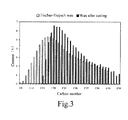
- the wax mainly includes C 8 to C 45 normal paraffins, and the distribution of maximum carbon number is around C 18 . After cutting off components distillated at less than 320°C, the distribution of maximum carbon number of the Fischer-Tropsch wax is slight shifted to a higher carbon number.
- Fig. 3 shows carbon number distribution of a product synthesized in the presence of a Co-based catalyst and an Fischer-Tropsch wax after cutting off components distillated at less than 320°C by atmospheric distillation.
- the Fischer-Tropsch wax substantially does not contain impurities such as sulfur and nitrogen and aromatic hydrocarbons, and needs not to be subjected to a hydrorefining reaction to remove sulfur and nitrogen, and needs not to be subjected to a hydrorefining reaction to improve the viscosity index, and can be directly subjected to an isomerization-asymmetrical cracking/hydrofinishing shown in Fig. 6 .
- the experimental device of isodewaxing is the same as that in Comparative Example 1, the components distillated at more than 320°C in the Fischer-Tropsch wax was used as a feed stock, of which the physical and chemical properties are shown in Table 22.
- the resulting product distribution is shown in Table 24, and main properties of the product are shown in Table 25. It can be seen from Tables 22 to 25 that, the distribution of the product after the isomerization-asymmetrical cracking/hydrofinishing has the feature of bimodal distribution. Meanwhile, the cloud point of the 2cst base oil product achieves -6°C, and the viscosity index is up to 162.
- Example 8 Properties of the feed stock of Example 8 Analysis Item Fischer-Tropsch wax Analysis Standard 20°C Density, g/cm 3 0.8536 GB/T 1884 100°C Viscosity, mm 2 /s 4.673 GB/T 265 Pour Point, °C 59 GB/T 3535 Sulfur Content, ⁇ g/g Not detected ASTM D2622 Nitrogen Content, ⁇ g/g Not detected ASTM D5762 Distillation Range, °C HK 316 5% 366 10% 375 30% 397 50% 409 ASTM D2887 70% 425 90% 495 95% 531 KK 549
- Table 23 Process conditions of Example 8 Process Condition Isomerization-Asymmetrical Cracking Supplementary Refining Average Temperature, °C 360 230 Hydrogen Partial Pressure, MPa 12.4 12.4 Volume Space Velocity, h -1 0.5 0.85 Raito of Hydrogen to Oil, Nm 3 /Nm 3 750 750 Table 24 Product distribution of Example 8 Product Yield, % Fuel
- the highly waxy heavy fraction oil having an initial boiling point of 300°C to 460°C, a wax content of no lower than 5%, a pour point of no lower than -20°C, and a cloud point of no lower than -5°C is used as a feed stock to produce a API (American Petroleum Institute) Group II or Group III (see the classification standard in Table 1) type lubricating base oil having a low pour point and a high viscosity index by a hydrorefining-isomerization/asymmetrical cracking-hydrofinishing three-stage hydrogenation process, wherein a critical reaction process of hydrogenation isomerization-asymmetrical cracking is involved.
- API American Petroleum Institute
- the isomerization/asymmetrical cracking reaction include two chemical reactions, namely, an isomerization reaction and an asymmetrical cracking reaction.
- an isomerization reaction When the isomerization is carried out, the linear paraffins having a high pour point and big-molecular and less-branched iso-paraffins with high pour point and high viscosity index in the feed stock are subjected to an asymmetrical cracking reaction at the same time.
- the so-called asymmetrical cracking reaction refers to a hydrocracking reaction occurs at a C-C bond close to the two ends of the paraffin, and a big-molecule and a small molecule are generated, wherein the small molecule belongs to the gas and naphtha fraction, and the big-molecule belongs to the lubricating base oil fraction.
- a 10-membered ring composite molecular sieve having a special pore structure is used as a catalyst support to enhance the restriction of the catalyst pores on the internal diffusion of normal paraffins and less-branched iso-paraffins, such that the cracking reaction preferably occurs at a position close to the two ends of the normal paraffins, thereby significantly improving the yield of the base oil product, especially that of the heavy base oil product.
- the isomerization/asymmetrical cracking reaction is characterized in that the product has a bimodal distribution, that is, the yields of the light components (gas and naphtha) and the heavy base oil having a low pour point and a low cloud point are high, and the yield of a middle fraction oil (kerosene and diesel) is low.
- the method can solve the problems of low yield of target product, high pour point and cloud point, high aromatic content and low viscosity index and the like in the production of lubricating base oil from heavy highly waxy oil by physical processes such as solvent refining and solvent dewaxing and/or chemical processes such as hydrotreating, catalytic dewaxing, hydrotreating and hydrocracking.
- the process has the advantages of good adaptability to heavy highly waxy feed stock, high yield of the heavy base oil product with good properties such as viscosity, viscosity index, pour point and cloud point of the product and co-production of naphtha and a small amount of a middle fraction oil.
- Table 1 API lubricating base oil Classification standard Class Saturated Hydrocarbon Content, % Sulfur Content, % Viscosity Index I ⁇ 90 and/or >0.03 80 ⁇ 120 II ⁇ 90 ⁇ 0.03 80 ⁇ 120 III ⁇ 90 ⁇ 0.03 >120 IV poly- ⁇ -olefin (PAO) V
- PAO poly- ⁇ -olefin
Landscapes
- Chemical & Material Sciences (AREA)
- Oil, Petroleum & Natural Gas (AREA)
- Chemical Kinetics & Catalysis (AREA)
- Organic Chemistry (AREA)
- Engineering & Computer Science (AREA)
- General Chemical & Material Sciences (AREA)
- Materials Engineering (AREA)
- Crystallography & Structural Chemistry (AREA)
- Inorganic Chemistry (AREA)
- Production Of Liquid Hydrocarbon Mixture For Refining Petroleum (AREA)
- Lubricants (AREA)
Abstract
The present invention relates to a method for producing lubricating base oil with a low cloud point and a high viscosity index. In the method, a lubricating base oil with a low pour point, a low cloud point and a high viscosity index is produced by a hydrorefining-isomerization/asymmetrical cracking-hydrofinishing in the presence of hydrogen, wherein a highly waxy heavy fraction oil having an initial boiling point of 300°C to 460°C, a wax content of 5% or more, a pour point of -20°C or more and a cloud point of -5°C or more is used as a raw material, and naphtha and middle fraction oil being co-produced. The method is characterized mainly in the high yield of heavy base oil, a low pour point and cloud point, a high viscosity and viscosity index of the base oil.
Description
- The present invention relates to a method for producing a lubricating base oil with a low cloud point (<-5°C) and a high viscosity index (>120).
- Patent
CN101134910A discloses a method for lowering the pour point and the cloud point of a lubricating oil distillate. In the method, a catalytic dewaxing process is adopted, and the catalyst includes nickel metal as an active component, which is contained in a support of a ZSM-5 molecular sieve. The pour point of a light deasphalted hydrotreated oil can be lowered from 9°C to -24°C, and the cloud point can be lowered from 12°C to -16°C. The method has the following obvious disadvantage: the yield and the viscosity of the base oil product will be greatly decreased when the wax content in the feed stock is high, and the drops of the pour point and the cloud point need to be increased. - Patent
CN1524929 discloses a method for lowering the cloud point of a lubricating base oil, in which a lube stock is first subjected to solvent pre-dewaxing, the pour point of the dewaxed oil is -5°C to 15°C; the pre-dewaxed oil is subjected to hydrotreating to reduce the sulfur content and the nitrogen content; the pre-dewaxed oil after hydrotreating is subjected to isodewaxing, to obtain a lubricating base oil with a low cloud point. In order to avoid increase of the severity of the reaction and a resulted severe cracking reaction, in the method, most of the wax needs to be removed through a solvent pre-dewaxing process, and then a hydrotreating and isodewaxing process is performed. The pour point of the dewaxed oil of the method should be not higher than 15°C, otherwise the cloud point of the isomerization product cannot be lowered to less than 0°C, even cannot be lowered to less than 5°C. - US Patent No.
US 6,699,385 discloses a method for lowering the cloud point through an isodewaxing process. In order to avoid increase of the severity of the reaction and a resulted severe cracking reaction, the waxy feed stock needs to be first fractionated, and a light fraction is subjected to isodewaxing, and the cloud point can only be decreased to about 0°C. - All the methods for dewaxing a lubricating base oil disclosed in the published patents and documents above do not clarify or imply a method for producing a base oil with a low pour point, a low cloud point and a high viscosity index by an isomerization-asymmetrical cracking reaction process, and compared with the method disclosed in the published patents and documents, the yield of a base oil, especially the yield of a heavy base oil of an isomerization-symmetric cracking reaction process is higher.
- The present invention is directed to a method for producing a lubricating base oil having a low cloud point (<-5°C) and a high viscosity index (>120), wherein a highly waxy heavy fraction oil having an initial boiling point of 300°C to 460°C, a wax content of 5% or more, a pour point of -20°C or more and a cloud point of -5°C or more is used as raw material to produce a API (American Petroleum Institute) II, III (see the classification standard in Table 1) type lubricating base oil having a low pour point and a high viscosity index by a hydrogenation pre-refining-isomerization/asymmetrical cracking-supplementary refining three-stage hydrogenation process.
- The production method provided by the present invention includes: (1) a hydrorefining process: at a certain hydrogen pressure, a waxy feed stock contacts a hydrorefining catalyst and is subjected to desulfurization, denitrogenation, aromatic saturation and an ring-opening reaction, products of the hydrorefining reaction are separated by a stripping column, and the bottom fraction enters a hydroisomerization/asymmetrical cracking process; (2) a hydroisomerization/asymmetrical cracking process: at a certain hydrogen pressure, a bottom product of the stripping column contacts an isomerization-asymmetrical cracking catalyst and is subjected to isomerization-asymmetrical cracking and a hydrogenation saturation reaction, to obtain a product having a low pour point, a low cloud point, a low aromatic content and a high viscosity index, and then all the product directly enters a hydrofinishing process; (3) a hydrofinishing process: at a certain hydrogen pressure, the isomerization-asymmetrical cracking reaction product contacts a hydrofinishing catalyst and is subjected to a hydrogenation saturation reaction, to obtain a hydrofinishing oil having good light stability and thermal stability; and (4) a product separation process: the product obtained in the hydrofinishing process is separated into a gas phase product and a liquid phase product by a hot high-pressure separator and a cold low-pressure separator, the liquid product passes through a normal-pressure fractionating column and a reduced-pressure fractionating column to extract naphtha, kerosene, diesel oil and light, middle and heavy lubricating base oil having a low pour point and a high viscosity index.
- According to the method of the present invention, the feed stock includes anyone of furfural refined oil, foots oil, cerate (soft wax), propane deasphalted oil (DAO), hydrocracking unconverted oil (UCO), Fischer-Tropsch wax, vacuum gas oil and other waxy oils or a mixture thereof.
- According to the method of the present invention, the hydrorefining catalyst includes 60 wt% to 90 wt% of one or more of alumina, silica and titania, and 10 wt% to 40 wt% of one or more of molybdenum trioxide, tungsten trioxide, nickel oxide and cobalt oxide.
- According to the method of the present invention, before use, the hydrorefining catalyst is pre-sulfurated by hydrogen sulfide or sulfur-containing feed stock at a temperature of 150 to 350°C in the presence of hydrogen. This type of pre-vulcanization may be carried out ex situ or in situ.
- According to the method of the present invention, the hydrorefining process conditions are: reaction temperature: 350°C to 410°C, hydrogen partial pressure: 10 MPa to 18 MPa, space velocity (LHSV): 0.5 h-1 to 2.0 h-1, and volume ratio of hydrogen to oil: 300 Nm3/m3 to 1000 Nm3/m3.
- According to the method of the present invention, the oil obtained by stripping separation of the hydrorefining product has a total sulfur content of no higher than 10 µg/g and a total nitrogen content of no higher than 5 µg/g.
- According to the method of the present invention, the isomerization-asymmetrical cracking catalyst is at least one of the following one-dimensional 10-membered ring mesoporous composite molecular sieves: a ZSM-22/ZSM-23 composite molecular sieve, a ZSM-23/ZSM-22 composite molecular sieve, a ZSM-5/SAPO-11 composite molecular sieve, a ZSM-22/SAPO-11 composite molecular sieve, a ZSM-23/SAPO-11 composite molecular sieve, an EU-1/SAPO-11 composite molecular sieve, and a NU-87/SAPO-11 composite molecular sieve. The content of the molecular sieve is 40% to 80%, and the rest is alumina and at least one group VIII noble metal, where the noble metal is Pt and/or Pd and has a content of 0.3 wt% to 0.6 wt%. The average pore diameter of the catalyst is 0.3 nm to 0.8 nm, the average pore volume is 0.1 ml/g to 0.4 ml/g, and the BET specific surface area is 120 m2/g to 300 m2/g.
- According to the method of the present invention, before use, the isomerization/asymmetrical cracking catalyst needs to be pre-reduced at a temperature of 150 to 450°C in the presence of hydrogen.
- According to the method of the present invention, the isomerization/asymmetrical cracking process conditions are: reaction temperature: 260°C to 410°C, hydrogen partial pressure: 10 MPa to 18 MPa, volume space velocity: 0.5 h-1 to 3.0 h-1, volume ratio of hydrogen to oil: 300 Nm3/m3 to 1000 Nm3/m3.
- According to the method of the present invention, the hydrofinishing catalyst includes amorphous silica-alumina and at least one group VIII noble metal.
- According to the method of the present invention, the hydrofinishing catalyst has a ratio of SiO2 : Al2O3 of 1 : 1 to 9, an average pore radius of 1.0 nm to 5.0 nm, a pore volume of 0.3 ml/g to 1.0 ml/g, and a BET specific surface area of 260 m2/g to 450 m2/g. The noble metal is Pt and/or Pd, and the content of the noble metal is 0.3 wt% to 0.6 wt%.
- According to the method of the present invention, before use, the hydrofinishing catalyst is generally pre-reduced at a temperature of 150°C to 450°C in the presence of hydrogen.
- According to the method of the present invention, the hydrofinishing reaction conditions are: reaction temperature: 180°C to 320°C, hydrogen partial pressure: 10 MPa to 18 MPa, volume space velocity: 0.5 h-1 to 3.0 h-1, volume ratio of hydrogen to oil: 300 Nm3/m3 to 1000 Nm3/m3.
- According to the method of the present invention, the normal-pressure distillation and reduced-pressure distillation process are to separate the oil mixture after supplementary refining by normal-pressure distillation and reduced-pressure distillation, to obtain a naphtha, a middle fraction oil and a lubricating base oil.
-
-
Fig. 1 shows product distribution of Example 1 and Comparative Example 1. -
Fig. 2 shows product distribution of Example 2 and Comparative Example 2. -
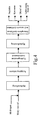
Fig. 3 is a flowchart of an isomerization-asymmetrical cracking/supplementary refining process of a lubricating base oil. -
Fig. 4 is a flowchart of a hydrorefining/isodewaxing/hydrofinishing process of a lubricating base oil. -
Fig. 5 is a flowchart of a hydrorefining/isomerization-asymmetrical cracking /hydrofinishing process of a lubricating base oil. -
Fig. 6 is a flowchart of an isomerization-asymmetrical cracking/hydrofinishing process of a lubricating base oil. - The present invention is further described with the following examples.
- The hydrorefining catalyst and the supplementary refining catalyst used in the examples of the present invention and preparation method thereof are briefly described as follows:
- Same hydrorefining catalyst and hydrofinishing catalyst are used in the examples and comparative examples of the present invention. The hydrorefining catalyst is prepared according to the following process: pseudo-boehmite having an appropriate pore structure is selected and used to prepare a strip-like support having a clover-shaped cross section, after the support is dried and baked, Ni element and Mo element are loaded on the alumina support by an impregnation method, and then dried and baked to obtain a hydrorefining catalyst, wherein the NiO content is 4.20%, the MoO3 content is 18.3%, and the rest is alumina, the specific surface area is 175 m2/g, and the pore volume is 0.45 cm3/g.
- The isomerization/asymmetrical cracking catalyst used in the examples is a 0.5% Pt/ZSM-22/SAPO-11 catalyst prepared according to the method described in Example 12 of patent
CN 1762594A . - In a method for preparing the hydrofinishing catalyst, amorphous silica-alumina used as support is prepared by using cocurrent flow fixed pH value and silica-alumina coprecipitation. After being dried and baked, the support is squeezed into a strip having a clover-shaped cross section, and dried and baked, and then metal Pt is loaded by an impregnation method, and then dried and baked to obtain a hydrofinishing catalyst, wherein the Pt content is 0.51%, the rest is silica and alumina, the ratio of SiO2 : Al2O3 is 1 : 6.3, the specific surface area is 305 cm2/g, and the pore volume is 1.08 cm3/g.
- A SAPO-11 molecular sieve was synthesized by a method described in Example 18 of
US4440871 . Pseudo-boehmite is incorporated into a SAPO-11 molecular sieve powder in a ratio of 70% SAPO-11 molecular sieve to 30% pseudo-boehmite, and then a small amount of an adhesive such as an aqueous solution of HNO3 was added, blended and shaped into a strip of ϕ1.2 mm, baked at 110°C for 24 hours and at 600°C for 24 hours, and pulverized into particles having a length of 1 mm to 2 mm. A sufficient amount of support particles was impregnated in a suitable amount of a Pt(NH3)4Cl2 solution having a concentration of 3% for 16 hours by a common pore filling impregnation method, and then dried at 120°C for 4 hours and baked at 480°C for 8 hours. 200 ml of the prepared catalyst was pre-reduced by pure hydrogen in situ on a high-pressure hydrogenation reaction experimental device having a catalyst load of 200 ml to obtain a 0.5% Pt/SAPO-11 catalyst. The isodewaxing catalyst reduction conditions are: hydrogen flow rate: 2000 mL/h, the temperature was raised to 250°C at a rate of 5°C/min and maintained at 250°C for 2 hours. Then, the temperature was raised to 450°C at a rate of 5°C/min and maintained at 450°C for 2 hours, and the reaction temperature was adjusted in a hydrogen flow. The hydrogenation pre-refining-isodewaxing-hydrofinishing process shown inFig. 4 and the process conditions shown in Table 3 were adopted, paraffin base 650N furfural refined oil was used as a raw material, of which the physical and chemical properties are shown in Table 2. The hydrorefining catalyst and the supplementary refining catalyst were the same as the catalysts used in the examples mentioned above. - According to the process shown in
Fig. 4 , the experimental device and the feed stock were the same as those in Comparative Example 1. The other reaction conditions were the same as those in Comparative Example 1 except that the reaction temperature of isomerization/asymmetrical cracking was 351°C, and the space velocity was 0.75h-1. The reaction conditions of Comparative Example 1 are shown in Table 3. - Product distribution comparison of Example 1 and Comparative Example 1 is shown in Table 4, and main product properties are shown in Table 5.
- According to the process shown in
Fig. 4 , paraffin base 200SN lightly dewaxed oil was used as a feed stock in the experimental device of Comparative Example 1, and the physical and chemical properties of the feed stock are shown in Table 2. The reaction conditions are shown in Table 3.Table 2 Properties of feed stocks of Comparative Example 1 and Example 1 Item 650SN Furfural Refined Oil Analysis Method 20°C Density, g/cm3 0.8721 GB/T 1884 Kinematic Viscosity (100°C), mm2/s 10.16 GB/T 265 Kinematic Viscosity (40°C), mm2/s - GB/T 265 Viscosity Index - GB/T 1995 Pour Point, ° C 60 GB/T 3535 Cloud Point, °C >60 GB/T 6986-86 Sulfur Content, µg/g 607 ASTM D2622 Nitrogen Content, µg/g 322 ASTM D5762 Composition, % SH/T0753 Saturated Hydrocarbons 86.08 Aromatic Hydrocarbons 13.58 Colloid + Asphaltene 0.34 Distillation Range, °C HK 421 ASTM D2887 5% 477 10% 498 30% 516 50% 525 70% 533 90% 541 95% 550 KK 557 Table 3 Reaction conditions adopted in Comparative Example 1 and Example 1 Hydrorefining Isomerization Hydrofinishing Comparative Example 1 Example 1 Comparative Example 1 Example 1 Comparative Example 1 Example 1 Average Temperature, ° C 370 370 378 351 230 230 Hydrogen Partial Pressure, MPa 13 13 12 12 12 12 Liquid hourly Volume Space Velocity, h-1 0.90 1.00 0.70 0.75 1.50 1.50 Raito of Hydrogen to Oil, Nm3/m3 500 500 500 500 500 500 Table 4 Product distribution of Comparative Example 1 and Example 1 Product Yield, % Example 1 Comparative Example 1 Fuel Gas + Naphtha 19.96 15.71 Diesel Oil 2.96 11.58 2cst Base Oil 3.78 24.86 5cst Base Oil 0 4.49 10cst Base Oil 73.30 47.85 Total Base Oil Yield 77.08 72.71 Table 5 Properties of heavy base oil products of Comparative Example 1 and Example 1 Analysis Item Comparative Example 1 Example 1 Analysis Method Initial Boiling Point, °C 421 385 GB/T 9168 20°C Density, g/cm3 0.8424 0.8524 GB/T 1884 Pour Point, °C -15 -15 GB/T 3535 Cloud Point, °C 5 -6 GB/T 6986-86 Aromatic Content, % 1.2 0 Open Flash Point, °C 265 270 GB/T 3536 Chroma, number +30 +30 GB/T 3555 Kinematic Viscosity (40°C), mm2/s 60.89 61.06 GB/T 265 Kinematic Viscosity (100°C), mm2/s 9.313 9.423 GB/T 265 Viscosity Index 132 136 GB/T 1995 - It can be seen from Tables 2 to 5 and
Fig. 1 that, the pour point of the feed stock used in the hydrorefining, isomerization-asymmetrical cracking, hydrofinishing process in Example 1 is up to 60°C, indicating that the feed stock contains a large amount of high-carbon-number wax molecules. In the method of Example 1 and Comparative Example 1, the hydrocracking reaction occurs simultaneously with isomerization. However, different from the conventional hydrocracking reaction of Comparative Example 1, Example 1 has significant features of an asymmetrical cracking reaction, that is, the cleavage of a C-C bond preferably occurs at a position close to two ends of a long-chain paraffin, so that the yields of both small-molecule products (gas and naphtha) and big-molecule products (10cst base oil) are high, and are up to 19.96% and 73.3%, respectively, while the yields of diesel oil and light base oil (2cst base oil) are only 2.96% and 3.78% respectively. The cracking reaction in the method of Comparative Example 1 occurs at a position close to the center of a long-chain paraffin, so that the yields of both small-molecule products (gas + naphtha) and big-molecule products (10cst base oil) are 15.71% and 47.85% respectively, which are both lower than those in Example 1, and the yields of diesel oil and light base oil (2cst base oil) are 11.58% and 24.86% respectively, which are both higher than those in Example 1. At the same time, the cloud point of the heavy base oil product of Example 1 is 11°C lower than that of the heavy base oil product of Comparative Example 1. The viscosity index of the heavy base oil product of Example 1 is higher than that of the heavy base oil product of Comparative Example 1 by 4%. - A ZSM-22 molecular sieve was synthesized by the method described in Example 2 of
US5783168 . Pseudo-boehmite is incorporated into a ZSM-22 molecular sieve powder in a ratio of 70% ZSM-22 molecular sieve to 30% pseudo-boehmite, and then a small amount of an adhesive such as an aqueous solution of HNO3 was added, blended and shaped into a strip of ϕ1.2 mm, baked at 110°C for 24 hours and at 600°C for 24 hours, and breaked into particles having a length of 1 mm to 2 mm. A sufficient amount of support particles was impregnated in a suitable amount of a Pt(NH3)4Cl2 solution having a concentration of 3% for 16 hours by a common pore filling impregnation method, and then dried at 120°C for 4 hours and baked at 480°C for 8 hours. 200 ml of the prepared catalyst was pre-reduced by pure hydrogen in situ in a high-pressure hydrogenation reaction experimental device having a catalyst load of 200 ml to obtain 0.5% of Pt/ZSM-22. The catalyst reduction conditions were the same as those in Comparative Example 1. A paraffin base 200SN dewaxed oil was used as a raw material, the physical and chemical properties thereof are shown in Table 6, and a hydrorefining-isodewaxing-hydrofinishing series process (shown inFig. 4 ) and process conditions shown in Table 7 were adopted. - The process, experimental device and feed stock were the same as those in Comparative Example 2. The other reaction conditions were the same as those in Comparative Example 2 except that the temperature of the isomerization/asymmetrical cracking reaction was 325°C, and the liquid hourly space velocity was 1.2h-1.
- The product distributions of the reactions of Example 2 and Comparative Example 2 are shown in Table 8, and main properties of the products are shown in Table 9.
- It can be seen from Tables 6 to 9 and
Fig. 2 that compared with Comparative Example 2, the method of Example 2 has significant features of a hydrorefining-isomerization/asymmetrical cracking-hydrofinishing, that is, the yield of a heavy base oil (5cst base oil) is high, and the yields of small-molecule products (gas and naphtha) and big-molecule products (10cst base oil) are both high, and are up to 19.96% and 73.3% respectively, the yields of diesel oil and a light base oil (2cst base oil) are merely 2.96% and 3.78% respectively. The product distribution is in a bimodal distribution. At the same time, it can be seen that, the cloud point of the heavy base oil product of Example 2 is 10°C lower than that of the heavy base oil product of Comparative Example 2.Table 6 Feed stock properties Item 200SN Lightly Dewaxed Oil Analysis Standard 20°C Density, g/cm3 0.8797 GB/T 1884 Kinematic Viscosity (100°C), mm2/s 6.277 GB/T 265 Kinematic Viscosity (40°C), mm2/s 40.34 GB/T 265 Viscosity Index 103 GB/T 1995 Pour Point, °C -3 GB/T 3535 Cloud Point, °C 15 GB/T 6986-86 Sulfur Content, µg/g 420 ASTM D2622 Nitrogen Content, µg/g 144 ASTM D5762 Composition, % SH/T0753 Saturated Hydrocarbons 88.23 Aromatic Hydrocarbons 11.44 Colloid + Asphaltene 0.33 Distillation Range, °C HK 373 ASTM D2887 5% 404 10% 414 30% 429 50% 441 70% 453 90% 478 95% 487 KK 491 Table 7 Reaction conditions of Comparative Examples 1 and 2 Hydrorefining Isomerization Hydrofinishing Comparative Example 2 Example 2 Comparative Example 2 Example 2 Comparative Example 2 Example 2 Average Temperature, ° C 368 368 360 325 230 230 Hydrogen Partial Pressure, MPa 13 13 12 12 12 12 Liquid hourly Volume Space Velocity, h-1 1.0 1.0 0.9 1.2 1.5 1.5 Raito of Hydrogen to Oil, Nm3/m3 500 500 500 500 500 500 Table 8 Product distribution of Examples 1 and 2 and Comparative Examples 1 and 2 Product Yield, % Comparative Example 2 Example 2 Gas + Naphtha 8.85 9.74 Diesel 8.09 2.44 2cst Base Oil 18.35 5.14 5cst Base Oil 67.71 82.68 Total Base Oil Yield 86.06 88.82 Table 9 Properties of heavy base oil products of Comparative Example 2 and Example 2 Analysis Item Comparative Example 2 Example 2 Analysis Method Initial Boiling Point, °C 400 394 GB/T 9168 20°C Density, g/cm3 0.8521 0.8629 GB/T 1884 Pour Point, °C -18 -21 GB/T 3535 Cloud Point, °C -5 -15 GB/T 6986-86 Open Flash Point, °C 220 235 GB/T 3536 Chroma, number +30 +30 GB/T 3555 Kinematic Viscosity (40°C), mm2/s 34.56 39.39 GB/T 265 Kinematic Viscosity, (100°C), mm2/s 5.713 6.273 GB/T 265 Viscosity Index 104 105 GB/T 1995 - According to the process shown in
Fig. 4 , the experimental device is the same as that in Comparative Example 1, and the feed stock is a 100N cerate obtained from crude oil by processes of reduced-pressure distillation, furfural refining and acetone - toluene dewaxing, of which the physical and chemical properties are shown in Table 10. Under the process conditions shown in Table 11, the resulting product distribution is shown in Table 12, and the main properties of the products are shown in Table 13. - According to the process shown in
Fig. 4 , the experimental device is the same as that in Comparative Example 1, and the feed stock is a 400N cerate shown in Table 10. Under the process conditions shown in Table 11, the resulting product distribution is shown in Table 12, and the main properties of the products are shown in Table 13. - It can be seen from Tables 10 to 13 that the distribution of the product of the isomerization/asymmetrical cracking in Example 3 is similar to those of the products of isomerization/asymmetrical cracking in Examples 1 and 2, the product mainly includes light component products (gas and naphtha) and a 2cst base oil product, and the yields of the two products are 17.32% and 70.83% respectively, and the diesel yield is 11.87%, indicating a bimodal distribution of a high yield of the light component product and the heavy component product and a low yield of the middle fraction. The product distribution in Example 4 is similar to that in Example 3, and the feature of bimodal distribution is more significant. The pour points and the cloud points of the 2cst and 6cst base oil products of Examples 3 and 4 are very low, and the viscosity index of the 6cst base oil is up to 123, which meets the requirements of API Group III base oil.
Table 10 Properties of feed stocks of Examples 3 and 4 Analysis Item 100N Cerate 400N Cerate Density (20°C), g/cm3 0.8319 0.8643 Kinematic Viscosity (40°C), mm2/s 8.292 41.77 Kinematic Viscosity (100°C), mm2/s 2.476 7.205 Viscosity Index 128 136 Pour Point, °C 27 33 Sulfur Content, µg/g 490 534 Nitrogen Content, µg/g 176 430 Composition, % Saturated Hydrocarbons 90.11 83.51 Aromatic Hydrocarbons 9.17 15.35 Polar Compounds 0.72 1.14 Distillation Range, °C HK 307 370 5% 342 422 10% 348 450 30% 358 469 50% 367 477 70% 376 486 90% 386 498 95% 392 505 KK 404 510 Table 11 Process conditions of Examples 3 and 4 Process Conditions Hydrorefining Isomerization-Asymmetrical Cracking Hydrofinishing Example 3 Example 4 Example 3 Example 4 Example 3 Example 4 Average Temperature, °C 365 370 320 360 230 230 Hydrogen Partial Pressure, MPa 13.0 13.0 12.0 12.0 12.0 12.0 Volume Space Velocity, h-1 1.0 1.0 0.8 0.5 1.33 0.83 Raito of Hydrogen to Oil, Nm3/Nm3 350 560 350 560 350 560 Table 12 Product distributions of Examples 3 and 4 Product Yield, % Example 3 Example 4 Gas + Naphtha 17.32 16.54 Diesel 11.87 5.81 2cst Base Oil 70.81 - 6cst Base Oil - 77.65 10cst Base Oil - - Total Base Oil Yield 70.81 77.65 Table 13 Properties of base oil products of Examples 3 and 4 Feed stock 100N Cerate 400N Cerate Analysis Method Product 2cst base oil 6cst base oil Density (20°C), g/cm3 0.8340 0.8504 GB/T 1884 Pour Point, °C -25 -30 GB/T 3535 Cloud Point, °C -15 -19 GB/T 6986-86 Open Flash Point, °C 176 214 GB/T 3536 Chroma, number +30 +30 GB/T 3555 Kinematic Viscosity (40°C), mm2/s 9.520 35.34 GB/T 265 Kinematic Viscosity (100°C), mm2/s 2.588 6.168 GB/T 265 Viscosity Index 102 123 GB/T 1995 - According to the process shown in
Fig. 4 , the experimental device is the same as that in Comparative Example 1, and the feed stock is a 650N cerate shown in Table 9, which is a waxy oil obtained from crude oil by processes of reduced-pressure distillation, furfural refining and acetone - toluene dewaxing, and the physical and chemical properties. Under the process conditions shown in Table 14, the resulting product distribution is shown in Table 15, and the main properties of the products are shown in Table 16. - According to the process shown in
Fig. 4 , the experimental device is the same as that in Comparative Example 1, and the feed stock is a 150BS cerate, which is a waxy oil obtained from paraffin-based crude oil by processes of reduced-pressure distillation, propane deasphalting, furfural refining and acetone - toluene dewaxing, and the physical and chemical properties thereof are shown in Table 14. Under the process conditions shown in Table 15, the resulting product distribution is shown in Table 16, and the main properties of the products are shown in Table 17. - It can be seen from Tables 14 to 17 that the fractions of 650SN cerate and 150BS cerate are very heavy, and the pour points thereof are very high. With regard to the two types of heavy and waxy feed stocks, the reduction of the pour point of the base oil needs to be up to 78°C to achieve a pour point of base oil of no higher than -15°C. The features of high yields of small-molecule products (gas and naphtha) and big-molecule products (8cst and 20cst base oils) generated by the hydrorefining-isomerization/asymmetrical cracking-hydrofinishing and low yield of the middle fraction oil (diesel + 2cst base oil) are significant. The viscosity index of the heavy product having a low pour point is extremely high, which can be up to 140, and the pour point and the cloud point of the heavy product can be decreased to a very low level.
Table 14 Properties of feed stocks of Examples 5 and 6 Analysis Item 650N Cerate 150BS Cerate Analysis Standard Kinematic Density (20°C), g/cm3 0.8646 0.8710 GB/T 1884 Kinematic Viscosity (40°C), mm2/s - - GB/T 265 Kinematic Viscosity (100°C), mm2/s 9.359 25.10 GB/T 265 Pour Point, °C 63 57 GB/T 3535 Sulfur Content, µg/g 690 752 ASTM D2622 Nitrogen Content, µg/g 517 674 ASTM D5762 Composition, % Saturated Hydrocarbons 87.65 69.1 SH/T0753 Aromatic Hydrocarbons 11.31 23.0 Polar compounds 1.04 7.9 Simulated Distillation, °C HK 380 410 5% 480 465 10% 505 507 30% 522 562 50% 540 609 ASTM D2887 70% 551 667 90% 565 - 95% 569 - KK 589 - Table 15 Process conditions of Examples 5 and 6 Reaction Conditions Hydrorefining Isomerization-Asymmetrica 1 Cracking Hydrofinishing Example 5 Example 6 Example 5 Example 6 Example 5 Example 6 Average Temperature, ° C 370 370 350 375 230 230 Hydrogen Partial Pressure, MPa 14.5 14.5 14.0 14.0 14.0 14.0 Liquid hourly Volume Space Velocity, h-1 0.75 0.75 0.5 0.5 1.25 1.25 Raito of Hydrogen to Oil, Nm3/Nm3 750 750 750 750 750 750 Table 16 Product distributions of Examples 5 and 6 Product Yield, % Example 5 Example 6 Fuel Gas + Naphtha 19.31 18.76 Diesel 4.03 2.13 2cst Base Oil 8.77 3.43 6cst Base Oil - 14.77 8cst Base Oil 67.89 - 20cst base oil - 60.91 Total Base Oil Yield 76.66 79.11 Table 17 Properties of heavy base oil products of Examples 5 and 6 Feed stock 650N Cerate 150BS Cerate Analysis Method Product Properties 10cst base oil 20cst base oil Density (20°C), g/cm3 0.8495 0.8542 GB/T 1884 Pour Point, °C -19 -18 GB/T 3535 Cloud Point, °C -8 -6 GB/T 6986-86 Open Flash Point, °C 268 293 GB/T 3536 Chroma, number +30 +30 GB/T 3555 Kinematic Viscosity (40°C), mm2/s 45.17 151.1 GB/T 265 Kinematic Viscosity (100°C), mm2/s 8.050 19.08 GB/T 265 Viscosity Index 152 144 GB/T 1995 - A hydrocracking UCO is a heavy fraction oil generated from a reduced-pressure fraction oil by a hydrorefining-hydrocracking reaction, the impurities such as sulfur and nitrogen have been removed, and most of the aromatic hydrocarbons have been subjected to hydrosaturation and ring-opening, such that the hydrocracking UCO needs not to be subjected to a hydrorefining reaction to remove sulfur and nitrogen, and needs not to be subjected to a hydrorefining- reaction to improve the viscosity index, and the isomerization-asymmetrical cracking/hydrofinishing shown in
Fig. 6 can be adopted. Hydrogenation evaluation was performed on the experimental device, and a hydrocracking UCO having the physical and chemical properties shown in Table 18 was uses as a feed stock. Under the process conditions shown in Table 19, the resulting product distribution is shown in Table 20, and main properties of the product are shown in Table 21. It can be seen from Tables 18 to 21 that the hydrocracking UCO has a low sulfur content and nitrogen content, and a high viscosity index and pour point. After an isomerization-asymmetrical cracking/hydrofinishing with mild process conditions, the product distribution has features of high yields of small-molecule products (gas and naphtha) and big-molecule products (8cst and 20cst base oils) and low yield of the middle fraction oil (diesel + 2cst base oil), and the cloud point of the product achieves -15°C.Table 18 Properties of the feed stock of Example 7 Analysis Item Hydrocracking UCO Analysis Standard Kinematic Density (20°C), g/cm3 0.8245 GB/T 1884 Kinematic Viscosity (40°C), mm2/s 15.74 GB/T 265 Kinematic Viscosity (100°C), mm2/s 3.824 GB/T 265 Viscosity Index 139 GB/T 1995 Pour Point, °C 33 GB/T 3535 Sulfur Content, µg/g 2.787 ASTM D2622 Nitrogen Content, µg/g 1.778 ASTM D5762 Composition, % SH/T0753 Saturated Hydrocarbons 98.75 Aromatic Hydrocarbons 1.11 Polar Compounds 0.14 Distillation Range, °C HK 331 ASTM D2887 5% 367 10% 375 30% 392 50% 409 70% 433 90% 473 95% 491 KK 516 Table 19 Process conditions of Example 7 Process Conditions Isomerization-Asymmetrical Cracking Hydrofinishing Average Temperature, °C 310 230 Hydrogen Partial Pressure, MPa 12.4 12.4 Liquid Hourly Volume Space Velocity, h-1 1.0 1.7 Raito of Hydrogen to Oil, Nm3/Nm3 350 350 Table 20 Product distribution of Example 7 Product Product Yield, % Fuel Gas + Naphtha 15.9 Diesel 4.66 2cst Base Oil 1.09 4cst Base Oil 78.35 Total Base Oil Yield 79.44 Table 21 Properties of the 4cst base oil product of Example 7 Analysis Item 4cst Base Oil Analysis Method Density (20°C), g/cm3 0.8288 GB/T 1884 Pour Point, °C -18 GB/T 3535 Cloud Point, °C -15 GB/T 6986-86 Open Flash Point, °C 204 GB/T 3536 Chroma, number +30 GB/T 3555 Kinematic Viscosity (40°C), mm2/s 17.58 GB/T 265 Kinematic Viscosity (100°C), mm2/s 3.974 GB/T 265 Viscosity Index 124 GB/T 1995 - An Fischer-Tropsch wax is a hydrocarbon product with high-carbon-number long-chain normal paraffins as the main component synthesized in the presence of a Co-based catalyst. The wax mainly includes C8 to C45 normal paraffins, and the distribution of maximum carbon number is around C18. After cutting off components distillated at less than 320°C, the distribution of maximum carbon number of the Fischer-Tropsch wax is slight shifted to a higher carbon number.
Fig. 3 shows carbon number distribution of a product synthesized in the presence of a Co-based catalyst and an Fischer-Tropsch wax after cutting off components distillated at less than 320°C by atmospheric distillation. The Fischer-Tropsch wax substantially does not contain impurities such as sulfur and nitrogen and aromatic hydrocarbons, and needs not to be subjected to a hydrorefining reaction to remove sulfur and nitrogen, and needs not to be subjected to a hydrorefining reaction to improve the viscosity index, and can be directly subjected to an isomerization-asymmetrical cracking/hydrofinishing shown inFig. 6 . The experimental device of isodewaxing is the same as that in Comparative Example 1, the components distillated at more than 320°C in the Fischer-Tropsch wax was used as a feed stock, of which the physical and chemical properties are shown in Table 22. Under the process conditions shown in Table 23, the resulting product distribution is shown in Table 24, and main properties of the product are shown in Table 25. It can be seen from Tables 22 to 25 that, the distribution of the product after the isomerization-asymmetrical cracking/hydrofinishing has the feature of bimodal distribution. Meanwhile, the cloud point of the 2cst base oil product achieves -6°C, and the viscosity index is up to 162.Table 22 Properties of the feed stock of Example 8 Analysis Item Fischer-Tropsch wax Analysis Standard 20°C Density, g/cm3 0.8536 GB/T 1884 100°C Viscosity, mm2/s 4.673 GB/T 265 Pour Point, °C 59 GB/T 3535 Sulfur Content, µg/g Not detected ASTM D2622 Nitrogen Content, µg/g Not detected ASTM D5762 Distillation Range, °C HK 316 5% 366 10% 375 30% 397 50% 409 ASTM D2887 70% 425 90% 495 95% 531 KK 549 Table 23 Process conditions of Example 8 Process Condition Isomerization-Asymmetrical Cracking Supplementary Refining Average Temperature, °C 360 230 Hydrogen Partial Pressure, MPa 12.4 12.4 Volume Space Velocity, h-1 0.5 0.85 Raito of Hydrogen to Oil, Nm3/Nm3 750 750 Table 24 Product distribution of Example 8 Product Product Yield, % Fuel Gas + Naphtha 23.7 Diesel 6.63 2cst Base Oil Yield 69.67 Table 25 Properties of the product of Example 8 Product 2cst Base Oil Analysis Method 20°C Density, g/cm3 0.8416 GB/T 1884 Pour Point, °C -15 GB/T 3535 Cloud Point, °C -6 GB/T 6986-86 Open Flash Point, °C 179 GB/T 3536 Chroma, number +30 GB/T 3555 40°C Kinematic Viscosity, mm2/s 9.756 GB/T 265 100°C Kinematic Viscosity, mm2/s 2.912 GB/T 265 Viscosity Index 162 GB/T 1995 - In the present invention, the highly waxy heavy fraction oil having an initial boiling point of 300°C to 460°C, a wax content of no lower than 5%, a pour point of no lower than -20°C, and a cloud point of no lower than -5°C is used as a feed stock to produce a API (American Petroleum Institute) Group II or Group III (see the classification standard in Table 1) type lubricating base oil having a low pour point and a high viscosity index by a hydrorefining-isomerization/asymmetrical cracking-hydrofinishing three-stage hydrogenation process, wherein a critical reaction process of hydrogenation isomerization-asymmetrical cracking is involved. The isomerization/asymmetrical cracking reaction include two chemical reactions, namely, an isomerization reaction and an asymmetrical cracking reaction. When the isomerization is carried out, the linear paraffins having a high pour point and big-molecular and less-branched iso-paraffins with high pour point and high viscosity index in the feed stock are subjected to an asymmetrical cracking reaction at the same time. The so-called asymmetrical cracking reaction refers to a hydrocracking reaction occurs at a C-C bond close to the two ends of the paraffin, and a big-molecule and a small molecule are generated, wherein the small molecule belongs to the gas and naphtha fraction, and the big-molecule belongs to the lubricating base oil fraction.
- In the asymmetrical cracking reaction, a 10-membered ring composite molecular sieve having a special pore structure is used as a catalyst support to enhance the restriction of the catalyst pores on the internal diffusion of normal paraffins and less-branched iso-paraffins, such that the cracking reaction preferably occurs at a position close to the two ends of the normal paraffins, thereby significantly improving the yield of the base oil product, especially that of the heavy base oil product.
- The isomerization/asymmetrical cracking reaction is characterized in that the product has a bimodal distribution, that is, the yields of the light components (gas and naphtha) and the heavy base oil having a low pour point and a low cloud point are high, and the yield of a middle fraction oil (kerosene and diesel) is low. The method can solve the problems of low yield of target product, high pour point and cloud point, high aromatic content and low viscosity index and the like in the production of lubricating base oil from heavy highly waxy oil by physical processes such as solvent refining and solvent dewaxing and/or chemical processes such as hydrotreating, catalytic dewaxing, hydrotreating and hydrocracking. The process has the advantages of good adaptability to heavy highly waxy feed stock, high yield of the heavy base oil product with good properties such as viscosity, viscosity index, pour point and cloud point of the product and co-production of naphtha and a small amount of a middle fraction oil.
Table 1 API lubricating base oil Classification standard Class Saturated Hydrocarbon Content, % Sulfur Content, % Viscosity Index I <90 and/or >0.03 80~120 II ≮90 ≯ 0.03 80~120 III ≮90 ≯ 0.03 >120 IV poly-α-olefin (PAO) V Various base oils except I~IV
Claims (3)
- A method for producing a lubricating base oil with a low cloud point and a high viscosity index, wherein the cloud point is lower than -5°C, and the viscosity index is higher than 120, the method comprises: producing a lubricating base oil by a hydrorefining-isomerization/asymmetrical cracking-hydrofinishing in the presence of hydrogen, wherein a highly waxy heavy fraction oil having an initial boiling point of 300°C to 460°C, a wax content of 5% or more, a pour point of -20°C or more and a cloud point of -5°C or more is used as a raw material;(1) during the hydrorefining process, a wax-containing heavy feed stock contacts a pre-refining catalyst, and is subjected to desulfurization, denitrogenation, aromatic saturation and a ring-opening reaction, a light product generated in the hydrorefining process is separated by a stripping column as a byproduct, and a heavy product enters an isomerization-asymmetrical cracking process;
the operating conditions of the hydrorefining process are: reaction temperature: 350°C to 410°C, hydrogen partial pressure: 10 MPa to 18 MPa, space velocity: 0.5 h-1 to 2.0 h-1, volume ratio of hydrogen to oil: 300 Nm3/m3 to 1000 Nm3/m3;
the pre-refining catalyst comprises 60 wt% to 90 wt% of one or more of alumina, silica and titania, and 10 wt% to 40 wt% of one or more of molybdenum trioxide, tungsten trioxide, nickel oxide and cobalt oxide;(2) during the hydrogenation isomerization-asymmetrical cracking process, the heavy product generated in the hydrorefining process contacts an isomerization-asymmetrical cracking catalyst, wax-containing component having a high pour point is subjected to an isomerization-asymmetrical cracking reaction, and is converted into a an isomer and an asymmetrical cracking product having a low pour point, which then directly enters a hydrofinishing process;
the operating conditions of the hydrogenation isomerization-asymmetrical cracking process are: reaction temperature: 260°C to 410°C, hydrogen partial pressure: 10 MPa to 18 MPa, volume space velocity: 0.5 h-1 to 3.0 h-1, volume ratio of hydrogen to oil: 300 Nm3/m3 to 1000 mm3/m3;
the catalyst: the content of mesoporous molecular sieve is 40% to 80%, the content of Pt and/or Pd is 0.3 wt% to 0.7 wt%, and alumina as the balance;(3) during the hydrofinishing process, an isomerization-asymmetrical cracking reaction product having a low pour point contacts a hydrofinishing catalyst, residual aromatics and olefins generated by the asymmetrical cracking reaction are hydrogenated and saturated, and the resulting product is separated by a fractionating column to obtain a lubricating base oil and gaseous hydrocarbons, naphtha and middle fraction oil;
the catalyst comprises amorphous silica-alumina and at least one group VIII noble metal, the weight ratio of SiO2:Al2O3 is 1:1 ~9, the average pore size is 1.0 nm to 5.0 nm, the pore volume is 0.3 ml/g to 1.0 ml/g, the BET specific surface area is 260 m2/g to 450 m2/g; the noble metal is Pt and/or Pd, and the content of the noble metal is 0.3 wt% to 0.6 wt%; and
the hydrofinishing reaction conditions are: reaction temperature: 180°C to 320°C, hydrogen partial pressure: 10MPa to 18MPa, volume space velocity: 0.5 h-1 to 3.0 h-1, volume ratio of hydrogen to oil: 300 Nm3/m3 to 1000 Nm3/m3. - The method for producing a lubricating base oil with a low cloud point of and a high viscosity index according to claim 1, wherein the heavy feed stock comprises anyone of furfural refined oil, foots oil, cerate, propane deasphalted oil, hydrocracking UCO, vacuum gas oil and Fischer-Tropsch wax or a mixture thereof.
- The method for producing a lubricating base oil with a low cloud point of and a high viscosity index according to claim 1, wherein the mesoporous molecular sieve used in the hydrogenation isomerization-asymmetrical cracking reaction catalyst is one of a ZSM-22/ZSM-23 composite molecular sieve, a ZSM-23/ZSM-22 composite molecular sieve, a ZSM-22/SAPO-11 composite molecular sieve, a ZSM-23/SAPO-11 composite molecular sieve, a ZSM-5/SAPO-11 composite molecular sieve and an EU-1/SAPO-11 composite molecular sieve.
Applications Claiming Priority (2)
| Application Number | Priority Date | Filing Date | Title |
|---|---|---|---|
| CN201010274479XA CN101942336A (en) | 2010-09-07 | 2010-09-07 | A method for producing lubricating base oil with low cloud point and high viscosity index |
| PCT/CN2011/000946 WO2012031449A1 (en) | 2010-09-07 | 2011-06-03 | Method for producing lubricating base oil with low cloud point and high viscosity index |
Publications (1)
| Publication Number | Publication Date |
|---|---|
| EP2615155A1 true EP2615155A1 (en) | 2013-07-17 |
Family
ID=43434546
Family Applications (1)
| Application Number | Title | Priority Date | Filing Date |
|---|---|---|---|
| EP11822972.3A Withdrawn EP2615155A1 (en) | 2010-09-07 | 2011-06-03 | Method for producing lubricating base oil with low cloud point and high viscosity index |
Country Status (7)
| Country | Link |
|---|---|
| US (1) | US20130253238A1 (en) |
| EP (1) | EP2615155A1 (en) |
| KR (1) | KR20140032336A (en) |
| CN (1) | CN101942336A (en) |
| CA (1) | CA2810438A1 (en) |
| EA (1) | EA201390349A1 (en) |
| WO (1) | WO2012031449A1 (en) |
Cited By (1)
| Publication number | Priority date | Publication date | Assignee | Title |
|---|---|---|---|---|
| RU2678453C1 (en) * | 2018-10-03 | 2019-01-29 | Открытое акционерное общество "Славнефть-Ярославнефтеоргсинтез", (ОАО "Славнефть-ЯНОС") | Arctic diesel fuel |
Families Citing this family (28)
| Publication number | Priority date | Publication date | Assignee | Title |
|---|---|---|---|---|
| CN101942336A (en) * | 2010-09-07 | 2011-01-12 | 中国石油天然气股份有限公司 | A method for producing lubricating base oil with low cloud point and high viscosity index |
| CN103102954A (en) * | 2011-11-10 | 2013-05-15 | 中国石油化工股份有限公司 | Production method for high-viscosity index lubricant base oil |
| CN104284965B (en) * | 2012-03-30 | 2017-05-24 | 吉坤日矿日石能源株式会社 | Method for producing lubricant base oil |
| US8404912B1 (en) * | 2012-05-09 | 2013-03-26 | Chevron U.S.A. Inc. | Process for making high VI lubricating oils |
| CN103627428B (en) * | 2012-08-23 | 2015-11-25 | 中国石油化工股份有限公司 | A kind of method of hydrotreating producing low Solidification Point Lube Base Oils |
| FR2999190B1 (en) * | 2012-12-10 | 2015-08-14 | Total Raffinage Marketing | PROCESS FOR OBTAINING HYDROCARBON SOLVENTS WITH A BOILING TEMPERATURE EXCEEDING 300 ° C AND A FLOW POINT LESS THAN OR EQUAL TO -25 ° C |
| CN103289738B (en) * | 2013-06-25 | 2015-10-28 | 中石化南京工程有限公司 | A kind of hydrocracking tail oil hydrogenation produces the combined method of top-grade lubricating oil base oil |
| CN103614160B (en) * | 2013-12-13 | 2016-06-08 | 海南汉地阳光石油化工有限公司 | A kind of Heavy lubricant base oil production system and production method |
| CN103949280B (en) * | 2014-05-14 | 2016-04-13 | 武汉凯迪工程技术研究总院有限公司 | Be suitable for the Catalysts and its preparation method that living beings Fischer-Tropsch synthesis oil produces aviation kerosine |
| CN105219427B (en) * | 2014-06-16 | 2017-08-25 | 中国石油化工股份有限公司 | A kind of processing method of lube base oil |
| CN107474878A (en) * | 2017-09-29 | 2017-12-15 | 江苏天时新材料科技有限公司 | A kind of processing method of base oil |
| CN109181767B (en) * | 2018-09-26 | 2021-03-05 | 海南汉地阳光石油化工有限公司 | Preparation method of base oil of high-speed engine |
| CN111073696B (en) * | 2018-10-18 | 2022-03-01 | 中国海洋石油集团有限公司 | Method for reducing cloud point of base oil of high-viscosity lubricating oil and base oil of lubricating oil |
| WO2021028839A1 (en) * | 2019-08-12 | 2021-02-18 | Chevron U.S.A. Inc. | Process for improving base oil yields |
| CN112023960A (en) * | 2020-07-20 | 2020-12-04 | 中国科学院大连化学物理研究所 | Catalyst composition and method for producing high viscosity lubricant base oil from propane deasphalted oil |
| CN112126463A (en) * | 2020-07-20 | 2020-12-25 | 中国科学院大连化学物理研究所 | High-viscosity lubricating oil base oil and preparation method thereof |
| CN114479931B (en) * | 2020-10-27 | 2023-07-28 | 中国石油化工股份有限公司 | Method and system for producing lubricating oil base oil by Fischer-Tropsch wax |
| CN114479915B (en) * | 2020-11-12 | 2023-08-22 | 中国石油天然气股份有限公司 | Production method of low-cloud-point lubricating oil base oil |
| CN114471678B (en) * | 2020-11-12 | 2023-08-22 | 中国石油天然气股份有限公司 | Isomerization dewaxing catalyst and its preparation method and method for producing lubricating oil base oil |
| CN113072975A (en) * | 2021-03-12 | 2021-07-06 | 中国石油集团东北炼化工程有限公司沈阳分公司 | System and process for producing lubricating oil base oil |
| CN113088333A (en) * | 2021-03-15 | 2021-07-09 | 中海油惠州石化有限公司 | API III lubricating oil base oil and production method thereof |
| CN113583706B (en) * | 2021-08-13 | 2023-02-10 | 广东省科学院动物研究所 | Mineral oil base oil for pesticide adjuvant and preparation method thereof |
| CN117380261A (en) * | 2022-07-04 | 2024-01-12 | 中国石油化工股份有限公司 | A catalyst for reducing the cloud point of lubricating oil base oil and its preparation method and application |
| CN117654611B (en) * | 2022-09-07 | 2025-11-28 | 中国石油天然气股份有限公司 | Production method of low-cloud-point lubricating oil base oil |
| CN118185665B (en) * | 2022-12-13 | 2025-11-04 | 中国石油化工股份有限公司 | A method for producing lubricating oil base oil using a combined process |
| CN116622409B (en) * | 2023-04-14 | 2025-08-29 | 中科合成油内蒙古有限公司 | A method for preparing low-viscosity PAO lubricant base oil from Fischer-Tropsch synthesis intermediate oil |
| CN119912976B (en) * | 2023-10-30 | 2025-11-14 | 中国石油化工股份有限公司 | A crude oil processing method and system for producing chemicals and maximizing ethylene production. |
| CN120192792B (en) * | 2025-05-23 | 2025-08-12 | 中石油克拉玛依石化有限责任公司 | White oil special for SEBS thermoplastic elastomer and preparation method and application thereof |
Family Cites Families (22)
| Publication number | Priority date | Publication date | Assignee | Title |
|---|---|---|---|---|
| US4440871A (en) | 1982-07-26 | 1984-04-03 | Union Carbide Corporation | Crystalline silicoaluminophosphates |
| US5866096A (en) | 1994-12-09 | 1999-02-02 | Exxon Chemical Patents, Inc. | ZSM-22 zeolite |
| US5520799A (en) * | 1994-09-20 | 1996-05-28 | Mobil Oil Corporation | Distillate upgrading process |
| CN1225113A (en) * | 1996-07-15 | 1999-08-04 | 切夫里昂美国公司 | Layered catalyst system for lube oil hydroconversion |
| TR199900098T2 (en) * | 1996-07-16 | 1999-04-21 | Chevron U.S.A. Inc. | Base stock lubrication oil manufacturing process. |
| US6337010B1 (en) * | 1999-08-02 | 2002-01-08 | Chevron U.S.A. Inc. | Process scheme for producing lubricating base oil with low pressure dewaxing and high pressure hydrofinishing |
| FR2799202B1 (en) * | 1999-09-30 | 2002-04-26 | Inst Francais Du Petrole | PROCESS FOR PRODUCING ESSENCES WITH IMPROVED OCTANE INDEX |
| US6699385B2 (en) | 2001-10-17 | 2004-03-02 | Chevron U.S.A. Inc. | Process for converting waxy feeds into low haze heavy base oil |
| US20040065582A1 (en) * | 2002-10-08 | 2004-04-08 | Genetti William Berlin | Enhanced lube oil yield by low hydrogen pressure catalytic dewaxing of paraffin wax |
| US7077947B2 (en) * | 2002-10-08 | 2006-07-18 | Exxonmobil Research And Engineering Company | Process for preparing basestocks having high VI using oxygenated dewaxing catalyst |
| CN1205316C (en) * | 2002-12-24 | 2005-06-08 | 中国石油化工股份有限公司 | Metal aromatic hydrosaturation catalyst |
| CN1286954C (en) * | 2003-02-28 | 2006-11-29 | 中国石油化工股份有限公司 | Method for reducing lubricating oil basic oil cloud point |
| US7198710B2 (en) * | 2003-03-10 | 2007-04-03 | Chevron U.S.A. Inc. | Isomerization/dehazing process for base oils from Fischer-Tropsch wax |
| US7763161B2 (en) * | 2003-12-23 | 2010-07-27 | Chevron U.S.A. Inc. | Process for making lubricating base oils with high ratio of monocycloparaffins to multicycloparaffins |
| CN100509627C (en) * | 2005-09-22 | 2009-07-08 | 中国科学院大连化学物理研究所 | ZSM-23/ZSM-22 composite molecular sieve and preparation method thereof |
| CN1762594A (en) * | 2005-09-29 | 2006-04-26 | 中国科学院大连化学物理研究所 | A kind of alkane hydroisomerization catalyst and its production and application |
| CN1792451A (en) * | 2005-12-21 | 2006-06-28 | 中国科学院大连化学物理研究所 | Hydro-isomerization catalyst for paraffine, and its preparing method and application |
| CN101074393B (en) * | 2006-05-17 | 2011-04-20 | 中国石油化工股份有限公司 | Method for producing petroleum wax and high-viscosity index lube-oil base oil simultaneously |
| CN101134910B (en) | 2006-08-31 | 2011-06-15 | 中国石油化工股份有限公司 | Method for lowering lubricating oil fraction pour point and turbidity point |
| CN101230290B (en) * | 2007-01-24 | 2011-07-20 | 中国石油化工股份有限公司 | Production of solvent oil, lubricant base oil and heavy wax by fischer-tropsch synthetic wax |
| CN101760236B (en) * | 2008-12-23 | 2014-03-26 | 中国石油化工股份有限公司 | Method for producing lube base oil |
| CN101942336A (en) * | 2010-09-07 | 2011-01-12 | 中国石油天然气股份有限公司 | A method for producing lubricating base oil with low cloud point and high viscosity index |
-
2010
- 2010-09-07 CN CN201010274479XA patent/CN101942336A/en active Pending
-
2011
- 2011-06-03 WO PCT/CN2011/000946 patent/WO2012031449A1/en not_active Ceased
- 2011-06-03 KR KR1020137008679A patent/KR20140032336A/en not_active Withdrawn
- 2011-06-03 US US13/820,839 patent/US20130253238A1/en not_active Abandoned
- 2011-06-03 CA CA2810438A patent/CA2810438A1/en not_active Abandoned
- 2011-06-03 EA EA201390349A patent/EA201390349A1/en unknown
- 2011-06-03 EP EP11822972.3A patent/EP2615155A1/en not_active Withdrawn
Non-Patent Citations (1)
| Title |
|---|
| See references of WO2012031449A1 * |
Cited By (1)
| Publication number | Priority date | Publication date | Assignee | Title |
|---|---|---|---|---|
| RU2678453C1 (en) * | 2018-10-03 | 2019-01-29 | Открытое акционерное общество "Славнефть-Ярославнефтеоргсинтез", (ОАО "Славнефть-ЯНОС") | Arctic diesel fuel |
Also Published As
| Publication number | Publication date |
|---|---|
| US20130253238A1 (en) | 2013-09-26 |
| WO2012031449A1 (en) | 2012-03-15 |
| EA201390349A1 (en) | 2013-08-30 |
| CA2810438A1 (en) | 2012-03-15 |
| CN101942336A (en) | 2011-01-12 |
| KR20140032336A (en) | 2014-03-14 |
Similar Documents
| Publication | Publication Date | Title |
|---|---|---|
| US20130253238A1 (en) | Method for producing lubricating base oil with low cloud point and high viscosity index | |
| EP3397732B1 (en) | Fuel components from hydroprocessed deasphalted oils | |
| EP3397727B1 (en) | Bright stock production from low severity resid deasphalting | |
| CN102971402B (en) | Method of simultaneously manufacturing high quality naphthenic base oil and heavy base oil | |
| CN103140577B (en) | Method for preparing lubricating oil base oil using deasphalted oil distilled under reduced pressure | |
| CA2738502C (en) | A high energy distillate fuel composition and method of making the same | |
| JP7137585B2 (en) | Production of diesel and base stocks from crude oil | |
| CN105316036B (en) | A method for producing ultra-high viscosity index lubricating oil base oil | |
| JP7507020B2 (en) | Method for producing lubricant base oil from a feedstock containing a diesel fraction, and the lubricant base oil produced thereby | |
| KR20060005384A (en) | Process for producing lubricant base oils | |
| CN1926221B (en) | Process for the continuous preparation of two or more base oil fractions and middle distillates | |
| KR20220045965A (en) | Process for improving base oil yield | |
| CN115698230B (en) | Process for preparing Fischer-Tropsch derived middle distillates and base oils | |
| CN112812825B (en) | A kind of method for preparing lubricating oil base oil with high waxy raw material | |
| CN112812828B (en) | Method for preparing lubricating oil base oil from high wax content raw material | |
| CN116745391A (en) | Process for improving base oil yield | |
| CN112812845B (en) | Method for preparing lubricating oil base oil by hydrogenating high-wax-content raw material | |
| CN112812836B (en) | Method for preparing lubricating oil base oil by hydrogenation of high-wax-content raw material | |
| CN112812824B (en) | Method for preparing lubricating oil base oil from high-wax-content raw material | |
| CN112812834B (en) | A kind of high waxy raw material hydroconversion method | |
| CN112812841B (en) | Method for preparing lubricating oil base oil by hydrogenating high-wax-content raw material | |
| US20240076563A1 (en) | Improved Process to Make Finished Base Oils and White Oils from Dewaxed Bulk Base Oils | |
| WO2023202893A1 (en) | Method for preparing a naphthenic brightstock from a naphthenic feedstock based on naphthenic deasphalted oil |
Legal Events
| Date | Code | Title | Description |
|---|---|---|---|
| PUAI | Public reference made under article 153(3) epc to a published international application that has entered the european phase |
Free format text: ORIGINAL CODE: 0009012 |
|
| 17P | Request for examination filed |
Effective date: 20130408 |
|
| AK | Designated contracting states |
Kind code of ref document: A1 Designated state(s): AL AT BE BG CH CY CZ DE DK EE ES FI FR GB GR HR HU IE IS IT LI LT LU LV MC MK MT NL NO PL PT RO RS SE SI SK SM TR |
|
| STAA | Information on the status of an ep patent application or granted ep patent |
Free format text: STATUS: THE APPLICATION HAS BEEN WITHDRAWN |
|
| 18W | Application withdrawn |
Effective date: 20130924 |